Blog

  • Global Base-Editing Tools Market Size Projected to Reach $3.97 Billion During the Forecast Period

    Global Base-Editing Tools Market Size Projected to Reach $3.97 Billion During the Forecast Period

    Unlock Global Insights – Save 20% on Market Reports with Code ONLINE20

    What Is The Anticipated Size Of The Base-Editing Tools Market Over The Five-Year Period 2025–2029?

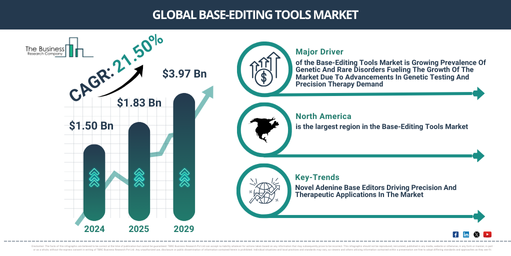
    The base-editing tools market has experienced substantial expansion in its size over recent years. Projections indicate its expansion from $1.50 billion in 2024 to $1.83 billion by 2025, demonstrating a compound annual growth rate (CAGR) of 21.8%. Historically, this growth is primarily due to factors such as increased demand for gene editing in rare disease research, the broadening of genomic research infrastructure, an uptick in preclinical study applications, enhanced sequencing and bioinformatics capabilities, and a heightened understanding of the shortcomings of conventional gene editing methods.

    The base-editing tools market is projected to experience substantial growth in the upcoming years. This market is expected to expand to $3.97 billion by 2029, achieving a compound annual growth rate (CAGR) of 21.5%. The projected growth during this period can be attributed to an increased emphasis on precision medicine, the proliferation of clinical trials employing base editing, the expansion of cell and gene therapy research, a rising demand for functional genomics research, and the growing occurrence of genetic and rare diseases. Significant trends for the forecast period include the creation of next-generation base editors, their integration with artificial intelligence (AI) and machine learning, their incorporation into synthetic biology, ongoing advancements in CRISPR-Cas technology, and the development of new therapeutic options.

    Unlock Your Free Sample Report for Exclusive Market Data:

    https://www.thebusinessresearchcompany.com/sample.aspx?id=28148&type=smp

    What Are The Top Growth Drivers Impacting The Base-Editing Tools Market Outlook?

    The base-editing tools market is anticipated to expand due to the increasing occurrence of genetic and rare disorders. These conditions are defined as medical ailments stemming from alterations or mutations within an individual’s genes or chromosomes, frequently impacting a minority of the populace and occasionally passed down through generations. The rising incidence of genetic and rare disorders is attributed to improvements in genomic testing and newborn screening, facilitating earlier and more precise identification of previously undiagnosed instances. Base-editing tools offer a way to precisely correct genetic mutations, thereby assisting in the diagnosis and management of rare and inherited conditions. These tools contribute significantly to advanced diagnostics, tailored interventions, and potential curative treatments by improving genetic testing and making targeted therapies possible. For example, data from May 2024, provided by the National Health Service, a UK-based government department, indicates that in England, roughly 17,000 people suffer from sickle cell disease, which is an inherited blood disorder, with an estimated 250 new diagnoses annually. Consequently, the increasing prevalence of genetic and rare disorders is a key factor propelling the expansion of the base-editing tools market.

    How Is The Base-Editing Tools Market Segmented?

    The base-editing tools market covered in this report is segmented as

    1) By Product Type: Deoxyribonucleic Acid (DNA) Base Editors, Ribonucleic Acid (RNA) Base Editors, Other Product Types

    2) By Application: Genetic Research, Drug Development, Disease Modeling, Agricultural Biotechnology, Other Applications

    3) By End-User: Academic And Research Institutes, Biotechnology And Pharmaceutical Companies, Contract Research Organizations, Other End-Users

    Subsegments:

    1) By Deoxyribonucleic Acid (DNA) Base Editors: Cytosine Base Editors, Adenine Base Editors, Dual Base Editors, Prime Editors

    2) By Ribonucleic Acid (RNA) Base Editors: Cytidine Deaminase Based Editors, Adenosine Deaminase Based Editors, Programmable Ribonucleic Acid (RNA) Editors

    3) By Others: Delivery Systems, Research Reagents, Computational Tools, Screening Platforms

    Which Market Trends Are Creating New Opportunities In The Base-Editing Tools Industry?

    Leading companies operating within the base-editing tools market are focusing on introducing innovative solutions, such as novel adenine base editors, to enhance the precision and efficiency of gene editing. Novel adenine base editors are advanced genome editing tools that precisely convert adenine (A) to guanine (G) in DNA without causing double-stranded breaks, enabling safe and specific genetic modifications. For instance, in October 2024, Metagenomi, Inc., a US-based precision genetic medicines company, launched novel ABEs capable of editing a broad range of genomic targets with over 95% targetability. These editors enable precise base conversions with minimal off-target effects in tested cell lines, supporting multiplex gene editing that can lead to significant functional protein reduction in primary T-cells. The platform is compatible with various non-viral delivery methods and engineered Cas variants, making it suitable for both in vivo genome editing and ex vivo cell therapies, including CAR-T treatments.

    Which Major Firms Are Strengthening Their Position In The Base-Editing Tools Industry?

    Major companies operating in the base-editing tools market are Thermo Fisher Scientific Inc., Danaher Corporation, Merck KGaA, Revvity Inc., GenScript Biotech Corporation, Beam Therapeutics Inc., CRISPR Therapeutics AG, Maravai LifeSciences Holdings Inc., Aldevron L.L.C., Arcturus Therapeutics Holdings Inc., ElevateBio LLC, Editas Medicine Inc., Synthego Corporation, Metagenomi Inc., Intellia Therapeutics Inc., Mammoth Biosciences Inc., Verve Therapeutics Inc., Precede Biosciences Inc., Cellectis S.A., Creative Biogene Inc., Bio Palette Co. Ltd., Prime Medicine Inc., and Base Therapeutics.

    Download The Full Report For Exclusive Market Findings:

    https://www.thebusinessresearchcompany.com/report/base-editing-tools-global-market-report

    What Are The Regional Market Dynamics Impacting The Base-Editing Tools Industry?

    North America was the largest region in the base-editing tools market in 2024. Asia-Pacific is expected to be the fastest-growing region in the forecast period. The regions covered in base-editing tools report are Asia-Pacific, Western Europe, Eastern Europe, North America, South America, Middle East and Africa.

    Request A Customized Version Of The Base-Editing Tools Market Report:

    https://www.thebusinessresearchcompany.com/customise?id=28148&type=smp

    Browse Through More Reports Similar to the Global Base-Editing Tools Market 2025, By The Business Research Company

    Software Development Tools Global Market Report 2025

    https://www.thebusinessresearchcompany.com/report/software-development-tools-global-market-report

    Metadata Management Tools Global Market Report 2025

    https://www.thebusinessresearchcompany.com/report/metadata-management-tools-global-market-report

    Waterbased Adhesives Global Market Report 2025

    https://www.thebusinessresearchcompany.com/report/waterbased-adhesives-global-market-report

    Get in touch with us:

    The Business Research Company: https://www.thebusinessresearchcompany.com/

    Americas +1 310-496-7795

    Asia +44 7882 955267 & +91 8897263534

    Europe +44 7882 955267

    Email us at info@tbrc.info

    Follow us on:

    LinkedIn: https://in.linkedin.com/company/the-business-research-company

    YouTube: https://www.youtube.com/channel/UC24_fI0rV8cR5DxlCpgmyFQ

    Global Market Model: https://www.thebusinessresearchcompany.com/global-market-model
  • Balance Rehabilitation Virtual Reality Pods Industry Anticipated to Expand at 16.1% CAGR During the Forecast Period

    Balance Rehabilitation Virtual Reality Pods Industry Anticipated to Expand at 16.1% CAGR During the Forecast Period

    Unlock Global Insights – Save 20% on Market Reports with Code ONLINE20

    What Are The Forecasted Market Size Estimates For The Balance Rehabilitation Virtual Reality Pods Market Between 2025 And 2029?

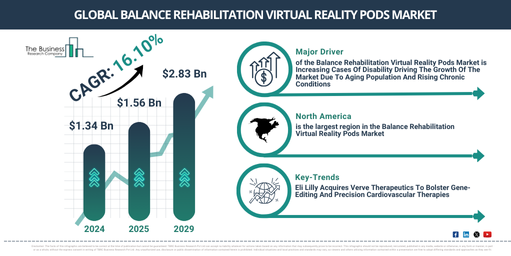
    The market size for balance rehabilitation virtual reality pods has experienced considerable expansion over recent years. It is projected to increase from $1.34 billion in 2024 to $1.56 billion in 2025, demonstrating a compound annual growth rate (CAGR) of 16.4%. The historical growth of this market can be attributed to the rising prevalence of balance disorders, a shift towards home-based healthcare, various government initiatives and funding, a growing geriatric population, and the increasing incidence of neurological disorders.

    The balance rehabilitation virtual reality pods market is projected for swift expansion in the upcoming years, with its valuation reaching $2.83 billion by 2029, demonstrating a compound annual growth rate (CAGR) of 16.1%. This anticipated increase can be linked to heightened awareness and acceptance, a greater prevalence of stroke among adults and the elderly, an expanding population of Parkinson’s disease patients, a rise in traumatic brain injury incidents, and an increasing occurrence of vestibular disorders. Key developments anticipated during this period encompass enhancements in VR technology, the incorporation of artificial intelligence (AI), improvements in sensor technology, partnerships between healthcare providers and technology firms, and the assimilation with other therapeutic methods.

    Unlock Your Free Sample Report for Exclusive Market Data:

    https://www.thebusinessresearchcompany.com/sample.aspx?id=28147&type=smp

    Which Major Market Drivers Are Shaping The Future Of The Balance Rehabilitation Virtual Reality Pods Market?

    The balance rehabilitation virtual reality pods market is anticipated to expand due to the growing prevalence of disability cases. Disability refers to challenges an individual faces in daily activities, encompassing various impairments, activity limitations, and participation restrictions, often stemming from conditions like neurological disorders, the aging process, injuries, or long-term illnesses. The increase in disability instances is linked to the worldwide aging population, as older age often leads to a higher chance of developing chronic conditions such as stroke, arthritis, and neurodegenerative diseases, which frequently result in difficulties with mobility, balance, and overall function. Balance rehabilitation virtual reality pods offer significant advantages to people with disabilities by providing a secure and regulated setting for performing balance exercises and virtually navigating difficult situations, thereby lowering the likelihood of falls while simultaneously boosting confidence and aiding effective functional recovery. For example, the Centers for Disease Control and Prevention, a US-based federal agency, reported in April 2025 that in 2022, a greater proportion of younger adults aged 18–44 years experienced a disability (23.6%) compared to the 21.2% recorded in the preceding year. Thus, the increasing number of disability cases is a key driver for the growth of the balance rehabilitation virtual reality pods market.

    What Are The Key Segments In The Balance Rehabilitation Virtual Reality Pods Market?

    The balance rehabilitation virtual reality pods market covered in this report is segmented as

    1) By Product: Stationary Virtual Reality Pods, Portable Virtual Reality Pods

    2) By Technology: Non-Immersive Virtual Reality, Semi-Immersive Virtual Reality, Fully Immersive Virtual Reality

    3) By Distribution Channel: Direct Sales, Online Retail, Distributors

    4) By Application: Hospitals And Clinics, Rehabilitation Centers, Home Care Settings, Other Applications

    5) By End-User: Adults, Pediatrics, Geriatrics

    Subsegments:

    1) By Stationary Virtual Reality Pods: Single-User Systems, Multi-User Systems, Therapy-Centric Pods, Assessment Pods, Immersive Pods

    2) By Portable Virtual Reality Pods: Compact Kits, Wearable Systems, Tablet-Based Systems, Modular Kits, Mobile App-Integrated Systems

    How Are Trends Influencing The Balance Rehabilitation Virtual Reality Pods Market?

    Major companies active in the balance rehabilitation virtual reality pods market are prioritizing the development of advanced solutions, notably AI-driven adaptive therapy software, to enhance the individualization of treatment, elevate patient engagement, and provide clinicians with accurate, data-informed progress monitoring. Such AI-driven adaptive therapy software constitutes a sophisticated algorithmic framework that leverages real-time performance data to dynamically adjust the difficulty and parameters of exercises, thereby crafting a consistently optimized, patient-specific rehabilitation regimen intended to optimize recovery outcomes. For example, in September 2024, Interacoustics A/S, a Denmark-based producer of diagnostic and therapeutic products, launched its Virtualis balance rehabilitation system, which incorporates immersive virtual reality technology. Patients utilize a head-mounted display offering an extensive field of view to participate in a diverse set of gamified exercises, aiming to boost motivation and balance during vestibular and neurological rehabilitation. This development signifies Interacoustics’ strategic expansion into integrated digital therapeutics, providing objective, data-centric therapy to improve patient results while offering clinicians sophisticated tools for assessment and tracking progress.

    Who Are The Primary Competitors In The Global Balance Rehabilitation Virtual Reality Pods Market?

    Major companies operating in the balance rehabilitation virtual reality pods market are Interacoustics A/S., MindMaze SA, XRHealth, Vicon Motion Systems Ltd., Ekso Bionics Holdings Inc., Tyromotion GmbH, Bertec Corporation, Reha Stim Medtec AG, balanceback, THERA-Trainer, DIH Technologies Corp., Saebo Inc., NEURO REHAB VR, KineQuantum SAS, Movendo Technology S.r.l., Protokinetics LLC, Silverfit Ltd., zebris Medical GmbH, LPG Group Ltd., and Sensing Future Technologies.

    Download The Full Report For Exclusive Market Findings:

    https://www.thebusinessresearchcompany.com/report/balance-rehabilitation-virtual-reality-pods-global-market-report

    Which Region Shows The Highest Potential For Future Expansion In The Balance Rehabilitation Virtual Reality Pods Market?

    North America was the largest region in the balance rehabilitation virtual reality pods market in 2024. Asia-Pacific is expected to be the fastest-growing region in the forecast period. The regions covered in balance rehabilitation virtual reality pods report are Asia-Pacific, Western Europe, Eastern Europe, North America, South America, Middle East and Africa.

    Request A Customized Version Of The Balance Rehabilitation Virtual Reality Pods Market Report:

    https://www.thebusinessresearchcompany.com/customise?id=28147&type=smp

    Browse Through More Reports Similar to the Global Balance Rehabilitation Virtual Reality Pods Market 2025, By The Business Research Company

    Virtual Rehabilitation Global Market Report 2025

    https://www.thebusinessresearchcompany.com/report/virtual-rehabilitation-global-market-report

    Rehabilitation Equipment Global Market Report 2025

    https://www.thebusinessresearchcompany.com/report/rehabilitation-equipment-global-market-report

    Rehabilitation Robotics Global Market Report 2025

    https://www.thebusinessresearchcompany.com/report/rehabilitation-robotics-global-market-report

    Get in touch with us:

    The Business Research Company: https://www.thebusinessresearchcompany.com/

    Americas +1 310-496-7795

    Asia +44 7882 955267 & +91 8897263534

    Europe +44 7882 955267

    Email us at info@tbrc.info

    Follow us on:

    LinkedIn: https://in.linkedin.com/company/the-business-research-company

    YouTube: https://www.youtube.com/channel/UC24_fI0rV8cR5DxlCpgmyFQ

    Global Market Model: https://www.thebusinessresearchcompany.com/global-market-model
  • Global Balance Rehabilitation Training Market Projected to Expand at 11.6% CAGR by 2029

    Global Balance Rehabilitation Training Market Projected to Expand at 11.6% CAGR by 2029

    Unlock Global Insights – Save 20% on Market Reports with Code ONLINE20

    How Is The Balance Rehabilitation Training Market Size Likely To Evolve From 2025 Through 2034?

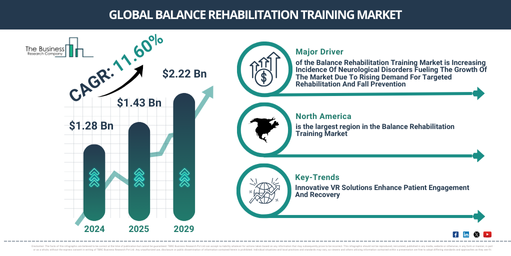
    The balance rehabilitation training market size has experienced swift expansion in recent years. It is projected to grow from $1.28 billion in 2024 to $1.43 billion in 2025, exhibiting a compound annual growth rate (CAGR) of 12.0%. The expansion observed in the past can be ascribed to a heightened understanding of balance disorders, the increasing uptake of physical therapy programs, a rise in the prevalence of chronic diseases, an expanding geriatric population, and growing financial commitments in rehabilitation centers.

    The balance rehabilitation training market is projected to experience swift expansion over the coming years. This market is forecast to reach $2.22 billion by 2029, demonstrating a compound annual growth rate (CAGR) of 11.6%. This expansion during the projection period stems from factors such as the greater adoption of virtual reality and gamified training methods, increased recognition of preventive healthcare, the rising incorporation of wearable and sensor-equipped training devices, a stronger emphasis on individualized and patient-focused care, and a surge in engagement in sports and fitness pursuits. Key developments anticipated within the forecast timeframe encompass the creation of tele-rehabilitation platforms, the design of customized training programs, the incorporation of motion capture systems, the integration of biofeedback mechanisms, and advancements in tools for remote monitoring.

    Unlock Your Free Sample Report for Exclusive Market Data:

    https://www.thebusinessresearchcompany.com/sample.aspx?id=28146&type=smp

    What Are The Main Drivers Boosting The Balance Rehabilitation Training Industry’s Expansion?

    A rising occurrence of neurological conditions is projected to drive expansion within the balance rehabilitation training market in the coming period. These conditions are medical ailments impacting the brain, spinal cord, and nerves, resulting in various symptoms such as difficulties with cognition, movement, and sensation. The growing commonness of neurological disorders is tied to the world’s aging demographic, given that aging progressively diminishes neuronal capabilities, lessens brain adaptability, and heightens oxidative stress, thereby fostering the onset and advancement of these conditions. Balance rehabilitation training aids in managing neurological disorders through focused exercises designed to enhance stability, coordination, and motor control. This training boosts patient autonomy by lowering the risk of falls and encouraging secure movement, thus elevating the overall quality of life. As an illustration, in July 2024, the National Health Service, a government body in the UK, reported 487,432 patients diagnosed with dementia (a degenerative brain illness impacting memory, thought processes, and everyday tasks) by June 30, 2024, representing an increase of 3,155 cases since May 31, 2024. Consequently, the rising occurrence of neurological conditions is propelling the expansion of the market for balance rehabilitation training.

    What Are The Leading Segments Analyzed In The Balance Rehabilitation Training Market?

    The balance rehabilitation training market covered in this report is segmented as

    1) By Type: Static Balance Training, Dynamic Balance Training, Functional Balance Training, Postural Control Training, Reaction Time Training

    2) By Training Mode: Individual Training, Group Training, Online Training, In-Person Training, Hybrid Training

    3) By Equipment Type: Balanstones, Balancushions, Wobble Boards, Balance Beams, Stability Balls

    4) By Application: Geriatric Rehabilitation, Sports Rehabilitation, Pediatric Rehabilitation, Neurological Rehabilitation, Orthopedic Rehabilitation

    5) By End-User: Hospitals, Rehabilitation Centers, Nursing Homes, Physiotherapy Clinics, Home Care Settings

    Subsegments:

    1) By Static Balance Training: Single Leg Stance Exercises, Tandem Stance Exercises, Romberg Exercises, Balance Board Exercises

    2) By Dynamic Balance Training: Walking Exercises, Stepping Exercises, Perturbation Training, Obstacle Navigation Exercises

    3) By Functional Balance Training: Sit To Stand Exercises, Reaching Exercises, Carrying Object Exercises, Transitional Movements Exercises

    4) By Postural Control Training: Core Stability Exercises, Trunk Control Exercises, Alignment Training, Posture Correction Exercises

    5) By Reaction Time Training: Visual Stimulus Response Exercises, Auditory Stimulus Response Exercises, Multi-Sensory Reaction Exercises, Rapid Direction Change Exercises

    What Key Innovation Trends Are Fueling Advancements In The Balance Rehabilitation Training Market?

    Leading companies in the balance rehabilitation training market are prioritizing the development of innovative solutions, such as virtual reality (VR) platforms, to improve patient engagement and enhance recovery outcomes. Virtual reality (VR) platforms are defined as software and hardware ecosystems that establish fully immersive, computer-generated environments, allowing individuals to interact with 3D digital worlds instantaneously. For example, in September 2022, Penumbra Inc., a US-based medical device company, introduced the REAL y-Series, a hands-free, non-tethered virtual reality rehabilitation platform, expanding its existing REAL System platform. This particular system is engineered for rehabilitation, featuring hands-free, full-body tracking with sensors for both the upper and lower body, which enables patients to participate in immersive and adaptable therapy activities. It supports a wide array of physical, cognitive, and mental well-being therapies, simultaneously allowing clinicians to observe patient progress in real time and tailor therapy programs using secure data analytics.

    Which Key Market Players Are Investing In Expansion And Innovation Of Balance Rehabilitation Training Market?

    Major companies operating in the balance rehabilitation training market are Aretech LLC, Bioventus Inc., Aegis Care Advisors Pvt. Ltd., Fourier Intelligence Co., zebris Medical GmbH, Medica Medizintechnik GmbH, E3 Diagnostics Inc., MedBridge, Wandercraft, Hocoma AG, Neofect Co. Ltd., Motek Medical B.V., Tyromotion GmbH, Lifeward Ltd., BoBo Healthcare Ltd., 360 Neuro Health, Cyclops MedTech Pvt Ltd, Euleria Health S.r.l., NeuroEquilibrium Diagnostic Systems Pvt Ltd, and Framiral S.A.S.

    Download The Full Report For Exclusive Market Findings:

    https://www.thebusinessresearchcompany.com/report/balance-rehabilitation-training-global-market-report

    How Is Balance Rehabilitation Training Market Demand Varying Across Different Regions?

    North America was the largest region in the balance rehabilitation training market in 2024. Asia-Pacific is expected to be the fastest-growing region in the forecast period. The regions covered in balance rehabilitation training report are Asia-Pacific, Western Europe, Eastern Europe, North America, South America, Middle East and Africa.

    Request A Customized Version Of The Balance Rehabilitation Training Market Report:

    https://www.thebusinessresearchcompany.com/customise?id=28146&type=smp

    Browse Through More Reports Similar to the Global Balance Rehabilitation Training Market 2025, By The Business Research Company

    Physical Therapy Rehabilitation Global Market Report 2025

    https://www.thebusinessresearchcompany.com/report/physical-therapy-rehabilitation-global-market-report

    Rehabilitation Equipment Global Market Report 2025

    https://www.thebusinessresearchcompany.com/report/rehabilitation-equipment-global-market-report

    Rehabilitation Robotics Global Market Report 2025

    https://www.thebusinessresearchcompany.com/report/rehabilitation-robotics-global-market-report

    Get in touch with us:

    The Business Research Company: https://www.thebusinessresearchcompany.com/

    Americas +1 310-496-7795

    Asia +44 7882 955267 & +91 8897263534

    Europe +44 7882 955267

    Email us at info@tbrc.info

    Follow us on:

    LinkedIn: https://in.linkedin.com/company/the-business-research-company

    YouTube: https://www.youtube.com/channel/UC24_fI0rV8cR5DxlCpgmyFQ

    Global Market Model: https://www.thebusinessresearchcompany.com/global-market-model
  • Back Acne Treatment Market to Grow at a CAGR of 8.9% from 2025 to 2029

    Back Acne Treatment Market to Grow at a CAGR of 8.9% from 2025 to 2029

    Unlock Global Insights – Save 20% on Market Reports with Code ONLINE20

    What Are The Growth Projections For The Back Acne Treatment Market Size During 2025–2029?

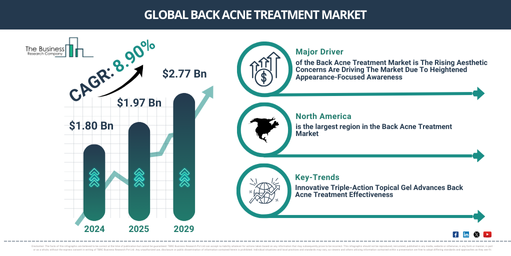
    The back acne treatment market size has experienced substantial growth in recent years. It is projected to expand from $1.80 billion in 2024 to $1.97 billion in 2025, demonstrating a compound annual growth rate (CAGR) of 9.2%. The historical increase in this market can be attributed to factors such as the rising occurrence of acne among adolescents, increasing awareness of dermatology care, the growing use of over-the-counter acne products, evolving lifestyle patterns and urbanization, and the expansion of dermatology clinics.

    The back acne treatment market size is projected to experience substantial growth in the coming years. Its value is forecast to reach $2.77 billion by 2029, progressing at a compound annual growth rate (CAGR) of 8.9%. This expansion during the forecast period is primarily driven by a surging demand for minimally invasive cosmetic treatments, an increasing preference for personalized skincare solutions, rising disposable income in emerging markets, the widespread growth of online dermatology consultations, and a heightened emphasis on male grooming. Key trends anticipated during this period include technological breakthroughs in laser and light therapies, novel developments in topical and oral acne medications, the evolution of natural and organic skincare formulations, extensive research and development in microbiome-based acne treatments, and the integration of artificial intelligence in skin diagnostics.

    Unlock Your Free Sample Report for Exclusive Market Data:

    https://www.thebusinessresearchcompany.com/sample.aspx?id=28145&type=smp

    Which Factors And Drivers Are Influencing The Back Acne Treatment Market In 2025?

    The increasing focus on aesthetic concerns is anticipated to stimulate the expansion of the back acne treatment market in the future. These concerns denote an individual’s consciousness and assessment of their physical look, covering perceptions of skin, bodily features, and overall visual presentation that influence self-assurance and social interactions. The main impetus behind these growing aesthetic concerns is the pervasive exposure to idealized images across digital media platforms, where continuous interaction with curated visual content cultivates increased self-scrutiny and comparison, thereby intensifying the desire for a flawless appearance. Back acne treatment addresses dermatological imperfections, consequently alleviating appearance-related anxiety and enhancing personal confidence in response to this heightened aesthetic awareness. For instance, in June 2024, according to the American Society of Plastic Surgeons, a US-based specialty organization, a 7 percent growth in asthetic minimally invasive procedures in 2023 surpassed surgical procedures by 2 percent, with neuromodulator injections and hyaluronic acid fillers each exceeding 9 million and 5 million treatments, respectively. Hence, the escalating aesthetic concerns are propelling the growth of the back acne treatment market.

    What Are The Segment Types Shaping The Back Acne Treatment Market?

    The back acne treatment market covered in this report is segmented as

    1) By Product Type: Topical Medications, Oral Medications, Laser Therapy, Light Therapy, Other Products

    2) By Distribution Channel: Retail Pharmacies, Online pharmacies, Hospital Pharmacies, Other Distribution Channels

    3) By End-User: Hospitals And Clinics, Dermatology Centers, Homecare, Other End-Users

    Subsegments:

    1) By Topical Medications: Salicylic Acid Cream, Benzoyl Peroxide Gel, Retinoid Cream, Azelaic Acid Lotion, Sulfur-Based Treatment

    2) By Oral Medications: Antibiotics, Hormonal Therapy, Isotretinoin, Immunomodulators

    3) By Laser Therapy: Fractional Laser, Pulsed Dye Laser, Carbon Dioxide Laser, Erbium Laser

    4) By Light Therapy: Blue Light Therapy, Red Light Therapy, Combination Light Therapy

    5) By Other Products: Cleansing Body Wash, Exfoliating Scrubs, Moisturizing Lotions, Serums

    Which Ongoing Trends Are Expected To Shape The Back Acne Treatment Market Outlook?

    Major entities operating in the back acne treatment market are concentrating on developing innovative products, such as triple-combination acne gel, to deliver an effective and simplified treatment option that targets both inflammatory and non-inflammatory acne lesions. A triple-combination acne gel represents a topical formulation that combines multiple mechanisms of action to reduce acne lesions and enhance skin clarity with a single application. For instance, in October 2023, Bausch Health Companies Inc., a Canada-based pharmaceutical and healthcare company, launched Cabtreo acne gel. This gel integrates an antibiotic, a retinoid, and an antibacterial agent into a single, fixed-dose gel, facilitating once-daily application for patients twelve years and older. Clinical studies showed substantial reductions in both inflammatory and non-inflammatory acne lesions, achieving approximately fifty percent treatment success within twelve weeks, which highlights its potential to streamline therapy and improve patient adherence.

    Who Are The Core Companies Influencing The Back Acne Treatment Market Landscape?

    Major companies operating in the back acne treatment market are Johnson And Johnson, Unilever plc, Pfizer Inc., AbbVie Inc., L’Oréal S.A., GlaxoSmithKline plc, Teva Pharmaceutical Industries Limited, Viatris Inc., Kenvue Inc., Bausch Health Companies Inc., Hindustan Unilever Limited (HUL), Galderma S.A, Pierre Fabre Group, Cipla Ltd., Zydus lifesciences Limited, Reckitt Benckiser Group plc, Alkem Laboratories Limited, Almirall S.A, Merz Pharma GmbH And Co. KGaA, Himalaya Wellness Company

    Download The Full Report For Exclusive Market Findings:

    https://www.thebusinessresearchcompany.com/report/back-acne-treatment-global-market-report

    Which Geographies Are Emerging As Strong Markets For The Back Acne Treatment Industry?

    North America was the largest region in the back acne treatment market in 2024. Asia-Pacific is expected to be the fastest-growing region in the forecast period. The regions covered in back acne treatment report are Asia-Pacific, Western Europe, Eastern Europe, North America, South America, Middle East and Africa.

    Request A Customized Version Of The Back Acne Treatment Market Report:

    https://www.thebusinessresearchcompany.com/customise?id=28145&type=smp

    Browse Through More Reports Similar to the Global Back Acne Treatment Market 2025, By The Business Research Company

    Acetone Global Market Report 2025

    https://www.thebusinessresearchcompany.com/report/acetone-global-market-report

    Face Creams Global Market Report 2025

    https://www.thebusinessresearchcompany.com/report/face-creams-global-market-report

    Natural Skin Care Products Global Market Report 2025

    https://www.thebusinessresearchcompany.com/report/natural-skin-care-products-global-market-report

    Get in touch with us:

    The Business Research Company: https://www.thebusinessresearchcompany.com/

    Americas +1 310-496-7795

    Asia +44 7882 955267 & +91 8897263534

    Europe +44 7882 955267

    Email us at info@tbrc.info

    Follow us on:

    LinkedIn: https://in.linkedin.com/company/the-business-research-company

    YouTube: https://www.youtube.com/channel/UC24_fI0rV8cR5DxlCpgmyFQ

    Global Market Model: https://www.thebusinessresearchcompany.com/global-market-model
  • Global Atopic Dermatitis Cream Market 2025–2029: Competitive Insights and Opportunities

    Global Atopic Dermatitis Cream Market 2025–2029: Competitive Insights and Opportunities

    Unlock Global Insights – Save 20% on Market Reports with Code ONLINE20

    What Is The Global Market Value Of The Atopic Dermatitis Cream Industry In 2025?

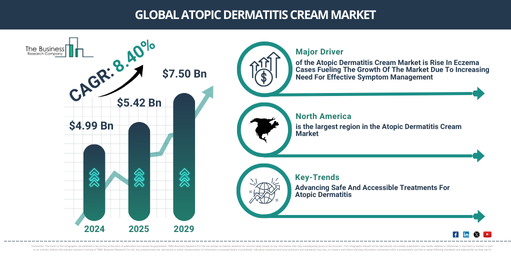
    The atopic dermatitis cream market has experienced substantial expansion over the last few years. Projections indicate it will expand from $4.99 billion in 2024 to $5.42 billion in 2025, demonstrating a compound annual growth rate (CAGR) of 8.8%. Historically, this market’s expansion was driven by increased skin health awareness, a rise in atopic dermatitis cases, greater demand for topical treatments, advancements in dermatology research, broader access via retail and online platforms, and favorable healthcare reimbursement frameworks.

    The atopic dermatitis cream market is projected to experience substantial expansion over the upcoming years, reaching $7.50 billion by 2029, driven by a compound annual growth rate (CAGR) of 8.4%. This anticipated growth is linked to an increasing demand for tailored dermatology solutions, the wider acceptance of digital health platforms for tracking skin conditions, a broader availability of non-steroidal creams sold over-the-counter, and an increased emphasis on formulations suitable for children. Key trends anticipated during this period encompass the use of steroid-free products, progress in topicals inspired by biologics, the implementation of nanotechnology-based delivery methods, the adoption of customized treatment strategies, the incorporation of natural and botanical components, the integration of digital tools for adherence, and the utilization of teledermatology platforms.

    Unlock Your Free Sample Report for Exclusive Market Data:

    https://www.thebusinessresearchcompany.com/sample.aspx?id=28144&type=smp

    What Are The Key Drivers Of Growth In The Atopic Dermatitis Cream Market?

    An anticipated increase in eczema cases is projected to fuel the expansion of the atopic dermatitis cream market in the future. Eczema, a dermal ailment, manifests as itching, redness, dryness, and inflammation. The growing number of individuals encountering allergies and sensitive skin issues is leading to a surge in demand for eczema care, necessitating potent treatments and skin health products. Atopic dermatitis cream offers benefits in managing eczema by diminishing inflammation, alleviating itching, re-establishing the skin’s inherent protective barrier, and averting additional irritation or infection, thus fostering recovery and sustained skin wellness in impacted regions. As an illustration, data from December 2024 by the Royal Australian College of General Practitioners, a research institution located in Australia, indicated that approximately 16% of Australians suffer from eczema, with roughly 25% of these instances categorized as severe. Consequently, the increasing occurrence of eczema is stimulating the expansion of the atopic dermatitis cream market.

    What Are The Different Segment Classifications Within The Atopic Dermatitis Cream Market?

    The atopic dermatitis cream market covered in this report is segmented as

    1) By Product Type: Corticosteroid Creams, Calcineurin Inhibitor Creams, PDE4 Inhibitor Creams, Moisturizing Creams, Other Product Types

    2) By Age Group: Pediatric, Adult, Geriatric

    3) By Distribution Channel: Hospital Pharmacies, Retail Pharmacies, Online Pharmacies, Other Distribution Channels

    Subsegments:

    1) By Corticosteroid Creams: Low-Potency Corticosteroids, Medium-Potency Corticosteroids, High-Potency Corticosteroids, Ultra-High Potency Corticosteroids

    2) By Calcineurin Inhibitor Creams: Tacrolimus Ointment, Pimecrolimus Cream, Other Calcineurin Inhibitors

    3) By PDE4 Inhibitor Creams: Crisaborole Ointment, Roflumilast Cream, Other PDE4 Inhibitors

    4) By Moisturizing Creams: Emollient-Based Moisturizers, Humectant-Based Moisturizers, Occlusive Moisturizers, Ceramide-Containing Moisturizers

    5) By Other Product Types: JAK Inhibitor Creams, Antihistamine Creams, Herbal Or Natural Topical Creams, Combination Creams

    Which Competitive Trends Are Defining The Atopic Dermatitis Cream Market Structure?

    Leading companies in the atopic dermatitis cream market are prioritizing the development of innovative steroid-free therapies, improving patient access through insurance and support programs, and ensuring sustained disease management with safer topical solutions. Steroid-free therapies serve as alternatives to corticosteroids, addressing inflammation and skin issues safely without the risks associated with steroids. For instance, in July 2024, Arcutis Biotherapeutics Inc., a US-based biopharmaceutical company, introduced ZORYVE (roflumilast) cream 0.15% in the U.S. for the treatment of mild to moderate atopic dermatitis in adults and children aged six and older. This steroid-free cream, applied once daily, is formulated to deliver quick itch relief, enhance disease clearance, and support long-term control, avoiding the typical side effects of traditional topical treatments. ZORYVE is currently available through pharmacies, with immediate insurance coverage under specific pharmacy benefit managers (PBMs) contracts.

    Which Major Industry Participants Are Leading The Atopic Dermatitis Cream Market Growth?

    Major companies operating in the atopic dermatitis cream market are Pfizer Inc., AbbVie Inc., Bayer AG, Sanofi S.A., AstraZeneca plc, GlaxoSmithKline plc, Eli Lilly and Company, Teva Pharmaceutical Industries Ltd., Viatris Inc, Regeneron Pharmaceuticals, Inc., Astellas Pharma Inc., Bausch Health Companies Inc., Organon & Co., Galderma S.A., Incyte Corporation, Leo Pharma A/S, Almirall S.A., Boehringer Ingelheim, Arcutis Biotherapeutics Inc., Medimetriks Pharmaceuticals Inc.

    Download The Full Report For Exclusive Market Findings:

    https://www.thebusinessresearchcompany.com/report/atopic-dermatitis-cream-global-market-report

    Which Region Is Projected To Lead The Atopic Dermatitis Cream Market During The Forecast Period?

    North America was the largest region in the atopic dermatitis cream market in 2024. Asia-Pacific is expected to be the fastest-growing region in the forecast period. The regions covered in atopic dermatitis cream report are Asia-Pacific, Western Europe, Eastern Europe, North America, South America, Middle East and Africa.

    Request A Customized Version Of The Atopic Dermatitis Cream Market Report:

    https://www.thebusinessresearchcompany.com/customise?id=28144&type=smp

    Browse Through More Reports Similar to the Global Atopic Dermatitis Cream Market 2025, By The Business Research Company

    Atopic Dermatitis Global Market Report 2025

    https://www.thebusinessresearchcompany.com/report/atopic-dermatitis-global-market-report

    Dermatitis Drugs Global Market Report 2025

    https://www.thebusinessresearchcompany.com/report/dermatitis-drugs-global-market-report

    Daily Cleansing Cream Global Market Report 2025

    https://www.thebusinessresearchcompany.com/report/daily-cleansing-cream-global-market-report

    Get in touch with us:

    The Business Research Company: https://www.thebusinessresearchcompany.com/

    Americas +1 310-496-7795

    Asia +44 7882 955267 & +91 8897263534

    Europe +44 7882 955267

    Email us at info@tbrc.info

    Follow us on:

    LinkedIn: https://in.linkedin.com/company/the-business-research-company

    YouTube: https://www.youtube.com/channel/UC24_fI0rV8cR5DxlCpgmyFQ

    Global Market Model: https://www.thebusinessresearchcompany.com/global-market-model
  • Artificial Intelligence Microscopy Market Trends 2025–2029: Forecasts for Key Growth Segments

    Artificial Intelligence Microscopy Market Trends 2025–2029: Forecasts for Key Growth Segments

    Unlock Global Insights – Save 20% on Market Reports with Code ONLINE20

    By How Much Is The Artificial Intelligence Microscopy Market Expected To Expand Between 2025 And 2029?

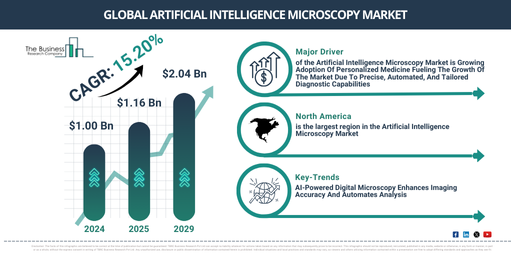
    The artificial intelligence microscopy market size has experienced swift expansion in recent years. It is anticipated to increase from $1.00 billion in 2024 to $1.16 billion in 2025, exhibiting a compound annual growth rate (CAGR) of 15.5%. This growth in the past period can be attributed to the rising embrace of digital pathology, an escalating requirement for sophisticated imaging solutions, a heightened emphasis on early disease detection, and increasing capital deployment in healthcare artificial intelligence technologies.

    The artificial intelligence microscopy market is projected to expand significantly in the coming years, reaching a valuation of $2.04 billion by 2029, exhibiting a compound annual growth rate (CAGR) of 15.2%. This anticipated expansion during the forecast period is fueled by several factors, including the increasing embrace of precision medicine, a rising demand for automated image analysis, the expanding requirement for precise diagnostic instruments, and augmented investments in artificial intelligence-driven diagnostics. Key trends defining this period encompass enhancements in deep learning algorithms, novel approaches in real-time image processing, the incorporation of artificial intelligence into high-resolution microscopy, developments in cloud-based microscopy platforms, and creative breakthroughs in multimodal imaging techniques.

    Unlock Your Free Sample Report for Exclusive Market Data:

    https://www.thebusinessresearchcompany.com/sample.aspx?id=28143&type=smp

    Which Drivers Are Supporting Growth Of The Artificial Intelligence Microscopy Market?

    The increasing embrace of personalized medicine is anticipated to drive the expansion of the artificial intelligence microscopy market in the future. Personalized medicine is defined as a medical strategy that customizes treatment and prevention methods to an individual’s distinct genetic makeup, lifestyle, and surroundings. The rising prevalence of personalized medicine stems primarily from breakthroughs in genomics, which facilitate the accurate identification of genetic differences and bespoke therapies for individuals. Artificial intelligence microscopy improves personalized medicine by delivering precise and automated analysis of cells and tissues, thus enabling customized treatment plans. This technology lessens the need for manual labor and speeds up diagnostic processes, thereby improving clinical decisions and patient outcomes. For example, in February 2024, the Personalized Medicine Coalition (PMC), a US-based nonprofit, stated that the U.S. Food and Drug Administration (FDA) cleared 26 new personalized medicines in 2023, a notable rise from the 12 approved in 2022. Consequently, the expanding adoption of personalized medicine is propelling the growth of the artificial intelligence microscopy market.

    What Are The Primary Types Of Segments Analyzed In The Artificial Intelligence Microscopy Market?

    The artificial intelligence microscopy market covered in this report is segmented as

    1) By Component, Software, Hardware, Services

    2) By Product Type, Artificial Intelligence-Enabled Cloud Software, Artificial Intelligence-Enabled Microscopes

    3) By Imaging Modalities, Optical Microscopy, Electron Microscopy, Scanning Probe Microscopy

    4) By Technology, Deep Learning, Machine Learning, Computer Vision, Other Technologies

    5) By End-User, Research Institutions, Healthcare Organizations, Pharmaceutical Companies, Biotechnology Firms, Industrial Laboratories

    Subsegments:

    1) By Software, Image Analysis Software, Data Management Software, Visualization Software, Simulation Software

    2) By Hardware, Microscopes, Cameras, Sensors, Computational Units

    3) By Services, Installation Services, Maintenance Services, Training Services, Consulting Service

    What Are The Latest Industry Trends Transforming The Artificial Intelligence Microscopy Market?

    Leading companies within the artificial intelligence microscopy market are prioritizing the development of sophisticated products, such as digital microscopy, to enhance imaging precision and automate analytical processes. Digital microscopy involves using cameras and computer technology to capture, display, and analyze microscopic images, either replacing or augmenting conventional optical microscopes. For instance, in February 2025, Honeywell International Inc., a US-based industrial technology company, unveiled the Digital Holographic Microscopy (DHM), an innovative technology that integrates artificial intelligence (AI) to accurately count and classify microscopic particles and cells. This technology utilizes AI algorithms to interpret holographic images obtained by a portable device, enabling rapid cell counting and classification without the need for complex sample preparation or staining. It is specifically designed for point-of-care applications, such as identifying infections in peritoneal dialysis patients, significantly reducing diagnosis time from days to minutes, and also possesses relevance in environmental monitoring and quality control.

    Who Are The Prominent Global Companies Shaping The Artificial Intelligence Microscopy Market?

    Major companies operating in the artificial intelligence microscopy market are Roche Diagnostics International Ltd., Thermo Fisher Scientific Inc., Agilent Technologies Inc., Olympus Corporation, Nikon Corporation, Shimadzu Corporation, Bruker Corporation, Carl Zeiss AG, Jenoptik AG, JEOL Ltd., Leica Microsystems GmbH, OneCell Diagnostics, Scopio Labs Ltd., Park Systems Corp., Ariadne.ai, Mindpeak GmbH, Celly.AI, SVision LLC, aetherAI, and Aiforia Technologies Oy.

    Download The Full Report For Exclusive Market Findings:

    https://www.thebusinessresearchcompany.com/report/artificial-intelligence-microscopy-global-market-report

    What Are The Key Regional Factors Influencing The Artificial Intelligence Microscopy Market Growth?

    North America was the largest region in the artificial intelligence microscopy market in 2024. Asia-Pacific is expected to be the fastest-growing region in the forecast period. The regions covered in artificial intelligence microscopy report are Asia-Pacific, Western Europe, Eastern Europe, North America, South America, Middle East and Africa.

    Request A Customized Version Of The Artificial Intelligence Microscopy Market Report:

    https://www.thebusinessresearchcompany.com/customise?id=28143&type=smp

    Browse Through More Reports Similar to the Global Artificial Intelligence Microscopy Market 2025, By The Business Research Company

    Automated Microscopy Global Market Report 2025

    https://www.thebusinessresearchcompany.com/report/automated-microscopy-global-market-report

    Microscopy Global Market Report 2025

    https://www.thebusinessresearchcompany.com/report/microscopy-global-market-report

    Microscope Global Market Report 2025

    https://www.thebusinessresearchcompany.com/report/microscope-global-market-report

    Get in touch with us:

    The Business Research Company: https://www.thebusinessresearchcompany.com/

    Americas +1 310-496-7795

    Asia +44 7882 955267 & +91 8897263534

    Europe +44 7882 955267

    Email us at info@tbrc.info

    Follow us on:

    LinkedIn: https://in.linkedin.com/company/the-business-research-company

    YouTube: https://www.youtube.com/channel/UC24_fI0rV8cR5DxlCpgmyFQ

    Global Market Model: https://www.thebusinessresearchcompany.com/global-market-model
  • Artificial Intelligence Clinical Trial Protocol Feasibility Tool Market Forecast 2025–2034: Where Businesses Should Invest Next

    Artificial Intelligence Clinical Trial Protocol Feasibility Tool Market Forecast 2025–2034: Where Businesses Should Invest Next

    Unlock Global Insights – Save 20% on Market Reports with Code ONLINE20

    #What Is The Projected Market Size Of The Artificial Intelligence Clinical Trial Protocol Feasibility Tool Market By 2029?

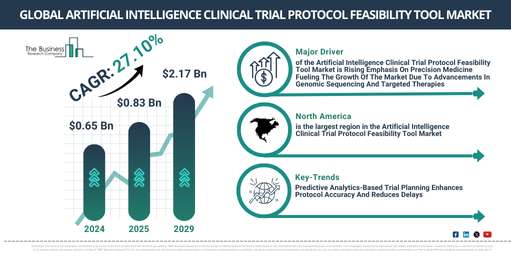
    The artificial intelligence clinical trial protocol feasibility tool market has experienced substantial expansion in its size during recent years. Its valuation is forecasted to climb from $0.65 billion in 2024 to $0.83 billion in 2025, progressing at a compound annual growth rate (CAGR) of 27.5%. This historical upward trend can be attributed to factors such as the increasing intricacy of clinical trial protocols, the growing volume of clinical trial data, the escalating costs of conventional clinical trials, the wider adoption of digital health records, and a strengthened focus on patient-centric trials.

    The artificial intelligence clinical trial protocol feasibility tool market size is anticipated to undergo significant growth over the next few years. It is projected to expand to $2.17 billion by 2029, achieving a compound annual growth rate (CAGR) of 27.1%. This projected expansion can be linked to an increasing demand for personalized medicine trials, the growing adoption of decentralized clinical trials, the expanding utilization of natural language processing, a stronger emphasis on patient diversity in trials, and the rising significance of real-time feasibility monitoring. Noteworthy trends for the forecast period encompass the development of adaptive algorithms to refine site selection, the integration of genomic data to facilitate precision trial protocols, innovations in automated trial cost and timeline estimation, the creation of tools to enhance patient diversity in clinical trials, and the incorporation of multi-source real-world evidence for accurate feasibility assessments.

    Unlock Your Free Sample Report for Exclusive Market Data:

    https://www.thebusinessresearchcompany.com/sample.aspx?id=28142&type=smp

    Which Drivers Are Shaping The Artificial Intelligence Clinical Trial Protocol Feasibility Tool Industry’s Market Share?

    The increasing focus on precision medicine is anticipated to accelerate the expansion of the artificial intelligence clinical trial protocol feasibility tool market moving forward. Precision medicine defines a customized healthcare strategy, leveraging a patient’s genetic makeup, environmental factors, and lifestyle to deliver more precise and efficacious therapies. This heightened emphasis on precision medicine stems from advancements in genomic sequencing and the identification of biomarkers, which facilitate accurate detection and the development of targeted treatments. Artificial intelligence clinical trial protocol feasibility tools augment precision medicine by facilitating data-driven trial designs, thereby making them perfectly suited for customizing treatments for distinct patient groups. These tools mitigate trial inefficiencies through their ability to forecast patient recruitment, project timelines, and assess risks, ultimately enhancing the accuracy and results of clinical research. As an illustration, in March 2024, Novotech, an Australia-based biotechnology company, reported that in 2023, 43% of the 217 FDA-approved oncology therapies were precision oncology treatments, with 78 incorporating DNA or NGS-detectable biomarkers. Consequently, the expanding focus on precision medicine is propelling the growth of the artificial intelligence clinical trial protocol feasibility tool market.

    Which Key Segments Fueling The Artificial Intelligence Clinical Trial Protocol Feasibility Tool Market?

    The artificial intelligence clinical trial protocol feasibility tool market covered in this report is segmented as

    1) By Component: Software, Services

    2) By Deployment Mode: Cloud-Based, On-Premises

    3) By Application: Protocol Design, Site Selection, Patient Recruitment, Risk Assessment, Other Applications

    4) By End-User: Pharmaceutical And Biotechnology Companies, Contract Research Organizations, Academic And Research Institutes, Other End-Users

    Subsegments:

    1) By Software: Predictive Analytics, Machine Learning, Natural Language Processing, Data Integration

    2) By Services: Consulting, Implementation, Training And Support, Managed Services

    What Trends Are Redefining The Artificial Intelligence Clinical Trial Protocol Feasibility Tool Market Dynamics?

    Major companies active in the artificial intelligence clinical trial protocol feasibility tool market are concentrating on developing innovative solutions, such as trial planning software powered by predictive analytics, to enhance the accuracy of protocol design and reduce delays in trials. Predictive analytics-based trial planning software is a solution that utilizes historical and real-time clinical trial data to forecast timelines, identify potential risks, and optimize study design for more streamlined and economical trials. For instance, in June 2024, Lokavant Inc., a US-based clinical intelligence company, unveiled Spectrum, the first artificial intelligence clinical trial feasibility solution aimed at optimizing trials from their strategic planning phase through mid-study re-forecasting. The platform features predictive analytics-based trial planning software that facilitates continuous, real-time feasibility analysis, timeline and cost prediction, and financial forecasting without requiring manual intervention. Spectrum delivers dynamic, real-time (re)forecasting by integrating live trial data, allowing study teams to monitor progress, explore alternative scenarios, and optimize enrollment outcomes. This solution also provides highly accurate predictions for timelines, costs, and operational risks, supporting faster, data-driven decision-making across the entire clinical trial lifecycle.

    Which Key Players Are Driving Competition In The Artificial Intelligence Clinical Trial Protocol Feasibility Tool Market?

    Major companies operating in the artificial intelligence clinical trial protocol feasibility tool market are IQVIA Holdings Inc., SAS Institute Inc., Veeva Systems Inc., Tempus AI Inc., Cytel Inc., ArisGlobal LLC., Saama Technologies Inc., Norstella, ConcertAI, Komodo Health Inc., H1 Inc., TriNetX Inc., ObjectiveHealth LLC, Lokavant Inc., Inato Inc., Clinerion Ltd., Faro Health Inc., Lantern Pharma Inc., Ryght AI, and BEKHealth Corporation.

    Download The Full Report For Exclusive Market Findings:

    https://www.thebusinessresearchcompany.com/report/artificial-intelligence-clinical-trial-protocol-feasibility-tool-global-market-report

    How Do Regional Market Performances Compare Within The Artificial Intelligence Clinical Trial Protocol Feasibility Tool Industry?

    North America was the largest region in the artificial intelligence clinical trial protocol feasibility tool market in 2024. Asia-Pacific is expected to be the fastest-growing region in the forecast period. The regions covered in artificial intelligence clinical trial protocol feasibility tool report are Asia-Pacific, Western Europe, Eastern Europe, North America, South America, Middle East and Africa.

    Request A Customized Version Of The Artificial Intelligence Clinical Trial Protocol Feasibility Tool Market Report:

    https://www.thebusinessresearchcompany.com/customise?id=28142&type=smp

    Browse Through More Reports Similar to the Global Artificial Intelligence Clinical Trial Protocol Feasibility Tool Market 2025, By The Business Research Company

    Artificial Intelligence Ai In Clinical Trials Global Market Report 2025

    https://www.thebusinessresearchcompany.com/report/artificial-intelligence-ai-in-clinical-trials-global-market-report

    Ai Based Clinical Trial Solution Providers Global Market Report 2025

    https://www.thebusinessresearchcompany.com/report/ai-based-clinical-trial-solution-providers-global-market-report

    Ai In Clinical Trials Global Market Report 2025

    https://www.thebusinessresearchcompany.com/report/ai-in-clinical-trials-global-market-report

    Get in touch with us:

    The Business Research Company: https://www.thebusinessresearchcompany.com/

    Americas +1 310-496-7795

    Asia +44 7882 955267 & +91 8897263534

    Europe +44 7882 955267

    Email us at info@tbrc.info

    Follow us on:

    LinkedIn: https://in.linkedin.com/company/the-business-research-company

    YouTube: https://www.youtube.com/channel/UC24_fI0rV8cR5DxlCpgmyFQ

    Global Market Model: https://www.thebusinessresearchcompany.com/global-market-model
  • Global Artificial Intelligence Clinical Genomics Interpretation Market Analysis 2025–2029: Opportunities for Strategic Growth

    Global Artificial Intelligence Clinical Genomics Interpretation Market Analysis 2025–2029: Opportunities for Strategic Growth

    Unlock Global Insights – Save 20% on Market Reports with Code ONLINE20

    How Much Was The Artificial Intelligence Clinical Genomics Interpretation Market Worth In 2025, And What Is Its Anticipated Value By 2029?

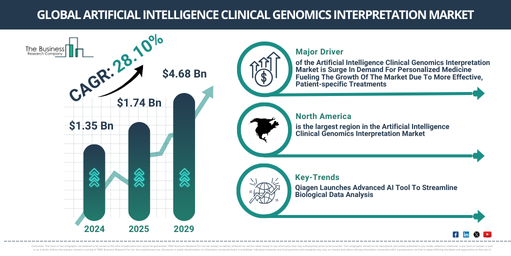
    The artificial intelligence clinical genomics interpretation market size has experienced significant expansion in recent years. It is projected to grow from $1.35 billion in 2024 to $1.74 billion in 2025, achieving a compound annual growth rate (CAGR) of 28.5%. This historical development can be attributed to several factors, including the increasing integration of artificial intelligence in healthcare, a rising demand for personalized medical treatments, the growing availability of genomic data, advancements in computational power for artificial intelligence algorithms, and enhanced investment in artificial intelligence-driven diagnostics.

    The artificial intelligence clinical genomics interpretation market size is projected to experience substantial expansion over the upcoming years. It is anticipated to grow to $4.68 billion in 2029, achieving a compound annual growth rate (CAGR) of 28.1%. This projected growth can be attributed to the increasing adoption of artificial intelligence-powered genomic instruments, the escalating demand for precision medicine, the expanding integration of cloud-based analytics, a rise in governmental funding for genomics research, and the broader application of real-world data in clinical decision-making. Key trends during the forecast period involve advancements in artificial intelligence-driven predictive analytics, innovations in multi-omics data integration, the incorporation of artificial intelligence into electronic health records, progress in real-time genomic interpretation, and new developments in explainable artificial intelligence for clinical genomics.

    Unlock Your Free Sample Report for Exclusive Market Data:

    https://www.thebusinessresearchcompany.com/sample.aspx?id=28141&type=smp

    What Are The Drivers Pushing New Developments In The Artificial Intelligence Clinical Genomics Interpretation Market?

    The increasing need for personalized medicine is expected to drive the expansion of the artificial intelligence clinical genomics interpretation market moving forward. Personalized medicine refers to a medical methodology that customizes diagnosis, treatment, and prevention approaches based on an individual’s genetic, environmental, and lifestyle factors. The rise in demand for personalized medicine is attributed to more efficacious treatments, as therapies are tailored to a person’s genetic profile, leading to better outcomes and fewer negative effects. Artificial intelligence clinical genomics interpretation supports the demand for personalized medicine by swiftly analyzing intricate genomic data to identify precise, patient-specific treatment options, thereby enhancing therapy effectiveness and minimizing trial-and-error approaches. For example, in February 2024, the Personalized Medicine Coalition, a US-based non-profit organization, reported that the U.S. Food and Drug Administration (FDA) approved 16 new personalized treatments for patients with rare diseases in 2023, which was a significant increase from the 6 approved in 2022. Therefore, the growing demand for personalized medicine is projected to stimulate the growth of the artificial intelligence clinical genomics interpretation market.

    How Is The Artificial Intelligence Clinical Genomics Interpretation Market Classified Into Different Segments?

    The artificial intelligence clinical genomics interpretation market covered in this report is segmented as

    1) By Component: Software, Services

    2) By Deployment Mode: Cloud Based, On Premises

    3) By Application: Oncology, Rare Diseases, Pharmacogenomics, Infectious Diseases, Other Applications

    4) By End User: Hospitals And Clinics, Research Institutes, Diagnostic Laboratories, Other End User

    Subsegments:

    1) By Software: Genomic Data Analysis, Variant Interpretation, Clinical Decision Support, Predictive Modeling, Reporting And Visualization

    2) By Services: Implementation And Integration, Consulting And Advisory, Training And Support, Data Management, Maintenance And Upgrades

    How Are Emerging Market Trends Shaping The Artificial Intelligence Clinical Genomics Interpretation Industry Landscape?

    Leading companies within the artificial intelligence clinical genomics interpretation market are concentrating on developing innovations that boost scalability for extensive genomic studies. These advancements facilitate high-throughput data processing, enhance the precision of genomic insights, and accelerate the identification of biomarkers and therapeutic targets. Scalability, in this context, refers to the capacity of AI systems to efficiently process enormous and intricate genomic datasets without sacrificing speed or accuracy, a vital necessity as the volume and complexity of sequencing continue to expand. An illustrative example occurred in December 2024 when QIAGEN, a Germany-based life sciences company, introduced an AI-driven extension for its Ingenuity Pathway Analysis (IPA) platform, designed to automate the interpretation of complex biological data. This enhancement leverages AI to pinpoint crucial genes, pathways, and molecular networks implicated in diseases, and integrates QIAGEN’s Biomedical Knowledge Base, which holds hundreds of millions of AI-derived relationships, to support the generation of more precise and insight-driven data.

    Who Are The Top Performing Companies In The Artificial Intelligence Clinical Genomics Interpretation Market In Recent Years?

    Major companies operating in the artificial intelligence clinical genomics interpretation market are F. Hoffmann-La Roche AG, NVIDIA Corporation, Illumina Inc., QIAGEN N.V., Tempus Labs Inc., GeneDx Inc., Freenome Inc., NantHealth Inc., SOPHiA GENETICS SA, Genomenon Inc., DNAnexus Inc., Lifebit Biotech Ltd., Deep Genomics Inc., SpeeDx Pty Ltd, PierianDx Inc., Genuity Science Inc., Karius Inc., FDNA Inc., SeqOne Genomics Inc., Nostos Genomics Inc.

    Download The Full Report For Exclusive Market Findings:

    https://www.thebusinessresearchcompany.com/report/artificial-intelligence-clinical-genomics-interpretation-global-market-report

    Which Region Currently Holds The Largest Share Of The Artificial Intelligence Clinical Genomics Interpretation Market?

    North America was the largest region in the artificial intelligence clinical genomics interpretation market in 2024. Asia-Pacific is expected to be the fastest-growing region in the forecast period. The regions covered in artificial intelligence clinical genomics interpretation report are Asia-Pacific, Western Europe, Eastern Europe, North America, South America, Middle East and Africa.

    Request A Customized Version Of The Artificial Intelligence Clinical Genomics Interpretation Market Report:

    https://www.thebusinessresearchcompany.com/customise?id=28141&type=smp

    Browse Through More Reports Similar to the Global Artificial Intelligence Clinical Genomics Interpretation Market 2025, By The Business Research Company

    Ai In Genomics Global Market Report 2025

    https://www.thebusinessresearchcompany.com/report/ai-in-genomics-global-market-report

    Artificial Intelligence In Healthcare Diagnosis Global Market Report 2025

    https://www.thebusinessresearchcompany.com/report/artificial-intelligence-in-healthcare-diagnosis-global-market-report

    Artificial Intelligence Ai In Clinical Trials Global Market Report 2025

    https://www.thebusinessresearchcompany.com/report/artificial-intelligence-ai-in-clinical-trials-global-market-report

    Get in touch with us:

    The Business Research Company: https://www.thebusinessresearchcompany.com/

    Americas +1 310-496-7795

    Asia +44 7882 955267 & +91 8897263534

    Europe +44 7882 955267

    Email us at info@tbrc.info

    Follow us on:

    LinkedIn: https://in.linkedin.com/company/the-business-research-company

    YouTube: https://www.youtube.com/channel/UC24_fI0rV8cR5DxlCpgmyFQ

    Global Market Model: https://www.thebusinessresearchcompany.com/global-market-model
  • Artificial Intelligence (AI)-Powered Veterinary Diagnostics Industry Overview 2025: Growth Projections and Market Trends

    Artificial Intelligence (AI)-Powered Veterinary Diagnostics Industry Overview 2025: Growth Projections and Market Trends

    Unlock Global Insights – Save 20% on Market Reports with Code ONLINE20

    What Is The Future Market Size Estimation For The Artificial Intelligence (AI)-Powered Veterinary Diagnostics Market Covering 2025–2034?

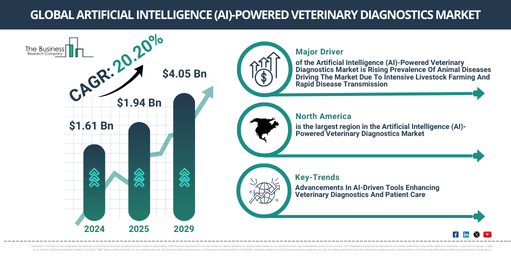
    The market size for artificial intelligence (AI)-powered veterinary diagnostics has experienced significant expansion in recent years. This market is set to expand from $1.61 billion in 2024 to $1.94 billion in 2025, progressing at a compound annual growth rate (CAGR) of 20.5%. Historically, this growth stems from factors such as increasing pet ownership and expenditure on animal healthcare, a growing demand for advanced imaging and diagnostic tools, heightened awareness regarding preventive veterinary care, an increased need for rapid and accurate diagnostic results, and a greater focus on livestock health management.

    The artificial intelligence (AI)-powered veterinary diagnostics market size is poised for significant expansion in the coming years, projected to reach $4.05 billion by 2029, exhibiting a compound annual growth rate (CAGR) of 20.2%. This anticipated growth during the forecast period is attributed to several factors, including an increasing reliance on artificial intelligence for precision diagnosis, a rising demand for personalized treatment planning in animals, escalating investment in veterinary research and development, an increase in the prevalence of animal diseases, and a heightened focus on early disease detection and preventive healthcare for animals. Major trends expected in the forecast period encompass innovation in cloud-based veterinary diagnostic platforms, the integration of telemedicine with AI-powered diagnostic solutions, advancements in point-of-care diagnostic devices supported by AI, novel developments in multi-animal diagnostic applications, and the incorporation of big data analytics and machine learning to facilitate predictive veterinary healthcare.

    Unlock Your Free Sample Report for Exclusive Market Data:

    https://www.thebusinessresearchcompany.com/sample.aspx?id=28140&type=smp

    What Are The Emerging Market Drivers Creating New Opportunities In The Artificial Intelligence (AI)-Powered Veterinary Diagnostics Industry?

    The increasing occurrence of animal illnesses is anticipated to fuel the expansion of the artificial intelligence (AI)-powered veterinary diagnostics market in the future. Animal diseases are defined as atypical health states in animals stemming from pathogens, inadequate nutrition, hereditary factors, or environmental pressures. These diseases are on the rise, particularly due to intensive livestock farming practices where dense animal populations in restricted areas foster the swift transmission of infections. The artificial intelligence (AI)-powered veterinary diagnostics market assists in tackling animal diseases by offering quicker and more precise infection detection, forecasting potential disease outbreaks, and aiding in prompt treatment choices to enhance animal well-being. As an illustration, in May 2025, data from the World Organization for Animal Health (WOAH), a France-based intergovernmental organization, showed that avian influenza outbreaks in mammals more than doubled, recording 1,022 outbreaks across 55 countries in 2024, a significant rise from 459 in 2023. Consequently, the escalating prevalence of animal diseases is a key factor propelling the expansion of the artificial intelligence (AI)-powered veterinary diagnostics market.

    What Are The Major Segments Identified In The Artificial Intelligence (AI)-Powered Veterinary Diagnostics Market?

    The artificial intelligence (AI)-powered veterinary diagnostics market covered in this report is segmented as

    1) By Component: Software, Hardware, Services

    2) By Animal Type: Companion Animals, Livestock, Other Animal Types

    3) By Application: Disease Detection, Health Monitoring, Treatment Planning, Other Applications

    4) By End User: Veterinary Hospitals And Clinics, Diagnostic Laboratories, Research Institutes, Other End-Users

    Subsegments:

    1) By Software: Diagnostic Imaging Software, Data Analytics And Predictive Tools, Electronic Health Records (EHR) Integration

    2) By Hardware: Imaging Systems, Analyzers, Wearable Monitoring Devices

    3) By Services: Diagnostic And Testing Services, Consulting And Training Services, Maintenance And Support Services

    Which Key Trends Are Expected To Influence The Artificial Intelligence (AI)-Powered Veterinary Diagnostics Market In The Coming Years?

    Major companies operating in the artificial intelligence (AI)-powered veterinary diagnostics market are concentrating on developing advanced solutions, such as AI-driven radiology interpretation instruments, to enhance diagnostic accuracy, reduce turnaround time, and improve treatment outcomes for animals. An AI-powered radiology interpretation tool refers to a software solution that utilizes artificial intelligence algorithms to analyze veterinary radiology images, including X-rays, computed tomography (CT) scans, and magnetic resonance imaging (MRI), to detect abnormalities and provide faster, more precise diagnostic insights. For instance, in May 2025, Antech Diagnostics Inc., a US-based veterinary diagnostics company, introduced RapidRead Dental, an artificial intelligence (AI)-powered radiology interpretation tool, aiming to provide swift and accurate dental disease detection in pets. This tool delivers fast, accurate tooth-by-tooth analysis of veterinary dental radiographs in approximately 10 minutes. It improves diagnostic confidence, reduces anesthetic time by enabling treatment decisions during the procedure, and enhances workflow efficiency. Additionally, it offers clear, annotated reports that assist veterinarians in communicating findings effectively to pet owners, improving patient care and client compliance.

    Which Leading Companies Dominate The Artificial Intelligence (AI)-Powered Veterinary Diagnostics Market Share?

    Major companies operating in the artificial intelligence (AI)-powered veterinary diagnostics market are Zoetis Inc., Antech Diagnostics Inc., smaXtec animal care technology GmbH, Scopio Labs Ltd., SignalPET Inc., ImpriMed Inc., VetCT Ltd., CattleEye Ltd, VetChip, VetRadar, Vetspire LLC, EIO Diagnostics Inc., MiDOG, Moichor Inc., Techcyte Inc., Vetology Innovations Inc., Felcana, Petriage Inc., Aiforia Technologies Oyj, and PawSmart.ai.

    Download The Full Report For Exclusive Market Findings:

    https://www.thebusinessresearchcompany.com/report/artificial-intelligence-ai-powered-veterinary-diagnostics-global-market-report

    What Regional Growth Trends Are Shaping The Artificial Intelligence (AI)-Powered Veterinary Diagnostics Market Outlook?

    North America was the largest region in the artificial intelligence-powered veterinary diagnostics market in 2024. Asia-Pacific is expected to be the fastest-growing region in the forecast period. The regions covered in artificial intelligence (AI)-powered veterinary diagnostics report are Asia-Pacific, Western Europe, Eastern Europe, North America, South America, Middle East and Africa.

    Request A Customized Version Of The Artificial Intelligence (AI)-Powered Veterinary Diagnostics Market Report:

    https://www.thebusinessresearchcompany.com/customise?id=28140&type=smp

    Browse Through More Reports Similar to the Global Artificial Intelligence (AI)-Powered Veterinary Diagnostics Market 2025, By The Business Research Company

    Artificial Intelligence Ai In Animal Health Global Market Report 2025

    https://www.thebusinessresearchcompany.com/report/artificial-intelligence-ai-in-animal-health-global-market-report

    Artificial Intelligence In The Diagnostic Global Market Report 2025

    https://www.thebusinessresearchcompany.com/report/artificial-intelligence-in-the-diagnostic-global-market-report

    Veterinary Diagnostic Equipment Global Market Report 2025

    https://www.thebusinessresearchcompany.com/report/veterinary-diagnostic-equipment-global-market-report

    Get in touch with us:

    The Business Research Company: https://www.thebusinessresearchcompany.com/

    Americas +1 310-496-7795

    Asia +44 7882 955267 & +91 8897263534

    Europe +44 7882 955267

    Email us at info@tbrc.info

    Follow us on:

    LinkedIn: https://in.linkedin.com/company/the-business-research-company

    YouTube: https://www.youtube.com/channel/UC24_fI0rV8cR5DxlCpgmyFQ

    Global Market Model: https://www.thebusinessresearchcompany.com/global-market-model
  • Artificial Intelligence (AI)-Powered Rare Disease Diagnosis Market Size Forecast: Revenue and CAGR by 2029

    Artificial Intelligence (AI)-Powered Rare Disease Diagnosis Market Size Forecast: Revenue and CAGR by 2029

    Unlock Global Insights – Save 20% on Market Reports with Code ONLINE20

    What Is The Expected Total Market Size Of The Artificial Intelligence (AI)-Powered Rare Disease Diagnosis Industry By The Forecast Year 2029?

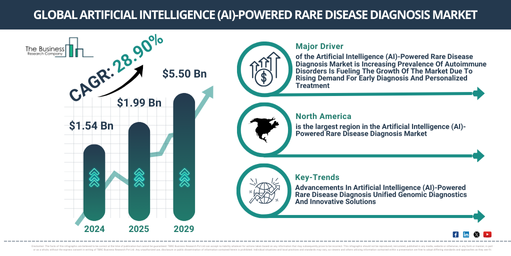
    The artificial intelligence (AI)-powered rare disease diagnosis market has witnessed significant growth in recent years. It is anticipated to expand from $1.54 billion in 2024 to $1.99 billion in 2025, achieving a compound annual growth rate (CAGR) of 29.1%. Historically, this expansion has been driven by the increasing integration of artificial intelligence (AI) in healthcare, heightened investment in rare disease research, greater recognition of the importance of early diagnosis, improvements in healthcare infrastructure, and enhanced government support for digital health initiatives.

    The market size for artificial intelligence (AI)-powered rare disease diagnosis is predicted to experience significant expansion in the coming years. It is projected to achieve a value of $5.50 billion by 2029, expanding at a compound annual growth rate (CAGR) of 28.9%. This anticipated growth during the forecast period stems from factors such as the increasing incorporation of machine learning algorithms, the rising need for personalized medicine, enhanced collaboration between AI startups and hospitals, the broadened availability of genomic data, and the accelerating digitalization of healthcare. Noteworthy trends during this same period encompass advancements in deep learning models, new innovations in predictive diagnostics, progress in natural language processing specifically for medical data, continuous research and development in multi-omics integration, and ongoing refinements in artificial intelligence (AI)-driven imaging technologies.

    Unlock Your Free Sample Report for Exclusive Market Data:

    https://www.thebusinessresearchcompany.com/sample.aspx?id=28139&type=smp

    Which Drivers Are Impacting The Artificial Intelligence (AI)-Powered Rare Disease Diagnosis Market?

    The escalating occurrence of autoimmune disorders is anticipated to fuel the expansion of the artificial intelligence (AI)-powered rare disease diagnosis market. Autoimmune disorders are conditions where the immune system erroneously attacks the body’s healthy cells and tissues, leading to inflammation and damage. The increasing prevalence of these disorders stems from a rising number of individuals experiencing immune system dysfunctions, which in turn drives a higher demand for early diagnosis, advanced treatments, and continuous monitoring to effectively manage symptoms. Artificial intelligence (AI)-powered rare disease diagnosis supports the management of autoimmune disorders by swiftly identifying complex conditions, aiding in personalized treatment decisions, and improving overall diagnostic accuracy. For instance, in June 2024, according to the Australian Institute of Health and Welfare, an Australia-based government organization, in 2022, an estimated 514,000 people (2.0%) in Australia were living with rheumatoid arthritis (a systemic autoimmune disorder in which the body’s immune system targets its tissues). Consequently, the growing prevalence of autoimmune disorders is a significant driver for the growth of the artificial intelligence (AI)-powered rare disease diagnosis market.

    What Are The Emerging Segments Gaining Attention In The Artificial Intelligence (AI)-Powered Rare Disease Diagnosis Market?

    The artificial intelligence (AI)-powered rare disease diagnosis market covered in this report is segmented as

    1) By Component: Software, Hardware, Services

    2) By Technology: Machine Learning, Deep Learning, Natural Language Processing, Computer Vision, Other Technologies

    3) By Deployment Mode: Cloud-Based, On-Premises

    4) By Diagnosis Type: Genetic Disorders, Autoimmune Disorders, Metabolic Disorders, Infectious Diseases, Other Diagnosis Types

    5) By End-User: Hospitals, Diagnostic Centers, Research Institutes, Specialty Clinics, Other End-Users

    Subsegments:

    1) By Software: Clinical Decision Support, Data Analytics Platforms, Genomic Interpretation Tools, Machine Learning Algorithms, Diagnostic Reporting Software

    2) By Hardware: Sequencing Instruments, Imaging Devices, Laboratory Equipment, Computational Servers, Diagnostic Sensors

    3) By Services: Consulting Services, Implementation And Integration, Training And Support, Data Management Services, Maintenance And Upgrades

    What Are The Major Trends Driving The Growth Of The Artificial Intelligence (AI)-Powered Rare Disease Diagnosis Market?

    Leading companies within the artificial intelligence (AI)-powered rare disease diagnosis market are concentrating on developing advanced technologies, such as unified genomic diagnostics solutions, to boost diagnostic precision, shorten turnaround times, and offer more extensive understanding of complex genetic conditions. A unified genomic diagnostics solution functions as a combined system, integrating whole-genome sequencing with artificial intelligence (AI)-driven analysis to provide comprehensive genetic information. For example, in October 2023, Oxford Nanopore Technologies plc, a UK-based biotechnology company, and Fabric Genomics Inc., a US-based artificial intelligence (AI)-based company, introduced an integrated whole-genome sequencing solution designed to speed up rare disease diagnosis. This is achieved by merging rapid sequencing with AI-driven variant interpretation, leading to more precise and practical clinical insights. This new offering brings together real-time nanopore sequencing with artificial intelligence (AI)-powered genomic analysis, facilitating the swift identification of rare genetic variants. It subsequently furnishes clinicians with exhaustive, actionable insights, thereby improving diagnostic speed and accuracy, particularly in pediatric care.

    Who Are The Major Companies Operating In The Artificial Intelligence (AI)-Powered Rare Disease Diagnosis Market?

    Major companies operating in the artificial intelligence (ai)-powered rare disease diagnosis market are Ambry Genetics Corporation, MedGenome Inc., Sophia Genetics SA, Variantyx Inc., Facial Dysmorphology Novel Analysis, Atropos Health Inc., Congenica Ltd., Saventic Care Sp. z o.o., Rapid Innovation LLC, Centogene N.V., Impilo AB, ThinkGenetic Inc., ClairLabs Ltd., 3billion Inc., OpenEvidence Inc., GenomeUp S.R.L., Mendel.ai Inc., RareSum GmbH, DeepRare AI Solutions, Zebra-Llama Project.

    Download The Full Report For Exclusive Market Findings:

    https://www.thebusinessresearchcompany.com/report/artificial-intelligence-ai-powered-rare-disease-diagnosis-global-market-report

    Which Regional Markets Are Contributing Most To The Artificial Intelligence (AI)-Powered Rare Disease Diagnosis Industry Expansion?

    North America was the largest region in the artificial intelligence (AI)-powered rare disease diagnosis market in 2024. Asia-Pacific is expected to be the fastest-growing region in the forecast period. The regions covered in artificial intelligence (AI)-powered rare disease diagnosis report are Asia-Pacific, Western Europe, Eastern Europe, North America, South America, Middle East and Africa.

    Request A Customized Version Of The Artificial Intelligence (AI)-Powered Rare Disease Diagnosis Market Report:

    https://www.thebusinessresearchcompany.com/customise?id=28139&type=smp

    Browse Through More Reports Similar to the Global Artificial Intelligence (AI)-Powered Rare Disease Diagnosis Market 2025, By The Business Research Company

    Artificial Intelligence In Healthcare Diagnosis Global Market Report 2025

    https://www.thebusinessresearchcompany.com/report/artificial-intelligence-in-healthcare-diagnosis-global-market-report

    Artificial Intelligence In The Diagnostic Global Market Report 2025

    https://www.thebusinessresearchcompany.com/report/artificial-intelligence-in-the-diagnostic-global-market-report

    Ai In Medical Diagnostics Global Market Report 2025

    https://www.thebusinessresearchcompany.com/report/ai-in-medical-diagnostics-global-market-report

    Get in touch with us:

    The Business Research Company: https://www.thebusinessresearchcompany.com/

    Americas +1 310-496-7795

    Asia +44 7882 955267 & +91 8897263534

    Europe +44 7882 955267

    Email us at info@tbrc.info

    Follow us on:

    LinkedIn: https://in.linkedin.com/company/the-business-research-company

    YouTube: https://www.youtube.com/channel/UC24_fI0rV8cR5DxlCpgmyFQ

    Global Market Model: https://www.thebusinessresearchcompany.com/global-market-model