Blog

  • Global Artificial Intelligence (AI)-Powered Dermatology Lesion Triaging Market Trends and Growth Analysis 2025–2029

    Global Artificial Intelligence (AI)-Powered Dermatology Lesion Triaging Market Trends and Growth Analysis 2025–2029

    Unlock Global Insights – Save 20% on Market Reports with Code ONLINE20

    How Does The Market Size Of The Artificial Intelligence (AI)-Powered Dermatology Lesion Triaging Industry Compare Between 2025 And 2029?

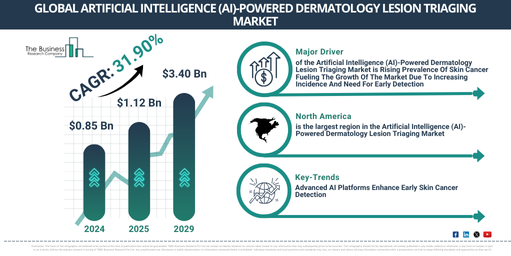
    The artificial intelligence (AI)-powered dermatology lesion triaging market has experienced substantial expansion in recent years. This market is projected to expand from $0.85 billion in 2024 to $1.12 billion in 2025, achieving a compound annual growth rate (CAGR) of 32.3%. The historical growth trajectory can be linked to factors such as the increasing utilization of mobile health applications, the expanding infrastructure for telemedicine, the necessity for more rapid and accurate diagnoses, the proliferation of dermatology clinics, and a heightened awareness of skin health and its prevention.

    The artificial intelligence (AI)-powered dermatology lesion triaging market is projected to experience rapid expansion in the coming years, reaching a valuation of $3.40 billion by 2029, exhibiting a compound annual growth rate (CAGR) of 31.9%. This anticipated growth during the forecast period stems from factors such as the increasing incidence of skin cancer, heightened recognition of the importance of early diagnosis, the need for personalized medical treatments, the ongoing digitization within healthcare, and greater capital expenditure in AI startups focused on healthcare. Key developments expected within the forecast timeframe encompass progress in real-time lesion examination, novelties in predictive dermatology models, the incorporation of artificial intelligence into electronic health records, improvements in mobile skin assessment technologies, and breakthroughs in customized treatment advice.

    Unlock Your Free Sample Report for Exclusive Market Data:

    https://www.thebusinessresearchcompany.com/sample.aspx?id=28138&type=smp

    Which Industry Drivers Are Expected To Accelerate The Artificial Intelligence (AI)-Powered Dermatology Lesion Triaging Market From 2025 To 2029?

    The increasing occurrence of skin cancer is anticipated to drive the expansion of the artificial intelligence (AI)-powered dermatology lesion triaging market moving ahead. Skin cancer refers to the uncontrolled proliferation of abnormal skin cells, typically resulting from damage caused by ultraviolet radiation from the sun or tanning beds. The rising incidence of skin cancer is primarily attributed to excessive sun exposure, where harmful ultraviolet (UV) radiation damages the DNA within skin cells. Artificial intelligence (AI)-powered dermatology lesion triaging assists in addressing skin cancer by enabling early and accurate detection of suspicious skin lesions. It reduces diagnostic delays through real-time risk assessment, streamlines specialist referrals, and supports clinical decision-making, ultimately improving patient outcomes. For instance, in 2023, Cancer Australia, an Australia-based government agency, reported approximately 8,257 new cases of melanoma of the skin, which accounted for 2.6% of all deaths from cancer. Therefore, the heightened prevalence of skin cancer is fueling the growth of the artificial intelligence (AI)-powered dermatology lesion triaging market.

    What Are The Major Segment Types Covered In The Artificial Intelligence (AI)-Powered Dermatology Lesion Triaging Market?

    The artificial intelligence (AI)-powered dermatology lesion triaging market covered in this report is segmented as

    1) By Component: Software, Hardware, Services

    2) By Deployment Mode: Cloud-Based, On-Premises

    3) By Lesion Type: Benign, Malignant, Pre-Malignant

    4) By Application: Skin Cancer Detection, Benign Lesion Identification, Teledermatology, Clinical Decision Support, Other Applications

    5) By End-User: Hospitals, Dermatology Clinics, Diagnostic Centers, Research Institutes, Other End Users

    Subsegments:

    1) By Software: Image Analysis Software, Diagnostic Support Software, Cloud-Based Software, Mobile Application Software, Patient Management Software

    2) By Hardware: Imaging Devices, Dermatoscopes, Cameras, Computers, Scanners

    3) By Services: Consulting Services, Implementation Services, Training And Education Services, Maintenance And Support Services, Data Management Services

    What Are The Major Trends Driving The Growth Of The Artificial Intelligence (AI)-Powered Dermatology Lesion Triaging Market?

    Leading companies in the artificial intelligence (AI)-powered dermatology lesion triaging market are concentrating on developing advanced offerings, such as AI-driven imaging platforms, to boost diagnostic accuracy, enhance the early detection of skin cancers, and optimize clinical workflows. These AI-powered imaging platforms represent integrated systems that utilize artificial intelligence algorithms to analyze skin lesions, provide real-time diagnostic support, and assist in triaging cases based on malignancy risk. For instance, in June 2024, Enspectra Health Inc., a US-based health tech company, was granted Food and Drug Administration Breakthrough Device Designation for its next-generation artificial intelligence-powered VIO Skin Platform. This platform combines reflectance confocal and multiphoton laser scanning microscopy to generate non-invasive, real-time cellular-level images of skin tissues. It also integrates with VIO.ai NMSC, a computer-aided diagnosis and triage (CADx/CADt) software function, to classify lesions suspicious for basal cell carcinoma (BCC) and squamous cell carcinoma (SCC) in high-risk populations, thereby aiding physicians in clinical decision-making and potentially reducing unnecessary biopsies.

    Which Global Market Leaders Are Shaping The Future Of The Artificial Intelligence (AI)-Powered Dermatology Lesion Triaging Sector?

    Major companies operating in the artificial intelligence (ai)-powered dermatology lesion triaging market are Proscia Inc., Aysa Hospitality, SkinVision B.V., MetaOptima Technology Inc., SkinIO Inc., Skin Analytics Ltd., DermaSensor Inc., Dxcover Ltd., Skinive, Legit.Health, Veriskin, VivoSight, BelleTorus, First Derm, CureSkin, Skinopathy, DermLens AI, Enspectra Health Inc., and Dermie.AI.

    Download The Full Report For Exclusive Market Findings:

    https://www.thebusinessresearchcompany.com/report/artificial-intelligence-ai-powered-dermatology-lesion-triaging-global-market-report

    How Does The Artificial Intelligence (AI)-Powered Dermatology Lesion Triaging Market Perform Across Key Geographic Regions?

    North America was the largest region in the artificial intelligence (AI)-powered dermatology lesion triaging market in 2024. The regions covered in artificial intelligence (AI)-powered dermatology lesion triaging report are Asia-Pacific, Western Europe, Eastern Europe, North America, South America, Middle East and Africa.

    Request A Customized Version Of The Artificial Intelligence (AI)-Powered Dermatology Lesion Triaging Market Report:

    https://www.thebusinessresearchcompany.com/customise?id=28138&type=smp

    Browse Through More Reports Similar to the Global Artificial Intelligence (AI)-Powered Dermatology Lesion Triaging Market 2025, By The Business Research Company

    Artificial Intelligence Ai Radiology Tool Global Market Report 2025

    https://www.thebusinessresearchcompany.com/report/artificial-intelligence-ai-radiology-tool-global-market-report

    Ai In Beauty And Cosmetics Global Market Report 2025

    https://www.thebusinessresearchcompany.com/report/ai-in-beauty-and-cosmetics-global-market-report

    Ai In Cancer Diagnostics Global Market Report 2025

    https://www.thebusinessresearchcompany.com/report/ai-in-cancer-diagnostics-global-market-report

    Get in touch with us:

    The Business Research Company: https://www.thebusinessresearchcompany.com/

    Americas +1 310-496-7795

    Asia +44 7882 955267 & +91 8897263534

    Europe +44 7882 955267

    Email us at info@tbrc.info

    Follow us on:

    LinkedIn: https://in.linkedin.com/company/the-business-research-company

    YouTube: https://www.youtube.com/channel/UC24_fI0rV8cR5DxlCpgmyFQ

    Global Market Model: https://www.thebusinessresearchcompany.com/global-market-model
  • Artificial Intelligence (AI)-Powered Clinical Trial Site Feasibility Market Forecast: What to Expect by 2029

    Artificial Intelligence (AI)-Powered Clinical Trial Site Feasibility Market Forecast: What to Expect by 2029

    Unlock Global Insights – Save 20% on Market Reports with Code ONLINE20

    What Is The Predicted Market Size Trajectory For The Artificial Intelligence (AI)-Powered Clinical Trial Site Feasibility Market From 2025 To 2034?

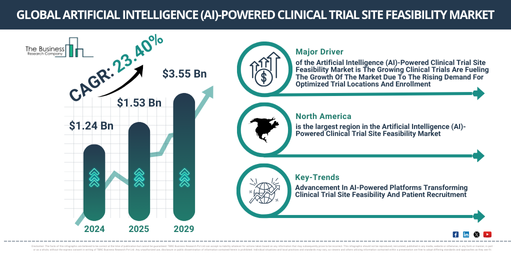
    The artificial intelligence (AI)-powered clinical trial site feasibility market has witnessed substantial growth in recent years. Its size is projected to expand from $1.24 billion in 2024 to $1.53 billion in 2025, reflecting a compound annual growth rate (CAGR) of 23.8%. This historical increase stems from the rising integration of AI in clinical research, a heightened need for expedited patient recruitment, the proliferation of decentralized clinical trials, improvements in electronic data capture systems, and supportive regulatory frameworks for novel trial designs.

    The artificial intelligence (AI)-powered clinical trial site feasibility market is projected to experience substantial growth in the upcoming years, with an anticipated increase to $3.55 billion by 2029, exhibiting a compound annual growth rate (CAGR) of 23.4%. This growth during the forecast period is primarily driven by the incorporation of real-world data with AI analytics, the proliferation of virtual clinical trial platforms, increasing investment in precision medicine, the use of predictive modeling for site selection, and the creation of adaptive trial designs leveraging AI. Key trends for this period encompass the application of predictive analytics for choosing sites, the integration of real-world data to improve feasibility, the implementation of machine learning algorithms for forecasting patient recruitment, the embrace of cloud-based AI platforms for joint trial planning, and the deployment of natural language processing to evaluate site performance information.

    Unlock Your Free Sample Report for Exclusive Market Data:

    https://www.thebusinessresearchcompany.com/sample.aspx?id=28137&type=smp

    What Are The Top Growth Drivers Impacting The Artificial Intelligence (AI)-Powered Clinical Trial Site Feasibility Market Outlook?

    The expansion of clinical trials is anticipated to stimulate the development of the artificial intelligence (AI)-powered clinical trial site feasibility market. Clinical trials represent clinical research investigations conducted worldwide to evaluate the safety and effectiveness of new medical interventions, medications, and devices. The increasing volume of clinical trials is largely fueled by greater investment in biomedical research and development, as both public and private sectors acknowledge the vital necessity for advanced treatments to tackle evolving healthcare issues. This growth in clinical trials generates a need for AI-powered site feasibility instruments, as research entities require streamlined methods to pinpoint ideal locations, evaluate site capabilities, and forecast enrollment achievement rates for their studies. For example, in November 2023, the Association of the British Pharmaceutical Industry, a UK-based trade association, reported a modest increase of 4.3% in the annual number of industry-sponsored clinical trials initiated in the UK, moving from 394 trials in 2021 to 411 in 2022. Consequently, the proliferation of clinical trials is propelling the expansion of the artificial intelligence (AI)-powered clinical trial site feasibility market.

    What Are The Major Segment Categories Driving The Artificial Intelligence (AI)-Powered Clinical Trial Site Feasibility Market Growth?

    The artificial intelligence (AI)-powered clinical trial site feasibility market covered in this report is segmented as

    1) By Component: Software, Services

    2) By Deployment Mode: Cloud-Based, On-Premises

    3) By Application: Site Selection, Patient Recruitment, Protocol Design, Performance Analytics, Other Applications

    4) By End-User: Pharmaceutical Companies, Contract Research Organizations, Academic Research Institutes, Hospitals, Other End-Users

    Subsegments:

    1) By Software: Predictive Analytics Software, Machine Learning (ML) Platforms, Natural Language Processing (NLP) Tools, Data Visualization Software, Clinical Trial Management System (CTMS) Integration Software, Real-World Data (RWD) Analytics Software, Risk-Based Monitoring (RBM) Software

    2) By Services: Feasibility Assessment Services, Site Selection Services, Patient Recruitment Support Services, Data Management And Analytics Services, Protocol Optimization Services, Regulatory Compliance Support Services, Consulting And Advisory Services

    What Trends Are Expected To Drive The Artificial Intelligence (AI)-Powered Clinical Trial Site Feasibility Market?

    Major companies operating in the artificial intelligence-powered clinical trial site feasibility market are concentrating on developing advanced solutions, such as an artificial intelligence-powered feasibility and recruitment platform, to refine site selection and enhance overall operational efficiency in clinical trials. This platform is a software solution that harnesses AI and machine learning to evaluate trial protocols and site data, aiming to pinpoint optimal clinical sites and bolster patient recruitment by efficiently matching eligible participants, thereby accelerating trial timelines and boosting study success. For instance, in June 2023, ObjectiveHealth, a US-based integrated research and technology platform company, introduced ObjectiveScreen, an artificial intelligence-powered feasibility and recruitment platform specifically designed to optimize clinical trial performance. It achieves this by improving patient identification, prequalification, and retention through real-time integration with electronic health records (EHRs) and the utilization of AI and machine learning algorithms. The platform empowers clinical trial sites to connect directly with patient data, stratify health risks, and identify the most qualified candidates, which serves to accelerate enrollment and improve trial outcomes.

    Which Industry Leaders Are Driving Innovation Across The Artificial Intelligence (AI)-Powered Clinical Trial Site Feasibility Market?

    Major companies operating in the artificial intelligence (ai)-powered clinical trial site feasibility market are Oracle Corporation, Thermo Fisher Scientific Inc., NVIDIA Corporation, IQVIA Holdings Inc., Labcorp Holdings Inc., Dassault Systèmes SE, Parexel International Corporation, ZS Associates Inc., Veeva Systems Inc., Verily Life Sciences LLC, Signant Health Holding Corp., Saama Technologies LLC, Elligo Health Research Inc., ConcertAI Inc., Medable Inc., Science 37 Inc., Castor EDC Inc., Unlearn.AI Inc., Antidote Technologies Inc., Deep 6 AI.

    Download The Full Report For Exclusive Market Findings:

    https://www.thebusinessresearchcompany.com/report/artificial-intelligence-ai-powered-clinical-trial-site-feasibility-global-market-report

    Which Region Is Expected To Witness The Fastest Growth In The Artificial Intelligence (AI)-Powered Clinical Trial Site Feasibility Market?

    North America was the largest region in the artificial intelligence (AI)-powered clinical trial site feasibility market in 2024. Asia-Pacific is expected to be the fastest-growing region in the forecast period. The regions covered in artificial intelligence (AI)-powered clinical trial site feasibility report are Asia-Pacific, Western Europe, Eastern Europe, North America, South America, Middle East and Africa.

    Request A Customized Version Of The Artificial Intelligence (AI)-Powered Clinical Trial Site Feasibility Market Report:

    https://www.thebusinessresearchcompany.com/customise?id=28137&type=smp

    Browse Through More Reports Similar to the Global Artificial Intelligence (AI)-Powered Clinical Trial Site Feasibility Market 2025, By The Business Research Company

    Artificial Intelligence Ai In Clinical Trials Global Market Report 2025

    https://www.thebusinessresearchcompany.com/report/artificial-intelligence-ai-in-clinical-trials-global-market-report

    Ai Based Clinical Trial Solution Providers Global Market Report 2025

    https://www.thebusinessresearchcompany.com/report/ai-based-clinical-trial-solution-providers-global-market-report

    Ai In Clinical Trials Global Market Report 2025

    https://www.thebusinessresearchcompany.com/report/ai-in-clinical-trials-global-market-report

    Get in touch with us:

    The Business Research Company: https://www.thebusinessresearchcompany.com/

    Americas +1 310-496-7795

    Asia +44 7882 955267 & +91 8897263534

    Europe +44 7882 955267

    Email us at info@tbrc.info

    Follow us on:

    LinkedIn: https://in.linkedin.com/company/the-business-research-company

    YouTube: https://www.youtube.com/channel/UC24_fI0rV8cR5DxlCpgmyFQ

    Global Market Model: https://www.thebusinessresearchcompany.com/global-market-model
  • Artificial Intelligence (AI)-Powered Chronic Pain Coaching Industry Insights: Market Forecast to 2029

    Artificial Intelligence (AI)-Powered Chronic Pain Coaching Industry Insights: Market Forecast to 2029

    Unlock Global Insights – Save 20% on Market Reports with Code ONLINE20

    How Much Larger Is The Artificial Intelligence (AI)-Powered Chronic Pain Coaching Market Expected To Become By 2029 Compared With Its 2025 Level?

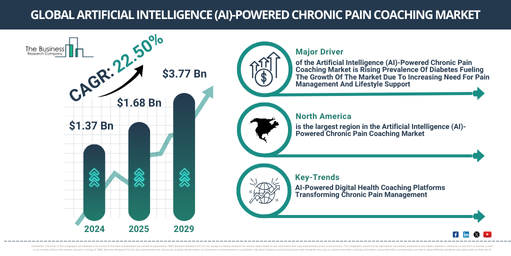
    The market size for artificial intelligence (AI)-powered chronic pain coaching has shown significant expansion in recent years. It is projected to grow from $1.37 billion in 2024 to $1.68 billion in 2025, at a compound annual growth rate (CAGR) of 22.8%. This historical growth can be attributed to factors such as the increasing demand for personalized healthcare solutions, the rising prevalence of chronic pain conditions, the greater adoption of telehealth and remote patient monitoring, the growing need for real-time pain tracking and intervention, and increasing consumer trust in artificial intelligence-driven health recommendations.

    The artificial intelligence (AI)-powered chronic pain coaching market is projected to experience rapid expansion in the coming years. Its valuation is anticipated to reach $3.77 billion by 2029, demonstrating a compound annual growth rate (CAGR) of 22.5%. This forecasted growth stems from several factors, including an increasing elderly demographic experiencing more chronic pain, greater use of mobile health applications for personal well-being, advancements in predictive analytics for managing pain, the expanding significance of digital biomarkers in monitoring pain, and the growing accessibility of large datasets for analyzing pain patterns. Key developments expected during this period involve personalized pain management strategies driven by technology, virtual reality tools improved by technology for pain relief, technology-enabled multilingual coaching platforms, the creation of precise pain education materials, and the incorporation of artificial intelligence coaching into telehealth services.

    Unlock Your Free Sample Report for Exclusive Market Data:

    https://www.thebusinessresearchcompany.com/sample.aspx?id=28136&type=smp

    Which Major Market Drivers Are Shaping The Future Of The Artificial Intelligence (AI)-Powered Chronic Pain Coaching Market?

    The rising occurrence of diabetes is anticipated to drive the expansion of the artificial intelligence (AI)-powered chronic pain coaching market in the future. Diabetes is defined as a persistent health issue where the body struggles to manage blood sugar levels effectively, stemming from issues with insulin generation or utilization. The incidence of diabetes is increasing because inactive lifestyles, marked by less physical movement and prolonged sitting, lead to weight accumulation and metabolic disruptions that elevate the risk of insulin resistance. AI-powered chronic pain coaching assists in diabetes management by aiding patients in dealing with discomfort and promoting modifications to their way of life that enhance blood sugar control. As an example, in March 2025, data from the Office for Health Improvement and Disparities, a UK-based government department, indicated that in England, the prevalence of type 2 diabetes among adults aged 17 and over reached 7.0% in March 2024, an increase from 6.8% in March 2023. Consequently, the growing frequency of diabetes is stimulating the expansion of the artificial intelligence (AI)-powered chronic pain coaching market.

    How Is The Artificial Intelligence (AI)-Powered Chronic Pain Coaching Market Segmented?

    The artificial intelligence (AI)-powered chronic pain coaching market covered in this report is segmented as

    1) By Component: Software, Hardware, Services

    2) By Deployment Mode: Cloud-Based, On-Premises

    3) By Application: Healthcare Providers, Pain Management Clinics, Rehabilitation Centers, Home Care, Other Applications

    4) By End-User: Hospitals, Clinics, Individuals, Other End-Users

    Subsegments:

    1) By Software: Mobile Applications, Web-Based Platforms, Analytics And Reporting Tools, Integration And Application Programming Interface Solutions

    2) By Hardware: Wearable Devices, Smartphones And Tablets, Connected Medical Devices, Virtual Reality Equipment

    3) By Services: Consulting Services, Implementation And Integration, Training And Education, Technical Support And Maintenance

    Which Trends Are Impacting The Artificial Intelligence (AI)-Powered Chronic Pain Coaching Market?

    Leading companies within the artificial intelligence (AI)-powered chronic pain coaching market are concentrating on developing technologically advanced solutions, including digital health coaching platforms, to enhance personalized treatment, improve patient engagement, and deliver data-driven insights for better pain management outcomes. Digital health coaching platforms refer to AI-driven tools that provide personalized guidance, progress tracking, and virtual support to help individuals manage chronic pain more effectively. For instance, in January 2025, Elyfia Ltd., a UK-based digital health coaching platform, launched an innovative digital health coaching platform specifically designed for fibromyalgia patients, integrating both human expertise and advanced AI technology. The platform offers personalized health coaching from a dedicated team of doctors, personal trainers, and certified coaches, combined with AI-driven insights that analyze real-time data from wearable devices and user inputs. This AI integration enables continuous symptom tracking, pattern recognition, and personalized care recommendations tailored to each individual’s unique condition. By leveraging AI, Elyfia assists users in managing fibromyalgia symptoms such as widespread pain, fatigue, and sleep disturbances more effectively, empowering them to build healthier habits through interactive modules and on-demand coaching accessible via smartphones.

    Who Are The Key Multinational Companies Dominating The Artificial Intelligence (AI)-Powered Chronic Pain Coaching Market?

    Major companies operating in the artificial intelligence (ai)-powered chronic pain coaching market are Hinge Health Inc., Sword Health Inc., Biofourmis Inc., Therabody Inc., Omada Health Inc., Vivira Health Lab, Kaia Health Software GmbH, XRHealth Inc., EcoAI Ltd., MyPainSensei, Meegle, Avari XR, Neurofit, Curable Health Inc., FeelBetter Ltd., Flok Health Ltd., JOGO Health Inc., Fern Health Inc., Kaia Health Software Inc., Karuna Labs Inc., FlexifyMe Ltd.

    Download The Full Report For Exclusive Market Findings:

    https://www.thebusinessresearchcompany.com/report/artificial-intelligence-ai-powered-chronic-pain-coaching-global-market-report

    Which Global Regions Are Influencing The Competitive Landscape Of The Artificial Intelligence (AI)-Powered Chronic Pain Coaching Market?

    North America was the largest region in the artificial intelligence (AI)-powered chronic pain coaching market in 2024. The regions covered in artificial intelligence (AI)-powered chronic pain coaching report are Asia-Pacific, Western Europe, Eastern Europe, North America, South America, Middle East and Africa.

    Request A Customized Version Of The Artificial Intelligence (AI)-Powered Chronic Pain Coaching Market Report:

    https://www.thebusinessresearchcompany.com/customise?id=28136&type=smp

    Browse Through More Reports Similar to the Global Artificial Intelligence (AI)-Powered Chronic Pain Coaching Market 2025, By The Business Research Company

    Chronic Pain Global Market Report 2025

    https://www.thebusinessresearchcompany.com/report/chronic-pain-global-market-report

    Health Coaching Global Market Report 2025

    https://www.thebusinessresearchcompany.com/report/health-coaching-global-market-report

    Ai In Mental Health Global Market Report 2025

    https://www.thebusinessresearchcompany.com/report/ai-in-mental-health-global-market-report

    Get in touch with us:

    The Business Research Company: https://www.thebusinessresearchcompany.com/

    Americas +1 310-496-7795

    Asia +44 7882 955267 & +91 8897263534

    Europe +44 7882 955267

    Email us at info@tbrc.info

    Follow us on:

    LinkedIn: https://in.linkedin.com/company/the-business-research-company

    YouTube: https://www.youtube.com/channel/UC24_fI0rV8cR5DxlCpgmyFQ

    Global Market Model: https://www.thebusinessresearchcompany.com/global-market-model
  • Artificial Intelligence (AI)-Powered Acute Stroke Triage Market Size and Growth Forecast for Businesses 2025–2029

    Artificial Intelligence (AI)-Powered Acute Stroke Triage Market Size and Growth Forecast for Businesses 2025–2029

    Unlock Global Insights – Save 20% on Market Reports with Code ONLINE20

    #What Are The Current (2025) And Forecast (2029) Sizes Of The Artificial Intelligence (AI)-Powered Acute Stroke Triage Market?

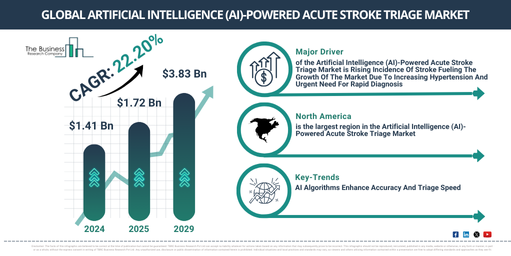
    The market for artificial intelligence (AI)-powered acute stroke triage has seen rapid expansion over the past few years. This market is projected to expand from $1.41 billion in 2024 to $1.72 billion in 2025, demonstrating a compound annual growth rate (CAGR) of 22.5%. Factors contributing to this historical growth include the escalating incidence of stroke among the aging population, a heightened burden of stroke-related mortality and morbidity, the expanding prevalence of chronic diseases, a rise in government awareness initiatives, and greater expansion of healthcare infrastructure.

    The artificial intelligence (AI)-powered acute stroke triage market size is poised for substantial expansion in the upcoming years. It is predicted to reach $3.83 billion by 2029, exhibiting a compound annual growth rate (CAGR) of 22.2%. This growth during the forecast period can be attributed to increased healthcare investments in stroke care, the rising adoption of various stroke management strategies, expanding healthcare access in emerging markets, growing public awareness of stroke symptoms, and an increasing focus on early medical intervention. Significant trends expected in this period include advancements in imaging analysis, the development of artificial intelligence decision support platforms, innovations in mobile stroke units, investments in cloud-based healthcare solutions, research and development concerning telemedicine integration, and improvements in virtual reality training for medical staff.

    Unlock Your Free Sample Report for Exclusive Market Data:

    https://www.thebusinessresearchcompany.com/sample.aspx?id=28135&type=smp

    What Are The Main Drivers Boosting The Artificial Intelligence (AI)-Powered Acute Stroke Triage Industry’s Expansion?

    The growing occurrence of stroke is anticipated to drive the expansion of the artificial intelligence (AI)-powered acute stroke triage market. A stroke is defined as a condition where interrupted blood flow to the brain causes cell damage, potentially leading to disability or death if not promptly addressed. This escalating incidence of stroke is linked to hypertension, as high blood pressure increases the risk of brain vessel blockages or ruptures. Artificial intelligence (AI)-powered acute stroke triage assists in stroke diagnosis by rapidly analyzing brain scans, making it crucial for the early identification of stroke type and severity. This technology reduces diagnostic delays by prioritizing urgent cases, thereby improving treatment speed and patient outcomes. For instance, in September 2024, the Stroke Foundation, an Australia-based non-profit organization, reported that in 2023, approximately 45,785 Australians experienced a stroke, averaging one stroke every 11 minutes, with 34,793 of these being first-time occurrences. Consequently, the rising incidence of stroke is propelling the growth of the artificial intelligence (AI)-powered acute stroke triage market.

    What Are The Key Segments In The Artificial Intelligence (AI)-Powered Acute Stroke Triage Market?

    The artificial intelligence (AI)-powered acute stroke triage market covered in this report is segmented as

    1) By Component: Software, Hardware, Services

    2) By Deployment Mode: On-Premises, Cloud-Based

    3) By Application: Hospitals, Diagnostic Centers, Emergency Medical Services, Research Institutes, Other Applications

    4) By End-User: Healthcare Providers, Radiology Centers, Academic And Research Institutes, Other End-Users

    Subsegments:

    1) By Software: Clinical Decision Support Software, Imaging And Diagnostics Software, Workflow Management Software, Data Integration And Interoperability Platforms, Predictive Analytics And Machine Learning Tools

    2) By Hardware: Medical Imaging Devices, Edge Computing Devices, AI Processing Units, Workstations And Servers, Networking And Storage Devices

    3) By Services: Implementation And Integration Services, Training And Education Services, Maintenance and Support Services, Consulting Services, Cloud-Based Deployment and Managed Services

    What Long-Term Trends Will Shape The Future Growth Of The Artificial Intelligence (AI)-Powered Acute Stroke Triage Industry?

    Leading companies in the artificial intelligence (AI)-powered acute stroke triage market are concentrating on developing technologically advanced solutions, such as sophisticated artificial intelligence (AI) algorithms, to improve diagnostic accuracy, expedite triage, and enhance clinical outcomes. Advanced artificial intelligence (AI) algorithms are complex computational methods that learn from data to recognize patterns, make predictions, and support intelligent decision-making. For instance, in April 2023, RapidAI Inc., a US-based provider of cerebrovascular imaging solutions, obtained United States Food and Drug Administration (FDA) 510(k) clearance for Rapid Noncontrast Computed Tomography (NCCT) Stroke, an artificial intelligence (AI) solution designed for non-contrast CT imaging to detect suspected intracranial hemorrhage (ICH) and large vessel occlusion (LVO) from standard CT scans. This system automatically analyzes NCCT images, delivering triage and prioritization alerts via PACS, email, and the Rapid mobile app, which enables faster door-to-imaging and door-to-decision times. It also facilitates rapid transfer and treatment decisions, diminishes delays for advanced imaging, and enhances access to advanced stroke care at hospitals of all levels.

    Which Leading Players Are Enhancing Their Artificial Intelligence (AI)-Powered Acute Stroke Triage Market Presence Worldwide?

    Major companies operating in the artificial intelligence (ai)-powered acute stroke triage market are Siemens Healthineers AG, GE HealthCare Technologies Inc., Shanghai United Imaging Healthcare Co. Ltd., Viz.ai Inc., Aidoc Medical Ltd., RapidAI Inc., Qure.ai Technologies Private Limited, Harrison.ai Pty Ltd, Infervision Inc., Circle Cardiovascular Imaging Inc., Behold.ai Ltd., Brainomix Ltd., JLK Inc., BioMind.ai Pte. Ltd., Sevaro Health Inc., Heuron Technologies Inc., Nicolab Inc., icometrix NV, Deep01 Inc., SNAC Medical Inc., BrainScan.ai Ltd., Cercare Medical Ltd., and Avicenna.AI GmbH.

    Download The Full Report For Exclusive Market Findings:

    https://www.thebusinessresearchcompany.com/report/artificial-intelligence-ai-powered-acute-stroke-triage-global-market-report

    What Are The Regional Market Dynamics Impacting The Artificial Intelligence (AI)-Powered Acute Stroke Triage Industry?

    North America was the largest region in the artificial intelligence (AI)-powered acute stroke triage market in 2024. The regions covered in artificial intelligence (AI)-powered acute stroke triage report are Asia-Pacific, Western Europe, Eastern Europe, North America, South America, Middle East and Africa.

    Request A Customized Version Of The Artificial Intelligence (AI)-Powered Acute Stroke Triage Market Report:

    https://www.thebusinessresearchcompany.com/customise?id=28135&type=smp

    Browse Through More Reports Similar to the Global Artificial Intelligence (AI)-Powered Acute Stroke Triage Market 2025, By The Business Research Company

    Artificial Intelligence In Cardiology Global Market Report 2025

    https://www.thebusinessresearchcompany.com/report/artificial-intelligence-in-cardiology-global-market-report

    Ai In Medical Devices Global Market Report 2025

    https://www.thebusinessresearchcompany.com/report/ai-in-medical-devices-global-market-report

    Artificial Intelligence Or Machine Learning Ai Or Ml Medical Device Global Market Report 2025

    https://www.thebusinessresearchcompany.com/report/artificial-intelligence-or-machine-learning-ai-or-ml-medical-device-global-market-report

    Get in touch with us:

    The Business Research Company: https://www.thebusinessresearchcompany.com/

    Americas +1 310-496-7795

    Asia +44 7882 955267 & +91 8897263534

    Europe +44 7882 955267

    Email us at info@tbrc.info

    Follow us on:

    LinkedIn: https://in.linkedin.com/company/the-business-research-company

    YouTube: https://www.youtube.com/channel/UC24_fI0rV8cR5DxlCpgmyFQ

    Global Market Model: https://www.thebusinessresearchcompany.com/global-market-model
  • Global Artificial Intelligence (AI)-Generated Voice Therapy Exercise Market Overview: Trends Shaping Growth to 2029

    Global Artificial Intelligence (AI)-Generated Voice Therapy Exercise Market Overview: Trends Shaping Growth to 2029

    Unlock Global Insights – Save 20% on Market Reports with Code ONLINE20

    What Market Value Is The Artificial Intelligence (AI)-Generated Voice Therapy Exercise Industry Expected To Reach By 2029, Starting From 2025 Levels?

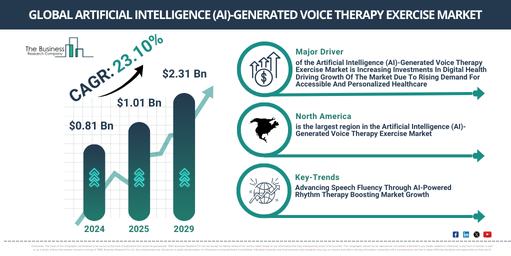
    The market size for artificial intelligence (AI)-generated voice therapy exercises has seen its size surge exponentially over the past few years. Forecasts indicate it will expand from $0.81 billion in 2024 to reach $1.01 billion in 2025, at a compound annual growth rate (CAGR) of 23.4%. The historical expansion of this market stems from several key drivers, including an increased demand for remote speech therapy, enhanced awareness of speech disorders, greater integration of AI in healthcare, the proliferation of telehealth platforms, and the escalating shortage of certified speech therapists.

    The artificial intelligence (AI)-generated voice therapy exercise market size is projected to experience substantial growth over the next few years. It is expected to expand to $2.31 billion by 2029, demonstrating a compound annual growth rate (CAGR) of 23.1%. This expansion during the forecast period is driven by factors such as an increasing demand for personalized therapy solutions, the integration of AI within mobile health applications, a surge in funding for digital therapeutics, the broadening of elderly and pediatric care, and the rising adoption of real-time voice analysis tools. Significant trends anticipated during this period include advancements in natural language processing for speech correction, sophisticated real-time feedback systems, the creation of multilingual voice therapy tools, innovation in emotion-sensitive voice AI, and the development of adaptive therapy algorithms.

    Unlock Your Free Sample Report for Exclusive Market Data:

    https://www.thebusinessresearchcompany.com/sample.aspx?id=28134&type=smp

    Which Factors And Drivers Are Influencing The Artificial Intelligence (AI)-Generated Voice Therapy Exercise Market In 2025?

    The artificial intelligence (AI)-generated voice therapy exercise market is projected to experience growth due to rising investments in digital health. Digital health investment refers to allocating capital towards technology-enabled tools or services designed to assist individuals in maintaining health, receiving medical care, or managing health issues. This uptick in digital health investments is fueled by increasing consumer demand for accessible healthcare, which drives innovation towards remote and personalized health solutions. AI-generated voice therapy exercises contribute to digital health investments by offering scalable, personalized, and cost-effective solutions for speech and cognitive rehabilitation, thereby enhancing the adoption and confidence in health technology innovations. For instance, in April 2025, the American Hospital Association (AHA), a US-based nonprofit organization, indicated that in 2022, 86.9% of hospitals provided telehealth services, showing an increase from 86% in 2021. Thus, the escalating investments in digital health are stimulating the expansion of the artificial intelligence (AI)-generated voice therapy exercise market.

    What Are The Leading Segments Analyzed In The Artificial Intelligence (AI)-Generated Voice Therapy Exercise Market?

    The artificial intelligence (AI)-generated voice therapy exercise market covered in this report is segmented as

    1) By Component: Software, Hardware, Services

    2) By Deployment Mode: Cloud Based, On Premises

    3) By Application: Speech Rehabilatation, Accent Modification, Voice Training, Stuttering Therapy, Other Applications

    4) By End-User: Hospitals And Clinics, Rehabilatation Centres, Academic And Research Institutes, Homecare, Other End-Users

    Subsegment:

    1) By Software: Mobile Applications, Web-Based Platforms, artificial intelligence (AI) Speech Recognition Tools, Virtual Assistants, Cloud-Based Solutions

    2) By Hardware: Microphones, Headsets, Smart Speakers, Wearable Devices, Augmented Reality (AR) Or Virtual Reality (VR) Devices

    3) By Services: Training And Education, Consulting And Integration, Support And Maintenance, Remote Therapy Services, Data Management And Security

    Which Market Trends Are Creating New Opportunities In The Artificial Intelligence (AI)-Generated Voice Therapy Exercise Industry?

    Leading firms within the artificial intelligence (AI)-generated voice therapy exercise market are prioritizing technological innovations, including AI-powered rhythm therapy delivered through wearable haptic feedback, to enhance speech fluency for people with speech impediments. This AI-driven rhythm therapy, utilizing wearable haptic feedback, employs natural language processing (NLP) to examine spoken communication and convert it into pulsed vibrations on the user’s wrist. These vibrations function as an unobtrusive, neurological metronome, assisting users in achieving more fluid speech patterns. For example, in April 2024, Samsung Electronics, an electronics company based in South Korea, introduced its Impulse app. The Impulse app, available for free on Android and compatible with Galaxy Watch6, converts words into synchronized, haptic signals on the wrist, incorporating over 250 progression-based rhythm and tone exercises to enhance articulation and fluency. This application improves speech through real-time tactile guidance, builds confidence via subtle support, and makes rhythm therapy available universally, serving as a helpful tool for individuals affected by speech disorders.

    Which Major Firms Are Strengthening Their Position In The Artificial Intelligence (AI)-Generated Voice Therapy Exercise Industry?

    Major companies operating in the artificial intelligence (ai)-generated voice therapy exercise market are Calm.com Inc., Hume AI Inc., Voxi Partners Ltd., Voiceitt Ltd., CereProc Ltd., Speechly Inc., Vocal Image OÜ, BetterSpeech Inc., TalkForce AI Inc., TheraPlatform Inc., SpeechVive Inc., Respeecher Inc., Whispp Inc., Vocal Trainer AI Voices Inc., Vocalis Health Inc., Cantab Research Limited, Aphasia.ai Inc., ChronoAI Inc., Elvo AI Inc., Speechzella Inc.

    Download The Full Report For Exclusive Market Findings:

    https://www.thebusinessresearchcompany.com/report/artificial-intelligence-ai-generated-voice-therapy-exercise-global-market-report

    Which Region Shows The Highest Potential For Future Expansion In The Artificial Intelligence (AI)-Generated Voice Therapy Exercise Market?

    North America was the largest region in the artificial intelligence (AI)-generated voice therapy exercise market in 2024. Asia-Pacific is expected to be the fastest-growing region in the forecast period. The regions covered in artificial intelligence (AI)-generated voice therapy exercise report are Asia-Pacific, Western Europe, Eastern Europe, North America, South America, Middle East and Africa.

    Request A Customized Version Of The Artificial Intelligence (AI)-Generated Voice Therapy Exercise Market Report:

    https://www.thebusinessresearchcompany.com/customise?id=28134&type=smp

    Browse Through More Reports Similar to the Global Artificial Intelligence (AI)-Generated Voice Therapy Exercise Market 2025, By The Business Research Company

    Artificial Intelligence Ai Voice Generator Global Market Report 2025

    https://www.thebusinessresearchcompany.com/report/artificial-intelligence-ai-voice-generator-global-market-report

    Speech Therapy Services Global Market Report 2025

    https://www.thebusinessresearchcompany.com/report/speech-therapy-services-global-market-report

    Ai Voice Cloning Global Market Report 2025

    https://www.thebusinessresearchcompany.com/report/ai-voice-cloning-global-market-report

    Get in touch with us:

    The Business Research Company: https://www.thebusinessresearchcompany.com/

    Americas +1 310-496-7795

    Asia +44 7882 955267 & +91 8897263534

    Europe +44 7882 955267

    Email us at info@tbrc.info

    Follow us on:

    LinkedIn: https://in.linkedin.com/company/the-business-research-company

    YouTube: https://www.youtube.com/channel/UC24_fI0rV8cR5DxlCpgmyFQ

    Global Market Model: https://www.thebusinessresearchcompany.com/global-market-model
  • Artificial Intelligence (AI)-Generated Personalized Bipolar Management Plan Market Growth Opportunities: Insights from 2025–2029

    Artificial Intelligence (AI)-Generated Personalized Bipolar Management Plan Market Growth Opportunities: Insights from 2025–2029

    Unlock Global Insights – Save 20% on Market Reports with Code ONLINE20

    What Is The Anticipated Size Of The Artificial Intelligence (AI)-Generated Personalized Bipolar Management Plan Market Over The Five-Year Period 2025–2029?

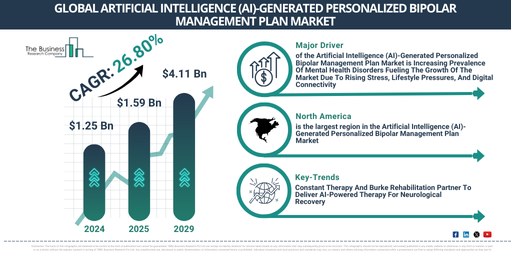
    The market size for artificial intelligence (AI)-generated personalized bipolar management plans has seen substantial expansion in recent years. This market is projected to increase from $1.25 billion in 2024 to $1.59 billion in 2025, exhibiting a compound annual growth rate (CAGR) of 27.1%. The growth observed historically is a result of the increasing prevalence of bipolar disorder, the escalating global burden of mental illness, heightened awareness regarding mental health, the growing adoption of digital health solutions, and a rise in healthcare expenditures.

    The artificial intelligence (AI)-generated personalized bipolar management plan market size is anticipated to undergo significant expansion in the coming years. This market is projected to reach $4.11 billion by 2029, demonstrating a compound annual growth rate (CAGR) of 26.8%. The increase observed during the forecast period is primarily due to the growing adoption of artificial intelligence, a surging demand for personalized care, a heightened focus on mental health, expanding collaborations among technology companies, and an increasing need for patient-centered care. Prominent trends expected in this period include ongoing advancements in artificial intelligence and machine learning, the integration of digital health technologies, the emergence of technology-driven remote monitoring solutions, further developments in AI-driven personalized healthcare, and improvements in natural language processing and analytics.

    Unlock Your Free Sample Report for Exclusive Market Data:

    https://www.thebusinessresearchcompany.com/sample.aspx?id=28133&type=smp

    What Are The Key Drivers Of Growth In The Artificial Intelligence (AI)-Generated Personalized Bipolar Management Plan Market?

    The growing occurrence of mental health conditions is projected to boost the artificial intelligence (AI)-generated personalized bipolar management plan market in the future. These conditions are defined as ailments significantly impacting an individual’s feelings, thoughts, actions, and overall psychological state. The surge in mental health disorders is attributed to heightened stress from contemporary lifestyles, including workplace pressures, social isolation, and constant digital engagement. Artificial intelligence (AI)-generated personalized bipolar management plans address these disorders by providing customized treatment strategies, making them highly suitable for individual patient needs. They minimize clinical ambiguity through continuous oversight and foresight, thereby enhancing treatment efficacy and overall patient health. For example, data from the American Psychiatric Association, a US-based non-profit organization, indicated in May 2024 that 43% of adults reported increased anxiety compared to the previous year, a rise from 37% in 2023 and 32% in 2022. Consequently, the rising incidence of mental health disorders is propelling the expansion of the artificial intelligence (AI)-generated personalized bipolar management plan market.

    What Are The Segment Types Shaping The Artificial Intelligence (AI)-Generated Personalized Bipolar Management Plan Market?

    The artificial intelligence (AI)-generated personalized bipolar management plan market covered in this report is segmented as

    1) By Component: Software, Services

    2) By Deployment Mode: Cloud-Based, On-Premises

    3) By Application: Clinical Management, Remote Monitoring, Patient Engagement, Decision Support, Other Applications

    4) By End-User: Hospitals And Clinics, Mental Health Centers, Homecare Settings, Other End Users

    Subsegments:

    1) By Software: Clinical Decision Support Systems (CDSS), Mobile And Web Applications, artificial intelligence (AI) Algorithms And Predictive Analytics Tools, Electronic Health Record (EHR) Integration Modules, Remote Monitoring Platforms

    2) By Services: Implementation And Integration Services, Training And Education Services, Consulting Services, Maintenance And Support Services, Data Management And Security Services

    How Are Trends Influencing The Artificial Intelligence (AI)-Generated Personalized Bipolar Management Plan Market?

    Major corporations active in the AI-generated personalized bipolar management plan market are concentrating on creating advanced solutions, particularly AI-powered mental health platforms, to provide customized treatment, track mood, predict relapses, and support optimized care. These AI-driven mental health platforms are digital tools that employ artificial intelligence to monitor mental well-being, personalize therapies, anticipate relapses, and assist clinical decisions. For instance, in May 2024, JD Health International Inc., a healthcare company from China, launched the Small Universe for Chatting and Healing, an AI-driven mental health platform. This platform utilizes JD Health’s healthcare-specific large language model (LLM) to facilitate empathetic, logical, and personalized interactions, enabling continuous monitoring and management of bipolar symptoms. It also offers multimodal diagnostic tools for professionals and licensed sleep monitoring software for accurate assessments.

    Who Are The Primary Competitors In The Global Artificial Intelligence (AI)-Generated Personalized Bipolar Management Plan Market?

    Major companies operating in the artificial intelligence (AI)-generated personalized bipolar management plan market are JD Health International Inc., Cerebral Inc., Merative US L.P., Headspace Inc., Talkspace Inc., Quartet Health Inc., NUE Life Health P.A., Woebot Health Inc., Koa Health B.V., Mindstrong Health Inc., Altimate Health Inc., SilverCloud Health Limited, Pear Therapeutics Inc., Wysa Ltd., Youper Inc., Happify Health Inc., Ellipsis Health Inc., Flow Neuroscience AB, Earkick AG, and Juli Health Inc.

    Download The Full Report For Exclusive Market Findings:

    https://www.thebusinessresearchcompany.com/report/artificial-intelligence-ai-generated-personalized-bipolar-management-plan-global-market-report

    How Is Artificial Intelligence (AI)-Generated Personalized Bipolar Management Plan Market Demand Varying Across Different Regions?

    North America was the largest region in the artificial intelligence (AI)-generated personalized bipolar management plan market in 2024. Asia-Pacific is expected to be the fastest-growing region in the forecast period. The regions covered in artificial intelligence (AI)-generated personalized bipolar management plan report are Asia-Pacific, Western Europe, Eastern Europe, North America, South America, Middle East and Africa.

    Request A Customized Version Of The Artificial Intelligence (AI)-Generated Personalized Bipolar Management Plan Market Report:

    https://www.thebusinessresearchcompany.com/customise?id=28133&type=smp

    Browse Through More Reports Similar to the Global Artificial Intelligence (AI)-Generated Personalized Bipolar Management Plan Market 2025, By The Business Research Company

    Ai In Mental Health Global Market Report 2025

    https://www.thebusinessresearchcompany.com/report/ai-in-mental-health-global-market-report

    Artificial Intelligence Ai Based Personalization Global Market Report 2025

    https://www.thebusinessresearchcompany.com/report/artificial-intelligence-ai-based-personalization-global-market-report

    Ai Powered Personal Finance Management Global Market Report 2025

    https://www.thebusinessresearchcompany.com/report/ai-powered-personal-finance-management-global-market-report

    Get in touch with us:

    The Business Research Company: https://www.thebusinessresearchcompany.com/

    Americas +1 310-496-7795

    Asia +44 7882 955267 & +91 8897263534

    Europe +44 7882 955267

    Email us at info@tbrc.info

    Follow us on:

    LinkedIn: https://in.linkedin.com/company/the-business-research-company

    YouTube: https://www.youtube.com/channel/UC24_fI0rV8cR5DxlCpgmyFQ

    Global Market Model: https://www.thebusinessresearchcompany.com/global-market-model
  • Artificial Intelligence (AI)-Generated Digital Health Coaching Avatar Market Expansion Outlook: $5 Billion by 2029 Forecast

    Artificial Intelligence (AI)-Generated Digital Health Coaching Avatar Market Expansion Outlook: $5 Billion by 2029 Forecast

    Unlock Global Insights – Save 20% on Market Reports with Code ONLINE20

    What Are The Forecasted Market Size Estimates For The Artificial Intelligence (AI)-Generated Digital Health Coaching Avatar Market Between 2025 And 2029?

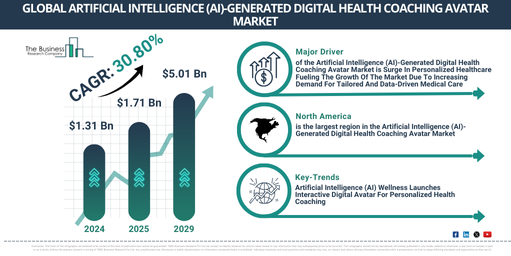
    The artificial intelligence (AI)-generated digital health coaching avatar market has experienced significant expansion recently. This market is expected to increase from $1.31 billion in 2024 to $1.71 billion in 2025, achieving a compound annual growth rate (CAGR) of 31.1%. Historically, this expansion has been driven by the greater embrace of digital health solutions, a growing need for personalized healthcare, an increase in chronic conditions, heightened understanding of preventive care, and the rising incorporation of artificial intelligence (AI) within the healthcare sector.

    The market size for artificial intelligence (AI)-generated digital health coaching avatars is anticipated to undergo significant expansion over the next few years. This market is projected to reach $5.01 billion by 2029, demonstrating a compound annual growth rate (CAGR) of 30.8%. This growth during the forecast period can be primarily linked to the increasing necessity for real-time patient monitoring, greater investment in artificial intelligence (AI) healthcare technologies, an elevated focus on patient engagement, the widespread adoption of wearable devices, and the expansion of telehealth services. Prominent trends expected during this period include advancements in artificial intelligence (AI)-driven analytics, the development of tailored health coaching platforms, innovations in virtual health assistants, enhanced integration with wearable health devices, and improvements in remote patient monitoring systems.

    Unlock Your Free Sample Report for Exclusive Market Data:

    https://www.thebusinessresearchcompany.com/sample.aspx?id=28132&type=smp

    Which Drivers Are Supporting Growth Of The Artificial Intelligence (AI)-Generated Digital Health Coaching Avatar Market?

    The future expansion of the artificial intelligence (AI)-generated digital health coaching avatar market is anticipated, significantly propelled by the escalating demand for personalized healthcare. This specialized form of medical attention is characterized by care services precisely adapted to an individual’s distinct needs, lifestyle, and existing health conditions. The surge in personalized healthcare is largely due to advancements in data-driven insights, which enable doctors to gain a deeper understanding of each patient’s unique health requirements and subsequently deliver more effective and targeted treatments. Artificial intelligence (AI)-generated digital health coaching avatars play a crucial role in supporting personalized healthcare by providing real-time, customized guidance and assistance derived from an individual’s health data, habits, and goals, thereby making care more impactful and focused on the patient. As an illustration, in February 2024, the US-based non-profit organization, the Personalized Medicine Coalition, stated that the Food and Drug Administration (FDA) sanctioned 16 novel personalized therapies for patients with rare diseases in 2023, a considerable rise from six approvals in 2022. This increasing demand for personalized healthcare is thus a key factor driving the growth of the artificial intelligence (AI)-generated digital health coaching avatar market.

    What Are The Different Segment Classifications Within The Artificial Intelligence (AI)-Generated Digital Health Coaching Avatar Market?

    The artificial intelligence (AI)-generated digital health coaching avatar market covered in this report is segmented as

    1) By Component: Software, Hardware, Services

    2) By Deployment Mode: Cloud-Based, On-Premises

    3) By Application: Chronic Disease Management, Mental Health Support, Fitness And Wellness, Nutrition Guidance, Other Applications

    4) By End-User: Hospitals And Clinics, Fitness Centers, Homecare, Corporate Wellness Programs, Other End-Users

    Subsegments:

    1) By Software: Cloud Based Platforms, Mobile Applications, Web Based Interfaces, Embedded Systems

    2) By Hardware: Sensors And Wearable Devices, Smart Displays, Virtual Reality Devices, Voice And Speech Recognition Devices

    3) By Services: Implementation Services, Training And Education Services, Support And Maintenance Services, Consulting Services

    What Key Innovation Trends Are Fueling Advancements In The Artificial Intelligence (AI)-Generated Digital Health Coaching Avatar Market?

    Key players in the artificial intelligence (AI)-generated digital health coaching avatar market are concentrating on creating sophisticated solutions, such as AI-powered digital avatars, to provide tailored health guidance. AI-powered digital avatars are virtual entities that leverage artificial intelligence to mimic human behavior and engage intelligently within digital settings. For instance, in January 2025, Assisted Intelligence Wellness Inc. (AI Wellness), a US-based health technology company, unveiled the Ask My Avatar Challenge at CES 2025. This program showcased interactive digital avatars, enabling clients to partake in live wellness coaching experiences. These avatars offered 24/7 support, extensive educational resources, and worldwide exposure through immersive platforms, aiming to transform health education and participation.

    Which Key Market Players Are Investing In Expansion And Innovation Of Artificial Intelligence (AI)-Generated Digital Health Coaching Avatar Market?

    Major companies operating in the artificial intelligence (AI)-generated digital health coaching avatar market are Google LLC, OpenAI LLC, Cera CARE LIMITED, Tempus AI Inc., CoachHub, Ada Health GmbH, Touchkin Eservices Private Limited, Infermedica Sp. z o.o, Hippocratic AI Inc., Buoy Health Inc., Woebot Labs Inc., Zing Coach Inc., Virti Inc., Hey Coach Education Private Limited, Rocky Robots Ltd., XpertDox LLC, Assisted Intelligence Wellness Inc., Luka Inc., RAVATAR, and GOLD Health.

    Download The Full Report For Exclusive Market Findings:

    https://www.thebusinessresearchcompany.com/report/artificial-intelligence-ai-generated-digital-health-coaching-avatar-global-market-report

    Which Geographies Are Emerging As Strong Markets For The Artificial Intelligence (AI)-Generated Digital Health Coaching Avatar Industry?

    North America was the largest region in the artificial intelligence (AI)-generated digital health coaching avatar market in 2024. Asia-Pacific is expected to be the fastest-growing region in the forecast period. The regions covered in artificial intelligence (AI)-generated digital health coaching avatar report are Asia-Pacific, Western Europe, Eastern Europe, North America, South America, Middle East and Africa.

    Request A Customized Version Of The Artificial Intelligence (AI)-Generated Digital Health Coaching Avatar Market Report:

    https://www.thebusinessresearchcompany.com/customise?id=28132&type=smp

    Browse Through More Reports Similar to the Global Artificial Intelligence (AI)-Generated Digital Health Coaching Avatar Market 2025, By The Business Research Company

    Health Coaching Global Market Report 2025

    https://www.thebusinessresearchcompany.com/report/health-coaching-global-market-report

    Health Coaching Apps Global Market Report 2025

    https://www.thebusinessresearchcompany.com/report/health-coaching-apps-global-market-report

    Ai In Mental Health Global Market Report 2025

    https://www.thebusinessresearchcompany.com/report/ai-in-mental-health-global-market-report

    Get in touch with us:

    The Business Research Company: https://www.thebusinessresearchcompany.com/

    Americas +1 310-496-7795

    Asia +44 7882 955267 & +91 8897263534

    Europe +44 7882 955267

    Email us at info@tbrc.info

    Follow us on:

    LinkedIn: https://in.linkedin.com/company/the-business-research-company

    YouTube: https://www.youtube.com/channel/UC24_fI0rV8cR5DxlCpgmyFQ

    Global Market Model: https://www.thebusinessresearchcompany.com/global-market-model
  • Global Artificial Intelligence (AI)‑Driven Virtual Nursing Assistants Industry Trends: Where the Market Is Headed by 2029

    Global Artificial Intelligence (AI)‑Driven Virtual Nursing Assistants Industry Trends: Where the Market Is Headed by 2029

    Unlock Global Insights – Save 20% on Market Reports with Code ONLINE20

    How Is The Artificial Intelligence (AI)‑Driven Virtual Nursing Assistants Market Size Likely To Evolve From 2025 Through 2034?

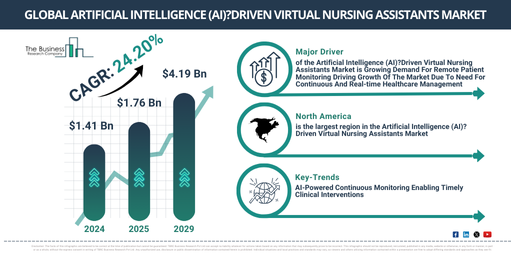
    The artificial intelligence (AI)-driven virtual nursing assistants market size has observed significant expansion in recent years. It is anticipated to increase from $1.41 billion in 2024 to $1.76 billion in 2025, achieving a compound annual growth rate (CAGR) of 24.5%. This growth observed in past periods is attributed to factors such as the rising rates of chronic illnesses, a growing shortage of healthcare professionals, aging populations, the increasing utilization of telehealth and remote care models, and the early detection of health deterioration.

    The artificial intelligence (AI)-driven virtual nursing assistants market is projected to experience substantial expansion in the coming years. This market is anticipated to reach $4.19 billion by 2029, exhibiting a compound annual growth rate (CAGR) of 24.2%. Several factors are contributing to this growth during the forecast period, including the extensive availability of patient data, the increasing pressure on healthcare infrastructures, the move towards telemedicine and remote care frameworks, a proliferation of new solutions and platforms, and enhancements in patient experience. Key trends expected during this period involve the integration with telehealth and remote monitoring systems, continuous technological advancements, the incorporation of sophisticated artificial intelligence, ongoing product innovations, and the increasing uptake of cloud platforms.

    Unlock Your Free Sample Report for Exclusive Market Data:

    https://www.thebusinessresearchcompany.com/sample.aspx?id=28131&type=smp

    Which Drivers Are Shaping The Artificial Intelligence (AI)‑Driven Virtual Nursing Assistants Industry’s Market Share?

    The escalating need for remote patient monitoring is anticipated to propel the expansion of the artificial intelligence (AI)-driven virtual nursing assistants market going forward. Remote patient monitoring (RPM) is defined as the application of digital technologies to gather health information from patients outside of conventional healthcare environments and transmit it to medical professionals for evaluation and care management. This demand for RPM is escalating due to the rising necessity for ongoing, real-time health management beyond standard clinical environments. Within remote patient monitoring, AI-driven virtual nursing assistants play a crucial role by monitoring patients’ health data instantaneously, delivering timely alerts, and facilitating tailored care, all while alleviating the workload on healthcare personnel. For instance, in August 2025, the US Department of Health and Human Services, a US-based government administration, reported that approximately 1 million enrollees utilized remote patient monitoring in 2024, marking a 27% increase compared to 2023. Consequently, the expanding requirement for remote patient monitoring is a key factor fueling the growth of the artificial intelligence (AI)-driven virtual nursing assistants market.

    What Are The Primary Types Of Segments Analyzed In The Artificial Intelligence (AI)‑Driven Virtual Nursing Assistants Market?

    The artificial intelligence (AI)-driven virtual nursing assistants market covered in this report is segmented as

    1) By Component: Software, Services

    2) By Technology: Automatic Speech Recognition(ASR), Text-To-Speech(TTS), Text-Based Interface, Natural Language Processing(NLP), Other Technologies

    3) By Deployment: Cloud Based, On-Premise, Hybrid

    4) By Application: Symptom Checking And Virtual Triage, Appointment Scheduling And Reminders, Medication Management, Medical Information Retrieval, Patient Engagement And Education, Clinical Decision Support, Administrative Support, Remote Monitoring

    5) By End User: Hospitals And Clinics, Patients, Healthcare Payers Pharmaceutical And Life Sciences Companies, Other End Users

    Subsegment:

    1) By Software: Clinical Decision Support, Patient Monitoring And Engagement, Workflow And Care Coordination, Medication Management, Predictive Analytics And Risk Assessment, Communication And Chat Interfaces

    2) By Services: Training And Education, Consulting And Advisory, Support And Maintenance, Managed Services, Data Management And Security, Implementation And Integration

    Which Ongoing Trends Are Expected To Shape The Artificial Intelligence (AI)‑Driven Virtual Nursing Assistants Market Outlook?

    Leading companies in the artificial intelligence (AI)-driven virtual nursing assistants market are advancing new technologies like LIDAR-based spatial intelligence. These innovations aim to facilitate real-time patient monitoring, boost safety through the early detection of dangers such as falls or sudden health declines, and support virtual nursing frameworks. Light detection and ranging (LIDAR) is a sophisticated remote sensing method that employs laser light pulses to measure distances with exceptional accuracy. For instance, in March 2025, Emory Healthcare, a US-based healthcare system, launched a virtual nursing initiative utilizing AI-driven technology to enhance patient care. This initiative deploys Light detection and ranging (LIDAR) technology in patient rooms to track movements and identify falls up to 30 seconds before they occur, accompanied by automated voice alerts prompting patients to remain in bed. It allows nurses in a central control room to manage admissions paperwork, medication administration, patient education, and discharge procedures remotely, freeing bedside nurses to concentrate on direct patient care. Additionally, it continuously analyzes patient data to recognize early indications of clinical deterioration or emergencies, ensuring timely alerts are sent to bedside care teams.

    Who Are The Core Companies Influencing The Artificial Intelligence (AI)‑Driven Virtual Nursing Assistants Market Landscape?

    Major companies operating in the artificial intelligence (ai)‑driven virtual nursing assistants market are Microsoft Corporation, HealthTap Inc., Artera Inc., Caregility LLC, Luma Health Inc., Infermedica Sp. z o.o., Memora Health Inc., Buoy Health Inc., Hyro AI Ltd., Care Angel Inc., Sensely Inc., Artisight Inc., K Health Inc., Mediktor International S.L., Corti ApS, AvaSure LLC, Care.AI Inc., Tap Health Inc., GetWellNetwork Inc., Biofourmis Inc.

    Download The Full Report For Exclusive Market Findings:

    https://www.thebusinessresearchcompany.com/report/artificial-intelligence-ai-driven-virtual-nursing-assistants-global-market-report

    Which Region Is Projected To Lead The Artificial Intelligence (AI)‑Driven Virtual Nursing Assistants Market During The Forecast Period?

    North America was the largest region in the artificial intelligence (AI)‑driven virtual nursing assistants market in 2024. Asia-Pacific is expected to be the fastest-growing region in the forecast period. The regions covered in artificial intelligence (AI)‑driven virtual nursing assistants report are Asia-Pacific, Western Europe, Eastern Europe, North America, South America, Middle East and Africa.

    Request A Customized Version Of The Artificial Intelligence (AI)‑Driven Virtual Nursing Assistants Market Report:

    https://www.thebusinessresearchcompany.com/customise?id=28131&type=smp

    Browse Through More Reports Similar to the Global Artificial Intelligence (AI)‑Driven Virtual Nursing Assistants Market 2025, By The Business Research Company

    Intelligent Virtual Assistants Software Global Market Report 2025

    https://www.thebusinessresearchcompany.com/report/intelligent-virtual-assistants-software-global-market-report

    Intelligent Virtual Assistant Global Market Report 2025

    https://www.thebusinessresearchcompany.com/report/intelligent-virtual-assistant-global-market-report

    Virtual Assistant Global Market Report 2025

    https://www.thebusinessresearchcompany.com/report/virtual-assistant-global-market-report

    Get in touch with us:

    The Business Research Company: https://www.thebusinessresearchcompany.com/

    Americas +1 310-496-7795

    Asia +44 7882 955267 & +91 8897263534

    Europe +44 7882 955267

    Email us at info@tbrc.info

    Follow us on:

    LinkedIn: https://in.linkedin.com/company/the-business-research-company

    YouTube: https://www.youtube.com/channel/UC24_fI0rV8cR5DxlCpgmyFQ

    Global Market Model: https://www.thebusinessresearchcompany.com/global-market-model
  • Artificial Intelligence (AI)-Driven Tele-Dermatoscope Industry Forecast to Hit $4.06 Billion by 2029 With a Strong 28% CAGR

    Artificial Intelligence (AI)-Driven Tele-Dermatoscope Industry Forecast to Hit $4.06 Billion by 2029 With a Strong 28% CAGR

    Unlock Global Insights – Save 20% on Market Reports with Code ONLINE20

    What Are The Growth Projections For The Artificial Intelligence (AI)-Driven Tele-Dermatoscope Market Size During 2025–2029?

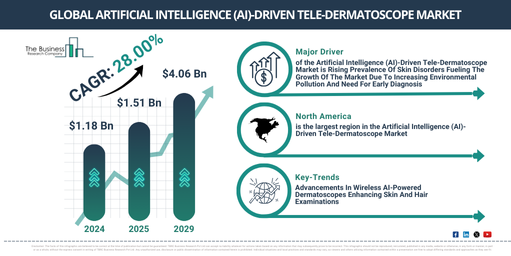
    The artificial intelligence (AI)-driven tele-dermatoscope market size has seen remarkable growth in recent times. It is anticipated to increase from $1.18 billion in 2024 to $1.51 billion in 2025, achieving a compound annual growth rate (CAGR) of 28.4%. This historical growth can be linked to the necessity for continuous monitoring of chronic skin conditions, a surge in cases of skin diseases such as eczema and psoriasis, a heightened focus on preventive healthcare measures, the demand for personalized dermatological care, and the need for efficient triaging of skin conditions in clinical settings.

    The artificial intelligence (AI)-driven tele-dermatoscope market size is projected to experience substantial growth in the coming years. Its valuation is anticipated to reach $4.06 billion by 2029, expanding at a compound annual growth rate (CAGR) of 28.0%. This projected expansion during the forecast period is driven by the increasing global occurrence of skin cancers, heightened awareness regarding the importance of prompt skin cancer diagnosis, an aging worldwide population contributing to a greater prevalence of skin conditions, a growing need for non-invasive diagnostic tools, and a scarcity of dermatologists in remote and underserved regions. Key developments expected during this period involve the incorporation of AI for improved diagnostic precision, the creation of advanced high-resolution imaging devices, progress in hyperspectral dermatoscopy for in-depth skin evaluation, the application of machine learning algorithms for categorizing lesions, and the inclusion of large language models to offer extensive diagnostic assistance.

    Unlock Your Free Sample Report for Exclusive Market Data:

    https://www.thebusinessresearchcompany.com/sample.aspx?id=28130&type=smp

    What Are The Drivers Pushing New Developments In The Artificial Intelligence (AI)-Driven Tele-Dermatoscope Market?

    A rise in skin disorder cases is anticipated to drive the expansion of the artificial intelligence (AI)-driven tele-dermatoscope market in the future. These conditions disrupt the skin’s typical structure or operation, manifesting symptoms like redness, itching, scaling, or lesions. Growing environmental contamination significantly contributes to the increase in skin ailments, given that detrimental airborne pollutants and chemicals can compromise the skin’s defensive layer, causing irritation, allergic responses, and persistent skin issues. The artificial intelligence (AI)-driven tele-dermatoscopes aid in managing skin disorders through swift and precise analysis of high-resolution skin images using sophisticated algorithms, enabling prompt detection and diagnosis without the need for in-person visits to a dermatologist. For example, the American Cancer Society, a US-based professional body, projected in January 2025 that the US will likely experience approximately 105,000 new melanoma occurrences and about 8,400 associated fatalities during 2025. Consequently, the expanding occurrence of skin disorders is fueling the expansion of the artificial intelligence (AI)-driven tele-dermatoscope market.

    Which Key Segments Fueling The Artificial Intelligence (AI)-Driven Tele-Dermatoscope Market?

    The artificial intelligence (AI)-driven tele-dermatoscope market covered in this report is segmented as

    1) By Product: Handheld Tele-Dermatoscopes, Desktop Tele-Dermatoscopes, Smartphone-Integrated Tele-Dermatoscopes

    2) By Technology: Machine Learning, Deep Learning, Computer Vision, Other Technologies

    3) By Distribution Channel: Online, Offline

    4) By Application: Skin Cancer Detection, Lesion Tracking, General Dermatology, Other Applications

    5) By End User: Hospitals And Clinics, Diagnostic Centers, Research Institutes, Homecare Settings, Other End Users

    Subsegments:

    1) By Handheld Tele-Dermatoscopes: USB-Connected Digital Dermatoscopes, Wireless Digital Dermatoscopes, Smartphone-Compatible Dermatoscopes

    2) By Desktop Tele-Dermatoscopes: Table-Top Dermatoscopes, Trolley-Mounted Dermatoscopes

    3) By Smartphone-Integrated Tele-Dermatoscopes: Clip-On Attachments, Integrated Systems

    Which Competitive Trends Are Defining The Artificial Intelligence (AI)-Driven Tele-Dermatoscope Market Structure?

    Leading companies in the artificial intelligence (AI)-driven tele-dermatoscope market are concentrating on developing sophisticated solutions, particularly wireless digital dermatoscopes, to enhance mobility and user convenience. These portable wireless digital dermatoscopes are designed to capture detailed images of the skin and transmit them wirelessly to computers or mobile devices, facilitating remote skin analysis and diagnosis. For instance, in March 2024, FotoFinder Systems, a Germany-based manufacturer of skin imaging systems, unveiled skeen, an innovative wireless digital dermatoscope with integrated cloud storage. This device is engineered to revolutionize skin and hair examinations by leveraging advanced technology and artificial intelligence (AI), setting a new standard in dermoscopy and trichoscopy through fast, accurate, and convenient image capture and storage via a fully compliant cloud-based platform. Skeen is equipped with a high-resolution camera and a magnetically attached optical system, providing 20x or 40x magnification for detailed visualization of skin and hair structures in both polarized and non-polarized modes. It offers a completely wireless workflow, negating the need for smartphones, tablets, or additional adapters. Developed by FotoFinder Systems, Skeen integrates advanced AI technology, including the AIMEE assistant, to aid physicians in assessing skin lesions by generating an AI-powered score from a clinically validated deep-learning model.

    Which Major Industry Participants Are Leading The Artificial Intelligence (AI)-Driven Tele-Dermatoscope Market Growth?

    Major companies operating in the artificial intelligence (AI)-driven tele-dermatoscope market are Heine Optotechnik GmbH & Co. KG, Digital Diagnostics, FotoFinder Systems GmbH, Epiphany Dermatology PA, Canfield Scientific Inc., MetaOptima Technology Inc., Base Plus Limited, Skin Analytics, DermaSensor Inc., SkinVision, First Derm, Pixience, VERISKIN INC, Skinive B.V., Miiskin, DermaDetect, Triage Technologies Inc., SkinIO LLC, DermEngine, MoleScope, and Stratum Biosciences.

    Download The Full Report For Exclusive Market Findings:

    https://www.thebusinessresearchcompany.com/report/artificial-intelligence-ai-driven-tele-dermatoscope-global-market-report

    What Are The Key Regional Factors Influencing The Artificial Intelligence (AI)-Driven Tele-Dermatoscope Market Growth?

    North America was the largest region in the artificial intelligence (AI)-driven tele-dermatoscope market in 2024. Asia-Pacific is expected to be the fastest-growing region in the forecast period. The regions covered in artificial intelligence (AI)-driven tele-dermatoscope report are Asia-Pacific, Western Europe, Eastern Europe, North America, South America, Middle East and Africa.

    Request A Customized Version Of The Artificial Intelligence (AI)-Driven Tele-Dermatoscope Market Report:

    https://www.thebusinessresearchcompany.com/customise?id=28130&type=smp

    Browse Through More Reports Similar to the Global Artificial Intelligence (AI)-Driven Tele-Dermatoscope Market 2025, By The Business Research Company

    Dermatoscopes Global Market Report 2025

    https://www.thebusinessresearchcompany.com/report/dermatoscopes-global-market-report

    Ai In Medical Devices Global Market Report 2025

    https://www.thebusinessresearchcompany.com/report/ai-in-medical-devices-global-market-report

    Wearable Ai Global Market Report 2025

    https://www.thebusinessresearchcompany.com/report/wearable-ai-global-market-report

    Get in touch with us:

    The Business Research Company: https://www.thebusinessresearchcompany.com/

    Americas +1 310-496-7795

    Asia +44 7882 955267 & +91 8897263534

    Europe +44 7882 955267

    Email us at info@tbrc.info

    Follow us on:

    LinkedIn: https://in.linkedin.com/company/the-business-research-company

    YouTube: https://www.youtube.com/channel/UC24_fI0rV8cR5DxlCpgmyFQ

    Global Market Model: https://www.thebusinessresearchcompany.com/global-market-model
  • Artificial Intelligence (AI)-Driven Rare Disease Patient Finder Market to Reach $4.59 Billion by 2029, Growing at a CAGR of 29.7%

    Artificial Intelligence (AI)-Driven Rare Disease Patient Finder Market to Reach $4.59 Billion by 2029, Growing at a CAGR of 29.7%

    Unlock Global Insights – Save 20% on Market Reports with Code ONLINE20

    What Is The Global Market Value Of The Artificial Intelligence (AI)-Driven Rare Disease Patient Finder Industry In 2025?

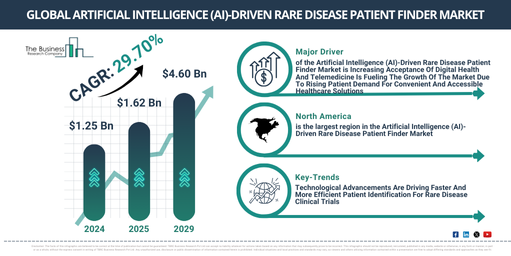
    The artificial intelligence (AI)-driven rare disease patient finder market has experienced significant expansion in recent years. It is projected to increase from $1.25 billion in 2024 to $1.62 billion in 2025, achieving a compound annual growth rate (CAGR) of 30.1%. This historical rise can be ascribed to several factors, including the expanded application of genomic sequencing, the growing acceptance of electronic health records, enhanced collaborations between pharmaceutical companies and AI startups, a heightened emphasis on early disease detection, and the increasing accessibility of real-world evidence.

    The market for artificial intelligence (AI)-driven rare disease patient finders is projected to experience substantial expansion in the coming years, reaching $4.60 billion by 2029, exhibiting a compound annual growth rate (CAGR) of 29.7%. This anticipated expansion throughout the forecast period stems from several factors, including the greater integration of multimodal data analytics, the increased use of AI-powered clinical decision support systems, the expanding deployment of wearable and remote monitoring devices, higher investment in patient-centric healthcare platforms, and an intensified focus on predictive analytics for identifying rare diseases. Key trends anticipated during this period encompass progress in natural language processing for managing unstructured medical data, the incorporation of federated learning for protected patient data sharing, multiomics data analysis facilitated by technology, new developments in generating synthetic data for rare disease modeling, and improvements in artificial intelligence (AI)-driven digital biomarkers.

    Unlock Your Free Sample Report for Exclusive Market Data:

    https://www.thebusinessresearchcompany.com/sample.aspx?id=28129&type=smp

    What Are The Emerging Market Drivers Creating New Opportunities In The Artificial Intelligence (AI)-Driven Rare Disease Patient Finder Industry?

    The expanding adoption of digital health and telemedicine is projected to fuel the growth of the artificial intelligence (AI)-driven rare disease patient finder market. Digital health encompasses the application of technology, software, and electronic tools to track, manage, and enhance overall health and wellness. Telemedicine, conversely, involves delivering healthcare services remotely through telecommunications technology, such as video conferences, mobile applications, and online platforms. The increasing embrace of digital health and telemedicine is attributed to patients and providers seeking convenient, efficient, and accessible healthcare alternatives. The artificial intelligence (AI)-driven rare disease patient finder supports both digital health and telemedicine by accurately identifying patients, enabling remote oversight, facilitating timely virtual consultations, and providing personalized care. As an illustration, a survey conducted by Rock Health, a US-based health technology company, in February 2023 revealed that out of 8,014 respondents, 76% of individuals over the age of 55 had used telemedicine, and 80% of all respondents indicated they had accessed care via telemedicine at some point in their lives, marking an 8% rise from 72% in 2021. Therefore, the growing acceptance of digital health and telemedicine serves as a significant driver for the artificial intelligence (AI)-driven rare disease patient finder market.

    How Is The Artificial Intelligence (AI)-Driven Rare Disease Patient Finder Market Classified Into Different Segments?

    The artificial intelligence (AI)-driven rare disease patient finder market covered in this report is segmented as

    1) By Component: Software, Services

    2) By Deployment Mode: Cloud-Based, On-Premises

    3) By Application: Hospitals, Clinics, Research Institutes, Pharmaceutical Companies, Other Applications

    4) By End-User: Healthcare Providers, Life Sciences Companies, Payers, Other End-Users

    Subsegments:

    1) By Software: Electronic Data Capture, Data Management Platform, Analytics And Reporting Tools, Patient Engagement Tools, Clinical Trial Management System

    2) By Services: Implementation And Integration, Training And Support, Data Hosting And Security, Consulting Services, Maintenance And Upgrades

    What Are The Latest Industry Trends Transforming The Artificial Intelligence (AI)-Driven Rare Disease Patient Finder Market?

    Major companies operating in the AI-driven rare disease patient finder market are primarily focused on developing technological innovations, such as precision patient recruitment solutions. These solutions aim to improve the accuracy, speed, and efficiency of identifying suitable patients for rare disease clinical trials, concurrently reducing recruitment timelines and enhancing trial success rates. A precision patient recruitment solution is a technology-driven method that utilizes advanced algorithms and real-world data to precisely identify and engage patients who meet specific clinical trial eligibility criteria. An example of this is Citeline PatientMatch, launched in April 2024 by Citeline, a US-based business intelligence and data analytics company. This platform combines sophisticated algorithms with comprehensive real-world data, including lab results, biomarkers, and electronic medical records from more than 400 hospitals and health systems, to assist sponsors and investigators in efficiently identifying eligible patients for clinical trials, streamlining enrollment, and accommodating diverse and complex study protocols across multiple therapeutic areas.

    Who Are The Prominent Global Companies Shaping The Artificial Intelligence (AI)-Driven Rare Disease Patient Finder Market?

    Major companies operating in the artificial intelligence (AI)-driven rare disease patient finder market are UnitedHealth Group Incorporated, Dassault Systèmes SE, GeneDx Holdings Corp., HealthVerity Inc., ConcertAI Inc., Komodo Health Inc., Unlearn.AI Inc., Antidote Technologies Inc., Healx Ltd., FDNA Inc., Saventic Health Sp. z o.o., Digital Pharma Lab SAS, AnnieGuard Ltd., Rapid Innovation Labs Inc., Sqilline EOOD, TrialX Inc., enGenome Srl, EveryCure Inc., ThinkGenetic Inc., and RareSum Inc.

    Download The Full Report For Exclusive Market Findings:

    https://www.thebusinessresearchcompany.com/report/artificial-intelligence-ai-driven-rare-disease-patient-finder-global-market-report

    How Do Regional Market Performances Compare Within The Artificial Intelligence (AI)-Driven Rare Disease Patient Finder Industry?

    North America was the largest region in the artificial intelligence (AI)-driven rare disease patient finder market in 2024. Asia-Pacific is expected to be the fastest-growing region in the forecast period. The regions covered in artificial intelligence (AI)-driven rare disease patient finder report are Asia-Pacific, Western Europe, Eastern Europe, North America, South America, Middle East and Africa.

    Request A Customized Version Of The Artificial Intelligence (AI)-Driven Rare Disease Patient Finder Market Report:

    https://www.thebusinessresearchcompany.com/customise?id=28129&type=smp

    Browse Through More Reports Similar to the Global Artificial Intelligence (AI)-Driven Rare Disease Patient Finder Market 2025, By The Business Research Company

    Artificial Intelligence In Healthcare Diagnosis Global Market Report 2025

    https://www.thebusinessresearchcompany.com/report/artificial-intelligence-in-healthcare-diagnosis-global-market-report

    Ai In Medical Diagnostics Global Market Report 2025

    https://www.thebusinessresearchcompany.com/report/ai-in-medical-diagnostics-global-market-report

    Artificial Intelligence Ai In Clinical Trials Global Market Report 2025

    https://www.thebusinessresearchcompany.com/report/artificial-intelligence-ai-in-clinical-trials-global-market-report

    Get in touch with us:

    The Business Research Company: https://www.thebusinessresearchcompany.com/

    Americas +1 310-496-7795

    Asia +44 7882 955267 & +91 8897263534

    Europe +44 7882 955267

    Email us at info@tbrc.info

    Follow us on:

    LinkedIn: https://in.linkedin.com/company/the-business-research-company

    YouTube: https://www.youtube.com/channel/UC24_fI0rV8cR5DxlCpgmyFQ

    Global Market Model: https://www.thebusinessresearchcompany.com/global-market-model