Blog

  • Cell Therapy Raw Materials Industry Overview 2025: Growth Projections and Market Trends

    Cell Therapy Raw Materials Industry Overview 2025: Growth Projections and Market Trends

    Unlock Global Insights – Save 20% on Market Reports with Code ONLINE20

    What Are The Growth Projections For The Cell Therapy Raw Materials Market Size During 2025–2029?

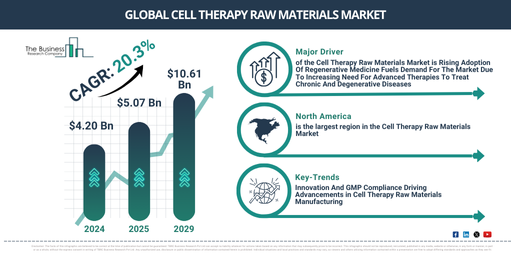
    The market for cell therapy raw materials has experienced rapid expansion in recent years. It is anticipated to increase from $4.20 billion in 2024 to $5.07 billion in 2025, achieving a compound annual growth rate (CAGR) of 20.6%. This historical expansion can be attributed to the growing presence of contract development and manufacturing organizations, the increasing prevalence of autoimmune and genetic disorders, increased government and private funding, a rising emphasis on scalable manufacturing processes, and an increase in clinical trials.

    The cell therapy raw materials market is projected to experience substantial growth over the upcoming years, with its size expected to reach $10.61 billion by 2029, propelled by a compound annual growth rate (CAGR) of 20.3%. This anticipated expansion during the forecast period is largely fueled by the surging demand for regenerative medicine, the increasing acceptance of personalized therapies, greater investment in cell and gene therapy research and development, a rise in approvals for cell-based treatments, and a heightened understanding of advanced therapy medicinal products. Key trends anticipated during this period encompass enhancements in cell culture technology, the incorporation of automation into bioprocessing, innovations in xeno-free and chemically defined media, progress in cryopreservation techniques, and the adoption of closed-system bioreactors.

    Unlock Your Free Sample Report for Exclusive Market Data:

    https://www.thebusinessresearchcompany.com/sample.aspx?id=27245&type=smp

    Which Industry Drivers Are Expected To Accelerate The Cell Therapy Raw Materials Market From 2025 To 2029?

    The expanding application of regenerative medicine is projected to boost the growth of the cell therapy raw materials market moving forward. Regenerative medicine is a medical field focused on restoring or establishing normal function by replacing, engineering, or regenerating human cells, tissues, or organs. The increase in regenerative medicine use stems from the rising prevalence of chronic and degenerative diseases, which necessitates therapies that repair or replace damaged tissues rather than merely managing symptoms. Cell therapy raw materials facilitate the advancement of regenerative medicine by providing vital components such as growth factors, cell culture media, enzymes, and scaffolds, essential for cultivating, expanding, and maintaining therapeutic cells used to repair or regenerate damaged tissues and organs. For instance, in January 2025, the National Library of Medicine, a US-based biomedical library, disclosed that 32 new gene therapies, including genetically modified cell therapies, were approved in 2024. Hence, the increasing adoption of regenerative medicine is propelling the expansion of the cell therapy raw materials market.

    How Is The Cell Therapy Raw Materials Market Segmented?

    The cell therapy raw materials market covered in this report is segmented

    1) By Type: Stem Cell Based Raw Materials, Gene Therapy Raw Materials, CAR-T Cell Therapy Raw Materials

    2) By Product Type: Media, Sera, Cell Culture Supplements, Antibodies, Reagents And Buffers, Other Product Types

    3) By End User: Biopharmaceutical And Pharmaceutical Companies, Contract Research Organization And Contract Manufacturing Organization, Other End Users

    Subsegments:

    1) By Stem Cell Based Raw Materials: Growth Factors, Cytokines, Cell Culture Media

    2) By Gene Therapy Raw Materials: Transfection Reagents, Nucleotides And Enzymes, Cell Culture Media For Gene Modification

    3) By Car-T Cell Therapy Raw Materials: T Cell Activation Reagents, Cell Expansion Media, Cryopreservation Agents

    What Key Innovation Trends Are Fueling Advancements In The Cell Therapy Raw Materials Market?

    Leading companies in the cell therapy raw materials market are increasingly focused on creating innovative solutions, such as good manufacturing practice (GMP)-compliant manufacturing, to ensure product safety, consistency, and regulatory adherence throughout the cell therapy production process. GMP-compliant manufacturing denotes a system designed to guarantee that products are consistently manufactured and controlled according to the quality standards set by regulatory authorities, thereby minimizing risks in pharmaceutical and biotechnological production. For instance, in April 2025, Thermo Fisher Scientific Inc., a US-based American life science and clinical research company, launched a US advanced therapies collaboration center (ATxCC) to support the advancement and market entry of cell and gene therapies. This center accelerates cell therapy development by providing comprehensive cGMP manufacturing support, cutting-edge technologies, and expert process optimization. It also fosters collaborative efforts to overcome manufacturing challenges and expedite commercialization.

    Which Key Market Players Are Investing In Expansion And Innovation Of Cell Therapy Raw Materials Market?

    Major companies operating in the cell therapy raw materials market are Thermo Fisher Scientific Inc., Danaher Corporation, Merck KGaA, Becton, Dickinson and Company, Corning Incorporated, Lonza Group AG, Grifols SA, Wuxi AppTec Co. Ltd., Charles River Laboratories International Inc., Sartorius Stedim Biotech SA, Bio-Techne Corporation, Stemcell Technologies Inc., Miltenyi Biotec GmbH, Actylis, ACROBiosystems Co Ltd., BioIVT LLC, FUJIFILM Cellular Dynamics, CellGenix GmbH, Promocell GmbH, RoosterBio Inc., and Akron Biotech LLC.

    Download The Full Report For Exclusive Market Findings:

    https://www.thebusinessresearchcompany.com/report/cell-therapy-raw-materials-global-market-report

    Which Region Shows The Highest Potential For Future Expansion In The Cell Therapy Raw Materials Market?

    North America was the largest region in the cell therapy raw materials market in 2024. Asia-Pacific is expected to be the fastest-growing region in the forecast period. The regions covered in the cell therapy raw materials market report are Asia-Pacific, Western Europe, Eastern Europe, North America, South America, Middle East, Africa.

    Request A Customized Version Of The Cell Therapy Raw Materials Market Report:

    https://www.thebusinessresearchcompany.com/customise?id=27245&type=smp

    Browse Through More Reports Similar to the Global Cell Therapy Raw Materials Market 2025, By The Business Research Company

    Structural Insulated Panels Market 2025

    https://www.thebusinessresearchcompany.com/report/structural-insulated-panels-market

    Metal Structural Insulation Panels Global Market Report 2025

    https://www.thebusinessresearchcompany.com/report/metal-structural-insulation-panels-global-market-report

    Vacuum Insulation Panel Global Market Report 2025

    https://www.thebusinessresearchcompany.com/report/vacuum-insulation-panel-global-market-report

    Get in touch with us:

    The Business Research Company: https://www.thebusinessresearchcompany.com/

    Americas +1 310-496-7795

    Asia +44 7882 955267 & +91 8897263534

    Europe +44 7882 955267

    Email us at info@tbrc.info

    Follow us on:

    LinkedIn: https://in.linkedin.com/company/the-business-research-company

    YouTube: https://www.youtube.com/channel/UC24_fI0rV8cR5DxlCpgmyFQ

    Global Market Model: https://www.thebusinessresearchcompany.com/global-market-model
  • Cell Therapy Processing Market Size Forecast: Revenue and CAGR by 2029

    Cell Therapy Processing Market Size Forecast: Revenue and CAGR by 2029

    Unlock Global Insights – Save 20% on Market Reports with Code ONLINE20

    What Is The Global Market Value Of The Cell Therapy Processing Industry In 2025?

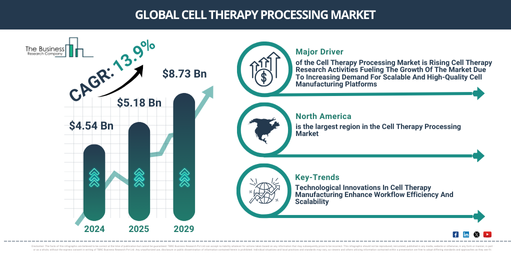
    The cell therapy processing market size has shown rapid expansion in recent years. It is projected to grow from $4.54 billion in 2024 to $5.18 billion in 2025, at a compound annual growth rate (CAGR) of 14.3%. The market’s growth in the preceding period can be linked to the increased adoption of cell-based therapies, rising investment in biomanufacturing infrastructure, a surge in demand for personalized medicine, the growing clinical success of cell therapies, and the escalating need for good manufacturing practices (GMP)-compliant processing systems.

    The cell therapy processing market is projected to experience substantial expansion over the coming years. Its valuation is anticipated to reach $8.73 billion by 2029, demonstrating a compound annual growth rate (CAGR) of 13.9%. This expansion during the projection period stems from a heightened emphasis on automated cell processing technologies, the growing incorporation of artificial intelligence (AI) into cell manufacturing processes, an escalating need for scalable allogeneic cell therapies, increased regulatory assistance for advanced therapy production, and a rise in collaborations between biotechnology companies and contract development and manufacturing organization (CDMOs). Key developments anticipated within this timeframe encompass improvements in closed-system bioreactor technologies, the creation of real-time monitoring instruments for cell cultures, breakthroughs in cryopreservation and cell storage techniques, advancements in cell separation and purification methods, and the establishment of modular and scalable good manufacturing practices (GMP) manufacturing platforms.

    Unlock Your Free Sample Report for Exclusive Market Data:

    https://www.thebusinessresearchcompany.com/sample.aspx?id=27244&type=smp

    What Are The Top Growth Drivers Impacting The Cell Therapy Processing Market Outlook?

    The increasing volume of cell therapy research endeavors is projected to drive the expansion of the cell therapy processing market. Cell therapy involves creating therapeutic products derived from living cells to treat or manage a range of conditions, including cancers, autoimmune disorders, and genetic diseases. The rising demand for cell-based therapy stems from the critical need for scalable and consistent manufacturing platforms that can support high cell densities without sacrificing product quality. Cell therapy processing provides advantages for cell therapy research by enabling standardized preparation, stringent quality control, and scalable production of high-quality cells, thus ensuring reliable and reproducible outcomes for both experimental and clinical investigations. As an illustration, in December 2024, the International Federation of Pharmaceutical Manufacturers and Associations, a Switzerland-based non-profit organization, stated that six first-in-class cell and gene treatments were launched in 2023, which signifies a 50% increase compared to the three introduced in 2022. Consequently, the expanding number of cell therapy research activities is propelling the growth of the cell therapy processing market.

    What Are The Key Segments In The Cell Therapy Processing Market?

    The cell therapy processing market covered in this report is segmented

    1) By Offering Type: Products, Services, Software

    2) By Applications: Cardiovascular Devices, Bone Repair, Neurological Disorders, Skeletal Muscle Repair, Cancer, Other Applications

    3) By End-User: Research Institutes, Biopharmaceutical Companies, Contract Research Organizations, Other End-Users

    Subsegments:

    1) By Products: Cell Processing Systems, Cell Separation Devices, Cell Culture Equipment, Cell Preservation Systems, Consumables And Reagents

    2) By Services: Contract Manufacturing Services, Process Development Services, Quality Control And Testing Services, Logistics And Supply Chain Services, Regulatory Compliance And Documentation Services

    3) By Software: Cell Processing Workflow Management Software, Data Analysis And Reporting Software, Quality Management Software, Laboratory Information Management Systems (LIMS), Compliance And Audit Management Software

    Which Ongoing Trends Are Expected To Shape The Cell Therapy Processing Market Outlook?

    Leading companies active in the cell therapy processing market are concentrating on developing advanced solutions, such as integrated bioreactor-centrifuge systems, to optimize manufacturing workflows and enhance the consistency, scalability, and sterility of cell-based therapies. An integrated bioreactor-centrifuge system is a combined device that incorporates cell incubation and centrifugal separation within a single sealed unit, facilitating continuous, automated cell processing without requiring intermediate transfers. For instance, in March 2025, Limula SA, a Switzerland-based company manufacturing cell and gene therapy (CGT), launched LimONE, an automated, closed-system platform for cell therapy manufacturing. This innovative system merges hardware, single-use consumables, and protocol-driven software to simplify complex cell processing stages like incubation, centrifugation, and reagent handling into one compact unit, enabling consistent, scalable production of therapies such as CAR-T and gene-edited stem cells from research through to GMP-compliant manufacturing, without the need for intricate technology transfers.

    Who Are The Core Companies Influencing The Cell Therapy Processing Market Landscape?

    Major companies operating in the cell therapy processing market are Johnson & Johnson Services Inc., Bristol-Myers Squibb Company, Thermo Fisher Scientific Inc., Novartis AG, Gilead Sciences Inc., Danaher Corporation, Lonza Group AG, Anterogen Co. Ltd., Terumo Corporation, Sartorius AG, Bio-Techne Corporation, STEMCELL Technologies Inc., Miltenyi Biotec GmbH, AGC Biologics S.p.A., MaxCyte Inc., Nkarta Inc., Cellares Corporation, Cellectis S.A., JW (Cayman) Therapeutics Company Limited, Cell Therapies Pty Ltd., and InGeneron Inc.

    Download The Full Report For Exclusive Market Findings:

    https://www.thebusinessresearchcompany.com/report/cell-therapy-processing-global-market-report

    How Is Cell Therapy Processing Market Demand Varying Across Different Regions?

    North America was the largest region in the cell therapy processing market in 2024. Asia-Pacific is expected to be the fastest-growing region in the forecast period. The regions covered in the cell therapy processing market report are Asia-Pacific, Western Europe, Eastern Europe, North America, South America, Middle East, Africa.

    Request A Customized Version Of The Cell Therapy Processing Market Report:

    https://www.thebusinessresearchcompany.com/customise?id=27244&type=smp

    Browse Through More Reports Similar to the Global Cell Therapy Processing Market 2025, By The Business Research Company

    Metal Structural Insulation Panels Global Market Report 2025

    https://www.thebusinessresearchcompany.com/report/metal-structural-insulation-panels-global-market-report

    Sandwich Panels Global Market Report 2025

    https://www.thebusinessresearchcompany.com/report/sandwich-panels-global-market-report

    Structural Insulated Panels Market 2025

    https://www.thebusinessresearchcompany.com/report/structural-insulated-panels-market

    Get in touch with us:

    The Business Research Company: https://www.thebusinessresearchcompany.com/

    Americas +1 310-496-7795

    Asia +44 7882 955267 & +91 8897263534

    Europe +44 7882 955267

    Email us at info@tbrc.info

    Follow us on:

    LinkedIn: https://in.linkedin.com/company/the-business-research-company

    YouTube: https://www.youtube.com/channel/UC24_fI0rV8cR5DxlCpgmyFQ

    Global Market Model: https://www.thebusinessresearchcompany.com/global-market-model
  • Brain Disease Device And Software Market to Grow at a CAGR of 10.1% from 2025 to 2029

    Brain Disease Device And Software Market to Grow at a CAGR of 10.1% from 2025 to 2029

    Unlock Global Insights – Save 20% on Market Reports with Code ONLINE20

    What Are The Growth Projections For The Brain Disease Device And Software Market Size During 2025–2029?

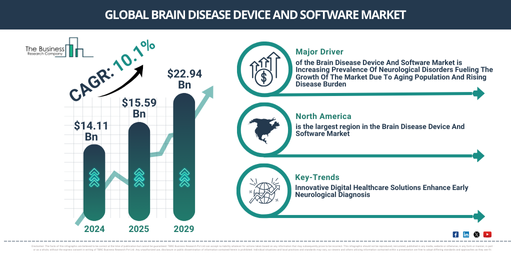
    The brain disease device and software market has witnessed rapid growth in recent years. It is anticipated to expand from $14.11 billion in 2024 to $15.59 billion in 2025, achieving a compound annual growth rate (CAGR) of 10.5%. This historical growth can be attributed to factors such as the increasing occurrence of neurological disorders, greater understanding of the benefits of early diagnosis and treatment for brain diseases, a rising demand for non-invasive diagnostic tools, expanding government investments in healthcare infrastructure, and a growing patient preference for home-based neurological monitoring.

    The brain disease device and software market is poised for significant expansion in the coming years. Projections indicate it will reach $22.94 billion by 2029, demonstrating a compound annual growth rate (CAGR) of 10.1%. This expansion during the forecast period is primarily driven by an increasing need for tailored brain disease management options, the expanding utilization of cloud-based platforms for analyzing brain health data, a heightened emphasis on remote patient monitoring and telehealth services, the growing presence of smartphones and mobile applications within healthcare, and the wider acceptance of digital therapeutics for cognitive conditions. Key developments anticipated in this period encompass the incorporation of wearable brain monitoring technologies, enhancements in neurostimulation devices, the creation of closed-loop neurostimulation systems, improvements in imaging technologies, and advancements in neuroimaging methodologies.

    Unlock Your Free Sample Report for Exclusive Market Data:

    https://www.thebusinessresearchcompany.com/sample.aspx?id=27230&type=smp

    Which Factors And Drivers Are Influencing The Brain Disease Device And Software Market In 2025?

    The rising occurrence of neurological conditions is anticipated to drive the expansion of the brain disease device and software market. These disorders are health issues impacting the brain, spinal cord, and nerves, resulting in various symptoms like cognitive, motor, and sensory difficulties. The growing incidence of neurological disorders is connected to the world’s aging populace, given that aging progressively hinders neuronal activity, diminishes brain plasticity, and heightens oxidative stress, all of which fuel the emergence and advancement of these conditions. Tools and programs for brain diseases aid in managing neurological disorders through facilitating early detection and constant oversight. They assist in prompt intervention by utilizing advanced AI and data analytics, thereby enhancing patient care and the effectiveness of treatments. For example, data from July 2024, released by the UK-based government agency National Health Service, indicated 487,432 patients had been diagnosed with dementia (a progressive brain disorder affecting memory, thinking, and daily activities) by June 30, 2024, which marked an increase of 3,155 cases from May 31, 2024. Consequently, the expanding occurrence of neurological disorders is propelling the growth of the brain disease device and software market.

    What Are The Segment Types Shaping The Brain Disease Device And Software Market?

    The brain disease device and software market covered in this report is segmented

    1) By Type: Brain Disease Device, Brain Disease Software

    2) By Technology: Wearable Technology, Telemedicine Solutions, Artificial Intelligence And Machine Learning, Mobile Health Applications, Neuroimaging Technologies

    3) By Application: Alzheimer’s Disease, Parkinson’s Disease, Epilepsy, Other Applications

    4) By End-User: Hospitals And Clinics, Home Care Settings, Rehabilitation Centers, Research and Academic Institutions, Diagnostic Laboratories

    Subsegments:

    1) By Brain Disease Device: Neurostimulation Devices, Brain Imaging Devices, Brain Monitoring Devices, Brain-Computer Interface Devices, Neurorehabilitation Devices

    2) By Brain Disease Software: Brain Imaging Analysis Software, Cognitive Assessment Software, Neurofeedback Software, Brain Data Management Software, Neurological Disorder Diagnostic Software

    Which Ongoing Trends Are Expected To Shape The Brain Disease Device And Software Market Outlook?

    Major companies operating in the brain disease device and software market are concentrating on developing novel solutions, such as digital healthcare platforms, to improve early diagnosis and enhance the management of neurological disorders. Digital healthcare solutions refer to technology-driven tools and systems that employ software, connected devices, and data analytics to support the prevention, diagnosis, monitoring, and treatment of various health conditions, including neurological disorders. For instance, in July 2022, Linus Health Inc., a US-based digital health company, launched an iPad-based brain health platform aimed at enabling the early detection of Alzheimer’s disease and other dementias in primary care settings. This platform incorporates digital cognitive assessments and AI-driven analytics to furnish clinicians with actionable insights, thereby facilitating earlier intervention and personalized care plans. It seeks to improve the accessibility and efficiency of identifying cognitive decline at its nascent stages by integrating seamlessly into routine primary care visits. This innovation underscores the growing emphasis on digital tools to transform neurological care, offering scalable and precise methods for detecting and managing brain health conditions.

    Who Are The Core Companies Influencing The Brain Disease Device And Software Market Landscape?

    Major companies operating in the brain disease device and software market are Medtronic plc, Insightec Ltd., Cadwell Industries Inc., NeuroPace Inc., Synchron Inc., Compumedics Ltd., Neuronetics Inc., BrainsWay Ltd., The Magstim Company Ltd., Paradromics Inc., Linus Health Inc., MagVenture A/S, Neurophet Inc., Neuroelectrics Corporation, BrainScope Company Inc, Blackrock Neurotech LLC, Neurable Inc., NeuroSigma Inc., Cognixion Inc., Brightmind.AI.

    Download The Full Report For Exclusive Market Findings:

    https://www.thebusinessresearchcompany.com/report/brain-disease-device-and-software-global-market-report

    Which Geographies Are Emerging As Strong Markets For The Brain Disease Device And Software Industry?

    North America was the largest region in the brain disease device and software market in 2024. Asia-Pacific is expected to be the fastest-growing region in the forecast period. The regions covered in the brain disease device and software market report are Asia-Pacific, Western Europe, Eastern Europe, North America, South America, Middle East, Africa.

    Request A Customized Version Of The Brain Disease Device And Software Market Report:

    https://www.thebusinessresearchcompany.com/customise?id=27230&type=smp

    Browse Through More Reports Similar to the Global Brain Disease Device And Software Market 2025, By The Business Research Company

    Industrial Insulation Global Market Report 2025

    https://www.thebusinessresearchcompany.com/report/industrial-insulation-global-market-report

    Building Insulation Materials Global Market Report 2025

    https://www.thebusinessresearchcompany.com/report/building-insulation-materials-global-market-report

    Technical Insulation Global Market Report 2025

    https://www.thebusinessresearchcompany.com/report/technical-insulation-global-market-report

    Get in touch with us:

    The Business Research Company: https://www.thebusinessresearchcompany.com/

    Americas +1 310-496-7795

    Asia +44 7882 955267 & +91 8897263534

    Europe +44 7882 955267

    Email us at info@tbrc.info

    Follow us on:

    LinkedIn: https://in.linkedin.com/company/the-business-research-company

    YouTube: https://www.youtube.com/channel/UC24_fI0rV8cR5DxlCpgmyFQ

    Global Market Model: https://www.thebusinessresearchcompany.com/global-market-model
  • Global Cell Processing Technologies Market Trends and Growth Analysis 2025–2029

    Global Cell Processing Technologies Market Trends and Growth Analysis 2025–2029

    Unlock Global Insights – Save 20% on Market Reports with Code ONLINE20

    By How Much Is The Cell Processing Technologies Market Expected To Expand Between 2025 And 2029?

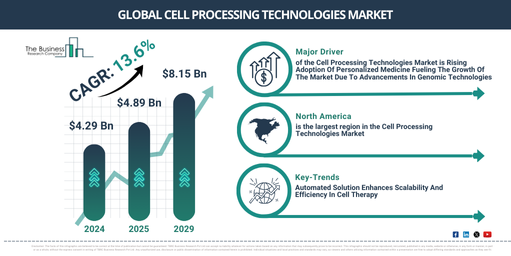
    The market size for cell processing technologies has experienced substantial expansion recently. It is projected to increase from $4.29 billion in 2024 to $4.89 billion in 2025, reflecting a compound annual growth rate (CAGR) of 14.0%. The growth observed in the historic period can be attributed to factors such as the increasing adoption of manual cell processing techniques, a rising academic interest in cell biology research, the rise in early stem cell banking initiatives, an increasing reliance on basic laboratory centrifugation tools, and a rising demand for cell culture reagents in research.

    The cell processing technologies market is projected to experience substantial expansion over the upcoming years. This market is anticipated to reach a valuation of $8.15 billion by 2029, exhibiting a compound annual growth rate (CAGR) of 13.6%. This anticipated growth during the forecast period is driven by several factors, including the escalating demand for personalized cell therapies, a surge in investments aimed at cell manufacturing infrastructure, heightened public and private sector funding, and an expanding volume of clinical trials focused on cell-based therapies. Key trends characterizing this period encompass breakthroughs in smart bioreactor technologies, the creation of entirely automated cell manufacturing systems, pioneering developments in single-cell analysis platforms, progress in AI-powered quality control solutions, and the evolution of integrated closed-loop processing workflows.

    Unlock Your Free Sample Report for Exclusive Market Data:

    https://www.thebusinessresearchcompany.com/sample.aspx?id=27243&type=smp

    Which Major Market Drivers Are Shaping The Future Of The Cell Processing Technologies Market?

    The increasing acceptance of personalized medicine is projected to stimulate the growth of the cell processing technologies market moving forward. Personalized medicine is a healthcare strategy that involves customizing treatments for individual patients based on their genetic makeup, environmental influences, and lifestyle choices to optimize outcomes and improve the standard of care. The demand for personalized medicine is on the rise, primarily due to advances in genomic technologies, which allow for the precise identification of genetic variations and the creation of tailored treatments for individuals. Cell processing technologies enhance personalized medicine by enabling the precise manipulation and preparation of patient-specific cells, making them indispensable for customized therapies. They contribute to better treatment outcomes by ensuring high-quality, viable cells, thereby advancing the development of targeted and effective medical interventions. For example, in February 2024, the Personalized Medicine Coalition (PMC), a US-based nonprofit organization, stated that the U.S. Food and Drug Administration (FDA) approved 26 new personalized medicines in 2023, an increase from 12 approved in 2022. Thus, the growing adoption of personalized therapies is fueling the expansion of the cell processing technologies market.

    What Are The Leading Segments Analyzed In The Cell Processing Technologies Market?

    The cell processing technologies market covered in this report is segmented

    1) By Product Type: Equipment, Consumables, Software

    2) By Application: Oncology, Cardiovascular Disease, Bone Repair, Neurological Disorders, Skeletal Muscle Repair, Immune Diseases, Other Applications

    3) By End-User: Pharmaceutical and Biotechnology Companies, Academic Research Institutes, Other End-Users

    Subsegments:

    1) By Equipment: Bioreactors, Centrifuges, Cell Counters, Incubators, Cryopreservation Systems, Cell Washers, Cell Sorters, Microscopes

    2) By Consumables: Cell Culture Media, Reagents, Pipettes and Tips, Flasks and Plates, Cryovials, Filters, Disposable Bags, Tubes and Containers

    3) By Software: Process Monitoring Software, Data Management Software, Automation Control Software, Quality Control Software, Imaging and Analysis Software, Inventory Management Software

    Which Competitive Trends Are Defining The Cell Processing Technologies Market Structure?

    Leading companies within the cell processing technologies market are prioritizing the development of technologically advanced solutions, such as automated cell therapy manufacturing platforms, to improve scalability, enhance process efficiency, elevate cell quality, and decrease production expenditures. An automated cell therapy manufacturing platform is defined as a fully integrated system employing advanced robotics, sensors, and software to conduct the entire production process for cell-based therapies with minimal human intervention. For example, in March 2025, Limula SA, a Switzerland-based life sciences company, introduced LimONE, a fully automated cell therapy manufacturing platform specifically designed to transform the creation of advanced therapies like CAR-T and gene-edited stem cells. This platform streamlines complex manufacturing processes by integrating a bioreactor and centrifuge into one closed device that utilizes a single consumable across all development stages. LimONE facilitates hospitals, biotech firms, and manufacturers in accelerating the move from research to clinical trials and commercial production, thereby making life-saving, personalized cell and gene therapies more available to patients.

    Which Major Industry Participants Are Leading The Cell Processing Technologies Market Growth?

    Major companies operating in the cell processing technologies market are Thermo Fisher Scientific Inc., Fresenius SE, Danaher Corporation, Cryo-Cell International Inc., Merck KGaA, Becton Dickinson and Company, GE HealthCare Technologies Inc., Lonza Group AG, Terumo Corporation, WuXi AppTec Co. Ltd., Charles River Laboratories International Inc., Americord Registry LLC, Bio-Rad Laboratories Inc., PHC Holdings Corporation, Bio-Techne Corporation, StemCell Technologies Inc., Shibuya Corporation, Repligen Corporation, Beckman Coulter Inc., ThermoGenesis Holdings Inc., Ori Biotech Ltd., Biospherix Ltd., Miltenyi Biotec B.V. & Co. KG.

    Download The Full Report For Exclusive Market Findings:

    https://www.thebusinessresearchcompany.com/report/cell-processing-technologies-global-market-report

    Which Geographies Are Emerging As Strong Markets For The Cell Processing Technologies Industry?

    North America was the largest region in the cell processing technologies market in 2024. The regions covered in the cell processing technologies market report are Asia-Pacific, Western Europe, Eastern Europe, North America, South America, Middle East, Africa.

    Request A Customized Version Of The Cell Processing Technologies Market Report:

    https://www.thebusinessresearchcompany.com/customise?id=27243&type=smp

    Browse Through More Reports Similar to the Global Cell Processing Technologies Market 2025, By The Business Research Company

    Custody Services Market 2025

    https://www.thebusinessresearchcompany.com/report/custody-services-market

    Individual And Family Services Global Market Report 2025

    https://www.thebusinessresearchcompany.com/report/individual-and-family-services-global-market-report

    Legal Services Global Market Report 2025

    https://www.thebusinessresearchcompany.com/report/legal-services-global-market-report

    Get in touch with us:

    The Business Research Company: https://www.thebusinessresearchcompany.com/

    Americas +1 310-496-7795

    Asia +44 7882 955267 & +91 8897263534

    Europe +44 7882 955267

    Email us at info@tbrc.info

    Follow us on:

    LinkedIn: https://in.linkedin.com/company/the-business-research-company

    YouTube: https://www.youtube.com/channel/UC24_fI0rV8cR5DxlCpgmyFQ

    Global Market Model: https://www.thebusinessresearchcompany.com/global-market-model
  • Global Bone Metabolism Tests Market 2025–2029: Competitive Insights and Opportunities

    Global Bone Metabolism Tests Market 2025–2029: Competitive Insights and Opportunities

    Unlock Global Insights – Save 20% on Market Reports with Code ONLINE20

    What Is The Global Market Value Of The Bone Metabolism Tests Industry In 2025?

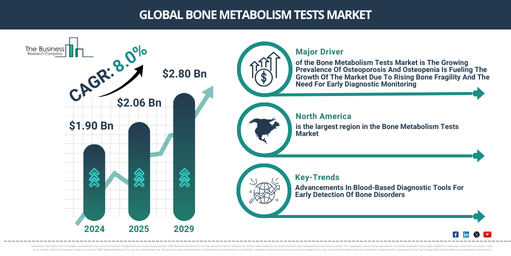
    The bone metabolism tests market has demonstrated robust expansion over the past few years. It is anticipated to expand from $1.90 billion in 2024 to $2.06 billion in 2025, reflecting a compound annual growth rate (CAGR) of 8.4%. This upward trend observed historically can be ascribed to several contributing factors, such as higher rates of osteoporosis diagnosis, heightened understanding of bone-related conditions, an expanding demographic of postmenopausal women, the increasing utilization of DEXA scans, and a continuously aging global population.

    The bone metabolism tests market is projected to experience substantial expansion over the coming years. This market is set to reach $2.80 billion by 2029, demonstrating a compound annual growth rate (CAGR) of 8.0%. Factors contributing to this anticipated growth include an escalating demand for early identification of bone-related conditions, the wider acceptance of customized treatment approaches, a heightened emphasis on preventive health measures, the broader availability of diagnostic tests for home use, and improved reimbursement options for such tests. Key trends anticipated during this period encompass progress in imaging technologies, novel molecular testing techniques, increased expenditure on research and development, the emergence of AI-driven diagnostic platforms, and enhancements in point-of-care tools for bone testing.

    Unlock Your Free Sample Report for Exclusive Market Data:

    https://www.thebusinessresearchcompany.com/sample.aspx?id=27229&type=smp

    What Are The Key Drivers Of Growth In The Bone Metabolism Tests Market?

    The increasing occurrence of osteoporosis and osteopenia is projected to drive expansion within the bone metabolism tests market in the future. These conditions are musculoskeletal disorders marked by diminished bone density and the degeneration of bone tissue, which heightens fragility and the risk of fractures, particularly in older adults. The incidence of osteoporosis and osteopenia is climbing as aging populations experience accelerated bone loss, leading to a reduction in bone density. Bone metabolism tests play a crucial role in identifying and monitoring osteoporosis and osteopenia by evaluating indicators of bone formation and breakdown. They offer valuable insights into bone turnover, thereby supporting timely intervention and treatment planning. For instance, in June 2024, according to the Australian Institute of Health and Welfare (AIHW), an Australia-based government statutory agency, osteoporosis was responsible for 2,659 deaths, equating to 10.2 deaths per 100,000 population in 2022 and accounting for 1.4% of all deaths. Consequently, the rising prevalence of osteoporosis and osteopenia is propelling the growth of the bone metabolism tests market.

    What Are The Different Segment Classifications Within The Bone Metabolism Tests Market?

    The bone metabolism tests market covered in this report is segmented

    1) By Test Type: Biochemical Tests, Imaging Tests, Bone Density Tests, Histomorphometry, Molecular Testing

    2) By Product: Assay Or Consumables, Instruments

    3) By Technology: Enzyme-Linked Immunosorbent Assay (ELISA), Chemiluminescence Immunoassay (CLIA), Other Technologies

    4) By Application: Osteoporosis Diagnosis, Bone Disease Diagnosis, Fracture Risk Assessment, Drug Development, Clinical Research

    5) By End-User: Hospitals, Diagnostic Laboratories, Research Institutes, Home Care Settings, Academic Institutions

    Subsegments:

    1) By Biochemical Tests: Serum Calcium Test, Serum Phosphorus Test, Alkaline Phosphatase Test, Parathyroid Hormone Test, Vitamin D Test

    2) By Imaging Tests: X-Ray, Computed Tomography (CT), Magnetic Resonance Imaging (MRI), Dual-Energy X-Ray Absorptiometry (DEXA), Positron Emission Tomography (PET)

    3) By Bone Density Tests: Central Dual-Energy X-Ray Absorptiometry (DEXA), Peripheral Dual-Energy X-Ray Absorptiometry (DEXA), Quantitative Ultrasound, Quantitative Computed Tomography (CT), Single Photon Absorptiometry (SPA)

    4) By Histomorphometry: Static Histomorphometry, Dynamic Histomorphometry, Bone Biopsy Analysis, Fluorochrome Labeling, Trabecular Thickness Measurement

    5) By Molecular Testing: Gene Expression Profiling, Micro Ribonucleic Acid (MicroRNA) Analysis, Deoxyribonucleic Acid (DNA) Methylation Assay, Bone Turnover Marker Panels, Genetic Mutation Screening

    Which Competitive Trends Are Defining The Bone Metabolism Tests Market Structure?

    Companies operating in the bone metabolism tests market are concentrating on developing advanced products, such as blood-based diagnostic tools, to achieve earlier, less invasive, and more accurate detection of bone disorders. These blood-based diagnostic tools utilize blood samples to identify biomarkers associated with various health conditions. Specifically for bone health, they assist in detecting alterations in bone formation and breakdown, thereby allowing for prompt and non-invasive diagnosis of bone issues. For instance, in September 2022, University Hospitals of Geneva, a Switzerland-based university hospital, and the University of Geneva, a Switzerland-based public university, introduced a new device for diagnosing bone fragility. This device received marketing approval in the European Economic Area and Switzerland, obtaining the CE mark. The device evaluates bone quality via a blood test measuring periostin (k-POSTN), a protein linked to bone strength, offering a more specific diagnosis compared to existing imaging techniques like bone densitometry. It helps in identifying individuals at risk of osteoporotic fractures, including those with type 2 diabetes, enabling early therapeutic intervention to improve patient outcomes.

    Which Major Industry Participants Are Leading The Bone Metabolism Tests Market Growth?

    Major companies operating in the bone metabolism tests market are F. Hoffmann-La Roche AG, Abbott Laboratories, Siemens Healthineers AG, Laboratory Corporation of America Holdings (LabCorp), Hologic Inc., bioMérieux SA, QuidelOrtho Corporation, Beckman Coulter Inc., Bio-Rad Laboratories Inc., DiaSorin S.p.A., Takara Bio Inc., Randox Laboratories Ltd., Trivitron Healthcare Pvt. Ltd., MESO SCALE DIAGNOSTICS LLC, Immunodiagnostic Systems plc, DMS Imaging SA, Creative Diagnostics, Oxford Biosystems Ltd., Epitope Diagnostics Inc., Maccura Biotechnology Co. Ltd.

    Download The Full Report For Exclusive Market Findings:

    https://www.thebusinessresearchcompany.com/report/bone-metabolism-tests-global-market-report

    Which Region Is Projected To Lead The Bone Metabolism Tests Market During The Forecast Period?

    North America was the largest region in the bone metabolism tests market in 2024. Asia-Pacific is expected to be the fastest-growing region in the forecast period. The regions covered in the bone metabolism tests market report are Asia-Pacific, Western Europe, Eastern Europe, North America, South America, Middle East, Africa.

    Request A Customized Version Of The Bone Metabolism Tests Market Report:

    https://www.thebusinessresearchcompany.com/customise?id=27229&type=smp

    Browse Through More Reports Similar to the Global Bone Metabolism Tests Market 2025, By The Business Research Company

    Architectural Acoustic Panels Global Market Report 2025

    https://www.thebusinessresearchcompany.com/report/architectural-acoustic-panels-global-market-report

    Soundproof Curtains Global Market Report 2025

    https://www.thebusinessresearchcompany.com/report/soundproof-curtains-global-market-report

    Loudspeakers And Sound Bars Global Market Report 2025

    https://www.thebusinessresearchcompany.com/report/loudspeakers-and-sound-bars-global-market-report

    Get in touch with us:

    The Business Research Company: https://www.thebusinessresearchcompany.com/

    Americas +1 310-496-7795

    Asia +44 7882 955267 & +91 8897263534

    Europe +44 7882 955267

    Email us at info@tbrc.info

    Follow us on:

    LinkedIn: https://in.linkedin.com/company/the-business-research-company

    YouTube: https://www.youtube.com/channel/UC24_fI0rV8cR5DxlCpgmyFQ

    Global Market Model: https://www.thebusinessresearchcompany.com/global-market-model
  • Cell Processing Instruments Market Forecast: What to Expect by 2029

    Cell Processing Instruments Market Forecast: What to Expect by 2029

    Unlock Global Insights – Save 20% on Market Reports with Code ONLINE20

    #What Is The Projected Market Size Of The Cell Processing Instruments Market By 2029?

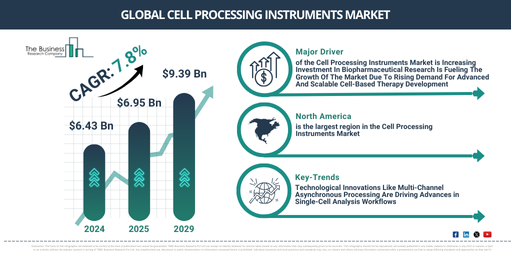
    The cell processing instruments market size has shown strong growth over recent years. It is anticipated to expand from $6.43 billion in 2024 to $6.95 billion in 2025, demonstrating a compound annual growth rate (CAGR) of 8.2%. Historically, this expansion can be ascribed to the increasing need for consistent cell processing protocols, an elevated focus on personalized medicine, a rise in regulatory approvals for cell therapy products, an increase in clinical trials involving cell-based treatments, and the expanding infrastructure of biobanks and cell repositories.

    The cell processing instruments market size is anticipated to show robust expansion in the coming years, with projections indicating it will reach $9.39 billion by 2029, growing at a compound annual growth rate (CAGR) of 7.8%. This growth throughout the forecast period is primarily driven by factors such as the increasing incorporation of automation in cell therapy manufacturing, a heightened focus on scalable cell processing solutions, an increase in clinical trials for gene and cell therapies, greater investments in advanced bioprocessing technologies, and a growing requirement for good manufacturing practice (GMP)-compliant instrumentation. Significant trends expected during this period include improvements in closed-system automation, the emergence of artificial intelligence (AI)-driven cell analysis tools, innovations in microfluidic cell sorting, progress in integrated quality control (QC) instrumentation, and the creation of modular bioprocessing platforms.

    Unlock Your Free Sample Report for Exclusive Market Data:

    https://www.thebusinessresearchcompany.com/sample.aspx?id=27242&type=smp

    What Are The Main Drivers Boosting The Cell Processing Instruments Industry’s Expansion?

    A surge in financial commitment towards biopharmaceutical research is anticipated to drive the expansion of the cell processing instruments market in the future. Biopharmaceutical research encompasses the scientific investigation and creation of therapeutic products originating from biological sources or engineered to emulate biological molecules, used for the diagnosis, prevention, or treatment of illnesses. This heightened investment is driven by an escalating demand for innovative therapies to tackle the growing prevalence of chronic diseases and address unfulfilled medical requirements, thereby encouraging more extensive research and development endeavors for targeted and effective treatments. Cell processing instruments play a crucial role in supporting biopharmaceutical research by allowing for efficient, standardized, and scalable handling of cells, which in turn speeds up the advancement and manufacture of sophisticated cell-based therapies. For instance, in December 2024, data provided by the International Federation of Pharmaceutical Manufacturers and Associations, a non-profit organization based in Switzerland, revealed that 50 pharmaceutical companies collectively invested $167 billion in research and development during 2022. Consequently, the expanding financial commitment to biopharmaceutical research is a key factor propelling the growth of the cell processing instruments market.

    What Are The Segment Types Shaping The Cell Processing Instruments Market?

    The cell processing instruments market covered in this report is segmented

    1) By Type: Cell Counters, Cell Imaging Systems, Flow Cytometers, Cell Separator Systems, Automated Cell Processing Systems, Other Instruments

    2) By Application: Cell Isolation Or Separation, Cell Imaging And Counting, Cell Viability And Proliferation, Other Applications

    3) By End-Use: Pharmaceutical And Biotechnology Companies, Contract Research Organizations (CROs) And Contract Manufacturing Organizations (CMOs), Academic And Research Institutes, Other End-Uses

    Subsegments:

    1) By Cell Counters: Manual Cell Counters, Automated Cell Counters, Digital Cell Counters

    2) By Cell Imaging Systems: Brightfield Imaging Systems, Fluorescence Imaging Systems, High-Content Imaging Systems, Live Cell Imaging Systems

    3) By Flow Cytometers: Analog Flow Cytometers, Digital Flow Cytometers, Benchtop Flow Cytometers, Clinical Flow Cytometers

    4) By Cell Separator Systems: Magnetic-Activated Cell Sorting (MACS) Systems, Fluorescence-Activated Cell Sorting (FACS) Systems, Centrifugal Elutriation Systems

    5) By Automated Cell Processing Systems: Cell Expansion Systems, Cell Washing And Concentration Systems, Cell Harvesting Systems, Integrated Cell Processing Platforms

    6) By Other Instruments: Cell Disruption Systems, Cell Viability Analyzers, Centrifuges For Cell Processing, Cell Freezing And Thawing Systems

    What Are The Latest Industry Trends Transforming The Cell Processing Instruments Market?

    Leading companies in the cell processing instruments market are concentrating on creating novel strategies, such as multi-channel asynchronous processing, to improve the efficiency and adaptability of workflows in cell therapy development. This multi-channel asynchronous processing describes a system’s capability to execute several independent workflows simultaneously on distinct channels, allowing different processes to run in parallel without requiring one another to finish. An illustrative example occurred in June 2023 when Singleron Biotechnologies GmbH, a German biotechnology firm, introduced two new instruments, Python Junior and Matrix NEO, aimed at enhancing and standardizing the single-cell analysis workflow. Python Junior facilitates the dissociation of solid tissues into high-quality single-cell suspensions by utilizing dual independent channels and a combination of mechanical and enzymatic processing. Concurrently, Matrix NEO enables comprehensive, automated single-cell library preparation, encompassing chip priming, cell partitioning, lysis, and nucleic acid capture across four channels, thereby supporting various applications and throughput requirements in both research and clinical environments.

    Who Are The Prominent Global Companies Shaping The Cell Processing Instruments Market?

    Major companies operating in the cell processing instruments market are Thermo Fisher Scientific Inc., Danaher Corporation, Merck KGaA, Becton Dickinson and Company, Avantor Inc., Agilent Technologies Inc., Sartorius AG, Revvity Inc., Bio-Rad Laboratories Inc., Eppendorf SE, Tecan Group Ltd., Bio-Techne Corporation, STEMCELL Technologies Inc., Miltenyi Biotec B.V. & Co. KG, Takara Bio Inc., 10x Genomics Inc., Promega Corporation, Esco Lifesciences Group Ltd., NanoCellect Biomedical Inc., and InGeneron Inc.

    Download The Full Report For Exclusive Market Findings:

    https://www.thebusinessresearchcompany.com/report/cell-processing-instruments-global-market-report

    Which Region Is Projected To Lead The Cell Processing Instruments Market During The Forecast Period?

    North America was the largest region in the cell processing instruments market in 2024. Asia-Pacific is expected to be the fastest-growing region in the forecast period. The regions covered in the cell processing instruments market report are Asia-Pacific, Western Europe, Eastern Europe, North America, South America, Middle East, Africa.

    Request A Customized Version Of The Cell Processing Instruments Market Report:

    https://www.thebusinessresearchcompany.com/customise?id=27242&type=smp

    Browse Through More Reports Similar to the Global Cell Processing Instruments Market 2025, By The Business Research Company

    Quick Response Qr Codes Payment Global Market Report 2025

    https://www.thebusinessresearchcompany.com/report/quick-response-qr-codes-payment-global-market-report

    Digital Gift Card Global Market Report 2025

    https://www.thebusinessresearchcompany.com/report/digital-gift-card-global-market-report

    Pay Per Click Ppc Software Global Market Report 2025

    https://www.thebusinessresearchcompany.com/report/pay-per-click-ppc-software-global-market-report

    Get in touch with us:

    The Business Research Company: https://www.thebusinessresearchcompany.com/

    Americas +1 310-496-7795

    Asia +44 7882 955267 & +91 8897263534

    Europe +44 7882 955267

    Email us at info@tbrc.info

    Follow us on:

    LinkedIn: https://in.linkedin.com/company/the-business-research-company

    YouTube: https://www.youtube.com/channel/UC24_fI0rV8cR5DxlCpgmyFQ

    Global Market Model: https://www.thebusinessresearchcompany.com/global-market-model
  • Bone Graft Fixation System Market Trends 2025–2029: Forecasts for Key Growth Segments

    Bone Graft Fixation System Market Trends 2025–2029: Forecasts for Key Growth Segments

    Unlock Global Insights – Save 20% on Market Reports with Code ONLINE20

    By How Much Is The Bone Graft Fixation System Market Expected To Expand Between 2025 And 2029?

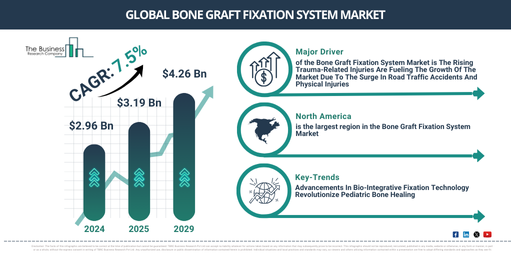
    The bone graft fixation system market has shown significant expansion in recent years. This market is set to expand from $2.96 billion in 2024 to $3.19 billion in 2025, achieving a compound annual growth rate (CAGR) of 7.8%. The observed growth in previous periods can be linked to an increase in orthopedic procedures, a higher incidence of trauma cases, an expanding elderly population, a surge in sports injuries, more dental surgeries, and advancements in hospital infrastructure.

    The bone graft fixation system market is projected to experience substantial growth in the upcoming years, reaching $4.26 billion by 2029, exhibiting a compound annual growth rate (CAGR) of 7.5%. This anticipated expansion during the forecast period is driven by factors such as the increasing need for minimally invasive surgical procedures, a rise in spinal conditions, an expanding older demographic, a growing frequency of bone imperfections, a greater emphasis on outpatient surgical facilities, and enhanced understanding of bone regeneration techniques. Key developments expected within this period involve the application of nanotechnology in bone repair, intelligent implants equipped with sensors, bioengineered scaffolds, the incorporation of robotics into surgical operations, and surgical planning enhanced by artificial intelligence.

    Unlock Your Free Sample Report for Exclusive Market Data:

    https://www.thebusinessresearchcompany.com/sample.aspx?id=27228&type=smp

    Which Drivers Are Supporting Growth Of The Bone Graft Fixation System Market?

    The rising incidence of trauma-related injuries is anticipated to drive the expansion of the bone graft fixation system market in the future. These injuries are acute, severe physical harms demanding immediate medical intervention, frequently originating from accidents or violence. The increase in trauma-related injuries is primarily due to the growing occurrence of road traffic accidents, which leads to more fractures and physical damage, subsequently placing greater strain on healthcare and emergency services. A bone graft fixation system assists in stabilizing damaged or fractured bones, encouraging bone growth, and maintaining proper alignment to enhance healing and restore structural integrity, ultimately leading to faster recovery and improved patient outcomes. As an illustration, in December 2023, data from the Bureau of Labor Statistics, a US-based federal statistical system, revealed that fatal workplace injuries in the United States increased by 5.7%, rising from 5,190 cases in 2021 to 5,486 cases in 2022. This demonstrates how the escalating number of trauma-related injuries is fueling the growth of the bone graft fixation system market.

    What Are The Primary Types Of Segments Analyzed In The Bone Graft Fixation System Market?

    The bone graft fixation system market covered in this report is segmented

    1) By Product Type: Cancellous Bone Grafts, Cortical Bone Grafts, Demineralized Bone Matrix (DBM), Bioactive Glass, Ceramics

    2) By Material Type: Allograft, Synthetic, Xenograft

    3) By Distribution Channel: Direct Sales, Distributors, Online Retail, Hospitals And Clinics, Pharmacies

    4) By Application: Orthopedic Surgery, Spinal Surgery, Dental Applications, Trauma Surgery, Reconstructive Surgery

    5) By End-User: Hospitals, Ambulatory Surgical Centers, Academic Research Institutions, Specialty Clinics, Outpatient Facilities

    Subsegments:

    1) By Cancellous Bone Grafts: Autograft, Allograft

    2) By Cortical Bone Grafts: Autograft, Allograft

    3) By Demineralized Bone Matrix (DBM): Putty, Gel, Powder

    4) By Bioactive Glass: Granules, Putty, Coatings

    5) By Ceramics: Hydroxyapatite (HA), Tricalcium Phosphate (TCP), Biphasic Calcium Phosphate (BCP)

    What Are The Latest Industry Trends Transforming The Bone Graft Fixation System Market?

    Major companies operating in the bone graft fixation system market are focusing on developing advanced solutions, such as bio-integrative fixation technology, to enhance bone healing and improve patient outcomes. Bio-integrative fixation technology refers to medical devices and implants designed to support bone healing by integrating with the body’s natural tissues over time. For instance, in December 2023, OSSIO Inc., a US-based orthopedic technology company, launched OSSIOfiber, which had received Food and Drug Administration (FDA) clearance. This product is designed to fix bone fractures, osteotomies, and fusions in children and adolescents aged two to 21 years. This technology offers an innovative alternative to traditional metal implants, eliminating the need for a second surgery to remove hardware, thus reducing complications, healthcare costs, and patient anxiety. OSSIOfiber implants integrate naturally with the developing bone, positioning them as a transformative advancement for pediatric orthopedic surgery.

    Who Are The Prominent Global Companies Shaping The Bone Graft Fixation System Market?

    Major companies operating in the bone graft fixation system market are Johnson & Johnson, Medtronic plc, Stryker Corporation, Baxter International Inc, Zimmer Biomet Holdings Inc, Smith & Nephew plc, Globus Medical Inc, Enovis Corporation, Integra Lifesciences Holdings Corporation, Conmed Corporation, NuVasive Inc, Orthofix Holdings Inc, Baumer SA, OST Laboratories Inc., AlloSource Inc., Arthrex Inc, Auxein Medical Pvt. Ltd., Mikai SpA, Bone Biologics Inc., Zimed Medikal.

    Download The Full Report For Exclusive Market Findings:

    https://www.thebusinessresearchcompany.com/report/bone-graft-fixation-system-global-market-report

    What Are The Key Regional Factors Influencing The Bone Graft Fixation System Market Growth?

    North America was the largest region in the bone graft fixation system market in 2024. Asia-Pacific is expected to be the fastest-growing region in the forecast period. The regions covered in the bone graft fixation system market report are Asia-Pacific, Western Europe, Eastern Europe, North America, South America, Middle East, Africa.

    Request A Customized Version Of The Bone Graft Fixation System Market Report:

    https://www.thebusinessresearchcompany.com/customise?id=27228&type=smp

    Browse Through More Reports Similar to the Global Bone Graft Fixation System Market 2025, By The Business Research Company

    Architectural Lighting Global Market Report 2025

    https://www.thebusinessresearchcompany.com/report/architectural-lighting-global-market-report

    Interior Lighting Global Market Report 2025

    https://www.thebusinessresearchcompany.com/report/interior-lighting-global-market-report

    Outdoor Lighting Global Market Report 2025

    https://www.thebusinessresearchcompany.com/report/outdoor-lighting-global-market-report

    Get in touch with us:

    The Business Research Company: https://www.thebusinessresearchcompany.com/

    Americas +1 310-496-7795

    Asia +44 7882 955267 & +91 8897263534

    Europe +44 7882 955267

    Email us at info@tbrc.info

    Follow us on:

    LinkedIn: https://in.linkedin.com/company/the-business-research-company

    YouTube: https://www.youtube.com/channel/UC24_fI0rV8cR5DxlCpgmyFQ

    Global Market Model: https://www.thebusinessresearchcompany.com/global-market-model
  • Cell Culture Media Market For Regenerative Medicines Industry Insights: Market Forecast to 2029

    Cell Culture Media Market For Regenerative Medicines Industry Insights: Market Forecast to 2029

    Unlock Global Insights – Save 20% on Market Reports with Code ONLINE20

    How Much Was The Cell Culture Media Market For Regenerative Medicines Market Worth In 2025, And What Is Its Anticipated Value By 2029?

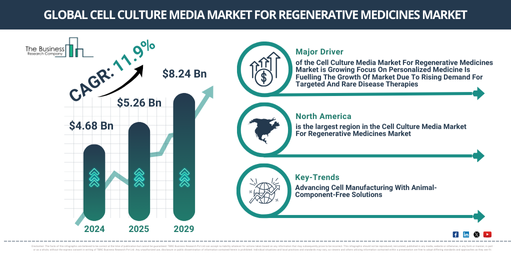
    The cell culture media market for regenerative medicines has witnessed substantial growth over recent years. It is anticipated to increase from $4.68 billion in 2024 to $5.26 billion in 2025, achieving a compound annual growth rate (CAGR) of 12.3%. This historical expansion can be ascribed to several contributing factors, including the surging demand for regenerative medicines such as cell therapies and tissue engineering, an escalating prevalence of chronic diseases that fuels research requirements, the expansion of biopharmaceutical production necessitating advanced culture systems, an uptick in government funding alongside supportive regulations for life sciences, and enhancements in media formulations and the overall efficiency of cell culture processes.

    The market for cell culture media within regenerative medicines is anticipated to experience significant expansion over the coming years. This market is projected to reach $8.24 billion by 2029, exhibiting a compound annual growth rate (CAGR) of 11.9%. This expansion during the forecast period is driven by several factors, including the escalating demand for regenerative therapies and biopharmaceuticals, greater investments in regenerative medicine research and development, wider adoption of serum-free and chemically defined media, enhanced government backing and supportive regulations, and the increasing necessity for scalable and automated cell culture production systems. Key trends anticipated during this period encompass progress in serum-free and xeno-free media, the creation of automated and high-throughput cell culture systems, breakthroughs in personalized and precision therapies, advancements in stem cell and regenerative medicine applications, and the formulation of custom and chemically defined solutions.

    Unlock Your Free Sample Report for Exclusive Market Data:

    https://www.thebusinessresearchcompany.com/sample.aspx?id=27241&type=smp

    Which Factors And Drivers Are Influencing The Cell Culture Media Market For Regenerative Medicines Market In 2025?

    The expanding emphasis on personalized medicine is anticipated to stimulate the expansion of the cell culture media market for regenerative medicines market moving ahead. This approach, known as personalized medicine, involves tailoring medical treatments and preventive measures according to an individual’s unique genetic profile, surrounding conditions, and daily habits. The heightened attention on personalized medicine stems from a growing demand for precise therapies for rare and intricate illnesses, a demand amplified by advancements in genomic research and wider availability of accurate diagnostic tools. The cell culture media market for regenerative medicines facilitates personalized medicine by allowing for the creation of unique cell culture media designed to cultivate patient-specific cells for bespoke regenerative treatments. As an illustration, information from the Personalized Medicine Coalition, a US-based nonprofit organization, indicates that in February 2024, the FDA gave its approval to 16 new personalized treatments for patients with rare diseases in 2023, an increase from 6 approvals in 2022. Consequently, the increased attention on personalized medicine is acting as a catalyst for the expansion of the cell culture media market for regenerative medicines market.

    What Are The Different Segment Classifications Within The Cell Culture Media Market For Regenerative Medicines Market?

    The cell culture media market for regenerative medicines market covered in this report is segmented

    1) By Type: Liquid Media, Semi-Solid And Solid Media

    2) By Application: Tissue Engineering, Gene Therapy, Stem Cell Research, Cell Therapy, Drug Discovery And Development, Other Applications

    3) By End User: Pharmaceutical And Biotechnology Companies, Academic And Research Institutes, Hospitals And Diagnostic Laboratories, Cell Banks, Other End Users

    Subsegment:

    1) By Liquid Media: Basal Media, Serum-Free Media, Chemically Defined Media, Protein-Free Media, Specialty Media

    2) By Semi-Solid And Solid Media: Agar-Based Media, Gelatin-Based Media, Collagen-Based Media, Methylcellulose Media, Other Hydrogel-Based Media

    What Trends Are Redefining The Cell Culture Media Market For Regenerative Medicines Market Dynamics?

    Leading companies active in the cell culture media market for regenerative medicines are focused on developing innovative products, like animal-component-free mediums. These developments aim to improve cell growth consistency, increase safety, meet regulatory demands, and support scalable clinical manufacturing. An animal-component-free medium is a cell culture solution formulated entirely without materials derived from animals, designed to enhance consistency, safety, and regulatory adherence in research and therapeutic settings. For instance, in May 2023, Lonza Group AG, a Switzerland-based life sciences company, introduced TheraPEAK T-VIVO Cell Culture Medium. This is a novel, chemically defined, animal-component-free formulation created to optimize CAR T-cell manufacturing. By eliminating the reliance on animal or human serum—traditionally associated with significant variability, the risk of adventitious agents, and the requirement for extensive safety testing and batch stockpiling—the new medium boosts process consistency, enhances control, and streamlines regulatory compliance, ultimately lowering costs and accelerating time-to-market. Providing high performance without the need for human serum supplementation, TheraPEAK T-VIVO signifies a strategic step forward in Lonza’s mission to expedite and simplify cell therapy commercialization for its worldwide customer base.

    Which Key Players Are Driving Competition In The Cell Culture Media Market For Regenerative Medicines Market?

    Major companies operating in the cell culture media market for regenerative medicines market are Thermo Fisher Scientific Inc., Danaher Corporation, Merck KGaA, Becton Dickinson and Company, GE Healthcare Technologies Inc., Corning Incorporated, Avantor Inc., Lonza Group AG, Cytiva Life Sciences, Sartorius AG, Bio-Techne Corporation, Miltenyi Biotec B.V. & Co. KG, STEMCELL Technologies Inc., FUJIFILM Irvine Scientific Inc., Takara Bio Inc., HiMedia Laboratories Private Limited, PromoCell GmbH, Cell Biologics Inc., Xcell Biosciences Inc., and Eklavya Biotech Pvt Ltd.

    Download The Full Report For Exclusive Market Findings:

    https://www.thebusinessresearchcompany.com/report/cell-culture-media-market-for-regenerative-medicines-global-market-report

    What Are The Key Regional Factors Influencing The Cell Culture Media Market For Regenerative Medicines Market Growth?

    North America was the largest region in the cell culture media market for regenerative medicines market in 2024. Asia-Pacific is expected to be the fastest-growing region in the forecast period. The regions covered in the cell culture media market for regenerative medicines market report are Asia-Pacific, Western Europe, Eastern Europe, North America, South America, Middle East, Africa.

    Request A Customized Version Of The Cell Culture Media Market For Regenerative Medicines Market Report:

    https://www.thebusinessresearchcompany.com/customise?id=27241&type=smp

    Browse Through More Reports Similar to the Global Cell Culture Media Market For Regenerative Medicines Market 2025, By The Business Research Company

    Real Time Payments Market 2025

    https://www.thebusinessresearchcompany.com/report/real-time-payments-market

    Payments Global Market Report 2025

    https://www.thebusinessresearchcompany.com/report/payments-global-market-report

    Digital Payments Global Market Report 2025

    https://www.thebusinessresearchcompany.com/report/digital-payments-global-market-report

    Get in touch with us:

    The Business Research Company: https://www.thebusinessresearchcompany.com/

    Americas +1 310-496-7795

    Asia +44 7882 955267 & +91 8897263534

    Europe +44 7882 955267

    Email us at info@tbrc.info

    Follow us on:

    LinkedIn: https://in.linkedin.com/company/the-business-research-company

    YouTube: https://www.youtube.com/channel/UC24_fI0rV8cR5DxlCpgmyFQ

    Global Market Model: https://www.thebusinessresearchcompany.com/global-market-model
  • Cas12 Protein Market Size and Growth Forecast for Businesses 2025–2029

    Cas12 Protein Market Size and Growth Forecast for Businesses 2025–2029

    Unlock Global Insights – Save 20% on Market Reports with Code ONLINE20

    What Is The Future Market Size Estimation For The Cas12 Protein Market Covering 2025–2034?

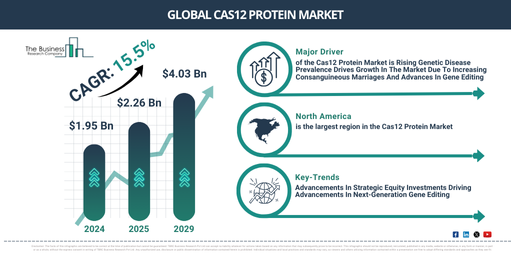
    The market for Cas12 protein has seen swift expansion recently. Projections indicate its expansion from $1.95 billion in 2024 to $2.26 billion by 2025, demonstrating a compound annual growth rate (CAGR) of 15.9%. This historical increase is linked to several factors: a surge in government investment in biotechnology and genetic engineering initiatives, a heightened demand for point-of-care diagnostic instruments in emerging economies, the expanding incorporation of Cas12 systems within next-generation sequencing platforms, an increased focus on strategies for early disease identification and prevention, and advancing protein engineering techniques that improve Cas12 specificity.

    The Cas12 protein market is projected for substantial expansion in the upcoming years. It is anticipated to reach $4.03 billion by 2029, showcasing a compound annual growth rate (CAGR) of 15.5%. This anticipated expansion during the forecast period is fueled by several factors, such as the rising incidence of genetic conditions, increased funding for gene editing research and development, heightened understanding of personalized medicine, a growing need for swift and precise infectious disease identification, and the expanding application of Cas12 proteins in agricultural biotechnology for enhancing crops. Key developments expected in this period encompass the incorporation of Cas12 with other CRISPR elements, progress in gene-editing delivery techniques, innovations in modified Cas12 proteins, technological enhancements in diagnostic systems, and improvements in bioinformatics instruments.

    Unlock Your Free Sample Report for Exclusive Market Data:

    https://www.thebusinessresearchcompany.com/sample.aspx?id=27240&type=smp

    What Are The Key Drivers Of Growth In The Cas12 Protein Market?

    A projected surge in the Cas12 protein market is anticipated, driven by the escalating occurrence of genetic diseases. These conditions arise from alterations or mutations within an individual’s DNA, disrupting typical bodily functions. The uptick in genetic diseases stems from a higher incidence of consanguineous marriages, subsequently elevating the probability of inheriting such disorders. The Cas12 protein functions by identifying and cleaving DNA at precise locations, thereby facilitating the correction, removal, or replacement of defective genes. This capability allows for accurate gene therapies for hereditary conditions, characterized by high precision and reduced unintended effects. As an illustration, data from May 2024 provided by the National Health Service, a UK-based government body, indicates that roughly 17,000 individuals in England are affected by sickle cell disease, a hereditary blood ailment, with an annual diagnosis of approximately 250 new instances. Consequently, the growing incidence of genetic diseases is a primary factor fueling the expansion of the Cas12 protein market.

    What Are The Primary Types Of Segments Analyzed In The Cas12 Protein Market?

    The cas12 protein market covered in this report is segmented

    1) By Type: Natural Cas12 Proteins, Modified Cas12 Proteins, Integration With Other Crispr Components

    2) By Formulation: Liquid Formulations, Lyophilized Powder, Plasmid-Derived Cas12 Proteins

    3) By Delivery Method: Viral Vectors, Lipid Nanoparticles, Electroporation, Microinjection

    4) By Application: Genome Editing, Gene Knockout, Gene Regulation, Genetic Engineering, Therapeutics Development

    5) By End User: Academic And Research Institutes, Pharmaceutical And Biotechnology Companies, Diagnostic Laboratories, Agricultural Companies

    Subsegments:

    1) By Natural Cas12 Proteins: Cas12a, Cas12b, Cas12c

    2) By Modified Cas12 Proteins: Engineered Cas12 Variants, High-Fidelity Cas12 Proteins, Fusion Proteins With Cas12

    3) By Integration With Other CRISPR Components: Cas12 With Cas9 Systems, Cas12 With Base Editors, Cas12 With Prime Editors

    How Are Emerging Market Trends Shaping The Cas12 Protein Industry Landscape?

    Leading entities within the Cas12 protein market are concentrating on creating sophisticated approaches, like equity investment, to hasten innovation and broaden their capacity for gene editing. This form of investment involves committing capital through the acquisition of shares or ownership interests in an organization, granting the investor partial proprietary rights and potential profits contingent on the company’s performance. An example is Regeneron Pharmaceuticals, Inc., a US-based biotechnology firm, which in April 2024, committed $100 million to Mammoth Biosciences. This was done to obtain their ultracompact CRISPR enzymes, intended for the delivery of in vivo gene editing treatments via adeno-associated viruses (AAVs) to various tissues outside of the liver. The collaboration integrates Mammoth’s ultracompact CRISPR enzymes with its sophisticated AAV delivery system to develop targeted gene therapies for areas other than the liver. These compact enzymes fit effectively within AAV vectors, allowing for highly accurate and effective in vivo editing. The collaboration provides substantial financial resources, milestone payments, and royalties to Mammoth, concurrently granting Regeneron sole access to advanced instruments for more than five years. Collectively, their objective is to expedite the development of next-generation genetic medicines to address a broader spectrum of illnesses.

    Who Are The Top Performing Companies In The Cas12 Protein Market In Recent Years?

    Major companies operating in the Cas12 protein market are Thermo Fisher Scientific Inc., Bio-Techne Corporation, Integrated DNA Technologies Inc., GenScript Biotech Corporation, Takara Bio Inc., Abcam plc, Aldevron LLC, New England Biolabs Inc., Cusabio Biotech Co. Ltd., Synthego Corporation, ABclonal Technology Co. Ltd., Mammoth Biosciences Inc., Rockland Immunochemicals Inc., Creative BioMart, Editas Medicine Inc., VectorBuilder, Sherlock Biosciences, Biomatik, SBS Genetech Co. Ltd., ProSpec-Tany Technogene Ltd., Inscripta Inc., and Addgene Inc.

    Download The Full Report For Exclusive Market Findings:

    https://www.thebusinessresearchcompany.com/report/cas12-protein-global-market-report

    How Do Regional Market Performances Compare Within The Cas12 Protein Industry?

    North America was the largest region in the Cas12 protein market in 2024. Asia-Pacific is expected to be the fastest-growing region in the forecast period. The regions covered in the cas12 protein market report are Asia-Pacific, Western Europe, Eastern Europe, North America, South America, Middle East, Africa.

    Request A Customized Version Of The Cas12 Protein Market Report:

    https://www.thebusinessresearchcompany.com/customise?id=27240&type=smp

    Browse Through More Reports Similar to the Global Cas12 Protein Market 2025, By The Business Research Company

    Fiber Cement Global Market Report 2025

    https://www.thebusinessresearchcompany.com/report/fiber-cement-global-market-report

    Glass Fiber Reinforced Concrete Global Market Report 2025

    https://www.thebusinessresearchcompany.com/report/glass-fiber-reinforced-concrete-global-market-report

    Concrete Materials Global Market Report 2025

    https://www.thebusinessresearchcompany.com/report/concrete-materials-global-market-report

    Get in touch with us:

    The Business Research Company: https://www.thebusinessresearchcompany.com/

    Americas +1 310-496-7795

    Asia +44 7882 955267 & +91 8897263534

    Europe +44 7882 955267

    Email us at info@tbrc.info

    Follow us on:

    LinkedIn: https://in.linkedin.com/company/the-business-research-company

    YouTube: https://www.youtube.com/channel/UC24_fI0rV8cR5DxlCpgmyFQ

    Global Market Model: https://www.thebusinessresearchcompany.com/global-market-model
  • Blood Filtration And Purification Market Forecast 2025–2034: Where Businesses Should Invest Next

    Blood Filtration And Purification Market Forecast 2025–2034: Where Businesses Should Invest Next

    Unlock Global Insights – Save 20% on Market Reports with Code ONLINE20

    #What Is The Projected Market Size Of The Blood Filtration And Purification Market By 2029?

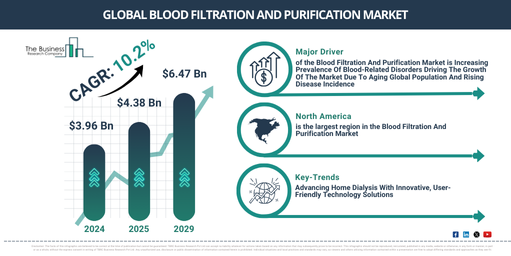
    The blood filtration and purification market has shown rapid expansion in recent years. Its value is expected to rise from $3.96 billion in 2024 to $4.38 billion in 2025, exhibiting a compound annual growth rate (CAGR) of 10.6%. The historical growth of this market can be attributed to several factors including a rise in chronic kidney disease cases, the increasing prevalence of blood-related disorders, enhanced awareness regarding the benefits of blood purification, improvements in healthcare infrastructure, and the growing adoption of dialysis treatments.

    The blood filtration and purification market is projected to experience substantial expansion over the coming years, anticipated to reach $6.47 billion by 2029, demonstrating a compound annual growth rate (CAGR) of 10.2%. This projected growth can be attributed to several factors, including an expanding elderly population, a higher occurrence of sepsis and organ failure, an escalating need for sophisticated extracorporeal treatments, broader access to medical devices, and a greater emphasis on proactive healthcare measures. Key trends expected during this period involve breakthroughs in molecular diagnostics, the implementation of advanced membrane technologies, the incorporation of artificial intelligence (AI), the utilization of hybrid filtration methods, and the creation of intelligent filters.

    Unlock Your Free Sample Report for Exclusive Market Data:

    https://www.thebusinessresearchcompany.com/sample.aspx?id=27227&type=smp

    Which Drivers Are Shaping The Blood Filtration And Purification Industry’s Market Share?

    The increasing incidence of blood-related disorders is projected to fuel the expansion of the blood filtration and purification market moving forward. Blood-related disorders are medical conditions that influence the blood’s cells, components, or overall functions. The rising occurrence of these disorders is attributed to the aging global population, as elderly individuals are more susceptible to conditions affecting blood health, leading to higher rates of incidence and an increased demand for diagnosis and treatment. Blood filtration and purification systems aid in managing blood-related disorders by effectively removing toxins and harmful substances from the blood, which helps in restoring healthy blood function and diminishing disease symptoms. For instance, in November 2024, the American Society of Hematology, a US-based non-profit organization, indicated that the number of new leukemia cases is expected to grow from 461,423 in 2021 to 519,540 by 2050. Thus, the escalating prevalence of blood-related disorders is propelling the growth of the blood filtration and purification market.

    Which Key Segments Fueling The Blood Filtration And Purification Market?

    The blood filtration and purification market covered in this report is segmented

    1) By Product: Filtration Kits And Reagents, Membranes, Filters And Consumables, Sample Preparation Systems, Specialty Assays And Columns

    2) By Application: Infectious Disease Diagnostics, Toxicology And Immunodiagnostics, Cancer Diagnostics, Genetic Or Molecular Diagnostics, Others Applications

    3) By End User: Clinical Diagnostic Labs, Hospitals, Research And Academic Institutes, Other End Users

    Subsegments:

    1) By Filtration Kits And Reagents: Disposable Filtration Kits, Reagent Kits For Blood Purification, Enzyme-Based Reagents, Chemical Reagents, Buffer Solutions

    2) By Membranes, Filters And Consumables: Hollow Fiber Membranes, Flat Sheet Membranes, Microfiltration Filters, Ultrafiltration Filters, Nanofiltration Filters, Filter Cartridges, Consumable Accessories

    3) By Sample Preparation Systems: Automated Sample Preparation Instruments, Manual Sample Preparation Devices, Centrifugation Systems, Blood Separation Units, Cell Sorting Systems

    4) By Specialty Assays And Columns: Affinity Chromatography Columns, Ion Exchange Columns, Size Exclusion Columns, Immunoaffinity Assays, Enzymatic Assays

    What Trends Are Redefining The Blood Filtration And Purification Market Dynamics?

    Leading enterprises within the blood filtration and purification market are prioritizing the creation of sophisticated solutions, including improved touchscreen interfaces, to offer intuitive systems that streamline dialysis procedures and elevate the patient journey, particularly for home-based treatments. The enhanced touchscreen interface represents an advanced, accessible display featuring superior graphics and straightforward navigation, thereby simplifying the operation of home hemodialysis equipment. For instance, in August 2023, Germany-based healthcare provider Fresenius Medical Care declared the Food and Drug Administration (FDA) clearance for its VersiHD with GuideMe Software. This advanced home hemodialysis system combines a dependable dialysis machine with an intuitive, guided interface, simplifying treatment for both patients and their caregivers. It provides explicit, sequential visual guidance designed to boost usability, foster patient confidence, and reduce necessary training periods, thus enabling more individuals to manage their dialysis at home. Leveraging NxStage’s extensive experience in home hemodialysis, this system delivers effective blood filtration and purification for those with chronic kidney disease, empowering them to conduct dialysis safely and comfortably on their own.

    Which Key Players Are Driving Competition In The Blood Filtration And Purification Market?

    Major companies operating in the blood filtration and purification market are Thermo Fisher Scientific Inc., Asahi Kasei Corporation, Fresenius SE & Co. KGaA, Toray Industries Inc., Baxter International Inc., DaVita Inc., Kaneka Corporation, Nipro Corporation, Nikkiso Co. Ltd., Jafron Biomedical Co. Ltd., Satellite Healthcare Inc., B. Braun Melsungen AG, Biotage AB, CytoSorbents Europe GmbH, Medica S.p.A., SWS Medical Group, Spectral Medical Inc., ExThera Medical Corporation, Infomed SA, Baihe Medical Co. Ltd., and Guangdong Biolight Meditech Co. Ltd.

    Download The Full Report For Exclusive Market Findings:

    https://www.thebusinessresearchcompany.com/report/blood-filtration-and-purification-global-market-report

    How Do Regional Market Performances Compare Within The Blood Filtration And Purification Industry?

    North America was the largest region in the blood filtration and purification market in 2024. Asia Pacific is expected to be the fastest-growing region in the forecast period. The regions covered in the blood filtration and purification market report are Asia-Pacific, Western Europe, Eastern Europe, North America, South America, Middle East, Africa.

    Request A Customized Version Of The Blood Filtration And Purification Market Report:

    https://www.thebusinessresearchcompany.com/customise?id=27227&type=smp

    Browse Through More Reports Similar to the Global Blood Filtration And Purification Market 2025, By The Business Research Company

    Aircraft Elevator Global Market Report 2025

    https://www.thebusinessresearchcompany.com/report/aircraft-elevator-global-market-report

    Elevator And Escalator Global Market Report 2025

    https://www.thebusinessresearchcompany.com/report/elevator-and-escalator-global-market-report

    Vertical Lift Module Global Market Report 2025

    https://www.thebusinessresearchcompany.com/report/vertical-lift-module-global-market-report

    Get in touch with us:

    The Business Research Company: https://www.thebusinessresearchcompany.com/

    Americas +1 310-496-7795

    Asia +44 7882 955267 & +91 8897263534

    Europe +44 7882 955267

    Email us at info@tbrc.info

    Follow us on:

    LinkedIn: https://in.linkedin.com/company/the-business-research-company

    YouTube: https://www.youtube.com/channel/UC24_fI0rV8cR5DxlCpgmyFQ

    Global Market Model: https://www.thebusinessresearchcompany.com/global-market-model