Blog

  • Global Post-Marketing Pharmacovigilance And Medical Information Market 2025–2029: Competitive Insights and Opportunities

    Global Post-Marketing Pharmacovigilance And Medical Information Market 2025–2029: Competitive Insights and Opportunities

    Unlock Global Insights – Save 20% on Market Reports with Code ONLINE20

    What Is The Expected Total Market Size Of The Post-Marketing Pharmacovigilance And Medical Information Industry By The Forecast Year 2029?

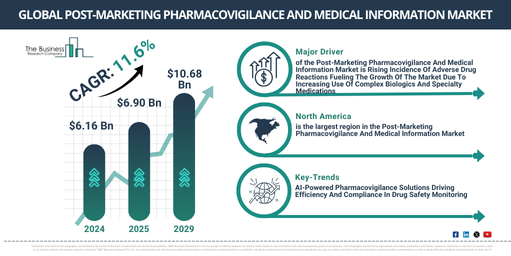
    The post-marketing pharmacovigilance and medical information market has experienced significant expansion recently. It is forecast to grow from $6.16 billion in 2024 to $6.90 billion in 2025, achieving a compound annual growth rate (CAGR) of 11.9%. This historical growth can be linked to factors such as the increasing integration of AI in pharmacovigilance processes, a heightened demand for outsourced drug safety services, the rising complexity of biopharmaceutical products, an increasing focus on patient-reported outcomes, and greater collaboration between regulatory agencies and the industry.

    The post-marketing pharmacovigilance and medical information market size is projected for substantial expansion in the coming years. This market is anticipated to reach $10.68 billion by 2029, exhibiting a compound annual growth rate (CAGR) of 11.6%. This projected growth is driven by several factors, including enhanced drug safety analytics tools, a greater uptake of cloud-based pharmacovigilance solutions, an increase in the introduction of new therapeutic products, a heightened focus on proactive risk management approaches, and expanding pharmacovigilance demands in developing regions. Key trends anticipated during this period encompass progress in automated adverse event detection, the creation of integrated pharmacovigilance platforms, breakthroughs in real-time safety data surveillance, improvements in patient engagement instruments for reporting safety information, and the evolution of predictive analytics for evaluating drug risks.

    Unlock Your Free Sample Report for Exclusive Market Data:

    https://www.thebusinessresearchcompany.com/sample.aspx?id=27393&type=smp

    What Are The Main Drivers Boosting The Post-Marketing Pharmacovigilance And Medical Information Industry’s Expansion?

    The expanding occurrence of adverse drug reactions is projected to fuel the growth of the post-marketing pharmacovigilance and medical information market moving forward. These reactions refer to harmful or unintended effects experienced when a medication is taken at its recommended dosage for prevention, diagnosis, or treatment. The prevalence of adverse drug reactions is increasing due to the aging population’s growing need for treatment of multiple chronic conditions. This often results in the concurrent use of several medications, heightening the probability of adverse drug interactions and unexpected side effects. Post-marketing pharmacovigilance and medical information are essential in managing adverse drug reactions by detecting, tracking, and sharing details about potential side effects after a drug is launched, thereby helping to maintain its safety and effectiveness. A notable example is from January 2023, when Navikenz, a US-based artificial intelligence-focused IT services company, reported that in the US, adverse drug reactions are estimated to cause 200,000 to 400,000 deaths annually, a figure exceeding the combined fatalities from stroke and diabetes. Furthermore, roughly 2.7 million cases each year result in over 100,000 hospitalizations and more than 15,000 deaths. This rising incidence of adverse drug reactions is thus driving the growth of the post-marketing pharmacovigilance and medical information market.

    How Is The Post-Marketing Pharmacovigilance And Medical Information Market Segmented?

    The post-marketing pharmacovigilance and medical information market covered in this report is segmented

    1) By Type: Spontaneous Reporting, Intensified Adverse Drug Reaction (ADR) Reporting, Targeted Spontaneous Reporting, Cohort Event Monitoring, Electronic Health Record (EHR) Mining

    2) By Product: Books, Online Media, Journals

    3) By End User: Hospitals, Research Organizations, Other End-Users

    Subsegments:

    1) By Spontaneous Reporting: Consumer Reporting, Healthcare Professional Reporting, Regulatory Authority Reporting, Pharmaceutical Company Reporting, Digital App-Based Reporting

    2) By Intensified Adverse Drug Reaction (ADR) Reporting: Hospital-Based Surveillance, Program-Specific Monitoring, Disease-Specific Monitoring, Product-Specific Monitoring, Real-Time Monitoring Systems

    3) By Targeted Spontaneous Reporting: Risk Population-Based Reporting, Therapeutic Class-Based Reporting, Adverse Drug Reaction Focused Reporting, Region-Specific Reporting, Healthcare Setting-Specific Reporting

    4) By Cohort Event Monitoring: Prospective Cohort Monitoring, Retrospective Cohort Monitoring, Active Follow-Up Monitoring, New Drug User Monitoring, Disease Registry-Linked Monitoring

    5) By Electronic Health Record (EHR) Mining: Natural Language Processing-Based Mining, Artificial Intelligence (AI) And Machine Learning Algorithms, Rule-Based Signal Detection, Longitudinal Patient Data Analysis, Integrated Hospital Data Systems

    Which Key Trends Are Expected To Influence The Post-Marketing Pharmacovigilance And Medical Information Market In The Coming Years?

    Key players within the post-marketing pharmacovigilance and medical information market are primarily focused on developing advanced solutions, such as AI-powered pharmacovigilance workflows, to improve the accuracy of adverse event detection and enable continuous safety monitoring for enhanced patient outcomes. AI-powered pharmacovigilance workflows utilize artificial intelligence to automate the oversight of drug safety, thereby accelerating the identification of adverse events and boosting regulatory compliance. For instance, in January 2024, PubHive Ltd., a UK-based cloud-based software-as-a-service (SaaS) company, launched a centralized Summary of Product Characteristics (SmPC) management system tailored for life science companies and research organizations. This innovative platform unifies essential drug safety information into one easily accessible location, automates the surveillance of literature and regulatory submissions, strengthens team collaboration, and streamlines compliance processes through its sophisticated AI functionalities. As a result, pharmacovigilance teams can operate more effectively and preemptively, ensuring both patient safety and adherence to regulatory mandates.

    Which Global Market Leaders Are Shaping The Future Of The Post-Marketing Pharmacovigilance And Medical Information Sector?

    Major companies operating in the post-marketing pharmacovigilance and medical information market are Cencora Inc., Cardinal Health Inc., Accenture plc, Sanofi S.A., Thermo Fisher Scientific Inc., Capgemini SE, Merck & Co. Inc., Cognizant Technology Solutions Corporation, IQVIA Holdings Inc., HCL Technologies Limited, Laboratory Corporation of America Holdings, ICON plc, WuXi AppTec Co. Ltd., Syneos Health Inc., Genpact Limited, Charles River Laboratories International Inc., Parexel International Corporation, Avalere Health LLC, Quanticate Limited, Inizio Consulting LLC.

    Download The Full Report For Exclusive Market Findings:

    https://www.thebusinessresearchcompany.com/report/post-marketing-pharmacovigilance-and-medical-information-global-market-report

    Which Region Is Expected To Witness The Fastest Growth In The Post-Marketing Pharmacovigilance And Medical Information Market?

    North America was the largest region in the post-marketing pharmacovigilance and medical information market in 2024. Asia-Pacific is expected to be the fastest-growing region in the forecast period. The regions covered in the post-marketing pharmacovigilance and medical information market report are Asia-Pacific, Western Europe, Eastern Europe, North America, South America, Middle East, Africa.

    Request A Customized Version Of The Post-Marketing Pharmacovigilance And Medical Information Market Report:

    https://www.thebusinessresearchcompany.com/customise?id=27393&type=smp

    Browse Through More Reports Similar to the Global Post-Marketing Pharmacovigilance And Medical Information Market 2025, By The Business Research Company

    Drain Cleaning Equipment Global Market Report 2025

    https://www.thebusinessresearchcompany.com/report/drain-cleaning-equipment-global-market-report

    Urinary Drainage Bags Global Market Report 2025

    https://www.thebusinessresearchcompany.com/report/urinary-drainage-bags-global-market-report

    Prefabricated Buildings Global Market Report 2025

    https://www.thebusinessresearchcompany.com/report/prefabricated-buildings-global-market-report

    Get in touch with us:

    The Business Research Company: https://www.thebusinessresearchcompany.com/

    Americas +1 310-496-7795

    Asia +44 7882 955267 & +91 8897263534

    Europe +44 7882 955267

    Email us at info@tbrc.info

    Follow us on:

    LinkedIn: https://in.linkedin.com/company/the-business-research-company

    YouTube: https://www.youtube.com/channel/UC24_fI0rV8cR5DxlCpgmyFQ

    Global Market Model: https://www.thebusinessresearchcompany.com/global-market-model

  • Urology Robotic Surgery Market Growth Opportunities: Insights from 2025–2029

    Urology Robotic Surgery Market Growth Opportunities: Insights from 2025–2029

    Unlock Global Insights – Save 20% on Market Reports with Code ONLINE20

    By How Much Is The Urology Robotic Surgery Market Expected To Expand Between 2025 And 2029?

    The urology robotic surgery market size has experienced rapid expansion recently. It is anticipated to increase from $4.37 billion in 2024 to $4.94 billion in 2025, at a compound annual growth rate (CAGR) of 13.0%. The historical growth in this market can be linked to factors such as the rising prevalence of urological conditions, an increasing demand for minimally invasive surgical options, a growing elderly demographic, improvements in hospital facilities, and higher healthcare spending.

    The urology robotic surgery market is projected to experience swift expansion over the coming years, reaching a size of $7.96 billion by 2029, exhibiting a compound annual growth rate (CAGR) of 12.7%. This anticipated growth during the forecast period stems from factors such as the rising demand for outpatient urology procedures, an increase in medical tourism across developing markets, heightened awareness regarding the advantages of robotic surgery, expanding government efforts for advanced healthcare systems, and a stronger emphasis on optimizing patient outcomes. Key trends anticipated for the forecast period encompass significant technological progress in urology surgery, continuous innovation within surgical robotics, substantial investment in research and development, the creation of more compact robotic systems, and the incorporation of artificial intelligence into surgical processes.

    Unlock Your Free Sample Report for Exclusive Market Data:

    https://www.thebusinessresearchcompany.com/sample.aspx?id=27442&type=smp

    What Are The Emerging Market Drivers Creating New Opportunities In The Urology Robotic Surgery Industry?

    The future expansion of the urology robotic surgery market is anticipated to be driven by the rising incidence of urological disorders. These conditions specifically affect the urinary tract and male reproductive organs. A primary cause for this increased prevalence is the aging population, given that advancing age often results in the weakening of bladder and pelvic muscles, thereby elevating the likelihood of developing such ailments. Urology robotic surgery provides valuable support for urological disorders by offering precise, minimally invasive treatment options that enhance surgical accuracy, reduce complications, and improve patient recovery for conditions like prostate cancer and kidney disease. As an illustration, figures from Prostate Cancer UK, a UK-based charitable organization, are expected to show in January 2025 that 50,751 men in England were diagnosed with prostate cancer in 2022, a number that subsequently rose to 55,033 in 2023. Consequently, the expanding occurrence of urological disorders is fueling the growth of the urology robotic surgery market.

    What Are The Major Segment Categories Driving The Urology Robotic Surgery Market Growth?

    The urology robotic surgery market covered in this report is segmented

    1) By Type: Robot Machines, Navigation Systems, Planners, Simulators, Other Types

    2) By Component: Robotic Surgery Systems, Instruments And Accessories, Services

    3) By Application: Robotic Prostatectomy, Robotic Cystectomy, Robotic Pyeloplasty, Robotic Nephrectomy, Other Applications

    4) By End-User: Hospitals, Ambulatory Surgical Centers, Specialty Clinics, Other End-Users

    Subsegments:

    1) By Robot Machines: Surgical Robots, Assistive Robots, Teleoperated Robots, Autonomous Robots

    2) By Navigation Systems: Imaging Navigation Systems, Electromagnetic Navigation Systems, Optical Tracking Systems, Ultrasound Navigation Systems

    3) By Planners: Preoperative Planning Software, Intraoperative Planning Software, 3D Modeling Software, Procedure Simulation Software

    4) By Simulators: Virtual Reality Simulators, Augmented Reality Simulators, Haptic Feedback Simulators, Training Simulators

    5) By Other Types: Robotic Arms, Control Consoles, Robotic Accessories, Robotic Integration Systems

    How Are Trends Influencing The Urology Robotic Surgery Market?

    Major companies engaged in the urology robotic surgery market are intensifying their efforts to develop artificial intelligence (AI)-powered features, aiming to gain a competitive advantage. AI-driven functionalities in urology robotic surgery encompass real-time image guidance for identifying tumors, surgical planning utilizing 3D models, and intraoperative skill assessment, all intended to boost precision and surgical outcomes. As an illustration, in August 2024, PROCEPT BioRobotics, a US-based surgical robotics company, secured FDA clearance for the HYDROS Robotic System. This advanced, AI-powered platform is designed to enhance Aquablation therapy for benign prostatic hyperplasia (BPH). The system incorporates AI-driven treatment planning, next-generation imaging, and robotic-assisted, heat-free waterjet tissue resection to precisely and efficiently remove prostate tissue while preserving critical anatomy. It also optimizes surgical workflow and improves operating room efficiency. HYDROS seeks to provide consistent, personalized, and durable symptom relief with better preservation of sexual and urinary function, representing a significant progression in BPH treatment.

    Who Are The Core Companies Influencing The Urology Robotic Surgery Market Landscape?

    Major companies operating in the urology robotic surgery market are Siemens Healthineers, Medtronic PLC, Stryker Corporation, Boston Scientific Corporation, Intuitive Surgical Inc., KARL STORZ SE & Co. KG, Sina Robotics and Medical Innovators Co. Ltd., CMR Surgical Limited, SS Innovations International Inc., Distalmotion SA, Ronovo Surgical Inc., Levita Magnetics International Corp., Titan Medical Inc., Virtual Incision Corporation, Nanjing Perlove Medical Equipment Co. Ltd., Edge Medical Robotics Corporation, Rob Surgical Systems S.L, Virtuoso Surgical Inc., GynoBotics Inc., Harbin Sagebot Intelligent Medical Equipment Co. Ltd., and Perlove Medical Robot.

    Download The Full Report For Exclusive Market Findings:

    https://www.thebusinessresearchcompany.com/report/urology-robotic-surgery-global-market-report

    Which Region Shows The Highest Potential For Future Expansion In The Urology Robotic Surgery Market?

    North America was the largest region in the urology robotic surgery market in 2024. Asia-Pacific is expected to be the fastest-growing region in the forecast period. The regions covered in the urology robotic surgery market report are Asia-Pacific, Western Europe, Eastern Europe, North America, South America, Middle East, Africa.

    Request A Customized Version Of The Urology Robotic Surgery Market Report:

    https://www.thebusinessresearchcompany.com/customise?id=27442&type=smp

    Browse Through More Reports Similar to the Global Urology Robotic Surgery Market 2025, By The Business Research Company

    Architectural Acoustic Panels Global Market Report 2025

    https://www.thebusinessresearchcompany.com/report/architectural-acoustic-panels-global-market-report

    Automotive Acoustic Materials Global Market Report 2025

    https://www.thebusinessresearchcompany.com/report/automotive-acoustic-materials-global-market-report

    Acoustic Insulation Global Market Report 2025

    https://www.thebusinessresearchcompany.com/report/acoustic-insulation-global-market-report

    Get in touch with us:

    The Business Research Company: https://www.thebusinessresearchcompany.com/

    Americas +1 310-496-7795

    Asia +44 7882 955267 & +91 8897263534

    Europe +44 7882 955267

    Email us at info@tbrc.info

    Follow us on:

    LinkedIn: https://in.linkedin.com/company/the-business-research-company

    YouTube: https://www.youtube.com/channel/UC24_fI0rV8cR5DxlCpgmyFQ

    Global Market Model: https://www.thebusinessresearchcompany.com/global-market-model

  • Tumor Models Market Expansion Outlook: $3.23 Billion by 2029 Forecast

    Tumor Models Market Expansion Outlook: $3.23 Billion by 2029 Forecast

    Unlock Global Insights – Save 20% on Market Reports with Code ONLINE20

    #What Is The Projected Market Size Of The Tumor Models Market By 2029?

    The tumor model market has experienced rapid expansion in recent years. This market is projected to expand from $1.92 billion in 2024 to $2.13 billion in 2025, demonstrating a compound annual growth rate (CAGR) of 11.3%. Historically, this expansion is linked to factors such as a rise in cancer cases, greater demand for personalized medicine, an escalating requirement for improved preclinical predictability, the increasing application of patient-derived xenograft models, and a heightened dependence on in vivo efficacy data.

    The tumor model market size is anticipated to experience substantial expansion over the coming years. Its value is projected to reach $3.23 billion by 2029, achieving a compound annual growth rate (CAGR) of 10.9%. This forecasted growth is attributable to an increasing emphasis on human-relevant models, a rising demand for precision oncology, the proliferation of immuno-oncology, a growing need for high-throughput screening models, and a broadening interest in rare cancer models. Key trends for the forecast period include the evolution of three-dimensional (3D) cell culture models, ongoing pharmaceutical research and developments, continuous advancements in cell culture technology, the integration of AI into cancer modelling, and the development of patient-derived organoids.

    Unlock Your Free Sample Report for Exclusive Market Data:

    https://www.thebusinessresearchcompany.com/sample.aspx?id=27441&type=smp

    Which Drivers Are Impacting The Tumor Models Market?

    The expanding need for personalized medicine is projected to stimulate the growth of the tumor models market moving forward. Personalized medicine signifies a healthcare framework that utilizes an individual’s genetic and lifestyle details to customize treatments and care plans to their specific requirements. The emergence of personalized medicine is attributable to individuals favoring health technologies that offer real-time monitoring and treatment strategies uniquely designed for their biology. Tumor models support personalized medicine by functioning as experimental platforms that replicate the behavior of actual human cancers, allowing researchers and clinicians to test and predict how individual patients’ tumors will respond to specific treatments, thus enabling a more tailored therapeutic approach. For instance, in February 2023, as per the Personalized Medicine Coalition, a US-based professional membership organization, in 2022, the authorization of 12 new personalized medicines constituted approximately 34% of all newly approved therapies, indicating a significant increase from previous years. Therefore, the escalating demand for personalized medicine is propelling the expansion of the tumor models market.

    How Is The Tumor Models Market Segmented?

    The tumor models market covered in this report is segmented

    1) By Type Of Tumor: Primary Tumor Models, Metastatic Tumor Models, Orthotopic Tumor Models, Heterotopic Tumor Models

    2) By Application: Drug Discovery And Development, Cancer Research, Personalized Medicine, Toxicology Studies

    3) By Technology: Xenograft Models, Genetically Engineered Mouse Models (GEMMs), Three-Dimensional (3D) Tumor Spheroids, Organ-On-A-Chip Models

    4) By End-User: Pharmaceutical And Biotechnology Companies, Academic Institutions, Contract Research Organizations (CROs), Government Research Organizations

    Subsegments:

    1) By Primary Tumor Models: Carcinoma Models, Sarcoma Models, Glioma Models, Melanoma Models, Leukemia Models, Lymphoma Models

    2) By Metastatic Tumor Models: Lung Metastasis Models, Bone Metastasis Models, Liver Metastasis Models, Brain Metastasis Models, Lymph Node Metastasis Models

    3) By Orthotopic Tumor Models: Orthotopic Breast Cancer Models, Orthotopic Lung Cancer Models, Orthotopic Pancreatic Cancer Models, Orthotopic Colon Cancer Models, Orthotopic Prostate Cancer Models

    4) By Heterotopic Tumor Models: Subcutaneous Tumor Models, Intramuscular Tumor Models, Intraperitoneal Tumor Models

    What Key Innovation Trends Are Fueling Advancements In The Tumor Models Market?

    Leading companies in the tumor models market are concentrating on creating sophisticated solutions, like tumor spheroid models, to improve the physiological similarity and forecasting precision of in vitro cancer models. Tumor spheroid models are defined as three-dimensional (3D) clusters of cancer cells that naturally develop into spherical shapes within a culture environment. An illustration of this trend occurred in June 2024, when Predictive Oncology, a US-based firm specializing in advanced 3D cell culture technologies and predictive oncology solutions, introduced new 3D cell technology aimed at speeding up the discovery of cancer therapeutic drugs. This technology provides distinct functionalities including advanced 3D tumor spheroid and organoid models that closely imitate the tumor microenvironment, high-throughput screening capacities for swift drug evaluations, assistance for patient-specific personalized tumor models, thorough examination of drug entry into 3D structures, and incorporation with AI-powered data analytics for improved predictive accuracy and more profound understanding of therapeutic reactions.

    Which Major Industry Participants Are Leading The Tumor Models Market Growth?

    Major companies operating in the tumor models market are Merck & Co Inc., LabCorp Holdings Inc., Eurofins Scientific SE, WuXi AppTec Co Ltd., Charles River Laboratories International Inc., PerkinElmer Inc., Pharmaron Beijing Co. Ltd., The Jackson Laboratory, Taconic Biosciences Inc., Cyagen Biosciences Inc., Crown Bioscience Inc., Champions Oncology Inc., Reaction Biology Corporation, InSphero AG, Creative Biolabs Inc., Oncodesign S.A., Xentech S.A., MIMETAS BV, Experimental Pharmacology and Oncology Berlin-Buch GmbH, and Hera BioLabs Inc.

    Download The Full Report For Exclusive Market Findings:

    https://www.thebusinessresearchcompany.com/report/tumor-models-global-market-report

    How Is Tumor Models Market Demand Varying Across Different Regions?

    North America was the largest region in the tumor models market in 2024. Asia-Pacific is expected to be the fastest-growing region in the forecast period. The regions covered in the tumor models market report are Asia-Pacific, Western Europe, Eastern Europe, North America, South America, Middle East, Africa.

    Request A Customized Version Of The Tumor Models Market Report:

    https://www.thebusinessresearchcompany.com/customise?id=27441&type=smp

    Browse Through More Reports Similar to the Global Tumor Models Market 2025, By The Business Research Company

    Voice Payment Software Global Market Report 2025

    https://www.thebusinessresearchcompany.com/report/voice-payment-software-global-market-report

    Voice Banking Global Market Report 2025

    https://www.thebusinessresearchcompany.com/report/voice-banking-global-market-report

    Voice Commerce Global Market Report 2025

    https://www.thebusinessresearchcompany.com/report/voice-commerce-global-market-report

    Get in touch with us:

    The Business Research Company: https://www.thebusinessresearchcompany.com/

    Americas +1 310-496-7795

    Asia +44 7882 955267 & +91 8897263534

    Europe +44 7882 955267

    Email us at info@tbrc.info

    Follow us on:

    LinkedIn: https://in.linkedin.com/company/the-business-research-company

    YouTube: https://www.youtube.com/channel/UC24_fI0rV8cR5DxlCpgmyFQ

    Global Market Model: https://www.thebusinessresearchcompany.com/global-market-model
  • Global Tubeless Insulin Pump Industry Trends: Where the Market Is Headed by 2029

    Global Tubeless Insulin Pump Industry Trends: Where the Market Is Headed by 2029

    Unlock Global Insights – Save 20% on Market Reports with Code ONLINE20

    How Much Was The Tubeless Insulin Pump Market Worth In 2025, And What Is Its Anticipated Value By 2029?

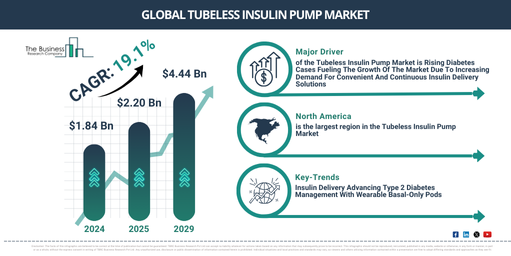
    The tubeless insulin pump market has experienced rapid expansion in recent years. Its size is set to expand from $1.84 billion in 2024 to $2.20 billion in 2025, exhibiting a compound annual growth rate (CAGR) of 19.5%. This growth observed in the past can be ascribed to an increase in diabetes prevalence, a heightened requirement for convenient and discreet insulin delivery, greater knowledge of diabetes management, enhanced reimbursement policies, patients favoring pain-free insulin administration, and the widening availability of home healthcare solutions.

    The tubeless insulin pump market is poised for significant expansion over the coming years, with projections indicating a rise to $4.44 billion by 2029, achieving a compound annual growth rate (CAGR) of 19.1%. This projected growth throughout the forecast period stems from several key factors, including the rising need for discreet and convenient insulin delivery methods, a heightened emphasis on individualized diabetes care, broader coverage through reimbursement policies for sophisticated insulin devices, and expanded public understanding through digital health initiatives.

    Key developments anticipated in this market during the forecast period encompass the incorporation of AI-powered glucose monitoring, improved smartphone application connectivity, the reduction in size of patch devices, the widespread implementation of closed-loop systems, and the embrace of wearable health technologies.

    Unlock Your Free Sample Report for Exclusive Market Data:

    https://www.thebusinessresearchcompany.com/sample.aspx?id=27440&type=smp

    Which Industry Drivers Are Expected To Accelerate The Tubeless Insulin Pump Market From 2025 To 2029?

    The future expansion of the tubeless insulin pump market is anticipated, propelled by the escalating prevalence of diabetes. This chronic health condition is characterized by elevated blood sugar, stemming from the body’s compromised ability to produce or properly utilize insulin. The rise in diabetes cases is largely due to increasing obesity rates, which are closely linked to poor diets and insufficient physical activity. Tubeless insulin pumps play a role in diabetes management by delivering continuous, controlled insulin doses without the necessity of multiple daily injections, thereby effectively assisting in blood sugar regulation. For example, in June 2023, the Institute for Health Metrics and Evaluation, a US-based public health research institute, disclosed that over half a billion people globally were afflicted with diabetes. This count is projected to more than double, reaching 1.3 billion individuals by 2050. Hence, the increasing instances of diabetes are a primary catalyst for the growth of the tubeless insulin pump market.

    What Are The Key Segments In The Tubeless Insulin Pump Market?

    The tubeless insulin pump market covered in this report is segmented

    1) By Product: Wearable Insulin Pump, Implantable Insulin Pump

    2) By Technology: Continuous Glucose Monitoring (CGM) Integrated Pumps, Standard Tubeless Pumps

    3) By End User: Hospitals, Pharmacies, E-Commerce, Other End Users

    Subsegments:

    1) By Wearable Insulin Pump: Patch Pumps, Remote-Controlled Pumps, Bluetooth-Enabled Pumps, Disposable Pumps, Reusable Pumps

    2) By Implantable Insulin Pump: Programmable Implantable Pumps, Refillable Implantable Pumps, Microelectromechanical System (MEMS)-Based Pumps, Long-Acting Implantable Pumps, Biocompatible Coated Pumps

    Which Ongoing Trends Are Expected To Shape The Tubeless Insulin Pump Market Outlook?

    Major companies active in the tubeless insulin pump market are prioritizing the development of advanced solutions, including basal-only insulin pods, to offer a simplified, cost-effective insulin delivery method for individuals with type 2 diabetes who solely need background insulin support. A basal-only insulin pod is a wearable pump designed to deliver continuous background insulin to regulate blood sugar, primarily for those diagnosed with type 2 diabetes. For example, in April 2023, Insulet Corporation, a US-based medical device company, launched Omnipod GO, an insulin delivery device authorized for use by persons with type 2 diabetes age 18 or older and who would typically receive daily injections of long-acting insulin. Omnipod GO is a wearable, independent insulin delivery device that delivers a constant rate of rapid-acting insulin for 72 hours. Additionally, it features a tubeless and waterproof pod that comes with seven different pre-programmed daily rates ranging from 10 to 40 units each day, and it functions without the necessity of a mobile device for regulation.

    Who Are The Prominent Global Companies Shaping The Tubeless Insulin Pump Market?

    Major companies operating in the tubeless insulin pump market are F. Hoffmann-La Roche AG, Sanofi SA, Abbott Laboratories, Medtronic plc, Eli Lilly and Company, Becton Dickinson & Company, Fresenius Kabi AG, Terumo Corporation, Insulet Corporation, Tandem Diabetes Care Inc., Ypsomed AG, Ascensia Diabetes Care, MicroTech Medical, Menarini Diagnostics, Bigfoot Biomedical, Debiotech SA, Medtrum Technologies Inc., Diabeloop, SOOIL Development, and Beta Bionics.

    Download The Full Report For Exclusive Market Findings:

    https://www.thebusinessresearchcompany.com/report/tubeless-insulin-pump-global-market-report

    Which Geographies Are Emerging As Strong Markets For The Tubeless Insulin Pump Industry?

    North America was the largest region in the tubeless insulin pump market in 2024. Asia-Pacific is expected to be the fastest-growing region in the forecast period. The regions covered in the tubeless insulin pump market report are Asia-Pacific, Western Europe, Eastern Europe, North America, South America, Middle East, Africa.

    Request A Customized Version Of The Tubeless Insulin Pump Market Report:

    https://www.thebusinessresearchcompany.com/customise?id=27440&type=smp

    Browse Through More Reports Similar to the Global Tubeless Insulin Pump Market 2025, By The Business Research Company

    Vertical Farming Global Market Report 2025

    https://www.thebusinessresearchcompany.com/report/vertical-farming-global-market-report

    Buildings Construction Global Market Report 2025

    https://www.thebusinessresearchcompany.com/report/buildings-construction-global-market-report

    Construction Global Market Report 2025

    https://www.thebusinessresearchcompany.com/report/construction-global-market-report

    Get in touch with us:

    The Business Research Company: https://www.thebusinessresearchcompany.com/

    Americas +1 310-496-7795

    Asia +44 7882 955267 & +91 8897263534

    Europe +44 7882 955267

    Email us at info@tbrc.info

    Follow us on:

    LinkedIn: https://in.linkedin.com/company/the-business-research-company

    YouTube: https://www.youtube.com/channel/UC24_fI0rV8cR5DxlCpgmyFQ

    Global Market Model: https://www.thebusinessresearchcompany.com/global-market-model

  • Portable Bioprocessing Bioreactors Market Trends 2025–2029: Forecasts for Key Growth Segments

    Portable Bioprocessing Bioreactors Market Trends 2025–2029: Forecasts for Key Growth Segments

    Unlock Global Insights – Save 20% on Market Reports with Code ONLINE20

    How Does The Market Size Of The Portable Bioprocessing Bioreactors Industry Compare Between 2025 And 2029?

    The portable bioprocessing bioreactors market has seen substantial growth in recent years. It is anticipated to expand from $2.49 billion in 2024 to $2.80 billion in 2025, achieving a compound annual growth rate (CAGR) of 12.8%. This historical growth can be linked to several factors, including the surging demand for on-site biopharmaceutical production, the increasing adoption of personalized medicine, a growing need for decentralized and point-of-care bioprocessing, heightened investments in biotechnology research and development, and the rising prevalence of infectious diseases, which in turn drives bioprocessing innovations.

    The portable bioprocessing bioreactors market is projected to undergo rapid expansion over the next few years, with its valuation expected to reach $4.48 billion in 2029, achieving a compound annual growth rate (CAGR) of 12.4%. This anticipated growth throughout the forecast period stems from the increasing adoption of continuous bioprocessing techniques, a rising need for portable bioprocessing solutions in remote and resource-limited regions, a heightened emphasis on sustainable and green bioprocessing methods, and growing investments in cell and gene therapy manufacturing. Key trends for this period include advancements in mobile biomanufacturing units, sophisticated miniaturization of bioreactor systems, innovations in real-time monitoring and analytics, the integration of smart sensors for process optimization, and progress in disposable bioreactor technologies.

    Unlock Your Free Sample Report for Exclusive Market Data:

    https://www.thebusinessresearchcompany.com/sample.aspx?id=27392&type=smp

    Which Factors And Drivers Are Influencing The Portable Bioprocessing Bioreactors Market In 2025?

    The increasing need for gene therapies is anticipated to stimulate the expansion of the portable bioprocessing bioreactors market in the future. Gene therapy is defined as a medical approach where flawed genes are altered or substituted to manage or avert illnesses. The rising call for gene therapy stems from progress in genetic sequencing and diagnostic tools, allowing for the accurate pinpointing of disease-contributing genes for focused interventions. Portable bioprocessing bioreactors facilitate gene therapies through their capacity for on-site, adaptable production within scalable and regulated conditions. These bioreactors streamline processing time and reduce intricacy, enhancing the swiftness and effectiveness of creating tailored treatments. As an illustration, data from December 2024, provided by the American Society of Gene & Cell Therapy (ASGCT), a US-based non-profit medical and scientific body, indicates that the Food and Drug Administration (FDA) cleared six gene therapy products in 2023, an increase from five approvals in 2022. Consequently, the escalating demand for gene therapies is propelling the development of the portable bioprocessing bioreactors market.

    What Are The Key Segments In The Portable Bioprocessing Bioreactors Market?

    The portable bioprocessing bioreactors market covered in this report is segmented

    1) By Product Type: Single-Use Bioreactors, Stainless Steel Bioreactors, Glass Bioreactors, Multi-Use Bioreactors, Smart Bioreactors

    2) By Mode Of Operation: Batch Bioreactors, Fed-Batch Bioreactors, Continuous Bioreactors, Perfusion Bioreactors

    3) By Capacity: 100L–500L, 50L–100L, 10L–50L, 1L–10L

    4) By Application: Cell Therapy And Regenerative Medicine, Vaccine And Biologic Development, Biopharmaceutical Production, Biologics And Biosimilars Manufacturing, Tissue Engineering

    5) By End-User: Academic And Research Institutions, Biopharmaceutical Companies, Contract Research Organizations (CROs), Food And Beverage Manufacturers, Chemical And Petrochemical Industries

    Subsegments:

    1) By Single-Use Bioreactors: Disposable Bags, Stirred Tank, Rocking Motion, Fixed Bed, Wave Bioreactors

    2) By Stainless Steel Bioreactors: Jacketed, Half Pipe, Coil, External, Internal

    3) By Glass Bioreactors: Jacketed, Non-Jacketed, Double Jacketed

    4) By Multi-Use Bioreactors: Airlift, Bubble Column

    5) By Smart Bioreactors: Automated Control, Sensor Integrated, Remote Monitoring, Data Analytics Enabled

    What Are The Major Trends Driving The Growth Of The Portable Bioprocessing Bioreactors Market?

    Major companies in the portable bioprocessing bioreactors market are prioritizing the development of technologically advanced products, specifically single-use bioreactors, to enhance flexibility and optimize cell therapy manufacturing. Single-use bioreactors are disposable systems that employ pre-sterilized plastic bags instead of reusable vessels, enabling faster setup, reduced contamination risks, and lower cleaning costs in biomanufacturing operations. For example, in April 2025, Thermo Fisher Scientific, a US-based biotechnology company, unveiled the 5L DynaDrive single-use bioreactor, an innovative portable bioprocessing system engineered to improve scalability and process control for various cell culture applications. This bioreactor allows for smooth scaling from 1 to 5,000 liters while maintaining consistent reactor design and film quality, resulting in a 27% boost in productivity compared to conventional glass bioreactors. It features a compact, intuitive benchtop design and incorporates biobased films along with BioTitan retention devices to minimize product loss and promote environmental sustainability.

    Which Industry Leaders Are Driving Innovation Across The Portable Bioprocessing Bioreactors Market?

    Major companies operating in the portable bioprocessing bioreactors market are Thermo Fisher Scientific Inc., Merck KGaA, GE Healthcare, Avantor Fluid Handling LLC, Cytiva Bioscience Holding Ltd., Sartorius AG, Getinge AB, Pall Corporation, ZETA Holding GmbH, Tecnic S.r.l., IKA-Werke GmbH & Co. KG, PBS Biotech Inc., Fabtech Technologies Ltd, Culture Biosciences Inc., Distek Inc., Solida Biotech Inc., Biosan Laboratories Ltd., CerCell A/S, FermEx Inc., Uma Pharmatech Machinery Pvt. Ltd.

    Download The Full Report For Exclusive Market Findings:

    https://www.thebusinessresearchcompany.com/report/portable-bioprocessing-bioreactors-global-market-report

    Which Global Regions Are Influencing The Competitive Landscape Of The Portable Bioprocessing Bioreactors Market?

    North America was the largest region in the portable bioprocessing bioreactors market in 2024. Asia-Pacific is expected to be the fastest-growing region in the forecast period. The regions covered in the portable bioprocessing bioreactors market report are Asia-Pacific, Western Europe, Eastern Europe, North America, South America, Middle East, Africa.

    Request A Customized Version Of The Portable Bioprocessing Bioreactors Market Report:

    https://www.thebusinessresearchcompany.com/customise?id=27392&type=smp

    Browse Through More Reports Similar to the Global Portable Bioprocessing Bioreactors Market 2025, By The Business Research Company

    Prefabricated Buildings Global Market Report 2025

    https://www.thebusinessresearchcompany.com/report/prefabricated-buildings-global-market-report

    Single Family Modular And Prefabricated Housing Construction Global Market Report 2025

    https://www.thebusinessresearchcompany.com/report/single-family-modular-and-prefabricated-housing-construction-global-market-report

    Multifamily Modular And Prefabricated Housing Construction Global Market Report 2025

    https://www.thebusinessresearchcompany.com/report/multifamily-modular-and-prefabricated-housing-construction-global-market-report

    Get in touch with us:

    The Business Research Company: https://www.thebusinessresearchcompany.com/

    Americas +1 310-496-7795

    Asia +44 7882 955267 & +91 8897263534

    Europe +44 7882 955267

    Email us at info@tbrc.info

    Follow us on:

    LinkedIn: https://in.linkedin.com/company/the-business-research-company

    YouTube: https://www.youtube.com/channel/UC24_fI0rV8cR5DxlCpgmyFQ

    Global Market Model: https://www.thebusinessresearchcompany.com/global-market-model

  • Trispecific Antibodies Industry Forecast to Hit $1.43 Billion by 2029 With a Strong 16.4% CAGR

    Trispecific Antibodies Industry Forecast to Hit $1.43 Billion by 2029 With a Strong 16.4% CAGR

    Unlock Global Insights – Save 20% on Market Reports with Code ONLINE20

    What Is The Future Market Size Estimation For The Trispecific Antibodies Market Covering 2025–2034?

    The trispecific antibodies market size has experienced significant expansion in recent years. This market is projected to expand from $0.67 billion in 2024 to $0.78 billion in 2025, showing a compound annual growth rate (CAGR) of 16.7%. The market’s historic growth was driven by the rising prevalence of cancer, rising demand for targeted cancer therapies, growing biopharma research and development investments, a rise in the initial success of bispecific antibodies, and increasing clinical trial activity.

    The trispecific antibodies market is projected to experience substantial expansion over the coming years. Its valuation is anticipated to reach $1.43 billion by 2029, exhibiting a robust compound annual growth rate (CAGR) of 16.3%. This projected growth throughout the forecast period stems from factors such as a rise in clinical trial approvals, the broadening of oncology indications, an increase in pharma-biotech collaborations, and supportive regulatory frameworks for novel biologics. Key developments anticipated during this timeframe involve advanced platform engineering for trispecifics, the application of artificial intelligence in drug discovery processes, enhanced automation for antibody screening, the adoption of next-generation manufacturing technologies, and the incorporation of synthetic biology tools.

    Unlock Your Free Sample Report for Exclusive Market Data:

    https://www.thebusinessresearchcompany.com/sample.aspx?id=27439&type=smp

    What Are The Top Growth Drivers Impacting The Trispecific Antibodies Market Outlook?

    The future expansion of the trispecific antibodies market is anticipated to be significantly propelled by the increasing need for targeted therapies. These therapies involve precise treatments designed to inhibit specific molecular anomalies found in cancer or other ailments, thereby enhancing treatment accuracy and minimizing damage to healthy cells. The growing emphasis on targeted therapies primarily stems from progress in precision medicine, which facilitates individualized and more potent treatments based on a person’s unique genetic makeup. Trispecific antibodies play a crucial role in supporting targeted therapies by simultaneously engaging with three different antigens, rendering them highly effective against intricate conditions like cancer and viral infections. They augment treatment precision through enhanced immune cell engagement and the obstruction of multiple disease pathways, consequently improving therapeutic results. For instance, in December 2024, the American Society of Gene & Cell Therapy (ASGCT), a US-based non-profit medical and scientific organization, indicated that the Food and Drug Administration (FDA) sanctioned 6 gene therapy products in 2023, an increase from 5 approvals in 2022. Therefore, the burgeoning demand for targeted therapies is a key driver for the growth of the trispecific antibodies market.

    What Are The Leading Segments Analyzed In The Trispecific Antibodies Market?

    The trispecific antibodies market covered in this report is segmented

    1) By Product Type: Monoclonal Trispecific Antibodies, Bispecific-Trispecific Antibodies, Other Product Types

    2) By Application: Oncology, Autoimmune Diseases, Infectious Diseases, Other Applications

    3) By End-User: Hospitals, Research Institutes, Pharmaceutical And Biotechnology Companies, Other End-Users

    Subsegments:

    1) By Monoclonal Trispecific Antibodies: Immunoglobulin G Based, Single Chain Variable Fragment Based, Dual Variable Domain Immunoglobulin Based

    2) By Bispecific-Trispecific Antibodies: Fusion Protein Based, Tandem Single Chain Variable Fragment Based, Dock And Lock Technology Based

    3) By Other Product Types: Multivalent Binding Molecules, Synthetic Protein Scaffolds, Engineered Antibody Fragments

    Which Competitive Trends Are Defining The Trispecific Antibodies Market Structure?

    Key companies operating in the trispecific antibodies market are prioritizing the creation of innovative products, such as trispecific antibody engineering platforms, to boost efficacy, widen applications, and accelerate biologics development. Trispecific antibody engineering platforms denote advanced technologies designed to generate antibodies that can simultaneously bind to three distinct targets, thereby enabling more precise and effective treatment for complex ailments like cancer and viral infections. As an illustration, in May 2025, Invenra Inc., a US-based biotechnology company, unveiled its T-BODY platform to further the development of next-generation trispecific therapeutic antibodies. This platform supports the scalable assembly of multispecific antibody constructs, leading to enhanced immune cell engagement, improved tumor targeting, and customizable functionality. The T-BODY platform integrates advanced molecular engineering to ensure stability, manufacturability, and better pharmacokinetics, facilitating the invention of novel treatments.

    Which Key Players Are Driving Competition In The Trispecific Antibodies Market?

    Major companies operating in the trispecific antibodies market are Johnson & Johnson, F. Hoffmann-La Roche AG, Merck & Co. Inc., AbbVie Inc., Sanofi S.A., AstraZeneca plc, Novartis AG, Gilead Sciences Inc., BeOne Medicines Inc., Simcere Pharmaceutical Group Limited, Biocytogen Pharmaceuticals (Beijing) Co. Ltd., Zymeworks Inc., Molecular Partners AG, CStone Pharmaceuticals Co. Ltd., Genor Biopharma Co. Ltd., Numab Therapeutics AG, Lyvgen Biopharma Holdings Limited, GT Biopharma Inc., Ichnos Sciences Inc., Purple Biotech Ltd.

    Download The Full Report For Exclusive Market Findings:

    https://www.thebusinessresearchcompany.com/report/trispecific-antibodies-global-market-report

    Which Region Is Projected To Lead The Trispecific Antibodies Market During The Forecast Period?

    North America was the largest region in the trispecific antibodies market in 2024. The regions covered in the trispecific antibodies market report are Asia-Pacific, Western Europe, Eastern Europe, North America, South America, Middle East, Africa.

    Request A Customized Version Of The Trispecific Antibodies Market Report:

    https://www.thebusinessresearchcompany.com/customise?id=27439&type=smp

    Browse Through More Reports Similar to the Global Trispecific Antibodies Market 2025, By The Business Research Company

    Business Software Global Market Report 2025

    https://www.thebusinessresearchcompany.com/report/business-software-global-market-report

    Asset Finance Software Global Market Report 2025

    https://www.thebusinessresearchcompany.com/report/asset-finance-software-global-market-report

    Project Management Software Global Market Report 2025

    https://www.thebusinessresearchcompany.com/report/project-management-software-global-market-report

    Get in touch with us:

    The Business Research Company: https://www.thebusinessresearchcompany.com/

    Americas +1 310-496-7795

    Asia +44 7882 955267 & +91 8897263534

    Europe +44 7882 955267

    Email us at info@tbrc.info

    Follow us on:

    LinkedIn: https://in.linkedin.com/company/the-business-research-company

    YouTube: https://www.youtube.com/channel/UC24_fI0rV8cR5DxlCpgmyFQ

    Global Market Model: https://www.thebusinessresearchcompany.com/global-market-model

  • Traumatic Brain Injury Biomarkers Market to Reach $3.02 Billion by 2029, Growing at a CAGR of 21.7%

    Traumatic Brain Injury Biomarkers Market to Reach $3.02 Billion by 2029, Growing at a CAGR of 21.7%

    Unlock Global Insights – Save 20% on Market Reports with Code ONLINE20

    What Is The Expected Total Market Size Of The Traumatic Brain Injury Biomarkers Industry By The Forecast Year 2029?

    The traumatic brain injury biomarkers market has experienced significant expansion in recent years. It is anticipated to increase from $1.13 billion in 2024 to $1.38 billion in 2025, exhibiting a compound annual growth rate (CAGR) of 22.1%. This historical growth can be attributed to factors such as the increasing incidence of road accidents, rising awareness of brain health, a growing number of emergency room visits, an increase in military-related TBI cases, and an expansion of diagnostic options.

    The market size for traumatic brain injury biomarkers is projected to experience substantial growth over the coming years, reaching $3.03 billion by 2029, with a compound annual growth rate (CAGR) of 21.7%. This expansion during the forecast period can be attributed to several factors, including the increasing demand for rapid diagnostic tools, growing investment in neurological research, the rising adoption of personalized medicine, an expansion of clinical trials for brain injury biomarkers, and higher healthcare spending. Prominent trends expected in this period encompass technological advancements in proteomic platforms, innovations in blood-based biomarker detection, the development of portable diagnostic devices, dedicated research and development efforts in neuroinflammation markers, and the integration of artificial intelligence into biomarker analysis.

    Unlock Your Free Sample Report for Exclusive Market Data:

    https://www.thebusinessresearchcompany.com/sample.aspx?id=27438&type=smp

    Which Major Market Drivers Are Shaping The Future Of The Traumatic Brain Injury Biomarkers Market?

    The rising count of road traffic accidents is anticipated to boost the traumatic brain injury biomarkers market in the future. These incidents are defined as unforeseen occurrences that result in injury, harm, or damage, frequently requiring prompt medical intervention. The increase in road traffic accidents is attributed to a rapid surge in private vehicle usage, driven by urbanization and motorization. Traumatic brain injury biomarkers are instrumental in the care of road traffic accident victims, enabling swift and accurate assessment of head injuries. They facilitate early diagnosis by detecting specific proteins in the blood, which helps clinicians make timely treatment decisions and improves patient outcomes in emergency scenarios. For instance, according to a May 2024 report on road safety by the European Commission, a Luxembourg-based regulatory authority, the total number of road fatalities reached 20,634 in 2022, marking an increase from 19,917 in 2021. Thus, the growing number of road traffic accidents is a key factor driving the expansion of the traumatic brain injury biomarkers market. Rising Adoption Of Personalized Medicine Fueling The Growth Of The Market Due To Increasing Demand For Tailored Treatment Approaches

    The rising adoption of personalized medicine is expected to propel the growth of the traumatic brain injury biomarkers market going forward. Personalized medicine is a medical approach that involves tailoring treatments to individual patients based on their genetic, environmental, and lifestyle factors to optimize outcomes and improve care. The demand for personalized medicine is increasing due to advancements in genomic technologies, which enable the precise identification of genetic variations and tailored treatments for individuals. Traumatic brain injury biomarkers support personalized medicine by identifying specific biological indicators linked to brain injuries. They enable tailored treatment plans based on individual responses, improving recovery outcomes and optimizing clinical decision-making for each patient. For instance, in February 2024, according to the Personalized Medicine Coalition (PMC), a US-based nonprofit organization, the U.S. Food and Drug Administration (FDA) approved 26 new personalized medicines in 2023, a significant increase from the 12 approved in 2022. Therefore, the rising adoption of personalized medicine is driving the growth of the traumatic brain injury biomarkers market.

    What Are The Segment Types Shaping The Traumatic Brain Injury Biomarkers Market?

    The traumatic brain injury biomarkers market covered in this report is segmented

    1) By Type: Protein Biomarkers, Genetic Biomarkers, Metabolomic Biomarkers

    2) By Sample Type: Blood-based, Cerebrospinal Fluid (CSF)-Based, Urine-Based

    3) By Application: Diagnosis, Prognosis, Monitoring Treatment Response

    4) By End Use: Hospitals And Clinics, Diagnostic Laboratories, Research Institutes

    Subsegments:

    1) By Protein Biomarkers: Glial Fibrillary Acidic Protein (GFAP), Ubiquitin C-Terminal Hydrolase L1 (UCH-L1), S100 Calcium Binding Protein B (S100B), Neuron-Specific Enolase (NSE)

    2) By Genetic Biomarkers: Apolipoprotein E (APOE) Genotyping, Brain-Derived Neurotrophic Factor (BDNF) Polymorphism, Interleukin-6 (IL-6) Gene Variants, Tumor Necrosis Factor-Alpha (TNF-α) Polymorphism

    3) By Metabolomic Biomarkers: Lactate, Creatine, Choline, N-Acetylaspartate (NAA)

    What Are The Latest Industry Trends Transforming The Traumatic Brain Injury Biomarkers Market?

    Leading companies in the traumatic brain injury biomarker market are concentrating on developing novel solutions, such as a laboratory-based blood test, to enhance the precision and speed of concussion evaluation and diagnosis. A laboratory-based blood test functions as a diagnostic instrument that measures specific biomarkers in the blood to assess the presence and severity of brain injuries, thereby enabling earlier and more objective clinical decisions. For instance, in June 2025, Abbott Laboratories, a US-based healthcare company, introduced the Alinity i and Architect i1000SR lab tests. These tests quantify two key biomarkers, glial fibrillary acidic protein (GFAP) and ubiquitin carboxy-terminal hydrolase (UCH)-L1, to assist clinicians in evaluating suspected concussions within 12 hours of injury. They also deliver lab results in just 18 minutes, supporting faster triage decisions in emergency settings and reducing reliance on unnecessary CT scans. This innovation provides physicians with a reliable method for identifying patients with potential traumatic brain injuries, and it represents a significant advancement in expanding access to faster, evidence-based care in emergency departments.

    Who Are The Top Performing Companies In The Traumatic Brain Injury Biomarkers Market In Recent Years?

    Major companies operating in the traumatic brain injury biomarkers market are F. Hoffmann-La Roche Ltd, Thermo Fisher Scientific Inc., Abbott Laboratories, Siemens Healthineers AG, Biogen Inc., BioMérieux S.A., DiaSorin S.p.A., Abcam Limited, Fujirebio Inc., Meso Scale Diagnostics (MSD), Olink Holding AB, Quanterix Corporation, OriGene Technologies Inc., BioDirection Inc., NanoDx Inc., BrainScope Company Inc., BrainBox Solutions Inc., DiaGenic ASA, NeuroTrauma Sciences LLC, and Banyan Biomarkers Inc.

    Download The Full Report For Exclusive Market Findings:

    https://www.thebusinessresearchcompany.com/report/traumatic-brain-injury-biomarkers-global-market-report

    What Are The Key Regional Factors Influencing The Traumatic Brain Injury Biomarkers Market Growth?

    North America was the largest region in the traumatic brain injury biomarkers market in 2024. Asia-Pacific is expected to be the fastest-growing region in the forecast period. The regions covered in the traumatic brain injury biomarkers market report are Asia-Pacific, Western Europe, Eastern Europe, North America, South America, Middle East, Africa.

    Request A Customized Version Of The Traumatic Brain Injury Biomarkers Market Report:

    https://www.thebusinessresearchcompany.com/customise?id=27438&type=smp

    Browse Through More Reports Similar to the Global Traumatic Brain Injury Biomarkers Market 2025, By The Business Research Company

    Password Based Authentication Global Market Report 2025

    https://www.thebusinessresearchcompany.com/report/password-based-authentication-global-market-report

    Mobile User Authentication Global Market Report 2025

    https://www.thebusinessresearchcompany.com/report/mobile-user-authentication-global-market-report

    Identity Verification And Authentication Global Market Report 2025

    https://www.thebusinessresearchcompany.com/report/identity-verification-and-authentication-global-market-report

    Get in touch with us:

    The Business Research Company: https://www.thebusinessresearchcompany.com/

    Americas +1 310-496-7795

    Asia +44 7882 955267 & +91 8897263534

    Europe +44 7882 955267

    Email us at info@tbrc.info

    Follow us on:

    LinkedIn: https://in.linkedin.com/company/the-business-research-company

    YouTube: https://www.youtube.com/channel/UC24_fI0rV8cR5DxlCpgmyFQ

    Global Market Model: https://www.thebusinessresearchcompany.com/global-market-model
  • Point-Of-Care-Testing (POCT) Market Forecast 2025–2034: Where Businesses Should Invest Next

    Point-Of-Care-Testing (POCT) Market Forecast 2025–2034: Where Businesses Should Invest Next

    Unlock Global Insights – Save 20% on Market Reports with Code ONLINE20

    What Is The Predicted Market Size Trajectory For The Point-Of-Care-Testing (POCT) Market From 2025 To 2034?

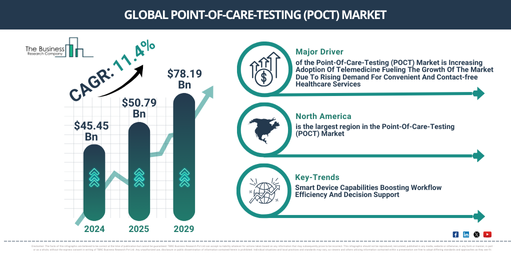
    The point-of-care-testing (POCT) market has experienced rapid expansion in recent years. Its valuation is set to climb from $45.45 billion in 2024 to $50.79 billion by 2025, demonstrating a compound annual growth rate (CAGR) of 11.8%. This historical growth can be ascribed to a heightened focus on personalized medicine, escalating investments within healthcare infrastructure, an increase in emergency care situations, the expanded utilization of point-of-care molecular testing, and the rising integration of AI in diagnostic processes.

    The point-of-care-testing (POCT) market is anticipated to experience significant growth in the coming years. It is projected to expand to $78.19 billion by 2029, achieving a compound annual growth rate (CAGR) of 11.4%. The expansion during the forecast period can be attributed to factors such as increasing demand for personalized medicine, the rise of telehealth and remote monitoring trends, improved healthcare access in developing markets, the expanding application of POCT in non-traditional environments, and the rising adoption of wearable diagnostic devices. Key trends for the forecast period involve advancements in multiplex testing platforms, the creation of portable molecular diagnostic devices, innovations in smartphone-based diagnostic tools, progress in connectivity and data integration, and the development of AI-powered POCT solutions.

    Unlock Your Free Sample Report for Exclusive Market Data:

    https://www.thebusinessresearchcompany.com/sample.aspx?id=27391&type=smp

    What Are The Key Drivers Of Growth In The Point-Of-Care-Testing (POCT) Market?

    The expanding use of telemedicine is projected to fuel the growth of the point-of-care-testing (POCT) market moving forward. Telemedicine involves providing medical care remotely through digital communication platforms like video calls, phone conversations, or secure messaging. Its uptake stems from an increasing need for accessible, prompt, and contact-free healthcare, a demand significantly boosted by the COVID-19 pandemic. Point-of-care testing (POCT) complements telemedicine by delivering swift, accurate diagnostic outcomes that can be instantly shared with remote healthcare professionals. As an illustration, a survey conducted by Rock Health, a US-based health technology company, among 8,014 respondents from July 12 to August 22, 2022, revealed in February 2023 that 76% of individuals aged over 55 had utilized telemedicine. Furthermore, 80% of all respondents indicated having accessed care via telemedicine at some point, representing an 8% increase from 72% in 2021. Consequently, the growing integration of telemedicine is a key factor propelling the expansion of the point-of-care-testing (POCT) market.

    What Are The Leading Segments Analyzed In The Point-Of-Care-Testing (POCT) Market?

    The point-of-care-testing (POCT) market covered in this report is segmented

    1) By Type: Blood Glucose Testing, Infectious Diseases Testing, Cardiac Markers Testing, Coagulation Testing, Pregnancy And Fertility Testing, Blood Gas Or Electrolytes Testing, Urinalysis Testing, Other Types

    2) By Mode Of Purchase: Over-The-Counter Products, Prescribed Based Products

    3) By Technology: Immunoassays, Molecular Diagnostics, Microbial Detection, Polymerase Chain Reaction (PCR) Testing, Biochemical Testing

    4) By End-User: Clinical Laboratories, Ambulatory Care Facilities And Physician Offices, Pharmacies, Retail Clinics And E-Comm Platforms, Hospitals, Critical Care Centres, Urgent Care Centres, Home Care And Self-Testing, Other End-Users

    Subsegments:

    1) By Blood Glucose Testing: Self-Monitoring Blood Glucose Devices, Continuous Glucose Monitoring Devices, Flash Glucose Monitoring Devices

    2) By Infectious Diseases Testing: Human Immunodeficiency Virus (HIV) Testing, Hepatitis Testing, Influenza Testing, COVID-19 Testing, Other Infectious Diseases Testing

    3) By Cardiac Markers Testing: Troponin Testing, Creatine Kinase-MB (CK-MB) Testing, Myoglobin Testing, B-type Natriuretic Peptide (BNP) Testing

    4) By Coagulation Testing: Prothrombin Time (PT) Testing, Activated Partial Thromboplastin Time (aPTT) Testing, International Normalized Ratio (INR) Testing

    5) By Pregnancy And Fertility Testing: Pregnancy Test Kits, Ovulation Test Kits, Fertility Hormone Testing

    6) By Blood Gas Or Electrolytes Testing: Arterial Blood Gas Testing, Venous Blood Gas Testing, Electrolyte Testing

    7) By Urinalysis Testing: Urine Chemistry Analysis, Microscopic Urine Analysis, Urine Culture Testing

    8) By Other Types: Drug Abuse Testing, Allergy Testing, Cholesterol Testing, Thyroid Function Testing

    What Are The Major Trends Driving The Growth Of The Point-Of-Care-Testing (POCT) Market?

    Leading companies in the point-of-care-testing (POCT) market are concentrating on creating innovative products, such as blood glucose management solutions, to enhance diagnostic speed, accuracy, and patient results in near-patient environments. Blood glucose management solutions denote the instruments, apparatuses, and systems utilized for monitoring, tracking, and regulating blood sugar levels to manage conditions like diabetes. For example, in January 2022, F. Hoffmann-La Roche AG, a Switzerland-based pharmaceutical company, introduced the Cobas pulse system. The Cobas pulse system presents a next-generation connected platform that merges advanced point-of-care blood glucose testing with smart device functionalities. It allows for effortless integration with hospital information technology (IT) systems for automatic result transmission and real-time clinical data availability. The device also supports healthcare applications to improve decision support and operational efficiency at the patient’s side.

    Who Are The Key Multinational Companies Dominating The Point-Of-Care-Testing (POCT) Market?

    Major companies operating in the point-of-care-testing (POCT) market are Johnson & Johnson, F. Hoffmann-La Roche Ltd., Thermo Fisher Scientific Inc., Abbott Laboratories, Danaher Corporation, Siemens Healthineers AG, Becton Dickinson and Company, Zoetis Inc., BioMérieux SA, QuidelOrtho Corporation, Sysmex Corporation, Bio-Rad Laboratories Inc., QIAGEN NV, Nova Biomedical Corporation, LifeScan Inc., Ascensia Diabetes Care Holdings AG, Trividia Health Inc., Trinity Biotech Plc, SiPhox Inc., and Sinocare Inc.

    Download The Full Report For Exclusive Market Findings:

    https://www.thebusinessresearchcompany.com/report/point-of-care-testing-poct-global-market-report

    What Are The Regional Market Dynamics Impacting The Point-Of-Care-Testing (POCT) Industry?

    North America was the largest region in the point-of-care testing (POCT) market in 2024. Asia-Pacific is expected to be the fastest-growing region in the forecast period. The regions covered in the point-of-care-testing (POCT) market report are Asia-Pacific, Western Europe, Eastern Europe, North America, South America, Middle East, Africa.

    Request A Customized Version Of The Point-Of-Care-Testing (POCT) Market Report:

    https://www.thebusinessresearchcompany.com/customise?id=27391&type=smp

    Browse Through More Reports Similar to the Global Point-Of-Care-Testing (POCT) Market 2025, By The Business Research Company

    Precast Concrete Market 2025

    https://www.thebusinessresearchcompany.com/report/precast-concrete-market

    Precast Construction Global Market Report 2025

    https://www.thebusinessresearchcompany.com/report/precast-construction-global-market-report

    Modular And Prefabricated Nonresidential Building Construction Global Market Report 2025

    https://www.thebusinessresearchcompany.com/report/modular-and-prefabricated-nonresidential-building-construction-global-market-report

    Get in touch with us:

    The Business Research Company: https://www.thebusinessresearchcompany.com/

    Americas +1 310-496-7795

    Asia +44 7882 955267 & +91 8897263534

    Europe +44 7882 955267

    Email us at info@tbrc.info

    Follow us on:

    LinkedIn: https://in.linkedin.com/company/the-business-research-company

    YouTube: https://www.youtube.com/channel/UC24_fI0rV8cR5DxlCpgmyFQ

    Global Market Model: https://www.thebusinessresearchcompany.com/global-market-model

  • Global Transcatheter Mitral Valve Market Size Projected to Reach $2.28 Billion During the Forecast Period

    Global Transcatheter Mitral Valve Market Size Projected to Reach $2.28 Billion During the Forecast Period

    Unlock Global Insights – Save 20% on Market Reports with Code ONLINE20

    How Does The Market Size Of The Transcatheter Mitral Valve Industry Compare Between 2025 And 2029?

    The transcatheter mitral valve market has experienced robust expansion in recent years. This market is expected to grow from $1.47 billion in 2024 to $1.61 billion in 2025, achieving a compound annual growth rate (CAGR) of 9.5%. The notable growth observed historically stems from the rising adoption of minimally invasive cardiac surgeries, successful outcomes in clinical trials for initial TMVR devices, the enhancement of hospital infrastructure in developed regions, an increase in the prevalence of rheumatic heart disease in low-income nations, and the expansion of training programs designed for interventional cardiologists.

    The transcatheter mitral valve market is anticipated to experience substantial expansion in the coming years. This market is projected to reach $2.28 billion by 2029, exhibiting a compound annual growth rate (CAGR) of 9.1%. Several factors will fuel this growth during the forecast period. These include a rising preference for catheter-based treatments among younger demographics, an expanding array of advanced transcatheter mitral valve replacement products in development, enhanced emphasis on early detection via artificial intelligence-powered imaging, an increasing number of regulatory clearances for TMV devices, and the incorporation of real-time navigation and imaging systems into transcatheter mitral valve interventions. Key trends expected over the forecast period encompass improvements in artificial intelligence-driven imaging for evaluating valves, the application of advanced material coatings to boost biocompatibility, the creation of customized transcatheter mitral valve solutions utilizing 3D printing, advancements in the flexibility and accuracy of delivery catheters, and the adoption of digital twin technology for meticulous procedural planning.

    Unlock Your Free Sample Report for Exclusive Market Data:

    https://www.thebusinessresearchcompany.com/sample.aspx?id=27437&type=smp

    What Are The Main Drivers Boosting The Transcatheter Mitral Valve Industry’s Expansion?

    The escalating incidence of cardiac conditions is projected to stimulate the expansion of the transcatheter mitral valve market in the coming years. Heart diseases are impairments that disrupt the heart’s structure or function, thereby diminishing its efficiency in pumping blood. The increasing occurrence of heart diseases is primarily influenced by aging populations, as the age-related deterioration of the heart and blood vessels heightens vulnerability to conditions such as mitral valve regurgitation, heart failure, and arrhythmias. A transcatheter mitral valve assists in treating heart disease by repairing or replacing a damaged mitral valve to re-establish healthy blood flow between the heart’s chambers, improving cardiac performance and easing symptoms. For instance, in October 2024, information from the Centers for Disease Control and Prevention, a US-based government agency, indicated that in 2022, coronary heart disease was the most widespread form of heart disease, leading to 371,506 deaths. Annually in the United States, approximately 805,000 individuals experience a heart attack, with new cases (605,000) occurring nearly three times more often than recurring cases (200,000). Thus, the growing prevalence of heart diseases is fueling the growth of the transcatheter mitral valve market.

    What Are The Different Segment Classifications Within The Transcatheter Mitral Valve Market?

    The transcatheter mitral valve market covered in this report is segmented

    1) By Product: Transcatheter Mitral Valve Replacement, Transcatheter Mitral Valve Repair

    2) By Indication: Mitral Stenosis, Mitral Regurgitation

    3) By End-User: Hospitals, Ambulatory Surgical Centers, Cardiac Catheterization Laboratories

    Subsegments:

    1) By Transcatheter Mitral Valve Replacement: Self-Expanding Valves, Balloon-Expandable Valves

    2) By Transcatheter Mitral Valve Repair: Annuloplasty Devices, Chordal Repair Devices, Edge-To-Edge Repair Devices

    What Trends Are Redefining The Transcatheter Mitral Valve Market Dynamics?

    Leading companies in the transcatheter mitral valve market are concentrating on developing advanced products, such as transcatheter mitral valve replacement systems, to broaden treatment options for high-risk or inoperable patients. Transcatheter mitral valve replacement (TMVR) systems denote a minimally invasive medical device that substitutes a damaged or diseased mitral valve in the heart with an artificial valve using a catheter-based approach, thereby avoiding the necessity for open-heart surgery. For example, in May 2025, Abbott Laboratories, a US-based medical device company, introduced Tendyne, which gained approval from the Food and Drug Administration (FDA). It is a self-expanding, nitinol-framed valve offered in multiple sizes to accommodate diverse anatomies and can be entirely repositioned or retrieved during implantation. Delivered via a small incision in the chest, the system facilitates a minimally invasive procedure typically finished in about 1.5 hours. Designed for expedited recovery, the system enables most patients to be discharged within three days, presenting a transformative solution for high-risk mitral valve patients who lack viable surgical alternatives.

    Which Leading Companies Dominate The Transcatheter Mitral Valve Market Share?

    Major companies operating in the transcatheter mitral valve market are Abbott Laboratories, Medtronic Inc, Boston Scientific Corporation, Edwards Lifesciences Corporation, Meril Life Sciences Private Limited, MicroPort Scientific Corporation, Venus Medtech Inc., Cardiac Dimensions Inc., JenaValve Technology Inc., Ancora Heart Inc, Peijia Medical Limited, Micro Interventional Devices Inc., 4C Medical Technologies Inc., NeoChord Inc., Xeltis AG, Valcare Medical Inc., Colibri Heart Valve LLC, MitrAssist Ltd., HighLife SAS, Navigate Cardiac Structures Inc., Cardiovalve Ltd.

    Download The Full Report For Exclusive Market Findings:

    https://www.thebusinessresearchcompany.com/report/transcatheter-mitral-valve-global-market-report

    How Do Regional Market Performances Compare Within The Transcatheter Mitral Valve Industry?

    North America was the largest region in the transcatheter mitral valve market in 2024. Asia-Pacific is expected to be the fastest-growing region in the forecast period. The regions covered in the transcatheter mitral valve market report are Asia-Pacific, Western Europe, Eastern Europe, North America, South America, Middle East, Africa.

    Request A Customized Version Of The Transcatheter Mitral Valve Market Report:

    https://www.thebusinessresearchcompany.com/customise?id=27437&type=smp

    Browse Through More Reports Similar to the Global Transcatheter Mitral Valve Market 2025, By The Business Research Company

    Nanomaterials Global Market Report 2025

    https://www.thebusinessresearchcompany.com/report/nanomaterials-global-market-report

    Titanium Global Market Report 2025

    https://www.thebusinessresearchcompany.com/report/titanium-global-market-report

    Carbon Nanomaterials Global Market Report 2025

    https://www.thebusinessresearchcompany.com/report/carbon-nanomaterials-global-market-report

    Get in touch with us:

    The Business Research Company: https://www.thebusinessresearchcompany.com/

    Americas +1 310-496-7795

    Asia +44 7882 955267 & +91 8897263534

    Europe +44 7882 955267

    Email us at info@tbrc.info

    Follow us on:

    LinkedIn: https://in.linkedin.com/company/the-business-research-company

    YouTube: https://www.youtube.com/channel/UC24_fI0rV8cR5DxlCpgmyFQ

    Global Market Model: https://www.thebusinessresearchcompany.com/global-market-model

  • Tissue Regeneration Scaffold Industry Anticipated to Expand at 16.5% CAGR During the Forecast Period

    Tissue Regeneration Scaffold Industry Anticipated to Expand at 16.5% CAGR During the Forecast Period

    Unlock Global Insights – Save 20% on Market Reports with Code ONLINE20

    What Is The Predicted Market Size Trajectory For The Tissue Regeneration Scaffold Market From 2025 To 2034?

    The tissue regeneration scaffold market size has expanded considerably in recent years. It is anticipated to increase from $2.24 billion in 2024 to $2.61 billion in 2025, at a compound annual growth rate (CAGR) of 16.8%. This historical growth can be linked to several factors, including escalating investments in regenerative medicine, a rise in the prevalence of chronic diseases, increasing demand for minimally invasive surgical procedures, boosted research and development activities, and heightened awareness about the advantages of tissue engineering.

    The tissue regeneration scaffold market size is projected for substantial expansion in the coming years. It is anticipated to reach $4.80 billion by 2029, demonstrating a compound annual growth rate (CAGR) of 16.4%. This expansion during the forecast period is propelled by factors such as the increasing integration of 3D printing technologies, a heightened concentration on personalized medicine, an escalating requirement for organ and tissue regeneration, increasing financial commitments to clinical trials, and a rise in the occurrence of tissue injuries. Prominent developments for the forecast period feature progress in 3D bioprinting technology, breakthroughs in biodegradable scaffold materials, the incorporation of smart biomaterials with scaffolds, advancements in nanotechnology for superior tissue regeneration, and innovative methods in scaffold fabrication techniques.

    Unlock Your Free Sample Report for Exclusive Market Data:

    https://www.thebusinessresearchcompany.com/sample.aspx?id=27436&type=smp

    Which Factors And Drivers Are Influencing The Tissue Regeneration Scaffold Market In 2025?

    The increase in trauma incidents is anticipated to boost the expansion of the tissue regeneration scaffold market in the coming years. Trauma incidents involve injuries resulting from accidents, falls, or acts of violence that lead to tissue damage requiring medical care. The uptick in these cases primarily stems from a rise in road traffic accidents, alongside industrial and workplace injuries, which creates a greater demand for effective tissue repair and regeneration solutions. Tissue regeneration scaffolds aid in trauma recovery by offering an organized framework that encourages the mending and proliferation of injured tissues, thus speeding up recovery, minimizing issues like infections or scarring, and more effectively assisting in the restoration of normal function to the affected region. As an illustration, in December 2023, the Bureau of Labor Statistics, a US-based government agency, reported that in 2022, fatal work injuries in the United States climbed to 5,486, showing a 5.7% increase from the 5,190 documented in 2021. Consequently, the rising frequency of trauma cases is fueling the growth of the tissue regeneration scaffold market.

    What Are The Primary Types Of Segments Analyzed In The Tissue Regeneration Scaffold Market?

    The tissue regeneration scaffold market covered in this report is segmented

    1) By Type: Natural, Synthetic, Composite

    2) By Application: Orthopedic, Dental, Wound Care

    3) By End-User: Hospitals And Clinics, Research And Academic Institutes

    Subsegments:

    1) By Natural: Collagen Scaffolds, Chitosan Scaffolds, Alginate Scaffolds, Hyaluronic Acid Scaffolds, Gelatin Scaffolds

    2) By Synthetic: Polylactic Acid (PLA) Scaffolds, Polyglycolic Acid (PGA) Scaffolds, Polycaprolactone (PCL) Scaffolds, Polyethylene Glycol (PEG) Scaffolds, Polylactic-Co-Glycolic Acid (PLGA) Scaffolds

    3) By Composite: Natural-Synthetic Polymer Composites, Ceramic-Polymer Composites, Nanocomposite Scaffolds, Hydroxyapatite-Based Composites, Bioactive Glass Composites

    How Are Emerging Market Trends Shaping The Tissue Regeneration Scaffold Industry Landscape?

    Leading companies within the tissue regeneration scaffold market are concentrating on developing advanced technologies, such as three-dimensional (3D) bioprinting, to create highly customized and physiologically relevant scaffolds. This 3D bioprinting method utilizes bioinks, which are mixtures of living cells and biomaterials, to fabricate functional, three-dimensional tissue structures for applications in regenerative medicine and research. For example, in June 2023, 3D BioFibR Inc., a Canada-based biopolymer fiber manufacturing company, launched two collagen fiber products, micro-collafibr and collafibr 3D scaffold. These products employ proprietary dry-spinning technology to produce durable, biologically pertinent scaffolds that enhance the mechanical strength and functionality of 3D bioprinted tissues and 3D cell cultures. The Collafibr 3D scaffold, made from GMP-grade type 1 collagen fibers, closely emulates the natural extracellular matrix’s structure and biomechanical properties, providing a three-dimensional environment that supports realistic cell growth and interaction. It is also compatible with standard well plate formats for high-throughput drug screening and advanced microscopy, thus advancing tissue modeling and regenerative medicine research.

    Who Are The Major Companies Operating In The Tissue Regeneration Scaffold Market?

    Major companies operating in the tissue regeneration scaffold market are Medtronic plc, Evonik Industries AG, Becton Dickinson and Company, Stryker Corporation, DSM-Firmenich AG, Zimmer Biomet Holdings Inc., Smith & Nephew plc, Ashland Inc., Integra LifeSciences Corporation, Organogenesis Inc., MiMedx Group Inc., LifeNet Health Inc., Vericel Corporation, BioTissue Inc., W. L. Gore & Associates Inc., Aroa Biosurgery Limited, Poly-Med Inc., CollPlant Biotechnologies Ltd., Humacyte Global Inc., Organovo Holdings Inc.

    Download The Full Report For Exclusive Market Findings:

    https://www.thebusinessresearchcompany.com/report/tissue-regeneration-scaffold-global-market-report

    Which Region Currently Holds The Largest Share Of The Tissue Regeneration Scaffold Market?

    North America was the largest region in the tissue regeneration scaffold market in 2024. Asia-Pacific is expected to be the fastest-growing region in the forecast period. The regions covered in the tissue regeneration scaffold market report are Asia-Pacific, Western Europe, Eastern Europe, North America, South America, Middle East, Africa.

    Request A Customized Version Of The Tissue Regeneration Scaffold Market Report:

    https://www.thebusinessresearchcompany.com/customise?id=27436&type=smp

    Browse Through More Reports Similar to the Global Tissue Regeneration Scaffold Market 2025, By The Business Research Company

    Small Office Home Office Global Market Report 2025

    https://www.thebusinessresearchcompany.com/report/small-office-home-office-global-market-report

    Smart Homes Market 2025

    https://www.thebusinessresearchcompany.com/report/smart-homes-market

    Single Family Smart Homes Market 2025

    https://www.thebusinessresearchcompany.com/report/single-family-smart-homes-market

    Get in touch with us:

    The Business Research Company: https://www.thebusinessresearchcompany.com/

    Americas +1 310-496-7795

    Asia +44 7882 955267 & +91 8897263534

    Europe +44 7882 955267

    Email us at info@tbrc.info

    Follow us on:

    LinkedIn: https://in.linkedin.com/company/the-business-research-company

    YouTube: https://www.youtube.com/channel/UC24_fI0rV8cR5DxlCpgmyFQ

    Global Market Model: https://www.thebusinessresearchcompany.com/global-market-model