Blog

  • T Cell Receptor (TCR) Based Antibody Market Size Forecast: Revenue and CAGR by 2029

    T Cell Receptor (TCR) Based Antibody Market Size Forecast: Revenue and CAGR by 2029

    Unlock Global Insights – Save 20% on Market Reports with Code ONLINE20

    What Is The Global Market Value Of The T Cell Receptor (TCR) Based Antibody Industry In 2025?

    The T-cell receptor (TCR)-based antibody market has seen substantial expansion in recent years. Its value is predicted to rise from $2.57 billion in 2024 to $3.04 billion by 2025, reflecting an 18.1% compound annual growth rate (CAGR). This historical growth can be attributed to several factors, including the increasing need for targeted cancer treatments, a stronger focus on targeting intracellular antigens, an upsurge in clinical research concerning T cell receptor-based approaches, growing investments in immunotherapy platforms, and the expanding adoption of personalized medicine techniques.

    The T-cell receptor (TCR)-based antibody market size is anticipated to experience rapid growth in the upcoming years. It is projected to expand to $5.84 billion in 2029, achieving a compound annual growth rate (CAGR) of 17.7%. This expected growth throughout the forecast period stems from factors such as the increasing demand for precision and targeted medical treatments, a rising focus on neoantigen targeting for cancer therapy, an increasing number of orphan drug approvals for rare cancers, and a boost in public and private funding within immuno-oncology. Significant trends for the forecast period include advancements in T-cell receptor-mimic antibody design, the development of bispecific T-cell receptor-antibody formats, innovations in major histocompatibility complex-restricted antigen targeting, progress in artificial intelligence-driven epitope discovery, and the creation of off-the-shelf T-cell receptor-based therapeutics.

    Unlock Your Free Sample Report for Exclusive Market Data:

    https://www.thebusinessresearchcompany.com/sample.aspx?id=27428&type=smp

    What Are The Top Growth Drivers Impacting The T Cell Receptor (TCR) Based Antibody Market Outlook?

    The T-cell receptor-based antibody market is anticipated to expand due to the rising incidence of cancer. Cancer prevalence signifies the total count of individuals, encompassing both recent and prior diagnoses, who are currently living with a history of the disease at a given moment. This rise in cancer prevalence stems from lifestyle factors like unhealthy eating habits, tobacco use, alcohol intake, and exposure to environmental contaminants, which heighten the likelihood of developing different types of cancer. T-cell receptor-based antibodies improve cancer treatment by precisely targeting tumor cells, thus enhancing the accuracy of therapy. They empower the immune system to identify and eliminate cancer cells more efficiently, leading to greater treatment effectiveness and fewer adverse reactions. For example, data from July 2024, provided by the Australian Institute of Health and Welfare, an Australia-based government agency, indicates that diagnosed cancer cases in Australia reached 160,570 in 2022, a rise of 3,789 cases from 156,781 in 2021. Consequently, the growing occurrence of cancer is a key factor propelling the expansion of the T-cell receptor-based antibody market.

    What Are The Key Segments In The T Cell Receptor (TCR) Based Antibody Market?

    The T cell receptor (TCR) based antibody market covered in this report is segmented

    1) By Type Of Antibody: Monoclonal Antibodies, Polyclonal Antibodies, Bispecific Antibodies, Conjugated Antibodies

    2) By Target Antigen: Tumor-Associated Antigens, Viral Antigens, Autoimmune Antigens, Others Target Antigens

    3) By Therapeutic Approach: Cytotoxic T-Cell Therapies, Regulator T-Cell Therapies, Dual-Targeting Therapies

    4) By Application: Cancer Immunotherapy, Infectious Diseases, Autoimmune Diseases, Transplant Rejection, Diagnostic Testing

    5) By End-Users: Hospitals, Research Institutes, Specialty Clinics, Other End-Users

    Subsegments:

    1) By Monoclonal Antibodies: Fully Human Antibodies, Humanized Antibodies, Chimeric Antibodies, Murine Antibodies

    2) By Polyclonal Antibodies: Rabbit Derived Antibodies, Goat Derived Antibodies, Sheep Derived Antibodies, Donkey Derived Antibodies

    3) By Bispecific Antibodies: Tandem Single Chain Variable Fragment Antibodies, Dual Variable Domain Immunoglobulin Antibodies, Bispecific T Cell Engager Antibodies, Dual Affinity Re-Targeting Antibodies

    4) By Conjugated Antibodies: Antibody Drug Conjugates, Radioimmunoconjugates, Immunotoxins, Fluorescent Conjugated Antibodies

    How Are Trends Influencing The T Cell Receptor (TCR) Based Antibody Market?

    Leading companies in the T cell receptor-based antibody market are focused on developing advanced products, such as TCR mimic antibodies, with the goal of enhancing precision, improving therapeutic effectiveness, and expanding treatment possibilities for cancer and other diseases. T cell receptor (TCR) mimic antibodies are engineered antibodies that identify intracellular antigens presented by MHC molecules, akin to T cell receptors, thereby enabling targeted immune responses against affected cells. For example, in September 2022, Biocytogen Pharmaceuticals (Beijing) Co. Ltd., a China-based biotechnology company, collaborated with Guangzhou FineImmune Biotechnology Co. Ltd., a China-based biotechnology company, to introduce TCR-mimic antibody-based cell therapies for cancer treatment. Biocytogen will utilize its proprietary RenMice platform to produce fully human antibodies targeting specific peptide-MHC complexes, while FineImmune will contribute its proficiency in T cell engager and cell therapy development. This partnership aims to advance next-generation immunotherapies that possess improved specificity and fewer off-target effects, potentially offering new solutions for patients suffering from hard-to-treat cancers.

    Who Are The Core Companies Influencing The T Cell Receptor (TCR) Based Antibody Market Landscape?

    Major companies operating in the t cell receptor (tcr) based antibody market are Pfizer Inc., Bristol-Myers Squibb Company, Novartis AG, GSK plc, Amgen Inc., Bio-Rad Laboratories Inc., GenScript Biotech Corporation, Biocytogen Pharmaceuticals Co. Ltd., Abcam plc, Immunocore Holdings plc, Xencor Inc., Fate Therapeutics Inc., Eureka Therapeutics Inc., Proteintech Group Inc., Santa Cruz Biotechnology Inc., Creative Biolabs Inc., TScan Therapeutics Inc., Alloy Therapeutics Inc., Affini-T Therapeutics Inc., Medigene AG, 3T Biosciences Inc., Nona Biosciences, Alithea Biotechnology GmbH, Nextera Therapeutics Inc., TCRCure Biopharma Ltd.

    Download The Full Report For Exclusive Market Findings:

    https://www.thebusinessresearchcompany.com/report/t-cell-receptor-tcr-based-antibody-global-market-report

    How Is T Cell Receptor (TCR) Based Antibody Market Demand Varying Across Different Regions?

    North America was the largest region in the T cell receptor (TCR)-based antibody market in 2024. Asia-Pacific is expected to be the fastest-growing region in the forecast period. The regions covered in the T cell receptor (TCR) based antibody market report are Asia-Pacific, Western Europe, Eastern Europe, North America, South America, Middle East, Africa.

    Request A Customized Version Of The T Cell Receptor (TCR) Based Antibody Market Report:

    https://www.thebusinessresearchcompany.com/customise?id=27428&type=smp

    Browse Through More Reports Similar to the Global T Cell Receptor (TCR) Based Antibody Market 2025, By The Business Research Company

    Steam Turbine Global Market Report 2025

    https://www.thebusinessresearchcompany.com/report/steam-turbine-global-market-report

    Steam Turbine Global Market Report 2025

    https://www.thebusinessresearchcompany.com/report/steam-turbine-global-market-report

    Steam And Air Conditioning Supply Global Market Report 2025

    https://www.thebusinessresearchcompany.com/report/steam-and-air-conditioning-supply-global-market-report

    Get in touch with us:

    The Business Research Company: https://www.thebusinessresearchcompany.com/

    Americas +1 310-496-7795

    Asia +44 7882 955267 & +91 8897263534

    Europe +44 7882 955267

    Email us at info@tbrc.info

    Follow us on:

    LinkedIn: https://in.linkedin.com/company/the-business-research-company

    YouTube: https://www.youtube.com/channel/UC24_fI0rV8cR5DxlCpgmyFQ

    Global Market Model: https://www.thebusinessresearchcompany.com/global-market-model

  • Global Syndromic Multiplex Diagnostics Market Trends and Growth Analysis 2025–2029

    Global Syndromic Multiplex Diagnostics Market Trends and Growth Analysis 2025–2029

    Unlock Global Insights – Save 20% on Market Reports with Code ONLINE20

    By How Much Is The Syndromic Multiplex Diagnostics Market Expected To Expand Between 2025 And 2029?

    The syndromic multiplex diagnostics market size has experienced rapid expansion in recent years. It is anticipated to increase from $3.11 billion in 2024 to $3.43 billion in 2025, reflecting a compound annual growth rate (CAGR) of 10.0%. This historical growth can be linked to a heightened demand for swift and accurate diagnostic solutions, greater awareness concerning early disease identification, an increase in hospital-acquired infections, the expanding adoption of molecular diagnostics, rising healthcare expenditure, and an increasing requirement for point-of-care testing.

    The syndromic multiplex diagnostics market is anticipated to experience substantial expansion over the upcoming years. Projections indicate it will reach a valuation of $4.96 billion by 2029, achieving a compound annual growth rate (CAGR) of 9.7%. This projected growth during the forecast timeframe is primarily driven by several factors: escalating investments in research and development efforts, increased uptake in settings with limited resources, the expansion of healthcare infrastructure within developing nations, a rise in government programs aimed at controlling infectious diseases, and an increasing need for decentralized diagnostic options. Key trends anticipated in this period encompass enhancements in multiplex polymerase chain reaction (PCR) technologies, novel developments in microfluidics and lab-on-chip systems, sophisticated automation in sample handling, breakthroughs in point-of-care molecular platforms, the incorporation of cloud-based diagnostic data frameworks, and progress in portable diagnostic devices.

    Unlock Your Free Sample Report for Exclusive Market Data:

    https://www.thebusinessresearchcompany.com/sample.aspx?id=27427&type=smp

    Which Major Market Drivers Are Shaping The Future Of The Syndromic Multiplex Diagnostics Market?

    The projected growth of the syndromic multiplex diagnostics market is expected to be propelled by the increasing prevalence of infectious diseases. Infectious diseases are defined as illnesses caused by harmful microorganisms such as bacteria, viruses, fungi, or parasites that invade the body and multiply, leading to symptoms and health complications. The surge in infectious diseases is driven by increased global travel, as it accelerates the spread of pathogens across borders and populations. Syndromic multiplex diagnostics enhance infectious disease management by enabling rapid and simultaneous detection of multiple pathogens from a single sample. They improve diagnostic accuracy and speed, supporting timely treatment decisions and better patient outcomes. For instance, in March 2023, according to the Centers for Disease Control and Prevention, a US-based national public health organization, there were 8,331 cases of tuberculosis (TB) reported in 2022, an increase of 5.9% from 7,874 cases in 2021. Therefore, the increasing prevalence of infectious diseases is driving the growth of the syndromic multiplex diagnostics market.

    What Are The Leading Segments Analyzed In The Syndromic Multiplex Diagnostics Market?

    The syndromic multiplex diagnostics market covered in this report is segmented

    1) By Product Type: Instruments, Reagents, Software And Services

    2) By Sample Type: Blood Samples, Urine Samples, Saliva Samples, Tissue Samples

    3) By Technology: Polymerase Chain Reaction, Mass Spectrometry, Nucleic Acid Amplification Tests, Next-Generation Sequencing

    4) By Application: Infectious Diseases, Respiratory Diseases, Gastrointestinal Diseases, Sexually Transmitted Infections, Central Nervous System Diseases

    5) By End User: Clinical Laboratories, Hospitals, Pharmaceutical And Biotechnology Companies, Research Institutes, Other End Users

    Subsegments:

    1) By Instruments: Real-Time Polymerase Chain Reaction (PCR) Systems, Microfluidic-Based Systems, Automated Sample-To-Answer Systems, Cartridge-Based Systems, Multiplex Polymerase Chain Reaction (PCR) Platforms

    2) By Reagents: Assay Panels, Primers And Probes, Enzymes, Buffers And Solutions, Sample Preparation Reagents

    3) By Software And Services: Data Analysis Software, Cloud-Based Diagnostic Platforms, Integration And Connectivity Solutions, Technical Support Services, Maintenance And Calibration Services, Training And Installation Services

    What Key Innovation Trends Are Fueling Advancements In The Syndromic Multiplex Diagnostics Market?

    Leading firms within the syndromic multiplex diagnostics market are prioritizing the creation of cutting-edge solutions, including AI-enhanced diagnostic algorithms, with the aim of improving the rapidity, precision, and thoroughness of pathogen identification. These AI-enhanced diagnostic algorithms represent sophisticated computational instruments that utilize artificial intelligence, specifically machine learning and deep learning methodologies, to process intricate clinical and laboratory information for quicker and more precise disease detection. An example of this trend is Qiagen N.V., a Netherlands-based molecular diagnostics company, which introduced two syndromic testing panels, the Gastrointestinal Panel 2 and the Meningitis and Encephalitis Panel, for its QIAstat Dx platform in January 2024. Such panels facilitate the swift and precise diagnosis of infectious ailments through the identification of numerous pathogens within a single test, thereby enhancing clinical decision-making and ultimately improving patient outcomes. Furthermore, the QIAstat-Dx system incorporates advanced data analytics capabilities, assisting healthcare professionals in the effective identification and management of outbreaks of infectious diseases.

    Which Major Industry Participants Are Leading The Syndromic Multiplex Diagnostics Market Growth?

    Major companies operating in the syndromic multiplex diagnostics market are Roche Molecular Systems Inc., Abbott Laboratories, Becton Dickinson and Company, Hologic Inc., Bio‑Rad Laboratories Inc., Qiagen N.V., Cepheid, Bosch Healthcare Solutions GmbH, Biocartis NV, Luminex Corporation, Curetis GmbH, Accelerate Diagnostics Inc., Applied BioCode Inc., Ador Diagnostics Ltd., Akonni Biosystems Inc., Alveo Technologies Inc., Atlas Genetics Ltd., BioFire Diagnostics LLC, Nanomix Inc., Primerdesign Ltd.

    Download The Full Report For Exclusive Market Findings:

    https://www.thebusinessresearchcompany.com/report/syndromic-multiplex-diagnostics-global-market-report

    Which Geographies Are Emerging As Strong Markets For The Syndromic Multiplex Diagnostics Industry?

    North America was the largest region in the syndromic multiplex diagnostics market in 2024. Asia-Pacific is expected to be the fastest-growing region in the forecast period. The regions covered in the syndromic multiplex diagnostics market report are Asia-Pacific, Western Europe, Eastern Europe, North America, South America, Middle East, Africa.

    Request A Customized Version Of The Syndromic Multiplex Diagnostics Market Report:

    https://www.thebusinessresearchcompany.com/customise?id=27427&type=smp

    Browse Through More Reports Similar to the Global Syndromic Multiplex Diagnostics Market 2025, By The Business Research Company

    Scissor Lift Global Market Report 2025

    https://www.thebusinessresearchcompany.com/report/scissor-lift-global-market-report

    Lifting Equipment Global Market Report 2025

    https://www.thebusinessresearchcompany.com/report/lifting-equipment-global-market-report

    Artificial Lift System Global Market Report 2025

    https://www.thebusinessresearchcompany.com/report/artificial-lift-system-global-market-report

    Get in touch with us:

    The Business Research Company: https://www.thebusinessresearchcompany.com/

    Americas +1 310-496-7795

    Asia +44 7882 955267 & +91 8897263534

    Europe +44 7882 955267

    Email us at info@tbrc.info

    Follow us on:

    LinkedIn: https://in.linkedin.com/company/the-business-research-company

    YouTube: https://www.youtube.com/channel/UC24_fI0rV8cR5DxlCpgmyFQ

    Global Market Model: https://www.thebusinessresearchcompany.com/global-market-model

  • Global Point Of Care Devices Market Trends and Growth Analysis 2025–2029

    Global Point Of Care Devices Market Trends and Growth Analysis 2025–2029

    Unlock Global Insights – Save 20% on Market Reports with Code ONLINE20

    What Is The Anticipated Size Of The Point Of Care Devices Market Over The Five-Year Period 2025–2029?

    The point of care devices market has demonstrated substantial growth in recent years. It is forecast to expand from $28.70 billion in 2024 to $31.46 billion in 2025, achieving a compound annual growth rate (CAGR) of 9.6%. This historical increase can be linked to factors such as increased recognition of early disease detection, the growing uptake of portable healthcare equipment, an escalating demand for decentralized diagnostic services, rising governmental efforts to enhance healthcare access, and an overall rise in global healthcare spending.

    The point of care devices market is projected to experience robust expansion over the coming years. It is anticipated to reach $44.84 billion by 2029, exhibiting a compound annual growth rate (CAGR) of 9.3%. This anticipated growth during the forecast period stems from several factors, including the expanding use of wireless and connected devices, a heightened emphasis on point-of-care testing in distant regions, a growing focus on economical diagnostic solutions, escalating investments in healthcare infrastructure, the increasing occurrence of infectious diseases, and a rising need for multi-parameter testing instruments. Key trends expected within this period encompass progress in lab-on-a-chip technology, the creation of artificial intelligence-driven diagnostic platforms, novelties in smartphone-integrated testing devices, enhancements in multiplex testing capabilities, and the emergence of cloud-connected point-of-care systems.

    Unlock Your Free Sample Report for Exclusive Market Data:

    https://www.thebusinessresearchcompany.com/sample.aspx?id=27387&type=smp

    What Are The Emerging Market Drivers Creating New Opportunities In The Point Of Care Devices Industry?

    The increasing need for diagnostic imaging is anticipated to boost the expansion of the point-of-care devices market in the future. Diagnostic imaging involves methods and procedures to generate visual depictions of the body’s internal structures for medical assessment and treatment. This demand for diagnostic imaging is on the rise because more chronic diseases require timely and precise diagnosis. Point-of-care devices improve diagnostic imaging capabilities with their compact and portable designs, making them suitable for various healthcare environments like clinics, patient bedsides, and distant locations. They also shorten the time to results by delivering quick and accurate imaging outcomes, which enhances clinical choices and the effectiveness of patient care. A relevant example shows that, as per a February 2025 survey by the National Library of Medicine, a US-based federal government, involving 348,214,053 insured individuals across Medicare fee-for-service, Medicare Advantage, Medicaid, and commercial insurance from 2018 to 2022, imaging utilization is expected to be 16.9% to 26.9% greater in 2055 than in 2023. Consequently, the rising demand for diagnostic imaging is fueling the growth of the point-of-care devices market.

    Which Key Segments Fueling The Point Of Care Devices Market?

    The point of care devices market covered in this report is segmented

    1) By Type Of Device: Diagnostic Devices, Therapeutic Devices, Monitoring Devices, Treatment Devices, Support Devices

    2) By Technology: Biochemical Technology, Microfluidics, Immunoassay Technology, Nucleic Acid Testing, Wearable Technology

    3) By Application: Cardiology, Diabetes Management, Infectious Diseases, Oncology, Pediatrics

    4) By Distribution Channel: Direct Sales, Distributors, Online Sales, Retail Pharmacies, Healthcare Institutions

    5) By End User: Hospitals, Clinics, Home Care Settings, Diagnostic Laboratories, Emergency Medical Services (EMS)

    Subsegments:

    1) By Diagnostic Devices: Blood Glucose Monitors, Hematology Analyzers, Coagulation Analyzers, Urinalysis Devices, Molecular Diagnostics

    2) By Therapeutic Devices: Infusion Pumps, Respiratory Therapy Devices, Pain Management Devices, Wound Care Devices, Dialysis Devices

    3) By Monitoring Devices: Vital Signs Monitors, Cardiac Monitors, Pulse Oximeters, Temperature Monitors, Respiratory Monitors

    4) By Treatment Devices: Defibrillators, Surgical Devices, Laser Therapy Devices, Physical Therapy Devices

    5) By Support Devices: Sample Collection Devices, Specimen Transport Devices, Data Management Devices, Calibration And Maintenance Devices

    Which Market Trends Are Creating New Opportunities In The Point Of Care Devices Industry?

    Key companies operating in the point-of-care devices market are focusing on developing technologically advanced solutions, such as artificial intelligence-powered handheld ultrasound systems, to enhance diagnostic precision and portability. These artificial intelligence-enhanced handheld ultrasound systems are portable imaging tools that leverage AI algorithms to assist in capturing and interpreting ultrasound images for quicker and more accurate diagnoses. For instance, in October 2023, Koninklijke Philips N.V., a Netherlands-based healthcare technology company, introduced the Compact 5000 Series, an AI-augmented point-of-care ultrasound system. This portable device offers superior image quality combined with sophisticated AI-driven automation for measurements and streamlined workflows, allowing for rapid and accurate diagnostics across various healthcare settings. It boasts user-friendly controls, accommodates multiple transducers, and integrates smoothly with telemedicine platforms to facilitate collaborative remote clinical care.

    Which Key Market Players Are Investing In Expansion And Innovation Of Point Of Care Devices Market?

    Major companies operating in the point of care devices market are Johnson & Johnson, F. Hoffmann-La Roche AG, Thermo Fisher Scientific Inc., Abbott Laboratories, Danaher Corporation, Siemens Healthineers AG, Becton, Dickinson and Company, Hologic Inc., BioMérieux SA, Quidel Corporation, OraSure Technologies Inc., Nova Biomedical Corporation, Sekisui Diagnostics LLC, Abaxis Inc., EKF Diagnostics Holdings plc, Trinity Biotech plc, Chembio Diagnostics Inc., PTS Diagnostics LLC, MeMed, Alere Inc., Diagnostics For All Inc.

    Download The Full Report For Exclusive Market Findings:

    https://www.thebusinessresearchcompany.com/report/point-of-care-devices-global-market-report

    Which Region Is Projected To Lead The Point Of Care Devices Market During The Forecast Period?

    North America was the largest region in the point of care devices market in 2024. Asia-Pacific is expected to be the fastest-growing region in the forecast period. The regions covered in the point of care devices market report are Asia-Pacific, Western Europe, Eastern Europe, North America, South America, Middle East, Africa.

    Request A Customized Version Of The Point Of Care Devices Market Report:

    https://www.thebusinessresearchcompany.com/customise?id=27387&type=smp

    Browse Through More Reports Similar to the Global Point Of Care Devices Market 2025, By The Business Research Company

    Ai In Inventory Management Global Market Report 2025

    https://www.thebusinessresearchcompany.com/report/ai-in-inventory-management-global-market-report

    Artificial Intelligence Ai In Asset Management Global Market Report 2025

    https://www.thebusinessresearchcompany.com/report/artificial-intelligence-ai-in-asset-management-global-market-report

    Artificial Intelligence Ai In Retail Global Market Report 2025

    https://www.thebusinessresearchcompany.com/report/artificial-intelligence-ai-in-retail-global-market-report

    Get in touch with us:

    The Business Research Company: https://www.thebusinessresearchcompany.com/

    Americas +1 310-496-7795

    Asia +44 7882 955267 & +91 8897263534

    Europe +44 7882 955267

    Email us at info@tbrc.info

    Follow us on:

    LinkedIn: https://in.linkedin.com/company/the-business-research-company

    YouTube: https://www.youtube.com/channel/UC24_fI0rV8cR5DxlCpgmyFQ

    Global Market Model: https://www.thebusinessresearchcompany.com/global-market-model

  • Surgery Management System Market Forecast: What to Expect by 2029

    Surgery Management System Market Forecast: What to Expect by 2029

    Unlock Global Insights – Save 20% on Market Reports with Code ONLINE20

    #What Is The Projected Market Size Of The Surgery Management System Market By 2029?

    The surgery management system market has experienced robust growth over recent years. It is anticipated to expand from $2.23 billion in 2024 to $2.44 billion in 2025, achieving a compound annual growth rate (CAGR) of 9.6%. This historical expansion was primarily driven by factors such as the increasing adoption of hospital information systems, the growing use of standalone surgical documentation tools, rising investments in on-premise IT infrastructure, increased deployment of legacy or scheduling software, and a growing reliance on paper-based surgical records.

    The surgery management system market is anticipated to experience substantial expansion in the coming years, reaching a valuation of $3.48 billion by 2029, propelled by a compound annual growth rate (CAGR) of 9.3%. This projected growth during the forecast period is driven by several factors, including the increasing integration of mobile-based surgery management applications, the expansion of telehealth and remote monitoring solutions, a heightened need for predictive analytics in surgical planning, the rising deployment of interoperable cloud platforms, and a noticeable transition towards outcome-based reimbursement frameworks. Key developments expected within this period encompass enhancements in mobile-first surgery management interfaces, sophisticated applications of natural language processing (NLP) for automating surgical documentation, the establishment of decentralized operating room (OR) scheduling via blockchain technology, novel voice-assisted tools for surgical workflows, and progress in augmented reality (AR)-based platforms for coordinating surgical teams.

    Unlock Your Free Sample Report for Exclusive Market Data:

    https://www.thebusinessresearchcompany.com/sample.aspx?id=27426&type=smp

    What Are The Main Drivers Boosting The Surgery Management System Industry’s Expansion?

    The expanding quantity of surgical operations is anticipated to propel the growth of the surgery management system market going forward. Surgical procedures are medical interventions involving incisions or manipulations to address diseases, injuries, or abnormalities. This increase in surgical volume is driven by the rising prevalence of chronic diseases, which often necessitate surgical intervention. Surgery management systems support these procedures by streamlining preoperative planning, optimizing operating room scheduling, coordinating surgical teams, and ensuring real-time access to patient data, which enhances efficiency, reduces errors, and improves overall surgical outcomes. For instance, in June 2024, according to the International Society of Aesthetic Plastic Surgery (ISAPS), a US-based organization for board-certified aesthetic plastic surgeons, liposuction surpassed breast augmentation as the most common surgical procedure among women, with 1.8 million procedures performed, representing a 29% increase from 2021. Therefore, the growing volume of surgical procedures is driving the growth of the surgery management system market.

    What Are The Segment Types Shaping The Surgery Management System Market?

    The surgery management system market covered in this report is segmented

    1) By Component: Software, Services

    2) By Deployment Type: On-Premise, Cloud-Based, Hybrid

    3) By Functionality: Scheduling, Inventory Management, Patient Management, Billing And Payments, Reporting And Data Analysis

    4) By Application: Preoperative Management, Intraoperative Management, Postoperative Management, Reporting and Analytics

    5) By End-User: Hospitals, Ambulatory Surgical Centers, Clinics, Research Institutions, Other End-Users

    Subsegments:

    1) By Software: Surgical Scheduling Software, Operating Room (OR) Management Software, Surgical Workflow Automation Software, Patient Tracking And Monitoring Software, Electronic Health Record (EHR) Integration Software, Analytics And Reporting Software, Inventory And Resource Management Software, Compliance And Regulatory Management Software

    2) By Services: Preoperative Services, Intraoperative Services, Postoperative Services, Surgical Scheduling And Coordination, Patient Management Services, Documentation And Reporting Services, Training And Support Services

    Which Ongoing Trends Are Expected To Shape The Surgery Management System Market Outlook?

    Key companies within the **surgery management system market** are prioritizing the development of advanced tools, specifically end-to-end surgical coordination platforms, to elevate surgical workflow efficiency, patient outcomes, and resource allocation. An end-to-end surgical coordination platform is a comprehensive system designed to manage all facets of surgery, spanning from patient scheduling to pre-operative preparations and the actual surgical procedure. For example, in **June 2025**, **LeanTaaS Inc.**, a **US**-based analytical software provider, introduced **iQueue for Surgical Clinics** to boost patient access, increase surgical volume, and enhance operational intelligence. This solution features real-time data analytics and AI-driven predictive algorithms that optimize scheduling by aligning surgical demand with available resources. The platform strengthens coordination among surgeons, anesthesiologists, and nursing staff, thereby diminishing delays and cancellations. It also provides automated capacity management, empowering clinics to maximize operating room efficiency without overstretching their personnel. Additionally, iQueue integrates smoothly with existing electronic health records (EHR) systems, delivering a consolidated view of surgical operations that improves transparency and decision-making.

    Who Are The Prominent Global Companies Shaping The Surgery Management System Market?

    Major companies operating in the surgery management system market are GE HealthCare, Epic Systems Corporation, Getinge AB, CompuGroup Medical SE & Co. KGaA, Barco N.V., Medical Information Technology Inc., Veradigm LLC, Greenway Health LLC, Nexus AG, Surgical Information Systems Inc. (SIS), iQueue Health Inc., Provation Medical Inc., Picis Clinical Solutions Inc., Caresyntax GmbH, HST Pathways Inc., Buddy Healthcare Ltd., Surgimate Inc., OeHealth Software, Ortech Systems Inc., Nimble Solutions Inc.

    Download The Full Report For Exclusive Market Findings:

    https://www.thebusinessresearchcompany.com/report/surgery-management-system-global-market-report

    Which Region Is Projected To Lead The Surgery Management System Market During The Forecast Period?

    North America was the largest region in the surgery management system market in 2024. Asia-Pacific is expected to be the fastest-growing region in the forecast period. The regions covered in the surgery management system market report are Asia-Pacific, Western Europe, Eastern Europe, North America, South America, Middle East, Africa.

    Request A Customized Version Of The Surgery Management System Market Report:

    https://www.thebusinessresearchcompany.com/customise?id=27426&type=smp

    Browse Through More Reports Similar to the Global Surgery Management System Market 2025, By The Business Research Company

    Food And Beverage Stores Global Market Report 2025

    https://www.thebusinessresearchcompany.com/report/food-and-beverage-stores-global-market-report

    Specialty Foods Global Market Report 2025

    https://www.thebusinessresearchcompany.com/report/specialty-foods-global-market-report

    Coffee Franchise Global Market Report 2025

    https://www.thebusinessresearchcompany.com/report/coffee-franchise-global-market-report

    Get in touch with us:

    The Business Research Company: https://www.thebusinessresearchcompany.com/

    Americas +1 310-496-7795

    Asia +44 7882 955267 & +91 8897263534

    Europe +44 7882 955267

    Email us at info@tbrc.info

    Follow us on:

    LinkedIn: https://in.linkedin.com/company/the-business-research-company

    YouTube: https://www.youtube.com/channel/UC24_fI0rV8cR5DxlCpgmyFQ

    Global Market Model: https://www.thebusinessresearchcompany.com/global-market-model

  • Superconducting Magnet For Medical Magnetic Resonance Imaging (MRI) System Industry Insights: Market Forecast to 2029

    Superconducting Magnet For Medical Magnetic Resonance Imaging (MRI) System Industry Insights: Market Forecast to 2029

    Unlock Global Insights – Save 20% on Market Reports with Code ONLINE20

    How Much Was The Superconducting Magnet For Medical Magnetic Resonance Imaging (MRI) System Market Worth In 2025, And What Is Its Anticipated Value By 2029?

    The superconducting magnet for medical magnetic resonance imaging (MRI) system market size has experienced significant growth recently. It is forecast to grow from $1.97 billion in 2024 to $2.13 billion in 2025, achieving a compound annual growth rate (CAGR) of 8.1%. This expansion in the past can be attributed to a number of factors, including increasing demand for high-resolution imaging, an increase in diagnostic imaging procedures, the rising prevalence of chronic diseases, government investments in medical imaging, a growing aging population, and rising awareness of early disease detection.

    The superconducting magnet for medical magnetic resonance imaging (MRI) system market is anticipated to experience substantial expansion over the coming years, reaching a valuation of $2.87 billion by 2029, exhibiting a compound annual growth rate (CAGR) of 7.8%. This projected increase during the forecast period is primarily driven by several factors, including the advancement of compact superconducting magnets, wider penetration into emerging healthcare sectors, a surge in demand for outpatient imaging facilities, the evolution of personalized medicine, and the increasing requirement for non-invasive diagnostic tools. Key developments anticipated within this timeframe involve a move towards greater magnetic field strengths, the proliferation of helium-free and zero boil-off magnet innovations, continuous improvements in superconducting materials, the creation of compact superconducting magnet setups, and a heightened focus on environmental sustainability and operational effectiveness.

    Unlock Your Free Sample Report for Exclusive Market Data:

    https://www.thebusinessresearchcompany.com/sample.aspx?id=27425&type=smp

    Which Factors And Drivers Are Influencing The Superconducting Magnet For Medical Magnetic Resonance Imaging (MRI) System Market In 2025?

    The escalating requirement for diagnostic imaging is anticipated to boost the expansion of the superconducting magnet for medical magnetic resonance imaging (MRI) system market in the coming period. Diagnostic imaging encompasses methods and procedures employed to generate visual depictions of a body’s internal structures for clinical examination and medical treatment. This heightened need for diagnostic imaging stems from the increasing incidence of chronic illnesses that necessitate prompt and precise diagnosis. Superconducting magnets for medical magnetic resonance imaging (MRI) system meet the needs of diagnostic imaging by facilitating high-field strength, which guarantees sharper and more accurate scans. These magnets enhance diagnostic accuracy while simultaneously shortening scan durations, thereby improving patient flow and operational effectiveness in clinical settings. As an illustration, in February 2025, a survey conducted by the National Library of Medicine, a US-based federal government entity, involving 348,214,053 insured individuals with Medicare fee-for-service, Medicare Advantage, Medicaid, and commercial insurance from 2018 to 2022, indicated that imaging utilization is predicted to be 16.9% to 26.9% greater in 2055 compared to 2023. Consequently, the rising demand for diagnostic imaging is propelling the growth of the superconducting magnet for medical magnetic resonance imaging (MRI) system market.

    What Are The Different Segment Classifications Within The Superconducting Magnet For Medical Magnetic Resonance Imaging (MRI) System Market?

    The superconducting magnet for medical magnetic resonance imaging (MRI) system market covered in this report is segmented

    1) By Type: Low-Temperature Superconductors (LTS), High-Temperature Superconductors (HTS)

    2) By System Type: Open Magnetic Resonance Imaging (MRI) Systems, Closed Magnetic Resonance Imaging (MRI) Systems, Dedicated Magnetic Resonance Imaging (MRI) Systems For Specific Applications

    3) By Magnetic Field Strength: 1.5 Tesla, 3 Tesla, 7 Tesla, Ultra-High Field Magnetic Resonance Imaging (MRI)

    4) By Application: Neurological Imaging, Musculoskeletal Imaging, Cardiac Imaging, Pediatric Imaging, Oncology Imaging

    5) By End-User: Hospitals, Diagnostic Imaging Centers, Research Institutions, Academic Medical Centers

    Subsegments:

    1) By Low-Temperature Superconductors (LTS): Niobium-Titanium (NbTi), Niobium-Tin (Nb₃Sn), Other Low-Temperature Superconductors (LTS) Materials

    2) By High-Temperature Superconductors (HTS): Yttrium Barium Copper Oxide (YBCO), Bismuth Strontium Calcium Copper Oxide (BSCCO), Other High-Temperature Superconductors (HTS) Materials

    Which Competitive Trends Are Defining The Superconducting Magnet For Medical Magnetic Resonance Imaging (MRI) System Market Structure?

    Leading companies operating in the superconducting magnet for medical magnetic resonance imaging (MRI) system market are prioritizing the development of technologically advanced products, such as sealed magnet systems, to decrease helium consumption, improve operational efficiency, and boost system reliability. Sealed magnet systems are superconducting magnet technologies engineered to function with minimal or zero helium boil-off by enclosing the cryogen within a fully sealed, maintenance-free cryostat. For example, in February 2025, GE HealthCare Technologies Inc., a US-based health technology company, unveiled Freelium, a next-generation sealed magnet platform designed to provide high-quality MRI imaging using less than 1% of the helium typically required by conventional systems. Freelium operates without the need for additional cooling or power infrastructure and integrates intelligent sensor technology for remote monitoring and automated recovery, thereby reducing the reliance on field engineers. This sealed design also simplifies transport and installation, contributing to more equitable access to magnetic resonance imaging (MRI) services.

    Which Key Players Are Driving Competition In The Superconducting Magnet For Medical Magnetic Resonance Imaging (MRI) System Market?

    Major companies operating in the superconducting magnet for medical magnetic resonance imaging (mri) system market are Hitachi Medical Corporation, Siemens Healthineers AG, Fujifilm Healthcare Corporation, Philips Medical Systems Nederland B.V., GE Healthcare Technologies Inc., Bruker Corporation, Shanghai United Imaging Healthcare Co. Ltd., Oxford Instruments plc, Canon Medical Systems Corporation, Japan Superconductor Technology Inc., Tesla Engineering Ltd., Cryogenic Ltd., Alltech Medical Systems America Inc., Aurora Imaging Technology Inc., American Magnetics Inc., Cryomagnetics Inc., Scientific Magnetics Ltd., Western Superconducting Technologies Co. Ltd., Yangzhou Kindsway Biotech Co. Ltd., Ningbo Jansen Superconducting Technologies Co. Ltd.

    Download The Full Report For Exclusive Market Findings:

    https://www.thebusinessresearchcompany.com/report/superconducting-magnet-for-medical-magnetic-resonance-imaging-mri-system-global-market-report

    What Are The Key Regional Factors Influencing The Superconducting Magnet For Medical Magnetic Resonance Imaging (MRI) System Market Growth?

    North America was the largest region in the superconducting magnet for medical magnetic resonance imaging (MRI) system market in 2024. Asia-Pacific is expected to be the fastest-growing region in the forecast period. The regions covered in the superconducting magnet for medical magnetic resonance imaging (MRI) system market report are Asia-Pacific, Western Europe, Eastern Europe, North America, South America, Middle East, Africa.

    Request A Customized Version Of The Superconducting Magnet For Medical Magnetic Resonance Imaging (MRI) System Market Report:

    https://www.thebusinessresearchcompany.com/customise?id=27425&type=smp

    Browse Through More Reports Similar to the Global Superconducting Magnet For Medical Magnetic Resonance Imaging (MRI) System Market 2025, By The Business Research Company

    Concrete Repair Mortars Global Market Report 2025

    https://www.thebusinessresearchcompany.com/report/concrete-repair-mortars-global-market-report

    Mortar Mixing Equipment Global Market Report 2025

    https://www.thebusinessresearchcompany.com/report/mortar-mixing-equipment-global-market-report

    Decorative Concrete Global Market Report 2025

    https://www.thebusinessresearchcompany.com/report/decorative-concrete-global-market-report

    Get in touch with us:

    The Business Research Company: https://www.thebusinessresearchcompany.com/

    Americas +1 310-496-7795

    Asia +44 7882 955267 & +91 8897263534

    Europe +44 7882 955267

    Email us at info@tbrc.info

    Follow us on:

    LinkedIn: https://in.linkedin.com/company/the-business-research-company

    YouTube: https://www.youtube.com/channel/UC24_fI0rV8cR5DxlCpgmyFQ

    Global Market Model: https://www.thebusinessresearchcompany.com/global-market-model

  • Plasmonic Laser Ablation Device Market Forecast: What to Expect by 2029

    Plasmonic Laser Ablation Device Market Forecast: What to Expect by 2029

    Unlock Global Insights – Save 20% on Market Reports with Code ONLINE20

    What Are The Forecasted Market Size Estimates For The Plasmonic Laser Ablation Device Market Between 2025 And 2029?

    The plasmonic laser ablation device market size has witnessed substantial expansion in recent years. This market is projected to expand from $1.35 billion in 2024 to $1.50 billion in 2025, demonstrating a compound annual growth rate (CAGR) of 10.6%. The historic period’s growth can be attributed to factors such as the increasing prevalence of cancer and chronic diseases, rising investment in medical research and clinical trials, the growing integration of plasmonic technology in biomedical applications, its expanding adoption in material science and nanotechnology, and a heightened emphasis on patient safety and recovery.

    The plasmonic laser ablation device market is projected to experience substantial growth over the next few years. It is forecast to attain a size of $2.21 billion by 2029, exhibiting a compound annual growth rate (CAGR) of 10.2%. This expansion during the outlook period can be attributed to the increasing deployment of femtosecond and nanosecond laser pulses, a growing demand for outpatient and day-care surgeries, the expanding trend of precision medicine, broader adoption in dermatological and cosmetic procedures, and the rising need for image-guided surgical technologies. Noteworthy trends for the forecast period encompass improvements in femtosecond and nanosecond laser technologies, the integration of real-time imaging systems, progress in biocompatible nanoparticle formulations, advancements in surface plasmon resonance (SPR) monitoring, and developments in photothermal and photomechanical effects.

    Unlock Your Free Sample Report for Exclusive Market Data:

    https://www.thebusinessresearchcompany.com/sample.aspx?id=27386&type=smp

    Which Drivers Are Impacting The Plasmonic Laser Ablation Device Market?

    The plasmonic laser ablation device market is projected to expand due to the growing demand for minimally invasive procedures. These medical techniques, which involve small incisions or natural orifices and specialized instruments, are chosen for their ability to lessen pain, scarring, and recovery periods. The rising adoption of minimally invasive procedures stems from their faster patient recovery times, enabling a quicker return to daily routines and fewer complications. Plasmonic laser ablation devices play a crucial role in these procedures by enabling highly accurate and localized tissue removal, thereby minimizing thermal damage to surrounding areas, reducing incision sizes, and accelerating the healing process. For example, data from the American Society of Plastic Surgeons in June 2024 revealed that approximately 25.4 million minimally invasive procedures were carried out in 2023, marking a 7% increase compared to 2022. Consequently, the escalating demand for minimally invasive procedures is fueling the expansion of the plasmonic laser ablation device market. The plasmonic laser ablation device market is anticipated to grow due to increasing healthcare expenditure. Healthcare expenditure encompasses the overall spending by individuals, governments, and organizations on medical services, treatments, and health-related resources. This spending is on the rise, primarily driven by an aging population that typically requires more extensive and expensive medical attention for chronic conditions and age-related ailments. Elevated healthcare spending facilitates the advancement and adoption of sophisticated technologies, such as plasmonic laser ablation devices, by providing financial support for research, acquisition, and their incorporation into clinical settings. For instance, in March 2022, the Centers for Medicare and Medicaid Services (CMS) projected that the annual national health spending would increase by an average of 5.1% between 2021 and 2030, eventually reaching approximately $6.8 trillion by 2030. Thus, increasing healthcare expenditures are serving as a significant driver for the growth of the plasmonic laser ablation device market.

    How Is The Plasmonic Laser Ablation Device Market Classified Into Different Segments?

    The plasmonic laser ablation device market covered in this report is segmented

    1) By Type: Yttrium Aluminum Garnet Laser, Carbon Dioxide Laser, Other Types

    2) By Device Type: Pulsed Plasmonic Laser Ablation Devices, Continuous Wave Plasmonic Laser Ablation Devices, Femtosecond Plasmonic Laser Ablation Devices, Nanosecond Plasmonic Laser Ablation Devices

    3) By Technology: Surface Plasmon Resonance (SPR) Technology, Nanoparticle Mediated Laser Ablation, Optical Coherence Tomography (OCT)

    4) By Application: Medical Applications, Material Processing, Research And Development

    5) By End-User: Hospitals, Research Institutes, Manufacturing Industries, Other Users

    Subsegments:

    1) By Yttrium Aluminum Garnet: Nanosecond Yttrium Aluminum Garnet Laser, Picosecond Yttrium Aluminum Garnet Laser, Q-switched Yttrium Aluminum Garnet Laser

    2) By Carbon Dioxide (CO₂) Laser: Continuous Wave Carbon Dioxide Laser, Pulsed Carbon Dioxide Laser, rational Carbon Dioxide Laser

    3) By Other Types: Femtosecond Laser, Excimer Laser, Ultrafast Laser

    Who Are The Core Companies Influencing The Plasmonic Laser Ablation Device Market Landscape?

    Major companies operating in the plasmonic laser ablation device market are Mitsubishi Electric Corporation, Boston Scientific Corporation, Trumpf Group, Coherent Corp., Han’s Laser Technology Industry Group Co. Ltd., Lumentum Holdings Inc., Thorlabs Inc., Edmund Optics Inc, Jenoptik AG, Universal Laser Systems Inc., Cincinnati Incorporated, Epilog Laser, RPMC Lasers, Dongguan Mactron Technology Co. Ltd., Aesthetic World, Astanza Laser LLC, Boss Laser LLc, Quantum Composers, Laser Photonics Corporation, Medioxra LLP.

    Download The Full Report For Exclusive Market Findings:

    https://www.thebusinessresearchcompany.com/report/plasmonic-laser-ablation-device-global-market-report

    What Are The Key Regional Factors Influencing The Plasmonic Laser Ablation Device Market Growth?

    North America was the largest region in the plasmonic laser ablation device market in 2024. Asia-Pacific is expected to be the fastest-growing region in the forecast period. The regions covered in the plasmonic laser ablation device market report are Asia-Pacific, Western Europe, Eastern Europe, North America, South America, Middle East, Africa.

    Request A Customized Version Of The Plasmonic Laser Ablation Device Market Report:

    https://www.thebusinessresearchcompany.com/customise?id=27386&type=smp

    Browse Through More Reports Similar to the Global Plasmonic Laser Ablation Device Market 2025, By The Business Research Company

    Precast Concrete Market 2025

    https://www.thebusinessresearchcompany.com/report/precast-concrete-market

    Precast Construction Global Market Report 2025

    https://www.thebusinessresearchcompany.com/report/precast-construction-global-market-report

    Ready Mix Concrete Global Market Report 2025

    https://www.thebusinessresearchcompany.com/report/ready-mix-concrete-global-market-report

    Get in touch with us:

    The Business Research Company: https://www.thebusinessresearchcompany.com/

    Americas +1 310-496-7795

    Asia +44 7882 955267 & +91 8897263534

    Europe +44 7882 955267

    Email us at info@tbrc.info

    Follow us on:

    LinkedIn: https://in.linkedin.com/company/the-business-research-company

    YouTube: https://www.youtube.com/channel/UC24_fI0rV8cR5DxlCpgmyFQ

    Global Market Model: https://www.thebusinessresearchcompany.com/global-market-model

  • Suction And Aspiration Devices Market Size and Growth Forecast for Businesses 2025–2029

    Suction And Aspiration Devices Market Size and Growth Forecast for Businesses 2025–2029

    Unlock Global Insights – Save 20% on Market Reports with Code ONLINE20

    What Is The Future Market Size Estimation For The Suction And Aspiration Devices Market Covering 2025–2034?

    The market for suction and aspiration devices has experienced significant growth over recent years. Projections indicate a rise from $1.08 billion in 2024 to $1.18 billion by 2025, demonstrating a compound annual growth rate (CAGR) of 9.5%. This historical expansion can be linked to a global increase in surgical procedures, a growing prevalence of respiratory ailments, an uptick in emergency care admissions, wider acceptance in dental settings, and the escalating need for portable suction equipment.

    The suction and aspiration devices market is anticipated to show substantial growth in the upcoming years. It is projected to expand to $1.68 billion by 2029, achieving a compound annual growth rate (CAGR) of 9.1%. This expansion during the forecast period is primarily driven by the increasing demand for minimally invasive surgeries, the growing necessity for advanced critical care infrastructure, the escalating prevalence of chronic diseases, broader utilization in home healthcare settings, and a heightened focus on patient safety and recovery. Significant trends expected during this period involve technological advancements in battery-powered suction devices, innovations leading to quiet and compact suction units, developments in disposable suction accessories, increased investment in portable medical equipment design, and novel approaches in dual-powered aspiration systems.

    Unlock Your Free Sample Report for Exclusive Market Data:

    https://www.thebusinessresearchcompany.com/sample.aspx?id=27424&type=smp

    What Are The Key Drivers Of Growth In The Suction And Aspiration Devices Market?

    The rising incidence of respiratory illnesses is projected to fuel the expansion of the suction and aspiration devices market moving forward. Respiratory diseases are defined as medical conditions that impact the lungs and other components of the respiratory system, which are essential for breathing. This escalating occurrence of respiratory diseases is attributed to air pollution, as prolonged exposure to pollutants like particulate matter and nitrogen dioxide causes damage to the lungs and airways, resulting in conditions such as asthma, COPD, and various other chronic respiratory illnesses. Suction and aspiration devices play a vital role in respiratory care by efficiently clearing airways, enabling consistent airway management, and mitigating the risk of complications, thereby becoming crucial in critical and emergency environments for enhancing patient outcomes with respiratory conditions. For instance, in June 2025, the Office for Health Improvement and Disparities, a UK-based government agency, indicated that the North East and Yorkshire NHS England region recorded the highest respiratory disease admission rate in 2024, at 1,765 admissions per 100,000 population (ranging from 1,753 to 1,777), marking a 7% increase compared to the previous year. Consequently, the increasing prevalence of respiratory diseases is propelling the growth of the suction and aspiration devices market.

    What Are The Primary Types Of Segments Analyzed In The Suction And Aspiration Devices Market?

    The suction and aspiration devices market covered in this report is segmented

    1) By Type: Alternating Current (AC) Powered Devices, Battery Powered Devices, Dual Powered Devices, Manually Operated Devices

    2) By Portability: Hand Held Suction Device, Wall Mounted Suction Device

    3) By Vacuum System: Electrically Powered, Manual, Venturi

    4) By Application: Airway Clearing, Surgical Applications, Research And Diagnostics

    5) By End User: Gastric, Respiratory, Wound Section, Delivery Rooms, Other End Users

    Subsegments:

    1) By Alternating Current (AC) Powered Devices: Wall-Mounted Suction Units, Portable AC-Powered Aspirators, High-Vacuum Suction Devices, Continuous Suction Systems

    2) By Battery Powered Devices: Rechargeable Handheld Suction Devices, Battery-Powered Portable Suction Pumps, Emergency Medical Suction Units, Pediatric Battery Suction Devices

    3) By Dual Powered Devices: AC Or DC Convertible Suction Systems, Hybrid Emergency Aspirators, Field-Deployable Suction Units, Multi-Mode Hospital Suction Devices

    4) By Manually Operated Devices: Handheld Manual Suction Pumps, Foot-Operated Suction Devices, Manual Mucus Extractors, Manual Resuscitator With Suction Integration

    What Are The Latest Industry Trends Transforming The Suction And Aspiration Devices Market?

    Leading companies in the suction and aspiration devices market are concentrating on developing advanced solutions, such as first-line mechanical thrombectomy techniques, to improve procedural speed, safety, and clinical outcomes in acute ischemic stroke treatment. These first-line mechanical thrombectomy techniques refer to the initial method utilized to extract a blood clot from a blocked cerebral artery during an ischemic stroke. For instance, in May 2025, Imperative Care Inc., a US-based medical technology company, introduced a dual-catheter stroke aspiration system specifically for removing oxygen-blocking blood clots. This dual-catheter stroke aspiration system boasts distinct features, including simultaneous proximal and distal aspiration, which allows for continuous clot engagement and removal; a dual-lumen design that minimizes the requirement for multiple device exchanges; enhanced trackability and flexibility to navigate tortuous cerebral vessels; a strong and consistent suction force for effective clot retrieval; and an ergonomic, physician-friendly design that boosts procedural efficiency and control during acute ischemic stroke interventions.

    Who Are The Top Performing Companies In The Suction And Aspiration Devices Market In Recent Years?

    Major companies operating in the suction and aspiration devices market are Cardinal Health Inc., Medtronic Plc, Stryker Corporation, Boston Scientific Corporation, Draegerwerk AG & Co. KGaA, Cook Medical Inc., Schuco International KG, Penumbra Inc., Laerdal Medical AS, Drive DeVilbiss Healthcare, B. Braun Melsungen AG, Karl Storz SE & Co. KG, Integra Biosciences AG, Amsino International Inc., Labcoco Corporation, Precision Medical Inc., SunMed LLC, Allied Healthcare Products Inc., Pacific Hospital Supply Co. Ltd., and Medicop Inc.

    Download The Full Report For Exclusive Market Findings:

    https://www.thebusinessresearchcompany.com/report/suction-and-aspiration-devices-global-market-report

    How Do Regional Market Performances Compare Within The Suction And Aspiration Devices Industry?

    North America was the largest region in the suction and aspiration devices market in 2024. Asia-Pacific is expected to be the fastest-growing region in the forecast period. The regions covered in the suction and aspiration devices market report are Asia-Pacific, Western Europe, Eastern Europe, North America, South America, Middle East, Africa.

    Request A Customized Version Of The Suction And Aspiration Devices Market Report:

    https://www.thebusinessresearchcompany.com/customise?id=27424&type=smp

    Browse Through More Reports Similar to the Global Suction And Aspiration Devices Market 2025, By The Business Research Company

    Plywood Market 2025

    https://www.thebusinessresearchcompany.com/report/plywood-market

    Dental Veneers Global Market Report 2025

    https://www.thebusinessresearchcompany.com/report/dental-veneers-global-market-report

    Dental Veneers Global Market Report 2025

    https://www.thebusinessresearchcompany.com/report/dental-veneers-global-market-report

    Get in touch with us:

    The Business Research Company: https://www.thebusinessresearchcompany.com/

    Americas +1 310-496-7795

    Asia +44 7882 955267 & +91 8897263534

    Europe +44 7882 955267

    Email us at info@tbrc.info

    Follow us on:

    LinkedIn: https://in.linkedin.com/company/the-business-research-company

    YouTube: https://www.youtube.com/channel/UC24_fI0rV8cR5DxlCpgmyFQ

    Global Market Model: https://www.thebusinessresearchcompany.com/global-market-model
  • Global Space-Based Emergency Medical Services Market Overview: Trends Shaping Growth to 2029

    Global Space-Based Emergency Medical Services Market Overview: Trends Shaping Growth to 2029

    Unlock Global Insights – Save 20% on Market Reports with Code ONLINE20

    What Is The Expected Total Market Size Of The Space-Based Emergency Medical Services Industry By The Forecast Year 2029?

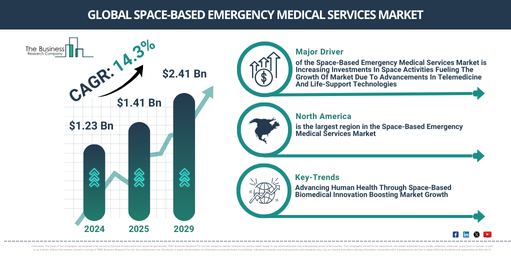
    The space-based emergency medical services market size has seen substantial expansion in recent years. It is projected to grow from $1.23 billion in 2024 to $1.41 billion in 2025, at a compound annual growth rate (CAGR) of 14.6%. The market’s growth during the historic period can be linked to factors such as the heightened requirement for astronaut health monitoring, an uptick in space exploration missions, increased demand for remote healthcare services in isolated environments, greater government investments in space programs, and a stronger emphasis on ensuring astronaut safety throughout long-duration missions.

    The space-based emergency medical services market size is projected to experience substantial growth over the next few years. It is forecast to expand to $2.41 billion by 2029, achieving a compound annual growth rate (CAGR) of 14.3%. This expansion during the forecast period is attributed to increasing private sector engagement in space healthcare, the broadening scope of human spaceflight programs, enhanced financial support for space medicine research, and a growing requirement for autonomous medical assistance in space. Significant trends expected during this period include advancements in remote diagnostics technology, sophisticated AI-based medical support systems, innovations in wearable biosensors designed for space applications, the integration of robotics into medical procedures, and progress in satellite communication methods for healthcare delivery.

    Unlock Your Free Sample Report for Exclusive Market Data:

    https://www.thebusinessresearchcompany.com/sample.aspx?id=27423&type=smp

    Which Drivers Are Supporting Growth Of The Space-Based Emergency Medical Services Market?

    Growing investments in space activities are anticipated to propel the expansion of the space-based emergency medical services market. These activities encompass human efforts to explore and utilize outer space, including satellite launches, mission execution, and the provision of various space-related services. The escalating investments in space activities stem from the increasing demand for satellite-based communication and data services. These investments bolster space-based emergency medical services by enabling the development of advanced telemedicine, remote monitoring, and life-support technologies tailored for use in space environments. For instance, in April 2024, according to the World Economic Forum, a Switzerland-based non-profit organization, the space economy is projected to grow from $630 billion in 2023 to $1.8 trillion by 2035, reflecting an average annual growth rate of 9%. Consequently, the increasing investments in space activities are driving the growth of the space-based emergency medical services market.

    Which Key Segments Fueling The Space-Based Emergency Medical Services Market?

    The space-based emergency medical services market covered in this report is segmented

    1) By Service Type: Telemedicine, Medical Evacuation, On-Site Medical Assistance, Other Service Types

    2) By Application: Space Missions, Space Tourism, Other Applications

    3) By End-User: Government Agencies, Private Space Companies, Other End Users

    Subsegments:

    1) By Telemedicine: Remote Diagnosis, Virtual Consultations, Monitoring Services, Telepharmacy

    2) By Medical Evacuation: Spacecraft-Based Evacuation, Air-Based Support Systems, Emergency Reentry Services, Orbital Station Transfers

    3) By On-Site Medical Assistance: Mobile Medical Units, Robotic Surgical Systems, First Aid Kits and Supplies, On-Site Diagnostic Tools

    4) By Other Service Types: Psychological Support Services, Preventive Health Programs, Rehabilitation Services, Research-Based Medical Trials

    What Trends Are Redefining The Space-Based Emergency Medical Services Market Dynamics?

    Leading companies active in the space-based emergency medical services market are concentrating on developing advanced space medical research. This effort aims to create innovative technologies for remote diagnosis, life support, and in-orbit treatment, thereby safeguarding the well-being of astronauts and space tourists during their missions. Space medical research itself involves studying how extraterrestrial environments, such as microgravity, radiation, and isolation, impact human health. It also focuses on developing medical technologies, treatments, and protocols to support the health of astronauts throughout space missions. For instance, in February 2025, Bio Astra, a Canada-based space research company, initiated Twin Astra, a groundbreaking deep-space medical research project that offers medical services. This pioneering program involves studying genetically identical twins, one in space and one on Earth, to understand the biological consequences of space travel. The initiative seeks to advance both space exploration and Earth-based healthcare, potentially driving innovations in precision medicine, aging research, cancer treatment, and regenerative therapies.

    Which Leading Companies Dominate The Space-Based Emergency Medical Services Market Share?

    Major companies operating in the space-based emergency medical services market are The Boeing Company, Lockheed Martin Corporation, Airbus SE, Northrop Grumman Corporation, National Aeronautics and Space Administration (NASA), Thales Group, Space Exploration Technologies Corp (SpaceX), KBR Inc., Blue Origin LLC, Maxar Technologies, Sierra Nevada Corporation, StemRad, Spacelabs Healthcare, Relativity Space, Rocket Lab, David Clark Company, Flight Medicine Systems, XRHealth, Advacam, Orbital Rx.

    Download The Full Report For Exclusive Market Findings:

    https://www.thebusinessresearchcompany.com/report/space-based-emergency-medical-services-global-market-report

    Which Region Currently Holds The Largest Share Of The Space-Based Emergency Medical Services Market?

    North America was the largest region in the space-based emergency medical services market in 2024. Asia-Pacific is expected to be the fastest-growing region in the forecast period. The regions covered in the space-based emergency medical services market report are Asia-Pacific, Western Europe, Eastern Europe, North America, South America, Middle East, Africa.

    Request A Customized Version Of The Space-Based Emergency Medical Services Market Report:

    https://www.thebusinessresearchcompany.com/customise?id=27423&type=smp

    Browse Through More Reports Similar to the Global Space-Based Emergency Medical Services Market 2025, By The Business Research Company

    Fitness Tracker Global Market Report 2025

    https://www.thebusinessresearchcompany.com/report/fitness-tracker-global-market-report

    Gps Tracking Device Global Market Report 2025

    https://www.thebusinessresearchcompany.com/report/gps-tracking-device-global-market-report

    Smart Sensor Global Market Report 2025

    https://www.thebusinessresearchcompany.com/report/smart-sensor-global-market-report

    Get in touch with us:

    The Business Research Company: https://www.thebusinessresearchcompany.com/

    Americas +1 310-496-7795

    Asia +44 7882 955267 & +91 8897263534

    Europe +44 7882 955267

    Email us at info@tbrc.info

    Follow us on:

    LinkedIn: https://in.linkedin.com/company/the-business-research-company

    YouTube: https://www.youtube.com/channel/UC24_fI0rV8cR5DxlCpgmyFQ

    Global Market Model: https://www.thebusinessresearchcompany.com/global-market-model
  • Space Medicine Market Growth Opportunities: Insights from 2025–2029

    Space Medicine Market Growth Opportunities: Insights from 2025–2029

    Unlock Global Insights – Save 20% on Market Reports with Code ONLINE20

    How Does The Market Size Of The Space Medicine Industry Compare Between 2025 And 2029?

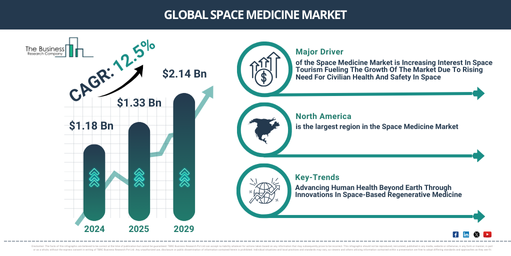
    The space medicine market has seen rapid expansion in recent years. Its valuation is expected to climb from $1.18 billion in 2024 to $1.33 billion in 2025, reflecting a compound annual growth rate (CAGR) of 12.9%. Historically, this growth has stemmed from increased awareness of health risks associated with space, a rise in training provided for spaceflight participants, greater government support for space health initiatives, the development of emergency medical response systems for space, and an uptick in space tourism activities.

    The space medicine market is projected to experience substantial expansion in the coming years. This market is anticipated to reach $2.14 billion by 2029, growing at a compound annual growth rate (CAGR) of 12.5%. This expansion during the forecast period is primarily driven by longer space missions, an increase in commercial spaceflights, a heightened need for monitoring astronaut health, the necessity of psychological assistance in space, and increasing investments in space-related healthcare infrastructure. Key trends expected over the forecast period encompass wearable biometric monitoring devices, systems for telemedicine and remote surgery, 3D bioprinting technology for tissue regeneration, compact medical imaging instruments, drug delivery systems optimized for microgravity, and virtual reality solutions for mental health support.

    Unlock Your Free Sample Report for Exclusive Market Data:

    https://www.thebusinessresearchcompany.com/sample.aspx?id=27422&type=smp

    Which Drivers Are Shaping The Space Medicine Industry’s Market Share?

    Growing enthusiasm for space tourism is expected to propel the growth of the space medicine market in the future. Space tourism refers to the commercial activity of sending private individuals into space for recreational, leisure, or adventure purposes, rather than for scientific or governmental missions. The demand for space tourism is increasing due to rising accessibility and affordability of commercial spaceflights, as reusable launch technologies are significantly reducing the cost of space travel. Space medicine enhances space tourism by ensuring the health and safety of civilians in space through advanced medical monitoring and preventive care. It reduces health risks by addressing space-related physiological challenges, improving the overall experience for space travelers. For instance, in July 2023, a survey study among 10,329 U.S. adults conducted from May 30 to June 4, 2023, by the Pew Research Center, a US-based research organization, found that 55% of Americans expect space tourism to become routine by 2073, with 35% personally interested in going to space. Therefore, the increasing interest in space tourism is driving the growth of the space medicine market.

    How Is The Space Medicine Market Classified Into Different Segments?

    The space medicine market covered in this report is segmented

    1) By Type: Private Aerospace Service, Non-private Aerospace Service

    2) By Technology: Telemedicine Solutions, Artificial Intelligence And Machine Learning In Health Monitoring, Remote Diagnostics

    3) By Application: Oncology, Regeneration Medicine, Neurobiology, Microbiology

    4) By End-User: Commercial, Government, Military

    Subsegments:

    1) By Private Aerospace Service: Space Tourism Medical Support, In-Flight Health Monitoring Systems, Commercial Spaceflight Emergency Care, Private Astronaut Training And Health Programs, Telemedicine Solutions For Private Missions

    2) By Non-private Aerospace Service: Government-Funded Space Health Research, Astronaut Health Monitoring For National Missions, Military Space Medicine Programs, Space Agency Medical Facilities, Public-Sector Space Rehabilitation Programs

    How Are Emerging Market Trends Shaping The Space Medicine Industry Landscape?

    Major companies active in the space medicine market are concentrating on creating novel formulations, including space-based regenerative medicine, to improve tissue repair, stem cell function, and overall human well-being during extended space missions. Space-based regenerative medicine entails utilizing microgravity environments to investigate and enhance tissue repair, stem cell proliferation, and organ regeneration. For instance, in May 2025, according to Cedars-Sinai, a US-based healthcare organization, inaugurated the Center for Space Medicine Research to advance studies on how the human body and stem cells react in space. It additionally offers educational programs in space biomedicine as part of its regenerative medicine curriculum. This endeavor spearheads advancements in space medicine by connecting space science with clinical research, aiming to enhance astronaut care and cultivate medical breakthroughs for application on Earth.

    Who Are The Major Companies Operating In The Space Medicine Market?

    Major companies operating in the space medicine market are The Boeing Company, Lockheed Martin Corporation, Novartis AG, Collins Aerospace, KBR Inc., Boryung Corp., Sierra Space Corporation, Redwire Corporation, Axiom Space Inc., Varda Space Industries Inc., Nanoracks LLC , RevBio Inc. , StemoniX Inc. , SpacePharma SA, Angiex Inc., Vaxxinity Inc., rHEALTH Inc., Delta Biosciences LLC, Virgin Galactic Holdings Inc., Level Ex Inc.

    Download The Full Report For Exclusive Market Findings:

    https://www.thebusinessresearchcompany.com/report/space-medicine-global-market-report

    What Regional Growth Trends Are Shaping The Space Medicine Market Outlook?

    North America was the largest region in the space medicine market in 2024. Asia-Pacific is expected to be the fastest-growing region in the forecast period. The regions covered in the space medicine market report are Asia-Pacific, Western Europe, Eastern Europe, North America, South America, Middle East, Africa.

    Request A Customized Version Of The Space Medicine Market Report:

    https://www.thebusinessresearchcompany.com/customise?id=27422&type=smp

    Browse Through More Reports Similar to the Global Space Medicine Market 2025, By The Business Research Company

    Smoke Detectors Global Market Report 2025

    https://www.thebusinessresearchcompany.com/report/smoke-detectors-global-market-report

    Flame Detector Global Market Report 2025

    https://www.thebusinessresearchcompany.com/report/flame-detector-global-market-report

    Fire Detection Equipment Global Market Report 2025

    https://www.thebusinessresearchcompany.com/report/fire-detection-equipment-global-market-report

    Get in touch with us:

    The Business Research Company: https://www.thebusinessresearchcompany.com/

    Americas +1 310-496-7795

    Asia +44 7882 955267 & +91 8897263534

    Europe +44 7882 955267

    Email us at info@tbrc.info

    Follow us on:

    LinkedIn: https://in.linkedin.com/company/the-business-research-company

    YouTube: https://www.youtube.com/channel/UC24_fI0rV8cR5DxlCpgmyFQ

    Global Market Model: https://www.thebusinessresearchcompany.com/global-market-model
  • Plasmid Purification Industry Insights: Market Forecast to 2029

    Plasmid Purification Industry Insights: Market Forecast to 2029

    Unlock Global Insights – Save 20% on Market Reports with Code ONLINE20

    How Is The Plasmid Purification Market Size Likely To Evolve From 2025 Through 2034?

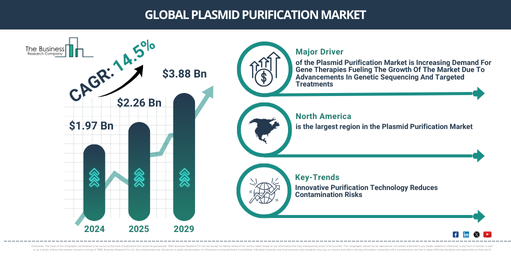
    The plasmid purification market size has experienced rapid expansion in recent years. It is anticipated to increase from $1.97 billion in 2024 to $2.26 billion in 2025, achieving a compound annual growth rate (CAGR) of 14.9%. This historical growth can be ascribed to a rising demand for recombinant proteins, an uptick in gene therapy research, advancements in vaccine development, the enlargement of biotechnology and pharmaceutical sectors, and a proliferation of personalized medicine initiatives.

    The plasmid purification market is projected to experience substantial expansion over the coming years. This market is anticipated to reach a valuation of $3.88 billion by 2029, exhibiting a compound annual growth rate (CAGR) of 14.5%. This projected growth is primarily driven by several factors, including the expansion of gene and cell therapy applications, the need for high-purity plasmid DNA in diagnostics, advancements in synthetic biology research, the increasing adoption of automated plasmid purification systems, and an enhanced emphasis on developing next-generation therapeutics. Key trends anticipated during this period encompass the automation of plasmid purification processes, the integration of microfluidics for isolating plasmids, enhancements in endotoxin-free purification techniques, the incorporation of artificial intelligence for optimizing processes, and the miniaturization of plasmid purification devices.

    Unlock Your Free Sample Report for Exclusive Market Data:

    https://www.thebusinessresearchcompany.com/sample.aspx?id=27385&type=smp

    Which Industry Drivers Are Expected To Accelerate The Plasmid Purification Market From 2025 To 2029?

    The burgeoning requirement for gene therapies is anticipated to boost the expansion of the plasmid purification market in the coming years. Gene therapy is a medical approach focused on altering or substituting faulty genes to manage or prevent illnesses. This escalating need for gene therapy stems from advancements in genetic sequencing and diagnostic methods, allowing for accurate identification of disease-causing genes for specific treatments. Plasmid purification is crucial for enhancing gene therapy development by supplying high-quality, pure plasmid DNA, which is vital for effective and safe therapeutic uses. It alleviates production bottlenecks by facilitating scalable and repeatable plasmid isolation, thereby bettering research and biomanufacturing results. For instance, in December 2024, according to the American Society of Gene & Cell Therapy (ASGCT), a US-based non-profit medical and scientific organization, the Food and Drug Administration (FDA) approved six gene therapy products in 2023, up from five approvals in 2022. Consequently, the rising demand for gene therapies is fueling the growth of the plasmid purification market.

    What Are The Major Segments Identified In The Plasmid Purification Market?

    The plasmid purification market covered in this report is segmented

    1) By Product Type: Mini Plasmid Purification Kits, Midi Plasmid Purification Kits, Maxi Plasmid Purification Kits, Reagents And Consumables, Instruments And Systems, Other Product Types

    2) By Technology: Alkaline Lysis Method, Spin Column Method, Magnetic Bead-Based Method, Filter-Based Method

    3) By Application: Genetic Engineering, Cloning, Transfection, Vaccines Development

    4) By End-User: Academic Research Institutions, Pharmaceutical Companies, Biotechnology Firms, Contract Research Organizations (CROs)

    Subsegments:

    1) By Mini Plasmid Purification Kits: Spin Column Kits, Magnetic Bead Kits, Filter Plate Kits, Manual Kit Systems

    2) By Midi Plasmid Purification Kits: Spin Column Kits, Gravity Flow Kits, Vacuum Filtration Kits, Automated Midi Kits

    3) By Maxi Plasmid Purification Kits: Gravity Flow Kits, Vacuum Filtration Kits, Large-Scale Automated Kits, Membrane Adsorption Kits

    4) By Reagents And Consumables: Buffers, Enzymes, Solutions, Columns, Membranes

    5) By Instruments And Systems: Automated Purification Systems, Centrifuges, Magnetic Separators, Filtration Devices

    6) By Other Product Types: Kits For Endotoxin Removal, Kits For Ribonucleic Acid (RNA) Removal, Kits For Genomic Deoxyribonucleic Acid (DNA) Removal, Accessories And Others

    What Key Innovation Trends Are Fueling Advancements In The Plasmid Purification Market?

    Leading companies in the plasmid purification market are concentrating on developing advanced products, such as automated plasmid maxi-prep purification systems, to boost efficiency, enhance yield, and guarantee a higher purity of plasmid DNA. An automated plasmid maxi-prep purification system signifies a technology that automatically isolates large quantities of high-purity plasmid DNA from bacterial cultures, thereby optimizing the purification process for increased effectiveness and consistency. For example, in June 2023, GenScript Biotech Corporation, a US-based biotechnology company, introduced the AmMag Quatro, an advanced, fully automated high-throughput plasmid maxi-prep purification system. This scalable and modular platform is capable of simultaneously operating up to four independent purification modules, processing a total of 24 samples in approximately two hours. The AmMag Quatro employs magnetic silica bead technology to deliver high-quality, transfection-grade plasmid DNA with low endotoxin levels and a high supercoiled DNA ratio, ensuring plasmids are ready for subsequent applications. Its innovative construction provides high reproducibility, lessens contamination risks, and substantially increases processing capacity, making it well-suited for extensive research and bioproduction uses.

    Which Major Industry Participants Are Leading The Plasmid Purification Market Growth?

    Major companies operating in the plasmid purification market are Thermo Fisher Scientific Inc., Merck KGaA, Agilent Technologies Inc., Illumina Inc., Bio-Rad Laboratories Inc., Qiagen N.V., GenScript Biotech Corporation, Takara Bio Inc., Promega Corporation, Aldevron LLC, Sino Biological Inc., New England Biolabs Inc., Origene Technologies Inc., Applied Biological Materials, InvivoGen, Omega Bio-tek Inc., ABP Biosciences, Zymo Research Corporation, Lucigen Corporation, Oxford Genetics Ltd., Mirus Bio LLC, Norgen Biotek Corp., PlasmidFactory GmbH & Co. KG, Lamda Biotech.

    Download The Full Report For Exclusive Market Findings:

    https://www.thebusinessresearchcompany.com/report/plasmid-purification-global-market-report

    How Do Regional Market Performances Compare Within The Plasmid Purification Industry?

    North America was the largest region in the plasmid purification market in 2024. Asia-Pacific is expected to be the fastest-growing region in the forecast period. The regions covered in the plasmid purification market report are Asia-Pacific, Western Europe, Eastern Europe, North America, South America, Middle East, Africa.

    Request A Customized Version Of The Plasmid Purification Market Report:

    https://www.thebusinessresearchcompany.com/customise?id=27385&type=smp

    Browse Through More Reports Similar to the Global Plasmid Purification Market 2025, By The Business Research Company

    Precast Concrete Market 2025

    https://www.thebusinessresearchcompany.com/report/precast-concrete-market

    Precast Construction Global Market Report 2025

    https://www.thebusinessresearchcompany.com/report/precast-construction-global-market-report

    Industrial Cable Reels Global Market Report 2025

    https://www.thebusinessresearchcompany.com/report/industrial-cable-reels-global-market-report

    Get in touch with us:

    The Business Research Company: https://www.thebusinessresearchcompany.com/

    Americas +1 310-496-7795

    Asia +44 7882 955267 & +91 8897263534

    Europe +44 7882 955267

    Email us at info@tbrc.info

    Follow us on:

    LinkedIn: https://in.linkedin.com/company/the-business-research-company

    YouTube: https://www.youtube.com/channel/UC24_fI0rV8cR5DxlCpgmyFQ

    Global Market Model: https://www.thebusinessresearchcompany.com/global-market-model