Blog

  • Global Connected Wearable Patches Market Size Projected to Reach $10.78 Billion During the Forecast Period

    Global Connected Wearable Patches Market Size Projected to Reach $10.78 Billion During the Forecast Period

    Unlock Global Insights – Save 20% on Market Reports with Code ONLINE20

    What Is The Anticipated Size Of The Connected Wearable Patches Market Over The Five-Year Period 2025–2029?

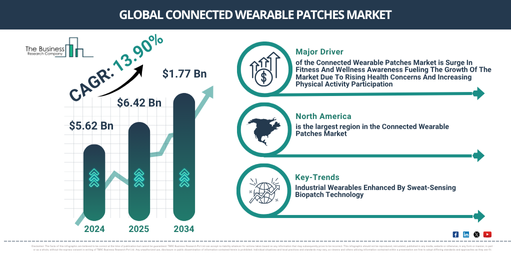
    The connected wearable patches market has seen rapid expansion in recent years. Its value is expected to climb from $5.62 billion in 2024 to $6.42 billion in 2025, exhibiting a compound annual growth rate (CAGR) of 14.1%. This past growth can be attributed to factors such as the increasing adoption of remote patient monitoring, a rising prevalence of chronic diseases, an increased demand for real-time health data, the growing use of smartphones and Bluetooth-enabled devices, enhanced healthcare digitization, and the integration of telehealth.

    The connected wearable patches market size is anticipated to undergo significant expansion over the next few years. It is projected to reach $10.78 billion by 2029, demonstrating a compound annual growth rate (CAGR) of 13.9%. This projected growth can be attributed to several factors such as the increasing integration of AI and IoT in healthcare, a rising focus on personalized medicine, growing investments in wearable health tech startups, an expanding elderly population requiring continuous monitoring, and the increasing acceptance of preventive healthcare solutions. Prominent trends expected during this forecast period include advancements in sensor miniaturization, the use of advanced data analytics for health insights, innovations in battery and energy harvesting technologies, integration with telehealth platforms, and the incorporation of cloud-based health data storage.

    Unlock Your Free Sample Report for Exclusive Market Data:

    https://www.thebusinessresearchcompany.com/sample.aspx?id=25725&type=smp

    What Are The Top Growth Drivers Impacting The Connected Wearable Patches Market Outlook?

    The heightened emphasis on fitness and wellness is anticipated to propel the expansion of the connected wearable patches market going forward. This awareness encompasses the understanding of the significance of regular physical activity and healthy lifestyle habits for overall well-being. The rise in fitness and wellness consciousness is attributed to increasing concerns about chronic diseases, motivating individuals to embrace healthier lifestyles for improved long-term health. Connected wearable patches contribute to boosting this awareness by consistently monitoring vital health metrics, offering real-time feedback, and encouraging users to stay active and maintain healthier habits. For instance, in May 2022, a survey study involving 1,005 American adults aged 18–80 and adult Gen Z consumers ages 18–24, conducted by the International Food Information Council, a US-based non-profit organization, indicated that around 52% of participants reported following a specific diet or eating pattern, an increase from 39% in 2021. The most frequently adopted strategies were clean eating (16%), mindful eating (14%), and calorie counting (13%). Therefore, the increasing fitness and wellness awareness is driving the growth of the connected wearable patches market.

    How Is The Connected Wearable Patches Market Segmented?

    The connected wearable patches market covered in this report is segmented –

    1) By Type: Glucose Monitoring Patches, Cardiac Monitoring Patches, Electromyography (EMG) Patches, Transdermal Drug Delivery Patches, Electroencephalography (EEG) Patches, Other Types

    2) By Sensor Technology: Electrocardiography (ECG), Photoplethysmography (PPG), Accelerometry, Gyroscope, Temperature Sensing

    3) By Distribution Channel: Online Stores, Pharmacies, Specialty Stores, Other Distribution Channels

    4) By Application: Remote Patient Monitoring, Fitness And Wellness Monitoring, Drug Delivery, Sports And Performance Monitoring, Other Applications

    5) By End User: Hospitals, Home Care, Fitness Centers, Research Institutions, Other End-Users

    Subsegments:

    1) By Glucose Monitoring Patches: Continuous Glucose Monitoring (CGM) Patches, Flash Glucose Monitoring (FGM) Patches, Non-Invasive Glucose Monitoring Patches, Adhesive Enzyme-Based Glucose Patches

    2) By Cardiac Monitoring Patches: Electrocardiography Monitoring Patches, Arrhythmia Detection Patches, Remote Cardiac Telemetry Patches, Holter Monitoring Patches

    3) By Electromyography (EMG) Patches: Surface Electromyography Patches, Wireless Electromyography Sensor Patches, Multi-channel Electromyography Patches, Rehabilitation Monitoring Electromyography Patches

    4) By Transdermal Drug Delivery Patches: Nicotine Delivery Patches, Hormone Replacement Therapy (HRT) Patches, Pain Management Patches (e.g., Fentanyl), Neurological Drug Delivery Patches, Anti-hypertensive Patches

    5) By Electroencephalography (EEG) Patches: Sleep Monitoring Electroencephalography Patches, Seizure Detection Electroencephalography Patches, Brain-Computer Interface (BCI) Patches, Cognitive Performance Monitoring Patches

    6) By Other Types: Hydration Monitoring Patches, Temperature Monitoring Patches, Sweat Analysis Patches, Oxygen Saturation (SpO2) Monitoring Patches, Respiratory Rate Monitoring Patches

    Which Trends Are Impacting The Connected Wearable Patches Market?

    Major companies engaged in the connected wearable patches market are prioritizing advanced technologies like sweat-sensing biopatch platforms to offer real-time, personalized hydration insights for industrial personnel. A sweat-sensing biopatch system integrates various biosensors to detect fluid and electrolyte loss, body temperature, and movement patterns instantaneously, enabling effective hydration and heat stress prevention. For instance, in April 2024, Epicore Biosystems, a US-based digital health firm, unveiled Connected Hydration along with a mobile application. This innovative wearable patch system is engineered to assist industrial workers in preventing dehydration and heat-related injuries through continuous data feedback. The sophisticated solution features a flexible, non-rechargeable biopatch offering a 1,000-hour battery life, provides immediate dehydration alerts via haptic feedback, and includes a mobile application for tracking fluid intake and biometric patterns. Its durable construction is certified for hazardous environments and incorporates machine learning developed from over 420,000 field data points.

    Which Major Firms Are Strengthening Their Position In The Connected Wearable Patches Industry?

    Major companies operating in the connected wearable patches market are Abbott Laboratories, Medtronic plc, Koninklijke Philips N.V., GE HealthCare Technologies Inc., Boston Scientific Corporation, STMicroelectronics N.V., ZOLL Medical Corporation, Dexcom Inc., Insulet Corporation, MicroPort Scientific Corporation, iRhythm Technologies Inc., Linxens Holding SAS, Biotricity Inc., Blue Spark Technologies Inc., Epicore Biosystems Inc., Cardiac Insight Inc., Delsys Incorporated, G-Tech Medical Inc., Leaf Healthcare Inc., VivaLNK Inc.

    Download The Full Report For Exclusive Market Findings:

    https://www.thebusinessresearchcompany.com/report/connected-wearable-patches-global-market-report

    What Are The Regional Market Dynamics Impacting The Connected Wearable Patches Industry?

    North America was the largest region in the connected wearable patches market in 2024. Asia-Pacific is expected to be the fastest-growing region in the forecast period. The regions covered in the connected wearable patches market report are Asia-Pacific, Western Europe, Eastern Europe, North America, South America, Middle East, Africa.

    Request A Customized Version Of The Connected Wearable Patches Market Report:

    https://www.thebusinessresearchcompany.com/customise?id=25725&type=smp

    Browse Through More Reports Similar to the Global Connected Wearable Patches Market 2025, By The Business Research Company

    Electronic Skin Patch Global Market Report 2025

    https://www.thebusinessresearchcompany.com/report/electronic-skin-patch-global-market-report

    Wearable Computing Global Market Report 2025

    https://www.thebusinessresearchcompany.com/report/wearable-computing-global-market-report

    Smart Wearables Global Market Report 2025

    https://www.thebusinessresearchcompany.com/report/smart-wearables-global-market-report

    Get in touch with us:

    The Business Research Company: https://www.thebusinessresearchcompany.com/

    Americas +1 310-496-7795

    Asia +44 7882 955267 & +91 8897263534

    Europe +44 7882 955267

    Email us at info@tbrc.info

    Follow us on:

    LinkedIn: https://in.linkedin.com/company/the-business-research-company

    YouTube: https://www.youtube.com/channel/UC24_fI0rV8cR5DxlCpgmyFQ

    Global Market Model: https://www.thebusinessresearchcompany.com/global-market-model
  • Compounding Chemotherapy Industry Anticipated to Expand at 6.1% CAGR During the Forecast Period

    Compounding Chemotherapy Industry Anticipated to Expand at 6.1% CAGR During the Forecast Period

    Unlock Global Insights – Save 20% on Market Reports with Code ONLINE20

    What Are The Forecasted Market Size Estimates For The Compounding Chemotherapy Market Between 2025 And 2029?

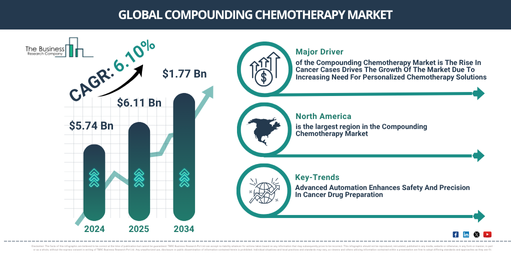
    The compounding chemotherapy market size has experienced significant expansion in recent years. It is anticipated to expand from $5.74 billion in 2024 to $6.11 billion in 2025, reflecting a compound annual growth rate (CAGR) of 6.3%. The market’s historic growth stemmed from factors such as increasing cancer incidence, growing adoption of hospital pharmacies, rising use of antineoplastic agents, an increasing focus on patient-specific dosing, and the expanding role of oncology specialty clinics.

    The compounding chemotherapy market size is anticipated to experience robust expansion in the coming years. By 2029, this market is projected to reach $7.74 billion, expanding at a compound annual growth rate (CAGR) of 6.1%. Several factors will drive this growth during the forecast period, including an increased focus on precision medicine, a surge in the need for oral and injectable chemotherapy compounds, a greater adoption of hormonal and biologic agents in cancer treatment, a stronger push to minimize drug waste, and an escalated requirement for targeted cancer treatments. Key trends expected over the forecast period encompass the embrace of technology in automated compounding devices, the creation of customized chemotherapy dosing regimens, the development of mobile applications to aid chemotherapy workflows, the merging of electronic health records (EHRs) with compounding systems, and the incorporation of barcode verification into compounding procedures.

    Unlock Your Free Sample Report for Exclusive Market Data:

    https://www.thebusinessresearchcompany.com/sample.aspx?id=25724&type=smp

    Which Major Market Drivers Are Shaping The Future Of The Compounding Chemotherapy Market?

    The rising incidence of cancer cases is anticipated to spur the expansion of the compounding chemotherapy market moving forward. Cancer is defined as a collection of diseases marked by the unchecked proliferation and dissemination of abnormal cells within the body. The escalating occurrence of cancer is primarily attributable to unhealthy habits, including poor dietary choices, insufficient physical activity, tobacco use, excessive alcohol consumption, and prolonged exposure to environmental contaminants, all of which significantly elevate the likelihood of developing various cancer types. Compounding chemotherapy supports cancer treatment by facilitating custom medication formulations tailored to individual patient requirements, thereby enhancing effectiveness and reducing adverse reactions. For example, in July 2024, data from the Australian Institute of Health and Welfare, an Australia-based government agency, indicated that in 2022, Australia diagnosed 160,570 cancer cases, representing an increase of 3,789 cases from 156,781 in 2021. Consequently, the growing prevalence of cancer cases acts as a key driver for the compounding chemotherapy market’s development.

    What Are The Key Segments In The Compounding Chemotherapy Market?

    The compounding chemotherapy market covered in this report is segmented –

    1) By Drug Type: Cytotoxic Drugs, Hormonal Agents, Immunomodulatory Agents, Targeted Therapies, Supportive Care Drugs

    2) By Route Of Administration: Intravenous, Oral, Subcutaneous, Intramuscular, Intrathecal

    3) By Technology: With Robotic Arms, Without Robotic Arms

    4) By Distribution Channel: Hospital Pharmacies, Retail Pharmacies, Online Pharmacies

    5) By Compounding Setting: Hospital Compounding, Compounding Pharmacies, Specialty Clinics, Homecare Settings

    Subsegments:

    1) By Cytotoxic Drugs: Alkylating Agents, Antimetabolites, Plant Alkaloids, Antitumor Antibiotics, Topoisomerase Inhibitors

    2) By Hormonal Agents: Estrogen Antagonists, Androgen Deprivation Therapy Agents, Aromatase Inhibitors, Progestins, Gonadotropin-Releasing Hormone Agonists

    3) By Immunomodulatory Agents: Immune Checkpoint Inhibitors, Monoclonal Antibodies, Interleukins, Cytokines, Immune System Activators

    4) By Targeted Therapies: Tyrosine Kinase Inhibitors, Proteasome Inhibitors, Mammalian Target Of Rapamycin Inhibitors, Poly Polymerase Inhibitors

    5) By Supportive Care Drugs: Antiemetics, Erythropoiesis-Stimulating Agents, Bone-Modifying Agents, Pain Management Drugs

    What Long-Term Trends Will Shape The Future Growth Of The Compounding Chemotherapy Industry?

    Leading companies in the compounding chemotherapy market are increasingly focusing on developing innovative solutions, such as robotic chemotherapy automation systems, to improve the accuracy, safety, and efficiency of personalized cancer treatment preparation. Robotic chemotherapy automation systems are advanced machines specifically designed to precisely and safely prepare customized chemotherapy doses by automating the compounding process, thereby reducing both human error and contamination risks. For instance, in February 2024, Simplivia Healthcare Ltd., a healthcare technology company based in Israel, launched its Smart Compounders Advanced Systems to automate and streamline the preparation of cytotoxic (chemotherapy) drugs. These systems are capable of handling the compounding of cytostatics and antibodies with a capacity ranging from 20 to 40 preparations per hour, incorporating automatic gravimetric verification and comprehensive documentation to ensure high levels of accuracy. They significantly minimize pharmacy staff’s exposure to hazardous substances and are engineered for effortless integration into existing laminar airflow (LAF) cabinets or isolators without requiring any modifications.

    Who Are The Primary Competitors In The Global Compounding Chemotherapy Market?

    Major companies operating in the compounding chemotherapy market are Baxter International Inc., Fresenius Kabi AG, Grifols S.A., Option Care Health Inc., ICU Medical Inc., Dedalus S.p.A., Fagron NV, BioScrip Inc., B. Braun Melsungen AG, Medisca Pharmaceutique Inc., Central Admixture Pharmacy Services Inc., Icon Group Holdings Pty Ltd, Avella Specialty Pharmacy, Stokes Healthcare Inc, McGuff Compounding Pharmacy Services Inc., Accord Healthcare Limited, Epicur Pharma LLC, Simplivia Healthcare Ltd., AmerisourceBergen Corporation, Kapsam Health Products Ltd., PharMEDium Services LLC.

    Download The Full Report For Exclusive Market Findings:

    https://www.thebusinessresearchcompany.com/report/compounding-chemotherapy-global-market-report

    Which Region Shows The Highest Potential For Future Expansion In The Compounding Chemotherapy Market?

    North America was the largest region in the compounding chemotherapy market in 2024. Asia-Pacific is expected to be the fastest-growing region in the forecast period. The regions covered in the compounding chemotherapy market report are Asia-Pacific, Western Europe, Eastern Europe, North America, South America, Middle East, Africa.

    Request A Customized Version Of The Compounding Chemotherapy Market Report:

    https://www.thebusinessresearchcompany.com/customise?id=25724&type=smp

    Browse Through More Reports Similar to the Global Compounding Chemotherapy Market 2025, By The Business Research Company

    Chemotherapy Global Market Report 2025

    https://www.thebusinessresearchcompany.com/report/chemotherapy-global-market-report

    Oncology Drugs Market 2025

    https://www.thebusinessresearchcompany.com/report/oncology-drugs-market

    Oncology Drugs Market 2025

    https://www.thebusinessresearchcompany.com/report/oncology-drugs-market

    Get in touch with us:

    The Business Research Company: https://www.thebusinessresearchcompany.com/

    Americas +1 310-496-7795

    Asia +44 7882 955267 & +91 8897263534

    Europe +44 7882 955267

    Email us at info@tbrc.info

    Follow us on:

    LinkedIn: https://in.linkedin.com/company/the-business-research-company

    YouTube: https://www.youtube.com/channel/UC24_fI0rV8cR5DxlCpgmyFQ

    Global Market Model: https://www.thebusinessresearchcompany.com/global-market-model

  • Global Complementary And Alternative Medicine For Anti-Aging And Longevity Market Projected to Expand at 18.6% CAGR by 2029

    Global Complementary And Alternative Medicine For Anti-Aging And Longevity Market Projected to Expand at 18.6% CAGR by 2029

    Unlock Global Insights – Save 20% on Market Reports with Code ONLINE20

    How Is The Complementary And Alternative Medicine For Anti-Aging And Longevity Market Size Likely To Evolve From 2025 Through 2034?

    The complementary and alternative medicine for anti-aging and longevity market size has witnessed rapid growth in recent years. It is forecast to grow from $55.09 billion in 2024 to $65.49 billion in 2025, achieving a compound annual growth rate (CAGR) of 18.9%. Historically, this expansion can be attributed to increasing consumer demand for natural remedies, a growing distrust in pharmaceuticals, rising healthcare costs, the cultural acceptance of traditional medicine, and expanding research confirming CAM efficacy.

    The complementary and alternative medicine for anti-aging and longevity market is poised for substantial growth over the next few years. It is projected to expand to $129.76 billion by 2029, demonstrating a compound annual growth rate (CAGR) of 18.6%. This anticipated expansion throughout the forecast period stems from factors such as the emergence of personalized medicine, shifts in aging population demographics, increasing regulatory endorsement for integrative medicine, a rising enthusiasm for wellness tourism, and greater investments into CAM research. Key trends expected during this period include the integration of wearable biometrics, the widespread adoption of tele-CAM and virtual consultations, nutrigenomics-based supplementation, the incorporation of energy-based therapies, and the use of blockchain for supplement authentication.

    Unlock Your Free Sample Report for Exclusive Market Data:

    https://www.thebusinessresearchcompany.com/sample.aspx?id=25723&type=smp

    What Are The Main Drivers Boosting The Complementary And Alternative Medicine For Anti-Aging And Longevity Industry’s Expansion?

    The market for complementary and alternative medicine focused on anti-aging and longevity is anticipated to grow due to consumers’ increasing inclination towards natural plant-based products. These natural plant-based items are derived from plants and herbs, containing minimal to no chemicals, and are utilized for various health, beauty, or wellness purposes. Consumers are increasingly favoring natural plant-based options largely because conventional products often contain synthetic chemicals that can lead to adverse effects like skin irritation or potential long-term health concerns. This shift in consumer preference aligns with complementary and alternative medicine for anti-aging and longevity, which strongly advocates for natural, plant-based solutions. As a result, consumers are gravitating towards herbal supplements, botanical extracts, and organic formulations that offer holistic, non-invasive strategies for maintaining youthful vitality and extending lifespan. A notable example highlights this trend: in March 2023, the British Beauty Council, a UK-based non-profit body, reported that 2022 saw a significant 56,000 products and ingredients achieve COSMOS certification, representing a 22% increase from the previous year. Consequently, the rising consumer demand for natural plant-based products is serving as a primary impetus for the expansion of the complementary and alternative medicine for anti-aging and longevity market.

    What Are The Leading Segments Analyzed In The Complementary And Alternative Medicine For Anti-Aging And Longevity Market?

    The complementary and alternative medicine for anti-aging and longevity market covered in this report is segmented –

    1) By Product Type: Botanical Extract, Dietary Supplement, Herbal Medicine, Nutraceutical

    2) By Therapy: Energy Therapy, Manual Therapy, Mind Body Therapy, Nutritional Therapy, Caloric Restriction, Dietary Counseling, Fasting, Traditional Alternative System

    3) By Age Group: 18 To 35 Years, 36 To 50 Years, 51 Years And Above

    4) By Distribution: Direct Sales, Hospital Clinics, Online Retail, Pharmacy, Specialty Store

    5) By End-User: Consumers, Healthcare Practitioners, Corporate Wellness Programs, Other End Users

    Subsegments:

    1) By Botanical Extract: Ginkgo Biloba Extract, Ginseng Extract, Green Tea Extract, Turmeric Extract, Aloe Vera Extract, Ashwagandha Extract, Grapeseed Extract, Milk Thistle Extract

    2) By Dietary Supplement: Anti-Aging Vitamins, Anti-Aging Minerals, Omega-3 Fatty Acids, Collagen Supplements, Probiotics And Prebiotics, Amino Acid Supplements, Antioxidant Blends, Coenzyme Q10 Supplements

    3) By Herbal Medicine: Ayurvedic Anti-Aging Formulations, Traditional Chinese Medicine Anti-Aging Herbs, Homeopathic Anti-Aging Remedies, Herbal Teas For Longevity, Adaptogenic Herb Formulations, Medicinal Mushroom Extracts

    4) By Nutraceutical: Functional Foods For Anti-Aging, Functional Beverages For Longevity, Anti-Aging Protein Powders, Anti-Aging Gummies And Chews, Longevity Shots, Anti-Aging Bars And Snacks

    Which Market Trends Are Creating New Opportunities In The Complementary And Alternative Medicine For Anti-Aging And Longevity Industry?

    Leading companies in the complementary and alternative medicine for anti-aging and longevity market are concentrating on advanced solutions, such as biotech-derived natural retinol, to improve clean-label, sustainable, and effective anti-aging ingredients. Biotech-derived natural retinol refers to retinol (vitamin A) created using biotechnology, typically through fermentation with yeast or bacteria, instead of extraction from animal sources. For instance, in February 2023, Givaudan, a Switzerland-based producer of fragrance and beauty ingredients, unveiled RetiLife, an innovative 100% natural-origin retinol manufactured using biotechnology. It presents unique characteristics like being a 100% natural-origin retinol produced through biotech fermentation, making it vegan and sustainable with a reduced environmental impact. It offers high purity and stability, ensuring consistent anti-aging performance while being mild on the skin and lessening irritation often associated with traditional retinol. Additionally, it utilizes traceable, renewable sourcing, which corresponds with clean beauty and eco-conscious formulation trends within the skincare industry.

    Which Key Market Players Are Investing In Expansion And Innovation Of Complementary And Alternative Medicine For Anti-Aging And Longevity Market?

    Major companies operating in the complementary and alternative medicine for anti-aging and longevity market are Amway Corporation, Amorepacific, Patanjali Ayurved Limited, iHerb LLC, Pharmavite LLC, Sirio Pharma Co Ltd., Nature’s Sunshine Products Inc., Metagenics Inc., Thorne Research Inc. , Nature’s Way Products LLC, Swisse Wellness Pty Ltd., Herb Pharm LLC, Life Extension, Solgar Inc., Biovea L.L.C, The Himalaya Drug Company , Ayush Herbs Inc., Ayurmana by Dharma Ayurveda, Aether Medicine LLC, First Natural Brands Limited.

    Download The Full Report For Exclusive Market Findings:

    https://www.thebusinessresearchcompany.com/report/complementary-and-alternative-medicine-for-anti-aging-and-longevity-global-market-report

    How Is Complementary And Alternative Medicine For Anti-Aging And Longevity Market Demand Varying Across Different Regions?

    North America was the largest region in the complementary and alternative medicine for anti-aging and longevity market in 2024. Asia-Pacific is expected to be the fastest-growing region in the forecast period. The regions covered in the complementary and alternative medicine for anti-aging and longevity market report are Asia-Pacific, Western Europe, Eastern Europe, North America, South America, Middle East, Africa.

    Request A Customized Version Of The Complementary And Alternative Medicine For Anti-Aging And Longevity Market Report:

    https://www.thebusinessresearchcompany.com/customise?id=25723&type=smp

    Browse Through More Reports Similar to the Global Complementary And Alternative Medicine For Anti-Aging And Longevity Market 2025, By The Business Research Company

    Anti Parkinson Drugs Global Market Report 2025

    https://www.thebusinessresearchcompany.com/report/anti-parkinson-drugs-global-market-report

    Anti Jamming Global Market Report 2025

    https://www.thebusinessresearchcompany.com/report/anti-jamming-global-market-report

    Complementary And Alternative Medicine Global Market Report 2025

    https://www.thebusinessresearchcompany.com/report/complementary-and-alternative-medicine-global-market-report

    Get in touch with us:

    The Business Research Company: https://www.thebusinessresearchcompany.com/

    Americas +1 310-496-7795

    Asia +44 7882 955267 & +91 8897263534

    Europe +44 7882 955267

    Email us at info@tbrc.info

    Follow us on:

    LinkedIn: https://in.linkedin.com/company/the-business-research-company

    YouTube: https://www.youtube.com/channel/UC24_fI0rV8cR5DxlCpgmyFQ

    Global Market Model: https://www.thebusinessresearchcompany.com/global-market-model
  • Common Cold Market to Grow at a CAGR of 6.3% from 2025 to 2029

    Common Cold Market to Grow at a CAGR of 6.3% from 2025 to 2029

    Unlock Global Insights – Save 20% on Market Reports with Code ONLINE20

    What Are The Growth Projections For The Common Cold Market Size During 2025–2029?

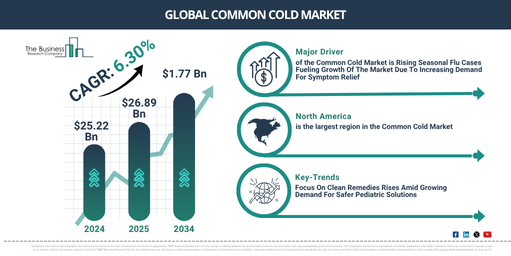
    The common cold market size has seen significant expansion in recent years. It is anticipated to grow from $25.22 billion in 2024 to $26.89 billion in 2025, at a compound annual growth rate (CAGR) of 6.6%. This historical growth can be ascribed to several factors, including the increasing occurrence of viral infections, heightened self-medication tendencies, greater availability of over-the-counter cold remedies, improved awareness regarding cold symptoms and management, and the expanded utilization of traditional herbal treatments.

    The common cold market is projected to experience substantial expansion over the upcoming years, with its size anticipated to reach $34.30 billion by 2029, demonstrating a compound annual growth rate (CAGR) of 6.3%. This growth during the forecast period is primarily fueled by an escalating demand for clean-label and natural cold remedies, an expanding pediatric population requiring child-safe treatments, the increasing embrace of e-commerce for over-the-counter medicine purchases, a heightened focus on preventive healthcare, and boosted investments in research and development for innovative cold therapies. Significant trends expected within this projected timeframe include advancements in clean-label and organic cold medications, sophisticated formulations for pediatric cold treatments, the development of immunity-boosting combination therapies, innovation in nasal spray and inhaler delivery systems, and progress in AI-driven symptom diagnosis.

    Unlock Your Free Sample Report for Exclusive Market Data:

    https://www.thebusinessresearchcompany.com/sample.aspx?id=25722&type=smp

    Which Factors And Drivers Are Influencing The Common Cold Market In 2025?

    The increasing occurrence of seasonal flu is projected to drive expansion in the common cold market in the future. Seasonal flu is defined as a recurrent respiratory illness, brought on by influenza viruses, which circulates annually, particularly during cooler periods, leading to manifestations like fever, coughing, and body aches. A contributing factor to the heightened prevalence of seasonal flu is diminished vaccination uptake, given that fewer people getting the flu vaccine annually leads to a decrease in collective immunity and an increased likelihood of widespread viral transmission. Medications for the common cold can assist in alleviating seasonal flu symptoms by addressing problems like coughs, congestion, and sore throats, offering relief as the body combats the virus. For example, in December 2024, data from the National Health Service, a UK-based government body, showed that an average of 1,099 individuals were admitted to hospitals daily due to the flu, a significant rise from only 243 during 2023, representing the highest incidence recorded at the start of the winter season in at least three years. Consequently, the growing incidence of seasonal flu is fueling the expansion of the common cold market.

    What Are The Segment Types Shaping The Common Cold Market?

    The common cold market covered in this report is segmented –

    1) By Drug Class: Antihistamines, Expectorants, Bronchodilators, Decongestants, Antibiotics, Other Drugs Class

    2) By Doses: Oral Syrups, Tablets Or Pills, Nasal Drops, Other Doses

    3) By Distribution: Hospital Pharmacies, Independent Pharmacies, Online Pharmacies, Other Distribution Channels

    Subsegments:

    1) By Antihistamines: First-Generation Antihistamines, Second-Generation Antihistamines

    2) By Expectorants: Guaifenesin-Based Expectorants, Natural Or Herbal Expectorants

    3) By Bronchodilators: Short-Acting Beta-Agonists, Anticholinergic Bronchodilators

    4) By Decongestants: Oral Decongestants, Nasal Spray Decongestants

    5) By Antibiotics: Penicillins, Macrolides, Cephalosporins

    6) By Other Drugs Class: Antipyretics Or Analgesics, Cough Suppressants, Zinc Supplements And Vitamin C Preparations, Combination Cold Remedies

    How Are Trends Influencing The Common Cold Market?

    Leading businesses operating in the common cold market are concentrating on developing innovative solutions, such as over-the-counter syrups, to address the increasing consumer demand for safer, natural, and effective remedies. Over-the-counter syrups refer to liquid medicines that can be acquired without a prescription to ease symptoms including cough, cold, or fever. For example, in September 2023, Genexa, a US-based pharmaceutical company, launched new clean over-the-counter (OTC) cough and cold medicines specifically for children, expanding its product line ahead of the cold and flu season. These products utilize trusted active ingredients like dextromethorphan, guaifenesin, and acetaminophen to relieve cough, congestion, fever, and sore throat. They are formulated without artificial dyes, sweeteners, parabens, and phenylephrine, and are flavored with organic agave and blueberry. The daytime formula is non-drowsy, while the nighttime version provides up to 8-hour relief with an added antihistamine. These are available at major retailers, offering a safer, cleaner alternative for children’s cold care.

    Who Are The Core Companies Influencing The Common Cold Market Landscape?

    Major companies operating in the common cold market are Pfizer Inc., Procter & Gamble Health Limited, Bayer Aktiengesellschaft, Sanofi S.A., Novartis AG, GlaxoSmithKline plc, Reckitt Benckiser Group plc, Teva Pharmaceutical Industries Limited, Haleon plc, Sun Pharmaceutical Industries Limited, Perrigo Company plc, Dr. Reddy’s Laboratories Limited, Cipla Limited, Amneal Pharmaceuticals Inc., Lupin Limited, Glenmark Pharmaceuticals Limited, Torrent Pharmaceuticals Limited, The Himalaya Drug Company, Cadila Healthcare Limited, Gnova Biotech Limited

    Download The Full Report For Exclusive Market Findings:

    https://www.thebusinessresearchcompany.com/report/common-cold-global-market-report

    Which Geographies Are Emerging As Strong Markets For The Common Cold Industry?

    North America was the largest region in the common cold market in 2024. Asia-Pacific is expected to be the fastest-growing region in the forecast period. The regions covered in the common cold market report are Asia-Pacific, Western Europe, Eastern Europe, North America, South America, Middle East, Africa.

    Request A Customized Version Of The Common Cold Market Report:

    https://www.thebusinessresearchcompany.com/customise?id=25722&type=smp

    Browse Through More Reports Similar to the Global Common Cold Market 2025, By The Business Research Company

    Cough And Cold Preparations Global Market Report 2025

    https://www.thebusinessresearchcompany.com/report/cough-and-cold-preparations-global-market-report

    Chronic Cough Global Market Report 2025

    https://www.thebusinessresearchcompany.com/report/chronic-cough-global-market-report

    Cold Pain Therapy Global Market Report 2025

    https://www.thebusinessresearchcompany.com/report/cold-pain-therapy-global-market-report

    Get in touch with us:

    The Business Research Company: https://www.thebusinessresearchcompany.com/

    Americas +1 310-496-7795

    Asia +44 7882 955267 & +91 8897263534

    Europe +44 7882 955267

    Email us at info@tbrc.info

    Follow us on:

    LinkedIn: https://in.linkedin.com/company/the-business-research-company

    YouTube: https://www.youtube.com/channel/UC24_fI0rV8cR5DxlCpgmyFQ

    Global Market Model: https://www.thebusinessresearchcompany.com/global-market-model

  • Global Clinical Trial Investigative Site Network Market 2025–2029: Competitive Insights and Opportunities

    Global Clinical Trial Investigative Site Network Market 2025–2029: Competitive Insights and Opportunities

    Unlock Global Insights – Save 20% on Market Reports with Code ONLINE20

    What Is The Global Market Value Of The Clinical Trial Investigative Site Network Industry In 2025?

    The clinical trial investigative site network market has observed significant expansion in recent years. Its size is expected to climb from $8.01 billion in 2024 to $8.71 billion by 2025, achieving a compound annual growth rate (CAGR) of 8.7%. This past growth can be attributed to several factors including the rising incidence of chronic and infectious diseases, the worldwide expansion of clinical trials, an increase in oncology-related activities, the development of the pharmaceutical industry, and increased government investment in clinical research.

    The clinical trial investigative site network market is projected to experience substantial expansion over the coming years. This market is set to reach $12.03 billion by 2029, exhibiting a compound annual growth rate (CAGR) of 8.4%. The anticipated increase during this period stems from heightened investment in adaptive and precision clinical trial designs, strengthening partnerships between pharmaceutical firms and clinical site networks, the broadening of therapeutic domains beyond oncology, a surge in adaptive and platform trials, and an expanding pipeline of biologics and personalized medicine. Key developments expected within this timeframe involve the implementation of unified digital platforms, artificial intelligence-powered patient recruitment solutions, the advancement of decentralized clinical trials (DCT) capabilities, the application of blockchain technology for data integrity and transparency, and the deployment of cloud-based site management systems.

    Unlock Your Free Sample Report for Exclusive Market Data:

    https://www.thebusinessresearchcompany.com/sample.aspx?id=25721&type=smp

    What Are The Key Drivers Of Growth In The Clinical Trial Investigative Site Network Market?

    The future growth of the clinical trial investigative site network market is anticipated to be propelled by the rising demand for clinical research activity. Clinical research activity encompasses any organized endeavors related to designing and analyzing clinical studies that aim to improve medical knowledge or public health. The increasing need for innovative therapies to treat chronic and complex diseases is driving this demand, which has intensified efforts to develop safe and effective drugs and medical devices through rigorous clinical trials. A clinical trial investigative site network aids clinical research activity by enabling centralized coordination, faster execution, and consistent quality across multiple trial sites. For instance, in December 2024, according to the National Library of Medicine (NLM), a US-based biomedical library, there were 520,884 registered clinical trials worldwide, representing a significant rise from approximately 477,207 in mid-2023. This represents an increase of nearly 20% in just over one year, highlighting a continued and robust expansion in global clinical research activity. Therefore, the increasing demand for clinical research activity is driving the growth of the clinical trial investigative site network market.

    What Are The Different Segment Classifications Within The Clinical Trial Investigative Site Network Market?

    The clinical trial investigative site network market covered in this report is segmented –

    1) By Type Of Clinical Trials: Interventional Trials, Observational Trials, Expanded Access Trials, Adaptive Trials

    2) By Site Type: Academic Medical Centers, Community Hospitals, Specialized Research Institutions, Private Practices, Site Management Organizations (SMOs)

    3) By Application: Oncology, Cardiology, Central Nervous System, Pain Management, Endocrine, Other Applications

    4) By End-Use: Pharmaceutical And Biopharmaceutical Companies, Medical Device Companies, Other End-Uses

    Subsegments:

    1) By Type of Interventional Trials: Phase I, Phase II, Phase III, Phase IV

    2) By Type of Observational Trials: Cohort Studies, Case-Control Studies, Cross-Sectional Studies, Longitudinal Studies

    3) By Type of Expanded Access Trials: Individual Patient Access, Intermediate-Size Patient Populations, Treatment IND Or Protocol Programs, Emergency Use Access

    4) By Type of Adaptive Trials: Dose-Finding Adaptive Trials, Sample Size Re-estimation Trials, Adaptive Randomization Trials, Seamless Phase II Or III Trials

    What Key Innovation Trends Are Fueling Advancements In The Clinical Trial Investigative Site Network Market?

    Leading companies within the clinical trial investigative site network market are actively developing innovative solutions, such as single sign-on platforms, to optimize site operations, improve data accessibility, and enhance trial effectiveness. Single sign-on platforms are defined as authentication systems that allow users to access multiple applications or systems with a single set of login credentials. These platforms simplify user access, strengthen security, and reduce the administrative burden associated with managing numerous logins. For example, in June 2024, IQVIA Inc., a US-based company focused on clinical research and health technology, introduced One Home for Sites, a unified clinical trial platform designed to simplify site workflows and boost trial efficiency. Its key functionalities include single sign-on access to streamline user login across various trial systems, centralized study dashboards for better oversight of ongoing trials, and integrated communication tools to improve collaboration among sponsors, CROs, and site teams. The platform further supports automated workflows, document management, and real-time performance analytics, enabling sites to diminish administrative complexity, improve regulatory compliance, and accelerate trial execution with greater efficiency and transparency.

    Which Major Industry Participants Are Leading The Clinical Trial Investigative Site Network Market Growth?

    Major companies operating in the clinical trial investigative site network market are IQVIA Inc., ICON plc, SGS Société Générale de Surveillance SA., Fortrea Holdings Inc., Medpace Holdings Inc., ClinChoice Inc., Velocity Clinical Research Inc., NVISION Clinical Research LLC, George Clinical, Medical Research Network Limited, MAC Clinical Research Ltd., FOMAT Medical Research Inc., Clara Health Inc., WCG Clinical, Access Clinical Trials Inc., KV Clinical Research, SMO-Pharmina, Clinical Research Network LLC, CenExel Clinical Research, EMS Healthcare Ltd.

    Download The Full Report For Exclusive Market Findings:

    https://www.thebusinessresearchcompany.com/report/clinical-trial-investigative-site-network-global-market-report

    Which Region Is Projected To Lead The Clinical Trial Investigative Site Network Market During The Forecast Period?

    North America was the largest region in the clinical trial investigative site network market in 2024. Asia-Pacific is expected to be the fastest-growing region in the forecast period. The regions covered in the clinical trial investigative site network market report are Asia-Pacific, Western Europe, Eastern Europe, North America, South America, Middle East, Africa.

    Request A Customized Version Of The Clinical Trial Investigative Site Network Market Report:

    https://www.thebusinessresearchcompany.com/customise?id=25721&type=smp

    Browse Through More Reports Similar to the Global Clinical Trial Investigative Site Network Market 2025, By The Business Research Company

    Clinical Trial Site Management Organizations Global Market Report 2025

    https://www.thebusinessresearchcompany.com/report/clinical-trial-site-management-organizations-global-market-report

    Clinical Trial Management Systems Global Market Report 2025

    https://www.thebusinessresearchcompany.com/report/clinical-trial-management-systems-global-market-report

    Clinical Trial Management System Global Market Report 2025

    https://www.thebusinessresearchcompany.com/report/clinical-trial-management-system-global-market-report

    Get in touch with us:

    The Business Research Company: https://www.thebusinessresearchcompany.com/

    Americas +1 310-496-7795

    Asia +44 7882 955267 & +91 8897263534

    Europe +44 7882 955267

    Email us at info@tbrc.info

    Follow us on:

    LinkedIn: https://in.linkedin.com/company/the-business-research-company

    YouTube: https://www.youtube.com/channel/UC24_fI0rV8cR5DxlCpgmyFQ

    Global Market Model: https://www.thebusinessresearchcompany.com/global-market-model

  • Clinical Risk Grouping Solution Market Trends 2025–2029: Forecasts for Key Growth Segments

    Clinical Risk Grouping Solution Market Trends 2025–2029: Forecasts for Key Growth Segments

    Unlock Global Insights – Save 20% on Market Reports with Code ONLINE20

    By How Much Is The Clinical Risk Grouping Solution Market Expected To Expand Between 2025 And 2029?

    The clinical risk grouping solution market has witnessed rapid expansion recently. It is projected to grow from $0.61 billion in 2024 to $0.69 billion in 2025, demonstrating a compound annual growth rate (CAGR) of 12.6%. The historical growth can be attributed to factors such as a regulatory push for value-based care, an increase in healthcare data digitization, rising healthcare costs, the adoption of electronic health records (EHR), and the expansion of risk adjustment programs.

    The clinical risk grouping solution market is anticipated to experience swift expansion in the upcoming years. This market is projected to reach $1.10 billion by 2029, exhibiting a compound annual growth rate (CAGR) of 12.4%. This projected growth can be attributed to several factors during the forecast period, including a move towards individualized care management, the broadening of government healthcare initiatives, an increasing need for predictive analytics, a strong emphasis on population health management, and a progressively older demographic. Key trends anticipated over the forecast timeframe encompass the incorporation of artificial intelligence and machine learning, the development of real-time risk stratification tools, enhanced interoperability with electronic health record systems, the inclusion of social determinants of health (SDOH) data, and the adoption of cloud-based deployment for risk solutions.

    Unlock Your Free Sample Report for Exclusive Market Data:

    https://www.thebusinessresearchcompany.com/sample.aspx?id=25720&type=smp

    Which Drivers Are Supporting Growth Of The Clinical Risk Grouping Solution Market?

    The expanding implementation of electronic health records (EHRs) is anticipated to fuel the expansion of the clinical risk grouping solution market. These electronic health records (EHRs) represent digital versions of patient paper charts, offering immediate, patient-focused data accessible to authorized users. The increased uptake of electronic health records (EHRs) is primarily driven by the growing demand for efficient data management, as healthcare providers aim to optimize patient information storage, enhance accessibility, and improve inter-departmental coordination for superior clinical decision-making and patient outcomes. The broader adoption of electronic health records (EHR) aids clinical risk grouping solutions by supplying comprehensive, real-time patient data, which facilitates precise risk stratification and more effective population health management. For instance, in June 2022, according to the Department of Health and Social Care, a UK-based government department, by March 2025, all NHS trusts are expected to have adopted electronic health records, an increase from 90% that had implemented them by December 2023. Consequently, the rising adoption of electronic health records (EHRs) is propelling the growth of the clinical risk grouping solution market.

    What Are The Primary Types Of Segments Analyzed In The Clinical Risk Grouping Solution Market?

    The clinical risk grouping solution market covered in this report is segmented –

    1) By Component: Software, Services

    2) By Product: Dashboard Analytics, Scorecard And Data Visualization Tools, Risk Reporting Solutions

    3) By Deployment: Private Cloud, Public Cloud, Hybrid Cloud

    4) By Application: Population Health Management, Chronic Disease Management, Clinical Decision Support, Fraud Detection And Prevention, Other Applications

    5) By End-use: Hospitals And Clinics, Ambulatory Surgical Centers, Long Term Care Centers, Other End-Users

    Subsegments:

    1) By Software: Dashboard Analytics, Scorecard And Data Visualization Tools, Risk Reporting Solutions

    2) By Services: Implementation Services, Consulting Services, Support And Maintenance

    Which Ongoing Trends Are Expected To Shape The Clinical Risk Grouping Solution Market Outlook?

    Major companies operating in the clinical risk grouping solution market are prioritizing the development of innovative solutions, such as artificial intelligence (AI)-driven coding platforms, to enhance coding accuracy and streamline risk assessment processes. These AI-driven coding platforms represent advanced software systems that utilize artificial intelligence technologies, including natural language processing and machine learning, to analyze clinical data and precisely identify medical codes. Such platforms assist by automating the coding process, minimizing human error, boosting coding efficiency, and ensuring accurate risk adjustment for improved reimbursement and care planning. For instance, in August 2022, Reveleer Inc., a US-based healthcare technology company, introduced Risk Adjustment 2.0, an AI-driven coding platform that leverages machine learning, natural language processing (NLP), and intelligent automation to refine coding accuracy, streamline clinical data analysis, and enhance risk adjustment processes for health plans and risk-bearing providers. The platform is engineered to function as a virtual team member, supporting coding teams by evaluating complex clinical data and applying customized rule sets to ensure the accurate capture of hierarchical condition categories (HCCs).

    Who Are The Prominent Global Companies Shaping The Clinical Risk Grouping Solution Market?

    Major companies operating in the clinical risk grouping solution market are Optum Inc., 3M Corporation, Solventum, Conduent Inc., Epic Systems Corporation, Cotiviti Inc., Nuance Communications Inc., Health Catalyst Inc., Edifecs Inc., Innovaccer Inc., Cedar Gate Technologies, Reveleer, ZeOmega, MedeAnalytics Inc., Lightbeam Health Solutions, Apixio, HealthEC LLC, CareEvolution, HBI Solutions, 4S Information Systems.

    Download The Full Report For Exclusive Market Findings:

    https://www.thebusinessresearchcompany.com/report/clinical-risk-grouping-solution-global-market-report

    What Are The Key Regional Factors Influencing The Clinical Risk Grouping Solution Market Growth?

    North America was the largest region in the clinical risk grouping solution market in 2024. Asia-Pacific is expected to be the fastest-growing region in the forecast period. The regions covered in the clinical risk grouping solution market report are Asia-Pacific, Western Europe, Eastern Europe, North America, South America, Middle East, Africa.

    Request A Customized Version Of The Clinical Risk Grouping Solution Market Report:

    https://www.thebusinessresearchcompany.com/customise?id=25720&type=smp

    Browse Through More Reports Similar to the Global Clinical Risk Grouping Solution Market 2025, By The Business Research Company

    Patient Safety And Risk Management Software Global Market Report 2025

    https://www.thebusinessresearchcompany.com/report/patient-safety-and-risk-management-software-global-market-report

    Operational Risk Management Solution Global Market Report 2025

    https://www.thebusinessresearchcompany.com/report/operational-risk-management-solution-global-market-report

    Risk Management Global Market Report 2025

    https://www.thebusinessresearchcompany.com/report/risk-management-global-market-report

    Get in touch with us:

    The Business Research Company: https://www.thebusinessresearchcompany.com/

    Americas +1 310-496-7795

    Asia +44 7882 955267 & +91 8897263534

    Europe +44 7882 955267

    Email us at info@tbrc.info

    Follow us on:

    LinkedIn: https://in.linkedin.com/company/the-business-research-company

    YouTube: https://www.youtube.com/channel/UC24_fI0rV8cR5DxlCpgmyFQ

    Global Market Model: https://www.thebusinessresearchcompany.com/global-market-model
  • Global Low Vision Electronic Visual Aids Market Trends and Growth Analysis 2025–2029

    Global Low Vision Electronic Visual Aids Market Trends and Growth Analysis 2025–2029

    Unlock Global Insights – Save 20% on Market Reports with Code ONLINE20

    What Is The Anticipated Size Of The Low Vision Electronic Visual Aids Market Over The Five-Year Period 2025–2029?

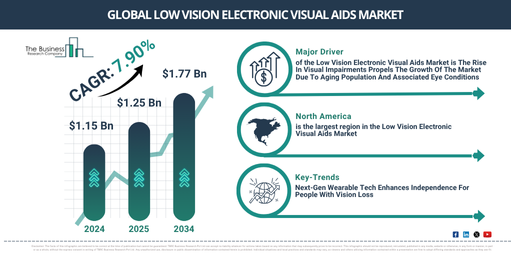
    The low vision electronic visual aids market has experienced robust expansion in recent years. It is projected to increase from $1.15 billion in 2024 to $1.25 billion by 2025, achieving a compound annual growth rate (CAGR) of 8.2%. This historical growth can be attributed to several factors, including increasing awareness regarding vision impairment, a growing elderly population, a rising prevalence of chronic eye disorders, improved access to eye care in urban areas, the growing adoption of electronic magnifiers, and increased funding for low vision research.

    The low vision electronic visual aids market is projected for significant expansion over the coming years. It is anticipated to reach $1.69 billion by 2029, exhibiting a compound annual growth rate (CAGR) of 7.9%. This growth during the forecast period is propelled by factors such as the expanding application of smart technology in assistive devices, a rising need for wearable vision enhancement solutions, the increasing prevalence of diabetes and hypertension, a greater inclination towards home-based healthcare services, and the uptick in online sales of assistive devices. Key trends anticipated for this period encompass the development of customizable user interfaces, the integration of smart device ecosystems, advancements in augmented reality applications, innovations in multi-sensory feedback systems, and the creation of personalized training algorithms.

    Unlock Your Free Sample Report for Exclusive Market Data:

    https://www.thebusinessresearchcompany.com/sample.aspx?id=25815&type=smp

    Which Drivers Are Impacting The Low Vision Electronic Visual Aids Market?

    An increasing number of individuals experiencing visual impairments is anticipated to fuel the expansion of the low vision electronic visual aids market in the future. Visual impairments are defined as various forms of vision loss not entirely correctable with conventional eyeglasses, contact lenses, medical treatments, or surgical procedures, thus impacting an individual’s clear vision. This rise in visual impairment cases is largely attributed to the demographic shift towards an older population, given that age-associated eye conditions like macular degeneration, cataracts, and glaucoma occur more frequently as people age. Low-vision electronic visual aids assist those with visual impairments by improving their residual sight via magnification, contrast modification, and digital image processing, thereby fostering increased autonomy in everyday tasks. As an illustration, the World Health Organization, a specialized agency of the United Nations based in Switzerland, reported in August 2023 that at least 2.2 billion individuals worldwide suffer from near or distance vision impairment. Nevertheless, estimates show that only 36% of individuals with distance vision impairment stemming from refractive errors and merely 17% of those with vision impairment caused by cataracts have accessed suitable treatment. Consequently, the increasing incidence of visual impairments is a key factor propelling the expansion of the low vision electronic visual aids market.

    Which Key Segments Fueling The Low Vision Electronic Visual Aids Market?

    The low vision electronic visual aids market covered in this report is segmented –

    1) By Type: Portable Electronic Magnifiers, Closed Circuit Television, Voice Readers, Other Types

    2) By Technology: Optical Devices, Electronic Magnifiers, Text-to-Speech Devices, Speech Recognition Systems

    3) By Application: Reading Assistance, Navigation Assistance, Social Interaction And Communication, Entertainment

    4) By Distribution Channel: Online Retail, Specialty Stores, Optical Stores, Other Distribution Channels

    5) By End-User: Individuals, Hospitals And Clinics, Rehabilitation Centers, Educational Institutions

    Subsegments:

    1) By Portable Electronic Magnifiers: Handheld Magnifiers, Stand Magnifiers, Wearable Magnifiers, Digital Magnifier Tablets

    2) By Closed Circuit Television: Desktop Closed Circuit Television Systems, Transportable Closed Circuit Television Systems, Wearable Closed Circuit Television Devices, Closed Circuit Television With Text-To-Speech Integration

    3) By Voice Readers: Screen Readers, Book Readers, Optical Character Recognition-Based Readers, Smart Audio Assistants For Reading

    4) By Other Types: Braille Notetakers, Smart Glasses, Screen Magnification Software, Navigation Aids

    What Long-Term Trends Will Shape The Future Growth Of The Low Vision Electronic Visual Aids Industry?

    Key companies in the low vision electronic visual aids market are prioritizing the development of innovative solutions, such as artificial intelligence-powered wearable smart glasses, to improve real-time visual interpretation and user independence. Artificial intelligence-powered wearable smart glasses are advanced electronic visual aids that utilize AI-driven image processing, object recognition, and voice output to enable individuals with low vision to perceive and interact with their environment more effectively. For instance, in August 2024, Eyedaptic Inc., a US-based medical technology company, introduced EYE6 with Ivy, a next-generation wearable visual assistant specifically designed for individuals with age-related macular degeneration and other retinal disorders. These lightweight smart glasses integrate advanced vision enhancement with an AI-powered assistant named Ivy. It offers capabilities such as reading text, identifying objects, describing surroundings, and supporting users in 99 languages to foster greater independence. Boasting full HD 1080p displays, hands-free voice control, and remote upgrade features, the EYE6 delivers a fluid, customizable user experience for people with low vision conditions.

    Which Leading Companies Dominate The Low Vision Electronic Visual Aids Market Share?

    Major companies operating in the low vision electronic visual aids market are Rehan Electronics Co. Ltd., Eschenbach Optik GmbH, Vispero, HumanWare Group, Freedom Scientific Inc., IrisVision Global Inc., VisionAid International Ltd., Zoomax Technology Co. Ltd., HIMS Inc., LS And S Products Inc., SHG Technologies LLC, Clarity Vision Limited, CTECH Low Vision And Blindness Solutions, Low Vision International AB, NuEyes Technologies Inc., Optelec U.S. Inc., Reinecker Vision GmbH, Quantum Reading Learning Vision, Optima Low Vision Services LTD, OrCam Technologies Ltd.

    Download The Full Report For Exclusive Market Findings:

    https://www.thebusinessresearchcompany.com/report/low-vision-electronic-visual-aids-global-market-report

    Which Region Shows The Highest Potential For Future Expansion In The Low Vision Electronic Visual Aids Market?

    North America was the largest region in the low vision electronic visual aids market in 2024. Asia-Pacific is expected to be the fastest-growing region in the forecast period. The regions covered in the low vision electronic visual aids market report are Asia-Pacific, Western Europe, Eastern Europe, North America, South America, Middle East, Africa.

    Request A Customized Version Of The Low Vision Electronic Visual Aids Market Report:

    https://www.thebusinessresearchcompany.com/customise?id=25815&type=smp

    Browse Through More Reports Similar to the Global Low Vision Electronic Visual Aids Market 2025, By The Business Research Company

    Vision Care Devices And Equipment Global Market Report 2025

    https://www.thebusinessresearchcompany.com/report/vision-care-devices-and-equipment-global-market-report

    Night Vision Devices Global Market Report 2025

    https://www.thebusinessresearchcompany.com/report/night-vision-devices-global-market-report

    Assistive Technologies For Visually Impaired Global Market Report 2025

    https://www.thebusinessresearchcompany.com/report/assistive-technologies-for-visually-impaired-global-market-report

    Get in touch with us:

    The Business Research Company: https://www.thebusinessresearchcompany.com/

    Americas +1 310-496-7795

    Asia +44 7882 955267 & +91 8897263534

    Europe +44 7882 955267

    Email us at info@tbrc.info

    Follow us on:

    LinkedIn: https://in.linkedin.com/company/the-business-research-company

    YouTube: https://www.youtube.com/channel/UC24_fI0rV8cR5DxlCpgmyFQ

    Global Market Model: https://www.thebusinessresearchcompany.com/global-market-model

  • Low Vision Electronic Glasses Market Forecast: What to Expect by 2029

    Low Vision Electronic Glasses Market Forecast: What to Expect by 2029

    Unlock Global Insights – Save 20% on Market Reports with Code ONLINE20

    What Are The Forecasted Market Size Estimates For The Low Vision Electronic Glasses Market Between 2025 And 2029?

    The low vision electronic glasses market size has experienced swift expansion in recent years. It is anticipated to expand from $0.87 billion in 2024 to $0.97 billion in 2025, registering a compound annual growth rate (CAGR) of 11.6%. The market’s growth during the preceding period can be linked to the increasing prevalence of age-related macular degeneration, the growing incidence of diabetic retinopathy, a rise in awareness regarding assistive vision technologies, increased government backing for disability aids, and an expanding array of vision rehabilitation programs.

    The low vision electronic glasses market size is projected to undergo rapid expansion in the coming years, reaching $1.50 billion by 2029, demonstrating a compound annual growth rate (CAGR) of 11.4%. This growth during the forecast period is attributed to the increasing adoption of smart wearables in healthcare, greater availability of low-cost electronic glasses, a heightened focus on inclusive and assistive technology policies, rising demand for hands-free assistive solutions, and the growing accessibility of assistive devices through e-commerce and online channels. Prominent trends for this period include technological shifts towards lightweight, wearable designs, the evolution of customized vision enhancement algorithms, the development of multi-sensory feedback systems, the integration of voice-control interfaces, and innovations in real-time text-to-speech conversion.

    Unlock Your Free Sample Report for Exclusive Market Data:

    https://www.thebusinessresearchcompany.com/sample.aspx?id=25814&type=smp

    Which Industry Drivers Are Expected To Accelerate The Low Vision Electronic Glasses Market From 2025 To 2029?

    The low vision electronic glasses market is expected to grow due to the increasing prevalence of visual impairments. Visual impairments refer to a significant loss of vision that cannot be fully corrected with glasses, contact lenses, medication, or surgery, impacting a person’s ability to perform everyday tasks. The rising occurrence of visual impairments is primarily attributed to aging populations, as the risk of eye conditions such as cataracts, glaucoma, and macular degeneration increases significantly with age. Low-vision electronic glasses aid individuals with visual impairments by enhancing remaining vision through magnification, contrast adjustment, and real-time image processing, thereby enabling greater independence in daily activities. For instance, in August 2023, according to the World Health Organization, a Switzerland-based specialized agency of the United Nations for health, globally, at least 2.2 billion people have a near or distance vision impairment. However, it is estimated that only 36% of people with distance vision impairment caused by refractive errors and just 17% of those with vision impairment due to cataracts have received appropriate treatment. Therefore, the increasing prevalence of visual impairments is driving the growth of the low vision electronic glasses market.

    How Is The Low Vision Electronic Glasses Market Classified Into Different Segments?

    The low vision electronic glasses market covered in this report is segmented –

    1) By Product Type: Wearable Glasses, Smart Glasses, Augmented Reality Glasses, Night Vision Glasses

    2) By Technology: Optical Technology, Digital Technology, Adaptive Technology, Artificial Intelligence Integrated Technology

    3) By Application: Personal Use, Professional Use

    4) By Distribution Channel: Online Retail, Offline Retail, Direct Sales, Healthcare Providers

    5) By End-User: Individuals With Visual Impairments, Healthcare Institutions, Educational Institutions, Occupational Rehabilitation Centers

    Subsegments:

    1) By Wearable Glasses: Head-Mounted Low Vision Glasses, Clip-on Assistive Glasses, Full-Frame Digital Glasses

    2) By Smart Glasses: Voice-Controlled Smart Glasses, Bluetooth-Enabled Visual Aid Glasses, Integrated Camera Smart Glasses

    3) By Augmented Reality Glasses: Augmented Reality Glasses For Object Recognition, Augmented Reality Navigation Assistance Glasses, Augmented Reality Text-to-Speech Glasses

    4) By Night Vision Glasses: Infrared-Based Vision Glasses, Thermal Imaging Glasses for Low Vision, Low-Light Enhancement Glasses

    Which Market Trends Are Creating New Opportunities In The Low Vision Electronic Glasses Industry?

    Leading companies within the low vision electronic glasses market are concentrating on creating inventive solutions, including artificial intelligence-powered smart glasses, aimed at improving visual clarity and fostering independence for those with visual impairments. These artificial intelligence-powered smart glasses function as wearable technology, leveraging AI to boost vision through object identification, audible text reading, and instantaneous image adjustments, thereby aiding individuals with visual impairments. An example of this innovation is Eyedaptic Inc., a US-based vision technology company, which introduced its EYE6 smart glasses in August 2024, an advanced wearable designed to assist people experiencing central vision loss. The EYE6 smart glasses integrate augmented reality with AI-powered vision enhancement, providing instant image optimization that improves both visual clarity and contrast for the wearer. Key attributes of these glasses encompass a lightweight and inconspicuous design, hands-free operation, a visual assistant capable of supporting 99 languages, alongside functionalities like text interpretation, environmental descriptions, and support for routine daily tasks.

    Who Are The Major Companies Operating In The Low Vision Electronic Glasses Market?

    Major companies operating in the low vision electronic glasses market are Eschenbach Optik GmbH, OrCam Technologies Ltd., Soliddd Corp., Enhanced Vision Systems Inc., Vuzix Corporation, Zoomax Technology Co. Ltd., IrisVision Global Inc., Acesight, Ceciaa SAS, Envision Technologies BV, Everysight Ltd, Eyedaptic Inc., GiveVision Ltd., NuEyes Technologies Inc., OXSIGHT Ltd., Second Sight Medical Products Inc., SHG Technologies LLC, Vision Buddy Inc., VisionAid Technologies Ltd., LS And S LLC.

    Download The Full Report For Exclusive Market Findings:

    https://www.thebusinessresearchcompany.com/report/low-vision-electronic-glasses-global-market-report

    How Is Low Vision Electronic Glasses Market Demand Varying Across Different Regions?

    North America was the largest region in the low vision electronic glasses market in 2024. Asia-Pacific is expected to be the fastest-growing region in the forecast period. The regions covered in the low vision electronic glasses market report are Asia-Pacific, Western Europe, Eastern Europe, North America, South America, Middle East, Africa.

    Request A Customized Version Of The Low Vision Electronic Glasses Market Report:

    https://www.thebusinessresearchcompany.com/customise?id=25814&type=smp

    Browse Through More Reports Similar to the Global Low Vision Electronic Glasses Market 2025, By The Business Research Company

    Ar And Vr Smart Glasses Global Market Report 2025

    https://www.thebusinessresearchcompany.com/report/ar-and-vr-smart-glasses-global-market-report

    Advanced Glass Global Market Report 2025

    https://www.thebusinessresearchcompany.com/report/advanced-glass-global-market-report

    Smart Glass Global Market Report 2025

    https://www.thebusinessresearchcompany.com/report/smart-glass-global-market-report

    Get in touch with us:

    The Business Research Company: https://www.thebusinessresearchcompany.com/

    Americas +1 310-496-7795

    Asia +44 7882 955267 & +91 8897263534

    Europe +44 7882 955267

    Email us at info@tbrc.info

    Follow us on:

    LinkedIn: https://in.linkedin.com/company/the-business-research-company

    YouTube: https://www.youtube.com/channel/UC24_fI0rV8cR5DxlCpgmyFQ

    Global Market Model: https://www.thebusinessresearchcompany.com/global-market-model
  • Low Vision Assistive Devices Industry Insights: Market Forecast to 2029

    Low Vision Assistive Devices Industry Insights: Market Forecast to 2029

    Unlock Global Insights – Save 20% on Market Reports with Code ONLINE20

    How Is The Low Vision Assistive Devices Market Size Likely To Evolve From 2025 Through 2034?

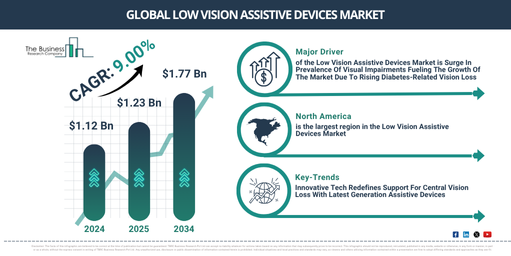
    The low vision assistive devices market has experienced substantial growth in recent years. It is projected to expand from $1.12 billion in 2024 to $1.23 billion by 2025, achieving a compound annual growth rate (CAGR) of 9.3%. This historic development can be attributed to the increasing prevalence of vision impairment, a burgeoning aging population, the heightened demand for independent living aids, rising awareness about assistive technologies, and an increase in government initiatives supporting disability.

    The low vision assistive devices market size is poised for robust expansion over the coming years. It is projected to reach $1.73 billion by 2029, growing at a compound annual growth rate (CAGR) of 9.0%. This anticipated growth during the forecast period stems from the increasing adoption of smart and AI-enabled assistive devices, rising healthcare expenditure dedicated to vision care, the expanding accessibility of assistive technology in developing markets, a growing prevalence of chronic eye disorders, and an increased emphasis on personalized and home-based vision solutions. Significant trends for the forecast period include innovations in wearable low-vision technology, advancements in portable electronic magnifiers, the incorporation of artificial intelligence into vision aids, improvements in smartphone-based assistive applications, and the integration of IoT with low-vision devices.

    Unlock Your Free Sample Report for Exclusive Market Data:

    https://www.thebusinessresearchcompany.com/sample.aspx?id=25813&type=smp

    What Are The Top Growth Drivers Impacting The Low Vision Assistive Devices Market Outlook?

    The low vision assistive devices market is anticipated to expand in the future, driven by the escalating occurrence of visual impairments. These impairments encompass various forms of vision loss, ranging from partial sight to total blindness, which are not fully correctable by conventional eyewear. A key factor contributing to the increasing incidence of visual impairments is the rising number of diabetes diagnoses, given that diabetes frequently results in retinal damage and progressive vision loss. Low-vision assistive devices are crucial in managing visual impairments by amplifying residual vision, facilitating everyday tasks, and boosting autonomy and life quality for those with low vision. For example, in February 2025, Developing Australia Communities, an Australia-based organization dedicated to supporting the disability sector, cited Vision Australia’s report that 453,000 Australians live with blindness or low vision, a number expected to climb to 564,000 by 2030. Consequently, the expanding prevalence of visual impairments serves as a significant impetus for the growth of the low vision assistive devices market.

    What Are The Major Segments Identified In The Low Vision Assistive Devices Market?

    The low vision assistive devices market covered in this report is segmented –

    1) By Product Type: Magnifiers, Reading Devices, Wearable Devices, Screen Readers, Other Product Types

    2) By Application: Education, Healthcare, Personal Use

    3) By Distribution Channel: Online Stores, Specialty Stores, Optical Stores, Other Distribution Channels

    4) By End-User: Children, Adults, Elderly

    Subsegments:

    1) By Magnifiers: Handheld Magnifiers, Stand Magnifiers, Electronic Magnifiers, Pocket Magnifiers

    2) By Reading Devices: Optical Character Recognition (OCR) Devices, Text-To-Speech Devices, Desktop Video Magnifiers, Portable Reading Machines

    3) By Wearable Devices: Smart Glasses, Head-Mounted Displays (HMDs), Augmented Reality (AR)-Based Devices, Camera-Based Wearable Systems

    4) By Screen Readers: Software-Based Screen Readers, Web-Based Screen Readers, Mobile Screen Readers, Braille Display Integrated Readers

    5) By Other Product Types: Braille Embossers, Tactile Graphics Devices, Speech-To-Text Converters, Audio Books And E-Readers

    How Are Trends Influencing The Low Vision Assistive Devices Market?

    Leading companies within the **low vision assistive devices market** are concentrating on cutting-edge technologies, including next-generation blind assistive devices, to enhance visual clarity, autonomy, and movement for those experiencing central vision impairment. These advanced blind assistive devices integrate high-resolution imaging, real-time image processing, and wearable organic light-emitting diode (OLED) display systems. They project enhanced visuals that integrate smoothly with the user’s existing vision, all while maintaining peripheral awareness. For example, in **July 2025**, **eSight**, an assistive technology firm headquartered in **Canada**, introduced its **eSight Go** wearable device. This device incorporates a **12-megapixel** camera with **4K** resolution, dual full high definition (**HD**) organic light emitting diode (**OLED**) screens, and an expansive **45-degree** field of view, collectively offering a natural and immersive visual experience. Further enhancements include advanced image stabilization, a more straightforward user interface, and a battery pack distributed around the neck for improved comfort during everyday use. Such next-generation assistive technologies are engineered to allow users to maintain full mobility and engage more comprehensively in daily activities, whether at school, work, home, or in social settings, thereby assisting individuals with over **20 different vision impairments** globally.

    Which Global Market Leaders Are Shaping The Future Of The Low Vision Assistive Devices Sector?

    Major companies operating in the low vision assistive devices market are HIMS Inc., OrCam Technologies Ltd., AudioEye Inc., HumanWare Group, Freedom Scientific Inc., eSight Corporation, IrisVision Global Inc., Zoomax Technology Co. Limited, Optelec U.S. Inc., Cobolt Systems Ltd., NuEyes Technologies Inc., Vision Buddy Inc., Acesight, Eyedaptic Inc., LVI Low Vision International AB, Reinecker Vision GmbH, Ash Technologies Ltd., RevoSight Inc., Joint Optical Reflective Display, Clarity.

    Download The Full Report For Exclusive Market Findings:

    https://www.thebusinessresearchcompany.com/report/low-vision-assistive-devices-global-market-report

    Which Geographies Are Emerging As Strong Markets For The Low Vision Assistive Devices Industry?

    North America was the largest region in the low vision assistive devices market in 2024. The regions covered in the low vision assistive devices market report are Asia-Pacific, Western Europe, Eastern Europe, North America, South America, Middle East, Africa.

    Request A Customized Version Of The Low Vision Assistive Devices Market Report:

    https://www.thebusinessresearchcompany.com/customise?id=25813&type=smp

    Browse Through More Reports Similar to the Global Low Vision Assistive Devices Market 2025, By The Business Research Company

    Vision Care Devices And Equipment Global Market Report 2025

    https://www.thebusinessresearchcompany.com/report/vision-care-devices-and-equipment-global-market-report

    Assistive Technologies For Visually Impaired Global Market Report 2025

    https://www.thebusinessresearchcompany.com/report/assistive-technologies-for-visually-impaired-global-market-report

    Night Vision Devices Global Market Report 2025

    https://www.thebusinessresearchcompany.com/report/night-vision-devices-global-market-report

    Get in touch with us:

    The Business Research Company: https://www.thebusinessresearchcompany.com/

    Americas +1 310-496-7795

    Asia +44 7882 955267 & +91 8897263534

    Europe +44 7882 955267

    Email us at info@tbrc.info

    Follow us on:

    LinkedIn: https://in.linkedin.com/company/the-business-research-company

    YouTube: https://www.youtube.com/channel/UC24_fI0rV8cR5DxlCpgmyFQ

    Global Market Model: https://www.thebusinessresearchcompany.com/global-market-model

  • Low Vision And Blind Aids Products Market Size and Growth Forecast for Businesses 2025–2029

    Low Vision And Blind Aids Products Market Size and Growth Forecast for Businesses 2025–2029

    Unlock Global Insights – Save 20% on Market Reports with Code ONLINE20

    What Are The Growth Projections For The Low Vision And Blind Aids Products Market Size During 2025–2029?

    The low vision and blind aids product market has seen rapid expansion in recent years. Its value is projected to increase from $3.00 billion in 2024 to $3.32 billion in 2025, exhibiting a compound annual growth rate (CAGR) of 10.7%. This historical growth can be attributed to several factors, including the increasing worldwide prevalence of age-related vision disorders, a rise in diabetes-induced visual impairment, the growing population of older adults, enhanced awareness concerning visual disabilities, and augmented support from government and non-profit organizations for disability services.

    The low vision and blind aids products market is projected to experience swift expansion over the coming years. By 2029, its value is anticipated to reach $4.95 billion, demonstrating a compound annual growth rate (CAGR) of 10.4%. This projected increase during the forecast timeframe stems from factors such as greater educational and professional integration for people with visual impairments, expanding healthcare spending in developing nations, established global disability rights structures, the proliferation of specialized training and support services, and an escalating need for digital accessibility adherence. Key developments anticipated within this period involve progress in artificial intelligence for recognizing objects and text, the adoption of wearable sensory navigation devices, the reduction in size of electronic assistive parts, the creation of user interfaces responsive to voice and touch, and the integration of cloud-based data syncing for accessibility aids.

    Unlock Your Free Sample Report for Exclusive Market Data:

    https://www.thebusinessresearchcompany.com/sample.aspx?id=25812&type=smp

    Which Major Market Drivers Are Shaping The Future Of The Low Vision And Blind Aids Products Market?

    The low vision and blind aids products market is anticipated to grow, primarily driven by the increasing occurrence of eye diseases. These disorders impact the eyes’ structure or function, potentially resulting in compromised vision or blindness. This increase in eye diseases is attributed to extensive screen time, which contributes to eye strain and the earlier development of visual problems. Such products help individuals with eye conditions by either enhancing their remaining vision or providing non-visual ways to access information. These aids are crucial for improving daily functions, mobility, and independence for those living with permanent vision impairment. As an illustration, in May 2024, the Centers for Disease Control and Prevention (CDC), a US-based federal agency, reported that over 90 million Americans over 40 are currently affected by vision problems. Furthermore, by 2050, vision impairment and blindness in the U.S. are forecasted to surge by 150%, with diabetic retinopathy cases increasing by 72%, cataracts by 87%, and both glaucoma and macular degeneration predicted to double. Consequently, the rising prevalence of eye diseases is a significant driver for the growth of the low vision and blind aid products market.

    What Are The Emerging Segments Gaining Attention In The Low Vision And Blind Aids Products Market?

    The low vision and blind aids products market covered in this report is segmented –

    1) By Product Type: Optical Aids, Non-Optical Aids, Electronic Aids, Assistive Software, Wearable Technology

    2) By Age Group: Children, Adults, Seniors, Teenagers, Middle-Aged

    3) By Distribution Channel: Online Stores, Retail Pharmacies, Supermarkets Or Hypermarkets, Specialty Stores, Direct Sales

    4) By Application: Blind School, Disabled Persons Federation And Hospital, Enterprises And Social Organizations

    5) By End-User: Individuals, Healthcare Professionals, Educational Institutions, Community Organizations, Government Agencies

    Subsegments:

    1) By Optical Aids: Magnifying Glasses, Telescopic Glasses, Spectacle-Mounted Magnifiers, Handheld Magnifiers, Stand Magnifiers

    2) By Non-Optical Aids: Braille Books, Large Print Materials, Tactile Graphics, Signature Guides, Writing Templates

    3) By Electronic Aids: Video Magnifiers, Digital Readers, Screen Enlargers, Electronic Braille Displays, Talking Devices

    4) By Assistive Software: Screen Readers, Screen Magnification Software, Text-To-Speech Software, Optical Character Recognition (OCR) Tools, Navigation And Mapping Software

    5) By Wearable Technology: Smart Glasses, Artificial Intelligence (AI)-Powered Vision Aids, Wearable Cameras, Voice-Enabled Smart Devices, Haptic Feedback Wearables

    What Key Innovation Trends Are Fueling Advancements In The Low Vision And Blind Aids Products Market?

    Leading firms within the low vision and blind aids products market are concentrating on creating sophisticated offerings, including AI-driven wearable vision aids, with the aim of enhancing the functional independence and overall quality of life for those impacted by retinal disorders and significant vision impairment. These AI-powered wearable vision aids are intelligent, head-worn devices that combine artificial intelligence with vision-enhancing technologies, enabling visually impaired people to better understand visual data, carry out daily activities, and move through their surroundings with increased autonomy. As an example, in August 2024, Eyedaptic, a vision-enhancement solutions provider based in the US, introduced EYE6 with Ivy, a novel AI-enabled visual assistant specifically designed for people experiencing age-related macular degeneration and other retinal conditions. The EYE6 incorporates cutting-edge multimodal generative artificial intelligence and large language model features to support users in tasks such as reading text, recognizing objects, and comprehending their environment in various situations across 99 languages. These lightweight smart glasses, specifically engineered for those with age-related macular degeneration and other retinal disorders, merge high-definition visual augmentation with an interactive AI assistant, thereby fostering enhanced independence and facilitating daily task management.

    Which Industry Leaders Are Driving Innovation Across The Low Vision And Blind Aids Products Market?

    Major companies operating in the low vision and blind aids products market are Eschenbach Optik GmbH, Tobii Dynavox, OrCam Inc., Perkins School for the Blind, Vispero, HumanWare, Freedom Scientific, MaxiAids, Enhanced Vision, Dolphin Computer Access, Zoomax, IRIS Vision, SELVAS Healthcare Inc., LS&S LLC, LVI Low Vision International, VisionAid, Eurobraille, HHW Care Products (India) Private Limited, Nippon Telesoft Co. Ltd., Help Tech GmbH & Co. KG

    Download The Full Report For Exclusive Market Findings:

    https://www.thebusinessresearchcompany.com/report/low-vision-and-blind-aids-products-global-market-report

    Which Region Is Projected To Lead The Low Vision And Blind Aids Products Market During The Forecast Period?

    North America was the largest region in the low vision and blind aids products market in 2024. Asia-Pacific is expected to be the fastest-growing region in the forecast period. The regions covered in the low vision and blind aids products market report are Asia-Pacific, Western Europe, Eastern Europe, North America, South America, Middle East, Africa.

    Request A Customized Version Of The Low Vision And Blind Aids Products Market Report:

    https://www.thebusinessresearchcompany.com/customise?id=25812&type=smp

    Browse Through More Reports Similar to the Global Low Vision And Blind Aids Products Market 2025, By The Business Research Company

    Vision Care Devices And Equipment Global Market Report 2025

    https://www.thebusinessresearchcompany.com/report/vision-care-devices-and-equipment-global-market-report

    Blind Spot Monitor Global Market Report 2025

    https://www.thebusinessresearchcompany.com/report/blind-spot-monitor-global-market-report

    Assistive Technologies For Visually Impaired Global Market Report 2025

    https://www.thebusinessresearchcompany.com/report/assistive-technologies-for-visually-impaired-global-market-report

    Get in touch with us:

    The Business Research Company: https://www.thebusinessresearchcompany.com/

    Americas +1 310-496-7795

    Asia +44 7882 955267 & +91 8897263534

    Europe +44 7882 955267

    Email us at info@tbrc.info

    Follow us on:

    LinkedIn: https://in.linkedin.com/company/the-business-research-company

    YouTube: https://www.youtube.com/channel/UC24_fI0rV8cR5DxlCpgmyFQ

    Global Market Model: https://www.thebusinessresearchcompany.com/global-market-model