
Blog

  • Migraine Market Outlook From 2026 To 2030: Key Growth Factors And Future Opportunities

    Migraine Market Outlook From 2026 To 2030: Key Growth Factors And Future Opportunities

    Built to provide research that’s more actionable and strategically valuable, The Business Research Company’s 2026 market reports include market attractiveness analysis, total addressable market sizing, company benchmarking matrices, interactive Excel dashboards, broader supply chain intelligence, emerging startup tracking, and in-depth product insights.

    Migraine Market Forecast: What Value Will The Market Reach By 2030?

    The migraine market size has demonstrated steady expansion in recent years. It is anticipated to grow from $1.97 billion in 2025 to $2.02 billion in 2026, exhibiting a compound annual growth rate (CAGR) of 3.0%. The market’s growth in previous periods can be attributed to the increasing prevalence of migraine disorders, greater usage of OTC analgesics, the early adoption of triptans, a rise in clinical visits for chronic migraine, and expanding awareness of neurological disorders.

    The migraine market size is anticipated to experience consistent growth over the coming years. Projections indicate it will achieve a value of $2.36 billion by 2030, expanding at a compound annual growth rate (CAGR) of 4.0%. This forecasted growth is primarily driven by factors such as the rising demand for CGRP-based therapies, the emergence of digital migraine therapeutics, the increased adoption of remote migraine monitoring, the proliferation of home-based treatment devices, and the broadening of personalized treatment protocols. Significant trends expected during this forecast period encompass advanced precision-based migraine management, AI-powered tools for migraine prediction, the development of cloud-enabled migraine monitoring platforms, the widespread adoption of IoT-driven wearables for migraine tracking, and the integration of AR/VR solutions for pain relief.

    Get A Free Sample Report With In-Depth Market Insights:

    https://thebusinessresearchcompany.com/sample_request?id=21836082&type=smp&name=Migraine%20Market%20Report%202026&utm_source=Blogs&utm_medium=Paid&utm_campaign=Nov_PR

    Migraine Market Development Factors: What’s Supporting Demand?

    The increasing occurrence of stress is expected to fuel the growth of the migraine market moving forward. Stress is defined as the body’s physiological and psychological reaction to difficult or demanding circumstances that people perceive as menacing, unmanageable, or too much for them to handle efficiently. Migraines can be initiated by stress, as it activates the body’s fight or flight mechanism, causing the release of stress hormones like cortisol and adrenaline. This process can result in quick narrowing and widening of blood vessels, which may play a role in alterations in blood flow and vascular activity linked to migraine episodes. Consequently, the growing frequency of stress is driving the expansion of the migraine market.

    Migraine Market Segmentation And Category Overview

    The migraine market covered in this report is segmented –

    1) By Type: Episodic, Migraine With Aura, Chronic, Other Types

    2) By Treatment: Acute Or Abortive Treatment, Preventive Or Prophylactic Treatment, Non-Pharmacological Therapies And Devices

    3) By Route Of Administration: Oral, Injectable, Nasal Spray, Other Routes Of Administration

    4) By Distribution Channel: Retail Pharmacies, Hospital Pharmacies, Online Pharmacies, Specialty Clinics

    5) By End-User: Adults, Adolescents, Pediatric, Other End-Users

    Subsegments:

    1) By Episodic: Frequent Episodic Migraine, Infrequent Episodic Migraine

    2) By Migraine With Aura: Visual Aura, Sensory Aura, Speech Or Language Aura

    3) By Chronic: Chronic Migraine Without Aura, Chronic Migraine With Aura

    4) By Other Types: Hemiplegic Migraine, Retinal Migraine, Menstrual Migraine

    Migraine Market Transformation Trends: What Innovations Are Driving Change?

    Leading companies active in the migraine market are concentrating on developing innovative technological solutions, such as migraine lens technology, to gain a competitive edge. Migraine lens technology refers to specialized lenses engineered to assist individuals suffering from migraines and light sensitivity.

    Migraine Market Competitive Analysis Of Leading Industry Participants

    Major companies operating in the migraine market are Pfizer Inc., Johnson & Johnson, Merck & Co. Inc., Bayer AG, Novartis AG, Sanofi-Aventis LLC, GlaxoSmithKline plc., Eli Lilly and Co Ltd., Amgen Inc., Teva Pharmaceutical Industries Ltd., Sun Pharmaceutical Industries Limited, Dr Reddy’s Laboratories Ltd., Apotex Inc., Cipla Limited, Amneal Pharmaceuticals LLC, Zydus Lifesciences Ltd., Lupin Limited, Torrent Pharmaceuticals Ltd., Axsome Therapeutics, Impel NeuroPharma, Zosano Pharma, H Lundbeck A S, Merz Therapeutics

    View The Full Migraine Market Report:

    https://thebusinessresearchcompany.com/report/migraine-global-market-report?utm_source=Blogs&utm_medium=Paid&utm_campaign=Nov_PR

    Migraine Market Regional Split: Which Areas Are Fueling Growth?

    North America was the largest region in the migraine market in 2025. The regions covered in the migraine market report are Asia-Pacific, South East Asia, Western Europe, Eastern Europe, North America, South America, Middle East, Africa.

    Reach Out To Our Team:

    The Business Research Company: https://www.thebusinessresearchcompany.com/

    Americas: +1 310-496-7795

    Asia: +44 7882 955267 & +91 8897263534

    Europe: +44 7882 955267

    Email us at: marketing@tbrc.info

    Follow us on:

    LinkedIn: https://in.linkedin.com/company/the-business-research-company

    YouTube: https://www.youtube.com/channel/UC24_fI0rV8cR5DxlCpgmyFQ

    Global Market Model: https://www.thebusinessresearchcompany.com/global-market-model
  • Microscope Camera Market Growth Forecast: Market Size, Key Trends And Emerging Opportunities Through 2030

    Microscope Camera Market Growth Forecast: Market Size, Key Trends And Emerging Opportunities Through 2030

    Backed by market attractiveness analysis, total addressable market sizing, company benchmarking matrices, interactive Excel dashboards, wider supply chain intelligence, emerging startup coverage, and detailed product-level insights, The Business Research Company’s 2026 market reports are designed to offer research that is more actionable and strategically valuable than ever.

    Microscope Camera Market Size Outlook: How Quickly Will Revenue Expand Through 2030?

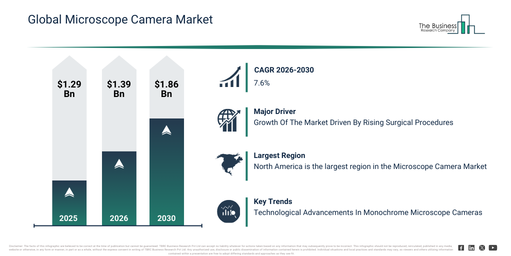
    The microscope camera market has experienced robust expansion recently. Projections indicate its value will rise from $1.29 billion in 2025 to $1.39 billion by 2026, demonstrating a compound annual growth rate (CAGR) of 7.9%. Historically, this growth can be attributed to several factors including the rising demand for clinical microscopy, increased adoption of CMOS sensors, advancements in academic research imaging, the integration of digital laboratory workflows, and the broader application in materials science imaging.

    The microscope camera market size is anticipated to undergo significant expansion in the coming years. It is projected to reach $1.86 billion by 2030, demonstrating a compound annual growth rate (CAGR) of 7.6%. This projected growth throughout the forecast period stems from factors such as the increasing demand for AI-based diagnostic tools, the rising integration of remote microscopy, the continuous development of high-resolution imaging sensors, the expansion of real-time telepathology, and the increased growth in biotech R&D investments. Prominent trends identified for the forecast period include AI-enhanced image processing, cloud-based microscopy data management, the broader adoption of automation in laboratory imaging, IoT-enabled remote microscopy systems, and advanced digital imaging for precision diagnostics.

    Get A Free Sample Report With In-Depth Market Insights:

    https://thebusinessresearchcompany.com/sample_request?id=62433922&type=smp&name=Microscope%20Camera%20Market%20Report%202026&utm_source=Blogs&utm_medium=Paid&utm_campaign=Nov_PR

    Microscope Camera Market Industry Drivers: What’s Behind The Revenue Growth?

    An anticipated increase in surgical procedures is set to propel the growth of the microscope camera market. Surgical operations involve medical interventions where a surgeon physically addresses diseases, injuries, or deformities by cutting, removing, repairing, or altering tissue to improve a patient’s health or functionality. This rise in surgical operations can be attributed to factors such as an aging population, advancements in medical technology, the growing prevalence of chronic diseases, enhanced access to healthcare, greater medical awareness, improved surgical outcomes, and the expansion of medical tourism. Microscope cameras significantly enhance these operations by delivering high-definition, magnified views of the surgical site, thereby improving precision, enabling real-time documentation, and facilitating remote collaboration for better patient outcomes. Therefore, the growing number of surgical operations will boost the expansion of the microscope camera market.

    Microscope Camera Market Segment Outlook: Which Categories Are Growing Fastest?

    The microscope camera market covered in this report is segmented –

    1) By Type: Monochrome Cameras, Color Cameras

    2) By Sensor Type: Complementary Metal-Oxide-Semiconductor (CMOS) Sensors, Charge-Coupled Device (CCD) Sensors

    3) By Resolution: High-Definition Cameras, Standard-Definition Cameras

    4) By Distribution Channel: Online, Offline

    5) By Application: Medical, Industry, Education, Other Applications

    Subsegments:

    1) By Monochrome Cameras: CMOS Monochrome Cameras, CCD Monochrome Cameras

    2) By Color Cameras: CMOS Color Cameras, CCD Color Cameras

    #Microscope Camera Market Growth Trends: What’s Shaping The Future Outlook?

    Major companies operating in the microscope camera market are prioritizing the development of technologically advanced solutions, such as monochrome microscope cameras, to improve image clarity and precision for high-resolution scientific and medical imaging applications. A monochrome microscope camera refers to a digital camera used in microscopy that captures high-contrast grayscale images, frequently preferred for its ability to deliver clearer, more detailed visuals, particularly in low-light or high-sensitivity scenarios.

    Microscope Camera Market Leading Companies And Competitive Benchmarking

    Major companies operating in the microscope camera market are Sony Corporation, Canon Inc., Danaher Corporation, Keyence Corporation, Olympus Corporation, Teledyne Technologies, Roper Technologies Inc., Nikon Corporation, Carl Zeiss AG, Hamamatsu, Brunel Microscopes Ltd, Jenoptik AG, Leica Microsystems, Motic China Group Co Ltd, Basler AG, Andor Technology Limited, Oxford Instruments plc, Tucsen Photonics Co Ltd., Lumenera Corporation, Euromex Microscopen BV, Guangzhou Micro-shot Technology Co Ltd., Martin Microscope, Meiji Techno Co Ltd.

    View The Full Microscope Camera Market Report:

    https://thebusinessresearchcompany.com/report/microscope-camera-global-market-report?utm_source=Blogs&utm_medium=Paid&utm_campaign=Nov_PR

    Microscope Camera Market Top Region: Where Does Most Revenue Come From?

    North America was the largest region in the microscope camera market in 2025. Asia-Pacific is expected to be the fastest-growing region in the forecast period. The regions covered in the microscope camera market report are Asia-Pacific, South East Asia, Western Europe, Eastern Europe, North America, South America, Middle East, Africa.

    Reach Out To Our Team:

    The Business Research Company: https://www.thebusinessresearchcompany.com/

    Americas: +1 310-496-7795

    Asia: +44 7882 955267 & +91 8897263534

    Europe: +44 7882 955267

    Email us at: marketing@tbrc.info

    Follow us on:

    LinkedIn: https://in.linkedin.com/company/the-business-research-company

    YouTube: https://www.youtube.com/channel/UC24_fI0rV8cR5DxlCpgmyFQ

    Global Market Model: https://www.thebusinessresearchcompany.com/global-market-model
  • MicroRNA Market CAGR Forecast Through 2030: Key Trends Shaping Industry Expansion

    MicroRNA Market CAGR Forecast Through 2030: Key Trends Shaping Industry Expansion

    Featuring market attractiveness scoring, total addressable market sizing, company benchmarking matrices, interactive Excel dashboards, deeper supply chain intelligence, emerging startup tracking, and granular product-level insights, The Business Research Company’s 2026 market reports are built to deliver research that is both more actionable and more strategically valuable.

    MicroRNA Market Size, Value And Growth Trajectory Through 2030

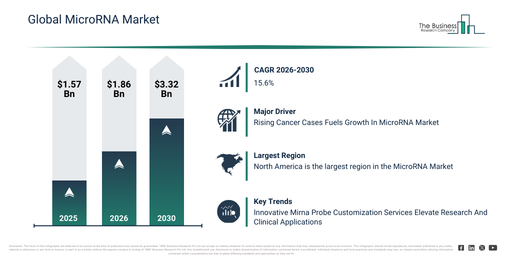
    The microrna market size has shown significant expansion in recent years. This market is projected to increase from $1.57 billion in 2025 to $1.86 billion in 2026, achieving a compound annual growth rate (CAGR) of 18.5%. The historical growth of the market can be linked to the rise in genomic research adoption, increasing demand for biomarker discovery, growth of pcr-based testing, expansion of cancer research programs, and the rising use of ngs instruments.

    The microrna market is projected to experience swift expansion over the coming years. By 2030, its valuation is anticipated to reach $3.32 billion, progressing at a compound annual growth rate (CAGR) of 15.6%. This anticipated growth is driven by several factors, including the expanding clinical uses of microrna diagnostics, an increase in personalized medicine adoption, advancements in therapeutic microrna development, broader infectious disease research, and growing investments in molecular assay technologies. Key trends foreseen for this period encompass the widening scope of precision genomics, AI-powered microrna expression analysis, an increase in cloud-based sequencing data storage, greater automation within molecular diagnostics, and the integration of IoT-enabled laboratory workflows.

    Get A Free Sample Report With In-Depth Market Insights:

    https://thebusinessresearchcompany.com/sample_request?id=48206702&type=smp&name=MicroRNA%20Market%20Report%202026&utm_source=Blogs&utm_medium=Paid&utm_campaign=Nov_PR

    MicroRNA Market Growth Factors: What’s Supporting Expansion?

    The rising prevalence of cancer diagnoses is anticipated to boost the microRNA market in the coming years. Cancer is defined as an intricate illness marked by uncontrolled cellular growth and multiplication, frequently resulting in the development of harmful tumors that can spread into nearby tissues and metastasize to remote organs, thus presenting considerable health hazards. The increase in cancer occurrences can be attributed to several elements, including an aging demographic, lifestyle selections such as smoking and inadequate nutrition, ecological contaminants, and enhanced screening techniques leading to earlier identification. MicroRNA is integrated with established cancer treatments to heighten drug responsiveness and achieve better results. Furthermore, beyond therapeutic uses, miRNAs act as diagnostic and prognostic indicators, assisting in the classification of cancer varieties, forecasting disease advancement, and tracking responses to therapy. Consequently, the escalating number of cancer cases is propelling the expansion of the microRNA market.

    MicroRNA Market Segment Landscape: Which Areas Lead Development?

    The microrna market covered in this report is segmented –

    1) By Product: Instruments, Consumables

    2) By Assay Type: Immunoassay, Next Generation Sequencing, MiRNA Arrays, Polymerase Chain Reaction (PCR) Based Arrays

    3) By Application: Cancer, Infectious Diseases, Immunological Disorder, Cardiovascular Disease, Neurological Disease, Other Applications

    4) By End User: Academic And Research Institutes, Biopharmaceutical Companies, Diagnostic Centers, Clinical Research Organizations

    Subsegments:

    1) By Instruments: Quantitative PCR Systems, Microarray Platforms, Next-Generation Sequencing (NGS) Systems, Real-Time PCR Instruments, Microrna Analyzers

    2) By Consumables: MicroRNA Kits ( Extraction Kits, Detection Kits), PCR Reagents, Primers And Probes, Microarrays And Chips, RNA Sequencing Kits

    MicroRNA Market Industry Trends: What’s Reshaping Demand?

    Leading companies operating within the microRNA market are prioritizing the creation of advanced solutions, including miRNA probe customization services, to fulfill the distinct requirements of researchers and clinicians, improve the precision of miRNA detection, and enable a broad spectrum of applications. MiRNA probe customization services refer to specialized offerings from biotechnology and molecular biology companies that design and manufacture tailored probes specific to particular microRNAs (miRNAs) for diverse research and clinical uses.

    MicroRNA Market Industry Leaders And Competitive Landscape

    Major companies operating in the microrna market are Thermo Fisher Scientific Inc., Merck KGaA, Agilent Technologies Inc, Illumina Inc., Bio-Rad Laboratories Inc., QIAGEN N.V., Miltenyi Biotec, LGC Limited, Promega Corporation, Abcam plc, Integrated DNA Technologies Inc., NanoString Technologies Inc., Horizon Discovery Ltd., OriGene Technologies Inc., Omega Bio-Tek, New England Biolabs, Quantabio, SeqMatic LLC, GeneCopoeia Inc., HTG Molecular Diagnostics Inc.

    View The Full MicroRNA Market Report:

    https://thebusinessresearchcompany.com/report/microrna-global-market-report?utm_source=Blogs&utm_medium=Paid&utm_campaign=Nov_PR

    MicroRNA Market Regional Breakdown: Where Is Demand Concentrated?

    North America was the largest region in the microRNA market in 2025. Asia-Pacific is expected to be the fastest-growing region in the forecast period. The regions covered in the microrna market report are Asia-Pacific, South East Asia, Western Europe, Eastern Europe, North America, South America, Middle East, Africa.

    Reach Out To Our Team:

    The Business Research Company: https://www.thebusinessresearchcompany.com/

    Americas: +1 310-496-7795

    Asia: +44 7882 955267 & +91 8897263534

    Europe: +44 7882 955267

    Email us at: marketing@tbrc.info

    Follow us on:

    LinkedIn: https://in.linkedin.com/company/the-business-research-company

    YouTube: https://www.youtube.com/channel/UC24_fI0rV8cR5DxlCpgmyFQ

    Global Market Model: https://www.thebusinessresearchcompany.com/global-market-model
  • Microproteins Skincare Market To Witness 8% CAGR Growth Through 2030: Key Industry Drivers

    Microproteins Skincare Market To Witness 8% CAGR Growth Through 2030: Key Industry Drivers

    Built to provide research that’s more actionable and strategically valuable, The Business Research Company’s 2026 market reports include market attractiveness analysis, total addressable market sizing, company benchmarking matrices, interactive Excel dashboards, broader supply chain intelligence, emerging startup tracking, and in-depth product insights.

    Microproteins Skincare Market CAGR Outlook And Future Development

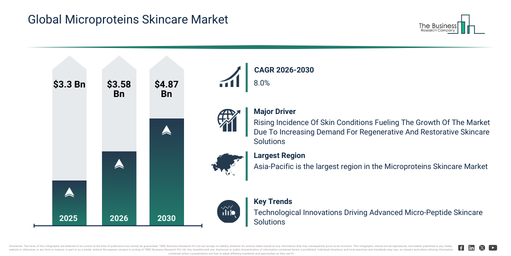
    The microproteins skincare market has experienced robust expansion over recent years. It is projected to increase from $3.3 billion in 2025 to $3.58 billion in 2026, achieving a compound annual growth rate (CAGR) of 8.3%. This historical growth can be ascribed to a growing consumer emphasis on anti-aging skincare, rising demand for premium cosmetic products, the expansion of clinical-grade skincare offerings, the increasing influence of dermatological research, and the wider availability of advanced cosmetic formulations.

    The microproteins skincare market is poised for robust expansion in the coming years, with its size projected to reach $4.87 billion by 2030, demonstrating a compound annual growth rate (CAGR) of 8.0%. This anticipated growth during the forecast period is fueled by increased investments in protein-based skincare research and development, a growing preference for non-invasive anti-aging solutions, the proliferation of biotech-enabled cosmetic innovations, a rising demand for multifunctional skincare products, and the greater adoption of personalized beauty treatments. Significant trends expected during this period include the broadening acceptance of microprotein-based anti-aging items, an escalating need for deep-penetration skincare actives, a heightened emphasis on stimulating collagen and elastin, the development of advanced high-performance skincare formulations, and a stronger focus on cellular repair solutions.

    Get A Free Sample Report With In-Depth Market Insights:

    https://thebusinessresearchcompany.com/sample_request?id=83766627&type=smp&name=Microproteins%20Skincare%20Market%20Report%202026&utm_source=Blogs&utm_medium=Paid&utm_campaign=Nov_PR

    Microproteins Skincare Market Demand Drivers: What’s Powering Industry Growth?

    The increasing occurrence of skin conditions is anticipated to propel the expansion of the microprotein skincare market in the future. These conditions refer to disorders or abnormalities impacting the skin’s structure, appearance, or function, including acne, eczema, psoriasis, and infections. The prevalence of skin conditions is growing as more consumers and healthcare professionals recognize the influence of environmental, lifestyle, and genetic factors on skin well-being, leading to a prioritization of targeted skincare solutions to manage and prevent these issues. Microprotein skincare products play a vital role in addressing skin conditions by promoting skin regeneration, repairing damaged tissues, enhancing barrier function, and reducing inflammation to restore overall skin health. For instance, in March 2025, according to the Chronic Skin Conditions statistics report published by the British Dermatological Nursing Group, a UK-based independent professional organization, melanoma cases in Northern Ireland are projected to increase by 28% by 2040, potentially adding an estimated $4.8 million (£3.8 million) in annual healthcare costs. Consequently, the rising incidence of skin conditions is driving the growth of the microprotein skincare market.

    Microproteins Skincare Market Segments: Where Is Growth Concentrated?

    The microproteins skincare market covered in this report is segmented –

    1) By Product Type: Creams, Serums, Masks, Lotions

    2) By Distribution Channel: Online, Offline

    3) By Application: Anti-aging, Moisturizing, Acne Treatment, Sensitive Skin

    Subsegments:

    1) By Creams: Anti-Aging Creams, Brightening Creams, Hydrating Creams, Firming Creams

    2) By Serums: Anti-Wrinkle Serums, Hydration Serums, Brightening Serums, Repair Serums

    3) By Masks: Sheet Masks, Clay Masks, Gel Masks, Cream Masks

    4) By Lotions: Moisturizing Lotions, Brightening Lotions, Firming Lotions, Soothing Lotions

    Microproteins Skincare Market Innovation Trends: What Developments Are Reshaping The Industry?

    Leading companies in the microprotein skincare market are prioritizing the development of technologically innovative solutions, such as proprietary micropeptide technology, to improve skin regeneration, boost collagen synthesis, and deliver targeted anti-aging benefits. Proprietary micro-peptide technology describes a unique, company-specific process that generates bioactive micro-peptides engineered to penetrate the skin deeply and activate natural regeneration, collagen synthesis, and repair mechanisms for superior skincare results.

    Microproteins Skincare Market Key Participants And Competitive Landscape

    Major companies operating in the microproteins skincare market are BASF SE, Kenvue Inc., Natura Bissé International S.A., Croda International Plc, Indeed Laboratories Inc., Geltor Inc., HydroPeptide LLC, BeautyStat Inc., Numaferm GmbH, AnteAGE Inc., CLR Chemisches Laboratorium, Erasa Skincare LLC, Intoxicated Cosmetics LLC, Kiwla Co. Ltd., Loti Labs LLC, Merz Pharma GmbH & Co. KGaA, OneSkin Inc., Peach and Lily Inc., Skin Actives Scientific LLC, Topaz Biosciences Inc.

    View The Full Microproteins Skincare Market Report:

    https://thebusinessresearchcompany.com/report/global-microproteins-skincare-market-report?utm_source=Blogs&utm_medium=Paid&utm_campaign=Nov_PR

    Microproteins Skincare Market Geographic Landscape: Which Region Leads Industry Growth?

    Asia-Pacific was the largest region in the microproteins skincare market in 2025. North America is expected to be the fastest-growing region in the forecast period. The regions covered in the microproteins skincare market report are Asia-Pacific, South East Asia, Western Europe, Eastern Europe, North America, South America, Middle East, Africa.

    Reach Out To Our Team:

    The Business Research Company: https://www.thebusinessresearchcompany.com/

    Americas: +1 310-496-7795

    Asia: +44 7882 955267 & +91 8897263534

    Europe: +44 7882 955267

    Email us at: marketing@tbrc.info

    Follow us on:

    LinkedIn: https://in.linkedin.com/company/the-business-research-company

    YouTube: https://www.youtube.com/channel/UC24_fI0rV8cR5DxlCpgmyFQ

    Global Market Model: https://www.thebusinessresearchcompany.com/global-market-model

  • Micropropagation Market Projected For Strong Expansion Through 2030: Key Trends And Future Outlook

    Micropropagation Market Projected For Strong Expansion Through 2030: Key Trends And Future Outlook

    Backed by market attractiveness analysis, total addressable market sizing, company benchmarking matrices, interactive Excel dashboards, wider supply chain intelligence, emerging startup coverage, and detailed product-level insights, The Business Research Company’s 2026 market reports are designed to offer research that is more actionable and strategically valuable than ever.

    Micropropagation Market Set To Climb From $1.86 Billion In 2026 To $2.62 Billion By 2030

    The micropropagation market has shown substantial growth over recent years. It is anticipated to expand from $1.69 billion in 2025 to $1.86 billion in 2026, reflecting a compound annual growth rate (CAGR) of 10.1%. This historical development can be attributed to a rising requirement for disease-free planting materials, the incorporation of tissue culture in horticulture, an increase in commercial flower production, the expansion of forestry and agroforestry efforts, and its initial application in banana and ornamental crops.

    The micropropagation market size is expected to experience significant growth in the upcoming years. It is projected to expand to $2.62 billion by 2030, achieving a compound annual growth rate (CAGR) of 9.0%. This anticipated growth can be credited to the increasing requirement for scalable plant multiplication, enhanced investment in climate-resilient crops, the expansion of medicinal plant cultivation, the growth of commercial greenhouse operations, and technological advancements in culture media. Prominent trends for the forecast period include the broadening of precision propagation techniques, sustainability-focused plant production, automation within tissue culture laboratories, AI-assisted growth optimization, and cloud-based data monitoring in micropropagation.

    Get A Free Sample Report With In-Depth Market Insights:

    https://thebusinessresearchcompany.com/sample_request?id=55982822&type=smp&name=Micropropagation%20Market%20Report%202026&utm_source=Blogs&utm_medium=Paid&utm_campaign=Nov_PR

    Micropropagation Market Growth Drivers: What’s Behind The Acceleration?

    The expanding field of horticulture is anticipated to fuel the expansion of the micropropagation market in the coming years. Horticulture encompasses the scientific and practical methods of growing plants for consumption, medicinal purposes, decorative displays, or general aesthetic pleasure. The growth in horticulture is attributed to a rising need for various crops, sustainable farming methods, urban green areas, and decorative plants, all influenced by population increases, ecological considerations, and aesthetic tastes. For horticulture, micropropagation is essential to effectively generate vast numbers of healthy, disease-free plants possessing specific desired characteristics, thereby guaranteeing consistent quality and genetic consistency across crop cultivation, ornamental plant growing, and conservation initiatives. Consequently, the advancement of horticulture acts as a key impetus for the expansion of the micropropagation market.

    Micropropagation Market Segment Analysis: What Are The Core Market Categories?

    The micropropagation market covered in this report is segmented –

    1) By Crop Types: Banana, Orchids And Ornamentals, Medicinal Plants, Vegetables, Small Fruits, Other Crop Types

    2) By Container Type: Test Tubes And Petri Dishes, Glass Bottles, Plastic Containers

    3) By Sales Channels: Offline, Online

    4) By End User: Farmers, Research Labs, Other End Users

    Subsegments:

    1) By Banana: Cavendish Banana, Red Banana, Plantains

    2) By Orchids And Ornamentals: Phalaenopsis Orchids, Cattleya Orchids, Dendrobium Orchids, Cymbidium Orchids, Gerbera, Chrysanthemums, Roses, Tulips, Lilies

    3) By Medicinal Plants: Aloe Vera, Ginseng, Echinacea, Turmeric, Stevia, Lavender, Mint, Cannabis, Basil

    4) By Vegetables: Tomatoes, Peppers, Lettuce, Cucumber, Spinach, Eggplant, Carrots, Kale

    5) By Small Fruits: Strawberries, Raspberries, Blueberries, Blackberries, Grapes, Gooseberries

    6) By Other Crop Types: Trees And Timber Species, Flowering Plants, Fruits, Nut Crops, Spices, Turfgrass And Lawn Species, Forestry And Agroforestry Crops

    Micropropagation Market Trends: What’s Defining The Industry’s Next Phase?

    Leading companies within the micropropagation market are developing innovative products, such as propagation systems, to improve the efficiency and effectiveness of plant cloning and cultivation. Propagation systems are methods or techniques utilized to reproduce plants from seeds, cuttings, or other plant parts, yielding new individuals that are either genetically identical or varied.

    Micropropagation Market Top Companies Driving Competitive Growth

    Major companies operating in the micropropagation market are Phytocultures Ltd., Deroose Plants Inc., Phytelligence Inc., Oglesby Plants International Inc., AgriForest Bio-Technologies Ltd., Tissue-Grown Corporation, Agribiotecnología de Costa Rica S A, Hartmann’s Plant Company, Knight Hollow Nursery Inc., Lowes TC Pty Ltd., Mountain Shadow Nursery LLC, Phytotech Labs Inc., Plant Cell Technology Inc., Rancho Tissue Technologies Inc., Xplant Laboratory Inc., Agromillora Group, Highveld Biotech, TC Propagation Ltd., In Vitro Microplants Ltd., Valley Tissue Culture, Phytoclone Inc., Okanagan Plant Improvement Co Ltd., Meristematic Laboratories

    View The Full Micropropagation Market Report:

    https://thebusinessresearchcompany.com/report/micropropagation-global-market-report?utm_source=Blogs&utm_medium=Paid&utm_campaign=Nov_PR

    Micropropagation Market Largest Region: Which Geography Holds The Biggest Share?

    Europe was the largest region in the micropropagation market in 2025. Asia-Pacific is expected to be the fastest-growing region in the forecast period. The regions covered in the micropropagation market report are Asia-Pacific, South East Asia, Western Europe, Eastern Europe, North America, South America, Middle East, Africa.

    Reach Out To Our Team:

    The Business Research Company: https://www.thebusinessresearchcompany.com/

    Americas: +1 310-496-7795

    Asia: +44 7882 955267 & +91 8897263534

    Europe: +44 7882 955267

    Email us at: marketing@tbrc.info

    Follow us on:

    LinkedIn: https://in.linkedin.com/company/the-business-research-company

    YouTube: https://www.youtube.com/channel/UC24_fI0rV8cR5DxlCpgmyFQ

    Global Market Model: https://www.thebusinessresearchcompany.com/global-market-model

  • Microbiome Skincare Product Market Outlook 2026–2030: Growth Trends, Market Dynamics And Emerging Opportunities

    Microbiome Skincare Product Market Outlook 2026–2030: Growth Trends, Market Dynamics And Emerging Opportunities

    Featuring market attractiveness scoring, total addressable market sizing, company benchmarking matrices, interactive Excel dashboards, deeper supply chain intelligence, emerging startup tracking, and granular product-level insights, The Business Research Company’s 2026 market reports are built to deliver research that is both more actionable and more strategically valuable.

    Microbiome Skincare Product Market Forecast: Value Set To Climb From $1.6 Billion To $3.15 Billion

    The market for microbiome skincare products has experienced rapid expansion in recent years. This sector is forecast to expand from $1.35 billion in 2025 to $1.6 billion in 2026, exhibiting a compound annual growth rate (CAGR) of 18.7%. The historical increase can be attributed to heightened consumer consciousness regarding skin health, an escalating need for sensitive skin remedies, the proliferation of premium skincare ranges, improved accessibility of dermatology-endorsed products, and a broader acceptance of microbiome science in cosmetic formulations.

    The microbiome skincare product market is anticipated to experience substantial growth over the next few years. It is projected to expand to $3.15 billion by 2030, achieving a compound annual growth rate (CAGR) of 18.5%. This market expansion during the forecast period can be attributed to factors such as the increasing desire for customized skincare routines, greater investment in biotech-based cosmetic products, a rising preference for clean-label formulas, the broadening of online distribution channels for skincare, and a heightened focus on long-term skin health solutions. Significant trends for the forecast period include the increasing adoption of microbiome-friendly formulations, a rising need for barrier-repair skincare products, the growing incorporation of prebiotic and probiotic ingredients, the expansion of personalized skincare options, and an enhanced emphasis on balancing skin microflora.

    Get A Free Sample Report With In-Depth Market Insights:

    https://thebusinessresearchcompany.com/sample_request?id=27586506&type=smp&name=Microbiome%20Skincare%20Product%20Market%20Report%202026&utm_source=Blogs&utm_medium=Paid&utm_campaign=Nov_PR

    Microbiome Skincare Product Market Growth Factors Behind Sustained Expansion

    A growing understanding of skin health is projected to boost the expansion of the microbiome skincare market in the future. Skin health encompasses the complete state and performance of the skin, involving its barrier strength, moisture levels, and equilibrium of microbes. The recognition of skin health is expanding as both consumers and medical experts acknowledge the influence of a harmonious skin microbiome on general skin well-being and favor proactive and reparative skincare strategies. Microbiome skincare items help maintain the equilibrium of the skin’s innate microbiome, safeguarding against detrimental microbes, and improving the skin’s protective barrier to avert harm and preserve overall skin quality. Consequently, the heightened understanding of skin health is fueling the expansion of the microbiome skincare market.

    Microbiome Skincare Product Market Segment Breakdown: Which Categories Lead On Revenue?

    The microbiome skincare product market covered in this report is segmented –

    1) By Product Type: Cleansers, Moisturizers, Serums, Masks, Other Product Types

    2) By Skin Type: Dry Skin, Oily Skin, Combination Skin, Sensitive Skin, Normal Skin

    3) By Formulation: Cream, Gel, Liquid, Foam

    4) By Distribution Channel: Online Stores, Supermarkets Or Hypermarkets, Specialty Stores, Other Distribution Channels

    5) By End User: Men, Women, Unisex, Infants And Children

    Subsegments:

    1) By Cleansers: Foam Cleanser, Gel Cleanser, Cream Cleanser, Micellar Cleanser, Oil-Based Cleanser

    2) By Moisturizers: Cream Moisturizer, Gel Moisturizer, Lotion Moisturizer, Emulsion Moisturizer, Balm Moisturizer

    3) By Serums: Hydrating Serum, Brightening Serum, Anti-Aging Serum, Repair Serum, Soothing Serum

    4) By Masks: Sheet Mask, Clay Mask, Cream Mask, Peel-Off Mask, Overnight Mask

    5) By Other Product Types: Toner, Exfoliator, Sunscreen, Facial Mist, Eye Cream

    Microbiome Skincare Product Market Industry Trends Fueling Future Revenue Growth

    Leading companies within the microbiome skincare market are prioritizing technological innovations, including the Microbiome Analyzer, to gain a deeper comprehension of individual skin microbiota, facilitate tailored skincare solutions, and elevate product effectiveness through data-informed insights. This analyzer is defined as a device that evaluates a person’s skin microbiome and subsequently offers customized skincare recommendations derived from its analysis.

    Microbiome Skincare Product Market Leading Players And Competitive Positioning

    Major companies operating in the microbiome skincare product market are BASF S.E., Unilever PLC., L’Oréal S.A., Johnson & Johnson, The Colgate-Palmolive Company, dsm-firmenich AG., Clinique Laboratories LLC., Shiseido Company Limited, Symrise AG., Amorepacific Corporation, Beiersdorf Aktiengesellschaft, Lallemand Inc., BioGaia AB., Eminence Organic Skin Care, Sabinsa Corporation, AOBiome Therapeutics Inc., Esse Skincare Pty. Ltd., LaFlore Probiotic Skincare LLC., Marie Veronique Inc., BeBe & Bella LLC

    View The Full Microbiome Skincare Product Market Report:

    https://thebusinessresearchcompany.com/report/global-microbiome-skincare-product-market-report?utm_source=Blogs&utm_medium=Paid&utm_campaign=Nov_PR

    Microbiome Skincare Product Market Regional Analysis: Which Geography Leads On Revenue?

    North America was the largest region in the microbiome skincare product market in 2025. Asia-Pacific is expected to be the fastest-growing region in the forecast period. The regions covered in the microbiome skincare product market report are Asia-Pacific, South East Asia, Western Europe, Eastern Europe, North America, South America, Middle East, Africa.

    Reach Out To Our Team:

    The Business Research Company: https://www.thebusinessresearchcompany.com/

    Americas: +1 310-496-7795

    Asia: +44 7882 955267 & +91 8897263534

    Europe: +44 7882 955267

    Email us at: marketing@tbrc.info

    Follow us on:

    LinkedIn: https://in.linkedin.com/company/the-business-research-company

    YouTube: https://www.youtube.com/channel/UC24_fI0rV8cR5DxlCpgmyFQ

    Global Market Model: https://www.thebusinessresearchcompany.com/global-market-model

  • Microbiome Sequencing Service Market Growth Outlook From $2.84 Billion In 2026 To $5.3 Billion By 2030

    Microbiome Sequencing Service Market Growth Outlook From $2.84 Billion In 2026 To $5.3 Billion By 2030

    Built to provide research that’s more actionable and strategically valuable, The Business Research Company’s 2026 market reports include market attractiveness analysis, total addressable market sizing, company benchmarking matrices, interactive Excel dashboards, broader supply chain intelligence, emerging startup tracking, and in-depth product insights.

    Microbiome Sequencing Service Market Revenue Growth On Track For A 16.8% CAGR Through 2030

    The microbiome sequencing service market has experienced substantial expansion recently. This market is projected to expand from $2.43 billion in 2025 to $2.84 billion in 2026, demonstrating a compound annual growth rate (CAGR) of 17.1%. Historically, this growth has been driven by factors such as the proliferation of microbiome research initiatives, an increase in academic research funding, growing interest in gut and skin microbiota studies, the accessibility of next-generation sequencing platforms, and enhanced collaboration between academic institutions and the industry.

    The microbiome sequencing service market is projected for significant expansion in the coming years. Its valuation is anticipated to reach $5.3 billion by 2030, demonstrating a compound annual growth rate (CAGR) of 16.8%. This growth during the forecast period stems from factors such as the increasing clinical acceptance of microbiome-based diagnostics, growing investments in microbiome therapeutics, the widening scope of personalized nutrition research, the expanding application of AI-driven microbial analysis, and the rising need for extensive population microbiome studies. Key trends expected during this period involve an increasing requirement for high-throughput microbiome sequencing services, the expanded utilization of shotgun and amplicon sequencing, the growing incorporation of advanced bioinformatics pipelines, the broadening of clinical microbiome research applications, and a heightened emphasis on functional microbial profiling.

    Get A Free Sample Report With In-Depth Market Insights:

    https://thebusinessresearchcompany.com/sample_request?id=44812921&type=smp&name=Microbiome%20Sequencing%20Service%20Market%20Report%202026&utm_source=Blogs&utm_medium=Paid&utm_campaign=Nov_PR

    Microbiome Sequencing Service Market Demand Drivers Opening New Revenue Streams

    The increasing prevalence of conditions affecting the gut is anticipated to drive the expansion of the microbiome sequencing service market in the future. These diseases encompass health issues impacting the gastrointestinal (GI) tract, including organs like the stomach, intestines, liver, pancreas, and gallbladder. An uptick in gut-related diseases stems from shifts in lifestyle and eating patterns, such as a diet rich in processed foods and lacking fiber, disturbing the equilibrium of gut microbiota. The microbiome sequencing service aids in managing gut-related illnesses by providing in-depth understanding of gut microbial makeup, proving valuable for the diagnosis and oversight of gastrointestinal ailments. This service facilitates precise interventions through the detection of microbial imbalances, enhancing tailored treatments and overall management of gut health. Consequently, the growing occurrence of gut-related ailments is fueling the expansion of the microbiome sequencing service market.

    Microbiome Sequencing Service Market Segmentation: How Does The Market Break Down By Category?

    The microbiome sequencing service market covered in this report is segmented –

    1) By Service: Sample Preparation, Sequencing And Library Preparation, Data Analysis

    2) By Technology: Sequencing By Litigation (SBL), Sequencing By Synthesis (SBS), Short Gun Sequencing, Targeted Gene Sequencing, RNA Sequencing, Other Technologies

    3) By Application: Autoimmune Disorder, Cancer, Gastrointestinal Disorders, Other Applications

    4) By End-User: Pharmaceutical And Biotechnology Companies, Academic Research Institutes, Other End-Users

    Subsegments:

    1) By Sample Preparation: Deoxyribonucleic Acid (DNA) Extraction, Ribonucleic Acid (RNA) Extraction, Protein Extraction, Cell Lysis, Library Construction

    2) By Sequencing And Library Preparation: Whole Genome Sequencing, Metagenomic Sequencing, Amplicon Sequencing, Shotgun Sequencing, Targeted Sequencing

    3) By Data Analysis: Taxonomic Profiling, Functional Profiling, Comparative Analysis, Statistical Analysis, Pathway Analysis

    Microbiome Sequencing Service Market Trends Powering Strategic Industry Growth

    Major companies operating in the microbiome sequencing service market are prioritizing the development of advanced solutions, including automated metagenomics sequencing options, to improve the efficiency, precision, and scalability of microbiome research and analysis. An automated metagenomics sequencing solution functions as a comprehensive system, enabling the sequencing and examination of microbial communities with minimal manual input, thereby ensuring high accuracy, consistency, and scalable throughput.

    Microbiome Sequencing Service Market Competitive Overview And Top Companies

    Major companies operating in the microbiome sequencing service market are Eurofins Scientific LLC, Illumina Inc., Charles River Laboratories, QIAGEN N.V., Mérieux NutriSciences Corporation, OraSure Technologies Inc., Zifo RnD Solutions, Novogene Co. Ltd., Oxford Nanopore Technologies Plc, Macrogen Inc., Zymo Research Corporation, CD Genomics, Molzym GmbH & Co. KG (Gradian Diagnostics), Baseclear BV, Psomagen Inc., Mapmygenome, Rancho Biosciences LLC, Boster Biological Technology Ltd., Clinical Microbiomics, Microba Life Sciences Limited

    View The Full Microbiome Sequencing Service Market Report:

    https://thebusinessresearchcompany.com/report/microbiome-sequencing-service-global-market-report?utm_source=Blogs&utm_medium=Paid&utm_campaign=Nov_PR

    Microbiome Sequencing Service Market Geographic Spread And Regional Opportunities

    North America was the largest region in the microbiome sequencing service market in 2025. Asia-Pacific is expected to be the fastest-growing region in the forecast period. The regions covered in the microbiome sequencing service market report are Asia-Pacific, South East Asia, Western Europe, Eastern Europe, North America, South America, Middle East, Africa.

    Reach Out To Our Team:

    The Business Research Company: https://www.thebusinessresearchcompany.com/

    Americas: +1 310-496-7795

    Asia: +44 7882 955267 & +91 8897263534

    Europe: +44 7882 955267

    Email us at: marketing@tbrc.info

    Follow us on:

    LinkedIn: https://in.linkedin.com/company/the-business-research-company

    YouTube: https://www.youtube.com/channel/UC24_fI0rV8cR5DxlCpgmyFQ

    Global Market Model: https://www.thebusinessresearchcompany.com/global-market-model

  • Microbiology And Bacterial Culture Media Market Forecast To Reach $8.85 Billion By 2030: Key Growth Drivers And Industry Trends

    Microbiology And Bacterial Culture Media Market Forecast To Reach $8.85 Billion By 2030: Key Growth Drivers And Industry Trends

    Backed by market attractiveness analysis, total addressable market sizing, company benchmarking matrices, interactive Excel dashboards, wider supply chain intelligence, emerging startup coverage, and detailed product-level insights, The Business Research Company’s 2026 market reports are designed to offer research that is more actionable and strategically valuable than ever.

    Microbiology And Bacterial Culture Media Market Value Growth And Long-Term Outlook

    The microbiology and bacterial culture media market size has experienced significant expansion in recent years. It is projected to reach $6.14 billion in 2026, up from $5.59 billion in 2025, progressing at a compound annual growth rate (CAGR) of 9.8%. This historical growth can be attributed to factors such as the expansion of pharmaceutical manufacturing activities, an increase in clinical diagnostics testing, enhanced food and water safety testing, the rising use of microbiology in research laboratories, and the widespread availability of standardized culture media products.

    The market size for microbiology and bacterial culture media is projected to experience robust expansion over the coming years. This market is set to reach $8.85 billion by 2030, driven by a compound annual growth rate (CAGR) of 9.6%. Factors contributing to this growth during the forecast period include the increasing uptake of rapid microbial detection methods, higher investments in biopharmaceutical quality control, the spread of microbiology testing into emerging markets, a rising demand for single-use media formats, and a greater emphasis on laboratory automation. Key trends anticipated in the forecast period encompass an escalating demand for chromogenic and selective media, the growing acceptance of ready-to-use culture media formats, increased customization of specialty media formulations, the broadening of automated microbiology workflows, and an intensified focus on contamination control.

    Get A Free Sample Report With In-Depth Market Insights:

    https://thebusinessresearchcompany.com/sample_request?id=43885857&type=smp&name=Microbiology%20And%20Bacterial%20Culture%20Media%20Market%20Report%202026&utm_source=Blogs&utm_medium=Paid&utm_campaign=Nov_PR

    Microbiology And Bacterial Culture Media Market Growth Backed By Core Demand Fundamentals

    The increasing occurrence of infectious diseases is projected to drive the expansion of the microbiology and bacterial culture media market. These conditions, caused by detrimental microbes, are transmissible among individuals. A significant factor contributing to the rise in infectious disease prevalence is growing antibiotic resistance, which renders standard treatments less effective, allowing infections to linger and spread more easily. Microbiology and culture media facilitate the detection and cultivation of these harmful microbes, thereby aiding in the precise diagnosis of infectious diseases and guiding targeted therapeutic approaches.

    Microbiology And Bacterial Culture Media Market Segment Trends And Revenue Contributors

    The microbiology and bacterial culture media market covered in this report is segmented –

    1) By Product Type: Dehydrated Culture Media, Prepared (Ready-To-Use) Culture Media, Chromogenic And Selective Culture Media, Enriched And Enrichment Media, Other Product Types

    2) By Media Composition: Complex Media, Defined Media, Selective Media, Differential Media, Transport Media

    3) By Formulation: Bulk Packaged Media, Single-Use Media Formats, Custom Or Specialty Formulated Media

    4) By Application: Pharmaceutical And Biopharmaceutical Production, Diagnostics, Food And Water Testing, Bioenergy And Agricultural Research, Cosmetics And Personal Care Applications, Other Applications

    Subsegments:

    1) By Dehydrated Culture Media: Powdered Media, Agar Media, Broth Media

    2) By Prepared (Ready-To-Use) Culture Media: Plates, Slants, Tubes, Bottles

    3) By Chromogenic And Selective Culture Media: Chromogenic Media, Selective Media

    4) By Enriched And Enrichment Media: Enriched Media, Enrichment Broth

    5) By Other Product Types: Synthetic Media, Minimal Media, Transport Media

    Microbiology And Bacterial Culture Media Market Growth Trends Reshaping The Competitive Landscape

    Leading companies in the microbiology and bacterial culture media market are concentrating on developing advanced products, such as ready-to-use culture media, to facilitate high-throughput diagnostic and research applications. These ready-to-use culture media provide sterile, pre-prepared environments for cultivating microorganisms, eliminating the necessity for manual preparation, thereby saving time, minimizing contamination risks, and ensuring consistent laboratory results. As an illustration, in April 2025, AnalytiChem, a Germany-based firm specializing in laboratory equipment, reagents, and consumables, launched Redipor, its line of ready-to-use culture media. Redipor culture media is formulated to adhere to the stringent standards and compliance prerequisites of microbiologists engaged in various life sciences domains like pharmaceuticals, food and beverage, environmental, and healthcare. The product assortment features a broad selection of media types and packaging choices, including plates, bottles, tubes, vials, chromogenic and irradiated media, and universal operator broth transfer kits. These offerings can also be customized to fulfill specific customer requirements and regulations.

    Microbiology And Bacterial Culture Media Market Competitive Landscape: Which Companies Lead The Industry?

    Major companies operating in the microbiology and bacterial culture media market are Thermo Fisher Scientific Inc., Merck KGaA, Becton Dickinson and Company, Nissui Pharmaceutical Co. Ltd., bioMérieux SA, Bio-Rad Laboratories Inc., Neogen Corporation, Eiken Chemical Co. Ltd., Hardy Diagnostics, Teknova Inc., Microbiologics Inc., HiMedia Laboratories Pvt. Ltd., Scharlab S.L., Solabia Group, Conda Laboratories, Biotecnica Instruments S.p.A., Liofilchem S.r.l., Carl Roth GmbH + Co. KG, Central Drug House Pvt. Ltd., Oxoid Limited, Titan Biotech Ltd., Sisco Research Laboratories Pvt. Ltd.

    View The Full Microbiology And Bacterial Culture Media Market Report:

    https://thebusinessresearchcompany.com/report/microbiology-and-bacterial-culture-media-global-market-report?utm_source=Blogs&utm_medium=Paid&utm_campaign=Nov_PR

    Microbiology And Bacterial Culture Media Market Top Region By Revenue And Market Share

    North America was the largest region in the microbiology and bacterial culture media market in 2025. Asia-Pacific is expected to be the fastest-growing region in the forecast period. The regions covered in the microbiology and bacterial culture media market report are Asia-Pacific, South East Asia, Western Europe, Eastern Europe, North America, South America, Middle East, Africa.

    Reach Out To Our Team:

    The Business Research Company: https://www.thebusinessresearchcompany.com/

    Americas: +1 310-496-7795

    Asia: +44 7882 955267 & +91 8897263534

    Europe: +44 7882 955267

    Email us at: marketing@tbrc.info

    Follow us on:

    LinkedIn: https://in.linkedin.com/company/the-business-research-company

    YouTube: https://www.youtube.com/channel/UC24_fI0rV8cR5DxlCpgmyFQ

    Global Market Model: https://www.thebusinessresearchcompany.com/global-market-model
  • Microbiology And Bacterial Culture For Industrial Testing Market Research 2026: Market Size, Trends, Segments And Growth Forecast

    Microbiology And Bacterial Culture For Industrial Testing Market Research 2026: Market Size, Trends, Segments And Growth Forecast

    Featuring market attractiveness scoring, total addressable market sizing, company benchmarking matrices, interactive Excel dashboards, deeper supply chain intelligence, emerging startup tracking, and granular product-level insights, The Business Research Company’s 2026 market reports are built to deliver research that is both more actionable and more strategically valuable.

    Microbiology And Bacterial Culture For Industrial Testing Market Poised To Hit $11.79 Billion By 2030 With A 9.4% CAGR

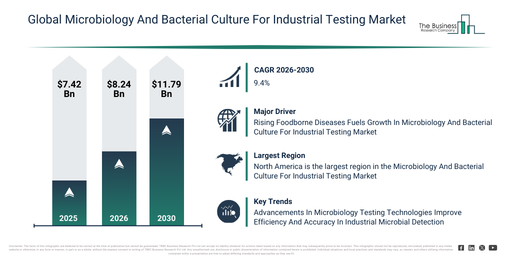
    The microbiology and bacterial culture for industrial testing market has experienced substantial growth in recent years. It is anticipated to expand from $7.42 billion in 2025 to $8.24 billion in 2026, achieving a compound annual growth rate (CAGR) of 11.1%. The expansion observed historically can be attributed to an increase in foodborne contamination incidents, a rise in regulatory microbiological testing requirements, the development of industrial fermentation processes, the broadening scope of pharmaceutical quality testing, and the embrace of classical culture-based methodologies.

    The microbiology and bacterial culture for industrial testing market size is projected to experience robust expansion over the coming years. This market is forecast to reach $11.79 billion by 2030, exhibiting a compound annual growth rate (CAGR) of 9.4%. This anticipated growth is driven by factors such as an escalating requirement for prompt microbial testing, the proliferation of automated culture tools, a heightened need for manufacturing processes free from contamination, the broadening scope of bioenergy and agricultural biotechnology, and increased capital directed towards sophisticated microbial diagnostics. Key developments anticipated during this period encompass sophisticated genomic profiling within industrial microbiology, cloud-based systems for managing microbial data, the automation of culture and testing processes, AI-powered microbial identification, and IoT-integrated environmental monitoring solutions.

    Get A Free Sample Report With In-Depth Market Insights:

    https://thebusinessresearchcompany.com/sample_request?id=29169024&type=smp&name=Microbiology%20And%20Bacterial%20Culture%20For%20Industrial%20Testing%20Market%20Report%202026&utm_source=Blogs&utm_medium=Paid&utm_campaign=Nov_PR

    Microbiology And Bacterial Culture For Industrial Testing Market Growth Catalysts And Demand Drivers

    The increasing occurrence of foodborne illnesses is projected to boost the microbiology and bacterial culture for industrial testing market in the future. These diseases arise from ingesting food or drinks tainted with harmful microorganisms, toxins, or chemicals. Various elements contribute to the surge in foodborne incidents, such as shifts in food production, distribution, and consumption habits, the worldwide reach of food supply chains, insufficient food safety protocols, antibiotic resistance, climate change effects on food output, and a greater intake of risky foods. Microbiology and bacterial culture are crucial for industrial testing related to foodborne diseases, enabling the discovery and identification of pathogens, guaranteeing food safety, and averting outbreaks via strict quality control. Consequently, the escalating incidence of foodborne diseases fuels the expansion of the microbiology and bacterial culture for industrial testing market.

    Microbiology And Bacterial Culture For Industrial Testing Market Segment Analysis Spotlighting Growth Areas

    The microbiology and bacterial culture for industrial testing market covered in this report is segmented –

    1) By Consumable: Media, Reagents, Sera

    2) By Application: Food And Water Testing, Bioenergy And Agricultural Research, Other Applications

    3) By End User: Industrial Laboratories, Research Laboratories, Food Testing Laboratories, Diagnostic Laboratories, Other End Users

    Subsegments:

    1) By Media: Agar Plates, Broth Media, Selective Media, Differential Media, Transport Media

    2) By Reagents: Staining Reagents (Gram Stain, Acid-Fast Stain), Biochemical Reagents, PCR Reagents, Enzyme-Based Reagents, Chromogenic Reagents

    3) By Sera: Blood Serum, Animal Sera (Bovine Serum), Human Sera, Culture Sera

    Microbiology And Bacterial Culture For Industrial Testing Market Trends Shaping Long-Term Demand

    Companies operating within the industrial microbiology and bacterial culture testing market are increasingly focused on developing innovative, ready-to-use culture media plates. This initiative aims to improve microbial detection efficiency, simplify workflows, and enhance the accuracy of contamination monitoring across various industries. Such ready-to-use plates offer a streamlined method for counting and identifying microbial loads, thus reducing preparation time and bolstering safety in laboratory environments.

    Microbiology And Bacterial Culture For Industrial Testing Market Leading Companies: Who Holds The Strongest Market Presence?

    Major companies operating in the microbiology and bacterial culture for industrial testing market are Thermo Fisher Scientific Inc., 3M Company, Danaher Corporation, Merck KGaA, Becton Dickinson and Company BD, Avantor Inc., bioMérieux SA, IDEXX Laboratories Inc., Bio-Rad Laboratories Inc., Bruker Microbiology and Diagnostics, Eiken Chemical Co Ltd, Hain Lifescience GmbH, Neogen Corporation, Hardy Diagnostics, LaMotte Company, Himedia Laboratories Pvt Ltd, Titan Biotech Limited, Serosep Ltd, Sartorius AG, Liofilchem Srl, R-Biopharm AG, MP Biomedicals LLC, CONDALAB, Alpha Teknova Inc.

    View The Full Microbiology And Bacterial Culture For Industrial Testing Market Report:

    https://thebusinessresearchcompany.com/report/microbiology-and-bacterial-culture-for-industrial-testing-global-market-report?utm_source=Blogs&utm_medium=Paid&utm_campaign=Nov_PR

    Microbiology And Bacterial Culture For Industrial Testing Market Regional Analysis And Top Geography

    North America was the largest region in the microbiology and bacterial culture for industrial testing market in 2025. The regions covered in the microbiology and bacterial culture for industrial testing market report are Asia-Pacific, South East Asia, Western Europe, Eastern Europe, North America, South America, Middle East, Africa.

    Reach Out To Our Team:

    The Business Research Company: https://www.thebusinessresearchcompany.com/

    Americas: +1 310-496-7795

    Asia: +44 7882 955267 & +91 8897263534

    Europe: +44 7882 955267

    Email us at: marketing@tbrc.info

    Follow us on:

    LinkedIn: https://in.linkedin.com/company/the-business-research-company

    YouTube: https://www.youtube.com/channel/UC24_fI0rV8cR5DxlCpgmyFQ

    Global Market Model: https://www.thebusinessresearchcompany.com/global-market-model
  • Microbial Identification Methods Market Forecast 2026: Market Size, Competitive Landscape And Growth Drivers

    Microbial Identification Methods Market Forecast 2026: Market Size, Competitive Landscape And Growth Drivers

    Built to provide research that’s more actionable and strategically valuable, The Business Research Company’s 2026 market reports include market attractiveness analysis, total addressable market sizing, company benchmarking matrices, interactive Excel dashboards, broader supply chain intelligence, emerging startup tracking, and in-depth product insights.

    Microbial Identification Methods Market Size And Revenue Outlook Through 2030

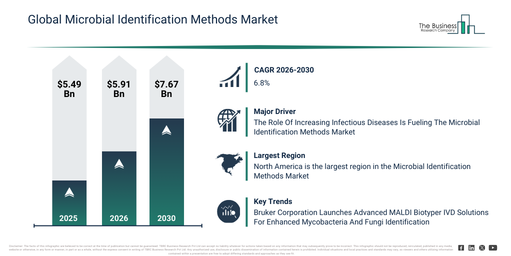
    The microbial identification methods market has experienced strong growth in recent years. It is projected to expand from $5.49 billion in 2025 to $5.91 billion in 2026, achieving a compound annual growth rate (CAGR) of 7.7%. Historically, this growth can be attributed to increasing infectious disease outbreaks, reliance on culture-based identification, growth in food safety testing, a regulatory focus on contamination control, and the expansion of clinical diagnostic microbiology.

    The microbial identification methods market size is anticipated to undergo significant expansion over the next few years. It is projected to reach $7.67 billion by 2030, demonstrating a compound annual growth rate (CAGR) of 6.8%. This growth during the forecast period stems from factors such as the increasing uptake of genomic sequencing tests, the rising demand for automation within identification workflows, advancements in rapid microbial testing technologies, the broader integration of digital lab infrastructure, and increased investments in precision microbiology. Noteworthy trends for the forecast period include the integration of genomic sequencing in microbial identification, the emergence of cloud-based microbial data analytics, AI-assisted microbial classification, automated identification platforms in industrial laboratories, and IoT-enabled contamination monitoring solutions.

    Get A Free Sample Report With In-Depth Market Insights:

    https://thebusinessresearchcompany.com/sample_request?id=40446533&type=smp&name=Microbial%20Identification%20Methods%20Market%20Report%202026&utm_source=Blogs&utm_medium=Paid&utm_campaign=Nov_PR

    Microbial Identification Methods Market Opportunity Drivers: What’s Unlocking New Revenue Potential?

    The increasing prevalence of infectious diseases is projected to propel the growth of the microbial identification methods market moving forward. Infectious diseases are conditions caused by detrimental agents (pathogens) such as viruses, bacteria, fungi, and parasites, entering the human body. Significant infectious diseases include HIV/AIDS (human immunodeficiency virus/acquired immunodeficiency syndrome), tuberculosis, and malaria, among others. The heightened prevalence of infectious diseases can be attributed to factors like antimicrobial resistance, climate change, and population growth. Microbial identification methods are critical for diagnosing, treating, and preventing these diseases by providing detailed insights into the pathogens responsible for an infection, which allows healthcare professionals to make informed choices for patient management. Consequently, the increasing prevalence of infectious diseases drives the expansion of the microbial identification methods market.

    Microbial Identification Methods Market Segment Performance And Emerging Opportunities

    The microbial identification methods market covered in this report is segmented –

    1) By Method: Genotypic, Phenotypic, Proteotypic

    2) By Type: Bacterial Identification System, Microbial Enumeration System, Bacterial Resistance Identification Systems, Microbiology Analyzer, Other Types

    3) By End User: Pharmaceutical And Biotechnology Companies, Hospitals And Diagnostic Laboratories, Food Testing Laboratories, Other End-Users

    Subsegments:

    1) By Genotypic: Polymerase Chain Reaction (PCR), 16S rRNA Sequencing, DNA Microarrays, Next-Generation Sequencing (NGS), Whole Genome Sequencing (WGS), Ribotyping, Fluorescence In Situ Hybridization (FISH), Random Amplified Polymorphic DNA (RAPD) Analysis

    2) By Phenotypic: Culture-Based Methods, Biochemical Testing, Microscopic Examination, Gram Staining, Antibiotic Susceptibility Testing (AST), Growth Pattern Identification, Colony Morphology Characterization

    3) By Proteotypic: Mass Spectrometry (MALDI-TOF MS), Western Blotting, Protein Profiling, Immunoassays (ELISA), Two-Dimensional Gel Electrophoresis

    Microbial Identification Methods Market Innovation Trends Shaping Future Development

    Key players within the microbial identification methods market are concentrating on creating advanced solutions, including mycobacteria and fungi IVD solutions, to enhance their competitive standing. Mycobacteria and fungi in vitro diagnostic (IVD) solutions encompass various products and technologies tailored for the detection, identification, and characterization of mycobacterial and fungal pathogens found in clinical samples.

    Microbial Identification Methods Market Key Players: Which Companies Lead Industry Competition?

    Major companies operating in the microbial identification methods market are Merck KGaA, Thermo Fisher Scientific Inc., Abbott Laboratories, Becton Dickinson and Company, GE Healthcare, Avantor Inc., Eurofins Scientific SE, Lonza Group AG, Sartorius AG, Charles River Laboratories International Inc., bioMerieux SA, Shimadzu Corporation, Waters Corporation, Bio-Rad Laboratories Inc., Bruker Corporation, Qiagen N.V., Beckman Coulter Inc., HiMedia Laboratories, Hardy Diagnostics, LuminUltra Technologies Ltd., Biolog Inc.

    View The Full Microbial Identification Methods Market Report:

    https://thebusinessresearchcompany.com/report/microbial-identification-methods-global-market-report?utm_source=Blogs&utm_medium=Paid&utm_campaign=Nov_PR

    Microbial Identification Methods Market Geographic Analysis: Where Is Demand Rising Fastest?

    North America was the largest region in the microbial identification methods market in 2025. The regions covered in the microbial identification methods market report are Asia-Pacific, South East Asia, Western Europe, Eastern Europe, North America, South America, Middle East, Africa.

    Reach Out To Our Team:

    The Business Research Company: https://www.thebusinessresearchcompany.com/

    Americas: +1 310-496-7795

    Asia: +44 7882 955267 & +91 8897263534

    Europe: +44 7882 955267

    Email us at: marketing@tbrc.info

    Follow us on:

    LinkedIn: https://in.linkedin.com/company/the-business-research-company

    YouTube: https://www.youtube.com/channel/UC24_fI0rV8cR5DxlCpgmyFQ

    Global Market Model: https://www.thebusinessresearchcompany.com/global-market-model