Blog

  • Pegfilgrastim Biosimilars Market 2026: Market Size, Growth Drivers And Emerging Opportunities

    Pegfilgrastim Biosimilars Market 2026: Market Size, Growth Drivers And Emerging Opportunities

    Built to provide research that’s more actionable and strategically valuable, The Business Research Company’s 2026 market reports include market attractiveness analysis, total addressable market sizing, company benchmarking matrices, interactive Excel dashboards, broader supply chain intelligence, emerging startup tracking, and in-depth product insights.

    Pegfilgrastim Biosimilars Market Set To Climb From $2.04 Billion In 2026 To $2.65 Billion By 2030

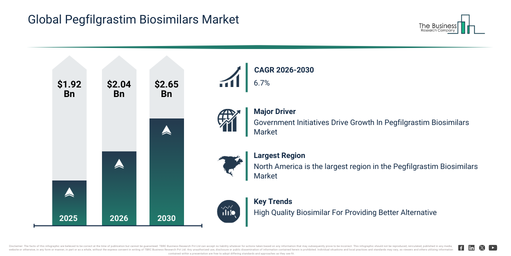
    The pegfilgrastim biosimilars market size has experienced significant expansion in recent years. It is projected to increase from $1.92 billion in 2025 to $2.04 billion in 2026, exhibiting a compound annual growth rate (CAGR) of 6.3%. This historical growth can be linked to the high cost of originator pegfilgrastim, the limited availability of biosimilars, an expanding cancer patient population, a rise in chemotherapy procedures, and enhanced awareness of neutropenia management.

    The pegfilgrastim biosimilars market size is anticipated to demonstrate robust expansion in the coming years. It is projected to grow to $2.65 billion in 2030, achieving a compound annual growth rate (CAGR) of 6.7%. This increase during the forecast period can be attributed to the launch of new biosimilars, increasing adoption in supportive oncology care, expansion of hospital and retail pharmacy networks, government incentives for biosimilar usage, and rising investments in stem cell transplantation therapies. Major trends expected over the forecast period include the increasing use of pegfilgrastim biosimilars in supportive cancer care, the broadening of hospital and retail pharmacy distribution channels, a greater emphasis on reducing chemotherapy-induced neutropenia, growth in hematopoietic and peripheral blood stem cell transplantation applications, and rising investments in the treatment of chronic and severe congenital neutropenia.

    Get A Free Sample Report With In-Depth Market Insights:

    https://thebusinessresearchcompany.com/sample_request?id=70577897&type=smp&name=Pegfilgrastim%20Biosimilars%20Market%20Report%202026&utm_source=Blogs&utm_medium=Paid&utm_campaign=Oct_PR

    Pegfilgrastim Biosimilars Market Development Factors: What’s Supporting Demand?

    Governmental efforts to advance biosimilar development are anticipated to propel the pegfilgrastim biosimilars market. Authorities globally are prioritizing biosimilar development, primarily due to their cost-effectiveness. In the United States, the Food and Drug Administration (FDA) initiated a Biosimilar Action Plan aimed at broadening treatment options. Concurrently, the Australian government reinforced its commitment to the Biosimilar Awareness Initiative, supporting the Generic and Biosimilar Medicines Association with a $5 million grant to bolster general biosimilar education and promote their appropriate dispensing, prescription, and use. These collective government initiatives, by fostering increased production and awareness of biosimilars, consequently contribute to the expansion of the pegfilgrastim biosimilars market.

    Pegfilgrastim Biosimilars Market Segmentation: How Does The Market Break Down By Category?

    The pegfilgrastim biosimilars market covered in this report is segmented –

    1) By Application: Chemotherapy Treatment, Transplantation, Other Applications

    2) By Distribution Channel: Hospital Pharmacies, Retail Pharmacies, Mail-Order Pharmacies

    3) By Route of Administration: Prefilled Syringes (PFS), On-body Injectors (OBI), Other Routes

    Subsegments:

    1) By Chemotherapy Treatment: Supportive Care for Cancer Patients, Reduction of Chemotherapy-Induced Neutropenia

    2) By Transplantation: Hematopoietic Stem Cell Transplantation, Peripheral Blood Stem Cell Transplantation

    3) By Other Applications: Treatment of Chronic Neutropenia, Treatment of Severe Congenital Neutropenia

    Pegfilgrastim Biosimilars Market Transformation Trends: What Innovations Are Driving Change?

    Leading companies in the pegfilgrastim biosimilars market are concentrating on technological breakthroughs in biopharmaceuticals, particularly in high-quality biosimilars, to offer safe, effective, and readily available alternatives to original biologic treatments for cancer patients. High-quality biosimilars are defined as biologic medications that closely match the reference product in terms of structure, function, safety, and efficacy. For example, in February 2023, Fresenius Kabi, a Germany-based healthcare enterprise specializing in pharmaceuticals and medical technologies, introduced Stimufend, its inaugural pegfilgrastim biosimilar in the U.S. Stimufend helps prevent and treat chemotherapy-induced neutropenia and is provided as a 6 mg/0.6 mL solution in a single-use pre-filled syringe equipped with an integrated needle guard. Through the combination of advanced biosimilar development and user-friendly delivery, Stimufend signifies a technological leap forward in making superior biologic therapies more widely accessible.

    Pegfilgrastim Biosimilars Market Competitive Overview And Top Companies

    Major companies operating in the pegfilgrastim biosimilars market are Amgen, Mylan N.V., Sandoz (a Novartis division), Teva Pharmaceutical Industries Ltd., Biocon, Pfizer, Celltrion Healthcare, Coherus BioSciences, Gedeon Richter, Fresenius Kabi, Hetero Labs, Intas Pharmaceuticals, LG Chem, Merck KGaA, Zydus Cadila, Aurobindo Pharma, Apotex Inc., Dr. Reddy’s Laboratories, Stada Arzneimittel AG, Shanghai Henlius Biotech, Alvotech, EirGenix, Kye Pharmaceuticals, CinnaGen, Boryung Pharmaceutical, Sinopharm

    View The Full Pegfilgrastim Biosimilars Market Report:

    https://thebusinessresearchcompany.com/report/Pegfilgrastim-Biosimilar-global-market-report?utm_source=Blogs&utm_medium=Paid&utm_campaign=Oct_PR

    Pegfilgrastim Biosimilars Market Global Footprint: Which Region Leads The Industry?

    North America was the largest region in the pegfilgrastim biosimilars market in 2025. Middle East is expected to be the fastest growing region in the global pegfilgrastim biosimilars market share during the forecast period. The regions covered in the pegfilgrastim biosimilars market report are Asia-Pacific, South East Asia, Western Europe, Eastern Europe, North America, South America, Middle East, Africa.

    Reach Out To Our Team:

    The Business Research Company: https://www.thebusinessresearchcompany.com/

    Americas: +1 310-496-7795

    Asia: +44 7882 955267 & +91 8897263534

    Europe: +44 7882 955267

    Email us at: marketing@tbrc.info

    Follow us on:

    LinkedIn: https://in.linkedin.com/company/the-business-research-company

    YouTube: https://www.youtube.com/channel/UC24_fI0rV8cR5DxlCpgmyFQ

    Global Market Model: https://www.thebusinessresearchcompany.com/global-market-model
  • Pediatric Vaccine Market Set To Expand From $107.8 Billion In 2026: Growth Outlook Through 2030

    Pediatric Vaccine Market Set To Expand From $107.8 Billion In 2026: Growth Outlook Through 2030

    Backed by market attractiveness analysis, total addressable market sizing, company benchmarking matrices, interactive Excel dashboards, wider supply chain intelligence, emerging startup coverage, and detailed product-level insights, The Business Research Company’s 2026 market reports are designed to offer research that is more actionable and strategically valuable than ever.

    Pediatric Vaccine Market Forecast: Value Set To Climb From $65.01 Billion To $107.8 Billion

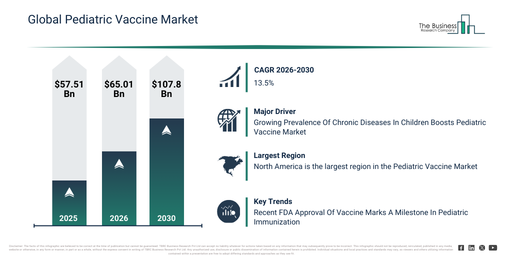
    The pediatric vaccine market size has experienced rapid expansion in recent years. This market is projected to increase from $57.51 billion in 2025 to $65.01 billion in 2026, demonstrating a compound annual growth rate (CAGR) of 13.0%. Historically, this growth is attributable to factors such as the increasing occurrence of preventable childhood illnesses, government-sponsored immunization initiatives, innovations in vaccine adjuvants, heightened understanding of pediatric health, and the expansion of cold chain infrastructure.

    The pediatric vaccine market is poised for significant expansion in the coming years. It is forecasted to reach $107.8 billion in 2030, demonstrating a compound annual growth rate (CAGR) of 13.5%. The impetus for this growth during the projection period stems from advancements in mRNA and DNA vaccines, increased investment in pediatric vaccine research and development, the integration of digital health monitoring, the broadening of healthcare infrastructure in emerging markets, and strategic alliances between biotech companies and global health organizations. Noteworthy trends anticipated in the forecast period include a sharpened focus on vaccine availability in low-income areas, the increasing adoption of combination vaccines, the enlargement of school-based immunization programs, the creation of new pediatric vaccines for rare conditions, and a rise in public-private partnerships dedicated to vaccine research.

    Get A Free Sample Report With In-Depth Market Insights:

    https://thebusinessresearchcompany.com/sample_request?id=40219487&type=smp&name=Pediatric%20Vaccine%20Market%20Report%202026&utm_source=Blogs&utm_medium=Paid&utm_campaign=Oct_PR

    Pediatric Vaccine Market Industry Drivers: What’s Behind The Revenue Growth?

    The escalating occurrence of chronic ailments like tuberculosis, diphtheria, and pneumonia among individuals aged 15 and under is set to boost the pediatric vaccines market. Children and adolescents living with chronic conditions face a heightened risk of severe outcomes and complications from infectious diseases. As an illustration, in June 2024, the National Health Service, a UK government body, reported that 3,615,330 individuals registered with a general practitioner (GP) received a diagnosis of non-diabetic hyperglycemia or pre-diabetes (a condition with elevated blood sugar levels, not high enough to be classified as diabetes) in 2023. This figure represents an 18% rise from 3,065,825 cases recorded in 2022. Consequently, the increasing prevalence of chronic diseases is propelling the expansion of the pediatric vaccine market.

    Pediatric Vaccine Market Segment Trends And Revenue Contributors

    The pediatric vaccine market covered in this report is segmented –

    1) By Vaccine Type: Monovalent, Multivalent

    2) By Technology: Live Attenuated, Inactivated, Toxoid, Conjugate, Other Technologies

    3) By Application: Infectious Disease, Allergy, Cancer

    Subsegments:

    1) By Monovalent: Single Antigen Vaccines, Specific Disease Vaccines

    2) By Multivalent: Combination Vaccines, Polyvalent Vaccines

    #Pediatric Vaccine Market Growth Trends: What’s Shaping The Future Outlook?

    Companies operating within the pediatric vaccine market are concentrating on securing product approvals to better satisfy the demands of their current consumers. ABRYSVO is an FDA-authorized vaccine intended for use in pregnant women to prevent lower respiratory tract disease (LRTD) and severe LRTD caused by respiratory syncytial virus (RSV) in children up to 6 months of age. For instance, in August 2023, Pfizer Inc., a US-based pharmaceutical manufacturing company, announced the U.S. FDA approval of Pfizer’s ABRYSVO vaccine for the avoidance of Respiratory Syncytial Virus (RSV) in Infants through the active immunization of pregnant women 32-36 weeks gestational age. This constitutes the first and only maternal vaccination approved in the United States designed to help protect newborns against lower respiratory tract illness (LRTD) and severe LRTD caused by RSV from birth to six months of age.

    Pediatric Vaccine Market Competitive Landscape: Which Companies Lead The Industry?

    Major companies operating in the pediatric vaccine market are Merck & Co. Inc., Serum Institute of India Pvt. Ltd., Sanofi SA, Pfizer Inc., GlaxoSmithKline PLC, Sinovac Biotech Ltd, Zydus Cadila, Indian Immunologicals Limited, Panacea Biotec, Takeda Pharmaceutical Company, Daiichi Sankyo, CSL Limited, Sinopharm, Walvax Biotechnology, Fosun Pharma, MCM Vaccine Company, Seqirus, Johnson & Johnson, Connaught Laboratories Inc., Wyeth-Ayerst, Ataulfo de Paiva Foundation, Bio-Manguinhos – Institute of Technology on Immunobiologicals, Butantan Institute, Ezequiel Dias Foundation (FUNED), Sinergium

    View The Full Pediatric Vaccine Market Report:

    https://thebusinessresearchcompany.com/report/pediatric-vaccine-global-market-report?utm_source=Blogs&utm_medium=Paid&utm_campaign=Oct_PR

    Pediatric Vaccine Market Regional Distribution: Which Areas Power Market Growth?

    North America was the largest region in the pediatric vaccine market in 2025. Middle East is expected to be the largest growing region in the global pediatric vaccine market share during the forecast period. The regions covered in the pediatric vaccine market report are Asia-Pacific, South East Asia, Western Europe, Eastern Europe, North America, South America, Middle East, Africa.

    Reach Out To Our Team:

    The Business Research Company: https://www.thebusinessresearchcompany.com/

    Americas: +1 310-496-7795

    Asia: +44 7882 955267 & +91 8897263534

    Europe: +44 7882 955267

    Email us at: marketing@tbrc.info

    Follow us on:

    LinkedIn: https://in.linkedin.com/company/the-business-research-company

    YouTube: https://www.youtube.com/channel/UC24_fI0rV8cR5DxlCpgmyFQ

    Global Market Model: https://www.thebusinessresearchcompany.com/global-market-model
  • Pediatric Supplements Market Size And Growth In 2026: Key Factors Shaping Future Demand

    Pediatric Supplements Market Size And Growth In 2026: Key Factors Shaping Future Demand

    Featuring market attractiveness scoring, total addressable market sizing, company benchmarking matrices, interactive Excel dashboards, deeper supply chain intelligence, emerging startup tracking, and granular product-level insights, The Business Research Company’s 2026 market reports are built to deliver research that is both more actionable and more strategically valuable.

    Pediatric Supplements Market Revenue Growth On Track For A 6.5% CAGR Through 2030

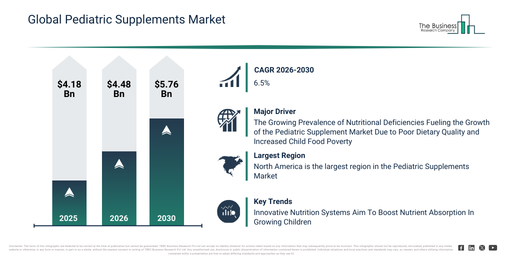
    The pediatric supplements market has experienced robust expansion over the past few years. Projections indicate it will expand from $4.18 billion in 2025 to reach $4.48 billion in 2026, demonstrating a compound annual growth rate (CAGR) of 7.2%. This historical growth can be linked to several factors, such as the increasing prevalence of micronutrient deficiencies in children, a rising pediatric population in developing economies, limited dietary diversity among children, growing parental awareness of child nutrition, and physician recommendations for supplemental nutrition.

    The pediatric supplements market size is projected to experience substantial expansion in the coming years. It will grow to $5.76 billion in 2030 at a compound annual growth rate (CAGR) of 6.5%. This projected growth can be attributed to an increased emphasis on preventive pediatric healthcare, the expansion of functional nutrition for children, a rising demand for personalized pediatric supplements, the broadening of e-commerce distribution channels, and advancements in palatable supplement delivery formats. Significant trends during the forecast period include a growing demand for immunity-focused pediatric nutrition, the increasing favorability of gummy and chewable supplement formats, greater adoption of probiotics for pediatric gut health, the proliferation of age-specific and condition-specific formulations, and an enhanced focus on clean label and sugar-reduced pediatric supplements.

    Get A Free Sample Report With In-Depth Market Insights:

    https://thebusinessresearchcompany.com/sample_request?id=88517805&type=smp&name=Pediatric%20Supplements%20Market%20Report%202026&utm_source=Blogs&utm_medium=Paid&utm_campaign=Oct_PR

    Pediatric Supplements Market Growth Factors: What’s Supporting Expansion?

    The increasing occurrence of nutritional shortfalls is anticipated to fuel the expansion of the pediatric supplement market in the future. These deficiencies arise when youngsters do not consume sufficient quantities of vital vitamins, minerals, and macronutrients essential for proper growth, mental development, and immune system function. A significant factor contributing to these nutrient gaps is the increased consumption of heavily processed foods, which often lack nutrient density and are rich in sugars, unhealthy fats, and empty calories. Pediatric supplements play a crucial role in supporting children’s health by addressing insufficient dietary intake and guaranteeing that they acquire the necessary nutrients for optimal development. For example, in May 2025, data from the World Health Organization, an intergovernmental body based in Switzerland, indicated that in 2023, 30.7% of women aged 15–49 years and 35.5% of pregnant women within the identical age bracket suffered from anaemia. Consequently, the rising incidence of nutritional deficiencies is propelling the growth within the pediatric supplement market.

    Pediatric Supplements Market Segment Analysis Spotlighting Growth Areas

    The pediatric supplements market covered in this report is segmented –

    1) By Product Type: Vitamins, Minerals, Probiotics, Omega-3 Fatty Acids, Amino Acids, Other Product Types

    2) By Form: Gummies, Chewable, Liquids, Powders, Tablets, Other Forms

    3) By Distribution Channel: Pharmacies, Supermarkets Or Hypermarkets, Online Retailers, Specialty Stores, Other Distribution Channels

    4) By Age Group: Infants, Toddlers, Middle Childhood, Adolescents

    5) By Application: Immunity Enhancement, Brain And Cognitive Support, Bone And Teeth Support, Gastrointestinal Support, General Well-Being, Other Applications

    Subsegments:

    1) By Vitamins: Vitamin A, Vitamin B (B1, B2, B3, B6, B12), Vitamin C, Vitamin D, Vitamin E, Vitamin K, Multivitamins

    2) By Minerals: Calcium, Iron, Magnesium, Zinc, Potassium, Selenium

    3) By Probiotics: Lactobacillus, Bifidobacterium, Streptococcus Thermophilus, Other Probiotic Strains

    4) By Omega-3 Fatty Acids: DHA (Docosahexaenoic Acid), EPA (Eicosapentaenoic Acid), ALA (Alpha-Linolenic Acid)

    5) By Amino Acids: L-Arginine, L-Carnitine, L-Glutamine, L-Leucine, L-Isoleucine, L-Valine

    6) By Other Product Types: Herbal Supplements, Protein Supplements, Fiber Supplements, Enzyme Supplements

    Pediatric Supplements Market Industry Trends: What’s Reshaping Demand?

    Major companies operating in the pediatric supplement market are increasingly prioritizing the development of innovative nutrition systems, such as enhanced-absorption formulations, to improve nutrient uptake and address growing concerns regarding deficiencies in children. Enhanced-absorption formulations are specialized supplement designs that utilize techniques like nanoencapsulation, emulsification, or chelated minerals to help the body absorb nutrients more efficiently than standard products. For instance, in November 2023, Abbott Laboratories, a US-based healthcare company, introduced its new PediaSure with Nutri-Pull System, a clinically designed pediatric drink formulated with 37 nutrients, including CPPs and vitamins K2, D, and C, to support catch-up growth and better mineral absorption in children. The product is available in chocolate, vanilla, and kesar badam flavors and is intended for use when a child’s regular diet may not sufficiently provide or absorb growth-critical minerals.

    Pediatric Supplements Market Leading Companies: Who Holds The Strongest Market Presence?

    Major companies operating in the pediatric supplements market are Nestlé S.A., Abbott, Danone S.A., Reckitt Benckiser Group plc, Bayer AG, Johnson & Johnson, Sanofi S.A., Pfizer Inc., Perrigo Company plc, Church & Dwight Co. Inc., Otsuka Pharmaceutical Co. Ltd., Hero Nutritionals Inc., Himalaya Wellness Company, Bioglan Pty Ltd, Zarbee’s LLC, SmartyPants Vitamins, Nordic Naturals Inc., Nature’s Way Products LLC, Garden of Life LLC, ChildLife Essentials

    View The Full Pediatric Supplements Market Report:

    https://thebusinessresearchcompany.com/report/pediatric-supplements-global-market-report?utm_source=Blogs&utm_medium=Paid&utm_campaign=Oct_PR

    Pediatric Supplements Market Leading Geography: Which Region Contributes The Most Revenue?

    North America was the largest region in the pediatric supplements market in 2025. Asia-Pacific is expected to be the fastest-growing region in the forecast period. The regions covered in the pediatric supplements market report are Asia-Pacific, South East Asia, Western Europe, Eastern Europe, North America, South America, Middle East, Africa.

    Reach Out To Our Team:

    The Business Research Company: https://www.thebusinessresearchcompany.com/

    Americas: +1 310-496-7795

    Asia: +44 7882 955267 & +91 8897263534

    Europe: +44 7882 955267

    Email us at: marketing@tbrc.info

    Follow us on:

    LinkedIn: https://in.linkedin.com/company/the-business-research-company

    YouTube: https://www.youtube.com/channel/UC24_fI0rV8cR5DxlCpgmyFQ

    Global Market Model: https://www.thebusinessresearchcompany.com/global-market-model
  • Pediatric Drugs Market Forecast 2026–2030: Market Size, Trends And Growth Opportunities

    Pediatric Drugs Market Forecast 2026–2030: Market Size, Trends And Growth Opportunities

    Built to provide research that’s more actionable and strategically valuable, The Business Research Company’s 2026 market reports include market attractiveness analysis, total addressable market sizing, company benchmarking matrices, interactive Excel dashboards, broader supply chain intelligence, emerging startup tracking, and in-depth product insights.

    Pediatric Drugs Market Value Growth And Long-Term Outlook

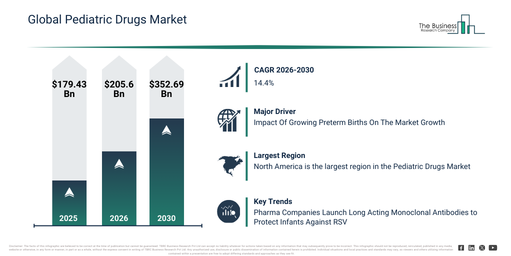
    The pediatric drugs market has experienced significant expansion in recent years. Its value is expected to rise from $179.43 billion in 2025 to $205.6 billion in 2026, at a compound annual growth rate (CAGR) of 14.6%. This historical growth can be attributed to the high prevalence of pediatric infectious diseases, the expansion of vaccination and treatment programs, an increase in pediatric hospital infrastructure, improved access to child healthcare, and heightened awareness of pediatric medication safety.

    The pediatric drugs market is anticipated to experience substantial expansion over the upcoming years, projected to reach $352.69 billion in 2030 at a compound annual growth rate (CAGR) of 14.4%. This projected increase is driven by several factors, including a growing pediatric population in developing regions, an rise in chronic illnesses among children, increased funding for pediatric drug research, broader child-centric healthcare initiatives, and a greater need for secure pediatric treatments. Key developments expected during this period involve a heightened demand for drug formulations suitable for different ages, an increased emphasis on precise pediatric dosing, wider adoption of liquid and chewable medications for children, an expansion in managing chronic diseases in pediatric patients, and greater regulatory focus on clinical trials involving children.

    Get A Free Sample Report With In-Depth Market Insights:

    https://thebusinessresearchcompany.com/sample_request?id=84275605&type=smp&name=Pediatric%20Drugs%20Market%20Report%202026&utm_source=Blogs&utm_medium=Paid&utm_campaign=Oct_PR

    Pediatric Drugs Market Demand Drivers: What’s Powering Industry Growth?

    An increase in preterm births is anticipated to drive the expansion of the pediatric drugs market going forward. Preterm births are defined as infants delivered prior to 37 weeks of pregnancy, a period shorter than the typical 40-week gestation period. This rise in preterm births is attributed to various factors, including increased maternal age, lifestyle choices, medical conditions, multiple pregnancies, and inadequate prenatal care. Pediatric drugs are essential in aiding the health and development of preterm infants, offering targeted treatments for challenges such as respiratory problems, infections, and nutritional gaps. As an illustration, in 2023, according to Tommy’s, a UK-based charity organization, the percentage of premature live births in England and Wales rose to 8.1%, up from 7.9% in 2022, corresponding to more than 48,000 babies born prematurely in that year. Consequently, the growing number of preterm births is propelling the growth of the pediatric drugs market.

    Pediatric Drugs Market Segment Performance And Emerging Opportunities

    The pediatric drugs market covered in this report is segmented –

    1) By Type: Respiratory Disorder Drugs, Autoimmune Disorder Drugs, Gastrointestinal Drugs, Cardiovascular Drugs

    2) By Route Of Administration: Oral, Topical, Parenteral, Other Route Of Administrations

    3) By Distribution Channel: Hospital Pharmacy, Retail Pharmacy, Online Pharmacy, Other Distribution Channels

    4) By End-Users: Hospitals, Specialty Clinics, Homecare, Other End-Users

    Subsegments:

    1) By Respiratory Disorder Drugs: Asthma Medications, Cystic Fibrosis Treatments, Bronchodilators, Corticosteroids

    2) By Autoimmune Disorder Drugs: Immunosuppressants, Biologic Therapies, Disease-Modifying Antirheumatic Drugs (DMARDs)

    3) By Gastrointestinal Drugs: Proton Pump Inhibitors (PPIs), Antiemetics, Antidiarrheals, Laxatives

    4) By Cardiovascular Drugs: Antihypertensive Medications, Heart Failure Treatments, Antiarrhythmic Drugs, Lipid-lowering Agents

    Pediatric Drugs Market Innovation Trends: What Developments Are Reshaping The Industry?

    Key companies operating within the pediatric drugs market are progressively launching long-acting monoclonal antibodies to combat infectious diseases in infants, including extended half-life therapies for RSV prevention. A long-acting monoclonal antibody functions as a biologic, engineered to persist in the bloodstream for an extended period, thereby ensuring sustained protection with fewer administrations. For instance, in June 2025, Merck, a pharmaceutical company based in the US, secured FDA approval for clesrovimab (Enflonsia), a fully human monoclonal antibody developed to prevent respiratory syncytial virus (RSV) in infants. Clesrovimab achieves an extended half-life through improved Fc receptor binding, provides durable protection across the initial RSV season, and can be given as a single intramuscular dose.

    Pediatric Drugs Market Key Players: Which Companies Lead Industry Competition?

    Major companies operating in the pediatric drugs market are Pfizer Inc., Johnson & Johnson, Merck & Co. Inc., Bayer AG, Sanofi S.A., Bristol-Myers Squibb, AstraZeneca Plc, Novartis AG, GlaxoSmithKline plc, Takeda Pharmaceutical Company, Eli Lilly and Co., Gilead Sciences Inc., Amgen Inc., Teva Pharmaceutical Industries Ltd., Otsuka Pharmaceutical Co. Ltd., Vertex Pharmaceuticals, UCB Pharma, Sun Pharmaceutical Industries Ltd., Perrigo Company, Shionogi & Co. Ltd., Mallinckrodt, Torrent Pharmaceuticals Ltd, Sarepta Therapeutics, Zydus Cadila

    View The Full Pediatric Drugs Market Report:

    https://thebusinessresearchcompany.com/report/pediatric-drugs-global-market-report?utm_source=Blogs&utm_medium=Paid&utm_campaign=Oct_PR

    Pediatric Drugs Market Regional Outlook: Where Is Opportunity Concentrated?

    North America was the largest region in the pediatric drugs market in 2025. Asia-Pacific is expected to be the fastest-growing region in the forecast period. The regions covered in the pediatric drugs market report are Asia-Pacific, South East Asia, Western Europe, Eastern Europe, North America, South America, Middle East, Africa.

    Reach Out To Our Team:

    The Business Research Company: https://www.thebusinessresearchcompany.com/

    Americas: +1 310-496-7795

    Asia: +44 7882 955267 & +91 8897263534

    Europe: +44 7882 955267

    Email us at: marketing@tbrc.info

    Follow us on:

    LinkedIn: https://in.linkedin.com/company/the-business-research-company

    YouTube: https://www.youtube.com/channel/UC24_fI0rV8cR5DxlCpgmyFQ

    Global Market Model: https://www.thebusinessresearchcompany.com/global-market-model

  • Pediatric Asthma Treatment Market Size Reaches $12.31 Billion In 2026: What Is Driving Growth?

    Pediatric Asthma Treatment Market Size Reaches $12.31 Billion In 2026: What Is Driving Growth?

    Backed by market attractiveness analysis, total addressable market sizing, company benchmarking matrices, interactive Excel dashboards, wider supply chain intelligence, emerging startup coverage, and detailed product-level insights, The Business Research Company’s 2026 market reports are designed to offer research that is more actionable and strategically valuable than ever.

    Pediatric Asthma Treatment Market Poised To Hit $15.14 Billion By 2030 With A 5.3% CAGR

    The pediatric asthma treatment market has experienced substantial expansion in recent years. This market is projected to expand from $11.65 billion in 2025 to $12.31 billion in 2026, registering a compound annual growth rate (CAGR) of 5.7%. Historically, this expansion has been driven by factors such as the restricted availability of medications specifically designed for pediatric asthma, a strong reliance on hospital-based care, the rising incidence of childhood asthma, heightened awareness among caregivers, and the widespread use of traditional inhalers and short-acting beta agonists.

    The pediatric asthma treatment market is projected to experience substantial expansion over the coming years. It is anticipated to reach a valuation of $15.14 billion by 2030, exhibiting a compound annual growth rate (CAGR) of 5.3%. This projected increase during the forecast period is driven by factors such as the advancement of biologics and combination therapies, the incorporation of digital health monitoring devices, the extension of home care services, growing adoption of online pharmacies, and an increase in regulatory approvals for pediatric asthma medications. Key developments expected during this period include a greater emphasis on personalized pediatric asthma treatments, increased utilization of biologic therapies and combination inhalers, a rise in home care and remote patient monitoring solutions, the broadening of online and retail pharmacy distribution channels, and a concerted focus on early diagnosis and preventive asthma management.

    Get A Free Sample Report With In-Depth Market Insights:

    https://thebusinessresearchcompany.com/sample_request?id=24423383&type=smp&name=Pediatric%20Asthma%20Treatment%20Market%20Report%202026&utm_source=Blogs&utm_medium=Paid&utm_campaign=Oct_PR

    Pediatric Asthma Treatment Market Growth Drivers: What’s Behind The Acceleration?

    The rising occurrence of respiratory infections is projected to stimulate the growth of the pediatric asthma treatment market moving forward. Respiratory infections are defined as illnesses originating from viruses, bacteria, or other pathogens affecting the respiratory tract, encompassing the nose, throat, airways, and lungs. The growing prevalence of respiratory infections is primarily attributed to increasing air pollution, given that exposure to pollutants such as particulate matter and nitrogen dioxide compromises the respiratory system, rendering individuals more prone to infections. Pediatric asthma treatment assists in diminishing the frequency and severity of respiratory infections by improving airway function and reducing inflammation, which in turn lowers susceptibility to infectious triggers. For instance, in June 2024, according to the Australian Institute of Health and Welfare, an Australia-based government agency, in 2023, chronic obstructive pulmonary disease contributed to 3.6% of the total disease burden and represented 50% of the total burden of respiratory conditions. Consequently, the increasing prevalence of respiratory infections drives the expansion of the pediatric asthma treatment market.

    Pediatric Asthma Treatment Market Segment Landscape And Growth Outlook

    The pediatric asthma treatment market covered in this report is segmented –

    1) By Type: Long-Term Control Medications, Quick-Relief Medications, Other Types

    2) By Drug Class: Inhaled Corticosteroids, Long-Acting Beta Agonists, Leukotriene Modifiers, Antihistamines, Biologics

    3) By Route Of Administration: Oral Route, Nasal Route, Injectable Route

    4) By Distribution Channel: Hospital Pharmacies, Retail Pharmacies, Online Pharmacies

    5) By End User: Hospitals, Clinics, Home Care, Other End users

    Subsegments:

    1) By Long-Term Control Medications: Inhaled Corticosteroids, Leukotriene Modifiers, Long-Acting Beta Agonists, Combination Inhalers, Biologic Therapies

    2) By Quick-Relief Medications: Short-Acting Beta Agonists, Anticholinergics, Systemic Corticosteroids

    3) By Other Types: Immunotherapy, Methylxanthines, Alternative Therapies

    Pediatric Asthma Treatment Market Trends: What’s Defining The Industry’s Next Phase?

    Major companies in the pediatric asthma treatment market are concentrating on developing innovative therapies, such as monoclonal antibodies, to target and reduce airway inflammation in children. Monoclonal antibodies are laboratory-made proteins designed to mimic the immune system’s ability to fight off harmful pathogens by specifically targeting certain cells or substances. For instance, in April 2024, AstraZeneca PLC, a UK-based pharmaceutical and biotechnology company, received U.S. Food and Drug Administration approval for FASENRA (benralizumab) as an add-on maintenance treatment for children aged 6 to 11 years with severe asthma characterized by an eosinophilic phenotype. This antibody is designed to reduce asthma exacerbations and improve symptom control by targeting and eliminating eosinophils. Fasenra is administered via subcutaneous injection once every 4 weeks for the first three doses, followed by once every 8 weeks, with pediatric dosing adjusted based on body weight.

    Pediatric Asthma Treatment Market Competitive Landscape: Who Leads The Industry?

    Major companies operating in the pediatric asthma treatment market are Pfizer Inc., Merck And Co Inc., Novartis AG, Sanofi S.A., AstraZeneca plc, GlaxoSmithKline plc, Takeda Pharmaceutical Company Limited, Amgen Inc., Boehringer Ingelheim International GmbH, Viatris Inc., Teva Pharmaceutical Industries Limited, Regeneron Pharmaceuticals Inc., Sun Pharmaceutical Industries Limited, Genentech Inc., Chiesi Farmaceutici S.p.A, Dr. Reddy’s Laboratories Ltd, Cipla Ltd, Lupin Limited, Zydus Lifesciences Ltd.

    View The Full Pediatric Asthma Treatment Market Report:

    https://thebusinessresearchcompany.com/report/pediatric-asthma-treatment-global-market-report?utm_source=Blogs&utm_medium=Paid&utm_campaign=Oct_PR

    Pediatric Asthma Treatment Market Geographic Landscape: Which Region Leads Industry Growth?

    North America was the largest region in the pediatric asthma treatment market in 2025. Asia-Pacific is expected to be the fastest-growing region in the forecast period. The regions covered in the pediatric asthma treatment market report are Asia-Pacific, South East Asia, Western Europe, Eastern Europe, North America, South America, Middle East, Africa.

    Reach Out To Our Team:

    The Business Research Company: https://www.thebusinessresearchcompany.com/

    Americas: +1 310-496-7795

    Asia: +44 7882 955267 & +91 8897263534

    Europe: +44 7882 955267

    Email us at: marketing@tbrc.info

    Follow us on:

    LinkedIn: https://in.linkedin.com/company/the-business-research-company

    YouTube: https://www.youtube.com/channel/UC24_fI0rV8cR5DxlCpgmyFQ

    Global Market Model: https://www.thebusinessresearchcompany.com/global-market-model

  • Peanut Allergy Treatment Market Valued At $0.8 Billion In 2026: Key Trends And Growth Drivers

    Peanut Allergy Treatment Market Valued At $0.8 Billion In 2026: Key Trends And Growth Drivers

    Featuring market attractiveness scoring, total addressable market sizing, company benchmarking matrices, interactive Excel dashboards, deeper supply chain intelligence, emerging startup tracking, and granular product-level insights, The Business Research Company’s 2026 market reports are built to deliver research that is both more actionable and more strategically valuable.

    Peanut Allergy Treatment Market Size And Revenue Outlook Through 2030

    The peanut allergy treatment market has expanded quickly in recent years. Its valuation is set to increase from $0.5 billion in 2025 to $0.55 billion in 2026, demonstrating a compound annual growth rate (CAGR) of 10.8%. Historically, this growth can be linked to the increasing occurrence of peanut allergies in children, the insufficient efficacy of avoidance-only management, a rise in food allergy diagnoses, a significant dependence on epinephrine for emergency care, and heightened awareness among medical professionals.

    The peanut allergy treatment market size is anticipated to experience robust expansion over the next few years. It is predicted to reach $0.8 billion by 2030, exhibiting a compound annual growth rate (CAGR) of 9.7%. This growth during the forecast period is fueled by advancements in immunotherapy technologies, an increase in approvals for disease-modifying treatments, a rising demand for preventive allergy care, the expansion of biologics targeting allergic pathways, and growing investment in food allergy research. Significant trends anticipated include the increasing adoption of oral immunotherapy for peanut desensitization, a growing use of epicutaneous immunotherapy patches, greater integration of biologic therapies in allergy treatment, the expansion of pediatric-focused peanut allergy treatments, and a stronger emphasis on long-term allergy management solutions.

    Get A Free Sample Report With In-Depth Market Insights:

    https://thebusinessresearchcompany.com/sample_request?id=54183085&type=smp&name=Peanut%20Allergy%20Treatment%20Market%20Report%202026&utm_source=Blogs&utm_medium=Paid&utm_campaign=Oct_PR

    Peanut Allergy Treatment Market Growth Factors Behind Sustained Expansion

    The future expansion of the peanut allergy treatment market is expected to be propelled by investments in research and development for allergy treatments. Research and development (R&D) investment refers to the financial resources allocated by companies, organizations, or governments towards activities aimed at innovation, product development, and technological advancement. This investment in R&D for allergy treatments is crucial for advancing peanut allergy therapies, as it fosters the creation of innovative immunotherapies and desensitization techniques. These innovations aim to reduce allergic reactions and improve the quality of life for those affected by peanut allergies. For instance, in January 2024, the Victorian Government announced a strategic $12 million investment in Aravax, an Australia-based clinical-stage biotechnology company, to significantly advance global peanut allergy treatment. This funding is part of a broader $66 million round aimed at developing Aravax’s innovative immunotherapy, PVX108. This initiative has secured Phase 2 trial approvals from both the U.S. Food and Drug Administration (FDA) and Australia’s Therapeutic Goods Administration (TGA), underscoring its potential impact on public health worldwide. Therefore, investment in research and development of allergy treatments is driving the growth of the peanut allergy treatment market.

    Peanut Allergy Treatment Market Breakdown By Product Type And Application

    The peanut allergy treatment market covered in this report is segmented –

    1) By Drug Class: Antihistamines, Immunotherapies, Epinephrine, Other Drug Classes

    2) By Route Of Administration: Injectable, Oral, Other Routes Of Administration

    3) By Distribution Channel: Retail Pharmacy, Hospital Pharmacy, Other Distribution Channels

    Subsegments:

    1) By Antihistamines: Oral Antihistamines, Topical Antihistamines

    2) By Immunotherapies: Oral Immunotherapy (OIT), Sublingual Immunotherapy (SLIT), Epicutaneous Immunotherapy (EPIT)

    3) By Epinephrine: Epinephrine Auto-Injectors, Epinephrine Inhalers

    4) By Other Drug Classes: Leukotriene Receptor Antagonists, Monoclonal Antibodies, Corticosteroids

    Peanut Allergy Treatment Market Industry Trends Fueling Future Revenue Growth

    Leading companies in the peanut allergy treatment market are prioritizing the development of biologic therapies, such as anti-IgE monoclonal antibodies, to provide more targeted and effective solutions for managing peanut allergies, with the goal of improving patient outcomes and quality of life. These anti-IgE monoclonal antibodies are therapeutic agents designed to specifically target and neutralize immunoglobulin E (IgE) antibodies in the body. For instance, in February 2024, Novartis Pharmaceuticals Corporation, a Switzerland-based pharmaceutical company, obtained approval from the Food and Drug Administration (FDA) for Xolair (omalizumab). This medication is designed to lessen allergic reactions, including anaphylaxis, in patients aged 1 year and above who have IgE-mediated food allergies. The approval was granted based on data from the NIH-sponsored Phase III OUtMATCH study, which indicated significant improvements in food allergy tolerance among patients treated with Xolair when compared to those given a placebo.

    Peanut Allergy Treatment Market Company Landscape And Competitive Strategy

    Major companies operating in the peanut allergy treatment market are Pfizer Inc., F. Hoffmann-La Roche AG, Sanofi SA, Novartis AG, Takeda Pharmaceutical Company Limited, Viatris Inc., Regeneron Pharmaceuticals Inc., Hikma Pharmaceuticals plc, ALK-Abelló A/S, Amneal Pharmaceuticals Inc., Amphastar Pharmaceuticals Inc, Stallergenes Greer plc, kaleo Inc., Aquestive Therapeutics Inc., Vedanta Biosciences Inc., Aimmune Therapeutics Inc., AnaptysBio Inc., Alladapt Immunotherapeutics Inc., Aravax Pty Ltd, Intrommune Therapeutics Inc., IgGenix Inc., DBV Technologies SA, Camallergy Ltd., HAL Allergy Group, Prota Therapeutics Pty Ltd.

    View The Full Peanut Allergy Treatment Market Report:

    https://thebusinessresearchcompany.com/report/peanut-allergy-treatment-global-market-report?utm_source=Blogs&utm_medium=Paid&utm_campaign=Oct_PR

    Peanut Allergy Treatment Market Largest Region: Which Geography Holds The Biggest Share?

    North America was the largest region in the peanut allergy treatment market in 2025. Asia-Pacific is expected to be the fastest-growing region in the forecast period. The regions covered in the peanut allergy treatment market report are Asia-Pacific, South East Asia, Western Europe, Eastern Europe, North America, South America, Middle East, Africa.

    Reach Out To Our Team:

    The Business Research Company: https://www.thebusinessresearchcompany.com/

    Americas: +1 310-496-7795

    Asia: +44 7882 955267 & +91 8897263534

    Europe: +44 7882 955267

    Email us at: marketing@tbrc.info

    Follow us on:

    LinkedIn: https://in.linkedin.com/company/the-business-research-company

    YouTube: https://www.youtube.com/channel/UC24_fI0rV8cR5DxlCpgmyFQ

    Global Market Model: https://www.thebusinessresearchcompany.com/global-market-model

  • PD-1 and PDL1 Inhibitors/ Immune Checkpoint Inhibitors Market Size In 2026: Growth Outlook And Forecast Through 2030

    PD-1 and PDL1 Inhibitors/ Immune Checkpoint Inhibitors Market Size In 2026: Growth Outlook And Forecast Through 2030

    Built to provide research that’s more actionable and strategically valuable, The Business Research Company’s 2026 market reports include market attractiveness analysis, total addressable market sizing, company benchmarking matrices, interactive Excel dashboards, broader supply chain intelligence, emerging startup tracking, and in-depth product insights.

    PD-1 and PDL1 Inhibitors/ Immune Checkpoint Inhibitors Market Growth From $59.83 Billion In 2026 To $103.27 Billion By 2030 At A CAGR Of 14.6%

    The pd-1 and pdl1 inhibitors/ immune checkpoint inhibitors market size has experienced swift expansion in recent years. It is projected to increase from $52.49 billion in 2025 to $59.83 billion in 2026, exhibiting a compound annual growth rate (CAGR) of 14.0%. The growth witnessed in the past period can be attributed to elements such as the escalating global cancer prevalence, the early clinical achievements of PD-1 and PDL1 inhibitors, significant investment in oncology R&D, regulatory authorizations for first-generation checkpoint inhibitors, and rising healthcare spending on cancer therapies.

    The pd-1 and pdl1 inhibitors/ immune checkpoint inhibitors market is expected to undergo rapid growth in the coming years. It is forecast to grow to $103.27 billion in 2030, exhibiting a compound annual growth rate (CAGR) of 14.6%. The expansion during the forecast period is attributable to increasing demand for personalized cancer treatment, the broadening of clinical trials for combination therapies, more approvals in emerging markets, enhanced patient survival outcomes, and greater adoption in both solid and hematological malignancies. Significant trends for the forecast period include the expansion of combination immunotherapy regimens, a growing reliance on biomarker-based patient selection, increasing approvals across multiple cancer indications, rising use in earlier stages of cancer treatment, and a robust pipeline of next-generation checkpoint inhibitors.

    Get A Free Sample Report With In-Depth Market Insights:

    https://thebusinessresearchcompany.com/sample_request?id=10358561&type=smp&name=PD-1%20and%20PDL1%20Inhibitors%2F%20Immune%20Checkpoint%20Inhibitors%20Market%20Report%202026&utm_source=Blogs&utm_medium=Paid&utm_campaign=Oct_PR

    PD-1 and PDL1 Inhibitors/ Immune Checkpoint Inhibitors Market Demand Drivers Opening New Revenue Streams

    An escalating occurrence of cancer cases is anticipated to drive the expansion of the PD-1 and PDL1 Inhibitors/ Immune checkpoint inhibitors market moving forward. Cancer is a condition characterized by certain cells growing uncontrollably and spreading to other areas of the body. PD-1 and PD-L1 inhibitors aid in treating cancer by leveraging the body’s own immune system to combat cancer cells. Hence, the increasing instances of cancer contribute to the growth of the PD-1 and PDL1 Inhibitors/ Immune checkpoint inhibitors market. For example, in February 2024, the World Health Organization, a Switzerland-based intergovernmental organization, projected over 35 million new cancer cases by 2050. This figure represents a 77% increase compared to the estimated 20 million cases in 2022. Therefore, the rise in cancer prevalence will fuel the growth of the PD-1 and PDL1 Inhibitors/ Immune checkpoint inhibitors market.

    PD-1 and PDL1 Inhibitors/ Immune Checkpoint Inhibitors Market Segment Analysis And Revenue Potential

    The pd-1 and pdl1 inhibitors/ immune checkpoint inhibitors market covered in this report is segmented –

    1) By Product: Nivolumab, Pembrolizumab, Atezolizumab, Avelumab, Durvalumab

    2) By Distribution Channel: Hospital pharmacies, Retail pharmacies, Online pharmacies

    3) By Application: Lung Cancer, Bladder Cancer, Melanoma, Hodgkin Lymphoma, Colorectal Cancer, Other Applications

    4) By End-Users : Hospitals, Specialty Clinics, Academic and Research Institutions

    PD-1 and PDL1 Inhibitors/ Immune Checkpoint Inhibitors Market Trends Powering Strategic Industry Growth

    Leading entities within the PD-1 and PDL1 inhibitors/immune checkpoint inhibitors market are prioritizing the creation of cutting-edge immuno-oncology solutions aimed at improving treatment effectiveness and expanding patient access. These immuno-oncology approaches leverage the body’s own immune system to identify and eradicate cancer cells, simultaneously minimizing harm to healthy tissues. An illustrative example occurred in September 2023 when BeiGene, an oncology firm based in China, reacquired complete control over the PD-1 inhibitor tislelizumab from Novartis, subsequently introducing it in Europe as Tevimbra for patients with previously treated esophageal squamous cell carcinoma. This therapy exhibits promise for both initial and subsequent treatment indications, granting BeiGene complete authority over its pricing and market approach. Tislelizumab remains under continuous clinical investigation, encompassing a phase 3 trial that combines it with ociperlimab and chemotherapy for metastatic non-small cell lung cancer, along with a midstage investigation involving a LAG-3 agent for colorectal cancer. This underscores the increasing focus on combined treatment modalities and adaptable commercialization tactics within the fiercely competitive immune checkpoint inhibitor sector.

    PD-1 and PDL1 Inhibitors/ Immune Checkpoint Inhibitors Market Key Players Shaping Industry Direction

    Major companies operating in the pd-1 and pdl1 inhibitors/ immune checkpoint inhibitors market are Bristol-Myers Squibb Company, Merck and Company, F. Hoffmann-La Roche AG, Amgen Inc., AstraZeneca plc, Pfizer Inc., Regeneron Pharmaceuticals Inc., BeiGene Ltd, Shanghai Jhunsi Biosciences Ltd., Akeso Inc., Alphamab Oncology, Eli Lilly and Company, Xencor Inc., Jiangsu Alphamab Biopharmaceuticals Co. Ltd, Laekna Therapeutics, Genentech Inc., Tracon Pharmaceuticals Inc., Hangzhou Sumgen Co. Ltd, Agenus Inc., Celldex Therapeutics Inc., CytomX Therapeutics Inc.

    View The Full PD-1 and PDL1 Inhibitors/ Immune Checkpoint Inhibitors Market Report:

    https://thebusinessresearchcompany.com/report/PD-1-and-PDL1-inhibitors-or-immune-checkpoint-inhibitors-global-market-report?utm_source=Blogs&utm_medium=Paid&utm_campaign=Oct_PR

    PD-1 and PDL1 Inhibitors/ Immune Checkpoint Inhibitors Market Regional Analysis: Which Geography Leads On Revenue?

    North America was the largest region in the PD-1 and PDL1 inhibitors market in 2025. The regions covered in the pd-1 and pdl1 inhibitors/ immune checkpoint inhibitors market report are Asia-Pacific, South East Asia, Western Europe, Eastern Europe, North America, South America, Middle East, Africa.

    Reach Out To Our Team:

    The Business Research Company: https://www.thebusinessresearchcompany.com/

    Americas: +1 310-496-7795

    Asia: +44 7882 955267 & +91 8897263534

    Europe: +44 7882 955267

    Email us at: marketing@tbrc.info

    Follow us on:

    LinkedIn: https://in.linkedin.com/company/the-business-research-company

    YouTube: https://www.youtube.com/channel/UC24_fI0rV8cR5DxlCpgmyFQ

    Global Market Model: https://www.thebusinessresearchcompany.com/global-market-model

  • PCSK9 Inhibitor Market Trends Supporting 20.6% CAGR Growth Through 2030

    PCSK9 Inhibitor Market Trends Supporting 20.6% CAGR Growth Through 2030

    Backed by market attractiveness analysis, total addressable market sizing, company benchmarking matrices, interactive Excel dashboards, wider supply chain intelligence, emerging startup coverage, and detailed product-level insights, The Business Research Company’s 2026 market reports are designed to offer research that is more actionable and strategically valuable than ever.

    PCSK9 Inhibitor Market Expansion Outlook: What Revenue Opportunities Are Ahead?

    The pcsk9 inhibitor market has experienced significant expansion in recent years. This market is expected to expand from $3.24 billion in 2025 to $3.92 billion in 2026, demonstrating a compound annual growth rate (CAGR) of 21.0%. Historically, this growth was influenced by factors including the limited availability of pcsk9 inhibitors, a reliance on monoclonal antibody therapies, an increasing awareness of cardiovascular disease risks, a rise in physician prescriptions for lipid-lowering drugs, and the initial regulatory approvals for first-generation pcsk9 inhibitors.

    The pcsk9 inhibitor market is projected to experience rapid expansion in the coming years, with its size predicted to reach $8.28 billion in 2030, demonstrating a compound annual growth rate (CAGR) of 20.6%. This anticipated growth during the forecast period is primarily attributed to the launch of inclisiran and other siRNA therapies, the expansion of combination therapy options, increasing adoption of personalized medicine approaches, rising healthcare expenditure on cardiovascular disease management, and the development of digital patient monitoring and adherence programs. Major trends identified within the forecast period include the rising prevalence of hypercholesterolemia and cardiovascular diseases, increased adoption of subcutaneous and intravenous administration routes, the development of biosimilars and combination therapies, growing investment in personalized lipid-lowering treatments, and the expansion of specialty clinics and hospital-based pcsk9 therapy programs.

    Get A Free Sample Report With In-Depth Market Insights:

    https://thebusinessresearchcompany.com/sample_request?id=31418740&type=smp&name=PCSK9%20Inhibitor%20Market%20Report%202026&utm_source=Blogs&utm_medium=Paid&utm_campaign=Oct_PR

    PCSK9 Inhibitor Market Growth Backed By Core Demand Fundamentals

    The projected expansion of the PCSK9 inhibitor market is anticipated to be driven by the rising prevalence of hyperlipidemia. This condition, hyperlipidemia, is defined by elevated levels of lipids, including cholesterol and triglycerides, in the bloodstream, which increases the likelihood of cardiovascular diseases. The growth in hyperlipidemia cases is linked to aging populations, as cholesterol concentrations tend to rise notably with age, particularly after 45 years. PCSK9 inhibitors aid in managing hyperlipidemia by improving the liver’s efficiency in removing excess LDL cholesterol from the bloodstream, thereby leading to enhanced lipid profiles. For instance, in December 2023, the Australian Bureau of Statistics, an Australia-based government agency, reported that high cholesterol rates escalate sharply from 1.1% in individuals aged 18–34 to 29.0% in those 75 and older. Therefore, the increasing prevalence of hyperlipidemia is a key driver for the growth of the PCSK9 inhibitor market.

    PCSK9 Inhibitor Market Segmentation And Category Overview

    The pcsk9 inhibitor market covered in this report is segmented –

    1) By Drug Type: Alirocumab, Evolocumab, Inclisiran, Bococizumab, Other Types

    2) By Route of Administration: Oral, Subcutaneous Injection, Intravenous Injection

    3) By Modality: Fully-Humanized Monoclonal Antibodies, Small Interfering RNA (siRNA)

    4) By Application: Hypercholesterolemia, Hyperlipidemia, Cardiovascular Disease Prevention, Familial Hypercholesterolemia

    5) By Sales Channel: Hospitals, Specialty Clinics, Retail Pharmacies, Online Pharmacies

    Subsegments:

    1) By Alirocumab: Dosage Forms, Indications, Administration Frequency

    2) By Evolocumab: Dosage Forms, Indications, Administration Frequency

    3) By Inclisiran: Dosage Forms, Indications, Dosing Schedule

    4) By Bococizumab: Dosage Forms, Indications, Development Status

    5) By Other Types: Emerging PCSK9 Inhibitors, Combination Therapies, Biosimilars Or Generics

    PCSK9 Inhibitor Market Growth Trends Reshaping The Competitive Landscape

    Major companies operating in the PCSK9 inhibitor market are concentrating on developing innovative solutions, such as in vivo gene therapy, to create long-lasting or one-time treatments that permanently lower LDL cholesterol levels in patients with high cardiovascular risk. In vivo gene therapy involves the direct delivery of genetic material into a patient’s body to modify or replace faulty genes within targeted cells, enabling therapeutic effects at the source of disease. For instance, in April 2025, Verve Therapeutics Inc., a US-based clinical-stage company, announced early results from its Heart-2 Phase 1b trial of VERVE-102. This study targets patients with heterozygous familial hypercholesterolemia (HeFH) and premature coronary artery disease (CAD), conditions requiring significant and lasting LDL cholesterol reductions. A single dose of VERVE-102 caused dose-dependent declines in both PCSK9 protein and LDL-C levels. In the 0.6 mg/kg group, participants experienced an average low-density lipoprotein cholesterol drop of 53%, with some reaching a maximum reduction of 69%. These findings highlight VERVE-102’s potential as a powerful cholesterol-lowering therapy.

    PCSK9 Inhibitor Market Competitive Analysis Of Leading Industry Participants

    Major companies operating in the pcsk9 inhibitor market are Sanofi S.A, Novartis AG, Amgen Inc., Regeneron Pharmaceuticals Inc., Alnylam Pharmaceuticals Inc., Ionis Pharmaceuticals Inc., Innovent Biologics Inc., Shanghai Junshi Biosciences Co. Ltd., Akeso Inc., Verve Therapeutics Inc., LIB Therapeutics LLC, Vaxxinity Inc., Jiangsu Hengrui Pharmaceuticals Co. Ltd., Shenyang Xinlitai Pharmaceutical Co. Ltd.

    View The Full PCSK9 Inhibitor Market Report:

    https://thebusinessresearchcompany.com/report/pcsk9-inhibitor-global-market-report?utm_source=Blogs&utm_medium=Paid&utm_campaign=Oct_PR

    PCSK9 Inhibitor Market Geographic Spread And Regional Opportunities

    North America was the largest region in the PCSK9 inhibitor market in 2025. Asia-Pacific is expected to be the fastest-growing region in the forecast period. The regions covered in the pcsk9 inhibitor market report are Asia-Pacific, South East Asia, Western Europe, Eastern Europe, North America, South America, Middle East, Africa.

    Reach Out To Our Team:

    The Business Research Company: https://www.thebusinessresearchcompany.com/

    Americas: +1 310-496-7795

    Asia: +44 7882 955267 & +91 8897263534

    Europe: +44 7882 955267

    Email us at: marketing@tbrc.info

    Follow us on:

    LinkedIn: https://in.linkedin.com/company/the-business-research-company

    YouTube: https://www.youtube.com/channel/UC24_fI0rV8cR5DxlCpgmyFQ

    Global Market Model: https://www.thebusinessresearchcompany.com/global-market-model
  • Parenteral Nutrition Market Forecast Highlights A $9.49 Billion Opportunity For Industry Participants

    Parenteral Nutrition Market Forecast Highlights A $9.49 Billion Opportunity For Industry Participants

    Featuring market attractiveness scoring, total addressable market sizing, company benchmarking matrices, interactive Excel dashboards, deeper supply chain intelligence, emerging startup tracking, and granular product-level insights, The Business Research Company’s 2026 market reports are built to deliver research that is both more actionable and more strategically valuable.

    Parenteral Nutrition Market Growth Potential: How Will Market Size Shift Through 2030?

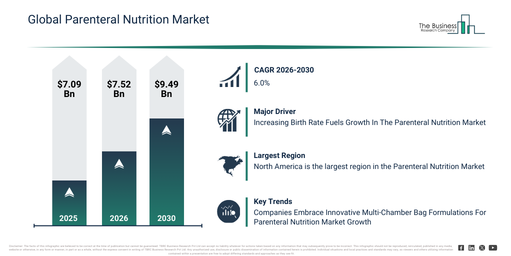
    The parenteral nutrition market size has experienced strong growth in recent years. It is anticipated to increase from $7.09 billion in 2025 to $7.52 billion in 2026, achieving a compound annual growth rate (CAGR) of 6.1%. The expansion observed in the historical period can be linked to the increasing incidence of malnutrition, a rise in hospital admissions, insufficient awareness about parenteral nutrition, restricted homecare adoption, and the escalating demand for critical care nutrition.

    The parenteral nutrition market is projected to experience substantial expansion in the coming years. It is anticipated to reach $9.49 billion by 2030, exhibiting a compound annual growth rate (CAGR) of 6.0%. This growth during the forecast period can be linked to factors such as an increasing elderly population, the broadening of home healthcare provisions, advancements in nutrient compositions, governmental backing for nutrition initiatives, and the incorporation of digital monitoring into PN treatment. Key trends expected over the forecast period encompass sophisticated nutrient formulations, the proliferation of home parenteral nutrition, individualized nutrition therapy, less invasive administration tools, and improvements in regulatory adherence and safety.

    Get A Free Sample Report With In-Depth Market Insights:

    https://thebusinessresearchcompany.com/sample_request?id=44765522&type=smp&name=Parenteral%20Nutrition%20Market%20Report%202026&utm_source=Blogs&utm_medium=Paid&utm_campaign=Oct_PR

    Parenteral Nutrition Market Growth Catalysts And Demand Drivers

    The expansion of the parenteral nutrition market is anticipated to be spurred by the rising birth rate, which denotes the yearly count of live births per 1,000 individuals within the general population. An increase in both birth rates and fertility rates serves as a key indicator of a heightened risk of malnutrition among women of childbearing age and new mothers, thereby boosting the need for parenteral nutrition. As an illustration, in July 2025, data from the Office for National Statistics Census, a UK-based government agency, revealed that England and Wales registered 594,677 live births in 2024. This represented an increase of 3,605 births (0.6%) when compared to the 591,072 live births recorded in 2023, thus reaffirming the role of increasing birth rates in driving the parenteral nutrition market’s growth.

    Parenteral Nutrition Market Segment Outlook: Which Categories Are Growing Fastest?

    The parenteral nutrition market covered in this report is segmented –

    1) By Composition: Amino Acids, Fats, Carbohydrates, Trace Elements, Vitamins, Minerals, Other Compositions

    2) By Consumer Type: Children and New-born, Adults

    3) By End-User: Hospitals, Clinics, Homecare, Other End Users

    Subsegments:

    1) By Amino Acids: Essential Amino Acids, Non-Essential Amino Acids, Specialized Amino Acid Solutions

    2) By Fats: Lipid Emulsions (Soybean Oil, Olive Oil), Fish Oil-Based Lipid Emulsions, Medium-Chain Triglycerides (MCTs)

    3) By Carbohydrates: Dextrose Solutions, Maltodextrin, Fructose

    4) By Trace Elements: Zinc, Copper, Selenium, Manganese

    5) By Vitamins: Water-Soluble Vitamins (B-complex, Vitamin C), Fat-Soluble Vitamins (A, D, E, K)

    6) By Minerals: Electrolytes (Sodium, Potassium, Calcium, Magnesium), Phosphorus

    7) By Other Compositions: Antioxidants, Additives, Specialty Nutrients

    Parenteral Nutrition Market Trends Shaping Long-Term Demand

    Leading companies in the parenteral nutrition market are focusing on developing innovative formulations, such as high-calorie amino acid, glucose, electrolyte, fat, and multivitamin injections, to enhance nutritional support for individuals with chronic conditions. These specific injections are intravenous formulations that provide comprehensive macronutrient and micronutrient support for patients unable to meet their nutritional needs orally or enterally. For instance, in November 2024, Otsuka Pharmaceutical Factory, a Japan-based pharmaceutical company, launched KIDPAREN Injection, which is designed for high-calorie parenteral nutrition in patients with chronic kidney disease. This formulation aims to improve patient care by delivering extensive nutrient support, optimizing energy intake, and assisting overall metabolic requirements in the management of chronic kidney disease.

    Parenteral Nutrition Market Leading Companies And Competitive Benchmarking

    Major companies operating in the parenteral nutrition market are Fresenius Kabi, Baxter International Inc., B. Braun Melsungen AG, ICU Medical Inc., Otsuka Pharmaceutical Co Ltd, Claris Lifesciences Limited, Sichuan Kelun Pharmaceutical Co Ltd, JW Pharmaceuticals, Aculife Healthcare Pvt Ltd, Aspen Pharmacare, Ajinomoto Co Inc, Braun Medical Inc, Laboratoires Aguettant, AnazaoHealth Corporation, Baxter Healthcare Corporation, Sichuan Pharmaceutical Co, Calea UK, Meiji Holdings Co Ltd, United Pharmaceuticals, BioScrip Inc.

    View The Full Parenteral Nutrition Market Report:

    https://thebusinessresearchcompany.com/report/parenteral-nutrition-global-market-report?utm_source=Blogs&utm_medium=Paid&utm_campaign=Oct_PR

    Parenteral Nutrition Market Top Region By Revenue And Market Share

    North America was the largest region in the parenteral nutrition market in 2025. Asia-Pacific is expected to be the fastest-growing region in the forecast period. The regions covered in the parenteral nutrition market report are Asia-Pacific, South East Asia, Western Europe, Eastern Europe, North America, South America, Middle East, Africa.

    Reach Out To Our Team:

    The Business Research Company: https://www.thebusinessresearchcompany.com/

    Americas: +1 310-496-7795

    Asia: +44 7882 955267 & +91 8897263534

    Europe: +44 7882 955267

    Email us at: marketing@tbrc.info

    Follow us on:

    LinkedIn: https://in.linkedin.com/company/the-business-research-company

    YouTube: https://www.youtube.com/channel/UC24_fI0rV8cR5DxlCpgmyFQ

    Global Market Model: https://www.thebusinessresearchcompany.com/global-market-model

  • Parathyroid Hormone Market Analysis: How The Industry Is Evolving Toward A $4.39 Billion Future

    Parathyroid Hormone Market Analysis: How The Industry Is Evolving Toward A $4.39 Billion Future

    Built to provide research that’s more actionable and strategically valuable, The Business Research Company’s 2026 market reports include market attractiveness analysis, total addressable market sizing, company benchmarking matrices, interactive Excel dashboards, broader supply chain intelligence, emerging startup tracking, and in-depth product insights.

    Parathyroid Hormone Market Value Analysis: What Growth Lies Ahead Over The Forecast Period?

    The parathyroid hormone market size has seen rapid expansion in recent years. It is anticipated to increase from $2.51 billion in 2025 to $2.8 billion in 2026, maintaining a compound annual growth rate (CAGR) of 11.5%. Historically, this expansion has been influenced by factors such as the restricted access to recombinant parathyroid hormone, limited patient awareness of the disease, a reliance on conventional vitamin D therapy, the development of hospital and clinic infrastructure, and an increase in post-surgical parathyroid complications.

    The parathyroid hormone market is anticipated to undergo substantial expansion in the coming years, with its size projected to reach $4.4 billion in 2030, demonstrating a compound annual growth rate (CAGR) of 11.9%. This projected increase is attributed to factors such as the development of advanced parathyroid hormone analogues, the rising adoption of personalized medicine approaches, the expansion of hospital and specialty clinics, the integration of digital patient monitoring tools, and increasing government and healthcare initiatives aimed at addressing hypocalcemia and hypoparathyroidism. Key trends expected in the forecast period include a growing incidence of hypocalcemia and hypoparathyroidism, an increasing utilization of recombinant parathyroid hormone therapies, the growth in parathyroid hormone analogues for personalized treatment, the expansion of hospital and clinic-based parathyroid care programs, and a greater focus on post-surgical management and vitamin D supplementation.

    Get A Free Sample Report With In-Depth Market Insights:

    https://thebusinessresearchcompany.com/sample_request?id=91084685&type=smp&name=Parathyroid%20Hormone%20Market%20Report%202026&utm_source=Blogs&utm_medium=Paid&utm_campaign=Oct_PR

    Parathyroid Hormone Market Opportunity Drivers: What’s Unlocking New Revenue Potential?

    The parathyroid hormone market is anticipated to expand due to the rising number of older adults. This demographic, generally defined as individuals 65 years and above, often faces age-associated health issues necessitating specific care and assistance. Factors contributing to this demographic change include longer life expectancies, advancements in healthcare, and reduced birth rates, leading to a larger segment of elderly people within the population. For older adults, parathyroid hormone plays a crucial role in managing calcium levels and bone metabolism, thereby aiding in the prevention of osteoporosis and fractures, conditions prevalent among this age group. As an illustration, in January 2024, data from the Population Reference Bureau, a US-based nonprofit organization, indicated that the American population aged 65 and above is projected to increase from 58 million in 2022 to 82 million by 2050, representing a 47% increase. Concurrently, this group’s proportion of the total population is also foreseen to climb from 17% to 23% over the identical timeframe. Consequently, the expanding geriatric population is a key factor propelling the expansion of the parathyroid hormone market.

    Parathyroid Hormone Market Segment Landscape: Which Areas Lead Development?

    The parathyroid hormone market covered in this report is segmented –

    1) By Disease Type: Hypocalcemia, Hypoparathyroidism

    2) By Product Type: Recombinant Parathyroid Hormone, Parathyroid Hormone Analogues

    3) By End-User: Hospitals, Clinics, Other End-Users

    Subsegments:

    1) By Hypocalcemia: Pseudohypoparathyroidism, Vitamin D Deficiency

    2) By Hypoparathyroidism: Post-Surgical Hypoparathyroidism, Idiopathic Hypoparathyroidism

    Parathyroid Hormone Market Innovation Trends Shaping Future Development

    Leading companies within the parathyroid hormone market are concentrating on creating biosimilar versions of parathyroid-derived medications, including prodrugs of parathyroid hormone (PTH), to improve available therapies. A prodrug of parathyroid hormone (PTH) functions as an inactive substance that converts into active parathyroid hormone once administered, providing extended release and consistent therapeutic effects for both calcium management and bone integrity. As an illustration, in August 2024, Ascendis Pharma A/S, a biopharmaceutical firm headquartered in Denmark, declared that the Food & Drug Administration (FDA) had given its approval to YORVIPATH (palopegteriparatide), marking it as the inaugural and sole therapy for adult hypoparathyroidism. This prodrug, taken once daily, guarantees ongoing exposure to PTH, proving advantageous for approximately 70,000 to 90,000 patients across the United States. Ascendis Pharma, responsible for its production, offers patient assistance via its ascendis signature access program (A.S.A.P.) program; however, individuals using it are required to routinely check their serum calcium levels to detect possible hypercalcemia or hypocalcemia.

    Parathyroid Hormone Market Industry Leaders And Competitive Landscape

    Major companies operating in the parathyroid hormone market are Pfizer Inc., Eli Lilly and Company, Radius Health Inc., Ascendis Pharma, Entera Bio Ltd., Extend Biosciences Inc., Gedeon Richter Plc., Abbott Laboratories, Amgen Inc., Merck & Co. Inc., Novartis AG, F. Hoffmann-La Roche AG, Teva Pharmaceutical Industries Ltd., Alcon Laboratories Inc., Bayer Healthcare, AstraZeneca PLC, Biocon, Dr. Reddy’s Laboratories, Glenmark Pharmaceuticals, Jubilant Life Sciences, Lupin Limited, Sun Pharmaceutical Industries, Torrent Pharmaceuticals, Wockhardt, Cipla Limited

    View The Full Parathyroid Hormone Market Report:

    https://thebusinessresearchcompany.com/report/Parathyroid-Hormones-global-market-report?utm_source=Blogs&utm_medium=Paid&utm_campaign=Oct_PR

    Parathyroid Hormone Market Regional Analysis And Top Geography

    North America was the largest region in the parathyroid hormone market in 2025. The Middle East is expected to be the fastest-growing region in the global parathyroid hormone market share during the forecast period. The regions covered in the parathyroid hormone market report are Asia-Pacific, South East Asia, Western Europe, Eastern Europe, North America, South America, Middle East, Africa.

    Reach Out To Our Team:

    The Business Research Company: https://www.thebusinessresearchcompany.com/

    Americas: +1 310-496-7795

    Asia: +44 7882 955267 & +91 8897263534

    Europe: +44 7882 955267

    Email us at: marketing@tbrc.info

    Follow us on:

    LinkedIn: https://in.linkedin.com/company/the-business-research-company

    YouTube: https://www.youtube.com/channel/UC24_fI0rV8cR5DxlCpgmyFQ

    Global Market Model: https://www.thebusinessresearchcompany.com/global-market-model