Blog

  • Parathyroid Disease Treatment Market Outlook Through 2030: Understanding The Growth Opportunity

    Parathyroid Disease Treatment Market Outlook Through 2030: Understanding The Growth Opportunity

    Backed by market attractiveness analysis, total addressable market sizing, company benchmarking matrices, interactive Excel dashboards, wider supply chain intelligence, emerging startup coverage, and detailed product-level insights, The Business Research Company’s 2026 market reports are designed to offer research that is more actionable and strategically valuable than ever.

    Parathyroid Disease Treatment Market Size Forecast: How Big Could The Market Get By 2030?

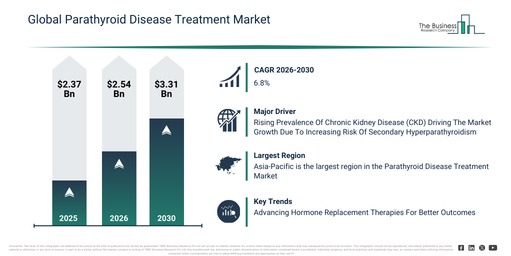
    The parathyroid disease treatment market size has demonstrated robust growth in recent years. It is projected to increase from $2.37 billion in 2025 to $2.54 billion in 2026, at a compound annual growth rate (CAGR) of 7.2%. The historical growth of this market can be attributed to factors such as the rising prevalence of hyperparathyroidism, limited awareness of parathyroid disorders, a dependence on conventional hormone replacement therapy, a lack of advanced surgical interventions, and constrained hospital pharmacy infrastructure.

    The parathyroid disease treatment market is projected to experience substantial expansion in the coming years. This market is anticipated to reach a valuation of $3.31 billion by 2030, demonstrating a compound annual growth rate (CAGR) of 6.8%. The expansion over the forecast period can be attributed to several factors, including the rising demand for calcimimetics and bisphosphonates, enhancements in parathyroid imaging and diagnostics, the development of homecare and telemedicine options, regulatory backing for precision medicine, and the proliferation of specialty centers focusing on endocrine disorders. Key trends projected for this period encompass a greater uptake of calcimimetics and bisphosphonates, an increasing preference for parenteral administration over oral methods in severe conditions, an expansion of hospital and specialized care environments, an intensified focus on customized hormone replacement therapies, and the incorporation of lifestyle and nutritional strategies into treatment protocols.

    Get A Free Sample Report With In-Depth Market Insights:

    https://thebusinessresearchcompany.com/sample_request?id=11492899&type=smp&name=Parathyroid%20Disease%20Treatment%20Market%20Report%202026&utm_source=Blogs&utm_medium=Paid&utm_campaign=Oct_PR

    Parathyroid Disease Treatment Market Growth Momentum: What Factors Are Shaping Demand?

    The increasing occurrence of chronic kidney disease (CKD) is anticipated to drive expansion in the parathyroid disease treatment market in the future. CKD represents a prolonged ailment characterized by the progressive decline of kidney function, resulting in mineral imbalances, particularly concerning calcium and phosphorus. The growing prevalence of chronic kidney disease (CKD) stems primarily from the rising incidence of diabetes, given that consistently elevated blood sugar levels can progressively harm the kidney’s filtering structures, culminating in diabetic nephropathy. Treatment for parathyroid disease plays a crucial role in the management of chronic kidney disease (CKD) through its focus on secondary hyperparathyroidism, which is a common complication in advanced CKD, causing disturbances in calcium and phosphorus equilibrium, fostering bone disease, and encouraging vascular calcification. For example, as reported in May 2024 by the Centers for Disease Control and Prevention (CDC), a US-based government public health agency, an estimated 35.5 million people, or roughly 14% of adults in the US (more than one in seven), were affected by chronic kidney disease in 2023, with nearly 90% of these individuals unaware of their condition. Consequently, the increasing prevalence of chronic kidney disease is propelling the expansion of the parathyroid disease treatment market.

    Parathyroid Disease Treatment Market Segments: Where Is Growth Concentrated?

    The parathyroid disease treatment market covered in this report is segmented –

    1) By Treatment: Calcimimetics, Bisphosphonates, Plicamycin, Hormone Replacement Therapy, Other Treatments

    2) By Route Of Administration: Oral, Parenteral

    3) By Distribution Channel: Hospital Pharmacy, Online Pharmacy, Retail Pharmacy

    4) By End-Users: Hospitals, Homecare, Specialty Centers, Other End-Users

    Subsegments:

    1) By Calcimimetics: Cinacalcet, Etelcalcetide

    2) By Bisphosphonates: Alendronate, Ibandronate, Risedronate, Zoledronic Acid

    3) By Plicamycin: Mithramycin (Plicamycin) Monotherapy, Combination Therapies Involving Plicamycin

    4) By Hormone Replacement Therapy: Estrogen Therapy, Progesterone Therapy, Combined Hormonal Therapies, Selective Estrogen Receptor Modulators (SERMs)

    5) By Other Treatments: Parathyroid Hormone (PTH) Analogues, Surgery (Parathyroidectomy), Dietary Supplements, Lifestyle And Nutritional Interventions

    Parathyroid Disease Treatment Market Trends Redefining Industry Growth

    Major companies operating in the parathyroid disease treatment market are concentrating on developing innovative products, such as parathyroid hormone prodrugs, to improve calcium regulation and lessen dosing frequency for patients with hypoparathyroidism. Parathyroid hormone (PTH) prodrugs are inactive compounds that convert into active PTH within the body to balance calcium and phosphate levels. For instance, in August 2024, Ascendis Pharma A/S, a Denmark-based biopharmaceutical company, gained US Food and Drug Administration (FDA) approval for YORVIPATH (palopegteriparatide), a prodrug of parathyroid hormone (PTH[1-34]) for treating chronic hypoparathyroidism in adults. This once-daily therapy offers continuous parathyroid hormone exposure over 24 hours, serving as an alternative to typical calcium and vitamin D supplementation by directly addressing the underlying hormone deficiency. The approval of YORVIPATH emphasizes the rising importance of advanced hormone replacement therapies focused on improving treatment adherence and providing enhanced clinical outcomes for individuals with parathyroid disorders.

    Parathyroid Disease Treatment Market Key Participants And Competitive Landscape

    Major companies operating in the parathyroid disease treatment market are AstraZeneca PLC, Amgen Inc., Kyowa Kirin Co. Ltd., OPKO Health Inc., Septerna Inc., Entera Bio Ltd., Visen Pharmaceuticals (Shanghai) Co. Ltd., Ascendis Pharma A/S, Aeterna Zentaris Inc., MBX Biosciences Inc., Crinetics Pharmaceuticals Inc., Vidasym Inc., Rani Therapeutics LLC, Pathalys Pharma Inc.

    View The Full Parathyroid Disease Treatment Market Report:

    https://thebusinessresearchcompany.com/report/parathyroid-disease-treatment-global-market-report?utm_source=Blogs&utm_medium=Paid&utm_campaign=Oct_PR

    Parathyroid Disease Treatment Market Geographic Analysis: Where Is Demand Rising Fastest?

    Asia-Pacific was the largest region in the parathyroid disease treatment market in 2025. The regions covered in the parathyroid disease treatment market report are Asia-Pacific, South East Asia, Western Europe, Eastern Europe, North America, South America, Middle East, Africa.

    Reach Out To Our Team:

    The Business Research Company: https://www.thebusinessresearchcompany.com/

    Americas: +1 310-496-7795

    Asia: +44 7882 955267 & +91 8897263534

    Europe: +44 7882 955267

    Email us at: marketing@tbrc.info

    Follow us on:

    LinkedIn: https://in.linkedin.com/company/the-business-research-company

    YouTube: https://www.youtube.com/channel/UC24_fI0rV8cR5DxlCpgmyFQ

    Global Market Model: https://www.thebusinessresearchcompany.com/global-market-model

  • Pancreatic Cancer Precision Medicine Market Growth Potential: What The Latest Forecast Reveals

    Pancreatic Cancer Precision Medicine Market Growth Potential: What The Latest Forecast Reveals

    Featuring market attractiveness scoring, total addressable market sizing, company benchmarking matrices, interactive Excel dashboards, deeper supply chain intelligence, emerging startup tracking, and granular product-level insights, The Business Research Company’s 2026 market reports are built to deliver research that is both more actionable and more strategically valuable.

    Pancreatic Cancer Precision Medicine Market Revenue Outlook: What CAGR Lies Ahead Through 2030?

    The pancreatic cancer precision medicine market has seen substantial growth in recent years. This market is set to increase from $0.58 billion in 2025 to $0.67 billion in 2026, exhibiting a compound annual growth rate (CAGR) of 16.7%. The expansion observed historically can be ascribed to several factors, including poor survival rates with conventional therapies, progress in cancer genomics, a rise in pancreatic cancer incidence, greater investment in oncology research funding, and the initial positive results of targeted therapies.

    The pancreatic cancer precision medicine market size is projected to experience substantial growth in the coming years, reaching $1.24 billion in 2030 at a compound annual growth rate (CAGR) of 16.6%. This expansion during the forecast period is propelled by factors such as increased uptake of precision oncology, heightened investment in pancreatic cancer research, improvements in diagnostic technologies, the broadening of immunotherapy product pipelines, and a greater reliance on companion diagnostics. Key developments anticipated during this timeframe involve an elevated application of genomic and molecular profiling, wider acceptance of biomarker-based treatments, the proliferation of combined targeted and immunotherapy approaches, an uptick in the utilization of liquid biopsy diagnostics, and an intensified emphasis on individualized treatment strategies.

    Get A Free Sample Report With In-Depth Market Insights:

    https://thebusinessresearchcompany.com/sample_request?id=41327368&type=smp&name=Pancreatic%20Cancer%20Precision%20Medicine%20Market%20Report%202026&utm_source=Blogs&utm_medium=Paid&utm_campaign=Oct_PR

    Pancreatic Cancer Precision Medicine Market Expansion Drivers: What’s Shaping Future Growth?

    The increasing occurrence of pancreatic cancer is anticipated to fuel the expansion of the pancreatic cancer precision medicine market in the future. Pancreatic cancer refers to a malignancy originating in the pancreas, an organ vital for digestive processes and maintaining blood sugar levels. The incidence of pancreatic cancer is increasing, attributed to an aging global population and the growing presence of risk factors like obesity, diabetes, and smoking. Precision medicine for pancreatic cancer improves how the disease is managed by providing customized treatment strategies derived from genetic and molecular data. This approach leads to more effective treatments and fewer adverse effects, establishing it as a vital instrument for more efficient pancreatic cancer management. For example, Cancer Australia, an Australia-based government agency, reported in February 2025 that new pancreatic cancer cases reached 4,641 in 2024 (comprising 2,414 in males and 2,227 in females), indicating an uptick from 3,968 cases in 2023. Consequently, the escalating prevalence of pancreatic cancer is serving as a primary catalyst for the expansion of the pancreatic cancer precision medicine market.

    Pancreatic Cancer Precision Medicine Market Segment Analysis: What Are The Core Market Categories?

    The pancreatic cancer precision medicine market covered in this report is segmented –

    1) By Therapeutic Approach: Targeted Therapy, Immunotherapy, Chemotherapy-Precision Combinations, Other Therapeutic Approaches

    2) By Diagnostic Technology: Genomic Testing, Molecular Diagnostics, Liquid Biopsy, Biomarker-Based Companion Diagnostics, Other Diagnostic Technologies

    3) By Application: Hospitals, Specialty Clinics, Academic And Research Institutes, Diagnostic Centers

    Subsegments:

    1) By Targeted Therapy: Kinase Inhibitors, PARP Inhibitors

    2) By Immunotherapy: Immune Checkpoint Inhibitors, Cancer Vaccines, Adoptive Cell Therapy

    3) By Chemotherapy-Precision Combinations: Gemcitabine-Based Combinations, Fluorouracil-Based Combinations, Nab-Paclitaxel-Based Combinations

    4) By Other Therapeutic Approaches: RNA-Based Therapies, Epigenetic Modulators, Antibody-Drug Conjugates (ADCs)

    Pancreatic Cancer Precision Medicine Market Strategic Trends: What Defines The Next Growth Phase?

    Leading companies in the pancreatic cancer precision medicine market are concentrating on developing sophisticated technologies, including precision medical tools, to improve early detection, facilitate accurate tumor profiling, and enhance personalized treatment strategies for better patient outcomes. A precision medical tool represents a specialized device designed to accurately diagnose and treat illnesses based on an individual’s unique biological characteristics. For instance, in January 2024, Cedars-Sinai, a US-based hospital and healthcare company, unveiled its molecular twin precision oncology platform, a precision medical tool aimed at more accurately predicting pancreatic cancer survival by identifying crucial biomarkers. The platform’s considerable potential lies in guiding treatment decisions, even in regions with constrained resources, by utilizing blood and tissue samples from 74 patients with pancreatic ductal adenocarcinoma to provide a more precise and accessible strategy for precision oncology.

    Pancreatic Cancer Precision Medicine Market Top Companies Driving Competitive Growth

    Major companies operating in the pancreatic cancer precision medicine market are Pfizer Inc., F. Hoffmann-La Roche Ltd., Merck & Co. Inc., Bristol-Myers Squibb Company, AstraZeneca Plc, Novartis AG, Amgen Inc., Eli Lilly and Company, Genentech Inc., Ipsen Pharma, Bayer AG, Thermo Fisher Scientific Inc., Illumina Inc., Guardant Health, Foundation Medicine Inc., Oncolytics Biotech Inc., Erytech Pharma, PharmaCyte Biotech Inc., Celgene Corporation, Natera Inc.

    View The Full Pancreatic Cancer Precision Medicine Market Report:

    https://thebusinessresearchcompany.com/report/pancreatic-cancer-precision-medicine-global-market-report?utm_source=Blogs&utm_medium=Paid&utm_campaign=Oct_PR

    Pancreatic Cancer Precision Medicine Market Global Footprint: Which Region Leads The Market?

    North America was the largest region in the pancreatic cancer precision medicine market in 2025. Asia-Pacific is expected to be the fastest-growing region in the forecast period. The regions covered in the pancreatic cancer precision medicine market report are Asia-Pacific, South East Asia, Western Europe, Eastern Europe, North America, South America, Middle East, Africa.

    Reach Out To Our Team:

    The Business Research Company: https://www.thebusinessresearchcompany.com/

    Americas: +1 310-496-7795

    Asia: +44 7882 955267 & +91 8897263534

    Europe: +44 7882 955267

    Email us at: marketing@tbrc.info

    Follow us on:

    LinkedIn: https://in.linkedin.com/company/the-business-research-company

    YouTube: https://www.youtube.com/channel/UC24_fI0rV8cR5DxlCpgmyFQ

    Global Market Model: https://www.thebusinessresearchcompany.com/global-market-model
  • Pancreatic Cancer Drugs Market Growth Outlook: Why Analysts Expect Continued Expansion

    Pancreatic Cancer Drugs Market Growth Outlook: Why Analysts Expect Continued Expansion

    Built to provide research that’s more actionable and strategically valuable, The Business Research Company’s 2026 market reports include market attractiveness analysis, total addressable market sizing, company benchmarking matrices, interactive Excel dashboards, broader supply chain intelligence, emerging startup tracking, and in-depth product insights.

    Pancreatic Cancer Drugs Market Growth Analysis: How Will Revenue Trend Over The Forecast Period?

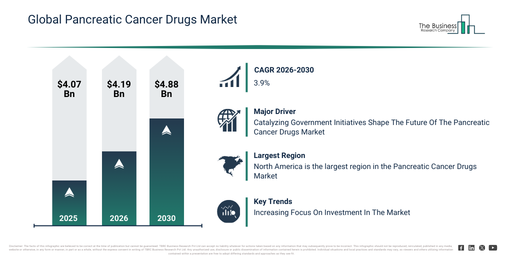
    The pancreatic cancer drugs market size has shown steady expansion in recent years. It is anticipated to grow from $4.07 billion in 2025 to $4.19 billion in 2026, exhibiting a compound annual growth rate (CAGR) of 3.0%. The growth observed in the past can be attributed to the increasing incidence of pancreatic cancer, the limited available treatment options, advancements in chemotherapy, rising awareness concerning pancreatic cancer, and the expansion of hospital infrastructure.

    The pancreatic cancer drugs market is projected to experience consistent expansion over the upcoming years. It will grow to $4.88 billion in 2030 at a compound annual growth rate (CAGR) of 3.9%. This anticipated increase during the forecast period is primarily driven by advancements in targeted therapies, the expansion of precision medicine, increased adoption of immunotherapy, the incorporation of AI into drug development, and a growing need for combination therapies. Key developments expected within this period encompass the evolution of personalized therapies, the implementation of targeted drug delivery systems, innovative immunotherapy methods, comprehensive chemotherapy regimens, and the integration of early detection and diagnostic tools.

    Get A Free Sample Report With In-Depth Market Insights:

    https://thebusinessresearchcompany.com/sample_request?id=50973443&type=smp&name=Pancreatic%20Cancer%20Drugs%20Market%20Report%202026&utm_source=Blogs&utm_medium=Paid&utm_campaign=Oct_PR

    Pancreatic Cancer Drugs Market Development Factors: What’s Supporting Demand?

    Government initiatives and funding dedicated to pancreatic cancer are projected to boost the expansion of the pancreatic cancer drugs market in the foreseeable future. Such government initiatives and funding constitute a form of governmental financial aid provided to selected entities with concepts or undertakings that contribute to and enhance public services and the economy. The government supplies assistance for pancreatic cancer research to improve the quality of life and survival rates for patients affected by this illness. For instance, in April 2025, the American Medical Association, a US-based professional organization, reported that in 2023, U.S. health spending climbed 7.5% to $4.9 trillion, or $14,570 per capita, surpassing the 4.6% increase recorded in 2022. Therefore, government initiatives and funding for pancreatic cancer are propelling the growth of the pancreatic cancer drugs market.

    Pancreatic Cancer Drugs Market Segment Breakdown: Which Categories Lead On Revenue?

    The pancreatic cancer drugs market covered in this report is segmented –

    1) By Type: Pancreatic Neuroendocrine Cancer Drugs, Pancreatic Exocrine Cancer Drugs

    2) By Drug Combination: Single, Double, Triplet, Quadruplet

    3) By End User: Hospital Pharmacies, Retail Pharmacies, Other End-Users

    Subsegments:

    1) By Pancreatic Neuroendocrine Cancer Drugs: Somatostatin Analogs, Targeted Therapy Drugs, Chemotherapy Agents

    2) By Pancreatic Exocrine Cancer Drugs: Chemotherapy Agents, Targeted Therapy Drugs, Immunotherapy Drugs

    Pancreatic Cancer Drugs Market Transformation Trends: What Innovations Are Driving Change?

    Leading companies within the pancreatic cancer drugs market are making strategic investments in local drug delivery systems to gain an edge over competitors. A local drug delivery system functions by administering medication directly to its target location, which can enhance its therapeutic effect and diminish adverse reactions. For instance, in April 2023, OncoLize, a Netherlands-based company specializing in drug development and oncology products, secured a US$ 1.7 million seed investment round. This funding aims to build upon their successful preclinical work with a local drug delivery system designed for the treatment of pancreatic and lung cancer. This particular product employs unique liquid formulations, facilitating a more effective delivery of a broad array of anti-cancer drugs, including both conventional chemotherapy agents and modern immuno-drugs.

    Pancreatic Cancer Drugs Market Leading Players And Competitive Positioning

    Major companies operating in the pancreatic cancer drugs market are Pfizer Inc., AstraZeneca PLC, F. Hoffmann-La Roche AG, Novartis AG, Bristol-Myers Squibb Company, Merck & Co. Inc., Eli Lilly And Company, Teva Pharmaceutical Industries, GlaxoSmithKline Plc, Celgene Corporation, Johnson & Johnson, Bayer AG, Sanofi, Amgen Inc., AbbVie Inc., Clovis Oncology, Eisai Co. Ltd., BeiGene, Genentech, Exelixis, Mirati Therapeutics, Astellas Pharma Inc., Ipsen

    View The Full Pancreatic Cancer Drugs Market Report:

    https://thebusinessresearchcompany.com/report/Pancreatic-Cancer-Drugs-Global-Market-Report?utm_source=Blogs&utm_medium=Paid&utm_campaign=Oct_PR

    Pancreatic Cancer Drugs Market Regional Split: Which Areas Are Fueling Growth?

    North America was the largest region in the pancreatic cancer drugs market in 2025. Middle East is expected to be the fastest-growing region in the global pancreatic cancer drugs market share during the forecast period. The regions covered in the pancreatic cancer drugs market report are Asia-Pacific, South East Asia, Western Europe, Eastern Europe, North America, South America, Middle East, Africa.

    Reach Out To Our Team:

    The Business Research Company: https://www.thebusinessresearchcompany.com/

    Americas: +1 310-496-7795

    Asia: +44 7882 955267 & +91 8897263534

    Europe: +44 7882 955267

    Email us at: marketing@tbrc.info

    Follow us on:

    LinkedIn: https://in.linkedin.com/company/the-business-research-company

    YouTube: https://www.youtube.com/channel/UC24_fI0rV8cR5DxlCpgmyFQ

    Global Market Model: https://www.thebusinessresearchcompany.com/global-market-model

  • Pain Management Drugs Market Forecast Insights: The Road To $108.86 Billion By 2030

    Pain Management Drugs Market Forecast Insights: The Road To $108.86 Billion By 2030

    Backed by market attractiveness analysis, total addressable market sizing, company benchmarking matrices, interactive Excel dashboards, wider supply chain intelligence, emerging startup coverage, and detailed product-level insights, The Business Research Company’s 2026 market reports are designed to offer research that is more actionable and strategically valuable than ever.

    Pain Management Drugs Market Forecast: What Value Will The Market Reach By 2030?

    The pain management drugs market has experienced substantial expansion in recent years. Its value is projected to rise from $84.79 billion in 2025 to $89.3 billion in 2026, demonstrating a compound annual growth rate (CAGR) of 5.3%. This past growth can be attributed to several factors, including the increasing prevalence of chronic pain conditions, a growing geriatric population, heightened awareness surrounding pain management, the expansion of hospital and retail pharmacy networks, and advancements in analgesic drug formulations.

    The pain management drugs market is projected to experience substantial expansion in the coming years. Its valuation is anticipated to reach $108.86 billion by 2030, demonstrating a compound annual growth rate (CAGR) of 5.1%. This projected increase can be ascribed to several factors, including the escalating use of biologics for pain relief, greater incorporation of digital health technologies, a surging need for less invasive treatments, the broadening scope of home healthcare provisions, and advancements in combined therapeutic approaches. Key developments anticipated within this timeframe encompass tailored pain management solutions, the rise of telemedicine and remote monitoring for pain, the introduction of new analgesic drug forms, less invasive methods for pain relief, and diversified combination therapy strategies.

    Get A Free Sample Report With In-Depth Market Insights:

    https://thebusinessresearchcompany.com/sample_request?id=9846&type=smp&name=Pain%20Management%20Drugs%20Market%20Report%202026&utm_source=Blogs&utm_medium=Paid&utm_campaign=Oct_PR

    Pain Management Drugs Market Industry Drivers: What’s Behind The Revenue Growth?

    An expanding demographic of older individuals is projected to enhance the pain management drugs market’s growth in the coming period. This geriatric population specifically includes people 65 years and older. Given that pain management drugs are frequently prescribed to elderly patients for relief from conditions like arthritis, cancer, and neurological disorders, which are more common in advanced age, the increasing number of seniors is expected to bolster this market. As an illustration, in November 2025, the Organisation for Economic Co-operation and Development (OECD), a France-based intergovernmental economic organization, reported that the percentage of the population aged 65 and over has, on average, doubled across OECD countries over the last five decades, showing an increase from 18.5% in 2023. Therefore, the growing geriatric population is a significant catalyst for the pain management drugs market’s expansion.

    Pain Management Drugs Market Segmentation: How Does The Market Break Down By Category?

    The pain management drugs market covered in this report is segmented –

    1) By Drug Class: Non-Steroidal Anti-Inflammatory Drugs (NSAIDs), Anesthetics, Anticonvulsants, Anti-Migraine Agents, Antidepressants, Opioids, Nonnarcotic Analgesics

    2) By Indication: Arthritic Pain, Neuropathic Pain, Cancer Pain, Chronic Back Pain, Postoperative Pain, Migraine, Fibromyalgia, Muscle Sprain Or Strain, Bone Fracture, Other Indications

    3) By Distribution Channel: Hospital Pharmacies, Retail Pharmacies, Online Pharmacies

    Subsegments:

    1) By Non-Steroidal Anti-Inflammatory Drugs (NSAIDs): Ibuprofen, Naproxen, Aspirin, Diclofenac, Ketorolac

    2) By Anesthetics: Local Anesthetics, General Anesthetics

    3) By Anticonvulsants: Gabapentin, Pregabalin, Carbamazepine, Topiramate

    4) By Anti-Migraine Agents: Triptans, Ergot Alkaloids, CGRP Inhibitors

    5) By Antidepressants: Tricyclic Antidepressants, SNRIs

    6) By Opioids: Morphine, Oxycodone, Hydrocodone, Fentanyl

    7) By Nonnarcotic Analgesics: Acetaminophen, Aspirin, Other Analgesics

    #Pain Management Drugs Market Growth Trends: What’s Shaping The Future Outlook?

    Major companies operating in the pain management drugs market are focused on developing new medications and obtaining FDA approval to address the needs of patients suffering from acute or chronic pain. FDA approval represents a regulatory validation issued by the U.S. Food and Drug Administration, confirming that a medical product meets the essential safety and efficacy criteria for commercial release in the United States. As an illustration, in October 2023, Hyloris Pharmaceuticals, a pharmaceutical company based in Belgium, secured U.S. FDA approval for Maxigesic IV. Maxigesic IV is recognized as the first non-opioid painkiller to gain FDA approval in over 20 years. This intravenous non-opioid painkiller combines paracetamol and ibuprofen, providing a unique dual-action mechanism for pain relief. The approval of Maxigesic IV marks a substantial advancement in the pain management drugs market, introducing a novel non-opioid treatment alternative for post-operative pain relief.

    Pain Management Drugs Market Competitive Overview And Top Companies

    Major companies operating in the pain management drugs market are Novartis AG, Eli Lilly And Company, Abbott Laboratories, Endo International plc, Pfizer Inc., Merck & Co. Inc., Johnson & Johnson Services Inc., GlaxoSmithKline plc, AbbVie Inc., Bristol-Myers Squibb Company, Teva Pharmaceutical Industries Ltd., AstraZeneca plc, Bausch Health Companies Inc., Sanofi, F. Hoffmann-La Roche Ltd., Boehringer Ingelheim, Mallinckrodt Pharmaceuticals, Daiichi Sankyo Company Limited, Grünenthal GmbH, Mundipharma International Limited, Sun Pharmaceutical Industries Ltd., Takeda Pharmaceutical Company Limited, Zydus Cadila, Lupin Pharmaceuticals Inc., Torrent Pharmaceuticals Ltd.

    View The Full Pain Management Drugs Market Report:

    https://thebusinessresearchcompany.com/report/pain-management-drugs-global-market-report?utm_source=Blogs&utm_medium=Paid&utm_campaign=Oct_PR

    Pain Management Drugs Market Top Region: Where Does Most Revenue Come From?

    North America was the largest region in the pain management drugs market in 2025. Asia-Pacific is expected to be the fastest-growing region in the pain management drug market report during the forecast period. The regions covered in the pain management drugs market report are Asia-Pacific, South East Asia, Western Europe, Eastern Europe, North America, South America, Middle East, Africa.

    Reach Out To Our Team:

    The Business Research Company: https://www.thebusinessresearchcompany.com/

    Americas: +1 310-496-7795

    Asia: +44 7882 955267 & +91 8897263534

    Europe: +44 7882 955267

    Email us at: marketing@tbrc.info

    Follow us on:

    LinkedIn: https://in.linkedin.com/company/the-business-research-company

    YouTube: https://www.youtube.com/channel/UC24_fI0rV8cR5DxlCpgmyFQ

    Global Market Model: https://www.thebusinessresearchcompany.com/global-market-model
  • Pain Management Market Explained: What Is Fueling Growth To $96 Billion By 2030?

    Pain Management Market Explained: What Is Fueling Growth To $96 Billion By 2030?

    Featuring market attractiveness scoring, total addressable market sizing, company benchmarking matrices, interactive Excel dashboards, deeper supply chain intelligence, emerging startup tracking, and granular product-level insights, The Business Research Company’s 2026 market reports are built to deliver research that is both more actionable and more strategically valuable.

    Pain Management Market Size Outlook: How Quickly Will Revenue Expand Through 2030?

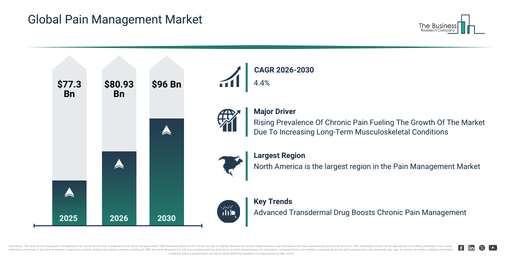
    The pain management market has demonstrated consistent expansion in recent years. It is anticipated to increase from $77.3 billion in 2025 to $80.93 billion in 2026, progressing at a compound annual growth rate (CAGR) of 4.7%. The historical growth of this market can be attributed to the significant occurrence of chronic pain conditions, the extensive use of opioid-based medications, an expanding aging population, a rise in surgical procedures, and heightened awareness regarding pain management therapies.

    The pain management market is projected to experience consistent expansion in the coming years. This market is set to reach a valuation of $96 billion by 2030, exhibiting a compound annual growth rate (CAGR) of 4.4%. Drivers for this growth during the projected timeframe include the innovation of targeted and individualized pain therapies, an increase in interventional pain management methods, a growing uptake of non-drug treatments, heightened research and clinical trial activity in pain relief, and improved availability of pain management provisions. Significant trends anticipated in the forecast period encompass a stronger inclination towards multimodal pain management strategies, a rise in non-opioid and opioid-reducing treatments, more widespread use of minimally invasive interventional techniques, the proliferation of alternative and complementary pain solutions, and an intensified concentration on chronic pain and its long-term management.

    Get A Free Sample Report With In-Depth Market Insights:

    https://thebusinessresearchcompany.com/sample_request?id=94833750&type=smp&name=Pain%20Management%20Market%20Report%202026&utm_source=Blogs&utm_medium=Paid&utm_campaign=Oct_PR

    Pain Management Market Growth Factors: What’s Supporting Expansion?

    An anticipated increase in chronic pain conditions is projected to boost the expansion of the pain management market in the foreseeable future. Chronic pain, characterized as discomfort persisting for at least three months, continues to place a substantial strain on individuals, impacting their daily routines and general well-being. The rise in instances of chronic pain is largely fueled by elements such as an aging demographic, increased rates of obesity, and various musculoskeletal ailments, leading to issues such as arthritis, back discomfort, and joint issues. Solutions for pain management aid these patients through providing focused treatments that alleviate distress, enhance movement, and improve their ability to perform daily tasks. As an illustration, in May 2023, the National Institutes of Health (NIH), a US-based entity, stated that approximately 21% of U.S. adults indicated experiencing chronic pain, with 8% suffering from high-impact chronic pain that restricts life or work activities. Consequently, the growing occurrence of chronic pain is fueling the expansion of the pain management market.

    Pain Management Market Segment Trends And Revenue Contributors

    The pain management market covered in this report is segmented –

    1) By Treatment Type: Medication, Physical Therapy, Interventional Procedures, Alternative Therapies

    2) By Type: Non-Steroidal Anti-Inflammatory Drugs (NSAIDS), Anticonvulsants, Sedatives, Narcotics, Antimigraine Specialists, Antidepressants, Other Types

    3) By Mode Of Purchase: Over The Counter, Prescription-Based

    4) By Indication: Neuropathic Pain, Cancer Pain, Facial Pain And Migraine, Musculoskeletal Pain, Fibromyalgia, Chronic Back Pain, Joint Pain, Headache, Post Operative Pain

    5) By End-User: Hospitals And Clinics, Pharmaceutical Companies, Medical Device Companies, Research Institutions, Academic Institutions, Other End-Users

    Subsegments:

    1) By Medication: Nonsteroidal Anti-Inflammatory Drugs (NSAIDs), Opioids, Anticonvulsants, Antidepressants, Corticosteroids, Topical Analgesics, Muscle Relaxants, Cannabinoids

    2) By Physical Therapy: Exercise Therapy, Manual Therapy, Heat And Cold Therapy, Electrical Stimulation (TENS), Ultrasound Therapy, Hydrotherapy, Stretching And Mobility Programs, Postural And Ergonomic Training

    3) By Interventional Procedures: Nerve Blocks, Epidural Steroid Injections, Radiofrequency Ablation, Spinal Cord Stimulation, Intrathecal Drug Delivery Systems, Joint Injections, Facet Joint Injections, Vertebroplasty And Kyphoplasty

    4) By Alternative Therapies: Acupuncture, Chiropractic Care, Yoga And Meditation, Herbal Remedies, Aromatherapy, Biofeedback Therapy, Reiki And Energy Healing, Homeopathy

    Pain Management Market Industry Trends: What’s Reshaping Demand?

    Leading companies within the pain management market are concentrating on developing advanced pharmaceutical formulations, such as transdermal drugs, to improve targeted medication delivery, boost patient adherence, and minimize adverse effects. Transdermal drugs are medications administered through the skin using patches, gels, or creams. For example, in February 2025, Aveva Drug Delivery Systems Inc., a US-based company focused on transdermal drug delivery, introduced the generic Fentanyl transdermal patch, a prescription 3-day transdermal patch designed for the management of moderate to severe chronic pain. This patch functions by gradually releasing fentanyl, a powerful opioid analgesic, through the skin into the bloodstream continuously, thereby providing effective relief for moderate to severe chronic pain. Furthermore, it incorporates features like a comfortable and sturdy adhesive ensuring the patch remains securely affixed and a tamper-evident design to encourage safe and responsible application.

    Pain Management Market Competitive Landscape: Which Companies Lead The Industry?

    Major companies operating in the pain management market are Pfizer Inc., Johnson & Johnson, Merck & Co Inc., Bayer AG, Sanofi S.A., AstraZeneca PLC, Abbott Laboratories, Novartis AG, GlaxoSmithKline plc , Medtronic plc, Eli Lilly and Company, Becton Dickinson and Company , Teva Pharmaceutical Industries Ltd, Boehringer Ingelheim International GmbH, Boston Scientific Corporation, Regeneron Pharmaceuticals Inc., Baxter International Inc., Mallinckrodt Pharmaceuticals plc, Purdue Pharma L.P., Nevro Corp.

    View The Full Pain Management Market Report:

    https://thebusinessresearchcompany.com/report/pain-management-global-market-report?utm_source=Blogs&utm_medium=Paid&utm_campaign=Oct_PR

    Pain Management Market Regional Breakdown: Where Is Demand Concentrated?

    North America was the largest region in the pain management market in 2025. Asia-Pacific is expected to be the fastest-growing region in the forecast period. The regions covered in the pain management market report are Asia-Pacific, South East Asia, Western Europe, Eastern Europe, North America, South America, Middle East, Africa.

    Reach Out To Our Team:

    The Business Research Company: https://www.thebusinessresearchcompany.com/

    Americas: +1 310-496-7795

    Asia: +44 7882 955267 & +91 8897263534

    Europe: +44 7882 955267

    Email us at: marketing@tbrc.info

    Follow us on:

    LinkedIn: https://in.linkedin.com/company/the-business-research-company

    YouTube: https://www.youtube.com/channel/UC24_fI0rV8cR5DxlCpgmyFQ

    Global Market Model: https://www.thebusinessresearchcompany.com/global-market-model
  • Paclitaxel Injection Market Forecast To Reach $12.71 Billion By 2030: Key Trends Explained

    Paclitaxel Injection Market Forecast To Reach $12.71 Billion By 2030: Key Trends Explained

    Built to provide research that’s more actionable and strategically valuable, The Business Research Company’s 2026 market reports include market attractiveness analysis, total addressable market sizing, company benchmarking matrices, interactive Excel dashboards, broader supply chain intelligence, emerging startup tracking, and in-depth product insights.

    Paclitaxel Injection Market Size, Value And Growth Trajectory Through 2030

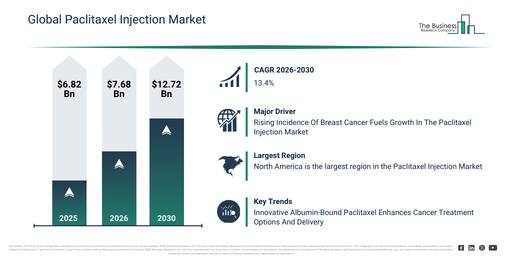
    The paclitaxel injection market size has seen rapid growth in recent years. It is anticipated to increase from $6.82 billion in 2025 to $7.68 billion in 2026, exhibiting a compound annual growth rate (CAGR) of 12.7%. The expansion observed in the past can be attributed to the rising global prevalence of cancer, the widespread clinical acceptance of taxane-based chemotherapy, the development of hospital oncology infrastructure, favorable reimbursement conditions for injectable chemotherapy drugs, and an increase in approvals for branded paclitaxel products.

    The paclitaxel injection market is projected to experience swift expansion in the coming years, with its size anticipated to reach $12.72 billion by 2030, exhibiting a compound annual growth rate (CAGR) of 13.4%. This growth during the forecast period is primarily driven by the increasing demand for cost-effective generic oncology drugs, improved access to chemotherapy in emerging markets, the proliferation of outpatient and day-care infusion centers, expanding clinical trials for new paclitaxel combinations, and advancements in drug formulation and delivery technologies. Prominent trends expected over this period include a move towards albumin-bound and solvent-free paclitaxel formulations, rising adoption of generic and biosimilar paclitaxel injections, a greater reliance on combination chemotherapy regimens, the expansion of hospital-based oncology infusion services, and broader approved indications across multiple solid tumors.

    Get A Free Sample Report With In-Depth Market Insights:

    https://thebusinessresearchcompany.com/sample_request?id=59794179&type=smp&name=Paclitaxel%20Injection%20Market%20Report%202026&utm_source=Blogs&utm_medium=Paid&utm_campaign=Oct_PR

    Paclitaxel Injection Market Demand Drivers: What’s Powering Industry Growth?

    The increasing prevalence of breast cancer is anticipated to fuel the expansion of the paclitaxel injection market in the coming years. Breast cancer is characterized by the irregular proliferation of breast cells, leading to tumor formation, which can then disseminate to other body parts. Paclitaxel injection, a chemotherapy medication, targets breast cancer by attaching to microtubules, vital structures that maintain cancer cell integrity, thereby halting their proliferation. For example, the American Cancer Society, a US-based cancer-fighting organization, reported in January 2023 that approximately 297,790 new instances of invasive breast cancer were projected for diagnosis in the US, with 43,700 fatalities from breast cancer expected in 2023. Consequently, the rising occurrence of breast cancer is a significant factor boosting the growth of the paclitaxel injection market. The increasing occurrence of cancer is projected to stimulate the expansion of the paclitaxel injection market moving forward. Factors such as escalating tobacco and alcohol consumption, alongside widespread smoking, are contributing to a global increase in cancer diagnoses. Paclitaxel serves as a key chemotherapy agent frequently administered for various cancer types, including but not limited to breast cancer, lung cancer, and ovarian cancer. With a rise in cancer cases, a greater number of patients will necessitate chemotherapy, positioning paclitaxel as an essential element within numerous treatment plans. For instance, the National Cancer Institute, a US-based government agency dedicated to cancer research and training, forecasted in May 2024 that the worldwide annual new cancer cases are anticipated to reach 29.9 million, with cancer-related mortalities totaling 15.3 million by the year 2040. Consequently, the growing incidence of cancer is a primary impetus for the growth of the paclitaxel injection market.

    Paclitaxel Injection Market Segment Analysis Spotlighting Growth Areas

    The paclitaxel injection market covered in this report is segmented –

    1) By Type: Natural Paclitaxel, Semi-Synthetic Paclitaxel

    2) By Drug Strength: 10mg Or mL, 20mg Or mL, 30mg Or mL

    3) By Indication: Breast Cancer, Prostate Cancer, Testicular Cancer, Non-Small Cell Lung Cancer, Lung Cancer, Other Indications

    4) By Distribution Channel: Hospital Pharmacies, Online Pharmacies, Retail Pharmacies

    5) By End User: Hospitals, Clinics, Cancer Research Institute

    Subsegments:

    1) By Natural Paclitaxel: Paclitaxel From Pacific Yew Tree, Paclitaxel From Other Natural Sources

    2) By Semi-Synthetic Paclitaxel: Albumin-Bound Paclitaxel, API-Based Semi-Synthetic Paclitaxel Injection

    Paclitaxel Injection Market Innovation Trends: What Developments Are Reshaping The Industry?

    Companies operating in the paclitaxel injection market are actively pursuing the creation of innovative products, such as albumin-bound paclitaxel solutions, aiming to broaden therapeutic avenues for cancer patients by offering potentially life-prolonging medication. An albumin-bound paclitaxel solution is a solvent-free version of the chemotherapy drug paclitaxel, engineered to improve drug delivery and lessen toxicity by employing albumin nanoparticles to transport the medication directly to tumor sites. For example, in May 2023, American Regent, Inc., a US-based injectable manufacturer, introduced Paclitaxel Protein-Bound Particles for Injectable Suspension (Albumin-Bound), serving as an alternative to Abraxane. This novel product functions as a microtubule inhibitor for the treatment of metastatic breast cancer, non-small cell lung cancer, and metastatic adenocarcinoma of the pancreas. Its significance arises from its potential to provide a life-extending treatment choice for patients, while also facilitating the company’s expansion into the oncology market and underscoring the value of domestically produced medications.

    Paclitaxel Injection Market Leading Companies: Who Holds The Strongest Market Presence?

    Major companies operating in the paclitaxel injection market are Pfizer Inc., Bristol-Myers Squibb Company, Fresenius Kabi Oncology Ltd., Abbott Laboratories, Viatris Inc., Teva Pharmaceutical Industries Limited, Sandoz International GmbH, Hospira Inc., Dr. Reddy’s Laboratories Ltd., Apotex Inc., Intas Pharmaceuticals Ltd., Zydus Lifesciences Limited, Torrent Pharmaceuticals Ltd., Luye Pharma Group, Biological E Limited, Alembic Pharmaceuticals Limited, Khandelwal Laboratories Pvt. Ltd., Gland Pharma Limited, Abraxis Bio Science Inc., Novasep Holding SAS, Sagent Pharmaceuticals Inc., Hainan Haiyao Co Ltd., Accord Healthcare Ltd., Natco Pharma Limited, Strides Pharma Science Limited, Panacea Biotec Ltd., American Regent Inc., MSN Laboratories Pvt Ltd., Hetero Drugs Ltd.

    View The Full Paclitaxel Injection Market Report:

    https://thebusinessresearchcompany.com/report/paclitaxel-injection-global-market-report?utm_source=Blogs&utm_medium=Paid&utm_campaign=Oct_PR

    Paclitaxel Injection Market Geographic Landscape: Which Region Dominates Industry Growth?

    North America was the largest region in the paclitaxel injection market in 2025. Asia-Pacific is expected to be the fastest-growing region in the forecast period. The regions covered in the paclitaxel injection market report are Asia-Pacific, South East Asia, Western Europe, Eastern Europe, North America, South America, Middle East, Africa.

    Reach Out To Our Team:

    The Business Research Company: https://www.thebusinessresearchcompany.com/

    Americas: +1 310-496-7795

    Asia: +44 7882 955267 & +91 8897263534

    Europe: +44 7882 955267

    Email us at: marketing@tbrc.info

    Follow us on:

    LinkedIn: https://in.linkedin.com/company/the-business-research-company

    YouTube: https://www.youtube.com/channel/UC24_fI0rV8cR5DxlCpgmyFQ

    Global Market Model: https://www.thebusinessresearchcompany.com/global-market-model

  • Oxycodone Hydrochloride Market Analysis: Understanding The Drivers Behind 3.6% CAGR Through 2030 Growth

    Oxycodone Hydrochloride Market Analysis: Understanding The Drivers Behind 3.6% CAGR Through 2030 Growth

    Backed by market attractiveness analysis, total addressable market sizing, company benchmarking matrices, interactive Excel dashboards, wider supply chain intelligence, emerging startup coverage, and detailed product-level insights, The Business Research Company’s 2026 market reports are designed to offer research that is more actionable and strategically valuable than ever.

    Oxycodone Hydrochloride Market CAGR Outlook And Future Development

    The oxycodone hydrochloride market size has shown consistent expansion in recent years. Projections indicate it will increase from $4.32 billion in 2025 to $4.49 billion in 2026, advancing at a compound annual growth rate (CAGR) of 4.0%. Historically, this growth can be attributed to the rising occurrence of chronic pain conditions, the widespread application of opioids in post-surgical patient care, the restricted availability of alternative pain relief methods, firm hospital-based prescribing practices, and the presence of established oral opioid formulations.

    The market for oxycodone hydrochloride is projected to experience consistent expansion over the upcoming years. Its valuation is anticipated to reach $5.18 billion in 2030, exhibiting a compound annual growth rate (CAGR) of 3.6%. This projected growth during the forecast period is primarily driven by factors such as the creation of abuse-deterrent and tamper-resistant drug forms, an increased emphasis on managing and regulating opioid consumption, the expansion of generic drug production, a rise in cancer cases coupled with demand for palliative care, and advancements in pain management delivery technologies. Key developments expected in this period involve an escalating need for efficacious pain management solutions, a rise in the adoption of extended-release and abuse-deterrent formulations, an increase in prescriptions for pain associated with post-surgery recovery and cancer, a transition towards affordable generic opioid options, and enhanced regulatory scrutiny alongside controlled distribution.

    Get A Free Sample Report With In-Depth Market Insights:

    https://thebusinessresearchcompany.com/sample_request?id=15991997&type=smp&name=Oxycodone%20Hydrochloride%20Market%20Report%202026&utm_source=Blogs&utm_medium=Paid&utm_campaign=Oct_PR

    Oxycodone Hydrochloride Market Growth Drivers: What’s Behind The Acceleration?

    The increasing incidence of chronic pain is anticipated to drive the expansion of the oxycodone hydrochloride market in the future. Chronic pain, characterized as discomfort lasting for three months or longer, significantly impacts patients’ quality of life, thereby generating increasing demand for effective pain relief treatments. The rise in chronic pain occurrences is mainly due to elements such as obesity, older demographics, and musculoskeletal ailments, which heighten the frequency of conditions such as osteoarthritis and lower back pain. Oxycodone hydrochloride aids in managing chronic pain by targeting pain receptors within the nervous system, offering relief from moderate to severe pain, and enhancing patient comfort and day-to-day activities. As an illustration, in November 2024, data from the U.S. National Center for Health Statistics (NCHS), a federal agency in the US, revealed that 24.3% of adults in the U.S. suffered from chronic pain, and 8.5% indicated high-impact chronic pain, which restricts daily life or professional duties. Consequently, the expanding occurrence of chronic pain is propelling the growth of the oxycodone hydrochloride market.

    Oxycodone Hydrochloride Market Segment Performance And Emerging Opportunities

    The oxycodone hydrochloride market covered in this report is segmented –

    1) By Product: Extended Release Tablets, Immediate Release Tablets, Oral Solutions

    2) By Route Of Administration: Oral, Parental

    3) By Application: Pain Management, Post Surgical Pain, Cancer Related Pain

    4) By Distribution Channel: Hospital Pharmacies, Retail Pharmacies, Online Pharmacies

    5) By End User: Hospitals, Clinics, Homecare

    Subsegments:

    1) By Extended Release Tablets: Abuse-Deterrent Formulations, Non-Abuse-Deterrent Formulations

    2) By Immediate Release Tablets: Combination Products, Single-Agent Formulations

    3) By Oral Solutions: Concentrated Solutions, Standard Solutions

    Oxycodone Hydrochloride Market Trends: What’s Defining The Industry’s Next Phase?

    Leading companies active in the oxycodone hydrochloride market are concentrating on developing advanced offerings, such as combination therapies, to improve pain management effectiveness while reducing the risks of opioid dependency. These combination therapies refer to treatment approaches that integrate two or more medications or therapeutic agents to enhance efficacy, target multiple pathways, or decrease the potential for resistance. For instance, in April 2025, Elite Pharmaceuticals Inc., a US-based pharmaceutical company, introduced a generic version of Percocet (oxycodone hydrochloride and acetaminophen tablets, USP CII). This specific combination product is offered in three strengths: mg/325 mg, 10 mg/325 mg, and 325 mg tablets. It is prescribed for the relief of moderate to moderately severe pain, combining the opioid oxycodone for potent pain relief with acetaminophen to augment its analgesic effects. As a Schedule II controlled substance, it carries a high potential for abuse and dependence, thereby requiring diligent medical supervision.

    Oxycodone Hydrochloride Market Key Players: Which Companies Lead Industry Competition?

    Major companies operating in the oxycodone hydrochloride market are Viatris Inc., Teva Pharmaceutical Industries Ltd., Sun Pharmaceutical Industries Ltd., Endo Pharmaceuticals Inc., Lupin Ltd., Mallinckrodt Pharmaceuticals Inc., ANI Pharmaceuticals Inc., Purdue Pharma L.P., Alvogen Inc., Camber Pharmaceuticals, Noramco Inc., Rhodes Pharmaceuticals L.P., Hikma Pharmaceuticals PLC, Amneal Pharmaceuticals LLC, Aurobindo Pharma Ltd., Zydus Lifesciences Ltd., Dr. Reddy’s Laboratories Ltd., Apotex Inc., Mylan N.V., Cipla Ltd., Torrent Pharmaceuticals Ltd., Sandoz International GmbH, Pfizer Inc., Novartis AG, Accord Healthcare Ltd., Glenmark Pharmaceuticals Ltd., Fresenius Kabi AG

    View The Full Oxycodone Hydrochloride Market Report:

    https://thebusinessresearchcompany.com/report/oxycodone-hydrochloride-global-market-report?utm_source=Blogs&utm_medium=Paid&utm_campaign=Oct_PR

    Oxycodone Hydrochloride Market Largest Region: Which Geography Holds The Highest Market Share?

    North America was the largest region in the oxycodone hydrochloride market in 2025. Asia-Pacific is expected to be the fastest-growing region in the forecast period. The regions covered in the oxycodone hydrochloride market report are Asia-Pacific, South East Asia, Western Europe, Eastern Europe, North America, South America, Middle East, Africa.

    Reach Out To Our Team:

    The Business Research Company: https://www.thebusinessresearchcompany.com/

    Americas: +1 310-496-7795

    Asia: +44 7882 955267 & +91 8897263534

    Europe: +44 7882 955267

    Email us at: marketing@tbrc.info

    Follow us on:

    LinkedIn: https://in.linkedin.com/company/the-business-research-company

    YouTube: https://www.youtube.com/channel/UC24_fI0rV8cR5DxlCpgmyFQ

    Global Market Model: https://www.thebusinessresearchcompany.com/global-market-model
  • Oxycodone Drugs Market Growth To $8.06 Billion By 2030: What’s Driving The Expansion?

    Oxycodone Drugs Market Growth To $8.06 Billion By 2030: What’s Driving The Expansion?

    Featuring market attractiveness scoring, total addressable market sizing, company benchmarking matrices, interactive Excel dashboards, deeper supply chain intelligence, emerging startup tracking, and granular product-level insights, The Business Research Company’s 2026 market reports are built to deliver research that is both more actionable and more strategically valuable.

    Oxycodone Drugs Market Set To Climb From $6.37 Billion In 2026 To $8.06 Billion By 2030

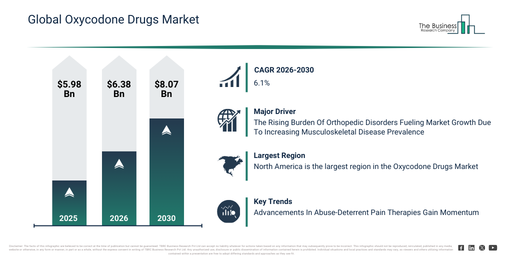
    The oxycodone drugs market has experienced robust expansion in recent years. It is projected to grow from $5.98 billion in 2025 to $6.38 billion in 2026, achieving a compound annual growth rate (CAGR) of 6.7%. The surge during the preceding period can be attributed to the high prevalence of moderate to severe pain conditions, the widespread application of opioids in post-operative care, significant hospital demand for injectable analgesics, the established clinical effectiveness of oxycodone, and the limited availability of alternative pain therapies.

    The oxycodone drugs market is projected to demonstrate robust growth over the next few years. It is forecast to grow to $8.07 billion in 2030, achieving a compound annual growth rate (CAGR) of 6.1%. This anticipated expansion during the forecast period can be attributed to more rigorous opioid prescribing regulations, the development of controlled-release pain management solutions, an increasing prevalence of cancer and chronic pain cases, the proliferation of pain management clinics, and the creation of safer opioid formulations. Significant trends for the forecast period include a shift towards abuse-deterrent oxycodone formulations, an increasing utilization of extended-release pain management therapies, a growing preference for opioid administration within hospital environments, heightened emphasis on prescription monitoring and compliance, and the expansion of generic oxycodone products across regulated markets.

    Get A Free Sample Report With In-Depth Market Insights:

    https://thebusinessresearchcompany.com/sample_request?id=73783038&type=smp&name=Oxycodone%20Drugs%20Market%20Report%202026&utm_source=Blogs&utm_medium=Paid&utm_campaign=Oct_PR

    Oxycodone Drugs Market Growth Factors Behind Sustained Expansion

    The increasing prevalence of orthopedic conditions is anticipated to drive the expansion of the oxycodone drug market in the future. Orthopedic disorders encompass ailments impacting bones, joints, ligaments, tendons, and muscles, frequently leading to persistent pain, restricted movement, and enduring functional impairments. This escalation in orthopedic issues is fueled by elements like an aging population, inactive lifestyles, obesity, injuries sustained during sports, and work-related physical stress. Oxycodone drugs offer effective pain management by alleviating both acute and chronic orthopedic pain, such as that from fractures, joint damage, and post-operative recovery, by targeting pain receptors within the central nervous system. As an illustration, figures from February 2024, sourced from Arthritis Australia, an Australia-based non-profit organization, predict that in 2025, around 212,136 males and 362,137 females will be affected by rheumatoid arthritis (RA). These numbers are expected to climb by 2040, reaching approximately 280,040 males and 479,828 females. Consequently, the increasing prevalence of orthopedic conditions is a key factor propelling the expansion of the oxycodone drug market.

    Oxycodone Drugs Market Segment Landscape And Growth Outlook

    The oxycodone drugs market covered in this report is segmented –

    1) By Drug Type: Short Acting Oxycodone, Long Acting Oxycodone

    2) By Dosage Form: Tablets, Capsules, Injections

    3) By Indication: Neuropathic Pain, Musculoskeletal Pain, Cancer Pain, Post Operative Pain, Other Indications

    4) By Distribution Channel: Hospital Pharmacies, Retail Pharmacies, Online Pharmacies

    Subsegments:

    1) By Short Acting Oxycodone: Immediate-Release Oxycodone Tablets, Oxycodone Oral Solution

    2) By Long Acting Oxycodone: Extended-Release Oxycodone Tablets, Oxycodone Controlled-Release Formulations

    Oxycodone Drugs Market Industry Trends Fueling Future Revenue Growth

    Major companies operating in the oxycodone drug market are prioritizing the development of advanced abuse-deterrent immediate-release (IR) formulations to diminish the risk of misuse via injection and intranasal administration. Abuse-deterrent IR opioids incorporate physical and chemical barriers that render tablets difficult to crush, dissolve, or manipulate for non-oral routes, thereby enhancing patient safety and minimizing diversion. For instance, in October 2024, Protega Pharmaceuticals LLC, a US-based pharmaceutical company, received FDA approval for ROXYBOND™ (oxycodone hydrochloride) 10 mg immediate-release tablets, which integrate patented SentryBond abuse-deterrent technology. This technology is engineered to resist physical manipulation and chemical extraction, making the tablets difficult to cut, crush, or dissolve for misuse through intranasal or intravenous routes. Consequently, it lowers the potential for abuse while still delivering effective immediate-release pain relief for patients whose severe pain requires opioid therapy when other treatment options are insufficient.

    Oxycodone Drugs Market Competitive Landscape: Who Leads The Industry?

    Major companies operating in the oxycodone drugs market are Pfizer Inc., Johnson & Johnson Services Inc., Viatris Inc., Teva Pharmaceutical Industries Ltd, Daiichi Sankyo Company Limited, Sun Pharmaceutical Industries Ltd, Purdue Pharma L.P, Endo International plc, Amneal Pharmaceuticals LLC, Mundipharma Pty Limited, Alkermes plc, Mallinckrodt Pharmaceuticals, Alvogen Group Inc., Collegium Pharmaceutical Inc., Lannett Company Inc., Acorda Therapeutics Inc., Camurus AB, Rhodes Pharmaceuticals L.P., KVK Tech Inc., Teikoku Pharma USA Inc., Manus Aktteva Biopharma LLP, Zyla Life Sciences

    View The Full Oxycodone Drugs Market Report:

    https://thebusinessresearchcompany.com/report/oxycodone-drugs-global-market-report?utm_source=Blogs&utm_medium=Paid&utm_campaign=Oct_PR

    Oxycodone Drugs Market Regional Analysis: Which Region Leads By Revenue?

    North America was the largest region in the oxycodone drugs market in 2025. Asia-Pacific is expected to be the fastest-growing region in the forecast period. The regions covered in the oxycodone drugs market report are Asia-Pacific, South East Asia, Western Europe, Eastern Europe, North America, South America, Middle East, Africa.

    Reach Out To Our Team:

    The Business Research Company: https://www.thebusinessresearchcompany.com/

    Americas: +1 310-496-7795

    Asia: +44 7882 955267 & +91 8897263534

    Europe: +44 7882 955267

    Email us at: marketing@tbrc.info

    Follow us on:

    LinkedIn: https://in.linkedin.com/company/the-business-research-company

    YouTube: https://www.youtube.com/channel/UC24_fI0rV8cR5DxlCpgmyFQ

    Global Market Model: https://www.thebusinessresearchcompany.com/global-market-model
  • Ovulation Inducing Drugs Market Trends Reshaping Industry Growth Through 2030

    Ovulation Inducing Drugs Market Trends Reshaping Industry Growth Through 2030

    Built to provide research that’s more actionable and strategically valuable, The Business Research Company’s 2026 market reports include market attractiveness analysis, total addressable market sizing, company benchmarking matrices, interactive Excel dashboards, broader supply chain intelligence, emerging startup tracking, and in-depth product insights.

    Ovulation Inducing Drugs Market Forecast: Value Set To Climb From $4.99 Billion To $6.62 Billion

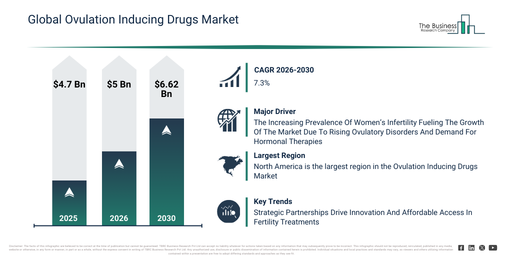
    The ovulation inducing drugs market size has shown robust growth over recent years. It is anticipated to expand from $4.7 billion in 2025 to $5 billion in 2026, registering a compound annual growth rate (CAGR) of 6.2%. This historical growth can be linked to factors such as the increasing prevalence of infertility disorders, enhanced awareness of reproductive health, the rising incidence of PCOS, improved access to fertility clinics, and the widespread adoption of assisted reproductive technologies.

    The ovulation inducing drugs market is poised for significant expansion over the next few years, with its valuation expected to reach $6.62 billion by 2030, advancing at a compound annual growth rate (CAGR) of 7.3%. This projected growth throughout the forecast period stems from factors such as evolving delayed childbearing patterns, increased participation of women in the workforce, a growing demand for less invasive fertility treatments, heightened healthcare spending on women’s well-being, and enhanced accessibility to fertility solutions in emerging economies. Prominent developments anticipated during this timeframe include an increasing reliance on first-line oral ovulation inducers, a rising preference for tailored fertility protocols, broader acceptance of combination drug therapies, expanded application of ovulation medications in managing PCOS, and a transition towards earlier detection and intervention for infertility.

    Get A Free Sample Report With In-Depth Market Insights:

    https://thebusinessresearchcompany.com/sample_request?id=65667295&type=smp&name=Ovulation%20Inducing%20Drugs%20Market%20Report%202026&utm_source=Blogs&utm_medium=Paid&utm_campaign=Oct_PR

    Ovulation Inducing Drugs Market Demand Drivers Opening New Revenue Streams

    The expanding incidence of women’s infertility is anticipated to fuel the expansion of the ovulation-inducing drug market in the future. Women’s infertility denotes a biological state where a woman finds herself unable to become pregnant or sustain a pregnancy to full term, even after a year or more of consistent, unprotected sexual activity. This condition often correlates with ovulatory problems, hormonal discrepancies, and other reproductive health challenges that impede natural conception. Ovulation-inducing drugs tackle these concerns by activating the hormonal mechanisms that govern ovulation and encouraging the discharge of mature eggs, thereby aiding pregnancy. For example, in April 2023, the World Health Organization (WHO), a Switzerland-based Intergovernmental organization, reported that roughly 17.5% of the worldwide adult population, equivalent to about 1 in 6 individuals, encounters infertility at some point in their lives. Consequently, the increasing occurrence of women’s infertility is propelling the growth of the ovulation-inducing drug market.

    Ovulation Inducing Drugs Market Breakdown By Product Type And Application

    The ovulation inducing drugs market covered in this report is segmented –

    1) By Drug Class: Hormones, Therapeutics Drugs

    2) By Route Of Administration: Oral, Parenteral, Other Routes Of Administration

    3) By End-User: Hospital, Homecare, Specialty Clinics, Other End-Users

    Subsegments:

    1) By Hormones: Gonadotropins, Clomiphene Citrate, Aromatase Inhibitors

    2) By Therapeutic Drugs: Metformin, Letrozole, Bromocriptine

    Ovulation Inducing Drugs Market Trends Powering Strategic Industry Growth

    Key companies in the ovulation-inducing drugs market are adopting strategic partnerships to develop innovative and more accessible fertility treatments. These collaborations are crucial for propelling the growth of the ovulation-inducing drugs market by enabling firms to combine expertise, share resources, reduce development costs, and accelerate the launch of advanced and more affordable fertility therapies for patients globally. For instance, in October 2023, Cosette Pharmaceuticals Inc., a US-based pharmaceutical company, formed a partnership with Mark Cuban Cost Plus Drug Company, a US-based online pharmacy, to make CLOMID® (clomiphene citrate) more affordable for patients. This alliance leverages Cosette’s specialized knowledge in fertility medications and Cost Plus Drug Company’s transparent, low-cost pricing model to expand patient access. By diminishing financial hurdles, the partnership seeks to improve treatment adherence and support a greater number of individuals worldwide seeking fertility care.

    Ovulation Inducing Drugs Market Company Landscape And Competitive Strategy

    Major companies operating in the ovulation inducing drugs market are Ferring Pharmaceuticals Inc., EMD Serono Inc., Merck And Co. Inc., Gedeon Richter plc, Pfizer Inc., Novartis AG, Bayer AG, Sanofi SA, Teva Pharmaceutical Industries Ltd., Mylan N.V., Astellas Pharma Inc., Sun Pharmaceutical Industries Ltd., Aurobindo Pharma Limited, Dr Reddy’s Laboratories Ltd., Intas Pharmaceuticals Limited, Lupin Limited, Torrent Pharmaceuticals Ltd., Glenmark Pharmaceuticals Ltd., Zydus Pharmaceuticals (USA) Inc., LIVZON Pharmaceutical Group Inc.

    View The Full Ovulation Inducing Drugs Market Report:

    https://thebusinessresearchcompany.com/report/ovulation-inducing-drugs-global-market-report?utm_source=Blogs&utm_medium=Paid&utm_campaign=Oct_PR

    Ovulation Inducing Drugs Market Geographic Distribution And Regional Opportunities

    North America was the largest region in the ovulation-inducing drugs market in 2025. The regions covered in the ovulation inducing drugs market report are Asia-Pacific, South East Asia, Western Europe, Eastern Europe, North America, South America, Middle East, Africa.

    Reach Out To Our Team:

    The Business Research Company: https://www.thebusinessresearchcompany.com/

    Americas: +1 310-496-7795

    Asia: +44 7882 955267 & +91 8897263534

    Europe: +44 7882 955267

    Email us at: marketing@tbrc.info

    Follow us on:

    LinkedIn: https://in.linkedin.com/company/the-business-research-company

    YouTube: https://www.youtube.com/channel/UC24_fI0rV8cR5DxlCpgmyFQ

    Global Market Model: https://www.thebusinessresearchcompany.com/global-market-model
  • Over-The-Counter (OTC) Vitamins And Minerals Dietary Supplements Market Growth To $73.39 Billion Creates New Opportunities Across The Industry

    Over-The-Counter (OTC) Vitamins And Minerals Dietary Supplements Market Growth To $73.39 Billion Creates New Opportunities Across The Industry

    Backed by market attractiveness analysis, total addressable market sizing, company benchmarking matrices, interactive Excel dashboards, wider supply chain intelligence, emerging startup coverage, and detailed product-level insights, The Business Research Company’s 2026 market reports are designed to offer research that is more actionable and strategically valuable than ever.

    Over-The-Counter (OTC) Vitamins And Minerals Dietary Supplements Market Revenue Growth On Track For A 6.1% CAGR Through 2030

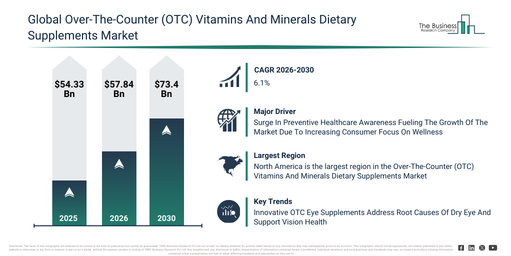
    The over-the-counter (otc) vitamins and minerals dietary supplements market size has seen strong growth in recent years. It will grow from $54.33 billion in 2025 to $57.84 billion in 2026 at a compound annual growth rate (CAGR) of 6.5%. Historically, this expansion is attributable to a rising incidence of nutrient deficiencies, an increase in self-medication practices, the broadening of retail pharmacy networks, higher disposable income levels, and increased awareness of basic nutrition.

    The over-the-counter (otc) vitamins and minerals dietary supplements market size is projected to experience robust growth in the upcoming years. It is forecast to expand to $73.4 billion in 2030, achieving a compound annual growth rate (CAGR) of 6.1%. The factors contributing to this growth during the forecast period include the increasing demand for personalized nutrition, a rising aging population with chronic conditions, innovations in supplement formulations, the expansion of e-commerce health platforms, and a heightened focus on immune and energy health. Key trends anticipated in the forecast period involve a growing consumer emphasis on preventive healthcare and wellness, an escalating demand for multivitamins and combination supplements, the increasing popularity of gummies and liquid supplement formats, the expansion of online and direct-to-consumer sales channels, and greater awareness regarding the management of nutrient deficiencies.

    Get A Free Sample Report With In-Depth Market Insights:

    https://thebusinessresearchcompany.com/sample_request?id=52055131&type=smp&name=Over-The-Counter%20%28OTC%29%20Vitamins%20And%20Minerals%20Dietary%20Supplements%20Market%20Report%202026&utm_source=Blogs&utm_medium=Paid&utm_campaign=Oct_PR

    Over-The-Counter (OTC) Vitamins And Minerals Dietary Supplements Market Growth Backed By Core Demand Fundamentals

    The increasing understanding of preventive healthcare is projected to boost the over the counter (OTC) vitamins and minerals dietary supplements market going forward. Preventive healthcare entails actively managing one’s health to avert diseases rather than waiting for illness, and a growing number of people now realize that consuming daily micronutrients helps sustain long-term wellness. This change in perspective encourages individuals to use supplements as a proactive method to bridge nutritional gaps before deficiencies or health issues emerge. The OTC vitamins and minerals supplement market supports this approach by offering convenient, non-prescription options crafted for everyday well-being and preventive attention. For instance, in October 2025, Eurostat, a Luxembourg-based government agency, reported that preventive care was the leading category, making up 3.7% of all healthcare spending in the EU in 2023. Among member states, its proportion was highest in the Netherlands (5.2%) and lowest in Malta (0.9%). Thus, the rising awareness of preventive healthcare is propelling the growth of the over the counter (OTC) vitamins and minerals dietary supplements market.

    Over-The-Counter (OTC) Vitamins And Minerals Dietary Supplements Market Segment Analysis And Revenue Potential

    The over-the-counter (otc) vitamins and minerals dietary supplements market covered in this report is segmented –

    1) By Product Types: Vitamins, Minerals, Dietary Supplements

    2) By Formulation Type: Tablets, Capsules, Softgels, Powders, Liquids, Gummies

    3) By Sales Channel: Pharmacies, Supermarkets and Hypermarkets, Online Retailers, Health Food Stores

    4) By Application: Heart Disease, Brain Function, Eye Health, Other Applications

    5) By Age Group: Children, Adults

    Subsegments:

    1) By Vitamins: Vitamin A, Vitamin B Complex, Vitamin C, Vitamin D, Vitamin E, Vitamin K, Multivitamins

    2) By Minerals: Calcium, Iron, Magnesium, Zinc, Potassium, Iodine, Selenium, Multiminerals

    3) By Dietary Supplements: Herbal Supplements, Probiotics, Omega-3 Or Fish Oil, Protein Supplements, Fiber Supplements, Enzyme Supplements, Amino Acids, Antioxidants

    Over-The-Counter (OTC) Vitamins And Minerals Dietary Supplements Market Growth Trends Reshaping The Competitive Landscape

    Leading companies operating within the OTC vitamins and minerals dietary supplements market are focusing on developing advanced products, such as over-the-counter eye nutritional supplements, to support vision health. Over-the-counter eye nutritional supplements are non-prescription items that contain vitamins, minerals, and antioxidants to protect and maintain eye health. They contribute to sustaining clear vision, reducing eye strain, and may delay age-related eye issues like macular degeneration. For instance, in June 2024, Bausch + Lomb, an eye health products company based in Canada, introduced Blink NutriTears, an over-the-counter nutritional supplement specifically for dry eye. Blink NutriTears is formulated with a proprietary blend that includes lutein, zeaxanthin, curcumin, and vitamin D, and has been clinically proven to target the underlying causes of dry eyes, promote healthy tear production, and provide noticeable symptom relief within 2 to 4 weeks. Clinical trials revealed that the supplement improved the severity of ocular symptoms and tear film homeostasis, helping tears stay on the eyes 33% longer. This product will be available in the eye care aisle or online.

    Over-The-Counter (OTC) Vitamins And Minerals Dietary Supplements Market Key Players Shaping Industry Direction

    Major companies operating in the over-the-counter (otc) vitamins and minerals dietary supplements market are Pfizer Inc., Johnson & Johnson, Bayer AG, Sanofi S.A., Abbott Laboratories, GlaxoSmithKline plc, Reckitt Benckiser Group plc, Koninklijke DSM N.V., Nestlé S.A., Herbalife Nutrition Ltd., Amway Corporation, GNC Holdings Inc., USANA Health Sciences, Jamieson Wellness Inc., Nature’s Way Products LLC, NOW Foods, Blackmores Limited, Swisse Wellness Pty Ltd, New Chapter, Puritan’s Pride

    View The Full Over-The-Counter (OTC) Vitamins And Minerals Dietary Supplements Market Report:

    https://thebusinessresearchcompany.com/report/over-the-counter-otc-vitamins-and-minerals-dietary-supplements-global-market-report?utm_source=Blogs&utm_medium=Paid&utm_campaign=Oct_PR

    Over-The-Counter (OTC) Vitamins And Minerals Dietary Supplements Market Largest Region By Revenue And Market Share

    North America was the largest region in the over-the-counter vitamins and minerals dietary supplements market in 2025. Asia-Pacific is expected to be the fastest-growing region in the forecast period. The regions covered in the over-the-counter (otc) vitamins and minerals dietary supplements market report are Asia-Pacific, South East Asia, Western Europe, Eastern Europe, North America, South America, Middle East, Africa.

    Reach Out To Our Team:

    The Business Research Company: https://www.thebusinessresearchcompany.com/

    Americas: +1 310-496-7795

    Asia: +44 7882 955267 & +91 8897263534

    Europe: +44 7882 955267

    Email us at: marketing@tbrc.info

    Follow us on:

    LinkedIn: https://in.linkedin.com/company/the-business-research-company

    YouTube: https://www.youtube.com/channel/UC24_fI0rV8cR5DxlCpgmyFQ

    Global Market Model: https://www.thebusinessresearchcompany.com/global-market-model