Blog

  • Outlook for Low Vision Assistive Devices Market: Key Developments and Future Strategies to 2029

    Outlook for Low Vision Assistive Devices Market: Key Developments and Future Strategies to 2029

    Claim your 30% discount on Global Market Reports with code ONLINE30. Limited time only.

    Claim your 30% discount on Global Market Reports with code ONLINE30. Limited time only.

    What Is the Estimated Industry Valuation for the Low Vision Assistive Devices Sector?

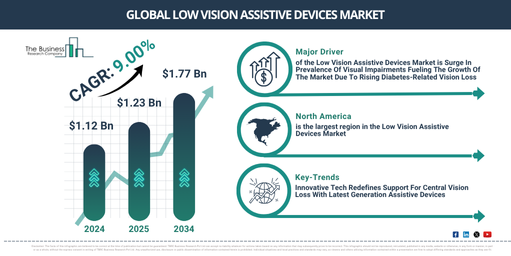
    The market size of assistive devices for low vision has seen considerable growth over recent years. The market is projected to expand from $1.12 billion in 2024 to $1.23 billion in 2025, indicating a compound annual growth rate (CAGR) of 9.3%. Several factors contributed to this growth historically, including an increase in vision impairment, a surge in the aging population, heightened demand for aids that promote independent living, growing awareness of assistive technologies, and a rise in governmental support for disabilities.

    The market for low vision assistive devices is predicted to experience significant expansion in the upcoming years, reaching $1.73 billion by 2029 at a consistent annual growth rate of 9.0%. Factors contributing to this predicted expansion throughout the forecast period include the increasing utilisation of AI-enabled smart assistive devices, a surge in healthcare spending on vision care, broader availability of assistive technology in emerging markets, an upswing in chronic eye disorders, and growing emphasis on home-based and personalised vision solutions. Key trends for the forecasted period encompass advancements in wearable low-vision technology, innovative portable electronic magnifiers, the incorporation of artificial intelligence in vision aids, development in smartphone-assisted apps, and the merging of IoT with low-vision devices.

    Download The Free Sample Report Here:

    https://www.thebusinessresearchcompany.com/sample.aspx?id=25813&type=smp

    What Forces Are Driving The Growth Of The Low Vision Assistive Devices Market?

    The rise in visual impairments is predicted to trigger the expansion of the market for low vision assistive devices. Visual impairments cover a spectrum of conditions, from partial sight to total blindness, that cannot be fully rectified with traditional glasses or lenses. This increase in such impairments is linked to the surge in diabetes patients, since diabetes commonly results in retinal damage and gradual vision loss. Assistive devices for low-vision help counteract the incidence of visual impairments by augmenting residual sight, facilitating daily tasks, and enhancing self-sufficiency and life quality for those with poor vision. For example, in February 2025, Vision Australia reported, according to Developing Australia Communities, an organization centered on empowering disabled individuals, that 453,000 Australians are either blind or have low vision. It’s a figure that is expected to climb to 564,000 by 2030. Consequently, the rising prevalence of visual impairments is catalyzing the expansion of the low-vision assistive devices market.

    How Is The Low Vision Assistive Devices Industry Segmented Across Key Parameters?

    The low vision assistive devices market covered in this report is segmented –

    1) By Product Type: Magnifiers, Reading Devices, Wearable Devices, Screen Readers, Other Product Types

    2) By Application: Education, Healthcare, Personal Use

    3) By Distribution Channel: Online Stores, Specialty Stores, Optical Stores, Other Distribution Channels

    4) By End-User: Children, Adults, Elderly

    Subsegments:

    1) By Magnifiers: Handheld Magnifiers, Stand Magnifiers, Electronic Magnifiers, Pocket Magnifiers

    2) By Reading Devices: Optical Character Recognition (OCR) Devices, Text-To-Speech Devices, Desktop Video Magnifiers, Portable Reading Machines

    3) By Wearable Devices: Smart Glasses, Head-Mounted Displays (HMDs), Augmented Reality (AR)-Based Devices, Camera-Based Wearable Systems

    4) By Screen Readers: Software-Based Screen Readers, Web-Based Screen Readers, Mobile Screen Readers, Braille Display Integrated Readers

    5) By Other Product Types: Braille Embossers, Tactile Graphics Devices, Speech-To-Text Converters, Audio Books And E-Readers

    What Notable Trends Are Shaping The Direction Of The Low Vision Assistive Devices Market?

    Prominent businesses in the low vision assistive devices market are prioritizing the development of cutting-edge technologies, such as the newest generation of aides for the visually impaired. Their aim is to boost visual precision, self-reliance, and movement for individuals suffering from central vision impairment. This newest generation of aids integrates high-definition imaging, real-time image processing, and wearable organic light-emitting diode (OLED) display systems. Together, they create improved imagery that flawlessly interacts with the user’s residual vision, while maintaining peripheral awareness. As an example, eSight, a Canadian assistive technology firm, introduced the eSight Go wearable technology in July 2025. The product sports a 12-megapixel camera with 4K resolution, dual high-definition OLED screens, and a broad 45-degree field of view, giving users an authentic and immersive viewing experience. The device also has added benefits such as superior image stabilization, a user-friendly interface, and a neck-mounted battery pack for comfortable everyday use. The goal of these futuristic assistive technologies is to allow users to maintain complete mobility and actively engage in everyday activities, be it at school, work, home, or in social settings, thus catering to over 20 distinct vision impairments globally.

    Which Companies Currently Dominate The Competitive Landscape In The Low Vision Assistive Devices Industry?

    Major companies operating in the low vision assistive devices market are HIMS Inc., OrCam Technologies Ltd., AudioEye Inc., HumanWare Group, Freedom Scientific Inc., eSight Corporation, IrisVision Global Inc., Zoomax Technology Co. Limited, Optelec U.S. Inc., Cobolt Systems Ltd., NuEyes Technologies Inc., Vision Buddy Inc., Acesight, Eyedaptic Inc., LVI Low Vision International AB, Reinecker Vision GmbH, Ash Technologies Ltd., RevoSight Inc., Joint Optical Reflective Display, Clarity.

    Get The Full Report Here:

    https://www.thebusinessresearchcompany.com/report/low-vision-assistive-devices-global-market-report

    Which Geographic Regions Are Driving Demand In The Low Vision Assistive Devices Market?

    North America was the largest region in the low vision assistive devices market in 2024. The regions covered in the low vision assistive devices market report are Asia-Pacific, Western Europe, Eastern Europe, North America, South America, Middle East, Africa.

    Request For A Customized Report:

    https://www.thebusinessresearchcompany.com/customise?id=25813&type=smp

    About The Business Research Company:

    With over 15000+ reports from 27 industries covering 60+ geographies, The Business Research Company has built a reputation for offering comprehensive, data-rich research and insights. Armed with 1,500,000 datasets, the optimistic contribution of in-depth secondary research, and unique insights from industry leaders, you can get the information you need to stay ahead in the game.

    Get in touch with us:

    The Business Research Company: https://www.thebusinessresearchcompany.com/

    Americas +1 310-496-7795

    Asia +44 7882 955267 & +91 8897263534

    Europe +44 7882 955267

    Email us at info@tbrc.info

    Follow us on:

    LinkedIn: https://in.linkedin.com/company/the-business-research-company

    YouTube: https://www.youtube.com/channel/UC24_fI0rV8cR5DxlCpgmyFQ

    Global Market Model: https://www.thebusinessresearchcompany.com/global-market-model
  • 2025–2029 Small Molecule Drug Discovery Market Outlook: Regional Trends and Growth Forecast

    2025–2029 Small Molecule Drug Discovery Market Outlook: Regional Trends and Growth Forecast

    Claim your 30% discount on Global Market Reports with code ONLINE30. Limited time only.

    Claim your 30% discount on Global Market Reports with code ONLINE30. Limited time only.

    What Are the Forecasted Growth Rate and Market Size of the Small Molecule Drug Discovery Market?

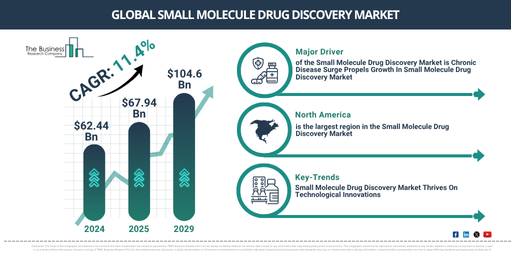
    The market size for small molecule drug discovery has experienced robust growth in recent periods. It is predicted to expand from a value of $62.44 billion in 2024 to $67.94 billion in 2025, with a compound annual growth rate (CAGR) of 8.8%. The historical growth has been driven by factors such as drug repurposing efforts, the automation of drug discovery, a boost in funding for research and development, regulatory encouragement for drug creation, and progress in high-throughput screening.

    There is an anticipated swift expansion in the small molecule drug discovery market in the coming years, with the market predicted to surge to $104.6 billion by 2029, boasting a compound annual growth rate (CAGR) of 11.4%. Several factors are expected to fuel this growth during the forecast period, including the arrival of new therapeutic targets, a rise in patient-centric drug discovery, the inclusion of drug-device combination products, the use of real-world evidence, the incorporation of pharmacogenomics, and widespread health challenges. Key trends predicted in this time frame include advancements in fragment-based drug discovery, the use of artificial intelligence in drug discovery, focus on rna-targeted therapeutics, increased partnerships and collaborations, innovative approaches in drug delivery, and the growing uptake of organoids and 3d cell culture models.

    Download The Free Sample Report Here:

    https://www.thebusinessresearchcompany.com/sample.aspx?id=9834&type=smp

    Which Factor Is Shaping The Future Of The Small Molecule Drug Discovery Market?

    The increase in chronic disease prevalence is projected to spur the expansion of the small molecule drug discovery market. Chronic diseases implicate conditions lasting a year or more, impeding daily activities, requiring ongoing medical attention, or both. Chronic ailments such as HIV, cancer, infections, heart disease, and renal disease can be treated with small-molecule drugs, which are typically more affordable for such patients. Consequently, the surge in chronic diseases will likely stimulate the small molecule drug discovery market. For example, the National Institutes of Health (NIH), a US-based biomedical research agency, reported that in 2023, the population aged 50 and above with at least one chronic disease is anticipated to escalate by 99.5%, from 71.522 million in 2020 to 142.66 million in 2050 in the U.S. Furthermore, the multimorbid population will see a 91.16% increase from 7.8304 million in 2020 to 14.968 million in 2050. Hence, the escalation in chronic diseases is propelling the small molecule drug discovery market’s growth.

    What Is The Segment-Wise Breakdown Of The Small Molecule Drug Discovery Market?

    The small molecule drug discovery market covered in this report is segmented –

    1) By Drug Type: Small Molecule Drugs, Biologic Drugs

    2) By Technology: High Throughput Screening, Pharmacogenomics, Combinatorial Chemistry, Nanotechnology, Others

    3) By Therapeutic Area: Oncology, Central Nervous System, Cardiovascular, Respiratory, Metabolic Disorders, Gastrointestinal, Others

    4) By Process Or Phase: Target ID Or Validation, Hit Generation And Selection, Lead Identification, Lead Optimization

    5) By End-User: Pharmaceutical Companies, Contract Research Organizations, Others

    Subsegments:

    1) By Small Molecule Drugs: Generic Small Molecule Drugs, Novel Small Molecule Drugs

    2) By Biologic Drugs: Monoclonal Antibodies, Vaccines, Recombinant Proteins, Cell And Gene Therapies

    Which Trends Are Redefining The Future Landscape Of The Small Molecule Drug Discovery Industry?

    One of the prominent trends in the small molecule drug discovery market is advancements in technology. Expansion strategies for major companies in this market often involve creating novel products. To exemplify, Dotmatics, a digital science platform from the US, introduced its Small Molecule Drug Discovery Solution in January 2023. This unique solution provides an interwoven scientific R&D platform, complete with optimized workflows and extensive data management abilities. This innovative product aims to decrease operational shortcomings, and fast track the transition of data to informed decisions.

    Which Companies Hold The Largest Market Share In The Small Molecule Drug Discovery Sector?

    Major companies operating in the small molecule drug discovery market include Pfizer Inc., GlaxoSmithKline plc, AstraZeneca, Boehringer Ingelheim International GmbH, Bristol-Myers Squibb Company, Johnson & Johnson, Gilead Sciences Inc., Merck KGaA, Novartis AG, 4SC AG, Teva Pharmaceutical Industries Ltd., Takeda Pharmaceutical Company Limited, Labcorp Drug Development, ICON Public Limited Company, Charles River Laboratories, Aluda Pharmaceuticals, Clinuvel Pharmaceuticals, Corcept Therapeutics, Edison Oncology, Escend Pharmaceuticals, Terray Therapeutics, Apollomics, Astex Pharmaceuticals, Pardes Biosciences, Xynomic Pharmaceuticals, Zevra Therapeutics, UNION therapeutics, Pharmacosmos, Allarity Therapeutics, Xellia Pharmaceuticals, Cyteir Therapeutics, BigHat Biosciences

    Get The Full Report Here:

    https://www.thebusinessresearchcompany.com/report/small-molecule-drug-discovery-global-market-report

    How Does Regional Performance Compare Across The Small Molecule Drug Discovery Industry?

    North America was the largest region in the small molecule drug discovery market in 2024. Europe is expected to be the fastest-growing region in the small molecule drug discovery market report during the forecast period. The regions covered in the small molecule drug discovery market report are Asia-Pacific, Western Europe, Eastern Europe, North America, South America, Middle East, Africa

    Request For A Customized Report:

    https://www.thebusinessresearchcompany.com/customise?id=9834&type=smp

    About The Business Research Company:

    With over 15000+ reports from 27 industries covering 60+ geographies, The Business Research Company has built a reputation for offering comprehensive, data-rich research and insights. Armed with 1,500,000 datasets, the optimistic contribution of in-depth secondary research, and unique insights from industry leaders, you can get the information you need to stay ahead in the game.

    Get in touch with us:

    The Business Research Company: https://www.thebusinessresearchcompany.com/

    Americas +1 310-496-7795

    Asia +44 7882 955267 & +91 8897263534

    Europe +44 7882 955267

    Email us at info@tbrc.info

    Follow us on:

    LinkedIn: https://in.linkedin.com/company/the-business-research-company

    YouTube: https://www.youtube.com/channel/UC24_fI0rV8cR5DxlCpgmyFQ

    Global Market Model: https://www.thebusinessresearchcompany.com/global-market-model
  • Global Insights: Predictive Genetic Testing And Consumer Genomics Market Expected to Surpass $16.14  Billion by 2029

    Global Insights: Predictive Genetic Testing And Consumer Genomics Market Expected to Surpass $16.14 Billion by 2029

    Claim your 30% discount on Global Market Reports with code ONLINE30. Limited time only.

    Claim your 30% discount on Global Market Reports with code ONLINE30. Limited time only.

    What Are the Forecasted Growth Rate and Market Size of the Predictive Genetic Testing And Consumer Genomics Market?

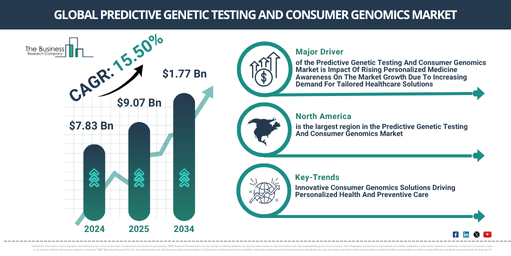
    The market for genetic testing and consumer genomics has seen a swift expansion in recent years. Its rapid growth is projected to continue, moving from a worth of $7.83 billion in 2024 to a value of $9.07 billion in 2025, representing a Compound Annual Growth Rate (CAGR) of 15.7%. This growth in the historical period has been driven by factors like an intensified focus on early disease diagnosis and risk evaluation, greater affordability and availability of genetic testing methods, heightened consumer curiosity in ancestry and attribute analysis, continued growth of telehealth platforms, and an increasing occurrence of chronic and inherited diseases.

    In the coming years, significant growth is anticipated in the genetic testing and consumer genomics market. It is projected to expand up to $16.14 billion by 2029 at a compound annual growth rate (CAGR) of 15.5%. The surge during the forecast period is primarily due to the rising demand for personalized healthcare and preventive medicine, an increment in the availability of direct-to-consumer genetic testing kits, growing application of genomics in clinical decision-making, increasing investments in biotechnological and genetic studies, and escalating governmental contribution for genomic research and precision medicine initiatives. Some prominent trends within this projection period include progress in next-generation sequencing, application of AI and machine learning in the interpretation of genetic data, advancements in mobile and home-testing technologies, incorporation of genetic data into electronic health records, and improvements in microarray technology.

    Download The Free Sample Report Here:

    https://www.thebusinessresearchcompany.com/sample.aspx?id=25884&type=smp

    Which Factor Is Shaping The Future Of The Predictive Genetic Testing And Consumer Genomics Market?

    The increased consciousness regarding personalized healthcare is predicted to boost the predictive genetic testing and consumer genomics market’s expansion. Personalized healthcare is a medical practice method that tailors prevention and treatment plans based on a person’s genetic makeup, lifestyle, and environmental influences. The consciousness surrounding personalized healthcare is rising because it heightens the success rate of treatments by aligning them with a patient’s specific biological traits. Predictive genetic testing and consumer genomics contribute to personalized healthcare by uncovering genetic risks and characteristics, allowing for customized prevention, early identification, and treatment plans based on a person’s genetic composition. For example, in February 2024, the US-based Personalized Medicine Coalition, a professional membership organization, reported that the Food and Drug Administration (FDA) had given approval for 16 new personalized medicines in 2023, showing a surge from the 6 approved in 2022. Thus, the growing consciousness about personalized healthcare is spurring the advancement of the predictive genetic testing and consumer genomics market.

    What Is The Segment-Wise Breakdown Of The Predictive Genetic Testing And Consumer Genomics Market?

    The predictive genetic testing and consumer genomics market covered in this report is segmented –

    1) By Testing Type: Diagnostic Testing, Predictive Testing, Pharmacogenomic Testing, Carrier Screening

    2) By Technology: Polymerase Chain Reaction (PCR), Next-Generation Sequencing (NGS), Microarray Technology, DNA Sequencing

    3) By Service Type: Genetic Counseling Services, Sample Collection And Analysis, Data Interpretation And Reporting

    4) By Application: Breast And Ovarian Cancer, Cardiovascular Screening, Diabetic Screening And Monitoring, Colon Cancer, Parkinsonism Or Alzheimer’s Disease, Urologic Screening Or Prostate Cancer Screening, Orthopedic And Musculoskeletal, Other Cancer Screening, Other Diseases

    5) By End User: Healthcare Providers, Research Institutions, Diagnostic Laboratories, Consumers (Direct-to-Consumer Testing)

    Subsegments:

    1) By Diagnostic Testing: Cancer Diagnostic Testing, Neurological Disorder Testing, Rare Disease Diagnostics

    2) By Predictive Testing: Cancer Risk Prediction, Cardiovascular Disease Risk, Neurodegenerative Disorder Risk

    3) By Pharmacogenomic Testing: Adverse Drug Reaction Prediction, Psychiatric Medication Response, Dosage Optimization

    4) By Carrier Screening: Cystic Fibrosis Carrier Screening, Sickle Cell Anemia Carrier Screening, Tay-Sachs Carrier Screening

    What Future Market Trends Are Projected For The Predictive Genetic Testing And Consumer Genomics Industry?

    Key players in the predictive genetic testing and consumer genomics market are concentrating on developing innovative services like consumer genomics insight, aimed at providing people with personalized health insights and aiding in the early identification of genetic risks. Consumer genomics insight services are direct-to-consumer genetic examination solutions that examine an individual’s DNA to provide information on inheritance, health dangers, traits, and wellbeing without requiring a medical prescription. For example, in November 2022, an Indian tech company called Strand Life Sciences Private Limited launched Strand Genomic Wellness to deliver personalized health insights. This service helps individuals realize their genetic risks for different diseases, promoting active health management and preventive care through genomic data. The key benefit is that it empowers individuals and their healthcare providers to make informed lifestyle and medical choices based on their distinct genetic characteristics.

    Which Companies Hold The Largest Market Share In The Predictive Genetic Testing And Consumer Genomics Sector?

    Major companies operating in the predictive genetic testing and consumer genomics market are Thermo Fisher Scientific Inc., Abbott Laboratories, Laboratory Corporation of America Holdings, Quest Diagnostics Incorporated, QIAGEN N.V., Ancestry.com, Myriad Genetics Inc., ARUP Laboratories, BGI Genomics Co. Ltd., Invitae Corporation, Guardant Health Inc., 23andMe Inc., Helix Inc., Color Health Inc., Mapmygenome India Ltd., Reliance Life Sciences, Dante Labs Inc., EasyDNA, Gene by Gene Ltd., Nebula Genomics Inc., Pathway Genomics Corporation.

    Get The Full Report Here:

    https://www.thebusinessresearchcompany.com/report/predictive-genetic-testing-and-consumer-genomics-global-market-report

    How Does Regional Performance Compare Across The Predictive Genetic Testing And Consumer Genomics Industry?

    North America was the largest region in the predictive genetic testing and consumer genomics market in 2024. Asia-Pacific is expected to be the fastest-growing region in the forecast period. The regions covered in the predictive genetic testing and consumer genomics market report are Asia-Pacific, Western Europe, Eastern Europe, North America, South America, Middle East, Africa.

    Request For A Customized Report:

    https://www.thebusinessresearchcompany.com/customise?id=25884&type=smp

    About The Business Research Company:

    With over 15000+ reports from 27 industries covering 60+ geographies, The Business Research Company has built a reputation for offering comprehensive, data-rich research and insights. Armed with 1,500,000 datasets, the optimistic contribution of in-depth secondary research, and unique insights from industry leaders, you can get the information you need to stay ahead in the game.

    Get in touch with us:

    The Business Research Company: https://www.thebusinessresearchcompany.com/

    Americas +1 310-496-7795

    Asia +44 7882 955267 & +91 8897263534

    Europe +44 7882 955267

    Email us at info@tbrc.info

    Follow us on:

    LinkedIn: https://in.linkedin.com/company/the-business-research-company

    YouTube: https://www.youtube.com/channel/UC24_fI0rV8cR5DxlCpgmyFQ

    Global Market Model: https://www.thebusinessresearchcompany.com/global-market-model
  • Latest Market Developments in Rare Diseases Treatment Industry: Forecast 2025–2029

    Claim your 30% discount on Global Market Reports with code ONLINE30. Limited time only.

    Claim your 30% discount on Global Market Reports with code ONLINE30. Limited time only.

    What Is the Estimated Industry Valuation for the Rare Diseases Treatment Sector?

    In recent times, the market size for treating rare diseases has seen swift expansion. An increase from $190.11 billion in 2024 to $213.27 billion in 2025 with a compound annual growth rate (CAGR) of 12.2% is projected. This significant growth during the historical period is a result of factors such as legislation regarding orphan drugs, heightened awareness of the diseases, innovations in biotechnology, worldwide health drives, and the surge in personalized medicine.

    In the coming years, the market size for rare diseases treatment is anticipated to witness substantial growth. The market is projected to reach a value of $343.76 billion by 2029, expanding at a compound annual growth rate (CAGR) of 12.7%. This expected growth during the forecasted period can be credited to the emergence of new therapeutic modalities, transformations in healthcare reimbursement policies, the rise of artificial intelligence and data analytics, the broadening of patient registries, and regulatory encouragement for swift approvals. Key trends for the prediction period encompass breakthroughs in gene therapy, co-working of different sectors, the rise of telemedicine and remote care, burgeoning therapeutic modalities, and the increase of patient advocacy and empowerment.

    Download The Free Sample Report Here:

    https://www.thebusinessresearchcompany.com/sample.aspx?id=8248&type=smp

    What Forces Are Driving The Growth Of The Rare Diseases Treatment Market?

    The escalating issue of uncommon diseases is fueling the growth of the treatment market for such diseases. Rare diseases impact a minor population compared to common ailments. The rising instances and mortalities related to rare diseases have led to an urgent demand for effective treatment solutions. For instance, in a report by the UK-based Orphanet Journal of Rare Diseases, a medical journal specializing in rare diseases, disclosed that approximately 15.5 million U.S children suffered from at least one rare illness. Consequently, the growing frequency of rare diseases is driving the progress of the rare disease treatment market.

    How Is The Rare Diseases Treatment Industry Segmented Across Key Parameters?

    The rare diseases treatment market covered in this report is segmented –

    1) By Drug Type: Originator Drugs (Patented Molecules), Generic Drugs

    2) By Drug Class: Biologics, Organic Compounds

    3) By Mode Of Administration: Injectable, Oral, Other Modes Of Administration

    4) By Therapeutic Area: Cancer, Neurological Conditions, Cardiovascular Conditions, Musculoskeletal Conditions, Hematologic Disorders, Infectious Diseases, Metabolic Disorders, Endocrine Disorders, Other Therapeutic Areas

    5) By Distribution Channel: Hospital Pharmacies, Specialty Pharmacies, Retail Pharmacies

    Subsegments:

    1) By Originator Drugs: Monoclonal Antibodies, Enzyme Replacement Therapies, Gene Therapies, Small Molecule Drugs

    2) By Generic Drugs: Generic Monoclonal Antibodies, Generic Enzyme Replacement Therapies, Generic Small Molecule Drugs, Biosimilars

    What Notable Trends Are Shaping The Direction Of The Rare Diseases Treatment Market?

    Technological innovations are the leading trends in the market for rare disease treatments. Top-tier companies in this market are incorporating artificial intelligence into rare disease treatment in an effort to improve options and maintain their market presence. For example, in September 2024, scientists from the US-based Kempner Institute unveiled a new AI model called TxGNN. This is designed to find treatments for rare diseases by repurposing existing drugs. It amalgamates a broad range of biomedical data and uses sophisticated AI to recognize patterns and rapidly propose new treatments. This strategy speeds up drug discovery and offers a more affordable solution compared to traditional methods. This model, cheekily referred to as AI Dr. House, underlines its diagnostic power and the potential effect it could have on treating rare diseases.

    Which Companies Currently Dominate The Competitive Landscape In The Rare Diseases Treatment Industry?

    Major companies operating in the rare diseases treatment market are AbbVie Inc., Actelion Pharmaceuticals Ltd, Alexion Pharmaceuticals Inc., Celgene Corporation, Bayer AG, Johnson & Johnson, Novartis AG, Pfizer Inc, Sanofi S.A., Eisai Co. Ltd., Merck & Co. Inc., Vertex Pharmaceuticals, Takeda Pharmaceutical Company, Eli Lilly and Company, AstraZeneca PLC, Abeona Therapeutics Inc., Akcea Therapeutics Inc., Alnylam Pharmaceuticals Inc., Amicus Therapeutics Inc., BioMarin Pharmaceutical Inc., bluebird bio Inc., Catalyst Pharmaceuticals Inc., Cerecor Inc., Chiesi Farmaceutici S.p.A., CSL Behring Ltd., Dicerna Pharmaceuticals Inc., Diplomat Pharmacy Inc., Esperion Therapeutics Inc., Genzyme Corporation, Horizon Therapeutics plc., Intercept Pharmaceuticals Inc., Ionis Pharmaceuticals Inc.

    Get The Full Report Here:

    https://www.thebusinessresearchcompany.com/report/rare-diseases-treatment-global-market-report

    Which Geographic Regions Are Driving Demand In The Rare Diseases Treatment Market?

    North America was the largest region in the rare disease treatment market in 2024. The regions covered in the rare diseases treatment market report are Asia-Pacific, Western Europe, Eastern Europe, North America, South America, Middle East, Africa.

    Request For A Customized Report:

    https://www.thebusinessresearchcompany.com/customise?id=8248&type=smp

    About The Business Research Company:

    With over 15000+ reports from 27 industries covering 60+ geographies, The Business Research Company has built a reputation for offering comprehensive, data-rich research and insights. Armed with 1,500,000 datasets, the optimistic contribution of in-depth secondary research, and unique insights from industry leaders, you can get the information you need to stay ahead in the game.

    Get in touch with us:

    The Business Research Company: https://www.thebusinessresearchcompany.com/

    Americas +1 310-496-7795

    Asia +44 7882 955267 & +91 8897263534

    Europe +44 7882 955267

    Email us at info@tbrc.info

    Follow us on:

    LinkedIn: https://in.linkedin.com/company/the-business-research-company

    YouTube: https://www.youtube.com/channel/UC24_fI0rV8cR5DxlCpgmyFQ

    Global Market Model: https://www.thebusinessresearchcompany.com/global-market-model

  • Key Market Drivers, Trends, and Forecast for the Global Low Vision And Blind Aids Products Industry

    Key Market Drivers, Trends, and Forecast for the Global Low Vision And Blind Aids Products Industry

    Claim your 30% discount on Global Market Reports with code ONLINE30. Limited time only.

    Claim your 30% discount on Global Market Reports with code ONLINE30. Limited time only.

    How Large Is the Low Vision And Blind Aids Products Market Expected to Be in 2029?

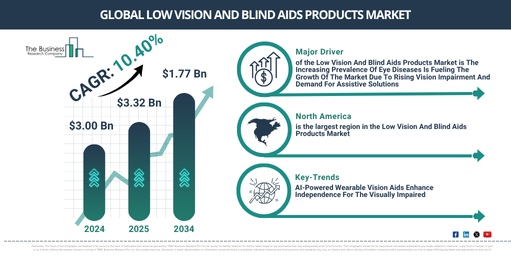
    In recent times, the market size for products assisting the blind and those with low vision has experienced rapid expansion. The market is projected to enlarge from 2024’s $3.00 billion to $3.32 billion in 2025, with a compound annual growth rate (CAGR) of 10.7%. The expansion witnessed in the historic period can be ascribed to factors such as the escalating global prevalence of vision disorders related to aging, the growing occurrence of diabetes-related visual impairments, an increasing older population, heightened awareness regarding visual disabilities, and increased support for disability services from both government and non-profit organizations.

    The market for products that aid the visually impaired and blind is projected to witness robust expansion in the ensuing years. The market value is anticipated to reach $4.95 billion by 2029, growing at a compound annual growth rate (CAGR) of 10.4%. The predicted growth within this period can be credited to the escalating participation of individuals with visual impairments in education and vocational activities, soaring healthcare spending in developing economies, endorsements from international disability rights structures, expansion in dedicated training and rehabilitation services, along with growing compliance demand for digital accessibility. Predominant trends within the forecast period encompass the progression of artificial intelligence for identifying objects and text, the introduction of wearable sensory navigation technologies, shrinkage of electronic assistive components, creation of voice-activated and touch-responsive user interfaces, and the advent of cloud-based data synchronization for accessibility tools.

    Download The Free Sample Report Here:

    https://www.thebusinessresearchcompany.com/sample.aspx?id=25812&type=smp

    What Are The Contributors To Demand In The Low Vision And Blind Aids Products Market?

    The escalating incidence of eye disorders is anticipated to fuel the expansion of the market for low vision and blind aids products. These diseases threaten the normal functioning and structure of the eyes, potentially leading to loss of vision or total blindness. The excessive use of screens, leading to eye fatigue and early emergence of visual problems, contributes to the surge in eye diseases. Products designed for persons with low vision and blindness maximize remaining vision or provide alternative non-visual methods for data access. These aids significantly improve day-to-day functioning, mobility, and self-sufficiency for those with irreversible vision loss. For example, the Centers for Disease Control and Prevention (CDC), a federal agency based in the U.S., reported in May 2024 that over 90 million Americans over the age of 40 suffer from vision issues. By 2050, the number of vision impairment and blindness cases in the U.S. is expected to increase by 150%. The prevalence of diabetic retinopathy, cataracts, and conditions like glaucoma and macular degeneration are also expected to rise by 72%, 87%, and double, respectively. Hence, the escalating incidence of eye diseases propels the expansion of the market for low vision and blind aids products.

    What Segmentation Categories Are Included In The Low Vision And Blind Aids Products Market Analysis?

    The low vision and blind aids products market covered in this report is segmented –

    1) By Product Type: Optical Aids, Non-Optical Aids, Electronic Aids, Assistive Software, Wearable Technology

    2) By Age Group: Children, Adults, Seniors, Teenagers, Middle-Aged

    3) By Distribution Channel: Online Stores, Retail Pharmacies, Supermarkets Or Hypermarkets, Specialty Stores, Direct Sales

    4) By Application: Blind School, Disabled Persons Federation And Hospital, Enterprises And Social Organizations

    5) By End-User: Individuals, Healthcare Professionals, Educational Institutions, Community Organizations, Government Agencies

    Subsegments:

    1) By Optical Aids: Magnifying Glasses, Telescopic Glasses, Spectacle-Mounted Magnifiers, Handheld Magnifiers, Stand Magnifiers

    2) By Non-Optical Aids: Braille Books, Large Print Materials, Tactile Graphics, Signature Guides, Writing Templates

    3) By Electronic Aids: Video Magnifiers, Digital Readers, Screen Enlargers, Electronic Braille Displays, Talking Devices

    4) By Assistive Software: Screen Readers, Screen Magnification Software, Text-To-Speech Software, Optical Character Recognition (OCR) Tools, Navigation And Mapping Software

    5) By Wearable Technology: Smart Glasses, Artificial Intelligence (AI)-Powered Vision Aids, Wearable Cameras, Voice-Enabled Smart Devices, Haptic Feedback Wearables

    What Upcoming Trends Are Expected To Impact The Low Vision And Blind Aids Products Market Globally?

    Leading corporations in the low vision and blind aids products market are putting their focus on creating advanced items like AI-driven wearable vision aids to enhance functional independence and life quality for those experiencing retinal disorders and vision loss. An AI-driven wearable vision aid is an intelligent device worn on the head, combining artificial intelligence with vision-improvement technologies, enabling those with visual impairments to understand visual data, carry out daily activities, and independently navigate their surroundings. For example, Eyedaptic, a US-company that specializes in vision-enhancement solutions, introduced EYE6 with Ivy in August 2024. This new AI-enabled visual aid is designed for individuals with age-related macular degeneration and other retinal disorders. The EYE6 employs advanced multimodal generative AI and broad language model skills to aid users in text reading, object recognition, and understanding different surroundings in 99 languages. Specially designed for people with age-related macular degeneration and other retinal disorders, these lightweight smart glasses unite high-definition visual improvement with an interactive AI assistant, fostering greater independence and regular task management.

    Who Are The Top-Ranked Companies In The Low Vision And Blind Aids Products Market Today?

    Major companies operating in the low vision and blind aids products market are Eschenbach Optik GmbH, Tobii Dynavox, OrCam Inc., Perkins School for the Blind, Vispero, HumanWare, Freedom Scientific, MaxiAids, Enhanced Vision, Dolphin Computer Access, Zoomax, IRIS Vision, SELVAS Healthcare Inc., LS&S LLC, LVI Low Vision International, VisionAid, Eurobraille, HHW Care Products (India) Private Limited, Nippon Telesoft Co. Ltd., Help Tech GmbH & Co. KG

    Get The Full Report Here:

    https://www.thebusinessresearchcompany.com/report/low-vision-and-blind-aids-products-global-market-report

    How Is Low Vision And Blind Aids Products Market Adoption Varying Across Different Regions And Sectors?

    North America was the largest region in the low vision and blind aids products market in 2024. Asia-Pacific is expected to be the fastest-growing region in the forecast period. The regions covered in the low vision and blind aids products market report are Asia-Pacific, Western Europe, Eastern Europe, North America, South America, Middle East, Africa.

    Request For A Customized Report:

    https://www.thebusinessresearchcompany.com/customise?id=25812&type=smp

    About The Business Research Company:

    With over 15000+ reports from 27 industries covering 60+ geographies, The Business Research Company has built a reputation for offering comprehensive, data-rich research and insights. Armed with 1,500,000 datasets, the optimistic contribution of in-depth secondary research, and unique insights from industry leaders, you can get the information you need to stay ahead in the game.

    Get in touch with us:

    The Business Research Company: https://www.thebusinessresearchcompany.com/

    Americas +1 310-496-7795

    Asia +44 7882 955267 & +91 8897263534

    Europe +44 7882 955267

    Email us at info@tbrc.info

    Follow us on:

    LinkedIn: https://in.linkedin.com/company/the-business-research-company

    YouTube: https://www.youtube.com/channel/UC24_fI0rV8cR5DxlCpgmyFQ

    Global Market Model: https://www.thebusinessresearchcompany.com/global-market-model
  • 2025 Analysis: Opportunities and Risks in the Evolving Precision Genomic Testing Market

    2025 Analysis: Opportunities and Risks in the Evolving Precision Genomic Testing Market

    Claim your 30% discount on Global Market Reports with code ONLINE30. Limited time only.

    Claim your 30% discount on Global Market Reports with code ONLINE30. Limited time only.

    What Is the Estimated Industry Valuation for the Precision Genomic Testing Sector?

    The market size of precision genomic testing has witnessed a swift expansion in the past few years. There is a forecasted growth of this market from $13.44 billion in 2024 to $15.00 billion in 2025, reflecting a compound annual growth rate (CAGR) of 11.6%. The notable expansion during the historic period can be credited to various factors. A few of them include the growing accessibility to direct-to-consumer genetic tests, enhanced partnerships between pharmaceutical and diagnostic companies, the burgeoning emphasis on preventative healthcare, the rise in the use of companion diagnostics, and increased awareness about early detection of diseases.

    The market for precision genomic testing is anticipated to experience swift expansion in the coming years, reaching a value of $23.11 billion by 2029, with an annual growth rate of 11.4%. This growth during the forecast period is due to an increase in demand for precision oncology solutions, heightened attention on rare disease diagnostics, a rise in investment in population genomics initiatives, an increased use of multi-omics methods, and a surge in demand for non-invasive prenatal testing. Some key trends anticipated during this forecast period include advancements in next-generation sequencing technologies, innovations in liquid biopsy techniques, the application of artificial intelligence in genomic analysis, improvements in the interpretation of multi-omics data, and new developments in direct-to-consumer genetic testing models.

    Download The Free Sample Report Here:

    https://www.thebusinessresearchcompany.com/sample.aspx?id=25883&type=smp

    What Forces Are Driving The Growth Of The Precision Genomic Testing Market?

    The increase in genetic disorders is set to fuel the expansion of the precision genomic testing market. Medical conditions resulting from anomalies in a person’s DNA, such as single or multiple gene mutations or changes in chromosome structure or quantity, are known as genetic disorders. The mounting prevalence of genetic disorders can primarily be attributed to the rise in maternal age, as older mothers are more likely to pass on chromosomal abnormalities like down syndrome to their offspring. Precision genomic testing facilitates the prompt detection and precise diagnosis of genetic disorders by isolating specific gene mutations, paving the way for individualized interventions and treatment plans. For example, in May 2025, Gene People, a UK-based registered charity, reported that approximately 1 in 25 children are affected by genetic conditions, affecting over 2.4 million children and adults in the UK. Furthermore, a genetic condition is diagnosed in roughly 30,000 newborns and children in the UK annually. Consequently, the growing prevalence of genetic disorders is boosting the precision genomic testing market’s growth.

    How Is The Precision Genomic Testing Industry Segmented Across Key Parameters?

    The precision genomic testing market covered in this report is segmented –

    1) By Product And Service: Consumables, Equipment, Services

    2) By Technology: Next-Generation Sequencing, Polymerase Chain Reaction, Microarray Technology, Sanger Sequencing, Clustered Regularly Interspaced Short Palindromic Repeats Or Clustered Regularly Interspaced Short Palindromic Repeats-Associated Systems, Other Technologies

    3) By Application: Oncology, Cardiovascular Diseases, Neurological Disorders, Reproductive Health, Rare Diseases, Other Applications

    4) By End-Users: Hospitals And Clinics, Diagnostic Laboratories, Research And Academic Institutes, Other End-Users

    Subsegments:

    1) By Consumables: Reagents And Kits, Deoxyribonucleic Acid Or Ribonucleic Acid Extraction Kits, Library Preparation Kits, Sequencing Reagents, Polymerase Chain Reaction Assay Kits, Buffers And Enzymes

    2) By Equipment: Next-Generation Sequencing Systems, Polymerase Chain Reaction Machines, Microarray Instruments, Deoxyribonucleic Acid Analyzers, Bioinformatics Workstations, Laboratory Automation Systems

    3) By Services: Genomic Data Analysis Services, Laboratory Testing Services, Genetic Counseling Services, Clinical Interpretation Services, Contract Research Services, Custom Assay Development Services

    Which Trends Are Redefining The Future Landscape Of The Precision Genomic Testing Industry?

    Leading firms in the precision genomic testing market are aiming to offer innovative solutions, such as ultra-sensitive circulating tumor deoxyribonucleic acid assays for more accurate and earlier detection of cancer. These advanced assays can identify tiny fragments of deoxyribonucleic acid derived from tumors in the blood, facilitating the early and accurate identification of cancerous genetic mutations. For example, in April 2025, Natera Inc., a clinical genetic testing enterprise headquartered in the US, introduced the ultra-sensitive Signatera genome molecular residual disease test. By using whole genome sequencing of a patient’s tumor and matched normal deoxyribonucleic acid, this test creates a tailored assay capable of identifying circulating tumor deoxyribonucleic acid to as small as 1 part per million. This significant sensitivity enables early and precise identification of recurring cancer, thereby improving treatment planning and patient supervision across varying cancer types.

    Which Companies Currently Dominate The Competitive Landscape In The Precision Genomic Testing Industry?

    Major companies operating in the precision genomic testing market are Roche Diagnostics International AG, Thermo Fisher Scientific Inc., Danaher Corporation, Agilent Technologies Inc., Illumina Inc., Revvity Inc., QIAGEN N.V., Exact Sciences Corporation, Natera Inc., Myriad Genetics Inc., GenScript Biotech Corporation, Fulgent Genetics Inc., Invitae Corporation, NeoGenomics Laboratories Inc., Guardant Health Inc., Ambry Genetics Corporation, Color Health Inc., Pacific Biosciences, Eurofins Genomics LLC, Precision Genetics.

    Get The Full Report Here:

    https://www.thebusinessresearchcompany.com/report/precision-genomic-testing-global-market-report

    Which Geographic Regions Are Driving Demand In The Precision Genomic Testing Market?

    North America was the largest region in the precision genomic testing market in 2024. Asia-Pacific is expected to be the fastest-growing region in the forecast period. The regions covered in the precision genomic testing market report are Asia-Pacific, Western Europe, Eastern Europe, North America, South America, Middle East, Africa.

    Request For A Customized Report:

    https://www.thebusinessresearchcompany.com/customise?id=25883&type=smp

    About The Business Research Company:

    With over 15000+ reports from 27 industries covering 60+ geographies, The Business Research Company has built a reputation for offering comprehensive, data-rich research and insights. Armed with 1,500,000 datasets, the optimistic contribution of in-depth secondary research, and unique insights from industry leaders, you can get the information you need to stay ahead in the game.

    Get in touch with us:

    The Business Research Company: https://www.thebusinessresearchcompany.com/

    Americas +1 310-496-7795

    Asia +44 7882 955267 & +91 8897263534

    Europe +44 7882 955267

    Email us at info@tbrc.info

    Follow us on:

    LinkedIn: https://in.linkedin.com/company/the-business-research-company

    YouTube: https://www.youtube.com/channel/UC24_fI0rV8cR5DxlCpgmyFQ

    Global Market Model: https://www.thebusinessresearchcompany.com/global-market-model
  • Emerging Trends and Growth Drivers in the Quit Smoking Drugs Market Through 2029

    Emerging Trends and Growth Drivers in the Quit Smoking Drugs Market Through 2029

    Claim your 30% discount on Global Market Reports with code ONLINE30. Limited time only.

    Claim your 30% discount on Global Market Reports with code ONLINE30. Limited time only.

    How Large Is the Quit Smoking Drugs Market Expected to Be in 2029?

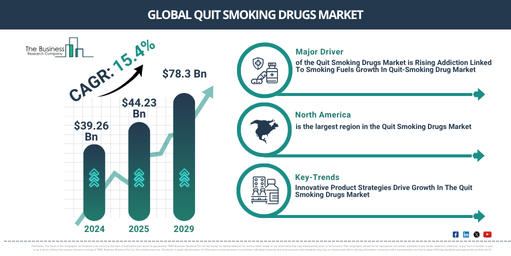
    There has been swift expansion in the size of the quit smoking drugs market in the past few years. Its growth is projected to rise from $39.26 billion in 2024 to $44.23 billion in 2025, marking a compound annual growth rate (CAGR) of 12.7%. The significant growth witnessed during the historic period can be ascribed to factors such as health consciousness campaigns, advancements in medical science, government intervention, incorporation of behavioral therapies, and changes in consumer attitudes.

    Forecasts predict a swift expansion in the market size of quit smoking drugs in the upcoming years, reaching $78.3 billion by 2029 with a Compound Annual Growth Rate (CAGR) of 15.4%. The growth during the forecast period can be linked to factors such as investments in research and development, the rise in demand for cessation aids, specific marketing strategies, awareness programmes, and progress in pharmacotherapy. The major trends projected for this period involve customized treatment methods, a rise in health-conscious behavior, the use of digital therapeutics and applications, the inclusion of behavioral therapy, and targeted education and marketing.

    Download The Free Sample Report Here:

    https://www.thebusinessresearchcompany.com/sample.aspx?id=9247&type=smp

    What Are The Contributors To Demand In The Quit Smoking Drugs Market?

    The escalating incidence of smoking addiction is projected to fuel the expansion of the market for quit-smoking medications in the future. The act of smoking involves inhaling and exhaling the vapors of burning substances like marijuana, hashish, tobacco, and others. Drugs to quit smoking are designed to decrease the desire to smoke by interfering with an individual’s craving for tobacco, and they are used as prescription medicine to manage the symptoms of nicotine withdrawal, thereby facilitating successful smoking cessation. For example, data from Statistics Canada, a Canadian government agency, revealed a 5.8% increase in cigarette production in July 2022 compared to June 2021. Furthermore, the total quantity of cigarettes sold in June 2022 rose by 1.3% from May 2022, totaling 1.4 billion. Thus, the escalating incidence of smoking addiction is spurring the growth of the market for quit-smoking drugs.

    What Segmentation Categories Are Included In The Quit Smoking Drugs Market Analysis?

    The quit smoking drugs market covered in this report is segmented –

    1) By Product: Drug Therapy, E-Cigarettes, Nicotine Inhalers, Nicotine Replacement Therapies, Nicotine Sublingual Tablets

    2) By Drug: Varenicline (Chantix), Bupropion (Zyban), Other Drugs

    3) By Distribution: Drug Store, Online Pharmacies, Retail Pharmacies

    Subsegments:

    1) By Drug Therapy: Bupropion (Zyban), Varenicline (Chantix)

    2) By E-Cigarettes: Disposable E-Cigarettes, Rechargeable E-Cigarettes, Pod Systems

    3) By Nicotine Inhalers: Prescription Inhalers, Over-The-Counter Inhalers

    4) By Nicotine Replacement Therapies (NRT): Nicotine Patches, Nicotine Gum, Nicotine Lozenges

    5) By Nicotine Sublingual Tablets: Fast-Acting Sublingual Tablets, Extended-Release Sublingual Tablets

    What Upcoming Trends Are Expected To Impact The Quit Smoking Drugs Market Globally?

    Product improvisation is becoming a significant trend in acquiring a wider market share in the quit-smoking drugs domain. Leading firms in the field of quit-smoking drugs are concentrating on product innovation to consolidate their market position. As an illustration, in August 2022, a tobacco company based in Sweden, Swedish Match AB, introduced ZYN Tobacco Gold, a travel retail nicotine pouch with a tobacco flavor. Available in medium (3 mg) and strong (6 mg) strengths, Tobacco Gold caters to consumers’ preferences with its sweet tobacco taste that hints at dried fruit, wood, and caramel. Since tobacco flavor is the most favoured to assist users in choosing safer alternatives that are both devoid of tobacco and smoke-free, this product caters precisely to that demand. It presents a resolution for cigarette smokers who wish to avoid tobacco intake while still enjoying a nicotine boost in smoke-free locations.

    Who Are The Top-Ranked Companies In The Quit Smoking Drugs Market Today?

    Major companies operating in the quit smoking drugs market include 22nd Century Group, Cipla Limited, Dr. Reddy’s Laboratories, GSK Plc., Johnson & Johnson, NJOY LLC, Novartis AG, Perrigo Company Plc, Pfizer Inc., Philip Morris International, Glenmark Pharmaceuticals Limited, Zydus Cadila Healthcare Limited, Rusan Pharma Ltd., BioCorRx Inc., CV Sciences Inc., Ennaid Therapeutics LLC, Fertin Pharma A/S, Gilla Inc., Hikma Pharmaceuticals PLC, Innovus Pharmaceuticals Inc., IntelGenx Technologies Corp.

    Get The Full Report Here:

    https://www.thebusinessresearchcompany.com/report/quit-smoking-drugs-global-market-report

    How Is Quit Smoking Drugs Market Adoption Varying Across Different Regions And Sectors?

    North America was the largest region in the quit smoking drugs market in 2024. The regions covered in the quit smoking drugs market report are Asia-Pacific, Western Europe, Eastern Europe, North America, South America, Middle East, Africa

    Request For A Customized Report:

    https://www.thebusinessresearchcompany.com/customise?id=9247&type=smp

    About The Business Research Company:

    With over 15000+ reports from 27 industries covering 60+ geographies, The Business Research Company has built a reputation for offering comprehensive, data-rich research and insights. Armed with 1,500,000 datasets, the optimistic contribution of in-depth secondary research, and unique insights from industry leaders, you can get the information you need to stay ahead in the game.

    Get in touch with us:

    The Business Research Company: https://www.thebusinessresearchcompany.com/

    Americas +1 310-496-7795

    Asia +44 7882 955267 & +91 8897263534

    Europe +44 7882 955267

    Email us at info@tbrc.info

    Follow us on:

    LinkedIn: https://in.linkedin.com/company/the-business-research-company

    YouTube: https://www.youtube.com/channel/UC24_fI0rV8cR5DxlCpgmyFQ

    Global Market Model: https://www.thebusinessresearchcompany.com/global-market-model
  • Strategic Report on Low Endotoxin Gelatin Market: Growth Opportunities and Emerging Challenges

    Strategic Report on Low Endotoxin Gelatin Market: Growth Opportunities and Emerging Challenges

    Claim your 30% discount on Global Market Reports with code ONLINE30. Limited time only.

    Claim your 30% discount on Global Market Reports with code ONLINE30. Limited time only.

    What Is the Outlook for the Low Endotoxin Gelatin Market Heading Into 2029?

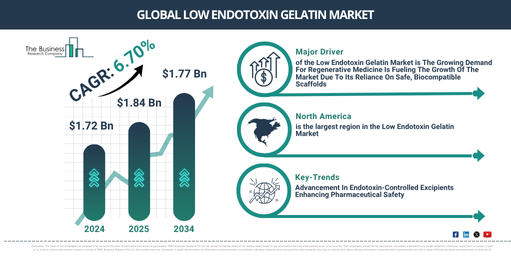
    In the past few years, the size of the low endotoxin gelatin market has seen a considerable rise. Projected growth estimates that it will expand from $1.72 billion in 2024 to $1.84 billion in 2025, with a compound annual growth rate (CAGR) of 7.0%. This growth during the historical period can be credited to the escalating demand for biocompatible materials in the pharmaceutical sector, its increased application in the production of vaccines and biologics, heightened concerns about endotoxin contamination, the extension of processes for gelatin purification, and an intensifying regulatory focus on injectable-grade excipients.

    The market for low endotoxin gelatin is set to experience robust expansion in the coming years, with its size projected to reach $2.38 billion in 2029, climbing at a compound annual growth rate (CAGR) of 6.7%. Factors contributing to this anticipated expansion during the forecast period include increased investment in biopharmaceutical research and development, a surge in the adoption of tissue engineering and regenerative medicine, a rise in the demand for cell culture alongside 3D bioprinting applications, stricter quality measures for parenteral products, and a growing predilection for gelatin that’s not derived from animals. Key trends predicted for the forecast period encompass the progression of plant-based and recombinant low-endotoxin gelatin, its incorporation into cutting-edge drug delivery systems, the employment of personalized medicine formulations, an upswing in research and development activities, and the automation of quality control and endotoxin testing.

    Download The Free Sample Report Here:

    https://www.thebusinessresearchcompany.com/sample.aspx?id=25811&type=smp

    Which Factors Are Pushing The Low Endotoxin Gelatin Market Forward?

    Anticipated expansion in the field of regenerative medicine will likely stimulate the development of the low endotoxin gelatin market. The term regenerative medicine covers therapies created to restore normal function by repairing, replacing, or regenerating human cells, tissues, or organs. The need for these therapies is escalating due to higher rates of chronic disease, with more people requiring advanced treatments that can regenerate damaged tissues, improving long-term health outcomes. Low endotoxin gelatin facilitates this type of medicine by providing a safe, compatible structure that encourages cellular development and tissue rejuvenation with a minimal immune response. Its superior purity makes it an excellent fit for complex cell therapies and tissue engineering. The American Society of Gene & Cell Therapy (ASGCT), a professional organization based in the US, and Citeline, a US provider of drugs and devices, reported in July 2023 that the end of the first quarter of 2023 saw 247 gene therapies in Phase II. This had risen by 5% to 260 by the end of the second quarter. Thus, the swelling demand for regenerative medicine is fuelling the progression of the low endotoxin gelatin market.

    Which Segment Held The Largest Share In The Low Endotoxin Gelatin Market In 2025?

    The low endotoxin gelatin market covered in this report is segmented –

    1) By Type: Type A (Acid Process Gelatin), Type B (Alkaline Process Gelatin)

    2) By Product Type: Porcine Gelatin, Bovine Gelatin, Fish Gelatin, Other Product Types

    3) By Formulation: Powder, Granules, Liquid, Sheet, Other Formulations

    4) By Application: Drug Delivery Systems, Tissue Engineering, Cell Culture, Stabilizing Agents, Thickening Agents

    5) By End-User: Pharmaceuticals, Biotechnology, Food And Beverage, Cosmetics, Research Laboratories

    Subsegments:

    1) By Type A (Acid Process Gelatin): Porcine Skin Gelatin, Fast Setting Gelatin, Low Bloom Gelatin, Pharmaceutical Grade Type A, Biotech Application Grade

    2) By Type B (Alkaline Process Gelatin): Bovine Hide Gelatin, High Bloom Gelatin, Slow Dissolving Gelatin, Injectable Grade Type B, Regenerative Medicine Grade

    How Are Key Trends Driving Expansion In The Low Endotoxin Gelatin Industry?

    Major players in the low endotoxin gelatin industry are prioritizing the production of advanced solutions like endotoxin-controlled excipients to amplify the security and efficiency of medicine concoctions. Endotoxin-controlled excipients, ingredients of high purity, are utilized to diminish the levels of endotoxins in pharmaceutical formulations, consequently fortifying the safety and dependability of sensitive products like injectables, biologics, along with cell-based treatments. For instance, in January 2025, GELITA, a manufacturer of gelatin and collagen peptides based in Germany, introduced products named VACCIPRO and MEDELLAPRO. These excipients, structurally highly purified, superior medical-grade gelatins and collagen peptides tailored for progressive bioscience uses like vaccine stabilization, medical gadgetry, and 3D bioprinting, adhering to rigid endotoxin control prerequisites to guarantee product safety and patient wellbeing in pharmaceutical and medical healthcare surroundings.

    Which Organizations Are Driving Progress In The Low Endotoxin Gelatin Industry?

    Major companies operating in the low endotoxin gelatin market are Nagase & Co. Ltd., Darling Ingredients, GELITA AG, PB Leiner, Nippi Inc., Nitta Gelatin Inc., Weishardt Group, Sterling Biotech Limited, Narmada Gelatines Ltd., Great Lakes Gelatin Company, Kenney & Ross Limited, Junca Gelatines SL, Trobas Gelatine BV, Lapi Gelatine S.p.a., Ewald-Gelatine GmbH, Niksan Pharmaceutical, Geltech, India Gelatine & Chemicals Ltd., Reinert Gruppe Ingredients GmbH, Jilin Tianzheng Biotechnology Co. Ltd., Yasin gelatin.

    Get The Full Report Here:

    https://www.thebusinessresearchcompany.com/report/low-endotoxin-gelatin-global-market-report

    Which Region Is Expected To Experience The Highest Growth In The Low Endotoxin Gelatin Industry?

    North America was the largest region in the low endotoxin gelatin market in 2024. Asia-Pacific is expected to be the fastest-growing region in the forecast period. The regions covered in the low endotoxin gelatin market report are Asia-Pacific, Western Europe, Eastern Europe, North America, South America, Middle East, Africa.

    Request For A Customized Report:

    https://www.thebusinessresearchcompany.com/customise?id=25811&type=smp

    About The Business Research Company:

    With over 15000+ reports from 27 industries covering 60+ geographies, The Business Research Company has built a reputation for offering comprehensive, data-rich research and insights. Armed with 1,500,000 datasets, the optimistic contribution of in-depth secondary research, and unique insights from industry leaders, you can get the information you need to stay ahead in the game.

    Get in touch with us:

    The Business Research Company: https://www.thebusinessresearchcompany.com/

    Americas +1 310-496-7795

    Asia +44 7882 955267 & +91 8897263534

    Europe +44 7882 955267

    Email us at info@tbrc.info

    Follow us on:

    LinkedIn: https://in.linkedin.com/company/the-business-research-company

    YouTube: https://www.youtube.com/channel/UC24_fI0rV8cR5DxlCpgmyFQ

    Global Market Model: https://www.thebusinessresearchcompany.com/global-market-model
  • In-Depth Powered Mobility Devices Market Report: Business Trends, Growth Factors, and Forecast to 2029

    In-Depth Powered Mobility Devices Market Report: Business Trends, Growth Factors, and Forecast to 2029

    Claim your 30% discount on Global Market Reports with code ONLINE30. Limited time only.

    Claim your 30% discount on Global Market Reports with code ONLINE30. Limited time only.

    How Large Is the Powered Mobility Devices Market Expected to Be in 2029?

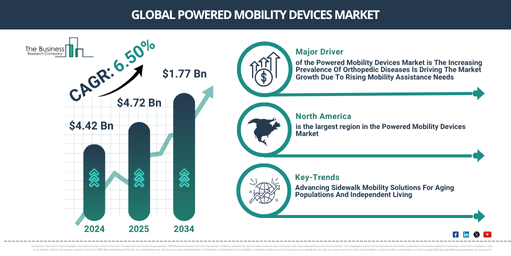
    Over recent years, there’s been noticeable robust growth in the market size of powered mobility devices. It is projected to increase from $4.42 billion in 2024 to $4.72 billion in 2025, with a compound annual growth rate (CAGR) of 6.8%. Factors contributing to this growth over the historical period include the increase in the worldwide elderly population, a surge in mobility impairments, a climbing incidence of chronic diseases that affect movement, growth in the healthcare infrastructure in developed areas, and an upsurge in the demand for healthcare services based at home.

    The market size for powered mobility devices is projected to witness a significant surge in the upcoming years, and is anticipated to reach $6.07 billion in 2029, with a compound annual growth rate (CAGR) of 6.5%. The expansion in this forecasted time frame is largely attributable to accelerating demand in emergent economies, enhancing focus on the inclusion of infrastructure and urban amenities, escalating investment in healthcare in underdeveloped nations, growing emphasis on aging-in-place approaches, and broadened health insurance coverage for supportive devices. Foreseen trends for this period include the integration of smart sensors for real-time health inspection, creation of sturdy and lightweight materials, the utilization of artificial intelligence for adaptive mobility management, progress in battery technology for extended coverage and efficacy, and integration with the Internet of Things (IoT) for improved device interconnectivity.

    Download The Free Sample Report Here:

    https://www.thebusinessresearchcompany.com/sample.aspx?id=25882&type=smp

    What Are The Contributors To Demand In The Powered Mobility Devices Market?

    The escalating occurrence of diseases impacting the musculoskeletal system is projected to fuel the expansion of the powered mobility devices market. Orthopedic conditions pertains to an extensive range of ailments that affect body parts such as bones, joints, ligaments, tendons, and muscles, often leading to pain, decreased mobility, and functional deficits. The escalation in occurrence of orthopedic diseases is predominantly influenced by elements like aging population, inactive lifestyles, and increased occurrences of obesity and chronic diseases, as these factors cumulatively exert more mechanical pressure on the musculoskeletal system and hamper its inherent capacity to restore and uphold structural coherence. Powered mobility devices offer a significant contribution by enhancing mobility, minimizing physical exertion, and ameliorating the overall living standard for people afflicted by orthopedic constraints. For example, in March 2023, data released by the Office for Health Improvement and Disparities, a government department based in the UK, revealed that the percentage of individuals over the age of 16 reporting a long-term musculoskeletal (MSK) condition such as arthritis or persistent back or joint problems, increased from 17.0% in 2021 to 17.6% in 2022. Consequently, the rising incidence of orthopedic diseases is propelling the growth of the powered mobility devices market.

    What Segmentation Categories Are Included In The Powered Mobility Devices Market Analysis?

    The powered mobility devices market covered in this report is segmented –

    1) By Product Type: Powered Wheelchairs, Power Operated Vehicles, Power Add-On Or Propulsion-Assist Units

    2) By Propulsion Type: Battery Electric, Fuel Cell Electric, Hybrid Electric Diesel

    3) By Distribution Channel: Home Care Providers, Online Stores, Retail Stores

    4) By Application: Pediatric, Adult

    5) By End Use: Home Care, Rehabilitation Centers, Hospitals, Other End Use

    Subsegments:

    1) By Powered Wheelchairs: Rear-Wheel Drive Powered Wheelchairs, Front-Wheel Drive Powered Wheelchairs, Mid-Wheel Drive Powered Wheelchairs, Standing Powered Wheelchairs

    2) By Power Operated Vehicles: Three-Wheeled Mobility Scooters, Four-Wheeled Mobility Scooters, Heavy-Duty Mobility Scooters, Foldable Mobility Scooters

    3) By Power Add-On Or Propulsion-Assist Units: Rear-Mounted Power Assist Devices, Wheel Hub-Integrated Power Assist Units, Hand Rim-Activated Power Assist Units, Towing-Style Power Assist Units

    What Notable Trends Are Shaping The Direction Of The Powered Mobility Devices Market?

    Mainstream companies in the powered mobility devices market are directing their attention towards the creation of advanced innovations like sidewalk mobility vehicles. These vehicles aim to mitigate mobility issues among the elderly population and facilitate autonomous movement in everyday activities. A sidewalk mobility vehicle is a compact, battery-powered transportation tool that aids people with diminished walking endurance. It permits safe and smooth locomotion alongside pedestrians on pathways. For instance, Toyota Motor Corporation, a Japanese automotive production company, unveiled the C+walk S in March 2023. This three-wheeled electric mobility device is specifically created for sidewalk usage, providing adjustable speed limit options up to 6 kilometers per hour. It has a small turning radius and includes an obstacle detection feature with automatic deceleration to enhance pedestrian safety. The device’s design is focused on the user, featuring a low step height for effortless boarding, a detachable lithium-ion battery that can be charged at home, and safety measures like slope detection and turning speed regulation. These features make it a reliable mobility aid for older adults and those with diminished walking abilities.

    Who Are The Top-Ranked Companies In The Powered Mobility Devices Market Today?

    Major companies operating in the powered mobility devices market are Ottobock SE & Co. KGaA, Invacare Corporation, Numotion, Drive Medical GmbH, Permobil AB, National Seating & Mobility Inc., Pride Mobility Products Corporation, Kymco Healthcare, GF Health Products Inc., Hoveround Corporation, Golden Technologies Inc., WHILL Inc., Merits Health Products Co. Ltd., Carex Health Brands Inc., MEYRA GmbH, Recare Ltd., Decon AB, Ostrich Mobility Instruments Pvt. Ltd., Karma Medical Products, Airwheel Holding Limited, MYFRIDO, Karman Healthcare Inc., LEVO AG, Magic Mobility, Shoprider Mobility Products, Batec Mobility, KD Smart Chair, Efligo Mobility Global.

    Get The Full Report Here:

    https://www.thebusinessresearchcompany.com/report/powered-mobility-devices-global-market-report

    How Is Powered Mobility Devices Market Adoption Varying Across Different Regions And Sectors?

    North America was the largest region in the powered mobility devices market in 2024. Asia-Pacific is expected to be the fastest-growing region in the forecast period. The regions covered in the powered mobility devices market report are Asia-Pacific, Western Europe, Eastern Europe, North America, South America, Middle East, Africa.

    Request For A Customized Report:

    https://www.thebusinessresearchcompany.com/customise?id=25882&type=smp

    About The Business Research Company:

    With over 15000+ reports from 27 industries covering 60+ geographies, The Business Research Company has built a reputation for offering comprehensive, data-rich research and insights. Armed with 1,500,000 datasets, the optimistic contribution of in-depth secondary research, and unique insights from industry leaders, you can get the information you need to stay ahead in the game.

    Get in touch with us:

    The Business Research Company: https://www.thebusinessresearchcompany.com/

    Americas +1 310-496-7795

    Asia +44 7882 955267 & +91 8897263534

    Europe +44 7882 955267

    Email us at info@tbrc.info

    Follow us on:

    LinkedIn: https://in.linkedin.com/company/the-business-research-company

    YouTube: https://www.youtube.com/channel/UC24_fI0rV8cR5DxlCpgmyFQ

    Global Market Model: https://www.thebusinessresearchcompany.com/global-market-model

  • CAGR of 5% Projected for Quinolones Market From 2025 to 2029

    CAGR of 5% Projected for Quinolones Market From 2025 to 2029

    Claim your 30% discount on Global Market Reports with code ONLINE30. Limited time only.

    Claim your 30% discount on Global Market Reports with code ONLINE30. Limited time only.

    What Is the Outlook for the Quinolones Market Heading Into 2029?

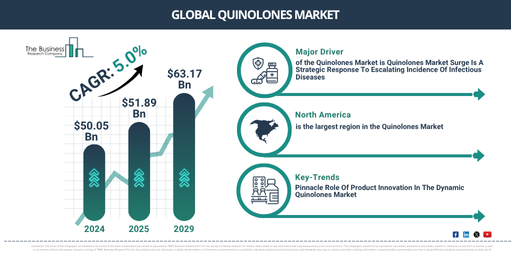
    The size of the quinolones market has seen a consistent increase in the past few years. The market, valued at $50.05 billion in 2024, is projected to reach $51.89 billion in 2025, growing at a compound annual growth rate (CAGR) of 3.7%. The expansion witnessed in the historic time frame owes to factors like increased demand for and use of antibiotics, regulatory sanctions, extensive research and development, competitive market scenarios, and impending patent expirations.

    Anticipated robust expansion is predicted for the quinolones market in the forthcoming years. It’s projected to reach a value of $63.17 billion in 2029, with a compound annual growth rate (CAGR) of 5.0%. Factors contributing to growth during this period include the emergence of new diseases, modifications in regulations, evolution of global health policies, increasing antibiotic resistance, and extensive market growth tactics. Significant trends during the forecast period encompass the development of new products and alterations in the regulatory environment.

    Download The Free Sample Report Here:

    https://www.thebusinessresearchcompany.com/sample.aspx?id=9429&type=smp

    Which Factors Are Pushing The Quinolones Market Forward?

    The quinolones market is experiencing substantial growth due to the increasing prevalence of infectious diseases. These illnesses, caused by microorganisms like parasites, bacteria, viruses, and fungi, often require treatment with quinolones. These drugs are particularly effective for bacterial infections such as tuberculosis and urinary tract infections. Data from the Global Tuberculosis Report by Switzerland’s World Health Organization in November 2023 highlighted an increase in fresh TB diagnoses to 7.5 million in 2022, up from 6.4 million in 2021. As a result, this uptick in infectious diseases cases will act as a driver for the quinolones market.

    Which Segment Held The Largest Share In The Quinolones Market In 2025?

    The quinolones market covered in this report is segmented –

    1) By Type: Norfloxacin, Ofloxacin, Ciprofloxacin, Gemifloxacin, Other Types

    2) By Pathogen Type: Gram-Positive Pathogen, Gram-Negative Pathogen

    3) By Application: Hospital Pharmacies, Retail Pharmacies, Online Pharmacies

    Subsegments:

    1) By Norfloxacin: Indications, Dosage Forms

    2) By Ofloxacin: Indications, Dosage Forms

    3) By Ciprofloxacin: Indications, Dosage Forms

    4) By Gemifloxacin: Indications, Dosage Forms

    5) By Other Types: Various Formulations, Indications

    How Are Key Trends Driving Expansion In The Quinolones Industry?

    The main trend gaining traction in the quinolones market is product innovation. In order to maintain their market standing, many of the significant companies within the quinolones market are putting a heavy focus on creating innovative products. An example of this is when a new drug-resistant tuberculosis treatment, Dovprela, was introduced by the South Korean branch of Viatris, an American pharmaceutical company, in January 2023. For the treatment of adult patients suffering from extensively drug-resistant TB or non-responsive multidrug-resistant TB, Dovprela uses a three-drug regimen of bedaquiline, pretomanid, and linezolid (BPaL). Due to its potent anti-tuberculosis properties, the drug can cut down the treatment duration from 18-20 months to only 5-6 months.

    Which Organizations Are Driving Progress In The Quinolones Industry?

    Major companies operating in the quinolones market include Bayer AG, Novartis AG, Sanofi SA, Merck & Co. Inc., LG Life Sciences, Pfizer Inc., Viatris Inc., Lupin Limited, Hikma Pharmaceuticals plc, Zydus Group, KYORIN Holdings Inc., Teva Pharmaceutical Industries Ltd., GSK plc, Zee Laboratories, Cipla Ltd., Geo Pharma Pvt. Ltd., Finecure Pharmaceuticals, Novus, AstraZeneca plc, Sun Pharmaceutical Industries Ltd., Dr. Reddy’s Laboratories Ltd., Cadila Healthcare Ltd., Glenmark Pharmaceuticals Ltd., Alkem Laboratories Ltd., Torrent Pharmaceuticals Ltd., Macleods Pharmaceuticals Ltd., Alembic Pharmaceuticals Ltd., Hetero Drugs Ltd., Wockhardt Ltd.

    Get The Full Report Here:

    https://www.thebusinessresearchcompany.com/report/quinolones-global-market-report

    Which Region Is Expected To Experience The Highest Growth In The Quinolones Industry?

    North America was the largest region in the quinolones market in 2024. The regions covered in the quinolones market report are Asia-Pacific, Western Europe, Eastern Europe, North America, South America, Middle East, Africa

    Request For A Customized Report:

    https://www.thebusinessresearchcompany.com/customise?id=9429&type=smp

    About The Business Research Company:

    With over 15000+ reports from 27 industries covering 60+ geographies, The Business Research Company has built a reputation for offering comprehensive, data-rich research and insights. Armed with 1,500,000 datasets, the optimistic contribution of in-depth secondary research, and unique insights from industry leaders, you can get the information you need to stay ahead in the game.

    Get in touch with us:

    The Business Research Company: https://www.thebusinessresearchcompany.com/

    Americas +1 310-496-7795

    Asia +44 7882 955267 & +91 8897263534

    Europe +44 7882 955267

    Email us at info@tbrc.info

    Follow us on:

    LinkedIn: https://in.linkedin.com/company/the-business-research-company

    YouTube: https://www.youtube.com/channel/UC24_fI0rV8cR5DxlCpgmyFQ

    Global Market Model: https://www.thebusinessresearchcompany.com/global-market-model