Blog

  • Cancer Therapy Market Size And Growth In 2026: Key Factors Shaping Future Demand

    Cancer Therapy Market Size And Growth In 2026: Key Factors Shaping Future Demand

    Backed by market attractiveness analysis, total addressable market sizing, company benchmarking matrices, interactive Excel dashboards, wider supply chain intelligence, emerging startup coverage, and detailed product-level insights, The Business Research Company’s 2026 market reports are designed to offer research that is more actionable and strategically valuable than ever.

    Cancer Therapy Market Growth From $232.46 Billion In 2026 To $342.09 Billion By 2030 At A CAGR Of 10.1%

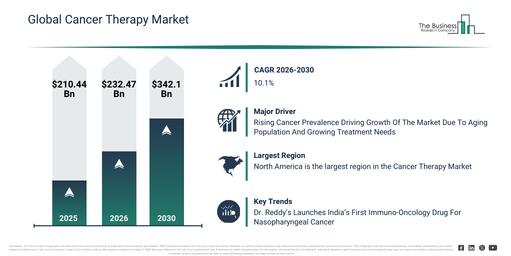
    The cancer therapy market has experienced rapid expansion in recent years. It is anticipated to increase from $210.44 billion in 2025 to $232.47 billion in 2026, achieving a compound annual growth rate (CAGR) of 10.5%. The growth observed in previous periods is primarily due to rising cancer incidence, the adoption of chemotherapy, improved hospital oncology infrastructure, the expansion of radiation therapy, and an aging population.

    The cancer therapy market is projected to experience substantial expansion in the coming years, reaching a valuation of $342.1 billion by 2030, exhibiting a compound annual growth rate (CAGR) of 10.1%. This anticipated growth during the forecast period is driven by factors such as biomarker-driven therapies, advancements in the immuno-oncology pipeline, the increasing adoption of precision medicine, rising healthcare expenditure, and improved early cancer detection methods. Key developments expected during this period include the accelerated uptake of immunotherapy, the proliferation of targeted cancer treatments, the broadening scope of precision oncology, a greater reliance on combination therapies, and a pivot towards individualized treatment plans.

    Get A Free Sample Report With In-Depth Market Insights:

    https://www.thebusinessresearchcompany.com/sample.aspx?id=24492&type=smp&utm_source=Blogs&utm_medium=Paid&utm_campaign=Oct_PR

    Cancer Therapy Market Growth Drivers: What’s Behind The Acceleration?

    The increasing prevalence of cancer is projected to fuel the expansion of the cancer therapy market. Cancer refers to a group of diseases characterized by the uncontrolled growth and spread of abnormal cells in the body. The rise in cancer cases is primarily attributed to heightened exposure to environmental carcinogens like pollution and tobacco smoke. Cancer therapy plays a crucial role in managing the increasing prevalence of cancer by treating existing conditions, enhancing survival rates, and slowing disease progression. For instance, in February 2024, the World Health Organization (WHO), an intergovernmental organization based in Switzerland, reported that global cancer incidence is anticipated to reach over 35 million new cases by 2050, signifying a 77% increase from the estimated 20 million cases recorded in 2022. Therefore, the growing prevalence of cancer acts as a key driver for the cancer therapy market.

    Cancer Therapy Market Segment Analysis Spotlighting Growth Areas

    The cancer therapy market covered in this report is segmented –

    1) By Therapy Type: Chemotherapy, Target Therapy, Immunotherapy, Radiotherapy, Other Therapy Types

    2) By Cancer Type: Blood Cancer, Breast Cancer, Prostate Cancer, Gastrointestinal Cancer, Gynaecologic Cancer, Respiratory Or Lung Cancer, Other Cancer Types

    3) By End User: Hospitals, Specialty Clinics, Cancer And Radiation Therapy Centers

    Subsegments:

    1) By Chemotherapy: Alkylating Agents, Antimetabolites, Anti-Tumor Antibiotics, Topoisomerase Inhibitors, Mitotic Inhibitors, Corticosteroids, Other Chemotherapy Drugs

    2) By Targeted Therapy: Monoclonal Antibodies, Tyrosine Kinase Inhibitors (TKIs), mTOR Inhibitors, Proteasome Inhibitors, PARP Inhibitors, Other Targeted Agents

    3) By Immunotherapy: Immune Checkpoint Inhibitors, CAR T-cell Therapy, Cancer Vaccines, Cytokines, Oncolytic Virus Therapy, Other Immunotherapies

    4) By Radiotherapy: External Beam Radiation Therapy (EBRT), Internal Radiation Therapy (Brachytherapy), Systemic Radiation Therapy, Stereotactic Radiosurgery (SRS), Intensity-Modulated Radiation Therapy (IMRT), Image-Guided Radiation Therapy (IGRT)

    5) By Other Therapy Types: Hormone Therapy, Stem Cell Transplant, Photodynamic Therapy, Cryoablation, Hyperthermia Therapy

    Cancer Therapy Market Trends: What’s Defining The Industry’s Next Phase?

    Major companies operating in the cancer therapy market are increasingly focusing on developing innovative therapies, such as immuno-oncology drugs, to enhance treatment effectiveness by leveraging the body’s immune system to target and destroy cancer cells. Immuno-oncology drugs constitute a class of cancer treatments designed to stimulate or boost the body’s own immune system to more effectively recognize and attack cancer cells. For instance, in December 2024, Dr. Reddy’s Laboratories Ltd., an India-based pharmaceutical company, introduced Toripalimab in India, marking it as the first and only immuno-oncology medication authorized for the treatment of nasopharyngeal cancer. This launch provides a new, targeted treatment option for patients suffering from this rare and aggressive cancer, with the potential to improve outcomes through advanced immune system engagement. The availability of toripalimab in India underscores Dr. Reddy’s commitment to expanding access to cutting-edge cancer therapies in underserved areas.

    Cancer Therapy Market Leading Companies: Who Holds The Strongest Market Presence?

    Major companies operating in the cancer therapy market are Pfizer Inc., Johnson & Johnson, F. Hoffmann-La Roche Ltd, Merck & Co. Inc., Bayer Aktiengesellschaft, Bristol-Myers Squibb Company, AstraZeneca PLC, Novartis International AG, GlaxoSmithKline PLC, Elekta AB, Exelixis Inc., Accuray Incorporated, Akeso Inc., Nanobiotix S.A., SOTIO Biotech a.s., AdvanCell Isotopes Pty Ltd, Axcynsis Therapeutics Pte Ltd, Clarity Pharmaceuticals Ltd, Affimed N.V., Aptadel Therapeutics S.L.

    View The Full Cancer Therapy Market Report:

    https://www.thebusinessresearchcompany.com/report/cancer-therapy-global-market-report?utm_source=Blogs&utm_medium=Paid&utm_campaign=Oct_PR

    Cancer Therapy Market Regional Breakdown: Where Is Demand Concentrated?

    North America was the largest region in the cancer therapy market in 2025. Asia-Pacific is expected to be the fastest-growing region in the forecast period. The regions covered in the cancer therapy market report are Asia-Pacific, South East Asia, Western Europe, Eastern Europe, North America, South America, Middle East, Africa.

    Reach Out To Our Team:

    The Business Research Company: https://www.thebusinessresearchcompany.com/

    Americas: +1 310-496-7795

    Asia: +44 7882 955267 & +91 8897263534

    Europe: +44 7882 955267

    Email us at: marketing@tbrc.info

    Follow us on:

    LinkedIn: https://in.linkedin.com/company/the-business-research-company

    YouTube: https://www.youtube.com/channel/UC24_fI0rV8cR5DxlCpgmyFQ

    Global Market Model: https://www.thebusinessresearchcompany.com/global-market-model

  • Cancer Supportive Care Drugs Market Forecast 2026–2030: Market Size, Trends And Growth Opportunities

    Cancer Supportive Care Drugs Market Forecast 2026–2030: Market Size, Trends And Growth Opportunities

    Featuring market attractiveness scoring, total addressable market sizing, company benchmarking matrices, interactive Excel dashboards, deeper supply chain intelligence, emerging startup tracking, and granular product-level insights, The Business Research Company’s 2026 market reports are built to deliver research that is both more actionable and more strategically valuable.

    Cancer Supportive Care Drugs Market Expansion Outlook: What Revenue Opportunities Are Ahead?

    The cancer supportive care drugs market size has demonstrated consistent expansion over recent years. It is anticipated to expand from $21.54 billion in 2025 to $22.4 billion in 2026, reflecting a compound annual growth rate (CAGR) of 4.0%. This historical growth can be attributed to the increasing global occurrence of cancer, the greater adoption of chemotherapy and radiation therapies, an escalating awareness of treatment-related side effects, the development of hospital oncology infrastructure, and enhanced access to vital supportive medications.

    The cancer supportive care drugs market size is projected to experience consistent expansion over the upcoming period. It is anticipated to grow to $25.93 billion in 2030, exhibiting a compound annual growth rate (CAGR) of 3.7%. The growth during the forecast period is attributable to factors such as an aging global population, increasing cancer survivorship rates, a rising emphasis on patient-centered cancer care, the expansion of oncology treatment access in emerging markets, and a growing demand for comprehensive symptom management. Major trends expected in this period include a heightened focus on quality-of-life outcomes in oncology care, increased integration of supportive care with primary cancer treatment, a rising need for pain and symptom management therapies, the broadened application of supportive care across early and long-term treatment phases, and the increased adoption of multidisciplinary supportive care protocols.

    Get A Free Sample Report With In-Depth Market Insights:

    https://www.thebusinessresearchcompany.com/sample.aspx?id=15749&type=smp&utm_source=Blogs&utm_medium=Paid&utm_campaign=Oct_PR

    Cancer Supportive Care Drugs Market Growth Factors Behind Sustained Expansion

    The rising survival rate for cancer patients is projected to fuel the expansion of the cancer supportive care drugs market in the future. Cancer survival rate indicates the proportion of individuals who continue to live for a defined period, usually five years, after being diagnosed with a specific type of cancer. This increase in cancer patient survival is attributed to early detection, therapeutic advancements, enhanced diagnostic tools, and better access to high-quality healthcare. The cancer supportive care drugs market plays a role in improving survival by addressing treatment-related side effects such as nausea, anemia, pain, and infection risk, which helps patients tolerate their therapy and complete the full treatment course. For instance, in December 2024, the Cancer Council Australia, an Australia-based national non-profit organization, reported that in 2023, the five-year cancer survival rate in Victoria reached 72%, significantly up from 49% thirty years earlier, with survival rates of 73% for females and 71% for males. Consequently, the improved survival rate of cancer patients is a key driver for the growth of the cancer supportive care drugs market.

    Cancer Supportive Care Drugs Market Segment Performance And Emerging Opportunities

    The cancer supportive care drugs market covered in this report is segmented –

    1) By Type: Erythropoiesis Stimulating Agents, Granulocyte Colony Stimulating Factors, Antiemetics, Bisphosphonates, Opioids, Nonsteroidal Anti Inflammatory Drugs, Other Types

    2) By Application: Breast Cancer, Lung Cancer, Colorectal Cancer, Prostate Cancer, Liver Cancer, Stomach Cancer, Other Applications

    3) By Distribution Channel: Hospital Pharmacies, Retail Pharmacies, Online Pharmacies, Specialty Clinics, Other Channels

    Subsegments:

    1) By Erythropoiesis Stimulating Agents: Epoetin Alfa, Darbepoetin Alfa, Methoxy Polyethylene Glycol-Epoetin Beta

    2) By Granulocyte Colony Stimulating Factors: Filgrastim, Pegfilgrastim, Lenograstim

    3) By Antiemetics: 5-HT3 Receptor Antagonists, NK1 Receptor Antagonists, Corticosteroids

    4) By Bisphosphonates: Zoledronic Acid, Pamidronate, Ibandronate

    5) By Opioids: Morphine, Fentanyl, Oxycodone

    6) By Nonsteroidal Anti Inflammatory Drugs (NSAIDs): Ibuprofen, Diclofenac, Celecoxib

    7) By Other Types: Steroids, Anxiolytics, Appetite Stimulants

    Cancer Supportive Care Drugs Market Industry Trends Fueling Future Revenue Growth

    Leading companies operating in the cancer support care drugs market are increasingly focusing on developing advanced combination therapies. This strategic shift aims to address the complexity inherent in cancer treatment, enhance therapeutic effectiveness, and ultimately improve patient outcomes. Combination therapies refer to treatment approaches that simultaneously utilize two or more therapeutic agents. This allows them to target multiple pathways involved in cancer growth, progression, and resistance, often providing more durable responses than single-agent therapy. For instance, in November 2023, Merck, a US-based pharmaceutical company, received U.S. FDA approval for KEYTRUDA, an anti-PD-1 therapy, when used in combination with gemcitabine and cisplatin. This approval is for patients diagnosed with locally advanced unresectable or metastatic biliary tract cancer, and it is expected to deliver improved overall survival outcomes while expanding treatment options for a patient population that historically has had very limited therapeutic choices.

    Cancer Supportive Care Drugs Market Key Players: Which Companies Lead Industry Competition?

    Major companies operating in the cancer supportive care drugs market are Pfizer Inc., Johnson & Johnson, AbbVie Inc., Bayer AG, Sanofi SA, Novartis AG, F. Hoffmann-La Roche Ltd., Amgen Inc., Teva Pharmaceutical Industries Ltd., Baxter International Inc., Otsuka Pharmaceutical Co. Ltd., Eisai Co. Ltd., Merck, Bristol Myers Squibb Company, AstraZeneca plc, Takeda Pharmaceutical Company Limited, GlaxoSmithKline plc, Eli Lilly and Company, Astellas Pharma Inc., Heron Therapeutics Inc.

    View The Full Cancer Supportive Care Drugs Market Report:

    https://www.thebusinessresearchcompany.com/report/cancer-supportive-care-drugs-global-market-report?utm_source=Blogs&utm_medium=Paid&utm_campaign=Oct_PR

    Cancer Supportive Care Drugs Market Geographic Landscape: Which Region Dominates Industry Growth?

    North America was the largest region in the cancer supportive care drugs market in 2025. Asia-Pacific is expected to be the fastest-growing region in the forecast period. The regions covered in the cancer supportive care drugs market report are Asia-Pacific, South East Asia, Western Europe, Eastern Europe, North America, South America, Middle East, Africa.

    Reach Out To Our Team:

    The Business Research Company: https://www.thebusinessresearchcompany.com/

    Americas: +1 310-496-7795

    Asia: +44 7882 955267 & +91 8897263534

    Europe: +44 7882 955267

    Email us at: marketing@tbrc.info

    Follow us on:

    LinkedIn: https://in.linkedin.com/company/the-business-research-company

    YouTube: https://www.youtube.com/channel/UC24_fI0rV8cR5DxlCpgmyFQ

    Global Market Model: https://www.thebusinessresearchcompany.com/global-market-model

  • Cancer Monoclonal Antibodies Market Size Reaches $98.1 Billion In 2026: What Is Driving Growth?

    Cancer Monoclonal Antibodies Market Size Reaches $98.1 Billion In 2026: What Is Driving Growth?

    Built to provide research that’s more actionable and strategically valuable, The Business Research Company’s 2026 market reports include market attractiveness analysis, total addressable market sizing, company benchmarking matrices, interactive Excel dashboards, broader supply chain intelligence, emerging startup tracking, and in-depth product insights.

    Cancer Monoclonal Antibodies Market Growth Potential: How Will Market Size Shift Through 2030?

    The market for cancer monoclonal antibodies has experienced rapid expansion in recent years. Its size is projected to increase from $86.23 billion in 2025 to $98.11 billion in 2026, demonstrating a compound annual growth rate (CAGR) of 13.8%. This historical growth can be attributed to several factors, including the initial limited access to monoclonal antibody therapies, a prior reliance on conventional chemotherapy, the rising incidence of breast and blood cancers, increasing physician understanding of targeted treatments, and the enlargement of hospital oncology departments.

    The cancer monoclonal antibodies market is anticipated to experience substantial expansion in the coming years, with its size projected to reach $166.92 billion in 2030, demonstrating a compound annual growth rate (CAGR) of 14.2%. This expected growth throughout the forecast period is attributed to factors such as the introduction of new immuno-oncology monoclonal antibodies, the development of combination therapies, the increasing adoption of personalized cancer treatment methods, improvements in research laboratory capabilities, and a rise in investment allocated to clinical trials and biologics manufacturing. Prominent trends for the forecast period include the increasing uptake of targeted monoclonal antibody therapies for various cancer types, enhanced investment in immuno-oncology research and development efforts, the expansion of personalized and precision cancer treatment programs, growth in the infrastructure of hospitals and research laboratories dedicated to cancer therapy, and the integration of both combination therapies and novel biologics into cancer treatment protocols.

    Get A Free Sample Report With In-Depth Market Insights:

    https://www.thebusinessresearchcompany.com/sample.aspx?id=3451&type=smp&utm_source=Blogs&utm_medium=Paid&utm_campaign=Oct_PR

    Cancer Monoclonal Antibodies Market Demand Drivers Opening New Revenue Streams

    The increasing global incidence of cancer is expected to fuel the expansion of the cancer monoclonal antibody market. Cancer refers to a collection of illnesses characterized by the uncontrolled proliferation of abnormal cells, which can infiltrate tissues and metastasize throughout the body. The growing prevalence of cancer is primarily linked to an aging population, given that advanced age is the leading risk factor for developing most cancer types, with the majority of diagnoses found in individuals over 65 years old. Cancer monoclonal antibody therapies aid in cancer treatment by specifically identifying and attaching to tumor-associated antigens, thereby directly hindering cancer cell proliferation, marking malignant cells for destruction by the immune system, accurately delivering cytotoxic agents to tumors, and modifying the tumor microenvironment to bolster the body’s anti-cancer immune response. For example, data from July 2024, provided by the Australian Institute of Health and Welfare, an Australia-based government agency, indicates that in Australia, cancer diagnoses rose from 160,570 in 2022 to 164,694 in 2023, showing a significant increase during that period. This rising trend underscores the increasing occurrence of cancer within the nation. Globally, the four most frequently diagnosed types of cancer are lung, prostate, bowel, and female breast cancer, collectively making up 43 percent of all newly reported cancer cases. Consequently, the worldwide increase in cancer incidence rates is projected to stimulate demand for the growth of the cancer monoclonal antibody market.

    Cancer Monoclonal Antibodies Market Segment Landscape And Growth Outlook

    The cancer monoclonal antibodies market covered in this report is segmented –

    1) By Monoclonal Antibody Therapies: Avastin, Herceptin,Keytruda, Opdivo, Darzalex, Perjeta, Others

    2) By Application: Breast Cancer, Blood Cancer, Lung Cancer, Brain Tumor,Colorectal Cancer, Cervical Cancer, Gastric Cancer, Others

    3) By End-User: Hospitals, Research Laboratories, Others

    Subsegments:

    1) By Avastin: Colorectal Cancer Treatment, Lung Cancer Treatment, Renal Cell Carcinoma Treatment

    2) By Herceptin: Breast Cancer Treatment, Gastric Cancer Treatment

    3) By Keytruda: Melanoma Treatment, Non-Small Cell Lung Cancer (NSCLC) Treatment, Head And Neck Cancer Treatment

    4) By Opdivo: Melanoma Treatment, Renal Cell Carcinoma Treatment, Hodgkin Lymphoma Treatment

    5) By Darzalex: Multiple Myeloma Treatment, AL Amyloidosis Treatment

    6) By Perjeta: Breast Cancer Treatment, Neoadjuvant Therapy For HER2-Positive Breast Cancer

    7) By Others: Cetuximab (Erbitux) For Colorectal And Head And Neck Cancers, Rituximab (Rituxan) For Non-Hodgkin Lymphoma And Chronic Lymphocytic Leukemia, Atezolizumab (Tecentriq) For Various Cancers

    Cancer Monoclonal Antibodies Market Trends Powering Strategic Industry Growth

    Leading companies active in the cancer monoclonal antibodies market are concentrating on technological progress in oncology, specifically bispecific antibody technology, to engage T-cells in targeting malignant B-cells. Bispecific antibody technology describes engineered antibodies capable of binding simultaneously to two antigens, thereby facilitating precise immune activation against cancer cells. For instance, in May 2023, AbbVie Inc., a U.S.-based biopharmaceutical company, secured FDA accelerated approval for and launched EPKINLY (epcoritamab-bysp). This therapeutic option addresses adult patients with relapsed or refractory diffuse large B-cell lymphoma and high-grade B-cell lymphoma after two or more prior systemic therapies, employing bispecific antibody technology to recruit T-cells for a focused and innovative method of treating lymphoma.

    Cancer Monoclonal Antibodies Market Competitive Landscape: Who Leads The Industry?

    Major companies operating in the cancer monoclonal antibodies market are F. Hoffmann-La Roche Ltd, Merck & Co. Inc, Bristol Myers Squibb Company, Johnson & Johnson, Amgen Inc, AstraZeneca plc, Eli Lilly and Company, Pfizer Inc, Regeneron Pharmaceuticals Inc, Sanofi S.A, Innovent Biologics, Sino biological, Shanghai Henlius Biotech, Intas bio, Zydus Cadila, Ranbaxy, Takeda pharmaceuticals, AbbVie Inc, Biogen Idec, Bayer AG, Novartis AG, BiosanaPharma, WuXi, GlaxoSmithKline, Teva UK Limited, Abbott Laboratories, Fujifilm, Procos SpA, BSP Pharmaceuticals, Genmab, Insysbio, Gilead Sciences, Eurofarma, BIONOVIS BRASIL, Ache, Libbs Farmaceutica, Julphar, Spimaco Addwaeih, Hikma Pharmaceuticals, Tabuk, Genzyme

    View The Full Cancer Monoclonal Antibodies Market Report:

    https://www.thebusinessresearchcompany.com/report/cancer-monoclonal-antibodie-global-market-report?utm_source=Blogs&utm_medium=Paid&utm_campaign=Oct_PR

    Cancer Monoclonal Antibodies Market Largest Region: Which Geography Holds The Highest Market Share?

    North America was the largest region in the cancer monoclonal antibodies market in 2025. The regions covered in the cancer monoclonal antibodies market report are Asia-Pacific, South East Asia, Western Europe, Eastern Europe, North America, South America, Middle East, Africa.

    Reach Out To Our Team:

    The Business Research Company: https://www.thebusinessresearchcompany.com/

    Americas: +1 310-496-7795

    Asia: +44 7882 955267 & +91 8897263534

    Europe: +44 7882 955267

    Email us at: marketing@tbrc.info

    Follow us on:

    LinkedIn: https://in.linkedin.com/company/the-business-research-company

    YouTube: https://www.youtube.com/channel/UC24_fI0rV8cR5DxlCpgmyFQ

    Global Market Model: https://www.thebusinessresearchcompany.com/global-market-model
  • Cancer Immunotherapy Drug Discovery Outsourcing Market Valued At $2.63 Billion In 2026: Key Trends And Growth Drivers

    Cancer Immunotherapy Drug Discovery Outsourcing Market Valued At $2.63 Billion In 2026: Key Trends And Growth Drivers

    Backed by market attractiveness analysis, total addressable market sizing, company benchmarking matrices, interactive Excel dashboards, wider supply chain intelligence, emerging startup coverage, and detailed product-level insights, The Business Research Company’s 2026 market reports are designed to offer research that is more actionable and strategically valuable than ever.

    Cancer Immunotherapy Drug Discovery Outsourcing Market Value Analysis: What Growth Lies Ahead Over The Forecast Period?

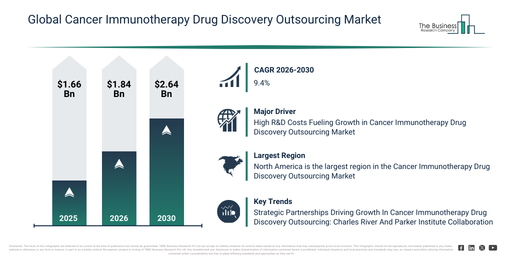
    The cancer immunotherapy drug discovery outsourcing market has seen rapid expansion in recent years. It is forecast to grow from $1.66 billion in 2025 to $1.84 billion in 2026, at a compound annual growth rate (CAGR) of 10.9%. This historical growth can be attributed to several factors including rising global cancer prevalence, increasing research and development costs for immunotherapy drugs, limited in-house discovery capabilities, the expansion of biologics and monoclonal antibody pipelines, and the development of CRO infrastructure.

    The cancer immunotherapy drug discovery outsourcing market size is anticipated to experience significant expansion over the next few years. It is forecast to grow to $2.64 billion in 2030 at a compound annual growth rate (CAGR) of 9.4%. This growth during the projected period can be ascribed to an accelerated need for precision immuno-oncology therapies, an increase in biotech startup formations, the escalating complexity of immunotherapy modalities, the imperative to shorten drug development timelines, and a rise in investment within outsourced discovery services. Noteworthy trends for the forecast period include an increase in the outsourcing of early-stage immunotherapy research, a growing requirement for specialized Contract Research Organization (CRO) expertise, the expansion of cell-based and immune assay services, enhanced collaboration between pharmaceutical and biotech companies, and the expedited development of next-generation immunotherapies.

    Get A Free Sample Report With In-Depth Market Insights:

    https://www.thebusinessresearchcompany.com/sample.aspx?id=15528&type=smp&utm_source=Blogs&utm_medium=Paid&utm_campaign=Oct_PR

    Cancer Immunotherapy Drug Discovery Outsourcing Market Growth Backed By Core Demand Fundamentals

    The substantial expense associated with research and development is anticipated to drive the expansion of the cancer immunotherapy drug discovery outsourcing market in the future. These costs encompass significant financial outlays for scientific knowledge, cutting-edge lab facilities, intricate technological solutions, and innovative processes with inherent risks. Such expenditures are consistently increasing, driven by the growing intricacy of scientific endeavors and the necessity for highly specialized proficiencies. This market provides assistance to pharmaceutical and biotechnology firms by offering economical access to sophisticated research assets via contract research organizations (CROs). For example, as reported by The Office for National Statistics (ONS), a UK-based Statistics Authority, in August 2025, R&D spending within the UK reached $95.2 billion in 2023, marking a rise of $3.93 billion at current prices since 2022. Consequently, the considerable expense involved in internal research and development is propelling the expansion of the cancer immunotherapy drug discovery outsourcing market.

    Cancer Immunotherapy Drug Discovery Outsourcing Market Breakdown By Product Type And Application

    The cancer immunotherapy drug discovery outsourcing market covered in this report is segmented –

    1) By Drug Type: Monoclonal Antibodies, Immunomodulators, Oncolytic Viral Therapies And Cancer Vaccines, Other Drug Types

    2) By Service Type: Target Identification And Validation, Lead Screening And Characterization, Cell-Based Assays

    3) By Therapeutic Area: Lung Cancer, Breast Cancer, Melanoma, Other Therapeutic Areas

    Subsegments:

    1) By Monoclonal Antibodies: Checkpoint Inhibitors, Therapeutic Monoclonal Antibodies, Bispecific Antibodies, Antibody-Drug Conjugates (ADCs)

    2) By Immunomodulators: Cytokines, Immune Checkpoint Modulators, Toll-Like Receptor Agonists, Immune Adjuvants

    3) By Oncolytic Viral Therapies And Cancer Vaccines: Oncolytic Virus-Based Therapies, Cancer Vaccines, Viral Vectors For Immunotherapy

    4) By Other Drug Types: Adoptive Cell Therapy, Immune Cell Modulators, Small Molecule Immune Modulators, Gene Editing And Immunotherapy

    Cancer Immunotherapy Drug Discovery Outsourcing Market Growth Trends Reshaping The Competitive Landscape

    Leading companies in the cancer immunotherapy drug discovery outsourcing market are adopting a strategic partnerships approach to hasten the development of new therapies. Such alliances advance the growth of the cancer immunotherapy drug discovery outsourcing market by granting access to sophisticated technologies, specific expertise, and integrated services, thus shortening development schedules and boosting the efficiency of introducing innovative cancer immunotherapies to clinical settings. For instance, in September 2025, Charles River Laboratories, a US-based contract research organization, formed a partnership with the Parker Institute for Cancer Immunotherapy, a US-based non-profit cancer research institute, with the goal of accelerating the creation of novel cancer treatments. This collaboration is centered on strengthening preclinical testing and manufacturing capabilities for advanced cell and gene therapies. By merging Charles River’s proficiency in contract research with the Parker Institute’s immunotherapy programs, the partnership endeavors to deliver groundbreaking cancer treatments to patients more effectively.

    Cancer Immunotherapy Drug Discovery Outsourcing Market Company Landscape And Competitive Strategy

    Major companies operating in the cancer immunotherapy drug discovery outsourcing market are Thermo Fisher Scientific Inc., Danaher Corporation, Laboratory Corporation of America Holdings (LabCorp), Eurofins Scientific SE, WuXi AppTec Co Ltd., Charles River Laboratories International Inc., PerkinElmer Inc, Bio-Rad Laboratories Inc, QIAGEN N.V., Evotec SE, Shanghai ChemPartner Co. Ltd., Aragen Life Sciences Limited, GenScript Biotech Corporation, BGI Genomics Co. Ltd., NeoGenomics Laboratories Inc, ARUP Laboratories, Syngene International Limited, BioDuro-Sundia, Ambry Genetics Corporation, Selvita, Crown Bioscience International, CENTOGENE N.V., Oncodesign Services, Reaction Biology Corporation

    View The Full Cancer Immunotherapy Drug Discovery Outsourcing Market Report:

    https://www.thebusinessresearchcompany.com/report/cancer-immunotherapy-drug-discovery-outsourcing-global-market-report?utm_source=Blogs&utm_medium=Paid&utm_campaign=Oct_PR

    Cancer Immunotherapy Drug Discovery Outsourcing Market Regional Analysis: Which Region Leads By Revenue?

    North America was the largest region in the cancer immunotherapy drug discovery outsourcing market in 2025. Asia-Pacific is expected to be the fastest-growing region in the forecast period. The regions covered in the cancer immunotherapy drug discovery outsourcing market report are Asia-Pacific, South East Asia, Western Europe, Eastern Europe, North America, South America, Middle East, Africa.

    Reach Out To Our Team:

    The Business Research Company: https://www.thebusinessresearchcompany.com/

    Americas: +1 310-496-7795

    Asia: +44 7882 955267 & +91 8897263534

    Europe: +44 7882 955267

    Email us at: marketing@tbrc.info

    Follow us on:

    LinkedIn: https://in.linkedin.com/company/the-business-research-company

    YouTube: https://www.youtube.com/channel/UC24_fI0rV8cR5DxlCpgmyFQ

    Global Market Model: https://www.thebusinessresearchcompany.com/global-market-model
  • Cancer Immunotherapy Market Size In 2026: Growth Outlook And Forecast Through 2030

    Cancer Immunotherapy Market Size In 2026: Growth Outlook And Forecast Through 2030

    Featuring market attractiveness scoring, total addressable market sizing, company benchmarking matrices, interactive Excel dashboards, deeper supply chain intelligence, emerging startup tracking, and granular product-level insights, The Business Research Company’s 2026 market reports are built to deliver research that is both more actionable and more strategically valuable.

    Cancer Immunotherapy Market Size Forecast: How Big Could The Market Get By 2030?

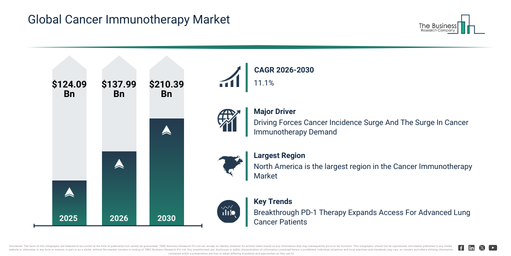
    The cancer immunotherapy market size has seen rapid expansion over recent years. It is anticipated to expand from $124.09 billion in 2025 to $137.99 billion in 2026, achieving a compound annual growth rate (CAGR) of 11.2%. The historical growth of this market can be linked to several factors, including major advancements in tumor immunology, a rise in global cancer incidence, the early efficacy of monoclonal antibodies, enhanced funding for oncology research and development, and the regulatory approvals granted for checkpoint inhibitors.

    The cancer immunotherapy market size is anticipated to experience substantial growth in the upcoming years. It is projected to expand to $210.39 billion in 2030, achieving a compound annual growth rate (CAGR) of 11.1%. This expansion during the forecast period can be attributed to factors such as the increasing adoption of CAR T-cell therapies, the extension into solid tumor indications, heightened investment in cancer vaccines, a growing demand for targeted combination therapies, and supportive reimbursement policies for immunotherapy. Significant trends expected in this period include the rapid embrace of immune checkpoint inhibitors, an expanding use of combination immunotherapy regimens, the proliferation of cell-based cancer therapies, an increasing focus on personalized immunotherapy, and a rising number of oncology clinical trials.

    Get A Free Sample Report With In-Depth Market Insights:

    https://www.thebusinessresearchcompany.com/sample.aspx?id=6768&type=smp&utm_source=Blogs&utm_medium=Paid&utm_campaign=Oct_PR

    Cancer Immunotherapy Market Growth Catalysts And Demand Drivers

    The projected increase in cancer cases is anticipated to drive growth in the cancer immunotherapy market. Globally, several factors such as tobacco use, alcohol consumption, obesity, inactive lifestyles, and environmental elements are contributing to the rise in cancer diagnoses. This surge in cancer occurrences is projected to stimulate demand for cancer immunotherapies, given that patients are increasingly seeking medical treatments offering improved recovery rates and reduced discomfort. For example, in July 2024, Cancer Research UK, a UK-based cancer charity, published projections indicating that cancer incidence rates in the United Kingdom are forecast to rise for the majority of cancer types between 2023-2025 and 2038-2040. These increases are expected to range from less than 1% for breast cancer to 50% for eye cancer. Conversely, a limited number of cancers are predicted to decrease, with reductions from 2% for lung cancer to 27% for mesothelioma. Consequently, the expanding incidence of cancer is anticipated to elevate the demand for cancer immunotherapy throughout the forecast period.

    Cancer Immunotherapy Market Segment Analysis And Revenue Potential

    The cancer immunotherapy market covered in this report is segmented –

    1) By Product: Monoclonal Antibodies, Checkpoint Inhibitors, Immunomodulators, Vaccines, Cell Therapy

    2) By Application: Lung Cancer, Breast Cancer, Colorectal Cancer, Melanoma, Prostate Cancer, Multiple Myeloma

    3) By End User: Hospitals, Cancer Research Centers, Clinics

    Subsegments:

    1) By Monoclonal Antibodies: Chimeric Monoclonal Antibodies, Humanized Monoclonal Antibodies, Fully Human Monoclonal Antibodies

    2) By Checkpoint Inhibitors: PD-1 Inhibitors, PD-L1 Inhibitors, CTLA-4 Inhibitors

    3) By Immunomodulators: Cytokines, Oncolytic Viruses, Toll-Like Receptor (TLR) Agonists

    4) By Vaccines: Therapeutic Cancer Vaccines

    5) By Cell Therapy: CAR T-Cell Therapy, TCR Therapy, Natural Killer (NK) Cell Therapy

    Cancer Immunotherapy Market Trends Shaping Long-Term Demand

    Leading companies in the cancer immunotherapy market are concentrating on developing innovative solutions, such as PD-1 immunotherapies, to enhance the availability of advanced immune-based treatment options for patients suffering from hard-to-treat cancers. A PD-1 immunotherapy is a treatment designed to target immune checkpoints, stimulating antitumor immune activity by blocking interactions in the programmed death-1 pathway. For instance, in August 2025, Intas Pharmaceuticals, an India-based pharmaceutical firm specializing in oncology and biologics, launched HETRONIFLY (Serplulimab). This therapy is the world’s first programmed death-1 inhibitor approved for extensive-stage small cell lung cancer and operates via a dual mechanism targeting PD-L1 and PD-L2, with strong receptor internalization to boost immune engagement. Its demonstrated benefits in terms of survival and substantially reduced cost compared to existing immunotherapies emphasize its clinical value and widen patient access to advanced cancer treatment in India.

    Cancer Immunotherapy Market Key Players Shaping Industry Direction

    Major companies operating in the cancer immunotherapy market are Amgen Inc., AstraZeneca PLC, F. Hoffmann-La Roche Ltd, Bayer AG, Eli Lilly and Company, Adaptive Biotechnologies Corp., Argos Therapeutics Inc., Bristol-Myers Squibb Company, Cell Medica Limited, Cellular Biomedicine Group Inc., Gilead Sciences Inc., Gradalis Inc., Immatics Biotechnologies GmbH, Iovance Biotherapeutics Inc., Juno Therapeutics LLC, MacroGenics Inc., Merck & Co. Inc., Neon Therapeutics Inc., Neovii Biotech GmbH, Novartis International AG, Pfizer Inc., Regeneron Pharmaceuticals Inc., Roche Holding AG, Targovax ASA, Tessa Therapeutics Pte Ltd., TILT Biotherapeutics Ltd., Turnstone Biologics Corp., Xencor Inc., Kura Oncology Inc.

    View The Full Cancer Immunotherapy Market Report:

    https://www.thebusinessresearchcompany.com/report/cancer-immunotherapy-global-market-report?utm_source=Blogs&utm_medium=Paid&utm_campaign=Oct_PR

    Cancer Immunotherapy Market Geographic Distribution And Regional Opportunities

    North America was the largest region in the cancer immunotherapy market in 2025. Asia-Pacific is expected to be the fastest-growing region in the forecast period. The regions covered in the cancer immunotherapy market report are Asia-Pacific, South East Asia, Western Europe, Eastern Europe, North America, South America, Middle East, Africa.

    Reach Out To Our Team:

    The Business Research Company: https://www.thebusinessresearchcompany.com/

    Americas: +1 310-496-7795

    Asia: +44 7882 955267 & +91 8897263534

    Europe: +44 7882 955267

    Email us at: marketing@tbrc.info

    Follow us on:

    LinkedIn: https://in.linkedin.com/company/the-business-research-company

    YouTube: https://www.youtube.com/channel/UC24_fI0rV8cR5DxlCpgmyFQ

    Global Market Model: https://www.thebusinessresearchcompany.com/global-market-model
  • Cancer Clinical Decision Tools Market Trends Supporting 10.2% CAGR Growth Through 2030

    Cancer Clinical Decision Tools Market Trends Supporting 10.2% CAGR Growth Through 2030

    Built to provide research that’s more actionable and strategically valuable, The Business Research Company’s 2026 market reports include market attractiveness analysis, total addressable market sizing, company benchmarking matrices, interactive Excel dashboards, broader supply chain intelligence, emerging startup tracking, and in-depth product insights.

    Cancer Clinical Decision Tools Market Revenue Outlook: What CAGR Lies Ahead Through 2030?

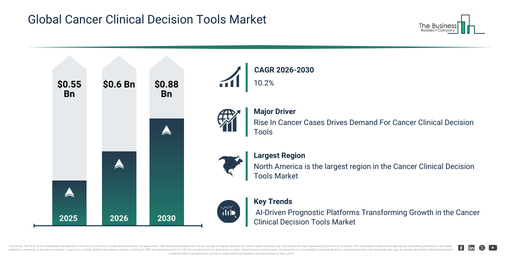
    The cancer clinical decision tools market has seen significant expansion in recent years. It is projected to increase from $0.55 billion in 2025 to $0.6 billion in 2026, exhibiting a compound annual growth rate (CAGR) of 9.0%. The growth observed in the past can be attributed to several factors, including rising cancer incidence rates, an increasing workload on primary care physicians, the scarcity of early diagnostic tools within primary care, a heightened focus on referral accuracy, and the expansion of hospital and clinic infrastructure.

    The cancer clinical decision tools market is projected to experience significant expansion over the next few years, with its size anticipated to reach $0.88 billion by 2030, demonstrating a robust compound annual growth rate (CAGR) of 10.2%. This expected growth during the forecast period is attributable to the progress of AI-driven decision tools, the integration of genomic and risk profiling data, the expansion of digital health platforms, increasing government screening initiatives, and the growing adoption of evidence-based oncology guidelines. Key trends for this period include a rising adoption of clinical decision support tools in oncology, an intensified focus on early cancer detection and risk stratification, increased use of symptom checkers and risk calculators by GPs, the expansion of guideline-based referral and decision frameworks, and the integration of cancer decision tools into primary care workflows.

    Get A Free Sample Report With In-Depth Market Insights:

    https://www.thebusinessresearchcompany.com/sample.aspx?id=3463&type=smp&utm_source=Blogs&utm_medium=Paid&utm_campaign=Oct_PR

    Cancer Clinical Decision Tools Market Opportunity Drivers: What’s Unlocking New Revenue Potential?

    An anticipated increase in cancer cases is projected to drive expansion within the cancer clinical decision tools market in the coming period. Cancer incidence refers to the quantity of newly diagnosed cancer cases within a defined population over a specific duration, indicating the frequency of the disease’s occurrence. The occurrence of cancer is increasing, attributed to greater exposure to risk factors like unhealthy lifestyles, which can result in genetic mutations and irregular cell development progressively. These cancer clinical decision tools facilitate more effective tracking, prediction, and management of cancer cases, allowing for early detection and prompt intervention that can impact discernible cancer incidence trends. As an illustration, in October 2025, data from the NHS England, a UK-based publicly funded healthcare system, revealed 354,820 new cancer diagnoses in 2023, representing an increase of 8,605 compared to 2022. Consequently, the worldwide escalation in cancer incidence rates is set to heighten the demand for the cancer clinical decision tools market.

    Cancer Clinical Decision Tools Market Segmentation And Category Overview

    The cancer clinical decision tools market covered in this report is segmented –

    1) By Type: Risk Assessment Tool(RAT), Qcancer

    2) By End-User: Hospital, Clinics

    Subsegments:

    1) By Risk Assessment Tool (RAT): Family History Assessment, Genetic Testing and Counseling, Lifestyle and Environmental Risk Factors Evaluation

    2) By Qcancer: Symptom Checker, Risk Calculator, Guideline-Based Recommendations

    Cancer Clinical Decision Tools Market Innovation Trends Shaping Future Development

    Leading firms within the cancer clinical decision tools sector are progressively adopting AI-driven prognostic support systems. This adoption is driven by the growing requirement for individualized, data-centric oncology care, fueled by increasing cancer rates, the necessity for improved risk assessment, and the push to refine treatment protocols. Such AI prognostic technologies employ deep-learning algorithms to examine diverse data sources, including medical imaging, electronic health records, and biological markers, enabling more accurate predictions of patient outcomes such as survival rates, risk of recurrence, or responsiveness to therapy, outperforming older rule-based methods. A pertinent example is Onc.AI, a health-tech company based in the US, which announced in February 2025 that its Serial CTRS (Cancer Treatment Risk Stratification) tool received FDA Breakthrough Device Designation. This specific AI instrument categorizes non–small cell lung cancer (NSCLC) patients into groups with high or low mortality risk by utilizing a deep-learning algorithm to analyze diagnostic imaging scans, thereby assisting oncologists in making better-informed choices regarding treatment aggression and subsequent monitoring. The capability of Serial CTRS to forecast long-term survival significantly improves patient categorization, facilitates more customized treatment strategies, and optimizes the distribution of resources, marking a substantial advancement compared to conventional prognostic approaches that depend on a restricted set of clinical indicators.

    Cancer Clinical Decision Tools Market Competitive Analysis Of Leading Industry Participants

    Major companies operating in the cancer clinical decision tools market are McKesson Corporation, Philips Healthcare, Siemens Healthineers AG, Elsevier B.V., National Decision Support Company, Cerner Corporation, GE Healthcare, Allscripts Healthcare Solutions Inc., Epic Systems Corporation, RaySearch Laboratories AB, Elekta AB, Varian Medical Systems Inc., Accuray Incorporated, F. Hoffmann-La Roche Ltd., Flatiron Health Inc., Tempus Labs Inc., NantHealth Inc., Syapse Inc., Inspirata Inc., Prognos Health Inc., Deep 6 AI Inc., PathAI Inc.

    View The Full Cancer Clinical Decision Tools Market Report:

    https://www.thebusinessresearchcompany.com/report/cancer-clinical-decision-tool-global-market-report?utm_source=Blogs&utm_medium=Paid&utm_campaign=Oct_PR

    Cancer Clinical Decision Tools Market Largest Region By Revenue And Market Share

    North America was the largest region in the cancer clinical decision tools market in 2025. The regions covered in the cancer clinical decision tools market report are Asia-Pacific, South East Asia, Western Europe, Eastern Europe, North America, South America, Middle East, Africa.

    Reach Out To Our Team:

    The Business Research Company: https://www.thebusinessresearchcompany.com/

    Americas: +1 310-496-7795

    Asia: +44 7882 955267 & +91 8897263534

    Europe: +44 7882 955267

    Email us at: marketing@tbrc.info

    Follow us on:

    LinkedIn: https://in.linkedin.com/company/the-business-research-company

    YouTube: https://www.youtube.com/channel/UC24_fI0rV8cR5DxlCpgmyFQ

    Global Market Model: https://www.thebusinessresearchcompany.com/global-market-model
  • Cancer biologics Market Forecast Highlights A $203.28 Billion Opportunity For Industry Participants

    Cancer biologics Market Forecast Highlights A $203.28 Billion Opportunity For Industry Participants

    Backed by market attractiveness analysis, total addressable market sizing, company benchmarking matrices, interactive Excel dashboards, wider supply chain intelligence, emerging startup coverage, and detailed product-level insights, The Business Research Company’s 2026 market reports are designed to offer research that is more actionable and strategically valuable than ever.

    Cancer biologics Market Growth Analysis: How Will Revenue Trend Over The Forecast Period?

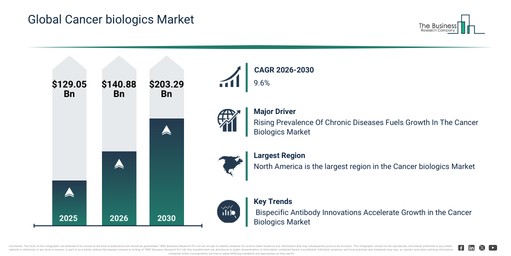
    The cancer biologics market has experienced substantial growth in recent years. This market is projected to expand from $129.05 billion in 2025 to $140.88 billion in 2026, demonstrating a compound annual growth rate (CAGR) of 9.2%. Historically, this expansion can be linked to several factors, including the escalating global prevalence of cancer, the increasing need for advanced cancer treatments, intensified oncology research endeavors, the perceived inadequacy of traditional chemotherapy, and the proliferation of hospital-based cancer treatment facilities.

    The cancer biologics market is anticipated to show considerable growth in the upcoming years. It is projected to expand to $203.29 billion in 2030, demonstrating a compound annual growth rate (CAGR) of 9.6%. The expansion during this forecast period can be attributed to breakthroughs in cell and gene therapy platforms, a growing number of novel biologic approvals, the rise of personalized oncology treatments, increased investment in cancer biologics research and development, and an expansion of manufacturing capacity for biologics. Key trends during this period include a heightened adoption of immunotherapy and targeted biologic treatments, increased utilization of monoclonal antibodies in oncology, the proliferation of cell and gene therapy-based cancer solutions, an expansion of cancer vaccine development programs, and an intensified focus on combination biologic therapies.

    Get A Free Sample Report With In-Depth Market Insights:

    https://www.thebusinessresearchcompany.com/sample.aspx?id=2563&type=smp&utm_source=Blogs&utm_medium=Paid&utm_campaign=Oct_PR

    Cancer biologics Market Growth Momentum: What Factors Are Shaping Demand?

    A significant driver for the expansion of the cancer biologics market is the increasing occurrence of chronic diseases. These long-term conditions impair the well-being of individuals, including those with disabilities, and cancer stands out as one of the prevalent chronic illnesses. Common forms of cancer include breast cancer, lung and bronchus cancer, prostate cancer, colon and rectum cancer, melanoma of the skin, bladder cancer, non-Hodgkin lymphoma, kidney and renal pelvis cancer, endometrial cancer, leukemia, pancreatic cancer, thyroid cancer, and liver cancer. For example, reports from February 2024 by the Centers for Disease Control and Prevention (CDC), a US-based public health agency, indicated that an increasing number of people in America are dealing with multiple chronic conditions, with 42% affected by two or more, and 12% by five or more. Consequently, the rising prevalence of chronic diseases is projected to stimulate the growth of the cancer biologics market in the upcoming years.

    Cancer biologics Market Segment Outlook: Which Categories Are Growing Fastest?

    The cancer biologics market covered in this report is segmented –

    1) By Type: Monoclonal Antibodies, Vaccines, Cell And Gene Therapy, Other Types

    2) By Application: Non-small Cell Lung Cancer, Prostate Cancer, Breast Cancer, Acute Myeloid Leukemia, Lymphoma, Multiple Myeloma, Ovarian Cancer, Colorectal Cancer, Gastric Cancers, Other Applications

    3) By Distribution Channel: Hospitals, Clinics, Other Distribution Channels

    Subsegments:

    1) By Monoclonal Antibodies: Naked Monoclonal Antibodies, Conjugated Monoclonal Antibodies, Bispecific Monoclonal Antibodies

    2) By Vaccines: Therapeutic Cancer Vaccines, Preventive Cancer Vaccines

    3) By Cell And Gene Therapy: CAR T-Cell Therapy, Tumor-Infiltrating Lymphocytes (TIL) Therapy, Oncolytic Virus Therapy

    4) By Other Types: Cytokines, Growth Factors, Fusion Proteins

    Cancer biologics Market Trends Redefining Industry Growth

    Leading firms within the cancer biologics market are concentrating on creating novel therapies, including bispecific antibodies and biomarker guided biologics, with the goal of improving treatment effectiveness and more precisely targeting particular cancer cells. Bispecific antibodies represent an advanced biologic treatment capable of simultaneously attaching to two different epitopes or targets, whereas biomarker guided biologics are formulated to selectively target tumor cells characterized by specific molecular markers. An example of this is seen in November 2024, when Jazz Pharmaceuticals Public Limited Company, a global biopharmaceutical firm based in Dublin, secured U.S. Food & Drug Administration (FDA) approval for the accelerated status of Ziihera (zanidatamab hrii). This was for the treatment of adults diagnosed with previously treated, unresectable, or metastatic HER2 positive (IHC 3+) biliary tract cancer (BTC). This approval signifies the introduction of the first and only dual HER2 targeted bispecific antibody for this particular indication, thereby broadening the scope of HER2 targeted biologic therapy to encompass a new tumor type, moving beyond traditional applications.

    Cancer biologics Market Leading Companies And Competitive Benchmarking

    Major companies operating in the cancer biologics market are AbbVie Inc., F. Hoffmann-La Roche AG, GlaxoSmithKline plc, Eli Lilly and Company, AmgenInc., Bristol-Myers Squibb Company, Johnson & Johnson, Merck & Co.Inc., Novartis AG, Pfizer Inc., Celgene Corporation, Daiichi Sankyo Company Ltd., Seagen Inc., Takeda Pharmaceutical Company Limited, Biogen Inc., Vertex Pharmaceuticals Incorporated, Incyte Corporation, Karyopharm Therapeutics Inc., Kyowa Kirin Co Ltd., Ipsen Biopharmaceuticals Inc., Bayer AG, Biocon Limited, Genentech Inc., Gilead Sciences Inc., Puma Biotechnology, Regeneron Pharmaceuticals Inc.

    View The Full Cancer biologics Market Report:

    https://www.thebusinessresearchcompany.com/report/cancer-biologics-global-market-report?utm_source=Blogs&utm_medium=Paid&utm_campaign=Oct_PR

    Cancer biologics Market Regional Analysis And Leading Geography

    North America was the largest region in the cancer biologics market in 2025. The Middle East is expected to be the fastest-growing region in the global cancer biologics market share during the forecast period. The regions covered in the cancer biologics market report are Asia-Pacific, South East Asia, Western Europe, Eastern Europe, North America, South America, Middle East, Africa.

    Reach Out To Our Team:

    The Business Research Company: https://www.thebusinessresearchcompany.com/

    Americas: +1 310-496-7795

    Asia: +44 7882 955267 & +91 8897263534

    Europe: +44 7882 955267

    Email us at: marketing@tbrc.info

    Follow us on:

    LinkedIn: https://in.linkedin.com/company/the-business-research-company

    YouTube: https://www.youtube.com/channel/UC24_fI0rV8cR5DxlCpgmyFQ

    Global Market Model: https://www.thebusinessresearchcompany.com/global-market-model

  • Cancer Antibody Drug Conjugates Market Analysis: How The Industry Is Evolving Toward A $15.76 Billion Future

    Cancer Antibody Drug Conjugates Market Analysis: How The Industry Is Evolving Toward A $15.76 Billion Future

    Featuring market attractiveness scoring, total addressable market sizing, company benchmarking matrices, interactive Excel dashboards, deeper supply chain intelligence, emerging startup tracking, and granular product-level insights, The Business Research Company’s 2026 market reports are built to deliver research that is both more actionable and more strategically valuable.

    Cancer Antibody Drug Conjugates Market Forecast: What Value Will The Market Reach By 2030?

    The market size for cancer antibody drug conjugates has seen rapid expansion in recent years. It is projected to expand from $9.17 billion in 2025 to $10.24 billion in 2026, demonstrating a compound annual growth rate (CAGR) of 11.7%. This historical growth can be linked to several factors, including progress in monoclonal antibody engineering, a rise in cancer incidence rates, increased uptake of targeted oncology treatments, the broadening of clinical research in biologics, and the granting of regulatory approvals for initial ADC therapies.

    The cancer antibody drug conjugates market size is poised for significant expansion in the coming years. It is forecast to reach $15.77 billion by 2030, demonstrating a compound annual growth rate (CAGR) of 11.4%. This projected growth during the forecast period is driven by factors such as increasing investment in precision oncology pipelines, the rising use of combination cancer therapies, the expansion of ADC indications beyond solid tumors, growing demand for safer targeted treatments, and continuous innovation in linker and payload technologies. Prominent trends for this period include the increasing development of next-generation antibody drug conjugates, a heightened focus on tumor-specific targeting mechanisms, the growing adoption of cleavable linker technologies, the expansion of ADC applications across various cancer types, and an enhanced emphasis on improving the therapeutic index.

    Get A Free Sample Report With In-Depth Market Insights:

    https://www.thebusinessresearchcompany.com/sample.aspx?id=30217&type=smp&utm_source=Blogs&utm_medium=Paid&utm_campaign=Oct_PR

    Cancer Antibody Drug Conjugates Market Expansion Drivers: What’s Shaping Future Growth?

    The increasing incidence of cancer is anticipated to fuel the expansion of the cancer antibody drug conjugates market moving ahead. Cancer prevalence denotes the aggregate count of individuals, encompassing both recent and prior diagnoses, living with a history of cancer at a given moment. This prevalence is on the rise, attributed to lifestyle factors like inadequate nutrition, tobacco use, alcohol intake, and exposure to environmental contaminants, which heighten the likelihood of various cancer developments. Cancer antibody-drug conjugates assist in treating cancer by directly administering potent chemotherapy agents to cancer cells, thereby reducing damage to healthy tissues. They also boost treatment accuracy through their ability to target specific tumor antigens, leading to enhanced therapeutic efficacy and fewer adverse effects for patients. For example, Cancer Australia, an Australia-based government agency, reported in February 2025 that 4,641 new pancreatic cancer cases were recorded in 2024, comprising 2,414 in males and 2,227 in females. Consequently, the escalating prevalence of cancer is propelling the growth of the cancer antibody drug conjugates market.

    Cancer Antibody Drug Conjugates Market Segment Landscape: Which Areas Lead Development?

    The cancer antibody drug conjugates market covered in this report is segmented –

    1) By Type Of Antibody: Monoclonal Antibodies, Bispecific Antibodies, Low Molecular Weight Antibodies, Polyclonal Antibodies

    2) By Mechanism Of Action: Cell Death Signal (CDS) Inducers, Microtubule Disruptors, Deoxyribonucleic Acid (DNA) Damage Inducers, Immune Checkpoint Inhibitors

    3) By Technology: Cleavable Linker, Non-Cleavable Linker

    4) By Disease Indication: Breast Cancer, Blood Cancers, Lung Cancer, Gastrointestinal Cancers, Prostate Cancer

    5) By End-User: Hospitals, Specialty Clinics, Research Institutes

    Subsegments:

    1) By Monoclonal Antibodies: Fully Human Monoclonal Antibodies, Humanized Monoclonal Antibodies, Chimeric Monoclonal Antibodies, Murine Monoclonal Antibodies

    2) By Bispecific Antibodies: T Cell Engager Bispecific Antibodies, Dual Specific Antigen Targeting Bispecific Antibodies, Immune Checkpoint Modulating Bispecific Antibodies, Cytokine Redirecting Bispecific Antibodies

    3) By Low Molecular Weight Antibodies: Single Chain Variable Fragment Antibodies, Nanobody Antibodies, Antibody Fragment Antibodies, Domain Antibodies

    4) By Polyclonal Antibodies: Purified Polyclonal Antibodies, Recombinant Polyclonal Antibodies, Animal Derived Polyclonal Antibodies, Human Derived Polyclonal Antibodies

    Cancer Antibody Drug Conjugates Market Strategic Trends: What Defines The Next Growth Phase?

    Major companies operating in the cancer antibody-drug conjugates market are concentrating on the development of technologically advanced solutions, such as cleavable tumor-activated linker technology, aiming to improve targeted delivery, treatment precision, and overall safety. Cleavable tumor-activated linker technology refers to a specialized chemical system employed within antibody-drug conjugates (ADCs) that links the cytotoxic drug to the antibody and releases it solely upon the ADC reaching the tumor microenvironment. For instance, in June 2025, Daiichi Sankyo Co. Ltd., a Japan-based biopharmaceutical company, obtained United States Food and Drug Administration (FDA) approval for Datroway (datopotamab deruxtecan-dlnk), which is a trophoblast cell surface antigen 2 (TROP-2)-directed antibody-drug conjugate utilizing a cleavable linker. This approval is for treating adult patients with locally advanced or metastatic EGFR-mutated non-small cell lung cancer (NSCLC) who have previously received EGFR-directed therapy and platinum-based chemotherapy. The product offers targeted payload release, enhanced tumor-cell killing, including bystander activity, and improved treatment tolerability, thereby refining precision in drug delivery and broadening therapeutic options for solid tumors that are difficult to treat.

    Cancer Antibody Drug Conjugates Market Industry Leaders And Competitive Landscape

    Major companies operating in the cancer antibody drug conjugates market are Johnson & Johnson, Roche Holding AG, Merck and Co. Inc., Pfizer Inc., AbbVie Inc., Bayer AG, Sanofi S.A., AstraZeneca PLC, Bristol-Myers Squibb Company, GlaxoSmithKline PLC, Eli Lilly and Company, Takeda Pharmaceutical Company Limited, Amgen Inc., Gilead Sciences Inc., Astellas Pharma Inc., Daiichi Sankyo Company Limited, Byondis BV, Adienne Pharma and Biotech SA, Helix BioPharma Corp., Adcytherix SAS

    View The Full Cancer Antibody Drug Conjugates Market Report:

    https://www.thebusinessresearchcompany.com/report/global-cancer-antibody-drug-conjugates-market-report?utm_source=Blogs&utm_medium=Paid&utm_campaign=Oct_PR

    Cancer Antibody Drug Conjugates Market Geographic Analysis: Where Is Demand Accelerating Fastest?

    North America was the largest region in the cancer antibody drug conjugates market in 2025. Asia-Pacific is expected to be the fastest-growing region in the forecast period. The regions covered in the cancer antibody drug conjugates market report are Asia-Pacific, South East Asia, Western Europe, Eastern Europe, North America, South America, Middle East, Africa.

    Reach Out To Our Team:

    The Business Research Company: https://www.thebusinessresearchcompany.com/

    Americas: +1 310-496-7795

    Asia: +44 7882 955267 & +91 8897263534

    Europe: +44 7882 955267

    Email us at: marketing@tbrc.info

    Follow us on:

    LinkedIn: https://in.linkedin.com/company/the-business-research-company

    YouTube: https://www.youtube.com/channel/UC24_fI0rV8cR5DxlCpgmyFQ

    Global Market Model: https://www.thebusinessresearchcompany.com/global-market-model

  • Calorie Supplements Market Outlook Through 2030: Understanding The Growth Opportunity

    Calorie Supplements Market Outlook Through 2030: Understanding The Growth Opportunity

    Built to provide research that’s more actionable and strategically valuable, The Business Research Company’s 2026 market reports include market attractiveness analysis, total addressable market sizing, company benchmarking matrices, interactive Excel dashboards, broader supply chain intelligence, emerging startup tracking, and in-depth product insights.

    Calorie Supplements Market Size Outlook: How Quickly Will Revenue Expand Through 2030?

    The calorie supplements market has seen substantial growth in recent years. Its size is predicted to expand from $1.31 billion in 2025 to $1.44 billion in 2026, achieving a compound annual growth rate (CAGR) of 9.8%. The historical rise in this market can be attributed to the increasing prevalence of malnutrition and undernutrition, a greater adoption of nutritional supplementation in clinical care, the expanding elderly population with higher energy needs, the growth of sports and fitness nutrition markets, and the wider availability of fortified nutritional products.

    The calorie supplements market is anticipated to experience robust expansion over the coming years. Its valuation is projected to reach $2.08 billion by 2030, exhibiting a compound annual growth rate (CAGR) of 9.5%. This projected growth is driven by several factors, including an amplified emphasis on tailored nutrition approaches, a surge in the need for easily accessible nutritional products, heightened understanding of nutrition for preventative health, the broadened reach of e-commerce platforms for supplement distribution, and advancements in developing clean-label calorie supplements. Key trends foreseen for this period encompass a heightened appetite for high-calorie medical nutritional items, increased uptake of ready-to-drink energy boosters, a strengthened focus on well-balanced macronutrient recipes, the extension of online sales channels for nutritional supplements, and greater product tailoring to address particular health requirements.

    Get A Free Sample Report With In-Depth Market Insights:

    https://www.thebusinessresearchcompany.com/sample.aspx?id=30216&type=smp&utm_source=Blogs&utm_medium=Paid&utm_campaign=Oct_PR

    Calorie Supplements Market Development Factors: What’s Supporting Demand?

    The rising demand for dietary supplements is projected to boost the expansion of the calorie supplements market in the coming years. These supplements are orally consumed products containing nutrients or other compounds designed to complement one’s diet. This increased need stems from greater health consciousness, with more people aiming to fulfill their nutritional needs and preserve overall wellness. Within this market, calorie supplements represent a vital segment, offering concentrated energy sources and essential nutrients that enable individuals to more efficiently achieve their daily calorie and nutrient intake. For example, in September 2025, the Australian Bureau of Statistics, an Australia-based government department, released findings indicating that 33.6% of the population utilized dietary supplements in 2023, with vitamin and mineral supplements (29.7%) being the predominant choice. This highlights a significant consumer emphasis on nutritional supplementation, which in turn supports wider categories like calorie supplements. Consequently, the expanding requirement for dietary supplements is fueling the development of the calorie supplements market.

    Calorie Supplements Market Segments: Where Is Growth Concentrated?

    The calorie supplements market covered in this report is segmented –

    1) By Form: Ready to Drink, Ready to Mix

    2) By Packaging: Carton, Canister, Bottle, Cups, Cans, Box (Packets), Tub, Jars

    3) By Flavor: Unflavored, Flavored

    4) By Sales Channel: Offline Sales Channel, Online Sales Channel

    Subsegments:

    1) By Ready To Drink: Energy Drinks, Nutritional Shakes, Protein Beverages, Meal Replacement Drinks

    2) By Ready To Mix: Powdered Protein Mix, Nutrient Fortified Powder, Instant Meal Mix, Calorie Dense Powder

    Calorie Supplements Market Transformation Trends: What Innovations Are Driving Change?

    Leading companies within the calorie supplements market are prioritizing advanced formulations and all-encompassing nutritional remedies, such as superior quality proteins, to foster general health, boost energy levels, and bridge nutritional gaps in everyday eating. Superior quality proteins are characterized by their complete array of essential amino acids in adequate concentrations to facilitate growth, repair, and fundamental bodily operations. For instance, in July 2025, Torrent Pharmaceuticals Ltd., an India-based pharmaceutical firm, launched Shelcal Total, a scientifically backed adult nutrition powder that combines protein, calcium, magnesium, vitamins D3 and K2, glucosamine, and bamboo shoot extract. This supplement is designed to support bone, joint, muscle, immunity, gut, brain, and skin health, utilizing vegetarian ingredients without added sugar or artificial colors, making it appropriate for health-conscious adults who monitor their calorie intake. Through its provision of a convenient and complete nutritional solution, this innovation addresses current dietary challenges, promotes overall well-being, and strengthens consumer trust in supplement options driven by scientific evidence.

    Calorie Supplements Market Key Participants And Competitive Landscape

    Major companies operating in the calorie supplements market are Abbott Laboratories, Danone S.A., Nestlé Health Science, Glanbia plc, Amway Corporation, MyProtein, Orgain Inc., Garden of Life LLC, MusclePharm Corp, MuscleTech, Instasure, Optimum Nutrition Inc., Nutricia International Pvt Ltd, Patanjali Foods Ltd, NOW Foods, Isopure, Pro 360, Dymatize Enterprises LLC, Herbaland Naturals Inc., Bright Lifecare Pvt Ltd

    View The Full Calorie Supplements Market Report:

    https://www.thebusinessresearchcompany.com/report/global-calorie-supplements-market-report?utm_source=Blogs&utm_medium=Paid&utm_campaign=Oct_PR

    Calorie Supplements Market Global Footprint: Which Region Leads The Industry?

    North America was the largest region in the calorie supplements market in 2025. The regions covered in the calorie supplements market report are Asia-Pacific, South East Asia, Western Europe, Eastern Europe, North America, South America, Middle East, Africa.

    Reach Out To Our Team:

    The Business Research Company: https://www.thebusinessresearchcompany.com/

    Americas: +1 310-496-7795

    Asia: +44 7882 955267 & +91 8897263534

    Europe: +44 7882 955267

    Email us at: marketing@tbrc.info

    Follow us on:

    LinkedIn: https://in.linkedin.com/company/the-business-research-company

    YouTube: https://www.youtube.com/channel/UC24_fI0rV8cR5DxlCpgmyFQ

    Global Market Model: https://www.thebusinessresearchcompany.com/global-market-model
  • Calcium Gluconate Market Growth Potential: What The Latest Forecast Reveals

    Calcium Gluconate Market Growth Potential: What The Latest Forecast Reveals

    Backed by market attractiveness analysis, total addressable market sizing, company benchmarking matrices, interactive Excel dashboards, wider supply chain intelligence, emerging startup coverage, and detailed product-level insights, The Business Research Company’s 2026 market reports are designed to offer research that is more actionable and strategically valuable than ever.

    Calcium Gluconate Market Size, Value And Growth Trajectory Through 2030

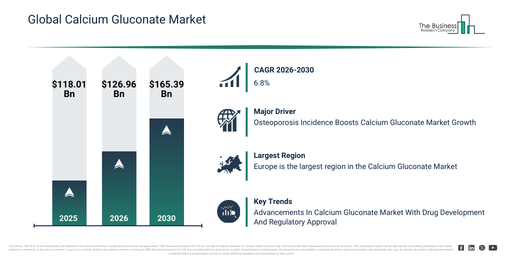
    The calcium gluconate market has shown strong expansion in recent years. This market is set to increase from $118.01 billion in 2025 to $126.96 billion in 2026, achieving a compound annual growth rate (CAGR) of 7.6%. The historical growth of this market can be attributed to the rising prevalence of calcium deficiency, an increase in osteoporosis cases among older individuals, the development of hospital and clinical infrastructure, the broadening of pharmaceutical distribution networks, and growing awareness concerning bone health.

    The calcium gluconate market size is anticipated to undergo significant expansion over the next few years. It is forecast to reach $165.39 billion in 2030, exhibiting a compound annual growth rate (CAGR) of 6.8%. The impetus for this growth during the forecast period stems from the increasing demand for nutraceuticals and dietary supplements, advancements in injectable calcium formulations, the broadening reach of geriatric care and pediatric healthcare, the adoption of preventive healthcare strategies, and the development of emerging markets across Asia-Pacific. Prominent trends within this period are expected to include a rise in the incidence of hypocalcemia, an increase in osteoporosis awareness initiatives, greater integration of intravenous supplements, the proliferation of nutraceutical and functional foods, and the creation of calcium formulations tailored for pediatric and geriatric demographics.

    Get A Free Sample Report With In-Depth Market Insights:

    https://www.thebusinessresearchcompany.com/sample.aspx?id=16005&type=smp&utm_source=Blogs&utm_medium=Paid&utm_campaign=Oct_PR

    Calcium Gluconate Market Industry Drivers: What’s Behind The Revenue Growth?

    The rising prevalence of osteoporosis is projected to boost the growth of the calcium gluconate market moving forward. Osteoporosis is a medical condition distinguished by diminished bone density and strength, which heightens the likelihood of fractures. The occurrence of osteoporosis is increasing due to inactive lifestyles, insufficient calcium consumption, hormonal imbalances, and age-related physiological changes. The calcium gluconate market supports the management of osteoporosis by supplying an additional source of calcium to enhance bone strength and decrease the risk of fractures. For instance, data from 2023, as reported by the British Pharmacological Society, a UK-based association, in March 2025, indicated that most patients undergoing osteoporosis treatments were females: 90.9% for denosumab, 80.8% for bisphosphonates, 98.9% for SERMs, 99% for tibolone, and 86.8% for teriparatide. Consequently, the growing incidence of osteoporosis is propelling the expansion of the calcium gluconate market.

    Calcium Gluconate Market Segment Analysis: What Are The Core Market Categories?

    The calcium gluconate market covered in this report is segmented –

    1) By Form: Liquid, Tablet, Powder, Gel

    2) By Grade: Pharmaceutical Grade, Food Grade

    3) By Application: Food And Beverage Manufacturers, Pharmaceutical, Nutraceutical, Cosmetic And Personal Care, Other Applications

    4) By End Use: Emulsifier, Bulking Agent, Thickening Agent

    Subsegments:

    1) By Liquid: Injectable Solution, Oral Liquid, IV Infusion

    2) By Tablet: Standard Tablets, Effervescent Tablets

    3) By Powder: Oral Powder, Injectable Powder

    4) By Gel: Topical Gel, Transdermal Gel

    #Calcium Gluconate Market Growth Trends: What’s Shaping The Future Outlook?

    Leading companies in the calcium gluconate market are prioritizing the development and subsequent approval of new calcium gluconate drug formulations. This strategic focus aims to enhance the availability of treatments, guarantee high-quality therapeutic choices, and more effectively address calcium deficiencies and related acute conditions. The process of drug development and approval is a multi-stage endeavor, encompassing discovery, preclinical evaluation, clinical testing, and regulatory review, all designed to ensure a medication’s safety, effectiveness, and compliance with health authority standards before it is administered to patients. For instance, in September 2023, Amneal Pharmaceuticals Inc., a US-based generics and specialty pharmaceutical company, secured U.S. FDA abbreviated new drug application (ANDA) approval for calcium gluconate in sodium chloride injection. This product received Competitive Generic Therapy designation, granting it a 180-day exclusivity period, and is offered in 1000 mg/50 mL and 2000 mg/100 mL small-volume parenteral bags, used for managing acute symptomatic hypocalcemia in both pediatric and adult patients.

    Calcium Gluconate Market Top Companies Driving Competitive Growth

    Major companies operating in the calcium gluconate market are Merck & Co. Inc., Thermo Fisher Scientific Inc., Abbott Laboratories, Novartis AG, Eli Lilly and Company, Solvay, Viatris Inc., Baxter International Inc., Fresenius Kabi USA, Hikma Pharmaceuticals Inc., Amneal Pharmaceuticals Private Limited, Amphastar Pharmaceuticals, Jost Chemical Co., American Regent Inc., Coyne Chemical, Anhui Xingzhou Medicine Food Co. Ltd., Westco Chemicals Inc., Noah chemicals, ND Biotech Pvt Ltd, Global Calcium Private Limited, Foodchem, Pharma Cure Laboratories, Nivagen Pharmaceuticals Inc., Tianyi Food Additives Co. Ltd

    View The Full Calcium Gluconate Market Report:

    https://www.thebusinessresearchcompany.com/report/calcium-gluconate-global-market-report?utm_source=Blogs&utm_medium=Paid&utm_campaign=Oct_PR

    Calcium Gluconate Market Regional Distribution: Which Areas Power Market Growth?

    Europe was the largest region in the calcium gluconate market in 2025. Asia-Pacific is expected to be the fastest-growing region in the forecast period. The regions covered in the calcium gluconate market report are Asia-Pacific, South East Asia, Western Europe, Eastern Europe, North America, South America, Middle East, Africa.

    Reach Out To Our Team:

    The Business Research Company: https://www.thebusinessresearchcompany.com/

    Americas: +1 310-496-7795

    Asia: +44 7882 955267 & +91 8897263534

    Europe: +44 7882 955267

    Email us at: marketing@tbrc.info

    Follow us on:

    LinkedIn: https://in.linkedin.com/company/the-business-research-company

    YouTube: https://www.youtube.com/channel/UC24_fI0rV8cR5DxlCpgmyFQ

    Global Market Model: https://www.thebusinessresearchcompany.com/global-market-model