Blog

  • Aryl Hydrocarbon Receptor Market Valued At $7.12 Billion In 2026: Key Trends And Growth Drivers

    Aryl Hydrocarbon Receptor Market Valued At $7.12 Billion In 2026: Key Trends And Growth Drivers

    Featuring market attractiveness scoring, total addressable market sizing, company benchmarking matrices, interactive Excel dashboards, deeper supply chain intelligence, emerging startup tracking, and granular product-level insights, The Business Research Company’s 2026 market reports are built to deliver research that is both more actionable and more strategically valuable.

    Aryl Hydrocarbon Receptor Market Expansion Outlook: What Revenue Opportunities Are Ahead?

    The aryl hydrocarbon receptor market size has shown significant expansion in recent years. Its valuation is set to increase from $4.97 billion in 2025 to $5.34 billion in 2026, progressing at a compound annual growth rate (CAGR) of 7.5%. The historical growth of this market can be ascribed to advancements in molecular biology, a rising prevalence of autoimmune diseases, an uptick in academic research, greater biotech funding, and refined receptor targeting technologies.

    The aryl hydrocarbon receptor market is expected to demonstrate substantial growth in the upcoming years, with projections indicating it will reach $7.12 billion by 2030, driven by a compound annual growth rate (CAGR) of 7.5%. This expansion during the forecast period is linked to the development of novel immunotherapies, the wider adoption of precision medicine, increased funding for inflammation research, a rise in clinical trials, and the proliferation of biotech startups. Notable trends anticipated over the forecast period include intensified research into immune modulation therapies, the increasing creation of selective AHR modulators, a heightened focus on autoimmune and inflammatory diseases, the broadening of preclinical and early-stage trials, and greater collaboration between pharmaceutical and biotechnology companies.

    Get A Free Sample Report With In-Depth Market Insights:

    https://www.thebusinessresearchcompany.com/sample.aspx?id=21106&type=smp&utm_source=Blogs&utm_medium=Paid&utm_campaign=Oct_PR

    Aryl Hydrocarbon Receptor Market Expansion Drivers: What’s Shaping Future Growth?

    The increasing prevalence of autoimmune diseases and chronic conditions is projected to stimulate the growth of the aryl hydrocarbon receptor market moving forward. These are long-term disorders where the immune system malfunctions or persistent health issues arise. The surge in autoimmune diseases and chronic conditions is attributable to genetics, environment, lifestyle, gut imbalances, and improved diagnostic methods. Aryl hydrocarbon receptor (AHR) agonists have the capacity to modulate immune responses and inflammation, potentially offering therapeutic benefits in autoimmune diseases and chronic conditions by regulating T-cell differentiation and immune cell function. For instance, in May 2023, data from the University of Oxford, a UK-based research university, revealed that autoimmune disorders impact about one in ten individuals, affecting 13% of women and 7% of men across 19 studied autoimmune diseases. Therefore, the rise in autoimmune diseases and chronic conditions is a significant driver for the aryl hydrocarbon receptor (AHR) agonist market.

    Aryl Hydrocarbon Receptor Market Segment Trends And Revenue Contributors

    The aryl hydrocarbon receptor market covered in this report is segmented –

    1) By Type: CB-993113, CDR-914K058, Cinnabarinic Acid, Other Types

    2) By Distribution Channel: Direct Sales, Online Platforms, Distributors, Retail Pharmacies, Wholesale Suppliers

    3) By Application: Hepatocellular Carcinoma, Multiple Sclerosis, Obesity, Osteoporosis, Other Applications

    4) By End-User Industry: Pharmaceuticals, Biotechnology, Agriculture, Environmental Consultancy, Research Institutions

    Subsegments:

    1) By CB-993113: Preclinical Stage CB-993113, Clinical Trials of CB-993113, Targeted Applications of CB-993113

    2) By CDR-914K058: Preclinical Development of CDR-914K058, CDR-914K058 in Immunological Disorders, Targeted Therapeutic Areas for CDR-914K058

    3) By Cinnabarinic Acid: Mechanism Of Action Of Cinnabarinic Acid, Cinnabarinic Acid In Inflammatory Conditions, Potential Applications In Neurodegenerative Diseases

    4) By Other Types: Synthetic Aryl Hydrocarbon Receptor Agonists, Natural Aryl Hydrocarbon Receptor Ligands, Novel Aryl Hydrocarbon Receptor Modulators

    Aryl Hydrocarbon Receptor Market Strategic Trends: What Defines The Next Growth Phase?

    Companies significantly involved in the Aryl Hydrocarbon Receptor (AhR) market are prioritizing the development of new products and formulations, including novel AhR modulators. Their objective is to create precise treatments for immune-mediated and inflammatory conditions, enhance safety, and broaden therapeutic choices for patients with critical unmet medical needs. These modulators engage with the AhR pathway to manage the body’s immune reactions, thereby offering opportunities for highly targeted treatment in illnesses such as graft-versus-host disease, autoimmune disorders, and chronic inflammatory diseases. For instance, in May 2025, Equillium, a US-based biopharmaceutical company, unveiled its latest EQ504 program, an Aryl Hydrocarbon Receptor modulator intended to address key immune pathways to boost anti-inflammatory effects. The EQ504 program aims to provide greater precision and fewer unintended side effects, allowing for better management of immune responses and lowering adverse effects. This introduction underscores the industry’s move towards precision immune modulation, in which advanced AhR-focused treatments seek to tackle complex inflammatory pathways and offer innovative remedies for patients facing constrained therapy choices.

    Aryl Hydrocarbon Receptor Market Competitive Landscape: Which Companies Lead The Industry?

    Major companies operating in the aryl hydrocarbon receptor market are Bayer AG, Eli Lilly and Company, Organon & Co., Sigma-Aldrich Corporation, Bio-Techne Corporation, Abcam plc, R&D Systems Inc., Dermavant Sciences Inc., Cayman Chemical Company, Enzo Life Sciences Inc., Tocris Bioscience, Ikena Oncology Inc., MedChemExpress LLC, Hercules Pharmaceuticals BV, Active Biotech AB, AnTolRx Inc., Aqilion AB, Azora Therapeutics Australia Pty Ltd, Sol-Gel Technologies Ltd., Actavalon Inc.

    View The Full Aryl Hydrocarbon Receptor Market Report:

    https://www.thebusinessresearchcompany.com/report/aryl-hydrocarbon-receptor-global-market-report?utm_source=Blogs&utm_medium=Paid&utm_campaign=Oct_PR

    Aryl Hydrocarbon Receptor Market Geographic Spread And Regional Opportunities

    North America was the largest region in the aryl hydrocarbon receptor market in 2025. Asia-Pacific is expected to be the fastest-growing region in the forecast period. The regions covered in the aryl hydrocarbon receptor market report are Asia-Pacific, South East Asia, Western Europe, Eastern Europe, North America, South America, Middle East, Africa.

    Reach Out To Our Team:

    The Business Research Company: https://www.thebusinessresearchcompany.com/

    Americas: +1 310-496-7795

    Asia: +44 7882 955267 & +91 8897263534

    Europe: +44 7882 955267

    Email us at: marketing@tbrc.info

    Follow us on:

    LinkedIn: https://in.linkedin.com/company/the-business-research-company

    YouTube: https://www.youtube.com/channel/UC24_fI0rV8cR5DxlCpgmyFQ

    Global Market Model: https://www.thebusinessresearchcompany.com/global-market-model
  • Artificial Tears Market Size In 2026: Growth Outlook And Forecast Through 2030

    Artificial Tears Market Size In 2026: Growth Outlook And Forecast Through 2030

    Built to provide research that’s more actionable and strategically valuable, The Business Research Company’s 2026 market reports include market attractiveness analysis, total addressable market sizing, company benchmarking matrices, interactive Excel dashboards, broader supply chain intelligence, emerging startup tracking, and in-depth product insights.

    Artificial Tears Market Growth Potential: How Will Market Size Shift Through 2030?

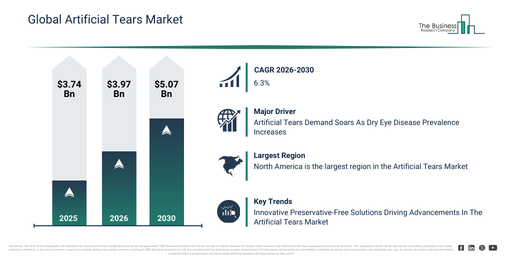
    The artificial tears market size has experienced robust growth in recent years. It is projected to expand from $3.74 billion in 2025 to $3.97 billion in 2026, exhibiting a compound annual growth rate (CAGR) of 6.1%. This historic period’s growth can be attributed to factors such as the increasing incidence of dry eye syndrome, the rising use of contact lenses, growing awareness about eye care, the development of multi-purpose eye drops, and the presence of major market players.

    The artificial tears market is anticipated to experience robust expansion in the coming years. Its value is projected to reach $5.07 billion by 2030, demonstrating a compound annual growth rate (CAGR) of 6.3%. This growth during the projection period is primarily driven by advancements in preservative-free and high molecular weight formulations, the expansion of e-commerce and online pharmacy platforms, a rising elderly population, innovations in drug delivery technologies, and market penetration in developing regions. Key trends expected within the forecast timeframe encompass an increase in both prescription and over-the-counter eye drop usage, the growing incidence of dry eye syndrome, enhanced public understanding of eye health and preventative measures, the creation of preservative-free solutions, and the broadening reach of online pharmacies and e-commerce platforms.

    Get A Free Sample Report With In-Depth Market Insights:

    https://www.thebusinessresearchcompany.com/sample.aspx?id=13799&type=smp&utm_source=Blogs&utm_medium=Paid&utm_campaign=Oct_PR

    Artificial Tears Market Development Factors: What’s Supporting Demand?

    An increasing occurrence of dry eye disease is anticipated to propel the expansion of the artificial tear market in the future. Dry eye disease is a condition where the eyes do not produce enough tears, or the tears are of poor quality, leading to irritation and discomfort. Artificial tears supplement natural tear production, providing lubrication and relief for dry eyes. For instance, in February 2024, according to the Eyes On Eyecare is a US-based, digital media and education company, the clinical focus on dry eye is projected to rise by 13.89%, increasing from 37.23% in 2023 to 42.4% in 2024. Consequently, the growing prevalence of dry eye disease is stimulating the growth of the artificial tear market.

    Artificial Tears Market Segment Analysis Spotlighting Growth Areas

    The artificial tears market covered in this report is segmented –

    1) By Type: Glycerin Tears, Cellulose Tears, Oil-Based Emulsion Tears, Polyethylene Glycol-based Tears, Sodium Hyaluronate Based Artificial Tears, Propylene Glycol-based Tears

    2) By Dosage: Suspensions, Solution, Ointment, Emulsion, Gel

    3) By Indication: Dry Eye Syndrome, Contact Lens Moisture Retention, Other Indications

    4) By Distribution: Retail Pharmacies, Hospital Pharmacies, Online Pharmacies, Ophthalmic Stores

    Subsegments:

    1) By Glycerin Tears: Preserved Glycerin Tears, Preservative-Free Glycerin Tears

    2) By Cellulose Tears: Hydroxypropyl Methylcellulose (HPMC) Tears, Carboxymethylcellulose (CMC) Tears

    3) By Oil-Based Emulsion Tears: Mineral Oil-based Tears, Castor Oil-based Tears

    4) By Polyethylene Glycol-based Tears: PEG 400 Tears, PEG 3350 Tears

    5) By Sodium Hyaluronate Based Artificial Tears: Low Molecular Weight Sodium Hyaluronate Tears, High Molecular Weight Sodium Hyaluronate Tears

    6) By Propylene Glycol-based Tears: Preserved Propylene Glycol Tears, Preservative-Free Propylene Glycol Tears

    Artificial Tears Market Transformation Trends: What Innovations Are Driving Change?

    Leading companies in the artificial tears market are prioritizing the development of advanced preservative-free formulations. This focus aims to enhance ocular comfort, reduce irritation, and improve treatment adherence for individuals suffering from dry eye disease. Preservative-free eye drops are specifically engineered to minimize toxicity to the eye’s surface and facilitate safer use over prolonged periods. Illustrating this trend, in February 2025, Alcon Inc., an eye care company headquartered in Switzerland, introduced Systane Pro PF. This product is intended to mitigate dry eye symptoms and contribute to better overall ocular health. Systane Pro PF delivers superior lubrication and relief, specifically addressing the requirements of patients with sensitive eyes and chronic dry eye conditions. This launch underscores the increasing emphasis on patient-centric, safer, and more effective treatment options within the artificial tears market.

    Artificial Tears Market Leading Companies: Who Holds The Strongest Market Presence?

    Major companies operating in the artificial tears market are Pfizer Inc, Johnson & Johnson, AbbVie Inc, Novartis AG, Abbott Laboratories, Otsuka Pharmaceutical Co Ltd, Alcon, Bausch Health Companies Inc, Sun Pharmaceutical Industries Ltd, Dr Reddys Laboratories Ltd, Santen Pharmaceutical Co Ltd, Lupin Limited, Rohto Pharmaceutical Co Ltd, Prestige Consumer Healthcare Inc, Thea Pharma Inc, Sentiss Pharma Pvt Ltd, VISUfarma BV, Similasan Corporation, Eyevance Pharmaceuticals LLC, Nicox SA, I MED Pharma Inc, Velocity Pharma LLC

    View The Full Artificial Tears Market Report:

    https://www.thebusinessresearchcompany.com/report/artificial-tears-global-market-report?utm_source=Blogs&utm_medium=Paid&utm_campaign=Oct_PR

    Artificial Tears Market Top Region By Revenue And Market Share

    North America was the largest region in the artificial tears market in 2025. Asia-Pacific is expected to be the fastest-growing region in the forecast period. The regions covered in the artificial tears market report are Asia-Pacific, South East Asia, Western Europe, Eastern Europe, North America, South America, Middle East, Africa.

    Reach Out To Our Team:

    The Business Research Company: https://www.thebusinessresearchcompany.com/

    Americas: +1 310-496-7795

    Asia: +44 7882 955267 & +91 8897263534

    Europe: +44 7882 955267

    Email us at: marketing@tbrc.info

    Follow us on:

    LinkedIn: https://in.linkedin.com/company/the-business-research-company

    YouTube: https://www.youtube.com/channel/UC24_fI0rV8cR5DxlCpgmyFQ

    Global Market Model: https://www.thebusinessresearchcompany.com/global-market-model
  • Artificial Intelligence (AI) In Predictive Toxicology Market Trends Supporting 28.9% CAGR Growth Through 2030

    Artificial Intelligence (AI) In Predictive Toxicology Market Trends Supporting 28.9% CAGR Growth Through 2030

    Backed by market attractiveness analysis, total addressable market sizing, company benchmarking matrices, interactive Excel dashboards, wider supply chain intelligence, emerging startup coverage, and detailed product-level insights, The Business Research Company’s 2026 market reports are designed to offer research that is more actionable and strategically valuable than ever.

    Artificial Intelligence (AI) In Predictive Toxicology Market Value Analysis: What Growth Lies Ahead Over The Forecast Period?

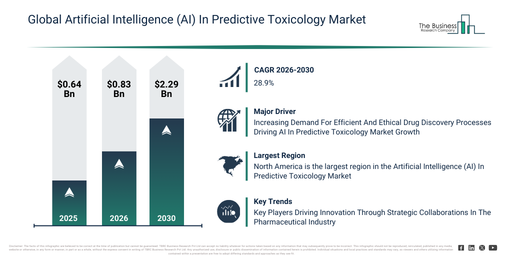
    The market size for artificial intelligence (AI) in predictive toxicology has seen rapid expansion over recent years. It is projected to increase from $0.64 billion in 2025 to $0.83 billion in 2026, achieving a compound annual growth rate (CAGR) of 29.3%. The growth witnessed in the past can be ascribed to a growing demand for safer chemicals, increasing pharmaceutical research and development, rising regulatory pressure for chemical safety, early adoption of computational toxicology, and advancements in bioinformatics tools.

    The artificial intelligence (ai) in predictive toxicology market is anticipated to experience substantial growth over the coming years. Its valuation is projected to reach $2.29 billion by 2030, demonstrating a compound annual growth rate (CAGR) of 28.9%. This expansion during the projection period is primarily driven by factors such as the increasing integration of AI-powered predictive models, the proliferation of cloud-based platforms for toxicology, the synthesis of genomic and chemical data, enhanced partnerships between pharmaceutical and biotechnology firms, and a surging requirement for swift chemical safety evaluations. Key developments expected within the forecast timeframe encompass the merging of multi-omics data for predicting toxicity, computational drug toxicity modeling, efficient high-throughput toxicological screening, AI-guided chemical prioritization, and cloud-centric management of toxicology data.

    Get A Free Sample Report With In-Depth Market Insights:

    https://www.thebusinessresearchcompany.com/sample.aspx?id=14253&type=smp&utm_source=Blogs&utm_medium=Paid&utm_campaign=Oct_PR

    Artificial Intelligence (AI) In Predictive Toxicology Market Industry Drivers: What’s Behind The Revenue Growth?

    The growing requirement for effective and ethical drug discovery methodologies is expected to drive the expansion of the artificial intelligence (AI) in predictive toxicology market moving forward. Drug discovery is an elaborate and evolving procedure encompassing the systematic investigation, synthesis, and evaluation of chemical compounds to identify potential therapeutic agents for disease alleviation and overall well-being. Efficient and ethical drug discovery processes involve utilizing advanced technologies and prioritizing responsible research practices to develop new treatments. This increasing demand for streamlined and ethical drug discovery is fueled by the rise in chronic illnesses, the expanding trend toward personalized medicine, and a higher incidence of age-related diseases. Artificial intelligence (AI) in predictive toxicology enhances drug discovery by efficiently analyzing extensive datasets to forecast potential toxicological outcomes, thereby accelerating drug development while ensuring ethical criteria are met. For instance, in 2023, the UK government’s net spending on research and development (R&D) increased to £17.4 ($22.1 billion) billion, up from £16.1 billion ($20.45 billion) in 2022, marking an 8.2% rise, as reported by the Office for National Statistics, a UK-based government agency. Consequently, the rising demand for efficient and ethical drug discovery processes is propelling the growth of the artificial intelligence (AI) in predictive toxicology market.

    Artificial Intelligence (AI) In Predictive Toxicology Market Segment Performance And Emerging Opportunities

    The artificial intelligence (ai) in predictive toxicology market covered in this report is segmented –

    1) By Component: Solution, Services

    2) By Technology: Machine Learning, Other Technologies

    3) By Toxicity Endpoints: Genotoxicity, Hepatotoxicity, Neurotoxicity, Cardiotoxicity, Other Toxicity Endpoints

    4) By End User: Pharmaceutical And Biotechnology Companies, Chemical And Cosmetics, Contract Research Organizations, Other End Users

    Subsegments:

    1) By Solution: Software Platforms, Data Analysis Tools, Predictive Modeling Solutions, Database And Information Systems

    2) By Services: Consulting Services, Training And Support Services, Data Management And Integration Services, Research And Development Services

    #Artificial Intelligence (AI) In Predictive Toxicology Market Growth Trends: What’s Shaping The Future Outlook?

    Leading firms operating in the artificial intelligence (AI) predictive toxicology market are employing strategic partnership approaches to bolster their market presence and drive innovation. These collaborations are designed to leverage AI and machine learning techniques for enhanced prediction and assessment of the toxicity of chemical compounds and pharmaceuticals. For instance, in January 2024, SyntheticGestalt, a UK-based AI research and development company offering AI drug discovery solutions, partnered with Enamine, a Ukraine-based provider of chemical building blocks, screening compounds, and integrated drug discovery services, to develop a set of AI models. These models aim to facilitate the generation of synthetically accessible biologically active compounds while optimizing their physicochemical and ADME or Tox (Absorption, Distribution, Metabolism, and Excretion or Toxicity) properties. These new models will be applied in SyntheticGestalt’s compound discovery endeavors, serving both academic users and pharmaceutical companies through their services. Enamine has made its extensive Enamine REAL database, containing 38 billion molecules, available for access. SyntheticGestalt will integrate this database into its Drug Discovery Service, utilizing proprietary AI models to predict the physicochemical and ADME or Tox properties of compounds. The service will promptly suggest improved alternative compounds for those with issues.

    Artificial Intelligence (AI) In Predictive Toxicology Market Key Players: Which Companies Lead Industry Competition?

    Major companies operating in the artificial intelligence (ai) in predictive toxicology market are Certara Inc, Schrödinger Inc, Instem plc, Simulations Plus Inc, Lhasa Limited, Chemaxon Ltd, Algorithme Pharma, Benevolent AI, Berg Health, Biovista Inc, Recursion Pharmaceuticals Inc, Exscientia plc, Insilico Medicine Inc, Celsius Therapeutics Inc, ArisGlobal, Merative L.P., BioTeam Inc, Leadscope Inc, MultiCASE Inc, ACD Labs, Optibrium Ltd, Chemotargets SL, Toxys BV

    View The Full Artificial Intelligence (AI) In Predictive Toxicology Market Report:

    https://www.thebusinessresearchcompany.com/report/artificial-intelligence-ai-in-predictive-toxicology-global-market-report?utm_source=Blogs&utm_medium=Paid&utm_campaign=Oct_PR

    Artificial Intelligence (AI) In Predictive Toxicology Market Regional Analysis And Top Geography

    North America was the largest region in the artificial intelligence (AI) in predictive toxicology market in 2025. Asia-Pacific is expected to be the fastest-growing region in the forecast period. The regions covered in the artificial intelligence (ai) in predictive toxicology market report are Asia-Pacific, South East Asia, Western Europe, Eastern Europe, North America, South America, Middle East, Africa.

    Reach Out To Our Team:

    The Business Research Company: https://www.thebusinessresearchcompany.com/

    Americas: +1 310-496-7795

    Asia: +44 7882 955267 & +91 8897263534

    Europe: +44 7882 955267

    Email us at: marketing@tbrc.info

    Follow us on:

    LinkedIn: https://in.linkedin.com/company/the-business-research-company

    YouTube: https://www.youtube.com/channel/UC24_fI0rV8cR5DxlCpgmyFQ

    Global Market Model: https://www.thebusinessresearchcompany.com/global-market-model

  • Artificial Intelligence (AI) In Biopharmaceuticals Market Forecast Highlights A $8.77 Billion Opportunity For Industry Participants

    Artificial Intelligence (AI) In Biopharmaceuticals Market Forecast Highlights A $8.77 Billion Opportunity For Industry Participants

    Featuring market attractiveness scoring, total addressable market sizing, company benchmarking matrices, interactive Excel dashboards, deeper supply chain intelligence, emerging startup tracking, and granular product-level insights, The Business Research Company’s 2026 market reports are built to deliver research that is both more actionable and more strategically valuable.

    Artificial Intelligence (AI) In Biopharmaceuticals Market Size Forecast: How Big Could The Market Get By 2030?

    The artificial intelligence (AI) in biopharmaceuticals market has experienced substantial growth over recent years. This market is anticipated to expand from $2.1 billion in 2025 to $2.79 billion in 2026, demonstrating a compound annual growth rate (CAGR) of 33.0%. Contributing to this historic expansion are factors like the initial adoption of AI in pharmaceutical research, enhanced computational power, increased funding for biopharmaceutical R&D, the incorporation of omics data, and the proliferation of cloud-based data storage.

    The artificial intelligence (ai) in biopharmaceuticals market is expected to undergo significant expansion in the coming years. It is projected to achieve a valuation of $8.77 billion by 2030, exhibiting a compound annual growth rate (CAGR) of 33.1%. This anticipated growth during the forecast period can be attributed to advancements in machine learning algorithms, the increasing availability of AI-enabled laboratory equipment, wider adoption of predictive analytics, the rise of collaborative AI-biopharma platforms, and government incentives for AI-driven healthcare. Prominent trends within this period are AI-driven drug discovery, the application of predictive analytics in clinical trials, automation of laboratory processes, integration of real-world data, and optimization of personalized treatments.

    Get A Free Sample Report With In-Depth Market Insights:

    https://www.thebusinessresearchcompany.com/sample.aspx?id=14251&type=smp&utm_source=Blogs&utm_medium=Paid&utm_campaign=Oct_PR

    Artificial Intelligence (AI) In Biopharmaceuticals Market Growth Factors: What’s Supporting Expansion?

    The rising incidence of chronic diseases is projected to propel the growth of artificial intelligence (AI) in biopharmaceuticals market going forward. Chronic diseases are long-lasting conditions that typically progress slowly and can endure for years or even a lifetime, often stemming from lifestyle factors, an aging population, genetic predispositions, and environmental factors. AI in biopharmaceuticals is increasingly leveraged for managing chronic diseases because it analyzes large volumes of diverse data sources, identifies patterns, and personalizes treatment approaches. For instance, in April 2025, according to the Centers for Disease Control and Prevention (CDC), a US-based federal agency, approximately 194 million U.S. adults, or 76.4%, reported having at least one chronic condition in 2023. The prevalence was 59.5% among young adults, 78.4% among midlife adults, and 93.0% among older adults. Therefore, the growing prevalence of chronic diseases drives the growth of artificial intelligence (AI) in the biopharmaceuticals market.

    Artificial Intelligence (AI) In Biopharmaceuticals Market Segment Landscape And Growth Outlook

    The artificial intelligence (ai) in biopharmaceuticals market covered in this report is segmented –

    1) By Offering: Hardware, Software, Services

    2) By Deployment: Cloud, On-Premises

    3) By Technology: Machine Learning, Natural Language Processing, Deep Learning, Other Technologies

    4) By Application: Drug Discovery, Precision Medicine

    5) By End-Users: Manufacturers, Contract Research Organizations, Academic And Government Research Institutes

    Subsegments:

    1) By Hardware: High-Performance Computing Systems, AI-Enabled Laboratory Equipment, Data Storage Solutions

    2) By Software: Drug Discovery Platforms, Predictive Analytics Tools, Natural Language Processing Solutions

    3) By Services: Consulting Services, Implementation And Integration Services, Data Management And Analytics Services, Training And Support Services

    Artificial Intelligence (AI) In Biopharmaceuticals Market Industry Trends: What’s Reshaping Demand?

    Major companies engaged in artificial intelligence within the biopharmaceutical sector are prioritizing the development of cutting-edge innovations, including AI-powered solutions for target and lead identification. These advancements aim to accelerate drug discovery and precision medicine, thereby transforming organizations across the life sciences. The solutions designed for drug discovery and precision medicine encompass a range of novel approaches for creating new medications and customizing therapies for individual patients. A notable example occurred in May 2023, when Google LLC, a US-based provider of cloud computing services, launched two new AI-driven offerings called target and lead identification suites. These tools are engineered to help researchers anticipate and understand protein structures, which forms a foundational aspect of drug development. Additionally, this suite will facilitate researchers in ingesting, storing, analyzing, and sharing substantial volumes of genomic data, an element critical for precision medicine. The objective of these tools is to streamline the drug discovery process, reduce associated costs, and expedite the market availability of new treatments. Through efficient data management, accurate protein structure predictions, and advanced genomic analysis features, these tools aspire to revolutionize drug development workflows and improve patient outcomes.

    Artificial Intelligence (AI) In Biopharmaceuticals Market Competitive Landscape: Who Leads The Industry?

    Major companies operating in the artificial intelligence (ai) in biopharmaceuticals market are Exscientia Limited, DeepMind Technologies Limited, Schrödinger Inc., XtalPi Inc., ConcertAI Inc., Insilico Medicine Inc., Recursion Pharmaceuticals, BenevolentAI, BioXcel Therapeutics, Atomwise Inc., BioAge Labs Inc., GNS Healthcare, Berg Health, Deep 6 AI Inc., Cloud Pharmaceuticals Inc., Numerate Inc., AI Therapeutics, Envisagenics, twoXAR Inc., Cyclica Inc.

    View The Full Artificial Intelligence (AI) In Biopharmaceuticals Market Report:

    https://www.thebusinessresearchcompany.com/report/artificial-intelligence-ai-in-biopharmaceuticals-global-market-report?utm_source=Blogs&utm_medium=Paid&utm_campaign=Oct_PR

    Artificial Intelligence (AI) In Biopharmaceuticals Market Geographic Analysis: Where Is Demand Rising Fastest?

    North America was the largest region in the artificial intelligence (AI) in biopharmaceuticals market in 2025. Asia-Pacific is expected to be the fastest-growing region in the forecast period. The regions covered in the artificial intelligence (ai) in biopharmaceuticals market report are Asia-Pacific, South East Asia, Western Europe, Eastern Europe, North America, South America, Middle East, Africa.

    Reach Out To Our Team:

    The Business Research Company: https://www.thebusinessresearchcompany.com/

    Americas: +1 310-496-7795

    Asia: +44 7882 955267 & +91 8897263534

    Europe: +44 7882 955267

    Email us at: marketing@tbrc.info

    Follow us on:

    LinkedIn: https://in.linkedin.com/company/the-business-research-company

    YouTube: https://www.youtube.com/channel/UC24_fI0rV8cR5DxlCpgmyFQ

    Global Market Model: https://www.thebusinessresearchcompany.com/global-market-model

  • Arthritis Monoclonal Antibodies Market Analysis: How The Industry Is Evolving Toward A $98.46 Billion Future

    Arthritis Monoclonal Antibodies Market Analysis: How The Industry Is Evolving Toward A $98.46 Billion Future

    Built to provide research that’s more actionable and strategically valuable, The Business Research Company’s 2026 market reports include market attractiveness analysis, total addressable market sizing, company benchmarking matrices, interactive Excel dashboards, broader supply chain intelligence, emerging startup tracking, and in-depth product insights.

    Arthritis Monoclonal Antibodies Market Revenue Outlook: What CAGR Lies Ahead Through 2030?

    The arthritis monoclonal antibodies market has experienced substantial growth in recent years. This market is set to expand from $66.45 billion in 2025 to $71.66 billion in 2026, achieving a compound annual growth rate (CAGR) of 7.8%. Historically, this growth can be ascribed to several factors, including the increasing prevalence of rheumatoid arthritis, the limited effectiveness of conventional dmards, growing awareness of biologic therapies, the expansion of hospital-based rheumatology care, and rising healthcare expenditure.

    The arthritis monoclonal antibodies market size is anticipated to undergo significant expansion over the next few years. It is projected to achieve a valuation of $98.46 billion by 2030, growing at a compound annual growth rate (CAGR) of 8.3%. This expected increase during the forecast period can be attributed to several factors, including the development of advanced monoclonal antibodies, a rising introduction of biosimilars, an increase in personalized immunotherapy techniques, the growing elderly population with arthritis conditions, and enhanced reimbursement policies for biologics. Prominent trends for the upcoming period encompass a greater adoption of biologic therapies for autoimmune arthritis, a growing preference for targeted monoclonal antibody treatments, an increase in early and aggressive treatment strategies, the expansion of biosimilars specifically for arthritis monoclonal antibodies, and improved patient access facilitated by hospitals and specialty clinics.

    Get A Free Sample Report With In-Depth Market Insights:

    https://www.thebusinessresearchcompany.com/sample.aspx?id=3449&type=smp&utm_source=Blogs&utm_medium=Paid&utm_campaign=Oct_PR

    Arthritis Monoclonal Antibodies Market Demand Drivers: What’s Powering Industry Growth?

    Increasing authorizations for personalized medicines are anticipated to boost the arthritis monoclonal antibody market in the future. These medicines are defined as therapeutic products or treatments specifically customized for individual patients. Their development hinges on a patient’s genetic, biomarker, phenotypic, or psychosocial attributes, which help forecast a person’s reaction to therapy. Monoclonal antibodies (mABs) represent the newest class of pharmaceuticals aligning with the personalized medicine framework, promising enhanced patient results and healthcare efficiency. As an illustration, in February 2024, a report by the Personalized Medicine Coalition, a US-based non-profit dedicated to advancing personalized medicine, highlighted the significance of 26 newly approved personalized treatments, along with 19 expanded indications for existing personalized medicines, and 17 notable new or expanded indications for 12 diagnostic testing products. Consequently, the growing approvals for personalized medicines are a key factor driving the arthritis monoclonal antibody market.

    Arthritis Monoclonal Antibodies Market Breakdown By Product Type And Application

    The arthritis monoclonal antibodies market covered in this report is segmented –

    1) By Drug: Remicade, Humira, Enbrel, Rituxan, Orencia, Actemra, Simponi, Cimzia, Remsima

    2) By Application: Rheumatoid Arthritis, Osteoarthritis, Psoriatic Arthritis, Ankylosing Spondylitis, Fibromyalgia, Other Applications

    3) By End-Use: Hospitals, Research Institutes, Other End-Users

    Arthritis Monoclonal Antibodies Market Innovation Trends: What Developments Are Reshaping The Industry?

    Leading companies in the arthritis monoclonal antibody market are introducing new biosimilar versions, such as Hulio, to make treatment more affordable. Hulio is a biosimilar form of Humira, AbbVie’s highly successful rheumatoid arthritis drug. For instance, in July 2023, Biocon Biologics, an India-based subsidiary of Biocon Limited focused on developing biosimilar therapies, launched Hulio (adalimumab-fkjp), a biosimilar equivalent to Humira. This monoclonal antibody, prescribed for ailments like rheumatoid arthritis and psoriatic arthritis, is priced 5% lower than Humira, which currently lists at $6,922 per carton.

    Arthritis Monoclonal Antibodies Market Company Landscape And Competitive Strategy

    Major companies operating in the arthritis monoclonal antibodies market are Johnson & Johnson, Hoffmann-La Roche Ltd., Novartis AG, Pfizer Inc., AbbVie Inc., Amgen Inc., Genentech Inc., GlaxoSmithKline plc., AstraZeneca plc, Bristol Myers Squibb, Eli Lilly and Company, Thermo Fisher Scientific Inc., Sanofi SA, Daiichi Sankyo Company Ltd., Seattle Genetics, Teva Pharmaceutical Industries Ltd., Shanghai Junshi Biosciences Co. Ltd., GenScript Biotech Corporation, Sigma-Aldrich Co. LLC, AbGenomics Corp., ADC Therapeutics SA, Agensys Inc., Alexion Pharmaceuticals Inc., ALMAC Group Ltd., Ambrx Inc., Astellas Pharma Inc., Celgene Corporation, Celldex Therapeutics Inc., Boehringer Ingelheim International GmbH, Celltrion Inc., HanAll Biopharma Co. Ltd., Merck & Co. Inc., Mitsubishi Tanabe Pharma Corporation, Regeneron Pharmaceuticals Inc., Samsung Bioepis Co. Ltd.

    View The Full Arthritis Monoclonal Antibodies Market Report:

    https://www.thebusinessresearchcompany.com/report/arthritis-monoclonal-antibodie-global-market-report?utm_source=Blogs&utm_medium=Paid&utm_campaign=Oct_PR

    Arthritis Monoclonal Antibodies Market Global Footprint: Which Region Leads The Market?

    North America was the largest region in the arthritis monoclonal antibodies market in 2025. The regions covered in the arthritis monoclonal antibodies market report are Asia-Pacific, South East Asia, Western Europe, Eastern Europe, North America, South America, Middle East, Africa.

    Reach Out To Our Team:

    The Business Research Company: https://www.thebusinessresearchcompany.com/

    Americas: +1 310-496-7795

    Asia: +44 7882 955267 & +91 8897263534

    Europe: +44 7882 955267

    Email us at: marketing@tbrc.info

    Follow us on:

    LinkedIn: https://in.linkedin.com/company/the-business-research-company

    YouTube: https://www.youtube.com/channel/UC24_fI0rV8cR5DxlCpgmyFQ

    Global Market Model: https://www.thebusinessresearchcompany.com/global-market-model
  • Arthritic Therapeutic Market Outlook Through 2030: Understanding The Growth Opportunity

    Arthritic Therapeutic Market Outlook Through 2030: Understanding The Growth Opportunity

    Backed by market attractiveness analysis, total addressable market sizing, company benchmarking matrices, interactive Excel dashboards, wider supply chain intelligence, emerging startup coverage, and detailed product-level insights, The Business Research Company’s 2026 market reports are designed to offer research that is more actionable and strategically valuable than ever.

    Arthritic Therapeutic Market Growth Analysis: How Will Revenue Trend Over The Forecast Period?

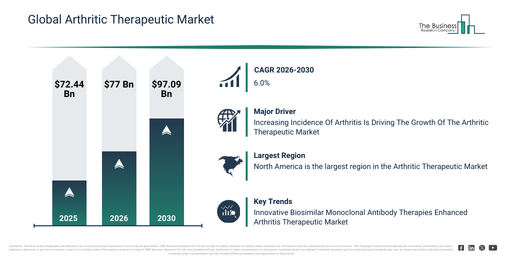
    The arthritic therapeutic market size has experienced substantial expansion in recent years. It will grow from $72.44 billion in 2025 to $77 billion in 2026 at a compound annual growth rate (CAGR) of 6.3%. This historical growth can be attributed to a global increase in arthritis prevalence, a growing geriatric population, restricted access to advanced therapeutics, enhanced awareness of arthritis management, and the expansion of hospital and clinic infrastructure.

    The arthritic therapeutic market size is anticipated to experience substantial growth in the coming years. This market is projected to reach $97.09 billion by 2030, demonstrating a compound annual growth rate (CAGR) of 6.0%. The expansion during the forecast period can be attributed to the development of novel biologics and targeted therapies, the increasing adoption of telemedicine and remote patient monitoring, the integration of digital health platforms, rising investment in arthritis research and clinical trials, and the growth in personalized medicine approaches for arthritis. Major trends in the forecast period include the rising adoption of biologic and targeted therapies for arthritis, an increasing preference for personalized arthritis management plans, the growth in home-based physical therapy and rehabilitation services, the expansion of online pharmacies and digital distribution channels, and an increasing focus on early diagnosis and preventive arthritis care.

    Get A Free Sample Report With In-Depth Market Insights:

    https://www.thebusinessresearchcompany.com/sample.aspx?id=19297&type=smp&utm_source=Blogs&utm_medium=Paid&utm_campaign=Oct_PR

    Arthritic Therapeutic Market Growth Drivers: What’s Behind The Acceleration?

    The rising occurrence of arthritis is anticipated to stimulate expansion in the arthritic therapeutic market in the future. Arthritis encompasses over 100 conditions primarily marked by pain and swelling in the joints. The prevalence of arthritis is escalating due to an aging demographic, higher obesity levels, and lifestyle choices that lead to joint strain and inflammation. Therapies for arthritis aim to ease discomfort, reduce swelling, and restore joint mobility, thereby improving the general well-being of individuals affected. For example, in June 2024, a report from the Australian Institute of Health and Welfare, an Australia-based government organization, indicated that around 514,000 people (2.0% of the population) were afflicted with rheumatoid arthritis in 2022. Rheumatoid arthritis constituted 2.0% of the overall disease burden and accounted for 16% of the total burden for all musculoskeletal conditions in 2023. Consequently, the increasing incidence of arthritis is fueling the growth of the arthritic therapeutic market.

    Arthritic Therapeutic Market Segment Analysis And Revenue Potential

    The arthritic therapeutic market covered in this report is segmented –

    1) By Drug Class: Tumor Necrosis Factor (TNF) Inhibitors, Interleukin Inhibitors, Nonsteroidal Anti-Inflammatory Drugs (NSAIDs), Corticosteroids, Xanthine Oxidase Inhibitors, Other Drug Classes

    2) By Route Of Administration: Oral, Parenteral, Topical

    3) By Type: Psoriatic Arthritis, Rheumatoid Arthritis, Osteoarthritis, Gout, Other Types

    4) By Distribution Channel: Hospital Pharmacies, Retail Pharmacies, Online Pharmacies

    Subsegments:

    1) By Tumor Necrosis Factor (TNF) Inhibitors: Adalimumab, Etanercept, Infliximab, Certolizumab Pegol, Golimumab

    2) By Interleukin Inhibitors: Interleukin-6 (IL-6) Inhibitors, Interleukin-1 (IL-1) Inhibitors, Interleukin-17 (IL-17) Inhibitors, Interleukin-23 (IL-23) Inhibitors

    3) By Nonsteroidal Anti-Inflammatory Drugs (NSAIDs): Ibuprofen, Naproxen, Diclofenac, Celecoxib, Meloxicam

    4) By Corticosteroids: Prednisone, Methylprednisolone, Hydrocortisone, Dexamethasone

    5) By Xanthine Oxidase Inhibitors: Allopurinol, Febuxostat

    6) By Other Drug Classes: Disease-Modifying Antirheumatic Drugs (DMARDs), Janus Kinase (JAK) Inhibitors, Biologic DMARDs, Topical Analgesics, Opioid Pain Medications

    Arthritic Therapeutic Market Trends: What’s Defining The Industry’s Next Phase?

    Major companies operating in the arthritis therapeutic market are concentrating on developing innovative solutions, such as biosimilar monoclonal antibody-based therapies, to enhance the effectiveness of treatments and reduce associated costs. These biosimilar monoclonal antibody-based therapies are medical interventions crafted to closely replicate and imitate the efficacy of original monoclonal antibodies, thereby offering similar therapeutic advantages at a potentially lower price. As an illustration, in May 2024, Bio-Thera Solutions Ltd., a biopharmaceutical company located in China, introduced TOFIDENCE, an intravenous biosimilar monoclonal antibody formulation based on ACTEMRA. TOFIDENCE (tocilizumab-bavi) has been developed as a biosimilar to the reference drug ACTEMRA and has gained approval for the treatment of moderately to severely active rheumatoid arthritis, polyarticular juvenile idiopathic arthritis, and systemic juvenile idiopathic arthritis.

    Arthritic Therapeutic Market Key Players Shaping Industry Direction

    Major companies operating in the arthritic therapeutic market are Pfizer Inc., Johnson & Johnson, Hoffmann-La Roche Ltd, Merck & Co Inc., AbbVie Inc., Sanofi S.A., Bristol-Myers Squibb Company, AstraZeneca Pharma AB, GlaxoSmithKline plc, Eli Lilly and Company, Amgen Inc., Gilead Sciences Inc., Regeneron Pharmaceuticals Inc., Astellas Pharma Inc., Biogen Inc., Vertex Pharmaceuticals Incorporated, Zimmer Biomet Holdings Inc., UCB Pharma S.A., Incyte Corporation, Celltrion Inc., Mallinckrodt Pharmaceuticals, Genentech Inc., Anika Therapeutics Inc., Medac GmbH

    View The Full Arthritic Therapeutic Market Report:

    https://www.thebusinessresearchcompany.com/report/arthritic-therapeutic-global-market-report?utm_source=Blogs&utm_medium=Paid&utm_campaign=Oct_PR

    Arthritic Therapeutic Market Regional Split: Which Areas Are Fueling Growth?

    North America was the largest region in the arthritic therapeutic market in 2025. The regions covered in the arthritic therapeutic market report are Asia-Pacific, South East Asia, Western Europe, Eastern Europe, North America, South America, Middle East, Africa.

    Reach Out To Our Team:

    The Business Research Company: https://www.thebusinessresearchcompany.com/

    Americas: +1 310-496-7795

    Asia: +44 7882 955267 & +91 8897263534

    Europe: +44 7882 955267

    Email us at: marketing@tbrc.info

    Follow us on:

    LinkedIn: https://in.linkedin.com/company/the-business-research-company

    YouTube: https://www.youtube.com/channel/UC24_fI0rV8cR5DxlCpgmyFQ

    Global Market Model: https://www.thebusinessresearchcompany.com/global-market-model

  • Artery Stenosis Drug Market Growth Potential: What The Latest Forecast Reveals

    Artery Stenosis Drug Market Growth Potential: What The Latest Forecast Reveals

    Featuring market attractiveness scoring, total addressable market sizing, company benchmarking matrices, interactive Excel dashboards, deeper supply chain intelligence, emerging startup tracking, and granular product-level insights, The Business Research Company’s 2026 market reports are built to deliver research that is both more actionable and more strategically valuable.

    Artery Stenosis Drug Market Forecast: What Value Will The Market Reach By 2030?

    The artery stenosis drug market size has experienced significant expansion in recent years. This market is projected to expand from $2.6 billion in 2025 to $2.75 billion in 2026, achieving a compound annual growth rate (CAGR) of 5.9%. Historically, this growth has been influenced by factors such as the prevalence of cardiovascular disease, the increasing aging population, the adoption of statin therapy, the incidence of hypertension, and the expansion of hospital cardiology departments.

    The market for artery stenosis drugs is anticipated to experience substantial expansion over the upcoming years. This market is projected to reach $3.46 billion by 2030, exhibiting a compound annual growth rate (CAGR) of 5.9%. This projected increase can be ascribed to several factors, including a greater emphasis on preventive cardiology, the implementation of early diagnosis initiatives, an increase in combination therapy adoption, improved chronic disease management, and expanded outpatient cardiovascular care. Key developments during this period are expected to involve a growing reliance on combination cardiovascular therapies, a wider embrace of preventive drug regimens, an increase in long-term statin use, the broadening of vascular care for the elderly, and a heightened focus on preventing strokes and heart attacks.

    Get A Free Sample Report With In-Depth Market Insights:

    https://www.thebusinessresearchcompany.com/sample.aspx?id=24151&type=smp&utm_source=Blogs&utm_medium=Paid&utm_campaign=Oct_PR

    Artery Stenosis Drug Market Growth Factors Behind Sustained Expansion

    The increasing incidence of diabetes and obesity is anticipated to drive the expansion of the artery stenosis drug market in the future. Diabetes is a chronic ailment characterized by inadequate insulin production or inefficient insulin utilization by the body, leading to high blood sugar; conversely, obesity is a medical state defined by excessive body fat, which heightens the risk of various health complications. The surge in these conditions, diabetes and obesity, is exacerbated by insufficient physical activity, often linked to more sedentary work settings and leisure pursuits involving screens, both of which contribute to weight accumulation and insulin resistance. Artery stenosis medications become essential in cases of diabetes and obesity because both illnesses encourage the formation of plaque within arteries, thereby elevating the danger of heart attacks and strokes. For example, the World Health Organization, a Switzerland-based specialized agency of the United Nations, reported 2.0 million diabetes-related deaths in September 2023. Consequently, the expanding prevalence of diabetes and obesity is stimulating growth within the artery stenosis drug market.

    Artery Stenosis Drug Market Segmentation And Category Overview

    The artery stenosis drug market covered in this report is segmented –

    1) By Drug Type: Antiplatelet Agents, Anticoagulants, Statins, Beta Blockers

    2) By Mechanism Of Action: Platelet Aggregation Inhibitors, Thrombin Inhibitors, HMG-CoA Reductase Inhibitors, Beta-Adrenergic Antagonists

    3) By Route Of Administration: Oral, Injectable, Transdermal

    4) By Patient Type: Adults, Geriatric, Pediatric

    Subsegments:

    1) By Antiplatelet Agents: Aspirin, Clopidogrel, Ticagrelor, Prasugrel, Dipyridamole

    2) By Anticoagulants: Warfarin, Heparin, Low Molecular Weight Heparins, Direct Oral Anticoagulants (DOACs)

    3) By Statins: Atorvastatin, Simvastatin, Rosuvastatin, Pravastatin, Lovastatin

    4) By Beta Blockers: Metoprolol, Atenolol, Propranolol, Carvedilol, Bisoprolol

    Artery Stenosis Drug Market Industry Trends Fueling Future Revenue Growth

    Leading companies in the artery stenosis drug market are dedicated to advancing therapeutic innovations, such as sirolimus drug-coated balloons, to address critical medical needs in peripheral artery disease treatment. These sirolimus drug-coated balloons are medical devices that integrate balloon angioplasty with targeted drug delivery, releasing sirolimus, an antiproliferative agent, directly into the arterial wall during inflation to prevent restenosis and improve long-term vessel patency. For instance, in November 2024, Cordis Corporation, a US-based cardiovascular medical device company, reported positive 24-month results from the Selution SFA Japan trial, highlighting the effectiveness of its Selution SLR sirolimus drug-coated balloon in treating superficial femoral artery disease. The data revealed a primary patency rate of 86.8% at 24 months and a low target lesion revascularization rate of 6.6%, demonstrating sustained vessel openness and a reduced need for repeat interventions. The Selution SLR balloon ensures a continuous and controlled release of sirolimus to the arterial wall, thereby inhibiting excessive tissue growth that leads to re-narrowing, while also maintaining excellent safety profiles for patients with peripheral artery stenosis.

    Artery Stenosis Drug Market Competitive Analysis Of Leading Industry Participants

    Major companies operating in the artery stenosis drug market are Pfizer Inc., Bayer AG, Bristol-Myers Squibb Company, AstraZeneca PLC, Novartis AG, Sanofi S.A., Merck & Co. Inc., Johnson & Johnson Services Inc., GSK plc, Boehringer Ingelheim, Daiichi Sankyo Company Limited, Eli Lilly and Company, Otsuka Pharmaceutical Co. Ltd., Teva Pharmaceutical Industries Ltd., Sun Pharmaceutical Industries Ltd., Dr. Reddy’s Laboratories Ltd., Cipla Limited, Lupin Limited, Aurobindo Pharma Limited, Zydus Lifesciences Limited

    View The Full Artery Stenosis Drug Market Report:

    https://www.thebusinessresearchcompany.com/report/artery-stenosis-drug-global-market-report?utm_source=Blogs&utm_medium=Paid&utm_campaign=Oct_PR

    Artery Stenosis Drug Market Top Region: Where Does Most Revenue Come From?

    North America was the largest region in the artery stenosis drug market in 2025. The regions covered in the artery stenosis drug market report are Asia-Pacific, South East Asia, Western Europe, Eastern Europe, North America, South America, Middle East, Africa.

    Reach Out To Our Team:

    The Business Research Company: https://www.thebusinessresearchcompany.com/

    Americas: +1 310-496-7795

    Asia: +44 7882 955267 & +91 8897263534

    Europe: +44 7882 955267

    Email us at: marketing@tbrc.info

    Follow us on:

    LinkedIn: https://in.linkedin.com/company/the-business-research-company

    YouTube: https://www.youtube.com/channel/UC24_fI0rV8cR5DxlCpgmyFQ

    Global Market Model: https://www.thebusinessresearchcompany.com/global-market-model
  • Aripiprazole Market Growth Outlook: Why Analysts Expect Continued Expansion

    Aripiprazole Market Growth Outlook: Why Analysts Expect Continued Expansion

    Built to provide research that’s more actionable and strategically valuable, The Business Research Company’s 2026 market reports include market attractiveness analysis, total addressable market sizing, company benchmarking matrices, interactive Excel dashboards, broader supply chain intelligence, emerging startup tracking, and in-depth product insights.

    Aripiprazole Market Size Outlook: How Quickly Will Revenue Expand Through 2030?

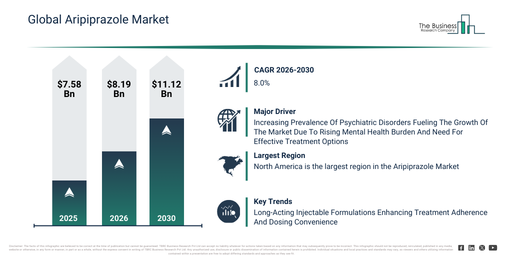
    The aripiprazole market size has shown significant growth in recent years. It is anticipated to increase from $7.58 billion in 2025 to $8.19 billion in 2026, achieving a compound annual growth rate (CAGR) of 8.0%. This historical growth can be ascribed to factors such as schizophrenia prevalence, the rise in bipolar disorder diagnosis growth, the approval of various antipsychotic drugs, increased mental health awareness, and the expansion of hospital psychiatry.

    The aripiprazole market size is projected to undergo significant growth over the next few years, reaching $11.12 billion in 2030 with a compound annual growth rate (CAGR) of 8.0%. This anticipated expansion during the forecast period is primarily driven by the increasing adoption of long-acting injectables, a rise in cases of treatment-resistant depression, enhanced generic penetration, more frequent pediatric mental health diagnoses, and the expansion of outpatient psychiatry services. Significant trends anticipated during this period include a greater application as an adjunct depression therapy, the proliferation of long-acting injectable antipsychotics, a broader reach in pediatric and adolescent psychiatry, an escalating demand for mood stabilization therapies, and a more widespread acceptance of generic aripiprazole.

    Get A Free Sample Report With In-Depth Market Insights:

    https://www.thebusinessresearchcompany.com/sample.aspx?id=24150&type=smp&utm_source=Blogs&utm_medium=Paid&utm_campaign=Oct_PR

    Aripiprazole Market Demand Drivers Opening New Revenue Streams

    The rising occurrence of psychiatric disorders is anticipated to fuel the expansion of the aripiprazole market in the future. These conditions encompass various mental health issues that impact an individual’s thinking, feelings, conduct, and overall capability. The growing incidence of psychiatric disorders stems from factors like prolonged stress, social detachment, and contemporary lifestyle demands affecting mental well-being. Aripiprazole assists in managing psychiatric disorders by regulating dopamine and serotonin levels in the brain, rendering it beneficial for conditions like schizophrenia, bipolar disorder, and major depressive disorder. It enhances symptom control via adaptable dosing choices, fostering better treatment compliance and improving patients’ overall quality of life. For instance, based on an annual mental health poll by the American Psychiatric Association, a US-based health association, 43 percent of United States adults reported feeling more anxious in 2024 than in the preceding year, an increase from 37 percent in 2023 and 32 percent in 2022. Consequently, the escalating prevalence of psychiatric disorders is propelling the growth of the aripiprazole market. The increasing spending on healthcare is anticipated to boost the aripiprazole market’s expansion in the coming years. Healthcare expenditure represents the total funds allocated to medical services, treatments, facilities, research, and public health initiatives aimed at maintaining or enhancing health outcomes. The rising need for healthcare spending is driven by the growing incidence of chronic mental health conditions, which demand ongoing treatment, medication, and sustained care support. Healthcare spending supports the uptake of aripiprazole by facilitating access to advanced mental health treatments, ensuring a steady supply of medication, and improving patient care. It fortifies healthcare systems through financing long-term therapies, thereby enhancing treatment efficacy for psychiatric disorders. For instance, in December 2024, data from the Centers for Medicare and Medicaid Services (CMS), a US-based federal agency, indicated that national health expenditures (NHE) rose by 7.5% to $4.9 trillion in 2023, constituting 17.6% of gross domestic product (GDP). Furthermore, between 2023 and 2032, average national health expenditures (NHE) are projected to grow at an average annual rate of 5.6%, leading to an increase in the health spending share of gross domestic product (GDP) from 17.3% in 2022 to 19.7% in 2032. Thus, the escalating healthcare expenditure is propelling the growth of the aripiprazole market.

    Aripiprazole Market Segment Outlook: Which Categories Are Growing Fastest?

    The aripiprazole market covered in this report is segmented –

    1) By Indication: Schizophrenia, Bipolar Disorder, Major Depressive Disorder, Autism Spectrum Disorder

    2) By Patient Demographics: Pediatric Patients, Adult Patients, Geriatric Patients

    3) By Dosage Form: Oral Tablets, Oral Solution, Injectable

    4) By Distribution Channel: Hospital Pharmacy, Retail Pharmacy, Online Pharmacy

    Subsegments:

    1) By Schizophrenia: Acute Schizophrenia, Maintenance Treatment for Schizophrenia

    2) By Bipolar Disorder: Bipolar I Disorder, Bipolar II Disorder, Bipolar Depression

    3) By Major Depressive Disorder: Treatment-Resistant Depression, Acute Major Depressive Disorder

    4) By Autism Spectrum Disorder: Irritability Associated with Autism, Aggressive Behavior in Autism

    Aripiprazole Market Trends Powering Strategic Industry Growth

    Companies active in the aripiprazole market are concentrating on developing innovative products and obtaining necessary approvals, like product line extensions, to improve treatment adherence, expand therapeutic applications, and maintain market competitiveness after patent expiration. A product line extension is defined as the strategy of introducing new variations of an existing product under the same brand, often through alterations in formulation, dosage, packaging, or delivery methods. This approach is designed to broaden the product’s market reach or address changing patient needs without modifying the core compound. For instance, in March 2024, Otsuka Pharmaceutical Co. Ltd., a Japan-based pharmaceutical company, received approval from Japan’s Ministry of Health, Labour and Welfare (MHLW) for Abilify Asimtufii. This long-acting injectable formulation of aripiprazole is administered once every two months for managing schizophrenia. It functions by delivering a sustained release of aripiprazole through a ready-to-use aqueous suspension, allowing for once-every-two-month dosing that decreases injection frequency compared to monthly formulations, thus enhancing treatment adherence and convenience for patients while sustaining therapeutic efficacy in controlling schizophrenia symptoms.

    Aripiprazole Market Leading Companies And Competitive Benchmarking

    Major companies operating in the aripiprazole market are Novartis AG, Teva Pharmaceutical Industries Ltd., Hetero Drugs, Sun Pharmaceutical Industries Ltd., Cipla Limited, Zydus Lifesciences, Neuland Laboratories Ltd., Ipca Laboratories Limited, Jubilant Pharmova, MSN Laboratories Pvt. Ltd., Harman Finochem Ltd., SMS Pharmaceuticals, Erregierre S.p.A., Tiefenbacher API + Ingredients GmbH & Co. KG, Alkem Laboratories Ltd., Suraj Laboratories Pvt. Ltd, Octavius Pharma Pvt. Ltd., Tooba Pharmaceuticals Private Limited, Senores Pharmaceuticals Pvt. Ltd., Gonane Pharma.

    View The Full Aripiprazole Market Report:

    https://www.thebusinessresearchcompany.com/report/aripiprazole-global-market-report?utm_source=Blogs&utm_medium=Paid&utm_campaign=Oct_PR

    Aripiprazole Market Regional Breakdown: Where Is Demand Concentrated?

    North America was the largest region in the aripiprazole market in 2025. Asia-Pacific is expected to be the fastest-growing region in the forecast period. The regions covered in the aripiprazole market report are Asia-Pacific, South East Asia, Western Europe, Eastern Europe, North America, South America, Middle East, Africa.

    Reach Out To Our Team:

    The Business Research Company: https://www.thebusinessresearchcompany.com/

    Americas: +1 310-496-7795

    Asia: +44 7882 955267 & +91 8897263534

    Europe: +44 7882 955267

    Email us at: marketing@tbrc.info

    Follow us on:

    LinkedIn: https://in.linkedin.com/company/the-business-research-company

    YouTube: https://www.youtube.com/channel/UC24_fI0rV8cR5DxlCpgmyFQ

    Global Market Model: https://www.thebusinessresearchcompany.com/global-market-model
  • Aptamers Market Forecast Insights: The Road To $9.83 Billion By 2030

    Aptamers Market Forecast Insights: The Road To $9.83 Billion By 2030

    Backed by market attractiveness analysis, total addressable market sizing, company benchmarking matrices, interactive Excel dashboards, wider supply chain intelligence, emerging startup coverage, and detailed product-level insights, The Business Research Company’s 2026 market reports are designed to offer research that is more actionable and strategically valuable than ever.

    Aptamers Market Size, Value And Growth Trajectory Through 2030

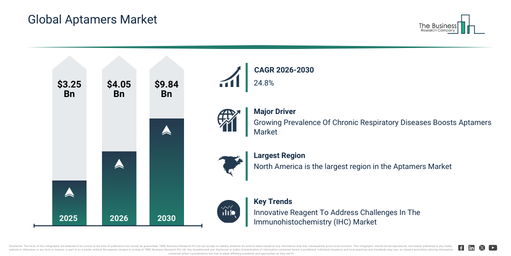
    The aptamers market has experienced significant expansion in recent years. It is anticipated to grow from $3.25 billion in 2025 to $4.05 billion in 2026, demonstrating a compound annual growth rate (CAGR) of 24.6%. The historical surge in this market can be attributed to the rising demand for precision therapeutics, advancements in molecular biology techniques, increased research funding for aptamer technologies, the growing prevalence of chronic diseases, and the development of biotechnology research infrastructure.

    The aptamers market size is projected to undergo significant expansion in the upcoming years. It is forecast to reach $9.84 billion in 2030, demonstrating a compound annual growth rate (CAGR) of 24.8%. This growth over the forecast period is fueled by the increased embrace of aptamer-based diagnostics, the integration of technology with AI and biosensing platforms, the progression of personalized medicine, a rise in collaborations between pharmaceutical and biotechnology entities, and the widening presence in developing markets for research and healthcare. Prominent trends anticipated in this period include sophisticated targeted drug development, high-throughput screening methodologies, adaptable aptamer design, incorporation with biosensors and diagnostic tools, and the broadening of the therapeutic and diagnostic market.

    Get A Free Sample Report With In-Depth Market Insights:

    https://www.thebusinessresearchcompany.com/sample.aspx?id=8156&type=smp&utm_source=Blogs&utm_medium=Paid&utm_campaign=Oct_PR

    Aptamers Market Growth Backed By Core Demand Fundamentals

    The aptamers market is anticipated to expand due to the rising occurrence of chronic respiratory illnesses. Chronic respiratory disease involves the narrowing and swelling of airways, potentially leading to increased mucus production, which results in difficult breathing, coughing, shortness of breath, and wheezing upon exhalation. Aptamers play a role in detecting the respiratory syncytial virus (RSV), facilitating early disease identification, and offering therapeutic options. A significant example is that in June 2024, data from the Australian Institute of Health and Welfare indicated that COPD constituted 3.6% of the overall disease burden and 50% of the disease burden associated with respiratory conditions in 2023. Consequently, the increasing incidence of chronic respiratory conditions is fueling the expansion of the aptamers market.

    Aptamers Market Segment Landscape: Which Areas Lead Development?

    The aptamers market covered in this report is segmented –

    1) By Type: DNA Aptamers, XNA Aptamers, RNA Aptamers

    2) By Technology: SELEX, X Aptamer, Maras Technique

    3) By Application: Therapeutics Development, Research and Development, Diagnostic, Other Applications

    Subsegments:

    1) By DNA Aptamers: Single-Stranded DNA (ssDNA) Aptamers, Double-Stranded DNA (dsDNA) Aptamers

    2) By XNA Aptamers: Peptide Nucleic Acid (PNA) Aptamers, Locked Nucleic Acid (LNA) Aptamers, Glycyl Nucleic Acid (GNA) Aptamers

    3) By RNA Aptamers: Small Interfering RNA (siRNA) Aptamers, Short Hairpin RNA (shRNA) Aptamers, Long Non-Coding RNA (lncRNA) Aptamers

    Aptamers Market Growth Trends Reshaping The Competitive Landscape

    Major companies operating in the aptamers market are introducing innovative reagents, such as Optimer-Fc, to address challenges within the immunohistochemistry (IHC) market. Optimer-Fc is a novel reagent specifically designed to automate immunohistochemistry (IHC) workflows. For instance, in March 2023, Aptamer Group PLC, a UK-based biotech company, unveiled Optimer-Fc as a new reagent for automated immunohistochemistry (IHC) workflows, aiming to resolve difficulties in the IHC market. The company actively collaborates with prominent IHC firms, confirms Optimer-Fc’s effectiveness, and arranges trials with major pharmaceutical companies. Serving as an antibody alternative, Optimer-Fc integrates Optimer binders into existing workflows, thereby providing increased accuracy and selectivity for disease biomarkers in IHC applications. This innovation holds significant importance amidst patent expirations for IHC antibodies, offering a viable patentable solution.

    Aptamers Market Industry Leaders And Competitive Landscape

    Major companies operating in the aptamers market are Aptamer Group Limited, SomaLogic Inc., Aptamer Sciences Inc., Aptagen LLC, NeoVentures Biotechnology Inc., Aptus Biotech, Base Pair Biotechnologies Inc., AMS Biotechnology Ltd., Vivonics Inc., TriLink Biotechnologies LLC, Noxxon Pharma SE, AM Biotechnologies LLC, Raptamer Discovery Group, Kaneka Corporation, Novaptech Inc., Maravai Lifesciences Inc., Bio-Techne Corporation, Creative Biolabs Inc., IBA Lifesciences GmbH, Aptabharat Innovations Pvt. Ltd., Profacgen Biotech Inc., Medi GmbH & Co. KG, Pure Biologics Sp. z o.o., Oak BioSciences Inc., Ophthotech Corporation, Novartis AG, NeoNeuro SAS, CAGE Bio Inc., TAGCyx Biotechnologies Inc., AstraZeneca PLC, GlyTech Inc., GC Biopharma Corp., Achiko AG, Agilent Technologies Inc., IVERIC bio Inc.

    View The Full Aptamers Market Report:

    https://www.thebusinessresearchcompany.com/report/aptamers-global-market-report?utm_source=Blogs&utm_medium=Paid&utm_campaign=Oct_PR

    Aptamers Market Geographic Landscape: Which Region Dominates Industry Growth?

    North America was the largest region in the aptamers market in 2025. The regions covered in the aptamers market report are Asia-Pacific, South East Asia, Western Europe, Eastern Europe, North America, South America, Middle East, Africa.

    Reach Out To Our Team:

    The Business Research Company: https://www.thebusinessresearchcompany.com/

    Americas: +1 310-496-7795

    Asia: +44 7882 955267 & +91 8897263534

    Europe: +44 7882 955267

    Email us at: marketing@tbrc.info

    Follow us on:

    LinkedIn: https://in.linkedin.com/company/the-business-research-company

    YouTube: https://www.youtube.com/channel/UC24_fI0rV8cR5DxlCpgmyFQ

    Global Market Model: https://www.thebusinessresearchcompany.com/global-market-model
  • Appetite Stimulant Market Explained: What Is Fueling Growth To $2.85 Billion By 2030?

    Appetite Stimulant Market Explained: What Is Fueling Growth To $2.85 Billion By 2030?

    Featuring market attractiveness scoring, total addressable market sizing, company benchmarking matrices, interactive Excel dashboards, deeper supply chain intelligence, emerging startup tracking, and granular product-level insights, The Business Research Company’s 2026 market reports are built to deliver research that is both more actionable and more strategically valuable.

    Appetite Stimulant Market CAGR Outlook And Future Development

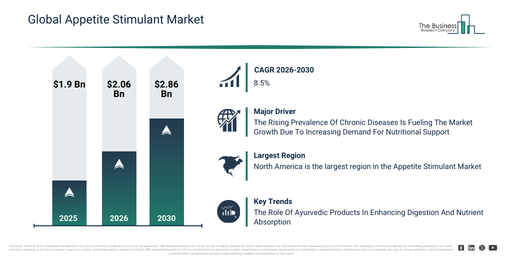
    The appetite stimulant market has experienced substantial expansion in recent years. Its valuation is set to escalate from $1.9 billion in 2025 to $2.06 billion in 2026, exhibiting a compound annual growth rate (CAGR) of 8.5%. The market’s past growth can be attributed to factors such as the prevalence of malnutrition, the burden of chronic illnesses, the utilization of oncology supportive care, the increasing geriatric population, and the existence of hospital nutrition programs.

    The appetite stimulant market is projected to experience robust expansion over the coming years, with its valuation expected to reach $2.86 billion by 2030, exhibiting a compound annual growth rate (CAGR) of 8.5%. This anticipated growth during the forecast period stems from factors such as the demand for personalized nutrition, the expansion of homecare treatments, advancements in functional food innovation, effective appetite loss management strategies, and improved chronic disease survival rates. Key trends anticipated for the forecast period encompass an increasing application in chronic disease management, a surge in adoption within geriatric nutrition, a growing inclination towards natural appetite stimulants, the broader development of functional food-based formulations, and the expansion of homecare nutritional support.

    Get A Free Sample Report With In-Depth Market Insights:

    https://www.thebusinessresearchcompany.com/sample.aspx?id=24149&type=smp&utm_source=Blogs&utm_medium=Paid&utm_campaign=Oct_PR

    Appetite Stimulant Market Growth Catalysts And Demand Drivers

    The increasing incidence of chronic illnesses is anticipated to drive the expansion of the appetite stimulant market in the future. A chronic disease is defined as a persistent medical condition or sickness that typically endures for at least three months and often deteriorates over time. The growing occurrence of chronic diseases stems largely from inadequate nutrition, given that unhealthy dietary practices, like excessive intake of processed items, sugars, and harmful fats, lead to conditions including obesity, diabetes, and cardiovascular diseases. Appetite stimulants assist in managing chronic diseases by improving general health outcomes and nutritional well-being through increasing hunger and food intake, which can aid individuals in gaining or preserving weight. For example, data from September 2023, provided by the World Health Organization, a Switzerland-based specialized agency of the United Nations, indicated that 41 million deaths annually worldwide, representing 74% of all fatalities, were due to non-communicable diseases (NCDs) or chronic diseases. Specifically, cardiovascular diseases accounted for 17.9 million deaths, cancer for 9.3 million deaths, chronic respiratory diseases for 4.1 million deaths, and diabetes for 2.0 million deaths. Consequently, the increasing prevalence of chronic diseases acts as a catalyst for the expansion of the appetite stimulant market.

    Appetite Stimulant Market Segments: Where Is Growth Concentrated?

    The appetite stimulant market covered in this report is segmented –

    1) By Type: Prescription, Over The Counter, Natural

    2) By Formulation Type: Liquid Formulations, Powder Formulations, Capsules And Tablets, Functional Foods

    3) By Distribution Channel: Hospital Pharmacy, Online Pharmacy, Retail Pharmacy

    4) By End-Users: Hospitals, Homecare, Speciality Centres

    Subsegments:

    1) By Prescription: Synthetic Appetite Stimulants, Cannabinoids, Corticosteroids, Antidepressants

    2) By Over The Counter (OTC): Herbal Supplements, Amino Acids, Vitamins And Minerals, Probiotics

    3) By Natural: Ginger, Fenugreek, Cannabis, Zinc Supplements

    Appetite Stimulant Market Trends Shaping Long-Term Demand

    Companies operating within the appetite stimulant market are increasingly focusing on the promotion of innovative products, such as ayurvedic appetite stimulants, to attract health-conscious consumers. An Ayurvedic appetite stimulant serves as a natural remedy crafted from traditional herbs, aiding in appetite enhancement by stimulating digestive function, boosting enzyme secretion, and improving nutrient absorption. For instance, in October 2024, Lupin Limited, an India-based pharmaceutical company, announced the launch of its Aptivate Achi Bhookh Fest. This initiative aims to cultivate healthy eating habits and nutrition awareness among children through interactive activities and expert-led sessions, with plans to expand the campaign to reach 250,000 people across schools and residential areas. Aptivate is an ayurvedic appetite stimulant specifically for children, developed to assist parents in promoting healthy eating habits. The product is a vital element of LupinLife’s various programs, including the Aptivate Achi Bhookh Fest, which encourages optimal nutrition and strong immunity in children.

    Appetite Stimulant Market Key Participants And Competitive Landscape

    Major companies operating in the appetite stimulant market are Bristol Myers Squibb, Novartis AG, Solvay Pharmaceuticals, Lupin Limited, TIL Healthcare Private Limited, Zeon Lifesciences Limited, Apex Laboratories Private Limited, Nuray Chemicals Private Limited, Arlak Biotech Private Limited, AdvaCare Pharma USA LLC, Dwarkesh Pharmaceuticals Private Limited, Par Pharmaceutical Companies Inc., Salvus Healthcare Private Limited, Epitome Pharmaceuticals Private Limited, Abiba Pharmacia Private Limited, Pharmika India Private Limited, Wellona Pharma, SiNi Pharma, Vibcare Pharma Private Limited, Mayons Pharmaceuticals Private Limited

    View The Full Appetite Stimulant Market Report:

    https://www.thebusinessresearchcompany.com/report/appetite-stimulant-global-market-report?utm_source=Blogs&utm_medium=Paid&utm_campaign=Oct_PR

    Appetite Stimulant Market Largest Region: Which Geography Holds The Highest Market Share?

    North America was the largest region in the appetite stimulant market in 2025. Asia-Pacific is expected to be the fastest-growing region in the forecast period. The regions covered in the appetite stimulant market report are Asia-Pacific, South East Asia, Western Europe, Eastern Europe, North America, South America, Middle East, Africa.

    Reach Out To Our Team:

    The Business Research Company: https://www.thebusinessresearchcompany.com/

    Americas: +1 310-496-7795

    Asia: +44 7882 955267 & +91 8897263534

    Europe: +44 7882 955267

    Email us at: marketing@tbrc.info

    Follow us on:

    LinkedIn: https://in.linkedin.com/company/the-business-research-company

    YouTube: https://www.youtube.com/channel/UC24_fI0rV8cR5DxlCpgmyFQ

    Global Market Model: https://www.thebusinessresearchcompany.com/global-market-model