Blog

  • Appetite Control And Suppressants Market Forecast To Reach $5.34 Billion By 2030: Key Trends Explained

    Appetite Control And Suppressants Market Forecast To Reach $5.34 Billion By 2030: Key Trends Explained

    Built to provide research that’s more actionable and strategically valuable, The Business Research Company’s 2026 market reports include market attractiveness analysis, total addressable market sizing, company benchmarking matrices, interactive Excel dashboards, broader supply chain intelligence, emerging startup tracking, and in-depth product insights.

    Appetite Control And Suppressants Market Set To Climb From $4.11 Billion In 2026 To $5.34 Billion By 2030

    The appetite control and suppressants market has seen strong growth in recent years. It is forecast to increase from $3.84 billion in 2025 to $4.11 billion in 2026, demonstrating a compound annual growth rate (CAGR) of 7.1%. The expansion observed in prior periods is attributable to factors such as the prevalence of obesity, the demand for dietary supplements, shifts in lifestyle, greater fitness awareness, and the accessibility of over-the-counter products.

    The market for appetite control and suppressants is projected to experience robust expansion over the coming years. Its valuation is set to reach $5.35 billion by 2030, exhibiting a compound annual growth rate (CAGR) of 6.8%. This anticipated growth during the forecast period is fueled by increased awareness regarding weight management, a rising preference for natural supplements, the emergence of digital wellness platforms, a heightened emphasis on preventive healthcare, and the expanding aging population. Key trends expected within this period encompass a surging demand for effective weight management solutions, an increase in the adoption of natural and herbal suppressants, the proliferation of over-the-counter appetite control items, a greater emphasis on weight loss strategies rooted in lifestyle adjustments, and the expansion of online and direct-to-consumer sales channels.

    Get A Free Sample Report With In-Depth Market Insights:

    https://www.thebusinessresearchcompany.com/sample.aspx?id=24467&type=smp&utm_source=Blogs&utm_medium=Paid&utm_campaign=Oct_PR

    Appetite Control And Suppressants Market Opportunity Drivers: What’s Unlocking New Revenue Potential?

    The rising prevalence of overweight and obesity issues is projected to drive the expansion of the appetite control and suppressants market moving forward. Overweight and obesity are defined as conditions where excessive body fat accumulates to an extent that it could harm health. The increasing incidence of overweight and obesity is attributed to poor dietary habits, characterized by high calorie, sugar, and unhealthy fat intake combined with low nutrient consumption. Appetite control and suppressants aid in managing these conditions by reducing hunger signals, thereby limiting calorie intake and supporting effective weight management. As an illustration, in September 2024, data from the Centers for Disease Control and Prevention (CDC), a US-based government public health agency, indicated that 23 states recorded an adult obesity prevalence of 35% or higher in 2023, and every one of the 50 states reported obesity rates of at least 20%. Hence, the escalating rates of overweight and obesity problems are propelling the growth of the appetite control and suppressants market.

    Appetite Control And Suppressants Market Segment Analysis: What Are The Core Market Categories?

    The appetite control and suppressants market covered in this report is segmented –

    1) By Product Type: Prescription Appetite Suppressants, Over-The-Counter (OTC) Appetite Suppressants, Natural Or Herbal Appetite Suppressants, Meal Replacements And Shakes, Dietary Fiber Supplements

    2) By Form: Tablets And Capsules, Powders, Gummies And Chews, Liquids, Bars

    3) By Distribution Channel: Pharmacies And Drug Stores, Supermarkets And Hypermarkets, Online Retailers, Specialty Stores, Healthcare Providers And Clinics

    4) By End-User: Adults, Geriatric, Adolescents

    Subsegments:

    1) By Prescription Appetite Suppressants: Phentermine, Lorcaserin (Belviq), Diethylpropion, Other Prescription Drugs

    2) By Over-The-Counter (OTC) Suppressants: Herbal Supplements, Fiber-Based Suppressants, Caffeine-Based Products, Meal Replacements

    3) By Natural or Herbal Appetite Suppressants: Green Tea Extract, Garcinia Cambogia, Glucomannan, Yerba Mate, Fenugreek, Conjugated Linoleic Acid

    4) By Meal Replacements And Shakes: Protein Shakes, Meal Replacement Bars, Low-Calorie Shakes, High-Protein Smoothies, Keto Meal Replacements

    5) By Dietary Fiber Supplements: Glucomannan, Psyllium Husk, Methylcellulose, Inulin, Beta-Glucan

    Appetite Control And Suppressants Market Innovation Trends Shaping Future Development

    Leading companies in the appetite control and suppressants market are concentrating on developing innovative products, such as natural appetite suppressant drinks, to provide safer and more effective weight management solutions. These natural appetite suppressant drinks are beverages crafted from herbs, fruits, or fibers that assist in naturally reducing hunger and controlling cravings. For instance, in December 2024, Nestlé S.A., a Switzerland-based food and beverage company, introduced Boost Pre-Meal Hunger Support, a natural appetite suppressant drink. This product is engineered to imitate the effects of weight-loss medications like Ozempic and Wegovy. It is a 45-calorie, 10-gram whey protein shot designed for consumption 10 to 30 minutes before meals. By stimulating the body’s natural GLP-1 hormone response, it helps to diminish appetite and enhance feelings of fullness. Its composition includes fast-digesting peptides and whey protein microgels to extend satiety, making it suitable for individuals on weight-loss plans or those utilizing GLP-1-based treatments.

    Appetite Control And Suppressants Market Top Companies Driving Competitive Growth

    Major companies operating in the appetite control and suppressants market are Nestlé S.A, GlaxoSmithKline plc, Sanofi S.A, Takeda Pharmaceutical Company Limited, Eli Lilly and Company, Novo Nordisk A/S, Herbalife Nutrition Ltd, Amway Corporation, GNC Holdings Inc., Medifast Inc., Nature’s Sunshine Products Inc., The Boots Company PLC, BPI Sports LLC, Grenade (UK) Limited, Currax Pharmaceuticals LLC, VIVUS Inc, Orexigen Therapeutics Inc, NOW Health Group Inc, Nutrabay Retail Private Limited, GAT Sport

    View The Full Appetite Control And Suppressants Market Report:

    https://www.thebusinessresearchcompany.com/report/appetite-control-and-suppressants-global-market-report?utm_source=Blogs&utm_medium=Paid&utm_campaign=Oct_PR

    Appetite Control And Suppressants Market Regional Analysis: Which Region Leads By Revenue?

    North America was the largest region in the appetite control and suppressants market in 2025. Asia-Pacific is expected to be the fastest-growing region in the forecast period. The regions covered in the appetite control and suppressants market report are Asia-Pacific, South East Asia, Western Europe, Eastern Europe, North America, South America, Middle East, Africa.

    Reach Out To Our Team:

    The Business Research Company: https://www.thebusinessresearchcompany.com/

    Americas: +1 310-496-7795

    Asia: +44 7882 955267 & +91 8897263534

    Europe: +44 7882 955267

    Email us at: marketing@tbrc.info

    Follow us on:

    LinkedIn: https://in.linkedin.com/company/the-business-research-company

    YouTube: https://www.youtube.com/channel/UC24_fI0rV8cR5DxlCpgmyFQ

    Global Market Model: https://www.thebusinessresearchcompany.com/global-market-model
  • Apixaban Market Analysis: Understanding The Drivers Behind 7.7% CAGR Through 2030 Growth

    Apixaban Market Analysis: Understanding The Drivers Behind 7.7% CAGR Through 2030 Growth

    Backed by market attractiveness analysis, total addressable market sizing, company benchmarking matrices, interactive Excel dashboards, wider supply chain intelligence, emerging startup coverage, and detailed product-level insights, The Business Research Company’s 2026 market reports are designed to offer research that is more actionable and strategically valuable than ever.

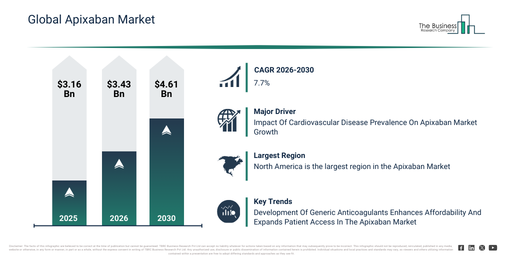
    Apixaban Market Forecast: Value Set To Climb From $3.42 Billion To $4.61 Billion

    The apixaban market has demonstrated robust expansion over recent years. This market is projected to expand from $3.16 billion in 2025 to $3.43 billion in 2026, achieving a compound annual growth rate (CAGR) of 8.5%. Historical market growth is linked to factors such as the increasing incidence of atrial fibrillation, heightened understanding of stroke prevention, the introduction of generic anticoagulants, improvements in hospital infrastructure, and innovations in diagnostic technologies.

    The apixaban market size is anticipated to undergo significant expansion over the next few years, reaching $4.61 billion in 2030 at a compound annual growth rate (CAGR) of 7.7%. This projected growth during the forecast period stems from factors such as an expanding geriatric population, a rising need for minimally invasive surgeries, the integration of digital health monitoring, innovations in oral anticoagulant formulations, and the growth of homecare services. Prominent trends expected in this period include an increasing embrace of direct oral anticoagulants (DOACs), a growing occurrence of cardiovascular disorders, the extension of post-surgical thromboprophylaxis programs, the advancement of patient-centric anticoagulation therapies, and an increase in outpatient and homecare anticoagulant management.

    Get A Free Sample Report With In-Depth Market Insights:

    https://www.thebusinessresearchcompany.com/sample.aspx?id=15979&type=smp&utm_source=Blogs&utm_medium=Paid&utm_campaign=Oct_PR

    Apixaban Market Growth Momentum: What Factors Are Shaping Demand?

    The increasing occurrence of cardiovascular disease is projected to drive the growth of the apixaban market in the future. Cardiovascular disease encompasses a variety of conditions that impact the heart and blood vessels, including coronary artery disease, stroke, and heart failure. This growing prevalence of cardiovascular disease is attributed to factors like sedentary lifestyles, poor dietary habits, tobacco use, obesity, high blood pressure, diabetes, and an aging population. Apixaban plays a role in the management of cardiovascular disease by diminishing the risk of blood clots, thus preventing issues such as stroke, deep vein thrombosis, and pulmonary embolism. For example, in January 2024, the American Heart Association, a US-based nonprofit organization, stated that deaths from cardiovascular diseases reached 931,578, an increase of fewer than 3,000 fatalities compared to the 928,741 in 2023. Therefore, the rising prevalence of cardiovascular disease propels the growth of the apixaban market.

    Apixaban Market Segment Breakdown: Which Categories Lead On Revenue?

    The apixaban market covered in this report is segmented –

    1) By Dosage Form: Capsule, Tablets

    2) By Application: Deep Vein Thrombosis (DVT), Pulmonary Embolism (PE)

    3) By End-Users: Hospitals, Homecare, Specialty Clinics, Other End-Users

    Apixaban Market Trends Redefining Industry Growth

    Leading companies operating within the apixaban market are strategically concentrating on the development of novel solutions, such as generic anticoagulant medications. This effort aims to enhance treatment affordability, broaden patient access, and strengthen their competitive positioning. Generic anticoagulant medicines are therapeutically equivalent formulations that prevent blood clot formation by inhibiting crucial factors in the coagulation cascade, thereby reducing the risk of stroke and other severe cardiovascular events. For instance, in February 2023, Zydus Lifesciences, an India-based pharmaceutical company, secured final approval from the U.S. Food and Drug Administration (FDA) for its generic apixaban tablets in 2.5 mg and 5 mg strengths, mirroring those of the reference drug Eliquis. This approval facilitates the wider availability of cost-effective anticoagulant therapy across the U.S. market, supporting improved patient access to essential treatments for conditions such as atrial fibrillation, deep vein thrombosis, and pulmonary embolism.

    Apixaban Market Leading Players And Competitive Positioning

    Major companies operating in the apixaban market are Bristol-Myers Squibb Company, Pfizer Inc., Viatris Inc., Teva Pharmaceutical Industries Ltd., Sandoz Group AG, Sun Pharmaceutical Industries Ltd., Aurobindo Pharma Limited, Dr. Reddy’s Laboratories Ltd., Cipla Limited, Lupin Limited, Glenmark Pharmaceuticals Ltd., Torrent Pharmaceuticals Ltd., Hetero Drugs Ltd., Medichem S.A., Simson Pharma Limited, Aspen Pharmacare Holdings Limited, Daiichi Sankyo Company Limited, Fresenius Kabi AG, Centaur Pharmaceuticals Pvt. Ltd., Pinnacle Life Sciences Private Limited

    View The Full Apixaban Market Report:

    https://www.thebusinessresearchcompany.com/report/apixaban-global-market-report?utm_source=Blogs&utm_medium=Paid&utm_campaign=Oct_PR

    Apixaban Market Geographic Distribution And Regional Opportunities

    North America was the largest region in the apixaban market in 2025. Asia-Pacific is expected to be the fastest-growing region in the forecast period. The regions covered in the apixaban market report are Asia-Pacific, South East Asia, Western Europe, Eastern Europe, North America, South America, Middle East, Africa.

    Reach Out To Our Team:

    The Business Research Company: https://www.thebusinessresearchcompany.com/

    Americas: +1 310-496-7795

    Asia: +44 7882 955267 & +91 8897263534

    Europe: +44 7882 955267

    Email us at: marketing@tbrc.info

    Follow us on:

    LinkedIn: https://in.linkedin.com/company/the-business-research-company

    YouTube: https://www.youtube.com/channel/UC24_fI0rV8cR5DxlCpgmyFQ

    Global Market Model: https://www.thebusinessresearchcompany.com/global-market-model

  • Anxiety Disorders And Depression Treatment Market Growth To $18.63 Billion By 2030: What’s Driving The Expansion?

    Anxiety Disorders And Depression Treatment Market Growth To $18.63 Billion By 2030: What’s Driving The Expansion?

    Featuring market attractiveness scoring, total addressable market sizing, company benchmarking matrices, interactive Excel dashboards, deeper supply chain intelligence, emerging startup tracking, and granular product-level insights, The Business Research Company’s 2026 market reports are built to deliver research that is both more actionable and more strategically valuable.

    Anxiety Disorders And Depression Treatment Market Revenue Growth On Track For A 4.9% CAGR Through 2030

    The anxiety disorders and depression treatment market size has observed consistent growth in recent years. This market is forecasted to expand from $14.69 billion in 2025 to $15.41 billion in 2026, achieving a compound annual growth rate (CAGR) of 4.9%. The historical progression can be attributed to a rise in mental health awareness, the expansion of antidepressant prescriptions, increased adoption of psychotherapy, the prevalence of stress-related disorders, and efforts towards stigma reduction.

    The anxiety disorders and depression treatment market size is projected to experience consistent expansion over the upcoming years. This market is anticipated to reach $18.63 billion by 2030, exhibiting a compound annual growth rate (CAGR) of 4.9%. Factors contributing to this growth during the forecast period include the rise of digital therapy platforms, personalized psychiatry, workplace mental health initiatives, adolescent mental health screening, and integrated care models. Key trends identified for the forecast period encompass an increasing demand for combined therapeutic approaches, the escalation of long-term antidepressant usage, the broadening reach of cognitive behavioral therapy, a heightened emphasis on adolescent mental health, and the incorporation of digital mental health tools.

    Get A Free Sample Report With In-Depth Market Insights:

    https://www.thebusinessresearchcompany.com/sample.aspx?id=24148&type=smp&utm_source=Blogs&utm_medium=Paid&utm_campaign=Oct_PR

    Anxiety Disorders And Depression Treatment Market Expansion Drivers: What’s Shaping Future Growth?

    The expanding occurrence of mental health conditions is expected to propel the anxiety disorders and depression treatment market forward in the coming years. These disorders involve impairments to an individual’s thought processes, emotional states, actions, or overall mood, hindering their everyday activities. Heightened stress stemming from contemporary societal demands, such as financial uncertainty and pervasive social media engagement, contributes to the surge in mental health issues by intensifying feelings of unease and sadness. Addressing anxiety and depression is vital for effectively managing mental health disorders, given that tackling these prevalent root conditions significantly diminishes the severity of associated problems, thereby enhancing overall health and functional capacity. For example, data released in November 2023 by the National Health Service, the UK’s publicly funded healthcare system, indicated that 20.3% of children aged eight to sixteen were suspected of having a mental illness in 2023. Additionally, the prevalence stood at 21.7% for individuals aged 20 to 25 and 23.3% for those between 17 and 19. Consequently, the increasing occurrence of mental health disorders is set to stimulate the expansion of the anxiety disorders and depression treatment market.

    Anxiety Disorders And Depression Treatment Market Segmentation: How Does The Market Break Down By Category?

    The anxiety disorders and depression treatment market covered in this report is segmented –

    1) By Treatment Type: Pharmacological Treatment, Psychotherapy, Combined Treatment

    2) By Indication: Obsessive-Compulsive Disorder, Major Depressive Disorder, Phobia, Other Indications

    3) By Patient Age Group: Adults, Adolescents, Children

    4) By Distribution Channel: Hospital Pharmacy, Retail Pharmacy, Other Distribution Channels

    Subsegments:

    1) By Pharmacological Treatment: Antidepressants, Benzodiazepines, Beta-blockers, Antipsychotics, Mood Stabilizers

    2) By Psychotherapy: Cognitive Behavioral Therapy (CBT), Interpersonal Therapy (IPT), Psychodynamic Therapy, Dialectical Behavioral Therapy (DBT), Exposure Therapy, Mindfulness-Based Cognitive Therapy (MBCT), Acceptance and Commitment Therapy (ACT)

    3) By Combined Treatment: Medication + Cognitive Behavioral Therapy (CBT), Medication + Psychodynamic Therapy, Medication + Interpersonal Therapy (IPT), Medication + Dialectical Behavioral Therapy (DBT), Medication + Mindfulness-Based Cognitive Therapy (MBCT), Medication + Acceptance and Commitment Therapy (ACT)

    Anxiety Disorders And Depression Treatment Market Strategic Trends: What Defines The Next Growth Phase?

    Leading firms within the anxiety disorders and depression treatment market are concentrating on creating cutting-edge technological remedies, including transcranial magnetic stimulation (TMS) therapy, to provide alternatives that do not involve drugs. Transcranial magnetic stimulation (TMS) therapy is a method that does not require incision, utilizing magnetic pulses directed at specific brain regions to assist in reducing indicators of depression and various mental health issues. As an illustration, in March 2024, Neuronetics Inc., an American medical device enterprise, declared that the US Food and Drug Administration (FDA) had approved NeuroStar Advanced Therapy for use as an additional therapy for major depressive disorder (MDD) in young people aged 15-21. This particular approval signifies the first and only FDA-sanctioned transcranial magnetic stimulation (TMS) therapy specifically targeting this demographic, indicating the fourth approved application for NeuroStar. The system furnished crucial information regarding the intervention’s safety and efficacy among adolescents. Out of the 1,169 young individuals studied, 78% demonstrated a significant reduction in the intensity of their depression symptoms.

    Anxiety Disorders And Depression Treatment Market Competitive Overview And Top Companies

    Major companies operating in the anxiety disorders and depression treatment market are Pfizer Inc., Johnson & Johnson, AbbVie Inc., AstraZeneca PLC, Takeda Pharmaceutical Company Limited, Eli Lilly and Company, Otsuka Pharmaceutical Co. Ltd., H. Lundbeck A/S, Neurocrine Biosciences Inc., Alkermes plc, Relmada Therapeutics Inc., Headspace Health, COMPASS Pathways plc, Talkspace Inc., Ginger, Axsome Therapeutics Inc., Mind Medicine Inc., Woebot Health Inc., Sage Therapeutics Inc., Happify Health, Atai Life Sciences N.V.

    View The Full Anxiety Disorders And Depression Treatment Market Report:

    https://www.thebusinessresearchcompany.com/report/anxiety-disorders-and-depression-treatment-global-market-report?utm_source=Blogs&utm_medium=Paid&utm_campaign=Oct_PR

    Anxiety Disorders And Depression Treatment Market Largest Region By Revenue And Market Share

    North America was the largest region in the anxiety disorders and depression treatment market in 2025. Asia-Pacific is expected to be the fastest-growing region in the forecast period. The regions covered in the anxiety disorders and depression treatment market report are Asia-Pacific, South East Asia, Western Europe, Eastern Europe, North America, South America, Middle East, Africa.

    Reach Out To Our Team:

    The Business Research Company: https://www.thebusinessresearchcompany.com/

    Americas: +1 310-496-7795

    Asia: +44 7882 955267 & +91 8897263534

    Europe: +44 7882 955267

    Email us at: marketing@tbrc.info

    Follow us on:

    LinkedIn: https://in.linkedin.com/company/the-business-research-company

    YouTube: https://www.youtube.com/channel/UC24_fI0rV8cR5DxlCpgmyFQ

    Global Market Model: https://www.thebusinessresearchcompany.com/global-market-model
  • Antivirals Market Trends Reshaping Industry Growth Through 2030

    Antivirals Market Trends Reshaping Industry Growth Through 2030

    Built to provide research that’s more actionable and strategically valuable, The Business Research Company’s 2026 market reports include market attractiveness analysis, total addressable market sizing, company benchmarking matrices, interactive Excel dashboards, broader supply chain intelligence, emerging startup tracking, and in-depth product insights.

    Antivirals Market Value Growth And Long-Term Outlook

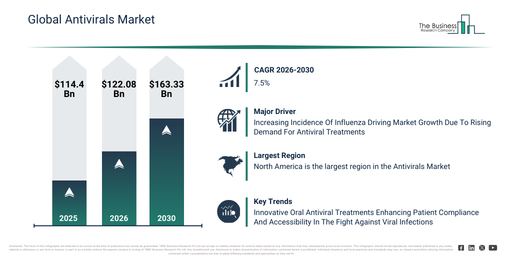
    The antivirals market has experienced significant growth in recent years. Its value is anticipated to rise from $114.4 billion in 2025 to $122.08 billion in 2026, representing a compound annual growth rate (CAGR) of 6.7%. This historical expansion can be attributed to factors such as global viral outbreaks, the prevalence of HIV and hepatitis, government initiatives for antiviral stockpiling, the increased availability of generic medications, and the broadening scope of infectious disease programs.

    The antivirals market is projected to experience substantial expansion over the coming years. This market is set to reach $163.33 billion by 2030, exhibiting a compound annual growth rate (CAGR) of 7.5%. Factors driving this growth during the forecast period include the emergence of new viral threats, increased investment in antiviral research and development, greater integration of vaccination and treatment strategies, various global health initiatives, and a rising demand for rapid-response therapeutics. Key trends anticipated in this period encompass an escalating demand for broad-spectrum antivirals, a heightened emphasis on pandemic preparedness, the wider availability of generic antiviral drugs, increased application in managing chronic viral infections, and the innovation of antivirals with novel mechanisms.

    Get A Free Sample Report With In-Depth Market Insights:

    https://www.thebusinessresearchcompany.com/sample.aspx?id=2437&type=smp&utm_source=Blogs&utm_medium=Paid&utm_campaign=Oct_PR

    Antivirals Market Development Factors: What’s Supporting Demand?

    A projected increase in influenza cases is expected to stimulate the expansion of the antiviral market moving forward. Influenza, commonly known as flu, is a highly transmissible viral respiratory infection caused by influenza viruses, affecting the nose, throat, and lungs. The rising frequency of influenza is largely due to colder temperatures and indoor crowding, conditions that prolong the virus’s survival and facilitate its person-to-person spread in close proximity. Antivirals are utilized for treating influenza and function by hindering the replication and propagation of influenza viruses within the body. For instance, in November 2024, as reported by the Centers for Disease Control and Prevention, a US-based national public health agency, the 2023 to 2024 influenza season was estimated to have resulted in 40 million illnesses, 18 million medical visits, 470,000 hospitalizations, and 28,000 deaths. Consequently, the escalating incidence of influenza is propelling the growth of the antiviral market.

    Antivirals Market Segment Trends And Revenue Contributors

    The antivirals market covered in this report is segmented –

    1) By Type: Branded, Generic

    2) By Drug Class: DNA Polymerase Inhibitors, Reverse Transcriptase Inhibitors, Protease Inhibitors, Neuraminidase Inhibitors, Other Drug classes

    3) By Application: HIV, Hepatitis, Herpes, Influenza, Other Applications

    Subsegments:

    1) By Branded: Antivirals For HIV Or AIDS, Antivirals For Hepatitis, Antivirals For Influenza, Antivirals For Herpes Simplex Virus (HSV)

    2) By Generic: Generic HIV Or AIDS Antivirals, Generic Hepatitis Antivirals, Generic Influenza Antivirals, Generic Herpes Simplex Virus (HSV) Antivirals

    Antivirals Market Transformation Trends: What Innovations Are Driving Change?

    Major companies in the antiviral market are prioritizing the development of innovative treatments, such as oral antiviral medications, to enhance patient adherence, improve accessibility, reduce healthcare expenses, and offer more convenient and effective options for managing viral infections. Oral antiviral treatment refers to medicines taken by mouth to combat viral infections. These treatments function by inhibiting viruses from multiplying or spreading within the body, which helps to lessen the severity and duration of the infection. For instance, in May 2023, Pfizer, a US-based pharmaceutical company, announced that Paxlovid received approval from the Food and Drug Administration, a US-based government agency, making it the first oral antiviral treatment for COVID-19 in adults. This approval is particularly significant as it offers a new therapeutic alternative for managing COVID-19, especially as the pandemic moves towards an endemic phase. Paxlovid is specifically indicated for adults with mild-to-moderate COVID-19 who are at high risk of progressing to severe disease, including hospitalization or death.

    Leading companies in the antiviral market are focused on creating advanced therapeutic solutions, including various antiviral treatments, to improve patient outcomes and decrease viral transmission. Antiviral treatments are crucial for controlling viral infections and preventing complications in affected patients. For example, in August 2024, Red Queen’s Technology, a US-based pharmaceutical company, launched versatile antivirals. Apple Tree Partners has invested $55 million in Red Queen Therapeutics, a biotech firm specializing in developing broad-spectrum antiviral treatments. The company targets infectious pathogens such as COVID-19 and influenza, having already advanced a COVID antiviral through Phase 1 testing and secured U.S. government funding for a pan-influenza drug. Co-founded by Harvard professor Loren Walensky, Red Queen utilizes stapled lipopeptides to inhibit viral fusion and block viral entry into cells.

    Antivirals Market Competitive Landscape: Which Companies Lead The Industry?

    Major companies operating in the antivirals market are AbbVie Inc., Bristol-Myers-Squibb Co., Chemical Industrial & Pharmaceutical Laboratories Ltd., F. Hoffmann-La Roche Ltd., Gilead Sciences Inc., GlaxoSmithKline Plc, Johnson & Johnson Services Ltd., Merck & Co. Inc., Dr. Reddy’s Laboratories Ltd., Aurobindo Pharma Ltd., Abbott Laboratories, Schering-Plough Corporation, Pfizer Inc., Sanofi-Synthélabo Ltd., Inovio Pharmaceuticals Inc., BioCryst Pharmaceuticals Inc., Alnylam Pharmaceuticals Inc., AVI Biopharma International Ltd., Eli Lilly and Company, Takeda Pharmaceutical Company Limited, Biogen Inc., Genentech USA Inc., Vertex Pharmaceuticals Inc.

    View The Full Antivirals Market Report:

    https://www.thebusinessresearchcompany.com/report/antivirals-global-market-report?utm_source=Blogs&utm_medium=Paid&utm_campaign=Oct_PR

    Antivirals Market Regional Analysis And Leading Geography

    North America was the largest region in the anti-viral drug therapy market in 2025. The Middle East is expected to be the fastest-growing region in the antivirals market during the forecast period. The regions covered in the antivirals market report are Asia-Pacific, South East Asia, Western Europe, Eastern Europe, North America, South America, Middle East, Africa.

    Reach Out To Our Team:

    The Business Research Company: https://www.thebusinessresearchcompany.com/

    Americas: +1 310-496-7795

    Asia: +44 7882 955267 & +91 8897263534

    Europe: +44 7882 955267

    Email us at: marketing@tbrc.info

    Follow us on:

    LinkedIn: https://in.linkedin.com/company/the-business-research-company

    YouTube: https://www.youtube.com/channel/UC24_fI0rV8cR5DxlCpgmyFQ

    Global Market Model: https://www.thebusinessresearchcompany.com/global-market-model
  • Antiviral Combination Therapy Market Growth To $82.02 Billion Creates New Opportunities Across The Industry

    Antiviral Combination Therapy Market Growth To $82.02 Billion Creates New Opportunities Across The Industry

    Backed by market attractiveness analysis, total addressable market sizing, company benchmarking matrices, interactive Excel dashboards, wider supply chain intelligence, emerging startup coverage, and detailed product-level insights, The Business Research Company’s 2026 market reports are designed to offer research that is more actionable and strategically valuable than ever.

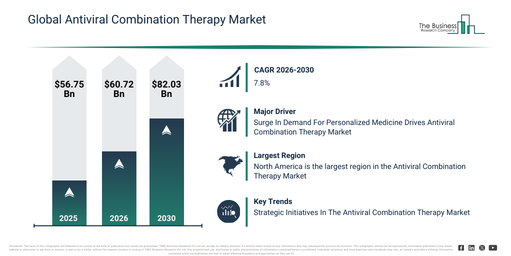
    Antiviral Combination Therapy Market Poised To Hit $82.02 Billion By 2030 With A 7.8% CAGR

    The antiviral combination therapy market has experienced robust expansion in recent years. Forecasts suggest it will expand from $56.75 billion in 2025 to $60.72 billion in 2026, exhibiting a compound annual growth rate (CAGR) of 7.0%. This historical growth was driven by factors such as an increasing incidence of viral infections, the need for effective HIV and Hepatitis treatments, progress in antiviral drug development, heightened awareness regarding drug resistance, and the increasing availability of combination therapies.

    The antiviral combination therapy market size is anticipated to demonstrate robust growth in the coming years. It is projected to expand to $82.03 billion in 2030, achieving a compound annual growth rate (CAGR) of 7.8%. The increase during this forecast period is attributable to technological innovations in drug delivery systems, the broadening of healthcare infrastructure, a growing aging population, increased investments in research and development for multi-viral therapies, and government initiatives that promote access to antiviral medications. Notable trends expected in this period include personalized antiviral therapy, combination treatments for drug-resistant viruses, the development of oral fixed-dose combinations, expanded access via hospitals and retail pharmacies, and a focus on treating multi-viral infections.

    Get A Free Sample Report With In-Depth Market Insights:

    https://www.thebusinessresearchcompany.com/sample.aspx?id=10729&type=smp&utm_source=Blogs&utm_medium=Paid&utm_campaign=Oct_PR

    Antiviral Combination Therapy Market Industry Drivers: What’s Behind The Revenue Growth?

    The expanding need for personalized medicine is anticipated to fuel the expansion of the antiviral combination therapy market. Personalized medicine is defined as a form of treatment that utilizes insights into an individual’s unique genes or proteins to prevent, detect, or manage diseases. Individuals exhibit varied responses to antiviral therapies due to their distinct genetic variations. Its objective is to pinpoint these differences and refine treatment approaches, thereby improving effectiveness and reducing adverse reactions. A notable illustration is provided by the Personalised Medicine Coalition, a US-based hospital and health care organization, which reported in February 2024 that in 2023, the FDA approved 16 new personalized treatments for rare disease patients, an increase from 6 in 2022. Consequently, the rising demand for personalized medicine is propelling the growth of the antiviral combination therapy market.

    Antiviral Combination Therapy Market Segment Analysis Spotlighting Growth Areas

    The antiviral combination therapy market covered in this report is segmented –

    1) By Type: Branded, Generic

    2) By Drug Combination: Nucleotide Reverse Transcriptase Inhibitors/Non-Nucleotide Reverse Transcriptase Inhibitors, Integrase Inhibitor/Nucleotide Reverse Transcriptase Inhibitors, Nucleotide Reverse Transcriptase Inhibitors, Nucleotide Reverse Transcriptase Inhibitors/Protease Inhibitor, Other Drug Combinations

    3) By Route Of Administration: Oral, Intravenous

    4) By Distribution Channel: Hospital Pharmacies, Retail Pharmacies, Other Distribution Channels

    5) By Indication: Human Immunodeficiency Virus, Hepatitis, Other Indications

    Subsegments:

    1) By Branded: Single Brand Combinations, Combination Therapies With Brand Recognition

    2) By Generic: Generic Fixed-Dose Combinations, Generic Drug Combinations With Similar Efficacy

    #Antiviral Combination Therapy Market Growth Trends: What’s Shaping The Future Outlook?

    Leading companies within the antiviral combination therapy market are concentrating on pioneering solutions, such as antiviral therapies, to heighten treatment efficacy, improve patient outcomes, and confront the rising problem of viral resistance. Antiviral therapies are defined as treatments designed to impede the development or replication of viruses, thereby enabling the management of viral infections. For instance, in October 2023, Gilead Sciences, Inc., a US-based biopharmaceutical company, collaborated with Assembly Biosciences Inc., a US-based biotechnology company, to advance innovative antiviral therapeutics aimed at serious viral diseases. This partnership is committed to the research and development of new antiviral therapies, with an initial focus on Assembly Bio’s established expertise, including herpesviruses, hepatitis B virus (HBV), and hepatitis D virus (HDV).

    Antiviral Combination Therapy Market Leading Companies: Who Holds The Strongest Market Presence?

    Major companies operating in the antiviral combination therapy market are AbbVie Inc., Bristol-Myers Squibb Company, Celltrion Inc., Cipla Inc., F. Hoffmann-La Roche Ltd., Gilead Sciences Inc., GlaxoSmithKline plc, Janssen Global Services LLC, Merck & Co. Inc., Mylan N.V., Aurobindo Pharma Limited, Dr. Reddy’s Laboratories Limited, Novartis International AG, Pfizer Inc., Teva Pharmaceutical Industries Ltd., Atea Pharmaceuticals Inc., Sanofi S.A., Takeda Pharmaceutical Company Limited, Johnson & Johnson, Roche Holding AG, Sun Pharmaceutical Industries Ltd., Hetero Drugs Limited, Macleods Pharmaceuticals Ltd., Emcure Pharmaceuticals Ltd., AuroMedics Pharma LLC, Alembic Pharmaceuticals Limited, Zydus Lifescience Ltd., Strides Pharma Science Limited, Glenmark Pharmaceuticals Inc., Lupin Pharmaceuticals Inc.

    View The Full Antiviral Combination Therapy Market Report:

    https://www.thebusinessresearchcompany.com/report/antiviral-combination-therapy-global-market-report?utm_source=Blogs&utm_medium=Paid&utm_campaign=Oct_PR

    Antiviral Combination Therapy Market Geographic Analysis: Where Is Demand Accelerating Fastest?

    North America was the largest region in the antiviral combination therapy market in 2025. Asia-Pacific is expected to be the fastest-growing region in the global antiviral combination therapy market report during the forecast period. The regions covered in the antiviral combination therapy market report are Asia-Pacific, South East Asia, Western Europe, Eastern Europe, North America, South America, Middle East, Africa.

    Reach Out To Our Team:

    The Business Research Company: https://www.thebusinessresearchcompany.com/

    Americas: +1 310-496-7795

    Asia: +44 7882 955267 & +91 8897263534

    Europe: +44 7882 955267

    Email us at: marketing@tbrc.info

    Follow us on:

    LinkedIn: https://in.linkedin.com/company/the-business-research-company

    YouTube: https://www.youtube.com/channel/UC24_fI0rV8cR5DxlCpgmyFQ

    Global Market Model: https://www.thebusinessresearchcompany.com/global-market-model
  • Antivenom Market Forecast: Breaking Down The Numbers Behind Future Expansion

    Antivenom Market Forecast: Breaking Down The Numbers Behind Future Expansion

    Featuring market attractiveness scoring, total addressable market sizing, company benchmarking matrices, interactive Excel dashboards, deeper supply chain intelligence, emerging startup tracking, and granular product-level insights, The Business Research Company’s 2026 market reports are built to deliver research that is both more actionable and more strategically valuable.

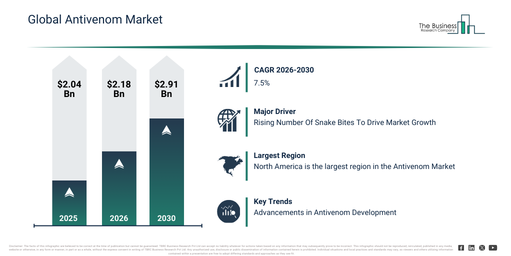
    Antivenom Market Size And Revenue Outlook Through 2030

    The antivenom market has experienced robust expansion over recent years. This market is projected to expand from $2.04 billion in 2025 to $2.18 billion in 2026, demonstrating a compound annual growth rate (CAGR) of 6.8%. Historically, this expansion was fueled by factors such as the scarcity of antivenoms, the significant occurrence of venomous bites in remote regions, dependence on conventional manufacturing techniques, hurdles in regulatory compliance, and insufficient knowledge among medical professionals.

    The antivenom market is projected to experience substantial expansion in the coming years. Its valuation is set to reach $2.91 billion by 2030, demonstrating a compound annual growth rate (CAGR) of 7.5%. Key drivers for this growth during the forecast period include progress in recombinant technologies, increased government investment in antivenom initiatives, the rising trend of exotic pet ownership, the growth of healthcare infrastructure within developing economies, and the uptake of precision medicine strategies. Significant trends anticipated over the same period encompass the creation of recombinant antivenoms, improved cold chain management for these products, the availability of quick diagnostic instruments for venom detection, an increase in localized antivenom manufacturing, and individualized antivenom treatment options.

    Get A Free Sample Report With In-Depth Market Insights:

    https://www.thebusinessresearchcompany.com/sample.aspx?id=10798&type=smp&utm_source=Blogs&utm_medium=Paid&utm_campaign=Oct_PR

    Antivenom Market Growth Factors: What’s Supporting Expansion?

    The increasing occurrence of snake bites is projected to fuel the expansion of the antivenom market in the future. These injuries, resulting from toxins injected by venomous snakes, can cause a life-threatening condition. Antivenom, a specific medical intervention, has the potential to avert or mitigate the majority of snakebite envenoming symptoms if administered promptly and in a sufficient therapeutic quantity. For example, data released by the World Health Organization (WHO), a United Nations organization focused on public health and headquartered in Switzerland, indicated in September 2023 that approximately 5.4 million individuals worldwide suffer snake bites annually, leading to between 1.8 and 2.7 million instances of envenoming. Annually, fatalities from snake bites range from roughly 81,410 to 137,880 people. The goal of this initiative is to reduce deaths and disabilities due to snakebite envenoming by 50% by 2030. Consequently, the rising prevalence of snake bites is a key factor propelling the expansion of the antivenom market.

    Antivenom Market Segment Performance And Emerging Opportunities

    The antivenom market covered in this report is segmented –

    1) By Type: Monovalent, Polyvalent, Other Types

    2) By Animal: Snakes, Scorpions, Spiders, Other Animals

    3) By Mode of Action: Cytotoxic, Neurotoxic, Hemotoxic, Cardiotoxic, Myotoxic, Other Modes Of Action

    4) By End User: Hospitals, Clinics, Ambulatory Surgical Centers, Other End-Users

    Subsegments:

    1) By Monovalent: Specific Antivenoms For Individual Snake Species, Specific Antivenoms For Individual Venom Types

    2) By Polyvalent: Broad-Spectrum Antivenoms, Regional Polyvalent Antivenoms

    3) By Other Types: Antivenoms For Other Venoms, Recombinant Antivenoms, Antivenom For Rare Venoms

    Antivenom Market Industry Trends: What’s Reshaping Demand?

    Leading companies in the antivenom market are advancing technology, including public-benefit target products, to improve the effectiveness, safety, and reach of antivenoms, with the ultimate goal of better patient recovery and a reduced global impact of snakebite envenomation. Public-benefit target products are medical or healthcare innovations designed principally to address specific public health issues, especially among vulnerable or underserved populations. For example, in June 2023, Bharat Serums and Vaccines Ltd., a US-based biopharmaceutical company, partnered with the Indian Institute of Science, an India-based public institution, to create antivenoms specifically for snakebites in different regions of India. This collaboration aims to boost treatment efficacy and lessen the public health burden of snakebites in the affected areas.

    Antivenom Market Key Players: Which Companies Lead Industry Competition?

    Major companies operating in the antivenom market are Commonwealth Serum Laboratories, Incepta Pharmaceuticals Limited, Bharat Serums and Vaccines Limited, Rare Disease Therapeutics Inc., Vins Bioproducts Limited, Haffkine Bio-Pharmaceutical Corporation Limited, MicroPharm Limited, Latoxan SAS, Serum Institute of India Pvt. Ltd., BSV Group, Shanghai Serum Biotech Co Ltd., South African Vaccine Producers, Bioclon Institute, Inosan Biopharma, Instituto Bioclon S.A. de C.V., Protherics Inc., Sanofi Pasteur SA, Instituto Clodomiro Picado, Laboratorios Silanes S.A. de C.V., Instituto Biológico Argentino S.A., Instituto Vital Brazil, Instituto Butantan, Instituto Nacional de Producción de Biológicos, Instituto de Biotecnología de la UNAM

    View The Full Antivenom Market Report:

    https://www.thebusinessresearchcompany.com/report/antivenom-global-market-report?utm_source=Blogs&utm_medium=Paid&utm_campaign=Oct_PR

    Antivenom Market Global Footprint: Which Region Leads The Industry?

    North America was the largest region in the global antivenom market size in 2025. Asia-Pacific is expected to be the fastest-growing region in the forecast period. The regions covered in the antivenom market report are Asia-Pacific, South East Asia, Western Europe, Eastern Europe, North America, South America, Middle East, Africa.

    Reach Out To Our Team:

    The Business Research Company: https://www.thebusinessresearchcompany.com/

    Americas: +1 310-496-7795

    Asia: +44 7882 955267 & +91 8897263534

    Europe: +44 7882 955267

    Email us at: marketing@tbrc.info

    Follow us on:

    LinkedIn: https://in.linkedin.com/company/the-business-research-company

    YouTube: https://www.youtube.com/channel/UC24_fI0rV8cR5DxlCpgmyFQ

    Global Market Model: https://www.thebusinessresearchcompany.com/global-market-model

  • Anti-Vascular Endothelial Growth Factor Therapeutics Market Expected To Grow At 2.4% CAGR Through 2030: What Businesses Need To Know

    Anti-Vascular Endothelial Growth Factor Therapeutics Market Expected To Grow At 2.4% CAGR Through 2030: What Businesses Need To Know

    Built to provide research that’s more actionable and strategically valuable, The Business Research Company’s 2026 market reports include market attractiveness analysis, total addressable market sizing, company benchmarking matrices, interactive Excel dashboards, broader supply chain intelligence, emerging startup tracking, and in-depth product insights.

    Anti-Vascular Endothelial Growth Factor Therapeutics Market Growth From $12.36 Billion In 2026 To $13.59 Billion By 2030 At A CAGR Of 2.4%

    The anti-vascular endothelial growth factor therapeutics market size has seen slight growth in recent years. It is projected to increase from $12.17 billion in 2025 to $12.36 billion in 2026, at a compound annual growth rate (CAGR) of 1.6%. The market’s expansion in the past can be attributed to the approval of lucentis and eylea, the rising prevalence of age-related macular degeneration, the growing incidence of diabetic retinopathy, advancements in molecular biology for angiogenesis inhibition, and the expansion of hospital ophthalmology services.

    The anti-vascular endothelial growth factor therapeutics market is projected to experience consistent expansion over the upcoming years. Its valuation is anticipated to reach $13.59 billion by 2030, demonstrating a compound annual growth rate (CAGR) of 2.4%. This anticipated growth during the forecast period can be credited to factors such as the introduction of advanced anti-VEGF therapeutics, a rise in investment within precision oncology, increased penetration of the biosimilar market, escalating healthcare spending in developing economies, and the uptake of combination therapies for retinal conditions. Key developments expected during this period involve the greater use of anti-VEGF treatments in ophthalmology, the expansion of targeted cancer therapies, the creation of biosimilar anti-VEGF medications, an aging global population stimulating treatments for AMD, and the proliferation of outpatient and specialized clinics.

    Get A Free Sample Report With In-Depth Market Insights:

    https://www.thebusinessresearchcompany.com/sample.aspx?id=10683&type=smp&utm_source=Blogs&utm_medium=Paid&utm_campaign=Oct_PR

    Anti-Vascular Endothelial Growth Factor Therapeutics Market Demand Drivers: What’s Powering Industry Growth?

    The anticipated growth of the anti-vascular endothelial growth factor therapeutics market is driven by the rising prevalence of ophthalmic diseases. Ophthalmic disease prevalence denotes the count or percentage of individuals within a specific population diagnosed with or displaying particular eye conditions or illnesses. Anti-vascular endothelial growth factor (VEGF) treatments are instrumental in lowering the incidence of ophthalmic diseases by effectively managing conditions such as wet age-related macular degeneration (AMD), diabetic retinopathy, and retinal vein occlusion. As an illustration, in August 2023, the World Health Organization, an international public health organization situated in Switzerland, reported that globally, approximately 2.2 billion people experience near or distance vision impairment, and 1 billion people suffer from near or distance vision impairment. Furthermore, among these, 88.4 million are affected by refractive error, 94 million by cataracts, 8 million by age-related macular degeneration, and around 3.9 million by diabetic retinopathy. Consequently, the increasing prevalence of ophthalmic diseases is a key factor propelling the expansion of the anti-vascular endothelial growth factor therapeutics market.

    Anti-Vascular Endothelial Growth Factor Therapeutics Market Segment Landscape And Growth Outlook

    The anti-vascular endothelial growth factor therapeutics market covered in this report is segmented –

    1) By Product: Eylea, Lucentis, Beovu

    2) By Disease: Macular Edema, Diabetic Retinopathy, Retinal Vein Occlusion, Age-related Macular Degeneration

    3) By End Users: Hospitals, Clinics, Oncology Centers, Other End Users

    Anti-Vascular Endothelial Growth Factor Therapeutics Market Innovation Trends: What Developments Are Reshaping The Industry?

    Companies operating in the anti-VEGF therapeutics market are increasingly forging strategic partnerships to accelerate the development, commercialization, and adoption of VEGF inhibitors. Such collaborations enable companies to leverage complementary expertise, access innovative technologies, and expand their market presence. As an illustration, in January 2025, Teva Pharmaceuticals International GmbH, a Switzerland-based subsidiary of Teva Pharmaceutical Industries specializing in biosimilars and complex generics, entered a strategic collaboration with Klinge Biopharma GmbH and Formycon AG. This partnership aims to commercialize FYB203, a biosimilar candidate to Eylea (aflibercept), in Europe (excluding Italy) and Israel. Under this arrangement, Teva utilizes its established commercial infrastructure and distribution network to strengthen its presence in the anti-VEGF therapeutics market. Formycon AG is responsible for developing FYB203, and Klinge Biopharma GmbH holds exclusive global commercialization rights for the product.

    Anti-Vascular Endothelial Growth Factor Therapeutics Market Competitive Landscape: Who Leads The Industry?

    Major companies operating in the anti-vascular endothelial growth factor therapeutics market are F. Hoffmann-La Roche AG, Pfizer Inc., Coherus BioSciences Inc., Bausch Health Companies Inc., Viatris Inc., Xbrane Biopharma AB, Bayer AG, Regeneron Pharmaceuticals Inc., Genentech Inc., Allergan Inc., Novartis AG, Amgen Inc., AstraZeneca plc, Merck & Co. Inc., Johnson & Johnson Private Limited, Sanofi S.A., AbbVie Inc., Takeda Pharmaceutical Company Limited, Boehringer Ingelheim International GmbH, Daiichi Sankyo Company Limited

    View The Full Anti-Vascular Endothelial Growth Factor Therapeutics Market Report:

    https://www.thebusinessresearchcompany.com/report/anti-vascular-endothelial-growth-factor-therapeutics-global-market-report?utm_source=Blogs&utm_medium=Paid&utm_campaign=Oct_PR

    Anti-Vascular Endothelial Growth Factor Therapeutics Market Regional Distribution: Which Areas Power Market Growth?

    North America was the largest region in the anti-vascular endothelial growth factor therapeutics market in 2025. Europe is expected to be the fastest-growing region in the global anti-vascular endothelial growth factor therapeutics market report during the forecast period. The regions covered in the anti-vascular endothelial growth factor therapeutics market report are Asia-Pacific, South East Asia, Western Europe, Eastern Europe, North America, South America, Middle East, Africa.

    Reach Out To Our Team:

    The Business Research Company: https://www.thebusinessresearchcompany.com/

    Americas: +1 310-496-7795

    Asia: +44 7882 955267 & +91 8897263534

    Europe: +44 7882 955267

    Email us at: marketing@tbrc.info

    Follow us on:

    LinkedIn: https://in.linkedin.com/company/the-business-research-company

    YouTube: https://www.youtube.com/channel/UC24_fI0rV8cR5DxlCpgmyFQ

    Global Market Model: https://www.thebusinessresearchcompany.com/global-market-model

  • Anti-Tumor Drugs Market Forecast To Reach $345.02 Billion By 2030: Key Trends Explained

    Anti-Tumor Drugs Market Forecast To Reach $345.02 Billion By 2030: Key Trends Explained

    Backed by market attractiveness analysis, total addressable market sizing, company benchmarking matrices, interactive Excel dashboards, wider supply chain intelligence, emerging startup coverage, and detailed product-level insights, The Business Research Company’s 2026 market reports are designed to offer research that is more actionable and strategically valuable than ever.

    Anti-Tumor Drugs Market Expansion Outlook: What Revenue Opportunities Are Ahead?

    The anti-tumor drugs market size has seen rapid growth in recent years. This market is expected to increase from $206.81 billion in 2025 to $229.63 billion in 2026, achieving a compound annual growth rate (CAGR) of 11.0%. Historically, this expansion has been driven by factors such as the restricted access to targeted therapy drugs, the continued reliance on conventional cytotoxic drugs, a rising incidence of major cancers, the enhancement of basic hospital pharmacy infrastructure, and increasing public understanding of cancer treatment options.

    The anti-tumor drugs market is anticipated to experience substantial growth in the upcoming years, with projections indicating it will reach $345.02 billion by 2030, demonstrating a compound annual growth rate of 10.7%. This expansion during the forecast period is driven by factors such as progress in gene therapy and immunotherapy, the extension of precision medicine initiatives, increasing investments in pharmaceutical research and development, the rise in online pharmacy adoption, and the creation of innovative drug delivery systems. Prominent trends for this period encompass the growing acceptance of personalized cancer therapies, heightened investment in immunotherapy and targeted treatments, the broadening availability of injectable and oral anti-tumor drug formulations, the expansion of hospital and oncology clinic pharmacies, and a strong focus on drug safety, compliance, and pharmacovigilance.

    Get A Free Sample Report With In-Depth Market Insights:

    https://www.thebusinessresearchcompany.com/sample.aspx?id=25697&type=smp&utm_source=Blogs&utm_medium=Paid&utm_campaign=Oct_PR

    Anti-Tumor Drugs Market Growth Drivers: What’s Behind The Acceleration?

    The rising occurrence of cancer is projected to fuel the expansion of the anti-tumor drugs market in the future. Cancer encompasses a range of illnesses marked by the unregulated proliferation and dissemination of abnormal cells within the body, capable of infiltrating adjacent tissues and potentially migrating to other areas via the circulatory and lymphatic systems. This surge in cancer cases largely stems from detrimental lifestyle choices, including inadequate nutrition, insufficient physical exercise, tobacco use, heavy alcohol intake, and extended exposure to environmental contaminants, all of which substantially elevate the likelihood of contracting diverse forms of cancer. Anti-tumor drugs play a crucial role in fighting cancer by identifying and eliminating cancerous cells, impeding tumor development, and halting the advancement of the disease. As an illustration, the National Health Service (NHS), a government health agency in the UK, reported in October 2025 that 354,820 new cancer diagnoses were made in 2023, averaging 972 daily, representing an increase of 8,605 from 2022. Consequently, the growing frequency of cancer diagnoses is propelling the expansion of the anti-tumor drug market.

    Anti-Tumor Drugs Market Breakdown By Product Type And Application

    The anti-tumor drugs market covered in this report is segmented –

    1) By Drug Type: Cytotoxic Drugs, Targeted Therapy Drugs, Hormonal Therapy Drugs, Immunotherapy Drugs, Other Drug Types

    2) By Cancer Type: Lung Cancer, Breast Cancer, Colorectal Cancer, Prostate Cancer, Other Cancer Types

    3) By Route of Administration: Oral, Injectable, Other Routes Of Administration

    4) By Distribution Channel: Hospital Pharmacies, Retail Pharmacies, Online Pharmacies, Other Distribution Channels

    Subsegments:

    1) By Cytotoxic Drugs: Alkylating Agents, Antimetabolites, Plant Alkaloids, Antitumor Antibiotics, Other Cytotoxic Drugs

    2) By Targeted Therapy Drugs: Monoclonal Antibodies, Tyrosine Kinase Inhibitors, Mechanistic Target Of Rapamycin Inhibitors, Poly Polymerase Inhibitors, Other Targeted Therapy Drugs

    3) By Hormonal Therapy Drugs: Selective Estrogen Receptor Modulators, Aromatase Inhibitors, Luteinizing Hormone-Releasing Hormone Agonists, Anti-Androgens, Other Hormonal Therapy Drugs

    4) By Immunotherapy Drugs: Checkpoint Inhibitors, Chimeric Antigen Receptor T-Cell Therapy, Cancer Vaccines, Cytokines, Other Immunotherapy Drugs

    5) By Other Drug Types: Gene Therapy Drugs, Anti-Angiogenic Agents, Radioisotope-Based Drugs, Photodynamic Therapy Agents

    Anti-Tumor Drugs Market Trends: What’s Defining The Industry’s Next Phase?

    Leading firms within the anti-tumor drugs market are concentrating on creating novel treatments, including targeted breast cancer treatment, to improve patient results in advanced hormone receptor-positive scenarios. This specific type of treatment utilizes precise therapeutic approaches designed to target the growth mechanisms of cancer cells, thereby reducing harm to healthy tissues and enhancing how well patients tolerate the treatment. An example of this is the launch of Palbociclib in January 2023 by Sun Pharmaceutical Industries Ltd., an India-based pharmaceutical firm. This new anti-cancer drug is intended for advanced breast cancer treatment within India. Palbociclib functions as a highly specific oral inhibitor targeting cyclin-dependent kinases 4 and 6 (CDK4/6), enzymes crucial for controlling the cell cycle’s advancement. Its mechanism involves preventing the cell from moving from the G1 to S phase, leading to cell cycle arrest and consequently suppressing tumor development. The medication’s main application is in hormone receptor-positive, HER2-negative advanced breast cancer, where it targets the unchecked multiplication of malignant cells.

    Anti-Tumor Drugs Market Company Landscape And Competitive Strategy

    Major companies operating in the anti-tumor drugs market are Pfizer Inc, Johnson And Johnson, Roche Holding AG, Merck And Co. Inc., AbbVie Inc., Bayer AG, Sanofi S.A., Bristol-Myers Squibb Company, AstraZeneca PLC, Novartis AG., GlaxoSmithKline plc, Eli Lilly And Company, Gilead Sciences Inc., Amgen Inc., Boehringer Ingelheim GmbH, Astellas Pharma Inc., Incyte Corporation, BeOne Medicines Inc., Getwell Oncology Pvt Ltd., Shanghai Haihe Pharmaceutical Co. Ltd.

    View The Full Anti-Tumor Drugs Market Report:

    https://www.thebusinessresearchcompany.com/report/anti-tumor-drugs-global-market-report?utm_source=Blogs&utm_medium=Paid&utm_campaign=Oct_PR

    Anti-Tumor Drugs Market Leading Geography: Which Region Contributes The Most Revenue?

    North America was the largest region in the anti-tumor drugs market in 2025. Asia-Pacific is expected to be the fastest-growing region in the forecast period. The regions covered in the anti-tumor drugs market report are Asia-Pacific, South East Asia, Western Europe, Eastern Europe, North America, South America, Middle East, Africa.

    Reach Out To Our Team:

    The Business Research Company: https://www.thebusinessresearchcompany.com/

    Americas: +1 310-496-7795

    Asia: +44 7882 955267 & +91 8897263534

    Europe: +44 7882 955267

    Email us at: marketing@tbrc.info

    Follow us on:

    LinkedIn: https://in.linkedin.com/company/the-business-research-company

    YouTube: https://www.youtube.com/channel/UC24_fI0rV8cR5DxlCpgmyFQ

    Global Market Model: https://www.thebusinessresearchcompany.com/global-market-model

  • Anti-Thyroid Drugs Market Analysis Through 2030: Market Size, Growth Trends And Industry Outlook

    Anti-Thyroid Drugs Market Analysis Through 2030: Market Size, Growth Trends And Industry Outlook

    Featuring market attractiveness scoring, total addressable market sizing, company benchmarking matrices, interactive Excel dashboards, deeper supply chain intelligence, emerging startup tracking, and granular product-level insights, The Business Research Company’s 2026 market reports are built to deliver research that is both more actionable and more strategically valuable.

    Anti-Thyroid Drugs Market Growth Potential: How Will Market Size Shift Through 2030?

    The market size for anti-thyroid drugs has experienced a modest expansion in recent years. This sector is projected to grow from $2.49 billion in 2025 to $2.54 billion in 2026, achieving a compound annual growth rate (CAGR) of 2.0%. The historical increase can be ascribed to several factors, including the high prevalence of hyperthyroidism, the accessibility of oral therapies, widespread diagnostic testing practices, established endocrine care systems, and their utilization in radiation protection.

    The anti-thyroid drugs market size is projected to experience consistent expansion in the coming years. By 2030, it is anticipated to reach a value of $2.85 billion, exhibiting a compound annual growth rate (CAGR) of 2.9%. This projected growth during the forecast period stems from factors such as an increase in autoimmune thyroid diseases, enhanced screening initiatives, greater access to healthcare, advancements in thyroid regulation treatments, and an aging demographic. Key developments anticipated during this period include a rise in the diagnosis of thyroid disorders, increased adoption of thionamide-based medications, broader availability of outpatient thyroid care, more frequent monitoring of hormone levels, and enhancements in drug safety profiles.

    Get A Free Sample Report With In-Depth Market Insights:

    https://www.thebusinessresearchcompany.com/sample.aspx?id=3401&type=smp&utm_source=Blogs&utm_medium=Paid&utm_campaign=Oct_PR

    Anti-Thyroid Drugs Market Growth Factors Behind Sustained Expansion

    The rising incidence of thyroid cancer is anticipated to propel the expansion of the anti-thyroid drugs market in the future. Thyroid cancer is an ailment affecting the thyroid gland, located near the throat’s base, responsible for producing hormones that regulate body temperature, heart rate, blood pressure, and weight. This increased occurrence of thyroid cancer largely stems from enhanced exposure to medical radiation and environmental carcinogens. Anti-thyroid drugs aid in identifying thyroid cancer through early detection, which can lead to better treatment outcomes. For example, in August 2023, the American Society of Clinical Oncology, a US-based community for oncologists and surgeons, reported that in the United States, approximately 43,720 adults (comprising 12,540 men and 31,180 women) received a thyroid cancer diagnosis in 2023, with an estimated 2,120 deaths (970 men and 1,150 women) from the condition predicted for the same year. Consequently, the growing prevalence of thyroid cancer is driving the expansion of the anti-thyroid drugs market.

    Anti-Thyroid Drugs Market Segment Analysis And Revenue Potential

    The anti-thyroid drugs market covered in this report is segmented –

    1) By Drug Type: Thionamides (Inhibition Of Hormone Synthesis), Iodides (Inhibition Of Hormone Release)

    2) By Route of Administration: Oral, Intravenous, Other Route Of Administration

    3) By Distribution Channel: Wholesaler Or Distributors, Retail Chain, Online Distribution, Other Distribution Channels

    Subsegments:

    1) By Thionamides (Inhibition Of Hormone Synthesis): Methimazole, Propylthiouracil

    2) By Iodides (Inhibition Of Hormone Release): Potassium Iodide, Lugol’s Iodine Solution

    Anti-Thyroid Drugs Market Industry Trends Fueling Future Revenue Growth

    Leading companies within the anti-thyroid drugs market are concentrating on developing innovative products, including monoclonal antibodies, with the goal of improving patient outcomes, mitigating adverse effects, and strengthening their competitive position. Monoclonal antibodies are laboratory-engineered proteins designed to accurately target specific molecules in the body, thereby facilitating more effective disease treatment. For instance, in March 2025, Innovent Biologics, Inc., a biotechnology company based in China, announced that SYCUME, an anti-IGF-1R monoclonal antibody, received approval from China’s National Medical Products Administration (NMPA) for the treatment of thyroid eye disease (TED). SYCUME marks the first drug of its kind approved in China and the second worldwide, presenting a novel, effective treatment option that substantially reduces proptosis and inflammation while elevating patients’ quality of life. This approval is founded on positive clinical trial results that demonstrated SYCUME’s capability to address the unmet needs of TED patients, offering a safer, more accessible alternative to current therapies.

    Anti-Thyroid Drugs Market Key Players Shaping Industry Direction

    Major companies operating in the anti-thyroid drugs market are Mylan N.V., Abbott Laboratories, GlaxoSmithKline plc, Merck & Co., Pfizer Inc., Allergan plc, RLC LABS Inc., Lannett Company Inc., Sanofi S.A., Novartis AG, Teva Pharmaceutical Industries Ltd., Aspen Pharmacare Holdings Limited, Aurobindo Pharma Limited, Dr. Reddy’s Laboratories Ltd., Sun Pharmaceutical Industries Ltd., Cipla Inc., Lupin Limited, Cadila Healthcare Limited, Torrent Pharmaceuticals Ltd., Alkem Laboratories Ltd., Akorn Inc.

    View The Full Anti-Thyroid Drugs Market Report:

    https://www.thebusinessresearchcompany.com/report/anti-thyroid-drugs-global-market-report?utm_source=Blogs&utm_medium=Paid&utm_campaign=Oct_PR

    Anti-Thyroid Drugs Market Regional Outlook: Where Is Opportunity Concentrated?

    North America was the largest region in the anti-thyroid drugs market in 2025. The Middle East is expected to be the fastest-growing region in the anti-thyroid drugs market during the forecast period. The regions covered in the anti-thyroid drugs market report are Asia-Pacific, South East Asia, Western Europe, Eastern Europe, North America, South America, Middle East, Africa.

    Reach Out To Our Team:

    The Business Research Company: https://www.thebusinessresearchcompany.com/

    Americas: +1 310-496-7795

    Asia: +44 7882 955267 & +91 8897263534

    Europe: +44 7882 955267

    Email us at: marketing@tbrc.info

    Follow us on:

    LinkedIn: https://in.linkedin.com/company/the-business-research-company

    YouTube: https://www.youtube.com/channel/UC24_fI0rV8cR5DxlCpgmyFQ

    Global Market Model: https://www.thebusinessresearchcompany.com/global-market-model
  • Antispasmodics Drugs Market Outlook From 2026 To 2030: Key Growth Factors And Future Opportunities

    Antispasmodics Drugs Market Outlook From 2026 To 2030: Key Growth Factors And Future Opportunities

    Built to provide research that’s more actionable and strategically valuable, The Business Research Company’s 2026 market reports include market attractiveness analysis, total addressable market sizing, company benchmarking matrices, interactive Excel dashboards, broader supply chain intelligence, emerging startup tracking, and in-depth product insights.

    Antispasmodics Drugs Market Value Analysis: What Growth Lies Ahead Over The Forecast Period?

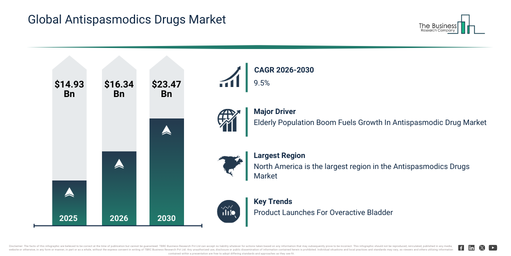
    The antispasmodics drugs market has seen significant expansion in recent years. It is projected to grow from $14.93 billion in 2025 to $16.34 billion in 2026, achieving a compound annual growth rate (CAGR) of 9.5%. This growth during the historic period can be ascribed to a rising incidence of IBS and stomach cramps, the development of hospital pharmacy infrastructure, the increasing adoption of oral antispasmodic tablets, greater awareness about gastrointestinal health, and improvements in drug formulation technologies.

    The antispasmodics drugs market is projected to experience robust expansion over the coming years, reaching a valuation of $23.47 billion in 2030, exhibiting a compound annual growth rate (CAGR) of 9.5%. This anticipated growth during the forecast period is propelled by several factors, including breakthroughs in precision medicine, the creation of injectable and liquid antispasmodic formulations, the widening reach of online pharmacy platforms, an expanding elderly and young patient demographic, and the incorporation of digital health monitoring systems. Key developments expected within this period encompass individualized antispasmodic treatments, sophisticated drug delivery methods, an escalation in gastrointestinal conditions, increased adoption of homecare medications, and an intensified concentration on both pediatric and geriatric patient groups.

    Get A Free Sample Report With In-Depth Market Insights:

    https://www.thebusinessresearchcompany.com/sample.aspx?id=9414&type=smp&utm_source=Blogs&utm_medium=Paid&utm_campaign=Oct_PR

    Antispasmodics Drugs Market Demand Drivers Opening New Revenue Streams

    The antispasmodic drug market is expected to grow, propelled by an increasing elderly population. Individuals aged 65 years and older, considered elderly, face numerous physical and psychological health issues. Antispasmodic drugs are beneficial for these populations in managing symptoms such as muscle spasms or cramping, and can also be used for conditions like irritable bowel syndrome (IBS), gastroesophageal reflux disease (GERD), interstitial cystitis, and uterine cramping. For instance, according to the UK Parliament’s House of Commons Library in July 2024, the UK had 12.7 million people aged 65 or older in 2022. This figure is projected to reach 22.1 million by 2072, making up 27% of the population, thus driving the antispasmodic drug market.

    Antispasmodics Drugs Market Segmentation And Category Overview

    The antispasmodics drugs market covered in this report is segmented –

    1) By Drug: Dicyclomine Hydrochloride, Loperamide Hydrochloride, Other Drugs

    2) By Indication: Irritable Bowel Syndrome, Stomach Cramps, Other Indications

    3) By Route Of Administration: Oral, Parenteral, Other Modes Of Administrations

    4) By Distribution Channel: Hospital Pharmacy, Online Pharmacy, Retail Pharmacy

    5) By End-User: Hospitals, Homecare, Specialty Clinics, Other End-Users

    Subsegments:

    1) By Dicyclomine Hydrochloride: Oral Tablets, Injectable Formulations

    2) By Loperamide Hydrochloride: Oral Tablets, Liquid Formulations

    3) By Other Drugs: Hyoscine Butylbromide (Scopolamine), Peppermint Oil, Atropine, Other Antispasmodics

    Antispasmodics Drugs Market Trends Powering Strategic Industry Growth

    Major companies operating within the antispasmodics drugs market are unveiling new products to maintain their market presence. An illustration of this occurred in January 2023, when Lupin Limited, an Indian pharmaceutical company, launched Fesoterodine Fumarate. This product had received approval from the Food and Drug Administration (FDA), a US federal government agency. Fesoterodine fumarate serves as a generic antispasmodic medication prescribed for certain bladder issues, such as overactive bladder and neurogenic detrusor overactivity. Categorized as an antispasmodic, it operates by relaxing the muscles of the bladder and is accessible as extended-release tablets.

    Antispasmodics Drugs Market Competitive Analysis Of Leading Industry Participants

    Major companies operating in the antispasmodics drugs market are Daiichi Sankyo Company Limited, Fresenius Kabi AG, Hikma Pharmaceuticals plc, Johnson & Johnson Services Inc., Pfizer Inc., Shanghai Fosun Pharmaceutical Co. Ltd., Takeda Pharmaceutical Company Limited, Akorn Inc., Aurobindo Pharma Limited, Lannett Company Inc., Nexus Pharmaceuticals Inc., Actiza Pharmaceutical Private Limited, Blue Cross Laboratories Pvt. Ltd., Dr. Reddy’s Laboratories Ltd., Lexicare Pharma Pvt. Ltd., Solitaire Pharmacia Private Limited, Strides Pharma Science Limited, Wellona Pharma Private Limited, SunGen Pharma LLC, GlaxoSmithKline plc, Novartis AG, Sanofi SA, AstraZeneca plc, Merck & Co. Inc., Bayer AG, Teva Pharmaceutical Industries Ltd., Endo Pharmaceuticals Inc., Sun Pharmaceutical Industries Ltd., Cipla Ltd., Lupin Ltd.

    View The Full Antispasmodics Drugs Market Report:

    https://www.thebusinessresearchcompany.com/report/antispasmodics-drugs-global-market-report?utm_source=Blogs&utm_medium=Paid&utm_campaign=Oct_PR

    Antispasmodics Drugs Market Geographic Landscape: Which Region Leads Industry Growth?

    North America was the largest region in the antispasmodics drugs market in 2025. Asia-Pacific is expected to be the fastest-growing region in the antispasmodics drugs market report during the forecast period. The regions covered in the antispasmodics drugs market report are Asia-Pacific, South East Asia, Western Europe, Eastern Europe, North America, South America, Middle East, Africa.

    Reach Out To Our Team:

    The Business Research Company: https://www.thebusinessresearchcompany.com/

    Americas: +1 310-496-7795

    Asia: +44 7882 955267 & +91 8897263534

    Europe: +44 7882 955267

    Email us at: marketing@tbrc.info

    Follow us on:

    LinkedIn: https://in.linkedin.com/company/the-business-research-company

    YouTube: https://www.youtube.com/channel/UC24_fI0rV8cR5DxlCpgmyFQ

    Global Market Model: https://www.thebusinessresearchcompany.com/global-market-model