Blog

  • Antiseptic Bathing Products Market Growth Forecast: Market Size, Key Trends And Emerging Opportunities Through 2030

    Antiseptic Bathing Products Market Growth Forecast: Market Size, Key Trends And Emerging Opportunities Through 2030

    Backed by market attractiveness analysis, total addressable market sizing, company benchmarking matrices, interactive Excel dashboards, wider supply chain intelligence, emerging startup coverage, and detailed product-level insights, The Business Research Company’s 2026 market reports are designed to offer research that is more actionable and strategically valuable than ever.

    Antiseptic Bathing Products Market Size Forecast: How Big Could The Market Get By 2030?

    The antiseptic bathing products market has seen robust expansion over recent years. Its valuation is set to increase from $21.11 billion in 2025 to $22.38 billion in 2026, advancing at a compound annual growth rate (CAGR) of 6.0%. This historical growth can be attributed to several factors including concerns regarding hospital-acquired infections, initiatives for surgical site infection prevention, specific care protocols for ICU patients, the widespread adoption of antiseptics, and established clinical hygiene regulations.

    The market for antiseptic bathing products is projected to experience substantial expansion over the coming years. Its valuation is set to reach $28.22 billion by 2030, demonstrating a compound annual growth rate (CAGR) of 6.0%. This anticipated growth throughout the forecast period stems from factors such as increased investments in infection prevention, a heightened awareness of antimicrobial resistance, the expansion of ICU capacity, the wider adoption of homecare hygiene practices, and evolving patient safety standards. Key trends expected during this period involve an increasing prevalence of chlorhexidine-based products, a sharper focus on infection control within hospitals, the proliferation of no-rinse antiseptic bathing options, the broadening of ICU hygiene protocols, and a growing demand for antimicrobial formulations that are gentle on the skin.

    Get A Free Sample Report With In-Depth Market Insights:

    https://www.thebusinessresearchcompany.com/sample.aspx?id=24147&type=smp&utm_source=Blogs&utm_medium=Paid&utm_campaign=Oct_PR

    Antiseptic Bathing Products Market Growth Backed By Core Demand Fundamentals

    The increasing occurrence of skin conditions is anticipated to fuel the expansion of the antiseptic bathing products market moving ahead. A skin disease is defined as any health issue impacting the skin, manifesting signs like redness, itching, swelling, or lesions. The incidence of skin ailments is significantly increasing as a result of environmental shifts, such as pollution and global warming, which disturb the skin’s natural equilibrium and trigger skin issues. Antiseptic bathing solutions prove beneficial for skin disorders because they aid in cleansing the skin, diminishing detrimental microorganisms, and averting infections, thereby fostering quicker recovery and alleviating inflammation. For example, in June 2025, a Public Health study on fungal skin diseases from Frontiers, a Switzerland-based source, utilized the Autoregressive Integrated Moving Average model to project an upward trajectory from 2022 to 2050, forecasting a 37.2 percent increase in global incidence cases and a 38.6 percent rise in disability-adjusted life years cases, with prevalence cases expected to grow by 40.4 percent. Consequently, the rising occurrence of skin diseases is propelling the expansion of the antiseptic bathing products market.

    Antiseptic Bathing Products Market Segment Outlook: Which Categories Are Growing Fastest?

    The antiseptic bathing products market covered in this report is segmented –

    1) By Product Type: Chlorhexidine Gluconate Bath Towels Or Wipes, Chlorhexidine Gluconate Solutions, Antiseptic Wipes, Antiseptic Bathing Solutions, Antiseptic Shampoo Caps

    2) By Function: Antibacterial, Antifungal, Antiviral, Moisturizing

    3) By Distribution Channel: Online Retailers, Supermarkets And Hypermarkets, Pharmacies And Drug Stores, Convenience Stores

    4) By Application: Intensive Care Units, Surgical Wards, Medical Wards, Other Applications

    5) By End User: Hospitals And Healthcare Centers, Home Care, Sports And Fitness, Personal Care

    Subsegments:

    1) By Chlorhexidine Gluconate Bath Towels Or Wipes: 2% CHG Impregnated Wipes, 4% CHG Impregnated Wipes, Alcohol-Free CHG Wipes, CHG Wipes For ICU And Preoperative Use

    2) By Chlorhexidine Gluconate Solutions: 2% CHG Aqueous Solution, 4% CHG Aqueous Solution, CHG Solution With Alcohol Base, CHG Solution For Surgical Site Preparation

    3) By Antiseptic Wipes: Alcohol-Based Antiseptic Wipes, Iodine-Based Wipes, Benzalkonium Chloride Wipes, Multi-Purpose Clinical Use Wipes

    4) By Antiseptic Bathing Solutions: Povidone-Iodine Bathing Solutions, Benzalkonium Chloride-Based Solutions, Octenidine-Based Bathing Solutions, Herbal And Plant-Derived Antiseptic Solutions

    5) By Antiseptic Shampoo Caps: CHG-Infused Shampoo Caps, Alcohol-Free Antiseptic Shampoo Caps, No-Rinse Shampoo Caps For Bedridden Patients, Shampoo Caps With Moisturizing Agents

    Antiseptic Bathing Products Market Growth Trends Reshaping The Competitive Landscape

    Leading companies in the antiseptic bathing products market are concentrating on developing novel solutions, such as ready-to-use disinfectant wipes, to satisfy the rising consumer demand for easy hygiene and efficient infection prevention. Ready-to-use disinfectant wipes are pre-moistened cleaning products infused with antimicrobial or disinfectant agents, formulated to rapidly and thoroughly eliminate detrimental microorganisms like bacteria, viruses, and fungi from both surfaces and skin. They offer convenient, portable, and instant sanitization without requiring any additional preparation or dilution. For instance, in July 2024, Ecolab Inc., a US-based provider of solutions for water, hygiene, and infection prevention, launched Disinfectant 1 Wipe. This EPA-registered disinfectant wipe is designed to neutralize 48 pathogens in as little as 15 seconds, including SARS-CoV-2, Candida auris, and other organisms responsible for healthcare-associated infections. Featuring a bleach-free composition, Disinfectant 1 Wipe is gentle on surfaces while still delivering powerful antimicrobial efficacy, making it suitable for high-touch surfaces in healthcare facilities, long-term care settings, and other critical environments. This enables healthcare facilities to significantly enhance their infection control protocols, improve patient safety, and curb the spread of healthcare-associated infections.

    Antiseptic Bathing Products Market Leading Companies And Competitive Benchmarking

    Major companies operating in the antiseptic bathing products market are Cardinal Health Inc., Johnson & Johnson, 3M Company, Kimberly-Clark Corporation, Ecolab Inc., B. Braun Melsungen AG, STERIS plc, Paul Hartmann AG, GOJO Industries Inc., Schulke & Mayr GmbH, DermaRite Industries LLC, Medline Industries Inc., Molnlycke Health Care AB, Coloplast A/S, Clorox Healthcare, Reckitt Benckiser Group plc, Cipla Ltd., Himalaya Wellness Company, Unilever plc, Amkay Products LLC

    View The Full Antiseptic Bathing Products Market Report:

    https://www.thebusinessresearchcompany.com/report/antiseptic-bathing-products-global-market-report?utm_source=Blogs&utm_medium=Paid&utm_campaign=Oct_PR

    Antiseptic Bathing Products Market Largest Region: Which Geography Holds The Biggest Share?

    North America was the largest region in the antiseptic bathing products market in 2025. Asia-Pacific is expected to be the fastest-growing region in the forecast period. The regions covered in the antiseptic bathing products market report are Asia-Pacific, South East Asia, Western Europe, Eastern Europe, North America, South America, Middle East, Africa.

    Reach Out To Our Team:

    The Business Research Company: https://www.thebusinessresearchcompany.com/

    Americas: +1 310-496-7795

    Asia: +44 7882 955267 & +91 8897263534

    Europe: +44 7882 955267

    Email us at: marketing@tbrc.info

    Follow us on:

    LinkedIn: https://in.linkedin.com/company/the-business-research-company

    YouTube: https://www.youtube.com/channel/UC24_fI0rV8cR5DxlCpgmyFQ

    Global Market Model: https://www.thebusinessresearchcompany.com/global-market-model

  • Antisense & RNAi Therapeutics Market CAGR Forecast Through 2030: Key Trends Shaping Industry Expansion

    Antisense & RNAi Therapeutics Market CAGR Forecast Through 2030: Key Trends Shaping Industry Expansion

    Featuring market attractiveness scoring, total addressable market sizing, company benchmarking matrices, interactive Excel dashboards, deeper supply chain intelligence, emerging startup tracking, and granular product-level insights, The Business Research Company’s 2026 market reports are built to deliver research that is both more actionable and more strategically valuable.

    Antisense & RNAi Therapeutics Market Revenue Outlook: What CAGR Lies Ahead Through 2030?

    The antisense & rnai therapeutics market size has seen swift expansion in recent years. It is projected to increase from $1.93 billion in 2025 to $2.17 billion in 2026, demonstrating a compound annual growth rate (CAGR) of 12.6%. The historical growth can be attributed to the early adoption of antisense therapies, initial rnai research breakthroughs, the development of oligonucleotide synthesis techniques, increasing demand for targeted therapeutics, and investments in biotech research.

    The antisense & rnai therapeutics market size is projected to experience rapid growth in the upcoming years. It is forecast to grow to $3.53 billion in 2030, achieving a compound annual growth rate (CAGR) of 12.9%. This expansion during the forecast period can be attributed to advancements in delivery technologies, the broadening scope of precision medicine, integration with AI-driven drug discovery, an increase in RNAi-based clinical trials, and rising healthcare investments in emerging markets. Major trends expected in this period include targeted gene silencing, novel delivery mechanisms, personalized therapeutics, nucleic acid stabilization techniques, and ongoing regulatory & clinical advancements.

    Get A Free Sample Report With In-Depth Market Insights:

    https://www.thebusinessresearchcompany.com/sample.aspx?id=3389&type=smp&utm_source=Blogs&utm_medium=Paid&utm_campaign=Oct_PR

    Antisense & RNAi Therapeutics Market Growth Catalysts And Demand Drivers

    The increasing occurrence of coronary artery diseases, neurodegenerative conditions, and infectious diseases is anticipated to fuel the demand for the antisense & RNAi therapeutics market. Gene suppression methods, such as RNA interference and antisense oligonucleotides, find application in treating numerous neurodegenerative conditions through the repair of mutant genes. As an illustration, a report released in January 2024 by the American Heart Association, an organization based in the US, indicated that the age-adjusted death rate attributed to cardiovascular diseases climbed to 233.3 per 100,000, which represented a 4.0% increase compared to the prior year. Consequently, the expanding prevalence of various neurodegenerative diseases and infectious diseases is foreseen to stimulate the expansion of the antisense & RNAi therapeutics market.

    Antisense & RNAi Therapeutics Market Segment Landscape: Which Areas Lead Development?

    The antisense & rnai therapeutics market covered in this report is segmented –

    1) By Technology: RNA Interference, Antisense RNA

    2) By Route Of Administration: Intravenous Injections, Intra-dermal Injections, Other Delivery Methods

    3) By Indication: Oncology, Cardiovascular Diseases (CVDs), Respiratory Disorders, Neurological Disorders, Infectious Diseases, Other Indications

    Subsegments:

    1) By RNA Interference (RNAi): Small Interfering RNA (siRNA), Short Hairpin RNA (shRNA), Dicer-substrate siRNA, MicroRNA (miRNA) Based Therapeutics

    2) By Antisense RNA: Antisense Oligonucleotides (ASOs), Morpholino Oligomers, Locked Nucleic Acids (LNAs), Gapmer Antisense Oligonucleotides

    Antisense & RNAi Therapeutics Market Trends Shaping Long-Term Demand

    Leading companies in the antisense & RNAi therapeutics market are pursuing strategic initiatives, including collaborations and partnerships, to thrive in the increasingly competitive landscape. A strategic collaboration represents a business approach where two or more entities work together towards a common goal or objective. For example, in January 2023, Orbit Discovery Limited, a US-based firm providing peptide discovery services, entered into a partnership with SanegeneBio Inc., a UK-based company developing novel RNAi-based medicines. This partnership aimed to identify tissue-specific delivery of RNA therapeutics for efficient gene knockdown, with the objective of developing a portfolio of advanced RNAi therapeutics. The collaboration involves hit identification and cell-based internalization studies, granting Sanegene the option to further develop the hits identified from screening activities, by leveraging Orbit’s proprietary technology for rapid peptide lead discovery. Orbit Discovery’s unique peptide display engine allows for the screening of large peptide libraries, leading to faster discovery times for relevant peptide leads based on affinity and functional screens.

    Antisense & RNAi Therapeutics Market Industry Leaders And Competitive Landscape

    Major companies operating in the antisense & rnai therapeutics market are Biogen Inc., Ionis Pharmaceuticals Inc., Alnylam Pharmaceuticals Inc., Arrowhead Pharmaceuticals Inc., Moderna Inc., Sanofi S.A., Dicerna Pharmaceuticals Inc., Arbutus Biopharma Corporation, Acuitas Therapeutics, Adhera Therapeutics Inc., EdiGene Inc., Sirnaomics Inc., Suzhou Ribo Life Science Co. Ltd, Biocon Limited, Quark Pharmaceuticals, GlaxoSmithKline Plc, Shanghai Junshi Biosciences Co. Ltd., AstraZeneca, Benitec Biopharma Limited, Silence Therapeutics, Dynacure, CN Bio Innovations, Sarepta Therapeutics, Mallinckrodt, Regeneron Pharmaceuticals Inc., Alcyone Lifesciences Inc., Bio-Path Holdings Inc, Calando Pharmaceuticals, Enzon Pharmaceuticals Inc, Celnova Pharma, Pfizer Inc., Taiba Pharma, Gen İlaç ve Sağlık Ürünleri A.Ş., Egypt Otsuka Pharmaceutical

    View The Full Antisense & RNAi Therapeutics Market Report:

    https://www.thebusinessresearchcompany.com/report/antisense-and-rnai-therapeutics-global-market-report?utm_source=Blogs&utm_medium=Paid&utm_campaign=Oct_PR

    Antisense & RNAi Therapeutics Market Regional Analysis: Which Geography Leads On Revenue?

    North America was the largest region in the antisense & RNAi therapeutics market in 2025. The regions covered in the antisense & rnai therapeutics market report are Asia-Pacific, South East Asia, Western Europe, Eastern Europe, North America, South America, Middle East, Africa.

    Reach Out To Our Team:

    The Business Research Company: https://www.thebusinessresearchcompany.com/

    Americas: +1 310-496-7795

    Asia: +44 7882 955267 & +91 8897263534

    Europe: +44 7882 955267

    Email us at: marketing@tbrc.info

    Follow us on:

    LinkedIn: https://in.linkedin.com/company/the-business-research-company

    YouTube: https://www.youtube.com/channel/UC24_fI0rV8cR5DxlCpgmyFQ

    Global Market Model: https://www.thebusinessresearchcompany.com/global-market-model

  • Anti-Rabies Serum Market To Witness 5.3% CAGR Growth Through 2030: Key Industry Drivers

    Anti-Rabies Serum Market To Witness 5.3% CAGR Growth Through 2030: Key Industry Drivers

    Built to provide research that’s more actionable and strategically valuable, The Business Research Company’s 2026 market reports include market attractiveness analysis, total addressable market sizing, company benchmarking matrices, interactive Excel dashboards, broader supply chain intelligence, emerging startup tracking, and in-depth product insights.

    Anti-Rabies Serum Market Growth Analysis: How Will Revenue Trend Over The Forecast Period?

    The anti-rabies serum market size has witnessed robust expansion in recent years. Its value is projected to increase from $1.5 billion in 2025 to $1.58 billion in 2026, maintaining a compound annual growth rate (CAGR) of 5.6%. Historically, this growth can be attributed to factors such as an escalating incidence of rabies exposure cases, the expansion of hospital-based emergency treatment protocols, the accessibility of equine-derived immunoglobulins, governmental support for rabies control initiatives, and a rising public awareness of post-exposure prophylaxis.

    The anti-rabies serum market size is anticipated to experience substantial growth in the upcoming years. It is projected to reach $1.95 billion in 2030, showing a compound annual growth rate (CAGR) of 5.3%. This expansion during the forecast period can be attributed to factors such as the increasing adoption of human anti-rabies immunoglobulin, the broadening of rabies prevention initiatives in developing regions, rising investments in biologics manufacturing, a growing emphasis on safer serum alternatives, and the strengthening of public health vaccination frameworks. Major trends expected in this period include the increasing use of human-derived immunoglobulins, a rising preference for prefilled syringe formats, the expansion of cold-chain optimized serum distribution, a heightened focus on high-purity antibody formulations, and improved standardization of post-exposure prophylaxis protocols.

    Get A Free Sample Report With In-Depth Market Insights:

    https://www.thebusinessresearchcompany.com/sample.aspx?id=20468&type=smp&utm_source=Blogs&utm_medium=Paid&utm_campaign=Oct_PR

    Anti-Rabies Serum Market Opportunity Drivers: What’s Unlocking New Revenue Potential?

    The increasing incidence of dog bites is anticipated to stimulate the expansion of the anti-rabies serum market. Dog bites are defined as injuries sustained when a dog bites or scratches a person, ranging in severity from minor to severe. These injuries can lead to infections, serious wounds, and, in some cases, the transmission of diseases like rabies. Effective prevention and immediate medical attention are essential for managing and minimizing the risks associated with dog bites. The escalating prevalence of dog bites is attributable to several factors, including heightened urbanization, which leads to more frequent interactions between people and dogs, a greater number of unrestrained or inadequately trained dogs, and insufficient public awareness or education regarding dog behavior and bite prevention. This rise in dog bite prevalence has subsequently increased the demand for anti-rabies serum, as its timely administration is critical for preventing rabies onset in individuals exposed to potentially infected animals. For instance, in 2023, the American Veterinary Medical Association, a US-based non-profit organization, stated that the average cost for dog bite insurance claims was $58,545. Insurers paid out $1.12B in liability claims related to dog bites and other dog-related injuries in 2023, with these claims increasing by nearly 10% in 2023. Thus, the growing prevalence of dog bites is a key driver for the growth of the anti-rabies serum market.

    Anti-Rabies Serum Market Segments: Where Is Growth Concentrated?

    The anti-rabies serum market covered in this report is segmented –

    1) By Type: Human Anti-rabies Immunoglobulin, Equine Anti-rabies Immunoglobulin

    2) By Dosage And Form: Vials, Prefilled Syringes

    3) By Route of Administration: Intravenous, Intramuscular

    4) By End User: Hospitals, Clinics, Veterinary Hospitals

    Subsegments:

    1) By Human Anti-Rabies Immunoglobulin: Monovalent Human Anti-Rabies Immunoglobulin, Polyvalent Human Anti-Rabies Immunoglobulin, Intramuscular Human Anti-Rabies Immunoglobulin, Intravenous Human Anti-Rabies Immunoglobulin, Freeze-Dried Human Anti-Rabies Immunoglobulin

    2) By Equine Anti-Rabies Immunoglobulin: Freeze-Dried Equine Anti-Rabies Immunoglobulin, Liquid Equine Anti-Rabies Immunoglobulin, Monovalent Equine Anti-Rabies Immunoglobulin, Polyvalent Equine Anti-Rabies Immunoglobulin

    Anti-Rabies Serum Market Innovation Trends Shaping Future Development

    Leading firms within the anti-rabies serum market are engaging in strategic collaborations with the goal of improving product innovation and broadening their market presence. These alliances represent a method where businesses utilize one another’s capabilities and assets to attain shared advantages and successful outcomes. An example of this is the July 2023 collaboration between Kedrion S.p.A., a US-based biopharmaceutical company, and Kamada, an Israel-based biopharmaceutical company, for the distribution of KEDRAB (Rabies Immune Globulin [Human]) within the US. This partnership has been crucial for the joint development and licensing of the product in the U.S., concurrently fostering greater awareness about the disease. As a result of their combined initiatives, the alliance has contributed to safeguarding people exposed to bites from rabid animals against severe and potentially fatal illnesses.

    Anti-Rabies Serum Market Key Participants And Competitive Landscape

    Major companies operating in the anti-rabies serum market are Merck & Co Inc., Sanofi SA, GlaxoSmithKline PLC, Takeda Pharmaceutical Company Limited, HCX Pharmaceuticals LLP, Intas Pharmaceuticals Ltd, Bavarian Nordic AS, Serum Institute of India Pvt Ltd., Bharat Serums And Vaccines Limited, Indian Immunologicals Ltd., Bharat Biotech., National Institute of Health Islamabad, ViNS Bioproducts Ltd., Shanghai Serum Bio-technology, Premium Serums and Vaccines Pvt Ltd., Congruent Pharmachem, Haffkine Bio Pharmaceutical Corporation Limited, LEXICARE PHARMA PVT. LTD., Avin Darou, Central Research Institute Kasauli, Vigilomed Pharmaceuticals

    View The Full Anti-Rabies Serum Market Report:

    https://www.thebusinessresearchcompany.com/report/anti-rabies-serum-global-market-report?utm_source=Blogs&utm_medium=Paid&utm_campaign=Oct_PR

    Anti-Rabies Serum Market Geographic Spread And Regional Opportunities

    North America was the largest region in the anti-rabies serum market in 2025. The regions covered in the anti-rabies serum market report are Asia-Pacific, South East Asia, Western Europe, Eastern Europe, North America, South America, Middle East, Africa.

    Reach Out To Our Team:

    The Business Research Company: https://www.thebusinessresearchcompany.com/

    Americas: +1 310-496-7795

    Asia: +44 7882 955267 & +91 8897263534

    Europe: +44 7882 955267

    Email us at: marketing@tbrc.info

    Follow us on:

    LinkedIn: https://in.linkedin.com/company/the-business-research-company

    YouTube: https://www.youtube.com/channel/UC24_fI0rV8cR5DxlCpgmyFQ

    Global Market Model: https://www.thebusinessresearchcompany.com/global-market-model

  • Antipyretic Drugs For Children Market Projected For Strong Expansion Through 2030: Key Trends And Future Outlook

    Antipyretic Drugs For Children Market Projected For Strong Expansion Through 2030: Key Trends And Future Outlook

    Backed by market attractiveness analysis, total addressable market sizing, company benchmarking matrices, interactive Excel dashboards, wider supply chain intelligence, emerging startup coverage, and detailed product-level insights, The Business Research Company’s 2026 market reports are designed to offer research that is more actionable and strategically valuable than ever.

    Antipyretic Drugs For Children Market Forecast: What Value Will The Market Reach By 2030?

    The antipyretic drugs for children market size has experienced robust growth in recent years. Its value is projected to climb from $3.4 billion in 2025 to $3.61 billion in 2026, achieving a compound annual growth rate (CAGR) of 6.3%. This expansion in the past can be attributed to the high prevalence of childhood infections, widespread use of acetaminophen, growth in hospital pediatric care, established dosing guidelines, and the expansion of retail pharmacies.

    The antipyretic drugs for children market is projected to experience substantial expansion over the next few years. It is anticipated to grow to $4.61 billion in 2030, demonstrating a compound annual growth rate (CAGR) of 6.3%. This projected increase throughout the forecast period can be attributed to factors such as a rising pediatric population, increasing self-care practices, the expansion of pediatric over-the-counter (OTC) products, improved healthcare access, and enhanced drug safety labeling. Key trends expected during the forecast period include a higher incidence of pediatric fever cases, a growing preference for liquid dosage forms, the continued expansion of OTC pediatric medications, increased parental awareness regarding fever management, and a greater demand for age-specific formulations.

    Get A Free Sample Report With In-Depth Market Insights:

    https://www.thebusinessresearchcompany.com/sample.aspx?id=18956&type=smp&utm_source=Blogs&utm_medium=Paid&utm_campaign=Oct_PR

    Antipyretic Drugs For Children Market Growth Momentum: What Factors Are Shaping Demand?

    The rising prevalence of viral and bacterial infections is projected to advance the antipyretic drugs for children market moving ahead. Viral infections are characterized by diseases resulting from viruses entering host cells, whereas bacterial infections stem from the proliferation of detrimental bacteria inside the body. The occurrence of these infections is on the rise, primarily due to the reappearance of respiratory pathogens following the easing of pandemic controls. The antipyretic drugs for children market plays a crucial role in patient management by offering medications that reduce fever, thereby alleviating discomfort and averting complications during pediatric infections. As an illustration, data from the Centers for Disease Control and Prevention, a US-based government agency, revealed in March 2024 that tuberculosis cases climbed from 8,320 in 2022 to 9,615 in 2023, marking an increase of 1,295 cases. Consequently, the increasing incidence of viral and bacterial infections is propelling the expansion of the antipyretic drugs for children market.

    Antipyretic Drugs For Children Market Segment Analysis: What Are The Core Market Categories?

    The antipyretic drugs for children market covered in this report is segmented –

    1) By Drug Class: Acetaminophen, Ibuprofen, Other Drug Classes

    2) By Dosage Form: Tablets, Syrups, Suppositories, Other Dosage Forms

    3) By Age Group: Newborns, Infants, Toddlers, Children

    Antipyretic Drugs For Children Market Trends Redefining Industry Growth

    Leading companies within the antipyretic drugs for children market are prioritizing the development of advanced drug formulations, such as medicine gummy bites, which offer chewable, flavorful, and easy-to-administer dosage forms to enhance compliance and comfort among young patients. Medicine gummy bites are child-friendly chewable formulations containing an accurately measured dose of an antipyretic agent, like acetaminophen, specifically designed to mask unpleasant tastes, reduce swallowing difficulties, and simplify administration for caregivers while ensuring a consistent therapeutic effect. For instance, in October 2023, DrKids, a US-based pharmaceutical company, launched an acetaminophen gummy bite, providing a child-friendly alternative for pain and fever relief that features an exact pre-measured dosing system for accurate administration, a palatable chewable gummy format to improve acceptance, and a convenient design that supports safe, stress-free dosing for parents.

    Antipyretic Drugs For Children Market Top Companies Driving Competitive Growth

    Major companies operating in the antipyretic drugs for children market are Pfizer Inc., Johnson & Johnson, Merck & Co. Inc., Bayer AG, Novartis AG, Sanofi S.A., Bristol Myers Squibb, GlaxoSmithKline plc, Reckitt Benckiser Group, Viatris Inc., Teva Pharmaceutical Industries Ltd., Sun Pharmaceutical Industries Ltd., Perrigo Company plc, Aurobindo Pharma Ltd., Dr. Reddy’s Laboratories Ltd., Cipla Ltd., Lupin Limited, Towa Pharmaceutical Co Ltd, Glenmark Pharmaceuticals Ltd., Alkem Laboratories Limited

    View The Full Antipyretic Drugs For Children Market Report:

    https://www.thebusinessresearchcompany.com/report/antipyretic-drugs-for-children-global-market-report?utm_source=Blogs&utm_medium=Paid&utm_campaign=Oct_PR

    Antipyretic Drugs For Children Market Top Region By Revenue And Market Share

    North America was the largest region in the antipyretic drugs for children market in 2025. Asia-Pacific is expected to be the fastest-growing region in the forecast period. The regions covered in the antipyretic drugs for children market report are Asia-Pacific, South East Asia, Western Europe, Eastern Europe, North America, South America, Middle East, Africa.

    Reach Out To Our Team:

    The Business Research Company: https://www.thebusinessresearchcompany.com/

    Americas: +1 310-496-7795

    Asia: +44 7882 955267 & +91 8897263534

    Europe: +44 7882 955267

    Email us at: marketing@tbrc.info

    Follow us on:

    LinkedIn: https://in.linkedin.com/company/the-business-research-company

    YouTube: https://www.youtube.com/channel/UC24_fI0rV8cR5DxlCpgmyFQ

    Global Market Model: https://www.thebusinessresearchcompany.com/global-market-model
  • Antipsychotic Drugs Market Outlook 2026–2030: Growth Trends, Market Dynamics And Emerging Opportunities

    Antipsychotic Drugs Market Outlook 2026–2030: Growth Trends, Market Dynamics And Emerging Opportunities

    Featuring market attractiveness scoring, total addressable market sizing, company benchmarking matrices, interactive Excel dashboards, deeper supply chain intelligence, emerging startup tracking, and granular product-level insights, The Business Research Company’s 2026 market reports are built to deliver research that is both more actionable and more strategically valuable.

    Antipsychotic Drugs Market Size Outlook: How Quickly Will Revenue Expand Through 2030?

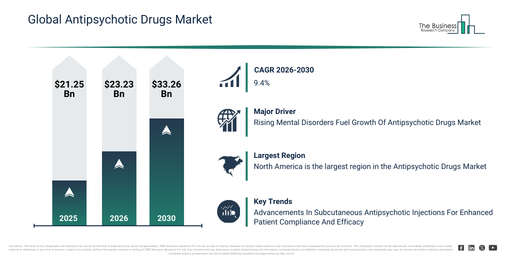
    The antipsychotic drugs market has experienced robust growth in recent years. It is forecast to increase from $21.25 billion in 2025 to $23.23 billion in 2026, exhibiting a compound annual growth rate (CAGR) of 9.3%. This historical expansion is largely due to the introduction of first-generation antipsychotics, a greater understanding of mental health disorders, the enhancement of hospital and clinical infrastructure, an uptick in the prevalence of schizophrenia and bipolar disorder, and elevated research and development investments in neuropsychiatric drugs.

    The antipsychotic drugs market is set for substantial growth in the upcoming years. It is projected to expand to a size of $33.26 billion in 2030, demonstrating a compound annual growth rate (CAGR) of 9.4%. This anticipated expansion during the forecast period is driven by factors such as advancements in atypical and partial dopamine agonists, the integration of precision medicine techniques, the adoption of AI in mental health diagnostics, the widening reach of online pharmacy distribution, and a greater emphasis on long-acting injectable formulations. Prominent trends expected in this period include personalized antipsychotic therapies, an increasing geriatric population, the rising prevalence of schizophrenia and bipolar disorder, the emergence of telepsychiatry and digital mental health platforms, and the continued development of long-acting injectable antipsychotics.

    Get A Free Sample Report With In-Depth Market Insights:

    https://www.thebusinessresearchcompany.com/sample.aspx?id=18780&type=smp&utm_source=Blogs&utm_medium=Paid&utm_campaign=Oct_PR

    Antipsychotic Drugs Market Expansion Drivers: What’s Shaping Future Growth?

    The increasing prevalence of mental disorders is anticipated to stimulate the expansion of the antipsychotic drug market in the future. Mental disorders, also referred to as mental illnesses, are conditions affecting an individual’s thought processes, conduct, emotional state, and overall mental well-being. Factors influencing instances of mental disorders include stress levels, societal pressures, genetic predispositions, biochemical imbalances, neurodevelopmental concerns, and existing physical health conditions. Antipsychotic drugs manage mental disorders through modifying the activity of neurotransmitters, chiefly dopamine and serotonin, thereby diminishing psychotic symptoms, steadying mood, and enhancing cognitive and emotional functions. For example, in November 2023, a survey by the Substance Abuse and Mental Health Services Administration (SAMHSA), a US public health agency, revealed that approximately 6% of adults aged 18 or older, amounting to 15.4 million people, reported serious mental illness (SMI). Additionally, in September 2024, the Australian Institute of Health and Welfare, an Australian government agency, projected that the population with dementia in Australia is anticipated to more than double from about 411,100 in 2023 to 849,300 by 2058, impacting approximately 315,500 men and 533,800 women. Consequently, the rising occurrence of mental disorders is fueling the antipsychotic drug market.

    Antipsychotic Drugs Market Segment Breakdown: Which Categories Lead On Revenue?

    The antipsychotic drugs market covered in this report is segmented –

    1) By Therapeutic Class: First Generation, Second Generation, Third Generation

    2) By Disease: Schizophrenia, Bipolar Disorder, Unipolar Depression, Dementia, Other Diseases

    3) By Distribution Channel: Hospital Pharmacies, Drug Stores, Online Pharmacies

    Subsegments:

    1) By First Generation: Typical Antipsychotics, Phenothiazines, Butyrophenones, Thioxanthenes, Dibenzoxazepines

    2) By Second Generation: Atypical Antipsychotics, Clozapine, Olanzapine, Risperidone, Quetiapine, Aripiprazole, Paliperidone, Lurasidone

    3) By Third Generation: Partial Dopamine Agonists, Aripiprazole, Brexpiprazole, Cariprazine

    Antipsychotic Drugs Market Strategic Trends: What Defines The Next Growth Phase?

    Leading companies in the antipsychotic drug market are concentrating on developing advanced medical solutions, such as subcutaneous atypical antipsychotic injections, to achieve better patient adherence and enhanced efficacy compared to traditional oral treatments. These subcutaneous atypical antipsychotic injections are psychiatric medications administered beneath the skin to manage mental illnesses, maintain stable blood levels, and improve symptom control. For instance, in April 2023, Teva Pharmaceutical Industries Ltd., an Israel-based pharmaceutical company, and MedinCell SA, a France-based producer of biological products and pharmaceutical preparations, introduced UZEDY, which received U.S. Food and Drug Administration (FDA) approval. This product is an extended-release injectable formulation of risperidone, designed as a long-acting subcutaneous injection offering flexible dosing intervals of one or two months. UZEDY incorporates MedinCell’s proprietary SteadyTeq technology, ensuring a consistent release of the medication, reaching therapeutic levels within 6–24 hours of administration. Clinical trials demonstrated that UZEDY reduced the risk of schizophrenia relapse by up to an 80% compared to a placebo. Its purpose is to address adherence issues commonly linked with oral antipsychotics, which frequently result in relapse.

    Antipsychotic Drugs Market Leading Players And Competitive Positioning

    Major companies operating in the antipsychotic drugs market are Pfizer Inc., Johnson & Johnson Services Inc., Merck And Co. Inc., AbbVie Inc., Bristol-Myers Squibb Company, AstraZeneca PLC, GlaxoSmithKline PLC, Takeda Pharmaceutical Company Limited, Eli Lilly And Company, Teva Pharmaceutical Industries Ltd., Sun Pharmaceutical Industries Ltd., Otsuka Pharmaceutical Co. Ltd., Aurobindo Pharma Ltd., Cipla Ltd., H. Lundbeck A/S, Dr. Reddy’s Laboratories Ltd., Intas Pharmaceuticals Ltd., Apotex Inc., Lupin Limited, Glenmark Pharmaceuticals Ltd., Torrent Pharmaceuticals Ltd., Alkermes plc

    View The Full Antipsychotic Drugs Market Report:

    https://www.thebusinessresearchcompany.com/report/antipsychotic-drugs-global-market-report?utm_source=Blogs&utm_medium=Paid&utm_campaign=Oct_PR

    Antipsychotic Drugs Market Regional Analysis And Top Geography

    North America was the largest region in the antipsychotic drugs market in 2025. Asia-Pacific is expected to be the fastest-growing region in the forecast period. The regions covered in the antipsychotic drugs market report are Asia-Pacific, South East Asia, Western Europe, Eastern Europe, North America, South America, Middle East, Africa.

    Reach Out To Our Team:

    The Business Research Company: https://www.thebusinessresearchcompany.com/

    Americas: +1 310-496-7795

    Asia: +44 7882 955267 & +91 8897263534

    Europe: +44 7882 955267

    Email us at: marketing@tbrc.info

    Follow us on:

    LinkedIn: https://in.linkedin.com/company/the-business-research-company

    YouTube: https://www.youtube.com/channel/UC24_fI0rV8cR5DxlCpgmyFQ

    Global Market Model: https://www.thebusinessresearchcompany.com/global-market-model

  • Anti-Parkinson Drugs Market Growth Outlook From $11.46 Billion In 2026 To $14.28 Billion By 2030

    Anti-Parkinson Drugs Market Growth Outlook From $11.46 Billion In 2026 To $14.28 Billion By 2030

    Built to provide research that’s more actionable and strategically valuable, The Business Research Company’s 2026 market reports include market attractiveness analysis, total addressable market sizing, company benchmarking matrices, interactive Excel dashboards, broader supply chain intelligence, emerging startup tracking, and in-depth product insights.

    Anti-Parkinson Drugs Market Size, Value And Growth Trajectory Through 2030

    The anti-parkinson drugs market has shown consistent expansion in recent years. It is projected to expand from $10.96 billion in 2025 to $11.46 billion in 2026, reflecting a compound annual growth rate (CAGR) of 4.6%. This historical expansion can be attributed to several factors such as the growth of the aging population, a rise in Parkinson’s disease diagnoses, the established use of levodopa, enhancements in neurological care, and the continuing requirements for managing chronic diseases.

    The anti-parkinson drugs market size is anticipated to expand significantly in the coming years, reaching $14.28 billion in 2030, driven by a compound annual growth rate (CAGR) of 5.6%. This projected growth throughout the forecast period stems from factors such as the increasing prevalence of neurodegenerative disorders, breakthroughs in neuroprotective drugs, the wider availability of transdermal therapies, improved healthcare accessibility, and a dedicated focus on enhancing quality of life. Notable trends during this period are expected to include a growing demand for dopaminergic therapies, an increased uptake of extended-release formulations, a heightened emphasis on symptom management, the development of more combination drug therapies, and advancements in drug delivery technologies.

    Get A Free Sample Report With In-Depth Market Insights:

    https://www.thebusinessresearchcompany.com/sample.aspx?id=3462&type=smp&utm_source=Blogs&utm_medium=Paid&utm_campaign=Oct_PR

    Anti-Parkinson Drugs Market Development Factors: What’s Supporting Demand?

    The increasing incidence of mental health disorders is expected to propel the growth of the mental wellness market going forward. Mental health disorders represent a clinically substantial impairment affecting a person’s cognition, emotional regulation, or conduct. The rising prevalence of mental disorders stems from increased exposure to chronic stress and adverse life experiences that overwhelm individual coping mechanisms and trigger psychological dysfunction. This escalating incidence of mental disorders also expands the anti-Parkinson drugs market, as these medications assist in minimizing and curing mental disorders. For instance, in October 2025, the Institute for Health Metrics and Evaluation, a US-based health research organization, reported that 15% of the world’s population experienced mental disorders in 2023, and 17% of the total years lived with disability globally were attributed to mental disorders in the same year. Consequently, the high prevalence of mental disorder is driving the growth of the anti-Parkinson drugs market.

    Anti-Parkinson Drugs Market Segmentation: How Does The Market Break Down By Category?

    The anti-parkinson drugs market covered in this report is segmented –

    1) By Drugs Class: Levodopa Or Carbidopa, Dopamine Receptor Agonists, Monoamine Oxidase Type B (MAO-B) Inhibitors, Catechol-O-Methyltransferase (COMT)-inhibitors, Anticholinergics, Other Drugs

    2) By Route of Administration: Oral, Injection, Transdermal

    3) By Distribution Channel: Hospital Pharmacies, Retailer Pharmacies, Online Pharmacies

    Subsegments:

    1) By Levodopa Or Carbidopa: Immediate-Release Levodopa Or Carbidopa, Extended-Release Levodopa Or Carbidopa

    2) By Dopamine Receptor Agonists: Pramipexole, Ropinirole, Rotigotine

    3) By Monoamine Oxidase Type B (MAO-B) Inhibitors: Selegiline, Rasagiline, Safinamide

    4) By Catechol-O-Methyltransferase (COMT)-Inhibitors: Entacapone, Tolcapone

    5) By Anticholinergics: Benztropine, Trihexyphenidyl

    6) By Other Drugs: Amantadine, Apomorphine

    Anti-Parkinson Drugs Market Transformation Trends: What Innovations Are Driving Change?

    Companies active in the anti-Parkinson drugs market are prioritizing the development of advanced therapeutic solutions, such as those targeting motor fluctuations and dyskinesia, to improve symptom control and reduce undesirable side effects. Motor fluctuations and dyskinesia often pose significant challenges in treating Parkinson’s disease, impacting patient well-being. For example, in January 2024, AbbVie Inc., a US-based pharmaceutical company, launched PRODUODOPA. PRODUODOPA (foslevodopa/foscarbidopa) stands as the first subcutaneous 24-hour infusion therapy for advanced Parkinson’s disease, specifically designed to address severe motor fluctuations and dyskinesia when other treatments have failed. It works by continuously delivering levodopa, which may lead to an increase in ‘on’ time and better symptom management.

    Anti-Parkinson Drugs Market Competitive Overview And Top Companies

    Major companies operating in the anti-parkinson drugs market are GlaxoSmithKline plc, Pfizer Inc., Novartis AG, F. Hoffmann-La Roche AG, UCB S.A, Teva Pharmaceutical Industries Ltd., AbbVie Inc., Mylan NV, C.H. Boehringer Sohn AG & Co. KG, Orion Pharma Ltd., Sun Pharmaceutical Industries Ltd., Wockhardt Ltd., Reddy’s Laboratories Ltd., Intas Pharmaceuticals Ltd., US WorldMeds LLC, Zydus Lifesciences Limited, Chemical Industrial & Pharmaceutical Laboratories Ltd., Strides Shasun Ltd., Upsher-Smith Laboratories LLC, H. Lundbeck A/S, Vertical Pharmaceuticals LLC, Zambon SPA, Valeant Pharmaceuticals International Inc., Neurocrine Biosciences Inc., Supernus Pharmaceuticals Inc.

    View The Full Anti-Parkinson Drugs Market Report:

    https://www.thebusinessresearchcompany.com/report/anti-parkinson-drugs-global-market-report?utm_source=Blogs&utm_medium=Paid&utm_campaign=Oct_PR

    Anti-Parkinson Drugs Market Geographic Analysis: Where Is Demand Rising Fastest?

    North America was the largest region in the anti-Parkinson drugs market in 2025. Middle East is expected to be the fastest-growing region in the anti-parkinson drugs market during the forecast period. The regions covered in the anti-parkinson drugs market report are Asia-Pacific, South East Asia, Western Europe, Eastern Europe, North America, South America, Middle East, Africa.

    Reach Out To Our Team:

    The Business Research Company: https://www.thebusinessresearchcompany.com/

    Americas: +1 310-496-7795

    Asia: +44 7882 955267 & +91 8897263534

    Europe: +44 7882 955267

    Email us at: marketing@tbrc.info

    Follow us on:

    LinkedIn: https://in.linkedin.com/company/the-business-research-company

    YouTube: https://www.youtube.com/channel/UC24_fI0rV8cR5DxlCpgmyFQ

    Global Market Model: https://www.thebusinessresearchcompany.com/global-market-model
  • Antiparasitic Drugs Market Forecast To Reach $36.13 Billion By 2030: Key Growth Drivers And Industry Trends

    Antiparasitic Drugs Market Forecast To Reach $36.13 Billion By 2030: Key Growth Drivers And Industry Trends

    Backed by market attractiveness analysis, total addressable market sizing, company benchmarking matrices, interactive Excel dashboards, wider supply chain intelligence, emerging startup coverage, and detailed product-level insights, The Business Research Company’s 2026 market reports are designed to offer research that is more actionable and strategically valuable than ever.

    Antiparasitic Drugs Market CAGR Outlook And Future Development

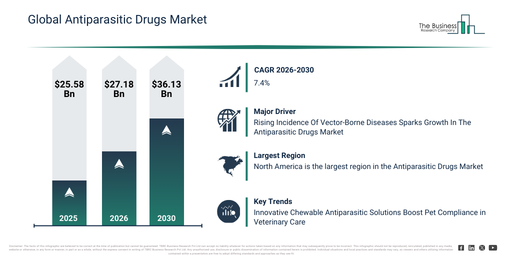
    The antiparasitic drugs market has shown substantial growth in recent years. It is projected to expand from $25.58 billion in 2025 to $27.18 billion in 2026, demonstrating a compound annual growth rate (CAGR) of 6.2%. The historical increase in this market can be attributed to the rising prevalence of parasitic diseases, restricted access to modern antiparasitic drugs in developing regions, a long-standing reliance on monotherapy drugs, growing demand for veterinary care, and inadequate awareness concerning preventive measures.

    The size of the antiparasitic drugs market is projected to experience substantial expansion in the coming years. This market is set to reach $36.13 billion in 2030, exhibiting a compound annual growth rate (CAGR) of 7.4%. The anticipated expansion during this period can be ascribed to several factors, including increased adoption of combination therapy, progress in precision medicine for parasitic infections, a heightened emphasis on animal health and livestock safeguarding, the widening of emerging markets, and the creation of innovative delivery mechanisms for antiparasitic drugs. Key trends anticipated during the forecast timeframe encompass a rising occurrence of parasitic infections, the evolution of combination antiparasitic drugs, an increase in animal healthcare uses, a preference shift towards oral and injectable treatments, and the appearance of new antiparasitic agents.

    Get A Free Sample Report With In-Depth Market Insights:

    https://www.thebusinessresearchcompany.com/sample.aspx?id=12927&type=smp&utm_source=Blogs&utm_medium=Paid&utm_campaign=Oct_PR

    Antiparasitic Drugs Market Industry Drivers: What’s Behind The Revenue Growth?

    The rising occurrence of vector-borne diseases is anticipated to drive the expansion of the antiparasitic drugs market in the future. These are defined as infectious illnesses spread to humans or animals via arthropod bites, mainly from insects such as mosquitoes, ticks, and flies. Notable examples of such diseases include malaria, dengue, and yellow fever. Antiparasitic drugs are crucial in preventing the dissemination of vector-borne diseases by targeting and eradicating the causative parasites. Certain antiparasitic medications, such as chloroquine, doxycycline, and atovaquone-proguanil, are frequently administered for malaria treatment. As an illustration, data from the Centers for Disease Control and Prevention, a US-based Government agency, for June 2024 indicates that from January to June 2024, the Americas saw over 9.7 million dengue cases, which is more than twice the 4.6 million cases reported in 2023. Within the United States, Puerto Rico recorded 1,498 dengue cases, and an additional 745 cases were found among U.S. travelers returning from regions where the disease is prevalent. Consequently, the rising prevalence of vector-borne diseases is a key factor propelling the expansion of the antiparasitic drugs market.

    Antiparasitic Drugs Market Segment Trends And Revenue Contributors

    The antiparasitic drugs market covered in this report is segmented –

    1) By Product Type: Anthelmintics, Antiprotozoals, Ectoparasiticide, Other Products

    2) By Treatment: Avermectins, Bezimidazoles, Pyrimidines, Imidazolesthiazoles

    3) By Route of Administration: Oral, Injectable, Topical

    4) By End User: Hospitals, Homecare, Specialty Clinics, Other End Users

    Subsegments:

    1) By Anthelmintics: Benzimidazoles, Ivermectin, Pyrantel Pamoate, Praziquantel

    2) By Antiprotozoals: Metronidazole, Tinidazole, Nitazoxanide, Pentamidine

    3) By Ectoparasiticides: Permethrin, Malathion, Fipronil

    4) By Other Products: Combination Antiparasitic Drugs, Novel Antiparasitic Agents

    #Antiparasitic Drugs Market Growth Trends: What’s Shaping The Future Outlook?

    Major companies within the antiparasitic drugs market are concentrating on developing innovative products, such as chewable veterinary items, to improve ease of administration and increase pet compliance. These chewable veterinary products are flavored, simple-to-administer tablets or treats specifically designed to deliver medication to animals. They boost pet compliance by making the treatment process more palatable and less stressful. For example, in April 2024, C.H. Boehringer Sohn AG and Co. KG, a Germany-based pharmaceutical company, introduced NexGard Spectra to provide comprehensive parasite control. NexGard SPECTRA is a soft, flavorful chew that offers complete internal and external parasite protection for dogs, effectively targeting fleas, ticks, heartworms, and various intestinal worms in a single monthly dose. It demonstrates rapid action, killing fleas within four hours of administration and achieving over 99% effectiveness against multiple parasites shortly thereafter.

    Antiparasitic Drugs Market Competitive Landscape: Which Companies Lead The Industry?

    Major companies operating in the antiparasitic drugs market are Pfizer Inc., Johnson & Johnson, Cadila Pharmaceuticals, Merck & Co. Inc., Bayer AG, Novartis AG, Sanofi S.A., GlaxoSmithKline plc, Takeda Pharmaceutical Company Limited, Boehringer Ingelheim Group, Zoetis Inc., Eisai Co. Ltd., Dr. Reddy’s Laboratories, Intas Pharmaceuticals Ltd., Alkem Laboratories Ltd., Ceva Santé Animale S.A., Elanco Animal Health Incorporated, Phibro Animal Health Corporation, Norbrook Laboratories Ltd., Mankind Pharma, Bimeda Inc., Indoco Remedies Ltd., ECO Animal Health, Lincoln Pharmaceuticals Ltd., Laboratorios Calier

    View The Full Antiparasitic Drugs Market Report:

    https://www.thebusinessresearchcompany.com/report/antiparasitic-drugs-global-market-report?utm_source=Blogs&utm_medium=Paid&utm_campaign=Oct_PR

    Antiparasitic Drugs Market Global Footprint: Which Region Leads The Market?

    North America was the largest region in the antiparasitic drugs market in 2025. Asia-Pacific is expected to be the fastest-growing region in the forecast period. The regions covered in the antiparasitic drugs market report are Asia-Pacific, South East Asia, Western Europe, Eastern Europe, North America, South America, Middle East, Africa.

    Reach Out To Our Team:

    The Business Research Company: https://www.thebusinessresearchcompany.com/

    Americas: +1 310-496-7795

    Asia: +44 7882 955267 & +91 8897263534

    Europe: +44 7882 955267

    Email us at: marketing@tbrc.info

    Follow us on:

    LinkedIn: https://in.linkedin.com/company/the-business-research-company

    YouTube: https://www.youtube.com/channel/UC24_fI0rV8cR5DxlCpgmyFQ

    Global Market Model: https://www.thebusinessresearchcompany.com/global-market-model
  • Antiobesity Market Research 2026: Market Size, Trends, Segments And Growth Forecast

    Antiobesity Market Research 2026: Market Size, Trends, Segments And Growth Forecast

    Featuring market attractiveness scoring, total addressable market sizing, company benchmarking matrices, interactive Excel dashboards, deeper supply chain intelligence, emerging startup tracking, and granular product-level insights, The Business Research Company’s 2026 market reports are built to deliver research that is both more actionable and more strategically valuable.

    Antiobesity Market Set To Climb From $4.47 Billion In 2026 To $6.55 Billion By 2030

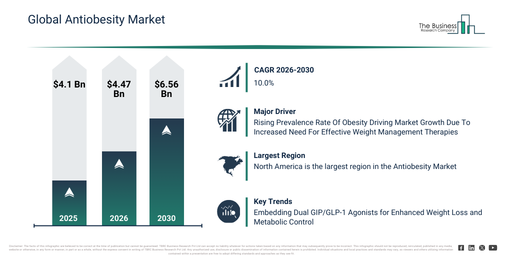
    The antiobesity market has seen substantial expansion in recent years. Its valuation is anticipated to climb from $4.1 billion in 2025 to $4.47 billion in 2026, reflecting a compound annual growth rate (CAGR) of 9.0%. This historic growth can be attributed to several factors including a rise in global obesity rates, the limited effectiveness of lifestyle-only interventions, the availability of appetite suppressants, an increasing burden of metabolic disorders, and physician-guided weight management efforts.

    The antiobesity market is projected to experience substantial expansion over the coming years. Its valuation is set to reach $6.56 billion by 2030, demonstrating a compound annual growth rate (CAGR) of 10.0%. Factors contributing to this growth during the projected period include the rising incidence of diabetes and obesity, advancements in hormone-based medications, broader reimbursement coverage, heightened awareness regarding obesity, and the demand for effective long-term weight loss methods. Key trends for the forecast duration encompass the swift uptake of GLP-1 based treatments, an increasing inclination towards prescribed weight loss medications, the growing application of combined antiobesity therapies, a heightened emphasis on sustained weight management, and improved access to obesity treatments.

    Get A Free Sample Report With In-Depth Market Insights:

    https://www.thebusinessresearchcompany.com/sample.aspx?id=3403&type=smp&utm_source=Blogs&utm_medium=Paid&utm_campaign=Oct_PR

    Antiobesity Market Growth Factors: What’s Supporting Expansion?

    The increasing incidence of obesity is expected to boost the expansion of the anti-obesity drugs market in the future. Obesity, a persistent metabolic condition marked by the excessive buildup of body fat, elevates the likelihood of severe health issues such as diabetes, cardiovascular ailments, osteoarthritis, and specific types of cancer. This growing prevalence of obesity stems from a higher intake of ultra-processed foods rich in sugars, unhealthy fats, and refined carbohydrates, coupled with inactive lifestyles that decrease physical exertion. The heightened incidence of obesity is driving demand for effective medical interventions for obesity, supportive weight management approaches, and sustained treatment options to lessen related health dangers and enhance patient results. For example, data from March 2024, provided by the World Obesity Federation, a UK-based body dedicated to obesity research and advocacy, indicates that by 2035, an estimated 79% of adults who are overweight or obese, and 88% of children who are overweight or obese, are anticipated to reside in low and middle income countries. Consequently, the escalating rate of obesity is fueling the expansion of the anti-obesity drugs market.

    Antiobesity Market Segment Analysis Spotlighting Growth Areas

    The antiobesity market covered in this report is segmented –

    1) By Drug Class: Peripherally Acting Anti-Obesity Drugs, Centrally Acting Anti-Obesity Drugs

    2) By Type: Prescription Drugs (Rx), OTC Drugs

    3) By Medication: Monotherapies, Polytherapies

    Subsegments:

    1) By Peripherally Acting Anti-Obesity Drugs: Orlistat, Lorcaserin

    2) By Centrally Acting Anti-Obesity Drugs: Phentermine, Topiramate, Naltrexone-Bupropion Combination, Liraglutide

    Antiobesity Market Industry Trends: What’s Reshaping Demand?

    Major companies within the antiobesity market are prioritizing product innovation and the development of new formulations, such as dual glucose-dependent insulinotropic peptide receptor agonists, with the goal of providing more significant weight loss, improved metabolic health, and better patient tolerability. These therapies harness synergistic actions on appetite suppression, insulin sensitivity, and energy expenditure to offer superior efficacy compared to earlier generation GLP-1-only treatments. For example, in December 2024, Eli Lilly, a US-based pharmaceutical company, obtained FDA approval for Zepbound (tirzepatide), making it the first and only prescription dual GIP/GLP-1 agonist sanctioned for chronic weight management. Tirzepatide has demonstrated robust weight-loss effectiveness, with participants in phase 3 trials achieving considerable reductions in body weight. With this new indication, Zepbound is expected to reinforce Lilly’s leadership in the precision obesity therapy domain, meeting the increasing demand for long-acting, highly effective treatments.

    Antiobesity Market Leading Companies: Who Holds The Strongest Market Presence?

    Major companies operating in the antiobesity market are Takeda Pharmaceutical Company Limited, Eisai Co. Ltd., Novo Nordisk A/S, Zafgen Inc., Rhythm Pharmaceuticals Inc., Zydus Cadila, Norgine B.V., Vivus Inc., Arena Pharmaceuticals Inc., Orexigen Therapeutics Inc., Eli Lilly and Company, Amgen Inc., AstraZeneca PLC, Viking Therapeutics Inc., Structure Therapeutics Inc., Gelesis Inc., Sanofi S.A., F. Hoffmann-La Roche Ltd, Teva Pharmaceutical Industries Limited, Sun Pharmaceutical Industries Ltd., Dr. Reddy’s Laboratories Ltd., Cipla Ltd., Lupin Ltd., Torrent Pharmaceuticals Ltd.

    View The Full Antiobesity Market Report:

    https://www.thebusinessresearchcompany.com/report/antiobesity-global-market-report?utm_source=Blogs&utm_medium=Paid&utm_campaign=Oct_PR

    Antiobesity Market Regional Split: Which Areas Are Fueling Growth?

    North America was the largest region in the anti-obesity market in 2025. Middle East is expected to be the fastest-growing region in the antiobesity market. The regions covered in the antiobesity market report are Asia-Pacific, South East Asia, Western Europe, Eastern Europe, North America, South America, Middle East, Africa.

    Reach Out To Our Team:

    The Business Research Company: https://www.thebusinessresearchcompany.com/

    Americas: +1 310-496-7795

    Asia: +44 7882 955267 & +91 8897263534

    Europe: +44 7882 955267

    Email us at: marketing@tbrc.info

    Follow us on:

    LinkedIn: https://in.linkedin.com/company/the-business-research-company

    YouTube: https://www.youtube.com/channel/UC24_fI0rV8cR5DxlCpgmyFQ

    Global Market Model: https://www.thebusinessresearchcompany.com/global-market-model

  • Anti-Neoplastic Agents Market Forecast 2026: Market Size, Competitive Landscape And Growth Drivers

    Anti-Neoplastic Agents Market Forecast 2026: Market Size, Competitive Landscape And Growth Drivers

    Built to provide research that’s more actionable and strategically valuable, The Business Research Company’s 2026 market reports include market attractiveness analysis, total addressable market sizing, company benchmarking matrices, interactive Excel dashboards, broader supply chain intelligence, emerging startup tracking, and in-depth product insights.

    Anti-Neoplastic Agents Market Forecast: Value Set To Climb From $156.07 Billion To $227.47 Billion

    The market size for anti-neoplastic agents has experienced significant growth in recent years. This market is expected to expand from $142.41 billion in 2025 to $156.08 billion in 2026, achieving a compound annual growth rate (CAGR) of 9.6%. Historically, this growth can be attributed to factors like limited treatment options, a high reliance on chemotherapy, the slow adoption of targeted therapies, manual manufacturing processes, and fragmented regulatory frameworks.

    The anti-neoplastic agents market is anticipated to show significant expansion in the coming years. It will grow to $227.48 billion in 2030 at a compound annual growth rate (CAGR) of 9.9%. The projected increase in the forecast period stems from the rise of precision medicine, an aging global population, increased financial backing for oncology research, the adoption of AI in drug discovery, and the expansion of oncology care centers worldwide. Noteworthy trends for this period involve personalized cancer therapies, advanced targeted drug delivery systems, the incorporation of immunotherapy, innovations in oral and injectable formulations, and the advancement of combination therapy approaches.

    Get A Free Sample Report With In-Depth Market Insights:

    https://www.thebusinessresearchcompany.com/sample.aspx?id=12901&type=smp&utm_source=Blogs&utm_medium=Paid&utm_campaign=Oct_PR

    Anti-Neoplastic Agents Market Demand Drivers: What’s Powering Industry Growth?

    The escalating prevalence of cancer is anticipated to drive the future growth of the antineoplastic agent market. Cancer refers to a collection of diseases that can emerge in virtually any organ or tissue within the body when abnormal cells multiply uncontrollably, breaching their normal limits to either invade adjacent body parts or spread to other organs. Antineoplastic agents are vital in cancer therapy, working to suppress the growth and division of cancer cells through various methods, including inflicting DNA (Deoxyribonucleic acid) damage, disrupting the cell cycle, and interfering with essential cellular pathways. For example, in July 2024, data from the Australian Institute of Health and Welfare, an Australia-based government agency, reported that in 2023, an estimated 165,000 Australians were newly diagnosed with cancer, translating to over 450 cases daily, with males comprising about 55% of these diagnoses. Thus, the rising count of cancer cases is a significant impetus for the antineoplastic agent market’s growth.

    Anti-Neoplastic Agents Market Segment Performance And Emerging Opportunities

    The anti-neoplastic agents market covered in this report is segmented –

    1) By Type: Alkylating Agents, Antimetabolites, Hormones And Antagonists, Miscellaneous

    2) By Disease Type: Gastrointestinal Cancer, Prostate Cancer, Lung Cancer, Breast Cancer, Other Disease Types

    3) By End User: Hospitals, Clinics

    Subsegments:

    1) By Alkylating Agents: Nitrogen Mustards, Alkyl Sulfonates, Nitrosoureas, Triazines

    2) By Antimetabolites: Purine Analogues, Pyrimidine Analogues, Folate Antagonists

    3) By Hormones and Antagonists: Estrogens and Antiestrogens, Androgens and Antiandrogens

    4) By Miscellaneous: Vinca Alkaloids, Taxanes, Antibiotic Antineoplastics, Targeted Therapy Agents

    Anti-Neoplastic Agents Market Innovation Trends: What Developments Are Reshaping The Industry?

    Major companies operating in the anti-neoplastic agents market are prioritizing the development of innovative solutions, such as selective estrogen receptor degraders, to more effectively target hormone receptor-driven cancers, improve patient outcomes, and expand treatment options. A selective estrogen receptor degrader (SERD) identifies a category of targeted cancer therapies that attach to estrogen receptors (ER) in cancer cells, impede their activity, and promote their breakdown, consequently inhibiting ER-driven tumor growth, especially in estrogen receptor-positive (ER+) breast cancers. For instance, in September 2025, Eli Lilly and Company, a US-based pharmaceutical company, obtained approval from the US FDA for Inluriyo (imlunestrant), for the management of adults with estrogen receptor-positive (ER+), HER2-negative (HER2–), ESR1-mutated advanced or metastatic breast cancer whose illness has progressed after at least one regimen of endocrine therapy. Inluriyo acts as an oral estrogen receptor antagonist that blocks and degrades estrogen receptors, including mutated ESR1 receptors responsible for driving cancer proliferation.

    Anti-Neoplastic Agents Market Key Players: Which Companies Lead Industry Competition?

    Major companies operating in the anti-neoplastic agents market are Pfizer Inc., F. Hoffmann-La Roche Ltd., Merck & Co. Inc., Bayer AG, Novartis AG, Bristol-Myers Squibb Company, AstraZeneca PLC, Fresenius SE & Co. KGaA, Takeda Pharmaceutical Company Limited, Boehringer Ingelheim International GmbH, Viatris Inc., Teva Pharmaceutical Industries Ltd., Eisai Co. Ltd., Sun Pharmaceutical Industries Limited, Ipsen SA, Cipla Limited, Dr. Reddy’s Laboratories Ltd., Intas Pharmaceuticals Limited, Hikma Pharmaceuticals PLC, Gland Pharma Limited, Zydus Lifesciences Limited, Glenmark Pharmaceuticals Ltd., Jubilant Life Sciences Ltd., Hutchison Medipharma Ltd., Natco Pharma Ltd., Accord Healthcare Limited, Qilu Pharmaceutical Co. Ltd.

    View The Full Anti-Neoplastic Agents Market Report:

    https://www.thebusinessresearchcompany.com/report/anti-neoplastic-agents-global-market-report?utm_source=Blogs&utm_medium=Paid&utm_campaign=Oct_PR

    Anti-Neoplastic Agents Market Top Region: Where Does Most Revenue Come From?

    North America was the largest region in the anti-neoplastic agents market in 2025. Asia-Pacific is expected to be the fastest-growing region in the forecast period. The regions covered in the anti-neoplastic agents market report are Asia-Pacific, South East Asia, Western Europe, Eastern Europe, North America, South America, Middle East, Africa.

    Reach Out To Our Team:

    The Business Research Company: https://www.thebusinessresearchcompany.com/

    Americas: +1 310-496-7795

    Asia: +44 7882 955267 & +91 8897263534

    Europe: +44 7882 955267

    Email us at: marketing@tbrc.info

    Follow us on:

    LinkedIn: https://in.linkedin.com/company/the-business-research-company

    YouTube: https://www.youtube.com/channel/UC24_fI0rV8cR5DxlCpgmyFQ

    Global Market Model: https://www.thebusinessresearchcompany.com/global-market-model
  • Antimetabolite Drug Market Size In 2026: Regional Growth, Key Segments And Future Outlook

    Antimetabolite Drug Market Size In 2026: Regional Growth, Key Segments And Future Outlook

    Backed by market attractiveness analysis, total addressable market sizing, company benchmarking matrices, interactive Excel dashboards, wider supply chain intelligence, emerging startup coverage, and detailed product-level insights, The Business Research Company’s 2026 market reports are designed to offer research that is more actionable and strategically valuable than ever.

    Antimetabolite Drug Market Revenue Growth On Track For A 4.5% CAGR Through 2030

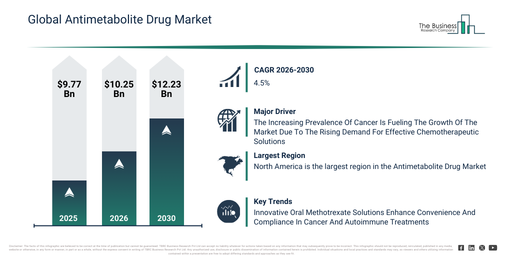
    The size of the antimetabolite drug market has demonstrated consistent growth over recent years. It will grow from $9.77 billion in 2025 to $10.25 billion in 2026 at a compound annual growth rate (CAGR) of 4.8%. Historically, this expansion has been driven by factors such as the implementation of cancer treatment protocols, increased adoption in hospital oncology departments, established chemotherapy standards, the availability of generic medications, and extensive research-driven applications.

    The antimetabolite drug market is projected to experience consistent expansion over the upcoming years. This market is anticipated to reach a valuation of $12.23 billion by 2030, exhibiting a compound annual growth rate (CAGR) of 4.5%. Key factors contributing to this anticipated growth include an expanding oncology pipeline, advancements in biosimilar development, wider availability of autoimmune disease treatments, an increase in outpatient chemotherapy, and the rise of precision oncology. Significant trends identified for the forecast period encompass their sustained application in oncology treatment, the broader adoption of combination chemotherapy regimens, an increase in generic antimetabolite drugs, growing demand in autoimmune disorders, and an emphasis on enhancing drug tolerability.

    Get A Free Sample Report With In-Depth Market Insights:

    https://www.thebusinessresearchcompany.com/sample.aspx?id=24466&type=smp&utm_source=Blogs&utm_medium=Paid&utm_campaign=Oct_PR

    Antimetabolite Drug Market Growth Drivers: What’s Behind The Acceleration?

    The expanding incidence of cancer is anticipated to fuel the expansion of the antimetabolite drug market in the future. Cancer is characterized by the swift, uncontrolled multiplication of atypical cells, which have the capacity to intrude upon and harm adjacent tissues and organs. The rise in cancer rates is primarily attributed to exposure to cancer-causing agents like tobacco smoke, which induce genetic alterations leading to unchecked cellular growth and tumor development. Antimetabolite drugs combat cancerous conditions by inhibiting the synthesis of DNA and RNA, thereby preventing the proliferation of cancer cells. These drugs emulate natural metabolites to interfere with essential metabolic processes, thereby effectively arresting tumor progression. As an illustration, in February 2024, the World Health Organization, a Switzerland-based intergovernmental organization, predicted that by 2050, more than 35 million new cancer cases would arise, signifying a 77% surge compared to the approximately 20 million cases in 2022. Consequently, the escalating occurrence of cancer is a key factor propelling the expansion of the antimetabolite drug market.

    Antimetabolite Drug Market Segment Landscape And Growth Outlook

    The antimetabolite drug market covered in this report is segmented –

    1) By Type: Purine Analogues, Pyrimidine Analogues, Folic Acid Analogs, Other Types

    2) By Route Of Administration: Oral, Intravenous, Subcutaneous

    3) By Distribution Channel: Hospital Pharmacy, Retail Pharmacy, Online Pharmacy

    4) By Application: Cancer, Autoimmune Disorders, Organ Transplantation

    5) By End-Use: Hospitals, Clinics

    Subsegments:

    1) By Purine Analogues: 6-Mercaptopurine (6-MP), Thioguanine (6-TG), Fludarabine, Cladribine, Pentostatin

    2) By Pyrimidine Analogues: 5-Fluorouracil (5-FU), Capecitabine, Cytarabine (Ara-C), Gemcitabine, Decitabine

    3) By Folic Acid Analogs: Methotrexate, Pemetrexed, Raltitrexed, Pralatrexate

    4) By Other Types: Hydroxyurea, Trifluridine Or Tipiracil, Nelarabine, Azacitidine

    Antimetabolite Drug Market Trends: What’s Defining The Industry’s Next Phase?

    Leading companies within the antimetabolite drug market are concentrating on creating advanced offerings, such as oral methotrexate solution, to provide more convenient and effective options for cancer treatment. This oral methotrexate solution is a liquid version of methotrexate, facilitating easier ingestion and precise dosage. It is utilized in managing cancers and autoimmune disorders by inhibiting cell growth and modulating the immune system. For example, in October 2024, Shorla Oncology, an Ireland-based pharmaceutical firm, announced the expansion of Jylamvo, which has been approved by the US Food and Drug Administration (FDA), a US-based government organization. This product is intended for children suffering from acute lymphoblastic leukemia and polyarticular juvenile idiopathic arthritis, standing as the sole liquid methotrexate that offers a palatable, easy-to-administer alternative for individuals who struggle with swallowing pills. Furthermore, it features an orange-flavored formula with a specific dosing syringe for accurate measurement, maintains stability at room temperature for up to 90 days after opening, thereby eliminating the need for refrigeration, and incorporates a user-friendly design that streamlines storage, preparation, and adherence for both patients and their caregivers.

    Antimetabolite Drug Market Competitive Landscape: Who Leads The Industry?

    Major companies operating in the antimetabolite drug market are Pfizer Inc., F. Hoffmann-La Roche Ltd., Teva Pharmaceutical Industries Ltd., Fresenius Kabi AG, Aurobindo Pharma Ltd., Lupin Pharmaceuticals Ltd., Natco Pharma Ltd., Shorla Oncology Ltd., Dr. Reddy’s Laboratories Ltd., Sun Pharmaceutical Industries Ltd., Cipla Ltd., Hikma Pharmaceuticals PLC, Accord Healthcare Ltd., Mylan N.V. (Viatris Inc.), Sandoz International GmbH, Zydus Lifesciences Ltd., Intas Pharmaceuticals Ltd., Alkem Laboratories Ltd., Apotex Inc., Amneal Pharmaceuticals LLC

    View The Full Antimetabolite Drug Market Report:

    https://www.thebusinessresearchcompany.com/report/antimetabolite-drug-global-market-report?utm_source=Blogs&utm_medium=Paid&utm_campaign=Oct_PR

    Antimetabolite Drug Market Regional Breakdown: Where Is Demand Concentrated?

    North America was the largest region in the antimetabolite drug market in 2025. The regions covered in the antimetabolite drug market report are Asia-Pacific, South East Asia, Western Europe, Eastern Europe, North America, South America, Middle East, Africa.

    Reach Out To Our Team:

    The Business Research Company: https://www.thebusinessresearchcompany.com/

    Americas: +1 310-496-7795

    Asia: +44 7882 955267 & +91 8897263534

    Europe: +44 7882 955267

    Email us at: marketing@tbrc.info

    Follow us on:

    LinkedIn: https://in.linkedin.com/company/the-business-research-company

    YouTube: https://www.youtube.com/channel/UC24_fI0rV8cR5DxlCpgmyFQ

    Global Market Model: https://www.thebusinessresearchcompany.com/global-market-model