Blog

  • Antidiarrheals Market Forecast To 2030: Starting From $4.6 Billion In 2026

    Antidiarrheals Market Forecast To 2030: Starting From $4.6 Billion In 2026

    Built to provide research that’s more actionable and strategically valuable, The Business Research Company’s 2026 market reports include market attractiveness analysis, total addressable market sizing, company benchmarking matrices, interactive Excel dashboards, broader supply chain intelligence, emerging startup tracking, and in-depth product insights.

    Antidiarrheals Market Forecast: What Value Will The Market Reach By 2030?

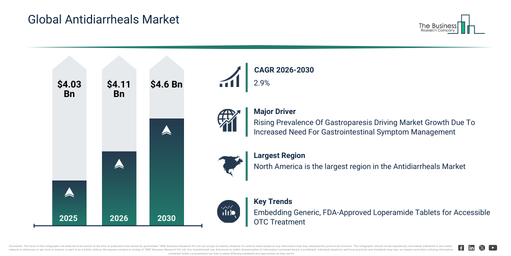
    The antidiarrheals market size has demonstrated consistent growth in recent years. It is projected to increase from $4.03 billion in 2025 to $4.11 billion in 2026, at a compound annual growth rate (CAGR) of 2.1%. The historical expansion can be linked to factors such as a high incidence of infectious diarrhea, broad over-the-counter drug availability, their use in both pediatric and adult care, the affordability of antidiarrheal drugs, and their inclusion in essential medicine lists.

    The antidiarrheals market is projected to experience consistent expansion over the upcoming years. It will grow to $4.6 billion in 2030 at a compound annual growth rate (CAGR) of 2.9%. This anticipated growth during the forecast period is fueled by several factors, including an increase in gastrointestinal disorders, the rise in self-medication practices, greater adoption of probiotics, the proliferation of retail pharmacies, and enhanced access to healthcare services. Key developments expected during this period involve a significant demand for over-the-counter digestive remedies, the increasing integration of probiotics in diarrhea therapy, a heightened emphasis on managing pediatric diarrhea, the broader availability of combination formulations, and improved access in emerging economies.

    Get A Free Sample Report With In-Depth Market Insights:

    https://www.thebusinessresearchcompany.com/sample.aspx?id=13067&type=smp&utm_source=Blogs&utm_medium=Paid&utm_campaign=Oct_PR

    Antidiarrheals Market Demand Drivers: What’s Powering Industry Growth?

    The rising occurrence of gastroparesis is projected to stimulate the expansion of the antidiarrheal market in the coming years. Gastroparesis is a medical ailment where food movement from the stomach to the small intestine is halted or slowed. The increase in gastroparesis cases is attributed to the growing incidence of diabetes, which damages the vagus nerve essential for stomach muscle contractions, leading to delayed gastric emptying. Antidiarrheal medication is utilized to manage gastroparesis and associated gas symptoms such as cramps, bloating, and pressure. As an illustration, in June 2024, the Cleveland Clinic Journal of Medicine, a US-based non-profit organization, reported the incidence to be around 6.3 per 100,000 person-years in the United States and 1.9 per 100,000 person-years in the United Kingdom. The prevalence rate of definite gastroparesis was 21.5 per 100,000 persons. Thus, the increasing prevalence of gastroparesis is driving the growth of the antidiarrheal market.

    Antidiarrheals Market Segment Analysis Spotlighting Growth Areas

    The antidiarrheals market covered in this report is segmented –

    1) By Drug Class: Mucosal Protectants, Motility Modifying Drugs

    2) By Application: Adults, Childrens

    3) By Type: OTC drugs, Prescription Drugs

    Subsegments:

    1) By Mucosal Protectants: Bismuth Subsalicylate, Kaolin And Pectin

    2) By Motility Modifying Drugs: Loperamide, Diphenoxylate, Racecadotril

    Antidiarrheals Market Innovation Trends: What Developments Are Reshaping The Industry?

    Key companies operating in the antidiarrheals market are prioritizing product innovation and new formulations, including bioequivalent generic versions of loperamide, to deliver affordable, over-the-counter alternatives for managing acute and chronic diarrhea without compromising their effectiveness or safety. These generic options contribute to wider treatment access and bolster market growth, particularly in healthcare systems focused on generics. For example, in November 2025, Marksans Pharma, an India-based generic pharmaceutical company, announced that its U.S. subsidiary Marksans Pharma Inc. received final approval from the U.S. FDA for Loperamide Hydrochloride Tablets USP, 2 mg, a generic equivalent of Imodium A-D. Loperamide is widely used to control symptoms of both acute and chronic diarrhea by slowing gastrointestinal motility. This launch reinforces a broader trend within the antidiarrheal space towards accessible, effective, and affordable generic therapies that address global demand for safe, self-care solutions.

    Antidiarrheals Market Leading Companies: Who Holds The Strongest Market Presence?

    Major companies operating in the antidiarrheals market are GlaxoSmithKline plc, Actelion Pharmaceuticals Ltd (a subsidiary of Johnson & Johnson), Perrigo Company plc, Lupin Limited, Glenmark Pharmaceuticals Limited, Merck & Co. Inc., Pfizer Inc., The Procter & Gamble Company, Sanofi-aventis U.S. LLC, Bayer AG, Johnson & Johnson, Novartis International AG, The Kroger Co., Harmon Stores Inc., Great Lakes Wholesale Marketing and Sales Inc., Geri-Care Pharmaceuticals Corp., Fred’s Inc., Dolgen Corporation, CVS Pharmacy Inc., American Sales Company, Cardinal Health Inc., Bedrock LLC, Greenbrier International Inc., Good Neighbor Pharmacy, Teva Pharmaceutical Industries Ltd., Sun Pharmaceutical Industries Ltd., Mylan N.V., Dr. Reddy’s Laboratories Ltd., Cadila Healthcare Ltd., Torrent Pharmaceuticals Ltd., Cipla Ltd., Aurobindo Pharma Ltd., Alkem Laboratories Ltd., Zydus Cadila Healthcare Ltd.

    View The Full Antidiarrheals Market Report:

    https://www.thebusinessresearchcompany.com/report/antidiarrheals-global-market-report?utm_source=Blogs&utm_medium=Paid&utm_campaign=Oct_PR

    Antidiarrheals Market Regional Outlook: Where Is Opportunity Concentrated?

    North America was the largest region in the antidiarrhoeals market in 2025. The regions covered in the antidiarrheals market report are Asia-Pacific, South East Asia, Western Europe, Eastern Europe, North America, South America, Middle East, Africa.

    Reach Out To Our Team:

    The Business Research Company: https://www.thebusinessresearchcompany.com/

    Americas: +1 310-496-7795

    Asia: +44 7882 955267 & +91 8897263534

    Europe: +44 7882 955267

    Email us at: marketing@tbrc.info

    Follow us on:

    LinkedIn: https://in.linkedin.com/company/the-business-research-company

    YouTube: https://www.youtube.com/channel/UC24_fI0rV8cR5DxlCpgmyFQ

    Global Market Model: https://www.thebusinessresearchcompany.com/global-market-model
  • Antidepressants Market Size In 2026 And Beyond: Understanding Future Growth Potential

    Antidepressants Market Size In 2026 And Beyond: Understanding Future Growth Potential

    Backed by market attractiveness analysis, total addressable market sizing, company benchmarking matrices, interactive Excel dashboards, wider supply chain intelligence, emerging startup coverage, and detailed product-level insights, The Business Research Company’s 2026 market reports are designed to offer research that is more actionable and strategically valuable than ever.

    Antidepressants Market Size Outlook: How Quickly Will Revenue Expand Through 2030?

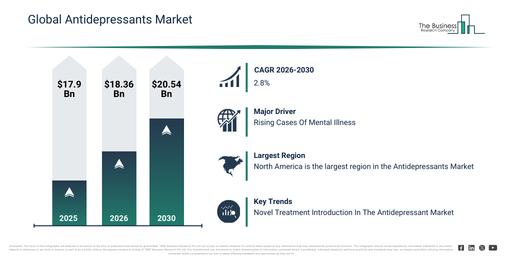
    The antidepressants market has shown consistent growth in recent years. It is anticipated to expand from $17.9 billion in 2025 to $18.36 billion in 2026, at a compound annual growth rate (CAGR) of 2.6%. This historical growth can be linked to factors such as the increasing prevalence of depression, greater awareness surrounding mental health, the introduction of SSRI drugs, the expansion of healthcare infrastructure, and increased research and development in psychopharmacology.

    The antidepressants market is projected to experience consistent expansion over the upcoming years. Its valuation is anticipated to reach $20.54 billion in 2030, demonstrating a compound annual growth rate (CAGR) of 2.8%. This projected increase during the forecast period is driven by several factors, including developments in precision medicine, the incorporation of AI into mental health diagnostics, the increasing uptake of digital therapeutics, the broadening of telemedicine services, and a surge in demand for antidepressants among pediatric and geriatric populations. Key developments expected during this period encompass tailored antidepressant therapies, the proliferation of telepsychiatry and remote mental health provisions, the use of mobile health applications for monitoring mood, heightened awareness regarding mental health conditions, and an uptick in treatment for depression in elderly and younger individuals.

    Get A Free Sample Report With In-Depth Market Insights:

    https://www.thebusinessresearchcompany.com/sample.aspx?id=2881&type=smp&utm_source=Blogs&utm_medium=Paid&utm_campaign=Oct_PR

    Antidepressants Market Growth Drivers: What’s Behind The Acceleration?

    The rising incidence of mental illness is anticipated to drive the demand for the antidepressants market moving forward. A mental illness is defined as a condition that influences an individual’s thinking, feeling, behavior, or beliefs, often stemming from distress or difficulties in social, work, or family interactions. Antidepressants are medications used to address various mental health concerns, including depression, anxiety, and mood disorders, by elevating the levels of specific brain chemicals responsible for regulating mood and emotions. For example, in October 2025, the Care Quality Commission (CQC), a UK-based independent regulator of health and adult social care in England, indicated that in 2024/25, there were an average of 453,930 new referrals to secondary mental health services each month, marking a 15% increase compared to 2022/23. Consequently, the increasing prevalence of mental illness will boost the antidepressants market.

    Antidepressants Market Segment Performance And Emerging Opportunities

    The antidepressants market covered in this report is segmented –

    1) By Product: Selective Serotonin Reuptake Inhibitor (SSRI), Serotonin-norepinephrine Reuptake Inhibitor (SNRI), Tricyclic Antidepressant (TCA), Monoamine Oxidase Inhibitor (MAOI)

    2) By Drug Class: Monoamine Oxidase Inhibitors, Serotonin Antagonist And Reuptake Inhibitors, Serotonin-Norepinephrine Reuptake Inhibitors, Selective Serotonin Reuptake Inhibitors, Tricyclic Antidepressants

    3) By Depressive Disorder: Major Depressive Disorder, Obsessive-Compulsive Disorder, Generalized Anxiety Disorder, Panic Disorder

    Subsegments:

    1) By Selective Serotonin Reuptake Inhibitor (SSRI): Fluoxetine, Sertraline, Escitalopram, Paroxetine, Citalopram

    2) By Serotonin-norepinephrine Reuptake Inhibitor (SNRI): Venlafaxine, Duloxetine, Desvenlafaxine

    3) By Tricyclic Antidepressant (TCA): Amitriptyline, Nortriptyline, Imipramine, Doxepin

    4) By Monoamine Oxidase Inhibitor (MAOI): Phenelzine, Tranylcypromine, Isocarboxazid

    Antidepressants Market Trends: What’s Defining The Industry’s Next Phase?

    Major companies in the antidepressant market are increasingly focusing on introducing new drugs, such as ZURZUVAE (zuranolone) for treating postpartum depression (PPD), to maximize their market revenue. Postpartum depression (PPD) is a type of depression that can arise after childbirth, representing a serious mental health condition that affects both new mothers and fathers. For instance, in August 2023, Biogen Inc, a US-based biotechnology company, and Sage Therapeutics, Inc., a US-based biopharmaceutical company, launched ZURZUVAE (zuranolone), a 50 mg oral treatment for postpartum depression (PPD) in women. This launch signifies a substantial advancement, addressing PPD, a condition often underdiagnosed and undertreated. ZURZUVAE (zuranolone) serves as an oral treatment primarily for postpartum depression (PPD) and holds the distinction of being the first and only FDA-approved medication specifically designed for this condition.

    Antidepressants Market Key Players: Which Companies Lead Industry Competition?

    Major companies operating in the antidepressants market are Pfizer Inc., Johnson & Johnson Services Inc., F. Hoffmann-La Roche Ltd., Merck & Co. Inc., AbbVie Inc., Novartis AG, Sanofi S.A., Bristol Myers Squibb Company, Abbott Laboratories, AstraZeneca plc, GlaxoSmithKline plc, Takeda Pharmaceutical Co. Ltd., Eli Lilly and Company, Boehringer Ingelheim GmbH, H. Lundbeck AS, Teva Pharmaceutical Industries Ltd., Otsuka Pharmaceutical Co., Mylan N.V, Sun Pharmaceuticals Pvt. Ltd., Servier Laboratories, Sumitomo Dainippon Pharma Co., Aurobindo Pharma Limited, Dr. Reddy’s Laboratories Ltd., Hikma Pharmaceuticals plc, Allergan plc, Alkermes plc, Egis Pharmaceuticals plc, Forest Laboratories Inc.

    View The Full Antidepressants Market Report:

    https://www.thebusinessresearchcompany.com/report/antidepressant-global-market-report?utm_source=Blogs&utm_medium=Paid&utm_campaign=Oct_PR

    Antidepressants Market Geographic Landscape: Which Region Leads Industry Growth?

    North America was the largest region in the antidepressants market in 2025. Middle East is expected to be the largest growing region in the global antidepressants market during the forecast period. The regions covered in the antidepressants market report are Asia-Pacific, South East Asia, Western Europe, Eastern Europe, North America, South America, Middle East, Africa.

    Reach Out To Our Team:

    The Business Research Company: https://www.thebusinessresearchcompany.com/

    Americas: +1 310-496-7795

    Asia: +44 7882 955267 & +91 8897263534

    Europe: +44 7882 955267

    Email us at: marketing@tbrc.info

    Follow us on:

    LinkedIn: https://in.linkedin.com/company/the-business-research-company

    YouTube: https://www.youtube.com/channel/UC24_fI0rV8cR5DxlCpgmyFQ

    Global Market Model: https://www.thebusinessresearchcompany.com/global-market-model
  • Anti-D Immunoglobulin Market Reaches $3.55 Billion In 2026: Key Developments Shaping Expansion

    Anti-D Immunoglobulin Market Reaches $3.55 Billion In 2026: Key Developments Shaping Expansion

    Featuring market attractiveness scoring, total addressable market sizing, company benchmarking matrices, interactive Excel dashboards, deeper supply chain intelligence, emerging startup tracking, and granular product-level insights, The Business Research Company’s 2026 market reports are built to deliver research that is both more actionable and more strategically valuable.

    Anti-D Immunoglobulin Market Size, Value And Growth Trajectory Through 2030

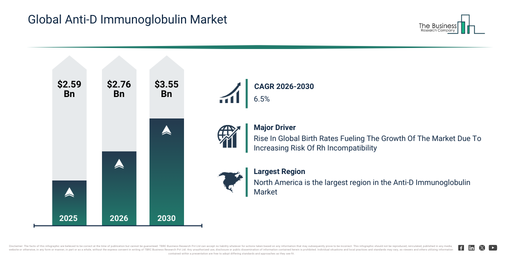
    The anti-d immunoglobulin market has shown substantial expansion in recent years. Its valuation is anticipated to rise from $2.59 billion in 2025 to $2.76 billion in 2026, achieving a compound annual growth rate (CAGR) of 6.6%. Over the historical period, this growth can be ascribed to a number of factors including limited plasma donor pools, reliance on manual antibody extraction processes, increasing awareness of hemolytic disease, expanding usage in hospitals and clinical settings, and the adoption of intramuscular administration.

    The anti-d immunoglobulin market is projected to show significant expansion in the upcoming years. It is forecast to reach $3.55 billion by 2030, exhibiting a compound annual growth rate (CAGR) of 6.5%. This anticipated growth during the forecast period can be attributed to the development of intravenous formulations, the wider adoption of automated plasma fractionation technologies, a rise in antenatal screening programs, the increasing global blood bank infrastructure, and the expansion of personalized immunoglobulin therapies. Prominent trends for this period include a growing demand for anti-d immunoglobulin in the management of hemolytic disease, an increased preference for pre-filled syringes and single-use vials, the broadening of antenatal and postnatal prophylaxis programs, the growth of distribution channels based in hospitals and blood banks, and an enhanced focus on ensuring safety, purity, and regulatory compliance.

    Get A Free Sample Report With In-Depth Market Insights:

    https://www.thebusinessresearchcompany.com/sample.aspx?id=25694&type=smp&utm_source=Blogs&utm_medium=Paid&utm_campaign=Oct_PR

    Anti-D Immunoglobulin Market Growth Factors Behind Sustained Expansion

    The anti-D immunoglobulin market is projected to expand driven by increasing birth rates. These rates, defined as annual live births per 1,000 individuals, are rising partly due to limited access to education and family planning, leading to higher fertility and larger family sizes. Anti-D immunoglobulin plays a crucial role by mitigating Rh incompatibility during pregnancy, thereby lowering the risk of hemolytic disease in newborns and fostering healthier subsequent pregnancies. For example, data from the US-based Centers for Disease Control and Prevention indicated 3,622,673 births in 2024, a 1% rise from the previous year, highlighting this trend. Consequently, elevated birth rates are a key factor boosting the anti-D immunoglobulin market.

    Anti-D Immunoglobulin Market Driver: Expansion Of Healthcare Infrastructure Fueling The Growth Of The Market Due To Improved Access To Maternal Care Services

    The anti-D immunoglobulin market is set to grow as healthcare infrastructure continues to expand. This infrastructure, encompassing facilities, equipment, personnel, and support systems for medical services, is developing in response to increasing global populations, which in turn elevates the demand for healthcare and necessitates more hospitals, clinics, and related resources. Such expansion improves access to maternal care, facilitating superior screening and prompt administration of anti-D immunoglobulin to avert hemolytic disease in newborns. For instance, in May 2023, the UK’s Department of Health and Social Care declared plans to invest over $27 billion (£20 billion) in new hospital construction, with two hospitals already finished, five underway, and over 20 projected to be in progress or completed by the end of 2023 under the New Hospital Programme. This expansion of healthcare infrastructure is thus a key driver for the anti-D immunoglobulin market.

    Anti-D Immunoglobulin Market Segment Landscape And Growth Outlook

    The anti-d immunoglobulin market covered in this report is segmented –

    1) By Product Type: Intramuscular Anti-D Immunoglobulin, Intravenous Anti-D Immunoglobulin

    2) By Distribution Channel: Hospital Pharmacies, Retail Pharmacies, Online Pharmacies, Other Distribution Channel

    3) By Application: Hemolytic Disease Of The Newborn, Immune Thrombocytopenic Purpura, Antenatal And Postnatal Prophylaxis, Other Applications

    4) By End-User: Hospitals, Clinics, Blood Banks, Research Laboratories

    Subsegments:

    1) By Intramuscular Anti-D Immunoglobulin: Standard Dose, High Dose, Pre-Filled Syringes, Vials

    2) By Intravenous Anti-D Immunoglobulin: Lyophilized Powder, Liquid Formulation, Single-Use Vials, Multi-Dose Vials

    Anti-D Immunoglobulin Market Competitive Landscape: Who Leads The Industry?

    Major companies operating in the anti-d immunoglobulin market are CSL Behring, Octapharma AG, Kedrion Biopharma Inc., Biotest AG, Sanquin, Bharat Serums and Vaccines Limited, Intas Pharmaceuticals Ltd., Zydus Lifesciences Limited, Emergent BioSolutions Inc., Kamada Pharmaceuticals, Saol Therapeutics Inc., Avin Darou, Sichuan Yuanda Shuyang Pharmaceutical Co. Ltd., Taj Pharmaceuticals Limited, Aetos Pharma Private Limited, PV Pharma Healthcare Pvt. Ltd., Grifols S.A., Takeda Pharmaceutical Company Limited, LFB Biomedicaments, China Biologic Products Holdings Inc., Shanghai RAAS Blood Products Co. Ltd., Hualan Biological Engineering Inc., CBPO (Shandong Taibang Biological Products Co. Ltd.), Bio Products Laboratory (BPL), Instituto Grifols S.A., HemaCare Corporation, KM Biologics Co. Ltd., National Bioproducts Institute (NBI), GC Pharma (Green Cross Corporation), SK Plasma Co. Ltd.

    View The Full Anti-D Immunoglobulin Market Report:

    https://www.thebusinessresearchcompany.com/report/anti-d-immunoglobulin-global-market-report?utm_source=Blogs&utm_medium=Paid&utm_campaign=Oct_PR

    Anti-D Immunoglobulin Market Largest Region: Which Geography Holds The Biggest Share?

    North America was the largest region in the anti-D immunoglobulin market in 2025. Asia-Pacific is expected to be the fastest-growing region in the forecast period. The regions covered in the anti-d immunoglobulin market report are Asia-Pacific, South East Asia, Western Europe, Eastern Europe, North America, South America, Middle East, Africa.

    Reach Out To Our Team:

    The Business Research Company: https://www.thebusinessresearchcompany.com/

    Americas: +1 310-496-7795

    Asia: +44 7882 955267 & +91 8897263534

    Europe: +44 7882 955267

    Email us at: marketing@tbrc.info

    Follow us on:

    LinkedIn: https://in.linkedin.com/company/the-business-research-company

    YouTube: https://www.youtube.com/channel/UC24_fI0rV8cR5DxlCpgmyFQ

    Global Market Model: https://www.thebusinessresearchcompany.com/global-market-model
  • Anticonvulsants Market Growth Outlook For 2026: Drivers, Trends And Future Opportunities

    Anticonvulsants Market Growth Outlook For 2026: Drivers, Trends And Future Opportunities

    Built to provide research that’s more actionable and strategically valuable, The Business Research Company’s 2026 market reports include market attractiveness analysis, total addressable market sizing, company benchmarking matrices, interactive Excel dashboards, broader supply chain intelligence, emerging startup tracking, and in-depth product insights.

    Anticonvulsants Market CAGR Outlook And Future Development

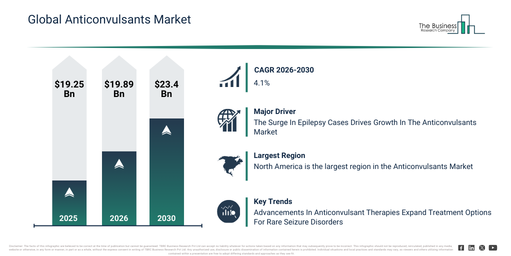
    The anticonvulsants market size has experienced steady expansion in recent years. It is anticipated to increase from $19.25 billion in 2025 to $19.89 billion in 2026, achieving a compound annual growth rate (CAGR) of 3.3%. The market’s growth during the historical period is primarily due to the rising prevalence of epilepsy, increased public awareness concerning nerve pain, the restricted availability of generic anticonvulsants, ongoing advancements in neuropharmacology, and governmental healthcare initiatives.

    The anticonvulsants market is projected to experience consistent expansion over the upcoming years, reaching a valuation of $23.4 billion by 2030, demonstrating a compound annual growth rate (CAGR) of 4.1%. This anticipated expansion is propelled by factors such as the rising uptake of precision medicine, an expanding geriatric demographic, wider availability of outpatient care facilities, increased research and development into combination therapies, and the incorporation of digital health solutions in epilepsy management. Key developments expected within this period encompass individualized anticonvulsant treatment approaches, the creation of innovative drug delivery methods, an increase in the elderly population affected by epilepsy, the broadening of outpatient neurology provisions, and the escalating application of combination therapies.

    Get A Free Sample Report With In-Depth Market Insights:

    https://www.thebusinessresearchcompany.com/sample.aspx?id=10682&type=smp&utm_source=Blogs&utm_medium=Paid&utm_campaign=Oct_PR

    Anticonvulsants Market Demand Drivers Opening New Revenue Streams

    The increasing prevalence of epilepsy is anticipated to drive the expansion of the anticonvulsants market. Epilepsy is a widespread brain disorder frequently leading to seizures, presenting as a chronic, non-communicable condition impacting individuals across all age groups. Anticonvulsants are medications utilized to manage seizures in people with epilepsy. These drugs work by blocking the unusual electrical activity in the brain that triggers seizures, thus controlling the symptoms of epilepsy, although they do not provide a cure for the disease. As an illustration, in February 2023, the World Health Organization, a Switzerland-based United Nations agency dedicated to public health, reported that an estimated 5 million people globally are diagnosed with epilepsy each year. High-income countries record roughly 49 diagnoses per 0.1 million people annually, while low- and middle-income countries experience a significantly higher rate of 139 per 0.1 million. Therefore, the growing incidence of epilepsy is a primary catalyst for the growth of the anticonvulsants market.

    Anticonvulsants Market Breakdown By Product Type And Application

    The anticonvulsants market covered in this report is segmented –

    1) By Type: Pyrimidinediones, Benzodiazepines, Fructose Derivatives, Aromatic Allylic Alcohols, Valproylamides, Carboxamides, Bromides, Other Types

    2) By Drug Generation: First Generation, Second Generation, Third Generation

    3) By Dosage: Capsule, Tablet, Cream, Liquid, Rectal Gel, Other Dosages

    4) By Application: Migraine, Epilepsy, Neuropathic Pain, Anxiety, Fibromyalgia, Bipolar Disorder, Borderline Personality Disorder

    5) By End-User: Hospitals, Clinics, Other End-Users

    Subsegments:

    1) By Pyrimidinediones: Stiripentol

    2) By Benzodiazepines: Clonazepam, Diazepam, Lorazepam

    3) By Fructose Derivatives: S-licarbazepine, Other Fructose Derivatives

    4) By Aromatic Allylic Alcohols: Felbamate, Other Aromatic Allylic Alcohols

    5) By Valproylamides: Valproic Acid, Divalproex Sodium

    6) By Carboxamides: Lamotrigine, Other Carboxamides

    7) By Bromides: Potassium Bromide, Sodium Bromide

    8) By Other Types: Topiramate, Zonisamide, Ethosuximide

    Anticonvulsants Market Trends Powering Strategic Industry Growth

    Companies active in the anticonvulsants market are concentrating on developing innovative drug solutions and obtaining regulatory approvals to address unfulfilled requirements in seizure management, thereby solidifying their competitive position. Novel anticonvulsant therapies seek to improve treatment effectiveness for patients experiencing seizures associated with rare and severe syndromes. For example, in March 2024, the Medicines and Healthcare products Regulatory Agency (MHRA), the UK-based national regulatory authority, granted approval for ganaxolone (Ztalmy) as the initial anti-seizure medication for treating seizures connected to cyclin-dependent kinase-like 5 (CDKL5) deficiency disorder. Ganaxolone, a neuroactive steroid, presents an innovative therapeutic choice for this challenging epileptic encephalopathy, targeting difficult-to-control seizures and fulfilling a vital unmet need for affected patients.

    Anticonvulsants Market Company Landscape And Competitive Strategy

    Major companies operating in the anticonvulsants market are Eisai Co Ltd., GlaxoSmithKline plc, Pfizer Inc., Johnson & Johnson Services Inc., Novartis AG, Jazz Pharmaceuticals Inc., UCB SA, Teva Pharmaceutical Industries Ltd., Sunovion Pharmaceuticals Inc., Sanofi SA, Zydus Lifesciences Ltd., Lupin Limited, Ratiopharm Group, AbbVie Inc., Sun Pharmaceutical Industries Ltd., Cipla Limited, Mylan N.V., Aurobindo Pharma Limited, Dr. Reddy’s Laboratories Ltd., Torrent Pharmaceuticals Ltd., Hikma Pharmaceuticals plc, Glenmark Pharmaceuticals Limited, Laurus Labs Limited, Recordati S.p.A., Neurocrine Biosciences Inc.

    View The Full Anticonvulsants Market Report:

    https://www.thebusinessresearchcompany.com/report/anticonvulsants-global-market-report?utm_source=Blogs&utm_medium=Paid&utm_campaign=Oct_PR

    Anticonvulsants Market Regional Analysis: Which Geography Leads On Revenue?

    North America was the largest region in the anticonvulsants market in 2025. Asia-Pacific is expected to be the fastest-growing region in the global anticonvulsants market report during the forecast period. The regions covered in the anticonvulsants market report are Asia-Pacific, South East Asia, Western Europe, Eastern Europe, North America, South America, Middle East, Africa.

    Reach Out To Our Team:

    The Business Research Company: https://www.thebusinessresearchcompany.com/

    Americas: +1 310-496-7795

    Asia: +44 7882 955267 & +91 8897263534

    Europe: +44 7882 955267

    Email us at: marketing@tbrc.info

    Follow us on:

    LinkedIn: https://in.linkedin.com/company/the-business-research-company

    YouTube: https://www.youtube.com/channel/UC24_fI0rV8cR5DxlCpgmyFQ

    Global Market Model: https://www.thebusinessresearchcompany.com/global-market-model
  • Anticoccidial Drugs Market Size Forecast From 2026 To 2030: Key Industry Trends

    Anticoccidial Drugs Market Size Forecast From 2026 To 2030: Key Industry Trends

    Backed by market attractiveness analysis, total addressable market sizing, company benchmarking matrices, interactive Excel dashboards, wider supply chain intelligence, emerging startup coverage, and detailed product-level insights, The Business Research Company’s 2026 market reports are designed to offer research that is more actionable and strategically valuable than ever.

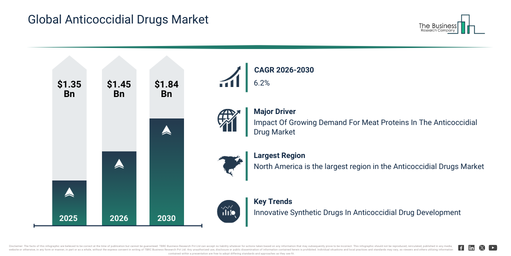
    Anticoccidial Drugs Market Set To Climb From $1.44 Billion In 2026 To $1.84 Billion By 2030

    The market for anticoccidial drugs has experienced robust expansion in recent years. It is forecast to grow from $1.35 billion in 2025 to $1.45 billion in 2026, exhibiting a compound annual growth rate (CAGR) of 6.9%. The historical growth of this market stemmed from the significant prevalence of coccidiosis in poultry, a restricted range of effective drug classes, an increasing demand for livestock products, adherence to traditional farming practices, and a rising recognition of animal health management.

    The anticoccidial drugs market is projected to experience substantial expansion in the coming years, reaching a valuation of $1.84 billion by 2030, demonstrating a compound annual growth rate (CAGR) of 6.2%. This anticipated growth is driven by factors such as advancements in drug delivery systems, the increasing prevalence of intensive poultry farming, the broadening of veterinary services in developing areas, enhanced governmental backing for animal health initiatives, and a rise in worldwide meat and poultry consumption. Key trends identified for this period encompass the creation of new anticoccidial drug formulations, a heightened emphasis on managing poultry health, a growing preference for combination therapies, the enlargement of veterinary pharmaceutical distribution channels, and stricter regulatory adherence for veterinary medications.

    Get A Free Sample Report With In-Depth Market Insights:

    https://www.thebusinessresearchcompany.com/sample.aspx?id=15723&type=smp&utm_source=Blogs&utm_medium=Paid&utm_campaign=Oct_PR

    Anticoccidial Drugs Market Growth Backed By Core Demand Fundamentals

    The anticoccidial drug market is anticipated to expand, driven by the increasing need for meat proteins. These proteins, naturally found in animal tissue, consist of various amino acids vital for numerous physiological processes. Factors contributing to this rising demand include a growing global population, higher discretionary income, urban expansion, and evolving dietary habits favoring protein-dense foods. In contemporary livestock farming, anticoccidial medications are vital for preserving animal well-being and productivity, allowing producers to fulfill the increasing requirement for meat proteins effectively and responsibly. For example, as reported by the Australia-based non-profit organization Meat And Livestock Australia Limited in October 2025, Australia saw its red meat and livestock exports grow by 3.2% year-on-year in 2024, achieving a total value of $19.5 billion. Consequently, the expanding consumption of meat proteins is fueling the development of the anticoccidial drug market.

    Anticoccidial Drugs Market Segment Analysis And Revenue Potential

    The anticoccidial drugs market covered in this report is segmented –

    1) By Drug Class: Ionophore, Antibiotic, Sulphonamides, Chemical Derivative, Other Drug Classes

    2) By Drug Action: Coccidiostatic, Coccidiocidal

    3) By Application: Poultry, Swine, Fish, Cattle, Companion Animals

    4) By Distribution Channel: Veterinary Hospitals, Retail Pharmacy, Other Distribution Channels

    Subsegments:

    1) By Ionophore: Monensin, Lasalocid, Salinomycin

    2) By Antibiotic: Tylosin, Lincomycin, Bacitracin

    3) By Sulphonamides: Sulfadimethoxine, Sulfaquinoxaline

    4) By Chemical Derivative: Diclazuril, Clopidol

    5) By Other Drug Classes: Amprolium, Robenidine

    Anticoccidial Drugs Market Growth Trends Reshaping The Competitive Landscape

    Major companies operating in the anticoccidial drugs market are focusing on developing innovative solutions, such as synthetic coccidiostat, to improve efficacy, minimize the development of resistance, and address evolving challenges in poultry and livestock management. A synthetic coccidiostat is a chemically engineered compound utilized to prevent or control coccidiosis by inhibiting the growth and reproduction of coccidia parasites in animals. For instance, in March 2023, Zoetis, a US-based animal health company, launched Avi-Deccox, a reformulated synthetic coccidiostat designed for coccidiosis control in broiler chickens. This product specifically targets the pathogens Eimeria acervulina and Eimeria tenella, which are responsible for significant economic losses in poultry farming. This product features decoquinate as its active ingredient, similar to its predecessor, Deccox. Avi-Deccox addresses the growing issue of resistance linked to the frequent use of ionophores in poultry farming by employing a different mode of action, providing a more effective short-term knock-down effect.

    Anticoccidial Drugs Market Key Players Shaping Industry Direction

    Major companies operating in the anticoccidial drugs market are Zoetis Inc., Elanco Animal Health Incorporated, Huvepharma AD, Phibro Animal Health Corporation, Ceva Santé Animale S.A., Boehringer Ingelheim International GmbH, Merck & Co. Inc, Bayer AG, Virbac S.A., Vetoquinol SA, Intas Pharmaceuticals Ltd, Alpharma BVBA, Kepro B.V., Kemin Industries Inc., Tianjin Ringpu Bio-Technology Co. Ltd., Hester Biosciences Limited, Biovet S.A., HIPRA, Impextraco NV, Lallemand Animal Nutrition

    View The Full Anticoccidial Drugs Market Report:

    https://www.thebusinessresearchcompany.com/report/anticoccidial-drugs-global-market-report?utm_source=Blogs&utm_medium=Paid&utm_campaign=Oct_PR

    Anticoccidial Drugs Market Geographic Spread And Regional Opportunities

    North America was the largest region in the anticoccidial drugs market in 2025. Asia-Pacific is expected to be the fastest-growing region in the forecast period. The regions covered in the anticoccidial drugs market report are Asia-Pacific, South East Asia, Western Europe, Eastern Europe, North America, South America, Middle East, Africa.

    Reach Out To Our Team:

    The Business Research Company: https://www.thebusinessresearchcompany.com/

    Americas: +1 310-496-7795

    Asia: +44 7882 955267 & +91 8897263534

    Europe: +44 7882 955267

    Email us at: marketing@tbrc.info

    Follow us on:

    LinkedIn: https://in.linkedin.com/company/the-business-research-company

    YouTube: https://www.youtube.com/channel/UC24_fI0rV8cR5DxlCpgmyFQ

    Global Market Model: https://www.thebusinessresearchcompany.com/global-market-model
  • Anticoagulants Market 2026: Market Size, Growth Drivers And Emerging Opportunities

    Anticoagulants Market 2026: Market Size, Growth Drivers And Emerging Opportunities

    Featuring market attractiveness scoring, total addressable market sizing, company benchmarking matrices, interactive Excel dashboards, deeper supply chain intelligence, emerging startup tracking, and granular product-level insights, The Business Research Company’s 2026 market reports are built to deliver research that is both more actionable and more strategically valuable.

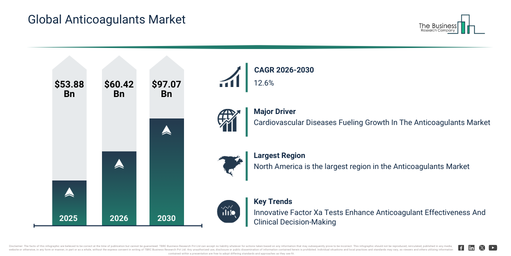
    Anticoagulants Market Forecast: Value Set To Climb From $60.41 Billion To $97.06 Billion

    The anticoagulants market size has seen rapid growth in recent years. This market is expected to expand from $53.88 billion in 2025 to $60.42 billion in 2026, achieving a compound annual growth rate (CAGR) of 12.1%. The increase observed in previous periods is attributable to factors such as the high prevalence of cardiovascular diseases, the rising incidence of venous thromboembolism, the long-standing use of warfarin, the expansion of hospital-based treatments, and increasing awareness regarding stroke prevention.

    The anticoagulants market is projected for substantial expansion over the coming years. Its value is forecast to climb to $97.07 billion by 2030, demonstrating a compound annual growth rate (CAGR) of 12.6%. Key drivers contributing to this expansion throughout the forecast period include an expanding atrial fibrillation patient base, the wider application of factor Xa inhibitors, better safety profiles for NOACs, an increase in outpatient anticoagulation care, and greater market penetration in developing regions. Prominent trends expected over the forecast horizon encompass the increasing embrace of direct oral anticoagulants, a move away from injectable to oral treatment methods, more prevalent long-term anticoagulation therapy, greater attention to patient compliance and safety, and wider integration into preventive cardiovascular care.

    Get A Free Sample Report With In-Depth Market Insights:

    https://www.thebusinessresearchcompany.com/sample.aspx?id=5230&type=smp&utm_source=Blogs&utm_medium=Paid&utm_campaign=Oct_PR

    Anticoagulants Market Growth Catalysts And Demand Drivers

    Rising instances of cardiovascular diseases (CVDs) are significantly propelling the expansion of the anticoagulants market over the coming years. CVDs, which are a category of heart and blood vessel problems, represent the primary source of death worldwide, with low- and middle-income nations accounting for three-quarters of CVD deaths. Anticoagulation pharmacotherapy, specifically direct oral anticoagulants, is utilized to minimize thrombosis in a variety of cardiovascular situations. For instance, in September 2025, the British Heart Foundation, a UK-based charity, reported that across the UK, more than 7.6 million people, comprising over 4 million men and more than 3.6 million women, are living with cardiovascular disease. Driven by an aging population and improved survival rates, projections indicate that the number of affected individuals may rise by around 1 million by 2030 and by approximately 2 million by 2040. Therefore, the increasing number of cardiovascular diseases fuels the growth of the anticoagulants market.

    Anticoagulants Market Segmentation And Category Overview

    The anticoagulants market covered in this report is segmented –

    1) By Drug Class: Factor Xa Inhibitor, Heparin And LMWH, Vitamin K Antagonist, Other Drug Classes

    2) By Route Of Administration: Oral Anticoagulant, Injectable Anticoagulant

    3) By Distribution Channel: Hospital Pharmacy, Retail Pharmacy, Online Pharmacy

    4) By Application: Venous Thromboembolism, Atrial Fibrillation Or Flutter, Coronary Artery Disease, Other Applications

    5) By End User: Hospitals, Homecare, Specialty Centers, Other End-Users

    Subsegments:

    1) By Factor Xa Inhibitor: Rivaroxaban, Apixaban, Edoxaban, Betrixaban

    2) By Heparin And LMWH (Low Molecular Weight Heparin): Unfractionated Heparin, Enoxaparin, Dalteparin, Tinzaparin

    3) By Vitamin K Antagonist: Warfarin, Acenocoumarol, Phenprocoumon

    4) By Other Drug Classes: Direct Thrombin Inhibitors, Novel Oral Anticoagulants (NOACs)

    Anticoagulants Market Trends Shaping Long-Term Demand

    Leading companies in the anticoagulants market are concentrating on developing advanced solutions, including factor Xa inhibitor tests, to meet the increasing demand for diagnostics. This demand arises from the expanded use of direct oral anticoagulants for preventing strokes and addressing other serious cardiovascular conditions. Factor Xa Inhibitor Tests are assessments specifically designed to evaluate the effectiveness and safety of anticoagulant medications that selectively inhibit factor Xa, thereby hindering blood clot formation across various medical situations. For instance, in February 2024, F. Hoffmann-La Roche Ltd., a Switzerland-based biotechnology company, launched its apixaban, edoxaban, and rivaroxaban coagulation tests. These newly introduced coagulation tests for Factor Xa inhibitors utilize Roche’s innovative reagent cassette concept, guaranteeing high-quality results and efficient sample processing while also providing standardization and automation to enhance laboratory workflows. These tests are crucial as they aid clinical decision-making for patients using direct oral anticoagulants for stroke prevention, thereby addressing the rising global need for effective diagnostics in managing serious conditions like coronary artery disease and peripheral arterial disease.

    Anticoagulants Market Competitive Analysis Of Leading Industry Participants

    Major companies operating in the anticoagulants market are GlaxoSmithKline plc, Leo Pharma A/S, Amphastar Pharmaceuticals Inc., Bayer AG, Boehringer Ingelheim International GmbH, Daiichi Sankyo Company Limited, Eisai Co. Ltd., Mylan N.V., Pfizer Inc., Sanofi S.A., Apotex Inc., Aspen Pharmacare Holdings Limited, AstraZeneca plc, Bristol-Myers Squibb Company, Dr. Reddy’s Laboratories Ltd., Fresenius Kabi AG, Hikma Pharmaceuticals plc, Johnson & Johnson, Lupin Limited, Mitsubishi Tanabe Pharma Corporation, Natco Pharma Limited, Novartis International AG, Portola Pharmaceuticals Inc., Strides Pharma Science Limited, Sun Pharmaceutical Industries Limited, Teva Pharmaceutical Industries Limited, Torrent Pharmaceuticals Limited, and Zydus Cadila Healthcare Limited.

    View The Full Anticoagulants Market Report:

    https://www.thebusinessresearchcompany.com/report/anticoagulant-global-market-report?utm_source=Blogs&utm_medium=Paid&utm_campaign=Oct_PR

    Anticoagulants Market Top Region By Revenue And Market Share

    North America was the largest region in the anticoagulants market in 2025. The regions covered in the anticoagulants market report are Asia-Pacific, South East Asia, Western Europe, Eastern Europe, North America, South America, Middle East, Africa.

    Reach Out To Our Team:

    The Business Research Company: https://www.thebusinessresearchcompany.com/

    Americas: +1 310-496-7795

    Asia: +44 7882 955267 & +91 8897263534

    Europe: +44 7882 955267

    Email us at: marketing@tbrc.info

    Follow us on:

    LinkedIn: https://in.linkedin.com/company/the-business-research-company

    YouTube: https://www.youtube.com/channel/UC24_fI0rV8cR5DxlCpgmyFQ

    Global Market Model: https://www.thebusinessresearchcompany.com/global-market-model
  • Anticoagulant Reversal Drugs Market Set To Expand From $2.65 Billion In 2026: Growth Outlook Through 2030

    Anticoagulant Reversal Drugs Market Set To Expand From $2.65 Billion In 2026: Growth Outlook Through 2030

    Built to provide research that’s more actionable and strategically valuable, The Business Research Company’s 2026 market reports include market attractiveness analysis, total addressable market sizing, company benchmarking matrices, interactive Excel dashboards, broader supply chain intelligence, emerging startup tracking, and in-depth product insights.

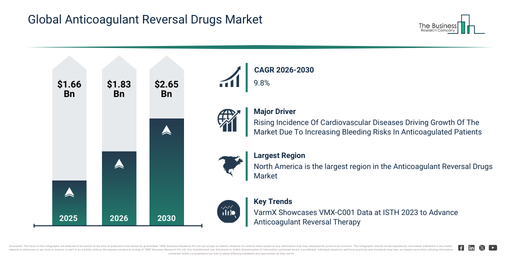
    Anticoagulant Reversal Drugs Market Revenue Growth On Track For A 9.8% CAGR Through 2030

    The market size for anticoagulant reversal drugs has experienced robust expansion over recent years. Projections indicate it will increase from $1.66 billion in 2025 to $1.83 billion in 2026, demonstrating a compound annual growth rate (CAGR) of 9.9%. This historical growth has been driven by factors such as the greater adoption of anticoagulant medications, a rise in bleeding emergencies, the clinical authorization of reversal agents, the expansion of emergency medical facilities, and an increase in surgical interventions.

    The anticoagulant reversal drugs market is projected to experience substantial expansion in the coming years. It is forecast to reach $2.65 billion in 2030, exhibiting a compound annual growth rate (CAGR) of 9.8%. This anticipated growth during the forecast period is primarily driven by factors such as the increasing utilization of direct oral anticoagulants, a growing elderly demographic, the expansion of trauma care infrastructure, the rising need for swift-acting reversal medications, and enhancements in emergency response systems. Key trends expected during this period involve the increasing application of emergency reversal therapies, greater acceptance of DOAC reversal agents, escalating requirements within critical care environments, the development of more extensive hospital emergency protocols, and an amplified emphasis on achieving rapid hemostasis.

    Get A Free Sample Report With In-Depth Market Insights:

    https://www.thebusinessresearchcompany.com/sample.aspx?id=23308&type=smp&utm_source=Blogs&utm_medium=Paid&utm_campaign=Oct_PR

    Anticoagulant Reversal Drugs Market Opportunity Drivers: What’s Unlocking New Revenue Potential?

    The increasing occurrence of cardiovascular diseases is anticipated to propel the growth of the anticoagulant reversal drugs market going forward. These conditions, known as CVDs, represent a range of disorders affecting the heart and blood vessels, including examples such as coronary artery disease, stroke, and heart failure. The rise in cardiovascular diseases is primarily attributable to unhealthy lifestyles, as factors like increased consumption of processed foods, physical inactivity, and high stress levels contribute to obesity, hypertension, and diabetes. Anticoagulant reversal drugs are essential in cardiovascular disease management to counteract the dangers of excessive bleeding, given that patients on blood thinners for conditions such as atrial fibrillation or deep vein thrombosis may experience life-threatening hemorrhages requiring rapid reversal to restore normal blood clotting. For instance, in December 2024, data from the Office for Health Improvement and Disparities, a UK-based government department, revealed that in the financial year ending March 2023, 1,879,000 people (3%) in England had a general practice (GP) diagnosis of coronary heart disease (CHD). The disparity in heart failure admission rates across local authorities is more pronounced than for CHD, showing a fourfold difference between regions and peaking at 396.5 admissions per 100,000 people in Hounslow. Consequently, the rising incidence of cardiovascular diseases is a key driver for the growth of the anticoagulant reversal drugs market.

    Anticoagulant Reversal Drugs Market Segment Outlook: Which Categories Are Growing Fastest?

    The anticoagulant reversal drugs market covered in this report is segmented –

    1) By Product Type: Prothrombin Complex Concentrates, Phytonadione (Vitamin K), Andexanet Alfa, Idarucizumab, Protamine, Other Product Types

    2) By Route of Administration: Injectable, Oral

    3) By Distribution Channel: Hospital Pharmacy, Retail Pharmacy

    4) By Application: Direct Oral Anticoagulant (DOAC) Reversal, Warfarin Reversal, Heparin And Low-Molecular-Weight Heparin (LMWH) Reversal, Other Applications

    Subsegments:

    1) By Prothrombin Complex Concentrates (PCCs): 3-Factor PCC, 4-Factor PCC, Activated PCC (aPCC)

    2) By Phytonadione (Vitamin K): Oral Vitamin K, Intravenous (IV) Vitamin K, Subcutaneous (SC) Vitamin K

    3) By Andexanet Alfa: Reversal of Factor Xa Inhibitors (Apixaban, Rivaroxaban), Off-label Usage In Other Anticoagulants

    4) By Idarucizumab: Reversal of Dabigatran-induced Anticoagulation, Emergency Surgical Reversal

    5) By Protamine: Protamine Sulfate For Heparin Reversal, Protamine Variants For Low Molecular Weight Heparin (LMWH) Reversal

    6) By Other Product Types: Recombinant Factor VIIa (rFVIIa), Fresh Frozen Plasma (FFP), Desmopressin (DDAVP), Activated Charcoal (For DOAC Reversal)

    Anticoagulant Reversal Drugs Market Innovation Trends Shaping Future Development

    Major companies operating in the anticoagulant reversal drugs market are prioritizing innovative therapeutic development, including targeted reversal agents for direct oral anticoagulants (DOACs), to enhance patient safety and ensure controlled anticoagulation management. Targeted Anticoagulant Reversal Agents enable the rapid return to normal coagulation, precise monitoring through surrogate endpoints, and improved clinical management for patients at risk of bleeding or those needing urgent procedures. For example, in June 2023, VarmX, a US-based biotechnology company, showcased preliminary data for its lead compound VMX-C001 by presenting two abstracts at the International Society on Thrombosis and Haemostasis (ISTH) Congress in Montreal. These presentations demonstrated the compound’s potential as a DOAC reversal agent and emphasized the effectiveness of dRVVT and dPT assays in sensitively monitoring FXa inhibitor activity, thereby supporting further clinical development and validating surrogate endpoints for ongoing studies.

    Anticoagulant Reversal Drugs Market Leading Companies And Competitive Benchmarking

    Major companies operating in the anticoagulant reversal drugs market are Pfizer Inc., Bristol-Myers Squibb Company, AstraZeneca PLC, Takeda Pharmaceutical Company Limited, Boehringer Ingelheim International GmbH, CSL Behring LLC, Octapharma AG, Daiichi Sankyo Company Limited, Portola Pharmaceuticals Inc., Amphastar Pharmaceuticals Inc., Teva Pharmaceutical Industries Ltd., Amneal Pharmaceuticals LLC, AMAG Pharmaceuticals Inc., Glenmark Pharmaceuticals Inc. USA, Dr. Reddy’s Laboratories Ltd., Transo-Pharm USA LLC, Join Hub Pharma, Baxter International Inc., Grifols S.A., Kedrion Biopharma Inc.

    View The Full Anticoagulant Reversal Drugs Market Report:

    https://www.thebusinessresearchcompany.com/report/anticoagulant-reversal-drugs-global-market-report?utm_source=Blogs&utm_medium=Paid&utm_campaign=Oct_PR

    Anticoagulant Reversal Drugs Market Regional Analysis And Top Geography

    North America was the largest region in the anticoagulant reversal drugs market in 2025. The regions covered in the anticoagulant reversal drugs market report are Asia-Pacific, South East Asia, Western Europe, Eastern Europe, North America, South America, Middle East, Africa.

    Reach Out To Our Team:

    The Business Research Company: https://www.thebusinessresearchcompany.com/

    Americas: +1 310-496-7795

    Asia: +44 7882 955267 & +91 8897263534

    Europe: +44 7882 955267

    Email us at: marketing@tbrc.info

    Follow us on:

    LinkedIn: https://in.linkedin.com/company/the-business-research-company

    YouTube: https://www.youtube.com/channel/UC24_fI0rV8cR5DxlCpgmyFQ

    Global Market Model: https://www.thebusinessresearchcompany.com/global-market-model
  • Anticholinergic Drugs Market Size And Growth In 2026: Key Factors Shaping Future Demand

    Anticholinergic Drugs Market Size And Growth In 2026: Key Factors Shaping Future Demand

    Backed by market attractiveness analysis, total addressable market sizing, company benchmarking matrices, interactive Excel dashboards, wider supply chain intelligence, emerging startup coverage, and detailed product-level insights, The Business Research Company’s 2026 market reports are designed to offer research that is more actionable and strategically valuable than ever.

    Anticholinergic Drugs Market Value Growth And Long-Term Outlook

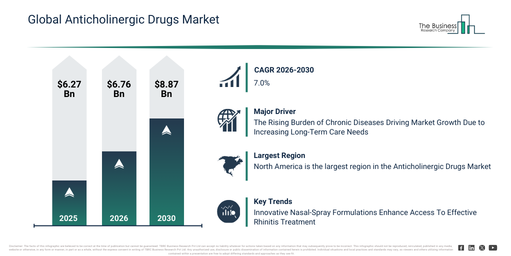
    The anticholinergic drugs market has experienced substantial growth in recent years. Its market size is anticipated to expand from $6.27 billion in 2025 to $6.76 billion in 2026, registering a compound annual growth rate (CAGR) of 7.8%. The historical expansion of this market can be attributed to several factors including the rising prevalence of neurological disorders, an increasing geriatric population, the expansion of hospital infrastructure, the growth of pharmaceutical research, and a higher demand for muscle spasm treatments.

    The anticholinergic drugs market is projected to experience substantial expansion over the upcoming years. It is anticipated to reach a valuation of $8.87 billion by 2030, exhibiting a compound annual growth rate (CAGR) of 7.0%. This growth during the forecast period is attributable to advancements in drug formulation, the increasing preference for parenteral administration methods, heightened awareness regarding overactive bladder treatments, the expansion of online pharmacy sales, and therapeutic breakthroughs in chronic obstructive pulmonary disease. Key trends anticipated over the forecast timeframe encompass the creation of new anticholinergic therapies, the growing elderly demographic along with related health conditions, the increasing occurrence of neurological and muscular ailments, the broadening reach of hospital and retail pharmacy networks, and the rise in both oral and parenteral drug administration.

    Get A Free Sample Report With In-Depth Market Insights:

    https://www.thebusinessresearchcompany.com/sample.aspx?id=16340&type=smp&utm_source=Blogs&utm_medium=Paid&utm_campaign=Oct_PR

    Anticholinergic Drugs Market Growth Momentum: What Factors Are Shaping Demand?

    The expansion of the anticholinergic drugs market moving forward is projected to be propelled by the rising occurrence of chronic diseases. Chronic diseases are enduring medical conditions that necessitate ongoing treatment and monitoring, frequently having a substantial impact on daily life and overall quality of life. The surge in chronic disease cases is linked to evolving lifestyles, genetic predispositions, and heightened exposure to environmental pollutants, chemicals, and toxins. Anticholinergic drugs play a role in chronic disease management by decreasing excessive cholinergic activity in the body, thereby assisting in symptom management and improving patient outcomes. As an illustration, in April 2024, the U.S. Centers for Disease Control and Prevention (CDC), a US-based national public health agency, reported that in 2023, 76.4% of American adults (around 194 million people) had at least one chronic condition, and 51.4% (about 130 million) were afflicted with multiple chronic conditions. Therefore, the increasing prevalence of chronic diseases is a key factor driving the growth of the anticholinergic drugs market.

    Anticholinergic Drugs Market Segment Landscape: Which Areas Lead Development?

    The anticholinergic drugs market covered in this report is segmented –

    1) By Type: Synthetic Compounds, Natural, Semi-Synthetic Compounds

    2) By Route Of Administration: Parental, Oral, Topical

    3) By Application: Overactive Bladder, Parkinson Disease, Chronic Obstructive Pulmonary Disease, Muscle Spasms, Irritable Bowel Syndrome

    4) By Distribution Channel: Hospital Pharmacies, Retail Pharmacies, Online Pharmacies

    Subsegments:

    1) By Synthetic Compounds: Muscarinic Receptor Antagonists, Nicotinic Receptor Antagonists, Long-Acting Synthetic Anticholinergics, Short-Acting Synthetic Anticholinergics

    2) By Natural: Belladonna Alkaloids, Scopolamine (Hyoscine), Plant-Derived Anticholinergic Extracts

    3) By Semi-Synthetic Compounds: Atropine-Derived Semi-Synthetic Anticholinergics, Scopolamine-Modified Semi-Synthetic Compounds, Quaternary Ammonium Semi-Synthetic Anticholinergics

    Anticholinergic Drugs Market Trends Redefining Industry Growth

    Leading companies in the anticholinergic drugs market are concentrating on developing novel solutions, such as sophisticated nasal-spray generic formulations, to enhance treatment efficacy and broaden patient reach. These advanced nasal-spray generic formulations are improved versions of existing nasal medications, engineered to deliver drugs more efficiently and consistently for superior patient outcomes. For instance, in July 2025, Lupin Ltd, an India-based pharmaceutical company, introduced Ipratropium Bromide Nasal Spray to the United States market; this product is a generic equivalent to the branded nasal solution, offered in 0.03% and 0.06% strengths. This product incorporates the anticholinergic agent ipratropium bromide, formulated as a nasal solution, and functions by blocking muscarinic receptors in the nasal mucosa to lessen excessive secretions. It carries indications for both adult and paediatric use in cases of allergic and non-allergic rhinitis/rhinorrhea, offers a more convenient delivery method compared to intramuscular or systemic anticholinergic alternatives, and expands patient access by providing a more affordable generic option.

    Anticholinergic Drugs Market Industry Leaders And Competitive Landscape

    Major companies operating in the anticholinergic drugs market are Pfizer Inc., Abbvie Inc., Sanofi SA, AstraZeneca plc, Novartis AG, Glaxosmithkline plc, Boehringer Ingelheim International GmbH, Astellas Pharma Inc., Sun Pharmaceutical Industries Ltd., Macleods Pharmaceuticals Ltd., Perrigo Company plc, Aurobindo Pharma Limited, Torrent Pharmaceuticals Ltd., Hikma Pharmaceuticals plc, Endo International plc, Lupin Limited, Glenmark Pharmaceuticals Ltd., Alkem Laboratories Limited, Indivior plc, Hisamitsu Pharmaceutical Co. Inc., Viatris Inc.

    View The Full Anticholinergic Drugs Market Report:

    https://www.thebusinessresearchcompany.com/report/anticholinergic-drugs-global-market-report?utm_source=Blogs&utm_medium=Paid&utm_campaign=Oct_PR

    Anticholinergic Drugs Market Geographic Analysis: Where Is Demand Rising Fastest?

    North America was the largest region in the anticholinergic drugs market in 2025. Asia- Pacific is expected to be the fastest-growing region in the forecast period. The regions covered in the anticholinergic drugs market report are Asia-Pacific, South East Asia, Western Europe, Eastern Europe, North America, South America, Middle East, Africa.

    Reach Out To Our Team:

    The Business Research Company: https://www.thebusinessresearchcompany.com/

    Americas: +1 310-496-7795

    Asia: +44 7882 955267 & +91 8897263534

    Europe: +44 7882 955267

    Email us at: marketing@tbrc.info

    Follow us on:

    LinkedIn: https://in.linkedin.com/company/the-business-research-company

    YouTube: https://www.youtube.com/channel/UC24_fI0rV8cR5DxlCpgmyFQ

    Global Market Model: https://www.thebusinessresearchcompany.com/global-market-model

  • Anti-CD20 Monoclonal Antibodies Market Forecast 2026–2030: Market Size, Trends And Growth Opportunities

    Anti-CD20 Monoclonal Antibodies Market Forecast 2026–2030: Market Size, Trends And Growth Opportunities

    Featuring market attractiveness scoring, total addressable market sizing, company benchmarking matrices, interactive Excel dashboards, deeper supply chain intelligence, emerging startup tracking, and granular product-level insights, The Business Research Company’s 2026 market reports are built to deliver research that is both more actionable and more strategically valuable.

    Anti-CD20 Monoclonal Antibodies Market Poised To Hit $12.94 Billion By 2030 With A 7.5% CAGR

    The anti-cd20 monoclonal antibodies market size has observed strong growth in recent years. It is projected to expand from $9 billion in 2025 to $9.7 billion in 2026, demonstrating a compound annual growth rate (CAGR) of 7.8%. The historical growth of the market can be linked to the approval and extensive use of rituximab, the increasing prevalence of non-hodgkin’s lymphoma and chronic lymphocytic leukemia, heightened awareness of targeted therapies, the presence of hospital pharmacy distribution channels, and the wider adoption of intravenous administration routes.

    The market size for anti-cd20 monoclonal antibodies is set to experience significant expansion in the coming years. It is projected to achieve a value of $12.94 billion by 2030, with a compound annual growth rate (CAGR) of 7.5%. This growth over the forecast period is fueled by the introduction of obinutuzumab and ofatumumab biosimilars, the wider acceptance of subcutaneous formulations, increased investment in research and academic institutions, the expansion of ambulatory care facilities, and the rising need for anti-cd20 treatments in various autoimmune diseases. Prominent trends for the forecast duration include the increasing use of monoclonal antibody therapies for b-cell malignancies, the ongoing development of biosimilars and next-generation anti-cd20 antibodies, the broader availability of subcutaneous and patient-friendly administration methods, a heightened focus on personalized and targeted immunotherapy, and an uptick in clinical trials and research in both autoimmune and oncology fields.

    Get A Free Sample Report With In-Depth Market Insights:

    https://www.thebusinessresearchcompany.com/sample.aspx?id=25693&type=smp&utm_source=Blogs&utm_medium=Paid&utm_campaign=Oct_PR

    Anti-CD20 Monoclonal Antibodies Market Expansion Drivers: What’s Shaping Future Growth?

    An anticipated increase in autoimmune diseases is projected to drive the expansion of the anti-CD20 monoclonal antibodies market. These conditions manifest when the body’s immune system mistakenly targets its own cells as harmful, initiating an attack. The rise in autoimmune diseases is linked to increased exposure to environmental pollutants, which can disrupt immune regulation and provoke assaults on bodily tissues. Anti-CD20 monoclonal antibodies offer a treatment for autoimmune diseases by eradicating B cells, which are involved in generating autoantibodies and inflammation, thereby assisting in modulating immune responses and alleviating disease symptoms. Illustratively, Arthritis Australia, a non-profit organization based in Australia, reported in February 2024 that approximately 562,378 Australians are anticipated to have RA in 2025, constituting 14% of all arthritis cases for that year. Projections indicate a 33% increase by 2040, reaching 748,721 people, which signifies an additional 186,343 Australians living with RA in 2040 compared to 2025. Consequently, the increasing prevalence of autoimmune diseases is stimulating the growth of the anti-CD20 monoclonal antibodies market.

    Anti-CD20 Monoclonal Antibodies Market Segments: Where Is Growth Concentrated?

    The anti-cd20 monoclonal antibodies market covered in this report is segmented –

    1) By Product Type: Rituximab, Obinutuzumab, Ofatumumab, Other Product Types

    2) By Route Of Administration: Intravenous, Subcutaneous

    3) By Distribution Channel: Hospital Pharmacies, Retail Pharmacies, Online Pharmacies

    4) By Application: Non-Hodgkin’s Lymphoma (NHL), Chronic Lymphocytic Leukemia (Cll), Rheumatoid Arthritis, Multiple Sclerosis, Pemphigus Vulgaris, Other Applications

    5) By End-User: Hospitals, Surgical Centers and Diagnostic Centers, Maternity Centers, Ambulatory Care Centers, Research And Academia, Other End-Users

    Subsegments:

    1) By Rituximab: Rituxan, Truxima, Ruxience, Reditux

    2) By Obinutuzumab: Gazyva, Biosimilar Candidates

    3) By Ofatumumab: Arzerra, Kesimpta

    4) By Other Product Types: Ublituximab, Veltuzumab, Ocrelizumab, Mosunetuzumab

    Anti-CD20 Monoclonal Antibodies Market Strategic Trends: What Defines The Next Growth Phase?

    Leading companies within the anti-CD20 monoclonal antibody market are concentrating on creating sophisticated products, including obinutuzumab, to more efficiently combat resistant or recurrent B-cell malignancies. This product, obinutuzumab, functions as a humanized type II anti-CD20 monoclonal antibody, engineered to locate and eliminate CD20-positive B cells implicated in specific blood cancers and autoimmune conditions. An example of this progress is from March 2025, when Roche, a biopharmaceutical firm headquartered in Switzerland, disclosed that the US Food and Drug Administration (FDA) had granted acceptance to a supplemental Biologics License Application (sBLA) for Gazyva/Gazyvaro (obinutuzumab) intended for the management of lupus nephritis. This acceptance stems from favorable outcomes observed in the Phase III REGENCY study, which demonstrated an enhanced complete renal response (CRR) when administered alongside standard therapy, compared to standard therapy by itself. Consequently, Gazyva/Gazyvaro stands as the sole anti-CD20 monoclonal antibody to exhibit this particular advantage in treating lupus nephritis, a serious inflammatory condition resulting from lupus that can culminate in kidney failure.

    Anti-CD20 Monoclonal Antibodies Market Key Participants And Competitive Landscape

    Major companies operating in the anti-cd20 monoclonal antibodies market are F. Hoffmann-La Roche Ltd., Novartis AG, Biogen Idec, TG Therapeutics, Celltrion Inc., Shanghai Henlius Biotech Inc., Innovent Biologics, Dr. Reddy’s Laboratories Ltd., Genmab A/S, AbbVie Inc., Pfizer Inc., Teva Pharmaceutical Industries Ltd., Chugai Pharmaceutical Co. Ltd., Sanofi SA, Bristol-Myers Squibb Company, Samsung Bioepis, Sandoz International GmbH, Amneal Pharmaceuticals LLC, Viatris Inc., Intas Pharmaceuticals Ltd., Lupin Limited, Zydus Lifesciences Ltd., Aurobindo Pharma Ltd., Biocon Biologics Ltd., Fresenius Kabi AG, Sun Pharmaceutical Industries Ltd., Hetero Biopharma Ltd., Reliance Life Sciences Pvt. Ltd., Adello Biologics, Mabion SA, mAbxience, Probiomed S.A. de C.V., Prestige Biopharma Ltd., CinnaGen Co., JHL Biotech Inc., Amgen Biologics Pvt. Ltd.

    View The Full Anti-CD20 Monoclonal Antibodies Market Report:

    https://www.thebusinessresearchcompany.com/report/anti-cd20-monoclonal-antibodies-global-market-report?utm_source=Blogs&utm_medium=Paid&utm_campaign=Oct_PR

    Anti-CD20 Monoclonal Antibodies Market Global Footprint: Which Region Leads The Market?

    North America was the largest region in the Anti-CD20 monoclonal antibodies market in 2025. Asia-Pacific is expected to be the fastest-growing region in the forecast period. The regions covered in the anti-cd20 monoclonal antibodies market report are Asia-Pacific, South East Asia, Western Europe, Eastern Europe, North America, South America, Middle East, Africa.

    Reach Out To Our Team:

    The Business Research Company: https://www.thebusinessresearchcompany.com/

    Americas: +1 310-496-7795

    Asia: +44 7882 955267 & +91 8897263534

    Europe: +44 7882 955267

    Email us at: marketing@tbrc.info

    Follow us on:

    LinkedIn: https://in.linkedin.com/company/the-business-research-company

    YouTube: https://www.youtube.com/channel/UC24_fI0rV8cR5DxlCpgmyFQ

    Global Market Model: https://www.thebusinessresearchcompany.com/global-market-model

  • Anti-Cancer MAbS Market Size Reaches $78.11 Billion In 2026: What Is Driving Growth?

    Anti-Cancer MAbS Market Size Reaches $78.11 Billion In 2026: What Is Driving Growth?

    Built to provide research that’s more actionable and strategically valuable, The Business Research Company’s 2026 market reports include market attractiveness analysis, total addressable market sizing, company benchmarking matrices, interactive Excel dashboards, broader supply chain intelligence, emerging startup tracking, and in-depth product insights.

    Anti-Cancer MAbS Market Size And Revenue Outlook Through 2030

    The anti-cancer mabs market size has experienced significant expansion in recent years. It is anticipated to grow from $71.25 billion in 2025 to $78.12 billion in 2026, achieving a compound annual growth rate (CAGR) of 9.6%. This historical development can be ascribed to several contributing factors, including the rising global incidence of cancer, the clinical effectiveness of monoclonal antibodies, substantial investment in oncology research and development, successful regulatory approvals for biologics, and improved survival outcomes for individuals undergoing cancer treatment.

    The anti-cancer mabs market is projected to experience substantial expansion in the coming years, reaching $112.41 billion by 2030, demonstrating a compound annual growth rate (CAGR) of 9.5%. This expansion during the forecast period is fueled by several factors, including the progress in personalized cancer medicine, the growing availability of biosimilar mAbs, increased expenditure on oncology healthcare, advancements in antibody engineering, and wider access to biologic therapies. Key developments anticipated within this period encompass the increasing integration of targeted immunotherapies, the broader development of humanized and bispecific antibodies, the expanding application of combination cancer therapies, a heightened emphasis on precision oncology, and enhanced manufacturing scalability for mAbs.

    Get A Free Sample Report With In-Depth Market Insights:

    https://www.thebusinessresearchcompany.com/sample.aspx?id=9041&type=smp&utm_source=Blogs&utm_medium=Paid&utm_campaign=Oct_PR

    Anti-Cancer MAbS Market Development Factors: What’s Supporting Demand?

    The growing global incidence of cancer is anticipated to fuel the expansion of the anticancer mAbs market in the coming years. Cancer encompasses a variety of diseases defined by uncontrolled cellular multiplication, with the capacity to infiltrate and harm healthy bodily tissues. This rising prevalence of cancer is attributable to aging populations, shifts in lifestyle, environmental exposures, and advancements in diagnostic technologies leading to higher detection rates. Anticancer monoclonal antibodies (mAbs) are engineered to attach to specific proteins on cancerous cells, leveraging genetically modified versions of the immune system’s natural antibodies to pinpoint and eliminate these cells. Consequently, a higher prevalence of cancer increases the demand for the anticancer mAbs market. For instance, in February 2024, the World Health Organization (WHO), a Switzerland-based United Nations agency, projected that new cancer cases in 2050 are set to exceed 35 million, marking a 77% increase compared to the estimated 20 million cases in 2022. Therefore, the increasing prevalence of cancer worldwide is a key driver for the growth of the anticancer mAbs market.

    Anti-Cancer MAbS Market Segment Analysis: What Are The Core Market Categories?

    The anti-cancer mabs market covered in this report is segmented –

    1) By Type: Murine Antibodies, Chimeric Antibodies, Humanized Antibodies, Other Types

    2) By Application: Blood Cancer, Breast Cancer, Lung Cancer, Melanoma, Colorectal Cancer, Liver Cancer, Other Applications

    3) By End User: Hospitals, Research Institutes, Other End Users

    Subsegments:

    1) By Murine Antibodies: Murine IgG, Murine IgM, Other Murine Isotypes

    2) By Chimeric Antibodies: Chimeric IgG, Chimeric IgM, Other Chimeric Isotypes

    3) By Humanized Antibodies: Humanized IgG, Humanized IgM, Other Humanized Isotypes

    4) By Other Types: Fully Human Antibodies, Bispecific Antibodies, Conjugated Antibodies, Other Novel Formats

    Anti-Cancer MAbS Market Transformation Trends: What Innovations Are Driving Change?

    Leading companies in the anti-cancer monoclonal antibodies (mAbs) market are concentrating on developing innovative solutions, like early-phase clinical trials, to advance novel therapeutic candidates and enhance their competitive standing. Clinical trials are structured research studies conducted in human participants to evaluate the safety, dosing, and therapeutic effectiveness of new medical interventions, including targeted antibodies and radioimmunotherapies. For instance, in April 2023, Y-mAbs Therapeutics Inc., a US-based clinical biopharmaceutical company, initiated a Phase I clinical trial assessing GD2-SADA, a pre-targeted radioimmunotherapy designed for GD2-positive solid tumors such as small cell lung cancer, sarcoma, and malignant melanoma. This therapy employs a two-step mechanism where the SADA protein first selectively binds to GD2-expressing tumor cells, followed by the administration of the radioactive ligand 177Lu-DOTA, which attaches to the SADA protein to deliver targeted radiation. This aims to maximize tumor cell destruction while minimizing radiation exposure to healthy tissues.

    Anti-Cancer MAbS Market Top Companies Driving Competitive Growth

    Major companies operating in the anti-cancer mabs market are Amgen Inc., Bristol Myers Squibb Company, Eli Lilly and Company, F. Hoffmann-La Roche Ltd., GlaxoSmithKline plc, Johnson & Johnson, Novartis AG, Merck & Co. Inc., Spectrum Pharmaceuticals Inc., AstraZeneca plc., Pfizer Inc., Gilead Sciences Inc., Bayer HealthCare, ImmunoGen Inc., Genentech Inc., AbbVie Inc., Takeda Pharmaceuticals, Seattle Genetics, Regeneron Pharmaceuticals, Celgene, Ipsen, Daiichi Sankyo, ADC Therapeutics, MacroGenics Inc., Zymeworks Inc.

    View The Full Anti-Cancer MAbS Market Report:

    https://www.thebusinessresearchcompany.com/report/anti-cancer-mabs-global-market-report?utm_source=Blogs&utm_medium=Paid&utm_campaign=Oct_PR

    Anti-Cancer MAbS Market Regional Split: Which Areas Are Fueling Growth?

    North America was the largest region in the anti-cancer MAbS market in 2025. Asia-Pacific is expected to be the fastest-growing region in the anti-cancer MAbS market during the forecast period. The regions covered in the anti-cancer mabs market report are Asia-Pacific, South East Asia, Western Europe, Eastern Europe, North America, South America, Middle East, Africa.

    Reach Out To Our Team:

    The Business Research Company: https://www.thebusinessresearchcompany.com/

    Americas: +1 310-496-7795

    Asia: +44 7882 955267 & +91 8897263534

    Europe: +44 7882 955267

    Email us at: marketing@tbrc.info

    Follow us on:

    LinkedIn: https://in.linkedin.com/company/the-business-research-company

    YouTube: https://www.youtube.com/channel/UC24_fI0rV8cR5DxlCpgmyFQ

    Global Market Model: https://www.thebusinessresearchcompany.com/global-market-model