Blog

  • Urometer Market Size In 2026: Regional Growth, Key Segments And Future Outlook

    Urometer Market Size In 2026: Regional Growth, Key Segments And Future Outlook

    Built to provide research that’s more actionable and strategically valuable, The Business Research Company’s 2026 market reports include market attractiveness analysis, total addressable market sizing, company benchmarking matrices, interactive Excel dashboards, broader supply chain intelligence, emerging startup tracking, and in-depth product insights.

    Urometer Market CAGR Outlook And Future Development

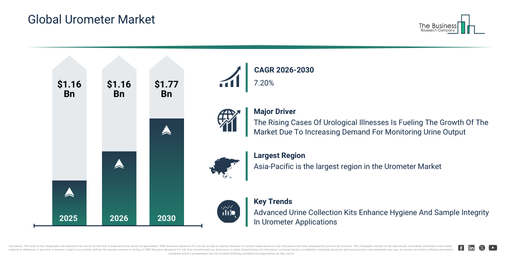
    The urometer market has experienced substantial growth in recent years. It is anticipated to increase from $0.53 billion in 2025 to $0.57 billion in 2026, at a compound annual growth rate (CAGR) of 7.2%. The historical expansion can be attributed to several factors, including the restricted availability of precision urometers, the common practice of manual urine measurement, an increase in post-surgical patient monitoring, the development of hospital infrastructure, and a rising awareness of kidney function surveillance.

    The urometer market is projected to experience robust expansion over the coming years. It is anticipated to reach $0.76 billion by 2030, demonstrating a compound annual growth rate (CAGR) of 7.2%. This growth during the forecast period is attributable to several factors, including advancements in digital urometer technology, their integration with iot and his systems, the spread of home healthcare options, a growing need for portable and easy-to-use devices, and increased deployment in emergency trauma care. Key trends expected during the forecast period encompass a surge in the uptake of real-time urine monitoring tools, expanded application in critical care and post-surgical environments, seamless integration with hospital information systems (his), an emphasis on precise fluid balance and kidney function assessment, and the innovation of compact and portable urometer designs.

    Get A Free Sample Report With In-Depth Market Insights:

    https://thebusinessresearchcompany.com/sample_request?id=33860548&type=smp&name=Urometer%20Market%20Report%202026&utm_source=Blogs&utm_medium=Paid&utm_campaign=Oct_PR

    Urometer Market Growth Factors: What’s Supporting Expansion?

    The increasing prevalence of urological conditions is projected to boost the expansion of the urometer market in the coming period. These conditions are medical issues affecting the urinary system and male reproductive organs, including the kidneys, bladder, prostate, and urethra. An aging demographic contributes to this rise, as older individuals are more susceptible to ailments like prostate enlargement, urinary incontinence, and kidney disease. In managing urological illnesses, a urometer serves to track urine output, quantify urine volume and flow, assist in detecting issues such as urinary retention, dehydration, or kidney dysfunction, and provide crucial information for patient diagnosis and treatment. For example, data from the U.S. National Center for Health Statistics (NCHS), a U.S.-based public health agency, indicated that in 2023, approximately 63% of women aged 20+ reported experiencing urinary incontinence in the 2023 National Health and Nutrition Examination Survey (NHANES), equating to about 79.5 million women. Consequently, the growing incidence of urological illnesses is fueling the growth of the urometer market.

    Urometer Market Segment Trends And Revenue Contributors

    The urometer market covered in this report is segmented –

    1) By Product: 100 Milliliter (ml), 200 Milliliter (ml), 400 Milliliter (ml), 450 Milliliter (ml), 500 Milliliter (ml)

    2) By Application: Operative Procedures, Emergency Trauma, Palliative Care, Other Applications

    3) By End-Use: Hospital, Clinics, Home Healthcare, Other End-Uses

    Subsegments:

    1) By 100 Milliliter (ml): Pediatric Use, Low Urine Output Monitoring, Homecare / Outpatient Use, Compact / Portable Design

    2) By 200 Milliliter (ml): Short-Term Hospital Use, Catheter-Connected Urometers, Adult General Use

    3) By 400 Milliliter (ml): Post-Surgery Monitoring, Reusable Clinical Grade, High-Volume Urine Collection

    4) By 450 Milliliter (ml): Long-Term Care Facilities, Adult Urology Applications, Single-Use Disposable

    5) By 500 Milliliter (ml): Catheter-Integrated Urometers, Reusable Hospital Grade, Large Volume Monitoring

    Urometer Market Industry Trends: What’s Reshaping Demand?

    Major companies operating in the urometer market are concentrating on developing advanced products, such as urine collection kits, to reduce the risk of contamination during urine sampling and measurement. Urine collection kits are medical devices used for the safe and precise collection, storage, and transport of urine samples for diagnostic purposes, ensuring cleanliness and preserving sample quality to avoid contamination. For instance, in June 2024, Mexple, an India-based medical product company, launched Uromen and Urowomen, a urine collection kit specifically designed for males and females in the incontinence category to address diverse patient needs, focusing on comfort, hygiene, and usability. These kits are manufactured from medical-grade silicone and feature an external catheter system that minimizes skin contact with urine, thereby reducing irritation, infection risk, and odor when compared to traditional adult nappies or indwelling catheters. Both kits are reusable, leak-proof, and designed to prevent backflow, making them suitable for various settings, including home care, hospitals, nursing homes, and for chronic or post-surgical patients.

    Urometer Market Competitive Landscape: Who Leads The Industry?

    Major companies operating in the urometer market are Cardinal Health Inc, Medline Industries LP, Becton Dickinson and Company, Teleflex Incorporated, Fannin Ltd, Angiplast Private Limited, Biosurge Healthcare India Private Limited, IndoSurgicals Private Limited, Ribbel International Ltd, Advin Urology, APEX Medical Devices, Rudraksh Pharma and Surgico Pvt Ltd, Observe Medical ASA, Romsons Group, Medi Safe International, Dispowell Surgicals, Real Surgi Product, Medi Faith by SK Healthcare, Taizhou Sanxin Medical Technology Co Ltd, Uromed Kurt Drews KG

    View The Full Urometer Market Report:

    https://thebusinessresearchcompany.com/report/urometer-global-market-report?utm_source=Blogs&utm_medium=Paid&utm_campaign=Oct_PR

    Urometer Market Geographic Landscape: Which Region Leads Industry Growth?

    Asia-Pacific was the largest region in the urometer market in 2025. Asia-Pacific is expected to be the fastest-growing region in the forecast period. The regions covered in the urometer market report are Asia-Pacific, South East Asia, Western Europe, Eastern Europe, North America, South America, Middle East, Africa.

    Reach Out To Our Team:

    The Business Research Company: https://www.thebusinessresearchcompany.com/

    Americas: +1 310-496-7795

    Asia: +44 7882 955267 & +91 8897263534

    Europe: +44 7882 955267

    Email us at: marketing@tbrc.info

    Follow us on:

    LinkedIn: https://in.linkedin.com/company/the-business-research-company

    YouTube: https://www.youtube.com/channel/UC24_fI0rV8cR5DxlCpgmyFQ

    Global Market Model: https://www.thebusinessresearchcompany.com/global-market-model

  • Urology Surgical Instruments Market Growth Forecast Through 2030: Market Size And Trends In 2026

    Urology Surgical Instruments Market Growth Forecast Through 2030: Market Size And Trends In 2026

    Backed by market attractiveness analysis, total addressable market sizing, company benchmarking matrices, interactive Excel dashboards, wider supply chain intelligence, emerging startup coverage, and detailed product-level insights, The Business Research Company’s 2026 market reports are designed to offer research that is more actionable and strategically valuable than ever.

    Urology Surgical Instruments Market Set To Climb From $15.43 Billion In 2026 To $22.66 Billion By 2030

    The urology surgical instruments market has experienced substantial growth in recent years. It is projected to expand from $14.14 billion in 2025 to $15.43 billion in 2026, demonstrating a compound annual growth rate (CAGR) of 9.2%. This historic growth can be attributed to several factors, including the increasing prevalence of kidney diseases and urinary tract disorders, a rise in hospital-based urology surgeries, the expanded use of rigid and flexible endoscopes in diagnostics and treatment, the broader adoption of urology consumables and accessories in routine procedures, and the growing incidence of pelvic organ prolapse and bph related surgeries.

    The urology surgical instruments market is projected to experience swift expansion over the coming years. This market is anticipated to reach a valuation of $22.66 billion by 2030, exhibiting a compound annual growth rate (CAGR) of 10.1%. This growth during the forecast period is fueled by several factors, including a rising need for sophisticated urology surgical tools in minimally invasive procedures, an escalating number of procedures performed in dialysis and specialized centers, the increasing embrace of specialized peripheral and diagnostic urology systems, an expansion of urological interventions driven by oncology, and a continuous push for instrument upgrades aimed at enhancing precision and surgical efficiency. Key trends anticipated within this period involve a heightened demand for minimally invasive and precise urology surgical procedures, a greater reliance on robust and ergonomically designed urology surgical instruments for intricate operations, a growing preference for specialized tools tailored for kidney disease and urological cancer surgeries, an expanding volume of procedures in hospitals and clinics leading to more frequent instrument replacement, and an increased uptake of reusable and procedure-specific consumables within urology operating settings.

    Get A Free Sample Report With In-Depth Market Insights:

    https://thebusinessresearchcompany.com/sample_request?id=26936178&type=smp&name=Urology%20Surgical%20Instruments%20Market%20Report%202026&utm_source=Blogs&utm_medium=Paid&utm_campaign=Oct_PR

    Urology Surgical Instruments Market Demand Drivers: What’s Powering Industry Growth?

    An increasing occurrence of urologic conditions is anticipated to drive the expansion of the urology surgical instruments market. These conditions encompass diverse ailments affecting either the male or female reproductive or urinary systems. Among the most common urologic ailments are kidney stones, urinary tract infections, difficulties with bladder control, and prostate problems. Urologists employ urology surgical instruments for accurate diagnosis and treatment of urological conditions through a range of procedures. For example, in November 2024, the Prostate Cancer Research, a non-profit organization based in the UK, reported that prostate cancer stands as the second leading cause of cancer-related deaths in men, following lung cancer, with its prevalence in the UK projected to increase by 15% from 2023–2025 and again between 2038–2040. Consequently, the growing prevalence of urologic conditions fuels the urology surgical instruments market.

    Urology Surgical Instruments Market Segment Analysis Spotlighting Growth Areas

    The urology surgical instruments market covered in this report is segmented –

    1) By Product Type: Urology Endoscopes, Endovision Systems, Peripheral Systems, Urology Consumables And Accessories, Other Product Types

    2) By Disease Type: Kidney Diseases, Pelvic Organ Prolapse, Urological Cancer And BPH, Other Diseases

    3) By End User: Hospitals And Clinics, Dialysis Centers, Other End Users

    Subsegments:

    1) By Urology Endoscopes: Rigid Endoscopes, Flexible Endoscopes

    2) By Endovision Systems: Imaging Systems, Visualization Systems

    3) By Peripheral Systems: Urology Surgical Instruments, Urology Diagnostic Instruments

    4) By Urology Consumables and Accessories: Biopsy Forceps, Scissors, Electrodes

    5) By Other Product Types: Catheters, Guidewires, Other Specialized Instruments

    Urology Surgical Instruments Market Innovation Trends: What Developments Are Reshaping The Industry?

    Leading firms within the urology surgical instruments market are concentrating on creating novel and innovative products, including sophisticated robotic surgery devices, with the aim of solidifying their standing in the market. These advanced surgical devices represent specialized and inventive tools and equipment used for various procedures like minimally invasive surgery, surgical robotics, and other sophisticated surgical interventions. As an example, in March 2023, University Hospital (UH), a prominent US academic medical center and key teaching facility, introduced single-port robotic surgery for addressing urologic cancer and various other urological ailments. Single-port robotic urologic cancer surgery builds upon laparoscopic surgery, which involves operating through minor abdominal incisions. This single-port approach advances the technique by enabling the introduction of surgical equipment via just one two-inch incision. Intuitive’s advanced robotic technology allows surgical instruments to enter the body collectively before positioning them precisely within the abdominal cavity.

    Urology Surgical Instruments Market Company Landscape And Competitive Strategy

    Major companies operating in the urology surgical instruments market are Medtronic Plc, Stryker Corporation, Boston Scientific Corporation, B. Braun Melsungen AG, Olympus Corporation, Intuitive Surgical Inc., CooperSurgical Inc., Coloplast A/S, Teleflex Incorporated, Cook Medical LLC, Karl Storz SE & CO. KG, Integer Holdings Corporation, Conmed Corporation, Richard Wolf GmbH, Dornier Medtech GmbH, HealthTronics Inc., Surgical Holdings Inc., Sklar Surgical Instruments Corporation, Millennium Surgical Corporation

    View The Full Urology Surgical Instruments Market Report:

    https://thebusinessresearchcompany.com/report/urology-surgical-instruments-global-market-report?utm_source=Blogs&utm_medium=Paid&utm_campaign=Oct_PR

    Urology Surgical Instruments Market Largest Region: Which Geography Holds The Biggest Share?

    North America was the largest region in the urology surgical instruments market in 2025. Asia Pacific is expected to be the fastest-growing region in the forecast period. The regions covered in the urology surgical instruments market report are Asia-Pacific, South East Asia, Western Europe, Eastern Europe, North America, South America, Middle East, Africa.

    Reach Out To Our Team:

    The Business Research Company: https://www.thebusinessresearchcompany.com/

    Americas: +1 310-496-7795

    Asia: +44 7882 955267 & +91 8897263534

    Europe: +44 7882 955267

    Email us at: marketing@tbrc.info

    Follow us on:

    LinkedIn: https://in.linkedin.com/company/the-business-research-company

    YouTube: https://www.youtube.com/channel/UC24_fI0rV8cR5DxlCpgmyFQ

    Global Market Model: https://www.thebusinessresearchcompany.com/global-market-model

  • Urology Medical Lasers Market Analysis: $1.12 Billion Market Size In 2026 And Future Growth Prospects

    Urology Medical Lasers Market Analysis: $1.12 Billion Market Size In 2026 And Future Growth Prospects

    Featuring market attractiveness scoring, total addressable market sizing, company benchmarking matrices, interactive Excel dashboards, deeper supply chain intelligence, emerging startup tracking, and granular product-level insights, The Business Research Company’s 2026 market reports are built to deliver research that is both more actionable and more strategically valuable.

    Urology Medical Lasers Market Forecast: Value Set To Climb From $1.12 Billion To $1.41 Billion

    The urology medical lasers market size has experienced robust expansion in recent years. This market is projected to expand from $1.06 billion in 2025 to $1.12 billion in 2026, demonstrating a compound annual growth rate (CAGR) of 6.0%. Historically, this growth can be ascribed to factors such as the increasing incidence of urological conditions, the broadening of hospital urology departments, a greater embrace of laser-based treatments, the accessibility of sophisticated surgical lasers, and enhanced clinical results from laser therapies.

    The urology medical lasers market is anticipated to experience substantial expansion over the upcoming years. This market is projected to reach $1.41 billion by 2030, exhibiting a compound annual growth rate (CAGR) of 5.8%. The factors contributing to this growth during the forecast period include an expanding aging male demographic, a heightened need for treatments for benign prostatic hyperplasia (BPH) and urolithiasis, the proliferation of ambulatory surgical procedures, increased capital allocation towards sophisticated laser technologies, and continuous advancements in the efficiency of laser systems. Key developments anticipated in this period encompass the wider embrace of high-power laser platforms, an elevated preference for minimally invasive urology procedures, a broader application of multi-wavelength laser systems, the enlargement of outpatient laser-based therapeutic options, and a sharpened emphasis on accurate tissue ablation.

    Get A Free Sample Report With In-Depth Market Insights:

    https://thebusinessresearchcompany.com/sample_request?id=73876910&type=smp&name=Urology%20Medical%20Lasers%20Market%20Report%202026&utm_source=Blogs&utm_medium=Paid&utm_campaign=Oct_PR

    Urology Medical Lasers Market Growth Drivers: What’s Behind The Acceleration?

    The increasing occurrence of urologic conditions is anticipated to drive the expansion of the urology medical lasers market. Urologic conditions encompass various issues affecting the male or female reproductive or urinary tract systems, including disorders such as kidney stones, benign prostatic hyperplasia, urinary strictures, and bladder tumors. The rising incidence of these conditions is largely attributed to the growing average age of the global population, as numerous common ailments like benign prostatic hyperplasia (BPH), kidney stones, and urinary incontinence are strongly correlated with advanced age. This surge in urologic conditions supports the urology medical lasers market by boosting demand for minimally invasive laser therapies, which offer precise tissue ablation, reduced bleeding, faster recovery, and lower complication rates. For example, in January 2024, the American Cancer Society, a US-based non-profit organization focused on cancer research and patient support, projected that an estimated 81,610 new cases of kidney cancer would be diagnosed in the United States, with 14,390 people expected to die from the disease in 2024. Therefore, the prevalence of urologic conditions is a key driver for the urology medical lasers market.

    Urology Medical Lasers Market Segment Performance And Emerging Opportunities

    The urology medical lasers market covered in this report is segmented –

    1) By Laser Type: Holmium Laser System, Diode Laser System, Thulium Laser System, Other Laser Types

    2) By Application: Benign Prostatic Hyperplasia (BPH), Urolithiasis, Non-Muscle-Invasive Bladder Cancer (NMIBC), Other Applications

    3) By End User: Hospitals, Clinic, Other End Users

    Subsegments:

    1) By Holmium Laser System Applications: Lithotripsy (Kidney and Ureter Stones), BPH Treatment / Enucleation, Ureteral Stricture Management, Soft Tissue Surgery

    2) By Diode Laser System Applications: BPH Treatment / Vaporization, Stone Fragmentation, Soft Tissue Ablation (Bladder or Urethra), Hemostasis and Coagulation

    3) By Thulium Laser System Applications: BPH Treatment / Enucleation, Ureteroscopic Stone Treatment, Bladder Tumor Resection / Soft Tissue Surgery, Urethral Stricture Management

    4) By Other Laser Types: CO2 Lasers, Nd Lasers

    Urology Medical Lasers Market Trends: What’s Defining The Industry’s Next Phase?

    Leading companies within the urology medical lasers market are developing advanced products, such as thulium fiber laser (TFL) systems, to offer enhanced precision, less tissue damage, improved efficiency in stone fragmentation, and greater safety. The thulium fiber laser (TFL) system is a high-precision medical laser technology primarily used in urology for minimally invasive procedures like kidney stone fragmentation and prostate tissue removal, providing superior safety and efficiency compared to traditional lasers. For instance, in February 2023, Rhein Laser Technologies Ltd., a China-based manufacturer of urology lasers, launched the UroFiber 150Q. The UroFiber 150Q is a 150W SuperPulsed thulium fiber laser (TFL) system that incorporates innovative all-fiber technology, specifically engineered for optimal stone lithotripsy and BPH enucleation. It employs a customized high-brightness narrow spectrum fiber-coupling 792nm diode laser to pump the thulium fiber, thereby generating a powerful 1940nm CW&QCW laser. In SuperPulsed mode (QCW), it can reach a peak power of 600W, with an average output of 150W and a maximum laser repetition rate of 5000Hz at a minimum pulse energy of 0.025J. Additionally, it achieves up to 6J pulse energy at 25Hz in pulsed mode, and 150W in continuous mode (CW), operating efficiently 24/7 with noise levels below 60dB, fully conforming to industry standards.

    Urology Medical Lasers Market Key Players Shaping Industry Direction

    Major companies operating in the urology medical lasers market are Olympus Corporation, Boston Scientific Corporation, Richard Wolf GmbH, Quanta System S.p.A., OmniGuide Holdings Inc., Convergent Laser Technologies, Biolitec AG, KARL STORZ SE & Co KG, EndoMed Systems GmbH, Dornier MedTech GmbH, Lisa Laser Products GmbH, Healthtronics Inc, Surgical Lasers Inc, Medtronic plc, Aerolase Inc, EMS Electro Medical Systems S.A., Direx Group, Gigaa Laser (Gigaa Optronics Technology Co Ltd), Hyper Photonics, Jena Surgical GmbH

    View The Full Urology Medical Lasers Market Report:

    https://thebusinessresearchcompany.com/report/urology-medical-lasers-global-market-report?utm_source=Blogs&utm_medium=Paid&utm_campaign=Oct_PR

    Urology Medical Lasers Market Regional Analysis: Which Geography Leads On Revenue?

    North America was the largest region in the urology medical lasers market in 2025. Asia-Pacific was the second largest region in the urology medical lasers report. The regions covered in the urology medical lasers market report are Asia-Pacific, South East Asia, Western Europe, Eastern Europe, North America, South America, Middle East, Africa.

    Reach Out To Our Team:

    The Business Research Company: https://www.thebusinessresearchcompany.com/

    Americas: +1 310-496-7795

    Asia: +44 7882 955267 & +91 8897263534

    Europe: +44 7882 955267

    Email us at: marketing@tbrc.info

    Follow us on:

    LinkedIn: https://in.linkedin.com/company/the-business-research-company

    YouTube: https://www.youtube.com/channel/UC24_fI0rV8cR5DxlCpgmyFQ

    Global Market Model: https://www.thebusinessresearchcompany.com/global-market-model
  • Urology Devices Market 2026 Market Size And Growth Forecast: Key Trends To Watch

    Urology Devices Market 2026 Market Size And Growth Forecast: Key Trends To Watch

    Built to provide research that’s more actionable and strategically valuable, The Business Research Company’s 2026 market reports include market attractiveness analysis, total addressable market sizing, company benchmarking matrices, interactive Excel dashboards, broader supply chain intelligence, emerging startup tracking, and in-depth product insights.

    Urology Devices Market Revenue Growth On Track For A 7% CAGR Through 2030

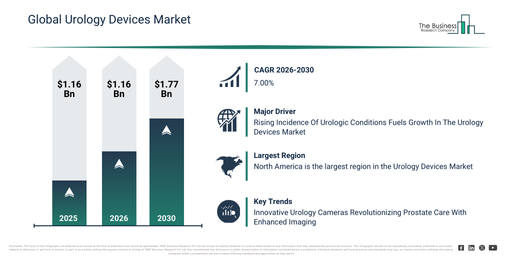
    The urology devices market has seen substantial expansion in recent years. It is projected to grow from $40.39 billion in 2025 to $43.05 billion in 2026, achieving a compound annual growth rate (CAGR) of 6.6%. The historical growth can be attributed to an increased incidence of kidney and urinary tract diseases, the expansion of hospital-based urology departments, a rising availability of endoscopic procedures, growth in the aging population, and improved access to specialized urology care.

    The urology devices market is projected to experience substantial expansion over the upcoming years, with its size anticipated to reach $56.39 billion by 2030, exhibiting a compound annual growth rate (CAGR) of 7.0%. This projected growth during the forecast period stems from factors such as heightened investments in robotic surgery platforms, an intensified emphasis on precision urology therapies, the proliferation of outpatient surgical centers, an escalating need for sophisticated diagnostic precision, and the increased embrace of healthcare technology. Key developments expected in this period encompass a greater acceptance of minimally invasive urology techniques, the growing deployment of robotic-assisted surgical systems, an increasing desire for advanced laser lithotripsy equipment, broader usage of urology consumables, and improved incorporation of imaging and diagnostic innovations.

    Get A Free Sample Report With In-Depth Market Insights:

    https://thebusinessresearchcompany.com/sample_request?id=80110502&type=smp&name=Urology%20Devices%20Market%20Report%202026&utm_source=Blogs&utm_medium=Paid&utm_campaign=Oct_PR

    Urology Devices Market Growth Factors Behind Sustained Expansion

    The significant occurrence of urologic conditions is predicted to propel the expansion of the urology devices market moving forward. Urologic conditions are defined as diseases impacting the urinary tract, such as urinary tract infections, issues with bladder control, kidney stones, prostate problems, among others. As the worldwide population continues its aging trend and the prevalence of chronic illnesses like diabetes and obesity increases, the frequency of urological conditions is anticipated to climb. Urologists require specialized urology devices and related equipment for the accurate diagnosis and treatment of these urological conditions, which include erectile dysfunction, kidney stones, prostate cancer, and bladder cancer. Consequently, the elevated incidence of urological conditions escalates the demand for the urology devices market. For instance, in October 2023, reports from the National Health Service (NHS) England, a UK-based government department, showed that in 2022-23, hospitals recorded 147,285 admissions where the primary diagnosis was urinary tract infection (UTI). Individuals aged over 65 accounted for 56% of these instances, totaling 82,392 admissions. Therefore, the high incidence of urologic conditions is expected to drive the urology devices market.

    Urology Devices Market Segment Landscape And Growth Outlook

    The urology devices market covered in this report is segmented –

    1) By Product: Urology Endoscopes, Robotic Surgical Systems, Laser Systems, Lithotripters, Brachytherapy Systems, High-Intensity Focused Ultrasound (HIFU) Systems, Urodynamic Systems, Urology Consumables

    2) By Disease: Kidney Diseases, Urological Cancer And BPH, Pelvic Organ Prolapse, Other Diseases

    3) By Technology: Minimally Invasive Surgery, Robotic Surgery, Other Technologies

    4) By End User: Hospitals And Clinics, Dialysis Centers, Other End Users

    Subsegments:

    1) By Urology Endoscopes: Rigid Endoscopes, Flexible Endoscopes, Video Endoscopes

    2) By Robotic Surgical Systems: Robotic-Assisted Surgical Systems, Robotic Instruments

    3) By Laser Systems: Holmium Laser Systems, Thulium Laser Systems, Diode Laser Systems

    4) By Lithotripters: Extracorporeal Shock Wave Lithotripters (ESWL), Laser Lithotripters

    5) By Brachytherapy Systems: Seed Implantation Systems, Afterloading Systems

    6) By High-Intensity Focused Ultrasound (HIFU) Systems: HIFU Devices For Prostate Treatment, HIFU Devices For Kidney Treatment

    7) By Urodynamic Systems: Urodynamic Measurement Systems, Portable Urodynamic Systems

    8) By Urology Consumables: Catheters, Biopsy Needles, Surgical Instruments

    Urology Devices Market Industry Trends Fueling Future Revenue Growth

    Major companies in the urology device industry are increasingly focusing on innovative solutions such as urology cameras to enhance prostate care. Urology cameras are specialized medical imaging devices utilized in urological procedures to capture high-resolution visuals of the urinary tract, bladder, urethra, and related structures. For instance, in September 2024, Olympus Corporation, a Japan-based optical technology company, launched its new 4K camera head, the CH-S700-08-LB, specifically tailored for urological and gynecological endoscopy procedures. This camera head delivers four times the pixel resolution of standard HD camera heads, offering superior imaging quality with 4K white light imaging and 4K Narrow Band Imaging (NBI). This advanced visualization enhances the ability to observe mucosal structures and capillary patterns, which is particularly important for diagnosing conditions such as bladder cancer.

    Urology Devices Market Competitive Analysis Of Leading Industry Participants

    Major companies operating in the urology devices market are Boston Scientific Corporation, Cook Medical Incorporated, Stryker Corporation, Intuitive Surgical Inc., Karl Storz SE & Co. KG, Medtronic PLC, Olympus Corporation, B. Braun Melsungen AG, Dornier Med Tech, Becton Dickinson and Company, Coloplast Corp., STERIS Corporation, Integer Holdings Corporation, Healthtronics Inc., EDAP TMS, Lumenis, NeoTract Inc., NIKKISO CO. LTD, Procept BioRobotics, Promedon GmbH, PSS Urology Inc., Teleflex Incorporated, Urologix LLC, UroMems, Urotech GmbH, Zenflow Inc.

    View The Full Urology Devices Market Report:

    https://thebusinessresearchcompany.com/report/urology-devices-global-market-report?utm_source=Blogs&utm_medium=Paid&utm_campaign=Oct_PR

    Urology Devices Market Geographic Spread And Regional Opportunities

    North America was the largest region in the urology devices market in 2025. The regions covered in the urology devices market report are Asia-Pacific, South East Asia, Western Europe, Eastern Europe, North America, South America, Middle East, Africa.

    Reach Out To Our Team:

    The Business Research Company: https://www.thebusinessresearchcompany.com/

    Americas: +1 310-496-7795

    Asia: +44 7882 955267 & +91 8897263534

    Europe: +44 7882 955267

    Email us at: marketing@tbrc.info

    Follow us on:

    LinkedIn: https://in.linkedin.com/company/the-business-research-company

    YouTube: https://www.youtube.com/channel/UC24_fI0rV8cR5DxlCpgmyFQ

    Global Market Model: https://www.thebusinessresearchcompany.com/global-market-model

  • Urolithiasis Management Devices Market Size Forecast: How The Industry Is Expected To Grow From 2026 To 2030

    Urolithiasis Management Devices Market Size Forecast: How The Industry Is Expected To Grow From 2026 To 2030

    Backed by market attractiveness analysis, total addressable market sizing, company benchmarking matrices, interactive Excel dashboards, wider supply chain intelligence, emerging startup coverage, and detailed product-level insights, The Business Research Company’s 2026 market reports are designed to offer research that is more actionable and strategically valuable than ever.

    Urolithiasis Management Devices Market Value Growth And Long-Term Outlook

    The urolithiasis management devices market has experienced robust growth in recent years. It is anticipated to expand from $1.69 billion in 2025 to $1.79 billion in 2026, achieving a compound annual growth rate (CAGR) of 6.3%. This growth observed in the historical period can be attributed to factors such as the increasing incidence of kidney stone disease, the expansion of urology departments, the rising adoption of endoscopic stone management, advancements in lithotripsy technology, and improved access to urological care.

    The urolithiasis management devices market is anticipated to experience robust expansion over the coming years, with projections indicating it will reach $2.21 billion in 2030, demonstrating a compound annual growth rate (CAGR) of 5.4%. This growth during the forecast period is fueled by several factors, including the escalating demand for minimally invasive urology treatments, increased healthcare spending on specialized care, the proliferation of ambulatory surgical centers, innovations in laser lithotripsy technology, and an intensifying emphasis on procedures that facilitate quicker patient recovery. Key trends anticipated within this period involve a greater uptake of minimally invasive devices for stone removal, a surge in the need for laser-based lithotripsy systems, the expanding application of flexible ureteroscopes, a rise in outpatient urology procedures, and a heightened commitment to improving treatment effectiveness and patient recuperation.

    Get A Free Sample Report With In-Depth Market Insights:

    https://thebusinessresearchcompany.com/sample_request?id=75570526&type=smp&name=Urolithiasis%20Management%20Devices%20Market%20Report%202026&utm_source=Blogs&utm_medium=Paid&utm_campaign=Oct_PR

    Urolithiasis Management Devices Market Demand Drivers Opening New Revenue Streams

    The increasing occurrence of chronic kidney disease (CKD) is anticipated to drive expansion in the urolithiasis management devices market moving forward. This condition, characterized by a gradual deterioration of kidney function, frequently results in the formation of kidney stones because of inefficient filtration, mineral disequilibrium, and a diminished capacity to expel waste products. With the growing worldwide impact of CKD, there is a corresponding surge in the need for medical instruments designed to aid in the treatment and extraction of kidney stones, alleviate blockages, and enhance patient well-being. For example, data from June 2023 by Kidney Research UK, a UK charity supporting kidney disease research, projects that by 2033, the number of individuals affected by CKD stages 3–5 will reach approximately 3.9 million. Consequently, the escalating incidence of chronic kidney disease is a key factor propelling the expansion of the urolithiasis management devices market.

    Urolithiasis Management Devices Market Breakdown By Product Type And Application

    The urolithiasis management devices market covered in this report is segmented –

    1) By Product Type: Lithotripters, Ureteroscopes

    2) By Treatment Type: Extracorporeal Shock Wave Lithotripsy (ESWL), Intracorporeal Lithotripsy, Percutaneous Nephrolithotomy, Other Treatment Types

    3) By End Users: Hospitals, Clinics, Ambulatory Surgical Centers

    Subsegments:

    1) By Lithotripters: Extracorporeal Shock Wave Lithotripters (Eswl), Laser Lithotripters, Pneumatic Lithotripters

    2) By Ureteroscopes: Rigid Ureteroscopes, Flexible Ureteroscopes

    Urolithiasis Management Devices Market Trends Powering Strategic Industry Growth

    Leading companies in the urolithiasis management devices market are developing innovative, technology-driven products, such as laser machines incorporating thulium fiber laser (TFL) technology, to gain a competitive advantage. Thulium Fiber Laser (TFL) technology represents an advanced laser system utilized for the management and treatment of urolithiasis, also known as urinary stones. For instance, in July 2023, Coloplast AS, a Denmark-based firm involved in urology-related medical devices and services, introduced the Coloplast TFL Drive, which stands as the first laser product capable of grinding kidney stones into dust. This innovative, all-in-one thulium fiber laser system is specifically designed for lithotripsy, BPH (Benign prostatic hyperplasia) treatment, and precise soft tissue procedures. It provides quicker, safer treatments, delivering surgical versatility and highly effective intra-operative performance through the application of the latest Thulium Fiber Laser (TFL) technology.

    Urolithiasis Management Devices Market Leading Companies And Competitive Benchmarking

    Major companies operating in the urolithiasis management devices market are Medtronic plc, Siemens Healthineers AG, Boston Scientific Corporation, Olympus Corporation, Rocamed SAM, DirexGroup, Cook Medical Inc., Karl Storz SE & Co. KG, C. R. Bard Inc., MTS Medical LLC, Richard Wolf GmbH, Dornier MedTech GmbH, EDAP TMS, EMS Electro Medical Systems SA, Shenzhen Huikang Medical Apparatus, Storz Medical AG, Allengers Medical Systems, JenaSurgical GmbH, ELMED Medical Systems, Allium Medical Solutions Ltd., Elmed Lithotripsy Systems Inc.

    View The Full Urolithiasis Management Devices Market Report:

    https://thebusinessresearchcompany.com/report/urolithiasis-management-devices-global-market-report?utm_source=Blogs&utm_medium=Paid&utm_campaign=Oct_PR

    Urolithiasis Management Devices Market Top Region By Revenue And Market Share

    North America was the largest region in the urolithiasis management devices market in 2025. Asia-Pacific is expected to be the fastest-growing region in the forecast period. The regions covered in the urolithiasis management devices market report are Asia-Pacific, South East Asia, Western Europe, Eastern Europe, North America, South America, Middle East, Africa.

    Reach Out To Our Team:

    The Business Research Company: https://www.thebusinessresearchcompany.com/

    Americas: +1 310-496-7795

    Asia: +44 7882 955267 & +91 8897263534

    Europe: +44 7882 955267

    Email us at: marketing@tbrc.info

    Follow us on:

    LinkedIn: https://in.linkedin.com/company/the-business-research-company

    YouTube: https://www.youtube.com/channel/UC24_fI0rV8cR5DxlCpgmyFQ

    Global Market Model: https://www.thebusinessresearchcompany.com/global-market-model

  • Urine Test Strips Market Reaches $3.21 Billion In 2026: Forecast And Growth Opportunities

    Urine Test Strips Market Reaches $3.21 Billion In 2026: Forecast And Growth Opportunities

    Featuring market attractiveness scoring, total addressable market sizing, company benchmarking matrices, interactive Excel dashboards, deeper supply chain intelligence, emerging startup tracking, and granular product-level insights, The Business Research Company’s 2026 market reports are built to deliver research that is both more actionable and more strategically valuable.

    Urine Test Strips Market Poised To Hit $3.21 Billion By 2030 With A 8.7% CAGR

    The urine test strips market has shown robust expansion in recent years. It is anticipated to increase from $2.1 billion in 2025 to $2.29 billion in 2026, demonstrating a compound annual growth rate (CAGR) of 9.1%. Historically, the market’s growth has been influenced by factors including the limited availability of multi-parameter urine test strips, a dependence on visual testing methods, the increasing prevalence of diabetes and kidney disorders, the proliferation of diagnostic laboratories, and a heightened awareness of urinary health.

    The urine test strips market is anticipated to show significant expansion in the coming years. It is forecast to grow to $3.21 billion in 2030, with a compound annual growth rate (CAGR) of 8.7%. This growth during the prediction period can be attributed to advancements in automated test strip analyzers, increasing demand for at-home diagnostic solutions, integration with digital health platforms, the expansion of screening initiatives for diabetes and kidney diseases, and a rising uptake of multi-analyte urine testing. Prominent trends expected in this period include the increased adoption of home-based urine testing, greater utilization of automated test strip analyzers, the broadening of urinary tract infection (uti) diagnostics, continued growth in the monitoring of diabetes and kidney diseases, and an enhanced focus on accuracy and prompt result interpretation.

    Get A Free Sample Report With In-Depth Market Insights:

    https://thebusinessresearchcompany.com/sample_request?id=61552318&type=smp&name=Urine%20Test%20Strips%20Market%20Report%202026&utm_source=Blogs&utm_medium=Paid&utm_campaign=Oct_PR

    Urine Test Strips Market Growth Backed By Core Demand Fundamentals

    The rising occurrence of diabetes is projected to drive expansion within the urine test strips market moving ahead. Diabetes, a long-term ailment, occurs when the body struggles to adequately control blood sugar levels, stemming from either inadequate insulin generation or resistance to insulin. An increase in diabetes cases can be attributed to poor dietary habits and inactive lifestyles. Urine test strips aid in managing diabetes by identifying surplus glucose or ketones in urine, which signals elevated blood sugar or the potential for diabetic complications. To illustrate, in June 2023, the Institute for Health Metrics and Evaluation, a US-based public health research institute, disclosed that over 500 million individuals worldwide were affected by diabetes. This figure is anticipated to more than double, reaching 1.3 billion people by 2050. Consequently, the growing incidence of diabetes is fueling the expansion of the urine test strips market.

    Urine Test Strips Market Segment Analysis And Revenue Potential

    The urine test strips market covered in this report is segmented –

    1) By Type: Protein Testing, Haemoglobin, Myoglobin Testing, Glucose Testing, Nitrites Testing, Other Types

    2) By Function: Automated Test Strips, Visual Test Strips

    3) By Distribution Channel: Online Retail, Pharmacies, Supermarkets Or Hypermarkets

    4) By Application: Urinary Tract Infection, Diabetes, Liver Disease, Kidney, Pregnancy

    5) By End User: Research Laboratories, Hospitals And Clinics, Diagnostic Laboratories, Consumers

    Subsegments:

    1) By Protein Testing: Albumin, Total Protein, Microalbumin

    2) By Haemoglobin Testing: Hematuria Detection, Occult Blood Detection

    3) By Myoglobin Testing: Rhabdomyolysis Monitoring, Trauma Monitoring

    4) By Glucose Testing: Diabetes Monitoring, Gestational Diabetes Screening

    5) By Nitrites Testing: Urinary Tract Infection (UTI) Detection, Bacterial Infection Screening

    6) By Other Types: Ketone Testing, Bilirubin Testing, pH Level Testing

    Urine Test Strips Market Growth Trends Reshaping The Competitive Landscape

    Leading companies within the urine test strip market are developing innovative offerings, such as at-home urine test strips, to enhance user convenience, support preventive healthcare, provide real-time diagnostic insights, and address the growing demand for personalized wellness solutions. These at-home urine test strips function as diagnostic tools, enabling individuals to analyze their urine for various health indicators like hydration, pH, and nutrient levels from the comfort of their home. For instance, in September 2024, Otsuka Pharmaceutical Co. Ltd., a Japan-based pharmaceutical company, collaborated with Vivosens Inc., a US-based company, to introduce the US-developed nutrition tracking service Vivoo to the Japanese market. This partnership combines Otsuka’s healthcare expertise with Vivosens’s advanced technology, establishing a unique wellness solution centered on at-home urine test strips. With Vivoo, individuals can conduct a urine test at home and then scan the test strip using the Vivoo app, which employs proprietary AI and image recognition to deliver real-time nutritional insights. Based on these test results, users receive personalized dietary and lifestyle recommendations from professional nutritionists.

    Urine Test Strips Market Industry Leaders And Competitive Landscape

    Major companies operating in the urine test strips market are F Hoffmann La Roche AG, Bayer AG, Abbott Laboratories, Siemens Healthineers AG, Sysmex Corporation, Beckman Coulter, Eiken Chemical Co Ltd, Ascensia Diabetes Care Holdings AG, Trividia Health Inc, MACHEREY NAGEL GmbH And Co KG, Acon Laboratories Inc, ARKRAY Inc, Teco Diagnostics, Clarity Diagnostics LLC, Analyticon Biotechnologies AG, Bioway Biological Technology Co Ltd, EKF Diagnostics Holdings plc, Nova Biomedical, Bio Rad Laboratories Inc, TaiDoc Technology Corporation, BTNX Inc, i SENS Inc

    View The Full Urine Test Strips Market Report:

    https://thebusinessresearchcompany.com/report/urine-test-strips-global-market-report?utm_source=Blogs&utm_medium=Paid&utm_campaign=Oct_PR

    Urine Test Strips Market Regional Analysis And Top Geography

    North America was the largest region in the urine test strips market in 2025. Asia-Pacific is expected to be the fastest-growing region in the forecast period. The regions covered in the urine test strips market report are Asia-Pacific, South East Asia, Western Europe, Eastern Europe, North America, South America, Middle East, Africa.

    Reach Out To Our Team:

    The Business Research Company: https://www.thebusinessresearchcompany.com/

    Americas: +1 310-496-7795

    Asia: +44 7882 955267 & +91 8897263534

    Europe: +44 7882 955267

    Email us at: marketing@tbrc.info

    Follow us on:

    LinkedIn: https://in.linkedin.com/company/the-business-research-company

    YouTube: https://www.youtube.com/channel/UC24_fI0rV8cR5DxlCpgmyFQ

    Global Market Model: https://www.thebusinessresearchcompany.com/global-market-model

  • Urine Collector Market Growth In 2026: Market Size, Key Drivers And Future Outlook

    Urine Collector Market Growth In 2026: Market Size, Key Drivers And Future Outlook

    Built to provide research that’s more actionable and strategically valuable, The Business Research Company’s 2026 market reports include market attractiveness analysis, total addressable market sizing, company benchmarking matrices, interactive Excel dashboards, broader supply chain intelligence, emerging startup tracking, and in-depth product insights.

    Urine Collector Market Size And Revenue Outlook Through 2030

    The urine collector market has shown robust growth in recent years. It is anticipated to expand from $1.31 billion in 2025 to $1.44 billion in 2026, achieving a compound annual growth rate (CAGR) of 9.7%. Historically, this growth has been driven by increased hospitalization, an aging population, a rise in incontinence cases, infection prevention protocols, and the expansion of long-term care services.

    The urine collector market is expected to experience significant growth in the upcoming years, with its size projected to reach $2.07 billion in 2030, driven by a compound annual growth rate (CAGR) of 9.4%. This anticipated expansion during the forecast period is primarily fueled by factors such as the increase in homecare patients, the prevalence of chronic diseases, demand for disposable medical products, a growing elderly population, and the expansion of outpatient care. Noteworthy trends during this time include the adoption of single-use medical devices, increased home healthcare implementation, a strong emphasis on infection control, specialized elderly care applications, and the development of portable collection solutions.

    Get A Free Sample Report With In-Depth Market Insights:

    https://thebusinessresearchcompany.com/sample_request?id=12647605&type=smp&name=Urine%20Collector%20Market%20Report%202026&utm_source=Blogs&utm_medium=Paid&utm_campaign=Oct_PR

    Urine Collector Market Growth Catalysts And Demand Drivers

    The increasing incidence of chronic kidney diseases is anticipated to drive the expansion of the urine collector market moving forward. Chronic kidney disease is a progressive condition characterized by kidney damage and a gradual loss of their capacity to effectively filter blood over time. The prevalence of chronic kidney diseases is on the rise, primarily due to an aging population, as kidney function naturally diminishes with age, and older adults are more susceptible to diabetes and hypertension, which are primary causes of kidney damage. Urine collectors serve as vital diagnostic instruments for chronic kidney disease management, allowing healthcare providers to accurately collect urine samples for crucial tests, including the albumin-to-creatinine ratio (UACR) and protein-to-creatinine ratio (UPCR), which monitor kidney function decline and disease progression. For instance, in June 2023, according to the Oxford University Press, a UK-based department of the University of Oxford, the prevalence of CKD in the UK is projected to rise by 4 percent between 2022 and 2032, increasing from an estimated 8.27 million to 8.61 million people. Therefore, the growing occurrence of chronic kidney diseases is propelling the growth of the urine collector market.

    Urine Collector Market Segmentation And Category Overview

    The urine collector market covered in this report is segmented –

    1) By Product Type: Urinals, Bottle Urine Collectors, Bag Urine Collectors, Catheter Urine Collectors

    2) By Material: Plastic, Silicone

    3) By Capacity: 100 Milliliters (ml)–250 Milliliters (ml), 250 Milliliters (ml)–500 Milliliters (ml), 500 Milliliters (ml)–1000 Milliliters (ml), Above 1000 Milliliters (ml)

    4) By Usage: Single-Use, Reusable

    5) By End User: Hospitals And Clinics, Nursing Homes And Assisted Living Facilities, Home Healthcare

    Subsegments:

    1) By Urinals: Fixed, Portable, Bedside, Disposable

    2) By Bottle Urine Collectors: Sterile, Non-Sterile, Graduated, Non-Graduated

    3) By Bag Urine Collectors: Leg Bag, Bedside Bag, Overnight Bag, Drainable, Closed System, Open System

    4) By Catheter Urine Collectors: Indwelling, Intermittent, External, Foley, Straight, Hydrogel Coated

    Urine Collector Market Trends Shaping Long-Term Demand

    Leading companies active in the urine collector market are concentrating on creating innovative solutions, including external collection systems designed specifically for each gender, to improve user comfort, safety, and compliance. These gender-specific external collection systems are urine collectors crafted to align with male and female anatomy, enhancing fit, comfort, and effectiveness while simultaneously reducing the likelihood of leakage and infection, thus boosting patient dignity, discretion, and overall quality of life. As an illustration, in July 2024, Mexple, a medical equipment manufacturing firm based in India, introduced its UroMen and UroWomen urine collection kits, which are tailored for males and females respectively. This launch aims to address the growing demand for secure, hygienic, and user-friendly products for managing incontinence. These kits are manufactured from medical-grade materials, incorporate backflow prevention technology, and are reusable, making them appropriate for diverse care settings such as homes, hospitals, nursing facilities, and for use by elderly or post-surgical patients. The design of these kits restricts skin exposure to urine, thereby helping to mitigate irritation, reduce infection risk, and control unpleasant odors, while also offering greater discretion and freedom of movement compared to traditional adult diapers or indwelling catheters. This product introduction exemplifies the industry’s wider trend towards patient-centric designs that merge functionality with comfort, seeking to improve adherence and elevate the quality of life for individuals managing chronic urinary issues.

    Urine Collector Market Key Participants And Competitive Landscape

    Major companies operating in the urine collector market are Becton Dickinson and Company, B Braun Melsungen Aktiengesellschaft, Coloplast A/S, Teleflex Incorporated, ConvaTec Group PLC, Hollister Incorporated, Cardinal Health Inc., Medline Industries LP, Amsino International Inc., Romsons Scientific and Surgical Pvt Ltd, Polymed Medical Devices, Sterimed Group, Flexicare Medical Ltd, Manfred Sauer GmbH, Well Lead Medical Co Ltd, Cook Medical LLC, Boston Scientific Corporation, Angiplast Pvt Ltd, Advin Health Care, Mediplus India Ltd

    View The Full Urine Collector Market Report:

    https://thebusinessresearchcompany.com/report/urine-collector-global-market-report?utm_source=Blogs&utm_medium=Paid&utm_campaign=Oct_PR

    Urine Collector Market Geographic Analysis: Where Is Demand Rising Fastest?

    North America was the largest region in the urine collector market in 2025. Asia-Pacific is expected to be the fastest-growing region in the forecast period. The regions covered in the urine collector market report are Asia-Pacific, South East Asia, Western Europe, Eastern Europe, North America, South America, Middle East, Africa.

    Reach Out To Our Team:

    The Business Research Company: https://www.thebusinessresearchcompany.com/

    Americas: +1 310-496-7795

    Asia: +44 7882 955267 & +91 8897263534

    Europe: +44 7882 955267

    Email us at: marketing@tbrc.info

    Follow us on:

    LinkedIn: https://in.linkedin.com/company/the-business-research-company

    YouTube: https://www.youtube.com/channel/UC24_fI0rV8cR5DxlCpgmyFQ

    Global Market Model: https://www.thebusinessresearchcompany.com/global-market-model

  • Urinary Tract Obstruction Treatment Devices Market Size And Forecast 2026–2030: Trends Driving Industry Expansion

    Urinary Tract Obstruction Treatment Devices Market Size And Forecast 2026–2030: Trends Driving Industry Expansion

    Backed by market attractiveness analysis, total addressable market sizing, company benchmarking matrices, interactive Excel dashboards, wider supply chain intelligence, emerging startup coverage, and detailed product-level insights, The Business Research Company’s 2026 market reports are designed to offer research that is more actionable and strategically valuable than ever.

    Urinary Tract Obstruction Treatment Devices Market Growth From $1.48 Billion In 2026 To $1.87 Billion By 2030 At A CAGR Of 6%

    The urinary tract obstruction treatment devices market has seen robust growth in recent years. This market is expected to expand from $1.4 billion in 2025 to $1.48 billion in 2026, achieving a compound annual growth rate (CAGR) of 6.1%. Historically, this growth has been driven by factors such as the increasing prevalence of kidney stones, an expanding aging demographic, a rise in BPH incidence, the expansion of hospital urology services, and the growing number of catheterization procedures.

    The urinary tract obstruction treatment devices market size is projected to exhibit robust expansion over the forthcoming years. This market is set to reach $1.87 billion in 2030, demonstrating a compound annual growth rate (CAGR) of 6.0%. The expansion during the forecast period can be linked to the increasing adoption of laser-based urology, the prevalence of outpatient obstruction treatments, advancements in stent biomaterials, the application of robotic-assisted urology procedures, and efforts to reduce hospital stays. Prominent trends expected in the forecast period include minimally invasive obstruction management, sophisticated laser lithotripsy systems, enhanced ureteral stent designs, advanced endoscopic stone removal techniques, and solutions promoting quicker post-procedure recovery.

    Get A Free Sample Report With In-Depth Market Insights:

    https://thebusinessresearchcompany.com/sample_request?id=29913647&type=smp&name=Urinary%20Tract%20Obstruction%20Treatment%20Devices%20Market%20Report%202026&utm_source=Blogs&utm_medium=Paid&utm_campaign=Oct_PR

    Urinary Tract Obstruction Treatment Devices Market Opportunity Drivers: What’s Unlocking New Revenue Potential?

    The expanding occurrence of kidney disease is anticipated to boost the growth of the urinary tract obstruction treatment devices market. This condition entails impaired kidney function or damage, which hampers the organs’ capacity to remove waste and excess fluids from the blood. The rise in kidney disease cases stems from factors such as an aging demographic, increased incidence of diabetes and hypertension, and detrimental lifestyle choices. Medical intervention is necessary for kidney disease to alleviate kidney pressure and maintain renal function. As the ailment progresses, urinary tract obstructions become more frequent, thereby elevating the demand for devices designed to manage and avert further kidney deterioration. For example, in June 2023, a report from Kidney Research UK, a non-profit organization based in the UK, revealed that around 7.2 million individuals in the UK are currently afflicted with chronic kidney disease, which constitutes over 10% of the populace. Among these, 3.25 million are in advanced stages, while another 3.9 million are in early stages. Projections indicate that by 2033, the population affected by chronic kidney disease will increase to 7.61 million. Consequently, the rising prevalence of kidney disease is set to fuel the expansion of the urinary tract obstruction treatment devices market.

    Urinary Tract Obstruction Treatment Devices Market Segment Outlook: Which Categories Are Growing Fastest?

    The urinary tract obstruction treatment devices market covered in this report is segmented –

    1) By Type: Urinary Catheter, Ureteroscope, Shock Wave Lithotripters, Laser Therapy Systems, Other Types

    2) By Application: Cancers, Stones, Benign Prostatic Hyperplasia (BPH), Hydronephrosis

    3) By End-User: Hospitals, Ambulatory Surgical Centers, Surgical Centers, Other End-Users

    Subsegments:

    1) By Urinary Catheter: Foley Urinary Catheters, Intermittent Urinary Catheters, External Urinary Catheters, Supra-Pubic Urinary Catheters, Hydrophilic-Coated Urinary Catheters

    2) By Ureteroscope: Rigid Ureteroscopes, Flexible Ureteroscopes, Semi-Rigid Ureteroscopes, Digital Ureteroscopes

    3) By Shock Wave Lithotripters: Extracorporeal Shock Wave Lithotripters (ESWL), Pneumatic Shock Wave Lithotripters, Electrohydraulic Shock Wave Lithotripters, Laser-Assisted Shock Wave Lithotripters

    4) By Laser Therapy Systems: Holmium Laser Therapy Systems, Thulium Laser Therapy Systems, Diode Laser Therapy Systems, Nd:YAG Laser Therapy Systems

    5) By Other Types: Stents For Urinary Tract Obstruction, Percutaneous Nephrostomy Devices, Ureteral Balloon Dilation Catheters, Ureteral Access Sheaths, Urological Drainage Devices

    Urinary Tract Obstruction Treatment Devices Market Innovation Trends Shaping Future Development

    Leading companies within the urinary tract obstruction treatment devices market are concentrating on minimally invasive, retrievable prostatic implants to deliver reversible, outpatient solutions that alleviate obstruction while preserving tissue and function. A retrievable prostatic stent is a small, implantable nitinol device inserted cystoscopically into the prostatic urethra to restore urine flow without requiring surgery, and it can be taken out or replaced as needed. For example, in April 2025, Rivermark Medical, a US-based medical device company, initiated the pivotal RAPID-III trial for the FloStent system, which is a minimally invasive nitinol prostatic implant designed to relieve lower urinary tract symptoms from benign prostatic hyperplasia (BPH) as a primary, reversible outpatient therapy. The FloStent system aims to provide an option beyond medication and more invasive surgical procedures by gently expanding the prostatic urethra to enhance urinary flow. The study is anticipated to produce essential clinical evidence regarding safety, durability, and improvements in patient quality of life, thereby supporting wider adoption of this implant-based method for BPH management.

    Urinary Tract Obstruction Treatment Devices Market Top Companies Driving Competitive Growth

    Major companies operating in the urinary tract obstruction treatment devices market are Medtronic Plc, Becton Dickinson and Company, Stryker Corporation, Boston Scientific Corporation, Olympus Corporation, Coloplast Corporation, Smiths Group plc, Bio-Rad Laboratories, Teleflex Incorporated, Paul Hartmann AG, Karl Storz SE & Co. KG, Cook Medical, Hollister Incorporated, Amsino International Inc., Richard Wolf GmbH, Braun Melsungen AG, Angiplast Pvt. Ltd., Mais India Medical Devices Pvt. Ltd., Convatec Inc., VYGON (UK) LTD., United Endoscopy, Advin Health Care, Manish Medi Innovation, MicroPort Urocare (Jiaxing) Co. Ltd., Nikotech Pvt Ltd.

    View The Full Urinary Tract Obstruction Treatment Devices Market Report:

    https://thebusinessresearchcompany.com/report/urinary-tract-obstruction-treatment-devices-global-market-report?utm_source=Blogs&utm_medium=Paid&utm_campaign=Oct_PR

    Urinary Tract Obstruction Treatment Devices Market Global Footprint: Which Region Leads The Market?

    North America was the largest region in the urinary tract obstruction treatment devices market in 2025. The regions covered in the urinary tract obstruction treatment devices market report are Asia-Pacific, South East Asia, Western Europe, Eastern Europe, North America, South America, Middle East, Africa.

    Reach Out To Our Team:

    The Business Research Company: https://www.thebusinessresearchcompany.com/

    Americas: +1 310-496-7795

    Asia: +44 7882 955267 & +91 8897263534

    Europe: +44 7882 955267

    Email us at: marketing@tbrc.info

    Follow us on:

    LinkedIn: https://in.linkedin.com/company/the-business-research-company

    YouTube: https://www.youtube.com/channel/UC24_fI0rV8cR5DxlCpgmyFQ

    Global Market Model: https://www.thebusinessresearchcompany.com/global-market-model

  • Urinary Tract Infection Testing Devices Market 2026 Outlook: Market Size, CAGR And Key Growth Opportunities

    Urinary Tract Infection Testing Devices Market 2026 Outlook: Market Size, CAGR And Key Growth Opportunities

    Featuring market attractiveness scoring, total addressable market sizing, company benchmarking matrices, interactive Excel dashboards, deeper supply chain intelligence, emerging startup tracking, and granular product-level insights, The Business Research Company’s 2026 market reports are built to deliver research that is both more actionable and more strategically valuable.

    Urinary Tract Infection Testing Devices Market Expansion Outlook: What Revenue Opportunities Are Ahead?

    The urinary tract infection testing devices market size has shown significant growth in recent years. It is projected to expand from $0.66 billion in 2025 to $0.71 billion in 2026, at a compound annual growth rate (CAGR) of 6.3%. The historical period’s growth can be attributed to the high prevalence of UTIs, the increasing diagnostic workload in hospitals, the adoption of routine urinalysis, the demand for quicker diagnoses, and the expansion of diagnostic laboratories.

    The urinary tract infection testing devices market is set for significant expansion in the coming years. It is projected to achieve a valuation of $0.9 billion by 2030, exhibiting a compound annual growth rate (CAGR) of 6.2%. This anticipated growth during the forecast period can be linked to the increased prevalence of point-of-care testing, the emergence of AI-assisted urine analysis, the expansion of home diagnostics, escalating concerns over antimicrobial resistance, and breakthroughs in rapid diagnostic kits. Key trends expected in this period include rapid point-of-care UTI testing, the adoption of automated urinalysis systems, the availability of home-based UTI testing kits, improvements in bacterial detection accuracy, and antibiotic susceptibility screening.

    Get A Free Sample Report With In-Depth Market Insights:

    https://thebusinessresearchcompany.com/sample_request?id=20833090&type=smp&name=Urinary%20Tract%20Infection%20Testing%20Devices%20Market%20Report%202026&utm_source=Blogs&utm_medium=Paid&utm_campaign=Oct_PR

    Urinary Tract Infection Testing Devices Market Growth Momentum: What Factors Are Shaping Demand?

    The increasing occurrence of urinary tract infections (UTIs) is projected to boost the expansion of the urinary tract infection testing devices market moving forward. UTIs are infections affecting any part of the urinary system, such as the kidneys, ureters, bladder, or urethra, predominantly caused by bacteria, with Escherichia coli being the most frequent pathogen. The rising prevalence of these infections stems from factors like extended catheter usage, poor hygiene practices, and heightened antimicrobial resistance among hospital patients. Urinary tract infection testing devices play a crucial role in aiding patients with UTIs by facilitating quick and precise diagnoses, which enables healthcare professionals to pinpoint the exact pathogens and provide timely, targeted treatments. This, in turn, helps to lessen complications, enhance patient recovery, and curb the spread of antimicrobial resistance within healthcare environments. As an illustration, in March 2024, the University of New South Wales, an Australia-based public research university, reported that UTIs are widespread infections, with a global incidence estimated at over 400 million cases annually. Consequently, the increasing prevalence of urinary tract infections (UTIs) fuels the urinary tract infection testing devices market.

    Urinary Tract Infection Testing Devices Market Segment Landscape: Which Areas Lead Development?

    The urinary tract infection testing devices market covered in this report is segmented –

    1) By Product type: Instruments, Kits

    2) By Test Type: Urinalysis, Urine Cultures, Susceptibility Testing

    3) By End-User: Hospitals, Diagnostic Labs, Other End Users

    Subsegments:

    1) By Instruments: Automated UTI Analyzers, UTI Culture Systems, UTI Microscopes, UTI Diagnostic Devices (Handheld Devices)

    2) By Kits: UTI Test Strips, UTI Reagents, Urine Culture Kits, UTI Home Testing Kits

    Urinary Tract Infection Testing Devices Market Trends Redefining Industry Growth

    Major companies engaged in the urinary tract infection testing devices market are prioritizing point-of-care (POC) testing devices to facilitate swifter and more convenient diagnoses, thereby improving patient outcomes. Point-of-care (POC) testing devices refer to medical diagnostic assessments conducted at or near the patient’s location of care, such as within a doctor’s clinic, at a hospital bedside, or even in a home environment, without the requirement to send samples to an external laboratory. For example, in June 2023, Sysmex Corporation, a Japan-based entity manufacturing urinary tract infection testing devices, unveiled the PA-100 AST System, a Point-of-Care Testing System designed for detecting antimicrobial susceptibility. This particular system can identify the presence or absence of bacteria and assess how effective antimicrobials are within a short processing period. It reports the identification of growing bacteria in urine samples in approximately 10 minutes and provides susceptibility test results in under 30 minutes. This functionality allows healthcare professionals to perform quick testing directly from urine samples taken from patients suspected of having UTIs.

    Urinary Tract Infection Testing Devices Market Leading Players And Competitive Positioning

    Major companies operating in the urinary tract infection testing devices market are Cardinal Health Inc., F. Hoffmann‑La Roche Ltd., Thermo Fisher Scientific Inc., Abbott Laboratories, Siemens Healthcare GmbH, bioMérieux SA, Bio‑Rad Laboratories, QIAGEN NV, Sysmex Corporation, Quidel Corporation, ACON Laboratories Inc., Randox Laboratories Ltd., ARKRAY Inc., T2 Biosystems Inc., Cepheid, Meridian Bioscience Inc., Luminex Corporation, Beckman Coulter Inc., OraSure Technologies Inc., Mesa Biotech Inc.

    View The Full Urinary Tract Infection Testing Devices Market Report:

    https://thebusinessresearchcompany.com/report/urinary-tract-infection-testing-devices-global-market-report?utm_source=Blogs&utm_medium=Paid&utm_campaign=Oct_PR

    Urinary Tract Infection Testing Devices Market Regional Split: Which Areas Are Fueling Growth?

    North America was the largest region in the urinary tract infection testing devices market in 2025. Asia Pacific is expected to be the fastest-growing region in the forecast period. The regions covered in the urinary tract infection testing devices market report are Asia-Pacific, South East Asia, Western Europe, Eastern Europe, North America, South America, Middle East, Africa.

    Reach Out To Our Team:

    The Business Research Company: https://www.thebusinessresearchcompany.com/

    Americas: +1 310-496-7795

    Asia: +44 7882 955267 & +91 8897263534

    Europe: +44 7882 955267

    Email us at: marketing@tbrc.info

    Follow us on:

    LinkedIn: https://in.linkedin.com/company/the-business-research-company

    YouTube: https://www.youtube.com/channel/UC24_fI0rV8cR5DxlCpgmyFQ

    Global Market Model: https://www.thebusinessresearchcompany.com/global-market-model
  • Urinary Stone Treatment Devices And Equipment Market Size Growth: From $4.59 Billion In 2026 To $5.59 Billion By 2030

    Urinary Stone Treatment Devices And Equipment Market Size Growth: From $4.59 Billion In 2026 To $5.59 Billion By 2030

    Built to provide research that’s more actionable and strategically valuable, The Business Research Company’s 2026 market reports include market attractiveness analysis, total addressable market sizing, company benchmarking matrices, interactive Excel dashboards, broader supply chain intelligence, emerging startup tracking, and in-depth product insights.

    Urinary Stone Treatment Devices And Equipment Market Growth Potential: How Will Market Size Shift Through 2030?

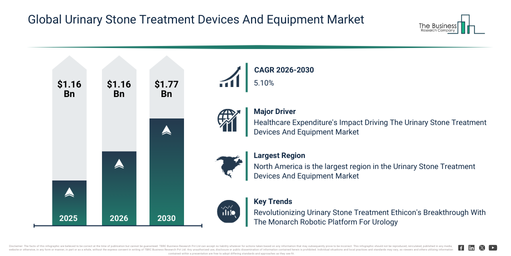
    The market for urinary stone treatment devices and equipment has experienced consistent expansion in recent years. It is projected to grow from $4.39 billion in 2025 to $4.59 billion in 2026, at a compound annual growth rate (CAGR) of 4.5%. This historic growth can be attributed to factors such as the rising prevalence of kidney stone disorders, the wider availability of ESWL technologies, the establishment of more urology specialty centers, an increase in endoscopic procedure utilization, and improvements in the reliability of surgical devices.

    The urinary stone treatment devices and equipment market size is anticipated to undergo significant expansion over the next few years. It is projected to grow to $5.59 billion in 2030, achieving a compound annual growth rate (CAGR) of 5.1%. The expansion during the forecast period is attributable to the increasing embrace of holmium laser technologies, a rising demand for outpatient stone treatment procedures, the proliferation of ambulatory surgery centers, a heightened emphasis on patient safety and efficiency, and increased investments in advanced urology equipment. Prominent trends for the forecast period include the growing adoption of laser-based lithotripsy systems, the increasing utilization of minimally invasive stone removal devices, a burgeoning demand for high-precision stone retrieval tools, the broadening scope of advanced imaging-guided procedures, and an amplified focus on reducing patient recovery time.

    Get A Free Sample Report With In-Depth Market Insights:

    https://thebusinessresearchcompany.com/sample_request?id=57138451&type=smp&name=Urinary%20Stone%20Treatment%20Devices%20And%20Equipment%20Market%20Report%202026&utm_source=Blogs&utm_medium=Paid&utm_campaign=Oct_PR

    Urinary Stone Treatment Devices And Equipment Market Expansion Drivers: What’s Shaping Future Growth?

    The future expansion of the urinary stone treatment devices and equipment market is anticipated to be driven by increasing healthcare expenditure. This spending refers to the total funds allocated to healthcare costs and represents the complete amount of money spent on healthcare-related goods and services within a given healthcare system or economy. The growing prevalence of chronic diseases, which necessitate long-term care, frequent medical interventions, and ongoing management, largely contributes to the rise in healthcare expenditure. Such expenditure plays a crucial role in supporting the development, accessibility, and utilization of urinary stone treatment devices and equipment. For instance, data from a May 2023 report by the UK-based Office for National Statistics indicated that between 2022 and 2023, healthcare spending in the UK increased by 5.6%, a significant rise compared to the 0.9% growth observed in 2022. The UK healthcare expenditure was around $317.63 billion (£292 billion) in 2023. Therefore, the escalating healthcare expenditure is a key factor propelling the growth of the urinary stone treatment devices and equipment market.

    Urinary Stone Treatment Devices And Equipment Market Segments: Where Is Growth Concentrated?

    The urinary stone treatment devices and equipment market covered in this report is segmented –

    1) By Product: Extracorporeal Shock Wave Lithotripsy Devices, Holmium Laser Devices, Intracorporeal Lithotripsy Devices, Stone Retrieval Devices, Ureteral Stents

    2) By Stone Type: Calcium Stones, Struvite, Uric Acid, Cystine, Drug-Induced

    3) By End User: Hospitals, Ambulatory Surgery Centers, Other End Users

    Subsegments:

    1) By Extracorporeal Shock Wave Lithotripsy Devices (ESWL): Electrohydraulic Lithotripsy, Piezoelectric Lithotripsy, Electromagnetic Lithotripsy

    2) By Holmium Laser Devices: Holmium Laser Lithotripsy Systems, Holmium Fiber Lasers

    3) By Intracorporeal Lithotripsy Devices: Laser Lithotripsy Systems, Pneumatic Lithotripsy Devices, Ultrasound Lithotripsy Devices

    4) By Stone Retrieval Devices: Graspers, Baskets, Forceps

    5) By Ureteral Stents: Metal Ureteral Stents, Silicone Ureteral Stents, Coated Ureteral Stents

    Urinary Stone Treatment Devices And Equipment Market Strategic Trends: What Defines The Next Growth Phase?

    Major companies in the urinary stone treatment devices and equipment market are adopting innovative systems, such as the MONARCH Platform, to boost their revenue. The MONARCH Platform is designed to establish new treatment approaches that enhance patients’ lives, being the initial flexible robotic platform approved for use in both bronchoscopy and urology procedures. For example, in February 2023, Ethicon, a US-based company focused on surgical technologies and solutions, announced the robotic-assisted removal of kidney stones utilizing the MONARCH Platform for Urology. This platform allows urologists to robotically navigate within the kidney, providing capabilities for access, clearance, and control via a handheld controller. It offers urologists a singular system that supports both ureteroscopic and percutaneous nephrolithotomy (PCNL) procedures.

    Urinary Stone Treatment Devices And Equipment Market Competitive Overview And Top Companies

    Major companies operating in the urinary stone treatment devices and equipment market are Boston Scientific Corporation Inc., Cook Medical, C.R. Bard, Direx Group, Dornier MedTech, Bard Medical Division, Richard Wolf, Siemens Healthineers AG, Olympus Corporation, Karl Storz, HealthTronics Inc., Lumenis Ltd., Storz Medical AG, Medispec Ltd., EDAP TMS S.A., Coloplast A/S, Allengers Medical Systems Ltd., Conmed Corporation, Guangzhou Potent Optotronic Technology Co., Becton Dickinson and Company, Medtronic plc, American Medical Systems, Limmer Laser GmbH, GEMSS Co. Ltd., Convergent Laser Technologies, Hobbs Medical Inc, Endo Health Solutions Inc., Medical Coaches Inc., Applied Medical Technology Inc., E.M.S. Electro Medical Systems, EMD Medical Technologies, EMS Shockwave, InnoTherapy Inc., JenaSurgical, MTS Medical, Physio Invasiva, Santronix, Siare Engineering International Group, SonaCare Medical, Sonoscape Medical Corp., Stryker Corporation

    View The Full Urinary Stone Treatment Devices And Equipment Market Report:

    https://thebusinessresearchcompany.com/report/urinary-stone-treatment-devices-and-equipment-global-market-report?utm_source=Blogs&utm_medium=Paid&utm_campaign=Oct_PR

    Urinary Stone Treatment Devices And Equipment Market Top Region: Where Does Most Revenue Come From?

    North America was the largest region in the urinary stone treatment devices and equipment market in 2025. Western Europe was the second-largest region in the urinary stone treatment devices and equipment market report. The regions covered in the urinary stone treatment devices and equipment market report are Asia-Pacific, South East Asia, Western Europe, Eastern Europe, North America, South America, Middle East, Africa.

    Reach Out To Our Team:

    The Business Research Company: https://www.thebusinessresearchcompany.com/

    Americas: +1 310-496-7795

    Asia: +44 7882 955267 & +91 8897263534

    Europe: +44 7882 955267

    Email us at: marketing@tbrc.info

    Follow us on:

    LinkedIn: https://in.linkedin.com/company/the-business-research-company

    YouTube: https://www.youtube.com/channel/UC24_fI0rV8cR5DxlCpgmyFQ

    Global Market Model: https://www.thebusinessresearchcompany.com/global-market-model