Blog

  • Ventricular Assist Device Market Explained: What Is Fueling Growth To $4.34 Billion By 2030?

    Ventricular Assist Device Market Explained: What Is Fueling Growth To $4.34 Billion By 2030?

    Built to provide research that’s more actionable and strategically valuable, The Business Research Company’s 2026 market reports include market attractiveness analysis, total addressable market sizing, company benchmarking matrices, interactive Excel dashboards, broader supply chain intelligence, emerging startup tracking, and in-depth product insights.

    Ventricular Assist Device Market Forecast: What Value Will The Market Reach By 2030?

    The ventricular assist device market has experienced significant expansion in recent times. Projections indicate it will expand from $2.37 billion in 2025 to $2.69 billion in 2026, demonstrating a compound annual growth rate (CAGR) of 13.3%. This historical growth can be linked to factors such as the rising incidence of end-stage heart failure, the scarcity of donor hearts, continuous improvements in mechanical circulatory support technologies, an increase in the clinical adoption of LVAD therapy, and better surgical results.

    The ventricular assist device market is projected to experience substantial expansion in the coming years. It will grow to $4.34 billion in 2030 at a compound annual growth rate (CAGR) of 12.8%. This projected increase is fueled by factors such as an expanding elderly demographic facing heart conditions, the increasing utilization of prolonged mechanical assistance, improvements in device longevity through technology, the proliferation of patient monitoring solutions at home, and heightened investment in sophisticated cardiac care facilities. Key developments anticipated during this period encompass innovations in compact implantable pump designs, a wider embrace of continuous-flow devices, the incorporation of remote patient oversight features, the use of enhanced biocompatible substances, and the broader application of destination therapy.

    Get A Free Sample Report With In-Depth Market Insights:

    https://thebusinessresearchcompany.com/sample_request?id=32836715&type=smp&name=Ventricular%20Assist%20Device%20Market%20Report%202026&utm_source=Blogs&utm_medium=Paid&utm_campaign=Oct_PR

    Ventricular Assist Device Market Demand Drivers Opening New Revenue Streams

    The rising occurrence of cardiovascular conditions is fueling the expansion of the ventricular assist device market moving forward. These heart ailments stem from factors such as elevated blood pressure, smoking, high cholesterol, and sedentary lifestyles. Furthermore, the growing incidence of cardiovascular disorders can be attributed to non-communicable conditions like diabetes, chronic respiratory diseases, and hypertension-related heart attacks. This substantial rise in cardiovascular conditions is projected to escalate the need for ventricular assist devices, given their crucial role as a support system for critically ill heart patients. For example, data from the US-based public health institute, the Centers for Disease Control and Prevention, in October 2024, showed that in 2023, approximately 1 out of every 6 cardiovascular disease fatalities occurred in adults younger than 65 years old, with a total of 919,032 people dying from these diseases, accounting for 1 in every 3 deaths. Consequently, the increasing prevalence of cardiovascular disorders is anticipated to significantly drive demand within the ventricular assist device market.

    Ventricular Assist Device Market Segmentation And Category Overview

    The ventricular assist device market covered in this report is segmented –

    1) By Product: Left Ventricular Assist Devices (LVADs), Right Ventricular Assist Devices (RVADs), Biventricular Assist Devices (BIVADs)

    2) By Flow Mechanism: Pulsatile Flow, Continuous Flow

    3) By Design: Transcutaneous Ventricular Assist Devices, Implantable Ventricular Assist Devices

    4) By Application: Bridge-To-Transplant (BTT) Therapy, Destination Therapy, Bridge-To-Recovery (BTR) Therapy, Bridge-To-Candidacy (BTC) Therapy

    5) By End Users: Hospital, Ambulatory Surgical Centres, Cardiology Centres

    Subsegments:

    1) By Left Ventricular Assist Devices (LVADs): Implantable LVADs, Temporary LVADs

    2) By Right Ventricular Assist Devices (RVADs): Implantable RVADs, Temporary RVADs

    3) By Biventricular Assist Devices (BIVADs): Full Support BIVADs, Hybrid BIVADs

    Ventricular Assist Device Market Trends Powering Strategic Industry Growth

    Key companies active in the ventricular assist device (VAD) market are concentrating on technological advancements, such as laser-welding technology, to decrease the size and weight of implantable devices, improve biocompatibility, and strengthen structural integrity. Utilizing precise laser welding allows manufacturers to produce lighter, more compact pumps without sacrificing durability, ultimately making these devices more fitting for a wider array of patients and improving long-term outcomes. For example, in March 2024, Evaheart Medical, an artificial heart company from China, launched its EVA-Pulsar ventricular assist device, which weighs only 262 grams, achieved through laser-welding technology. This light design helps to closely replicate natural pulse pressure (20–30 mmHg) and supports a more physiological cardiac output, thereby lessening the risks linked to continuous-flow devices. The EVA-Pulsar has also received regulatory approval in Japan, and clinical trials are currently ongoing in the U.S., highlighting its global potential.

    Ventricular Assist Device Market Key Players Shaping Industry Direction

    Major companies operating in the ventricular assist device market are Abiomed, Abbott Laboratories, Medtronic, LivaNova PLC, Terumo Corporation, Berlin Heart GmbH, Cirtec, Jarvik Heart Inc., SynCardia Systems LLC, Calon Cardio-Technology Ltd, Huadong Medicine Co. Ltd, Shenzhen Hexin Zondan Medical Equipment Co. Ltd, Sun Medical Technology Research Corp., CorWave SA, CH Biomedical (USA) Inc, Evaheart Inc, BiVACOR Inc, ReliantHeart Inc, Cardiac Assist Inc, Heart Ware International, Braile Biomedica Ltd

    View The Full Ventricular Assist Device Market Report:

    https://thebusinessresearchcompany.com/report/ventricular-assist-device-global-market-report?utm_source=Blogs&utm_medium=Paid&utm_campaign=Oct_PR

    Ventricular Assist Device Market Regional Analysis: Which Geography Leads On Revenue?

    North America was the largest region in the ventricular assist device market in 2025. Asia-Pacific is expected to be the fastest-growing region in the forecast period. The regions covered in the ventricular assist device market report are Asia-Pacific, South East Asia, Western Europe, Eastern Europe, North America, South America, Middle East, Africa.

    Reach Out To Our Team:

    The Business Research Company: https://www.thebusinessresearchcompany.com/

    Americas: +1 310-496-7795

    Asia: +44 7882 955267 & +91 8897263534

    Europe: +44 7882 955267

    Email us at: marketing@tbrc.info

    Follow us on:

    LinkedIn: https://in.linkedin.com/company/the-business-research-company

    YouTube: https://www.youtube.com/channel/UC24_fI0rV8cR5DxlCpgmyFQ

    Global Market Model: https://www.thebusinessresearchcompany.com/global-market-model
  • Ventilators Market Forecast To Reach $7.69 Billion By 2030: Key Trends Explained

    Ventilators Market Forecast To Reach $7.69 Billion By 2030: Key Trends Explained

    Backed by market attractiveness analysis, total addressable market sizing, company benchmarking matrices, interactive Excel dashboards, wider supply chain intelligence, emerging startup coverage, and detailed product-level insights, The Business Research Company’s 2026 market reports are designed to offer research that is more actionable and strategically valuable than ever.

    Ventilators Market Size Outlook: How Quickly Will Revenue Expand Through 2030?

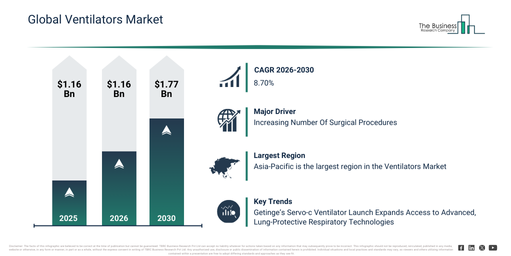
    The size of the ventilators market has experienced robust growth over recent years. This market is projected to expand from $5.07 billion in 2025 to $5.5 billion in 2026, demonstrating a compound annual growth rate (CAGR) of 8.5%. Historically, this expansion has been driven by factors such as the development of critical care infrastructure, a rise in respiratory disorder cases, broader implementation of mechanical ventilation within hospitals, advancements in intensive care methods, and the proliferation of neonatal care facilities.

    The ventilators market is anticipated to experience substantial growth over the next few years, with its valuation expected to reach $7.69 billion in 2030, driven by a compound annual growth rate (CAGR) of 8.7%. This expansion during the forecast period is attributable to the increasing need for home-based respiratory care, a surge in investments in smart ICU technologies, the broadening of emergency medical services, a greater emphasis on patient-specific ventilation strategies, and the increasing adoption of remote monitoring capabilities. Significant trends emerging in this period include the enhanced integration of smart monitoring and alarm systems, a rise in the deployment of portable and transport ventilators, the growing embrace of non-invasive ventilation modes, the expansion of connected ICU ventilation systems, and a sharpened focus on energy-efficient designs.

    Get A Free Sample Report With In-Depth Market Insights:

    https://thebusinessresearchcompany.com/sample_request?id=34489687&type=smp&name=Ventilators%20Market%20Report%202026&utm_source=Blogs&utm_medium=Paid&utm_campaign=Oct_PR

    Ventilators Market Growth Backed By Core Demand Fundamentals

    The expansion of surgical procedures is anticipated to fuel the growth of the ventilators market moving forward. Surgical procedures, which include surgeries or surgical interventions, involve medical professionals using invasive methods on a patient to diagnose, treat, or relieve various medical conditions, injuries, or diseases. Ventilators, also referred to as mechanical ventilators or breathing machines, are essential during surgical procedures, particularly under general anesthesia and in specific surgical contexts. As an illustration, in February 2024, data from the American Academy of Facial Plastic and Reconstructive Surgery, a US-based non-profit organization, indicated that around 83% of all medical procedures conducted in 2023 were minimally invasive, with standard surgical procedures making up the remaining 17%. Furthermore, in 2023, the American Society of Plastic Surgeons, a US-based specialty organization, reported a rise in the total count of cosmetic minimally invasive procedures, escalating from 23.7 million in 2022 to 25.4 million in 2023. Consequently, the increasing volume of surgical procedures is a significant driver for the ventilators market.

    Ventilators Market Segment Outlook: Which Categories Are Growing Fastest?

    The ventilators market covered in this report is segmented –

    1) By Type: Intensive Care Unit Or Critical Care, Transport Or Portable Or Ambulatory, Neonatal

    2) By Interface: Invasive, Non-Invasive

    3) By End-User: Hospitals And Clinics, Home care, Ambulatory Care Centers, Other End Users

    Subsegments:

    1) By Intensive Care Unit (ICU) Or Critical Care Ventilators: Invasive Ventilators, Non-invasive Ventilators

    2) By Transport Or Portable Or Ambulatory Ventilators: Battery-operated Portable Ventilators, Lightweight Transport Ventilators

    3) By Neonatal: High-frequency Oscillatory Ventilators, Conventional Neonatal Ventilators

    Ventilators Market Growth Trends Reshaping The Competitive Landscape

    Leading companies in the ventilators market are concentrating on technological advancements, such as lung-protective ventilation systems equipped with integrated real-time respiratory monitoring and modular hardware architecture, to enhance patient safety, improve ventilation precision, and reduce operational burdens for healthcare providers. Lung-protective ventilation systems combine continuous CO₂ assessment, visual pressure–volume targeting, and configurable components that support personalized therapy delivery while lowering maintenance costs, which are key requirements in modern critical-care ventilation. For instance, in January 2023, Getinge AB, a Sweden-based medical technology company, launched its Servo-c mechanical ventilator, which delivers high-acuity, lung-protective respiratory support for both pediatric and adult patients through features like CO₂ monitoring, Servo Compass visualization, and the Open Lung Tool that provides real-time and retrospective analysis of lung mechanics. The ventilator’s modular design enables efficient fleet management, reduces downtime, and eliminates the need for proprietary disposables, making advanced ventilation more accessible and cost-effective for hospitals in emerging and value-sensitive markets.

    Ventilators Market Competitive Analysis Of Leading Industry Participants

    Major companies operating in the ventilators market are Philips Healthcare, ResMed Inc., Medtronic plc, Becton Dickinson and Company, GE Healthcare, Hamilton Medical AG, Drägerwerk AG & Co. KGaA, Getinge AB, Smiths Group plc, Fisher & Paykel Healthcare Corporation Limited, Air Liquide S.A., Allied Healthcare Products Inc., Teleflex Incorporated, Mindray Medical International Limited, Vyaire Medical Inc., SCHILLER Healthcare India Private Limited, ZOLL Medical Corporation, Asahi Kasei Corporation, Biovo Technologies Ltd., Breas Medical AB, Enexor BioEnergy LLC, Sechrist Industries Inc., Spiritus Medical LLC, Ventis Medical Inc., Airon Corporation, Beijing Aeonmed Co. Ltd., Demax Medical Technology Co. Ltd., FW Equipment Co. Ltd., Hamilton Medical Inc., Heyer Medical AG

    View The Full Ventilators Market Report:

    https://thebusinessresearchcompany.com/report/ventilators-global-market-report?utm_source=Blogs&utm_medium=Paid&utm_campaign=Oct_PR

    Ventilators Market Geographic Spread And Regional Opportunities

    Asia-Pacific was the largest region in the ventilator devices market in 2025. Western Europe was the second-largest region in the ventilator device market. The regions covered in the ventilators market report are Asia-Pacific, South East Asia, Western Europe, Eastern Europe, North America, South America, Middle East, Africa.

    Reach Out To Our Team:

    The Business Research Company: https://www.thebusinessresearchcompany.com/

    Americas: +1 310-496-7795

    Asia: +44 7882 955267 & +91 8897263534

    Europe: +44 7882 955267

    Email us at: marketing@tbrc.info

    Follow us on:

    LinkedIn: https://in.linkedin.com/company/the-business-research-company

    YouTube: https://www.youtube.com/channel/UC24_fI0rV8cR5DxlCpgmyFQ

    Global Market Model: https://www.thebusinessresearchcompany.com/global-market-model

  • Vein Illuminator Market Analysis: Understanding The Drivers Behind 24.3% CAGR Through 2030 Growth

    Vein Illuminator Market Analysis: Understanding The Drivers Behind 24.3% CAGR Through 2030 Growth

    Featuring market attractiveness scoring, total addressable market sizing, company benchmarking matrices, interactive Excel dashboards, deeper supply chain intelligence, emerging startup tracking, and granular product-level insights, The Business Research Company’s 2026 market reports are built to deliver research that is both more actionable and more strategically valuable.

    Vein Illuminator Market Size, Value And Growth Trajectory Through 2030

    The vein illuminator market size has experienced significant expansion in recent years. This market is projected to increase from $34.88 billion in 2025 to $43.42 billion in 2026, demonstrating a compound annual growth rate (CAGR) of 24.5%. Historically, this growth can be attributed to several factors, including the rising frequency of intravenous procedures, the expansion of hospital and emergency care services, the increasing use of blood collection procedures, a growing demand for improved patient comfort, and the availability of portable medical imaging devices.

    The vein illuminator market size is projected to experience substantial expansion in the coming years. It is anticipated to reach a valuation of $103.74 billion by 2030, exhibiting a compound annual growth rate (CAGR) of 24.3%. This projected growth throughout the forecast period can be attributed to factors such as increased implementation in outpatient and emergency environments, a heightened emphasis on patient safety and the precision of procedures, the broadening of home and ambulatory care options, the expanding incorporation of AI-powered visualization tools, and a rise in investment toward intelligent diagnostic devices. Key developments anticipated during this period encompass the greater embrace of near-infrared vein visualization equipment, a surging demand for portable and handheld vein illuminators, the deepening integration of AI-assisted imaging algorithms, an expanding application in challenging venous access scenarios, and a strengthened commitment to minimizing needlestick errors.

    Get A Free Sample Report With In-Depth Market Insights:

    https://thebusinessresearchcompany.com/sample_request?id=96248583&type=smp&name=Vein%20Illuminator%20Market%20Report%202026&utm_source=Blogs&utm_medium=Paid&utm_campaign=Oct_PR

    Vein Illuminator Market Growth Catalysts And Demand Drivers

    The expanding occurrence of chronic illnesses is projected to fuel the expansion of the vein illuminator market in the future. A chronic disease is defined as a prolonged condition, lasting at least three months, which may worsen over time. Patients suffering from chronic conditions frequently need regular blood tests and IV treatments, making it difficult to find appropriate veins. Vein illuminators resolve these issues by improving the visibility of veins, thereby decreasing patient discomfort and enhancing their overall experience. For example, data from June 2024, sourced from the National Health Service, a UK government body, indicated that 3,615,330 individuals registered with a general practitioner (GP) received a diagnosis of non-diabetic hyperglycemia or pre-diabetes (a condition characterized by elevated blood sugar levels, insufficient for a diabetes diagnosis) in 2023. This represented an 18% increase compared to 3,065,825 cases recorded in 2022. Consequently, the escalating incidence of chronic diseases is accelerating the expansion of the vein illuminator market.

    Vein Illuminator Market Segment Landscape: Which Areas Lead Development?

    The vein illuminator market covered in this report is segmented –

    1) By Technology: Near-Infrared Illumination, Transillumination

    2) By Application: Intravenous Access, Blood Draw, Other Applications

    3) By End User: Hospitals, Blood Donation Camps

    Subsegments:

    1) By Near-Infrared Illumination: Handheld Vein Illuminators, Fixed Vein Illumination Systems

    2) By Transillumination: Fiber-Optic Transillumination Devices, LED-Based Transillumination Devices

    Vein Illuminator Market Trends Shaping Long-Term Demand

    Major companies in the vein illuminator market are actively developing new infrared light-based vein illuminators to gain a competitive advantage. Near-infrared light is defined as the portion of the electromagnetic spectrum that lies just beyond the visible light spectrum, characterized by wavelengths slightly longer than those of visible red light. For instance, in September 2023, PharmEasy, an India-based e-pharmacy company, launched the Vein Finder, an innovative device designed to enhance the precision of blood sample collection and improve patient comfort. Recognizing the challenge of locating veins, particularly in individuals with difficult-to-puncture veins, infants, and the elderly, PharmEasy’s Vein Finder utilizes near-infrared light to visualize veins beneath the skin’s surface. This handheld device significantly reduces discomfort by allowing phlebotomists to locate veins accurately and quickly, thereby improving the success rate of venipuncture and enhancing the overall patient experience. The technology is suitable for patients of all ages.

    Vein Illuminator Market Leading Companies And Competitive Benchmarking

    Major companies operating in the vein illuminator market are AccuVein Inc, Veinlite LLC, Christie Medical Holdings Inc, Near Infrared Imaging Inc, Venoscope LLC, TransLite LLC, ZD Medical Inc, AimVein Ltd, BLZ Medical SAS, Shenzhen Bestman Instrument Co Ltd, Vuetek Scientific LLC, Infrared Imaging Systems Inc, Vivolight LLC, Optics Medical LLC, Luminous Medical Inc, Clear Guide Medical LLC, NIR Medical Technologies Ltd, De Koningh Medical Systems, Vascular Technology Inc, MedX Health Corporation

    View The Full Vein Illuminator Market Report:

    https://thebusinessresearchcompany.com/report/vein-illuminator-global-market-report?utm_source=Blogs&utm_medium=Paid&utm_campaign=Oct_PR

    Vein Illuminator Market Top Region By Revenue And Market Share

    North America was the largest region in the vein illuminator market in 2025. The regions covered in the vein illuminator market report are Asia-Pacific, South East Asia, Western Europe, Eastern Europe, North America, South America, Middle East, Africa.

    Reach Out To Our Team:

    The Business Research Company: https://www.thebusinessresearchcompany.com/

    Americas: +1 310-496-7795

    Asia: +44 7882 955267 & +91 8897263534

    Europe: +44 7882 955267

    Email us at: marketing@tbrc.info

    Follow us on:

    LinkedIn: https://in.linkedin.com/company/the-business-research-company

    YouTube: https://www.youtube.com/channel/UC24_fI0rV8cR5DxlCpgmyFQ

    Global Market Model: https://www.thebusinessresearchcompany.com/global-market-model
  • Vein Illumination Devices Market Growth To $1.06 Billion By 2030: What’s Driving The Expansion?

    Vein Illumination Devices Market Growth To $1.06 Billion By 2030: What’s Driving The Expansion?

    Built to provide research that’s more actionable and strategically valuable, The Business Research Company’s 2026 market reports include market attractiveness analysis, total addressable market sizing, company benchmarking matrices, interactive Excel dashboards, broader supply chain intelligence, emerging startup tracking, and in-depth product insights.

    Vein Illumination Devices Market CAGR Outlook And Future Development

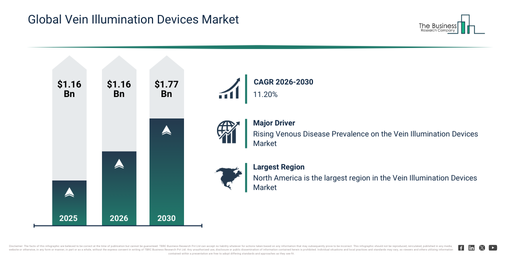
    The vein illumination devices market has observed rapid expansion in recent years. Its valuation is forecast to climb from $0.61 billion in 2025 to $0.69 billion in 2026, reflecting a compound annual growth rate (CAGR) of 12.5%. The market’s growth in the preceding period can be attributed to an increasing frequency of intravenous procedures, the expansion of hospital and clinic infrastructure, a rising demand for patient comfort during venipuncture, the adoption of basic transillumination tools, and the availability of handheld medical devices.

    The vein illumination devices market is expected to experience substantial expansion in the next few years. It is projected to achieve a value of $1.06 billion in 2030, driven by a compound annual growth rate (CAGR) of 11.2%. This growth over the forecast period is primarily due to a rising demand for non-invasive visualization technologies, increased usage in outpatient and homecare settings, the broadening of emergency medical services, growing integration of imaging with handheld devices, and an enhanced focus on decreasing needle-stick injuries. Significant trends anticipated during this period include the increased adoption of portable vein illumination devices, the expanding use of near-infrared vein visualization technology, a greater need for accurate IV access tools, the extension of their application in emergency and pediatric care, and a heightened emphasis on achieving first-attempt success rates.

    Get A Free Sample Report With In-Depth Market Insights:

    https://thebusinessresearchcompany.com/sample_request?id=11826193&type=smp&name=Vein%20Illumination%20Devices%20Market%20Report%202026&utm_source=Blogs&utm_medium=Paid&utm_campaign=Oct_PR

    Vein Illumination Devices Market Opportunity Drivers: What’s Unlocking New Revenue Potential?

    The growing challenge posed by venous thromboembolism (VTE) is anticipated to stimulate the expansion of the Vein Illumination Devices Market. This condition, encompassing deep vein thrombosis and pulmonary embolism, involves the formation of blood clots within veins, which impede normal blood flow and can lead to severe, potentially fatal, health complications. An increase in VTE incidents is attributed to factors such as an aging global population, prolonged immobility, various surgical procedures, and prevalent chronic diseases, all of which elevate the likelihood of clot formation. Vein illumination devices play a crucial role in clinical settings by enhancing vein visibility, thereby enabling more accurate and safer medical procedures, including intravenous access, blood collection, and sclerotherapy, ultimately reducing complications linked to venous issues. For example, in April 2025, figures from the NHS Commissioning Board, a UK-based government health authority, indicated that approximately 90% of adult inpatients, totaling about 3.1 million out of 3.5 million admissions, were screened for VTE risk in Q2 of 2024–25, underscoring a continuous national focus on VTE prevention in hospitals. Consequently, the increasing burden of venous thromboembolism is a primary driver for the growth of the Vein Illumination Devices Market.

    Vein Illumination Devices Market Segments: Where Is Growth Concentrated?

    The vein illumination devices market covered in this report is segmented –

    1) By Product Type: Table-Top Devices, Hand-Held Devices

    2) By Technology: Transillumination, Near Infrared Illumination

    3) By Application: Intravenous Access, Blood Draw, Venipuncture Assistance, Sclerotherapy, Other Applications

    4) By End-User: Hospitals And Clinics, Rehabilitation Facilities, Blood Donation Camps, Academic Institutions, Nursing Homes, Other End-Users

    Subsegments:

    1) By Table-Top Devices: Desktop Or Stationary Vein Illuminators, Wall-Mounted Vein Illumination Systems

    2) By Hand-Held Devices: Portable Vein Illuminators, Mobile Or Compact Vein Detection Devices

    Vein Illumination Devices Market Industry Leaders And Competitive Landscape

    Major companies operating in the vein illumination devices market are Veinlite, AccuVein Inc., Christie Medical Holdings Inc., Venoscope, Near Infrared Imaging, BLZ Technology Inc., Aimvein.com, Evena Medical, ZD Medical Inc., SIFSOF LLC, Infinium Medical Inc., Shenzhen Bestman Instrument Co. Ltd., DermLite LLC, Novarix Ltd., Wuxi Biomedical Technology Co. Ltd., Vino Optics, Delta Medical International Ltd., B. Braun Medical Inc., IBIS Medical, AngioDynamics

    View The Full Vein Illumination Devices Market Report:

    https://thebusinessresearchcompany.com/report/vein-illumination-devices-global-market-report?utm_source=Blogs&utm_medium=Paid&utm_campaign=Oct_PR

    Vein Illumination Devices Market Regional Analysis And Top Geography

    North America was the largest region in the vein illumination devices market in 2025. Asia-Pacific is expected to be the fastest-growing region in the forecast period. The regions covered in the vein illumination devices market report are Asia-Pacific, South East Asia, Western Europe, Eastern Europe, North America, South America, Middle East, Africa.

    Reach Out To Our Team:

    The Business Research Company: https://www.thebusinessresearchcompany.com/

    Americas: +1 310-496-7795

    Asia: +44 7882 955267 & +91 8897263534

    Europe: +44 7882 955267

    Email us at: marketing@tbrc.info

    Follow us on:

    LinkedIn: https://in.linkedin.com/company/the-business-research-company

    YouTube: https://www.youtube.com/channel/UC24_fI0rV8cR5DxlCpgmyFQ

    Global Market Model: https://www.thebusinessresearchcompany.com/global-market-model
  • Vascular Stent Market Trends Reshaping Industry Growth Through 2030

    Vascular Stent Market Trends Reshaping Industry Growth Through 2030

    Backed by market attractiveness analysis, total addressable market sizing, company benchmarking matrices, interactive Excel dashboards, wider supply chain intelligence, emerging startup coverage, and detailed product-level insights, The Business Research Company’s 2026 market reports are designed to offer research that is more actionable and strategically valuable than ever.

    Vascular Stent Market Set To Climb From $19.11 Billion In 2026 To $28.21 Billion By 2030

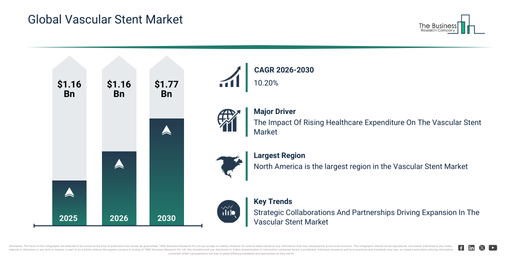
    The vascular stent market has witnessed substantial expansion in recent years. Its value is expected to rise from $17.25 billion in 2025 to $19.11 billion in 2026, achieving a compound annual growth rate (CAGR) of 10.8%. Historically, this market growth has stemmed from factors including a higher occurrence of cardiovascular diseases, the expansion of catheterization laboratories, increased acceptance of angioplasty procedures, an aging global population, and better access to interventional cardiology treatments.

    The vascular stent market is anticipated to experience substantial growth over the next few years. It is projected to reach a value of $28.21 billion in 2030, demonstrating a compound annual growth rate (CAGR) of 10.2%. This expected growth during the forecast period is driven by factors such as a rising demand for cutting-edge stent technologies, a stronger emphasis on personalized cardiovascular treatments, the expansion of minimally invasive cardiac care options, increasing investments in advanced biomaterials, and the growing adoption of digital imaging-guided interventions. Significant trends observed in this period include the wider acceptance of drug-eluting and bioresorbable stents, an escalating demand for minimally invasive vascular procedures, the increased application of advanced alloy and polymer materials, the broadening scope of peripheral vascular interventions, and an intensified focus on preventing long-term restenosis.

    Get A Free Sample Report With In-Depth Market Insights:

    https://thebusinessresearchcompany.com/sample_request?id=59113110&type=smp&name=Vascular%20Stent%20Market%20Report%202026&utm_source=Blogs&utm_medium=Paid&utm_campaign=Oct_PR

    Vascular Stent Market Growth Momentum: What Factors Are Shaping Demand?

    Rising healthcare spending is anticipated to boost the expansion of the vascular stent market. Healthcare expenditure defines the overall financial outlay by a nation, entity, or person on health-related products and services over a given timeframe. Enhanced healthcare investment facilitates superior infrastructure, upgraded medical facilities, and heightened public knowledge, all contributing positively to the detection and management of vascular ailments. For example, in May 2024, according to the Office for National Statistics, a UK-based government department, total healthcare expenditure saw a 5.6% increase in nominal terms in 2023, an increase of 0.9% growth compared to 2022. Consequently, the growing healthcare expenditure is propelling the vascular stent market ahead.

    Vascular Stent Market Segment Analysis: What Are The Core Market Categories?

    The vascular stent market covered in this report is segmented –

    1) By Product: Coronary Stents, Peripheral Vascular Stents

    2) By Material: Metallic Stents, Cobalt-Chromium, Platinum Chromium, Nickel Titanium, Stainless Steel

    3) By Mode Of Delivery: Balloon-Expandable Stent, Self-Expanding Stent

    4) By End-User: Ambulatory Surgical Center, Cardiac Center, Hospital

    Subsegments:

    1) By Coronary Stents: Drug-Eluting Coronary Stents, Bare Metal Coronary Stents

    2) By Peripheral Vascular Stents: Drug-Eluting Peripheral Stents, Bare Metal Peripheral Stents

    Vascular Stent Market Trends Redefining Industry Growth

    Leading corporations are strategically forming alliances and engaging in collaborations with nascent and mid-sized enterprises in the vascular stent market, with the aim of broadening their product and service offerings. These strategic collaborations and partnership agreements enable companies to expand their existing product portfolios and extend their geographical reach. For instance, in September 2023, The Electrospinning Company, a UK-based manufacturer of advanced biomaterials for use in implantable tissue-regenerative devices, partnered with Relisys Medical Devices, an India-based manufacturer of highly innovative cardiovascular medical devices, to develop innovative products that could advance cardiovascular care and revolutionize patient outcomes. This partnership leverages Electrospinning Company’s Caladrix technology to deposit a thin, functional polymer coating without the need for sutures, allowing vascular stents to be manufactured with improved production rates and yields while maintaining efficacy.

    Vascular Stent Market Key Participants And Competitive Landscape

    Major companies operating in the vascular stent market are Medtronic plc, Abbott Laboratories, Boston Scientific Corporation, Biotronik SE & Co. KG, Terumo Corporation, MicroPort Scientific Corporation, B. Braun Melsungen AG, Cook Medical, W. L. Gore & Associates, Meril Life Sciences, Sahajanand Medical Technologies, Translumina, Lepu Medical Technology, Stentys, Endologix, JOTEC, Hexacath, iVascular, Balton, Opto Circuits

    View The Full Vascular Stent Market Report:

    https://thebusinessresearchcompany.com/report/vascular-stent-global-market-report?utm_source=Blogs&utm_medium=Paid&utm_campaign=Oct_PR

    Vascular Stent Market Geographic Analysis: Where Is Demand Rising Fastest?

    North America was the largest region in the vascular stent market share in 2025. The regions covered in the vascular stent market report are Asia-Pacific, South East Asia, Western Europe, Eastern Europe, North America, South America, Middle East, Africa.

    Reach Out To Our Team:

    The Business Research Company: https://www.thebusinessresearchcompany.com/

    Americas: +1 310-496-7795

    Asia: +44 7882 955267 & +91 8897263534

    Europe: +44 7882 955267

    Email us at: marketing@tbrc.info

    Follow us on:

    LinkedIn: https://in.linkedin.com/company/the-business-research-company

    YouTube: https://www.youtube.com/channel/UC24_fI0rV8cR5DxlCpgmyFQ

    Global Market Model: https://www.thebusinessresearchcompany.com/global-market-model
  • Vascular Plugs Market Growth To $1.71 Billion Creates New Opportunities Across The Industry

    Vascular Plugs Market Growth To $1.71 Billion Creates New Opportunities Across The Industry

    Featuring market attractiveness scoring, total addressable market sizing, company benchmarking matrices, interactive Excel dashboards, deeper supply chain intelligence, emerging startup tracking, and granular product-level insights, The Business Research Company’s 2026 market reports are built to deliver research that is both more actionable and more strategically valuable.

    Vascular Plugs Market Forecast: Value Set To Climb From $1.28 Billion To $1.71 Billion

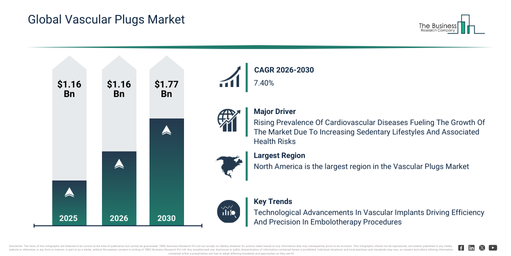
    The vascular plugs market has seen substantial growth in recent years. Its valuation is set to increase from $1.19 billion in 2025 to $1.28 billion in 2026, advancing at a compound annual growth rate (CAGR) of 7.6%. This past expansion can be linked to the rising incidence of vascular disorders, the broader application of interventional radiology procedures, the increasing acceptance of minimally invasive treatments, the development of advanced catheter technologies, and enhanced imaging guidance techniques.

    The vascular plugs market is projected for significant expansion over the coming years, reaching a valuation of $1.71 billion by 2030, exhibiting a compound annual growth rate (CAGR) of 7.4%. This anticipated growth during the forecast period is fueled by several factors, including a heightened demand for accurate embolization solutions, a stronger emphasis on minimizing procedural dangers, the broadening scope of interventional cardiology and neurology applications, increasing investments in cutting-edge vascular devices, and their expanding use in outpatient environments. Key trends expected during this period involve a greater reliance on minimally invasive embolization techniques, the growing acceptance of vascular plugs that are removable and adjustable, an increasing need for devices that offer precise vessel occlusion, the wider application of catheter-based interventions, and a heightened priority on enhancing deployment control.

    Get A Free Sample Report With In-Depth Market Insights:

    https://thebusinessresearchcompany.com/sample_request?id=14045188&type=smp&name=Vascular%20Plugs%20Market%20Report%202026&utm_source=Blogs&utm_medium=Paid&utm_campaign=Oct_PR

    Vascular Plugs Market Expansion Drivers: What’s Shaping Future Growth?

    The rising incidence of cardiovascular diseases (CVDs) is anticipated to drive the expansion of the vascular plugs market. These conditions, which impact the heart and blood vessels and disrupt normal blood circulation, are becoming more prevalent globally due to evolving lifestyle patterns, increasing urbanization, and changing dietary habits that contribute to long-term strain on the cardiovascular system. Vascular plugs are crucial in managing CVDs by blocking abnormal blood flow, such as in arteriovenous malformations, thereby preventing complications including hemorrhage or heart strain. For instance, in January 2024, the American Heart Association, a US-based non-profit organization, reported that the age-adjusted death rate from cardiovascular disease increased to 233.3 per 100,000 in 2024, representing a 4.0% rise from 224.4 per 100,000 in 2023. Therefore, the increasing prevalence of cardiovascular diseases (CVDs) is expected to significantly propel the growth of the vascular plugs market.

    Vascular Plugs Market Segment Breakdown: Which Categories Lead On Revenue?

    The vascular plugs market covered in this report is segmented –

    1) By Type: Embolic Coils, Non-Removable Vascular Plugs, Removable Vascular Plugs

    2) By Material: Polyvinyl Alcohol, Gelatin, Collagen

    3) By Indication: Arteriovenous Malformations, Vascular Trauma, Cerebral Aneurysms

    4) By End-User: Hospital, Ambulatory Surgical Centers, Other End-User

    Subsegments:

    1) By Embolic Coils: Detachable Embolic Coils, Pushable Embolic Coils, Hydrogel-Coated Embolic Coils

    2) By Non-Removable Vascular Plugs: Self-Expanding Vascular Plugs, Balloon-Expandable Vascular Plugs, Bioabsorbable Vascular Plugs

    3) By Removable Vascular Plugs: Retrievable Vascular Plugs, Adjustable Vascular Plugs, Shape Memory Vascular Plugs

    Vascular Plugs Market Strategic Trends: What Defines The Next Growth Phase?

    Major companies in the vascular plugs market are prioritizing the development of advanced products, such as self-expanding vascular implants, to provide consistent and adaptable expansion within vessels. This ensures optimal placement and reduces the potential for migration or vessel damage. Self-expanding vascular implants are crafted from shape-memory materials that independently expand in blood vessels to offer support or blockage without needing external force. For instance, in May 2024, Merit Medical Systems, a US-based medical device company, secured U.S. Food and Drug Administration (FDA) 510(k) clearance for its Siege Vascular Plug. The Siege vascular plug is specifically engineered for swift peripheral artery embolization, achieving vessel occlusion in approximately 1.3 minutes. It is a self-expanding, recapturable device, allowing for flexible and precise placement. Available in three sizes, it accommodates a range of artery diameters. Merit Medical also launched the Bearing nsPVA Express prefilled syringe, which simplifies procedures by removing the need for embolization particle preparation, highlighting the company’s commitment to efficiency and enhanced patient outcomes in embolotherapy.

    Vascular Plugs Market Top Companies Driving Competitive Growth

    Major companies operating in the vascular plugs market are Abbott Laboratories, Medtronic plc, Stryker Corporation, Terumo Corporation, Cook Medical, Biotronik, Merit Medical Systems, Lepu Medical Technology, Cordis, Endologix, B. Braun Melsungen AG, Lifetech Med, Infiniti Medical, EndoShape Inc., Shape Memory Medical, Macromed, Invamed GmbH, ArtVentive Medical Group Inc., Boston Scientific Corporation, MicroPort Scientific Corporation

    View The Full Vascular Plugs Market Report:

    https://thebusinessresearchcompany.com/report/vascular-plugs-global-market-report?utm_source=Blogs&utm_medium=Paid&utm_campaign=Oct_PR

    Vascular Plugs Market Global Footprint: Which Region Leads The Market?

    North America was the largest region in the vascular plugs market in 2025. Asia-Pacific is expected to be the fastest-growing region in the forecast period. The regions covered in the vascular plugs market report are Asia-Pacific, South East Asia, Western Europe, Eastern Europe, North America, South America, Middle East, Africa.

    Reach Out To Our Team:

    The Business Research Company: https://www.thebusinessresearchcompany.com/

    Americas: +1 310-496-7795

    Asia: +44 7882 955267 & +91 8897263534

    Europe: +44 7882 955267

    Email us at: marketing@tbrc.info

    Follow us on:

    LinkedIn: https://in.linkedin.com/company/the-business-research-company

    YouTube: https://www.youtube.com/channel/UC24_fI0rV8cR5DxlCpgmyFQ

    Global Market Model: https://www.thebusinessresearchcompany.com/global-market-model

  • Vascular Lesion Treatment Laser Market Forecast: Breaking Down The Numbers Behind Future Expansion

    Vascular Lesion Treatment Laser Market Forecast: Breaking Down The Numbers Behind Future Expansion

    Built to provide research that’s more actionable and strategically valuable, The Business Research Company’s 2026 market reports include market attractiveness analysis, total addressable market sizing, company benchmarking matrices, interactive Excel dashboards, broader supply chain intelligence, emerging startup tracking, and in-depth product insights.

    Vascular Lesion Treatment Laser Market Revenue Growth On Track For A 10.7% CAGR Through 2030

    The vascular lesion treatment laser market size has experienced rapid growth in recent years. This market is projected to expand from $1.83 billion in 2025 to $2.03 billion in 2026, demonstrating a compound annual growth rate (CAGR) of 10.9%. The growth observed in the past can be ascribed to several factors, including an increase in vascular disorders, a rising demand for cosmetic dermatology, continuous advancements in laser technology, a growing preference for outpatient treatments, and proven clinical efficacy.

    The vascular lesion treatment laser market is poised for significant expansion over the next few years, projected to achieve a value of $3.04 billion by 2030, exhibiting a compound annual growth rate (CAGR) of 10.7%. This expansion during the forecast period is fueled by elements such as the rise in aesthetic procedures, the increasing scope of pediatric dermatology, continuous innovation in laser systems, a growing need for clinic-based treatments, and an aging population. Major developments expected in this timeframe include a shift towards non-invasive aesthetic treatments, an increased desire for scar-free procedures, advancements in pediatric vascular treatment, the general growth of cosmetic dermatology, and a preference for outpatient laser procedures.

    Get A Free Sample Report With In-Depth Market Insights:

    https://thebusinessresearchcompany.com/sample_request?id=31502766&type=smp&name=Vascular%20Lesion%20Treatment%20Laser%20Market%20Report%202026&utm_source=Blogs&utm_medium=Paid&utm_campaign=Oct_PR

    Vascular Lesion Treatment Laser Market Development Factors: What’s Supporting Demand?

    The anticipated expansion of the vascular lesion treatment laser market going forward is significantly influenced by the rising need for minimally invasive procedures. These medical techniques are executed via minor incisions or natural orifices, leading to less tissue harm, quicker recuperation, and fewer complications compared to conventional surgical methods. The preference for minimally invasive procedures stems from their faster recovery periods, allowing patients to endure less discomfort, shorter hospitalizations, and a more rapid return to their normal routines than with traditional surgeries. The vascular lesion treatment laser further enhances these procedures by accurately targeting atypical blood vessels, decreasing tissue damage, and fostering faster healing with reduced scarring. An illustration of this trend is seen in June 2024, where the American Society of Plastic Surgeons, a US-based non-profit organization, reported a 7% rise in minimally invasive procedures in 2023, which outpaced the growth rate of surgical procedures by 2%. Consequently, the escalating requirement for minimally invasive procedures is a key impetus for the expansion of the vascular lesion treatment laser market.

    Vascular Lesion Treatment Laser Market Segmentation: How Does The Market Break Down By Category?

    The vascular lesion treatment laser market covered in this report is segmented –

    1) By Type: Telangiectasia, Hemangiomas, Port Wine Stains

    2) By Technology: Pulsed Dye Laser, Neodymium-doped Yttrium Aluminum Garnet laser

    3) By Application: Aesthetic Procedures, Medical Treatments, Cosmetic Enhancements

    4) By End User: Hospitals, Dermatology Clinics, Cosmetic Surgery Centers

    Subsegments:

    1) By Telangiectasia: Facial Spider Veins, Leg Spider Veins, Truncal Spider Veins

    2) By Hemangiomas: Infantile Hemangiomas, Congenital Hemangiomas, Capillary Hemangiomas

    3) By Port Wine Stains: Facial Port Wine Stains, Limb Port Wine Stains, Truncal Port Wine Stains

    Vascular Lesion Treatment Laser Market Transformation Trends: What Innovations Are Driving Change?

    Leading enterprises within the vascular lesion treatment laser market are prioritizing the creation of novel offerings, such as dual-wavelength laser platforms, to elevate the accuracy and effectiveness of therapies for diverse vascular ailments. These advanced medical instruments, known as dual-wavelength laser platforms, consolidate two distinct laser wavelengths into a single apparatus to more precisely target various vascular lesions while minimizing harm to surrounding healthy tissue. As an illustration, in April 2025, Candela Medical Inc., a US-based medical device manufacturer, introduced its Vbeam Pro laser platform. This sophisticated system incorporates a 595 nm pulsed dye laser along with a 1064 nm Nd:YAG wavelength. The Vbeam Pro, which is FDA-cleared for use in children, offers enhanced accuracy, adaptability, and performance in addressing a broad spectrum of vascular and dermatological conditions, including rosacea, port-wine stains, acne, leg and spider veins, scars, benign pigmented lesions, wrinkles, warts, stretch marks, and photoaging. Its groundbreaking design achieves up to 20% better lesion clearance, facilitates 50% quicker treatment sessions, and reduces patient discomfort by 20% when compared to earlier generation systems, marking a significant step forward in pulsed dye laser technology.

    Vascular Lesion Treatment Laser Market Leading Players And Competitive Positioning

    Major companies operating in the vascular lesion treatment laser market are Lumenis Ltd., Candela Corporation, DEKA M.E.L.A. S.r.l., Alma Lasers Ltd., Quanta System S.p.A., Fotona d.o.o., Asclepion Laser Technologies GmbH, Aerolase Inc., Lynton Lasers Ltd., Sciton Inc., Cynosure Inc., Cutera Inc., Venus Concept Inc., Biolitec AG, El.En. S.p.A., SharpLight Technologies Ltd., Beijing Nubway S And T Co. Ltd., Beijing Sincoheren S And T Development Co. Ltd., Wuhan Gigaa Optronics Technology Co. Ltd., Nanjing Bestview Laser Co. Ltd.

    View The Full Vascular Lesion Treatment Laser Market Report:

    https://thebusinessresearchcompany.com/report/vascular-lesion-treatment-laser-global-market-report?utm_source=Blogs&utm_medium=Paid&utm_campaign=Oct_PR

    Vascular Lesion Treatment Laser Market Regional Split: Which Areas Are Fueling Growth?

    North America was the largest region in the vascular lesion treatment laser market in 2025. Asia-Pacific is expected to be the fastest-growing region in the forecast period. The regions covered in the vascular lesion treatment laser market report are Asia-Pacific, South East Asia, Western Europe, Eastern Europe, North America, South America, Middle East, Africa.

    Reach Out To Our Team:

    The Business Research Company: https://www.thebusinessresearchcompany.com/

    Americas: +1 310-496-7795

    Asia: +44 7882 955267 & +91 8897263534

    Europe: +44 7882 955267

    Email us at: marketing@tbrc.info

    Follow us on:

    LinkedIn: https://in.linkedin.com/company/the-business-research-company

    YouTube: https://www.youtube.com/channel/UC24_fI0rV8cR5DxlCpgmyFQ

    Global Market Model: https://www.thebusinessresearchcompany.com/global-market-model

  • Vascular Imaging Devices Market Expected To Grow At 5.8% CAGR Through 2030: What Businesses Need To Know

    Vascular Imaging Devices Market Expected To Grow At 5.8% CAGR Through 2030: What Businesses Need To Know

    Backed by market attractiveness analysis, total addressable market sizing, company benchmarking matrices, interactive Excel dashboards, wider supply chain intelligence, emerging startup coverage, and detailed product-level insights, The Business Research Company’s 2026 market reports are designed to offer research that is more actionable and strategically valuable than ever.

    Vascular Imaging Devices Market Value Growth And Long-Term Outlook

    The vascular imaging devices market size has demonstrated robust growth over recent years. It is forecast to expand from $8.4 billion in 2025 to $8.89 billion in 2026, achieving a compound annual growth rate (CAGR) of 5.8%. The expansion witnessed in the past can be attributed to factors such as the increasing prevalence of cardiovascular diseases, the enhancement of diagnostic imaging infrastructure, the greater adoption of ultrasound and angiography systems, the increased deployment of hospital-based imaging services, and the availability of proficient radiology professionals.

    The vascular imaging devices market is projected to achieve substantial expansion over the next few years. This market is expected to reach $11.12 billion in 2030, growing at a compound annual growth rate (CAGR) of 5.8%. The anticipated growth throughout the forecast period stems from factors such as the increasing necessity for early disease identification, rising financial commitments to advanced imaging technologies, the expansion of outpatient diagnostic centers, the growing integration of imaging with digital health platforms, and the development of portable vascular imaging devices. Key trends for the forecast period include the increasing incorporation of AI-based image analysis, a surge in the adoption of non-invasive vascular imaging techniques, the expanding utilization of high-resolution imaging modalities, the broadening of minimally invasive diagnostic procedures, and an enhanced emphasis on early cardiovascular diagnosis.

    Get A Free Sample Report With In-Depth Market Insights:

    https://thebusinessresearchcompany.com/sample_request?id=25928304&type=smp&name=Vascular%20Imaging%20Devices%20Market%20Report%202026&utm_source=Blogs&utm_medium=Paid&utm_campaign=Oct_PR

    Vascular Imaging Devices Market Industry Drivers: What’s Behind The Revenue Growth?

    The expanding prevalence of diabetes and hypertension is projected to propel the growth of the vascular imaging devices market moving forward. Diabetes is a chronic metabolic ailment where the body cannot produce or effectively utilize insulin, while hypertension signifies a state of persistently elevated arterial blood pressure, which places considerable stress on the vascular system. The increase in these health issues is fueled by an aging population, higher rates of obesity, inactive lifestyles, and poor eating habits. Vascular imaging improves clinical management by allowing for the early detection and ongoing monitoring of vascular changes linked to diabetes and hypertension, which supports timely assessment of disease progression and aids in treatment planning. For instance, in September 2025, the World Health Organization, a Switzerland-based international public health agency, stated that 1.4 billion adults aged 30–79 globally were living with hypertension in 2024, with only 23% having controlled blood pressure. Thus, the rising occurrence of diabetes and hypertension is a key driver for the growth of the vascular imaging devices market.

    Vascular Imaging Devices Market Segment Trends And Revenue Contributors

    The vascular imaging devices market covered in this report is segmented –

    1) By Type: Minimally Invasive, Non-Invasive

    2) By Application: Diagnostics, Therapeutics

    3) By End-User: Hospitals, Diagnostic Imaging Centers, Other End Users

    Subsegments:

    1) By Minimally Invasive: Intravascular Ultrasound (IVUS), Optical Coherence Tomography (OCT), Angiography (Including Catheter-Based Angiography)

    2) By Non-Invasive: Magnetic Resonance Angiography (MRA), Computed Tomography Angiography (CTA), Doppler Ultrasound, Color Flow Duplex Ultrasound, Contrast-Enhanced Ultrasound, Photoacoustic Imaging

    #Vascular Imaging Devices Market Growth Trends: What’s Shaping The Future Outlook?

    Companies operating within the vascular imaging devices market are focusing on the creation of next-generation intravascular ultrasound (IVUS) platforms, powered by artificial intelligence, to overcome the limitations inherent in legacy systems. These advanced IVUS platforms are sophisticated imaging technologies that deliver higher-resolution, real-time cross-sectional images of blood vessels, aiming to improve diagnosis, guide medical interventions, and optimize cardiovascular treatments. For instance, in October 2023, Evident Vascular Inc., a US-based med-tech company, officially emerged from stealth after securing $35 million in Series A financing, dedicated to building an advanced IVUS platform. This innovation is designed to replace older IVUS systems by providing superior image interpretation, optimizing workflow, and achieving better adoption in peripheral vascular interventions, all made possible through AI-based analysis. Backed by Vensana Capital, Evident Vascular’s technology is tailored specifically for vascular interventionalists and is initially intended for use in peripheral arteries, with plans for future capabilities in coronary procedures.

    Vascular Imaging Devices Market Competitive Overview And Top Companies

    Major companies operating in the vascular imaging devices market are Abbott Laboratories, Medtronic plc, Siemens Healthineers AG, Koninklijke Philips N.V., GE Healthcare Technologies Inc., Terumo Corporation, Nipro Corporation, Shimadzu Corporation, Bracco Group, Carestream Health Inc., Hitachi Medical Corporation, Canon Medical Systems Corporation, Toshiba Medical Systems Corporation, Christie Medical Holdings Inc., Fujifilm Healthcare Corporation, Esaote SpA, Mindray Medical International Limited, Ziehm Imaging GmbH, Samsung Medison Co. Ltd., United Imaging Healthcare

    View The Full Vascular Imaging Devices Market Report:

    https://thebusinessresearchcompany.com/report/vascular-imaging-devices-global-market-report?utm_source=Blogs&utm_medium=Paid&utm_campaign=Oct_PR

    Vascular Imaging Devices Market Top Region: Where Does Most Revenue Come From?

    North America was the largest region in the vascular imaging devices market in 2025. Asia-Pacific is expected to be the fastest-growing region in the forecast period. The regions covered in the vascular imaging devices market report are Asia-Pacific, South East Asia, Western Europe, Eastern Europe, North America, South America, Middle East, Africa.

    Reach Out To Our Team:

    The Business Research Company: https://www.thebusinessresearchcompany.com/

    Americas: +1 310-496-7795

    Asia: +44 7882 955267 & +91 8897263534

    Europe: +44 7882 955267

    Email us at: marketing@tbrc.info

    Follow us on:

    LinkedIn: https://in.linkedin.com/company/the-business-research-company

    YouTube: https://www.youtube.com/channel/UC24_fI0rV8cR5DxlCpgmyFQ

    Global Market Model: https://www.thebusinessresearchcompany.com/global-market-model
  • Vascular Grafts Market Forecast To Reach $5.35 Billion By 2030: Key Trends Explained

    Vascular Grafts Market Forecast To Reach $5.35 Billion By 2030: Key Trends Explained

    Featuring market attractiveness scoring, total addressable market sizing, company benchmarking matrices, interactive Excel dashboards, deeper supply chain intelligence, emerging startup tracking, and granular product-level insights, The Business Research Company’s 2026 market reports are built to deliver research that is both more actionable and more strategically valuable.

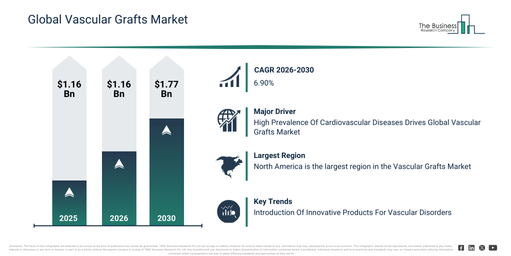
    Vascular Grafts Market Poised To Hit $5.35 Billion By 2030 With A 6.9% CAGR

    The vascular grafts market has seen significant expansion in recent years. It will grow from $3.86 billion in 2025 to $4.1 billion in 2026 at a compound annual growth rate (CAGR) of 6.1%. The market’s past growth is attributable to the rising occurrence of cardiovascular diseases, an increase in bypass operations, progress in synthetic and biological graft materials, the development of hospital and cardiac surgery infrastructure, and greater public awareness of vascular disorders.

    The vascular grafts market is projected to experience robust expansion in the coming years. It is anticipated to reach a valuation of $5.35 billion by 2030, exhibiting a compound annual growth rate (CAGR) of 6.9%. This anticipated growth over the forecast period is primarily driven by factors such as the increasing adoption of tissue-engineered grafts, AI-driven designs for patient-specific grafts, an uptick in minimally invasive surgical procedures, the integration of grafts with intraoperative imaging, and a rising elderly population in need of vascular interventions. Key developments expected during this period encompass bioengineered and tissue-engineered grafts, AI-assisted graft design methodologies, techniques for minimally invasive implantation, the incorporation of imaging and monitoring systems, and the creation of customized, patient-specific grafts.

    Get A Free Sample Report With In-Depth Market Insights:

    https://thebusinessresearchcompany.com/sample_request?id=61609183&type=smp&name=Vascular%20Grafts%20Market%20Report%202026&utm_source=Blogs&utm_medium=Paid&utm_campaign=Oct_PR

    Vascular Grafts Market Growth Factors: What’s Supporting Expansion?

    The increasing occurrence of cardiovascular diseases is anticipated to propel the growth of the vascular grafts market going forward. These conditions encompass a range of disorders affecting the heart and blood vessels, including issues such as coronary artery disease, heart failure, and stroke. The escalation in cardiovascular diseases can be linked to unhealthy eating habits, where the excessive intake of processed foods and fats contributes to higher cholesterol levels, thereby increasing heart risks. Vascular grafts assist in cardiovascular disease treatment by either restoring or bypassing damaged blood vessels, which improves blood flow and reduces the potential for complications. They enhance patient outcomes by enabling effective surgical interventions and supporting long-term cardiovascular health. For instance, in October 2024, according to the Centers for Disease Control, a US-based government agency, approximately 919,032 people died from cardiovascular disease in 2023, representing 1 in every 3 deaths. Therefore, the growing incidence of cardiovascular diseases is a key driver for the expansion of the vascular grafts market.

    Vascular Grafts Market Segment Analysis Spotlighting Growth Areas

    The vascular grafts market covered in this report is segmented –

    1) By Product: Hemodialysis Access Graft, Endovascular Stent Graft, Peripheral Vascular Graft, Coronary Artery By-Pass Graft

    2) By Raw Material: Polyester Grafts, Polytetrafluoroethylene Grafts, Polyurethane Grafts, Biosynthetic Grafts

    3) By Application: Coronary Artery Disease, Aneurysm, Vascular Occlusion, Renal Failure

    4) By End-User: Hospitals, Ambulatory Surgical Centers

    Subsegments:

    1) By Hemodialysis Access Graft: Synthetic Grafts, Biological Grafts

    2) By Endovascular Stent Graft: Aneurysm Stent Grafts, Thoracic Stent Grafts, Abdominal Stent Grafts

    3) By Peripheral Vascular Graft: Synthetic Grafts, Biological Grafts

    4) By Coronary Artery Bypass Graft (Cabg): Arterial Grafts, Venous Grafts

    Vascular Grafts Market Industry Trends: What’s Reshaping Demand?

    Leading companies within the vascular grafts market are concentrating on introducing novel products to secure a competitive advantage. These innovative products involve the development of new and advanced technologies for addressing vascular disorders, aiming to create a durable and reliable conduit for blood flow while overcoming the shortcomings of traditional vascular grafts. For example, in January 2023, Viz.ai, a US-based medical technology company specializing in artificial intelligence (AI)-powered software, unveiled the AI-Powered Viz Vascular Suite. This suite utilizes artificial intelligence to automatically analyze various imaging modalities, including computerized tomography (CT) and electrocardiogram (ECG), for identifying suspected vascular diseases. Should a pathology be suspected, the application automatically alerts and displays high-fidelity patient scans on providers’ mobile devices. Clinicians can employ Viz Vascular Suite to remotely coordinate vascular pathology care within a hospital system’s hub and spoke network, enabling synchronous, HIPAA-compliant communication among specialists. The platform is enhanced by AI to facilitate immediate team activation and support informed, efficient treatment decisions.

    Vascular Grafts Market Competitive Landscape: Which Companies Lead The Industry?

    Major companies operating in the vascular grafts market are B. Braun Melsungen AG, Abbott Laboratories, W. L. Gore & Associates Inc., Terumo Medical Corporation, Medtronic Plc, Endologix, Cook Medical, MicroPort, CR Bard, Biovic, Novomed Incorporation Private Limited, Gore Medical, LeMaitre Vascular, JOTEC, Vascutek, RUA Life Sciences, Vascular Flow Technologies, Bolton Medical, Cryolife, Vascular Graft Solutions Ltd.

    View The Full Vascular Grafts Market Report:

    https://thebusinessresearchcompany.com/report/vascular-grafts-global-market-report?utm_source=Blogs&utm_medium=Paid&utm_campaign=Oct_PR

    Vascular Grafts Market Regional Breakdown: Where Is Demand Concentrated?

    North America was the largest region in the vascular grafts market in 2025. Western Europe was the second largest region in the vascular grafts market report. The regions covered in the vascular grafts market report are Asia-Pacific, South East Asia, Western Europe, Eastern Europe, North America, South America, Middle East, Africa.

    Reach Out To Our Team:

    The Business Research Company: https://www.thebusinessresearchcompany.com/

    Americas: +1 310-496-7795

    Asia: +44 7882 955267 & +91 8897263534

    Europe: +44 7882 955267

    Email us at: marketing@tbrc.info

    Follow us on:

    LinkedIn: https://in.linkedin.com/company/the-business-research-company

    YouTube: https://www.youtube.com/channel/UC24_fI0rV8cR5DxlCpgmyFQ

    Global Market Model: https://www.thebusinessresearchcompany.com/global-market-model
  • Vascular Closure Devices Market Analysis Through 2030: Market Size, Growth Trends And Industry Outlook

    Vascular Closure Devices Market Analysis Through 2030: Market Size, Growth Trends And Industry Outlook

    Backed by market attractiveness analysis, total addressable market sizing, company benchmarking matrices, interactive Excel dashboards, wider supply chain intelligence, emerging startup coverage, and detailed product-level insights, The Business Research Company’s 2026 market reports are designed to offer research that is more actionable and strategically valuable than ever.

    Vascular Closure Devices Market Size And Revenue Outlook Through 2030

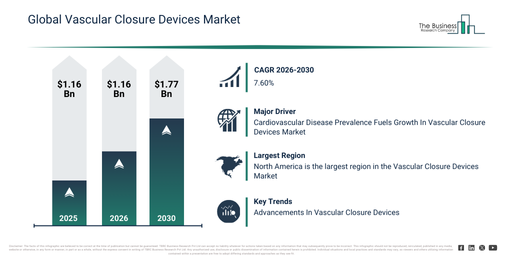
    The vascular closure devices market has shown significant growth in recent years. It is anticipated to expand from $1.62 billion in 2025 to $1.73 billion by 2026, at a compound annual growth rate (CAGR) of 6.6%. The expansion witnessed in the past can be attributed to an increase in cardiac catheterization and angioplasty procedures, a heightened reliance on femoral access interventions, the growing adoption of suture-based and mechanical closure devices by hospitals, an emphasis on reducing manual compression time and recovery duration, and a rising awareness regarding post-procedural bleeding risks.

    The vascular closure devices market size is anticipated to undergo significant growth in the upcoming years. It is projected to reach $2.31 billion in 2030, maintaining a compound annual growth rate (CAGR) of 7.6%. The expansion observed during the forecast period is attributable to a shift towards radial access approaches in cath labs, the increasing utilization of external hemostatic and adjustable compression devices, the expanding interventional cardiology capacity in emerging markets, rising investments in access site safety and complication reduction, and a growing preference for minimally invasive closure technologies. Prominent trends within the forecast period encompass the increasing adoption of vascular closure devices to reduce post-catheterization complications, a rising demand for closure systems that minimize bleeding and hematoma formation, growing procedural volumes in interventional cardiology and angiography requiring reliable access site sealing, an expanding clinical shift toward faster patient ambulation and reduced hospital stay durations, and an increasing preference for closure devices that enhance workflow efficiency and patient safety.

    Get A Free Sample Report With In-Depth Market Insights:

    https://thebusinessresearchcompany.com/sample_request?id=52501545&type=smp&name=Vascular%20Closure%20Devices%20Market%20Report%202026&utm_source=Blogs&utm_medium=Paid&utm_campaign=Oct_PR

    Vascular Closure Devices Market Demand Drivers: What’s Powering Industry Growth?

    The growing occurrence of cardiovascular diseases is anticipated to boost the expansion of the vascular closure devices market. Cardiovascular disease (CVD) refers to ailments impacting the heart’s or blood vessels’ structure or function, thereby compromising blood flow to the heart. Vascular closure devices (VCDs) serve as an alternative to traditional mechanical compression for sealing the femoral artery access site swiftly, potentially leading to faster hemostasis and a diminished risk of bleeding or hemorrhage post-procedure. For instance, in January 2024, the American Heart Association, a US-based non-profit body, reported an increase in the age-adjusted death rate from cardiovascular disease to 233.3 per 100,000 in 2024, marking a 4.0% rise from 224.4 per 100,000 in 2023. Consequently, the rising incidence of cardiovascular diseases is projected to stimulate the growth of the vascular closure devices market.

    Vascular Closure Devices Market Segment Performance And Emerging Opportunities

    The vascular closure devices market covered in this report is segmented –

    1) By Type: Passive Approximators, Active Approximators, External Hemostatic Devices

    2) By Access: Femoral Access, Radial Access

    3) By End User: Acute Care Facilities, Hospitals, Clinics, Other End Users

    Subsegments:

    1) By Passive Approximators: Suture-Based Devices, Fibrin Sealants

    2) By Active Approximators: Mechanical Devices, Expanding Devices

    3) By External Hemostatic Devices: Compression Bandages, Adjustable Hemostatic Devices

    Vascular Closure Devices Market Innovation Trends: What Developments Are Reshaping The Industry?

    Leading firms within the vascular closure devices market are concentrating on advancing technologies, like the cutting-edge collapsible disc technology, with the aim of boosting patient recovery, shortening healing periods, and elevating the general efficacy and simplicity of vascular interventions. This advanced collapsible disc technology features a design enabling a disc to be readily folded and unfolded, facilitating streamlined storage and transportability. Such technology offers increased practicality and adaptability across diverse uses, including sporting equipment, outdoor products, and packaging options. For example, in June 2024, Haemonetics Corporation, a medical technology firm based in the US, introduced VASCADE MVP XL. VASCADE MVP XL functions as a mid-bore vascular closure device. The VASCADE MVP XL incorporates 58% more collagen and features an expanded disc when contrasted with its earlier version, the VASCADE MVP system. This structural enhancement is intended to deliver a more resilient closure mechanism, thereby promoting faster recuperation and better results for patients.

    Vascular Closure Devices Market Competitive Landscape: Who Leads The Industry?

    Major companies operating in the vascular closure devices market are Abbott Laboratories, Terumo Corporation, Teleflex Incorporated, Haemonetics Corporation, Vasorum Ltd, INVAMED Inc, Vivasure Medical Ltd, Merit Medical Systems Inc, Rex Medical, Transluminal Technologies LLC, Tricol Biomedical Inc, Essential Medical Inc, InSeal Medical Ltd, Meril Life Sciences Pvt Ltd, Forge Medical, Vascular Closure Systems Ltd, Aachen Resonance GmbH, LeMaitre Vascular, Acandis GmbH, MiCroPort Scientific Co Ltd.

    View The Full Vascular Closure Devices Market Report:

    https://thebusinessresearchcompany.com/report/vascular-closure-devices-global-market-report?utm_source=Blogs&utm_medium=Paid&utm_campaign=Oct_PR

    Vascular Closure Devices Market Geographic Landscape: Which Region Dominates Industry Growth?

    North America was the largest region in the vascular closure devices market in 2025. Asia Pacific is expected to be the fastest-growing region in the forecast period. The regions covered in the vascular closure devices market report are Asia-Pacific, South East Asia, Western Europe, Eastern Europe, North America, South America, Middle East, Africa.

    Reach Out To Our Team:

    The Business Research Company: https://www.thebusinessresearchcompany.com/

    Americas: +1 310-496-7795

    Asia: +44 7882 955267 & +91 8897263534

    Europe: +44 7882 955267

    Email us at: marketing@tbrc.info

    Follow us on:

    LinkedIn: https://in.linkedin.com/company/the-business-research-company

    YouTube: https://www.youtube.com/channel/UC24_fI0rV8cR5DxlCpgmyFQ

    Global Market Model: https://www.thebusinessresearchcompany.com/global-market-model