Blog

  • Vascular Allografts Market Outlook From 2026 To 2030: Key Growth Factors And Future Opportunities

    Vascular Allografts Market Outlook From 2026 To 2030: Key Growth Factors And Future Opportunities

    Featuring market attractiveness scoring, total addressable market sizing, company benchmarking matrices, interactive Excel dashboards, deeper supply chain intelligence, emerging startup tracking, and granular product-level insights, The Business Research Company’s 2026 market reports are built to deliver research that is both more actionable and more strategically valuable.

    Vascular Allografts Market Growth From $1.97 Billion In 2026 To $2.58 Billion By 2030 At A CAGR Of 7%

    The vascular allografts market has shown strong expansion in recent years. Its size is expected to increase from $1.84 billion in 2025 to $1.97 billion in 2026, demonstrating a compound annual growth rate (CAGR) of 7.1%. Historically, this growth can be linked to the restricted availability of donor grafts, the reliance on conventional surgical procedures, the escalating prevalence of cardiovascular diseases, the expansion of hospital infrastructure, and the initial adoption of cortical and cancellous grafts.

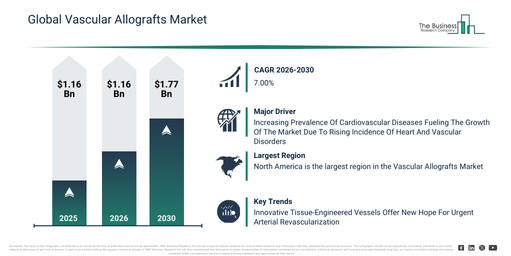
    The vascular allografts market is projected to experience substantial expansion in the coming years. This market is predicted to reach a valuation of $2.58 billion in 2030, exhibiting a compound annual growth rate (CAGR) of 7.0%. Key factors contributing to this anticipated growth include advancements in graft preservation and processing technologies, an increase in minimally invasive vascular procedures, the growing number of transplant surgeries, a rise in the application of composite and polymer-based materials, and the broadening reach of research and academic institutions in regenerative medicine. Significant trends expected during this period involve a surge in the need for vascular allografts in cardiovascular surgeries, a greater reliance on cortical and cancellous allografts, the wider acceptance of fresh frozen and freeze-dried grafts, an expansion in peripheral vascular and transplant procedures, and a strong emphasis on innovations in biologic and composite materials.

    Get A Free Sample Report With In-Depth Market Insights:

    https://thebusinessresearchcompany.com/sample_request?id=82557389&type=smp&name=Vascular%20Allografts%20Market%20Report%202026&utm_source=Blogs&utm_medium=Paid&utm_campaign=Oct_PR

    Vascular Allografts Market Growth Drivers: What’s Behind The Acceleration?

    The projected expansion of the vascular allografts market is driven by the rising occurrence of cardiovascular diseases. These illnesses encompass a range of conditions impacting the heart and circulatory system, specifically including coronary heart disease, heart failure, stroke, and hypertension. The growing incidence of cardiovascular diseases largely stems from unhealthy dietary practices, where overconsumption of saturated fats, trans fats, added sugars, and sodium leads to issues like high blood pressure, obesity, and increased cholesterol. Vascular allografts improve treatment possibilities for cardiovascular diseases by supplying pre-prepared donor blood vessels, making them suitable for individuals with compromised or ailing vessels. These allografts lead to better surgical results through re-establishing adequate blood circulation, minimizing adverse events, and promoting lasting cardiovascular well-being. For example, GOV.UK, a government body in the UK, indicated in December 2024 that approximately 2.24 million adults in England, representing about 4.4% of individuals aged 18 and above, had a GP-diagnosed case of CKD in March 2024. This figure represents an increase from the 2.09 million cases recorded during the prior year. Consequently, the rising occurrence of cardiovascular diseases is fueling the expansion of the vascular allografts market.

    Vascular Allografts Market Segment Landscape And Growth Outlook

    The vascular allografts market covered in this report is segmented –

    1) By Type: Cortical Allograft, Cancellous Allograft, Corticocancellous Allograft

    2) By Material Type: Biologic Materials, Synthetic Materials, Composite Materials, Polymer-Based Materials

    3) By Application: Cardiovascular Surgery, Peripheral Vascular Surgery, Transplant Surgery, Repair Of Congenital Defects

    4) By Distribution Channel: Direct Sales, Online Sales, Distributors, Medical Supply Stores

    5) By End-User: Hospitals, Ambulatory Surgical Centers (ASCs), Specialty Clinics, Research And Academic Institutions

    Subsegments:

    1) By Cortical Allograft: Structural Cortical Allografts, Segmental Cortical Allografts, Shaped Cortical Allografts, Machined Cortical Allografts

    2) By Cancellous Allograft: Granular Cancellous Allografts, Block Cancellous Allografts, Molded Cancellous Allografts, Injectable Cancellous Allografts

    3) By Corticocancellous Allograft: Composite Corticocancellous Allografts, Block Corticocancellous Allografts, Shaped Corticocancellous Allografts, Structural Corticocancellous Allografts

    Vascular Allografts Market Trends: What’s Defining The Industry’s Next Phase?

    Leading companies operating within the vascular allografts market are concentrating on developing advanced products, such as bioengineered graft materials, to improve graft durability, biocompatibility, and integration with the host tissue. Bioengineered graft material refers to specially designed vascular grafts created using sophisticated biological and engineering techniques. For instance, in February 2025, Humacyte Inc., a US-based biotechnology company, introduced Symvess, a bioengineered vascular graft specifically developed for adults needing urgent revascularization due to extremity arterial injuries when autologous vein grafts are not a viable option. Symvess is engineered to remodel into the patient’s own tissue over time, decreasing the risk of rejection and enhancing long-term outcomes. This graft also reduces the need for immunosuppressive drugs, presenting a significant advantage in trauma and emergency surgical situations.

    Vascular Allografts Market Company Landscape And Competitive Strategy

    Major companies operating in the vascular allografts market are Medtronic plc, Boston Scientific Corporation, Terumo Corporation, W. L. Gore & Associates Inc., Dentsply Sirona Inc., Integra LifeSciences Holdings Corporation, MicroPort Scientific Corporation, Bioventus Inc., KLS Martin Group, MTF Biologics, MTF Biologics, ZimVie Inc., B. Braun Melsungen AG, Artivion Inc., MiMedx Group Inc., RTI Surgical Inc, LeMaitre Vascular Inc., LifeNet Health Inc., Xtant Medical Holdings Inc., Osteogenics Biomedical Inc.

    View The Full Vascular Allografts Market Report:

    https://thebusinessresearchcompany.com/report/vascular-allografts-global-market-report?utm_source=Blogs&utm_medium=Paid&utm_campaign=Oct_PR

    Vascular Allografts Market Largest Region: Which Geography Holds The Highest Market Share?

    North America was the largest region in the vascular allografts market in 2025. Asia-Pacific is expected to be the fastest-growing region in the forecast period. The regions covered in the vascular allografts market report are Asia-Pacific, South East Asia, Western Europe, Eastern Europe, North America, South America, Middle East, Africa.

    Reach Out To Our Team:

    The Business Research Company: https://www.thebusinessresearchcompany.com/

    Americas: +1 310-496-7795

    Asia: +44 7882 955267 & +91 8897263534

    Europe: +44 7882 955267

    Email us at: marketing@tbrc.info

    Follow us on:

    LinkedIn: https://in.linkedin.com/company/the-business-research-company

    YouTube: https://www.youtube.com/channel/UC24_fI0rV8cR5DxlCpgmyFQ

    Global Market Model: https://www.thebusinessresearchcompany.com/global-market-model
  • Vascular Access Devices Market Growth Forecast: Market Size, Key Trends And Emerging Opportunities Through 2030

    Vascular Access Devices Market Growth Forecast: Market Size, Key Trends And Emerging Opportunities Through 2030

    Built to provide research that’s more actionable and strategically valuable, The Business Research Company’s 2026 market reports include market attractiveness analysis, total addressable market sizing, company benchmarking matrices, interactive Excel dashboards, broader supply chain intelligence, emerging startup tracking, and in-depth product insights.

    Vascular Access Devices Market Expansion Outlook: What Revenue Opportunities Are Ahead?

    The vascular access devices market size has demonstrated robust growth in recent years. It is projected to increase from $6.11 billion in 2025 to $6.51 billion in 2026, at a compound annual growth rate (CAGR) of 6.6%. The expansion observed in the past can be attributed to the rising prevalence of chronic diseases that require long-term infusion therapy, an increase in hospital and clinic-based intravenous procedures, the growing utilization of central venous catheters and PICC lines, the expanding application of vascular access devices in diagnostics and blood transfusion, and the rising demand for peripheral IV catheters in acute care settings.

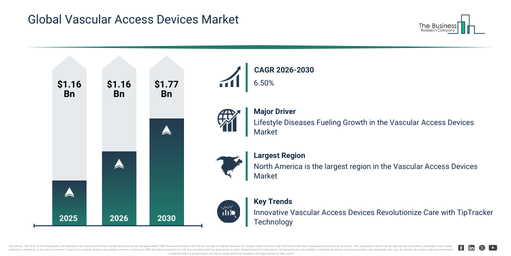
    The vascular access devices market size is projected to experience significant expansion in the coming years, with an anticipated rise to $8.38 billion by 2030, achieving a compound annual growth rate (CAGR) of 6.5%. This growth during the forecast period is propelled by factors such as a growing preference for minimally invasive and patient-friendly venous access solutions, the increasing adoption of implantable ports for oncology and long-duration therapies, the expansion of vascular access services in ambulatory care centers, rising procedural volumes in drug and nutrition administration, and increasing investments in safer catheter designs to reduce complications. Furthermore, major trends for this period include the rising clinical adoption of long-term vascular access devices for chronic disease management, an increasing demand for vascular access products that reduce repeated needle punctures, growing utilization of specialized catheters for chemotherapy, infusion therapy, and blood administration, expanding procedural volumes in hospitals and ambulatory care centers requiring reliable venous access, and an increasing emphasis on product designs that enhance patient comfort and procedural safety.

    Get A Free Sample Report With In-Depth Market Insights:

    https://thebusinessresearchcompany.com/sample_request?id=90140314&type=smp&name=Vascular%20Access%20Devices%20Market%20Report%202026&utm_source=Blogs&utm_medium=Paid&utm_campaign=Oct_PR

    Vascular Access Devices Market Growth Factors Behind Sustained Expansion

    The increasing prevalence of lifestyle diseases is anticipated to propel the growth of the vascular access devices market moving forward. These health conditions, often referred to as non-communicable diseases (NCDs) or chronic diseases, primarily result from unhealthy lifestyle choices and behaviors rather than infectious agents. The ongoing treatment and care frequently required by these diseases make vascular access devices crucial for the safe and effective administration of medications and various therapies. For instance, in July 2025, the International Diabetes Federation, an international non-profit federation headquartered in Brussels, Belgium, stated that roughly 589 million adults (20-79 years) are living with diabetes globally. This figure is projected to climb to 853 million by 2050, indicating a 46% rise from current levels. Hence, the rising incidence of lifestyle diseases is a key factor driving the expansion of the vascular access devices market.

    Vascular Access Devices Market Breakdown By Product Type And Application

    The vascular access devices market covered in this report is segmented –

    1) By Device Type: Central Vascular Access Devices, Peripheral Vascular Access Devices

    2) By Application: Drug Administration, Fluid And Nutrition Administration, Blood Transfusion, Diagnostics And Testing

    3) By End User: Hospitals, Clinics, Ambulatory Care Centers, Other End Users

    Subsegments:

    1) By Central Vascular Access Devices: Central Venous Catheters (CVC), Peripherally Inserted Central Catheters (PICC), Implantable Ports

    2) By Peripheral Vascular Access Devices: Peripheral IV Catheters, Midline Catheters, Butterfly Needles

    Vascular Access Devices Market Industry Trends Fueling Future Revenue Growth

    Leading companies operating within the vascular access devices market are intensifying their efforts to create more efficient devices, utilizing advanced technologies like TipTracker to gain a competitive advantage. The TipTracker Technology provides real-time visual guidance, tracing the catheter’s route on a color screen, and helps verify the final tip placement. For example, in May 2023, Teleflex Incorporated, a US-based manufacturer of medical devices, launched two new products: the VPS Rhythm and the DLX Device. These devices integrate TipTracker technology, eliminating the need for confirmatory X-rays and thus streamlining the peripherally inserted central catheter (PICC) insertion process. Additionally, this ensures improved PICC advancement into the superior vena cava (SVC) for successful insertion. The introduction of the VPS Rhythm and DLX Device adds significant value by enhancing patient care, broadening treatment options, boosting efficiency, and contributing to medical advancements.

    Vascular Access Devices Market Key Players Shaping Industry Direction

    Major companies operating in the vascular access devices market are Medtronic plc, Fresenius Medical Care AG & Co. KGaA, Becton Dickinson and Company (BD), Baxter International Inc., Boston Scientific Corporation, Medline Industries LP, Terumo Corporation, B. Braun Melsungen AG, Teleflex Incorporated, ICU Medical Inc., Cook Medical, Merit Medical Systems Inc., AngioDynamics Inc., Argon Medical Devices Inc., Nipro Medical Corporation, pfm medical ag, Amecath Medical Technologies, Romsons Group, Medical Components Inc., Access Vascular Inc., Newtech Medical Devices Pvt. Ltd., Vygon USA

    View The Full Vascular Access Devices Market Report:

    https://thebusinessresearchcompany.com/report/vascular-access-devices-global-market-report?utm_source=Blogs&utm_medium=Paid&utm_campaign=Oct_PR

    Vascular Access Devices Market Regional Analysis: Which Region Leads By Revenue?

    North America was the largest region in the vascular access devices market in 2025. Asia-Pacific is expected to be the fastest-growing region in the forecast period. The regions covered in the vascular access devices market report are Asia-Pacific, South East Asia, Western Europe, Eastern Europe, North America, South America, Middle East, Africa.

    Reach Out To Our Team:

    The Business Research Company: https://www.thebusinessresearchcompany.com/

    Americas: +1 310-496-7795

    Asia: +44 7882 955267 & +91 8897263534

    Europe: +44 7882 955267

    Email us at: marketing@tbrc.info

    Follow us on:

    LinkedIn: https://in.linkedin.com/company/the-business-research-company

    YouTube: https://www.youtube.com/channel/UC24_fI0rV8cR5DxlCpgmyFQ

    Global Market Model: https://www.thebusinessresearchcompany.com/global-market-model
  • Varicose Vein Treatment Devices Market  CAGR Forecast Through 2030: Key Trends Shaping Industry Expansion

    Varicose Vein Treatment Devices Market CAGR Forecast Through 2030: Key Trends Shaping Industry Expansion

    Backed by market attractiveness analysis, total addressable market sizing, company benchmarking matrices, interactive Excel dashboards, wider supply chain intelligence, emerging startup coverage, and detailed product-level insights, The Business Research Company’s 2026 market reports are designed to offer research that is more actionable and strategically valuable than ever.

    Varicose Vein Treatment Devices Market Growth Potential: How Will Market Size Shift Through 2030?

    The varicose vein treatment devices market has experienced substantial growth in recent years. It is projected to expand from $1.42 billion in 2025 to $1.54 billion in 2026, registering a compound annual growth rate (CAGR) of 8.7%. The historical growth in this market can be attributed to an increase in venous insufficiency cases, the common prevalence of sedentary lifestyles, the demand for cosmetic treatments, the expansion of the aging population, and the rise of specialty clinics.

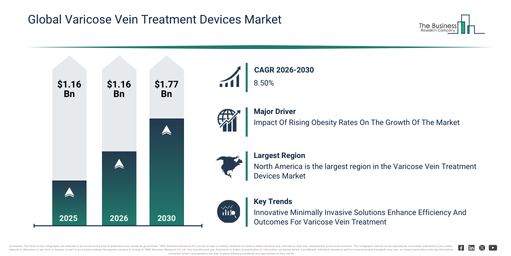
    The varicose vein treatment devices market is anticipated to experience robust expansion over the coming years. It is projected to reach $2.14 billion in 2030, growing at a compound annual growth rate (CAGR) of 8.5%. This growth during the forecast period is attributable to an increase in outpatient vein treatments, the development of advanced ablation technologies, the implementation of ultrasound-guided procedures, a preference for minimally invasive interventions, and a heightened focus on patient comfort. Significant trends anticipated during this period encompass the adoption of endovenous laser ablation, the prevalence of minimally invasive vein closure methods, the availability of non-surgical varicose vein treatments, treatment protocols designed for faster recovery, and improvements in compression therapy devices.

    Get A Free Sample Report With In-Depth Market Insights:

    https://thebusinessresearchcompany.com/sample_request?id=87958830&type=smp&name=Varicose%20Vein%20Treatment%20Devices%20Market%20Report%202026&utm_source=Blogs&utm_medium=Paid&utm_campaign=Oct_PR

    Varicose Vein Treatment Devices Market Demand Drivers Opening New Revenue Streams

    The increasing prevalence of obesity is anticipated to drive expansion in the varicose veins treatment devices market in the future. Obesity, a medical condition marked by an excessive buildup of body fat, can result in various severe health problems like diabetes, heart diseases, and joint issues. The escalating rates of obesity are primarily fueled by factors such as unhealthy food choices, decreased physical exercise, and environmental influences that encourage poor eating habits, with socio-economic status, genetics, and mental well-being also playing substantial roles in its widespread occurrence. For obese individuals, varicose vein treatment devices help improve their quality of life by mitigating complications related to veins, boosting blood circulation, lessening pain and swelling from excess weight, and fostering improved mobility and general vascular health. For example, data from March 2023, provided by the World Heart Foundation, a non-governmental global cardiovascular organization based in Switzerland, indicates that approximately 2.3 billion adults and children globally are currently obese or overweight. This figure is forecast to grow to 2.7 billion by 2025 if the current obesity trend continues. This significant rise in obesity is thus a key factor driving the growth of the varicose veins treatment devices market.

    Varicose Vein Treatment Devices Market Segment Analysis And Revenue Potential

    The varicose vein treatment devices market covered in this report is segmented –

    1) By Device Type: Ablation Devices, Venous Closure Products, Other Device Products

    2) By Treatment Type: Sclerotherapy, Endovenous Ablation, Surgical Ligation And Stripping, Other Treatment Type

    3) By Patient Type: Adults, Elderly

    4) By End-User: Specialty Clinics, Hospitals, Ambulatory Surgical Services, Other End-Users

    Subsegments:

    1) By Ablation Devices: Radiofrequency Ablation (RFA) Devices, Laser Ablation Devices, Endovenous Laser Therapy (EVLT) Devices, Cryoablation Devices, Ultrasound-Guided Foam Sclerotherapy Devices

    2) By Venous Closure Products: VenaSeal Closure System, ClariVein Closure System, Mechanical Endovenous Ablation Devices, Stenting Systems For Venous Closure

    3) By Other Device Products: Sclerotherapy Kits, Varicose Vein Removal Lasers, Compression Therapy Devices, Surgical Instruments For Vein Stripping, Endovenous Laser Fibers

    Varicose Vein Treatment Devices Market Trends Powering Strategic Industry Growth

    Leading companies in the varicose veins treatment devices market are concentrating on developing innovative solutions, such as minimally invasive technologies, to deliver precise treatment with reduced patient discomfort and accelerated recovery periods. These minimally invasive technologies describe surgical methods employing small incisions and sophisticated instruments like endoscopes and robotic systems to conduct procedures, resulting in less trauma, quicker healing, and diminished complication risks when contrasted with conventional open surgeries. As an illustration, in June 2023, Biolitec AG, an Austrian medical technology firm, unveiled the Elves Radial 2ring Pro laser fiber and the Leonardo 1940 laser, both designed for treating varicose veins. The Elves Radial 2ring Pro laser fiber incorporates an extra channel for saline solution, allowing veins to be stretched prior to laser therapy, whereas the Leonardo 1940 laser’s wavelength enhances absorption by the vein wall, thereby minimizing bruising and shortening recovery periods. Such innovations considerably boost the effectiveness and visual results of varicose vein treatments, providing a more durable method for eliminating substantial and twisted veins.

    Varicose Vein Treatment Devices Market Competitive Analysis Of Leading Industry Participants

    Major companies operating in the varicose vein treatment devices market are Medtronic Plc, Boston Scientific Corporation, Teleflex Incorporated, Merit Medical Systems, Lumenis Be Ltd., AngioDynamics Inc., Candela Medical, Alma Lasers, Dornier Medtech, Fotona d.o.o., Sciton Inc., Won Tech Co. Ltd, Quanta System SpA, biolitec Holding GmbH & Co KG, Eufoton SRL, Myovatec Surgical Systems, Chemische Fabrik Kreussler & Co., Ad Rem Technology, VB Devices, Theraclion, InVera Medical

    View The Full Varicose Vein Treatment Devices Market Report:

    https://thebusinessresearchcompany.com/report/varicose-vein-treatment-devices-global-market-report?utm_source=Blogs&utm_medium=Paid&utm_campaign=Oct_PR

    Varicose Vein Treatment Devices Market Geographic Distribution And Regional Opportunities

    North America was the largest region in the varicose vein treatment devices market in 2025. Asia-Pacific is expected to be the fastest-growing region in the forecast period. The regions covered in the varicose vein treatment devices market report are Asia-Pacific, South East Asia, Western Europe, Eastern Europe, North America, South America, Middle East, Africa.

    Reach Out To Our Team:

    The Business Research Company: https://www.thebusinessresearchcompany.com/

    Americas: +1 310-496-7795

    Asia: +44 7882 955267 & +91 8897263534

    Europe: +44 7882 955267

    Email us at: marketing@tbrc.info

    Follow us on:

    LinkedIn: https://in.linkedin.com/company/the-business-research-company

    YouTube: https://www.youtube.com/channel/UC24_fI0rV8cR5DxlCpgmyFQ

    Global Market Model: https://www.thebusinessresearchcompany.com/global-market-model
  • Vaginal Speculum Market To Witness 3.9% CAGR Growth Through 2030: Key Industry Drivers

    Vaginal Speculum Market To Witness 3.9% CAGR Growth Through 2030: Key Industry Drivers

    Featuring market attractiveness scoring, total addressable market sizing, company benchmarking matrices, interactive Excel dashboards, deeper supply chain intelligence, emerging startup tracking, and granular product-level insights, The Business Research Company’s 2026 market reports are built to deliver research that is both more actionable and more strategically valuable.

    Vaginal Speculum Market Value Analysis: What Growth Lies Ahead Over The Forecast Period?

    The vaginal speculum market size has demonstrated consistent expansion in recent years. It is projected to increase from $8.97 billion in 2025 to $9.36 billion in 2026, advancing at a compound annual growth rate (CAGR) of 4.3%. The historical growth in this sector is attributable to the broader expansion of women’s healthcare services, an escalating number of gynecological examinations, heightened awareness surrounding cervical cancer screening, the widespread availability of reusable metal instruments, and the growth of outpatient diagnostic procedures.

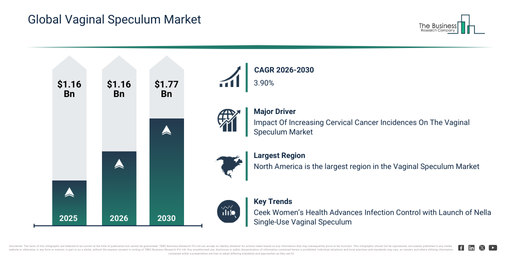
    The vaginal speculum market is anticipated to observe stable growth in the coming years, with its valuation expected to reach $10.9 billion in 2030 at a compound annual growth rate (CAGR) of 3.9%. This expansion during the forecast period can be attributed to the rising demand for disposable medical devices, an increased emphasis on patient comfort and privacy, the expansion of ambulatory care facilities, a growing focus on infection prevention protocols, and the adoption of ergonomically designed speculums. Prominent trends throughout this period include the increasing use of disposable vaginal speculums, a growing preference for patient-friendly examination instruments, the rising application of plastic speculums in routine examinations, the expansion of gynecological screening programs, and an enhanced focus on infection control.

    Get A Free Sample Report With In-Depth Market Insights:

    https://thebusinessresearchcompany.com/sample_request?id=94540385&type=smp&name=Vaginal%20Speculum%20Market%20Report%202026&utm_source=Blogs&utm_medium=Paid&utm_campaign=Oct_PR

    Vaginal Speculum Market Growth Backed By Core Demand Fundamentals

    The vaginal speculum market is anticipated to experience growth due to the escalating incidence of cervical cancer. Cervical cancer is a malignancy that develops in the cells of the cervix, the lower part of the uterus connected to the vagina. The increase in cervical cancer cases can be attributed to factors such as a lack of human papillomavirus (HPV) vaccination, insufficient screening, and restricted access to healthcare services. During cervical cancer screening (Pap smear), a vaginal speculum is utilized to visualize and access the cervix for the collection of samples. For instance, in May 2025, according to the Cancer Council Australia, an Australia-based national nonprofit organization, 231 females in Victoria were diagnosed with invasive cervical cancer in 2023, corresponding to a current diagnosis rate of 6.4 cases per 100,000 females. Therefore, the rising incidence of cervical cancer is a key driver for the growth of the vaginal speculum market.

    Vaginal Speculum Market Segmentation And Category Overview

    The vaginal speculum market covered in this report is segmented –

    1) By Product: One Blade Vaginal Specula, Two Blade Vaginal Specula, Three Blade Vaginal Specula, Other Products

    2) By Material: Plastic, Stainless Steel, Chrome

    3) By Application: Diagnosis, Surgery

    4) By End-User: Hospitals, Surgery Centers, Ambulatory Centers, Clinics, Other End-Users

    Subsegments:

    1) By One Blade Vaginal Specula: Single-Blade Stainless Steel Specula, Single-Blade Plastic Specula

    2) By Two Blade Vaginal Specula: Stainless Steel Two-Blade Specula, Plastic Two-Blade Specula, Disposable Two-Blade Specula

    3) By Three Blade Vaginal Specula: Stainless Steel Three-Blade Specula, Plastic Three-Blade Specula

    4) By Other Products: Reusable Vaginal Specula, Disposable Vaginal Specula, Pediatric Vaginal Specula

    Vaginal Speculum Market Growth Trends Reshaping The Competitive Landscape

    Major companies in the vaginal speculum market are developing disposable instruments to enhance patient safety, mitigate cross-contamination risks, and improve convenience for healthcare providers. Disposable vaginal speculums are engineered for single-use, eliminating the necessity for sterilization between patients, thereby addressing infection control concerns and streamlining clinic workflows. For example, in June 2023, Ceek Women’s Health, a US-based medical device developer, unveiled the Nella Single-Use Vaginal Speculum, which incorporates integrated sidewall retractors and an LED light. This innovative device aims to improve patient comfort and enhance the clinician’s ability to visualize the cervix during gynecological examinations. These retractors specifically aid in boosting cervical visibility and access, making examinations more efficient for healthcare providers.

    Vaginal Speculum Market Leading Companies And Competitive Benchmarking

    Major companies operating in the vaginal speculum market are Becton Dickinson and Company, Medline Industries LP, B. Braun Melsungen AG, CooperSurgical Inc., A.M.G. Medical Inc., Integra LifeSciences Holdings Corporation, Amsino International Inc., Robinson Healthcare, Medgyn Products Inc., Deltalab S.L., Narang Medical Limited, AdvaCare Pharma LLP, Pelican Feminine Healthcare Ltd., Vernacare Limited, Advin Health Care Pvt. Ltd., Joint Venture Medical Industry, YILKAL MEDICAL, Sklar Surgical Instruments, Aspen Surgical Products Inc., Timesco Healthcare Ltd

    View The Full Vaginal Speculum Market Report:

    https://thebusinessresearchcompany.com/report/vaginal-speculum-global-market-report?utm_source=Blogs&utm_medium=Paid&utm_campaign=Oct_PR

    Vaginal Speculum Market Largest Region By Revenue And Market Share

    North America was the largest region in the vaginal speculum market in 2025. Asia-Pacific is expected to be the fastest-growing region in the forecast period. The regions covered in the vaginal speculum market report are Asia-Pacific, South East Asia, Western Europe, Eastern Europe, North America, South America, Middle East, Africa.

    Reach Out To Our Team:

    The Business Research Company: https://www.thebusinessresearchcompany.com/

    Americas: +1 310-496-7795

    Asia: +44 7882 955267 & +91 8897263534

    Europe: +44 7882 955267

    Email us at: marketing@tbrc.info

    Follow us on:

    LinkedIn: https://in.linkedin.com/company/the-business-research-company

    YouTube: https://www.youtube.com/channel/UC24_fI0rV8cR5DxlCpgmyFQ

    Global Market Model: https://www.thebusinessresearchcompany.com/global-market-model
  • Vaginal Sling Market Projected For Strong Expansion Through 2030: Key Trends And Future Outlook

    Vaginal Sling Market Projected For Strong Expansion Through 2030: Key Trends And Future Outlook

    Built to provide research that’s more actionable and strategically valuable, The Business Research Company’s 2026 market reports include market attractiveness analysis, total addressable market sizing, company benchmarking matrices, interactive Excel dashboards, broader supply chain intelligence, emerging startup tracking, and in-depth product insights.

    Vaginal Sling Market Size Forecast: How Big Could The Market Get By 2030?

    The market for vaginal slings has shown substantial growth in recent times. Projections indicate it will expand from $1.6 billion in 2025 to $1.75 billion in 2026, exhibiting a compound annual growth rate (CAGR) of 9.5%. Historically, this expansion has been driven by factors such as the rising incidence of stress urinary incontinence, an increasing volume of gynecological surgeries, the broadened availability of hospital-based urogynecology services, heightened awareness of surgical remedies, and the widespread presence of standardized sling products.

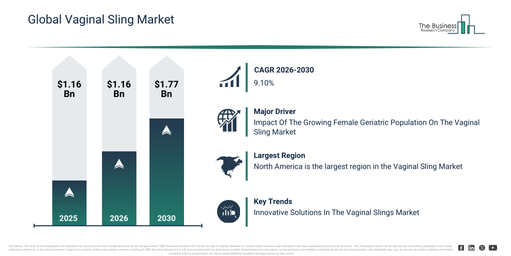
    The vaginal sling market is projected to experience robust expansion over the coming years, anticipated to reach $2.48 billion in 2030, exhibiting a compound annual growth rate (CAGR) of 9.1%. Factors driving this growth during the forecast period include the escalating demand for outpatient incontinence surgeries, a heightened emphasis on patient safety and biocompatibility, the broadening scope of female healthcare services, the increasing uptake of minimally invasive gynecological procedures, and greater healthcare expenditure dedicated to women’s health. Key trends expected in this period encompass the growing embrace of minimally invasive sling procedures, a surging demand for synthetic and lightweight mesh materials, an increasing inclination towards adjustable sling systems, the widening availability of outpatient incontinence treatment options, and an elevated focus on the long-term safety of implants.

    Get A Free Sample Report With In-Depth Market Insights:

    https://thebusinessresearchcompany.com/sample_request?id=28054528&type=smp&name=Vaginal%20Sling%20Market%20Report%202026&utm_source=Blogs&utm_medium=Paid&utm_campaign=Oct_PR

    Vaginal Sling Market Growth Catalysts And Demand Drivers

    The expansion of the female geriatric population is anticipated to boost the future growth of the vaginal sling market. This demographic refers to the older female population, specifically those aged 65 years and beyond. A segment of this increasing female geriatric group suffers from stress urinary incontinence (SUI) and other types of urinary incontinence, which are treated and controlled using vaginal slings. For instance, in January 2023, a report from Statistics Netherlands, a government agency based in the Netherlands, stated that the total female population in the Netherlands was 2,172 residents as of January 2023. Among individuals aged 90 and above, there were 95,090 women and 40,128 men. Therefore, the expanding female geriatric population is fueling the growth of the vaginal sling market going forward.

    Vaginal Sling Market Segment Outlook: Which Categories Are Growing Fastest?

    The vaginal sling market covered in this report is segmented –

    1) By Product Type: Transobturator Slings, Tension-Free Vaginal Tape Sling

    2) By Material-Type: Tissue Slings, Synthetic Slings

    3) By End User: Hospitals, Clinics, Other End Users

    Subsegments:

    1) By Transobturator Slings: Adjustable Transobturator Slings, Non-adjustable Transobturator Slings

    2) By Tension-free Vaginal Tape Sling: Standard Tension-free Vaginal Tape, Specialty Tension-Free Vaginal Tape

    Vaginal Sling Market Trends Shaping Long-Term Demand

    Leading entities within the vaginal slings market are creating advanced products, including therapies for stress urinary incontinence (SUI), to expand their customer reach, boost sales, and enhance earnings. Addressing Stress Urinary Incontinence (SUI) involves diverse methods focused on resolving its root causes and alleviating symptoms of involuntary urine leakage experienced during actions like coughing, sneezing, laughing, or physical exertion. As an illustration, in January 2024, UroCure LLC, a US-based women’s health firm, collaborated with LiNA Medical USA, a US-based minimally invasive gynecology device provider, to introduce two surgical remedies for female stress urinary incontinence: the ArcSP suprapubic sling system and the ArcTO transobturator sling system. The ArcSP system is designed to facilitate a top-down, retropubic methodology, while the ArcTO system caters to surgeons who favor an outside-in, transobturator technique.

    Vaginal Sling Market Industry Leaders And Competitive Landscape

    Major companies operating in the vaginal sling market are Boston Scientific Corporation, Coloplast A S, B Braun Melsungen AG, Caldera Medical Inc, Promedon GmbH, Teleflex Inc, W L Gore Associates Inc, Degania Medical Devices Pvt Ltd, Lotus Surgicals Pvt Ltd, Urotech Co Ltd, Betatech Medical Inc, ABISS Pty Ltd, Neomedic International Ltd, Prosurg Inc, A M I GmbH, Cousin Biotech, Herniamesh S R L, Peters Surgical, Aspide Medical, BioCer Entwicklungs GmbH, FemmeMesh Medical

    View The Full Vaginal Sling Market Report:

    https://thebusinessresearchcompany.com/report/vaginal-sling-global-market-report?utm_source=Blogs&utm_medium=Paid&utm_campaign=Oct_PR

    Vaginal Sling Market Regional Analysis And Leading Geography

    North America was the largest region in the Vaginal Slings market in 2025. Asia-Pacific is expected to be the fastest-growing region in the forecast period. The regions covered in the vaginal sling market report are Asia-Pacific, South East Asia, Western Europe, Eastern Europe, North America, South America, Middle East, Africa.

    Reach Out To Our Team:

    The Business Research Company: https://www.thebusinessresearchcompany.com/

    Americas: +1 310-496-7795

    Asia: +44 7882 955267 & +91 8897263534

    Europe: +44 7882 955267

    Email us at: marketing@tbrc.info

    Follow us on:

    LinkedIn: https://in.linkedin.com/company/the-business-research-company

    YouTube: https://www.youtube.com/channel/UC24_fI0rV8cR5DxlCpgmyFQ

    Global Market Model: https://www.thebusinessresearchcompany.com/global-market-model
  • Vaginal Pessary Market Outlook 2026–2030: Growth Trends, Market Dynamics And Emerging Opportunities

    Vaginal Pessary Market Outlook 2026–2030: Growth Trends, Market Dynamics And Emerging Opportunities

    Backed by market attractiveness analysis, total addressable market sizing, company benchmarking matrices, interactive Excel dashboards, wider supply chain intelligence, emerging startup coverage, and detailed product-level insights, The Business Research Company’s 2026 market reports are designed to offer research that is more actionable and strategically valuable than ever.

    Vaginal Pessary Market Revenue Outlook: What CAGR Lies Ahead Through 2030?

    The size of the vaginal pessary market has experienced robust growth over recent years. This market is projected to expand from $0.42 billion in 2025 to $0.46 billion by 2026, demonstrating a compound annual growth rate (CAGR) of 9.3%. Historically, this expansion has been driven by factors such as the rising incidence of pelvic organ prolapse, greater recognition of non-surgical treatment alternatives, broader access to gynecological care, the introduction of enhanced medical-grade materials, and higher rates of diagnosis in women’s health.

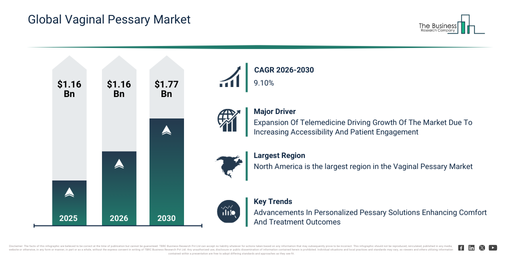
    The vaginal pessary market size is projected for substantial expansion over the coming years, reaching $0.65 billion by 2030, demonstrating a compound annual growth rate (CAGR) of 9.1%. This anticipated growth is fueled by several factors, including the escalating demand for non-invasive urogynecological treatments, an increasing global aging female population, the broadening availability of outpatient gynecology services, a heightened emphasis on quality-of-life treatments, and greater adoption within emerging healthcare markets. Concurrently, significant trends expected during this forecast period involve the rising uptake of silicone-based pessaries, a growing preference for non-surgical therapeutic options, the increasing need for personalized pessary designs, the development of long-term pelvic support devices, and a stronger focus on ensuring patient comfort and safety.

    Get A Free Sample Report With In-Depth Market Insights:

    https://thebusinessresearchcompany.com/sample_request?id=77006022&type=smp&name=Vaginal%20Pessary%20Market%20Report%202026&utm_source=Blogs&utm_medium=Paid&utm_campaign=Oct_PR

    Vaginal Pessary Market Opportunity Drivers: What’s Unlocking New Revenue Potential?

    The expansion of telemedicine is anticipated to drive the growth of the vaginal pessary market in the upcoming years. Telemedicine involves providing patient diagnosis, consultation, and treatment remotely via telecommunications technologies such as video calls, mobile applications, and online platforms. Its growth is propelled by the demand for convenient, accessible healthcare, enabling remote consultations that conserve time, lessen hospital visits, and enhance care in distant and underserved regions. For vaginal pessary users, telemedicine offers remote access to education, ongoing care, and appointments for fitting, managing discomfort, and maintenance, which in turn boosts patient adherence and treatment efficacy. As an illustration, in October 2025, ScienceSoft USA Corporation, a US-based data management firm, projected that by the end of 2026, telemedicine would constitute approximately 25-30% of all medical visits in the United States. Consequently, the increasing embrace of telemedicine is poised to stimulate the vaginal pessary market.

    Vaginal Pessary Market Segment Landscape: Which Areas Lead Development?

    The vaginal pessary market covered in this report is segmented –

    1) By Product Type: Vaginal Ring, Gehrung, Cube, Gellhorn, Other Product Types

    2) By Material: Elastomer, Polyethylene, Silicone, Polypropylene, Latex

    3) By Application: Uterine Prolapse, Urinary Incontinence, Pelvic Organ Prolapse Management, Stress Urinary Incontinence Management

    4) By End User: Hospitals, Ambulatory Surgical Centers, Clinics, Other End Users

    Subsegments:

    1) By Vaginal Ring: Adjustable Vaginal Ring, Non-Adjustable Vaginal Ring

    2) By Gehrung: Standard Gehrung, Inflatable Gehrung

    3) By Cube: Standard Cube, Adjustable Cube

    4) By Gellhorn: Standard Gellhorn, Silicone Gellhorn

    5) By Other Product Types: Donut Pessary, Hodge Pessary, Biovalve Pessary, Ring Pessary With Support, Pessary With Strap

    Vaginal Pessary Market Innovation Trends Shaping Future Development

    Leading companies in the vaginal pessary market are developing technologically advanced products, such as personalized pessary solutions, to enhance comfort and treatment outcomes for women experiencing pelvic floor disorders. Personalized pessary solutions are custom-made devices crafted to match an individual’s anatomy, providing optimal support for pelvic floor conditions. For example, in March 2024, Cosm Medical, a Canada-based medical device company, obtained U.S. Food and Drug Administration (FDA) approval for its personalized Gynethotics Pessaries. Gynethotics employs advanced technologies, including AI and 3D printing, to create patient-specific pessaries with almost 10 million potential configurations, greatly exceeding the 100 options found in standard devices. Manufactured from silicone with adjustable material stiffness, they provide an accurate fit and superior comfort. Unlike the traditional trial-and-error fitting method, Gynethotics depends on advanced measurements and clinical evaluations for customization. This strategy boosts effectiveness and improves patient satisfaction in the use of pessaries.

    Vaginal Pessary Market Key Participants And Competitive Landscape

    Major companies operating in the vaginal pessary market are Medline Industries LP, CooperSurgical Inc., Bliss GVS Pharma, AMI Polymer Pvt. Ltd., MedGyn Products Inc., Kolplast, Indosurgicals Pvt Ltd., Advance Rubber Industries, Endotherapeutics Pty Ltd., Grayline Medical, Fem Therapeutics Inc., Proexamine Surgicals Pvt Ltd., Naulakha Industries, Wallach Surgical Devices, For.me.sa., Reyansh Remedies, Panpac Medical Corp., Milex Products Inc., Gyneas A/S, Medesign A/S

    View The Full Vaginal Pessary Market Report:

    https://thebusinessresearchcompany.com/report/vaginal-pessary-global-market-report?utm_source=Blogs&utm_medium=Paid&utm_campaign=Oct_PR

    Vaginal Pessary Market Geographic Analysis: Where Is Demand Accelerating Fastest?

    North America was the largest region in the vaginal pessary market in 2025. Asia-Pacific is expected to be the fastest-growing region in the forecast period. The regions covered in the vaginal pessary market report are Asia-Pacific, South East Asia, Western Europe, Eastern Europe, North America, South America, Middle East, Africa.

    Reach Out To Our Team:

    The Business Research Company: https://www.thebusinessresearchcompany.com/

    Americas: +1 310-496-7795

    Asia: +44 7882 955267 & +91 8897263534

    Europe: +44 7882 955267

    Email us at: marketing@tbrc.info

    Follow us on:

    LinkedIn: https://in.linkedin.com/company/the-business-research-company

    YouTube: https://www.youtube.com/channel/UC24_fI0rV8cR5DxlCpgmyFQ

    Global Market Model: https://www.thebusinessresearchcompany.com/global-market-model
  • Vaginal Dilators Market Growth Outlook From $27.39 Billion In 2026 To $37.66 Billion By 2030

    Vaginal Dilators Market Growth Outlook From $27.39 Billion In 2026 To $37.66 Billion By 2030

    Featuring market attractiveness scoring, total addressable market sizing, company benchmarking matrices, interactive Excel dashboards, deeper supply chain intelligence, emerging startup tracking, and granular product-level insights, The Business Research Company’s 2026 market reports are built to deliver research that is both more actionable and more strategically valuable.

    Vaginal Dilators Market Growth Analysis: How Will Revenue Trend Over The Forecast Period?

    The vaginal dilators market size has experienced significant expansion in recent years. It is projected to increase from $25.21 billion in 2025 to $27.39 billion in 2026, demonstrating a compound annual growth rate (CAGR) of 8.6%. This historical growth can be attributed to several factors, including the rising incidence of pelvic floor disorders, increased awareness regarding post-surgical therapy, technological advancements in medical-grade silicone devices, the growth of gynecological clinics, and an expanding focus on women’s sexual health.

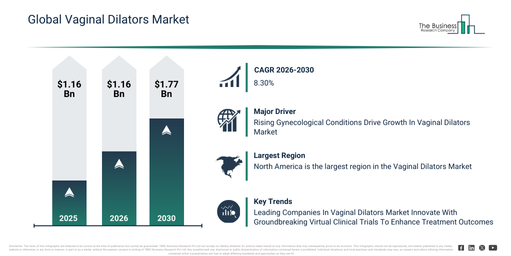
    The vaginal dilators market is projected to experience substantial growth in the next few years. It is anticipated to expand to $37.66 billion by 2030, achieving a compound annual growth rate (CAGR) of 8.3%. This projected growth can be attributed to several factors, including the increasing adoption of personalized and 3D-printed dilators, their integration with mobile health applications, the expansion of telemedicine in gynecological care, a heightened demand for home-use therapy devices, and rising awareness campaigns for pelvic floor rehabilitation. Major trends expected during this forecast period include the development of 3D-printed customized dilators, AI-enabled therapy tracking solutions, multi-size and multi-material devices, integration with telemedicine platforms, and home-based pelvic floor therapy options.

    Get A Free Sample Report With In-Depth Market Insights:

    https://thebusinessresearchcompany.com/sample_request?id=45530950&type=smp&name=Vaginal%20Dilators%20Market%20Report%202026&utm_source=Blogs&utm_medium=Paid&utm_campaign=Oct_PR

    Vaginal Dilators Market Growth Momentum: What Factors Are Shaping Demand?

    The increasing occurrence of gynecological conditions is anticipated to drive the expansion of the vaginal dilators market in the future. These conditions encompass any disorder, ailment, or health problem impacting the female reproductive system. Their widespread presence stems from various factors, including evolving lifestyles, postponing childbearing, greater exposure to environmental contaminants, and a surge in infection rates. As such, vaginal dilators offer a practical solution for managing and alleviating the effects of gynecological conditions, leading to improved patient results and overall quality of life. For example, in October 2025, figures from Cancer Australia, an Australia-based government agency, indicated around 6,963 new cases of gynecological cancers were identified in 2024, alongside an estimate that a female faces a 1 in 23 (or 4.3%) chance of being diagnosed with a gynaecological cancer by the age of 85. Consequently, the widespread existence of gynecological conditions is a key factor fueling the expansion of the vaginal dilators market.

    Vaginal Dilators Market Segments: Where Is Growth Concentrated?

    The vaginal dilators market covered in this report is segmented –

    1) By Type: Silicone Vaginal Dilators, Magnetic Vaginal Dilators, Other Types

    2) By Distribution Channel: Online Stores, Retail Pharmacies, Other Distribution Channels

    3) By Application: Hospitals, Clinic, Other Applications

    Subsegments:

    1) By Silicone Vaginal Dilators: Standard Silicone Dilators, Textured Silicone Dilators, Multi-Size Silicone Dilators, Heat-Resistant Silicone Dilators

    2) By Magnetic Vaginal Dilators: Magnetic Therapy Dilators, Magnetic Silicone Dilators, Interchangeable Magnetic Dilators

    3) By Other Types: Plastic Vaginal Dilators, Glass Vaginal Dilators, Customizable Vaginal Dilators, Therapeutic Vaginal Dilators

    Vaginal Dilators Market Trends Redefining Industry Growth

    Leading companies in the vaginal dilators market are concentrating on developing innovative, groundbreaking virtual clinical trials. These trials aim to evaluate the efficacy of their products, patient comfort, and long-term therapeutic outcomes. Virtual clinical trials, also known as decentralized or remote clinical trials, represent a modern method for conducting research, where a substantial portion or all trial activities are performed remotely using digital tools and technologies. For instance, in June 2024, Materna Medical Inc., a US-based company specializing in women’s pelvic health solutions, launched a new clinical study named Prospective On Market Patient-reported Outcomes for Milli Vaginal Dilator (POMPOM). This trial for Milli Vaginal Dilator (POMPOM) seeks to gather data on how effectively the device alleviates discomfort associated with vaginismus, a condition characterized by involuntary muscle contractions in the pelvic floor that make penetration painful or impossible for many women.

    Vaginal Dilators Market Top Companies Driving Competitive Growth

    Major companies operating in the vaginal dilators market are McKesson Corporation, Medline Industries LP , CooperSurgical Inc., MedGyn Products Inc., Femmax, CalExotics, GPC Medical Ltd., AvaCare Medical, Soul Source Inc., Panpac Medical Corporation, Velvi, Amielle, Intimate Rose, Hope&Her, Berman Center, NeuEve LLC, Dr. Berman’s Dilators, Vuvatech Inc., Marina Medical Instruments Inc., Bien Aus Pty Ltd.

    View The Full Vaginal Dilators Market Report:

    https://thebusinessresearchcompany.com/report/vaginal-dilators-global-market-report?utm_source=Blogs&utm_medium=Paid&utm_campaign=Oct_PR

    Vaginal Dilators Market Global Footprint: Which Region Leads The Industry?

    North America was the largest region in the vaginal dilators market in 2025. The regions covered in the vaginal dilators market report are Asia-Pacific, South East Asia, Western Europe, Eastern Europe, North America, South America, Middle East, Africa.

    Reach Out To Our Team:

    The Business Research Company: https://www.thebusinessresearchcompany.com/

    Americas: +1 310-496-7795

    Asia: +44 7882 955267 & +91 8897263534

    Europe: +44 7882 955267

    Email us at: marketing@tbrc.info

    Follow us on:

    LinkedIn: https://in.linkedin.com/company/the-business-research-company

    YouTube: https://www.youtube.com/channel/UC24_fI0rV8cR5DxlCpgmyFQ

    Global Market Model: https://www.thebusinessresearchcompany.com/global-market-model

  • Vacuum Therapy Devices Market Forecast To Reach $2.66 Billion By 2030: Key Growth Drivers And Industry Trends

    Vacuum Therapy Devices Market Forecast To Reach $2.66 Billion By 2030: Key Growth Drivers And Industry Trends

    Built to provide research that’s more actionable and strategically valuable, The Business Research Company’s 2026 market reports include market attractiveness analysis, total addressable market sizing, company benchmarking matrices, interactive Excel dashboards, broader supply chain intelligence, emerging startup tracking, and in-depth product insights.

    Vacuum Therapy Devices Market Forecast: What Value Will The Market Reach By 2030?

    The market for vacuum therapy devices has experienced robust expansion over recent years. This market is projected to expand from $2.08 billion in 2025 to $2.19 billion in 2026, demonstrating a compound annual growth rate (CAGR) of 5.3%. Historical growth in this sector is primarily driven by factors such as the rising incidence of chronic wounds, an increase in diabetic foot ulcers, continuous technological improvements in vacuum therapy devices, heightened understanding among healthcare professionals, and the broadening of wound care facilities in hospitals and clinics.

    The vacuum therapy devices market size is anticipated to show consistent growth over the next few years, projected to reach $2.66 billion by 2030, expanding at a compound annual growth rate (CAGR) of 5.0%. This projected expansion is fueled by the increased adoption of portable therapy devices, their integration with wearable monitoring systems, advancements in erectile dysfunction treatment, AI-based therapy outcome prediction, and the growing availability of home healthcare services. Significant trends for the forecast period encompass the optimization of negative pressure wound therapy, the development of portable vacuum therapy devices, AI-driven analytics for wound healing, the uptake of both multi-use and single-use devices, and the introduction of electrically powered vacuum therapy systems.

    Get A Free Sample Report With In-Depth Market Insights:

    https://thebusinessresearchcompany.com/sample_request?id=97873004&type=smp&name=Vacuum%20Therapy%20Devices%20Market%20Report%202026&utm_source=Blogs&utm_medium=Paid&utm_campaign=Oct_PR

    Vacuum Therapy Devices Market Expansion Drivers: What’s Shaping Future Growth?

    The escalating incidence of accidental injuries is anticipated to fuel the expansion of the vacuum therapy device market. Such injuries stem from increased vehicular traffic, reckless driving, and inadequate safety measures, leading to a higher frequency of unintended harm and trauma. Additionally, the growing number of accidental injuries is also attributed to greater exposure to hazards within households during routine domestic tasks. Vacuum therapy devices are instrumental in addressing various accidental injuries by fostering quicker wound healing and diminishing infection risks. They enhance patient recuperation through effective removal of fluids and debris, thereby boosting tissue repair and supporting overall treatment outcomes. For instance, in June 2025, data from the Australian Institute of Health and Welfare, an Australia-based government agency, indicated that in 2023–24, most injuries occurred at home with 170,810 cases, followed by streets or highways with 56,781 cases, sports areas with 31,467 cases, and aged care facilities with 27,979 cases. Consequently, the rising occurrence of accidental injuries will propel the growth of the vacuum therapy device market.

    Vacuum Therapy Devices Market Segment Analysis: What Are The Core Market Categories?

    The vacuum therapy devices market covered in this report is segmented –

    1) By Type: Negative Pressure Wound Therapy Devices, Vacuum Constriction Devices

    2) By Portability: Portable Vacuum Therapy Devices, Non-portable Vacuum Therapy Devices

    3) By Technology: Manual, Electrically Powered

    4) By Application: Chronic Wounds, Diabetic Foot Ulcers, Erectile Dysfunction, Traumatic Wounds, Surgical Procedures, Other Applications

    5) By End-User: Hospitals And Clinics, Ambulatory Surgery Centers, Other End Users

    Subsegments:

    1) By Negative Pressure Wound Therapy Devices: Portable Negative Pressure Wound Therapy Devices, Fixed Negative Pressure Wound Therapy Devices, Single-Use Negative Pressure Wound Therapy Devices, Multi-Use Negative Pressure Wound Therapy Devices

    2) By Vacuum Constriction Devices: Manual Vacuum Constriction Devices, Electric Vacuum Constriction Devices, Disposable Vacuum Constriction Devices, Adjustable Vacuum Constriction Devices

    Vacuum Therapy Devices Market Strategic Trends: What Defines The Next Growth Phase?

    Leading entities within the vacuum therapy devices market are refining their therapeutic approaches through negative pressure wound therapy (NPWT) systems, aiming to improve patient mobility and comfort alongside ensuring proficient wound care. This medical technique, negative pressure wound therapy (NPWT), employs a vacuum to establish a regulated sub-atmospheric pressure setting surrounding a wound, thereby facilitating recovery by extracting surplus fluid, diminishing edema, and enhancing regional blood circulation. An illustrative example occurred in April 2024, when Smith+Nephew Plc, a global medical equipment producer based in the UK, launched the RENASYS EDGE, an innovative, highly portable, and light negative pressure wound therapy (NPWT) system intended for both domestic and hospital applications. The compact, easy-to-use design of this groundbreaking device improves patient mobility and comfort while delivering efficient wound treatment. Its silent operation and portability contribute to an improved quality of life for individuals suffering from chronic wounds, simultaneously aiding healthcare providers in handling intricate scenarios.

    Vacuum Therapy Devices Market Leading Players And Competitive Positioning

    Major companies operating in the vacuum therapy devices market are 3M Company, Boston Scientific Corporation, B. Braun Melsungen AG, Smith & Nephew plc, Coloplast Corporation, Paul Hartmann AG, ConvaTec Inc., Mölnlycke Health Care AB, Wound Care Technologies Inc., Kalypto Medical, Genadyne Biotechnologies Inc., Augustus Medical Systems Pvt. Ltd., ATMOS MedizinTechnik, Vacurect, Pensar Medical, Cork Medical, Spiracur (SNaP), Innovative Therapies Inc., Prospera (PRO‑I/PRO‑II/PRO‑III devices), Rigicon Inc., Promedon GmbH

    View The Full Vacuum Therapy Devices Market Report:

    https://thebusinessresearchcompany.com/report/vacuum-therapy-devices-global-market-report?utm_source=Blogs&utm_medium=Paid&utm_campaign=Oct_PR

    Vacuum Therapy Devices Market Regional Distribution: Which Areas Power Market Growth?

    North America was the largest region in the vacuum therapy devices market in 2025. Asia-Pacific is expected to be the fastest-growing region in the forecast period. The regions covered in the vacuum therapy devices market report are Asia-Pacific, South East Asia, Western Europe, Eastern Europe, North America, South America, Middle East, Africa.

    Reach Out To Our Team:

    The Business Research Company: https://www.thebusinessresearchcompany.com/

    Americas: +1 310-496-7795

    Asia: +44 7882 955267 & +91 8897263534

    Europe: +44 7882 955267

    Email us at: marketing@tbrc.info

    Follow us on:

    LinkedIn: https://in.linkedin.com/company/the-business-research-company

    YouTube: https://www.youtube.com/channel/UC24_fI0rV8cR5DxlCpgmyFQ

    Global Market Model: https://www.thebusinessresearchcompany.com/global-market-model
  • Vaccine Delivery Devices Market Research 2026: Market Size, Trends, Segments And Growth Forecast

    Vaccine Delivery Devices Market Research 2026: Market Size, Trends, Segments And Growth Forecast

    Backed by market attractiveness analysis, total addressable market sizing, company benchmarking matrices, interactive Excel dashboards, wider supply chain intelligence, emerging startup coverage, and detailed product-level insights, The Business Research Company’s 2026 market reports are designed to offer research that is more actionable and strategically valuable than ever.

    Vaccine Delivery Devices Market Size Outlook: How Quickly Will Revenue Expand Through 2030?

    The vaccine delivery devices market has experienced substantial expansion in recent times. Projections indicate its value will increase from $7.01 billion in 2025 to $7.72 billion in 2026, at a compound annual growth rate (CAGR) of 10.1%. Historically, this growth has been influenced by factors such as the broadening of national immunization programs, an increase in worldwide vaccine manufacturing capabilities, the escalating occurrence of infectious diseases, advancements in cold-chain logistics, and the extensive adoption of traditional syringe-based delivery methods.

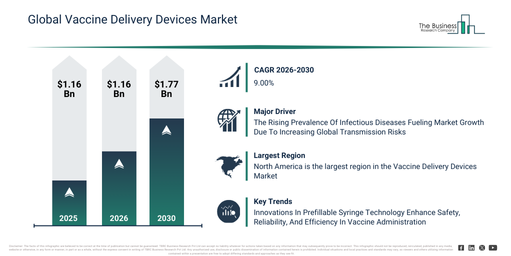
    The market size for vaccine delivery devices is projected to experience robust growth in the coming years. It is anticipated to reach $10.9 billion in 2030, demonstrating a compound annual growth rate (CAGR) of 9.0%. This growth during the forecast period can be attributed to the increasing development of next-generation vaccines, a rising demand for self-administration devices, the expansion of pandemic preparedness programs, growing investments in vaccine accessibility technologies, and an increased focus on dose accuracy and compliance. Major trends expected in this period include the increasing adoption of needle-free injection technologies, a rising demand for microneedle patch delivery systems, the growing use of alternative vaccine administration routes, the expansion of mass immunization programs, and an enhanced focus on patient comfort and safety.

    Get A Free Sample Report With In-Depth Market Insights:

    https://thebusinessresearchcompany.com/sample_request?id=34740547&type=smp&name=Vaccine%20Delivery%20Devices%20Market%20Report%202026&utm_source=Blogs&utm_medium=Paid&utm_campaign=Oct_PR

    Vaccine Delivery Devices Market Development Factors: What’s Supporting Demand?

    The anticipated expansion of the vaccine delivery devices market is linked to the rising occurrence of infectious diseases. These diseases are ailments resulting from pathogenic microorganisms like bacteria, viruses, fungi, or parasites, capable of transmission among people, animals, or via polluted settings. Several factors contribute to the surge in infectious diseases, including swift urbanization, more frequent international travel, environmental shifts due to climate change, and growing population densities, all of which aid pathogen spread. Vaccine delivery devices play a crucial role in public health by facilitating the effective and secure administration of vaccines, thereby bolstering community immunity and limiting the dissemination of infectious agents. An illustrative example comes from November 2024, where the World Health Organization (WHO), a Switzerland-based specialized agency of the United Nations responsible for global public health, reported an estimated 10.3 million measles cases worldwide in 2023, marking a 20% rise over 2022 figures. Consequently, the expanding occurrence of infectious diseases acts as a primary catalyst for the growth of the vaccine delivery devices market.

    Vaccine Delivery Devices Market Segment Breakdown: Which Categories Lead On Revenue?

    The vaccine delivery devices market covered in this report is segmented –

    1) By Type Of Device: Needle Free Injection Systems, Oral Delivery Systems, Nasal Delivery Systems, Jet Injectors, Microneedle Patches And Microinjectors

    2) By Route Of Administration: Intradermal Vaccination, Intramuscular Vaccination, Subcutaneous Vaccination, Other Vaccinations

    3) By End Users: Hospitals, Clinics, Other End Users

    Subsegments:

    1) By Needle Free Injection Systems: Spring-Based Injectors, Gas-Driven Injectors, Hybrid Injectors

    2) By Oral Delivery Systems: Oral Tablets And Capsules, Oral Sprays, Oral Solutions

    3) By Nasal Delivery Systems: Nasal Sprays, Nasal Drops, Nasal Powder Systems

    4) By Jet Injectors: Pneumatic Jet Injectors, Electromechanical Jet Injectors

    5) By Microneedle Patches And Microinjectors: Dissolvable Microneedles, Solid Microneedles, Microinjector Devices

    Vaccine Delivery Devices Market Transformation Trends: What Innovations Are Driving Change?

    Leading companies within the vaccine delivery devices market are prioritizing the creation of advanced solutions, including innovative intradermal delivery systems, aimed at boosting vaccine effectiveness and reducing waste. An intradermal delivery system is a technology designed to administer vaccines directly into the dermal layer, where a high concentration of immune cells helps elicit stronger immunogenic responses even with lower vaccine volumes. For example, in July 2025, Terumo Corporation, a Japan-based medical technology company, unveiled the Immucise Intradermal Injection System. This vertical-puncture device, fitted with a 33G needle, ensures accurate intradermal delivery. This advancement contributes to consistent wheal formation with minimal leakage, offers improved accuracy for intradermal injections compared to the traditional Mantoux technique, and facilitates a significant reduction in the necessary vaccine dosage. By promoting stronger immunogenicity, optimizing resource deployment, and easing operational hurdles, the Immucise system ultimately improves vaccination efficiency and helps streamline healthcare workflows.

    Vaccine Delivery Devices Market Competitive Overview And Top Companies

    Major companies operating in the vaccine delivery devices market are Johnson & Johnson, Sanofi S.A., 3M Company, GlaxoSmithKline plc, Becton Dickinson and Company, INOVIO Pharmaceuticals Inc., Terumo Corporation, SCHOTT AG, Vaxxas Inc., PharmaJet Inc., Enesi Pharma Limited, NanoPass Technologies Ltd., Gerresheimer AG, West Pharmaceutical Services Inc., Nemera, SHL Medical AG, Portal Instruments Inc., ApiJect Systems Corp., Credence MedSystems Inc., Zosano Pharma Corporation

    View The Full Vaccine Delivery Devices Market Report:

    https://thebusinessresearchcompany.com/report/vaccine-delivery-devices-global-market-report?utm_source=Blogs&utm_medium=Paid&utm_campaign=Oct_PR

    Vaccine Delivery Devices Market Leading Geography: Which Region Contributes The Most Revenue?

    North America was the largest region in the vaccine delivery devices market in 2025. Asia-Pacific is expected to be the fastest-growing region in the forecast period. The regions covered in the vaccine delivery devices market report are Asia-Pacific, South East Asia, Western Europe, Eastern Europe, North America, South America, Middle East, Africa.

    Reach Out To Our Team:

    The Business Research Company: https://www.thebusinessresearchcompany.com/

    Americas: +1 310-496-7795

    Asia: +44 7882 955267 & +91 8897263534

    Europe: +44 7882 955267

    Email us at: marketing@tbrc.info

    Follow us on:

    LinkedIn: https://in.linkedin.com/company/the-business-research-company

    YouTube: https://www.youtube.com/channel/UC24_fI0rV8cR5DxlCpgmyFQ

    Global Market Model: https://www.thebusinessresearchcompany.com/global-market-model

  • Uterine Fibroid Embolization Device Market Forecast 2026: Market Size, Competitive Landscape And Growth Drivers

    Uterine Fibroid Embolization Device Market Forecast 2026: Market Size, Competitive Landscape And Growth Drivers

    Featuring market attractiveness scoring, total addressable market sizing, company benchmarking matrices, interactive Excel dashboards, deeper supply chain intelligence, emerging startup tracking, and granular product-level insights, The Business Research Company’s 2026 market reports are built to deliver research that is both more actionable and more strategically valuable.

    Uterine Fibroid Embolization Device Market Size, Value And Growth Trajectory Through 2030

    The uterine fibroid embolization device market size has demonstrated consistent growth in recent years. It is projected to expand from $5.93 billion in 2025 to $6.19 billion in 2026, recording a compound annual growth rate (CAGR) of 4.4%. This historical growth can be linked to several factors, including the increasing prevalence of uterine fibroids among women of reproductive age, a rising number of gynecological procedures performed in hospital and clinic settings, the growing adoption of uterine artery embolization in interventional radiology, greater awareness of alternatives to open surgical myomectomy, and the expansion of minimally invasive treatment workflows within tertiary care centers.

    The uterine fibroid embolization device market size is anticipated to demonstrate consistent growth in the coming years, reaching $7.33 billion in 2030 at a compound annual growth rate (CAGR) of 4.3%. This expansion over the forecast period is propelled by factors such as increasing demand for uterus-sparing fibroid treatments among younger patient groups, a rising clinical inclination toward minimally invasive and non-invasive treatment methods, enhanced procedural adoption in ambulatory surgical centers, the wider application of ablation and embolization devices for reducing fibroid size, and increased investments in advanced delivery catheters and embolic systems to improve treatment precision. Significant trends during this period involve the increasing adoption of minimally invasive embolization techniques for uterine fibroid management, a growing clinical preference for organ-preserving alternatives to hysterectomy, the expanded utilization of image-guided interventional devices for targeted fibroid therapy, the broader use of embolization procedures in outpatient and ambulatory surgical settings, and an escalating demand for precision delivery systems to enhance procedural safety and outcomes.

    Get A Free Sample Report With In-Depth Market Insights:

    https://thebusinessresearchcompany.com/sample_request?id=25111898&type=smp&name=Uterine%20Fibroid%20Embolization%20Device%20Market%20Report%202026&utm_source=Blogs&utm_medium=Paid&utm_campaign=Oct_PR

    Uterine Fibroid Embolization Device Market Industry Drivers: What’s Behind The Revenue Growth?

    The increasing need for minimally invasive surgeries is projected to drive expansion within the uterine fibroid embolization device market in the future. These surgical techniques involve small cuts or natural bodily entry points to reach and treat internal body parts, reducing patient trauma. The preference for minimally invasive procedures is rising among both patients and medical professionals due to their benefits in accelerating recovery, reducing complications, and enhancing comfort. Uterine fibroid embolization devices play a crucial role in these procedures by allowing for accurate and successful fibroid treatment, thereby bettering patient results and procedural effectiveness. For example, AOS Open, a US-based medical journal, reported that in January 2025, the percentage of minimally invasive surgeries performed in hospitals utilizing robotic-assisted systems climbed to 65.8% in 2025, an increase from 60.5% in 2022. Consequently, the escalating demand for minimally invasive surgeries is a key factor propelling the expansion of the uterine fibroid embolization device market.

    Uterine Fibroid Embolization Device Market Segmentation: How Does The Market Break Down By Category?

    The uterine fibroid embolization device market covered in this report is segmented –

    1) By Technology: Surgical Techniques, Laparoscopic Techniques, Ablation Techniques, Embolization Techniques

    2) By Mode Of Treatment: Invasive Treatment, Minimally Invasive Treatment

    3) By End User: Hospitals, Clinics, Ambulatory Surgical Center

    Subsegments:

    1) By Surgical Techniques: Open Surgery, Myomectomy

    2) By Laparoscopic Techniques: Laparoscopic Myomectomy, Laparoscopic Hysterectomy

    3) By Ablation Techniques: Radiofrequency Ablation, Microwave Ablation, Cryoablation

    4) By Embolization Techniques: Transcatheter Arterial Embolization (TAE), Uterine Artery Embolization (UAE)

    #Uterine Fibroid Embolization Device Market Growth Trends: What’s Shaping The Future Outlook?

    Leading companies within the uterine fibroid embolization device market are innovating with products such as Minimally invasive fibroid management software, aimed at improving the precision and efficiency of uterine fibroid treatment. Minimally invasive fibroid management software represents an advanced digital platform designed to assist clinicians in the planning, guidance, and execution of minimally invasive procedures for uterine fibroids, thereby enhancing procedural accuracy, safety, and overall patient results. For example, in September 2024, Gynesonics, a US–based medical device firm specializing in minimally invasive gynecologic treatments, introduced its SMART OS 2.4 software for the Sonata System to improve the management of uterine fibroids. SMART OS 2.4 refines the proprietary SMART Guide by reducing the minimum ablation zone size from 2.0 × 1.3 cm to 1.6 × 1.2 cm, cutting ablation volume by 38%, and optimizing the Thermal Safety Border for smaller fibroids. These advancements enable more precise, controlled treatments while protecting healthy uterine tissue, thereby boosting both procedural efficiency and patient outcomes.

    Uterine Fibroid Embolization Device Market Competitive Landscape: Which Companies Lead The Industry?

    Major companies operating in the uterine fibroid embolization device market are Johnson and Johnson Pvt Ltd., Medtronic plc., Boston Scientific Corporation, Olympus Corporation, Terumo Corporation, Ethicon Inc., Hologic Inc., CooperSurgical Inc., Cook Medical Inc., Karl Storz GmbH, Merit Medical Systems, CONMED Corporation, Lumenis Ltd., Richard Wolf GmbH, BTG International Ltd., Healthium MedTech Pvt. Ltd., Hironic Co.Ltd, Minerva Surgical Inc., Gynesonics Inc., Advanced Surgical Concepts PLLC

    View The Full Uterine Fibroid Embolization Device Market Report:

    https://thebusinessresearchcompany.com/report/uterine-fibroid-embolization-device-global-market-report?utm_source=Blogs&utm_medium=Paid&utm_campaign=Oct_PR

    Uterine Fibroid Embolization Device Market Regional Outlook: Where Is Opportunity Concentrated?

    North America was the largest region in the uterine fibroid embolization device market in 2025. The regions covered in the uterine fibroid embolization device market report are Asia-Pacific, South East Asia, Western Europe, Eastern Europe, North America, South America, Middle East, Africa.

    Reach Out To Our Team:

    The Business Research Company: https://www.thebusinessresearchcompany.com/

    Americas: +1 310-496-7795

    Asia: +44 7882 955267 & +91 8897263534

    Europe: +44 7882 955267

    Email us at: marketing@tbrc.info

    Follow us on:

    LinkedIn: https://in.linkedin.com/company/the-business-research-company

    YouTube: https://www.youtube.com/channel/UC24_fI0rV8cR5DxlCpgmyFQ

    Global Market Model: https://www.thebusinessresearchcompany.com/global-market-model