Blog

  • Implantable Remote Patient Monitoring Devices Market Reaches $27.48 Billion In 2026: Key Developments Shaping Expansion

    Implantable Remote Patient Monitoring Devices Market Reaches $27.48 Billion In 2026: Key Developments Shaping Expansion

    Backed by market attractiveness analysis, total addressable market sizing, company benchmarking matrices, interactive Excel dashboards, wider supply chain intelligence, emerging startup coverage, and detailed product-level insights, The Business Research Company’s 2026 market reports are designed to offer research that is more actionable and strategically valuable than ever.

    Implantable Remote Patient Monitoring Devices Market Growth Analysis: How Will Revenue Trend Over The Forecast Period?

    The market size for implantable remote patient monitoring devices has experienced rapid expansion in recent years. This market is projected to expand from $10.26 billion in 2025 to $12.51 billion in 2026, demonstrating a compound annual growth rate (CAGR) of 21.9%. The expansion observed in the historic period stemmed from factors such as limited understanding of remote monitoring’s advantages, a dependence on conventional in-hospital monitoring, the gradual acceptance of implantable devices, constraints in wireless connectivity, and the elevated cost of early monitoring solutions.

    The market size for implantable remote patient monitoring devices is projected to experience substantial growth over the coming years. This sector is forecast to reach $27.48 billion by 2030, demonstrating a compound annual growth rate (CAGR) of 21.7%. Several factors are driving this expansion during the forecast period, including advancements in implantable sensor technology, the rising incidence of chronic illnesses, the integration of these devices with telemedicine platforms, an aging global population, and favorable government policies regarding reimbursement. Key developments anticipated in this period encompass the increased use of continuous glucose monitoring devices, the expansion of implantable cardiac monitoring systems, a surge in the adoption of smart weight monitoring solutions, the broadening of remote home care monitoring options, and a heightened emphasis on real-time data transmission and patient well-being.

    Get A Free Sample Report With In-Depth Market Insights:

    https://thebusinessresearchcompany.com/sample_request?id=54268071&type=smp&name=Implantable%20Remote%20Patient%20Monitoring%20Devices%20Market%20Report%202026&utm_source=Blogs&utm_medium=Paid&utm_campaign=Oct_PR

    Implantable Remote Patient Monitoring Devices Market Industry Drivers: What’s Behind The Revenue Growth?

    The rising integration of telehealth services is anticipated to fuel the expansion of the implantable remote patient monitoring devices market in the future. Telehealth refers to remote healthcare delivery through platforms like phones, video calls, or dedicated applications, enabling patients to engage with medical professionals without needing to visit a physical clinic or hospital. This increase in telehealth adoption stems from a rising need for ongoing, real-time health surveillance for individuals managing chronic conditions, which facilitates prompt medical actions and reduces the necessity for frequent hospital attendance. Telehealth offerings bolster implantable remote patient monitoring devices by allowing instantaneous data exchange between individuals and medical staff, thereby aiding rapid clinical judgments and lessening the requirement for face-to-face appointments. Furthermore, they enhance the management of chronic diseases through continuous oversight and proactive intervention, leading to greater healthcare efficiency and improved patient ease. As an illustration, FAIR Health Inc., a US-based non-profit organization, reported in April 2023 that national telehealth utilization in 2023 grew by 7.3%, escalating from 5.5% of medical claim lines in December 2022 to 5.9% in January 2023. Consequently, the expanding uptake of telehealth services is acting as a key driver for the growth within the implantable remote patient monitoring devices market.

    Implantable Remote Patient Monitoring Devices Market Segment Analysis And Revenue Potential

    The implantable remote patient monitoring devices market covered in this report is segmented –

    1) By Device Type: Implantable Glucose Monitoring Devices, Implantable Cardiac Monitoring Devices, Implantable Multiparameter And Specialty Monitors

    2) By Technology: Continuous Glucose Monitoring (Cgm), Implantable Loop Recorders, Implantable Respiratory Monitors, Implantable Temperature Monitors, Implantable Neuromonitoring Devices, Implantable Multiparameter Monitors

    3) By Patient Age Group: Adults (Aged 18-64), Seniors (Aged 65 And Above), Pediatric Patients (Aged 0-17), Middle-Aged Adults (Aged 45-64)

    4) By Distribution Channel: Direct Sales, Online Sales, Health Care Institutions, Ambulatory Surgery Centers

    5) By End User: Hospitals, Home Care Settings, Ambulatory Surgery Centers, Other End Users

    Subsegments:

    1) By Implantable Glucose Monitoring Devices: Continuous Glucose Monitoring (Cgm) Devices, Long-Term Implantable Cgm Devices

    2) By Implantable Cardiac Monitoring Devices: Implantable Loop Recorders, Implantable Cardiac Telemetry Devices

    3) By Implantable Multiparameter And Specialty Monitors: Implantable Respiratory Monitoring Devices, Implantable Temperature Monitoring Devices, Implantable Neuromonitoring Devices, Implantable Multiparameter Monitors

    #Implantable Remote Patient Monitoring Devices Market Growth Trends: What’s Shaping The Future Outlook?

    Leading companies operating in the implantable remote patient monitoring devices market are concentrating on developing sophisticated products, such as implantable cardiac monitors, to enhance the precision of monitoring for cardiac arrhythmias. An implantable cardiac monitor (ICM), also referred to as an implantable loop recorder (ILR), is a compact device surgically placed just beneath the skin, typically on the left side of the chest, to continuously track and record the heart’s electrical activity over a prolonged period. For instance, in June 2023, Biotronik AG, a medical technology company based in Switzerland, launched the BIOMONITOR IV implantable cardiac monitor. This state-of-the-art ICM combines BIOTRONIK’s SmartECG technology with artificial intelligence to reduce all false positive detections by 86% while preserving 98% of true episodes. This monitor is also capable of distinguishing between premature atrial contractions (PACs) and premature ventricular contractions (PVCs) to provide healthcare professionals with improved tools for risk stratification and diagnosis.

    Implantable Remote Patient Monitoring Devices Market Industry Leaders And Competitive Landscape

    Major companies operating in the implantable remote patient monitoring devices market are Abbott Laboratories, Medtronic plc, Boston Scientific Corporation, Dexcom Inc., LivaNova PLC, MicroPort Scientific Corporation, NeuroPace Inc., Profusa Inc., Senseonics Holdings Inc., Xeltis AG, GlySens Inc., Biotronik SE & Co KG, Impulse Dynamics NV, CVRx Inc., Vectorious Medical Technologies, EBR Systems Inc., Axonics Modulation Technologies Inc., Synchron Inc., Neuralink Corp, Orchestra BioMed Holdings Inc., Second Sight Medical Products Inc.

    View The Full Implantable Remote Patient Monitoring Devices Market Report:

    https://thebusinessresearchcompany.com/report/implantable-remote-patient-monitoring-devices-global-market-report?utm_source=Blogs&utm_medium=Paid&utm_campaign=Oct_PR

    Implantable Remote Patient Monitoring Devices Market Regional Analysis And Top Geography

    North America was the largest region in the implantable remote patient monitoring devices market in 2025. The regions covered in the implantable remote patient monitoring devices market report are Asia-Pacific, South East Asia, Western Europe, Eastern Europe, North America, South America, Middle East, Africa.

    Reach Out To Our Team:

    The Business Research Company: https://www.thebusinessresearchcompany.com/

    Americas: +1 310-496-7795

    Asia: +44 7882 955267 & +91 8897263534

    Europe: +44 7882 955267

    Email us at: marketing@tbrc.info

    Follow us on:

    LinkedIn: https://in.linkedin.com/company/the-business-research-company

    YouTube: https://www.youtube.com/channel/UC24_fI0rV8cR5DxlCpgmyFQ

    Global Market Model: https://www.thebusinessresearchcompany.com/global-market-model
  • Implantable Pulse Generator Market Growth Outlook For 2026: Drivers, Trends And Future Opportunities

    Implantable Pulse Generator Market Growth Outlook For 2026: Drivers, Trends And Future Opportunities

    Featuring market attractiveness scoring, total addressable market sizing, company benchmarking matrices, interactive Excel dashboards, deeper supply chain intelligence, emerging startup tracking, and granular product-level insights, The Business Research Company’s 2026 market reports are built to deliver research that is both more actionable and more strategically valuable.

    Implantable Pulse Generator Market Forecast: What Value Will The Market Reach By 2030?

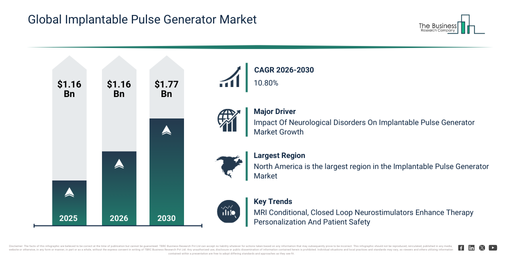
    The implantable pulse generator market has experienced significant expansion in recent years. This market is set to grow from $147.01 billion in 2025 to $162.9 billion in 2026, exhibiting a compound annual growth rate (CAGR) of 10.8%. The growth observed in the past can be attributed to the rising prevalence of chronic pain conditions, the increasing incidence of cardiovascular diseases, the growing adoption of implantable medical devices, the expansion of hospital-based surgical procedures, and a rising awareness of neuromodulation therapies.

    The market for implantable pulse generators is projected to experience substantial expansion in the coming years, reaching $245.56 billion by 2030, demonstrating a compound annual growth rate (CAGR) of 10.8%. This anticipated growth throughout the forecast period stems from factors such as a heightened demand for minimally invasive interventions, an expanding elderly demographic, a greater prevalence of neurological conditions, broader availability of sophisticated implantable treatments, and an increased emphasis on managing diseases over extended periods. Key trends expected during this period involve the increasing integration of neuromodulation therapies, a surge in the application of implantable pulse generators for addressing chronic pain, a growing preference for rechargeable versions of these devices, an enlargement of their uses in treating movement disorders, and a rising requirement for long-term implantable stimulation tools.

    Get A Free Sample Report With In-Depth Market Insights:

    https://thebusinessresearchcompany.com/sample_request?id=27092647&type=smp&name=Implantable%20Pulse%20Generator%20Market%20Report%202026&utm_source=Blogs&utm_medium=Paid&utm_campaign=Oct_PR

    Implantable Pulse Generator Market Growth Factors: What’s Supporting Expansion?

    The escalating occurrence of neurological disorders is anticipated to stimulate the expansion of the implantable pulse generator market moving ahead. Neurological disorders are conditions impacting the brain, spinal cord, and nervous system, thereby affecting functions such as movement, sensation, and cognition. The rising instances of these disorders are often linked to an aging global population, lifestyle modifications, environmental factors, and more sophisticated diagnostic approaches. Implantable pulse generators offer assistance for neurological disorders by delivering focused electrical impulses to regulate abnormal neural activity and ease symptoms. For example, in October 2023, findings from the World Federation of Neurology, a UK-based non-profit organization, indicated that more than 40% of the global population is currently living with a neurological condition, a burden projected to nearly double in the forthcoming years. Therefore, the increasing incidence of neurological disorders is propelling the growth of the implantable pulse generator market.

    Implantable Pulse Generator Market Segmentation And Category Overview

    The implantable pulse generator market covered in this report is segmented –

    1) By Product Type: Functional Electrical Stimulation (FES) Devices for Motor Function Restoration, Spinal Cord Stimulation (SCS) Devices, Deep Brain Stimulation (DBS) Devices, Vagus Nerve Stimulation (VNS) Devices, Sacral Nerve Stimulation (SNS) Devices

    2) By Charging Type: Rechargeable, Non-Rechargeable

    3) By Application: Movement Disorders, Chronic Pain Management, Neurological Disorders, Other Applications

    4) By End User: Hospitals, Ambulatory Surgical Centers, Clinics, Home Care and Remote Monitoring Settings

    Subsegments:

    1) By Functional Electrical Stimulation (FES) Devices: For Motor Function Restoration, For Muscle Strengthening, For Rehabilitation Post-Stroke or Injury

    2) By Spinal Cord Stimulation (SCS) Devices: Conventional SCS Systems, High-Frequency SCS Systems, Burst SCS Systems

    3) By Deep Brain Stimulation (DBS) Devices: Parkinson’s Disease DBS Systems, Essential Tremor DBS Systems, Dystonia DBS Systems, Other Neurological Disorder DBS Systems

    4) By Vagus Nerve Stimulation (VNS) Devices: Epilepsy Treatment VNS Devices, Depression Treatment VNS Devices

    5) By Sacral Nerve Stimulation (SNS) Devices: Urinary Incontinence SNS Devices, Fecal Incontinence SNS Devices, Other Pelvic Floor Disorder SNS Devices

    Implantable Pulse Generator Market Industry Trends: What’s Reshaping Demand?

    Major companies in the implantable pulse generator (IPG) market are emphasizing MRI conditional neurostimulators, such as sensing-enabled rechargeable IPGs, to enhance their competitive advantage. For example, in April 2024, Medtronic, a US-based healthcare company, gained FDA approval for its Inceptiv closed-loop spinal cord stimulator. This device monitors evoked compound action potentials (ECAPs) 50 times per second to dynamically adjust stimulation and permits full-body 1.5 T and 3 T MRI scans. Similarly, in January 2024, Medtronic unveiled the Percept RC rechargeable deep brain stimulation neurostimulator, which includes BrainSense sensing technology, boasts a 15-year battery life, and offers full-body MRI compatibility at 1.5 T and 3 T with therapy active. These innovations improve therapy personalization and patient safety, although they might incur higher development and device costs.

    Implantable Pulse Generator Market Key Participants And Competitive Landscape

    Major companies operating in the implantable pulse generator market are Abbott Laboratories, Boston Scientific Corporation, Medtronic PLC, Nevro Corp, LivaNova PLC, NeuroPace Inc, NeuroSigma Inc, Saluda Medical Pty Ltd, Synapse Biomedical Inc, Nuvectra Medical Inc, MainStay Medical International PLC, Aleva Neurotherapeutics SA, Bioness Inc, EnteroMedics Inc, Neuronetics Inc, Axonics Inc, Sceneray Co Ltd, Cirtec Medical, BlueWind Medical, Syntach AB, Osaka Medical Devices, Gimer Medical, Saluda Medical

    View The Full Implantable Pulse Generator Market Report:

    https://thebusinessresearchcompany.com/report/implantable-pulse-generator-global-market-report?utm_source=Blogs&utm_medium=Paid&utm_campaign=Oct_PR

    Implantable Pulse Generator Market Geographic Analysis: Where Is Demand Rising Fastest?

    North America was the largest region in the implantable pulse generator market in 2025. The regions covered in the implantable pulse generator market report are Asia-Pacific, South East Asia, Western Europe, Eastern Europe, North America, South America, Middle East, Africa.

    Reach Out To Our Team:

    The Business Research Company: https://www.thebusinessresearchcompany.com/

    Americas: +1 310-496-7795

    Asia: +44 7882 955267 & +91 8897263534

    Europe: +44 7882 955267

    Email us at: marketing@tbrc.info

    Follow us on:

    LinkedIn: https://in.linkedin.com/company/the-business-research-company

    YouTube: https://www.youtube.com/channel/UC24_fI0rV8cR5DxlCpgmyFQ

    Global Market Model: https://www.thebusinessresearchcompany.com/global-market-model
  • Implantable Neurostimulators Market Size Forecast From 2026 To 2030: Key Industry Trends

    Implantable Neurostimulators Market Size Forecast From 2026 To 2030: Key Industry Trends

    Built to provide research that’s more actionable and strategically valuable, The Business Research Company’s 2026 market reports include market attractiveness analysis, total addressable market sizing, company benchmarking matrices, interactive Excel dashboards, broader supply chain intelligence, emerging startup tracking, and in-depth product insights.

    Implantable Neurostimulators Market Size Outlook: How Quickly Will Revenue Expand Through 2030?

    The market size for implantable neurostimulators has expanded quickly in recent years. It is forecast to grow from $6.76 billion in 2025 to $7.52 billion in 2026, achieving a compound annual growth rate (CAGR) of 11.4%. This historical growth can be linked to factors including the rising prevalence of chronic pain disorders, the early adoption of spinal cord stimulation therapies, the restricted options beyond pharmacological pain management, an increase in neurological disorder diagnosis rates, and the expansion of hospital-based neurosurgical procedures.

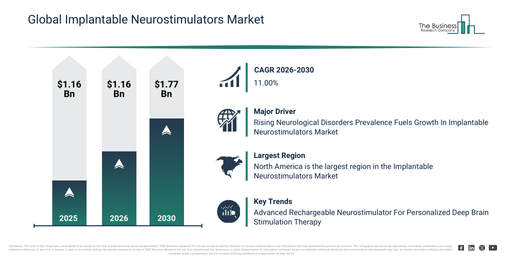
    The implantable neurostimulators market is projected to experience substantial expansion over the upcoming years, reaching a valuation of $11.44 billion by 2030, driven by an impressive compound annual growth rate (CAGR) of 11.0%. This anticipated growth stems from several factors, including ongoing advancements in neurostimulation technology, the broadening of applications for conditions like Parkinson’s disease and epilepsy, a growing elderly population affected by neurological disorders, mounting clinical evidence supporting neuromodulation, and enhancements in both reimbursement policies and access to healthcare. Key trends defining this period encompass the increasing use of implantable neurostimulators for managing chronic pain, a rising preference for rechargeable neurostimulation devices, the escalating demand for minimally invasive neuromodulation treatments, the expansion of their indications beyond just pain and movement disorders, and a heightened emphasis on device durability and patient comfort.

    Get A Free Sample Report With In-Depth Market Insights:

    https://thebusinessresearchcompany.com/sample_request?id=28088152&type=smp&name=Implantable%20Neurostimulators%20Market%20Report%202026&utm_source=Blogs&utm_medium=Paid&utm_campaign=Oct_PR

    Implantable Neurostimulators Market Demand Drivers: What’s Powering Industry Growth?

    The increasing occurrence of neurological conditions is anticipated to fuel the expansion of the implantable neurostimulators market in the future. These disorders are defined as ailments impacting the nervous system, encompassing the brain and spinal cord, thereby affecting functions such as movement and cognitive abilities. This surge in neurological conditions primarily stems from the aging demographic, where extended lifespans contribute to a higher susceptibility to diseases like Alzheimer’s and Parkinson’s. Implanted neurostimulators are devices designed to deliver electrical pulses to manage symptoms, such as tremors and pain, associated with conditions like epilepsy and Parkinson’s. For example, data from October 2023, provided by the World Federation of Neurology, a UK-based group representing national neurological societies, indicates that more than 40% of the worldwide population presently experiences a neurological condition, with this impact expected to almost double by 2050. Consequently, the growing incidence of neurological disorders is a key factor propelling the development of the implantable neurostimulators market.

    Implantable Neurostimulators Market Segment Outlook: Which Categories Are Growing Fastest?

    The implantable neurostimulators market covered in this report is segmented –

    1) By Product Type: Spinal Cord Stimulators, Deep Brain Stimulators, Sacral Nerve Stimulators, Vagus Nerve Stimulators, Other Product Types

    2) By Application: Pain Management, Parkinson’s Disease, Urinary And Fecal Incontinence, Epilepsy, Gastroparesis, Other Applications

    3) By End-Use: Hospitals, Ambulatory Surgical Centers (ASCs), Other End-Uses

    Subsegments:

    1) By Spinal Cord Stimulators: Conventional Spinal Cord Stimulators, Rechargeable Spinal Cord Stimulators, Non-Rechargeable Spinal Cord Stimulators, High-Frequency Spinal Cord Stimulators

    2) By Deep Brain Stimulators: Single Lead Deep Brain Stimulators, Dual Lead Deep Brain Stimulators, Rechargeable Deep Brain Stimulators, Non-Rechargeable Deep Brain Stimulators

    3) By Sacral Nerve Stimulators: Rechargeable Sacral Nerve Stimulators, Non-Rechargeable Sacral Nerve Stimulators, Implantable Pulse Generators For Sacral Nerve Stimulation

    4) By Vagus Nerve Stimulators: Rechargeable Vagus Nerve Stimulators, Non-Rechargeable Vagus Nerve Stimulators, Vagus Nerve Stimulation Systems For Epilepsy Treatment

    5) By Other Product Types: Transcranial Magnetic Stimulation (TMS) Devices, Peripheral Nerve Stimulators, Cochlear Implants

    Implantable Neurostimulators Market Innovation Trends: What Developments Are Reshaping The Industry?

    Leading companies in the implantable neurostimulators market are prioritizing advanced innovations, including next-generation rechargeable systems that improve existing DBS solutions and offer more personalized treatment for patients with movement disorders. These new devices provide extended battery life, customizable therapy settings, and real-time brain-signal sensing in a compact, user-friendly format. For example, in December 2024, Medtronic, a US-based medical technology company, launched its FDA-approved Percept RC neurostimulator in India for conditions such as Parkinson’s disease, essential tremor, dystonia, and epilepsy. The Percept RC is the smallest and thinnest dual-channel rechargeable neurostimulator, equipped with BrainSense technology to record and interpret brain activity for optimized, individualized therapy adjustments. It features a long-lasting battery designed to exceed 15 years, fast recharging, full-body MRI compatibility under specific guidelines, and software-update readiness for future enhancements, ultimately enabling more data-driven and adaptive deep brain stimulation therapy.

    Implantable Neurostimulators Market Top Companies Driving Competitive Growth

    Major companies operating in the implantable neurostimulators market are Abbott Laboratories, Medtronic plc, Boston Scientific Corporation, LivaNova plc, Inspire Medical Systems Inc., Nevro Corporation, Axonics Inc., Cirtec Medical Systems LLC, SPR Therapeutics Inc., BlueWind Medical Ltd., NeuroPace Inc., Bioness Inc., ReShape Lifesciences Inc., Synapse Biomedical Inc., Autonomic Technologies Inc., Comphya SA, Mainstay Medical Holdings plc, Sigenics Inc., Nalu Medical Inc., Aleva Neurotherapeutics SA, Nuvectra Corporation

    View The Full Implantable Neurostimulators Market Report:

    https://thebusinessresearchcompany.com/report/implantable-neurostimulators-global-market-report?utm_source=Blogs&utm_medium=Paid&utm_campaign=Oct_PR

    Implantable Neurostimulators Market Global Footprint: Which Region Leads The Market?

    North America was the largest region in the implantable neurostimulators market in 2025. Asia-Pacific is expected to be the fastest-growing region in the forecast period. The regions covered in the implantable neurostimulators market report are Asia-Pacific, South East Asia, Western Europe, Eastern Europe, North America, South America, Middle East, Africa.

    Reach Out To Our Team:

    The Business Research Company: https://www.thebusinessresearchcompany.com/

    Americas: +1 310-496-7795

    Asia: +44 7882 955267 & +91 8897263534

    Europe: +44 7882 955267

    Email us at: marketing@tbrc.info

    Follow us on:

    LinkedIn: https://in.linkedin.com/company/the-business-research-company

    YouTube: https://www.youtube.com/channel/UC24_fI0rV8cR5DxlCpgmyFQ

    Global Market Model: https://www.thebusinessresearchcompany.com/global-market-model

  • Implantable Neurostimulation Devices Market 2026: Market Size, Growth Drivers And Emerging Opportunities

    Implantable Neurostimulation Devices Market 2026: Market Size, Growth Drivers And Emerging Opportunities

    Backed by market attractiveness analysis, total addressable market sizing, company benchmarking matrices, interactive Excel dashboards, wider supply chain intelligence, emerging startup coverage, and detailed product-level insights, The Business Research Company’s 2026 market reports are designed to offer research that is more actionable and strategically valuable than ever.

    Implantable Neurostimulation Devices Market Size, Value And Growth Trajectory Through 2030

    The implantable neurostimulation devices market size has shown rapid expansion in recent years. It is projected to grow from $5.62 billion in 2025 to $6.27 billion in 2026, achieving a compound annual growth rate (CAGR) of 11.7%. The market’s historical growth can be attributed to the rising prevalence of neurological disorders, the expansion of pain management treatments, the adoption of implantable stimulation technologies, increasing clinical acceptance of neuromodulation, and the availability of implantable electronic systems.

    The market for implantable neurostimulation devices is projected to experience substantial expansion in the coming years. This sector is anticipated to reach a valuation of $10.02 billion by 2030, exhibiting a compound annual growth rate (CAGR) of 12.4%. Factors contributing to this growth during the forecast period include a heightened need for non-drug-based treatments, a greater emphasis on precise neuromodulation techniques, the proliferation of outpatient neurological care, increasing financial commitment to brain-machine interface studies, and advancements in stimulation algorithm development. Key trends foreseen for this period encompass the broader implementation of sophisticated neurostimulation solutions, a surge in the uptake of rechargeable stimulation units, an increasing application of customized neuromodulation therapies, the broadening scope of multi-indication neurostimulation platforms, and a reinforced emphasis on the lasting efficacy of treatments.

    Get A Free Sample Report With In-Depth Market Insights:

    https://thebusinessresearchcompany.com/sample_request?id=84958142&type=smp&name=Implantable%20Neurostimulation%20Devices%20Market%20Report%202026&utm_source=Blogs&utm_medium=Paid&utm_campaign=Oct_PR

    Implantable Neurostimulation Devices Market Growth Drivers: What’s Behind The Acceleration?

    The growing occurrence of neurological conditions is anticipated to fuel the expansion of the implantable neurostimulation device market in the future. A neurological disorder describes any condition that impacts the nervous system’s structure or function, leading to various symptoms such as paralysis, seizures, and cognitive impairments. Enhanced exposure to risk factors like high blood pressure, developmental abnormalities, or trauma leads to greater detection rates of these disorders. Implantable neurostimulation devices are employed for neurological disorders to modulate nerve activity and mitigate symptoms when other treatments are ineffective or insufficient. For example, in 2024, the Alzheimer’s Association, a US-based non-profit voluntary health organization, estimated that 6.9 million Americans aged 65 and older are living with Alzheimer’s disease, with 73% being age 75 or older. This figure is projected to increase to 12.7 million by 2050. Thus, the escalating prevalence of neurological disorders is set to drive the implantable neurostimulation device market.

    Implantable Neurostimulation Devices Market Segment Landscape: Which Areas Lead Development?

    The implantable neurostimulation devices market covered in this report is segmented –

    1) By Type: Spinal Cord Stimulation (SCS), Gastric Electric Stimulation (GES), Deep Brain Stimulation (DBS), Sacral Nerve Stimulation (SNS), Vagus Nerve Stimulation (VNS), Other Types

    2) By Application: Pain Management, Parkinson’s Disease, Urinary And Fecal Incontinence, Epilepsy, Gastroparesis, Other Applications

    3) By End-User: Hospitals, Clinics, Ambulatory Surgical Centers

    Subsegments:

    1) By Spinal Cord Stimulation (SCS): Rechargeable SCS Devices, Non-Rechargeable SCS Devices

    2) By Gastric Electric Stimulation (GES): Implantable Gastric Stimulators, Adjustable Gastric Stimulators

    3) By Deep Brain Stimulation (DBS): DBS Devices for Movement Disorders, DBS Devices for Psychiatric Disorders

    4) By Sacral Nerve Stimulation (SNS): SNS Devices for Urinary Incontinence, SNS Devices for Fecal Incontinence

    5) By Vagus Nerve Stimulation (VNS): VNS Devices for Epilepsy, VNS Devices for Depression

    6) By Other Types: Peripheral Nerve Stimulation (PNS), Cortical Stimulation Devices, Novel Neurostimulation Technologies

    Implantable Neurostimulation Devices Market Trends: What’s Defining The Industry’s Next Phase?

    Leading companies active in the implantable neurostimulation devices market are prioritizing the creation of advanced systems, such as rechargeable brain-sensing neurostimulators, to offer more tailored and adaptive treatment for individuals with movement and neurological disorders. These rechargeable brain-sensing neurostimulators are implantable units crafted to monitor real-time brain signals while simultaneously administering targeted stimulation, thereby allowing clinicians to fine-tune therapy with increased precision based on unique neural activity and long-term care requirements. For example, in January 2024, Medtronic, a US-based medical device company, declared that its Percept RC neurostimulator, a rechargeable deep brain stimulation (DBS) system featuring exclusive BrainSense technology that captures and tracks brain signals for personalized therapy optimization, had received U.S. Food and Drug Administration (FDA) approval. The device provides an extended service life of at least 15 years, offers versatile and directional stimulation programming, and incorporates rapid recharging capabilities, presenting patients with a more lasting and customizable treatment choice for managing movement disorders.

    Implantable Neurostimulation Devices Market Leading Players And Competitive Positioning

    Major companies operating in the implantable neurostimulation devices market are Abbott Laboratories, Medtronic PLC, Boston Scientific Corporation, St. Jude Medical LLC, LivaNova PLC, Nevro Corp., Axonics Inc., NeuroPace Inc., Bioness Inc., Saluda Medical Pty Ltd., SceneRay Co. Ltd., NeuroMetrix Inc., Synapse Biomedical Inc., NeuroSigma Inc., Nuvectra Corporation, MicroTransponder Inc., Curonix LLC, Inspire Medical Systems Inc., SetPoint Medical Corporation, ElectroCore Inc.

    View The Full Implantable Neurostimulation Devices Market Report:

    https://thebusinessresearchcompany.com/report/implantable-neurostimulation-devices-global-market-report?utm_source=Blogs&utm_medium=Paid&utm_campaign=Oct_PR

    Implantable Neurostimulation Devices Market Regional Split: Which Areas Are Fueling Growth?

    North America was the largest region in the implantable neurostimulation devices market in 2025. Asia-Pacific is expected to be the fastest-growing region in the forecast period. The regions covered in the implantable neurostimulation devices market report are Asia-Pacific, South East Asia, Western Europe, Eastern Europe, North America, South America, Middle East, Africa.

    Reach Out To Our Team:

    The Business Research Company: https://www.thebusinessresearchcompany.com/

    Americas: +1 310-496-7795

    Asia: +44 7882 955267 & +91 8897263534

    Europe: +44 7882 955267

    Email us at: marketing@tbrc.info

    Follow us on:

    LinkedIn: https://in.linkedin.com/company/the-business-research-company

    YouTube: https://www.youtube.com/channel/UC24_fI0rV8cR5DxlCpgmyFQ

    Global Market Model: https://www.thebusinessresearchcompany.com/global-market-model

  • Implantable Medical Devices Market Set To Expand From $148.87 Billion In 2026: Growth Outlook Through 2030

    Implantable Medical Devices Market Set To Expand From $148.87 Billion In 2026: Growth Outlook Through 2030

    Featuring market attractiveness scoring, total addressable market sizing, company benchmarking matrices, interactive Excel dashboards, deeper supply chain intelligence, emerging startup tracking, and granular product-level insights, The Business Research Company’s 2026 market reports are built to deliver research that is both more actionable and more strategically valuable.

    Implantable Medical Devices Market CAGR Outlook And Future Development

    The implantable medical devices market size has shown robust growth in recent years. It is projected to expand from $109.97 billion in 2025 to $117.13 billion in 2026, reflecting a compound annual growth rate (CAGR) of 6.5%. This historical growth can be attributed to limited availability of advanced implant materials, reliance on conventional metallic and polymer implants, growing prevalence of cardiovascular and orthopedic disorders, increasing surgical procedures in hospitals, and awareness of implant-based therapies.

    The implantable medical devices market is projected to experience substantial growth, reaching $148.87 billion by 2030, exhibiting a compound annual growth rate (CAGR) of 6.2%. This expansion during the forecast period is propelled by factors such as the development of bioresorbable and intelligent implants, an increasing need for tailored and patient-specific solutions, the advancement of minimally invasive surgical methods, the broader availability of cochlear and neural interface implants, and the integration of AI with digital monitoring systems. Key trends anticipated for this period encompass the growing acceptance of cardiovascular and orthopedic implants, a heightened preference for minimally invasive implant procedures, the proliferation of personalized and customizable implants, expanded utilization of neurostimulator and drug delivery implants, and strengthened regulatory adherence and safety protocols.

    Get A Free Sample Report With In-Depth Market Insights:

    https://thebusinessresearchcompany.com/sample_request?id=59623782&type=smp&name=Implantable%20Medical%20Devices%20Market%20Report%202026&utm_source=Blogs&utm_medium=Paid&utm_campaign=Oct_PR

    Implantable Medical Devices Market Growth Factors Behind Sustained Expansion

    Future expansion of the implantable medical devices market is anticipated to be driven by the rising preference for minimally invasive surgical procedures. These procedures, characterized by small incisions or openings, minimize patient trauma and accelerate recovery. Their growing popularity stems from benefits such as quicker recovery, lower complication risks, reduced pain, and smaller scars, appealing to patients desiring efficient and safer treatment. Implantable medical devices further optimize these procedures by facilitating targeted treatment and real-time monitoring, thereby aiding faster recovery, mitigating complication risks, and enhancing long-term patient results via customized, accurate interventions. For instance, the American Society of Plastic Surgeons reported in November 2024 that cosmetic minimally invasive procedures reached 25,442,640 in 2023, marking a 7% increase from 23,672,269 in 2022. Consequently, the heightened demand for minimally invasive surgical procedures propels the expansion of the implantable medical devices market.

    Implantable Medical Devices Market Segments: Where Is Growth Concentrated?

    The implantable medical devices market covered in this report is segmented –

    1) By Product Type: Cardiovascular Implants, Orthopedic Implants, Ophthalmology Implants, Dental Implants, Cochlear Implants, Microchip Implants, Other Product Types

    2) By Biomaterial: Ceramic, Metallic, Polymers, Natural

    3) By End Use: Hospitals, Ambulatory Surgical Centers, Multi-Specialty Centers, Clinics, Other End Uses

    Subsegments:

    1) By Cardiovascular Implants: Pacemakers, Implantable Cardioverter Defibrillators, Stents, Heart Valves, Cardiac Resynchronization Therapy Devices

    2) By Orthopedic Implants: Hip Implants, Knee Implants, Spinal Implants, Shoulder Implants, Trauma Implants

    3) By Ophthalmology Implants: Intraocular Lenses, Glaucoma Drainage Implants, Corneal Implants, Retinal Implants

    4) By Dental Implants: Endosteal Implants, Subperiosteal Implants, Zygomatic Implants, Mini Dental Implants

    5) By Cochlear Implants: Unilateral Cochlear Implants, Bilateral Cochlear Implants

    6) By Microchip Implants: Radiofrequency Identification Implants, Biosensor Microchips, Neural Interface Microchips

    7) By Other Product Types: Neurostimulators, Contraceptive Implants, Drug Delivery Implants, Breast Implants, Penile Implants

    Implantable Medical Devices Market Industry Trends Fueling Future Revenue Growth

    Leading companies in the implantable medical devices market are prioritizing the development of technologically advanced products and obtaining regulatory approvals, including for innovations like bioelectric medicine, to improve the effectiveness of treatments, minimize side effects, and provide personalized, minimally invasive therapeutic solutions. Bioelectric medicine is a field dedicated to utilizing electrical signals to diagnose, treat, or stimulate the body’s nervous system to enhance overall health and manage various diseases. As an illustration, in July 2023, Boston Scientific Corporation, a biotechnology company based in the US, received U.S. Food and Drug Administration (FDA) approval for its Vercise Neural Navigator 5 Software. This software, when utilized as part of the Vercise Genus deep brain stimulation (DBS) systems, equips clinicians with straightforward and actionable data for efficient programming when treating individuals living with Parkinson’s disease or essential tremor. It offers enhanced programming flexibility, allowing for tailored treatment plans that can adapt to each patient’s unique symptoms and specific needs.

    Implantable Medical Devices Market Competitive Overview And Top Companies

    Major companies operating in the implantable medical devices market are Johnson & Johnson, Abbott Laboratories, Medtronic plc, Stryker Corporation, Boston Scientific Corporation, Alcon Inc., Zimmer Biomet Holdings Inc., Terumo Corporation, Terumo Medical Corporation, Smith & Nephew plc, W. L. Gore & Associates Inc., Edwards Lifesciences Corporation, Dentsply Sirona Inc., Demant A S, Institut Straumann AG, Biotronik SE & Co. KG, Integra LifeSciences Holdings Corporation, Globus Medical Inc., LivaNova Public Limited Company, MicroPort Scientific Corporation, B. Braun Melsungen Aktiengesellschaft, Cochlear Limited

    View The Full Implantable Medical Devices Market Report:

    https://thebusinessresearchcompany.com/report/implantable-medical-devices-global-market-report?utm_source=Blogs&utm_medium=Paid&utm_campaign=Oct_PR

    Implantable Medical Devices Market Top Region: Where Does Most Revenue Come From?

    North America was the largest region in the implantable medical devices market in 2025. Asia-Pacific is expected to be the fastest-growing region in the forecast period. The regions covered in the implantable medical devices market report are Asia-Pacific, South East Asia, Western Europe, Eastern Europe, North America, South America, Middle East, Africa.

    Reach Out To Our Team:

    The Business Research Company: https://www.thebusinessresearchcompany.com/

    Americas: +1 310-496-7795

    Asia: +44 7882 955267 & +91 8897263534

    Europe: +44 7882 955267

    Email us at: marketing@tbrc.info

    Follow us on:

    LinkedIn: https://in.linkedin.com/company/the-business-research-company

    YouTube: https://www.youtube.com/channel/UC24_fI0rV8cR5DxlCpgmyFQ

    Global Market Model: https://www.thebusinessresearchcompany.com/global-market-model

  • Implantable Loop Recorders Market Size And Growth In 2026: Key Factors Shaping Future Demand

    Implantable Loop Recorders Market Size And Growth In 2026: Key Factors Shaping Future Demand

    Built to provide research that’s more actionable and strategically valuable, The Business Research Company’s 2026 market reports include market attractiveness analysis, total addressable market sizing, company benchmarking matrices, interactive Excel dashboards, broader supply chain intelligence, emerging startup tracking, and in-depth product insights.

    Implantable Loop Recorders Market Set To Climb From $2.21 Billion In 2026 To $3.97 Billion By 2030

    The implantable loop recorders market has seen rapid growth in recent years. Its valuation is set to rise from $1.91 billion in 2025 to $2.21 billion in 2026, achieving a compound annual growth rate (CAGR) of 16.0%. The expansion observed historically is due to factors such as the increasing prevalence of cardiac arrhythmias, higher adoption rates of implantable monitoring devices, the growth of cardiac care centers, technological advancements in device miniaturization, and the rising application of remote patient monitoring.

    The market for implantable loop recorders is projected to experience substantial expansion over the coming years. This market is anticipated to reach a valuation of $3.97 billion by 2030, exhibiting a compound annual growth rate (CAGR) of 15.8%. Factors contributing to this growth during the projected timeframe include a heightened need for prompt arrhythmia diagnosis, the increasing integration of telecardiology solutions, the widening availability of cardiac monitoring in home settings, advancements in battery life technology, and greater financial commitments to digital heart health initiatives. Key developments expected in this forecast period encompass the broader acceptance of remote cardiac monitoring equipment, the escalating deployment of continuous rhythm monitoring systems, the increasing incorporation of AI-powered arrhythmia detection, the proliferation of less invasive cardiac diagnostic methods, and an amplified emphasis on sustained patient oversight.

    Get A Free Sample Report With In-Depth Market Insights:

    https://thebusinessresearchcompany.com/sample_request?id=11539134&type=smp&name=Implantable%20Loop%20Recorders%20Market%20Report%202026&utm_source=Blogs&utm_medium=Paid&utm_campaign=Oct_PR

    Implantable Loop Recorders Market Demand Drivers Opening New Revenue Streams

    The increasing incidence of cardiac conditions is projected to drive the implantable loop recorder market forward. Cardiac disorders, which are medical conditions impacting the heart and blood vessels, represent a leading cause of illness and fatalities globally. The growth in cardiac disorders is influenced by elements such as aging populations, inactive lifestyles, and the rising occurrence of coexisting conditions like diabetes and hypertension, which in turn has heightened the demand for continuous heart rhythm monitoring. Implantable loop recorders are vital for cardiac care, offering long-term tracking of patients’ heart activity and aiding in timely diagnosis and treatment. For example, in January 2024, the American Heart Association, a US-based non-profit organization, reported that the age-adjusted death rate from cardiovascular disease climbed to 233.3 per 100,000 in 2024, an increase of 4.0% from 224.4 per 100,000 in 2023. Consequently, the global rise in cardiac disorders is stimulating the expansion of the implantable loop recorder market.

    Implantable Loop Recorders Market Segment Analysis: What Are The Core Market Categories?

    The implantable loop recorders market covered in this report is segmented –

    1) By Product: Manual, Automatic

    2) By Application: Atrial fibrillation, Cardiac Arrhythmia, Cardiac Syncope

    3) By End Users: Hospitals, Cardiac Centers And Clinics, Ambulatory Surgical Centers

    Subsegments:

    1) By Manual: Manual Activation Loop Recorders, Handheld Programming Devices

    2) By Automatic: Continuous Monitoring Loop Recorders, Event-Triggered Loop Recorders

    Implantable Loop Recorders Market Trends Powering Strategic Industry Growth

    Major companies operating in the implantable loop recorder market are focusing on creating advanced devices, such as artificial intelligence (AI)-based cardiac monitors, to improve the identification and diagnosis of cardiac arrhythmias. An artificial intelligence (AI)-based cardiac monitor is a medical instrument that continuously observes heart activity, employing AI algorithms to analyze data in real time and detect anomalies while anticipating potential cardiac events for timely clinical intervention. For instance, in September 2023, BIOTRONIK SE & Co. KG, a Germany-based medical device company, launched the BIOMONITOR IV implantable cardiac monitor (ICM). This device integrates the company’s SmartECG technology with artificial intelligence (AI) to revolutionize cardiac arrhythmia monitoring. The BIOMONITOR IV aims to provide exceptional efficiency in detecting and diagnosing cardiac irregularities.

    Implantable Loop Recorders Market Competitive Landscape: Which Companies Lead The Industry?

    Major companies operating in the implantable loop recorders market are Abbott Laboratories, Medtronic PLC, BIOTRONIK, Boston Scientific Corporation, Vectorious, Angel Medical Systems Inc., Implicity, EBR Systems Inc., Cardiac Insight Inc., iRhythm Technologies Inc., Acutus Medical Inc., LifeWatch AG, Osypka Medical GmbH, BioTelemetry Inc., Philips Healthcare, GE HealthCare Technologies Inc., Siemens Healthineers, ZOLL Medical Corporation, CardioNet, AliveCor

    View The Full Implantable Loop Recorders Market Report:

    https://thebusinessresearchcompany.com/report/implantable-loop-recorders-global-market-report?utm_source=Blogs&utm_medium=Paid&utm_campaign=Oct_PR

    Implantable Loop Recorders Market Regional Breakdown: Where Is Demand Concentrated?

    North America was the largest region in the implantable loop recorder market in 2025. Asia-Pacific is expected to be the fastest-growing region in the forecast period. The regions covered in the implantable loop recorders market report are Asia-Pacific, South East Asia, Western Europe, Eastern Europe, North America, South America, Middle East, Africa.

    Reach Out To Our Team:

    The Business Research Company: https://www.thebusinessresearchcompany.com/

    Americas: +1 310-496-7795

    Asia: +44 7882 955267 & +91 8897263534

    Europe: +44 7882 955267

    Email us at: marketing@tbrc.info

    Follow us on:

    LinkedIn: https://in.linkedin.com/company/the-business-research-company

    YouTube: https://www.youtube.com/channel/UC24_fI0rV8cR5DxlCpgmyFQ

    Global Market Model: https://www.thebusinessresearchcompany.com/global-market-model
  • Implantable Insulin Pump Market Forecast 2026–2030: Market Size, Trends And Growth Opportunities

    Implantable Insulin Pump Market Forecast 2026–2030: Market Size, Trends And Growth Opportunities

    Backed by market attractiveness analysis, total addressable market sizing, company benchmarking matrices, interactive Excel dashboards, wider supply chain intelligence, emerging startup coverage, and detailed product-level insights, The Business Research Company’s 2026 market reports are designed to offer research that is more actionable and strategically valuable than ever.

    Implantable Insulin Pump Market Forecast: Value Set To Climb From $4.26 Billion To $6.09 Billion

    The implantable insulin pump market size has shown substantial growth in recent years. It is projected to increase from $3.88 billion in 2025 to $4.26 billion in 2026, with a compound annual growth rate (CAGR) of 9.7%. The expansion observed in the historic period stems from the rising prevalence of type 1 diabetes, the drawbacks of multiple daily insulin injections, the initial stages of implantable pump technology development, increasing recognition of intensive insulin therapy, and existing hospital-based diabetes management practices.

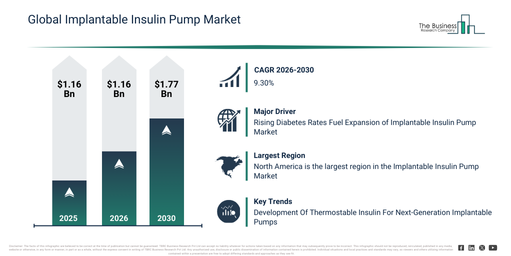
    The implantable insulin pump market is anticipated to experience substantial expansion over the upcoming years. This market is projected to reach $6.09 billion in 2030, exhibiting a compound annual growth rate (CAGR) of 9.3%. This expansion during the projection period stems from factors such as the increasing embrace of automated insulin delivery systems, innovations in the design of implantable medical devices, a growing need for tailored diabetes management, the spread of home-based diabetes care, and supportive reimbursement policies and regulatory frameworks. Key developments anticipated during this timeframe involve a rise in the uptake of implantable insulin delivery systems, an increasing inclination towards closed-loop insulin pumps, better glycemic management achieved through continuous insulin infusion, a greater acceptance of long-term implantable devices for diabetes, and an amplified emphasis on patient comfort and adherence to treatment regimens.

    Get A Free Sample Report With In-Depth Market Insights:

    https://thebusinessresearchcompany.com/sample_request?id=19877337&type=smp&name=Implantable%20Insulin%20Pump%20Market%20Report%202026&utm_source=Blogs&utm_medium=Paid&utm_campaign=Oct_PR

    Implantable Insulin Pump Market Growth Backed By Core Demand Fundamentals

    The increasing occurrence of diabetes is projected to fuel the expansion of the implantable insulin pump market in the future. Diabetes, a chronic ailment, involves the body’s difficulty in regulating blood sugar, stemming from either insufficient insulin creation or cells’ impaired utilization of insulin. The growing number of diabetes instances is influenced by escalating obesity levels, insufficient exercise, poor dietary habits, and an aging demographic. An implantable insulin pump delivers insulin precisely and continuously, thereby stabilizing blood glucose, lessening the need for injections, and enhancing overall diabetes care and patient well-being. As an illustration, data from May 2024 by Diabetes UK, a UK-based charity dedicated to individuals with diabetes, revealed that more than 5.6 million people in the UK are currently managing the condition, with the 2022–23 statistics showing a rise of 167,822 cases from the previous year. Consequently, the increasing prevalence of diabetes is a key factor propelling the expansion of the implantable insulin pump market.

    Implantable Insulin Pump Market Segment Breakdown: Which Categories Lead On Revenue?

    The implantable insulin pump market covered in this report is segmented –

    1) By Type: Fully Implantable Insulin Pump, Semi-Implantable Insulin Pump

    2) By Application: Type 1 Diabetes, Type 2 Diabetes

    3) By End-User: Hospitals, Diabetes Clinics, Home-Care

    Subsegments:

    1) By Fully Implantable Insulin Pump: Fully Automated Implantable Insulin Pump, Implantable Insulin Pump with Continuous Glucose Monitoring (CGM), Implantable Insulin Pump with Adaptive Insulin Delivery

    2) By Semi-Implantable Insulin Pump: Semi-Automated Semi-Implantable Insulin Pump, Basal-Bolus Semi-Implantable Insulin Pump, Patch-Assisted Semi-Implantable Insulin Pump, Remote-Controlled Semi-Implantable Insulin Pump

    Implantable Insulin Pump Market Growth Trends Reshaping The Competitive Landscape

    Leading companies in the implantable insulin pump market are increasingly forming strategic partnerships to develop high-concentration, thermostable insulin formulations specifically designed for next-generation implantable pumps. For example, in May 2024, Arecor Therapeutics plc, a US-based biopharmaceutical company, collaborated with Medtronic Diabetes, a US-based medical technology company, to create a novel insulin using Arecor’s Arestat technology platform. This advanced formulation is intended for a small group of patients who have limited options with standard insulin delivery methods. The new insulin aims to enhance clinical outcomes by enabling direct hepatic absorption, reducing pump maintenance needs, expanding physician use, and potentially lowering healthcare costs. This collaboration highlights meaningful progress in diabetes care by uniting innovative drug formulation with advanced implantable delivery technology to better support patients requiring intensive insulin management.

    Implantable Insulin Pump Market Competitive Landscape: Who Leads The Industry?

    Major companies operating in the implantable insulin pump market are Sanofi S.A., Abbott Laboratories, Medtronic plc, Dexcom Inc., Insulet Corporation, Tandem Diabetes Care Inc., Ypsomed Holding AG, Air Liquide Healthcare Ltd., Diabeloop SA, Glooko Inc., ViCentra B.V., Bigfoot Biomedical Inc., Beta Bionics Inc., Senseonics Holdings Inc., INREDA DIABETIC B.V., TIDEPOOL Inc., Medtrum Technologies Inc., Sernova Corp., PhysioLogic Devices Inc., EOFLOW CO. LTD., CamDiab Ltd.

    View The Full Implantable Insulin Pump Market Report:

    https://thebusinessresearchcompany.com/report/implantable-insulin-pump-global-market-report?utm_source=Blogs&utm_medium=Paid&utm_campaign=Oct_PR

    Implantable Insulin Pump Market Geographic Landscape: Which Region Dominates Industry Growth?

    North America was the largest region in the implantable insulin pump market in 2025. Asia-Pacific is expected to be the fastest-growing region in the forecast period. The regions covered in the implantable insulin pump market report are Asia-Pacific, South East Asia, Western Europe, Eastern Europe, North America, South America, Middle East, Africa.

    Reach Out To Our Team:

    The Business Research Company: https://www.thebusinessresearchcompany.com/

    Americas: +1 310-496-7795

    Asia: +44 7882 955267 & +91 8897263534

    Europe: +44 7882 955267

    Email us at: marketing@tbrc.info

    Follow us on:

    LinkedIn: https://in.linkedin.com/company/the-business-research-company

    YouTube: https://www.youtube.com/channel/UC24_fI0rV8cR5DxlCpgmyFQ

    Global Market Model: https://www.thebusinessresearchcompany.com/global-market-model

  • Implantable Infusion Pumps Market Size Reaches $21.73 Billion In 2026: What Is Driving Growth?

    Implantable Infusion Pumps Market Size Reaches $21.73 Billion In 2026: What Is Driving Growth?

    Featuring market attractiveness scoring, total addressable market sizing, company benchmarking matrices, interactive Excel dashboards, deeper supply chain intelligence, emerging startup tracking, and granular product-level insights, The Business Research Company’s 2026 market reports are built to deliver research that is both more actionable and more strategically valuable.

    Implantable Infusion Pumps Market Revenue Growth On Track For A 6.8% CAGR Through 2030

    The market size for implantable infusion pumps has experienced robust expansion in recent years. It is anticipated to increase from $20.32 billion in 2025 to $21.73 billion in 2026, reflecting a compound annual growth rate (CAGR) of 6.9%. The growth observed historically is attributable to the increasing prevalence of chronic pain conditions, the rising incidence of diabetes, the expansion in oncology treatment procedures, continuous advancements in implantable pump technology, and the broader development of specialty clinical care.

    The implantable infusion pumps market is projected to experience significant expansion in the coming years. Its valuation is anticipated to reach $28.25 billion by 2030, exhibiting a compound annual growth rate (CAGR) of 6.8%. This growth during the forecast period is primarily driven by the increasing integration of smart infusion technologies, a rising demand for remote patient monitoring services, the broadening of personalized dosing regimens, escalating investments in digital therapeutics, and the expanded deployment of implantable pumps in homecare settings. Notable trends expected in the forecast period include the growing acceptance of programmable infusion pumps, an increasing need for long-term pain management solutions, the wider adoption of smart and connected pumps, the expansion of implantable insulin delivery systems, and a reinforced focus on ensuring dose accuracy.

    Get A Free Sample Report With In-Depth Market Insights:

    https://thebusinessresearchcompany.com/sample_request?id=66738665&type=smp&name=Implantable%20Infusion%20Pumps%20Market%20Report%202026&utm_source=Blogs&utm_medium=Paid&utm_campaign=Oct_PR

    Implantable Infusion Pumps Market Growth Catalysts And Demand Drivers

    The expanding elderly population is projected to stimulate the growth of the implantable infusion pumps market moving forward. The aging population specifically refers to the proportion of individuals aged 65 and above compared to the employed population between 18 and 64 years old. This increase in the elderly demographic is attributed to enhanced life expectancy, which is a direct result of advancements in healthcare and improved living standards, allowing more people to live longer. As implantable infusion pumps are frequently utilized for managing chronic conditions, an aging population naturally translates into a larger pool of potential patients who stand to benefit from these medical devices. For instance, in February 2025, according to Eurostat, the Luxembourg statistical office of the European Union, the European Union’s estimated population in 2024 was approximately 449 million people, with more than one-fifth, or 21.6%, aged 65 years and over and a median age of 44.7 years. Furthermore, the old-age dependency ratio in the EU saw an increase of half a percentage point (0.5 pp) between 2023 and 2024, rising from 33.4% to 33.9%. Therefore, the growing aging population is a primary driver for the expansion of the implantable infusion pumps market.

    Implantable Infusion Pumps Market Segmentation: How Does The Market Break Down By Category?

    The implantable infusion pumps market covered in this report is segmented –

    1) By Type: Patient-Controlled Analgesia (PCA) Pumps, Enteral Pumps, Insulin Pumps, Elastomeric Pumps, Syringe Pumps, Other Types

    2) By Applications: Oncology, Pediatrics Or Neonatology, Gastroenterology, Hematology, Diabetes, Other Applications

    3) By End User: Hospitals, Ambulatory Surgical Centers, Specialty Clinics

    Subsegments:

    1) By Patient-Controlled Analgesia (PCA) Pumps: Morphine PCA Pumps, Fentanyl PCA Pumps, Other Opioid PCA Pumps

    2) By Enteral Pumps: Tube Feeding Pumps, Syringe-based Enteral Pumps, Continuous Or Intermittent Feeding Pumps

    3) By Insulin Pumps: Insulin Delivery Pumps, Insulin Patch Pumps, Smart Insulin Pumps

    4) By Elastomeric Pumps: Disposable Elastomeric Pumps, Reusable Elastomeric Pumps

    5) By Syringe Pumps: Small Volume Syringe Pumps, Large Volume Syringe Pumps

    6) By Other Types: Chemotherapy Infusion Pumps, Antibiotic Infusion Pumps, Pain Management Pumps

    Implantable Infusion Pumps Market Trends Shaping Long-Term Demand

    Leading firms within the implantable infusion pumps market are introducing novel products, including insulin pumps, to broaden their customer reach, boost sales volumes, and enhance their financial returns. These medical devices, known as insulin pumps, are engineered to support diabetic patients in maintaining control over their blood glucose concentrations. A notable example is Medtronic, an Irish medical device corporation, which declared in April 2023 that its MiniMed 780G System, featuring meal detection technology, had received FDA approval. A key feature of this product is its capacity to establish the lowest glucose target, specifically 100 mg/dL, among all automated insulin pumps currently offered, thereby mirroring the typical glucose readings of non-diabetic individuals. This configuration allows the pump to function on a treat-to-target methodology, autonomously adjusting basal insulin and performing autocorrections to achieve a predefined goal. Furthermore, it is unique as the sole pump fitted with an infusion set designed for comfortable extended wear, lasting up to 7 days. The extended duration of wear is facilitated by advanced materials which mitigate the loss of insulin preservatives and ensure stable, continuous insulin delivery, thereby decreasing the likelihood of infusion set blockages.

    Implantable Infusion Pumps Market Company Landscape And Competitive Strategy

    Major companies operating in the implantable infusion pumps market are Medtronic plc, Boston Scientific Corporation, Baxter International Inc., B. Braun Melsungen AG, Fresenius Kabi AG, Smiths Medical a Smiths Group company, Terumo Corporation, Johnson & Johnson, Greatbatch Medical, Primetech Corporation, Flowonix Medical Inc., F. Hoffmann-La Roche Ltd, Shenzhen Mindray Bio-Medical Electronics Co. Ltd., Micrel Medical, Insulet Corporation, ICU Medical Inc., Becton Dickinson and Company (BD), Roche Diagnostics International AG, Abbott Laboratories, Hospira, Teleflex Incorporated, C. R. Bard Inc., AngioDynamics Inc., Merit Medical Systems Inc., NIPRO Medical Corporation, IRadimed Corporation, Zyno Medical, Tricumed Medizintechnik GmbH, Q Core Medical Ltd., Ivenix Inc., Tandem Diabetes Care Inc.

    View The Full Implantable Infusion Pumps Market Report:

    https://thebusinessresearchcompany.com/report/implantable-infusion-pumps-global-market-report?utm_source=Blogs&utm_medium=Paid&utm_campaign=Oct_PR

    Implantable Infusion Pumps Market Largest Region: Which Geography Holds The Highest Market Share?

    North America was the largest region in the implantable infusion pumps market in 2025. Asia-Pacific was the second-largest region in the implantable infusion pumps market. The regions covered in the implantable infusion pumps market report are Asia-Pacific, South East Asia, Western Europe, Eastern Europe, North America, South America, Middle East, Africa.

    Reach Out To Our Team:

    The Business Research Company: https://www.thebusinessresearchcompany.com/

    Americas: +1 310-496-7795

    Asia: +44 7882 955267 & +91 8897263534

    Europe: +44 7882 955267

    Email us at: marketing@tbrc.info

    Follow us on:

    LinkedIn: https://in.linkedin.com/company/the-business-research-company

    YouTube: https://www.youtube.com/channel/UC24_fI0rV8cR5DxlCpgmyFQ

    Global Market Model: https://www.thebusinessresearchcompany.com/global-market-model

  • Implantable Heart Pacemaker Market Valued At $6.8 Billion In 2026: Key Trends And Growth Drivers

    Implantable Heart Pacemaker Market Valued At $6.8 Billion In 2026: Key Trends And Growth Drivers

    Built to provide research that’s more actionable and strategically valuable, The Business Research Company’s 2026 market reports include market attractiveness analysis, total addressable market sizing, company benchmarking matrices, interactive Excel dashboards, broader supply chain intelligence, emerging startup tracking, and in-depth product insights.

    Implantable Heart Pacemaker Market Value Growth And Long-Term Outlook

    The market for implantable heart pacemakers has experienced robust expansion in recent times. Its value is expected to increase from $5.14 billion in 2025 to $5.45 billion by 2026, at a compound annual growth rate (CAGR) of 6.0%. Historically, this expansion has been driven by factors such as the rising incidence of cardiac arrhythmias, an aging worldwide demographic, enhanced access to implantable cardiac devices, the proliferation of cardiac care amenities, and advancements in surgical implantation methods.

    The implantable heart pacemaker market is anticipated to experience substantial expansion over the coming years. This market is projected to reach a valuation of $6.8 billion by 2030, exhibiting a compound annual growth rate (CAGR) of 5.7%. Factors driving this growth during the projected period include a heightened demand for minimally invasive cardiac devices, the increasing integration of connected healthcare solutions, the broadening reach of remote patient monitoring initiatives, a stronger emphasis on personalized cardiac treatments, and continuous advancements in battery and power management technologies. Key trends anticipated for the forecast timeframe encompass the wider embrace of remote cardiac monitoring pacemakers, the growing utilization of leadless pacemaker technologies, increased incorporation of wireless data transmission, the expansion of MRI-compatible pacemaker devices, and an intensified focus on miniaturization and extended battery life.

    Get A Free Sample Report With In-Depth Market Insights:

    https://thebusinessresearchcompany.com/sample_request?id=49408022&type=smp&name=Implantable%20Heart%20Pacemaker%20Market%20Report%202026&utm_source=Blogs&utm_medium=Paid&utm_campaign=Oct_PR

    Implantable Heart Pacemaker Market Opportunity Drivers: What’s Unlocking New Revenue Potential?

    The future expansion of the implantable heart pacemaker market is anticipated to be driven by the rising need from hospitals. Hospitals are specialized institutions where medical experts deliver diagnostic, therapeutic, and preventative health services to those who are unwell or hurt. Within hospitals, implantable heart pacemakers serve to manage various heart conditions, stabilize heart rhythm, facilitate remote monitoring of patient heart activity, and enhance patients’ general quality of life through maintaining a steady and suitable heart rate. As an illustration, data from August 2023, provided by Interweave Textiles Limited, a UK-based firm focused on textile production, indicated 1148 hospitals existed in the UK in 2023, comprising 930 National Health Service hospitals and 218 private hospitals. Consequently, the growing requirements of hospitals are fueling the expansion of the implantable heart pacemaker market.

    Implantable Heart Pacemaker Market Segment Trends And Revenue Contributors

    The implantable heart pacemaker market covered in this report is segmented –

    1) By Product Type: Single Chamber, Dual Chamber, Biventricular

    2) By Application: Heart Block, Sick Sinus Syndrome, Other Applications

    3) By End User: Hospital, Clinics, Other End Users

    Subsegments:

    1) By Single Chamber: VVI (Ventricular Demand), AAI (Atrial Demand)

    2) By Dual Chamber: DDD (Dual Chamber Demand), AVD (Atrioventricular Demand)

    3) By Biventricular: CRT-P (Cardiac Resynchronization Therapy – Pacemaker), CRT-D (Cardiac Resynchronization Therapy – Defibrillator)

    Implantable Heart Pacemaker Market Innovation Trends Shaping Future Development

    Leading companies in the implantable heart pacemaker market are concentrating on securing product approvals, such as for dual chamber (DR) leadless pacemaker systems, to boost their market revenues. This dual chamber (DR) leadless pacemaker system represents a revolutionary technology, providing a minimally invasive and leadless solution for patients suffering from a slow heart rate. As an illustration, in July 2023, Abbott Laboratories, a US-based healthcare company, obtained FDA approval for its aveir dual chamber (DR) leadless pacemaker system. This innovative method utilizes the conductive attributes of the body’s blood pool and cardiac tissue to produce low-energy, subthreshold pulses between implanted devices. The system aims to deliver cardiac pacing therapy to the targeted treatment group within the implanted chamber and to detect intrinsic cardiac signals. The aveir DR system is distinguished as the first dual-chamber leadless pacemaker, enabling synchronous pacing between the atrium and the ventricle.

    Implantable Heart Pacemaker Market Key Players Shaping Industry Direction

    Major companies operating in the implantable heart pacemaker market are Medtronic PLC, BIOTRONIK Inc., Boston Scientific Corporation, Abbott Laboratories, MEDICO SRL, Vitatron, Shree Pacetronix Ltd., Sorin Group, Osypka Medical GmbH, OSCOR Inc., Lepu Medical Technology (Beijing) Co. Ltd., LivaNova PLC., MicroPort Scientific Corporation, Cardioelectronica, Hunan Zhongyi Medical Devices Co. Ltd., Shenzhen MicroCor Medical Technology Co.Ltd., Nanjing Normative Biological Technology Co. Ltd., Beijing Huibo Cardiovascular Devices Co. Ltd., Jiangsu Kanghui Medical Devices Co. Ltd., Zhejiang Lewei Medical Instruments Co. Ltd., Shandong Weigao Medical Devices Co. Ltd., Liaoning Tianma Medical Technology Co. Ltd., Changsha Leadshine Medical Devices Co. Ltd.

    View The Full Implantable Heart Pacemaker Market Report:

    https://thebusinessresearchcompany.com/report/implantable-heart-pacemaker-global-market-report?utm_source=Blogs&utm_medium=Paid&utm_campaign=Oct_PR

    Implantable Heart Pacemaker Market Regional Analysis: Which Region Leads By Revenue?

    North America was the largest region in the implantable heart pacemaker market share in 2025. Asia-Pacific is expected to be the fastest-growing region in the forecast period. The regions covered in the implantable heart pacemaker market report are Asia-Pacific, South East Asia, Western Europe, Eastern Europe, North America, South America, Middle East, Africa.

    Reach Out To Our Team:

    The Business Research Company: https://www.thebusinessresearchcompany.com/

    Americas: +1 310-496-7795

    Asia: +44 7882 955267 & +91 8897263534

    Europe: +44 7882 955267

    Email us at: marketing@tbrc.info

    Follow us on:

    LinkedIn: https://in.linkedin.com/company/the-business-research-company

    YouTube: https://www.youtube.com/channel/UC24_fI0rV8cR5DxlCpgmyFQ

    Global Market Model: https://www.thebusinessresearchcompany.com/global-market-model

  • Implantable Glucose Sensor Market Size In 2026: Growth Outlook And Forecast Through 2030

    Implantable Glucose Sensor Market Size In 2026: Growth Outlook And Forecast Through 2030

    Backed by market attractiveness analysis, total addressable market sizing, company benchmarking matrices, interactive Excel dashboards, wider supply chain intelligence, emerging startup coverage, and detailed product-level insights, The Business Research Company’s 2026 market reports are designed to offer research that is more actionable and strategically valuable than ever.

    Implantable Glucose Sensor Market Poised To Hit $16.05 Billion By 2030 With A 14.5% CAGR

    The market size for implantable glucose sensors has experienced rapid expansion in recent years. It is expected to grow from $8.14 billion in 2025 to $9.34 billion in 2026, achieving a compound annual growth rate (CAGR) of 14.7%. Historically, this growth can be attributed to factors such as the rising prevalence of diabetes, the inherent limitations of finger stick testing, the early adoption of continuous glucose monitoring (CGM) devices, increasing healthcare expenditure, and improvements in sensor accuracy.

    The implantable glucose sensor market size is projected to experience substantial growth in the forthcoming years. Its value is anticipated to reach $16.05 billion in 2030, demonstrating a compound annual growth rate (CAGR) of 14.5%. This expansion during the forecast period is primarily driven by the increasing demand for long-term monitoring, improved integration with insulin delivery systems, a swelling diabetic population, advancements in technological miniaturization, and supportive reimbursement policies. Key developments expected within this period include long-duration implantable monitoring solutions, finger-prick-free diabetes management, enhancements in biocompatible sensor materials, continuous real-time glucose tracking, and a rising embrace of home-based monitoring.

    Get A Free Sample Report With In-Depth Market Insights:

    https://thebusinessresearchcompany.com/sample_request?id=41271894&type=smp&name=Implantable%20Glucose%20Sensor%20Market%20Report%202026&utm_source=Blogs&utm_medium=Paid&utm_campaign=Oct_PR

    Implantable Glucose Sensor Market Growth Momentum: What Factors Are Shaping Demand?

    The escalating occurrence of diabetes is anticipated to stimulate the expansion of the implantable glucose sensor market in the foreseeable future. Diabetes is defined as a chronic health condition where the body struggles to properly manage its blood sugar or glucose levels. The rise in diabetes cases is primarily attributed to unhealthy lifestyles, such as reduced physical activity and increased consumption of high-calorie foods, which elevates the risk of developing type 2 diabetes. Implantable glucose sensors facilitate diabetes management by enabling continuous and long-term monitoring of blood glucose levels, making them highly beneficial for patients requiring strict glucose control. These devices also lessen the need for frequent finger-prick tests by delivering real-time data and alerts, thereby improving overall patient convenience and health outcomes. For example, in June 2024, the National Health Service, a UK-based government department, stated that 3,615,330 individuals registered with a general practitioner (GP) were diagnosed with non-diabetic hyperglycemia or pre-diabetes in 2023, which was an 18% increase from 3,065,825 cases in 2022. Hence, the growing prevalence of diabetes is a significant driver for the implantable glucose sensor market’s growth.

    Implantable Glucose Sensor Market Segment Analysis Spotlighting Growth Areas

    The implantable glucose sensor market covered in this report is segmented –

    1) By Product Type: Long-term Implantable Sensors, Short-term Implantable Sensors

    2) By Technology: Enzymatic, Non-Enzymatic

    3) By Application: Type 1 Diabetes, Type 2 Diabetes

    4) By End-User: Hospitals, Clinics, Homecare Settings, Other End-Users

    Subsegments:

    1) By Long-Term Implantable Sensors: Enzyme-Based, Electrochemical, Fluorescence-Based

    2) By Short-Term Implantable Sensors: Minimally Invasive, Biocompatible Hydrogel-Based

    Implantable Glucose Sensor Market Trends Redefining Industry Growth

    Leading firms in the implantable glucose sensor market are concentrating on creating sophisticated offerings, such as long-term implantable sensors, with the goal of improving patient ease, bettering health results, and minimizing how often devices need attention. These long-term implantable sensors are defined as cutting-edge medical instruments placed beneath the skin for ongoing measurement of glucose concentrations in interstitial fluid over prolonged durations, differing from short-term sensors that necessitate regular changes. An example of this is Senseonics Holdings Inc., a US medical technology firm, which secured approval from the U.S. Food and Drug Administration (FDA) in September 2024 for its Eversense 365 continuous glucose monitoring system, designed for individuals with Type 1 and Type 2 diabetes who are 18 years and older. This system incorporates a completely implantable sensor capable of functioning for up to 365 days, delivering constant glucose measurements and notifications for elevated and diminished glucose levels. Furthermore, it connects with a mobile application and a cloud-based platform, enabling both patients and healthcare professionals to monitor glucose patterns and remotely make educated choices regarding treatment.

    Implantable Glucose Sensor Market Competitive Analysis Of Leading Industry Participants

    Major companies operating in the implantable glucose sensor market are Senseonics Holdings Inc., GlySens Incorporated, Profusa Inc., Abbott Laboratories, Dexcom Inc., Medtronic plc, Biolinq Inc., Nemaura Medical Inc., Integrated Sensing Systems Inc., WaveForm Technologies Inc., BioMems Solutions Inc., Echo Therapeutics Inc., Glucovation Inc., Know Labs Inc., Pacific Diabetes Technologies Inc., Metronom Health Inc., AliveCor Diabetes Inc., Pixelligent Technologies Inc., OrSense Ltd., Medtrum Technologies Inc.

    View The Full Implantable Glucose Sensor Market Report:

    https://thebusinessresearchcompany.com/report/global-implantable-glucose-sensor-market-report?utm_source=Blogs&utm_medium=Paid&utm_campaign=Oct_PR

    Implantable Glucose Sensor Market Geographic Distribution And Regional Opportunities

    North America was the largest region in the implantable glucose sensor market in 2025. Asia-Pacific is expected to be the fastest-growing region in the forecast period. The regions covered in the implantable glucose sensor market report are Asia-Pacific, South East Asia, Western Europe, Eastern Europe, North America, South America, Middle East, Africa.

    Reach Out To Our Team:

    The Business Research Company: https://www.thebusinessresearchcompany.com/

    Americas: +1 310-496-7795

    Asia: +44 7882 955267 & +91 8897263534

    Europe: +44 7882 955267

    Email us at: marketing@tbrc.info

    Follow us on:

    LinkedIn: https://in.linkedin.com/company/the-business-research-company

    YouTube: https://www.youtube.com/channel/UC24_fI0rV8cR5DxlCpgmyFQ

    Global Market Model: https://www.thebusinessresearchcompany.com/global-market-model