Blog

  • Immunoassay Market Growth To $52.83 Billion By 2030: What’s Driving The Expansion?

    Immunoassay Market Growth To $52.83 Billion By 2030: What’s Driving The Expansion?

    Built to provide research that’s more actionable and strategically valuable, The Business Research Company’s 2026 market reports include market attractiveness analysis, total addressable market sizing, company benchmarking matrices, interactive Excel dashboards, broader supply chain intelligence, emerging startup tracking, and in-depth product insights.

    Immunoassay Market Size, Value And Growth Trajectory Through 2030

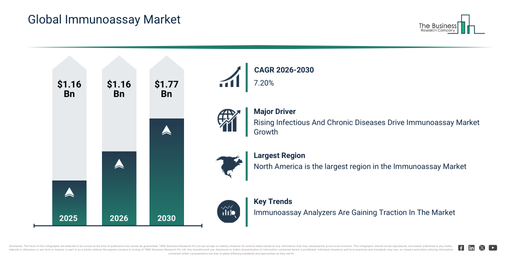
    The immunoassay market has experienced substantial growth in recent years. It is projected to expand from $37.32 billion in 2025 to $40.07 billion in 2026, registering a compound annual growth rate (CAGR) of 7.4%. The expansion observed historically can be ascribed to the increasing prevalence of infectious and chronic diseases, higher volumes of clinical laboratory testing, the broad adoption of ELISA-based diagnostics, growth in pharmaceutical research activities, and a rising demand for early disease detection.

    The immunoassay market is set to experience substantial expansion over the next few years. Its valuation is projected to reach $52.83 billion in 2030, demonstrating a compound annual growth rate (CAGR) of 7.2%. This growth during the forecast period is primarily driven by factors such as the escalating demand for rapid diagnostics, increased investments in personalized medicine, the expansion of decentralized testing models, a wider adoption of digital laboratory workflows, and a greater focus on companion diagnostics. Significant trends anticipated in this period encompass the growing acceptance of high-sensitivity immunoassay kits, the increased utilization of automated immunoassay analyzers, rising demand for point-of-care immunoassay testing, the expansion of multiplex immunoassay platforms, and improved integration of data management software.

    Get A Free Sample Report With In-Depth Market Insights:

    https://thebusinessresearchcompany.com/sample_request?id=69950760&type=smp&name=Immunoassay%20Market%20Report%202026&utm_source=Blogs&utm_medium=Paid&utm_campaign=Oct_PR

    Immunoassay Market Opportunity Drivers: What’s Unlocking New Revenue Potential?

    The immunoassay market is anticipated to experience growth due to the escalating numbers of infectious and chronic illnesses. These refer to diseases caused by pathogens or enduring medical conditions that demand continuous monitoring, diagnosis, and management. The rise in infectious and chronic illnesses is attributed to increased exposure to environmental pollutants, which compromise immunity and elevate vulnerability to disease. The immunoassay market is seeing heightened demand as the swift increase in these illnesses prompts companies to integrate advanced diagnostic tools crucial for early detection, disease surveillance, and precise clinical decision-making. For instance, in June 2025, the UK Health Security Agency (UKHSA), a United Kingdom-based government public health agency, indicated that reported Campylobacter cases in England climbed from 60,055 in 2023 to 70,352 cases in 2024, marking a rise of 10,297 cases (17.1%) and an increase in the reporting rate from 104.1 to 121.9 per 100,000 population. Therefore, the expanding prevalence of infectious and chronic illnesses is a significant driver for the immunoassay market.

    Immunoassay Market Segmentation: How Does The Market Break Down By Category?

    The immunoassay market covered in this report is segmented –

    1) By Product: Reagents And Kits, Analyzers Or Instruments, Software And Services

    2) By Specimen: Blood, Saliva, Urine, Other Specimens

    3) By Application: Therapeutic Drug Monitoring, Oncology, Cardiology, Endocrinology, Infectious Disease Testing, Autoimmune Diseases, Other Applications

    4) By End User: Research And Academic Laboratories, Pharmaceutical And Biotechnology Companies And CROs, Hospitals And Clinics, Clinical Laboratories

    Subsegments:

    1) By Reagents And Kits: ELISA Kits, Rapid Test Kits, Control Reagents, Assay Development Reagents

    2) By Analyzers Or Instruments: Automated Analyzers, Point-Of-Care Testing Devices, Microplate Readers, Luminometers

    3) By Software And Services: Data Management Software, Analytical Software, Support And Maintenance Services, Consulting Services

    Immunoassay Market Innovation Trends Shaping Future Development

    Leading companies in the immunoassay market are launching innovative immunoassay analyzers to secure a competitive advantage. Immunoassay analyzers are laboratory instruments designed to automate and simplify the detection and measurement of biological molecules, such as proteins or hormones, through immunological reactions. For example, in May 2023, Beckman Coulter Diagnostics, a US-based firm that develops products to simplify, automate, and innovate complex biomedical testing, introduced the DxI 9000 Access Immunoassay Analyzer. The DxI 9000 Access Immunoassay Analyzer addresses clinical laboratories’ needs for speed, reliability, reproducibility, quality, and an expanded test menu. It has demonstrated the capacity to develop increasingly sensitive and clinically relevant assays, thereby amplifying the effectiveness of new pharmaceutical therapies and ultimately improving patient health outcomes. This system incorporates innovations such as advanced analyte processing and detection technology, precision sensors, intelligent algorithms, and remote real-time system monitoring, making it the only immunoassay analyzer system that does not require daily maintenance.

    Immunoassay Market Competitive Analysis Of Leading Industry Participants

    Major companies operating in the immunoassay market are Siemens Healthineers GmbH, bioMérieux, Abbott, Beckman Coulter Inc., Quidel Corporation, Ortho Clinical Diagnostics, Sysmex Corporation, Bio-Rad Laboratories Inc., Becton Dickinson and Company, F. Hoffmann-La Roche Ltd, Thermo Fisher Scientific Inc., Merck KGaA, Agilent Technologies Inc., PerkinElmer Inc, WAK-Chemie Medical GmbH, J Mitra & Co Pvt Ltd, Kamiya Biomedical Company, Tosoh Corporation, Gyros Protein Technologies AB, BioCheck Inc., Bio-Techn, DiaSorin S.p.A, Meso Scale Diagnostics LLC, QIAGE, Randox Laboratories Ltd., Shenzhen Mindray Bio-Medical Electronics Co Ltd, Danaher Corporation, Hologic Inc., Tecan Trading AG, Eurofins Scientific, Abcam plc, Enzo Biochem Inc., Luminex Corporation, Quanterix Corporation, Roche Diagnostics, ZEUS Scientific Inc.

    View The Full Immunoassay Market Report:

    https://thebusinessresearchcompany.com/report/immunoassay-global-market-report?utm_source=Blogs&utm_medium=Paid&utm_campaign=Oct_PR

    Immunoassay Market Geographic Spread And Regional Opportunities

    North America was the largest region in the immunoassay market in 2025. Asia-Pacific is expected to be the fastest-growing region in the immunoassay market report during the forecast period. The regions covered in the immunoassay market report are Asia-Pacific, South East Asia, Western Europe, Eastern Europe, North America, South America, Middle East, Africa.

    Reach Out To Our Team:

    The Business Research Company: https://www.thebusinessresearchcompany.com/

    Americas: +1 310-496-7795

    Asia: +44 7882 955267 & +91 8897263534

    Europe: +44 7882 955267

    Email us at: marketing@tbrc.info

    Follow us on:

    LinkedIn: https://in.linkedin.com/company/the-business-research-company

    YouTube: https://www.youtube.com/channel/UC24_fI0rV8cR5DxlCpgmyFQ

    Global Market Model: https://www.thebusinessresearchcompany.com/global-market-model
  • Image-Guided Therapy Systems Market Trends Reshaping Industry Growth Through 2030

    Image-Guided Therapy Systems Market Trends Reshaping Industry Growth Through 2030

    Backed by market attractiveness analysis, total addressable market sizing, company benchmarking matrices, interactive Excel dashboards, wider supply chain intelligence, emerging startup coverage, and detailed product-level insights, The Business Research Company’s 2026 market reports are designed to offer research that is more actionable and strategically valuable than ever.

    Image-Guided Therapy Systems Market CAGR Outlook And Future Development

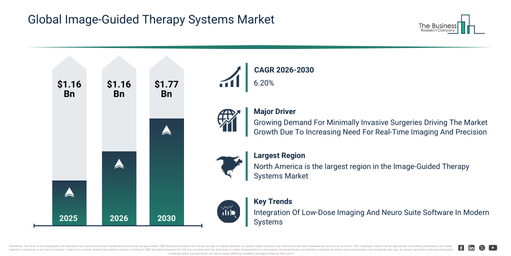
    The image-guided therapy systems market has experienced significant expansion in recent years. This market is anticipated to increase from $5.13 billion in 2025 to $5.47 billion in 2026, exhibiting a compound annual growth rate (CAGR) of 6.6%. The historical growth can be attributed to several factors, including the increasing prevalence of sleep disorders, rising awareness of sleep health, technological advancements in portable medical devices, the adoption of home healthcare solutions, and the availability of non-invasive monitoring devices.

    The image-guided therapy systems market is projected to experience substantial expansion over the coming years. Its value is anticipated to reach $6.95 billion by 2030, exhibiting a compound annual growth rate (CAGR) of 6.2%. This projected growth throughout the forecast period can be attributed to several factors, including the increasing adoption of telemedicine, the integration of AI-driven analytics, a rising geriatric population, the expansion of homecare infrastructure, and a growing consumer preference for personalized health monitoring. Key trends expected during this period involve remote sleep monitoring, personalized sleep health insights, the integration of wearable health devices, data-driven diagnosis of sleep disorders, and the uptake of home-based patient care.

    Get A Free Sample Report With In-Depth Market Insights:

    https://thebusinessresearchcompany.com/sample_request?id=32477147&type=smp&name=Image-Guided%20Therapy%20Systems%20Market%20Report%202026&utm_source=Blogs&utm_medium=Paid&utm_campaign=Oct_PR

    Image-Guided Therapy Systems Market Growth Momentum: What Factors Are Shaping Demand?

    The increasing need for minimally invasive surgeries is anticipated to propel the expansion of the image-guided therapy systems market going forward. These surgeries encompass techniques that limit the size and number of incisions, thereby lessening patient trauma and shortening recuperation periods. The heightened interest in minimally invasive surgeries stems mainly from their advantages, particularly faster recovery, as such procedures typically involve smaller cuts, leading to less tissue harm and enabling patients to resume their regular routines sooner than with conventional open operations. Image-guided therapy systems facilitate minimally invasive surgeries by providing real-time imaging, which allows surgeons to precisely maneuver instruments and direct them to treatment zones while safeguarding nearby healthy tissues. For example, data from February 2024, shared by the American Academy of Facial Plastic and Reconstructive Surgery, a US-based non-profit organization, indicated that in 2023, minimally invasive procedures constituted 83% of all medical interventions, with traditional surgical procedures making up the remaining 17%. Consequently, the expanding requirement for minimally invasive surgeries is a key factor driving the growth of the image-guided therapy systems market.

    Image-Guided Therapy Systems Market Segment Trends And Revenue Contributors

    The image-guided therapy systems market covered in this report is segmented –

    1) By Product Type: Ultrasound Systems, Endoscopes, Magnetic Resonance Imaging (MRI), X-Ray Fluoroscopy Or C-Arms, Positron Emission Tomography (PET), Single-Photon Emission CT (SPECT), Other Product Types

    2) By Technology: Electromagnetic Navigation, Robotic-Assisted Imaging Guidance, Artificial Intelligence (AI)-Enhanced Real-Time 3D Or 4D Imaging, Augmented Or Mixed-Reality Visualization, Optical And Laser-Based Tracking

    3) By Modality Portability: Fixed Systems, Mobile C-Arms, Hand-Held Or Portable

    4) By Application: Cardiac Surgery, Neurosurgery, Orthopedic Surgery, Gastroenterology, Urology, Oncology, Ear, Nose, And Throat Surgery, Other Applications

    5) By End Use: Hospitals, Ambulatory Surgical Centers, Specialty Clinics, Research And Academic Institutions

    Subsegments:

    1) By Ultrasound Systems: Two-Dimensional (2D) Ultrasound Systems, Three-Dimensional (3D) And Four-Dimensional (4D) Ultrasound Systems, Doppler Ultrasound Systems, Contrast-Enhanced Ultrasound Systems, Portable and Handheld Ultrasound Devices

    2) By Endoscopes: Rigid Endoscope Systems, Flexible Endoscope Systems, Image-Guided Therapeutic Endoscope Systems, Robot-Assisted Endoscopic Systems, Single-Use (Disposable) Endoscope Systems

    3) By Magnetic Resonance Imaging (MRI): Open Magnetic Resonance Imaging Systems, Closed Magnetic Resonance Imaging Systems, Interventional MRI Systems, 1.5 Tesla Magnetic Resonance Imaging Systems, 3 Tesla Magnetic Resonance Imaging Systems, Intraoperative Magnetic Resonance Imaging (iMRI) Systems

    4) By X-Ray Fluoroscopy or C-Arms: Mobile C-Arm Imaging Systems, Mini C-Arm Imaging Systems, Fixed C-Arm Imaging Systems, Flat Panel Detector C-Arm Systems, Image Intensifier C-Arm Systems

    5) By Positron Emission Tomography (PET): Positron Emission Tomography–Computed Tomography (PET-CT) Systems, Positron Emission Tomography–Magnetic Resonance Imaging (PET-MRI) Systems, Time-Of-Flight (TOF) Positron Emission Tomography Systems, Digital Positron Emission Tomography Systems

    6) By Single-Photon Emission Computed Tomography (SPECT): Standalone Single-Photon Emission Computed Tomography Systems, Hybrid Single-Photon Emission Computed Tomography Or Computed Tomography Systems, Multi-Head Single-Photon Emission Computed Tomography Systems, Cardiac Single-Photon Emission Computed Tomography Systems

    7) By Other Product Types: Computed Tomography (CT) Imaging Systems, Optical Imaging Systems, Photoacoustic Imaging Systems, Hybrid Operating Room Systems, Gamma Camera Imaging Systems

    Image-Guided Therapy Systems Market Trends Redefining Industry Growth

    Leading companies within the image-guided therapy systems market are prioritizing the creation of advanced solutions, such as 3D imaging, to bolster diagnostic precision, optimize procedural effectiveness, and facilitate exact, minimally invasive interventions for superior patient results. These 3D imaging solutions represent sophisticated medical imaging technologies capable of generating three-dimensional visual depictions of internal body structures, thereby allowing healthcare professionals to observe anatomy with enhanced depth and intricacy. For example, in February 2024, Koninklijke Philips N.V., a healthcare technology firm based in the Netherlands, unveiled its new Azurion neuro biplane image-guided therapy system at the European Congress of Radiology (ECR) 2024. This system boasts improved 2D and 3D imaging capabilities, automated beam rotation for image orientation, advanced C-arm angulation and rotation, and comprehensive table-side control to uphold a sterile setting. Additionally, it incorporates a head immobilizer for improved stroke care and supports adaptable X-ray detector positioning. Integrated with Philips’ ClarityIQ low-dose imaging technology and neuro suite software, this introduction underscores Philips’ commitment to fostering efficient workflows, refining clinical decision-making, and advancing patient outcomes in neurovascular procedures.

    Image-Guided Therapy Systems Market Leading Companies And Competitive Benchmarking

    Major companies operating in the image-guided therapy systems market are Medtronic plc, Siemens Healthcare GmbH, FUJIFILM Holdings Corporation, Koninklijke Philips N.V., Stryker Corporation, GE HealthCare Technologies Inc., Boston Scientific Corporation, Zimmer Biomet Holdings Inc., Olympus Corporation, Smith & Nephew plc, Hologic Inc., Shimadzu Corporation, KARL STORZ SE & Co. KG, Cook Medical LLC, Elekta AB, Leica Microsystems GmbH, Brainlab AG, Analogic Corporation, Hyperfine Inc., Quest Medical Imaging B.V.

    View The Full Image-Guided Therapy Systems Market Report:

    https://thebusinessresearchcompany.com/report/image-guided-therapy-systems-global-market-report?utm_source=Blogs&utm_medium=Paid&utm_campaign=Oct_PR

    Image-Guided Therapy Systems Market Top Region By Revenue And Market Share

    North America was the largest region in the image-guided therapy systems market in 2025. Asia-Pacific is expected to be the fastest-growing region in the forecast period. The regions covered in the image-guided therapy systems market report are Asia-Pacific, South East Asia, Western Europe, Eastern Europe, North America, South America, Middle East, Africa.

    Reach Out To Our Team:

    The Business Research Company: https://www.thebusinessresearchcompany.com/

    Americas: +1 310-496-7795

    Asia: +44 7882 955267 & +91 8897263534

    Europe: +44 7882 955267

    Email us at: marketing@tbrc.info

    Follow us on:

    LinkedIn: https://in.linkedin.com/company/the-business-research-company

    YouTube: https://www.youtube.com/channel/UC24_fI0rV8cR5DxlCpgmyFQ

    Global Market Model: https://www.thebusinessresearchcompany.com/global-market-model
  • Image Intensifier Market Growth To $2.95 Billion Creates New Opportunities Across The Industry

    Image Intensifier Market Growth To $2.95 Billion Creates New Opportunities Across The Industry

    Featuring market attractiveness scoring, total addressable market sizing, company benchmarking matrices, interactive Excel dashboards, deeper supply chain intelligence, emerging startup tracking, and granular product-level insights, The Business Research Company’s 2026 market reports are built to deliver research that is both more actionable and more strategically valuable.

    Image Intensifier Market Set To Climb From $1.96 Billion In 2026 To $2.95 Billion By 2030

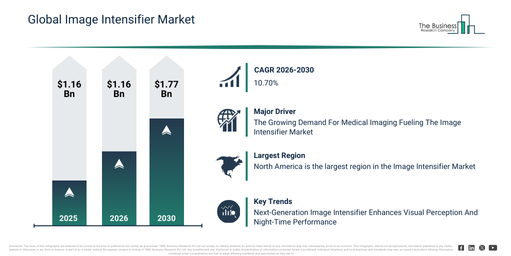
    The image intensifier market size has seen significant expansion in recent years. It is forecast to grow from $1.77 billion in 2025 to $1.96 billion in 2026, achieving a compound annual growth rate (CAGR) of 10.6%. The historical surge in this market can be linked to heightened defense and surveillance expenditures, the increasing use of night vision devices, the development of medical imaging infrastructure, a surge in industrial inspection activities, and the broader application of x-ray diagnostic systems.

    The image intensifier market is set to undergo significant expansion over the next few years, with projections indicating a rise to $2.95 billion in 2030, exhibiting a compound annual growth rate (CAGR) of 10.7%. This anticipated growth throughout the forecast period stems from factors such as increasing demand for advanced night vision systems, greater investments in healthcare imaging technologies, evolving border security and surveillance requirements, the broadening application of image intensifiers in industrial inspection, and a heightened need for portable imaging solutions. Dominant trends during this period are expected to include the growing adoption of image intensifiers in night vision equipment, their expanding use in medical imaging systems, an escalating demand for high-resolution x-ray image intensifiers, the diversification of defense and surveillance applications, and an increasing preference for compact and lightweight image intensifier designs.

    Get A Free Sample Report With In-Depth Market Insights:

    https://thebusinessresearchcompany.com/sample_request?id=84583459&type=smp&name=Image%20Intensifier%20Market%20Report%202026&utm_source=Blogs&utm_medium=Paid&utm_campaign=Oct_PR

    Image Intensifier Market Expansion Drivers: What’s Shaping Future Growth?

    The escalating need for medical imaging tests is projected to stimulate the expansion of the image intensifier market. Medical imaging tests are non-invasive methods employed to produce visual representations of the body’s interior for clinical evaluation and medical procedures. This increased demand for medical imaging is a result of modern healthcare advancements, the drive for better clinical decisions, and progress in medical research and innovation. Image intensifiers are crucial for improving the quality and functionality of fluoroscopic imaging, rendering them indispensable in numerous diagnostic and interventional applications. They enhance the visibility of low-intensity X-ray images, facilitating real-time visualization and precise guidance during procedures such as angiography, vascular interventions, orthopedic surgeries, and gastrointestinal examinations. For instance, in April 2025, according to UCSF, a US-based nonprofit university, in 2023, approximately 93 million CT (CAT) scans were performed, which are estimated to cause nearly 103,000 cases of cancer—3 to 4 times higher than earlier estimates, according to the study’s authors. Thus, the growing demand for medical imaging is a key driver for the image intensifier market’s growth.

    Image Intensifier Market Segment Analysis Spotlighting Growth Areas

    The image intensifier market covered in this report is segmented –

    1) By Diameter: Less Than 18mm, 18mm, 25mm, More Than 25mm, Less Than 6inch, 6inch, 9inch, 12inch, 16inch

    2) By Application: Cameras, Scopes, Goggles, X-Ray Detectors

    3) By End User: Medical, Industrial, Defense and Surveillance, Other End Users

    Image Intensifier Market Strategic Trends: What Defines The Next Growth Phase?

    Leading companies within the image intensifier market are creating advanced solutions centered on visual perception and performance. These innovations are designed to improve image clarity, decrease noise and flicker, and enhance texture, contrast, and depth perception, particularly under low-light conditions. Visual perception and performance refers to the capacity to accurately interpret visual information and respond effectively in tasks that depend on sight. As an illustration, in September 2025, Exosens, a technology enterprise from France, unveiled its 5G image intensifier tube. This offering provides a 30% boost in overall performance and an extended detection range of up to 35% compared to established norms. The new technology delivers sharper images, alleviates visual fatigue and cognitive strain, and is currently deployed by several Special Forces units. With over 5,000 tubes ordered prior to launch, Exosens has become a crucial NATO supplier, thereby improving operational night-time visibility and situational awareness.

    Image Intensifier Market Industry Leaders And Competitive Landscape

    Major companies operating in the image intensifier market are Photonis Technologies S.A.S., Hamamatsu Photonics K.K., L3Harris Technologies Inc., Elbit Systems Ltd., Thales Group, BAE Systems plc, Teledyne FLIR LLC, Photek Ltd, Theon International, Xi’an Guangke Zhitong Electronic Technology Co. Ltd, ONEX Corporation Ltd, Night Hawk Technology Inc, IRIS USA, Aselsan A.Ş., ATN Corporation, Kappa optronics GmbH, ProxiVision GmbH, Princeton Instruments Inc., Excelitas Technologies Corp., Northrop Grumman Corporation

    View The Full Image Intensifier Market Report:

    https://thebusinessresearchcompany.com/report/image-intensifier-global-market-report?utm_source=Blogs&utm_medium=Paid&utm_campaign=Oct_PR

    Image Intensifier Market Regional Analysis And Top Geography

    North America was the largest region in the image intensifier market in 2025. The regions covered in the image intensifier market report are Asia-Pacific, South East Asia, Western Europe, Eastern Europe, North America, South America, Middle East, Africa.

    Reach Out To Our Team:

    The Business Research Company: https://www.thebusinessresearchcompany.com/

    Americas: +1 310-496-7795

    Asia: +44 7882 955267 & +91 8897263534

    Europe: +44 7882 955267

    Email us at: marketing@tbrc.info

    Follow us on:

    LinkedIn: https://in.linkedin.com/company/the-business-research-company

    YouTube: https://www.youtube.com/channel/UC24_fI0rV8cR5DxlCpgmyFQ

    Global Market Model: https://www.thebusinessresearchcompany.com/global-market-model
  • Image Guided Surgery Devices Market Forecast: Breaking Down The Numbers Behind Future Expansion

    Image Guided Surgery Devices Market Forecast: Breaking Down The Numbers Behind Future Expansion

    Built to provide research that’s more actionable and strategically valuable, The Business Research Company’s 2026 market reports include market attractiveness analysis, total addressable market sizing, company benchmarking matrices, interactive Excel dashboards, broader supply chain intelligence, emerging startup tracking, and in-depth product insights.

    Image Guided Surgery Devices Market Forecast: Value Set To Climb From $10.94 Billion To $17.85 Billion

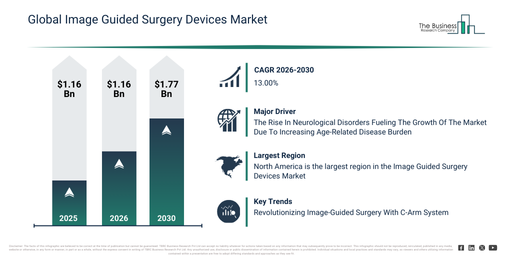
    The image guided surgery devices market has experienced significant expansion recently. It is anticipated to increase from $9.71 billion in 2025 to $10.94 billion in 2026, achieving a compound annual growth rate (CAGR) of 12.7%. This historic growth can be attributed to several factors, including the rising occurrence of intricate surgical procedures, the increased adoption of minimally invasive surgeries, the broadening of advanced hospital infrastructure, the growing requirement for accurate surgical outcomes, and the greater availability of advanced medical imaging modalities.

    The image guided surgery devices market is projected to demonstrate considerable expansion over the next few years. It is forecast to attain a value of $17.85 billion in 2030, exhibiting a compound annual growth rate (CAGR) of 13.0%. This anticipated growth during the forecast period can be attributed to the rising integration of AI-driven surgical navigation, increased investments in smart operating rooms, the expansion of robotic-assisted surgeries, a growing demand for real-time clinical decision support, and the increasing adoption in emerging healthcare markets. Significant trends expected in this period include the wider adoption of real-time intraoperative imaging systems, the increasing integration of navigation and tracking technologies, the growing utilization of minimally invasive surgical guidance, the expansion of software-driven surgical planning tools, and an enhanced focus on surgical precision and accuracy.

    Get A Free Sample Report With In-Depth Market Insights:

    https://thebusinessresearchcompany.com/sample_request?id=46441816&type=smp&name=Image%20Guided%20Surgery%20Devices%20Market%20Report%202026&utm_source=Blogs&utm_medium=Paid&utm_campaign=Oct_PR

    Image Guided Surgery Devices Market Development Factors: What’s Supporting Demand?

    The image guided surgery devices market is projected to experience growth in the future due to an increase in neurological disorders, which are diseases and conditions impacting the central and peripheral nervous systems. Image-guided surgery devices facilitate minimally invasive procedures for treating neurological issues, such as brain tumors, or for carrying out brain biopsies. As an illustration, in March 2023, the Alzheimer’s Association, a US-based nonprofit voluntary health organization, reported that approximately 6.7 million Americans aged 65 and older were living with Alzheimer’s dementia in 2023, with this figure expected to climb to 13.8 million by 2060. Consequently, the rising prevalence of neurological disorders is fostering the expansion of the image guided surgery devices market.

    Image Guided Surgery Devices Market Segment Performance And Emerging Opportunities

    The image guided surgery devices market covered in this report is segmented –

    1) By Device Type: CT, Ultrasound, MRI, X-Ray

    2) By Application: Cardiac Surgery, Neurosurgery, Orthopedic Surgery, Urology, Oncology Surgery, Other Applications

    3) By End User: Hospitals, Ambulatory Surgical Centers, Specialty Clinics, Research And Academic Institutions

    Subsegments:

    1) By CT: Intraoperative CT Systems, Cone-Beam CT Systems, Mobile CT Systems

    2) By Ultrasound: Intraoperative Ultrasound Systems, Doppler Ultrasound Systems, 3D And 4D Ultrasound Systems

    3) By MRI: Intraoperative MRI Systems, Open MRI Systems, High-Field MRI Systems

    4) By X-Ray: Fluoroscopy Systems, C-Arm Imaging Systems, Digital Radiography Systems

    Image Guided Surgery Devices Market Transformation Trends: What Innovations Are Driving Change?

    Leading companies in the image guided surgery devices market are concentrating on innovative products, such as mobile C-arm systems, to boost their revenues. These mobile C-arm systems are medical imaging devices that capture real-time X-ray images during surgical and interventional procedures. For example, in May 2023, Koninklijke Philips N.V., a health technology company based in the Netherlands, launched its Zenition 10 system. This system is built upon Philips’ advanced flat panel detector technology, which aims to make therapy more accessible and improve patient outcomes. It offers personalized user profiles, application-specific protocols, excellent C-arm mobility, and a low-dose mode for pediatric patients. The Zenition 10 system provides both speed and efficiency for high patient throughput, while also being adaptable enough to meet the demands of trauma, orthopedics, and other surgical specialties, thus optimizing its usage. For routine surgeries, it serves as an economical imaging choice, delivering the necessary speed and efficiency to manage a high volume of patients.

    Image Guided Surgery Devices Market Key Participants And Competitive Landscape

    Major companies operating in the image guided surgery devices market are Medtronic plc, GE HealthCare Technologies Inc., Siemens Healthineers AG, Koninklijke Philips N.V., Brainlab AG, Stryker Corporation, Olympus Corporation, Karl Storz SE & Co. KG, Zimmer Biomet Holdings Inc., Smith & Nephew plc, Elekta AB, Accuray Incorporated, Synaptive Medical Inc., ClaroNav Inc., Northern Digital Inc., Fiagon AG Medical Technologies, Shimadzu Corporation, FUJIFILM Holdings Corporation, Intuitive Surgical Inc., Canon Inc., Analogic Corporation

    View The Full Image Guided Surgery Devices Market Report:

    https://thebusinessresearchcompany.com/report/image-guided-surgery-devices-global-market-report?utm_source=Blogs&utm_medium=Paid&utm_campaign=Oct_PR

    Image Guided Surgery Devices Market Geographic Analysis: Where Is Demand Rising Fastest?

    North America was the largest region in the image guided surgery devices market in 2025. The regions covered in the image guided surgery devices market report are Asia-Pacific, South East Asia, Western Europe, Eastern Europe, North America, South America, Middle East, Africa.

    Reach Out To Our Team:

    The Business Research Company: https://www.thebusinessresearchcompany.com/

    Americas: +1 310-496-7795

    Asia: +44 7882 955267 & +91 8897263534

    Europe: +44 7882 955267

    Email us at: marketing@tbrc.info

    Follow us on:

    LinkedIn: https://in.linkedin.com/company/the-business-research-company

    YouTube: https://www.youtube.com/channel/UC24_fI0rV8cR5DxlCpgmyFQ

    Global Market Model: https://www.thebusinessresearchcompany.com/global-market-model
  • Iliac Stent Market Expected To Grow At 6.4% CAGR Through 2030: What Businesses Need To Know

    Iliac Stent Market Expected To Grow At 6.4% CAGR Through 2030: What Businesses Need To Know

    Backed by market attractiveness analysis, total addressable market sizing, company benchmarking matrices, interactive Excel dashboards, wider supply chain intelligence, emerging startup coverage, and detailed product-level insights, The Business Research Company’s 2026 market reports are designed to offer research that is more actionable and strategically valuable than ever.

    Iliac Stent Market Revenue Growth On Track For A 6.4% CAGR Through 2030

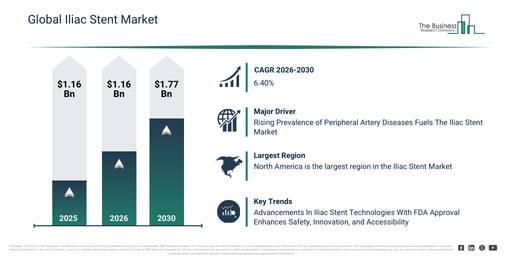
    The iliac stent market has demonstrated substantial expansion in recent years. It is projected to increase from $1.09 billion in 2025 to $1.17 billion in 2026, advancing at a compound annual growth rate (CAGR) of 7.2%. This historical growth is attributable to several factors, including the increasing prevalence of peripheral artery disease, an expanding aging population, the heightened adoption of endovascular procedures, the expansion of hospital-based vascular care, and enhanced diagnosis of iliac artery lesions.

    The iliac stent market is projected to experience substantial expansion over the coming years, reaching $1.5 billion by 2030, demonstrating a compound annual growth rate (CAGR) of 6.4%. This anticipated growth is driven by several factors, including a heightened demand for minimally invasive therapies, the rising occurrence of lifestyle-related vascular conditions, broader availability of interventional cardiology services, increased healthcare spending in developing nations, and an emphasis on prompt vascular intervention. Key trends anticipated during this period encompass the increasing acceptance of minimally invasive peripheral interventions, a growing preference for self-expandable iliac stents, the expanded application of drug-eluting and covered stents for intricate lesions, a move towards outpatient and day-care endovascular procedures, and the broadened use of iliac stents in treating severe and calcified lesions.

    Get A Free Sample Report With In-Depth Market Insights:

    https://thebusinessresearchcompany.com/sample_request?id=75175668&type=smp&name=Iliac%20Stent%20Market%20Report%202026&utm_source=Blogs&utm_medium=Paid&utm_campaign=Oct_PR

    Iliac Stent Market Industry Drivers: What’s Behind The Revenue Growth?

    The expanding incidence of peripheral artery diseases is projected to boost the expansion of the iliac stent market in the future. Peripheral artery disease (PAD) is a circulatory ailment marked by the constriction or obstruction of arteries beyond the heart and brain. The rising occurrence of peripheral artery diseases stems from factors such as smoking, an aging demographic, high blood pressure, and diabetes. Iliac stenting provides an efficacious therapeutic choice for individuals suffering from PAD, delivering enhanced blood flow, alleviation of symptoms, and averting complications, alongside being a minimally invasive procedure with a strong success rate. As an illustration, in July 2023, data from the US-based Society For Cardiovascular Angiography And Interventions indicated that PAD impacts 8-10 million Americans annually, with projections suggesting 19 million Americans will be affected by PAD by 2050. Consequently, the growing prevalence of peripheral artery diseases propels the iliac stent market.

    Iliac Stent Market Segment Landscape And Growth Outlook

    The iliac stent market covered in this report is segmented –

    1) By Type: Self-Expandable Stents, Balloon-Expandable Stents, Other Types

    2) By Artery Lesions: Common Iliac Artery Lesions, Severe Calcified Lesions

    3) By End-Users: Hospitals, Outpatient Facilities, Other End-Users

    Subsegments:

    1) By Self-Expandable Stents: Nitinol Self-Expandable Stents, Polymer-Coated Self-Expandable Stents

    2) By Balloon-Expandable Stents: Bare-Metal Balloon-Expandable Stents, Drug-Eluting Balloon-Expandable Stents

    3) By Other Types: Covered Stents, Hybrid Stents

    #Iliac Stent Market Growth Trends: What’s Shaping The Future Outlook?

    Leading companies within the iliac stent market are engaged in the development of groundbreaking products like iCast, aimed at enhancing patient outcomes and minimizing the likelihood of complications. The iCast-covered stent system presents an innovative solution for treating iliac artery occlusive disease, providing enhanced performance and a reduced risk of complications when contrasted with conventional bare-metal stents. For example, in October 2023, Getinge, a healthcare company based in Sweden, announced the commercial launch of the iCast-covered stent system in the USA, following its approval by the Food and Drug Administration (FDA) for the treatment of iliac arterial occlusive disease. This particular indication highlights Getinge’s dedication to supplying high-quality products and support to US clinicians and hospital systems in addressing this severe condition.

    Iliac Stent Market Top Companies Driving Competitive Growth

    Major companies operating in the iliac stent market are Cardinal Health Inc., Abbott Laboratories, Medtronic Plc, Becton Dickinson and Company, Boston Scientific Corporation, B. Braun Melsungen AG, Terumo Corporation, W. L. Gore & Associates Inc, C. R. Bard Inc., Getinge AB, Cook Medical LLC, Biotronik SE & Co. KG, MicroPort Scientific Corporation, Cordis Corporation, Endologix Inc., LeMaitre Vascular Inc., Alvimedica, Clearstream Technologies Ltd., Jotec GmbH, Translumina GmbH, Vascular Concepts Limited, Lombard Medical Technologies, Acandis GmbH, Gore Medical, Medizintechnik GmbH

    View The Full Iliac Stent Market Report:

    https://thebusinessresearchcompany.com/report/iliac-stent-global-market-report?utm_source=Blogs&utm_medium=Paid&utm_campaign=Oct_PR

    Iliac Stent Market Global Footprint: Which Region Leads The Market?

    North America was the largest region in the iliac stent market in 2025. Asia-Pacific is expected to be the fastest-growing region in the forecast period. The regions covered in the iliac stent market report are Asia-Pacific, South East Asia, Western Europe, Eastern Europe, North America, South America, Middle East, Africa.

    Reach Out To Our Team:

    The Business Research Company: https://www.thebusinessresearchcompany.com/

    Americas: +1 310-496-7795

    Asia: +44 7882 955267 & +91 8897263534

    Europe: +44 7882 955267

    Email us at: marketing@tbrc.info

    Follow us on:

    LinkedIn: https://in.linkedin.com/company/the-business-research-company

    YouTube: https://www.youtube.com/channel/UC24_fI0rV8cR5DxlCpgmyFQ

    Global Market Model: https://www.thebusinessresearchcompany.com/global-market-model
  • ICP-OES Spectrometer Market Forecast To Reach $1.82 Billion By 2030: Key Trends Explained

    ICP-OES Spectrometer Market Forecast To Reach $1.82 Billion By 2030: Key Trends Explained

    Featuring market attractiveness scoring, total addressable market sizing, company benchmarking matrices, interactive Excel dashboards, deeper supply chain intelligence, emerging startup tracking, and granular product-level insights, The Business Research Company’s 2026 market reports are built to deliver research that is both more actionable and more strategically valuable.

    ICP-OES Spectrometer Market Value Growth And Long-Term Outlook

    The icp-oes spectrometer market size has experienced substantial growth in recent years. This market is projected to expand from $1.32 billion in 2025 to $1.41 billion in 2026, at a compound annual growth rate (CAGR) of 6.9%. The historical growth can be attributed to factors such as the broadening of analytical chemistry applications, the increasing demand for elemental analysis in research, the adoption of plasma-based spectrometry techniques, the expansion of academic and research laboratories, and rising environmental monitoring requirements.

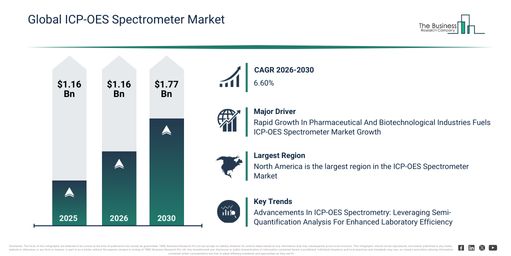
    The icp-oes spectrometer market is projected for significant expansion in the coming years. It will grow to $1.82 billion in 2030 at a compound annual growth rate (CAGR) of 6.6%. This anticipated growth during the forecast period is fueled by enhancements in spectrometer sensitivity and resolution, expanding research in pharmaceuticals and biotechnology, stricter food safety and quality mandates, the broader use of nanotechnology, and increased capital in laboratory automation. Key trends for the same period encompass a heightened need for multi-element analysis, the increasing uptake of high-resolution and simultaneous ICP-OES systems, their expanding application in environmental and food safety assessments, a movement towards more compact and benchtop spectrometer designs, and an intensified focus on precision and sensitivity in analytical processes.

    Get A Free Sample Report With In-Depth Market Insights:

    https://thebusinessresearchcompany.com/sample_request?id=41362072&type=smp&name=ICP-OES%20Spectrometer%20Market%20Report%202026&utm_source=Blogs&utm_medium=Paid&utm_campaign=Oct_PR

    ICP-OES Spectrometer Market Growth Factors: What’s Supporting Expansion?

    The ICP-OES spectrometer market is anticipated to expand, driven by the swift growth of the pharmaceutical and biotechnological industries. These sectors are dedicated to the research, development, production, and commercialization of drugs, therapies, and medical products, employing chemical and biological processes to treat, prevent, or manage diseases. The rapid expansion of these industries is fueled by increasing demand for innovative treatments, advancements in technology, and growing healthcare needs globally. ICP-OES spectrometers are utilized in pharmaceutical and biotechnological applications for the precise detection and quantification of trace metals and impurities in drugs, raw materials, and biological samples, ensuring compliance with safety and quality standards. As an illustration, in June 2024, the European Federation of Pharmaceutical Industries and Associations (EFPIA), a Belgium-based European trade association representing the pharmaceutical industry, reported that the health sector invested approximately $297.79 billion (€258 billion) in research and development in 2023, accounting for 20.5% of total global business R&D spending. Consequently, the rapid growth of the pharmaceutical and biotechnological industries is a key driver for the ICP-OES spectrometer market.

    ICP-OES Spectrometer Market Breakdown By Product Type And Application

    The icp-oes spectrometer market covered in this report is segmented –

    1) By Modality: Sequential, Simultaneous

    2) By Application: Nanotechnology, Drug Discovery, Environmental Testing, Food And Agriculture, Other Applications

    3) By End User: Pharmaceutical And Biotechnology Companies, Research And Academic Institutes, Other End Users

    Subsegments:

    1) By Sequential: Single-Element Sequential ICP-OES, Multi-Element Sequential ICP-OES, Portable Sequential ICP-OES

    2) By Simultaneous: Benchtop Simultaneous ICP-OES, High-Resolution Simultaneous ICP-OES, Compact Simultaneous ICP-OES

    ICP-OES Spectrometer Market Industry Trends: What’s Reshaping Demand?

    Companies within the ICP-OES Spectrometer market are concentrating on creating innovative solutions, such as semi-quantification analysis. These advancements aim to boost analytical efficiency, decrease sample preparation time, and deliver quicker, dependable elemental detection, thereby addressing the increasing need for high-throughput and precise spectroscopic analysis across various sectors. Semi-quantification analysis refers to an analytical measurement method employed to estimate the concentration of elements or compounds within a sample when a complete, exact quantitative analysis is either impractical or unneeded. For instance, in April 2024, Thermo Fisher Scientific, a US-based medical technology company, introduced the iCAP PRO XP ICP-OES with Semi-Quantification Analysis. This cutting-edge technology is designed to improve laboratory efficiency and throughput. The solution integrates sophisticated software algorithms with the conventional ICP-OES instrument, enabling users to rapidly screen unknown samples, determine priorities for further testing, and lessen dependence on extensive calibration standards. Its uses span environmental monitoring, food safety testing, and chemical analysis, providing distinctive capabilities such as automated multi-element screening, fast result generation, and seamless integration with current ICP-OES workflows. This launch exemplifies the wider trend of utilizing software-driven solutions to augment traditional analytical instrumentation.

    ICP-OES Spectrometer Market Leading Players And Competitive Positioning

    Major companies operating in the icp-oes spectrometer market are Hitachi Ltd., Thermo Fisher Scientific Inc., DiethelmKellerSiberHegner, PerkinElmer Inc., MKS Instruments Inc., Shimadzu Corporation, Waters Corporation, Bruker Corporation, Horiba Ltd., Metrohm AG, Leco Corporation, PG Instruments Limited, Analytik Jena AG, Spectro Analytical Instruments GmbH, CEM Corporation, Teledyne Leeman Labs, Skyray Instrument Inc., ELTRA GmbH, GBC Scientific Equipment, Drawell

    View The Full ICP-OES Spectrometer Market Report:

    https://thebusinessresearchcompany.com/report/icp-oes-spectrometer-global-market-report?utm_source=Blogs&utm_medium=Paid&utm_campaign=Oct_PR

    ICP-OES Spectrometer Market Regional Split: Which Areas Are Fueling Growth?

    North America was the largest region in the ICP-OES spectrometer market in 2025. Asia-Pacific is expected to be the fastest-growing region in the forecast period. The regions covered in the icp-oes spectrometer market report are Asia-Pacific, South East Asia, Western Europe, Eastern Europe, North America, South America, Middle East, Africa.

    Reach Out To Our Team:

    The Business Research Company: https://www.thebusinessresearchcompany.com/

    Americas: +1 310-496-7795

    Asia: +44 7882 955267 & +91 8897263534

    Europe: +44 7882 955267

    Email us at: marketing@tbrc.info

    Follow us on:

    LinkedIn: https://in.linkedin.com/company/the-business-research-company

    YouTube: https://www.youtube.com/channel/UC24_fI0rV8cR5DxlCpgmyFQ

    Global Market Model: https://www.thebusinessresearchcompany.com/global-market-model
  • Hysteroscopy Instruments Market Analysis Through 2030: Market Size, Growth Trends And Industry Outlook

    Hysteroscopy Instruments Market Analysis Through 2030: Market Size, Growth Trends And Industry Outlook

    Backed by market attractiveness analysis, total addressable market sizing, company benchmarking matrices, interactive Excel dashboards, wider supply chain intelligence, emerging startup coverage, and detailed product-level insights, The Business Research Company’s 2026 market reports are designed to offer research that is more actionable and strategically valuable than ever.

    Hysteroscopy Instruments Market Poised To Hit $2.71 Billion By 2030 With A 8.3% CAGR

    The hysteroscopy instruments market has seen robust expansion over recent years. This market is projected to expand from $1.82 billion in 2025 to $1.98 billion in 2026, demonstrating a compound annual growth rate (CAGR) of 8.6%. The historical growth of this market is attributable to several key factors, including the increasing occurrence of uterine disorders, a rise in hospital-based gynecological procedures, the widespread adoption of conventional diagnostic hysteroscopy, continuous improvements in basic endoscopic technology, and heightened awareness regarding women’s health diagnostics.

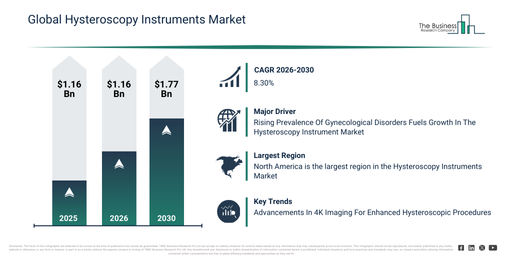
    The hysteroscopy instruments market is set to achieve significant expansion in the coming years, with its size projected to reach $2.71 billion by 2030, demonstrating a compound annual growth rate (CAGR) of 8.3%. This growth during the forecast period is propelled by factors such as innovations in hysteroscopic imaging systems, a shift towards ambulatory surgery centers, an increasing need for fertility and reproductive health procedures, the wider use of disposable instruments to reduce infection risks, along with favorable reimbursement policies and the expansion of healthcare infrastructure. Notable trends expected during this period include the rising adoption of minimally invasive gynecological procedures, an escalating demand for disposable and single-use hysteroscopy instruments, a greater preference for office-based and outpatient hysteroscopy, advancements in visualization and imaging quality, and the broader application of operative hysteroscopy for therapeutic uses.

    Get A Free Sample Report With In-Depth Market Insights:

    https://thebusinessresearchcompany.com/sample_request?id=23471283&type=smp&name=Hysteroscopy%20Instruments%20Market%20Report%202026&utm_source=Blogs&utm_medium=Paid&utm_campaign=Oct_PR

    Hysteroscopy Instruments Market Demand Drivers: What’s Powering Industry Growth?

    The increasing prevalence of gynecological disorders is expected to propel the growth of the hysteroscopy instrument market going forward. Gynecological disorders refer to medical conditions affecting the female reproductive system, including the uterus, ovaries, fallopian tubes, and vagina. The surge in these disorders is driven by factors such as lifestyle changes, elevated stress levels, and postponed childbearing, which contribute to hormonal imbalances and various reproductive health issues. Additionally, greater public awareness and advancements in diagnostic tools have resulted in higher detection rates, bringing more instances to light. Hysteroscopy instruments are utilized in gynecological disorders to diagnose and treat conditions like uterine fibroids, polyps, abnormal bleeding, and endometrial hyperplasia by allowing direct visualization and intervention within the uterine cavity. For instance, in January 2024, according to the American Cancer Society, a US-based nonprofit cancer advocacy organization, the number of female genital cancer cases increased from 114,810 in 2023 to 116,930 in 2024, reflecting a growth of 1.85%. Therefore, the increasing prevalence of gynecological disorders is driving the growth of the hysteroscopy instrument market.

    Hysteroscopy Instruments Market Segment Analysis And Revenue Potential

    The hysteroscopy instruments market covered in this report is segmented –

    1) By Type: Hysteroscopes, Resectoscopes, Fluid Management Systems, Handheld Instruments, Hysterosheaths, Hysteroscopic Tissue Removal Systems

    2) By Usability: Reusable, Disposable

    3) By Application: Diagnostic Hysteroscopy, Operative Hysteroscopy

    4) By End-User: Hospitals, Ambulatory Surgery Centers, Other End-Users

    Subsegments:

    1) By Hysteroscopes: Rigid Hysteroscopes, Flexible Hysteroscopes

    2) By Resectoscopes: Monopolar Resectoscopes, Bipolar Resectoscopes

    3) By Fluid Management Systems: Continuous Flow Systems, Pressure Regulating Systems

    4) By Handheld Instruments: Scissors, Forceps, Graspers

    5) By Hysterosheaths: Disposable Hysterosheaths, Reusable Hysterosheaths

    6) By Hysteroscopic Tissue Removal Systems: Morcellators, Thermal Ablation Systems, Mechanical Tissue Removal Devices

    Hysteroscopy Instruments Market Innovation Trends: What Developments Are Reshaping The Industry?

    Leading companies in the Hysteroscopy Instruments market are concentrating on developing innovative solutions, such as the 4K Camera, to boost image clarity, improve diagnostic accuracy, and facilitate more precise surgical procedures, thereby addressing the increasing demand for minimally invasive gynecological treatments. A 4K camera is a digital device that captures video at a resolution of approximately 3840 × 2160 pixels, which is about four times the resolution of standard 1080p Full HD. For example, in September 2024, Olympus Corporation, a Japan-based medical technology company, unveiled the CH-S700-08-LB 4K camera head, engineered for endoscopic urology and gynecology procedures. This device incorporates true 4K imaging, Narrow Band Imaging (NBI) for improved mucosal and vascular detail, and Blue Light (BL) observation for differentiating cancerous tissue, all within a single camera head. Unlike older HD cameras, this system allows simultaneous white light, NBI, and BL observations without needing to switch devices, which improves diagnostic accuracy and operational efficiency. The ergonomic design features one-touch autofocus for precise visualization, supporting minimally invasive procedures and leading to better patient outcomes.

    Hysteroscopy Instruments Market Competitive Overview And Top Companies

    Major companies operating in the hysteroscopy instruments market are Medtronic Plc, Fujifilm Holdings Corporation, Stryker Inc., Boston Scientific Corporation, B. Braun Melsungen AG, Olympus Corporation, Smith & Nephew Plc, Ethicon Inc., Hologic Inc., STERIS plc, CooperSurgical Inc., Karl Storz GmbH & Co. KG, ConMed Corporation, Pentax of America Inc., Aesculap Inc., Lumenis Ltd., Gynesonics Inc., Invuity Inc., MedGyn Products Inc., Richard Wolf GmbH, Cook Medical Inc., Xion Medical GmbH, Maxer Endoscopy GmbH, LiNA Medical ApS.

    View The Full Hysteroscopy Instruments Market Report:

    https://thebusinessresearchcompany.com/report/hysteroscopy-instruments-global-market-report?utm_source=Blogs&utm_medium=Paid&utm_campaign=Oct_PR

    Hysteroscopy Instruments Market Top Region: Where Does Most Revenue Come From?

    North America was the largest region in the hysteroscopy instruments market in 2025. Asia-Pacific is expected to be the fastest-growing region in the forecast period. The regions covered in the hysteroscopy instruments market report are Asia-Pacific, South East Asia, Western Europe, Eastern Europe, North America, South America, Middle East, Africa.

    Reach Out To Our Team:

    The Business Research Company: https://www.thebusinessresearchcompany.com/

    Americas: +1 310-496-7795

    Asia: +44 7882 955267 & +91 8897263534

    Europe: +44 7882 955267

    Email us at: marketing@tbrc.info

    Follow us on:

    LinkedIn: https://in.linkedin.com/company/the-business-research-company

    YouTube: https://www.youtube.com/channel/UC24_fI0rV8cR5DxlCpgmyFQ

    Global Market Model: https://www.thebusinessresearchcompany.com/global-market-model
  • Hysterometer Market Outlook From 2026 To 2030: Key Growth Factors And Future Opportunities

    Hysterometer Market Outlook From 2026 To 2030: Key Growth Factors And Future Opportunities

    Featuring market attractiveness scoring, total addressable market sizing, company benchmarking matrices, interactive Excel dashboards, deeper supply chain intelligence, emerging startup tracking, and granular product-level insights, The Business Research Company’s 2026 market reports are built to deliver research that is both more actionable and more strategically valuable.

    Hysterometer Market Size And Revenue Outlook Through 2030

    The hysterometer market has seen robust growth in recent years. Its valuation is expected to rise from $1.66 billion in 2025 to $1.8 billion in 2026, achieving a compound annual growth rate (CAGR) of 8.2%. This historical expansion can be linked to an increase in gynecological procedures, the broadening of hospital obstetric services, a heightened focus on infection prevention, the regularity of routine uterine examinations, and the development of outpatient care.

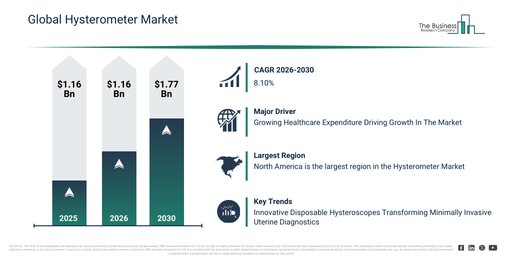
    The hysterometer market is projected to experience robust expansion over the coming years. Its valuation is anticipated to reach $2.45 billion by 2030, demonstrating a compound annual growth rate (CAGR) of 8.1%. This expansion during the forecast period is driven by factors such as the increasing adoption of single-use devices, the rise of minimally invasive gynecology, the development of digital gynecological tools, the broader availability of ambulatory care, and the heightened demand for safety compliance. Key developments anticipated for this period encompass the use of disposable gynecological instruments, advancements in measurement accuracy, designs prioritizing patient comfort, the availability of pre-sterilized single-use devices, and the integration of digital measurement technologies.

    Get A Free Sample Report With In-Depth Market Insights:

    https://thebusinessresearchcompany.com/sample_request?id=89869597&type=smp&name=Hysterometer%20Market%20Report%202026&utm_source=Blogs&utm_medium=Paid&utm_campaign=Oct_PR

    Hysterometer Market Growth Drivers: What’s Behind The Acceleration?

    Rising healthcare spending is anticipated to boost the growth of the hysterometer market moving forward. Healthcare spending encompasses the entire financial outlay for medical services, supplies, and treatments designed to maintain or improve health. This increase in healthcare spending is fueled by elements such as an aging populace, the rising occurrence of chronic diseases, progress in medical technology, heightened demand for healthcare, and elevated costs for treatment and medications. Greater healthcare spending propels advancements in hysterometers by providing funding for research, innovation, and improved manufacturing processes. This, in turn, enhances the accuracy of uterine measurements, refines diagnostics, and elevates patient care. For instance, in May 2024, according to the Office for National Statistics, a UK-based government department, total healthcare expenditure experienced a significant rise of 5.6% in nominal terms from 2022 to 2023, marking a notable acceleration from the 0.9% growth recorded in 2022. Therefore, the growing healthcare spending is driving the growth of the hysterometer market.

    Hysterometer Market Segmentation And Category Overview

    The hysterometer market covered in this report is segmented –

    1) By Type: Disposable Hysterometers, Reusable Hysterometers

    2) By Application: Hospitals, Clinics, Ambulatory Surgical Centers, Diagnostic Centers, Other Applications

    3) By Distribution Channel: Direct Sales, Distributors And Wholesalers, Online Retail

    4) By End-User: Gynecologists, Obstetricians, Other End-Users

    Subsegments:

    1) By Disposable Hysterometers: Single-use Hysterometers, Pre-sterilized Disposable Hysterometers

    2) By Reusable Hysterometers: Manual Reusable Hysterometers, Digital Reusable Hysterometers, Electromechanical Reusable Hysterometers

    Hysterometer Market Trends: What’s Defining The Industry’s Next Phase?

    Leading companies in the hysterometer market are concentrating on developing advanced products, such as single-use hysteroscopes, to enhance patient comfort and improve procedural efficiency. A single-use hysteroscope is an endoscopic device designed for one-time use in minimally invasive diagnostic and therapeutic procedures within the uterine cavity, engineered to eliminate reprocessing and reduce infection risk. For instance, in November 2023, REDPINE (Guangzhou Red Pine Medical Instrument Co., Ltd.), an endoscopy company based in China, showcased its single-use video hysteroscope at the AAGL 52nd Global Congress. This CE-MDR-certified system is promoted for quick outpatient exams and is accompanied by a lightweight HD image processor and single-use biopsy and sampling accessories to simplify office hysteroscopy. This solution is intended to reduce cross-contamination risks, remove reprocessing requirements, and improve workflow efficiency for clinicians performing diagnostic and minor operative procedures in outpatient settings.

    Hysterometer Market Competitive Landscape: Which Companies Lead The Industry?

    Major companies operating in the hysterometer market are Medline Industries LP., Medgyn Products Inc., Laboratoire CCD, Kolplast Group, GPC Medical Ltd., Pelican Feminine Healthcare Ltd., SMB Corporation of India, IndoSurgicals, Germanos Medicals, Bexen Medical, Sterylab S.r.l., Parburch Medical Developments Ltd., Gynotec B.V., RI.MOS, Gyneas SAS, EDM Medical Solutions, Masstec Medical Co., Electro Surgical Instrument Company, MEDEVIS, Prince Medical SAS, DTR Medical Ltd., ‎Golden Sports and Surgical Industries.

    View The Full Hysterometer Market Report:

    https://thebusinessresearchcompany.com/report/hysterometer-global-market-report?utm_source=Blogs&utm_medium=Paid&utm_campaign=Oct_PR

    Hysterometer Market Regional Breakdown: Where Is Demand Concentrated?

    North America was the largest region in the hysterometer market in 2025. The regions covered in the hysterometer market report are Asia-Pacific, South East Asia, Western Europe, Eastern Europe, North America, South America, Middle East, Africa.

    Reach Out To Our Team:

    The Business Research Company: https://www.thebusinessresearchcompany.com/

    Americas: +1 310-496-7795

    Asia: +44 7882 955267 & +91 8897263534

    Europe: +44 7882 955267

    Email us at: marketing@tbrc.info

    Follow us on:

    LinkedIn: https://in.linkedin.com/company/the-business-research-company

    YouTube: https://www.youtube.com/channel/UC24_fI0rV8cR5DxlCpgmyFQ

    Global Market Model: https://www.thebusinessresearchcompany.com/global-market-model
  • Hypodermic Syringes And Needles Market Growth Forecast: Market Size, Key Trends And Emerging Opportunities Through 2030

    Hypodermic Syringes And Needles Market Growth Forecast: Market Size, Key Trends And Emerging Opportunities Through 2030

    Built to provide research that’s more actionable and strategically valuable, The Business Research Company’s 2026 market reports include market attractiveness analysis, total addressable market sizing, company benchmarking matrices, interactive Excel dashboards, broader supply chain intelligence, emerging startup tracking, and in-depth product insights.

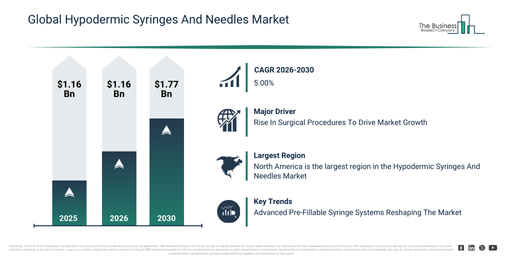
    Hypodermic Syringes And Needles Market Growth From $7.45 Billion In 2026 To $9.06 Billion By 2030 At A CAGR Of 5%

    The market for hypodermic syringes and needles has demonstrated consistent expansion in recent years. It is projected to increase from $7.13 billion in 2025 to $7.45 billion in 2026, maintaining a compound annual growth rate (CAGR) of 4.5%. The historical development of this market can be attributed to the broadening of vaccination programs, an uptick in hospital and clinic procedures, the increasing prevalence of chronic diseases necessitating injections, a heightened emphasis on infection control practices, and the widespread availability of disposable syringes.

    The market for hypodermic syringes and needles is anticipated to experience robust expansion over the coming years. This market is projected to reach $9.06 billion by 2030, demonstrating a compound annual growth rate (CAGR) of 5.0%. This projected growth is driven by several factors, including the escalating need for mass immunization efforts, the increasing use of safety needles, the broadened application of injections in home healthcare settings, a heightened emphasis on preventing needle-stick injuries, and expanded investments in the production of medical consumables. Key developments expected during this period involve the greater integration of safety-engineered syringes and needles, a surge in demand for single-use injection devices, an intensified focus on solutions for infection prevention, the extended application of prefilled and specialty syringes, and a stronger commitment to adhering to regulatory standards.

    Get A Free Sample Report With In-Depth Market Insights:

    https://thebusinessresearchcompany.com/sample_request?id=95435375&type=smp&name=Hypodermic%20Syringes%20And%20Needles%20Market%20Report%202026&utm_source=Blogs&utm_medium=Paid&utm_campaign=Oct_PR

    Hypodermic Syringes And Needles Market Growth Factors Behind Sustained Expansion

    The anticipated rise in surgical procedures is poised to propel the future growth of the hypodermic syringes and needles market. Surgical procedures refer to medical interventions or operations performed by qualified surgeons or medical professionals to treat, repair, remove, or diagnose a medical condition. These procedures frequently involve the administration of medications, anesthetics, or other substances via injections. Hypodermic syringes and needles are fundamental tools for delivering precise and controlled doses of these substances. For instance, in June 2024, the American Society of Plastic Surgeons, a US-based non-profit organization, stated that minimally invasive procedures saw a 7% increase in 2023, exceeding the growth rate of surgical procedures by 2%. Furthermore, hand surgeries, such as those for carpal tunnel, arthritis, and trigger finger, amounted to 207,887 procedures, marking a 2% rise from 2022. Consequently, the increasing volume of surgical procedures is driving the expansion of the hypodermic syringes and needles market.

    Hypodermic Syringes And Needles Market Segment Outlook: Which Categories Are Growing Fastest?

    The hypodermic syringes and needles market covered in this report is segmented –

    1) By Type: Syringes, Needles

    2) By Usability: Disposable, Safety-Engineered Syringes and Needles

    3) By Application: Blood Collection, Drug Delivery, Vaccination, Insulin Administration, Other Applications

    4) By End-Use: Hospitals, Ambulatory Surgical Centers, Diagnostic Centers, Other End-Uses

    Subsegments:

    1) By Syringes: Disposable Syringes, Safety Syringes

    2) By Needles: Standard Needles, Safety Needles, Specialty Needles

    Hypodermic Syringes And Needles Market Industry Trends Fueling Future Revenue Growth

    Leading companies in the hypodermic syringes and needles market are developing pre-fillable glass syringe systems to achieve a competitive edge. A pre-fillable syringe system is a medical device engineered for the storage and administration of pharmaceuticals, vaccines, or other injectable substances. For instance, in September 2023, Nipro Corporation, a Japan-based medical device company, introduced the D2F Pre-fillable Glass Syringe System – Silicone Oil-Free, addressing a crucial requirement within the pharmaceutical industry for drug products highly susceptible to silicone oil. The D2F system delivers a silicone oil-free solution with vital quality attributes, including smooth plunger movement, very low particle levels, and excellent drug-container compatibility. The D2F Pre-fillable Glass Syringe System seeks to satisfy the increasing need for injection systems that guarantee optimal performance and minimize the risk of interaction issues during the delivery of biotech drugs and other sensitive pharmaceuticals.

    Hypodermic Syringes And Needles Market Competitive Landscape: Who Leads The Industry?

    Major companies operating in the hypodermic syringes and needles market are Becton Dickinson and Company, B. Braun Melsungen AG, Terumo Corporation, Nipro Corporation, Owen Mumford Ltd., Vygon S.A., Codan Medizinische Geräte GmbH & Co. KG, Vitrex Medical A/S, EXELINT International Co., Helapet Ltd., DeRoyal Industries Inc., Teleflex Incorporated, Gerresheimer AG, SCHOTT AG, Hindustan Syringes & Medical Devices Ltd., Weihai Weigao Group Medical Polymer Co. Ltd., Retractable Technologies Inc., Sarstedt AG & Co. KG, Jiangsu Zhengkang Medical Apparatus Co. Ltd., JECT Corporation

    View The Full Hypodermic Syringes And Needles Market Report:

    https://thebusinessresearchcompany.com/report/hypodermic-syringes-and-needles-global-market-report?utm_source=Blogs&utm_medium=Paid&utm_campaign=Oct_PR

    Hypodermic Syringes And Needles Market Geographic Landscape: Which Region Dominates Industry Growth?

    North America was the largest region in the hypodermic syringes and needles market in 2025. The regions covered in the hypodermic syringes and needles market report are Asia-Pacific, South East Asia, Western Europe, Eastern Europe, North America, South America, Middle East, Africa.

    Reach Out To Our Team:

    The Business Research Company: https://www.thebusinessresearchcompany.com/

    Americas: +1 310-496-7795

    Asia: +44 7882 955267 & +91 8897263534

    Europe: +44 7882 955267

    Email us at: marketing@tbrc.info

    Follow us on:

    LinkedIn: https://in.linkedin.com/company/the-business-research-company

    YouTube: https://www.youtube.com/channel/UC24_fI0rV8cR5DxlCpgmyFQ

    Global Market Model: https://www.thebusinessresearchcompany.com/global-market-model
  • Hydrotherapy Equipment Market CAGR Forecast Through 2030: Key Trends Shaping Industry Expansion

    Hydrotherapy Equipment Market CAGR Forecast Through 2030: Key Trends Shaping Industry Expansion

    Backed by market attractiveness analysis, total addressable market sizing, company benchmarking matrices, interactive Excel dashboards, wider supply chain intelligence, emerging startup coverage, and detailed product-level insights, The Business Research Company’s 2026 market reports are designed to offer research that is more actionable and strategically valuable than ever.

    Hyperbaric Oxygen Therapy Devices Market Expansion Outlook: What Revenue Opportunities Are Ahead?

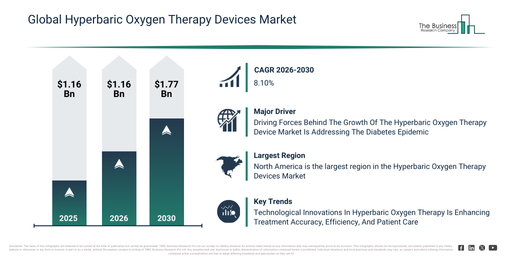
    The hyperbaric oxygen therapy devices market has demonstrated substantial growth in recent years. Projections indicate its value will rise from $4.58 billion in 2025 to $5.01 billion in 2026, reflecting a compound annual growth rate (CAGR) of 9.5%. The historical expansion of this market can be attributed to several factors, including the application of hyperbaric oxygen therapy in treating decompression sickness, the increasing integration of these devices in hospitals for wound care, heightened understanding of oxygen-based therapies, the broadening scope of trauma and emergency care services, and the clinical acceptance of supplementary hyperbaric treatments.

    The hyperbaric oxygen therapy devices market is anticipated to show significant expansion in the upcoming years. It is projected to attain a valuation of $6.85 billion in 2030 at a compound annual growth rate (CAGR) of 8.1%. This increase over the forecast period is driven by the growing occurrence of chronic wounds and diabetic ulcers, an escalating demand for non-invasive therapeutic options, the broadening availability of outpatient and home care services, increased healthcare investments in advanced therapies, and wider clinical applications for hyperbaric oxygen therapy. Significant trends for this period include the expanded use of hyperbaric therapy in managing chronic wounds, the rising adoption of monoplace and portable HBOT devices, increased application of HBOT in infection and post-surgical recovery, a growing preference for home-based and outpatient HBOT solutions, and the standardization of safety and treatment protocols in hyperbaric centers.

    Get A Free Sample Report With In-Depth Market Insights:

    https://thebusinessresearchcompany.com/sample_request?id=39094378&type=smp&name=Hyperbaric%20Oxygen%20Therapy%20Devices%20Market%20Report%202026&utm_source=Blogs&utm_medium=Paid&utm_campaign=Oct_PR

    Hyperbaric Oxygen Therapy Devices Market Demand Drivers Opening New Revenue Streams

    The hyperbaric oxygen therapy device market is anticipated to expand due to the increasing prevalence of diabetes, a chronic metabolic condition characterized by elevated blood sugar levels over time. The surge in diabetes cases is attributed to factors such as sedentary lifestyles, unhealthy eating habits, obesity, genetic predispositions, an aging global population, urbanization, and various socioeconomic elements. Hyperbaric oxygen therapy devices offer a supplementary approach to managing diabetes by facilitating wound healing and tissue repair through high-pressure oxygen delivery, thereby potentially mitigating the risk of complications like diabetic foot ulcers and improving overall outcomes for individuals with the condition. For instance, data released by the Institute for Health Metrics and Evaluation (IHME) in June 2023 projected that global diabetes cases are expected to climb from 529 million in 2023 to 1.3 billion by 2050. The global prevalence rate, which stands at 6.1%, is set for a substantial increase. Regionally, North Africa and the Middle East currently have the highest prevalence rate at 9.3%, which is forecasted to reach 16.8% by 2050. Consequently, the rising incidence of diabetes is a significant driver for the hyperbaric oxygen therapy device market.

    Hyperbaric Oxygen Therapy Devices Market Segment Landscape: Which Areas Lead Development?

    The hyperbaric oxygen therapy devices market covered in this report is segmented –

    1) By Type: Monoplace Hyperbaric Oxygen Therapy Devices, Multiplace Hyperbaric Oxygen Therapy Devices

    2) By Application: Wound Healing, Decompression Sickness, Infection Treatment, Gas Embolism, Other Applications

    3) By End User: Hospitals, Home Care, Other End Users

    Subsegments:

    1) By Monoplace Hyperbaric Oxygen Therapy Devices: Single-Person Chamber Systems, Fixed Monoplace Hbot Chambers, High-Pressure Monoplace Oxygen Chambers

    2) By Multiplace Hyperbaric Oxygen Therapy Devices: Two-Person Multiplace Chambers, Multi-Person Chamber Systems (4-10 Persons), Large Multiplace Hyperbaric Chambers, High-Capacity Multiplace Hbot Devices, Advanced Multiplace Oxygen Chambers

    Hyperbaric Oxygen Therapy Devices Market Trends Powering Strategic Industry Growth

    Major companies within the hyperbaric oxygen therapy device market are increasingly incorporating automated logging software into hyperbaric chambers to boost treatment precision, operational effectiveness, and patient well-being. This integration enables medical professionals to accurately record and oversee treatment parameters in real-time, thereby guaranteeing meticulous documentation, efficient reporting, and heightened patient safety throughout hyperbaric therapy sessions. For instance, in January 2024, Sechrist Industries Inc., a US-based manufacturer of hyperbaric oxygen chambers and respiratory equipment, unveiled the 3300 HM Hyperbaric Chamber and the eHEAL System. The 3300 HM Hyperbaric Chamber is designed with patient comfort and safety as priorities, featuring a contemporary design and an innovative Patient Step-in Entry, which removes the need for a hyperbaric stretcher. It offers improved safety attributes, straightforward breathing systems, and adaptable compression choices to meet various medical requirements. Concurrently, the eHEAL System simplifies hyperbaric treatment logging with its intuitive interface, automated data acquisition, multi-chamber connectivity, and thorough logging capacities. It ensures accuracy, efficiency, and security in treatment records, providing smooth integration with existing systems.

    Hyperbaric Oxygen Therapy Devices Market Company Landscape And Competitive Strategy

    Major companies operating in the hyperbaric oxygen therapy devices market are Environmental Tectonics Corporation, Sechrist Industries, Perry Baromedical, HAUX Life Support, Fink Engineering, OxyHelp Industry, Environmental Control Systems, BioBarica, OxyHeal Health Group, Hyperbaric Modular Systems, Baroks Hyperbaric, Oxyvein Hyperbaric Chambers, Hpotech Medical Solutions, Shanghai Baobang Medical Equipment, Jiangsu Haila Resuscitation Equipment, Hyperbaric SAC, Pan America Hyperbarics Manufacturing, Oxymed Hyperbaric Chambers, Vitaeris Hyperbaric Systems, SOS Group Hyperbaric Engineering, ETC Hyperbaric Solutions, OxyAir Hyperbaric Technology

    View The Full Hyperbaric Oxygen Therapy Devices Market Report:

    https://thebusinessresearchcompany.com/report/hyperbaric-oxygen-therapy-devices-global-market-report?utm_source=Blogs&utm_medium=Paid&utm_campaign=Oct_PR

    Hyperbaric Oxygen Therapy Devices Market Largest Region: Which Geography Holds The Highest Market Share?

    North America was the largest region in the hyperbaric oxygen therapy devices market in 2025. Asia-Pacific is expected to be the fastest-growing region in the forecast period. The regions covered in the hyperbaric oxygen therapy devices market report are Asia-Pacific, South East Asia, Western Europe, Eastern Europe, North America, South America, Middle East, Africa.

    Reach Out To Our Team:

    The Business Research Company: https://www.thebusinessresearchcompany.com/

    Americas: +1 310-496-7795

    Asia: +44 7882 955267 & +91 8897263534

    Europe: +44 7882 955267

    Email us at: marketing@tbrc.info

    Follow us on:

    LinkedIn: https://in.linkedin.com/company/the-business-research-company

    YouTube: https://www.youtube.com/channel/UC24_fI0rV8cR5DxlCpgmyFQ

    Global Market Model: https://www.thebusinessresearchcompany.com/global-market-model