Blog

  • Implantable Drug Delivery Devices Market Trends Supporting 8.7% CAGR Growth Through 2030

    Implantable Drug Delivery Devices Market Trends Supporting 8.7% CAGR Growth Through 2030

    Featuring market attractiveness scoring, total addressable market sizing, company benchmarking matrices, interactive Excel dashboards, deeper supply chain intelligence, emerging startup tracking, and granular product-level insights, The Business Research Company’s 2026 market reports are built to deliver research that is both more actionable and more strategically valuable.

    Implantable Drug Delivery Devices Market Size And Revenue Outlook Through 2030

    The implantable drug delivery devices market has demonstrated considerable growth in recent years. This market is projected to expand from $21.94 billion in 2025 to $23.91 billion in 2026, exhibiting a compound annual growth rate (CAGR) of 9.0%. Historically, this expansion has been driven by several factors, including improvements in implantable medical device design, a greater incidence of chronic diseases, a rise in the application of long-term drug therapies, an increase in minimally invasive surgical techniques, and the broadening scope of treatments for oncology and cardiovascular conditions.

    The implantable drug delivery devices market is projected to experience substantial expansion in the coming years, reaching $33.39 billion by 2030, with a compound annual growth rate (CAGR) of 8.7%. This anticipated growth is linked to factors such as the increasing creation of smart implantable devices, a growing need for personalized drug delivery, advancements in biodegradable implant technologies, rising investments in combined drug-device offerings, and more regulatory clearances for implantable treatments. Key trends expected during this period involve the wider acceptance of controlled-release implant systems, an increase in the utilization of bio-absorbable implant materials, a greater emphasis on site-specific drug delivery, the proliferation of miniaturized implantable devices, and a heightened focus on ensuring patient adherence.

    Get A Free Sample Report With In-Depth Market Insights:

    https://thebusinessresearchcompany.com/sample_request?id=90324879&type=smp&name=Implantable%20Drug%20Delivery%20Devices%20Market%20Report%202026&utm_source=Blogs&utm_medium=Paid&utm_campaign=Oct_PR

    Implantable Drug Delivery Devices Market Expansion Drivers: What’s Shaping Future Growth?

    The increasing occurrence of chronic illnesses is anticipated to fuel expansion in the implantable drug delivery devices market in the future. Chronic diseases are defined as persistent medical conditions that endure for an extended duration, typically exceeding three months. The rise in these conditions stems from prevalent unhealthy lifestyle choices like poor diet, lack of physical activity, and tobacco consumption, which considerably elevate the global risk of developing non-communicable diseases. Implantable drug delivery devices are increasingly utilized to offer consistent, long-term medication delivery for chronic ailments, thereby enhancing patient adherence and treatment efficacy. For example, in August 2025, the Centers for Disease Control and Prevention, a Switzerland-based public health agency, reported that 90% of the nation’s 4.9 trillion dollars in annual health care spending is linked to individuals with chronic and mental health conditions, with over 84,000 Americans succumbing annually to heart disease or stroke, and cardiovascular disease costs are forecast to hit approximately 2 trillion dollars by 2050. Consequently, the rising prevalence of chronic diseases is boosting the growth of the implantable drug delivery devices market.

    Implantable Drug Delivery Devices Market Segment Performance And Emerging Opportunities

    The implantable drug delivery devices market covered in this report is segmented –

    1) By Product: Contraceptive Implants, Spinal Implants, Brachytherapy Seeds, Drug-Eluting Stents, Bio-absorbable Stents, Intraocular Stents, Infusion Pumps, Other Applications

    2) By Technology: Diffusion, Osmotic, Magnetic, Other Technologies

    3) By Application: Contraception, Ophthalmology, Cardiovascular, Diabetes, Oncology, Autoimmune Diseases, Other Applications

    Subsegments:

    1) By Contraceptive Implants: Hormonal Contraceptive Implants, Non-hormonal Contraceptive Implants

    2) By Spinal Implants: Biodegradable Spinal Implants, Non-biodegradable Spinal Implants

    3) By Brachytherapy Seeds: Iodine-125 Seeds, Palladium-103 Seeds, Cesium-131 Seeds, Other Brachytherapy Seeds

    4) By Drug-Eluting Stents: Coronary Drug-Eluting Stents, Peripheral Drug-Eluting Stents

    5) By Bio-absorbable Stents: Polymer-based Bio-absorbable Stents, Metal-based Bio-absorbable Stents

    6) By Intraocular Stents: Glaucoma Intraocular Stents, Cataract Surgery Intraocular Stents

    7) By Infusion Pumps: Insulin Pumps, Chemotherapy Infusion Pumps, Pain Management Infusion Pumps, Other Infusion Pumps

    8) By Other Applications: Implantable Reservoirs, Implantable Micro-pumps, Implantable Drug Elution Devices

    Implantable Drug Delivery Devices Market Leading Companies And Competitive Benchmarking

    Major companies operating in the implantable drug delivery devices market are AbbVie Inc., Bayer HealthCare, Medtronic Inc., Nucletron, Boston Scientific Corporation, Abbott Laboratories, Bausch and Lomb Inc., Merck & Co. Inc., Genentech Inc, EyePoint Pharmaceuticals Inc., DSM Biomedical, Delpor Inc., Teleflex Incorporated, Biotronik Inc., Alcon Inc., Terumo Corporation, Endologix Inc., Innocoll Biotherapeutics, Atossa Therapeutics Inc., Intersect ENT, Microchips Biotech, Theradaptive Inc., CollPlant, Intarcia Therapeutics, Glaukos Corporation

    View The Full Implantable Drug Delivery Devices Market Report:

    https://thebusinessresearchcompany.com/report/implantable-drug-delivery-devices-global-market-report?utm_source=Blogs&utm_medium=Paid&utm_campaign=Oct_PR

    Implantable Drug Delivery Devices Market Largest Region By Revenue And Market Share

    North America was the largest region in the implantable drug delivery devices market in 2025. Asia-Pacific was the second-largest region in the implantable drug delivery devices market report. The regions covered in the implantable drug delivery devices market report are Asia-Pacific, South East Asia, Western Europe, Eastern Europe, North America, South America, Middle East, Africa.

    Reach Out To Our Team:

    The Business Research Company: https://www.thebusinessresearchcompany.com/

    Americas: +1 310-496-7795

    Asia: +44 7882 955267 & +91 8897263534

    Europe: +44 7882 955267

    Email us at: marketing@tbrc.info

    Follow us on:

    LinkedIn: https://in.linkedin.com/company/the-business-research-company

    YouTube: https://www.youtube.com/channel/UC24_fI0rV8cR5DxlCpgmyFQ

    Global Market Model: https://www.thebusinessresearchcompany.com/global-market-model

  • Implantable Defibrillators Market Forecast Highlights A $7.72 Billion Opportunity For Industry Participants

    Implantable Defibrillators Market Forecast Highlights A $7.72 Billion Opportunity For Industry Participants

    Built to provide research that’s more actionable and strategically valuable, The Business Research Company’s 2026 market reports include market attractiveness analysis, total addressable market sizing, company benchmarking matrices, interactive Excel dashboards, broader supply chain intelligence, emerging startup tracking, and in-depth product insights.

    Implantable Defibrillators Market Growth From $6.03 Billion In 2026 To $7.72 Billion By 2030 At A CAGR Of 6.4%

    The implantable defibrillators market size has shown robust growth over recent years. It is anticipated to expand from $5.69 billion in 2025 to $6.03 billion in 2026, achieving a compound annual growth rate (CAGR) of 5.9%. The market’s development in previous periods can be linked to the rising occurrence of sudden cardiac arrest, broader acceptance of implantable defibrillators, increased recognition of cardiac rhythm irregularities, advancements in device miniaturization, and the availability of cutting-edge ICD technologies.

    The implantable defibrillators market is anticipated to experience substantial growth over the coming years. It is projected to reach $7.72 billion by 2030, demonstrating a compound annual growth rate (CAGR) of 6.4%. This expansion during the forecast period is driven by factors such as the rising need for minimally invasive defibrillator solutions, increased adoption of remote monitoring, advancements in AI for arrhythmia detection, a greater emphasis on device longevity, and higher investments in cutting-edge cardiac care technologies. Key developments expected during this time include wider use of sophisticated defibrillation algorithms, a surge in demand for subcutaneous implantable defibrillators, increased deployment of leadless defibrillator technologies, the expansion of remote device observation platforms, and a heightened focus on ensuring patient safety and comfort.

    Get A Free Sample Report With In-Depth Market Insights:

    https://thebusinessresearchcompany.com/sample_request?id=41351579&type=smp&name=Implantable%20Defibrillators%20Market%20Report%202026&utm_source=Blogs&utm_medium=Paid&utm_campaign=Oct_PR

    Implantable Defibrillators Market Development Factors: What’s Supporting Demand?

    The rising incidence of cardiovascular diseases (CVDs) is anticipated to boost the expansion of the implantable defibrillators market in the future. CVDs encompass various conditions affecting the heart and blood vessels, such as heart attacks, strokes, and high blood pressure, frequently stemming from factors like poor nutrition, inactivity, smoking, and genetic predispositions. The growing occurrence of these diseases is mainly fueled by an aging global population, unhealthy lifestyle choices, and an increase in risk factors including obesity, diabetes, and hypertension. Implantable defibrillators are vital for maintaining cardiovascular health, as they continuously monitor heart rhythms and deliver crucial electrical shocks to prevent sudden cardiac arrest in individuals with severe heart conditions. For example, data from January 2024 by the American Heart Association, a US-based non-profit organization, revealed that the age-adjusted death rate from cardiovascular disease climbed to 233.3 per 100,000 in 2024, representing a 4.0% increase from 224.4 per 100,000 in 2023. Consequently, the escalating prevalence of cardiovascular diseases (CVDs) is propelling the growth of the implantable defibrillators market.

    Implantable Defibrillators Market Segment Landscape And Growth Outlook

    The implantable defibrillators market covered in this report is segmented –

    1) By Product Type: Single Chambered Implantable Defibrillators, Dual Chambered Implantable Defibrillators, Biventricular Implantable Defibrillators

    2) By Procedure Type: Trans-Venous Implantable Defibrillators, Subcutaneous Implantable Defibrillators

    3) By End User: Hospitals And Clinics, Specialty Cardiac Centers, Ambulatory Surgery Centers, Other End Users

    Subsegments:

    1) By Single Chambered Implantable Defibrillators: Standard Single Chamber ICDs, Leadless Single Chamber ICDs

    2) By Dual Chambered Implantable Defibrillators: Standard Dual Chamber ICDs, Advanced Dual Chamber ICDs

    3) By Biventricular Implantable Defibrillators: Standard Biventricular ICDs, Advanced Biventricular ICDs With CRT

    Implantable Defibrillators Market Transformation Trends: What Innovations Are Driving Change?

    Major companies in the implantable defibrillators market are concentrating on the development of innovative products such as extravascular ICDs and ultra-thin defibrillation leads. These advancements aim to elevate patient safety, diminish complications, and bolster the long-term effectiveness of therapy. Extravascular ICDs represent implantable defibrillators featuring leads positioned outside the heart and blood vessels, intended to reduce complications, whereas ultra-thin defibrillation leads are exceptionally slim wires engineered for a safer and less invasive approach to correcting heart rhythms. For instance, in December 2023, Medtronic, an Ireland-based medical device company, introduced its new form of implantable cardioverter-defibrillator. The Aurora extravascular ICD is a device that is positioned under the skin in the left armpit, rather than below the collarbone. It possesses similar dimensions, shape, and battery life to the company’s established transvenous ICDs, yet it can deliver defibrillation to patients undergoing cardiac arrest, alongside continuous pacemaker therapies. Its Epsila leads are subsequently attached to the heart in a minimally invasive procedure beneath the breastbone. The implant also incorporates Medtronic’s Smart Sense technology, which endeavors to lessen the risk of unwarranted shocks, and SureScan technology, which allows a patient to undergo an MRI scan while the device is in place.

    Implantable Defibrillators Market Industry Leaders And Competitive Landscape

    Major companies operating in the implantable defibrillators market are Medtronic plc, Abbott Laboratories, Boston Scientific Corporation, Biotronik SE & Co KG, MicroPort Scientific Corporation, LivaNova PLC, Zhejiang Lepu Medical Technology Co Ltd, Shree Pacetronix Ltd, EBR Systems Inc, Imricor Medical Systems Inc, Carmat SA, BiVACOR Inc, Procyrion Inc, Jarvik Heart Inc, Fineheart SA, CorWave SA, NuPulseCV Inc, Calon Cardio Technology Ltd, Evaheart Inc, CH Biomedical Inc

    View The Full Implantable Defibrillators Market Report:

    https://thebusinessresearchcompany.com/report/implantable-defibrillators-global-market-report?utm_source=Blogs&utm_medium=Paid&utm_campaign=Oct_PR

    Implantable Defibrillators Market Regional Analysis And Leading Geography

    North America was the largest region in the implantable defibrillators market in 2025. Asia-Pacific is expected to be the fastest-growing region in the global implanted defibrillator market forecast period. The regions covered in the implantable defibrillators market report are Asia-Pacific, South East Asia, Western Europe, Eastern Europe, North America, South America, Middle East, Africa.

    Reach Out To Our Team:

    The Business Research Company: https://www.thebusinessresearchcompany.com/

    Americas: +1 310-496-7795

    Asia: +44 7882 955267 & +91 8897263534

    Europe: +44 7882 955267

    Email us at: marketing@tbrc.info

    Follow us on:

    LinkedIn: https://in.linkedin.com/company/the-business-research-company

    YouTube: https://www.youtube.com/channel/UC24_fI0rV8cR5DxlCpgmyFQ

    Global Market Model: https://www.thebusinessresearchcompany.com/global-market-model

  • Implantable Collamer Lens Market Analysis: How The Industry Is Evolving Toward A $28.74 Billion Future

    Implantable Collamer Lens Market Analysis: How The Industry Is Evolving Toward A $28.74 Billion Future

    Backed by market attractiveness analysis, total addressable market sizing, company benchmarking matrices, interactive Excel dashboards, wider supply chain intelligence, emerging startup coverage, and detailed product-level insights, The Business Research Company’s 2026 market reports are designed to offer research that is more actionable and strategically valuable than ever.

    Implantable Collamer Lens Market Expansion Outlook: What Revenue Opportunities Are Ahead?

    The implantable collamer lens market size has experienced significant growth in recent years. It is projected to increase from $20.77 billion in 2025 to $22.2 billion in 2026, at a compound annual growth rate (CAGR) of 6.9%. The expansion observed in the past can be ascribed to the increasing prevalence of refractive vision disorders, a rising demand for surgical vision correction, technological advancements in ophthalmic implants, growing acceptance of ICL procedures, and the expansion of specialized ophthalmic clinics.

    The implantable collamer lens market is projected to experience robust expansion over the coming years. This market is anticipated to reach a valuation of $28.74 billion by 2030, demonstrating a compound annual growth rate (CAGR) of 6.7%. This forecasted growth is largely driven by factors such as the greater acceptance of high-quality vision correction solutions, an increasing emphasis on less invasive ophthalmic surgical techniques, the broadening scope of elective eye care services, increased funding for sophisticated ophthalmology technologies, and a heightened understanding among patients of the advantages offered by ICLs. Key developments expected during this period involve the wider uptake of EVO implantable collamer lenses, the growing application of laser-assisted implantation methods, a surging demand for reversible vision correction options, the development of more personalized lens designs, and a stronger emphasis on ensuring prolonged visual stability.

    Get A Free Sample Report With In-Depth Market Insights:

    https://thebusinessresearchcompany.com/sample_request?id=18992346&type=smp&name=Implantable%20Collamer%20Lens%20Market%20Report%202026&utm_source=Blogs&utm_medium=Paid&utm_campaign=Oct_PR

    Implantable Collamer Lens Market Industry Drivers: What’s Behind The Revenue Growth?

    The rising prevalence of vision disorders is projected to drive the implantable collamer lens market going forward. Vision disorders are conditions that impede clear vision, marked by a gradual decline in visual acuity and eye health. Globally, the incidence of these disorders is increasing due to an aging population, extended screen time, and the growing occurrence of conditions like myopia and age-related macular degeneration. Implantable Collamer Lenses (ICLs) offer an effective solution for correcting vision disorders such as myopia, hyperopia, and astigmatism, providing a safe, reversible alternative to traditional refractive surgeries like LASIK. For instance, in August 2023, a report published by the World Health Organization, a Switzerland-based specialized agency of the United Nations, indicated that globally, over 2.2 billion people suffer from near or distance vision impairment, with 1 billion of these cases being preventable or still unaddressed. Therefore, the increasing prevalence of vision disorders is significantly contributing to the growth of the implantable collamer lens market.

    Implantable Collamer Lens Market Breakdown By Product Type And Application

    The implantable collamer lens market covered in this report is segmented –

    1) By Type: Visian Implantable Collamer Lens (ICL), EVO Implantable Collamer Lens (ICL)

    2) By Technology Adoption: Laser-Assisted Techniques, Traditional Techniques

    3) By Application: Myopia, Hyperopia, Astigmatism

    4) By End User: Ophthalmic Clinics, Hospitals, Ambulatory Surgical Center, Other End User

    Subsegments:

    1) By Visian Implantable Collamer Lens (ICL): Visian ICL for Myopia, Visian ICL For Hyperopia, Visian ICL For Astigmatism, Visian ICL For Presbyopia

    2) By EVO Implantable Collamer Lens (ICL): EVO ICL For Myopia, EVO ICL For Hyperopia, EVO ICL For Astigmatism, EVO ICL For Presbyopia

    #Implantable Collamer Lens Market Growth Trends: What’s Shaping The Future Outlook?

    Leading companies within the implantable collamer lens market are concentrating on technological advancements, such as the development of biocompatible, minimally invasive lens implants designed to correct diverse refractive errors without requiring the removal of corneal tissue. This focus aims to enhance patient outcomes and decrease reliance on corrective eyewear. Biocompatible Minimally Invasive Implantable Lenses enable secure, reversible vision correction by harmonizing with the eye’s natural anatomy, thereby offering swift procedures and high levels of patient satisfaction. For instance, in March 2024, STAAR Surgical Company, a U.S.-based ophthalmic medical device company, reported that more than three million EVO ICL lenses have been implanted across the globe. The EVO ICL corrects myopia, with or without astigmatism, and presbyopia, utilizing a 20–30 minute procedure where the lens is placed between the iris and the natural crystalline lens. This biocompatible, removable lens presents a cutting-edge substitute for glasses and contacts, aiding millions of patients in achieving better vision safely and effectively.

    Implantable Collamer Lens Market Key Participants And Competitive Landscape

    Major companies operating in the implantable collamer lens market are STAAR Surgical Company, Care Group Sight Solutions (IPCL), Ophtec (Artisan Phakic IOLs), Rayner Surgical, Hoya Surgical Optics, Alcon Inc., Johnson & Johnson Vision/Abbott Medical Optics, Bausch + Lomb, Carl Zeiss Meditec AG, Nidek Co. Ltd., Lenstec Inc., SIFI S.p.A., Optimedical, Eyeonics (now part of Santen)*, Physiol LLC, Microlens Tech Co. Ltd., HumanOptics AG, Ocular Instruments Inc., Aaren Scientific LLC, Visiogen Inc.

    View The Full Implantable Collamer Lens Market Report:

    https://thebusinessresearchcompany.com/report/implantable-collamer-lens-global-market-report?utm_source=Blogs&utm_medium=Paid&utm_campaign=Oct_PR

    Implantable Collamer Lens Market Geographic Analysis: Where Is Demand Accelerating Fastest?

    North America was the largest region in the implantable collamer lens market in 2025. Asia-Pacific is expected to be the fastest-growing region in the forecast period. The regions covered in the implantable collamer lens market report are Asia-Pacific, South East Asia, Western Europe, Eastern Europe, North America, South America, Middle East, Africa.

    Reach Out To Our Team:

    The Business Research Company: https://www.thebusinessresearchcompany.com/

    Americas: +1 310-496-7795

    Asia: +44 7882 955267 & +91 8897263534

    Europe: +44 7882 955267

    Email us at: marketing@tbrc.info

    Follow us on:

    LinkedIn: https://in.linkedin.com/company/the-business-research-company

    YouTube: https://www.youtube.com/channel/UC24_fI0rV8cR5DxlCpgmyFQ

    Global Market Model: https://www.thebusinessresearchcompany.com/global-market-model

  • Implantable Cardiac Rhythm Management Device Market Outlook Through 2030: Understanding The Growth Opportunity

    Implantable Cardiac Rhythm Management Device Market Outlook Through 2030: Understanding The Growth Opportunity

    Featuring market attractiveness scoring, total addressable market sizing, company benchmarking matrices, interactive Excel dashboards, deeper supply chain intelligence, emerging startup tracking, and granular product-level insights, The Business Research Company’s 2026 market reports are built to deliver research that is both more actionable and more strategically valuable.

    Implantable Cardiac Rhythm Management Device Market Growth Potential: How Will Market Size Shift Through 2030?

    The implantable cardiac rhythm management device market size has experienced strong growth in recent years. It is anticipated to expand from $17.7 billion in 2025 to $18.89 billion in 2026, demonstrating a compound annual growth rate (CAGR) of 6.7%. Historically, this growth can be attributed to the increasing prevalence of cardiac arrhythmias, an aging population, the expansion of cardiac care facilities, rising adoption of implantable pacemakers and defibrillators, and improvements in cardiac device reliability.

    The market for implantable cardiac rhythm management devices is projected to experience substantial growth in the upcoming years. This market is anticipated to reach $24.91 billion in 2030, exhibiting a compound annual growth rate (CAGR) of 7.2%. This expansion during the forecast period is largely driven by factors such as the increasing integration of smart implantable devices, a heightened emphasis on remote patient monitoring, the widespread adoption of AI-enabled rhythm analysis, a growing preference for minimally invasive cardiac procedures, and increased healthcare investments in cardiac care infrastructure. Key trends foreseen in this period encompass the growing acceptance of remote cardiac monitoring functionalities, an increased application of advanced battery technologies, the broader integration of wireless cardiac devices, the advancement of minimally invasive implantation methods, and an intensified focus on device longevity and reliability.

    Get A Free Sample Report With In-Depth Market Insights:

    https://thebusinessresearchcompany.com/sample_request?id=57426047&type=smp&name=Implantable%20Cardiac%20Rhythm%20Management%20Device%20Market%20Report%202026&utm_source=Blogs&utm_medium=Paid&utm_campaign=Oct_PR

    Implantable Cardiac Rhythm Management Device Market Growth Factors: What’s Supporting Expansion?

    The increasing prevalence of cardiac disorders is anticipated to boost the Implantable Cardiac Rhythm Management Devices market. Cardiac disorders are conditions that affect the heart or blood vessels. These implantable devices assist patients with heart failure and diminished left ventricular function by enhancing systolic function through the resynchronization of heart contraction and the restoration of a normal heart rhythm in cases of life-threatening rapid ventricular arrhythmias. Consequently, the rising occurrence of cardiac disorders is expected to fuel the demand for implantable cardiac rhythm management devices. For instance, in January 2024, the American Heart Association, a US-based non-profit organization, reported that the age-adjusted death rate from cardiovascular disease increased to 233.3 per 100,000 in 2024, marking a 4.0% rise from 224.4 per 100,000 in 2023. This escalating prevalence of cardiac disorders is thus driving the growth of the Implantable Cardiac Rhythm Management Device market. The rising aging population is expected to propel the growth of the Implantable Cardiac Rhythm Management Devices market. An aging population refers to a demographic trend where a significant portion of a country’s citizens are becoming older, resulting in a higher average age across the population. Implantable cardiac rhythm management devices are commonly utilized in the elderly demographic to address and manage various heart-related conditions. For example, in January 2024, the Population Reference Bureau, a US-based nonprofit organization, indicated that the population of Americans aged 65 and older is projected to expand from 58 million in 2022 to 82 million by 2050, representing a 47% increase. Furthermore, this age group’s proportion of the total population is also forecasted to climb from 17% to 23% during the same timeframe. Therefore, the expanding aging population is a key factor driving the growth of the Implantable Cardiac Rhythm Management Devices market.

    Implantable Cardiac Rhythm Management Device Market Segment Analysis And Revenue Potential

    The implantable cardiac rhythm management device market covered in this report is segmented –

    1) By Device: Cardiac Resynchronization Therapy, Defibrillators, Pacemakers

    2) By Application: Bradycardia, Tachycardia, Other Applications

    3) By End-Use: Hospitals, Specialty Cardiac Centers, Other End-Uses

    Subsegments:

    1) By Cardiac Resynchronization Therapy (CRT): CRT-P (Pacemaker), CRT-D (Defibrillator)

    2) By Defibrillators: Implantable Cardioverter Defibrillators (ICDs), Subcutaneous Implantable Defibrillators (S-ICDs)

    3) By Pacemakers: Single-Chamber Pacemakers, Dual-Chamber Pacemakers, Biventricular Pacemakers

    Implantable Cardiac Rhythm Management Device Market Industry Trends: What’s Reshaping Demand?

    Leading companies in the implantable cardiac rhythm management devices market are focusing on launching innovative products, such as implantable cardiac defibrillators. An implantable cardiac defibrillator is a small, battery-powered device typically placed under the skin, near the collarbone. For instance, in October 2023, MicroPort CRM, a France-based manufacturer of implantable cardiac defibrillators, announced the debut of its ULYS Implantable Cardioverter Defibrillator (ICDs) and INVICTA defibrillation implantable devices. The ULYS ICD integrates cutting-edge technology with minimal energy consumption, thereby achieving the most extended anticipated lifespan. It also features an AutoMRI function and a PARAD arrhythmia discrimination algorithm, which helps to automatically switch the device. The INVICTA defibrillation leads ensure consistent sensing of electrical signals from the right ventricle of the heart, providing pacing therapy if the heart rate is too low.

    Implantable Cardiac Rhythm Management Device Market Top Companies Driving Competitive Growth

    Major companies operating in the implantable cardiac rhythm management device market are Medtronic plc, Abbott Laboratories, Boston Scientific Corporation, Biotronik SE & Co. KG, MicroPort Scientific Corporation, LivaNova PLC, Japan Lifeline Co Ltd, Lepu Medical Technology Beijing Co Ltd, Shree Pacetronix Ltd, Osypka Medical GmbH, Sorin Group Italia Srl, Medico SpA, Vitatron Holding BV, Pacetronix Ltd, CardioElectronica SA, Imricor Medical Systems Inc, Impulse Dynamics plc, Kardium Inc, Cortrium ApS, EBR Systems Inc

    View The Full Implantable Cardiac Rhythm Management Device Market Report:

    https://thebusinessresearchcompany.com/report/implantable-cardiac-rhythm-management-device-global-market-report?utm_source=Blogs&utm_medium=Paid&utm_campaign=Oct_PR

    Implantable Cardiac Rhythm Management Device Market Global Footprint: Which Region Leads The Industry?

    North America was the largest region in the implantable cardiac rhythm management device market in 2025. The regions covered in the implantable cardiac rhythm management device market report are Asia-Pacific, South East Asia, Western Europe, Eastern Europe, North America, South America, Middle East, Africa.

    Reach Out To Our Team:

    The Business Research Company: https://www.thebusinessresearchcompany.com/

    Americas: +1 310-496-7795

    Asia: +44 7882 955267 & +91 8897263534

    Europe: +44 7882 955267

    Email us at: marketing@tbrc.info

    Follow us on:

    LinkedIn: https://in.linkedin.com/company/the-business-research-company

    YouTube: https://www.youtube.com/channel/UC24_fI0rV8cR5DxlCpgmyFQ

    Global Market Model: https://www.thebusinessresearchcompany.com/global-market-model

  • Implantable Cardiac Devices Market Growth Potential: What The Latest Forecast Reveals

    Implantable Cardiac Devices Market Growth Potential: What The Latest Forecast Reveals

    Built to provide research that’s more actionable and strategically valuable, The Business Research Company’s 2026 market reports include market attractiveness analysis, total addressable market sizing, company benchmarking matrices, interactive Excel dashboards, broader supply chain intelligence, emerging startup tracking, and in-depth product insights.

    Implantable Cardiac Devices Market Value Analysis: What Growth Lies Ahead Over The Forecast Period?

    The implantable cardiac devices market size has shown robust growth over recent years. It is anticipated to expand from $13.34 billion in 2025 to $14.51 billion in 2026, registering a compound annual growth rate (CAGR) of 8.8%. The growth observed in the past can be credited to the increasing prevalence of cardiac arrhythmias, a rising aging population, the expansion of hospital cardiac care infrastructure, the adoption of pacemaker technologies, and the availability of advanced implantable devices.

    The market size for implantable cardiac devices is predicted to demonstrate significant growth in the coming years. This sector is expected to expand to $20.33 billion in 2030, achieving a compound annual growth rate (CAGR) of 8.8%. This anticipated growth during the forecast period is attributable to an escalating demand for remote patient monitoring, a heightened focus on minimally invasive cardiac treatments, broader integration of digital healthcare, continuous innovation in battery and lead technologies, and the increasing utilization of AI-assisted cardiac diagnostics. Prominent trends within this period are projected to include the wider adoption of miniaturized implantable devices, increased integration of remote cardiac monitoring, expanded use of MRI-compatible implants, the proliferation of cardiac resynchronization therapies, and an enhanced emphasis on device longevity and reliability.

    Get A Free Sample Report With In-Depth Market Insights:

    https://thebusinessresearchcompany.com/sample_request?id=39029058&type=smp&name=Implantable%20Cardiac%20Devices%20Market%20Report%202026&utm_source=Blogs&utm_medium=Paid&utm_campaign=Oct_PR

    Implantable Cardiac Devices Market Demand Drivers: What’s Powering Industry Growth?

    The increasing occurrence of cardiac conditions is anticipated to drive the expansion of the implantable cardiac devices market. This surge in heart ailments stems from a greater presence of risk factors including unhealthy eating habits, inactive lifestyles, excess weight, and long-term illnesses such as diabetes and high blood pressure. Furthermore, an older demographic and elevated stress levels also contribute to the increased frequency of cardiovascular diseases. These devices are utilized for the management and treatment of ailments like heart failure, irregular heartbeats, and coronary artery disease. The heightened demand consequently boosts innovation and capital expenditure in creating novel and superior cardiac devices, aiming to serve the expanding patient base and improve therapeutic results. For example, data from May 2024, provided by the Singapore Heart Foundation (SHF), a Singapore-based non-profit organization, indicated that ischemic heart disease was responsible for 5,302 deaths, which marked a minor rise from 5,290 deaths in 2022. Consequently, the growing occurrence of heart disease fuels the development of the implantable cardiac devices market.

    Implantable Cardiac Devices Market Segmentation And Category Overview

    The implantable cardiac devices market covered in this report is segmented –

    1) By Type: Pacemaker, Implantable Cardioverter Defibrillator (ICD), Biventricular Implantable Cardioverter Defibrillator (BI-V ICD)

    2) By Application: Bradycardia, Tachycardia, Heart Failure, Other Applications

    3) By End User: Hospitals, Specialty Clinics, Other End Users

    Subsegments:

    1) By Pacemaker: Single-Chamber Pacemakers, Dual-Chamber Pacemakers, Rate-Responsive Pacemakers

    2) By Implantable Cardioverter Defibrillator (ICD): Transvenous ICDs, Subcutaneous ICDs

    3) By Biventricular Implantable Cardioverter Defibrillator (BI-V ICD): Standard BI-V ICDs, Advanced BI-V ICDs with Cardiac Resynchronization Therapy (CRT)

    Implantable Cardiac Devices Market Innovation Trends: What Developments Are Reshaping The Industry?

    Companies operating within the implantable cardiac devices market are increasingly focused on enhancing compatibility with diagnostic tools, such as AutoMRI, to prolong device lifespan and boost patient safety. The AutoMRI feature in implantable cardiac defibrillators automatically adjusts device settings to ensure secure operation during MRI scans, thereby improving patient care and allowing access to advanced imaging technology. For example, in October 2023, MicroPort CRM, a France-based medical device company, launched the ULYS implantable cardioverter defibrillator (ICD) and INVICTA defibrillation leads in Japan. These products incorporate advanced technology with low current consumption for extended device lifespan and MRI compatibility. The ULYS ICD features the PARAD+ arrhythmia discrimination algorithm and AutoMRI functionality, while the INVICTA lead provides precise pacing and defibrillation therapy, having demonstrated a 100% implantation success rate and a 97.4% complication-free rate in clinical trials.

    Implantable Cardiac Devices Market Leading Players And Competitive Positioning

    Major companies operating in the implantable cardiac devices market are Abbott Laboratories, Medtronic plc, Boston Scientific Corporation, Biotronik SE & Co. KG, LivaNova plc, Lepu Medical Technology, MicroPort Scientific Corporation, LifeTech Scientific Corporation, EBR Systems Inc., CVRx Inc., Medico S.p.A., Osypka Medical GmbH, Sorin Group Italia (LivaNova legacy), Shree Pacetronix Ltd., Inpace Medikal, CCC Medical Devices, Imricor Medical Systems Inc., BlueWind Medical Ltd., Vectorious Medical Technologies, Medico Electrodes International Ltd.

    View The Full Implantable Cardiac Devices Market Report:

    https://thebusinessresearchcompany.com/report/implantable-cardiac-devices-global-market-report?utm_source=Blogs&utm_medium=Paid&utm_campaign=Oct_PR

    Implantable Cardiac Devices Market Regional Distribution: Which Areas Power Market Growth?

    North America was the largest region in the implantable cardiac devices market in 2025. Asia-Pacific is expected to be the fastest-growing region in the forecast period. The regions covered in the implantable cardiac devices market report are Asia-Pacific, South East Asia, Western Europe, Eastern Europe, North America, South America, Middle East, Africa.

    Reach Out To Our Team:

    The Business Research Company: https://www.thebusinessresearchcompany.com/

    Americas: +1 310-496-7795

    Asia: +44 7882 955267 & +91 8897263534

    Europe: +44 7882 955267

    Email us at: marketing@tbrc.info

    Follow us on:

    LinkedIn: https://in.linkedin.com/company/the-business-research-company

    YouTube: https://www.youtube.com/channel/UC24_fI0rV8cR5DxlCpgmyFQ

    Global Market Model: https://www.thebusinessresearchcompany.com/global-market-model
  • Implantable Biomaterials Market Growth Outlook: Why Analysts Expect Continued Expansion

    Implantable Biomaterials Market Growth Outlook: Why Analysts Expect Continued Expansion

    Backed by market attractiveness analysis, total addressable market sizing, company benchmarking matrices, interactive Excel dashboards, wider supply chain intelligence, emerging startup coverage, and detailed product-level insights, The Business Research Company’s 2026 market reports are designed to offer research that is more actionable and strategically valuable than ever.

    Implantable Biomaterials Market Size Forecast: How Big Could The Market Get By 2030?

    The implantable biomaterials market has experienced robust growth in recent years. This market is forecast to expand from $165.43 billion in 2025 to $180.87 billion in 2026, achieving a compound annual growth rate (CAGR) of 9.3%. Historically, the market’s expansion can be attributed to the early adoption of metallic implants, a rising prevalence of orthopedic disorders, an increase in dental implant procedures, the limited availability of bioresorbable materials, and a reliance on traditional surgical techniques.

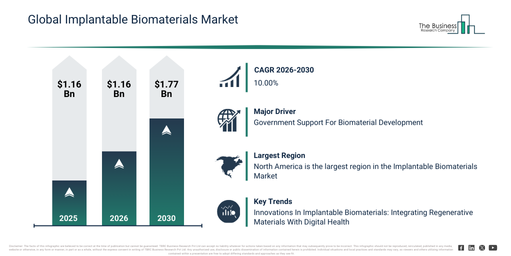
    The market for implantable biomaterials is projected to experience robust expansion over the coming years. Its valuation is set to reach $264.59 billion in 2030, exhibiting a compound annual growth rate (CAGR) of 10.0%. This anticipated growth during the forecast timeframe is attributable to several factors, including developments in polymer and ceramic biomaterials, an expanding elderly demographic, a rise in cardiovascular and ophthalmic surgeries, progress in regenerative medicine studies, and the proliferation of specialized clinics and surgical facilities. Key developments expected during this period encompass a growing need for biocompatible and bioactive substances, broader utilization of implantable biomaterials in orthopedic and dental fields, an increase in minimally invasive surgical techniques, enhancements in the longevity and efficacy of implants, and a wider acceptance of natural and bio-resorbable biomaterials.

    Get A Free Sample Report With In-Depth Market Insights:

    https://thebusinessresearchcompany.com/sample_request?id=11883653&type=smp&name=Implantable%20Biomaterials%20Market%20Report%202026&utm_source=Blogs&utm_medium=Paid&utm_campaign=Oct_PR

    Implantable Biomaterials Market Growth Drivers: What’s Behind The Acceleration?

    Government organizations allocating funds for the creation of new biomaterials has positively impacted the implantable biomaterials market’s growth. For example, Drexel University provided USD 200,000 to the National Science Foundation for research focused on biomaterial-mediated control of macrophage behavior, which affects biomaterial vascularization. This support from government entities for developing new biomaterials is expected to drive the expansion of the implantable biomaterials market. Furthermore, the rising number of cardiovascular disease cases is projected to significantly boost the implantable biomaterial market. Cardiovascular disease encompasses various conditions affecting the heart and blood vessels, and the increase in these cases is escalating the demand for implantable biomaterials. These materials are vital in the treatment and management of cardiovascular diseases, being utilized in diverse medical devices and procedures to repair or replace damaged cardiovascular tissues. As more individuals encounter cardiovascular issues, there is a growing need for effective and innovative biomaterials to create improved and more efficient implants, ultimately enhancing patient outcomes and their quality of life. For instance, in October 2025, the Australian Institute Of Health And Welfare, an Australia-based government agency, reported that in 2023, an estimated 57,100 adults aged 25 and above experienced acute coronary events, which averaged about 156 incidents daily. Therefore, the increase in cardiovascular disease cases will propel the implantable biomaterial market forward.

    Implantable Biomaterials Market Segment Outlook: Which Categories Are Growing Fastest?

    The implantable biomaterials market covered in this report is segmented –

    1) By Material: Metallic, Ceramic, Polymers, Natural

    2) By Application: Dental, Cardiovascular, Ophthalmology, Orthopedic, Other Applications

    3) By End-User: Hospitals, Ambulatory Surgical Centers, Specialty Clinics

    Subsegments:

    1) By Metallic: Stainless Steel, Titanium And Titanium Alloys, Cobalt-Chromium Alloys

    2) By Ceramic: Alumina, Hydroxyapatite, Bioactive Glass

    3) By Polymers: Polyethylene (PE), Polymethyl Methacrylate (PMMA), Polylactic Acid (PLA), Polyurethane (PU)

    4) By Natural: Collagen, Chitosan, Silk Fibroin

    Implantable Biomaterials Market Trends: What’s Defining The Industry’s Next Phase?

    Leading companies within the implantable biomaterials market are concentrating on creating inventive solutions, like the trabeculeX continuum, to elevate patient results, sharpen surgical accuracy, speed up recovery periods, and integrate sophisticated digital health monitoring with advanced biomaterials for more customized and efficacious treatments. The TrabeculeX Continuum stands as a technology platform designed by Xenco Medical, which combines regenerative biomaterials with digital health, aiming to link a patient’s surgical implantation with their subsequent post-operative recovery journey. For example, in January 2024, Xenco Medical LLC, a US-based medical technology company, introduced the TrabeculeX Continuum, a novel integration of biomaterials and digital health that allows for continuous patient tracking and personalized recovery blueprints. Key features of this product include the enrollment of patients in remote therapeutic monitoring, direct communication with healthcare providers, and an advanced regenerative material framework conducive to excellent bone healing, positioning it as a considerable improvement over existing implantable biomaterials.

    Implantable Biomaterials Market Competitive Overview And Top Companies

    Major companies operating in the implantable biomaterials market are BASF SE, 3M Company, Medtronic plc, Evonik Industries AG, Stryker Corporation, DuPont de Nemours Inc., Celanese Corporation, Zimmer Biomet Holdings Inc., Koninklijke DSM NV, Arthrex Inc., DePuy Synthes Companies, Carpenter Technology Corporation, Corbion NV, GELITA AG, CoorsTek Inc., CeramTec GmbH, Orthofix Holdings Inc., Invibio Biomaterial Solutions plc, Keystone Dental Inc., KLS Martin SE & Co., Collagen Matrix Inc., Cam Bioceramics BV, Aap Implantate AG, Berkeley Advanced Biomaterials Inc., AdvanSource Biomaterials Corporation, Collagen Solutions plc, Surgival SL, SBM France SAS.

    View The Full Implantable Biomaterials Market Report:

    https://thebusinessresearchcompany.com/report/implantable-biomaterials-global-market-report?utm_source=Blogs&utm_medium=Paid&utm_campaign=Oct_PR

    Implantable Biomaterials Market Leading Geography: Which Region Contributes The Most Revenue?

    North America was the largest region in the implantable biomaterials market in 2025. Western Europe was the second largest region in the global implantable biomaterials market report. The regions covered in the implantable biomaterials market report are Asia-Pacific, South East Asia, Western Europe, Eastern Europe, North America, South America, Middle East, Africa.

    Reach Out To Our Team:

    The Business Research Company: https://www.thebusinessresearchcompany.com/

    Americas: +1 310-496-7795

    Asia: +44 7882 955267 & +91 8897263534

    Europe: +44 7882 955267

    Email us at: marketing@tbrc.info

    Follow us on:

    LinkedIn: https://in.linkedin.com/company/the-business-research-company

    YouTube: https://www.youtube.com/channel/UC24_fI0rV8cR5DxlCpgmyFQ

    Global Market Model: https://www.thebusinessresearchcompany.com/global-market-model
  • Immunohistochemistry (IHC) Market Forecast Insights: The Road To $4.47 Billion By 2030

    Immunohistochemistry (IHC) Market Forecast Insights: The Road To $4.47 Billion By 2030

    Featuring market attractiveness scoring, total addressable market sizing, company benchmarking matrices, interactive Excel dashboards, deeper supply chain intelligence, emerging startup tracking, and granular product-level insights, The Business Research Company’s 2026 market reports are built to deliver research that is both more actionable and more strategically valuable.

    Immunohistochemistry (IHC) Market Revenue Outlook: What CAGR Lies Ahead Through 2030?

    The immunohistochemistry (ihc) market has experienced substantial expansion in recent years. Its valuation is projected to increase from $2.76 billion in 2025 to $3.05 billion in 2026, achieving a compound annual growth rate (CAGR) of 10.3%. The drivers behind this past growth include the escalating utilization of ihc in cancer diagnostics, the expansion of hospital pathology laboratories, improved availability of monoclonal antibodies, a rise in the adoption of tissue-based diagnostics, and an increase in clinical research activities.

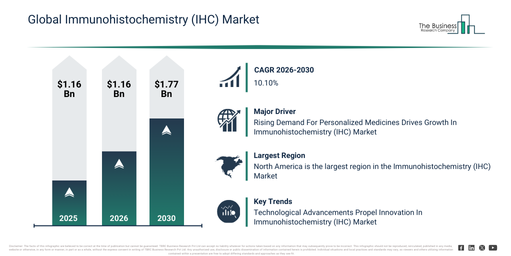
    The market size for immunohistochemistry (IHC) is projected to experience swift expansion over the coming years. This market is forecast to reach $4.47 billion in 2030, exhibiting a compound annual growth rate (CAGR) of 10.1%. Key factors contributing to this growth during the projection period include the escalating demand for precision oncology diagnostics, the growing embrace of AI-enabled pathology analysis, the broadening of biomarker-driven drug development, the expanding application of multiplex tissue profiling, and increased financial commitments towards advanced pathology infrastructure. Significant trends anticipated for the forecast timeframe encompass the increasing deployment of automated IHC staining systems, a rise in the utilization of multiplex IHC techniques, the progressing integration of digital pathology platforms, the widening scope of companion diagnostic applications, and a heightened emphasis on high-specificity antibodies.

    Get A Free Sample Report With In-Depth Market Insights:

    https://thebusinessresearchcompany.com/sample_request?id=69050002&type=smp&name=Immunohistochemistry%20%28IHC%29%20Market%20Report%202026&utm_source=Blogs&utm_medium=Paid&utm_campaign=Oct_PR

    Immunohistochemistry (IHC) Market Growth Factors Behind Sustained Expansion

    The increasing demand for personalized medicines is projected to boost the growth of the immunohistochemistry (IHC) market moving forward. Personalized medicine is a healthcare strategy that involves adapting medical decisions, practices, interventions, and products specifically for each patient based on their unique genetic, environmental, and lifestyle attributes. Immunohistochemistry (IHC) plays a vital role in personalized medicine, as it is utilized to detect specific protein markers that can aid in accurate tumor classification and diagnosis. As an illustration, in February 2024, the Personalized Medicine Coalition, a US-based non-profit research organization, reported that personalized medicines comprised more than one-third of new approvals by the US Food and Drug Administration in 2023. In the same year, the FDA gave approval to 16 new personalized treatments for rare-disease patients, which was an increase from 6 in 2022. Thus, the escalating demand for personalized medicines is a significant factor driving the expansion of the immunohistochemistry (IHC) market.

    Immunohistochemistry (IHC) Market Segment Landscape: Which Areas Lead Development?

    The immunohistochemistry (ihc) market covered in this report is segmented –

    1) By Product: Antibodies, Equipment, Reagents, Kits

    2) By Applications: Diagnostics, Drug Testing, Other Applications

    3) By End-Users: Hospitals And Diagnostic Laboratories, Research Institutes, Other End-Users

    Subsegments:

    1) By Antibodies: Primary Antibodies, Secondary Antibodies, Conjugated Antibodies

    2) By Equipment: IHC Staining Systems, Slide Scanners, Microscopes

    3) By Reagents: Detection Reagents, Blocking Reagents, Mounting Media

    4) By Kits: Pre-prepared IHC Kits, Multiplex IHC Kits, Specialty Kits

    Immunohistochemistry (IHC) Market Industry Trends Fueling Future Revenue Growth

    Major companies operating in the immunohistochemistry (IHC) market are concentrating on enhancing diagnostic accuracy by employing innovative technologies and high-quality reagents, thereby improving the effectiveness of tissue analysis in diverse clinical and research applications. The Neoflex multiomics mass spectrometry imaging (MSI) system stands as an advanced imaging platform engineered for meticulous tissue analysis, enabling researchers to transition from initial discovery phases to clinical implementations using high-resolution mass spectrometry techniques, particularly for the spatial mapping of biomolecules within tissues. For instance, in June 2024, Bruker Corporation, a US-based company engaged in the development and manufacture of scientific instruments and analytical and diagnostic solutions, unveiled its matrix-assisted laser desorption/ionization-time of flight (MALDI-TOF/TOF) Neoflex Imaging Profiler, intended for mass spectrometry-based tissue imaging. The Neoflex multiomics mass spectrometry imaging (MSI) system addresses the necessity of advancing from discovery imaging to clinical tissue research. It incorporates Bruker’s 10-kHz smartbeam 3D laser, includes enhanced imaging detectors, and supports OME-TIFF file output when utilized with SCiLS Scope software.

    Immunohistochemistry (IHC) Market Competitive Landscape: Which Companies Lead The Industry?

    Major companies operating in the immunohistochemistry (ihc) market are Thermo Fisher Scientific Inc., F. Hoffmann-La Roche AG, Merck Group, Danaher Corporation, PerkinElmer Inc., Bio-Rad Laboratories Inc., Cell Signaling Technology Inc., Bio SB Inc., Agilent Technologies Inc., Abcam plc, Takara Bio Inc., Biocare Medical LLC, Bio-Genex Laboratories, Diagnostic BioSystems Inc., PHC Holdings Corporation, Leica Biosystems, Vector Laboratories, Ionpath Inc., Reveal Biosciences, Akrivis Technologies Private Limited, LifeSpan BioSciences Inc., Enzo Life Sciences Inc., Epitomics Inc., GenScript Biotech

    View The Full Immunohistochemistry (IHC) Market Report:

    https://thebusinessresearchcompany.com/report/immunohistochemistry-IHC-global-market-report?utm_source=Blogs&utm_medium=Paid&utm_campaign=Oct_PR

    Immunohistochemistry (IHC) Market Regional Outlook: Where Is Opportunity Concentrated?

    North America was the largest region in the immunohistochemistry (IHC) market in 2025. Asia-Pacific is expected to be the fastest-growing region in the immunohistochemistry (IHC) market report during the forecast period. The regions covered in the immunohistochemistry (ihc) market report are Asia-Pacific, South East Asia, Western Europe, Eastern Europe, North America, South America, Middle East, Africa.

    Reach Out To Our Team:

    The Business Research Company: https://www.thebusinessresearchcompany.com/

    Americas: +1 310-496-7795

    Asia: +44 7882 955267 & +91 8897263534

    Europe: +44 7882 955267

    Email us at: marketing@tbrc.info

    Follow us on:

    LinkedIn: https://in.linkedin.com/company/the-business-research-company

    YouTube: https://www.youtube.com/channel/UC24_fI0rV8cR5DxlCpgmyFQ

    Global Market Model: https://www.thebusinessresearchcompany.com/global-market-model
  • Immunofluorescence Assay Market Explained: What Is Fueling Growth To $5.89 Billion By 2030?

    Immunofluorescence Assay Market Explained: What Is Fueling Growth To $5.89 Billion By 2030?

    Built to provide research that’s more actionable and strategically valuable, The Business Research Company’s 2026 market reports include market attractiveness analysis, total addressable market sizing, company benchmarking matrices, interactive Excel dashboards, broader supply chain intelligence, emerging startup tracking, and in-depth product insights.

    Immunofluorescence Assay Market Growth Analysis: How Will Revenue Trend Over The Forecast Period?

    The immunofluorescence assay market size has witnessed rapid expansion in recent years. It is anticipated to grow from $3.56 billion in 2025 to $3.94 billion in 2026, demonstrating a compound annual growth rate (CAGR) of 10.6%. The historical surge can be attributed to several factors, including the wider availability of laboratory diagnostic testing, the increasing utilization of immunoassays in identifying diseases, the growth in academic and clinical research endeavors, developments in fluorescence labeling technologies, and the rising acceptance of antibody-based diagnostics.

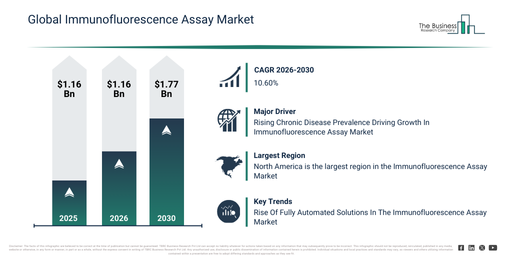
    The immunofluorescence assay market is projected to experience substantial expansion in the coming years. This market is anticipated to reach a valuation of $5.89 billion by 2030, exhibiting a compound annual growth rate (CAGR) of 10.6%. The drivers behind this growth during the projected period include the increasing need for accurate diagnostics, greater financial commitments to translational research, the broader adoption of personalized medicine strategies, enhanced automation in lab procedures, and continuous improvements in imaging and data analysis software. Key trends anticipated for this forecast timeframe encompass the wider integration of multiplex immunofluorescence assays, the increasing deployment of automated imaging and analysis systems, a surge in demand for highly sensitive diagnostic reagents, the broadening of immunofluorescence applications within oncology, and an intensified emphasis on standardized and consistent testing methodologies.

    Get A Free Sample Report With In-Depth Market Insights:

    https://thebusinessresearchcompany.com/sample_request?id=25295527&type=smp&name=Immunofluorescence%20Assay%20Market%20Report%202026&utm_source=Blogs&utm_medium=Paid&utm_campaign=Oct_PR

    Immunofluorescence Assay Market Demand Drivers Opening New Revenue Streams

    The immunofluorescence assay market is experiencing substantial growth, primarily propelled by the rising incidence of chronic diseases. Evolving lifestyles, dietary patterns, and inadequate weight management are contributing to the swift increase in chronic conditions, with some persistent chronic infections raising the risk of cancer. This escalating occurrence of chronic disease is projected to enhance the demand for immunofluorescence assays, given their extensive application in diagnostic procedures and drug development initiatives. For example, in January 2025, PubMed Central, a US-based free digital repository for biomedical and life sciences journal articles, indicated that the prevalence and financial burden of chronic disease expand as people’s lifespans increase. It is estimated that the global cost of chronic disease will reach $47 trillion worldwide by 2030. Consequently, the growing prevalence of chronic diseases is anticipated to significantly elevate the demand for immunofluorescence assays throughout the forecast period.

    Immunofluorescence Assay Market Segments: Where Is Growth Concentrated?

    The immunofluorescence assay market covered in this report is segmented –

    1) By Assay Method: Direct Immunofluorescence, Indirect Immunofluorescence

    2) By Product: Reagents, Instruments, Antibodies, Kits, Consumables and Accessories

    3) By Disease: Cancer, Infectious Disease, Autoimmune Diseases, Other Diseases

    4) By End User: Academic And Research Institutions, Pharmaceutical And Biotechnology Companies, Contract Research Organizations, Hospitals And Diagnostic Centers

    Subsegments:

    1) By Direct Immunofluorescence: Single-Step Direct Assays, Multiplex Direct Assays

    2) By Indirect Immunofluorescence: Standard Indirect Immunofluorescence Assays, Conventional Indirect Immunofluorescence Assays

    Immunofluorescence Assay Market Trends Powering Strategic Industry Growth

    Leading companies within the immunofluorescense assay market are increasingly focusing on introducing fully automated solutions, such as UNIQO 160 (CE-IVDR), to enhance their revenues. A fully automated solution serves to maximize the efficiency of the entire immunofluorescence testing process, which includes sample preparation, incubation, washing, and mounting of slides. For example, in June 2023, Revvity Inc., a US-based company specializing in life sciences and diagnostics, announced the release of UNIQO 160 (CE-IVDR), an automated indirect immunofluorescence test (IIFT) system designed for autoimmune disease diagnostics. The UNIQO 160 is a tabletop device that integrates a completely automated processing system with a high-quality microscope. It can be easily incorporated into existing diagnostic laboratory operations. The UNIQO 160 is a system capable of handling up to 160 main samples and 18 slides in a single run. It identifies individual samples, reagents, and slides using barcodes.

    Immunofluorescence Assay Market Competitive Landscape: Who Leads The Industry?

    Major companies operating in the immunofluorescence assay market are Thermo Fisher Scientific Inc., Abcam plc, Bio-Rad Laboratories Inc., PerkinElmer Inc., Werfen Company, Merck KGaA, Danaher Corporation, Cell Signaling Technology Inc., Vector Laboratories Inc., INOVA Diagnostics Inc., Sino Biological Inc., Medipan GmbH, BioLegend Inc., Jackson ImmunoResearch Laboratories Inc., Rockland Immunochemicals Inc., Bethyl Laboratories Inc., Fitzgerald Industries International Inc., Creative Diagnostics, Boster Biological Technology, Acris Antibodies GmbH, RayBiotech Inc., Proteintech Group Inc., Novus Biologicals LLC, R&D Systems Inc., OriGene Technologies Inc., GenScript Biotech Corporation, MBL International Corporation, Abnova Corporation, Cellabs India Technologies Limited, J. Mitra & Co. Pvt. Ltd., EpiGentek Group Inc., Elabscience Biotechnology Co. Ltd., Aesku.Diagnostics GmbH

    View The Full Immunofluorescence Assay Market Report:

    https://thebusinessresearchcompany.com/report/immunofluorescence-assay-global-market-report?utm_source=Blogs&utm_medium=Paid&utm_campaign=Oct_PR

    Immunofluorescence Assay Market Geographic Landscape: Which Region Leads Industry Growth?

    North America was the largest region in the immunofluorescence assay market in 2025. Asia-Pacific is expected to be the fastest-growing region in the forecast period. The regions covered in the immunofluorescence assay market report are Asia-Pacific, South East Asia, Western Europe, Eastern Europe, North America, South America, Middle East, Africa.

    Reach Out To Our Team:

    The Business Research Company: https://www.thebusinessresearchcompany.com/

    Americas: +1 310-496-7795

    Asia: +44 7882 955267 & +91 8897263534

    Europe: +44 7882 955267

    Email us at: marketing@tbrc.info

    Follow us on:

    LinkedIn: https://in.linkedin.com/company/the-business-research-company

    YouTube: https://www.youtube.com/channel/UC24_fI0rV8cR5DxlCpgmyFQ

    Global Market Model: https://www.thebusinessresearchcompany.com/global-market-model
  • Immunodiagnostics Market Forecast To Reach $35.76 Billion By 2030: Key Trends Explained

    Immunodiagnostics Market Forecast To Reach $35.76 Billion By 2030: Key Trends Explained

    Backed by market attractiveness analysis, total addressable market sizing, company benchmarking matrices, interactive Excel dashboards, wider supply chain intelligence, emerging startup coverage, and detailed product-level insights, The Business Research Company’s 2026 market reports are designed to offer research that is more actionable and strategically valuable than ever.

    Immunodiagnostics Market Forecast: What Value Will The Market Reach By 2030?

    The immunodiagnostics market has demonstrated robust expansion in recent years. Its valuation is anticipated to grow from $24.32 billion in 2025 to $26.16 billion in 2026, demonstrating a compound annual growth rate (CAGR) of 7.5%. The market’s past development can be linked to factors such as the rising prevalence of infectious and chronic diseases, the enlargement of clinical laboratory networks, the increasing demand for early disease detection, a growing reliance on antibody-based diagnostics, and the widespread availability of standardized immunoassay technologies.

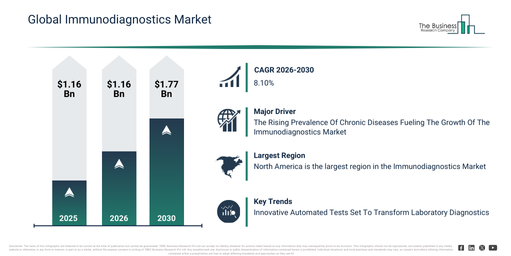
    The immunodiagnostics market is anticipated to experience robust expansion over the coming years. It is projected to reach $35.76 billion by 2030, exhibiting a compound annual growth rate (CAGR) of 8.1%. This growth during the projection period can be attributed to factors such as the greater acceptance of personalized diagnostics, increased capital allocation in automated laboratory settings, the broadening of point-of-care immunodiagnostics, the expanding incorporation of AI-based result interpretation, and a heightened emphasis on preventive healthcare screening. Key trends anticipated in this forecast timeframe encompass the widespread adoption of automated immunoassay analyzers, an escalating need for highly sensitive diagnostic examinations, the growing utilization of swift immunodiagnostic kits, the broadening of multiplex testing capacities, and improved integration of laboratory data management systems.

    Get A Free Sample Report With In-Depth Market Insights:

    https://thebusinessresearchcompany.com/sample_request?id=98469408&type=smp&name=Immunodiagnostics%20Market%20Report%202026&utm_source=Blogs&utm_medium=Paid&utm_campaign=Oct_PR

    Immunodiagnostics Market Growth Backed By Core Demand Fundamentals

    The growing occurrence of chronic illnesses is anticipated to fuel the expansion of the immunodiagnostics market moving ahead. These are persistent health issues, like diabetes, heart disease, and arthritis, which typically develop gradually and demand continuous medical care and lifestyle adjustments to manage symptoms and avert further complications. Their rise is primarily linked to detrimental lifestyle choices, such as inadequate diet, lack of physical activity, and smoking, all of which elevate the likelihood of developing conditions including diabetes, heart disease, and obesity. Immunodiagnostics assist in diagnosing chronic diseases by precisely identifying biomarkers and immune responses related to these lasting health problems. This technology facilitates the prompt detection and observation of conditions like diabetes, autoimmune disorders, and cardiovascular issues, thereby improving patient care and aiding in opportune treatment choices. For example, data from June 2024, reported by the National Health Service, a UK-based government department, indicated that in 2023, 3,615,330 individuals registered with a general practitioner (GP) received a diagnosis of non-diabetic hyperglycemia or pre-diabetes (a condition with elevated blood sugar levels, not high enough to be classified as diabetes). This figure represented an 18% increase from 3,065,825 cases recorded in 2022. Consequently, the increasing frequency of chronic and infectious diseases is a significant driver for the growth of the immunodiagnostics market.

    Immunodiagnostics Market Segment Analysis: What Are The Core Market Categories?

    The immunodiagnostics market covered in this report is segmented –

    1) By Product: Reagents And Consumables, Instruments

    2) By Technology: Enzyme-Linked Immunosorbent Assay, Chemiluminescence Immunoassay, Fluorescent Immunoassay, Rapid Test, Other Technologies

    3) By Application: Infectious Diseases, Oncology And Endocrinology, Bone And Mineral Diseases, Autoimmunity Disorders, Cardiac Biomarkers, Drug Monitoring, Other Applications

    4) By End User: Hospitals, Clinics, Diagnostic Laboratories

    Subsegments:

    1) By Reagents And Consumables: Antibodies, Assay Kits, Buffers And Substrates

    2) By Instruments: Immunoassay Analyzers, ELISA Readers

    Immunodiagnostics Market Growth Trends Reshaping The Competitive Landscape

    Companies operating within the immunodiagnostics market are increasingly directing their efforts towards creating innovative solutions, including automated chemiluminescence immunoassays (CLIAs), to improve diagnostic accuracy, reduce the time required for testing, and enhance overall laboratory efficiency. Automated chemiluminescence immunoassays (CLIAs) are laboratory tests that leverage light-emitting chemical reactions and automation to swiftly and accurately detect particular proteins or antibodies in blood and other samples. For instance, in September 2025, DiaSorin S.p.A., an Italy-based diagnostics company, launched the LIAISON® TSH-R Ab assay for the assessment of autoimmune thyroid disorders. This assay features enhanced antibody specificity achieved through its double-bridge assay architecture, offers seamless integration into existing LIAISON analyzers to streamline laboratory workflows, and possesses CE-marked compatibility, supporting its deployment across various regulated regions.

    Immunodiagnostics Market Company Landscape And Competitive Strategy

    Major companies operating in the immunodiagnostics market are Abbott Laboratories, F. Hoffmann-La Roche Ltd., Siemens Healthineers AG, Danaher Corporation, Thermo Fisher Scientific Inc., Bio-Rad Laboratories Inc., DiaSorin S.p.A., bioMérieux SA, Sysmex Corporation, Becton Dickinson and Company, Grifols S.A., Ortho Clinical Diagnostics, Beckman Coulter Inc., Fujirebio Holdings Inc., Quidel Corporation, Luminex Corporation, Bio-Techne Corporation, PerkinElmer Inc., Merck KGaA, Gold Standard Diagnostics Corp., OraSure Technologies Inc., Immunodiagnostic Systems Holdings Plc (IDS)

    View The Full Immunodiagnostics Market Report:

    https://thebusinessresearchcompany.com/report/immunodiagnostics-global-market-report?utm_source=Blogs&utm_medium=Paid&utm_campaign=Oct_PR

    Immunodiagnostics Market Largest Region: Which Geography Holds The Biggest Share?

    North America was the largest region in the immunodiagnostics market in 2025. The regions covered in the immunodiagnostics market report are Asia-Pacific, South East Asia, Western Europe, Eastern Europe, North America, South America, Middle East, Africa.

    Reach Out To Our Team:

    The Business Research Company: https://www.thebusinessresearchcompany.com/

    Americas: +1 310-496-7795

    Asia: +44 7882 955267 & +91 8897263534

    Europe: +44 7882 955267

    Email us at: marketing@tbrc.info

    Follow us on:

    LinkedIn: https://in.linkedin.com/company/the-business-research-company

    YouTube: https://www.youtube.com/channel/UC24_fI0rV8cR5DxlCpgmyFQ

    Global Market Model: https://www.thebusinessresearchcompany.com/global-market-model
  • Immunochemistry Diagnostic Devices And Equipment Market Analysis: Understanding The Drivers Behind 10.9% CAGR Through 2030 Growth

    Immunochemistry Diagnostic Devices And Equipment Market Analysis: Understanding The Drivers Behind 10.9% CAGR Through 2030 Growth

    Featuring market attractiveness scoring, total addressable market sizing, company benchmarking matrices, interactive Excel dashboards, deeper supply chain intelligence, emerging startup tracking, and granular product-level insights, The Business Research Company’s 2026 market reports are built to deliver research that is both more actionable and more strategically valuable.

    Immunochemistry Diagnostic Devices And Equipment Market Size Outlook: How Quickly Will Revenue Expand Through 2030?

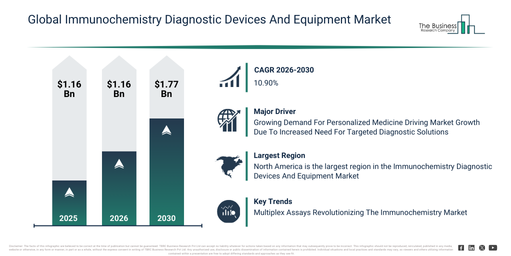
    The immunochemistry diagnostic devices and equipment market size has expanded rapidly in recent years. This market is set to grow from $3.67 billion in 2025 to $4.11 billion in 2026, exhibiting a compound annual growth rate (CAGR) of 11.9%. The historical expansion can be attributed to several factors including the expansion of clinical diagnostic testing volumes, the rising prevalence of chronic and infectious diseases, the growth in centralized diagnostic laboratories, the increasing use of immunoassays in oncology and endocrinology, and enhancements in laboratory infrastructure.

    The market for immunochemistry diagnostic devices and equipment is projected to experience substantial expansion over the coming years. This market is forecast to reach a value of $6.22 billion by 2030, exhibiting a compound annual growth rate (CAGR) of 10.9%. The anticipated market growth stems from several factors, including a heightened demand for precise diagnostic tools, the increasing integration of automated laboratory systems, broader applications of personalized medicine, greater investment in sophisticated diagnostic technologies, and a stronger emphasis on identifying diseases earlier. Key trends expected during this period involve the wider adoption of automated immunoassay analyzers, an escalating need for highly sensitive diagnostic reagents, expanded utilization of multiplex testing platforms, the proliferation of laboratory automation solutions, and a heightened commitment to improving workflow efficiency and accuracy.

    Get A Free Sample Report With In-Depth Market Insights:

    https://thebusinessresearchcompany.com/sample_request?id=58477698&type=smp&name=Immunochemistry%20Diagnostic%20Devices%20And%20Equipment%20Market%20Report%202026&utm_source=Blogs&utm_medium=Paid&utm_campaign=Oct_PR

    Immunochemistry Diagnostic Devices And Equipment Market Growth Catalysts And Demand Drivers

    The increasing need for personalized medicine is projected to boost the immunochemistry diagnostic devices and equipment market. Personalized medicine involves customizing healthcare and treatment plans based on a patient’s distinct genetic, genomic, and clinical traits to enhance outcomes and reduce side effects. This rising demand stems from greater awareness and acceptance of treatments tailored to individual genetic, lifestyle, and environmental factors for better patient results. Such tailored medicine requires advanced immunochemistry assays to pinpoint biomarkers and inform specific treatment plans for individuals. For example, in February 2024, the Personalized Medicine Coalition, a US-based nonprofit organization advocating for individualized treatment, reported that 20 out of 53 new therapeutic molecular entities cleared by the Food and Drug Administration in 2023, along with six new gene and cell-based therapies, were designated as personalized medicines, making up about 38 percent of all new molecular entities approved in the country. Consequently, the expanding demand for personalized medicine is fueling the growth of the immunochemistry diagnostic devices and equipment market.

    Immunochemistry Diagnostic Devices And Equipment Market Segment Breakdown: Which Categories Lead On Revenue?

    The immunochemistry diagnostic devices and equipment market covered in this report is segmented –

    1) By Product Type: Immunochemistry Analyzers, Immunochemistry Stainers, Incubators, Microscopes, Centrifuges, Autoclaves, Consumables

    2) By Consumables: Antibodies, Antigens, Enzymes, Reagents, Stains, Buffers, Disposables, Other Consumables

    3) By Application: Endocrinology, Oncology, Cardiology, Therapeutic Drug Development And Monitoring, Infectious Disease Testing, Drugs Of Abuse Testing, Other Applications

    4) By End Users: Hospitals And Clinics, Diagnostic Laboratories, Research Labs And Institutes, Biopharmaceutical And Biotechnology Companies, Other End Users

    Subsegments:

    1) By Immunochemistry Analyzers: Chemiluminescence Immunoassay (CLIA) Analyzers, Enzyme-Linked Immunosorbent Assay (ELISA) Analyzers, Radioimmunoassay (RIA) Analyzers, Fluorescence Immunoassay (FIA) Analyzers

    2) By Immunochemistry Stainers: Automated Stainers, Manual Stainers

    3) By Incubators: CO2 Incubators, Shaking Incubators, Heated Incubators

    4) By Microscopes: Light Microscopes, Fluorescence Microscopes, Electron Microscopes

    5) By Centrifuges: Microcentrifuges, Refrigerated Centrifuges, Ultracentrifuges

    6) By Autoclaves: Tabletop Autoclaves, Vertical Autoclaves, Horizontal Autoclaves

    7) By Consumables: Reagents and Kits, Test Plates, Filters and Membranes, Microplates and Accessories

    Immunochemistry Diagnostic Devices And Equipment Market Trends Shaping Long-Term Demand

    Leading firms within the immunochemistry market are creating innovative products, including multiplex assays, to secure a competitive advantage. These assays are laboratory methods that allow for the concurrent measurement and analysis of several analytes from one biological sample, offering an exhaustive and streamlined method for investigating numerous factors or biomarkers in a solitary experiment. As an illustration, in June 2023, Navigate BioPharma Services, Inc., a US biotechnology firm, introduced novel multiplex digital PCR assays specifically developed for the accurate quantification of chimeric antigen receptor (CAR) T cells, which are a significant advancement in cancer immunotherapy. Utilizing the Qiagen QIAcuity digital PCR System, these assays facilitate the concurrent assessment of CAR-T cell count, activity, and durability in clinical blood and bone marrow specimens, eliminating the requirement for standard curves and identifying CAR-T cells even at concentrations as minimal as 0.01%. This groundbreaking assay supports clinicians in overseeing responses and ensuring safety throughout clinical trials, thereby accelerating the progress of CAR-T therapies due to its high sensitivity, specificity, and efficiency.

    Immunochemistry Diagnostic Devices And Equipment Market Key Players Shaping Industry Direction

    Major companies operating in the immunochemistry diagnostic devices and equipment market are Abbott Diagnostics, Roche Diagnostics, Siemens Healthcare Diagnostics, Diamond Diagnostics Inc., Dynex Technologies Inc., Grifols S.A., Hycor Biomedical LLC, Immunodiagnostic Systems, Inova Diagnostics, LabCorp, Mindray Medical International Limited, Ortho Clinical Diagnostics, Quest Diagnostics, Randox Laboratories, Sysmex Corporation, ThermoFisher Scientific Inc., Tosoh Bioscience, Danaher Corporation, Johnson & Johnson, Boditech Med Inc., Beckman Coulter Inc., Bio-Rad Laboratories, bioMérieux Clinical Diagnostics, Carolina Liquid Chemistries Corporate, DiaSorin Inc., Agilent Technologies Inc., Merck KGAA, Eagle Biosciences Inc., Biocare Medical LLC, Elabscience Biotechnology Inc., Bio-Genex Laboratories Inc., Diagnostic Biosystem, Histo-Line Laboratories, Rockland Immunochemicals Inc., Abcam plc, Becton Dickinson & Company, Cell Signaling Technology Inc., ImmunoChemistry Technologies LLC, Genemed Biotechnologies Inc., Miltenyi Biotec GmbH, PerkinElmer Inc., Takara Bio. Inc, Immucor Inc., Quidel Corporation

    View The Full Immunochemistry Diagnostic Devices And Equipment Market Report:

    https://thebusinessresearchcompany.com/report/immunochemistry-diagnostic-devices-and-equipment-global-market-report?utm_source=Blogs&utm_medium=Paid&utm_campaign=Oct_PR

    Immunochemistry Diagnostic Devices And Equipment Market Regional Analysis: Which Geography Leads On Revenue?

    North America was the largest region in the global immunochemistry diagnostic devices and equipment market in 2025. Asia-Pacific was the second-largest region in the immunochemistry diagnostic devices and equipment market. The regions covered in the immunochemistry diagnostic devices and equipment market report are Asia-Pacific, South East Asia, Western Europe, Eastern Europe, North America, South America, Middle East, Africa.

    Reach Out To Our Team:

    The Business Research Company: https://www.thebusinessresearchcompany.com/

    Americas: +1 310-496-7795

    Asia: +44 7882 955267 & +91 8897263534

    Europe: +44 7882 955267

    Email us at: marketing@tbrc.info

    Follow us on:

    LinkedIn: https://in.linkedin.com/company/the-business-research-company

    YouTube: https://www.youtube.com/channel/UC24_fI0rV8cR5DxlCpgmyFQ

    Global Market Model: https://www.thebusinessresearchcompany.com/global-market-model