Blog

  • Demineralized Bone Matrix Market Analysis: Understanding The Drivers Behind 6.3% CAGR Through 2030 Growth

    Demineralized Bone Matrix Market Analysis: Understanding The Drivers Behind 6.3% CAGR Through 2030 Growth

    Featuring market attractiveness scoring, total addressable market sizing, company benchmarking matrices, interactive Excel dashboards, deeper supply chain intelligence, emerging startup tracking, and granular product-level insights, The Business Research Company’s 2026 market reports are built to deliver research that is both more actionable and more strategically valuable.

    Demineralized Bone Matrix Market Expansion Outlook: What Revenue Opportunities Are Ahead?

    The demineralized bone matrix market has experienced robust expansion in its size over recent years. Projections show it is set to expand from $1.12 billion in 2025 to $1.2 billion in 2026, achieving a compound annual growth rate (CAGR) of 6.6%. The expansion observed in the historic period stems from factors such as the limited supply of allograft bone materials, continued reliance on conventional bone grafts, an increase in orthopedic and dental procedures, heightened awareness regarding bone healing solutions, and the adoption of standard surgical practices.

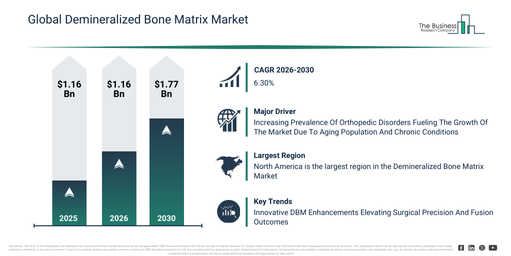
    The demineralized bone matrix market is projected for substantial expansion in the coming years. It will grow to $1.52 billion in 2030 at a compound annual growth rate (CAGR) of 6.3%. This anticipated growth stems from advancements in bioactive gels and collagen matrices, an increase in spinal fusion and joint reconstruction procedures, the proliferation of specialty clinics and ambulatory surgical centers, enhanced regulatory approvals and quality certifications, and the adoption of minimally invasive surgical methods. Key trends foreseen for this period involve a greater acceptance of demineralized bone matrix in orthopedic operations, expanded application in dental and craniomaxillofacial interventions, increased utilization in spinal fusion and long bone reconstruction, the creation of injectable and thermosensitive gel formulations, and an emphasis on collagen-based and biologically active materials for bone regeneration.

    Get A Free Sample Report With In-Depth Market Insights:

    https://thebusinessresearchcompany.com/sample_request?id=89953861&type=smp&name=Demineralized%20Bone%20Matrix%20Market%20Report%202026&utm_source=Blogs&utm_medium=Paid&utm_campaign=Oct_PR

    Demineralized Bone Matrix Market Growth Momentum: What Factors Are Shaping Demand?

    The rising occurrence of orthopedic disorders is anticipated to propel the growth of the demineralized bone matrix (DBM) market going forward. Orthopedic disorders are conditions impacting the musculoskeletal system, including bones, joints, muscles, ligaments, tendons, and nerves. The demand for orthopedic treatments is increasing due to the global aging population, as older individuals are more susceptible to musculoskeletal ailments such as osteoarthritis, osteoporosis, and fractures. Demineralized bone matrix is crucial in managing orthopedic disorders by fostering bone regeneration and healing, making it an essential material for procedures like spinal fusion, joint reconstruction, and fracture repair. It aids in recovery by providing an osteoinductive scaffold that supports natural bone growth and improves surgical outcomes. For instance, in August 2023, a survey study conducted by the Institute for Health Metrics and Evaluation, a US-based public health research institute, revealed that 15% of individuals aged 30 and older had osteoarthritis in 2023, and the number of affected individuals is projected to reach around 1 billion by 2050. Therefore, the increasing prevalence of orthopedic disorders is a key driver for the expansion of the demineralized bone matrix market.

    Demineralized Bone Matrix Market Segment Analysis: What Are The Core Market Categories?

    The demineralized bone matrix market covered in this report is segmented –

    1) By Product Type: Gel, Putty, Sponge, Fiber, Paste, Other Product Types

    2) By Tissue Source: Allograft, Synthetic Bone Graft Substitutes

    3) By Application: Dental, Craniomaxillofacial, Spinal Fusion, Long Bone Procedures, Joint Reconstruction, Other Applications

    4) By End-Use: Hospitals, Ambulatory Surgical Centers, Specialty Clinics, Other End-Uses

    Subsegments:

    1) By Gel: Injectable Gel, Bioactive Gel, Thermosensitive Gel

    2) By Putty: Moldable Putty, Radiopaque Putty, Self-Setting Putty

    3) By Sponge: Resorbable Sponge, Collagen-Based Sponge, Porous Sponge

    4) By Fiber: Mineralized Fiber, Non-Mineralized Fiber, Collagen Fiber Matrix

    5) By Paste: Flowable Paste, Adhesive Paste, Viscous Paste

    6) By Other Product Types: Sheet Matrix, Strip Matrix, Granules

    Demineralized Bone Matrix Market Trends Redefining Industry Growth

    Leading companies in the demineralized bone matrix market are concentrating on developing advanced innovations, such as flowable demineralized fibers, to improve graft handling, osteoinductive capability, and surgical effectiveness. These flowable demineralized fibers constitute a moldable demineralized bone matrix, comprising cortical bone fibers within a carrier, engineered for simple application and natural bone regrowth. For example, in January 2025, LifeNet Health, Inc., a U.S.-based non-profit organization, introduced PliaFX Flo, aimed at enhancing bone graft manipulation, placement accuracy, and overall fusion results. PliaFX Flo features a flowable, carrier-free demineralized fiber technology that betters graft moldability and positioning during bone fusion operations. It offers a dense fiber network created to maximize inherent osteoinductive potential and optimize handling in challenging anatomical regions.

    Demineralized Bone Matrix Market Competitive Landscape: Who Leads The Industry?

    Major companies operating in the demineralized bone matrix market are Johnson and Johnson, Medtronic plc, Stryker Corporation, Zimmer Biomet Holdings Inc, Arthrex Inc, Straumann AG, Globus Medical Inc, Integra LifeSciences Corporation, MTF Biologics, Exactech Inc, RTI Surgical, AlloSource, Cerapedics Inc, Keystone Dental Inc, Xtant Medical Holdings Inc, Hans Biomed Co Ltd, Bone Biologics Corp, SeaSpine Holdings Corporation, Orthofix Medical Inc, LifeNet Health

    View The Full Demineralized Bone Matrix Market Report:

    https://thebusinessresearchcompany.com/report/demineralized-bone-matrix-global-market-report?utm_source=Blogs&utm_medium=Paid&utm_campaign=Oct_PR

    Demineralized Bone Matrix Market Geographic Landscape: Which Region Leads Industry Growth?

    North America was the largest region in the demineralized bone matrix market in 2025. Asia-Pacific is expected to be the fastest-growing region in the forecast period. The regions covered in the demineralized bone matrix market report are Asia-Pacific, South East Asia, Western Europe, Eastern Europe, North America, South America, Middle East, Africa.

    Reach Out To Our Team:

    The Business Research Company: https://www.thebusinessresearchcompany.com/

    Americas: +1 310-496-7795

    Asia: +44 7882 955267 & +91 8897263534

    Europe: +44 7882 955267

    Email us at: marketing@tbrc.info

    Follow us on:

    LinkedIn: https://in.linkedin.com/company/the-business-research-company

    YouTube: https://www.youtube.com/channel/UC24_fI0rV8cR5DxlCpgmyFQ

    Global Market Model: https://www.thebusinessresearchcompany.com/global-market-model
  • Demineralized Bone Fiber Technology Market Growth To $1.97 Billion By 2030: What’s Driving The Expansion?

    Demineralized Bone Fiber Technology Market Growth To $1.97 Billion By 2030: What’s Driving The Expansion?

    Built to provide research that’s more actionable and strategically valuable, The Business Research Company’s 2026 market reports include market attractiveness analysis, total addressable market sizing, company benchmarking matrices, interactive Excel dashboards, broader supply chain intelligence, emerging startup tracking, and in-depth product insights.

    Demineralized Bone Fiber Technology Market Growth Potential: How Will Market Size Shift Through 2030?

    The demineralized bone fiber technology market has experienced substantial expansion in recent years. It is projected to expand from $1.43 billion in 2025 to $1.53 billion in 2026, demonstrating a compound annual growth rate (CAGR) of 6.5%. The historical growth of this market can be attributed to an increase in orthopedic surgical procedures, a rising incidence of traumatic bone injuries, an uptick in dental implant procedures, improved clinical acceptance of allografts, and the expansion of hospital-based orthopedic departments.

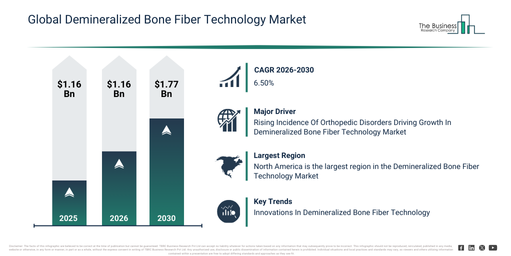
    The demineralized bone fiber technology market is projected to experience robust expansion over the coming years, with its size expected to reach $1.97 billion in 2030, demonstrating a compound annual growth rate (CAGR) of 6.5%. This anticipated growth is driven by several factors, including an increasing aging population, a rising demand for minimally invasive bone repair, an uptick in spinal fusion surgeries, the expansion of dental restoration procedures, and a growing preference for biologic graft alternatives. Furthermore, key trends in the forecast period include the rising adoption of osteoinductive bone graft materials, their growing use in spinal fusion procedures, an increasing inclination towards flexible bone graft formats, the widening scope of dental bone regeneration applications, and an escalating demand for off-the-shelf grafting solutions.

    Get A Free Sample Report With In-Depth Market Insights:

    https://thebusinessresearchcompany.com/sample_request?id=81253733&type=smp&name=Demineralized%20Bone%20Fiber%20Technology%20Market%20Report%202026&utm_source=Blogs&utm_medium=Paid&utm_campaign=Oct_PR

    Demineralized Bone Fiber Technology Market Expansion Drivers: What’s Shaping Future Growth?

    A rise in orthopedic disorder cases is anticipated to drive the expansion of the demineralized bone fiber technology market moving forward. Orthopedic conditions encompass various health issues impacting bones, joints, muscles, and adjacent tissues, thereby hindering mobility and functionality. The growing occurrence of orthopedic disorders stems from multiple causes, such as an aging demographic, inactive routines, and increasing obesity levels, all contributing to more frequent joint and bone problems. Demineralized bone fiber technology facilitates the regrowth of bone in individuals suffering from orthopedic disorders by offering a natural framework that stimulates the formation of new bone tissue. As an illustration, data from January 2024, released by the Office for Health Improvement and Disparities, a UK-based government agency, indicated that the proportion of self-reported long-term MSK conditions among individuals aged 16 and over was 18.4% in 2023, representing an increase from 17.6% in 2022. Consequently, the escalating frequency of orthopedic disorders is fueling the expansion of the demineralized bone fiber technology market.

    Demineralized Bone Fiber Technology Market Segment Breakdown: Which Categories Lead On Revenue?

    The demineralized bone fiber technology market covered in this report is segmented –

    1) By Product Type: Allograft, Demineralized Bone Matrix (DBM), Synthetic, Xenograft

    2) By Material Type: Collagen, Hydroxyapatite, Polymers, Tricalcium Phosphate

    3) By Application: Dental, Joint Reconstruction, Spinal Fusion, Trauma

    4) By End-User: Ambulatory Surgical Centers, Hospitals, Specialty Clinics

    Subsegments:

    1) By Allograft: Fresh Frozen Allograft, Freeze-Dried Allograft, Processed Allograft

    2) By Demineralized Bone Matrix (DBM): Injectable DBM, DBM Bone Grafts, DBM Putty, DBM Sponge

    3) By Synthetic: Synthetic Bone Grafts, Synthetic Bone Substitutes, Synthetic Bone Fillers

    4) By Xenograft: Bovine Xenograft, Porcine Xenograft, Processed Xenograft

    Demineralized Bone Fiber Technology Market Strategic Trends: What Defines The Next Growth Phase?

    Major companies within the demineralized bone fiber technology market are prioritizing the creation of innovative products, including proprietary demineralized cortical bone fiber technology, to advance applications in both medical and dental fields. This specialized proprietary demineralized cortical bone fiber technology involves a unique processing method that removes the mineral content from cortical bone to produce bone fibers with distinct properties. Its primary purpose is to enhance the biological and mechanical performance of bone grafts and scaffolds used in various medical and dental applications. As an illustration, in February 2024, Tetrous Inc., a US-based regenerative medicine company, launched the EnFix TAC, a novel demineralized bone allograft implant designed to improve the healing of the enthesis, the area connecting bone and tendon, after rotator cuff surgery. This product utilizes cutting-edge demineralized bone fiber technology to enhance the integration and regeneration of bone and tendon tissues. The EnFix TACTM provides a supportive framework that promotes efficient bone-to-tendon integration, effectively addressing the issue of scar tissue formation, which frequently obstructs proper enthesis healing. Furthermore, its design offers increased flexibility for surgical operations, allowing compatibility with various suture anchor systems to optimize healing results.

    Demineralized Bone Fiber Technology Market Company Landscape And Competitive Strategy

    Major companies operating in the demineralized bone fiber technology market are Johnson & Johnson, Medtronic Plc, Stryker Corporation, Zimmer Biomet, Arthrex Inc., Globus Medical Inc., Integra LifeSciences Corporation, NuVasive Inc., Wright Medical Group N.V., Bioventus LLC, Alphatec Holdings Inc., MTF Biologics, RTI Surgical Holdings Inc., LifeNet Health, SeaSpine Holdings Corporation, AlloSource, Xtant Medical Holdings Inc., Orthofix Medical Inc., Kuros Biosciences AG, Spine Wave Inc., Orthogen LLC

    View The Full Demineralized Bone Fiber Technology Market Report:

    https://thebusinessresearchcompany.com/report/demineralized-bone-fiber-technology-global-market-report?utm_source=Blogs&utm_medium=Paid&utm_campaign=Oct_PR

    Demineralized Bone Fiber Technology Market Largest Region: Which Geography Holds The Biggest Share?

    North America was the largest region in the demineralized bone fiber technology market in 2025. Asia-Pacific is expected to be the fastest-growing region in the forecast period. The regions covered in the demineralized bone fiber technology market report are Asia-Pacific, South East Asia, Western Europe, Eastern Europe, North America, South America, Middle East, Africa.

    Reach Out To Our Team:

    The Business Research Company: https://www.thebusinessresearchcompany.com/

    Americas: +1 310-496-7795

    Asia: +44 7882 955267 & +91 8897263534

    Europe: +44 7882 955267

    Email us at: marketing@tbrc.info

    Follow us on:

    LinkedIn: https://in.linkedin.com/company/the-business-research-company

    YouTube: https://www.youtube.com/channel/UC24_fI0rV8cR5DxlCpgmyFQ

    Global Market Model: https://www.thebusinessresearchcompany.com/global-market-model
  • Degenerative Disc Disease Treatment Market Trends Reshaping Industry Growth Through 2030

    Degenerative Disc Disease Treatment Market Trends Reshaping Industry Growth Through 2030

    Backed by market attractiveness analysis, total addressable market sizing, company benchmarking matrices, interactive Excel dashboards, wider supply chain intelligence, emerging startup coverage, and detailed product-level insights, The Business Research Company’s 2026 market reports are designed to offer research that is more actionable and strategically valuable than ever.

    Degenerative Disc Disease Treatment Market Value Analysis: What Growth Lies Ahead Over The Forecast Period?

    The degenerative disc disease treatment market size has demonstrated substantial growth in recent years. This market is anticipated to expand from $28.79 billion in 2025 to $30.75 billion in 2026, achieving a compound annual growth rate (CAGR) of 6.8%. Historically, this growth can be ascribed to factors such as the increasing occurrence of lower back pain, the rise in sedentary lifestyles, an aging global population, improved accessibility to pain management therapies, and the expansion of orthopedic care facilities.

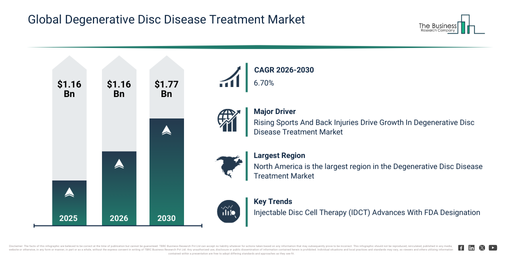
    The degenerative disc disease treatment market size is anticipated to undergo significant expansion in the coming years. It is projected to reach $39.89 billion in 2030, displaying a compound annual growth rate (CAGR) of 6.7%. This growth over the forecast period can be attributed to several factors, including an increasing demand for enduring pain relief solutions, heightened awareness of spinal health, rising diagnosis rates of degenerative spine disorders, the expansion of ambulatory surgical centers, and increasing healthcare expenditure on musculoskeletal disorders. Major trends expected during this forecast timeframe encompass a growing preference for non-surgical pain management, an increased utilization of combination drug therapies, a stronger emphasis on early-stage conservative treatment, a shift towards outpatient spine care, and a rising adoption of minimally invasive spine procedures.

    Get A Free Sample Report With In-Depth Market Insights:

    https://thebusinessresearchcompany.com/sample_request?id=18784&type=smp&name=Degenerative%20Disc%20Disease%20Treatment%20Market%20Report%202026&utm_source=Blogs&utm_medium=Paid&utm_campaign=Oct_PR

    Degenerative Disc Disease Treatment Market Development Factors: What’s Supporting Demand?

    The anticipated increase in sports injuries is projected to propel the expansion of the degenerative disc disease treatment market. These injuries involve physical harm or trauma experienced by athletes or individuals engaging in physical activities, frequently stemming from sudden impacts, repetitive strain, or incorrect methods. The rise in sports-related harm is often attributed to factors such as higher participation rates, more intense training regimens, and a stronger focus on competitive results. Degenerative disc disease treatment is utilized in sports injuries to manage chronic spinal pain and restore function when disc degeneration affects athletes’ performance and mobility. For instance, in November 2023, Howden Group Holdings Ltd, a UK-based insurance intermediary company, reported that in October 2022, recorded injuries resulted in players being sidelined for an average of 11.35 days before tournaments, which subsequently rose to 19.41 days by January 2023. Consequently, the growing incidence of sports injuries is stimulating the growth of the degenerative disc disease treatment market.

    Degenerative Disc Disease Treatment Market Segmentation: How Does The Market Break Down By Category?

    The degenerative disc disease treatment market covered in this report is segmented –

    1) By Type: Conventional Drugs, Novel Therapies

    2) By Route Of Administration: Oral, Injectable

    3) By End User: Hospitals, Ambulatory Surgical Centers, Orthopedic Center

    Subsegments:

    1) By Conventional Drugs: Non-Steroidal Anti-Inflammatory Drugs (NSAIDs), Opioids, Muscle Relaxants, Corticosteroids, Antidepressants

    2) By Novel Therapies: Gene Therapy, Stem Cell Therapy, Platelet-Rich Plasma (PRP) Therapy, Biologic Agents, Regenerative Medicine, Cell-Based Therapies, Growth Factor Therapies

    Degenerative Disc Disease Treatment Market Transformation Trends: What Innovations Are Driving Change?

    Leading companies in the degenerative disc disease treatment market are focusing on creating novel therapies, including injectable disc cell therapy (IDCT), to improve patient outcomes by enhancing disc volume, alleviating low back pain, and reducing reliance on pain medications. This regenerative treatment, injectable disc cell therapy (IDCT), specifically targets symptomatic lumbar degenerative disc disease. For example, in February 2023, DiscGenics Inc., a US-based biopharmaceutical company, received FDA regenerative medicine advanced therapy designation for its injectable disc cell therapy (IDCT), aimed at addressing symptomatic lumbar degenerative disc disease. This innovative therapy utilizes a live progenitor cell population derived from donated adult human intervertebral disc tissue. IDCT has the capacity to increase disc volume, relieve low back pain, and lessen the requirement for pain medication in affected patients.

    Degenerative Disc Disease Treatment Market Key Players Shaping Industry Direction

    Major companies operating in the degenerative disc disease treatment market are Pfizer Inc., Johnson And Johnson, Sanofi S.A., Novartis AG, GlaxoSmithKline PLC, Medtronic plc, Amgen Inc., Zimmer Biomet Holdings Inc., Arthrex Inc., Biocon Limited, Integra LifeSciences Holdings Corporation, NuVasive Inc., Globus Medical Inc., Orthofix Medical Inc., RTI Surgical Holdings Inc., LifeNet Health, Stryker Corporation, K2M Group Holdings Inc., SeaSpine Holdings Corporation, Amedica Corporation, Camber Spine Inc.

    View The Full Degenerative Disc Disease Treatment Market Report:

    https://thebusinessresearchcompany.com/report/degenerative-disc-disease-treatment-global-market-report?utm_source=Blogs&utm_medium=Paid&utm_campaign=Oct_PR

    Degenerative Disc Disease Treatment Market Regional Analysis: Which Geography Leads On Revenue?

    North America was the largest region in the degenerative disc disease treatment market in 2025. The regions covered in the degenerative disc disease treatment market report are Asia-Pacific, South East Asia, Western Europe, Eastern Europe, North America, South America, Middle East, Africa.

    Reach Out To Our Team:

    The Business Research Company: https://www.thebusinessresearchcompany.com/

    Americas: +1 310-496-7795

    Asia: +44 7882 955267 & +91 8897263534

    Europe: +44 7882 955267

    Email us at: marketing@tbrc.info

    Follow us on:

    LinkedIn: https://in.linkedin.com/company/the-business-research-company

    YouTube: https://www.youtube.com/channel/UC24_fI0rV8cR5DxlCpgmyFQ

    Global Market Model: https://www.thebusinessresearchcompany.com/global-market-model
  • Deflectable Catheters Market Growth To $2.5 Billion Creates New Opportunities Across The Industry

    Deflectable Catheters Market Growth To $2.5 Billion Creates New Opportunities Across The Industry

    Featuring market attractiveness scoring, total addressable market sizing, company benchmarking matrices, interactive Excel dashboards, deeper supply chain intelligence, emerging startup tracking, and granular product-level insights, The Business Research Company’s 2026 market reports are built to deliver research that is both more actionable and more strategically valuable.

    Deflectable Catheters Market Size Forecast: How Big Could The Market Get By 2030?

    The deflectable catheters market size has demonstrated steady expansion in recent years. It is anticipated to reach $2.07 billion in 2026 from $1.98 billion in 2025, progressing at a compound annual growth rate (CAGR) of 4.9%. Historically, this growth can be ascribed to a rise in cardiac catheterization procedures, the increasing prevalence of cardiovascular diseases, the expansion of hospital-based interventional labs, a stronger clinician preference for minimally invasive procedures, and improved reimbursement for interventional cardiology.

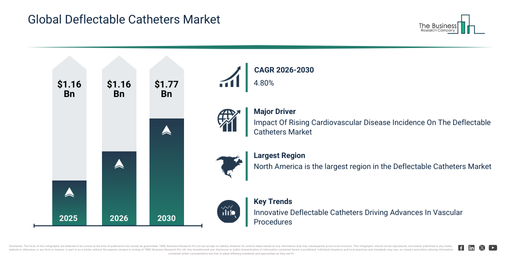
    The deflectable catheters market is expected to show continuous expansion over the coming years. It is predicted to attain a value of $2.5 billion by 2030, exhibiting a compound annual growth rate (CAGR) of 4.8%. This projected growth can be attributed to an increasingly aging global population, a heightened demand for precision-guided medical procedures, the expansion of ambulatory surgical centers, an intensified focus on procedural efficiency and patient safety, and greater investments in advanced interventional devices. Significant trends for the forecast period include enhanced steerability for complex anatomies, a rising adoption of these devices in electrophysiology procedures, the ongoing miniaturization of catheter designs, a discernible shift toward single-use sterile catheters, and an increasing need for peripheral interventions.

    Get A Free Sample Report With In-Depth Market Insights:

    https://thebusinessresearchcompany.com/sample_request?id=27348235&type=smp&name=Deflectable%20Catheters%20Market%20Report%202026&utm_source=Blogs&utm_medium=Paid&utm_campaign=Oct_PR

    Deflectable Catheters Market Industry Drivers: What’s Behind The Revenue Growth?

    The increasing occurrence of cardiovascular diseases is anticipated to boost the expansion of the deflectable catheters market moving forward. The rising prevalence of cardiovascular diseases (CVDs) poses a significant global health challenge, influenced by elements such as an aging demographic, poor lifestyle decisions, and the effects of rapid urbanization. Deflectable catheters are employed in cardiovascular disease procedures to accurately maneuver and address heart arrhythmias, conduct ablations, and reach difficult-to-access regions within the heart or blood vessels. For instance, in October 2024, the Centers for Disease Control and Prevention, a US-based government agency, stated that in 2023, cardiovascular disease was responsible for 919,032 fatalities, making up approximately one in every three deaths. Consequently, the escalating incidence of cardiovascular diseases is propelling the deflectable catheters market.

    Deflectable Catheters Market Segment Trends And Revenue Contributors

    The deflectable catheters market covered in this report is segmented –

    1) By Product: Uni-Directional Deflectable Catheters, Bi-Directional Deflectable Catheters, Multi-Directional Deflectable Catheters

    2) By Application: Coronary Interventions, Electrophysiology, Diagnostics Imaging, Peripheral Interventions

    3) By End-User: Hospitals And Clinics, Ambulatory Surgery Center, Other End Users

    Subsegments:

    1) By Uni-Directional Deflectable Catheters: Standard Uni-Directional Deflectable Catheters, High-Performance Uni-Directional Deflectable Catheters

    2) By Bi-Directional Deflectable Catheters: Standard Bi-Directional Deflectable Catheters, High-Precision Bi-Directional Deflectable Catheters

    3) By Multi-Directional Deflectable Catheters: Flexible Multi-Directional Deflectable Catheters, Rigid Multi-Directional Deflectable Catheters

    #Deflectable Catheters Market Growth Trends: What’s Shaping The Future Outlook?

    Leading firms within the deflectable catheter market are concentrating on creating advanced products, like crossing catheters, to achieve a competitive advantage. A crossing catheter is a unique medical instrument crafted to assist in maneuvering through obstructed or constricted blood vessels, frequently employed in interventions like angioplasty. An example of this is when Bentley InnoMed GmbH, a healthcare firm based in Germany, introduced its BeBack crossing catheter in the United States during May 2023. This BeBack catheter is engineered to navigate chronic total occlusions (CTOs) and manage severely calcified lesions. It comes in lengths of 80 cm and 120 cm, and in sizes of 2.9Fr and 4Fr. The device incorporates a steerable and adaptable nitinol needle for crossing and precise re-entry, accompanied by a radiopaque marker that shows the orientation of the curved needle close to the catheter’s tip. This instrument facilitates various treatment methods, encompassing antegrade, retrograde, and crossover strategies for both intraluminal and subintimal lesions.

    Deflectable Catheters Market Competitive Analysis Of Leading Industry Participants

    Major companies operating in the deflectable catheters market are Johnson & Johnson, Abbott Laboratories, Medtronic plc, Boston Scientific Corporation, B. Braun Melsungen AG, Terumo Corporation, Nipro Corporation, Cook Medical, Teleflex Incorporated, Biotronik, Smiths Medical, Merit Medical Systems, Biomerics, Asahi Intecc Co Ltd, Atricure Inc., AngioDynamics, Oscor Inc., Baylis Medical Company Inc., Vascular Solutions Inc., EndoMed Systems GmbH, BioSig Technologies

    View The Full Deflectable Catheters Market Report:

    https://thebusinessresearchcompany.com/report/deflectable-catheters-global-market-report?utm_source=Blogs&utm_medium=Paid&utm_campaign=Oct_PR

    Deflectable Catheters Market Geographic Spread And Regional Opportunities

    North America was the largest region in the deflectable catheters market in 2025. Asia-Pacific is expected to be the fastest-growing region in the forecast period. The regions covered in the deflectable catheters market report are Asia-Pacific, South East Asia, Western Europe, Eastern Europe, North America, South America, Middle East, Africa.

    Reach Out To Our Team:

    The Business Research Company: https://www.thebusinessresearchcompany.com/

    Americas: +1 310-496-7795

    Asia: +44 7882 955267 & +91 8897263534

    Europe: +44 7882 955267

    Email us at: marketing@tbrc.info

    Follow us on:

    LinkedIn: https://in.linkedin.com/company/the-business-research-company

    YouTube: https://www.youtube.com/channel/UC24_fI0rV8cR5DxlCpgmyFQ

    Global Market Model: https://www.thebusinessresearchcompany.com/global-market-model
  • Defibrillator Devices And Equipment Market Forecast: Breaking Down The Numbers Behind Future Expansion

    Defibrillator Devices And Equipment Market Forecast: Breaking Down The Numbers Behind Future Expansion

    Built to provide research that’s more actionable and strategically valuable, The Business Research Company’s 2026 market reports include market attractiveness analysis, total addressable market sizing, company benchmarking matrices, interactive Excel dashboards, broader supply chain intelligence, emerging startup tracking, and in-depth product insights.

    Defibrillator Devices And Equipment Market Revenue Outlook: What CAGR Lies Ahead Through 2030?

    The defibrillator devices and equipment market size has observed consistent growth in recent years. This market is projected to expand from $11.97 billion in 2025 to $12.43 billion in 2026, achieving a compound annual growth rate (CAGR) of 3.9%. The market’s historical growth can be attributed to the rising incidence of sudden cardiac arrest, the expansion of emergency medical services, increased awareness regarding cardiac emergency response, advancements in battery and capacitor technologies, and the broader hospital adoption of implantable defibrillators.

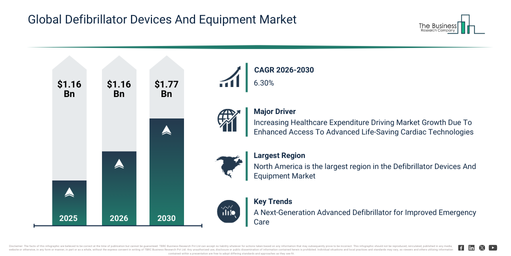
    The defibrillator devices and equipment market is projected to experience substantial growth over the coming years. This market is anticipated to reach $15.89 billion by 2030, exhibiting a compound annual growth rate (CAGR) of 6.3%. The anticipated expansion during this period can be ascribed to several factors, including the proliferation of public access defibrillation initiatives, the increasing uptake of connected cardiac monitoring systems, a rising need for cardiac care delivered at home, the broadening of telecardiology services, and breakthroughs in miniaturized defibrillation technologies. Key developments expected in the forecast timeframe encompass the wider deployment of automated external defibrillators in public areas, the increasing use of wearable cardioverter defibrillators, a greater integration of remote monitoring capabilities, the development of more compact and portable defibrillator designs, and an intensified focus on rapid response innovations.

    Get A Free Sample Report With In-Depth Market Insights:

    https://thebusinessresearchcompany.com/sample_request?id=70048155&type=smp&name=Defibrillator%20Devices%20And%20Equipment%20Market%20Report%202026&utm_source=Blogs&utm_medium=Paid&utm_campaign=Oct_PR

    Defibrillator Devices And Equipment Market Growth Factors: What’s Supporting Expansion?

    The projected expansion of the defibrillator devices and equipment market is anticipated to be fueled by a rise in healthcare spending. Healthcare expenditure encompasses the financial outlay on healthcare goods and services, covering aspects like individual health care, public health initiatives, medical research, and health insurance schemes. This increase in healthcare spending stems from the growing incidence of chronic diseases, which necessitate prolonged, intricate, and intensive treatment, thereby substantially elevating expenses. Greater healthcare spending benefits the defibrillator market by empowering hospitals, outpatient surgical centers, and government bodies to acquire sophisticated defibrillation systems. For example, as reported by the American Medical Association, a professional medical organization based in the US, in April 2025, health spending within the United States saw a 7.5 percent increase in 2023, reaching a total of 4.9 trillion dollars or 14,570 dollars per capita. This represented a significant uptick when contrasted with the 4.6 percent growth observed in 2022. Consequently, improvements in healthcare infrastructure are stimulating the expansion of the defibrillator devices and equipment market.

    Defibrillator Devices And Equipment Market Segment Analysis Spotlighting Growth Areas

    The defibrillator devices and equipment market covered in this report is segmented –

    1) By Type: Implantable Defibrillators, External Defibrillators

    2) By Implantable Defibrillators: Transvenous Implantable Cardioverter Defibrillator (T-ICDs), Subcutaneous Implantable Cardioverter Defibrillator (S-ICDs), Cardiac Resynchronization Therapy- Defibrillator (CRT-D), Single And Dual Chamber

    3) By External defibrillators: Manual External Defibrillator (MEDs), Automated External Defibrillator (AEDs), Wearable Cardioverter Defibrillator (WCDs)

    4) By End User: Hospitals, Pre-Hospitals, Public Access Market, Alternate Care Market, Home Healthcare

    Subsegments:

    1) By Implantable Defibrillators: Implantable Cardioverter Defibrillators (ICD), Subcutaneous Implantable Defibrillators (S-ICD), Dual-Chamber Implantable Defibrillators, Single-Chamber Implantable Defibrillators

    2) By External Defibrillators: Automated External Defibrillators (AED), Manual External Defibrillators, Wearable Cardioverter Defibrillators (WCD), Other External Defibrillators

    Defibrillator Devices And Equipment Market Industry Trends: What’s Reshaping Demand?

    Leading companies in the defibrillator devices and equipment market are innovating products, such as advanced defibrillators, to enhance patient outcomes and improve device functionality. An advanced defibrillator is a medical apparatus designed to administer an electric shock to the heart during critical arrhythmias, including ventricular fibrillation or sudden cardiac arrest. For example, in June 2024, Strykar Healthcare, a US-based medical technology company, unveiled the LIFEPAK 35 monitor/defibrillator. This device is engineered to elevate emergency medical care through its intuitive, lightweight design and large touch screen, enabling customizable clinical experiences. Equipped with connected features for continuous patient data monitoring, the device aims to assist healthcare providers dealing with challenges like staff shortages and mental health issues. Developed through over a decade of research and feedback from professionals, the LIFEPAK 35 underscores Stryker’s commitment to furnishing dependable tools for first responders and essential healthcare workers, ensuring high-quality care from roadside incidents to hospital visits.

    Defibrillator Devices And Equipment Market Leading Companies And Competitive Benchmarking

    Major companies operating in the defibrillator devices and equipment market are Medtronic plc, Abbott Laboratories, Boston Scientific Corporation, Koninklijke Philips N.V., ZOLL Medical Corporation, Cardiac Science Corporation, Physio-Control Inc., Nihon Kohden Corporation, Defibtech LLC, Schiller AG, Biotronik Inc., LivaNova plc, HeartSine Technologies LLC, Mindray Medical International Limited, Metrax Engineering Ltd., CU Medical Systems Inc., Fukuda Denshi Co. Ltd., Innomed Technologies Inc., Progetti Srl, Weinmann Emergency Medical Technology GmbH + Co. KG, Bexen Cardio, Lepu Medical Technology (Beijing) Co. Ltd., Shenzhen XFT Medical Limited, Zhejiang Medtec Medical Devices Co. Ltd.

    View The Full Defibrillator Devices And Equipment Market Report:

    https://thebusinessresearchcompany.com/report/defibrillator-devices-and-equipment-global-market-report?utm_source=Blogs&utm_medium=Paid&utm_campaign=Oct_PR

    Defibrillator Devices And Equipment Market Top Region By Revenue And Market Share

    North America was the largest region in the global defibrillator devices and equipment market in 2025. Western Europe was the second-largest region in the defibrillator devices and equipment market. The regions covered in the defibrillator devices and equipment market report are Asia-Pacific, South East Asia, Western Europe, Eastern Europe, North America, South America, Middle East, Africa.

    Reach Out To Our Team:

    The Business Research Company: https://www.thebusinessresearchcompany.com/

    Americas: +1 310-496-7795

    Asia: +44 7882 955267 & +91 8897263534

    Europe: +44 7882 955267

    Email us at: marketing@tbrc.info

    Follow us on:

    LinkedIn: https://in.linkedin.com/company/the-business-research-company

    YouTube: https://www.youtube.com/channel/UC24_fI0rV8cR5DxlCpgmyFQ

    Global Market Model: https://www.thebusinessresearchcompany.com/global-market-model
  • Deep Brain Stimulation Systems Market Expected To Grow At 10.3% CAGR Through 2030: What Businesses Need To Know

    Deep Brain Stimulation Systems Market Expected To Grow At 10.3% CAGR Through 2030: What Businesses Need To Know

    Backed by market attractiveness analysis, total addressable market sizing, company benchmarking matrices, interactive Excel dashboards, wider supply chain intelligence, emerging startup coverage, and detailed product-level insights, The Business Research Company’s 2026 market reports are designed to offer research that is more actionable and strategically valuable than ever.

    Deep Brain Stimulation Systems Market Growth Analysis: How Will Revenue Trend Over The Forecast Period?

    The deep brain stimulation systems market size has shown significant growth in recent years. It is anticipated to increase from $2.77 billion in 2025 to $3.05 billion in 2026, exhibiting a compound annual growth rate (CAGR) of 10.2%. This historical expansion can be attributed to factors such as the rising prevalence of neurological disorders, enhanced clinical acceptance of neuromodulation therapies, ongoing advancements in implantable medical device technology, the proliferation of neurology specialty centers, and improved long-term patient outcomes.

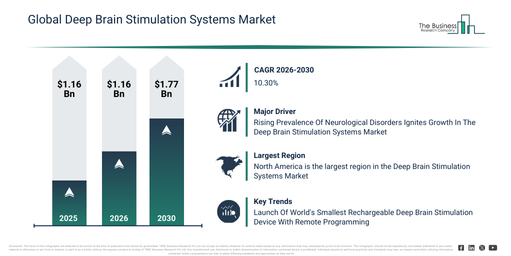
    The deep brain stimulation systems market is projected to experience substantial expansion in the coming years. It is anticipated to reach a value of $4.52 billion by 2030, demonstrating a compound annual growth rate (CAGR) of 10.3%. This growth during the forecast period stems from factors such as heightened investments in advanced neurostimulation devices, an escalating demand for individualized neurological therapies, the broadening of DBS indications beyond mere movement disorders, the increasing incorporation of AI-driven programming, and a greater emphasis on remote patient monitoring. Key trends anticipated during the forecast timeframe encompass the expanding embrace of adaptive DBS systems, a growing reliance on image-guided electrode placement, increasing consumer demand for rechargeable neurostimulators, the proliferation of personalized neuromodulation therapies, and an intensified focus on minimally invasive implantation methods.

    Get A Free Sample Report With In-Depth Market Insights:

    https://thebusinessresearchcompany.com/sample_request?id=97934634&type=smp&name=Deep%20Brain%20Stimulation%20Systems%20Market%20Report%202026&utm_source=Blogs&utm_medium=Paid&utm_campaign=Oct_PR

    Deep Brain Stimulation Systems Market Demand Drivers: What’s Powering Industry Growth?

    The rising occurrence of neurological disorders is projected to boost the deep brain stimulation systems market moving forward. Neurological disorders are defined as a diverse range of conditions impacting the central, peripheral, and autonomic nervous systems within the body. Deep brain stimulation systems are employed in neurosurgical interventions to deliver electrical stimulation to a targeted region, aiming to modify or regulate neural activity and achieve a reversible, adjustable, and therapeutic outcome. For instance, in October 2023, the World Federation of Neurology, a UK-based association of national neurological societies, reported that more than 40% of the world’s population is currently affected by a neurological condition, and this prevalence is anticipated to almost double by 2050. Thus, the growing incidence of neurological disorders is propelling the deep brain stimulation systems market’s expansion.

    Deep Brain Stimulation Systems Market Segment Performance And Emerging Opportunities

    The deep brain stimulation systems market covered in this report is segmented –

    1) By Product: Single Channel, Dual Channel

    2) By Application: Parkinson’s Disease, Essential Tremor, Obsessive Compulsive Disorder, Epilepsy, Dystonia, Other Applications

    3) By End-user: Hospitals, Ambulatory Surgical Centers, Neurological Clinics, Other End Users

    Subsegments:

    1) By Single Channel: Unilateral Deep Brain Stimulation (DBS) Systems, Single Lead Deep Brain Stimulation (DBS) Systems, Targeted Single Nucleus DBS Systems, Standard Single Channel Neurostimulation Systems

    2) By Dual Channel: Bilateral Deep Brain Stimulation (DBS) Systems, Dual Lead Deep Brain Stimulation (DBS) Systems, Multi-Nucleus Targeted DBS Systems, Advanced Dual Channel Neurostimulation Systems

    Deep Brain Stimulation Systems Market Innovation Trends: What Developments Are Reshaping The Industry?

    Major corporations operating within the deep brain stimulation systems market are creating advanced technology, such as deep brain stimulation (DBS) systems, aimed at treating individuals afflicted with movement disorders. Deep Brain Stimulation (DBS) is defined as a medical intervention that involves an implanted device responsible for delivering an electrical current directly to specific regions of the brain. For instance, in January 2024, Abbott Laboratories, a US-based company specializing in medical devices and healthcare, unveiled the Liberta RC DBS system. This system is recognized as the world’s smallest rechargeable deep brain stimulation (DBS) device, featuring remote programming, designed to assist people living with movement disorders. The Liberta RC DBS system is unique as the only rechargeable, groundbreaking connected care technology in the U.S., empowering patients to remain connected with their physicians, guarantee optimal setup and functionality, and acquire updated treatment settings remotely when necessary, thereby negating the requirement for an in-person visit to a physician’s office.

    Deep Brain Stimulation Systems Market Industry Leaders And Competitive Landscape

    Major companies operating in the deep brain stimulation systems market are Medtronic plc, Abbott Laboratories, Boston Scientific Corporation, Aleva Neurotherapeutics SA, Beijing PINS Medical Co Ltd, SceneRay Corporation Ltd, NeuroPace Inc, LivaNova PLC, NeuroSigma Inc, Functional Neuromodulation Ltd, Synapse Biomedical Inc, Soterix Medical Inc, FHC Inc, Newronika S.p.A, Renishaw plc, Deep Brain Innovations LLC, BlueWind Medical Ltd, Magstim Company Ltd, Sapiens Steering Brain Stimulation, Bioinduction Ltd, Alpha Omega Engineering

    View The Full Deep Brain Stimulation Systems Market Report:

    https://thebusinessresearchcompany.com/report/deep-brain-stimulation-systems-global-market-report?utm_source=Blogs&utm_medium=Paid&utm_campaign=Oct_PR

    Deep Brain Stimulation Systems Market Regional Analysis And Top Geography

    North America was the largest region in the deep brain stimulation systems market in 2025. Asia-Pacific is expected to be the fastest-growing region in the forecast period. The regions covered in the deep brain stimulation systems market report are Asia-Pacific, South East Asia, Western Europe, Eastern Europe, North America, South America, Middle East, Africa.

    Reach Out To Our Team:

    The Business Research Company: https://www.thebusinessresearchcompany.com/

    Americas: +1 310-496-7795

    Asia: +44 7882 955267 & +91 8897263534

    Europe: +44 7882 955267

    Email us at: marketing@tbrc.info

    Follow us on:

    LinkedIn: https://in.linkedin.com/company/the-business-research-company

    YouTube: https://www.youtube.com/channel/UC24_fI0rV8cR5DxlCpgmyFQ

    Global Market Model: https://www.thebusinessresearchcompany.com/global-market-model
  • Deep Brain Stimulation Device Market Forecast To Reach $2.94 Billion By 2030: Key Trends Explained

    Deep Brain Stimulation Device Market Forecast To Reach $2.94 Billion By 2030: Key Trends Explained

    Featuring market attractiveness scoring, total addressable market sizing, company benchmarking matrices, interactive Excel dashboards, deeper supply chain intelligence, emerging startup tracking, and granular product-level insights, The Business Research Company’s 2026 market reports are built to deliver research that is both more actionable and more strategically valuable.

    Deep Brain Stimulation Device Market Forecast: What Value Will The Market Reach By 2030?

    The deep brain stimulation device market size has experienced rapid growth in recent years. It is projected to expand from $1.7 billion in 2025 to $1.9 billion in 2026, demonstrating a compound annual growth rate (CAGR) of 11.3%. This historical expansion can be attributed to the increasing prevalence of neurological disorders, broader clinical acceptance of deep brain stimulation, the proliferation of neurosurgical specialty centers, enhanced safety profiles of implantable devices, and the availability of advanced neuroimaging technologies.

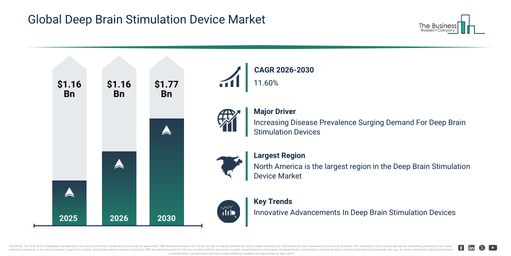
    The deep brain stimulation device market is projected to experience substantial expansion over the coming years. Its valuation is forecast to reach $2.94 billion by 2030, demonstrating a compound annual growth rate (CAGR) of 11.6%. This anticipated growth is driven by a heightened emphasis on precision neuromodulation treatments, increased funding for neurotechnology research, the broadening of applications beyond movement disorders, the wider integration of remote programming functionalities, and ongoing advancements in implantable electronic devices. Key developments anticipated during this period encompass the increased use of closed-loop neurostimulation systems, a surging need for personalized dbs programming, the expanding utilization of rechargeable implantable pulse generators, advancements in image-guided electrode placement techniques, and a stronger emphasis on minimally invasive neurosurgical procedures.

    Get A Free Sample Report With In-Depth Market Insights:

    https://thebusinessresearchcompany.com/sample_request?id=18690335&type=smp&name=Deep%20Brain%20Stimulation%20Device%20Market%20Report%202026&utm_source=Blogs&utm_medium=Paid&utm_campaign=Oct_PR

    Deep Brain Stimulation Device Market Growth Drivers: What’s Behind The Acceleration?

    A rising incidence of neurological conditions is anticipated to drive expansion in the deep brain stimulation device market in the future. Neurological disorders are defined as health issues impacting the central and peripheral nervous systems. Deep brain stimulation devices are employed to manage irregular brain activity and rectify chemical imbalances within the brain that contribute to various conditions. For instance, in March 2023, according to the Alzheimer’s Association, a US-based nonprofit voluntary health organization, 6.7 million Americans aged 65 and older were living with Alzheimer’s dementia, with projections indicating this could rise to 13.8 million by 2060. Consequently, the growing occurrence of neurological disorders is fueling the expansion of the deep brain stimulation device market.

    Deep Brain Stimulation Device Market Segment Landscape And Growth Outlook

    The deep brain stimulation device market covered in this report is segmented –

    1) By Product Type: Single-Channel Deep Brain Stimulator, Dual-Channel Deep Brain Stimulator

    2) By Application: Epilepsy, Essential Tremor, Obsessive-Compulsive Disorder (OCD), Dystonia, Parkinson’s Disease, Other Applications

    3) By End User: Hospitals, Neurology Clinics, Ambulatory Surgical Centers, Research Centers

    Subsegments:

    1) By Single-Channel Deep Brain Stimulator: Implantable Pulse Generators, Electrode Leads, Accessories

    2) By Dual-Channel Deep Brain Stimulator: Implantable Pulse Generators, Electrode Leads, Accessories

    Deep Brain Stimulation Device Market Trends: What’s Defining The Industry’s Next Phase?

    Leading companies in the deep brain stimulation device market are advancing technologically, particularly through connected care technology, to improve patient treatment by enabling remote programming, fostering better communication between patients and healthcare providers, and optimizing outcomes for individuals with movement disorders. Connected care technology integrates digital tools and platforms to facilitate continuous communication and data exchange between patients and healthcare providers, thereby enhancing patient monitoring, treatment management, and overall healthcare delivery. For example, in January 2024, Abbott Laboratories, a US-based healthcare and medical device company, received US Food and Drug Administration approval for the Liberta RC DBS system, noted as the smallest rechargeable deep brain stimulation device for treating movement disorders. Key characteristics of the Liberta RC DBS system include remote programming capabilities via the NeuroSphere Virtual Clinic, a need for only 10 recharges per year, and a compact design that is 31% smaller than competing devices. It also incorporates a wireless charging system that can power up the device every 37 days and offers customizable controls through an Abbott patient controller or compatible iOS devices.

    Deep Brain Stimulation Device Market Key Participants And Competitive Landscape

    Major companies operating in the deep brain stimulation device market are Medtronic plc, Abbott Laboratories, Boston Scientific Corporation, LivaNova plc, Aleva Neurotherapeutics SA, Beijing PINS Medical Co. Ltd., SceneRay Corporation, MicroPort NeuroTech, Precisis AG, Neuralink Corporation, Sapiens Neuro, Functional Neuromodulation Ltd., Deep Brain Innovation LLC, Renishaw plc, NeuroOne Medical Technologies Corporation, CorTec GmbH, INBRAIN Neuroelectronics S.L., Synchron Inc., Rune Labs Inc., CereGate GmbH

    View The Full Deep Brain Stimulation Device Market Report:

    https://thebusinessresearchcompany.com/report/deep-brain-stimulation-device-global-market-report?utm_source=Blogs&utm_medium=Paid&utm_campaign=Oct_PR

    Deep Brain Stimulation Device Market Geographic Analysis: Where Is Demand Rising Fastest?

    North America was the largest region in the deep brain stimulation devices market in 2025. Asia-Pacific is expected to be the fastest-growing region in the global deep brain stimulation devices market report during the forecast period. The regions covered in the deep brain stimulation device market report are Asia-Pacific, South East Asia, Western Europe, Eastern Europe, North America, South America, Middle East, Africa.

    Reach Out To Our Team:

    The Business Research Company: https://www.thebusinessresearchcompany.com/

    Americas: +1 310-496-7795

    Asia: +44 7882 955267 & +91 8897263534

    Europe: +44 7882 955267

    Email us at: marketing@tbrc.info

    Follow us on:

    LinkedIn: https://in.linkedin.com/company/the-business-research-company

    YouTube: https://www.youtube.com/channel/UC24_fI0rV8cR5DxlCpgmyFQ

    Global Market Model: https://www.thebusinessresearchcompany.com/global-market-model
  • Blood Collection, Processing, Management Devices Market Analysis Through 2030: Market Size, Growth Trends And Industry Outlook

    Blood Collection, Processing, Management Devices Market Analysis Through 2030: Market Size, Growth Trends And Industry Outlook

    Backed by market attractiveness analysis, total addressable market sizing, company benchmarking matrices, interactive Excel dashboards, wider supply chain intelligence, emerging startup coverage, and detailed product-level insights, The Business Research Company’s 2026 market reports are designed to offer research that is more actionable and strategically valuable than ever.

    Blood Collection, Processing, Management Devices Market Size Forecast: How Big Could The Market Get By 2030?

    The market size for blood collection, processing, and management devices has experienced strong growth in recent years. It is forecast to expand from $4.06 billion in 2025 to $4.37 billion in 2026, demonstrating a compound annual growth rate (CAGR) of 7.7%. This historical growth can be attributed to an increase in diagnostic testing volumes, the expansion of blood donation and transfusion programs, a greater standardization of blood collection protocols, the early adoption of centrifuges and separation units, and a growing emphasis on safe sample handling practices.

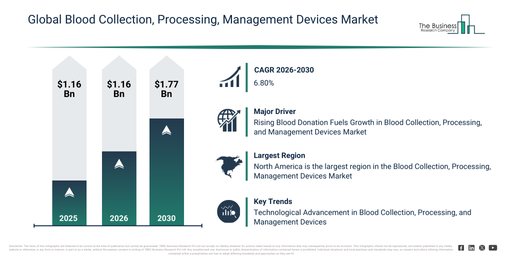
    The market for blood collection, processing, and management devices is projected to experience robust expansion over the coming years. It is expected to grow to $5.7 billion in 2030 at a compound annual growth rate (CAGR) of 6.8%. This growth during the forecast period is driven by factors such as the rising demand for automated blood processing workflows, increasing implementation of digital blood management software, expansion of therapeutic and research applications, higher investment in traceability and inventory control solutions, and the growing integration of advanced consumables and closed blood handling systems. Key trends in the forecast period include the increasing integration of digital blood management and tracking systems, a rising adoption of automated blood processing and separation devices, the growing use of closed-system blood collection and handling solutions, an expansion of advanced storage, monitoring, and quality control technologies, and a strong focus on enhancing patient safety, regulatory compliance, and sample integrity.

    Get A Free Sample Report With In-Depth Market Insights:

    https://thebusinessresearchcompany.com/sample_request?id=86097062&type=smp&name=Blood%20Collection%2C%20Processing%2C%20Management%20Devices%20Market%20Report%202026&utm_source=Blogs&utm_medium=Paid&utm_campaign=Sep_PR

    Blood Collection, Processing, Management Devices Market Industry Drivers: What’s Behind The Revenue Growth?

    Increased public understanding and the growing need for blood donations are anticipated to boost the expansion of the blood collection, processing, and management devices market. This expanding recognition and requirement for blood donations stem from several interconnected factors, including advancements in medical therapies, accidents, and emergencies, as well as the necessity for blood transfusions for complex procedures and managing chronic illnesses, particularly within older demographics. Blood collection, processing, and management devices are essential in supporting the blood donation sector. These instruments streamline the entire operation, guaranteeing safety, effectiveness, and reliability from securing donors to supplying blood products to patients. As an illustration, in June 2025, data from the Pan American Health Organization (PAHO/WHO) indicated that Latin America and the Caribbean gathered 9,212,861 units of blood in 2023, representing significant growth compared to the prior report of 7,776,198 units. Consequently, the increased knowledge and demand for blood donations will fuel the blood collection, processing, and management device market.

    Blood Collection, Processing, Management Devices Market Segments: Where Is Growth Concentrated?

    The blood collection, processing, management devices market covered in this report is segmented –

    1) By Product: Devices, Consumables, Software, Servicing

    2) By Application: Diagnostics, Therapeutics, Research, Other Applications

    3) By End-user: Hospitals, Diagnostic Laboratories, Academic And Research Laboratories, Blood And Blood Component Banks, Ambulatory Surgical Center, Other End-Users

    Subsegments:

    1) By Devices: Blood Collection Needles, Blood Collection Tubes, Blood Separation Units, Centrifuges, Blood Bag Systems, Blood Processing Systems, Blood Warmers

    2) By Consumables: Blood Collection Bags, Blood Tubes, Filters and Separators, Reagents And Additives For Blood Processing

    3) By Software: Blood Management Software, Laboratory Information Management Systems (LIMS), Patient Tracking and Monitoring Software, Data Analytics Software For Blood Management

    4) By Servicing: Installation and Setup Services, Maintenance and Calibration Services, Training and Support Services, Repair and Replacement Services

    #Blood Collection, Processing, Management Devices Market Growth Trends: What’s Shaping The Future Outlook?

    Companies at the forefront of the blood collection, processing, and management devices market are developing cutting-edge products with advanced technologies, such as RightGauge technology, to boost precision and efficiency in blood collection processes. RightGauge technology represents a creative approach to blood collection, ensuring accurate needle placement and minimizing patient discomfort. For instance, in March 2024, Becton, Dickinson and Company (BD), a US-based medical technology company, introduced the BD Vacutainer UltraTouch Push Button Blood Collection Set in India. This innovative device, leveraging BD RightGauge technology, utilizes a thinner needle to ensure continuous blood flow, thereby reducing patient discomfort. It also incorporates a push-button mechanism for needle retraction post-collection, enhancing safety for healthcare professionals.

    Blood Collection, Processing, Management Devices Market Competitive Overview And Top Companies

    Major companies operating in the blood collection, processing, management devices market are McKesson Corporation, Cardinal Health Inc., Thermo Fisher Scientific Inc., Abbott Laboratories, Fresenius SE & Co. KGaA, Becton Dickinson and Company, Medline Industrie LP, Avantor Inc., Grifols S.A., Terumo Corporation, PerkinElmer Inc., Nipro Corporation, Bio-Rad Laboratories Inc., Haemonetics Corporation, Sarstedt AG & Co. KG, Greiner Bio-One International GmbH, Macopharma, Immucor, Trivitron Healthcare, HemoCue AB

    View The Full Blood Collection, Processing, Management Devices Market Report:

    https://thebusinessresearchcompany.com/report/blood-collection-processing-management-devices-global-market-report?utm_source=Blogs&utm_medium=Paid&utm_campaign=Sep_PR

    Blood Collection, Processing, Management Devices Market Top Region: Where Does Most Revenue Come From?

    North America was the largest region in the blood collection, processing, management devices market in 2025. The regions covered in the blood collection, processing, management devices market report are Asia-Pacific, South East Asia, Western Europe, Eastern Europe, North America, South America, Middle East, Africa.

    Reach Out To Our Team:

    The Business Research Company: https://www.thebusinessresearchcompany.com/

    Americas: +1 310-496-7795

    Asia: +44 7882 955267 & +91 8897263534

    Europe: +44 7882 955267

    Email us at: marketing@tbrc.info

    Follow us on:

    LinkedIn: https://in.linkedin.com/company/the-business-research-company

    YouTube: https://www.youtube.com/channel/UC24_fI0rV8cR5DxlCpgmyFQ

    Global Market Model: https://www.thebusinessresearchcompany.com/global-market-model
  • Blood Collection Tubes Market Outlook From 2026 To 2030: Key Growth Factors And Future Opportunities

    Blood Collection Tubes Market Outlook From 2026 To 2030: Key Growth Factors And Future Opportunities

    Featuring market attractiveness scoring, total addressable market sizing, company benchmarking matrices, interactive Excel dashboards, deeper supply chain intelligence, emerging startup tracking, and granular product-level insights, The Business Research Company’s 2026 market reports are built to deliver research that is both more actionable and more strategically valuable.

    Blood Collection Tubes Market Revenue Outlook: What CAGR Lies Ahead Through 2030?

    The blood collection tubes market has seen substantial growth in recent years. It is projected to expand from $6.87 billion in 2025 to $7.45 billion in 2026, demonstrating a compound annual growth rate (CAGR) of 8.4%. This historic growth can be ascribed to factors such as the expansion of diagnostic testing volumes, the growth of hospital laboratory services, an increasing prevalence of chronic diseases, the broader adoption of standardized blood collection protocols, and the availability of mass-produced plastic tubes.

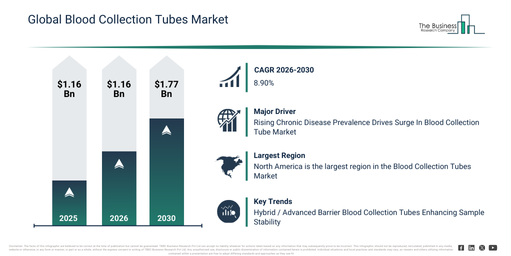
    The market for blood collection tubes is anticipated to experience substantial expansion over the upcoming years. Projections indicate it will reach $10.49 billion by 2030, demonstrating a compound annual growth rate (CAGR) of 8.9%. This growth during the forecast period is driven by several factors, including a greater need for sophisticated diagnostic procedures, the increasing integration of automated lab processes, the expansion of facilities for outpatient and ambulatory testing, a heightened emphasis on managing samples without contamination, and ongoing advancements in tube components and additives. Key developments expected in this period encompass a wider acceptance of plastic blood collection tubes, a surge in demand for tubes that are pre-labeled and color-coded, an increase in the utilization of vacuum-based collection methods, the proliferation of specialized diagnostic tubes, and an intensified commitment to ensuring sample integrity and safety.

    Get A Free Sample Report With In-Depth Market Insights:

    https://thebusinessresearchcompany.com/sample_request?id=91441338&type=smp&name=Blood%20Collection%20Tubes%20Market%20Report%202026&utm_source=Blogs&utm_medium=Paid&utm_campaign=Sep_PR

    Blood Collection Tubes Market Growth Factors: What’s Supporting Expansion?

    The growing occurrence of chronic illnesses is propelling the expansion of the blood collection tube market in the coming period. These are persistent health issues that typically develop gradually. Common examples like diabetes, cancer, and tuberculosis necessitate blood collection and sampling for diagnosis. Unhealthy lifestyles, encompassing tobacco use, exposure to smoke, poor nutrition (such as meals high in salt and saturated fats but low in fruits and vegetables), and physical inactivity, are leading to a continuous rise in the incidence of infectious diseases. The subsequent diagnostic activities for these conditions are projected to enhance the demand for blood collection devices. For example, data from February 2024 by the World Health Organization, a United Nations agency based in Switzerland, forecasts more than 35 million new cancer cases by 2050, representing a 77% surge from the approximate 20 million cases recorded in 2022. Consequently, the growing occurrence of chronic diseases is set to heighten the need for blood collection tubes throughout the projected timeframe.

    Blood Collection Tubes Market Segment Analysis: What Are The Core Market Categories?

    The blood collection tubes market covered in this report is segmented –

    1) By Product Type: Plasma Separating Tube, Serum Separating Tube, Heparin Tubes, EDTA Tubes, Rapid Serum Tubes

    2) By Material: Glass, Plastic

    3) By End User: Hospitals, Clinics, Ambulatory Surgical Centers, Other End-Users

    Subsegments:

    1) By Plasma Separating Tube: Gel Plasma Separating Tubes, Non-Gel Plasma Separating Tubes

    2) By Serum Separating Tube: Gel Serum Separating Tubes, Non-Gel Serum Separating Tubes

    3) By Heparin Tubes: Lithium Heparin Tubes, Sodium Heparin Tubes

    4) By EDTA Tubes: K2 EDTA Tubes, K3 EDTA Tubes

    5) By Rapid Serum Tubes: Standard Rapid Serum Tubes, Clot Activator Rapid Serum Tubes

    Blood Collection Tubes Market Industry Trends: What’s Reshaping Demand?

    Leading entities within the blood collection tube market are concentrating on creating sophisticated solutions, including hybrid or barrier-coating technologies, with the aim of improving sample stability, mitigating pre-analytical variability, and preserving the integrity of biomarkers in ambient or demanding environments. These hybrid or barrier-coating technologies represent specific formulations integrated into blood collection tubes, designed to limit cellular degradation, inhibit protein interference, and sustain analyte concentrations from the point of collection to subsequent analysis. An illustrative example occurred in April 2024, when Streck, Inc., a biotechnology firm based in the US, introduced Protein Plus BCT. This product is a whole blood collection tube, designed for direct draw, which aims to maintain the initial concentrations of plasma proteins during storage at ambient temperatures. The tube features a unique preservative that diminishes ex vivo hemolysis and platelet activation, consequently inhibiting the expulsion of intracellular proteins and facilitating more accurate measurement of protein biomarkers across both clinical and research uses.

    Blood Collection Tubes Market Competitive Landscape: Which Companies Lead The Industry?

    Major companies operating in the blood collection tubes market are Becton Dickinson and Company, Greiner AG, Sarstedt AG & Co. KG, Terumo Corporation, FL Medical Srl, Sekisui Chemical Co. Ltd., Nipro Medical Corporation, Hindustan Syringes & Medical Devices Ltd., Haematonics, Chengdu Rich Science Industry Co. Ltd., CDRICH Corporation, Narang Medical Limited, CML Biotech Pvt. Ltd., InterVacTechnology Inc., Improve Medical Instruments Co. Ltd., Jiangsu Kangbao Medical Equipment Co. Ltd., Shandong Weigao Group Medical Polymer Co. Ltd., Vitromed Healthcare, Medline Industries Inc., Poly Medicure Ltd.

    View The Full Blood Collection Tubes Market Report:

    https://thebusinessresearchcompany.com/report/blood-collection-tubes-global-market-report?utm_source=Blogs&utm_medium=Paid&utm_campaign=Sep_PR

    Blood Collection Tubes Market Regional Breakdown: Where Is Demand Concentrated?

    North America was the largest region in the blood collection tube market in 2025. Asia-Pacific is expected to be the fastest-growing region in the global blood collection tube market report during the forecast period. The regions covered in the blood collection tubes market report are Asia-Pacific, South East Asia, Western Europe, Eastern Europe, North America, South America, Middle East, Africa.

    Reach Out To Our Team:

    The Business Research Company: https://www.thebusinessresearchcompany.com/

    Americas: +1 310-496-7795

    Asia: +44 7882 955267 & +91 8897263534

    Europe: +44 7882 955267

    Email us at: marketing@tbrc.info

    Follow us on:

    LinkedIn: https://in.linkedin.com/company/the-business-research-company

    YouTube: https://www.youtube.com/channel/UC24_fI0rV8cR5DxlCpgmyFQ

    Global Market Model: https://www.thebusinessresearchcompany.com/global-market-model
  • Blood Collection Devices Market Growth Forecast: Market Size, Key Trends And Emerging Opportunities Through 2030

    Blood Collection Devices Market Growth Forecast: Market Size, Key Trends And Emerging Opportunities Through 2030

    Built to provide research that’s more actionable and strategically valuable, The Business Research Company’s 2026 market reports include market attractiveness analysis, total addressable market sizing, company benchmarking matrices, interactive Excel dashboards, broader supply chain intelligence, emerging startup tracking, and in-depth product insights.

    Blood Collection Devices Market Growth Analysis: How Will Revenue Trend Over The Forecast Period?

    The blood collection devices market has experienced robust expansion in recent years. It is anticipated to expand from $8.48 billion in 2025 to $9.26 billion in 2026, achieving a compound annual growth rate (CAGR) of 9.1%. The historical growth of this market is attributable to the rising volume of diagnostic testing, an increase in the prevalence of chronic diseases, the development of hospital and diagnostic infrastructure, heightened blood donation initiatives, and the standardization of phlebotomy practices.

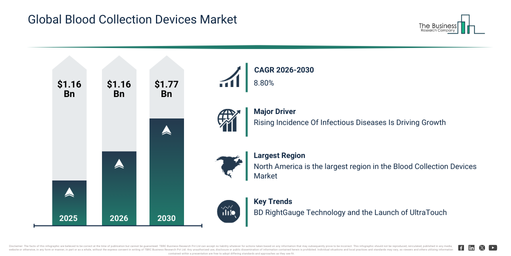
    The blood collection devices market is projected to undergo significant expansion in the upcoming years. This sector is forecast to reach $12.95 billion in 2030, demonstrating a compound annual growth rate (CAGR) of 8.8%. The anticipated growth during this period stems from various factors, such as the rising demand for minimally invasive sampling techniques, the increasing adoption of automated collection devices, the broadening scope of home-based diagnostics, a heightened focus on patient safety standards, and improvements in blood collection material technologies. Prominent trends expected in this forecast period include the expanding use of safety-engineered blood collection devices, an increasing need for automated blood collection systems, the growing application of micro-volume blood sampling tools, the widespread availability of single-use disposable collection products, and an enhanced emphasis on infection control and patient comfort.

    Get A Free Sample Report With In-Depth Market Insights:

    https://thebusinessresearchcompany.com/sample_request?id=89366325&type=smp&name=Blood%20Collection%20Devices%20Market%20Report%202026&utm_source=Blogs&utm_medium=Paid&utm_campaign=Sep_PR

    Blood Collection Devices Market Demand Drivers: What’s Powering Industry Growth?

    The escalating incidence of infectious diseases is propelling the growth of the blood collection devices market. Infectious diseases are illnesses caused by bacteria, viruses, fungi, or parasites. Diagnosing infectious disorders such as hepatitis B (HBV), hepatitis C (HCV), the human immunodeficiency virus (HIV), malaria, syphilis, and brucellosis involves blood collection and sampling. The continuous rise in infectious disease cases and related diagnostic efforts is expected to boost the utilization of blood collection devices. For example, in February 2024, the UK Health Security Agency, a UK-based government organization, reported that tuberculosis (a contagious bacterial infection primarily affecting the lungs) cases in England increased to 4,850 in 2023, which signifies a 10.7% rise from 4,380 cases in 2022. Therefore, the increasing prevalence of infectious diseases is anticipated to heighten demand for blood collection devices throughout the forecast period.

    Blood Collection Devices Market Segment Breakdown: Which Categories Lead On Revenue?

    The blood collection devices market covered in this report is segmented –

    1) By Type: Blood Collection Tubes, Lancet, Micro Container Tubes

    2) By Method: Manual Blood Collection, Automatic Blood Collection

    3) By Material: Glass, Stainless Steel, Plastic

    4) By End User: Hospitals, Blood Donation Centers, Diagnostic Center

    Subsegments:

    1) By Blood Collection Tubes: Vacuum Blood Collection Tubes, Serum Separator Tubes, EDTA Tubes

    2) By Lancet: Safety Lancets, Manual Lancets, Automatic Lancets

    3) By Micro Container Tubes: Capillary Tubes, Microtainer Tubes, Hematocrit Tubes

    Blood Collection Devices Market Innovation Trends: What Developments Are Reshaping The Industry?

    Leading companies in the blood collection devices market are implementing technological advancements such as BD RightGauge Technology, BD PentaPoint Technology, and BD Push Button Technology to boost patient comfort, safety, and operational efficiency during blood collection. BD RightGauge, a technology developed by Becton, Dickinson, and Company (BD), centers on designing finer needles for this purpose. An illustration of this is the launch of UltraTouch by Becton Dickinson India Private Limited, an India-based manufacturing firm specializing in veterinary instruments and apparatus, in April 2024. UltraTouch incorporates BD RightGauge technology, which facilitates the use of a thinner needle. This particular design is aimed at substantially lowering insertion pain, thereby rendering the blood collection process less traumatic for patients.

    Blood Collection Devices Market Competitive Landscape: Who Leads The Industry?

    Major companies operating in the blood collection devices market are Becton Dickinson and Company, Greiner Holding AG, Kabe Labortechnik GmbH, Sarstedt AG & Company, ICU Medical Inc., Terumo BCT Inc., Fresenius Kabi AG, Grifols S.A., Haematonics, Nipro Medical Corporation, Macopharma SA, Smiths Medical International Ltd., Cardinal Health Inc., Retractable Technologies Inc., Sekisui Medical Co. Ltd., Qiagen NV, PT. Adi Buana Mandiri, Covidien Ltd., Kawasumi Laboratories Inc., F.L. Medical SRL, Ajosha Bio Teknik Pvt. Ltd., A-M Systems Ltd., Commonwealth Serum Laboratories Behring, Teleflex Medical Inc., Abbott Laboratories, Denova Sciences Pte. Ltd., VedaLab SA

    View The Full Blood Collection Devices Market Report:

    https://thebusinessresearchcompany.com/report/blood-collection-devices-global-market-report?utm_source=Blogs&utm_medium=Paid&utm_campaign=Sep_PR

    Blood Collection Devices Market Geographic Landscape: Which Region Dominates Industry Growth?

    North America was the largest region in the blood collection devices market in 2025. Asia-Pacific is expected to be the fastest-growing region in the forecast period. The regions covered in the blood collection devices market report are Asia-Pacific, South East Asia, Western Europe, Eastern Europe, North America, South America, Middle East, Africa.

    Reach Out To Our Team:

    The Business Research Company: https://www.thebusinessresearchcompany.com/

    Americas: +1 310-496-7795

    Asia: +44 7882 955267 & +91 8897263534

    Europe: +44 7882 955267

    Email us at: marketing@tbrc.info

    Follow us on:

    LinkedIn: https://in.linkedin.com/company/the-business-research-company

    YouTube: https://www.youtube.com/channel/UC24_fI0rV8cR5DxlCpgmyFQ

    Global Market Model: https://www.thebusinessresearchcompany.com/global-market-model