Blog

  • Blood And Fluid Warmer Market CAGR Forecast Through 2030: Key Trends Shaping Industry Expansion

    Blood And Fluid Warmer Market CAGR Forecast Through 2030: Key Trends Shaping Industry Expansion

    Backed by market attractiveness analysis, total addressable market sizing, company benchmarking matrices, interactive Excel dashboards, wider supply chain intelligence, emerging startup coverage, and detailed product-level insights, The Business Research Company’s 2026 market reports are designed to offer research that is more actionable and strategically valuable than ever.

    Blood Clot Retrieval Devices Market Forecast: What Value Will The Market Reach By 2030?

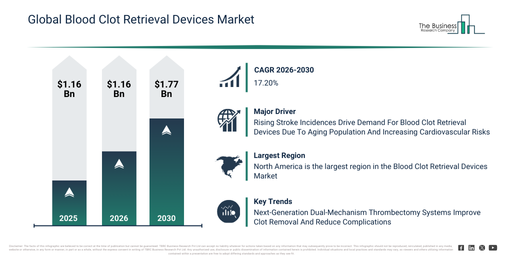
    The blood clot retrieval devices market has experienced rapid expansion in recent years. Its valuation is projected to increase from $2.37 billion in 2025 to $2.78 billion in 2026, demonstrating a compound annual growth rate (CAGR) of 17.5%. Historically, this growth can be attributed to a high incidence of ischemic stroke, limited treatment options, the inherent limitations of conventional thrombectomy, a lack of portable devices, and the low adoption of imaging-guided procedures.

    The blood clot retrieval devices market is set for considerable expansion in the near future. It is forecasted to reach $5.25 billion in 2030, demonstrating a compound annual growth rate (CAGR) of 17.2%. This projected increase is fueled by factors such as the widespread adoption of AI-assisted medical devices, the rise of minimally invasive surgical techniques, the incorporation of real-time imaging capabilities, the emergence of portable thrombectomy systems, and the global establishment of specialized stroke centers. Significant developments anticipated during this period encompass AI-powered thrombectomy systems, the refinement of minimally invasive instruments, advancements in catheter and stent technology, the seamless integration of real-time imaging, and innovative portable solutions for blood clot extraction.

    Get A Free Sample Report With In-Depth Market Insights:

    https://thebusinessresearchcompany.com/sample_request?id=17196553&type=smp&name=Blood%20Clot%20Retrieval%20Devices%20Market%20Report%202026&utm_source=Blogs&utm_medium=Paid&utm_campaign=Sep_PR

    Blood Clot Retrieval Devices Market Growth Drivers: What’s Behind The Acceleration?

    An anticipated increase in stroke cases is set to boost the expansion of the blood clot retrieval devices market moving ahead. A stroke is a medical event where the brain’s blood supply is disrupted or diminished, depriving brain tissue of vital oxygen and nutrients. This increase in strokes is primarily due to an aging demographic, given that elderly individuals are more susceptible to hypertension and vascular diseases, both of which raise the likelihood of stroke. For stroke sufferers, blood clot retrieval devices facilitate swift removal of obstructing clots from cerebral arteries, thereby reinstating blood flow and mitigating the danger of lasting impairment. To illustrate, data from May 2024, provided by the US-based government body, the Centers for Disease Control and Prevention, indicates that approximately 795,000 individuals in the US experience a stroke annually. Consequently, the growing frequency of strokes is stimulating the growth within the blood clot retrieval devices market.

    Blood Clot Retrieval Devices Market Segmentation: How Does The Market Break Down By Category?

    The blood clot retrieval devices market covered in this report is segmented –

    1) By Device Type: Mechanical Embolus Removal Device, Penumbra Blood Clot Retrieval Devices, Stent Retrievers, Aspiration Device, Ultrasound Assisted Devices

    2) By Technology: Mechanical Thrombectomy, Chemical Thrombectomy, Ultrasound-Assisted Thrombectomy, Laser-Assisted Thrombectomy

    3) By Stroke Type: Ischemic Stroke, Pulmonary Embolism, Deep Vein Thrombosis, Transient Ischemic Attack, Other Stroke Types

    4) By Application: Coronary Arteries, Peripheral Arteries, Cerebral Arteries

    5) By End-User: Hospitals, Diagnostic Centers, Specialty Clinics, Ambulatory Surgical Centers, Other End Users

    Subsegments:

    1) By Mechanical Embolus Removal Device: Rotational Thrombectomy Systems, Suction Based Systems, Rheolytic Thrombectomy Systems

    2) By Penumbra Blood Clot Retrieval Devices: Aspiration Systems, Separator Devices, Reperfusion Catheters

    3) By Stent Retrievers: Self Expanding Stent Retrievers, Retrievable Stent Systems, Balloon Expandable Stent Retrievers

    4) By Aspiration Device: Large Bore Aspiration Catheters, Vacuum Assisted Aspiration Systems, Manual Aspiration Syringe Systems

    6) By Ultrasound Assisted Devices: External Ultrasound Assisted Thrombolysis Systems, Catheter Directed Ultrasound Assisted Systems, Portable Ultrasound Assisted Devices

    Blood Clot Retrieval Devices Market Trends: What’s Defining The Industry’s Next Phase?

    Leading companies within the blood clot retrieval devices sector are concentrating on creating advanced solutions, including dual-mechanism thrombectomy systems, to enhance the effectiveness of clot removal and decrease complications during procedures. These systems integrate both mechanical clot extraction and aspiration (suction) methods into a singular device, thereby enabling more efficient removal of both acute and chronic blood clots, reducing the likelihood of clot migration, and lessening the necessity for repeated interventions. As an illustration, Inari Medical Inc., a US-based medical technologies firm, introduced the Artix Thrombectomy System in March 2025. This dual-mechanism arterial thrombectomy device is engineered to treat various arterial clots. The system unifies aspiration and mechanical clot extraction within a single procedure, incorporating an over-the-wire mechanical component, a low-profile, kink-resistant sheath, and a covered nitinol mesh funnel aimed at minimizing clot displacement. This device seeks to offer medical professionals enhanced procedural control and adaptability, facilitating the effective clearance of both acute and chronic clots while ensuring vessel access is maintained throughout the entire intervention.

    Blood Clot Retrieval Devices Market Company Landscape And Competitive Strategy

    Major companies operating in the blood clot retrieval devices market are Johnson & Johnson, Abbott Laboratories, Medtronic plc, Becton Dickinson and Company, Stryker Corporation, Boston Scientific Corporation, Terumo Corporation, Edwards Lifesciences Corporation, Cook Medical LLC, Merit Medical Systems Inc., Penumbra Inc., Surmodics Inc., AngioDynamics Inc., B. Braun Melsungen AG, Acandis GmbH, Phenox GmbH, Rapid Medical Ltd., Argon Medical Devices Inc., Shape Memory Medical Inc., Vesalio Inc.

    View The Full Blood Clot Retrieval Devices Market Report:

    https://thebusinessresearchcompany.com/report/blood-clot-retrieval-devices-global-market-report?utm_source=Blogs&utm_medium=Paid&utm_campaign=Sep_PR

    Blood Clot Retrieval Devices Market Largest Region: Which Geography Holds The Highest Market Share?

    North America was the largest region in the blood clot retrieval devices market in 2025. Asia-Pacific is expected to be the fastest-growing region in the forecast period. The regions covered in the blood clot retrieval devices market report are Asia-Pacific, South East Asia, Western Europe, Eastern Europe, North America, South America, Middle East, Africa.

    Reach Out To Our Team:

    The Business Research Company: https://www.thebusinessresearchcompany.com/

    Americas: +1 310-496-7795

    Asia: +44 7882 955267 & +91 8897263534

    Europe: +44 7882 955267

    Email us at: marketing@tbrc.info

    Follow us on:

    LinkedIn: https://in.linkedin.com/company/the-business-research-company

    YouTube: https://www.youtube.com/channel/UC24_fI0rV8cR5DxlCpgmyFQ

    Global Market Model: https://www.thebusinessresearchcompany.com/global-market-model
  • Blood And Fluid Warmer Market To Witness 7.6% CAGR Growth Through 2030: Key Industry Drivers

    Blood And Fluid Warmer Market To Witness 7.6% CAGR Growth Through 2030: Key Industry Drivers

    Featuring market attractiveness scoring, total addressable market sizing, company benchmarking matrices, interactive Excel dashboards, deeper supply chain intelligence, emerging startup tracking, and granular product-level insights, The Business Research Company’s 2026 market reports are built to deliver research that is both more actionable and more strategically valuable.

    Blood And Fluid Warmer Market Size Outlook: How Quickly Will Revenue Expand Through 2030?

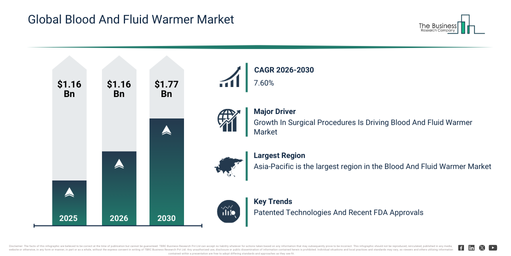
    The blood and fluid warmer market size has experienced strong growth in recent years. It is projected to increase from $1.22 billion in 2025 to $1.32 billion in 2026, with a compound annual growth rate (CAGR) of 8.5%. The growth observed in the historic period stems from factors such as an increase in surgical procedure volumes, growing awareness of intraoperative hypothermia risks, the early adoption of surface and fluid warming systems in hospitals, the expansion of critical care and trauma care infrastructure, and a rising emphasis on patient temperature management protocols.

    The blood and fluid warmer market is anticipated to experience substantial expansion over the coming years. It is projected to reach $1.78 billion by 2030, demonstrating a compound annual growth rate (CAGR) of 7.6%. This projected growth during the forecast period is primarily driven by factors such as the increasing need for portable and automated IV fluid warmers, the expanding application of warming systems in prehospital and transport environments, greater usage in neonatal and perioperative care, an intensified emphasis on patient safety and improved recovery, and the broader integration of warming technology in homecare and specialized medical facilities. Key trends anticipated during this period encompass the increased deployment of blood and fluid warmers in surgical and critical care scenarios, a rising preference for portable and point-of-care warming devices, their expanding role in emergency, trauma, and transport medical services, the wider availability of warming options for managing newborns and preoperative patients, and a sustained focus on preventing hypothermia while enhancing procedural effectiveness.

    Get A Free Sample Report With In-Depth Market Insights:

    https://thebusinessresearchcompany.com/sample_request?id=16631&type=smp&name=Blood%20And%20Fluid%20Warmer%20Market%20Report%202026&utm_source=Blogs&utm_medium=Paid&utm_campaign=Sep_PR

    Blood And Fluid Warmer Market Growth Factors Behind Sustained Expansion

    The expected increase in surgical interventions is projected to drive the future expansion of the blood and fluid warmer market. These interventions involve medical actions performed by trained healthcare professionals to treat diseases, injuries, or deformities through either incisions or minimally invasive techniques. Several factors contribute to the rise in surgical procedures, such as advancements in surgical methods, greater access to healthcare services, an aging demographic necessitating more medical care, and the growth of specialized surgical procedures for complex conditions. In surgical settings, blood and fluid warmers are essential for maintaining patient safety and optimizing outcomes by preventing hypothermia and ensuring fluids are at ideal temperatures, which enhances surgical efficacy and recovery. For instance, in January 2024, Intuitive Surgical (a US-based robotic surgery firm) reported that approximately 2,286,000 surgical procedures were performed with its da Vinci systems in 2023, representing an increase of 22% from 1,875,000 in 2022. Consequently, the growing number of surgical procedures is a key driver for the growth of the blood and fluid warmer market.

    Blood And Fluid Warmer Market Segment Trends And Revenue Contributors

    The blood and fluid warmer market covered in this report is segmented –

    1) By Product: Patient Warming Accessories, Intravenous Warming System, Surface Warming System

    2) By Application: Homecare, Acute Care, Newborn Care, Preoperative Care, Other Applications

    3) By End-User: Clinics, Hospitals, Specialty Centers, Other End Users

    Subsegments:

    1) By Patient Warming Accessories: Warming Blankets, Warming Pads, Warming Jackets, Heat Retention Covers

    2) By Intravenous Warming System: IV Fluid Warmers (Single-use), IV Fluid Warmers (Reusable), Portable IV Fluid Warmers, Automated IV Fluid Warmers

    3) By Surface Warming System: Convective Warming Systems, Conductive Warming Systems, Heating Mattresses, Forced Air Warming Systems

    Blood And Fluid Warmer Market Industry Trends Fueling Future Revenue Growth

    Leading firms within the blood and fluid warmer market are prioritizing the creation of sophisticated solutions, particularly those employing patented warming technology, to boost operational effectiveness and patient safety in healthcare environments and fulfill the essential requirement of keeping fluids at ideal temperatures. Such systems leverage inventive, patent-protected heating techniques to deliver precise and effective warming across diverse applications, encompassing medical devices, as well as uses in food preservation and outdoor equipment. An illustration of this trend is seen in June 2024, when MEQU A/S, a medical technology manufacturer based in Denmark, secured 510(k) approval from the US Food and Drug Administration (FDA) for its M Warmer System, a portable device designed for warming blood and IV-fluids. This M Warmer is capable of rapidly heating infusion fluids from cold to body temperature in under 10 seconds. Additionally, the AC powered M Station serves as an in-hospital power solution supporting the M Warmer System, suitable for deployment in settings like emergency rooms, operating theatres, intensive care units, and X-ray/CT scan facilities.

    Blood And Fluid Warmer Market Key Players Shaping Industry Direction

    Major companies operating in the blood and fluid warmer market are 3M Company, Stryker Corporation, Baxter International Inc., Belmont Instrument Corporation, Barkey GmbH & Co KG, Stihler Electronic GmbH, Biegler GmbH, EMIT Corporation, Estill Medical Technologies, Enthermics Medical Systems, Vyaire Medical Inc, Sino Medical‑Device Technology Co Ltd, Keewell Medical Technology Co Ltd, Geratherm Medical AG, Life Warmer Inc, QinFlow Ltd, The 37 Company, Cincinnati Sub‑Zero Products LLC, Gentherm Incorporated, MEQU A/S

    View The Full Blood And Fluid Warmer Market Report:

    https://thebusinessresearchcompany.com/report/blood-and-fluid-warmer-global-market-report?utm_source=Blogs&utm_medium=Paid&utm_campaign=Sep_PR

    Blood And Fluid Warmer Market Regional Analysis: Which Region Leads By Revenue?

    Asia-Pacific was the largest region in the blood and fluid warmer market in 2025. North America is expected to be the fastest-growing region in the forecast period. The regions covered in the blood and fluid warmer market report are Asia-Pacific, South East Asia, Western Europe, Eastern Europe, North America, South America, Middle East, Africa.

    Reach Out To Our Team:

    The Business Research Company: https://www.thebusinessresearchcompany.com/

    Americas: +1 310-496-7795

    Asia: +44 7882 955267 & +91 8897263534

    Europe: +44 7882 955267

    Email us at: marketing@tbrc.info

    Follow us on:

    LinkedIn: https://in.linkedin.com/company/the-business-research-company

    YouTube: https://www.youtube.com/channel/UC24_fI0rV8cR5DxlCpgmyFQ

    Global Market Model: https://www.thebusinessresearchcompany.com/global-market-model
  • Bipolar Electrosurgical Devices Market Projected For Strong Expansion Through 2030: Key Trends And Future Outlook

    Bipolar Electrosurgical Devices Market Projected For Strong Expansion Through 2030: Key Trends And Future Outlook

    Built to provide research that’s more actionable and strategically valuable, The Business Research Company’s 2026 market reports include market attractiveness analysis, total addressable market sizing, company benchmarking matrices, interactive Excel dashboards, broader supply chain intelligence, emerging startup tracking, and in-depth product insights.

    Bipolar Electrosurgical Devices Market Size, Value And Growth Trajectory Through 2030

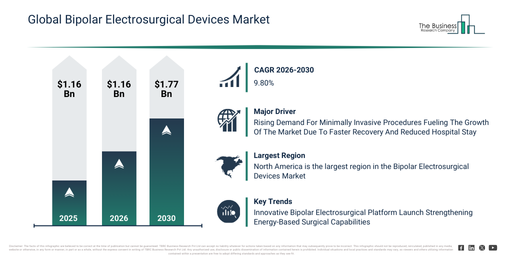
    The bipolar electrosurgical devices market has seen rapid expansion in recent years. It is anticipated to increase from $5.74 billion in 2025 to $6.32 billion in 2026, achieving a compound annual growth rate (CAGR) of 10.1%. The historical development in this market can be attributed to factors such as a reliance on monopolar electrosurgical methods, a rising volume of surgical procedures, ongoing advancements in hospital infrastructure, the initial adoption of bipolar forceps in open surgeries, and the demand for reduced bleeding during operations.

    The market for bipolar electrosurgical devices is projected to experience substantial expansion in the coming years, with its size reaching $9.19 billion in 2030 at a compound annual growth rate (CAGR) of 9.8%. This anticipated growth is driven by factors such as the increasing prevalence of robotic and laparoscopic surgical procedures, a heightened demand for sophisticated vessel sealing instruments, the growing occurrence of chronic and lifestyle-related diseases, greater investment in developing innovative surgical technologies, and a more stringent regulatory emphasis on surgical safety. Key developments expected during this period involve the increasing embrace of minimally invasive surgeries, a greater need for accurate and regulated energy application, the expansion of disposable and single-use bipolar tools, continuous improvements in vessel sealing technologies, and an enhanced emphasis on patient safety coupled with minimizing thermal tissue damage.

    Get A Free Sample Report With In-Depth Market Insights:

    https://thebusinessresearchcompany.com/sample_request?id=66811659&type=smp&name=Bipolar%20Electrosurgical%20Devices%20Market%20Report%202026&utm_source=Blogs&utm_medium=Paid&utm_campaign=Sep_PR

    Bipolar Electrosurgical Devices Market Demand Drivers Opening New Revenue Streams

    An anticipated increase in the demand for minimally invasive surgical procedures is poised to drive the expansion of the bipolar electrosurgical devices market in the future. These surgeries involve medical interventions conducted via small incisions, employing specialized tools and methods to lessen bodily trauma, leading to quicker healing and reduced pain post-operation. The increasing desire for minimally invasive surgeries stems from patients’ preference for treatments that alleviate discomfort, shorten recuperation periods, and decrease hospital durations, all while delivering effective results with less physical harm. Bipolar electrosurgical devices facilitate minimally invasive operations by enabling accurate tissue cutting and sealing with limited thermal diffusion, which lessens harm to adjacent tissues and aids in more rapid patient recovery. As an illustration, in September 2023, the American Society of Plastic Surgeons, a US-based non-profit organization, reported a 7% rise in minimally invasive operations in 2023 compared to 2022, alongside the performance of 4.7 million procedures utilizing botulinum toxin type A treatments (such as Botox, Dysport, and Xeomin), marking a 6% increase from 2022. Consequently, the heightened demand for minimally invasive surgical interventions is propelling the expansion of the bipolar electrosurgical devices market.

    Bipolar Electrosurgical Devices Market Segment Analysis Spotlighting Growth Areas

    The bipolar electrosurgical devices market covered in this report is segmented –

    1) By Product: Bipolar Forceps, Advanced Vessel Sealing Devices, Other Products

    2) By Surgery: General Surgery, Gynecological Surgery, Cardiovascular Surgery, Orthopedic Surgery, Oncological Surgery, Cosmetic Surgery, Neurological Surgery, Urological Surgery, Other Surgeries

    3) By End Users: Hospitals, Ambulatory Surgical Centers, Specialized Clinics, Other End Users

    Subsegments:

    1) By Bipolar Forceps: Reusable Bipolar Forceps, Disposable Bipolar Forceps, Bayonet Bipolar Forceps, Straight Bipolar Forceps

    2) By Advanced Vessel Sealing Devices: Handheld Vessel Sealing Instruments, Laparoscopic Vessel Sealing Devices, Robotic-Compatible Vessel Sealers, Energy-Based Combination Sealers

    3) By Other Products: Bipolar Electrosurgical Generators, Bipolar Cables And Accessories, Bipolar Electrode Pencils, Bipolar Loop Electrodes

    Bipolar Electrosurgical Devices Market Trends Powering Strategic Industry Growth

    Major companies operating in the bipolar electrosurgical devices market are increasingly focused on integrating digital and connected energy-management systems, such as advanced surgical-energy platforms, to elevate efficiency, streamline workflow integration, and refine surgical precision. These sophisticated platforms represent integrated electrosurgical systems that merge modality control, automatic instrument recognition, and real-time energy optimization, thereby facilitating capabilities like dynamic power adjustment, real-time device monitoring, and automated mode selection. As an illustration, in April 2025, Erbe Elektromedizin GmbH, a Germany-based surgical-technology company, unveiled VIO seal, an advanced bipolar-energy platform specifically engineered to aid vessel sealing and bipolar dissection. This platform features digital instrument recognition, mode-specific energy delivery optimized for various tissue types, and workflow automation for more rapid operating room (OR) integration. VIO seal notably enhances energy-delivery precision, procedural efficiency, and the overall consistency of bipolar surgical outcomes.

    Bipolar Electrosurgical Devices Market Competitive Analysis Of Leading Industry Participants

    Major companies operating in the bipolar electrosurgical devices market are Johnson And Johnson, Medtronic plc, Stryker Corporation, Boston Scientific Corporation, Olympus Corporation, Smith And Nephew plc, Karl Storz SE And Co KG, Integra LifeSciences Holdings Corporation, ConMed Corporation, KLS Martin Group, Erbe Elektromedizin GmbH, B Braun Melsungen AG, Advanced Instrumentations Inc, Kirwan Surgical Products LLC, XcelLance Medical Technologies Pvt Ltd, LED SpA, Encision Inc, KENTAMED Ltd, BOWA electronic GmbH And Co KG, Aesculap AG, Ethicon Endo Surgery, Soring GmbH

    View The Full Bipolar Electrosurgical Devices Market Report:

    https://thebusinessresearchcompany.com/report/bipolar-electrosurgical-devices-global-market-report?utm_source=Blogs&utm_medium=Paid&utm_campaign=Sep_PR

    Bipolar Electrosurgical Devices Market Geographic Distribution And Regional Opportunities

    North America was the largest region in the bipolar electrosurgical devices market in 2025. The regions covered in the bipolar electrosurgical devices market report are Asia-Pacific, South East Asia, Western Europe, Eastern Europe, North America, South America, Middle East, Africa.

    Reach Out To Our Team:

    The Business Research Company: https://www.thebusinessresearchcompany.com/

    Americas: +1 310-496-7795

    Asia: +44 7882 955267 & +91 8897263534

    Europe: +44 7882 955267

    Email us at: marketing@tbrc.info

    Follow us on:

    LinkedIn: https://in.linkedin.com/company/the-business-research-company

    YouTube: https://www.youtube.com/channel/UC24_fI0rV8cR5DxlCpgmyFQ

    Global Market Model: https://www.thebusinessresearchcompany.com/global-market-model
  • Biotechnology Instruments Market Outlook 2026–2030: Growth Trends, Market Dynamics And Emerging Opportunities

    Biotechnology Instruments Market Outlook 2026–2030: Growth Trends, Market Dynamics And Emerging Opportunities

    Backed by market attractiveness analysis, total addressable market sizing, company benchmarking matrices, interactive Excel dashboards, wider supply chain intelligence, emerging startup coverage, and detailed product-level insights, The Business Research Company’s 2026 market reports are designed to offer research that is more actionable and strategically valuable than ever.

    Biotechnology Instruments Market CAGR Outlook And Future Development

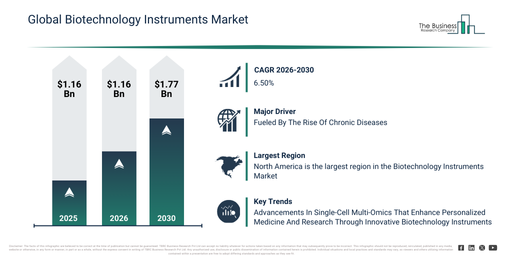
    The biotechnology instruments market size has experienced significant growth in recent years. It is projected to increase from $80.9 billion in 2025 to $86.43 billion in 2026, demonstrating a compound annual growth rate (CAGR) of 6.8%. The expansion during the past period can be attributed to factors such as restricted automation in biotechnology laboratories, dependence on manual sample processing, expanding pharmaceutical and biotech research, the adoption of conventional diagnostic instruments, and a rising demand for laboratory consumables.

    The biotechnology instruments market is anticipated to experience robust expansion over the coming years. It is projected to reach $111.27 billion in 2030, exhibiting a compound annual growth rate (CAGR) of 6.5%. This growth during the forecast period is fueled by several factors, such as the creation of advanced lab automation tools, the incorporation of AI and robotics into research processes, the broadening scope of genomics and proteomics investigations, increased financial commitment to pharmaceutical R&D, and the implementation of cloud-based data management systems. Key developments expected within this period encompass the increased use of lab automation instruments, a surging need for high-throughput screening and analysis, the continued expansion of proteomics and genomics research, the growing application of IVD instruments in clinical diagnostics, and a heightened emphasis on quality control and adherence to regulations.

    Get A Free Sample Report With In-Depth Market Insights:

    https://thebusinessresearchcompany.com/sample_request?id=57799073&type=smp&name=Biotechnology%20Instruments%20Market%20Report%202026&utm_source=Blogs&utm_medium=Paid&utm_campaign=Sep_PR

    Biotechnology Instruments Market Growth Backed By Core Demand Fundamentals

    The expanding occurrence of chronic diseases is projected to drive the future expansion of the biotechnology instruments market. These persistent health issues, also referred to as chronic conditions or illnesses, endure for prolonged durations, commonly extending beyond three months. Factors contributing to the widespread nature of chronic diseases include detrimental lifestyle decisions, an increasingly older demographic, and improved detection and diagnostic capabilities. Biotechnology instruments contribute to an enhanced quality of life for individuals suffering from chronic diseases by refining diagnostic precision, streamlining therapeutic approaches, and facilitating more effective disease oversight. Moreover, these instruments aid in identifying prospective drug compounds and deciphering their impact on chronic ailments. For instance, the National Health Service, a UK-based government department, reported in June 2024 that 3,615,330 individuals registered with a general practitioner (GP) were diagnosed with non-diabetic hyperglycemia or pre-diabetes (a condition where blood sugar levels are elevated but not high enough for a diabetes diagnosis) in 2023. This figure showed an 18% rise from the 3,065,825 cases recorded in 2022. Consequently, the escalating need stemming from chronic diseases is fueling the expansion of the biotechnology instruments market.

    Biotechnology Instruments Market Segment Performance And Emerging Opportunities

    The biotechnology instruments market covered in this report is segmented –

    1) By Product: Lab Automation Instruments, Life Science Consumables, In Vitro Diagnostic (IVD) Instruments

    2) By Application: Clinical Diagnostics, Drug Discovery And Development, Proteomics And genomics, Cell Analysis, Other Applications

    3) By End-user: Pharmaceutical And Biotechnology Companies, Hospitals And Diagnostic Laboratories, Academic And Research Institutes, Other End Users

    Subsegments:

    1) By Lab Automation Instruments: Robotic Liquid Handlers, Automated Plate Readers, Automated Workstations, Lab Sample Storage Systems

    2) By Life Science Consumables: Reagents And Chemicals, Sample Collection And Transport Devices, Laboratory Plasticware, Culture Media And Kits

    3) By In Vitro Diagnostic (IVD) Instruments: Molecular Diagnostic Instruments, Clinical Chemistry Analyzers, Hematology Analyzers, Immunoassay Analyzers

    Biotechnology Instruments Market Growth Trends Reshaping The Competitive Landscape

    Leading companies within the biotechnology instruments market are prioritizing the creation of novel products, such as single-cell multi-omics offerings, to advance personalized medicine approaches and further genomics, proteomics, and metabolomics research. Single-cell multi-omics products are sophisticated technologies designed to analyze various types of biological data from individual cells, integrating information across multiple omics layers like genomics, transcriptomics, proteomics, and metabolomics. As an illustration, in June 2023, Singleron Biotechnologies, a Germany-based biotechnology company, introduced two innovative instruments, the NEO and the Python Junior, intended to improve the standardization of single-cell analysis workflows. The Neo system is capable of processing up to half a million cells in one run across four independent channels, thereby enabling high throughput and flexibility for handling diverse applications simultaneously. Meanwhile, the Python Junior instrument is dedicated to dissociating solid tissues into high-quality single-cell suspensions, employing a blend of mechanical treatment and enzymatic digestion to enhance the efficiency of the dissociation process.

    Biotechnology Instruments Market Leading Companies And Competitive Benchmarking

    Major companies operating in the biotechnology instruments market are Thermo Fisher Scientific Inc., Abbott Laboratories, Danaher Corporation, Siemens Healthineers AG, Merck KGaA, Quest Diagnostics Inc., Avantor Inc., Agilent Technologies, Illumina Inc., Sartorius AG, Mettler Toledo, Perkin Elmer Inc., Shimadzu Corporation, Bruker Corporation, Zeiss Group, QIAGEN N.V., Novanta Inc., Cynosure LLC, Bio-Rad Laboratories Inc, Ori Biotech Limited, Hudson Robotics

    View The Full Biotechnology Instruments Market Report:

    https://thebusinessresearchcompany.com/report/biotechnology-instruments-global-market-report?utm_source=Blogs&utm_medium=Paid&utm_campaign=Sep_PR

    Biotechnology Instruments Market Largest Region By Revenue And Market Share

    North America was the largest region in the biotechnology instruments market in 2025. Asia-Pacific is expected to be the fastest-growing region in the forecast period. The regions covered in the biotechnology instruments market report are Asia-Pacific, South East Asia, Western Europe, Eastern Europe, North America, South America, Middle East, Africa.

    Reach Out To Our Team:

    The Business Research Company: https://www.thebusinessresearchcompany.com/

    Americas: +1 310-496-7795

    Asia: +44 7882 955267 & +91 8897263534

    Europe: +44 7882 955267

    Email us at: marketing@tbrc.info

    Follow us on:

    LinkedIn: https://in.linkedin.com/company/the-business-research-company

    YouTube: https://www.youtube.com/channel/UC24_fI0rV8cR5DxlCpgmyFQ

    Global Market Model: https://www.thebusinessresearchcompany.com/global-market-model
  • Biotechnology Equipment Market Growth Outlook From $87.03 Billion In 2026 To $157.49 Billion By 2030

    Biotechnology Equipment Market Growth Outlook From $87.03 Billion In 2026 To $157.49 Billion By 2030

    Featuring market attractiveness scoring, total addressable market sizing, company benchmarking matrices, interactive Excel dashboards, deeper supply chain intelligence, emerging startup tracking, and granular product-level insights, The Business Research Company’s 2026 market reports are built to deliver research that is both more actionable and more strategically valuable.

    Biotechnology Equipment Market Set To Climb From $87.03 Billion In 2026 To $157.49 Billion By 2030

    The biotechnology equipment market has experienced rapid expansion in recent years. It is anticipated to increase from $74.83 billion in 2025 to $87.03 billion in 2026, showing a compound annual growth rate (CAGR) of 16.3%. The growth observed in prior periods stemmed from factors including manual laboratory processes, a lack of widespread automation, expanding life science research, rising demand for clinical diagnostics, and traditional cell culture techniques.

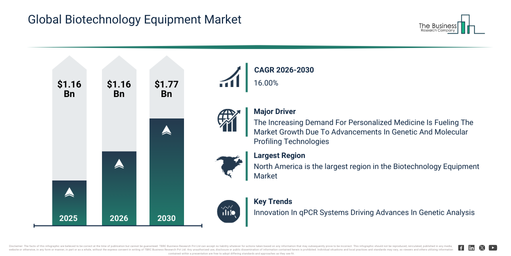
    The biotechnology equipment market is poised for substantial expansion in the coming years. Its valuation is projected to reach $157.49 billion by 2030, demonstrating a robust compound annual growth rate (CAGR) of 16.0%. This anticipated growth can be attributed to factors such as the integration of AI and robotics in laboratories, a surge in pharmaceutical R&D investments, the increasing adoption of high-throughput screening, the continued expansion of genomics and precision medicine, and the utilization of advanced bioprocessing equipment. Significant trends anticipated during this period encompass a greater uptake of lab automation instruments, an escalating demand for life science consumables, the broadening of in vitro diagnostics (IVD) applications, the increasing use of medical lasers in clinical procedures, and rising investments in bioreactors, fermenters, and chromatography systems.

    Get A Free Sample Report With In-Depth Market Insights:

    https://thebusinessresearchcompany.com/sample_request?id=86100075&type=smp&name=Biotechnology%20Equipment%20Market%20Report%202026&utm_source=Blogs&utm_medium=Paid&utm_campaign=Sep_PR

    Biotechnology Equipment Market Growth Catalysts And Demand Drivers

    The future expansion of the biotechnology equipment market is anticipated to be propelled by the rising demand for personalized medicine. This medical approach involves customizing treatment plans to individual characteristics like genetic makeup, lifestyle, and environment, aiming to boost treatment efficacy and minimize adverse reactions. The heightened need for personalized medicine largely arises from advancements in genetic and molecular profiling technologies, which facilitate tailored treatments based on an individual’s unique biological composition, thereby improving effectiveness and reducing side effects. Biotechnology equipment supports personalized medicine by offering precise tools for the analysis of genetic and molecular data, enabling customized treatments that enhance patient outcomes and mitigate adverse effects. For instance, in February 2024, the US-based non-profit organization, Personalized Medicine Coalition, reported that the FDA approved 16 new personalized treatments for patients with rare diseases in 2023, a significant increase from the six approvals observed in 2022. Of these 2023 approvals, seven were cancer drugs, and three addressed other diseases and conditions. Therefore, the growing demand for personalized medicine is a key driver for the biotechnology equipment market’s growth.

    Biotechnology Equipment Market Segment Landscape And Growth Outlook

    The biotechnology equipment market covered in this report is segmented –

    1) By Product: Lab Automation Instruments, Life Science Consumables, In Vitro Diagnostics (IVD) Instruments, Other Products

    2) By Application: Life Science, Clinical Diagnostics, Quality Management, Food And Beverage Testing

    3) By End-User: Pharmaceutical Companies, Government And Academic Institutions, Hospitals And Healthcare Facilities, Other End-Users

    Subsegments:

    1) By Lab Automation Instruments: Liquid Handling Systems, Automated Microplate Handling Systems, Automated Sample Preparation Systems, Robotic Workstations, Automated Nucleic Acid Extraction Systems

    2) By Life Science Consumables: Pipette Tips, Microplates And Polymerase Chain Reaction Plates, Cell Culture Products, Filtration Devices And Membranes, Reagents And Enzymes

    3) By In Vitro Diagnostics (IVD) Instruments: Immunoassay Analyzers, Molecular Diagnostics Instruments, Hematology Analyzers, Clinical Chemistry Analyzers, Coagulation Analyzers

    4) By Other Products: Bioreactors And Fermenters, Chromatography Systems, Spectroscopy Instruments, Centrifuges, Incubators And Ovens

    Biotechnology Equipment Market Trends Shaping Long-Term Demand

    Leading companies in the biotechnology equipment market are concentrating on developing innovative systems, such as qPCR systems, to improve accuracy, speed, and efficiency in genetic analysis. Quantitative polymerase chain reaction (qPCR) systems are laboratory instruments designed to amplify and simultaneously quantify targeted DNA or RNA molecules in real time; they aid biotechnology by enabling precise gene expression analysis, mutation detection, and disease diagnostics, thereby accelerating research, clinical testing, and the development of targeted therapies. For instance, in September 2024, Takara Bio USA, Inc., a US-based manufacturing company, launched the SmartChip ND Real-Time PCR System, a high-throughput, automated qPCR platform engineered to advance broad surveillance of antimicrobial resistance through flexible, nanoliter-scale reactions and reduced hands-on time. This next-generation system supports high-throughput monitoring by enabling up to 5,184 nanoliter-scale reactions per chip, while requiring less than 30 minutes of hands-on time. The system eliminates the need for preamplification, which reduces both reagent costs and experimental variability. With its compact design and flexible configuration options, the SmartChip ND system is particularly well-suited for environmental surveillance laboratories aiming to monitor large panels of AMR-related genes at low cost.

    Biotechnology Equipment Market Industry Leaders And Competitive Landscape

    Major companies operating in the biotechnology equipment market are Hoffmann La Roche Aktiengesellschaft, Thermo Fisher Scientific Inc, Danaher Corporation, Becton Dickinson and Company, Avantor Inc, Agilent Technologies Inc, Illumina Inc, Sartorius Aktiengesellschaft, PerkinElmer Inc, Mettler Toledo International Inc, Shimadzu Corporation, Waters Corporation, Bio Rad Laboratories Inc, Bruker Corporation, Buchi Labortechnik AG, Eppendorf SE, BioTek Instruments Inc, bioMerieux SA, Analytik Jena AG, Tecan Group AG

    View The Full Biotechnology Equipment Market Report:

    https://thebusinessresearchcompany.com/report/biotechnology-equipment-global-market-report?utm_source=Blogs&utm_medium=Paid&utm_campaign=Sep_PR

    Biotechnology Equipment Market Regional Analysis And Leading Geography

    North America was the largest region in the biotechnology equipment market in 2025. The regions covered in the biotechnology equipment market report are Asia-Pacific, South East Asia, Western Europe, Eastern Europe, North America, South America, Middle East, Africa.

    Reach Out To Our Team:

    The Business Research Company: https://www.thebusinessresearchcompany.com/

    Americas: +1 310-496-7795

    Asia: +44 7882 955267 & +91 8897263534

    Europe: +44 7882 955267

    Email us at: marketing@tbrc.info

    Follow us on:

    LinkedIn: https://in.linkedin.com/company/the-business-research-company

    YouTube: https://www.youtube.com/channel/UC24_fI0rV8cR5DxlCpgmyFQ

    Global Market Model: https://www.thebusinessresearchcompany.com/global-market-model
  • Biopsy Needle Market Forecast To Reach $2.06 Billion By 2030: Key Growth Drivers And Industry Trends

    Biopsy Needle Market Forecast To Reach $2.06 Billion By 2030: Key Growth Drivers And Industry Trends

    Built to provide research that’s more actionable and strategically valuable, The Business Research Company’s 2026 market reports include market attractiveness analysis, total addressable market sizing, company benchmarking matrices, interactive Excel dashboards, broader supply chain intelligence, emerging startup tracking, and in-depth product insights.

    Biopsy Needle Market Forecast: Value Set To Climb From $1.52 Billion To $2.06 Billion

    The biopsy needle market has experienced robust growth in recent years. It is projected to expand from $1.41 billion in 2025 to $1.52 billion in 2026, at a compound annual growth rate (CAGR) of 7.8%. This historical growth can be attributed to factors including the continued reliance on traditional core needle biopsy methods, the limited availability of vacuum-assisted biopsy devices, the increasing prevalence of cancer cases, an expansion in hospital and surgical center infrastructure, and a growing awareness of early diagnostic procedures.

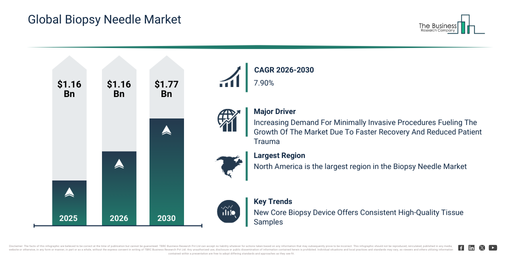
    The biopsy needle market size is expected to experience significant expansion over the next few years. It is projected to grow to $2.06 billion in 2030, demonstrating a compound annual growth rate (CAGR) of 7.9%. This increase during the forecast period is primarily driven by technological advancements in image-guided and vacuum-assisted devices, the creation of innovative disposable needle designs, the proliferation of diagnostic clinics and pathology laboratories, increasing investment in research and academic institutions, and the integration of AI and digital tools for precise diagnostics. Significant trends anticipated in the forecast period encompass the increasing adoption of image-guided biopsy procedures, a rising preference for disposable biopsy needles, the growth of minimally invasive diagnostic techniques, the expansion of cancer and tumor screening programs, and an enhanced focus on patient safety and sterility standards.

    Get A Free Sample Report With In-Depth Market Insights:

    https://thebusinessresearchcompany.com/sample_request?id=68389889&type=smp&name=Biopsy%20Needle%20Market%20Report%202026&utm_source=Blogs&utm_medium=Paid&utm_campaign=Sep_PR

    Biopsy Needle Market Opportunity Drivers: What’s Unlocking New Revenue Potential?

    The escalating preference for minimally invasive procedures is projected to spur the expansion of the biopsy needle market moving forward. These medical techniques are carried out through minor incisions or openings, thereby reducing patient trauma and accelerating recovery. The appeal of minimally invasive surgical procedures stems from their capacity to offer quicker recuperation periods, diminished complication risks, less pain, and smaller scars, thus making them more attractive to patients seeking swifter and safer treatment options. Biopsy needles are instrumental in minimally invasive procedures, enabling precise tissue sampling and reducing the necessity for extensive surgical intervention. They contribute to faster diagnoses and recovery times, enhancing patient comfort and improving procedural efficiency. For example, in November 2024, the American Society of Plastic Surgeons, a US-based non-profit organization, stated that the total number of cosmetic minimally invasive procedures reached 25,442,640 in 2023, representing a 7% increase from 23,672,269 in 2022. Therefore, the increasing demand for minimally invasive procedures is a key factor driving the growth of the biopsy needle market.

    Biopsy Needle Market Breakdown By Product Type And Application

    The biopsy needle market covered in this report is segmented –

    1) By Usage: Disposable, Non-Disposable

    2) By Product: Needle Based Biopsy Guns, Vacuum-Assisted Biopsy Devices, Fine Needle Aspiration Biopsy Devices, Core Needle Biopsy Devices

    3) By Procedure: Image-Guided Procedures, Non-Image-Guided Procedures

    4) By Application: Cancer Or Tumor, Breast, Lung, Prostate, Colon, Stomach, Liver, Rectum, Cervix Uteri, Other Applications

    5) By End-User: Hospitals And Surgical Centers, Diagnostic Clinics And Pathology Laboratories, Ambulatory Care Centers, Research And Academic Institutes

    Subsegments:

    1) By Disposable: Coaxial Biopsy Needles, Chiba Needles, Jamshidi Needles

    2) By Non-Disposable: Reusable Tru-Cut Biopsy Needles, Reusable Menghini Needles, Reusable Francine Needles

    Biopsy Needle Market Innovation Trends Shaping Future Development

    Major companies in the biopsy needle market are concentrating on developing technologically advanced products, such as semi-automatic core biopsy instruments, to improve precision and ease of tissue sampling in minimally invasive procedures. Semi-automatic core biopsy instruments are medical devices that utilize a spring-loaded mechanism to quickly and accurately gather tissue samples with minimal manual effort during a biopsy procedure. For example, in May 2023, Argon Medical Devices Inc., a US-based medical device manufacturer, introduced the SuperCore Advantage semi-automatic biopsy instrument. This is a semi-automatic, disposable core biopsy needle designed to provide consistent, high-quality tissue samples for accurate diagnosis. It incorporates an ergonomic design, a sharp cutting edge for clean specimen retrieval, and an adjustable throw length to suit varying lesion depths. The device also improves biopsy precision while minimizing patient discomfort, offering better diagnostic options for patients.

    Biopsy Needle Market Key Participants And Competitive Landscape

    Major companies operating in the biopsy needle market are Cardinal Health Inc., Medtronic plc, Becton Dickinson and Company, Stryker Corporation, Boston Scientific Corporation, Olympus Corporation, Hologic Inc., Cook Medical, Halma plc, Merit Medical Systems Inc., ConMed Corporation, Devicor Medical Products Inc., Shandong Weigao Group Medical Polymer Company Limited, Remington Medical Inc., Advin Health Care, Nikotech Healthcare Pvt. Ltd., Argon Medical Devices Inc., Geotek Medical Products Co. Ltd., Biomedical Srl, Hakko Co. Ltd., INRAD Inc.

    View The Full Biopsy Needle Market Report:

    https://thebusinessresearchcompany.com/report/biopsy-needle-global-market-report?utm_source=Blogs&utm_medium=Paid&utm_campaign=Sep_PR

    Biopsy Needle Market Geographic Analysis: Where Is Demand Accelerating Fastest?

    North America was the largest region in the biopsy needle market in 2025. Asia-Pacific is expected to be the fastest-growing region in the forecast period. The regions covered in the biopsy needle market report are Asia-Pacific, South East Asia, Western Europe, Eastern Europe, North America, South America, Middle East, Africa.

    Reach Out To Our Team:

    The Business Research Company: https://www.thebusinessresearchcompany.com/

    Americas: +1 310-496-7795

    Asia: +44 7882 955267 & +91 8897263534

    Europe: +44 7882 955267

    Email us at: marketing@tbrc.info

    Follow us on:

    LinkedIn: https://in.linkedin.com/company/the-business-research-company

    YouTube: https://www.youtube.com/channel/UC24_fI0rV8cR5DxlCpgmyFQ

    Global Market Model: https://www.thebusinessresearchcompany.com/global-market-model
  • Biopsy Devices Market Research 2026: Market Size, Trends, Segments And Growth Forecast

    Biopsy Devices Market Research 2026: Market Size, Trends, Segments And Growth Forecast

    Backed by market attractiveness analysis, total addressable market sizing, company benchmarking matrices, interactive Excel dashboards, wider supply chain intelligence, emerging startup coverage, and detailed product-level insights, The Business Research Company’s 2026 market reports are designed to offer research that is more actionable and strategically valuable than ever.

    Biopsy Devices Market Revenue Growth On Track For A 8.8% CAGR Through 2030

    The biopsy devices market has experienced substantial growth in recent years. Projections indicate its value will increase from $3.24 billion in 2025 to $3.53 billion in 2026, demonstrating a compound annual growth rate (CAGR) of 9.1%. This historical development is primarily due to several factors, including an increase in cancer screening rates, the proliferation of diagnostic imaging centers, a greater adoption of biopsy procedures for early detection, the introduction of sophisticated imaging technologies, and enhanced diagnostic capacities within hospitals.

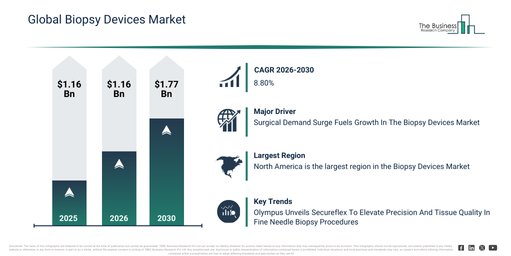
    The biopsy devices market is projected to experience robust expansion in the coming years. It is anticipated to reach $4.95 billion by 2030, demonstrating a compound annual growth rate (CAGR) of 8.8%. This growth during the forecast period is primarily driven by the increasing integration of AI-assisted biopsy guidance, a rising demand for outpatient diagnostic procedures, the expansion of precision oncology practices, a growing emphasis on early disease detection, and increasing investments in advanced biopsy technologies. Key trends anticipated in this period include the wider adoption of image-guided biopsy systems, a rising use of minimally invasive biopsy techniques, a growing demand for precision sampling devices, the expansion of automated biopsy guidance technologies, and an enhanced focus on diagnostic accuracy.

    Get A Free Sample Report With In-Depth Market Insights:

    https://thebusinessresearchcompany.com/sample_request?id=44223154&type=smp&name=Biopsy%20Devices%20Market%20Report%202026&utm_source=Blogs&utm_medium=Paid&utm_campaign=Sep_PR

    Biopsy Devices Market Growth Momentum: What Factors Are Shaping Demand?

    The anticipated increase in surgical procedures is projected to fuel the expansion of the biopsy devices market. Surgery encompasses a medical field dedicated to treating injuries, diseases, and diverse conditions using both manual techniques and specialized instruments. During surgical operations, biopsy tools are commonly utilized to obtain a small tissue specimen or cell collection for later examination in a laboratory. For example, data from July 2025, provided by the American Med Spa Association (a US-based entity offering legal, compliance, and business support for medical spas and aesthetic practices), indicates a 42.5% surge in cosmetic procedure volumes over the last four years, amounting to 20.5 million non-surgical treatments and 17.4 million surgical procedures by 2024. Consequently, the rising volume of surgeries is propelling the future growth of the biopsy devices market.

    Biopsy Devices Market Segment Analysis And Revenue Potential

    The biopsy devices market covered in this report is segmented –

    1) By Product Type: Needle-Based Biopsy Guns, Biopsy Forceps, Biopsy Guidance Systems, Biopsy Needles, Other Products

    2) By Image Guiding Technology: MRI-Guided Biopsy, Stereotactic-Guided Biopsy, Ultrasound-Guided Biopsy, Other Imaging Technologies

    3) By Application: Breast Biopsy, Gynecological Biopsy, Prostate Biopsy, Blood Cancers Biopsy, Skin Biopsy, Kidney Biopsy, Gastroenterology Biopsy, Other Applications

    4) By End User: Diagnostics And Imaging Centers, Hospitals, Other End User

    Subsegments:

    1) By Needle-Based Biopsy Guns: Spring-Loaded Biopsy Guns, Vacuum-Assisted Biopsy Guns

    2) By Biopsy Forceps: Endoscopic Biopsy Forceps, Surgical Biopsy Forceps

    3) By Biopsy Guidance Systems: Ultrasound-Guided Biopsy Systems, CT-Guided Biopsy Systems, MRI-Guided Biopsy Systems

    4) By Biopsy Needles: Core Needles, Fine Needle Aspiration (FNA) Needles, Coaxial Needles

    5) By Other Products: Biopsy Sutures, Biopsy Markers, Biopsy Storage Solutions

    Biopsy Devices Market Trends Redefining Industry Growth

    Major companies operating in the biopsy devices market are increasingly focused on developing advanced solutions, such as fine-needle biopsy precision technology, to enhance diagnostic accuracy and improve sample quality. This technology pertains to the creation of needles with specialized tips and durable materials designed to optimize tissue extraction while preserving cellular architecture, thereby supporting dependable pathology analysis. For instance, in October 2025, Olympus, a Japan-based medical-technology company, introduced its SecureFlex single-use fine-needle biopsy device, which features nitinol construction and a dual-beveled Raptor Tip. This tip facilitates the collection of larger, intact tissue specimens by minimizing tissue escape and boosting puncture performance. The device’s construction also includes a multi-layer sheath, enabling consistent access to complex anatomical structures like the pancreatic head and uncinate process without the need for frequent scope adjustments. SecureFlex supports fine-needle biopsy via EUS-FNB for gastrointestinal lesions, allowing physicians to obtain high-quality tissue for precise diagnosis and treatment planning. This device contributes to improved sample quality, procedural efficiency, and safety in endoscopic biopsy procedures.

    Biopsy Devices Market Top Companies Driving Competitive Growth

    Major companies operating in the biopsy devices market are Becton Dickinson and Company, Hologic Inc, Boston Scientific Corporation, Cook Medical LLC, Argon Medical Devices Inc, Olympus Corporation, Medtronic plc, Stryker Corporation, B Braun Melsungen AG, INRAD Inc, TSK Laboratory, Mauna Kea Technologies, Veran Medical Technologies, Merit Medical Systems Inc, ConMed Corporation, DTR Medical, Gallini Srl, TransMed7 LLC, MDL Srl, Biopsybell Srl

    View The Full Biopsy Devices Market Report:

    https://thebusinessresearchcompany.com/report/biopsy-devices-global-market-report?utm_source=Blogs&utm_medium=Paid&utm_campaign=Sep_PR

    Biopsy Devices Market Global Footprint: Which Region Leads The Industry?

    North America was the largest region in the biopsy devices market in 2025. Asia-Pacific was the second largest region in the global biopsy devices market report share. The regions covered in the biopsy devices market report are Asia-Pacific, South East Asia, Western Europe, Eastern Europe, North America, South America, Middle East, Africa.

    Reach Out To Our Team:

    The Business Research Company: https://www.thebusinessresearchcompany.com/

    Americas: +1 310-496-7795

    Asia: +44 7882 955267 & +91 8897263534

    Europe: +44 7882 955267

    Email us at: marketing@tbrc.info

    Follow us on:

    LinkedIn: https://in.linkedin.com/company/the-business-research-company

    YouTube: https://www.youtube.com/channel/UC24_fI0rV8cR5DxlCpgmyFQ

    Global Market Model: https://www.thebusinessresearchcompany.com/global-market-model
  • Bioprosthetics Market Forecast 2026: Market Size, Competitive Landscape And Growth Drivers

    Bioprosthetics Market Forecast 2026: Market Size, Competitive Landscape And Growth Drivers

    Featuring market attractiveness scoring, total addressable market sizing, company benchmarking matrices, interactive Excel dashboards, deeper supply chain intelligence, emerging startup tracking, and granular product-level insights, The Business Research Company’s 2026 market reports are built to deliver research that is both more actionable and more strategically valuable.

    Bioprosthetics Market Value Growth And Long-Term Outlook

    The bioprosthetics market size has experienced substantial growth in recent years. It is projected to expand from $6.27 billion in 2025 to $6.86 billion in 2026, demonstrating a compound annual growth rate (CAGR) of 9.5%. This historical growth can be attributed to various factors including limited biocompatible materials, a high prevalence of tissue injuries, the limitations of conventional prosthetics, a rise in surgical procedures, and the lack of smart prosthetic integration.

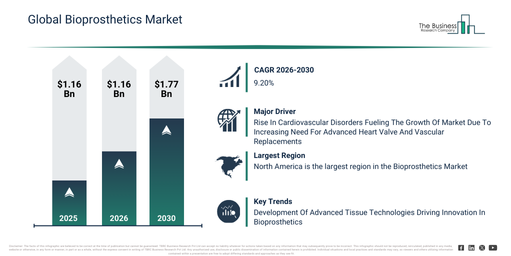
    The bioprosthetics market is anticipated to experience substantial expansion in the coming years. It is projected to grow to $9.77 billion in 2030, exhibiting a compound annual growth rate (CAGR) of 9.2%. This projected increase during the forecast period can be attributed to several factors, including the rising development of personalized implants, advancements in tissue-engineered constructs, AI-driven prosthetic innovation, an increasing adoption of smart prosthetic devices, and the global expansion of orthopedic and reconstructive surgeries. Major trends expected in the forecast period include AI-enhanced prosthetic design, the integration of biocompatible materials, personalized implant manufacturing, smart prosthetic devices equipped with sensors, and sophisticated tissue-engineered constructs.

    Get A Free Sample Report With In-Depth Market Insights:

    https://thebusinessresearchcompany.com/sample_request?id=91972681&type=smp&name=Bioprosthetics%20Market%20Report%202026&utm_source=Blogs&utm_medium=Paid&utm_campaign=Sep_PR

    Bioprosthetics Market Expansion Drivers: What’s Shaping Future Growth?

    The expansion of the bioprosthetics market is anticipated to be driven by the increasing incidence of cardiovascular diseases. These diseases encompass a variety of conditions affecting the heart and blood vessels, including coronary artery disease, heart failure, arrhythmias, congenital heart defects, and cerebrovascular diseases such as stroke. A contributing factor to the rise in cardiovascular diseases is the growing consumption of unhealthy diets high in saturated fats, salt, and sugar, which foster conditions like obesity, hypertension, and elevated cholesterol levels. Bioprosthetics aid in managing cardiovascular diseases through the replacement of damaged heart valves or blood vessels with biologically compatible implants, thereby enhancing heart performance and mitigating the risk of complications. For instance, in January 2024, the American Heart Association, a US-based nonprofit organization, reported that the total number of cardiovascular-related deaths reached 931,578 in 2023, a slight increase from 928,741 deaths in 2022. Therefore, the growing prevalence of cardiovascular diseases is a significant impetus behind the growth of the bioprosthetics market.

    Bioprosthetics Market Segmentation And Category Overview

    The bioprosthetics market covered in this report is segmented –

    1) By Type: Allograft, Xenograft, Autograft

    2) By Application: Cardiovascular, Orthopedic, Wound healing, Other Applications

    3) By End User: Hospitals, Specialty Centers, Other End Users

    Subsegments:

    1) By Allograft: Cartilage Allograft, Tendon Allograft, Meniscus Allograft, Dental Allograft, Skin Allograft

    2) By Xenograft: Porcine Heart Valve Xenograft, Bovine Heart Valve Xenograft, Porcine Dermis Xenograft, Bovine Pericardium Xenograft

    3) By Autograft: Bone Autograft, Tendon Autograft, Skin Autograft, Cartilage Autograft

    Bioprosthetics Market Strategic Trends: What Defines The Next Growth Phase?

    Major companies within the bioprosthetics market are directing their efforts toward developing advanced transcatheter heart valve (THV) technologies, including non-metallic, leaflet-suspension designs, to elevate procedural success, enhance patient outcomes, and mitigate long-term complications. Non-metallic, leaflet-suspension designs describe innovative valve architectures that incorporate a polymer frame and a distinct leaflet attachment technique to optimize hemodynamics and durability. As an illustration, in December 2024, Meril Life Sciences, an India-based structural heart company, launched the Myval OCTAPRO THV series in Europe. This represents a next-generation, balloon-expandable transcatheter heart valve that features a proprietary Octa-Armour polymer sleeve and an 8-point leaflet suspension design. This particular architecture is engineered to distribute stress more uniformly, minimize leaflet fatigue, and improve coaptation, thereby aiming to enhance the valve’s longevity and hemodynamic performance for patients diagnosed with severe aortic stenosis.

    Bioprosthetics Market Leading Players And Competitive Positioning

    Major companies operating in the bioprosthetics market are Abbott Laboratories, Medtronic Plc, Boston Scientific Corporation, Edwards Lifesciences Corporation, Meril Life Sciences Pvt. Ltd., LivaNova PLC, Artivion Inc., LifeNet Health Inc., TTK Healthcare Limited, Corcym S.r.l., Biosensors International Group Ltd., Braile Biomedica, Xeltis NV, Peijia Medical Technology Co. Ltd., Labcor Laboratórios Ltda., Colibri Heart Valve LLC, Autotissue Berlin GmbH, Humacyte Inc., Bioprosthetics Inc., Shijiazhuang Perfect Prosthetic Manufacture Co. Ltd.

    View The Full Bioprosthetics Market Report:

    https://thebusinessresearchcompany.com/report/bioprosthetics-global-market-report?utm_source=Blogs&utm_medium=Paid&utm_campaign=Sep_PR

    Bioprosthetics Market Regional Distribution: Which Areas Power Market Growth?

    North America was the largest region in the bioprosthetics market in 2025. Asia-Pacific is expected to be the fastest-growing region in the forecast period. The regions covered in the bioprosthetics market report are Asia-Pacific, South East Asia, Western Europe, Eastern Europe, North America, South America, Middle East, Africa.

    Reach Out To Our Team:

    The Business Research Company: https://www.thebusinessresearchcompany.com/

    Americas: +1 310-496-7795

    Asia: +44 7882 955267 & +91 8897263534

    Europe: +44 7882 955267

    Email us at: marketing@tbrc.info

    Follow us on:

    LinkedIn: https://in.linkedin.com/company/the-business-research-company

    YouTube: https://www.youtube.com/channel/UC24_fI0rV8cR5DxlCpgmyFQ

    Global Market Model: https://www.thebusinessresearchcompany.com/global-market-model
  • Bioprocess Containers Market Size In 2026: Regional Growth, Key Segments And Future Outlook

    Bioprocess Containers Market Size In 2026: Regional Growth, Key Segments And Future Outlook

    Built to provide research that’s more actionable and strategically valuable, The Business Research Company’s 2026 market reports include market attractiveness analysis, total addressable market sizing, company benchmarking matrices, interactive Excel dashboards, broader supply chain intelligence, emerging startup tracking, and in-depth product insights.

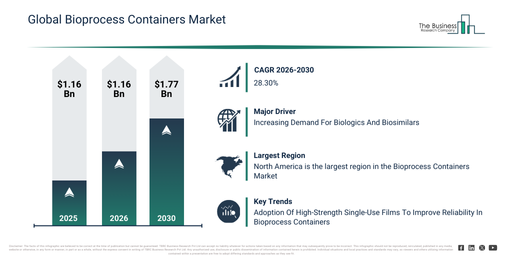
    Bioprocess Containers Market Poised To Hit $22.19 Billion By 2030 With A 28.3% CAGR

    The bioprocess containers market size has shown significant growth in recent years. It is anticipated to increase from $6.39 billion in 2025 to $8.2 billion in 2026, achieving a compound annual growth rate (CAGR) of 28.4%. The historical expansion of this market can be attributed to several factors including the expansion of biopharmaceutical manufacturing, the increasing adoption of disposable bioprocess systems, growth in biologics development, rising demand for sterile processing solutions, and the availability of advanced polymer materials.

    The bioprocess containers market is anticipated to experience substantial growth over the coming years, with its size projected to reach $22.19 billion by 2030, demonstrating a compound annual growth rate (CAGR) of 28.3%. This expansion during the forecast period is primarily driven by factors such as heightened investments in cell and gene therapy manufacturing, an increasing emphasis on modular bioprocess facilities, the broadening of contract biomanufacturing activities, a growing commitment to sustainability in bioprocessing, and the rising demand for scalable production platforms. Significant trends expected during this period include the wider adoption of single-use bioprocessing systems, an escalating need for flexible and scalable biomanufacturing solutions, increased application of sterile liquid handling solutions, the continued expansion of cell and gene therapy production, and a more concentrated effort on reducing contamination risks.

    Get A Free Sample Report With In-Depth Market Insights:

    https://thebusinessresearchcompany.com/sample_request?id=52666440&type=smp&name=Bioprocess%20Containers%20Market%20Report%202026&utm_source=Blogs&utm_medium=Paid&utm_campaign=Sep_PR

    Bioprocess Containers Market Development Factors: What’s Supporting Demand?

    The growing need for biologics and biosimilars is anticipated to fuel the expansion of bioprocess containers in the future. These are categories of medicines utilized for treating a range of diseases. Bioprocess containers, especially those intended for single-use, provide notable benefits such as adaptability, expandability, economic efficiency, and a lower chance of contamination. Such advantages render them highly suitable for the constantly changing and quickly developing sector of biologics and biosimilars production. As an illustration, in June 2024, data from Cardinal Health Inc., a US-based healthcare company, indicated that 40 Food and Drug Administration (FDA) approved biosimilar products existed in 2023, with 25 commercially available in the US market. This represents an increase from 33 biosimilar products in 2022. Consequently, the rising demand and utilization of biologics and biosimilars propels the bioprocess container market.

    Bioprocess Containers Market Segment Outlook: Which Categories Are Growing Fastest?

    The bioprocess containers market covered in this report is segmented –

    1) By Type: 2D Bioprocess Containers, 3D Bioprocess Containers, Tank Liners, Other Containers & Accessories

    2) By Application: Process Development, Upstream, Downstream

    3) By End User: Biopharmaceutical Companies, Life Science R&D Companies, Other End Users

    Subsegments:

    1) By 2D Bioprocess Containers: Single-Use Bags, Flexible Film Containers

    2) By 3D Bioprocess Containers: Bioreactor Bags, 3D Cell Culture Containers

    3) By Tank Liners: Protective Liners, Flexible Tank Liners

    4) By Other Containers & Accessories: Connectors and Tubing, Manifolds, Holders and Racks

    Bioprocess Containers Market Transformation Trends: What Innovations Are Driving Change?

    Leading firms in the bioprocess containers market are concentrating on creating advanced materials, specifically high-strength, leak-resistant multilayer films, to improve container durability, minimize contamination risk, and facilitate the production of large-volume biologics. These innovative films incorporate reinforced polymer structures, engineered to provide enhanced tensile strength, puncture resistance, and reduced extractables when contrasted with conventional single-use films. An example of this innovation occurred in April 2023, when Merck KGaA, a Germany-based life sciences and technology firm, introduced the Ultimus Single-Use Process Container Film, which was specifically designed for rigorous bioprocessing uses. This film features a unique woven-nylon strength layer, combined with a medical-grade polyethylene contact layer and gas-barrier elements, ensuring stability throughout upstream and downstream processes. It provides up to ten times superior abrasion resistance and considerably better leak prevention, allowing for the safer manipulation of valuable biologics while remaining compatible with Merck’s Mobius 3D bioprocess containers.

    Bioprocess Containers Market Competitive Overview And Top Companies

    Major companies operating in the bioprocess containers market are Sartorius Stedim Biotech S.A., Thermo Fisher Scientific Inc., Danaher Corporation, Merck KGaA, Sartorius AG, Compagnie de Saint-Gobain S.A., Lonza Group AG, Avantor Inc., Eppendorf AG, Meissner Filtration Products Inc., Corning Incorporated, GE Healthcare Technologies Inc., Fluids Control Inc., Neta Scientific Incorporated, ALLpaQ Packaging Group plc, Kawasumi Laboratories Inc., F.L. Medical SRL, Sani-Tech West Inc., Cellon SA, Celltainer Biotech BV, Entegris Inc., Flexboy AG, GE Healthcare Life Sciences, GEA Group AG, GEMÜ Group, GVS Group Ltd., Integra Companies, Kuhner AG

    View The Full Bioprocess Containers Market Report:

    https://thebusinessresearchcompany.com/report/bioprocess-containers-global-market-report?utm_source=Blogs&utm_medium=Paid&utm_campaign=Sep_PR

    Bioprocess Containers Market Leading Geography: Which Region Contributes The Most Revenue?

    North America was the largest region in the bioprocess containers market in 2025. Asia-Pacific is expected to be the fastest-growing region in the forecast period. The regions covered in the bioprocess containers market report are Asia-Pacific, South East Asia, Western Europe, Eastern Europe, North America, South America, Middle East, Africa.

    Reach Out To Our Team:

    The Business Research Company: https://www.thebusinessresearchcompany.com/

    Americas: +1 310-496-7795

    Asia: +44 7882 955267 & +91 8897263534

    Europe: +44 7882 955267

    Email us at: marketing@tbrc.info

    Follow us on:

    LinkedIn: https://in.linkedin.com/company/the-business-research-company

    YouTube: https://www.youtube.com/channel/UC24_fI0rV8cR5DxlCpgmyFQ

    Global Market Model: https://www.thebusinessresearchcompany.com/global-market-model
  • Biopharmaceutical Tubing Market Growth Forecast Through 2030: Market Size And Trends In 2026

    Biopharmaceutical Tubing Market Growth Forecast Through 2030: Market Size And Trends In 2026

    Backed by market attractiveness analysis, total addressable market sizing, company benchmarking matrices, interactive Excel dashboards, wider supply chain intelligence, emerging startup coverage, and detailed product-level insights, The Business Research Company’s 2026 market reports are designed to offer research that is more actionable and strategically valuable than ever.

    Biopharmaceutical Tubing Market Size And Revenue Outlook Through 2030

    The biopharmaceutical tubing market has experienced rapid expansion in recent years. Its value is projected to rise from $4.79 billion in 2025 to $5.32 billion in 2026, reflecting a compound annual growth rate (CAGR) of 11.2%. This historical growth can be ascribed to the expansion of biopharmaceutical manufacturing capacity, increasing standardization of sterile processing components, early adoption of silicone and PVC tubing in drug production lines, growth in contract manufacturing and fill-finish activities, and a rising regulatory emphasis on material biocompatibility and purity.

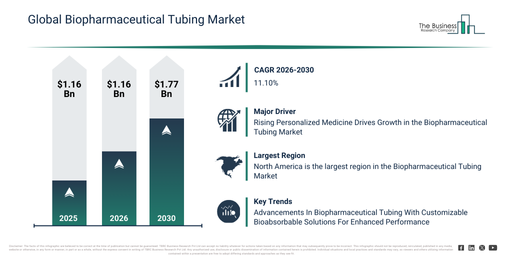
    The biopharmaceutical tubing market is projected to experience substantial expansion in the coming years. It is anticipated to reach $8.12 billion in 2030, exhibiting a compound annual growth rate (CAGR) of 11.1%. This projected growth during the forecast timeframe is primarily driven by an expanding array of biologics and cell and gene therapy products, a noticeable shift towards single-use and disposable processing solutions, increased need for high-performance TPE and polyolefin tubing, wider implementation of automated production and closed system workflows, and increased funding for advanced bioprocessing and aseptic transfer methods. Key trends anticipated over the forecast period encompass a greater reliance on high-purity and biocompatible tubing within biopharmaceutical processes, the growing acceptance of single-use and sterile transfer tubing systems, an increasing requirement for precise fluid handling in pharmaceutical manufacturing and fill-finish procedures, the broadening of tubing applications across pharmaceutical, medical device, and research & development environments, and a significant emphasis on material longevity, ensuring sterility, and managing contamination.

    Get A Free Sample Report With In-Depth Market Insights:

    https://thebusinessresearchcompany.com/sample_request?id=58544161&type=smp&name=Biopharmaceutical%20Tubing%20Market%20Report%202026&utm_source=Blogs&utm_medium=Paid&utm_campaign=Sep_PR

    Biopharmaceutical Tubing Market Industry Drivers: What’s Behind The Revenue Growth?

    The expanding adoption of personalized medicines is anticipated to propel the future growth of the biopharmaceutical tubing market. Personalized medicine describes a medical strategy that customizes healthcare choices, procedures, interventions, and treatments to align with each patient’s individual characteristics. This approach has gained prominence due to genetic research, which facilitates bespoke treatment plans based on an individual’s genetic profile, lifestyle, and specific health conditions. Biopharmaceutical tubing is instrumental in personalized medicine, offering precise, sterile, and dependable fluid transfer, which is essential for delivering tailored treatments and therapies suited to individual patient profiles. For instance, in February 2024, the Personalized Medicine Coalition, a US-based non-profit organization, reported that the U.S. Food and Drug Administration (FDA) approved 26 new personalized therapies in 2023, an increase from 18 in 2022, signifying one of the highest annual increments in personalized medicine approvals. Therefore, the rising number of personalized medicines is a significant factor driving the expansion of the biopharmaceutical tubing market.

    Biopharmaceutical Tubing Market Segment Landscape: Which Areas Lead Development?

    The biopharmaceutical tubing market covered in this report is segmented –

    1) By Product: Silicone Tubing, Polyvinyl Chloride (PVC) Tubing, Polyolefin Tubing, Thermoplastic Elastomer Tubing

    2) By Manufacturing Process: Extrusion, Vulcanization, Other Manufacturing Processes

    3) By Application: Pharmaceutical, Medical Devices, Research And Development, Other Applications

    Subsegments:

    1) By Silicone Tubing: Medical-Grade Silicone Tubing, Platinum-Cured Silicone Tubing, Peroxide-Cured Silicone Tubing

    2) By Polyvinyl Chloride (Pvc) Tubing: Clear Pvc Tubing, Non-Dehp Pvc Tubing, Soft Pvc Tubing

    3) By Polyolefin Tubing: Cross-Linked Polyolefin Tubing, Low-Density Polyethylene Tubing, High-DDensity Polyethylene Tubing

    4) By Thermoplastic Elastomer Tubing: Medical-Grade Tpe Tubing, Elastomeric Tpe Tubing, Biocompatible Tpe Tubing

    #Biopharmaceutical Tubing Market Growth Trends: What’s Shaping The Future Outlook?

    Leading companies in the biopharmaceutical tubing market are developing advanced customizable solutions, such as bioabsorbable tubing, to elevate performance, improve sterility, and optimize fluid handling for sophisticated biopharmaceutical applications. Bioabsorbable tubing denotes specialized products crafted from materials that progressively break down and are absorbed by the body over time, removing the necessity for removal after application. For example, in September 2023, Zeus Company Inc., an advanced polymer solutions provider from the US, introduced its Absorv XSE-oriented tubing, a next-generation bioabsorbable product made for bioresorbable vascular scaffolds (BRS). This innovation allows medical device manufacturers to pursue BRS applications beyond coronary artery disease treatment and potentially substitute metallic stents in various procedures. The new tubing offers better uniformity in wall thickness and sizing, which leads to increased efficiency during laser cutting processes, ultimately producing more usable scaffolds.

    Biopharmaceutical Tubing Market Competitive Landscape: Which Companies Lead The Industry?

    Major companies operating in the biopharmaceutical tubing market are Compagnie de Saint-Gobain S.A., Thermo Fisher Scientific Inc., Merck KGaA, GE HealthCare Technologies Inc., Parker Hannifin Corporation, DuPont de Nemours Inc., Freudenberg Group, Alfa Laval AB, REHAU Group, W. L. Gore & Associates Inc., Sartorius AG, Elkem ASA, Trelleborg AB, Bio-Rad Laboratories Inc., Tekni-Plex Inc., Pall Corporation, Zeus Company Inc., Watson-Marlow Ltd., Raumedic AG, Optinova AB, ESI Ultrapure

    View The Full Biopharmaceutical Tubing Market Report:

    https://thebusinessresearchcompany.com/report/biopharmaceutical-tubing-global-market-report?utm_source=Blogs&utm_medium=Paid&utm_campaign=Sep_PR

    Biopharmaceutical Tubing Market Regional Outlook: Where Is Opportunity Concentrated?

    North America was the largest region in the biopharmaceutical tubing market in 2025. Asia-Pacific is expected to be the fastest-growing region in the forecast period. The regions covered in the biopharmaceutical tubing market report are Asia-Pacific, South East Asia, Western Europe, Eastern Europe, North America, South America, Middle East, Africa.

    Reach Out To Our Team:

    The Business Research Company: https://www.thebusinessresearchcompany.com/

    Americas: +1 310-496-7795

    Asia: +44 7882 955267 & +91 8897263534

    Europe: +44 7882 955267

    Email us at: marketing@tbrc.info

    Follow us on:

    LinkedIn: https://in.linkedin.com/company/the-business-research-company

    YouTube: https://www.youtube.com/channel/UC24_fI0rV8cR5DxlCpgmyFQ

    Global Market Model: https://www.thebusinessresearchcompany.com/global-market-model