Blog

  • Bionics Market Analysis: $16.36 Billion Market Size In 2026 And Future Growth Prospects

    Bionics Market Analysis: $16.36 Billion Market Size In 2026 And Future Growth Prospects

    Featuring market attractiveness scoring, total addressable market sizing, company benchmarking matrices, interactive Excel dashboards, deeper supply chain intelligence, emerging startup tracking, and granular product-level insights, The Business Research Company’s 2026 market reports are built to deliver research that is both more actionable and more strategically valuable.

    Bionics Market Growth From $16.36 Billion In 2026 To $23.73 Billion By 2030 At A CAGR Of 9.7%

    The bionics market has experienced robust growth in recent years. Projections indicate this market will expand from $14.9 billion in 2025 to $16.36 billion in 2026, demonstrating a compound annual growth rate (CAGR) of 9.8%. Historically, this expansion has been driven by an increase in cases of disability and limb loss, the early adoption of electronic and mechanical prosthetics, heightened investment in biomedical engineering research, the development of implantable and external bionic systems, and the expanding acceptance of functional restoration technologies.

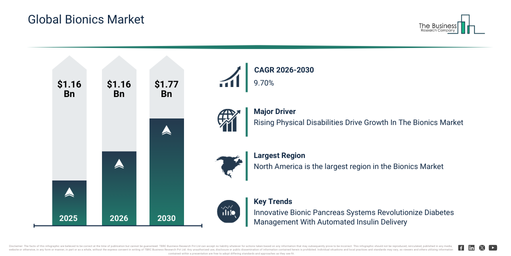
    The bionics market is anticipated to experience substantial expansion over the upcoming years. Its valuation is projected to reach $23.73 billion by 2030, demonstrating a compound annual growth rate (CAGR) of 9.7%. This anticipated growth during the forecast period stems from several factors, including an escalating demand for highly responsive and realistic bionic solutions, the increasing market penetration of neural and sensory bionics, broader deployment of exoskeletons in healthcare and defense sectors, a heightened emphasis on personalized and patient-tailored prosthetic designs, and the expanding incorporation of sophisticated control, sensing, and material technologies. Key trends for this period involve continuous progress in prosthetic limbs, organs, and devices for sensory restoration, the growing integration of biological interfaces with electronic and mechanical systems, advancements in neural and brain-computer interface-driven bionic solutions, wider application of bionic technologies in rehabilitation and aid for mobility, and a sustained effort towards improving functional restoration, user comfort, and overall quality of life.

    Get A Free Sample Report With In-Depth Market Insights:

    https://thebusinessresearchcompany.com/sample_request?id=84528094&type=smp&name=Bionics%20Market%20Report%202026&utm_source=Blogs&utm_medium=Paid&utm_campaign=Sep_PR

    Bionics Market Growth Factors: What’s Supporting Expansion?

    The rising occurrence of physical disabilities is projected to drive the expansion of the bionics market in the future. These disabilities refer to impairments that affect an individual’s ability to move, perform physical activities, or sustain physical endurance. Such conditions can be linked to ailments like osteoporosis, arthritis, or general physical degeneration. Bionics significantly improves the quality of life for individuals with physical disabilities by replacing or augmenting lost bodily functions, enhancing mobility, and increasing independence. For instance, data from October 2024, provided by the UK Parliament’s House of Commons Library, a government administration in the UK, indicates that between 2022-23, disability prevalence increased with age. Approximately 11% of children in the UK lived with a disability, a figure that rose to 23% among working-age adults and 45% for individuals past the State Pension age. Consequently, the growing incidence of physical disabilities is anticipated to fuel the expansion of the bionics market.

    Bionics Market Segments: Where Is Growth Concentrated?

    The bionics market covered in this report is segmented –

    1) By Type: Bionic Brain, Bionic Heart, Bionic Limbs, Bionic Vision, Exoskeleton, Other Types

    2) By Fixation: Implantable Bionics, External Bionics

    3) By Technology: Mechanical Bionics, Electronic Bionics

    4) By Application: Healthcare, Defense

    Subsegments:

    1) By Bionic Brain: Neural Prosthetics, Brain-Computer Interfaces (Bcis), Deep Brain Stimulation Devices

    2) By Bionic Heart: Artificial Heart, Ventricular Assist Devices (Vads), Heart Valve Prostheses

    3) By Bionic Limbs: Prosthetic Arms, Prosthetic Legs, Bionic Hands And Fingers

    4) By Bionic Vision: Retinal Implants, Visual Prosthetics, Bionic Eyewear

    5) By Exoskeleton: Lower Body Exoskeletons, Full-Body Exoskeletons, Upper Body Exoskeletons

    6) By Other Types: Bionic Ears, Bionic Skin, Bionic Organs

    Bionics Market Industry Trends: What’s Reshaping Demand?

    Key players in the bionics market are creating technologically advanced solutions, notably bionic pancreas automated insulin delivery systems, with the goal of improving diabetes management by closely mimicking the function of a healthy pancreas. The bionic pancreas automated insulin delivery system operates by automatically adjusting insulin delivery based on real-time glucose monitoring, thereby more accurately replicating natural pancreatic function. For example, in December 2023, Beta Bionics Inc., a US-based biotechnology company, launched the iLet bionic pancreas, an advanced automated insulin delivery system designed to simplify diabetes management. This system integrates with continuous glucose monitors (CGMs) to offer real-time glucose readings and adjust insulin delivery accordingly. It necessitates minimal user input, primarily just the patient’s weight, eliminating the need for complex calculations such as insulin-to-carb ratios or correction factors. The iLet Bionic Pancreas incorporates closed-loop functionality that autonomously manages insulin dosing, making it user-friendly and alleviating the burden on both patients and healthcare providers.

    Bionics Market Competitive Landscape: Who Leads The Industry?

    Major companies operating in the bionics market are Boston Scientific Corporation, Sonova Holding AG, Ottobock SE & Co. KGaA, Cochlear Limited, Bioengineering Technology Inc., Össur hf, Hanger Inc., BionX Medical Technologies Inc., Cyberdyne Inc., Syncardia Systems LLC, AlterG Inc., Ekso Bionics Holdings Inc., MediTouch Ltd., ReWalk Robotics Ltd., Retina Implant AG, Human Engineering, Pixium Vision, Second Sight Medical Products Inc., Bionik Laboratories Corp., Neuroprosthetics Ltd., Sierra Bionics

    View The Full Bionics Market Report:

    https://thebusinessresearchcompany.com/report/bionics-global-market-report?utm_source=Blogs&utm_medium=Paid&utm_campaign=Sep_PR

    Bionics Market Geographic Landscape: Which Region Leads Industry Growth?

    North America was the largest region in the bionics market in 2025. Asia-Pacific is expected to be the fastest-growing region in the forecast period. The regions covered in the bionics market report are Asia-Pacific, South East Asia, Western Europe, Eastern Europe, North America, South America, Middle East, Africa.

    Reach Out To Our Team:

    The Business Research Company: https://www.thebusinessresearchcompany.com/

    Americas: +1 310-496-7795

    Asia: +44 7882 955267 & +91 8897263534

    Europe: +44 7882 955267

    Email us at: marketing@tbrc.info

    Follow us on:

    LinkedIn: https://in.linkedin.com/company/the-business-research-company

    YouTube: https://www.youtube.com/channel/UC24_fI0rV8cR5DxlCpgmyFQ

    Global Market Model: https://www.thebusinessresearchcompany.com/global-market-model
  • Bionic Devices Market 2026 Market Size And Growth Forecast: Key Trends To Watch

    Bionic Devices Market 2026 Market Size And Growth Forecast: Key Trends To Watch

    Built to provide research that’s more actionable and strategically valuable, The Business Research Company’s 2026 market reports include market attractiveness analysis, total addressable market sizing, company benchmarking matrices, interactive Excel dashboards, broader supply chain intelligence, emerging startup tracking, and in-depth product insights.

    Bionic Devices Market Expansion Outlook: What Revenue Opportunities Are Ahead?

    The bionic devices market has experienced robust expansion in recent years. It is projected to increase from $5.88 billion in 2025 to $6.37 billion in 2026, exhibiting a compound annual growth rate (CAGR) of 8.4%. This historical growth can be attributed to several factors, including an increase in limb loss due to accidents and trauma, the early adoption of electronic and myoelectric prosthetics, the expansion of rehabilitation and assistive technology programs, advancements in actuator and sensor engineering, and a growing clinical acceptance of functional restoration devices.

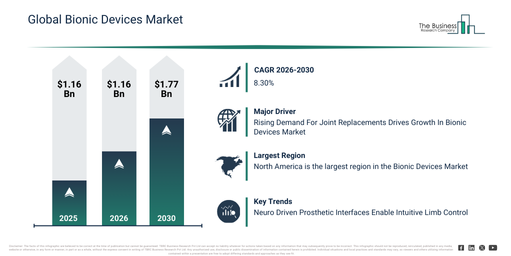
    The bionic devices market is projected to experience substantial expansion over the upcoming years. This market is anticipated to reach a valuation of $8.76 billion by 2030, exhibiting a compound annual growth rate (CAGR) of 8.3%. Factors contributing to this expansion during the forecast period include an increasing need for highly responsive and realistic prosthetic movements, increased funding for research into neural interfaces and brain-machine control, broader integration of bionic devices within rehabilitation medicine, a heightened emphasis on enhancing quality of life and fostering mobility independence, and the expansion of tailored and patient-specific bionic device creation. Key trends expected in the same period involve the greater incorporation of sensor-based and neural-controlled prosthetic systems, a rise in the uptake of sophisticated bionic limbs to boost mobility and dexterity, expanded application of myoelectric and actuator-driven assistive technologies, the broadened scope of bionic remedies for organ assistance and functional recovery, and an emphasis on designs centered around the patient, prioritizing comfort and lifelike movement capabilities.

    Get A Free Sample Report With In-Depth Market Insights:

    https://thebusinessresearchcompany.com/sample_request?id=15089189&type=smp&name=Bionic%20Devices%20Market%20Report%202026&utm_source=Blogs&utm_medium=Paid&utm_campaign=Sep_PR

    Bionic Devices Market Demand Drivers: What’s Powering Industry Growth?

    The increasing need for joint replacement procedures is anticipated to fuel the expansion of the bionic devices market going forward. These surgical interventions involve replacing compromised or diseased joints with artificial implants to regain function and alleviate discomfort. The growth in joint replacements stems from an aging global demographic, a higher incidence of osteoarthritis, and continuous improvements in surgical methods and implant substances. Within this context, bionic devices for joint replacement improve movement and practical capabilities, diminish pain, and provide tailored, long-lasting options through cutting-edge technology integration. As an illustration, in November 2024, the American Academy of Orthopaedic Surgeons, a US-based non-profit organization, stated that in 2023, ASCs recorded 62,110 total joint arthroplasty care procedural cases, indicating a 70% increase compared with 2022. Consequently, the escalating demand for joint replacements is propelling the growth of the bionic devices market.

    Bionic Devices Market Segment Analysis: What Are The Core Market Categories?

    The bionic devices market covered in this report is segmented –

    1) By Device Type: Upper-Limb Prosthetics, Lower-Limb Prosthetics, Exoskeletons, Bionic Organs, Soft Robotics & Assistive Devices

    2) By Technology: Sensor-Based Devices, Actuator-Based Devices, Neural-Controlled Interfaces, Hybrid Systems

    3) By Application: Rehabilitation, Daily Assistance, Military/Industrial, Medical Enhancement

    4) By End User: Individuals with Disabilities, Hospitals and Rehabilitation Centers, Research & Clinical Institutions, Specialized Clinics

    Subsegments:

    1) By Upper-Limb Prosthetics: Myoelectric Hands, Robotic Arms, Partial Finger Prosthetics

    2) By Lower-Limb Prosthetics: Robotic Legs & Feet, Knee Prosthetics, Ankle-Foot Prosthetics

    3) By Exoskeletons: Rehabilitation Exoskeletons, Industrial/Load-Bearing Exoskeletons, Military/Defense Exoskeletons

    4) By Bionic Organs: Artificial Heart Systems, Cochlear Implants, Retinal Implants

    5) By Soft Robotics & Assistive Devices: Soft Robotic Gloves, Wearable Support Devices, Assistive Devices for Fine Motor Skills

    Bionic Devices Market Innovation Trends: What Developments Are Reshaping The Industry?

    Leading companies within the bionic devices market are concentrating on neuro-driven interfaces, specifically minimally invasive neural control systems designed for prosthetic limbs. These systems are capable of translating residual nerve or muscle signals into prosthetic movement with significant accuracy and minimal surgical risk. For instance, in April 2025, Ottobock, a Germany-based prosthetics company, spearheaded a US$19 million Series A funding round for Phantom Neuro, a neurotechnology firm, to further develop its Phantom X interface. Phantom X functions as a muscle-machine link, implantable under the skin to interpret electrical impulses from residual nerves and transform them into commands for prosthetic limbs or exoskeletons. Its key characteristics include a 94% decoding accuracy across 11 hand/wrist movements, a strip implant design that is less invasive than a full brain implant, and swift calibration, allowing users to regain up to 85% functionality after merely 10 minutes of calibration.

    Bionic Devices Market Company Landscape And Competitive Strategy

    Major companies operating in the bionic devices market are Ottobock SE and Co. KGaA, Hanger Inc., Cochlear Limited, Ossur hf., Bionx Medical Technologies Inc., Berlin Heart GmbH, Cyberdyne Inc., Ekso Bionics Holdings Inc., Open Bionics Ltd., Jarvik Heart Inc., Axosuits Srl, Bioservo Technologies AB, Carmat SA, ActiveLink Inc., ReWalk Robotics Ltd., B-Temia Inc., Bionik Laboratories Corp., COAPT LLC, Pixium Vision SA, Mobius Bionics LLC, Nano Retina Inc.

    View The Full Bionic Devices Market Report:

    https://thebusinessresearchcompany.com/report/bionic-devices-global-market-report?utm_source=Blogs&utm_medium=Paid&utm_campaign=Sep_PR

    Bionic Devices Market Largest Region: Which Geography Holds The Biggest Share?

    North America was the largest region in the bionic devices market in 2025. Asia-Pacific is expected to be the fastest-growing region in the forecast period. The regions covered in the bionic devices market report are Asia-Pacific, South East Asia, Western Europe, Eastern Europe, North America, South America, Middle East, Africa.

    Reach Out To Our Team:

    The Business Research Company: https://www.thebusinessresearchcompany.com/

    Americas: +1 310-496-7795

    Asia: +44 7882 955267 & +91 8897263534

    Europe: +44 7882 955267

    Email us at: marketing@tbrc.info

    Follow us on:

    LinkedIn: https://in.linkedin.com/company/the-business-research-company

    YouTube: https://www.youtube.com/channel/UC24_fI0rV8cR5DxlCpgmyFQ

    Global Market Model: https://www.thebusinessresearchcompany.com/global-market-model
  • Bionic Contact Lenses Market Size Forecast: How The Industry Is Expected To Grow From 2026 To 2030

    Bionic Contact Lenses Market Size Forecast: How The Industry Is Expected To Grow From 2026 To 2030

    Backed by market attractiveness analysis, total addressable market sizing, company benchmarking matrices, interactive Excel dashboards, wider supply chain intelligence, emerging startup coverage, and detailed product-level insights, The Business Research Company’s 2026 market reports are designed to offer research that is more actionable and strategically valuable than ever.

    Bionic Contact Lenses Market Growth Potential: How Will Market Size Shift Through 2030?

    The bionic contact lenses market size has experienced significant growth in recent years. It is anticipated to expand from $0.32 billion in 2025 to $0.36 billion in 2026, achieving a compound annual growth rate (CAGR) of 11.2%. This market’s historical growth can be attributed to several factors, including the advancement in microelectronic sensor miniaturization, early research initiatives in smart and therapeutic contact lenses, an increasing focus on wearable biomedical monitoring solutions, the development of multifunctional vision correction lenses, and rising investment in ophthalmic technology innovation.

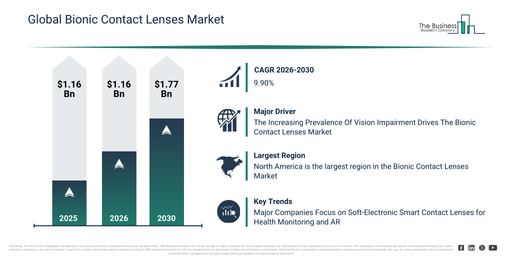
    The bionic contact lenses market is projected to experience substantial expansion in the coming years. Its valuation is anticipated to reach $0.53 billion by 2030, demonstrating a compound annual growth rate (CAGR) of 9.9%. This expansion during the forecast timeframe is attributable to several factors, including the rising demand for augmented and mixed-reality visual enhancement, growing interest in continuous health and glucose monitoring via lenses, broader integration in military and professional training uses, the increasing availability of therapeutic and drug-delivery lenses, and greater consumer acceptance of smart wearable eye-care technologies. Key trends anticipated within this period encompass the accelerated development of bionic lenses for vision correction and overall eye health, a surge in the adoption of smart contact lenses for monitoring health and physiological parameters, increased enthusiasm for non-invasive glucose and biomarker tracking through such lenses, the broadened application of bionic contact lenses in military, training, and other specialized domains, and a strong emphasis on improving user comfort, safety, and the biocompatibility of wearable lenses.

    Get A Free Sample Report With In-Depth Market Insights:

    https://thebusinessresearchcompany.com/sample_request?id=29293812&type=smp&name=Bionic%20Contact%20Lenses%20Market%20Report%202026&utm_source=Blogs&utm_medium=Paid&utm_campaign=Sep_PR

    Bionic Contact Lenses Market Growth Drivers: What’s Behind The Acceleration?

    The bionic contact lenses market is projected to be driven by the rising incidence of vision impairments. Vision impairments are defined as conditions impeding a person’s clear sight, encompassing everything from refractive errors such as myopia and hyperopia to serious problems like cataracts or age-related macular degeneration. Key factors contributing to this rising prevalence include an aging demographic, extended screen exposure, and evolving lifestyle habits. Bionic contact lenses contribute to mitigating the escalating rates of vision impairments by providing sophisticated vision correction along with extra features, for example, augmented reality, thereby equipping individuals with effective remedies for their visual challenges and enhancing their life quality. As an illustration, data from December 2023, released by the National Institutes of Health (NIH), a US-based government agency responsible for conducting and supporting medical research, showed that Ukraine documented 19,551 people diagnosed with vision impairments in 2022, with more than 19,000 new cases emerging in merely the first seven months of 2023, highlighting a persistently high occurrence of vision issues. Consequently, the escalating occurrence of vision impairments fuels the bionic contact lens market.

    Bionic Contact Lenses Market Segment Breakdown: Which Categories Lead On Revenue?

    The bionic contact lenses market covered in this report is segmented –

    1) By Type: Vision Correction, Therapeutic, Augmented Reality (AR), Virtual Reality (VR)

    2) By Application: Medical, Military, Other Applications

    3) By Distribution Channel: Hospitals And Clinics, Retail Stores, Online Platforms

    Subsegments:

    1) By Vision Correction: Myopia Correction, Hyperopia Correction, Astigmatism Correction, Presbyopia Correction

    2) By Therapeutic: Drug Delivery Lenses, Corneal Healing Lenses, UV Protection Lenses

    3) By Augmented Reality (AR): Navigation Assistance, Real-Time Information Display, Facial Recognition

    4) By Virtual Reality (VR): Immersive Gaming Lenses, Training Simulation Lenses, Entertainment And Media Lenses

    Bionic Contact Lenses Market Trends: What’s Defining The Industry’s Next Phase?

    Major companies operating in the bionic contact lenses market are prioritizing the creation of soft-electronic smart contact lenses, such as flexible, sensor-integrated lenses capable of health tracking and augmented reality (AR) displays, combining wearer comfort with advanced capabilities. For instance, in March 2025, XPANCEO, a deep-tech company located in Dubai, unveiled three new smart contact lens prototypes: a lens equipped with a wireless powering companion, offering completely remote power transfer with twice the range of prior solutions; a biosensing lens designed to monitor biomarkers in tear fluid, including glucose, hormones, and vitamins; and a lens featuring an intraocular pressure (IOP) sensor that employs an AI-powered app for real-time glaucoma detection.

    Bionic Contact Lenses Market Key Players Shaping Industry Direction

    Major companies operating in the bionic contact lenses market are Samsung Electronics, Sony Corporation, Alcon Inc., BostonSight, Hoya Corporation, Bausch & Lomb, Santen Pharmaceutical, Johnson & Johnson Vision Care, Verily Life Sciences, OrCam Technologies, Eyenovia Inc., Innovega INC, AlphaMicron Inc., Nano Retina Ltd, SwissLens AG, Bionic Vision Technologies, Inwith Corp., Medella Health, Ocumetrics Bionic Lens, Optobionics Corporation, Sensimed AG, SmartLens Inc., Pixium Vision S.A, Mojo Vision, Fraunhofer IAP, iBionics, Nidek Co Ltd

    View The Full Bionic Contact Lenses Market Report:

    https://thebusinessresearchcompany.com/report/bionic-contact-lenses-global-market-report?utm_source=Blogs&utm_medium=Paid&utm_campaign=Sep_PR

    Bionic Contact Lenses Market Regional Analysis: Which Geography Leads On Revenue?

    North America was the largest region in the bionic contact lenses market in 2025. The regions covered in the bionic contact lenses market report are Asia-Pacific, South East Asia, Western Europe, Eastern Europe, North America, South America, Middle East, Africa.

    Reach Out To Our Team:

    The Business Research Company: https://www.thebusinessresearchcompany.com/

    Americas: +1 310-496-7795

    Asia: +44 7882 955267 & +91 8897263534

    Europe: +44 7882 955267

    Email us at: marketing@tbrc.info

    Follow us on:

    LinkedIn: https://in.linkedin.com/company/the-business-research-company

    YouTube: https://www.youtube.com/channel/UC24_fI0rV8cR5DxlCpgmyFQ

    Global Market Model: https://www.thebusinessresearchcompany.com/global-market-model
  • Biomedical Pressure Sensor Market Reaches $3.39 Billion In 2026: Forecast And Growth Opportunities

    Biomedical Pressure Sensor Market Reaches $3.39 Billion In 2026: Forecast And Growth Opportunities

    Featuring market attractiveness scoring, total addressable market sizing, company benchmarking matrices, interactive Excel dashboards, deeper supply chain intelligence, emerging startup tracking, and granular product-level insights, The Business Research Company’s 2026 market reports are built to deliver research that is both more actionable and more strategically valuable.

    Biomedical Pressure Sensor Market Value Analysis: What Growth Lies Ahead Over The Forecast Period?

    The biomedical pressure sensor market has seen rapid expansion in recent years. It is anticipated to increase from $2.07 billion in 2025 to $2.29 billion in 2026, exhibiting a compound annual growth rate (CAGR) of 10.6%. The historical surge can be linked to factors such as increased critical care monitoring, a rise in cardiovascular disorders, the adoption of invasive pressure monitoring, the expansion of hospital infrastructure, and progress in sensor materials.

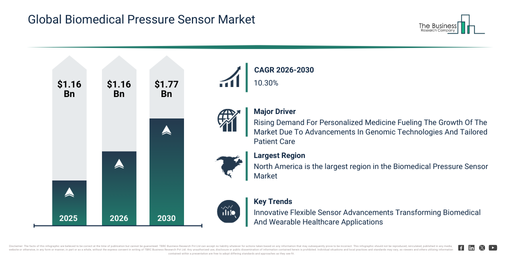
    The biomedical pressure sensor market size is anticipated to experience substantial growth over the next few years, reaching $3.39 billion in 2030, propelled by a compound annual growth rate (CAGR) of 10.3%. This expansion during the forecast period is primarily driven by the increasing prevalence of remote patient monitoring, the widespread adoption of wearable medical devices, an expanding aging population, the rising demand for minimally invasive diagnostics, and greater integration with digital health platforms. Prominent trends expected in this period encompass continuous physiological pressure monitoring, the development of miniaturized implantable sensors, wireless pressure measurement devices, high-accuracy MEMS sensors, and the integration of multi-parameter monitoring.

    Get A Free Sample Report With In-Depth Market Insights:

    https://thebusinessresearchcompany.com/sample_request?id=27672080&type=smp&name=Biomedical%20Pressure%20Sensor%20Market%20Report%202026&utm_source=Blogs&utm_medium=Paid&utm_campaign=Sep_PR

    Biomedical Pressure Sensor Market Growth Factors Behind Sustained Expansion

    The increasing need for personalized medicine is anticipated to drive the expansion of the biomedical pressure sensor market in the future. Personalized medicine represents a healthcare strategy focused on customizing therapies for individual patients, considering their unique genetic makeup, environmental influences, and lifestyle choices to achieve optimal results and enhance patient care. This demand for personalized medicine is growing because of progress in genomic technologies, allowing for accurate detection of genetic differences and the creation of customized treatments for specific individuals. Biomedical pressure sensors support personalized medicine by offering precise, real-time monitoring of various physiological pressures, including blood pressure or intracranial pressure. These sensors facilitate customized treatment plans, prompt identification of irregularities, and better patient results, thereby contributing to the advancement of precision healthcare. As an illustration, in February 2024, the Personalized Medicine Coalition (PMC), a US-based nonprofit organization, reported that the U.S. Food and Drug Administration (FDA) sanctioned 26 novel personalized medicines in 2023, marking a notable rise from the 12 approved in 2022. Consequently, the escalating demand for personalized medicine is fueling the expansion of the biomedical pressure sensor market.

    Biomedical Pressure Sensor Market Segmentation: How Does The Market Break Down By Category?

    The biomedical pressure sensor market covered in this report is segmented –

    1) By Product Type: Disposable, Reusable, Wireless, Micro-Electro-Mechanical Systems (MEMS)-Based

    2) By Application: Cardiology, Respiratory, Urology, Neurology, Diagnostics, Other Applications

    3) By End-User: Hospitals, Clinics, Diagnostic Centers, Ambulatory Surgical Centers, Homecare Settings, Other End-Users

    Subsegments:

    1) By Disposable: Catheter-Based Sensors, Implantable Sensors, Wearable Sensors, External Sensors

    2) By Reusable: Sterilizable Sensors, Calibrated Sensors, Maintenance-Free Sensors, Long-Life Sensors

    3) By Wireless: Bluetooth-Enabled Sensors, Wi-Fi-Enabled Sensors, Radio Frequency Sensors, Near Field Communication Sensors

    4) By Micro-Electro-Mechanical Systems (Mems)-Based: Piezoresistive Sensors, Capacitive Sensors, Optical Sensors, Resonant Sensors

    Biomedical Pressure Sensor Market Industry Trends Fueling Future Revenue Growth

    Leading companies active in the biomedical pressure sensor market are emphasizing the development of innovative advancements, such as flexible capacitive pressure sensors, to enhance the accessibility and performance of pressure-sensing technologies in healthcare and assistive applications. A flexible capacitive pressure sensor is a thin, pliable device that detects pressure variations by changes in capacitance between conductive layers, enabling accurate and adaptable sensing for biomedical and wearable uses. For instance, in September 2025, researchers from the International Institute of Information Technology Hyderabad (IIIT Hyderabad), an India-based autonomous university, and King Abdullah University of Science and Technology (KAUST), a Saudi Arabia-based research university, developed a flexible dielectric capacitive pressure sensor. This newly created sensor utilizes bubble-induced polydimethylsiloxane (PDMS) foam and polypyrrole-coated textile electrodes to achieve high sensitivity, flexibility, and repeatability at a low cost. Its scalability and use of easily available materials make it well-suited for applications in wearable healthcare monitoring, surgical robotics, and human–machine interaction systems.

    Biomedical Pressure Sensor Market Competitive Analysis Of Leading Industry Participants

    Major companies operating in the biomedical pressure sensor market are Abbott Laboratories, Edwards Lifesciences Corporation, Endotronix Inc., Samba Sensors AB, Sensirion AG, First Sensor AG, Memscap S.A., Merit Medical Systems Inc., ICU Medical Inc., Argon Medical Devices Inc., B. Braun SE, GE Healthcare Technologies, Philips Healthcare, Smiths Medical, Codman Neuro (Integra LifeSciences), Raumedic AG, PendoTECH Inc., Opsens Solutions Inc., Millar Inc., Utah Medical Products Inc., Merit Medical OEM, Cook Medical

    View The Full Biomedical Pressure Sensor Market Report:

    https://thebusinessresearchcompany.com/report/global-biomedical-pressure-sensor-market-report?utm_source=Blogs&utm_medium=Paid&utm_campaign=Sep_PR

    Biomedical Pressure Sensor Market Geographic Spread And Regional Opportunities

    North America was the largest region in the biomedical pressure sensor market in 2025. Asia-Pacific is expected to be the fastest-growing region in the forecast period. The regions covered in the biomedical pressure sensor market report are Asia-Pacific, South East Asia, Western Europe, Eastern Europe, North America, South America, Middle East, Africa.

    Reach Out To Our Team:

    The Business Research Company: https://www.thebusinessresearchcompany.com/

    Americas: +1 310-496-7795

    Asia: +44 7882 955267 & +91 8897263534

    Europe: +44 7882 955267

    Email us at: marketing@tbrc.info

    Follow us on:

    LinkedIn: https://in.linkedin.com/company/the-business-research-company

    YouTube: https://www.youtube.com/channel/UC24_fI0rV8cR5DxlCpgmyFQ

    Global Market Model: https://www.thebusinessresearchcompany.com/global-market-model
  • Biomaterial Wound Dressing Market Growth In 2026: Market Size, Key Drivers And Future Outlook

    Biomaterial Wound Dressing Market Growth In 2026: Market Size, Key Drivers And Future Outlook

    Built to provide research that’s more actionable and strategically valuable, The Business Research Company’s 2026 market reports include market attractiveness analysis, total addressable market sizing, company benchmarking matrices, interactive Excel dashboards, broader supply chain intelligence, emerging startup tracking, and in-depth product insights.

    Biomaterial Wound Dressing Market Size Forecast: How Big Could The Market Get By 2030?

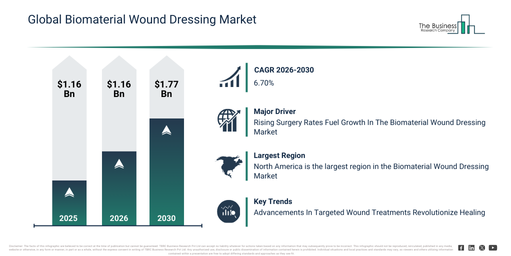
    The biomaterial wound dressing market has experienced robust growth in recent years. It is projected to expand from $6.18 billion in 2025 to $6.65 billion in 2026, achieving a compound annual growth rate (CAGR) of 7.6%. The expansion witnessed in the past can be attributed to several factors, including an increase in burns and traumatic injuries, a rise in hospital admissions for chronic and diabetic wounds, the swift adoption of hydrogel and alginate dressing technologies, a heightened emphasis on infection prevention and moisture-balanced healing, and the broader availability of wound care services in hospitals and clinics.

    The biomaterial wound dressing market is anticipated to experience substantial expansion over the coming years. This market is projected to reach $8.62 billion by 2030, exhibiting a compound annual growth rate (CAGR) of 6.7%. Several factors contribute to this growth during the forecast period, including an expanding aging population and the widespread occurrence of pressure ulcers, an increasing need for bioengineered and cellular skin substitutes, greater use of advanced dressings in homecare and ambulatory settings, a heightened emphasis on quicker healing and shorter treatment durations, and ongoing advancements in the makeup and design of biomaterial wound dressings. Key trends anticipated for the forecast period involve a growing inclination towards sophisticated moisture-retaining wound dressings, increased uptake of antibacterial and antimicrobial biomaterial dressings, their expanded application in managing chronic wounds, burns, and pressure ulcers, the broader deployment of biomaterial dressings in surgical and post-operative care, and an emphasis on biocompatibility, patient comfort, and improved tissue regeneration.

    Get A Free Sample Report With In-Depth Market Insights:

    https://thebusinessresearchcompany.com/sample_request?id=76233534&type=smp&name=Biomaterial%20Wound%20Dressing%20Market%20Report%202026&utm_source=Blogs&utm_medium=Paid&utm_campaign=Sep_PR

    Biomaterial Wound Dressing Market Demand Drivers Opening New Revenue Streams

    An increasing volume of surgical procedures is anticipated to fuel the expansion of the biomaterial wound dressing market in the future. Surgery is defined as a medical intervention where bodily incisions are made to address injuries, illnesses, or deformities through tissue repair or removal. The rise in surgical operations is attributed to a growing incidence of chronic ailments, wider access to health insurance coverage, an uptick in medical tourism, and progress within the health industry. Serving as a safeguard against pathogens, biomaterial wound dressings mitigate the likelihood of surgical site infections (SSIs). For example, in May 2025, the Australian Institute of Health and Welfare (AIHW), an Australia-based agency for information and statistics on Australia’s health and welfare, reported that during 2023-24, public hospitals processed 778,500 elective surgery patients. This figure indicates a 5.8% increase in admissions year-on-year when contrasted with 2022–23. Consequently, the escalating volume of surgical procedures is driving the growth of the biomaterial wound dressing market.

    Biomaterial Wound Dressing Market Segment Trends And Revenue Contributors

    The biomaterial wound dressing market covered in this report is segmented –

    1) By Type: Hydrogel, Alginate Dressing, Hydrocolloid Dressings, Skin Substitutes

    2) By Application: Burns, Pressure Ulcers, Surgical Wounds, Lacerations And Cuts, Skin Grafts

    3) By End User: Hospitals And Clinics, Ambulatory Surgical Centre, Homecare Settings

    Subsegments:

    1) By Hydrogel: Amorphous Hydrogel, Impregnated Hydrogel, Sheet Hydrogel

    2) By Alginate Dressing: Calcium Alginate, Silver Alginate, Ribbon Alginate

    3) By Hydrocolloid Dressings: Standard Hydrocolloid, Hydrocolloid With Film Backing, Hydrocolloid With Foam Backing

    4) By Skin Substitutes: Acellular Skin Substitutes, Cellular Skin Substitutes, Bioengineered Skin Substitutes

    Biomaterial Wound Dressing Market Trends Powering Strategic Industry Growth

    Major companies operating in the biomaterial wound dressing market are developing targeted wound treatments to provide more effective and convenient solutions. These specific wound treatments refer to medical therapies precisely designed to address the unique conditions and needs of a particular wound type. For instance, in March 2023, researchers from the California Institute of Technology, a US-based private research university, introduced the Smart Bandage, which accelerated the healing of chronic infected wounds similar to diabetic ulcers in humans. These bandages are constructed from a flexible, elastic polymer with embedded electronics and drugs, and their polymer substrate is biocompatible. The bandages are equipped with various sensors to identify inflammation and infection by monitoring wound indicators such as uric acid, lactate, pH, and temperature. They can cure infections by delivering antibiotics or other treatments stored in drug-loaded hydrogels directly to the wound site.

    Biomaterial Wound Dressing Market Leading Companies And Competitive Benchmarking

    Major companies operating in the biomaterial wound dressing market are Johnson & Johnson, The 3M Company, Medline Industries LP, B. Braun SE, Smith & Nephew plc, Milliken Healthcare Products LLC, Coloplast A/S, Mölnlycke Health Care AB, Integra LifeSciences, Lohmann & Rauscher International GmbH & Co. KG, Hollister Incorporated, DeRoyal Industries Inc., Advanced Medical Solutions Group, URGO MEDICAL, BSN Medical, Gentell, Dukal LLC, Covalon Technologies, Argentum Medical LLC, PolyMedics Innovations Inc., Spenco Medical Corporation

    View The Full Biomaterial Wound Dressing Market Report:

    https://thebusinessresearchcompany.com/report/biomaterial-wound-dressing-global-market-report?utm_source=Blogs&utm_medium=Paid&utm_campaign=Sep_PR

    Biomaterial Wound Dressing Market Top Region By Revenue And Market Share

    North America was the largest region in the biomaterial wound dressing market in 2025. Asia-Pacific is expected to be the fastest-growing region in the forecast period. The regions covered in the biomaterial wound dressing market report are Asia-Pacific, South East Asia, Western Europe, Eastern Europe, North America, South America, Middle East, Africa.

    Reach Out To Our Team:

    The Business Research Company: https://www.thebusinessresearchcompany.com/

    Americas: +1 310-496-7795

    Asia: +44 7882 955267 & +91 8897263534

    Europe: +44 7882 955267

    Email us at: marketing@tbrc.info

    Follow us on:

    LinkedIn: https://in.linkedin.com/company/the-business-research-company

    YouTube: https://www.youtube.com/channel/UC24_fI0rV8cR5DxlCpgmyFQ

    Global Market Model: https://www.thebusinessresearchcompany.com/global-market-model
  • Biological Sample Collection Kits Market Size And Forecast 2026–2030: Trends Driving Industry Expansion

    Biological Sample Collection Kits Market Size And Forecast 2026–2030: Trends Driving Industry Expansion

    Backed by market attractiveness analysis, total addressable market sizing, company benchmarking matrices, interactive Excel dashboards, wider supply chain intelligence, emerging startup coverage, and detailed product-level insights, The Business Research Company’s 2026 market reports are designed to offer research that is more actionable and strategically valuable than ever.

    Biological Sample Collection Kits Market Revenue Outlook: What CAGR Lies Ahead Through 2030?

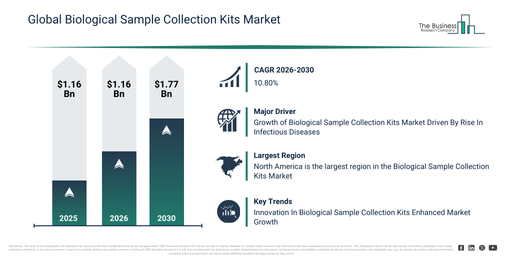
    The market for biological sample collection kits has experienced substantial expansion in recent years. Projections indicate it will grow from $11.39 billion in 2025 to $12.78 billion in 2026, showing a compound annual growth rate (CAGR) of 12.1%. Historically, this growth can be attributed to a surge in infectious disease testing programs, the expansion of testing capacity in hospitals and diagnostic centers, the early adoption of standardized swab and vtm kits, an increase in clinical research and sample-based studies, and rising awareness of safe specimen handling protocols.

    The market for biological sample collection kits is poised for substantial expansion in the coming years, with its valuation expected to reach $19.26 billion by 2030, reflecting a compound annual growth rate (CAGR) of 10.8%. This anticipated growth is fueled by factors such as the rising demand for homecare and self-collection test kits, the increasing application of DNA and RNA collection kits in genomics, greater utilization of blood and saliva kits in chronic disease management and screening programs, the growth of research biobanking and longitudinal cohort studies, and a growing preference for user-friendly and transport-stable collection formats. Key trends during this period include the expanding use of biological sample collection kits in diagnostic testing, the growing adoption of at-home and remote sample collection solutions, increased utilization of swabs, VTM, and blood collection kits in clinical settings, an expansion of sample collection for research and biobanking applications, and a strong focus on sterility, safety, and sample integrity during transportation and storage.

    Get A Free Sample Report With In-Depth Market Insights:

    https://thebusinessresearchcompany.com/sample_request?id=44091231&type=smp&name=Biological%20Sample%20Collection%20Kits%20Market%20Report%202026&utm_source=Blogs&utm_medium=Paid&utm_campaign=Sep_PR

    Biological Sample Collection Kits Market Growth Backed By Core Demand Fundamentals

    The projected rise in the occurrence of infectious diseases is anticipated to stimulate the expansion of the biological sample collection kits market moving forward. Infectious diseases are illnesses caused by microorganisms such as bacteria, viruses, fungi, or parasites that can spread from person to person. The increasing prevalence of these diseases is attributed to factors like heightened global travel, urban development, antimicrobial resistance, environmental changes, and inadequate healthcare infrastructure. Biological sample collection kits are essential in managing infectious diseases, facilitating the secure and efficient gathering of specimens for diagnostic, monitoring, and research purposes. For instance, in March 2024, the Centers for Disease Control and Prevention, a US-based national public health agency, reported a 16% increase in U.S. tuberculosis cases from 2022 to 2023, totaling 9,615 cases, with the incidence rate climbing from 2.5 to 2.9 per 100,000 people. Pronounced increases were observed in Hispanic (23%) and Black (28%) groups, particularly among non-U.S.-born individuals, highlighting shifts in TB incidence across demographics. Therefore, the growing number of infectious diseases is acting as a key driver for the biological sample collection kits market’s growth.

    Biological Sample Collection Kits Market Segment Analysis Spotlighting Growth Areas

    The biological sample collection kits market covered in this report is segmented –

    1) By Product: Swabs, Viral Transport Media, Blood Collection Kits

    2) By Application: Diagnostics, Research

    3) By End-Use: Hospitals And Clinics, Homecare, Diagnostics Centers, Other End-Uses

    Subsegments:

    1) By Swabs: Nasopharyngeal Swabs, Oropharyngeal Swabs, Flocked Swabs, Polyester Swabs

    2) By Viral Transport Media (VTM): Liquid VTM, Dry VTM

    3) By Blood Collection Kits: Venous Blood Collection Kits, Capillary Blood Collection Kits, Fingerstick Blood Collection Kits

    Biological Sample Collection Kits Market Growth Trends Reshaping The Competitive Landscape

    Leading companies in the biological sample collection kits market are innovating by developing products such as personalized diagnostic test kits to provide customers with more advanced features. Personalized diagnostic test kits are instruments designed to identify specific biomarkers or genetic information, customized to an individual’s distinct health profile for a tailored medical diagnosis. For example, in March 2023, Cue Health, a US-based diagnostic test service provider, introduced at-home diagnostic test kits. This at-home test kit provides all the essential items for secure, simple, and private sample collection. Following the submission and processing of the sample by an independent, CLIA-certified laboratory, the customer receives clear and easily comprehensible results securely through the Cue Health App, along with relevant information concerning their condition or health query.

    Biological Sample Collection Kits Market Industry Leaders And Competitive Landscape

    Major companies operating in the biological sample collection kits market are Thermo Fisher Scientific Inc, Roche Holding AG, Abbott Laboratories, Becton Dickinson and Company, 3M Company, Copan Diagnostics Inc, Puritan Medical Products Inc, HiMedia Laboratories Pvt Ltd, Omega Laboratories Ltd, VIRCELL SL, Titan Biotech Ltd, BTNX Inc, MWE Medical Wire and Equipment Co Ltd, Quidel Corporation, Greiner Bio‑One International GmbH, Terumo Corporation, Sarstedt AG & Co KG, QIAGEN NV, Deltalab Spain, Trinity Biotech Ltd

    View The Full Biological Sample Collection Kits Market Report:

    https://thebusinessresearchcompany.com/report/biological-sample-collection-kits-global-market-report?utm_source=Blogs&utm_medium=Paid&utm_campaign=Sep_PR

    Biological Sample Collection Kits Market Regional Analysis And Top Geography

    North America was the largest region in the biological sample collection kits market in 2025. Asia-Pacific is expected to be the fastest-growing region in the forecast period. The regions covered in the biological sample collection kits market report are Asia-Pacific, South East Asia, Western Europe, Eastern Europe, North America, South America, Middle East, Africa.

    Reach Out To Our Team:

    The Business Research Company: https://www.thebusinessresearchcompany.com/

    Americas: +1 310-496-7795

    Asia: +44 7882 955267 & +91 8897263534

    Europe: +44 7882 955267

    Email us at: marketing@tbrc.info

    Follow us on:

    LinkedIn: https://in.linkedin.com/company/the-business-research-company

    YouTube: https://www.youtube.com/channel/UC24_fI0rV8cR5DxlCpgmyFQ

    Global Market Model: https://www.thebusinessresearchcompany.com/global-market-model
  • Biologic Hernia Repair Mesh Market 2026 Outlook: Market Size, CAGR And Key Growth Opportunities

    Biologic Hernia Repair Mesh Market 2026 Outlook: Market Size, CAGR And Key Growth Opportunities

    Featuring market attractiveness scoring, total addressable market sizing, company benchmarking matrices, interactive Excel dashboards, deeper supply chain intelligence, emerging startup tracking, and granular product-level insights, The Business Research Company’s 2026 market reports are built to deliver research that is both more actionable and more strategically valuable.

    Biologic Hernia Repair Mesh Market Growth Analysis: How Will Revenue Trend Over The Forecast Period?

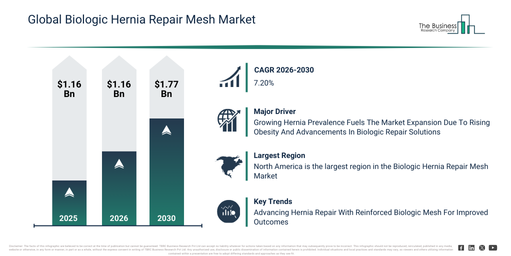
    The biologic hernia repair mesh market has shown significant expansion in recent years. It is anticipated to increase from $1.85 billion in 2025 to $1.99 billion in 2026, achieving a compound annual growth rate (CAGR) of 7.6%. This historical growth can be attributed to factors such as a rise in hernia disorder cases, the limitations of synthetic mesh in infected situations, increasing volumes of surgical procedures, more frequent hospital-based hernia repairs, and the early adoption of tissue-based implants.

    The biologic hernia repair mesh market is projected for substantial expansion in the coming years. Its size is anticipated to reach $2.63 billion by 2030, exhibiting a compound annual growth rate (CAGR) of 7.2%. This growth over the forecast period is attributable to several factors, including advancements in biologic tissue processing technologies, an increasing demand for patient-specific repair solutions, heightened awareness of post-surgical complications, the expansion of ambulatory surgical centers, and a growing surgeon preference for regenerative materials. Key trends expected during the forecast period encompass a rising preference for biologic mesh in high-risk hernia repairs, increasing adoption of absorbable and regenerative mesh solutions, expanded application in complex and contaminated surgical cases, the broadening of minimally invasive and laparoscopic hernia procedures, and an elevated clinical focus on reducing infection and recurrence rates.

    Get A Free Sample Report With In-Depth Market Insights:

    https://thebusinessresearchcompany.com/sample_request?id=65525531&type=smp&name=Biologic%20Hernia%20Repair%20Mesh%20Market%20Report%202026&utm_source=Blogs&utm_medium=Paid&utm_campaign=Sep_PR

    Biologic Hernia Repair Mesh Market Growth Catalysts And Demand Drivers

    A rising number of hernia occurrences is anticipated to drive the expansion of the biologic hernia repair mesh market in the future. Hernia cases denote situations where an internal organ or tissue abnormally protrudes through a compromised area in muscle or connective tissue. The increase in hernia cases stems from rising obesity rates, given that surplus body weight applies greater strain on abdominal muscles, thus increasing the likelihood of hernia development. Biologic hernia repair mesh assists in treating hernia conditions by providing a natural tissue scaffold that promotes healing, integrates with the body, and reduces the chances of rejection or ongoing inflammation. For example, in November 2024, the British Hernia Society, a UK-based national professional organization for hernia surgeons in the United Kingdom and Ireland, reported that its new British Hernia Society Registry received registrations from more than 100 surgeons at its initial conference. By January 2025, this registry had documented 400 cases submitted by 30 surgeons across 31 hospitals, indicating swift initial adoption and underscoring the ongoing clinical challenge posed by hernia cases. Consequently, the growing frequency of hernia cases is fueling the expansion of the biologic hernia repair mesh market.

    Biologic Hernia Repair Mesh Market Segment Performance And Emerging Opportunities

    The biologic hernia repair mesh market covered in this report is segmented –

    1) By Absorption: Partially Absorbable Hernia Repair Mesh, Fully Absorbable Hernia Repair Mesh

    2) By Product Type: Porcine, Bovine, Human Dermis, Other Product Types

    3) By Distribution Channel: Direct Sales, Distributors, Online Sales, Pharmacies

    4) By Application: Inguinal Hernia Repair, Ventral Hernia Repair, Umbilical Hernia Repair, Other Hernia Repairs

    5) By End-User: Hospitals, Ambulatory Surgical Centers, Clinics, Other End Users

    Subsegments:

    1) By Partially Absorbable Hernia Repair Mesh: Composite Mesh, Reinforced Biologic Mesh

    2) By Fully Absorbable Hernia Repair Mesh: Extracellular Matrix (ECM) Mesh, Acellular Dermal Matrix (ADM) Mesh

    Biologic Hernia Repair Mesh Market Trends Shaping Long-Term Demand

    Leading companies operating in the biologic hernia repair mesh market are concentrating on developing advanced solutions, such as reinforced biologic mesh, to improve strength, flexibility, and integration with host tissue. This reinforced biologic mesh is a type of surgical mesh that combines biologic tissue with synthetic fibers to enhance durability, support tissue regeneration, and minimize hernia recurrence. For instance, in April 2024, TELA Bio Inc., a US-based medical technology company, introduced OviTex inguinal hernia repair (IHR), a reinforced biologic mesh option for inguinal hernia repair. It is a reinforced tissue matrix specifically designed for laparoscopic and robotic inguinal hernia procedures, leveraging a combination of biologic ovine extracellular matrix (ECM) and minimal synthetic polymer to deliver strength, facilitate rapid tissue integration, and reduce the risk of complications. Its advantages include lower recurrence rates, accelerated healing, and higher patient satisfaction, effectively overcoming the drawbacks associated with conventional synthetic meshes.

    Biologic Hernia Repair Mesh Market Key Participants And Competitive Landscape

    Major companies operating in the biologic hernia repair mesh market are Johnson And Johnson, Medtronic plc, DSM Biomedical, W L Gore And Associates Inc, Meril Life Sciences, Cook Medical LLC, Integra LifeSciences Corporation, MTF Biologics, LifeCell Corporation, AlloSource, TELA Bio Inc, Kerecis, Assut Europe S p A, Serag Wiessner GmbH And Co KG, Aroa Biosurgery Limited, ACell Inc, Tissue Regenix Group plc, RTI Surgical Inc, Beijing Datsing Bio Tech Co Ltd, Shanghai Pine And Power Biotech Co Ltd, Axogen Inc, XenoSure Biologics

    View The Full Biologic Hernia Repair Mesh Market Report:

    https://thebusinessresearchcompany.com/report/biologic-hernia-repair-mesh-global-market-report?utm_source=Blogs&utm_medium=Paid&utm_campaign=Sep_PR

    Biologic Hernia Repair Mesh Market Geographic Analysis: Where Is Demand Rising Fastest?

    North America was the largest region in the biologic hernia repair mesh market in 2025. Asia-Pacific is expected to be the fastest-growing region in the forecast period. The regions covered in the biologic hernia repair mesh market report are Asia-Pacific, South East Asia, Western Europe, Eastern Europe, North America, South America, Middle East, Africa.

    Reach Out To Our Team:

    The Business Research Company: https://www.thebusinessresearchcompany.com/

    Americas: +1 310-496-7795

    Asia: +44 7882 955267 & +91 8897263534

    Europe: +44 7882 955267

    Email us at: marketing@tbrc.info

    Follow us on:

    LinkedIn: https://in.linkedin.com/company/the-business-research-company

    YouTube: https://www.youtube.com/channel/UC24_fI0rV8cR5DxlCpgmyFQ

    Global Market Model: https://www.thebusinessresearchcompany.com/global-market-model
  • Bio-Implants Market Size Growth: From $152.24 Billion In 2026 To $228.53 Billion By 2030

    Bio-Implants Market Size Growth: From $152.24 Billion In 2026 To $228.53 Billion By 2030

    Built to provide research that’s more actionable and strategically valuable, The Business Research Company’s 2026 market reports include market attractiveness analysis, total addressable market sizing, company benchmarking matrices, interactive Excel dashboards, broader supply chain intelligence, emerging startup tracking, and in-depth product insights.

    Bio-Implants Market Forecast: What Value Will The Market Reach By 2030?

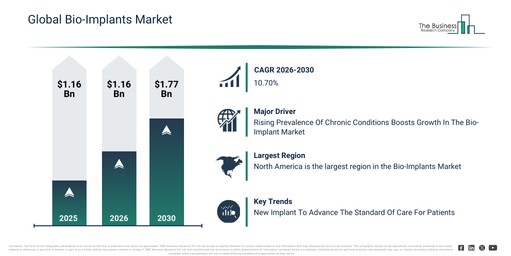
    The bio-implants market size has shown substantial growth in recent years. Its expansion is anticipated to be from $136.96 billion in 2025 to $152.24 billion in 2026, achieving a compound annual growth rate (CAGR) of 11.2%. Factors such as the rising prevalence of chronic orthopedic and cardiovascular disorders, increasing surgical intervention rates, advancements in biomaterial science, a growing aging population, and wider acceptance of implant-based therapies contributed to its historic growth.

    The bio-implants market size is anticipated to expand significantly over the coming years. It will grow to $228.53 billion in 2030 at a compound annual growth rate (CAGR) of 10.7%. The expansion during this forecast period is largely driven by increasing investments in regenerative medicine, the rising adoption of 3D-printed implants, a growing focus on personalized healthcare solutions, the expansion of outpatient surgical procedures, and an increasing demand for next-generation bio-implants. Prominent trends for the forecast period include the increasing adoption of biocompatible implant materials, a rising demand for customized and patient-specific implants, the growing use of minimally invasive implant procedures, the expansion of regenerative and tissue-engineered implants, and an enhanced focus on long-term implant durability.

    Get A Free Sample Report With In-Depth Market Insights:

    https://thebusinessresearchcompany.com/sample_request?id=56076042&type=smp&name=Bio-Implants%20Market%20Report%202026&utm_source=Blogs&utm_medium=Paid&utm_campaign=Sep_PR

    Bio-Implants Market Opportunity Drivers: What’s Unlocking New Revenue Potential?

    The growing occurrence of chronic conditions is projected to propel the bio-implant market ahead. Such conditions, including cardiovascular diseases and arthritis, are defined as medical ailments lasting a year or more, necessitating ongoing medical attention, and limiting daily routines. Bio-implants play a role in the management and monitoring of chronic conditions, helping to lower the death rate resulting from these illnesses. As an illustration, data from June 2024, provided by the National Health Service, a UK government department, revealed that 3,615,330 individuals registered with a general practitioner (GP) received a diagnosis of non-diabetic hyperglycemia or pre-diabetes (a state characterized by elevated blood sugar levels, insufficient for a diabetes diagnosis) in 2023. This represented an 18% rise from the 3,065,825 cases recorded in 2022. Consequently, the rising incidence of chronic conditions is stimulating the expansion of the bio-implant market.

    Bio-Implants Market Segment Landscape And Growth Outlook

    The bio-implants market covered in this report is segmented –

    1) By Type: Cardiovascular Implants, Dental Implants, Spinal Bio-Implants, Orthopedic Implants, Ophthalmic Implants, Other Types

    2) By Material: Metallic, Ceramic, Polymer, Biological

    3) By Origin: Allograft, Autograft, Xenograft, Synthetic

    4) By End-User: Ambulatory Surgical Centers, Clinics, Hospital, Other End-Users

    Subsegments:

    1) By Cardiovascular Implants: Stents, Heart Valves, Pacemakers

    2) By Dental Implants: Endosteal Implants, Subperiosteal Implants, Zygomatic Implants

    3) By Spinal Bio-Implants: Spinal Fusion Devices, Intervertebral Discs, Spinal Rods And Plates

    4) By Orthopedic Implants: Joint Replacement Implants, Fracture Fixation Devices, Bone Plates And Screws

    5) By Ophthalmic Implants: Intraocular Lenses (IOLs), Retinal Implants, Corneal Implants

    6) By Other Types: Cochlear Implants, Tissue Engineering Implants, Biomaterial Scaffolds

    Bio-Implants Market Innovation Trends Shaping Future Development

    Major companies in the bio-implants market are introducing novel implants, such as the REGENETEN Bioinductive Implants, to advance patient care standards. The REGENETEN Bioinductive Implant is a solution based on collagen that supports the body’s natural healing response by facilitating the growth of new tendon-like tissue. For instance, in July 2023, Smith+Nephew, a UK-based medical technology company, launched its REGENETEN Bioinductive Implant in India, having completed over 100,000 global procedures since its initial introduction. This collagen-based implant aids the body’s natural healing process, promoting the development of new tendon-like tissue to augment existing tendons. Delivered arthroscopically, this implant, initially the size of a postage stamp, became invisible in six months, replaced by new tendon-like tissue. This implant has demonstrated favorable results in rotator cuff disease, with a recent trial showing an 86% relative reduction in re-tear rates at 12 months compared to conventional surgery alone.

    Bio-Implants Market Top Companies Driving Competitive Growth

    Major companies operating in the bio-implants market are Medtronic PLC, Stryker Corporation, Zimmer Biomet Holdings Inc., Dentsply Sirona Inc., Johnson & Johnson, Arthrex Inc., Boston Scientific Corporation, Smith & Nephew PLC, B. Braun Melsungen AG, Straumann Holding AG, Organogenesis Holdings Inc., Exactech Inc., Edwards Lifesciences Corporation, Biotronik SE & Co. KG, aap Implantate AG, Abbott Laboratories, Cook Medical LLC, Globus Medical Inc., Integra LifeSciences Holdings Corporation, LivaNova PLC, MicroPort Scientific Corporation, NuVasive Inc., Orthofix Medical Inc., RTI Surgical Holdings Inc., Terumo Corporation

    View The Full Bio-Implants Market Report:

    https://thebusinessresearchcompany.com/report/bio-implants-global-market-report?utm_source=Blogs&utm_medium=Paid&utm_campaign=Sep_PR

    Bio-Implants Market Global Footprint: Which Region Leads The Market?

    North America was the largest region in the bio-implants market share in 2025. Asia-Pacific is expected to be the fastest-growing region in the forecast period. The regions covered in the bio-implants market report are Asia-Pacific, South East Asia, Western Europe, Eastern Europe, North America, South America, Middle East, Africa.

    Reach Out To Our Team:

    The Business Research Company: https://www.thebusinessresearchcompany.com/

    Americas: +1 310-496-7795

    Asia: +44 7882 955267 & +91 8897263534

    Europe: +44 7882 955267

    Email us at: marketing@tbrc.info

    Follow us on:

    LinkedIn: https://in.linkedin.com/company/the-business-research-company

    YouTube: https://www.youtube.com/channel/UC24_fI0rV8cR5DxlCpgmyFQ

    Global Market Model: https://www.thebusinessresearchcompany.com/global-market-model
  • Bioimpedance Analyzers Market Analysis 2026: Market Size, Growth Trends And Industry Outlook

    Bioimpedance Analyzers Market Analysis 2026: Market Size, Growth Trends And Industry Outlook

    Backed by market attractiveness analysis, total addressable market sizing, company benchmarking matrices, interactive Excel dashboards, wider supply chain intelligence, emerging startup coverage, and detailed product-level insights, The Business Research Company’s 2026 market reports are designed to offer research that is more actionable and strategically valuable than ever.

    Bioimpedance Analyzers Market Size Outlook: How Quickly Will Revenue Expand Through 2030?

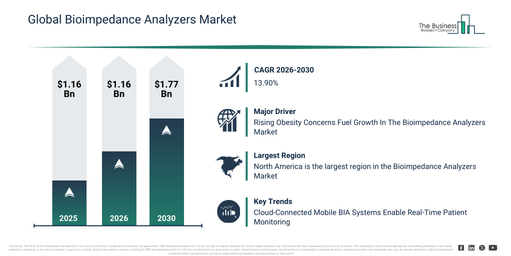
    The size of the bioimpedance analyzers market has experienced rapid expansion in recent years. It is projected to increase from $0.67 billion in 2025 to $0.76 billion in 2026, showing a compound annual growth rate (CAGR) of 13.9%. The market’s historical development can be attributed to heightened fitness and wellness awareness, the increasing application of body composition assessment in sports and rehabilitation, the early incorporation of bioimpedance devices in hospitals and nutrition clinics, the demand for non-invasive and quick assessment technologies, and the expansion of fitness club and wellness center facilities.

    The market for bioimpedance analyzers is projected to experience swift expansion over the coming years, anticipated to reach $1.28 billion in 2030, exhibiting a compound annual growth rate (CAGR) of 13.9%. This growth during the forecast period is attributable to various factors, such as the increasing prevalence of obesity and metabolic disorders, a surging demand for personalized health and fitness tracking, increased adoption of wireless and connected bioimpedance analyzers, the rising use of multi-frequency analyzers for advanced body composition insights, and the expanding use in home user and remote health monitoring applications. Furthermore, key trends identified for the forecast timeframe encompass the expanding deployment of bioimpedance analyzers for body composition monitoring, their increasing integration into fitness, wellness, and weight management programs, a heightened utilization in clinical and hospital-based nutritional assessment, the broadening scope of segmental and whole-body measurement applications, and a strong focus on accuracy, convenience, and non-invasive assessment techniques.

    Get A Free Sample Report With In-Depth Market Insights:

    https://thebusinessresearchcompany.com/sample_request?id=75278626&type=smp&name=Bioimpedance%20Analyzers%20Market%20Report%202026&utm_source=Blogs&utm_medium=Paid&utm_campaign=Sep_PR

    Bioimpedance Analyzers Market Growth Momentum: What Factors Are Shaping Demand?

    Growing worries about obesity are anticipated to stimulate the expansion of the bioimpedance analyzers market moving forward. Obesity is a chronic health condition marked by an excessive buildup of body fat, which can negatively affect overall well-being. The heightened focus on obesity is attributed to the widespread availability of high-calorie, high-fat, and high-sugar foods, along with sedentary lifestyles and reduced physical activity in daily routines. Bioimpedance analyzers aid in managing obesity by providing comprehensive and actionable data on body composition, thereby facilitating personalized treatment plans, monitoring health risks, motivating patients, assessing fluid balance, improving clinical outcomes, and enhancing research efforts. For instance, in March 2023, the World Heart Foundation, a Switzerland-based non-government cardiovascular community, reported that globally, approximately 2.3 billion adults and children are obese or overweight. With the current obesity trend, it is estimated that the number of people living with obesity will reach 2.7 billion by 2025. Thus, the increasing concerns about obesity are a driving force for the bioimpedance analyzers market.

    Bioimpedance Analyzers Market Breakdown By Product Type And Application

    The bioimpedance analyzers market covered in this report is segmented –

    1) By Type: Multi Frequency, Single Frequency, Dual Frequency

    2) By Modality: Wired Bioimpedance, Wireless Bioimpedance

    3) By Application: Whole Body Measurement, Segmental Body Measurement

    4) By End User: Hospitals, Fitness Clubs And Wellness Centers, Home Users, Other End-Users

    Subsegments:

    1) By Multi-Frequency: Bioimpedance Analyzers With Multiple Frequency Settings, Multi-Frequency Body Composition Analyzers

    2) By Single-Frequency: Single-Frequency Bioimpedance Analyzers, Single-Frequency Body Composition Analyzers

    3) By Dual-Frequency: Dual-Frequency Bioimpedance Analyzers, Dual-Frequency Body Composition Analyzers

    Bioimpedance Analyzers Market Trends Redefining Industry Growth

    Leading companies within the bioimpedance analyzers market are increasingly concentrating on integrating cloud-based analytics, such as networked, portable BIA systems that facilitate remote data management and continuous patient monitoring. These connected mobile BIA systems specifically refer to bioimpedance analyzers designed for portability, battery operation, and the secure transmission of measurement data to cloud platforms, enabling clinicians to access, analyze, and track patients’ body composition and fluid status over time. For example, in January 2025, SECA, a Germany-based medical device company, unveiled the seca mBCA Go, a mobile bioelectrical impedance analyzer that links its established measuring mat with the seca analytics 125 cloud platform, provides secure patient-management capabilities, and incorporates the seca myAnalytics app for straightforward patient engagement.

    Bioimpedance Analyzers Market Leading Players And Competitive Positioning

    Major companies operating in the bioimpedance analyzers market are Xiaomi Corporation, Omron Corporation, Beurer GmbH, InBody Co Ltd., Seca GmbH & Co., Withings, Lumsail Industrial Inc., RJL Systems Inc., ImpediMed Limited, Biodynamics Corporation, Charder Electronic Co Ltd., Akern Srl, Bioparhom, BioTekna Limited, Bodystat Ltd., EVOLT 360 Limited, Maltron International Ltd., Tanita Corporation, Tongfang Health Technology (Beijing) Co.Ltd, Jawon Medical Co Ltd

    View The Full Bioimpedance Analyzers Market Report:

    https://thebusinessresearchcompany.com/report/bioimpedance-analyzers-global-market-report?utm_source=Blogs&utm_medium=Paid&utm_campaign=Sep_PR

    Bioimpedance Analyzers Market Regional Split: Which Areas Are Fueling Growth?

    North America was the largest region in the bioimpedance analyzer market in 2025. Asia-Pacific is expected to be the fastest-growing region in the forecast period. The regions covered in the bioimpedance analyzers market report are Asia-Pacific, South East Asia, Western Europe, Eastern Europe, North America, South America, Middle East, Africa.

    Reach Out To Our Team:

    The Business Research Company: https://www.thebusinessresearchcompany.com/

    Americas: +1 310-496-7795

    Asia: +44 7882 955267 & +91 8897263534

    Europe: +44 7882 955267

    Email us at: marketing@tbrc.info

    Follow us on:

    LinkedIn: https://in.linkedin.com/company/the-business-research-company

    YouTube: https://www.youtube.com/channel/UC24_fI0rV8cR5DxlCpgmyFQ

    Global Market Model: https://www.thebusinessresearchcompany.com/global-market-model
  • Bioengineered Artificial Skin Market Forecast To 2030: Starting From $4.88 Billion In 2026

    Bioengineered Artificial Skin Market Forecast To 2030: Starting From $4.88 Billion In 2026

    Featuring market attractiveness scoring, total addressable market sizing, company benchmarking matrices, interactive Excel dashboards, deeper supply chain intelligence, emerging startup tracking, and granular product-level insights, The Business Research Company’s 2026 market reports are built to deliver research that is both more actionable and more strategically valuable.

    Bioengineered Artificial Skin Market Size, Value And Growth Trajectory Through 2030

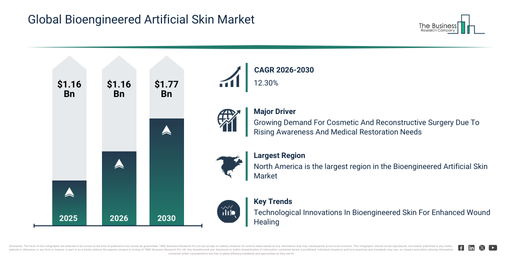
    The scale of the bioengineered artificial skin market has expanded significantly over recent years. This market is projected to expand from $2.73 billion in 2025 to reach $3.07 billion by 2026, demonstrating a compound annual growth rate (CAGR) of 12.4%. Historically, this market’s expansion can be linked to factors such as a greater occurrence of burn injuries, an increase in chronic wound cases, the broadening scope of reconstructive surgical techniques, progress in tissue engineering research, and the enhanced accessibility of biomaterial innovations.

    The bioengineered artificial skin market size is anticipated to undergo rapid expansion in the coming years. It is forecast to grow to $4.88 billion in 2030, with a compound annual growth rate (CAGR) of 12.3%. This growth during the forecast period can be attributed to the increasing adoption of regenerative medicine therapies, a rising demand for advanced wound care solutions, the expansion of stem cell-based skin treatments, growing investments in bioprinting technologies, and an increasing focus on personalized regenerative healthcare. Major trends expected in the forecast period include the increasing development of cell-based skin substitutes, a rising adoption of 3D bioprinted skin constructs, the growing use of biomimetic scaffold materials, an expansion of regenerative wound healing applications, and an enhanced focus on personalized skin regeneration.

    Get A Free Sample Report With In-Depth Market Insights:

    https://thebusinessresearchcompany.com/sample_request?id=75274981&type=smp&name=Bioengineered%20Artificial%20Skin%20Market%20Report%202026&utm_source=Blogs&utm_medium=Paid&utm_campaign=Sep_PR

    Bioengineered Artificial Skin Market Expansion Drivers: What’s Shaping Future Growth?

    The increasing need for cosmetic and reconstructive surgery is anticipated to drive the expansion of the bioengineered artificial skin market in the future. Cosmetic and reconstructive surgery encompasses medical interventions aimed at improving aesthetic appeal or restoring the structure and utility of body areas impacted by birth defects, injuries, or illnesses. This surge in demand stems from heightened consumer knowledge regarding aesthetic improvement possibilities and the escalating requirement for medical repair subsequent to accidents, congenital issues, or disease-induced deformities. Bioengineered artificial skin proves beneficial in cosmetic and reconstructive surgery, facilitating tissue regeneration, minimizing scar formation, and enhancing visual results in procedures designed to restore or augment compromised or absent skin. For example, data from January 2023 from the International Society of Aesthetic Plastic Surgery, a US-based professional body focused on aesthetic plastic surgery, indicated that over 12.8 million surgical and 17.5 million non-surgical operations were performed worldwide, showing a 19.3% rise in total procedures compared to the prior period. Furthermore, plastic surgeons carried out more than 14.9 million surgical and 18.8 million non-surgical operations globally in 2022, marking an 11.2% increase in total procedures executed. Consequently, the increasing need for cosmetic and reconstructive surgery is fueling expansion within the bioengineered artificial skin market.

    Bioengineered Artificial Skin Market Segment Analysis And Revenue Potential

    The bioengineered artificial skin market covered in this report is segmented –

    1) By Product Type: Acellular Dermal Matrices, Cell-Based Skin Substitutes, Skin Grafts, 3D Bioprinted Skin

    2) By Material Type: Collagen-Based, Hyaluronic Acid-Based, Silicone-Based, Polyurethane-Based

    3) By Technology: Bioprinting, Electrospinning, Self-Assembly, Microfabrication

    4) By Application: Burn Treatment, Chronic Wound Care, Surgical Reconstruction, Other Applications

    5) By End-User: Hospitals, Dermatology Clinics, Ambulatory Surgical Centers, Research Institutions

    Subsegments:

    1) By Acellular Dermal Matrices: Biologically Derived Acellular Dermal Matrices, Synthetic Acellular Dermal Matrices, Hydrogel-Based Acellular Dermal Matrices, Collagen-Based Acellular Dermal Matrices

    2) By Cell-Based Skin Substitutes: Autologous Skin Substitutes, Allogeneic Skin Substitutes, Stem Cell-Based Skin Substitutes, Fetal and Neonatal Cell-Based Substitutes

    3) By Skin Grafts: Split-Thickness Skin Grafts, Full-Thickness Skin Grafts, Cultured Skin Grafts, Synthetic Skin Grafts

    4) By 3D Bioprinted Skin: Human Skin Bioprinting, In Vitro Bioprinted Skin Models, Bioink-Based Bioprinted Skin, Multi-Layered Bioprinted Skin

    Bioengineered Artificial Skin Market Strategic Trends: What Defines The Next Growth Phase?

    Leading companies in the bioengineered artificial skin market are concentrating on technological advancements, such as sophisticated tissue engineering techniques, to formulate highly effective skin substitutes. These innovations aim to improve wound healing, enhance patient outcomes, and address the increasing demand for regenerative medicine in treating severe burns and chronic wounds. Advanced tissue engineering is a multidisciplinary field that integrates biology, materials science, and engineering to produce synthetic or biologically derived tissues and organs that can replicate the structure and function of natural tissues for medical applications. For example, in January 2023, Urgo Group, a France-based healthcare company, established the Genesis research laboratory, which focuses on developing artificial skin to assist in the effective treatment of severe wounds. This initiative intends to support healthcare professionals by providing advanced bioengineered skin solutions to accelerate patient recovery and optimize wound-healing results.

    Bioengineered Artificial Skin Market Competitive Overview And Top Companies

    Major companies operating in the bioengineered artificial skin market are Stryker Corporation, Smith & Nephew plc, Mölnlycke Health Care AB, Integra LifeSciences Holdings Corporation, Organogenesis Inc., MiMedx Group Inc., Vericel Corporation, AlloSource Inc., Kerecis Inc., PolyNovo Limited, Avita Medical Inc., Cook Biotech Incorporated, Tissue Regenix Group plc, Episkin SA, TissUse GmbH, RenovaCare Inc., PolarityTE Inc., Mallinckrodt Pharmaceuticals (Skin Substitutes), Medtronic plc (Regenerative Therapies), 3D Bioprinting Solutions

    View The Full Bioengineered Artificial Skin Market Report:

    https://thebusinessresearchcompany.com/report/bioengineered-artificial-skin-global-market-report?utm_source=Blogs&utm_medium=Paid&utm_campaign=Sep_PR

    Bioengineered Artificial Skin Market Top Region: Where Does Most Revenue Come From?

    North America was the largest region in the bioengineered artificial skin market in 2025. Asia-Pacific is expected to be the fastest-growing region in the forecast period. The regions covered in the bioengineered artificial skin market report are Asia-Pacific, South East Asia, Western Europe, Eastern Europe, North America, South America, Middle East, Africa.

    Reach Out To Our Team:

    The Business Research Company: https://www.thebusinessresearchcompany.com/

    Americas: +1 310-496-7795

    Asia: +44 7882 955267 & +91 8897263534

    Europe: +44 7882 955267

    Email us at: marketing@tbrc.info

    Follow us on:

    LinkedIn: https://in.linkedin.com/company/the-business-research-company

    YouTube: https://www.youtube.com/channel/UC24_fI0rV8cR5DxlCpgmyFQ

    Global Market Model: https://www.thebusinessresearchcompany.com/global-market-model