Blog

  • Bio Implant Allograft And Xenograft Market Size In 2026: Growth Outlook And Forecast Through 2030

    Bio Implant Allograft And Xenograft Market Size In 2026: Growth Outlook And Forecast Through 2030

    Backed by market attractiveness analysis, total addressable market sizing, company benchmarking matrices, interactive Excel dashboards, wider supply chain intelligence, emerging startup coverage, and detailed product-level insights, The Business Research Company’s 2026 market reports are designed to offer research that is more actionable and strategically valuable than ever.

    Bio Implant Allograft And Xenograft Market Value Analysis: What Growth Lies Ahead Over The Forecast Period?

    The bio implant allograft and xenograft market size has experienced robust expansion in recent years. This market is projected to expand from $2.66 billion in 2025 to $2.9 billion in 2026, exhibiting a compound annual growth rate (CAGR) of 8.9%. Historically, factors such as the restricted supply of donor tissue, the high incidence of orthopedic and reconstructive procedures, increasing need for wound healing products, limitations of traditional implants, and the absence of sophisticated preservation technologies have contributed to its expansion.

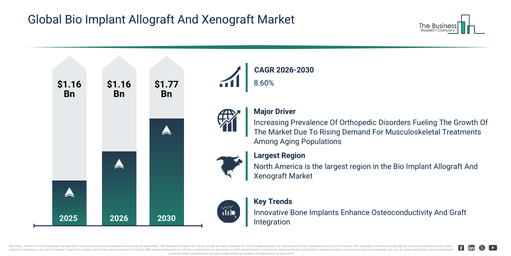
    The bio implant allograft and xenograft market is projected to experience robust expansion over the coming years. This market is anticipated to reach a valuation of $4.03 billion by 2030, demonstrating a compound annual growth rate (CAGR) of 8.6%. Factors contributing to this growth during the forecast period include advances in 3D bioprinting and regenerative medicine, intensified research and development efforts in allograft/xenograft processing, the incorporation of AI for precise tissue matching, an increasing elderly demographic requiring implants, and the worldwide proliferation of surgical facilities. Key developments expected during the forecast period encompass AI-driven tissue compatibility assessment, the 3D bioprinting of grafts, the broader integration of regenerative medicine, procedures for minimally invasive implants, and sophisticated sterilization and preservation methodologies.

    Get A Free Sample Report With In-Depth Market Insights:

    https://thebusinessresearchcompany.com/sample_request?id=71865263&type=smp&name=Bio%20Implant%20Allograft%20And%20Xenograft%20Market%20Report%202026&utm_source=Blogs&utm_medium=Paid&utm_campaign=Sep_PR

    Bio Implant Allograft And Xenograft Market Growth Momentum: What Factors Are Shaping Demand?

    The future expansion of the bio implant allograft and xenograft market is anticipated to be driven by the rising occurrence of orthopedic disorders. These disorders encompass conditions impacting the musculoskeletal system, specifically bones, joints, muscles, ligaments, tendons, and nerves. A growing global elderly population contributes to higher demand for orthopedic treatments, given that older people are more susceptible to musculoskeletal conditions like osteoarthritis, osteoporosis, and fractures. Bio implant allografts and xenografts play a crucial role in managing orthopedic disorders by facilitating the repair of damaged bone and tissue, encouraging natural healing, and enhancing structural integrity. Furthermore, they boost patient recovery through successful surgical methods and by lowering the potential for complications during orthopedic operations. As an illustration, a survey study from August 2023 by the Institute for Health Metrics and Evaluation, a US-based public health research institute, indicated that 15% of people aged 30 and above suffered from osteoarthritis in 2023, with projections showing this figure could climb to approximately 1 billion by 2050. Consequently, the escalating incidence of orthopedic disorders is directly fueling the expansion of the bio implant allograft and xenograft market.

    Bio Implant Allograft And Xenograft Market Segment Landscape And Growth Outlook

    The bio implant allograft and xenograft market covered in this report is segmented –

    1) By Product Type: Allografts, Xenografts, Composite Grafts

    2) By Storage Type: Freeze-Dried (Lyophilized), Fresh Tissue, Preserved Tissue

    3) By Distribution Channel: Direct Sales, Third-Party Distributors, Online Sales Platforms

    4) By Application Area: Orthopedic Surgery, Dental Surgery, Cardiovascular Procedures, Plastic And Reconstructive Surgery, Trauma Surgery

    5) By End-User: Hospitals, Ambulatory Surgical Centers, Specialty Clinics, Research And Academic Institutes

    Subsegments:

    1) By Allografts: Fresh Allografts, Frozen Allografts, Freeze-Dried Allografts

    2) By Xenografts: Bovine-Derived Xenografts, Porcine-Derived Xenografts, Equine-Derived Xenografts

    3) By Composite Grafts: Ceramic-Polymer Composite Grafts, Polymer-Metal Composite Grafts, Biologic-Synthetic Composite Grafts

    Bio Implant Allograft And Xenograft Market Trends Redefining Industry Growth

    Major companies operating in the bioimplant allograft and xenograft market are concentrating on developing innovative solutions, such as demineralized bone allograft implants, to improve osteoconductivity, enhance graft integration, and accelerate bone regeneration. Demineralized bone allograft implants are derived from donor bone grafts with their minerals removed, while retaining collagen and growth factors to foster new bone formation and integration in orthopedic, spinal, and dental procedures. For instance, in February 2024, Tetrous Inc., a US-based regenerative medicine company, launched the EnFix TAC, a 100% demineralized bone allograft implant designed to complement its existing EnFix RC implant for rotator cuff surgery. The EnFix TAC focuses on healing at the tendon-to-bone interface (enthesis), aiming to improve biologic repair where traditional surgery often results in scar tissue and high failure rates. This implant offers osteoinductive and osteoconductive properties through proprietary demineralized bone fibers and is available in two configurations to suit different rotator cuff tear sizes.

    Bio Implant Allograft And Xenograft Market Competitive Overview And Top Companies

    Major companies operating in the bio implant allograft and xenograft market are Stryker Corporation, Zimmer Biomet Holdings Inc., Arthrex Inc., Institut Straumann AG, Integra LifeSciences, NuVasive Inc., Orthofix Medical Inc., MTF Biologics, BioHorizons Inc., MiMedx Group Inc., RTI Surgical Holdings Inc., LifeNet Health, AxoGen Inc., AlloSource, Xtant Medical Holdings Inc., Alpha Bio Tec, Geistlich Pharma AG, Bioventus Inc., Medtronic plc, Organogenesis Inc., Conmed Corporation, Collagen Matrix Inc.

    View The Full Bio Implant Allograft And Xenograft Market Report:

    https://thebusinessresearchcompany.com/report/bio-implant-allograft-and-xenograft-global-market-report?utm_source=Blogs&utm_medium=Paid&utm_campaign=Sep_PR

    Bio Implant Allograft And Xenograft Market Leading Geography: Which Region Contributes The Most Revenue?

    North America was the largest region in the bio implant allograft and xenograft market in 2025. Asia-Pacific is expected to be the fastest-growing region in the forecast period. The regions covered in the bio implant allograft and xenograft market report are Asia-Pacific, South East Asia, Western Europe, Eastern Europe, North America, South America, Middle East, Africa.

    Reach Out To Our Team:

    The Business Research Company: https://www.thebusinessresearchcompany.com/

    Americas: +1 310-496-7795

    Asia: +44 7882 955267 & +91 8897263534

    Europe: +44 7882 955267

    Email us at: marketing@tbrc.info

    Follow us on:

    LinkedIn: https://in.linkedin.com/company/the-business-research-company

    YouTube: https://www.youtube.com/channel/UC24_fI0rV8cR5DxlCpgmyFQ

    Global Market Model: https://www.thebusinessresearchcompany.com/global-market-model
  • Bio Decontamination Equipment Market Trends Supporting 11.4% CAGR Growth Through 2030

    Bio Decontamination Equipment Market Trends Supporting 11.4% CAGR Growth Through 2030

    Featuring market attractiveness scoring, total addressable market sizing, company benchmarking matrices, interactive Excel dashboards, deeper supply chain intelligence, emerging startup tracking, and granular product-level insights, The Business Research Company’s 2026 market reports are built to deliver research that is both more actionable and more strategically valuable.

    Bio Decontamination Equipment Market Size Forecast: How Big Could The Market Get By 2030?

    The bio decontamination equipment market has experienced significant growth in recent years. This market is projected to expand from $1.21 billion in 2025 to $1.35 billion in 2026, at a compound annual growth rate (CAGR) of 11.7%. Historically, the expansion of the market was driven by stringent biosafety regulations, concerns regarding hospital-acquired infections, inefficiencies in manual cleaning methods, the early adoption of UV and hydrogen peroxide systems, and increasing demand from pharmaceutical laboratories.

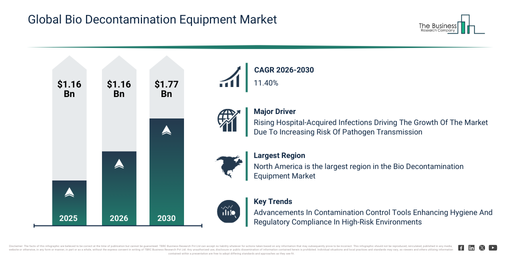
    The bio decontamination equipment market is projected for significant expansion over the coming years. Its valuation is anticipated to reach $2.08 billion by 2030, exhibiting a compound annual growth rate (CAGR) of 11.4%. This projected expansion is primarily driven by factors such as the incorporation of AI and automation, an increase in cleanroom facilities, wider acceptance in the food and aerospace sectors, growing understanding of pathogen management, and governmental backing for adherence to hygiene standards. Significant developments expected during this period involve AI-powered contamination detection, IoT-enabled decontamination machinery, automatic room and surface disinfection, monitoring systems linked to the cloud, and environmental regulation based on data.

    Get A Free Sample Report With In-Depth Market Insights:

    https://thebusinessresearchcompany.com/sample_request?id=40397102&type=smp&name=Bio%20Decontamination%20Equipment%20Market%20Report%202026&utm_source=Blogs&utm_medium=Paid&utm_campaign=Sep_PR

    Bio Decontamination Equipment Market Expansion Drivers: What’s Shaping Future Growth?

    The anticipated expansion of the bio decontamination equipment market is linked to the growing occurrence of hospital-acquired infections. Hospital-acquired infections, or HAIs, refer to infections contracted by patients during their medical care in hospitals or similar healthcare settings, usually manifesting at least 48 hours post-admission. The surge in HAIs stems from a greater number of patient admissions, with increased occupancy leading to a heightened risk of cross-contamination and wider infection dissemination. This equipment plays a crucial role in preventing HAIs by efficiently removing detrimental microorganisms from essential surfaces and the air, consequently lowering the potential for pathogen spread within healthcare facilities. For example, data from March 2025, provided by the UK’s Health Security Agency, indicated that in 2023, 7.6% of patients had hospital-acquired infections. The most prevalent types were pneumonia and lower respiratory tract infections at 29.6%, followed by urinary tract infections at 17.5%, and sepsis or disseminated infections at 10.6%. Thus, the rising frequency of hospital-acquired infections is a primary impetus for the expansion of the bio decontamination equipment market.

    Bio Decontamination Equipment Market Breakdown By Product Type And Application

    The bio decontamination equipment market covered in this report is segmented –

    1) By Product Type: Chamber Decontamination, Room Decontamination

    2) By Technology Type: Hydrogen Peroxide Vapor, Chlorine Dioxide, Ultraviolet (UV) Radiation, Others Technology Types

    3) By Application: Surface Decontamination, Air Decontamination

    4) By End User: Hospitals, Pharmaceutical Companies, Research Laboratories, Food Processing Plants, Aerospace Enterprises

    Subsegments:

    1) By Chamber Decontamination: Hydrogen Peroxide Vapor Systems, Ultraviolet Light Chambers, Ozone-Based Chambers, Dry Fog Systems, Chlorine Dioxide Chambers

    2) By Room Decontamination: Mobile Hydrogen Peroxide Units, Fixed Ultraviolet Systems, Fogging Machines

    Bio Decontamination Equipment Market Strategic Trends: What Defines The Next Growth Phase?

    Companies operating in the bio decontamination equipment market are increasingly focused on creating advanced solutions, particularly contamination control tools, to uphold regulatory compliance and quality standards across vital industries. Contamination control tools are defined as instruments or systems utilized to maintain clean conditions by minimizing or eliminating harmful microbes and particles within a controlled environment. For example, in May 2025, UMF Corporation, a US-based producer of cleaning and hygiene products, unveiled its RPM (Ridged Performance Material) product line. This system is a comprehensive 10-piece collection of contamination control tools engineered to ensure optimal hygiene in high-risk settings, including hospital pharmacies, vivariums, food processing facilities, and areas requiring remediation of hazardous substances. The core of these tools lies in the Ridged Performance Material, a cleaning medium designed for efficient removal and absorption of contaminants from surfaces. The collection encompasses specialized contamination control tools such as flat mops, wipers, applicators, and various accessories, all engineered for peak lint-free performance. A significant feature is the OTU Hook and Loop Frame, a single-use, completely recyclable polypropylene frame that offers a cost-effective alternative to conventional stainless steel or reusable mop frames.

    Bio Decontamination Equipment Market Competitive Landscape: Which Companies Lead The Industry?

    Major companies operating in the bio decontamination equipment market are Steris Plc, Labconco Corporation, Turnkey Modular Systems Inc., AM Instruments Srl, Air Science LLC, Automated Systems of Tacoma LLC, UVDI Inc., Brinda Pharma Technologies Pvt. Ltd., TOMI Environmental Solutions Inc., De Lama S.p.A., Sanosil International AG, Suncombe Ltd., Weike Group, LifeAire Systems LLC, Germitec, CURIS Decontamination System, JCE Biotechnology, Noxilizer Inc., Hunan Kehuan Biological Technology Co. Ltd., LAF Technologies Pty Ltd., Cleamix Ltd., Solidfog Technologies

    View The Full Bio Decontamination Equipment Market Report:

    https://thebusinessresearchcompany.com/report/bio-decontamination-equipment-global-market-report?utm_source=Blogs&utm_medium=Paid&utm_campaign=Sep_PR

    Bio Decontamination Equipment Market Regional Outlook: Where Is Opportunity Concentrated?

    North America was the largest region in the bio decontamination equipment market in 2025. Asia-Pacific is expected to be the fastest-growing region in the forecast period. The regions covered in the bio decontamination equipment market report are Asia-Pacific, South East Asia, Western Europe, Eastern Europe, North America, South America, Middle East, Africa.

    Reach Out To Our Team:

    The Business Research Company: https://www.thebusinessresearchcompany.com/

    Americas: +1 310-496-7795

    Asia: +44 7882 955267 & +91 8897263534

    Europe: +44 7882 955267

    Email us at: marketing@tbrc.info

    Follow us on:

    LinkedIn: https://in.linkedin.com/company/the-business-research-company

    YouTube: https://www.youtube.com/channel/UC24_fI0rV8cR5DxlCpgmyFQ

    Global Market Model: https://www.thebusinessresearchcompany.com/global-market-model
  • Bilirubin Blood Test Market Forecast Highlights A $2.08 Billion Opportunity For Industry Participants

    Bilirubin Blood Test Market Forecast Highlights A $2.08 Billion Opportunity For Industry Participants

    Built to provide research that’s more actionable and strategically valuable, The Business Research Company’s 2026 market reports include market attractiveness analysis, total addressable market sizing, company benchmarking matrices, interactive Excel dashboards, broader supply chain intelligence, emerging startup tracking, and in-depth product insights.

    Bilirubin Blood Test Market Revenue Outlook: What CAGR Lies Ahead Through 2030?

    The bilirubin blood test market size has experienced robust growth over recent years. It is anticipated to expand from $1.46 billion in 2025 to $1.57 billion in 2026, registering a compound annual growth rate (CAGR) of 7.4%. This historical expansion can be linked to several factors, including the increase in neonatal jaundice screening programs, a rise in hospital-based liver function testing, enhanced diagnostic awareness of liver disorders, the regular integration of serum bilirubin testing into clinical practice, and the broader availability of pediatric and infant diagnostic services.

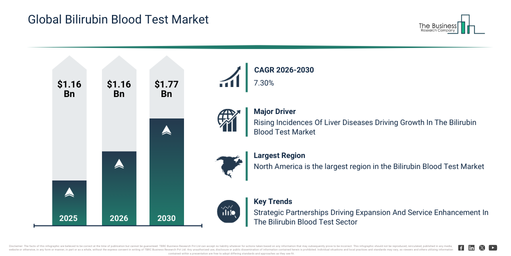
    The bilirubin blood test market is anticipated to experience substantial growth in the upcoming years, projected to reach $2.08 billion in 2030 with a compound annual growth rate (CAGR) of 7.3%. This expansion during the forecast period is primarily driven by the increasing incidence of chronic liver disease and hepatitis, a heightened need for early assessment of liver health, and the growing application of bilirubin testing in primary care environments. Additionally, higher rates of testing among aging and at-risk patient groups, coupled with the advancement of point-of-care and specialized liver diagnostics, contribute to this trajectory. Major developments expected in this period include the wider use of bilirubin testing for evaluating liver function, its increasing adoption in screening for neonatal jaundice, and a rising demand for such tests in hematology and for preliminary liver disorder assessments. Furthermore, there will be an expansion of bilirubin monitoring across various hospital and clinical settings, emphasizing proactive detection and routine screening for maintaining liver health.

    Get A Free Sample Report With In-Depth Market Insights:

    https://thebusinessresearchcompany.com/sample_request?id=57935499&type=smp&name=Bilirubin%20Blood%20Test%20Market%20Report%202026&utm_source=Blogs&utm_medium=Paid&utm_campaign=Sep_PR

    Bilirubin Blood Test Market Development Factors: What’s Supporting Demand?

    The increasing occurrence of liver conditions is anticipated to drive expansion in the bilirubin blood test market moving forward. Liver ailments encompass various conditions that hinder the liver’s proper functioning, potentially stemming from factors like infections, excessive alcohol consumption, or metabolic issues. The surge in liver disease cases is linked to higher rates of obesity, heavy alcohol intake, viral pathogens, and poor lifestyle decisions, all of which contribute to liver impairment and harm. Liver conditions can markedly affect the body’s bilirubin levels, with bilirubin blood tests assisting in diagnosing and tracking liver function. These tests offer vital information about patient health and support healthcare professionals in efficiently addressing and treating liver-associated issues. For example, data from GOV.UK, a UK department for science, innovation, and technology, showed that in April 2023, hospital admission rates for liver disease climbed from 150.6 (148.2–152.9) to 155.2 (152.9–157.5) per 100,000 population between the fiscal years concluding 2022 and 2023, highlighting a persistent rise in hospitalizations due to liver conditions. Consequently, the increasing prevalence of liver ailments is stimulating the bilirubin blood test market.

    Bilirubin Blood Test Market Segment Analysis And Revenue Potential

    The bilirubin blood test market covered in this report is segmented –

    1) By Test Type: Total Serum Bilirubin Test, Indirect Or Unconjugated Bilirubin Test, Direct Or Conjugated Bilirubin Test

    2) By Age Group: Adults, Pediatrics, Infants

    3) By Application: Hospital, Clinic, Other Applications

    Subsegments:

    1) By Total Serum Bilirubin Test: Routine Screening, Liver Function Assessment, Newborn Jaundice Detection

    2) By Indirect Or Unconjugated Bilirubin Test: Hemolytic Anemia Diagnosis, Gilbert’s Syndrome Detection, Monitoring For Preliver Conditions

    3) By Direct Or Conjugated Bilirubin Test: Bile Duct Obstruction Diagnosis, Hepatitis And Liver Disease Monitoring, Post-Liver Condition Assessment

    Bilirubin Blood Test Market Transformation Trends: What Innovations Are Driving Change?

    Companies operating within the bilirubin blood test market are increasingly adopting strategic partnership approaches to expand their reach and enhance their service offerings. Such a strategic partnership typically denotes a collaborative relationship between two or more organizations that merge their resources, expertise, and efforts to achieve common goals or objectives. For instance, in December 2023, Calmark Sweden AB, an Israel-based company specializing in medical diagnostic biotechnology solutions, finalized an exclusive distributor agreement with Techno Orbits in Saudi Arabia for Calmark’s bilirubin test specifically designed for newborns. Techno Orbits will manage the distribution and sales of this product, leveraging its existing network and relationships, including those with the Ministry of Health. This alliance aims to facilitate the introduction of Calmark’s bilirubin test into the Saudi market, where regulatory registration is projected to take between 3 to 6 months.

    Bilirubin Blood Test Market Competitive Landscape: Who Leads The Industry?

    Major companies operating in the bilirubin blood test market are Abbott Laboratories, Thermo Fisher Scientific, F. Hoffmann‑La Roche Ltd, Siemens Healthineers, Danaher Corporation, Sysmex Corporation, Bio‑Rad Laboratories Inc, Ortho Clinical Diagnostics Inc, Mindray Medical International Limited, Randox Laboratories Ltd, bioMérieux SA, DiaSorin S.p.A, Horiba Ltd, ELITech Group SAS, Erba Mannheim, Hitachi High‑Technologies, DIRUI Industrial Co Ltd, Agappe Diagnostics, Awareness Technology Inc, Sekisui Diagnostics

    View The Full Bilirubin Blood Test Market Report:

    https://thebusinessresearchcompany.com/report/bilirubin-blood-test-global-market-report?utm_source=Blogs&utm_medium=Paid&utm_campaign=Sep_PR

    Bilirubin Blood Test Market Geographic Landscape: Which Region Leads Industry Growth?

    North America was the largest region in the bilirubin blood test market in 2025. The regions covered in the bilirubin blood test market report are Asia-Pacific, South East Asia, Western Europe, Eastern Europe, North America, South America, Middle East, Africa.

    Reach Out To Our Team:

    The Business Research Company: https://www.thebusinessresearchcompany.com/

    Americas: +1 310-496-7795

    Asia: +44 7882 955267 & +91 8897263534

    Europe: +44 7882 955267

    Email us at: marketing@tbrc.info

    Follow us on:

    LinkedIn: https://in.linkedin.com/company/the-business-research-company

    YouTube: https://www.youtube.com/channel/UC24_fI0rV8cR5DxlCpgmyFQ

    Global Market Model: https://www.thebusinessresearchcompany.com/global-market-model
  • Biliary Stents Market Analysis: How The Industry Is Evolving Toward A $0.66 Billion Future

    Biliary Stents Market Analysis: How The Industry Is Evolving Toward A $0.66 Billion Future

    Backed by market attractiveness analysis, total addressable market sizing, company benchmarking matrices, interactive Excel dashboards, wider supply chain intelligence, emerging startup coverage, and detailed product-level insights, The Business Research Company’s 2026 market reports are designed to offer research that is more actionable and strategically valuable than ever.

    Biliary Stents Market Growth Analysis: How Will Revenue Trend Over The Forecast Period?

    The biliary stents market has seen strong growth in recent years. Its value is projected to increase from $0.5 billion in 2025 to $0.53 billion in 2026, at a compound annual growth rate (CAGR) of 6.0%. This historical expansion was driven by a limited variety of stent materials, a reliance on traditional plastic stents, a rising incidence of biliary obstructions, an increase in hospital-based procedures, and a lack of advanced endoscopic equipment.

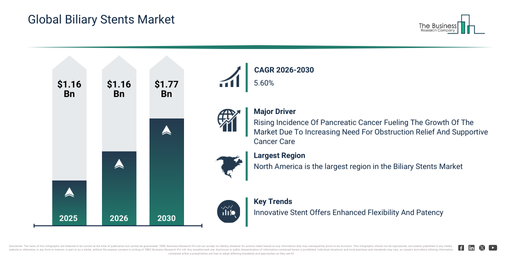
    The biliary stents market size is projected to experience substantial growth over the coming years, with an anticipated increase to $0.66 billion in 2030, achieving a compound annual growth rate (CAGR) of 5.6%. This expansion during the forecast period is driven by factors such as the development of covered and partially covered metal stents, a rising demand for biodegradable polymer stents, the increasing prevalence of minimally invasive surgical procedures, greater awareness of stent-related complications, and the integration of imaging and smart stent technologies. Significant trends for the forecast period include the growing use of self-expandable metal stents (sems), an uptick in the adoption of biodegradable polymer stents, a surge in endoscopic and minimally invasive procedures, the broadening of biliary stent applications for pancreatic and gallstone treatments, and an increased focus on stent safety and patient outcomes.

    Get A Free Sample Report With In-Depth Market Insights:

    https://thebusinessresearchcompany.com/sample_request?id=42903786&type=smp&name=Biliary%20Stents%20Market%20Report%202026&utm_source=Blogs&utm_medium=Paid&utm_campaign=Sep_PR

    Biliary Stents Market Industry Drivers: What’s Behind The Revenue Growth?

    An anticipated increase in pancreatic cancer cases is poised to drive expansion in the biliary stents market moving ahead. This condition describes a malignancy originating in the pancreatic tissues, a vital organ for digestion and blood glucose control. The increasing occurrence of pancreatic cancer is primarily attributable to an aging populace coupled with the growing prevalence of risk elements like obesity, diabetes, and tobacco use. Biliary stents play a crucial role in managing pancreatic cancer by alleviating blockages in the bile duct, enhancing hepatic function, and diminishing jaundice. These devices contribute to patient well-being through promoting superior bile flow, enabling uninterrupted cancer therapy, and elevating the overall quality of life. As an illustration, in February 2025, data from Cancer Australia, an Australian government body, indicated 4,641 new pancreatic cancer diagnoses in 2024, comprising 2,414 in males and 2,227 in females. Consequently, the escalating incidence of pancreatic cancer is fueling expansion within the biliary stents market.

    Biliary Stents Market Segmentation And Category Overview

    The biliary stents market covered in this report is segmented –

    1) By Type: Metal, Polymer, Plastic

    2) By Design: Single Stent, Double Stent, Triple Stent

    3) By Procedure: Endoscopic Retrograde Cholangiopancreatography, Percutaneous Transhepatic Cholangiography

    4) By Application: Biliopancreatic Leakages, Pancreatic Cancer, Benign Biliary Structures, Gallstones, Other Applications

    5) By End User: Hospitals, Ambulatory Surgical Centers, Specialty clinics, Other End-Users

    Subsegments:

    1) By Metal: Self-Expandable Metal Stents (SEMS), Covered Metal Stents, Uncovered Metal Stents, Partially Covered Metal Stents

    2) By Polymer: Biodegradable Polymer Stents, Non-Biodegradable Polymer Stents

    3) By Plastic: Straight Plastic Stents, Double Pigtail Plastic Stents, Multiple Side Hole Stents, Teflon Stents, Polyurethane Stents

    #Biliary Stents Market Growth Trends: What’s Shaping The Future Outlook?

    Major companies in the biliary stents market are concentrating on developing advanced products, including drug-eluting stents, to improve patient outcomes, enhance durability, and minimize complications such as restenosis. Drug-eluting stents are specialized biliary stents that feature a medication coating slowly released to prevent tissue overgrowth and blockages in the bile ducts. For instance, in July 2024, CGBIO, a medical device company based in South Korea, obtained Pharmaceuticals and Medical Devices Agency (PMDA) approval in Japan for its biliary ARISTENT. This stent is engineered to treat bile duct blockages and incorporates a patented ‘HOOK & CROSS’ structure for superior flexibility and long-term patency. The ARISTENT adapts to the bile duct’s anatomy, which helps reduce migration risk and enhance patient comfort. Furthermore, it includes an advanced drug-eluting coating designed to minimize inflammation and prolong stent patency, thereby offering a more effective solution for biliary obstructions.

    Biliary Stents Market Company Landscape And Competitive Strategy

    Major companies operating in the biliary stents market are Cardinal Health Inc., Abbott Laboratories, Medtronic plc, Becton Dickinson & Company, Stryker Corporation, Boston Scientific Corporation, Olympus Corporation, Smith & Nephew Plc., W. L. Gore & Associates Inc., Nipro Corporation, Teleflex Incorporated, Cook Group, NuVasive Inc., Merit Medical Systems Inc., CONMED Corporation, Brainlab, Bard Peripheral Vascular Inc., Argon Medical Devices Inc., B Braun Melsungen AG, M.I Tech

    View The Full Biliary Stents Market Report:

    https://thebusinessresearchcompany.com/report/biliary-stents-global-market-report?utm_source=Blogs&utm_medium=Paid&utm_campaign=Sep_PR

    Biliary Stents Market Largest Region: Which Geography Holds The Biggest Share?

    North America was the largest region in the biliary stents market in 2025. Asia-Pacific is expected to be the fastest-growing region in the forecast period. The regions covered in the biliary stents market report are Asia-Pacific, South East Asia, Western Europe, Eastern Europe, North America, South America, Middle East, Africa.

    Reach Out To Our Team:

    The Business Research Company: https://www.thebusinessresearchcompany.com/

    Americas: +1 310-496-7795

    Asia: +44 7882 955267 & +91 8897263534

    Europe: +44 7882 955267

    Email us at: marketing@tbrc.info

    Follow us on:

    LinkedIn: https://in.linkedin.com/company/the-business-research-company

    YouTube: https://www.youtube.com/channel/UC24_fI0rV8cR5DxlCpgmyFQ

    Global Market Model: https://www.thebusinessresearchcompany.com/global-market-model
  • Biliary Catheters Market Outlook Through 2030: Understanding The Growth Opportunity

    Biliary Catheters Market Outlook Through 2030: Understanding The Growth Opportunity

    Featuring market attractiveness scoring, total addressable market sizing, company benchmarking matrices, interactive Excel dashboards, deeper supply chain intelligence, emerging startup tracking, and granular product-level insights, The Business Research Company’s 2026 market reports are built to deliver research that is both more actionable and more strategically valuable.

    Biliary Catheters Market Forecast: What Value Will The Market Reach By 2030?

    The biliary catheters market size has experienced considerable growth in recent years. Projections indicate it will expand from $3.75 billion in 2025 to $4.12 billion in 2026, achieving a compound annual growth rate (CAGR) of 9.7%. This historic growth can be attributed to several factors including the limited availability of advanced biliary catheters, a reliance on conventional plastic catheters, an increasing incidence of bile duct disorders, a rise in hospital and clinic-based procedures, and the adoption of standard drainage techniques.

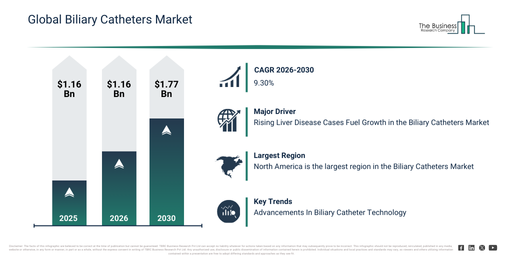
    The biliary catheters market is anticipated to experience robust expansion over the coming years, with its size projected to reach $5.88 billion by 2030, exhibiting a compound annual growth rate (CAGR) of 9.3%. This projected growth during the forecast period is fueled by several factors, including the advancement of expandable and metal biliary drainage catheters, an increase in interventional radiology procedures, the surge in minimally invasive surgeries, heightened regulatory compliance and quality certifications, and the integration of imaging-guided catheter placement technologies. Key trends for the upcoming period encompass the growing acceptance of minimally invasive procedures, a rise in the utilization of plastic and metal biliary drainage catheters, an expansion of catheter-based drainage and stent applications, an escalating demand for single-channel and double-channel sump catheters, and an intensified emphasis on patient safety and sterilization standards.

    Get A Free Sample Report With In-Depth Market Insights:

    https://thebusinessresearchcompany.com/sample_request?id=50317968&type=smp&name=Biliary%20Catheters%20Market%20Report%202026&utm_source=Blogs&utm_medium=Paid&utm_campaign=Sep_PR

    Biliary Catheters Market Growth Factors: What’s Supporting Expansion?

    The growing occurrence of liver disease is projected to boost the biliary catheters market in the future. The rise in liver diseases stems from factors like the increasing prevalence of chronic hepatitis infections, alcohol misuse, and non-alcoholic fatty liver disease (NAFLD). Biliary catheters are essential for managing liver disease complications by ensuring effective bile drainage, which assists in diminishing symptoms, preventing infections, and safeguarding liver function. For example, in April 2024, the Office for Health Improvement & Disparities, a UK-based government organization, reported 85,665 hospital admissions attributable to liver disease in England in 2023, translating to a rate of 155.2 (152.9 to 157.5) per 100,000 population. Thus, the escalating incidence of liver disease is fueling the expansion of the biliary catheters market.

    Biliary Catheters Market Segment Outlook: Which Categories Are Growing Fastest?

    The biliary catheters market covered in this report is segmented –

    1) By Product: Biliary Drainage Catheter, Multi-Purpose Drainage Catheter, Other Biliary-Specific Types

    2) By Application: Drainage, Aspiration, Diagnostic, Stent Delivery, Dilatation

    3) By End-User: Hospitals, Clinics, Specialized Centers, Other End Users

    Subsegments:

    1) By Biliary Drainage Catheter: Plastic Biliary Drainage Catheter, Metal Biliary Drainage Catheter, Expandable Biliary Drainage Catheter

    2) By Multi-Purpose Drainage Catheter: Multi-Purpose Drainage Catheter, Multi-Purpose Drainage Catheter With Sump

    3) By Other Biliary-Specific Types: Biliary Balloon Catheter, Biliary Stent Catheter, Special Procedure Catheter (Biliary-Specific)

    Biliary Catheters Market Industry Trends: What’s Reshaping Demand?

    Leading firms within the biliary catheter market are actively developing groundbreaking products that feature advanced coating technologies, such as trueglide hydrophilic coating, aimed at elevating the performance and user-friendliness of catheters. The TrueGlide hydrophilic coating significantly reduces friction, thereby ensuring a seamless catheter insertion process during medical procedures. For example, in June 2024, B. Braun Interventional Systems Inc., a US-based medical device company, introduced its ACCEL all-purpose and biliary drainage catheters, which incorporate the trueGlide hydrophilic coating. This innovation is specifically engineered to improve patient comfort and clinical outcomes. These particular catheters are distinguished by large oval holes designed to maximize fluid drainage, coupled with a hydrophilic coating to facilitate smooth insertion. This pioneering addition expands B. Braun’s existing percutaneous drainage portfolio, delivering a comprehensive solution for managing fluid drainage and addressing a wide array of clinical demands.

    Biliary Catheters Market Key Players Shaping Industry Direction

    Major companies operating in the biliary catheters market are Medtronic plc, Boston Scientific Corporation, Cook Medical Incorporated, Abbott Laboratories, Becton Dickinson and Company, B Braun Melsungen AG, ConMed Corporation, Teleflex Incorporated, Smiths Medical, Asahi Intecc Co. Ltd., AngioDynamics Inc., Endo Flex GmbH, Micro‑Tech (Nanjing) Co. Ltd., Rontis Medical, Cardinal Health Inc., Beijing Lepu Medical Technology Co. Ltd., Hanmi Medical Co. Ltd., JW Medical Corporation, Medinol Ltd., MicroPort Scientific Corporation, SMT Medical GmbH, EndoChoice Inc., Argon Medical, Medi‑Globe, Infiniti Medical, Lifetech Scientific Corporation, SCW Medicath Ltd.

    View The Full Biliary Catheters Market Report:

    https://thebusinessresearchcompany.com/report/biliary-catheters-global-market-report?utm_source=Blogs&utm_medium=Paid&utm_campaign=Sep_PR

    Biliary Catheters Market Regional Analysis: Which Geography Leads On Revenue?

    North America was the largest region in the biliary catheters market in 2025. Asia-Pacific is expected to be the fastest-growing region in the forecast period. The regions covered in the biliary catheters market report are Asia-Pacific, South East Asia, Western Europe, Eastern Europe, North America, South America, Middle East, Africa.

    Reach Out To Our Team:

    The Business Research Company: https://www.thebusinessresearchcompany.com/

    Americas: +1 310-496-7795

    Asia: +44 7882 955267 & +91 8897263534

    Europe: +44 7882 955267

    Email us at: marketing@tbrc.info

    Follow us on:

    LinkedIn: https://in.linkedin.com/company/the-business-research-company

    YouTube: https://www.youtube.com/channel/UC24_fI0rV8cR5DxlCpgmyFQ

    Global Market Model: https://www.thebusinessresearchcompany.com/global-market-model
  • Bifurcation Lesions Market Growth Potential: What The Latest Forecast Reveals

    Bifurcation Lesions Market Growth Potential: What The Latest Forecast Reveals

    Built to provide research that’s more actionable and strategically valuable, The Business Research Company’s 2026 market reports include market attractiveness analysis, total addressable market sizing, company benchmarking matrices, interactive Excel dashboards, broader supply chain intelligence, emerging startup tracking, and in-depth product insights.

    Bifurcation Lesions Market Size Outlook: How Quickly Will Revenue Expand Through 2030?

    The bifurcation lesions market size has seen significant expansion in recent years. It is projected to increase from $2.84 billion in 2025 to $3.1 billion in 2026, achieving a compound annual growth rate (CAGR) of 9.4%. The expansion observed in the past can be attributed to the rising prevalence of coronary artery disease, an increase in interventional cardiology procedures, the adoption of stenting as an alternative to surgical bypass, the development of specialized bifurcation stents, and a growing clinical proficiency in complex interventions.

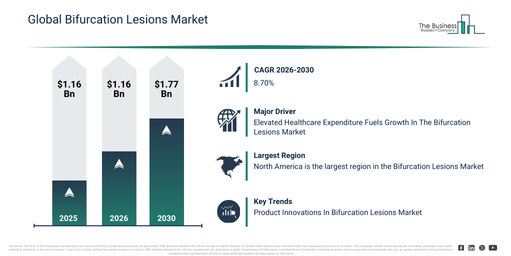
    The market for bifurcation lesions is projected to experience substantial expansion in the coming years, set to reach a valuation of $4.34 billion by 2030, exhibiting a compound annual growth rate (CAGR) of 8.7%. The anticipated growth during this period is primarily driven by the escalating implementation of precision-guided coronary interventions, a heightened need for advanced stent technologies, the broadening scope of personalized cardiovascular therapies, the deepening incorporation of imaging and analytical tools, and a sharpened emphasis on achieving successful procedural outcomes. Key developments expected in the forecast period encompass a greater embrace of sophisticated stent methods for intricate lesions, an increase in imaging-guided interventions for bifurcations, a developing preference for drug-eluting stents, the expansion of less invasive coronary procedures, and a stronger commitment to ensuring long-term vessel openness.

    Get A Free Sample Report With In-Depth Market Insights:

    https://thebusinessresearchcompany.com/sample_request?id=91634142&type=smp&name=Bifurcation%20Lesions%20Market%20Report%202026&utm_source=Blogs&utm_medium=Paid&utm_campaign=Sep_PR

    Bifurcation Lesions Market Demand Drivers: What’s Powering Industry Growth?

    The rising healthcare expenditure is projected to stimulate the growth of the bifurcation lesions market in the coming years. Healthcare infrastructure refers to all financial outlays for medical services, preventative measures, public health initiatives, rehabilitation, community health activities, and health-related research. Increased healthcare spending allows medical facilities to invest in advanced equipment and technologies, including sophisticated interventional cardiology devices for the treatment of bifurcation lesions. For instance, in May 2024, data from the Office for National Statistics, a UK-based government department, revealed that total healthcare expenditure increased by 5.6% in nominal terms in 2023, marking a 0.9% higher growth compared to 2022. Therefore, the escalating healthcare expenditure is a key driver for the expansion of the bifurcation lesions market.

    Bifurcation Lesions Market Segment Landscape: Which Areas Lead Development?

    The bifurcation lesions market covered in this report is segmented –

    1) By Type: One-Stent, Two-Stent

    2) By Application: Coronary Vascular, Peripheral Vascular

    3) By End‑User: Hospitals & Cardiac Care Centers, Ambulatory Surgical Centers, Specialty Clinics, Diagnostic Centers

    Subsegments:

    1) By One-Stent: Single-Stent Deployment, Balloon-Expandable Stents, Self-Expanding Stents

    2) By Two-Stent: Crush Technique, T- or Y-Configuration Stenting, Side Branch Stenting Techniques

    Bifurcation Lesions Market Innovation Trends: What Developments Are Reshaping The Industry?

    Leading firms within the bifurcation lesions market are actively creating advanced solutions, such as drug-eluting coronary stent systems, to attract a wider clientele, elevate sales figures, and enhance their earnings. This particular medical device is employed in interventional cardiology for the management of coronary artery disease. For example, in August 2023, Medtronic Plc, a medical device company based in Ireland, introduced the Onyx Frontier drug-eluting stent (DES) specifically for addressing non-left main bifurcation lesions through the provisional stenting approach. Key distinguishing features of this product include significant design improvements, incorporating an innovative dual-layer balloon, a more slender crossing profile, and increased catheter flexibility. These upgrades contribute to a 16% improvement in deliverability when compared to the previous generation Resolute Onyx DES, all while retaining its original radial strength. Beyond the advancements in its delivery system, Onyx Frontier offers an extensive array of sizes, catering to patients with vessel diameters from 2.0 mm to 5.0 mm. Notably, its 4.50-5.00 mm sizes can be expanded up to 6.00 mm, specifically designed for treating extra-large vessels, including those in the left main. The Onyx Frontier shares the same clinical data and approved indications as the Resolute Onyx, encompassing authorization for the treatment of bifurcation lesions, left main percutaneous coronary intervention (PCI), and a recommended one-month duration of dual antiplatelet therapy (DAPT) for individuals at high risk of bleeding.

    Bifurcation Lesions Market Competitive Analysis Of Leading Industry Participants

    Major companies operating in the bifurcation lesions market are Boston Scientific Corporation, Terumo Medical Corporation, Spectranetics Corporation, Medtronic plc, Abbott Laboratories, Biosensors International Group Ltd., B. Braun Melsungen AG, Cook Medical LLC, Cordis Corporation, InspireMD Inc., MicroPort Scientific Corporation, OrbusNeich Medical Company Limited, Biotronik SE & Co. KG, Medinol Ltd., Meril Life Sciences Pvt. Ltd., Sahajanand Medical Technologies Pvt. Ltd., Elixir Medical Corporation, Veryan Medical Ltd., Zorion Medical Inc., Svelte Medical Systems Inc., Amaranth Medical Inc., Cardiva Medical Inc.

    View The Full Bifurcation Lesions Market Report:

    https://thebusinessresearchcompany.com/report/bifurcation-lesions-global-market-report?utm_source=Blogs&utm_medium=Paid&utm_campaign=Sep_PR

    Bifurcation Lesions Market Geographic Spread And Regional Opportunities

    North America was the largest region in the bifurcation lesions market in 2025. Asia-Pacific is expected to be the fastest-growing region in the forecast period. The regions covered in the bifurcation lesions market report are Asia-Pacific, South East Asia, Western Europe, Eastern Europe, North America, South America, Middle East, Africa.

    Reach Out To Our Team:

    The Business Research Company: https://www.thebusinessresearchcompany.com/

    Americas: +1 310-496-7795

    Asia: +44 7882 955267 & +91 8897263534

    Europe: +44 7882 955267

    Email us at: marketing@tbrc.info

    Follow us on:

    LinkedIn: https://in.linkedin.com/company/the-business-research-company

    YouTube: https://www.youtube.com/channel/UC24_fI0rV8cR5DxlCpgmyFQ

    Global Market Model: https://www.thebusinessresearchcompany.com/global-market-model
  • Benign Prostatic Hyperplasia (BPH) Treatment Devices And Equipment Market Growth Outlook: Why Analysts Expect Continued Expansion

    Benign Prostatic Hyperplasia (BPH) Treatment Devices And Equipment Market Growth Outlook: Why Analysts Expect Continued Expansion

    Backed by market attractiveness analysis, total addressable market sizing, company benchmarking matrices, interactive Excel dashboards, wider supply chain intelligence, emerging startup coverage, and detailed product-level insights, The Business Research Company’s 2026 market reports are designed to offer research that is more actionable and strategically valuable than ever.

    Benign Prostatic Hyperplasia (BPH) Treatment Devices And Equipment Market Size, Value And Growth Trajectory Through 2030

    The market size for benign prostatic hyperplasia (bph) treatment devices and equipment has demonstrated strong growth in recent years. It is anticipated to expand from $1.34 billion in 2025 to $1.43 billion in 2026, achieving a compound annual growth rate (CAGR) of 6.3%. This historical growth can be attributed to factors such as the increasing prevalence of benign prostatic hyperplasia, heightened awareness of urological disorders, the adoption of transurethral procedures, the expansion of hospital urology departments, and improvements in endoscopic surgical tools.

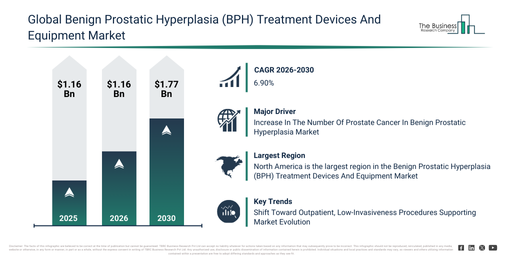
    The benign prostatic hyperplasia (bph) treatment devices and equipment market is expected to experience substantial growth over the next few years, with its size projected to reach $1.86 billion in 2030, demonstrating a compound annual growth rate (CAGR) of 6.9%. This anticipated growth can be attributed to an expanding aging male population, a rising preference for minimally invasive therapies, the proliferation of outpatient urology clinics, increasing adoption of laser and implant-based treatments, and a greater emphasis on reducing hospital stays. Key trends for the forecast period include the increasing uptake of minimally invasive bph treatment devices, a growing utilization of laser-based prostate therapies, a heightened demand for implant-based treatment options, the expansion of office-based bph procedures, and an enhanced focus on patient comfort and recovery.

    Get A Free Sample Report With In-Depth Market Insights:

    https://thebusinessresearchcompany.com/sample_request?id=56829717&type=smp&name=Benign%20Prostatic%20Hyperplasia%20%28BPH%29%20Treatment%20Devices%20And%20Equipment%20Market%20Report%202026&utm_source=Blogs&utm_medium=Paid&utm_campaign=Sep_PR

    Benign Prostatic Hyperplasia (BPH) Treatment Devices And Equipment Market Growth Drivers: What’s Behind The Acceleration?

    A rise in prostate cancer diagnoses is expected to propel the expansion of the benign prostatic hyperplasia market. This malignancy originates in the prostate gland, a small, walnut-shaped organ situated just beneath the bladder in males. More frequent occurrences of prostate cancer often prompt an increased number of older males to seek medical consultation for prostate-related concerns. This, in turn, facilitates the detection and treatment of benign prostatic hyperplasia. For example, data from February 2023, released by the American Society of Clinical Oncology (ASCO), a US-based professional body providing patient information via the cancer.net website, indicated approximately 288,300 men in the United States had prostate cancer in 2023. Additionally, 268,490 new cases and 34,500 fatalities were attributed to prostate cancer in 2022. Consequently, the rising incidence of prostate cancer is acting as a catalyst for the expansion of the benign prostatic hyperplasia market.

    Benign Prostatic Hyperplasia (BPH) Treatment Devices And Equipment Market Segments: Where Is Growth Concentrated?

    The benign prostatic hyperplasia (bph) treatment devices and equipment market covered in this report is segmented –

    1) By Product: Resectoscopes, Radiofrequency Ablation Device, Urology Lasers, Prostatic Stents, Implants

    2) By Procedure Type: Transurethral Needle Ablation (TUNA), Transurethral Resection Of Prostate (TURP), Transurethral Incision Of Prostate (TUIP), Transurethral Microwave Thermotherapy (TUMT), Laser Surgery, Other Procedure Types

    3) By End-User: Hospitals, Ambulatory Surgical Centres (ASC), Clinics, Specialty Urology Centers

    Subsegments:

    1) By Resectoscopes: Bipolar Resectoscopes, Monopolar Resectoscopes, High-Performance Resectoscopes

    2) By Radiofrequency Ablation Device: Single-Needle Radiofrequency Ablation, Multi-Needle Radiofrequency Ablation

    3) By Urology Lasers: Holmium Lasers, Diode Lasers, Green Light Lasers

    4) By Prostatic Stents: Temporary Prostatic Stents, Permanent Prostatic Stents

    5) By Implants: Prostatic Urethral Lift (PUL) Implants, Balloon-Expandable Stents, Permanent Implants for BPH Treatment

    Benign Prostatic Hyperplasia (BPH) Treatment Devices And Equipment Market Trends: What’s Defining The Industry’s Next Phase?

    Key players in the benign prostatic hyperplasia (BPH) treatment devices and equipment market are concentrating on creating innovative, minimally invasive options, including temporary implants, to increase access to outpatient care and lessen dependence on ongoing medication or tissue removal surgeries. These temporarily implantable BPH devices are either single-use or short-duration implants, engineered to reshape the prostatic urethra and alleviate lower urinary tract symptoms (LUTS) resulting from an enlarged prostate. As an illustration, in February 2025, Olympus, a Japan-based medical technology firm, reported a significant development for its iTind device, expanding its presence across key APAC markets (Thailand, Australia, Hong Kong, Singapore, India, with a forthcoming launch in Korea). They emphasized that the iTind procedure offers a minimally invasive, clinic-based choice achievable with local anaesthesia, bolstered by an extensive physician training program to facilitate its clinical integration. The iTind itself is a temporarily implantable nitinol device that works by reshaping the prostatic urethra, thereby enhancing urinary flow and improving patients’ quality of life, with recent advancements in guidelines and reimbursement aiding its faster acceptance.

    Benign Prostatic Hyperplasia (BPH) Treatment Devices And Equipment Market Leading Companies And Competitive Benchmarking

    Major companies operating in the benign prostatic hyperplasia (bph) treatment devices and equipment market are Karl Storz, Lumenis Ltd., Olympus Corporation, Urologix LLC, Boston Scientific Inc., NeoTract Inc., OmniGuide Inc., ProArc Medical Ltd., Urotech Devices, Prostalund Operations AB, NxThera Inc., Richard Wolf GmbH, Coloplast A/S, Biolitec AG, BVM Medical, Convergent Laser Technologies, Cook Medical, GreenLight Technologies, PROCEPT BioRobotics, Quanta System

    View The Full Benign Prostatic Hyperplasia (BPH) Treatment Devices And Equipment Market Report:

    https://thebusinessresearchcompany.com/report/benign-prostatic-hyperplasia-BPH-treatment-devices-and-equipment-global-market-report?utm_source=Blogs&utm_medium=Paid&utm_campaign=Sep_PR

    Benign Prostatic Hyperplasia (BPH) Treatment Devices And Equipment Market Top Region By Revenue And Market Share

    North America was the largest region in the benign prostatic hyperplasia (BPH) treatment devices and equipment market in 2025. Western Europe was the second-largest region in the global benign prostatic hyperplasia (BPH) treatment devices and equipment market. The regions covered in the benign prostatic hyperplasia (bph) treatment devices and equipment market report are Asia-Pacific, South East Asia, Western Europe, Eastern Europe, North America, South America, Middle East, Africa.

    Reach Out To Our Team:

    The Business Research Company: https://www.thebusinessresearchcompany.com/

    Americas: +1 310-496-7795

    Asia: +44 7882 955267 & +91 8897263534

    Europe: +44 7882 955267

    Email us at: marketing@tbrc.info

    Follow us on:

    LinkedIn: https://in.linkedin.com/company/the-business-research-company

    YouTube: https://www.youtube.com/channel/UC24_fI0rV8cR5DxlCpgmyFQ

    Global Market Model: https://www.thebusinessresearchcompany.com/global-market-model
  • Bed-Exit Warning Robot Market Forecast Insights: The Road To $3.26 Billion By 2030

    Bed-Exit Warning Robot Market Forecast Insights: The Road To $3.26 Billion By 2030

    Featuring market attractiveness scoring, total addressable market sizing, company benchmarking matrices, interactive Excel dashboards, deeper supply chain intelligence, emerging startup tracking, and granular product-level insights, The Business Research Company’s 2026 market reports are built to deliver research that is both more actionable and more strategically valuable.

    Bed-Exit Warning Robot Market CAGR Outlook And Future Development

    The bed-exit warning robot market size has witnessed substantial growth in recent years. It is projected to expand from $1.55 billion in 2025 to $1.8 billion in 2026, reflecting a compound annual growth rate (CAGR) of 16.3%. The historical expansion of this market can be attributed to factors such as an increasing elderly population, a high occurrence of patient falls, limitations in caregiver monitoring efficiency, stricter hospital safety standards, and the initial incorporation of robotics into healthcare.

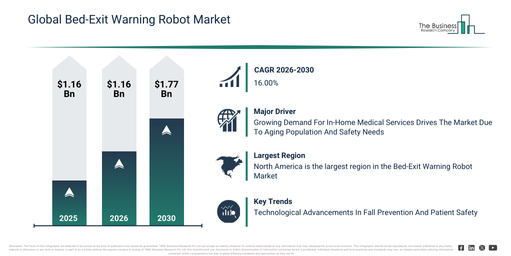
    The bed-exit warning robot market size is anticipated to experience substantial growth over the next few years. It is projected to expand to $3.26 billion by 2030, achieving a compound annual growth rate (CAGR) of 16.0%. This expansion during the forecast period can be attributed to the integration of AI with robotic monitoring, the development of smart hospital infrastructure, increasing automation in homecare, the rising adoption of wearable alert devices, and growing government support for patient safety technology. Noteworthy trends expected in this period include AI-enabled fall prediction systems, IoT-based patient monitoring, smart robotics for assisted mobility, cloud-based alert management platforms, and predictive analytics for elderly care.

    Get A Free Sample Report With In-Depth Market Insights:

    https://thebusinessresearchcompany.com/sample_request?id=20427246&type=smp&name=Bed-Exit%20Warning%20Robot%20Market%20Report%202026&utm_source=Blogs&utm_medium=Paid&utm_campaign=Sep_PR

    Bed-Exit Warning Robot Market Growth Factors Behind Sustained Expansion

    The bed-exit warning robot market is projected to expand due to the increasing adoption of in-home medical services. In-home medical services encompass healthcare and medical support provided directly at a patient’s residence, including nursing, therapeutic care, and disease management. The demand for these services is escalating, primarily driven by the aging population, as older individuals prefer receiving healthcare at home for enhanced comfort, convenience, and consistent oversight of chronic conditions. The bed-exit warning robot plays a crucial role in in-home medical services by alerting caregivers when patients attempt to leave the bed unsafely, thereby preventing falls, enabling timely assistance, and supporting continuous monitoring for elderly or mobility-impaired individuals. For instance, in August 2025, according to the Department of Health and Human Services, a US-based government administration, in 2024, nearly 1 million enrollees received remote patient monitoring, a 27% increase from 2023. This trend indicates that the rising preference for in-home medical services is indeed fueling the growth of the bed-exit warning robot market.

    Bed-Exit Warning Robot Market Segment Analysis: What Are The Core Market Categories?

    The bed-exit warning robot market covered in this report is segmented –

    1) By Product Type: Pressure Sensor-Based, Infrared Sensor-Based

    2) By Distribution Channel: Direct Sales, Distributors, Online Retail, Other Distribution Channels

    3) By Application: Hospitals, Nursing Homes, Home Care, Rehabilitation Centers, Other Applications

    4) By End-User: Adults, Pediatrics, Elderly

    Subsegments:

    1) By Pressure Sensor-Based: Capacitive Pressure Sensors, Resistive Pressure Sensors, Piezoelectric Pressure Sensors

    2) By Infrared Sensor-Based: Active Infrared Sensors, Passive Infrared Sensors, Dual Infrared Sensors

    Bed-Exit Warning Robot Market Industry Trends Fueling Future Revenue Growth

    Major companies engaged in the bed-exit warning robot market are prioritizing the development of sophisticated methodologies, such as real-time fall prevention alerts, to bolster patient safety and facilitate prompt caregiver intervention. A real-time fall prevention alert system continuously monitors a patient’s movements and immediately notifies caregivers or activates automated safety protocols upon detecting a potential bed exit or fall risk. For example, in September 2025, Tochtech Technologies Inc., a digital healthcare company based in Canada, launched an AI-driven predictive bed exit feature for its renowned Toch Sleepsense device, aiming to anticipate patient movements and reduce fall risks. This provides caregivers with vital advance notifications before a resident attempts to leave their bed, enabling timely action and significantly diminishing fall risks. This non-invasive, real-time solution enhances safety and supports improved care by tracking sleep quality, vital signs, and movement without disturbing the resident. Its objective is to revolutionize senior care by preventing injuries, enhancing response times, and elevating overall well-being through intelligent, data-driven insights.

    Bed-Exit Warning Robot Market Industry Leaders And Competitive Landscape

    Major companies operating in the bed-exit warning robot market are Vayyar Imaging Ltd, Emfit Ltd, Smart Caregiver Corporation, EarlySense Ltd, CarePredict Inc, CareView Communications Inc, Linet Group SE, Stryker Corporation, Arjo AB, VirtuSense Technologies Pvt. Ltd., Lunderg AB, Tunstall Healthcare Group Ltd, Ascom Holding AG, Stanley Healthcare, Securitas Healthcare, Kami Vision, BAM Labs, Joerns Healthcare, Invacare Corporation, Völker Sensify, Nurse Assist

    View The Full Bed-Exit Warning Robot Market Report:

    https://thebusinessresearchcompany.com/report/bed-exit-warning-robot-global-market-report?utm_source=Blogs&utm_medium=Paid&utm_campaign=Sep_PR

    Bed-Exit Warning Robot Market Regional Analysis And Top Geography

    North America was the largest region in the bed-exit warning robot in 2025. Asia-Pacific is expected to be the fastest-growing region in the forecast period. The regions covered in the bed-exit warning robot market report are Asia-Pacific, South East Asia, Western Europe, Eastern Europe, North America, South America, Middle East, Africa.

    Reach Out To Our Team:

    The Business Research Company: https://www.thebusinessresearchcompany.com/

    Americas: +1 310-496-7795

    Asia: +44 7882 955267 & +91 8897263534

    Europe: +44 7882 955267

    Email us at: marketing@tbrc.info

    Follow us on:

    LinkedIn: https://in.linkedin.com/company/the-business-research-company

    YouTube: https://www.youtube.com/channel/UC24_fI0rV8cR5DxlCpgmyFQ

    Global Market Model: https://www.thebusinessresearchcompany.com/global-market-model
  • Base-Editing Tools Market Explained: What Is Fueling Growth To $4.82 Billion By 2030?

    Base-Editing Tools Market Explained: What Is Fueling Growth To $4.82 Billion By 2030?

    Built to provide research that’s more actionable and strategically valuable, The Business Research Company’s 2026 market reports include market attractiveness analysis, total addressable market sizing, company benchmarking matrices, interactive Excel dashboards, broader supply chain intelligence, emerging startup tracking, and in-depth product insights.

    Base-Editing Tools Market Set To Climb From $2.22 Billion In 2026 To $4.82 Billion By 2030

    The base-editing tools market has experienced significant growth in recent years. It is anticipated to expand from $1.83 billion in 2025 to $2.22 billion in 2026, achieving a compound annual growth rate (CAGR) of 21.7%. The historical increase can be ascribed to elements such as the early adoption of crispr-cas systems, the availability of research funding, an uptick in academic-genomic collaborations, rising awareness of genetic disorders, and progress in enzyme engineering.

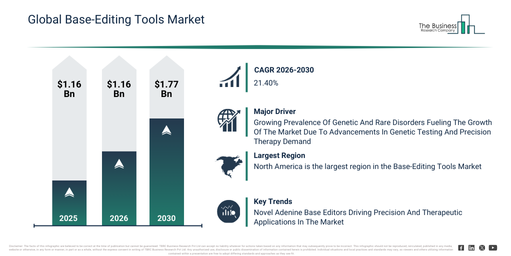
    The base-editing tools market is projected to experience substantial growth in the upcoming years. This market is anticipated to reach a valuation of $4.82 billion by 2030, exhibiting a compound annual growth rate (CAGR) of 21.4%. Key factors driving this expansion during the forecast period include the increasing need for precision medicine, the proliferation of biotechnology startups, obtaining regulatory approvals for various base-editing applications, the incorporation of AI-driven analytics, and the rising utilization in agricultural biotechnology. Significant trends expected in the same period involve personalized gene editing solutions, seamless integration with laboratory information systems (LIS), enhanced automation in base editing workflows, the emergence of cloud-based platforms for data analysis, and the development of predictive modeling for genetic outcomes.

    Get A Free Sample Report With In-Depth Market Insights:

    https://thebusinessresearchcompany.com/sample_request?id=78136739&type=smp&name=Base-Editing%20Tools%20Market%20Report%202026&utm_source=Blogs&utm_medium=Paid&utm_campaign=Sep_PR

    Base-Editing Tools Market Demand Drivers Opening New Revenue Streams

    The base-editing tools market is projected to expand due to the rising occurrence of genetic and rare disorders. These conditions are characterized as medical ailments stemming from modifications or mutations in an individual’s genes or chromosomes, frequently affecting a small segment of the population and often inherited across generations. The increasing prevalence of genetic and rare disorders is attributed to advancements in genomic testing and newborn screening, which facilitate earlier and more accurate identification of previously undetected instances. Base-editing tools enable precise correction of genetic mutations, thereby assisting in the diagnosis and treatment of rare and inherited disorders. By improving genetic testing and enabling targeted therapies, these tools contribute to sophisticated diagnostics, personalized interventions, and potential cures. For example, in May 2024, as per the National Health Service, a UK-based government department, in England, approximately 17,000 people live with sickle cell disease, an inherited blood disorder, with around 250 new cases diagnosed each year. Thus, the growing prevalence of genetic and rare disorders is a key driver for the base-editing tools market’s growth.

    Base-Editing Tools Market Segment Breakdown: Which Categories Lead On Revenue?

    The base-editing tools market covered in this report is segmented –

    1) By Product Type: Deoxyribonucleic Acid (DNA) Base Editors, Ribonucleic Acid (RNA) Base Editors, Other Product Types

    2) By Application: Genetic Research, Drug Development, Disease Modeling, Agricultural Biotechnology, Other Applications

    3) By End-User: Academic And Research Institutes, Biotechnology And Pharmaceutical Companies, Contract Research Organizations, Other End-Users

    Subsegments:

    1) By Deoxyribonucleic Acid (DNA) Base Editors: Cytosine Base Editors, Adenine Base Editors, Dual Base Editors, Prime Editors

    2) By Ribonucleic Acid (RNA) Base Editors: Cytidine Deaminase Based Editors, Adenosine Deaminase Based Editors, Programmable Ribonucleic Acid (RNA) Editors

    3) By Other Product Types: Delivery Systems, Research Reagents, Computational Tools, Screening Platforms

    Base-Editing Tools Market Trends Powering Strategic Industry Growth

    Major companies operating in the base-editing tools market are focusing on introducing innovative solutions, such as novel adenine base editors, to enhance the precision and efficiency of gene editing. These novel adenine base editors are advanced genome editing tools that precisely convert adenine (A) to guanine (G) in DNA without causing double-stranded breaks, enabling safe and specific genetic modifications. For instance, in October 2024, Metagenomi, Inc., a US-based precision genetic medicines company, launched novel ABEs capable of editing a broad range of genomic targets with over 95% targetability. These editors enable precise base conversions with minimal off-target effects in tested cell lines, supporting multiplex gene editing that can lead to significant functional protein reduction in primary T-cells. The platform is compatible with various non-viral delivery methods and engineered Cas variants, making it suitable for both in vivo genome editing and ex vivo cell therapies, including CAR-T treatments.

    Base-Editing Tools Market Key Participants And Competitive Landscape

    Major companies operating in the base-editing tools market are Thermo Fisher Scientific Inc., Danaher Corporation, Merck KGaA, Revvity Inc., GenScript Biotech Corporation, Beam Therapeutics Inc., CRISPR Therapeutics AG, Maravai LifeSciences Holdings Inc., Aldevron L.L.C., Arcturus Therapeutics Holdings Inc., ElevateBio LLC, Editas Medicine Inc., Synthego Corporation, Metagenomi Inc., Intellia Therapeutics Inc., Mammoth Biosciences Inc., Verve Therapeutics Inc., Precede Biosciences Inc., Cellectis S.A., Creative Biogene Inc., Bio Palette Co. Ltd., Prime Medicine Inc., Base Therapeutics.

    View The Full Base-Editing Tools Market Report:

    https://thebusinessresearchcompany.com/report/base-editing-tools-global-market-report?utm_source=Blogs&utm_medium=Paid&utm_campaign=Sep_PR

    Base-Editing Tools Market Geographic Analysis: Where Is Demand Rising Fastest?

    North America was the largest region in the base-editing tools market in 2025. Asia-Pacific is expected to be the fastest-growing region in the forecast period. The regions covered in the base-editing tools market report are Asia-Pacific, South East Asia, Western Europe, Eastern Europe, North America, South America, Middle East, Africa.

    Reach Out To Our Team:

    The Business Research Company: https://www.thebusinessresearchcompany.com/

    Americas: +1 310-496-7795

    Asia: +44 7882 955267 & +91 8897263534

    Europe: +44 7882 955267

    Email us at: marketing@tbrc.info

    Follow us on:

    LinkedIn: https://in.linkedin.com/company/the-business-research-company

    YouTube: https://www.youtube.com/channel/UC24_fI0rV8cR5DxlCpgmyFQ

    Global Market Model: https://www.thebusinessresearchcompany.com/global-market-model
  • Bariatric Transport Wheelchairs Market Forecast To Reach $1.63 Billion By 2030: Key Trends Explained

    Bariatric Transport Wheelchairs Market Forecast To Reach $1.63 Billion By 2030: Key Trends Explained

    Backed by market attractiveness analysis, total addressable market sizing, company benchmarking matrices, interactive Excel dashboards, wider supply chain intelligence, emerging startup coverage, and detailed product-level insights, The Business Research Company’s 2026 market reports are designed to offer research that is more actionable and strategically valuable than ever.

    Bariatric Transport Wheelchairs Market Forecast: Value Set To Climb From $1.26 Billion To $1.63 Billion

    The market size for bariatric transport wheelchairs has experienced robust growth over recent years. It is forecast to expand from $1.18 billion in 2025 to $1.26 billion in 2026, at a compound annual growth rate (CAGR) of 6.8%. The expansion observed in the past can be attributed to factors like increasing obesity prevalence rates, a rising demand for bariatric patient mobility solutions, the expansion of long-term care facilities, the growing need for assisted patient transport, and the wider availability of specialized wheelchairs.

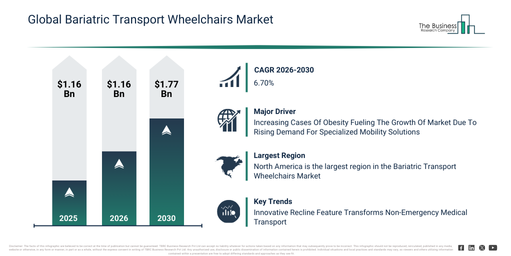
    The bariatric transport wheelchairs market size is projected to experience robust expansion over the next few years. Its valuation is anticipated to reach $1.63 billion by 2030, demonstrating a compound annual growth rate (CAGR) of 6.7%. This projected increase during the forecast period is attributable to an expanding aging population with mobility limitations, a surging demand for home healthcare equipment, a heightened focus on inclusive medical device design, the broadening of bariatric care services, and increased procurement by healthcare institutions. Prominent trends for this period encompass a rising need for reinforced mobility devices, a greater emphasis on patient safety and comfort, the increasing adoption of foldable and transport-friendly designs, the development of lightweight yet high-capacity materials, and an enhanced focus on caregiver ergonomics.

    Get A Free Sample Report With In-Depth Market Insights:

    https://thebusinessresearchcompany.com/sample_request?id=12248468&type=smp&name=Bariatric%20Transport%20Wheelchairs%20Market%20Report%202026&utm_source=Blogs&utm_medium=Paid&utm_campaign=Sep_PR

    Bariatric Transport Wheelchairs Market Growth Backed By Core Demand Fundamentals

    The rising incidence of obesity is anticipated to fuel the expansion of the bariatric transport wheelchairs market. Obesity, a medical condition characterized by excessive body fat that can negatively impact health, is becoming more prevalent. This surge in obesity rates stems from evolving lifestyles, unhealthy eating patterns, and decreased physical activity, consequently elevating the need for specialized healthcare devices to assist individuals with restricted mobility. Bariatric transport wheelchairs cater to obese individuals by providing enhanced frames and broader seating, guaranteeing secure and comfortable movement. These wheelchairs also lessen the physical burden on caregivers through their easy maneuverability and improve patient transfers within medical environments. For example, in May 2025, data from the Food and Agriculture Organization of the United Nations, an Italy-based food security entity, indicated that around 2.5 billion adults aged 18 and above were overweight in 2022, with 890 million specifically categorized as obese, accounting for 43% of the world’s adult population. Furthermore, projections suggest that by 2030, more than one billion adults globally will be affected by obesity. Consequently, the escalating prevalence of obesity is a key factor propelling the expansion of the bariatric transport wheelchairs market.

    Bariatric Transport Wheelchairs Market Segmentation: How Does The Market Break Down By Category?

    The bariatric transport wheelchairs market covered in this report is segmented –

    1) By Product Type: Bariatric Transport Wheelchairs, Powered Bariatric Transport Wheelchairs, Transport Wheelchairs

    2) By Weight Capacity: 300 To 350 Pounds (lbs), 301 To 400 Pounds (lbs), 401 To 500 Pounds (lbs), Over 500 Pounds (lbs)

    3) By Application: Healthcare Facilities, Home Care, Transportation Services, Emergency Services

    4) By End User: Adult, Adult Bariatric Patients, Geriatric

    Subsegments:

    1) By Bariatric Transport Wheelchairs: Bariatric Folding Transport Wheelchairs, Bariatric Rigid Frame Transport Wheelchairs, Bariatric Reclining Transport Wheelchairs, Bariatric Tilt-In-Space Transport Wheelchairs

    2) By Powered Bariatric Transport Wheelchairs: Powered Bariatric Transport Wheelchairs, Powered Bariatric Transport Wheelchairs, Powered Bariatric Transport Wheelchairs, Powered Bariatric Transport Wheelchairs, Powered Bariatric Reclining Transport Wheelchairs

    3) By Transport Wheelchairs: Standard Transport Wheelchairs, Lightweight Transport Wheelchairs, Heavy-Duty Transport Wheelchairs, Foldable Transport Wheelchairs

    Bariatric Transport Wheelchairs Market Growth Trends Reshaping The Competitive Landscape

    Key players in the bariatric transport wheelchairs market are concentrating on developing innovative products, such as the 90-degree recline, to enhance patient comfort, improve safety during transport, and offer more dignified and versatile mobility solutions for individuals with restricted mobility or higher weight needs. A 90-degree recline signifies the chair’s capacity to fully flatten the backrest, creating a horizontal position from an upright seated posture. For example, in March 2025, Mity Inc., a US-based manufacturer of healthcare mobility solutions, launched Traversa, an advanced bariatric transport wheelchair engineered to improve patient mobility, comfort, and caregiver efficiency during medical transport. This inventive bariatric transport wheelchair, featuring a 90-degree recline, integrates sophisticated mobility technology, an ergonomic design, and adaptive features to boost patient comfort, enhance caregiver efficiency, and meet the evolving demands of modern healthcare environments. The Traversa is designed to optimize non-emergency medical transport through its easy reclining and tilting functions and single-operator usability, thereby increasing operational efficiency and reducing labor costs.

    Bariatric Transport Wheelchairs Market Top Companies Driving Competitive Growth

    Major companies operating in the bariatric transport wheelchairs market are Medline Industries LP, Invacare Corporation, GF Health Products Inc., Graham-Field Health Products, Dynarex Corporation, Nova Medical Products, Karman Healthcare Inc., ProHeal Healthcare Private Limited, Z&Z Medical Inc., Forza Medi Pvt. Ltd., Drive DeVilbiss Healthcare, Sunrise Medical, Cardinal Health Inc., McKesson Corporation, Joerns Healthcare, Arjo, Hillrom (Baxter), Stryker Corporation, Med-Mizer Inc., Winco Mfg. LLC

    View The Full Bariatric Transport Wheelchairs Market Report:

    https://thebusinessresearchcompany.com/report/bariatric-transport-wheelchairs-global-market-report?utm_source=Blogs&utm_medium=Paid&utm_campaign=Sep_PR

    Bariatric Transport Wheelchairs Market Global Footprint: Which Region Leads The Market?

    North America was the largest region in the bariatric transport wheelchairs market in 2025. Asia-Pacific is expected to be the fastest-growing region in the forecast period. The regions covered in the bariatric transport wheelchairs market report are Asia-Pacific, South East Asia, Western Europe, Eastern Europe, North America, South America, Middle East, Africa.

    Reach Out To Our Team:

    The Business Research Company: https://www.thebusinessresearchcompany.com/

    Americas: +1 310-496-7795

    Asia: +44 7882 955267 & +91 8897263534

    Europe: +44 7882 955267

    Email us at: marketing@tbrc.info

    Follow us on:

    LinkedIn: https://in.linkedin.com/company/the-business-research-company

    YouTube: https://www.youtube.com/channel/UC24_fI0rV8cR5DxlCpgmyFQ

    Global Market Model: https://www.thebusinessresearchcompany.com/global-market-model