Blog

  • Bio-Detectors And Accessories Market Size In 2026 And Beyond: Understanding Future Growth Potential

    Bio-Detectors And Accessories Market Size In 2026 And Beyond: Understanding Future Growth Potential

    Built to provide research that’s more actionable and strategically valuable, The Business Research Company’s 2026 market reports include market attractiveness analysis, total addressable market sizing, company benchmarking matrices, interactive Excel dashboards, broader supply chain intelligence, emerging startup tracking, and in-depth product insights.

    Bio-Detectors And Accessories Market CAGR Outlook And Future Development

    The bio-detectors and accessories market size has experienced rapid growth in recent years. Its valuation is projected to increase from $23.79 billion in 2025 to $27.61 billion in 2026, at a compound annual growth rate (CAGR) of 16.1%. Historically, this expansion has been driven by factors such as a heightened demand for pathogen and biomolecule detection, the proliferation of clinical diagnostics laboratories, escalating worries about food and environmental safety, the uptake of traditional optical and immunoassay methods, and governmental spending on defense bio-surveillance initiatives.

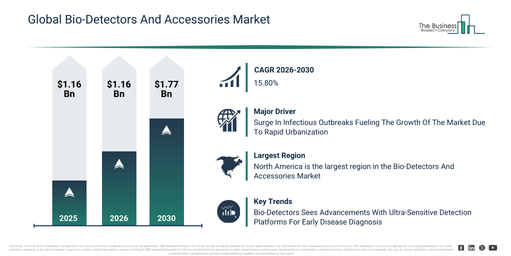
    The bio-detectors and accessories market size is anticipated to undergo significant expansion in the coming years. It is projected to achieve a value of $49.63 billion in 2030, demonstrating a compound annual growth rate (CAGR) of 15.8%. This growth throughout the forecast period stems from various factors, including advancements in biosensor technologies, an uptick in the demand for point-of-care testing, the broadening of genomics and proteomics research, increasing automation within laboratories, and a growing emphasis on early disease detection and monitoring. Noteworthy trends for the forecast period encompass an escalating demand for rapid and accurate biological detection, a rise in the application of multi-modal detection technologies, expanding adoption of portable and point-of-care bio-detectors, an increase in the usage of consumables and reagents, and a heightened focus on the sensitivity and reliability of detection systems.

    Get A Free Sample Report With In-Depth Market Insights:

    https://thebusinessresearchcompany.com/sample_request?id=90286748&type=smp&name=Bio-Detectors%20And%20Accessories%20Market%20Report%202026&utm_source=Blogs&utm_medium=Paid&utm_campaign=Sep_PR

    Bio-Detectors And Accessories Market Development Factors: What’s Supporting Demand?

    The rising occurrence of infectious diseases is projected to drive the expansion of the bio-detectors and accessories market in the future. Such diseases are defined as ailments resulting from detrimental microorganisms like bacteria, viruses, fungi, or parasites, which invade the body, reproduce, and lead to an infection. The growing incidence of infectious diseases stems from swift urbanization, creating denser populations and increased human interaction, thereby accelerating infection transmission. Bio-detectors and accessories assist in managing infectious diseases by facilitating the swift and precise identification of pathogens, which enables prompt diagnosis, effective treatment, and control of outbreaks. An example demonstrates this: in June 2024, the UK Health Security Agency, a government entity based in the UK, stated that from week 40 of 2022 to week 15 of 2023, a total of 1,681 critical care admissions for confirmed influenza were reported by 108 NHS trusts in England. This contrasts with the preceding season, which recorded 182 admissions across 114 trusts, rising to 316 by week 39 of 2022. Consequently, the increasing prevalence of infectious diseases is fueling the expansion of the bio-detectors and accessories market.

    Bio-Detectors And Accessories Market Segmentation And Category Overview

    The bio-detectors and accessories market covered in this report is segmented –

    1) By Product: Instruments, Reagents And Media, Accessories And Consumables

    2) By Detection: Optical, Electrochemical, Mass Spectrometry, Immunoassay

    3) By Sensitivity: High, Medium, Low

    4) By Application: Clinical, Defense, Food And Environmental

    5) By End-Use: Point Of Care Testing, Research Laboratories, Diagnostics, Other End Users

    Subsegments:

    1) By Instruments: Spectrometers, PCR Instruments, Biosensors, Immunoassay Analyzers, Mass Detectors

    2) By Reagents And Media: Assay Kits, Detection Reagents, Sample Preparation Reagents, Buffers And Solutions

    3) By Accessories And Consumables: Microplates, Cartridges, Tubes And Vials, Filters, Calibration Standards

    Bio-Detectors And Accessories Market Transformation Trends: What Innovations Are Driving Change?

    Companies extensively involved in the bio-detectors and accessories market are concentrating on developing advanced technology, such as ultra-sensitive detection platforms, to improve early disease diagnosis, enhance detection accuracy, and facilitate real-time monitoring in vital healthcare and biodefense applications. Ultra-sensitive detection platforms denote sophisticated systems and technologies capable of identifying exceptionally low concentrations of biological molecules, including proteins, deoxyribonucleic acid (DNA), or biomarkers, within a sample like blood, saliva, or tissue. For instance, in April 2024, Bio-Rad Laboratories, a US-based life science and clinical diagnostics company, introduced its first ultrasensitive multiplexed digital PCR assay, named the ddPLEX ESR1 Mutation Detection Kit. The ddPLEX ESR1 Mutation Detection Kit allows for the simultaneous detection, discrimination, and absolute quantification of seven clinically relevant ESR1 mutations within a single well, achieving an analytical sensitivity as low as 0.01% variant allele fraction (VAF). Tailored for use with Bio-Rad’s QX600 Droplet Digital PCR System, this kit provides same-day results from circulating tumor DNA (ctDNA) in plasma or DNA extracted from formalin-fixed paraffin-embedded (FFPE) tissue samples. It features integrated controls for reliable performance and utilizes advanced multiplexing alongside a simple workflow and robust data analysis capabilities.

    Bio-Detectors And Accessories Market Competitive Landscape: Which Companies Lead The Industry?

    Major companies operating in the bio-detectors and accessories market are Roche Diagnostics GmbH, Thermo Fisher Scientific Inc, Danaher Corporation, Siemens Healthineers AG, GE HealthCare Technologies Inc, Agilent Technologies Inc, Shimadzu Corporation, Bio Rad Laboratories Inc, Bruker Corporation, Smiths Detection Inc, Air Techniques International Inc, Quanterix Corporation, AWSensors SL, Proengin SAS, MBio Diagnostics Inc, Bertin Technologies SAS, Cepheid, Luminex Corporation, BioFire Diagnostics, Hologic Diagnostics, Abbott Diagnostics, Qiagen NV

    View The Full Bio-Detectors And Accessories Market Report:

    https://thebusinessresearchcompany.com/report/bio-detectors-and-accessories-global-market-report?utm_source=Blogs&utm_medium=Paid&utm_campaign=Sep_PR

    Bio-Detectors And Accessories Market Regional Breakdown: Where Is Demand Concentrated?

    North America was the largest region in the bio-detectors and accessories market in 2025. Asia-Pacific is expected to be the fastest-growing region in the forecast period. The regions covered in the bio-detectors and accessories market report are Asia-Pacific, South East Asia, Western Europe, Eastern Europe, North America, South America, Middle East, Africa.

    Reach Out To Our Team:

    The Business Research Company: https://www.thebusinessresearchcompany.com/

    Americas: +1 310-496-7795

    Asia: +44 7882 955267 & +91 8897263534

    Europe: +44 7882 955267

    Email us at: marketing@tbrc.info

    Follow us on:

    LinkedIn: https://in.linkedin.com/company/the-business-research-company

    YouTube: https://www.youtube.com/channel/UC24_fI0rV8cR5DxlCpgmyFQ

    Global Market Model: https://www.thebusinessresearchcompany.com/global-market-model
  • Biodegradable Hemostat Market Reaches $1.63 Billion In 2026: Key Developments Shaping Expansion

    Biodegradable Hemostat Market Reaches $1.63 Billion In 2026: Key Developments Shaping Expansion

    Backed by market attractiveness analysis, total addressable market sizing, company benchmarking matrices, interactive Excel dashboards, wider supply chain intelligence, emerging startup coverage, and detailed product-level insights, The Business Research Company’s 2026 market reports are designed to offer research that is more actionable and strategically valuable than ever.

    Biodegradable Hemostat Market Set To Climb From $1.08 Billion In 2026 To $1.63 Billion By 2030

    The biodegradable hemostat market size has experienced rapid expansion in recent years. This market is projected to increase from $0.97 billion in 2025 to $1.08 billion in 2026, achieving a compound annual growth rate (CAGR) of 11.3%. Historically, this growth has been driven by factors including the reliance on conventional non-absorbable hemostats, a rise in surgical procedure volumes, the expansion of hospital infrastructure, increased awareness of blood loss management, and the adoption of basic wound care technologies.

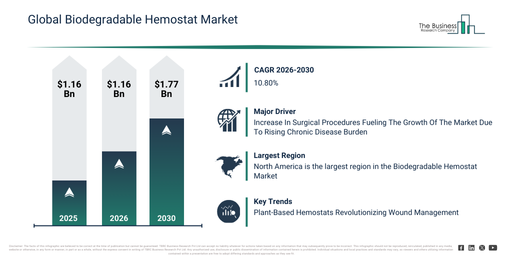
    The biodegradable hemostat market is projected to experience substantial expansion in the coming years. Its valuation is anticipated to reach $1.63 billion by 2030, demonstrating a compound annual growth rate (CAGR) of 10.8%. This projected increase during the forecast period is fueled by progress in polymer and biomaterial science, an increase in minimally invasive surgical interventions, a rise in trauma and emergency incidents, more regulatory authorizations for biodegradable medical devices, and the proliferation of ambulatory surgical centers. Key developments anticipated over the forecast timeframe encompass the increasing integration of absorbable hemostatic solutions, a growing inclination towards biocompatible and bioabsorbable substances, expanded application in minimally invasive and laparoscopic operations, the broader deployment of advanced hemostats in trauma and urgent care settings, and a heightened demand for hemostatic products that are ready-to-use and straightforward to apply.

    Get A Free Sample Report With In-Depth Market Insights:

    https://thebusinessresearchcompany.com/sample_request?id=24833454&type=smp&name=Biodegradable%20Hemostat%20Market%20Report%202026&utm_source=Blogs&utm_medium=Paid&utm_campaign=Sep_PR

    Biodegradable Hemostat Market Industry Drivers: What’s Behind The Revenue Growth?

    The escalating volume of surgical interventions is projected to drive the expansion of the biodegradable hemostat market in the future. These medical operations, carried out by healthcare professionals utilizing specialized instruments, aim to treat, repair, or remove bodily components for health improvement. The uptick in surgical procedures is largely linked to a rise in chronic conditions, which frequently require surgical management to resolve health issues and improve patient outcomes. Biodegradable hemostats present an advantage during surgeries because they naturally degrade within the body after application, thus negating the need for removal and decreasing the likelihood of post-operative complications. For instance, in January 2025, Intuitive Surgical Inc., a US-based medical device company, stated that OUS general surgery procedures grew by roughly 35% in 2024, following an increase of about 42% in 2023. Colorectal procedures represented the largest part of this incremental volume during both years. Thus, the increasing occurrence of surgical procedures is propelling the growth of the biodegradable hemostat market.

    Biodegradable Hemostat Market Segment Outlook: Which Categories Are Growing Fastest?

    The biodegradable hemostat market covered in this report is segmented –

    1) By Product Type: Natural Polymer-Based Hemostats, Synthetic Polymer-Based Hemostats, Composite Hemostats, Cellulose-Based Hemostats, Gelatin-Based Hemostats

    2) By Formulation: Powdered Hemostats, Granular Hemostats, Liquid Hemostats, Foam Hemostats, Film Or Sheet Hemostats

    3) By Application: Surgical Procedures, Trauma Procedures, Dental Procedures, Laparoscopic Procedures, Other Applications

    4) By Distribution Channel: Direct Sales, Distributors, E-Commerce Platforms, Pharmaceutical Retailers, Healthcare Supply Companies

    5) By End-User: Hospitals, Ambulatory Surgical Centers, Clinics, Research Laboratories, Other End Users

    Subsegments:

    1) By Natural Polymer-Based Hemostats: Collagen-Based, Chitosan-Based, Alginate-Based, Fibrin-Based, Dextran-Based

    2) By Synthetic Polymer-Based Hemostats: Polyethylene Glycol (PEG)-Based, Polyurethane-Based, Polylactic Acid (PLA)-Based, Polyglycolic Acid (PGA)-Based, Polycaprolactone (PCL)-Based

    3) By Composite Hemostats: Natural-Synthetic Polymer Blends, Polymer-Cellulose Composites, Polymer-Gelatin Composites, Multi-Layer Composites, Nano-Composite Hemostats

    4) By Cellulose-Based Hemostats: Oxidized Regenerated Cellulose (ORC), Microcrystalline Cellulose (MCC), Carboxymethyl Cellulose (CMC), Nanocellulose-Based, Hydroxypropyl Cellulose (HPC)

    5) By Gelatin-Based Hemostats: Porcine Gelatin-Based, Bovine Gelatin-Based, Fish Gelatin-Based, Cross-Linked Gelatin, Modified Gelatin Formulations

    #Biodegradable Hemostat Market Growth Trends: What’s Shaping The Future Outlook?

    Leading companies in the biodegradable hemostat market are prioritizing the development of advanced solutions, such as the plant-based cellulose matrix, aimed at quickly stopping bleeding and reducing blood loss. A plant-based cellulose matrix is a naturally occurring material derived from plant fibers, serving as a biodegradable support structure frequently employed in medical environments because it can be safely absorbed by the body. For example, in April 2024, LifeScience PLUS, a US-based medical device company, introduced DonorSeal, a distinct hemostatic dressing made entirely from plant-sourced cellulose. Upon contact with blood, DonorSeal forms a gel that effectively controls bleeding, while being fully biodegradable, absorbable, non-toxic, and pH neutral, thus safe for patients even those on blood thinners. It assists in maintaining a moist and soothing setting that promotes natural tissue regeneration. The dressing is easily removable without causing the wound to reopen or adhere, offering enhanced comfort and a quicker recovery for donor site wounds.

    Biodegradable Hemostat Market Competitive Landscape: Who Leads The Industry?

    Major companies operating in the biodegradable hemostat market are Johnson And Johnson Services Inc, Medtronic Plc, Stryker Corporation, Baxter International Inc, Meril Life Sciences Pvt Ltd, Samyang Holdings Corp, Molnlycke Health Care AB, GELITA Medical GmbH, B Braun Melsungen AG, Tricol Biomedical Inc, Hemostasis LLC, Cura Medical, RevMedx Inc, Speed Care Mineral GmbH, Regenity, C R Bard Inc, Integra LifeSciences Corporation, Advanced Medical Solutions Group plc, Anika Therapeutics Inc, Marine Polymer Technologies Inc, Axio Biosolutions Pvt Ltd, Biom Up Inc

    View The Full Biodegradable Hemostat Market Report:

    https://thebusinessresearchcompany.com/report/biodegradable-hemostat-global-market-report?utm_source=Blogs&utm_medium=Paid&utm_campaign=Sep_PR

    Biodegradable Hemostat Market Geographic Landscape: Which Region Dominates Industry Growth?

    North America was the largest region in the biodegradable hemostat market in 2025. The regions covered in the biodegradable hemostat market report are Asia-Pacific, South East Asia, Western Europe, Eastern Europe, North America, South America, Middle East, Africa.

    Reach Out To Our Team:

    The Business Research Company: https://www.thebusinessresearchcompany.com/

    Americas: +1 310-496-7795

    Asia: +44 7882 955267 & +91 8897263534

    Europe: +44 7882 955267

    Email us at: marketing@tbrc.info

    Follow us on:

    LinkedIn: https://in.linkedin.com/company/the-business-research-company

    YouTube: https://www.youtube.com/channel/UC24_fI0rV8cR5DxlCpgmyFQ

    Global Market Model: https://www.thebusinessresearchcompany.com/global-market-model
  • Biochips Market Growth Outlook For 2026: Drivers, Trends And Future Opportunities

    Biochips Market Growth Outlook For 2026: Drivers, Trends And Future Opportunities

    Featuring market attractiveness scoring, total addressable market sizing, company benchmarking matrices, interactive Excel dashboards, deeper supply chain intelligence, emerging startup tracking, and granular product-level insights, The Business Research Company’s 2026 market reports are built to deliver research that is both more actionable and more strategically valuable.

    Biochips Market Forecast: Value Set To Climb From $16.97 Billion To $29.03 Billion

    The biochips market has experienced rapid expansion in recent years. Its size is projected to increase from $14.61 billion in 2025 to $16.97 billion in 2026, at a compound annual growth rate (CAGR) of 16.1%. The growth observed in the historic period can be attributed to factors such as the rise in genomics and proteomics research, the broadening of pharmaceutical and biotech R&D programs, the adoption of DNA microarrays in genetic screening, the increasing application of biochips in molecular diagnostics, and the development of microarray and microfluidic-based analytical platforms.

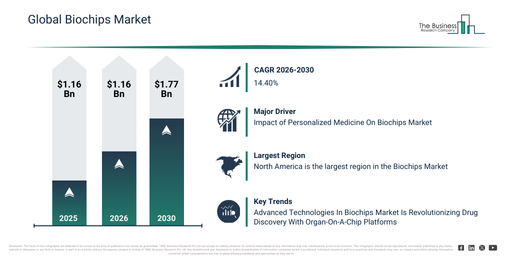
    The biochips market is set to undergo significant expansion over the next few years. Its valuation is expected to reach $29.03 billion in 2030, growing at a compound annual growth rate (CAGR) of 14.4%. This anticipated growth during the forecast period is fueled by the escalating demand for precision medicine and individualized therapies, the increasing adoption of lab-on-chip technologies in clinical testing, heightened investment in biomarker discovery and translational research, the broadening applications of biochips in agriculture and life sciences, and the accelerating commercialization of advanced diagnostic tools based on biochips. Noteworthy trends predicted for this period include the rising incorporation of biochips into genetic sequencing and disease diagnostics, the expanded utilization of protein and cell arrays for sophisticated biomolecular research, an increased need for lab-on-chip platforms in point-of-care testing, the widening scope of biochip applications in drug discovery and development, and a strong focus on miniaturization combined with high-throughput biological data analysis.

    Get A Free Sample Report With In-Depth Market Insights:

    https://thebusinessresearchcompany.com/sample_request?id=30009790&type=smp&name=Biochips%20Market%20Report%202026&utm_source=Blogs&utm_medium=Paid&utm_campaign=Sep_PR

    Biochips Market Growth Factors: What’s Supporting Expansion?

    The biochips market is projected to grow significantly due to the increasing implementation of personalized medicines. Personalized medicine involves customizing medical interventions based on an individual’s specific characteristics, such as genetic profile or lifestyle, to maximize effectiveness and minimize adverse reactions. The rising demand for personalized medicine is fueled by its potential to deliver more effective therapies, advancements in genomics, the escalating complexity of diseases, and supportive regulatory frameworks. Biochips play a crucial role in personalized medicine by enabling precise and tailored treatment plans that correspond to an individual’s genetic makeup. For instance, in February 2024, the Personalized Medicine Coalition, a US-based non-profit organization, reported that the FDA approved 16 novel personalized therapies for patients with rare diseases in 2023, a notable increase from six in 2022. Thus, the growing adoption of personalized medicines is a key driver for the expansion of the biochips market.

    Biochips Market Segment Landscape: Which Areas Lead Development?

    The biochips market covered in this report is segmented –

    1) By Type: Deoxyribonucleic Acid (DNA) Chips, Protein Chips, Lab-On-Chip, Tissue Arrays, Cell Arrays

    2) By Technology: Microarrays, Microfluidics

    3) By Application: Drug Discovery And Development, Agriculture, Genomics, Disease Diagnostics, Proteomics, Other Applications

    4) By End-User: Biotechnology And Pharmaceutical Companies, Academic And Research Institutes, Hospitals And Diagnostic Centers, Other End-Users

    Subsegments:

    1) By Deoxyribonucleic Acid (Dna) Chips: Gene Expression Chips, Snp (Single Nucleotide Polymorphism) Chips, Dna Microarrays

    2) By Protein Chips: Antibody Arrays, Protein Microarrays, Peptide Arrays

    3) By Lab-On-Chip: Microfluidic Devices, Biosensors

    4) By Tissue Arrays: Tumor Tissue Arrays, Normal Tissue Arrays

    5) By Cell Arrays: Cell-Based Biochips, Cell Signaling Arrays

    Biochips Market Industry Trends: What’s Reshaping Demand?

    Leading firms within the biochips market are focusing on creating advanced technologies, such as organ-on-a-chip platforms, with the goal of transforming the processes of drug discovery and development. These platforms represent sophisticated microfluidic apparatuses crafted to mirror the physiological attributes and operations of human organs on a miniature scale. An example of this is seen in April 2024, when Boston Micro Fabrication (BMF), a US-based nanotechnology research firm, introduced BMF Biotechnology Inc. BMF Biotechnology Inc. focuses on Biochips, interchangeably called organ-on-a-chip platforms, which are built for growing substantial tissues in vitro. This development aids in speeding up the creation of novel pharmaceuticals and cosmetic products by offering an environment for testing and research distinct from the human body.

    Biochips Market Company Landscape And Competitive Strategy

    Major companies operating in the biochips market are Thermo Fisher Scientific Inc., Roche Diagnostics International Ltd, Agilent Technologies Inc., PerkinElmer Inc., Illumina Inc., Bio-Rad Laboratories Inc., QIAGEN N.V., Tecan Group Ltd., Cepheid Inc., Randox Laboratories Ltd., Takara Bio Inc., Luminex Corporation, Fluidigm Corporation, Micronit Microtechnologies B.V., Sphere Fluidics Limited, Sengenics, Arrayit Corporation, CustomArray Inc., NanoCellect Biomedical Inc., Dolomite Microfluidics, Biocartis NV

    View The Full Biochips Market Report:

    https://thebusinessresearchcompany.com/report/biochips-global-market-report?utm_source=Blogs&utm_medium=Paid&utm_campaign=Sep_PR

    Biochips Market Largest Region: Which Geography Holds The Highest Market Share?

    North America was the largest region in the biochips market in 2025. Asia-Pacific is expected to be the fastest-growing region in the forecast period. The regions covered in the biochips market report are Asia-Pacific, South East Asia, Western Europe, Eastern Europe, North America, South America, Middle East, Africa.

    Reach Out To Our Team:

    The Business Research Company: https://www.thebusinessresearchcompany.com/

    Americas: +1 310-496-7795

    Asia: +44 7882 955267 & +91 8897263534

    Europe: +44 7882 955267

    Email us at: marketing@tbrc.info

    Follow us on:

    LinkedIn: https://in.linkedin.com/company/the-business-research-company

    YouTube: https://www.youtube.com/channel/UC24_fI0rV8cR5DxlCpgmyFQ

    Global Market Model: https://www.thebusinessresearchcompany.com/global-market-model
  • Biochemistry Analyzers Market Size Forecast From 2026 To 2030: Key Industry Trends

    Biochemistry Analyzers Market Size Forecast From 2026 To 2030: Key Industry Trends

    Built to provide research that’s more actionable and strategically valuable, The Business Research Company’s 2026 market reports include market attractiveness analysis, total addressable market sizing, company benchmarking matrices, interactive Excel dashboards, broader supply chain intelligence, emerging startup tracking, and in-depth product insights.

    Biochemistry Analyzers Market Revenue Growth On Track For A 6.7% CAGR Through 2030

    The biochemistry analyzers market has demonstrated substantial growth over recent years. Its market size is anticipated to expand from $4.82 billion in 2025 to $5.16 billion in 2026, progressing at a compound annual growth rate (CAGR) of 7.0%. This historical growth can be ascribed to factors such as increased clinical testing, the expansion of hospital diagnostics, the prevalence of chronic diseases, the adoption of lab automation, and the availability of reagents.

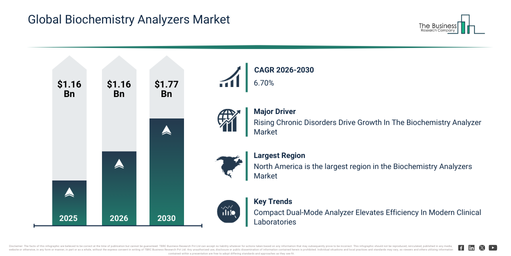
    The biochemistry analyzers market size is projected to undergo substantial expansion in the upcoming years. It is anticipated to reach $6.69 billion in 2030, with a compound annual growth rate (CAGR) of 6.7%. This anticipated growth can be largely attributed to factors such as the expansion of point-of-care testing, the emergence of AI-enabled analyzers, ongoing lab consolidation, the increasing aging population, and a heightened demand for preventive diagnostics. Throughout the forecast period, prominent trends are expected to involve high-throughput diagnostics, greater automation in clinical laboratories, the continued development of point-of-care biochemistry testing, a rising demand for multi-parameter testing, and improved chronic disease diagnostics.

    Get A Free Sample Report With In-Depth Market Insights:

    https://thebusinessresearchcompany.com/sample_request?id=94224750&type=smp&name=Biochemistry%20Analyzers%20Market%20Report%202026&utm_source=Blogs&utm_medium=Paid&utm_campaign=Sep_PR

    Biochemistry Analyzers Market Demand Drivers: What’s Powering Industry Growth?

    A rising incidence of chronic health conditions is anticipated to fuel the expansion of the biochemistry analyzers market in the future. These are defined as enduring medical conditions that persist chronically and frequently necessitate ongoing oversight and medical attention. The surge in chronic disorders largely stems from demographic shifts like aging populations, evolving lifestyles, and an increase in risk factors such as inadequate nutrition, sedentary habits, and environmental pollution. For chronic conditions, biochemistry analyzers play a crucial role in assessing and tracking biomarkers for accurate diagnosis, monitoring disease advancement, and evaluating the efficacy of treatments. An illustrative example shows that in April 2024, Allergy UK, a national charity in the UK, reported over 21 million individuals in the UK suffering from allergies. This condition was identified as the most prevalent chronic health issue in 2022, with forecasts suggesting that by 2026, half of Europe’s population will be affected by at least one allergy. Consequently, the growing prevalence of chronic disorders is a key impetus for the expansion of the biochemistry analyzers market.

    Biochemistry Analyzers Market Segments: Where Is Growth Concentrated?

    The biochemistry analyzers market covered in this report is segmented –

    1) By Product Type: Semi-Automated Biochemistry Analyzer, Fully Automated Biochemistry Analyzer

    2) By Modality: Bench-Top, Floor Standing

    3) By Application: Clinical Diagnostics, Bioreactor Byproduct Detection, Drug Development Applications, Other Applications

    4) By End User: Hospitals, Diagnostic Centers, Pharmaceutical Companies, Biotechnology Companies, Academic Research Institutes, Contract Research Organizations

    Subsegments:

    1) By Semi-Automated Biochemistry Analyzer: Benchtop Semi-Automated Analyzers, Portable Semi-Automated Analyzers, Miniaturized Semi-Automated Analyzers

    2) By Fully Automated Biochemistry Analyzer: High-Throughput Fully Automated Analyzers, Integrated Fully Automated Analyzers, Point-of-Care Fully Automated Analyzers

    Biochemistry Analyzers Market Innovation Trends: What Developments Are Reshaping The Industry?

    Major companies operating in the biochemistry analyzers market are focusing on creating innovative advancements like integrated clinical analyzers to improve testing efficiency and ensure uniform diagnostic results across laboratory networks. An integrated clinical analyzer is a laboratory instrument that brings together chemistry and immunoassay testing capabilities on a single platform to meet diverse diagnostic needs and streamline operations. For instance, in July 2024, Beckman Coulter Diagnostics, a US-based clinical diagnostics solutions provider, launched the DxC 500i Clinical Analyzer. This system combines chemistry and immunoassay workflows in a compact platform, equipped with automated sample handling, prioritization functions, and an intuitive interface that supports rapid testing for low-volume laboratories. Its compatibility with standardized reagents and the incorporation of Six Sigma–level analytical performance enable interchangeable results across healthcare networks, thereby enhancing operational consistency and overall laboratory efficiency.

    Biochemistry Analyzers Market Key Players Shaping Industry Direction

    Major companies operating in the biochemistry analyzers market are Abbott Laboratories, Roche Diagnostics AG, Siemens Healthineers, Tosoh Corporation, Horiba Ltd, Mindray Medical International Limited, Randox Laboratories Ltd, Bio-Rad Laboratories Inc, Analyticon Biotechnologies GmbH, URIT Medical Electronic Group Co Ltd, Dirui Industrial Co Ltd, ELITechGroup, Erba Diagnostics Mannheim GmbH, Snibe Diagnostic, Hipro Biotechnology Co Ltd, Chengdu Seamaty Technology Co Ltd, Accurex Biomedical Pvt Ltd, Transasia Bio-Medicals Ltd, Labtest Diagnostica SA, KHB Medical

    View The Full Biochemistry Analyzers Market Report:

    https://thebusinessresearchcompany.com/report/biochemistry-analyzers-global-market-report?utm_source=Blogs&utm_medium=Paid&utm_campaign=Sep_PR

    Biochemistry Analyzers Market Regional Analysis: Which Region Leads By Revenue?

    North America was the largest region in the biochemistry analyzers market in 2025. Asia-Pacific is expected to be the fastest-growing region in the forecast period. The regions covered in the biochemistry analyzers market report are Asia-Pacific, South East Asia, Western Europe, Eastern Europe, North America, South America, Middle East, Africa.

    Reach Out To Our Team:

    The Business Research Company: https://www.thebusinessresearchcompany.com/

    Americas: +1 310-496-7795

    Asia: +44 7882 955267 & +91 8897263534

    Europe: +44 7882 955267

    Email us at: marketing@tbrc.info

    Follow us on:

    LinkedIn: https://in.linkedin.com/company/the-business-research-company

    YouTube: https://www.youtube.com/channel/UC24_fI0rV8cR5DxlCpgmyFQ

    Global Market Model: https://www.thebusinessresearchcompany.com/global-market-model
  • Biochemistry Analyzer Market 2026: Market Size, Growth Drivers And Emerging Opportunities

    Biochemistry Analyzer Market 2026: Market Size, Growth Drivers And Emerging Opportunities

    Backed by market attractiveness analysis, total addressable market sizing, company benchmarking matrices, interactive Excel dashboards, wider supply chain intelligence, emerging startup coverage, and detailed product-level insights, The Business Research Company’s 2026 market reports are designed to offer research that is more actionable and strategically valuable than ever.

    Biochemistry Analyzer Market Value Growth And Long-Term Outlook

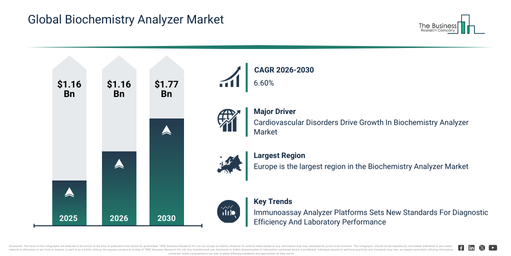
    The biochemistry analyzer market size has experienced significant growth over recent years. It is anticipated to expand from $4.58 billion in 2025 to $4.88 billion in 2026, achieving a compound annual growth rate (CAGR) of 6.6%. The historical growth of this market can be linked to several factors including an increase in hospital laboratory testing volumes, the early implementation of automated clinical chemistry analyzers, the expansion of diagnostic center infrastructure, the growing prevalence of metabolic and chronic diseases, and the incorporation of biochemistry testing into routine health screenings.

    The biochemistry analyzer market is projected to experience substantial expansion over the coming years. This market is forecast to reach $6.29 billion by 2030, exhibiting a compound annual growth rate (CAGR) of 6.6%. This anticipated growth is driven by factors such as an escalating need for high-throughput analyzer systems, the expanding application of biochemistry testing in biopharmaceutical research and development, increasing uptake within academic institutions and contract research organizations, a greater focus on swift and precise diagnostic procedures, and the broadening of clinical diagnostics in developing healthcare regions. Key trends anticipated during this period encompass the wider deployment of biochemistry analyzers in everyday clinical diagnostics, an increasing requirement for high-throughput and quick-result testing solutions, a surge in the application of biochemistry testing within drug development and research, the extended use of analyzers across various hospitals and diagnostic facilities, and a dedicated effort towards enhancing the accuracy, reliability, and standardization of biochemical tests.

    Get A Free Sample Report With In-Depth Market Insights:

    https://thebusinessresearchcompany.com/sample_request?id=18255&type=smp&name=Biochemistry%20Analyzer%20Market%20Report%202026&utm_source=Blogs&utm_medium=Paid&utm_campaign=Sep_PR

    Biochemistry Analyzer Market Growth Drivers: What’s Behind The Acceleration?

    The increasing incidence of cardiovascular disorders is anticipated to stimulate the expansion of the biochemistry analyzer market moving forward. Cardiovascular diseases encompass a range of conditions affecting the heart and blood vessels, frequently involving narrowed or blocked blood vessels that can lead to severe complications such as heart attack, stroke, and peripheral artery disease (PAD). The prevalence of these diseases escalates with an aging population, sedentary lifestyles, unhealthy dietary choices, and high rates of obesity. Biochemistry analyzers are instrumental in the diagnosis and management of cardiovascular disorders by offering accurate and timely measurements of key biomarkers, which enables healthcare professionals to monitor patient health, assess risk factors, and customize treatment plans effectively. For instance, in January 2024, according to the American Heart Association, a US-based nonprofit organization, the total number of deaths caused by cardiovascular diseases reached 931,578, an increase from 928,741 in 2023. Additionally, the age-adjusted death rate from cardiovascular disease also observed a modest rise, reaching 233.3 per 100,000 in 2024, which signifies a 4.0% increase from 224.4 per 100,000 in 2023. Consequently, the rising number of cardiovascular disorder cases is propelling the biochemistry analyzer market.

    Biochemistry Analyzer Market Segment Analysis: What Are The Core Market Categories?

    The biochemistry analyzer market covered in this report is segmented –

    1) By Product Type: Semi-Automated, Fully-Automated

    2) By Modality: Bench Top, Floor-Standing

    3) By Application: Clinical Diagnostics, Bioreactor Byproduct Detection, Drug Development, Other Application

    4) By End User: Hospitals, Diagnostic Centers, Pharmaceutical Companies, Biotechnology Companies, Academic Research Institutes, Contract Research Organizations

    Subsegments:

    1) By Semi-Automated: Benchtop Semi-Automated Biochemistry Analyzers, Compact Semi-Automated Biochemistry Analyzers

    2) By Fully-Automated: High-Throughput Fully-Automated Biochemistry Analyzers, Modular Fully-Automated Biochemistry Analyzers

    Biochemistry Analyzer Market Trends: What’s Defining The Industry’s Next Phase?

    Leading companies in the biochemistry analyzer market are concentrating on developing immunoassay analyzer platforms to enhance diagnostic accuracy and decrease maintenance requirements. These immunoassay analyzer platforms measure specific biomarkers in biological samples through immunoassay techniques, delivering high accuracy and sensitivity in detecting various conditions, thereby boosting diagnostic efficiency and supporting comprehensive patient care. For instance, in May 2023, Beckman Coulter Inc., a US-based clinical diagnostics company, unveiled the DxI 9000 Access Immunoassay Analyzer, a state-of-the-art platform engineered to elevate laboratory performance. This next-generation analyzer can run up to 215 tests per hour per square meter. It incorporates advanced innovations such as PrecisionVision Technology for real-time data accuracy, ZeroDaily Maintenance for reduced upkeep, and IntelliServe for proactive remote service and diagnostics. The DxI 9000 boosts assay sensitivity with the Lumi-Phos PRO Substrate, and it supports rapid, accurate heart failure diagnosis through its NT-proBNP assay. This system is designed to satisfy the increasing demands for speed, reliability, and precision in clinical laboratories.

    Biochemistry Analyzer Market Competitive Analysis Of Leading Industry Participants

    Major companies operating in the biochemistry analyzer market are Roche Holding AG, Thermo Fisher Scientific, Abbott Laboratories, Siemens Healthineers, Mindray Bio-Medical Electronics Co. Ltd., Hitachi High-Technologies Corporation, Beckman Coulter Inc., Sysmex Corporation, Bio-Rad Laboratories Inc, Ortho Clinical Diagnostics, Horiba Medical Ltd, Randox Laboratories Ltd., NOVA Biomedical Corp., Tecom Group, Dirui Industries Co. Ltd., Transasia Biomedicals Ltd., ELITechGroup, Rayto Life and Analytical Sciences Co. Ltd., DPC (Diagnostic Products Corporation), Cypress Diagnostics Inc, Urit Medical Electronic Group, Adaltis Inc

    View The Full Biochemistry Analyzer Market Report:

    https://thebusinessresearchcompany.com/report/biochemistry-analyzer-global-market-report?utm_source=Blogs&utm_medium=Paid&utm_campaign=Sep_PR

    Biochemistry Analyzer Market Geographic Distribution And Regional Opportunities

    Europe was the largest region in the biochemistry analyzer market in 2025. The regions covered in the biochemistry analyzer market report are Asia-Pacific, South East Asia, Western Europe, Eastern Europe, North America, South America, Middle East, Africa.

    Reach Out To Our Team:

    The Business Research Company: https://www.thebusinessresearchcompany.com/

    Americas: +1 310-496-7795

    Asia: +44 7882 955267 & +91 8897263534

    Europe: +44 7882 955267

    Email us at: marketing@tbrc.info

    Follow us on:

    LinkedIn: https://in.linkedin.com/company/the-business-research-company

    YouTube: https://www.youtube.com/channel/UC24_fI0rV8cR5DxlCpgmyFQ

    Global Market Model: https://www.thebusinessresearchcompany.com/global-market-model
  • Biobank Equipment Market Set To Expand From $6.5 Billion In 2026: Growth Outlook Through 2030

    Biobank Equipment Market Set To Expand From $6.5 Billion In 2026: Growth Outlook Through 2030

    Featuring market attractiveness scoring, total addressable market sizing, company benchmarking matrices, interactive Excel dashboards, deeper supply chain intelligence, emerging startup tracking, and granular product-level insights, The Business Research Company’s 2026 market reports are built to deliver research that is both more actionable and more strategically valuable.

    Biobank Equipment Market Poised To Hit $6.5 Billion By 2030 With A 9.2% CAGR

    The biobank equipment market has seen substantial growth in recent years. Its valuation is anticipated to rise from $4.18 billion in 2025 to $4.58 billion in 2026, achieving a compound annual growth rate (CAGR) of 9.5%. This prior period of expansion can be linked to factors such as the expansion of biobanking efforts, an increase in clinical research activities, challenges posed by inefficient manual sample handling, the demand for trackable sample storage, and a rise in genomics research.

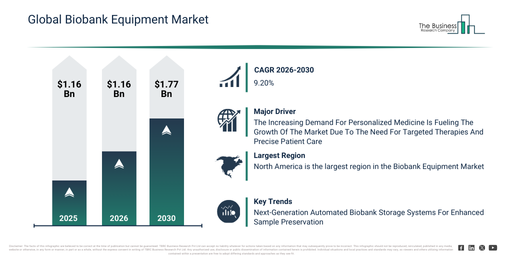
    The biobank equipment market size is expected to show significant expansion in the coming years. It is projected to reach $6.5 billion in 2030, demonstrating a compound annual growth rate (CAGR) of 9.2%. This growth over the forecast period is attributable to the embrace of automated and hybrid biobanking systems, the incorporation of AI and cloud analytics, the broadening of regenerative medicine research, an increasing need for cell and DNA storage, and advancements in cryogenic systems. Prominent trends anticipated in the forecast period feature AI-enhanced sample management systems, IoT-enabled cryogenic monitoring, automated biobanking platforms, cloud-based data tracking systems, and high-throughput sample storage solutions.

    Get A Free Sample Report With In-Depth Market Insights:

    https://thebusinessresearchcompany.com/sample_request?id=28963&type=smp&name=Biobank%20Equipment%20Market%20Report%202026&utm_source=Blogs&utm_medium=Paid&utm_campaign=Sep_PR

    Biobank Equipment Market Growth Factors Behind Sustained Expansion

    The rising requirement for personalized medicine is projected to fuel the expansion of the biobank equipment market. Personalized medicine represents a healthcare strategy focused on customizing treatment and prevention approaches based on a patient’s unique genetic makeup, environmental factors, and lifestyle choices. The increasing embrace of this approach is powered by breakthroughs in genomic sequencing technologies and data analytics, which allow medical professionals to create more accurate diagnostic instruments and specific treatments for individual patients. Biobank equipment supports personalized medicine by efficiently storing and categorizing biological samples that contain essential genetic and molecular information, empowering researchers to investigate individual variances, pinpoint biomarkers, and develop therapies tailored to each patient. For instance, in February 2024, figures from the Personalized Medicine Coalition, a US-based hospital and health care organization, revealed that in 2023, the FDA approved 16 new personalized treatments for rare disease patients, a notable increase from six in 2022. Therefore, the heightened demand for personalized medicine is acting as a catalyst for the growth of the biobank equipment market.

    Biobank Equipment Market Segment Breakdown: Which Categories Lead On Revenue?

    The biobank equipment market covered in this report is segmented –

    1) By Product: Cryogenic Storage Systems, Alarm And Monitoring Systems

    2) By Sample Type: Blood Products, Human Tissue, Umbilical Cord Blood Stem Cells, Deoxyribonucleic Acid (DNA), Cell Lines

    3) By Storage System: Automated Biobanking Systems, Manual Biobanking Systems, Hybrid Biobanking Systems, Modular Storage Systems, Compact Storage Systems

    4) By Applications: Regenerative Medicine, Life Science Research, Clinical Research, Other Applications

    5) By End-User: Biobanks And Biorepositories, Pharma And Biotech Companies, Academic And Research Institutes, Hospital And Diagnostic Centers

    Subsegments:

    1) By Cryogenic Storage Systems: Cryogenic Storage Systems, Liquid Nitrogen Freezers, Ultra-Low Temperature Freezers, Cryogenic Vials, Cryogenic Storage Tanks

    2) By Alarm And Monitoring Systems: Alarm And Monitoring Systems, Temperature Monitoring Systems, Humidity Monitoring Systems, Carbon Dioxide (CO2) Monitoring Systems, Remote Alarm Systems, Data Logging Systems

    Biobank Equipment Market Industry Trends Fueling Future Revenue Growth

    Leading companies in the biobank equipment market are focused on developing next-generation automated storage solutions to improve sample preservation and meet the growing demand for personalized medicine. These automated storage systems are advanced tools that organize, store, and retrieve biological samples with minimal human involvement, ensuring accurate handling, security, and preservation quality through the use of robotics and digital controls to maintain sample integrity and traceability. For example, in February 2024, Azenta Inc., a US-based provider of life sciences solutions, introduced the BioArc Ultra. This cutting-edge, automated ultracold storage system offers high-density, environmentally friendly sample management for biorepositories. It provides efficient, automated handling of samples at -80°C, employing an innovative refrigeration system with zero ozone depletion potential and zero global warming potential. The BioArc Ultra significantly lowers power consumption and space needs compared to conventional setups, thereby boosting energy efficiency and sustainability in large-scale biological sample storage operations.

    Biobank Equipment Market Leading Companies And Competitive Benchmarking

    Major companies operating in the biobank equipment market are Thermo Fisher Scientific Inc., Merck KGaA Darmstadt Germany, Becton Dickinson and Company, Agilent Technologies Inc., Revvity Inc., PHC Holdings Corporation, QIAGEN N.V., Eppendorf SE, Tecan Group Ltd., Bio-Techne Corporation, Hamilton Company, Azenta Life Sciences Inc., Promega Corporation, BioLife Solutions Inc., Standard BioTools Inc., SPT Labtech Ltd, LabVantage Solutions Inc., Izon Science Limited, askion GmbH, Custom Biogenic Systems Inc., Zhongke Meiling Cryogenics Co. Ltd.

    View The Full Biobank Equipment Market Report:

    https://thebusinessresearchcompany.com/report/biobank-equipment-global-market-report?utm_source=Blogs&utm_medium=Paid&utm_campaign=Sep_PR

    Biobank Equipment Market Largest Region By Revenue And Market Share

    North America was the largest region in the biobank equipment market in 2025. Asia-Pacific is expected to be the fastest-growing region in the forecast period. The regions covered in the biobank equipment market report are Asia-Pacific, South East Asia, Western Europe, Eastern Europe, North America, South America, Middle East, Africa.

    Reach Out To Our Team:

    The Business Research Company: https://www.thebusinessresearchcompany.com/

    Americas: +1 310-496-7795

    Asia: +44 7882 955267 & +91 8897263534

    Europe: +44 7882 955267

    Email us at: marketing@tbrc.info

    Follow us on:

    LinkedIn: https://in.linkedin.com/company/the-business-research-company

    YouTube: https://www.youtube.com/channel/UC24_fI0rV8cR5DxlCpgmyFQ

    Global Market Model: https://www.thebusinessresearchcompany.com/global-market-model
  • Biobank Automation Systems Market Size And Growth In 2026: Key Factors Shaping Future Demand

    Biobank Automation Systems Market Size And Growth In 2026: Key Factors Shaping Future Demand

    Built to provide research that’s more actionable and strategically valuable, The Business Research Company’s 2026 market reports include market attractiveness analysis, total addressable market sizing, company benchmarking matrices, interactive Excel dashboards, broader supply chain intelligence, emerging startup tracking, and in-depth product insights.

    Biobank Automation Systems Market Size And Revenue Outlook Through 2030

    The biobank automation systems market has experienced strong growth in recent years. It is projected to increase from $2.03 billion in 2025 to $2.22 billion in 2026, at a compound annual growth rate (CAGR) of 9.7%. The historical expansion of this market can be attributed to factors such as the growth in biomedical research, increasing biobank sample volumes, the necessity for error reduction, the expansion of genomics studies, and the adoption of laboratory automation.

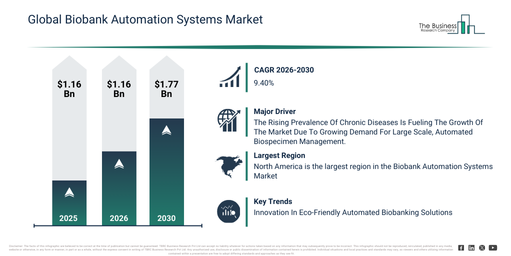
    The biobank automation systems market is projected to experience substantial growth over the next few years. It is anticipated to expand to $3.19 billion by 2030, achieving a compound annual growth rate (CAGR) of 9.4%. This projected growth can be attributed to several factors including the expansion of precision medicine, AI-driven sample management, global biobank collaborations, evolving regulatory compliance requirements, and the increasing demand for scalable storage solutions. Significant trends expected during this forecast period involve automated sample storage, robotic sample handling, high-throughput biobanking, digital sample traceability, and integrated biobank software systems.

    Get A Free Sample Report With In-Depth Market Insights:

    https://thebusinessresearchcompany.com/sample_request?id=20753952&type=smp&name=Biobank%20Automation%20Systems%20Market%20Report%202026&utm_source=Blogs&utm_medium=Paid&utm_campaign=Sep_PR

    Biobank Automation Systems Market Demand Drivers Opening New Revenue Streams

    The increasing occurrence of chronic illnesses is anticipated to boost the expansion of the biobank automation systems market in the future. These are enduring health issues, including conditions like diabetes, heart ailments, cancer, and long-term respiratory problems, which usually advance gradually and endure for extended periods, frequently necessitating continuous medical care. The heightened incidence of chronic diseases is primarily attributed to an aging global population, with a larger segment of individuals reaching older ages where illnesses such as cardiovascular disease, diabetes, and cancer are considerably more widespread. Biobank automation systems aid in managing the increasing burden of chronic diseases by facilitating dependable, extensive storage and swift recovery of patient biological samples for research, identifying biomarkers, and creating specific treatments. For example, in February 2024, the World Health Organization (WHO), a US-based health body, projected that worldwide cancer cases will surpass 35 million new instances by 2050, indicating a 77% increase compared to the estimated 20 million new cases documented in 2022. Consequently, the escalating occurrence of chronic diseases is propelling the biobank automation systems market.

    Biobank Automation Systems Market Segmentation: How Does The Market Break Down By Category?

    The biobank automation systems market covered in this report is segmented –

    1) By Product Type: Automated Storage Systems, Automated Sample Preparation Systems, Automated Liquid Handling Systems, Other Product Types

    2) By Application: Drug Discovery, Regenerative Medicine, Biobanking, Other Applications

    3) By End-User: Pharmaceutical And Biotechnology Companies, Academic And Research Institutes, Hospitals, Other End-Users

    Subsegments:

    1) By Automated Storage Systems: Automated Ultra Low Temperature Freezer Systems, Automated Cryogenic Storage Systems, Automated High Density Biobanking Storage Systems, Automated Room Temperature Sample Storage Systems, Automated Tube And Vial Storage Systems

    2) By Automated Sample Preparation Systems: Automated Nucleic Acid Extraction Systems, Automated Cell Preparation Systems, Automated Protein Purification Systems, Automated Histology And Tissue Processing Systems, Automated Sample Aliquoting Systems

    3) By Automated Liquid Handling Systems: Automated Pipetting Workstation Systems, Automated Microplate Handling Systems, Automated Reagent Dispensing Systems, Automated Serial Dilution Systems, Automated Microplate Washing Systems

    4) By Other Product Types: Automated Tube Decapping And Capping Systems, Barcode Labeling And Scanning Systems, Laboratory Information Management System Integration Modules, Environmental Monitoring And Control Systems, Robotic Laboratory Integration Platforms

    Biobank Automation Systems Market Trends Powering Strategic Industry Growth

    Major companies within the biobank automation systems market are concentrating on advanced innovations like eco-friendly cooling systems to boost energy efficiency, lessen their carbon footprint, and optimize large-scale sample storage operations. These sustainable cooling solutions represent sophisticated refrigeration technologies that utilize either natural air or refrigerants that do not deplete the ozone layer, thereby cutting down on power usage, lessening ecological harm, and promoting long-term ultracold storage practices. For example, in February 2024, Azenta, Inc., a US-based life sciences company, unveiled the BioArc Ultra, an innovative automated system designed for high-density and environmentally conscious ultracold sample management. The BioArc Ultra enables automated, space-efficient ultracold storage and recovery of samples, assisting biobanks in maximizing freezer utilization while preserving the reliability of stored samples. This system fosters more sustainable biobanking practices by incorporating an energy-saving design and environmentally benign refrigerants, consequently reducing the ecological impact associated with managing extensive sample collections. Its primary objective is to simplify intricate biorepository workflows, mitigate dangers from manual interventions, and ensure safe, trackable oversight of vital biological specimens for both research and medical applications.

    Biobank Automation Systems Market Industry Leaders And Competitive Landscape

    Major companies operating in the biobank automation systems market are Thermo Fisher Scientific Inc., Azenta Life Sciences, Sartorius AG, Becton Dickinson and Company, Tecan Group Ltd., Hamilton Company, Eppendorf SE, PHC Holdings Corporation, Haier Biomedical Co. Ltd., ASKION GmbH, LiCONiC AG, Micronic Holding B.V., Revvity Inc., Qiagen N.V., Greiner Bio-One International GmbH, BioLife Solutions Inc., LVL Technologies GmbH & Co. KG, RTS Life Science Ltd., Brooks Automation Inc., SP Scientific

    View The Full Biobank Automation Systems Market Report:

    https://thebusinessresearchcompany.com/report/global-biobank-automation-systems-market-report?utm_source=Blogs&utm_medium=Paid&utm_campaign=Sep_PR

    Biobank Automation Systems Market Regional Analysis And Leading Geography

    North America was the largest region in the biobank automation systems market in 2025. Asia-Pacific is expected to be the fastest-growing region in the forecast period. The regions covered in the biobank automation systems market report are Asia-Pacific, South East Asia, Western Europe, Eastern Europe, North America, South America, Middle East, Africa.

    Reach Out To Our Team:

    The Business Research Company: https://www.thebusinessresearchcompany.com/

    Americas: +1 310-496-7795

    Asia: +44 7882 955267 & +91 8897263534

    Europe: +44 7882 955267

    Email us at: marketing@tbrc.info

    Follow us on:

    LinkedIn: https://in.linkedin.com/company/the-business-research-company

    YouTube: https://www.youtube.com/channel/UC24_fI0rV8cR5DxlCpgmyFQ

    Global Market Model: https://www.thebusinessresearchcompany.com/global-market-model
  • Bioactive Wound Care Market Forecast 2026–2030: Market Size, Trends And Growth Opportunities

    Bioactive Wound Care Market Forecast 2026–2030: Market Size, Trends And Growth Opportunities

    Backed by market attractiveness analysis, total addressable market sizing, company benchmarking matrices, interactive Excel dashboards, wider supply chain intelligence, emerging startup coverage, and detailed product-level insights, The Business Research Company’s 2026 market reports are designed to offer research that is more actionable and strategically valuable than ever.

    Bioactive Wound Care Market Growth From $9 Billion In 2026 To $12.48 Billion By 2030 At A CAGR Of 8.5%

    The size of the bioactive wound care market has seen substantial growth recently. It is anticipated to expand from $8.28 billion in 2025 to $9 billion in 2026, registering a compound annual growth rate (CAGR) of 8.7%. The expansion observed over the past period can be attributed to several factors, including the limited availability of bioactive wound care alternatives, a reliance on traditional gauze and bandages, an increasing occurrence of chronic wounds, the development of hospital and clinical infrastructure, and a heightened awareness of infection control.

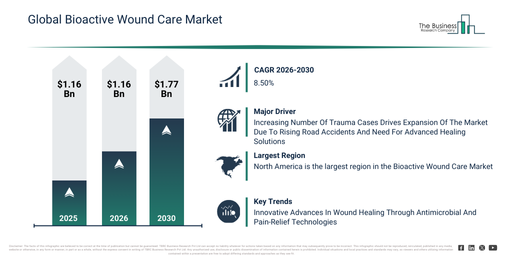
    The bioactive wound care market is poised for significant expansion in the upcoming years, with its valuation expected to climb to $12.48 billion by 2030, exhibiting a compound annual growth rate (CAGR) of 8.5%. This projected increase during the forecast period is attributed to several factors such as the development of nanocrystalline silver and iodine-based dressings, the broadening of home care and ambulatory wound management services, a rising diabetic and aging population, more stringent regulatory standards and quality certifications, and the adoption of personalized wound care solutions. Prominent trends for this period include the increasing use of antimicrobial and silver-based dressings, greater application of hydrogels and alginates for chronic wounds, continued growth in home care and ambulatory wound management, an intensified focus on advanced collagen and hydrofiber dressings, and an elevated emphasis on infection control and favorable wound healing outcomes.

    Get A Free Sample Report With In-Depth Market Insights:

    https://thebusinessresearchcompany.com/sample_request?id=62439409&type=smp&name=Bioactive%20Wound%20Care%20Market%20Report%202026&utm_source=Blogs&utm_medium=Paid&utm_campaign=Sep_PR

    Bioactive Wound Care Market Growth Backed By Core Demand Fundamentals

    The bioactive wound care market is projected to grow owing to the increasing prevalence of trauma cases. Trauma cases are defined as instances of physical injury resulting from external forces such as accidents, falls, or violence, frequently requiring urgent medical intervention. This rise in trauma cases is largely driven by an escalating number of road traffic accidents, attributed to greater vehicle usage and inadequate road safety measures. Bioactive wound care assists in trauma cases by promoting faster healing, preventing infections, and supporting tissue regeneration in complex or severe wounds. For instance, in December 2024, the Transport Accident Commission, an Australia-based government agency, reported that there were 267 fatal crashes on Victorian roads in the 12 months to the end of June 2024, marking an increase of 20 compared to the 247 fatal crashes recorded during the previous year. Therefore, the growing number of trauma cases is stimulating the expansion of the bioactive wound care market.

    Bioactive Wound Care Market Segment Trends And Revenue Contributors

    The bioactive wound care market covered in this report is segmented –

    1) By Product Type: Antimicrobial Dressings, Hydrogels, Alginates, Foams, Collagen Dressings, Silver-Based Dressings, Hydrofiber Dressings

    2) By Mode Of Action: Antibacterial Action, Anti-Inflammatory Action, Wound Healing Promotion, Moisture Control

    3) By Application: Chronic Wounds, Acute Wounds, Burns, Surgical Wounds, Diabetic Foot Ulcers, Pressure Ulcers

    4) By End User: Hospitals, Clinics, Home Care Settings, Ambulatory Surgical Centers, Nursing Homes

    Subsegments:

    1) By Antimicrobial Dressings: Silver-Impregnated Dressings, Iodine-Based Dressings, Honey-Based Dressings

    2) By Hydrogels: Amorphous Hydrogel, Hydrogel Sheets, Hydrogel Impregnated Gauze

    3) By Alginates: Calcium Alginate Dressings, Calcium Sodium Alginate Dressings

    4) By Foams: Silicone Foam Dressings, Polyurethane Foam Dressings, Adhesive And Non-Adhesive Foams

    5) By Collagen Dressings: Bovine Collagen, Porcine Collagen, Synthetic Collagen

    6) By Silver-Based Dressings: Nanocrystalline Silver Dressings, Silver Sulfadiazine Dressings

    7) By Hydrofiber Dressings: Adhesive Hydrofiber, Non-Adhesive Hydrofiber

    Bioactive Wound Care Market Growth Trends Reshaping The Competitive Landscape

    Major companies within the bioactive wound care market are concentrating on developing advanced solutions, such as antimicrobial wound dressings, to improve infection management, expedite healing processes, and lessen the risk of complications in both chronic and acute wounds. An antimicrobial wound dressing is a type of wound care product infused with antimicrobial agents like silver, iodine, or honey, designed to prevent or reduce microbial contamination, control infections, and encourage faster wound recovery. For instance, in October 2024, Imbed Biosciences Inc., a US-based medical device company, obtained FDA 510(k) clearance for Microlyte Ag, or lidocaine, which is the first antimicrobial wound dressing to incorporate lidocaine for managing painful skin wounds. This wound dressing combines antimicrobial silver and lidocaine to both deter infection and deliver local pain relief in various partial- and full-thickness wounds. It supports healing by maintaining a moist environment and decreasing pain, potentially reducing the need for systemic antibiotics and opioids.

    Bioactive Wound Care Market Key Participants And Competitive Landscape

    Major companies operating in the bioactive wound care market are 3M Company, Smith & Nephew PLC, Coloplast A/S, PAUL HARTMANN AG, Mölnlycke Health Care AB, CONVATEC GROUP PLC, Hollister Incorporated, Organogenesis Holdings Inc., DeRoyal Industries Inc., MiMedx Group Inc., B. Braun SE, Kerecis Inc., Sanara MedTech Inc., Aroa Biosurgery Limited, BioMonde GmbH, DermaRite Industries LLC., BSN MEDICAL PRIVATE LIMITED, Covalon Technologies Ltd., Sonoma Pharmaceuticals Inc., Integra LifeSciences Holdings Corporation.

    View The Full Bioactive Wound Care Market Report:

    https://thebusinessresearchcompany.com/report/bioactive-wound-care-global-market-report?utm_source=Blogs&utm_medium=Paid&utm_campaign=Sep_PR

    Bioactive Wound Care Market Geographic Analysis: Where Is Demand Accelerating Fastest?

    North America was the largest region in the bioactive wound care market in 2025. Asia-Pacific is expected to be the fastest-growing region in the forecast period. The regions covered in the bioactive wound care market report are Asia-Pacific, South East Asia, Western Europe, Eastern Europe, North America, South America, Middle East, Africa.

    Reach Out To Our Team:

    The Business Research Company: https://www.thebusinessresearchcompany.com/

    Americas: +1 310-496-7795

    Asia: +44 7882 955267 & +91 8897263534

    Europe: +44 7882 955267

    Email us at: marketing@tbrc.info

    Follow us on:

    LinkedIn: https://in.linkedin.com/company/the-business-research-company

    YouTube: https://www.youtube.com/channel/UC24_fI0rV8cR5DxlCpgmyFQ

    Global Market Model: https://www.thebusinessresearchcompany.com/global-market-model
  • Bioabsorbable Surgical Mesh Market Size Reaches $1.36 Billion In 2026: What Is Driving Growth?

    Bioabsorbable Surgical Mesh Market Size Reaches $1.36 Billion In 2026: What Is Driving Growth?

    Featuring market attractiveness scoring, total addressable market sizing, company benchmarking matrices, interactive Excel dashboards, deeper supply chain intelligence, emerging startup tracking, and granular product-level insights, The Business Research Company’s 2026 market reports are built to deliver research that is both more actionable and more strategically valuable.

    Bioabsorbable Surgical Mesh Market Expansion Outlook: What Revenue Opportunities Are Ahead?

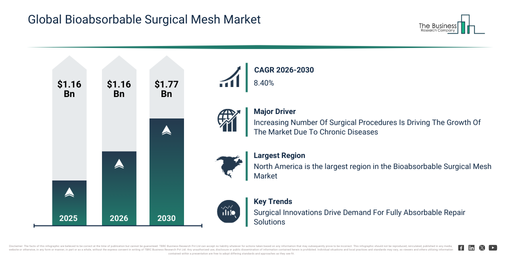
    The bioabsorbable surgical mesh market has seen considerable growth recently. It is projected to expand from $1.25 billion in 2025 to $1.36 billion in 2026, achieving a compound annual growth rate (CAGR) of 8.8%. This historical growth stemmed from the drawbacks of permanent surgical mesh, an increase in hernia and soft tissue repair operations, enhanced understanding of post-surgical complications, a rise in hospital-based surgical procedures, and the initial implementation of absorbable polymers.

    The bioabsorbable surgical mesh market is projected to experience substantial expansion over the coming years. This market is anticipated to reach a valuation of $1.88 billion by 2030, exhibiting a compound annual growth rate (CAGR) of 8.4%. This projected growth during the forecast period is largely driven by improvements in bioabsorbable polymer technology, a heightened demand for less invasive surgical procedures, increased application of bioactive and drug-releasing meshes, the expanding number of surgeries among older demographics, and broader clinical acceptance in specialized surgical fields. Key developments expected within this period involve the greater use of bioabsorbable mesh for hernia repairs, an increasing inclination towards temporary rather than permanent mesh implants, a surge in the utilization of composite and bioactive mesh substances, a concerted effort to mitigate post-operative complications and infections, and the further spread of minimally invasive surgical techniques.

    Get A Free Sample Report With In-Depth Market Insights:

    https://thebusinessresearchcompany.com/sample_request?id=22826409&type=smp&name=Bioabsorbable%20Surgical%20Mesh%20Market%20Report%202026&utm_source=Blogs&utm_medium=Paid&utm_campaign=Sep_PR

    Bioabsorbable Surgical Mesh Market Growth Catalysts And Demand Drivers

    An anticipated increase in surgical procedures is set to boost the expansion of the bioabsorbable surgical mesh market in the future. A surgical procedure is defined as a medical intervention involving the deliberate, lasting modification of body structures, often by incising tissue, or mending or excising a body part, to address, identify, or avert disease, injury, or other medical issues. This uptick in surgical procedures is mainly attributable to the growing occurrence of chronic illnesses like cardiovascular diseases, cancer, and obesity-related conditions. Bioabsorbable surgical mesh assists in these procedures by offering temporary support to healing tissues and progressively dissolving, thereby lowering the likelihood of long-term issues linked with permanent implants. For example, data from June 2024, provided by the International Society of Aesthetic Plastic Surgery (ISAPS), a US-based professional organization for board-certified aesthetic plastic surgeons, indicated a 5.5% increase in surgical procedures in 2023, with over 15.8 million surgeries and 19.1 million non-surgical procedures conducted worldwide. Consequently, the rising volume of surgical procedures is propelling the growth of the bioabsorbable surgical mesh market.

    Bioabsorbable Surgical Mesh Market Segment Analysis Spotlighting Growth Areas

    The bioabsorbable surgical mesh market covered in this report is segmented –

    1) By Product Type: Polymer-Based Mesh, Composite Mesh, Bioactive Mesh

    2) By Material Type: Polylactic Acid, Polyglycolic Acid, Polycaprolactone, Composite Materials, Natural Polymers

    3) By Distribution Channel: Direct Sales, Online Sales, Distributors And Wholesalers

    4) By Application: Hernia Repair, Dural Repair, Urological Surgery, Cardiovascular Surgery, Orthopedic Surgery, Other Applications

    5) By End-Use: Hospitals, Ambulatory Surgical Centers, Specialty Clinics, Research Institutions

    Subsegments:

    1) By Polymer-Based Mesh: Polyglycolic Acid (PGA) Mesh, Polylactic Acid (PLA) Mesh, Polycaprolactone (PCL) Mesh, Polydioxanone (PDO) Mesh

    2) By Composite Mesh: Polymer-Collagen Composite Mesh, Polymer-Coated Composite Mesh, Synthetic-Biological Composite Mesh, Polymer-Hydrogel Composite Mesh

    3) By Bioactive Mesh: Antimicrobial-Embedded Mesh, Growth Factor-Embedded Mesh, Drug-Eluting Mesh, Stem Cell-Seeded Mesh

    Bioabsorbable Surgical Mesh Market Trends Shaping Long-Term Demand

    Leading companies in the bioabsorbable surgical mesh market are concentrating on developing advanced products, such as completely bioabsorbable pocket and strap designs, to improve the ease of placement and fixation during hernia repair procedures. A fully bioabsorbable pocket and strap design integrates absorbable structural components into the mesh, allowing for precise positioning and lateral fixation while removing the necessity for permanent implants. For example, in April 2025, Becton, Dickinson and Company, a US-based medical device company, introduced the Phasix ST Umbilical Hernia Patch. This patch is the first fully absorbable hernia patch specifically engineered for umbilical hernias, featuring a pocket and strap configuration made from poly-4-hydroxybutyrate (P4HB), a biologically derived polymer. This innovative design imitates the handling and placement techniques of permanent mesh, while being entirely absorbed by the body over a period. The patch further includes a hydrogel barrier based on Sepra Technology to minimize tissue adhesion. Available in various sizes, the product addresses a broad array of umbilical hernia defects and reflects the expanding market demand for non-permanent, patient-focused solutions in soft tissue reconstruction.

    Bioabsorbable Surgical Mesh Market Top Companies Driving Competitive Growth

    Major companies operating in the bioabsorbable surgical mesh market are Johnson And Johnson, Medtronic plc, Integra LifeSciences Holdings Corporation, B Braun Melsungen AG, Advanced Medical Solutions Group plc, TELA Bio Inc, Kerecis Limited, W L Gore And Associates Inc, Assut Europe S p A, BioHealth Medical Technology Co Ltd, Aroa Biosurgery Limited, Cook Biotech Incorporated, Tissue Regenix Group plc, Aran Biomedical Teoranta, Deep Blue Medical Advances Inc, Meccellis Biotech, PrintBio Inc, Atrium Medical Corporation, Cousin Biotech, Surgical Mesh Technologies Inc, Gore Medical Bioabsorbables, MedSkin Solutions Dr Suwelack AG

    View The Full Bioabsorbable Surgical Mesh Market Report:

    https://thebusinessresearchcompany.com/report/bioabsorbable-surgical-mesh-global-market-report?utm_source=Blogs&utm_medium=Paid&utm_campaign=Sep_PR

    Bioabsorbable Surgical Mesh Market Global Footprint: Which Region Leads The Industry?

    North America was the largest region in the bioabsorbable surgical mesh market in 2025. Asia-Pacific is expected to be the fastest-growing region in the forecast period. The regions covered in the bioabsorbable surgical mesh market report are Asia-Pacific, South East Asia, Western Europe, Eastern Europe, North America, South America, Middle East, Africa.

    Reach Out To Our Team:

    The Business Research Company: https://www.thebusinessresearchcompany.com/

    Americas: +1 310-496-7795

    Asia: +44 7882 955267 & +91 8897263534

    Europe: +44 7882 955267

    Email us at: marketing@tbrc.info

    Follow us on:

    LinkedIn: https://in.linkedin.com/company/the-business-research-company

    YouTube: https://www.youtube.com/channel/UC24_fI0rV8cR5DxlCpgmyFQ

    Global Market Model: https://www.thebusinessresearchcompany.com/global-market-model
  • Bioabsorbable Stents Market Valued At $0.65 Billion In 2026: Key Trends And Growth Drivers

    Bioabsorbable Stents Market Valued At $0.65 Billion In 2026: Key Trends And Growth Drivers

    Built to provide research that’s more actionable and strategically valuable, The Business Research Company’s 2026 market reports include market attractiveness analysis, total addressable market sizing, company benchmarking matrices, interactive Excel dashboards, broader supply chain intelligence, emerging startup tracking, and in-depth product insights.

    Bioabsorbable Stents Market Growth Potential: How Will Market Size Shift Through 2030?

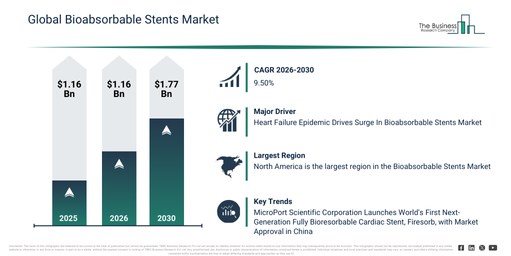
    The bioabsorbable stents market size has shown rapid growth in recent years. It is anticipated to expand from $0.41 billion in 2025 to $0.45 billion in 2026, achieving a compound annual growth rate (CAGR) of 10.3%. The market’s historical growth can be attributed to several factors, including the increasing prevalence of cardiovascular diseases, the widespread adoption of interventional cardiology procedures, the early utilization of biodegradable polymers in medical implants, the rise in coronary stent procedures, and advancements in vascular intervention techniques.

    The bioabsorbable stents market is projected to experience substantial expansion in the coming years. This market is forecast to reach $0.65 billion by 2030, exhibiting a compound annual growth rate (CAGR) of 9.5%. This projected growth is driven by factors such as the increasing need for temporary vascular support, a heightened emphasis on long-term patient results, the expanding scope of treatments for peripheral artery disease, increased investments in biodegradable implant research, and a rise in regulatory approvals for new stent materials. Key trends anticipated during this period involve the accelerating development of advanced bioabsorbable materials, the growing uptake of polymer-based bioabsorbable stents, a concentrated effort to minimize long-term complications, the broadening of clinical trials for peripheral applications, and a stronger focus on ensuring biocompatibility and safety.

    Get A Free Sample Report With In-Depth Market Insights:

    https://thebusinessresearchcompany.com/sample_request?id=24766769&type=smp&name=Bioabsorbable%20Stents%20Market%20Report%202026&utm_source=Blogs&utm_medium=Paid&utm_campaign=Sep_PR

    Bioabsorbable Stents Market Opportunity Drivers: What’s Unlocking New Revenue Potential?

    The expansion of the bioabsorbable stents market is projected to be propelled by the growing incidence of heart failure. This condition arises when the heart muscle’s capacity to effectively pump blood diminishes, leading to an accumulation of surplus fluid in the body. Bioabsorbable stents offer a solution for managing heart failure, as they can improve cardiac function and alleviate associated symptoms. For example, the Heart and Stroke Foundation of Canada, a Canada-based information provider on stroke, heart disease, surgeries, and treatments, currently identifies 750,000 people with a heart failure diagnosis, alongside an annual addition of 100,000 new instances of this irreversible illness. Furthermore, forecasts suggest that by 2030, annual healthcare spending related to heart failure in Canada is expected to reach $2.8 billion. Consequently, the escalating occurrence of heart failure is set to significantly foster the expansion of the bioabsorbable stents market in the future.

    Bioabsorbable Stents Market Segment Performance And Emerging Opportunities

    The bioabsorbable stents market covered in this report is segmented –

    1) By Product Type: Polymer-Based Bioabsorbable Stents, Metal-Based Bioabsorbable Stents

    2) By Absorption Rate: Slow- Absorption Stents, Fast- Absorption Stents

    3) By Applications: Coronary Artery Diseases, Peripheral Artery Diseases

    Subsegments:

    1) By Polymer-Based Bioabsorbable Stents: PLGA (Poly(Lactic-Co-Glycolic Acid)) Stents, PGA (Polyglycolic Acid) Stents, PLLA (Poly(L-Lactic Acid)) Stents, Other Biodegradable Polymer Stents

    2) By Metal-Based Bioabsorbable Stents: Magnesium-Based Stents, Iron-Based Stents, Zinc-Based Stents, Other Metal-Based Bioabsorbable Stents

    Bioabsorbable Stents Market Innovation Trends Shaping Future Development

    Companies operating within the bioabsorbable stents market are increasingly concentrating on developing innovative technologies, including the Latest Generation of Bioresorbable Cardiac Stent, to enhance their profitability. The latest generation of bioresorbable cardiac stents represents advanced medical devices specifically engineered for the treatment of coronary artery disease, constructed from biodegradable materials that gradually dissipate after effectively keeping the artery open. For instance, in July 2024, MicroPort Scientific Corporation, a China-based medical device manufacturer, successfully obtained market authorization from China’s National Medical Products Administration (NMPA) for the world’s first next-generation fully bioresorbable cardiac stent. Developed by MicroPort Scientific Corporation, the Firesorb stent is designed to completely resorb within three years, leading to a substantial reduction in long-term complications such as thrombosis. Clinical trials conducted with 1,468 patients have revealed impressive results, including a low thrombosis rate of 0.32% and a 4-year target lesion failure rate of just 4.3%. Prominent medical experts have lauded its innovative thin strut design and its superior endothelial coverage when compared to earlier stent generations.

    Bioabsorbable Stents Market Leading Players And Competitive Positioning

    Major companies operating in the bioabsorbable stents market are Abbott Laboratories, REVA Medical Inc., Elixir Medical Corporation, Biotronik SE & Co. KG, Amaranth Medical Inc., Tepha Inc., S3V Vascular Technologies, Arterius Limited, MicroPort Scientific Corporation, Meril Life Sciences Pvt. Ltd., Stentys SA, OrbusNeich, Arterial Remodeling Technologies, Cardionovum GmbH, Envision Scientific Pvt. Ltd., Eurocor GmbH, Hexacath, Lifetech Scientific (Shenzhen) Co. Ltd., Manli Cardiology Limited, Sahajanand Medical Technologies Pvt. Ltd.

    View The Full Bioabsorbable Stents Market Report:

    https://thebusinessresearchcompany.com/report/bioabsorbable-stents-global-market-report?utm_source=Blogs&utm_medium=Paid&utm_campaign=Sep_PR

    Bioabsorbable Stents Market Regional Distribution: Which Areas Power Market Growth?

    North America was the largest region in the bioabsorbable stents market in 2025. Western Europe was the second-largest region in the bioabsorbable stents market report. The regions covered in the bioabsorbable stents market report are Asia-Pacific, South East Asia, Western Europe, Eastern Europe, North America, South America, Middle East, Africa.

    Reach Out To Our Team:

    The Business Research Company: https://www.thebusinessresearchcompany.com/

    Americas: +1 310-496-7795

    Asia: +44 7882 955267 & +91 8897263534

    Europe: +44 7882 955267

    Email us at: marketing@tbrc.info

    Follow us on:

    LinkedIn: https://in.linkedin.com/company/the-business-research-company

    YouTube: https://www.youtube.com/channel/UC24_fI0rV8cR5DxlCpgmyFQ

    Global Market Model: https://www.thebusinessresearchcompany.com/global-market-model