Blog

  • Cardiac Prosthetic Devices Market Forecast 2026–2030: Market Size, Trends And Growth Opportunities

    Cardiac Prosthetic Devices Market Forecast 2026–2030: Market Size, Trends And Growth Opportunities

    Backed by market attractiveness analysis, total addressable market sizing, company benchmarking matrices, interactive Excel dashboards, wider supply chain intelligence, emerging startup coverage, and detailed product-level insights, The Business Research Company’s 2026 market reports are designed to offer research that is more actionable and strategically valuable than ever.

    Cardiac Prosthetic Devices Market Growth Potential: How Will Market Size Shift Through 2030?

    The cardiac prosthetic devices market size has experienced rapid growth in recent years. This market is anticipated to expand from $9.09 billion in 2025 to $10.13 billion in 2026, registering a compound annual growth rate (CAGR) of 11.4%. Historically, this growth has been fueled by the rising prevalence of cardiovascular diseases, increasing incidence of heart valve disorders, growth in cardiac surgical procedures, expanding availability of cardiac care centers, and improving clinical outcomes of prosthetic heart devices.

    The cardiac prosthetic devices market size is projected to experience rapid expansion in the coming years. It is forecast to grow to $15.57 billion in 2030, achieving a compound annual growth rate (CAGR) of 11.3%. This anticipated growth is driven by an aging global population, a heightened demand for minimally invasive cardiac treatments, an escalating number of heart failure cases, improved access to advanced cardiac care in emerging markets, and an increased emphasis on early intervention for structural heart diseases. Significant trends anticipated during this period include the rising adoption of minimally invasive cardiac prosthetic procedures, a greater need for sophisticated heart valve replacement solutions, an expanding application of cardiac prosthetics in heart failure management, the widening scope of transcatheter cardiac device applications, and an enhanced focus on the long-term durability of devices and patient outcomes.

    Get A Free Sample Report With In-Depth Market Insights:

    https://thebusinessresearchcompany.com/sample_request?id=72317200&type=smp&name=Cardiac%20Prosthetic%20Devices%20Market%20Report%202026&utm_source=Blogs&utm_medium=Paid&utm_campaign=Sep_PR

    Cardiac Prosthetic Devices Market Demand Drivers: What’s Powering Industry Growth?

    The increasing occurrence of cardiovascular diseases is anticipated to drive expansion in the cardiac prosthetic devices market moving forward. Cardiovascular diseases (CVDs) encompass various conditions impacting the heart and blood vessels, such as coronary artery disease, heart attacks, and strokes. These diseases are prevalent due to factors like unhealthy lifestyles, high obesity rates, poor dietary habits, insufficient physical activity, elevated stress levels, and an aging demographic. Crucially, cardiac prosthetic devices assist in managing CVDs by either supporting or substituting the heart’s function or its constituent parts. For instance, data released by the British Heart Foundation, a UK-based cardiovascular research charity, in January 2024, indicated that in the UK, approximately 7.6 million people suffer from heart and circulatory diseases, comprising around 4 million males and 3.6 million females. These conditions account for about 27% of all deaths in the UK, amounting to over 170,000 annual fatalities, or roughly 480 deaths daily, which translates to one death every three minutes. Consequently, the widespread presence of cardiovascular diseases is propelling the expansion of the cardiac prosthetic devices market.

    Cardiac Prosthetic Devices Market Breakdown By Product Type And Application

    The cardiac prosthetic devices market covered in this report is segmented –

    1) By Type: Valves, Pacemakers

    2) By Applications: Surgery, Heart Valve Replacement Procedures, Cardiac Rhythm Management

    3) By End User: Hospitals, Clinics Or Cardiac Centers, Ambulatory Surgical Centers, Other End-Users

    Subsegments:

    1) By Valves: Mechanical Valves, Tissue Valves, Transcatheter Heart Valves

    2) By Pacemakers: Single-Chamber Pacemakers, Dual-Chamber Pacemakers, Biventricular Pacemakers

    Cardiac Prosthetic Devices Market Innovation Trends: What Developments Are Reshaping The Industry?

    Leading companies in the cardiac prosthetic devices market are increasingly concentrating on minimally invasive transcatheter therapies. These include transcatheter edge-to-edge repair (TEER) systems, which are clip implants delivered by catheter designed to grasp and bring together the leaflets of a dysfunctional valve, such as the tricuspid valve, thereby lessening regurgitation without requiring open-heart surgery. For example, in April 2024, Abbott, a US-based medical-technology company, introduced its TriClip G4 System, a TEER device intended for the treatment of severe tricuspid regurgitation. The TriClip G4 System is delivered using a femoral-vein catheter; its clip arms articulate to secure the valve leaflets, and it allows for the use of multiple clips to achieve the most effective reduction of leakage.

    Cardiac Prosthetic Devices Market Industry Leaders And Competitive Landscape

    Major companies operating in the cardiac prosthetic devices market are Abbott Laboratories, Medtronic plc, Boston Scientific Corporation, Edwards Lifesciences Corporation, BIOTRONIK SE & Co KG, Terumo Corporation, Lepu Medical Technology Beijing Co Ltd, Abiomed Inc, LivaNova PLC, Meril Life Sciences Pvt Ltd, MicroPort Scientific Corporation, CryoLife Inc, LifeTech Scientific Corporation, Venus Medtech Hangzhou Inc, Braile Biomedica, AtriCure Inc, Aortic Innovations Inc, Pacetronix Limited, TTK Healthcare Limited, Kawasumi Laboratories Inc

    View The Full Cardiac Prosthetic Devices Market Report:

    https://thebusinessresearchcompany.com/report/cardiac-prosthetic-devices-global-market-report?utm_source=Blogs&utm_medium=Paid&utm_campaign=Sep_PR

    Cardiac Prosthetic Devices Market Regional Analysis And Top Geography

    North America was the largest region in the cardiac prosthetic devices market in 2025. Asia-Pacific is expected to be the fastest-growing region in the forecast period. The regions covered in the cardiac prosthetic devices market report are Asia-Pacific, South East Asia, Western Europe, Eastern Europe, North America, South America, Middle East, Africa.

    Reach Out To Our Team:

    The Business Research Company: https://www.thebusinessresearchcompany.com/

    Americas: +1 310-496-7795

    Asia: +44 7882 955267 & +91 8897263534

    Europe: +44 7882 955267

    Email us at: marketing@tbrc.info

    Follow us on:

    LinkedIn: https://in.linkedin.com/company/the-business-research-company

    YouTube: https://www.youtube.com/channel/UC24_fI0rV8cR5DxlCpgmyFQ

    Global Market Model: https://www.thebusinessresearchcompany.com/global-market-model

  • Artificial Organs And Bionic Implants Market Analysis: Understanding The Drivers Behind 7.9% CAGR Through 2030 Growth

    Artificial Organs And Bionic Implants Market Analysis: Understanding The Drivers Behind 7.9% CAGR Through 2030 Growth

    Featuring market attractiveness scoring, total addressable market sizing, company benchmarking matrices, interactive Excel dashboards, deeper supply chain intelligence, emerging startup tracking, and granular product-level insights, The Business Research Company’s 2026 market reports are built to deliver research that is both more actionable and more strategically valuable.

    Artificial Organs And Bionic Implants Market Forecast: Value Set To Climb From $52.76 Billion To $71.53 Billion

    The artificial organs and bionic implants market size has experienced robust growth in recent years. It is projected to expand from $48.75 billion in 2025 to $52.76 billion in 2026, achieving a compound annual growth rate (CAGR) of 8.2%. The growth observed in the historical period can be attributed to factors such as the limited availability of artificial organs, a reliance on mechanical bionics, the high cost associated with early bionic implants, low adoption rates stemming from a lack of awareness, and the dependence on hospital-based implant procedures.

    The artificial organs and bionic implants market is projected to experience substantial expansion in the coming years, reaching $71.53 billion by 2030, driven by a compound annual growth rate (CAGR) of 7.9%. This expansion during the forecast period is fueled by several factors, including developments in electronic bionics and neural interfaces, increased exploration in regenerative medicine, an expanding elderly population and higher rates of chronic illnesses, the proliferation of ambulatory surgical centers, and increased government backing and financial aid for medical device breakthroughs. Key developments anticipated during this period encompass a greater uptake of sophisticated prosthetics and bionic limbs, wider incorporation of neural implants and sensory apparatus, an escalating need for artificial organs due to insufficient organ availability, an emphasis on custom-made and patient-specific implants, and improved technologies for post-operative recovery and support.

    Get A Free Sample Report With In-Depth Market Insights:

    https://thebusinessresearchcompany.com/sample_request?id=38844751&type=smp&name=Artificial%20Organs%20And%20Bionic%20Implants%20Market%20Report%202026&utm_source=Blogs&utm_medium=Paid&utm_campaign=Sep_PR

    Artificial Organs And Bionic Implants Market Growth Momentum: What Factors Are Shaping Demand?

    The expansion of the artificial organs and bionic implants market is anticipated to be driven by the growing frequency of organ transplants. Organ transplantation involves a surgical process where a healthy organ from a donor is placed into a patient whose own organ is either diseased, damaged, or non-functional. This rise in organ transplants is attributed to a higher occurrence of chronic illnesses and organ failures, alongside ongoing progress in medical and surgical technologies. Artificial organs and bionic implants support organ transplantation by offering interim solutions, reducing patient waiting periods, enhancing patient recovery, and serving as alternatives when donor organs are unavailable. For instance, data from the Organ Procurement and Transplantation Network, a US-based non-profit organization, indicated in January 2025 that organ transplants surpassed 48,000 in 2024, representing a 3.3 percent increase compared to transplants performed in 2023. Consequently, the increasing prevalence of organ transplants is a key factor propelling the growth of the artificial organs and bionic implants market.

    Artificial Organs And Bionic Implants Market Segment Breakdown: Which Categories Lead On Revenue?

    The artificial organs and bionic implants market covered in this report is segmented –

    1) By Product: Artificial Organs, Artificial Bionics

    2) By Technology: Mechanical Bionics, Electronic Bionics

    3) By End User: Hospitals, Ambulatory Surgical Centers, Other End Users

    Subsegments:

    1) By Artificial Organs: Artificial Heart, Artificial Kidney, Artificial Liver, Artificial Pancreas, Artificial Lungs

    2) By Artificial Bionics: Bionic Limbs, Bionic Eyes, Bionic Ears, Neural Implants, Bionic Skin

    Artificial Organs And Bionic Implants Market Trends Redefining Industry Growth

    Major companies operating in the artificial organs and bionic implants market are focusing on developing technologically advanced solutions, such as brain implant technology systems, to enhance cognitive function and treat neurological disorders. Brain implant technology systems involve devices that interface with the brain to monitor, stimulate, or modify neural activity for medical treatment, neuroprosthetics, or research purposes. For instance, in May 2023, Neuralink Corp., a US-based neurotechnology company, received Food and Drug Administration (FDA) approval to conduct its first human clinical trials for its brain implant technology, which aims to help individuals with severe paralysis regain the ability to communicate with and control external devices using only their thoughts. The approval marks a significant milestone for the company, which has faced challenges in the past, including a previous rejection due to safety concerns. The trial will test the device’s ability to interpret neural signals and transmit them via Bluetooth to control computers and mobile devices, potentially assisting those with conditions such as amyotrophic lateral sclerosis (ALS).

    Artificial Organs And Bionic Implants Market Competitive Analysis Of Leading Industry Participants

    Major companies operating in the artificial organs and bionic implants market are Medtronic plc, Asahi Kasei Medical Co. Ltd., B. Braun Melsungen AG, Terumo Medical Corp., Edwards Lifesciences Corporation, Ottobock SE and Co. KGaA, Cochlear Limited, Ossur hf., Thoratec Corporation, Berlin Heart GmbH, Jarvik Heart Inc., SynCardia Systems LLC, BiVACOR Inc., Gambro AB, Pixium Vision, ALVI Labs, WillowWood Global LLC, Nano Retina Inc., Organovo Holdings Inc., Abbott Laboratories, ABIOMED Inc., Ekso Bionics Holdings Inc., ReWalk Robotics Ltd, LivaNova PLC, Second Sight Medical Products Inc.

    View The Full Artificial Organs And Bionic Implants Market Report:

    https://thebusinessresearchcompany.com/report/artificial-organs-and-bionic-implants-global-market-report?utm_source=Blogs&utm_medium=Paid&utm_campaign=Sep_PR

    Artificial Organs And Bionic Implants Market Geographic Distribution And Regional Opportunities

    North America was the largest region in the artificial organs and bionic implants market in 2025. Asia-Pacific is expected to be the fastest-growing region in the forecast period. The regions covered in the artificial organs and bionic implants market report are Asia-Pacific, South East Asia, Western Europe, Eastern Europe, North America, South America, Middle East, Africa.

    Reach Out To Our Team:

    The Business Research Company: https://www.thebusinessresearchcompany.com/

    Americas: +1 310-496-7795

    Asia: +44 7882 955267 & +91 8897263534

    Europe: +44 7882 955267

    Email us at: marketing@tbrc.info

    Follow us on:

    LinkedIn: https://in.linkedin.com/company/the-business-research-company

    YouTube: https://www.youtube.com/channel/UC24_fI0rV8cR5DxlCpgmyFQ

    Global Market Model: https://www.thebusinessresearchcompany.com/global-market-model
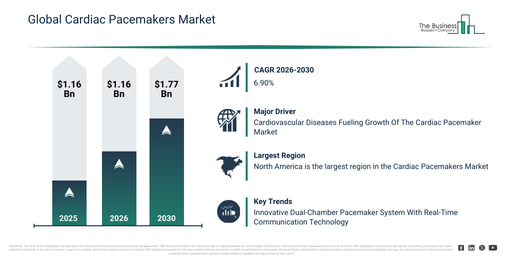
  • Cardiac Pacemakers Market Size Reaches $5.3 Billion In 2026: What Is Driving Growth?

    Cardiac Pacemakers Market Size Reaches $5.3 Billion In 2026: What Is Driving Growth?

    Featuring market attractiveness scoring, total addressable market sizing, company benchmarking matrices, interactive Excel dashboards, deeper supply chain intelligence, emerging startup tracking, and granular product-level insights, The Business Research Company’s 2026 market reports are built to deliver research that is both more actionable and more strategically valuable.

    Cardiac Pacemakers Market Value Analysis: What Growth Lies Ahead Over The Forecast Period?

    The cardiac pacemakers market size has exhibited robust growth in recent years. It is anticipated to expand from $4.95 billion in 2025 to $5.3 billion in 2026, achieving a compound annual growth rate (CAGR) of 7.2%. Historically, this expansion has been driven by factors such as the increasing prevalence of cardiac arrhythmias, the broadening of cardiac care infrastructure, the rising adoption of implantable cardiac devices, continuous improvements in pacemaker technology, and the growing aging population.

    The cardiac pacemakers market size is projected to experience substantial growth in the upcoming years. It is anticipated to reach $6.92 billion by 2030, exhibiting a compound annual growth rate (CAGR) of 6.9%. The expansion during this forecast period stems from factors such as heightened demand for remote patient monitoring, increased uptake of smart pacemakers, the proliferation of ambulatory cardiac procedures, a greater emphasis on personalized cardiac therapy, and augmented investments in cardiac digital health. Key trends observed within the forecast timeframe encompass the expanding adoption of leadless pacemakers, the growing utilization of remote cardiac monitoring systems, a stronger inclination towards dual and biventricular devices, the advancement of minimally invasive implantation techniques, and an elevated focus on device longevity and safety.

    Get A Free Sample Report With In-Depth Market Insights:

    https://thebusinessresearchcompany.com/sample_request?id=42612289&type=smp&name=Cardiac%20Pacemakers%20Market%20Report%202026&utm_source=Blogs&utm_medium=Paid&utm_campaign=Sep_PR

    Cardiac Pacemakers Market Growth Drivers: What’s Behind The Acceleration?

    The increasing prevalence of cardiovascular diseases is a significant factor contributing to the expansion of the cardiac pacemaker market. Cardiovascular disease (CVD) refers to conditions affecting the heart or blood vessels, including arrhythmias, aortic disease, congenital heart disease, and heart attacks. Cardiac pacemakers are devices that generate electrical activity, utilized to treat patients suffering from these cardiovascular ailments. For instance, in October 2024, the Centers for Disease Control, a US-based government agency, reported that in 2023, around 919,032 people succumbed to cardiovascular disease, which accounted for 1 in every 3 deaths. This rising incidence of cardiovascular diseases is therefore expected to drive the growth of the cardiac pacemaker market.

    Cardiac Pacemakers Market Segment Analysis And Revenue Potential

    The cardiac pacemakers market covered in this report is segmented –

    1) By Type: Implantable, External

    2) By Technology: Biventricular, Single Chambered, Dual Chambered

    3) By Application: Arrhythmias, Heart Blockage, Congestive Cardiac Failure, Other Applications

    4) By End User: Clinics And Hospitals, Ambulatory Surgical Centers, Cardiac Care Centers

    Subsegments:

    1) By Implantable: Single Chamber Pacemakers, Dual Chamber Pacemakers, Biventricular Pacemakers (CRT-P), Leadless Pacemakers

    2) By External: Temporary External Pulse Generators, Transcutaneous External Pacemakers

    Cardiac Pacemakers Market Trends: What’s Defining The Industry’s Next Phase?

    Leading companies in the cardiac pacemaker market are actively developing innovative products, such as i2i communication technology, which enables immediate communication between devices. This i2i (infrastructure-to-infrastructure) communication technology facilitates seamless data exchange across different infrastructure systems, thereby enhancing automation and operational efficiency. For instance, in November 2023, Abbott Laboratories, a US-based medical device company, launched the AVEIR DR System to address patients experiencing abnormal or slow heart rhythms. This advanced dual-chamber leadless pacemaker system provides synchronized pacing for both the right atrium and ventricle, ensuring proper heart rhythm. It is implanted via a minimally invasive procedure, which reduces both recovery time and potential complications. The advanced implant-to-implant technology allows for real-time communication between the devices, coordinating effective pacing. This technology represents a significant advancement in the field of heart health management.

    Cardiac Pacemakers Market Key Participants And Competitive Landscape

    Major companies operating in the cardiac pacemakers market are Medtronic plc, Abbott Inc, Boston Scientific Corporation, Biotronik SE & Co. KG, Lepu Medical Technology Co. Ltd, MicroPort Scientific Corporation, LivaNova PLC, Zoll Medical Corporation, Oscor Inc, Osypka Medical GmbH, Cardionovum GmbH, Shree Pacetronix Limited, Medico SpA, CCC Medical Devices, Galix Biomedical Instrumentation, Vimecon GmbH, Mediana Co. Ltd, Cardioline SpA, Pacetronix India Pvt Ltd, Beijing Universal Pacing Technology Co. Ltd

    View The Full Cardiac Pacemakers Market Report:

    https://thebusinessresearchcompany.com/report/cardiac-pacemakers-global-market-report?utm_source=Blogs&utm_medium=Paid&utm_campaign=Sep_PR

    Cardiac Pacemakers Market Geographic Analysis: Where Is Demand Rising Fastest?

    North America was the largest region in the cardiac pacemakers market in 2025. Asia-Pacific is expected to be the fastest-growing region in the forecast period. The regions covered in the cardiac pacemakers market report are Asia-Pacific, South East Asia, Western Europe, Eastern Europe, North America, South America, Middle East, Africa.

    Reach Out To Our Team:

    The Business Research Company: https://www.thebusinessresearchcompany.com/

    Americas: +1 310-496-7795

    Asia: +44 7882 955267 & +91 8897263534

    Europe: +44 7882 955267

    Email us at: marketing@tbrc.info

    Follow us on:

    LinkedIn: https://in.linkedin.com/company/the-business-research-company

    YouTube: https://www.youtube.com/channel/UC24_fI0rV8cR5DxlCpgmyFQ

    Global Market Model: https://www.thebusinessresearchcompany.com/global-market-model

  • Cardiac Marker Testing Market Valued At $11.61 Billion In 2026: Key Trends And Growth Drivers

    Cardiac Marker Testing Market Valued At $11.61 Billion In 2026: Key Trends And Growth Drivers

    Built to provide research that’s more actionable and strategically valuable, The Business Research Company’s 2026 market reports include market attractiveness analysis, total addressable market sizing, company benchmarking matrices, interactive Excel dashboards, broader supply chain intelligence, emerging startup tracking, and in-depth product insights.

    Cardiac Marker Testing Market Size Forecast: How Big Could The Market Get By 2030?

    The cardiac marker testing market has experienced substantial expansion in recent years. It is projected to expand from $7.19 billion in 2025 to $7.93 billion in 2026, demonstrating a compound annual growth rate (CAGR) of 10.3%. Historically, this growth can be ascribed to factors such as the restricted availability of high-sensitivity cardiac marker tests, dependence on centralized laboratory testing, the rising occurrence of cardiovascular diseases, heightened awareness among healthcare providers, and traditional manual diagnostic methods.

    The cardiac marker testing market size is poised for substantial growth over the next few years, with projections indicating it will reach $11.61 billion in 2030, advancing at a compound annual growth rate (CAGR) of 10.0%. This anticipated expansion during the forecast period stems from factors such as the development of automated and portable cardiac marker testing devices, increasing adoption of point-of-care diagnostics, integration with digital health platforms, an expanding geriatric population coupled with cardiovascular risk, and enhancements in reagent and kit sensitivity. Prominent trends for this period include a rising uptake of high-sensitivity cardiac biomarker tests, the expansion of point-of-care testing facilities, the integration of automated analyzers and immunoassay systems, a growing application of cardiac marker testing in preventive cardiology, and increasing demand for portable diagnostic devices.

    Get A Free Sample Report With In-Depth Market Insights:

    https://thebusinessresearchcompany.com/sample_request?id=77501814&type=smp&name=Cardiac%20Marker%20Testing%20Market%20Report%202026&utm_source=Blogs&utm_medium=Paid&utm_campaign=Sep_PR

    Cardiac Marker Testing Market Growth Factors Behind Sustained Expansion

    The expanding prevalence of cardiovascular diseases is anticipated to propel the growth of the cardiac marker testing market moving forward. These conditions, known as CVDs, represent a collection of disorders impacting the heart and blood vessels, including issues like coronary artery disease, heart failure, and stroke. The escalating number of cardiovascular disease cases is attributed to factors such as an unhealthy diet, insufficient physical activity, tobacco use, excessive alcohol consumption, and air pollution. Cardiac marker testing is crucial for cardiovascular diseases to accurately diagnose, evaluate the seriousness, and track the progression or response to therapy for heart conditions by identifying particular biomarkers released during myocardial injury. For instance, in January 2024, data from the American Heart Association, a US-based nonprofit organization, indicated that the age-adjusted death rate from cardiovascular disease climbed to 233.3 per 100,000, representing a 4.0% rise from 224.4 per 100,000 when measured against 2023. Thus, the increasing occurrence of cardiovascular diseases drives the cardiac marker testing market.

    Cardiac Marker Testing Market Segmentation And Category Overview

    The cardiac marker testing market covered in this report is segmented –

    1) By Product: Reagents And Kits, Instruments

    2) By Biomarker Type: Troponin I And T, Creatine Kinase-MB (CK-MB), Natriuretic Peptide, Myoglobin, High-Sensitivity C-Reactive Protein, Other Biomarker Types

    3) By Application: Laboratory Testing Facilities, Point-Of-Care Testing Facilities, Academic Institutions

    Subsegments:

    1) By Reagents and Kits: Troponin Test Kits, B-type Natriuretic Peptide (BNP) Test Kits, Creatine Kinase-MB (CK-MB) Test Kits, Myoglobin Test Kits, Other Cardiac Biomarker Reagents

    2) By Instruments: Point-Of-Care Testing Devices, Automated Analyzers, Immunoassay Systems, Portable Diagnostic Devices

    Cardiac Marker Testing Market Industry Trends Fueling Future Revenue Growth

    Leading companies within the cardiac marker testing market are concentrating on developing technologically advanced products, such as cardiac assays, to provide valuable, precise information about heart health and function. Cardiac assays are diagnostic examinations engineered to measure biomarkers or other indicators within blood or other samples to assess heart function, diagnose cardiovascular diseases, or evaluate the risk of heart-related conditions. For instance, in October 2023, Mindray, a China-based medical device company, launched the troponin I (hs-cTnI) and NT-proBNP cardiac biomarkers. The hs-cTnI assay distinguishes itself with exceptional sensitivity, precision, and reliability, surpassing minimum requirements by achieving a 93% detection rate between the limit of detection (LoD) and the 99th percentile upper reference limit (URL) and maintaining an imprecision coefficient of variation (CV) below 5% at the 99th URL, making it highly effective in detecting myocardial injury. Mindray’s NT-proBNP assay is an important cardiac marker for heart failure, showing high precision with a coefficient of variation (CV) of <=5%. It also effectively minimizes interference from 55 common heart disease medications, ensuring accurate detection and management of heart failure.

    Cardiac Marker Testing Market Top Companies Driving Competitive Growth

    Major companies operating in the cardiac marker testing market are F. Hoffmann-La Roche Ltd., Thermo Fisher Scientific Inc., Abbott Laboratories, Danaher Corporation, Siemens Healthineers AG, Laboratory Corporation of America Holdings, Quest Diagnostics Inc., Tosoh Corporation, Guangzhou Wondfo Biotech Co. Ltd., Randox Laboratories Ltd., Getein Biotech Inc., Fujirebio Inc., Mayo Clinic Laboratories, Alere Inc., Nano-Ditech Corporation, Ortho Clinical Diagnostics, QuidelOrtho Corporation, DiaSorin S.p.A., PerkinElmer Inc., Meso Scale Diagnostics LLC, Boditech Med Inc., Response Biomedical Corp.

    View The Full Cardiac Marker Testing Market Report:

    https://thebusinessresearchcompany.com/report/cardiac-marker-testing-global-market-report?utm_source=Blogs&utm_medium=Paid&utm_campaign=Sep_PR

    Cardiac Marker Testing Market Global Footprint: Which Region Leads The Market?

    North America was the largest region in the cardiac marker testing market in 2025. Asia-Pacific is expected to be the fastest-growing region in the forecast period. The regions covered in the cardiac marker testing market report are Asia-Pacific, South East Asia, Western Europe, Eastern Europe, North America, South America, Middle East, Africa.

    Reach Out To Our Team:

    The Business Research Company: https://www.thebusinessresearchcompany.com/

    Americas: +1 310-496-7795

    Asia: +44 7882 955267 & +91 8897263534

    Europe: +44 7882 955267

    Email us at: marketing@tbrc.info

    Follow us on:

    LinkedIn: https://in.linkedin.com/company/the-business-research-company

    YouTube: https://www.youtube.com/channel/UC24_fI0rV8cR5DxlCpgmyFQ

    Global Market Model: https://www.thebusinessresearchcompany.com/global-market-model
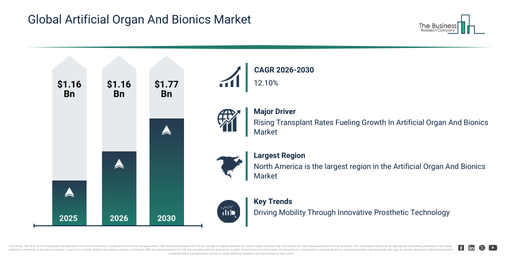
  • Artificial Organ And Bionics Market Growth To $63.1 Billion By 2030: What’s Driving The Expansion?

    Artificial Organ And Bionics Market Growth To $63.1 Billion By 2030: What’s Driving The Expansion?

    Built to provide research that’s more actionable and strategically valuable, The Business Research Company’s 2026 market reports include market attractiveness analysis, total addressable market sizing, company benchmarking matrices, interactive Excel dashboards, broader supply chain intelligence, emerging startup tracking, and in-depth product insights.

    Artificial Organ And Bionics Market Revenue Growth On Track For A 12.1% CAGR Through 2030

    The artificial organ and bionics market has demonstrated rapid expansion in recent years. Forecasts indicate it will expand from $35.86 billion in 2025 to $40.03 billion in 2026, exhibiting a compound annual growth rate (CAGR) of 11.6%. This historical growth can be linked to factors such as rising shortages of organ transplants, innovations in biomedical engineering, increased uptake of prosthetics, improved survival rates for patients with chronic diseases, and enhancements in surgical implantation techniques.

    The artificial organ and bionics market is projected for significant expansion over the coming years. Its valuation is anticipated to reach $63.1 billion in 2030, demonstrating a compound annual growth rate (CAGR) of 12.1%. This expansion during the forecast period stems from factors such as increasing capital expenditure in biohybrid organ research, a growing need for smart bionic systems, the broader application of brain-computer interfaces, an intensified focus on improving life quality, and the convergence of technologies in therapies for organ replacement. Noteworthy developments throughout this period include the accelerated creation of sophisticated artificial organs, an increase in the uptake of bionic limbs and exoskeletons, greater incorporation of neural interface technologies, the wider availability of implantable life-support devices, and a heightened emphasis on durable organ replacement solutions.

    Get A Free Sample Report With In-Depth Market Insights:

    https://thebusinessresearchcompany.com/sample_request?id=96409083&type=smp&name=Artificial%20Organ%20And%20Bionics%20Market%20Report%202026&utm_source=Blogs&utm_medium=Paid&utm_campaign=Sep_PR

    Artificial Organ And Bionics Market Expansion Drivers: What’s Shaping Future Growth?

    The future expansion of the artificial organ and bionics market is anticipated to be fueled by a rising volume of transplants. A transplant is defined as a surgical operation where body tissue or an organ is moved from a donor to a recipient, or within the same body, in either humans or animals. Artificial organs are devices surgically placed inside the body to substitute a damaged organ and replicate the specific functions of its natural counterpart, thereby enabling patients to resume a normal life. For example, data from January 2025, provided by the Organ Procurement and Transplantation Network, a US-based non-profit scientific and educational entity, showed that the US performed 48,149 organ transplants in 2024. This figure exceeded 48,000 and represented a 3.3% increase over 2023. Among these, 41,119 transplants originated from deceased donors, whereas 7,030 were from living donors. Consequently, this upward trend in transplant numbers is predicted to stimulate the expansion of the artificial organ and bionics market.

    Artificial Organ And Bionics Market Segmentation: How Does The Market Break Down By Category?

    The artificial organ and bionics market covered in this report is segmented –

    1) By Product: Artificial Organs, Artificial Bionics

    2) By Fixation Type: Implantable Artificial Organs and Bionics, Externally Worn Artificial Organs and Bionics, Hybrid Systems

    3) By Technology: Mechanical Bionics, Electronic Bionics

    Subsegments:

    1) By Artificial Organs: Artificial Heart, Artificial Kidney, Artificial Liver, Artificial Pancreas, Artificial Lungs

    2) By Artificial Bionics: Bionic Limbs, Bionic Eyes, Exoskeletons, Neural Prosthetics

    Artificial Organ And Bionics Market Strategic Trends: What Defines The Next Growth Phase?

    Key players in the artificial organs and bionics market are concentrating on cutting-edge technological advancements, such as microprocessor-controlled prosthetic knees, to boost mobility and foster natural, intuitive movement for individuals with lower-limb amputations. Microprocessor-controlled prosthetic knees are devices featuring sensors and embedded processors that dynamically adapt to the user’s gait. For instance, in January 2025, BionicM, a Japan-based startup and University of Tokyo spin-off specializing in robotics and prosthetics, introduced its Bio Leg into the U.S. market. This powered knee, recognized as a CES 2025 Best of Innovation winner, replaces lost muscle function with robotics, delivering fluid movement, enhanced safety, and an improved quality of life for amputees.

    Artificial Organ And Bionics Market Leading Companies And Competitive Benchmarking

    Major companies operating in the artificial organ and bionics market are Abiomed Inc., Asahi Kasei Medical Co. Ltd, Baxter, Berlin Heart GmbH, Cyberonics Inc., Ekso Bionics Holdings Inc., Getinge AB, Medtronic PLC, Bornlife Prosthetic and Orthotic Inc., Nano Retina Ltd, Edwards Lifesciences Corporation, Sonova, Cochlear Limited, Advanced Bionics AG, Ottobock SE & Co. KGaA, Second Sight Medical Products Inc., iWalk Inc., Jarvik Heart Inc., St. Jude Medical Inc., Harmonic Bionics Inc., Open Bionics, Beta Bionics Inc., Bionic Prosthetics and Orthotics, Mobius Bionics, Touch Bionics Ltd

    View The Full Artificial Organ And Bionics Market Report:

    https://thebusinessresearchcompany.com/report/artificial-organ-and-bionics-global-market-report?utm_source=Blogs&utm_medium=Paid&utm_campaign=Sep_PR

    Artificial Organ And Bionics Market Largest Region By Revenue And Market Share

    North America was the largest region in the artificial organ and bionics market in 2025. Asia-Pacific is expected to be the fastest-growing region in the global artificial organ and bionics market report during the forecast period. The regions covered in the artificial organ and bionics market report are Asia-Pacific, South East Asia, Western Europe, Eastern Europe, North America, South America, Middle East, Africa.

    Reach Out To Our Team:

    The Business Research Company: https://www.thebusinessresearchcompany.com/

    Americas: +1 310-496-7795

    Asia: +44 7882 955267 & +91 8897263534

    Europe: +44 7882 955267

    Email us at: marketing@tbrc.info

    Follow us on:

    LinkedIn: https://in.linkedin.com/company/the-business-research-company

    YouTube: https://www.youtube.com/channel/UC24_fI0rV8cR5DxlCpgmyFQ

    Global Market Model: https://www.thebusinessresearchcompany.com/global-market-model
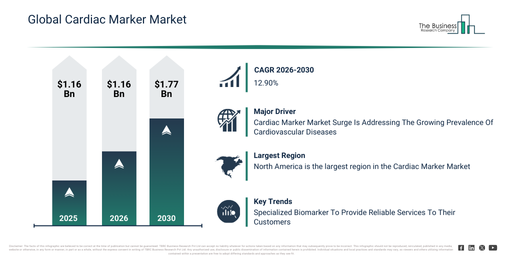
  • Cardiac Marker Market Size In 2026: Growth Outlook And Forecast Through 2030

    Cardiac Marker Market Size In 2026: Growth Outlook And Forecast Through 2030

    Backed by market attractiveness analysis, total addressable market sizing, company benchmarking matrices, interactive Excel dashboards, wider supply chain intelligence, emerging startup coverage, and detailed product-level insights, The Business Research Company’s 2026 market reports are designed to offer research that is more actionable and strategically valuable than ever.

    Cardiac Marker Market Revenue Outlook: What CAGR Lies Ahead Through 2030?

    The cardiac marker market has shown swift growth in recent years. It is anticipated to increase from $12.38 billion in 2025 to $13.95 billion in 2026, demonstrating a compound annual growth rate (CAGR) of 12.7%. This historical expansion can be attributed to several factors including the escalating prevalence of cardiovascular diseases, the development of hospital laboratory infrastructure, the increased demand for emergency cardiac testing, the growing reliance on biomarker-based diagnostics, and advancements in assay sensitivity.

    The cardiac marker market size is anticipated to undergo significant growth over the next few years. This market is set to reach $22.7 billion in 2030, exhibiting a compound annual growth rate (CAGR) of 12.9%. This projected growth is driven by several factors, including a greater need for quick diagnostic test results, the increasing incorporation of cardiac diagnostics with digital platforms, the spread of point-of-care testing sites, the wider use of sophisticated biomarker panels, and a heightened emphasis on precision cardiology. Key developments anticipated during this period involve the increasing application of high-specificity cardiac marker panels, the growing uptake of automated immunoassay systems, a surging need for swift cardiac diagnoses, the broadening of multiparametric testing methods, and an intensified focus on supporting clinical decision-making.

    Get A Free Sample Report With In-Depth Market Insights:

    https://thebusinessresearchcompany.com/sample_request?id=28911642&type=smp&name=Cardiac%20Marker%20Market%20Report%202026&utm_source=Blogs&utm_medium=Paid&utm_campaign=Sep_PR

    Cardiac Marker Market Demand Drivers Opening New Revenue Streams

    The increasing incidence of heart conditions is projected to drive expansion within the cardiac marker market in the foreseeable future. These heart-related ailments encompass various conditions impacting the heart’s structure or function, leading to diverse health issues. To diagnose and keep track of numerous cardiac problems such as heart attacks, angina, heart failure, and other cardiovascular disorders, cardiac markers are employed. Consequently, the need for diagnostic examinations using cardiac markers has grown. As an illustration, data from January 2024 released by the American Heart Association, a US-based non-profit group, indicated that the age-adjusted mortality rate from cardiovascular disease rose to 233.3 per 100,000 in 2024, marking a 4.0% increase from 224.4 per 100,000 in 2023. Hence, the expanding occurrence of cardiac illnesses is set to stimulate the growth of the cardiac marker market.

    Cardiac Marker Market Segment Outlook: Which Categories Are Growing Fastest?

    The cardiac marker market covered in this report is segmented –

    1) By Biomarker: Troponin, Creatine Kinase-MB (CK-MB), B-type Natriuretic Peptide (BNP), Myoglobin, Other Biomarkers

    2) By Product: Reagent, Instrument, Chemiluminescence, Immunofluorescence, Immunochromatography, ELISA

    3) By Indication: Myocardial Infarction, Congestive Heart Failure, Acute Coronary Syndrome, Other Indications

    4) By End User: Laboratory Testing Facilities, Hospital Labs, Reference Labs, Contract Testing Labs, Point-Of-Care Testing Facilities, Academic Institutions

    Subsegments:

    1) By Troponin: Troponin I, Troponin T, Troponin Diagnostic Kits

    2) By Creatine Kinase-MB (CK-MB): CK-MB Test Kits, CK-MB Diagnostic Panels

    3) By B-Type Natriuretic Peptide (BNP): BNP Test Kits, NT-ProBNP Test Kits, BNP Diagnostic Panels

    4) By Myoglobin: Myoglobin Test Kits, Myoglobin Diagnostic Panels

    5) By Other Biomarkers: Ischemia Modified Albumin (IMA), Heart Fatty Acid Binding Protein (HFABP), C-Reactive Protein (CRP)

    Cardiac Marker Market Trends Powering Strategic Industry Growth

    Leading companies in the cardiac marker market are concentrating on innovative offerings like high-sensitivity troponin I (hs-cTnI) and NT-proBNP cardiac biomarkers to boost their revenues. High-sensitivity troponin I (hs-cTnI) and NT-proBNP are two vital cardiac biomarkers employed for diagnosis, classification, and treatment. For example, in October 2023, Shenzhen Mindray Bio-Medical Electronics Co. Ltd., a China-based firm specializing in the creation, manufacturing, and distribution of medical equipment and solutions, introduced troponin I (hs-cTnI) and NT-proBNP cardiac biomarkers. The hs-cTn assay has exceeded the minimum criteria for hs-cTn regarding sensitivity, accuracy, and reliability in detecting myocardial damage. These new offerings are designed to support enhanced treatment for cardiovascular illnesses by providing trustworthy solutions that improve patient outcomes both within and outside the scope of cardiovascular diseases.

    Cardiac Marker Market Leading Players And Competitive Positioning

    Major companies operating in the cardiac marker market are Abbott Laboratories, F Hoffmann-La Roche AG, Siemens Healthineers AG, Danaher Corporation, Thermo Fisher Scientific Inc, bioMérieux SA, Bio-Rad Laboratories Inc, Beckman Coulter Inc, QuidelOrtho Corporation, Randox Laboratories Ltd, DiaSorin SpA, Tosoh Corporation, PerkinElmer Inc, Sysmex Corporation, Mindray Bio-Medical Electronics Co Ltd, Lepu Medical Technology Beijing Co Ltd, Trinity Biotech plc, Fujirebio Holdings Inc, Euroimmun AG, Abcam plc, Creative Diagnostics

    View The Full Cardiac Marker Market Report:

    https://thebusinessresearchcompany.com/report/cardiac-marker-global-market-report?utm_source=Blogs&utm_medium=Paid&utm_campaign=Sep_PR

    Cardiac Marker Market Regional Split: Which Areas Are Fueling Growth?

    North America was the largest region in the cardiac marker market in 2025. The regions covered in the cardiac marker market report are Asia-Pacific, South East Asia, Western Europe, Eastern Europe, North America, South America, Middle East, Africa.

    Reach Out To Our Team:

    The Business Research Company: https://www.thebusinessresearchcompany.com/

    Americas: +1 310-496-7795

    Asia: +44 7882 955267 & +91 8897263534

    Europe: +44 7882 955267

    Email us at: marketing@tbrc.info

    Follow us on:

    LinkedIn: https://in.linkedin.com/company/the-business-research-company

    YouTube: https://www.youtube.com/channel/UC24_fI0rV8cR5DxlCpgmyFQ

    Global Market Model: https://www.thebusinessresearchcompany.com/global-market-model

  • Artificial Organ Market Trends Reshaping Industry Growth Through 2030

    Artificial Organ Market Trends Reshaping Industry Growth Through 2030

    Backed by market attractiveness analysis, total addressable market sizing, company benchmarking matrices, interactive Excel dashboards, wider supply chain intelligence, emerging startup coverage, and detailed product-level insights, The Business Research Company’s 2026 market reports are designed to offer research that is more actionable and strategically valuable than ever.

    Artificial Organ Market Value Growth And Long-Term Outlook

    The artificial organ market has experienced rapid expansion recently. This market is projected to expand from $25.73 billion in 2025 to $28.36 billion in 2026, demonstrating a compound annual growth rate (CAGR) of 10.2%. Historically, this growth has been driven by factors such as a rise in organ failure incidents, a scarcity of available donor organs, significant progress in biomedical engineering, the increasing adoption of dialysis and cardiac support treatments, and longer transplant waiting lists.

    The artificial organ market is projected to experience robust expansion over the coming years. The market is set to expand to $41.12 billion by 2030, achieving a compound annual growth rate (CAGR) of 9.7%. This anticipated growth is due to several factors, including heightened investments in bioengineered organs, increased uptake of personalized implant solutions, expanded funding for artificial organ research, advancements in regenerative medicine technology, and greater acceptance of long-term implantable devices. Key trends anticipated during this period encompass a rise in the adoption of implantable artificial organs, an increasing utilization of advanced biomaterials, the growing incorporation of smart and sensor-enabled organs, an expansion of minimally invasive implantation techniques, and a stronger emphasis on long-term biocompatibility.

    Get A Free Sample Report With In-Depth Market Insights:

    https://thebusinessresearchcompany.com/sample_request?id=30715341&type=smp&name=Artificial%20Organ%20Market%20Report%202026&utm_source=Blogs&utm_medium=Paid&utm_campaign=Sep_PR

    Artificial Organ Market Development Factors: What’s Supporting Demand?

    The growing need for organ transplants is anticipated to fuel the expansion of the artificial organ market in the future. Organ transplantation involves a surgical intervention where an organ or tissue from a donor is placed into a recipient to substitute an impaired or non-functioning organ. Artificial organ advancements aid organ transplants by offering provisional or permanent replacement organs, lessening reliance on donor availability, and enhancing patient survival rates. To illustrate this, a report from NHS Blood and Transplant, a UK government body, indicated in July 2025 that as of March 2025, an unprecedented 8,096 patients (comprising 276 children) were on the active transplant waiting list, with an additional 3,883 individuals temporarily paused. Consequently, the heightened demand for organ transplants is boosting the growth of the artificial organ market.

    Artificial Organ Market Segment Trends And Revenue Contributors

    The artificial organ market covered in this report is segmented –

    1) By Organ Type: Artificial Heart, Artificial Kidney, Artificial Liver, Artificial Pancreas

    2) By Material: Silicone, Plastic, Steel, Biomaterials

    3) By Fixation: Implantable, External

    4) By End Users: Hospitals, Ambulatory Surgical Centers, Other End Users

    Subsegments:

    1) By Artificial Heart: Total Artificial Heart, Ventricular Assist Devices (VADs)

    2) By Artificial Kidney: Hemodialysis Systems, Peritoneal Dialysis Devices

    3) By Artificial Liver: Bioartificial Liver Devices, Liver Support Systems

    4) By Artificial Pancreas: Closed-Loop Insulin Delivery Systems, Bionic Pancreas Systems

    Artificial Organ Market Transformation Trends: What Innovations Are Driving Change?

    Leading companies operating in the artificial organ market are concentrating on innovative products like AI-powered pathology solutions to increase their market revenues. AI-powered pathology solutions are transforming the field of pathology by offering pathologists powerful tools to enhance diagnostic accuracy, efficiency, and patient care. For example, in September 2023, Aiosyn, a Netherlands-based medical software company specializing in AI-powered pathology solutions, launched an AI kidney suite. This new suite aims to objectively quantify kidney lesion ratings to improve repeatability and accelerate medication discovery through the application of AI-powered computational pathology techniques. The new platform allows research organizations and biopharma to analyze kidney structures and quantify lesions that impact kidney health by utilizing cutting-edge deep-learning technology.

    Artificial Organ Market Industry Leaders And Competitive Landscape

    Major companies operating in the artificial organ market are Medtronic plc, Abbott Laboratories Inc., SynCardia Systems LLC, Berlin Heart GmbH, ABIOMED Inc., Carmat SA, Jarvik Heart Inc., Baxter International Inc., B. Braun Melsungen AG, Terumo Corporation, Organovo Holdings Inc., Satellite Bio, HeartWare plc, Boston Scientific Services Private Limited, Edwards Lifesciences India Pvt. Ltd., LIVANOVA plc, NeuroPace Inc., Cochlear Limited, Cyberonics Inc., Demant A/S, LifeNet Health Inc., Vivani Medical Inc., Tissium SAS

    View The Full Artificial Organ Market Report:

    https://thebusinessresearchcompany.com/report/artificial-organ-global-market-report?utm_source=Blogs&utm_medium=Paid&utm_campaign=Sep_PR

    Artificial Organ Market Regional Analysis And Leading Geography

    North America was the largest region in the artificial organ market in 2025. Asia-Pacific is expected to be the fastest-growing region in the forecast period. The regions covered in the artificial organ market report are Asia-Pacific, South East Asia, Western Europe, Eastern Europe, North America, South America, Middle East, Africa.

    Reach Out To Our Team:

    The Business Research Company: https://www.thebusinessresearchcompany.com/

    Americas: +1 310-496-7795

    Asia: +44 7882 955267 & +91 8897263534

    Europe: +44 7882 955267

    Email us at: marketing@tbrc.info

    Follow us on:

    LinkedIn: https://in.linkedin.com/company/the-business-research-company

    YouTube: https://www.youtube.com/channel/UC24_fI0rV8cR5DxlCpgmyFQ

    Global Market Model: https://www.thebusinessresearchcompany.com/global-market-model
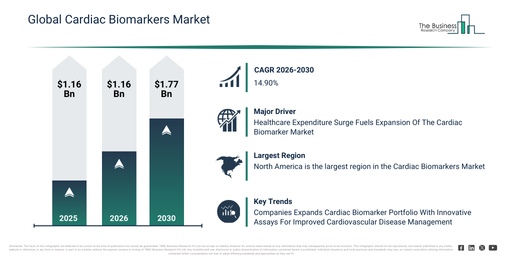
  • Cardiac Biomarkers Market Trends Supporting 14.9% CAGR Growth Through 2030

    Cardiac Biomarkers Market Trends Supporting 14.9% CAGR Growth Through 2030

    Featuring market attractiveness scoring, total addressable market sizing, company benchmarking matrices, interactive Excel dashboards, deeper supply chain intelligence, emerging startup tracking, and granular product-level insights, The Business Research Company’s 2026 market reports are built to deliver research that is both more actionable and more strategically valuable.

    Cardiac Biomarkers Market Growth Analysis: How Will Revenue Trend Over The Forecast Period?

    The cardiac biomarkers market has observed substantial expansion in recent years. It is anticipated to grow from $21.19 billion in 2025 to $24.22 billion in 2026, exhibiting a compound annual growth rate (CAGR) of 14.3%. The market’s past growth can be attributed to factors such as a rise in cardiovascular disease incidence, the broadening of emergency cardiac care services, increased uptake of laboratory diagnostics, the expanding utilization of biomarker-based diagnoses, and enhancements in immunoassay technologies.

    The cardiac biomarkers market is anticipated to experience substantial growth in the coming years, with its size projected to reach $42.21 billion by 2030, exhibiting a compound annual growth rate (CAGR) of 14.9%. This expansion throughout the forecast period stems from factors such as the heightened need for rapid cardiac diagnostics, the increasing acceptance of decentralized testing models, the wider implementation of preventive cardiology screening, rising investments in advanced diagnostic platforms, and the greater integration of digital health analytics. Key trends expected during this period include the growing adoption of high-sensitivity troponin tests, the expanded utilization of point-of-care cardiac testing, an escalating demand for rapid diagnostic kits, the broadening of multiplex cardiac biomarker panels, and a reinforced emphasis on early cardiac risk identification.

    Get A Free Sample Report With In-Depth Market Insights:

    https://thebusinessresearchcompany.com/sample_request?id=86219033&type=smp&name=Cardiac%20Biomarkers%20Market%20Report%202026&utm_source=Blogs&utm_medium=Paid&utm_campaign=Sep_PR

    Cardiac Biomarkers Market Growth Backed By Core Demand Fundamentals

    Increasing healthcare spending is anticipated to fuel the expansion of the cardiac biomarker market in the future. Healthcare spending encompasses all expenses linked to delivering health services, family planning initiatives, nutritional support, and health-focused emergency assistance. The investment in cardiac biomarkers within healthcare aims to enhance early disease identification, offer tailored treatments, and optimize resource deployment, potentially leading to a decrease in the overall expenses connected to cardiovascular conditions. As an illustration, in May 2024, a report from the Office for National Statistics, a UK-based government department, indicated that overall healthcare expenditure saw a 5.6% nominal increase between 2022 and 2023, significantly higher than the mere 0.9% growth recorded in 2022. Consequently, the increase in healthcare spending is a key factor propelling the expansion of the cardiac biomarker market.

    Cardiac Biomarkers Market Segment Landscape: Which Areas Lead Development?

    The cardiac biomarkers market covered in this report is segmented –

    1) By Biomarker Type: Creatine Kinase (CK-Mb), Troponins, Myoglobin, Natriuretic Peptides (BNP And NT-proBNP), Ischemia Modified Albumin (IMA)

    2) By Location Of Testing: Point Of Care Testing, Laboratory Testing

    3) By Application: Myocardial Infarction, Congestive Heart Failure, Acute Coronary Syndrome (ACS), Atherosclerosis, Other Applications

    4) By End User: Hospitals, Specialty Clinics

    Subsegments:

    1) By Creatine Kinase (CK-Mb): CK-Mb Test Kits, CK-Mb Diagnostic Panels

    2) By Troponins: Troponin I Test Kits, Troponin T Test Kits, Troponin Diagnostic Panels

    3) By Myoglobin: Myoglobin Test Kits, Myoglobin Diagnostic Panels

    4) By Natriuretic Peptides (BNP And NT-proBNP): BNP Test Kits, NT-ProBNP Test Kits, Natriuretic Peptides Diagnostic Panels

    5) By Ischemia Modified Albumin (IMA): IMA Test Kits, IMA Diagnostic Panels

    Cardiac Biomarkers Market Growth Trends Reshaping The Competitive Landscape

    Leading firms within the cardiac biomarker markets are concentrating on creating novel assays to broaden their product offerings, thereby enhancing patient care and addressing gaps in medical requirements. These pioneering biomarker assays propel progress in cardiac diagnostics, boosting precision and extending diagnostic functionalities. A case in point is October 2023, when Shenzhen Mindray Bio-Medical Electronics Co., Ltd., a medical devices and solutions provider based in China, introduced two new cardiac biomarkers: high-sensitivity troponin I (hs-cTnI) and NT-proBNP. These additions strengthen Mindray’s extensive collection of cardiac biomarkers, utilized for detecting and treating cardiovascular diseases (CVDs).

    Cardiac Biomarkers Market Competitive Overview And Top Companies

    Major companies operating in the cardiac biomarkers market are F. Hoffmann-La Roche AG, Siemens Healthineers AG, Abbott Laboratories, Thermo Fisher Scientific Inc, Danaher Corporation, Bio-Rad Laboratories Inc, bioMérieux SA, QuidelOrtho Corporation, Randox Laboratories Ltd, Becton Dickinson and Company, Tosoh Corporation, PerkinElmer Inc, Grifols S.A., DiaSorin S.p.A., Sysmex Corporation, Lepu Medical Technology (Beijing) Co. Ltd, Mindray Bio-Medical Electronics Co. Ltd, Fujirebio Holdings Inc, Euroimmun AG, Beckman Coulter Inc, Trinity Biotech plc

    View The Full Cardiac Biomarkers Market Report:

    https://thebusinessresearchcompany.com/report/cardiac-biomarkers-global-market-report?utm_source=Blogs&utm_medium=Paid&utm_campaign=Sep_PR

    Cardiac Biomarkers Market Top Region: Where Does Most Revenue Come From?

    North America was the largest region in the cardiac biomarkers market in 2025. The regions covered in the cardiac biomarkers market report are Asia-Pacific, South East Asia, Western Europe, Eastern Europe, North America, South America, Middle East, Africa.

    Reach Out To Our Team:

    The Business Research Company: https://www.thebusinessresearchcompany.com/

    Americas: +1 310-496-7795

    Asia: +44 7882 955267 & +91 8897263534

    Europe: +44 7882 955267

    Email us at: marketing@tbrc.info

    Follow us on:

    LinkedIn: https://in.linkedin.com/company/the-business-research-company

    YouTube: https://www.youtube.com/channel/UC24_fI0rV8cR5DxlCpgmyFQ

    Global Market Model: https://www.thebusinessresearchcompany.com/global-market-model
  • Cardiac Assist Devices And Equipment Market Forecast Highlights A $3.76 Billion Opportunity For Industry Participants

    Cardiac Assist Devices And Equipment Market Forecast Highlights A $3.76 Billion Opportunity For Industry Participants

    Built to provide research that’s more actionable and strategically valuable, The Business Research Company’s 2026 market reports include market attractiveness analysis, total addressable market sizing, company benchmarking matrices, interactive Excel dashboards, broader supply chain intelligence, emerging startup tracking, and in-depth product insights.

    Cardiac Assist Devices And Equipment Market Forecast: What Value Will The Market Reach By 2030?

    The cardiac assist devices and equipment market size has experienced robust growth in recent years. This market is projected to expand from $2.35 billion in 2025 to $2.53 billion in 2026, at a compound annual growth rate (CAGR) of 7.9%. Historically, this expansion has been driven by factors such as the increasing prevalence of advanced heart failure, the broadening of cardiac surgery programs, greater adoption of mechanical circulatory support, advancements in implantable device design, and the growing availability of specialized cardiac care centers.

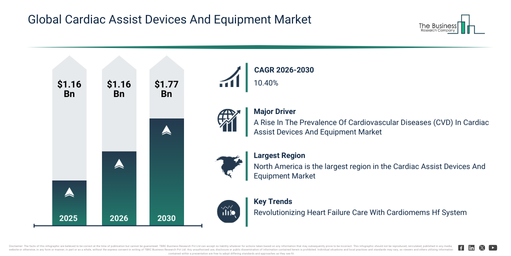
    The cardiac assist devices and equipment market is projected to experience swift expansion over the coming years. This market is anticipated to reach a valuation of $3.76 billion by 2030, demonstrating a compound annual growth rate (CAGR) of 10.4%. The drivers behind this projected growth include an escalating demand for destination therapy devices, a greater uptake of remote monitoring-enabled assist systems, an expansion in bridge-to-transplant applications, increased funding for next-generation cardiac devices, alongside developments in biocompatible materials and device miniaturization. Key trends anticipated during the forecast period encompass a growing acceptance of implantable assist devices, an increased utilization of minimally invasive cardiac support systems, greater incorporation of remote patient monitoring, an expansion into pediatric and specialized cardiac devices, and a heightened emphasis on the long-term reliability of these devices.

    Get A Free Sample Report With In-Depth Market Insights:

    https://thebusinessresearchcompany.com/sample_request?id=29756237&type=smp&name=Cardiac%20Assist%20Devices%20And%20Equipment%20Market%20Report%202026&utm_source=Blogs&utm_medium=Paid&utm_campaign=Sep_PR

    Cardiac Assist Devices And Equipment Market Growth Catalysts And Demand Drivers

    The growing occurrence of cardiovascular diseases (CVD) is boosting the demand for cardiac assist devices and equipment across both developed and developing economies. The heightened requirement for detecting, tracking, treating early, and preventing these critical illnesses further escalates the need for cardiac assist devices. For example, the American Heart Association, a US-based nonprofit organization, projects that by 2035, 45.1% of the US population is projected to have some form of CVD. In the same year, the total expenses related to CVD are anticipated to hit $1.1 trillion, comprising $748.7 billion in direct medical costs and an estimated $368 billion in indirect costs. Consequently, the increased incidence of cardiovascular diseases is a key factor propelling the expansion of the cardiac assist devices and equipment market.

    Cardiac Assist Devices And Equipment Market Segments: Where Is Growth Concentrated?

    The cardiac assist devices and equipment market covered in this report is segmented –

    1) By Type: Ventricular Assist Devices (LVAD), Intra-Aotic Baloon Pumps, Total Artificial Heart

    2) By Modality: Transcutaneous, Implantable

    3) By Application: Hospitals And Cardiac Care Centers, Ambulatory Surgical Centres, Emergency Services

    Subsegments:

    1) By Ventricular Assist Devices (LVAD): Implantable LVADs, Externally Powered LVADs, Pediatric LVADs, Other LVADs

    2) By Intra-Aortic Balloon Pumps: Disposable Intra-Aortic Balloon Pumps, Reusable Intra-Aortic Balloon Pumps

    3) By Total Artificial Heart: Pneumatically Powered Total Artificial Heart, Electrically Powered Total Artificial Heart, Other Total Artificial Heart Types

    Cardiac Assist Devices And Equipment Market Trends Shaping Long-Term Demand

    Leading companies in the cardiac assist devices and equipment market are prioritizing the creation of miniaturized interventional ventricular assist devices (VADs), such as foldable percutaneous VAD systems, to provide less-invasive circulatory support for patients undergoing high-risk percutaneous coronary interventions and experiencing acute cardiogenic shock. A foldable percutaneous VAD system is a mechanical circulatory-support device delivered via catheter, engineered for insertion through a small arterial sheath, thereby reducing vascular access size. Its design allows for rapid left-ventricular unloading at clinically meaningful flow rates and results in lower procedural trauma compared to larger surgical pumps. For example, in September 2023, magAssist, a China-based developer of circulatory-support devices, unveiled the NyokAssist interventional ventricular assist device, which has received U.S. FDA Breakthrough Device designation and completed its first-in-human use. This device is a small-bore (˜9 Fr) foldable catheter pump featuring an external motor to reduce hemolysis risk, designed for easy delivery across the aortic arch, and achieved an average flow of >3 L/min during reported first-in-human high-risk PCI support.

    Cardiac Assist Devices And Equipment Market Competitive Landscape: Which Companies Lead The Industry?

    Major companies operating in the cardiac assist devices and equipment market are Abbott Laboratories, Berlin Heart GmbH, Abiomed Inc., Bivacor Pvt. Ltd., Calon Cardio-Technology Ltd., Cardiobridge GmbH, Cardiac Assist Inc., Braile Biomedica Ltd., Circulite Inc., Evaheart Inc., FineHeart Sarl, Getinge AB, Jarvik Heart Inc., Medtronic plc, OregonHeart, MitiHeart Corporation, Procyrion Inc., Scandinavian Real Heart AB, Syncardia Systems LLC, HeartWare International Inc., Cardiac Power Innovations, Cardionomic Inc., Carmat SA, CorWave SA, Leviticus Cardio Ltd., LivaNova PLC, MicroMed Cardiovascular Inc., Novacor SA, Thoratec Corporation, Ventracor Limited

    View The Full Cardiac Assist Devices And Equipment Market Report:

    https://thebusinessresearchcompany.com/report/cardiac-assist-devices-and-equipment-global-market-report?utm_source=Blogs&utm_medium=Paid&utm_campaign=Sep_PR

    Cardiac Assist Devices And Equipment Market Regional Breakdown: Where Is Demand Concentrated?

    North America was the largest region in global cardiac assist devices and equipment market in 2025. Western Europe was the second-largest region in cardiac assist devices and equipment market. The regions covered in the cardiac assist devices and equipment market report are Asia-Pacific, South East Asia, Western Europe, Eastern Europe, North America, South America, Middle East, Africa.

    Reach Out To Our Team:

    The Business Research Company: https://www.thebusinessresearchcompany.com/

    Americas: +1 310-496-7795

    Asia: +44 7882 955267 & +91 8897263534

    Europe: +44 7882 955267

    Email us at: marketing@tbrc.info

    Follow us on:

    LinkedIn: https://in.linkedin.com/company/the-business-research-company

    YouTube: https://www.youtube.com/channel/UC24_fI0rV8cR5DxlCpgmyFQ

    Global Market Model: https://www.thebusinessresearchcompany.com/global-market-model
  • Artificial Lung Market Growth To $4.27 Billion Creates New Opportunities Across The Industry

    Artificial Lung Market Growth To $4.27 Billion Creates New Opportunities Across The Industry

    Featuring market attractiveness scoring, total addressable market sizing, company benchmarking matrices, interactive Excel dashboards, deeper supply chain intelligence, emerging startup tracking, and granular product-level insights, The Business Research Company’s 2026 market reports are built to deliver research that is both more actionable and more strategically valuable.

    Artificial Lung Market Poised To Hit $4.27 Billion By 2030 With A 10.4% CAGR

    The artificial lung market has seen substantial growth in recent times. Its valuation is expected to climb from $2.58 billion in 2025 to $2.88 billion in 2026, achieving a compound annual growth rate (CAGR) of 11.6%. This historical expansion can be attributed to several factors, including an increase in acute respiratory failure cases, the early incorporation of heart-lung machines in cardiothoracic operations, a rise in organ transplant procedure volumes, the evolution of membrane artificial lung technology, and the expanding application of extracorporeal life support systems.

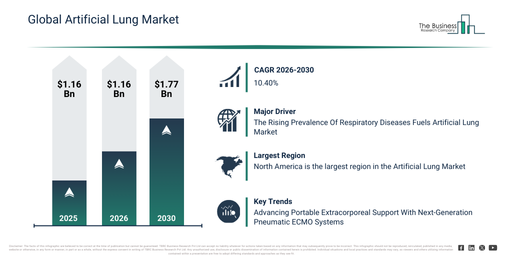
    The artificial lung market size is expected to experience substantial growth in the next few years. It is projected to reach $4.27 billion in 2030, achieving a compound annual growth rate (CAGR) of 10.4%. The anticipated expansion during the forecast period can be attributed to an increasing need for critical care life-support devices, a growing emphasis on portable and compact artificial lung systems, rising investment in advanced oxygenation membrane materials, the expansion of applications within emergency and trauma care, and the increasing adoption of minimally invasive extracorporeal support solutions. Key trends during this period include a surging demand for artificial lung systems in cases of severe respiratory failure and critical care management, the rising utilization of extracorporeal support devices in intricate cardiac and lung transplant surgeries, a growing inclination towards minimally invasive and temporary lung support options as alternatives to transplantation, the increasing development of portable and transport-compatible artificial lung units for emergency care settings, and the expanding deployment of membrane-based artificial lung technologies for efficient gas exchange and long-term support.

    Get A Free Sample Report With In-Depth Market Insights:

    https://thebusinessresearchcompany.com/sample_request?id=26165209&type=smp&name=Artificial%20Lung%20Market%20Report%202026&utm_source=Blogs&utm_medium=Paid&utm_campaign=Sep_PR

    Artificial Lung Market Industry Drivers: What’s Behind The Revenue Growth?

    The artificial lung market is expected to expand in the future due to the increasing incidence of respiratory ailments. The rise in respiratory diseases is attributed to a combination of factors, including growing air pollution, climate change, and evolving lifestyle habits, all of which contribute significantly to public health concerns. Artificial lungs are utilized in these conditions to provide oxygenation and remove carbon dioxide from the blood, either supporting or replacing compromised lung function. For example, in June 2024, data from the Australian Institute of Health and Welfare, an Australia-based health and welfare agency, estimated that approximately 8.5 million people in Australia, or 34% of the population, had chronic respiratory conditions. This included an estimated 2.8 million people, or 11% of the population, living with asthma, and 638,000 people, or 2.5% of the population, living with chronic obstructive pulmonary disease (COPD). Thus, the growing prevalence of respiratory diseases is driving the expansion of the artificial lung market.

    Artificial Lung Market Segment Analysis Spotlighting Growth Areas

    The artificial lung market covered in this report is segmented –

    1) By Product Type: Single Roller Pump Heart Lung Machines, Double Roller Pump Heart Lungs Machines, Bubble Artificial Lung, Membrane Artificial Lung

    2) By Application: Cardiac Surgery, Lung Transplant Operation, Acute Respiratory Failure Treatment, Other Applications

    3) By End-Users: Hospital, Emergency Center, Other End-users

    Subsegments:

    1) By Single Roller Pump Heart Lung Machines: Portable Single Roller Pump Heart Lung Machines, Stationary Single Roller Pump Heart Lung Machines

    2) By Double Roller Pump Heart Lung Machines: Portable Double Roller Pump Heart Lung Machines, Stationary Double Roller Pump Heart Lung Machines

    3) By Bubble Artificial Lung: Disposable Bubble Artificial Lung, Reusable Bubble Artificial Lung

    4) By Membrane Artificial Lung: Oxygenator Membrane Artificial Lung, Carbon Dioxide Removal Membrane Artificial Lung

    #Artificial Lung Market Growth Trends: What’s Shaping The Future Outlook?

    Leading companies within the artificial lung market are concentrating on developing innovative solutions, such as truly portable pneumatic ECMO systems, to broaden extracorporeal life support beyond the ICU and facilitate quick transport and deployment in the field. A pneumatic portable ECMO system operates using oxygen-supply-driven pneumatic pumps and integrated gas management to deliver extracorporeal oxygenation and circulatory assistance, without relying on external electric power or heavy motorized components. For instance, in May 2024, Hemovent GmbH, a Germany-based medical device company, reported that MOBYBOX, the world’s first integrated portable pneumatic ECMO system, had finished its initial commercial applications in Europe; MOBYBOX weighs about 2.5 kg, is powered solely by the oxygen supply, allowing it to function without a battery or motor, incorporates Bionique Flow Technology for softer blood handling and better gas exchange, and has obtained Medical Device Regulation certification for its introductory markets.

    Artificial Lung Market Key Participants And Competitive Landscape

    Major companies operating in the artificial lung market are Getinge AB, Medtronic plc, LivaNova PLC, Terumo Corporation, Fresenius Medical Care AG & Co KGaA, ALung Technologies Inc, Xenios AG, Eurosets S.r.l, Nipro Corporation, Braile Biomédica, Hemovent GmbH, MC3 Cardiopulmonary Inc, Abbott Laboratories, Spectrum Medical Ltd, B Braun Melsungen AG, SB‑Kawasumi Laboratories Inc, Senko Medical Instrument Mfg Co Ltd, CARMAT, Technowood International Pte Ltd, Elite Lifecare, Cytosorbents Corporation

    View The Full Artificial Lung Market Report:

    https://thebusinessresearchcompany.com/report/artificial-lung-global-market-report?utm_source=Blogs&utm_medium=Paid&utm_campaign=Sep_PR

    Artificial Lung Market Geographic Analysis: Where Is Demand Accelerating Fastest?

    North America was the largest region in the artificial lung market in 2025. The regions covered in the artificial lung market report are Asia-Pacific, South East Asia, Western Europe, Eastern Europe, North America, South America, Middle East, Africa.

    Reach Out To Our Team:

    The Business Research Company: https://www.thebusinessresearchcompany.com/

    Americas: +1 310-496-7795

    Asia: +44 7882 955267 & +91 8897263534

    Europe: +44 7882 955267

    Email us at: marketing@tbrc.info

    Follow us on:

    LinkedIn: https://in.linkedin.com/company/the-business-research-company

    YouTube: https://www.youtube.com/channel/UC24_fI0rV8cR5DxlCpgmyFQ

    Global Market Model: https://www.thebusinessresearchcompany.com/global-market-model