Blog

  • Cancer Cell Analysis Market Analysis: Understanding The Drivers Behind 8.9% CAGR Through 2030 Growth

    Cancer Cell Analysis Market Analysis: Understanding The Drivers Behind 8.9% CAGR Through 2030 Growth

    Featuring market attractiveness scoring, total addressable market sizing, company benchmarking matrices, interactive Excel dashboards, deeper supply chain intelligence, emerging startup tracking, and granular product-level insights, The Business Research Company’s 2026 market reports are built to deliver research that is both more actionable and more strategically valuable.

    Cancer Cell Analysis Market Poised To Hit $17.5 Billion By 2030 With A 8.9% CAGR

    The cancer cell analysis market has experienced robust expansion over recent years. Forecasts indicate its size will increase from $11.41 billion in 2025 to $12.45 billion in 2026, driven by a compound annual growth rate (CAGR) of 9.2%. The expansion observed in past periods is linked to increasing cancer rates, the constraints of existing diagnostic methods, a scarcity of early detection solutions, the limited integration of multi-omics techniques, and underdeveloped research infrastructure.

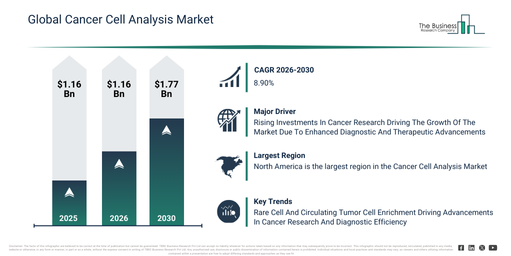
    The cancer cell analysis market is anticipated to show robust expansion in the upcoming years. It is projected to reach a valuation of $17.5 billion in 2030, growing at a compound annual growth rate (CAGR) of 8.9%. This growth during the forecast period can be attributed to several factors, including the increasing application of AI-assisted imaging and analysis, the wider adoption of single-cell technologies, the integration of multi-omics platforms, the expansion of high-throughput screening methods, and the rising demand for personalized oncology and precision medicine. Significant trends expected in this period encompass AI-based cancer cell imaging, multi-omics integration, the advancement of single-cell analysis technologies, the development of high-throughput screening platforms, and the provision of personalized oncology insights.

    Get A Free Sample Report With In-Depth Market Insights:

    https://thebusinessresearchcompany.com/sample_request?id=49164515&type=smp&name=Cancer%20Cell%20Analysis%20Market%20Report%202026&utm_source=Blogs&utm_medium=Paid&utm_campaign=Sep_PR

    Cancer Cell Analysis Market Growth Drivers: What’s Behind The Acceleration?

    The future expansion of the cancer cell analysis market is expected to be propelled by increasing investments in cancer research over the upcoming years. Cancer research involves the systematic study of cancer’s causes, methods for diagnosis, various treatments, and prevention strategies, all with the goal of improving patient outcomes and reducing mortality rates. The escalation in funding for cancer research stems from the growing global burden of cancer, prompting both governments and private organizations to allocate more resources to studies focused on enhancing diagnostics and developing effective therapies. Cancer cell analysis plays a critical role in cancer research by providing comprehensive insights into tumor biology, its inherent heterogeneity, and disease progression, thereby enabling researchers to identify new biomarkers, assess responses to treatment, and design targeted therapeutic interventions. For instance, the National Cancer Institute, a US-based government agency, reported a budget of $7.2 billion for cancer research in fiscal year 2024, indicating a 1.7% increase from 2023. Thus, the rising investments in cancer research will directly stimulate demand in the cancer cell analysis market.

    Cancer Cell Analysis Market Breakdown By Product Type And Application

    The cancer cell analysis market covered in this report is segmented –

    1) By Product And Service: Reagents And Consumables, Instruments, Accessories, Software, Service

    2) By Type Of Analysis: Genomic Analysis, Proteomic Analysis, Metabolomic Analysis, Transcriptomic Analysis, Histopathological Analysis

    3) By Technology: Next-Generation Sequencing (NGS), Polymerase Chain Reaction (PCR), Mass Spectrometry, Flow Cytometry, Immunohistochemistry (IHC)

    4) By Application: Biomarker Discovery, Drug Development And Discovery, Precision Medicine, Clinical Diagnosis, Research And Development

    5) By End-Use: Pharmaceutical And Biotechnology Companies, Hospitals And Clinical Testing Laboratories, Academic And Research Institutes, Other End-Uses

    Subsegments:

    1) By Reagents And Consumables: Cell Culture Media, Antibodies, Stains And Dyes, Enzyme Kits, Buffers And Solutions

    2) By Instruments: Flow Cytometers, Microscopes, Cell Analyzers, Automated Cell Counters, Imaging Systems

    3) By Accessories: Pipettes And Tips, Culture Plates And Flasks, Microplates, Filtration Units, Sample Tubes

    4) By Software: Data Analysis Software, Image Analysis Software, Laboratory Information Management Systems, Visualization Tools, Quantification Software

    5) By Service: Technical Support Services, Installation And Maintenance Services, Calibration Services, Training And Education Services, Consultation Services

    Cancer Cell Analysis Market Trends: What’s Defining The Industry’s Next Phase?

    Major companies operating in the cancer cell analysis market are concentrating on advanced innovations like rare cell and circulating tumor cell (CTC) enrichment technologies to enhance cancer research and diagnostic capabilities. Rare cell and CTC enrichment refers to the isolation and capture of extremely low-frequency tumor cells from blood samples, which offers critical insights into tumor heterogeneity, disease progression, and treatment response. For instance, in June 2024, Bio-Rad Laboratories Inc., a U.S.-based life science research and clinical diagnostics company, introduced Celselect Slides 2.0, an advanced microfluidic slide technology engineered to improve rare cell and CTC capture using its Genesis Cell Isolation System. The updated version allows for 2.5 times greater sample capacity per slide, expanding microchambers from 56,400 to 140,800, and supports seamless integration into existing workflows, thereby accelerating cancer research and boosting the efficiency of cell analysis. This technology integrates smoothly into laboratory workflows without necessitating major adjustments.

    Cancer Cell Analysis Market Top Companies Driving Competitive Growth

    Major companies operating in the cancer cell analysis market are F. Hoffmann-La Roche AG, Thermo Fisher Scientific Inc., Abbott Laboratories, Danaher Corporation, Siemens Healthineers AG, Merck KGaA, GE Healthcare Technologies Inc., Becton Dickinson and Company, Agilent Technologies Inc., Olympus Corporation, Illumina Inc., Sartorius AG, PerkinElmer Inc., Sysmex Corporation, Bruker Corporation, Bio-Rad Laboratories Inc., QIAGEN N.V., Tecan Group Ltd., Miltenyi Biotec B.V. & Co. KG, Abcam plc, Promega Corporation, Creative Bioarray Inc., NanoCellect Biomedical Inc., Cell Biolabs Inc., Meiji Techno Co. Ltd.

    View The Full Cancer Cell Analysis Market Report:

    https://thebusinessresearchcompany.com/report/cancer-cell-analysis-global-market-report?utm_source=Blogs&utm_medium=Paid&utm_campaign=Sep_PR

    Cancer Cell Analysis Market Global Footprint: Which Region Leads The Industry?

    North America was the largest region in the cancer cell analysis market in 2025. Asia-Pacific is expected to be the fastest-growing region in the forecast period. The regions covered in the cancer cell analysis market report are Asia-Pacific, South East Asia, Western Europe, Eastern Europe, North America, South America, Middle East, Africa.

    Reach Out To Our Team:

    The Business Research Company: https://www.thebusinessresearchcompany.com/

    Americas: +1 310-496-7795

    Asia: +44 7882 955267 & +91 8897263534

    Europe: +44 7882 955267

    Email us at: marketing@tbrc.info

    Follow us on:

    LinkedIn: https://in.linkedin.com/company/the-business-research-company

    YouTube: https://www.youtube.com/channel/UC24_fI0rV8cR5DxlCpgmyFQ

    Global Market Model: https://www.thebusinessresearchcompany.com/global-market-model
  • Cancer Biomarker Market Growth To $52.63 Billion By 2030: What’s Driving The Expansion?

    Cancer Biomarker Market Growth To $52.63 Billion By 2030: What’s Driving The Expansion?

    Built to provide research that’s more actionable and strategically valuable, The Business Research Company’s 2026 market reports include market attractiveness analysis, total addressable market sizing, company benchmarking matrices, interactive Excel dashboards, broader supply chain intelligence, emerging startup tracking, and in-depth product insights.

    Cancer Biomarker Market Size And Revenue Outlook Through 2030

    The cancer biomarker market has experienced substantial expansion in its size over recent years. This market is projected to expand from $25.09 billion in 2025 to $29.07 billion in 2026, exhibiting a compound annual growth rate (CAGR) of 15.9%. Historically, this growth can be ascribed to a global increase in cancer cases, progress in molecular biology studies, a rise in funding for oncology research, greater acceptance of diagnostics based on biomarkers, and enhancements in imaging and assay techniques.

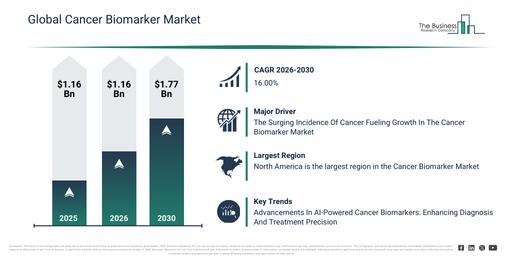
    The cancer biomarker market is anticipated to experience swift expansion in the upcoming years. This market is projected to reach $52.63 billion by 2030, exhibiting a compound annual growth rate (CAGR) of 16.0%. Factors contributing to this growth during the forecast period include a rising demand for tailored oncology treatments, increased investments in precision medicine, the expansion of drug development guided by biomarkers, the growing application of AI-based biomarker analysis, and a heightened emphasis on screening for early-stage cancer. Key trends anticipated over the forecast period involve the expanded utilization of genetic and protein biomarkers, an uptick in the adoption of companion diagnostics, the increasing integration of omics technologies, a broader application of liquid biopsy techniques, and an intensified focus on identifying cancer at early stages.

    Get A Free Sample Report With In-Depth Market Insights:

    https://thebusinessresearchcompany.com/sample_request?id=68172033&type=smp&name=Cancer%20Biomarker%20Market%20Report%202026&utm_source=Blogs&utm_medium=Paid&utm_campaign=Sep_PR

    Cancer Biomarker Market Growth Factors Behind Sustained Expansion

    The escalating prevalence of cancer is fueling expansion within the cancer biomarker market. The cancer incidence rate refers to the count of new cancer cases, specific to a site or type, observed in a particular population over a year, expressed as the number of cancers per 100,000 at-risk individuals. This growing cancer occurrence leads to the extensive adoption of cancer biomarkers, which are instrumental in evaluating disease risk, screening for hidden primary tumors, distinguishing between benign and malignant indicators, or differentiating various forms of malignancy. Cancer biomarkers facilitate early identification, diagnosis, and ongoing monitoring of the disease by signaling its presence or advancement, thereby enabling tailored treatment approaches and enhancing patient results. As an illustration, a report released in May 2024 by the International Agency for Research on Cancer (IARC), a cancer research body based in France, indicated that in 2022, approximately 20 million new cancer cases were documented, leading to 9.7 million deaths. Projections suggest that by 2050, new cancer cases will exceed 35 million, marking a 77% rise from 2022. Consequently, the escalating incidence of cancer is anticipated to drive forward the growth of the cancer biomarker market in the years ahead.

    Cancer Biomarker Market Segment Analysis And Revenue Potential

    The cancer biomarker market covered in this report is segmented –

    1) By Biomarker Type: Protein Biomarkers, Genetic Biomarkers, Other Biomarker Types

    2) By Profiling Technologies: Omics Technologies, Immunoassay, Bioinformatics, Cytogenetics

    3) By Cancer Type: Breast Cancer, Lung Cancer, Colorectal Cancer, Prostate Cancer, Thyroid Cancer, Kidney Cancer, Other Cancers

    4) By Application: Diagnostics, Research And Development, Prognostics, Risk Assessment, Other Applications

    Subsegments:

    1) By Protein Biomarkers: Tumor-Specific Antigens, Circulating Tumor Protein

    2) By Genetic Biomarkers: DNA Mutations, RNA Expression Profiles

    3) By Other Biomarker Types: Epigenetic Biomarkers, Metabolomic Biomarkers

    Cancer Biomarker Market Industry Trends Fueling Future Revenue Growth

    Leading firms within the cancer biomarker market are concentrating their efforts on creating advanced solutions, including AI-powered cancer biomarkers, aimed at improving the precision of diagnoses and tailoring therapeutic strategies for individuals. These AI-powered cancer biomarkers are defined as biological markers of the disease whose detection and examination rely on artificial intelligence technologies. As an illustration, in September 2023, Ibex Medical Analytics, a US-based Ibex Medical Analytics, introduced Galen Breast HER2, an AI-driven solution developed to boost the accuracy and consistency of HER2 scoring for individuals with breast cancer. This cutting-edge platform assists pathologists by automatically identifying invasive tumor regions and measuring HER2 expression in accordance with the 2018 ASCO/CAP guidelines. The Galen Breast HER2 system employs a new computational process to scrutinize immunohistochemistry (IHC)-stained slides, offering comprehensive visual representations of staining patterns and empowering pathologists to render well-grounded treatment choices.

    Cancer Biomarker Market Leading Players And Competitive Positioning

    Major companies operating in the cancer biomarker market are F. Hoffmann-La Roche AG, Thermo Fisher Scientific Inc., QIAGEN NV, Illumina Inc., Bio-Rad Laboratories Inc., Abbott Laboratories, bioMérieux SA, Becton Dickinson and Company, Merck & Co. Inc., Bristol-Myers Squibb Company, PerkinElmer Inc., Siemens AG, Exact Sciences Corporation, Novartis AG, Agilent Technologies Inc., Hologic Inc., Myriad Genetics Inc., Foundation Medicine Inc., Guardant Health Inc., Natera Inc., Sysmex Corporation, Biocartis Group NV, NanoString Technologies Inc., Veracyte Inc., Epic Sciences Inc., Cynvenio Biosystems Inc., Genomic Health Inc., Oncocyte Corporation, Exosome Diagnostics Inc., Grail Inc.

    View The Full Cancer Biomarker Market Report:

    https://thebusinessresearchcompany.com/report/cancer-biomarker-global-market-report?utm_source=Blogs&utm_medium=Paid&utm_campaign=Sep_PR

    Cancer Biomarker Market Regional Distribution: Which Areas Power Market Growth?

    North America was the largest region in the cancer biomaker market in 2025. Asia-Pacific is expected to be the fastest-growing region in the forecast period. The regions covered in the cancer biomarker market report are Asia-Pacific, South East Asia, Western Europe, Eastern Europe, North America, South America, Middle East, Africa.

    Reach Out To Our Team:

    The Business Research Company: https://www.thebusinessresearchcompany.com/

    Americas: +1 310-496-7795

    Asia: +44 7882 955267 & +91 8897263534

    Europe: +44 7882 955267

    Email us at: marketing@tbrc.info

    Follow us on:

    LinkedIn: https://in.linkedin.com/company/the-business-research-company

    YouTube: https://www.youtube.com/channel/UC24_fI0rV8cR5DxlCpgmyFQ

    Global Market Model: https://www.thebusinessresearchcompany.com/global-market-model
  • Cancellous Sponge Market Trends Reshaping Industry Growth Through 2030

    Cancellous Sponge Market Trends Reshaping Industry Growth Through 2030

    Backed by market attractiveness analysis, total addressable market sizing, company benchmarking matrices, interactive Excel dashboards, wider supply chain intelligence, emerging startup coverage, and detailed product-level insights, The Business Research Company’s 2026 market reports are designed to offer research that is more actionable and strategically valuable than ever.

    Cancellous Sponge Market Growth From $7.04 Billion In 2026 To $8.76 Billion By 2030 At A CAGR Of 5.6%

    The cancellous sponge market size has seen significant growth in recent years. It is projected to expand from $6.65 billion in 2025 to $7.04 billion in 2026, achieving a compound annual growth rate (CAGR) of 5.9%. The market’s growth in previous periods can be linked to the limited availability of cancellous sponge materials, a reliance on natural collagen and hydroxyapatite, an increasing number of orthopedic surgeries, greater awareness of bone grafting techniques, and the adoption of traditional wound care methods.

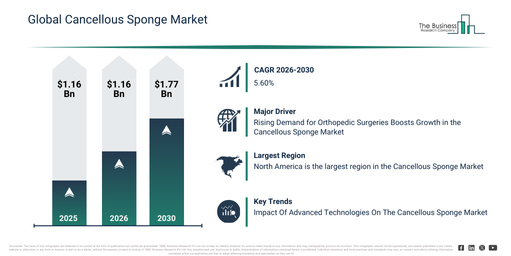
    The cancellous sponge market is projected to experience robust expansion over the coming years, with its size anticipated to reach $8.76 billion by 2030, driven by a compound annual growth rate (CAGR) of 5.6%. This projected increase is largely due to factors such as the development of synthetic and composite cancellous sponges, a growing need in dental and plastic surgical procedures, breakthroughs in bioactive and regenerative materials, the expansion of ambulatory surgical centers, and their incorporation into minimally invasive surgical techniques. Key trends anticipated during this period encompass the increased utilization of collagen and hydroxyapatite-based sponges, a greater uptake of synthetic and composite materials, an uptick in orthopedic and dental procedures, the broadening scope of wound care and plastic surgery applications, and a strong emphasis on biocompatibility for accelerated bone regeneration.

    Get A Free Sample Report With In-Depth Market Insights:

    https://thebusinessresearchcompany.com/sample_request?id=84886928&type=smp&name=Cancellous%20Sponge%20Market%20Report%202026&utm_source=Blogs&utm_medium=Paid&utm_campaign=Sep_PR

    Cancellous Sponge Market Demand Drivers Opening New Revenue Streams

    The rising volume of orthopedic surgeries is anticipated to propel the growth of the cancellous sponge market in the foreseeable future. These procedures, which involve the musculoskeletal system including bones, joints, ligaments, tendons, and muscles, are becoming more common due to factors such as an increasing prevalence of musculoskeletal disorders, advancements in surgical techniques and technology, and a heightened focus on improving patient quality of life through effective pain management and functional recovery. Cancellous sponges aid in stimulating osteoinduction, a process where immature cells are recruited and encouraged to develop into osteoblasts, which are bone-forming cells. This mechanism is crucial for regenerating bone tissue in areas experiencing critical bone loss or damage. For instance, in March 2023, data from the American Academy of Orthopedic Surgeons, a US-based orthopedic organization, projected that the annual volume of primary total joint arthroplasties (TJAs) is expected to increase by 70% to reach 2,257,326. This growth is primarily attributed to a higher demand for total hip arthroplasties (THAs), forecasted to reach 1,219,852, surpassing total knee arthroplasties (TKAs), which are projected at 1,037,474 by 2050. Thus, the increasing number of orthopedic surgeries is a significant driver for the expansion of the cancellous sponge market.

    Cancellous Sponge Market Segmentation And Category Overview

    The cancellous sponge market covered in this report is segmented –

    1) By Product Type: Collagen Based, Hydroxyapatite Based, Chitosan Based, Polyethylene Glycol Based

    2) By Material: Natural, Synthetic, Composite

    3) By Application: Orthopedic Surgeries, Dental Procedures, Wound Care, Plastic Surgery, Other Applications

    4) By End User: Hospitals, Ambulatory Surgical Centers, Specialty Clinics, Other End Users

    Subsegments:

    1) By Collagen Based: Bovine Collagen Sponges, Porcine Collagen Sponges, Synthetic Collagen Sponges

    2) By Hydroxyapatite Based: Synthetic Hydroxyapatite Sponges, Natural Hydroxyapatite Sponges

    3) By Chitosan Based: Chitosan Sponges From Shrimp Shells, Chitosan Sponges From Crab Shells

    4) By Polyethylene Glycol Based: PEG-Based Hydrogels, PEG-Based Sponges With Bioactive Factors

    Cancellous Sponge Market Trends Powering Strategic Industry Growth

    Leading companies within the cancellation sponge market are rolling out innovative products, including allografts and cortical fibers, to deliver enhanced solutions for bone grafting procedures. An allograft refers to a tissue graft sourced from a genetically dissimilar donor, commonly employed in bone repair surgeries to encourage healing without requiring tissue harvesting from the patient. Cortical fibers constitute dense, strong bone tissue that lends structural support and stability in bone grafting applications. For example, in May 2024, Isto Biologics, a US-based biologics and cellular therapy company, unveiled Fibrant Liberty, an advanced allograft solution specifically engineered for bone grafting procedures. This product incorporates a dry blend of robust cortical fibers and mineralized cortical cancellous chips, which ensures rapid hydration and versatility for various surgical uses. Its design is intended to improve ease of handling, prevent graft movement, and stimulate optimal bone growth.

    Cancellous Sponge Market Competitive Overview And Top Companies

    Major companies operating in the cancellous sponge market are Medtronic Inc., Stryker Corporation, DePuy Synthes Inc., Zimmer Biomet Holdings Inc., Smith & Nephew plc, Aesculap Inc., Arthrex Inc., NuVasive Inc., Globus Medical Inc., Wright Medical Group N.V., Bioventus LLC, K2M Group Holdings Inc., LifeNet Health Inc., Paragon 28 Inc., Exactech Inc., RTI Surgical Holdings Inc., Biocomposites Ltd., Integra LifeSciences Holdings Corporation, SeaSpine Holdings Corporation, Xtant Medical Holdings Inc., Orthofix Medical Inc., OsteoMed LLC, Synergy Biomedical LLC, Amedica Corporation, Bone Therapeutics SA

    View The Full Cancellous Sponge Market Report:

    https://thebusinessresearchcompany.com/report/cancellous-sponge-global-market-report?utm_source=Blogs&utm_medium=Paid&utm_campaign=Sep_PR

    Cancellous Sponge Market Leading Geography: Which Region Contributes The Most Revenue?

    North America was the largest region in the cancellous sponge market in 2025. The regions covered in the cancellous sponge market report are Asia-Pacific, South East Asia, Western Europe, Eastern Europe, North America, South America, Middle East, Africa.

    Reach Out To Our Team:

    The Business Research Company: https://www.thebusinessresearchcompany.com/

    Americas: +1 310-496-7795

    Asia: +44 7882 955267 & +91 8897263534

    Europe: +44 7882 955267

    Email us at: marketing@tbrc.info

    Follow us on:

    LinkedIn: https://in.linkedin.com/company/the-business-research-company

    YouTube: https://www.youtube.com/channel/UC24_fI0rV8cR5DxlCpgmyFQ

    Global Market Model: https://www.thebusinessresearchcompany.com/global-market-model
  • Calcium Phosphate Cement Market Growth To $150.83 Billion Creates New Opportunities Across The Industry

    Calcium Phosphate Cement Market Growth To $150.83 Billion Creates New Opportunities Across The Industry

    Featuring market attractiveness scoring, total addressable market sizing, company benchmarking matrices, interactive Excel dashboards, deeper supply chain intelligence, emerging startup tracking, and granular product-level insights, The Business Research Company’s 2026 market reports are built to deliver research that is both more actionable and more strategically valuable.

    Calcium Phosphate Cement Market Expansion Outlook: What Revenue Opportunities Are Ahead?

    The calcium phosphate cement market has experienced robust expansion in recent years. This market is anticipated to grow from $104.76 billion in 2025 to $112.95 billion in 2026, advancing at a compound annual growth rate (CAGR) of 7.8%. The historical growth of the market can be attributed to factors such as the limited availability of biocompatible CPC formulations, a reliance on traditional bone graft materials, an increase in orthopedic and dental procedures, rising awareness of bone repair solutions, and the adoption of standard CPC dosage ranges.

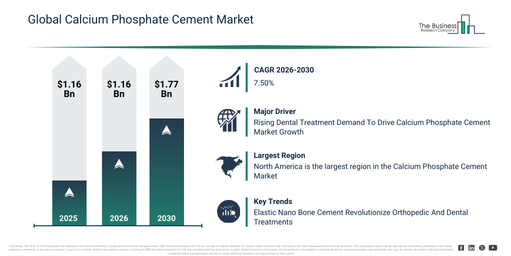
    The calcium phosphate cement market is anticipated to demonstrate robust growth in the coming years. Its value is forecast to reach $150.83 billion by 2030, exhibiting a compound annual growth rate (CAGR) of 7.5%. Factors contributing to this growth include the development of high-dose and specialized CPC products, the expansion of minimally invasive bone repair surgeries, increasing adoption in hospitals and clinics, a rise in regulatory approvals and certifications, and advancements in CPC for complex bone reconstruction. Significant trends for the forecast period encompass a rising adoption of calcium phosphate cement in orthopedic surgeries, increasing utilization of CPC in dental bone repair and regeneration, the development of customized dosage forms for specific applications, growth in ambulatory surgery centers and clinic procedures, and a strong focus on biocompatibility and enhanced bone integration.

    Get A Free Sample Report With In-Depth Market Insights:

    https://thebusinessresearchcompany.com/sample_request?id=51061405&type=smp&name=Calcium%20Phosphate%20Cement%20Market%20Report%202026&utm_source=Blogs&utm_medium=Paid&utm_campaign=Sep_PR

    Calcium Phosphate Cement Market Growth Backed By Core Demand Fundamentals

    The future expansion of the calcium phosphate cement market is anticipated to be fueled by the increasing need for dental care. Dental treatment encompasses professional services for the care and management of teeth, gums, and various oral tissues, covering procedures for the prevention, diagnosis, and remedy of oral health issues. Emphasizing oral health, the increasing prevalence of dental ailments coupled with wider access to cutting-edge dental care technologies escalates the requirement for dental treatment. In dental applications, calcium phosphate cement aids in bone regeneration and integration, a crucial aspect for procedures such as dental implants and the repair of bone defects. An example illustrating this trend comes from a May 2024 report by the National Health Service, a publicly funded healthcare system in the UK, which indicated that the count of adults visiting NHS dentists in England climbed to 18,111,609 in 2023 from 16,409,636 in 2022. Similarly, the number of children receiving treatment grew to 6,372,892, an increase from 5,589,201 in the preceding year. Consequently, the escalating demand for dental care will stimulate expansion within the calcium phosphate cement market.

    Calcium Phosphate Cement Market Segment Outlook: Which Categories Are Growing Fastest?

    The calcium phosphate cement market covered in this report is segmented –

    1) By Product Type: Hydroxyapatite Based, Tricalcium Phosphate (TCP) Based, Other Product Types

    2) By Formulation: Powder Form, Paste Form, Injectable Form

    3) By Sales Channel: Direct Sales, Distributors Or Third-Party Channels, Online Or E-Commerce Platforms

    4) By End User: Hospitals, Dental Clinics, Research And Academic Institutes, Orthopedic And Dental Original Equipment Manufacturers (OEMs), Other End Users

    Subsegments:

    1) By Hydroxyapatite Based: Injectable Hydroxyapatite Cement, Moldable Hydroxyapatite Cement, Pre-Formed Hydroxyapatite Cement, Paste Hydroxyapatite Cement

    2) By Tricalcium Phosphate (TCP) Based: Injectable Tricalcium Phosphate (TCP) Cement, Moldable Tricalcium Phosphate (TCP) Cement, Pre-Formed Tricalcium Phosphate (TCP) Cement, Paste Tricalcium Phosphate (TCP) Cement

    3) By Other Product Types: Composite Calcium Phosphate Cement, Bioactive Glass-Enhanced Cement, Polymer-Modified Calcium Phosphate Cement, Custom Formulation Calcium Phosphate Cement

    Calcium Phosphate Cement Market Growth Trends Reshaping The Competitive Landscape

    Major companies operating in the Calcium Phosphate Cement market are concentrating on creating innovative products, such as highly elastic nano bone cement materials, to deliver strong mechanical support, hasten bone healing, and simplify complex orthopedic surgeries. Highly elastic nano bone cement is a next-generation calcium phosphate-based biomaterial developed using nano-cluster anchoring technology to impart exceptional elasticity, toughness, and strength, closely mimicking the structure and flexibility of natural bone. For instance, in October 2025, the University of Hong Kong’s Li Ka Shing Faculty of Medicine (HKUMed), a China-based academic and clinical research institution focused on orthopedic, trauma, and regenerative medicine innovations, launched a revolutionary nano bone cement. This product, termed ‘nano bone cement,’ is an elastic calcium phosphate cement with a porous structure that not only matches the mechanical properties of human bone but also allows for customizable shaping before hardening. Key features of the product include the integration of organic flexible and inorganic rigid components to achieve high elasticity and compressive strength; its ability to expand after absorbing water for automatic defect filling; and a design that promotes cell adhesion and bone tissue regeneration. The material’s performance enables simpler, faster surgery, reduces the risk of structural failure common in rigid cements, and is expected to improve both patient mobility and surgical outcomes, especially for irregularly shaped or large bone defects.

    Calcium Phosphate Cement Market Competitive Landscape: Which Companies Lead The Industry?

    Major companies operating in the calcium phosphate cement market are Medtronic Plc., Johnson & Johnson Medical Devices Companies Inc., Stryker Corporation, DSM Biomedical Inc., Zimmer Biomet Holdings Inc., Smith & Nephew plc, Straumann Holding AG, Orthofix International N V, Xtant Medical Holdings Inc., Berkeley Advanced Biomaterials Inc., Heraeus Medical GmbH, Curasan AG, INNOTERE S A S, Vivorté Inc., BonAlive Biomaterials Ltd., Teknimed S A S, Graftys S A, Arthrex Inc., Exactech Inc., Cardinal Health Inc., CryoLife Inc., Aap Implantate AG, Sanatmetal Ltd.

    View The Full Calcium Phosphate Cement Market Report:

    https://thebusinessresearchcompany.com/report/calcium-phosphate-cement-global-market-report?utm_source=Blogs&utm_medium=Paid&utm_campaign=Sep_PR

    Calcium Phosphate Cement Market Regional Outlook: Where Is Opportunity Concentrated?

    North America was the largest region in the calcium phosphate cement market in 2025. The regions covered in the calcium phosphate cement market report are Asia-Pacific, South East Asia, Western Europe, Eastern Europe, North America, South America, Middle East, Africa.

    Reach Out To Our Team:

    The Business Research Company: https://www.thebusinessresearchcompany.com/

    Americas: +1 310-496-7795

    Asia: +44 7882 955267 & +91 8897263534

    Europe: +44 7882 955267

    Email us at: marketing@tbrc.info

    Follow us on:

    LinkedIn: https://in.linkedin.com/company/the-business-research-company

    YouTube: https://www.youtube.com/channel/UC24_fI0rV8cR5DxlCpgmyFQ

    Global Market Model: https://www.thebusinessresearchcompany.com/global-market-model
  • Bunion Correction Systems Market Forecast: Breaking Down The Numbers Behind Future Expansion

    Bunion Correction Systems Market Forecast: Breaking Down The Numbers Behind Future Expansion

    Built to provide research that’s more actionable and strategically valuable, The Business Research Company’s 2026 market reports include market attractiveness analysis, total addressable market sizing, company benchmarking matrices, interactive Excel dashboards, broader supply chain intelligence, emerging startup tracking, and in-depth product insights.

    Bunion Correction Systems Market Growth Potential: How Will Market Size Shift Through 2030?

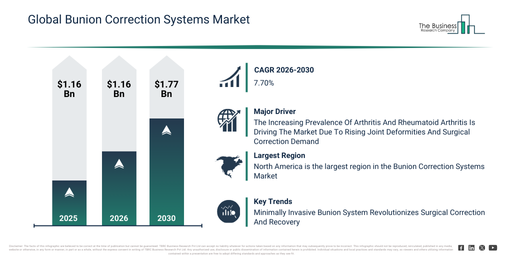
    The bunion correction systems market size has demonstrated robust expansion in recent years. It is projected to increase from $0.84 billion in 2025 to $0.91 billion in 2026, progressing at a compound annual growth rate (CAGR) of 8.0%. The market’s historical growth can be attributed to the reliance on traditional osteotomy and exostectomy techniques, limited availability of specialized correction systems, an increase in orthopedic surgical procedures, the rising prevalence of hallux valgus, and the adoption of hospital-based surgical interventions.

    The bunion correction systems market is projected to experience substantial expansion in the coming years, reaching a valuation of $1.22 billion by 2030, demonstrating a compound annual growth rate (CAGR) of 7.7%. This anticipated growth throughout the forecast period stems from factors such as the creation of sophisticated implants and wearable correction devices, the broadening reach of ambulatory and specialized medical centers, a rise in minimally invasive surgical techniques, the incorporation of digital imaging and surgical planning technologies, and increased patient knowledge leading to a desire for quicker recuperation. Key developments expected during this time include a greater uptake of minimally invasive bunion correction methods, an escalating need for advanced implants and supplementary products, the proliferation of specialized foot care facilities, an emphasis on recovery and rehabilitation after surgery, and a heightened understanding of foot health alongside orthopedic care.

    Get A Free Sample Report With In-Depth Market Insights:

    https://thebusinessresearchcompany.com/sample_request?id=90099424&type=smp&name=Bunion%20Correction%20Systems%20Market%20Report%202026&utm_source=Blogs&utm_medium=Paid&utm_campaign=Sep_PR

    Bunion Correction Systems Market Growth Catalysts And Demand Drivers

    The rising occurrence of arthritis and rheumatoid arthritis is projected to fuel the expansion of the bunion correction systems market in the future. Arthritis broadly refers to the inflammation and deterioration of one or multiple joints, while rheumatoid arthritis (RA) is a long-term autoimmune condition marked by ongoing joint inflammation and worsening tissue damage. The growing incidence of arthritis and RA stems from factors like an aging population, which leads to increased rates of joint wear and autoimmune reactions over time. Bunion correction systems offer efficient surgical remedies to correct deformities and reduce joint strain, consequently enhancing mobility and the quality of life for individuals suffering from arthritis-related foot ailments. For example, data from February 2024, provided by Arthritis Australia, an Australian non-profit dedicated to arthritis awareness and support, indicates that around 15% of Australians across various age brackets suffer from arthritis, positioning it as a leading chronic health issue in the country. Forecasts suggest the population of arthritis patients will reach 5.39 million by 2040, a 31% increase that signifies an additional 1.28 million people affected. By 2040, it is anticipated that 280,040 males and 479,828 females will be living with rheumatoid arthritis. Consequently, the expanding occurrence of arthritis and rheumatoid arthritis is a key driver for the bunion correction systems market.

    Bunion Correction Systems Market Segment Landscape: Which Areas Lead Development?

    The bunion correction systems market covered in this report is segmented –

    1) By Type: Osteotomy, Arthrodesis, Lapidus, Exostectomy

    2) By Surgery Type: Minimally Invasive, Traditional

    3) By End-Use: Hospitals, Ambulatory Centers, Specialty Centers

    Subsegments:

    1) By Osteotomy: Chevron Osteotomy, Scarf Osteotomy, Akin Osteotomy

    2) By Arthrodesis: First Metatarsophalangeal (MTP) Joint Arthrodesis, Midfoot Arthrodesis, Tarsometatarsal Arthrodesis

    3) By Lapidus: Lapidus Procedure With Plate Fixation, Lapidus Procedure With Screw Fixation, Modified Lapidus Procedure

    4) By Exostectomy: Simple Exostectomy, Exostectomy With Soft Tissue Release, Exostectomy With Bunionectomy

    Bunion Correction Systems Market Trends Shaping Long-Term Demand

    Leading companies in the bunion correction systems market are concentrating on developing advanced innovations, such as the minimally invasive bunion correction system, to offer surgeons an improved surgical method that enhances outcomes for bunion correction through less invasive techniques. A minimally invasive bunion correction system refers to a surgical methodology and a suite of specialized instruments engineered to realign the big toe joint and correct bunion deformities using small incisions, thereby lessening tissue damage, shortening recovery time, and reducing postoperative complications. For instance, in February 2024, Paragon 28 Inc., a US-based medical device company specializing in foot and ankle orthopedics, introduced the PRECISION MIS Bunion System, which is a next-generation solution for the minimally invasive surgical correction of bunions. This system is engineered to facilitate distal metatarsal osteotomy through a guided, joint-preserving technique that boosts surgical precision while minimizing tissue disruption. It is designed for tri-planar correction, incorporating an outrigger-based mechanism and specialized cannulated screws to optimize bone alignment and stability, consequently promoting faster healing and reducing postoperative discomfort.

    Bunion Correction Systems Market Competitive Landscape: Who Leads The Industry?

    Major companies operating in the bunion correction systems market are Johnson and Johnson MedTech, Stryker Corporation, Zimmer Biomet Holdings Inc, Arthrex Inc, Enovis Corporation, Wright Medical Technology Inc, Orthofix Holdings Inc, Paragon 28, Acumed LLC, Treace Medical Concepts Inc, Medartis AG, Nextremity Solutions Inc, BioPro Inc, Extremity Medical LLC, Integra LifeSciences Holdings Corporation, Smith and Nephew plc, DePuy Synthes Inc, MicroPort Orthopedics Inc, Aesculap AG, Vilex LLC

    View The Full Bunion Correction Systems Market Report:

    https://thebusinessresearchcompany.com/report/bunion-correction-systems-global-market-report?utm_source=Blogs&utm_medium=Paid&utm_campaign=Sep_PR

    Bunion Correction Systems Market Geographic Landscape: Which Region Leads Industry Growth?

    North America was the largest region in the bunion correction systems market in 2025. Asia-Pacific is expected to be the fastest-growing region in the forecast period. The regions covered in the bunion correction systems market report are Asia-Pacific, South East Asia, Western Europe, Eastern Europe, North America, South America, Middle East, Africa.

    Reach Out To Our Team:

    The Business Research Company: https://www.thebusinessresearchcompany.com/

    Americas: +1 310-496-7795

    Asia: +44 7882 955267 & +91 8897263534

    Europe: +44 7882 955267

    Email us at: marketing@tbrc.info

    Follow us on:

    LinkedIn: https://in.linkedin.com/company/the-business-research-company

    YouTube: https://www.youtube.com/channel/UC24_fI0rV8cR5DxlCpgmyFQ

    Global Market Model: https://www.thebusinessresearchcompany.com/global-market-model
  • Buccal Drug Delivery System Market Expected To Grow At 10.7% CAGR Through 2030: What Businesses Need To Know

    Buccal Drug Delivery System Market Expected To Grow At 10.7% CAGR Through 2030: What Businesses Need To Know

    Backed by market attractiveness analysis, total addressable market sizing, company benchmarking matrices, interactive Excel dashboards, wider supply chain intelligence, emerging startup coverage, and detailed product-level insights, The Business Research Company’s 2026 market reports are designed to offer research that is more actionable and strategically valuable than ever.

    Buccal Drug Delivery System Market Value Analysis: What Growth Lies Ahead Over The Forecast Period?

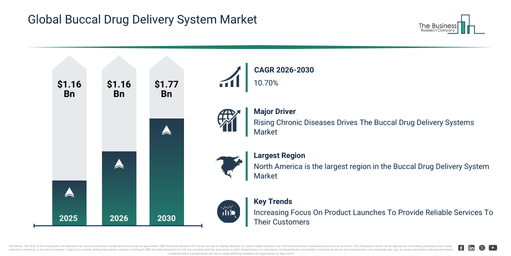
    The market for buccal drug delivery systems has seen significant growth in recent years. This market is expected to increase from $3.89 billion in 2025 to $4.32 billion in 2026, exhibiting a compound annual growth rate (CAGR) of 11.2%. The historical growth can be linked to factors such as a rising preference for alternative drug administration methods, an expansion in treatments for chronic pain and angina, progress in mucoadhesive formulations, a growing demand for medications with quicker onset, and the broadening of oral pharmaceutical manufacturing.

    The market for buccal drug delivery systems is anticipated to expand quickly over the coming years. Its valuation is projected to reach $6.48 billion by 2030, exhibiting a compound annual growth rate (CAGR) of 10.7%. This expansion during the projection period stems from factors such as augmented investments in transmucosal drug investigations, a heightened need for smoking cessation treatments, the proliferation of personalized drug delivery systems, a stronger emphasis on formulations that promote compliance, and the accelerated creation of innovative buccal medications. Key trends anticipated during the forecast period encompass a wider acceptance of buccal and sublingual dosage methods, an escalating requirement for swift drug absorption mechanisms, a greater concentration on drug delivery systems that are convenient for patients, the evolution of controlled-release buccal formulations, and an intensified focus on non-invasive therapeutic options.

    Get A Free Sample Report With In-Depth Market Insights:

    https://thebusinessresearchcompany.com/sample_request?id=42839220&type=smp&name=Buccal%20Drug%20Delivery%20System%20Market%20Report%202026&utm_source=Blogs&utm_medium=Paid&utm_campaign=Sep_PR

    Buccal Drug Delivery System Market Opportunity Drivers: What’s Unlocking New Revenue Potential?

    The increasing occurrence of long-term illnesses is anticipated to fuel the expansion of the buccal drug delivery systems market in the future. Chronic conditions are defined as health problems lasting a year or more, including examples like cancer, heart disease, stroke, diabetes, and arthritis. These common chronic ailments, which require ongoing nutritional and medical support, are manageable but currently incurable. For many individuals living with chronic diseases like diabetes and cancer, buccal drug delivery systems offer suitable and efficient methods for administering mucosal and transmucosal medications. As an illustration, in June 2024, data from the National Health Service, a UK-based government body, indicated that in 2023, 3,615,330 people registered with a general practitioner (GP) were identified with non-diabetic hyperglycemia or pre-diabetes (a state of elevated blood sugar not yet meeting diabetes criteria). This represented an 18% rise from 3,065,825 instances recorded in 2022. Consequently, the growing incidence of chronic conditions is a key factor boosting the expansion of the buccal drug delivery systems market.

    Buccal Drug Delivery System Market Segments: Where Is Growth Concentrated?

    The buccal drug delivery system market covered in this report is segmented –

    1) By Type: Sublingual, Buccal Tablets And Lozenges, Oral Sprays

    2) By Application: Pain Management, Smoking Cessation, Angina Pectoris

    3) By End-User: Hospitals, Ambulatory Centers, Other End-Users

    Subsegments:

    1) By Sublingual: Sublingual Tablets, Sublingual Films

    2) By Buccal Tablets And Lozenges: Buccal Tablets, Buccal Lozenges

    3) By Oral Sprays: Spray Solutions, Spray Gels

    Buccal Drug Delivery System Market Innovation Trends Shaping Future Development

    Leading companies active in the buccal drug delivery systems market are concentrating on launching products, such as melatonin oral spray, to increase their revenues. Melatonin oral spray is a form of melatonin supplementation provided in a spray format for oral application. For example, in February 2023, Arlak Biotech Private Limited, an India-based pharmaceutical company, introduced melatonin oral spray. This spray assists the body’s inherent melatonin production, consequently improving sleep quality in a straightforward and efficient manner. The medication offers a rapid remedy for individuals struggling with initiating sleep, maintaining sleep, or adjusting to various sleep patterns. Its swift and uncomplicated oral absorption facilitates a quicker initiation of sleep and enhanced sleep quality.

    Buccal Drug Delivery System Market Company Landscape And Competitive Strategy

    Major companies operating in the buccal drug delivery system market are Teva Pharmaceuticals Industries Ltd, Pfizer Incorporated, GlaxoSmithKline Public Limited Company, Indivior PLC, Generex Biotechnology Corporation, Catalent Inc, Arx Limited Liability Company, BioDelivery Science International Incorporated, Cynapsus Therapeutics Incorporated, Endo Pharmaceuticals Public Limited Company, Medlab Clinical Ltd, AstraZeneca PLC, Dr. Reddy’s Laboratories Ltd, Takeda Pharmaceutical Company Limited, Novartis AG, Sanofi SA, Bayer AG, Adare Pharmaceuticals Inc, NAPP Pharmaceutical Ltd, Perrigo Company PLC, Reckitt Benckiser Group PLC, Teligent Pharma Inc, Par Pharmaceutical Companies Inc, Acorda Therapeutics Inc, Opiant Pharmaceuticals Inc

    View The Full Buccal Drug Delivery System Market Report:

    https://thebusinessresearchcompany.com/report/buccal-drug-delivery-system-global-market-report?utm_source=Blogs&utm_medium=Paid&utm_campaign=Sep_PR

    Buccal Drug Delivery System Market Largest Region: Which Geography Holds The Biggest Share?

    North America was the largest region in the buccal drug delivery systems market share in 2025. The regions covered in the buccal drug delivery system market report are Asia-Pacific, South East Asia, Western Europe, Eastern Europe, North America, South America, Middle East, Africa.

    Reach Out To Our Team:

    The Business Research Company: https://www.thebusinessresearchcompany.com/

    Americas: +1 310-496-7795

    Asia: +44 7882 955267 & +91 8897263534

    Europe: +44 7882 955267

    Email us at: marketing@tbrc.info

    Follow us on:

    LinkedIn: https://in.linkedin.com/company/the-business-research-company

    YouTube: https://www.youtube.com/channel/UC24_fI0rV8cR5DxlCpgmyFQ

    Global Market Model: https://www.thebusinessresearchcompany.com/global-market-model
  • Buccal Cavity Devices Market Forecast To Reach $3.98 Billion By 2030: Key Trends Explained

    Buccal Cavity Devices Market Forecast To Reach $3.98 Billion By 2030: Key Trends Explained

    Featuring market attractiveness scoring, total addressable market sizing, company benchmarking matrices, interactive Excel dashboards, deeper supply chain intelligence, emerging startup tracking, and granular product-level insights, The Business Research Company’s 2026 market reports are built to deliver research that is both more actionable and more strategically valuable.

    Buccal Cavity Devices Market Size Forecast: How Big Could The Market Get By 2030?

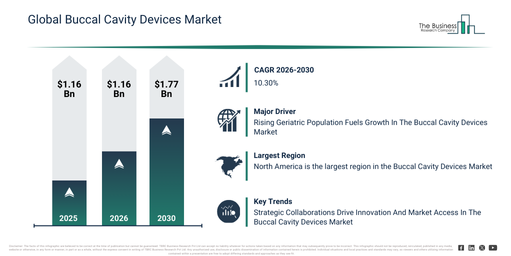
    The buccal cavity devices market size has seen substantial growth recently. It is set to expand from $2.45 billion in 2025 to $2.69 billion in 2026, achieving a compound annual growth rate (CAGR) of 10.1%. This historical growth can be attributed to factors such as the increasing incidence of dental disorders, the expansion of dental clinic infrastructure, the rising embrace of digital dentistry tools, a growing recognition of oral health diagnostics, and enhancements in dental imaging technologies.

    The buccal cavity devices market is projected to experience significant expansion in the coming years, with its size predicted to reach $3.98 billion by 2030, demonstrating a compound annual growth rate (CAGR) of 10.3%. This projected growth is driven by several factors, including the escalating demand for AI-supported dental diagnostics, greater investment in intelligent dental clinics, the rising use of portable imaging technologies, the broadening scope of preventive oral healthcare, and a heightened emphasis on patient-centric dental solutions. Key developments anticipated during this forecast period encompass the wider embrace of digital intraoral imaging devices, an uptick in the deployment of wireless intraoral scanners, a surging need for diagnostic instruments offering high resolution, the expansion of chairside diagnostic options, and a stronger inclination towards dental diagnostics that are minimally invasive.

    Get A Free Sample Report With In-Depth Market Insights:

    https://thebusinessresearchcompany.com/sample_request?id=28429433&type=smp&name=Buccal%20Cavity%20Devices%20Market%20Report%202026&utm_source=Blogs&utm_medium=Paid&utm_campaign=Sep_PR

    Buccal Cavity Devices Market Growth Momentum: What Factors Are Shaping Demand?

    The expansion of the geriatric population is anticipated to stimulate the growth of the buccal cavity devices market moving forward. This demographic, often referred to as the elderly population, includes individuals typically 65 years of age and older. The elderly are more prone to various oral ailments such as periodontal disease, dental caries, and oral cancer, often requiring specialized treatment options. Buccal cavity devices offer significant benefits to the geriatric population through targeted drug delivery, reduced treatment times, and improved patient comfort, positioning them as an appealing choice for these patients. For instance, in July 2024, the Office of National Statistics, a UK-based official statistics producer, reported that in 2022, the UK had approximately 12.7 million people aged 65 and over, representing 19% of the total population. Projections suggest that by 2072, this number could escalate to 22.1 million, making up 27% of the population. Therefore, the increasing geriatric population is a primary force behind the expansion of the buccal cavity devices market.

    Buccal Cavity Devices Market Segment Analysis: What Are The Core Market Categories?

    The buccal cavity devices market covered in this report is segmented –

    1) By Product: Intraoral Scanners, Intraoral X-ray Tubing, Intraoral Cameras

    2) By Application: Diagnostics, Therapeutics, Other Applications

    3) By End-User: Dental Clinics, Hospitals, Other End Users

    Subsegments:

    1) By Intraoral Scanners: Handheld Intraoral Scanners, Desktop Intraoral Scanners, Wireless Intraoral Scanners

    2) By Intraoral X-Ray Tubing: X-Ray Units For Dental Use, Portable Intraoral X-Ray Tubing, Fixed Intraoral X-Ray Tubing

    3) By Intraoral Cameras: Wired Intraoral Cameras, Wireless Intraoral Cameras, USB Intraoral Cameras

    Buccal Cavity Devices Market Trends Redefining Industry Growth

    Major companies operating in the buccal cavity devices market are strategically focusing on forming collaborations to both develop and commercialize buccal cavity devices and solutions, thereby aiming to enhance their profitability in the market. These partnerships contribute to the creation of products engineered to address diverse oral health issues, such as oral mucositis, and to uplift patient comfort alongside treatment outcomes. For instance, in March 2023, EVERSANA, a US-based provider of global services to the life sciences industry, entered into a partnership with ChemoMouthpiece LLC, a US-based oncology supportive care company, to aid in the launch and commercialization of its medical device, the Chemo Mouthpiece, assisting oncology patients across the United States. The Chemo Mouthpiece, which is a buccal cavity device, is designed to deliver oral cryotherapy, often referred to as ice therapy, for the management of chemotherapy-related oral mucositis, a condition characterized by pain and debilitation. As per the terms of the agreement, EVERSANA will provide a comprehensive suite of commercialization services to facilitate the introduction of the Chemo Mouthpiece in the United States. These services may include, but are not limited to, market access strategies, regulatory compliance and support, patient services, field deployment solutions, data and analytics capabilities, pricing strategies, and third-party distribution services.

    Buccal Cavity Devices Market Key Players Shaping Industry Direction

    Major companies operating in the buccal cavity devices market are ACTEON Group Ltd., Align Technology Inc., DENTSPLY SIRONA Inc., Planmeca Group, Midmark Corporation, J. MORITA CORP., The Yoshida Dental Mfg. Co. Ltd., Carestream Health Inc., Cefla S.C., Vatech Co. Ltd., 3Shape A/S, Air Techniques Inc., Owandy Radiology, Asahi Roentgen Ind. Co. Ltd., Dabi Atlante S/A, Runyes Medical Instrument Co. Ltd., Cyber Medical Imaging Inc., Denterprise International Inc., Endosmart Gesellschaft für Medizintechnik GmbH, ChemoMouthpiece LLC

    View The Full Buccal Cavity Devices Market Report:

    https://thebusinessresearchcompany.com/report/buccal-cavity-devices-global-market-report?utm_source=Blogs&utm_medium=Paid&utm_campaign=Sep_PR

    Buccal Cavity Devices Market Regional Analysis: Which Geography Leads On Revenue?

    North America was the largest region in the buccal cavity devices market in 2025. The regions covered in the buccal cavity devices market report are Asia-Pacific, South East Asia, Western Europe, Eastern Europe, North America, South America, Middle East, Africa.

    Reach Out To Our Team:

    The Business Research Company: https://www.thebusinessresearchcompany.com/

    Americas: +1 310-496-7795

    Asia: +44 7882 955267 & +91 8897263534

    Europe: +44 7882 955267

    Email us at: marketing@tbrc.info

    Follow us on:

    LinkedIn: https://in.linkedin.com/company/the-business-research-company

    YouTube: https://www.youtube.com/channel/UC24_fI0rV8cR5DxlCpgmyFQ

    Global Market Model: https://www.thebusinessresearchcompany.com/global-market-model
  • Bronchoscope Market Analysis Through 2030: Market Size, Growth Trends And Industry Outlook

    Bronchoscope Market Analysis Through 2030: Market Size, Growth Trends And Industry Outlook

    Backed by market attractiveness analysis, total addressable market sizing, company benchmarking matrices, interactive Excel dashboards, wider supply chain intelligence, emerging startup coverage, and detailed product-level insights, The Business Research Company’s 2026 market reports are designed to offer research that is more actionable and strategically valuable than ever.

    Bronchoscope Market Revenue Outlook: What CAGR Lies Ahead Through 2030?

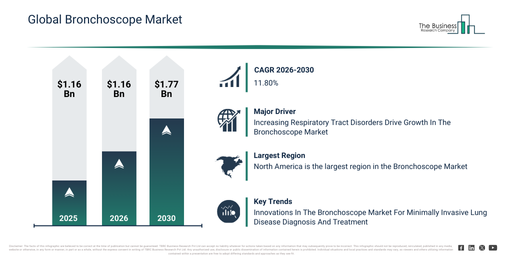
    The bronchoscope market has experienced significant expansion in recent years. It is projected to increase in value from $3.2 billion in 2025 to $3.57 billion in 2026, exhibiting a compound annual growth rate (CAGR) of 11.3%. This historical development can be ascribed to several factors, including the rising incidence of respiratory illnesses, an increase in diagnostic bronchoscopy procedures, the expansion of hospital respiratory departments, enhancements in endoscopic imaging technologies, and the increased availability of reusable bronchoscopes.

    The bronchoscope market is set for substantial growth in the upcoming years, with projections indicating it will attain a valuation of $5.58 billion by 2030, achieving a compound annual growth rate (CAGR) of 11.8%. This anticipated expansion throughout the forecast period stems from factors such as the increasing embrace of disposable endoscopy solutions, a heightened focus on ensuring patient safety, the diversification of interventional pulmonology procedures, rising capital allocation towards advanced endoscopy systems, and an escalating demand for devices that improve operational efficiency. Prominent trends expected during this time frame include the wider adoption of single-use bronchoscopes, a growing necessity for video bronchoscopy systems, the expanded application of minimally invasive pulmonary techniques, advancements in imaging and navigation features, and an intensified commitment to infection prevention.

    Get A Free Sample Report With In-Depth Market Insights:

    https://thebusinessresearchcompany.com/sample_request?id=94812814&type=smp&name=Bronchoscope%20Market%20Report%202026&utm_source=Blogs&utm_medium=Paid&utm_campaign=Sep_PR

    Bronchoscope Market Expansion Drivers: What’s Shaping Future Growth?

    The expansion of the bronchoscope market is anticipated to be driven by the increasing occurrence of respiratory tract disorders, which encompass medical conditions affecting the respiratory system like asthma, chronic obstructive pulmonary disease, pneumonia, bronchitis, cystic fibrosis, pulmonary fibrosis, and lung cancer. As bronchoscopy is a crucial diagnostic and therapeutic method for assessing and treating diverse respiratory ailments, an increase in the prevalence of these disorders directly contributes to the growth of the bronchoscope market. For instance, statistics from the Centers for Disease Control and Prevention, a US-based government agency, indicate that the number of tuberculosis cases rose from 8,320 in 2022 to 9,615 in 2023, an increase of 1,295 cases. Moreover, the incidence rate advanced from 2.5 per 100,000 individuals in 2022 to 2.9 in 2023. Consequently, the rising prevalence of respiratory tract disorders is expected to fuel the bronchoscope market.

    Bronchoscope Market Segment Breakdown: Which Categories Lead On Revenue?

    The bronchoscope market covered in this report is segmented –

    1) By Type: Rigid Bronchoscopes, Flexible Bronchoscopes

    2) By Usability: Reusable Bronchoscopes, Disposable Bronchoscopes

    3) By Application: Diagnosis, Treatments

    4) By End User: Hospitals, Clinics, Ambulatory Surgical Centers, Other End Users

    Subsegments:

    1) By Rigid Bronchoscopes: Adult Rigid Bronchoscopes, Pediatric Rigid Bronchoscopes, Therapeutic Rigid Bronchoscopes

    2) By Flexible Bronchoscopes: Adult Flexible Bronchoscopes, Pediatric Flexible Bronchoscopes, Video Flexible Bronchoscopes, Single-Use Flexible Bronchoscopes

    Bronchoscope Market Strategic Trends: What Defines The Next Growth Phase?

    Leading companies operating within the bronchoscope market are dedicating efforts to creating advanced robotic systems equipped with real-time imaging. This development aims to elevate diagnostic precision, mitigate patient discomfort, and shorten recuperation periods during the diagnosis and treatment of lung diseases. Such advanced robotics integrate live imaging technologies to facilitate precise actions and informed decision-making instantaneously. For illustration, TidalHealth Nanticoke, a US-based healthcare organization, unveiled an advanced robotic bronchoscopy system utilizing the Ion platform in September 2024, intended to better diagnose and treat lung conditions. This cutting-edge technology delivers high-definition visual capabilities and exactitude for less intrusive lung tissue biopsies, thereby enabling specialists to navigate intricate bronchial pathways with greater efficacy.

    Bronchoscope Market Competitive Analysis Of Leading Industry Participants

    Major companies operating in the bronchoscope market are Olympus Corporation, Fujifilm Holdings Corporation, Ambu A/S, Karl Storz Endoscopy SE & Co. KG, Richard Wolf GmbH, Medtronic plc, Boston Scientific Corporation, Cook Medical LLC, Teleflex Incorporated, CONMED Corporation, Stryker Corporation, Verathon Inc., SonoScape Medical Corp., Shanghai AoHua Photoelectricity Endoscope Co. Ltd., EFER Endoscopy Srl, Novatech SA, Smiths Medical, Laborie Medical Technologies, Clarus Medical, Nihon Kohden Corporation

    View The Full Bronchoscope Market Report:

    https://thebusinessresearchcompany.com/report/bronchoscope-global-market-report?utm_source=Blogs&utm_medium=Paid&utm_campaign=Sep_PR

    Bronchoscope Market Geographic Spread And Regional Opportunities

    North America was the largest region in the bronchoscope market in 2025. Asia-Pacific is expected to be the fastest-growing region in the forecast period. The regions covered in the bronchoscope market report are Asia-Pacific, South East Asia, Western Europe, Eastern Europe, North America, South America, Middle East, Africa.

    Reach Out To Our Team:

    The Business Research Company: https://www.thebusinessresearchcompany.com/

    Americas: +1 310-496-7795

    Asia: +44 7882 955267 & +91 8897263534

    Europe: +44 7882 955267

    Email us at: marketing@tbrc.info

    Follow us on:

    LinkedIn: https://in.linkedin.com/company/the-business-research-company

    YouTube: https://www.youtube.com/channel/UC24_fI0rV8cR5DxlCpgmyFQ

    Global Market Model: https://www.thebusinessresearchcompany.com/global-market-model
  • Breathing Circuits Market Outlook From 2026 To 2030: Key Growth Factors And Future Opportunities

    Breathing Circuits Market Outlook From 2026 To 2030: Key Growth Factors And Future Opportunities

    Featuring market attractiveness scoring, total addressable market sizing, company benchmarking matrices, interactive Excel dashboards, deeper supply chain intelligence, emerging startup tracking, and granular product-level insights, The Business Research Company’s 2026 market reports are built to deliver research that is both more actionable and more strategically valuable.

    Breathing Circuits Market Growth Analysis: How Will Revenue Trend Over The Forecast Period?

    The breathing circuits market has demonstrated robust growth in recent years. Its value is projected to escalate from $2.29 billion in 2025 to $2.45 billion in 2026, achieving a compound annual growth rate (CAGR) of 7.3%. The historical expansion of this market is largely attributable to the growth in surgical procedures, the expansion of critical care units, increased anesthesia equipment demand, a heightened focus on hospital infection control, and the growth in ventilator usage.

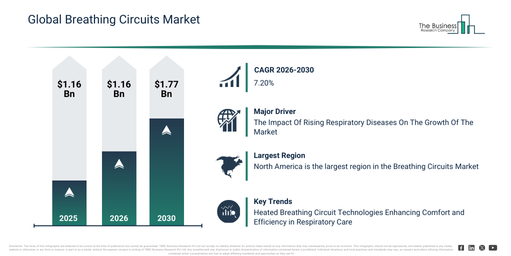
    The breathing circuits market is projected to experience substantial expansion in the coming years. It is anticipated to reach $3.23 billion in 2030, exhibiting a compound annual growth rate (CAGR) of 7.2%. This forecasted expansion is primarily driven by factors such as the increasing adoption of single-use devices, material innovations focused on sustainability, a surge in ICU admissions, the demand for emergency respiratory care, and advancements in anesthesia workflow optimization. Key developments anticipated during this period encompass disposable circuits for infection control, the emergence of low-flow anesthesia systems, designs that improve patient safety, the use of lightweight circuit materials, and enhancements in gas delivery efficiency.

    Get A Free Sample Report With In-Depth Market Insights:

    https://thebusinessresearchcompany.com/sample_request?id=28193393&type=smp&name=Breathing%20Circuits%20Market%20Report%202026&utm_source=Blogs&utm_medium=Paid&utm_campaign=Sep_PR

    Breathing Circuits Market Development Factors: What’s Supporting Demand?

    The increasing occurrence of respiratory diseases is poised to drive the growth of the breathing circuits market in the future. These conditions are defined as a group of ailments that impact the lungs and other components of the respiratory system, hindering proper breathing. The escalating prevalence of respiratory diseases primarily stems from rising levels of air pollution, smoking, indoor air pollution, and occupational hazards. Breathing circuits are instrumental in managing respiratory diseases by providing a controlled flow of air or oxygen to patients, thereby assisting in maintaining adequate respiration and delivering vital treatments such as ventilation or anesthesia for individuals with impaired lung function. For example, in December 2023, a research study published by JAMA Network Open, a medical journal by the American Medical Association, indicated that the global burden of chronic obstructive pulmonary disease (COPD) is projected to result in nearly 600 million cases worldwide by 2050, signifying a 23% increase in prevalence. Within these cases, the number of female cases is expected to surge by 47.1%, while male cases are projected to rise by only 9.4%. Additionally, the majority of cases are anticipated in low- and middle-income regions, where the prevalence by 2050 will be more than double that of high-income regions. Therefore, the increasing prevalence of respiratory diseases is a key driver for the growth of the breathing circuits market.

    Breathing Circuits Market Segmentation: How Does The Market Break Down By Category?

    The breathing circuits market covered in this report is segmented –

    1) By Circuit Type: Open Breathing Circuit, Semi-Open Breathing Circuits, Semi-Closed Breathing Circuits, Closed Breathing Circuits

    2) By Usability: Disposable, Reusable

    3) By Application: Anesthesia, Respiratory Support, Other Applications

    4) By End-User: Hospitals, Clinics, Ambulatory Surgical Centers, Other End-Users

    Subsegments:

    1) By Open Breathing Circuit: T-Piece Circuits, Insufflation Circuits

    2) By Semi-Open Breathing Circuits: Mapleson Circuits (A, B, C, D, E, F), Bain Circuit

    3) By Semi-Closed Breathing Circuits: Partial Rebreathing Circuits, Reservoir Bag Circuits

    4) By Closed Breathing Circuits: Circle Breathing Systems, Low-Flow Anesthesia Circuits

    Breathing Circuits Market Transformation Trends: What Innovations Are Driving Change?

    Leading companies in the breathing circuits market are prioritizing the development of innovative technologies, such as heated breathing circuit technology, to optimize and improve patient care and treatment outcomes. Heated breathing circuit technology works by warming and humidifying the gas delivered to patients during high-flow therapy or non-invasive ventilation, which helps prevent airway dryness, enhances comfort, and supports mucociliary function. For instance, in August 2024, Fisher & Paykel Healthcare Ltd., a New Zealand–based medical device company, obtained FDA clearance for the F&P Airvo 3 NIV system and the AirSpiral NIV tube & chamber kit (K233643). This system features a warmed, humidified single-limb circuit and an integrated humidification chamber, designed to supply high-flow (2–70 L/min) warmed, humidified gases along with an integrated oxygen analyzer for hospital use, thereby improving patient comfort and supporting effective non-invasive respiratory support.

    Breathing Circuits Market Leading Companies And Competitive Benchmarking

    Major companies operating in the breathing circuits market are Fisher & Paykel Healthcare Corporation Limited, GaleMed Corporation, Inspiration Healthcare Group plc, Zhejiang Haisheng Medical Device Co. Ltd., Angiplast Pvt. Ltd., GBUK Group, GCMedica Enterprise Ltd., Fritz Stephan GmbH, Forca Healthcare Pvt. Ltd., Hunan Beyond Medical Technology Co. Ltd., Besmed Health Business Corporation, Bio-Med Devices Inc., Flexicare Medical Ltd., Intersurgical Ltd., 3B Medical Inc., Hangzhou Jinlin Medical Appliances Co. Ltd., Airon Corporation, D.C. Medical Systems Pvt. Ltd., GINEVRI srl, Integral Medical Products Ltd.

    View The Full Breathing Circuits Market Report:

    https://thebusinessresearchcompany.com/report/breathing-circuits-global-market-report?utm_source=Blogs&utm_medium=Paid&utm_campaign=Sep_PR

    Breathing Circuits Market Top Region By Revenue And Market Share

    North America was the largest region in the breathing circuits market in 2025. The regions covered in the breathing circuits market report are Asia-Pacific, South East Asia, Western Europe, Eastern Europe, North America, South America, Middle East, Africa.

    Reach Out To Our Team:

    The Business Research Company: https://www.thebusinessresearchcompany.com/

    Americas: +1 310-496-7795

    Asia: +44 7882 955267 & +91 8897263534

    Europe: +44 7882 955267

    Email us at: marketing@tbrc.info

    Follow us on:

    LinkedIn: https://in.linkedin.com/company/the-business-research-company

    YouTube: https://www.youtube.com/channel/UC24_fI0rV8cR5DxlCpgmyFQ

    Global Market Model: https://www.thebusinessresearchcompany.com/global-market-model
  • Breathalyzers Market Growth Forecast: Market Size, Key Trends And Emerging Opportunities Through 2030

    Breathalyzers Market Growth Forecast: Market Size, Key Trends And Emerging Opportunities Through 2030

    Built to provide research that’s more actionable and strategically valuable, The Business Research Company’s 2026 market reports include market attractiveness analysis, total addressable market sizing, company benchmarking matrices, interactive Excel dashboards, broader supply chain intelligence, emerging startup tracking, and in-depth product insights.

    Breathalyzers Market Forecast: What Value Will The Market Reach By 2030?

    The breathalyzers market has seen rapid growth in recent years. Its valuation is anticipated to rise from $12.85 billion in 2025 to $15.01 billion in 2026, achieving a compound annual growth rate (CAGR) of 16.8%. The expansion during the historic period can be ascribed to several factors, including the increasing enforcement of drunk driving laws, rising needs for alcohol consumption monitoring, the expansion of law enforcement screening programs, the growing use of professional breathalyzers, and the availability of compact sensor technologies.

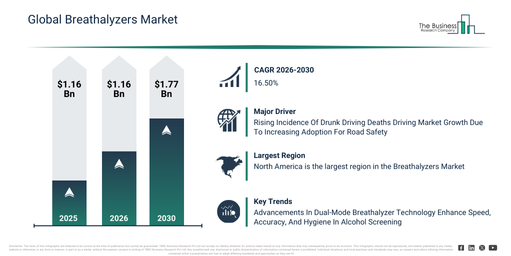
    The breathalyzers market size is projected to experience substantial expansion over the next few years. It is expected to grow to $27.64 billion in 2030, demonstrating a compound annual growth rate (CAGR) of 16.5%. This projected growth during the forecast period is driven by factors such as the increasing uptake of connected personal safety devices, rising demand for real-time alcohol monitoring, the expanding application of breath testing in healthcare diagnostics, the growing utilization of breath analysis for medical purposes, and an increased regulatory emphasis on road safety. Significant trends anticipated in this period include the rising adoption of smartphone-connected breathalyzers, increased deployment of fuel cell sensor technology, the wider use of portable alcohol detection devices, the expansion of workplace alcohol screening programs, and an enhanced focus on accuracy and calibration standards.

    Get A Free Sample Report With In-Depth Market Insights:

    https://thebusinessresearchcompany.com/sample_request?id=92491199&type=smp&name=Breathalyzers%20Market%20Report%202026&utm_source=Blogs&utm_medium=Paid&utm_campaign=Sep_PR

    Breathalyzers Market Industry Drivers: What’s Behind The Revenue Growth?

    The rising count of fatalities from drunk driving incidents is anticipated to fuel the expansion of the breathalyzers market. Drunk driving fatalities are defined as crashes and impacts occurring when people operate vehicles like cars, trucks, or motorcycles while impaired by alcohol or other intoxicants. This increase in drunk driving-related deaths stems from ongoing public indifference to the hazards of impaired driving, along with insufficient law enforcement and a lack of accessible safe alternative transport choices. Breathalyzers stand as vital devices for addressing drunk driving and reducing associated fatalities, functioning as key aids to deter impaired driving, detect DUI offenders, provide legal evidence, prevent accidents, and boost public understanding of the risks of intoxicated driving. For example, in 2025, a US-based personal injury and mass tort law firm, Parker Waichman LLP, reported that during the first quarter of 2025, states including California, Texas, and Florida documented 1,711, 2,159, and 1,100 alcohol-related traffic fatalities, respectively, with the proportion of alcohol-involved collisions underscoring a mounting safety issue in both urban and rural areas. Consequently, the escalating number of drunk driving deaths is indeed stimulating the expansion of the breathalyzers market.

    Breathalyzers Market Segment Trends And Revenue Contributors

    The breathalyzers market covered in this report is segmented –

    1) By Type: Professional, Personal

    2) By Technology: Fuel Cell Technology, Semiconductor Oxide Sensor Technology, Infrared Spectroscopy

    3) By Distribution Channel: Law Enforcement And Military, Consumers, Other Distribution Channels

    4) By Application: Alcohol Detection, Other Applications

    Subsegments:

    1) By Professional: Fuel Cell Breathalyzers, Semiconductor Breathalyzers, Infrared Breathalyzers

    2) By Personal: Keychain Breathalyzers, Smartphone-connected Breathalyzers, Digital Breathalyzers

    #Breathalyzers Market Growth Trends: What’s Shaping The Future Outlook?

    Leading companies within the breathalyzers market are increasingly focusing on technological breakthroughs, specifically dual-mode testing technologies, to facilitate both high-volume screening and precise, hygiene-sensitive measurements within a single device. Dual-mode testing systems enable rapid, contact-free breath checks via a funnel, seamlessly transitioning to mouthpiece-based testing when detailed, individual readings are necessary, thereby optimizing speed, accuracy, and infection control. For instance, in April 2025, Dräger launched its Alcotest 7000, a new generation alcohol screening device that supports dual-mode testing using either a hygienic mouthpiece or a funnel. In initial screening situations like workplace or crowd testing, the funnel permits quick, non-contact evaluations, whereas for precise BrAC measurement (as needed by law enforcement or for DOT compliance), the device can switch to employ a Slide ’n’ Click mouthpiece. The Alcotest 7000 also features Bluetooth connectivity for wireless data transfer and can retain up to 10,000 test results, making it ideal for extensive operations with strict data management requirements.

    Breathalyzers Market Industry Leaders And Competitive Landscape

    Major companies operating in the breathalyzers market are Drägerwerk AG & Co KGaA, BACtrack Inc, Lifeloc Technologies Inc, Intoximeters Inc, Alcohol Countermeasure Systems Corp, Alcolizer Technology Pty Ltd, Quest Products Inc, Andatech Private Limited, AK GlobalTech Corp, Soberlink Inc, Cannabix Technologies Inc, C4 Development Ltd, KeyStone Electronics, Hunter Automotive (breath device division), EnviteC-Wismar GmbH, Smart Start Inc, Intoxalock, ALCO-Safe, AlcoDigital Ltd, ABECQ S.a.r.l

    View The Full Breathalyzers Market Report:

    https://thebusinessresearchcompany.com/report/breathalyzers-global-market-report?utm_source=Blogs&utm_medium=Paid&utm_campaign=Sep_PR

    Breathalyzers Market Regional Analysis And Top Geography

    North America was the largest region in the breathalyzers market in 2025. Asia-Pacific is expected to be the fastest-growing region in the forecast period. The regions covered in the breathalyzers market report are Asia-Pacific, South East Asia, Western Europe, Eastern Europe, North America, South America, Middle East, Africa.

    Reach Out To Our Team:

    The Business Research Company: https://www.thebusinessresearchcompany.com/

    Americas: +1 310-496-7795

    Asia: +44 7882 955267 & +91 8897263534

    Europe: +44 7882 955267

    Email us at: marketing@tbrc.info

    Follow us on:

    LinkedIn: https://in.linkedin.com/company/the-business-research-company

    YouTube: https://www.youtube.com/channel/UC24_fI0rV8cR5DxlCpgmyFQ

    Global Market Model: https://www.thebusinessresearchcompany.com/global-market-model