Blog

  • Cardiac Arrhythmia Monitoring Devices Market Analysis: How The Industry Is Evolving Toward A $13.16 Billion Future

    Cardiac Arrhythmia Monitoring Devices Market Analysis: How The Industry Is Evolving Toward A $13.16 Billion Future

    Backed by market attractiveness analysis, total addressable market sizing, company benchmarking matrices, interactive Excel dashboards, wider supply chain intelligence, emerging startup coverage, and detailed product-level insights, The Business Research Company’s 2026 market reports are designed to offer research that is more actionable and strategically valuable than ever.

    Cardiac Arrhythmia Monitoring Devices Market Size Outlook: How Quickly Will Revenue Expand Through 2030?

    The cardiac arrhythmia monitoring devices market has experienced robust growth in recent years. It is projected to expand from $8.37 billion in 2025 to $9.19 billion in 2026, demonstrating a compound annual growth rate (CAGR) of 9.7%. This expansion observed in previous periods is attributable to factors like the increasing prevalence of cardiac arrhythmias, the wider application of ambulatory monitoring, advancements in ECG sensor technologies, rising awareness regarding early cardiac diagnosis, and the greater adoption of telecardiology services.

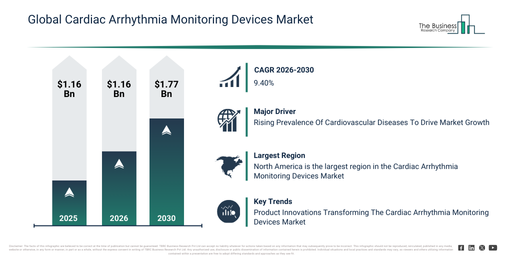
    The cardiac arrhythmia monitoring devices market size is set for robust growth in the upcoming years. It is forecast to expand to $13.16 billion in 2030, achieving a compound annual growth rate (CAGR) of 9.4%. This projected growth over the forecast period is driven by factors such as an escalating demand for remote patient monitoring, increasing investments in digital health platforms, the broadening of AI-enabled arrhythmia detection capabilities, a rising preference for homecare diagnostics, and the expanding integration with mobile health ecosystems. Significant trends anticipated during this period include the increased adoption of wearable cardiac monitoring devices, a rise in the use of remote and home-based monitoring solutions, the growing integration of real-time data analytics, the expansion of implantable monitoring technologies, and an enhanced focus on continuous long-term monitoring.

    Get A Free Sample Report With In-Depth Market Insights:

    https://thebusinessresearchcompany.com/sample_request?id=79377815&type=smp&name=Cardiac%20Arrhythmia%20Monitoring%20Devices%20Market%20Report%202026&utm_source=Blogs&utm_medium=Paid&utm_campaign=Sep_PR

    Cardiac Arrhythmia Monitoring Devices Market Opportunity Drivers: What’s Unlocking New Revenue Potential?

    The increasing incidence of cardiovascular ailments is anticipated to drive the expansion of the cardiac arrhythmia monitoring devices market in the future. These diseases encompass various conditions impacting the heart and its blood vessels, including but not limited to atherosclerosis, angina, heart attacks, and aortic disease. Within the context of cardiovascular diseases, cardiac arrhythmia monitoring devices facilitate event monitoring by tracking the electrical activity of a patient’s heart rhythm and beats (ECG) and by identifying or assessing the likelihood of irregular heartbeats (arrhythmias). A relevant example is from April 2023, where HMP Global, a US-based multi-accredited patient-centered education company, projected that peripheral arterial disease in the US is expected to affect 23.8 million people by 2030, an increase from 21.0 million in 2020. Consequently, the rising occurrence of cardiovascular diseases is fueling the expansion of the cardiac arrhythmia monitoring devices market.

    Cardiac Arrhythmia Monitoring Devices Market Segment Analysis: What Are The Core Market Categories?

    The cardiac arrhythmia monitoring devices market covered in this report is segmented –

    1) By Type: Standards in Ambulatory Cardiac Monitoring, Patient- and Event-activated Intermittent Recorders, External Loop Recorder, Continuous Real-time Attended Remote Cardiac Monitors, Mobile Cardiac Outpatient Telemetry System

    2) By Device: Holter Monitor, Event Recorder, Mobile Cardiac Telemetry, Implantable Cardiac Monitor, Electrocardiogram (ECG) Monitor, Other Devices

    3) By Application: Tachycardia, Bradycardia, Premature Contraction, Other Applications

    4) By End-use: Hospitals and Clinics, Diagnostic Centers, Ambulatory Surgical Centers, Homecare Settings, Other End-uses

    Subsegments:

    1) By Standards In Ambulatory Cardiac Monitoring: Holter Monitors, Mobile Cardiac Telemetry (MCT), Event Monitors

    2) By Patient- And Event-Activated Intermittent Recorders: Handheld Recorders, Wearable Event Monitors

    3) By External Loop Recorder: Pre-Symptom Memory Loop Cardiac Event Recorder, Post-Symptom Event Recorder

    4) By Continuous Real-Time Attended Remote Cardiac Monitors: Hospital-Based Monitors, Home-Based Monitors

    5) By Mobile Cardiac Outpatient Telemetry System: Wireless Telemetry Systems, Real-Time Data Transmission Devices

    Cardiac Arrhythmia Monitoring Devices Market Innovation Trends Shaping Future Development

    Leading enterprises within the cardiac arrhythmia monitoring devices market are actively developing novel insertable cardiac monitoring systems to maintain their competitive edge. These systems are compact, implantable devices that continuously track and log the heart’s electrical activity, furnishing long-term diagnostic information for detecting cardiac arrhythmias and other cardiovascular ailments. As an illustration, in October 2023, Boston Scientific Corporation, a US-based medical equipment manufacturing company, introduced the LUX-Dx II+ Insertable Cardiac Monitor System, engineered for the extended monitoring of arrhythmias. This system features dual-stage algorithms for identifying and confirming potential arrhythmias before clinicians are alerted, alongside remote programming functionalities and programmable algorithms to pinpoint various cardiac conditions. The device delivers improved diagnostic capabilities, specifically designed to eliminate false positives and irrelevant events. Furthermore, patients can utilize a downloadable application for straightforward remote monitoring.

    Cardiac Arrhythmia Monitoring Devices Market Competitive Landscape: Who Leads The Industry?

    Major companies operating in the cardiac arrhythmia monitoring devices market are AliveCor Inc., Biotronik SE & Co. KG, General Electric Company, iRhythm Technologies Inc., Koninklijke Philips N.V., Medtronic PLC, Nihon Kohden Corporation, Abbott Laboratories, Hill-Rom Holdings Inc., Applied Cardiac System Diagnostics Inc., Biotricity Inc., Boston Scientific Corporation, Medicalgorithmics S.A., Siemens AG, Fukuda Denshi Co. Ltd., NUUBO SMART SOLUTIONS S.L., Cardiac Insight Inc., CardioComm Solutions Inc., MicroPort Scientific Corporation, Osypka AG, Spacelabs Healthcare

    View The Full Cardiac Arrhythmia Monitoring Devices Market Report:

    https://thebusinessresearchcompany.com/report/cardiac-arrhythmia-monitoring-devices-global-market-report?utm_source=Blogs&utm_medium=Paid&utm_campaign=Sep_PR

    Cardiac Arrhythmia Monitoring Devices Market Geographic Landscape: Which Region Dominates Industry Growth?

    North America was the largest region in the cardiac arrhythmia monitoring devices market in 2025. Asia-Pacific is expected to be the fastest-growing region in the cardiac arrhythmia monitoring devices market report during the forecast period. The regions covered in the cardiac arrhythmia monitoring devices market report are Asia-Pacific, South East Asia, Western Europe, Eastern Europe, North America, South America, Middle East, Africa.

    Reach Out To Our Team:

    The Business Research Company: https://www.thebusinessresearchcompany.com/

    Americas: +1 310-496-7795

    Asia: +44 7882 955267 & +91 8897263534

    Europe: +44 7882 955267

    Email us at: marketing@tbrc.info

    Follow us on:

    LinkedIn: https://in.linkedin.com/company/the-business-research-company

    YouTube: https://www.youtube.com/channel/UC24_fI0rV8cR5DxlCpgmyFQ

    Global Market Model: https://www.thebusinessresearchcompany.com/global-market-model
  • Artificial Limbs Market Forecast: Breaking Down The Numbers Behind Future Expansion

    Artificial Limbs Market Forecast: Breaking Down The Numbers Behind Future Expansion

    Built to provide research that’s more actionable and strategically valuable, The Business Research Company’s 2026 market reports include market attractiveness analysis, total addressable market sizing, company benchmarking matrices, interactive Excel dashboards, broader supply chain intelligence, emerging startup tracking, and in-depth product insights.

    Artificial Limbs Market Size And Revenue Outlook Through 2030

    The artificial limbs market has experienced significant expansion in recent years. It is forecast to increase from $2.7 billion in 2025 to $2.88 billion in 2026, demonstrating a compound annual growth rate (CAGR) of 6.9%. This historical growth can be linked to factors such as the limited availability of advanced prosthetic technologies, a reliance on conventional body-powered prosthetics, an increasing number of amputation cases due to accidents and diseases, a scarcity of skilled prosthetists, and rising awareness about rehabilitation services.

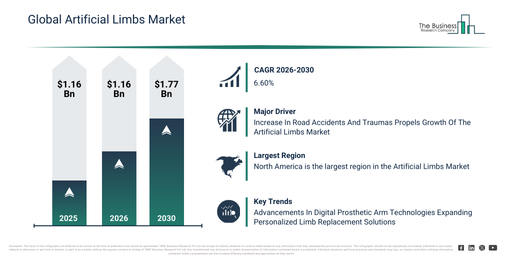
    The artificial limbs market is projected to experience substantial expansion in the coming years, reaching $3.73 billion by 2030, driven by a compound annual growth rate (CAGR) of 6.6%. This anticipated growth is largely due to advancements such as technological innovations in myoelectric and bionic limbs, increased investment in prosthetic research and development, the incorporation of AI and robotics into prosthetic devices, the broadening reach of prosthetic and rehabilitation clinics, and stronger partnerships between manufacturers and healthcare providers. Key developments shaping this period include a greater embrace of myoelectric and electrically powered prosthetics, enhanced customization and personalization of prosthetic limbs, the expansion of rehabilitation and prosthetic facilities, innovations in lightweight and durable materials, and an increasing demand for both cosmetic and functional prosthetics.

    Get A Free Sample Report With In-Depth Market Insights:

    https://thebusinessresearchcompany.com/sample_request?id=33213929&type=smp&name=Artificial%20Limbs%20Market%20Report%202026&utm_source=Blogs&utm_medium=Paid&utm_campaign=Sep_PR

    Artificial Limbs Market Growth Factors: What’s Supporting Expansion?

    The artificial limbs market is anticipated to expand due to the rising incidence of road accidents and traumas. These incidents encompass injuries and fatalities resulting from vehicular collisions and other road events, affecting both motorists and pedestrians. The increase in such occurrences is attributable to factors like distracted driving, excessive speed, subpar road conditions, and insufficient safety provisions. For those affected by road accidents and traumas, artificial limbs offer substantial advantages by reinstating movement and function, thereby enhancing their overall quality of life. Depending on the lost limb, prosthetics enable individuals to recover capacities such as walking, running, or manual dexterity. As an illustration, in September 2025, the Brake, a UK-based Road Safety Charity, reported that during 2024, 1,671 individuals perished on UK roads, and an additional 28,804 sustained severe, life-altering injuries. Consequently, the growing number of road accidents and traumas is serving as a catalyst for the expansion of the artificial limbs market.

    Artificial Limbs Market Segment Performance And Emerging Opportunities

    The artificial limbs market covered in this report is segmented –

    1) By Product: Upper Extremity, Lower Extremity, Liners, Sockets, Other Products

    2) By Material: Titanium, Plastics, Other Materials

    3) By Technology: Body Powered Or Cable Powered, Cosmetic Prosthetics, Myoelectric Or Electrically Powered, Other Technologies

    4) By End User: Hospitals, Orthopedic Clinics, Ambulatory Surgical Centers, Rehabilitation Centers, Prosthetic Clinics

    Subsegments:

    1) By Upper Extremity: Prosthetic Arms, Prosthetic Hands, Elbow Joints, Wrist Joints

    2) By Lower Extremity: Prosthetic Legs, Prosthetic Feet, Knee Joints, Ankle Joints

    3) By Liners: Silicone Liners, Gel Liners, Thermoplastic Liners

    4) By Sockets: Hard Sockets, Soft Sockets, Adjustable Sockets

    5) By Other Products: Accessories, Maintenance Kits, Customization Tools

    Artificial Limbs Market Industry Trends: What’s Reshaping Demand?

    Leading companies within the artificial limbs market are concentrating on developing advanced products, such as digital prosthetic arms, to enhance accessibility and personalization in limb replacement options. A digital prosthetic arm is a bespoke assistive device manufactured using digital technologies like 3D scanning, modeling, and printing, designed to replicate and substitute the function of a lost limb. For example, in October 2025, Motorica, a Russia-based specialist in advanced prosthetic solutions and medical cybernetics, launched its Digital Prosthetics Program in India. This initiative employs 3D imaging, computer-aided design (CAD), and precision 3D printing to create highly individualized mechanical prosthetic arms. By digitally modeling the user’s limb, the program eliminates the necessity for physical molds, considerably accelerating production and delivery. This technique improves comfort, fit, and functionality while broadening access to high-quality prosthetics in underserved areas.

    Artificial Limbs Market Top Companies Driving Competitive Growth

    Major companies operating in the artificial limbs market are Cadence Inc., Nabtesco Corporation, Otto Bock HealthCare GmbH, DJO Global Inc., Össur hf, Hanger Inc., Blatchford Group, Trulife Ltd., Steeper Group Ltd., Fillauer LLC, Orthomerica Products Inc., Cascade Orthopedic Supply LP, The Ohio Willow Wood Company, Spinal Technology Inc., College Park Industries Inc., Comprehensive Prosthetics & Orthotics USA, ALPS South LLC, Touch Bionics Inc., Streifeneder USA Inc., Ekso Bionics Holdings Inc., Freedom Innovations LLC, Proteor USA LLC, United Prosthetics Inc., Liberating Technologies Inc., Naked Prosthetics Inc., Kinetec USA Inc., Endolite North America Inc., Medicare Inc.

    View The Full Artificial Limbs Market Report:

    https://thebusinessresearchcompany.com/report/artificial-limbs-global-market-report?utm_source=Blogs&utm_medium=Paid&utm_campaign=Sep_PR

    Artificial Limbs Market Global Footprint: Which Region Leads The Industry?

    North America was the largest region in the artificial limbs market in 2025. Asia-Pacific is expected to be the fastest-growing region in the forecast period. The regions covered in the artificial limbs market report are Asia-Pacific, South East Asia, Western Europe, Eastern Europe, North America, South America, Middle East, Africa.

    Reach Out To Our Team:

    The Business Research Company: https://www.thebusinessresearchcompany.com/

    Americas: +1 310-496-7795

    Asia: +44 7882 955267 & +91 8897263534

    Europe: +44 7882 955267

    Email us at: marketing@tbrc.info

    Follow us on:

    LinkedIn: https://in.linkedin.com/company/the-business-research-company

    YouTube: https://www.youtube.com/channel/UC24_fI0rV8cR5DxlCpgmyFQ

    Global Market Model: https://www.thebusinessresearchcompany.com/global-market-model
  • Cardiac Ablation Market Outlook Through 2030: Understanding The Growth Opportunity

    Cardiac Ablation Market Outlook Through 2030: Understanding The Growth Opportunity

    Featuring market attractiveness scoring, total addressable market sizing, company benchmarking matrices, interactive Excel dashboards, deeper supply chain intelligence, emerging startup tracking, and granular product-level insights, The Business Research Company’s 2026 market reports are built to deliver research that is both more actionable and more strategically valuable.

    Cardiac Ablation Market Size, Value And Growth Trajectory Through 2030

    The cardiac ablation market has experienced rapid growth in recent years. It is anticipated to expand from $4.9 billion in 2025 to $5.58 billion in 2026, achieving a compound annual growth rate (CAGR) of 13.9%. The historical growth can be attributed to factors like the limited availability of advanced ablation catheters, a reliance on conventional RF ablation, the increasing prevalence of cardiac arrhythmias, a rise in hospital-based cardiac procedures, and limited awareness of minimally invasive options.

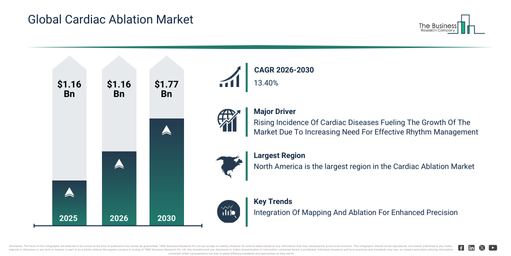
    The cardiac ablation market size is projected to experience substantial growth over the coming years, anticipated to reach $9.24 billion by 2030, exhibiting a compound annual growth rate (CAGR) of 13.4%. This expansion during the forecast period is attributable to several factors, including technological progress in robotic-assisted and hybrid ablation techniques, the increasing embrace of cryoablation and pulsed field ablation systems, a rise in cardiac centers and ambulatory surgical facilities, the growing elderly population facing arrhythmia risks, and the expansion of training initiatives for cardiac specialists. Key trends expected during the forecast period involve a greater uptake of minimally invasive cardiac procedures, increasing demand for robotic-assisted ablation devices, an expansion in treatments for atrial fibrillation and tachycardia, the spread of hybrid and advanced ablation technologies, and an intensified focus on patient safety and the efficiency of procedures.

    Get A Free Sample Report With In-Depth Market Insights:

    https://thebusinessresearchcompany.com/sample_request?id=83866412&type=smp&name=Cardiac%20Ablation%20Market%20Report%202026&utm_source=Blogs&utm_medium=Paid&utm_campaign=Sep_PR

    Cardiac Ablation Market Growth Momentum: What Factors Are Shaping Demand?

    The escalating occurrence of cardiac diseases is anticipated to propel the expansion of the cardiac ablation market moving forward. Cardiac diseases involve a spectrum of conditions affecting the heart’s architecture and function, including coronary artery disease, heart failure, and arrhythmias. This rise in cardiac disease incidence is attributed to sedentary lifestyles, which contribute to obesity, hypertension, and overall poor cardiovascular health. Cardiac ablation contributes to cardiac disease management by precisely locating and eliminating faulty electrical pathways within the heart. It improves patient outcomes by re-establishing a normal rhythm, mitigating symptoms such as palpitations and fatigue, and reducing the dependence on long-term medication. For instance, in October 2023, according to the World Economic Forum, a Switzerland-based non-profit organization, by 2050, the number of stroke deaths could rise by 50%. Thus, the increasing incidence of cardiac diseases is a key driver for the growth of the cardiac ablation market.

    Cardiac Ablation Market Segment Breakdown: Which Categories Lead On Revenue?

    The cardiac ablation market covered in this report is segmented –

    1) By Product Type: Radiofrequency (RF) Ablators, Electrical Ablators, Cryoablation Devices, Ultrasound Ablators, Other Product Types

    2) By Technology: Conventional Technology, Advanced Technology, Hybrid Technology, Robotic-Assisted Technology

    3) By Application: Atrial Fibrillation And Flutter, Tachycardia, Other Applications

    4) By End User: Hospitals, Ambulatory Surgical Centers, Cardiac Centers, Other End Users

    Subsegments:

    1) By Radiofrequency (RF) Ablators: Conventional RF Ablation Catheters, Irrigated-Tip RF Ablation Catheters, Temperature-Controlled RF Ablation Systems

    2) By Electrical Ablators: Direct Current (DC) Ablators, Pulsed Field Ablation (PFA) Systems

    3) By Cryoablation Devices: Cryoballoons, Cryoablation Catheters, Cryosurgical Units

    4) By Ultrasound Ablators: High-Intensity Focused Ultrasound (HIFU) Devices, Intracardiac Echocardiography (ICE)-Guided Ablators

    5) By Other Product Types: Microwave Ablation Systems, Laser Ablation Systems, Hybrid Ablation Devices

    Cardiac Ablation Market Trends Redefining Industry Growth

    Leading companies within the cardiac ablation market are dedicated to developing inventive solutions, including next-generation pulsed-field ablation (PFA) systems with integrated mapping, to address the increasing need for safer, more efficient, and anatomically precise treatments for atrial fibrillation and other arrhythmias. Pulsed-field ablation functions as a non-thermal ablation technology, utilizing ultra-short, high-voltage electrical pulses to induce electroporation in cardiac myocardial cells. This process selectively destroys arrhythmogenic tissue while minimizing collateral damage to adjacent structures like the esophagus, phrenic nerve, or pulmonary veins, contrasting with traditional thermal ablation methods such as radiofrequency (RF) or cryoablation, which rely on heat or freezing and carry greater risks of off-target injury. For example, in October 2024, Abbott Laboratories, a US-based medical device company, introduced its Advisor HD Grid X Mapping Catheter, Sensor Enabled, after receiving FDA clearance to support both PFA and RF ablation cases through advanced high-density mapping. This catheter incorporates a grid design with multiple small, closely spaced electrodes to provide high-resolution electrical mapping of cardiac anatomy, facilitating precise localization of target tissue and improved guidance during ablation, which is particularly valuable in complex PFA workflows where accurate mapping enhances the safety and efficacy of lesion creation.

    Cardiac Ablation Market Company Landscape And Competitive Strategy

    Major companies operating in the cardiac ablation market are Johnson & Johnson, Abbott Laboratories, Medtronic plc, GE HealthCare, Boston Scientific Corporation, Olympus Corporation, CathRx Ltd., Teleflex Incorporated, CONMED Corporation, Lepu Medical Technology Beijing Co. Ltd., MicroPort Scientific Corporation, AtriCure Inc., Japan Lifeline Co. Ltd., AngioDynamics Inc., Biotronik SE, Biosense Webster, Medicover Medical Technologies, Stereotaxis Inc, Cardiofocus Inc, Rhythmia Medical Systems

    View The Full Cardiac Ablation Market Report:

    https://thebusinessresearchcompany.com/report/cardiac-ablation-global-market-report?utm_source=Blogs&utm_medium=Paid&utm_campaign=Sep_PR

    Cardiac Ablation Market Largest Region: Which Geography Holds The Highest Market Share?

    North America was the largest region in the cardiac ablation market in 2025. Europe is expected to be the fastest-growing region in the forecast period. The regions covered in the cardiac ablation market report are Asia-Pacific, South East Asia, Western Europe, Eastern Europe, North America, South America, Middle East, Africa.

    Reach Out To Our Team:

    The Business Research Company: https://www.thebusinessresearchcompany.com/

    Americas: +1 310-496-7795

    Asia: +44 7882 955267 & +91 8897263534

    Europe: +44 7882 955267

    Email us at: marketing@tbrc.info

    Follow us on:

    LinkedIn: https://in.linkedin.com/company/the-business-research-company

    YouTube: https://www.youtube.com/channel/UC24_fI0rV8cR5DxlCpgmyFQ

    Global Market Model: https://www.thebusinessresearchcompany.com/global-market-model
  • Artificial Kidney Market Expected To Grow At 13.2% CAGR Through 2030: What Businesses Need To Know

    Artificial Kidney Market Expected To Grow At 13.2% CAGR Through 2030: What Businesses Need To Know

    Backed by market attractiveness analysis, total addressable market sizing, company benchmarking matrices, interactive Excel dashboards, wider supply chain intelligence, emerging startup coverage, and detailed product-level insights, The Business Research Company’s 2026 market reports are designed to offer research that is more actionable and strategically valuable than ever.

    Artificial Kidney Market Growth From $12.91 Billion In 2026 To $21.18 Billion By 2030 At A CAGR Of 13.2%

    The artificial kidney market size has experienced significant growth in recent years. It is anticipated to expand from $11.43 billion in 2025 to $12.91 billion in 2026, achieving a compound annual growth rate (CAGR) of 13.0%. The market’s historical growth can be attributed to several factors, including the increasing prevalence of end-stage renal disease, the proliferation of dialysis treatment centers, technological progress in dialysis membranes, the rising acceptance of home dialysis options, and better survival outcomes for renal patients.

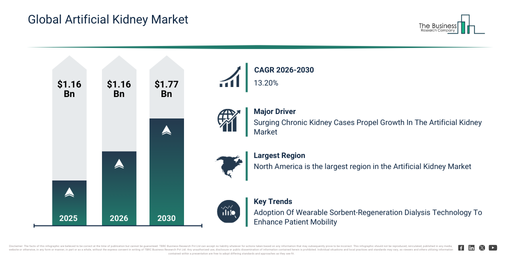
    The artificial kidney market is projected to experience substantial expansion in the coming years. This market is anticipated to reach $21.18 billion by 2030, exhibiting a compound annual growth rate (CAGR) of 13.2%. The projected growth is largely attributable to increasing investments in bioengineered kidney research, a rising demand for portable dialysis solutions, the expansion of remote patient monitoring, a growing focus on reducing dialysis dependency, and technological advancements in artificial organ development. Major trends during this forecast period include the accelerating development of wearable dialysis systems, an increasing focus on implantable artificial kidney solutions, the growing integration of smart monitoring into dialysis devices, the expansion of home-based dialysis technologies, and an enhanced emphasis on patient mobility and comfort.

    Get A Free Sample Report With In-Depth Market Insights:

    https://thebusinessresearchcompany.com/sample_request?id=95015287&type=smp&name=Artificial%20Kidney%20Market%20Report%202026&utm_source=Blogs&utm_medium=Paid&utm_campaign=Sep_PR

    Artificial Kidney Market Demand Drivers: What’s Powering Industry Growth?

    The growing prevalence of chronic kidney conditions is anticipated to drive the expansion of the artificial kidney market in the future. Chronic kidney disease is a prolonged ailment where renal function progressively diminishes over time. Artificial kidneys serve as a primary treatment for chronic kidney disease, effectively eliminating waste products and toxins from the body, managing fluid retention, and ensuring electrolyte balance. For example, data from June 2023, provided by Kidney Research UK, a UK-based charitable organization that conducts research and advocacy efforts to improve understanding, prevention, and treatment of kidney diseases, indicated that approximately 7.19 million individuals in the UK suffered from chronic kidney disease in 2023. This figure accounts for over 10% of the UK population and is forecasted to rise to 7.61 million people by 2033. Consequently, the increasing number of cases of chronic kidney diseases is a key factor propelling the artificial kidney market.

    Artificial Kidney Market Segment Landscape And Growth Outlook

    The artificial kidney market covered in this report is segmented –

    1) By Product Type: Wearable Artificial Kidney, Implantable Artificial Kidney

    2) By Technology: Hemodialysis Systems, Peritoneal Dialysis Systems

    3) By End-User: Hospitals, Specialty Clinics

    Subsegments:

    1) By Wearable Artificial Kidney: Portable Dialysis Systems, Compact Dialysis Units

    2) By Implantable Artificial Kidney: Bioengineered Kidneys, Hybrid Dialysis Systems

    Artificial Kidney Market Innovation Trends: What Developments Are Reshaping The Industry?

    Leading companies within the artificial kidney market are prioritizing the integration of advanced solutions like wearable sorbent-regeneration dialysis technology to boost patient mobility, treatment adaptability, and overall quality of life. This wearable sorbent-regeneration dialysis technology operates with a compact system that consistently purifies and recycles dialysate using sorbent cartridges, thereby enabling features such as continuous portable dialysis, a significant reduction in dialysate volume, and increased patient independence. For example, in June 2023, AWAK Technologies, a Singaporean medical technology company, released AWAK PD, a wearable sorbent-regeneration peritoneal dialysis system engineered to allow individuals with end-stage kidney disease to undergo dialysis while maintaining mobility. The system incorporates an ultra-portable three-kilogram design, a patented sorbent-based dialysate regeneration process that diminishes fluid requirements by up to 90 percent, and a configuration recognized under the FDA Breakthrough Device program. AWAK PD enhances treatment convenience, supports mobility, and improves the overall patient experience.

    Artificial Kidney Market Leading Players And Competitive Positioning

    Major companies operating in the artificial kidney market are Fresenius SE and Co. KGaA, Medtronic plc, Asahi Kasei Medical Co. Ltd., Toray Industries Inc., Baxter International Inc., B. Braun Melsungen AG, Nipro Medical Corporation, Nikkiso Co. Ltd., Kawasumi Laboratories Inc., Quanta Dialysis Technologies Ltd., Triomed AB, WearOptimo, AWAK Technologies Pvt. Ltd., Aethlon Medical Inc., Blood Purification Technologies Inc., Xcorporeal Inc., Nanodialysis B.V., Neokidney Development BV, Wearable Medical Devices Inc., Nephria Bio Inc., US Kidney Research Corporation

    View The Full Artificial Kidney Market Report:

    https://thebusinessresearchcompany.com/report/artificial-kidney-global-market-report?utm_source=Blogs&utm_medium=Paid&utm_campaign=Sep_PR

    Artificial Kidney Market Regional Distribution: Which Areas Power Market Growth?

    North America was the largest region in the artificial kidney market in 2025. Asia-Pacific is expected to be the fastest-growing region in the forecast period. The regions covered in the artificial kidney market report are Asia-Pacific, South East Asia, Western Europe, Eastern Europe, North America, South America, Middle East, Africa.

    Reach Out To Our Team:

    The Business Research Company: https://www.thebusinessresearchcompany.com/

    Americas: +1 310-496-7795

    Asia: +44 7882 955267 & +91 8897263534

    Europe: +44 7882 955267

    Email us at: marketing@tbrc.info

    Follow us on:

    LinkedIn: https://in.linkedin.com/company/the-business-research-company

    YouTube: https://www.youtube.com/channel/UC24_fI0rV8cR5DxlCpgmyFQ

    Global Market Model: https://www.thebusinessresearchcompany.com/global-market-model

  • Capsule Endoscopy System Market Growth Potential: What The Latest Forecast Reveals

    Capsule Endoscopy System Market Growth Potential: What The Latest Forecast Reveals

    Built to provide research that’s more actionable and strategically valuable, The Business Research Company’s 2026 market reports include market attractiveness analysis, total addressable market sizing, company benchmarking matrices, interactive Excel dashboards, broader supply chain intelligence, emerging startup tracking, and in-depth product insights.

    Capsule Endoscopy System Market CAGR Outlook And Future Development

    The capsule endoscopy system market size has experienced swift expansion in recent years. Its valuation is projected to increase from $0.75 billion in 2025 to $0.83 billion in 2026, demonstrating a compound annual growth rate (CAGR) of 10.1%. Historically, this market growth has stemmed from factors such as the increasing occurrence of gastrointestinal conditions, a greater need for non-invasive diagnostic tools, enhancements in hospital diagnostic capacities, wider adoption of video capsule technology, and the introduction of sophisticated imaging sensors.

    The capsule endoscopy system market size is anticipated to experience robust growth in the upcoming years, projected to reach $1.21 billion in 2030, exhibiting a compound annual growth rate (CAGR) of 9.9%. This expansion during the forecast period is attributable to factors such as the increasing adoption of AI-enabled diagnostic software, a rising demand for early GI disease detection, the broadening of ambulatory diagnostic centers, an intensifying focus on personalized gastroenterology care, and continuous technological advancements in capsule design. Significant trends expected in the forecast period include the increasing uptake of capsule-based GI diagnostics, the growing utilization of wireless imaging capsules, the expanding integration of AI-assisted image analysis, the proliferation of minimally invasive diagnostic procedures, and an enhanced focus on patient comfort and compliance.

    Get A Free Sample Report With In-Depth Market Insights:

    https://thebusinessresearchcompany.com/sample_request?id=70656761&type=smp&name=Capsule%20Endoscopy%20System%20Market%20Report%202026&utm_source=Blogs&utm_medium=Paid&utm_campaign=Sep_PR

    Capsule Endoscopy System Market Expansion Drivers: What’s Shaping Future Growth?

    The escalating occurrence of gastrointestinal disorders is anticipated to stimulate the expansion of the capsule endoscopy system market moving forward. Gastrointestinal disorders refer to any condition or disease affecting the gastrointestinal tract, which includes the mouth, esophagus, stomach, small intestine, large intestine, and anus. Capsule endoscopy offers an efficient and rapid technique for screening various gastrointestinal conditions, including obscure GI tract bleeding, thereby assisting in the accurate diagnosis and treatment of these disorders. For instance, in June 2023, according to Crohn’s and Colitis Canada, a Canada-based non-profit organization, over 322,600 Canadians were estimated to be living with inflammatory bowel diseases (IBD) in 2023, accounting for approximately 0.82% of the population. Therefore, the rising prevalence of gastrointestinal disorders is driving the growth of the capsule endoscopy system market.

    Capsule Endoscopy System Market Segmentation: How Does The Market Break Down By Category?

    The capsule endoscopy system market covered in this report is segmented –

    1) By Component: Capsule Endoscope, Work Stations And Recorders

    2) By Application: Esophageal Diseases, Colonic Diseases, Occult GI Bleeding, Crohn’s Disease, Small Bowel Tumors, Celiac Disease, Inherited Polyposis Syndromes

    3) By End-User: Hospitals, Ambulatory Surgery Centers, Other End-Users

    Subsegments:

    1) By Capsule Endoscope: Video Capsule Endoscopes, Capsule Endoscopes For Small Intestine, Capsule Endoscopes For Colon

    2) By Work Stations and Recorders: Work Stations For Image Processing, Data Recorders, Video Recorders, Software For Capsule Endoscopy

    Capsule Endoscopy System Market Strategic Trends: What Defines The Next Growth Phase?

    Major companies in the capsule endoscopy system market are developing advanced capsules, such as the NaviCam small bowel system, to offer a more effective and efficient approach for diagnosing small bowel diseases. For instance, in February 2023, AnX Robotica Corporation, a US-based manufacturer of capsule endoscopy systems, launched the NAVICAM small bowel system. This video capsule endoscopy (VCE) system integrates various advanced technologies to provide a more effective and efficient method for detecting small bowel conditions. The NAVICA capsule is fitted with a magnet, allowing remote steering by a physician, which enables a more complete visualization of the small bowel, even in hard-to-reach areas. It also utilizes artificial intelligence (AI) to automatically identify and flag areas of concern in the video footage, aiding physicians in quickly and accurately pinpointing abnormalities in the small bowel. Moreover, this system is designed to be more effective, efficient, and comfortable for patients, providing physicians with the necessary tools to make precise diagnoses of small bowel diseases.

    Capsule Endoscopy System Market Key Players Shaping Industry Direction

    Major companies operating in the capsule endoscopy system market are Medtronic plc., Fujifilm Holdings Corporation, Koninklijke Philips N.V., Boston Scientific Corporation, Olympus Corporation, Check-Cap Ltd, Medigus Ltd., IntroMedic Co. Ltd., GI View Ltd., SMART Medical Systems Ltd, BodyCap SAS, Advin Healthcare Private Limited, Chongqing Jinshan Science and Technology Group Co. Ltd, SmartPill Corporation, ANKON Technologies Co. Ltd., RF Systems Lab Co. Ltd., CapsoVision Inc., PENTAX Medical Company, Given Imaging Ltd., Lifeline Sciences LLC.

    View The Full Capsule Endoscopy System Market Report:

    https://thebusinessresearchcompany.com/report/capsule-endoscopy-system-global-market-report?utm_source=Blogs&utm_medium=Paid&utm_campaign=Sep_PR

    Capsule Endoscopy System Market Regional Analysis: Which Region Leads By Revenue?

    North America was the largest region in the capsule endoscopy system market in 2025. The regions covered in the capsule endoscopy system market report are Asia-Pacific, South East Asia, Western Europe, Eastern Europe, North America, South America, Middle East, Africa.

    Reach Out To Our Team:

    The Business Research Company: https://www.thebusinessresearchcompany.com/

    Americas: +1 310-496-7795

    Asia: +44 7882 955267 & +91 8897263534

    Europe: +44 7882 955267

    Email us at: marketing@tbrc.info

    Follow us on:

    LinkedIn: https://in.linkedin.com/company/the-business-research-company

    YouTube: https://www.youtube.com/channel/UC24_fI0rV8cR5DxlCpgmyFQ

    Global Market Model: https://www.thebusinessresearchcompany.com/global-market-model
  • Capnography Devices Market Growth Outlook: Why Analysts Expect Continued Expansion

    Capnography Devices Market Growth Outlook: Why Analysts Expect Continued Expansion

    Backed by market attractiveness analysis, total addressable market sizing, company benchmarking matrices, interactive Excel dashboards, wider supply chain intelligence, emerging startup coverage, and detailed product-level insights, The Business Research Company’s 2026 market reports are designed to offer research that is more actionable and strategically valuable than ever.

    Capnography Devices Market Set To Climb From $0.92 Billion In 2026 To $1.44 Billion By 2030

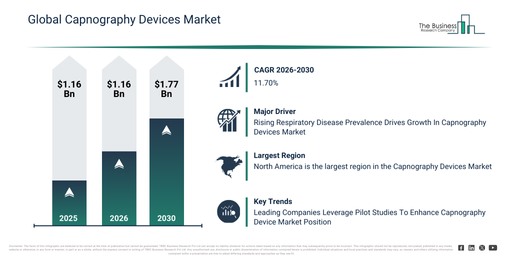
    The capnography devices market size has experienced rapid growth in recent years. It is projected to expand from $0.83 billion in 2025 to $0.92 billion in 2026, achieving a compound annual growth rate (CAGR) of 11.8%. The historical growth of this market can be linked to an increase in surgical procedures, the rising utilization of anesthesia in clinical care, a growing adoption of respiratory monitoring in hospitals, the expansion of emergency medical services, and enhanced awareness regarding patient safety during ventilation.

    The capnography devices market is projected for substantial expansion in the upcoming years. Its valuation is anticipated to reach $1.44 billion in 2030, exhibiting a compound annual growth rate (CAGR) of 11.7%. This projected growth during the forecast period is driven by factors such as an increasing incidence of respiratory ailments, a heightened need for continuous monitoring of ventilation, the expansion of ambulatory and outpatient medical interventions, a greater emphasis on the early detection of respiratory issues, and the growing incorporation of capnography in settings outside of hospitals. Key developments expected during this period involve the rising implementation of capnography in emergency and critical care units, its increased application for monitoring patients during procedural sedation, an escalating demand for portable and compact capnography instruments, the broader deployment of capnography beyond surgical operating rooms, and its enhanced integration into multi-parameter monitoring systems.

    Get A Free Sample Report With In-Depth Market Insights:

    https://thebusinessresearchcompany.com/sample_request?id=23015590&type=smp&name=Capnography%20Devices%20Market%20Report%202026&utm_source=Blogs&utm_medium=Paid&utm_campaign=Sep_PR

    Capnography Devices Market Development Factors: What’s Supporting Demand?

    The increasing occurrence of respiratory ailments is anticipated to drive the expansion of the capnography devices market in the future. These conditions encompass a range of medical issues impacting the lungs and respiratory system, such as asthma, chronic obstructive pulmonary disease (COPD), pneumonia, and lung cancer, all of which hinder respiration and may result in serious health problems. The growing incidence of respiratory illnesses is attributed to factors like heightened air pollution, increased smoking, and an aging demographic. Capnography devices find application in respiratory conditions for real-time monitoring and evaluation of patients’ ventilation and for identifying irregularities. As an example, in June 2024, data from the Australian Institute of Health and Welfare, an Australia-based health and welfare agency, indicated that around 8.5 million people in Australia, representing 34% of the population, were estimated to suffer from chronic respiratory conditions. This figure includes an estimated 2.8 million individuals, or 11% of the populace, affected by asthma, and 638,000 individuals, or 2.5% of the populace, living with chronic obstructive pulmonary disease (COPD). Consequently, the increased prevalence of respiratory ailments is fueling the expansion of the capnography devices market.

    Capnography Devices Market Segment Trends And Revenue Contributors

    The capnography devices market covered in this report is segmented –

    1) By Product: Hand-held, Stand-alone, Multi-parameter

    2) By Component: Original Equipment Manufacturer (OEM) Modules, Other Components

    3) By Technology: Mainstream, Sidestream, Microstream

    4) By Application: Emergency Medicine, Pain Management, Procedural Sedation, Critical Care, Other Applications

    5) By End-use: Hospitals, Ambulatory Care, Other End-Uses

    Subsegments:

    1) By Hand-held: Portable Capnographs, Emergency & Transport Capnographs, Point-of-Care Capnography Devices

    2) By Stand-Alone: Bedside Capnography Monitors, ICU Capnography Systems, Operating Room Capnographs

    3) By Multi-parameter: Capnography with Pulse Oximetry (SpO2), Capnography with ECG Monitoring, Integrated Patient Monitoring Systems

    Capnography Devices Market Transformation Trends: What Innovations Are Driving Change?

    Major companies operating in the capnography devices market are increasingly focusing on developing advanced pilot studies to gain a competitive edge. These pilot studies are preliminary research investigations conducted to evaluate the feasibility, effectiveness, and potential impact of these devices in clinical settings. For instance, in March 2024, TidalSense, a UK-based respiratory device company, initiated a pilot study to assess its innovative N-Tidal device for diagnosing asthma in young children. The study, conducted in partnership with the University of Nottingham and Nottingham University Hospitals NHS Trust, will involve 75 children under the age of five who are experiencing asthma and viral wheezing. The N-Tidal device utilizes capnography technology to measure carbon dioxide levels during normal breathing, thereby eliminating the need for challenging spirometry tests often used in pediatric populations. These traditional tests can be difficult for young children, potentially leading to inaccurate diagnoses and prolonged hospital stays.

    Capnography Devices Market Competitive Analysis Of Leading Industry Participants

    Major companies operating in the capnography devices market are Medtronic PLC, GE HealthCare Technologies Inc., Koninklijke Philips NV, Masimo Corporation, Drägerwerk AG & Co. KGaA, Nihon Kohden Corporation, Mindray Medical International Limited, ZOLL Medical Corporation, Spacelabs Healthcare Inc., Vyaire Medical Inc., Edan Instruments Inc., Criticare Systems Inc., Opto Circuits India Limited, Infinium Medical Inc., Weinmann Emergency Medical Technology GmbH & Co. KG, BPL Medical Technologies Pvt Ltd., Smiths Group PLC, Nonin Medical Inc., Shenzhen Creative Industry Co Ltd, Shenzhen Comen Medical Instruments Co Ltd

    View The Full Capnography Devices Market Report:

    https://thebusinessresearchcompany.com/report/capnography-devices-global-market-report?utm_source=Blogs&utm_medium=Paid&utm_campaign=Sep_PR

    Capnography Devices Market Geographic Distribution And Regional Opportunities

    North America was the largest region in the capnography devices market in 2025. Asia-Pacific is expected to be the fastest-growing region in the forecast period. The regions covered in the capnography devices market report are Asia-Pacific, South East Asia, Western Europe, Eastern Europe, North America, South America, Middle East, Africa.

    Reach Out To Our Team:

    The Business Research Company: https://www.thebusinessresearchcompany.com/

    Americas: +1 310-496-7795

    Asia: +44 7882 955267 & +91 8897263534

    Europe: +44 7882 955267

    Email us at: marketing@tbrc.info

    Follow us on:

    LinkedIn: https://in.linkedin.com/company/the-business-research-company

    YouTube: https://www.youtube.com/channel/UC24_fI0rV8cR5DxlCpgmyFQ

    Global Market Model: https://www.thebusinessresearchcompany.com/global-market-model

  • Artificial Intelligence-Powered Seizure Prediction Wearable Market Forecast To Reach $3.87 Billion By 2030: Key Trends Explained

    Artificial Intelligence-Powered Seizure Prediction Wearable Market Forecast To Reach $3.87 Billion By 2030: Key Trends Explained

    Featuring market attractiveness scoring, total addressable market sizing, company benchmarking matrices, interactive Excel dashboards, deeper supply chain intelligence, emerging startup tracking, and granular product-level insights, The Business Research Company’s 2026 market reports are built to deliver research that is both more actionable and more strategically valuable.

    Artificial Intelligence-Powered Seizure Prediction Wearable Market Expansion Outlook: What Revenue Opportunities Are Ahead?

    The artificial intelligence-powered seizure prediction wearable market size has experienced substantial expansion in recent years. It is forecast to rise from $1.41 billion in 2025 to $1.73 billion in 2026, achieving a compound annual growth rate (CAGR) of 22.5%. The historical development of this market is attributable to an increase in epilepsy prevalence, advancements in wearable biosensors, the critical need for early seizure warnings, limitations inherent in conventional monitoring, and growing neurological research.

    The artificial intelligence-powered seizure prediction wearable market size is anticipated to experience substantial expansion in the coming years. It is projected to reach $3.87 billion by 2030, exhibiting a compound annual growth rate (CAGR) of 22.3%. This projected increase during the forecast period is due to advancements such as enhanced AI-powered predictive accuracy, the broadening of remote neurology care services, a rising need for real-time alerts, seamless integration with mobile health applications, and an emphasis on patient-centric epilepsy management. Key developments anticipated in this period encompass predictive detection of neurological events, ongoing wearable EEG monitoring, customized seizure alert systems, AI-driven identification of risk patterns, and at-home epilepsy management solutions.

    Get A Free Sample Report With In-Depth Market Insights:

    https://thebusinessresearchcompany.com/sample_request?id=92640567&type=smp&name=Artificial%20Intelligence-Powered%20Seizure%20Prediction%20Wearable%20Market%20Report%202026&utm_source=Blogs&utm_medium=Paid&utm_campaign=Sep_PR

    Artificial Intelligence-Powered Seizure Prediction Wearable Market Growth Drivers: What’s Behind The Acceleration?

    The escalating incidence of neurological disorders is poised to significantly drive the expansion of the artificial intelligence-powered seizure prediction wearable market. These disorders involve diseases or dysfunctions of the nervous system that interfere with the normal activity of the brain, spinal cord, or nerves. The increase in neurological disorders is largely attributable to aging populations, which heightens the risk of neurodegeneration and related brain and nerve conditions. Artificial intelligence-powered seizure prediction wearables assist in addressing neurological disorders by consistently monitoring physiological signals and employing AI to predict seizures, thereby enabling early intervention and enhancing patient safety. For instance, in April 2024, the National Library of Medicine, a US-based medical library, reported that approximately 6.9 million Americans aged 65 and older are currently affected by Alzheimer’s dementia, a figure anticipated to climb to 13.8 million by 2060. Consequently, the growing prevalence of neurological disorders is a key factor propelling the growth of the artificial intelligence-powered seizure prediction wearable market.

    Artificial Intelligence-Powered Seizure Prediction Wearable Market Breakdown By Product Type And Application

    The artificial intelligence-powered seizure prediction wearable market covered in this report is segmented –

    1) By Product Type: Wristbands, Headbands, Smartwatches, Patches

    2) By Technology: Electroencephalography-Based, Accelerometer-based, Multi-Sensor, Other Technologies

    3) By Distribution Channel: Online, Offline

    4) By Application: Hospitals And Clinics, Home Care, Research Institutes, Other Applications

    5) By End User: Adults, Pediatrics, Geriatrics

    Subsegments:

    1) By Wristbands: Heart Rate Monitoring, Motion Detection

    2) By Headbands: Brainwave Analysis, Stress Level Detection

    3) By Smartwatches: Heart Rate Monitoring, Motion Detection

    4) By Patches: Electrodermal Activity Monitoring, Heart Rate Monitoring

    Artificial Intelligence-Powered Seizure Prediction Wearable Market Trends: What’s Defining The Industry’s Next Phase?

    Leading companies within the artificial intelligence-powered seizure prediction wearable market are concentrating on developing sophisticated solutions, including advanced wearable devices that utilize AI and real-time data analytics for precise seizure prediction and improved patient safety. These advanced wearable devices are electronic items worn on the body, featuring sensors and AI capabilities to continuously monitor physiological signals, enabling them to detect, analyze, and forecast health events like seizures. For example, in February 2024, Empatica Inc., a US-based MIT Media Lab spinoff company, introduced its EpiMonitor epilepsy monitoring system, which offers real-time seizure detection and alerts. This system is engineered to identify generalized tonic-clonic seizures with 98% accuracy and dispatch immediate alerts to caregivers for prompt assistance. It also boasts up to seven days of battery life, tracks sleep and activity, and generates comprehensive health reports to assist clinical care. Ultimately, its goal is to enhance safety and empower epilepsy patients by delivering reliable seizure monitoring and extensive health insights.

    Artificial Intelligence-Powered Seizure Prediction Wearable Market Competitive Overview And Top Companies

    Major companies operating in the artificial intelligence-powered seizure prediction wearable market are Empatica Inc., BioSerenity, Epitel Inc., Seer Medical Pty Ltd., mjn.cat (mjn neuro), Neureka Inc., LivAssured B V NightWatch, SeizAlarm, Cove Neurosciences Inc., CeriBell Inc., Brain Sentinel Inc., Epilert Inc., Byteflies, Danish Care Technology ApS Epi-Care, Neurava Inc., NeuroHelp Ltd., Emfit Ltd., Alert-iT, EpiUSA, Zeto Inc., Cadwell Industries

    View The Full Artificial Intelligence-Powered Seizure Prediction Wearable Market Report:

    https://thebusinessresearchcompany.com/report/artificial-intelligence-powered-seizure-prediction-wearable-global-market-report?utm_source=Blogs&utm_medium=Paid&utm_campaign=Sep_PR

    Artificial Intelligence-Powered Seizure Prediction Wearable Market Leading Geography: Which Region Contributes The Most Revenue?

    North America was the largest region in the artificial intelligence-powered seizure prediction wearable market in 2025. Asia-Pacific is expected to be the fastest-growing region in the forecast period. The regions covered in the artificial intelligence-powered seizure prediction wearable market report are Asia-Pacific, South East Asia, Western Europe, Eastern Europe, North America, South America, Middle East, Africa.

    Reach Out To Our Team:

    The Business Research Company: https://www.thebusinessresearchcompany.com/

    Americas: +1 310-496-7795

    Asia: +44 7882 955267 & +91 8897263534

    Europe: +44 7882 955267

    Email us at: marketing@tbrc.info

    Follow us on:

    LinkedIn: https://in.linkedin.com/company/the-business-research-company

    YouTube: https://www.youtube.com/channel/UC24_fI0rV8cR5DxlCpgmyFQ

    Global Market Model: https://www.thebusinessresearchcompany.com/global-market-model
  • Capillary Blood Collection Devices Market Forecast Insights: The Road To $4.68 Billion By 2030

    Capillary Blood Collection Devices Market Forecast Insights: The Road To $4.68 Billion By 2030

    Featuring market attractiveness scoring, total addressable market sizing, company benchmarking matrices, interactive Excel dashboards, deeper supply chain intelligence, emerging startup tracking, and granular product-level insights, The Business Research Company’s 2026 market reports are built to deliver research that is both more actionable and more strategically valuable.

    Capillary Blood Collection Devices Market Forecast: Value Set To Climb From $3.07 Billion To $4.68 Billion

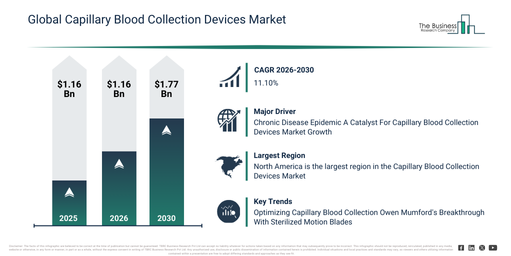
    The capillary blood collection devices market size has seen rapid expansion in recent years. It is projected to grow from $2.72 billion in 2025 to $3.07 billion in 2026, exhibiting a compound annual growth rate (CAGR) of 13.1%. The historical growth in this market can be attributed to several factors, including an increase in routine diagnostic testing, the widespread application of fingerstick glucose testing, the expansion of hospital and diagnostic laboratories, the growing prevalence of chronic diseases, and an escalating demand for pediatric and neonatal testing.

    The market for capillary blood collection devices is projected to experience swift expansion in the upcoming years. It will grow to $4.68 billion in 2030 at a compound annual growth rate (CAGR) of 11.1%. This anticipated growth is driven by several factors, including the surge in home-based diagnostic testing, a greater need for decentralized healthcare services, the rising uptake of rapid diagnostic tests, the broadening of preventive health screening initiatives, and the increasing application of capillary samples in advanced diagnostic procedures. Furthermore, major trends anticipated during this period involve a growing preference for minimally invasive blood collection methods, an elevated demand for point-of-care sample collection, the expanded utilization of capillary sampling for home diagnostics, the broader application of dried blood spot testing, and a heightened emphasis on devices designed for patient comfort and safety.

    Get A Free Sample Report With In-Depth Market Insights:

    https://thebusinessresearchcompany.com/sample_request?id=93223160&type=smp&name=Capillary%20Blood%20Collection%20Devices%20Market%20Report%202026&utm_source=Blogs&utm_medium=Paid&utm_campaign=Sep_PR

    Capillary Blood Collection Devices Market Industry Drivers: What’s Behind The Revenue Growth?

    The anticipated expansion of the capillary blood collection devices market is driven by the rising incidence of chronic ailments. These enduring health conditions demand ongoing care and therapeutic interventions. The escalation in chronic disease cases stems from an aging global demographic, detrimental lifestyle choices, environmental influences, and improved medical diagnostic techniques enabling earlier identification. Capillary blood collection devices empower both patients and medical professionals to manage chronic conditions more effectively through routine, convenient, and minimally invasive blood analyses, which in turn contributes to enhanced patient well-being and an elevated standard of living. As an illustration, data from Allergy UK, a national charity based in the UK, revealed in April 2024 that over 21 million individuals in the UK suffer from allergies, marking them as the most frequently cited chronic health issue in 2022. Forecasts suggest that by 2026, half of Europe’s populace will be impacted by at least one allergy. Consequently, the expanding occurrence of chronic diseases is fueling the growth of the capillary blood collection devices market.

    Capillary Blood Collection Devices Market Segment Analysis Spotlighting Growth Areas

    The capillary blood collection devices market covered in this report is segmented –

    1) By Product: Lancets, Micro-Container Tubes, Micro-Hematocrit Tubes, Warming Devices, Other Product

    2) By Materials: Plastic, Glass, Stainless Steel, Ceramic, Other Materials

    3) By Application: Whole Blood, Serum Protein Tests, Comprehensive Metabolic Panel Tests, Liver Function Tests, Dried Blood Spot Tests

    4) By End-Users: Hospitals And Clinics, Blood Donation Centers, Diagnostic Centers, Home Diagnosis, Pathology Laboratories

    Subsegments:

    1) By Lancets: Safety Lancets, Standard Lancets, Precision Lancets, Multi-Use Lancets

    2) By Micro-Container Tubes: Plastic Micro-Containers, Glass Micro-Containers, Capillary Blood Collection Tubes With Anticoagulants, Capillary Blood Collection Tubes For Serum

    3) By Micro-Hematocrit Tubes: Plastic Micro-Hematocrit Tubes, Glass Micro-Hematocrit Tubes, Capillary Blood Collection Tubes For Hematocrit Testing

    4) By Warming Devices: Thermal Warming Pads, Electric Warming Devices, Infrared Warming Devices, Handheld Warming Devices

    5) By Other Products: Blood Collection Systems, Collection Caps And Caps For Microtubes, Blood Sample Storage Devices

    #Capillary Blood Collection Devices Market Growth Trends: What’s Shaping The Future Outlook?

    Companies actively engaged in the capillary blood collection devices market are concentrating on the development of innovative solutions, such as neonatal and pediatric capillary blood sampling devices. This strategic focus aims to meet specialized requirements and overcome existing challenges within healthcare environments serving infants and young children. For example, in October 2023, Owen Mumford Ltd., a UK-based medical device company, introduced Unistik Heelstik, which is a range of capillary blood sampling products designed for neonates and children. This particular collection includes four distinct blood sample instruments, each specifically engineered for a different developmental stage: Unistik Heelstik Toddler, Full Term, Preemie, and Micro Preemie. These instruments are developed to resolve difficulties associated with capillary blood sampling in newborns and older babies, allowing for the collection of adequate sample volumes while minimizing the baby’s discomfort. The Unistik Heelstik devices are engineered to target only surface blood vessels, thus preventing deep enough penetration to affect the skin’s pain fibers.

    Capillary Blood Collection Devices Market Leading Companies And Competitive Benchmarking

    Major companies operating in the capillary blood collection devices market are Becton Dickinson and Company, Terumo Medical Corporation, Owen Mumford Ltd, Greiner Bio-One International GmbH, SARSTEDT AG & Co. KG, Nipro Corporation, Gerresheimer AG, Abbott Laboratories, F. Hoffmann-La Roche AG, HTL-STREFA S.A., Chengdu Rich Science Industry Co. Ltd, PTS Diagnostics, Vitrex Medical A/S, SteriLance Medical Suzhou Inc., Improve Medical Instruments Co. Ltd, Narang Medical Limited, Sekisui Medical Co. Ltd, Medline Industries LP, VitroCom Inc, FL Medical S.r.l

    View The Full Capillary Blood Collection Devices Market Report:

    https://thebusinessresearchcompany.com/report/capillary-blood-collection-devices-global-market-report?utm_source=Blogs&utm_medium=Paid&utm_campaign=Sep_PR

    Capillary Blood Collection Devices Market Largest Region By Revenue And Market Share

    North America was the largest region in the capillary blood collection devices market in 2025. Asia-Pacific is expected to be the fastest-growing region in the forecast period. The regions covered in the capillary blood collection devices market report are Asia-Pacific, South East Asia, Western Europe, Eastern Europe, North America, South America, Middle East, Africa.

    Reach Out To Our Team:

    The Business Research Company: https://www.thebusinessresearchcompany.com/

    Americas: +1 310-496-7795

    Asia: +44 7882 955267 & +91 8897263534

    Europe: +44 7882 955267

    Email us at: marketing@tbrc.info

    Follow us on:

    LinkedIn: https://in.linkedin.com/company/the-business-research-company

    YouTube: https://www.youtube.com/channel/UC24_fI0rV8cR5DxlCpgmyFQ

    Global Market Model: https://www.thebusinessresearchcompany.com/global-market-model
  • Cancer Supportive Care Products Market Explained: What Is Fueling Growth To $28.24 Billion By 2030?

    Cancer Supportive Care Products Market Explained: What Is Fueling Growth To $28.24 Billion By 2030?

    Built to provide research that’s more actionable and strategically valuable, The Business Research Company’s 2026 market reports include market attractiveness analysis, total addressable market sizing, company benchmarking matrices, interactive Excel dashboards, broader supply chain intelligence, emerging startup tracking, and in-depth product insights.

    Cancer Supportive Care Products Market Revenue Growth On Track For A 4.7% CAGR Through 2030

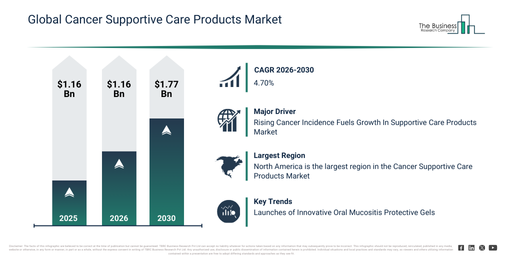
    The cancer supportive care products market has shown consistent expansion in its size recently. This market is set to increase from $22.47 billion in 2025 to $23.54 billion in 2026, with a compound annual growth rate (CAGR) of 4.8%. The growth observed in prior periods can be attributed to an increase in global cancer prevalence, the rising application of chemotherapy and radiation therapy, a greater incidence of treatment-related side effects, the growth of hospital-based oncology services, and improved access to essential supportive drugs.

    The cancer supportive care products market size is projected to demonstrate consistent expansion in the coming years, reaching $28.24 billion by 2030, reflecting a compound annual growth rate (CAGR) of 4.7%. This anticipated growth over the forecast period can be attributed to an aging global population with a heightened risk of cancer, a greater emphasis on patient-centric oncology care, increasing understanding of the advantages of supportive care, the rising volume of cancer treatments worldwide, and a growing necessity for long-term symptom management. Significant trends during this period include an escalating demand for extensive symptom management therapies, an intensified focus on quality-of-life-oriented cancer care, a greater embrace of multimodal supportive drug regimens, the extension of supportive care across various cancer indications, and its increased integration into standard oncology protocols.

    Get A Free Sample Report With In-Depth Market Insights:

    https://thebusinessresearchcompany.com/sample_request?id=48702702&type=smp&name=Cancer%20Supportive%20Care%20Products%20Market%20Report%202026&utm_source=Blogs&utm_medium=Paid&utm_campaign=Sep_PR

    Cancer Supportive Care Products Market Growth Factors: What’s Supporting Expansion?

    The escalating incidence of cancer is anticipated to propel the expansion of the cancer supportive care products market moving forward. As populations grow older, the probability of developing cancer rises due to cellular changes and extended exposure to risk factors. Furthermore, elements such as smoking, an unhealthy diet, insufficient physical activity, and excessive alcohol consumption contribute significantly to cancer susceptibility. Cancer supportive care products are utilized to manage symptoms, enhance the quality of life, and provide support to patients undergoing treatment, thus addressing the increasing demand driven by the growing occurrence of cancer. For instance, in January 2024, the American Cancer Society, a US-based non-profit organization dedicated to eliminating cancer, projected 58,450 cases of oral cavity and pharynx cancer, marking a 7.2% increase from the 54,540 cases reported in 2023. Consequently, the rising cancer incidence will fuel the growth of the cancer supportive care products market.

    Cancer Supportive Care Products Market Segment Performance And Emerging Opportunities

    The cancer supportive care products market covered in this report is segmented –

    1) By Drug Class: Nonsteroidal Anti-Inflammatory Drugs, Anti-Infective, Anti-Emetics, Monoclonal Antibodies, Erythropoietin Stimulating Agents, Opioid Analgesics, Bisphosphonates, Granulocyte Colony Stimulating Factor

    2) By Indication: Lung Cancer, Breast Cancer, Prostate Cancer, Liver Cancer, Bladder Cancer, Leukemia, Ovary Cancer, Melanoma Cancer, Other Indications

    3) By Distribution Channel: Hospital Pharmacies, Retail Pharmacies, Compounding Pharmacies

    Subsegments:

    1) By Nonsteroidal Anti-Inflammatory Drugs (Nsaids): Ibuprofen, Aspirin, Naproxen

    2) By Anti-Infective: Antibiotics, Antifungal Drugs, Antiviral Drugs

    3) By Anti-Emetics: 5-Ht3 Antagonists (Ondansetron), Nk1 Antagonists (Aprepitant), Corticosteroids (Dexamethasone)

    4) By Monoclonal Antibodies: Rituximab, Trastuzumab, Bevacizumab

    5) By Erythropoietin Stimulating Agents: Epoetin Alfa, Darbepoetin Alfa

    6) By Opioid Analgesics: Morphine, Fentanyl, Oxycodone

    7) By Bisphosphonates: Zoledronic Acid, Pamidronate, Ibandronate

    8) By Granulocyte Colony Stimulating Factor: Filgrastim, Pegfilgrastim

    Cancer Supportive Care Products Market Industry Trends: What’s Reshaping Demand?

    Major companies operating in the cancer supportive care products market are concentrating on mechanical-action oral mucosal protective gels, such as Gelclair, to alleviate oral mucositis in patients undergoing chemotherapy or radiotherapy. Here, mechanical-action oral mucosal protective gels refer to gels that physically coat and protect the oral lining, thereby reducing pain and discomfort without depending on numbness or anesthetic action, which consequently improves patients’ ability to eat, drink, and swallow during cancer treatment. For instance, in October 2024, Jaguar Health, a US-based biopharmaceutical company, launched Gelclair, a prescription gel designed for oral mucositis. Gelclair adheres to the oral mucosa to form a protective barrier, providing rapid and long-lasting pain relief and enhancing comfort during eating and swallowing without stinging or numbing the mouth.

    Cancer Supportive Care Products Market Industry Leaders And Competitive Landscape

    Major companies operating in the cancer supportive care products market are Johnson & Johnson, F. Hoffmann-La Roche Ltd., Merck & Co. Inc., AbbVie Inc., Bayer AG, Abbott Laboratories, Novartis AG, GlaxoSmithKline plc, Amgen Inc., Teva Pharmaceutical Industries Limited, Baxter International Inc., Daiichi Sankyo Company Limited, Kyowa Hakko Kirin Co. Ltd., Exelixis Inc., Fagron Group B.V., Tessa Therapeutics Pte Ltd., APR Applied Pharma Science Research S.A., Acacia Pharma Ltd., Helsinn Healthcare SA, Kyowa Kirin International PLC, OncoGenex Pharmaceuticals Inc., Celgene Corporation, Astellas Pharma Inc.

    View The Full Cancer Supportive Care Products Market Report:

    https://thebusinessresearchcompany.com/report/cancer-supportive-care-products-global-market-report?utm_source=Blogs&utm_medium=Paid&utm_campaign=Sep_PR

    Cancer Supportive Care Products Market Regional Analysis And Leading Geography

    North America was the largest region in the cancer supportive care products market in 2025. Asia-Pacific is expected to be the fastest-growing region in the forecast period. The regions covered in the cancer supportive care products market report are Asia-Pacific, South East Asia, Western Europe, Eastern Europe, North America, South America, Middle East, Africa.

    Reach Out To Our Team:

    The Business Research Company: https://www.thebusinessresearchcompany.com/

    Americas: +1 310-496-7795

    Asia: +44 7882 955267 & +91 8897263534

    Europe: +44 7882 955267

    Email us at: marketing@tbrc.info

    Follow us on:

    LinkedIn: https://in.linkedin.com/company/the-business-research-company

    YouTube: https://www.youtube.com/channel/UC24_fI0rV8cR5DxlCpgmyFQ

    Global Market Model: https://www.thebusinessresearchcompany.com/global-market-model
  • Cancer Diagnostics Market Forecast To Reach $44.69 Billion By 2030: Key Trends Explained

    Cancer Diagnostics Market Forecast To Reach $44.69 Billion By 2030: Key Trends Explained

    Backed by market attractiveness analysis, total addressable market sizing, company benchmarking matrices, interactive Excel dashboards, wider supply chain intelligence, emerging startup coverage, and detailed product-level insights, The Business Research Company’s 2026 market reports are designed to offer research that is more actionable and strategically valuable than ever.

    Cancer Diagnostics Market Value Growth And Long-Term Outlook

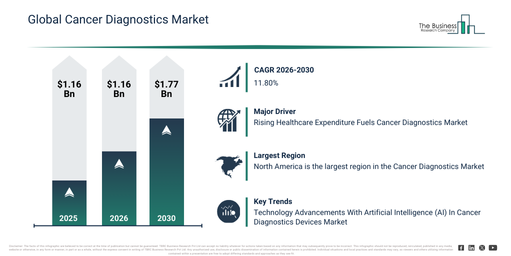
    The cancer diagnostics market has witnessed rapid expansion in recent years. This market is projected to grow from $25.5 billion in 2025 to $28.58 billion in 2026, demonstrating a compound annual growth rate (CAGR) of 12.1%. The growth observed in the past can be attributed to factors such as increasing global cancer prevalence, heightened investments in oncology research, an expansion of hospital diagnostic infrastructure, the rising adoption of imaging-based cancer detection techniques, and improvements in laboratory automation.

    The cancer diagnostics market is anticipated to experience substantial growth over the coming years. This market is projected to reach $44.69 billion by 2030, demonstrating a compound annual growth rate (CAGR) of 11.8%. The expansion during the forecast period can be attributed to the escalating demand for personalized cancer therapies, the rising acceptance of next-generation sequencing diagnostics, the broadening of population-wide cancer screening programs, increasing investments in AI-enabled oncology diagnostics, and continuous innovation in multi-cancer detection tests. Significant trends expected during this period include the greater adoption of molecular and companion diagnostics, the increasing integration of AI in cancer detection, the growing application of biomarker-based testing, the proliferation of high-throughput diagnostic platforms, and an enhanced focus on early cancer screening.

    Get A Free Sample Report With In-Depth Market Insights:

    https://thebusinessresearchcompany.com/sample_request?id=89560793&type=smp&name=Cancer%20Diagnostics%20Market%20Report%202026&utm_source=Blogs&utm_medium=Paid&utm_campaign=Sep_PR

    Cancer Diagnostics Market Demand Drivers: What’s Powering Industry Growth?

    The expansion of the cancer diagnostics market is anticipated to be fueled by the growth in healthcare spending. Healthcare expenditure encompasses all financial resources allocated to healthcare services, such as medical interventions, hospital stays, pharmaceuticals, and public health programs, by governments, corporations, and individuals. The heightened need for healthcare spending stems from the growing occurrence of chronic illnesses, which necessitate prolonged and expensive treatments. Increased healthcare expenditure bolsters cancer diagnostics through promoting advanced screening technologies and widening access to services for early detection. It also elevates diagnostic precision by fostering greater investment in contemporary equipment and specialized laboratories, which facilitates prompt intervention and superior patient results. For instance, in May 2024, according to the Office for National Statistics, a UK-based government department, total healthcare expenditure saw a 5.6% increase in nominal terms in 2023, an increase of 0.9% growth compared to 2022. Consequently, the uptick in healthcare spending is propelling the expansion of the cancer diagnostics market.

    Cancer Diagnostics Market Segment Landscape And Growth Outlook

    The cancer diagnostics market covered in this report is segmented –

    1) By Products: Companion Diagnostics, Molecular Diagnostics

    2) By Method: Biopsy, Endoscopy, Tumor Biomarker Tests, Imaging

    3) By Application: Cervical Cancer, Breast Cancer, Liver Cancer, Blood Cancer, Kidney Cancer, Colorectal Cancer, Pancreatic Cancer, Ovarian Cancer, Melanoma, Other Applications

    4) By End-User: Cancer Research Institutes, Diagnostic Laboratories, Hospitals, Other End Users

    Subsegments:

    1) By Companion Diagnostics: Biomarker-Based Companion Diagnostics, Genetic Testing-Based Companion Diagnostics, Immunohistochemistry-Based Companion Diagnostics, PCR-Based Companion Diagnostics, Other Companion Diagnostics,

    2) By Molecular Diagnostics: Polymerase Chain Reaction (PCR) Diagnostics, Next-Generation Sequencing (NGS) Diagnostics, In Situ Hybridization Diagnostics, Microarray-Based Diagnostics, DNA Or RNA Extraction Kits, Other Molecular Diagnostics

    Cancer Diagnostics Market Innovation Trends: What Developments Are Reshaping The Industry?

    Leading companies within the cancer diagnostic device market are prioritizing the creation of technology that incorporates artificial intelligence (AI), such as QAi Prostate, to achieve a competitive advantage. QAi Prostate functions as a diagnostic instrument for the detection of prostate cancer. As an illustration, in March 2023, Qritive, a Singapore-headquartered firm specializing in AI-powered diagnostic tools for pathologists, unveiled QAi Prostate. QAi Prostate stands as a sophisticated artificial intelligence (AI)-driven tool for diagnosing prostate cancer. It utilizes machine learning algorithms to accurately pinpoint and categorize both malignant and benign areas in prostate tissue samples. The device is engineered to support pathologists in detecting prostate cancer and distinguishing between malignant and benign regions in prostate tissue samples.

    Cancer Diagnostics Market Key Participants And Competitive Landscape

    Major companies operating in the cancer diagnostics market are Abbott Laboratories, Becton Dickinson and Company, Hologic, GE Healthcare Ltd., Thermo Fisher Scientific, Siemens Healthcare GmbH, Biogenex Laboratories, Veracyte, PathAI, Bio-Rad Laboratories, BioChain, DiagnoCure, Illumina, Myriad Genetics, CompanionDx, Epic Sciences, Genomic Health, Affymetrix, Agilent Technologies, Adaptive Biotechnologies, Biocartis, Biocept, Cancer Genetics Inc., Caris Life Sciences, Cepheid, Epigenomics AG, Exact Sciences, Foundation Medicine, GenMark Diagnostics, Guardant Health, HalioDX, Invitae Corporation, NanoString Technologies, Natera, NeoGenomics, Oncura Inc., PerkinElmer, Personal Genome Diagnostics, Qiagen, Roche Diagnostics

    View The Full Cancer Diagnostics Market Report:

    https://thebusinessresearchcompany.com/report/cancer-diagnostics-global-market-report?utm_source=Blogs&utm_medium=Paid&utm_campaign=Sep_PR

    Cancer Diagnostics Market Geographic Analysis: Where Is Demand Accelerating Fastest?

    North America was the largest region in the cancer diagnostics market in 2025. Asia-Pacific was the second-largest region in the global cancer diagnostics market. The regions covered in the cancer diagnostics market report are Asia-Pacific, South East Asia, Western Europe, Eastern Europe, North America, South America, Middle East, Africa.

    Reach Out To Our Team:

    The Business Research Company: https://www.thebusinessresearchcompany.com/

    Americas: +1 310-496-7795

    Asia: +44 7882 955267 & +91 8897263534

    Europe: +44 7882 955267

    Email us at: marketing@tbrc.info

    Follow us on:

    LinkedIn: https://in.linkedin.com/company/the-business-research-company

    YouTube: https://www.youtube.com/channel/UC24_fI0rV8cR5DxlCpgmyFQ

    Global Market Model: https://www.thebusinessresearchcompany.com/global-market-model