Blog

  • Breast Cancer Diagnostics Market Analysis: $5.42 Billion Market Size In 2026 And Future Growth Prospects

    Breast Cancer Diagnostics Market Analysis: $5.42 Billion Market Size In 2026 And Future Growth Prospects

    Featuring market attractiveness scoring, total addressable market sizing, company benchmarking matrices, interactive Excel dashboards, deeper supply chain intelligence, emerging startup tracking, and granular product-level insights, The Business Research Company’s 2026 market reports are built to deliver research that is both more actionable and more strategically valuable.

    Breast Cancer Diagnostics Market Expansion Outlook: What Revenue Opportunities Are Ahead?

    The breast cancer diagnostics market has shown strong expansion in recent years. It is anticipated to grow from $5 billion in 2025 to $5.42 billion in 2026, exhibiting a compound annual growth rate (CAGR) of 8.3%. This historical growth can be linked to several factors, including the increasing global incidence of breast cancer, greater public awareness of early cancer screening, the expansion of diagnostic imaging infrastructure, the rising availability of biomarker-based tests, and enhancements in the accuracy and safety of biopsy procedures.

    The breast cancer diagnostics market is anticipated to experience robust expansion over the coming years. Its value is projected to reach $7.28 billion by 2030, exhibiting a compound annual growth rate (CAGR) of 7.7%. This growth throughout the forecast timeframe stems from factors such as the increasing embrace of precision oncology diagnostics, growing investments in AI-powered diagnostic platforms, a rising need for minimally invasive tests, the expansion of population-wide screening initiatives, and ongoing innovations in molecular diagnostic technologies. Key trends expected during the forecast period involve a greater uptake of AI-assisted imaging analysis, increased utilization of genomic and molecular testing, the expanding implementation of liquid biopsy methods, the broadening application of advanced non-ionizing imaging techniques, and a sharpened emphasis on early and customized diagnosis.

    Get A Free Sample Report With In-Depth Market Insights:

    https://thebusinessresearchcompany.com/sample_request?id=41656019&type=smp&name=Breast%20Cancer%20Diagnostics%20Market%20Report%202026&utm_source=Blogs&utm_medium=Paid&utm_campaign=Sep_PR

    Breast Cancer Diagnostics Market Development Factors: What’s Supporting Demand?

    Government initiatives and financial backing for breast cancer are projected to stimulate the expansion of the breast cancer diagnostics market in the future. These government initiatives and funding constitute a form of governmental financial assistance provided to select organizations with proposals or projects that enhance public services and the economy. Such governmental efforts are instrumental in supporting breast cancer research, prevention, and treatment. Various programs are implemented to elevate awareness, advocate for early detection through screening and mammography services, and extend financial aid to underprivileged communities for breast cancer testing and treatment. For example, the Australian Government Department of Health (DoH), a government agency based in Australia, allocated $40.7 million in its 2022-23 budget. This funding was aimed at improving the accessibility of testing and screening services for diverse types of cancers, addressing setbacks from the COVID-19 pandemic, and enabling timely referrals, prompt diagnosis, and early intervention. This sum included $9.7 million specifically allocated for breast cancer screening. Hence, government initiatives and funding focused on breast cancer are fueling the growth of the breast cancer diagnostics market.

    Breast Cancer Diagnostics Market Segment Breakdown: Which Categories Lead On Revenue?

    The breast cancer diagnostics market covered in this report is segmented –

    1) By Type: Imaging, Biopsy, Genomic Tests, Blood Tests, Other Types

    2) By Technology: Fluorescent In Situ Hybridization (FISH), Comparative Genomic Hybridization (CGH), Immunohistochemical (IHC), Other Technologies

    3) By Cancer Type: BRCA Breast Cancer, ER And PR Breast Cancer, HER 2 Breast Cancer, Triple-Negative Breast Cancer, Other Cancer Types

    4) By Diagnostic Type: Ionizing Breast Imaging Technologies, Non-ionizing Imaging Technologies

    5) By End Users: Hospitals And Clinics, Cancer Research Centers, Diagnostic Laboratories, Ambulatory Surgical Centers

    Subsegments:

    1) By Imaging: Mammography, Ultrasound Imaging, Magnetic Resonance Imaging (MRI), Positron Emission Tomography (PET), Tomosynthesis

    2) By Biopsy: Needle Biopsy, Core Needle Biopsy, Fine Needle Aspiration Biopsy (FNA), Stereotactic Biopsy

    3) By Genomic Tests: Oncotype DX, MammaPrint, PAM50, BRCA1 Or 2 Testing

    4) By Blood Tests: Liquid Biopsy, Circulating Tumor DNA (ctDNA) Tests, Circulating Tumor Cells (CTCs) Tests

    5) By Other Types: Hormone Receptor Tests, HER2 Tests, Genetic Mutation Testing

    Breast Cancer Diagnostics Market Transformation Trends: What Innovations Are Driving Change?

    Leading companies in the breast cancer diagnostics market are actively developing innovative AI-driven diagnostic solutions, including advanced pathology scoring platforms, to enhance accuracy, streamline workflows, and enable personalized treatment planning. These AI-based diagnostic platforms employ machine learning and deep-learning algorithms to analyze medical imaging, pathology slides, or clinical data, thereby delivering diagnostic insights or risk stratifications that support clinical decision-making. For instance, in September 2024, Ibex Medical Analytics, an Israel-based digital pathology company, introduced its expanded AI platform for breast cancer diagnostics, incorporating a fully automated zero-click HER2 immunohistochemistry (IHC) scoring feature into its Ibex Breast HER2 module. This tool effectively identifies invasive cancer areas, classifies HER2 expression levels (0, 1+, 2+, 3+), and aids breast cancer diagnosis and treatment-pathway decisions with improved accuracy and workflow efficiency.

    Breast Cancer Diagnostics Market Industry Leaders And Competitive Landscape

    Major companies operating in the breast cancer diagnostics market are Abbott Laboratories, Myriad Genetics Inc., Hologic Inc., Koninklijke Philips N.V., Fujifilm Holdings Corporation, GE Healthcare, Thermo Fisher Scientific Inc., Siemens AG, NanoString Technologies Inc., Gamma Medica Inc., Aurora Imaging Technology Inc., Dilon Technologies Inc., Exact Sciences Corporation, F. Hoffmann-La Roche Ltd., Micrima Limited, Provista Diagnostics Inc., Leica Biosystems Nussloch GmbH, bioTheranostics Inc., Bio-Rad Laboratories Inc., Illumina Inc., Biocept Inc., Quest Diagnostics Incorporated, Agilent Technologies Inc., Cepheid, Guardant Health Inc., Invitae Corporation, Natera Inc., NeoGenomics Laboratories Inc., Oncocyte Corporation, PerkinElmer Inc., Sysmex Corporation, Veracyte Inc.

    View The Full Breast Cancer Diagnostics Market Report:

    https://thebusinessresearchcompany.com/report/breast-cancer-diagnostics-global-market-report?utm_source=Blogs&utm_medium=Paid&utm_campaign=Sep_PR

    Breast Cancer Diagnostics Market Regional Analysis And Leading Geography

    North America was the largest region in the breast cancer diagnostics market in 2025. Asia-Pacific was the second largest region in the breast cancer diagnostics industry. The regions covered in the breast cancer diagnostics market report are Asia-Pacific, South East Asia, Western Europe, Eastern Europe, North America, South America, Middle East, Africa.

    Reach Out To Our Team:

    The Business Research Company: https://www.thebusinessresearchcompany.com/

    Americas: +1 310-496-7795

    Asia: +44 7882 955267 & +91 8897263534

    Europe: +44 7882 955267

    Email us at: marketing@tbrc.info

    Follow us on:

    LinkedIn: https://in.linkedin.com/company/the-business-research-company

    YouTube: https://www.youtube.com/channel/UC24_fI0rV8cR5DxlCpgmyFQ

    Global Market Model: https://www.thebusinessresearchcompany.com/global-market-model
  • Breast Biopsy Market 2026 Market Size And Growth Forecast: Key Trends To Watch

    Breast Biopsy Market 2026 Market Size And Growth Forecast: Key Trends To Watch

    Built to provide research that’s more actionable and strategically valuable, The Business Research Company’s 2026 market reports include market attractiveness analysis, total addressable market sizing, company benchmarking matrices, interactive Excel dashboards, broader supply chain intelligence, emerging startup tracking, and in-depth product insights.

    Breast Biopsy Market Growth Potential: How Will Market Size Shift Through 2030?

    The breast biopsy market has experienced substantial expansion in recent years. Projections indicate its value will rise from $1.53 billion in 2025 to $1.65 billion in 2026, demonstrating a compound annual growth rate (CAGR) of 7.5%. Factors contributing to its historical growth include the limited availability of advanced biopsy systems, a reliance on traditional surgical biopsy methods, a rising incidence of breast cancer, the expansion of hospital and diagnostic center infrastructure, and the increasing adoption of ultrasound-guided procedures.

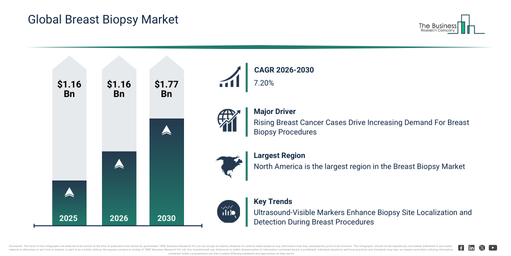
    The breast biopsy market size is projected to experience substantial growth in the upcoming years. It is expected to expand to reach $2.17 billion in 2030, driven by a compound annual growth rate (CAGR) of 7.2%. This growth over the forecast period can be attributed to several factors such as technological advancements in liquid biopsy and imaging-guided systems, a heightened awareness regarding early breast cancer detection, the expansion of diagnostic centers and hospitals, increasing integration of AI and data analytics, and the development of personalized and precision medicine approaches. Significant trends anticipated during this period include a rising adoption of minimally invasive biopsy procedures, increased utilization of liquid biopsy techniques, the proliferation of imaging-guided biopsy systems, an expansion of breast cancer diagnostic and screening programs, and an enhanced focus on patient safety and the accuracy of samples.

    Get A Free Sample Report With In-Depth Market Insights:

    https://thebusinessresearchcompany.com/sample_request?id=78572465&type=smp&name=Breast%20Biopsy%20Market%20Report%202026&utm_source=Blogs&utm_medium=Paid&utm_campaign=Sep_PR

    Breast Biopsy Market Industry Drivers: What’s Behind The Revenue Growth?

    The increasing incidence of breast cancer is projected to drive the growth of the breast biopsy market in the future. This condition involves a malignant tumor forming in breast tissue cells, which can metastasize to other body parts if not treated without delay. The widespread presence of breast cancer is linked to factors such as longer life expectancies, advancements in detection methods, and greater public awareness of the disease. A breast biopsy serves to extract tissue samples from questionable areas in the breast to diagnose and identify the features of breast cancer. For example, in October 2025, Breastcancer.org, a US-based non-profit organization, reported that in 2025, an estimated 316,950 women are anticipated to be diagnosed with invasive breast cancer, along with about 59,080 new cases of non-invasive ductal carcinoma in situ (DCIS). Thus, the expanding prevalence of breast cancer is propelling the development of the breast biopsy market.

    Breast Biopsy Market Segmentation: How Does The Market Break Down By Category?

    The breast biopsy market covered in this report is segmented –

    1) By Type: Biopsy Needles, Guidance Systems, Biopsy Tables, Localization Wires, Assay Kits, Liquid Biopsy Instruments, Other Types

    2) By Image Guided Technology: Magnetic Resonance Imaging (MRI) Guided Breast Biopsy, Ultrasound Guided Breast Biopsy, Mammography Guided Stereotactic Biopsy, Computed Tomography (CT) Guided Biopsy, Other Image Guided Technologies

    3) By Procedure: Needle Breast Biopsy, Open Surgical Breast Biopsy, Liquid Breast Biopsy

    4) By Application: Hospitals, Clinics, Diagnostic Centers, Other Applications

    Subsegments:

    1) By Biopsy Needles: Core Biopsy Needles, Fine Needle Aspiration (FNA) Needles, Vacuum-Assisted Biopsy Needles, Automatic Biopsy Needles

    2) By Guidance Systems: Ultrasound Guidance Systems, MRI Guidance Systems, Stereotactic Guidance Systems, Tomosynthesis Guidance Systems

    3) By Biopsy Tables: Adjustable Biopsy Tables, Specialty Biopsy Tables, Imaging-Compatible Biopsy Tables

    4) By Localization Wires: Hookwire Localization Devices, Radioguided Localization Wires, Magnetic Seed Localization Systems

    5) By Assay Kits: Breast Cancer Assay Kits, Biomarker Detection Kits, Genetic Testing Kits for Breast Cancer

    6) By Liquid Biopsy Instruments: Circulating Tumor Cell (CTC) Isolation Devices, Plasma DNA Isolation Kits, Liquid Biopsy Analysis Systems

    7) By Other Types: Biopsy Adhesives, Specimen Collection and Transport Devices, Patient Management Systems

    #Breast Biopsy Market Growth Trends: What’s Shaping The Future Outlook?

    Major companies within the breast biopsy marker market are concentrating on developing innovative products, such as ultrasound-visible site markers, to improve lesion localization and reduce marker displacement during breast biopsy procedures. An ultrasound-visible site marker is a specially designed implantable device that enhances the visualization of biopsy sites during imaging and provides stable localization for future surgical intervention. For instance, in August 2023, Mammotome, a US-based provider of breast biopsy and localization technologies, introduced HydroMark Plus. This new breast biopsy site marker offers improved lesion visibility on ultrasound, which assists radiologists and surgeons in accurately targeting biopsy sites while minimizing the risk of marker displacement during subsequent surgical procedures. As the latest addition to Mammotome’s HydroMark portfolio, HydroMark Plus is designed for enhanced procedural reliability and is slated for nationwide availability in the U.S. by the end of the year. The product’s key features include high ultrasound conspicuity for easy detection, minimized risk of movement within breast tissue, and suitability for a wide variety of breast imaging and interventional workflows. These attributes are aimed at improving clinical outcomes and procedural confidence for both physicians and patients.

    Breast Biopsy Market Key Participants And Competitive Landscape

    Major companies operating in the breast biopsy market are Siemens Healthineers AG, Fujifilm Holdings Corporation, Becton Dickinson and Company BD, Koninklijke Philips, GE HealthCare Technologies Inc, Hologic Inc, Merit Medical Systems, Argon Medical Devices, Canon Medical Systems Corporation, Devicor Medical Products Inc, Planmed Oy, Menarini-Silicon Biosystems, Seno Medical Instruments Inc, Dilon Technologies Inc, INRAD Inc, Promaxo Inc, Cook Medical LLC, Boston Scientific Corporation, Stryker Corporation, Intact Medical Corporation, Scion Medical Technologies LLC, Galini SRL, Ethicon Surgical Technologies, Encapsule Medical Devices LLC, Cardinal Health Inc, Olympus Corporation, F Hoffmann-La Roche Ltd, Biocept Inc.

    View The Full Breast Biopsy Market Report:

    https://thebusinessresearchcompany.com/report/breast-biopsy-global-market-report?utm_source=Blogs&utm_medium=Paid&utm_campaign=Sep_PR

    Breast Biopsy Market Geographic Analysis: Where Is Demand Accelerating Fastest?

    North America was the largest region in the breast biopsy market in 2025. Asia-Pacific is expected to be the fastest-growing region in the forecast period. The regions covered in the breast biopsy market report are Asia-Pacific, South East Asia, Western Europe, Eastern Europe, North America, South America, Middle East, Africa.

    Reach Out To Our Team:

    The Business Research Company: https://www.thebusinessresearchcompany.com/

    Americas: +1 310-496-7795

    Asia: +44 7882 955267 & +91 8897263534

    Europe: +44 7882 955267

    Email us at: marketing@tbrc.info

    Follow us on:

    LinkedIn: https://in.linkedin.com/company/the-business-research-company

    YouTube: https://www.youtube.com/channel/UC24_fI0rV8cR5DxlCpgmyFQ

    Global Market Model: https://www.thebusinessresearchcompany.com/global-market-model

  • Brain Wave Analyzer Market Size Forecast: How The Industry Is Expected To Grow From 2026 To 2030

    Brain Wave Analyzer Market Size Forecast: How The Industry Is Expected To Grow From 2026 To 2030

    Backed by market attractiveness analysis, total addressable market sizing, company benchmarking matrices, interactive Excel dashboards, wider supply chain intelligence, emerging startup coverage, and detailed product-level insights, The Business Research Company’s 2026 market reports are designed to offer research that is more actionable and strategically valuable than ever.

    Brain Wave Analyzer Market Value Analysis: What Growth Lies Ahead Over The Forecast Period?

    The brain wave analyzer market has shown robust growth in recent years. Its valuation is anticipated to rise from $2.42 billion in 2025 to $2.56 billion in 2026, achieving a compound annual growth rate (CAGR) of 5.9%. This historical expansion can be attributed to several factors including the increasing occurrence of neurological disorders, a surging requirement for EEG-based diagnostics, greater utilization of brain monitoring within hospitals, the extension of clinical neurology services, and enhanced financial backing for neuroscience research.

    The brain wave analyzer market size is anticipated to undergo significant expansion over the next few years, with its value projected to reach $3.22 billion in 2030, demonstrating a compound annual growth rate (CAGR) of 5.9%. This growth during the forecast period is fueled by an increasing focus on preventive brain health, a rise in the adoption of home-based brain monitoring solutions, expanding awareness regarding mental health, a growing demand for personalized neurology solutions, and the increasing integration of brain monitoring into various wellness applications. Noteworthy trends for the forecast period include the increasing adoption of AI-enabled brain signal interpretation, the integration of connected and wearable brain monitoring devices, the use of cloud-based brain data storage and remote analysis, the expansion of precision neurology and personalized brain care, and the utilization of immersive interfaces for visualizing brain data.

    Get A Free Sample Report With In-Depth Market Insights:

    https://thebusinessresearchcompany.com/sample_request?id=16127037&type=smp&name=Brain%20Wave%20Analyzer%20Market%20Report%202026&utm_source=Blogs&utm_medium=Paid&utm_campaign=Sep_PR

    Brain Wave Analyzer Market Growth Factors: What’s Supporting Expansion?

    The increasing occurrence of neurological conditions is anticipated to fuel the expansion of the brain wave analyzer market in the future. These disorders encompass various ailments impacting the nervous system, such as the brain, spinal cord, and peripheral nerves. The surge in neurological disorders can be attributed to heightened stress levels, inadequate dietary habits, insufficient physical activity, and exposure to environmental pollutants. Employing an electroencephalograph (EEG), a brain wave analyzer assists in the diagnosis and management of neurological conditions. It achieves this by monitoring brain activity to identify irregularities, track disease advancement, guide therapeutic strategies, and back treatment efforts. As an illustration, figures from March 2023, released by the Alzheimer’s Association, a US-based non-profit voluntary health organization, indicated that approximately 6.7 million Americans aged 65 and older in the United States were suffering from Alzheimer’s dementia, a form of neurological disorder. Furthermore, projections suggest that by 2060, this demographic affected by Alzheimer’s dementia will rise to 13.8 million. Consequently, the escalating incidence of neurological disorders is a key factor propelling the expansion of the brain wave analyzer market.

    Brain Wave Analyzer Market Segment Trends And Revenue Contributors

    The brain wave analyzer market covered in this report is segmented –

    1) By Product: Software, Hardware

    2) By Application: Neuro Feedback, Sleeping Aid

    3) By End User: Hospitals, Neurology Centers, Clinics And Ambulatory Surgical Centers (ASCs)

    Subsegments:

    1) By Software: Brainwave Monitoring Software, Brainwave Analysis And Visualization Software, EEG Signal Processing Software, Cognitive State Monitoring Software

    2) By Hardware: EEG Headsets And Electrodes, Portable EEG Devices, Clinical EEG Machines, Wireless Brainwave Sensors

    Brain Wave Analyzer Market Industry Trends: What’s Reshaping Demand?

    Companies operating within the brain wave analyzer market are concentrating on developing advanced brain wave analysis devices equipped with enhanced features, intending to boost the accuracy and usability of brain wave analysis. Such innovative brain wave analysis devices are sophisticated tools crafted to capture, interpret, and examine brain wave activity with greater precision and efficiency. For instance, in September 2024, Neurable, a US-based company focused on brain-computer interface (BCI) technology, launched its MW75 Neuro smart headphones, signifying a major advance in consumer technology. These headphones are pioneering in their integration of brain-computer interface (BCI) technology, allowing users to monitor their brain activity using embedded electroencephalography (EEG) sensors. The MW75 Neuro aims to improve cognitive health by providing insights into concentration and assisting with burnout management through real-time brainwave analysis.

    Brain Wave Analyzer Market Top Companies Driving Competitive Growth

    Major companies operating in the brain wave analyzer market are Nihon Kohden, Natus Medical, Cadwell Industries, NeuroSky, Compumedics, Brain Products, EMOTIV, ANT Neuro, EGI Inc., Neuroelectrics, BrainScope, G.Tec Medical Engineering, Advanced Brain Monitoring, NeuroWave Systems, BrainMaster Technologies, Mind Media, Mitsar, Neurobit Systems, NeuroStyle, Neurovigil, Qneuro, Cortech Solutions

    View The Full Brain Wave Analyzer Market Report:

    https://thebusinessresearchcompany.com/report/brain-wave-analyzer-global-market-report?utm_source=Blogs&utm_medium=Paid&utm_campaign=Sep_PR

    Brain Wave Analyzer Market Global Footprint: Which Region Leads The Industry?

    North America was the largest region in the brain wave analyzer market in 2025. Asia-Pacific is expected to be the fastest-growing region in the forecast period. The regions covered in the brain wave analyzer market report are Asia-Pacific, South East Asia, Western Europe, Eastern Europe, North America, South America, Middle East, Africa.

    Reach Out To Our Team:

    The Business Research Company: https://www.thebusinessresearchcompany.com/

    Americas: +1 310-496-7795

    Asia: +44 7882 955267 & +91 8897263534

    Europe: +44 7882 955267

    Email us at: marketing@tbrc.info

    Follow us on:

    LinkedIn: https://in.linkedin.com/company/the-business-research-company

    YouTube: https://www.youtube.com/channel/UC24_fI0rV8cR5DxlCpgmyFQ

    Global Market Model: https://www.thebusinessresearchcompany.com/global-market-model
  • Brain Pacemaker Market Reaches $3.4 Billion In 2026: Forecast And Growth Opportunities

    Brain Pacemaker Market Reaches $3.4 Billion In 2026: Forecast And Growth Opportunities

    Featuring market attractiveness scoring, total addressable market sizing, company benchmarking matrices, interactive Excel dashboards, deeper supply chain intelligence, emerging startup tracking, and granular product-level insights, The Business Research Company’s 2026 market reports are built to deliver research that is both more actionable and more strategically valuable.

    Brain Pacemaker Market Size Forecast: How Big Could The Market Get By 2030?

    The brain pacemaker market has recently seen rapid expansion. Its valuation is anticipated to climb from $1.8 billion in 2025 to $2.07 billion in 2026, demonstrating a compound annual growth rate (CAGR) of 14.8%. This growth observed in past periods is attributable to factors such as an increase in Parkinson’s disease treatment programs, the initial clinical embrace of deep brain stimulation therapy, enhanced availability of implantable single-channel devices, the establishment of more neurology and movement disorder care centers, and broadened strategies for managing epilepsy and dystonia.

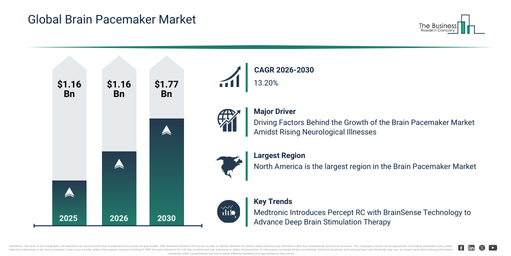
    The brain pacemaker market is projected to experience substantial expansion in the coming years. Its value is anticipated to reach $3.4 billion by 2030, demonstrating a compound annual growth rate (CAGR) of 13.2%. This expansion throughout the forecast period can be linked to factors such as a rising demand for dual-channel programmable pacemakers, enhanced presence in ambulatory surgical centers, increased funding for neuromodulation research and innovative devices, greater clinical acceptance for treating obsessive-compulsive disorder and essential tremor, and the expansion of reimbursement policies and patient accessibility programs. Key trends projected for this period encompass the wider integration of implantable neuromodulation and deep brain stimulation systems, a greater application of brain pacemakers for intricate movement and neuropsychiatric conditions, the development of dual-channel and programmable stimulation devices to meet advanced therapeutic requirements, an increasing inclination towards minimally invasive implantation techniques and user-friendly device designs, and an emphasis on the long-term dependability of therapy, extended battery life, and comprehensive post-implantation monitoring.

    Get A Free Sample Report With In-Depth Market Insights:

    https://thebusinessresearchcompany.com/sample_request?id=93885074&type=smp&name=Brain%20Pacemaker%20Market%20Report%202026&utm_source=Blogs&utm_medium=Paid&utm_campaign=Sep_PR

    Brain Pacemaker Market Demand Drivers: What’s Powering Industry Growth?

    The increasing occurrence of neurological diseases is anticipated to propel the expansion of the brain pacemaker market in the future. These neurological conditions, also referred to as neurological disorders, are health issues impacting the nervous system. The rising prevalence of neurological ailments is largely attributable to factors such as an aging demographic, lifestyle choices, environmental exposures, inherited predispositions, infectious diseases, traumatic injuries, healthcare disparities, and the effects of urbanization and industrialization. Brain pacemakers assist in managing neurological illnesses by delivering precise electrical impulses to normalize irregular brain activity, thus reducing symptoms and enhancing the quality of life for individuals suffering from these conditions. For example, data from October 2023, published by the World Federation of Neurology, a UK-based organization representing national neurological societies, indicates that more than 40% of the global population experiences a neurological condition, a figure expected to nearly double by 2050. Moreover, the worldwide annual death toll from stroke is estimated at 9.7 million deaths per year, and this number is projected to rise by 50% by 2050. Consequently, the increasing incidence of neurological illnesses is fueling the growth of the brain pacemaker market.

    Brain Pacemaker Market Segment Analysis Spotlighting Growth Areas

    The brain pacemaker market covered in this report is segmented –

    1) By Type: Single Channel, Dual Channel

    2) By Application: Dystonia, Epilepsy, Essential Tremor, Obsessive-Compulsive Disorder, Parkinson’s Disease, Other Applications

    3) By Sales Channel: Channel Sales, Direct Sales

    4) By End-User: Hospitals, Ambulatory Surgical Centers And Clinics, Other End-Users

    Subsegments:

    1) By Single Channel: Implantable Single Channel Brain Pacemakers, Wearable Single Channel Brain Pacemakers

    2) By Dual Channel: Implantable Dual Channel Brain Pacemakers

    Brain Pacemaker Market Innovation Trends: What Developments Are Reshaping The Industry?

    Leading companies within the brain pacemaker market are developing innovative products with advanced technologies, such as BrainSense technology, to enhance the precision and personalization of deep brain stimulation therapies. BrainSense technology operates by capturing and recording brain signals, thereby providing real-time data essential for customizing and optimizing deep brain stimulation therapy. For instance, in January 2024, Medtronic, a US-based medical technology company, introduced the Percept RC deep brain stimulation (DBS) system. The Percept RC is notable as the smallest and thinnest dual-channel neurostimulator available for DBS, incorporating Medtronic’s exclusive BrainSense technology. DBS therapy utilizes a surgically implanted medical device, much like a cardiac pacemaker, to deliver electrical stimulation to precisely specified locations. With BrainSense technology, the Percept RC can capture and record brain signals, offering valuable insights that allow healthcare providers to adapt and personalize DBS therapy to fulfill the patient’s evolving needs.

    Brain Pacemaker Market Leading Players And Competitive Positioning

    Major companies operating in the brain pacemaker market are Abbott Laboratories, Medtronic plc, Boston Scientific Corporation, LivaNova PLC, Renishaw plc, NeuroPace Inc., Aleva Neurotherapeutics SA, Beijing PINS Medical Co Ltd, Newronika S.p.A, Deep Brain Innovations LLC, NI2O (NI20 UK), Nuviant Medical Inc, Alpha Omega Engineering Ltd, SceneRay Co Ltd, Neuroelectrics Barcelona SLU, Neurosoft LLC, AlphaDBS Solutions, Nuvectra Corporation, Picostim

    View The Full Brain Pacemaker Market Report:

    https://thebusinessresearchcompany.com/report/brain-pacemaker-global-market-report?utm_source=Blogs&utm_medium=Paid&utm_campaign=Sep_PR

    Brain Pacemaker Market Regional Distribution: Which Areas Power Market Growth?

    North America was the largest region in the brain pacemaker market in 2025. Asia-Pacific is expected to be the fastest-growing region in the forecast period. The regions covered in the brain pacemaker market report are Asia-Pacific, South East Asia, Western Europe, Eastern Europe, North America, South America, Middle East, Africa.

    Reach Out To Our Team:

    The Business Research Company: https://www.thebusinessresearchcompany.com/

    Americas: +1 310-496-7795

    Asia: +44 7882 955267 & +91 8897263534

    Europe: +44 7882 955267

    Email us at: marketing@tbrc.info

    Follow us on:

    LinkedIn: https://in.linkedin.com/company/the-business-research-company

    YouTube: https://www.youtube.com/channel/UC24_fI0rV8cR5DxlCpgmyFQ

    Global Market Model: https://www.thebusinessresearchcompany.com/global-market-model
  • Brain Monitoring Market Growth In 2026: Market Size, Key Drivers And Future Outlook

    Brain Monitoring Market Growth In 2026: Market Size, Key Drivers And Future Outlook

    Built to provide research that’s more actionable and strategically valuable, The Business Research Company’s 2026 market reports include market attractiveness analysis, total addressable market sizing, company benchmarking matrices, interactive Excel dashboards, broader supply chain intelligence, emerging startup tracking, and in-depth product insights.

    Brain Monitoring Market Revenue Outlook: What CAGR Lies Ahead Through 2030?

    The brain monitoring market has experienced rapid expansion in recent years. It is projected to grow from $8.74 billion in 2025 to $9.66 billion in 2026, showing a compound annual growth rate (CAGR) of 10.6%. The historical growth of the market can be attributed to an increase in the prevalence of neurological disorders, the expansion of critical care monitoring practices, a rising adoption of EEG-based diagnostics, advancements in neuroimaging infrastructure, and improved access to brain monitoring technologies.

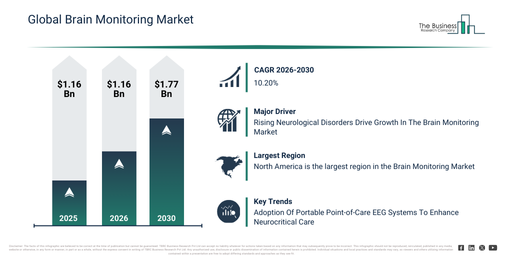
    The brain monitoring market is anticipated to experience significant expansion in the upcoming years, with its size projected to reach $14.26 billion in 2030, demonstrating a compound annual growth rate (CAGR) of 10.2%. This growth over the forecast period is driven by factors such as an increasing need for personalized neurological treatments, higher investments in neurotechnology research, the expansion of remote patient monitoring capabilities, the growing utilization of AI-assisted brain diagnostics, and a rise in the adoption of wearable brain monitoring systems. Noteworthy trends during this period include the increased uptake of portable and wireless brain monitoring devices, a surge in the use of continuous cerebral oxygen monitoring, the deeper integration of multimodal brain imaging systems, the proliferation of non-invasive neurodiagnostic techniques, and a heightened focus on real-time brain data analysis.

    Get A Free Sample Report With In-Depth Market Insights:

    https://thebusinessresearchcompany.com/sample_request?id=85038851&type=smp&name=Brain%20Monitoring%20Market%20Report%202026&utm_source=Blogs&utm_medium=Paid&utm_campaign=Sep_PR

    Brain Monitoring Market Growth Drivers: What’s Behind The Acceleration?

    The expanding occurrence and prevalence of neurological conditions are projected to boost the brain monitoring market’s growth moving forward. Brain monitoring involves the use of specialized instruments to assess neurological injuries. Within neurological disorders, it is utilized to provide enhanced accuracy and reliability of data concerning the severity of such injuries. For example, in April 2024, the National Institutes of Health (NIH), a US-based government’s primary biomedical research agency, reported that an estimated 6.9 million Americans aged 65 and older are currently living with Alzheimer’s dementia, a figure anticipated to nearly double to 13.8 million by 2060. Consequently, the rising incidence and prevalence of neurological disorders are driving the expansion of the brain monitoring market.

    Brain Monitoring Market Segment Performance And Emerging Opportunities

    The brain monitoring market covered in this report is segmented –

    1) By Product: Magnetoencephalograph, Electroencephalograph, Cerebral Oximeters, Intracranial Pressure Monitoring Devices

    2) By Procedure: Invasive, Non-invasive

    3) By Application: Parkinson’s Disease, Traumatic Brain Injury, Epilepsy, Dementia, Sleep Disorders, Other Applications

    4) By End User: Hospitals and Clinics, Neurology Centers, Diagnostic Centers

    Subsegments:

    1) By Magnetoencephalograph (MEG): Whole-Head MEG Systems, Biomagnetic Measurement Systems

    2) By Electroencephalograph (EEG): Portable EEG Devices, Clinical EEG Systems, Wireless EEG Systems

    3) By Cerebral Oximeters: Near-Infrared Spectroscopy (NIRS) Devices, Continuous Cerebral Oxygen Monitoring Devices

    4) By Intracranial Pressure Monitoring Devices: Intraventricular Catheters, Subdural and Epidural Sensors

    Brain Monitoring Market Trends: What’s Defining The Industry’s Next Phase?

    Major companies in the brain monitoring market are focused on developing technological advancements, such as portable, point-of-care EEG systems for rapid neurodiagnostics, which aim to enhance patient monitoring, improve clinical decision-making, and enable remote neurological care. A point-of-care EEG system utilizes wireless, head-worn electrodes with cloud-based analytics, providing benefits over traditional stationary EEG machines by allowing quick setup, continuous monitoring, and real-time alerts for neurological events. For instance, in May 2025, Natus Medical Incorporated, a U.S.-based neurodiagnostics company, introduced BrainWatch, a wearable point-of-care EEG system optimized for use in emergency departments and intensive care units. This product features high-quality wireless EEG electrodes, can be set up in under five minutes, streams data to Natus NeuroWorks software, and integrates Persyst AI algorithms for real-time seizure detection, thereby helping clinical teams rapidly identify non-convulsive seizures, collaborate remotely with neurologists, and improve patient outcomes.

    Brain Monitoring Market Competitive Overview And Top Companies

    Major companies operating in the brain monitoring market are Natus Medical Incorporated, Nihon Kohden Corporation, Philips Healthcare N.V., GE Healthcare Technologies Incorporated, Compumedics Limited, Medtronic Public Limited Company, Masimo Corporation, Spiegelberg GmbH & Co. KG, Cadwell Industries Incorporated, Elekta AB, Drägerwerk AG & Co. KGaA, Electrical Geodesics Incorporated, Integra LifeSciences Corporation, Siemens AG, CAS Medical Systems Incorporated, Neural Analytics Incorporated, BrainScope Company Incorporated, NeuroWave Systems Incorporated, Brain Products GmbH, ANT Neuro B.V., Blackrock Microsystems LLC, Cognionics Incorporated, Emotiv Incorporated, G.TEC Medical Engineering GmbH, Neurosoft Company, Advanced Brain Monitoring, NeuroSky Incorporated, OpenBCI Incorporated, Qneuro Private Limited, A.St.A. World-Wide

    View The Full Brain Monitoring Market Report:

    https://thebusinessresearchcompany.com/report/brain-monitoring-global-market-report?utm_source=Blogs&utm_medium=Paid&utm_campaign=Sep_PR

    Brain Monitoring Market Leading Geography: Which Region Contributes The Most Revenue?

    North America was the largest region in the brain monitoring market in 2025. Asia-Pacific is expected to be the fastest-growing region in the forecast period. The regions covered in the brain monitoring market report are Asia-Pacific, South East Asia, Western Europe, Eastern Europe, North America, South America, Middle East, Africa.

    Reach Out To Our Team:

    The Business Research Company: https://www.thebusinessresearchcompany.com/

    Americas: +1 310-496-7795

    Asia: +44 7882 955267 & +91 8897263534

    Europe: +44 7882 955267

    Email us at: marketing@tbrc.info

    Follow us on:

    LinkedIn: https://in.linkedin.com/company/the-business-research-company

    YouTube: https://www.youtube.com/channel/UC24_fI0rV8cR5DxlCpgmyFQ

    Global Market Model: https://www.thebusinessresearchcompany.com/global-market-model

  • Brain Mapping Instruments Market Size And Forecast 2026–2030: Trends Driving Industry Expansion

    Brain Mapping Instruments Market Size And Forecast 2026–2030: Trends Driving Industry Expansion

    Backed by market attractiveness analysis, total addressable market sizing, company benchmarking matrices, interactive Excel dashboards, wider supply chain intelligence, emerging startup coverage, and detailed product-level insights, The Business Research Company’s 2026 market reports are designed to offer research that is more actionable and strategically valuable than ever.

    Brain Mapping Instruments Market Growth Analysis: How Will Revenue Trend Over The Forecast Period?

    The brain mapping instruments market has experienced substantial growth in recent years. It is anticipated to increase from $2.42 billion in 2025 to $2.58 billion in 2026, achieving a compound annual growth rate (CAGR) of 6.6%. This historical growth can be linked to the expansion of neurological disorder diagnosis initiatives, greater adoption of EEG and CT-based brain mapping systems, the prompt integration of neuroimaging tools in hospital and research environments, increased brain activity monitoring in clinical neurology, and a rise in investment toward neuroscience research infrastructure.

    The brain mapping instruments market is projected to experience robust expansion over the coming years, reaching a valuation of $3.33 billion by 2030, demonstrating a compound annual growth rate (CAGR) of 6.6%. This anticipated growth is driven by several factors, including the escalating demand for fMRI and PET-based functional brain mapping, the greater adoption of hybrid and high-resolution imaging systems, the increased use of non-invasive mapping solutions in ambulatory care, the expanding integration of multimodal brain analysis tools, and the broader application of brain mapping within precision medicine and neurotherapeutics. Key developments expected during this period involve the increasing embrace of advanced neuroimaging and brain activity monitoring technologies, the wider utilization of brain mapping instruments for clinical diagnosis and treatment planning, the broadening of brain mapping applications in neuroscience and cognitive research, a growing inclination towards non-invasive and patient-friendly brain mapping techniques, and a significant emphasis on improving imaging accuracy, data quality, and diagnostic efficiency.

    Get A Free Sample Report With In-Depth Market Insights:

    https://thebusinessresearchcompany.com/sample_request?id=10753991&type=smp&name=Brain%20Mapping%20Instruments%20Market%20Report%202026&utm_source=Blogs&utm_medium=Paid&utm_campaign=Sep_PR

    Brain Mapping Instruments Market Growth Factors Behind Sustained Expansion

    The brain mapping instrument market is expected to grow due to an increase in the occurrence of neurological disorders. These disorders are conditions that impact the brain, spinal cord, and nerves, manifesting in symptoms such as movement issues, cognitive decline, and sensory problems, with examples including Alzheimer’s, Parkinson’s, epilepsy, multiple sclerosis, and stroke. The rising prevalence of neurological disorders stems from factors such as population aging, urbanization, lifestyle changes, enhanced diagnostic capabilities, and various environmental and infectious risk factors. Brain mapping instruments are crucial for both clinical practice and research, enabling profound insights into neurological disorders and aiding in the development of personalized treatment strategies. For instance, in March 2023, according to the Alzheimer’s Association, a US-based non-profit voluntary health organization, an estimated 6.7 million Americans aged 65 and older were living with Alzheimer’s dementia in the United States, which is a neurological disorder. Furthermore, by 2060, this number is projected to reach 13.8 million for people aged 65 and older with Alzheimer’s dementia. Therefore, the expanding prevalence of neurological disorders is a key driver for the growth of the brain mapping instrument market.

    Brain Mapping Instruments Market Segment Landscape And Growth Outlook

    The brain mapping instruments market covered in this report is segmented –

    1) By Product: Computed Axial Tomography (CAT), Positron Emission Tomography, Electroencephalography (EEG), Functional Near-Infrared Spectroscopy (FNIRS), Functional Magnetic Resonance Imaging (FMRI), Other Products

    2) By Procedure: Devices For Invasive Procedures, Devices For Non-invasive Procedures

    3) By End User: Hospitals, Ambulatory Centers

    Subsegments:

    1) By Computed Axial Tomography (CAT): Conventional CT Scanners, High-Resolution CT Scanners, Portable CT Scanners

    2) By Positron Emission Tomography (PET): PET Scanners (Standalone), Hybrid PET/CT Scanners, PET/MRI Scanners

    3) By Electroencephalography (EEG): Digital EEG Systems, Ambulatory EEG Systems, Video EEG Monitoring Systems

    4) By Functional Near-Infrared Spectroscopy (FNIRS): Continuous Wave Fnirs Systems, Frequency Domain Fnirs Systems, Hybrid Fnirs Systems

    5) By Functional Magnetic Resonance Imaging (FMRI): Resting-State Fmri, Task-Based Fmri, High-Field MRI Systems

    6) By Other Products: Magnetoencephalography (MEG) Systems, Near-Infrared Spectroscopy (NIRS) Devices, Transcranial Magnetic Stimulation (TMS) Systems

    Brain Mapping Instruments Market Industry Trends Fueling Future Revenue Growth

    Leading companies in the brain mapping instruments market are increasingly concentrating on sensing-enabled adaptive neuromodulation, such as BrainSense-enabled closed-loop deep brain stimulation (DBS), which incorporates real-time brain signal detection to personalize stimulation therapy. BrainSense technology serves as a neuro-interface integrated within DBS systems, capturing local field potentials (LFPs) from specific brain regions, processing these signals, and dynamically modifying electrical stimulation based on an individual’s neural activity to optimize therapeutic benefits and lessen side effects. For example, in February 2025, Medtronic, a US-based medical-technology company, unveiled its BrainSense Adaptive DBS system after receiving FDA approval, featuring capabilities like real-time self-adjusting stimulation, a BrainSense Electrode Identifier for swift determination of the ideal electrode contact, and closed-loop personalized therapy that adjusts in both clinical environments and during a patient’s everyday life.

    Brain Mapping Instruments Market Competitive Landscape: Which Companies Lead The Industry?

    Major companies operating in the brain mapping instruments market are Siemens Healthineers, GE Healthcare, Philips Healthcare, Elekta AB, Nihon Kohden Corporation, Brainlab AG, Natus Medical Incorporated, Hitachi Medical Systems, Canon Medical Systems Corporation, Compumedics Limited, Medtronic PLC, Magstim Company Limited, EB Neuro S.p.A., Brain Products GmbH, Soterix Medical Inc., Rogue Research Inc., NIRx Medical Technologies LLC, Neurosoft, Artinis Medical Systems, Gowerlabs Ltd.

    View The Full Brain Mapping Instruments Market Report:

    https://thebusinessresearchcompany.com/report/brain-mapping-instruments-global-market-report?utm_source=Blogs&utm_medium=Paid&utm_campaign=Sep_PR

    Brain Mapping Instruments Market Regional Outlook: Where Is Opportunity Concentrated?

    North America was the largest region in the brain mapping instruments market in 2025. Asia-Pacific is expected to be the fastest-growing region in the forecast period. The regions covered in the brain mapping instruments market report are Asia-Pacific, South East Asia, Western Europe, Eastern Europe, North America, South America, Middle East, Africa.

    Reach Out To Our Team:

    The Business Research Company: https://www.thebusinessresearchcompany.com/

    Americas: +1 310-496-7795

    Asia: +44 7882 955267 & +91 8897263534

    Europe: +44 7882 955267

    Email us at: marketing@tbrc.info

    Follow us on:

    LinkedIn: https://in.linkedin.com/company/the-business-research-company

    YouTube: https://www.youtube.com/channel/UC24_fI0rV8cR5DxlCpgmyFQ

    Global Market Model: https://www.thebusinessresearchcompany.com/global-market-model

  • Brain Imaging Modalities Market 2026 Outlook: Market Size, CAGR And Key Growth Opportunities

    Brain Imaging Modalities Market 2026 Outlook: Market Size, CAGR And Key Growth Opportunities

    Featuring market attractiveness scoring, total addressable market sizing, company benchmarking matrices, interactive Excel dashboards, deeper supply chain intelligence, emerging startup tracking, and granular product-level insights, The Business Research Company’s 2026 market reports are built to deliver research that is both more actionable and more strategically valuable.

    Brain Imaging Modalities Market Forecast: What Value Will The Market Reach By 2030?

    The market for brain imaging modalities has experienced robust growth in recent years. Its value is projected to rise from $13.9 billion in 2025 to $14.76 billion in 2026, at a compound annual growth rate (CAGR) of 6.2%. Historically, this expansion has been driven by factors such as the limited availability of advanced brain imaging devices, the high cost of early imaging equipment, a growing awareness of neurological disorders, a reliance on stationary imaging systems, and an increasing number of diagnostic centers.

    The brain imaging modalities market is projected to experience substantial growth in the next few years. It is forecast to achieve a valuation of $18.55 billion in 2030, exhibiting a compound annual growth rate (CAGR) of 5.9%. This expansion during the forecast period can be attributed to several factors, including technological advancements in fMRI and PET systems, the increasing adoption of portable and research-oriented imaging devices, growing investment in neuroimaging research, the rising integration of AI and big data analytics, and the expansion of hospitals and diagnostic facilities. Major trends anticipated in this period encompass the increased adoption of advanced MRI and CT imaging techniques, a growing reliance on portable and point-of-care brain imaging systems, a rising demand for pediatric and infant brain imaging solutions, the integration of image processing software and patient monitoring systems, and the broadening application of functional brain imaging for both research and clinical purposes.

    Get A Free Sample Report With In-Depth Market Insights:

    https://thebusinessresearchcompany.com/sample_request?id=12156201&type=smp&name=Brain%20Imaging%20Modalities%20Market%20Report%202026&utm_source=Blogs&utm_medium=Paid&utm_campaign=Sep_PR

    Brain Imaging Modalities Market Demand Drivers Opening New Revenue Streams

    The expanding occurrence of neurological disorders is anticipated to boost the growth of the brain imaging modality market in the future. Neurological disorders are health conditions impacting the nervous system, encompassing the brain, spinal cord, and nerves, leading to issues with mobility, perception, thought, or behavior. The rise in these disorders stems from elements such as an older population, enhanced diagnostic methods, long-term illnesses, inherited traits, improved diagnostics, shifts in environment, and lifestyle choices. Brain imaging modalities are instrumental in detecting and tracking neurological disorders by offering detailed visualizations of the brain’s layout and operations, which helps in devising effective treatment strategies. For example, in January 2025, data from the European Brain Council, a Belgium-based non-profit organization, indicated that 7 million individuals in Europe currently suffer from Alzheimer’s disease, with projections estimating this figure will dramatically increase to 14 million by 2030. Consequently, the rising incidence of neurological disorders is fueling expansion within the brain imaging modality market.

    Brain Imaging Modalities Market Breakdown By Product Type And Application

    The brain imaging modalities market covered in this report is segmented –

    1) By Product: Devices, Accessories, Usability

    2) By Imaging Type: Computed Tomography (CT), Positron Emission Tomography (PET), Magnetic Resonance Imaging (MRI), Single Photon Emission Computed Tomography (SPECT)

    3) By Modalities: Stand-Alone Functional Brain Imaging Systems, Portable Functional Brain Imaging Systems

    4) By Patient Type: Adults, Pediatrics, Infants

    5) By End-User: Hospitals, Diagnostic Centers, Research Institutes

    Subsegments:

    1) By Devices: Magnetic Resonance Imaging (MRI) Machines, Computed Tomography (CT) Scanners, Positron Emission Tomography (PET) Scanners, Electroencephalography (EEG) Devices, Functional MRI (fMRI) Systems, Single Photon Emission Computed Tomography (SPECT) Scanners

    2) By Accessories: Contrast Agents, MRI Coils, EEG Electrodes, Image Processing Software, Patient Monitoring Systems

    3) By Usability: Portable Brain Imaging Devices, Stationary Brain Imaging Systems, Point-Of-Care Brain Imaging Solutions, Research-Oriented Brain Imaging Equipment

    Brain Imaging Modalities Market Trends Powering Strategic Industry Growth

    Leading firms within the brain imaging modalities sector are concentrating on creating cutting-edge technologies, including neuroimaging solutions, to secure a competitive advantage. These neuroimaging technologies represent sophisticated medical instruments designed to acquire comprehensive images depicting the brain’s anatomy and operational characteristics. An illustrative example occurred in February 2024, when Koninklijke Philips N.V., a technology firm based in the Netherlands, collaborated with SyntheticMR, a software company from Sweden, to introduce Smart Quant Neuro 3D. This new offering incorporates automated 3D quantification of neuroimaging data, alongside live visualization of brain structures, and leverages artificial intelligence to enhance diagnostic precision. The objective of this innovation is to optimize operational procedures and decrease the duration needed for image analysis, thereby yielding benefits for both medical professionals and patients.

    Brain Imaging Modalities Market Competitive Landscape: Who Leads The Industry?

    Major companies operating in the brain imaging modalities market are Hitachi Ltd, Siemens AG, Toshiba Corporation, FUJIFILM Corporation, Koninklijke Philips N.V, GE HealthCare Technologies Inc., Shenzhen Mindray Bio-Medical Electronics Co. Ltd., Shimadzu Corporation, Canon Medical Systems Corporation, Neusoft Corporation, Agfa-Gevaert N.V., Carestream Health, Brainlab AG, Esaote SpA, NeuroLogica Corp., Swissray International Inc., Xoran Technologies LLC., Allengers Medical Systems Ltd., Konica Minolta Healthcare Americas Inc., Hi-Tech Medical Imaging

    View The Full Brain Imaging Modalities Market Report:

    https://thebusinessresearchcompany.com/report/brain-imaging-modalities-global-market-report?utm_source=Blogs&utm_medium=Paid&utm_campaign=Sep_PR

    Brain Imaging Modalities Market Geographic Landscape: Which Region Leads Industry Growth?

    North America was the largest region in the brain imaging modalities market in 2025. Asia-Pacific is expected to be the fastest-growing region in the forecast period. The regions covered in the brain imaging modalities market report are Asia-Pacific, South East Asia, Western Europe, Eastern Europe, North America, South America, Middle East, Africa.

    Reach Out To Our Team:

    The Business Research Company: https://www.thebusinessresearchcompany.com/

    Americas: +1 310-496-7795

    Asia: +44 7882 955267 & +91 8897263534

    Europe: +44 7882 955267

    Email us at: marketing@tbrc.info

    Follow us on:

    LinkedIn: https://in.linkedin.com/company/the-business-research-company

    YouTube: https://www.youtube.com/channel/UC24_fI0rV8cR5DxlCpgmyFQ

    Global Market Model: https://www.thebusinessresearchcompany.com/global-market-model
  • Brain Health Devices Market Size Growth: From $12.79 Billion In 2026 To $16.84 Billion By 2030

    Brain Health Devices Market Size Growth: From $12.79 Billion In 2026 To $16.84 Billion By 2030

    Built to provide research that’s more actionable and strategically valuable, The Business Research Company’s 2026 market reports include market attractiveness analysis, total addressable market sizing, company benchmarking matrices, interactive Excel dashboards, broader supply chain intelligence, emerging startup tracking, and in-depth product insights.

    Brain Health Devices Market Size Outlook: How Quickly Will Revenue Expand Through 2030?

    The market size for brain health devices has shown significant growth over recent years. Forecasts indicate an increase from $11.9 billion in 2025 to $12.79 billion in 2026, at a compound annual growth rate (CAGR) of 7.5%. The market’s past growth has been largely driven by elements such as the constrained accessibility of advanced neuroimaging equipment, the rising incidence of neurological conditions, the development of hospital and clinic infrastructure, the continued dependence on conventional diagnostic techniques, and a greater public awareness regarding cognitive health management.

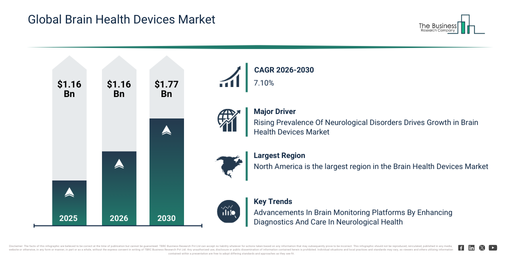
    The brain health devices market size is forecast to experience significant expansion in the upcoming years. It is projected to reach $16.84 billion in 2030, growing at a compound annual growth rate (CAGR) of 7.1%. This anticipated growth during the forecast period is primarily due to advancements in wearable brain health devices, the integration of AI and machine learning algorithms, increasing adoption of telehealth and remote monitoring services, a rise in government and private funding for neurotechnology, and the development of portable and cost-effective brain health solutions. Notable trends expected in this period include the growing use of non-invasive brain monitoring devices, an increased focus on the early detection of neurological disorders, the integration of wearable cognitive tracking devices, rising demand for home-based brain health solutions, and the expansion of brain training and neurostimulation applications.

    Get A Free Sample Report With In-Depth Market Insights:

    https://thebusinessresearchcompany.com/sample_request?id=18107471&type=smp&name=Brain%20Health%20Devices%20Market%20Report%202026&utm_source=Blogs&utm_medium=Paid&utm_campaign=Sep_PR

    Brain Health Devices Market Growth Backed By Core Demand Fundamentals

    The expanding occurrence of neurological conditions is anticipated to fuel the expansion of the brain health devices market in the future. These conditions are medical ailments impacting the nervous system, encompassing the brain, spinal cord, and nerves, which can lead to diverse cognitive, motor, and sensory impairments. The rising prevalence of neurological disorders is primarily influenced by an aging global population and an uptick in chronic illnesses such as diabetes and hypertension. Furthermore, environmental and lifestyle elements, alongside improved diagnostic methods and genetic predispositions, contribute to the increasing number of documented cases. Brain health devices function by monitoring brain activity and providing specific treatments to alleviate symptoms, boost cognitive abilities, and enhance patient results. For instance, in January 2025, the European Brain Council, a Belgium-based non-profit organization, reported that 7 million people in Europe are living with Alzheimer’s disease, with projections indicating this figure is expected to reach 14 million by 2030. Consequently, the growing incidence of neurological disorders is a key driver for the brain health devices market.

    Brain Health Devices Market Segment Analysis And Revenue Potential

    The brain health devices market covered in this report is segmented –

    1) By Device Type: Magnetic Resonance Imaging, Magneto Encephalogram, Computed Tomography, Transcranial Doppler Device, Other Device Types

    2) By Procedure: Invasive, Non-Invasive

    3) By Application: Sleep Disorders, Accidental Injuries, Alzheimer’s Disease, Epilepsy, Stroke, Other Applications

    4) By End-User: Hospitals And Clinics, Diagnostic Imaging Centers, Homecare Settings, Assisted Living Facilities, Other End-Users

    Subsegments:

    1) By Magnetic Resonance Imaging (MRI): Functional MRI (fMRI), Diffusion Tensor Imaging (DTI), MRI Spectroscopy

    2) By Magnetoencephalogram (MEG): Whole-Head MEG Systems, Cooled MEG Systems

    3) By Computed Tomography (CT): Standard CT Scanners, CT Angiography, High-Resolution CT Scanners

    4) By Transcranial Doppler Device: Handheld Transcranial Doppler Devices, Portable Transcranial Doppler Devices

    5) By Other Device Types: Electroencephalogram (EEG) Devices, Positron Emission Tomography (PET) Scanners, Near-Infrared Spectroscopy (NIRS) Devices

    Brain Health Devices Market Growth Trends Reshaping The Competitive Landscape

    Leading companies in the brain health monitoring market are prioritizing the creation of advanced solutions, such as passive smartphone-based monitoring platforms, designed to continuously observe changes in cognitive and motor function without requiring active patient involvement or wearable devices. This passive approach leverages daily keyboard interactions, motion, and general device usage to discreetly produce clinically relevant neurological data. A significant development occurred in May 2025, when Neurocast, a Netherlands-based provider of digital health and brain health monitoring solutions, introduced its FDA-registered Neurocast platform in the U.S. This system examines routine smartphone activities, including keystrokes, movement patterns, and usage behaviors, to identify subtle neurological shifts, thereby facilitating the early detection of cognitive or motor deterioration in individuals with conditions such as multiple sclerosis, Alzheimer’s disease, ADHD, and depression. The Neurocast platform offers key functionalities like continuous data acquisition through regular phone use, a privacy-focused design that eliminates the need for active input or wearables, adherence to GDPR, ISO 27001 certification, and practical clinical validation through European studies involving hundreds of patients. This introduction enables U.S. healthcare providers to access scalable, non-intrusive, and data-driven information for proactive brain health management, marking a crucial advancement in remote neurological care.

    Brain Health Devices Market Company Landscape And Competitive Strategy

    Major companies operating in the brain health devices market are Johnson & Johnson Services Inc., Medtronic plc, Siemens Healthineers AG, Koninklijke Philips N.V., GE HealthCare Technologies Inc., Boston Scientific Corporation, electroCore Inc., Masimo Corporation, Integra LifeSciences Corporation, LivaNova plc, Natus Medical Incorporated, Cadwell Industries Inc., NeuroSky Inc., Neuropace Inc., Compumedics Limited, Magstim Co. Ltd., Mindmaze SA, Brain Products GmbH, Emotiv Inc., Electrical Geodesics Inc., BrainScope Company Inc., Soterix Medical Inc., Advanced Brain Monitoring Inc., Bio-Signal Group Corp., Cognionics Inc

    View The Full Brain Health Devices Market Report:

    https://thebusinessresearchcompany.com/report/brain-health-devices-global-market-report?utm_source=Blogs&utm_medium=Paid&utm_campaign=Sep_PR

    Brain Health Devices Market Largest Region: Which Geography Holds The Biggest Share?

    North America was the largest region in the brain health devices market in 2025. Asia-Pacific is expected to be the fastest-growing region in the forecast period. The regions covered in the brain health devices market report are Asia-Pacific, South East Asia, Western Europe, Eastern Europe, North America, South America, Middle East, Africa.

    Reach Out To Our Team:

    The Business Research Company: https://www.thebusinessresearchcompany.com/

    Americas: +1 310-496-7795

    Asia: +44 7882 955267 & +91 8897263534

    Europe: +44 7882 955267

    Email us at: marketing@tbrc.info

    Follow us on:

    LinkedIn: https://in.linkedin.com/company/the-business-research-company

    YouTube: https://www.youtube.com/channel/UC24_fI0rV8cR5DxlCpgmyFQ

    Global Market Model: https://www.thebusinessresearchcompany.com/global-market-model

  • Brain Disease Device And Software Market Analysis 2026: Market Size, Growth Trends And Industry Outlook

    Brain Disease Device And Software Market Analysis 2026: Market Size, Growth Trends And Industry Outlook

    Backed by market attractiveness analysis, total addressable market sizing, company benchmarking matrices, interactive Excel dashboards, wider supply chain intelligence, emerging startup coverage, and detailed product-level insights, The Business Research Company’s 2026 market reports are designed to offer research that is more actionable and strategically valuable than ever.

    Brain Disease Device And Software Market Size, Value And Growth Trajectory Through 2030

    The brain disease device and software market has seen considerable expansion in recent years. It is anticipated to grow from $15.59 billion in 2025 to $17.2 billion in 2026, demonstrating a compound annual growth rate (CAGR) of 10.3%. The historical increase in this market can be linked to factors such as the scarcity of effective brain disease diagnostic instruments, the increasing occurrence of neurological conditions, the improvement of hospital and clinic infrastructure, the initial embrace of telemedicine technologies, and a reliance on conventional brain imaging methods.

    The brain disease device and software market is anticipated to experience substantial expansion over the upcoming years. By 2030, this market is projected to reach $25.21 billion, exhibiting a compound annual growth rate (CAGR) of 10.0%. This projected growth stems from several factors, including developments in wearable and AI-powered brain disease devices, increased capital allocation towards neurorehabilitation technologies, the proliferation of home care and remote patient monitoring options, escalating demand for software managing brain data, and intensified research into neuroinformatics and cognitive assessment tools. Key trends for the forecast period encompass a greater uptake of neurostimulation and brain monitoring devices, the incorporation of telemedicine and remote patient monitoring, an increase in cognitive assessment and neurofeedback software, an amplified emphasis on individualized treatments for brain disorders, and the broadening of neuroimaging and data analytics capabilities.

    Get A Free Sample Report With In-Depth Market Insights:

    https://thebusinessresearchcompany.com/sample_request?id=91767472&type=smp&name=Brain%20Disease%20Device%20And%20Software%20Market%20Report%202026&utm_source=Blogs&utm_medium=Paid&utm_campaign=Sep_PR

    Brain Disease Device And Software Market Growth Catalysts And Demand Drivers

    The projected expansion of the brain disease device and software market is linked to the increasing occurrence of neurological disorders. These medical conditions affect the brain, spinal cord, and nerves, leading to diverse symptoms such as cognitive, motor, and sensory impairments. The rising prevalence of neurological disorders is connected to the world’s aging population, as aging progressively impairs neuronal function, reduces brain plasticity, and elevates oxidative stress, which contributes to the development and advancement of these conditions. Brain disease devices and software assist in managing neurological disorders through early diagnosis and continuous monitoring. They also enable timely intervention via advanced AI and data analytics, thereby improving patient care and treatment outcomes. For instance, in July 2024, according to the National Health Service, a UK-based government agency, there were 487,432 patients diagnosed with dementia (a progressive brain disorder affecting memory, thinking, and daily activities) by June 30, 2024, an increase of 3,155 cases compared to May 31, 2024. This demonstrates how the increasing prevalence of neurological disorders is driving the growth of the brain disease device and software market.

    Brain Disease Device And Software Market Segmentation And Category Overview

    The brain disease device and software market covered in this report is segmented –

    1) By Type: Brain Disease Device, Brain Disease Software

    2) By Technology: Wearable Technology, Telemedicine Solutions, Artificial Intelligence And Machine Learning, Mobile Health Applications, Neuroimaging Technologies

    3) By Application: Alzheimer’s Disease, Parkinson’s Disease, Epilepsy, Other Applications

    4) By End-User: Hospitals And Clinics, Home Care Settings, Rehabilitation Centers, Research and Academic Institutions, Diagnostic Laboratories

    Subsegments:

    1) By Brain Disease Device: Neurostimulation Devices, Brain Imaging Devices, Brain Monitoring Devices, Brain-Computer Interface Devices, Neurorehabilitation Devices

    2) By Brain Disease Software: Brain Imaging Analysis Software, Cognitive Assessment Software, Neurofeedback Software, Brain Data Management Software, Neurological Disorder Diagnostic Software

    Brain Disease Device And Software Market Trends Shaping Long-Term Demand

    Key companies within the brain disease device and software market are increasingly harnessing innovative technologies, such as artificial intelligence (AI)-driven brain imaging analytics, in order to improve the early and precise detection, tracking, and management of neurodegenerative conditions including Alzheimer’s disease and dementia. These AI-powered brain imaging analytics utilize advanced software platforms applying machine-learning models to MRI and other neuroimaging data. Their purpose is to pinpoint subtle microstructural alterations in brain tissue often missed by conventional volumetric imaging, leading to a much earlier and more sensitive diagnosis. An example is found in January 2025, when Oxford Brain Diagnostics Ltd., a UK-based medtech company, obtained U.S. Food and Drug Administration (FDA) 510(k) clearance and then introduced CDM Insights. This cloud-native software solution is built upon their proprietary Cortical Disarray Measurement (CDM) technology. This tool processes routine 1.5 T and 3 T MRI scans to produce novel measures of cortical thickness and microstructural disarray within grey matter, thereby offering objective, quantifiable indicators of neurodegeneration. Following these regulatory approvals, the company began its commercial rollout across healthcare systems in the US and UK, assisting clinicians with early diagnosis, disease monitoring, and treatment stratification.

    Brain Disease Device And Software Market Key Players Shaping Industry Direction

    Major companies operating in the brain disease device and software market are Medtronic plc, Insightec Ltd., Cadwell Industries Inc., NeuroPace Inc., Synchron Inc., Compumedics Ltd., Neuronetics Inc., BrainsWay Ltd., The Magstim Company Ltd., Paradromics Inc., Linus Health Inc., MagVenture A/S, Neurophet Inc., Neuroelectrics Corporation, BrainScope Company Inc, Blackrock Neurotech LLC, Neurable Inc., NeuroSigma Inc., Cognixion Inc., Brightmind.AI

    View The Full Brain Disease Device And Software Market Report:

    https://thebusinessresearchcompany.com/report/brain-disease-device-and-software-global-market-report?utm_source=Blogs&utm_medium=Paid&utm_campaign=Sep_PR

    Brain Disease Device And Software Market Regional Analysis: Which Geography Leads On Revenue?

    North America was the largest region in the brain disease device and software market in 2025. Asia-Pacific is expected to be the fastest-growing region in the forecast period. The regions covered in the brain disease device and software market report are Asia-Pacific, South East Asia, Western Europe, Eastern Europe, North America, South America, Middle East, Africa.

    Reach Out To Our Team:

    The Business Research Company: https://www.thebusinessresearchcompany.com/

    Americas: +1 310-496-7795

    Asia: +44 7882 955267 & +91 8897263534

    Europe: +44 7882 955267

    Email us at: marketing@tbrc.info

    Follow us on:

    LinkedIn: https://in.linkedin.com/company/the-business-research-company

    YouTube: https://www.youtube.com/channel/UC24_fI0rV8cR5DxlCpgmyFQ

    Global Market Model: https://www.thebusinessresearchcompany.com/global-market-model

  • Brain And Neuroimaging Devices Market Forecast To 2030: Starting From $59.26 Billion In 2026

    Brain And Neuroimaging Devices Market Forecast To 2030: Starting From $59.26 Billion In 2026

    Featuring market attractiveness scoring, total addressable market sizing, company benchmarking matrices, interactive Excel dashboards, deeper supply chain intelligence, emerging startup tracking, and granular product-level insights, The Business Research Company’s 2026 market reports are built to deliver research that is both more actionable and more strategically valuable.

    Brain And Neuroimaging Devices Market CAGR Outlook And Future Development

    The brain and neuroimaging devices market has experienced significant growth in recent years. This market is set to expand from $44.1 billion in 2025 to $46.7 billion in 2026, reflecting a compound annual growth rate (CAGR) of 5.9%. The growth observed in the past can be attributed to the rising occurrence of neurological disorders, the increase in diagnostic imaging centers, the adoption of advanced MRI and CT technologies, the development of neurological research programs, and the growing utilization of EEG-based diagnostics.

    The market for brain and neuroimaging devices is set for significant expansion over the next few years. It is projected to grow to $59.26 billion in 2030, achieving a compound annual growth rate (CAGR) of 6.1%. This anticipated growth is influenced by factors such as the increasing demand for early detection of brain disorders, the widening application of precision neurology, rising investments in neuroimaging research, the increasing adoption of hybrid imaging systems, and the greater integration of imaging with digital health platforms. Key trends expected during this forecast period involve the growing adoption of AI-assisted neuroimaging analysis, an increased use of high-resolution brain imaging modalities, deeper integration of multimodal imaging techniques, the expansion of functional brain mapping applications, and a heightened focus on early neurological diagnosis.

    Get A Free Sample Report With In-Depth Market Insights:

    https://thebusinessresearchcompany.com/sample_request?id=34911065&type=smp&name=Brain%20And%20Neuroimaging%20Devices%20Market%20Report%202026&utm_source=Blogs&utm_medium=Paid&utm_campaign=Sep_PR

    Brain And Neuroimaging Devices Market Opportunity Drivers: What’s Unlocking New Revenue Potential?

    The increasing incidence of traumatic brain injuries is projected to stimulate the expansion of the Brain And Neuroimaging Devices Market in the future. Traumatic brain injury (TBI) is characterized as an injury or damage to the brain caused by a sudden, external impact or trauma, affecting an individual’s physical, cognitive, emotional, and behavioral functions. Brain and neuroimaging devices are instrumental in the diagnosis, assessment, and management of traumatic brain injury (TBI), helping doctors identify internal bleeding, fractures, or structural anomalies. For instance, in October 2023, the Neural Regeneration Research, a China-based peer-reviewed academic journal focused on neuroscience, particularly neural regeneration and neuroprotection, stated that approximately 69 million people suffer from traumatic brain injury (TBI) each year. This rising prevalence of traumatic brain injuries is therefore a key driver for the growth of the Brain And Neuroimaging Devices Market.

    Brain And Neuroimaging Devices Market Segment Outlook: Which Categories Are Growing Fastest?

    The brain and neuroimaging devices market covered in this report is segmented –

    1) By Imaging Type: Functional Magnetic Resonance Imaging (FMRI), Computed Tomography (CT), Positron Emission Tomography (PET), Electroencephalography (EEG), Magneto Encephalography (MEG), Other Imaging Types

    2) By Application: Parkinson’s Disease, Traumatic Brain Injury, Epilepsy, Dementia, Sleep Disorders, Other Applications

    3) By End-User: Hospitals, Diagnostic Centres, Research Institutes And Neurology Clinics

    Subsegments:

    1) By Functional Magnetic Resonance Imaging (FMRI): Resting-State FMRI, Task-Based FMRI, Diffusion Tensor Imaging (DTI) With FMRI

    2) By Computed Tomography (CT): X-ray CT, Positron Emission Tomography (PET) Or CT Hybrid Imaging, Multi-Slice CT

    3) By Positron Emission Tomography (PET): PET Or CT, PET Or MRI

    4) By Electroencephalography (EEG): Conventional EEG, Ambulatory EEG, High-Density EEG

    5) By Magnetoencephalography (MEG): Whole-Head MEG, Electromagnetic Source Imaging (ESI) With MEG

    6) By Other Imaging Types: Near-Infrared Spectroscopy (NIRS), Transcranial Magnetic Stimulation (TMS), Functional Near-Infrared Brain Imaging Systems

    Brain And Neuroimaging Devices Market Innovation Trends Shaping Future Development

    Major companies in the brain and neuroimaging device market are concentrating on developing technology enhanced with artificial intelligence (AI), such as Neuro Suite, to achieve a competitive edge. Neuro Suite, powered by artificial intelligence, is designed to deliver comprehensive solutions as a brain and neuroimaging device for neurological disorders. For Instance, in April 2023, TeraRecon, Inc., a US-based company that produces medical imaging equipment, launched the Neuro Suite. Neuro Suite is an artificial intelligence (AI)-assisted clinical suite solution addressing neurology diseases like neuro-oncology, multiple sclerosis, and dementia. This innovation provides radiologists with access to a variety of artificial intelligence (AI)-powered neuroimaging modalities.

    Brain And Neuroimaging Devices Market Competitive Analysis Of Leading Industry Participants

    Major companies operating in the brain and neuroimaging devices market are GE HealthCare, Siemens AG, Koninklijke Philips, Canon Medical Systems Corporation, Hitachi Medical Systems, EB Neuro S.p.A., Neurosoft, MinFound Medical Systems Co. Ltd., Elekta, Toshiba Corporation, Shimadzu Corporation, Bruker Corporation, PerkinElmer Inc., Carl Zeiss Meditec AG, Fujifilm Holdings Corporation, Nihon Kohden Corporation, Natus Medical Incorporated, RIMED Ltd., Advanced Brain Monitoring Inc., Compumedics Limited

    View The Full Brain And Neuroimaging Devices Market Report:

    https://thebusinessresearchcompany.com/report/brain-and-neuroimaging-devices-global-market-report?utm_source=Blogs&utm_medium=Paid&utm_campaign=Sep_PR

    Brain And Neuroimaging Devices Market Geographic Spread And Regional Opportunities

    Western Europe was the largest region in the brain and neuroimaging devices market in 2025. North America was the second-largest region in the global brain and neuroimaging devices market report. Africa. was the smallest region in the brain and neuroimaging devices market. The regions covered in the brain and neuroimaging devices market report are Asia-Pacific, South East Asia, Western Europe, Eastern Europe, North America, South America, Middle East, Africa.

    Reach Out To Our Team:

    The Business Research Company: https://www.thebusinessresearchcompany.com/

    Americas: +1 310-496-7795

    Asia: +44 7882 955267 & +91 8897263534

    Europe: +44 7882 955267

    Email us at: marketing@tbrc.info

    Follow us on:

    LinkedIn: https://in.linkedin.com/company/the-business-research-company

    YouTube: https://www.youtube.com/channel/UC24_fI0rV8cR5DxlCpgmyFQ

    Global Market Model: https://www.thebusinessresearchcompany.com/global-market-model