Blog

  • Top 5 Insights From The Intragastric Balloons Market Report 2024

    Top 5 Insights From The Intragastric Balloons Market Report 2024

    The Business Research Company’s global market reports are now updated with the latest market sizing information for the year 2024 and forecasted to 2033

    According to The Business Research Company’s Intragastric Balloons Global Market Report 2024, the intragastric balloons market is expected to show promising growth in the forecast period.

    The intragastric balloons market has seen significant growth over recent years and is projected to continue expanding rapidly. This growth is driven by several factors, including rising obesity rates, increasing healthcare expenditures, and advancements in balloon design and technology.

    Market Size and Growth Projections

    • Current Market Size: The intragastric balloons market grew from $17.85 billion in 2023 to $19.89 billion in 2024, with a CAGR of 11.4%.
    • Future Projections: It is expected to reach $30.75 billion by 2028, growing at a CAGR of 11.5%.
    • Growth Drivers: Increased obesity rates, expanding healthcare expenditures, and the popularity of non-surgical weight loss solutions are primary drivers.

    Key Factors Influencing Market Growth

    • Obesity Epidemic: The rise in global obesity rates is a significant factor in market growth. Obesity, often defined by a BMI of 30 or higher, is driven by poor dietary habits, sedentary lifestyles, and urbanization.
    • Non-Surgical Options: Intragastric balloons offer a less invasive alternative to traditional bariatric surgery, appealing to patients seeking effective weight loss without the risks associated with surgery.

    View More On The Intragastric Balloons Market Report 2024 – https://www.thebusinessresearchcompany.com/report/intragastric-balloons-global-market-report

    Technological Advancements and Innovations

    • Swallowable Gastric Balloons: Companies are focusing on developing innovative solutions such as swallowable gastric balloons that do not require surgery or anesthesia.
      • Example: In 2022, Allurion Technologies introduced a swallowable gastric balloon capsule in India, which offers a non-surgical approach to weight loss, enhancing patient comfort and accessibility.
    • Digital Integration: There is growing integration of digital health platforms and AI to improve patient outcomes through better monitoring and personalized care.

    Strategic Acquisitions and Market Expansion

    • Boston Scientific’s Acquisition of Apollo Endo-surgery: In 2022, Boston Scientific acquired Apollo Endo-surgery for $615 million, expanding its portfolio of weight loss solutions. This move highlights the increasing consolidation in the market as companies strive to offer comprehensive solutions to their customers.
    • Expansion in Emerging Markets: The market is seeing significant growth in emerging regions due to increased awareness and adoption of minimally invasive weight loss procedures.

    Segmentation and Regional Insights

    • Types of Intragastric Balloons: Single, dual, and triple balloons are available, catering to different patient needs.
    • Filling Materials: Balloons are either saline or gas-filled, with each type offering specific advantages based on patient and clinician preferences.
    • Distribution Channels: Products are distributed through online pharmacies, retail pharmacies, and hospital pharmacies.
    • Application Areas: Besides obesity, intragastric balloons are used for diabetes management, diet control, weight-loss programs, and pre-operative weight reduction.
    • End-Users: The primary users include hospitals, clinics, ambulatory surgical centers, and other healthcare providers.
    • Regional Growth: North America led the market in 2023, while the Asia-Pacific region is expected to be the fastest-growing market during the forecast period.

    Future Trends and Developments

    • Increased Awareness: Social media and educational campaigns are raising awareness about the benefits and safety of intragastric balloons.
    • Personalized Treatments: As healthcare moves towards personalized medicine, there is a growing emphasis on tailored weight loss programs that utilize intragastric balloons.
    • Aging Population: The aging population is increasingly seeking non-surgical options for weight management, further boosting market growth.

    Conclusion

    The intragastric balloons market is on a strong growth trajectory, driven by technological innovations, strategic acquisitions, and increasing demand for non-surgical weight loss solutions. As obesity rates continue to rise and awareness about these options grows, the market is set to expand significantly in the coming years, particularly in emerging markets.

    Request A Sample Of The Global Intragastric Balloons Market Report 2024:
    https://www.thebusinessresearchcompany.com/sample_request?id=15835&type=smp

  • What’s The Growth Forecast For Interbody Fusion Cages Market Through 2024-2033?

    What’s The Growth Forecast For Interbody Fusion Cages Market Through 2024-2033?

    The Business Research Company’s global market reports provide comprehensive analysis on the various markets in 27 industries across 60 geographies.

    Market Overview

    • Market Growth: The interbody fusion cages market has experienced steady growth, increasing from $2.18 billion in 2023 to an expected $2.29 billion in 2024 at a CAGR of 4.8%.
    • Factors Driving Growth: Key drivers include a growing geriatric population, rising obesity rates, an increase in sports-related injuries, economic growth, and the development of hospital infrastructure.

    Future Market Outlook

    • Expected Growth: The market is projected to grow to $2.79 billion by 2028, with a CAGR of 5.1%.
    • Growth Drivers: Factors such as a rising awareness of minimally invasive surgical procedures, an increase in spinal surgeries, more accidents, higher disposable incomes, and a growing prevalence of degenerative diseases are anticipated to drive growth.
    • Emerging Trends: Technological advancements, integrated graft delivery systems, strategic collaborations, minimally invasive approaches, and modular designs are key trends shaping the market.

    View More On The Interbody Fusion Cages Market Report 2024 – https://www.thebusinessresearchcompany.com/report/interbody-fusion-cages-global-market-report

    Increasing Incidence of Spinal Cord Injuries

    • Impact on Market: The rise in spinal cord injuries, due to falls, traffic accidents, sports activities, and other causes, is boosting demand for interbody fusion cages.
    • Role of Interbody Fusion Cages: These devices are crucial in treating spinal injuries by promoting bone fusion, providing structural support, and enhancing spine stability and function.
    • Statistics: In the United States, approximately 18,000 new spinal cord injuries occur annually, underscoring the demand for effective treatments like interbody fusion cages.

    Key Players in the Market

    • Major Companies: Notable players include Medtronic plc, Johnson & Johnson, Stryker Corporation, B. Braun Melsungen AG, Depuy Synthes, Zimmer Biomet Holdings Inc., and NuVasive Inc., among others.
    • Innovative Developments: These companies are at the forefront of innovation, developing new products such as expandable interbody cages to enhance surgical outcomes.

    Innovation Spotlight: Accelus TiHawk7 Expandable Interbody Cage

    • New Product Launch: In May 2022, Accelus launched the TiHawk7 Titanium, an expandable interbody cage designed for endoscopic and minimally invasive spine lumbar fusion procedures.
    • Key Features: The device offers a low insertion profile, multidirectional expansion, and a combination of titanium and PEEK materials for optimal performance.

    Strategic Acquisitions: Silony Medical Expands Its Portfolio

    • Recent Acquisition: In October 2023, Silony Medical International AG acquired the fusion business and related assets from Centinel Spine.
    • Purpose of Acquisition: This move aims to expand Silony’s product portfolio in the spine surgery market and strengthen its position as a leader in spinal fusion procedures.

    Market Segmentation

    • By Type: Includes lumbar cage, cervical cage, thoraco-lumbar cage, and thoracic cage.
    • By Surgery: Categorized into anterior, posterior, lateral, and transforaminal surgeries.
    • By End Users: Hospitals and clinics, ambulatory surgical centers, and other end-users.

    Regional Insights

    • Largest Market: North America led the interbody fusion cages market in 2023.
    • Fastest-Growing Region: Asia-Pacific is projected to be the fastest-growing region during the forecast period, driven by increasing healthcare investments and a rising demand for advanced surgical solutions.

    The interbody fusion cages market continues to evolve with technological advancements and strategic industry moves, presenting significant growth opportunities for companies and improved outcomes for patients.

    Request A Sample Of The Global Interbody Fusion Cages Market Report 2024:
    https://www.thebusinessresearchcompany.com/sample_request?id=15834&type=smp

  • Understand How The Irradiation Sterilization Services Market Is Poised To Grow Through 2024-2033

    Understand How The Irradiation Sterilization Services Market Is Poised To Grow Through 2024-2033

    The Business Research Company’s global market reports are now updated with the latest market sizing information for the year 2024 and forecasted to 2033

    As per The Business Research Company’s Irradiation Sterilization Services Global Market Report 2024, the irradiation sterilization services market is expected to show significant growth in the forecast period.

    The irradiation sterilization services market has seen significant growth in recent years and is expected to continue this trend. In this blog, we’ll explore the key drivers, trends, and major players shaping the market.

    Current Market Size and Growth

    • Rapid Growth: The market size grew from $2.34 billion in 2023 to $2.65 billion in 2024, reflecting a compound annual growth rate (CAGR) of 13.1%.
    • Key Drivers: This growth is driven by several factors:
      • Expansion of the medical industry.
      • Stricter regulatory standards.
      • Technological advancements.
      • Growth in pharmaceutical and biotechnology sectors.
      • Rising concerns about food safety.

    Future Market Projections

    • Continued Expansion: The market is projected to reach $4.39 billion by 2028, with a CAGR of 13.5% from 2024 to 2028.
    • Growth Factors: Several factors will contribute to this continued growth:
      • Increasing healthcare expenditure.
      • Expansion of pharmaceutical and biotechnology sectors.
      • Ongoing technological innovations.
      • Regulatory pressures and rising awareness of food safety.
      • Impact of the COVID-19 pandemic.

    View More On The Irradiation Sterilization Services Market Report 2024 – https://www.thebusinessresearchcompany.com/report/irradiation-sterilization-services-global-market-report

    Trends Shaping the Market

    • Advanced Technologies: Adoption of advanced sterilization technologies is a major trend.
    • Geographical Expansion: Companies are expanding their geographic footprints to reach new markets.
    • Outsourcing: Many businesses are outsourcing sterilization services to specialized providers.
    • Sustainable Practices: There is a growing focus on sustainable sterilization practices.
    • Hybrid Techniques: Development of hybrid sterilization techniques combining multiple technologies.
    • Customized Solutions: Companies are offering customized sterilization solutions to meet specific customer needs.

    Impact of Healthcare-Associated Infections

    • Rising HAIs: The prevalence of healthcare-associated infections (HAIs) is on the rise, driving demand for sterilization services.
    • Contributing Factors: Increased antibiotic resistance, inadequate infection control measures, and more complex medical procedures contribute to the rise in HAIs.
    • Market Impact: As infections increase, so does the need for effective sterilization methods to ensure the safety of medical instruments and environments.

    Key Market Players

    • Major Companies: Some leading companies in the market include:
      • 3M Company
      • Steris plc
      • Röchling SE & Co. KG
      • Getinge AB
      • Sotera Health
      • Sterigenics N.V.
      • Scapa Group Ltd.
      • IBA Industrial
      • Nordion Inc.
      • Steritech Pty Ltd.
    • Innovations: Companies are focusing on developing innovative products to enhance their market position.

    Innovative Technologies Transforming the Market

    • Cloud-Based Disinfection Solutions: Companies like Unimech Healthcare are developing cloud-based disinfection technology solutions.
    • Example: In April 2021, Unimech Healthcare launched UniClean, a cloud-based system that uses ultraviolet germicidal irradiation (UVGI) for air and surface sterilization.
    • Benefits: These solutions provide real-time monitoring, control, and data analytics to optimize disinfection processes and ensure compliance with hygiene standards.

    Strategic Expansions in the Market

    • Acquisitions: Companies are expanding their capacities and geographic reach through acquisitions.
    • Case Study: In January 2023, Ionisos, a French sterilization services provider, acquired an E-beam facility from Studer Cables AG, enhancing its sterilization capacity and geographic footprint in Europe.

    Market Segmentation and Regional Insights

    • Segmentation: The market can be segmented by type (onsite vs. offsite sterilization services), technology (gamma, X-ray, and E-beam irradiation), and application (medical instruments, drugs, food, and laboratory).
    • Regional Trends: North America was the largest market in 2023, while Asia-Pacific is expected to be the fastest-growing region in the coming years.

    Conclusion

    The irradiation sterilization services market is experiencing robust growth, driven by increasing healthcare needs, technological advancements, and rising awareness of safety standards. With continued innovation and expansion, the market is set to play a crucial role in ensuring public health and safety in the future.

    Request A Sample Of The Global Irradiation Sterilization Services Market Report 2024:
    https://www.thebusinessresearchcompany.com/sample_request?id=15839&type=smp

  • Liver Metastases Treatment Global Market Outlook 2024-2033: Size And Growth Rate Analysis

    Liver Metastases Treatment Global Market Outlook 2024-2033: Size And Growth Rate Analysis

    The Business Research Company’s global market reports provide comprehensive analysis on the various markets in 27 industries across 60 geographies. 

    The liver metastases treatment market has experienced significant growth in recent years and is projected to continue expanding. From a market size of $1.45 billion in 2023, it is expected to grow to $1.57 billion in 2024, achieving a compound annual growth rate (CAGR) of 8.5%. By 2028, the market is anticipated to reach $2.19 billion, with a slightly higher CAGR of 8.6%. This growth is driven by several key factors and emerging trends.

    Key Drivers of Market Growth

    • Expansion of Personalized Medicine: Tailored treatments based on genetic profiles and patient-specific characteristics have increased the effectiveness of liver metastases treatments.
    • Improved Access to Healthcare: Wider availability of healthcare services globally has enabled more patients to receive timely and appropriate treatment.
    • Enhanced Multidisciplinary Care: Collaboration between specialists from different fields has improved patient outcomes and optimized treatment plans.
    • Clinical Trials and Research Initiatives: Ongoing research and development have led to the discovery of new therapies and refined existing ones, further boosting market growth.

    View More On The Liver Metastases Treatment Market Report 2024 – https://www.thebusinessresearchcompany.com/report/liver-metastases-treatment-global-market-report

    Emerging Trends in the Market

    • Next-Generation Sequencing Technologies: Advanced genetic analysis helps identify specific mutations and tailor therapies more precisely.
    • Immuno-Oncology Advancements: The development of treatments that harness the immune system to fight cancer has opened new avenues for managing liver metastases.
    • Emergence of Liquid Biopsy Technologies: These non-invasive tests provide a quick and accurate method to monitor cancer progression and response to treatment.
    • Adjuvant Therapies: New adjuvant therapies are being explored to prevent recurrence after initial treatment, improving long-term outcomes.

    Rising Liver Disease Cases Boost Market Growth

    The increasing prevalence of liver diseases is a significant factor driving the growth of the liver metastases treatment market. Liver diseases can lead to severe complications, necessitating various forms of intensive treatment, including surgical resection, ablation, or targeted therapies.

    • Statistics Highlighting the Need: In 2022, around 2,905 new cases of liver cancer were diagnosed in Australia alone, underscoring the growing need for effective treatments.
    • Long-Term Remission Strategies: Intensive treatments, particularly when combined with systemic medications like chemotherapy or immunotherapy, are crucial for achieving long-term remission in patients.

    Major Players in the Market

    Several major companies are leading the charge in developing and providing liver metastases treatments:

    • Key Companies: Pfizer Inc., Johnson & Johnson, F. Hoffmann-La Roche AG, Merck & Co., AbbVie Inc., Bayer AG, Sanofi S.A., Novartis AG, Bristol Myers Squibb, AstraZeneca plc, Eli Lilly and Company, and many others.
    • Focus on Liver-Directed Therapies: These companies are increasingly focusing on liver-directed therapies, which target cancer cells in the liver either by destroying them directly or by cutting off their blood supply.

    Advancements in Liver-Directed Therapies

    Liver-directed therapies have become a focal point for companies in this market, aiming to offer more effective and convenient treatments for patients.

    • Innovative Treatments: In August 2023, Delcath Systems Incorporated launched the Hepzato kit, a liver-directed treatment for metastatic uveal melanoma. This product delivers melphalan directly to the liver, allowing for higher drug exposure in target tissues while minimizing systemic toxicity.
    • Targeted Delivery Systems: TriSalus Life Sciences, following its merger with MedTech Acquisition Corporation, is leveraging proprietary delivery technology to enhance the precision of immunotherapy delivery to tumor sites, maximizing efficacy and minimizing side effects.

    Market Segmentation and Regional Insights

    The liver metastases treatment market is segmented based on treatment type, primary cancer, and distribution channel.

    • By Treatment Type: Chemotherapy, Targeted Therapy, Immunotherapy
    • By Primary Cancer: Colorectal Cancer, Breast Cancer
    • By Distribution Channel: Hospital Pharmacies, Specialty Pharmacies
    • Regional Insights: North America was the largest region in the liver metastases treatment market in 2023. However, the Asia-Pacific region is expected to be the fastest-growing region during the forecast period, driven by improving healthcare infrastructure and increasing prevalence of liver diseases.

    Conclusion

    The liver metastases treatment market is set to grow significantly in the coming years, driven by advancements in personalized medicine, emerging technologies, and rising liver disease cases. With continuous innovation and strategic collaborations among key players, the market is poised for robust growth, promising improved patient outcomes and expanded treatment options globally.

    Request A Sample Of The Global Liver Metastases Treatment Market Report 2024:
    https://www.thebusinessresearchcompany.com/sample_request?id=15849&type=smp

  • 5 Key Insights On The Lipid Regulators Market 2024

    5 Key Insights On The Lipid Regulators Market 2024

    The Business Research Company’s global market reports are now updated with the latest market sizing information for the year 2024 and forecasted to 2033

    As per The Business Research Company’s Lipid Regulators Global Market Report 2024, the lipid regulators market is expected to show significant growth in the forecast period.

    • Market Size and Growth: The lipid regulators market has shown robust growth in recent years. It expanded from $6.83 billion in 2023 to $7.29 billion in 2024, registering a compound annual growth rate (CAGR) of 6.8%.
    • Drivers of Growth: This growth is attributed to several factors, including a rise in lifestyle diseases, an aging population, increased awareness of lipid regulators, higher healthcare expenditure, and a stronger focus on preventive healthcare.

    Future Prospects of the Lipid Regulators Market

    • Projected Market Expansion: The market is expected to continue its upward trajectory, growing to $9.55 billion by 2028 at a CAGR of 7%.
    • Key Growth Factors: Future growth will be driven by the rising prevalence of cardiovascular diseases, increasing cases of atherosclerosis among the aging population, higher obesity rates, the spread of metabolic syndrome, and a growing emphasis on personalized medicine.

    Trends Shaping the Lipid Regulators Market

    • Drug Development and Digital Health: Advancements in drug development, integration of digital health solutions, and the adoption of value-based pricing models are major trends expected to shape the market.
    • Increasing OTC Demand: There is also an increasing demand for over-the-counter (OTC) lipid regulators, reflecting a shift towards patient-centered medication and self-care.

    View More On The Lipid Regulators Market Report 2024 – https://www.thebusinessresearchcompany.com/report/lipid-regulators-global-market-report

    Impact of Ischemic Heart Disease on the Lipid Regulators Market

    • Rising Prevalence: The increasing prevalence of ischemic heart disease (IHD) is a significant factor driving the market for lipid regulators. IHD, also known as coronary artery disease (CAD), is characterized by reduced blood flow to the heart due to narrowed or blocked coronary arteries.
    • Health Statistics: Unhealthy lifestyles, smoking, obesity, hypertension, and diabetes are contributing to the rise in IHD. In Australia, between 2020 and 2021, there were 160,000 hospitalizations for IHD, causing 17,300 deaths in 2021.
    • Role of Lipid Regulators: Lipid regulators play a crucial role in managing IHD by lowering LDL cholesterol, raising HDL cholesterol, stabilizing arterial plaques, reducing inflammation, and enhancing endothelial function, ultimately reducing the risk and severity of ischemic events.

    Innovations in Lipid-Lowering Drugs

    • Advanced Drug Development: Leading companies in the lipid regulators market are focusing on developing advanced oral lipid-lowering drugs to manage high LDL cholesterol in patients with heart diseases.
    • Case Study – Bempedoic Acid: Sun Pharmaceutical Industries Limited launched Bempedoic Acid Brillo in India in May 2022. This oral drug offers an innovative therapy for high LDL cholesterol, particularly in individuals with cardiac conditions. It functions by inhibiting an enzyme involved in cholesterol synthesis and activating a regulatory enzyme, making it a convenient once-daily medication.

    Collaborations for Cholesterol Management Solutions

    • Strategic Partnerships: In April 2023, Luye Pharma Group partnered with Duopharma Marketing Sdn Bhd to introduce an innovative cholesterol management solution. This collaboration combines Duopharma Biotech’s expertise in cardiovascular health with Luye Pharma’s advanced fermentation technology.
    • Product Innovation: The partnership focuses on developing a traditional Chinese medicine using unique red yeast rice, effectively managing cholesterol levels.

    Market Segmentation and Regional Insights

    • Segmentation: The lipid regulators market is segmented by type, indication, administration, and application. Types include lipid regulators and various other therapeutic agents. Indications cover conditions like hypercholesterolemia and coronary artery disease, while administration routes include oral and injectable forms. Applications span pharmaceuticals, vaccines, scientific research, and more.
    • Regional Overview: In 2023, North America was the largest market for lipid regulators. However, Asia-Pacific is expected to be the fastest-growing region in the coming years, driven by increasing health awareness and rising incidences of lifestyle-related diseases.

    The lipid regulators market is poised for substantial growth, driven by a combination of demographic trends, increasing disease prevalence, and ongoing innovations in drug development and personalized medicine.

    Request A Sample Of The Global Lipid Regulators Market Report 2024:
    https://www.thebusinessresearchcompany.com/sample_request?id=15848&type=smp

  • Global Leadless Pacemakers Market Report 2024 – Top Market Trends And Opportunities

    Global Leadless Pacemakers Market Report 2024 – Top Market Trends And Opportunities

    The Business Research Company’s market reports offer an in-depth analysis on the market’s growth potential, major drivers, key trends and more.

    Market Overview

    • Current Market Size: The leadless pacemakers market is experiencing rapid growth, expanding from $0.51 billion in 2023 to $0.58 billion in 2024, with a CAGR of 15.2%.
    • Projected Growth: This market is expected to continue its upward trajectory, reaching $1.04 billion by 2028 at a CAGR of 15.5%.

    Key Drivers of Market Growth

    • Enhanced Imaging and Navigation Systems: Technological improvements in imaging and navigation have facilitated more accurate implantation of leadless pacemakers.
    • Minimally Invasive Procedures: Growing demand for minimally invasive procedures has driven the adoption of leadless pacemakers, which offer a less invasive alternative to traditional pacemakers.
    • Quality of Life Improvements: Patients are seeking treatments that offer better outcomes and improved quality of life, which has increased the popularity of leadless pacemakers.
    • Rise in Cardiovascular Diseases: An increase in the incidence of cardiovascular diseases has directly boosted the demand for advanced cardiac care devices like leadless pacemakers.

    Read More On The Leadless Pacemakers Market Report 2024 – https://www.thebusinessresearchcompany.com/report/leadless-pacemakers-global-market-report

    Future Market Trends

    • Expanding Clinical Indications: As clinical indications for leadless pacemakers expand, the market is expected to grow.
    • Aging Population: An aging global population is contributing to the increased need for cardiac care, including pacemakers.
    • Patient Safety and Outcomes: Greater emphasis on patient safety and outcomes is driving innovation in pacemaker technologies.
    • Sustainability and Public Awareness: The growing focus on sustainable healthcare practices and increased public awareness about heart health are anticipated to further stimulate market growth.

    Technological Advancements in Leadless Pacemakers

    • Integration with Wearable and Digital Health Technologies: Leadless pacemakers are increasingly being integrated with wearable devices and other digital health technologies, allowing for better patient monitoring and management.
    • Longer Battery Life and Durability: Innovations are leading to pacemakers with longer battery life and increased durability, making them more reliable for long-term use.
    • Patient-Centric Design and Customization: The trend towards patient-centric design is promoting customization in pacemaker technologies to better suit individual patient needs.

    Major Players in the Leadless Pacemaker Market

    • Key Companies: Some of the leading companies in the market include Abbott Laboratories, Medtronic Plc, Boston Scientific Corporation, Terumo Corporation, and St. Jude Medical Inc.
    • Innovative Developments: Companies are focusing on developing dual-chamber leadless pacemakers and other innovative products to meet diverse patient needs.

    Heart Disease Trends Driving Market Expansion

    • Increasing Incidence of Heart Disease: The rising prevalence of heart diseases, driven by aging populations and lifestyle factors, is a significant factor driving the market.
    • Advantages of Leadless Pacemakers: Leadless pacemakers offer significant advantages, including reduced risk of complications associated with traditional leads and a less invasive implantation procedure.

    Case Study: Abbott Laboratories’ Dual-Chamber Pacemaker

    • Abbott’s AveirTM DR: In February 2022, Abbott Laboratories launched the AveirTM DR, a dual-chamber pacemaker that uses i2iTM communication technology for synchronized pacing between the atrium and ventricle.
    • Innovative Features: This technology provides Dual-chamber rate-modulated (DDDR) pacing for continuous AV synchrony, addressing the need for dual-chamber pacing in patients with complex cardiac conditions.

    Medtronic’s Strategic Expansion

    • Acquisition of Affera Inc.: In August 2022, Medtronic acquired Affera Inc. for $925 million to enhance its cardiac ablation offerings and enter the cardiac mapping and navigation market.
    • Impact of Acquisition: This acquisition enables Medtronic to expand its portfolio with innovative therapies for arrhythmia treatment, meeting the rising demand for comprehensive cardiac care solutions.

    Market Segmentation and Regional Insights

    • Types of Leadless Pacemakers: The market is segmented by type into Micra Transcatheter Pacing Systems and other types.
    • Pacing Chambers: It includes both single-chamber and dual-chamber pacemakers.
    • Applications: Leadless pacemakers are used in hospitals, specialty clinics, and other healthcare settings.
    • Regional Growth: North America was the largest region in the leadless pacemakers market in 2023, while Asia-Pacific is expected to be the fastest-growing region during the forecast period.

    The leadless pacemaker market is poised for substantial growth driven by technological innovations, expanding clinical applications, and increasing awareness about cardiovascular health.

    Request for A Sample Of The Global Leadless Pacemakers Market Report:
    https://www.thebusinessresearchcompany.com/sample_request?id=15846&type=smp

  • Large And Small-Scale Bioprocessing Market Report 2024: Market Size, Drivers, And Trends

    Large And Small-Scale Bioprocessing Market Report 2024: Market Size, Drivers, And Trends

    The Business Research Company’s global market reports are now updated with the latest market sizing information for the year 2024 and forecasted to 2033

    • Rapid Market Expansion: The large and small-scale bioprocessing market has witnessed significant growth recently. The market size expanded from $52.59 billion in 2023 to an expected $59.63 billion in 2024, representing a compound annual growth rate (CAGR) of 13.4%.
    • Factors Driving Growth: The surge in market size during the historic period can be attributed to several factors, including the expansion of the medical industry, evolving regulatory standards, technological advancements, the growth of the pharmaceutical and biotechnology sectors, and rising concerns over food safety.

    Projected Market Growth and Trends

    • Future Market Outlook: The large and small-scale bioprocessing market is poised for continued growth, projected to reach $99.03 billion by 2028 at a CAGR of 13.5%.
    • Key Growth Drivers: This forecasted growth is driven by increased healthcare expenditure, the expansion of pharmaceutical and biotechnology sectors, technological innovations, regulatory pressures, heightened awareness of food safety, and the ongoing impacts of the COVID-19 pandemic.
    • Emerging Trends: Major trends influencing the market include the adoption of advanced technologies, geographical expansion, outsourcing sterilization services, implementing sustainable practices, hybrid sterilization techniques, and developing customized sterilization solutions.

    View More On The Large And Small-Scale Bioprocessing Market Report 2024 – https://www.thebusinessresearchcompany.com/report/large-and-small-scale-bioprocessing-global-market-report

    Impact of Biologics on the Bioprocessing Market

    • Rising Demand for Biologics: The growing demand for biologics is a significant factor driving the growth of the large and small-scale bioprocessing market. Biologics, which include vaccines, blood products, gene therapies, and recombinant proteins, are increasingly important in the medical field.
    • Advancements in Biotechnology: The demand for biologics is fueled by advancements in biotechnology, better understanding of disease mechanisms, and a growing need for targeted and personalized therapies.
    • Bioprocessing Role: Both large and small-scale bioprocessing are crucial in the development and commercialization of biologics. Small-scale bioprocessing is vital for early-stage development and feasibility studies, while large-scale bioprocessing ensures efficient, consistent, and regulatory-compliant production for commercial distribution.

    Innovations in the Bioprocessing Market

    • Single-Use Centrifuge Systems: Companies are innovating to better serve customers in the bioprocessing market. One such innovation is the single-use centrifuge system, which offers several advantages over traditional systems.
    • Case Study – Thermo Fisher Scientific: In September 2022, Thermo Fisher Scientific launched the DynaSpin Single-Use Centrifuge system. This innovation improves large-scale cell culture harvesting by reducing the need for depth filtration cartridges, enhancing product yield, operational efficiency, cost savings, and supporting sustainable practices in biologics production.

    Strategic Acquisitions Boosting Market Capabilities

    • Merck KGaA’s Acquisition of Erbi Biosystems: Strategic acquisitions are shaping the market landscape. In December 2022, Merck KGaA acquired Erbi Biosystems, enhancing its capabilities in scalable bioprocessing.
    • Benefits of the Acquisition: This acquisition enables Merck to expand its portfolio in upstream processing of therapeutic proteins, offering scalable cell-based perfusion bioreactor processes. These solutions cater to both large and small-scale bioprocessing needs.

    Market Segmentation and Regional Insights

    • Product Segmentation: The bioprocessing market is segmented by product type, including bioreactors or fermenters, cell culture products, filtration assemblies, bioreactor accessories, bags and containers, and other products.
    • Operational Mode: Market operations are categorized into in-house and outsourced modes, while the workflow segment includes downstream processing, fermentation, and upstream processing.
    • Scale and Application: The market is further divided by scale into industrial and small-scale operations and by application into biopharmaceuticals, specialty industrial chemicals, and environmental aids.
    • Regional Dynamics: North America was the largest region in the bioprocessing market in 2023. However, the Asia-Pacific region is expected to be the fastest-growing region during the forecast period, driven by expanding pharmaceutical and biotechnology sectors and increasing healthcare investments.

    The large and small-scale bioprocessing market is on a robust growth trajectory, driven by technological advancements, strategic acquisitions, and increasing demand for biologics and innovative bioprocessing solutions. As the market evolves, companies are focusing on sustainable practices, regional expansion, and enhanced product offerings to meet the growing needs of the healthcare and biotechnology sectors.

    Request A Sample Of The Global Large And Small-Scale Bioprocessing Market Report 2024:
    https://www.thebusinessresearchcompany.com/sample_request?id=15845&type=smp

  • How Is The Laparoscopic Gynecological Procedures Market Expected To Grow Through 2024-2033

    How Is The Laparoscopic Gynecological Procedures Market Expected To Grow Through 2024-2033

    The Business Research Company’s global market reports are now updated with the latest market sizing information for the year 2024 and forecasted to 2033

    According to The Business Research Company’s Laparoscopic Gynecological Procedures Global Market Report 2024, the laparoscopic gynecological procedures market is expected to show promising growth in the forecast period.

    The laparoscopic gynecological procedures market has experienced significant growth in recent years and is projected to continue expanding. From 2023 to 2024, the market size is expected to increase from $23.74 billion to $25.51 billion, at a compound annual growth rate (CAGR) of 7.4%. This upward trend is attributed to several key factors:

    • High prevalence of ovarian cysts: Increasing cases of ovarian cysts have driven demand for laparoscopic procedures, as these surgeries offer a minimally invasive option for treatment.
    • Changing regulatory landscape: Evolving regulations have facilitated easier adoption of advanced laparoscopic technologies, boosting market growth.
    • Increased healthcare expenditure: More investment in healthcare infrastructure has enabled hospitals and clinics to adopt new technologies.
    • Rising prevalence of colorectal cancer: An increase in colorectal cancer cases has necessitated the use of laparoscopic procedures for diagnosis and treatment, contributing to market expansion.

    Future Growth Prospects

    The laparoscopic gynecological procedures market is projected to grow further, reaching $34.31 billion by 2028 at a CAGR of 7.7%. This growth can be attributed to several factors:

    • Increasing gynecological disorders: A rise in disorders such as endometriosis and fibroids is driving the demand for laparoscopic procedures.
    • Aging population: An increasing number of elderly patients require minimally invasive procedures, further boosting the market.
    • Expansion of indications: Laparoscopy is being used for a wider range of gynecological procedures, from diagnostics to complex surgeries.
    • Rising acceptance of minimally invasive operations: Patients and healthcare providers increasingly prefer minimally invasive surgeries due to reduced recovery times and fewer complications.

    View More On The Laparoscopic Gynecological Procedures Market Report 2024 – https://www.thebusinessresearchcompany.com/report/laparoscopic-gynecological-procedures-global-market-report

    Impact of Gynecological Cancer Prevalence

    The increasing prevalence of gynecological cancers is a significant factor driving the growth of the laparoscopic gynecological procedures market:

    • Higher cancer rates: Gynecological cancers, including ovarian, uterine, and cervical cancers, are becoming more common due to factors such as aging populations, obesity, and smoking.
    • Effective management and treatment: Laparoscopic procedures are effective in treating and managing gynecological cancers, improving patient outcomes by reducing recurrence rates and enhancing overall survival.

    For example, the World Ovarian Cancer Coalition reported that ovarian cancer affected 313,959 women globally in 2020, and this number is expected to rise by 42% by 2040. Such statistics underscore the growing need for advanced laparoscopic procedures.

    Technological Advancements in Laparoscopic Imaging

    Major players in the laparoscopic gynecological procedures market are focusing on technological innovations to enhance surgical precision and patient outcomes:

    • Cutting-edge imaging systems: Companies are developing advanced laparoscopic imaging systems that provide exceptional clarity and detail during surgeries.
    • Enhanced surgical outcomes: For instance, B. Braun’s AESCULAP EinsteinVision 3.0 FI, launched in May 2023, features 3D fluorescence imaging technology for real-time imaging, enhancing surgical outcomes and efficiency. 

    Strategic Acquisitions in the Market

    Companies are also expanding their market presence through strategic acquisitions:

    • Hologic’s acquisition of Bolder Surgical: In October 2021, Hologic Inc. acquired Bolder Surgical LLC for $160 million to strengthen its laparoscopic offerings in women’s health. This acquisition has allowed Hologic to broaden its surgical portfolio and reaffirm its commitment to providing cutting-edge minimally invasive treatments.

    Market Segmentation

    The laparoscopic gynecological procedures market is segmented based on procedure, product, and end-use:

    • By Procedure: Includes laparoscopic hysterectomy, myomectomy, colpopexy, endometrial excision, adnexal procedures, and diagnostic procedures.
    • By Product: Comprises surgical devices, gynecological imaging devices, and portable tools.
    • By End-Use: Covers hospitals, clinics, and ambulatory surgery centers (ASCs).

     Regional Insights

    • North America: The largest region in the laparoscopic gynecological procedures market in 2023, driven by advanced healthcare infrastructure and high adoption of new technologies.
    • Asia-Pacific: Expected to be the fastest-growing region due to increasing healthcare investments, rising awareness, and a large patient pool. 

    Conclusion

    The laparoscopic gynecological procedures market is on a robust growth trajectory, driven by increasing gynecological disorders, technological advancements, and strategic acquisitions. With a growing focus on minimally invasive surgeries and enhanced patient outcomes, the market is poised for substantial expansion in the coming years.

    Request A Sample Of The Global Laparoscopic Gynecological Procedures Market Report 2024:
    https://www.thebusinessresearchcompany.com/sample_request?id=15844&type=smp

  • Overview Of The Knee Cartilage Repair Market 2024-2033: Growth And Major Players Analysis

    Overview Of The Knee Cartilage Repair Market 2024-2033: Growth And Major Players Analysis

    The Business Research Company’s global market reports are now updated with the latest market sizing information for the year 2024 and forecasted to 2033

    The knee cartilage repair market has experienced substantial growth in recent years and is poised for continued expansion. This market, valued at $2.73 billion in 2023, is projected to grow to $2.91 billion in 2024, at a compound annual growth rate (CAGR) of 6.6%. Several key factors have driven this growth, including advancements in surgical techniques, increased clinical research and trials, the emergence of personalized medicine, economic factors and healthcare spending, and the globalization of healthcare.

    Market Outlook: A Promising Future

    • Projected Market Growth:The knee cartilage repair market is expected to grow to $3.80 billion by 2028, with a CAGR of 6.9% from 2024 to 2028.
    • Drivers of Growth:Advances in biomechanical research, imaging and diagnostic modalities, increased awareness of post-traumatic osteoarthritis, government funding, and innovations in medical devices are all contributing to this market’s expansion.
    • Major Trends:Key trends anticipated during the forecast period include a shift towards patient-centered healthcare, breakthroughs in regenerative medicine, the evolution of scaffold-based therapies, the emergence of tissue engineering solutions, and the adoption of personalized medicine approaches.

    View More On The Knee Cartilage Repair Market Report 2024 – https://www.thebusinessresearchcompany.com/report/knee-cartilage-repair-global-market-report

    Sports Injuries Fueling Demand for Knee Cartilage Repair Market

    • Increase in Sports Injuries:The rise in sports-related injuries is significantly driving the demand for knee cartilage repair solutions. These injuries, often caused by increased participation in high-intensity sports and physical activities, have led to a growing need for effective knee cartilage repair.
    • Importance in Sports Medicine:Knee cartilage repair plays a crucial role in treating sports-related injuries by addressing damage from repetitive stress, trauma, and overuse. This allows athletes to recover knee function, alleviate pain, and reduce the risk of long-term complications.
    • Statistics Highlighting Growth:According to the National Safety Council, approximately 3.6 million people were treated in emergency departments for injuries involving sports and recreational equipment in 2023, a notable increase from previous years. This rise in injuries underscores the growing market for knee cartilage repair.

    Innovative Knee Cartilage Repair Implants Transforming the Market

    • Focus on Innovation:Leading companies in the knee cartilage repair market are developing innovative products to gain a competitive edge. New knee cartilage repair implants are being designed to enhance the repair and regeneration of damaged knee cartilage.
    • Recent Launches:For example, in March 2024, UC Davis Health introduced the MISHA Knee System, a resorbable implant that aids in knee cartilage repair. This innovative device stimulates the body’s natural healing process, facilitating the growth of new cartilage and bone tissue.

    Strategic Acquisitions Boosting Market Growth

    • Smith & Nephew’s Acquisition of CartiHeal:In January 2024, Smith & Nephew plc, a leading medical equipment company, acquired CartiHeal Ltd. for $180 million. This acquisition aligns with Smith & Nephew’s strategy to enhance its sports medicine business and expand its knee repair portfolio, further advancing cartilage repair outcomes.
    • Impact on the Market:Such acquisitions reflect a growing interest in novel knee cartilage repair technologies and highlight the ongoing efforts by major companies to strengthen their market positions through strategic investments and acquisitions.

    Market Segmentation: Understanding the Landscape

    The knee cartilage repair market is segmented by device type, application, and end-user:

    • By Device Type:Includes implants, osteotomy, bone grafts, arthroscopy, resurfacing, arthrodesis, and other devices.
    • By Application:Covers arthroscopic chondroplasty, autologous chondrocyte implantation, cell-based cartilage resurfacing, osteochondral grafts transplantation, and other applications.
    • By End User:Comprises hospitals, ambulatory surgical centers, and orthopedic clinics.

    Regional Insights: Key Markets and Growth Areas

    • North America:In 2023, North America was the largest region in the knee cartilage repair market, driven by advanced healthcare infrastructure, high awareness, and substantial healthcare spending.
    • Asia-Pacific:The Asia-Pacific region is expected to be the fastest-growing market during the forecast period, fueled by increasing healthcare investments, a growing population, and rising awareness about knee cartilage repair procedures.

    As the knee cartilage repair market continues to expand, advancements in medical technology and growing awareness about treatment options are expected to drive further growth, offering significant opportunities for both existing players and new entrants in this dynamic market.

    Request A Sample Of The Global Knee Cartilage Repair Market Report 2024:
    https://www.thebusinessresearchcompany.com/sample_request?id=15842&type=smp

  • Kinase Inhibitors Market Growth Analysis Till 2033 By The Business Research Company

    Kinase Inhibitors Market Growth Analysis Till 2033 By The Business Research Company

    The Business Research Company’s market reports offer an in-depth analysis on the market’s growth potential, major drivers, key trends and more.

    The kinase inhibitors market has been experiencing robust growth and is poised for further expansion in the coming years. Here’s a closer look at the factors driving this market, key trends, and recent developments shaping its future.

    Market Overview and Growth Drivers

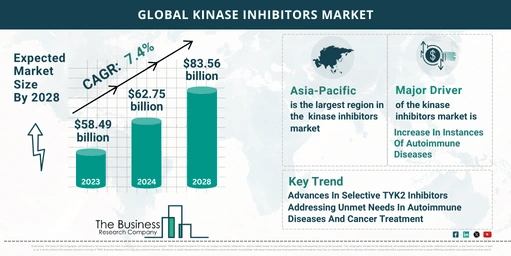
    • Strong Market Growth: The kinase inhibitors market grew from $58.49 billion in 2023 to $62.75 billion in 2024, with a compound annual growth rate (CAGR) of 7.3%.
    • Historical Growth Factors: This growth can be attributed to several factors:
      • Increasing prevalence of cancer.
      • Advancements in targeted therapy.
      • Rising healthcare expenditure.
      • Approval of new kinase inhibitors.
      • Growing adoption of personalized medicine.

    Future Market Projections

    • Continued Market Expansion: The kinase inhibitors market is expected to grow to $83.56 billion by 2028 at a CAGR of 7.4%.
    • Key Growth Drivers: Several factors are expected to propel market growth in the forecast period:
      • Ongoing research and development activities.
      • Introduction of novel kinase inhibitors.
      • Expanding applications beyond oncology.
      • Increasing investment in biotechnology.
      • Growing awareness about precision medicine.

    Read More On The Kinase Inhibitors Market Report 2024 – https://www.thebusinessresearchcompany.com/report/kinase-inhibitors-global-market-report

    Trends Shaping the Future of Kinase Inhibitors

    • Expansion of Precision Oncology Treatments: Increasing focus on developing therapies tailored to individual genetic profiles.
    • Development of Combination Therapies: Combining different kinase inhibitors to enhance treatment efficacy and overcome resistance.
    • Focus on Rare and Hard-to-Treat Cancers: Addressing unmet needs in treating challenging cancer types.
    • Advancements in Biomarker-Driven Drug Development: Utilizing biomarkers to identify patients who are most likely to benefit from specific kinase inhibitors.
    • Adoption of Next-Generation Sequencing Technologies: Leveraging advanced sequencing technologies for better understanding of cancer genetics and more precise treatment strategies.

    Rising Autoimmune Diseases Drive Market Growth

    • Increasing Cases of Autoimmune Diseases: Autoimmune diseases are a significant driver of growth in the kinase inhibitors market.
      • These diseases involve abnormal immune responses, where the immune system attacks healthy cells.
      • The prevalence of autoimmune diseases is increasing due to various factors, including lifestyle changes, genetic predisposition, and the rise in chronic diseases like obesity and diabetes.
    • Role of Kinase Inhibitors: Kinase inhibitors help manage autoimmune diseases by modulating the immune system and reducing inflammation.
      • For example, they are used to treat conditions like psoriatic and rheumatoid arthritis.

    Advances in TYK2 Inhibitors for Autoimmune Diseases and Cancer

    • Development of Selective TYK2 Inhibitors: Major companies are developing selective tyrosine kinase 2 (TYK2) inhibitors to address unmet needs in autoimmune and inflammatory diseases.
      • These inhibitors modulate immune responses and reduce inflammation, which can enhance the body’s ability to target and destroy cancer cells.
    • Notable Example: In September 2022, Bristol-Myers Squibb received approval for Sotyktu (deucravacitinib) from the U.S. FDA.
      • Sotyktu is an oral selective TYK2 inhibitor for treating moderate-to-severe plaque psoriasis in adults.

    Strategic Moves in the Kinase Inhibitors Market

    • Bristol Myers Squibb’s Acquisition of Turning Point Therapeutics: In August 2022, Bristol Myers Squibb acquired Turning Point Therapeutics Inc. for $4.1 billion.
      • This acquisition expanded Bristol Myers Squibb’s oncology portfolio, adding a late-stage kinase inhibitor candidate in repotrectinib.
      • The deal strengthens Bristol Myers Squibb’s position in treating ROS1-positive non-small cell lung cancer (NSCLC) and other solid tumors.

    Market Segmentation

    • By Type: Tyrosine Kinase Inhibitors, Multikinase Inhibitors, mTOR Kinase Inhibitors, Other Types.
    • By Route of Administration: Oral, Parenteral, Other Routes.
    • By Application: Oncology, Inflammatory Diseases.
    • By Distribution Channel: Hospital Pharmacy, Online Pharmacy, Retail Pharmacy.
    • By End User: Hospitals, Homecare, Specialty Clinics, Other End-Users.

    Regional Insights

    • Largest Market: Asia-Pacific was the largest region in the kinase inhibitors market in 2023.
    • Fastest-Growing Region: Asia-Pacific is expected to be the fastest-growing region during the forecast period, driven by rising healthcare investments, increasing prevalence of chronic diseases, and expanding access to advanced therapies.

    The kinase inhibitors market is on a strong growth trajectory, driven by advancements in targeted therapies and increasing demand for precision medicine. With ongoing innovations and strategic acquisitions, the market is set to expand further, offering new opportunities for stakeholders in the healthcare sector.

    Request for A Sample Of The Global Kinase Inhibitors Market Report:
    https://www.thebusinessresearchcompany.com/sample_request?id=15841&type=smp