Blog

  • Future Growth Forecast For The Infectious Disease Diagnostics Testing Global Market 2024-2033

    Future Growth Forecast For The Infectious Disease Diagnostics Testing Global Market 2024-2033

    The Business Research Company’s global market reports provide comprehensive analysis on the various markets in 27 industries across 60 geographies.

    The infectious disease diagnostics testing market has experienced significant growth in recent years and is projected to continue this trend in the coming years. This blog explores the key factors driving this market, the emerging trends, and the future outlook.

    Current Market Growth and Drivers

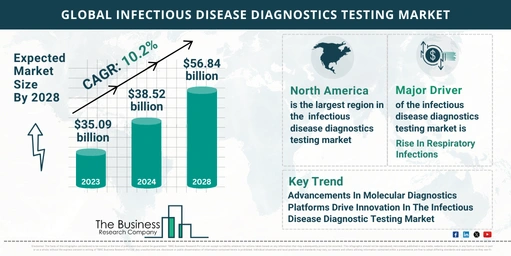
    • Market Size and Growth: The infectious disease diagnostics testing market grew from $35.09 billion in 2023 to $38.52 billion in 2024, at a compound annual growth rate (CAGR) of 9.8%.
    • Key Drivers: Growth in the historic period is primarily due to:
      • Rising disease outbreaks like SARS, Ebola, and Zika.
      • Increased awareness among healthcare professionals and the general public about early detection and prevention.
      • Government-funded programs for disease surveillance, control, and prevention.
      • Increased global travel and trade, facilitating the spread of infectious diseases.
      • Higher healthcare spending, especially in emerging economies.

    Future Market Outlook and Growth Factors

    • Projected Growth: The market is expected to grow to $58.84 billion by 2028, with a CAGR of 10.2%.
    • Factors Contributing to Future Growth:
      • Emergence of novel pathogens, including new strains of influenza and COVID-19.
      • Shift towards personalized medicine and targeted therapies.
      • Increasing demand for rapid and on-site testing solutions.
      • Emphasis on epidemiological surveillance and early detection systems.
      • Enhanced research and development activities focusing on novel diagnostic technologies and biomarkers.

    View More On The Infectious Disease Diagnostics Testing Market Report 2024 – https://www.thebusinessresearchcompany.com/report/infectious-disease-diagnostics-testing-global-market-report

    Emerging Trends in Infectious Disease Diagnostics

    • Miniaturization and Portability: Diagnostic devices are becoming smaller and more portable, allowing for easier on-site testing.
    • Multiplex Assays: Adoption of assays capable of detecting multiple pathogens simultaneously is growing.
    • Integration of Digital Health Solutions: The use of mobile apps and telemedicine platforms for diagnostics is increasing.
    • Next-Generation Sequencing (NGS): This technology is being adopted for more precise diagnostics.
    • Advancements in Biosensor Technologies: New biosensor technologies are enabling rapid and sensitive detection of infectious agents.
    • Artificial Intelligence (AI) Integration: AI and machine learning algorithms are being incorporated into diagnostic platforms to enhance accuracy and efficiency.

    Impact of Rising Respiratory Infections

    • Increasing Cases: The rise in respiratory infections is a significant driver of the diagnostic testing market. These infections, which affect the respiratory system, are increasing due to factors like viral and bacterial transmission, poor hygiene practices, crowded living conditions, and seasonal weather changes.
    • Importance of Diagnostics: Infectious disease diagnostic testing is crucial for accurately diagnosing and treating respiratory infections. For example, in Canada, hospitalizations for acute upper respiratory infections increased by 32% from 2022 to 2023, highlighting the need for effective diagnostics.

    Key Players in the Market

    • Major companies in the market include:
      • F. Hoffmann-La Roche Ltd.
      • Thermo Fisher Scientific Inc.
      • Abbott Laboratories
      • Danaher Corporation
      • Siemens Healthineers AG
      • Hologic Inc.
      • PerkinElmer Inc.
      • Seegene Inc.
      • Ortho Clinical Diagnostics Inc.
      • OraSure Technologies Inc.
      • Meridian Bioscience Inc.
      • Inovio Pharmaceuticals Inc.

    Advancements in Molecular Diagnostics Platforms

    • Technological Innovations: Companies are focusing on developing advanced molecular diagnostics platforms to strengthen their market position. These platforms detect and analyze nucleic acids from biological samples, providing precise diagnostic results.
    • Example of Innovation: Becton Dickinson and Company launched the BD COR System, a fully automated, high-throughput molecular diagnostics platform, in May 2022. It processes up to 1,700 specimens and delivers results within 24 hours, streamlining laboratory workflows.

    Strategic Acquisitions to Strengthen Market Presence

    • Notable Acquisition: SSI Diagnostica Group acquired TechLab Inc. in August 2022 to enhance its infectious disease diagnostics capabilities. This acquisition aligns with SSI’s broader objectives of expanding its portfolio, advancing technology, and increasing market share.

    Market Segmentation and Regional Insights

    • Market Segmentation:
      • By Type: Molecular Diagnostic Test, Point Of Care Tests (POCT) Infectious Disease Diagnostics Test.
      • By Application: Respiratory, Human Immunodeficiency Virus (HIV), Healthcare-Associated Infections (HAIs), Sexual Health, Tropical Diseases, Liver.
      • By End-User: Diagnostic Laboratories, Hospitals and Clinics, Academic Research Institutes, Other End-Users.
    • Regional Insights: North America was the largest region in the infectious disease diagnostics testing market in 2023. Asia-Pacific is expected to be the fastest-growing region during the forecast period.

    The infectious disease diagnostics testing market is poised for significant growth, driven by rising disease outbreaks, technological advancements, and strategic acquisitions. As the demand for rapid, accurate diagnostics continues to grow, companies in this market are well-positioned to capitalize on these opportunities.

    Request A Sample Of The Global Infectious Disease Diagnostics Testing Market Report 2024:
    https://www.thebusinessresearchcompany.com/sample_request?id=15831&type=smp

  • What’s The Growth Forecast For In Vitro Diagnostics Enzymes Market Through 2024-2033?

    What’s The Growth Forecast For In Vitro Diagnostics Enzymes Market Through 2024-2033?

    The Business Research Company’s global market reports provide comprehensive analysis on the various markets in 27 industries across 60 geographies.

    Market Growth and Drivers

    • Strong Recent Growth: The in vitro diagnostics enzymes market has seen significant growth recently, expanding from $1.98 billion in 2023 to $2.14 billion in 2024, reflecting a compound annual growth rate (CAGR) of 7.9%.
    • Key Drivers:
      • Rising Disease Incidence: Increase in diseases such as cancer and HIV/AIDS has heightened the need for diagnostic testing.
      • Aging Population: Growing need for monitoring age-related diseases is contributing to market growth.
      • Lifestyle Changes: Changes in diet and physical activity are influencing health, increasing demand for diagnostics.
      • Regulatory Approvals: More diagnostic assays and products are being approved, driving market expansion.
      • Healthcare Spending: Globally, healthcare expenditures are rising, which supports market growth.

    View More On The In Vitro Diagnostics Enzymes Market Report 2024 – https://www.thebusinessresearchcompany.com/report/in-vitro-diagnostics-enzymes-global-market-report

    Future Market Outlook

    • Continued Growth Expected: The market is projected to grow to $2.94 billion by 2028, with a CAGR of 8.2%.
    • Factors Fueling Future Growth:
      • Personalized Healthcare: Increased focus on personalized treatment is boosting demand for advanced diagnostic tools.
      • Improving Healthcare Infrastructure: Better healthcare facilities in emerging markets are increasing the adoption of in vitro diagnostics.
      • Rising Disposable Incomes: As incomes rise, especially in emerging markets, more individuals can afford advanced healthcare services.
      • Collaborations and Innovation: Partnerships between companies and research institutions are fostering innovation.
      • Demand for Rapid Diagnostics: There is an increasing demand for quick and easy diagnostic solutions.

    Technological Advancements and Trends

    • Adoption of Microfluidics: New technologies, like microfluidics, are revolutionizing diagnostic testing by enabling precise, rapid analysis with small sample volumes.
    • Novel Enzyme Substrates and Detection Methods: Development of new substrates and detection techniques is enhancing the sensitivity and specificity of diagnostic tests.
    • Point-of-Care Platforms: Enzyme-based amplification techniques integrated into point-of-care platforms are making diagnostics more accessible and faster.
    • Integration with CRISPR and Liquid Biopsies: Advanced methods like CRISPR-based technologies and liquid biopsies are being combined with enzyme assays for better diagnostics.
    • Advanced Data Analytics: Utilization of data analytics and bioinformatics is improving the accuracy and efficiency of diagnostics.

    Rising Cancer Prevalence Drives Market Growth

    • Increasing Cancer Cases: The rise in cancer prevalence is a significant driver for the market. Cancer diagnostics rely heavily on enzymes for accurate and early detection.
    • Role of IVD Enzymes: Enzymes in in vitro diagnostics are crucial across the cancer care continuum, from detection and diagnosis to treatment monitoring.
    • Future Projections: According to the World Health Organization (WHO), cancer cases are expected to rise by 77% by 2050, which will further drive the market for diagnostics enzymes.

    Key Market Players and Innovations

    • Leading Companies: Major players include F. Hoffmann-La Roche Ltd., Thermo Fisher Scientific Inc., Danaher Corporation, and Merck KGaA, among others.
    • Innovative Products: Companies are focusing on developing innovative diagnostic tools to stay competitive. For instance, the launch of autoimmune disorder detection kits by NeoDx Biotech Labs Pvt Ltd. in September 2023 demonstrates the market’s focus on innovation.
    • Recent Acquisitions: Strategic acquisitions, like the purchase of Meridian Bioscience Inc. by SD Biosensor Inc. and SJL Partners LLC in February 2023, show a trend towards consolidation and expansion in the market.

    Market Segmentation

    • By Enzyme Type: The market is categorized into Proteases, Polymerase and Transcriptase, Ribonuclease, and Other Enzyme Types.
    • By Disease Type: Segments include Infectious Disease, Diabetes, Oncology, Cardiology, Nephrology, Autoimmune Diseases, and Other Disease Types.
    • By Technology: Technologies used in the market are Histology Assays, Molecular Diagnostics, Clinical Chemistry, among others.
    • By End Use: End users are classified into Pharma and Biotech, Hospital and Diagnostic Labs, Contract Research Organizations (CROs), and Academic Labs.

    Regional Insights

    • North America: Dominated the market in 2023, driven by advanced healthcare infrastructure and high healthcare spending.
    • Asia-Pacific: Expected to be the fastest-growing region, due to improving healthcare infrastructure and rising disposable incomes.

    The in vitro diagnostics enzymes market is poised for robust growth, driven by technological advancements, rising disease prevalence, and increasing demand for personalized and rapid diagnostic solutions. As innovations continue to emerge, the market will likely see further expansion and diversification.

    Request A Sample Of The Global In Vitro Diagnostics Enzymes Market Report 2024:
    https://www.thebusinessresearchcompany.com/sample_request?id=15830&type=smp

  • Understand How The In Vitro Diagnostic (IVD) In Cardiology And Neurology Market Is Poised To Grow Through 2024-2033

    Understand How The In Vitro Diagnostic (IVD) In Cardiology And Neurology Market Is Poised To Grow Through 2024-2033

    The Business Research Company’s global market reports are now updated with the latest market sizing information for the year 2024 and forecasted to 2033

    As per The Business Research Company’s In Vitro Diagnostic (IVD) In Cardiology And Neurology Global Market Report 2024, the in vitro diagnostic (IVD) in cardiology and neurology  market is expected to show significant growth in the forecast period.

    The in vitro diagnostic (IVD) market for cardiology and neurology has experienced strong growth in recent years. This market, which focuses on diagnostics for heart and brain conditions, is poised for further expansion in the coming years.

    Market Growth and Key Drivers

    • Significant Market Expansion: The IVD market in cardiology and neurology grew from $14.58 billion in 2023 to $15.84 billion in 2024, marking a compound annual growth rate (CAGR) of 8.7%.
    • Key Drivers: Growth is driven by an aging population, increased prevalence of cardiovascular and neurological disorders, advancements in preventive healthcare, and supportive regulatory frameworks for diagnostic tests.

    Future Market Outlook

    • Continued Growth: The market is projected to reach $22.18 billion by 2028, with a CAGR of 8.8%.
    • Factors Contributing to Growth: Factors include a shift towards personalized medicine, rising demand for rapid and on-site testing solutions, and the expansion of telemedicine and remote consultation services.

    View More On The In Vitro Diagnostic (IVD) In Cardiology And Neurology Market Report 2024 – https://www.thebusinessresearchcompany.com/report/in-vitro-diagnostic-ivd-in-cardiology-and-neurology-global-market-report

    Impact of Personalized Medicine on the IVD Market

    • Personalized Medicine: This approach tailors treatments to individual patient characteristics, offering more effective and targeted care.
    • Role of IVD in Personalized Medicine: IVD tests provide critical insights into an individual’s genetic makeup and disease status, supporting personalized treatment plans that improve outcomes and reduce risks.
    • Industry Impact: The increasing number of personalized medicines is a major growth driver for the IVD market in cardiology and neurology. In 2022, 34% of newly approved therapies were personalized medicines, highlighting a growing trend.

    Innovations in Early Disease Detection

    • Advancements in AI-Enabled Diagnostics: Companies are developing AI-enabled integrated epigenetic engines for early disease detection and risk assessment.
    • Notable Developments: For example, Cardio Diagnostics Holdings Inc. launched PrecisionCHD in February 2023, an AI-based blood test for early detection of coronary heart disease (CHD). This non-invasive test offers a high sensitivity rate and links biomarker profiles to modifiable risk factors like smoking and diabetes.

    Strategic Acquisitions and Market Expansion

    • Mindray’s Acquisition of HyTest: In September 2021, Mindray acquired HyTest Ltd. for $661 million. This acquisition enhances Mindray’s capabilities in the IVD market, particularly in developing diagnostic test materials for cardiology.
    • Significance: By leveraging HyTest’s expertise in antibodies and antigens, especially in cardiac markers, Mindray aims to strengthen its presence in the rapidly growing IVD market.

    Market Segmentation

    • Product Type: The IVD market is segmented into instruments, reagents and consumables, and software and services.
    • Technology: Key technologies include immunoassays, molecular diagnostics, and hematology.
    • End-Users: The main end-users are hospitals, clinical laboratories, and other healthcare providers.

    Regional Insights

    • North America: This region was the largest market for IVD in cardiology and neurology in 2023, driven by advanced healthcare infrastructure and high investment in research and development.
    • Asia-Pacific: Expected to be the fastest-growing region during the forecast period, driven by increasing healthcare expenditure and the adoption of advanced diagnostic technologies.

    Conclusion
    The in vitro diagnostic market in cardiology and neurology is set to expand significantly in the coming years, fueled by advances in personalized medicine, early disease detection technologies, and strategic industry moves. With a strong emphasis on innovation and expanding capabilities, the market offers promising opportunities for growth and development in the healthcare sector.

    Request A Sample Of The Global In Vitro Diagnostic (IVD) In Cardiology And Neurology Market Report 2024:
    https://www.thebusinessresearchcompany.com/sample_request?id=15829&type=smp

  • Key Insights On The Immunotoxin Market 2024 – Size, Driver, And Major Players

    Key Insights On The Immunotoxin Market 2024 – Size, Driver, And Major Players

    The Business Research Company’s global market reports are now updated with the latest market sizing information for the year 2024 and forecasted to 2033

    As per The Business Research Company’s Immunotoxin Global Market Report 2024, the immunotoxin market is expected to show significant growth in the forecast period.

    Market Overview

    • Strong Market Growth: The immunotoxin market has shown strong growth, increasing from $55.94 billion in 2023 to an estimated $60.97 billion in 2024, at a compound annual growth rate (CAGR) of 9.0%.
    • Key Drivers: This growth can be attributed to several factors, including the discovery of target antigens, advancements in monoclonal antibody technology, preclinical efficacy studies, clinical trials, regulatory approvals, and identification of resistance mechanisms.

    Future Market Projections

    • Continued Expansion: The market is expected to grow to $86.29 billion by 2028, with a CAGR of 9.1%.
    • Growth Factors: The increase in the incidence of cancer, demand for natural and organic products, expansion of the cosmetic industry, R&D financing, and improvements in healthcare infrastructure are all contributing to this growth.
    • Emerging Trends: Major trends driving the market include the precision medicine approach, enhanced targeting strategies, multifunctional immunotoxins, combination therapies, and advancements in monoclonal antibody technology.

    Impact of Increasing Breast Cancer Incidence on the Immunotoxin Market

    • Rising Breast Cancer Cases: The increasing incidence of breast cancer is a significant factor driving the growth of the immunotoxin market.
    • Targeted Treatment: Immunotoxins offer a targeted approach to cancer treatment, killing cancer cells while sparing healthy cells and minimizing side effects compared to traditional chemotherapy.
    • Statistics: In 2023, the American Cancer Society reported 300,590 new cases of breast cancer in the U.S., up from 290,560 cases in 2022. This rise in breast cancer cases highlights the growing need for effective treatments like immunotoxins.

    View More On The Immunotoxin Market Report 2024 – https://www.thebusinessresearchcompany.com/report/immunotoxin-global-market-report

    Key Players in the Immunotoxin Market

    • Major Companies: Leading companies in the market include Pfizer Inc., Roche Holding AG, AbbVie Inc., Bayer AG, Bristol Myers Squibb, Thermo Fisher Scientific Inc., AstraZeneca plc, Merck KGaA, BioNTech SE, and many others.
    • Innovation and Development: These companies are actively involved in developing new treatments and enhancing the effectiveness of existing therapies through research and innovation.

    Innovation Spotlight: FDA Approves First ADC for Metastatic or Recurrent Cervical Cancer

    • Antibody-Drug Conjugates (ADCs): Companies in the immunotoxin market are developing ADCs to improve cancer treatment specificity and efficacy. ADCs are biopharmaceuticals combining an antibody with a cytotoxic drug to target cancer cells more precisely.
    • Recent Approval: In April 2024, Pfizer Inc. and Genmab A/S received FDA approval for TIVDAK, the first ADC designed to treat metastatic or recurrent cervical cancer. This innovative treatment uses monomethyl auristatin E, a microtubule-disrupting agent, to effectively kill cancer cells while minimizing damage to healthy cells.
    • Impact: TIVDAK demonstrated statistically significant increases in overall survival, presenting a promising new option for patients with recurrent or metastatic cervical cancer.

    Strategic Acquisitions: Pfizer’s Expansion in Oncology

    • Acquisition of Trillium Therapeutics: In November 2021, Pfizer acquired Trillium Therapeutics for $2.22 billion, enhancing its oncology portfolio with next-generation immunotherapies for hematological malignancies.
    • Objectives: The acquisition allows Pfizer to extend its range of potentially best-in-class compounds, accelerating advancements in cancer treatment.
    • Trillium Therapeutics: Based in Canada, Trillium focuses on developing immunotoxins, further strengthening Pfizer’s capabilities in immuno-oncology.

    Market Segmentation

    • By Type: The immunotoxin market is segmented into anthrax-based toxins, diphtheria toxin (DT) and derivatives, Pseudomonas exotoxin (PE) and derivatives, ribosome inactivating proteins-based immunotoxins, ribonucleases-based immunotoxins, and other types.
    • By Application: Applications include solid tumors, leukemias, and other cancer types.
    • By End User: End users are hospitals and clinics, cancer and radiation therapy centers, research labs, and other entities.

    Regional Insights

    • Leading Region: North America was the largest market for immunotoxins in 2023.
    • Growth Potential: Asia-Pacific is expected to be the fastest-growing region during the forecast period, driven by increasing healthcare investments and rising cancer incidences.

    The immunotoxin market continues to expand rapidly, driven by technological advancements, rising cancer incidences, and strategic industry moves. With ongoing innovation and increasing demand for targeted cancer therapies, the market is poised for significant growth in the coming years.

    Request A Sample Of The Global Immunotoxin Market Report 2024:
    https://www.thebusinessresearchcompany.com/sample_request?id=15828&type=smp

  • Iliac Stent Market Growth Analysis Till 2033 By The Business Research Company

    Iliac Stent Market Growth Analysis Till 2033 By The Business Research Company

    The Business Research Company’s market reports offer an in-depth analysis on the market’s growth potential, major drivers, key trends and more.

    Market Overview and Recent Growth

    • Strong Market Growth: The iliac stent market has shown significant growth recently, expanding from $0.95 billion in 2023 to $1.02 billion in 2024. This represents a compound annual growth rate (CAGR) of 6.9%.
    • Drivers of Growth: Several factors have driven this expansion, including:
      • Global Healthcare Expansion: A broader global healthcare industry has increased the demand for medical devices, including iliac stents.
      • Increased Awareness: There is a growing awareness of minimally invasive procedures among healthcare professionals and patients.
      • Rising Incidence of Diseases: An increase in iliac artery diseases has led to more stenting procedures.
      • Improved Infrastructure: Enhanced healthcare facilities have supported the growing demand for stenting.

    Future Market Projections

    • Continued Growth Expected: The market is projected to grow further, reaching $1.34 billion by 2028, with a CAGR of 7%.
    • Factors Driving Future Growth: Key factors contributing to this future growth include:
      • Prevalence of Peripheral Artery Diseases (PAD): As PAD becomes more common, the need for iliac stents to treat this condition is expected to rise.
      • Aging Population: A growing elderly population, more prone to arterial diseases, is likely to drive demand.
      • Rise in Diabetes: The increasing incidence of diabetes, a risk factor for arterial diseases, is also expected to fuel market growth.
      • Need for Minimally Invasive Procedures: A shift towards less invasive surgeries supports the adoption of stents.

    Read More On The Iliac Stent Market Report 2024 – https://www.thebusinessresearchcompany.com/report/iliac-stent-global-market-report

    Rising Prevalence of Peripheral Artery Diseases Fuels Market Growth

    • Impact of PAD: The increasing prevalence of PAD is a significant driver for the iliac stent market. PAD affects the arteries outside the heart and brain, causing narrowing or blockages.
    • Reasons for Rising PAD Cases:
      • Lifestyle Factors: Smoking, hypertension, and aging are contributing to higher PAD rates.
      • Health Conditions: Conditions like diabetes further increase the risk.
    • Iliac Stenting as a Solution: Stenting is a minimally invasive and highly effective treatment for PAD, improving blood flow and preventing complications.
      • High Success Rates: The procedure is known for its effectiveness and lower risk of complications.
    • Example of PAD Prevalence: According to the Society For Cardiovascular Angiography And Interventions, PAD currently affects 8-10 million Americans, with projections estimating that 19 million Americans will have PAD by 2050.

    Technological Advancements and Product Approvals Boost Market Expansion

    • Innovation in Stent Technologies: Companies are continuously developing new stent technologies to improve patient outcomes.
    • FDA Approvals: Recent product approvals by the FDA, such as Getinge’s iCast-covered stent system, showcase innovation in the field.
      • Enhanced Safety: These newer stents offer better performance and reduce the risk of complications compared to traditional stents.
    • Example of Technological Advancements: Getinge’s iCast stent, approved in 2023, exemplifies advancements in the field, reflecting a commitment to high-quality healthcare solutions.

    Strategic Acquisitions Enhance Market Competitiveness

    • Industry Consolidation: Major companies in the iliac stent market are expanding their portfolios through strategic acquisitions.
    • Abbott Laboratories’ Acquisition: In February 2023, Abbott Laboratories acquired Cardiovascular Systems Inc. (CSI) to enhance its vascular device offerings.
      • Integration of Advanced Technologies: This acquisition allows Abbott to incorporate CSI’s innovative atherectomy system, bolstering its presence in the vascular disease treatment market.

    Market Segmentation and Regional Insights

    • Market Segmentation: The iliac stent market is segmented based on:
      • Type: Self-expandable stents, balloon-expandable stents, and other types.
      • Artery Lesions: Common iliac artery lesions, severe calcified lesions, and complete obstructive lesions.
      • End-Users: Hospitals, outpatient facilities, and other end-users.
    • Regional Dynamics:
      • North America: Was the largest region in the iliac stent market in 2023.
      • Asia-Pacific: Expected to be the fastest-growing region during the forecast period, driven by expanding healthcare infrastructure and increasing prevalence of PAD.

    The iliac stent market is poised for substantial growth, driven by technological advancements, an aging population, and the increasing prevalence of PAD. With continuous innovation and strategic acquisitions, the market is set to expand further, offering improved treatment options for patients globally.

    Request for A Sample Of The Global Iliac Stent Market Report:
    https://www.thebusinessresearchcompany.com/sample_request?id=15827&type=smp

  • Global Human Growth Hormone Market Key Insights 2024-2033

    Global Human Growth Hormone Market Key Insights 2024-2033

    The Business Research Company’s global market reports are now updated with the latest market sizing information for the year 2024 and forecasted to 2033

    According to The Business Research Company’s Human Growth Hormone Global Market Report 2024, the human growth hormone market is expected to show promising growth in the forecast period.

    Significant Market Growth in Recent Years

    • Market Expansion: The human growth hormone (HGH) market has experienced robust growth in recent years, expanding from $4.33 billion in 2023 to an estimated $4.75 billion in 2024.
    • Growth Drivers: This growth is driven by the increasing prevalence of growth disorders, rising awareness about hormone therapies, expanding applications in sports medicine, and a growing geriatric population. Improvements in healthcare infrastructure have also contributed to this upward trend.

    Projected Growth and Key Factors for the Future

    • Continued Expansion: The HGH market is projected to reach $6.93 billion by 2028, growing at a compound annual growth rate (CAGR) of 9.9%.
    • Future Drivers: Key factors expected to fuel this growth include the emergence of personalized medicine, rising healthcare expenditures, the increasing adoption of recombinant DNA technology, and the growing demand for hormone replacement therapies. Additionally, the rising prevalence of endocrine disorders is anticipated to boost market demand.

    View More On The Human Growth Hormone Market Report 2024 – https://www.thebusinessresearchcompany.com/report/human-growth-hormone-global-market-report

    Trends Shaping the Future of HGH Market

    • Emerging Trends: The HGH market is witnessing several significant trends. These include the expansion of distribution networks in emerging markets and the integration of artificial intelligence in drug development.
    • Innovations: There is also a growing emphasis on sustainable manufacturing processes, the development of long-acting formulations, and the utilization of combination therapies for enhanced efficacy.

    Increased Awareness of Treatment Procedures

    • Rising Awareness: The increasing awareness of treatment procedures, driven by advancements in medical technology and greater access to information, is propelling the growth of the HGH market.
    • Impact: Media coverage and public interest in health and wellness have highlighted the benefits of HGH treatments, increasing awareness and acceptance of hormone therapies.

    Leading Companies in the HGH Market

    • Key Players: Major companies operating in the HGH market include Pfizer Inc., Roche Holding AG, Novartis AG, Thermo Fisher Scientific Inc., Eli Lilly and Company, Novo Nordisk A/S, Merck KGaA, and Teva Pharmaceutical Industries Ltd., among others.
    • Market Dynamics: These companies are actively engaged in advancing drug development, expanding their product portfolios, and enhancing patient care.

    Innovation in Treatment Options

    • FDA Approvals: Innovations in HGH treatments have led to new approvals by regulatory bodies. For instance, Pfizer Inc. and OPKO Health Inc. received FDA approval for NGENLA (somatrogon-ghla) in June 2023.
    • Benefits: This new treatment provides a more convenient dosing regimen, allowing for weekly rather than daily injections, improving patient adherence and overall treatment outcomes.

    Digital Health Solutions in Growth Disorders Management

    • Partnerships for Advancement: In April 2021, Merck KGaA partnered with PRA Health Science to enhance the management of growth hormone therapy through digital health solutions.
    • Improved Care: This partnership focuses on providing a more personalized and effective approach to patient care, utilizing remote patient monitoring and other digital tools.

    Market Segmentation and Regional Insights

    • Product Segments: The HGH market is segmented by product (liquid, powder), brand (Norditropin, Genotropin, Humatrope, etc.), route of administration (oral, intravenous, etc.), distribution channel (hospital pharmacies, retail pharmacies, etc.), and application (growth hormone deficiency, Turner syndrome, etc.).
    • Regional Outlook: North America was the largest region in the HGH market in 2023, while Asia-Pacific is expected to be the fastest-growing region in the forecast period, driven by increasing healthcare investments and rising awareness.

    The human growth hormone market continues to evolve, driven by technological advancements, growing demand for innovative therapies, and expanding global reach. With ongoing research and development, the future looks promising for both patients and providers in this dynamic field.

    Request A Sample Of The Global Human Growth Hormone Market Report 2024:
    https://www.thebusinessresearchcompany.com/sample_request?id=15825&type=smp

  • Top 5 Insights From The Therapeutic Plasma Exchange Market Report 2024

    Top 5 Insights From The Therapeutic Plasma Exchange Market Report 2024

    The Business Research Company’s global market reports are now updated with the latest market sizing information for the year 2024 and forecasted to 2033

    According to The Business Research Company’s Therapeutic Plasma Exchange Global Market Report 2023, the therapeutic plasma exchange market is expected to show promising growth in the forecast period.

    Recent Market Growth

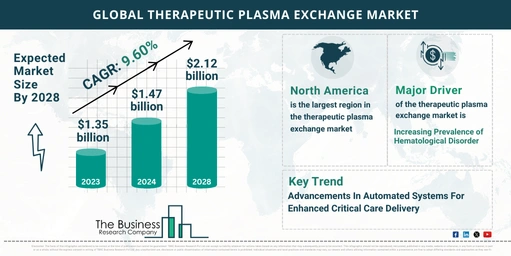
    • Current Growth: The therapeutic plasma exchange (TPE) market grew from $1.35 billion in 2023 to $1.47 billion in 2024, with a CAGR of 9.4%.
    • Historical Drivers: Growth has been driven by the rise of immunological diseases, technological advancements, increased awareness, expanded indications for TPE, and improved understanding of disease mechanisms.

    Future Market Projections

    • Projected Growth: The market is expected to reach $2.12 billion by 2028, reflecting a CAGR of 9.6%.
    • Future Drivers: Key factors include the aging population, clinical evidence and guidelines, supportive regulatory environments, hospital infrastructure improvements, and evolving healthcare expenditure and reimbursement policies.

    Impact of Hematological Disorders on Market Growth

    • Prevalence of Hematological Disorders: The high prevalence of blood disorders, including genetic, environmental, and lifestyle factors, drives market growth. TPE is used to treat these disorders by removing harmful substances from the plasma.
    • Example: According to the Leukemia and Lymphoma Society, myeloma diagnoses are projected to increase from 34,920 in 2021 to 35,730 in 2023, highlighting the growing need for effective treatment options like TPE.

    View More On The Therapeutic Plasma Exchange Market Report 2024 –
    https://www.thebusinessresearchcompany.com/report/therapeutic-plasma-exchange-global-market-report

    Technological Innovations

    • Automated Systems: Companies are developing advanced automated plasma exchange systems to improve accuracy, efficiency, and ease of use.
    • Product Launch: In May 2021, Baxter International launched the PrisMax 2 system, designed to enhance critical care delivery by simplifying TPE procedures and offering operational efficiencies.

    Strategic Collaborations

    • Terumo and CSL Plasma Collaboration: In April 2021, Terumo Blood and Cell Technologies partnered with CSL Plasma to improve plasma collection efficiency and safety, crucial for producing therapies for various diseases.

    Market Segmentation

    • By Type: Therapeutic Plasma Exchange (TPE) and Double Filtered Plasmapheresis (DFPP).
    • By Indication: Neurological disorders, hematological disorders, renal disorders, metabolic disorders, and other indications.
    • By Technology: Centrifugation and membrane separation.
    • By End-User: Blood collection centers, hospitals and clinics, transfusion centers, and other end-users.

    Regional Insights

    • North America: The largest region in the therapeutic plasma exchange market in 2023, supported by advanced healthcare infrastructure and high disease prevalence.
    • Asia-Pacific: Expected to be the fastest-growing region during the forecast period, driven by increasing healthcare investments and growing awareness of plasma exchange therapies.

    Conclusion
    The therapeutic plasma exchange market is poised for strong growth, fueled by technological advancements, rising hematological disorder prevalence, and strategic collaborations. The market’s expansion reflects ongoing innovations and increasing demand for effective plasma-based therapies.

    Request A Sample Of The Global Therapeutic Plasma Exchange Market Report 2024:
    https://www.thebusinessresearchcompany.com/sample_request?id=15683&type=smp

  • Top 5 Insights From The Tissue Sectioning Market Report 2024

    Top 5 Insights From The Tissue Sectioning Market Report 2024

    The Business Research Company’s global market reports are now updated with the latest market sizing information for the year 2024 and forecasted to 2033

    The tissue sectioning market is experiencing significant growth, fueled by a range of factors, from technological advancements to increased demand for precise diagnostics. This blog explores the key drivers behind this growth, the expected trends in the coming years, and the innovations revolutionizing the field.

    Strong Market Growth in Recent Years

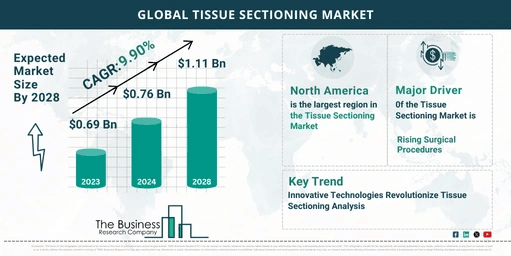
    • Current Market Size: The tissue sectioning market grew from $0.69 billion in 2023 to $0.76 billion in 2024, with a CAGR of 9.6%.
    • Key Growth Drivers:
      • Increasing prevalence of chronic diseases.
      • Growing aging population.
      • Rising investments in life sciences research.
      • Expansion of biotechnology and pharmaceutical industries.
      • Government support for research initiatives.
      • Increased awareness of early disease detection.
      • Growth in regenerative medicine.

    Forecasted Market Expansion

    • Future Market Size: The market is expected to reach $1.11 billion by 2028, growing at a CAGR of 9.9%.
    • Factors Contributing to Growth:
      • Rising demand for personalized medicine.
      • Expansion of biobanks.
      • Increased research and development investments.
      • Growing healthcare expenditure.
      • Emergence of digital pathology.
      • Increased demand for biomarker discovery.
      • Expansion of the biopharmaceutical industry.
      • Rising demand for point-of-care testing.

    View More On The Tissue Sectioning Market Report 2024 – https://www.thebusinessresearchcompany.com/report/tissue-sectioning-global-market-report

    Rising Surgical Procedures Propelling Market Growth

    • Surgical Procedures: An increase in surgical procedures is driving the demand for tissue sectioning.
    • Role of Tissue Sectioning: Provides precise, thin tissue slices for histological analysis, aiding in accurate diagnosis and treatment planning.
    • Recent Data: In Australia, the number of patients admitted for surgery increased by 18% from 2021–22, reflecting a broader global trend.

    Innovative Technologies Revolutionizing Tissue Sectioning Analysis

    • Next-Generation Technologies: Companies are developing advanced technologies like next-generation spatial gene expression technology.
    • Case Study: In March 2024, 10x Genomics launched Visium HD, which allows for high-resolution spatial gene expression mapping at the single-cell scale.
    • Impact: These technologies enable detailed insights into tissue morphology and gene expression, enhancing diagnostic capabilities.

    Mergers and Acquisitions Expanding Market Reach

    • Bruker Corporation Acquisition: In May 2024, Bruker Corporation acquired NanoString Technologies, expanding its portfolio with advanced spatial gene expression tools.
    • Strategic Impact: This acquisition positions Bruker to provide more detailed tissue morphology and gene expression insights, strengthening its market position.

    Market Segmentation and Regional Insights

    • Product Segmentation:
      • Accessories and Consumables.
      • Instruments.
      • Services.
    • Technology Segmentation:
      • Automatic.
      • Manual.
      • Semi-Automatic.
    • Application Segmentation:
      • Diagnosis.
      • Research.
    • End-User Segmentation:
      • Clinics.
      • Diagnostic Laboratories.
      • Hospitals.
      • Research Centers.
    • Regional Insights:
      • North America was the largest region in 2023.
      • Asia-Pacific is expected to be the fastest-growing region in the forecast period.

    Conclusion

    The tissue sectioning market is on a robust growth trajectory, driven by technological advancements, increased surgical procedures, and rising demand for personalized medicine. With major companies investing in innovative technologies and strategic acquisitions, the market is set to expand further, offering new opportunities for enhanced diagnostics and treatment planning. As we move forward, the integration of AI, machine learning, and digital pathology will continue to reshape the landscape, making tissue sectioning an indispensable tool in modern healthcare.

    Request A Sample Of The Global Tissue Sectioning Market Report 2024:
    https://www.thebusinessresearchcompany.com/sample_request?id=16555&type=smp

  • Understand How The Thyroid Function Test Market Is Poised To Grow Through 2024-2033

    Understand How The Thyroid Function Test Market Is Poised To Grow Through 2024-2033

    The Business Research Company’s global market reports are now updated with the latest market sizing information for the year 2024 and forecasted to 2033

    The thyroid function test market has been experiencing robust growth and is set to continue its upward trajectory in the coming years. This article explores the current market dynamics, future projections, and key trends shaping the industry.

    Recent Market Growth and Projections

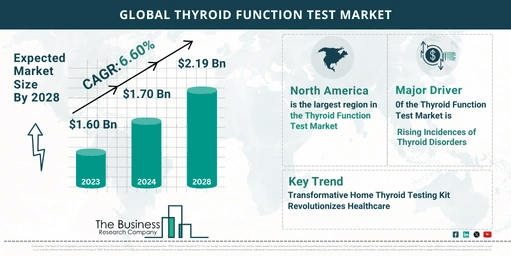
    • Current Market Size: The thyroid function test market was valued at $1.60 billion in 2023.
    • Growth Rate: Expected to grow to $1.70 billion in 2024, with a compound annual growth rate (CAGR) of 6.2%.
    • Future Outlook: Projected to reach $2.19 billion by 2028, with a CAGR of 6.6%.

    The market’s historical growth can be attributed to several factors including the rising prevalence of thyroid cancers, increased disposable income among the middle class, and proactive government health initiatives. Additionally, lifestyle changes and an increase in sedentary behavior have contributed to the growing market demand.

    Factors Driving Market Expansion

    Rising Incidence of Thyroid Disorders

    • Increased Cases: Rising incidences of thyroid disorders are a major growth driver.
    • Diagnosis Importance: Thyroid function tests are crucial for diagnosing and managing these conditions.
    • Current Statistics: In January 2024, approximately 44,020 new cases of thyroid cancer were reported in the U.S. alone.

    Thyroid disorders, including cancer, hypothyroidism, and hyperthyroidism, are increasingly common due to factors such as dietary changes, environmental exposures, and autoimmune conditions. This surge in cases is fueling demand for thyroid function tests.

    View More On The Thyroid Function Test Market Report 2024 – https://www.thebusinessresearchcompany.com/report/thyroid-function-test-global-market-report

    Innovative Home Testing Kits

    • Convenience: Home-use thyroid tests are revolutionizing patient care by offering convenient and accurate at-home monitoring.
    • Recent Innovations: Bloom Diagnostics launched the Bloom Thyroid Test, allowing individuals to monitor thyroid hormone levels from home.

    The introduction of home-use kits, such as those developed by Bloom Diagnostics, provides a user-friendly approach to managing thyroid health. These tests often involve a simple finger prick and can be analyzed either through mail-in services or at-home devices.

    Major Players and Market Trends

    Leading Companies

    • Key Players: F. Hoffmann-La Roche Ltd., Abbott Laboratories Inc., Thermo Fisher Scientific Inc., and Siemens Healthineers AG, among others.
    • Market Leaders: Companies are continuously innovating to enhance thyroid function tests and expand their market presence.

    Emerging Trends

    • Cost-Effective Testing: There is a growing demand for affordable thyroid function tests.
    • Healthcare Infrastructure: Improved healthcare infrastructure is supporting market growth.
    • Technological Advancements: Ongoing advancements in technology are enhancing test accuracy and accessibility.

    Recent Developments

    Siemens’ Strategic Acquisition

    • Acquisition of Varian: Siemens acquired Varian in April 2021 to enhance its integrated healthcare solutions, including thyroid function tests.
    • Impact: This acquisition aims to accelerate diagnosis and therapy, contributing to the global fight against cancer and other diseases.

    Market Segmentation

    • By Test Type: Includes TSH, T3, T4, FT3, and FT4.
    • By Indication: Covers hypothyroidism, hyperthyroidism, thyroid cancer, and other indications.
    • By End User: Targets clinics, research organizations, diagnostic laboratories, and hospitals.

    Regional Insights

    • North America: Held the largest market share in 2023.
    • Asia-Pacific: Expected to be the fastest-growing region in the forecast period.

    The thyroid function test market is witnessing significant growth driven by increasing thyroid disorder incidences, innovations in testing technologies, and strategic industry developments. As the market evolves, ongoing advancements and emerging trends will continue to shape its trajectory, offering more accessible and effective solutions for thyroid health management.

    Request A Sample Of The Global Thyroid Function Test Market Report 2024:
    https://www.thebusinessresearchcompany.com/sample_request?id=16553&type=smp

  • Global Thiamine Market Report 2024 – Top Market Trends And Opportunities

    Global Thiamine Market Report 2024 – Top Market Trends And Opportunities

    The Business Research Company’s market reports offer an in-depth analysis on the market’s growth potential, major drivers, key trends and more.

    A Strong Surge in Thiamine Market Growth

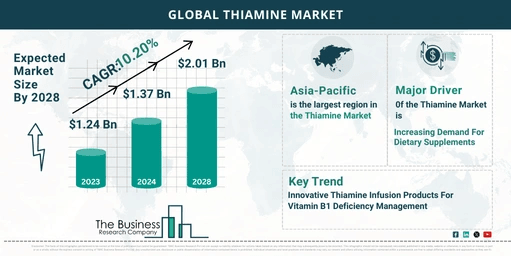
    • Current Market Size: The thiamine market was valued at $1.24 billion in 2023.
    • Growth Forecast: Expected to reach $1.37 billion in 2024.
    • Compound Annual Growth Rate (CAGR): 9.9% from 2023 to 2024.
    • Historical Growth Drivers:
      • Increased fortification programs.
      • Expansion of functional foods.
      • Rise in demand for natural and organic sources.
      • Enhanced fortification efforts.

    Future Growth Trajectory

    • Market Projections: The thiamine market is anticipated to grow to $2.01 billion by 2028.
    • Future CAGR: 10.2% from 2024 to 2028.
    • Growth Influences:
      • Increased health awareness.
      • Aging population.
      • Rising incidence of chronic diseases.
      • Consumer preference for natural and organic products.
      • Rise in lifestyle-related disorders.
    • Key Trends:
      • Technological advancements.
      • Integration into digital health platforms.
      • Research into therapeutic applications and personalized nutrition.

    Read More On The Thiamine Market Report 2024 – https://www.thebusinessresearchcompany.com/report/thiamine-global-market-report

    Impact of Dietary Supplements on Thiamine Market

    • Rising Demand for Supplements:
      • Driven by heightened health awareness and preference for preventive healthcare.
      • Increased focus on immune system support.
    • Thiamine’s Role in Supplements:
      • Vital for energy production, nervous system health, heart function, and metabolic equilibrium.
    • Market Insights:
      • CRN Consumer Survey showed a rise in dietary supplement usage in the US from 73% in 2020 to 80% in 2021.
      • This trend is fueling the growth of the thiamine market.

    Major Players and Innovations

    • Key Companies:
      • BASF SE
      • Koninklijke DSM N.V.
      • The Nature’s Bounty Co. Ltd.
      • Zhejiang Medicine Co. Ltd.
      • Swanson Health Products Inc.
      • Others.
    • Innovative Products:
      • Vitamin B1 deficiency infusions, like thiamine hydrochloride injection (USP) launched by Lupin Limited in June 2023.
      • These products offer direct and efficient treatment for severe deficiencies.

    Strategic Moves in the Industry

    • Nestlé Health Science Acquisition:
      • Acquired core brands of The Bountiful Company in August 2021.
      • Aim: To enhance its health and wellness portfolio and meet growing consumer demand for nutritional supplements.

    Market Segmentation

    • By Product Type:
      • Thiamine Mononitrate
      • Thiamine Hydrochloride
      • Thiamine Pyrophosphate
    • By Form:
      • Tablets and Capsules
      • Liquid
      • Powder
    • By Application:
      • Food and Beverages
      • Pharmaceuticals
      • Animal Feed
      • Dietary Supplements
      • Other Applications

    Regional Insights

    • Leading Region: Asia-Pacific was the largest market region in 2023.

    Conclusion

    The thiamine market is on a robust growth trajectory, driven by increasing health awareness, the rising prevalence of chronic diseases, and the growing demand for dietary supplements. Major players are innovating with new products and strategic acquisitions to maintain their competitive edge. With a promising forecast and expanding applications, the thiamine market is set to continue its upward trajectory in the coming years.

    Request for A Sample Of The Global Thiamine Market Report:
    https://www.thebusinessresearchcompany.com/sample_request?id=16552&type=smp