Blog

  • Research Antibodies and Reagents Market Trends Are Creating New Opportunities For Industry Leaders

    Research Antibodies and Reagents Market Trends Are Creating New Opportunities For Industry Leaders

    Enhanced with market attractiveness analysis, total addressable market evaluation, company benchmarking matrices, interactive Excel dashboards, expanded supply chain intelligence, emerging startup coverage, and detailed product insights, The Business Research Company’s 2026 market reports deliver more actionable and strategically valuable research.

    Research Antibodies and Reagents Market Revenue Growth Supported By A CAGR Of 24.38% Through 2030

    The market for research antibodies and reagents has experienced robust expansion in recent years, with projections indicating an increase from $17.43 billion in 2025 to $18.65 billion in 2026, reflecting a compound annual growth rate (CAGR) of 7.0%. This upward trajectory during the historical period can be linked to several factors: a rise in funding for fundamental life science research, greater utilization of western blot and ELISA techniques, an expansion in the number of academic and research institutions, a higher incidence of chronic and infectious diseases, and the early implementation of antibody-based detection methods.

    The market for research antibodies and reagents is expected to experience robust expansion in the coming years, with projections indicating it will reach $24.39 billion by 2030, driven by a compound annual growth rate (CAGR) of 6.9%. This anticipated growth during the forecast period is fueled by several factors, including advancements in proteomics and genomics research, an increase in pharmaceutical and biotechnology research and development initiatives, a growing emphasis on precision and translational medicine, the expansion of contract research organizations, and the broadening of cell and gene therapy studies. Key trends shaping the future of this market include the growing preference for recombinant and monoclonal antibodies, a heightened demand for highly specific and validated antibodies, the proliferation of multiplex and high-throughput assay reagents, the increased availability of ready-to-use antibody and reagent kits, and the development of custom antibodies tailored to specific research requirements.

    Download A Free Sample Report For Comprehensive Market Insights:

    https://www.thebusinessresearchcompany.com/sample.aspx?id=3418&type=smp&utm_source=BlogsPR&utm_medium=Paid&utm_campaign=Jul_PR

    Research Antibodies and Reagents Market Growth Drivers: What Factors Are Accelerating Expansion?

    A growing commitment to medical and health research and development (R&D) is expected to drive expansion in the market for research antibodies and reagents. These tools are vital in life science research, serving as fundamental elements used to examine biological processes or uncover the origins of diseases through meticulous experimentation, observation, lab work, analysis, and testing. For example, data from the Office for National Statistics, a UK government entity, reveals that the UK government’s net R&D spending climbed to £17.4 billion ($22.1 billion) in 2023, compared to £16.1 billion ($20.45 billion) in 2022—an increase of 8.2%. Consequently, heightened investment in healthcare R&D is set to boost the adoption and usage of research antibodies and reagents in the market.

    Research Antibodies and Reagents Market Segment Outlook: Which Categories Are Expanding The Fastest?

    The research antibodies and reagents market covered in this report is segmented –

    1) By Technology: Western Blot, Immunofluorescence, Immunohistochemistry, Flow Cytometry, Enzyme-Linked Immunosorbent Assay (Elisa), Others

    2) By Application: Proteomics, Genomics, Other Applications

    3) By End User: Pharmaceutical & Biotechnology Industry, Academic & Research Institutes, Contract Research Organizations (CROs)

    Subsegments:

    1) By Western Blot: Primary Antibodies For Western Blot, Secondary Antibodies For Western Blot, Detection Kits

    2) By Immunofluorescence: Primary Antibodies For Immunofluorescence, Secondary Antibodies For Immunofluorescence, Fluorescent Dyes And Probes

    3) By Immunohistochemistry: Primary Antibodies For Immunohistochemistry, Secondary Antibodies For Immunohistochemistry, Detection Kits

    4) By Flow Cytometry: Fluorochrome-Conjugated Antibodies, Isotype Controls, Flow Cytometry Kits

    5) By Enzyme-Linked Immunosorbent Assay (ELISA): Capture Antibodies, Detection Antibodies, ELISA Kits

    6) By Others: Proteomics Reagents, Cell Culture Reagents, Antibody Conjugation Kits

    Research Antibodies and Reagents Market Trends: What Is Shaping Future Industry Growth?

    Leading players in the research antibodies and reagents market are concentrating on creating reagent solutions tailored for immunohistochemistry to secure a competitive advantage. These solutions typically consist of antibodies and blocking agents suspended in a buffered formulation. For example, in March 2023, Aptamer Group PLC, a UK-based life sciences firm specializing in Optimer binders, introduced Optimer-Fc, designed for use in automated immunohistochemistry (IHC) workflows. This novel product combines an Optimer binder with the Fc region of an antibody, offering a practical alternative to primary detection antibodies across a range of IHC applications. By enabling smooth integration into established protocols, Optimer-Fc effectively replaces the primary detection antibody while preserving the overall process integrity.

    Research Antibodies and Reagents Market Key Companies And Competitive Benchmarking

    Major companies operating in the research antibodies and reagents market are Thermo Fisher Scientific Inc., Abcam plc, Cell Signaling Technology Inc., Merck KGaA, Santa Cruz Biotechnology Inc., Bio-Rad Laboratories Inc., Danaher Corporation, Johnson & Johnson, F. Hoffmann-La Roche AG, Becton Dickinson and Company, Immunochina, Takara Bio, GE Healthcare, Zhejiang Kangte Biotechnology Co. Ltd., Wuxi Tech-star Technology Co. Ltd., Shaanxi Bloom Tech Co. Ltd., PerkinElmer Inc., Lonza Group AG, GenScript Biotech Corporation, Bio-Techne Corporation

    Access The Complete Research Antibodies and Reagents Market Report:

    https://www.thebusinessresearchcompany.com/report/research-antibodie-and-reagent-global-market-report?utm_source=BlogsPR&utm_medium=Paid&utm_campaign=Jul_PR

    Research Antibodies and Reagents Market Largest Region By Revenue And Market Share

    North America was the largest region in the research antibodies and reagents market in 2025. The regions covered in the research antibodies and reagents market report are Asia-Pacific, South East Asia, Western Europe, Eastern Europe, North America, South America, Middle East, Africa.

    Get in touch with us:

    The Business Research Company: https://www.thebusinessresearchcompany.com/?utm_source=BlogsPR&utm_medium=Paid&utm_campaign=home_page_test

    Americas: +1 310-496-7795

    Asia: +44 7882 955267 & +91 8897263534

    Europe: +44 7882 955267

    Email us at: marketing@tbrc.info

    Follow us on:

    LinkedIn: https://in.linkedin.com/company/the-business-research-company

    YouTube: https://www.youtube.com/channel/UC24_fI0rV8cR5DxlCpgmyFQ

    Global Market Model: https://www.thebusinessresearchcompany.com/global-market-model
  • Renin-Angiotensin-System (RAS)-Acting Agents Market Growth Is Reshaping Competitive Advantage Across The Industry

    Renin-Angiotensin-System (RAS)-Acting Agents Market Growth Is Reshaping Competitive Advantage Across The Industry

    Through market attractiveness analysis, total addressable market evaluation, company benchmarking matrices, interactive Excel dashboards, expanded supply chain intelligence, emerging startup coverage, and detailed product insights, The Business Research Company’s 2026 market reports provide more actionable and strategically valuable research.

    Renin-Angiotensin-System (RAS)-Acting Agents Market Value Expansion And Long-Term Growth Outlook

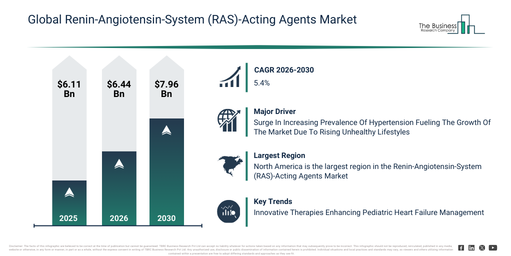
    The renin-angiotensin-system (RAS)-acting agents market has experienced robust expansion in recent years, with its value projected to rise from $6.11 billion in 2025 to $6.44 billion in 2026, reflecting a compound annual growth rate (CAGR) of 5.5%. This historical growth is driven by factors such as the high incidence of hypertension, an expanding elderly demographic, the widespread uptake of ACE inhibitors, enhanced cardiovascular screening programs, and the cost-effectiveness of generic medications.

    Forecasts indicate robust expansion within the renin-angiotensin-system (RAS)-acting agents market over the coming years. By 2030, its value is projected to reach $7.96 billion, representing a compound annual growth rate (CAGR) of 5.4%. Several key factors are expected to drive this growth during the forecast period, including the rising burden of chronic kidney disease, heightened demand for cardiometabolic medications, better rates of treatment adherence, growing opportunities in emerging markets, and approvals for combination therapies. Among the significant developments shaping this period are the increased adoption of combination antihypertensive treatments, the development of long-acting cardiovascular therapies, a growing emphasis on renal protection strategies, the rising availability of generic RAS drugs, and a noticeable movement toward fixed-dose combinations.

    Download A Free Sample Report For Comprehensive Market Insights:

    https://www.thebusinessresearchcompany.com/sample.aspx?id=23496&type=smp&utm_source=BlogsPR&utm_medium=Paid&utm_campaign=Jul_PR

    Renin-Angiotensin-System (RAS)-Acting Agents Market Growth Factors Supporting Long-Term Expansion

    The growing incidence of hypertension is anticipated to accelerate the expansion of the renin-angiotensin system (RAS)-acting agents market. Hypertension, commonly known as high blood pressure, is a chronic condition characterized by persistently elevated force of blood against artery walls. Its rising prevalence stems largely from unhealthy dietary patterns, particularly those rich in salt and processed foods, which elevate blood pressure and add stress to the cardiovascular system. By blocking angiotensin II—a hormone that narrows blood vessels and promotes fluid retention—renin-angiotensin system (RAS)-acting agents help regulate blood pressure, facilitating vasodilation and reducing hypertension rates. As an example, in September 2025, the World Health Organization, an intergovernmental organization based in Switzerland, reported that an estimated 1.4 billion adults aged 30–79 worldwide were living with hypertension in 2024, accounting for roughly 33% of that age group. Hence, the escalating prevalence of hypertension is fueling growth in the renin-angiotensin system (RAS)-acting agents market.

    Renin-Angiotensin-System (RAS)-Acting Agents Market Segment Landscape: Which Areas Lead Market Development?

    The renin-angiotensin-system (ras)-acting agents market covered in this report is segmented –

    1) By Drug Class: Angiotensin-Converting Enzyme (ACE) Inhibitors, Angiotensin II Receptor Blockers (ARBs), Renin Inhibitors, Aldosterone Antagonists, Other Drug Classes

    2) By Indication: Hypertension, Heart Failure, Chronic Kidney Disease, Diabetic Nephropathy, Coronary Artery Disease

    3) By Distribution Channel: Hospital Pharmacies, Retail Pharmacies, Online Pharmacies, Specialty Clinics

    4) By End-User: Hospitals, Research Institutes, Pharmaceutical Companies, Other End-Users

    Subsegments:

    1) By Angiotensin-Converting Enzyme (ACE) Inhibitors: Captopril, Enalapril, Lisinopril, Ramipril, Perindopril

    2) By Angiotensin II Receptor Blockers (ARBs): Losartan, Valsartan, Irbesartan, Olmesartan, Telmisartan

    3) By Renin Inhibitors: Aliskiren

    4) By Aldosterone Antagonists: Spironolactone, Eplerenone

    5) By Other Drug Classes: Dual Angiotensin Receptor-Neprilysin Inhibitors (ARNIs), Vasopeptidase Inhibitors, Mineralocorticoid Receptor Antagonists (MRAs), Angiotensin Receptor Blockers With Neprilysin Inhibitors (ARNBIs)

    Renin-Angiotensin-System (RAS)-Acting Agents Market Industry Trends Shaping Future Revenue Growth

    Major pharmaceutical companies in the renin-angiotensin system (RAS)-acting agents market are concentrating their efforts on creating innovative RAS inhibitors, particularly angiotensin-converting enzyme (ACE) inhibitors, with the aim of improving effectiveness, reducing adverse effects, increasing patient adherence, and addressing conditions like hypertension, heart failure, and kidney disorders. An ACE inhibitor functions as a pharmaceutical agent that reduces blood pressure by inhibiting the enzyme responsible for converting angiotensin I into angiotensin II, a compound known to constrict blood vessels. A case in point occurred in November 2023, when Proveca Ltd., a pharmaceutical firm headquartered in the UK, was granted a pediatric use marketing authorization (PUMA) by the European Commission for Aqumeldi (enalapril maleate) orodispersible tablets. These tablets are specifically indicated for managing heart failure in children ranging from birth to under 18 years of age. Aqumeldi works as an ACE inhibitor, providing treatment for pediatric heart failure patients by blocking the action of ACE, which prevents the transformation of angiotensin I to angiotensin II. This mechanism leads to the relaxation of blood vessels, enhanced blood circulation, and a reduction in the heart’s workload.

    Renin-Angiotensin-System (RAS)-Acting Agents Market Industry Leaders And Market Competition

    Major companies operating in the renin-angiotensin-system (ras)-acting agents market are Novartis AG, AstraZeneca plc, Boehringer Ingelheim GmbH, Teva Pharmaceutical Industries Ltd., Sandoz International GmbH, Aurobindo Pharma Limited, Cipla Limited, Dr. Reddy’s Laboratories Ltd., Glenmark Pharmaceuticals Ltd., Torrent Pharmaceuticals Ltd., Pfizer Inc., Sanofi S.A., Bayer AG, Daiichi Sankyo Company Limited, Astellas Pharma Inc., Biocon Limited, Lupin Limited, Sun Pharmaceutical Industries Ltd., Mylan N.V., Zydus Lifesciences Limited

    Access The Complete Renin-Angiotensin-System (RAS)-Acting Agents Market Report:

    https://www.thebusinessresearchcompany.com/report/renin-angiotensin-system-ras-acting-agents-global-market-report?utm_source=BlogsPR&utm_medium=Paid&utm_campaign=Jul_PR

    Renin-Angiotensin-System (RAS)-Acting Agents Market Regional Analysis And Leading Geography

    North America was the largest region in the renin-angiotensin-system (RAS)-acting agents market in 2025. Asia-Pacific is expected to be the fastest-growing region in the forecast period. The regions covered in the renin-angiotensin-system (ras)-acting agents market report are Asia-Pacific, South East Asia, Western Europe, Eastern Europe, North America, South America, Middle East, Africa.

    Get in touch with us:

    The Business Research Company: https://www.thebusinessresearchcompany.com/?utm_source=BlogsPR&utm_medium=Paid&utm_campaign=home_page_test

    Americas: +1 310-496-7795

    Asia: +44 7882 955267 & +91 8897263534

    Europe: +44 7882 955267

    Email us at: marketing@tbrc.info

    Follow us on:

    LinkedIn: https://in.linkedin.com/company/the-business-research-company

    YouTube: https://www.youtube.com/channel/UC24_fI0rV8cR5DxlCpgmyFQ

    Global Market Model: https://www.thebusinessresearchcompany.com/global-market-model
  • Remicade Biosimilar Market Forecast Signals New Revenue Opportunities Through 2030

    Remicade Biosimilar Market Forecast Signals New Revenue Opportunities Through 2030

    Delivering more actionable and strategically valuable research, The Business Research Company’s 2026 market reports feature market attractiveness analysis, total addressable market evaluation, company benchmarking matrices, interactive Excel dashboards, expanded supply chain intelligence, emerging startup coverage, and detailed product insights.

    Remicade Biosimilar Market Expected To Reach $13.3 Billion By 2030 At 22.2% CAGR

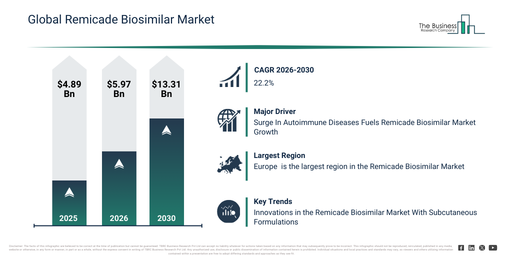
    The remicade biosimilar market has experienced a remarkable surge in its overall valuation over recent years. Projections indicate an increase from $4.89 billion in 2025 to $5.97 billion in 2026, reflecting a compound annual growth rate (CAGR) of 22.2%. This expansion during the historical period is largely driven by factors such as the significant financial strain imposed by branded biologics, the expiration of remicade’s patent protection, a rising incidence of autoimmune conditions, favorable government policies facilitating biosimilar approvals, and the adoption of hospital-led bulk purchasing strategies.

    The remicade biosimilar market is anticipated to undergo significant expansion over the coming years, with projections indicating it will reach $13.31 billion by 2030, driven by a compound annual growth rate (CAGR) of 22.2%. This forecast period’s growth is fueled by several key factors, including the rising need for affordable biologic treatments, the broadening of biosimilar development programs, increased healthcare spending in developing nations, growing trust from both healthcare providers and patients, and supportive reimbursement policies. Key developments shaping this period include a greater shift toward cost-effective biosimilar options, heightened confidence among prescribers in infliximab biosimilars, the widening use of these products for autoimmune conditions, competitive pricing strategies and tender-based purchasing models, and an increasing presence in emerging healthcare markets.

    Download A Free Sample Report For Comprehensive Market Insights:

    https://www.thebusinessresearchcompany.com/sample.aspx?id=11952&type=smp&utm_source=BlogsPR&utm_medium=Paid&utm_campaign=Jul_PR

    Remicade Biosimilar Market Demand Drivers Creating New Revenue Opportunities

    The anticipated increase in autoimmune disease prevalence is expected to fuel the expansion of the remicade biosimilar market moving forward. Autoimmune diseases involve a situation where the body’s immune system mistakenly targets and harms its own tissues and organs. Remicade biosimilars serve as an effective therapeutic tool for managing symptoms and lessening inflammation linked to these conditions. For example, in February 2024, data from Arthritis Australia, a charitable nonprofit based in Australia that advocates for individuals with arthritis and musculoskeletal issues, indicated that by 2025, around 562,378 Australians are predicted to have rheumatoid arthritis (RA), making up 14% of the total arthritis population. This figure is projected to climb by 33%, reaching roughly 748,721 by 2040. Consequently, the growing frequency of autoimmune diseases is propelling the remicade biosimilar market forward.

    Remicade Biosimilar Market Driver: Rising Healthcare Expenditure Boosts Remicade Biosimilar Market Growth

    The expansion of the remicade biosimilar market is being substantially driven by rising healthcare expenditure in the coming years. Healthcare expenditure represents the total sum dedicated to healthcare goods and services over a defined timeframe, usually each year. Biologic drugs, including Remicade, generally come with a high price tag. With increasing healthcare spending, there is heightened attention on cost control and more effective resource distribution. Biosimilars present a more affordable option compared to their original biologic drugs, such as Remicade. To illustrate, in November 2023, the Canadian Institute for Health Information, a national body based in Canada, reported that total health spending in the country for 2023 is anticipated to hit $344 billion, or $8,740 per person. This reflects a 2.8% rise from the prior year, which had only a 1.5% increase in health spending in 2022, signaling a strong recovery in healthcare investment. Hence, growing healthcare expenditure will continue to boost the remicade biosimilar market.

    Remicade Biosimilar Market Segments: Where Are The Largest Growth Opportunities?

    The remicade biosimilar market covered in this report is segmented –

    1) By Type: 100mg/10ml, 500mg/50ml

    2) By Disease Indication: Ulcerative Colitis, Rheumatoid Arthritis, Ankylosing Spondylitis, Crohn’s Disease, Psoriatic Arthritis, Plaque Psoriasis

    3) By Application: Blood Disorders, Oncology Diseases

    Remicade Biosimilar Market Trends Driving Strategic Industry Expansion

    Leading firms in the remicade biosimilar market are investing in novel approaches, such as subcutaneous formulations, to secure a market edge. These subcutaneous versions of Remicade offer a different method of delivering treatment for autoimmune conditions, enabling self-injection and possibly enhancing patient compliance with their therapy regimens. A notable example occurred in March 2024, when Celltrion, a biopharmaceutical company based in South Korea, introduced Zymfentra, a biosimilar to Remicade (infliximab), priced at $6,181.08 for two doses administered over four weeks. This product received FDA approval as the first subcutaneous infliximab formulation intended for maintenance therapy in adults dealing with moderate-to-severe ulcerative colitis and Crohn’s disease. Patients with commercial insurance who are eligible can benefit from copay assistance of $5 per month, whereas those without insurance or with insufficient coverage may obtain Zymfentra at no cost.

    Remicade Biosimilar Market Major Participants And Competitive Dynamics

    Major companies operating in the remicade biosimilar market are Novartis AG, Amgen Inc, Viatris Inc., Teva Pharmaceutical Industries Ltd., Biogen Inc., LG Chem Ltd., Nippon Kayaku Co. Ltd., Celltrion Inc., Nichi-iko Pharmaceutical Co. Ltd., Biocon Limited, Alvotech S.A., MabPharm Ltd., Genor Biopharma Co. Ltd, Shanghai Biomabs Pharmaceuticals Co. Ltd., Samsung Bioepis Co. Ltd., Biocad Biopharmaceutical Co, EPIRUS Biopharmaceuticals Inc., BioXpress Therapeutics SA, Mabion S.A

    Access The Complete Remicade Biosimilar Market Report:

    https://www.thebusinessresearchcompany.com/report/remicade-biosimilar-global-market-report?utm_source=BlogsPR&utm_medium=Paid&utm_campaign=Jul_PR

    Remicade Biosimilar Market Geographic Analysis: Where Is Demand Growing The Fastest?

    Europe was the largest region in the remicade biosimilar market in 2025. The regions covered in the remicade biosimilar market report are Asia-Pacific, South East Asia, Western Europe, Eastern Europe, North America, South America, Middle East, Africa.

    Get in touch with us:

    The Business Research Company: https://www.thebusinessresearchcompany.com/?utm_source=BlogsPR&utm_medium=Paid&utm_campaign=home_page_test

    Americas: +1 310-496-7795

    Asia: +44 7882 955267 & +91 8897263534

    Europe: +44 7882 955267

    Email us at: marketing@tbrc.info

    Follow us on:

    LinkedIn: https://in.linkedin.com/company/the-business-research-company

    YouTube: https://www.youtube.com/channel/UC24_fI0rV8cR5DxlCpgmyFQ

    Global Market Model: https://www.thebusinessresearchcompany.com/global-market-model
  • Remdesivir Market Growth Is Accelerating As Industry Transformation Continues

    Remdesivir Market Growth Is Accelerating As Industry Transformation Continues

    Enhanced with market attractiveness analysis, total addressable market evaluation, company benchmarking matrices, interactive Excel dashboards, expanded supply chain intelligence, emerging startup coverage, and detailed product insights, The Business Research Company’s 2026 market reports deliver more actionable and strategically valuable research.

    Remdesivir Market Size And Revenue Forecast Through 2030

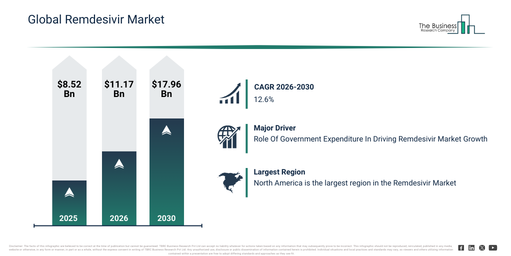
    In recent years, the remdesivir market has undergone exponential expansion. Projections indicate it will increase from $8.52 billion in 2025 to $11.17 billion in 2026, reflecting a compound annual growth rate (CAGR) of 31.2%. Several factors drove this historical growth: emergency use authorization granted for remdesivir, elevated hospitalization rates during COVID-19 surges, a scarcity of alternative antiviral drugs, heightened public awareness surrounding antiviral treatments, and the swift expansion of hospital procurement systems.

    The remdesivir market is projected to experience significant expansion over the coming years, reaching $17.96 billion by 2030 with a compound annual growth rate (CAGR) of 12.6%. Several factors are anticipated to drive this growth during the forecast period, including the creation of innovative remdesivir formulations, a growing preference for oral and ready-to-use injectable options, the expansion of antiviral treatment supported by telemedicine, heightened government initiatives aimed at managing COVID-19, and the rise of online pharmacies coupled with home delivery services. Key developments expected in this period encompass a growing need for intravenous antiviral therapies, a greater uptake of oral antiviral formulations, an increase in hospitalization and critical care treatments for COVID-19, the broadening of distribution avenues through online and retail pharmacies, and the advancement of ready-to-use injectable and lyophilized powder forms.

    Download A Free Sample Report For Comprehensive Market Insights:

    https://www.thebusinessresearchcompany.com/sample.aspx?id=3253&type=smp&utm_source=BlogsPR&utm_medium=Paid&utm_campaign=Jul_PR

    Remdesivir Market Expansion Supported By Key Demand Factors

    The expanding allocation of public funds is anticipated to accelerate the expansion of the remdesivir market in the coming period. Government spending, defined as the total monetary resources that a government or public sector body assigns and disburses to support its operations, initiatives, services, and projects, plays a crucial role in making Remdesivir more accessible and fostering its growth, particularly during public health emergencies. Through mechanisms such as financial backing, regulatory facilitation, procurement capacity, and research funding, authorities can enhance both the availability and affordability of this essential antiviral drug. To illustrate, in April 2025, the American Medical Association, a professional organization based in the United States, reported that U.S. health spending rose by 7.5% in 2023 to $4.9 trillion—equivalent to $14,570 per person—surpassing the 4.6% growth observed in 2022. Thus, the rise in governmental expenditures is fueling progress within the remdesivir market.

    Remdesivir Market Driver: Rising Demand For Clinical Trials And Research Fuels Remdesivir Market Growth

    The growing need for clinical trials and research activities is set to drive the remdesivir market forward. Clinical trials and research involve methodical, carefully planned investigations within medicine and healthcare aimed at assessing the effectiveness and safety of diverse medical interventions, including treatments, drugs, devices, diagnostic procedures, or healthcare strategies. Such trials evaluate how well Remdesivir performs against viral infections, such as COVID-19, by generating scientific proof of its capacity to lessen symptom severity and duration while documenting its safety profile. For example, in May 2023, Xtalks, a digital health firm based in Canada, noted that 452,604 clinical studies were registered in 2023, with 64,838 of those currently seeking participants. Consequently, the heightened demand for clinical trials and research is propelling growth in the remdesivir market.

    Remdesivir Market Driver: Rising Healthcare Expenditure Driving The Market Growth Due To Enhanced Patient Access And Treatment Capabilities

    The upward trend in healthcare spending is expected to boost the remdesivir market in the near future. Healthcare expenditure encompasses the total financial outlay made by individuals, organizations, or governments toward preventing, treating, and managing health conditions. This spending is climbing due to progress in medical technology, where novel diagnostic tools, treatment methods, and advanced therapies often carry elevated costs, thereby raising overall healthcare outlays. Increased healthcare funding facilitates the use of remdesivir by allowing governments and hospitals to stockpile adequate supplies, enhance distribution networks, and deliver prompt care to COVID-19 patients, which in turn improves both patient access and treatment efficacy. As an example, in December 2024, the Centers for Medicare & Medicaid Services, a U.S. agency overseeing Medicare and Medicaid, reported that American healthcare expenditures grew by 7.5% in 2023, reaching $4.9 trillion, approximately $14,570 per person. Hence, the escalation in healthcare spending is driving the remdesivir market forward.

    Remdesivir Market Segment Analysis: What Are The Major Market Categories?

    The remdesivir market covered in this report is segmented –

    1) By Route Of Administration: Oral, Intravenous

    2) By Dosage Form: Tablets, Frozen Solution, Lyophilized Solution

    3) By Distribution Channel: Hospitals, Clinics, Drug Stores/Pharmacies, Online, Other Distribution Channels

    Subsegments:

    1) By Oral: Tablet Formulation, Liquid Formulation

    2) By Intravenous: Ready-To-Use Injectable, Lyophilized Powder For Injection

    Remdesivir Market Leading Companies Driving Competitive Growth

    Major companies operating in the remdesivir market are Gilead Sciences Inc., BrightGene Bio-Medical Technology Co Ltd, Hainan Haiyao Co. Ltd., Sichuan Kelun Pharmaceutical Co. Ltd., Hunan Warrant Pharmaceutical, Cipla Limited, Dr Reddy’s Laboratories Ltd., Shenzhen BORUI Pharmaceutical Technology Co. Ltd., Hetero Labs Limited, Mylan N.V., Zydus Cadila Health Care Limited, Syngene International Limited, Sun Pharmaceutical Industries Ltd., Aurobindo Pharma Limited, Teva Pharmaceutical Industries, Ferozsons Laboratories Limited, Jubilant Life Sciences, Laurus Labs, Macleods Pharmaceuticals, Natco Pharma, Sandoz Group AG, Strides Pharma Science Limited, Torrent Pharmaceuticals, Beximco Pharmaceuticals Ltd., Fresenius Kabi, Gland Pharma Limited, Hikma Pharmaceuticals, Lark Laboratories

    Access The Complete Remdesivir Market Report:

    https://www.thebusinessresearchcompany.com/report/remdesivir-global-market-report?utm_source=BlogsPR&utm_medium=Paid&utm_campaign=Jul_PR

    Remdesivir Market Global Footprint: Which Region Holds Market Leadership?

    North America was the largest region in the remdesivir market in 2025. Middle East is expected to be the fastest growing region in the remdesivir market report during the forecast period. The regions covered in the remdesivir market report are Asia-Pacific, South East Asia, Western Europe, Eastern Europe, North America, South America, Middle East, Africa.

    Get in touch with us:

    The Business Research Company: https://www.thebusinessresearchcompany.com/?utm_source=BlogsPR&utm_medium=Paid&utm_campaign=home_page_test

    Americas: +1 310-496-7795

    Asia: +44 7882 955267 & +91 8897263534

    Europe: +44 7882 955267

    Email us at: marketing@tbrc.info

    Follow us on:

    LinkedIn: https://in.linkedin.com/company/the-business-research-company

    YouTube: https://www.youtube.com/channel/UC24_fI0rV8cR5DxlCpgmyFQ

    Global Market Model: https://www.thebusinessresearchcompany.com/global-market-model

  • Regenerative Medicine For Cartilage Market Outlook Highlights The Next Major Growth Opportunities

    Regenerative Medicine For Cartilage Market Outlook Highlights The Next Major Growth Opportunities

    Through market attractiveness analysis, total addressable market evaluation, company benchmarking matrices, interactive Excel dashboards, expanded supply chain intelligence, emerging startup coverage, and detailed product insights, The Business Research Company’s 2026 market reports provide more actionable and strategically valuable research.

    Regenerative Medicine For Cartilage Market Growth From $4.96 Billion In 2026 To $6.32 Billion By 2030 At A CAGR Of 6.3%

    The market for regenerative medicine targeting cartilage has seen robust expansion in recent years. Its value is projected to rise from $4.68 billion in 2025 to $4.96 billion in 2026, representing a compound annual growth rate (CAGR) of 6.1%. Historical growth has been fueled by a higher prevalence of knee osteoarthritis, a surge in cartilage damage from sports activities, the shortcomings of standard pain relief methods, an uptick in orthopedic surgical procedures, and the early-stage implementation of autologous chondrocyte implantation.

    The regenerative medicine market for cartilage is projected to experience robust growth in the coming years, reaching a value of $6.33 billion by 2030, with a compound annual growth rate (CAGR) of 6.3%. This expansion during the forecast period is driven by progress in regenerative biologics, an aging population, a growing preference for joint preservation therapies, the proliferation of outpatient surgical centers, and enhanced reimbursement policies for regenerative treatments. Key trends shaping this period include the broader implementation of autologous chondrocyte implantation procedures, a surge in minimally invasive cartilage repair surgeries, growing clinical evidence supporting stem cell-based cartilage therapies, an increased demand for durable knee cartilage regeneration options, and the establishment of standardized cartilage repair protocols in orthopedic care.

    Download A Free Sample Report For Comprehensive Market Insights:

    https://www.thebusinessresearchcompany.com/sample.aspx?id=3961&type=smp&utm_source=BlogsPR&utm_medium=Paid&utm_campaign=Jul_PR

    Regenerative Medicine For Cartilage Market Growth Drivers And Industry Catalysts

    The growing prevalence of chronic diseases is anticipated to accelerate the expansion of the regenerative medicine market for cartilage. Chronic diseases are long-lasting medical conditions that often persist throughout an individual’s lifetime. Medical specialty bags are essential in the treatment and management of these conditions. The rising incidence of chronic diseases, especially those impacting the musculoskeletal system, creates favorable conditions for the advancement of regenerative medicine, particularly for cartilage repair. For example, in June 2024, the National Health Service, a government department in the UK, reported that 3,615,330 individuals registered with a general practitioner were diagnosed with non-diabetic hyperglycemia or pre-diabetes (a condition marked by elevated blood sugar levels not yet reaching diabetes thresholds) in 2023, reflecting an 18% rise from 3,065,825 cases in 2022. Consequently, the increasing burden of chronic diseases is fueling growth in the regenerative medicine market for cartilage.

    Regenerative Medicine For Cartilage Market Segment Breakdown: Which Categories Generate The Most Revenue?

    The regenerative medicine for cartilage market covered in this report is segmented –

    1) By Product: Cell Based, Gene Based, Tissue Based

    2) By End-Use: Ambulatory Surgical Centers, Hospitals And Clinics, Others

    3) By Application: Musculoskeletal, Oncology, Dental, Wound Care, Others

    Subsegments:

    1) By Cell-Based: Chondrocyte-Based Therapies, Mesenchymal Stem Cell (MSC) Therapies, Induced Pluripotent Stem Cell (iPSC) Therapies, Embryonic Stem Cell (ESC) Therapies

    2) By Gene-Based: Gene Modification Therapies, CRISPR-Based Gene Editing, Viral Vector Gene Therapies, Non-Viral Gene Therapies

    3) By Tissue-Based: Autologous Tissue Grafts, Allogeneic Tissue Grafts, Xenogeneic Tissue Grafts, Synthetic Scaffolds

    Regenerative Medicine For Cartilage Market Trends Influencing Long-Term Demand

    Major players in the regenerative medicine for the cartilage market are actively creating bioactive substances aimed at improving cartilage repair and enhancing therapeutic results. These materials are engineered to replicate the natural extracellular matrix, thereby encouraging cell growth, specialization, and tissue restoration. For example, in August 2024, scientists from Northwestern University, a private research institution located in the United States, introduced a bioactive material that effectively regenerated high-quality hyaline cartilage in a sheep model. The substance features a bioactive peptide that binds to transforming growth factor beta-1 (TGFb-1) and is combined with chemically altered hyaluronic acid. This mixture facilitates the spontaneous assembly of nanoscale fibers, mimicking the natural process of cartilage formation and boosting cellular repair mechanisms. Such a material has the potential to prevent the need for knee replacements and to address degenerative conditions.

    Regenerative Medicine For Cartilage Market Key Players And Strategic Industry Positioning

    Major companies operating in the regenerative medicine for cartilage market are Smith & Nephew plc, Integra LifeSciences, Stryker Corporation, MiMedx Group Inc., Zimmer Biomet Holdings Inc., B. Braun Melsungen AG, AbbVie, CONMED Corporation, Arthrex Inc., Baxter International Inc., China Regenerative Medicine International, ABLbio, Cellgenix GmbH, BioTissue Technologies, Corin Group, Medical Import Ltd., Orthonika, Merete, 3di GmbH, Aditus Medical GmbH, Anton Hipp GmbH, AREX SAS, Acelity L.P. Inc., StemCells Inc, Organogenesis Inc, NuVasive Inc, Japan Tissue Engineering Co. Ltd, Advantagene Inc., Mesoblast Ltd, Globus Medical, DePuy Synthes, Cryolife Inc, Johnson & Johnson, Medtronic Plc, Rti Surgical, CartiHeal Inc., DJO Global Inc., Wright Medical Group, Auxein, Aesculap Inc, AMEGA Biotech

    Access The Complete Regenerative Medicine For Cartilage Market Report:

    https://www.thebusinessresearchcompany.com/report/regenerative-medicine-for-cartilage-global-market-report?utm_source=BlogsPR&utm_medium=Paid&utm_campaign=Jul_PR

    Regenerative Medicine For Cartilage Market Regional Distribution: Which Areas Drive Market Expansion?

    Europe was the largest region in regenerative medicine for cartilage in 2025. The regions covered in the regenerative medicine for cartilage market report are Asia-Pacific, South East Asia, Western Europe, Eastern Europe, North America, South America, Middle East, Africa.

    Get in touch with us:

    The Business Research Company: https://www.thebusinessresearchcompany.com/?utm_source=BlogsPR&utm_medium=Paid&utm_campaign=home_page_test

    Americas: +1 310-496-7795

    Asia: +44 7882 955267 & +91 8897263534

    Europe: +44 7882 955267

    Email us at: marketing@tbrc.info

    Follow us on:

    LinkedIn: https://in.linkedin.com/company/the-business-research-company

    YouTube: https://www.youtube.com/channel/UC24_fI0rV8cR5DxlCpgmyFQ

    Global Market Model: https://www.thebusinessresearchcompany.com/global-market-model
  • Regenerative Aesthetics Market Trends And Growth Drivers Point To Strong Future Potential

    Regenerative Aesthetics Market Trends And Growth Drivers Point To Strong Future Potential

    Delivering more actionable and strategically valuable research, The Business Research Company’s 2026 market reports feature market attractiveness analysis, total addressable market evaluation, company benchmarking matrices, interactive Excel dashboards, expanded supply chain intelligence, emerging startup coverage, and detailed product insights.

    Regenerative Aesthetics Market Expansion Outlook: What Revenue Opportunities Lie Ahead?

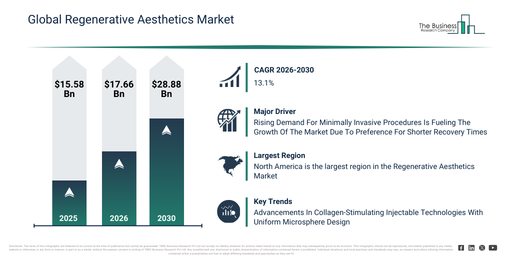
    The market for regenerative aesthetics has experienced swift expansion in recent times. Projected to rise from $15.58 billion in 2025 to $17.66 billion in 2026, it is advancing at a compound annual growth rate (CAGR) of 13.4%. Factors driving this historical growth include the scarce supply of regenerative aesthetic products, dependence on conventional cosmetic interventions, heightened public knowledge about aesthetic procedures, a growing count of dermatology and aesthetic clinics, and the early implementation of therapies based on stem cells.

    The regenerative aesthetics market is anticipated to experience significant growth over the coming years, with projections indicating it will reach $28.88 billion by 2030, expanding at a compound annual growth rate (CAGR) of 13.1%. This upward trajectory in the forecast period is driven by several key factors, including the advancement of sophisticated exosome and peptide-based treatments, the broadening availability of regenerative products designed for home use, heightened investment in formulations enriched with growth factors, the incorporation of digital monitoring systems and tele-aesthetics, and a growing consumer inclination toward natural, enduring outcomes. Notable trends shaping this period encompass the increasing utilization of exosome-based therapies for revitalizing skin and hair, the growing application of platelet-rich plasma (PRP) and autologous conditioned serum, a heightened need for treatments addressing scar reduction and wound healing, the expansion of anti-inflammatory approaches alongside combination regenerative therapies, and a rising preference for minimally invasive procedures that deliver natural-looking aesthetic results.

    Download A Free Sample Report For Comprehensive Market Insights:

    https://www.thebusinessresearchcompany.com/sample.aspx?id=27405&type=smp&utm_source=BlogsPR&utm_medium=Paid&utm_campaign=Jul_PR

    Regenerative Aesthetics Market Opportunity Drivers: What Is Creating New Revenue Potential?

    The growth of the regenerative aesthetics market is expected to be driven forward by the increasing demand for minimally invasive procedures. These procedures involve medical or surgical methods performed through small incisions or natural body openings rather than large cuts. Their popularity is rising because patients favor shorter recovery times, enabling them to return quickly to everyday activities. Regenerative aesthetics enhances these techniques by leveraging the body’s natural healing processes to achieve lasting improvements with minimal recovery periods. For example, the American Society of Plastic Surgeons, a US-based non-profit, reported in June 2024 that hyaluronic acid filler minimally invasive procedures reached 5.29 million in 2023, marking an 8% rise compared to 2022. Consequently, the increasing need for such procedures is fueling market expansion in regenerative aesthetics.

    Regenerative Aesthetics Market Segmentation: How Is The Market Structured Across Key Categories?

    The regenerative aesthetics market covered in this report is segmented –

    1) By Product Type: Exosome-Based Therapies, Other Product Types

    2) By Application: Skin Rejuvenation, Hair Restoration, Scar Reduction And Wound Healing, Anti-Inflammatory Treatments, Combination Therapies

    3) By End-User: Aesthetic Clinics, Dermatology Clinics, Home Use

    Subsegments:

    1) By Exosome-Based Therapies: Stem Cell Derived Exosomes, Platelet Derived Exosomes, Plant Derived Exosomes

    2) By Other Product Types: Platelet Rich Plasma, Autologous Conditioned Serum, Peptide Based Products, Growth Factor Enriched Formulations

    Regenerative Aesthetics Market Innovation Trends Driving Future Development

    Key players in the regenerative aesthetics sector are concentrating their efforts on pioneering advanced technologies, including uniform microsphere technology, to create cutting-edge collagen-stimulating injectables that ensure smoother administration, exact treatment targeting, and uniform outcomes. This technology represents a formulation method that produces microspheres with consistent size and shape, facilitating seamless injection, accurate placement, and reliable therapeutic effects. A notable example is the July 2025 launch by Koru Pharma Co. Ltd., a South Korean biopharmaceutical firm, of Reversal Neo—a state-of-the-art collagen-stimulating injectable composed of high-purity Poly-L-Lactic Acid (PLLA) engineered to provide smoother injection performance, higher precision, and enduring, natural-looking aesthetic enhancements. This product features a next-generation collagen biostimulator containing 200 mg of high-purity PLLA and a uniform microsphere architecture, enabling more fluid and accurate injections. Its sophisticated formulation supports sustained collagen regeneration, yielding natural and durable results, along with excellent biocompatibility, reduced inflammation, and greater patient comfort.

    Regenerative Aesthetics Market Competitive Landscape And Leading Companies

    Major companies operating in the regenerative aesthetics market are ABG Lab LLC, Koru Pharma Co. Ltd., Global Stem Cells Group, Cytori Therapeutics Inc., Aesthetic Regenerative Therapies Inc., EmCyte Corp., Geneo, Plasmolifting World GmbH, ReGen Lab, RepliCel Life Sciences Inc.,

    Access The Complete Regenerative Aesthetics Market Report:

    https://www.thebusinessresearchcompany.com/report/regenerative-aesthetics-global-market-report?utm_source=BlogsPR&utm_medium=Paid&utm_campaign=Jul_PR

    Regenerative Aesthetics Market Leading Geography: Which Region Generates The Most Revenue?

    North America was the largest region in the regenerative aesthetics market in 2025. Asia-Pacific is expected to be the fastest-growing region in the forecast period. The regions covered in the regenerative aesthetics market report are Asia-Pacific, South East Asia, Western Europe, Eastern Europe, North America, South America, Middle East, Africa.

    Get in touch with us:

    The Business Research Company: https://www.thebusinessresearchcompany.com/?utm_source=BlogsPR&utm_medium=Paid&utm_campaign=home_page_test

    Americas: +1 310-496-7795

    Asia: +44 7882 955267 & +91 8897263534

    Europe: +44 7882 955267

    Email us at: marketing@tbrc.info

    Follow us on:

    LinkedIn: https://in.linkedin.com/company/the-business-research-company

    YouTube: https://www.youtube.com/channel/UC24_fI0rV8cR5DxlCpgmyFQ

    Global Market Model: https://www.thebusinessresearchcompany.com/global-market-model

  • Raynauds Disease Treatment Market Expansion Is Reshaping Competitive Dynamics Across The Industry

    Raynauds Disease Treatment Market Expansion Is Reshaping Competitive Dynamics Across The Industry

    Enhanced with market attractiveness analysis, total addressable market evaluation, company benchmarking matrices, interactive Excel dashboards, expanded supply chain intelligence, emerging startup coverage, and detailed product insights, The Business Research Company’s 2026 market reports deliver more actionable and strategically valuable research.

    Raynauds Disease Treatment Market Growth Potential: How Will Market Size Change Through 2030?

    The raynaud’s disease treatment market has seen substantial expansion in recent times. It is projected to increase from $1.49 billion in 2025 to $1.6 billion in 2026, achieving a compound annual growth rate (CAGR) of 7.6%. This past growth has been driven by factors such as poor understanding of raynaud’s disease, dependence on standard pharmaceuticals, an expanding network of hospitals and specialty clinics, a scarcity of homecare alternatives, and variations in demand tied to seasonal changes.

    The raynauds disease treatment market is anticipated to experience robust expansion over the coming years. By 2030, its value is projected to reach $2.13 billion, reflecting a compound annual growth rate (CAGR) of 7.3%. This forecasted growth is driven by factors such as the emergence of innovative pharmacological treatments, the increasing use of wearable thermal therapy devices, heightened awareness around preventive care and lifestyle management, the expansion of homecare and telehealth services, and the integration of digital health monitoring and biofeedback technologies. Key trends shaping this period include a growing reliance on calcium channel blockers and vasodilators, a surge in the application of thermal therapy devices and biofeedback systems, an escalating preference for minimally invasive surgical options, the broadening of service settings toward homecare and specialty clinics, and a stronger focus on lifestyle modifications and stress management initiatives.

    Download A Free Sample Report For Comprehensive Market Insights:

    https://www.thebusinessresearchcompany.com/sample.aspx?id=24680&type=smp&utm_source=BlogsPR&utm_medium=Paid&utm_campaign=Jul_PR

    Raynauds Disease Treatment Market Growth Momentum: Which Factors Are Influencing Demand?

    The anticipated expansion of the raynauds disease treatment market is significantly fueled by the growing incidence of autoimmune disorders. These disorders arise when the immune system erroneously attacks healthy bodily tissues, resulting in inflammation and harm. This increase is driven by factors like urbanization and sanitized living conditions that reduce immune system stimulation, alongside contemporary lifestyle elements including poor nutrition, stress, and environmental toxins. Raynaud’s disease treatment aids in managing autoimmune conditions by improving symptom control, minimizing tissue injury, and averting complications caused by compromised blood flow. A notable illustration comes from February 2024, when Clinical Trials Arena, a UK-based platform for clinical trials and pharmaceutical developments, forecasted that rheumatoid arthritis cases worldwide would surge dramatically, with prevalence expected to rise by 80.2% and affect nearly 1% of the global population by 2050. Consequently, the rising prevalence of autoimmune diseases is propelling the growth of the raynauds disease treatment market.

    The raynauds disease treatment market is being driven forward by escalating healthcare expenditure. This term denotes the total financial outlay on medical services, treatments, and health-related resources over a specific timeframe. Such expenditure is climbing notably due to an expanding aging population, which increases demand for medical services, long-term care, and age-specific treatments, thereby imposing greater financial strain on healthcare systems. Increased healthcare spending enhances Raynaud’s disease treatment by facilitating better access to medications, sophisticated diagnostic tools, specialized care, research into novel therapies, and public awareness initiatives that effectively control symptoms. As evidence, in April 2025, the American Medical Association, a US-based professional organization, reported that U.S. health spending rose by 7.5% in 2023 to $4.9 trillion, or $14,570 per person, representing a substantial increase from the 4.6% growth observed in 2022. Thus, the rise in healthcare expenditure is propelling the raynauds disease treatment market.

    Raynauds Disease Treatment Market Segmentation Trends And Revenue Drivers

    The raynauds disease treatment market covered in this report is segmented –

    1) By Treatment Type: Medication, Thermal Therapies, Surgical Procedures, Alteative Therapies

    2) By Drug Class: Calcium Channel Blockers, Vasodilators, Antiplatelet Agents

    3) By Route of Administration: Oral, Topical, Injectable, Intravenous

    4) By End-User: Hospitals, Specialty Clinics, Homecare Settings, Pharmacies

    Subsegments:

    1) By Medication: Calcium Channel Blockers, Alpha Blockers, Vasodilators, Topical Nitrates, Selective Serotonin Reuptake Inhibitors (SSRIs), Phosphodiesterase Inhibitors, Angiotensin Receptor Blockers (ARBs)

    2) By Thermal Therapies: Hand Warmers, Thermal Gloves, Heated Pads, Biofeedback-Controlled Thermal Devices

    3) By Surgical Procedures: Sympathectomy, Nerve Decompression Surgery, Vascular Surgery

    4) By Alternative Therapies: Acupuncture, Biofeedback Therapy, Herbal Remedies, Nutritional Supplements, Stress Management Techniques

    Raynauds Disease Treatment Market Trends Reshaping Industry Growth

    Leading businesses in the raynauds disease treatment market are prioritizing the creation of novel therapeutic options, including oral calcium channel blockers designed to enhance circulation through vessel relaxation and dilation, which in turn cuts down on both how often and how severely vasospastic episodes occur. An oral calcium channel blocker is a pill-form medication that works by preventing calcium from entering the muscle cells of the heart and vascular walls, thereby widening and relaxing these blood vessels. As an example, in June 2023, Aisa Pharma Inc., a clinical-stage biopharmaceutical firm based in the United States, initiated the second segment of its Phase 2b RECONNOITER study. This trial evaluates Profervia (cilnidipine), an oral calcium channel blocker, for managing raynaud’s phenomenon in individuals with systemic sclerosis (SSc). This step was taken after encouraging outcomes from the initial phase, where Profervia yielded a more substantial decrease in the frequency of raynaud’s episodes and severity of SSc compared with alternative calcium channel blockers, and it also exhibited a strong safety record and was well tolerated. The study, advancing with a 20 mg dosage, is designed to tackle the critical demand for effective therapies for Raynaud’s in SSc, a disorder that currently has no officially authorized treatments.

    Raynauds Disease Treatment Market Industry Leaders: Which Organizations Are Driving Competition?

    Major companies operating in the raynauds disease treatment market are Pfizer Inc., Johnson & Johnson, Bayer AG, Novartis AG, Sanofi SA, AstraZeneca PLC, GlaxoSmithKline plc, Takeda Pharmaceutical Company Limited, Merck & Co. Inc., Teva Pharmaceutical Industries Ltd., CSL Vifor, Orion Corporation, Apricus Biosciences Inc., Vicore Pharma Holding AB, MediQuest Therapeutics Inc., Gesynta Pharma AB, Aisa Pharma Inc., Abbott Laboratories, Boehringer Ingelheim International GmbH, Viatris Inc., Lupin Limited, Sun Pharmaceutical Industries Ltd., Dr. Reddy’s Laboratories Ltd., Cipla Limited, Torrent Pharmaceuticals Ltd., Zydus Lifesciences Ltd., Aurobindo Pharma Ltd., Glenmark Pharmaceuticals Ltd., Intas Pharmaceuticals Ltd., Hikma Pharmaceuticals PLC, Alkem Laboratories Ltd.

    Access The Complete Raynauds Disease Treatment Market Report:

    https://www.thebusinessresearchcompany.com/report/raynauds-disease-treatment-global-market-report?utm_source=BlogsPR&utm_medium=Paid&utm_campaign=Jul_PR

    Raynauds Disease Treatment Market Regional Outlook: Where Are The Largest Opportunities Located?

    North America was the largest region in the raynauds disease treatment market in 2025. Asia-Pacific is expected to be the fastest-growing region in the forecast period. The regions covered in the raynauds disease treatment market report are Asia-Pacific, South East Asia, Western Europe, Eastern Europe, North America, South America, Middle East, Africa.

    Get in touch with us:

    The Business Research Company: https://www.thebusinessresearchcompany.com/?utm_source=BlogsPR&utm_medium=Paid&utm_campaign=home_page_test

    Americas: +1 310-496-7795

    Asia: +44 7882 955267 & +91 8897263534

    Europe: +44 7882 955267

    Email us at: marketing@tbrc.info

    Follow us on:

    LinkedIn: https://in.linkedin.com/company/the-business-research-company

    YouTube: https://www.youtube.com/channel/UC24_fI0rV8cR5DxlCpgmyFQ

    Global Market Model: https://www.thebusinessresearchcompany.com/global-market-model

  • Rare Kidney Diseases Market Forecast Reveals Where Future Industry Value Will Be Created

    Rare Kidney Diseases Market Forecast Reveals Where Future Industry Value Will Be Created

    Through market attractiveness analysis, total addressable market evaluation, company benchmarking matrices, interactive Excel dashboards, expanded supply chain intelligence, emerging startup coverage, and detailed product insights, The Business Research Company’s 2026 market reports provide more actionable and strategically valuable research.

    Rare Kidney Diseases Market Value Analysis: What Growth Is Expected Over The Forecast Period?

    The market for rare kidney diseases has experienced robust expansion over the past few years. Projections indicate an increase from $3.03 billion in 2025 to $3.32 billion in 2026, reflecting a compound annual growth rate (CAGR) of 9.5%. This historical growth has been driven by factors such as the scarcity of treatment options for uncommon renal conditions, heightened awareness surrounding genetic kidney disorders, a rise in autoimmune-related nephropathy cases, the proliferation of specialized nephrology care facilities, and the early integration of immunosuppressive treatments into clinical practice.

    The market for rare kidney diseases is anticipated to experience substantial expansion in the coming years. By 2030, its value is projected to reach $4.88 billion, driven by a compound annual growth rate (CAGR) of 10.2%. This forecasted growth is fueled by progress in genomics-driven drug discovery, a higher number of orphan drug approvals, greater investment in research on rare conditions, the increasing application of personalized medicine, and an expanding arsenal of complement and immune-focused therapies. Key trends shaping this period include a stronger emphasis on targeted treatments for uncommon renal disorders, a surge in clinical trials dedicated to orphan kidney medications, the widening use of biologics for immune-mediated kidney ailments, the development of companion diagnostics for early identification of diseases, and enhanced regulatory incentives designed to support the development of therapies for rare diseases.

    Download A Free Sample Report For Comprehensive Market Insights:

    https://www.thebusinessresearchcompany.com/sample.aspx?id=11908&type=smp&utm_source=BlogsPR&utm_medium=Paid&utm_campaign=Jul_PR

    Rare Kidney Diseases Market Expansion Drivers: What Is Shaping Future Growth?

    The growing occurrence of chronic kidney disease (CKD) is playing a major role in advancing the rare kidney disease market. This condition involves kidney damage that hinders their ability to properly filter blood. As the prevalence of chronic kidney disease rises, the likelihood of patients developing rare kidney diseases also increases, thereby boosting the demand for therapies tailored to these conditions. For example, as reported in August 2025 by the National Kidney Foundation, Inc.—a non-profit health organization based in the United States—the Senate granted a $5 million increase in the FY 2026 Labor, Health and Human Services, and Education appropriations bill, aimed at improving kidney transplant reform and early detection. This addition raises the total funding for the Organ Procurement and Transplantation Network (OPTN) Modernization Initiative to $59 million. Consequently, the heightened prevalence of chronic kidney disease (CKD) is expected to propel growth in the rare kidney disease market.

    Rare Kidney Diseases Market Segment Analysis Highlighting Growth Areas

    The rare kidney diseases market covered in this report is segmented –

    1) By Target Indication: IgA Nephropathy, Lupus Nephritis, Focal Segmental Glomerular Sclerosis, Membranous Nephropathy, C3 Glomerulopathy, Other Target Indications

    2) By Type Of Molecule: Small Molecules, Biologics

    3) By Route Of administration: Oral, Intravenous, Subcutaneous, Other Routes Of Administration

    Subsegments:

    1) By IgA Nephropathy: Immunosuppressive Therapy, Supportive Care And Symptomatic Management

    2) By Lupus Nephritis: Corticosteroids, Antimalarial Agents, Biologics

    3) By Focal Segmental Glomerular Sclerosis (FSGS): Corticosteroids, Angiotensin Receptor Blockers (ARBs), Other Immunosuppressive Agents

    4) By Membranous Nephropathy: Corticosteroids, Immunosuppressive Therapy, Monoclonal Antibodies

    5) By C3 Glomerulopathy: Complement Inhibitors, Supportive Care, Immunosuppressive Therapies

    6) By Other Target Indications: Alport Syndrome, Thin Basement Membrane Nephropathy, Other Rare Kidney Disorders

    Rare Kidney Diseases Market Strategic Trends: What Is Defining The Next Phase Of Growth?

    Key players in the rare kidney diseases market are concentrating their efforts on creating non-immunosuppressive treatments specifically for these conditions. This type of therapy offers a distinct approach that addresses progressive kidney diseases, something conventional treatments for rare kidney disorders are unable to achieve. A notable example occurred in February 2023 when Travere Therapeutics, a biopharmaceutical firm based in the United States, introduced sparsentan under the brand name Filspari. This drug represents the first non-immunosuppressive therapy to receive approval for primary immunoglobulin A nephropathy (IgAN). Through its unique mechanism, Filspari works by blocking both angiotensin and endothelin receptors, giving it a clear advantage over standard ACE inhibitors and ARBs—those commonly used antihypertensive drugs that have been adapted for IgAN management only because they lower renal blood pressure.

    Rare Kidney Diseases Market Leading Companies: Who Holds Significant Market Presence?

    Major companies operating in the rare kidney diseases market are Merck & Co. Inc., Novartis AG, Sanofi S.A, AstraZeneca plc, Otsuka Pharmaceutical Co Ltd., Alexion Pharmaceuticals Inc., Horizon Therapeutics plc., Recordati S.p.A., Amicus Therapeutics Inc., Akebia Therapeutics Inc., Travere Therapeutics, FibroGen Inc., Aurinia Pharmaceuticals Inc., Calliditas Therapeutics AB, Apellis Pharmaceuticals Inc., Protalix Biotherapeutics Inc., ChemoCentryx Inc., Omeros Corporation, Celtaxsys Inc., Corbus Pharmaceuticals Holdings Inc., Chinook Therapeutics Inc., OxThera AB, Advicenne Pharma SA, Reata Pharmaceuticals Inc.

    Access The Complete Rare Kidney Diseases Market Report:

    https://www.thebusinessresearchcompany.com/report/rare-kidney-diseases-global-market-report?utm_source=BlogsPR&utm_medium=Paid&utm_campaign=Jul_PR

    Rare Kidney Diseases Market Geographic Landscape: Which Region Dominates Industry Growth?

    North America was the leading region in the rare kidney disease market in 2025. The regions covered in the rare kidney diseases market report are Asia-Pacific, South East Asia, Western Europe, Eastern Europe, North America, South America, Middle East, Africa.

    Get in touch with us:

    The Business Research Company: https://www.thebusinessresearchcompany.com/?utm_source=BlogsPR&utm_medium=Paid&utm_campaign=home_page_test

    Americas: +1 310-496-7795

    Asia: +44 7882 955267 & +91 8897263534

    Europe: +44 7882 955267

    Email us at: marketing@tbrc.info

    Follow us on:

    LinkedIn: https://in.linkedin.com/company/the-business-research-company

    YouTube: https://www.youtube.com/channel/UC24_fI0rV8cR5DxlCpgmyFQ

    Global Market Model: https://www.thebusinessresearchcompany.com/global-market-model

  • Rare Gastrointestinal Diseases Treatment Market Growth Through 2030 Creates New Strategic Opportunities

    Rare Gastrointestinal Diseases Treatment Market Growth Through 2030 Creates New Strategic Opportunities

    Delivering more actionable and strategically valuable research, The Business Research Company’s 2026 market reports feature market attractiveness analysis, total addressable market evaluation, company benchmarking matrices, interactive Excel dashboards, expanded supply chain intelligence, emerging startup coverage, and detailed product insights.

    Rare Gastrointestinal Diseases Treatment Market Size Forecast: How Large Could The Market Become By 2030?

    The market for treating rare gastrointestinal diseases has experienced solid expansion in recent years, with projections indicating an increase from $1.45 billion in 2025 to $1.53 billion in 2026, representing a compound annual growth rate (CAGR) of 5.9%. This growth during the historical period has been driven by factors such as heightened awareness and identification of uncommon GI conditions, the proliferation of specialized gastroenterology clinics, the accessibility of immunosuppressive and anti-inflammatory medications, a surge in clinical research efforts, and advancements in diagnostic precision.

    The market for treating rare gastrointestinal diseases is projected to experience robust expansion in the coming years. By 2030, it is anticipated to reach a value of $1.91 billion, reflecting a compound annual growth rate (CAGR) of 5.6%. This forecasted growth is driven by several key factors, including the accelerated development of orphan drugs, heightened investment in research dedicated to rare conditions, wider adoption of biologic therapies, the evolution of precision medicine strategies, and improved patient access to cutting-edge treatments. Among the prominent trends expected to shape this period are the growing embrace of targeted biologic therapies, an increased emphasis on individualized treatment regimens, broader utilization of sophisticated diagnostic tools, expanded implementation of enzyme replacement therapies, and deeper incorporation of digital patient monitoring systems.

    Download A Free Sample Report For Comprehensive Market Insights:

    https://www.thebusinessresearchcompany.com/sample.aspx?id=28317&type=smp&utm_source=BlogsPR&utm_medium=Paid&utm_campaign=Jul_PR

    Rare Gastrointestinal Diseases Treatment Market Development Factors: Which Trends Are Supporting Demand?

    The increasing prevalence of diagnostic testing is anticipated to drive expansion within the rare gastrointestinal diseases treatment market going forward. Such tests are medical procedures utilized for detecting, diagnosing, or tracking diseases, conditions, or infections in patients, and their growing adoption is largely fueled by heightened awareness of the benefits of early disease identification, which facilitates prompt therapeutic actions and improved health results. By enabling early and accurate recognition of underlying disorders, diagnostic testing plays a crucial role in managing rare gastrointestinal diseases, assisting in the identification of specific disease mechanisms, supporting tailored therapeutic strategies, and enhancing patient outcomes through timely care. For example, data from December 2024 released by the National Health Service, a UK government body, shows that diagnostic tests by activity totaled 2,544,809 in 2024, up from 2,312,030 in 2023. As a result, this upward trend in diagnostic testing is fueling growth in the market for treating rare gastrointestinal diseases.

    Rare Gastrointestinal Diseases Treatment Market Segment Performance And Strategic Opportunities

    The rare gastrointestinal diseases treatment market covered in this report is segmented –

    1) By Type: Drugs, Device

    2) By Route Of Administration: Oral, Intravenous (IV) Or Injectable, Subcutaneous, Other Routes Of Administration

    3) By Application: Eosinophilic Gastroenteritis, Hercksprung’s Disease, Chronic Intestinal Pseudo-Obstruction

    4) By End User: Hospitals, Research Institutes, Other End Users

    Subsegments:

    1) By Drugs: Anti-Inflammatory Drugs, Immunosuppressive Agents, Biologic Therapies, Antibiotics, Proton Pump Inhibitors, Corticosteroids, Enzyme Replacement Therapies

    2) By Devices: Endoscopic Devices, Diagnostic Imaging Systems, Surgical Instruments, Feeding Tubes, Stent Devices, Biopsy Devices

    Rare Gastrointestinal Diseases Treatment Market Transformation Trends: Which Innovations Are Driving Change?

    Key players in the rare gastrointestinal diseases treatment market are concentrating on creating novel therapies, including fully human monoclonal antibodies, to target disease mechanisms and enhance patient outcomes. These antibodies are laboratory-produced from entirely human proteins, designed to precisely bind to and modulate disease-causing molecules, thereby boosting treatment efficacy and minimizing adverse effects. For example, in August 2023, Regeneron Pharmaceuticals Inc., a biotechnology firm based in the United States, secured approval from the U.S. Food and Drug Administration (FDA) for Veopoz (pozelimab-bbfg) to treat CHAPLE disease, a rare and severe hereditary gastrointestinal condition. Veopoz functions as a fully human monoclonal antibody that targets complement factor C5, thereby regulating the hyperactive complement system responsible for protein leakage and gastrointestinal harm in CHAPLE patients. This specific mode of action tackles the root cause of the disorder, preventing debilitating symptoms and potentially fatal complications.

    Rare Gastrointestinal Diseases Treatment Market Key Players: Which Companies Shape Industry Competition?

    Major companies operating in the rare gastrointestinal diseases treatment market are Johnson & Johnson, Merck & Co. Inc., Pfizer Inc., Bayer AG, Sanofi S.A., Zealand Pharma A/S, Novartis AG, AstraZeneca plc, GlaxoSmithKline plc, Eli Lilly and Company, Takeda Pharmaceutical Company Limited, Teva Pharmaceutical Industries Ltd., Regeneron Pharmaceuticals Inc., Ipsen S.A., PTC Therapeutics Inc., Ironwood Pharmaceuticals Inc., Mirum Pharmaceuticals Inc., Albireo Pharma Inc., Orphalan S.A., Ellodi Pharmaceuticals Inc.

    Access The Complete Rare Gastrointestinal Diseases Treatment Market Report:

    https://www.thebusinessresearchcompany.com/report/rare-gastrointestinal-diseases-treatment-global-market-report?utm_source=BlogsPR&utm_medium=Paid&utm_campaign=Jul_PR

    Rare Gastrointestinal Diseases Treatment Market Largest Region: Which Geography Holds The Highest Market Share?

    North America was the largest region in the rare gastrointestinal diseases treatment market in 2025. The regions covered in the rare gastrointestinal diseases treatment market report are Asia-Pacific, South East Asia, Western Europe, Eastern Europe, North America, South America, Middle East, Africa.

    Get in touch with us:

    The Business Research Company: https://www.thebusinessresearchcompany.com/?utm_source=BlogsPR&utm_medium=Paid&utm_campaign=home_page_test

    Americas: +1 310-496-7795

    Asia: +44 7882 955267 & +91 8897263534

    Europe: +44 7882 955267

    Email us at: marketing@tbrc.info

    Follow us on:

    LinkedIn: https://in.linkedin.com/company/the-business-research-company

    YouTube: https://www.youtube.com/channel/UC24_fI0rV8cR5DxlCpgmyFQ

    Global Market Model: https://www.thebusinessresearchcompany.com/global-market-model

  • Rare Epilepsy Syndromes Therapeutics Market Size Projected To Increase From $2.44 Billion To $3.38 Billion During The Forecast Period

    Rare Epilepsy Syndromes Therapeutics Market Size Projected To Increase From $2.44 Billion To $3.38 Billion During The Forecast Period

    Enhanced with market attractiveness analysis, total addressable market evaluation, company benchmarking matrices, interactive Excel dashboards, expanded supply chain intelligence, emerging startup coverage, and detailed product insights, The Business Research Company’s 2026 market reports deliver more actionable and strategically valuable research.

    Rare Epilepsy Syndromes Therapeutics Market Revenue Outlook: What CAGR Is Expected Through 2030?

    The market for therapies targeting rare epilepsy syndromes has seen robust expansion over recent years, with projections indicating a rise from $2.25 billion in 2025 to $2.45 billion in 2026, reflecting a compound annual growth rate of 8.6%. This historical growth is driven by advancements in diagnosing these rare conditions, a greater number of specialized neurology centers becoming accessible, an expanded pipeline of orphan drug approvals, heightened clinical research activity focused on epilepsy, and increased awareness among healthcare professionals.

    The rare epilepsy syndromes therapeutics market is projected to experience significant growth in the coming years, reaching a value of $3.38 billion by 2030 with a compound annual growth rate (CAGR) of 8.4%. This expansion is driven by factors such as the increasing advancement of gene and cell therapies, a growing need for personalized epilepsy care, broader availability of sophisticated neurostimulation devices, heightened investment in research focused on rare neurological conditions, and an intensified emphasis on sustained disease management over the long term. Key trends anticipated in this period involve the accelerated creation of targeted antiepileptic drugs, wider uptake of cannabinoid-derived treatments, heightened concentration on genetic-based epilepsy solutions, a push toward precision neurology techniques, and improved incorporation of multimodal treatment plans.

    Download A Free Sample Report For Comprehensive Market Insights:

    https://www.thebusinessresearchcompany.com/sample.aspx?id=28316&type=smp&utm_source=BlogsPR&utm_medium=Paid&utm_campaign=Jul_PR

    Rare Epilepsy Syndromes Therapeutics Market Industry Drivers: What Is Driving Revenue Growth?

    The projected growth of the rare epilepsy syndromes therapeutics market is being driven by the rising incidence of rare diseases. These conditions, which typically impact a limited segment of the population, are often chronic, severe, and present challenges in diagnosis or treatment. Their growing prevalence is fueled by the expansion of newborn and genomic screening, which enlarges the pool of diagnosed patients and subsequently boosts the need for orphan drug services—including patient identification, clinical trials, and access initiatives. In addressing rare diseases, therapeutics for rare epilepsy syndromes provide focused treatments that manage seizures, improve patient outcomes, and address critical voids where current therapeutic options are insufficient. As an illustration, in November 2024, the Food and Drug Administration, a federal agency in the United States, reported that more than 7,000 rare conditions affect over 30 million Americans. Consequently, the escalating prevalence of rare diseases is fueling the expansion of the rare epilepsy syndromes therapeutics market.

    Rare Epilepsy Syndromes Therapeutics Market Segment Landscape And Growth Potential

    The rare epilepsy syndromes therapeutics market covered in this report is segmented –

    1) By Drug Type: Antiepileptic Drugs, Steroids, Cannabinoids, Ketogenic Diet, Other Drug Types

    2) By Syndrome Type: Dravet Syndrome, Lennox-Gastaut Syndrome, Sturge-Weber Syndrome, Rasmussen’s Encephalitis, Other Syndrome Types

    3) By Route Of Administration: Oral, Intravenous, Other Route Of Administrations

    4) By Distribution Channel: Hospital Pharmacies, Retail Pharmacies, Online Pharmacies, Other Distribution Channels

    Subsegments:

    1) By Antiepileptic Drugs: Sodium Channel Blockers, Gamma-Aminobutyric Acid Modulators, Calcium Channel Blockers, Glutamate Inhibitors, Mixed Mechanism Agents

    2) By Steroids: Corticosteroids, Adrenocorticotropic Hormone, Immunosuppressive Steroids

    3) By Cannabinoids: Cannabidiol-Based Therapies, Tetrahydrocannabinol-Based Therapies, Synthetic Cannabinoid Formulations

    4) By Ketogenic Diet: Classic Ketogenic Diet, Modified Atkins Diet, Low Glycemic Index Treatment, Medium Chain Triglyceride Diet

    5) By Other Drug Types: Gene Therapies, Enzyme Replacement Therapies, Neurostimulation Therapies, Investigational Orphan Drugs

    Rare Epilepsy Syndromes Therapeutics Market Growth Trends: What Is Influencing The Future Outlook?

    Major pharmaceutical players in the rare epilepsy syndromes therapeutics market are focusing on advancing novel treatment solutions by forming strategic alliances to boost their research capabilities and broaden their therapeutic offerings. These strategic alliances involve collaborations among drug manufacturers, biotechnology companies, and academic research organizations, which pool their resources and know-how to speed up drug development and increase the range of therapies available for uncommon epilepsy syndromes. One notable example occurred in February 2025, when Biogen Inc., an American biotechnology firm, partnered with Stoke Therapeutics, also a clinical-stage U.S. biotechnology company, to jointly develop and market zorevunersen. This experimental antisense oligonucleotide is intended for Dravet syndrome, a severe genetic form of epilepsy marked by hard-to-control seizures and neurodevelopmental delays. Through this collaboration, Stoke’s proficiency in RNA-based technology is combined with Biogen’s deep understanding of neurology to tackle a pressing unfulfilled need for a treatment that alters the course of Dravet syndrome for patients around the globe. Specifically designed to target the SCN1A gene mutation responsible for the condition, zorevunersen works to boost NaV1.1 protein production. Preliminary findings have indicated promising declines in seizure frequency as well as cognitive improvements.

    Rare Epilepsy Syndromes Therapeutics Market Competitive Landscape: Who Are The Leading Companies?

    Major companies operating in the rare epilepsy syndromes therapeutics market are Roche Holding AG, Pfizer Inc., Medtronic plc, Takeda Pharmaceutical Company Limited, Biogen Inc., UCB Pharma Limited, Eisai Co. Ltd., Jazz Pharmaceuticals plc, Lundbeck A/S, SK Biopharmaceuticals Co. Ltd., LivaNova plc, PTC Therapeutics, Supernus Pharmaceuticals Inc., Regenxbio Inc., NeuroPace Inc., Encoded Therapeutics Inc., Neurelis Inc., Capsida Biotherapeutics, Stoke Therapeutics Inc., Xenon Pharmaceuticals Inc., Praxis Precision Medicines, Ovid Therapeutics Inc.

    Access The Complete Rare Epilepsy Syndromes Therapeutics Market Report:

    https://www.thebusinessresearchcompany.com/report/rare-epilepsy-syndromes-therapeutics-global-market-report?utm_source=BlogsPR&utm_medium=Paid&utm_campaign=Jul_PR

    Rare Epilepsy Syndromes Therapeutics Market Regional Analysis: Which Region Leads By Revenue?

    North America was the largest region in the rare epilepsy syndromes therapeutics market in 2025. The regions covered in the rare epilepsy syndromes therapeutics market report are Asia-Pacific, South East Asia, Western Europe, Eastern Europe, North America, South America, Middle East, Africa.

    Get in touch with us:

    The Business Research Company: https://www.thebusinessresearchcompany.com/?utm_source=BlogsPR&utm_medium=Paid&utm_campaign=home_page_test

    Americas: +1 310-496-7795

    Asia: +44 7882 955267 & +91 8897263534

    Europe: +44 7882 955267

    Email us at: marketing@tbrc.info

    Follow us on:

    LinkedIn: https://in.linkedin.com/company/the-business-research-company

    YouTube: https://www.youtube.com/channel/UC24_fI0rV8cR5DxlCpgmyFQ

    Global Market Model: https://www.thebusinessresearchcompany.com/global-market-model