Blog

  • Rare Diseases Treatment Market Growth Outlook Reveals A CAGR Of 12.6% And A Market Value Of $386.68 Billion By 2030

    Rare Diseases Treatment Market Growth Outlook Reveals A CAGR Of 12.6% And A Market Value Of $386.68 Billion By 2030

    Through market attractiveness analysis, total addressable market evaluation, company benchmarking matrices, interactive Excel dashboards, expanded supply chain intelligence, emerging startup coverage, and detailed product insights, The Business Research Company’s 2026 market reports provide more actionable and strategically valuable research.

    Rare Diseases Treatment Market Growth Analysis: How Will Revenue Expand During The Forecast Period?

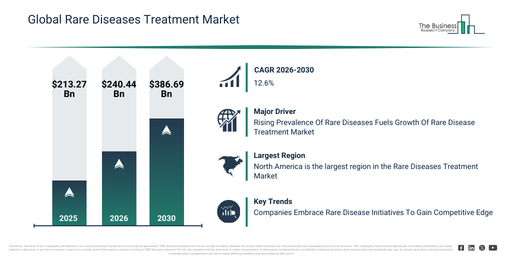
    The market for rare disease treatments has experienced significant expansion over recent years, projected to rise from $213.27 billion in 2025 to $240.44 billion in 2026, reflecting a compound annual growth rate (CAGR) of 12.7%. This historic growth is driven by heightened awareness of rare conditions, progress in biologic and gene-based therapies, an increasing occurrence of such diseases, government-backed incentives designed to promote orphan drug development, and the establishment of dedicated healthcare facilities.

    The rare diseases treatment market is anticipated to experience robust expansion in the coming years. By 2030, it is projected to reach $386.69 billion, reflecting a compound annual growth rate (CAGR) of 12.6%. This forecasted growth is driven by factors such as the increasing uptake of personalized medicine, the expanding orphan drug pipeline, advancements in drug delivery technologies, strengthened partnerships between pharmaceutical and biotechnology companies, and the broadening of global rare disease patient registries. Key trends shaping this period include personalized therapeutic strategies, the accelerated development of orphan drugs, cutting-edge drug delivery systems, increased regulatory alignment for rare conditions, and the adoption of patient-focused care models.

    Download A Free Sample Report For Comprehensive Market Insights:

    https://www.thebusinessresearchcompany.com/sample.aspx?id=8248&type=smp&utm_source=BlogsPR&utm_medium=Paid&utm_campaign=Jul_PR

    #Rare Diseases Treatment Market Growth Factors: Which Forces Are Supporting Market Expansion?

    The rising prevalence of rare diseases is fueling growth in the rare disease treatment market. A rare disease is defined as one that impacts a much smaller segment of the population compared to common illnesses. As the number of cases and deaths linked to these conditions continues to climb, there is a growing need for effective therapies. Treatments for rare diseases are essential for managing disorders that frequently lack standard medical options, as they enhance patient outcomes, lessen the disease burden, and improve the quality of life for those affected. For example, in August 2024, the International Federation of Medical Students’ Associations (IFMSA), based in Denmark, reported that roughly 300 million people worldwide—with estimates ranging from 263 million to 446 million—are living with a rare disease, which accounts for between 3.5% and 5.9% of the global population (6–9). Consequently, the rising frequency of rare diseases is driving forward the rare disease treatment market.

    Rare Diseases Treatment Market Categorization By Product Type And Application

    The rare diseases treatment market covered in this report is segmented –

    1) By Drug Type: Originator Drugs (Patented Molecules), Generic Drugs

    2) By Drug Class: Biologics, Organic Compounds

    3) By Mode Of Administration: Injectable, Oral, Other Modes Of Administration

    4) By Therapeutic Area: Cancer, Neurological Conditions, Cardiovascular Conditions, Musculoskeletal Conditions, Hematologic Disorders, Infectious Diseases, Metabolic Disorders, Endocrine Disorders, Other Therapeutic Areas

    5) By Distribution Channel: Hospital Pharmacies, Specialty Pharmacies, Retail Pharmacies

    Subsegments:

    1) By Originator Drugs: Monoclonal Antibodies, Enzyme Replacement Therapies, Gene Therapies, Small Molecule Drugs

    2) By Generic Drugs: Generic Monoclonal Antibodies, Generic Enzyme Replacement Therapies, Generic Small Molecule Drugs, Biosimilars

    Rare Diseases Treatment Market Industry Trends: What Changes Are Reshaping Demand?

    Leading players within the rare disease treatment market are intensifying their efforts to develop rare disease initiatives as a strategy for securing a stronger competitive position. Rare disease initiatives are defined as joint ventures, programs, or actions carried out by multiple parties—such as governmental bodies, research organizations, and pharmaceutical firms—aimed at tackling the distinct complexities posed by rare diseases. In October 2023, for instance, the Oxford-Harrington Rare Disease Centre, a UK research entity, introduced the Therapeutics Accelerator with the goal of progressing novel therapies for rare conditions. This unique cross-Atlantic effort is designed to pinpoint, finance, and push forward pioneering academic breakthroughs, with the objective of bringing 40 potentially transformative treatments into clinical trials within the next ten years. Functioning under a non-profit/for-profit structure, the Accelerator intends to commit up to £200 million in funding to new projects, seeking regulatory clearance in prominent markets like the United States, the United Kingdom, and Europe.

    Rare Diseases Treatment Market Company Landscape And Strategic Competition

    Major companies operating in the rare diseases treatment market are AbbVie Inc., Actelion Pharmaceuticals Ltd, Alexion Pharmaceuticals Inc., Celgene Corporation, Johnson & Johnson, Novartis AG, Pfizer Inc, Sanofi S.A., Merck & Co. Inc., Vertex Pharmaceuticals, Takeda Pharmaceutical Company, Abeona Therapeutics Inc., Akcea Therapeutics Inc., Alnylam Pharmaceuticals Inc., Amicus Therapeutics Inc., BioMarin Pharmaceutical Inc., bluebird bio Inc., Catalyst Pharmaceuticals Inc., Cerecor Inc., CSL Behring Ltd., Dicerna Pharmaceuticals Inc., Genzyme Corporation, Horizon Therapeutics plc, Intercept Pharmaceuticals Inc., Ionis Pharmaceuticals Inc.

    Access The Complete Rare Diseases Treatment Market Report:

    https://www.thebusinessresearchcompany.com/report/rare-diseases-treatment-global-market-report?utm_source=BlogsPR&utm_medium=Paid&utm_campaign=Jul_PR

    Rare Diseases Treatment Market Geographic Distribution And Regional Opportunities

    North America was the largest region in the rare disease treatment market in 2025. The regions covered in the rare diseases treatment market report are Asia-Pacific, South East Asia, Western Europe, Eastern Europe, North America, South America, Middle East, Africa.

    Get in touch with us:

    The Business Research Company: https://www.thebusinessresearchcompany.com/?utm_source=BlogsPR&utm_medium=Paid&utm_campaign=home_page_test

    Americas: +1 310-496-7795

    Asia: +44 7882 955267 & +91 8897263534

    Europe: +44 7882 955267

    Email us at: marketing@tbrc.info

    Follow us on:

    LinkedIn: https://in.linkedin.com/company/the-business-research-company

    YouTube: https://www.youtube.com/channel/UC24_fI0rV8cR5DxlCpgmyFQ

    Global Market Model: https://www.thebusinessresearchcompany.com/global-market-model

  • Rare Disease Pharmaceutical Service Market Forecast Highlights Expansion From $150.96 Billion To $245.13 Billion Through 2030

    Rare Disease Pharmaceutical Service Market Forecast Highlights Expansion From $150.96 Billion To $245.13 Billion Through 2030

    Delivering more actionable and strategically valuable research, The Business Research Company’s 2026 market reports feature market attractiveness analysis, total addressable market evaluation, company benchmarking matrices, interactive Excel dashboards, expanded supply chain intelligence, emerging startup coverage, and detailed product insights.

    Rare Disease Pharmaceutical Service Market Forecast: What Market Value Is Expected By 2030?

    The pharmaceutical service market focused on rare diseases has experienced rapid expansion in recent years. Its value is projected to rise from $133.4 billion in 2025 to $150.96 billion in 2026, reflecting a compound annual growth rate (CAGR) of 13.2%. This historical growth has been driven by an increase in orphan drug development initiatives, higher rates of rare disease diagnoses, an expanding infrastructure for clinical research, more regulatory incentives aimed at rare conditions, and greater participation from specialized service providers.

    Over the next several years, the market for rare disease pharmaceutical services is anticipated to experience swift expansion. By 2030, it is projected to reach $245.14 billion, advancing at a compound annual growth rate (CAGR) of 12.9%. This forecasted growth is driven by several factors, including a greater reliance on outsourcing for rare disease development activities, the growing adoption of digital clinical trial platforms, an expanding global pipeline for rare disease treatments, an increased emphasis on generating real-world evidence, and a heightened need for specialized regulatory expertise. Key developments shaping this period include a rising demand for comprehensive rare disease services, an intensified focus on providing end-to-end support for drug development, a shift toward patient-centric care models, an expansion of services related to regulatory and market access, and the enhanced utilization of data-driven clinical management approaches.

    Download A Free Sample Report For Comprehensive Market Insights:

    https://www.thebusinessresearchcompany.com/sample.aspx?id=28314&type=smp&utm_source=BlogsPR&utm_medium=Paid&utm_campaign=Jul_PR

    Rare Disease Pharmaceutical Service Market Demand Drivers: What Is Fueling Industry Growth?

    Advances in genomics, biomarker research, and data analytics are driving the increasing adoption of personalized medicine, which is anticipated to boost the rare disease pharmaceutical service market. Personalized medicine involves crafting medical treatments according to an individual’s genetic profile, thereby enhancing effectiveness and minimizing side effects, allowing it to address unmet patient needs more precisely than standard one-size-fits-all approaches. Pharmaceutical services contribute by developing targeted therapies, utilizing genetic and biomarker information, and offering customized treatment solutions tailored to each patient’s distinct requirements. For example, the Personalized Medicine Coalition, a US-based non-profit, reported in February 2024 that the FDA approved 16 new personalized treatments for rare disease patients in 2023, up from 6 approvals in 2022. Consequently, the expansion of personalized medicine is fostering growth in the rare disease pharmaceutical service market.

    Rare Disease Pharmaceutical Service Market Segment Analysis And Revenue Opportunities

    The rare disease pharmaceutical service market covered in this report is segmented –

    1) By Types: Drug Discovery, Clinical Trials, Other Types

    2) By Application: Congenital And Genetic Diseases, Tumors And Cancer, Endocrine Diseases

    3) By End User: Pharmaceutical Companies, Biotechnology Companies, Academic And Research Institutions, Hospitals And Specialty Clinics, Contract Research Organizations (CROs) And Contract Development And Manufacturing Organizations (CDMOs), Diagnostic Laboratories And Genetic Testing Centers

    Subsegments:

    1) By Drug Discovery: Target Identification And Validation, Preclinical Research And Toxicology Studies, Biomarker Discovery And Validation, Genomic And Proteomic Analysis, Computational Drug Design And Modeling, High-Throughput Screening (HTS), Lead Optimization And Candidate Selection

    2) By Clinical Trials: Clinical Trial Design And Protocol Development, Patient Recruitment And Retention, Site Management And Monitoring, Regulatory Affairs And Compliance Support, Data Management And Biostatistics, Pharmacovigilance And Safety Monitoring, Real-World Evidence (RWE) And Post-Marketing Studies

    3) By Other Types: Market Access And Pricing Strategy, Health Economics And Outcomes Research (HEOR), Regulatory Affairs And Compliance Services, Manufacturing And CMC (Chemistry, Manufacturing, and Controls) Support, Medical Affairs And Scientific Communication, Post-Marketing Surveillance, Consulting And Strategic Advisory

    Rare Disease Pharmaceutical Service Market Innovation Trends: Which Developments Are Transforming The Industry?

    Leading firms within the rare disease pharmaceutical services sector are intensifying their efforts to develop novel therapeutic strategies, including the use of acetylleucine, with the goal of boosting treatment efficacy, improving patient well-being, and filling gaps in care for uncommon neurological and metabolic conditions. Acetylleucine, a modified form of the amino acid N-acetyl-L-leucine, serves as a medicinal agent designed to enhance motor abilities, balance, and overall neurological health in those affected. A key example occurred in September 2024, when IntraBio, a US-based biotechnology company, secured FDA approval for AQNEURSA, which stands as the first standalone therapy for Niemann-Pick Disease Type C—a rare and life-threatening neurodegenerative disorder. This achievement is particularly notable because the therapy produced swift and clinically significant improvements in neurological signs, delivering a transformative treatment option for both children and adults coping with this rare illness.

    Rare Disease Pharmaceutical Service Market Leading Players Shaping Industry Direction

    Major companies operating in the rare disease pharmaceutical service market are Johnson & Johnson, Merck & Co. Inc., Pfizer Inc., AbbVie Inc., Sanofi S.A., Novartis AG, AstraZeneca PLC, GlaxoSmithKline PLC (GSK), Takeda Pharmaceutical Company Limited, Amgen Inc., Biogen Inc., Chiesi Farmaceutici S.p.A., Recordati Industria Chimica e Farmaceutica S.p.A., BioMarin Pharmaceutical Inc., Sarepta Therapeutics Inc., Ultragenyx Pharmaceutical Inc., Amicus Therapeutics Inc., Travere Therapeutics Inc., Sciensus Healthcare Ltd., SOM Innovation Biotech S.L.

    Access The Complete Rare Disease Pharmaceutical Service Market Report:

    https://www.thebusinessresearchcompany.com/report/rare-disease-pharmaceutical-service-global-market-report?utm_source=BlogsPR&utm_medium=Paid&utm_campaign=Jul_PR

    Rare Disease Pharmaceutical Service Market Largest Region By Revenue And Market Share

    North America was the largest region in the rare disease pharmaceutical service market in 2025. The regions covered in the rare disease pharmaceutical service market report are Asia-Pacific, South East Asia, Western Europe, Eastern Europe, North America, South America, Middle East, Africa.

    Get in touch with us:

    The Business Research Company: https://www.thebusinessresearchcompany.com/?utm_source=BlogsPR&utm_medium=Paid&utm_campaign=home_page_test

    Americas: +1 310-496-7795

    Asia: +44 7882 955267 & +91 8897263534

    Europe: +44 7882 955267

    Email us at: marketing@tbrc.info

    Follow us on:

    LinkedIn: https://in.linkedin.com/company/the-business-research-company

    YouTube: https://www.youtube.com/channel/UC24_fI0rV8cR5DxlCpgmyFQ

    Global Market Model: https://www.thebusinessresearchcompany.com/global-market-model
  • Rare Disease Genome Editing Market Expected To Reach $2.88 Billion By 2030 As Growth Accelerates At 17.5% CAGR

    Rare Disease Genome Editing Market Expected To Reach $2.88 Billion By 2030 As Growth Accelerates At 17.5% CAGR

    Enhanced with market attractiveness analysis, total addressable market evaluation, company benchmarking matrices, interactive Excel dashboards, expanded supply chain intelligence, emerging startup coverage, and detailed product insights, The Business Research Company’s 2026 market reports deliver more actionable and strategically valuable research.

    Rare Disease Genome Editing Market Size Outlook: How Fast Will Revenue Grow Through 2030?

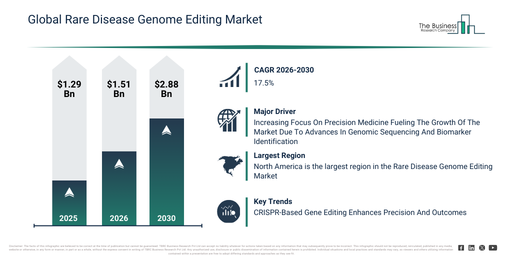
    The market for genome editing in rare diseases has undergone rapid expansion in recent years, with its value projected to increase from $1.29 billion in 2025 to $1.51 billion in 2026, reflecting a compound annual growth rate (CAGR) of 17.8%. This historic growth was driven by progress in gene editing tools, a greater number of rare genetic mutations being identified, increased funding allocated to genomic research, encouraging outcomes from early gene therapy clinical trials, and a rise in academic research programs.

    The market for rare disease genome editing is set to experience substantial expansion in the near future, projected to reach a valuation of $2.88 billion by 2030 with a compound annual growth rate of 17.5%. This upward trajectory in the forecast period is driven by higher levels of investment directed toward curative therapies for rare conditions, a greater embrace of precision medicine techniques, a broadening scope of clinical trials involving genome editing, enhanced regulatory frameworks supporting orphan drug development, and strengthened partnerships between biotechnology firms and healthcare organizations. Key emerging trends shaping this period include a growing reliance on crispr-based treatments, an intensified emphasis on editing genes associated with monogenic disorders, a heightened application of customized genome editing strategies, the development of more sophisticated editing platforms, and a deeper integration of genomic data analysis tools.

    Download A Free Sample Report For Comprehensive Market Insights:

    https://www.thebusinessresearchcompany.com/sample.aspx?id=28313&type=smp&utm_source=BlogsPR&utm_medium=Paid&utm_campaign=Jul_PR

    Rare Disease Genome Editing Market Growth Drivers: What Factors Are Accelerating Expansion?

    The rare disease genome editing market is anticipated to expand due to a growing emphasis on precision medicine. This approach to healthcare customizes treatments based on an individual’s genetic profile, environment, and lifestyle to enhance accuracy and effectiveness. Its rising prominence stems from progress in genomic sequencing and biomarker discovery, which facilitate precise diagnosis and targeted therapies. The genome editing market contributes to this field by enabling exact correction of genetic defects, thereby tailoring interventions to each patient. This method transforms healthcare by tackling the fundamental causes of uncommon disorders, leading to superior patient outcomes and less dependence on symptom-focused care. A case in point is Novotech, an Australian biotech firm, which reported in March 2024 that 43% of the 217 FDA-endorsed oncology therapies in 2023 were precision oncology, with 78 utilizing DNA or NGS-detectable biomarkers. Consequently, the heightened focus on precision medicine is fueling growth in the rare disease genome editing market.

    Rare Disease Genome Editing Market Segmentation And Category Breakdown

    The rare disease genome editing market covered in this report is segmented –

    1) By Technology: Clustered Regularly Interspaced Short Palindromic Repeats (CRISPR) Or CRISPR-Associated Protein 9, Transcription Activator-Like Effector Nucleases (TALEN), Zinc Finger Nucleases (ZFN), Other Technologies

    2) By Disease Type: Monogenic Disorders, Multifactorial Disorders, Chromosomal Disorders

    3) By Application: Therapeutics, Research

    4) By End User: Biotechnology And Pharmaceutical Companies, Academic And Government Research Institutes, Hospitals

    Subsegments:

    1) By Clustered Regularly Interspaced Short Palindromic Repeats (CRISPR) Or CRISPR-Associated Protein 9: Clustered Regularly Interspaced Short Palindromic Repeats (CRISPR)-Associated Protein 9, Clustered Regularly Interspaced Short Palindromic Repeats (CRISPR)-Associated Protein 12, Clustered Regularly Interspaced Short Palindromic Repeats (CRISPR)-Associated Protein 13, Base Editing, Prime Editing

    2) By Transcription Activator-Like Effector Nucleases (TALEN): Standard Transcription Activator-Like Effector Nucleases (TALEN), Designer Transcription Activator-Like Effector Nucleases (dTALEN), Transcription Activator-Like Effector Nucleases (TALEN) Paired Nucleases

    3) By Zinc Finger Nucleases (ZFN): Standard Zinc Finger Nucleases (ZFN), Engineered Zinc Finger Nucleases (ZFN), Modular Zinc Finger Nucleases (ZFN)

    4) By Other Technologies: Meganucleases, Ribonucleic Acid (RNA)-Guided Nucleases, Clustered Regularly Interspaced Short Palindromic Repeats (CRISPR)-Associated Transposases

    Rare Disease Genome Editing Market Trends: What Is Shaping Future Industry Growth?

    Key players in the rare disease genome editing market are concentrating their efforts on creating advanced therapeutic platforms, including CRISPR-based gene editing systems, with the goal of improving treatment accuracy, boosting clinical results, and tackling genetic diseases that were once considered incurable. These CRISPR-based systems represent innovative tools capable of making precise alterations to the genome, enabling the repair of genetic abnormalities or the insertion of therapeutic genes within human cells. As an example, in December 2023, Vertex Pharmaceuticals Inc., a biopharmaceutical firm from the United States, joined forces with CRISPR Therapeutics Inc., an American biotechnology research company, and secured conditional marketing approval from the UK’s Medicines and Healthcare products Regulatory Agency (MHRA) for CASGEVY (exagamglogene autotemcel, exa-cel). This treatment is intended for individuals aged 12 and older who suffer from sickle cell disease (SCD) with recurring vaso-occlusive crises, or transfusion-dependent beta thalassemia (TDT). Casgevy operates by modifying a patient’s hematopoietic stem cells to restore fetal hemoglobin production, thereby lessening or eradicating disease manifestations and offering a possible functional cure for these conditions.

    Rare Disease Genome Editing Market Competitive Analysis Of Major Industry Participants

    Major companies operating in the rare disease genome editing market are Regeneron Pharmaceuticals Inc., Sarepta Therapeutics Inc., Ultragenyx Pharmaceutical Inc., Beam Therapeutics Inc., CRISPR Therapeutics AG, Rocket Pharmaceuticals Inc., Sangamo Therapeutics Inc., Arcturus Therapeutics Holdings Inc., Editas Medicine Inc., Krystal Biotech Inc., Caribou Biosciences Inc, Bluebird Bio Inc., SpliceBio S.L., Cellectis SA, Generation Bio Co., iECURE Inc., Affinia Therapeutics Inc., Precision Biosciences Inc., Intellia Therapeutics Inc., MeiraGTx Holdings plc

    Access The Complete Rare Disease Genome Editing Market Report:

    https://www.thebusinessresearchcompany.com/report/rare-disease-genome-editing-global-market-report?utm_source=BlogsPR&utm_medium=Paid&utm_campaign=Jul_PR

    Rare Disease Genome Editing Market Regional Analysis And Leading Geography

    North America was the largest region in the rare disease genome editing market in 2025. Asia-Pacific is expected to be the fastest-growing region in the forecast period. The regions covered in the rare disease genome editing market report are Asia-Pacific, South East Asia, Western Europe, Eastern Europe, North America, South America, Middle East, Africa.

    Get in touch with us:

    The Business Research Company: https://www.thebusinessresearchcompany.com/?utm_source=BlogsPR&utm_medium=Paid&utm_campaign=home_page_test

    Americas: +1 310-496-7795

    Asia: +44 7882 955267 & +91 8897263534

    Europe: +44 7882 955267

    Email us at: marketing@tbrc.info

    Follow us on:

    LinkedIn: https://in.linkedin.com/company/the-business-research-company

    YouTube: https://www.youtube.com/channel/UC24_fI0rV8cR5DxlCpgmyFQ

    Global Market Model: https://www.thebusinessresearchcompany.com/global-market-model
  • Ranibizumab Market Set To Grow From $2.86 Billion In 2026 To $3.3 Billion By 2030 At A CAGR Of 3.6%

    Ranibizumab Market Set To Grow From $2.86 Billion In 2026 To $3.3 Billion By 2030 At A CAGR Of 3.6%

    Through market attractiveness analysis, total addressable market evaluation, company benchmarking matrices, interactive Excel dashboards, expanded supply chain intelligence, emerging startup coverage, and detailed product insights, The Business Research Company’s 2026 market reports provide more actionable and strategically valuable research.

    Ranibizumab Market Size, Value And Growth Trends Through 2030

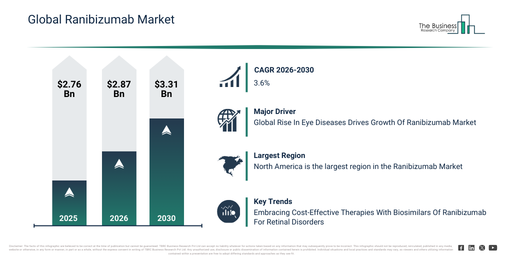
    The ranibizumab market has experienced consistent expansion over recent years, with projections indicating an increase from $2.76 billion in 2025 to $2.87 billion in 2026, reflecting a compound annual growth rate (CAGR) of 4.0%. This historic period of growth has been driven by several factors, including a rising prevalence of age-related macular degeneration, the confirmed clinical effectiveness of anti-VEGF therapy, an increasing occurrence of diabetic retinopathy, enhanced diagnostic imaging capabilities for retinal conditions, and early regulatory clearances granted for ranibizumab.

    The ranibizumab market is forecasted to experience consistent expansion over the coming years, reaching a valuation of $3.31 billion by 2030, driven by a compound annual growth rate (CAGR) of 3.6%. This anticipated growth is supported by several factors in the forecast period, including the global increase in the elderly population, a rising worldwide incidence of diabetes, broader availability of sophisticated ophthalmic treatments, growing uptake of intravitreal injections, and continuous enhancements in retinal disease screening programs. Key trends shaping this period consist of a growing preference for anti-VEGF therapies to manage retinal conditions, an increased inclination toward prefilled syringe formats, heightened treatment needs for diabetic eye diseases, the proliferation of specialized ophthalmology clinics, and a greater reliance on long-term maintenance therapy for chronic retinal disorders.

    Download A Free Sample Report For Comprehensive Market Insights:

    https://www.thebusinessresearchcompany.com/sample.aspx?id=16172&type=smp&utm_source=BlogsPR&utm_medium=Paid&utm_campaign=Jul_PR

    Ranibizumab Market Growth Factors Supporting Long-Term Expansion

    The rising occurrence of eye-related disorders is anticipated to fuel the expansion of the ranibizumab market in the coming years. Eye diseases include various conditions that affect the eyes, often leading to compromised vision or overall ocular health. This growing trend in eye diseases is driven by factors like an aging populace, evolving lifestyles, and a higher incidence of chronic ailments such as diabetes. Ranibizumab is employed in treating disorders like age-related macular degeneration and diabetic retinopathy, mitigating vision loss amid this escalation in eye diseases. For example, in August 2023, the World Health Organization (WHO), an intergovernmental body based in Switzerland, reported that around 2.2 billion individuals worldwide suffer from near or distance vision impairment. Consequently, the growing frequency of eye diseases is set to boost the ranibizumab market’s growth.

    Ranibizumab Market Segment Outlook: Which Categories Are Expanding The Fastest?

    The ranibizumab market covered in this report is segmented –

    1) By Product: Single Use Prefilled Syringe, Single Use Glass Vial

    2) By Application: Wet Age Related Macular Degeneration (AMD), Diabetic Retinopathy (DR), Diabetic Macular Edema (DME), Myopic Choroidal Neovascularization (MCNV), Retinal Vein Occlusion (RVO)

    3) By Distribution Channel: Hospital Pharmacies, Online Pharmacies, Other Distribution Channels

    Subsegments:

    1) By Single Use Prefilled Syringe: 0.3 Ml Syringe, 0.5 Ml Syringe, 1 Ml Syringe, Other Volume Variants

    2) By Single Use Glass Vial: 0.5 Mg Or 0.05 Ml Vial, 1.0 Mg Or 0.1 Ml Vial, 2.0 Mg Or 0.2 Ml Vial, Other Volume Variants

    Ranibizumab Market Industry Trends Shaping Future Revenue Growth

    Leading players in the ranibizumab sector are increasingly prioritizing affordable therapeutic options, particularly biosimilars of ranibizumab, designed to combat vision loss in individuals with retinal conditions. A ranibizumab biosimilar is a biologic agent that closely mirrors the original medication but is sold under a distinct brand name, delivering a cheaper substitute while preserving comparable effectiveness and safety standards. As an example, in April 2024, Formycon AG, a biotechnology firm headquartered in Germany, and Bioeq AG, a biopharmaceutical company based in Switzerland, introduced the commercial availability of FYB201, a Lucentis (ranibizumab) biosimilar, across Canada and Switzerland. This rollout follows regulatory approvals from Health Canada, which authorized it as Ranopto, and Swissmedic, which approved it under the name Ranivisio. FYB201 provides a novel, high-quality, effective, and budget-friendly treatment option for individuals dealing with severe retinal disorders. It has already proven its worth as an economical remedy for patients in the USA and multiple European regions.

    Ranibizumab Market Key Companies And Competitive Benchmarking

    Major companies operating in the ranibizumab market are F. Hoffmann-La Roche AG, Genentech Inc., Bayer AG, Novartis AG, Biocon Limited, Samsung Biologics Co Ltd, Celltrion Healthcare Co Ltd, Formycon AG, Coherus BioSciences Inc, Xbrane Biopharma AB, Alvotech, Stada Arzneimittel AG, Sun Pharmaceutical Industries Ltd, Dr. Reddy’s Laboratories Ltd, Cipla Limited, Lupin Limited, Glenmark Pharmaceuticals Limited, Intas Pharmaceuticals Ltd, Enzene Biosciences Ltd, Amman Pharmaceutical Industries

    Access The Complete Ranibizumab Market Report:

    https://www.thebusinessresearchcompany.com/report/ranibizumab-global-market-report?utm_source=BlogsPR&utm_medium=Paid&utm_campaign=Jul_PR

    Ranibizumab Market Geographic Analysis: Where Is Demand Growing The Fastest?

    North America was the largest region in the ranibizumab market in 2025. The regions covered in the ranibizumab market report are Asia-Pacific, South East Asia, Western Europe, Eastern Europe, North America, South America, Middle East, Africa.

    Get in touch with us:

    The Business Research Company: https://www.thebusinessresearchcompany.com/?utm_source=BlogsPR&utm_medium=Paid&utm_campaign=home_page_test

    Americas: +1 310-496-7795

    Asia: +44 7882 955267 & +91 8897263534

    Europe: +44 7882 955267

    Email us at: marketing@tbrc.info

    Follow us on:

    LinkedIn: https://in.linkedin.com/company/the-business-research-company

    YouTube: https://www.youtube.com/channel/UC24_fI0rV8cR5DxlCpgmyFQ

    Global Market Model: https://www.thebusinessresearchcompany.com/global-market-model
  • Radiopharmaceuticals Market Opportunities Are Emerging Beyond Traditional Growth Areas

    Radiopharmaceuticals Market Opportunities Are Emerging Beyond Traditional Growth Areas

    Delivering more actionable and strategically valuable research, The Business Research Company’s 2026 market reports feature market attractiveness analysis, total addressable market evaluation, company benchmarking matrices, interactive Excel dashboards, expanded supply chain intelligence, emerging startup coverage, and detailed product insights.

    Radiopharmaceuticals Market CAGR Analysis And Future Market Development

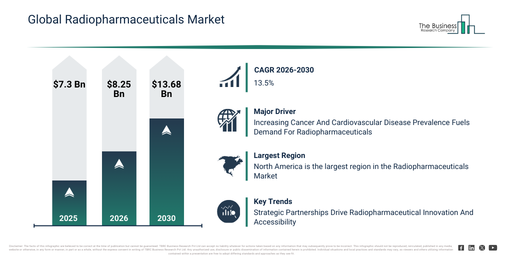
    The market for radiopharmaceuticals has experienced notable expansion over the recent period. Its valuation is set to rise from $7.3 billion in 2025 to $8.25 billion in 2026, reflecting a compound annual growth rate (CAGR) of 13.0%. Factors driving this historical growth include the widespread acceptance of nuclear imaging methods, increasing rates of cancer detection, consistent access to radioisotopes, the enlargement of nuclear medicine facilities within hospitals, and the granting of regulatory approvals for various diagnostic agents.

    The radiopharmaceuticals market is poised for substantial expansion in the coming years, with projections indicating it will reach $13.68 billion by 2030, driven by a compound annual growth rate (CAGR) of 13.5%. This anticipated growth during the forecast period is largely fueled by progress in precision oncology, an increasing need for targeted radiotherapies, the proliferation of diagnostic imaging centers, heightened investments in cyclotron infrastructure, and ongoing innovations in isotope production. Key trends shaping this period include the growing application of radiopharmaceuticals in cancer care, the rise of theranostic approaches, broader adoption of PET and SPECT imaging, the accelerated development of precise radiotherapies, and enhancements in nuclear medicine facilities.

    Download A Free Sample Report For Comprehensive Market Insights:

    https://www.thebusinessresearchcompany.com/sample.aspx?id=3471&type=smp&utm_source=BlogsPR&utm_medium=Paid&utm_campaign=Jul_PR

    Radiopharmaceuticals Market Demand Drivers Creating New Revenue Opportunities

    The growing incidence of cancer and cardiovascular conditions is expected to boost the demand for radiopharmaceuticals. These agents are gaining recognition as a safe and effective treatment alternative compared to traditional medicines. Radiopharmaceuticals offer radiologists a distinct advantage in managing cancer and cardiovascular illnesses, largely due to their ability to deliver targeted therapy. Cancer ranks as the second leading cause of death globally, accounting for roughly one in every six fatalities. To illustrate, data from the International Agency for Research on Cancer (IARC), a specialized organization based in France, revealed that in April 2024, approximately 20 million new cancer cases and 9.7 million cancer-related deaths were recorded worldwide in 2022. Projections indicate these figures will climb to 29.9 million new cases and 15.3 million deaths annually by 2040. Consequently, the rising number of cancer and cardiovascular disease cases is anticipated to drive heightened demand for radiopharmaceuticals in their treatment.

    Radiopharmaceuticals Market Segment Landscape: Which Areas Lead Market Development?

    The radiopharmaceuticals market covered in this report is segmented –

    1) By Type: Diagnostic, Therapeutic

    2) By Application: Oncology, Cardiology, Gastroenterology, Neuroendocrinology, Musculoskeletal, Respiratory, Nephrology, Other Applications

    3) By End User: Hospitals And Ambulatory Surgical Centers, Diagnostic Centers, Cancer Research Institutes

    Subsegments:

    1) By Diagnostic: Positron Emission Tomography (PET) Radiopharmaceuticals, Single Photon Emission Computed Tomography (SPECT) Radiopharmaceuticals

    2) By Therapeutic: Alpha Emitters, Beta Emitters, Brachytherapy

    Radiopharmaceuticals Market Trends Driving Strategic Industry Expansion

    Major players in the radiopharmaceuticals sector are actively forging strategic alliances to spur innovation and broaden access to advanced diagnostics and therapeutics. These partnerships are designed to boost radiopharmaceutical development, enhance regional manufacturing capacities, and address the escalating need for precision imaging and targeted treatments. For example, in June 2023, the University of Pittsburgh Medical Center (UPMC), a hospital network based in the United States, entered into a collaboration with PharmaLogic Holdings Corporation to jointly develop and produce new radiopharmaceuticals at a Pittsburgh location. This initiative seeks to improve patient and clinician access to state-of-the-art diagnostic and therapeutic agents that are currently unavailable in surrounding areas. Through this non-exclusive agreement, UPMC and PharmaLogic will work on converting experimental radiopharmaceuticals into clinically applicable drugs, facilitating broader market introduction and speeding up the uptake of innovative nuclear medicine therapies.

    Radiopharmaceuticals Market Industry Leaders And Market Competition

    Major companies operating in the radiopharmaceuticals market are Cardinal Health, Curium Pharma, Siemens Healthineers AG, Novartis AG, General Electric Company (GE), IBA Group, Bayer AG, Lantheus Medical Imaging Inc., Bracco Imaging S.p.A., Eckert & Ziegler, Nihon Medi-Physics Co. Ltd., Fujifilm Corporation, ANSTO, Yantai Dongcheng Pharmaceutical Group Co. Ltd., Bracco Imaging SpA., Canon Inc., China Isotope & Radiation Corporation (CIRC), Alliance Medical, Advanced Accelerator Applications, JSC Isotope, Pharm-Sintez, Synektik SA, Polatom, RadioMedic sro, ÚJV Rež, Actinium Pharmaceuticals Inc., Alseres Pharmaceuticals Inc., Avid Radiopharmaceuticals, Fusion Pharmaceuticals, Peregrine Pharmaceuticals Inc., PETNET Solutions Inc., Positron Corporation, Triad Isotopes Inc., Telix Pharmaceuticals, Rosatom, Alliance Medical Group, Hologic Inc., Segami Corporation, Eczacýbaþý-Monrol Nuclear Products, NTP Radioisotopes.

    Access The Complete Radiopharmaceuticals Market Report:

    https://www.thebusinessresearchcompany.com/report/radiopharmaceutical-global-market-report?utm_source=BlogsPR&utm_medium=Paid&utm_campaign=Jul_PR

    Radiopharmaceuticals Market Global Footprint: Which Region Holds Market Leadership?

    North America was the largest region in the global radiopharmaceuticals market in 2025. The Middle East is expected to be the fastest growing region in the forecast period. The regions covered in the radiopharmaceuticals market report are Asia-Pacific, South East Asia, Western Europe, Eastern Europe, North America, South America, Middle East, Africa.

    Get in touch with us:

    The Business Research Company: https://www.thebusinessresearchcompany.com/?utm_source=BlogsPR&utm_medium=Paid&utm_campaign=home_page_test

    Americas: +1 310-496-7795

    Asia: +44 7882 955267 & +91 8897263534

    Europe: +44 7882 955267

    Email us at: marketing@tbrc.info

    Follow us on:

    LinkedIn: https://in.linkedin.com/company/the-business-research-company

    YouTube: https://www.youtube.com/channel/UC24_fI0rV8cR5DxlCpgmyFQ

    Global Market Model: https://www.thebusinessresearchcompany.com/global-market-model
  • Radioligand Therapy Market Expansion Is Opening New Pathways For Strategic Investment

    Radioligand Therapy Market Expansion Is Opening New Pathways For Strategic Investment

    Enhanced with market attractiveness analysis, total addressable market evaluation, company benchmarking matrices, interactive Excel dashboards, expanded supply chain intelligence, emerging startup coverage, and detailed product insights, The Business Research Company’s 2026 market reports deliver more actionable and strategically valuable research.

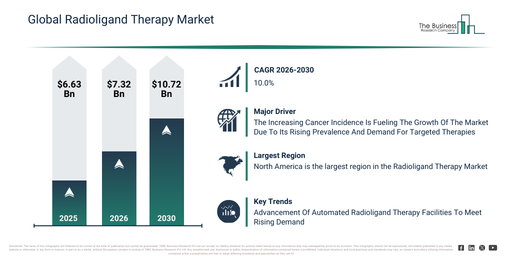
    Radioligand Therapy Market Expansion From $7.32 Billion In 2026 To $10.72 Billion In 2030

    The radioligand therapy market has seen swift expansion in recent times. Its value is projected to rise from $6.63 billion in 2025 to $7.32 billion by 2026, reflecting a compound annual growth rate (CAGR) of 10.4%. Historically, this growth has been driven by factors such as the scarce supply of radioligands, a dependence on standard cancer treatments, heightened recognition of the advantages offered by targeted therapies, greater integration of nuclear medicine methods in hospitals, and regulatory clearances granted for early radioligand therapy (RLT) drugs.

    The radioligand therapy market is projected to experience significant expansion over the coming years, reaching a valuation of $10.72 billion by 2030, driven by a compound annual growth rate (CAGR) of 10.0%. This forecasted growth is fueled by the development of novel alpha and beta emitters, the expansion of combined emission therapies, deeper integration with precision oncology, an increase in clinical trials targeting neurological and cardiovascular conditions, and heightened investment in home care and outpatient radioligand therapy services. Key trends shaping the period include the growing adoption of targeted radioligand therapy in oncology, the broadening of alpha and beta emitter-based treatment options, the incorporation of radioligand therapy into personalized medicine frameworks, the expansion of radioligand therapy programs within hospitals and research institutions, and an intensified focus on minimizing adverse effects while improving patient outcomes.

    Download A Free Sample Report For Comprehensive Market Insights:

    https://www.thebusinessresearchcompany.com/sample.aspx?id=27403&type=smp&utm_source=BlogsPR&utm_medium=Paid&utm_campaign=Jul_PR

    Radioligand Therapy Market Expansion Supported By Key Demand Factors

    The rising prevalence of cancer is anticipated to drive expansion in the radioligand therapy market in the coming years. Cancer is characterized by the unregulated proliferation of abnormal cells, which can infiltrate adjacent tissues and metastasize throughout the body. This increase in cancer cases is driven by prolonged exposure to environmental contaminants that damage DNA, impair cellular processes, and encourage irregular cell growth. Radioligand therapy addresses cancer by delivering radiation directly to tumor cells via ligands that attach to specific receptors, thereby reducing damage to healthy tissue and eliminating cancer cells from within. As an example, in October 2025, the National Health Service (NHS), a government health agency in the UK, reported 354,820 new cancer diagnoses in 2023—an average of 972 per day—representing an increase of 8,605 compared to 2022. Consequently, the growing incidence of cancer is fueling the advancement of the radioligand therapy market.

    Radioligand Therapy Market Segments: Where Are The Largest Growth Opportunities?

    The radioligand therapy market covered in this report is segmented –

    1) By Type Of Radioligand: Alpha Emitters, Beta Emitters, Auger Emitters, Combined Emissions

    2) By Molecular Target: Hormone Receptors, Growth Factor Receptors, Antigen Tumor Markers, Other Molecular Targets

    3) By Route Of Administration: Intravenous (IV), Intramuscular (IM), Subcutaneous, Oral

    4) By Application: Oncology, Cardiovascular Disorders, Neurological Disorders, Infectious Diseases

    5) By End-User: Hospitals, Diagnostic Laboratories, Research Institutions, Home Care Settings

    Subsegments:

    1) By Alpha Emitters: Actinium-225 (Ac-225), Radium-223 (Ra-223), Astatine-211 (At-211), Bismuth-213 (Bi-213)

    2) By Beta Emitters: Lutetium-177 (Lu-177), Iodine-131 (I-131), Yttrium-90 (Y-90), Samarium-153 (Sm-153)

    3) By Auger Emitters: Iodine-125 (I-125), Indium-111 (In-111), Gallium-67 (Ga-67), Thallium-201 (Tl-201)

    4) By Combined Emissions: Terbium-161 (Tb-161), Copper-67 (Cu-67), Rhenium-186 (Re-186), Lead-212 (Pb-212)

    Radioligand Therapy Market Growth Trends Influencing Competitive Dynamics

    Leading players in the radioligand therapy market are concentrating on developing innovative solutions, such as specialized radioligand therapy facilities, to boost production efficiency and uphold consistent quality and safety standards during the manufacturing and distribution of targeted cancer therapies. These facilities are bespoke centers engineered to manage and administer radioactive drugs for precision cancer treatment, leveraging cutting-edge imaging technologies and radiation shielding while ensuring safety via well-trained staff and rigorous procedures. For example, in January 2024, Novartis AG, a pharmaceutical company headquartered in Switzerland, unveiled the automation of its new large-scale radioligand therapy (RLT) production facility located in Indiana. This plant gained approval from the Food and Drug Administration (FDA) for commercial manufacturing. Spanning 70,000 square feet, it stands as Novartis’s largest and most advanced site dedicated to RLT, designed for efficient, time-sensitive production, and includes provisions for fully automated production lines, facilitating substantial supply increases to address rising patient demand across the United States and Canada.

    Radioligand Therapy Market Major Participants And Competitive Dynamics

    Major companies operating in the radioligand therapy market are Novartis AG, Lantheus Holdings Inc., Curium LLC, Eckert & Ziegler Strahlen- und Medizintechnik AG, Telix Pharmaceuticals, Mariana Oncology Inc., AdvanCell Pty Ltd., Evergreen Theragnostics Inc., Fusion Pharmaceuticals Inc., RadioMedix Inc., Ariceum Therapeutics GmbH, Radiopharm Theranostics Limited, Convergent Therapeutics Inc., C-Ray Therapeutics Inc.

    Access The Complete Radioligand Therapy Market Report:

    https://www.thebusinessresearchcompany.com/report/radioligand-therapy-global-market-report?utm_source=BlogsPR&utm_medium=Paid&utm_campaign=Jul_PR

    Radioligand Therapy Market Regional Distribution: Which Areas Drive Market Expansion?

    North America was the largest region in the radioligand therapy market in 2025. Asia-Pacific is expected to be the fastest-growing region in the forecast period. The regions covered in the radioligand therapy market report are Asia-Pacific, South East Asia, Western Europe, Eastern Europe, North America, South America, Middle East, Africa.

    Get in touch with us:

    The Business Research Company: https://www.thebusinessresearchcompany.com/?utm_source=BlogsPR&utm_medium=Paid&utm_campaign=home_page_test

    Americas: +1 310-496-7795

    Asia: +44 7882 955267 & +91 8897263534

    Europe: +44 7882 955267

    Email us at: marketing@tbrc.info

    Follow us on:

    LinkedIn: https://in.linkedin.com/company/the-business-research-company

    YouTube: https://www.youtube.com/channel/UC24_fI0rV8cR5DxlCpgmyFQ

    Global Market Model: https://www.thebusinessresearchcompany.com/global-market-model
  • Racecadotril Market Trends Are Creating New Opportunities For Industry Leaders

    Racecadotril Market Trends Are Creating New Opportunities For Industry Leaders

    Through market attractiveness analysis, total addressable market evaluation, company benchmarking matrices, interactive Excel dashboards, expanded supply chain intelligence, emerging startup coverage, and detailed product insights, The Business Research Company’s 2026 market reports provide more actionable and strategically valuable research.

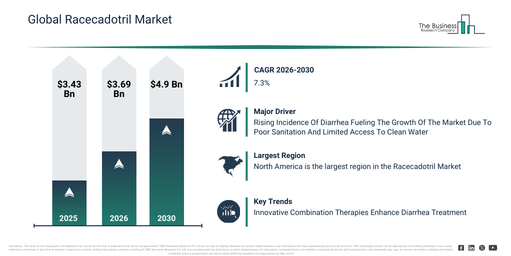
    Racecadotril Market Forecast Highlighting Growth From $3.69 Billion To $4.9 Billion

    The racecadotril market has experienced robust expansion in recent years, with projections indicating an increase from $3.43 billion in 2025 to $3.69 billion in 2026, reflecting a compound annual growth rate (CAGR) of 7.7%. This growth during the historic period was driven by factors such as the scarcity of antidiarrheal drug options, dependence on traditional oral formulations, heightened awareness regarding diarrhea management, a rise in hospital and clinic visits, and the widespread use of standard dosage forms.

    Over the coming years, the racecadotril market is projected to experience considerable expansion. By 2030, it is anticipated to reach $4.9 billion, reflecting a compound annual growth rate (CAGR) of 7.3%. Several key factors are fueling this forecasted growth, such as the creation of new oral and injectable racecadotril formulations, a heightened emphasis on treatments tailored for pediatric and geriatric populations, the broadening of online pharmacies and home care services, an increase in regulatory clearances along with rigorous safety surveillance, and the strengthening of management programs for both chronic and traveler’s diarrhea. Significant developments expected during this period include a worldwide rise in acute diarrhea cases, a greater focus on treating children and the elderly, a wider availability of oral formulations and easy-to-use dosage options, the proliferation of digital drug retailers and home delivery channels, and a strong accent on maintaining high standards of safety, effectiveness, and adherence to regulations.

    Download A Free Sample Report For Comprehensive Market Insights:

    https://www.thebusinessresearchcompany.com/sample.aspx?id=24677&type=smp&utm_source=BlogsPR&utm_medium=Paid&utm_campaign=Jul_PR

    Racecadotril Market Growth Drivers And Industry Catalysts

    The growing prevalence of diarrhea is set to drive forward the racecadotril market. Diarrhea is characterized by frequent, loose, or watery bowel movements, often occurring three or more times daily. This condition’s rising occurrence is largely driven by inadequate sanitation and restricted access to clean water, which promotes the spread of infectious pathogens. Racecadotril addresses diarrhea by curbing excessive fluid secretion within the intestines, offering an effective approach to managing acute episodes. It maintains regular bowel function while delivering swift symptom relief, enhancing patient comfort and therapeutic results. As an example, in March 2024, the World Health Organization (WHO), a Switzerland-based UN agency, reported that diarrheal diseases cause roughly 1.7 billion cases each year, leading to around 443,832 deaths in children under 5 and an additional 50,851 deaths among those aged 5 to 9. Consequently, the escalating incidence of acute diarrhea is fueling expansion in the racecadotril market.

    A surge in healthcare spending is anticipated to boost the racecadotril market in the coming years. Healthcare expenditure encompasses all funds devoted to medical services, treatments, facilities, research, and public health programs aimed at preserving or enhancing health results. This spending increase is driven by an aging population that demands more medical attention, therapies, and long-term care services. Such expenditures facilitate racecadotril’s use by improving access to effective remedies for conditions like acute diarrhea. They elevate patient care through a cost-efficient solution that shortens symptom duration and lessens severity, fostering better health outcomes while easing financial strain on healthcare systems. For illustration, in December 2024, the Centers for Medicare and Medicaid Services (CMS), a US federal agency, noted that national health expenditures (NHE) rose by 7.5% to $4.9 trillion in 2023, representing 17.6% of gross domestic product (GDP). Moreover, from 2023 to 2032, average NHE is forecast to expand at an annual rate of 5.6%, increasing the health spending share of GDP from 17.3% in 2022 to 19.7% in 2032. Thus, rising healthcare expenditures are propelling growth in the racecadotril market.

    Racecadotril Market Segment Analysis: What Are The Major Market Categories?

    The racecadotril market covered in this report is segmented –

    1) By Product Type: Oral Formulations, Injectable Solutions, Topical Preparations

    2) By Age Group: Pediatric Patients, Adult Patients, Geriatric Patients

    3) By Application: Acute Diarrhea, Traveler’s Diarrhea, Chronic Diarrhea

    4) By Distribution Channel: Pharmacy Outlets, Hospital Pharmacies, Online Pharmacies

    5) By End-User: Hospitals, Clinics, Home Care Settings

    Subsegments:

    1) By Oral Formulations: Capsules, Tablets, Granules, Sachets, Oral Suspension

    2) By Injectable Solutions: Intravenous Injection, Intramuscular Injection

    3) By Topical Preparations: Creams, Gels, Ointments, Lotions

    Racecadotril Market Trends Influencing Long-Term Demand

    Major players in the racecadotril market are actively working on creating innovative and advanced formulations, particularly combination therapies, to boost therapeutic effectiveness, expand treatment options, and manage challenging or drug-resistant instances of acute diarrhea. Combination therapy involves using two or more medications together to treat a single condition more successfully than a single drug alone. For example, in April 2024, Daksh Pharmaceuticals Pvt. Ltd., a pharmaceutical company based in India, introduced the ZOFLO-R tablet, which combines 200 mg of ofloxacin with 100 mg of racecadotril. This dual-mechanism product is designed to manage acute diarrhea caused by bacteria, offering both antimicrobial action and symptom relief. Ofloxacin works by targeting bacterial DNA gyrase, leading to bacterial destruction, while racecadotril curbs intestinal fluid secretion to alleviate diarrhea, together providing comprehensive management of diarrhea and its associated symptoms.

    Racecadotril Market Leading Companies Driving Competitive Growth

    Major companies operating in the racecadotril market are Torrent Pharmaceuticals Ltd., Taj Pharma, Gnova Biotech, Jabs Biotech, Manus Aktteva Biopharma LLP, Wellona Pharma, Biofield Pharma, Anant Pharmaceuticals Pvt. Ltd., Daffohils Laboratories, AR Life Sciences, Novagen Healthcare Pvt Ltd, Omicron Pharma, Cixmech Pharmaceuticals, Sakthi Healthcare, Dr. Reddy’s Laboratories Ltd., Sun Pharmaceutical Industries Ltd., Cipla Ltd., Lupin Ltd., Alkem Laboratories Ltd., Intas Pharmaceuticals Ltd., Zydus Lifesciences Ltd., Abbott India Ltd., Mankind Pharma Ltd., Glenmark Pharmaceuticals Ltd., Alembic Pharmaceuticals Ltd., Micro Labs Ltd., Ipca Laboratories Ltd., Macleods Pharmaceuticals Ltd., Hetero Drugs Ltd., Aurobindo Pharma Ltd., Emcure Pharmaceuticals Ltd., Wockhardt Ltd.

    Access The Complete Racecadotril Market Report:

    https://www.thebusinessresearchcompany.com/report/racecadotril-global-market-report?utm_source=BlogsPR&utm_medium=Paid&utm_campaign=Jul_PR

    Racecadotril Market Leading Geography: Which Region Generates The Most Revenue?

    North America was the largest region in the racecadotril market in 2025. Asia-Pacific is expected to be the fastest-growing region in the forecast period. The regions covered in the racecadotril market report are Asia-Pacific, South East Asia, Western Europe, Eastern Europe, North America, South America, Middle East, Africa.

    Get in touch with us:

    The Business Research Company: https://www.thebusinessresearchcompany.com/?utm_source=BlogsPR&utm_medium=Paid&utm_campaign=home_page_test

    Americas: +1 310-496-7795

    Asia: +44 7882 955267 & +91 8897263534

    Europe: +44 7882 955267

    Email us at: marketing@tbrc.info

    Follow us on:

    LinkedIn: https://in.linkedin.com/company/the-business-research-company

    YouTube: https://www.youtube.com/channel/UC24_fI0rV8cR5DxlCpgmyFQ

    Global Market Model: https://www.thebusinessresearchcompany.com/global-market-model

  • Quit Smoking Drugs Market Growth Is Reshaping Competitive Advantage Across The Industry

    Quit Smoking Drugs Market Growth Is Reshaping Competitive Advantage Across The Industry

    Delivering more actionable and strategically valuable research, The Business Research Company’s 2026 market reports feature market attractiveness analysis, total addressable market evaluation, company benchmarking matrices, interactive Excel dashboards, expanded supply chain intelligence, emerging startup coverage, and detailed product insights.

    Quit Smoking Drugs Market Revenue Growth Supported By A CAGR Of 90.72% Through 2030

    The market for smoking cessation medications has experienced rapid expansion in recent years, with its size projected to increase from $44.23 billion in 2025 to $50.94 billion in 2026, reflecting a compound annual growth rate (CAGR) of 15.2%. Key factors driving this historical growth include heightened public awareness of the dangers associated with smoking, a growing incidence of health conditions linked to smoking, the widespread availability of nicotine replacement options, ongoing government initiatives to curb tobacco use, and the expansion of pharmaceutical production in developing economies.

    The market for smoking cessation drugs is projected to experience rapid expansion in the coming years, reaching a value of $90.73 billion by 2030 with a compound annual growth rate (CAGR) of 15.5%. This growth during the forecast period is driven by progress in digital health solutions, the increasing use of personalized medicine, the incorporation of artificial intelligence into treatment tracking, the broadening of telemedicine services, and the rise of wearable health monitoring devices. Key trends expected to shape this period include customized nicotine replacement therapies, mobile health (mHealth) and smoking cessation applications, telemedicine-based prescription assistance, the combination of behavioral therapy with drug treatments, and wearable devices designed to track cravings.

    Download A Free Sample Report For Comprehensive Market Insights:

    https://www.thebusinessresearchcompany.com/sample.aspx?id=9247&type=smp&utm_source=BlogsPR&utm_medium=Paid&utm_campaign=Jul_PR

    Quit Smoking Drugs Market Opportunity Drivers: What Is Creating New Revenue Potential?

    The upward trend in smoking addiction rates is anticipated to fuel expansion in the quit-smoking drug market in the coming period. Smoking involves the act of drawing in and releasing vapors from burnt organic materials like tobacco, cannabis, hashish, and other substances. Medications designed to assist smoking cessation work by diminishing the desire to smoke through curbing tobacco cravings in individuals, serving as prescription remedies to manage nicotine withdrawal symptoms for effective quitting. As an illustration, data from the OECD, an intergovernmental entity based in France, revealed in November 2025 that 14.8% of adults aged 15 and above were daily smokers in 2023. This habit was most prevalent in Türkiye, Hungary, Greece, and among accession or partner nations such as Indonesia, Bulgaria, and China, where at least a quarter of the population engaged in daily smoking. On average, daily smoking was reported by 18.5% of men versus 11.4% of women during the same period. Consequently, the escalating incidence of smoking addiction is fueling growth within the quit-smoking drug market.

    Quit Smoking Drugs Market Segment Breakdown: Which Categories Generate The Most Revenue?

    The quit smoking drugs market covered in this report is segmented –

    1) By Product: Drug Therapy, E-Cigarettes, Nicotine Inhalers, Nicotine Replacement Therapies, Nicotine Sublingual Tablets

    2) By Drug: Varenicline (Chantix), Bupropion (Zyban), Other Drugs

    3) By Distribution: Drug Store, Online Pharmacies, Retail Pharmacies

    Subsegments:

    1) By Drug Therapy: Bupropion (Zyban), Varenicline (Chantix)

    2) By E-Cigarettes: Disposable E-Cigarettes, Rechargeable E-Cigarettes, Pod Systems

    3) By Nicotine Inhalers: Prescription Inhalers, Over-The-Counter Inhalers

    4) By Nicotine Replacement Therapies (NRT): Nicotine Patches, Nicotine Gum, Nicotine Lozenges

    5) By Nicotine Sublingual Tablets: Fast-Acting Sublingual Tablets, Extended-Release Sublingual Tablets

    Quit Smoking Drugs Market Innovation Trends Driving Future Development

    Major companies in the quit smoking drugs market are concentrating on creating novel formulations and delivery methods, including generic tablets, to strengthen their market presence across different regions and achieve a competitive advantage. These generic varenicline tablets are unbranded versions of the drug containing varenicline tartrate, which are bioequivalent to the original branded product and designed for smoking cessation therapy. For example, in January 2024, Lupin Limited, a pharmaceutical firm based in India, introduced new Varenicline tablets in the United States, offered in 0.5 mg and 1 mg strengths. These tablets represent the generic equivalents of Chantix tablets (0.5 mg and 1 mg) from PF Prism C.V. and are used to aid in smoking cessation treatment. Acting as a partial agonist at the nicotinic acetylcholine receptor, varenicline facilitates dopamine release, helping to ease withdrawal symptoms and cravings linked to nicotine addiction. Through this dual action, it lessens the enjoyable aspects of smoking while offering some stimulation to mitigate withdrawal effects.

    Quit Smoking Drugs Market Key Players And Strategic Industry Positioning

    Major companies operating in the quit smoking drugs market are 22nd Century Group, Cipla Limited, Dr. Reddy’s Laboratories, GSK Plc., Johnson & Johnson, NJOY LLC, Perrigo Company Plc, Pfizer Inc., Philip Morris International, Glenmark Pharmaceuticals Limited, Zydus Cadila Healthcare Limited, BioCorRx Inc., Ennaid Therapeutics LLC, Fertin Pharma A/S, Hikma Pharmaceuticals PLC, IntelGenx Technologies Corp., Innovus Pharmaceuticals Inc., Gilla Inc., Rusan Pharma Ltd., Novartis AG

    Access The Complete Quit Smoking Drugs Market Report:

    https://www.thebusinessresearchcompany.com/report/quit-smoking-drugs-global-market-report?utm_source=BlogsPR&utm_medium=Paid&utm_campaign=Jul_PR

    Quit Smoking Drugs Market Regional Outlook: Where Are The Largest Opportunities Located?

    North America was the largest region in the quit smoking drugs market in 2025. The regions covered in the quit smoking drugs market report are Asia-Pacific, South East Asia, Western Europe, Eastern Europe, North America, South America, Middle East, Africa.

    Get in touch with us:

    The Business Research Company: https://www.thebusinessresearchcompany.com/?utm_source=BlogsPR&utm_medium=Paid&utm_campaign=home_page_test

    Americas: +1 310-496-7795

    Asia: +44 7882 955267 & +91 8897263534

    Europe: +44 7882 955267

    Email us at: marketing@tbrc.info

    Follow us on:

    LinkedIn: https://in.linkedin.com/company/the-business-research-company

    YouTube: https://www.youtube.com/channel/UC24_fI0rV8cR5DxlCpgmyFQ

    Global Market Model: https://www.thebusinessresearchcompany.com/global-market-model
  • Quinolones Market Forecast Signals New Revenue Opportunities Through 2030

    Quinolones Market Forecast Signals New Revenue Opportunities Through 2030

    Enhanced with market attractiveness analysis, total addressable market evaluation, company benchmarking matrices, interactive Excel dashboards, expanded supply chain intelligence, emerging startup coverage, and detailed product insights, The Business Research Company’s 2026 market reports deliver more actionable and strategically valuable research.

    Quinolones Market Value Expansion And Long-Term Growth Outlook

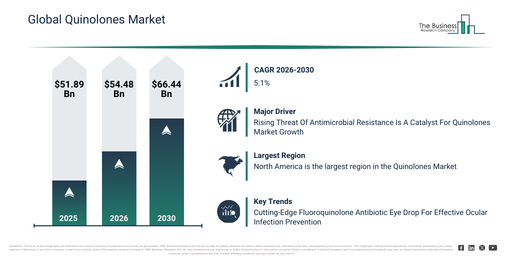
    The quinolones market has experienced consistent expansion over the past few years. Projections indicate an increase from $51.89 billion in 2025 to $54.48 billion in 2026, reflecting a compound annual growth rate (CAGR) of 5.0%. This historical growth has been driven by factors such as a rising incidence of bacterial infections, a higher number of hospital admissions, a strong need for broad-spectrum antibiotics, the expansion of retail pharmacy networks, and government programs aimed at controlling infectious diseases.

    The quinolones market is projected to experience significant growth over the coming years, reaching a value of $66.44 billion by 2030, driven by a compound annual growth rate (CAGR) of 5.1%. This anticipated expansion during the forecast period is fueled by progress in precision medicine, the introduction of innovative quinolone formulations, the growth of online pharmaceutical platforms, heightened awareness surrounding antimicrobial stewardship, and the increased adoption of digital health monitoring technologies. Key developments shaping this period encompass strategies for managing rising antibiotic resistance, the broader availability of generic medications, customized therapeutic approaches, the expansion of outpatient and home-based healthcare services, and heightened investment in research and development for next-generation quinolones.

    Download A Free Sample Report For Comprehensive Market Insights:

    https://www.thebusinessresearchcompany.com/sample.aspx?id=9429&type=smp&utm_source=BlogsPR&utm_medium=Paid&utm_campaign=Jul_PR

    Quinolones Market Growth Momentum: Which Factors Are Influencing Demand?

    The rising threat of antimicrobial resistance is anticipated to drive expansion in the quinolones market in the coming period. Antimicrobial resistance (AMR) is defined as the capacity of microorganisms—including bacteria, viruses, parasites, and fungi—to withstand the effects of antimicrobial medications. Quinolones offer a wide-ranging activity, which allows them to be effective against numerous bacterial strains. They are prescribed for particular infection types due to their ability to penetrate diverse tissues, making them a favored option when alternatives are scarce. For example, in October 2025, the World Health Organization, an intergovernmental body based in the US, released a comprehensive global analysis that examined antibiotic resistance prevalence and trends. This study drew on data from over 23 million confirmed cases of bloodstream, urinary tract, and gastrointestinal infections, as well as urogenital gonorrhea, with findings based on reports submitted by 104 countries in 2023. Consequently, the growing danger of antimicrobial resistance is fueling the growth of the quinolones market.

    Quinolones Market Segmentation: How Is The Market Structured Across Key Categories?

    The quinolones market covered in this report is segmented –

    1) By Type: Norfloxacin, Ofloxacin, Ciprofloxacin, Gemifloxacin, Other Types

    2) By Pathogen Type: Gram-Positive Pathogen, Gram-Negative Pathogen

    3) By Application: Hospital Pharmacies, Retail Pharmacies, Online Pharmacies

    Quinolones Market Trends Reshaping Industry Growth

    Key players in the quinolones sector are increasingly prioritizing product advancements, specifically by developing fluoroquinolone antibiotic eye drops, as a strategy to boost their revenue streams. These eye drops represent a specific category of antibiotics formulated to combat bacterial infections affecting the eyes. A notable example occurred in July 2023, when Harrow Health Inc., a pharmaceutical firm based in the United States, introduced Vigamox to the market. This solution is isotonic, possessing an osmolality of approximately 290 mOsm/kg, and it provides 5.45 mg of moxifloxacin hydrochloride, which corresponds to 5 mg of moxifloxacin base. The product is supplied in a 3-milliliter bottle and is presented as a sterile ophthalmic solution within a dispensing system composed of a natural low-density polyethylene bottle, a dispensing plug, and a tan polypropylene closure. Vigamox is indicated for use in preventing eye infections both prior to and following surgical procedures.

    Quinolones Market Competitive Landscape And Leading Companies

    Major companies operating in the quinolones market are Bayer AG, Novartis AG, Sanofi SA, Merck & Co. Inc., LG Life Sciences, Pfizer Inc., Viatris Inc., Lupin Limited, Hikma Pharmaceuticals plc, Zydus Group, KYORIN Holdings Inc., Teva Pharmaceutical Industries Ltd., GSK plc, Zee Laboratories, Cipla Ltd., Geo Pharma Pvt. Ltd., Finecure Pharmaceuticals, AstraZeneca plc, Sun Pharmaceutical Industries Ltd., Dr. Reddy’s Laboratories Ltd., Cadila Healthcare Ltd., Glenmark Pharmaceuticals Ltd., Alkem Laboratories Ltd., Torrent Pharmaceuticals Ltd., Macleods Pharmaceuticals Ltd., Alembic Pharmaceuticals Ltd., Hetero Drugs Ltd., Wockhardt Ltd.

    Access The Complete Quinolones Market Report:

    https://www.thebusinessresearchcompany.com/report/quinolones-global-market-report?utm_source=BlogsPR&utm_medium=Paid&utm_campaign=Jul_PR

    Quinolones Market Geographic Landscape: Which Region Dominates Industry Growth?

    North America was the largest region in the quinolones market in 2025. The regions covered in the quinolones market report are Asia-Pacific, South East Asia, Western Europe, Eastern Europe, North America, South America, Middle East, Africa.

    Get in touch with us:

    The Business Research Company: https://www.thebusinessresearchcompany.com/?utm_source=BlogsPR&utm_medium=Paid&utm_campaign=home_page_test

    Americas: +1 310-496-7795

    Asia: +44 7882 955267 & +91 8897263534

    Europe: +44 7882 955267

    Email us at: marketing@tbrc.info

    Follow us on:

    LinkedIn: https://in.linkedin.com/company/the-business-research-company

    YouTube: https://www.youtube.com/channel/UC24_fI0rV8cR5DxlCpgmyFQ

    Global Market Model: https://www.thebusinessresearchcompany.com/global-market-model
  • Quinine Sulfate Market Growth Is Accelerating As Industry Transformation Continues

    Quinine Sulfate Market Growth Is Accelerating As Industry Transformation Continues

    Through market attractiveness analysis, total addressable market evaluation, company benchmarking matrices, interactive Excel dashboards, expanded supply chain intelligence, emerging startup coverage, and detailed product insights, The Business Research Company’s 2026 market reports provide more actionable and strategically valuable research.

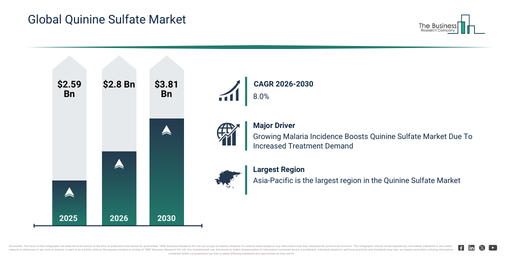
    Quinine Sulfate Market Expected To Reach $3.8 Billion By 2030 At 8% CAGR

    The market for quinine sulfate has experienced notable expansion in recent years, with projections indicating an increase from $2.59 billion in 2025 to $2.8 billion in 2026, reflecting a compound annual growth rate (CAGR) of 8.0%. This growth during the historical period is largely driven by factors such as the high incidence of malaria in endemic areas, the drug’s long-established clinical application, the scarcity of alternative treatments in low-income regions, its ongoing inclusion on essential medicines lists, and well-developed methods of extraction.

    The quinine sulfate market is anticipated to experience significant expansion over the coming years, reaching a projected value of $3.81 billion by 2030 with a compound annual growth rate (CAGR) of 8.0%. This forecasted growth is driven by the continuous implementation of malaria control initiatives, a rising demand for affordable antimalarial medications, the growth of generic drug production, enhancements in drug delivery systems, and better healthcare accessibility in developing nations. Key trends shaping this period include a consistent need for antimalarial therapies, the ongoing application of quinine in treating nocturnal leg cramps, a broader availability of generic quinine products, an increased emphasis on cost-effective essential medicines, and the development of more sophisticated pharmaceutical formulations.

    Download A Free Sample Report For Comprehensive Market Insights:

    https://www.thebusinessresearchcompany.com/sample.aspx?id=19165&type=smp&utm_source=BlogsPR&utm_medium=Paid&utm_campaign=Jul_PR

    Quinine Sulfate Market Expansion Drivers: What Is Shaping Future Growth?

    The expansion of the quinine sulfate market is anticipated to be driven forward by rising malaria incidence rates. Malaria represents a life-endangering infectious illness triggered by Plasmodium parasites, which are spread via bites from infected female Anopheles mosquitoes. Higher malaria case numbers are influenced by growing mosquito habitats resulting from climate shifts, the emergence of drug-resistant parasite variants, and deficiencies in healthcare service availability. Within the quinine sulfate market, malaria management is facilitated through the elimination of Plasmodium parasites and the suppression of their proliferation and development inside red blood cells. As an example, according to the December 2024 annual malaria report from the UK Health Security Agency (UKHSA)—a UK governmental entity—2,106 imported malaria cases were documented in the United Kingdom for 2023, representing a 26% rise compared to the 2022 figures. Consequently, the escalating malaria incidence is fueling the expansion of the quinine sulfate market.

    Quinine Sulfate Market Driver: Growing Consumer Demand For Natural And Organic Products Drives Quinine Sulfate Market Growth

    The quinine sulfate market is projected to be propelled forward by heightened consumer interest in natural and organic items. Such products are defined as goods composed of minimally processed, plant-derived, or sustainably harvested ingredients, devoid of synthetic chemicals or manufactured additives. This increasing preference for natural and organic options stems from rising health consciousness, a desire for chemical-free choices, and heightened focus on environmentally friendly and ethically responsible sourcing methods. By providing a plant-based compound sourced from cinchona bark, the quinine sulfate market aligns with this trend, meeting consumer expectations for traditional herbal elements in health and medicinal contexts. To illustrate, the Organic Trade Association (OTA), a U.S.-based business organization, reported in its May 2024 Organic Industry Survey that certified organic product sales in America hit $69.7 billion in 2023, marking a 3.4% uptick from 2022. Hence, this growing enthusiasm for natural and organic products is propelling the quinine sulfate market forward.

    Quinine Sulfate Market Segmentation Trends And Revenue Drivers

    The quinine sulfate market covered in this report is segmented –

    1) By Type: 200mg, 300mg, Other Types

    2) By Product Form: Quinine Sulfate Tablets, Quinine Sulfate Capsules, Quinine Sulfate Injections, Quinine Sulfate Powder, Quinine Sulfate Oral Solutions

    3) By Distribution Channel: Hospitals, Retail Pharmacies, Online Pharmacies

    4) By Application: Malaria, Problematic Leg Cramps, Lupus, Rheumatoid Arthritis, Other Applications

    5) By End-User: Adults, Pediatrics, Geriatrics

    Quinine Sulfate Market Industry Leaders: Which Organizations Are Driving Competition?

    Major companies operating in the quinine sulfate market are Sanofi SA, Viatris Inc., Teva Pharmaceuticals, Sun Pharmaceutical Industries Ltd., Aurobindo Pharma, Dr. Reddy’s Laboratories, Cipla Limited, Lupin Limited, Strides Pharma, Wockhardt Ltd., Pharmakina SA, Alchem International Private Limited, SimSon Pharma Limited, Hangzhou Dayang Co. Ltd., Haihang Industry Co. Ltd., Aecochem Corp, Buchler GmbH, Prism Industries Private Limited, Shreeji Pharma International, Sihauli Chemicals Private Limited

    Access The Complete Quinine Sulfate Market Report:

    https://www.thebusinessresearchcompany.com/report/quinine-sulfate-global-market-report?utm_source=BlogsPR&utm_medium=Paid&utm_campaign=Jul_PR

    Quinine Sulfate Market Largest Region: Which Geography Holds The Highest Market Share?

    Asia-Pacific was the largest region in the quinine sulfate market in 2025. The regions covered in the quinine sulfate market report are Asia-Pacific, South East Asia, Western Europe, Eastern Europe, North America, South America, Middle East, Africa.

    Get in touch with us:

    The Business Research Company: https://www.thebusinessresearchcompany.com/?utm_source=BlogsPR&utm_medium=Paid&utm_campaign=home_page_test

    Americas: +1 310-496-7795

    Asia: +44 7882 955267 & +91 8897263534

    Europe: +44 7882 955267

    Email us at: marketing@tbrc.info

    Follow us on:

    LinkedIn: https://in.linkedin.com/company/the-business-research-company

    YouTube: https://www.youtube.com/channel/UC24_fI0rV8cR5DxlCpgmyFQ

    Global Market Model: https://www.thebusinessresearchcompany.com/global-market-model