Blog

  • Quinine Market Outlook Highlights The Next Major Growth Opportunities

    Quinine Market Outlook Highlights The Next Major Growth Opportunities

    Delivering more actionable and strategically valuable research, The Business Research Company’s 2026 market reports feature market attractiveness analysis, total addressable market evaluation, company benchmarking matrices, interactive Excel dashboards, expanded supply chain intelligence, emerging startup coverage, and detailed product insights.

    Quinine Market Size And Revenue Forecast Through 2030

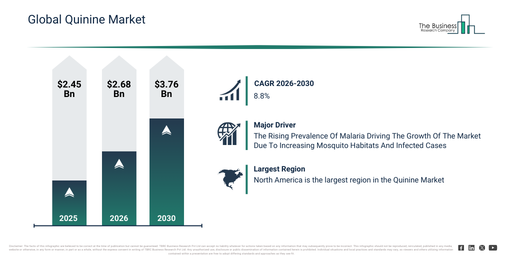
    The quinine market has experienced robust expansion over the past several years, with its value projected to increase from $2.45 billion in 2025 to $2.68 billion in 2026, reflecting a compound annual growth rate (CAGR) of 9.2%. This historical growth can be credited to a traditional dependence on extracting the compound from cinchona bark, a constrained supply of purified quinine, its extensive application in combating malaria, its incorporation into home remedies and tonic drinks, and its widespread adoption in oral formulations.

    The quinine market is projected to experience robust expansion over the coming years, reaching an estimated value of $3.76 billion by 2030, driven by a compound annual growth rate (CAGR) of 8.8%. This upward trajectory in the forecast period is largely fueled by several key factors, including progress in quinine synthesis and purification technologies, a heightened need for pharmaceutical-grade quinine, the broadening scope of malaria control initiatives, the rise of functional beverages that incorporate quinine, and intensified funding for antimalarial research and development. Noteworthy trends shaping this period encompass an increased preference for natural antimalarial agents, the growing incorporation of quinine into tonic and functional drinks, the creation of advanced pharmaceutical-grade quinine derivatives, heightened public awareness regarding malaria prevention and treatment, and an intensified emphasis on adhering to regulatory standards and quality benchmarks for quinine-based products.

    Download A Free Sample Report For Comprehensive Market Insights:

    https://www.thebusinessresearchcompany.com/sample.aspx?id=24676&type=smp&utm_source=BlogsPR&utm_medium=Paid&utm_campaign=Jul_PR

    Quinine Market Development Factors: Which Trends Are Supporting Demand?

    The growing prevalence of malaria is anticipated to drive expansion in the quinine market. Malaria is an infectious illness caused by Plasmodium parasites, spread to humans via bites from infected female Anopheles mosquitoes. Its incidence is climbing due to rising global temperatures, which lengthen the breeding season and broaden the habitat of malaria-transmitting mosquitoes. Quinine, a powerful antimalarial medication, treats the disease by disrupting the parasite’s capacity to digest hemoglobin within red blood cells, thereby curbing its growth and survival. For example, in April 2024, the UK Health Security Agency—a British government body—reported 2,004 confirmed malaria cases in England in 2023, a rise from 1,369 in 2022. Consequently, the increasing malaria incidence is fueling the quinine market’s growth.

    The expanding pharmaceutical sector is set to boost the quinine market going forward. This industry encompasses the research, development, production, and distribution of medications and drugs aimed at enhancing health and addressing diseases. Its growth is fueled by an aging global population, which heightens demand for treatments for chronic, age-related conditions. Quinine plays a key role in this sector by acting as an essential antimalarial active ingredient, sustaining treatment options in areas where drug resistance is present, and supporting ongoing formulation, manufacturing, and needs from global health programs. As an illustration, in November 2024, the European Federation of Pharmaceutical Industries and Associations (EFPIA)—a European pharmaceutical manufacturing organization—noted that Europe’s pharmaceutical output grew from $393.3 billion (€363.3 billion) in 2022 to an estimated $422 billion (€390 billion) in 2023, marking roughly a 7.3% year-over-year increase. This uptick underscores the industry’s continued expansion, propelled by sustained R&D investment, robust manufacturing capabilities, and rising demand across therapeutic fields. Thus, the growing pharmaceutical industry will propel the quinine market onward.

    Quinine Market Segment Analysis Highlighting Growth Areas

    The quinine market covered in this report is segmented –

    1) By Product: Quinine Sulphate, Quinine Hydrochloride, Quinine Gluconate, Quinine Bisulphate

    2) By Administration: Oral Administration, Intramuscular Administration, Intravenous Administration, Other Administrations

    3) By Application: Malaria Treatment, Nocturnal Leg Cramps

    4) By Enduser: Hospitals, Clinics, Other Endusers

    Quinine Market Leading Companies: Who Holds Significant Market Presence?

    Major companies operating in the quinine market are Teva Pharmaceutical Industries Ltd., Schweppes Australia Proprietary Limited, The United States Pharmacopeial Convention Inc., Chempro Pharma Private Limited, Taj Pharmaceuticals Ltd., Swiss Parenterals Private Limited, Leocorno Enterprises Private Limited, Healthy Inc., Jai Radhe Sales, Adooq Bioscience LLC, Akhil Healthcare Pvt Ltd., Van Wankum Ingredients B.V., Shreeji Pharma International, Prism Industries Private Limited, Lavina Pharmaceuticals Pvt Ltd., A. B. Enterprises, Spark Lifesciences Private Limited, Sihauli Chemicals Private Limited, Shanghai Nianxing Industrial Co. Ltd., Sakhiya Pharma Chem

    Access The Complete Quinine Market Report:

    https://www.thebusinessresearchcompany.com/report/quinine-global-market-report?utm_source=BlogsPR&utm_medium=Paid&utm_campaign=Jul_PR

    Quinine Market Regional Analysis: Which Region Leads By Revenue?

    North America was the largest region in the quinine market in 2025. Asia-Pacific is expected to be the fastest-growing region in the forecast period. The regions covered in the quinine market report are Asia-Pacific, South East Asia, Western Europe, Eastern Europe, North America, South America, Middle East, Africa.

    Get in touch with us:

    The Business Research Company: https://www.thebusinessresearchcompany.com/?utm_source=BlogsPR&utm_medium=Paid&utm_campaign=home_page_test

    Americas: +1 310-496-7795

    Asia: +44 7882 955267 & +91 8897263534

    Europe: +44 7882 955267

    Email us at: marketing@tbrc.info

    Follow us on:

    LinkedIn: https://in.linkedin.com/company/the-business-research-company

    YouTube: https://www.youtube.com/channel/UC24_fI0rV8cR5DxlCpgmyFQ

    Global Market Model: https://www.thebusinessresearchcompany.com/global-market-model
  • Quadrivalent Market Trends And Growth Drivers Point To Strong Future Potential

    Quadrivalent Market Trends And Growth Drivers Point To Strong Future Potential

    Enhanced with market attractiveness analysis, total addressable market evaluation, company benchmarking matrices, interactive Excel dashboards, expanded supply chain intelligence, emerging startup coverage, and detailed product insights, The Business Research Company’s 2026 market reports deliver more actionable and strategically valuable research.

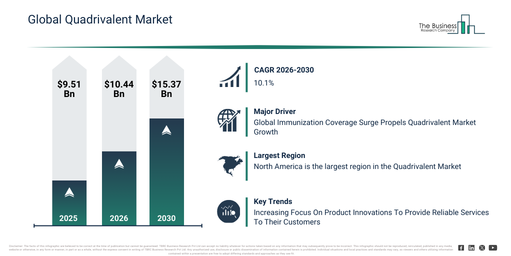
    Quadrivalent Market Growth From $10.44 Billion In 2026 To $15.37 Billion By 2030 At A CAGR Of 10.1%

    The quadrivalent market has experienced robust growth over recent years. Its value is projected to climb from $9.51 billion in 2025 to $10.44 billion in 2026, achieving a compound annual growth rate (CAGR) of 9.8%. Multiple factors have driven this historical expansion, including a rising incidence of influenza, government-led vaccination initiatives, breakthroughs in vaccine research, heightened public awareness around flu prevention, and the early uptake of quadrivalent vaccines within developed economies.

    The quadrivalent market is projected to experience substantial expansion in the coming years, reaching an estimated value of $15.37 billion by 2030, driven by a compound annual growth rate (CAGR) of 10.1%. This anticipated growth during the forecast period is fueled by several key factors, including a heightened need for more comprehensive influenza protection, breakthroughs in vaccine delivery methods, the enlargement of vaccination initiatives in developing nations, greater financial commitments to biotechnology and precision medicine, as well as advantageous reimbursement policies and governmental backing. Notable trends shaping the forecast period involve the optimization of vaccine formulations, the extension of immunization programs to cover broader age groups, advancements in cold chain logistics and distribution systems, enhancements in coverage for multiple influenza strains, and a strong emphasis on meeting regulatory standards and ensuring quality assurance.

    Download A Free Sample Report For Comprehensive Market Insights:

    https://www.thebusinessresearchcompany.com/sample.aspx?id=9335&type=smp&utm_source=BlogsPR&utm_medium=Paid&utm_campaign=Jul_PR

    Quadrivalent Market Industry Drivers: What Is Driving Revenue Growth?

    The global expansion of immunization coverage is anticipated to boost the quadrivalent market. Immunization coverage measures the percentage of a population that has received particular vaccines or a recommended set of vaccines within a defined period. As immunization coverage increases, it fuels higher demand for vaccines, and quadrivalent vaccines—which shield against four strains—are often included in standard vaccination schedules to tackle multiple diseases with a single dose. For example, in July 2025, the World Health Organization, a Switzerland-based international public health body, reported that global coverage for the first dose of the HPV vaccine among girls rose from 27% in 2023 to 31% in 2024. Consequently, the ongoing rise in immunization coverage worldwide will propel quadrivalent market growth in the future.

    Quadrivalent Market Segment Performance And Strategic Opportunities

    The quadrivalent market covered in this report is segmented –

    1) By Type: Intradermal Shot, Intramuscular Injection, Nasal Spray

    2) By Technology: Conjugated, Live, Inactivated, Recombinant, Toxoid, Other Technologies

    3) By Disease: Cancer, Hepatitis, Pneumococcal Disease, COVID-19, Influenza, Human Papilloma Virus, Meningococcal Disease, Polio, Rotavirus, Other Diseases

    4) By Age Group: Pediatric, Adult

    5) By Distribution Channel: Hospital And Pharmacy, Government Suppliers, Other Channels (NGOs)

    Subsegments:

    1) By Intradermal Shot: Standard Intradermal Injection, Needle-Free Intradermal Delivery

    2) By Intramuscular Injection: Standard Intramuscular Injection, Adjuvanted Intramuscular Injection

    3) By Nasal Spray: Live Attenuated Nasal Spray, Inactivated Nasal Spray

    Quadrivalent Market Growth Trends: What Is Influencing The Future Outlook?

    Major players in the quadrivalent market are prioritizing safer and more innovative vaccine delivery methods, including nano-particle technology, to boost their revenue streams. This technology replicates the virus’s outer structure through virus-like particles (VLPs) that lack live genetic material, thereby improving safety and strengthening immune responses. For example, in March 2024, Cadila Pharmaceuticals, a pharmaceutical firm based in India, introduced the advanced Quadrivalent Influenza Vaccine, a cutting-edge immunization designed to protect against four distinct influenza virus strains: two A strains (H1N1 and H3N2) and two B strains. By targeting a wider array of circulating flu viruses, this quadrivalent formulation increases vaccine effectiveness, proving particularly valuable during flu seasons. The aQIV is engineered to elicit a robust immune reaction, thereby lowering the rates of influenza-related illness and death. Its creation underscores continuous efforts to enhance public health outcomes amid evolving viral threats.

    Quadrivalent Market Key Players: Which Companies Shape Industry Competition?

    Major companies operating in the quadrivalent market are AstraZeneca Plc, Serum Institute of India Private Limited, Sanofi S.A., GlaxoSmithKline Plc, CSL Limited, Bharat Biotech International Limited, Hualan Biological Engineering Inc., Merck & Co. Inc., Johnson & Johnson Services Inc., Pfizer Inc., Walvax Biotechnology Co. Ltd., Chongqing Zhifei Biological Products Co. Ltd., Biological E. Limited, GSK Biologicals SA, Institute of Vaccines and Biological Products Chinese Academy of Medical Sciences, Wuhan Institute of Biological Products Co. Ltd., Beijing Tian Tan Biological Products Co. Ltd., Shanghai Zhijiang Bio-pharm Co. Ltd., Bio Farma, Butantan Institute, Pasteur Institute of India, China National Biotec Group Co. Ltd. (CNBG)

    Access The Complete Quadrivalent Market Report:

    https://www.thebusinessresearchcompany.com/report/quadrivalent-global-market-report?utm_source=BlogsPR&utm_medium=Paid&utm_campaign=Jul_PR

    Quadrivalent Market Geographic Distribution And Regional Opportunities

    North America was the largest region in the quadrivalent market in 2025. The regions covered in the quadrivalent market report are Asia-Pacific, South East Asia, Western Europe, Eastern Europe, North America, South America, Middle East, Africa.

    Get in touch with us:

    The Business Research Company: https://www.thebusinessresearchcompany.com/?utm_source=BlogsPR&utm_medium=Paid&utm_campaign=home_page_test

    Americas: +1 310-496-7795

    Asia: +44 7882 955267 & +91 8897263534

    Europe: +44 7882 955267

    Email us at: marketing@tbrc.info

    Follow us on:

    LinkedIn: https://in.linkedin.com/company/the-business-research-company

    YouTube: https://www.youtube.com/channel/UC24_fI0rV8cR5DxlCpgmyFQ

    Global Market Model: https://www.thebusinessresearchcompany.com/global-market-model

  • Purvalanol A (CDK Inhibitor) Market Expansion Is Reshaping Competitive Dynamics Across The Industry

    Purvalanol A (CDK Inhibitor) Market Expansion Is Reshaping Competitive Dynamics Across The Industry

    Through market attractiveness analysis, total addressable market evaluation, company benchmarking matrices, interactive Excel dashboards, expanded supply chain intelligence, emerging startup coverage, and detailed product insights, The Business Research Company’s 2026 market reports provide more actionable and strategically valuable research.

    Purvalanol A (CDK Inhibitor) Market Expansion Outlook: What Revenue Opportunities Lie Ahead?

    The market for purvalanol A, a CDK inhibitor, has experienced robust expansion in recent years. Projections indicate an increase from $0.64 billion in 2025 to $0.7 billion in 2026, reflecting a compound annual growth rate (CAGR) of 9.9%. This historical growth has been driven by the broadening scope of molecular biology research, heightened investment in cancer research, greater adoption of small molecule inhibitors in laboratory settings, improved comprehension of cell cycle biology, and the expansion of academic drug discovery initiatives.

    The market for purvalanol a (a CDK inhibitor) is poised for substantial expansion in the coming years, with projections indicating a rise to $1.01 billion by 2030, reflecting a compound annual growth rate (CAGR) of 9.6%. This upward trajectory in the forecast period is driven by heightened investments in targeted cancer therapeutics, a growing embrace of precision oncology research, an expanded recognition of CDKs as viable therapeutic targets, strengthened collaborations between academic institutions and pharmaceutical companies, and the increasing utilization of AI-driven drug discovery platforms. Key developments shaping the forecast period include a rising application of CDK inhibitors in oncology studies, an intensified focus on cell cycle-targeted therapies, a broadening of preclinical cancer research applications, greater incorporation of computational drug screening methods, and a heightened emphasis on selective kinase inhibition.

    Download A Free Sample Report For Comprehensive Market Insights:

    https://www.thebusinessresearchcompany.com/sample.aspx?id=28307&type=smp&utm_source=BlogsPR&utm_medium=Paid&utm_campaign=Jul_PR

    #Purvalanol A (CDK Inhibitor) Market Growth Factors: Which Forces Are Supporting Market Expansion?

    The growing occurrence of cancer is anticipated to drive the expansion of the purvalanol A (CDK inhibitor) market in the coming period. Cancer is defined as a condition involving the unregulated growth and dissemination of abnormal cells that can infiltrate tissues and organs. Its prevalence is climbing due to lifestyle factors that heighten the likelihood of genetic mutations and persistent inflammation. Purvalanol A (a CDK inhibitor) contributes to addressing this issue by acting on cyclin-dependent kinases, thereby decelerating cancerous cell growth and multiplication. As an example, in April 2024, Macmillan Cancer Support, a UK-based charity, projected that the count of individuals living with cancer in the UK will surpass 3.5 million by 2025, reach 4 million by 2030, and climb to 5.3 million by 2040. Consequently, the rising incidence of cancer is fueling growth in the purvalanol A (CDK inhibitor) market.

    Purvalanol A (CDK Inhibitor) Market Segment Landscape And Growth Potential

    The purvalanol a (cdk inhibitor) market covered in this report is segmented –

    1) By Type: CDK1 Inhibition, CDK2 Inhibition, CDK4 Inhibition, CDK6 Inhibition, Dual CDK Inhibition

    2) By Application: Cancer Treatment, Cardiovascular Diseases, Autoimmune Diseases, Neurological Disorders, Infectious Diseases

    3) By End-User: Pharmaceutical Companies, Research Institutions, Biotechnology Firms, Hospitals, Diagnostic Laboratories

    Subsegments:

    1) By CDK1 Inhibition: ATP-Competitive Inhibitors, Non-ATP-competitive Inhibitors, Allosteric Inhibitors

    2) By CDK2 Inhibition: Selective CDK2 Inhibitors, Pan-CDK Inhibitors, Peptide-based Inhibitors

    3) By CDK4 Inhibition: Small Molecule Inhibitors, Monoclonal Antibodies, Combination Therapy Inhibitors

    4) By CDK6 Inhibition: ATP-competitive Inhibitors, Selective CDK6 Inhibitors, Dual CDK4/6 Inhibitors

    5) By Dual CDK Inhibition: CDK1/2 Dual Inhibitors, CDK4/6 Dual Inhibitors, Multi-CDK Inhibitors

    Purvalanol A (CDK Inhibitor) Market Competitive Landscape: Who Are The Leading Companies?

    Major companies operating in the purvalanol a (cdk inhibitor) market are Merck Kommanditgesellschaft auf Aktien, Bio-Techne Corporation, Cayman Chemical Company Inc., Selleck Chemicals LLC, Santa Cruz Biotechnology Inc, TargetMol Chemicals Inc. , MedChemExpress LLC, DC Chemicals Co. Ltd., BOC Sciences, AdooQ BioScience LLC, Focus Biomolecules LLC, APExBIO Technology LLC, LKT Laboratories Inc., Medkoo Biosciences Inc. , Alomone Labs Ltd., Glentham Life Sciences Ltd., Global Life Sciences Solutions LLC, AdipoGen Life Sciences, Enzo Biochem Inc., Zibo Hangyu Biotechnology Development Co. Ltd.

    Access The Complete Purvalanol A (CDK Inhibitor) Market Report:

    https://www.thebusinessresearchcompany.com/report/purvalanol-a-cdk-inhibitor-global-market-report?utm_source=BlogsPR&utm_medium=Paid&utm_campaign=Jul_PR

    Purvalanol A (CDK Inhibitor) Market Largest Region By Revenue And Market Share

    North America was the largest region in the purvalanol A (CDK inhibitor) market in 2025. Asia Pacific is expected to be the fastest-growing region in the forecast period. The regions covered in the purvalanol a (cdk inhibitor) market report are Asia-Pacific, South East Asia, Western Europe, Eastern Europe, North America, South America, Middle East, Africa.

    Get in touch with us:

    The Business Research Company: https://www.thebusinessresearchcompany.com/?utm_source=BlogsPR&utm_medium=Paid&utm_campaign=home_page_test

    Americas: +1 310-496-7795

    Asia: +44 7882 955267 & +91 8897263534

    Europe: +44 7882 955267

    Email us at: marketing@tbrc.info

    Follow us on:

    LinkedIn: https://in.linkedin.com/company/the-business-research-company

    YouTube: https://www.youtube.com/channel/UC24_fI0rV8cR5DxlCpgmyFQ

    Global Market Model: https://www.thebusinessresearchcompany.com/global-market-model
  • Purine Analogues Drugs Market Forecast Reveals Where Future Industry Value Will Be Created

    Purine Analogues Drugs Market Forecast Reveals Where Future Industry Value Will Be Created

    Delivering more actionable and strategically valuable research, The Business Research Company’s 2026 market reports feature market attractiveness analysis, total addressable market evaluation, company benchmarking matrices, interactive Excel dashboards, expanded supply chain intelligence, emerging startup coverage, and detailed product insights.

    Purine Analogues Drugs Market Growth Potential: How Will Market Size Change Through 2030?

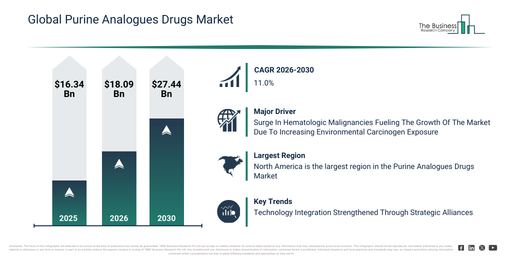
    The market for purine analogue drugs has experienced significant expansion in the recent past. Projections show it rising from $16.34 billion in 2025 to $18.09 billion in 2026, reflecting a compound annual growth rate (CAGR) of 10.7%. Several factors drove growth during the historical period, including the restricted supply of these medications, dependence on chemotherapy delivered in hospital settings, a high incidence of blood cancers, the use of standard oral and injectable forms, and an absence of more precisely targeted therapies.

    Projections indicate that the market for purine analogue drugs is set to experience rapid expansion over the coming years, reaching $27.44 billion by 2030, with a compound annual growth rate (CAGR) of 11.0%. This anticipated growth during the forecast timeframe is driven by several factors, including the creation of new purine analogues, the broadening of homecare chemotherapy services, a rise in clinical trials for investigational drugs, alignment with personalized medicine and targeted therapies, and a growing preference for oral formulations and patient-friendly delivery systems. Key trends shaping the forecast period involve a heightened application of purine analogues in hematologic cancers, the formulation of both oral and injectable versions, the enlargement of chemotherapy services in hospitals and home settings, an upsurge in clinical trials and experimental drug research, and a stronger emphasis on customized treatment plans and targeted therapy approaches.

    Download A Free Sample Report For Comprehensive Market Insights:

    https://www.thebusinessresearchcompany.com/sample.aspx?id=24674&type=smp&utm_source=BlogsPR&utm_medium=Paid&utm_campaign=Jul_PR

    Purine Analogues Drugs Market Demand Drivers: What Is Fueling Industry Growth?

    The growing incidence of hematologic malignancies is anticipated to drive expansion in the purine analogues drugs market moving forward. These malignancies are cancers that originate in blood-forming tissues like bone marrow or in immune system cells. This increase is largely due to an aging population, as the likelihood of developing blood cancers such as leukemia, lymphoma, and myeloma rises significantly with age, driven by cumulative genetic mutations and reduced immune surveillance in older individuals. Purine analogue drugs address these conditions by interfering with the DNA synthesis of abnormal blood cells, thereby slowing or halting their uncontrolled proliferation. For example, in May 2024, the City of Hope, a US-based nonprofit clinical research center, reported that approximately 1.6 million people in the United States are currently living with leukemia, myeloma, Hodgkin lymphoma, or non-Hodgkin lymphoma, with over 192,000 new blood cancer cases projected for 2025. Consequently, the rising prevalence of hematologic malignancies is fueling growth in the purine analogues drugs market.

    A surge in healthcare spending is expected to boost the purine analogues drugs market going forward. Healthcare expenditure encompasses the total funds allocated by individuals, governments, and organizations to medical services, treatments, and healthcare infrastructure aimed at preserving and enhancing public health. This spending is increasing because an aging population drives a higher prevalence of chronic diseases, which demand prolonged and often costly medical care. Such expenditure facilitates research, development, and accessibility of purine analogue drugs, ensuring patients receive advanced therapies for conditions like cancer and autoimmune disorders. As an illustration, in April 2025, the Office for National Statistics, a UK-based government department, noted that total healthcare expenditure rose by 6.5% in nominal terms from 2023 to 2024, a slight increase from the 6.3% growth rate recorded in 2023. Thus, the rise in healthcare expenditure is propelling the purine analogues drugs market forward.

    Purine Analogues Drugs Market Categorization By Product Type And Application

    The purine analogues drugs market covered in this report is segmented –

    1) By Drug Type: Cladribine, Tioguanine, Clofarabine, Mercaptopurine, Fludarabine, Nelarabine, Other Types

    2) By Distribution Channel: Hospital Pharmacy, Retail Pharmacy, Online Pharmacy

    3) By End-User: Hospitals, Homecare, Specialty Clinics, Other End-Users

    Subsegments:

    1) By Cladribine: Injectable Cladribine, Oral Cladribine

    2) By Tioguanine: Tablet Formulation, Parenteral Formulation

    3) By Clofarabine: Clofarabine Injection, Lyophilized Powder

    4) By Mercaptopurine: 6-Mercaptopurine Tablets, 6-Mercaptopurine Suspension

    5) By Fludarabine: Fludarabine Phosphate Injection, Oral Fludarabine

    6) By Nelarabine: Nelarabine Intravenous Solution, Nelarabine Concentrate

    7) By Other Types: Azathioprine, Pentostatin, Experimental Purine Analogues

    Purine Analogues Drugs Market Innovation Trends: Which Developments Are Transforming The Industry?

    Leading firms in the purine analogues drugs arena are increasingly leveraging strategic partnerships as a key approach to improve technology integration and broaden their market presence. In essence, a strategic partnership involves a collaborative arrangement where multiple organizations pool their resources, knowledge, and efforts to pursue shared objectives. A case in point occurred in November 2023, when BioNxt Solutions Inc., a Canadian life sciences firm focused on innovative drug reformulation and delivery technologies, finalized a definitive agreement to acquire 100% of the intellectual property and jointly develop its proprietary Cladribine orally dissolvable film (ODF) for multiple sclerosis. Through this deal, BioNxt gains complete authority over the development and progression of a novel treatment aimed at enhancing dosing efficiency and patient compliance for multiple sclerosis. By capitalizing on its new ODF technology, BioNxt intends to deliver a more user-friendly alternative to standard tablets, particularly aiding individuals with swallowing issues, and is now expediting comparative preclinical and clinical trials throughout Europe and North America.

    Purine Analogues Drugs Market Company Landscape And Strategic Competition

    Major companies operating in the purine analogues drugs market are Pfizer Inc., Sanofi S.A., Novartis AG, Merck KGaA, Viatris Inc. (Mylan), Fresenius Kabi AG, Dr. Reddy’s Laboratories Limited, Cipla Limited, Sagent Pharmaceuticals Incorporated, Taj Pharmaceuticals Limited, ScinoPharm Taiwan Limited, Zhejiang Cheng Yi Pharmaceutical Company Limited, Fermion Oy, Aetos Pharma Private Limited, Aark Pharmaceuticals, Aarti Pharmalabs Limited, Teva Pharmaceutical Industries Ltd., Hikma Pharmaceuticals PLC, Accord Healthcare Ltd., Sun Pharmaceutical Industries Ltd., Intas Pharmaceuticals Ltd., Lupin Limited, Zydus Lifesciences Ltd., Apotex Inc., Baxter International Inc., Piramal Pharma Limited, Natco Pharma Limited, Gland Pharma Limited, MSN Laboratories Pvt. Ltd., Alembic Pharmaceuticals Ltd.

    Access The Complete Purine Analogues Drugs Market Report:

    https://www.thebusinessresearchcompany.com/report/purine-analogues-drugs-global-market-report?utm_source=BlogsPR&utm_medium=Paid&utm_campaign=Jul_PR

    Purine Analogues Drugs Market Regional Analysis And Leading Geography

    North America was the largest region in the purine analogues market in 2025. The regions covered in the purine analogues drugs market report are Asia-Pacific, South East Asia, Western Europe, Eastern Europe, North America, South America, Middle East, Africa.

    Get in touch with us:

    The Business Research Company: https://www.thebusinessresearchcompany.com/?utm_source=BlogsPR&utm_medium=Paid&utm_campaign=home_page_test

    Americas: +1 310-496-7795

    Asia: +44 7882 955267 & +91 8897263534

    Europe: +44 7882 955267

    Email us at: marketing@tbrc.info

    Follow us on:

    LinkedIn: https://in.linkedin.com/company/the-business-research-company

    YouTube: https://www.youtube.com/channel/UC24_fI0rV8cR5DxlCpgmyFQ

    Global Market Model: https://www.thebusinessresearchcompany.com/global-market-model

  • Pulmonary Or Respiratory Drug Delivery Market Growth Through 2030 Creates New Strategic Opportunities

    Pulmonary Or Respiratory Drug Delivery Market Growth Through 2030 Creates New Strategic Opportunities

    Enhanced with market attractiveness analysis, total addressable market evaluation, company benchmarking matrices, interactive Excel dashboards, expanded supply chain intelligence, emerging startup coverage, and detailed product insights, The Business Research Company’s 2026 market reports deliver more actionable and strategically valuable research.

    Pulmonary Or Respiratory Drug Delivery Market Value Analysis: What Growth Is Expected Over The Forecast Period?

    The market for pulmonary or respiratory drug delivery has experienced robust expansion in recent years. Projected to rise from $75.67 billion in 2025 to $82.23 billion in 2026, it reflects a compound annual growth rate (CAGR) of 8.7%. This historical growth has been driven by factors such as the increasing prevalence of asthma and COPD, the widespread use of inhalers, the expansion of respiratory hospitals, advancements in aerosol technologies, and the broadening of homecare treatment options.

    The pulmonary drug delivery market, often referred to as the respiratory drug delivery market, is projected to experience significant growth in the coming years. By 2030, its value is anticipated to reach $114.23 billion, reflecting a compound annual growth rate (CAGR) of 8.6%. This expansion during the forecast period is driven by several key factors, including an aging population, increased exposure to air pollution, the rise of digital inhalers, the growing prevalence of homecare settings, and a higher incidence of chronic respiratory conditions. Notable trends shaping this period involve the heightened adoption of inhalation-based drug delivery methods, a surge in demand for respiratory therapies administered at home, increased utilization of dry powder and metered dose inhalers, the broadening of chronic disease management programs for respiratory issues, and a stronger emphasis on developing user-friendly delivery devices.

    Download A Free Sample Report For Comprehensive Market Insights:

    https://www.thebusinessresearchcompany.com/sample.aspx?id=20939&type=smp&utm_source=BlogsPR&utm_medium=Paid&utm_campaign=Jul_PR

    Pulmonary Or Respiratory Drug Delivery Market Growth Drivers: What Factors Are Accelerating Expansion?

    The anticipated growth of the pulmonary or respiratory drug delivery market is being driven forward by the rising incidence of pneumonia. This lung infection triggers inflammation in the air sacs, which can become filled with fluid or pus, resulting in symptoms such as coughing, fever, and breathing difficulties. Factors contributing to the growing prevalence of pneumonia include aging populations, compromised immune systems, respiratory infections, air pollution, smoking, and the emergence of antibiotic-resistant bacteria. By delivering medications like antibiotics, bronchodilators, or anti-inflammatory agents directly to the lungs, pulmonary or respiratory drug delivery offers pneumonia patients faster and more effective treatment, helping to alleviate symptoms, reduce inflammation, clear infections, and enhance respiratory function, which ultimately supports recovery and prevents complications. For example, data from Clinical Trials Arena, a UK-based clinical research news platform, showed that in December 2024, hospital admissions for Mycoplasma pneumoniae surged by 461% between October 2023 and February 2024, climbing from 110 to 617 admissions. Among these, 20.2% of pneumonia cases were found in children aged 0 to 4 years, 25.4% in those aged 5 to 9 years, and 17.5% in children aged 10 to 14 years, accounting for 410 of the 650 reported cases. Consequently, the increasing prevalence of pneumonia is fueling the expansion of the pulmonary or respiratory drug delivery market.

    Pulmonary Or Respiratory Drug Delivery Market Segment Analysis And Revenue Opportunities

    The pulmonary or respiratory drug delivery market covered in this report is segmented –

    1) By Product: Formulation Type, Device Type

    2) By Canister Type: Plain Canister, Coated Canister

    3) By Application: Chronic Obstructive Pulmonary Disease, Asthma, Cystic Fibrosis, Other Applications

    4) By End-User: Hospitals, Clinics, Home Care Settings

    Subsegments:

    1) By Formulation Type: Dry Powder Inhalers (DPIs), Metered Dose Inhalers (MDIs), Nebulizers, Liquid Aerosols, Nasal Sprays

    2) By Device Type: Inhalers (Manual and Digital), Nebulizers (Compressor, Ultrasonic, Mesh), Breath-Activated Devices, Spacer Devices, Nasal Drug Delivery Devices

    Pulmonary Or Respiratory Drug Delivery Market Trends: What Is Shaping Future Industry Growth?

    Key players in the pulmonary and respiratory drug delivery sector are placing significant emphasis on technological innovations, particularly through the development of complex drug delivery systems designed to improve both treatment effectiveness and patient adherence. These advanced systems facilitate targeted drug delivery and controlled release of therapeutic compounds, thereby enhancing clinical outcomes. A notable example occurred in July 2023, when Viatris Inc., a U.S.-based manufacturer of generic and branded pharmaceuticals, collaborated with Kindeva Drug Delivery L.P., a U.S. drug delivery firm, to introduce Breyna (budesonide and formoterol fumarate dihydrate) Inhalation Aerosol. This product received approval from the Food and Drug Administration, a U.S. regulatory agency, and represents the first generic alternative to AstraZeneca’s Symbicort. It functions as a metered-dose inhaler combining budesonide and formoterol for the management of asthma and chronic obstructive pulmonary disease, and is offered in two dosage strengths: 80 micrograms with 4.5 micrograms of formoterol, and 160 micrograms with 4.5 micrograms of formoterol.

    Pulmonary Or Respiratory Drug Delivery Market Leading Players Shaping Industry Direction

    Major companies operating in the pulmonary or respiratory drug delivery market are Merck & Co. Inc., Novartis AG, Thermo Fisher Scientific Inc., AstraZeneca plc, Abbott Laboratories, 3M Company, Koninklijke Philips N.V., GlaxoSmithKline, Omron Corporation, Teva Pharmaceutical Industries Ltd., Aptar Pharma, Sumitomo Pharma America Inc., Chiesi Farmaceutici S.p.A., Cipla Inc., Boehringer Ingelheim GmbH, Kindeva Drug Delivery Limited, Nemera Group, Hovione, H And T Presspart Group, Vectura Group plc

    Access The Complete Pulmonary Or Respiratory Drug Delivery Market Report:

    https://www.thebusinessresearchcompany.com/report/pulmonary-or-respiratory-drug-delivery-global-market-report?utm_source=BlogsPR&utm_medium=Paid&utm_campaign=Jul_PR

    Pulmonary Or Respiratory Drug Delivery Market Geographic Analysis: Where Is Demand Growing The Fastest?

    North America was the largest region in the pulmonary or respiratory drug delivery market in 2025. Asia-Pacific is expected to be the fastest-growing region in the forecast period. The regions covered in the pulmonary or respiratory drug delivery market report are Asia-Pacific, South East Asia, Western Europe, Eastern Europe, North America, South America, Middle East, Africa.

    Get in touch with us:

    The Business Research Company: https://www.thebusinessresearchcompany.com/?utm_source=BlogsPR&utm_medium=Paid&utm_campaign=home_page_test

    Americas: +1 310-496-7795

    Asia: +44 7882 955267 & +91 8897263534

    Europe: +44 7882 955267

    Email us at: marketing@tbrc.info

    Follow us on:

    LinkedIn: https://in.linkedin.com/company/the-business-research-company

    YouTube: https://www.youtube.com/channel/UC24_fI0rV8cR5DxlCpgmyFQ

    Global Market Model: https://www.thebusinessresearchcompany.com/global-market-model
  • Pulmonary Drugs Market Size Projected To Increase From $60.06 Billion To $74.13 Billion During The Forecast Period

    Pulmonary Drugs Market Size Projected To Increase From $60.06 Billion To $74.13 Billion During The Forecast Period

    Through market attractiveness analysis, total addressable market evaluation, company benchmarking matrices, interactive Excel dashboards, expanded supply chain intelligence, emerging startup coverage, and detailed product insights, The Business Research Company’s 2026 market reports provide more actionable and strategically valuable research.

    Pulmonary Drugs Market Size Forecast: How Large Could The Market Become By 2030?

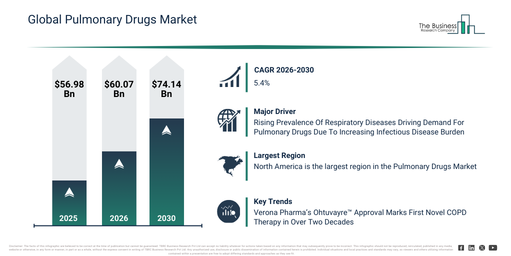
    The pulmonary drugs market has experienced robust expansion over recent years, with projections indicating growth from $56.98 billion in 2025 to $60.07 billion in 2026, reflecting a compound annual growth rate (CAGR) of 5.4%. This historical period’s progress was driven by factors such as a higher prevalence of asthma, an increasing incidence of chronic obstructive pulmonary disease (COPD), urban air pollution intensification, broader adoption of inhalation drug delivery systems, and enhanced diagnostic methods for respiratory conditions.

    The pulmonary drugs market is projected to experience robust expansion over the coming years, with its value anticipated to reach $74.14 billion by 2030, reflecting a compound annual growth rate (CAGR) of 5.4%. This forecasted growth is driven by factors such as an increasing elderly population, the development of biologic pulmonary medications, the integration of precision respiratory medicine, a higher prevalence of smoking-related conditions, and enhanced availability of inhaled therapies. Key trends shaping the market during this period include a growing emphasis on targeted respiratory therapies, the emergence of combination inhalation products, a stronger focus on long-term disease management, the expansion of biologic-based pulmonary treatments, and a transition toward personalized respiratory care.

    Download A Free Sample Report For Comprehensive Market Insights:

    https://www.thebusinessresearchcompany.com/sample.aspx?id=23489&type=smp&utm_source=BlogsPR&utm_medium=Paid&utm_campaign=Jul_PR

    Pulmonary Drugs Market Growth Factors Supporting Long-Term Expansion

    The pulmonary drugs market is experiencing growth driven by the rising prevalence of respiratory diseases, which impair normal breathing and oxygen exchange by affecting the lungs and airways. An increase in respiratory disorders is linked to factors such as higher smoking rates, which cause lung damage and contribute to chronic conditions, while pulmonary drugs are essential for managing these issues by enhancing lung function, reducing inflammation, and alleviating airway obstructions to facilitate better breathing. Data from the Centers for Disease Control and Prevention, a US-based government agency, indicated in May 2025 that in 2023, age-adjusted COPD prevalence among adults 18 and older stood at 3.8%, with rates higher in women at 4.1% compared to men at 3.4%, and this prevalence increased sharply with age from 0.4% in those aged 18–24 to 10.5% in individuals 75 and older. Consequently, the escalating incidence of respiratory diseases is fueling expansion in the pulmonary drugs market.

    Pulmonary Drugs Market Segmentation And Category Breakdown

    The pulmonary drugs market covered in this report is segmented –

    1) By Drug Class: Inhaled Corticosteroids, Long Acting Beta-2 Agonists, Antihistamines, Vasodilators, Short Acting Beta-2 Agonists, Other Drug Classes

    2) By Indication: Asthma, Chronic Obstructive Pulmonary Disease (COPD), Allergic Rhinitis, Pulmonary Arterial Hypertension, Cystic Fibrosis, Other Indications

    3) By Distribution Channel: Retail Pharmacies, Online Pharmacies, Hospitals Pharmacies

    Subsegments:

    1) By Inhaled Corticosteroids: Beclomethasone, Budesonide, Fluticasone, Mometasone, Ciclesonide

    2) By Long-Acting Beta-2 Agonists: Salmeterol, Formoterol, Indacaterol, Olodaterol, Vilanterol

    3) By Antihistamines: Cetirizine, Loratadine, Fexofenadine, Diphenhydramine, Levocetirizine

    4) By Vasodilators: Endothelin Receptor Antagonists, Phosphodiesterase-5 Inhibitors, Prostacyclin Analogues

    5) By Short-Acting Beta-2 Agonists (SABA): Albuterol, Levalbuterol, Terbutaline, Fenoterol, Pirbuterol

    6) By Other Drug Classes: Monoclonal Antibodies, Enzymes, Antibiotics, Antileukotrienes

    Pulmonary Drugs Market Industry Trends Shaping Future Revenue Growth

    Key players in the pulmonary drugs market are concentrating on therapeutic breakthroughs, including the use of inhaled dual PDE3 and PDE4 inhibition, which delivers both bronchodilator and non-steroidal anti-inflammatory effects in a single compound for long-term COPD management. This dual inhibition allows airway dilation and decreases lung inflammation simultaneously, tackling ongoing COPD symptoms more efficiently compared to conventional treatments and streamlining dosing without needing intricate inhalation methods. For example, in June 2024, Verona Pharma plc, a biopharmaceutical firm based in the UK, gained U.S. FDA approval for Ohtuvayre (ensifentrine), the first inhaled medication in over two decades to feature this dual-action mechanism. Administered with a standard jet nebulizer, Ohtuvayre offers bronchodilation and anti-inflammatory action in one dose, demonstrating clinical effectiveness as a standalone therapy or combined with other maintenance drugs in the Phase 3 ENHANCE trials, and is set to become accessible via U.S. specialty pharmacies by the third quarter of 2024.

    Pulmonary Drugs Market Competitive Analysis Of Major Industry Participants

    Major companies operating in the pulmonary drugs market are AstraZeneca plc, GlaxoSmithKline plc, Novartis AG, Boehringer Ingelheim International GmbH, Chiesi Farmaceutici S.p.A., Cipla Limited, Teva Pharmaceutical Industries Ltd., Mylan N.V., Bayer AG, United Therapeutics Corporation, Sanofi S.A., F. Hoffmann-La Roche Ltd., Pfizer Inc., Merck Sharp & Dohme Limited, Glenmark Pharmaceuticals Limited, Lupin Pharmaceuticals Inc., Grifols S.A., Mallinckrodt Pharmaceuticals plc, Circassia Pharmaceuticals plc, AbbVie Inc.

    Access The Complete Pulmonary Drugs Market Report:

    https://www.thebusinessresearchcompany.com/report/pulmonary-drugs-global-market-report?utm_source=BlogsPR&utm_medium=Paid&utm_campaign=Jul_PR

    Pulmonary Drugs Market Global Footprint: Which Region Holds Market Leadership?

    North America was the largest region in the pulmonary drugs market in 2025. Asia-Pacific is expected to be the fastest-growing region in the forecast period. The regions covered in the pulmonary drugs market report are Asia-Pacific, South East Asia, Western Europe, Eastern Europe, North America, South America, Middle East, Africa.

    Get in touch with us:

    The Business Research Company: https://www.thebusinessresearchcompany.com/?utm_source=BlogsPR&utm_medium=Paid&utm_campaign=home_page_test

    Americas: +1 310-496-7795

    Asia: +44 7882 955267 & +91 8897263534

    Europe: +44 7882 955267

    Email us at: marketing@tbrc.info

    Follow us on:

    LinkedIn: https://in.linkedin.com/company/the-business-research-company

    YouTube: https://www.youtube.com/channel/UC24_fI0rV8cR5DxlCpgmyFQ

    Global Market Model: https://www.thebusinessresearchcompany.com/global-market-model

  • Pulmonary Arterial Hypertension Market Growth Outlook Reveals A CAGR Of 8.5% And A Market Value Of $13.74 Billion By 2030

    Pulmonary Arterial Hypertension Market Growth Outlook Reveals A CAGR Of 8.5% And A Market Value Of $13.74 Billion By 2030

    Delivering more actionable and strategically valuable research, The Business Research Company’s 2026 market reports feature market attractiveness analysis, total addressable market evaluation, company benchmarking matrices, interactive Excel dashboards, expanded supply chain intelligence, emerging startup coverage, and detailed product insights.

    Pulmonary Arterial Hypertension Market Revenue Outlook: What CAGR Is Expected Through 2030?

    The pulmonary arterial hypertension market has experienced robust expansion in recent years. Projections indicate an increase from $9.15 billion in 2025 to $9.94 billion in 2026, reflecting a compound annual growth rate (CAGR) of 8.6%. This historical growth has been driven by several factors, including a higher incidence of pulmonary arterial hypertension, constraints in early diagnostic methods, significant unmet medical requirements, the presence of established conventional therapies, and heightened awareness among healthcare providers.

    Over the coming years, the pulmonary arterial hypertension market is projected to experience robust expansion, reaching an estimated value of $13.75 billion by 2030, driven by a compound annual growth rate (CAGR) of 8.5%. This anticipated growth during the forecast period is largely due to the emergence of innovative treatments, the broader use of telemedicine, enhanced government support for healthcare, an increased reliance on combination therapies, and the proliferation of dedicated treatment facilities. Key developments shaping this period include the rise of personalized therapeutic approaches for pulmonary hypertension, the introduction of cutting-edge drug delivery technologies, ongoing efforts to develop combination regimens, the integration of telehealth for continuous patient observation, and the establishment of new regional treatment centers.

    Download A Free Sample Report For Comprehensive Market Insights:

    https://www.thebusinessresearchcompany.com/sample.aspx?id=5954&type=smp&utm_source=BlogsPR&utm_medium=Paid&utm_campaign=Jul_PR

    Pulmonary Arterial Hypertension Market Demand Drivers Creating New Revenue Opportunities

    The growing number of clinical trials aimed at drug development is anticipated to drive expansion in the pulmonary arterial hypertension market. These trials are research initiatives designed to assess the safety, effectiveness, and possible adverse effects of novel drugs or therapeutic approaches in human subjects. In the context of pulmonary arterial hypertension, such trials can pave the way for innovative and more potent therapies, enhancing patients’ quality of life, boosting safety and efficacy, providing earlier access to treatment, and aiding in the identification of cost-effective options. For example, as reported in May 2023 by Xtalks, a Canada-based firm that organizes life science webinars and virtual events, 452,604 clinical studies were recorded on ClinicalTrials.gov as of May 17, 2023. Of these, 64,838 studies are actively recruiting participants, marking a rise from the 365,000 registered trials in 2021. Consequently, this increase in clinical research for drug development is fueling the growth of the pulmonary arterial hypertension market.

    Pulmonary Arterial Hypertension Market Segment Outlook: Which Categories Are Expanding The Fastest?

    The pulmonary arterial hypertension market covered in this report is segmented –

    1) By Drug Class: Endothelin Receptor Antagonists (ERAs), PDE-5 Inhibitors, Prostacyclin and Prostacyclin Analogs, SGC Stimulators

    2) By Route Of Administration: Oral, Intravenous Or subcutaneous, Inhalational

    3) By Distribution channel: Retail, Online

    Subsegments:

    1) By Endothelin Receptor Antagonists (ERAs): Bosentan, Ambrisentan, Macitentan

    2) By PDE-5 Inhibitors: Sildenafil, Tadalafil

    3) By Prostacyclin And Prostacyclin Analogs: Epoprostenol, Treprostinil, Iloprost

    4) By SGC Stimulators: Riociguat, Vericiguat

    Pulmonary Arterial Hypertension Market Trends Driving Strategic Industry Expansion

    Leading companies in the pulmonary arterial hypertension market are developing cutting-edge therapies like OPSYNVI to deliver better care and improved quality of life for patients managing this severe illness. In March 2024, Johnson & Johnson, an American multinational firm involved in pharmaceuticals, biotechnology, and medical devices, introduced OPSYNVI for the long-term management of pulmonary arterial hypertension in adult patients. This medication is appropriate for individuals newly starting treatment or those already taking an endothelin receptor antagonist (ERA), a PDE5 inhibitor, or both. It is also indicated for patients stabilized on separate doses of macitentan 10 mg and tadalafil 40 mg.

    Pulmonary Arterial Hypertension Market Key Companies And Competitive Benchmarking

    Major companies operating in the pulmonary arterial hypertension market are United Therapeutics Corporation, Acceleron Pharma Inc., Actelion Pharmaceuticals US Inc., Bayer AG, Eli Lilly and Company, Gilead Sciences Inc., GlaxoSmithKline plc, Johnson & Johnson, Liquidia Technologies Inc., Lupin Pharmaceuticals Inc., Natco Pharma Ltd., Pfizer Inc., Sandoz AG, Teva Pharmaceutical Industries Ltd., Zydus Pharmaceutical USA Inc., Merck KGaA, Novartis International AG, Bristol-Myers Squibb Company, AstraZeneca plc, Daiichi Sankyo Company Limited

    Access The Complete Pulmonary Arterial Hypertension Market Report:

    https://www.thebusinessresearchcompany.com/report/pulmonary-arterial-hypertension-global-market-report?utm_source=BlogsPR&utm_medium=Paid&utm_campaign=Jul_PR

    Pulmonary Arterial Hypertension Market Regional Distribution: Which Areas Drive Market Expansion?

    North America was the largest region in the pulmonary arterial hypertension market in 2025. The regions covered in the pulmonary arterial hypertension market report are Asia-Pacific, South East Asia, Western Europe, Eastern Europe, North America, South America, Middle East, Africa.

    Get in touch with us:

    The Business Research Company: https://www.thebusinessresearchcompany.com/?utm_source=BlogsPR&utm_medium=Paid&utm_campaign=home_page_test

    Americas: +1 310-496-7795

    Asia: +44 7882 955267 & +91 8897263534

    Europe: +44 7882 955267

    Email us at: marketing@tbrc.info

    Follow us on:

    LinkedIn: https://in.linkedin.com/company/the-business-research-company

    YouTube: https://www.youtube.com/channel/UC24_fI0rV8cR5DxlCpgmyFQ

    Global Market Model: https://www.thebusinessresearchcompany.com/global-market-model
  • Psychedelic Drugs Market Forecast Highlights Expansion From $7.36 Billion To $13.66 Billion Through 2030

    Psychedelic Drugs Market Forecast Highlights Expansion From $7.36 Billion To $13.66 Billion Through 2030

    Enhanced with market attractiveness analysis, total addressable market evaluation, company benchmarking matrices, interactive Excel dashboards, expanded supply chain intelligence, emerging startup coverage, and detailed product insights, The Business Research Company’s 2026 market reports deliver more actionable and strategically valuable research.

    Psychedelic Drugs Market Growth Analysis: How Will Revenue Expand During The Forecast Period?

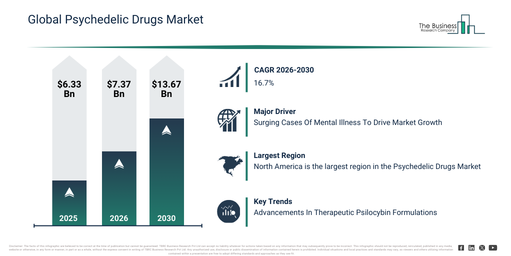
    The psychedelic drugs sector has experienced swift expansion in recent years, with its market value rising from $6.33 billion in 2025 to an anticipated $7.37 billion in 2026, reflecting a compound annual growth rate (CAGR) of 16.4%. This historical growth has been driven by a significant unmet need for effective depression therapies, foundational academic investigations into psychedelics, instances of underground and compassionate use, the constrained effectiveness of traditional antidepressants, and an increasing public focus on mental health.

    The psychedelic drugs market is projected to experience rapid expansion over the coming years, reaching an estimated $13.67 billion by 2030 with a compound annual growth rate (CAGR) of 16.7%. This anticipated growth during the forecast period is driven by several key factors: regulatory approvals for medical use, increasing adoption by psychiatrists, a broadening pipeline of therapeutic indications, improved data on patient outcomes, and strategic collaborations between biotechnology firms and healthcare providers. Significant trends shaping this period include the growth of psychedelic-assisted therapy programs, a rising number of clinical trials targeting mental health conditions, greater acceptance of alternative psychiatric approaches, clearer regulatory pathways for controlled substances, and heightened investment from venture capital and pharmaceutical companies.

    Download A Free Sample Report For Comprehensive Market Insights:

    https://www.thebusinessresearchcompany.com/sample.aspx?id=6345&type=smp&utm_source=BlogsPR&utm_medium=Paid&utm_campaign=Jul_PR

    Psychedelic Drugs Market Expansion Supported By Key Demand Factors

    The rising prevalence of mental health disorders is anticipated to drive the expansion of the psychedelic drugs market in the coming period. Mental illnesses are health conditions characterized by alterations in mood, thought processes, or behavior, encompassing issues such as distress and post-traumatic stress disorder (PTSD). Psychedelic drugs are utilized for treating depression and PTSD, with their consistent application contributing to a reduction in mental illness cases. For example, in November 2023, data from the National Health Service, a UK governmental agency, revealed that about one in five individuals aged 8 to 25 had a probable mental disorder that year, representing 20.3% of 8 to 16-year-olds, 23.3% of 17 to 19-year-olds, and 21.7% of 20 to 25-year-olds. Consequently, the growing number of mental illness cases is fueling the growth of the psychedelic drugs market.

    Psychedelic Drugs Market Segment Landscape: Which Areas Lead Market Development?

    The psychedelic drugs market covered in this report is segmented –

    1) By Type: Lysergic Acid Diethylamide (LSD), Ketamine, Phencyclidine, Gamma Hydroxybutyric Acid (GHB), Salvia

    2) By Disease Indication: Depression, PTSD

    3) By Origin: Natural, Synthetic

    4) By Application: Treatment-Resistant Depression, Opiate addiction, Post- Traumatic Stress Disorder, Narcolepsy, Panic Disorders

    5) By Distribution Channel: Hospitals Pharmacy, Retail Pharmacy, Online Pharmacy

    Subsegments:

    1) By Lysergic Acid Diethylamide (LSD): LSD Tablets, LSD Liquid, LSD Blotters

    2) By Ketamine: Ketamine Infusion, Ketamine Nasal Spray, Ketamine Injectable

    3) By Phencyclidine (PCP): PCP Powder, PCP Tablets, PCP Liquid

    4) By Gamma Hydroxybutyric Acid (GHB): GHB Liquid, GHB Powder, GHB Capsules

    5) By Salvia: Salvia Extract, Salvia Dried Leaves, Salvia Tinctures

    Psychedelic Drugs Market Growth Trends Influencing Competitive Dynamics

    Key players in the psychedelic drugs market are placing increasing emphasis on the creation of pharmaceutical-grade psilocybin formulations, designed to boost therapeutic effectiveness, improve safety profiles, and broaden available treatments for mental health conditions. Such formulations involve psilocybin that is manufactured and calibrated to meet strict pharmaceutical benchmarks, ensuring dependable purity, consistent strength, and safe clinical application. In September 2025, for example, Optimi Health, a psychedelic therapeutics company based in Australia, introduced its natural psilocybin capsules into the Australian market specifically for treating treatment-resistant depression (TRD). Through this introduction, Optimi Health seeks to offer patients a clinically validated therapeutic choice, strengthen its foothold in Australia’s mental health sector, and speed up the wider acceptance of psychedelic-assisted therapeutic approaches.

    Psychedelic Drugs Market Industry Leaders And Market Competition

    Major companies operating in the psychedelic drugs market are Atai Life Sciences, Cybin Inc., Mind Medicine Inc., Compass Pathways, Seelos Therapeutics, Numinus Wellness Inc., GH Research, Revive Therapeutics, Havn Life Sciences, PharmaTher Holdings, Field Trip Health, Small Pharma, Incannex Healthcare, Optimi Health, NeonMind Biosciences, Entheon Biomedical, Mydecine Innovations Group, Red Light Holland, Eleusis, MAPS Public Benefit Corporation, Beckley Psytech, Awakn Life Sciences, Psygen Industries, Enveric Biosciences, Filament Health, Tactogen, Bexson Biomedical, BetterLife Pharma, Clairvoyant Therapeutics, Universal Ibogaine

    Access The Complete Psychedelic Drugs Market Report:

    https://www.thebusinessresearchcompany.com/report/psychedelic-drugs-global-market-report?utm_source=BlogsPR&utm_medium=Paid&utm_campaign=Jul_PR

    Psychedelic Drugs Market Leading Geography: Which Region Generates The Most Revenue?

    North America was the largest region in the psychedelic drugs market in 2025. Asia-Pacific is expected to be the fastest-growing region in the forecast period. The regions covered in the psychedelic drugs market report are Asia-Pacific, South East Asia, Western Europe, Eastern Europe, North America, South America, Middle East, Africa.

    Get in touch with us:

    The Business Research Company: https://www.thebusinessresearchcompany.com/?utm_source=BlogsPR&utm_medium=Paid&utm_campaign=home_page_test

    Americas: +1 310-496-7795

    Asia: +44 7882 955267 & +91 8897263534

    Europe: +44 7882 955267

    Email us at: marketing@tbrc.info

    Follow us on:

    LinkedIn: https://in.linkedin.com/company/the-business-research-company

    YouTube: https://www.youtube.com/channel/UC24_fI0rV8cR5DxlCpgmyFQ

    Global Market Model: https://www.thebusinessresearchcompany.com/global-market-model

  • Psoriatic Arthritis Treatment Market Expected To Reach $20.62 Billion By 2030 As Growth Accelerates At 9.5% CAGR

    Psoriatic Arthritis Treatment Market Expected To Reach $20.62 Billion By 2030 As Growth Accelerates At 9.5% CAGR

    Through market attractiveness analysis, total addressable market evaluation, company benchmarking matrices, interactive Excel dashboards, expanded supply chain intelligence, emerging startup coverage, and detailed product insights, The Business Research Company’s 2026 market reports provide more actionable and strategically valuable research.

    Psoriatic Arthritis Treatment Market Forecast: What Market Value Is Expected By 2030?

    The psoriatic arthritis treatment market has experienced notable expansion over the past few years. Projected to climb from $13.17 billion in 2025 to $14.36 billion in 2026, it is anticipated to achieve a compound annual growth rate (CAGR) of 9.0%. This historical growth has been driven by several factors, including restricted access to advanced treatment options, heavy dependence on traditional NSAIDs and DMARDs, a rising incidence of psoriatic arthritis, heightened awareness among patients, and the broadening of hospital and retail pharmacy networks.

    The market for psoriatic arthritis treatments is set to undergo substantial expansion in the coming years, reaching an estimated $20.62 billion by 2030 with a compound annual growth rate (CAGR) of 9.5%. This projected growth during the forecast period is driven by factors such as the advancement of interleukin and JAK inhibitors, a rising reliance on biologic therapies, the emergence of personalized medicine, increased use of telemedicine for managing chronic conditions, and heightened financial backing from governments and insurers. Key trends shaping this period include the growing acceptance of biologics and targeted synthetic DMARDs, a greater focus on early detection and management of psoriatic arthritis, the development of tailored treatments addressing both joint and skin manifestations, an expanded reach through hospital and specialized pharmacy channels, and the incorporation of telehealth along with remote patient monitoring.

    Download A Free Sample Report For Comprehensive Market Insights:

    https://www.thebusinessresearchcompany.com/sample.aspx?id=3458&type=smp&utm_source=BlogsPR&utm_medium=Paid&utm_campaign=Jul_PR

    Psoriatic Arthritis Treatment Market Growth Drivers And Industry Catalysts

    The expected rise in healthcare spending is set to drive forward the expansion of the psoriatic arthritis treatment market in the coming period. Healthcare spending, which can also be referred to as healthcare expenditure, involves the financial resources that are directed toward supporting the delivery of medical services, products, and programs within a given country, region, or healthcare framework. This funding aids the diagnostic process by covering the costs associated with medical consultations, laboratory tests, and imaging procedures that are needed for accurate disease identification. For individuals with PsA, a detailed assessment is frequently conducted to confirm the diagnosis, evaluate the degree of joint damage, and identify any coexisting health conditions that may be present. As an example, data from December 2024 provided by the Centers for Medicare & Medicaid Services, a U.S. agency responsible for overseeing the Medicare and Medicaid programs, indicated that healthcare expenditures in the United States rose by 7.5% in 2023, reaching $4.9 trillion, which equates to approximately $14,570 per person. Consequently, this growth in healthcare spending is stimulating the advancement of the psoriatic arthritis treatment market.

    Psoriatic Arthritis Treatment Market Segments: Where Are The Largest Growth Opportunities?

    The psoriatic arthritis treatment market covered in this report is segmented –

    1) By Drug Class: Nonsteroidal Anti-Inflammatory Drugs (NSAIDS), Disease-Modifying Anti-Rheumatic Drugs (DMARDS), Biologics, Other Drug Classes

    2) By Route Of Administration: Oral, Parenteral, Topical

    3) By Distribution Channel: Hospital Pharmacies, Retail Pharmacies, Online Pharmacies

    Subsegments:

    1) By Nonsteroidal Anti-Inflammatory Drugs (NSAIDs): Traditional NSAIDs, COX-2 Inhibitors

    2) By Disease-Modifying Anti-Rheumatic Drugs (DMARDs): Conventional DMARDs, Targeted Synthetic DMARDs

    3) By Biologics: Tumor Necrosis Factor (TNF) Inhibitors, Interleukin Inhibitors, Other Biologics

    4) By Other Drug Classes: Corticosteroids, Topical Treatments, Janus Kinase (JAK) Inhibitors

    Psoriatic Arthritis Treatment Market Trends Influencing Long-Term Demand

    Major pharmaceutical players in the psoriatic arthritis treatment sector are securing approvals for new therapies, including Cosentyx, as a strategy to enhance their market profitability. Cosentyx is prescribed for autoimmune disorders such as non-radiographic axial spondyloarthritis, plaque psoriasis, psoriatic arthritis, ankylosing spondylitis, and enthesitis-related arthritis. For example, in October 2023, the Switzerland-based company Novartis reported that the Food and Drug Administration had granted approval for their novel drug, Cosentyx. This medication operates as a human interleukin-17A antagonist, working to inhibit the activity of the IL-17A protein, which in turn minimizes potential adverse effects in patients, including swelling, discomfort, and skin rashes. Clinical evidence demonstrates that Cosentyx effectively alleviates psoriatic arthritis symptoms, with some patients noticing improvement within just three weeks. The drug addresses multiple manifestations of the condition, such as joint pain and tenderness, back discomfort, and dermatological issues.

    Psoriatic Arthritis Treatment Market Major Participants And Competitive Dynamics

    Major companies operating in the psoriatic arthritis treatment market are AbbVie Inc., Amgen Astellas BioPharma K.K., Johnson & Johnson Services Inc., Bristol-Myers Squibb Company, Celgene Corporation, Novartis International AG, Eli Lilly and Company, Pfizer Inc., Merck & Co. Inc., AstraZeneca plc, Sanofi SA, Otsuka Pharmaceutical Co. Ltd., Sumitomo Dainippon Pharma Co. Ltd., Bayer AG, Eisai Inc., Janssen Pharmaceuticals Inc., Gilead Sciences Inc., GlaxoSmithKline plc, Regeneron Pharmaceuticals Inc., Sun Pharmaceutical Industries Ltd., Takeda Pharmaceutical Company Limited, Teva Pharmaceutical Industries Ltd., Chugai Pharmaceutical Co. Ltd., Kyowa Kirin Co. Ltd.

    Access The Complete Psoriatic Arthritis Treatment Market Report:

    https://www.thebusinessresearchcompany.com/report/psoriatic-arthritis-treatments-global-market-report?utm_source=BlogsPR&utm_medium=Paid&utm_campaign=Jul_PR

    Psoriatic Arthritis Treatment Market Regional Outlook: Where Are The Largest Opportunities Located?

    North America was the largest region in the psoriatic arthritis treatment market in 2025. The regions covered in the psoriatic arthritis treatment market report are Asia-Pacific, South East Asia, Western Europe, Eastern Europe, North America, South America, Middle East, Africa.

    Get in touch with us:

    The Business Research Company: https://www.thebusinessresearchcompany.com/?utm_source=BlogsPR&utm_medium=Paid&utm_campaign=home_page_test

    Americas: +1 310-496-7795

    Asia: +44 7882 955267 & +91 8897263534

    Europe: +44 7882 955267

    Email us at: marketing@tbrc.info

    Follow us on:

    LinkedIn: https://in.linkedin.com/company/the-business-research-company

    YouTube: https://www.youtube.com/channel/UC24_fI0rV8cR5DxlCpgmyFQ

    Global Market Model: https://www.thebusinessresearchcompany.com/global-market-model
  • Psoriasis Biosimilars Market Set To Grow From $9.07 Billion In 2026 To $13.78 Billion By 2030 At A CAGR Of 11%

    Psoriasis Biosimilars Market Set To Grow From $9.07 Billion In 2026 To $13.78 Billion By 2030 At A CAGR Of 11%

    Delivering more actionable and strategically valuable research, The Business Research Company’s 2026 market reports feature market attractiveness analysis, total addressable market evaluation, company benchmarking matrices, interactive Excel dashboards, expanded supply chain intelligence, emerging startup coverage, and detailed product insights.

    Psoriasis Biosimilars Market Size Outlook: How Fast Will Revenue Grow Through 2030?

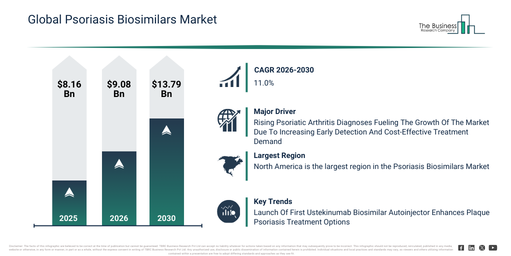
    The psoriasis biosimilars market has experienced rapid expansion over the last few years. From $8.16 billion in 2025, it is forecasted to reach $9.08 billion by 2026, reflecting an 11.3% compound annual growth rate (CAGR). Historically, this growth has been driven by the expensive nature of reference biologics, restricted patient access to therapies, a rising incidence of moderate to severe psoriasis, heightened physician awareness and prescription rates, and the initial regulatory approvals given to TNF-alpha inhibitors.

    The market for psoriasis biosimilars is projected to experience rapid expansion in the coming years, reaching an estimated value of $13.79 billion by 2030, with a compound annual growth rate (CAGR) of 11.0%. This anticipated growth during the forecast period is driven by factors such as the introduction of new biosimilars for drugs like infliximab, etanercept, and adalimumab, the broadening of hospital-based and online pharmacy networks, an increase in dermatological healthcare spending, expanded use of patient assistance programs, and a rising number of clinical trials focused on innovative biosimilars. Key trends expected to shape this period include a growing preference for cost-effective psoriasis biosimilars, a heightened emphasis on patient accessibility and affordability, the expansion of both subcutaneous and intravenous administration methods, the broadening of distribution networks through hospitals and retail pharmacies, and the creation of targeted therapies designed for various forms of psoriasis.

    Download A Free Sample Report For Comprehensive Market Insights:

    https://www.thebusinessresearchcompany.com/sample.aspx?id=27399&type=smp&utm_source=BlogsPR&utm_medium=Paid&utm_campaign=Jul_PR

    Psoriasis Biosimilars Market Opportunity Drivers: What Is Creating New Revenue Potential?

    The anticipated expansion of the psoriasis biosimilars market is being driven forward by increasing diagnosis rates of psoriatic arthritis. This condition is a chronic autoimmune disorder characterized by inflammation affecting both the joints and the skin, most commonly seen in individuals who have a history of psoriasis. Detection rates are climbing, largely due to improved screening practices for psoriasis patients, enabling earlier identification and more precise diagnosis by picking up on subtle joint symptoms that were previously missed. Psoriasis biosimilars offer a cost-effective substitute for biologic treatments, effectively decreasing joint inflammation and skin manifestations associated with psoriatic arthritis. According to the National Psoriasis Foundation (NPF), a non-profit patient advocacy group based in the United States, roughly one out of every three people with psoriasis also suffers from psoriatic arthritis, with as many as 2.4 million Americans affected—and over 15% of psoriasis patients may have undiagnosed psoriatic arthritis, underscoring both heightened awareness and ongoing gaps in detection. As a result, the rising prevalence of diagnosed psoriatic arthritis is fueling growth in the psoriasis biosimilars market.

    Psoriasis Biosimilars Market Segment Analysis: What Are The Major Market Categories?

    The psoriasis biosimilars market covered in this report is segmented –

    1) By Drug Class: TNF-Alpha Inhibitors, Infliximab, Etanercept, Adalimumab, Other Biosimilars

    2) By Disease Type: Plaque Psoriasis, Guttate Psoriasis, Inverse Psoriasis, Pustular Psoriasis

    3) By Route Of Administration: Subcutaneous, Intravenous, Oral, Topical

    4) By Distribution Channel: Hospital Pharmacies, Retail Pharmacies, Online Pharmacies

    Subsegments:

    1) By TNF-Alpha Inhibitors: Monoclonal Antibody Biosimilars, Fusion Protein Biosimilars

    2) By Infliximab: Remicade Biosimilars, CT-P13 Biosimilars

    3) By Etanercept: Enbrel Biosimilars, SB4 Biosimilars

    4) By Adalimumab: Humira Biosimilars, ABP 501 Biosimilars

    5) By Other Biosimilars: Ustekinumab Biosimilars, Secukinumab Biosimilars

    Psoriasis Biosimilars Market Innovation Trends Driving Future Development

    Key players within the psoriasis biosimilars market are prioritising the development of cutting-edge options, specifically biosimilars designed for plaque psoriasis, to broaden treatment availability, cut healthcare expenses, and boost patient outcomes. These biosimilars, which are affordable and highly comparable to sanctioned biologic therapies, address the chronic autoimmune disorder characterised by inflamed, scaly skin patches. In May 2025, for instance, Sandoz Group AG, a Swiss firm dedicated to generic drugs and biosimilars, unveiled the Pyzchiva autoinjector—the first commercially accessible ustekinumab biosimilar autoinjector. This product has received approval for managing plaque psoriasis in adults, psoriatic arthritis, Crohn’s disease, and paediatric patients aged six and older (with a weight exceeding 60 kg) suffering from plaque psoriasis. Crafted to improve patient compliance and well-being, the autoinjector offers precise automatic dosing, minimised injection discomfort, a sleek build, and adaptable storage solutions to facilitate more convenient self-administration.

    Psoriasis Biosimilars Market Leading Companies Driving Competitive Growth

    Major companies operating in the psoriasis biosimilars market are Pfizer Inc., Amgen Inc., Sandoz Group AG, Fresenius Kabi AG, Intas Pharmaceuticals Ltd., STADA Arzneimittel AG, Aurobindo Pharma Ltd., Dr. Reddy’s Laboratories Ltd., Samsung Bioepis Co. Ltd., Zydus Lifesciences Ltd., Celltrion Inc., Bio-Thera Solutions Ltd., Coherus BioSciences Inc., mAbxience S.A., Alvotech hf.

    Access The Complete Psoriasis Biosimilars Market Report:

    https://www.thebusinessresearchcompany.com/report/psoriasis-biosimilars-global-market-report?utm_source=BlogsPR&utm_medium=Paid&utm_campaign=Jul_PR

    Psoriasis Biosimilars Market Geographic Landscape: Which Region Dominates Industry Growth?

    North America was the largest region in the psoriasis biosimilars market in 2025. Asia-Pacific is expected to be the fastest-growing region in the forecast period. The regions covered in the psoriasis biosimilars market report are Asia-Pacific, South East Asia, Western Europe, Eastern Europe, North America, South America, Middle East, Africa.

    Get in touch with us:

    The Business Research Company: https://www.thebusinessresearchcompany.com/?utm_source=BlogsPR&utm_medium=Paid&utm_campaign=home_page_test

    Americas: +1 310-496-7795

    Asia: +44 7882 955267 & +91 8897263534

    Europe: +44 7882 955267

    Email us at: marketing@tbrc.info

    Follow us on:

    LinkedIn: https://in.linkedin.com/company/the-business-research-company

    YouTube: https://www.youtube.com/channel/UC24_fI0rV8cR5DxlCpgmyFQ

    Global Market Model: https://www.thebusinessresearchcompany.com/global-market-model