Blog

  • Primary Cell Culture Market Forecast Signals New Revenue Opportunities Through 2030

    Primary Cell Culture Market Forecast Signals New Revenue Opportunities Through 2030

    Delivering more actionable and strategically valuable research, The Business Research Company’s 2026 market reports feature market attractiveness analysis, total addressable market evaluation, company benchmarking matrices, interactive Excel dashboards, expanded supply chain intelligence, emerging startup coverage, and detailed product insights.

    Primary Cell Culture Market Forecast Highlighting Growth From $8.89 Billion To $14.53 Billion

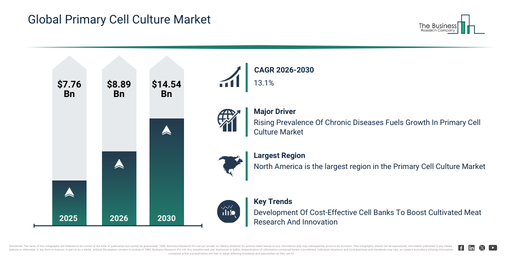
    The market for primary cell culture has experienced substantial expansion in the recent period. Projected figures show it reaching $8.89 billion by 2026, increasing from $7.76 billion in 2025, with a robust compound annual growth rate (CAGR) of 14.6%. This historical upward trajectory has been driven by several factors: progress in in vitro research methodologies, the early implementation of tissue culture approaches, a growing reliance on animal models within scientific studies, the broadening of academic investigations into life sciences, and an escalating demand for biologically accurate cell models.

    The market for primary cell culture is anticipated to experience significant expansion over the coming years, with projections indicating it will reach $14.54 billion by 2030, driven by a compound annual growth rate (CAGR) of 13.1%. This forecasted growth is fueled by several factors, including advances in gene therapy and regenerative medicine research, heightened pharmaceutical R&D spending, a growing need for tools to support personalized medicine, the scaling up of vaccine development initiatives, and an increasing emphasis on minimizing animal testing. Key trends shaping this period involve a greater adoption of primary cells to enable more physiologically relevant studies, their expanding use in regenerative medicine applications, a heightened demand for human primary cells in drug discovery, the proliferation of serum-free and specialized culture media, and increased application of primary cells in research focused on cancer and virology.

    Download A Free Sample Report For Comprehensive Market Insights:

    https://www.thebusinessresearchcompany.com/sample.aspx?id=15903&type=smp&utm_source=BlogsPR&utm_medium=Paid&utm_campaign=Jul_PR

    Primary Cell Culture Market Demand Drivers Creating New Revenue Opportunities

    The growing occurrence of chronic illnesses is set to boost the growth of the primary cell culture market in the coming years. Chronic diseases are enduring health conditions that typically advance gradually and last for extended periods, often throughout a person’s life. The increase in such conditions is linked to factors like altered lifestyles, environmental effects, insufficient physical activity, changes in diet, and population shifts. Primary cell cultures play a key role in deepening the understanding and development of therapeutic approaches for chronic diseases, thereby enhancing patient outcomes. For example, in January 2023, the National Center for Biotechnology Information, a US government agency, reported that the number of individuals with at least one chronic disease is projected to rise by 99.5%, from 71.522 million in 2020 to 142.66 million by 2050. Consequently, the rising prevalence of chronic diseases is fueling the expansion of the primary cell culture market.

    Primary Cell Culture Market Segment Analysis And Revenue Opportunities

    The primary cell culture market covered in this report is segmented –

    1) By Product: Primary Cell, Reagents, Supplements, Media

    2) By Cell Type: Animal Cells, Human Cells

    3) By Separation And Culture Techniques: Explant Method, Enzymatic Disaggregation, Mechanical Separation, Other Separation

    4) By Application: Tissue Culture and Tissue Engineering, Vaccine Production, Gene Therapy And Regenerative Medicine, Drug Screening And Toxicity Testing, Cancer Research, Virology, Stem Cell Therapy, Other Applications

    5) By End User: Pharmaceutical And Biotechnology Company And Contract Research Organizations, Academic And Research Institutes, Other End Users

    Subsegments:

    1) By Primary Cell: Human Primary Cells, Animal Primary Cells

    2) By Reagents: Enzymes, Buffers And Salts, Antibodies

    3) By Supplements: Growth Factors, Serum Supplements, Hormones

    4) By Media: Basal Media, Serum-Free Media, Specialty Media

    Primary Cell Culture Market Trends Driving Strategic Industry Expansion

    Leading players within the primary cell culture market are establishing cell banks stocked with primary cells specifically designed for cultivated meat research, with the goal of progressing toward more sustainable and ethical meat production methods. These cell bank projects aim to assist early-stage enterprises and scientists by supplying premium-quality animal primary cells suitable for research and development in cultivated meat, offering savings of up to 90% compared to alternative cell line suppliers and without any licensing constraints. For example, in June 2023, Extracellular, a UK-based CDMO, introduced affordable, license-free cell banks intended to support the cultivated meat industry. At launch, these cell banks provide cells derived from the fat, muscle, and bone marrow of cows, pigs, and lambs. This effort showcases a collective strategy to accelerate the expansion of the cultivated meat sector in Britain by improving the accessibility of cell lines and allowing both researchers and companies to create groundbreaking technologies unfettered by licensing or commercial restrictions.

    Primary Cell Culture Market Leading Players Shaping Industry Direction

    Major companies operating in the primary cell culture market are Thermo Fisher Scientific Inc., Merck KGaA, FUJIFILM Holdings Corporation, GE HealthCare Technologies Inc., Corning Incorporated, Lonza Group Ltd., Sartorius AG, Miltenyi Biotec and CO.KG, STEMCELL Technologies Inc., Cyagen Biosciences Inc., Hi Media Laboratories Pvt. Ltd., PromoCell GmbH, AllCells LLC, BPS Bioscience Inc., MatTek Ltd., Axol Bioscience Ltd., Lifeline Cell Technology Corp., Neuromics Inc., Cell Biologics Inc., ZenBio Inc., Epithelix Sàrl, ReachBio LLC, AcceGen Biotechnology, Biopredic International, ixCells Biotechnologies

    Access The Complete Primary Cell Culture Market Report:

    https://www.thebusinessresearchcompany.com/report/primary-cell-culture-global-market-report?utm_source=BlogsPR&utm_medium=Paid&utm_campaign=Jul_PR

    Primary Cell Culture Market Regional Outlook: Where Are The Largest Opportunities Located?

    North America was the largest region in the primary cell culture market in 2025. Asia-Pacific is expected to be the fastest-growing region in the forecast period. The regions covered in the primary cell culture market report are Asia-Pacific, South East Asia, Western Europe, Eastern Europe, North America, South America, Middle East, Africa.

    Get in touch with us:

    The Business Research Company: https://www.thebusinessresearchcompany.com/?utm_source=BlogsPR&utm_medium=Paid&utm_campaign=home_page_test

    Americas: +1 310-496-7795

    Asia: +44 7882 955267 & +91 8897263534

    Europe: +44 7882 955267

    Email us at: marketing@tbrc.info

    Follow us on:

    LinkedIn: https://in.linkedin.com/company/the-business-research-company

    YouTube: https://www.youtube.com/channel/UC24_fI0rV8cR5DxlCpgmyFQ

    Global Market Model: https://www.thebusinessresearchcompany.com/global-market-model

  • Primary Biliary Cholangitis Therapeutics Market Growth Is Accelerating As Industry Transformation Continues

    Primary Biliary Cholangitis Therapeutics Market Growth Is Accelerating As Industry Transformation Continues

    Enhanced with market attractiveness analysis, total addressable market evaluation, company benchmarking matrices, interactive Excel dashboards, expanded supply chain intelligence, emerging startup coverage, and detailed product insights, The Business Research Company’s 2026 market reports deliver more actionable and strategically valuable research.

    Primary Biliary Cholangitis Therapeutics Market Revenue Growth Supported By A CAGR Of 1.85% Through 2030

    The market for primary biliary cholangitis therapeutics has experienced notable expansion in recent times. Valued at $1.01 billion in 2025, it is projected to rise to $1.14 billion by 2026, achieving a compound annual growth rate (CAGR) of 12.9%. Factors driving growth during the historical period include the scarcity of treatment alternatives for PBC, a rising incidence of autoimmune liver conditions, enhanced public awareness initiatives focused on liver diseases, dependence on ursodeoxycholic acid as a standalone therapy, and the broadening of hospital facilities dedicated to liver disease management.

    The market for primary biliary cholangitis therapeutics is projected to experience rapid expansion over the coming years. By 2030, it is anticipated to reach $1.85 billion, reflecting a compound annual growth rate (CAGR) of 12.9%. This forecast period growth is driven by factors such as the progression of obeticholic acid and combination therapies, a rise in investigational drugs and pipeline candidates, increased utilization of receptor agonists and modulators, heightened patient awareness and early diagnosis efforts, and the broadening of online and retail pharmacy distribution networks. Key trends shaping the forecast period include the growing adoption of ursodeoxycholic acid and obeticholic acid treatments, expansion of combination therapies and pipeline medications, a stronger emphasis on early detection and disease management, wider distribution through hospital and retail pharmacy channels, and increased awareness of autoimmune liver diseases coupled with patient education initiatives.

    Download A Free Sample Report For Comprehensive Market Insights:

    https://www.thebusinessresearchcompany.com/sample.aspx?id=25887&type=smp&utm_source=BlogsPR&utm_medium=Paid&utm_campaign=Jul_PR

    Primary Biliary Cholangitis Therapeutics Market Expansion Supported By Key Demand Factors

    The primary biliary cholangitis therapeutics market is anticipated to expand due to the rising incidence of liver diseases. These diseases encompass a range of disorders that disrupt normal liver function, commonly resulting in inflammation, scarring, or liver failure. The growing frequency of such conditions is linked to higher alcohol consumption, as excessive drinking damages liver cells, triggering inflammation and chronic liver issues. Treatments for primary biliary cholangitis address bile duct inflammation, slow disease advancement, and maintain liver function, thereby enhancing patient outcomes by alleviating symptoms, boosting quality of life, and postponing the requirement for a liver transplant. As an example, in September 2025, the Centers for Disease Control and Prevention (CDC), a federal public health agency in the US, reported that chronic liver disease and cirrhosis led to 52,222 fatalities in the United States during 2023, positioning it as the ninth leading cause of death. Consequently, the increasing burden of liver diseases is fueling growth in the primary biliary cholangitis therapeutics market.

    Primary Biliary Cholangitis Therapeutics Market Segmentation And Category Breakdown

    The primary biliary cholangitis therapeutics market covered in this report is segmented –

    1) By Drug: Ursodeoxycholic Acid, Obeticholic Acid, Other Drugs

    2) By Mechanism Of Action (MOA): Receptor Agonist, Receptor Modulator, Enzyme Activator, Enzyme Inhibitor, Other Mechanisms Of Action

    3) By Distribution Channel: Hospital Pharmacies, Drug Store And Retail Pharmacies, Online Pharmacies

    4) By Use: Human, Veterinary

    Subsegments:

    1) By Ursodeoxycholic Acid: Branded Ursodeoxycholic Acid, Generic Ursodeoxycholic Acid, Combination Therapies With Ursodeoxycholic Acid

    2) By Obeticholic Acid: Monotherapy, Combination Therapy, Branded Obeticholic Acid

    3) By Other Drugs: Fibrates, Budesonide, Immunosuppressants, Investigational Drugs Or Pipeline Candidates

    Primary Biliary Cholangitis Therapeutics Market Growth Trends Influencing Competitive Dynamics

    Key industry players in the primary biliary cholangitis therapeutics market are concentrating on the development of innovative therapies and securing regulatory approvals, including peroxisome proliferator-activated receptor agonists, aimed at enhancing bile acid metabolism and decelerating the advancement of the disease in patients. These peroxisome proliferator-activated receptor (PPAR) agonists function by activating PPAR proteins, which control genes related to metabolic processes, inflammatory responses, and energy homeostasis. As an example, in August 2024, Gilead Sciences Inc., a pharmaceutical firm based in the United States, was granted accelerated approval by the U.S. Food and Drug Administration (FDA) for Livdelzi (seladelpar) to manage primary biliary cholangitis (PBC) among adults who either show an insufficient response to ursodeoxycholic acid (UDCA) or are unable to tolerate it. This medication, administered orally, acts as a selective PPARd agonist, stimulating the PPARd receptor to modulate genes associated with decreasing liver inflammation, optimizing bile acid metabolism, and slowing the progression of primary biliary cholangitis (PBC).

    Primary Biliary Cholangitis Therapeutics Market Competitive Analysis Of Major Industry Participants

    Major companies operating in the primary biliary cholangitis therapeutics market are Novartis AG, Gilead Sciences Inc., Ipsen Pharma, Intercept Pharmaceuticals, Enanta Pharmaceuticals, Mirum Pharmaceuticals, Calliditas Therapeutics AB, Dr. Falk Pharma GmbH, NGM Biopharmaceuticals Inc., COUR Pharmaceuticals, HighTide Therapeutics Inc., Pliant Therapeutics Inc., Tiziana Life Sciences, Phenex Pharmaceuticals, Synlogic Therapeutics

    Access The Complete Primary Biliary Cholangitis Therapeutics Market Report:

    https://www.thebusinessresearchcompany.com/report/primary-biliary-cholangitis-therapeutics-global-market-report?utm_source=BlogsPR&utm_medium=Paid&utm_campaign=Jul_PR

    Primary Biliary Cholangitis Therapeutics Market Geographic Landscape: Which Region Dominates Industry Growth?

    North America was the largest region in the primary biliary cholangitis therapeutics market in 2025. Asia-Pacific is expected to be the fastest-growing region in the forecast period. The regions covered in the primary biliary cholangitis therapeutics market report are Asia-Pacific, South East Asia, Western Europe, Eastern Europe, North America, South America, Middle East, Africa.

    Get in touch with us:

    The Business Research Company: https://www.thebusinessresearchcompany.com/?utm_source=BlogsPR&utm_medium=Paid&utm_campaign=home_page_test

    Americas: +1 310-496-7795

    Asia: +44 7882 955267 & +91 8897263534

    Europe: +44 7882 955267

    Email us at: marketing@tbrc.info

    Follow us on:

    LinkedIn: https://in.linkedin.com/company/the-business-research-company

    YouTube: https://www.youtube.com/channel/UC24_fI0rV8cR5DxlCpgmyFQ

    Global Market Model: https://www.thebusinessresearchcompany.com/global-market-model
  • Pre-workout Vegan Supplements Market Outlook Highlights The Next Major Growth Opportunities

    Pre-workout Vegan Supplements Market Outlook Highlights The Next Major Growth Opportunities

    Through market attractiveness analysis, total addressable market evaluation, company benchmarking matrices, interactive Excel dashboards, expanded supply chain intelligence, emerging startup coverage, and detailed product insights, The Business Research Company’s 2026 market reports provide more actionable and strategically valuable research.

    Pre-workout Vegan Supplements Market Value Expansion And Long-Term Growth Outlook

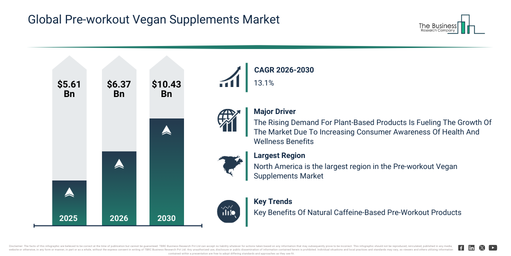
    The market for vegan pre-workout supplements has experienced swift expansion in recent times. Valued at $5.61 billion in 2025, it is projected to reach $6.37 billion by 2026, reflecting a compound annual growth rate (CAGR) of 13.4%. This historical growth has been driven by factors such as the restricted range of vegan supplement choices, the increasing popularity of fitness and gym lifestyles, heightened awareness of plant-based nutrition, greater usage of pre-workout products, and a continued dependence on traditional retail outlets for distribution.

    The market size for vegan pre-workout supplements is anticipated to experience strong expansion over the coming years, reaching $10.43 billion by 2030, with a compound annual growth rate (CAGR) of 13.1%. This forecast period’s growth is driven by advancements in plant-based and functional ingredients, the increasing prominence of online retail and direct-to-consumer sales, a growing number of health-conscious and vegan consumers, the broadening of pre-workout supplement formulations, and the rising adoption of tailored nutritional solutions. Key trends shaping this period include a heightened desire for plant-based and vegan supplement options, a surge in pre-workout products designed to boost energy and stamina, a growing interest in customized nutrition and fitness supplements, the proliferation of e-commerce and online sales channels, and a stronger emphasis on natural ingredients with clean formulations.

    Download A Free Sample Report For Comprehensive Market Insights:

    https://www.thebusinessresearchcompany.com/sample.aspx?id=24668&type=smp&utm_source=BlogsPR&utm_medium=Paid&utm_campaign=Jul_PR

    Pre-workout Vegan Supplements Market Growth Drivers And Industry Catalysts

    The growing popularity of plant-based offerings is anticipated to accelerate expansion within the pre-workout vegan supplements market in the near term. These products are defined as those made wholly or largely from botanical sources, including fruits, vegetables, grains, nuts, seeds, and legumes. A key factor behind this surge in demand is heightened consumer recognition of associated health advantages—such as diminished risks of heart disease, obesity, and diabetes—which has motivated more people to embrace plant-based diets as a means of enhancing overall wellness. By catering to those seeking clean, cruelty-free performance nutrition that aligns with vegan lifestyles, pre-workout vegan supplements fuel further growth in the plant-based sector; they stimulate innovation in sourcing ingredients from plants, in formulation techniques, and in branding approaches, while simultaneously broadening the market for sustainable and health-oriented alternatives throughout the fitness and wellness landscape. As an example, data from 2025 provided by Veganisingit, a vegan-focused blog site, indicates that the value of plant-based protein increased by 7% between 2022 and 2023. Consequently, the rising demand for plant-based products is driving forward the market for pre-workout vegan supplements.

    Pre-workout Vegan Supplements Market Segment Outlook: Which Categories Are Expanding The Fastest?

    The pre-workout vegan supplements market covered in this report is segmented –

    1) By Product: Vitamins, Minerals, Amino Acids, Plant-Based, Other Products

    2) By Form: Powder, Liquid, Capsules, Bars, Other Forms

    3) By Distribution Channel: Hypermarkets Or Supermarkets, Convenience Stores, Drug Stores And Pharmacies, Health And Wellness Stores, Online Retail

    4) By End-User: Athletes And Fitness Enthusiasts, General Health Consumers

    Subsegments:

    1) By Vitamins: Vitamin B Complex, Vitamin C, Vitamin D, Vitamin E, Vitamin K, Multivitamins

    2) By Minerals: Magnesium, Calcium, Potassium, Zinc, Iron, Electrolytes

    3) By Amino Acids: Branched-Chain Amino Acids (BCAAs), L-Arginine, L-Citrulline, L-Glutamine, L-Taurine, Beta-Alanine

    4) By Plant-Based: Beetroot Extract, Maca Root, Rhodiola Rosea, Ashwagandha, Cordyceps, Spirulina

    5) By Other Products: Natural Caffeine Sources (Green Tea, Guarana), Adaptogens, Electrolyte Blends, Herbal Extracts, Enzyme Blends

    Pre-workout Vegan Supplements Market Trends Influencing Long-Term Demand

    Key players in the pre-workout vegan supplements market are concentrating on the creation of novel products, including natural pre-workout protein, which is designed to boost exercise performance and muscle power by supplying the body with vital amino acids and nutrients before a workout. Natural pre-workout protein originates from whole foods or plant-based ingredients, undergoing minimal processing and containing no artificial additives or synthetic compounds. This type of protein supports enhanced muscle protein synthesis and helps prevent muscle breakdown. For example, in 2025, Leaft Foods Ltd., a plant-based protein producer headquartered in New Zealand, introduced the Pre-Workout Rubisco Protein Drink—an inventive plant-based performance nutrition product. This ready-to-drink vegan supplement is crafted from Rubisco protein extracted from green leaves like alfalfa and contains L-tyrosine for improved cognitive function, leucine to stimulate muscle synthesis, and tryptophan to aid in restoring equilibrium. Moreover, each serving provides an abundant supply of vitamins and micronutrients derived from the equivalent of 50,000 green leaves.

    Pre-workout Vegan Supplements Market Key Companies And Competitive Benchmarking

    Major companies operating in the pre-workout vegan supplements market are Thorne HealthTech Inc., Xymogen, The Protein Works Ltd., Vitamin-One Formulas Ltd. (dba VitaminLab), Nutrabay Retail Private Limited, Legion Athletics Inc., Transparent Labs LLC, Clean Machine Inc., Ora Organic Inc., Warrior Supplements Ltd., Cosmix Retail Private Limited, Naked Nutrition Inc., Rari Nutrition LLC, Whitewolf Nutrition Pty Ltd, Vedge Nutrition Inc., ZOA Energy LLC, KOS Naturals Inc., Bulk Powders Ltd., True Athlete, Plantigo Inc.

    Access The Complete Pre-workout Vegan Supplements Market Report:

    https://www.thebusinessresearchcompany.com/report/pre-workout-vegan-supplements-global-market-report?utm_source=BlogsPR&utm_medium=Paid&utm_campaign=Jul_PR

    Pre-workout Vegan Supplements Market Largest Region: Which Geography Holds The Highest Market Share?

    North America was the largest region in the pre-workout vegan supplements market in 2025. The regions covered in the pre-workout vegan supplements market report are Asia-Pacific, South East Asia, Western Europe, Eastern Europe, North America, South America, Middle East, Africa.

    Get in touch with us:

    The Business Research Company: https://www.thebusinessresearchcompany.com/?utm_source=BlogsPR&utm_medium=Paid&utm_campaign=home_page_test

    Americas: +1 310-496-7795

    Asia: +44 7882 955267 & +91 8897263534

    Europe: +44 7882 955267

    Email us at: marketing@tbrc.info

    Follow us on:

    LinkedIn: https://in.linkedin.com/company/the-business-research-company

    YouTube: https://www.youtube.com/channel/UC24_fI0rV8cR5DxlCpgmyFQ

    Global Market Model: https://www.thebusinessresearchcompany.com/global-market-model
  • Preventive Vaccines Market Trends And Growth Drivers Point To Strong Future Potential

    Preventive Vaccines Market Trends And Growth Drivers Point To Strong Future Potential

    Delivering more actionable and strategically valuable research, The Business Research Company’s 2026 market reports feature market attractiveness analysis, total addressable market evaluation, company benchmarking matrices, interactive Excel dashboards, expanded supply chain intelligence, emerging startup coverage, and detailed product insights.

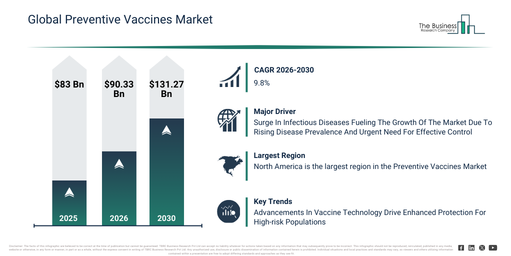
    Preventive Vaccines Market Expected To Reach $131.26 Billion By 2030 At 9.8% CAGR

    The market for preventive vaccines has experienced robust expansion over the past few years. Its value is projected to rise from $83 billion in 2025 to $90.33 billion in 2026, reflecting a compound annual growth rate (CAGR) of 8.8%. This historic period’s growth was largely driven by efforts to eradicate and manage infectious diseases, vaccination programs spearheaded by governments, heightened public awareness of health issues, the creation of worldwide immunization campaigns, and greater financial support from global health organizations.

    The preventive vaccines market is projected to experience robust expansion over the coming years, reaching an estimated value of $131.27 billion by 2030, with a compound annual growth rate (CAGR) of 9.8%. This anticipated growth during the forecast period is driven by factors such as the advancement of next-generation vaccine technologies, a growing global population coupled with urban expansion, heightened initiatives aimed at outbreak preparedness, the broadening of adult immunization programs, and a rise in collaborative efforts between public and private sectors in vaccine development. Key trends shaping the market outlook include the widening reach of national immunization campaigns, an increased emphasis on preventive healthcare and disease management, a greater need for vaccines targeting children and the elderly, the development of combination and multivalent vaccines, and improvements in cold chain logistics and storage infrastructure.

    Download A Free Sample Report For Comprehensive Market Insights:

    https://www.thebusinessresearchcompany.com/sample.aspx?id=24667&type=smp&utm_source=BlogsPR&utm_medium=Paid&utm_campaign=Jul_PR

    Preventive Vaccines Market Opportunity Drivers: What Is Creating New Revenue Potential?

    The anticipated expansion of the preventive vaccines market is set to be driven by the growing frequency of infectious diseases. These diseases are caused by pathogenic microorganisms like bacteria, viruses, fungi, or parasites, which can spread between individuals or via environmental factors. Their rising occurrence is fueled by accelerating urbanization, global travel, and antimicrobial resistance, which speed up transmission and complicate containment efforts. Preventive vaccines combat these conditions by priming the immune system to detect and attack pathogens prior to infection, thus lowering case numbers and interrupting spread. As an example, the 2024 report from the World Health Organization, a Switzerland-based intergovernmental body, indicated that newly diagnosed tuberculosis (TB) cases worldwide hit 8.2 million in 2023, up from 7.5 million the previous year. Consequently, the heightened incidence of infectious diseases is fueling growth in the preventive vaccines market.

    Preventive Vaccines Market Segment Landscape: Which Areas Lead Market Development?

    The preventive vaccines market covered in this report is segmented –

    1) By Type: Live Or Attenuated Vaccines, Inactivated Vaccines, Toxoid Vaccines, Subunit Vaccines, Conjugate Vaccines, DNA Vaccines, Recombinant Vector Vaccines

    2) By Disease Type: Pneumococcal, Poliovirus, Hepatitis, Influenza, Measles, Rubella, Other Disease Types

    3) By Age Group: Pediatric, Adult, Geriatric

    4) By Distribution Channel: Hospitals, Clinics, Pharmacies, Other Distribution Channels

    Subsegments:

    1) By Live or Attenuated Vaccines: Measles, Mumps, and Rubella (MMR) Vaccine, Varicella (Chickenpox) Vaccine, Oral Polio Vaccine (OPV), Yellow Fever Vaccine, Rotavirus Vaccine, Bacillus Calmette-Guérin (BCG) Vaccine

    2) By Inactivated Vaccines: Inactivated Poliovirus Vaccine (IPV), Hepatitis A Vaccine, Rabies Vaccine, Influenza (Inactivated) Vaccine, Japanese Encephalitis Vaccine

    3) By Toxoid Vaccines: Tetanus Toxoid Vaccine, Diphtheria Toxoid Vaccine, Pertussis (whooping cough) Vaccine

    4) By Subunit Vaccines: Hepatitis B Vaccine, Human Papillomavirus (HPV) Vaccine, Pertussis (acellular) Vaccine, Influenza (recombinant protein) Vaccine

    5) By Conjugate Vaccines: Pneumococcal Conjugate Vaccine (PCV), Haemophilus influenzae type b (Hib) Vaccine, Meningococcal Conjugate Vaccine

    6) By DNA Vaccines: Zika Virus DNA Vaccine, Cytomegalovirus (CMV) DNA Vaccine, Infectious Disease DNA Vaccines

    7) By Recombinant Vector Vaccines: Ebola Vaccine (rVSV-ZEBOV), COVID-19 Recombinant Vector Vaccines, Dengue Recombinant Vector Vaccines

    Preventive Vaccines Market Innovation Trends Driving Future Development

    Leading players in the preventive vaccines market are increasingly investing in innovative vaccine technologies, particularly advanced mRNA platforms, to boost efficacy, improve safety, simplify storage requirements, accelerate production timelines, and offer expanded protection against new strains of infectious diseases. These advanced mRNA platforms utilize messenger RNA to direct cells in generating specific proteins, which in turn prompts a precise immune reaction. A notable example occurred in March 2025, when Moderna Inc., a biotechnology firm based in the United States, secured FDA approval for mRNA-1283, marketed as mNEXSPIKE, a novel COVID-19 vaccine. This vaccine is approved for adults aged 65 and older, as well as individuals between 12 and 64 years old who have at least one risk factor identified by the CDC. The introduction of mNEXSPIKE represents a major milestone in next-generation mRNA vaccine development, featuring enhanced stability and simpler storage conditions relative to previous formulations. Consequently, this breakthrough is anticipated to improve vaccine availability and distribution, especially in underserved and isolated regions.

    Preventive Vaccines Market Industry Leaders And Market Competition

    Major companies operating in the preventive vaccines market are Pfizer Inc., Johnson & Johnson Services Inc., F. Hoffmann-La Roche Ltd., Sanofi Pasteur SA, AstraZeneca plc, GlaxoSmithKline plc (GSK), Takeda Pharmaceutical Company Limited, Moderna Inc., CSL Limited, Novavax Inc., Emergent BioSolutions Inc., Dynavax Technologies Corporation, Serum Institute of India Pvt. Ltd., Vaxcyte Inc., Bavarian Nordic A/S, Valneva SE, Panacea Biotec Ltd., Inovio Pharmaceuticals Inc., Mitsubishi Tanabe Pharma Corporation, Afrigen Biologics and Vaccines (Pty) Ltd.

    Access The Complete Preventive Vaccines Market Report:

    https://www.thebusinessresearchcompany.com/report/preventive-vaccines-global-market-report?utm_source=BlogsPR&utm_medium=Paid&utm_campaign=Jul_PR

    Preventive Vaccines Market Regional Analysis: Which Region Leads By Revenue?

    North America was the largest region in the preventive vaccines market in 2025. Asia-Pacific is expected to be the fastest-growing region in the forecast period. The regions covered in the preventive vaccines market report are Asia-Pacific, South East Asia, Western Europe, Eastern Europe, North America, South America, Middle East, Africa.

    Get in touch with us:

    The Business Research Company: https://www.thebusinessresearchcompany.com/?utm_source=BlogsPR&utm_medium=Paid&utm_campaign=home_page_test

    Americas: +1 310-496-7795

    Asia: +44 7882 955267 & +91 8897263534

    Europe: +44 7882 955267

    Email us at: marketing@tbrc.info

    Follow us on:

    LinkedIn: https://in.linkedin.com/company/the-business-research-company

    YouTube: https://www.youtube.com/channel/UC24_fI0rV8cR5DxlCpgmyFQ

    Global Market Model: https://www.thebusinessresearchcompany.com/global-market-model

  • Prescription Pain Medication Market Expansion Is Reshaping Competitive Dynamics Across The Industry

    Prescription Pain Medication Market Expansion Is Reshaping Competitive Dynamics Across The Industry

    Enhanced with market attractiveness analysis, total addressable market evaluation, company benchmarking matrices, interactive Excel dashboards, expanded supply chain intelligence, emerging startup coverage, and detailed product insights, The Business Research Company’s 2026 market reports deliver more actionable and strategically valuable research.

    Prescription Pain Medication Market Size And Revenue Forecast Through 2030

    The market for prescription pain medications has expanded significantly in recent years. Its value is projected to rise from $77.22 billion in 2025 to $81.36 billion in 2026, achieving a compound annual growth rate (CAGR) of 5.4%. This historical growth has been driven by a high prevalence of chronic pain, extensive prescription of opioids, a rise in surgical interventions, an aging demographic, and an increase in cancer-related pain cases.

    The market for prescription pain medications is projected to experience significant expansion in the coming years. By 2030, its value is estimated to reach $100.16 billion, driven by a compound annual growth rate (CAGR) of 5.3%. This anticipated growth during the forecast period is fueled by factors such as the development of safer pain treatments, a higher occurrence of neuropathic pain, the growth of outpatient care services, digital platforms for prescribing medications, and more rigorous opioid controls. Key trends shaping this period involve a transition to non-opioid approaches for pain relief, an increased need for therapies targeting chronic pain, the expansion of transdermal and long-acting drug options, the rise of digital and online pharmacies, and intensifying regulatory oversight concerning opioids.

    Download A Free Sample Report For Comprehensive Market Insights:

    https://www.thebusinessresearchcompany.com/sample.aspx?id=24385&type=smp&utm_source=BlogsPR&utm_medium=Paid&utm_campaign=Jul_PR

    Prescription Pain Medication Market Growth Momentum: Which Factors Are Influencing Demand?

    The rising incidence of arthritis is anticipated to drive forward the expansion of the prescription pain medication market. Arthritis involves joint inflammation, resulting in discomfort, swelling, stiffness, and limited mobility. This condition is becoming more widespread largely due to obesity, since excess weight adds pressure on joints, especially the knees, and encourages inflammatory responses. Prescription pain medications aid in managing arthritis by reducing inflammation and pain, enhancing joint functionality, and boosting the well-being of patients. As an example, the Office for Health Improvement and Disparities, a UK government body, reported in January 2024 that in 2023, 18.4% of individuals aged 16 and older had a long-term musculoskeletal condition, an increase from 17.6% in 2022. Consequently, the growing prevalence of autoimmune conditions is fueling the prescription pain medications market’s growth.

    Prescription Pain Medication Market Segments: Where Are The Largest Growth Opportunities?

    The prescription pain medication market covered in this report is segmented –

    1) By Type: Prescription Non-Steroidal Anti-Inflammatory Drugs, Opioids, Anti-Epileptic Medicines, Antidepressants, Other Types

    2) By Route Of Administration: Oral, Injectable, Transdermal, Other Route Of Administrations

    3) By Application: Neuropathic Pain, Cancer Pain, Post-Operative Pain, Other Applications

    4) By Distribution Channel: Hospital Pharmacies, Retail Pharmacies, Online Pharmacies

    Subsegments:

    1) By Prescription Non-Steroidal Anti-Inflammatory Drugs: COX-2 Inhibitors, Traditional Non-Steroidal Anti-Inflammatory Drugs, Combination Non-Steroidal Anti-Inflammatory Drugs

    2) By Opioids: Strong Opioids, Mild Opioids, Opioid Combination Medications

    3) By Anti-Epileptic Medicines: Sodium Channel Blockers, Gamma-Aminobutyric Acid Modulators, Glutamate Inhibitors

    4) By Antidepressants: Selective Serotonin Reuptake Inhibitors, Tricyclic Antidepressants, Serotonin-Norepinephrine Reuptake Inhibitors, Other Antidepressants

    5) By Other Types: Muscle Relaxants, Topical Pain Medications, Corticosteroids

    Prescription Pain Medication Market Trends Reshaping Industry Growth

    Key players in the prescription pain medication industry are increasingly prioritizing the development of alternative treatments, particularly non-opioid analgesics, in response to rising concerns about opioid dependence and the need for enhanced patient safety. These non-opioid pain relievers are designed to control pain without the addictive dangers associated with opioids, presenting safer and effective options for sustained pain management while lowering the risks of addiction and overdose. A notable example occurred in January 2025, when Vertex Pharmaceuticals Incorporated, a biotechnology firm based in the United States, secured approval from the U.S. Food and Drug Administration (FDA), a federal agency, for JOURNAVX—a pioneering non-opioid oral drug. This medication works by selectively blocking NaV1.8 sodium channels in peripheral nerves, thereby interrupting pain signals without engaging the central nervous system, delivering potent acute pain relief free from addictive properties. Clinical evidence from Phase 3 trials involving abdominoplasty and bunionectomy demonstrated significant pain reduction with a twice-daily dosing schedule, and since it is not classified as a controlled substance, it fulfills a crucial demand for safer acute pain management solutions.

    Prescription Pain Medication Market Major Participants And Competitive Dynamics

    Major companies operating in the prescription pain medication market are Mallinckrodt Public Limited Company, Pfizer Inc., Johnson And Johnson, Merck And Co. Inc., AbbVie Inc., Bayer AG, Sanofi S.A., Bristol-Myers Squibb Company, AstraZeneca plc, Novartis International AG, GlaxoSmithKline Public Limited Company, Takeda Pharmaceutical Company Limited, Eli Lilly And Company, Teva Pharmaceutical Industries Ltd., Boehringer Ingelheim GmbH, Mylan N.V., Sandoz Inc, Bausch Health Companies Inc., Purdue Pharma L.P., Endo International Plc

    Access The Complete Prescription Pain Medication Market Report:

    https://www.thebusinessresearchcompany.com/report/prescription-pain-medication-global-market-report?utm_source=BlogsPR&utm_medium=Paid&utm_campaign=Jul_PR

    Prescription Pain Medication Market Geographic Distribution And Regional Opportunities

    North America was the largest region in the prescription pain medication market in 2025. Asia-Pacific is expected to be the fastest-growing region in the forecast period. The regions covered in the prescription pain medication market report are Asia-Pacific, South East Asia, Western Europe, Eastern Europe, North America, South America, Middle East, Africa.

    Get in touch with us:

    The Business Research Company: https://www.thebusinessresearchcompany.com/?utm_source=BlogsPR&utm_medium=Paid&utm_campaign=home_page_test

    Americas: +1 310-496-7795

    Asia: +44 7882 955267 & +91 8897263534

    Europe: +44 7882 955267

    Email us at: marketing@tbrc.info

    Follow us on:

    LinkedIn: https://in.linkedin.com/company/the-business-research-company

    YouTube: https://www.youtube.com/channel/UC24_fI0rV8cR5DxlCpgmyFQ

    Global Market Model: https://www.thebusinessresearchcompany.com/global-market-model

  • Prescription Orthopedic Drugs Market Forecast Reveals Where Future Industry Value Will Be Created

    Prescription Orthopedic Drugs Market Forecast Reveals Where Future Industry Value Will Be Created

    Through market attractiveness analysis, total addressable market evaluation, company benchmarking matrices, interactive Excel dashboards, expanded supply chain intelligence, emerging startup coverage, and detailed product insights, The Business Research Company’s 2026 market reports provide more actionable and strategically valuable research.

    Prescription Orthopedic Drugs Market Growth From $54 Billion In 2026 To $67.5 Billion By 2030 At A CAGR Of 5.7%

    The market for prescription orthopedic drugs has experienced robust expansion in recent years. Its value is projected to rise from $51.06 billion in 2025 to $54.01 billion in 2026, reflecting a compound annual growth rate (CAGR) of 5.8%. This historic growth has been driven by several factors, including a high incidence of arthritis, a greater number of orthopedic surgical procedures, the widespread utilization of NSAIDs, joint disorders linked to an aging population, and the proliferation of orthopedic healthcare facilities.

    The prescription orthopedic drugs market is anticipated to experience robust expansion over the coming years, with projections indicating it will reach a value of $67.5 billion by 2030, driven by a compound annual growth rate (CAGR) of 5.7%. This forecasted growth is fueled by factors such as the increasing prevalence of osteoarthritis, a heightened need for sustained pain relief, the broadening scope of biologic orthopedic treatments, a higher frequency of sports-related injuries, and a surge in orthopedic drug prescriptions. Key developments shaping this period include a greater emphasis on pain management therapies, the expanding application of anti-inflammatory orthopedic medications, an intensified focus on treating chronic joint disorders, the wider utilization of disease-modifying antirheumatic drugs (DMARDs) in orthopedic care, and the growing trend toward incorporating combination pain therapies.

    Download A Free Sample Report For Comprehensive Market Insights:

    https://www.thebusinessresearchcompany.com/sample.aspx?id=21263&type=smp&utm_source=BlogsPR&utm_medium=Paid&utm_campaign=Jul_PR

    Prescription Orthopedic Drugs Market Expansion Drivers: What Is Shaping Future Growth?

    The rising occurrence of musculoskeletal disorders is anticipated to propel the expansion of the prescription orthopedic drugs market in the coming years. These disorders refer to injuries and conditions impacting the musculoskeletal system—comprising muscles, tendons, ligaments, nerves, and joints—that hinder movement and function, often leading to pain and diminished mobility. This increase is largely driven by aging populations, occupation-related repetitive motions and awkward postures, lifestyle factors such as sedentary behavior and poor dietary habits, as well as genetic predispositions. Prescription orthopedic drugs are essential in managing these conditions by relieving pain, decreasing inflammation, and supporting recovery, which in turn enhances mobility and quality of life. As an example, data from the Office for Health Improvement & Disparities in the UK reported in March 2023 that the rate of long-term self-reported musculoskeletal conditions among individuals aged 16 and older reached 17.6% in 2022. Consequently, the growing incidence of musculoskeletal disorders is fueling the market growth for prescription orthopedic drugs.

    Prescription Orthopedic Drugs Market Segment Analysis: What Are The Major Market Categories?

    The prescription orthopedic drugs market covered in this report is segmented –

    1) By Drug Type: Nonsteroidal Anti-Inflammatory Drugs (NSAIDs), Opioids, Corticosteroids, Disease-Modifying Antirheumatic Drugs (DMARDs), Other Drug Types

    2) By Application: Osteoarthritis, Rheumatoid Arthritis, Osteoporosis, Other Applications

    3) By Distribution Channel: Hospital Pharmacies, Retail Pharmacies, Online Pharmacies

    Subsegments:

    1) By Nonsteroidal Anti-Inflammatory Drugs (NSAIDs): Ibuprofen, Naproxen, Diclofenac, Celecoxib, Indomethacin

    2) By Opioids: Morphine, Oxycodone, Hydrocodone, Fentanyl, Tramadol

    3) By Corticosteroids: Prednisone, Methylprednisolone, Dexamethasone, Hydrocortisone, Betamethasone

    4) By Disease-Modifying Antirheumatic Drugs (DMARDs): Methotrexate, Hydroxychloroquine, Leflunomide, Sulfasalazine, Azathioprine

    5) By Other Drug Types: Bisphosphonates, Calcitonin, Monoclonal Antibodies, Muscle Relaxants, Hyaluronic Acid Injections

    Prescription Orthopedic Drugs Market Strategic Trends: What Is Defining The Next Phase Of Growth?

    Leading companies in the prescription orthopedic drugs market are actively broadening the approved uses of their medications, such as by developing extended-indication analgesic formulations aimed at improving postoperative pain management for a wider spectrum of orthopedic and soft-tissue surgical procedures. An extended-indication analgesic formulation is a pain-relief drug whose clinical authorization has been widened to encompass additional medical interventions, conditions, or patient populations beyond its initial approval scope. For example, in January 2023, Heron Therapeutics Inc., a biotechnology firm based in the United States, obtained FDA clearance for the expanded use of ZYNRELEF (bupivacaine and meloxicam) in soft tissue and orthopedic surgeries, including procedures involving the foot and ankle. This extended-release solution is uniquely crafted to offer sustained pain relief lasting up to 72 hours, thereby minimizing or eradicating the necessity for opioids following surgery. The expanded indication now includes further orthopedic and soft tissue procedures, such as foot and ankle surgeries, thereby enhancing its usefulness in clinical environments. Its innovative dual-drug formulation merges a local anesthetic with an anti-inflammatory agent, positioning it as a thorough alternative for addressing postoperative pain while boosting patient recovery outcomes.

    Prescription Orthopedic Drugs Market Leading Companies Driving Competitive Growth

    Major companies operating in the prescription orthopedic drugs market are Pfizer Inc., Johnson & Johnson, Roche Holding AG, Merck KGaA, AbbVie Inc., Bayer AG, Sanofi S.A., Bristol-Myers Squibb Company, AstraZeneca plc, GSK plc, Takeda Pharmaceutical Company Limited, Eli Lilly and Company, Amgen Inc., Teva Pharmaceutical Industries Ltd., Mylan N.V., Biogen Inc., UCB S.A., Allergan plc, Horizon Therapeutics plc, Sun Pharmaceutical Industries Ltd.

    Access The Complete Prescription Orthopedic Drugs Market Report:

    https://www.thebusinessresearchcompany.com/report/prescription-orthopedic-drugs-global-market-report?utm_source=BlogsPR&utm_medium=Paid&utm_campaign=Jul_PR

    Prescription Orthopedic Drugs Market Largest Region By Revenue And Market Share

    North America was the largest region in the prescription orthopedic drugs market in 2025. The regions covered in the prescription orthopedic drugs market report are Asia-Pacific, South East Asia, Western Europe, Eastern Europe, North America, South America, Middle East, Africa.

    Get in touch with us:

    The Business Research Company: https://www.thebusinessresearchcompany.com/?utm_source=BlogsPR&utm_medium=Paid&utm_campaign=home_page_test

    Americas: +1 310-496-7795

    Asia: +44 7882 955267 & +91 8897263534

    Europe: +44 7882 955267

    Email us at: marketing@tbrc.info

    Follow us on:

    LinkedIn: https://in.linkedin.com/company/the-business-research-company

    YouTube: https://www.youtube.com/channel/UC24_fI0rV8cR5DxlCpgmyFQ

    Global Market Model: https://www.thebusinessresearchcompany.com/global-market-model
  • Prescription Drugs Market Growth Through 2030 Creates New Strategic Opportunities

    Prescription Drugs Market Growth Through 2030 Creates New Strategic Opportunities

    Delivering more actionable and strategically valuable research, The Business Research Company’s 2026 market reports feature market attractiveness analysis, total addressable market evaluation, company benchmarking matrices, interactive Excel dashboards, expanded supply chain intelligence, emerging startup coverage, and detailed product insights.

    Prescription Drugs Market Expansion Outlook: What Revenue Opportunities Lie Ahead?

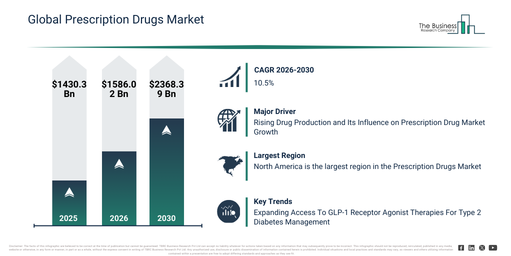
    The prescription drugs sector has experienced swift expansion in recent times. Projected to increase from $1430.3 billion in 2025 to $1586.02 billion in 2026, it reflects a compound annual growth rate (CAGR) of 10.9%. This historical growth was driven by factors such as the broadening of pharmaceutical production capabilities, a higher occurrence of chronic conditions, the enlargement of branded medication lines, rising investments in healthcare, and the growth of drug distribution within hospital settings.

    The market for prescription drugs is anticipated to experience substantial expansion in the coming years, with projections indicating it will reach $2368.39 billion by 2030, reflecting a compound annual growth rate (CAGR) of 10.5%. This anticipated growth during the forecast period is fueled by several key factors, including a heightened demand for affordable generic medications, a growing acceptance of biosimilars, the broadening of digital platforms for prescriptions, an increasing emphasis on personalized treatment approaches, and greater alignment of regulatory standards across different countries. Noteworthy developments expected in this period involve a heightened reliance on specialized prescription drugs, a surge in consumer preference for generic options, a stronger focus on managing long-term illnesses, the proliferation of biologic and biosimilar solutions, and stricter safety oversight by regulatory bodies.

    Download A Free Sample Report For Comprehensive Market Insights:

    https://www.thebusinessresearchcompany.com/sample.aspx?id=20597&type=smp&utm_source=BlogsPR&utm_medium=Paid&utm_campaign=Jul_PR

    Prescription Drugs Market Development Factors: Which Trends Are Supporting Demand?

    The growth of the prescription drug market is expected to be driven by an increase in pharmaceutical production in the coming years. Drug production refers to the structured process of manufacturing medicinal products, covering formulation, testing, and packaging, to maintain quality, safety, and efficacy. This rise in output is essential for satisfying the worldwide demand for medicines, tackling public health challenges, and guaranteeing prompt availability of treatments for a wide array of health conditions. An expansion in drug manufacturing helps improve accessibility, affordability, and innovation within the prescription drug sector, ultimately benefiting patients and the healthcare system by enhancing access to critical medications and fostering better health outcomes. For example, in October 2025, the European Federation of Pharmaceutical Industries and Associations (EFPIA), a Belgium-based entity representing the pharmaceutical industry, reported that production in the European pharmaceutical sector climbed from $438 billion (€405,701 million) in 2023 to $475 billion (€440,000 million) in 2024. As a result, rising drug production is set to propel the progress of the prescription drug market.

    Prescription Drugs Market Segment Breakdown: Which Categories Generate The Most Revenue?

    The prescription drugs market covered in this report is segmented –

    1) By Type: Branded, Generics

    2) By Route Of Administration: Oral, Topical, Parenteral, Other Routes Of Administration

    3) By Therapy Area: Oncology, Immunology, Ophthalmology, Respiratory, Dermatology, Gastroenterology, Urology, Gynecology, Endocrinology, Other Therapy Areas

    4) By End-Users: Hospitals, Specialty Clinics, Homecare, Other End-Users

    Subsegments:

    1) By Branded: Innovative Drugs, Patented Drugs, Blockbuster Drugs, Over-the-Counter (OTC) Prescription Drugs, Biosimilars, Specialty Drugs, Orphan Drugs, Combination Drugs

    2) By Generics: Small Molecule Generics, Generic Biologics, Over-the-Counter (OTC) Generics, Authorized Generics, Generic Combination Drugs, High-Volume Generics, Generic Versions Of Blockbuster Drugs

    Prescription Drugs Market Transformation Trends: Which Innovations Are Driving Change?

    Several key players within the prescription drug market are working on alternatives to Victoza (liraglutide) or similar GLP-1 receptor agonist therapies to offer improved solutions for managing type 2 diabetes. Victoza is a branded medication whose active ingredient, liraglutide, acts as a glucagon-like peptide-1 (GLP-1) receptor agonist. It is primarily indicated for the management of type 2 diabetes in adults and children aged ten years or older. An example occurred in June 2024, when Teva Pharmaceuticals, based in Israel, introduced an authorized generic version of Victoza (liraglutide injection 1.8 mg). This product provides a more budget-friendly alternative while preserving the identical formulation, effectiveness, and quality of the original brand. The introduction of this generic is intended to enhance patient access to crucial diabetes treatments by delivering cost-efficient choices for controlling type 2 diabetes and lowering associated cardiovascular risks.

    Prescription Drugs Market Key Players And Strategic Industry Positioning

    Major companies operating in the prescription drugs market are Pfizer Inc., Johnson & Johnson Private Limited, F. Hoffmann-La Roche Ltd., Merck & Co. Inc., AbbVie Inc., Allergan plc, Bayer AG, Novartis AG, Sanofi SA, Bristol-Myers Squibb Company, AstraZeneca Plc, GlaxoSmithKline plc, Takeda Pharmaceutical Company Limited, Eli Lilly and Company, Boehringer Ingelheim International GmbH, Gilead Sciences Inc, Amgen Inc., Viatris Inc., Teva Pharmaceutical Industries Ltd., Astellas Pharma Inc., Biogen Inc., Sun Pharmaceutical Industries Ltd., Dr. Reddy’s Laboratories Ltd., Hikma Pharmaceuticals PLC, Lupin Limited

    Access The Complete Prescription Drugs Market Report:

    https://www.thebusinessresearchcompany.com/report/prescription-drugs-global-market-report?utm_source=BlogsPR&utm_medium=Paid&utm_campaign=Jul_PR

    Prescription Drugs Market Regional Analysis And Leading Geography

    North America was the largest region in the prescription drugs market in 2025. Asia-Pacific is expected to be the fastest-growing region in the forecast period. The regions covered in the prescription drugs market report are Asia-Pacific, South East Asia, Western Europe, Eastern Europe, North America, South America, Middle East, Africa.

    Get in touch with us:

    The Business Research Company: https://www.thebusinessresearchcompany.com/?utm_source=BlogsPR&utm_medium=Paid&utm_campaign=home_page_test

    Americas: +1 310-496-7795

    Asia: +44 7882 955267 & +91 8897263534

    Europe: +44 7882 955267

    Email us at: marketing@tbrc.info

    Follow us on:

    LinkedIn: https://in.linkedin.com/company/the-business-research-company

    YouTube: https://www.youtube.com/channel/UC24_fI0rV8cR5DxlCpgmyFQ

    Global Market Model: https://www.thebusinessresearchcompany.com/global-market-model

  • Prescription Dermatological Drugs Market Size Projected To Increase From $42.53 Billion To $54.27 Billion During The Forecast Period

    Prescription Dermatological Drugs Market Size Projected To Increase From $42.53 Billion To $54.27 Billion During The Forecast Period

    Enhanced with market attractiveness analysis, total addressable market evaluation, company benchmarking matrices, interactive Excel dashboards, expanded supply chain intelligence, emerging startup coverage, and detailed product insights, The Business Research Company’s 2026 market reports deliver more actionable and strategically valuable research.

    Prescription Dermatological Drugs Market Growth Potential: How Will Market Size Change Through 2030?

    The market for prescription dermatological drugs has exhibited strong expansion in recent times. Valued at $40 billion in 2025, it is projected to reach $42.54 billion by 2026, reflecting a compound annual growth rate (CAGR) of 6.3%. This historic growth is driven by several factors, including the high prevalence of acne and dermatitis, the extensive application of topical corticosteroids, the growing number of dermatology clinics, a rise in skin infection cases, and an uptick in prescription rates among physicians.

    The prescription dermatological drugs market is projected to experience significant expansion over the coming years, reaching $54.27 billion by 2030 with a compound annual growth rate (CAGR) of 6.3%. This anticipated growth during the forecast period can be linked to factors such as the rising occurrence of psoriasis, heightened need for sophisticated dermatological treatments, an increase in skin conditions among the elderly due to population aging, the broadening reach of specialized dermatology services, and growing public consciousness about skin wellness. Key developments shaping the forecast period include the growing frequency of persistent skin ailments, a surge in demand for over-the-counter-strength topical medications prescribed by doctors, the rising popularity of combined dermatology treatment approaches, the widening application of long-term disease control strategies for skin issues, and a greater embrace of targeted pharmaceutical interventions for dermatological conditions.

    Download A Free Sample Report For Comprehensive Market Insights:

    https://www.thebusinessresearchcompany.com/sample.aspx?id=21262&type=smp&utm_source=BlogsPR&utm_medium=Paid&utm_campaign=Jul_PR

    Prescription Dermatological Drugs Market Industry Drivers: What Is Driving Revenue Growth?

    The rising occurrence of skin-related disorders is anticipated to boost the expansion of the prescription dermatological drugs market in the coming period. These conditions, which encompass issues like eczema, psoriasis, acne, and fungal infections, impact the skin, hair, and nails and often necessitate medical care. Their growing frequency is driven by urbanization, environmental contaminants, and shifting lifestyles, which heighten exposure to factors that worsen skin problems. The market for prescription dermatological drugs aligns with this development by offering specific treatments that control symptoms, decrease flare-ups, and enhance patients’ well-being. For example, a survey conducted in October 2023 by the European Academy of Dermatology and Venereology (EADV) involving 44,689 adults from 27 European nations revealed that 43% of participants had experienced at least one skin disease within the prior year, with fungal infections, eczema (atopic dermatitis), alopecia, and acne being the most prevalent. Consequently, the growing prevalence of dermatological conditions is fueling the growth of the prescription dermatological drugs market.

    Prescription Dermatological Drugs Market Segmentation: How Is The Market Structured Across Key Categories?

    The prescription dermatological drugs market covered in this report is segmented –

    1) By Drug Class: Corticosteroids, Retinoids, Calcineurin Inhibitors, Antifungal Agents, Antibiotics, Other Drug Classes

    2) By Indication: Acne, Psoriasis, Dermatitis, Fungal Skin Infections, Other Indications

    3) By Distribution Channel: Hospital Pharmacies, Retail Pharmacies, Online Pharmacies, Other Distribution Channels

    Subsegments:

    1) By Corticosteroids: Topical Corticosteroids, Oral Corticosteroids, Injectable Corticosteroids

    2) By Retinoids: Topical Retinoids, Oral Retinoids

    3) By Calcineurin Inhibitors: Topical Calcineurin Inhibitors, Oral Calcineurin Inhibitors

    4) By Antifungal Agents: Topical Antifungals, Oral Antifungals

    5) By Antibiotics: Topical Antibiotics, Oral Antibiotics

    6) By Other Drug Classes: Immunosuppressants, Phototherapy Agents

    Prescription Dermatological Drugs Market Growth Trends: What Is Influencing The Future Outlook?

    Key players in the prescription dermatological drugs sector are concentrating their efforts on developing advanced therapies for prurigo nodularis, specifically through interleukin-31 (IL-31) receptor antagonists, aimed at delivering superior disease control and sustained relief for patients. This type of antagonist, classified as a biologic treatment, intervenes in the IL-31 signaling pathway, which is fundamentally responsible for triggering significant itching and skin inflammation associated with prurigo nodularis. A notable example occurred in December 2024 when Galderma, a dermatology firm headquartered in Switzerland, secured US FDA approval for Nemluvio (nemolizumab), a fully human monoclonal antibody designed to block the IL-31 receptor alpha. Clinical evidence from several pivotal trials demonstrated substantial reductions in both itch intensity and nodule formation, confirming the therapy’s efficacy for individuals battling prurigo nodularis. Delivered through a subcutaneous injection administered once every four weeks, Nemluvio provides a convenient dosing regimen that facilitates ongoing disease management and promotes better patient compliance.

    Prescription Dermatological Drugs Market Competitive Landscape And Leading Companies

    Major companies operating in the prescription dermatological drugs market are Pfizer Inc., Johnson & Johnson, Merck KGaA, AbbVie Inc., Bayer AG, Novartis AG, GSK plc, Amgen Inc., Teva Pharmaceutical Industries Ltd., Intas Pharmaceuticals Inc., Regeneron Pharmaceuticals Inc., Mylan NV, Sun Pharmaceutical Industries Ltd., Cipla Limited, Dr. Reddy’s Laboratories Ltd., Zydus Cadila Health Care Limited, Leo Pharma A/S, Glenmark Pharmaceuticals Limited, Almirall S.A., DermBiont Inc.

    Access The Complete Prescription Dermatological Drugs Market Report:

    https://www.thebusinessresearchcompany.com/report/prescription-dermatological-drugs-global-market-report?utm_source=BlogsPR&utm_medium=Paid&utm_campaign=Jul_PR

    Prescription Dermatological Drugs Market Geographic Analysis: Where Is Demand Growing The Fastest?

    North America was the largest region in the prescription dermatological drugs market in 2025. Asia-Pacific is expected to be the fastest-growing region in the forecast period. The regions covered in the prescription dermatological drugs market report are Asia-Pacific, South East Asia, Western Europe, Eastern Europe, North America, South America, Middle East, Africa.

    Get in touch with us:

    The Business Research Company: https://www.thebusinessresearchcompany.com/?utm_source=BlogsPR&utm_medium=Paid&utm_campaign=home_page_test

    Americas: +1 310-496-7795

    Asia: +44 7882 955267 & +91 8897263534

    Europe: +44 7882 955267

    Email us at: marketing@tbrc.info

    Follow us on:

    LinkedIn: https://in.linkedin.com/company/the-business-research-company

    YouTube: https://www.youtube.com/channel/UC24_fI0rV8cR5DxlCpgmyFQ

    Global Market Model: https://www.thebusinessresearchcompany.com/global-market-model

  • Pregnancy Care Products Market Growth Outlook Reveals A CAGR Of 5.9% And A Market Value Of $42.72 Billion By 2030

    Pregnancy Care Products Market Growth Outlook Reveals A CAGR Of 5.9% And A Market Value Of $42.72 Billion By 2030

    Through market attractiveness analysis, total addressable market evaluation, company benchmarking matrices, interactive Excel dashboards, expanded supply chain intelligence, emerging startup coverage, and detailed product insights, The Business Research Company’s 2026 market reports provide more actionable and strategically valuable research.

    Pregnancy Care Products Market Value Analysis: What Growth Is Expected Over The Forecast Period?

    The market for pregnancy care products has experienced robust expansion in recent years. Projections indicate a rise from $31.96 billion in 2025 to $33.95 billion in 2026, reflecting a compound annual growth rate (CAGR) of 6.2%. This historical growth is driven by heightened awareness regarding pregnancy skincare, a growing population of expectant mothers, a scarcity of specialized pregnancy care offerings, increasing demand for postpartum care, and the broadening footprint of retail pharmacies and healthcare establishments.

    The pregnancy care products market is projected to experience significant growth over the coming years, with its value anticipated to reach $42.72 billion by 2030, reflecting a compound annual growth rate (CAGR) of 5.9%. This forecasted expansion is driven by several factors, including the development of advanced formulations that incorporate natural ingredients, the increased use of digital marketing and online sales channels, greater government initiatives aimed at supporting maternal health, a rise in personalized and targeted pregnancy care products, and the integration of smart tools for pregnancy monitoring. Key trends shaping this period include a growing demand for stretch mark minimizers and breast creams, an expansion in postpartum recovery and body restructuring products, a stronger preference for natural, botanical, and organic formulations, the broadening of e-commerce and specialty boutique retail channels, and an intensified focus on pregnancy and postpartum wellness along with self-care practices.

    Download A Free Sample Report For Comprehensive Market Insights:

    https://www.thebusinessresearchcompany.com/sample.aspx?id=25885&type=smp&utm_source=BlogsPR&utm_medium=Paid&utm_campaign=Jul_PR

    #Pregnancy Care Products Market Growth Factors: Which Forces Are Supporting Market Expansion?

    The rising birth rate is anticipated to boost expansion in the pregnancy care products market in the coming period. The birth rate refers to the number of live births occurring in a population over a specific year, divided by the average total population for that year, commonly expressed per 1,000 individuals. This increase in birth rate can be attributed to enhanced healthcare service availability, which has improved maternal and child health outcomes and motivated families to consider having more children. As birth rates climb, they drive demand for pregnancy care products by enlarging the population of expectant mothers needing comprehensive prenatal, maternal, and infant care solutions—such as nutritional supplements, skincare items, maternity attire, and monitoring devices—aimed at supporting a healthy pregnancy and enhancing maternal and neonatal outcomes. For example, in January 2025, data from the National Bureau of Statistics, a government statistical agency in China, showed 9.54 million newborns in 2024—a rise of 520,000 compared to 2023—with the birth rate increasing to 6.77 per 1,000 people, up by 0.38 per thousand from the prior year. Consequently, the growing birth rate is fueling progress in the pregnancy care products market.

    Pregnancy Care Products Market Segmentation Trends And Revenue Drivers

    The pregnancy care products market covered in this report is segmented –

    1) By Type: Stretch Mark Minimizer, Breast Cream, Toning Or Firming Lotion, Itching Prevention Cream, Nipple Protection Cream, Body Restructuring Gel, Stressed Leg Product, Other Types

    2) By Stage Of Pregnancy: Pre-Conception, First Trimester, Second Trimester, Third Trimester, Postpartum

    3) By Application: Orthopedic Care, Urinary Incontinence, Pelvic Pain, Pregnancy And Postpartum Care

    4) By End User: Individual Consumers (Self-Purchase), Hospitals And Healthcare Facilities, Pharmacies And Drugstores, Electronic-Commerce Or Specialty Boutiques

    Subsegments:

    1) By Stretch Mark Minimizer: Cream-Based Stretch Mark Minimizer, Oil-Based Stretch Mark Minimizer, Gel-Based Stretch Mark Minimizer, Natural Or Botanical Stretch Mark Minimizer

    2) By Breast Cream: Firming Breast Cream, Moisturizing Breast Cream, Anti-Sagging Breast Cream, Stretch Mark Prevention Breast Cream

    3) By Toning Or Firming Lotion: Cellulite Reduction Lotion, Skin Tightening Lotion, Postpartum Recovery Lotion, Hydrating Firming Lotion

    4) By Itching Prevention Cream: Cooling Itch Relief Cream, Moisturizing Anti-Itch Cream, Botanical Extract-Based Itch Cream, Allergy-Safe Itch Prevention Cream

    5) By Nipple Protection Cream: Lanolin-Based Nipple Cream, Organic Nipple Cream, Fragrance-Free Nipple Cream, Hydrating Barrier Nipple Cream

    6) By Body Restructuring Gel: Skin Renewal Gel, Toning Gel, Cell Regeneration Gel, Postpartum Restructuring Gel

    7) By Stressed Leg Product: Cooling Leg Gel, Anti-Fatigue Leg Cream, Soothing Leg Spray, Leg Circulation Booster Cream

    8) By Other Types: Anti-Pigmentation Cream, Hydrating Body Oil, Belly Butter, Perineal Massage Cream

    Pregnancy Care Products Market Industry Trends: What Changes Are Reshaping Demand?

    In the pregnancy care products market, leading firms are concentrating on creating advanced offerings like perineal gel pads to improve postpartum recovery and maternal comfort. These gel pads, available in reusable or disposable forms, can be applied as hot or cold therapy to the perineal region after childbirth, effectively reducing swelling, alleviating pain, soothing discomfort from stitches or tearing, and accelerating the healing process during the postpartum phase. For example, in January 2025, Lola—a US-based company specializing in feminine care and reproductive wellness—launched a clean postpartum line that includes a stretch mark prevention cream made with 15 botanical oils and extracts to improve skin elasticity and diminish stretch marks, organic cotton postpartum pads with three times the absorbency of standard heavy pads for enhanced protection and comfort during postpartum bleeding, and hot and cold perineal gel pads accompanied by 24 disposable liners, providing targeted therapy to reduce swelling, relieve pain from stitches or tearing, and promote faster healing.

    Pregnancy Care Products Market Industry Leaders: Which Organizations Are Driving Competition?

    Major companies operating in the pregnancy care products market are Abbott Laboratories, CLARINS SAS, Lifevision Healthcare and Cosmetics Private Limited, Artsana India Private Limited, Expanscience S.A.S, Burt’s Bees Inc, Mothercare (India) Limited, Me N Moms Private Limited, E.T. Browne Drug Co. Inc., Oscar Medicare Private Limited, Noodle & Boo LLC, Earth Mama Organics LLC, Himalaya Global Holdings Ltd., Dabur India Limited, Biocorp Lifesciences Private Limited, Centurion Healthcare Private Limited, Amishi Consumer Technologies Private Limited, Mother Sparsh Baby Care Private Limited, The Spoiled Mama LLC, Bloom and Blossom Limited

    Access The Complete Pregnancy Care Products Market Report:

    https://www.thebusinessresearchcompany.com/report/pregnancy-care-products-global-market-report?utm_source=BlogsPR&utm_medium=Paid&utm_campaign=Jul_PR

    Pregnancy Care Products Market Global Footprint: Which Region Holds Market Leadership?

    North America was the largest region in the pregnancy care products market in 2025. Asia-Pacific is expected to be the fastest-growing region in the forecast period. The regions covered in the pregnancy care products market report are Asia-Pacific, South East Asia, Western Europe, Eastern Europe, North America, South America, Middle East, Africa.

    Get in touch with us:

    The Business Research Company: https://www.thebusinessresearchcompany.com/?utm_source=BlogsPR&utm_medium=Paid&utm_campaign=home_page_test

    Americas: +1 310-496-7795

    Asia: +44 7882 955267 & +91 8897263534

    Europe: +44 7882 955267

    Email us at: marketing@tbrc.info

    Follow us on:

    LinkedIn: https://in.linkedin.com/company/the-business-research-company

    YouTube: https://www.youtube.com/channel/UC24_fI0rV8cR5DxlCpgmyFQ

    Global Market Model: https://www.thebusinessresearchcompany.com/global-market-model
  • Preeclampsia Drugs Market Forecast Highlights Expansion From $1.51 Billion To $2.37 Billion Through 2030

    Preeclampsia Drugs Market Forecast Highlights Expansion From $1.51 Billion To $2.37 Billion Through 2030

    Delivering more actionable and strategically valuable research, The Business Research Company’s 2026 market reports feature market attractiveness analysis, total addressable market evaluation, company benchmarking matrices, interactive Excel dashboards, expanded supply chain intelligence, emerging startup coverage, and detailed product insights.

    Preeclampsia Drugs Market Size Forecast: How Large Could The Market Become By 2030?

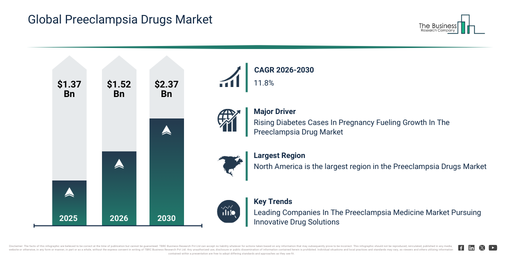
    The market for preeclampsia drugs experienced swift expansion in recent years, projected to rise from $1.37 billion in 2025 to $1.52 billion in 2026, representing a compound annual growth rate (CAGR) of 10.6%. Historically, this growth has been driven by factors such as insufficient public understanding of preeclampsia management, dependence on conventional treatment methods, a scarcity of sophisticated monitoring tools, inadequate healthcare facilities, and minimal funding directed toward medications for maternal health.

    The preeclampsia drugs market is projected to experience substantial expansion in the coming years. By 2030, its value is anticipated to reach $2.37 billion, representing a compound annual growth rate (CAGR) of 11.8%. This projected growth during the forecast period is driven by several factors, including progress in drug formulations, improvements in healthcare infrastructure, a growing preference for outpatient maternal care, the incorporation of digital health technologies, and heightened research and development efforts focused on precision medicine for pregnancy-related conditions. Key developments shaping the forecast period encompass an increasing prevalence of preeclampsia in expectant mothers, the creation of innovative antihypertensive medications, a stronger emphasis on monitoring maternal and fetal health, the expansion of distribution networks through hospital pharmacies and specialty clinics, and the rising use of combination therapies.

    Download A Free Sample Report For Comprehensive Market Insights:

    https://www.thebusinessresearchcompany.com/sample.aspx?id=13025&type=smp&utm_source=BlogsPR&utm_medium=Paid&utm_campaign=Jul_PR

    Preeclampsia Drugs Market Demand Drivers: What Is Fueling Industry Growth?

    The growing prevalence of diabetes in pregnant women is anticipated to accelerate the expansion of the preeclampsia drug market in the foreseeable future. Diabetes is a chronic metabolic disorder marked by elevated levels of blood glucose, or blood sugar. Preeclampsia is a dangerous pregnancy-related complication characterized by high blood pressure and damage to organs. The medication metformin, used to treat preeclampsia, is commonly administered to pregnant women suffering from preterm preeclampsia. For example, in June 2024, the National Health Service, a government body in the UK, reported that in 2023, over half a million (549,000) additional people in England were identified as being at risk for type 2 diabetes. This brought the total number of individuals registered with a GP and diagnosed with non-diabetic hyperglycemia, also known as pre-diabetes, to 3,615,330. This figure represents a substantial rise compared to 3,065,825 in 2022, highlighting an increase of nearly 20%. Consequently, the increasing incidence of diabetes among pregnant women will stimulate the growth of the preeclampsia drug market.

    Preeclampsia Drugs Market Segment Analysis Highlighting Growth Areas

    The preeclampsia drugs market covered in this report is segmented –

    1) By Type: Mild Preeclampsia, Severe Preeclampsia

    2) By Treatment: Medication to Lower Hypertension (B.P), Corticosteroids, Anticonvulsants Medication

    3) By Route of Administration: Oral, Parenteral, Other Route of Administration

    4) By Distribution Channel: Hospital Pharmacy, Retail Pharmacy, Online Pharmacies, Other Distribution Channels

    5) By End-User: Hospitals, Specialty Clinics, Diagnostic Centers, Other End-Users

    Subsegments:

    1) By Mild Preeclampsia: Blood Pressure Management

    2) By Severe Preeclampsia: Antihypertensive Medications, Magnesium Sulfate Therapy

    Preeclampsia Drugs Market Innovation Trends: Which Developments Are Transforming The Industry?

    Key players in the preeclampsia therapeutic landscape are actively pursuing advanced treatment options, including small interfering RNA (siRNA) technologies, designed to target significant unmet medical requirements through innovative modes of action. siRNA experimental therapies fall under a category of drugs that work by silencing or deactivating particular genes responsible for disease onset, enabling a precise therapeutic strategy. A case in point occurred in March 2023 when Comanche Biopharma Corp., a biopharmaceutical enterprise headquartered in the United States, announced that the Food and Drug Administration (FDA) cleared its investigational new drug (IND) application for CBP-4888, a proprietary siRNA agent aimed at managing preeclampsia. Administered subcutaneously, CBP-4888 functions by decreasing the production of soluble fms-like tyrosine kinase-1 (sFLT1) within the placenta. The excessive release of the sFLT1 protein from the placenta into the maternal bloodstream is the fundamental trigger for preeclampsia. By moderating this, CBP-4888 holds the potential to mitigate symptoms like hypertension and organ injury, and could further facilitate the safe prolongation of pregnancy.

    Preeclampsia Drugs Market Leading Companies: Who Holds Significant Market Presence?

    Major companies operating in the preeclampsia drugs market are AbbVie Inc., Pfizer Inc., Johnson & Johnson Co, F. Hoffmann-La Roche Ltd., Merck & Co. Inc., Novartis AG, Sanofi S.A., AstraZeneca plc, GlaxoSmithKline PLC, Takeda Pharmaceuticals Company Limited, Eli Lilly and Company, Boehringer Ingelheim Group, Viatris Inc., Teva Pharmaceutical Industries Ltd., Baxter International Inc., Otsuka Pharmaceutical Co. Ltd., Mallinckrodt Pharmaceuticals Limited, Union Chimique Belge SA, Kyowa Kirin Co Ltd, Comanche Biopharma Corp

    Access The Complete Preeclampsia Drugs Market Report:

    https://www.thebusinessresearchcompany.com/report/preeclampsia-drugs-global-market-report?utm_source=BlogsPR&utm_medium=Paid&utm_campaign=Jul_PR

    Preeclampsia Drugs Market Regional Distribution: Which Areas Drive Market Expansion?

    North America was the largest region in the preeclampsia drugs market in 2025. The regions covered in the preeclampsia drugs market report are Asia-Pacific, South East Asia, Western Europe, Eastern Europe, North America, South America, Middle East, Africa.

    Get in touch with us:

    The Business Research Company: https://www.thebusinessresearchcompany.com/?utm_source=BlogsPR&utm_medium=Paid&utm_campaign=home_page_test

    Americas: +1 310-496-7795

    Asia: +44 7882 955267 & +91 8897263534

    Europe: +44 7882 955267

    Email us at: marketing@tbrc.info

    Follow us on:

    LinkedIn: https://in.linkedin.com/company/the-business-research-company

    YouTube: https://www.youtube.com/channel/UC24_fI0rV8cR5DxlCpgmyFQ

    Global Market Model: https://www.thebusinessresearchcompany.com/global-market-model