Blog

  • Non-Opioid Pain Patch Market Expansion Is Opening New Pathways For Strategic Investment

    Non-Opioid Pain Patch Market Expansion Is Opening New Pathways For Strategic Investment

    Delivering more actionable and strategically valuable research, The Business Research Company’s 2026 market reports feature market attractiveness analysis, total addressable market evaluation, company benchmarking matrices, interactive Excel dashboards, expanded supply chain intelligence, emerging startup coverage, and detailed product insights.

    Non-Opioid Pain Patch Market Value Expansion And Long-Term Growth Outlook

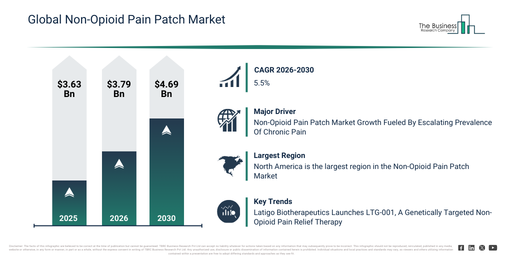
    The market for non-opioid pain patches has experienced consistent expansion over the past few years. Projections indicate an increase from $3.63 billion in 2025 to $3.79 billion in 2026, reflecting a compound annual growth rate (CAGR) of 4.6%. This historical growth has been driven by factors such as rising concerns about opioid dependence, a higher prevalence of musculoskeletal conditions, an expanding elderly demographic, broader retail pharmacy availability, and a tendency among physicians to favor localized pain management approaches.

    The non-opioid pain patch industry is anticipated to experience significant expansion in the coming years. Its value is projected to reach $4.69 billion by 2030, achieving a compound annual growth rate (CAGR) of 5.5%. This forecasted growth is driven by several factors, including a higher incidence of chronic pain conditions, stronger regulatory backing for non-opioid treatment options, progress in transdermal drug delivery systems, greater public awareness of addiction-free pain relief methods, and an extension of applications into neuropathic pain management. Key developments shaping this period encompass a growing preference for non-addictive pain control techniques, an increased use of topical and localized therapies, the introduction of hybrid patches available both over-the-counter and by prescription, heightened demand for solutions addressing chronic pain, and innovations in patch adhesion and the duration of drug release.

    Download A Free Sample Report For Comprehensive Market Insights:

    https://www.thebusinessresearchcompany.com/sample.aspx?id=12230&type=smp&utm_source=BlogsPR&utm_medium=Paid&utm_campaign=Jul_PR

    Non-Opioid Pain Patch Market Demand Drivers: What Is Fueling Industry Growth?

    The growing incidence of chronic pain is anticipated to drive expansion in the non-opioid pain patch market moving forward. Chronic pain is defined as persistent, severe discomfort that lasts for an extended duration or occurs alongside another medical condition. Non-opioid pain patches are utilized to alleviate mild to moderate pain, addressing issues such as headaches, muscle aches, arthritis, backaches, and various other types of pain. As an example, in November 2024, the Centers for Disease Control and Prevention, a US-based national public health agency, reported that an estimated 24.3% of adults experienced chronic pain in 2023, with 8.5%—roughly one-third of those affected—experiencing high-impact chronic pain, and a higher prevalence observed among women compared to men. Consequently, the increasing prevalence of chronic pain is fueling growth in the non-opioid pain patch market.

    Non-Opioid Pain Patch Market Segmentation: How Is The Market Structured Across Key Categories?

    The non-opioid pain patch market covered in this report is segmented –

    1) By Patch: Lidocaine Patches, Diclofenac Patches, Capsaicin Patches, Ketoprofen Patches, Other Patches

    2) By Distribution Channel: Hospital Pharmacies, Retail Pharmacies, Other Distribution Channels

    3) By Indication: Musculoskeletal Pain, Neuropathic Pain

    Subsegments:

    1) By Lidocaine Patches: 5% Lidocaine Patch, Other Concentrations

    2) By Diclofenac Patches: 1.3% Diclofenac Patch, Other Concentrations

    3) By Capsaicin Patches: 8% Capsaicin Patch, Other Concentrations

    4) By Ketoprofen Patches: 5% Ketoprofen Patch, Other Concentrations

    5) By Other Patches: Combination Patches, Herbal Extract Patches, Other Non-Opioid Patches

    Non-Opioid Pain Patch Market Innovation Trends: Which Developments Are Transforming The Industry?

    Major players in the non-opioid pain patch sector are focusing on the creation of advanced solutions, such as those based on genetically validated targets. This approach relies on designing drugs that act on biological mechanisms clearly implicated in illness, as supported by robust genetic data. Such a strategy improves therapeutic outcomes and minimizes the likelihood of adverse reactions. A relevant example is the launch of LTG-001 in February 2024 by Latigo Biotherapeutics Inc., a biotechnology firm from the United States. This drug works as a selective inhibitor of the Nav1.8 sodium channel, a protein mainly found in peripheral neurons. By specifically acting on this channel, LTG-001 seeks to intercept pain signals right where they originate, delivering substantial relief without impacting the central nervous system. Findings from Phase 1 clinical trials showed that LTG-001 reaches its maximum concentration (Tmax) in about 1.5 hours, indicating a quick initiation of pain relief. This property is highly valuable for controlling both sudden and persistent pain. Additionally, LTG-001 is intended to be taken orally, offering ease of use compared to injections or topical products, which could improve patient adherence and simplify daily management.

    Non-Opioid Pain Patch Market Competitive Landscape And Leading Companies

    Major companies operating in the non-opioid pain patch market are Hisamitsu Pharmaceutical Co. Inc., Teikoku Pharma USA Inc., Noven Pharmaceuticals Inc., Johnson & Johnson Services Inc., Pfizer Inc., Grünenthal GmbH, Mylan N.V., Teva Pharmaceutical Industries Ltd., Bayer AG, Iroko Pharmaceuticals LLC, Scilex Pharmaceuticals Inc., Zosano Pharma Corporation, Adynxx Inc., BioElectronics Corporation, NeuroMetrix Inc., Virpax Pharmaceuticals Inc., Novartis AG, DURECT Corporation, Eli Lilly and Company, Endo Pharmaceuticals Inc.

    Access The Complete Non-Opioid Pain Patch Market Report:

    https://www.thebusinessresearchcompany.com/report/non-opioid-pain-patch-global-market-report?utm_source=BlogsPR&utm_medium=Paid&utm_campaign=Jul_PR

    Non-Opioid Pain Patch Market Largest Region: Which Geography Holds The Highest Market Share?

    North America was the largest region in the non-opioid pain patch market in 2025. Asia-Pacific is expected to be the fastest-growing region in the non-opioid pain patch market report during the forecast period. The regions covered in the non-opioid pain patch market report are Asia-Pacific, South East Asia, Western Europe, Eastern Europe, North America, South America, Middle East, Africa.

    Get in touch with us:

    The Business Research Company: https://www.thebusinessresearchcompany.com/?utm_source=BlogsPR&utm_medium=Paid&utm_campaign=home_page_test

    Americas: +1 310-496-7795

    Asia: +44 7882 955267 & +91 8897263534

    Europe: +44 7882 955267

    Email us at: marketing@tbrc.info

    Follow us on:

    LinkedIn: https://in.linkedin.com/company/the-business-research-company

    YouTube: https://www.youtube.com/channel/UC24_fI0rV8cR5DxlCpgmyFQ

    Global Market Model: https://www.thebusinessresearchcompany.com/global-market-model
  • Non-injectable Insulin Market Trends Are Creating New Opportunities For Industry Leaders

    Non-injectable Insulin Market Trends Are Creating New Opportunities For Industry Leaders

    Enhanced with market attractiveness analysis, total addressable market evaluation, company benchmarking matrices, interactive Excel dashboards, expanded supply chain intelligence, emerging startup coverage, and detailed product insights, The Business Research Company’s 2026 market reports deliver more actionable and strategically valuable research.

    Non-injectable Insulin Market Expected To Reach $3.4 Billion By 2030 At 9.8% CAGR

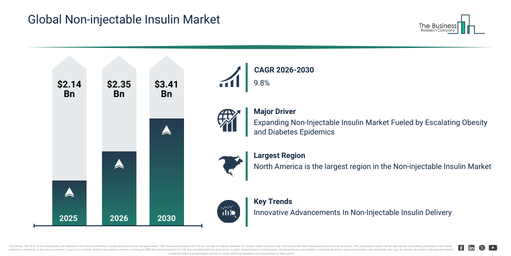
    The market for non-injectable insulin has experienced robust expansion in recent years. Valued at $2.14 billion in 2025, it is anticipated to climb to $2.35 billion by 2026, representing a compound annual growth rate (CAGR) of 9.9%. Several key drivers have fueled this historical progress, such as the growing incidence of diabetes, an increased patient demand for needle-free treatment options, breakthroughs in insulin formulation technologies, public health efforts that promote better diabetes care, and a deeper understanding of the illness’s complications.

    The non-injectable insulin market is projected to experience robust expansion over the coming years, reaching $3.41 billion by 2030 with a compound annual growth rate (CAGR) of 9.8%. This forecasted growth is driven by advances in oral and inhalable insulin technologies, the incorporation of digital health tools, an increasing elderly population, improved healthcare systems in developing nations, and tailored diabetes therapies. Key developments shaping the period ahead encompass oral insulin delivery platforms, pulmonary inhalers for insulin administration, diabetes care focused on patient needs, non-invasive methods for monitoring and dosing, and formulation breakthroughs designed to enhance bioavailability.

    Download A Free Sample Report For Comprehensive Market Insights:

    https://www.thebusinessresearchcompany.com/sample.aspx?id=13888&type=smp&utm_source=BlogsPR&utm_medium=Paid&utm_campaign=Jul_PR

    Non-injectable Insulin Market Growth Drivers: What Factors Are Accelerating Expansion?

    The growing prevalence of obesity and diabetes is set to drive expansion in the non-injectable insulin market in the coming years. Obesity involves an abnormal buildup of body fat, often stemming from a mismatch between caloric intake and energy use, while diabetes mellitus, commonly shortened to diabetes, refers to a set of metabolic conditions marked by sustained high blood glucose levels. Non-injectable insulin serves as a treatment option for both diabetes and obesity, offering the potential to improve disease management by overcoming obstacles to insulin use, assisting with weight control, and delivering more convenient therapeutic choices. For example, in June 2023, the Institute for Health Metrics and Evaluation, a public health research institute based in the United States, reported that over 500 million people around the world were living with diabetes. That figure is projected to more than double by 2050, reaching 1.3 billion individuals. Consequently, the rising rates of obesity and diabetes are fueling growth in the market for non-injectable insulin.

    Non-injectable Insulin Market Segmentation Trends And Revenue Drivers

    The non-injectable insulin market covered in this report is segmented –

    1) By Insulin Type: Oral Insulin, Inhaled Insulin, Nasal Insulin, Buccal Or Sublingual Insulin, Transdermal Insulin

    2) By Product: Pills, Sprays, Other Products

    3) By Distribution Channel: Hospital Pharmacies, Online Pharmacies, Drug Stores

    Subsegments:

    1) By Oral Insulin: Oral Insulin Tablets, Oral Insulin Capsules, Enteric-Coated Oral Insulin, Nanoparticle-Based Oral Insulin

    2) By Inhaled Insulin: Dry Powder Inhaled Insulin, Aerosolized Insulin, Pulmonary Insulin Delivery Systems

    3) By Nasal Insulin: Nasal Spray Insulin, Nasal Gel Insulin, Nasal Powder Insulin

    4) By Buccal Or Sublingual Insulin: Buccal Spray Insulin, Sublingual Insulin Films, Oral Mucosal Insulin Drops

    5) By Transdermal Insulin: Insulin Patches, Microneedle-Free Transdermal Systems, Iontophoresis-Based Insulin Delivery

    Non-injectable Insulin Market Trends: What Is Shaping Future Industry Growth?

    Leading players in the non-injectable insulin sector are concentrating on novel breakthroughs in drug delivery systems—including needle-free oral insulin sprays—aimed at enhancing the quality of life for individuals managing diabetes through multiple daily injections. As a painless and injection-free method for controlling blood sugar, a needle-free insulin spray provides a practical solution since doses can be administered directly into the oral cavity. For example, in November 2023, NiedlFree Technologies, a tech firm based in India, launched Ozulin, an oral insulin spray. This product is designed to offer a more accessible option for diabetic patients, especially those who struggle with conventional injectable insulin methods. Should it receive approval, Ozulin could transform diabetes management by delivering a more convenient and discomfort-free substitute for injectable insulin.

    Non-injectable Insulin Market Industry Leaders: Which Organizations Are Driving Competition?

    Major companies operating in the non-injectable insulin market are Novo Nordisk A/S, Eli Lilly and Company, Sanofi S.A., Pfizer Inc., Novartis AG, Merck & Co. Inc., AstraZeneca, Takeda Pharmaceutical, Abbott Laboratories, MannKind Corporation, Biocon Limited, Sun Pharmaceutical Industries Ltd., Dr. Reddy’s Laboratories Limited, Cipla Limited, Lupin Pharmaceuticals, Glenmark Pharmaceuticals, Torrent Pharmaceuticals, Wockhardt Limited, Teva Pharmaceutical Industries Ltd., F. Hoffmann-La Roche Ltd.

    Access The Complete Non-injectable Insulin Market Report:

    https://www.thebusinessresearchcompany.com/report/non-injectable-insulin-global-market-report?utm_source=BlogsPR&utm_medium=Paid&utm_campaign=Jul_PR

    Non-injectable Insulin Market Regional Analysis: Which Region Leads By Revenue?

    North America was the largest region in the non-injectable insulin market in 2025. Asia-Pacific is expected to be the fastest-growing region in the forecast period. The regions covered in the non-injectable insulin market report are Asia-Pacific, South East Asia, Western Europe, Eastern Europe, North America, South America, Middle East, Africa.

    Get in touch with us:

    The Business Research Company: https://www.thebusinessresearchcompany.com/?utm_source=BlogsPR&utm_medium=Paid&utm_campaign=home_page_test

    Americas: +1 310-496-7795

    Asia: +44 7882 955267 & +91 8897263534

    Europe: +44 7882 955267

    Email us at: marketing@tbrc.info

    Follow us on:

    LinkedIn: https://in.linkedin.com/company/the-business-research-company

    YouTube: https://www.youtube.com/channel/UC24_fI0rV8cR5DxlCpgmyFQ

    Global Market Model: https://www.thebusinessresearchcompany.com/global-market-model
  • Non-Hormonal Contraceptives Market Growth Is Reshaping Competitive Advantage Across The Industry

    Non-Hormonal Contraceptives Market Growth Is Reshaping Competitive Advantage Across The Industry

    Through market attractiveness analysis, total addressable market evaluation, company benchmarking matrices, interactive Excel dashboards, expanded supply chain intelligence, emerging startup coverage, and detailed product insights, The Business Research Company’s 2026 market reports provide more actionable and strategically valuable research.

    Non-Hormonal Contraceptives Market Size And Revenue Forecast Through 2030

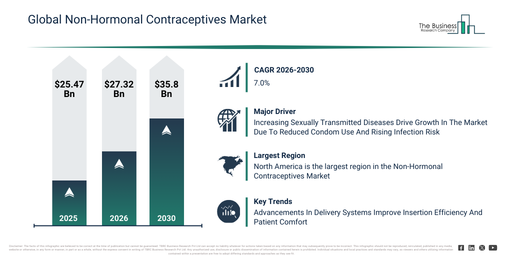
    The market size for non-hormonal contraceptives has demonstrated robust growth over recent years. Specifically, it is projected to expand from $25.47 billion in 2025 to $27.32 billion in 2026, reflecting a compound annual growth rate (CAGR) of 7.3%. This historical growth has been driven by factors such as the restricted accessibility of non-hormonal contraceptive options, a dependence on surgical sterilization procedures, heightened awareness surrounding reproductive health, an upsurge in female healthcare initiatives, and the increasing utilization of barrier devices within clinical settings.

    The non-hormonal contraceptives market is projected to experience robust expansion in the coming years, reaching an estimated $35.8 billion by 2030 with a compound annual growth rate (CAGR) of 7.0%. This anticipated growth during the forecast period stems from several key factors, including the creation of more sophisticated non-hormonal devices, a higher demand for sterilization procedures that are both reversible and minimally invasive, broader implementation of family planning initiatives, growing consciousness regarding adherence to safety and compliance norms, and the incorporation of smart monitoring systems within contraceptive technologies. Additionally, significant trends influencing this timeframe feature a growing inclination toward non-hormonal birth control methods, an increased uptake of barrier-based and mechanical tools, heightened awareness surrounding reversible sterilization choices, a broader availability of minimally invasive contraceptive instruments, and an intensified emphasis on ensuring safety, adhering to regulations, and designing with patient needs at the forefront.

    Download A Free Sample Report For Comprehensive Market Insights:

    https://www.thebusinessresearchcompany.com/sample.aspx?id=25849&type=smp&utm_source=BlogsPR&utm_medium=Paid&utm_campaign=Jul_PR

    Non-Hormonal Contraceptives Market Growth Factors Supporting Long-Term Expansion

    The rising incidence of sexually transmitted diseases is anticipated to accelerate the expansion of the non-hormonal contraceptives market in the coming period. Sexually transmitted diseases (STDs) are infections primarily spread through sexual contact, triggered by bacteria, viruses, or parasites. This increase in STDs is largely driven by reduced condom use, which heightens the infection risk during unprotected sexual encounters. Non-hormonal contraceptives, such as male and female condoms, act as a physical barrier that blocks the transfer of bodily fluids during sex, thereby lowering the risk of STD transmission. As an example, in April 2025, the Minnesota Department of Health (MDH), a state health agency in the US, reported that HIV cases among men aged 35 to 39 rose from 10% in 2023 to 17% in 2024. Consequently, the escalating prevalence of sexually transmitted diseases is fueling the growth of the non-hormonal contraceptives market.

    Non-Hormonal Contraceptives Market Segment Analysis Highlighting Growth Areas

    The non-hormonal contraceptives market covered in this report is segmented –

    1) By Type: Devices, Sterilization, Other Product Types

    2) By Mechanism Of Action: Antagonist, Agonist, Inhibitor, Modulator

    3) By Route of Administration: Intramuscular, Intravaginal, Intravenous, Oral, Subcutaneous, Topical, Transdermal, Other Route Of Administrations

    4) By Purpose Of Therapy: Treatment Of Disease, Management Of Symptoms

    5) By Target Indication: Bacterial Vaginosis, Contraception, Endometriosis, Postmenopausal Osteoporosis, Uterine Fibroids, Vaginitis, Other Target Indications

    Subsegments:

    1) By Devices: Surgical Instruments, Ligation Clips, Tubal Rings

    2) By Sterilization: Permanent Sterilization, Reversible Sterilization, Mechanical Sterilization Devices

    3) By Other Product Types: Non-Surgical Barrier Devices, Implantable Plugs, Intrauterine Permanent Devices

    Non-Hormonal Contraceptives Market Industry Trends Shaping Future Revenue Growth

    Key players in the non-hormonal contraceptives market are concentrating on creating advanced products, including preloaded intrauterine device delivery systems, to simplify fitting processes, boost user convenience, and enhance clinical effectiveness. A preloaded intrauterine device (IUD) delivery system is a factory-assembled, immediately usable tool that combines the IUD and its inserter within one component, intended to make the insertion smoother, cut down on preparation time, and lower the likelihood of contamination or errors during handling. As an example, in September 2024, CooperSurgical Inc., a medical device and fertility firm headquartered in the United States, unveiled the Paragard Single-Handed Inserter, which is designed to improve insertion speed and patient comfort when placing non-hormonal preloaded intrauterine devices. This system delivers more than 99% effectiveness as a long-term contraceptive solution, lasting up to ten years, by stopping sperm from reaching an egg. Its key advantages involve immediate and reversible protection, being free of hormones, and requiring little upkeep after placement.

    Non-Hormonal Contraceptives Market Leading Companies: Who Holds Significant Market Presence?

    Major companies operating in the non-hormonal contraceptives market are Church & Dwight Co., Okamoto Industries, CooperSurgical Inc., PSI India Pvt Ltd., Karex Berhad, Fuji Latex Co. Ltd., PREGNA INTERNATIONAL LTD., Cupid Limited, Global Protection Corp., SMB Corporation of India, HLL Lifecare Limited, Contraline Inc.

    Access The Complete Non-Hormonal Contraceptives Market Report:

    https://www.thebusinessresearchcompany.com/report/non-hormonal-contraceptives-global-market-report?utm_source=BlogsPR&utm_medium=Paid&utm_campaign=Jul_PR

    Non-Hormonal Contraceptives Market Geographic Distribution And Regional Opportunities

    North America was the largest region in the non-hormonal contraceptives market in 2025. Asia-Pacific is expected to be the fastest-growing region in the forecast period. The regions covered in the non-hormonal contraceptives market report are Asia-Pacific, South East Asia, Western Europe, Eastern Europe, North America, South America, Middle East, Africa.

    Get in touch with us:

    The Business Research Company: https://www.thebusinessresearchcompany.com/?utm_source=BlogsPR&utm_medium=Paid&utm_campaign=home_page_test

    Americas: +1 310-496-7795

    Asia: +44 7882 955267 & +91 8897263534

    Europe: +44 7882 955267

    Email us at: marketing@tbrc.info

    Follow us on:

    LinkedIn: https://in.linkedin.com/company/the-business-research-company

    YouTube: https://www.youtube.com/channel/UC24_fI0rV8cR5DxlCpgmyFQ

    Global Market Model: https://www.thebusinessresearchcompany.com/global-market-model
  • Non-Alcoholic Steatohepatitis Treatment Market Forecast Signals New Revenue Opportunities Through 2030

    Non-Alcoholic Steatohepatitis Treatment Market Forecast Signals New Revenue Opportunities Through 2030

    Delivering more actionable and strategically valuable research, The Business Research Company’s 2026 market reports feature market attractiveness analysis, total addressable market evaluation, company benchmarking matrices, interactive Excel dashboards, expanded supply chain intelligence, emerging startup coverage, and detailed product insights.

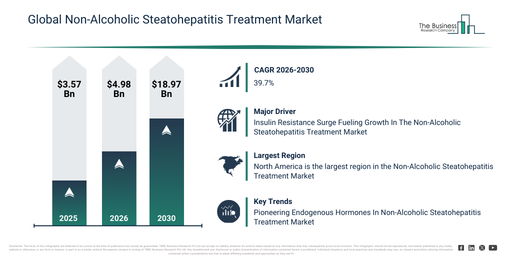
    Non-Alcoholic Steatohepatitis Treatment Market Growth From $4.98 Billion In 2026 To $18.97 Billion By 2030 At A CAGR Of 39.7%

    The market for non-alcoholic steatohepatitis treatments has seen explosive expansion in recent years. Valued at $3.57 billion in 2025, it is projected to reach $4.98 billion by 2026, reflecting a compound annual growth rate (CAGR) of 39.6%. This historic growth has been driven by factors such as the growing prevalence of obesity, a rising number of type 2 diabetes cases, high intake of processed foods, insufficient awareness regarding liver health, and a scarcity of therapeutic options for early-stage NASH.

    The non-alcoholic steatohepatitis treatment market is projected to experience substantial expansion in the coming years, with its value anticipated to reach $18.97 billion by 2030, representing a compound annual growth rate (CAGR) of 39.7%. This upward trajectory during the forecast period is largely driven by progress in precision medicine, the creation of innovative NASH therapies, the integration of digital health monitoring technologies, governmental efforts aimed at preventing liver disease, and heightened funding for liver disease research. Key developments shaping this period include a focus on tailored lifestyle and dietary plans, progress in non-invasive diagnostic techniques, initiatives to raise awareness about fatty liver disease, at-home liver health monitoring solutions, and the emergence of new pharmacological agents.

    Download A Free Sample Report For Comprehensive Market Insights:

    https://www.thebusinessresearchcompany.com/sample.aspx?id=8595&type=smp&utm_source=BlogsPR&utm_medium=Paid&utm_campaign=Jul_PR

    Non-Alcoholic Steatohepatitis Treatment Market Demand Drivers Creating New Revenue Opportunities

    The rising prevalence of insulin resistance is a key driver behind the expansion of the non-alcoholic steatohepatitis treatment market. Insulin resistance is a condition where muscle, fat, and liver cells fail to respond appropriately to insulin, making it difficult for the body to absorb glucose from the bloodstream and often resulting in elevated blood sugar levels. This condition is frequently linked to factors such as poor lifestyle choices, excessive sugar intake, and genetic predisposition. Due to the growing incidence of diabetes and other liver-related disorders, the use of non-alcoholic steatohepatitis treatments has increased substantially to manage insulin resistance. For example, data from PubMed—a free biomedical literature database managed by the U.S. National Library of Medicine—released in July 2025 showed notable rises in the prevalence of general obesity (from 34.9% to 41.4%), abdominal obesity (from 62.5% to 67.0%), severe obesity (from 5.2% to 11.5%), and insulin resistance (from 22.5% to 30.2%). As a result, the growing frequency of insulin resistance, driven by rising rates of liver diseases and diabetes, is expected to propel the non-alcoholic steatohepatitis treatment market forward.

    Non-Alcoholic Steatohepatitis Treatment Market Segment Performance And Strategic Opportunities

    The non-alcoholic steatohepatitis treatment market covered in this report is segmented –

    1) By Drug Type: Vitamin E And Pioglitazone, Ocaliva, Elafibranor, Selonsertib And cenicriviroc, Obeticholic Acid, Other Drugs Types

    2) By Test Type: Blood Tests, Liver Biopsy, Imaging Procedures

    3) By End User: Hospital Pharmacies, Retail And Specialty Pharmacies, Other End Users

    Subsegments:

    1) By Vitamin E And Pioglitazone: Vitamin E Supplements, Pioglitazone-Based Formulations.

    2) By Ocaliva: Ocaliva (Obeticholic Acid) For NASH

    3) By Elafibranor: Elafibranor Monotherapy, Elafibranor Combination Therapy

    4) By Selonsertib And Cenicriviroc: Selonsertib Formulations, Cenicriviroc Formulations

    5) By Obeticholic Acid: Immediate-Release Obeticholic Acid, Extended-Release Obeticholic Acid

    6) By Other Drug Types: Novel Agents In Clinical Trials, Combination Therapies

    Non-Alcoholic Steatohepatitis Treatment Market Trends Driving Strategic Industry Expansion

    Key players in the non-alcoholic steatohepatitis treatment market are focusing on the creation of advanced solutions like endogenous hormones to attract a broader customer base, boost sales, and drive revenue growth. Endogenous hormones are naturally produced within the body by various glands, tissues, or organs and are essential for regulating physiological functions. For example, in September 2023, 89bio Inc., a biotechnology firm based in the United States, revealed that the U.S. Food and Drug Administration (FDA) had granted Breakthrough Therapy Designation (BTD) to Pegozafermin for patients with nonalcoholic steatohepatitis (NASH). Pegozafermin is a unique product, distinguished by its engineered glycoPEGylated analog of fibroblast growth factor 21. This specially designed formulation is being developed to treat non-alcoholic steatohepatitis (NASH) and severe hypertriglyceridemia (SHTG). Its distinctiveness lies in the application of a specialized glycoPEGylated technology, which provides an extended half-life while maintaining its effectiveness. This innovative method improves the product’s ability to influence critical factors associated with lipid metabolism, NASH, and hypertriglyceridemia, such as reducing triglycerides, controlling blood sugar, and addressing steatosis, inflammation, and fibrosis.

    Non-Alcoholic Steatohepatitis Treatment Market Key Players: Which Companies Shape Industry Competition?

    Major companies operating in the non-alcoholic steatohepatitis treatment market are AstraZeneca PLC, Galmed Pharmaceuticals Ltd., Genfit S.A., Zydus Cadila Healthcare Limited, Bristol-Myers Squibb Company, Gilead Sciences Inc., Novo Nordisk A/S, Inventiva Pharma SA, NGM Biopharmaceuticals Inc., Galectin Therapeutics Inc., Madrigal Pharmaceuticals Corporation, Intercept Pharmaceuticals Inc., Cirius Therapeutics Inc., Viking Therapeutics Inc., Eli Lilly and Company, Terns Pharmaceuticals Inc., AbbVie Inc., Johnson & Johnson Private Limited, Sanofi S.A., F. Hoffmann-La Roche Ltd., C.H. Boehringer Sohn AG & Co. KG

    Access The Complete Non-Alcoholic Steatohepatitis Treatment Market Report:

    https://www.thebusinessresearchcompany.com/report/non-alcoholic-steatohepatitis-treatment-global-market-report?utm_source=BlogsPR&utm_medium=Paid&utm_campaign=Jul_PR

    Non-Alcoholic Steatohepatitis Treatment Market Largest Region By Revenue And Market Share

    North America was the largest region in the non-alcoholic steatohepatitis treatment market share in 2025. The regions covered in the non-alcoholic steatohepatitis treatment market report are Asia-Pacific, South East Asia, Western Europe, Eastern Europe, North America, South America, Middle East, Africa.

    Get in touch with us:

    The Business Research Company: https://www.thebusinessresearchcompany.com/?utm_source=BlogsPR&utm_medium=Paid&utm_campaign=home_page_test

    Americas: +1 310-496-7795

    Asia: +44 7882 955267 & +91 8897263534

    Europe: +44 7882 955267

    Email us at: marketing@tbrc.info

    Follow us on:

    LinkedIn: https://in.linkedin.com/company/the-business-research-company

    YouTube: https://www.youtube.com/channel/UC24_fI0rV8cR5DxlCpgmyFQ

    Global Market Model: https://www.thebusinessresearchcompany.com/global-market-model
  • Non-Alcoholic Steatohepatitis (NASH) Market Growth Is Accelerating As Industry Transformation Continues

    Non-Alcoholic Steatohepatitis (NASH) Market Growth Is Accelerating As Industry Transformation Continues

    Enhanced with market attractiveness analysis, total addressable market evaluation, company benchmarking matrices, interactive Excel dashboards, expanded supply chain intelligence, emerging startup coverage, and detailed product insights, The Business Research Company’s 2026 market reports deliver more actionable and strategically valuable research.

    Non-Alcoholic Steatohepatitis (NASH) Market Expansion Outlook: What Revenue Opportunities Lie Ahead?

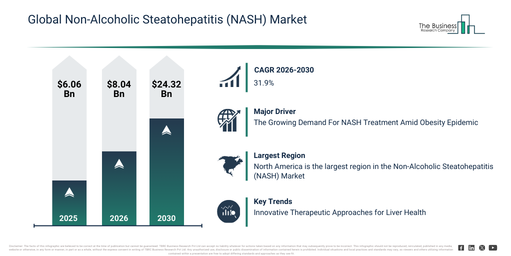
    The market for non-alcoholic steatohepatitis (NASH) has experienced rapid expansion in recent years, increasing from $6.06 billion in 2025 to $8.04 billion in 2026, reflecting a compound annual growth rate (CAGR) of 32.7%. This historical growth was driven by factors such as insufficient public awareness of NASH, a scarcity of effective therapeutic solutions, a dependence on lifestyle changes, a high incidence of metabolic conditions, and a disjointed market structure.

    The non-alcoholic steatohepatitis (NASH) market is projected to undergo substantial expansion in the coming years, with its value anticipated to reach $24.32 billion by 2030, representing a compound annual growth rate (CAGR) of 31.9%. This forecasted growth is driven by factors such as progress in targeted therapies, rising healthcare spending, a growing shift toward non-invasive diagnostic methods, an expanding pipeline of pharmaceutical products, and enhanced collaborative efforts in research and development. Additionally, key trends shaping the market over the forecast period include the growing incidence of obesity and type 2 diabetes, the emergence of non-invasive diagnostic tools, intensified research into therapies for liver fibrosis, the rise of personalized and targeted drug treatments, and the broadening of hospital and retail pharmacy networks.

    Download A Free Sample Report For Comprehensive Market Insights:

    https://www.thebusinessresearchcompany.com/sample.aspx?id=8805&type=smp&utm_source=BlogsPR&utm_medium=Paid&utm_campaign=Jul_PR

    Non-Alcoholic Steatohepatitis (NASH) Market Expansion Supported By Key Demand Factors

    The growing prevalence of obesity is fueling demand in the non-alcoholic steatohepatitis (NASH) market. Obesity is defined as an abnormal or excessive accumulation of fat that presents a health risk, along with a body weight exceeding what is considered healthy or normal for an individual of a given height. As the global obesity epidemic intensifies, non-alcoholic fatty liver disease has become more common, positioning NASH as a potential leading cause of severe liver conditions in the coming decades—this, in turn, is driving the need for NASH treatments and related pharmaceuticals. For example, in May 2025, data from the Government Digital Service, a UK-based government body, revealed that during 2023 to 2024, the prevalence of overweight (including obesity) among adults was higher in men (69.7%) compared to women (59.2%), whereas obesity rates were higher in women (26.9%) than in men (26.2%). Consequently, the increase in obesity cases is expected to propel growth in the non-alcoholic steatohepatitis (NASH) market.

    Non-Alcoholic Steatohepatitis (NASH) Market Segment Landscape And Growth Potential

    The non-alcoholic steatohepatitis (nash) market covered in this report is segmented –

    1) By Dosage Form: Solid, Liquid

    2) By Product: Vitamin E and Pioglitazone, Ocaliva, Elafibranor, Selonsertib and Cenicriviroc, Other Products

    3) By Disease Cause: Hypertension, Heart Disease, High Blood Lipid, Type 2 Diabetes, Obesity

    4) By Sales Channel: Hospital Pharmacy, Retail Pharmacy, Online Provider

    5) By Application: Oral, Parenteral

    Subsegments:

    1) By Solid: Tablets, Capsules, Other Solid Dosage Forms

    2) By Liquid: Oral Solutions, Syrups, Injectable Solutions, Other Liquid Dosage Forms

    Non-Alcoholic Steatohepatitis (NASH) Market Growth Trends Influencing Competitive Dynamics

    Key players in the non-alcoholic steatohepatitis (NASH) market are concentrating on the development of thyroid hormone receptor-beta (THR-beta) agonists, which are designed to boost liver metabolism, decrease the buildup of fat in the liver, and enhance overall liver function. These THR-beta agonists work by specifically targeting and activating the thyroid hormone receptor-beta subtype, a crucial receptor that regulates metabolic processes, growth, and development. A notable example occurred in March 2024, when the U.S.-based Food and Drug Administration gave its approval to Rezdiffra (resmetirom), a THR-beta agonist, marking it as the first therapeutic option for adults suffering from noncirrhotic NASH accompanied by moderate to advanced liver scarring, or fibrosis. Through its selective activation of the THR-beta receptor, Rezdiffra effectively modulates lipid metabolism, resulting in a significant reduction in intrahepatic triglycerides and a decrease in total liver fat accumulation.

    Non-Alcoholic Steatohepatitis (NASH) Market Competitive Landscape: Who Are The Leading Companies?

    Major companies operating in the non-alcoholic steatohepatitis (nash) market are NGM Biopharmaceuticals Inc., Novartis AG, AstraZeneca plc., GlaxoSmithKline plc., F. Hoffmann-La Roche AG, The Takeda Pharmaceutical Company Limited, Gilead Sciences Inc., Novo Nordisk A/S, Genfit SA, Intercept Pharmaceuticals Inc., Enanta Pharmaceuticals Inc., Blade Therapeutics Inc., Galmed Pharmaceuticals Inc., Immuron Limited, Terns Pharmaceuticals Inc., Tobira Therapeutics Inc., Arena Pharmaceuticals Inc., Galectin Therapeutics Inc., Viking Therapeutics, Madrigal Pharmaceuticals Inc., Cirius Therapeutics, Akero Therapeutics Inc., Echosens

    Access The Complete Non-Alcoholic Steatohepatitis (NASH) Market Report:

    https://www.thebusinessresearchcompany.com/report/non-alcoholic-steatohepatitis-nash-global-market-report?utm_source=BlogsPR&utm_medium=Paid&utm_campaign=Jul_PR

    Non-Alcoholic Steatohepatitis (NASH) Market Regional Analysis And Leading Geography

    North America was the largest region in the non alcoholic steatohepatitis (NASH) market share in 2025. The regions covered in the non-alcoholic steatohepatitis (nash) market report are Asia-Pacific, South East Asia, Western Europe, Eastern Europe, North America, South America, Middle East, Africa.

    Get in touch with us:

    The Business Research Company: https://www.thebusinessresearchcompany.com/?utm_source=BlogsPR&utm_medium=Paid&utm_campaign=home_page_test

    Americas: +1 310-496-7795

    Asia: +44 7882 955267 & +91 8897263534

    Europe: +44 7882 955267

    Email us at: marketing@tbrc.info

    Follow us on:

    LinkedIn: https://in.linkedin.com/company/the-business-research-company

    YouTube: https://www.youtube.com/channel/UC24_fI0rV8cR5DxlCpgmyFQ

    Global Market Model: https://www.thebusinessresearchcompany.com/global-market-model
  • Non Hodgkin Lymphoma (NHL) Market Outlook Highlights The Next Major Growth Opportunities

    Non Hodgkin Lymphoma (NHL) Market Outlook Highlights The Next Major Growth Opportunities

    Through market attractiveness analysis, total addressable market evaluation, company benchmarking matrices, interactive Excel dashboards, expanded supply chain intelligence, emerging startup coverage, and detailed product insights, The Business Research Company’s 2026 market reports provide more actionable and strategically valuable research.

    Non Hodgkin Lymphoma (NHL) Market Growth Potential: How Will Market Size Change Through 2030?

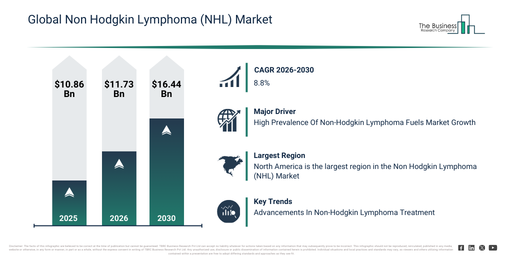
    The non-Hodgkin lymphoma (NHL) market has experienced substantial expansion over recent years. From $10.86 billion in 2025, it is expected to reach $11.73 billion by 2026, progressing at a compound annual growth rate (CAGR) of 8.0%. This historical growth is driven by a global increase in NHL incidence rates, improved chemotherapy treatments, higher healthcare spending, enhanced awareness of lymphatic cancers, and the expansion of oncology hospital facilities.

    The non-Hodgkin lymphoma (NHL) market is anticipated to experience substantial expansion in the coming years, with projections indicating it will reach $16.44 billion by 2030, reflecting a compound annual growth rate (CAGR) of 8.8%. This forecasted growth is driven by several factors, including an expanding pipeline of targeted therapies, an uptick in approvals for biologics, a greater embrace of personalized medicine, improved access in emerging markets, and an increase in stem cell transplant procedures. Key trends shaping this period encompass the rising adoption of immunotherapy and targeted therapies, a greater utilization of combination treatment regimens, a heightened emphasis on early and precise diagnosis, the broadening of personalized treatment approaches, and a transition toward outpatient and home-based care delivery models.

    Download A Free Sample Report For Comprehensive Market Insights:

    https://www.thebusinessresearchcompany.com/sample.aspx?id=10676&type=smp&utm_source=BlogsPR&utm_medium=Paid&utm_campaign=Jul_PR

    Non Hodgkin Lymphoma (NHL) Market Growth Drivers And Industry Catalysts

    Growing cases of non-Hodgkin lymphoma are set to drive expansion in the market for this condition moving forward. This type of cancer originates in the lymphatic system, a crucial component of the immune system. Its prevalence indicates how many individuals within a given population are currently diagnosed or living with this disease at a particular point in time. Treatments for non-Hodgkin lymphoma aim to improve outcomes for affected patients by targeting and controlling cancerous cells. As an example, data from the American Cancer Society, a cancer-focused health organization based in the US, revealed in January 2023 that non-Hodgkin lymphoma constitutes 4% of all cancers, with an estimated 80,550 Americans expected to be impacted in 2023—44,880 males and 35,670 females. The organization also projects that approximately 20,180 individuals will succumb to the disease in 2023. Consequently, the widespread occurrence of non-Hodgkin lymphoma is fueling growth in this specific market.

    Non Hodgkin Lymphoma (NHL) Market Categorization By Product Type And Application

    The non hodgkin lymphoma (nhl) market covered in this report is segmented –

    1) By Type: B-Cell Lymphoma, T-Cell Lymphoma

    2) By Treatment: Surgery, Stem Cell Transplant, Chemotherapy, Immunotherapy, Targeted Therapy, Radiation Therapy

    3) By Route of Administration: Oral, Parenteral, Other Routes of Administration

    4) By Distribution Channel: Hospital Pharmacy, Retail Pharmacy, Online Pharmacy, Other Distribution Channels

    5) By End-Users: Hospitals, Homecare, Specialty Centers, Other End Users

    Subsegments:

    1) By B-Cell Lymphoma: Diffuse Large B-Cell Lymphoma (DLBCL), Follicular Lymphoma, Chronic Lymphocytic Leukemia (CLL), Mantle Cell Lymphoma, Burkitt Lymphoma, Marginal Zone Lymphoma, Primary Mediastinal B-Cell Lymphoma

    2) By T-Cell Lymphoma: Peripheral T-Cell Lymphoma (PTCL), Anaplastic Large Cell Lymphoma (ALCL), Cutaneous T-Cell Lymphoma (CTCL), T-Cell Lymphoblastic Lymphoma, Adult T-Cell Leukemia/Lymphoma (ATLL)

    Non Hodgkin Lymphoma (NHL) Market Trends Influencing Long-Term Demand

    Major pharmaceutical players in the non-Hodgkin lymphoma sector are intensifying their efforts to develop advanced immunotherapies, including Epcoritamab-bysp (EPKINLY), as a strategy to secure market dominance. This investigational subcutaneous treatment is specifically engineered to target CD20-positive B-cell malignancies, and it has demonstrated notable efficacy in clinical studies, particularly for patients dealing with relapsed or refractory B-cell non-Hodgkin lymphoma. A key development occurred in November 2023, when AbbVie Inc., a U.S.-based pharmaceutical firm, secured a breakthrough therapy designation from the U.S. Food and Drug Administration for Epcoritamab-bysp (EPKINLY). This regulatory nod applies to adults suffering from relapsed or refractory follicular lymphoma who have undergone at least two prior treatment regimens. Furthermore, the European Medicines Agency has accepted a Type II application submission for epcoritamab (TEPKINLY) targeting the same patient population. These milestones are backed by findings from the Phase 1/2 EPCORE NHL-1 trial, which examined the safety and early effectiveness of subcutaneous epcoritamab in a cohort of 128 adult patients with relapsed, progressive, or refractory CD20-positive mature B-cell non-Hodgkin lymphoma, including follicular lymphoma.

    Non Hodgkin Lymphoma (NHL) Market Company Landscape And Strategic Competition

    Major companies operating in the non hodgkin lymphoma (nhl) market are Bayer AG, Teva Pharmaceutical Industries Ltd., F. Hoffmann La Roche Ltd., Merck & Co. Inc., Eli Lilly and Co., Novartis AG, GlaxoSmithKline plc, AbbVie Inc., AstraZeneca plc, Takeda Pharmaceutical Company Limited, Bristol Myers Squibb Co., Pfizer Inc., Celgene Corporation, Sanofi S.A., Janssen Pharmaceuticals Inc., Johnson & Johnson, Boehringer Ingelheim GmbH, Eisai Co. Ltd., Gilead Sciences, Incyte Corporation, Karyopharm Therapeutics, Kite Pharma Inc., Kyowa Hakko Kirin Co. Ltd., MorphoSys AG, Nordic Nanovector ASA, Ono Pharmaceutical Co. Ltd., Seattle Genetics Inc., Spectrum Pharmaceuticals Inc.

    Access The Complete Non Hodgkin Lymphoma (NHL) Market Report:

    https://www.thebusinessresearchcompany.com/report/non-hodgkin-lymphoma-nhl-global-market-report?utm_source=BlogsPR&utm_medium=Paid&utm_campaign=Jul_PR

    Non Hodgkin Lymphoma (NHL) Market Geographic Analysis: Where Is Demand Growing The Fastest?

    North America was the largest region in the non-Hodgkin lymphoma (NHL) market in 2025. Asia-Pacific is expected to be the fastest-growing region in the global non-Hodgkin lymphoma (NHL) market report during the forecast period. The regions covered in the non hodgkin lymphoma (nhl) market report are Asia-Pacific, South East Asia, Western Europe, Eastern Europe, North America, South America, Middle East, Africa.

    Get in touch with us:

    The Business Research Company: https://www.thebusinessresearchcompany.com/?utm_source=BlogsPR&utm_medium=Paid&utm_campaign=home_page_test

    Americas: +1 310-496-7795

    Asia: +44 7882 955267 & +91 8897263534

    Europe: +44 7882 955267

    Email us at: marketing@tbrc.info

    Follow us on:

    LinkedIn: https://in.linkedin.com/company/the-business-research-company

    YouTube: https://www.youtube.com/channel/UC24_fI0rV8cR5DxlCpgmyFQ

    Global Market Model: https://www.thebusinessresearchcompany.com/global-market-model
  • Nocturnal Enuresis Medication Market Trends And Growth Drivers Point To Strong Future Potential

    Nocturnal Enuresis Medication Market Trends And Growth Drivers Point To Strong Future Potential

    Delivering more actionable and strategically valuable research, The Business Research Company’s 2026 market reports feature market attractiveness analysis, total addressable market evaluation, company benchmarking matrices, interactive Excel dashboards, expanded supply chain intelligence, emerging startup coverage, and detailed product insights.

    Nocturnal Enuresis Medication Market Value Analysis: What Growth Is Expected Over The Forecast Period?

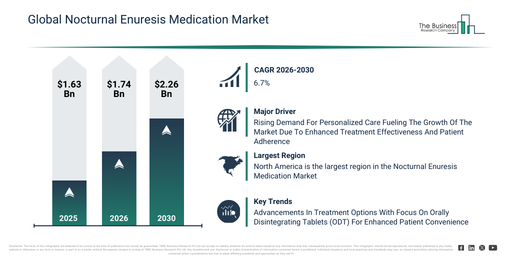
    The market for medications addressing nocturnal enuresis has experienced robust expansion in recent times. Projected to rise from $1.63 billion in 2025 to $1.74 billion in 2026, it is expected to achieve a compound annual growth rate (CAGR) of 6.7%. This historical growth was driven by several key factors, including the high incidence of pediatric nocturnal enuresis, the broad utilization of desmopressin, improved access to healthcare for children, the broadening of retail pharmacy networks, and a growing awareness among parents.

    The market for nocturnal enuresis medications is projected to experience significant expansion in the coming years, reaching $2.26 billion by 2030 with a compound annual growth rate (CAGR) of 6.7%. This forecasted growth is driven by factors such as the advancement of pediatric urology care, a heightened need for safer treatment options suitable for prolonged use, improvements in drug formulations, greater diagnosis rates among adolescents and adults, and the widening reach of online pharmacy services. Key developments during this period encompass a rising utilization of desmopressin-based treatments, a growing preference for combination drug regimens, enhanced awareness surrounding pediatric bedwetting management, the broader introduction of extended-release drug versions, and an increased emphasis on ensuring long-term therapeutic safety.

    Download A Free Sample Report For Comprehensive Market Insights:

    https://www.thebusinessresearchcompany.com/sample.aspx?id=24340&type=smp&utm_source=BlogsPR&utm_medium=Paid&utm_campaign=Jul_PR

    Nocturnal Enuresis Medication Market Opportunity Drivers: What Is Creating New Revenue Potential?

    The rising demand for individualized care is anticipated to drive expansion within the nocturnal enuresis medication market in the coming years. Personalized care involves a healthcare strategy that customizes treatments and medical approaches based on a person’s distinct genetic makeup, way of life, preferences, and particular health issues, resulting in more precise and efficient outcomes. This growing preference for tailored care stems from progress in medical technology, which enables providers to design therapies aligned with each patient’s genetic factors, daily habits, and overall health status, thus delivering more effective and focused treatment. Such customization benefits nocturnal enuresis medication by adapting treatment protocols to an individual’s unique medical background, lifestyle habits, and root causes, which enhances both treatment success and patient commitment. A case in point occurred in February 2024, when the Personalized Medicine Coalition, a US nonprofit group, reported that the Food and Drug Administration, a US federal agency, cleared 16 new tailored therapies in 2023 for patients with rare diseases, compared to just 6 approvals in 2022. Hence, the mounting need for personalized care is accelerating the growth trajectory of the nocturnal enuresis medication market.

    Nocturnal Enuresis Medication Market Driver: Rise In Healthcare Expenditure Fueling The Growth Of The Market Due To Increasing Investment In Treatment Access And Innovation

    Growth in the nocturnal enuresis medication market is expected to be propelled forward by rising healthcare spending in the near term. Healthcare expenditure covers the sum of money allocated to medical services, health products, and public health initiatives by individuals, governments, and institutions over a defined timeframe. This escalation in spending is driven by factors like the growing frequency of chronic illnesses, which demand sustained management, ongoing interventions, and repeated medical attention, thereby elevating costs for drugs, healthcare provisions, and expert treatments. Higher healthcare expenditure bolsters nocturnal enuresis medication by facilitating increased funding for research, product development, and improved access to advanced therapeutic choices, which in turn expands the availability and efficacy of care for those affected. An illustration comes from January 2024, when the Peterson-KFF Health System Tracker, a US-based nonprofit data resource, indicated that American health spending was predicted to hit $4.9 trillion in 2024, representing a 5% rise from the $4.67 trillion recorded in 2023. Consequently, the uptick in healthcare expenditure is fueling the upward momentum of the nocturnal enuresis medication market.

    Nocturnal Enuresis Medication Market Segment Analysis And Revenue Opportunities

    The nocturnal enuresis medication market covered in this report is segmented –

    1) By Drug Class: Desmopressin, Imipramine, Oxybutynin, Combined Pharmacotherapy

    2) By Age Group: Children, Adolescents, Adults, Elderly

    3) By Formulation Type: Tablets, Liquid Solutions, Sprays, Patches, Extended-Release Formulations

    4) By Distribution Channel: Hospital Pharmacies, Retail Pharmacies, Online Pharmacies

    Subsegments:

    1) By Desmopressin: Oral Tablets, Nasal Sprays, Sublingual Tablets

    2) By Imipramine: Oral Tablets, Extended-Release Capsules

    3) By Oxybutynin: Immediate-Release Tablets, Extended-Release Tablets, Transdermal Patches, Syrups

    4) By Combined Pharmacotherapy: Desmopressin And Oxybutynin, Desmopressin And Imipramine, Oxybutynin And Imipramine

    Nocturnal Enuresis Medication Market Innovation Trends Driving Future Development

    Leading firms in the nocturnal enuresis drug market are prioritizing the creation of cutting-edge products, such as orally disintegrating tablets (ODTs), to improve ease of use. Orally disintegrating tablets (ODTs) are solid dosage forms that rapidly dissolve or disintegrate in the mouth without requiring water, making them especially suitable for individuals who have trouble swallowing. A notable example occurred in March 2024, when Adalvo Limited, a pharmaceutical company based in Malta, introduced desmopressin orally disintegrating tablets (ODTs) across Europe. This desmopressin ODT is specifically formulated to address primary nocturnal enuresis, providing a convenient and straightforward administration method that dissolves quickly in the mouth. The unique design is especially advantageous for pediatric and elderly patients, along with those facing challenges swallowing conventional tablets. This product launch underscores Adalvo’s commitment to delivering high-quality, distinctive pharmaceutical offerings while expanding patient access to critical treatments via collaborative industry alliances.

    Nocturnal Enuresis Medication Market Leading Players Shaping Industry Direction

    Major companies operating in the nocturnal enuresis medication market are Ferring Pharmaceuticals A/S, Serenity Pharmaceuticals LLC, Vantia Therapeutics Ltd., Pfizer Inc., Merck & Co. Inc., AbbVie Inc., Astellas Pharma Inc., Johnson & Johnson, Teva Pharmaceutical Industries Ltd., Sun Pharmaceutical Industries Ltd., Cipla Ltd., Dr. Reddy’s Laboratories Ltd., Zydus Lifesciences Ltd., Lupin Ltd., Torrent Pharmaceuticals Ltd., Mylan N.V., Sandoz Group AG, Endo International plc, Bausch Health Companies Inc., Hikma Pharmaceuticals PLC

    Access The Complete Nocturnal Enuresis Medication Market Report:

    https://www.thebusinessresearchcompany.com/report/nocturnal-enuresis-medication-global-market-report?utm_source=BlogsPR&utm_medium=Paid&utm_campaign=Jul_PR

    Nocturnal Enuresis Medication Market Global Footprint: Which Region Holds Market Leadership?

    North America was the largest region in the nocturnal enuresis medication market in 2025. Asia-Pacific is expected to be the fastest-growing region in the forecast period. The regions covered in the nocturnal enuresis medication market report are Asia-Pacific, South East Asia, Western Europe, Eastern Europe, North America, South America, Middle East, Africa.

    Get in touch with us:

    The Business Research Company: https://www.thebusinessresearchcompany.com/?utm_source=BlogsPR&utm_medium=Paid&utm_campaign=home_page_test

    Americas: +1 310-496-7795

    Asia: +44 7882 955267 & +91 8897263534

    Europe: +44 7882 955267

    Email us at: marketing@tbrc.info

    Follow us on:

    LinkedIn: https://in.linkedin.com/company/the-business-research-company

    YouTube: https://www.youtube.com/channel/UC24_fI0rV8cR5DxlCpgmyFQ

    Global Market Model: https://www.thebusinessresearchcompany.com/global-market-model
  • Nivolumab Market Expansion Is Reshaping Competitive Dynamics Across The Industry

    Nivolumab Market Expansion Is Reshaping Competitive Dynamics Across The Industry

    Enhanced with market attractiveness analysis, total addressable market evaluation, company benchmarking matrices, interactive Excel dashboards, expanded supply chain intelligence, emerging startup coverage, and detailed product insights, The Business Research Company’s 2026 market reports deliver more actionable and strategically valuable research.

    Nivolumab Market Size Forecast: How Large Could The Market Become By 2030?

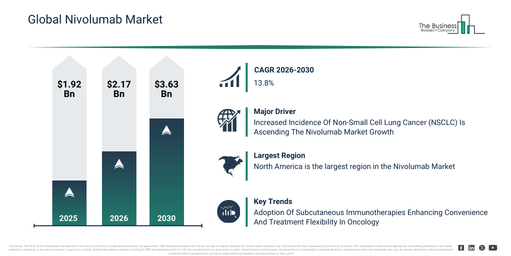
    The nivolumab market has experienced a quick rate of expansion in recent years. Its value is projected to increase from $1.92 billion in 2025 to $2.17 billion in 2026, reflecting a compound annual growth rate (CAGR) of 12.9%. This historic growth has been driven by factors such as the growing incidence of melanoma and non-small cell lung cancer (NSCLC), the early regulatory approvals granted for nivolumab in treating metastatic cancers, the enhanced hospital infrastructure available for oncology care, the expansion of cancer research and clinical trial activities, and the broader uptake of monoclonal antibody therapies.

    The projected size of the nivolumab market indicates swift expansion in the coming years. By 2030, it is anticipated to reach $3.63 billion, reflecting a compound annual growth rate (CAGR) of 13.8%. This upward trajectory during the forecast period is driven by factors such as the broadening of nivolumab’s approved indications, a growing number of elderly cancer patients, the incorporation of this drug into combination therapies, heightened financial commitments to biologics manufacturing, and the enhancement of oncology infrastructure in emerging markets. Key developments shaping this period include progress in immuno-oncology, the creation of novel combination treatments, the shift toward personalized cancer care, the growth of hospital-based oncology services, and the rising frequency of targeted therapeutic approaches.

    Download A Free Sample Report For Comprehensive Market Insights:

    https://www.thebusinessresearchcompany.com/sample.aspx?id=13012&type=smp&utm_source=BlogsPR&utm_medium=Paid&utm_campaign=Jul_PR

    Nivolumab Market Growth Momentum: Which Factors Are Influencing Demand?

    The rising prevalence of non-small cell lung cancer (NSCLC) is anticipated to boost the Nivolumab market in the years ahead. NSCLC, a type of lung cancer originating in the epithelial cells of the lungs, is commonly treated with Nivolumab, an approved therapy for advanced cases. This drug’s effectiveness in addressing NSCLC drives its demand. For example, in March 2023, the American Society of Clinical Oncology, a US professional body representing oncologists across subspecialties, estimated that 238,340 individuals (117,550 men and 120,790 women) will be diagnosed with lung cancer in the United States, with NSCLC being the most prevalent type, accounting for 81% of all lung cancer diagnoses. Consequently, the growing incidence of NSCLC is fueling the expansion of the Nivolumab market.

    The growing trend toward personalized medicine is set to propel the Nivolumab market forward. Personalized medicine involves customizing treatment and prevention strategies based on an individual’s unique genetic profile, lifestyle, and environmental factors, moving away from a universal approach. Its adoption is rising due to progress in genetic testing, which enables therapies to be adapted to specific patient characteristics. Nivolumab fits into this model by targeting particular immune pathways according to a patient’s tumor profile, offering more precise and effective cancer care. In February 2024, the Personalized Medicine Coalition, a US nonprofit organization, reported that the FDA approved 16 new personalized treatments for rare diseases in 2023, a notable jump from the six approvals in 2022. Thus, the increasing embrace of personalized medicine is driving the growth of the Nivolumab market.

    Nivolumab Market Segmentation And Category Breakdown

    The nivolumab market covered in this report is segmented –

    1) By Type: Injection 4mL, Injection 10mL

    2) By Route Of Administration: Intravenous, Other Routes Of Administration

    3) By Application: Melanoma, Non-small Cell Lung Cancer (NSCLC), Malignant Pleural Mesothelioma, Classical Hodgkin Lymphoma (CHL), Squamous Cell Carcinoma Of The Head And Neck (SCCHN), Renal Cell Carcinoma (RCC), Other Applications

    4) By End-User: Clinic, Hospital, Other End-Users

    Nivolumab Market Trends Reshaping Industry Growth

    Key players in the nivolumab market are actively working on developing new formulations and broadening the range of treatable conditions to improve patient convenience and reinforce their immuno-oncology offerings. As an example, in December 2024, the Food and Drug Administration, a federal agency based in the United States, granted approval for Opdivo Qvantig, a subcutaneous version of nivolumab combined with hyaluronidase-nvhy, for all previously authorized adult solid-tumor indications where intravenous nivolumab was used. This new option can be administered as monotherapy, as maintenance therapy following Opdivo plus Yervoy, or alongside chemotherapy or cabozantinib. The approval was backed by the Phase 3 CHECKMATE-67T trial, which revealed comparable drug exposure, a similar safety profile, and a marginally higher response rate relative to IV nivolumab among patients with advanced renal cell carcinoma. Featuring flexible dosing schedules and sustained effectiveness, the subcutaneous formulation provides a more convenient choice for patients and bolsters Bristol Myers Squibb’s immuno-oncology pipeline.

    Nivolumab Market Competitive Analysis Of Major Industry Participants

    Major companies operating in the nivolumab market are Bristol-Myers Squibb Company, Ono Pharmaceutical Co. Ltd., Xbrane Biopharma AB, NeuClone Therapeutics Inc., Dr. Reddy’s Laboratories Ltd., Biocon Limited, Samsung Bioepis Co. Ltd., Celltrion Inc., Amneal Pharmaceuticals LLC, Lupin Ltd., Intas Pharmaceuticals Ltd., Hetero Biopharma Ltd., Reliance Life Sciences Pvt. Ltd., Zydus Lifesciences Limited, mAbxience, Shanghai Henlius Biotech Inc., Innovent Biologics Inc., WuXi Biologics, Lonza Group AG, Samsung Biologics

    Access The Complete Nivolumab Market Report:

    https://www.thebusinessresearchcompany.com/report/nivolumab-global-market-report?utm_source=BlogsPR&utm_medium=Paid&utm_campaign=Jul_PR

    Nivolumab Market Regional Distribution: Which Areas Drive Market Expansion?

    North America was the largest region in the nivolumab market in 2025. The regions covered in the nivolumab market report are Asia-Pacific, South East Asia, Western Europe, Eastern Europe, North America, South America, Middle East, Africa.

    Get in touch with us:

    The Business Research Company: https://www.thebusinessresearchcompany.com/?utm_source=BlogsPR&utm_medium=Paid&utm_campaign=home_page_test

    Americas: +1 310-496-7795

    Asia: +44 7882 955267 & +91 8897263534

    Europe: +44 7882 955267

    Email us at: marketing@tbrc.info

    Follow us on:

    LinkedIn: https://in.linkedin.com/company/the-business-research-company

    YouTube: https://www.youtube.com/channel/UC24_fI0rV8cR5DxlCpgmyFQ

    Global Market Model: https://www.thebusinessresearchcompany.com/global-market-model
  • Nitrogen Mustards Market Forecast Reveals Where Future Industry Value Will Be Created

    Nitrogen Mustards Market Forecast Reveals Where Future Industry Value Will Be Created

    Through market attractiveness analysis, total addressable market evaluation, company benchmarking matrices, interactive Excel dashboards, expanded supply chain intelligence, emerging startup coverage, and detailed product insights, The Business Research Company’s 2026 market reports provide more actionable and strategically valuable research.

    Nitrogen Mustards Market Revenue Outlook: What CAGR Is Expected Through 2030?

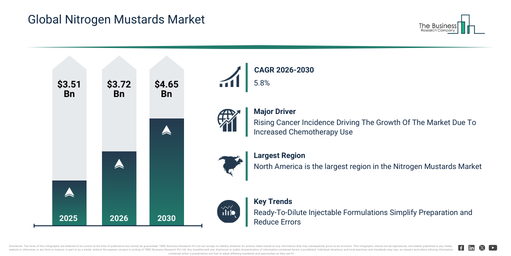
    The nitrogen mustards market has experienced robust expansion in recent years, with projections indicating growth from $3.51 billion in 2025 to $3.72 billion in 2026, reflecting a compound annual growth rate (CAGR) of 6.1%. This historical growth is driven by factors such as the scarcity of chemotherapy alternatives, a rising incidence of cancer, dependence on treatments administered in hospital settings, the regulatory clearance of early nitrogen mustard medications, and the development of injectable chemotherapy preparations.

    The size of the nitrogen mustards market is anticipated to experience substantial expansion over the coming years, projected to reach $4.65 billion by 2030, with a compound annual growth rate (CAGR) of 5.8%. This growth during the forecast period is driven by the advancement of combination and targeted therapies, a growing preference for oral and extended-release formulations, the proliferation of oncology specialty clinics, heightened funding for cancer research, and the broader adoption of precision medicine alongside customized treatment approaches. Key trends shaping this period include a heightened demand for nitrogen mustards in cancer care, the creation of targeted and combination chemotherapy solutions, the broadening of both injectable and oral drug delivery systems, an increased reliance on specialty clinics and hospital pharmacies, and a stronger emphasis on patient safety and adherence to regulatory standards.

    Download A Free Sample Report For Comprehensive Market Insights:

    https://www.thebusinessresearchcompany.com/sample.aspx?id=24622&type=smp&utm_source=BlogsPR&utm_medium=Paid&utm_campaign=Jul_PR

    Nitrogen Mustards Market Expansion Drivers: What Is Shaping Future Growth?

    The increasing incidence of cancer is anticipated to drive the expansion of the nitrogen mustards market in the coming period. Cancer encompasses a collection of illnesses marked by the unregulated proliferation and dissemination of abnormal cells within the body. The growing cancer burden stems from lifestyle factors, including poor dietary habits, smoking, lack of physical activity, and heavy alcohol intake. Nitrogen mustards contribute to cancer therapy by disrupting the DNA of malignant cells, thereby hindering their reproduction. They improve treatment outcomes by enabling targeted chemotherapy, which aids in managing and diminishing tumour development. For example, in January 2024, the American Cancer Society, a nonprofit organisation based in the United States that advocates for cancer patients, reported that the number of cancer cases rose to 2,001,140 from 1,958,310 in 2023, representing a 2.19 percent increase. Consequently, the rising prevalence of cancer is fueling the growth of the nitrogen mustards market.

    The growing uptake of personalised medicine is set to boost the nitrogen mustards market moving forward. Personalised medicine involves tailoring therapy to an individual’s specific disease profile by leveraging their genetic, molecular, or biomarker information. The increased adoption of this approach is driven by regulators, drug developers, and healthcare providers focusing on treatments that enhance efficacy and minimise side effects by matching therapy to patient-specific traits. The nitrogen mustards market aligns with this trend, as these drugs remain integral to cancer care protocols, enabling physicians to more accurately identify patients who may benefit from cytotoxic chemotherapy, whether used alongside or instead of more specific therapies. As an example, in February 2023, the Personalized Medicine Coalition, a U.S.-based nonprofit advocacy organisation, noted that 20 newly approved therapies in 2023—roughly 38 percent of the U.S. FDA’s 53 new molecular entities—qualified as personalised medicines. Thus, the increasing adoption of personalised medicine is propelling the growth of the nitrogen mustards market.

    Nitrogen Mustards Market Segment Outlook: Which Categories Are Expanding The Fastest?

    The nitrogen mustards market covered in this report is segmented –

    1) By Product Type: Mechlorethamine, Cyclophosphamide, Ifosfamide, Chlorambucil, Melphalan, Other Product Types

    2) By Application: Cancer Treatment, Autoimmune Diseases, Other Applications

    3) By Distribution Channel: Hospitals, Specialty Clinics, Online Pharmacies, Other Distribution Channels

    Subsegments:

    1) By Mechlorethamine: Injectable Formulation, Topical Formulation

    2) By Cyclophosphamide: Intravenous (IV) Formulation, Oral Tablets, Extended Release Formulation

    3) By Ifosfamide: Intravenous Formulation, Combination Therapy Formulation

    4) By Chlorambucil: Oral Tablets, Injectable Formulation

    5) By Melphalan: Oral Formulation, Intravenous Formulation, Powder for Injection

    6) By Other Product Types: Oral Formulation, Injectable Formulation, Combination Therapy Formulation

    Nitrogen Mustards Market Strategic Trends: What Is Defining The Next Phase Of Growth?

    Leading players in the nitrogen mustards market are increasingly investing in novel drug delivery technologies, particularly ready-to-dilute injectable solutions, aimed at improving both the safety and ease of treatment. These formulations come as pre-prepared liquid medications intended for straightforward dilution and administration, which streamlines preparation processes and minimizes potential dosing mistakes. A case in point occurred in May 2025, when Apotex Corp., a pharmaceutical firm based in Canada, introduced IVRA (Melphalan) hydrochloride injection 90 mg/ml multidose vial—a ready-to-dilute liquid variant of Melphalan injection that received approval through a 505(b)(2) new drug application (NDA) in the United States. This alkylating agent is indicated for palliative care in multiple myeloma patients who are not candidates for oral therapy. IVRA functions by attaching alkyl groups to the DNA of cancer cells, thereby interfering with their ability to replicate and inducing cell death, which aids in controlling the progression of tumors.

    Nitrogen Mustards Market Key Companies And Competitive Benchmarking

    Major companies operating in the nitrogen mustards market are Baxter International Inc., Fresenius Kabi AG, Hikma Pharmaceuticals PLC, Pfizer Injectables (Hospira), Teva Pharmaceutical Industries Ltd., Sandoz International GmbH, Sun Pharmaceutical Industries Ltd., Aurobindo Pharma Limited, Dr. Reddy’s Laboratories Limited, Zydus Lifesciences Limited, Cipla Limited, Intas Pharmaceuticals Ltd., Emcure Pharmaceuticals Limited, Lupin Limited, Glenmark Pharmaceuticals Limited, Jiangsu Hengrui Medicine Co. Ltd., Zhejiang Hisun Pharmaceutical Co. Ltd., Qilu Pharmaceutical Co. Ltd., Shilpa Medicare Limited, MSN Laboratories Private Limited, Accord Healthcare Ltd., Mylan N.V. (Viatris Inc.), Fresenius SE & Co. KGaA, Baxter Oncology GmbH, Celon Laboratories Ltd., Taj Pharmaceuticals Limited, Alembic Pharmaceuticals Limited, Venus Remedies Limited, Natco Pharma Limited

    Access The Complete Nitrogen Mustards Market Report:

    https://www.thebusinessresearchcompany.com/report/nitrogen-mustards-global-market-report?utm_source=BlogsPR&utm_medium=Paid&utm_campaign=Jul_PR

    Nitrogen Mustards Market Leading Geography: Which Region Generates The Most Revenue?

    North America was the largest region in the nitrogen mustards market in 2025. The regions covered in the nitrogen mustards market report are Asia-Pacific, South East Asia, Western Europe, Eastern Europe, North America, South America, Middle East, Africa.

    Get in touch with us:

    The Business Research Company: https://www.thebusinessresearchcompany.com/?utm_source=BlogsPR&utm_medium=Paid&utm_campaign=home_page_test

    Americas: +1 310-496-7795

    Asia: +44 7882 955267 & +91 8897263534

    Europe: +44 7882 955267

    Email us at: marketing@tbrc.info

    Follow us on:

    LinkedIn: https://in.linkedin.com/company/the-business-research-company

    YouTube: https://www.youtube.com/channel/UC24_fI0rV8cR5DxlCpgmyFQ

    Global Market Model: https://www.thebusinessresearchcompany.com/global-market-model
  • Nimesulide Dispersible Tablet Market Growth Through 2030 Creates New Strategic Opportunities

    Nimesulide Dispersible Tablet Market Growth Through 2030 Creates New Strategic Opportunities

    Delivering more actionable and strategically valuable research, The Business Research Company’s 2026 market reports feature market attractiveness analysis, total addressable market evaluation, company benchmarking matrices, interactive Excel dashboards, expanded supply chain intelligence, emerging startup coverage, and detailed product insights.

    Nimesulide Dispersible Tablet Market Growth Analysis: How Will Revenue Expand During The Forecast Period?

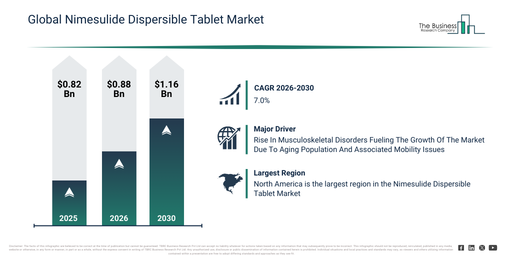
    The nimesulide dispersible tablet market has experienced robust expansion in recent years, with projections indicating an increase from $0.82 billion in 2025 to $0.88 billion in 2026, reflecting a compound annual growth rate (CAGR) of 7.0%. This historical growth has been driven by the extensive utilization of NSAIDs, a rising preference for easy-to-administer oral formulations, the broadening availability of over-the-counter pain relievers, a higher prevalence of pain-related disorders, and an enhanced capacity within pharmaceutical production.

    The market for nimesulide dispersible tablets is anticipated to experience robust expansion in the coming years. Forecasts indicate it will reach $1.16 billion by 2030, driven by a compound annual growth rate (CAGR) of 7.0%. This projected growth during the forecast period can be linked to factors such as the rise of patient-centered drug formulations, a growing preference for medications that act quickly, increasing demand within developing markets, improvements in excipient technologies, and the broadening of home-based pain management options. Key developments influencing the market include a heightened need for fast-working pain relief solutions, greater uptake of patient-friendly dispersible dosage forms, expanded use among children and the elderly, a wider array of generic pain management offerings, and a stronger emphasis on optimizing drug absorption.

    Download A Free Sample Report For Comprehensive Market Insights:

    https://www.thebusinessresearchcompany.com/sample.aspx?id=24338&type=smp&utm_source=BlogsPR&utm_medium=Paid&utm_campaign=Jul_PR

    Nimesulide Dispersible Tablet Market Development Factors: Which Trends Are Supporting Demand?

    The growing occurrence of musculoskeletal disorders is set to drive expansion in the nimesulide dispersible tablet market moving forward. These disorders involve conditions affecting muscles, bones, joints, tendons, and ligaments, typically leading to pain, stiffness, and limited movement. A number of factors, notably an aging population, contribute to their rising frequency. As people age, they experience reduced bone density, worsening joint conditions, and declining muscle strength, heightening vulnerability to such ailments. Nimesulide dispersible tablets prove beneficial for these disorders by effectively alleviating pain and inflammation linked to issues like arthritis, back pain, and muscle strains, while presenting a practical choice for individuals who find swallowing standard tablets challenging. For example, in January 2024, data from the Office for Health Improvement and Disparities (OHID), a UK government body, indicated that 18.4% of people reported long-term musculoskeletal conditions in 2023, an increase from 17.6% in 2022. Consequently, the rising prevalence of musculoskeletal disorders is propelling the nimesulide dispersible tablet market’s growth.

    The rising frequency of chronic pain is expected to accelerate the expansion of the nimesulide dispersible tablet market in the future. Chronic pain, defined as persistent or recurring pain lasting over three months, often extends beyond typical healing periods and may arise without a clear cause. Its growing prevalence stems from sedentary lifestyles, which diminish physical activity and weaken the body’s innate pain management capabilities. Nimesulide dispersible tablets prove effective for chronic pain by delivering potent anti-inflammatory and analgesic benefits, especially for conditions like musculoskeletal disorders, osteoarthritis, and other pain-related issues. For instance, as reported in November 2024 by the Centers for Disease Control and Prevention, a US government agency, 24.3% of American adults experienced chronic pain in 2023, with 8.5% facing high-impact chronic pain that frequently limited daily life or work activities. Thus, the increasing incidence of chronic pain is fueling growth in the nimesulide dispersible tablet market.

    The growing need for retail pharmacies is anticipated to stimulate the nimesulide dispersible tablet market’s growth in the years ahead. Retail pharmacies are commercial outlets that provide prescription medications and over-the-counter drugs directly to consumers, frequently offering extra health-related services. Their expansion is driven by enhanced accessibility and convenience, as they deliver easy access to medicines and healthcare items in both urban and rural settings, often with extended operating hours and short wait times. These pharmacies substantially improve the availability and distribution of nimesulide dispersible tablets, encouraging their use in self-medication and over-the-counter pain management. For example, a November 2023 report from P3pharmacy, a UK-based magazine, noted that the UK had 14,328 pharmacies in 2023, with independently run pharmacies increasing by 167 between 2022 and 2023. Therefore, rising demand for retail pharmacies will boost the nimesulide dispersible tablet market.

    Nimesulide Dispersible Tablet Market Segment Landscape: Which Areas Lead Market Development?

    The nimesulide dispersible tablet market covered in this report is segmented –

    1) By Dosage Form: 70 mg Tablets, 100 mg Tablets, Custom Dosage Tablets

    2) By Indication: Pain Management, Inflammation Treatment, Fever Reduction, Chronic Pain Disorders, Postoperative Pain Relief

    3) By Patient Population: Adults, Geriatrics, Pediatrics

    4) By End-User: Hospitals, Clinics, Homecare, Other Users

    Subsegments:

    1) By 70 Mg Tablets: Pediatric Use, Geriatric Use, Low-Weight Adult Patients, Over-The-Counter Availability In Select Markets

    2) By 100 Mg Tablets: Standard Adult Dosage, Prescription-Based Distribution, Hospital Pharmacy Channels, Online Pharmacy Sales

    3) By Custom Dosage Tablets: Compounded Pharmacy Formulations, Clinical Trial And Research Use, Patient-Specific Therapy, Export Formulations Tailored To Regional Regulatory Needs

    Nimesulide Dispersible Tablet Market Industry Leaders And Market Competition

    Major companies operating in the nimesulide dispersible tablet market are Abbott Laboratories Limited, Dr. Reddy’s Laboratories Limited, Cipla Limited, Zydus Lifesciences Limited, Orion Life Science, Torrent Pharmaceuticals Limited, Mankind Pharma Limited, Honz Pharmaceutical Pvt. Ltd., Taj Pharmaceuticals Limited, D M Pharma, Swiss Chem Healthcare, SiNi Pharma Private Limited, Wellona Pharma, Therawin Formulations, Mecoson Labs Private Limited, Bidu Biotech, Aelida Healthcare, Care Formulation Labs Private Limited, Yaxon Biocare Private Limited, Novique Life Sciences Private Limited, Henin Lukinz.

    Access The Complete Nimesulide Dispersible Tablet Market Report:

    https://www.thebusinessresearchcompany.com/report/nimesulide-dispersible-tablet-global-market-report?utm_source=BlogsPR&utm_medium=Paid&utm_campaign=Jul_PR

    Nimesulide Dispersible Tablet Market Regional Outlook: Where Are The Largest Opportunities Located?

    North America was the largest region in the nimesulide dispersible tablet market in 2025. Asia-Pacific is expected to be the fastest-growing region in the forecast period. The regions covered in the nimesulide dispersible tablet market report are Asia-Pacific, South East Asia, Western Europe, Eastern Europe, North America, South America, Middle East, Africa.

    Get in touch with us:

    The Business Research Company: https://www.thebusinessresearchcompany.com/?utm_source=BlogsPR&utm_medium=Paid&utm_campaign=home_page_test

    Americas: +1 310-496-7795

    Asia: +44 7882 955267 & +91 8897263534

    Europe: +44 7882 955267

    Email us at: marketing@tbrc.info

    Follow us on:

    LinkedIn: https://in.linkedin.com/company/the-business-research-company

    YouTube: https://www.youtube.com/channel/UC24_fI0rV8cR5DxlCpgmyFQ

    Global Market Model: https://www.thebusinessresearchcompany.com/global-market-model