Blog

  • Hyperphosphatemia Treatment Market Forecast Reveals Where Future Industry Value Will Be Created

    Hyperphosphatemia Treatment Market Forecast Reveals Where Future Industry Value Will Be Created

    Delivering more actionable and strategically valuable research, The Business Research Company’s 2026 market reports feature market attractiveness analysis, total addressable market evaluation, company benchmarking matrices, interactive Excel dashboards, expanded supply chain intelligence, emerging startup coverage, and detailed product insights.

    Hyperphosphatemia Treatment Market Size, Value And Growth Trends Through 2030

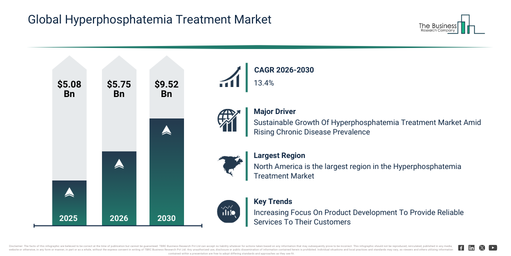
    The market for hyperphosphatemia treatments has experienced significant expansion in recent years. Projected to rise from $5.08 billion in 2025 to $5.75 billion in 2026, it reflects a compound annual growth rate (CAGR) of 13.2%. Factors driving historical growth include a high prevalence of renal failure, low awareness regarding phosphate control, constraints of existing therapies, treatment delivery primarily within hospital settings, and heavy reliance on calcium-based phosphate binders.

    The market for hyperphosphatemia treatment is anticipated to experience swift expansion in the coming years, reaching a value of $9.52 billion by 2030, with a compound annual growth rate (CAGR) of 13.4%. This forecasted growth is driven by progress in non-calcium-based phosphate binders, the incorporation of digital health monitoring tools, a growing emphasis on precision medicine, heightened investment in new therapeutic approaches, and the broadening of e-pharmacy platforms. Key trends shaping this period include a higher incidence of chronic kidney disease, greater usage of phosphate binders, an upswing in home-based dialysis procedures, the widening of hospital pharmacy networks, and the creation of innovative therapies for hyperphosphatemia.

    Download A Free Sample Report For Comprehensive Market Insights:

    https://www.thebusinessresearchcompany.com/sample.aspx?id=5852&type=smp&utm_source=BlogsPR&utm_medium=Paid&utm_campaign=Jul_PR

    Hyperphosphatemia Treatment Market Demand Drivers: What Is Fueling Industry Growth?

    The growth of the hyperphosphatemia treatment market is being propelled by a rise in chronic disease cases among patients. These non-communicable illnesses demand ongoing, long-term care. Most of these chronic conditions include cardiovascular diseases, chronic kidney disease, chronic respiratory disorders, hyperparathyroidism, diabetes, and cancer. For example, in September 2023, the World Health Organization, a UN specialized agency headquartered in Switzerland, reported that non-communicable diseases—also known as chronic diseases—cause 41 million deaths globally each year, accounting for 74% of all fatalities. Additionally, in February 2023, SingleCare Services LLC, a healthcare savings platform based in the United States, noted that kidney disease prevalence is on the rise, with approximately 1 million individuals dying annually from untreated kidney failure. A growing incidence of hyperphosphatemia among patients with end-stage renal disease (ESRD) is further fueling the demand for hyperphosphatemia treatments.

    Hyperphosphatemia Treatment Market Segment Outlook: Which Categories Are Expanding The Fastest?

    The hyperphosphatemia treatment market covered in this report is segmented –

    1) By Product: Sevelamer, Calcium-Based Phosphate Binders, Iron-Based Phosphate Binders, Lanthanum Carbonate, Other products

    2) By Distribution channel: Hospital Pharmacy, Retail Pharmacy, Online stores

    3) By End-User: Chronic Kidney Disease (CKD) Patients on Dialysis, Non-Dialysis CKD Patients, Post-Kidney Transplant Patients

    Subsegments:

    1) By Sevelamer: Sevelamer Hydrochloride, Sevelamer Carbonate

    2) By Calcium-Based Phosphate Binders: Calcium Acetate, Calcium Carbonate

    3) By Iron-Based Phosphate Binders: Ferric Citrate, Ferric Sulfate

    4) By Lanthanum Carbonate: Lanthanum Carbonate Hydrate

    5) By Other Products: Magnesium-Based Phosphate Binders, Novel Phosphate Binders

    Hyperphosphatemia Treatment Market Innovation Trends: Which Developments Are Transforming The Industry?

    Leading firms in the hyperphosphatemia treatment sector are prioritizing innovative product creation, including Xphozah, aimed at boosting their market earnings. Xphozah is developed to address hyperphosphatemia, a condition involving excess phosphorus that leads to calcium depletion from bones and other body parts. As an example, in October 2023, Ardelyx Inc., a US-based biopharmaceutical enterprise, secured approval for Xphozah. This medication was authorized to treat hyperphosphatemia, which strips calcium from bones and other areas. High phosphorus levels can cause fragile bones, joint discomfort, muscle cramps, and skin irritation. The FDA has sanctioned this drug for patients who have not adequately responded to phosphate binder therapies—the prevailing standard of care for this condition—or who cannot tolerate them.

    Hyperphosphatemia Treatment Market Key Companies And Competitive Benchmarking

    Major companies operating in the hyperphosphatemia treatment market are Sanofi SA, Akebia Therapeutics Inc., Ardelyx Inc., Astellas Pharma Inc., Fresenius Medical Care AG & Co. KGaA, Lupin Limited, Sun Pharmaceutical Industries Ltd., Takeda Pharmaceutical Company Limited, Ultragenyx Pharmaceutical Inc., Unicycive Therapeutics Inc., Vifor Pharma Management Ltd., Zeria Pharmaceutical Co. Ltd., Amgen Inc., AstraZeneca plc, Baxter International Inc., Kyowa Kirin Co. Ltd., Ipsen, Shionogi & Co. Ltd., Otsuka Pharmaceutical Co. Ltd., Bayer AG, Boehringer Ingelheim International GmbH, Novartis International AG

    Access The Complete Hyperphosphatemia Treatment Market Report:

    https://www.thebusinessresearchcompany.com/report/hyperphosphatemia-treatment-global-market-report?utm_source=BlogsPR&utm_medium=Paid&utm_campaign=Jul_PR

    Hyperphosphatemia Treatment Market Regional Distribution: Which Areas Drive Market Expansion?

    North America was the largest region in the hyperphosphatemia treatment market in 2025. Asia-Pacific is expected to be the fastest-growing region in the forecast period. The regions covered in the hyperphosphatemia treatment market report are Asia-Pacific, South East Asia, Western Europe, Eastern Europe, North America, South America, Middle East, Africa.

    Get in touch with us:

    The Business Research Company: https://www.thebusinessresearchcompany.com/?utm_source=BlogsPR&utm_medium=Paid&utm_campaign=home_page_test

    Americas: +1 310-496-7795

    Asia: +44 7882 955267 & +91 8897263534

    Europe: +44 7882 955267

    Email us at: marketing@tbrc.info

    Follow us on:

    LinkedIn: https://in.linkedin.com/company/the-business-research-company

    YouTube: https://www.youtube.com/channel/UC24_fI0rV8cR5DxlCpgmyFQ

    Global Market Model: https://www.thebusinessresearchcompany.com/global-market-model
  • Hyper-Personalized Medicine Market Growth Through 2030 Creates New Strategic Opportunities

    Hyper-Personalized Medicine Market Growth Through 2030 Creates New Strategic Opportunities

    Enhanced with market attractiveness analysis, total addressable market evaluation, company benchmarking matrices, interactive Excel dashboards, expanded supply chain intelligence, emerging startup coverage, and detailed product insights, The Business Research Company’s 2026 market reports deliver more actionable and strategically valuable research.

    Hyper-Personalized Medicine Market CAGR Analysis And Future Market Development

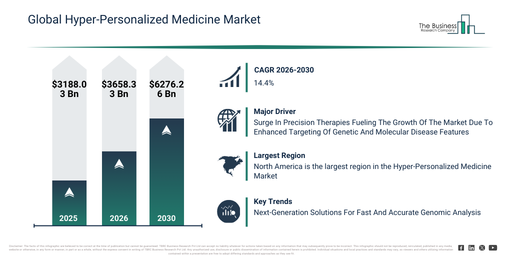
    The hyper-personalized medicine market has experienced rapid expansion in recent years. Projected to increase from $3,188.03 billion in 2025 to $3,658.33 billion in 2026, this growth is driven by a compound annual growth rate (CAGR) of 14.8%. The historical period’s expansion has been influenced by several factors, including the constrained supply of personalized medicine options, a dependence on standard treatment methods, rising patient preferences for individualized therapies, heightened funding for genomic studies, and the initial implementation of molecular diagnostics.

    The hyper-personalized medicine sector is anticipated to experience strong expansion over the coming years, reaching a projected value of $6276.26 billion by 2030, with a compound annual growth rate (CAGR) of 14.4%. This forecasted growth is driven by progress in gene and cell therapies, the integration of artificial intelligence and bioinformatics into everyday clinical practice, the broadening of precision nutrition and wellness programs, increasing governmental backing for tailored medical approaches, and a higher uptake of companion diagnostics and liquid biopsy techniques. Key developments shaping the market include the rise of AI-powered clinical decision support tools, the wider application of customized treatment strategies and precise surgical methods, a growing reliance on telehealth and remote health monitoring, a stronger emphasis on nutrigenomics and personalized nutrition plans, and the continued advancement of RNA-based and targeted drug therapies.

    Download A Free Sample Report For Comprehensive Market Insights:

    https://www.thebusinessresearchcompany.com/sample.aspx?id=27313&type=smp&utm_source=BlogsPR&utm_medium=Paid&utm_campaign=Jul_PR

    Hyper-Personalized Medicine Market Growth Drivers: What Factors Are Accelerating Expansion?

    The expanding need for precision therapies is anticipated to fuel the advancement of the hyper-personalized medicine market in the coming period. These therapies are medical interventions that zero in on particular genetic, molecular, or cellular aspects of a condition, allowing for more efficacious and customized treatments while reducing side effects when contrasted with conventional approaches. Their growing use stems from the capacity to address distinct disease characteristics, producing superior and individually tailored outcomes. Within this context, hyper-personalized medicine enhances precision therapies by crafting treatments that account for a person’s unique genetic, molecular, and lifestyle details, thus boosting effectiveness and lowering the risk of adverse reactions. To illustrate, in February 2024, the Personalized Medicine Coalition—a nonprofit entity based in the United States—reported that the FDA cleared 16 new personalized therapies for individuals with rare diseases in 2023, a jump from 6 in 2022. This upward trend in precision therapy adoption is consequently propelling the expansion of the hyper-personalized medicine market.

    Hyper-Personalized Medicine Market Segment Landscape: Which Areas Lead Market Development?

    The hyper-personalized medicine market covered in this report is segmented –

    1) By Product: Hyper Personalized Medicine Diagnostics, Hyper Personalized Medicine Therapeutics, Hyper Personalized Medical Care, Hyper Personalized Nutrition And Wellness

    2) By Technology: Genomics, Proteomics, Bioinformatics, Metabolomics

    3) By Application: Oncology, Neurology, Blood Transfusion Safety, Diabetes, Autoimmune Diseases, Cardiology

    4) By End User: Hospitals, Diagnostic Centers, Research And Academic Institutes

    Subsegments:

    1) By Hyper Personalized Medicine Diagnostics: Genomic Sequencing, Biomarker Testing, Molecular Diagnostics, Companion Diagnostics, Liquid Biopsy

    2) By Hyper Personalized Medicine Therapeutics: Targeted Drug Therapies, Gene Therapy, Cell Therapy, Immunotherapy, RNA-based Therapeutics

    3) By Hyper Personalized Medical Care: Telemedicine And Remote Monitoring, Personalized Treatment Plans, AI-driven Clinical Decision Support, Patient-specific Rehabilitation, Precision Surgery

    4) By Hyper Personalized Nutrition And Wellness: Nutrigenomics, Personalized Diet Plans, Microbiome Analysis, Customized Supplements, Wellness Coaching And Monitoring

    Hyper-Personalized Medicine Market Trends: What Is Shaping Future Industry Growth?

    Major players in the hyper-personalized medicine field are placing a strong emphasis on breakthrough technologies, especially accelerated whole-genome sequencing (WGS) analysis platforms, to address the rising need for quicker and more precise genomic data, AI-enhanced clinical support systems, and scalable companion diagnostics that facilitate truly tailored therapies and dosage regimens. These accelerated WGS analysis platforms are sophisticated software-based systems that convert unprocessed genomic data into actionable clinical information at high speed, empowering clinicians and researchers to reach faster and more accurate conclusions for diagnosis and treatment. By way of example, in May 2024, SOPHiA GENETICS SA, a healthcare and diagnostics firm headquartered in Switzerland that leverages data-driven approaches, unveiled a new WGS application aimed at providing fully analyzed whole-genome insights within an expedited timeframe for medical professionals and researchers. Featuring comprehensive end-to-end automated workflows—spanning from raw FASTQ files to variant interpretation—it utilizes cloud infrastructure and refined algorithms to reduce processing durations. Furthermore, it includes integrated clinical decision-support features for oncology and rare disease cases, enables scalability for hospitals and biotech entities, and frequently delivers analyzed reports on the same day.

    Hyper-Personalized Medicine Market Industry Leaders And Market Competition

    Major companies operating in the hyper-personalized medicine market are Pfizer Inc., Johnson & Johnson, Roche Holding AG, Bayer AG, Sanofi S.A., Bristol-Myers Squibb Company, AstraZeneca PLC, Abbott Laboratories, Novartis AG, Danaher Corporation, Amgen Inc., Merck KGaA, GE Healthcare Technologies Inc., Biogen Inc., Illumina Inc., Guardant Health Inc., Berry Genomics Co. Ltd., Sophia Genetics SA, Mapmygenome, InnoCare Pharma.

    Access The Complete Hyper-Personalized Medicine Market Report:

    https://www.thebusinessresearchcompany.com/report/hyper-personalized-medicine-global-market-report?utm_source=BlogsPR&utm_medium=Paid&utm_campaign=Jul_PR

    Hyper-Personalized Medicine Market Leading Geography: Which Region Generates The Most Revenue?

    North America was the largest region in the hyper-personalized medicine market in 2025. Asia-Pacific is expected to be the fastest-growing region in the forecast period. The regions covered in the hyper-personalized medicine market report are Asia-Pacific, South East Asia, Western Europe, Eastern Europe, North America, South America, Middle East, Africa.

    Get in touch with us:

    The Business Research Company: https://www.thebusinessresearchcompany.com/?utm_source=BlogsPR&utm_medium=Paid&utm_campaign=home_page_test

    Americas: +1 310-496-7795

    Asia: +44 7882 955267 & +91 8897263534

    Europe: +44 7882 955267

    Email us at: marketing@tbrc.info

    Follow us on:

    LinkedIn: https://in.linkedin.com/company/the-business-research-company

    YouTube: https://www.youtube.com/channel/UC24_fI0rV8cR5DxlCpgmyFQ

    Global Market Model: https://www.thebusinessresearchcompany.com/global-market-model
  • Hyperlipidemia Drugs Market Size Projected To Increase From $26.16 Billion To $32.31 Billion During The Forecast Period

    Hyperlipidemia Drugs Market Size Projected To Increase From $26.16 Billion To $32.31 Billion During The Forecast Period

    Through market attractiveness analysis, total addressable market evaluation, company benchmarking matrices, interactive Excel dashboards, expanded supply chain intelligence, emerging startup coverage, and detailed product insights, The Business Research Company’s 2026 market reports provide more actionable and strategically valuable research.

    Hyperlipidemia Drugs Market Expansion From $26.16 Billion In 2026 To $32.31 Billion In 2030

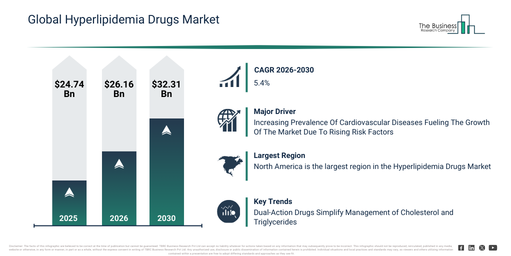
    The market for hyperlipidemia medications has experienced a notable expansion in recent years. A projected increase from $24.74 billion in 2025 to $26.16 billion in 2026 is anticipated, reflecting a compound annual growth rate of 5.7%. This historic growth has been driven by factors including a higher incidence of hyperlipidemia, an expanding elderly demographic, a growing rate of cardiovascular conditions, restricted availability of sophisticated lipid-lowering treatments, and advancements in healthcare infrastructure.

    The market for hyperlipidemia drugs is anticipated to experience robust expansion over the coming years. By 2030, it is projected to reach a value of $32.31 billion, reflecting a compound annual growth rate (CAGR) of 5.4%. This forecasted growth is driven by factors such as the introduction of novel PCSK9 inhibitors and inclisiran, the increasing use of combination therapies, a growing emphasis on personalized medicine, higher healthcare spending directed at cardiovascular care, and the incorporation of digital health monitoring tools. Key trends expected to shape the forecast period include a rising preference for statins and PCSK9 inhibitors, a greater reliance on combination therapy approaches for managing hyperlipidemia, heightened awareness regarding cardiovascular disease prevention, broader access through hospital and retail pharmacy networks, and an escalating demand for customized lipid-reducing treatments.

    Download A Free Sample Report For Comprehensive Market Insights:

    https://www.thebusinessresearchcompany.com/sample.aspx?id=27312&type=smp&utm_source=BlogsPR&utm_medium=Paid&utm_campaign=Jul_PR

    Hyperlipidemia Drugs Market Growth Factors Supporting Long-Term Expansion

    The anticipated growth of the hyperlipidemia drugs market is significantly driven by the rising incidence of cardiovascular diseases. These diseases encompass a range of conditions affecting the heart and blood vessels, including coronary heart disease, heart failure, stroke, and hypertension. Poor dietary habits—characterized by high intake of saturated fats, trans fats, added sugars, and sodium—serve as the primary cause, leading to elevated blood pressure, obesity, and increased cholesterol levels. By effectively reducing harmful cholesterol and triglycerides, hyperlipidemia drugs play a crucial role in managing cardiovascular conditions. Such therapies simplify treatment regimens, decrease complication risks, and enhance patient outcomes. According to the Centers for Disease Control and Prevention (October 2024), cardiovascular disease caused 919,032 deaths in 2023, representing one in every three fatalities. Coronary heart disease was the most common form, and approximately one-sixth of these deaths occurred in adults under 65. Consequently, the growing prevalence of cardiovascular diseases directly fuels the expansion of the hyperlipidemia drugs market.

    Hyperlipidemia Drugs Market Segments: Where Are The Largest Growth Opportunities?

    The hyperlipidemia drugs market covered in this report is segmented –

    1) By Drug Class: Statins, Bile Acid Sequestrants, Cholesterol Absorption Inhibitors, Fibric Acid Derivatives, Proprotein Convertase Subtilisin Or Kexin Type 9 (PCSK9) Inhibitors, Combination, Miscellaneous

    2) By Route Of Administration: Oral, Parenteral, Other Route Of Administrations

    3) By Distribution Channel: Hospital Pharmacies, Online Pharmacies, Retail Pharmacies

    4) By End User: Hospitals, Clinics, Other End Users

    Subsegments:

    1) By Statins: Atorvastatin, Rosuvastatin, Simvastatin, Pravastatin, Fluvastatin, Lovastatin, Pitavastatin

    2) By Bile Acid Sequestrants: Cholestyramine, Colesevelam, Colestipol

    3) By Cholesterol Absorption Inhibitors: Ezetimibe, Ezetimibe-Simvastatin Combination

    4) By Fibric Acid Derivatives: Fenofibrate, Gemfibrozil, Bezafibrate, Ciprofibrate

    5) By Proprotein Convertase Subtilisin Or Kexin Type 9 (PCSK9) Inhibitors: Evolocumab, Alirocumab, Inclisiran

    6) By Combination: Statin + Ezetimibe, Statin + Niacin, Statin + Omega-3, Statin + Bile Acid Sequestrant, Fixed-Dose Combinations (FDCs) Of Statins + Antihypertensives

    7) By Miscellaneous: Niacin (Nicotinic Acid), Omega-3 Fatty Acids (EPA/DHA), Lomitapide, Mipomersen, Bempedoic Acid

    Hyperlipidemia Drugs Market Industry Trends Shaping Future Revenue Growth

    Leading players in the hyperlipidemia drugs sector are prioritizing the creation of advanced therapeutic approaches, like combination regimens, aimed at improving efficacy and simplifying treatment protocols to support better cardiovascular health. The concept of combination therapies involves administering two or more distinct medications together within a single treatment plan, targeting a disease with greater effectiveness than any one drug could achieve alone. A recent example occurred in June 2024, when Daewoong Bio Inc., a pharmaceutical firm based in South Korea, introduced the CRA-TG Soft Capsule. This combination product merges rosuvastatin with omega-3 fatty acids to address hyperlipidemia in patients. Rosuvastatin works by suppressing cholesterol production in the liver, thereby lowering detrimental low-density lipoprotein (LDL) levels circulating in the bloodstream, whereas omega-3 fatty acids serve as a dietary supplement to diminish triglyceride levels in individuals experiencing high triglycerides. The formulation employs patented multi-layer capsule coating technology to boost ingredient stability and tolerability, all while preserving a standard capsule size.

    Hyperlipidemia Drugs Market Major Participants And Competitive Dynamics

    Major companies operating in the hyperlipidemia drugs market are Pfizer Inc., Merck & Co. Inc., AbbVie Inc., Sanofi S.A., Bristol-Myers Squibb Company, AstraZeneca plc, Novartis AG, GlaxoSmithKline plc, Amgen Inc., Takeda Pharmaceutical Company Limited, Boehringer Ingelheim GmbH, Teva Pharmaceutical Industries Ltd., Regeneron Pharmaceuticals Inc., Daiichi Sankyo Company Limited, Sun Pharmaceutical Industries Ltd., STADA Arzneimittel AG, Aurobindo Pharma Ltd., Zydus Lifesciences Limited, Lupin Limited, Glenmark Pharmaceuticals Ltd.

    Access The Complete Hyperlipidemia Drugs Market Report:

    https://www.thebusinessresearchcompany.com/report/hyperlipidemia-drugs-global-market-report?utm_source=BlogsPR&utm_medium=Paid&utm_campaign=Jul_PR

    Hyperlipidemia Drugs Market Regional Outlook: Where Are The Largest Opportunities Located?

    North America was the largest region in the hyperlipidemia drugs market in 2025. Asia-Pacific is expected to be the fastest-growing region in the forecast period. The regions covered in the hyperlipidemia drugs market report are Asia-Pacific, South East Asia, Western Europe, Eastern Europe, North America, South America, Middle East, Africa.

    Get in touch with us:

    The Business Research Company: https://www.thebusinessresearchcompany.com/?utm_source=BlogsPR&utm_medium=Paid&utm_campaign=home_page_test

    Americas: +1 310-496-7795

    Asia: +44 7882 955267 & +91 8897263534

    Europe: +44 7882 955267

    Email us at: marketing@tbrc.info

    Follow us on:

    LinkedIn: https://in.linkedin.com/company/the-business-research-company

    YouTube: https://www.youtube.com/channel/UC24_fI0rV8cR5DxlCpgmyFQ

    Global Market Model: https://www.thebusinessresearchcompany.com/global-market-model
  • Hydroxychloroquine Market Growth Outlook Reveals A CAGR Of 6.6% And A Market Value Of $3.25 Billion By 2030

    Hydroxychloroquine Market Growth Outlook Reveals A CAGR Of 6.6% And A Market Value Of $3.25 Billion By 2030

    Delivering more actionable and strategically valuable research, The Business Research Company’s 2026 market reports feature market attractiveness analysis, total addressable market evaluation, company benchmarking matrices, interactive Excel dashboards, expanded supply chain intelligence, emerging startup coverage, and detailed product insights.

    Hydroxychloroquine Market Forecast Highlighting Growth From $2.52 Billion To $3.25 Billion

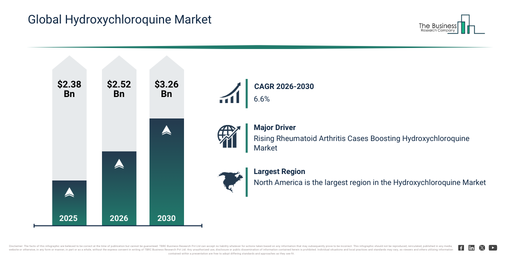
    The market for hydroxychloroquine has experienced robust expansion in recent years. A steady increase is projected from the 2025 valuation of $2.38 billion to an anticipated $2.52 billion by 2026, reflecting a compound annual growth rate (CAGR) of 6.2%. Factors driving the growth during the historical period include the significant presence of malaria in endemic areas, its well-documented application in managing autoimmune diseases, a growing understanding of its therapeutic advantages, widespread availability through both hospital and retail pharmacy networks, and its escalating use in clinical settings for conditions such as rheumatoid arthritis and lupus.

    The hydroxychloroquine market is projected to experience robust expansion over the coming years, with its value anticipated to reach $3.26 billion by 2030, reflecting a compound annual growth rate of 6.6%. This forecasted growth is driven by factors such as ongoing research into its applications for COVID-19, the creation of novel formulations and delivery systems, the rise of online pharmacy platforms, enhanced government initiatives targeting malaria prevention, and heightened investments in clinical trials along with off-label studies. Key trends shaping the market during this period include a growing reliance on hydroxychloroquine for both malaria prevention and treatment, increased adoption in managing rheumatoid arthritis and lupus, an uptick in off-label usage and clinical investigations related to COVID-19, the proliferation of tablet forms and injectable versions, and expanded distribution through hospital networks, online channels, and retail pharmacies.

    Download A Free Sample Report For Comprehensive Market Insights:

    https://www.thebusinessresearchcompany.com/sample.aspx?id=3235&type=smp&utm_source=BlogsPR&utm_medium=Paid&utm_campaign=Jul_PR

    Hydroxychloroquine Market Demand Drivers Creating New Revenue Opportunities

    The increasing prevalence of rheumatoid arthritis is anticipated to drive expansion in the hydroxychloroquine market in the coming period. Rheumatoid arthritis is defined as an autoimmune and inflammatory disorder wherein the immune system mistakenly attacks healthy cells within the body, resulting in inflammation in the affected areas. Hydroxychloroquine proves advantageous for managing rheumatoid arthritis because it helps lower inflammation and ease symptoms, thereby enhancing the overall well-being of numerous patients. To illustrate, in June 2023, the Centers for Disease Control and Prevention, a health protection agency based in the United States, reported that 54.4 million adults in the U.S. had been diagnosed with arthritis, with this figure expected to climb to 78 million by 2040. Consequently, the rising incidence of rheumatoid arthritis is predicted to fuel the hydroxychloroquine market.

    Hydroxychloroquine Market Driver: Impact Of Rising Healthcare Expenditure On The Growth Of The Hydroxychloroquine Market

    Growth in the hydroxychloroquine market is expected to be propelled by the increase in healthcare spending in the near future. Healthcare expenditure denotes the overall amount of resources, often quantified in monetary terms, that a country, organization, or individual dedicates to health services and products. This rise in healthcare outlay is influenced by various elements, such as an aging demographic, the widespread nature of chronic illnesses, progress in medical technology, and heightened consumer demands for high-quality care. Hydroxychloroquine has the potential to mitigate climbing healthcare expenses by providing an economical treatment option for various conditions, thereby lessening dependence on more costly medical procedures. As an example, in November 2023, the Canadian Institute for Health Information, a non-profit entity based in Canada, indicated that total health expenditure is estimated to hit $344 billion in 2023, showing a slight increase of 2.8% over the prior year. Thus, the uptick in healthcare expenditure is fueling the advancement of the hydroxychloroquine market.

    Hydroxychloroquine Market Segment Analysis: What Are The Major Market Categories?

    The hydroxychloroquine market covered in this report is segmented –

    1) By Drug Activity: Anti-Malarial Drug, Anti-Rheumatic Drug, Lupus Suppressant Drug, Anti COVID-19 Drug, Other Drug Activity

    2) By Formulation: Tablets, Injection

    3) By Application: Malaria, Rheumatoid Arthritis, Lupus Erythematosus, COVID-19, Other Applications

    4) By Distribution Channel: Hospital Pharmacy, Online Pharmacy, Specialty Drug Stores, Retail Pharmacy

    Subsegments:

    1) By Anti-Malarial Drug: Treatment Of Malaria, Prophylaxis For Malaria

    2) By Anti-Rheumatic Drug: Treatment Of Rheumatoid Arthritis, Treatment Of Juvenile Idiopathic Arthritis

    3) By Lupus Suppressant Drug: Treatment Of Systemic Lupus Erythematosus

    4) By Anti COVID-19 Drug: Treatment Of COVID-19 Symptoms

    5) By Other Drug Activity: Treatment Of Other Autoimmune Disorders, Additional Off-label uses

    Hydroxychloroquine Market Leading Companies Driving Competitive Growth

    Major companies operating in the hydroxychloroquine market are Bayer AG, Dr. Reddy’s Laboratories Ltd., Zydus Group, Ipca Laboratories Ltd., Wallace Pharma, Teva Pharmaceuticals Inc., Mylan Pharmaceuticals Inc., Novartis AG, Intas Pharmaceuticals Ltd., Lupin Limited, Shanghai Zhongxi Sanwei Pharmaceutical Co. Ltd., Torrent Pharmaceuticals Ltd., Hikma Pharmaceuticals plc, Sandoz International GmbH, Cipla Limited, Shenhua Pharmaceutical Co. Ltd., Sanofi S.A., Macleod Pharmaceuticals Ltd., Laurus Labs, TAJ Pharmaceuticals, Wuhan Wuyao Pharmaceutical Co. Ltd., Concordia Healthcare, Pfizer Inc., Cadila Pharmaceuticals, Hetero Drugs Ltd., Jubilant Generics Limited, Alembic Pharmaceuticals Limited, Sun Pharmaceutical Industries Ltd., Aurobindo Pharma USA Inc., Alkem Laboratories Ltd., Glenmark Pharmaceuticals Ltd., Unichem Laboratories Ltd., Wockhardt Limited, Emcure Pharmaceuticals Ltd., Strides Pharma Science Ltd., Indoco Remedies Ltd.

    Access The Complete Hydroxychloroquine Market Report:

    https://www.thebusinessresearchcompany.com/report/hydroxychloroquines-global-market-report?utm_source=BlogsPR&utm_medium=Paid&utm_campaign=Jul_PR

    Hydroxychloroquine Market Geographic Landscape: Which Region Dominates Industry Growth?

    North America was the largest region in the hydroxychloroquine market in 2025. Middle East is expected to be the fastest-growing region in the hydroxychloroquine market report. The regions covered in the hydroxychloroquine market report are Asia-Pacific, South East Asia, Western Europe, Eastern Europe, North America, South America, Middle East, Africa.

    Get in touch with us:

    The Business Research Company: https://www.thebusinessresearchcompany.com/?utm_source=BlogsPR&utm_medium=Paid&utm_campaign=home_page_test

    Americas: +1 310-496-7795

    Asia: +44 7882 955267 & +91 8897263534

    Europe: +44 7882 955267

    Email us at: marketing@tbrc.info

    Follow us on:

    LinkedIn: https://in.linkedin.com/company/the-business-research-company

    YouTube: https://www.youtube.com/channel/UC24_fI0rV8cR5DxlCpgmyFQ

    Global Market Model: https://www.thebusinessresearchcompany.com/global-market-model
  • Hydrolase Enzymes Market Forecast Highlights Expansion From $7.43 Billion To $10.09 Billion Through 2030

    Hydrolase Enzymes Market Forecast Highlights Expansion From $7.43 Billion To $10.09 Billion Through 2030

    Enhanced with market attractiveness analysis, total addressable market evaluation, company benchmarking matrices, interactive Excel dashboards, expanded supply chain intelligence, emerging startup coverage, and detailed product insights, The Business Research Company’s 2026 market reports deliver more actionable and strategically valuable research.

    Hydrolase Enzymes Market Revenue Growth Supported By A CAGR Of 10.09% Through 2030

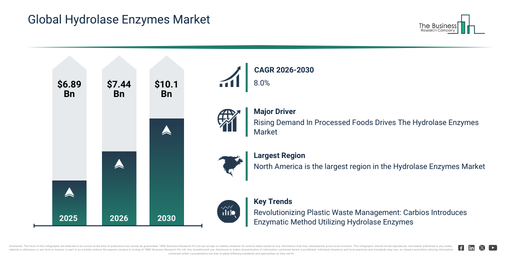
    The hydrolase enzymes market has undergone robust growth in recent years. It is projected to expand from $6.89 billion in 2025 to $7.44 billion in 2026, registering a compound annual growth rate (CAGR) of 7.9%. This historical growth can be traced to factors such as the greater integration of enzymes into detergent formulations, the expansion of pharmaceutical production, the increased utilization of enzymes in food processing, advances in fermentation technology, and the cost efficiency inherent in enzymatic catalysis.

    The hydrolase enzymes market is anticipated to experience robust expansion over the coming years, reaching a valuation of $10.1 billion by 2030 with a compound annual growth rate (CAGR) of 8.0%. This projected growth during the forecast period is driven by several factors, including the escalating need for biopharmaceuticals, a heightened emphasis on eco-friendly industrial methods, the expansion of biofuel production, broader utilization in cosmetics and personal care items, and ongoing breakthroughs in enzyme engineering. Among the key trends shaping this period are the increased employment of hydrolase enzymes in biopharmaceutical medication development, the integration of enzyme-driven processes in food and beverage production, elevated demand for these enzymes in detergents and cleaning agents, the growing use of industrial enzymes in biofuel and biorefinery operations, and product advancements concentrating on enzymes with enhanced stability and specificity.

    Download A Free Sample Report For Comprehensive Market Insights:

    https://www.thebusinessresearchcompany.com/sample.aspx?id=9143&type=smp&utm_source=BlogsPR&utm_medium=Paid&utm_campaign=Jul_PR

    Hydrolase Enzymes Market Expansion Supported By Key Demand Factors

    The rising consumption of processed foods is expected to drive the expansion of the hydrolase enzymes market in the coming years. Processed foods are those that have been intentionally altered from their natural state through techniques such as preparation, preservation, cooking, or packaging. Hydrolase enzymes play a key role in the production of processed foods by enabling the creation of sweeteners like high-fructose corn syrup and by breaking down complex carbohydrates, proteins, and fats into simpler components. For example, in May 2024, the United States Department of Agriculture, a federal agency based in the U.S., reported that the value of American processed food exports grew by 0.2% year-over-year in 2023, reaching $14.73 billion and marking a third consecutive annual record. As a result, the increasing demand for processed foods is fueling growth in the hydrolase enzymes market.

    Hydrolase Enzymes Market Segment Breakdown: Which Categories Generate The Most Revenue?

    The hydrolase enzymes market covered in this report is segmented –

    1) By Product: Esterase, Glycosylases, Peptidases, Other Products

    2) By Bond Type: Ester Bonds (Esterases), Sugars (DNA Glycosylases And Glycoside Hydrolase), Ether Bonds (Thioether And Trialkylsulfonium), Peptide Bonds (Peptidases), Carbon-Nitrogen Bonds (Other Than Peptide Bonds), Acid Anhydrides, Carbon-Carbon Bonds, Halide Bonds, Phosphorus-Nitrogen Bonds, Other Bond Types

    3) By Application: Pharmaceutical, Food And Beverages, Laundry Detergents, Cosmetics, Textile, Pulp And Paper, Biofuel, Other Applications

    Subsegments:

    1) By Esterase: Acetylcholinesterase, Lipases, Carboxylesterases

    2) By Glycosylases: Amylases, Cellulases, Glucosidases

    3) By Peptidases: Serine Peptidases, Cysteine Peptidases, Aspartic Peptidases, Metallopeptidases

    4) By Other Products: Phosphatases, Nucleotidases, Other Hydrolases

    Hydrolase Enzymes Market Growth Trends Influencing Competitive Dynamics

    Leading companies active in the hydrolase enzymes sector are prioritizing breakthroughs like advanced enzyme engineering, aiming to boost the efficiency and sustainability of industrial operations, such as plastic recycling and the creation of bio-based goods. Enzymatic recycling leverages naturally derived enzymes to decompose plastics, PET for example, into their fundamental building blocks, enabling their reprocessing into fresh materials with no loss of quality. As an illustration, in August 2023, Carbios, a biotechnology firm based in France, introduced a groundbreaking enzymatic recycling process, ushering in a new approach to managing PET (polyethylene terephthalate) waste. This cutting-edge technique transforms waste into recycled and recyclable products without any decline in quality, employing natural enzymes to convert plastic and textile refuse into new materials.

    Hydrolase Enzymes Market Key Players And Strategic Industry Positioning

    Major companies operating in the hydrolase enzymes market are Creative Enzymes Holdings Limited, Advanced Enzyme Technologies Limited, Specialty Enzymes & Probiotics, Novozymes A/S, Antozyme Biotech Private Limited, Infinita Biotech Private Limited, Aumgene Biosciences (Shanghai) Co. Ltd., AB Enzymes GmbH, Dyadic International Inc., Sisco Research Laboratories Pvt Ltd., Amano Enzyme Inc., Codexis Inc., Merck KGaA, BESTZYME BIO-ENGINEERING CO. Ltd., Bioseutica Group, BASF SE, Kemin Industries Inc., Epygen Labs FZ LLC, DuPont de Nemours Inc., Biovet Private Limited, Enzyme Development Corporation, Associated British Foods, Chr. Hansen Holding A/S, Thermo Fisher Scientific Inc., Koninklijke DSM N.V., Enzymes Biotec Limited, Kerry Group plc

    Access The Complete Hydrolase Enzymes Market Report:

    https://www.thebusinessresearchcompany.com/report/hydrolase-enzymes-global-market-report?utm_source=BlogsPR&utm_medium=Paid&utm_campaign=Jul_PR

    Hydrolase Enzymes Market Largest Region: Which Geography Holds The Highest Market Share?

    North America was the largest region in the hydrolase enzymes market in 2025. Europe is expected to be the fastest-growing region in the hydrolase enzymes market report during the forecast period. The regions covered in the hydrolase enzymes market report are Asia-Pacific, South East Asia, Western Europe, Eastern Europe, North America, South America, Middle East, Africa.

    Get in touch with us:

    The Business Research Company: https://www.thebusinessresearchcompany.com/?utm_source=BlogsPR&utm_medium=Paid&utm_campaign=home_page_test

    Americas: +1 310-496-7795

    Asia: +44 7882 955267 & +91 8897263534

    Europe: +44 7882 955267

    Email us at: marketing@tbrc.info

    Follow us on:

    LinkedIn: https://in.linkedin.com/company/the-business-research-company

    YouTube: https://www.youtube.com/channel/UC24_fI0rV8cR5DxlCpgmyFQ

    Global Market Model: https://www.thebusinessresearchcompany.com/global-market-model
  • Hydrogel Based Drug Delivery System Market Expected To Reach $12.35 Billion By 2030 As Growth Accelerates At 10.2% CAGR

    Hydrogel Based Drug Delivery System Market Expected To Reach $12.35 Billion By 2030 As Growth Accelerates At 10.2% CAGR

    Through market attractiveness analysis, total addressable market evaluation, company benchmarking matrices, interactive Excel dashboards, expanded supply chain intelligence, emerging startup coverage, and detailed product insights, The Business Research Company’s 2026 market reports provide more actionable and strategically valuable research.

    Hydrogel Based Drug Delivery System Market Value Expansion And Long-Term Growth Outlook

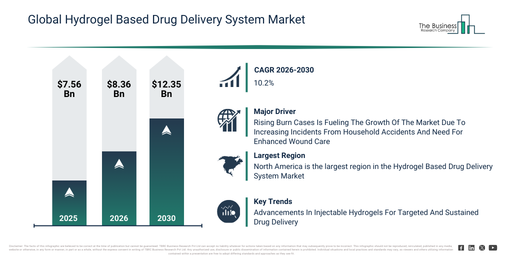
    The market for hydrogel-based drug delivery systems has experienced swift expansion in recent years. Projected to rise from $7.56 billion in 2025 to $8.36 billion in 2026, it reflects a compound annual growth rate (CAGR) of 10.6%. This historical growth has been driven by factors such as the restricted range of hydrogel formulations, a dependence on natural hydrogels, limited integration into clinical practice, the absence of systems capable of delivering large molecules, and an increasing need for therapies that offer sustained release.

    The market for hydrogel-based drug delivery systems is projected to experience substantial expansion over the coming years. By 2030, its value is anticipated to reach $12.35 billion, driven by a compound annual growth rate (CAGR) of 10.2%. Several factors are fueling this forecasted growth, including the advancement of synthetic and hybrid hydrogels, heightened application in oncology and cardiology, the broadening of injectable and ocular delivery methods, the increasing adoption of customized hydrogel treatments, and rising financial support for research institutions and hospitals. Key developments shaping this period involve a growing preference for injectable and topical hydrogel systems, their expanding use in targeted cancer and heart disease therapies, the creation of hybrid hydrogels designed to enhance drug release kinetics, amplified research into delivering peptides, proteins, and large molecules, and a shift toward personalized medicine with formulations tailored to individual patients.

    Download A Free Sample Report For Comprehensive Market Insights:

    https://www.thebusinessresearchcompany.com/sample.aspx?id=27311&type=smp&utm_source=BlogsPR&utm_medium=Paid&utm_campaign=Jul_PR

    Hydrogel Based Drug Delivery System Market Growth Drivers And Industry Catalysts

    The increasing frequency of burn injuries is anticipated to drive expansion in the hydrogel-based drug delivery system market moving forward. Burn-related medical cases involve harm to the skin or underlying tissues caused by factors such as heat, chemicals, electricity, or radiation. A rise in household accidents—stemming from mishandling hot liquids or cooking appliances that lead to skin damage—has contributed to the growing incidence of burns, highlighting the necessity of enhanced safety measures in everyday routines. Hydrogel-based drug delivery systems aid in burn recovery by creating a moist, protective environment that speeds up healing, lessens discomfort, and enables controlled, sustained release of medications, which supports tissue regeneration and reduces infection risks. As an example, data from October 2023 released by the International Burn Injury Database (iBID), a U.S.-based entity, revealed that during the first six months of that year, burn and scald incidents among children rose by 45% compared to the same timeframe in 2022, while occurrences involving adults and the elderly due to hot water bottles climbed by 19%. Consequently, the mounting number of burn cases is fueling growth within the hydrogel-based drug delivery system market.

    Hydrogel Based Drug Delivery System Market Segmentation: How Is The Market Structured Across Key Categories?

    The hydrogel based drug delivery system market covered in this report is segmented –

    1) By Type Of Hydrogel: Natural Hydrogels, Synthetic Hydrogels, Hybrid Hydrogels

    2) By Drug Type: Small Molecules, Large Molecules, Peptides, Proteins

    3) By Route Of Administration: Topical, Injectable, Oral, Transdermal, Ocular

    4) By Application: Cardiology, Oncology, Immunology, Pain Management, Other Applications

    5) By End-User: Hospitals, Clinics, Research Institutes, Other End-Users

    Subsegments:

    1) By Natural Hydrogels: Alginate, Chitosan, Collagen, Gelatin, Hyaluronic Acid, Fibrin

    2) By Synthetic Hydrogels: Polyethylene Glycol (PEG), Polyvinyl Alcohol (PVA), Polyacrylamide (PAAm), Poloxamer, Poly(N-isopropylacrylamide) (PNIPAM)

    3) By Hybrid Hydrogels: Natural-Synthetic Polymer Blends, Interpenetrating Polymer Networks (IPNs), Composite Hydrogels, Nanocomposite Hydrogels

    Hydrogel Based Drug Delivery System Market Trends Influencing Long-Term Demand

    Major players in the hydrogel-based drug delivery market are concentrating their efforts on creating advanced products, including injectable hydrogels, to enhance targeted drug delivery and facilitate controlled, sustained release of medications. These injectable hydrogels, being soft and composed primarily of water, can be administered through minimally invasive means, allowing for direct delivery of drugs to the target location in a sustained fashion, thereby boosting therapeutic efficacy while reducing adverse effects. A notable example occurred in October 2024, when UPM Biomedicals Oy, a biotechnology firm based in Finland, introduced Fibgel, which is recognized as the first injectable nanocellulose hydrogel specifically intended for permanent implantable medical devices. Crafted from renewable Finnish birch wood cellulose and water, this innovative material presents a safe, sustainable, and animal-free option compared to conventional synthetic or animal-derived hydrogels. With adjustable mechanical characteristics and outstanding biocompatibility, Fibgel facilitates controlled and continuous drug release precisely at the intended site. Its shear-thinning property enables straightforward injection via minimally invasive methods, which enhances patient comfort and reduces recovery time.

    Hydrogel Based Drug Delivery System Market Competitive Landscape And Leading Companies

    Major companies operating in the hydrogel based drug delivery system market are Johnson & Johnson, Merck KGaA, UPM Biomedicals Oy, The Lubrizol Corporation, Ashland Global Holdings Inc., B. Braun Melsungen AG, Ocular Therapeutix Inc., Primex ehf, Heppe Medical Chitosan GmbH, BioCat GmbH, Micropore Technologies Limited, Akina Inc., KitoZyme SA

    Access The Complete Hydrogel Based Drug Delivery System Market Report:

    https://www.thebusinessresearchcompany.com/report/hydrogel-based-drug-delivery-system-global-market-report?utm_source=BlogsPR&utm_medium=Paid&utm_campaign=Jul_PR

    Hydrogel Based Drug Delivery System Market Regional Analysis: Which Region Leads By Revenue?

    North America was the largest region in the hydrogel-based drug delivery system market in 2025. Asia-Pacific is expected to be the fastest-growing region in the forecast period. The regions covered in the hydrogel based drug delivery system market report are Asia-Pacific, South East Asia, Western Europe, Eastern Europe, North America, South America, Middle East, Africa.

    Get in touch with us:

    The Business Research Company: https://www.thebusinessresearchcompany.com/?utm_source=BlogsPR&utm_medium=Paid&utm_campaign=home_page_test

    Americas: +1 310-496-7795

    Asia: +44 7882 955267 & +91 8897263534

    Europe: +44 7882 955267

    Email us at: marketing@tbrc.info

    Follow us on:

    LinkedIn: https://in.linkedin.com/company/the-business-research-company

    YouTube: https://www.youtube.com/channel/UC24_fI0rV8cR5DxlCpgmyFQ

    Global Market Model: https://www.thebusinessresearchcompany.com/global-market-model
  • Hyaluronic Acid Supplement Market Set To Grow From $3.1 Billion In 2026 To $4.54 Billion By 2030 At A CAGR Of 10%

    Hyaluronic Acid Supplement Market Set To Grow From $3.1 Billion In 2026 To $4.54 Billion By 2030 At A CAGR Of 10%

    Delivering more actionable and strategically valuable research, The Business Research Company’s 2026 market reports feature market attractiveness analysis, total addressable market evaluation, company benchmarking matrices, interactive Excel dashboards, expanded supply chain intelligence, emerging startup coverage, and detailed product insights.

    Hyaluronic Acid Supplement Market Expected To Reach $4.54 Billion By 2030 At 10% CAGR

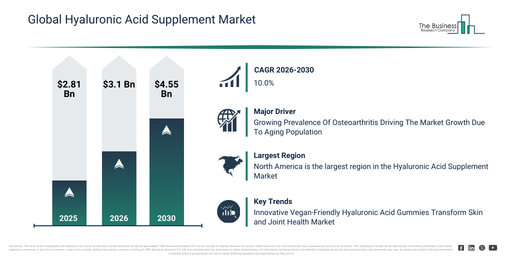
    The market for hyaluronic acid supplements has experienced substantial growth in recent years, expanding from $2.81 billion in 2025 to an anticipated $3.1 billion in 2026, representing a compound annual growth rate (CAGR) of 10.3%. This historic expansion has been driven by a heightened consumer emphasis on anti-aging products, a broader adoption of dietary supplements, the increasing popularity of the beauty-from-within concept, greater awareness of joint health advantages, and the availability of various supplement forms.

    Projections indicate that the hyaluronic acid supplement market will experience substantial expansion in the coming years, with its valuation reaching $4.55 billion by 2030 through a compound annual growth rate (CAGR) of 10.0%. This forecasted growth is driven by a heightened consumer preference for clean-label beauty supplements, a growing integration of these products into functional foods, the expansion of e-commerce distribution channels, an aging global population, and progress in bioavailable formulation technologies. Key trends shaping this period include an escalating demand for supplements supporting both skin and joint health, a greater uptake of fermentation-derived hyaluronic acid, a shift toward multi-functional beauty supplements, the broadening of oral and functional food delivery formats, and an intensified focus on improving bioavailability.

    Download A Free Sample Report For Comprehensive Market Insights:

    https://www.thebusinessresearchcompany.com/sample.aspx?id=30299&type=smp&utm_source=BlogsPR&utm_medium=Paid&utm_campaign=Jul_PR

    Hyaluronic Acid Supplement Market Opportunity Drivers: What Is Creating New Revenue Potential?

    The increasing incidence of osteoarthritis is anticipated to drive the expansion of the hyaluronic acid supplement market in the coming period. Osteoarthritis, a degenerative joint condition marked by cartilage deterioration, results in pain, stiffness, and diminished mobility in the joints it affects. This condition is becoming more widespread largely due to an aging population, as the likelihood of developing osteoarthritis rises with age from the cumulative stress and damage inflicted on joint cartilage over the years. Hyaluronic acid supplements aid in managing osteoarthritis by restoring natural joint fluid, which enhances lubrication and shock absorption, slows cartilage deterioration, and consequently reduces pain while improving joint flexibility. As an example, in February 2024, Arthritis Australia, a nonprofit organization based in Australia, reported that osteoarthritis is predicted to impact 2.35 million Australians in 2025, comprising 57% of the total arthritis population and establishing it as the nation’s most prevalent form of arthritis. By 2040, the number of Australians affected by OA is forecasted to climb to 3.11 million, marking a 32% rise from 2025. This indicates an additional 762,515 individuals in Australia will be living with OA by 2040 compared to 2025. Consequently, the rising prevalence of osteoarthritis is fueling growth in the hyaluronic acid supplement market.

    Hyaluronic Acid Supplement Market Segmentation Trends And Revenue Drivers

    The hyaluronic acid supplement market covered in this report is segmented –

    1) By Product Form: Capsules, Tablets, Powder, Liquid, Gummies, Other Product Forms

    2) By Source: Biotic, Synthetic, Plant Based

    3) By Distribution Channel: Online Stores, Pharmacies Or Drug Stores, Supermarkets Or Hypermarkets, Specialty Stores, Other Distribution Channels

    4) By Application: Joint Health, Skin Care, Eye Health, Hair Health, Other Applications

    5) By End-User: Adults, Geriatric, Athletes, General Populations, Other End-Users

    Subsegments:

    1) By Capsules: Standard Hyaluronic Acid Capsules, Extended-Release Hyaluronic Acid Capsules, Combination Hyaluronic Acid Capsules, Vegan Hyaluronic Acid Capsules

    2) By Tablets: Chewable Hyaluronic Acid Tablets, Effervescent Hyaluronic Acid Tablets, Coated Hyaluronic Acid Tablets, Multi-Ingredient Hyaluronic Acid Tablets

    3) By Powder: Pure Hyaluronic Acid Powder, Flavored Hyaluronic Acid Powder, Soluble Hyaluronic Acid Powder, Multi-Compound Hyaluronic Acid Powder

    4) By Liquid: Ionic Hyaluronic Acid Liquid, Concentrated Hyaluronic Acid Drops, Flavored Hyaluronic Acid Liquid, Bioavailable Hyaluronic Acid Solution

    5) By Gummies: Fruit-Flavored Hyaluronic Acid Gummies, Vegan Hyaluronic Acid Gummies, Multi-Vitamin Hyaluronic Acid Gummies, Chewable Hyaluronic Acid Gummies

    6) By Other Product Forms: Topical Hyaluronic Acid Gels, Injectable Hyaluronic Acid Formulations, Hyaluronic Acid Lozenges, Functional Food Hyaluronic Acid Products

    Hyaluronic Acid Supplement Market Innovation Trends Driving Future Development

    Key players in the hyaluronic acid supplement industry are concentrating on creating novel offerings, such as vegan-friendly hyaluronic acid gummies, to address the rising need for easy-to-use, clean-label solutions that support skin and joint health. These gummies are plant-based supplements delivering hyaluronic acid without any animal-derived components, aiding in skin hydration, enhancing elasticity, and fostering joint health when consumed orally. As an example, in February 2023, Elemis Ltd., a wellness supplement firm based in the UK, introduced its Pro-Collagen Skin Future Supplements, a dietary ingestible skincare product, available exclusively through QVC. This supplement includes hyaluronic acid, an antioxidant blend, chlorella, and vitamins A and C, all aimed at boosting skin hydration, radiance, firmness, and elasticity, while reducing the appearance of fine lines and wrinkles. The hyaluronic acid in the formulation works to increase skin moisture and elasticity, targeting visible aging signs to achieve a more youthful look. The encapsulated antioxidant mixture is intended to stabilize and boost collagen synthesis, with chlorella contributing to overall skin wellness. Additionally, vitamins A and C assist in collagen formation and help maintain normal skin function.

    Hyaluronic Acid Supplement Market Industry Leaders: Which Organizations Are Driving Competition?

    Major companies operating in the hyaluronic acid supplement market are Elemis Ltd., NOW Health Group Inc. (NOW Foods), Nature’s Truth Inc., Nutricost LLC, Jarrow Formulas Inc., Life Extension Foundation Buyers Club Inc., Bioiberica S.A., Contipro a.s., Makers Nutrition LLC, GMP Laboratories of America Inc., NeoCell Inc., Titan Biotech Ltd., SMP Nutra Inc., Chambio Inc., Supplement Factory LLC, A&A Pharmachem Inc., BioCell Technology LLC, NatureBell Inc., TCI Co. Ltd., The Hyalogic Inc.

    Access The Complete Hyaluronic Acid Supplement Market Report:

    https://www.thebusinessresearchcompany.com/report/global-hyaluronic-acid-supplement-market-report?utm_source=BlogsPR&utm_medium=Paid&utm_campaign=Jul_PR

    Hyaluronic Acid Supplement Market Geographic Distribution And Regional Opportunities

    North America was the largest region in the hyaluronic acid supplement market in 2025. Asia-Pacific is expected to be the fastest-growing region in the forecast period. The regions covered in the hyaluronic acid supplement market report are Asia-Pacific, South East Asia, Western Europe, Eastern Europe, North America, South America, Middle East, Africa.

    Get in touch with us:

    The Business Research Company: https://www.thebusinessresearchcompany.com/?utm_source=BlogsPR&utm_medium=Paid&utm_campaign=home_page_test

    Americas: +1 310-496-7795

    Asia: +44 7882 955267 & +91 8897263534

    Europe: +44 7882 955267

    Email us at: marketing@tbrc.info

    Follow us on:

    LinkedIn: https://in.linkedin.com/company/the-business-research-company

    YouTube: https://www.youtube.com/channel/UC24_fI0rV8cR5DxlCpgmyFQ

    Global Market Model: https://www.thebusinessresearchcompany.com/global-market-model
  • Hyaluronic Acid Market Opportunities Are Emerging Beyond Traditional Growth Areas

    Hyaluronic Acid Market Opportunities Are Emerging Beyond Traditional Growth Areas

    Enhanced with market attractiveness analysis, total addressable market evaluation, company benchmarking matrices, interactive Excel dashboards, expanded supply chain intelligence, emerging startup coverage, and detailed product insights, The Business Research Company’s 2026 market reports deliver more actionable and strategically valuable research.

    Hyaluronic Acid Market Size And Revenue Forecast Through 2030

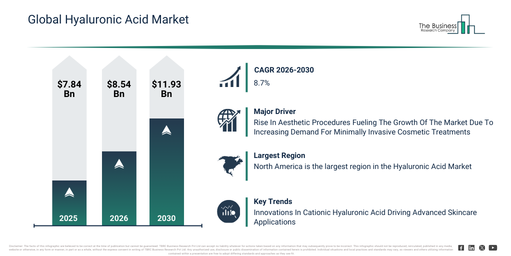
    The hyaluronic acid market has experienced robust expansion in recent years, with its value projected to increase from $7.84 billion in 2025 to $8.54 billion in 2026, reflecting a compound annual growth rate (CAGR) of 9.0%. This historical growth was primarily driven by the broadening scope of cosmetic and dermatological procedures, a higher incidence of osteoarthritis, improvements in biopolymer manufacturing techniques, greater public understanding of skincare advantages, and a rising preference for minimally invasive therapies.

    The hyaluronic acid market is projected to experience significant expansion over the coming years, with its value anticipated to reach $11.93 billion by 2030, reflecting a compound annual growth rate (CAGR) of 8.7%. This upward trajectory during the forecast period is driven by several key factors, including a heightened demand for solutions that counteract aging, a greater uptake of regenerative medicine applications, broader use of pharmaceutical-grade hyaluronic acid, an increasing emphasis on sustainable sourcing methods, and more substantial investments in advanced formulation technologies. Notable trends shaping the future landscape comprise a rising preference for injectable aesthetic procedures, expanded application of hyaluronic acid in managing osteoarthritis, growing utilization of microbial fermentation as a production technique, the development of versatile formulations suited for multiple uses, and a stronger focus on achieving high-purity grades.

    Download A Free Sample Report For Comprehensive Market Insights:

    https://www.thebusinessresearchcompany.com/sample.aspx?id=28245&type=smp&utm_source=BlogsPR&utm_medium=Paid&utm_campaign=Jul_PR

    Hyaluronic Acid Market Growth Momentum: Which Factors Are Influencing Demand?

    The increasing demand for aesthetic procedures is expected to drive the growth of the hyaluronic acid market in the coming period. These procedures involve treatments aimed at improving appearance, enhancing specific features, and rejuvenating the skin or body to achieve a more youthful and harmonious look. Their growing popularity is fueled by technological innovations that have made these treatments safer, less invasive, and more effective, thereby encouraging a larger number of individuals to seek them out. Hyaluronic acid plays a crucial role in such treatments because it helps restore facial volume, reduce wrinkles, and improve skin hydration, resulting in a smoother and more youthful appearance. For example, according to the American Society of Plastic Surgeons—a US-based Plastic Surgery Foundation—over 800,000 patients turned to aesthetic procedures in 2024 to support their health goals. In that year, tummy tucks ranked as the second most popular procedure, with a 1% increase from 2023, while facelifts and forehead lifts each also experienced a 1% rise. Thus, the rising number of aesthetic procedures is fueling the expansion of the hyaluronic acid market.

    Hyaluronic Acid Market Segment Analysis Highlighting Growth Areas

    The hyaluronic acid market covered in this report is segmented –

    1) By Product: Multiple Injection Dose, Single Injection Dose

    2) By Grade: Pharmaceutical Grade Hyaluronic Acid, Cosmetic Grade Hyaluronic Acid

    3) By Source: Microbial Fermentation, Animal Based, Plant Based

    4) By Application: Pharmaceutical Active Pharmaceutical Ingredient, Aesthetics, Osteoarthritis, Cosmetics, Ophthalmology, Dietary Supplements

    5) By End User: Dermatology Clinics, Cosmetic Surgery Centers, Medical Spas And Beauty Centers, Other End Users

    Subsegments:

    1) By Multiple Injection Dose: Pre-Filled Syringes, Vials With Reconstitution Kits, Combination Therapy Formats, Extended-Release Formulations

    2) By Single Injection Dose: Pre-Filled Single-Use Syringes, Ampoules, Cartridges, Ready-To-Inject Pens

    Hyaluronic Acid Market Trends Reshaping Industry Growth

    Key players in the hyaluronic acid market are increasingly prioritizing innovation, particularly through the development of novel cationic hyaluronic acid, aimed at improving skin adhesion, elevating hydration capacity, and broadening usability in rinse-off products. This specialized compound is a chemically altered, positively charged version of hyaluronic acid, engineered to boost adherence, facilitate cellular engagement, and ensure greater stability for use in sophisticated medical and cosmetic formulations. A notable example occurred in March 2023, when Givaudan S.A., a chemical firm headquartered in Switzerland, unveiled PrimalHyal Hydra. This innovative cationic hyaluronic acid, produced via white biotechnology, establishes a fresh benchmark in skin moisturization. The active ingredient delivers immediate hydration after a single use and maintains moisture levels for up to four days, achieving at least twice the effectiveness of conventional hyaluronic acid. Its performance is robust across both rinse-off and leave-on cosmetic preparations, and it simultaneously strengthens the skin barrier by enhancing the production of lipids and proteins. Clinically validated, this ingredient is designed for wide-ranging use within skincare sectors, including lotions, shower gels, and masks, delivering enduring hydration and barrier support alongside superior skin adhesion properties.

    Hyaluronic Acid Market Leading Companies: Who Holds Significant Market Presence?

    Major companies operating in the hyaluronic acid market are AbbVie Inc., L’Oréal S.A., LG Chem Ltd., Shiseido Company Limited, Givaudan SA, Zimmer Biomet Holdings Inc., Grifols S.A., Smith & Nephew plc, Kikkoman Biochemifa Company Ltd., Galderma S.A., Kewpie Corporation, Merz Pharma GmbH & Co. KGaA, Fidia Farmaceutici S.p.A., Anika Therapeutics Inc., Lifecore Biomedical Inc., Croma-Pharma GmbH, Contipro a.s., Seikagaku Corporation, HTL Biotechnology SAS, Altergon Italia S.r.l., Bloomage Biotechnology Corporation Limited.

    Access The Complete Hyaluronic Acid Market Report:

    https://www.thebusinessresearchcompany.com/report/hyaluronic-acid-global-market-report?utm_source=BlogsPR&utm_medium=Paid&utm_campaign=Jul_PR

    Hyaluronic Acid Market Largest Region By Revenue And Market Share

    North America was the largest region in the hyaluronic acid market in 2025. Asia-Pacific is expected to be the fastest-growing region in the forecast period. The regions covered in the hyaluronic acid market report are Asia-Pacific, South East Asia, Western Europe, Eastern Europe, North America, South America, Middle East, Africa.

    Get in touch with us:

    The Business Research Company: https://www.thebusinessresearchcompany.com/?utm_source=BlogsPR&utm_medium=Paid&utm_campaign=home_page_test

    Americas: +1 310-496-7795

    Asia: +44 7882 955267 & +91 8897263534

    Europe: +44 7882 955267

    Email us at: marketing@tbrc.info

    Follow us on:

    LinkedIn: https://in.linkedin.com/company/the-business-research-company

    YouTube: https://www.youtube.com/channel/UC24_fI0rV8cR5DxlCpgmyFQ

    Global Market Model: https://www.thebusinessresearchcompany.com/global-market-model
  • Huoxiang Zhengqi For Covid 19 Market Expansion Is Opening New Pathways For Strategic Investment

    Huoxiang Zhengqi For Covid 19 Market Expansion Is Opening New Pathways For Strategic Investment

    Through market attractiveness analysis, total addressable market evaluation, company benchmarking matrices, interactive Excel dashboards, expanded supply chain intelligence, emerging startup coverage, and detailed product insights, The Business Research Company’s 2026 market reports provide more actionable and strategically valuable research.

    Huoxiang Zhengqi For Covid 19 Market Growth From $1.72 Billion In 2026 To $2.72 Billion By 2030 At A CAGR Of 12.1%

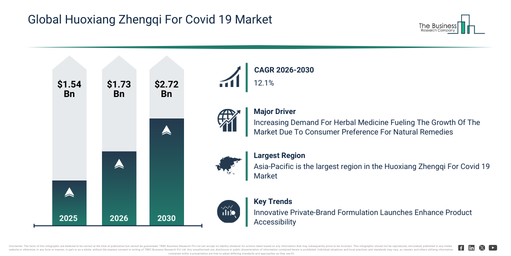
    The market size for huoxiang zhengqi in the context of treating COVID-19 has expanded rapidly over recent years. It is projected to rise from $1.54 billion in 2025 to $1.73 billion in 2026, reflecting a compound annual growth rate (CAGR) of 12.1%. This historic growth was driven by a significant dependence on traditional medicine during health emergencies, official support for traditional Chinese medicine (TCM) throughout the pandemic, scarce pharmaceutical alternatives in the early stages, a cultural inclination toward herbal treatments, and surges in demand during successive waves of the outbreak.

    The market size of huoxiang zhengqi for covid 19 is anticipated to undergo substantial expansion over the coming years. By 2030, it is projected to reach $2.72 billion, driven by a compound annual growth rate (CAGR) of 12.1%. This forecasted growth is fueled by ongoing interest in therapies that support the immune system, the broadening of integrative medicine approaches, a more health-conscious population, advancements in herbal pharmaceutical production, and enhanced research focused on traditional remedies. Key developments shaping this period encompass a rising acceptance of traditional Chinese medicine, a greater reliance on herbal formulas to bolster immunity, the widening scope of preventive healthcare uses, a growing incorporation of these methods with standard covid treatments, and an elevated demand for solutions targeting digestive and immune health.

    Download A Free Sample Report For Comprehensive Market Insights:

    https://www.thebusinessresearchcompany.com/sample.aspx?id=24246&type=smp&utm_source=BlogsPR&utm_medium=Paid&utm_campaign=Jul_PR

    Huoxiang Zhengqi For Covid 19 Market Expansion Drivers: What Is Shaping Future Growth?

    The growing interest in herbal medicine is anticipated to fuel the expansion of the Huoxiang Zhengqi for COVID-19 market in the coming years. Herbal medicine involves the application of plants or plant-based materials for therapeutic reasons, aimed at preventing, treating, or managing health issues. This surge in demand is largely attributed to consumers’ increasing preference for natural, plant-derived options over synthetic alternatives, driven by perceptions of enhanced safety, reduced side effects, and holistic wellness advantages. In the context of COVID-19, Huoxiang Zhengqi supports herbal medicine by offering a traditional formulation that boosts immune function, eases symptoms, and facilitates recovery, highlighting the potential of herbal treatments in addressing viral illnesses. As an example, data from September 2024 released by HerbalGram, a non-profit organization based in the US, showed that total annual sales of herbal dietary supplements increased from $12.018 billion in 2022 to $12.551 billion in 2023, marking a 4.4% growth rate. Consequently, the rising demand for herbal medicine is propelling the growth of the Huoxiang Zhengqi for COVID-19 market.

    Huoxiang Zhengqi For Covid 19 Market Segment Performance And Strategic Opportunities

    The huoxiang zhengqi for covid 19 market covered in this report is segmented –

    1) By Product Type: Liquid, Pills, Granules, Other Product Types

    2) By Consumers: Health-Conscious Consumers, Individuals Seeking Immunity Support, Alternative Medicine Enthusiasts, Parents Purchasing For Children

    3) By Usage Occasions: Preventive Health Use, During COVID 19 Symptoms, Post-Recovery Health Management, Seasonal Illness Protection

    4) By Application: Hospitals, Clinics, Home Care, Other Applications

    5) By Distribution Chanel: Online Pharmacies, Retail Pharmacies, Hospital Pharmacies, Other Distribution Chanels

    Subsegments:

    1) By Liquid: Oral Liquid, Injectable Liquid

    2) By Pills: Tablets, Capsules

    3) By Granules: Single-Dose Granules, Multi-Dose Granules

    4) By Other Product Types: Syrup, Powder For Solution

    Huoxiang Zhengqi For Covid 19 Market Strategic Trends: What Is Defining The Next Phase Of Growth?

    Leading enterprises within the Huoxiang Zhengqi for COVID-19 market are concentrating on the introduction of novel private-label formulations, specifically Huoxiang Zhengqi oral liquid products. These represent a contemporary liquid adaptation of the classic Huoxiang Zhengqi herbal blend, engineered to enhance user convenience, provide precise dosing, and facilitate faster absorption. As an example, in June 2024, YSB Inc., a pharmaceutical retail and healthcare services firm based in China, launched the Leyaoshi Huoxiang Zhengqi Oral Liquid. This product came in a ready-to-consume single-dose liquid format, offered quick-onset digestive relief and anti-dampness benefits, and was formulated to address seasonal gastrointestinal discomfort.

    Huoxiang Zhengqi For Covid 19 Market Key Players: Which Companies Shape Industry Competition?

    Major companies operating in the huoxiang zhengqi for covid 19 market are Yunnan Baiyao Group Co. Ltd., Beijing Tongrentang Co. Ltd., Taiji Group Chongqing Fuling Pharmaceutical Factory Co. Ltd., Tasly Pharmaceutical Group Co. Ltd., Harbin Pharmaceutical Group Co. Ltd., Guizhou Sanli Pharmaceutical Co. Ltd., China Shineway Pharmaceutical Group Limited, Zhangzhou Pientzehuang Pharmaceutical Co. Ltd., Wuhu Zhanghengchun Medicine Co. Ltd., Tonghua Dongbao Pharmaceutical Co. Ltd., Guangzhou Baiyunshan Pharmaceutical Holdings Co. Ltd., Sichuan Neo-Green Pharmaceutical Technology Co. Ltd., Hutchison China MediTech Limited, Shijiazhuang Yiling Pharmaceutical Co. Ltd., Jilin Aodong Pharmaceutical Group Co. Ltd., Livzon Pharmaceutical Group Inc., China Traditional Chinese Medicine Holdings Co. Ltd., Kunming Pharmaceutical Corp., Guangdong Yifang Pharmaceutical Co. Ltd., Jiangyin Tianjiang Pharmaceutical Co. Ltd.

    Access The Complete Huoxiang Zhengqi For Covid 19 Market Report:

    https://www.thebusinessresearchcompany.com/report/huoxiang-zhengqi-for-covid-19-global-market-report?utm_source=BlogsPR&utm_medium=Paid&utm_campaign=Jul_PR

    Huoxiang Zhengqi For Covid 19 Market Regional Analysis And Leading Geography

    Asia-Pacific was the largest region in the Huoxiang Zhengqi for COVID-19 market in 2025. North America is expected to be the fastest-growing region in the forecast period. The regions covered in the huoxiang zhengqi for covid 19 market report are Asia-Pacific, South East Asia, Western Europe, Eastern Europe, North America, South America, Middle East, Africa.

    Get in touch with us:

    The Business Research Company: https://www.thebusinessresearchcompany.com/?utm_source=BlogsPR&utm_medium=Paid&utm_campaign=home_page_test

    Americas: +1 310-496-7795

    Asia: +44 7882 955267 & +91 8897263534

    Europe: +44 7882 955267

    Email us at: marketing@tbrc.info

    Follow us on:

    LinkedIn: https://in.linkedin.com/company/the-business-research-company

    YouTube: https://www.youtube.com/channel/UC24_fI0rV8cR5DxlCpgmyFQ

    Global Market Model: https://www.thebusinessresearchcompany.com/global-market-model
  • Huntington’s Disease Treatment Market Trends Are Creating New Opportunities For Industry Leaders

    Huntington’s Disease Treatment Market Trends Are Creating New Opportunities For Industry Leaders

    Delivering more actionable and strategically valuable research, The Business Research Company’s 2026 market reports feature market attractiveness analysis, total addressable market evaluation, company benchmarking matrices, interactive Excel dashboards, expanded supply chain intelligence, emerging startup coverage, and detailed product insights.

    Huntington’s Disease Treatment Market Expansion Outlook: What Revenue Opportunities Lie Ahead?

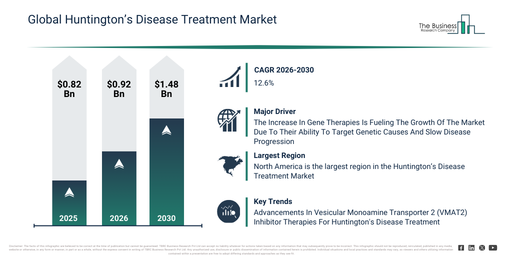
    The market for Huntington’s disease treatments has experienced rapid expansion over the last few years. Valued at $0.82 billion in 2025, it is projected to reach $0.92 billion by 2026, reflecting a compound annual growth rate (CAGR) of 12.6%. This historic period of growth has been driven by several key factors: the scarcity of therapies for neurodegenerative conditions, a rise in diagnoses of genetic neurological disorders, an initial dependence on symptom management, the broadening of specialized neurology care, and an increase in treatments administered within hospital settings for neurological issues.

    The huntington’s disease treatment market is projected to undergo substantial expansion over the coming years. By 2030, it is forecasted to reach $1.48 billion, reflecting a compound annual growth rate (CAGR) of 12.6%. This anticipated growth during the forecast period is driven by progress in gene therapy technologies, heightened funding for rare disease research, a greater number of orphan drug designations, wider implementation of precision medicine, and a more robust pipeline of disease-modifying therapies. Key developments shaping this period include a stronger focus on disease-modifying treatments, greater utilization of gene and RNA-based therapies, the rise of combination therapy strategies, increased attention to drugs targeting specific symptoms, and a surge in clinical trials for rare neurological conditions.

    Download A Free Sample Report For Comprehensive Market Insights:

    https://www.thebusinessresearchcompany.com/sample.aspx?id=24245&type=smp&utm_source=BlogsPR&utm_medium=Paid&utm_campaign=Jul_PR

    Huntington’s Disease Treatment Market Development Factors: Which Trends Are Supporting Demand?

    The expansion of gene therapies is anticipated to drive forward the growth of the Huntington’s disease treatment market in the coming period. These therapeutic approaches work by modifying or replacing defective genes to address or prevent illnesses at the genetic level. With advancements in precision medicine, gene therapies are gaining traction as they allow for the direct targeting of genetic causes, yielding more effective results compared to conventional treatments. In the context of Huntington’s disease, such therapies function by silencing the faulty HTT gene, which is responsible for producing harmful proteins, thereby preventing damage to nerve cells. This method contributes to slowing the advancement of the disease, safeguarding brain function, and offering the possibility of sustained management over time. For example, data from the American Society of Gene & Cell Therapy (ASGCT), a professional membership organization based in the US, and Citeline, a US-based provider of drugs and devices, indicates that as of the end of the first quarter in 2023, there were 247 gene therapies in phase II, with this number increasing by 5% to reach 260 by the conclusion of the second quarter. Consequently, the rise in gene therapies is fueling the expansion of the Huntington’s disease treatment market.

    Huntington’s Disease Treatment Market Segment Landscape And Growth Potential

    The huntington’s disease treatment market covered in this report is segmented –

    1) By Treatment: Symptomatic Treatment, Disease-Modifying Therapies

    2) By Administration Type: Oral, Intravenous, Subcutaneous, Topical

    3) By Therapeutic: Genetic Disorders, Neurological Disorders, Psychiatric Disorders

    4) By Distribution Channel: Hospital Pharmacies, Retail Pharmacies, Online Pharmacies

    5) By End-User: Hospitals, Clinics, Homecare Settings, Research Centers

    Subsegments:

    1) By Symptomatic Treatment: Antidepressants, Antipsychotics, Mood Stabilizers, Chorea Medications, Cognitive Enhancers

    2) By Disease-Modifying Therapies: Gene Therapy, Neuroprotective Agents, RNA-Based Therapies, Stem Cell Therapy, Protein-Targeting Therapies

    Huntington’s Disease Treatment Market Transformation Trends: Which Innovations Are Driving Change?

    Key players in the market for Huntington’s disease treatments are concentrating on creating sophisticated therapies, including selective vesicular monoamine transporter 2 (VMAT2) inhibitor capsules, with the goal of enhancing patients’ quality of life and decelerating the condition’s progression. These selective VMAT2 inhibitor capsules function by obstructing the vesicular monoamine transporter 2, a protein crucial for packaging neurotransmitters for release within the brain. By decreasing neurotransmitter output, these medications assist in alleviating uncontrolled movements and associated symptoms. In August 2023, for example, Neurocrine Biosciences, Inc., a biotechnology firm based in the United States, secured approval from the U.S. Food and Drug Administration (FDA) for its Ingrezza (valbenazine) capsules, specifically indicated to treat chorea linked to Huntington’s disease (HD) in adults. Designed as a once-daily oral VMAT2 inhibitor, this medication works by lowering excessive dopamine signaling in the brain to better regulate involuntary motions. Available in multiple dosage strengths, these capsules may be taken with or without food, providing a practical and flexible administration choice for those affected.

    Huntington’s Disease Treatment Market Competitive Landscape: Who Are The Leading Companies?

    Major companies operating in the huntington’s disease treatment market are F. Hoffmann-La Roche Ltd., Novartis AG, Teva Pharmaceutical Industries Ltd., H. Lundbeck A/S, Neurocrine Biosciences Inc., Wave Life Sciences Ltd., PTC Therapeutics Inc., Ionis Pharmaceuticals Inc., uniQure N.V., Prilenia Therapeutics B.V., Sage Therapeutics Inc., Annexon Inc., Alnylam Pharmaceuticals Inc., Sun Pharmaceutical Industries Inc., Dr. Reddy’s Laboratories Ltd., Lupin Limited, Hikma Pharmaceuticals plc, Astellas Pharma Inc., Otsuka Pharmaceutical Co. Ltd., AbbVie Inc.

    Access The Complete Huntington’s Disease Treatment Market Report:

    https://www.thebusinessresearchcompany.com/report/huntingtons-disease-treatment-global-market-report?utm_source=BlogsPR&utm_medium=Paid&utm_campaign=Jul_PR

    Huntington’s Disease Treatment Market Geographic Analysis: Where Is Demand Growing The Fastest?

    North America was the largest region in the Huntington’s disease treatment market in 2025. Asia-Pacific is expected to be the fastest-growing region in the forecast period. The regions covered in the huntington’s disease treatment market report are Asia-Pacific, South East Asia, Western Europe, Eastern Europe, North America, South America, Middle East, Africa.

    Get in touch with us:

    The Business Research Company: https://www.thebusinessresearchcompany.com/?utm_source=BlogsPR&utm_medium=Paid&utm_campaign=home_page_test

    Americas: +1 310-496-7795

    Asia: +44 7882 955267 & +91 8897263534

    Europe: +44 7882 955267

    Email us at: marketing@tbrc.info

    Follow us on:

    LinkedIn: https://in.linkedin.com/company/the-business-research-company

    YouTube: https://www.youtube.com/channel/UC24_fI0rV8cR5DxlCpgmyFQ

    Global Market Model: https://www.thebusinessresearchcompany.com/global-market-model