Blog

  • Medical Aesthetics Market Size Growth: From $16.79 Billion In 2026 To $26.2 Billion By 2030

    Medical Aesthetics Market Size Growth: From $16.79 Billion In 2026 To $26.2 Billion By 2030

    Featuring market attractiveness scoring, total addressable market sizing, company benchmarking matrices, interactive Excel dashboards, deeper supply chain intelligence, emerging startup tracking, and granular product-level insights, The Business Research Company’s 2026 market reports are built to deliver research that is both more actionable and more strategically valuable.

    Medical Aesthetics Market Forecast: What Value Will The Market Reach By 2030?

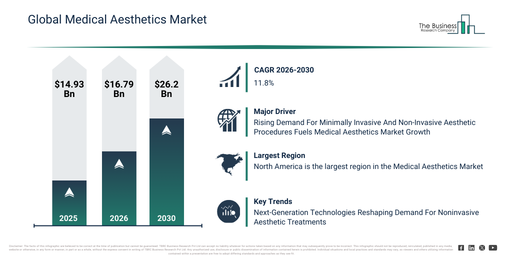
    The medical aesthetics market size has experienced significant expansion in recent times. This market is projected to expand from $14.93 billion in 2025 to $16.79 billion in 2026, demonstrating a compound annual growth rate (CAGR) of 12.5%. Factors contributing to its historical growth include heightened awareness of beauty and appearance, the impact of social media and public figures, a rise in disposable income, the expansion of urban populations, and enhanced safety protocols for aesthetic treatments.

    The medical aesthetics market is projected to experience substantial expansion over the upcoming years. This market is predicted to reach $26.2 billion by 2030, exhibiting a compound annual growth rate (CAGR) of 11.8%. Factors contributing to this growth during the forecast period include the broader availability of non-surgical aesthetic solutions, a surge in demand for anti-aging therapies, increased acceptance of cosmetic interventions, advancements in aesthetic device technology, and a rise in medical tourism for aesthetic services. Key trends anticipated for the forecast period encompass a heightened preference for non-invasive and minimally invasive procedures, an escalating demand for personalized aesthetic treatments, the increasing appeal of preventive and maintenance aesthetic care, the proliferation of medical spas and aesthetic clinics, and expanding participation from male and younger demographics in aesthetic procedures.

    Get A Free Sample Report With In-Depth Market Insights:

    https://thebusinessresearchcompany.com/sample_request?id=7646&type=smp&name=Medical%20Aesthetics%20Market%20Report%202026&utm_source=Blogs&utm_medium=Paid&utm_campaign=Nov_PR

    Medical Aesthetics Market Expansion Drivers: What’s Shaping Future Growth?

    The anticipated expansion of the medical aesthetics market is linked to the increasing embrace of minimally invasive and non-invasive aesthetic procedures. Minimally invasive procedures involve methods employed by medical practitioners to reduce the number and size of cuts or injections. The rising popularity of these aesthetic treatments in medical aesthetics is due to their speed, minimal invasiveness, safety, effectiveness, and quick recovery times. As an illustration, The International Society of Aesthetic Plastic Surgery, a US-based society of plastic surgeons, reported in January 2023 that liposuction was the leading cosmetic surgical procedure, showing a significant rise with over 1.9 million cases, representing a 24.8% increase. Consequently, the increased acceptance of minimally invasive and non-invasive aesthetic procedures is a key factor propelling the medical aesthetics market’s growth.

    Medical Aesthetics Market Segment Landscape: Which Areas Lead Development?

    The medical aesthetics market covered in this report is segmented –

    1) By Product: Facial Aesthetic Products, Body Contouring Devices, Cosmetic Implants, Hair Removal Devices, Skin Aesthetic Devices, Tattoo Removal Devices, Thread Lift Products, Physician-dispensed Cosmeceuticals and Skin Lighteners, Physician-dispensed Eyelash Products, Nail Treatment Laser Devices

    2) By Technology: Invasive, Non-Invasive, Minimally Invasive, Other Technologies

    3) By Distribution Channel: Direct Tender, Retail

    4) By Application: Anti-Aging and Wrinkles, Facial and Skin Rejuvenation, Breast Enhancement, Body Shaping and Cellulite, Tattoo Removal, Vascular Lesions, Psoriasis and Vitiligo, Other Applications

    5) By End User: Clinics, Hospitals, and Medical Spas, Beauty Centers, Home Care

    Subsegments:

    1) By Facial Aesthetic Products: Injectables, Chemical Peels, Facial Masks And Serums

    2) By Body Contouring Devices: Cryolipolysis Devices, Radiofrequency Devices, Ultrasound Devices

    3) By Cosmetic Implants: Breast Implants, Facial Implants, Injectable Implants

    4) By Hair Removal Devices: Laser Hair Removal Devices, Intense Pulsed Light (IPL) Devices, Electrolysis Devices

    5) By Skin Aesthetic Devices: Microdermabrasion Devices, LED Therapy Devices, Laser Skin Resurfacing Devices

    6) By Tattoo Removal Devices: Q-Switched Lasers, Pico Lasers, Surgical Tattoo Removal Devices

    7) By Thread Lift Products: PDO Threads, PLLA Threads, PCL Threads

    8) By Physician-Dispensed Cosmeceuticals And Skin Lighteners: Prescription Skincare Products, Skin Brightening Agents

    9) By Physician-Dispensed Eyelash Products: Eyelash Growth Serums, Eyelash Extensions

    10) By Nail Treatment Laser Devices: Laser Devices For Nail Fungus, Light Therapy Devices For Nails

    Medical Aesthetics Market Strategic Trends: What Defines The Next Growth Phase?

    Prominent companies operating within the medical aesthetics market are concentrating on developing groundbreaking solutions, such as next-generation ultrasound-guided noninvasive skin-lifting, to enhance treatment accuracy and improve patient outcomes. This next-generation ultrasound-guided noninvasive skin-lifting technology utilizes focused ultrasound to lift and tighten the skin without surgical intervention, aiding in stimulating collagen production, boosting elasticity, and reducing sagging for a firmer, more youthful appearance. For instance, in September 2024, Merz Aesthetics, a US-based medical aesthetics company and device manufacturer headquartered in Raleigh, NC, introduced Ultherapy PRIME, representing an evolution of the Ultherapy platform. Ultherapy PRIME is an FDA-cleared, noninvasive ultrasound platform engineered to lift and tighten skin in a single session with no downtime; it integrates advanced ultrasound technology with vibrant real-time imaging to visualize treatment layers, allowing clinicians to precisely target collagen-rich tissue. The system incorporates a modern operating system with a 35% larger screen and quicker image refresh rate, faster treatment speeds, and ergonomics designed to streamline clinical workflow.

    Medical Aesthetics Market Industry Leaders And Competitive Landscape

    Major companies operating in the medical aesthetics market are AbbVie Inc., Medytox Inc., Galderma S.A., Alma Lasers Ltd., Merz Pharma GmbH & Co. KGaA, Cynosure LLC, Fotona d.o.o., Anika Therapeutics Inc., Johnson & Johnson Pvt. Ltd., Cutera Inc., Quanta System SpA, Sisram Medical Ltd., SharpLight Technologies Inc., Revance Therapeutics Inc., Solta Medical Inc., Lumenis Inc., Candela Corporation, Asclepion Laser Technologies GmbH, Lumenis Ltd., Mentor Worldwide LLC, Sientra Inc., Sciton Inc., Sinclair Pharma, Syneron Medical Ltd., ThermiGen LLC, Venus Concept Inc., Zimmer Biomet Holdings Inc., BioForm Medical Inc., EndyMed Medical Ltd., Invasix Aesthetic Solutions Inc., Lutronic Corporation

    View The Full Medical Aesthetics Market Report:

    https://thebusinessresearchcompany.com/report/medical-aesthetics-global-market-report?utm_source=Blogs&utm_medium=Paid&utm_campaign=Nov_PR

    Medical Aesthetics Market Geographic Analysis: Where Is Demand Rising Fastest?

    North America will be the largest region in the medical aesthetics market in 2025. Asia-Pacific is expected to be the fastest-growing region in the forecast period. The regions covered in the medical aesthetics market report are Asia-Pacific, South East Asia, Western Europe, Eastern Europe, North America, South America, Middle East, Africa.

    Reach Out To Our Team:

    The Business Research Company: https://www.thebusinessresearchcompany.com/

    Americas: +1 310-496-7795

    Asia: +44 7882 955267 & +91 8897263534

    Europe: +44 7882 955267

    Email us at: marketing@tbrc.info

    Follow us on:

    LinkedIn: https://in.linkedin.com/company/the-business-research-company

    YouTube: https://www.youtube.com/channel/UC24_fI0rV8cR5DxlCpgmyFQ

    Global Market Model: https://www.thebusinessresearchcompany.com/global-market-model
  • Medical Accompaniment Service Market Analysis 2026: Market Size, Growth Trends And Industry Outlook

    Medical Accompaniment Service Market Analysis 2026: Market Size, Growth Trends And Industry Outlook

    Built to provide research that’s more actionable and strategically valuable, The Business Research Company’s 2026 market reports include market attractiveness analysis, total addressable market sizing, company benchmarking matrices, interactive Excel dashboards, broader supply chain intelligence, emerging startup tracking, and in-depth product insights.

    Medical Accompaniment Service Market Size Outlook: How Quickly Will Revenue Expand Through 2030?

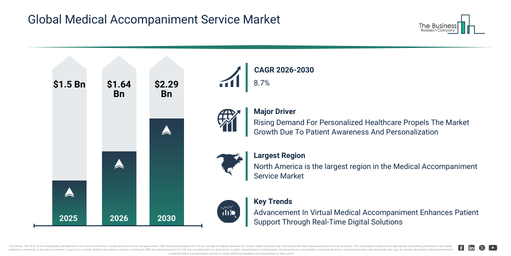
    The medical accompaniment service market size has witnessed substantial growth in recent years. It is anticipated to expand from $1.5 billion in 2025 to $1.64 billion in 2026, achieving a compound annual growth rate (CAGR) of 8.9%. This historical growth can be linked to several factors including aging population growth, the increasing prevalence of chronic diseases, the expansion of home healthcare services, growing awareness of patient safety needs, and limited caregiver availability.

    The medical accompaniment service market size is projected to experience substantial growth over the coming years, reaching $2.29 billion by 2030, progressing at a compound annual growth rate (CAGR) of 8.7%. This expansion during the forecast period is driven by factors such as an increase in elderly individuals living independently, a rise in outpatient and day-care procedures, the growing need for personalized care, the expansion of rehabilitation and long-term care facilities, and a greater acceptance of paid caregiving assistance. Key trends anticipated in this period encompass an escalating demand for guided healthcare navigation, an increasing requirement for support services centered on patients, enhanced utilization of non-emergency medical transportation, the broadening of home-based and community care offerings, and a heightened emphasis on emotional and psychological patient well-being.

    Get A Free Sample Report With In-Depth Market Insights:

    https://thebusinessresearchcompany.com/sample_request?id=35829639&type=smp&name=Medical%20Accompaniment%20Service%20Market%20Report%202026&utm_source=Blogs&utm_medium=Paid&utm_campaign=Nov_PR

    Medical Accompaniment Service Market Development Factors: What’s Supporting Demand?

    The growing need for individualized healthcare is expected to boost the expansion of the medical accompaniment service market moving forward. Personalized healthcare customizes medical treatments and services based on a person’s unique requirements, preferences, and genetic characteristics to enhance health outcomes. The rise of personalized healthcare is propelled by breakthroughs in genetic research, which allow for treatments tailored to genetic profiles, leading to better effectiveness and fewer side effects. Medical accompaniment services improve personalized healthcare by offering specialized support during medical visits, reducing patient stress, and ensuring timely, appropriate care for those with specific needs. For instance, in February 2024, according to the Personalized Medicine Coalition, a US-based hospital and health care organization, in 2023, the FDA approved 16 new personalized treatments for rare disease patients, up from six in 2022. Consequently, the increasing demand for personalized healthcare is a key driver for the growth of the medical accompaniment service market.

    Medical Accompaniment Service Market Segments: Where Is Growth Concentrated?

    The medical accompaniment service market covered in this report is segmented –

    1) By Service Type: Medical Assistance Services, Transportation Services, Emotional Support Services, Other Services

    2) By Application: Elderly People, Patient, Disabled Person, Other Applications

    3) By End-User: Hospitals, Clinics, Home Healthcare Providers, Nursing Homes And Assisted Living Facilities, Rehabilitation Centers

    Subsegments:

    1) By Medical Assistance Services: Medication Management, Vital Sign Monitoring, Appointment Companionship, Health Assessments, Chronic Disease Support

    2) By Transportation Services: Non-Emergency Medical Transportation (NEMT), Ambulance Services, Wheelchair Transportation, Stretcher Transportation, Escort Services For Public Transit

    3) By Emotional Support Services: Companionship Visits, Counseling Referrals, Mental Health Check-Ins, Social Engagement Activities, End-Of-Life Support

    4) By Other Services: Meal Assistance, Personal Hygiene Support, Mobility And Transfer Assistance, Housekeeping Support, Language And Interpretation Services

    Medical Accompaniment Service Market Transformation Trends: What Innovations Are Driving Change?

    Leading companies in the medical accompaniment service market are dedicated to developing advanced solutions like virtual accompaniment, aiming to offer immediate patient support regardless of their geographical location. This virtual method provides remote assistance to patients through digital platforms during medical consultations, delivering real-time help, emotional support, and coordinated care. It serves as an ideal solution for individuals in distant areas or those looking for safer, more convenient healthcare access. For example, in March 2025, AXA Partners US, a US-based provider of assistance services and insurance solutions, launched My Trip Companion (MyTC), a digital self-service portal that reimagines travel assistance. It grants travelers instant access to a broad array of services, including country guides, travel and visa requirements, on-demand medical support, a global directory of doctors and hospitals, and real-time safety alerts, all delivered via a smooth Progressive Web App interface designed to boost safety, convenience, and peace of mind during any journey.

    Medical Accompaniment Service Market Key Participants And Competitive Landscape

    Major companies operating in the medical accompaniment service market are Visiting Angels, ModivCare Inc., AirMed International, Semesur Assistance, Endeavor Home Care, Interim HealthCare, LifeSupport Air Medical Services, SkyCare Global, Sky Nurses, Escort Nurse India, Medescort International Private Limited, Air Ambulance 1, Flying Nurses International, Vesta Elder Care, Homecare Solutions Montreal, Abovas, MedLift, Ashoka Rescue Healthcare Services Private Limited, Whitehouse Cares LLC, PayerFusion Holdings LLC.

    View The Full Medical Accompaniment Service Market Report:

    https://thebusinessresearchcompany.com/report/medical-accompaniment-service-global-market-report?utm_source=Blogs&utm_medium=Paid&utm_campaign=Nov_PR

    Medical Accompaniment Service Market Global Footprint: Which Region Leads The Market?

    North America was the largest region in the medical accompaniment service market in 2025. Asia-Pacific is expected to be the fastest-growing region in the forecast period. The regions covered in the medical accompaniment service market report are Asia-Pacific, South East Asia, Western Europe, Eastern Europe, North America, South America, Middle East, Africa.

    Reach Out To Our Team:

    The Business Research Company: https://www.thebusinessresearchcompany.com/

    Americas: +1 310-496-7795

    Asia: +44 7882 955267 & +91 8897263534

    Europe: +44 7882 955267

    Email us at: marketing@tbrc.info

    Follow us on:

    LinkedIn: https://in.linkedin.com/company/the-business-research-company

    YouTube: https://www.youtube.com/channel/UC24_fI0rV8cR5DxlCpgmyFQ

    Global Market Model: https://www.thebusinessresearchcompany.com/global-market-model
  • Mastopexy Market Growth To $3.37 Billion Creates New Opportunities Across The Industry

    Mastopexy Market Growth To $3.37 Billion Creates New Opportunities Across The Industry

    Backed by market attractiveness analysis, total addressable market sizing, company benchmarking matrices, interactive Excel dashboards, wider supply chain intelligence, emerging startup coverage, and detailed product-level insights, The Business Research Company’s 2026 market reports are designed to offer research that is more actionable and strategically valuable than ever.

    Mastopexy Market Size, Value And Growth Trajectory Through 2030

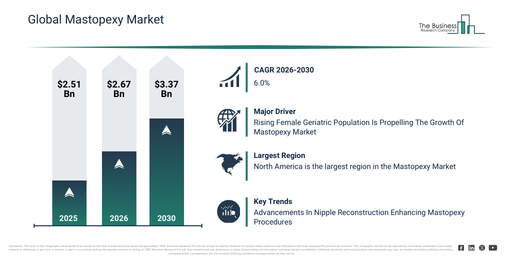
    The mastopexy market has demonstrated robust expansion recently. Projections indicate a rise from $2.51 billion in 2025 to $2.67 billion by 2026, exhibiting a compound annual growth rate (CAGR) of 6.2%. This historical growth is attributable to factors such as enhanced awareness regarding cosmetic surgery choices, the proliferation of private specialty clinics, increased disposable income, the impact of media and prevailing beauty standards, and advancements in the safety of surgical procedures.

    The mastopexy market is anticipated to experience significant growth over the next few years. It is projected to reach $3.37 billion by 2030, demonstrating a compound annual growth rate (CAGR) of 6.0%. This expansion during the forecast period is primarily driven by the increasing demand for body contouring procedures, a rising number of trained plastic surgeons, the growth of medical tourism for cosmetic surgeries, a heightened focus on post-pregnancy body restoration, and expanding access to aesthetic procedures in emerging markets. Key trends anticipated in this period include a surging demand for cosmetic and aesthetic surgical interventions, an increasing preference for combined breast lift and augmentation surgeries, broader acceptance of elective cosmetic surgery across all age groups, a greater emphasis on enhancing surgical outcomes and minimizing scars, and the proliferation of specialized aesthetic and plastic surgery clinics.

    Get A Free Sample Report With In-Depth Market Insights:

    https://thebusinessresearchcompany.com/sample_request?id=70459923&type=smp&name=Mastopexy%20Market%20Report%202026&utm_source=Blogs&utm_medium=Paid&utm_campaign=Nov_PR

    Mastopexy Market Industry Drivers: What’s Behind The Revenue Growth?

    The expansion of the female geriatric demographic is anticipated to fuel the mastopexy market’s progression. This group consists of women considered elderly, generally those 65 years of age and older. The increase in this population segment stems from factors such as longer life expectancies, improvements in healthcare leading to better overall health outcomes, and a reduction in birth rates across numerous nations. Mastopexy, also known as breast lift surgery, is increasingly chosen by older women to refine breast shape and manage changes associated with aging. For example, in March 2025, Age UK, a charity based in the UK, reported that the world’s population is aging. It is projected that by 2050, women aged 65 years and above will constitute over half (55%) of the global senior population, which is expected to reach 2 billion people aged 65 and over. A significant portion of these individuals will reside in low- and middle-income countries. Consequently, the growing female geriatric population is a key factor propelling the mastopexy market’s expansion.

    Mastopexy Market Segment Analysis: What Are The Core Market Categories?

    The mastopexy market covered in this report is segmented –

    1) By Type: Benelli Lift Or Donut Lift, Crescent Breast Lift, Lollipop Lift, Anchor Breast Lift

    2) By Tissue Incision: Skin, Adipose, Glandular

    3) By End Use: Hospitals, Specialty Clinics

    Subsegments:

    1) By Benelli Lift Or Donut Lift: Periareolar Mastopexy, Circumareolar Mastopexy

    2) By Crescent Breast Lift: Partial Crescent Lift, Full Crescent Lift

    3) By Lollipop Lift: Vertical Mastopexy, Single Vertical Incision Mastopexy

    4) By Anchor Breast Lift: Inverted T Mastopexy, Wise Pattern Mastopexy

    #Mastopexy Market Growth Trends: What’s Shaping The Future Outlook?

    Leading companies in the mastopexy market are concentrating on developing sophisticated products, such as nipple reconstruction solutions, to gain a competitive edge. Nipple reconstruction solutions involve surgical techniques and implants designed to recreate the nipple-areola complex for patients who have undergone mastectomy or breast reconstruction surgery, aiming to restore a natural appearance and symmetry to the breast mound. These solutions often leverage advanced materials and precise surgical methods to achieve realistic texture, projection, and aesthetic integration with the surrounding breast tissue. For instance, in March 2024, GC Aesthetics, an Ireland-based medical technology company, unveiled the FixNip NRI, a nipple implant intended to significantly improve breast reconstruction for women. This implant aims to elevate the standard of care in total breast reconstruction by offering a durable and natural-looking nipple-areola complex (NAC) reconstruction. Constructed from biocompatible, smooth silicone, the FixNip NRI features a floral-shaped nitinol frame. This innovative design facilitates minimal incisions and ensures the implant recovers its original shape when folded and inserted.

    Mastopexy Market Top Companies Driving Competitive Growth

    Major companies operating in the mastopexy market are Spire Healthcare Group plc, Cynosure Inc., Silimed – Industria Ltda Implants, Establishment Labs Holdings Inc., Aurora Clinics, Mentor Worldwide LLC, Sientra Inc., GC Aesthetics, Sebbin SAS, Laboratoires Arion, Polytech Health & Aesthetics GmbH, Ideal Implant Incorporated, Surgiform Technology Ltd, The Esthetic Clinics, Olympus Cosmetic Group, Q Medical Industries, Guangzhou Wanhe Plastic Materials, Rau Plastic Surgery, Allergan Aesthetics, Motiva Implants

    View The Full Mastopexy Market Report:

    https://thebusinessresearchcompany.com/report/mastopexy-global-market-report?utm_source=Blogs&utm_medium=Paid&utm_campaign=Nov_PR

    Mastopexy Market Regional Split: Which Areas Are Fueling Growth?

    North America was the largest region in the mastopexy market in 2025. Asia-Pacific is expected to be the fastest-growing region in the forecast period. The regions covered in the mastopexy market report are Asia-Pacific, South East Asia, Western Europe, Eastern Europe, North America, South America, Middle East, Africa.

    Reach Out To Our Team:

    The Business Research Company: https://www.thebusinessresearchcompany.com/

    Americas: +1 310-496-7795

    Asia: +44 7882 955267 & +91 8897263534

    Europe: +44 7882 955267

    Email us at: marketing@tbrc.info

    Follow us on:

    LinkedIn: https://in.linkedin.com/company/the-business-research-company

    YouTube: https://www.youtube.com/channel/UC24_fI0rV8cR5DxlCpgmyFQ

    Global Market Model: https://www.thebusinessresearchcompany.com/global-market-model
  • Mass Spectrometry Market Forecast: Breaking Down The Numbers Behind Future Expansion

    Mass Spectrometry Market Forecast: Breaking Down The Numbers Behind Future Expansion

    Featuring market attractiveness scoring, total addressable market sizing, company benchmarking matrices, interactive Excel dashboards, deeper supply chain intelligence, emerging startup tracking, and granular product-level insights, The Business Research Company’s 2026 market reports are built to deliver research that is both more actionable and more strategically valuable.

    Mass Spectrometry Market CAGR Outlook And Future Development

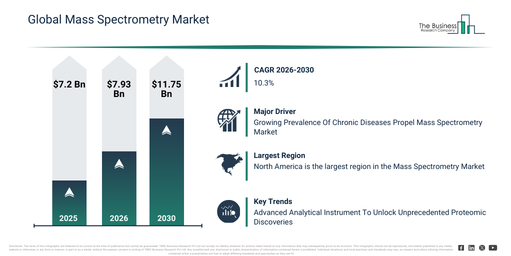
    The mass spectrometry market has seen rapid expansion in recent years. It is projected to increase from $7.2 billion in 2025 to $7.93 billion in 2026, at a compound annual growth rate (CAGR) of 10.1%. This historical growth can be attributed to advancements in analytical chemistry techniques, the expansion of pharmaceutical and biotechnology research, more stringent regulatory testing requirements, the growth of academic and research laboratories, and an increasing need for precise molecular identification.

    The mass spectrometry market size is forecasted for significant expansion in the upcoming years, with projections indicating a rise to $11.75 billion in 2030, achieving a compound annual growth rate (CAGR) of 10.3%. This growth during the forecast period can be attributed to an increase in clinical diagnostics applications, the enlargement of proteomics and metabolomics research, stricter food and environmental safety regulations, increased investments in life science research infrastructure, and a demand for high-throughput and accurate analytical instruments. Noteworthy trends for the forecast period include the expanding adoption of high-resolution and hybrid mass spectrometry systems, a rising need for mass spectrometry in clinical and diagnostic applications, its increased deployment in environmental and food safety testing, the broadening use of mass spectrometry in pharmaceutical quality control, and a growing preference for multi-application and modular mass spectrometry platforms.

    Get A Free Sample Report With In-Depth Market Insights:

    https://thebusinessresearchcompany.com/sample_request?id=62550801&type=smp&name=Mass%20Spectrometry%20Market%20Report%202026&utm_source=Blogs&utm_medium=Paid&utm_campaign=Nov_PR

    Mass Spectrometry Market Growth Factors: What’s Supporting Expansion?

    The rising occurrence of chronic illnesses is anticipated to boost the expansion of the mass spectrometry market in the future. These conditions are defined as ailments typically persisting for three months or more, deteriorating progressively. Mass spectrometry methods are employed to identify, quantify, and analyze specific biomarkers and metabolites linked to chronic diseases. As an example, in April 2025, the Centers for Disease Control and Prevention, a US-based organization dedicated to safeguarding the nation from health, safety, and security risks through vital scientific research, disclosed that in 2023, 76.4% (equating to 194 million) of US adults indicated having 1 or more chronic conditions. This included 59.5% of young adults, 78.4% of midlife adults, and 93.0% of older adults, respectively. Consequently, the growing occurrence of chronic diseases is fueling the development of the mass spectrometry market.

    Mass Spectrometry Market Segment Breakdown: Which Categories Lead On Revenue?

    The mass spectrometry market covered in this report is segmented –

    1) By Technology: Hybrid Mass Spectrometry, Single Mass Spectrometry, Inductively Coupled Plasma Mass Spectrometry (ICP-MS)

    2) By Application: Life Science Research, Drug Discovery, Environmental Testing, Food Testing, Applied Industries, Clinical Diagnostics, Other Applications

    3) By End User: Pharmaceutical Industry, Biotechnology Industry, Research And Academic Institutes, Environmental Testing Industry, Food And Beverage Testing Industry, Petrochemical Industry, Other End Users

    Subsegments:

    1) By Hybrid Mass Spectrometry: Quadrupole Time-of-Flight (QTOF), Orbitrap Mass Spectrometry, Triple Quadrupole Mass Spectrometry

    2) By Single Mass Spectrometry: Time-Of-Flight (TOF), Quadrupole Mass Spectrometry, Ion Trap Mass Spectrometry, Inductively Coupled Plasma Mass Spectrometry (ICP-MS)

    3) By Inductively Coupled Plasma Mass Spectrometry (ICP-MS): Quadrupole ICP-MS, Sector Field ICP-MS, High-Resolution ICP-MS

    Mass Spectrometry Market Industry Trends: What’s Reshaping Demand?

    Leading firms within the mass spectrometry sector are concentrating their efforts on creating sophisticated mass spectrometers, such as the Astral analyzer, to facilitate groundbreaking proteomic discoveries and secure a competitive advantage. This Astral analyzer represents cutting-edge mass spectrometry technology, distinguished by its rapid processing, exceptional sensitivity, and comprehensive proteome exploration capabilities. As an illustration, in June 2023, Thermo Fisher, an American supplier of analytical instruments, introduced the Orbitrap Astral mass spectrometer, marking a significant technological advance in the field. The Astral analyzer delivers swift sample processing, elevated sensitivity, and broad proteome coverage, empowering researchers to efficiently identify proteins that were previously undiscovered. This particular mass spectrometer facilitates the recognition of novel clinical biomarkers, aids in the early diagnosis of diseases, and supports the creation of treatments for diverse ailments such as cardiovascular disease and cancer. This innovation is founded upon Thermo Fisher’s existing Orbitrap mass spectrometry platform, offering up to two times greater depth in proteome coverage and up to four times increased throughput compared to existing spectrometers.

    Mass Spectrometry Market Leading Players And Competitive Positioning

    Major companies operating in the mass spectrometry market are Agilent Technologies Inc., Bruker Corporation, JEOL Ltd., LECO Corporation, PerkinElmer Inc., Shimadzu Corporation, Thermo Fisher Scientific Inc., Waters Corporation, AB Sciex Pte Ltd., Danaher Corporation, Hitachi Ltd., Rigaku Corporation, Advion Inc., AMETEK Inc., Analytik Jena GmbH, DANI Instruments S.p.A., Eurofins Scientific SE, MKS Instruments, Elementar Analysensysteme GmbH, Hiden Analytical Europe GmbH, SPECTRO Analytical Instruments GmbH, EXUM INSTRUMENTS INC., 908 Devices Inc., MassTech Inc., Newomics Inc., Microsaic Systems plc, SCIEX AB, Kore Technologies Ltd., IonSense Inc.

    View The Full Mass Spectrometry Market Report:

    https://thebusinessresearchcompany.com/report/mass-spectrometry-global-market-report?utm_source=Blogs&utm_medium=Paid&utm_campaign=Nov_PR

    Mass Spectrometry Market Top Region: Where Does Most Revenue Come From?

    North America was the largest region in the mass spectrometry market in 2025. Asia-Pacific is expected to be the fastest-growing region in the mass spectrometry market size forecast period. The regions covered in the mass spectrometry market report are Asia-Pacific, South East Asia, Western Europe, Eastern Europe, North America, South America, Middle East, Africa.

    Reach Out To Our Team:

    The Business Research Company: https://www.thebusinessresearchcompany.com/

    Americas: +1 310-496-7795

    Asia: +44 7882 955267 & +91 8897263534

    Europe: +44 7882 955267

    Email us at: marketing@tbrc.info

    Follow us on:

    LinkedIn: https://in.linkedin.com/company/the-business-research-company

    YouTube: https://www.youtube.com/channel/UC24_fI0rV8cR5DxlCpgmyFQ

    Global Market Model: https://www.thebusinessresearchcompany.com/global-market-model

  • Marriage Counseling Services Market Expected To Grow At 11.1% CAGR Through 2030: What Businesses Need To Know

    Marriage Counseling Services Market Expected To Grow At 11.1% CAGR Through 2030: What Businesses Need To Know

    Built to provide research that’s more actionable and strategically valuable, The Business Research Company’s 2026 market reports include market attractiveness analysis, total addressable market sizing, company benchmarking matrices, interactive Excel dashboards, broader supply chain intelligence, emerging startup tracking, and in-depth product insights.

    Marriage Counseling Services Market Set To Climb From $16.02 Billion In 2026 To $24.4 Billion By 2030

    The marriage counseling services market has observed significant expansion in recent years. This market is projected to expand from $14.38 billion in 2025 to $16.02 billion in 2026, demonstrating a compound annual growth rate (CAGR) of 11.4%. Historically, this growth has been fueled by factors such as increased awareness of mental health support, a greater social acceptance of counseling services, a rise in marital stress factors, the availability of trained marriage counselors, and the expansion of private therapy practices.

    The marriage counseling services market is projected to experience swift expansion over the coming years. This market is anticipated to reach $24.4 billion by 2030, demonstrating a compound annual growth rate (CAGR) of 11.1%. The anticipated growth during the forecast period is fueled by several factors, including a heightened preference for virtual therapy sessions, greater adoption of digital mental health tools, an increasing need for preventive relationship counseling, the proliferation of subscription-based counseling models, and a stronger emphasis on holistic relationship well-being. Key trends for the forecast period encompass a surge in the adoption of online counseling platforms, increased utilization of evidence-based therapy frameworks, a growing requirement for adaptable counseling formats, the expansion of confidential and secure digital sessions, and a heightened emphasis on relationship wellness programs.

    Get A Free Sample Report With In-Depth Market Insights:

    https://thebusinessresearchcompany.com/sample_request?id=14071656&type=smp&name=Marriage%20Counseling%20Services%20Market%20Report%202026&utm_source=Blogs&utm_medium=Paid&utm_campaign=Nov_PR

    Marriage Counseling Services Market Demand Drivers: What’s Powering Industry Growth?

    The escalating levels of stress are projected to drive the expansion of the marriage counseling services market. Stress, defined as the body’s reaction to external demands, induces physical, emotional, or mental strain and can negatively impact overall health and well-being. This surge in stress is largely attributed to heightened workplace demands, financial instability, and the widespread impact of digital technology. Marriage counseling interventions offer support by equipping couples with methods to resolve disagreements, enhance communication, and fortify their relational bonds. For example, data from October 2023, provided by the Australian Bureau of Statistics (ABS), an Australia-based national statistical agency, revealed that among individuals aged 16 to 85, 42.9% had encountered a mental disorder at some point in their lives. Furthermore, 21.5% of this demographic experienced a mental disorder in the preceding 12 months, with anxiety being the most prevalent, affecting 17.2% of those within the 16 to 85 age bracket. Notably, 38.8% of individuals aged 16 to 24 reported a mental disorder in the last year. Consequently, the rising prevalence of stress is a significant factor propelling the growth of the marriage counseling services market.

    Marriage Counseling Services Market Segmentation: How Does The Market Break Down By Category?

    The marriage counseling services market covered in this report is segmented –

    1) By Type: Online, Offline

    2) By Application: Premarital Counseling, Marriage Counseling

    3) By Service Provider: Private Practitioners, Mental Health Clinics And Hospitals, Online Counseling Platforms, Religious And Faith-Based Counselors, Corporate Employee Assistance Programs (EAPs)

    Subsegments:

    1) By Online: Virtual Counseling Sessions, Video Conferencing-Based Counseling, Online Relationship Workshops, Mobile App-Based Counseling, Email And Chat-Based Counseling

    2) By Offline: In-Person Counseling Sessions, Group Therapy And Workshops, Marriage Retreats And Counseling Centers, Community-Based Marriage Support Groups, Private Therapy Sessions With Marriage Counselors

    Marriage Counseling Services Market Innovation Trends: What Developments Are Reshaping The Industry?

    Leading companies within the marriage counseling services sector are concentrating on developing innovative offerings, such as specialized counseling services for LGBTQ individuals, to secure a competitive advantage in the market. Counseling services designed for LGBTQ individuals provide tailored therapeutic support intended to address the distinct challenges and experiences encountered by lesbian, gay, bisexual, transgender, and queer/questioning people. These services aim to establish a secure and affirming environment where clients can explore matters related to sexual orientation, gender identity, the process of coming out, discrimination, and family dynamics. As an illustration, in August 2023, Eye Net Eye Co., Ltd., a Japan-based marriage counseling agency, commenced a crowdfunding campaign with the goal of expanding its marriage counseling business to embrace the diverse values of LGBTQ individuals and advance its business innovation plan. This initiative forms part of a broader business innovation strategy focused on enhancing the inclusivity of their counseling services, demonstrating a commitment to supporting all aspects of marriage and and relationship counseling within the LGBTQ community. The campaign seeks to raise funds for the creation of resources and programs aligned with these objectives, thereby cultivating a more inclusive environment for clients from varied backgrounds and identities.

    Marriage Counseling Services Market Competitive Overview And Top Companies

    Major companies operating in the marriage counseling services market are Thriveworks, Talkspace, ReGain, OurRelationship, Growing Self, Online-Therapy.com, Marriage.com, Gottman Referral Network, Couples Therapy Inc., Modern Intimacy, Congruent Counseling, Calmerry, Ally Counseling, United Marriage Encounter, Empathia Counseling LLC, The Marriage Place, Octave Online Therapy, Mindful Care, Little Otter, TherapyRoute.com

    View The Full Marriage Counseling Services Market Report:

    https://thebusinessresearchcompany.com/report/marriage-counseling-services-global-market-report?utm_source=Blogs&utm_medium=Paid&utm_campaign=Nov_PR

    Marriage Counseling Services Market Regional Breakdown: Where Is Demand Concentrated?

    North America was the largest region in the marriage counseling services market in 2025. The regions covered in the marriage counseling services market report are Asia-Pacific, South East Asia, Western Europe, Eastern Europe, North America, South America, Middle East, Africa.

    Reach Out To Our Team:

    The Business Research Company: https://www.thebusinessresearchcompany.com/

    Americas: +1 310-496-7795

    Asia: +44 7882 955267 & +91 8897263534

    Europe: +44 7882 955267

    Email us at: marketing@tbrc.info

    Follow us on:

    LinkedIn: https://in.linkedin.com/company/the-business-research-company

    YouTube: https://www.youtube.com/channel/UC24_fI0rV8cR5DxlCpgmyFQ

    Global Market Model: https://www.thebusinessresearchcompany.com/global-market-model
  • Maprotiline Hydrochloride API Market Forecast To Reach $1.64 Billion By 2030: Key Trends Explained

    Maprotiline Hydrochloride API Market Forecast To Reach $1.64 Billion By 2030: Key Trends Explained

    Backed by market attractiveness analysis, total addressable market sizing, company benchmarking matrices, interactive Excel dashboards, wider supply chain intelligence, emerging startup coverage, and detailed product-level insights, The Business Research Company’s 2026 market reports are designed to offer research that is more actionable and strategically valuable than ever.

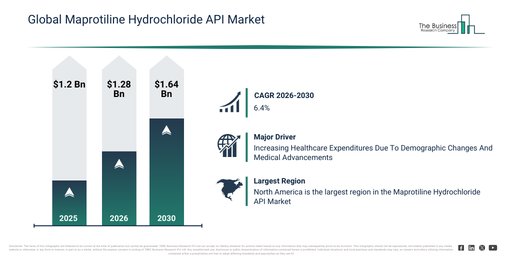
    Maprotiline Hydrochloride API Market Forecast: Value Set To Climb From $1.28 Billion To $1.64 Billion

    The maprotiline hydrochloride api market size has demonstrated significant expansion in recent years. This market is anticipated to increase from $1.2 billion in 2025 to $1.28 billion in 2026, achieving a compound annual growth rate (CAGR) of 6.4%. The historical growth of this market can be linked to the sustained clinical utilization of maprotiline-based antidepressants, the expansion of pharmaceutical manufacturing capacity, an increase in the diagnosis rates for depression and anxiety, the availability of cost-efficient synthetic processes, and the development of generic drug markets.

    The market for maprotiline hydrochloride API is anticipated to experience substantial expansion in the upcoming years. This market is projected to reach $1.64 billion by 2030, demonstrating a compound annual growth rate (CAGR) of 6.4%. Several factors will drive this growth during the forecast period, including sustained demand for cost-effective mental health solutions, a rising dependence on contract API manufacturing, more stringent quality and regulatory mandates, an increase in pharmaceutical output within developing nations, and consistent demand from traditional antidepressant formulations. Key trends anticipated during this period encompass a heightened demand for established tricyclic and tetracyclic antidepressant APIs, an increasing emphasis on uniform API quality and adherence to regulations, a greater tendency to outsource API production to CMOs, stable demand from the manufacturing of generic antidepressants, and the broader application of APIs in combination and reformulated therapeutic approaches.

    Get A Free Sample Report With In-Depth Market Insights:

    https://thebusinessresearchcompany.com/sample_request?id=23765446&type=smp&name=Maprotiline%20Hydrochloride%20API%20Market%20Report%202026&utm_source=Blogs&utm_medium=Paid&utm_campaign=Nov_PR

    Maprotiline Hydrochloride API Market Growth Drivers: What’s Behind The Acceleration?

    The Maprotiline Hydrochloride API market is anticipated to expand due to increasing healthcare expenditure. This spending encompasses the total funds allocated to medical services, including hospital care, pharmaceuticals, and health insurance. A significant factor contributing to the surge in healthcare costs is the demographic shift towards an aging population, as older individuals typically require more frequent and intricate medical attention. This heightened spending on healthcare in turn boosts the demand for pharmaceutical treatments, particularly for conditions such as depression, which are addressed by maprotiline hydrochloride. For instance, data from the Centers for Medicare & Medicaid Services, a US-based government agency, reported in June 2025 that national health expenditures (NHE) in 2023 rose by 7.5% to reach $4.9 trillion, equivalent to $14,570 per person and representing 17.6% of the Gross Domestic Product (GDP). Furthermore, Medicare spending specifically saw an 8.1% increase, totaling $1,029.8 billion, which constituted 21% of the overall NHE. Consequently, the growing prevalence of depression and anxiety is acting as a catalyst for the growth of the Maprotiline Hydrochloride API market.

    Maprotiline Hydrochloride API Market Segment Trends And Revenue Contributors

    The maprotiline hydrochloride api market covered in this report is segmented –

    1) By Product Type: Powder, Granules, Other Product Types

    2) By Formulation Type: Tablets, Capsules, Injectables, Oral Solutions

    3) By Distribution Channel: Direct Sales, Pharmacy Chains, Online Pharmacies, Hospital Pharmacies

    4) By Application: Antidepressant, Anxiolytic, Sleep Aid, Neuropathic Pain Management

    5) By End-User: Pharmaceutical Companies, Research Institutions, Healthcare Providers, Contract Manufacturing Organizations (CMOs)

    Subsegments:

    1) By Powder: Fine Crystalline Powder, Micronized Powder, Spray-Dried Powder

    2) By Granules: Direct Compressible Granules, Wet Granulated Form, Effervescent Granules

    3) By Other Product Types: Liquid Concentrate, Pelletized Form, Lyophilized (Freeze-Dried) Form

    Maprotiline Hydrochloride API Market Competitive Landscape: Which Companies Lead The Industry?

    Major companies operating in the maprotiline hydrochloride api market are Thermo Fisher Scientific Inc., Lupin Limited, Olon Società per Azioni, Cayman Chemical Company, Koa Shoji Co. Ltd., Simson Pharma Limited, Zydus Cadila, Conscientia Industrial Co. Ltd., Alsachim Société par Actions Simplifiée, Pharmaoffer B.V., SynZeal Research Private Limited, Jigs Chemical, Chem-Impex International Inc., Pharma Compass, Allmpus Corporation, Glentham Life Sciences Limited, LKT Laboratories Inc., Qingdao Fengchen Technology and Trade Co. Ltd., Beijing Merson Pharmaceutical, Enomark Pharma

    View The Full Maprotiline Hydrochloride API Market Report:

    https://thebusinessresearchcompany.com/report/maprotiline-hydrochloride-api-global-market-report?utm_source=Blogs&utm_medium=Paid&utm_campaign=Nov_PR

    Maprotiline Hydrochloride API Market Geographic Landscape: Which Region Leads Industry Growth?

    North America was the largest region in the maprotiline hydrochloride API market in 2025. Asia-Pacific is expected to be the fastest-growing region in the forecast period. The regions covered in the maprotiline hydrochloride api market report are Asia-Pacific, South East Asia, Western Europe, Eastern Europe, North America, South America, Middle East, Africa.

    Reach Out To Our Team:

    The Business Research Company: https://www.thebusinessresearchcompany.com/

    Americas: +1 310-496-7795

    Asia: +44 7882 955267 & +91 8897263534

    Europe: +44 7882 955267

    Email us at: marketing@tbrc.info

    Follow us on:

    LinkedIn: https://in.linkedin.com/company/the-business-research-company

    YouTube: https://www.youtube.com/channel/UC24_fI0rV8cR5DxlCpgmyFQ

    Global Market Model: https://www.thebusinessresearchcompany.com/global-market-model
  • Mammography Market Size Forecast From 2026 To 2030: Key Industry Trends

    Mammography Market Size Forecast From 2026 To 2030: Key Industry Trends

    Featuring market attractiveness scoring, total addressable market sizing, company benchmarking matrices, interactive Excel dashboards, deeper supply chain intelligence, emerging startup tracking, and granular product-level insights, The Business Research Company’s 2026 market reports are built to deliver research that is both more actionable and more strategically valuable.

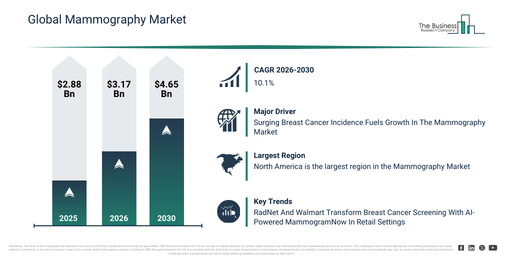
    Mammography Market Revenue Growth On Track For A 10.1% CAGR Through 2030

    The mammography market size has demonstrated robust growth over the past few years. This market is projected to expand from $2.88 billion in 2025 to reach $3.17 billion by 2026, exhibiting a compound annual growth rate (CAGR) of 9.8%. Historical expansion of the market can be linked to factors such as an increase in breast cancer incidence rates, the widespread adoption of x-ray imaging techniques, government-led breast cancer awareness programs, the availability of film screen mammography systems, and the expansion of hospital-based diagnostic imaging.

    The mammography market size is projected for swift expansion in the coming years. This market is anticipated to reach $4.65 billion by 2030, demonstrating a compound annual growth rate (CAGR) of 10.1%. This growth over the forecast period is propelled by factors such as the expansion of population-based screening programs, increased investments in women’s health diagnostics, a heightened demand for early and precise detection, the technological transition towards digital and tomosynthesis imaging, and the enhancement of healthcare infrastructure in developing regions. Key trends expected during this period include the increasing uptake of digital and 3D mammography systems, an intensified focus on early breast cancer screening initiatives, greater utilization of portable mammography in remote locations, a stronger need for minimally invasive breast biopsy integration, and the broadening of screening services in nascent healthcare markets.

    Get A Free Sample Report With In-Depth Market Insights:

    https://thebusinessresearchcompany.com/sample_request?id=58062565&type=smp&name=Mammography%20Market%20Report%202026&utm_source=Blogs&utm_medium=Paid&utm_campaign=Nov_PR

    Mammography Market Growth Factors Behind Sustained Expansion

    The rising occurrence of breast cancer is anticipated to drive expansion in the mammography market. This condition involves the uncontrolled multiplication of cells within the breast. Globally, the prevalence of breast cancer is on the rise, with mammography serving as a crucial and frequently utilized screening method for its early identification and diagnosis. For example, Breastcancer.org, a US-based nonprofit organization, projected in 2023 that approximately 297,790 new cases of invasive breast cancer, along with 55,720 new cases of DCIS, would be diagnosed in U.S. women. Additionally, the American Cancer Society, a US-based Voluntary organization, reported in January 2023 that 2022 saw an estimated 287,850 new instances of invasive breast cancer diagnosed in women in the United States, alongside 51,400 new cases of non-invasive (in situ) breast cancer. Consequently, the rising incidence of breast cancer is a key factor propelling the mammography market.

    Mammography Market Segment Analysis Spotlighting Growth Areas

    The mammography market covered in this report is segmented –

    1) By Product: Film Screen Systems, Digital Systems, Analog Systems, Other Products

    2) By Modality: Portable Mammography Systems, Non-Portable Mammography Systems

    3) By Technology: Breast Tomosynthesis, CAD Mammography

    4) By End-User: Hospitals, Specialty Clinics, Diagnosis Centers, Other End-Users

    Subsegments:

    1) By Film Screen Systems: Standard Film Screen Systems, High-Resolution Film Screen Systems

    2) By Digital Systems: Full-Field Digital Mammography (FFDM), Digital Breast Tomosynthesis (DBT)

    3) By Analog Systems: Conventional Analog Mammography Systems

    4) By Other Products: Accessories And Consumables, Software Solutions

    Mammography Market Industry Trends Fueling Future Revenue Growth

    Leading companies in the mammography market are concentrating on advancements, such as pilot programs for mammography services, to enhance the early detection of breast cancer, improve patient outcomes, and expand reach to underserved populations through mobile screening units and AI-enhanced diagnostic tools. These efforts are designed to boost accuracy, reduce diagnostic times, and make mammography more available in remote and economically disadvantaged regions, ultimately contributing to better healthcare fairness. For instance, in December 2023, RadNet, Inc., a US-based healthcare firm, launched a pilot initiative called MammogramNow, which offers mammography services within Walmart Supercenters. This program seeks to increase breast health awareness and accessibility by integrating advanced DeepHealth AI technology into a retail environment, making breast cancer screening more convenient. MammogramNow allows for walk-in appointments, with screenings typically completed in approximately 15 minutes. Patients can also choose AI-enhanced screenings through RadNet’s DeepHealth subsidiary for improved detection accuracy. By incorporating healthcare services into everyday retail settings, RadNet and Walmart intend to redefine preventive healthcare delivery and accessibility in the US.

    Mammography Market Leading Companies: Who Holds The Strongest Market Presence?

    Major companies operating in the mammography market are Hologic Inc., Fujifilm Corporation, Siemens Healthcare AG, Canon Medical Systems Corporation, GE Healthcare Company, Koninklijke Philips N.V., Metaltronica S.p.A., PLANMED OY, Villa Sistemi Medicali S.p.A., Carestream Health, Konica Minolta Inc., Agfa-Gevaert N.V., Delphinus Medical Technologies Inc., Micrima Limited, Koning Corporation, Allengers Medical Systems Ltd., Trivitron Healthcare Pvt. Ltd., Genoray Co. Ltd., Analogic Corporation, BMI Biomedical International s.r.l., General Medical Merate S.p.A., IMS Srl, Medi-Future Co. Ltd., PerkinElmer Inc., QView Medical Inc., Radmirtech Co. Ltd.

    View The Full Mammography Market Report:

    https://thebusinessresearchcompany.com/report/mammography-global-market-report?utm_source=Blogs&utm_medium=Paid&utm_campaign=Nov_PR

    Mammography Market Largest Region: Which Geography Holds The Biggest Share?

    North America was the largest region in the mammography market in 2025. The regions covered in the mammography market report are Asia-Pacific, South East Asia, Western Europe, Eastern Europe, North America, South America, Middle East, Africa.

    Reach Out To Our Team:

    The Business Research Company: https://www.thebusinessresearchcompany.com/

    Americas: +1 310-496-7795

    Asia: +44 7882 955267 & +91 8897263534

    Europe: +44 7882 955267

    Email us at: marketing@tbrc.info

    Follow us on:

    LinkedIn: https://in.linkedin.com/company/the-business-research-company

    YouTube: https://www.youtube.com/channel/UC24_fI0rV8cR5DxlCpgmyFQ

    Global Market Model: https://www.thebusinessresearchcompany.com/global-market-model
  • Mammalian Polyclonal Immunoglobulin G (IgG) Antibody Market 2026: Market Size, Growth Drivers And Emerging Opportunities

    Mammalian Polyclonal Immunoglobulin G (IgG) Antibody Market 2026: Market Size, Growth Drivers And Emerging Opportunities

    Built to provide research that’s more actionable and strategically valuable, The Business Research Company’s 2026 market reports include market attractiveness analysis, total addressable market sizing, company benchmarking matrices, interactive Excel dashboards, broader supply chain intelligence, emerging startup tracking, and in-depth product insights.

    Mammalian Polyclonal Immunoglobulin G (IgG) Antibody Market Value Growth And Long-Term Outlook

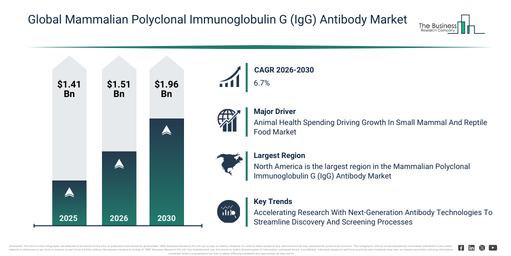
    The market for mammalian polyclonal immunoglobulin G (IgG) antibodies has shown significant expansion in recent times. This market is projected to expand from $1.41 billion in 2025 to $1.51 billion in 2026, demonstrating a compound annual growth rate (CAGR) of 7.5%. Historically, this expansion has been driven by factors such as the increase in immunodiagnostic testing, the widespread application of ELISA techniques, enhanced funding for biomedical research, the established utility of animal-derived antibodies, and the growing incidence of both chronic and infectious illnesses.

    The mammalian polyclonal immunoglobulin g (igg) antibody market size is anticipated to experience substantial expansion in the coming years. Its value is projected to reach $1.96 billion by 2030, exhibiting a compound annual growth rate (CAGR) of 6.7%. This growth during the forecast period can be attributed to factors such as the broadening scope of precision diagnostics, the rise in biomarker-based testing, increased investments in pharmaceutical research and development, escalating demand from developing healthcare markets, and the ongoing advancement of sophisticated immunoassay platforms. Significant trends anticipated within this period encompass the increasing application of polyclonal IgG in diagnostic assays, a growing need for broad-spectrum antibody reagents, the widening of immunoassay-based testing applications, greater integration into translational and preclinical research, and an emphasis on producing high-affinity and batch-consistent antibodies.

    Get A Free Sample Report With In-Depth Market Insights:

    https://thebusinessresearchcompany.com/sample_request?id=53029432&type=smp&name=Mammalian%20Polyclonal%20Immunoglobulin%20G%20%28IgG%29%20Antibody%20Market%20Report%202026&utm_source=Blogs&utm_medium=Paid&utm_campaign=Nov_PR

    Mammalian Polyclonal Immunoglobulin G (IgG) Antibody Market Demand Drivers Opening New Revenue Streams

    Growing expenditure on animal welfare is anticipated to drive expansion in the mammalian polyclonal immunoglobulin G (IgG) antibody markets moving ahead. Animal health encompasses comprehensive care and management strategies focused on securing the well-being and extended lifespan of various animals, such as domestic pets, farm animals, and wild species. This surge in animal health spending stems from factors like an increase in pet owners, a higher need for animal-derived products, progress in veterinary medicine, enhanced connections between humans and animals, and more stringent regulatory frameworks. Enhanced financial commitment to animal health elevates the need for specialized mammalian polyclonal immunoglobulin G (IgG) antibody, fostering innovation, strengthening customer loyalty, promoting cooperation among veterinarians, and stimulating market expansion within the pet care industry. As an illustration, data from March 2023, provided by the American Pet Products Association, a US-based not-for-profit industry body, indicated that pet foods and treats recorded the highest expenditure at $58.1 billion. This represented a substantial increase of 16.2%, making it the fastest-growing category. Consequently, the expanding financial outlay on animal well-being is projected to significantly boost the mammalian polyclonal immunoglobulin G (IgG) antibody market’s development.

    Mammalian Polyclonal Immunoglobulin G (IgG) Antibody Market Segment Performance And Emerging Opportunities

    The mammalian polyclonal immunoglobulin g (igg) antibody market covered in this report is segmented –

    1) By Product: Cardiac Markers, Metabolic Markers, Renal Markers, Other Products

    2) By Source Animal: Goat, Rabbit, Horse, Mouse, Other Source Animals

    3) By Application: Enzyme Linked Immuno Absorbent Assay (ELISA), Immunoturbidimetry, Immunoelectrophoresis, Antibody Identification, Immunohistochemistry, Immunocytochemistry, Western Blotting

    4) By End User: Pharmaceutical And Biotechnology Companies, Hospitals, Diagnostic Centers, Academic And Research Centers

    Subsegments:

    1) By Cardiac Markers: Troponin, BNP (B-Type Natriuretic Peptide), CK-MB (Creatine Kinase-MB), Myoglobin

    2) By Metabolic Markers: Glucose, Lipids, Insulin, HbA1c (Glycated Hemoglobin), Cholesterol

    3) By Renal Markers: Creatinine, Albumin, Urea, BUN (Blood Urea Nitrogen), Cystatin C

    4) By Other Products: Infectious Disease Markers, Tumor Markers, Autoimmune Disease Markers, Hormonal Markers, Inflammation Markers

    Mammalian Polyclonal Immunoglobulin G (IgG) Antibody Market Trends Powering Strategic Industry Growth

    Leading companies in the mammalian polyclonal immunoglobulin G (IgG) Antibody market are focusing on developing innovative products, such as high-throughput antibodies, to accelerate research and therapeutic development. High-throughput antibodies are those produced rapidly and at scale using automated workflows, which helps researchers quickly screen numerous targets, reduce development time, and accelerate therapeutic discovery. For example, in July 2024, Twist Bioscience Corporation, a US-based synthetic biology and genomics company, launched Twist Express Antibodies, CHO, an innovative technology designed to streamline antibody development. These antibodies are generated from user-defined sequences using Twist’s silicon-based DNA synthesis platform, cloned into IgG scaffold vectors, and produced in CHO cells with turnaround times starting at 13 business days. Each antibody batch includes yield data for screening and quality assurance, making the process cost-effective, customizable, and suitable for high-throughput candidate selection. The antibodies are applicable in biotherapeutic drug discovery, research screening, and experimental validation, providing a robust and efficient alternative to traditional lab-based antibody synthesis.

    Mammalian Polyclonal Immunoglobulin G (IgG) Antibody Market Key Players: Which Companies Lead Industry Competition?

    Major companies operating in the mammalian polyclonal immunoglobulin g (igg) antibody market are Thermo Fisher Scientific Inc., Merck KGaA, PerkinElmer Inc., Bio-Rad Laboratories Inc., GeneTex, GenScript Biotech Corporation, Jackson ImmunoResearch Laboratories, Abcam Inc., R&D Systems, Sino Biological, Fortis Life Sciences, OriGene Technologies, Cell Signaling Technology Inc., Cedarlane Labs, Capralogics Inc, Proteintech Group, ProSci LLC, Santa Cruz Biotechnology Inc., Rockland Immunochemicals Inc., Novus Biologicals LLC, Creative Diagnostics, Fitzgerald Industries International Inc.

    View The Full Mammalian Polyclonal Immunoglobulin G (IgG) Antibody Market Report:

    https://thebusinessresearchcompany.com/report/mammalian-polyclonal-immunoglobulin-g-igg-antibody-global-market-report?utm_source=Blogs&utm_medium=Paid&utm_campaign=Nov_PR

    Mammalian Polyclonal Immunoglobulin G (IgG) Antibody Market Regional Analysis: Which Geography Leads On Revenue?

    North America was the largest region in the mammalian polyclonal immunoglobulin G (IgG) antibody market in 2025. The regions covered in the mammalian polyclonal immunoglobulin g (igg) antibody market report are Asia-Pacific, South East Asia, Western Europe, Eastern Europe, North America, South America, Middle East, Africa.

    Reach Out To Our Team:

    The Business Research Company: https://www.thebusinessresearchcompany.com/

    Americas: +1 310-496-7795

    Asia: +44 7882 955267 & +91 8897263534

    Europe: +44 7882 955267

    Email us at: marketing@tbrc.info

    Follow us on:

    LinkedIn: https://in.linkedin.com/company/the-business-research-company

    YouTube: https://www.youtube.com/channel/UC24_fI0rV8cR5DxlCpgmyFQ

    Global Market Model: https://www.thebusinessresearchcompany.com/global-market-model
  • Mammalian Cell Fermentation Technology Market Set To Expand From $94.89 Billion In 2026: Growth Outlook Through 2030

    Mammalian Cell Fermentation Technology Market Set To Expand From $94.89 Billion In 2026: Growth Outlook Through 2030

    Backed by market attractiveness analysis, total addressable market sizing, company benchmarking matrices, interactive Excel dashboards, wider supply chain intelligence, emerging startup coverage, and detailed product-level insights, The Business Research Company’s 2026 market reports are designed to offer research that is more actionable and strategically valuable than ever.

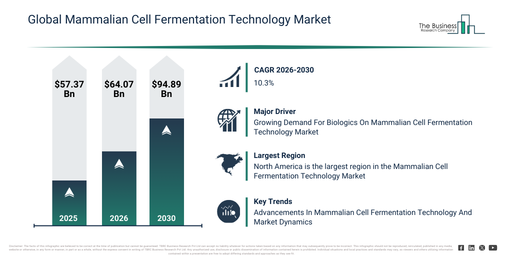
    Mammalian Cell Fermentation Technology Market Poised To Hit $94.89 Billion By 2030 With A 10.3% CAGR

    The size of the mammalian cell fermentation technology market has experienced rapid expansion in recent times. This market is projected to expand from $57.37 billion in 2025 to reach $64.07 billion by 2026, exhibiting a compound annual growth rate (CAGR) of 11.7%. Historically, this expansion can be primarily linked to several factors: the rise of monoclonal antibody therapeutics, the initial effectiveness of mammalian cell expression systems, a surge in biopharmaceutical approvals, the consistent use of batch-based fermentation processes, and the broadening of academic research into cell culture technologies.

    The mammalian cell fermentation technology market size is anticipated to experience substantial growth in the next few years, projected to reach $94.89 billion by 2030, expanding at a compound annual growth rate (CAGR) of 10.3%. This growth throughout the forecast period can be attributed to several factors including the rising demand for biologics and biosimilars, increased investment in cell line engineering, the progression of personalized medicine, expanding pipelines for vaccine development, and an increase in biomanufacturing capacity within emerging markets. Significant trends for this forecast period encompass the increasing adoption of CHO cell-based production platforms, a growing need for high-yield and scalable bioprocessing solutions, an increase in outsourcing to CDMOs for biologic manufacturing, the expansion of single-use and modular bioreactor systems, and a heightened focus on process optimization and yield consistency.

    Get A Free Sample Report With In-Depth Market Insights:

    https://thebusinessresearchcompany.com/sample_request?id=40764198&type=smp&name=Mammalian%20Cell%20Fermentation%20Technology%20Market%20Report%202026&utm_source=Blogs&utm_medium=Paid&utm_campaign=Nov_PR

    Mammalian Cell Fermentation Technology Market Growth Backed By Core Demand Fundamentals

    The anticipated rise in the demand for biologics is projected to significantly advance the mammalian cell fermentation technology market. Biologics are medical substances derived from living organisms or their components, frequently utilized for treating ailments such as cancer, autoimmune disorders, and infectious diseases. This escalating need for biologics is driven by progress in biotechnology, their proven efficacy in managing common chronic conditions like cancer and autoimmune disorders, regulatory authorizations, and increased investment in research and development. Mammalian cell fermentation technology efficiently facilitates the production of intricate biologics, thereby addressing the expanding requirement for personalized and targeted therapies. Its inherent scalability, adaptability, and capability to yield high-quality proteins are instrumental in fostering innovation within the biopharmaceutical sector. For instance, the National Library of Medicine, a US-based medical library, reported in February 2024 that the Food and Drug Administration (FDA) gave its approval to 55 new drugs in 2023, which included 29 new chemical entities (NCEs) and 25 new biological entities (NBEs). This represented a 50% increase compared to the 37 approvals issued in 2022. Consequently, the increasing demand for biologics is stimulating the growth of the bacterial cell fermentation technology market.

    Mammalian Cell Fermentation Technology Market Segment Landscape And Growth Outlook

    The mammalian cell fermentation technology market covered in this report is segmented –

    1) By Type: Chinese Hamster Ovary Cell Fermentation, Human Embryonic Kidney Cell Fermentation, Baby Hamster Kidney Cell Fermentation, Murine Myeloma Cell Fermentation, Other Types

    2) By Application: Monoclonal Antibodies, Recombinant Proteins, Vaccines, Hormones, Enzymes, Other Applications

    3) By End-Use: Biopharmaceutical Companies, Contract Research Organizations And Contract Development and Manufacturing Organizations, Academic And Research Institutes

    Subsegments:

    1) By Chinese Hamster Ovary (CHO) Cell Fermentation: Suspension CHO Cell Lines, Serum-Free CHO Fermentation, High-Yield Recombinant Protein Production

    2) By Human Embryonic Kidney (HEK) Cell Fermentation: Transient Transfection-Based Fermentation, Viral Vector Production Systems, Serum-Free HEK Cell Cultures

    3) By Baby Hamster Kidney (BHK) Cell Fermentation: Vaccine Antigen Production, Stable Cell Line Fermentation, Suspension BHK Cell Cultures

    4) By Murine Myeloma Cell Fermentation: Monoclonal Antibody Production, Hybridoma-Based Fermentation, Serum-Free Antibody Expression Systems

    5) By Other Types: Insect Cell Line Fermentation, Stem Cell–Derived Mammalian Cells, Custom Engineered Cell Line Fermentation

    Mammalian Cell Fermentation Technology Market Growth Trends Reshaping The Competitive Landscape

    Leading companies in the mammalian cell fermentation technology market are concentrating on developing advanced innovations, such as mammalian cell culture, to strengthen their standing in the industry. Mammalian cell culture is a vital instrument across various fields, including biomanufacturing, research, and regenerative medicine, as it facilitates the creation of therapeutic proteins, vaccines, and functional cells or tissue analogs. For instance, in June 2024, Syntegon, a Germany-based biotechnology company, introduced its new Modular Bioprocessing Platform (MBP) at Achema 2024, specifically designed to tackle key challenges in biopharmaceutical production. This innovative platform provides a highly flexible, fully integrated, and automated solution applicable to a wide range of uses, including microbial and mammalian cell cultures, proteins, peptides, oligonucleotides, plasmid DNA, and recombinant vaccines. The MBP’s modular structure allows for quicker lead times and diminished expenses while upholding superior functionality and quality, consistent with the “made in Germany” standard. Its prefabricated cleanroom design places all peripheral technology outside the cleanroom, thereby enhancing efficiency and simplifying maintenance.

    Mammalian Cell Fermentation Technology Market Competitive Landscape: Who Leads The Industry?

    Major companies operating in the mammalian cell fermentation technology market are AbbVie Inc., Thermo Fisher Scientific Inc, AstraZeneca PLC, Roche Holdings Inc., Merck KGaA, AGC Group, Lonza Group Ltd., Boehringer Ingelheim GmbH, Catalent Inc., Sartorius AG, Samsung Biologics Co. Ltd., WuXi Biologics, Biocon Limited, Eppendorf AG, KBI Biopharma Inc., Fujifilm Diosynth Biotechnologies, Avid Bioservices Inc., BiOZEEN, Nordmark Pharma GmbH, Scorpius BioManufacturing Inc

    View The Full Mammalian Cell Fermentation Technology Market Report:

    https://thebusinessresearchcompany.com/report/mammalian-cell-fermentation-technology-global-market-report?utm_source=Blogs&utm_medium=Paid&utm_campaign=Nov_PR

    Mammalian Cell Fermentation Technology Market Geographic Spread And Regional Opportunities

    North America was the largest region in the mammalian cell fermentation technology market in 2025. Asia-Pacific is expected to be the fastest-growing region in the forecast period. The regions covered in the mammalian cell fermentation technology market report are Asia-Pacific, South East Asia, Western Europe, Eastern Europe, North America, South America, Middle East, Africa.

    Reach Out To Our Team:

    The Business Research Company: https://www.thebusinessresearchcompany.com/

    Americas: +1 310-496-7795

    Asia: +44 7882 955267 & +91 8897263534

    Europe: +44 7882 955267

    Email us at: marketing@tbrc.info

    Follow us on:

    LinkedIn: https://in.linkedin.com/company/the-business-research-company

    YouTube: https://www.youtube.com/channel/UC24_fI0rV8cR5DxlCpgmyFQ

    Global Market Model: https://www.thebusinessresearchcompany.com/global-market-model

  • Mammalian Cell Culture Market Size And Growth In 2026: Key Factors Shaping Future Demand

    Mammalian Cell Culture Market Size And Growth In 2026: Key Factors Shaping Future Demand

    Featuring market attractiveness scoring, total addressable market sizing, company benchmarking matrices, interactive Excel dashboards, deeper supply chain intelligence, emerging startup tracking, and granular product-level insights, The Business Research Company’s 2026 market reports are built to deliver research that is both more actionable and more strategically valuable.

    Mammalian Cell Culture Market Size And Revenue Outlook Through 2030

    The mammalian cell culture market has seen significant growth in recent years. It is anticipated to increase from $4.86 billion in 2025 to $5.4 billion in 2026, demonstrating a compound annual growth rate (CAGR) of 11.1%. The growth observed in the past can be attributed to the expansion of monoclonal antibody production, an increase in vaccine manufacturing capacity, the growing application of mammalian cells in drug discovery, the enhanced availability of advanced culture equipment, and the overall development of biopharmaceutical research.

    The mammalian cell culture market is projected to experience substantial expansion in the coming years, anticipated to reach a valuation of $8.13 billion by 2030, demonstrating a compound annual growth rate (CAGR) of 10.8%. This projected growth during the forecast period stems from factors such as heightened investments in cell and gene therapy, an escalating need for biologics manufacturing, the broadening scope of regenerative medicine research, a reinforced emphasis on scalable cell culture technologies, and the increasing uptake of continuous bioprocessing methods. Key trends observed within the forecast period encompass the wider acceptance of serum-free mammalian cell culture media, an elevated demand for extensive biopharmaceutical production, the increasing deployment of automated cell culture systems, the broadening of cell-based vaccine manufacturing, and an intensified commitment to ensuring process consistency and optimizing yield.

    Get A Free Sample Report With In-Depth Market Insights:

    https://thebusinessresearchcompany.com/sample_request?id=86554582&type=smp&name=Mammalian%20Cell%20Culture%20Market%20Report%202026&utm_source=Blogs&utm_medium=Paid&utm_campaign=Nov_PR

    Mammalian Cell Culture Market Growth Catalysts And Demand Drivers

    The mammalian cell culture market is set to expand, driven by the increasing need for personalized medicine. This approach to medical treatment involves customizing care based on a patient’s genetic, environmental, and lifestyle factors to deliver more effective and precise outcomes. The growing demand for personalized medicine is fueled by its ability to enhance treatment effectiveness, as therapies are tailored to individual genetic and biological profiles, thereby improving patient results. Mammalian cell culture supports personalized medicine by offering a controlled environment to study patient-specific cells, facilitating the development of customized therapies and the testing of drug responses for more accurate and impactful treatments. For instance, in February 2024, the Personalized Medicine Coalition, a US-based non-profit organization, reported that in 2023, the FDA approved 16 new personalized treatments for patients with rare diseases, a significant increase from the six approved in 2022. Consequently, the rising demand for personalized medicine is propelling the growth of the mammalian cell culture market.

    Mammalian Cell Culture Market Breakdown By Product Type And Application

    The mammalian cell culture market covered in this report is segmented –

    1) By Product: Media, Sera, Reagents, Equipment

    2) By Cell Line: Chinese Hamster Ovary (CHO), Wistar Institute-38 (WI-38), Rat Glial Tumor Cell Line (C6), Human Embryonic Kidney 293 (HEK293), Henrietta Lacks (HeLa)

    3) By Application: Biopharmaceutical Production, Vaccine Production, Toxicity Testing, Drug Screening and Development, Tissue Engineering And Regenerative Medicine

    4) By End-Use: Pharmaceutical And Biotechnology Companies, Hospitals And Diagnostic Laboratories, Research And Academic Institutes, Contract Research Organizations (CROs)

    Subsegments:

    1) By Media: Serum-free Media, Chemically Defined Media, Classical Media, Protein-free Media, Specialty Media, Custom Media Formulations

    2) By Sera: Fetal Bovine Serum (FBS), Newborn Calf Serum, Adult Bovine Serum, Donor Horse Serum

    3) By Reagents: Growth Factors And Cytokines, Cell Dissociation Reagents, Supplements And Additives, Cryoprotective Agents, Buffers And Salt Solutions, Antibiotics And Antimycotics

    4) By Equipment: Bioreactors And Fermenters, Culture Vessels, Filtration Systems, Centrifuges, Cell Counters And Analyzers, Incubators, Biosafety Cabinets, Microscopes, Refrigeration And Cryostorage Equipment

    Mammalian Cell Culture Market Trends Shaping Long-Term Demand

    Major companies in the mammalian cell culture market are prioritizing advancements in cell culture media, including two-part production systems, to boost protein yield, improve cell viability, and optimize scalable bioprocess workflows for therapeutic applications. A two-part production system represents a cell culture strategy that employs two separate media components, one dedicated to general cell growth and the other to amplify protein expression, consequently enhancing overall productivity. For instance, in July 2023, Lonza Group Ltd., a Switzerland-based contract development and manufacturing organization (CDMO), introduced the TheraPRO CHO Media System. This novel platform is a chemically defined, animal-component-free cell culture media specifically engineered for GS-CHO mammalian cell lines. The system is intended to improve the manufacturing of therapeutic proteins and monoclonal antibodies by offering superior cell viability and enhanced protein yields. Its adaptable design supports every phase of bioprocess manufacturing, ranging from cell line development to large-scale production. Through this introduction, Lonza aims to simplify workflows, elevate product quality, and shorten the time-to-market for biopharmaceutical manufacturers.

    Mammalian Cell Culture Market Company Landscape And Competitive Strategy

    Major companies operating in the mammalian cell culture market are Novartis AG, Thermo Fisher Scientific Inc., Merck KGaA, Danaher Corporation, GE Healthcare, Becton Dickinson and Company, Lonza Group AG, Avantor Inc., Agilent Technologies Inc., Charles river laboratories, Sartorius AG, Samsung biologics, Wuxi biologics, Bio-Techne Corporation, Miltenyi Biotec, STEMCELL Technologies, Takara Bio Inc., Goodwin biotechnology, HiMedia Laboratories Private Limited, Promocell GmbH, Eppendorf AG, Cell Culture Company LLC, Cell X Technologies.

    View The Full Mammalian Cell Culture Market Report:

    https://thebusinessresearchcompany.com/report/global-mammalian-cell-culture-market-report?utm_source=Blogs&utm_medium=Paid&utm_campaign=Nov_PR

    Mammalian Cell Culture Market Top Region By Revenue And Market Share

    North America was the largest region in the mammalian cell culture market in 2025. Asia-Pacific is expected to be the fastest-growing region in the forecast period. The regions covered in the mammalian cell culture market report are Asia-Pacific, South East Asia, Western Europe, Eastern Europe, North America, South America, Middle East, Africa.

    Reach Out To Our Team:

    The Business Research Company: https://www.thebusinessresearchcompany.com/

    Americas: +1 310-496-7795

    Asia: +44 7882 955267 & +91 8897263534

    Europe: +44 7882 955267

    Email us at: marketing@tbrc.info

    Follow us on:

    LinkedIn: https://in.linkedin.com/company/the-business-research-company

    YouTube: https://www.youtube.com/channel/UC24_fI0rV8cR5DxlCpgmyFQ

    Global Market Model: https://www.thebusinessresearchcompany.com/global-market-model