Blog

  • Benchtop Bioreactors Market Forecast Reveals Where Future Industry Value Will Be Created

    Benchtop Bioreactors Market Forecast Reveals Where Future Industry Value Will Be Created

    Delivering more actionable and strategically valuable research, The Business Research Company’s 2026 market reports feature market attractiveness analysis, total addressable market evaluation, company benchmarking matrices, interactive Excel dashboards, expanded supply chain intelligence, emerging startup coverage, and detailed product insights.

    Benchtop Bioreactors Market Size And Revenue Forecast Through 2030

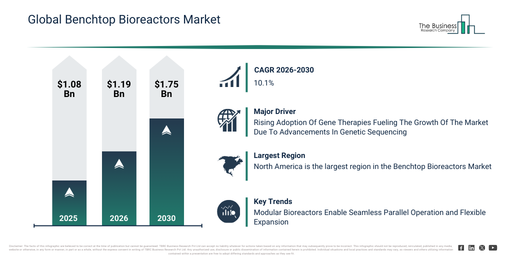
    The benchtop bioreactors market has experienced substantial expansion in recent years, with projections indicating an increase from $1.08 billion in 2025 to $1.19 billion in 2026, achieving a compound annual growth rate (CAGR) of 10.2%. This historical growth has been driven by heightened funding for life sciences research, the proliferation of academic and research institutions, a dependency on small-scale fermentation setups, expanded research and development efforts within the pharmaceutical sector, and a growing need for controlled laboratory conditions.

    The market size for benchtop bioreactors is poised for substantial expansion in the coming years, projected to reach $1.75 billion by 2030 with a compound annual growth rate (CAGR) of 10.1%. This anticipated growth during the forecast period is driven by factors such as the expansion of biologics and biosimilar development, the adoption of automated and continuous bioreactor systems, a greater focus on personalized medicine research, increased collaboration with contract research organizations (CROs), and advancements in bioprocessing technologies. Key trends shaping this period include a rising preference for benchtop bioreactors in research and development activities, growing demand for single-use and modular bioreactor configurations, an emphasis on process optimization and yield improvement, an expansion in cell culture and microbial fermentation studies, and their increasing application in training and academic research.

    Download A Free Sample Report For Comprehensive Market Insights:

    https://www.thebusinessresearchcompany.com/sample.aspx?id=27220&type=smp&utm_source=BlogsPR&utm_medium=Paid&utm_campaign=Jul_PR

    Benchtop Bioreactors Market Demand Drivers: What Is Fueling Industry Growth?

    The market for benchtop bioreactors is expected to expand, driven by the increasing uptake of gene therapies. This medical approach involves modifying or substituting faulty genes to either treat or ward off illnesses. The surge in demand for such therapies stems from progress in genetic sequencing and diagnostic tools, which allow for the accurate detection of disease-linked genes, enabling targeted interventions. Benchtop bioreactors play a crucial role in accelerating gene therapies by delivering precise management and efficient manufacturing of genetically altered cells. They expedite research and small-scale production, enhancing the speed and reliability of processes. For example, in December 2024, the American Society of Gene & Cell Therapy (ASGCT), a US-based nonprofit scientific and medical entity, reported that the FDA approved six gene therapy products in 2023, compared to five in 2022. Consequently, the growing embrace of gene therapies is fueling expansion in the benchtop bioreactors market.

    Benchtop Bioreactors Market Segment Analysis: What Are The Major Market Categories?

    The benchtop bioreactors market covered in this report is segmented –

    1) By Type: Swing-Style Bioreactors, Stirred-Tank Bioreactors, Wave-Mixed Bioreactors, Airlift Bioreactors, Bubble Column Bioreactors

    2) By Control Type: Automated Bioreactors, Manual Bioreactors, Continuous Bioreactors, Batch Bioreactors

    3) By Material: Stainless Steel, Glass, Plastic, Composite Materials

    4) By Application: Research And Development, Process Development, Bioproduction, Quality Control, Training And Education

    5) By End User: Pharmaceutical Companies, Biotechnology Companies, Academic And Research Institutes, Contract Research Organizations (CROs), Food And Beverage Industry

    Subsegments:

    1) By Swing-Style Bioreactors: Single-Use Swing Bioreactors, Multi-Use Swing Bioreactors, Compact Swing Bioreactors, Automated Swing Bioreactors

    2) By Stirred-Tank Bioreactors: Single-Use Stirred-Tank Bioreactors, Glass Stirred-Tank Bioreactors, Stainless-Steel Stirred-Tank Bioreactors, Modular Stirred-Tank Bioreactors, Automated Stirred-Tank Bioreactors

    3) By Wave-Mixed Bioreactors: Single-Use Wave-Mixed Bioreactors, Dual-Motion Wave-Mixed Bioreactors, Automated Wave-Mixed Bioreactors, Compact Wave-Mixed Bioreactors

    4) By Airlift Bioreactors: Internal Loop Airlift Bioreactors, External Loop Airlift Bioreactors, Single-Use Airlift Bioreactors

    5) By Bubble Column Bioreactors: Vertical Bubble Column Bioreactors, Single-Use Bubble Column Bioreactors, Gas-Lift Bubble Column Bioreactors, Automated Bubble Column Bioreactors

    Benchtop Bioreactors Market Innovation Trends: Which Developments Are Transforming The Industry?

    Key players in the benchtop bioreactors market are concentrating on developing advanced solutions like benchtop fermenters to improve control precision and scalability for research and small-scale manufacturing. These compact, lab-scale bioreactors are specifically designed for the controlled growth of microorganisms or cells, aiding in both research and small production runs. As an example, in September 2024, VFL Sciences Private Limited, a biotechnology equipment manufacturer from India, introduced the GreatFlo series of benchtop fermenters or bioreactors. This flexible and modular product line is built to facilitate straightforward scale-up and ensure consistent repeatability across fermentation and cell culture processes. The fermenters allow seamless simultaneous operation, with adaptable expansion capabilities ranging from 2 to 16 vessels, each with a working volume between 200 and 500 ml. They feature Peltier-based heating and cooling systems, exhaust condensers, and software that adheres to 21 CFR Part 11, delivering exact control over agitation, pH levels, dissolved oxygen, and individual gas blending.

    Benchtop Bioreactors Market Leading Companies Driving Competitive Growth

    Major companies operating in the benchtop bioreactors market are Thermo Fisher Scientific Inc., Danaher Corporation, Merck KGaA, GE Healthcare, Sartorius AG, Eppendorf AG, Solaris Biotech Solutions, IKA-Werke GmbH And Co. KG, GPC Bio USA, Praj HiPurity Systems Limited., PBS Biotech Inc., Bioengineering AG, Broadley-James Ltd., Infors HT, Solida Biotech, Bbi-biotech GmbH, Applikon Biotechnology B.V., Labfirst Scientific Instruments Co. Ltd, Pharsol Ltd., Uma Pharmatech Machinery

    Access The Complete Benchtop Bioreactors Market Report:

    https://www.thebusinessresearchcompany.com/report/benchtop-bioreactors-global-market-report?utm_source=BlogsPR&utm_medium=Paid&utm_campaign=Jul_PR

    Benchtop Bioreactors Market Geographic Landscape: Which Region Dominates Industry Growth?

    North America was the largest region in the benchtop bioreactors market in 2025. Asia-Pacific is expected to be the fastest-growing region in the forecast period. The regions covered in the benchtop bioreactors market report are Asia-Pacific, South East Asia, Western Europe, Eastern Europe, North America, South America, Middle East, Africa.

    Get in touch with us:

    The Business Research Company: https://www.thebusinessresearchcompany.com/?utm_source=BlogsPR&utm_medium=Paid&utm_campaign=home_page_test

    Americas: +1 310-496-7795

    Asia: +44 7882 955267 & +91 8897263534

    Europe: +44 7882 955267

    Email us at: marketing@tbrc.info

    Follow us on:

    LinkedIn: https://in.linkedin.com/company/the-business-research-company

    YouTube: https://www.youtube.com/channel/UC24_fI0rV8cR5DxlCpgmyFQ

    Global Market Model: https://www.thebusinessresearchcompany.com/global-market-model
  • Behcets disease Market Growth Through 2030 Creates New Strategic Opportunities

    Behcets disease Market Growth Through 2030 Creates New Strategic Opportunities

    Enhanced with market attractiveness analysis, total addressable market evaluation, company benchmarking matrices, interactive Excel dashboards, expanded supply chain intelligence, emerging startup coverage, and detailed product insights, The Business Research Company’s 2026 market reports deliver more actionable and strategically valuable research.

    Behcets disease Market Growth From $1.33 Billion In 2026 To $1.8 Billion By 2030 At A CAGR Of 7.8%

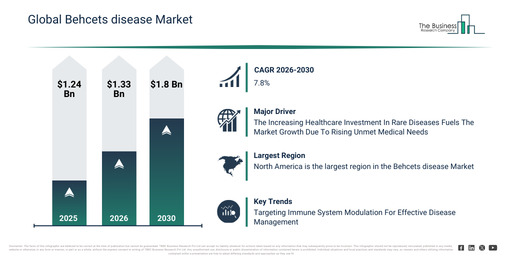
    The market for Behcet’s disease has experienced robust expansion over the past few years. Projections indicate it will rise from $1.24 billion in 2025 to $1.33 billion in 2026, reflecting a compound annual growth rate (CAGR) of 7.9%. This historical growth has been driven by increased awareness of rare diseases, the development of treatments for inflammatory disorders, the use of corticosteroids, the availability of rheumatology services in hospitals, and the widespread adoption of immunosuppressants.

    The size of the Behçet’s disease market is anticipated to experience robust expansion over the coming years. By 2030, it is projected to reach $1.8 billion, achieving a compound annual growth rate of 7.8%. This forecasted growth is driven by advancements in biologic therapy, targeted modulation of the immune system, the development of early diagnostic tools, the adoption of personalized treatment plans, and initiatives focused on rare diseases worldwide. Key trends shaping this period include a greater reliance on biologic treatments, an increased emphasis on detecting the disease at an early stage, the broader application of therapies designed to reduce corticosteroid use, a heightened need for effective long-term disease management, and the refinement of multidisciplinary care strategies.

    Download A Free Sample Report For Comprehensive Market Insights:

    https://www.thebusinessresearchcompany.com/sample.aspx?id=24167&type=smp&utm_source=BlogsPR&utm_medium=Paid&utm_campaign=Jul_PR

    Behcets disease Market Growth Drivers: What Factors Are Accelerating Expansion?

    Growing healthcare funding directed toward rare diseases is expected to boost the expansion of the Behcet’s disease market moving forward. Rare diseases are defined as conditions affecting fewer than one in two thousand individuals, frequently characterized by complex symptoms and scarce treatment options. This rise in investment stems largely from a heightened awareness of unmet medical needs, where many patients still lack effective therapies, pushing both governments and pharmaceutical firms to prioritize research, development, and financial support in this field. Behçet’s disease serves as a case in point, illustrating how concentrated research and advocacy for one rare condition can stimulate broader investment across rare diseases, showing that targeted initiatives can lead to notable progress in understanding, treatment, and policy for the entire rare disease community. For example, in April 2024, Global Genes, a US-based nonprofit, reported that in the first quarter of 2024, companies working on rare disease drugs secured $7.1 billion through public equity and debt financing—a 307% increase from the $1.8 billion raised during the same period in 2023. Consequently, the escalating healthcare investment in rare diseases is propelling the growth of the Behcet’s disease market.

    Behcets disease Market Segment Breakdown: Which Categories Generate The Most Revenue?

    The behcets disease market covered in this report is segmented –

    1) By Treatment Type: Corticosteroids, Immunosuppressants, Biologics, Other Treatments

    2) By Route Of Administration: Oral, Injectable, Topical

    3) By Type of Disease: Non-Ocular Behcet’s Disease, Ocular Behcet’s Disease

    4) By Distribution Channel: Hospital Pharmacies, Retail Pharmacies, Online Pharmacies, Other Distribution Channels

    5) By End User: Hospitals, Clinics, Ambulatory Surgical Centers

    Subsegments:

    1) By Corticosteroids: Oral Corticosteroids, Topical Corticosteroids, Intravenous Corticosteroids

    2) By Immunosuppressants: Methotrexate, Azathioprine, Cyclophosphamide, Mycophenolate Mofetil, Cyclosporine

    3) By Biologics: Tumor Necrosis Factor (TNF) Inhibitors, Interleukin Inhibitors

    4) By Other Treatments: Colchicine, Thalidomide, Hydroxychloroquine, Corticosteroid-Sparing Agents

    Behcets disease Market Trends: What Is Shaping Future Industry Growth?

    Major players in the Behçet’s disease market are actively conducting clinical trials to create innovative therapies like innate defense regulators (IDRs), which aim to improve immune system modulation and deliver more effective management of inflammation and disease-related symptoms. These IDRs, designed as synthetic peptides, work by controlling the innate immune response and reinforcing the body’s natural defenses, particularly in Behçet’s disease by regulating immune activity to curb excessive inflammation, potentially easing symptoms and reducing flare-up frequency. A notable example occurred in November 2024, when Soligenix, Inc., a biopharmaceutical firm based in the US, began enrolling participants in its Phase 2 trial (protocol DUS-AUBD-01) to evaluate SGX945 (dusquetide) for Behçet’s disease. This research seeks to determine how SGX945, as an IDR, can regulate the immune system and diminish inflammation, presenting a new therapeutic strategy for controlling both the symptoms and flare-ups of Behçet’s disease.

    Behcets disease Market Key Players And Strategic Industry Positioning

    Major companies operating in the behcets disease market are AbbVie Inc., AstraZeneca PLC, GlaxoSmithKline PLC, Amgen Inc., Teva Pharmaceutical Industries Ltd., Sandoz International GmbH, Chugai Pharmaceutical Co. Ltd, Sun Pharmaceutical Industries Limited, Eisai Co. Ltd, Pharmascience Inc, Samsung Bioepis Co. Ltd., Maxivision Eye Hospitals Pvt. Ltd, Ainos Inc., Soligenix Inc, XOMA Corporation, Creabilis S.A., Iltoo Pharma S.A.S., Ganzhou Hemay Pharmaceutical Co. Ltd., Sanguine Biosciences Inc., NYU Langone Health

    Access The Complete Behcets disease Market Report:

    https://www.thebusinessresearchcompany.com/report/behcets-disease-global-market-report?utm_source=BlogsPR&utm_medium=Paid&utm_campaign=Jul_PR

    Behcets disease Market Largest Region: Which Geography Holds The Highest Market Share?

    North America was the largest region in the behcets disease market in 2025. Asia-Pacific is expected to be the fastest-growing region in the forecast period. The regions covered in the behcets disease market report are Asia-Pacific, South East Asia, Western Europe, Eastern Europe, North America, South America, Middle East, Africa.

    Get in touch with us:

    The Business Research Company: https://www.thebusinessresearchcompany.com/?utm_source=BlogsPR&utm_medium=Paid&utm_campaign=home_page_test

    Americas: +1 310-496-7795

    Asia: +44 7882 955267 & +91 8897263534

    Europe: +44 7882 955267

    Email us at: marketing@tbrc.info

    Follow us on:

    LinkedIn: https://in.linkedin.com/company/the-business-research-company

    YouTube: https://www.youtube.com/channel/UC24_fI0rV8cR5DxlCpgmyFQ

    Global Market Model: https://www.thebusinessresearchcompany.com/global-market-model
  • Barrier Packaging Materials For Pharmaceuticals Market Size Projected To Increase From $36.23 Billion To $51.6 Billion During The Forecast Period

    Barrier Packaging Materials For Pharmaceuticals Market Size Projected To Increase From $36.23 Billion To $51.6 Billion During The Forecast Period

    Through market attractiveness analysis, total addressable market evaluation, company benchmarking matrices, interactive Excel dashboards, expanded supply chain intelligence, emerging startup coverage, and detailed product insights, The Business Research Company’s 2026 market reports provide more actionable and strategically valuable research.

    Barrier Packaging Materials For Pharmaceuticals Market Expansion Outlook: What Revenue Opportunities Lie Ahead?

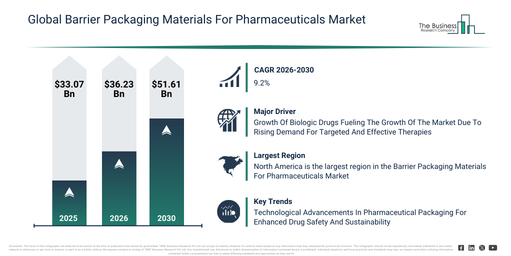
    The market for pharmaceutical barrier packaging materials has experienced robust expansion in recent years. Valued at $33.07 billion in 2025, it is projected to reach $36.23 billion by 2026, reflecting a compound annual growth rate (CAGR) of 9.5%. This historical growth has been driven by factors such as the increased production of solid oral dosages, the widespread adoption of aluminum foil as a barrier material, strict regulatory demands for drug stability, the rise in generic drug manufacturing, and continued reliance on conventional blister packaging formats.

    The pharmaceutical barrier packaging market is forecasted to experience robust expansion over the coming years, with projections indicating it will reach a value of $51.61 billion by 2030, driven by a compound annual growth rate of 9.2%. This anticipated growth in the forecast period can be linked to factors such as escalating packaging requirements for biologics and biosimilars, a heightened demand for environmentally sustainable barrier materials, the broadening of cold-chain pharmaceutical distribution networks, the growing implementation of intelligent packaging solutions, and continuous progress in bio-based barrier film technologies. Key trends expected to shape this period include a surge in requirements for high-barrier blister packaging, a greater adoption of multi-layer laminate structures, a stronger focus on safeguarding against moisture and oxygen, the expansion of packaging specifically designed for biologics, and an intensified emphasis on meeting regulatory standards.

    Download A Free Sample Report For Comprehensive Market Insights:

    https://www.thebusinessresearchcompany.com/sample.aspx?id=28955&type=smp&utm_source=BlogsPR&utm_medium=Paid&utm_campaign=Jul_PR

    Barrier Packaging Materials For Pharmaceuticals Market Growth Factors Supporting Long-Term Expansion

    The increasing development of biologic drugs is anticipated to drive expansion in the barrier packaging materials market for pharmaceuticals going forward. Biologic drugs, which are therapeutic products derived from living cells or organisms, are used to treat diseases that conventional chemical drugs cannot address. Their demand is rising due to the growing prevalence of chronic and complex conditions requiring more targeted and effective treatments. Barrier packaging materials for pharmaceuticals play a crucial role in ensuring drug safety and stability, as they protect biologic drugs from moisture, oxygen, light, and microbial contamination. These materials help reduce degradation and extend shelf life, thereby improving product efficacy and safeguarding patient health. For example, in August 2024, the National Library of Medicine (NLM), a biomedical library based in the United States, reported that the FDA authorized 50 new molecular entities in 2024, including 16 biologics, and notably approved six biologic therapies in the first half of the year alone. As such, the growth of biologic drugs is fueling the expansion of the barrier packaging materials market for pharmaceuticals.

    Barrier Packaging Materials For Pharmaceuticals Market Segmentation: How Is The Market Structured Across Key Categories?

    The barrier packaging materials for pharmaceuticals market covered in this report is segmented –

    1) By Material Type: Aluminum Foil Barrier Materials, Polymer Film Barrier Materials, Multi-Layer Barrier Systems, Advanced Barrier Technologies

    2) By Packaging Format: Blister Packaging, Flexible Packaging, Rigid Packaging, Specialized Packaging Formats

    3) By Application: Solid Dosage Forms, Liquid And Semi-Solid Formulations, Biologics And Biosimilar

    4) By End-User: Branded Drug Manufacturers, Generic Drug Companies, Contract Development And Manufacturing Organizations (CDMOs)

    Subsegments:

    1) By Aluminum Foil Barrier Materials: Blister Foil, Cold Form Foil, Laminated Foil

    2) By Polymer Film Barrier Materials: Polyethylene (PE), Polypropylene (PP), Polyvinylidene Chloride (PVDC)

    3) By Multi-Layer Barrier Systems: Aluminum Polymer Laminates, Co-Extruded Films, Metallized Films

    4) By Advanced Barrier Technologies: Nanocomposite Films, Bio-Based Barrier Materials, Active And Intelligent Packaging Materials

    Barrier Packaging Materials For Pharmaceuticals Market Industry Trends Shaping Future Revenue Growth

    Leading players in the barrier packaging materials sector for pharmaceuticals are increasingly directing their efforts toward creating cutting-edge solutions, specifically innovative pharmaceutical packaging options, aimed at improving drug stability, prolonging product shelf life, and safeguarding patient welfare. Such innovative pharmaceutical packaging solutions represent contemporary packaging methods designed to bolster drug security, preserve product integrity, and optimize conditions for storage and transit, frequently integrating protective barriers, tamper-proof mechanisms, or digital tracking systems. A notable case took place in February 2025, when LOG Pharma Primary Packaging, an Israeli manufacturing firm, unveiled a novel barrier eco line at Pharmapack Europe, offering sustainable, high-performance packaging capable of shielding pharmaceutical products. This packaging reduces bottle weight by as much as 30% while delivering exceptional moisture and oxygen barrier protection, thus guaranteeing drug stability. Manufactured with Dow’s sophisticated pharma-grade HEALTH+ resins, it provides a sustainable and economical packaging option that minimizes environmental impact without sacrificing performance. Such an advancement aids pharmaceutical companies in reaching their sustainability targets and cutting packaging expenses, all while preserving the effectiveness of their products.

    Barrier Packaging Materials For Pharmaceuticals Market Competitive Landscape And Leading Companies

    Major companies operating in the barrier packaging materials for pharmaceuticals market are BASF SE, Honeywell International Inc., 3M Company, Amcor plc, DuPont de Nemours Inc., Toppan Printing Co. Ltd., Dai Nippon Printing Co. Ltd., Mondi Group, Sealed Air Corporation, AptarGroup Inc., West Pharmaceutical Services Inc., Gerresheimer AG, ProAmpac Holdings LLC, UFlex Limited, SCHOTT AG, Toray Plastics (America) Inc., Cosmo Films Limited, Sonoco Products Company, Glenroy Inc., Cadillac Products Packaging Company, Origin Pharma Packaging Ltd., Neelam Global Pvt. Ltd., Vishakha Polyfab Private Limited

    Access The Complete Barrier Packaging Materials For Pharmaceuticals Market Report:

    https://www.thebusinessresearchcompany.com/report/barrier-packaging-materials-for-pharmaceuticals-global-market-report?utm_source=BlogsPR&utm_medium=Paid&utm_campaign=Jul_PR

    Barrier Packaging Materials For Pharmaceuticals Market Regional Analysis: Which Region Leads By Revenue?

    North America was the largest region in the barrier packaging materials for pharmaceuticals market in 2025. Asia-Pacific is expected to be the fastest-growing region in the forecast period. The regions covered in the barrier packaging materials for pharmaceuticals market report are Asia-Pacific, South East Asia, Western Europe, Eastern Europe, North America, South America, Middle East, Africa.

    Get in touch with us:

    The Business Research Company: https://www.thebusinessresearchcompany.com/?utm_source=BlogsPR&utm_medium=Paid&utm_campaign=home_page_test

    Americas: +1 310-496-7795

    Asia: +44 7882 955267 & +91 8897263534

    Europe: +44 7882 955267

    Email us at: marketing@tbrc.info

    Follow us on:

    LinkedIn: https://in.linkedin.com/company/the-business-research-company

    YouTube: https://www.youtube.com/channel/UC24_fI0rV8cR5DxlCpgmyFQ

    Global Market Model: https://www.thebusinessresearchcompany.com/global-market-model
  • Bakuchiol Market Growth Outlook Reveals A CAGR Of 9.6% And A Market Value Of $1.62 Billion By 2030

    Bakuchiol Market Growth Outlook Reveals A CAGR Of 9.6% And A Market Value Of $1.62 Billion By 2030

    Delivering more actionable and strategically valuable research, The Business Research Company’s 2026 market reports feature market attractiveness analysis, total addressable market evaluation, company benchmarking matrices, interactive Excel dashboards, expanded supply chain intelligence, emerging startup coverage, and detailed product insights.

    Bakuchiol Market Growth Potential: How Will Market Size Change Through 2030?

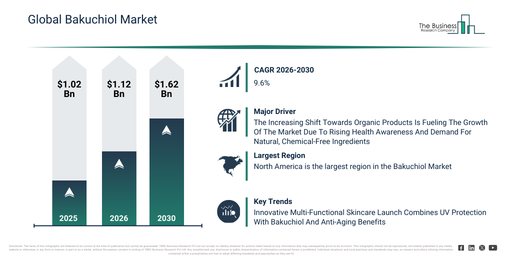
    The bakuchiol market has experienced notable expansion in recent years. Projections indicate it will rise from $1.02 billion in 2025 to $1.12 billion in 2026, achieving a compound annual growth rate (CAGR) of 9.9%. This historical growth has been driven by factors such as the use of herbal cosmetics, side effects associated with retinol, incorporation of ayurvedic ingredients, increased awareness of skincare, and prevailing trends favoring natural beauty.

    The bakuchiol market is projected to experience robust expansion over the coming years, reaching a valuation of $1.62 billion by 2030, with a compound annual growth rate (CAGR) of 9.6%. This anticipated growth during the forecast period is driven by factors such as the clean beauty movement, an emphasis on sustainability, the rise of dermatology-backed cosmetics, growing demand for premium skincare, and a push for ingredient transparency. Key trends shaping this period include an increasing preference for plant-based skincare ingredients, broader adoption of bakuchiol as a retinol alternative, expansion of clean label cosmetic products, progress in natural anti-aging solutions, and its integration into formulations designed for sensitive skin.

    Download A Free Sample Report For Comprehensive Market Insights:

    https://www.thebusinessresearchcompany.com/sample.aspx?id=24477&type=smp&utm_source=BlogsPR&utm_medium=Paid&utm_campaign=Jul_PR

    Bakuchiol Market Demand Drivers Creating New Revenue Opportunities

    The growing trend toward organic items is anticipated to boost the bakuchiol market in the coming period. Sourced from naturally cultivated ingredients, organic products exclude synthetic chemicals, fertilizers, and genetically modified organisms (GMOs). This rising demand is driven by heightened consumer awareness of health and environmental advantages, leading individuals to choose natural, chemical-free options for a safer lifestyle. As a plant-derived substitute for retinol, bakuchiol supports organic offerings by adhering to clean beauty standards through its natural origin and gentle, non-synthetic composition. For example, in August 2024, the United States Department of Agriculture—a US government agency—allocated nearly $10 million for organic development grants, which spurred a total investment of $85 million aimed at expanding American organic products. Furthermore, in 2023, consumer demand for organic items in the United States surpassed $69 billion, accounting for roughly 4% of total national food sales. Consequently, the growing preference for organic products is fueling expansion in the bakuchiol market.

    Bakuchiol Market Segmentation Trends And Revenue Drivers

    The bakuchiol market covered in this report is segmented –

    1) By Product Type: Serums, Oils, Creams, Other Types

    2) By Source: Natural, Synethetic

    3) By Distribution Channel: Online Retail, Supermarkets Or Hypermarkets, Specialty Stores, Other Distribution Channels

    4) By Application: Skincare, Haircare, Cosmetics, Pharmaceuticals, Food And Beverages

    5) By End-User: Individuals, Professional Use, Commercial Brands

    Subsegments:

    1) By Serums: Anti-Aging Serums, Brightening Serums, Hydrating Serums, Acne Control Serums

    2) By Oils: Facial Oils, Body Oils, Scalp Oils, Multi-Purpose Oils

    3) By Creams: Day Creams, Night Creams, Eye Creams, Moisturizing Creams

    4) By Other Types: Lotions, Gels, Balms, Masks

    Bakuchiol Market Trends Driving Strategic Industry Expansion

    Major players in the bakuchiol market are putting significant effort into creating innovative multi-functional skincare formulations that address the rising demand for clean beauty while delivering gentle, irritation-free alternatives to retinol. These formulations are specifically engineered to tackle multiple skin issues simultaneously by combining various active ingredients that provide hydration, anti-aging effects, brightness enhancement, and sun protection within one product. As an illustration, Wishtrend, a personal care manufacturer based in South Korea, launched the Fore Smoothing Bakuchiol Sun Stick in April 2024—a high-performance skincare item aimed at improving UV defense and skin quality. This advanced sun stick offers SPF50+ PA++++ protection and features 10,000 ppm of bakuchiol, a plant-based retinol substitute valued for its anti-aging capabilities. The formula also contains niacinamide and peptides to boost skin firmness and texture. Through its built-in primer function, the product works to refine pores and uneven skin texture, resulting in a flawless look even when used on top of makeup.

    Bakuchiol Market Industry Leaders: Which Organizations Are Driving Competition?

    Major companies operating in the bakuchiol market are Trilogy Limited, Paula’s Choice, Revolution Beauty Limited, Kora Organics, DIME Beauty, Juicy Chemistry, Herbivore Botanicals, True Botanicals, The INKEY List, Minimalist, Pacifica Beauty, Cocokind, Youth To The People, Versed Skincare, Biossance (Bakuchiol + Squalane line), BYBI Beauty (Bakuchiol Booster), Good Molecules (Bakuchiol Oil Blend), Alpyn Beauty (Bakuchiol Serum), Oskia Skincare (Rest Day Bakuchiol Cream), REN Clean Skincare (Bakuchiol Moisturizer), Naturium (Bakuchiol Retinol Alternative Serum)

    Access The Complete Bakuchiol Market Report:

    https://www.thebusinessresearchcompany.com/report/bakuchiol-global-market-report?utm_source=BlogsPR&utm_medium=Paid&utm_campaign=Jul_PR

    Bakuchiol Market Geographic Distribution And Regional Opportunities

    North America was the largest region in the bakuchiol market in 2025. Asia-Pacific is expected to be the fastest-growing region in the forecast period. The regions covered in the bakuchiol market report are Asia-Pacific, South East Asia, Western Europe, Eastern Europe, North America, South America, Middle East, Africa.

    Get in touch with us:

    The Business Research Company: https://www.thebusinessresearchcompany.com/?utm_source=BlogsPR&utm_medium=Paid&utm_campaign=home_page_test

    Americas: +1 310-496-7795

    Asia: +44 7882 955267 & +91 8897263534

    Europe: +44 7882 955267

    Email us at: marketing@tbrc.info

    Follow us on:

    LinkedIn: https://in.linkedin.com/company/the-business-research-company

    YouTube: https://www.youtube.com/channel/UC24_fI0rV8cR5DxlCpgmyFQ

    Global Market Model: https://www.thebusinessresearchcompany.com/global-market-model
  • Bacterial Cell Culture Market Forecast Highlights Expansion From $3.72 Billion To $5.05 Billion Through 2030

    Bacterial Cell Culture Market Forecast Highlights Expansion From $3.72 Billion To $5.05 Billion Through 2030

    Enhanced with market attractiveness analysis, total addressable market evaluation, company benchmarking matrices, interactive Excel dashboards, expanded supply chain intelligence, emerging startup coverage, and detailed product insights, The Business Research Company’s 2026 market reports deliver more actionable and strategically valuable research.

    Bacterial Cell Culture Market Value Analysis: What Growth Is Expected Over The Forecast Period?

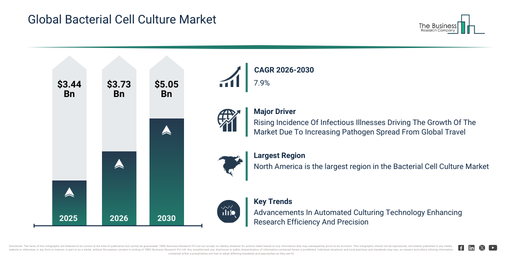
    The bacterial cell culture market has experienced notable expansion in recent years, progressing from a valuation of $3.44 billion in 2025 to an anticipated $3.73 billion by 2026, driven by a compound annual growth rate (CAGR) of 8.2%. This historical growth has been fueled by the widening scope of microbiology research facilities, regular application in clinical diagnostics, heightened demands for food safety testing, increased integration within academic research environments, and the widespread use of standardized protocols for bacterial cultivation.

    The bacterial cell culture market is anticipated to experience robust expansion in the coming years. By 2030, its value is projected to reach $5.05 billion, driven by a compound annual growth rate (CAGR) of 7.9%. This forecasted growth is fueled by a heightened need for swift microbial diagnostics, the scaling up of biopharmaceutical fermentation operations, a growing emphasis on research into antimicrobial resistance, the broadening of environmental testing initiatives, and the seamless integration with automated lab systems. Key developments shaping this period include a greater demand for high-purity culture media, the widespread adoption of automated microbial culturing technologies, increasing application in biopharmaceutical production, advancements in food and water safety testing, and a stronger focus on the rapid detection of pathogens.

    Download A Free Sample Report For Comprehensive Market Insights:

    https://www.thebusinessresearchcompany.com/sample.aspx?id=28952&type=smp&utm_source=BlogsPR&utm_medium=Paid&utm_campaign=Jul_PR

    Bacterial Cell Culture Market Expansion Supported By Key Demand Factors

    The growing frequency of infectious diseases is anticipated to boost the bacterial cell culture market in the coming years. Infectious illnesses are disorders triggered by microbes such as bacteria, viruses, fungi, or parasites, with the ability to transmit between individuals or organisms. Their prevalence is on the rise due to increased global travel, which facilitates the swift dissemination of pathogens across formerly isolated regions and populations. Bacterial cell culture plays a crucial role in addressing these illnesses by enabling scientists to cultivate and investigate bacteria within a managed environment, supporting precise identification and the development of specific therapies. As an example, data from the Center for Infectious Disease Research and Policy, a public organization based in the United States, revealed in October 2024 that an estimated 10.8 million people were affected by tuberculosis, including undetected cases, in 2023—up from 10.7 million in 2022. Consequently, the escalating incidence of infectious diseases is fueling expansion in the bacterial cell culture market.

    Bacterial Cell Culture Market Segment Analysis Highlighting Growth Areas

    The bacterial cell culture market covered in this report is segmented –

    1) By Product Type: Media, Reagents, Sera, Consumables, Other Product Types

    2) By Cell Type: Gram-Positive Bacteria, Gram-Negative Bacteria, Anaerobic Bacteria, Thermophilic Bacteria, Other Cell Types

    3) By Application: Disease Diagnosis, Food Testing, Water Testing, Biopharmaceutical Production, Research Laboratories, Other Applications

    4) By End User: Diagnostic Centers, Food Industry, Other End-Users

    Subsegments:

    1) By Media: Liquid Media, Solid Media, Selective Media, Differential Media, Enriched Media

    2) By Reagents: Antibiotics, Buffers, Stains And Dyes, Enzymes, Growth Factors

    3) By Sera: Fetal Bovine Sera, Newborn Calf Sera, Horse Sera, Human Sera

    4) By Consumables: Petri Dishes, Flasks And Bottles, Pipettes And Tips, Microplates, Tubes And Vials

    5) By Other Product Types: Kits, Supplements, Additives, Standards And Controls

    Bacterial Cell Culture Market Growth Trends Influencing Competitive Dynamics

    Key players in the bacterial cell culture market are concentrating on the creation of cutting-edge technologies, particularly automated culturing systems, which enable large-scale experimentation. Automated culturing technology involves the use of machinery and software to efficiently cultivate and observe cell or microbial populations with reduced human intervention. A notable example occurred in September 2023, when OGI Bio, a biotechnology firm headquartered in Scotland, unveiled the Mk2 Microbial Culturing System, an advanced iteration of automated culture technology. Building upon the successes of its forerunners, the Mk2 delivers superior performance, heightened functionality, and an intuitive design tailored to current research environments. It provides increased efficiency, dependability, and adaptability for automating microbial culture trials. This system empowers scientists to track microbial proliferation, oxygen solubility, and fluorescence signals, while the Turbidostat pump facilitates unprecedented accurate regulation of these variables. Through these improvements, the Mk2 stands out as a reliable instrument to propel research in microbiology, biotechnology, and synthetic biology.

    Bacterial Cell Culture Market Leading Companies: Who Holds Significant Market Presence?

    Major companies operating in the bacterial cell culture market are Danaher Corporation, Thermo Fisher Scientific Inc., Merck KGaA, Corning Incorporated, Lonza Group AG, Avantor Inc., Cytiva, Sartorius AG, FUJIFILM Irvine Scientific, Bio-Techne Corporation, Repligen Corporation, Takara Bio Inc., Becton Dickinson and Company, HiMedia Laboratories Pvt. Ltd., Capricorn Scientific GmbH, Athena Environmental Services Inc., Genexis Biotech Pvt. Ltd., BioProcess Technologies Ltd., Athena Medical Products Inc., Jin Kairui Biotechnology Co. Ltd.

    Access The Complete Bacterial Cell Culture Market Report:

    https://www.thebusinessresearchcompany.com/report/bacterial-cell-culture-global-market-report?utm_source=BlogsPR&utm_medium=Paid&utm_campaign=Jul_PR

    Bacterial Cell Culture Market Largest Region By Revenue And Market Share

    North America was the largest region in the bacterial cell culture market in 2025. Asia-Pacific is expected to be the fastest-growing region in the forecast period. The regions covered in the bacterial cell culture market report are Asia-Pacific, South East Asia, Western Europe, Eastern Europe, North America, South America, Middle East, Africa.

    Get in touch with us:

    The Business Research Company: https://www.thebusinessresearchcompany.com/?utm_source=BlogsPR&utm_medium=Paid&utm_campaign=home_page_test

    Americas: +1 310-496-7795

    Asia: +44 7882 955267 & +91 8897263534

    Europe: +44 7882 955267

    Email us at: marketing@tbrc.info

    Follow us on:

    LinkedIn: https://in.linkedin.com/company/the-business-research-company

    YouTube: https://www.youtube.com/channel/UC24_fI0rV8cR5DxlCpgmyFQ

    Global Market Model: https://www.thebusinessresearchcompany.com/global-market-model
  • Bacterial And Plasmid Vectors Market Expected To Reach $1.6 Billion By 2030 As Growth Accelerates At 11.9% CAGR

    Bacterial And Plasmid Vectors Market Expected To Reach $1.6 Billion By 2030 As Growth Accelerates At 11.9% CAGR

    Through market attractiveness analysis, total addressable market evaluation, company benchmarking matrices, interactive Excel dashboards, expanded supply chain intelligence, emerging startup coverage, and detailed product insights, The Business Research Company’s 2026 market reports provide more actionable and strategically valuable research.

    Bacterial And Plasmid Vectors Market Size Forecast: How Large Could The Market Become By 2030?

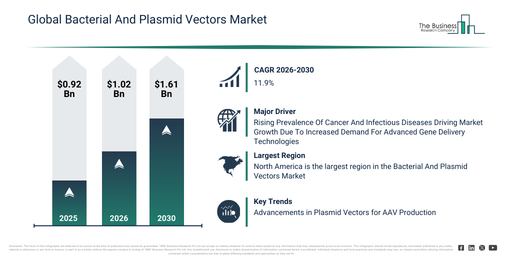
    The market for bacterial and plasmid vectors has seen substantial growth in the recent past, expanding from $0.92 billion in 2025 to an anticipated $1.02 billion by 2026, achieving a compound annual growth rate (CAGR) of 11.5%. This expansion over the historical period is largely driven by the increase in molecular biology research, the extensive application of E. coli vectors, a rise in biotechnology research funding, the growing demand for protein expression, and the strengthening of academic research efforts.

    The bacterial and plasmid vectors market is anticipated to undergo substantial expansion in the coming years, with projections indicating it will reach $1.61 billion by 2030, reflecting a compound annual growth rate (CAGR) of 11.9%. This forecasted growth is largely driven by advances in gene therapy, a surge in biologics production, innovations in synthetic biology, heightened investment in research and development, and an escalating need for high-efficiency vectors. Key developments shaping the forecast period encompass a growing demand for recombinant protein production, an increase in gene cloning applications, the broadening of synthetic biology research, more extensive utilization in academic settings, and ongoing progress in vector engineering.

    Download A Free Sample Report For Comprehensive Market Insights:

    https://www.thebusinessresearchcompany.com/sample.aspx?id=3422&type=smp&utm_source=BlogsPR&utm_medium=Paid&utm_campaign=Jul_PR

    Bacterial And Plasmid Vectors Market Growth Drivers And Industry Catalysts

    The anticipated rise in the prevalence of cancer and infectious diseases is expected to drive demand for the bacterial and plasmid vectors market moving forward. Bacteria serve as vectors for delivering recombinant proteins into target cells to treat cancer and various infectious diseases. This increasing prevalence of cancer and infectious diseases is largely attributed to factors like a growing aging population, lifestyle changes such as poor diet and smoking, environmental pollution, and infectious agents. In cancer and infectious disease research, bacterial and plasmid vectors are employed to deliver therapeutic genes, vaccines, or genetic material capable of stimulating immune responses or correcting genetic defects, thereby assisting in the prevention, treatment, or management of these conditions by addressing underlying causes or strengthening the body’s defenses. For example, in October 2024, the World Health Organization, a Switzerland-based health authority, reported that approximately 10.8 million people worldwide contracted tuberculosis, with 55% being men, 33% women, and 12% children and adolescents, while individuals living with HIV accounted for 6.1% of cases. Consequently, the growing prevalence of cancer and various infectious diseases is fueling the expansion of the bacterial and plasmid vectors market.

    Bacterial And Plasmid Vectors Market Segment Performance And Strategic Opportunities

    The bacterial and plasmid vectors market covered in this report is segmented –

    1) By Host Type: E.Coli Expression Vectors, Other Bacterial Expression Vectors

    2) By Application: Genetics, Molecular Biology, Bioinformatics, Other Applications

    3) By End Users: Academic And Research Institutes, Biotechnology And Biopharmaceutical Companies, Contract Research Organizations (CROs) And Contract Development And Manufacturing Organizations (CDMOs), Industrial And Synthetic Biology Companies, Government And Public Research Laboratories

    Subsegments:

    1) By E. Coli Expression Vectors: PET Vectors, PUC Vectors, PBR322 Vectors, Expression Systems For Protein Production

    2) By Other Bacterial Expression Vectors: Bacillus Subtilis Vectors, Pseudomonas Vectors, Lactococcus Lactis Vectors, Streptomyces Vectors

    Bacterial And Plasmid Vectors Market Trends Influencing Long-Term Demand

    Major players in the bacterial and plasmid vectors market are prioritizing the creation of cutting-edge tools, such as innovative plasmids, to boost the production of adeno-associated virus (AAV) vectors. These advanced plasmids are specially engineered or modified small circular DNA molecules designed to perform specific, sophisticated roles in biotechnology, gene therapy, or scientific research. For example, in March 2024, Polyplus, a biotechnology firm based in France, unveiled the pPLUS AAV-RC2 plasmid. This product is intended to simplify the manufacturing process and deliver a plug-and-play solution that enhances both the efficiency and dependability of vector production. It boasts distinctive attributes like a ready-to-use format tailored for optimal AAV2 production, notable improvements in viral genome yield when utilized alongside Polyplus transfection reagents, and production under high-quality standards in a GMP-compliant facility.

    Bacterial And Plasmid Vectors Market Key Players: Which Companies Shape Industry Competition?

    Major companies operating in the bacterial and plasmid vectors market are Sigma-Aldrich Inc., Thermo Fisher Scientific Inc., QIAGEN N.V., Promega Corporation, GenScript Biotech Corporation, Takara Bio Inc., New England Biolabs, Agilent Technologies, Bio-Rad Laboratories, ATUM, IBA GmbH, Clontech Laboratories Inc., DNA TwoPointO Inc., Creative Biogene, Creative Biomart, OriGene Technologies Inc., Addgene, Lucigen Corporation, Sino Biological Inc., Oxford Genetics Ltd.

    Access The Complete Bacterial And Plasmid Vectors Market Report:

    https://www.thebusinessresearchcompany.com/report/bacterial-and-plasmid-vector-global-market-report?utm_source=BlogsPR&utm_medium=Paid&utm_campaign=Jul_PR

    Bacterial And Plasmid Vectors Market Regional Analysis And Leading Geography

    North America was the largest region in the bacterial & plasmid vectors market in 2025. The Middle East is expected to be the fastest-growing region in the global bacterial & plasmid vectors market share during the forecast period. The regions covered in the bacterial and plasmid vectors market report are Asia-Pacific, South East Asia, Western Europe, Eastern Europe, North America, South America, Middle East, Africa.

    Get in touch with us:

    The Business Research Company: https://www.thebusinessresearchcompany.com/?utm_source=BlogsPR&utm_medium=Paid&utm_campaign=home_page_test

    Americas: +1 310-496-7795

    Asia: +44 7882 955267 & +91 8897263534

    Europe: +44 7882 955267

    Email us at: marketing@tbrc.info

    Follow us on:

    LinkedIn: https://in.linkedin.com/company/the-business-research-company

    YouTube: https://www.youtube.com/channel/UC24_fI0rV8cR5DxlCpgmyFQ

    Global Market Model: https://www.thebusinessresearchcompany.com/global-market-model
  • Back Acne Treatment Market Set To Grow From $2.14 Billion In 2026 To $3 Billion By 2030 At A CAGR Of 8.8%

    Back Acne Treatment Market Set To Grow From $2.14 Billion In 2026 To $3 Billion By 2030 At A CAGR Of 8.8%

    Delivering more actionable and strategically valuable research, The Business Research Company’s 2026 market reports feature market attractiveness analysis, total addressable market evaluation, company benchmarking matrices, interactive Excel dashboards, expanded supply chain intelligence, emerging startup coverage, and detailed product insights.

    Back Acne Treatment Market Revenue Outlook: What CAGR Is Expected Through 2030?

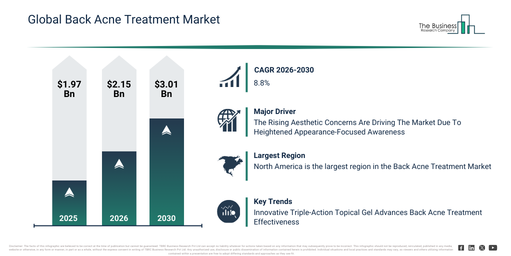
    The back acne treatment market has experienced substantial growth over the past few years. Projections indicate an increase from $1.97 billion in 2025 to $2.15 billion in 2026, reflecting a compound annual growth rate (CAGR) of 9.0%. This expansion during the historic period is driven by a higher prevalence of acne among both teenagers and adults, broader access to topical acne medications, an expanding network of dermatology clinics, greater awareness regarding treatments for body acne, and the continued development of cosmetic dermatology services.

    The market for back acne treatments is projected to experience substantial expansion over the coming years. By 2030, its value is anticipated to reach $3.01 billion, driven by a compound annual growth rate (CAGR) of 8.8%. This projected growth is fueled by a rising demand for sophisticated dermatological interventions, a growing preference for customized acne management strategies, the wider availability of tele-dermatology platforms, an enhanced emphasis on sustained acne control, and a greater integration of skincare with medical therapies. Key developments shaping the forecast period include a higher uptake of combination therapies that pair topical agents with oral medications, an increased utilization of laser and light-based treatments for acne, more frequent incorporation of medicated washes and exfoliating products, an emergence of at-home solutions for acne care, and a stronger dedication to preventing scars and achieving clearer skin.

    Download A Free Sample Report For Comprehensive Market Insights:

    https://www.thebusinessresearchcompany.com/sample.aspx?id=28145&type=smp&utm_source=BlogsPR&utm_medium=Paid&utm_campaign=Jul_PR

    Back Acne Treatment Market Opportunity Drivers: What Is Creating New Revenue Potential?

    The growing emphasis on physical appearance is expected to fuel demand for back acne treatment in the foreseeable future. Aesthetic concerns involve an individual’s recognition and assessment of their outward look, including perceptions of skin, body attributes, and overall visual presentation, which shape self-esteem and social engagements. A key driver behind this heightened focus on appearance is the constant exposure to idealized imagery on digital and social media platforms, where interaction with carefully curated visual material fosters increased self-criticism and comparison, thus intensifying the pursuit of flawless skin. By addressing dermatological blemishes, back acne treatment helps alleviate appearance-related anxiety and bolsters personal confidence, reflecting the rising awareness of aesthetic standards. For example, in June 2024, the American Society of Plastic Surgeons, a specialty organization based in the United States, reported that aesthetic minimally invasive procedures grew by 7 percent in 2023, outpacing surgical procedures by 2 percent; neuromodulator injections and hyaluronic acid fillers each surpassed 9 million and 5 million treatments, respectively. Consequently, the surge in aesthetic concerns is propelling the expansion of the back acne treatment market.

    Back Acne Treatment Market Segment Landscape And Growth Potential

    The back acne treatment market covered in this report is segmented –

    1) By Product Type: Topical Medications, Oral Medications, Laser Therapy, Light Therapy, Other Products

    2) By Distribution Channel: Retail Pharmacies, Online pharmacies, Hospital Pharmacies, Other Distribution Channels

    3) By End-User: Hospitals And Clinics, Dermatology Centers, Homecare, Other End-Users

    Subsegments:

    1) By Topical Medications: Salicylic Acid Cream, Benzoyl Peroxide Gel, Retinoid Cream, Azelaic Acid Lotion, Sulfur-Based Treatment

    2) By Oral Medications: Antibiotics, Hormonal Therapy, Isotretinoin, Immunomodulators

    3) By Laser Therapy: Fractional Laser, Pulsed Dye Laser, Carbon Dioxide Laser, Erbium Laser

    4) By Light Therapy: Blue Light Therapy, Red Light Therapy, Combination Light Therapy

    5) By Other Products: Cleansing Body Wash, Exfoliating Scrubs, Moisturizing Lotions, Serums

    Back Acne Treatment Market Innovation Trends Driving Future Development

    Major players within the back acne treatment market are increasingly concentrating on the creation of advanced products like triple-combination acne gels, which deliver an effective and simplified therapeutic approach capable of targeting both inflammatory and non-inflammatory acne lesions. These gels are topical formulations that combine several mechanisms of action within a single application, aiming to decrease acne lesions and enhance skin clarity. An example is the launch of Cabtreo acne gel by Bausch Health Companies Inc., a pharmaceutical and healthcare firm based in Canada, in October 2023. This gel brings together an antibiotic, a retinoid, and an antibacterial agent into one fixed-dose formulation, designed for once-daily use by patients aged twelve and older. Clinical trials revealed remarkable reductions in both types of acne lesions, with about fifty percent achieving treatment success within twelve weeks, underscoring its capacity to simplify regimens and improve patient adherence.

    Back Acne Treatment Market Competitive Landscape: Who Are The Leading Companies?

    Major companies operating in the back acne treatment market are Johnson And Johnson, Unilever plc, Pfizer Inc., AbbVie Inc., L’Oréal S.A., GlaxoSmithKline plc, Teva Pharmaceutical Industries Limited, Viatris Inc., Kenvue Inc., Bausch Health Companies Inc., Hindustan Unilever Limited (HUL), Galderma S.A, Pierre Fabre Group, Cipla Ltd., Zydus lifesciences Limited, Reckitt Benckiser Group plc, Alkem Laboratories Limited, Almirall S.A, Merz Pharma GmbH And Co. KGaA, Himalaya Wellness Company

    Access The Complete Back Acne Treatment Market Report:

    https://www.thebusinessresearchcompany.com/report/back-acne-treatment-global-market-report?utm_source=BlogsPR&utm_medium=Paid&utm_campaign=Jul_PR

    Back Acne Treatment Market Geographic Analysis: Where Is Demand Growing The Fastest?

    North America was the largest region in the back acne treatment market in 2025. Asia-Pacific is expected to be the fastest-growing region in the forecast period. The regions covered in the back acne treatment market report are Asia-Pacific, South East Asia, Western Europe, Eastern Europe, North America, South America, Middle East, Africa.

    Get in touch with us:

    The Business Research Company: https://www.thebusinessresearchcompany.com/?utm_source=BlogsPR&utm_medium=Paid&utm_campaign=home_page_test

    Americas: +1 310-496-7795

    Asia: +44 7882 955267 & +91 8897263534

    Europe: +44 7882 955267

    Email us at: marketing@tbrc.info

    Follow us on:

    LinkedIn: https://in.linkedin.com/company/the-business-research-company

    YouTube: https://www.youtube.com/channel/UC24_fI0rV8cR5DxlCpgmyFQ

    Global Market Model: https://www.thebusinessresearchcompany.com/global-market-model
  • Avascular Necrosis Market Opportunities Are Emerging Beyond Traditional Growth Areas

    Avascular Necrosis Market Opportunities Are Emerging Beyond Traditional Growth Areas

    Enhanced with market attractiveness analysis, total addressable market evaluation, company benchmarking matrices, interactive Excel dashboards, expanded supply chain intelligence, emerging startup coverage, and detailed product insights, The Business Research Company’s 2026 market reports deliver more actionable and strategically valuable research.

    Avascular Necrosis Market Growth Analysis: How Will Revenue Expand During The Forecast Period?

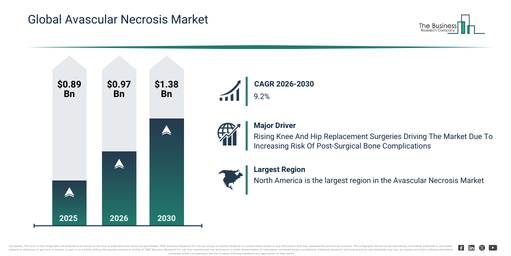
    The market for avascular necrosis has experienced notable expansion in recent years. Projections indicate an increase from $0.89 billion in 2025 to $0.97 billion in 2026, reflecting a compound annual growth rate (CAGR) of 9.5%. Factors driving growth during the historical period include trauma-induced bone injuries, excessive steroid usage, alcohol intake, delays in diagnosis, and the expansion of orthopedic surgical procedures.

    The avascular necrosis market is projected to experience robust expansion over the coming years, reaching a valuation of $1.38 billion by 2030, corresponding to a compound annual growth rate (CAGR) of 9.2%. This anticipated growth during the forecast period is driven by several factors, including the adoption of advanced imaging techniques, ongoing research into regenerative medicine, an aging global population, a high incidence of sports-related injuries, and advancements in orthopedics. Key developments shaping this market encompass the growing utilization of early diagnostic imaging tools, an increasing emphasis on therapies designed to preserve joints, the rise of minimally invasive surgical options, the expansion of physical rehabilitation initiatives, and a heightened focus on managing the condition during its early stages.

    Download A Free Sample Report For Comprehensive Market Insights:

    https://www.thebusinessresearchcompany.com/sample.aspx?id=24476&type=smp&utm_source=BlogsPR&utm_medium=Paid&utm_campaign=Jul_PR

    Avascular Necrosis Market Growth Momentum: Which Factors Are Influencing Demand?

    The anticipated rise in the market for avascular necrosis is being significantly driven by the increasing frequency of knee replacement and hip surgeries. These surgical interventions, designed to replace damaged joints and alleviate pain in advanced cases of avascular necrosis, are becoming more common primarily due to the rising prevalence of osteoarthritis—a condition that leads to severe joint discomfort and impaired mobility, often necessitating surgery for relief and enhanced quality of life. Avascular necrosis itself plays a critical role in driving the demand for these procedures, as it causes bone tissue death from inadequate blood supply, frequently resulting in joint deterioration and collapse. As an example, data from November 2024 released by the American Joint Replacement Registry (AJRR), a registry managed by the American Academy of Orthopaedic Surgeons in the United States, revealed that the number of hip and knee arthroplasty procedures recorded in the registry exceeded 4 million in 2023, reflecting an 18% growth compared to 2022. Consequently, the expansion of the avascular necrosis market is being fueled by this surge in knee replacements and hip surgeries.

    Driver: Higher Healthcare Spending Boosts the Avascular Necrosis Market through Better Diagnostics and Treatment Accessibility

    The avascular necrosis market is expected to be propelled forward by the increasing level of healthcare spending. This expenditure encompasses the total funds allocated to health services, treatments, and medical products within a given population or healthcare system. The growth in healthcare spending is driven by a higher incidence of chronic diseases, which demand ongoing management, frequent hospital visits, and expensive medications. Such expenditure proves valuable for avascular necrosis by facilitating access to timely diagnoses, advanced therapeutic options, and surgical interventions that help control the condition and enhance patient outcomes. For example, the American Medical Association—a U.S.-based professional organization and advocacy group representing physicians and medical students—reported in April 2025 that health spending in the United States rose by 7.5% in 2023, reaching $4.9 trillion, or $14,570 per person, surpassing the 4.6% increase observed in 2022. Therefore, the upward trend in healthcare expenditure is accelerating the growth of the avascular necrosis market.

    Avascular Necrosis Market Categorization By Product Type And Application

    The avascular necrosis market covered in this report is segmented –

    1) By Type: Trauma Related Avascular Necrosis, Non-Trauma Related Avascular Necrosis

    2) By Diagnosis: Imaging, Biopsy, Computed Tomography Scan, Positron Emission Tomography, X-Ray

    3) By Treatment Type: Medications, Surgery, Physical Therapy, Lifestyle Changes, Bone Grafting

    4) By End-User: Hospitals, Specialty Clinics, Rehabilitation Centers, Ambulatory Surgical Centers, Home Care Settings

    Subsegments:

    1) By Trauma-Related Avascular Necrosis: Fracture-Induced Avascular Necrosis, Dislocation-Induced Avascular Necrosis, Post-Surgical Avascular Necrosis, Crush Injury-Related Avascular Necrosis, Sports Injury-Associated Avascular Necrosis

    2) By Non-Trauma Related Avascular Necrosis: Steroid-Induced Avascular Necrosis, Alcohol-Induced Avascular Necrosis, Sickle Cell Disease-Associated Avascular Necrosis, Lupus-Related Avascular Necrosis, Radiation Therapy-Induced Avascular Necrosis, Idiopathic Avascular Necrosis

    Avascular Necrosis Market Company Landscape And Strategic Competition

    Major companies operating in the avascular necrosis market are Stryker Corporation, Massachusetts General Hospital, Zimmer Biomet Holdings Inc., Smith & Nephew plc, Stanford Health Care, Apollo Hospitals Enterprise Limited, Singapore General Hospital Pte Ltd., Fortis Healthcare Limited, Narayana Hrudayalaya Limited, Bumrungrad International Hospital Co. Ltd., Aster DM Healthcare Limited, Mount Elizabeth Hospital Pte Ltd., Gleneagles Hospital Pte Ltd., Shalby Limited, Texas Orthopedic Hospital LLC, Regrow Biosciences Pvt. Ltd., Maxcure Hospitals Limited, Medicover Hospitals Private Limited, Mesoblast Limited, Athersys Inc.

    Access The Complete Avascular Necrosis Market Report:

    https://www.thebusinessresearchcompany.com/report/avascular-necrosis-global-market-report?utm_source=BlogsPR&utm_medium=Paid&utm_campaign=Jul_PR

    Avascular Necrosis Market Global Footprint: Which Region Holds Market Leadership?

    North America was the largest region in the avascular necrosis market in 2025. Asia-Pacific is expected to be the fastest-growing region in the forecast period. The regions covered in the avascular necrosis market report are Asia-Pacific, South East Asia, Western Europe, Eastern Europe, North America, South America, Middle East, Africa.

    Get in touch with us:

    The Business Research Company: https://www.thebusinessresearchcompany.com/?utm_source=BlogsPR&utm_medium=Paid&utm_campaign=home_page_test

    Americas: +1 310-496-7795

    Asia: +44 7882 955267 & +91 8897263534

    Europe: +44 7882 955267

    Email us at: marketing@tbrc.info

    Follow us on:

    LinkedIn: https://in.linkedin.com/company/the-business-research-company

    YouTube: https://www.youtube.com/channel/UC24_fI0rV8cR5DxlCpgmyFQ

    Global Market Model: https://www.thebusinessresearchcompany.com/global-market-model
  • Automated Liquid Handling Systems Market Expansion Is Opening New Pathways For Strategic Investment

    Automated Liquid Handling Systems Market Expansion Is Opening New Pathways For Strategic Investment

    Through market attractiveness analysis, total addressable market evaluation, company benchmarking matrices, interactive Excel dashboards, expanded supply chain intelligence, emerging startup coverage, and detailed product insights, The Business Research Company’s 2026 market reports provide more actionable and strategically valuable research.

    Automated Liquid Handling Systems Market Forecast: What Market Value Is Expected By 2030?

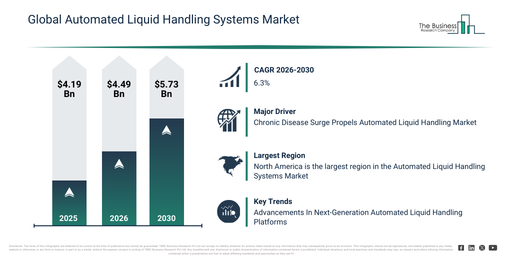
    The automated liquid handling systems market has experienced robust expansion in recent years, with projections indicating an increase from $4.19 billion in 2025 to $4.49 billion in 2026, reflecting a compound annual growth rate (CAGR) of 7.2%. This historical growth has been driven by factors such as the growing integration of automated liquid handling into pharmaceutical research, a heightened demand for high-throughput screening, an escalating requirement for accuracy in sample preparation, the advancement of biotechnology and genomics studies, and the broadening of contract research organizations.

    The automated liquid handling systems market is projected to experience considerable expansion over the coming years. By 2030, it is anticipated to reach a valuation of $5.73 billion, reflecting a compound annual growth rate (CAGR) of 6.3%. This upward trajectory during the forecast period is largely driven by the incorporation of artificial intelligence and machine learning for refining protocols, rising demand for laboratory automation in emerging markets, the creation of multi-channel and robotic liquid handling solutions, a greater focus on personalized medicine, and progress in the design of modular and flexible liquid handling platforms. Key developments shaping this timeframe include the automation of high-throughput screening, the downsizing of liquid handling equipment, connectivity with laboratory information management systems (LIMS), the adoption of multifunctional and modular system architectures, as well as improvements in the precision and reliability of liquid handling operations.

    Download A Free Sample Report For Comprehensive Market Insights:

    https://www.thebusinessresearchcompany.com/sample.aspx?id=14850&type=smp&utm_source=BlogsPR&utm_medium=Paid&utm_campaign=Jul_PR

    Automated Liquid Handling Systems Market Expansion Drivers: What Is Shaping Future Growth?

    The rising incidence of chronic diseases is anticipated to boost the expansion of the automated liquid handling systems market in the coming years. A chronic disease is defined as a persistent health condition that can be controlled but is often incurable. This increase in chronic illnesses stems from higher consumption of processed foods, sedentary lifestyles marked by extended periods of sitting, and decreased physical activity. Automated liquid handling systems provide benefits like enhanced accuracy, reproducibility, and throughput relative to manual pipetting, making them essential in the pharmaceutical and biotechnology industries. For example, in April 2025, the Centers for Disease Control and Prevention (CDC), a United States-based federal agency, reported that approximately 194 million American adults, or 76.4%, experienced at least one chronic condition in 2023. This rate was 59.5% among young adults, 78.4% among middle-aged adults, and 93.0% among older adults. As a result, the growing prevalence of chronic diseases is fueling the growth of the automated liquid handling systems market.

    Automated Liquid Handling Systems Market Segment Analysis And Revenue Opportunities

    The automated liquid handling systems market covered in this report is segmented –

    1) By Type: Automated Liquid Handling System, Semi-automated Liquid Handling System

    2) By Application: Drug Discovery And ADME-Tox Research, Cancer And Genomic Research, Bioprocessing Or Biotechnology, Other Applications

    3) By End User: Contract Research Organizations, Pharmaceutical And Biotechnology, Academic And Research Institutes

    Subsegments:

    1) By Automated Liquid Handling System: Single-Channel Automated Systems, Multi-Channel Automated Systems, Integrated Liquid Handling Systems, Robotic Liquid Handling Systems

    2) By Semi-Automated Liquid Handling System: Manual-Supported Semi-Automated Systems, Partially Automated Pipetting Systems, Semi-Automated Dispensing Systems

    Automated Liquid Handling Systems Market Strategic Trends: What Is Defining The Next Phase Of Growth?

    Leading firms within the automated liquid handling systems sector are dedicated to creating cutting-edge platforms that improve accuracy, throughput, and operational efficiency in life sciences and lab environments. These tools incorporate sophisticated robotics, software-controlled protocols, and flexible configurations to support scalable, high-volume sample handling. As an example, in February 2025, Tecan US Inc., a laboratory automation company based in the USA, introduced Veya, an advanced liquid handling system that provides greater adaptability, speed, and consistency across a broad range of lab processes. This solution’s user-friendly interface, automated functions, and ability to link with downstream analytical equipment aim to enhance lab operations, cut down on human mistakes, and speed up research and diagnostic results.

    Automated Liquid Handling Systems Market Leading Players Shaping Industry Direction

    Major companies operating in the automated liquid handling systems market are Thermo Fisher Scientific Inc, Danaher Corporation, Agilent Technologies, PerkinElmer Inc, Eppendorf AG, Tecan Group Ltd, Hamilton Company, Formulatrix Inc, Analytik Jena AG, Gilson Inc, Corning Inc, Bio Rad Laboratories Inc, Qiagen NV, Becton Dickinson and Company, Lonza Group AG, Mettler Toledo International Inc, Sartorius AG, SPT Labtech Ltd, Opentrons Labworks Inc, Beijing TXTB Science and Technology Co Ltd

    Access The Complete Automated Liquid Handling Systems Market Report:

    https://www.thebusinessresearchcompany.com/report/automated-liquid-handling-systems-global-market-report?utm_source=BlogsPR&utm_medium=Paid&utm_campaign=Jul_PR

    Automated Liquid Handling Systems Market Regional Distribution: Which Areas Drive Market Expansion?

    North America was the largest region in the automated liquid handling systems market in 2025. Asia Pacific is expected to be the fastest-growing region in the forecast period. The regions covered in the automated liquid handling systems market report are Asia-Pacific, South East Asia, Western Europe, Eastern Europe, North America, South America, Middle East, Africa.

    Get in touch with us:

    The Business Research Company: https://www.thebusinessresearchcompany.com/?utm_source=BlogsPR&utm_medium=Paid&utm_campaign=home_page_test

    Americas: +1 310-496-7795

    Asia: +44 7882 955267 & +91 8897263534

    Europe: +44 7882 955267

    Email us at: marketing@tbrc.info

    Follow us on:

    LinkedIn: https://in.linkedin.com/company/the-business-research-company

    YouTube: https://www.youtube.com/channel/UC24_fI0rV8cR5DxlCpgmyFQ

    Global Market Model: https://www.thebusinessresearchcompany.com/global-market-model
  • Autologous Stem Cell And Non-Stem Cell Based Therapies Market Trends Are Creating New Opportunities For Industry Leaders

    Autologous Stem Cell And Non-Stem Cell Based Therapies Market Trends Are Creating New Opportunities For Industry Leaders

    Delivering more actionable and strategically valuable research, The Business Research Company’s 2026 market reports feature market attractiveness analysis, total addressable market evaluation, company benchmarking matrices, interactive Excel dashboards, expanded supply chain intelligence, emerging startup coverage, and detailed product insights.

    Autologous Stem Cell And Non-Stem Cell Based Therapies Market Size Outlook: How Fast Will Revenue Grow Through 2030?

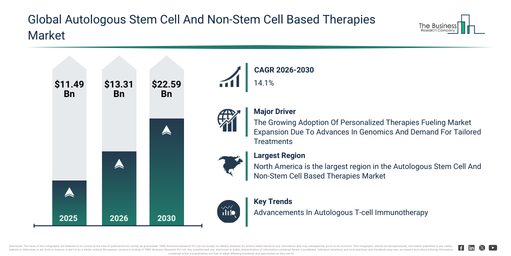
    The market for autologous stem cell and non-stem cell based therapies experienced significant expansion in recent years, with projections indicating a rise from $11.49 billion in 2025 to $13.31 billion in 2026, reflecting a compound annual growth rate (CAGR) of 15.8%. This historic growth was driven by factors such as the increasing incidence of degenerative diseases, improvements in methods for isolating stem cells, heightened public awareness about regenerative medicine, the early implementation of autologous treatments in developed nations, and governmental backing for cell-based therapeutic approaches.

    The market for autologous stem cell and non-stem cell based therapies is anticipated to undergo rapid expansion in the near future, with projections indicating it will reach $22.59 billion by 2030, driven by a compound annual growth rate (CAGR) of 14.1%. This expected growth during the forecast period is fueled by increased investment in personalized medicine, the enhancement of cell therapy manufacturing infrastructure, the adoption of artificial intelligence in cell therapy development, growing demand from emerging markets, and the advancement of combination cell-based therapies. Key developments likely to define this period encompass personalized regenerative therapies, immunomodulatory cell therapies, minimally invasive autologous approaches, innovations in cell expansion and manufacturing, and cutting-edge tissue engineering solutions.

    Download A Free Sample Report For Comprehensive Market Insights:

    https://www.thebusinessresearchcompany.com/sample.aspx?id=15729&type=smp&utm_source=BlogsPR&utm_medium=Paid&utm_campaign=Jul_PR

    Autologous Stem Cell And Non-Stem Cell Based Therapies Market Development Factors: Which Trends Are Supporting Demand?

    The growing uptake of personalized medicine is anticipated to drive forward the autologous stem cell and non–stem cell-based therapies market. Personalized therapies are medical approaches specifically tailored to an individual’s unique genetic makeup, lifestyle, and clinical profile, aiming to boost therapeutic efficacy while reducing side effects. This trend is fuelled by major developments in genomics and biomarker-driven drug development, along with patients’ increasing inclination toward more targeted and effective treatment options. Autologous stem cell and non–stem cell-based therapies strongly underpin this movement by utilizing the patient’s own cells and genetic information to create highly customized treatments, leading to better outcomes and fewer complications. As an example, in February 2024, the Personalized Medicine Coalition (PMC), a U.S.-based organization, reported that in 2023, 20 out of 53 new therapeutic molecular entities approved by the U.S. Food and Drug Administration—around 38%—were designated as personalized medicines, underscoring the swift expansion of precision-oriented therapeutic strategies. Hence, the rising adoption of personalized therapies is fueling growth in the autologous stem cell and non–stem cell-based therapies market.

    Autologous Stem Cell And Non-Stem Cell Based Therapies Market Segmentation And Category Breakdown

    The autologous stem cell and non-stem cell based therapies market covered in this report is segmented –

    1) By Type: Autologous Stem Cells, Autologous Non-Stem Cells, Other Types

    2) By Application: Cancer, Neurodegenerative Disorders, Cardiovascular Disease, Orthopedic Diseases, Other Applications

    3) By End-User: Hospitals, Ambulatory Surgical Centers, Research Facilities, Other End Users

    Subsegments:

    1) By Autologous Stem Cells: Hematopoietic Stem Cells, Mesenchymal Stem Cells, Neural Stem Cells, Endothelial Stem Cells

    2) By Autologous Non-Stem Cells: Platelet-Rich Plasma (Prp), Adipose-Derived Cells, Peripheral Blood Cells

    3) By Other Types: Exosome-Based Therapies, Tissue-Engineered Constructs

    Autologous Stem Cell And Non-Stem Cell Based Therapies Market Transformation Trends: Which Innovations Are Driving Change?

    Major players in the autologous stem cell and non-stem cell-based therapies sector are advancing tumor-derived autologous T cell immunotherapy to refine individualized cancer treatment strategies. This approach involves isolating T cells from a patient’s tumor, subsequently amplifying and activating them in a laboratory setting, and then reintroducing them into the patient to strengthen the immune response, enabling it to specifically identify and eliminate cancer cells. A notable example occurred in February 2024, when Iovance Biotherapeutics, a biotechnology firm based in the United States, secured accelerated approval from the U.S. Food and Drug Administration for Amtagvi (lifileucel), marking the first cellular therapy authorized for treating adult melanoma patients. Lifileucel is a tumor-derived autologous T cell immunotherapy composed of the patient’s own naturally occurring immune cells, known as tumor-infiltrating lymphocytes (TILs). This mechanism empowers the patient’s immune system to more effectively recognize and combat the cancer.

    Autologous Stem Cell And Non-Stem Cell Based Therapies Market Competitive Analysis Of Major Industry Participants

    Major companies operating in the autologous stem cell and non-stem cell based therapies market are Bayer AG, Novartis AG, Takeda Pharmaceutical Company Limited, Gilead Sciences Inc., Merck & Co. Inc., Stemcell Technologies Inc., Dendreon Corporation, Vericel Corporation, Sangamo Therapeutics Inc., NEOSTEM, Orgenesis Inc., Adaptimmune Therapeutics, Stempeutics Research Pvt Ltd., MEDIPOST, Castle Creek Biosciences Inc., BrainStorm Cell Limited, Athersys Inc., Cytori Therapeutics Inc., Opexa Therapeutics, Gamida Cell, Regen BioPharma Inc., RepliCel Life Sciences, InGeneron Inc., BioCardia Inc., ReNeuron Group

    Access The Complete Autologous Stem Cell And Non-Stem Cell Based Therapies Market Report:

    https://www.thebusinessresearchcompany.com/report/autologous-stem-cell-and-non-stem-cell-based-therapies-global-market-report?utm_source=BlogsPR&utm_medium=Paid&utm_campaign=Jul_PR

    Autologous Stem Cell And Non-Stem Cell Based Therapies Market Leading Geography: Which Region Generates The Most Revenue?

    North America was the largest region in the autologous stem cell and non-stem cell based therapies market in 2025. Asia-Pacific is expected to be the fastest-growing region in the forecast period. The regions covered in the autologous stem cell and non-stem cell based therapies market report are Asia-Pacific, South East Asia, Western Europe, Eastern Europe, North America, South America, Middle East, Africa.

    Get in touch with us:

    The Business Research Company: https://www.thebusinessresearchcompany.com/?utm_source=BlogsPR&utm_medium=Paid&utm_campaign=home_page_test

    Americas: +1 310-496-7795

    Asia: +44 7882 955267 & +91 8897263534

    Europe: +44 7882 955267

    Email us at: marketing@tbrc.info

    Follow us on:

    LinkedIn: https://in.linkedin.com/company/the-business-research-company

    YouTube: https://www.youtube.com/channel/UC24_fI0rV8cR5DxlCpgmyFQ

    Global Market Model: https://www.thebusinessresearchcompany.com/global-market-model