Blog

  • Autoimmune Monoclonal Antibody Market Growth Is Reshaping Competitive Advantage Across The Industry

    Autoimmune Monoclonal Antibody Market Growth Is Reshaping Competitive Advantage Across The Industry

    Enhanced with market attractiveness analysis, total addressable market evaluation, company benchmarking matrices, interactive Excel dashboards, expanded supply chain intelligence, emerging startup coverage, and detailed product insights, The Business Research Company’s 2026 market reports deliver more actionable and strategically valuable research.

    Autoimmune Monoclonal Antibody Market Size, Value And Growth Trends Through 2030

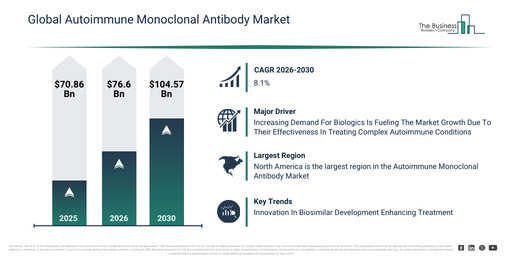
    The market for autoimmune monoclonal antibodies has experienced robust expansion in recent years. Its size is projected to rise from $70.86 billion in 2025 to $76.6 billion in 2026, reflecting a compound annual growth rate (CAGR) of 8.1%. This historical growth has been driven by factors such as the increasing prevalence of autoimmune diseases, the approval of biologic drugs, the expansion of hospital infusion centers, enhanced management of chronic inflammation, and the proliferation of specialty clinics.

    The autoimmune monoclonal antibody market is projected to experience robust expansion in the coming years, reaching an estimated value of $104.57 billion by 2030, with a compound annual growth rate (CAGR) of 8.1%. This forecasted growth is driven by several key factors, including progress in precision immunology, the increasing influence of biosimilars, the development of long-acting antibody formulations, the shift toward outpatient biologic administration, and the rise of personalized therapeutic approaches for autoimmune diseases. Major trends shaping this period encompass a growing preference for targeted biologic therapies, broader adoption of fully human antibody platforms, heightened utilization in managing chronic autoimmune disorders, a rising inclination toward subcutaneous delivery methods, and a stronger emphasis on achieving sustained disease control over the long term.

    Download A Free Sample Report For Comprehensive Market Insights:

    https://www.thebusinessresearchcompany.com/sample.aspx?id=24162&type=smp&utm_source=BlogsPR&utm_medium=Paid&utm_campaign=Jul_PR

    Autoimmune Monoclonal Antibody Market Industry Drivers: What Is Driving Revenue Growth?

    The growing appetite for biologics is set to boost the autoimmune monoclonal antibody market in the coming period. Biologics are medical products derived from living organisms or their components, utilized for treating, preventing, or diagnosing diseases. This rising demand stems largely from their efficacy in addressing complex conditions like cancer, autoimmune disorders, and genetic diseases, where traditional treatments often fall short. Autoimmune monoclonal antibodies enhance biologic therapies through targeted immune modulation, proving effective in controlling hyperactive immune responses. They minimize reliance on broad immunosuppressants by delivering precise treatment, which improves patient outcomes and reduces adverse effects. In June 2024, Cardinal Health Inc., a US-based healthcare firm, reported 40 FDA-approved biosimilar products in 2023, with 25 commercially available in the US, up from 33 biosimilars in 2022. Hence, the increasing demand for biologics fuels the expansion of the autoimmune monoclonal antibody market.

    Autoimmune Monoclonal Antibody Market Segment Outlook: Which Categories Are Expanding The Fastest?

    The autoimmune monoclonal antibody market covered in this report is segmented –

    1) By Type: Immunoglobulin G Monoclonal Antibodies, Immunoglobulin M Monoclonal Antibodies, Chimeric Monoclonal Antibodies, Fully Human Monoclonal Antibodies

    2) By  Route Of Administration: Subcutaneous, Intravenous, Intramuscular

    3) By Application: Rheumatoid Arthritis, Multiple Sclerosis, Systemic Lupus Erythematosus, Psoriasis, Inflammatory Bowel Disease

    4) By Distribution Channel: Hospital Pharmacy, Online Pharmacy, Retail Pharmacy

    5) By End User: Hospitals, Outpatient Clinics, Homecare Settings, Research Institutions

    Subsegments:

    1) By Immunoglobulin G (IgG) Monoclonal Antibodies: Immunoglobulin G1 (IgG1), Immunoglobulin G2 (IgG2), Immunoglobulin G3 (IgG3), Immunoglobulin G4 (IgG4)

    2) By Immunoglobulin M (IgM) Monoclonal Antibodies: Pentameric Immunoglobulin M (IgM), Hexameric Immunoglobulin M (IgM)

    3) By Chimeric Monoclonal Antibodies: Murine Variable Region + Human Constant Region, Humanized Variable Region + Murine Constant Region

    4) By Fully Human Monoclonal Antibodies: Phage Display-Derived, Transgenic Mouse-Derived, Fully Human Hybridoma-Derived

    Autoimmune Monoclonal Antibody Market Growth Trends: What Is Influencing The Future Outlook?

    Major players in the autoimmune monoclonal antibody industry are concentrating on advanced innovations, especially through biosimilar creation, to improve safety, efficacy, and quality standards. Biosimilar development entails producing biological products that are extremely similar, safe, and effective relative to existing approved biologics, utilizing state-of-the-art biotechnology, rigorous analytical evaluations, and clinical investigations to establish comparable quality, effectiveness, and safety for regulatory approval. A case in point is Biocon Biologics Limited, an Indian biopharmaceutical firm, which in February 2025 launched YESINTEK—a biosimilar designed for autoimmune disorders such as Crohn’s disease, ulcerative colitis, and psoriasis—by binding to and suppressing interleukin-12 and interleukin-23 activity, thereby reducing inflammation and modulating immune function. By closely replicating the reference biologic Stelara, YESINTEK facilitates sustained disease management while broadening patient access to biologic therapies.

    Autoimmune Monoclonal Antibody Market Key Companies And Competitive Benchmarking

    Major companies operating in the autoimmune monoclonal antibody market are Johnson & Johnson, F. Hoffmann-La Roche Ltd, Pfizer Inc., Merck & Co. Inc., AbbVie Inc., Novartis AG, Sanofi S.A., Bristol-Myers Squibb Company, AstraZeneca PLC, Eli Lilly and Company, Amgen Inc., Teva Pharmaceutical Industries Ltd., Regeneron Pharmaceuticals Inc., UCB S.A., Genmab A/S, Zymeworks Inc., Xencor Inc., Immutep Limited, Cue Biopharma Inc., Santa Ana Bio Inc.

    Access The Complete Autoimmune Monoclonal Antibody Market Report:

    https://www.thebusinessresearchcompany.com/report/autoimmune-monoclonal-antibody-global-market-report?utm_source=BlogsPR&utm_medium=Paid&utm_campaign=Jul_PR

    Autoimmune Monoclonal Antibody Market Regional Outlook: Where Are The Largest Opportunities Located?

    North America was the largest region in the autoimmune monoclonal antibody market in 2025. Asia-Pacific is expected to be the fastest-growing region in the forecast period. The regions covered in the autoimmune monoclonal antibody market report are Asia-Pacific, South East Asia, Western Europe, Eastern Europe, North America, South America, Middle East, Africa.

    Get in touch with us:

    The Business Research Company: https://www.thebusinessresearchcompany.com/?utm_source=BlogsPR&utm_medium=Paid&utm_campaign=home_page_test

    Americas: +1 310-496-7795

    Asia: +44 7882 955267 & +91 8897263534

    Europe: +44 7882 955267

    Email us at: marketing@tbrc.info

    Follow us on:

    LinkedIn: https://in.linkedin.com/company/the-business-research-company

    YouTube: https://www.youtube.com/channel/UC24_fI0rV8cR5DxlCpgmyFQ

    Global Market Model: https://www.thebusinessresearchcompany.com/global-market-model
  • Autoimmune Hemolytic Anemia Treatment Market Forecast Signals New Revenue Opportunities Through 2030

    Autoimmune Hemolytic Anemia Treatment Market Forecast Signals New Revenue Opportunities Through 2030

    Through market attractiveness analysis, total addressable market evaluation, company benchmarking matrices, interactive Excel dashboards, expanded supply chain intelligence, emerging startup coverage, and detailed product insights, The Business Research Company’s 2026 market reports provide more actionable and strategically valuable research.

    Autoimmune Hemolytic Anemia Treatment Market CAGR Analysis And Future Market Development

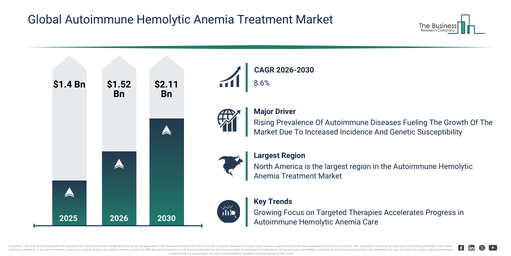
    The market for autoimmune hemolytic anemia treatments has experienced notable expansion in recent years. Projections indicate an increase from $1.4 billion in 2025 to $1.52 billion in 2026, reflecting a compound annual growth rate (CAGR) of 8.6%. This historical growth has been driven by factors such as the rising prevalence of autoimmune disorders, greater diagnosis rates for anemia, widespread use of corticosteroids, enhanced hospital hematology services, and increased awareness of blood disorders.

    The autoimmune hemolytic anemia treatment market is projected to experience substantial expansion over the coming years. By 2030, its value is anticipated to reach $2.11 billion, representing a compound annual growth rate (CAGR) of 8.6%. This anticipated growth during the forecast period is driven by advancements in targeted immunotherapy, the development of personalized treatment strategies, enhanced early diagnostic capabilities, improved long-term disease management approaches, and ongoing research into biologic therapies. Key trends shaping the market include a growing reliance on corticosteroid treatments, a higher uptake of immunosuppressive drugs, a broader range of second-line therapeutic options, progress in early detection and patient monitoring, and an increased emphasis on minimizing side effects associated with therapy.

    Download A Free Sample Report For Comprehensive Market Insights:

    https://www.thebusinessresearchcompany.com/sample.aspx?id=24161&type=smp&utm_source=BlogsPR&utm_medium=Paid&utm_campaign=Jul_PR

    #Autoimmune Hemolytic Anemia Treatment Market Growth Factors: Which Forces Are Supporting Market Expansion?

    The growing incidence of autoimmune conditions is anticipated to boost advancement in the autoimmune hemolytic anemia treatment market moving forward. Autoimmune disorders are characterized by the immune system erroneously targeting the body’s own tissues, leading to inflammation and harm. This rising trend in autoimmune diseases is primarily influenced by genetic predisposition, heightening the likelihood that individuals will develop such illnesses. Treating autoimmune hemolytic anemia is essential for addressing complications linked to autoimmune diseases by focusing on and curbing the immune system’s destruction of red blood cells. For example, as reported in May 2023 by the National Institute for Health and Care Research (NIHR), a UK entity dedicated to funding, supporting, and delivering health and care research aimed at enhancing public wellbeing, a study covering 22 million people revealed that autoimmune disorders now affect roughly one in ten individuals. This research indicates that 19 autoimmune diseases impact approximately 10% of the population, including 13% of women and 7% of men. Consequently, the heightened prevalence of autoimmune diseases will fuel expansion in the autoimmune hemolytic anemia treatment market.

    Autoimmune Hemolytic Anemia Treatment Market Segment Landscape: Which Areas Lead Market Development?

    The autoimmune hemolytic anemia treatment market covered in this report is segmented –

    1) By Type: Warm Autoimmune Hemolytic Anemia, Cold Autoimmune Hemolytic Anemia, Other Types

    2) By Drug Class: Corticosteroids, Immunosuppressive Agents, Other Drug Classes

    3) By Route Of Administration: Injectable, Oral, Other Route Of Administrations

    4) By Distribution Channel: Hospital Pharmacy, Retail Pharmacy, Online Pharmacy

    Subsegments:

    1) By Warm Autoimmune Hemolytic Anemia: Primary Warm Autoimmune Hemolytic Anemia, Secondary Warm Autoimmune Hemolytic Anemia

    2) By Cold Autoimmune Hemolytic Anemia: Primary Cold Agglutinin Disease (CAD), Secondary Cold Autoimmune Hemolytic Anemia

    3) By Other Types: Mixed-Type Autoimmune Hemolytic Anemia, Paroxysmal Cold Hemoglobinuria (PCH), Drug-Induced Autoimmune Hemolytic Anemia

    Autoimmune Hemolytic Anemia Treatment Market Industry Trends: What Changes Are Reshaping Demand?

    Key players in the autoimmune hemolytic anemia (AIHA) treatment market are concentrating on the advancement of targeted immunotherapies to enhance disease management, decrease red blood cell destruction, and deliver safer solutions for long-term patient care. By specifically modulating immune pathways involved in erythrocyte breakdown, these immunotherapies tackle the root autoimmune dysfunction rather than merely alleviating symptoms. A significant development occurred in June 2025, when HUTCHMED, a biopharmaceutical firm based in China, launched its Phase II/III registration study, known as ESLIM-02, to investigate sovleplenib—a selective Syk inhibitor—for warm autoimmune hemolytic anemia (wAIHA). The trial seeks to measure how effectively the drug can curb immune-mediated hemolysis, boost hemoglobin levels, and present a groundbreaking treatment choice for patients who currently face limited options.

    Autoimmune Hemolytic Anemia Treatment Market Industry Leaders And Market Competition

    Major companies operating in the autoimmune hemolytic anemia treatment market are Johnson & Johnson, F. Hoffmann-La Roche Ltd., AbbVie Inc., Sanofi SA, Novartis AG, Amgen Inc., Incyte Corporation, Alexion Pharmaceuticals Inc., Hutchison China MediTech Limited, BioCryst Pharmaceuticals Inc., Annexon Inc., Rigel Pharmaceuticals Inc., Nanjing IASO Biotherapeutics Co. Ltd., Apellis Pharmaceuticals Inc., Momenta Pharmaceuticals Inc., Zenas BioPharma Inc., Immunovant Sciences GmbH, Alpine Immune Sciences Inc., Agios Pharmaceuticals Inc., Kezar Life Sciences Inc.

    Access The Complete Autoimmune Hemolytic Anemia Treatment Market Report:

    https://www.thebusinessresearchcompany.com/report/autoimmune-hemolytic-anemia-treatment-global-market-report?utm_source=BlogsPR&utm_medium=Paid&utm_campaign=Jul_PR

    Autoimmune Hemolytic Anemia Treatment Market Geographic Landscape: Which Region Dominates Industry Growth?

    North America was the largest region in the autoimmune hemolytic anemia treatment market in 2025. Asia-Pacific is expected to be the fastest-growing region in the forecast period. The regions covered in the autoimmune hemolytic anemia treatment market report are Asia-Pacific, South East Asia, Western Europe, Eastern Europe, North America, South America, Middle East, Africa.

    Get in touch with us:

    The Business Research Company: https://www.thebusinessresearchcompany.com/?utm_source=BlogsPR&utm_medium=Paid&utm_campaign=home_page_test

    Americas: +1 310-496-7795

    Asia: +44 7882 955267 & +91 8897263534

    Europe: +44 7882 955267

    Email us at: marketing@tbrc.info

    Follow us on:

    LinkedIn: https://in.linkedin.com/company/the-business-research-company

    YouTube: https://www.youtube.com/channel/UC24_fI0rV8cR5DxlCpgmyFQ

    Global Market Model: https://www.thebusinessresearchcompany.com/global-market-model
  • Autoimmune Gastrointestinal Dysmotility Market Growth Is Accelerating As Industry Transformation Continues

    Autoimmune Gastrointestinal Dysmotility Market Growth Is Accelerating As Industry Transformation Continues

    Delivering more actionable and strategically valuable research, The Business Research Company’s 2026 market reports feature market attractiveness analysis, total addressable market evaluation, company benchmarking matrices, interactive Excel dashboards, expanded supply chain intelligence, emerging startup coverage, and detailed product insights.

    Autoimmune Gastrointestinal Dysmotility Market Expansion From $1.91 Billion In 2026 To $2.62 Billion In 2030

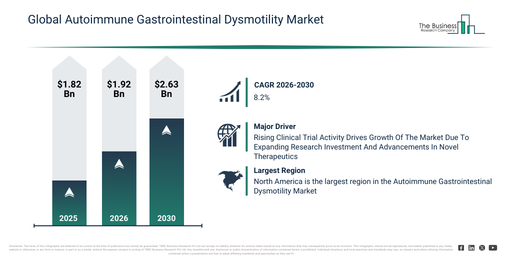
    The market for autoimmune gastrointestinal dysmotility has seen robust expansion in recent times. Projected to rise in value from $1.82 billion in 2025 to $1.92 billion in 2026, this growth reflects a compound annual growth rate (CAGR) of 5.5%. Factors driving the historical period’s expansion include an increase in the diagnosis of autoimmune diseases, a higher prevalence of gastroparesis, the broadening of hospital gastroenterology services, a greater utilization of immunosuppressive medications, and heightened awareness regarding rare diseases.

    The market for autoimmune gastrointestinal dysmotility is projected to experience robust expansion over the coming years. By 2030, its value is anticipated to reach $2.63 billion, reflecting a compound annual growth rate (CAGR) of 8.2%. This forecasted growth is driven by advancements in early diagnosis, the adoption of personalized treatment strategies, a rising need for long-term care, the increasing use of home-based nutrition therapy, and the broadening scope of autoimmune research. Key trends shaping this period include a heightened awareness of rare gastrointestinal conditions, a greater reliance on immunosuppressive therapies, an expanded focus on nutritional and dietary interventions, the growing implementation of multidisciplinary care models, and an emphasis on sustained symptom management.

    Download A Free Sample Report For Comprehensive Market Insights:

    https://www.thebusinessresearchcompany.com/sample.aspx?id=24160&type=smp&utm_source=BlogsPR&utm_medium=Paid&utm_campaign=Jul_PR

    Autoimmune Gastrointestinal Dysmotility Market Demand Drivers: What Is Fueling Industry Growth?

    The growing number of clinical trials is set to drive the expansion of the autoimmune gastrointestinal dysmotility market in the coming period. These trials involve research investigations that assess the safety, effectiveness, and best use of medical interventions including pharmaceuticals, biologics, devices, and treatment regimens in human subjects, all aimed at advancing medical understanding and enhancing patient outcomes. This rise in clinical activities stems from broader regulatory mandates for trial registration, heightened investment in pharmaceutical research and development, and the swift pace of innovation in novel therapeutic strategies like immunotherapies and biologics designed to address autoimmune conditions affecting gut motility. Trials focused on autoimmune gastrointestinal dysmotility enhance therapeutic options through the systematic evaluation of new immunosuppressants, prokinetic agents, and biologics; they help determine ideal treatment protocols for handling motility disorders and build evidence-based frameworks that facilitate regulatory approvals and clinical integration of innovative therapies targeting immune-mediated gastrointestinal impairment. For example, in November 2025, data from ClinicalTrials.gov, a U.S.-based clinical trial registry run by the National Institutes of Health, showed that the total count of registered clinical studies was 477,203 at the close of 2023 (including 437,493 cumulative and 39,710 new entries) and climbed to 520,877 by the end of 2024 (which comprised 477,203 cumulative and 43,674 new entries), indicating a 9.1% year-over-year growth in overall registered investigations. Consequently, the rising number of clinical trials is fueling the advancement of the autoimmune gastrointestinal dysmotility market.

    A heightened emphasis on personalized medicine is anticipated to accelerate growth in the autoimmune gastrointestinal dysmotility market moving forward. This medical strategy tailors therapeutic and preventive approaches to an individual’s distinct genetic profile, lifestyle, and environmental factors. The growing adoption of personalized medicine largely results from progress in genomics, which allows for accurate detection of genetic variations and the development of customized treatments for patients. In managing autoimmune gastrointestinal dysmotility, personalized medicine customizes therapies according to a patient’s genetic background and specific disease features, thereby boosting treatment effectiveness while reducing adverse effects. This delivers more precise options for addressing complex gastrointestinal disorders. For instance, in February 2024, the Personalized Medicine Coalition (PMC), a nonprofit organization based in the U.S., reported that the U.S. Food and Drug Administration (FDA) authorized 26 new personalized medicines in 2023, a notable jump from the 12 approvals recorded in 2022. Therefore, the intensified focus on personalized medicine is propelling the autoimmune gastrointestinal dysmotility market forward.

    An increasing incidence of autoimmune disorders is forecast to stimulate the autoimmune gastrointestinal dysmotility market in the near future. Autoimmune diseases occur when the immune system erroneously attacks healthy cells, tissues, or organs within the body, rather than defending them against infections and external threats. This rise is mainly attributed to a mix of genetic predisposition and environmental triggers that collectively impair immune system regulation, raising the chance that the body will target its own tissues. Autoimmune gastrointestinal dysmotility aids in detecting and managing underlying autoimmune conditions by uncovering immune-mediated harm to the enteric nervous system and associating gastrointestinal symptoms with broader systemic autoimmune activity. For example, in October 2024, a thorough review published in Signal Transduction and Targeted Therapy, a peer-reviewed scientific journal by Nature in the UK, noted that roughly 8.4 million individuals globally suffer from rheumatoid arthritis, with the overall incidence rate rising by 2-3% each year; projections using the Markov model suggest that affected populations could reach between 13.5 and 17.4 million by 2040. Hence, the growing prevalence of autoimmune disorders is accelerating the expansion of the autoimmune gastrointestinal dysmotility market.

    Autoimmune Gastrointestinal Dysmotility Market Segments: Where Are The Largest Growth Opportunities?

    The autoimmune gastrointestinal dysmotility market covered in this report is segmented –

    1) By Treatment Type: Medications, Surgical Interventions, Dietary Management, Physical Therapy

    2) By Drug Class: Prokinetic Agents, Anti-Inflammatory Drugs, Immunosuppressive Drugs, Antibiotics

    3) By Disease Type: Gastroparesis, Chronic Intestinal Pseudo-Obstruction (Cipo), Functional Dyspepsia, Irritable Bowel Syndrome (Ibs)

    4) By Distribution Channel: Hospital Pharmacy, Retail Pharmacy, Online Pharmacies, Other Distribution Channels

    5) By End User: Hospitals, Clinics, Home Care Settings, Research Institutions

    Subsegments:

    1) By Medications: Immunosuppressants, Corticosteroids, Prokinetic Agents, Antiemetics, Antispasmodics, Antibiotics

    2) By Surgical Interventions: Gastrostomy, Jejunostomy, Colostomy, Ileostomy, Pyloroplasty, Colectomy

    3) By Dietary Management: Enteral Nutrition, Parenteral Nutrition, Gluten-Free Diet, Elemental Diet, Small Frequent Meals

    4) By Physical Therapy: Pelvic Floor Therapy, Abdominal Massage Therapy, Neuromuscular Electrical Stimulation (NMES), Biofeedback Therapy, Respiratory Muscle Training, Postural Training

    Autoimmune Gastrointestinal Dysmotility Market Major Participants And Competitive Dynamics

    Major companies operating in the autoimmune gastrointestinal dysmotility market are AbbVie Inc., GlaxoSmithKline plc, Takeda Pharmaceutical Company Limited, Teva Pharmaceutical Industries Ltd., Chugai Pharmaceutical Co. Ltd., Zeria Pharmaceutical Co. Ltd., Ironwood Pharmaceuticals Inc., Vanda Pharmaceuticals Inc., Dr. Falk Pharma GmbH, Rose Pharma LLC, Parvus Therapeutics Inc., CinDome Pharma Inc., Neurogastrx Inc., Renexxion LLC, ISOThrive Inc., Ambrose Healthcare Inc., AnTolRx Inc., Enteralia Bioscience S.r.l., Immunic Inc., Mozart Therapeutics Inc.

    Access The Complete Autoimmune Gastrointestinal Dysmotility Market Report:

    https://www.thebusinessresearchcompany.com/report/autoimmune-gastrointestinal-dysmotility-global-market-report?utm_source=BlogsPR&utm_medium=Paid&utm_campaign=Jul_PR

    Autoimmune Gastrointestinal Dysmotility Market Largest Region: Which Geography Holds The Highest Market Share?

    North America was the largest region in the autoimmune gastrointestinal dysmotility market in 2025. The regions covered in the autoimmune gastrointestinal dysmotility market report are Asia-Pacific, South East Asia, Western Europe, Eastern Europe, North America, South America, Middle East, Africa.

    Get in touch with us:

    The Business Research Company: https://www.thebusinessresearchcompany.com/?utm_source=BlogsPR&utm_medium=Paid&utm_campaign=home_page_test

    Americas: +1 310-496-7795

    Asia: +44 7882 955267 & +91 8897263534

    Europe: +44 7882 955267

    Email us at: marketing@tbrc.info

    Follow us on:

    LinkedIn: https://in.linkedin.com/company/the-business-research-company

    YouTube: https://www.youtube.com/channel/UC24_fI0rV8cR5DxlCpgmyFQ

    Global Market Model: https://www.thebusinessresearchcompany.com/global-market-model
  • Autacoids And Related Drug Market Outlook Highlights The Next Major Growth Opportunities

    Autacoids And Related Drug Market Outlook Highlights The Next Major Growth Opportunities

    Enhanced with market attractiveness analysis, total addressable market evaluation, company benchmarking matrices, interactive Excel dashboards, expanded supply chain intelligence, emerging startup coverage, and detailed product insights, The Business Research Company’s 2026 market reports deliver more actionable and strategically valuable research.

    Autacoids And Related Drug Market Forecast Highlighting Growth From $55.87 Billion To $70.07 Billion

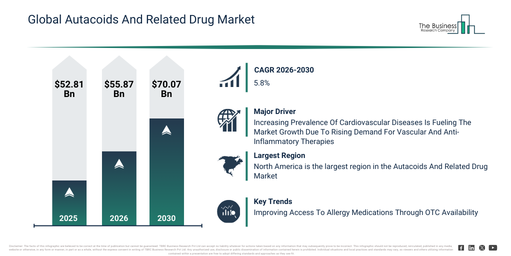
    The market for autacoids and related drugs has experienced significant expansion in recent years. Projected to rise from $52.81 billion in 2025 to $55.87 billion in 2026, it reflects a compound annual growth rate (CAGR) of 5.8%. This historical growth trajectory was driven by factors such as the increasing prevalence of inflammatory diseases, a rise in allergy cases, the burden of cardiovascular disorders, treatments for gastrointestinal conditions, and the expansion of hospital pharmacology.

    The autacoids and related drug market is projected to experience robust expansion in the coming years. By 2030, its value is anticipated to reach $70.07 billion, reflecting a compound annual growth rate (CAGR) of 5.8%. This forecasted growth is driven by several key factors, including the adoption of precision pharmacology, the development of receptor-targeted drugs, the rising management of chronic diseases, the expansion of outpatient treatment options, and the increasing use of combination therapies. Notable trends shaping this period encompass a broader application in inflammatory disease management, a heightened emphasis on receptor-specific drug mechanisms, a growing market for targeted autacoid modulators, an upsurge in their utilization within cardiovascular and respiratory care, and a rising preference for combination therapy approaches.

    Download A Free Sample Report For Comprehensive Market Insights:

    https://www.thebusinessresearchcompany.com/sample.aspx?id=24159&type=smp&utm_source=BlogsPR&utm_medium=Paid&utm_campaign=Jul_PR

    Autacoids And Related Drug Market Growth Drivers: What Factors Are Accelerating Expansion?

    The rising incidence of cardiovascular diseases is anticipated to accelerate the expansion of the autacoids and related drugs market moving forward. Cardiovascular diseases encompass a range of disorders impacting the heart and blood vessels, including coronary heart disease, heart failure, stroke, and hypertension. This growing prevalence is largely driven by poor dietary habits, where excessive intake of saturated fats, trans fats, added sugars, and sodium leads to high blood pressure, obesity, and elevated cholesterol levels—key risk factors for heart conditions. Autacoids and related drugs support cardiovascular health by regulating vascular tone and inflammation, which is essential in managing conditions like hypertension and heart failure. Agents that influence pathways involving nitric oxide, endothelin, and prostacyclin aid in restoring endothelial function, thereby promoting vasodilation and decreasing vascular resistance. For example, in September 2023, the World Health Organization, a Switzerland-based intergovernmental body, reported 17.9 million deaths from cardiovascular diseases. Consequently, the increasing frequency of cardiovascular diseases is fueling growth in the autacoids and related drugs market.

    Autacoids And Related Drug Market Segment Analysis: What Are The Major Market Categories?

    The autacoids and related drug market covered in this report is segmented –

    1) By Type: Histamines, Prostaglandins, Leukotrienes, Serotonin, Bradykinin

    2) By Administration: Oral, Injectable, Topical, Intranasal, Inhalation

    3) By Application: Cardiovascular Disorders, Inflammatory Diseases, Respiratory Disorders, Allergies, Gastrointestinal Disorders

    4) By End User: Hospitals, Clinics, Homecare, Pharmacies

    Subsegments:

    1) By Histamines: H1 Receptor Antagonists, H2 Receptor Antagonists, H3 Receptor Antagonists, H4 Receptor Antagonists, Histamine Agonists

    2) By Prostaglandins: Prostaglandin E1 (PGE1) Analogs, Prostaglandin E2 (PGE2) Analogs, Prostaglandin F2a (PGF2a) Analogs, Prostaglandin I2 (PGI2) Analogs, Prostaglandin D2 (PGD2) Analogs

    3) By Leukotrienes: Leukotriene Receptor Antagonists (LTRAs), 5-Lipoxygenase Inhibitors, Leukotriene Synthesis Inhibitors

    4) By Serotonin: 5-HT1 Receptor Agonists, 5-HT2 Receptor Antagonists, 5-HT3 Receptor Antagonists, 5-HT4 Receptor Agonists, 5-HT6 And 5-HT7 Modulators

    5) By Bradykinin: Bradykinin B1 Receptor Antagonists, Bradykinin B2 Receptor Antagonists, Bradykinin Receptor Agonists

    Autacoids And Related Drug Market Trends: What Is Shaping Future Industry Growth?

    Major players in the autacoids and related drugs sector are prioritizing the development of innovative treatments, including antihistamines, aimed at boosting therapeutic effectiveness, minimizing adverse effects, and tackling emerging allergic and inflammatory disorders with improved precision and safety. Antihistamines function by inhibiting histamine, a substance released by the immune system in response to allergic triggers. As an example, in March 2023, Tiefenbacher Pharmaceuticals, a pharmaceutical firm based in Germany, introduced Bilastine as an over-the-counter (OTC) product in the German market, representing a notable advancement in expanding access to efficient allergy therapies. These 20 mg tablets provide a non-sedating, second-generation antihistamine option for individuals experiencing allergic symptoms like hay fever and urticaria.

    Autacoids And Related Drug Market Leading Companies Driving Competitive Growth

    Major companies operating in the autacoids and related drug market are Sanofi S.A., Fresenius SE & Co. KGaA, Dr. Reddy’s Laboratories Limited, EUROAPI S.A., Pfizer CentreOne, Cayman Chemical Company, Tokyo Chemical Industry Co. Ltd., Avanti Polar Lipids Inc., Kyowa Pharma Chemical Co. Ltd., Nicox S.A., Glentham Life Sciences Ltd., LGM Pharma Inc., chemBlink Inc., ZellBio GmbH, AquigenBio LLC, BOC Sciences Inc., Yarrow Chem Products Pvt. Ltd., LEBSA S.A., VDK NaturaSyn S.A., Enzo Life Sciences Inc.

    Access The Complete Autacoids And Related Drug Market Report:

    https://www.thebusinessresearchcompany.com/report/autacoids-and-related-drug-global-market-report?utm_source=BlogsPR&utm_medium=Paid&utm_campaign=Jul_PR

    Autacoids And Related Drug Market Regional Analysis: Which Region Leads By Revenue?

    North America was the largest region in the autacoids and related drug market in 2025. Asia-Pacific is expected to be the fastest-growing region in the forecast period. The regions covered in the autacoids and related drug market report are Asia-Pacific, South East Asia, Western Europe, Eastern Europe, North America, South America, Middle East, Africa.

    Get in touch with us:

    The Business Research Company: https://www.thebusinessresearchcompany.com/?utm_source=BlogsPR&utm_medium=Paid&utm_campaign=home_page_test

    Americas: +1 310-496-7795

    Asia: +44 7882 955267 & +91 8897263534

    Europe: +44 7882 955267

    Email us at: marketing@tbrc.info

    Follow us on:

    LinkedIn: https://in.linkedin.com/company/the-business-research-company

    YouTube: https://www.youtube.com/channel/UC24_fI0rV8cR5DxlCpgmyFQ

    Global Market Model: https://www.thebusinessresearchcompany.com/global-market-model
  • Aurora Kinase B Market Trends And Growth Drivers Point To Strong Future Potential

    Aurora Kinase B Market Trends And Growth Drivers Point To Strong Future Potential

    Through market attractiveness analysis, total addressable market evaluation, company benchmarking matrices, interactive Excel dashboards, expanded supply chain intelligence, emerging startup coverage, and detailed product insights, The Business Research Company’s 2026 market reports provide more actionable and strategically valuable research.

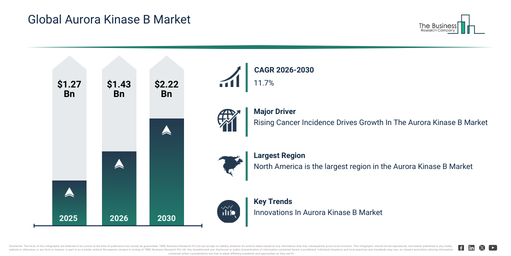
    Aurora Kinase B Market Revenue Growth Supported By A CAGR Of 2.22% Through 2030

    The aurora kinase b market has experienced rapid expansion in recent years, with projections indicating an increase from $1.27 billion in 2025 to $1.43 billion in 2026, reflecting a compound annual growth rate (CAGR) of 12.0%. This historical growth has been driven by progress in molecular oncology research, the recognition of aurora kinase b as a viable cancer target, the broadening of clinical trial capabilities, heightened funding directed at targeted cancer treatments, and advancements in the development of kinase inhibitors.

    The aurora kinase b market is anticipated to experience significant expansion over the coming years. By 2030, its value is projected to reach $2.22 billion, reflecting a compound annual growth rate (CAGR) of 11.7%. This upcoming growth is driven by several key factors, including a rising need for precision cancer treatments, an increasing adoption of personalized medicine, a surge in oncology clinical trials, heightened funding for novel kinase inhibitors, and more favorable regulatory frameworks for targeted cancer drugs. Among the main developments shaping this forecast period are the accelerated creation of selective aurora kinase b inhibitors, a stronger focus on drug combinations in oncology, the broadening of precision oncology development pipelines, a heightened emphasis on therapies that target mitotic processes, and enhanced patient selection based on biomarkers.

    Download A Free Sample Report For Comprehensive Market Insights:

    https://www.thebusinessresearchcompany.com/sample.aspx?id=20496&type=smp&utm_source=BlogsPR&utm_medium=Paid&utm_campaign=Jul_PR

    Aurora Kinase B Market Growth Factors Supporting Long-Term Expansion

    The projected expansion of the aurora kinase B market is anticipated to be driven by the growing prevalence of cancer. Cancer encompasses a range of disorders marked by the unregulated proliferation and dissemination of abnormal cells, which can invade adjacent tissues and spread to distant organs throughout the body. The uptick in cancer diagnoses is fueled by an aging demographic, shifts in lifestyle habits, environmental influences, and enhanced screening and diagnostic methods. Aurora kinase B is essential during mitosis, and its elevated expression is associated with genomic instability and the advancement of cancer. Because it plays a key role in tumor cell division, it is frequently pursued as a target in oncological treatments. As an example, in February 2024, data from the World Health Organization, an intergovernmental entity headquartered in Switzerland, revealed approximately 20 million new cancer diagnoses and 9.7 million fatalities in 2022. Projections suggest that by 2050, new cancer cases could surpass 35 million, marking a 77% rise compared to 2022. Consequently, the rising frequency of cancer is fueling the aurora kinase B market’s growth.

    Aurora Kinase B Market Segment Breakdown: Which Categories Generate The Most Revenue?

    The aurora kinase b market covered in this report is segmented –

    1) By Type: AZD-2811, CS-2164, Danusertib, Ilorasertib, NMI-900, Other Types

    2) By Application: Anaplastic Large Cell Lymphoma, Kidney Cancer, Lung Cancer, Prostate Cancer, Other Applications

    3) By End-User: Hospitals, Research Institutes, Diagnostic Laboratories, Other End-Users

    Subsegments:

    1) By AZD-2811: Phase I Clinical Trials AZD-2811, Preclinical Development of AZD-2811, AZD-2811 in Combination Therapy, Targeted Cancer Treatment with AZD-2811

    2) By CS-2164: Phase II Clinical Trials CS-2164, Preclinical Development of CS-2164, CS-2164 in Targeted Cancer Therapy, CS-2164 Combination Therapy in Clinical Studies

    3) By Danusertib: Phase III Clinical Trials Danusertib, Danusertib for Hematological Malignancies, Danusertib for Solid Tumors, Combination Therapy with Danusertib

    4) By Ilorasertib: Preclinical Development of Ilorasertib, Ilorasertib in Solid Tumor Treatment, Phase I and II Clinical Trials of Ilorasertib, Ilorasertib in Combination with Chemotherapies

    5) By NMI-900: NMI-900 in Early-Stage Clinical Trials, NMI-900 for Targeted Cancer Therapy, Preclinical Studies of NMI-900, NMI-900 Combination Therapy Trials

    6) By Other Types: Other Aurora Kinase B Inhibitors in Development, Novel Targeted Aurora Kinase B Drugs, Combination Therapies Involving Aurora Kinase B Inhibitors, Investigational Aurora Kinase B Inhibitors in Oncology

    Aurora Kinase B Market Industry Trends Shaping Future Revenue Growth

    Key players in the aurora kinase B market are introducing advanced solutions, like aurora kinase inhibitors, with the aim of precisely interfering with essential cell division mechanisms. These inhibitors function by suppressing the activity of Aurora kinases, which play a vital role in mitosis, thus hindering cancer cell growth and possibly slowing tumor development. A notable example occurred in June 2023, when Ellipses Pharma, a biotechnology firm based in the UK, received approval from the U.S. Food and Drug Administration (FDA) for its candidate EP0042. This compound is a dual inhibitor that targets both FLT-3 and Aurora kinase. Developed to address acute myeloid leukemia (AML), EP0042 is particularly intended for patients whose disease has become resistant to FLT3 inhibitors alone. Studies indicate that by inhibiting both FLT3 and Aurora kinase, it is possible to overcome such acquired resistance, as shown in both laboratory experiments and animal models.

    Aurora Kinase B Market Key Players And Strategic Industry Positioning

    Major companies operating in the aurora kinase b market are Pfizer Inc., Johnson & Johnson, Roche Holding AG, Merck & Co. Inc., AbbVie Inc., Sanofi SA, Bristol-Myers Squibb Company, AstraZeneca PLC, Novartis AG, GlaxoSmithKline plc, Takeda Pharmaceutical Company Limited, Boehringer Ingelheim International GmbH, Amgen Inc., Astellas Pharma Inc., Promega Corporation, Rigel Pharmaceuticals Inc., Tocris Bioscience, BPS Bioscience Inc., Advenchen Laboratories LLC, Shenzhen Chipscreen Biosciences Co. Ltd., Cyclacel Pharmaceuticals Inc., Sareum Holdings plc

    Access The Complete Aurora Kinase B Market Report:

    https://www.thebusinessresearchcompany.com/report/aurora-kinase-b-global-market-report?utm_source=BlogsPR&utm_medium=Paid&utm_campaign=Jul_PR

    Aurora Kinase B Market Geographic Distribution And Regional Opportunities

    North America was the largest region in the aurora kinase B market in 2025. Asia-Pacific is expected to be the fastest-growing region in the forecast period. The regions covered in the aurora kinase b market report are Asia-Pacific, South East Asia, Western Europe, Eastern Europe, North America, South America, Middle East, Africa.

    Get in touch with us:

    The Business Research Company: https://www.thebusinessresearchcompany.com/?utm_source=BlogsPR&utm_medium=Paid&utm_campaign=home_page_test

    Americas: +1 310-496-7795

    Asia: +44 7882 955267 & +91 8897263534

    Europe: +44 7882 955267

    Email us at: marketing@tbrc.info

    Follow us on:

    LinkedIn: https://in.linkedin.com/company/the-business-research-company

    YouTube: https://www.youtube.com/channel/UC24_fI0rV8cR5DxlCpgmyFQ

    Global Market Model: https://www.thebusinessresearchcompany.com/global-market-model
  • Atypical Hemolytic Uremic Syndrome Treatment Market Expansion Is Reshaping Competitive Dynamics Across The Industry

    Atypical Hemolytic Uremic Syndrome Treatment Market Expansion Is Reshaping Competitive Dynamics Across The Industry

    Delivering more actionable and strategically valuable research, The Business Research Company’s 2026 market reports feature market attractiveness analysis, total addressable market evaluation, company benchmarking matrices, interactive Excel dashboards, expanded supply chain intelligence, emerging startup coverage, and detailed product insights.

    Atypical Hemolytic Uremic Syndrome Treatment Market Value Expansion And Long-Term Growth Outlook

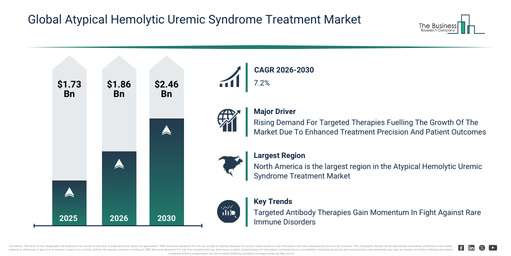
    The atypical hemolytic uremic syndrome treatment market has experienced robust expansion in recent years, with projections indicating a rise from $1.73 billion in 2025 to $1.86 billion in 2026, corresponding to a compound annual growth rate (CAGR) of 7.2%. This historic growth has been driven by factors such as an increase in rare disease diagnoses, the broader adoption of plasma exchange procedures, a growing number of kidney failure cases, approvals of biologic drugs, and the expansion of nephrology services within hospitals.

    The market for atypical hemolytic uremic syndrome treatments is projected to experience robust expansion over the coming years. By 2030, its value is anticipated to reach $2.46 billion, reflecting a compound annual growth rate (CAGR) of 7.2%. This upward trajectory in the forecast period is driven by factors such as the uptake of precision medicine, ongoing investigation into the complement pathway, incentives for orphan drugs, implementation of genetic screening programs, and advances in biologics. Key developments shaping the future include a greater reliance on complement inhibitor therapies, wider availability of genetic diagnostic testing, a stronger emphasis on ongoing disease management, a surge in the use of targeted biologic agents, and more attention to improving access to treatments for rare conditions.

    Download A Free Sample Report For Comprehensive Market Insights:

    https://www.thebusinessresearchcompany.com/sample.aspx?id=24156&type=smp&utm_source=BlogsPR&utm_medium=Paid&utm_campaign=Jul_PR

    Atypical Hemolytic Uremic Syndrome Treatment Market Demand Drivers Creating New Revenue Opportunities

    The increasing appetite for precision medicines is set to boost the atypical hemolytic uremic syndrome treatment market in the coming period. These therapies are designed to directly target and disrupt the molecular processes that drive disease progression and dissemination. Their growing popularity stems from their capacity to deliver highly accurate treatments, resulting in fewer adverse effects, better patient recovery rates, and viable substitutes for older, less tailored approaches. In the context of atypical hemolytic uremic syndrome (aHUS), such treatments work by specifically inhibiting excessive complement system activation, the underlying cause of the disorder, thus facilitating precise action that reduces harm to the renal system and blood vessels. A clear illustration comes from October 2023, when NHS England reported that 11 million hormone replacement therapy (HRT) items were dispensed in England—a 47% rise compared to 2021–22—and roughly 2.3 million patients obtained prescriptions, reflecting a 29% annual increase. Consequently, the heightened demand for targeted therapies is fueling expansion in the atypical hemolytic uremic syndrome treatment market.

    Atypical Hemolytic Uremic Syndrome Treatment Market Segmentation: How Is The Market Structured Across Key Categories?

    The atypical hemolytic uremic syndrome treatment market covered in this report is segmented –

    1) By Treatment Type: Complement Inhibitors, Plasma Exchange Therapy, Supportive Care, Antibiotics

    2) By Route of Administration: Intravenous, Subcutaneous, Oral

    3) By Technology: Genetic Testing And Diagnostic Tools, Realtime Monitoring And Complement Activation Technologies, Treatment Delivery Systems, Digital Health Solutions

    4) By End User: Hospital, Speciality Clinics, Home care Settings, Ambulatory Care Centres

    Subsegments:

    1) By Complement Inhibitors: Eculizumab, Ravulizumab, C5 Inhibitors, Factor H Inhibitors

    2) By Plasma Exchange Therapy: Fresh Frozen Plasma (FFP) Exchange, Therapeutic Plasma Exchange (TPE), Plasma Filtration

    3) By Supportive Care: Dialysis, Kidney Transplantation, Red Blood Cell Transfusions, Platelet Transfusions, Anticoagulants

    4) By Antibiotics: Broad-Spectrum Antibiotics, Targeted Antibiotics, Prophylactic Antibiotics

    Atypical Hemolytic Uremic Syndrome Treatment Market Trends Driving Strategic Industry Expansion

    Key players in the atypical hemolytic uremic syndrome treatment market are concentrating on creating novel treatment options such as monoclonal antibodies to achieve more precise complement suppression and boost patient recovery rates. Monoclonal antibodies are engineered proteins that replicate the immune response by attaching to particular disease-associated proteins. AstraZeneca Pharma India Limited secured authorization from the Central Drugs Standard Control Organisation in January 2025 for the importation, marketing, and distribution of eculizumab, sold under the brand name Soliris, within India. The antibody binds precisely to the complement C5 protein, preventing its cleavage and consequently halting the assembly of the terminal complement complex that drives immune-mediated cellular damage. This therapy is employed for managing severe rare diseases including paroxysmal nocturnal hemoglobinuria, atypical hemolytic uremic syndrome, generalized myasthenia gravis, and neuromyelitis optica spectrum disorder by averting complement-triggered tissue injury.

    Atypical Hemolytic Uremic Syndrome Treatment Market Competitive Landscape And Leading Companies

    Major companies operating in the atypical hemolytic uremic syndrome treatment market are F. Hoffmann-La Roche Ltd., Bristol-Myers Squibb Company, AstraZeneca plc, Novartis AG, Amgen Inc., Teva Pharmaceutical Industries Ltd., Chugai Pharmaceutical Co. Ltd., Alnylam Pharmaceuticals Inc., Vifor Pharma Ltd., Samsung Bioepis Co. Ltd., Fuji Pharma Co. Ltd., Aevitas Therapeutics Inc., Pharmasyntez JSC, Omeros Corporation, ChemoCentryx Inc., ISU Abxis Co. Ltd., Greenovation Biotech GmbH, Akari Therapeutics plc, NovelMed Therapeutics Inc., Eleva GmbH.

    Access The Complete Atypical Hemolytic Uremic Syndrome Treatment Market Report:

    https://www.thebusinessresearchcompany.com/report/atypical-hemolytic-uremic-syndrome-treatment-global-market-report?utm_source=BlogsPR&utm_medium=Paid&utm_campaign=Jul_PR

    Atypical Hemolytic Uremic Syndrome Treatment Market Largest Region By Revenue And Market Share

    North America was the largest region in the atypical hemolytic uremic syndrome treatment market in 2025. Asia-Pacific is expected to be the fastest-growing region in the forecast period. The regions covered in the atypical hemolytic uremic syndrome treatment market report are Asia-Pacific, South East Asia, Western Europe, Eastern Europe, North America, South America, Middle East, Africa.

    Get in touch with us:

    The Business Research Company: https://www.thebusinessresearchcompany.com/?utm_source=BlogsPR&utm_medium=Paid&utm_campaign=home_page_test

    Americas: +1 310-496-7795

    Asia: +44 7882 955267 & +91 8897263534

    Europe: +44 7882 955267

    Email us at: marketing@tbrc.info

    Follow us on:

    LinkedIn: https://in.linkedin.com/company/the-business-research-company

    YouTube: https://www.youtube.com/channel/UC24_fI0rV8cR5DxlCpgmyFQ

    Global Market Model: https://www.thebusinessresearchcompany.com/global-market-model
  • Attention Deficit Hyperactivity Disorder (ADHD) Therapeutics Market Forecast Reveals Where Future Industry Value Will Be Created

    Attention Deficit Hyperactivity Disorder (ADHD) Therapeutics Market Forecast Reveals Where Future Industry Value Will Be Created

    Enhanced with market attractiveness analysis, total addressable market evaluation, company benchmarking matrices, interactive Excel dashboards, expanded supply chain intelligence, emerging startup coverage, and detailed product insights, The Business Research Company’s 2026 market reports deliver more actionable and strategically valuable research.

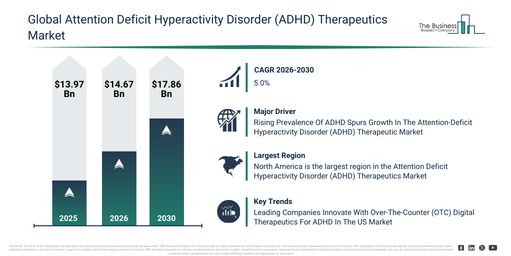
    Attention Deficit Hyperactivity Disorder (ADHD) Therapeutics Market Expected To Reach $17.85 Billion By 2030 At 5% CAGR

    The market for attention deficit hyperactivity disorder (ADHD) therapeutics has experienced robust expansion in recent years. Projected to rise from $13.97 billion in 2025 to $14.67 billion in 2026, it reflects a compound annual growth rate (CAGR) of 5.0%. This historical growth has been driven by factors such as higher ADHD diagnosis rates, heightened mental health awareness, the accessibility of stimulant medications, a growing number of pediatric ADHD cases, and the implementation of early intervention initiatives.

    The attention deficit hyperactivity disorder (ADHD) therapeutics market is anticipated to experience notable expansion in the coming years, with projections indicating it will reach $17.86 billion by 2030, reflecting a compound annual growth rate (CAGR) of 5.0%. This forecasted growth stems from several key factors, including progress in precision medicine tailored for ADHD, the rise of digital therapeutic solutions, the broader availability of telehealth services, the incorporation of artificial intelligence into ADHD management, and a higher frequency of adult ADHD diagnoses. Key emerging trends within this period encompass the development of customized ADHD treatment plans, remote management through telehealth, the use of digital therapeutics and mobile applications specifically for ADHD, a growing emphasis on non-pharmacological approaches, and the incorporation of behavioral and cognitive therapies into standard care.

    Download A Free Sample Report For Comprehensive Market Insights:

    https://www.thebusinessresearchcompany.com/sample.aspx?id=14042&type=smp&utm_source=BlogsPR&utm_medium=Paid&utm_campaign=Jul_PR

    Attention Deficit Hyperactivity Disorder (ADHD) Therapeutics Market Expansion Supported By Key Demand Factors

    The growing frequency of attention-deficit hyperactivity disorder diagnoses is anticipated to drive expansion in the market for ADHD therapeutics moving forward. This rise reflects a higher number of individuals being identified with this neurodevelopmental condition across time. Treatments for ADHD target the disorder’s diverse characteristics, seeking to improve symptom control, reduce functional limitations, enhance quality of life, and boost the overall well-being of those affected. As an example, in May 2025, NHS England Digital, a UK-based national information and technology partner, reported that approximately 2,498,000 people in England are currently living with ADHD, encompassing both diagnosed and undiagnosed instances. Consequently, the escalating number of ADHD cases is accelerating growth in the attention-deficit hyperactivity disorder therapeutic market.

    Attention Deficit Hyperactivity Disorder (ADHD) Therapeutics Market Segmentation Trends And Revenue Drivers

    The attention deficit hyperactivity disorder (adhd) therapeutics market covered in this report is segmented –

    1) By Drug Type: Stimulants, Non-Stimulants

    2) By Psychotherapy: Behavior Therapy, Cognitive Behavioral Therapy, Family Therapy

    3) By Age Group: Pediatric And Adolescent, Adult

    4) By Distribution Channel: Hospital Pharmacies, Specialty Clinics, Retail Pharmacies

    Subsegments:

    1) By Stimulants: Amphetamine-Based Stimulants, Methylphenidate-Based Stimulants

    2) By Non-Stimulants: Atomoxetine, Guanfacine, Clonidine

    Attention Deficit Hyperactivity Disorder (ADHD) Therapeutics Market Growth Trends Influencing Competitive Dynamics

    Key players in the attention-deficit hyperactivity disorder (ADHD) therapeutics market are concentrating on digital innovations, like offering Endeavor over-the-counter (OTC) digital therapeutics for ADHD, to address the growing demand for digital tools and the increasing preference for remote healthcare. Digital therapeutics are software-driven, evidence-based medical interventions intended to prevent, manage, or treat health conditions. They can be applied on their own or alongside traditional medical approaches. For example, in June 2023, Akili, a digital health firm based in the US, released an OTC version of its video game-based digital therapy aimed at adults with ADHD. This OTC product, named EndeavorOTC, focuses on enhancing attention, time management, and organizational capabilities. This initiative follows the prior achievement of EndeavorRx, Akili’s FDA-approved prescription game treatment for children with ADHD. With the OTC option, adults now have access to a non-pharmaceutical treatment alternative for managing ADHD.

    Attention Deficit Hyperactivity Disorder (ADHD) Therapeutics Market Industry Leaders: Which Organizations Are Driving Competition?

    Major companies operating in the attention deficit hyperactivity disorder (adhd) therapeutics market are Pfizer Inc, Johnson & Johnson, Novartis AG, GlaxoSmithKline plc, Takeda Pharmaceutical Company Limited, Eli Lilly and Company, Otsuka Pharmaceutical Co Ltd, UCB S.A., Amneal Pharmaceuticals LLC, Lupin Limited, Mallinckrodt Pharmaceuticals Inc, Arbor Pharmaceuticals LLC, Tris Pharma Inc, NEOS Therapeutic Inc, Rhodes Pharmaceuticals L.P., KemPharm Inc, Ironshore Pharmaceuticals Inc, Purdue Pharma L.P., Aevi Genomic Medicine, Highland Therapeutics Inc

    Access The Complete Attention Deficit Hyperactivity Disorder (ADHD) Therapeutics Market Report:

    https://www.thebusinessresearchcompany.com/report/attention-deficit-hyperactivity-disorder-adhd-therapeutics-global-market-report?utm_source=BlogsPR&utm_medium=Paid&utm_campaign=Jul_PR

    Attention Deficit Hyperactivity Disorder (ADHD) Therapeutics Market Regional Analysis And Leading Geography

    North America was the largest region in the attention deficit hyperactivity disorder (ADHD) therapeutic market in 2025. Asia-Pacific is expected to be the fastest-growing region in the forecast period. The regions covered in the attention deficit hyperactivity disorder (adhd) therapeutics market report are Asia-Pacific, South East Asia, Western Europe, Eastern Europe, North America, South America, Middle East, Africa.

    Get in touch with us:

    The Business Research Company: https://www.thebusinessresearchcompany.com/?utm_source=BlogsPR&utm_medium=Paid&utm_campaign=home_page_test

    Americas: +1 310-496-7795

    Asia: +44 7882 955267 & +91 8897263534

    Europe: +44 7882 955267

    Email us at: marketing@tbrc.info

    Follow us on:

    LinkedIn: https://in.linkedin.com/company/the-business-research-company

    YouTube: https://www.youtube.com/channel/UC24_fI0rV8cR5DxlCpgmyFQ

    Global Market Model: https://www.thebusinessresearchcompany.com/global-market-model
  • Atopic Dermatitis Cream Market Growth Through 2030 Creates New Strategic Opportunities

    Atopic Dermatitis Cream Market Growth Through 2030 Creates New Strategic Opportunities

    Through market attractiveness analysis, total addressable market evaluation, company benchmarking matrices, interactive Excel dashboards, expanded supply chain intelligence, emerging startup coverage, and detailed product insights, The Business Research Company’s 2026 market reports provide more actionable and strategically valuable research.

    Atopic Dermatitis Cream Market Size And Revenue Forecast Through 2030

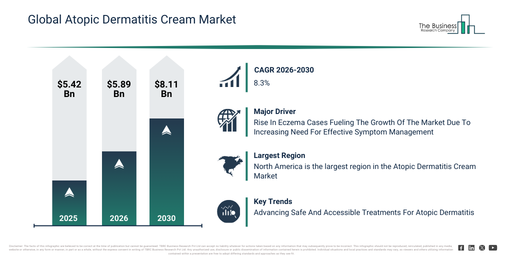
    The atopic dermatitis cream market has experienced robust expansion in recent years. By 2025, its value reached $5.42 billion, and projections indicate an increase to $5.89 billion in 2026, driven by a compound annual growth rate (CAGR) of 8.6%. Several key factors fueled growth during the historical period, including a rising incidence of atopic dermatitis across various age demographics, heightened public awareness regarding the management of chronic eczema, broader access to topical corticosteroid treatments, an uptick in visits to dermatologists, and a growing range of dermatological products available through retail channels.

    The atopic dermatitis cream market is projected to experience significant expansion in the coming years, with its value anticipated to reach $8.11 billion by 2030, driven by a compound annual growth rate (CAGR) of 8.3%. This forecasted growth is fueled by several key factors, including the accelerated development of targeted topical therapies, a heightened demand for personalized dermatological treatments, the broadening reach of online pharmacy distribution channels, an increased emphasis on restoring the skin barrier over the long term, and a growing adoption of non-steroidal innovations. Notable trends shaping this period involve a rising preference for non-steroidal anti-inflammatory creams, an uptick in demand for ceramide-based formulations focused on barrier repair, a stronger inclination toward steroid-sparing treatment approaches, the introduction of improved pediatric-safe topical therapies, and a more pronounced commitment to managing flares over the long haul.

    Download A Free Sample Report For Comprehensive Market Insights:

    https://www.thebusinessresearchcompany.com/sample.aspx?id=28144&type=smp&utm_source=BlogsPR&utm_medium=Paid&utm_campaign=Jul_PR

    Atopic Dermatitis Cream Market Growth Drivers And Industry Catalysts

    The growing incidence of eczema is anticipated to drive expansion in the atopic dermatitis cream market. Eczema is a dermatological condition characterized by itching, redness, dryness, and inflammation. As more individuals develop allergies and sensitive skin, the need for effective treatments and skincare products has increased, fueling demand for eczema care. Atopic dermatitis cream aids in managing eczema by alleviating inflammation, calming itchiness, restoring the skin’s natural barrier, and preventing additional irritation or infection, thus supporting healing and long-term skin health in affected regions. For example, in December 2024, the Royal Australian College of General Practitioners, an Australian research body, reported that approximately 16% of Australians suffer from eczema, with about 25% of those cases being severe. Consequently, the rising prevalence of eczema is propelling the growth of the atopic dermatitis cream market.

    Atopic Dermatitis Cream Market Segment Analysis Highlighting Growth Areas

    The atopic dermatitis cream market covered in this report is segmented –

    1) By Product Type: Corticosteroid Creams, Calcineurin Inhibitor Creams, PDE4 Inhibitor Creams, Moisturizing Creams, Other Product Types

    2) By Age Group: Pediatric, Adult, Geriatric

    3) By Distribution Channel: Hospital Pharmacies, Retail Pharmacies, Online Pharmacies, Other Distribution Channels

    Subsegments:

    1) By Corticosteroid Creams: Low-Potency Corticosteroids, Medium-Potency Corticosteroids, High-Potency Corticosteroids, Ultra-High Potency Corticosteroids

    2) By Calcineurin Inhibitor Creams: Tacrolimus Ointment, Pimecrolimus Cream, Other Calcineurin Inhibitors

    3) By PDE4 Inhibitor Creams: Crisaborole Ointment, Roflumilast Cream, Other PDE4 Inhibitors

    4) By Moisturizing Creams: Emollient-Based Moisturizers, Humectant-Based Moisturizers, Occlusive Moisturizers, Ceramide-Containing Moisturizers

    5) By Other Product Types: JAK Inhibitor Creams, Antihistamine Creams, Herbal Or Natural Topical Creams, Combination Creams

    Atopic Dermatitis Cream Market Trends Influencing Long-Term Demand

    Major players in the atopic dermatitis cream sector are concentrating on creating innovative steroid-free therapies, improving patient access via insurance schemes and support initiatives, and providing safer topical options for effective long-term disease control. Steroid-free therapies serve as alternatives to corticosteroids, treating inflammation and skin conditions safely without the hazards tied to steroids. An example occurred in July 2024 when Arcutis Biotherapeutics Inc., a biopharmaceutical company based in the United States, introduced ZORYVE (roflumilast) cream 0.15% in the U.S. market for the treatment of mild to moderate atopic dermatitis in both adults and children aged six and older. This once-daily, steroid-free cream is formulated to deliver rapid itching relief, enhance disease clearance, and facilitate sustained disease management while avoiding the typical side effects associated with conventional topical treatments. ZORYVE is now available at pharmacies, with immediate insurance coverage secured under certain pharmacy benefit managers (PBMs) agreements.

    Atopic Dermatitis Cream Market Leading Companies: Who Holds Significant Market Presence?

    Major companies operating in the atopic dermatitis cream market are Pfizer Inc., AbbVie Inc., Bayer AG, Sanofi S.A., AstraZeneca plc, GlaxoSmithKline plc, Eli Lilly and Company, Teva Pharmaceutical Industries Ltd., Viatris Inc, Regeneron Pharmaceuticals Inc., Astellas Pharma Inc., Bausch Health Companies Inc., Organon & Co., Galderma S.A., Incyte Corporation, Leo Pharma A/S, Almirall S.A., Boehringer Ingelheim, Arcutis Biotherapeutics Inc., Medimetriks Pharmaceuticals Inc.

    Access The Complete Atopic Dermatitis Cream Market Report:

    https://www.thebusinessresearchcompany.com/report/atopic-dermatitis-cream-global-market-report?utm_source=BlogsPR&utm_medium=Paid&utm_campaign=Jul_PR

    Atopic Dermatitis Cream Market Geographic Analysis: Where Is Demand Growing The Fastest?

    North America was the largest region in the atopic dermatitis cream market in 2025. Asia-Pacific is expected to be the fastest-growing region in the forecast period. The regions covered in the atopic dermatitis cream market report are Asia-Pacific, South East Asia, Western Europe, Eastern Europe, North America, South America, Middle East, Africa.

    Get in touch with us:

    The Business Research Company: https://www.thebusinessresearchcompany.com/?utm_source=BlogsPR&utm_medium=Paid&utm_campaign=home_page_test

    Americas: +1 310-496-7795

    Asia: +44 7882 955267 & +91 8897263534

    Europe: +44 7882 955267

    Email us at: marketing@tbrc.info

    Follow us on:

    LinkedIn: https://in.linkedin.com/company/the-business-research-company

    YouTube: https://www.youtube.com/channel/UC24_fI0rV8cR5DxlCpgmyFQ

    Global Market Model: https://www.thebusinessresearchcompany.com/global-market-model
  • Atherosclerosis Drugs Market Size Projected To Increase From $52.44 Billion To $61.19 Billion During The Forecast Period

    Atherosclerosis Drugs Market Size Projected To Increase From $52.44 Billion To $61.19 Billion During The Forecast Period

    Delivering more actionable and strategically valuable research, The Business Research Company’s 2026 market reports feature market attractiveness analysis, total addressable market evaluation, company benchmarking matrices, interactive Excel dashboards, expanded supply chain intelligence, emerging startup coverage, and detailed product insights.

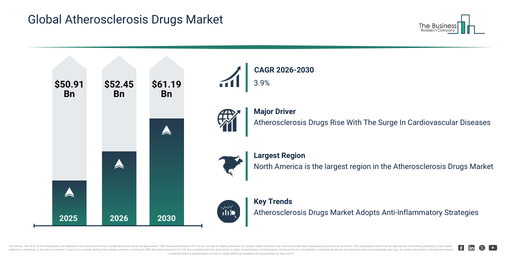
    Atherosclerosis Drugs Market Growth From $52.44 Billion In 2026 To $61.19 Billion By 2030 At A CAGR Of 3.9%

    The market for atherosclerosis medications has experienced consistent expansion in recent times. Projections indicate an increase from $50.91 billion in 2025 to $52.45 billion in 2026, reflecting a compound annual growth rate (CAGR) of 3.0%. This historical growth has been driven by factors such as the growing incidence of cardiovascular conditions, heightened public awareness regarding heart wellness, widespread use of statins and other cholesterol-reducing agents, governmental efforts focused on cardiovascular treatment, and the development of hospital and retail pharmacy networks.

    The market for atherosclerosis medications is projected to experience consistent expansion over the coming years. By 2030, its valuation is anticipated to reach $61.19 billion, reflecting a compound annual growth rate (CAGR) of 3.9%. Several factors are fueling this growth during the forecast period, including the broader application of precision medicine in cardiovascular care, the growing use of digital health monitoring devices, an increasing preference for combination treatment approaches, a rising elderly population, and ongoing breakthroughs in novel anti-atherosclerosis drug categories. Key trends shaping the market include the shift toward personalized atherosclerosis therapies, the development of multi-drug formulations, the integration of minimally invasive treatment options, a greater emphasis on preventive heart health, and enhanced patient adherence supported by digital monitoring tools.

    Download A Free Sample Report For Comprehensive Market Insights:

    https://www.thebusinessresearchcompany.com/sample.aspx?id=12621&type=smp&utm_source=BlogsPR&utm_medium=Paid&utm_campaign=Jul_PR

    Atherosclerosis Drugs Market Opportunity Drivers: What Is Creating New Revenue Potential?

    The rising occurrence of cardiovascular conditions is anticipated to accelerate the expansion of the atherosclerosis drug market in the coming years. Cardiovascular diseases encompass all disorders affecting the heart and blood vessels, while atherosclerosis specifically involves the accumulation of fats, cholesterol, and other materials on the arterial walls. This condition, marked by plaque buildup inside the arteries, leads to serious cardiovascular issues such as coronary heart disease and stroke. Medications for atherosclerosis are employed to address cardiovascular diseases by minimizing complication risks and managing underlying problems like elevated cholesterol levels and blood clot formation. As an example, in January 2024, the American Heart Association, a nonprofit organization based in the United States, reported that the age-adjusted death rate from cardiovascular disease climbed to 233.3 per 100,000 in 2024, representing a 4.0% increase from 224.4 per 100,000 in 2023. Consequently, the high prevalence of cardiovascular diseases is expected to be a key driver for the atherosclerosis drug market.

    Atherosclerosis Drugs Market Segment Performance And Strategic Opportunities

    The atherosclerosis drugs market covered in this report is segmented –

    1) By Drug Class: Anti-Platelet Medications, Fibric Acid And Omega-3 Fatty Acid Derivatives, Angiotensin-Covering Enzyme (ACE) Inhibitors, Diuretics, Cholesterol Lowering Medication, Beta Blockers, Calcium Channel Blockers, Other Drug Classes

    2) By Route Of Administration: Oral, Injectable

    3) By Distribution Channel: Hospital Pharmacies, Online Pharmacies, Retail Pharmacies, Other Distribution Channels

    Subsegments:

    1) By Anti-Platelet Medications: Aspirin, Clopidogrel, Ticagrelor

    2) By Fibric Acid And Omega-3 Fatty Acid Derivatives: Fenofibrate, Gemfibrozil, Omega-3 Fatty Acid Supplements

    3) By Angiotensin-Covering Enzyme (ACE) Inhibitors: Lisinopril, Enalapril, Ramipril

    4) By Diuretics: Thiazide Diuretics, Loop Diuretics, Potassium-Sparing Diuretics

    5) By Cholesterol Lowering Medication: Statins, PCSK9 Inhibitors, Bile Acid Sequestrants

    6) By Beta Blockers: Metoprolol, Atenolol, Carvedilol

    7) By Calcium Channel Blockers: Amlodipine, Diltiazem, Verapamil

    8) By Other Drug Classes: Anticoagulants, Vasodilators, Cholesterol Absorption Inhibitors

    Atherosclerosis Drugs Market Innovation Trends Driving Future Development

    Major players in the atherosclerosis drug market are focusing on the development of innovative products, particularly anti-inflammatory medications, to enhance their profitability in this sector. Atherosclerosis anti-inflammatory drugs are pharmaceutical agents intended to reduce inflammation linked to atherosclerosis, a disease marked by arterial plaque accumulation. In June 2023, AGEPHA Pharma, a European medical products firm, introduced LODOCO. LODOCO (colchicine, 0.5 mg tablet) received U.S. FDA approval as the first anti-inflammatory atheroprotective cardiovascular treatment. This drug has shown effectiveness in decreasing the incidence of myocardial infarction, stroke, coronary revascularization, and cardiovascular death among adults suffering from atherosclerotic disease or presenting multiple cardiovascular risk factors. By targeting residual inflammation, which plays a significant role in atherosclerotic cardiovascular disease (ASCVD), LODOCO represents a major advancement in cardiac care. It is approved for use as a standalone therapy or in combination with cholesterol-lowering agents.

    Atherosclerosis Drugs Market Key Players: Which Companies Shape Industry Competition?

    Major companies operating in the atherosclerosis drugs market are Johnson And Johnson Private Limited, Pfizer Inc., F. Hoffmann-La Roche AG, AbbVie Inc., Bayer AG, Janssen Pharmaceuticals Inc., Novartis AG, Merck And Co. Inc., Sanofi S.A., AstraZeneca plc, Abbott Laboratories, GSK plc, Takeda Pharmaceutical Company Limited, Eli Lilly and Company, Amgen Inc., Novo Nordisk A/S, Boehringer Ingelheim International GmbH, Viatris Inc., Teva Pharmaceutical Industries Ltd., Otsuka Holdings Co. Ltd., Regeneron Pharmaceuticals Inc., Lupin Limited, Alnylam Pharmaceuticals Inc., Ionis Pharmaceuticals Inc., Amarin Corporation plc, Esperion Therapeutics Inc., Kowa Pharmaceuticals America Inc.

    Access The Complete Atherosclerosis Drugs Market Report:

    https://www.thebusinessresearchcompany.com/report/atherosclerosis-drugs-global-market-report?utm_source=BlogsPR&utm_medium=Paid&utm_campaign=Jul_PR

    Atherosclerosis Drugs Market Global Footprint: Which Region Holds Market Leadership?

    North America was the largest region in the atherosclerosis drugs market in 2025. Asia-Pacific is expected to be the fastest-growing region in the forecast period. The regions covered in the atherosclerosis drugs market report are Asia-Pacific, South East Asia, Western Europe, Eastern Europe, North America, South America, Middle East, Africa.

    Get in touch with us:

    The Business Research Company: https://www.thebusinessresearchcompany.com/?utm_source=BlogsPR&utm_medium=Paid&utm_campaign=home_page_test

    Americas: +1 310-496-7795

    Asia: +44 7882 955267 & +91 8897263534

    Europe: +44 7882 955267

    Email us at: marketing@tbrc.info

    Follow us on:

    LinkedIn: https://in.linkedin.com/company/the-business-research-company

    YouTube: https://www.youtube.com/channel/UC24_fI0rV8cR5DxlCpgmyFQ

    Global Market Model: https://www.thebusinessresearchcompany.com/global-market-model
  • Astringents Market Growth Outlook Reveals A CAGR Of 4.3% And A Market Value Of $4.38 Billion By 2030

    Astringents Market Growth Outlook Reveals A CAGR Of 4.3% And A Market Value Of $4.38 Billion By 2030

    Enhanced with market attractiveness analysis, total addressable market evaluation, company benchmarking matrices, interactive Excel dashboards, expanded supply chain intelligence, emerging startup coverage, and detailed product insights, The Business Research Company’s 2026 market reports deliver more actionable and strategically valuable research.

    Astringents Market Expansion Outlook: What Revenue Opportunities Lie Ahead?

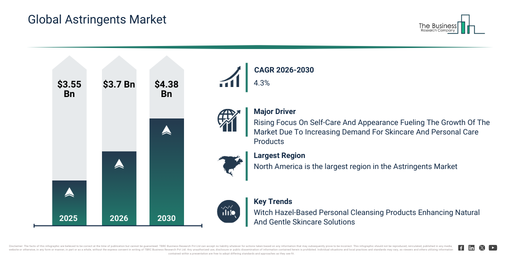
    The astringents market has experienced consistent expansion over the recent period. Forecasts indicate an increase from $3.55 billion in 2025 to $3.7 billion in 2026, reflecting a compound annual growth rate (CAGR) of 4.2%. This historical growth has been driven by factors such as the expansion of the cosmetics sector, rising demand for wound care solutions, heightened awareness of personal hygiene, increased utilization of dermatological products, and the broadening scope of oral care applications.

    Over the coming years, the astringents market is anticipated to experience consistent expansion. By 2030, it is projected to reach $4.38 billion, progressing at a compound annual growth rate (CAGR) of 4.3%. This forecasted growth is driven by a shift toward natural ingredients, increasing demand for premium skincare products, ongoing innovations in cosmetics, the rising prominence of clinical wound care, and the development of multifunctional formulations. Notable trends shaping this period include the heightened preference for natural astringents, a broader utilization in skincare and cosmetic products, an expanding role in wound care management, a growing presence in oral care items, and a strong consumer inclination toward formulations that serve multiple purposes.

    Download A Free Sample Report For Comprehensive Market Insights:

    https://www.thebusinessresearchcompany.com/sample.aspx?id=24154&type=smp&utm_source=BlogsPR&utm_medium=Paid&utm_campaign=Jul_PR

    Astringents Market Growth Momentum: Which Factors Are Influencing Demand?

    The anticipated expansion of the astringents market is being driven forward by an increasing appetite for skincare and personal care items. These products, which encompass a wide variety used for cleansing, safeguarding, and improving the condition and aesthetics of the skin, hair, and body, are seeing heightened demand as consumers place greater emphasis on self-care and physical appearance, fostering a stronger interest in solutions that support healthier skin and overall wellness. Within this realm, astringents serve a valuable role by tightening the skin, controlling excess oil, and lessening the visibility of pores, making them particularly advantageous for those with oily or acne-prone complexions. A case in point is data from the British Beauty Council, a UK-based nonprofit, which reported in August 2024 that the personal care sector directly contributed nearly half of its overall gross domestic product (GDP) share in 2023, equating to 13.5 billion British pounds (GBP) and representing 0.5% of the United Kingdom’s total GDP, from a complete industry contribution of 17.1 billion US dollars. As a result, the rising demand for skincare and personal care products is fueling growth in the astringents market.

    Astringents Market Segment Landscape And Growth Potential

    The astringents market covered in this report is segmented –

    1) By Astringent Type: Thrombin-Based Astringent, Oxidized Regenerated Cellulose Based Astringent, Combination Astringent, Gelatin-Based Astringent, Collagen-Based Astringent

    2) By Product Type: Natural Astringents, Synthetic Astringents

    3) By Distribution Channel: Online Retail, Supermarkets Or Hypermarkets, Specialty Stores, Other Distribution Channels

    4) By Application: Skin Care, Oral Care, Hair Care, Cosmetics

    5) By End-User: Personal Care, Pharmaceuticals, Food Industry, Other End-Users

    Subsegments:

    1) By Thrombin-Based Astringent: Human Thrombin-Based, Bovine Thrombin-Based, Recombinant Thrombin-Based

    2) By Oxidized Regenerated Cellulose Based Astringent: Knitted ORC, Non-Knitted ORC, ORC With Fabric Composites

    3) By Combination Astringent: Thrombin + Gelatin Combinations, ORC + Collagen Combinations, Fibrin Sealant Combinations

    4) By Gelatin-Based Astringent: Gelatin Sponges, Gelatin Powder, Gelatin Matrices

    5) By Collagen-Based Astringent: Microfibrillar Collagen, Collagen Fleece, Collagen Sponges

    Astringents Market Trends Reshaping Industry Growth

    Major players in the astringents market are concentrating on creating new solutions, including witch hazel-based personal care cleansers, to address the rising customer demand for natural, mild, and versatile skincare options. Such witch hazel-infused personal cleansing products consist of formulas containing extract from the Hamamelis virginiana plant, a naturally occurring astringent recognized for its capability to minimize pore size, decrease swelling, calm irritation, and purify skin without resorting to strong chemicals or artificial components. For example, in October 2024, T.N. Dickinson’s, a natural skincare enterprise based in the US, unveiled its Cleanse & Care Personal Cleansing Foams. This newly introduced lineup includes delicate, pH-balanced foam cleansers enriched with unadulterated witch hazel extract, intended for both intimate and overall body cleansing while preserving the skin’s inherent moisture balance. These formulations take advantage of witch hazel’s inherent astringent and calming characteristics to purify, renew, and soothe delicate skin regions, offering users an organic substitute for conventional cleaning items that often rely on aggressive detergents or synthetic scents.

    Astringents Market Competitive Landscape: Who Are The Leading Companies?

    Major companies operating in the astringents market are L’Oréal S.A., The Estée Lauder Companies Inc., Shiseido Company Limited, Mary Kay Inc., Clarins Groupe S.A., Avon Products Inc., Yves Rocher S.A.S., Murad LLC, Himalaya Wellness Company, Paula’s Choice LLC, Burt’s Bees Inc., Oriflame Holding AG, Mario Badescu Skin Care Inc., Desert Essence, W.S. Badger Company Inc., Alba Botanica, Earth Science Naturals Inc., Humphreys Pharmacal Inc., Thayers Natural Remedies, Sebapharma GmbH & Co. KG, Dickinson Brands Inc.

    Access The Complete Astringents Market Report:

    https://www.thebusinessresearchcompany.com/report/astringents-global-market-report?utm_source=BlogsPR&utm_medium=Paid&utm_campaign=Jul_PR

    Astringents Market Regional Distribution: Which Areas Drive Market Expansion?

    North America was the largest region in the astringents market in 2025. The regions covered in the astringents market report are Asia-Pacific, South East Asia, Western Europe, Eastern Europe, North America, South America, Middle East, Africa.

    Get in touch with us:

    The Business Research Company: https://www.thebusinessresearchcompany.com/?utm_source=BlogsPR&utm_medium=Paid&utm_campaign=home_page_test

    Americas: +1 310-496-7795

    Asia: +44 7882 955267 & +91 8897263534

    Europe: +44 7882 955267

    Email us at: marketing@tbrc.info

    Follow us on:

    LinkedIn: https://in.linkedin.com/company/the-business-research-company

    YouTube: https://www.youtube.com/channel/UC24_fI0rV8cR5DxlCpgmyFQ

    Global Market Model: https://www.thebusinessresearchcompany.com/global-market-model