Blog

  • Biosimilar Growth Hormones Market Forecast Signals New Revenue Opportunities Through 2030

    Biosimilar Growth Hormones Market Forecast Signals New Revenue Opportunities Through 2030

    Delivering more actionable and strategically valuable research, The Business Research Company’s 2026 market reports feature market attractiveness analysis, total addressable market evaluation, company benchmarking matrices, interactive Excel dashboards, expanded supply chain intelligence, emerging startup coverage, and detailed product insights.

    Biosimilar Growth Hormones Market Forecast Highlighting Growth From $0.97 Billion To $1.46 Billion

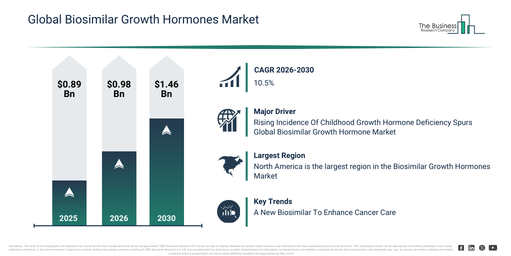
    The biosimilar growth hormones sector has experienced swift expansion in recent years. Its valuation is projected to increase from $0.89 billion in 2025 to $0.98 billion in 2026, reflecting a compound annual growth rate (CAGR) of 10.1%. During the historical period, this growth was driven by several factors, including the elevated costs associated with branded growth hormone treatments, a rising incidence of growth hormone deficiency, an uptick in diagnoses of pediatric growth disorders, restricted availability of cost-effective therapeutic options, and a reliance on hospital-based administration methods.

    The biosimilar growth hormones market is anticipated to experience robust expansion over the coming years, with projections indicating it will reach a value of $1.46 billion by 2030, reflecting a compound annual growth rate (CAGR) of 10.5%. This forecasted growth is driven by several factors, including the expiration of patents on branded growth hormones, a rising number of biosimilar approvals, the broadening of self-administration treatment options, greater public awareness of growth disorders, and increased healthcare spending in developing economies. Key developments shaping this period involve a growing shift toward more affordable biosimilar growth hormone products, heightened demand for therapies targeting both pediatric and adult patients, an increased preference for subcutaneous self-administration, the expansion of online pharmacies and specialized clinics, and a more favorable regulatory environment for biosimilars.

    Download A Free Sample Report For Comprehensive Market Insights:

    https://www.thebusinessresearchcompany.com/sample.aspx?id=3391&type=smp&utm_source=BlogsPR&utm_medium=Paid&utm_campaign=Jul_PR

    Biosimilar Growth Hormones Market Demand Drivers Creating New Revenue Opportunities

    An increasing number of children affected by growth hormone deficiency is fueling the expansion of the global biosimilar growth hormone market. This condition arises from damage to the pituitary gland or hypothalamus, which can be caused either by an abnormal development occurring before birth (congenital) or by events that take place during or after childbirth (acquired). As an example, in September 2023, data from Hormones Australia, published by the Endocrine Society of Australia—a national body focused on managing endocrine conditions and diseases—indicated that growth hormone deficiency is estimated to impact 2 to 3 individuals per 10,000 people. Consequently, the rising prevalence of growth deficiencies among children is propelling growth within the biosimilar growth hormone industry.

    Biosimilar Growth Hormones Market Segment Performance And Strategic Opportunities

    The biosimilar growth hormones market covered in this report is segmented –

    1) By Route Of Administration: Subcutaneous, Intramuscular, Oral

    2) By Application: Growth Hormone Deficiency, Turner Syndrome, Idiopathic Short Stature, Prader Willi Syndrome, Other Applications

    3) By Distribution Channel: Hospital And Retail Pharmacy, Online Pharmacy/ePharmacy, Specialty Clinics

    Subsegments:

    1) By Subcutaneous: Self-administration, Professional Administration

    2) By Intramuscular: Pediatric Care, Adult Care

    3) By Oral: Tablets, Capsules

    Biosimilar Growth Hormones Market Trends Driving Strategic Industry Expansion

    Major players in the biosimilar growth hormone market are developing innovative human growth hormone solutions aimed at improving both treatment effectiveness and accessibility for growth hormone deficiencies. These growth hormone solutions encompass medical treatments or supplements designed to stimulate or replace natural human growth hormone (HGH) in the body, addressing growth deficits or anti-aging concerns. For example, in June 2023, Pfizer Inc., a US-based pharmaceutical company, along with OPKO Health Inc., another US-based healthcare firm, secured approval from the US Food and Drug Administration (FDA) for NGENLA (somatrogon-ghla). This treatment is a once-weekly injectable human growth hormone specifically developed for pediatric patients suffering from growth hormone deficiency (GHD). By providing a long-acting alternative to daily injections, it significantly enhances adherence and convenience for both patients and their caregivers. The approval was informed by clinical trials that confirmed its efficacy and safety, representing a notable milestone in the evolution of growth hormone therapies.

    Biosimilar Growth Hormones Market Key Players: Which Companies Shape Industry Competition?

    Major companies operating in the biosimilar growth hormones market are Amega Biotech, Biosidus S.A., Eli Lilly and Company, Ferring Pharmaceuticals, Genetech Inc., Merck & Co. Inc., Novartis AG, Novo Nordisk A/S, Sanofi S.A., USV Private Limited, Zhongshan Hygene Biopharm Co. Ltd., Biopartners And LG Chem, Boehringer Ingelheim International GmbH, Celltrion Inc., Dr. Reddy’s Laboratories Ltd., Gedeon Richter Plc., Genor Biopharma Co. Ltd., Hetero Drugs Limited, Intas Pharmaceuticals Ltd., LG Chem Ltd., Lupin Limited, Mabion S.A., Mundipharma International Limited, Panacea Biotec Limited, Pfenex Inc., PlantForm Corporation

    Access The Complete Biosimilar Growth Hormones Market Report:

    https://www.thebusinessresearchcompany.com/report/biosimilar-growth-hormone-global-market-report?utm_source=BlogsPR&utm_medium=Paid&utm_campaign=Jul_PR

    Biosimilar Growth Hormones Market Largest Region: Which Geography Holds The Highest Market Share?

    North America was the largest region in the biosimilar growth hormone market in 2025. The Middle East is expected to be the fastest-growing region in the biosimilar growth hormones market report during the forecast period. The regions covered in the biosimilar growth hormones market report are Asia-Pacific, South East Asia, Western Europe, Eastern Europe, North America, South America, Middle East, Africa.

    Get in touch with us:

    The Business Research Company: https://www.thebusinessresearchcompany.com/?utm_source=BlogsPR&utm_medium=Paid&utm_campaign=home_page_test

    Americas: +1 310-496-7795

    Asia: +44 7882 955267 & +91 8897263534

    Europe: +44 7882 955267

    Email us at: marketing@tbrc.info

    Follow us on:

    LinkedIn: https://in.linkedin.com/company/the-business-research-company

    YouTube: https://www.youtube.com/channel/UC24_fI0rV8cR5DxlCpgmyFQ

    Global Market Model: https://www.thebusinessresearchcompany.com/global-market-model
  • Biosimilar Contract Manufacturing Market Growth Is Accelerating As Industry Transformation Continues

    Biosimilar Contract Manufacturing Market Growth Is Accelerating As Industry Transformation Continues

    Enhanced with market attractiveness analysis, total addressable market evaluation, company benchmarking matrices, interactive Excel dashboards, expanded supply chain intelligence, emerging startup coverage, and detailed product insights, The Business Research Company’s 2026 market reports deliver more actionable and strategically valuable research.

    Biosimilar Contract Manufacturing Market Revenue Growth Supported By A CAGR Of 20.35% Through 2030

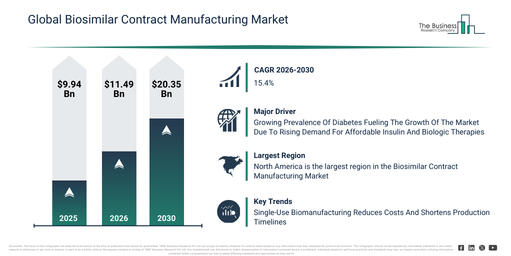
    The biosimilar contract manufacturing market has experienced swift expansion in recent years, with its value projected to rise from $9.94 billion in 2025 to $11.49 billion in 2026, reflecting a compound annual growth rate (CAGR) of 15.7%. This historical growth has been driven by several factors, including the expiration of patents for reference biologics, the early uptake of biosimilar development initiatives, the broadening of contract manufacturing collaborations, enhanced regulatory frameworks for biosimilars, and a rising incidence of chronic diseases.

    The biosimilar contract manufacturing sector is projected to experience significant expansion in the coming years, reaching a valuation of $20.35 billion by 2030, driven by a compound annual growth rate (CAGR) of 15.4%. This anticipated growth during the forecast period stems from several key factors, including a surge in biosimilar approvals worldwide, mounting pressure to lower expenses associated with biologic therapies, an expanding pipeline of biosimilar candidates, heightened investments in large-scale manufacturing infrastructure, and improvements in process optimization techniques. Emerging trends that are expected to shape the market include a growing tendency to contract out biosimilar production, an increased demand for more cost-effective manufacturing approaches, a stronger emphasis on analytical and quality control services, the broadened application of mammalian cell-based production methods, and a heightened focus on meeting regulatory standards.

    Download A Free Sample Report For Comprehensive Market Insights:

    https://www.thebusinessresearchcompany.com/sample.aspx?id=30215&type=smp&utm_source=BlogsPR&utm_medium=Paid&utm_campaign=Jul_PR

    Biosimilar Contract Manufacturing Market Expansion Supported By Key Demand Factors

    The rising incidence of diabetes is anticipated to boost the expansion of the biosimilar contract manufacturing sector. Diabetes prevalence is defined as the percentage of individuals within a population who currently have the condition, indicating a persistent requirement for treatment and long-term therapeutic use. This increase is driven by more sedentary lifestyles and unhealthy eating habits, which contribute to obesity, insulin resistance, and a greater occurrence of type 2 diabetes. Contract manufacturing of biosimilars aids diabetes care by facilitating the affordable, large-scale production of biosimilar insulin and associated biologics. It guarantees steady quality and adherence to regulations, thereby improving patient access to cutting-edge treatments. This enhances the cost-effectiveness of care and broadens worldwide availability of essential diabetes therapies. As an example, in June 2024, data from the National Health Service, a UK government agency, revealed that 3,615,330 patients registered with a general practitioner had non-diabetic hyperglycemia or pre-diabetes in 2023, representing an 18% rise from 3,065,825 cases in 2022. Consequently, the growing frequency of diabetes is fueling the advancement of the biosimilar contract manufacturing market.

    Biosimilar Contract Manufacturing Market Segment Landscape And Growth Potential

    The biosimilar contract manufacturing market covered in this report is segmented –

    1) By Product Type: Monoclonal Antibodies, Insulin, Erythropoietin, Granulocyte Colony-Stimulating Factor, Other Product Types

    2) By Service Type: Process Development, Analytical And Quality Control, Fill And Finish Operations, Packaging, Other Service Types

    3) By Source: Mammalian, Non-mammalian

    4) By Application: Oncology, Autoimmune Diseases, Blood Disorders, Growth Hormone Deficiency, Other Applications

    5) By End-Use: Pharmaceutical Companies, Biotech Companies

    Subsegments:

    1) By Monoclonal Antibodies: Chimeric Monoclonal Antibodies, Humanized Monoclonal Antibodies, Fully Human Monoclonal Antibodies, Bispecific Monoclonal Antibodies

    2) By Insulin: Rapid Acting Insulin, Short Acting Insulin, Intermediate Acting Insulin, Long Acting Insulin, Premixed Insulin

    3) By Erythropoietin: Alpha Erythropoietin, Beta Erythropoietin, Darbepoetin Alfa, Continuous Erythropoietin Receptor Activators

    4) By Granulocyte Colony-Stimulating Factor: Filgrastim, Pegfilgrastim, Lenograstim, Long Acting Granulocyte Colony-Stimulating Factor

    5) By Other Product Types: Interferons, Interleukins, Fusion Proteins, Enzyme Therapeutics, Hormonal Biologics

    Biosimilar Contract Manufacturing Market Growth Trends Influencing Competitive Dynamics

    Key players within the biosimilar contract manufacturing industry are prioritizing the establishment of production facilities, including mirrored single-use plants, to facilitate faster technology transfer, improved scalability, and enhanced commercial reliability. Such mirrored single-use facilities comprise identical production suites utilizing disposable bioprocess equipment and unified digital frameworks, allowing for swift changeovers, consistent quality across different locations, and decreased contamination risks. In September 2025, Rezon Bio, a contract development and manufacturing organization (CDMO) based in Poland, introduced two mirrored-capability single-use biomanufacturing sites covering everything from cell line development to commercial GMP supply. This approach accelerates technology transfer and provides flexible scaling options for biosimilars while cutting downtime, and it bolsters batch-to-batch uniformity through standardized suites, integrated analytics, and logistics automation. Additionally, it reduces total ownership costs for sponsors by limiting cleaning validation requirements, shortening both development and production timelines, and mitigating expansion risks.

    Biosimilar Contract Manufacturing Market Competitive Landscape: Who Are The Leading Companies?

    Major companies operating in the biosimilar contract manufacturing market are Thermo Fisher Scientific Inc., Biocon Limited, Lonza Group AG, Samsung Biologics Co. Ltd., WuXi Biologics (Cayman) Inc., Laboratorios Farmacéuticos Rovi S.A., Vetter Pharma-Fertigung GmbH & Co. KG, National Resilience Inc., Porton Pharma Solutions Co. Ltd., Syngene International Limited, Rentschler Biopharma SE, Boehringer Ingelheim International GmbH, Enzene Biosciences Ltd., Prestige Biologics Co. Ltd., Mabion S.A., HALIX B.V., BioConnection B.V., BioCina Pty Ltd, Mycenax Biotech Inc., Polpharma Biologics S.A.

    Access The Complete Biosimilar Contract Manufacturing Market Report:

    https://www.thebusinessresearchcompany.com/report/global-biosimilar-contract-manufacturing-market-report?utm_source=BlogsPR&utm_medium=Paid&utm_campaign=Jul_PR

    Biosimilar Contract Manufacturing Market Regional Analysis: Which Region Leads By Revenue?

    North America was the largest region in the biosimilar contract manufacturing market in 2025. Asia-Pacific is expected to be the fastest-growing region in the forecast period. The regions covered in the biosimilar contract manufacturing market report are Asia-Pacific, South East Asia, Western Europe, Eastern Europe, North America, South America, Middle East, Africa.

    Get in touch with us:

    The Business Research Company: https://www.thebusinessresearchcompany.com/?utm_source=BlogsPR&utm_medium=Paid&utm_campaign=home_page_test

    Americas: +1 310-496-7795

    Asia: +44 7882 955267 & +91 8897263534

    Europe: +44 7882 955267

    Email us at: marketing@tbrc.info

    Follow us on:

    LinkedIn: https://in.linkedin.com/company/the-business-research-company

    YouTube: https://www.youtube.com/channel/UC24_fI0rV8cR5DxlCpgmyFQ

    Global Market Model: https://www.thebusinessresearchcompany.com/global-market-model
  • Bioprocess Analyzers Market Outlook Highlights The Next Major Growth Opportunities

    Bioprocess Analyzers Market Outlook Highlights The Next Major Growth Opportunities

    Through market attractiveness analysis, total addressable market evaluation, company benchmarking matrices, interactive Excel dashboards, expanded supply chain intelligence, emerging startup coverage, and detailed product insights, The Business Research Company’s 2026 market reports provide more actionable and strategically valuable research.

    Bioprocess Analyzers Market Value Expansion And Long-Term Growth Outlook

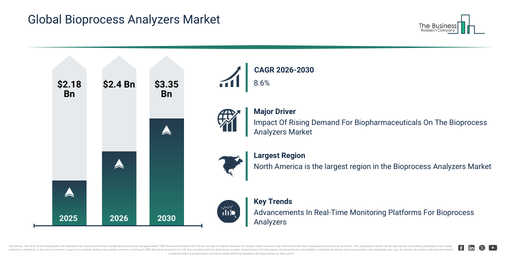
    The recent expansion of the bioprocess analyzers market has been swift. Its value is projected to climb from $2.18 billion in 2025 to $2.4 billion in 2026, achieving a compound annual growth rate of 10.1%. Several factors have driven this historical growth, including the scale-up of biopharmaceutical manufacturing, greater reliance on lab automation, a rising need for biologics, stricter adherence to regulatory standards, and progress in sensor technology.

    The bioprocess analyzers market is projected to experience robust expansion over the coming years, with its value anticipated to reach $3.35 billion by 2030, reflecting a compound annual growth rate (CAGR) of 8.6%. This forecasted growth is driven by factors such as the rise of personalized medicine, the incorporation of artificial intelligence in bioprocessing, a growing emphasis on continuous manufacturing, the expansion of contract manufacturing organizations (CMOs), and the creation of miniaturized analytical systems. Significant trends shaping this period include real-time monitoring of bioprocesses, the integration of process analytical technology (PAT), high-throughput screening and automation, the advancement of sensor technologies, and the application of quality-by-design (QbD) principles.

    Download A Free Sample Report For Comprehensive Market Insights:

    https://www.thebusinessresearchcompany.com/sample.aspx?id=14865&type=smp&utm_source=BlogsPR&utm_medium=Paid&utm_campaign=Jul_PR

    Bioprocess Analyzers Market Growth Drivers And Industry Catalysts

    The growing need for biopharmaceutical products is set to boost the bioprocess analyzer market in the coming years. Biopharmaceuticals are medicines derived from biological origins, including living organisms or their components. This sector is expanding rapidly, driven by innovative research and development that leads to novel biologics and biosimilars. Bioprocess analyzers play a critical role in overseeing key factors during biopharmaceutical production, such as cell growth, protein expression, and purity levels. For example, IQVIA, a U.S.-based company specializing in biopharmaceutical development services, reported in January 2024 that global biotechnology spending is projected to surpass $892 billion by 2028. Consequently, the increasing demand for biopharmaceuticals will fuel the expansion of the bioprocess analyzer market.

    Bioprocess Analyzers Market Categorization By Product Type And Application

    The bioprocess analyzers market covered in this report is segmented –

    1) By Product: Instruments, Consumables

    2) By Application: Antibiotics, Recombinant Proteins, Biosimilars, Other Applications

    3) By End-User: Biopharmaceutical Companies, Contract Manufacturing Organizations, Contract Research Organizations, Other End Users

    Subsegments:

    1) By Instruments: Spectrometers, Chromatographs, pH Or DO Analyzers, Gas Analyzers, Offline Analyzers

    2) By Consumables: Reagents, Sensors, Calibration Kits

    Bioprocess Analyzers Market Trends Influencing Long-Term Demand

    Leading players in the bioprocess analyzers market are prioritizing the creation of cutting-edge technologies, particularly optical in-line analyzers, to strengthen their market position. These optical in-line analyzers are defined as devices that employ optical techniques to deliver live monitoring and assessment of key parameters within bioprocess settings. As an example, in September 2023, 908 Devices Inc., a US firm specializing in chemical and biochemical analysis, introduced MAVERICK, a sophisticated optical in-line analyzer capable of real-time tracking and regulation of vital variables like glucose, lactate, and total biomass in mammalian cell cultures. This tool provides biopharmaceutical experts with comprehensive process fingerprint data, enabling them to refine large-scale bioprocesses effectively. Its intuitive interface simplifies tasks for researchers and engineers, speeding up the development of cell culture media and the formulation of efficient feeding and control strategies. By leveraging Raman spectroscopy, the device measures various critical process parameters in real time, including glucose, lactate, and biomass, directly within bioreactors. Designed to enhance process understanding, boost performance, and guarantee consistency between batches in cell culture automation for biologic production, Maverick works seamlessly with CHO (Chinese hamster ovary) or HEK293 (human embryonic kidney 293) mammalian cell lines and a variety of media types.

    Bioprocess Analyzers Market Company Landscape And Strategic Competition

    Major companies operating in the bioprocess analyzers market are Danaher Corporation, Merck KGaA, Thermo Fisher Scientific, MilliporeSigma, Sartorius AG, Beckman Coulter Inc., Waters Corporation, Bio-Rad Laboratories, Bruker Corporation, Agilent Technologies, GE Healthcare, Pall Corporation, HORIBA Ltd., Nova Biomedical, Hamilton Company, BioTek Instruments, PerkinElmer Inc, Analytik Jena AG, Eppendorf AG, Metrohm AG, Zymo Research Corporation, Macherey-Nagel GmbH & Co. KG

    Access The Complete Bioprocess Analyzers Market Report:

    https://www.thebusinessresearchcompany.com/report/bioprocess-analyzers-global-market-report?utm_source=BlogsPR&utm_medium=Paid&utm_campaign=Jul_PR

    Bioprocess Analyzers Market Geographic Distribution And Regional Opportunities

    North America was the largest region in the bioprocess analyzers market in 2025. Asia-Pacific is expected to be the fastest-growing region in the forecast period. The regions covered in the bioprocess analyzers market report are Asia-Pacific, South East Asia, Western Europe, Eastern Europe, North America, South America, Middle East, Africa.

    Get in touch with us:

    The Business Research Company: https://www.thebusinessresearchcompany.com/?utm_source=BlogsPR&utm_medium=Paid&utm_campaign=home_page_test

    Americas: +1 310-496-7795

    Asia: +44 7882 955267 & +91 8897263534

    Europe: +44 7882 955267

    Email us at: marketing@tbrc.info

    Follow us on:

    LinkedIn: https://in.linkedin.com/company/the-business-research-company

    YouTube: https://www.youtube.com/channel/UC24_fI0rV8cR5DxlCpgmyFQ

    Global Market Model: https://www.thebusinessresearchcompany.com/global-market-model
  • Biopharmaceutical Lab Equipment Market Trends And Growth Drivers Point To Strong Future Potential

    Biopharmaceutical Lab Equipment Market Trends And Growth Drivers Point To Strong Future Potential

    Delivering more actionable and strategically valuable research, The Business Research Company’s 2026 market reports feature market attractiveness analysis, total addressable market evaluation, company benchmarking matrices, interactive Excel dashboards, expanded supply chain intelligence, emerging startup coverage, and detailed product insights.

    Biopharmaceutical Lab Equipment Market Expected To Reach $25.72 Billion By 2030 At 7.6% CAGR

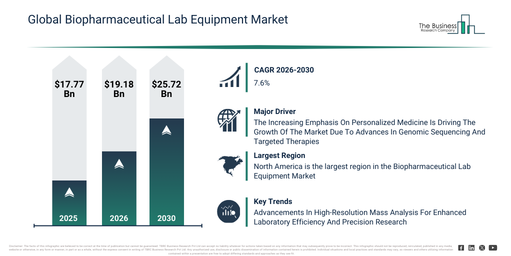
    The biopharmaceutical lab equipment market has experienced notable expansion in recent years. In 2025, its value reached $17.77 billion, and it is projected to increase to $19.18 billion by 2026, representing a compound annual growth rate (CAGR) of 7.9%. Historically, this growth has been driven by the broadening of biopharmaceutical research pipelines, a growing shift toward laboratory automation, increased funding for life sciences infrastructure, heavy dependence on chromatography and PCR technologies, and the establishment of standardized quality control procedures.

    The biopharmaceutical lab equipment market is anticipated to witness significant expansion over the coming years, with projections indicating it will reach a valuation of $25.72 billion by 2030, advancing at a compound annual growth rate (CAGR) of 7.6%. This predicted growth during the forecast period is largely fueled by factors such as the progressing development of biologics and cell therapies, an escalating preference for continuous processing technologies, the enlargement of large-scale biopharmaceutical facilities, greater incorporation of AI-driven analytics, and a heightened emphasis on boosting operational efficiency within laboratories. Key trends shaping this period include a wider uptake of single-use lab equipment, the growing implementation of automated analytical instruments, an increased need for high-throughput testing systems, the broadening of sophisticated cell culture platforms, and a stronger concentration on ensuring data integrity and reproducibility.

    Download A Free Sample Report For Comprehensive Market Insights:

    https://www.thebusinessresearchcompany.com/sample.aspx?id=28967&type=smp&utm_source=BlogsPR&utm_medium=Paid&utm_campaign=Jul_PR

    Biopharmaceutical Lab Equipment Market Opportunity Drivers: What Is Creating New Revenue Potential?

    The growing focus on personalized medicine is anticipated to drive expansion in the biopharmaceutical lab equipment market moving forward. Personalized medicine refers to a patient care model that customizes treatment and prevention methods based on individual variations in genetics, surroundings, and lifestyle. This approach is gaining traction due to progress in genomic sequencing and data analytics, allowing healthcare professionals to create more accurate diagnostic tools and targeted therapies for each patient. The move toward precision healthcare demands advanced lab equipment capable of analyzing genetic data, developing customized treatments, and facilitating clinical research for individualized care. For example, in February 2024, the Personalized Medicine Coalition, a US-based hospital and healthcare organization, reported that the FDA approved 16 new personalized treatments for rare disease patients in 2023, compared to six in 2022. Consequently, the heightened emphasis on personalized medicine is fueling growth in the biopharmaceutical lab equipment market.

    Biopharmaceutical Lab Equipment Market Segment Analysis And Revenue Opportunities

    The biopharmaceutical lab equipment market covered in this report is segmented –

    1) By Product Type: Chromatography Systems, Mass Spectrometers, Polymerase Chain Reaction (PCR) Equipment, Cell Culture Systems, Microscopes, Other Product Types

    2) By Technology: Single-Use Technology, Continuous Processing Technology, Cell Culture Technology, Filtration Technology, High-Throughput Screening Technology

    3) By Size Of Lab: Small Scale Labs, Medium Scale Labs, Large Scale Labs

    4) By Application: Drug Discovery, Clinical Diagnostics, Research And Development, Quality Control, Other Applications

    5) By End-User: Pharmaceutical Companies, Biotechnology Companies, Academic And Research Institutes, Other End-Users

    Subsegments:

    1) By Chromatography Systems: High-Performance Liquid Chromatography (HPLC), Gas Chromatography (GC), Ion Exchange Chromatography, Affinity Chromatography, Size Exclusion Chromatography (SEC), Thin Layer Chromatography (TLC)

    2) By Mass Spectrometers: Time-Of-Flight Mass Spectrometer (TOF-MS), Quadrupole Mass Spectrometer, Ion Trap Mass Spectrometer, Fourier Transform Ion Cyclotron Resonance (FT-ICR) Mass Spectrometer, Orbitrap Mass Spectrometer

    3) By Polymerase Chain Reaction (PCR) Equipment: Real-Time Polymerase Chain Reaction (qPCR) Machines, Digital Polymerase Chain Reaction (dPCR) Systems, Conventional Thermocyclers, Polymerase Chain Reaction (PCR) Workstations

    4) By Cell Culture Systems: Bioreactors, Incubators, Laminar Flow Cabinets, Automated Cell Culture Systems, CO2 Incubators

    5) By Microscopes: Optical Microscopes, Electron Microscopes, Fluorescence Microscopes, Confocal Microscopes

    6) By Other Product Types: Spectrophotometers, Microplate Readers, Autoclaves, Centrifuges, Freeze Dryers

    Biopharmaceutical Lab Equipment Market Innovation Trends Driving Future Development

    Key players in the biopharmaceutical lab equipment market are concentrating on developing innovative offerings like high-resolution mass analysis systems, which are designed to boost testing precision, optimize workflows, and enhance overall lab efficiency. A high-resolution mass analysis system is an advanced tool that precisely determines the mass-to-charge ratio of ions, enabling the identification and quantification of complex molecules with exceptional sensitivity and resolution, particularly in fields such as proteomics, pharmaceuticals, and chemical analysis. For example, in June 2025, Thermo Fisher Scientific, a US-based life sciences firm, introduced next-generation mass spectrometry instruments equipped with Thermo Scientific OptiSpray technology. These devices provide outstanding speed and sensitivity for detecting proteins, metabolites, and other biomolecules, thereby supporting cutting-edge precision medicine research. Notable features encompass high-resolution mass analysis, efficient workflows for multiomics research, user-friendly software for data analysis, robust automation for sample processing, and flexible compatibility with environmental and food safety research applications, helping scientists produce reproducible, high-quality data and accelerate discovery in complex disease research.

    Biopharmaceutical Lab Equipment Market Leading Players Shaping Industry Direction

    Major companies operating in the biopharmaceutical lab equipment market are Thermo Fisher Scientific Inc., Danaher Corporation, Merck KGaA, GE HealthCare Technologies Inc., Agilent Technologies Inc., Hitachi High-Tech Corporation, Illumina Inc., Mettler-Toledo International Inc., Shimadzu Corporation, Bruker Corporation, Waters Corporation, Horiba Ltd., Eppendorf SE, Tecan Group Ltd., Hamilton Company, Oxford Instruments plc, Telstar SA, Advanced Instruments LLC, PBS Biotech Inc., Logos Biosystems Inc., Napro Scientific Inc., Accumax Lab Devices Pvt. Ltd.

    Access The Complete Biopharmaceutical Lab Equipment Market Report:

    https://www.thebusinessresearchcompany.com/report/biopharmaceutical-lab-equipment-global-market-report?utm_source=BlogsPR&utm_medium=Paid&utm_campaign=Jul_PR

    Biopharmaceutical Lab Equipment Market Largest Region By Revenue And Market Share

    North America was the largest region in the biopharmaceutical lab equipment market in 2025. Asia-Pacific is expected to be the fastest-growing region in the forecast period. The regions covered in the biopharmaceutical lab equipment market report are Asia-Pacific, South East Asia, Western Europe, Eastern Europe, North America, South America, Middle East, Africa.

    Get in touch with us:

    The Business Research Company: https://www.thebusinessresearchcompany.com/?utm_source=BlogsPR&utm_medium=Paid&utm_campaign=home_page_test

    Americas: +1 310-496-7795

    Asia: +44 7882 955267 & +91 8897263534

    Europe: +44 7882 955267

    Email us at: marketing@tbrc.info

    Follow us on:

    LinkedIn: https://in.linkedin.com/company/the-business-research-company

    YouTube: https://www.youtube.com/channel/UC24_fI0rV8cR5DxlCpgmyFQ

    Global Market Model: https://www.thebusinessresearchcompany.com/global-market-model
  • Biopharmaceutical Fermentation Systems Market Expansion Is Reshaping Competitive Dynamics Across The Industry

    Biopharmaceutical Fermentation Systems Market Expansion Is Reshaping Competitive Dynamics Across The Industry

    Enhanced with market attractiveness analysis, total addressable market evaluation, company benchmarking matrices, interactive Excel dashboards, expanded supply chain intelligence, emerging startup coverage, and detailed product insights, The Business Research Company’s 2026 market reports deliver more actionable and strategically valuable research.

    Biopharmaceutical Fermentation Systems Market Size And Revenue Forecast Through 2030

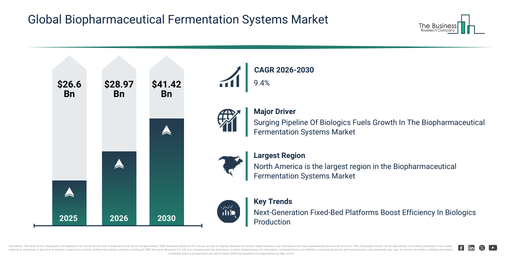
    The biopharmaceutical fermentation systems market has experienced robust expansion over the last few years. Its valuation is projected to increase from $26.6 billion in 2025 to $28.97 billion in 2026, reflecting a compound annual growth rate (CAGR) of 8.9%. This past growth has been driven by several factors, including the early uptake of bioreactors, a growing need for monoclonal antibodies, an uptick in biopharmaceutical research and development, the broadening of contract manufacturing and research organization services, and ongoing innovations in fermentation equipment technology.

    The biopharmaceutical fermentation systems market is projected to experience robust expansion over the coming years, with its value anticipated to reach $41.42 billion by 2030, reflecting a compound annual growth rate (CAGR) of 9.4%. This forecasted growth is driven by several factors, including the ramp-up in biologics production, a growing emphasis on personalized medicine, the automation of fermentation processes, expansion activities within emerging markets, and supportive regulatory frameworks for biopharmaceutical manufacturing. Key developments shaping the forecast period encompass advanced bioreactor design and optimization, the widespread uptake of single-use and disposable systems, adoption of high-throughput fermentation methods, real-time process monitoring and analytics, and the seamless integration of upstream and downstream operations.

    Download A Free Sample Report For Comprehensive Market Insights:

    https://www.thebusinessresearchcompany.com/sample.aspx?id=15524&type=smp&utm_source=BlogsPR&utm_medium=Paid&utm_campaign=Jul_PR

    Biopharmaceutical Fermentation Systems Market Growth Momentum: Which Factors Are Influencing Demand?

    The expansion of the biologics pipeline is anticipated to fuel the growth of the biopharmaceutical fermentation systems market moving forward. Biologics are medicinal products sourced from living organisms or their components, encompassing vaccines, blood products, gene therapies, tissues, and recombinant therapeutic proteins. This pipeline is growing due to progress in biotechnology, improved understanding of disease mechanisms, and an increasing need for targeted and personalized treatments. The biopharmaceutical fermentation systems market facilitates biologics development by supporting the large-scale cultivation of genetically engineered cells or microorganisms to produce complex therapeutic proteins, antibodies, and vaccines. As a case in point, the National Library of Medicine, a US-based medical library, reported that in 2023, the FDA approved 55 new drugs, consisting of 29 new chemical entities and 25 new biological entities, a substantial rise from the 37 approvals recorded in 2022. Consequently, the growing biologics pipeline is propelling the expansion of the biopharmaceutical fermentation systems market.

    Biopharmaceutical Fermentation Systems Market Segmentation And Category Breakdown

    The biopharmaceutical fermentation systems market covered in this report is segmented –

    1) By Product: Upstream Products, Downstream Products

    2) By Application: Recombinant Proteins, Monoclonal Antibodies, Antibiotics, Probiotics, Other Applications

    3) By End-User: Biopharmaceutical Companies, Contract Manufacturing Organizations, Contract Research Organizations, Academic Research Institutes, Food Industry, Other End-Users

    Subsegments:

    1) By Upstream Products: Fermenters Or Bioreactors, Culture Media, Inoculum Preparation Systems, Gas And Liquid Flow Control Systems, Process Monitoring And Control Systems, Sterilization Systems

    2) By Downstream Products: Filtration Systems, Centrifuges, Chromatography Systems, Ultrafiltration And Microfiltration Systems, Concentration And Purification Systems, Packaging And Storage Systems

    Biopharmaceutical Fermentation Systems Market Trends Reshaping Industry Growth

    Key players in the biopharmaceutical fermentation systems market are actively creating innovative solutions, like intensified fixed-bed bioreactors, aimed at boosting productivity and simplifying large-scale biologics manufacturing. These advanced fermentation systems utilize densely packed, immobilized cells to deliver greater product yields and more efficient bioprocessing operations. In October 2024, Univercells Technologies, a bioprocessing firm based in Belgium, introduced the scale-X nexo bioreactor, a compact fixed-bed device. It offers a small 0.5 m² growth surface within roughly 75 mL, facilitating low-volume screening; its design cuts media and reagent expenses by up to 60% per run and reduces seed-train requirements. The system achieves high cell densities, employs ready-to-use, single-use gamma-irradiated manifolds for straightforward setup, and connects with Skaia™ Vision software to estimate cell numbers without direct sampling, making it ideal for early-stage development in cell and gene therapy, vaccines, and exosome production.

    Biopharmaceutical Fermentation Systems Market Competitive Analysis Of Major Industry Participants

    Major companies operating in the biopharmaceutical fermentation systems market are Thermo Fisher Scientific Inc., Danaher Corporation, Merck KGaA, Sartorius Stedim Biotech, GE Healthcare, Lonza Group AG, GEA Group AG, Bio-Rad Laboratories Inc., Pall Corporation, Eppendorf AG, Repligen Corporation, Agilent Technologies Inc., ABEC Inc., Pierre Guérin Technologies, Applikon Biotechnology, Infors HT, Cellexus Ltd., ZETA Holding GmbH, New Brunswick Scientific, Nova Biomedical

    Access The Complete Biopharmaceutical Fermentation Systems Market Report:

    https://www.thebusinessresearchcompany.com/report/biopharmaceutical-fermentation-systems-global-market-report?utm_source=BlogsPR&utm_medium=Paid&utm_campaign=Jul_PR

    Biopharmaceutical Fermentation Systems Market Regional Analysis And Leading Geography

    North America was the largest region in the biopharmaceutical fermentation systems market in 2025. The regions covered in the biopharmaceutical fermentation systems market report are Asia-Pacific, South East Asia, Western Europe, Eastern Europe, North America, South America, Middle East, Africa.

    Get in touch with us:

    The Business Research Company: https://www.thebusinessresearchcompany.com/?utm_source=BlogsPR&utm_medium=Paid&utm_campaign=home_page_test

    Americas: +1 310-496-7795

    Asia: +44 7882 955267 & +91 8897263534

    Europe: +44 7882 955267

    Email us at: marketing@tbrc.info

    Follow us on:

    LinkedIn: https://in.linkedin.com/company/the-business-research-company

    YouTube: https://www.youtube.com/channel/UC24_fI0rV8cR5DxlCpgmyFQ

    Global Market Model: https://www.thebusinessresearchcompany.com/global-market-model
  • Biomarkers Market Growth Through 2030 Creates New Strategic Opportunities

    Biomarkers Market Growth Through 2030 Creates New Strategic Opportunities

    Delivering more actionable and strategically valuable research, The Business Research Company’s 2026 market reports feature market attractiveness analysis, total addressable market evaluation, company benchmarking matrices, interactive Excel dashboards, expanded supply chain intelligence, emerging startup coverage, and detailed product insights.

    Biomarkers Market Expansion Outlook: What Revenue Opportunities Lie Ahead?

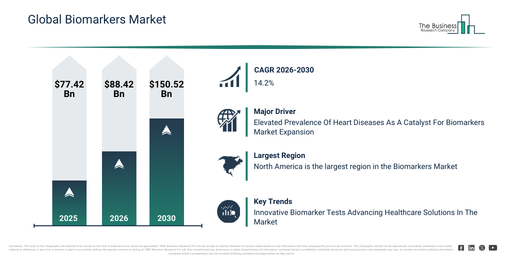
    The biomarkers market has experienced swift expansion in recent years, with projections indicating an increase from $77.42 billion in 2025 to $88.42 billion in 2026, reflecting a compound annual growth rate (CAGR) of 14.2%. This historical growth has been driven by progress in molecular biology, heightened investment in pharmaceutical research and development, a growing incidence of cancer, broader application in clinical trials, and an escalating need for targeted therapeutic approaches.

    The biomarkers market is anticipated to experience significant expansion in the coming years, projected to reach $150.52 billion by 2030 with a compound annual growth rate (CAGR) of 14.2%. This growth is driven by factors such as the broadening of personalized treatment strategies, the increased utilization of liquid biopsy biomarkers, heightened regulatory backing for biomarker-based pharmaceuticals, progress in neurological disease research, and more extensive partnerships between pharmaceutical and diagnostic companies. Key trends shaping this period encompass rising applications of biomarkers in precision medicine, their deeper integration into drug discovery and development processes, growing prominence in oncology and chronic disease management, the expansion of companion diagnostics, and a heightened emphasis on early disease detection.

    Download A Free Sample Report For Comprehensive Market Insights:

    https://www.thebusinessresearchcompany.com/sample.aspx?id=6485&type=smp&utm_source=BlogsPR&utm_medium=Paid&utm_campaign=Jul_PR

    Biomarkers Market Development Factors: Which Trends Are Supporting Demand?

    The rising prevalence of cardiac conditions is anticipated to drive expansion in the biomarkers market during the forecast period. Over recent years, there has been a significant surge in the application of biomarkers for managing heart disease patients. Currently, natriuretic peptides stand as the most widely employed biomarker, aiding in the identification of individuals suffering from heart failure. Additionally, circulating biomarkers, including high-sensitivity C-reactive protein, are utilized in diagnosing heart failure. Heart disease ranks as a leading cause of mortality across most racial and ethnic groups in the United States. This growing burden of cardiac ailments is expected to boost demand for biomarkers. For example, in September 2025, data from the British Heart Foundation, a UK-based charity, revealed that over 7.6 million people across the UK—more than 4 million men and over 3.6 million women—are living with cardiovascular disease. Projections suggest that, fueled by an aging population and enhanced survival rates, the number of affected individuals could increase by roughly 1 million by 2030 and by approximately 2 million by 2040. Consequently, the upsurge in heart diseases is fueling growth in the biomarkers market.

    Biomarkers Market Segment Landscape: Which Areas Lead Market Development?

    The biomarkers market covered in this report is segmented –

    1) By Technology: Safety Biomarkers, Efficacy Biomarkers, Validation Biomarkers

    2) By Disease: Neurological Diseases, Cancer, Immunological Diseases, Cardiovascular Diseases, Other Diseases

    3) By Type: Biomarker Of Exposure, Biomarker Of Diseases

    4) By Audiences: Pharmaceutical Companies, Government And Private Research Institutes, Academic Institutes, Medical Device Manufacturing Companies

    Subsegments:

    1) By Safety Biomarkers: Toxicity Biomarkers, Pharmacokinetic Biomarkers, Adverse Effect Biomarkers

    2) By Efficacy Biomarkers: Pharmacodynamic Biomarkers, Disease Progression Biomarkers, Treatment Response Biomarkers

    3) By Validation Biomarkers: Analytical Validation Biomarkers, Clinical Validation Biomarkers, Qualification Biomarkers

    Biomarkers Market Transformation Trends: Which Innovations Are Driving Change?

    Major players in the biomarker industry are focusing on the creation of advanced solutions, including biomarker tests, designed to attract a broader customer base, boost sales volumes, and drive higher revenue. A biomarker test, often called a biomarker assay, refers to a diagnostic tool or laboratory method used to detect specific biological indicators—such as molecules, genes, or proteins—that offer insights into normal or disease-related processes within the body. As an illustration, Quest Diagnostics, a medical laboratory firm based in the United States, introduced a new biomarker test for prostate cancer in July 2023. This freshly launched tissue-based diagnostic service addresses a pressing medical need for tools that help differentiate potentially aggressive prostate cancer cases in men. The test was developed and validated by Quest through an intellectual property licensing agreement with Envision, enabling the use of Envision’s proprietary biomarker and immunohistochemistry technology. This technology incorporates Envision’s unique staining methods and innovative biomarkers labeled EV1, EV2, and EV3.

    Biomarkers Market Industry Leaders And Market Competition

    Major companies operating in the biomarkers market are Enzo Biochem Inc, Bio-Rad Laboratories Inc., Merck KGaA, PerkinElmer Inc., QIAGEN N. V., Adaptive Biotechnologies Corp., Agilent Technologies Inc., Biocrates Life Sciences AG, BioFire Diagnostics LLC, BioReference Laboratories Inc., Bio-Techne Corporation, Cepheid Inc., Eurofins Scientific SE, Exact Sciences Corporation, Foundation Medicine Inc., Genomic Health Inc., GenScript Biotech Corporation, Guardant Health Inc., Illumina Inc., Invitae Corporation, Laboratory Corporation of America Holdings, Luminex Corporation, Metabolon Inc., Myriad Genetics Inc., Natera Inc., Pacific Biosciences of California Inc., Quest Diagnostics Incorporated, Roche Diagnostics Corporation, Thermo Fisher Scientific Inc., Veracyte Inc.

    Access The Complete Biomarkers Market Report:

    https://www.thebusinessresearchcompany.com/report/biomarkers-global-market-report?utm_source=BlogsPR&utm_medium=Paid&utm_campaign=Jul_PR

    Biomarkers Market Global Footprint: Which Region Holds Market Leadership?

    North America was the largest region in the biomarkers market in 2025. Asia-Pacific is expected to be the fastest-growing region in the forecast period. The regions covered in the biomarkers market report are Asia-Pacific, South East Asia, Western Europe, Eastern Europe, North America, South America, Middle East, Africa.

    Get in touch with us:

    The Business Research Company: https://www.thebusinessresearchcompany.com/?utm_source=BlogsPR&utm_medium=Paid&utm_campaign=home_page_test

    Americas: +1 310-496-7795

    Asia: +44 7882 955267 & +91 8897263534

    Europe: +44 7882 955267

    Email us at: marketing@tbrc.info

    Follow us on:

    LinkedIn: https://in.linkedin.com/company/the-business-research-company

    YouTube: https://www.youtube.com/channel/UC24_fI0rV8cR5DxlCpgmyFQ

    Global Market Model: https://www.thebusinessresearchcompany.com/global-market-model
  • Biologics Manufacturing Market Size Projected To Increase From $50.68 Billion To $106.07 Billion During The Forecast Period

    Biologics Manufacturing Market Size Projected To Increase From $50.68 Billion To $106.07 Billion During The Forecast Period

    Enhanced with market attractiveness analysis, total addressable market evaluation, company benchmarking matrices, interactive Excel dashboards, expanded supply chain intelligence, emerging startup coverage, and detailed product insights, The Business Research Company’s 2026 market reports deliver more actionable and strategically valuable research.

    Biologics Manufacturing Market Growth Potential: How Will Market Size Change Through 2030?

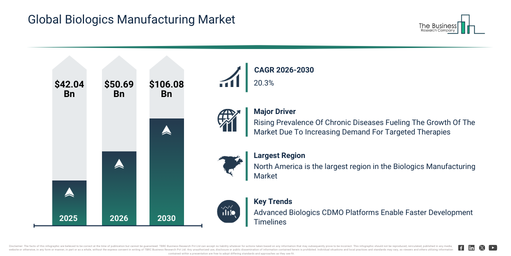
    In recent years, the biologics manufacturing market has experienced exponential growth. Its value is projected to increase from $42.04 billion in 2025 to $50.69 billion in 2026, representing a compound annual growth rate (CAGR) of 20.6%. This historical expansion has been driven by several factors, including the broadening of recombinant protein therapeutics, the early integration of mammalian cell culture systems, rising vaccine manufacturing capabilities, a greater reliance on outsourcing biologics production, and progress in purification technologies.

    The biologics manufacturing sector is anticipated to experience substantial expansion over the coming years, with projections indicating it will reach a value of $106.08 billion by 2030, driven by a robust compound annual growth rate of 20.3%. This upward trajectory in the forecast period is primarily fueled by a heightened demand for customized biologic therapies, an uptick in capital allocated towards adaptable production methods, a broadening landscape for biosimilar development, an increased reliance on electronic bioprocessing technologies, and a concerted emphasis on achieving economical scale-up for high-volume outputs. Key developments shaping the future landscape encompass the widespread utilization of disposable bioprocessing equipment, a notable shift towards ongoing manufacturing techniques, a surge in requirements for large-quantity monoclonal antibody synthesis, the establishment of flexible modular facilities, and the refined incorporation of sophisticated process control systems.

    Download A Free Sample Report For Comprehensive Market Insights:

    https://www.thebusinessresearchcompany.com/sample.aspx?id=30212&type=smp&utm_source=BlogsPR&utm_medium=Paid&utm_campaign=Jul_PR

    Biologics Manufacturing Market Industry Drivers: What Is Driving Revenue Growth?

    The increasing frequency of chronic illnesses is anticipated to drive expansion in the biologics manufacturing market moving forward. Chronic diseases are long-term health conditions that progress gradually and demand ongoing medical attention. Their growing occurrence can be partially attributed to sedentary lifestyles, since extended periods of sitting and reduced physical activity elevate the likelihood of ailments like heart disease and diabetes. Biologics manufacturing supports the management of chronic conditions through the development of specialized therapies, offering effective solutions for disorders such as diabetes, cancer, and autoimmune diseases. This approach lessens the overall disease burden by ensuring a reliable supply of high-quality biologic medications, which enhances patient outcomes and treatment effectiveness. To illustrate, in June 2024, the National Health Service, a UK government agency, reported that 3,615,330 individuals registered with a general practitioner were diagnosed with non-diabetic hyperglycemia or pre-diabetes in 2023, reflecting an 18% rise from 3,065,825 cases in 2022. Hence, the growing burden of chronic diseases is fueling advancement in the biologics manufacturing market.

    Biologics Manufacturing Market Segments: Where Are The Largest Growth Opportunities?

    The biologics manufacturing market covered in this report is segmented –

    1) By Mode of Manufacturing: Contract Manufacturing, In-House Manufacturing

    2) By Modality: Monoclonal Antibodies (mAbs), Biosimilar And Recombinant Proteins, Vaccines (recombinant/mRNA/Viral), Cell And Gene Therapies, Ribonucleic Acid-Based Therapeutics

    3) By Disease Indication: Oncology, Autoimmune Disorders, Infectious Diseases, Neurological Disorders, Other Disease Indications

    Subsegments:

    1) By Contract Manufacturing: Mammalian Cell-Based Production, Microbial Fermentation Production, Cell-Free Protein Synthesis, Hybrid Manufacturing Systems

    2) By In-House Manufacturing: Mammalian Cell Culture Production, Microbial Expression Systems, Continuous Bioprocessing, Single-Use Technology Production

    Biologics Manufacturing Market Growth Trends: What Is Influencing The Future Outlook?

    Key players in the biologics manufacturing sector are placing a strong emphasis on creating cutting-edge solutions, specifically integrated contract development and manufacturing organization (CDMO) platforms, with the aim of improving comprehensive biologics development, boosting production effectiveness, and streamlining supply networks across various treatment categories. Such a platform is essentially a complete system that merges development, manufacturing, and distribution services under one unified structure. As an example, in June 2023, Catalent Inc., a contract development and manufacturing company headquartered in the US, unveiled an upgraded version of its OneBio Suite designed for the coordinated development, manufacturing, and distribution of diverse biologic modalities. This enhanced suite delivers a full-scale integrated biologics CDMO platform capable of handling antibodies, cell and gene therapies, and mRNA-based products. Additionally, it covers the entire value chain from initial development all the way through fill-finish and packaging, facilitated by a single agreement and harmonized project oversight, which results in shorter development cycles, better scalability, and smooth integration into global supply chains.

    Biologics Manufacturing Market Major Participants And Competitive Dynamics

    Major companies operating in the biologics manufacturing market are Johnson & Johnson, F. Hoffmann La-Roche Ltd., Pfizer Inc, AbbVie Inc., Eli Lilly and Company, Novartis AG, Bristol-Myers Squibb Company, Thermo Fisher Scientific Inc., LG Life Sciences Ltd., Novo Nordisk A/S, Amgen Inc., FUJIFILM Holdings Corporation, Boehringer Ingelheim International GmbH, Teva Pharmaceutical Industries Ltd., Lonza Group Ltd., Intas Pharmaceuticals Ltd., Samsung Biologics Co. Ltd., Fareva SA, Celltrion Inc., Evotec SE

    Access The Complete Biologics Manufacturing Market Report:

    https://www.thebusinessresearchcompany.com/report/global-biologics-manufacturing-market-report?utm_source=BlogsPR&utm_medium=Paid&utm_campaign=Jul_PR

    Biologics Manufacturing Market Regional Distribution: Which Areas Drive Market Expansion?

    North America was the largest region in the biologics manufacturing market in 2025. Asia-Pacific is expected to be the fastest-growing region in the forecast period. The regions covered in the biologics manufacturing market report are Asia-Pacific, South East Asia, Western Europe, Eastern Europe, North America, South America, Middle East, Africa.

    Get in touch with us:

    The Business Research Company: https://www.thebusinessresearchcompany.com/?utm_source=BlogsPR&utm_medium=Paid&utm_campaign=home_page_test

    Americas: +1 310-496-7795

    Asia: +44 7882 955267 & +91 8897263534

    Europe: +44 7882 955267

    Email us at: marketing@tbrc.info

    Follow us on:

    LinkedIn: https://in.linkedin.com/company/the-business-research-company

    YouTube: https://www.youtube.com/channel/UC24_fI0rV8cR5DxlCpgmyFQ

    Global Market Model: https://www.thebusinessresearchcompany.com/global-market-model
  • Biologics CDMO Market Growth Outlook Reveals A CAGR Of 14.9% And A Market Value Of $48.06 Billion By 2030

    Biologics CDMO Market Growth Outlook Reveals A CAGR Of 14.9% And A Market Value Of $48.06 Billion By 2030

    Through market attractiveness analysis, total addressable market evaluation, company benchmarking matrices, interactive Excel dashboards, expanded supply chain intelligence, emerging startup coverage, and detailed product insights, The Business Research Company’s 2026 market reports provide more actionable and strategically valuable research.

    Biologics CDMO Market Value Analysis: What Growth Is Expected Over The Forecast Period?

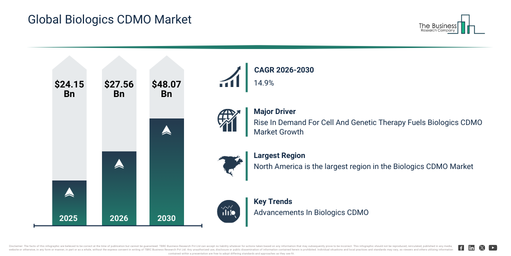
    The biologics CDMO market has experienced swift expansion in recent years, with projections indicating an increase from $24.15 billion in 2025 to $27.56 billion in 2026, reflecting a compound annual growth rate (CAGR) of 14.1%. This historical growth has been driven by factors including heightened biologics research, progress in cell culture techniques, a rising incidence of chronic illnesses, expansion of biosimilar development efforts, and governmental backing for biopharmaceutical production.

    The biologics CDMO market is forecasted to experience substantial expansion over the coming years. Its value is projected to reach $48.07 billion by 2030, reflecting a compound annual growth rate (CAGR) of 14.9%. This anticipated growth during the forecast period is driven by a surge in the development of gene and cell therapies, the growing implementation of automation and robotics within CDMO operations, the increase in global manufacturing capabilities for biologics, heightened investment in precision medicine, and a rising need for cost-effective biologic solutions. Key developments expected in this period include the broadening of biologics CDMO offerings, a rise in mammalian cell-based production, greater outsourcing of gene therapy manufacturing, the adoption of cutting-edge bioprocessing methods, and an escalating demand for biosimilars.

    Download A Free Sample Report For Comprehensive Market Insights:

    https://www.thebusinessresearchcompany.com/sample.aspx?id=14056&type=smp&utm_source=BlogsPR&utm_medium=Paid&utm_campaign=Jul_PR

    #Biologics CDMO Market Growth Factors: Which Forces Are Supporting Market Expansion?

    The growing need for cell and genetic therapies is expected to boost the biologic CDMO market moving forward. These treatment approaches use living cells or genetic material to target disease causes at a cellular or genetic level, offering hope for conditions that are hard to treat or incurable with standard drugs. Rising demand stems from their ability to provide novel solutions for diseases by tackling root genetic or cellular issues. Biologic CDMOs bring specialized skills in managing live cells, viral vectors, and genetic components, ensuring safe and effective production of these therapies while helping biopharma firms meet regulatory hurdles and technical obstacles, thus easing the shift from research to clinical use. For example, in March 2024, IQVIA Holdings Inc., a US-based firm offering advanced analytics, tech solutions, and clinical research services for life sciences and healthcare, reported that global spending on cell and gene therapies hit $5.9 billion in 2023, a 38% jump from 2022. Consequently, the rising demand for cell and gene therapy is fueling growth in the biologic CDMO market.

    Biologics CDMO Market Segment Analysis: What Are The Major Market Categories?

    The biologics cdmo market covered in this report is segmented –

    1) By Cell Type: Mammalian, Non-Mammalian

    2) By Product Type: Biologics, Biosimilars

    3) By Service Type: Drug Substance Manufacturing, Drug Product (Fill–Finish) Manufacturing, Process Development, Analytical & Quality Testing Services

    Subsegments:

    1) By Mammalian: Chinese Hamster Ovary (CHO) Cells, Human Embryonic Kidney (HEK) Cells, Other Mammalian Cells

    2) By Non-Mammalian: Yeast Cells, Bacterial Cells, Insect Cells, Other Non-Mammalian Cells

    Biologics CDMO Market Industry Trends: What Changes Are Reshaping Demand?

    Major players in the biologics contract development and manufacturing organization (CDMO) market are rolling out highly advanced technological solutions, including novel cell lines, aimed at boosting the efficiency and capabilities of biopharmaceutical development and production. This technology enables the creation of therapeutic antibodies with greater potency, addressing persistent challenges in immunotherapy research and development. For example, in November 2023, Lonza Group, a Swiss contract manufacturing firm focusing on the pharmaceutical and biotech sectors, introduced its GS Effex cell lines. These are specifically engineered to generate completely fucose-free antibodies, thereby enhancing their potency without sacrificing performance in other areas. This innovation helps meet the need for more effective antibody therapeutics in immunotherapy research. The cell line is stable, scalable, and productive, offering a complete solution for therapeutic development ranging from early discovery all the way to commercial-scale manufacturing.

    Biologics CDMO Market Leading Companies Driving Competitive Growth

    Major companies operating in the biologics cdmo market are Lonza Group Ltd, Samsung Biologics Co Ltd, WuXi Biologics Cayman Inc, Catalent Inc, Thermo Fisher Scientific Inc, Boehringer Ingelheim International GmbH, Emergent BioSolutions Inc, Grifols SA, AbbVie Inc, Novartis AG, Sandoz International GmbH, Fujifilm Holdings Corporation, AGC Inc, JSR Corporation, Shenzhen Hepalink Pharmaceutical Co Ltd, Kemwell Biopharma Pvt Ltd, Bora Pharmaceuticals Co Ltd, Binex Co Ltd, 3P Biopharmaceuticals SLU, Cytovance Biologics

    Access The Complete Biologics CDMO Market Report:

    https://www.thebusinessresearchcompany.com/report/biologics-cdmo-global-market-report?utm_source=BlogsPR&utm_medium=Paid&utm_campaign=Jul_PR

    Biologics CDMO Market Leading Geography: Which Region Generates The Most Revenue?

    North America was the largest region in the biologics CDMO market in 2025. Asia-Pacific is expected to be the fastest-growing region in the forecast period. The regions covered in the biologics cdmo market report are Asia-Pacific, South East Asia, Western Europe, Eastern Europe, North America, South America, Middle East, Africa.

    Get in touch with us:

    The Business Research Company: https://www.thebusinessresearchcompany.com/?utm_source=BlogsPR&utm_medium=Paid&utm_campaign=home_page_test

    Americas: +1 310-496-7795

    Asia: +44 7882 955267 & +91 8897263534

    Europe: +44 7882 955267

    Email us at: marketing@tbrc.info

    Follow us on:

    LinkedIn: https://in.linkedin.com/company/the-business-research-company

    YouTube: https://www.youtube.com/channel/UC24_fI0rV8cR5DxlCpgmyFQ

    Global Market Model: https://www.thebusinessresearchcompany.com/global-market-model
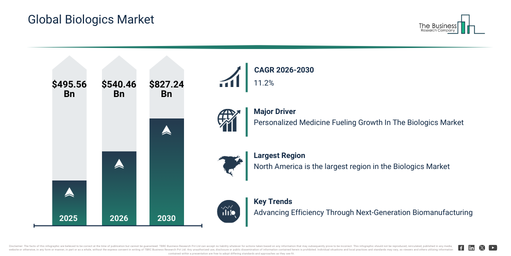
  • Biologics Market Forecast Highlights Expansion From $540.46 Billion To $827.24 Billion Through 2030

    Biologics Market Forecast Highlights Expansion From $540.46 Billion To $827.24 Billion Through 2030

    Delivering more actionable and strategically valuable research, The Business Research Company’s 2026 market reports feature market attractiveness analysis, total addressable market evaluation, company benchmarking matrices, interactive Excel dashboards, expanded supply chain intelligence, emerging startup coverage, and detailed product insights.

    Biologics Market Size Forecast: How Large Could The Market Become By 2030?

    The scale of the biologics market has experienced robust expansion over recent years. Projected to increase from $495.56 billion in 2025 to $540.46 billion in 2026, this represents a compound annual growth rate (CAGR) of 9.1%. This past period’s growth can be traced to such factors as the restricted access to biologics, a dependence on conventional treatments, a rising frequency of immune-related conditions, improvements in healthcare systems, and greater awareness among doctors leading to more prescriptions.

    The biologics market is projected to experience robust expansion in the coming years, reaching an estimated $827.24 billion by 2030 with a compound annual growth rate (CAGR) of 11.2%. This anticipated growth during the forecast period is driven by factors such as the creation of innovative monoclonal antibodies, the broadening use of mRNA and viral vector vaccines, rising uptake of customized biologic treatments, heightened governmental backing and investment in biologics, and the incorporation of digital health tools along with patient monitoring systems. Key trends shaping this period include the growing utilization of monoclonal antibodies and therapeutic proteins, progress in vaccine development with mRNA and viral vector platforms, the broadening of prescription-based biologics and hospital pharmacy distribution, a heightened emphasis on personalized medicine and focused biologic therapies, and the merging of biologics with state-of-the-art healthcare solutions and ongoing patient monitoring.

    Download A Free Sample Report For Comprehensive Market Insights:

    https://www.thebusinessresearchcompany.com/sample.aspx?id=3606&type=smp&utm_source=BlogsPR&utm_medium=Paid&utm_campaign=Jul_PR

    Biologics Market Demand Drivers: What Is Fueling Industry Growth?

    The growing need for tailored medical treatments is fueling considerable expansion in the worldwide biologics market. Personalized medicine, commonly referred to as precision medicine, represents a healthcare strategy that customizes medical care and therapeutic interventions according to each patient’s unique attributes. This approach enables the adaptation of biologic therapies to match a person’s distinct genetic and clinical profile, thereby reshaping the medical field. As an example, the Personalized Medicine Coalition, a US-based hospital and healthcare organization, reported in February 2024 that the FDA approved 16 new personalized therapies for rare diseases in 2023, a notable rise from six approvals in 2022. Consequently, the heightened demand for personalized medicine continues to propel the growth of the biologics market in the years ahead.

    Biologics Market Segment Breakdown: Which Categories Generate The Most Revenue?

    The biologics market covered in this report is segmented –

    1) By Type: Monoclonal Antibodies (MAbS), Therapeutic Proteins, Vaccines

    2) By Drug Classification: Branded Drugs, Generic Drugs

    3) By Route Of Administration: Oral, Other Route Of Administration

    4) By Mode Of Purchase: Prescription-Based Drugs, Over-The-Counter Drugs

    5) By Distribution Channel: Hospital Pharmacies, Retail Pharmacies Or Drug Stores, Other Distribution Channels

    Subsegments:

    1) By Monoclonal Antibodies (MAbs): Naked Monoclonal Antibodies, Conjugated Monoclonal Antibodies, Bispecific Monoclonal Antibodies

    2) By Therapeutic Proteins: Hormones, Enzymes, Cytokines, Fusion Proteins

    3) By Vaccines: Live Attenuated Vaccines, Inactivated Vaccines, Subunit Vaccines, mRNA Vaccines, Viral Vector Vaccines

    Biologics Market Innovation Trends: Which Developments Are Transforming The Industry?

    Key players in the biologics market are actively creating advanced products like biosimilars, which serve as cost-efficient options compared to original biologic treatments. Biosimilars represent biologic agents that closely resemble an already licensed reference biologic, exhibiting no substantial variations in safety, efficacy, or quality, thereby contributing to lower therapy expenses and improved patient availability of cutting-edge treatments. For example, during July 2025, Biocon Biologics, a division of Biocon Limited (a biopharmaceutical firm headquartered in India), introduced Nepexto, which is a biosimilar for Enbrel (etanercept), within Australia. This product, a fusion-protein biologic, is intended to block tumor necrosis factor-alpha (TNF-a), a crucial factor in inflammation for autoimmune disorders. It incorporates a protein generated via recombinant DNA technology that replicates the binding properties of the original etanercept molecule, offering equivalent effectiveness and safety while boosting treatment affordability. Notable attributes of Nepexto include a high degree of biosimilarity, validated by comprehensive clinical evidence, regulatory clearances, and a dependable distribution system through its local collaborator Generic Health, positioning it as a solid choice for the sustained management of conditions such as rheumatoid arthritis, psoriasis, and ankylosing spondylitis.

    Biologics Market Key Players And Strategic Industry Positioning

    Major companies operating in the biologics market are Merck & Co. Inc., AbbVie Inc., F. Hoffmann-La Roche AG, Johnson & Johnson, Pfizer Inc., Bristol Myers Squibb Company, Sanofi S.A., GlaxoSmithKline Plc., Eli Lilly and Company, Amgen Inc., Shanghai Fosun Pharmaceuticals, Bayer AG, Novartis AG, BiosanaPharma, WuXi, Teva UK Limited, AstraZeneca, Abbott Laboratories, Vectura Group, Fujifilm, Lonza, Seqens, Piramal Pharma Solutions, Corden Pharma, Procos SpA and BSP Pharmaceuticals., Microgen, Geropharm, Valenta, NovaMedica, SynBi, Rani Therapeutics, Enteris BioPharma, Allena Pharmaceuticals, Biogen Inc., Emisphere Technologies Inc., Apotex, Gilead Sciences

    Access The Complete Biologics Market Report:

    https://www.thebusinessresearchcompany.com/report/biologics-global-market-report?utm_source=BlogsPR&utm_medium=Paid&utm_campaign=Jul_PR

    Biologics Market Regional Outlook: Where Are The Largest Opportunities Located?

    North America was the largest region in the biologics market in 2025. Middle East is expected to be the fastest growing region in the forecast period. The regions covered in the biologics market report are Asia-Pacific, South East Asia, Western Europe, Eastern Europe, North America, South America, Middle East, Africa.

    Get in touch with us:

    The Business Research Company: https://www.thebusinessresearchcompany.com/?utm_source=BlogsPR&utm_medium=Paid&utm_campaign=home_page_test

    Americas: +1 310-496-7795

    Asia: +44 7882 955267 & +91 8897263534

    Europe: +44 7882 955267

    Email us at: marketing@tbrc.info

    Follow us on:

    LinkedIn: https://in.linkedin.com/company/the-business-research-company

    YouTube: https://www.youtube.com/channel/UC24_fI0rV8cR5DxlCpgmyFQ

    Global Market Model: https://www.thebusinessresearchcompany.com/global-market-model
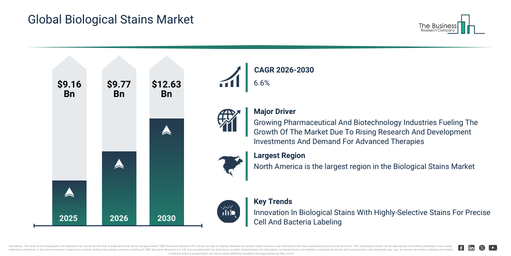
  • Biological Stains Market Expected To Reach $12.62 Billion By 2030 As Growth Accelerates At 6.6% CAGR

    Biological Stains Market Expected To Reach $12.62 Billion By 2030 As Growth Accelerates At 6.6% CAGR

    Enhanced with market attractiveness analysis, total addressable market evaluation, company benchmarking matrices, interactive Excel dashboards, expanded supply chain intelligence, emerging startup coverage, and detailed product insights, The Business Research Company’s 2026 market reports deliver more actionable and strategically valuable research.

    Biological Stains Market Revenue Outlook: What CAGR Is Expected Through 2030?

    The biological stains market has experienced robust expansion in recent years, with projections indicating an increase from $9.16 billion in 2025 to $9.77 billion in 2026, reflecting a compound annual growth rate (CAGR) of 6.7%. This historical growth has been driven by factors such as the rise in clinical diagnostics, the broadening of microscopy-based research, a higher incidence of infectious diseases, the extensive implementation of laboratory staining procedures, and the proliferation of pathology laboratories.

    The biological stains market is projected to experience robust expansion over the coming years, reaching a valuation of $12.63 billion by 2030, driven by a compound annual growth rate (CAGR) of 6.6%. This anticipated growth in the forecast period stems from several factors, including progress in diagnostic research methodologies, increased funding for life sciences research, a heightened need for precise disease detection, a surge in biotechnology research efforts, and growing automation in laboratory settings. Key developments shaping this period involve the broader application of stains in histology and cytology diagnostics, higher demand from microbiology and bacteriology laboratories, increased utilization of specialized and selective staining agents, an upswing in academic and clinical research activities, and a stronger emphasis on achieving high-contrast and precise staining results.

    Download A Free Sample Report For Comprehensive Market Insights:

    https://www.thebusinessresearchcompany.com/sample.aspx?id=23325&type=smp&utm_source=BlogsPR&utm_medium=Paid&utm_campaign=Jul_PR

    Biological Stains Market Growth Drivers: What Factors Are Accelerating Expansion?

    The ongoing expansion of the pharmaceutical and biotechnology sectors is anticipated to drive the advancement of the biological stains market in the coming years. This industry includes businesses focused on researching, developing, producing, and marketing drugs, biologics, and medical treatments aimed at preventing, diagnosing, and curing diseases. Its growth is fueled by innovations in biologics like mRNA vaccines, which have transformed how diseases are prevented and managed. Biological stains play a crucial role in this context by facilitating detailed imaging and analysis of cellular and tissue structures, thereby supporting drug discovery and quality assurance efforts. For example, in June 2024, the BioIndustry Association (BIA)—a UK-based national trade body for the innovative life sciences and biotech sector—reported that during the second quarter of 2024, UK biotech companies secured £622 million in venture capital, equivalent to approximately $670.29 million. This marked a dramatic 259% rise from the previous quarter and a 48% increase compared to the same period last year. Consequently, the sustained growth of the pharmaceutical and biotechnology industries is fueling the expansion of the biological stains market.

    Biological Stains Market Segmentation: How Is The Market Structured Across Key Categories?

    The biological stains market covered in this report is segmented –

    1) By Nature: Acidic Stains, Basic Stains, Neutral Stains

    2) By Product Type: Acid Fuchsin, Congo Red, Crystal Violet, Eosin, Other Product Types

    3) By Application: Histology And Cytology, Microbiology, Bacteriology, Deoxyribonucleic Acid Staining, Protein Staining, Gram Staining, Other Applications

    4) By End-User: Diagnostic Laboratories, Academic And Research Institutes, Pharmaceutical And Biotechnology Companies, Other End-Users

    Subsegments:

    1) By Acidic Stains: Eosin, Picric Acid, Acid Fuchsin, Congo Red, Nigrosin

    2) By Basic Stains: Methylene Blue, Crystal Violet, Safranin, Basic Fuchsin, Malachite Green

    3) By Neutral Stains: Leishman Stain, Giemsa Stain, Romanowsky Stain, Wright’s Stain, Jenner’s Stain

    Biological Stains Market Trends: What Is Shaping Future Industry Growth?

    Key players in the biological stains market are concentrating on creating cutting-edge products, like highly selective stains, to facilitate sophisticated research in microbiology and pathology. These specialized dyes enable precise identification and differentiation of target cells or components, operating with reduced background noise for accurate results. As an example, in October 2023, Biotium, Inc., a biotechnology firm based in the United States, introduced BactoView Dead Stains and BactoView Viability Kits. These new stains provide exact selectivity for gram-positive and gram-negative bacteria, while minimizing background interference. Engineered for effectiveness, they simplify the workflow through a single 30-minute staining process, removing the requirement for additional washing steps and making bacterial analysis more straightforward.

    Biological Stains Market Competitive Landscape And Leading Companies

    Major companies operating in the biological stains market are Arti Chemical Industries, Otto Chemie Pvt Ltd, Royal Industries Inc., Alpha Chemika, Loba Chemie Pvt Ltd, Hunan Yunbang Biotech Inc., Abbey Color Inc., Belami Fine Chemicals, GSP Enterprise, Macsen Labs, Vanshi Chemicals Pvt Ltd, Megha International, Karan Laborates, American Enterprises Pvt Ltd, AB Enterprises, Suvchem, Qualikems Lifesciences Private Limited, Khatau Valabhdas And Co, Spa Corporation, Neha-Chem.

    Access The Complete Biological Stains Market Report:

    https://www.thebusinessresearchcompany.com/report/biological-stains-global-market-report?utm_source=BlogsPR&utm_medium=Paid&utm_campaign=Jul_PR

    Biological Stains Market Geographic Landscape: Which Region Dominates Industry Growth?

    North America was the largest region in the biological stains market in 2025. Asia-Pacific is expected to be the fastest-growing region in the forecast period. The regions covered in the biological stains market report are Asia-Pacific, South East Asia, Western Europe, Eastern Europe, North America, South America, Middle East, Africa.

    Get in touch with us:

    The Business Research Company: https://www.thebusinessresearchcompany.com/?utm_source=BlogsPR&utm_medium=Paid&utm_campaign=home_page_test

    Americas: +1 310-496-7795

    Asia: +44 7882 955267 & +91 8897263534

    Europe: +44 7882 955267

    Email us at: marketing@tbrc.info

    Follow us on:

    LinkedIn: https://in.linkedin.com/company/the-business-research-company

    YouTube: https://www.youtube.com/channel/UC24_fI0rV8cR5DxlCpgmyFQ

    Global Market Model: https://www.thebusinessresearchcompany.com/global-market-model