Blog

  • Anti-Rabies Serum Market Size Projected To Increase From $1.58 Billion To $1.94 Billion During The Forecast Period

    Anti-Rabies Serum Market Size Projected To Increase From $1.58 Billion To $1.94 Billion During The Forecast Period

    Through market attractiveness analysis, total addressable market evaluation, company benchmarking matrices, interactive Excel dashboards, expanded supply chain intelligence, emerging startup coverage, and detailed product insights, The Business Research Company’s 2026 market reports provide more actionable and strategically valuable research.

    Anti-Rabies Serum Market Expected To Reach $1.94 Billion By 2030 At 5.3% CAGR

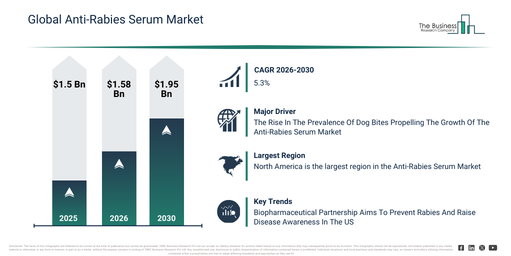
    The market for anti-rabies serum has experienced robust expansion in recent times. Projected to rise from $1.5 billion in 2025 to $1.58 billion in 2026, it reflects a compound annual growth rate (CAGR) of 5.6%. This historical growth has been driven by a higher number of rabies exposure incidents, broader implementation of emergency treatment protocols in hospitals, the accessibility of immunoglobulins derived from equine sources, government-backed initiatives for rabies control, and increased public understanding of post-exposure prophylaxis.

    The market for anti-rabies serum is anticipated to experience robust expansion over the coming years. Projections indicate it will reach $1.95 billion by 2030, reflecting a compound annual growth rate (CAGR) of 5.3%. This upward trajectory during the forecast period is driven by factors such as the growing utilization of human anti-rabies immunoglobulin, the broadening of rabies prevention efforts in developing regions, heightened investments in biologics manufacturing, an increased emphasis on safer serum options, and the reinforcement of public health vaccination frameworks. Key developments shaping this period include a greater uptake of human-derived immunoglobulins, a shift toward prefilled syringe formats, the optimization of cold-chain logistics for serum distribution, a heightened focus on high-purity antibody formulations, and the enhanced standardization of post-exposure prophylaxis procedures.

    Download A Free Sample Report For Comprehensive Market Insights:

    https://www.thebusinessresearchcompany.com/sample.aspx?id=20468&type=smp&utm_source=BlogsPR&utm_medium=Paid&utm_campaign=Jul_PR

    Anti-Rabies Serum Market Growth Factors Supporting Long-Term Expansion

    The growing frequency of dog bites is anticipated to boost the anti-rabies serum market in the coming period. Dog bites are defined as wounds inflicted when a dog bites or scratches a person, with severity ranging from mild to serious. Such incidents can result in infections, deep wounds, and occasionally the transmission of diseases like rabies. Proper prevention and rapid medical intervention are essential for reducing and controlling the hazards associated with dog bites. This increase in dog bite occurrences is driven by factors including growing urbanization, which leads to more frequent human-dog encounters, a larger number of stray or inadequately trained dogs, and limited public knowledge regarding canine behavior and bite avoidance. Consequently, the rising rate of dog bites has heightened the demand for anti-rabies serum, since its prompt administration is vital for preventing rabies in individuals exposed to possibly infected animals. For example, in 2023, the American Veterinary Medical Association, a US-based nonprofit, reported that the average cost for dog bite insurance claims that year was $58,545, with insurers paying out $1.12 billion in liability claims for dog bites and related injuries. Dog bite claims rose by almost 10% in 2023. Hence, the increasing prevalence of dog bites is propelling expansion in the anti-rabies serum market.

    Anti-Rabies Serum Market Segment Landscape: Which Areas Lead Market Development?

    The anti-rabies serum market covered in this report is segmented –

    1) By Type: Human Anti-rabies Immunoglobulin, Equine Anti-rabies Immunoglobulin

    2) By Dosage And Form: Vials, Prefilled Syringes

    3) By Route of Administration: Intravenous, Intramuscular

    4) By End User: Hospitals, Clinics, Veterinary Hospitals

    Subsegments:

    1) By Human Anti-Rabies Immunoglobulin: Monovalent Human Anti-Rabies Immunoglobulin, Polyvalent Human Anti-Rabies Immunoglobulin, Intramuscular Human Anti-Rabies Immunoglobulin, Intravenous Human Anti-Rabies Immunoglobulin, Freeze-Dried Human Anti-Rabies Immunoglobulin

    2) By Equine Anti-Rabies Immunoglobulin: Freeze-Dried Equine Anti-Rabies Immunoglobulin, Liquid Equine Anti-Rabies Immunoglobulin, Monovalent Equine Anti-Rabies Immunoglobulin, Polyvalent Equine Anti-Rabies Immunoglobulin

    Anti-Rabies Serum Market Industry Trends Shaping Future Revenue Growth

    Leading players within the anti-rabies serum sector are increasingly turning to strategic alliances as a key method for advancing product innovation and broadening their footprint in the marketplace. Such strategic partnerships involve companies harnessing each other’s capabilities and assets to create shared advantages and drive mutual growth. A notable example occurred in July 2023, when Kedrion S.p.A., a biopharmaceutical firm based in the United States, joined forces with Kamada, an Israeli biopharmaceutical company, to bring KEDRAB (Rabies Immune Globulin [Human]) to the U.S. market. This joint venture has played a crucial role in both the co-development and licensing of the product across the country, while simultaneously boosting awareness about the disease. Through their collaborative initiatives, this alliance has been instrumental in safeguarding individuals who come into contact with rabid animal bites from severe and potentially fatal health outcomes.

    Anti-Rabies Serum Market Industry Leaders And Market Competition

    Major companies operating in the anti-rabies serum market are Merck & Co Inc., Sanofi SA, GlaxoSmithKline PLC, Takeda Pharmaceutical Company Limited, HCX Pharmaceuticals LLP, Intas Pharmaceuticals Ltd, Bavarian Nordic AS, Serum Institute of India Pvt Ltd., Bharat Serums And Vaccines Limited, Indian Immunologicals Ltd., Bharat Biotech., National Institute of Health Islamabad, ViNS Bioproducts Ltd., Shanghai Serum Bio-technology, Premium Serums and Vaccines Pvt Ltd., Congruent Pharmachem, Haffkine Bio Pharmaceutical Corporation Limited, LEXICARE PHARMA PVT. LTD., Avin Darou, Central Research Institute Kasauli, Vigilomed Pharmaceuticals

    Access The Complete Anti-Rabies Serum Market Report:

    https://www.thebusinessresearchcompany.com/report/anti-rabies-serum-global-market-report?utm_source=BlogsPR&utm_medium=Paid&utm_campaign=Jul_PR

    Anti-Rabies Serum Market Geographic Analysis: Where Is Demand Growing The Fastest?

    North America was the largest region in the anti-rabies serum market in 2025. The regions covered in the anti-rabies serum market report are Asia-Pacific, South East Asia, Western Europe, Eastern Europe, North America, South America, Middle East, Africa.

    Get in touch with us:

    The Business Research Company: https://www.thebusinessresearchcompany.com/?utm_source=BlogsPR&utm_medium=Paid&utm_campaign=home_page_test

    Americas: +1 310-496-7795

    Asia: +44 7882 955267 & +91 8897263534

    Europe: +44 7882 955267

    Email us at: marketing@tbrc.info

    Follow us on:

    LinkedIn: https://in.linkedin.com/company/the-business-research-company

    YouTube: https://www.youtube.com/channel/UC24_fI0rV8cR5DxlCpgmyFQ

    Global Market Model: https://www.thebusinessresearchcompany.com/global-market-model
  • Antipyretic Drugs For Children Market Growth Outlook Reveals A CAGR Of 6.3% And A Market Value Of $4.61 Billion By 2030

    Antipyretic Drugs For Children Market Growth Outlook Reveals A CAGR Of 6.3% And A Market Value Of $4.61 Billion By 2030

    Delivering more actionable and strategically valuable research, The Business Research Company’s 2026 market reports feature market attractiveness analysis, total addressable market evaluation, company benchmarking matrices, interactive Excel dashboards, expanded supply chain intelligence, emerging startup coverage, and detailed product insights.

    Antipyretic Drugs For Children Market Size And Revenue Forecast Through 2030

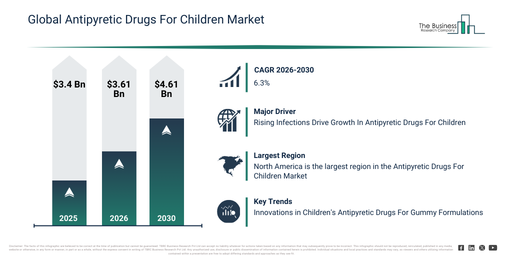
    Recent years have witnessed robust expansion in the market size of antipyretic medications for children. This segment, valued at $3.4 billion in 2025, is projected to reach $3.61 billion by 2026, demonstrating a compound annual growth rate (CAGR) of 6.3%. The historical growth trajectory has been driven by factors such as a high incidence of infections among children, extensive utilization of acetaminophen, advancements in hospital-based pediatric services, the implementation of well-established dosing protocols, and the broadening reach of retail pharmacy networks.

    The market for paediatric antipyretic drugs is anticipated to undergo substantial expansion over the coming years. By 2030, it is projected to reach a valuation of $4.61 billion, reflecting a compound annual growth rate (CAGR) of 6.3%. Several key factors are driving this upward trajectory during the forecast period, including an expanding child population, a growing tendency toward self-medication, a wider availability of over-the-counter (OTC) products for children, enhanced healthcare accessibility, and marked improvements in drug safety labeling. Prominent developments shaping this market’s landscape include a higher occurrence of fever cases among children, a shifting preference toward liquid medication formats, a broadening scope of OTC paediatric treatments, rising awareness among parents about effective fever control, and an escalating demand for formulations tailored to specific age groups.

    Download A Free Sample Report For Comprehensive Market Insights:

    https://www.thebusinessresearchcompany.com/sample.aspx?id=18956&type=smp&utm_source=BlogsPR&utm_medium=Paid&utm_campaign=Jul_PR

    Antipyretic Drugs For Children Market Demand Drivers Creating New Revenue Opportunities

    The anticipated expansion of the antipyretic drugs for children market forward is driven by the rising prevalence of viral and bacterial infections. Viral infections arise from viruses invading host cells, while bacterial infections stem from harmful bacteria multiplying inside the body. The incidence of these infections is escalating due to the resurgence of respiratory pathogens following the easing of pandemic restrictions. This market supports care management through fever-reducing medications that alleviate discomfort and prevent complications during pediatric infections. In March 2024, the Centers for Disease Control and Prevention, a US government agency, reported that tuberculosis cases rose from 8,320 in 2022 to 9,615 in 2023, an increase of 1,295 cases. Consequently, the growing number of viral and bacterial infections is fueling the growth of the antipyretic drugs for children market.

    The increasing birth rates are expected to drive the expansion of the antipyretic drug for children market forward. Defined as the number of live births per 1,000 individuals in a population annually, the birth rate is rising due to enhanced healthcare access, improved economic conditions, and higher fertility rates in specific regions. A larger birth rate boosts demand for antipyretic drugs for children, as a greater population of infants and young children requires more medical care, including fever management. For example, in September 2024, the Registry of Births, Deaths, and Marriages, Victoria, an Australia-based electronic system, noted that registered births in Victoria climbed from 7,689 in July 2024 to 7,994 in August 2024. Thus, growing birth rates are propelling the antipyretic drug for children market.

    Antipyretic Drugs For Children Market Segments: Where Are The Largest Growth Opportunities?

    The antipyretic drugs for children market covered in this report is segmented –

    1) By Drug Class: Acetaminophen, Ibuprofen, Other Drug Classes

    2) By Dosage Form: Tablets, Syrups, Suppositories, Other Dosage Forms

    3) By Age Group: Newborns, Infants, Toddlers, Children

    Antipyretic Drugs For Children Market Trends Driving Strategic Industry Expansion

    Major players in the children’s antipyretic drugs market are prioritizing the creation of innovative drug formulations, including medicine gummy bites, which offer a chewable, tasty, and easy-to-deliver dosage method to enhance patient adherence and comfort for younger individuals. These gummy bites constitute pediatric-friendly chewable formulations that incorporate a precise quantity of an antipyretic substance, such as acetaminophen, aimed at hiding bad flavors, alleviating challenges with swallowing, and streamlining administration for caregivers while preserving a consistent therapeutic outcome. In October 2023, DrKids, a pharmaceutical firm based in the United States, introduced an acetaminophen gummy bite as a child-friendly option for pain and fever relief, featuring an exact pre-measured dosing mechanism for accurate delivery, a palatable chewable gummy format that improves acceptance, and a practical design supporting secure and stress-free dosing for parents.

    Antipyretic Drugs For Children Market Major Participants And Competitive Dynamics

    Major companies operating in the antipyretic drugs for children market are Pfizer Inc., Johnson & Johnson, Merck & Co. Inc., Bayer AG, Novartis AG, Sanofi S.A., Bristol Myers Squibb, GlaxoSmithKline plc, Reckitt Benckiser Group, Viatris Inc., Teva Pharmaceutical Industries Ltd., Sun Pharmaceutical Industries Ltd., Perrigo Company plc, Aurobindo Pharma Ltd., Dr. Reddy’s Laboratories Ltd., Cipla Ltd., Lupin Limited, Towa Pharmaceutical Co Ltd, Glenmark Pharmaceuticals Ltd., Alkem Laboratories Limited

    Access The Complete Antipyretic Drugs For Children Market Report:

    https://www.thebusinessresearchcompany.com/report/antipyretic-drugs-for-children-global-market-report?utm_source=BlogsPR&utm_medium=Paid&utm_campaign=Jul_PR

    Antipyretic Drugs For Children Market Global Footprint: Which Region Holds Market Leadership?

    North America was the largest region in the antipyretic drugs for children market in 2025. Asia-Pacific is expected to be the fastest-growing region in the forecast period. The regions covered in the antipyretic drugs for children market report are Asia-Pacific, South East Asia, Western Europe, Eastern Europe, North America, South America, Middle East, Africa.

    Get in touch with us:

    The Business Research Company: https://www.thebusinessresearchcompany.com/?utm_source=BlogsPR&utm_medium=Paid&utm_campaign=home_page_test

    Americas: +1 310-496-7795

    Asia: +44 7882 955267 & +91 8897263534

    Europe: +44 7882 955267

    Email us at: marketing@tbrc.info

    Follow us on:

    LinkedIn: https://in.linkedin.com/company/the-business-research-company

    YouTube: https://www.youtube.com/channel/UC24_fI0rV8cR5DxlCpgmyFQ

    Global Market Model: https://www.thebusinessresearchcompany.com/global-market-model
  • Antipsychotic Drugs Market Forecast Highlights Expansion From $23.23 Billion To $33.25 Billion Through 2030

    Antipsychotic Drugs Market Forecast Highlights Expansion From $23.23 Billion To $33.25 Billion Through 2030

    Enhanced with market attractiveness analysis, total addressable market evaluation, company benchmarking matrices, interactive Excel dashboards, expanded supply chain intelligence, emerging startup coverage, and detailed product insights, The Business Research Company’s 2026 market reports deliver more actionable and strategically valuable research.

    Antipsychotic Drugs Market Growth From $23.23 Billion In 2026 To $33.25 Billion By 2030 At A CAGR Of 9.4%

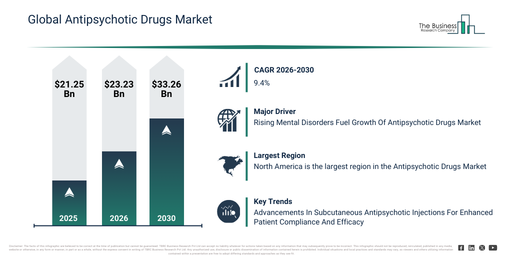
    The market for antipsychotic medications has experienced notable expansion over recent years. Projected to rise from $21.25 billion in 2025 to $23.23 billion in 2026, this represents a compound annual growth rate (CAGR) of 9.3%. Several factors fueled this historical growth, including the launch of first-generation antipsychotics, heightened awareness surrounding mental health conditions, the development of hospital and clinical facilities, an increasing incidence of schizophrenia and bipolar disorder, and greater investment in research and development for neuropsychiatric drugs.

    The market for antipsychotic drugs is projected to experience significant expansion over the coming years, climbing to $33.26 billion by 2030 with a compound annual growth rate (CAGR) of 9.4%. Key factors driving this forecast period growth include innovations in atypical and partial dopamine agonists, the growing use of precision medicine, the application of artificial intelligence in mental health diagnosis, the rise of online pharmacy channels, and an increased emphasis on long-acting injectable medications. Noteworthy trends shaping this period involve the shift toward personalized antipsychotic treatments, a growing elderly population, higher rates of schizophrenia and bipolar disorder, the emergence of telepsychiatry and digital mental health services, and the advancement of long-acting injectable antipsychotics.

    Download A Free Sample Report For Comprehensive Market Insights:

    https://www.thebusinessresearchcompany.com/sample.aspx?id=18780&type=smp&utm_source=BlogsPR&utm_medium=Paid&utm_campaign=Jul_PR

    Antipsychotic Drugs Market Expansion Supported By Key Demand Factors

    The rising prevalence of mental health conditions is anticipated to boost the expansion of the antipsychotic drug market in the coming years. Mental disorders, also referred to as mental illnesses, are conditions that influence an individual’s thoughts, behaviors, mood, and overall psychological well-being. These cases can stem from factors such as stress levels, societal expectations, genetic predisposition, biochemical imbalances, neurodevelopmental issues, and physical health problems. Antipsychotic medications manage mental disorders by modulating neurotransmitter activity, specifically dopamine and serotonin, which helps alleviate psychotic symptoms, stabilize mood, and enhance cognitive and emotional functioning. For example, a November 2023 survey by the Substance Abuse and Mental Health Services Administration (SAMHSA), a US public health agency, revealed that around 6% of adults aged 18 and older—approximately 15.4 million people—reported having a serious mental illness (SMI). Meanwhile, in September 2024, the Australian Institute of Health and Welfare, an Australian government agency, projected that the number of individuals living with dementia in Australia will rise from roughly 411,100 in 2023 to 849,300 by 2058, affecting about 315,500 men and 533,800 women. Consequently, the escalating occurrence of mental disorders is fueling growth in the antipsychotic drug market.

    Antipsychotic Drugs Market Segment Analysis: What Are The Major Market Categories?

    The antipsychotic drugs market covered in this report is segmented –

    1) By Therapeutic Class: First Generation, Second Generation, Third Generation

    2) By Disease: Schizophrenia, Bipolar Disorder, Unipolar Depression, Dementia, Other Diseases

    3) By Distribution Channel: Hospital Pharmacies, Drug Stores, Online Pharmacies

    Subsegments:

    1) By First Generation: Typical Antipsychotics, Phenothiazines, Butyrophenones, Thioxanthenes, Dibenzoxazepines

    2) By Second Generation: Atypical Antipsychotics, Clozapine, Olanzapine, Risperidone, Quetiapine, Aripiprazole, Paliperidone, Lurasidone

    3) By Third Generation: Partial Dopamine Agonists, Aripiprazole, Brexpiprazole, Cariprazine

    Antipsychotic Drugs Market Growth Trends Influencing Competitive Dynamics

    Key players in the antipsychotic drug market are concentrating on the creation of cutting-edge medical solutions, including subcutaneous atypical antipsychotic injections, which aim to boost patient adherence and provide superior effectiveness when compared with conventional oral treatments. These subcutaneous injections, administered under the skin, are psychiatric medications used to manage mental health conditions, sustain consistent drug levels in the bloodstream, and enhance control over symptoms. A notable example occurred in April 2023, when Teva Pharmaceutical Industries Ltd., an Israeli pharmaceutical firm, partnered with MedinCell SA, a French manufacturer of biological products and pharmaceutical formulations, to debut UZEDY, which received approval from the U.S. Food and Drug Administration (FDA). This extended-release injectable formulation of risperidone, designed as a long-acting subcutaneous shot, offers adaptable dosing every one or two months. UZEDY leverages MedinCell’s proprietary SteadyTeq technology, guaranteeing a gradual medication release that achieves therapeutic concentrations within 6 to 24 hours after administration. During clinical studies, UZEDY was found to lower the risk of schizophrenia relapse by up to 80% relative to a placebo. It is specifically aimed at overcoming compliance challenges often seen with oral antipsychotics, which frequently result in relapse.

    Antipsychotic Drugs Market Leading Companies Driving Competitive Growth

    Major companies operating in the antipsychotic drugs market are Pfizer Inc., Johnson & Johnson Services Inc., Merck And Co. Inc., AbbVie Inc., Bristol-Myers Squibb Company, AstraZeneca PLC, GlaxoSmithKline PLC, Takeda Pharmaceutical Company Limited, Eli Lilly And Company, Teva Pharmaceutical Industries Ltd., Sun Pharmaceutical Industries Ltd., Otsuka Pharmaceutical Co. Ltd., Aurobindo Pharma Ltd., Cipla Ltd., H. Lundbeck A/S, Dr. Reddy’s Laboratories Ltd., Intas Pharmaceuticals Ltd., Apotex Inc., Lupin Limited, Glenmark Pharmaceuticals Ltd., Torrent Pharmaceuticals Ltd., Alkermes plc

    Access The Complete Antipsychotic Drugs Market Report:

    https://www.thebusinessresearchcompany.com/report/antipsychotic-drugs-global-market-report?utm_source=BlogsPR&utm_medium=Paid&utm_campaign=Jul_PR

    Antipsychotic Drugs Market Regional Distribution: Which Areas Drive Market Expansion?

    North America was the largest region in the antipsychotic drugs market in 2025. Asia-Pacific is expected to be the fastest-growing region in the forecast period. The regions covered in the antipsychotic drugs market report are Asia-Pacific, South East Asia, Western Europe, Eastern Europe, North America, South America, Middle East, Africa.

    Get in touch with us:

    The Business Research Company: https://www.thebusinessresearchcompany.com/?utm_source=BlogsPR&utm_medium=Paid&utm_campaign=home_page_test

    Americas: +1 310-496-7795

    Asia: +44 7882 955267 & +91 8897263534

    Europe: +44 7882 955267

    Email us at: marketing@tbrc.info

    Follow us on:

    LinkedIn: https://in.linkedin.com/company/the-business-research-company

    YouTube: https://www.youtube.com/channel/UC24_fI0rV8cR5DxlCpgmyFQ

    Global Market Model: https://www.thebusinessresearchcompany.com/global-market-model
  • Anti-Parkinson Drugs Market Expected To Reach $14.28 Billion By 2030 As Growth Accelerates At 5.6% CAGR

    Anti-Parkinson Drugs Market Expected To Reach $14.28 Billion By 2030 As Growth Accelerates At 5.6% CAGR

    Through market attractiveness analysis, total addressable market evaluation, company benchmarking matrices, interactive Excel dashboards, expanded supply chain intelligence, emerging startup coverage, and detailed product insights, The Business Research Company’s 2026 market reports provide more actionable and strategically valuable research.

    Anti-Parkinson Drugs Market Expansion Outlook: What Revenue Opportunities Lie Ahead?

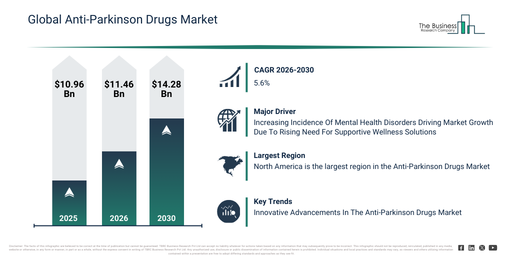
    The market for anti-parkinson medications has experienced consistent expansion over the past few years. Projections indicate an increase from $10.96 billion in 2025 to $11.46 billion in 2026, reflecting a compound annual growth rate (CAGR) of 4.6%. This historical growth has been driven by factors such as an expanding elderly demographic, a rise in Parkinson’s disease diagnoses, the prolonged utilization of levodopa, enhancements in neurological treatment, and the ongoing demand for managing chronic conditions.

    The market for anti-parkinson drugs is projected to experience significant expansion over the coming years, reaching a value of $14.28 billion by 2030, with a compound annual growth rate (CAGR) of 5.6%. This anticipated growth in the forecast period is driven by factors such as an increase in neurodegenerative conditions, progress in neuroprotective medication development, greater availability of transdermal treatment options, improved healthcare accessibility, and a heightened emphasis on enhancing patient quality of life. Key trends shaping this period include a growing preference for dopaminergic therapies, broader adoption of extended-release drug formats, an intensified focus on managing symptoms, the rising prevalence of combination drug regimens, and the introduction of more sophisticated methods for drug delivery.The market for medications used to treat Parkinson’s disease is projected to see considerable expansion over the coming years. By 2030, its value is anticipated to hit $14.28 billion, representing a compound annual growth rate (CAGR) of 5.6%. This upward trend in the forecast period is fueled by a rise in neurodegenerative disorders, breakthroughs in neuroprotective drug development, the growing adoption of transdermal therapies, improved healthcare accessibility, and a stronger emphasis on enhancing patients’ quality of life. Among the major developments influencing this period are an increased demand for dopaminergic treatments, a shift toward extended-release formulations, a heightened focus on effective symptom management, the growing popularity of combination drug therapies, and advancements in drug delivery technologies.

    Download A Free Sample Report For Comprehensive Market Insights:

    https://www.thebusinessresearchcompany.com/sample.aspx?id=3462&type=smp&utm_source=BlogsPR&utm_medium=Paid&utm_campaign=Jul_PR

    Anti-Parkinson Drugs Market Growth Drivers And Industry Catalysts

    The growing occurrence of mental health conditions is anticipated to drive expansion in the mental wellness market in the coming period. A mental health disorder involves a clinically significant impairment in an individual’s cognition, emotional regulation, or behavior. This rise in mental disorders is largely linked to heightened exposure to chronic stress and adverse life events, which overwhelm personal coping abilities and lead to psychological dysfunction. This increased frequency of mental disorders is expanding the market for anti-Parkinson drugs, as these medications help reduce and treat such conditions. For example, in October 2025, the Institute for Health Metrics and Evaluation, a US-based health research organization, reported that 15% of the global population experienced mental disorders in 2023, and 17% of all years lived with disability worldwide that year were due to mental disorders. Consequently, the high prevalence of mental disorders is fueling growth in the anti-Parkinson drugs market.

    Anti-Parkinson Drugs Market Segment Breakdown: Which Categories Generate The Most Revenue?

    The anti-parkinson drugs market covered in this report is segmented –

    1) By Drugs Class: Levodopa Or Carbidopa, Dopamine Receptor Agonists, Monoamine Oxidase Type B (MAO-B) Inhibitors, Catechol-O-Methyltransferase (COMT)-inhibitors, Anticholinergics, Other Drugs

    2) By Route of Administration: Oral, Injection, Transdermal

    3) By Distribution Channel: Hospital Pharmacies, Retailer Pharmacies, Online Pharmacies

    Subsegments:

    1) By Levodopa Or Carbidopa: Immediate-Release Levodopa Or Carbidopa, Extended-Release Levodopa Or Carbidopa

    2) By Dopamine Receptor Agonists: Pramipexole, Ropinirole, Rotigotine

    3) By Monoamine Oxidase Type B (MAO-B) Inhibitors: Selegiline, Rasagiline, Safinamide

    4) By Catechol-O-Methyltransferase (COMT)-Inhibitors: Entacapone, Tolcapone

    5) By Anticholinergics: Benztropine, Trihexyphenidyl

    6) By Other Drugs: Amantadine, Apomorphine

    Anti-Parkinson Drugs Market Trends Influencing Long-Term Demand

    Leading industry players in the anti-Parkinson drugs market are concentrating on creating innovative treatment options like motor fluctuations and dyskinesia to improve symptom management and reduce adverse effects. These motor fluctuations and dyskinesia frequently make Parkinson’s disease therapy more challenging, impacting patients’ quality of life. As an example, in January 2024, AbbVie Inc., a pharmaceutical firm based in the United States, introduced PRODUODOPA. This drug, known as foslevodopa/foscarbidopa, represents the first subcutaneous 24-hour infusion therapy designed for advanced Parkinson’s disease, targeting severe motor fluctuations and dyskinesia when alternative treatments are no longer effective. By consistently delivering levodopa, it has the potential to extend ‘on’ periods and enhance symptom control.

    Anti-Parkinson Drugs Market Key Players And Strategic Industry Positioning

    Major companies operating in the anti-parkinson drugs market are GlaxoSmithKline plc, Pfizer Inc., Novartis AG, F. Hoffmann-La Roche AG, UCB S.A, Teva Pharmaceutical Industries Ltd., AbbVie Inc., Mylan NV, C.H. Boehringer Sohn AG & Co. KG, Orion Pharma Ltd., Sun Pharmaceutical Industries Ltd., Wockhardt Ltd., Reddy’s Laboratories Ltd., Intas Pharmaceuticals Ltd., US WorldMeds LLC, Zydus Lifesciences Limited, Chemical Industrial & Pharmaceutical Laboratories Ltd., Strides Shasun Ltd., Upsher-Smith Laboratories LLC, H. Lundbeck A/S, Vertical Pharmaceuticals LLC, Zambon SPA, Valeant Pharmaceuticals International Inc., Neurocrine Biosciences Inc., Supernus Pharmaceuticals Inc.

    Access The Complete Anti-Parkinson Drugs Market Report:

    https://www.thebusinessresearchcompany.com/report/anti-parkinson-drugs-global-market-report?utm_source=BlogsPR&utm_medium=Paid&utm_campaign=Jul_PR

    Anti-Parkinson Drugs Market Leading Geography: Which Region Generates The Most Revenue?

    North America was the largest region in the anti-Parkinson drugs market in 2025. Middle East is expected to be the fastest-growing region in the anti-parkinson drugs market during the forecast period. The regions covered in the anti-parkinson drugs market report are Asia-Pacific, South East Asia, Western Europe, Eastern Europe, North America, South America, Middle East, Africa.

    Get in touch with us:

    The Business Research Company: https://www.thebusinessresearchcompany.com/?utm_source=BlogsPR&utm_medium=Paid&utm_campaign=home_page_test

    Americas: +1 310-496-7795

    Asia: +44 7882 955267 & +91 8897263534

    Europe: +44 7882 955267

    Email us at: marketing@tbrc.info

    Follow us on:

    LinkedIn: https://in.linkedin.com/company/the-business-research-company

    YouTube: https://www.youtube.com/channel/UC24_fI0rV8cR5DxlCpgmyFQ

    Global Market Model: https://www.thebusinessresearchcompany.com/global-market-model
  • Antiparasitic Drugs Market Set To Grow From $27.17 Billion In 2026 To $36.13 Billion By 2030 At A CAGR Of 7.4%

    Antiparasitic Drugs Market Set To Grow From $27.17 Billion In 2026 To $36.13 Billion By 2030 At A CAGR Of 7.4%

    Delivering more actionable and strategically valuable research, The Business Research Company’s 2026 market reports feature market attractiveness analysis, total addressable market evaluation, company benchmarking matrices, interactive Excel dashboards, expanded supply chain intelligence, emerging startup coverage, and detailed product insights.

    Antiparasitic Drugs Market Growth Potential: How Will Market Size Change Through 2030?

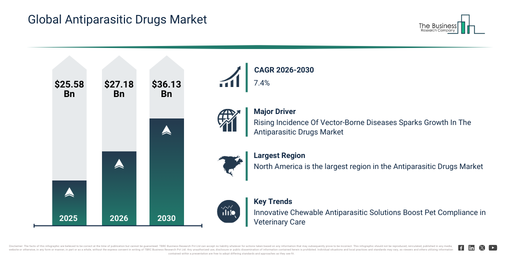
    The antiparasitic drugs market has experienced robust expansion in recent years. It is projected to increase from $25.58 billion in 2025 to $27.18 billion in 2026, reflecting a compound annual growth rate (CAGR) of 6.2%. Several factors drove this growth during the historical period, including a rising incidence of parasitic infections, restricted availability of modern antiparasitic treatments in developing areas, a historical dependence on monotherapy agents, growing demand for veterinary services, and insufficient awareness regarding preventive strategies.

    The market for antiparasitic drugs is projected to experience robust expansion in the coming years, reaching a value of $36.13 billion by 2030, with a compound annual growth rate (CAGR) of 7.4%. This anticipated growth during the forecast period is driven by factors such as the increasing adoption of combination therapies, progress in precision medicine aimed at treating parasitic infections, a heightened focus on animal health and livestock protection, the expansion of emerging markets, and the creation of innovative drug delivery systems. Key developments shaping this period include a rising prevalence of parasitic diseases, the development of combined antiparasitic treatments, broader use in animal healthcare, a growing preference for oral and injectable administration methods, and the introduction of new antiparasitic agents.

    Download A Free Sample Report For Comprehensive Market Insights:

    https://www.thebusinessresearchcompany.com/sample.aspx?id=12927&type=smp&utm_source=BlogsPR&utm_medium=Paid&utm_campaign=Jul_PR

    Antiparasitic Drugs Market Opportunity Drivers: What Is Creating New Revenue Potential?

    The growth of the antiparasitic drugs market is set to accelerate in the future, driven largely by the rising prevalence of vector-borne diseases. These illnesses, which include malaria, dengue, and yellow fever, are spread to humans and animals through the bites of arthropods such as mosquitoes, ticks, and flies. Antiparasitic medications are critical in controlling the transmission of these diseases, as they directly target and eliminate the parasites involved. Common drugs like chloroquine, doxycycline, and atovaquone-proguanil are frequently prescribed to treat malaria. A report from the Centers for Disease Control and Prevention, a U.S. federal agency, noted that from January to June 2024, over 9.7 million dengue cases were recorded in the Americas—more than doubling the 4.6 million cases seen throughout 2023. In the United States alone, Puerto Rico reported 1,498 cases, while 745 infections were found among returning travelers. Consequently, the growing incidence of vector-borne diseases is fueling expansion in the antiparasitic drugs market.

    Antiparasitic Drugs Market Segmentation: How Is The Market Structured Across Key Categories?

    The antiparasitic drugs market covered in this report is segmented –

    1) By Product Type: Anthelmintics, Antiprotozoals, Ectoparasiticide, Other Products

    2) By Treatment: Avermectins, Bezimidazoles, Pyrimidines, Imidazolesthiazoles

    3) By Route of Administration: Oral, Injectable, Topical

    4) By End User: Hospitals, Homecare, Specialty Clinics, Other End Users

    Subsegments:

    1) By Anthelmintics: Benzimidazoles, Ivermectin, Pyrantel Pamoate, Praziquantel

    2) By Antiprotozoals: Metronidazole, Tinidazole, Nitazoxanide, Pentamidine

    3) By Ectoparasiticides: Permethrin, Malathion, Fipronil

    4) By Other Products: Combination Antiparasitic Drugs, Novel Antiparasitic Agents

    Antiparasitic Drugs Market Innovation Trends Driving Future Development

    Major players in the antiparasitic drugs market are concentrating on creating new products, particularly chewable veterinary options, to make administration easier and boost pet compliance. Chewable veterinary products consist of flavored tablets or treats that are simple to give and are designed to deliver medication to animals. These formulations improve compliance by making the treatment process more appealing and less stressful. As an example, in April 2024, C.H. Boehringer Sohn AG and Co. KG, a pharmaceutical company based in Germany, introduced NexGard Spectra for comprehensive parasite management. NexGard SPECTRA is a soft, savory chew that offers full coverage against internal and external parasites in dogs, targeting fleas, ticks, heartworms, and a range of intestinal worms with just one monthly dose. It shows fast effectiveness, killing fleas within four hours after administration and attaining over 99% efficacy against multiple parasites soon after.

    Antiparasitic Drugs Market Competitive Landscape And Leading Companies

    Major companies operating in the antiparasitic drugs market are Pfizer Inc., Johnson & Johnson, Cadila Pharmaceuticals, Merck & Co. Inc., Bayer AG, Novartis AG, Sanofi S.A., GlaxoSmithKline plc, Takeda Pharmaceutical Company Limited, Boehringer Ingelheim Group, Zoetis Inc., Eisai Co. Ltd., Dr. Reddy’s Laboratories, Intas Pharmaceuticals Ltd., Alkem Laboratories Ltd., Ceva Santé Animale S.A., Elanco Animal Health Incorporated, Phibro Animal Health Corporation, Norbrook Laboratories Ltd., Mankind Pharma, Bimeda Inc., Indoco Remedies Ltd., ECO Animal Health, Lincoln Pharmaceuticals Ltd., Laboratorios Calier

    Access The Complete Antiparasitic Drugs Market Report:

    https://www.thebusinessresearchcompany.com/report/antiparasitic-drugs-global-market-report?utm_source=BlogsPR&utm_medium=Paid&utm_campaign=Jul_PR

    Antiparasitic Drugs Market Regional Outlook: Where Are The Largest Opportunities Located?

    North America was the largest region in the antiparasitic drugs market in 2025. Asia-Pacific is expected to be the fastest-growing region in the forecast period. The regions covered in the antiparasitic drugs market report are Asia-Pacific, South East Asia, Western Europe, Eastern Europe, North America, South America, Middle East, Africa.

    Get in touch with us:

    The Business Research Company: https://www.thebusinessresearchcompany.com/?utm_source=BlogsPR&utm_medium=Paid&utm_campaign=home_page_test

    Americas: +1 310-496-7795

    Asia: +44 7882 955267 & +91 8897263534

    Europe: +44 7882 955267

    Email us at: marketing@tbrc.info

    Follow us on:

    LinkedIn: https://in.linkedin.com/company/the-business-research-company

    YouTube: https://www.youtube.com/channel/UC24_fI0rV8cR5DxlCpgmyFQ

    Global Market Model: https://www.thebusinessresearchcompany.com/global-market-model
  • Antiobesity Market Opportunities Are Emerging Beyond Traditional Growth Areas

    Antiobesity Market Opportunities Are Emerging Beyond Traditional Growth Areas

    Enhanced with market attractiveness analysis, total addressable market evaluation, company benchmarking matrices, interactive Excel dashboards, expanded supply chain intelligence, emerging startup coverage, and detailed product insights, The Business Research Company’s 2026 market reports deliver more actionable and strategically valuable research.

    Antiobesity Market Value Analysis: What Growth Is Expected Over The Forecast Period?

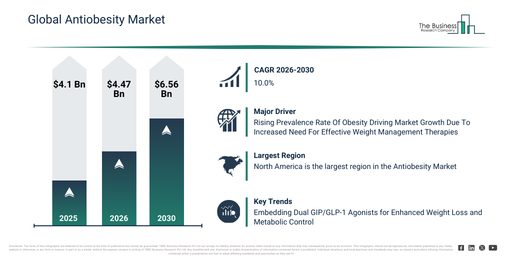
    A strong growth trajectory has been observed in the antiobesity market in recent years. Projected to increase from $4.1 billion in 2025 to $4.47 billion in 2026, this expansion reflects a compound annual growth rate (CAGR) of 9.0%. The historical rise was driven by escalating global obesity rates, the limited effectiveness of lifestyle-only approaches, the availability of appetite suppressants, a growing burden of metabolic disorders, and physician-led weight management initiatives.

    The antiobesity market is projected to experience significant expansion over the coming years, reaching a value of $6.56 billion by 2030, driven by a compound annual growth rate (CAGR) of 10.0%. This forecasted growth is fueled by factors such as the rising incidence of diabetes and obesity, advancements in hormone-based medications, broader reimbursement policies, heightened public awareness about obesity, and a growing demand for sustainable weight management solutions. Key trends shaping this period include the widespread uptake of GLP-1-based treatments, a shift toward prescription weight loss medications, the increased application of combination antiobesity therapies, a stronger emphasis on long-term weight control, and improved accessibility to obesity care.

    Download A Free Sample Report For Comprehensive Market Insights:

    https://www.thebusinessresearchcompany.com/sample.aspx?id=3403&type=smp&utm_source=BlogsPR&utm_medium=Paid&utm_campaign=Jul_PR

    Antiobesity Market Growth Momentum: Which Factors Are Influencing Demand?

    The increasing rate of obesity prevalence is expected to drive the expansion of the anti-obesity drugs market moving forward. Obesity is defined as a long-term metabolic disorder marked by the abnormal buildup of body fat, which heightens the likelihood of severe health issues such as diabetes, heart disease, osteoarthritis, and various cancers. This growing prevalence stems from higher consumption of highly processed foods loaded with sugars, harmful fats, and refined carbohydrates, paired with inactive lifestyles that decrease physical activity. Consequently, the rise in obesity cases is boosting demand for effective medical treatments for obesity, supportive weight management strategies, and sustained care options to lower associated health dangers and enhance patient well-being. For example, in March 2024, the World Obesity Federation, a UK-based entity dedicated to obesity research and advocacy, reported that 79% of adults and 88% of children with overweight or obesity are predicted to reside in low- and middle-income countries by 2035. Thus, the escalating obesity prevalence rate is fueling growth in the anti-obesity drugs market.

    Antiobesity Market Segmentation Trends And Revenue Drivers

    The antiobesity market covered in this report is segmented –

    1) By Drug Class: Peripherally Acting Anti-Obesity Drugs, Centrally Acting Anti-Obesity Drugs

    2) By Type: Prescription Drugs (Rx), OTC Drugs

    3) By Medication: Monotherapies, Polytherapies

    Subsegments:

    1) By Peripherally Acting Anti-Obesity Drugs: Orlistat, Lorcaserin

    2) By Centrally Acting Anti-Obesity Drugs: Phentermine, Topiramate, Naltrexone-Bupropion Combination, Liraglutide

    Antiobesity Market Trends Reshaping Industry Growth

    Major players in the antiobesity sector are prioritizing product innovation and the development of advanced formulations, such as dual glucose-dependent insulinotropic peptide receptor agonists, designed to deliver more effective weight loss, enhanced metabolic benefits, and improved tolerability. By combining synergistic effects on appetite control, insulin sensitivity, and energy expenditure, these therapies offer superior performance compared to earlier GLP-1-only options. A key example occurred in December 2024, when Eli Lilly, a pharmaceutical company based in the United States, secured FDA approval for Zepbound (tirzepatide), marking it as the first and only prescription dual GIP/GLP-1 agonist authorized for chronic weight management. Clinical data from phase 3 trials revealed that tirzepatide led to substantial reductions in body weight, demonstrating its strong efficacy. With this new indication, Zepbound is anticipated to solidify Lilly’s position as a leader in precision obesity treatments, meeting the rising demand for long-lasting, highly effective therapeutic solutions.

    Antiobesity Market Industry Leaders: Which Organizations Are Driving Competition?

    Major companies operating in the antiobesity market are Takeda Pharmaceutical Company Limited, Eisai Co. Ltd., Novo Nordisk A/S, Zafgen Inc., Rhythm Pharmaceuticals Inc., Zydus Cadila, Norgine B.V., Vivus Inc., Arena Pharmaceuticals Inc., Orexigen Therapeutics Inc., Eli Lilly and Company, Amgen Inc., AstraZeneca PLC, Viking Therapeutics Inc., Structure Therapeutics Inc., Gelesis Inc., Sanofi S.A., F. Hoffmann-La Roche Ltd, Teva Pharmaceutical Industries Limited, Sun Pharmaceutical Industries Ltd., Dr. Reddy’s Laboratories Ltd., Cipla Ltd., Lupin Ltd., Torrent Pharmaceuticals Ltd.

    Access The Complete Antiobesity Market Report:

    https://www.thebusinessresearchcompany.com/report/antiobesity-global-market-report?utm_source=BlogsPR&utm_medium=Paid&utm_campaign=Jul_PR

    Antiobesity Market Geographic Landscape: Which Region Dominates Industry Growth?

    North America was the largest region in the anti-obesity market in 2025. Middle East is expected to be the fastest-growing region in the antiobesity market. The regions covered in the antiobesity market report are Asia-Pacific, South East Asia, Western Europe, Eastern Europe, North America, South America, Middle East, Africa.

    Get in touch with us:

    The Business Research Company: https://www.thebusinessresearchcompany.com/?utm_source=BlogsPR&utm_medium=Paid&utm_campaign=home_page_test

    Americas: +1 310-496-7795

    Asia: +44 7882 955267 & +91 8897263534

    Europe: +44 7882 955267

    Email us at: marketing@tbrc.info

    Follow us on:

    LinkedIn: https://in.linkedin.com/company/the-business-research-company

    YouTube: https://www.youtube.com/channel/UC24_fI0rV8cR5DxlCpgmyFQ

    Global Market Model: https://www.thebusinessresearchcompany.com/global-market-model
  • Anti-Neoplastic Agents Market Expansion Is Opening New Pathways For Strategic Investment

    Anti-Neoplastic Agents Market Expansion Is Opening New Pathways For Strategic Investment

    Through market attractiveness analysis, total addressable market evaluation, company benchmarking matrices, interactive Excel dashboards, expanded supply chain intelligence, emerging startup coverage, and detailed product insights, The Business Research Company’s 2026 market reports provide more actionable and strategically valuable research.

    Anti-Neoplastic Agents Market Size Forecast: How Large Could The Market Become By 2030?

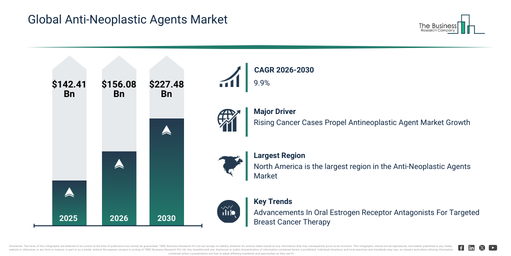
    The anti-neoplastic agents market has seen robust expansion in recent years. Projected to increase from $142.41 billion in 2025 to $156.08 billion in 2026, it reflects a compound annual growth rate (CAGR) of 9.6%. This upward trend during the historical period is driven by factors such as the scarcity of treatment alternatives, a strong dependence on chemotherapy, a gradual uptake of targeted therapies, reliance on manual production methods, and disjointed regulatory systems.

    Significant expansion is projected for the anti-neoplastic agents market in the coming years, with its value anticipated to reach $227.48 billion by 2030, reflecting a compound annual growth rate (CAGR) of 9.9%. This forecasted growth is driven by several factors, including the advancement of precision medicine, an expanding elderly demographic, heightened investment in cancer research, the incorporation of artificial intelligence into drug development processes, and the proliferation of oncology care facilities worldwide. Key developments expected during this period encompass customized cancer treatments, advanced targeted drug delivery mechanisms, the integration of immunotherapies, breakthroughs in both oral and injectable drug formulations, and the emergence of combination therapeutic approaches.

    Download A Free Sample Report For Comprehensive Market Insights:

    https://www.thebusinessresearchcompany.com/sample.aspx?id=12901&type=smp&utm_source=BlogsPR&utm_medium=Paid&utm_campaign=Jul_PR

    Anti-Neoplastic Agents Market Expansion Drivers: What Is Shaping Future Growth?

    The anticipated rise in cancer incidence is set to fuel the expansion of the antineoplastic agent market in the coming period. Cancer encompasses a group of diseases that can emerge in virtually any organ or tissue within the body, characterized by the uncontrolled growth of abnormal cells that surpass their usual boundaries, infiltrating adjacent body parts or spreading to other organs. Antineoplastic agents are vital in cancer management, functioning to curb the proliferation and division of malignant cells through diverse modes of action, such as causing DNA (Deoxyribonucleic acid) harm, interrupting the cell cycle, and disturbing essential cellular processes. As an example, the Australian Institute of Health and Welfare, a government agency based in Australia, reported in July 2024 that approximately 165,000 Australians were newly diagnosed with cancer in 2023, translating to more than 450 instances each day, with males making up about 55% of these cases. Consequently, the growing frequency of cancer diagnoses is propelling the antineoplastic agent market forward.

    Anti-Neoplastic Agents Market Segment Analysis Highlighting Growth Areas

    The anti-neoplastic agents market covered in this report is segmented –

    1) By Type: Alkylating Agents, Antimetabolites, Hormones And Antagonists, Miscellaneous

    2) By Disease Type: Gastrointestinal Cancer, Prostate Cancer, Lung Cancer, Breast Cancer, Other Disease Types

    3) By End User: Hospitals, Clinics

    Subsegments:

    1) By Alkylating Agents: Nitrogen Mustards, Alkyl Sulfonates, Nitrosoureas, Triazines

    2) By Antimetabolites: Purine Analogues, Pyrimidine Analogues, Folate Antagonists

    3) By Hormones and Antagonists: Estrogens and Antiestrogens, Androgens and Antiandrogens

    4) By Miscellaneous: Vinca Alkaloids, Taxanes, Antibiotic Antineoplastics, Targeted Therapy Agents

    Anti-Neoplastic Agents Market Strategic Trends: What Is Defining The Next Phase Of Growth?

    Leading players in the anti-neoplastic agents industry are concentrating on creating innovative approaches, like selective estrogen receptor degraders, to better address hormone receptor-driven cancers, improve patient results, and broaden therapeutic possibilities. These degraders, known as SERDs, represent a category of targeted cancer therapies that attach to estrogen receptors within tumor cells, hinder their function, and encourage their breakdown, thus obstructing ER-fueled cancer progression, especially in estrogen receptor-positive (ER+) breast cancers. For example, in September 2025, Eli Lilly and Company, an American pharmaceutical firm, secured approval from the US FDA for Inluriyo (imlunestrant), intended for adults with estrogen receptor-positive (ER+), HER2-negative (HER2–), ESR1-mutated advanced or metastatic breast cancer whose condition has advanced following at least one line of endocrine therapy. Inluriyo works as an oral estrogen receptor antagonist, effectively blocking and eliminating estrogen receptors, including mutated ESR1 receptors that contribute to cancer growth.

    Anti-Neoplastic Agents Market Leading Companies: Who Holds Significant Market Presence?

    Major companies operating in the anti-neoplastic agents market are Pfizer Inc., F. Hoffmann-La Roche Ltd., Merck & Co. Inc., Bayer AG, Novartis AG, Bristol-Myers Squibb Company, AstraZeneca PLC, Fresenius SE & Co. KGaA, Takeda Pharmaceutical Company Limited, Boehringer Ingelheim International GmbH, Viatris Inc., Teva Pharmaceutical Industries Ltd., Eisai Co. Ltd., Sun Pharmaceutical Industries Limited, Ipsen SA, Cipla Limited, Dr. Reddy’s Laboratories Ltd., Intas Pharmaceuticals Limited, Hikma Pharmaceuticals PLC, Gland Pharma Limited, Zydus Lifesciences Limited, Glenmark Pharmaceuticals Ltd., Jubilant Life Sciences Ltd., Hutchison Medipharma Ltd., Natco Pharma Ltd., Accord Healthcare Limited, Qilu Pharmaceutical Co. Ltd.

    Access The Complete Anti-Neoplastic Agents Market Report:

    https://www.thebusinessresearchcompany.com/report/anti-neoplastic-agents-global-market-report?utm_source=BlogsPR&utm_medium=Paid&utm_campaign=Jul_PR

    Anti-Neoplastic Agents Market Largest Region: Which Geography Holds The Highest Market Share?

    North America was the largest region in the anti-neoplastic agents market in 2025. Asia-Pacific is expected to be the fastest-growing region in the forecast period. The regions covered in the anti-neoplastic agents market report are Asia-Pacific, South East Asia, Western Europe, Eastern Europe, North America, South America, Middle East, Africa.

    Get in touch with us:

    The Business Research Company: https://www.thebusinessresearchcompany.com/?utm_source=BlogsPR&utm_medium=Paid&utm_campaign=home_page_test

    Americas: +1 310-496-7795

    Asia: +44 7882 955267 & +91 8897263534

    Europe: +44 7882 955267

    Email us at: marketing@tbrc.info

    Follow us on:

    LinkedIn: https://in.linkedin.com/company/the-business-research-company

    YouTube: https://www.youtube.com/channel/UC24_fI0rV8cR5DxlCpgmyFQ

    Global Market Model: https://www.thebusinessresearchcompany.com/global-market-model
  • Antimetabolite Drug Market Trends Are Creating New Opportunities For Industry Leaders

    Antimetabolite Drug Market Trends Are Creating New Opportunities For Industry Leaders

    Delivering more actionable and strategically valuable research, The Business Research Company’s 2026 market reports feature market attractiveness analysis, total addressable market evaluation, company benchmarking matrices, interactive Excel dashboards, expanded supply chain intelligence, emerging startup coverage, and detailed product insights.

    Antimetabolite Drug Market Revenue Outlook: What CAGR Is Expected Through 2030?

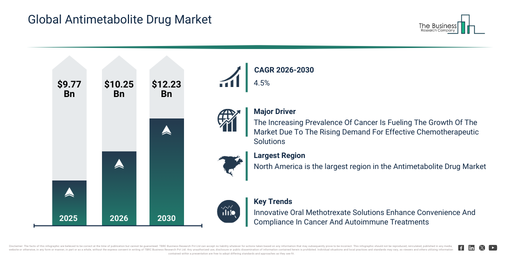
    The market for antimetabolite drugs has demonstrated consistent expansion over the past few years. Projections indicate a rise from $9.77 billion in 2025 to $10.25 billion in 2026, reflecting a compound annual growth rate (CAGR) of 4.8%. This historical growth trajectory has been largely driven by developments in cancer treatment protocols, the integration of oncology practices within hospitals, established chemotherapy standards, the availability of generic drug options, and usage informed by ongoing research.

    The antimetabolite drug market is projected to experience consistent expansion over the coming years, reaching a value of $12.23 billion by 2030, with a compound annual growth rate (CAGR) of 4.5%. This forecasted growth is driven by factors such as the expansion of oncology pipelines, the development of biosimilars, the broadening of autoimmune disease therapies, the rise of outpatient chemotherapy, and advances in precision oncology. Key trends shaping this period include the sustained application of these drugs in cancer treatment, the increasing use of combination chemotherapy regimens, the growing availability of generic antimetabolite medications, their rising demand for managing autoimmune conditions, and a heightened emphasis on enhancing drug tolerability.

    Download A Free Sample Report For Comprehensive Market Insights:

    https://www.thebusinessresearchcompany.com/sample.aspx?id=24466&type=smp&utm_source=BlogsPR&utm_medium=Paid&utm_campaign=Jul_PR

    Antimetabolite Drug Market Development Factors: Which Trends Are Supporting Demand?

    The rising occurrence of cancer is anticipated to drive the expansion of the antimetabolite drug market in the coming years. Cancer is characterized by the swift, uncontrolled growth of abnormal cells, which may infiltrate and harm adjacent tissues and organs. The surge in cancer rates is largely attributed to exposure to carcinogens like tobacco smoke, which induces genetic mutations leading to unchecked cell multiplication and tumor development. Antimetabolite drugs fight cancer by hindering DNA and RNA synthesis, preventing cancer cells from reproducing. By mimicking natural metabolites, they interfere with essential metabolic processes, thereby curbing tumor growth. For example, in February 2024, the World Health Organization, an intergovernmental body based in Switzerland, projected that by 2050, over 35 million new cancer cases would emerge, reflecting a 77% rise from the estimated 20 million cases in 2022. Consequently, the growing prevalence of cancer is fueling the antimetabolite drug market.

    Antimetabolite Drug Market Segment Performance And Strategic Opportunities

    The antimetabolite drug market covered in this report is segmented –

    1) By Type: Purine Analogues, Pyrimidine Analogues, Folic Acid Analogs, Other Types

    2) By Route Of Administration: Oral, Intravenous, Subcutaneous

    3) By Distribution Channel: Hospital Pharmacy, Retail Pharmacy, Online Pharmacy

    4) By Application: Cancer, Autoimmune Disorders, Organ Transplantation

    5) By End-Use: Hospitals, Clinics

    Subsegments:

    1) By Purine Analogues: 6-Mercaptopurine (6-MP), Thioguanine (6-TG), Fludarabine, Cladribine, Pentostatin

    2) By Pyrimidine Analogues: 5-Fluorouracil (5-FU), Capecitabine, Cytarabine (Ara-C), Gemcitabine, Decitabine

    3) By Folic Acid Analogs: Methotrexate, Pemetrexed, Raltitrexed, Pralatrexate

    4) By Other Types: Hydroxyurea, Trifluridine Or Tipiracil, Nelarabine, Azacitidine

    Antimetabolite Drug Market Transformation Trends: Which Innovations Are Driving Change?

    Key players in the antimetabolite drug market are prioritizing the creation of innovative products like oral methotrexate solution to deliver more convenient and effective cancer treatment options. This liquid form of methotrexate facilitates easier swallowing and precise dosing, and it is employed in the management of cancers and autoimmune conditions by inhibiting cell proliferation and regulating immune responses. As an example, in October 2024, Shorla Oncology, a pharmaceutical firm based in Ireland, announced the rollout of Jylamvo, which received approval from the US Food and Drug Administration (FDA), a government agency in the United States. This product is specifically intended for children suffering from acute lymphoblastic leukemia and polyarticular juvenile idiopathic arthritis, making it the sole liquid methotrexate that offers a palatable and simple-to-administer substitute for individuals who struggle with swallowing tablets. Moreover, it features an orange-flavored formulation along with a dedicated dosing syringe to ensure accurate measurement, maintains stability at room temperature for up to 90 days after opening, thereby eliminating the need for refrigeration, and incorporates a user-friendly design that streamlines storage, preparation, and treatment adherence for both patients and caregivers.

    Antimetabolite Drug Market Key Players: Which Companies Shape Industry Competition?

    Major companies operating in the antimetabolite drug market are Pfizer Inc., F. Hoffmann-La Roche Ltd., Teva Pharmaceutical Industries Ltd., Fresenius Kabi AG, Aurobindo Pharma Ltd., Lupin Pharmaceuticals Ltd., Natco Pharma Ltd., Shorla Oncology Ltd., Dr. Reddy’s Laboratories Ltd., Sun Pharmaceutical Industries Ltd., Cipla Ltd., Hikma Pharmaceuticals PLC, Accord Healthcare Ltd., Mylan N.V. (Viatris Inc.), Sandoz International GmbH, Zydus Lifesciences Ltd., Intas Pharmaceuticals Ltd., Alkem Laboratories Ltd., Apotex Inc., Amneal Pharmaceuticals LLC

    Access The Complete Antimetabolite Drug Market Report:

    https://www.thebusinessresearchcompany.com/report/antimetabolite-drug-global-market-report?utm_source=BlogsPR&utm_medium=Paid&utm_campaign=Jul_PR

    Antimetabolite Drug Market Regional Analysis: Which Region Leads By Revenue?

    North America was the largest region in the antimetabolite drug market in 2025. The regions covered in the antimetabolite drug market report are Asia-Pacific, South East Asia, Western Europe, Eastern Europe, North America, South America, Middle East, Africa.

    Get in touch with us:

    The Business Research Company: https://www.thebusinessresearchcompany.com/?utm_source=BlogsPR&utm_medium=Paid&utm_campaign=home_page_test

    Americas: +1 310-496-7795

    Asia: +44 7882 955267 & +91 8897263534

    Europe: +44 7882 955267

    Email us at: marketing@tbrc.info

    Follow us on:

    LinkedIn: https://in.linkedin.com/company/the-business-research-company

    YouTube: https://www.youtube.com/channel/UC24_fI0rV8cR5DxlCpgmyFQ

    Global Market Model: https://www.thebusinessresearchcompany.com/global-market-model
  • Anti-Inflammatory Therapeutics Market Growth Is Reshaping Competitive Advantage Across The Industry

    Anti-Inflammatory Therapeutics Market Growth Is Reshaping Competitive Advantage Across The Industry

    Enhanced with market attractiveness analysis, total addressable market evaluation, company benchmarking matrices, interactive Excel dashboards, expanded supply chain intelligence, emerging startup coverage, and detailed product insights, The Business Research Company’s 2026 market reports deliver more actionable and strategically valuable research.

    Anti-Inflammatory Therapeutics Market Growth Analysis: How Will Revenue Expand During The Forecast Period?

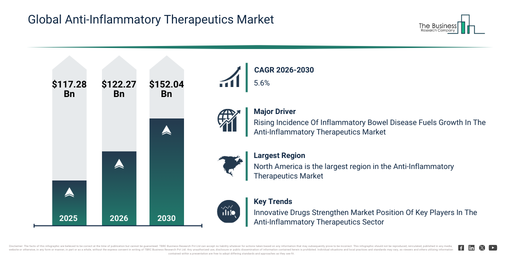
    The anti-inflammatory therapeutics market has experienced consistent expansion in recent years, with projections indicating a rise from $117.28 billion in 2025 to $122.27 billion in 2026, reflecting a compound annual growth rate (CAGR) of 4.3%. This historical growth has been driven by several key factors, including a higher incidence of arthritis, an increase in chronic inflammatory bowel diseases, the expansion of hospital pharmacy networks, broader adoption of corticosteroid therapies, and a sustained demand for pain management medications.

    The market for anti-inflammatory therapeutics is projected to experience significant expansion over the coming years, reaching an estimated value of $152.04 billion by 2030, with a compound annual growth rate (CAGR) of 5.6%. This anticipated growth during the forecast period is driven by factors such as the development of targeted biologic treatments, the incorporation of artificial intelligence into drug discovery, the growing presence of online pharmacies, the rising number of elderly individuals, and an increased emphasis on personalized medicine. Key trends shaping this period include the emergence of customized anti-inflammatory therapies, a greater reliance on biologic drugs, the adoption of less invasive drug delivery methods, a heightened focus on managing chronic pain, and the widening scope of online pharmaceutical distribution channels.

    Download A Free Sample Report For Comprehensive Market Insights:

    https://www.thebusinessresearchcompany.com/sample.aspx?id=12861&type=smp&utm_source=BlogsPR&utm_medium=Paid&utm_campaign=Jul_PR

    Anti-Inflammatory Therapeutics Market Industry Drivers: What Is Driving Revenue Growth?

    The rising occurrence of inflammatory bowel disease is anticipated to boost the expansion of the anti-inflammatory therapeutics market in the coming years. Inflammatory bowel disease (IBD) represents a chronic condition marked by gastrointestinal tract inflammation. Anti-inflammatory therapeutics are essential for managing Crohn’s disease, as they help diminish inflammation, alleviate disease symptoms, and lower the likelihood of surgical intervention. As an example, in June 2023, Crohn’s and Colitis Canada, a nonprofit organization based in Canada, projected that the number of IBD patients in Canada would reach 470,000 by 2035, compared to an estimated 322,600 in 2023. Consequently, the growing prevalence of inflammatory bowel disease is fueling the advancement of the anti-inflammatory therapeutics market.

    Anti-Inflammatory Therapeutics Market Segment Landscape And Growth Potential

    The anti-inflammatory therapeutics market covered in this report is segmented –

    1) By Drug Class: Nonsteroidal Anti-Inflammatory Drugs (NSAIDs), Corticosteroids, Anti-Inflammatory Biologics

    2) By Indication: Arthritis, Respiratory Diseases, Multiple Sclerosis, Psoriasis, Inflammatory Bowel Diseases, Other Inflammatory Diseases

    3) By Distribution Channel: Retail Pharmacies, Hospital Pharmacies

    Subsegments:

    1) By Nonsteroidal Anti-Inflammatory Drugs (NSAIDs): Ibuprofen, Aspirin, Naproxen, Diclofenac, Celecoxib, Indomethacin, Ketoprofen

    2) By Corticosteroids: Prednisone, Dexamethasone, Hydrocortisone, Methylprednisolone, Triamcinolone, Betamethasone

    3) By Anti-Inflammatory Biologics: Tumor Necrosis Factor (TNF) Inhibitors, Interleukin Inhibitors, Monoclonal Antibodies, Recombinant Proteins, Fusion Proteins

    Anti-Inflammatory Therapeutics Market Growth Trends: What Is Influencing The Future Outlook?

    Leading players in the anti-inflammatory therapeutics market are concentrating on the creation of cutting-edge biologic treatments aimed at enhancing outcomes for individuals suffering from persistent inflammatory disorders. These sophisticated therapies are engineered to deliver precise immune system regulation, superior effectiveness, and improved patient tolerance when compared to standard options like corticosteroids. As an example, in February 2023, Regeneron Pharmaceuticals Inc., a biotechnology firm based in the United States, along with Sanofi, a pharmaceutical and healthcare company from France, introduced Kevzara (sarilumab), which stands as the inaugural and exclusive anti-inflammatory biologic recommended for adult patients diagnosed with polymyalgia rheumatica (PMR) who either have an insufficient response to corticosteroids or cannot manage corticosteroid dose reduction. This innovative IL-6 receptor blocker presents a more potent and corticosteroid-reducing therapeutic choice, tackling a considerable unmet requirement in PMR care, thereby reinforcing the market standing of these companies within the anti-inflammatory therapeutics sector.

    Anti-Inflammatory Therapeutics Market Competitive Landscape: Who Are The Leading Companies?

    Major companies operating in the anti-inflammatory therapeutics market are Pfizer Inc., Johnson and Johnson Limited, F. Hoffmann-La Roche Ltd., Merck and Co. Inc., AbbVie Inc., Bayer AG, Novartis AG, Sanofi-Aventis LLC, Bristol-Myers Squibb Company, AstraZeneca PLC, GlaxoSmithKline plc, Takeda Pharmaceutical Company Limited, Eli Lilly and Co. Ltd., Amgen Inc., Boehringer Ingelheim International GmbH, Viatris Inc., Teva Pharmaceutical Industries Ltd., Regeneron Pharmaceuticals Inc., Biogen Inc., Sun Pharmaceutical Industries Limited, Dr. Reddy’s Laboratories Ltd., Hikma Pharmaceuticals PLC, Cipla Inc., Zydus Lifesciences Ltd., Lupin Limited, Torrent Pharmaceuticals Ltd.

    Access The Complete Anti-Inflammatory Therapeutics Market Report:

    https://www.thebusinessresearchcompany.com/report/anti-inflammatory-therapeutics-global-market-report?utm_source=BlogsPR&utm_medium=Paid&utm_campaign=Jul_PR

    Anti-Inflammatory Therapeutics Market Geographic Distribution And Regional Opportunities

    North America was the largest region in the anti-inflammatory therapeutics market in 2025. Europe is expected to be the fastest-growing region in the forecast period. The regions covered in the anti-inflammatory therapeutics market report are Asia-Pacific, South East Asia, Western Europe, Eastern Europe, North America, South America, Middle East, Africa.

    Get in touch with us:

    The Business Research Company: https://www.thebusinessresearchcompany.com/?utm_source=BlogsPR&utm_medium=Paid&utm_campaign=home_page_test

    Americas: +1 310-496-7795

    Asia: +44 7882 955267 & +91 8897263534

    Europe: +44 7882 955267

    Email us at: marketing@tbrc.info

    Follow us on:

    LinkedIn: https://in.linkedin.com/company/the-business-research-company

    YouTube: https://www.youtube.com/channel/UC24_fI0rV8cR5DxlCpgmyFQ

    Global Market Model: https://www.thebusinessresearchcompany.com/global-market-model
  • Anti-Inflammatory Drugs Market Forecast Signals New Revenue Opportunities Through 2030

    Anti-Inflammatory Drugs Market Forecast Signals New Revenue Opportunities Through 2030

    Through market attractiveness analysis, total addressable market evaluation, company benchmarking matrices, interactive Excel dashboards, expanded supply chain intelligence, emerging startup coverage, and detailed product insights, The Business Research Company’s 2026 market reports provide more actionable and strategically valuable research.

    Anti-Inflammatory Drugs Market Forecast: What Market Value Is Expected By 2030?

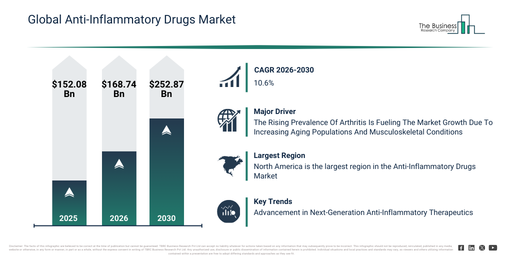
    The market for anti-inflammatory drugs has seen robust expansion in recent times. It is projected to increase from $152.08 billion in 2025 to $168.74 billion in 2026, reflecting an 11.0% compound annual growth rate (CAGR). This historical growth has been driven by factors such as the prevalence of arthritis, widespread use of NSAIDs, prescribing patterns in hospitals, the burden of autoimmune diseases, and the adoption of steroid therapies.

    The anti-inflammatory drugs market is projected to experience significant expansion in the coming years, reaching a valuation of $252.87 billion by 2030, driven by a compound annual growth rate (CAGR) of 10.6 percentage points. During the forecast period, this growth is fueled by factors such as innovations in biologic therapies, the increasing penetration of biosimilars, an aging global population, the rising prevalence of autoimmune conditions, and a growing emphasis on precision medicine. Key trends shaping this market include a heightened utilization of biologics and biosimilars, an expansion in the treatment of chronic inflammatory diseases, a transition toward more targeted anti-inflammatory approaches, a surge in topical and localized formulations, and a greater focus on ensuring long-term safety profiles.

    Download A Free Sample Report For Comprehensive Market Insights:

    https://www.thebusinessresearchcompany.com/sample.aspx?id=24465&type=smp&utm_source=BlogsPR&utm_medium=Paid&utm_campaign=Jul_PR

    #Anti-Inflammatory Drugs Market Growth Factors: Which Forces Are Supporting Market Expansion?

    The growing occurrence of arthritis is anticipated to fuel the expansion of the market for anti-inflammatory medications in the coming period. Arthritis is defined as the swelling of one or more joints, accompanied by discomfort, puffiness, and rigidity that may intensify over time. This increase in arthritis cases is largely driven by aging demographics, as advancing age leads to greater joint deterioration from natural use, raising the likelihood of contracting the condition. These drugs assist in controlling arthritis by alleviating joint swelling and pain, enabling patients to sustain improved movement and carry out everyday tasks with less difficulty, thereby enhancing their overall life quality. In July 2024, data from Restored CDC, a nonprofit health organization based in the United States, indicated that roughly 21.2% of American adults 18 years and older had been diagnosed with the condition during 2023. As a result, the heightened incidence of arthritis is pushing forward the expansion of the anti-inflammatory drug sector.

    Anti-Inflammatory Drugs Market Categorization By Product Type And Application

    The anti-inflammatory drugs market covered in this report is segmented –

    1) By Drug Class: Steroids, Nonsteroidal Anti-Inflammatory Drugs (NSAIDs), Biologics And Biosimilars, Other Drug Classes

    2) By Route of Administration: Parenteral, Oral, Topical, Inhalation

    3) By Applications: Autoimmune Diseases, Respiratory Diseases, Other Diseases

    4) By Distribution Channel: Hospital Pharmacy, Retail Pharmacy, Online Pharmacy

    Subsegments:

    1) By Steroids: Corticosteroids, Mineralocorticoids

    2) By Nonsteroidal Anti-Inflammatory Drugs (NSAIDs): Non-Selective Nonsteroidal Anti-Inflammatory Drugs (NSAIDs), Selective Cyclooxygenase-2 (COX-2) Inhibitors

    3) By Biologics And Biosimilars: Tumor Necrosis Factor (TNF) Inhibitors, Interleukin (IL) Inhibitors, Janus Kinase (JAK) Inhibitors, Other Biologics And Biosimilars

    4) By Other Drug Classes: Disease-Modifying Anti-Rheumatic Drugs (DMARDs), Immunosuppressants

    Anti-Inflammatory Drugs Market Industry Trends: What Changes Are Reshaping Demand?

    Leading market players in the anti-inflammatory drugs sector are channeling efforts into creating pioneering therapies, particularly advanced corticosteroid alternatives, to fulfill the increasing need for safer, long-term anti-inflammatory treatments. A cutting-edge corticosteroid alternative represents a therapeutic approach engineered to preserve the glucocorticoid-mediated anti-inflammatory benefits while mitigating common side effects of traditional steroids, such as bone density reduction, hindered growth, and increased body weight. In October 2023, for example, Santhera Pharmaceuticals, a specialty pharmaceutical firm headquartered in Switzerland, obtained FDA approval in the United States for AGAMREE (vamorolone). This oral dissociative steroid is formulated to provide anti-inflammatory effects while minimizing steroid-associated adverse events, achieved through selective modulation of glucocorticoid receptor pathways and the stabilization of cell membranes. When compared to conventional corticosteroids like prednisone and deflazacort, it exhibits an improved safety profile without compromising therapeutic efficacy. The medication is indicated for managing chronic muscle inflammation in children aged two years and older suffering from Duchenne muscular dystrophy.

    Anti-Inflammatory Drugs Market Company Landscape And Strategic Competition

    Major companies operating in the anti-inflammatory drugs market are Merck & Co. Inc., AbbVie Inc., Bayer AG, Novartis AG, Sanofi S.A., Bristol-Myers Squibb Company, AstraZeneca plc, Gilead Sciences Inc., Amgen Inc., Regeneron Pharmaceuticals Inc., Biogen Inc., Vertex Pharmaceuticals Inc., UCB S.A., Sun Pharmaceutical Industries Ltd., Aurobindo Pharma Limited, Dr. Reddy’s Laboratories, Cipla Limited, Cadila Pharmaceuticals, Samsung Bioepis, Lupin Limited

    Access The Complete Anti-Inflammatory Drugs Market Report:

    https://www.thebusinessresearchcompany.com/report/anti-inflammatory-drugs-global-market-report?utm_source=BlogsPR&utm_medium=Paid&utm_campaign=Jul_PR

    Anti-Inflammatory Drugs Market Largest Region By Revenue And Market Share

    North America was the largest region in the anti-inflammatory drugs market in 2025. Asia-Pacific is expected to be the fastest-growing region in the forecast period. The regions covered in the anti-inflammatory drugs market report are Asia-Pacific, South East Asia, Western Europe, Eastern Europe, North America, South America, Middle East, Africa.

    Get in touch with us:

    The Business Research Company: https://www.thebusinessresearchcompany.com/?utm_source=BlogsPR&utm_medium=Paid&utm_campaign=home_page_test

    Americas: +1 310-496-7795

    Asia: +44 7882 955267 & +91 8897263534

    Europe: +44 7882 955267

    Email us at: marketing@tbrc.info

    Follow us on:

    LinkedIn: https://in.linkedin.com/company/the-business-research-company

    YouTube: https://www.youtube.com/channel/UC24_fI0rV8cR5DxlCpgmyFQ

    Global Market Model: https://www.thebusinessresearchcompany.com/global-market-model