Month: June 2024

  • What Is The Forecast Growth Rate For The Vertebroplasty And Kyphoplasty Market?

    What Is The Forecast Growth Rate For The Vertebroplasty And Kyphoplasty Market?

    The Business Research Company’s global market reports are now updated with the latest market sizing information for the year 2024 and forecasted to 2033

    As per The Business Research Company’s Vitamin Tonics Global Market Report 2024, the vitamin tonics market is expected to show significant growth in the forecast period.

    Market Growth and Projections

    Recent Growth

    • Current Market Size: The vitamin tonics market has experienced robust growth, increasing from $8.29 billion in 2023 to $8.81 billion in 2024 at a compound annual growth rate (CAGR) of 6.2%.
    • Growth Drivers: This expansion is attributed to heightened consumer awareness, lifestyle changes, improved distribution channels, favorable regulatory environments, and significant demographic trends.

    Future Projections

    • Forecasted Growth: The market is projected to continue its upward trajectory, reaching $10.93 billion by 2028, growing at a CAGR of 5.5%.
    • Contributing Factors: Key factors driving future growth include global health trends, the rise of e-commerce, increased customization and personalization, environmental sustainability initiatives, and the proliferation of health and wellness apps.

    View More On The Vitamin Tonics Market Report 2024 – https://www.thebusinessresearchcompany.com/report/vitamin-tonics-global-market-report

    Key Market Drivers

    Rising Incidence of Chronic Diseases

    • Impact of Chronic Diseases:The increasing prevalence of chronic diseases, such as diabetes, heart disease, and osteoporosis, is a significant growth driver for the vitamin tonics market.
    • Preventive and Therapeutic Use:Vitamin tonics are widely used to prevent and treat deficiencies associated with chronic conditions, aiding in managing diseases like rickets, osteomalacia, and anemia.
    • Aging Population:According to the Journal of Hematology and Oncology, the number of Americans aged 50 and older with at least one chronic disease is expected to nearly double from 71.522 million in 2020 to 142.66 million by 2050, highlighting the growing demand for vitamin tonics.

    Consumer Awareness and Education

    • Increased Health Consciousness: Enhanced public knowledge about the benefits of vitamins and minerals has led to a surge in demand for vitamin tonics.
    • Educational Campaigns: Ongoing educational campaigns emphasizing the importance of micronutrients in overall health contribute to market growth.

    Lifestyle Changes

    • Modern Lifestyles:Busy, stress-filled lifestyles often lead to poor dietary choices, increasing the need for supplementary nutrition through vitamin tonics.
    • Dietary Supplements:As people strive for better health, the incorporation of vitamin tonics into daily routines has become more common.

    Emerging Trends

    Emphasis on Immune Health

    • Post-Pandemic Focus:The COVID-19 pandemic has heightened awareness about immune health, driving demand for vitamin tonics that boost the immune system.
    • Product Innovation:Companies are developing products specifically designed to enhance immune health.

    Sustainable Packaging

    • Environmental Concerns: Consumers are increasingly prioritizing environmentally friendly packaging, influencing product development and marketing strategies.
    • Sustainable Practices: Brands are adopting sustainable packaging solutions to meet consumer demand and regulatory requirements.

    Integration of Technology

    • Digital Marketing:The use of digital platforms for marketing and distribution is transforming the vitamin tonics market.
    • Health and Wellness Apps:Apps that track health metrics and recommend supplements are gaining popularity, driving sales through personalized recommendations.

    Vegan and Plant-Based Options

    • Rising Demand: There is a growing trend towards vegan and plant-based vitamin tonics, catering to a wider audience seeking ethical and sustainable options.
    • Product Development: Companies are investing in the development of plant-based vitamin products to meet this demand.

    Strategic Moves and Innovations

    Calcifediol Products

    • Innovative Launch:In March 2021, Royal DSM launched Ampli-D, a potent form of vitamin D, in the Asia-Pacific region. This product enhances vitamin D levels much faster than traditional forms.
    • Market Impact:Such innovations underscore the importance of product development in maintaining market competitiveness.

    Strategic Acquisitions

    • PanTheryx and TruBiotics: In March 2021, PanTheryx acquired TruBiotics from Bayer HealthCare LLC, aiming to expand its presence in the probiotics and microbiome sectors. This acquisition highlights the strategic importance of mergers and acquisitions in market expansion.

    Market Segmentation

    • By Product:Syrup, Capsules, Tablets, Multivitamin Injections
    • By Distribution Channel:Retail Pharmacies, Hospital Pharmacies, Online Pharmacies
    • By End User:Adults, Children, Elderly

    Regional Insights

    • North America: This region was the largest market for vitamin tonics in 2023, driven by high health awareness and advanced healthcare infrastructure.
    • Asia-Pacific: Expected to be the fastest-growing region in the forecast period, spurred by rising disposable incomes, increasing health awareness, and growing e-commerce penetration.

    Conclusion

    The vitamin tonics market is poised for significant growth driven by increasing chronic diseases, consumer awareness, lifestyle changes, and emerging trends such as sustainable packaging and digital integration. With ongoing innovations and strategic acquisitions, the market is set to expand, offering numerous opportunities for companies to thrive in this evolving landscape.

    Request A Sample Of The Global Vitamin Tonics Market Report 2024:
    https://www.thebusinessresearchcompany.com/sample_request?id=13558&type=smp

  • What Is The Forecast Growth Rate For The Vertebroplasty And Kyphoplasty Market?

    What Is The Forecast Growth Rate For The Vertebroplasty And Kyphoplasty Market?

    The Business Research Company’s market reports offer an in-depth analysis on the market’s growth potential, major drivers, key trends and more.

    The vertebroplasty and kyphoplasty market has witnessed significant growth in recent years, driven by various factors such as the aging population, advancements in minimally invasive techniques, and increasing awareness and diagnosis of spinal conditions. This blog delves into the current market trends, future growth projections, and the factors fueling this expansion.

    Current Market Size and Growth

    Impressive Growth in Recent Years

    • Market Size in 2023: $0.91 billion
    • Market Size in 2024: $0.97 billion
    • Compound Annual Growth Rate (CAGR): 7.0%

    The recent growth can be attributed to:

    • Aging Population: Increasing prevalence of osteoporosis and age-related spinal conditions.
    • Minimally Invasive Techniques: Advancements making procedures safer and more effective.
    • Lifestyle Factors: Sedentary lifestyles and poor posture leading to spinal issues.
    • Healthcare Burden: Rising demand for effective treatments to reduce long-term healthcare costs.

    Read More On The Vertebroplasty And Kyphoplasty Market Report 2024 – https://www.thebusinessresearchcompany.com/report/vertebroplasty-and-kyphoplasty-global-market-report

    Future Market Projections

    Strong Growth Forecast

    • Market Size in 2028: $1.22 billion
    • CAGR: 5.9%

    Key drivers for future growth include:

    • Geriatric Care Services: Expansion of services catering to the elderly.
    • Biocompatible Bone Cement: Development of safer and more effective materials.
    • Outpatient Procedures: Increased adoption due to convenience and lower costs.
    • Value-Based Healthcare: Focus on cost-effective and quality treatments.

    Trends and Innovations

    Research and Development

    • Spinal Interventions: Ongoing research to improve treatment outcomes.
    • Ambulatory Surgical Centers: Expansion providing more accessible treatment options.
    • Technological Advancements: Innovations in bone cement and procedural techniques.
    • Cost Containment: Efforts to reduce healthcare costs while maintaining high-quality care.

    Addressing Sports-Related Spinal Injuries

    The rise in sports-related spinal injuries is a significant driver of market growth:

    • Conditions: Vertebral compression fractures, spondylolisthesis, herniated discs.
    • Minimally Invasive Treatments: Vertebroplasty and kyphoplasty procedures.
    • Increasing Incidence: Notable rise in injuries from activities like cycling, water sports, and horse riding.

    For instance, a New Zealand Spinal Trust report highlighted a surge in sports-related spinal injuries from 14% in 2020 to 19% in 2021, with mountain biking and cycling accounting for 25% of these injuries.

    Major Companies in the Market

    Several leading companies are shaping the market with innovative products and strategic acquisitions:

    • Cardinal Health
    • Johnson and Johnson (DePuy Synthes)
    • Medtronic Plc.
    • Stryker Corporation
    • IZI Medical Products LLC

    Enhancing Safety and Precision

    Companies are focusing on developing new products to enhance the effectiveness of vertebroplasty and kyphoplasty:

    • IZI Medical Products’ Vertefix HV Cement: Launched in November 2021, this product enhances real-time flow visualization during procedures, improving safety and outcomes.

    Strategic Acquisitions

    Halma Plc’s Acquisition of IZI Medical Products

    • Acquisition Cost: $172.13 million
    • Objective: Strengthening Halma Plc’s portfolio in minimally invasive spinal treatments.

    Market Segmentation

    By Product Type

    • Kyphoplasty Devices
    • Vertebroplasty Devices

    By Surgery Type

    • Vertebroplastic Surgery
    • Kyphoplastic Surgery

    By End User

    • Hospitals
    • Ambulatory Surgical Centers

    Regional Insights

    • North America: Largest market in 2023
    • Asia-Pacific: Expected to be the fastest-growing region in the forecast period

    Conclusion

    The vertebroplasty and kyphoplasty market is set to continue its robust growth trajectory, driven by technological advancements, increasing demand for minimally invasive procedures, and a growing elderly population. As companies innovate and expand, the market will likely see further enhancements in safety, precision, and accessibility, ensuring better outcomes for patients worldwide. 

    Request for A Sample Of The Global Vertebroplasty And Kyphoplasty Market Report:
    https://www.thebusinessresearchcompany.com/sample_request?id=13556&type=smp

  • How Is The Vascular Access Devices Market Expected To Grow Through 2024-2033

    How Is The Vascular Access Devices Market Expected To Grow Through 2024-2033

    The Business Research Company’s global market reports are now updated with the latest market sizing information for the year 2024 and forecasted to 2033

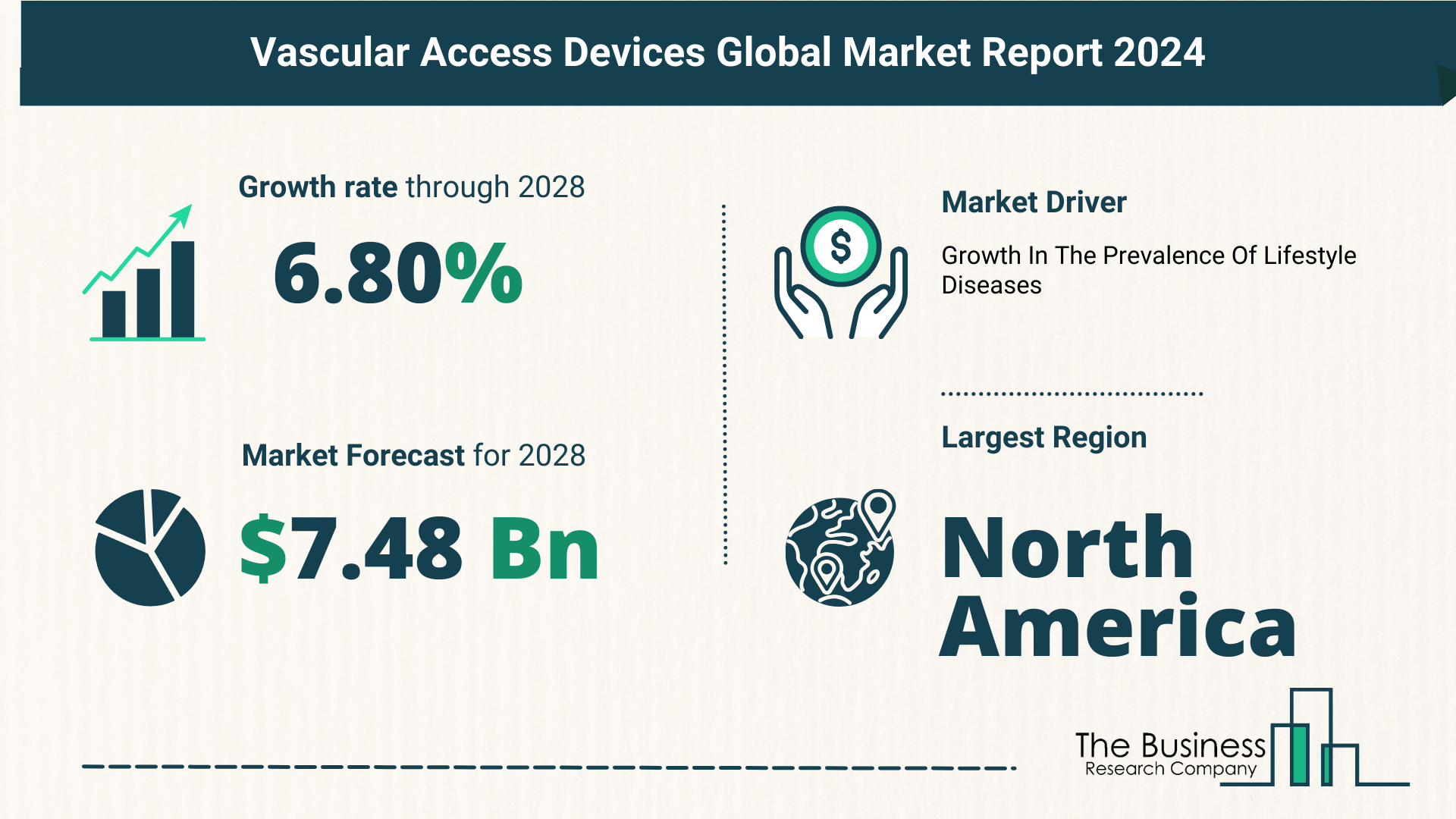
    According to The Business Research Company’s Vascular Access Devices Global Market Report 2024, the vascular access devices market is expected to show promising growth in the forecast period.

    The vascular access devices (VAD) market has experienced significant growth in recent years, fueled by various factors ranging from the rise in chronic diseases to advancements in healthcare infrastructure. As we look to the future, this market shows no signs of slowing down, with promising trends and innovations set to drive further expansion.

    Current Market Landscape

    Rapid Market Growth

    • 2023 to 2024 Growth: The market size will grow from $5.3 billion in 2023 to $5.74 billion in 2024, reflecting a compound annual growth rate (CAGR) of 8.3%.
    • Contributing Factors: Key drivers include the rising incidence of chronic diseases, an aging population, expanded healthcare infrastructure, an increase in surgical procedures, and improved awareness and training among healthcare professionals.

    Future Projections

    • 2024 to 2028 Growth: The market is expected to reach $7.48 billion by 2028, with a CAGR of 6.8%.
    • Driving Forces: Growth will be driven by advancements in material science, the rise of ambulatory care, globalization of healthcare, telemedicine, and a focus on infection control.

    Trends Shaping the Future

    Infection Prevention and Antimicrobial Technologies

    • Focus on Infection Control: Enhanced efforts to prevent infections are leading to the development of antimicrobial technologies in VADs.
    • Specialty Devices Demand: There is a growing demand for specialized vascular access devices designed to reduce infection rates and improve patient outcomes.

    Training and Education

    • Healthcare Professional Training: Emphasis on training and education for healthcare professionals ensures better utilization and management of VADs.
    • Collaborative Product Development: Partnerships and collaborations among companies are crucial for developing innovative products and expanding market reach.

    View More On The Vascular Access Devices Market Report 2024 – https://www.thebusinessresearchcompany.com/report/vascular-access-devices-global-market-report

    Lifestyle Diseases Driving Market Growth

    Prevalence of Chronic Diseases

    • Non-communicable Diseases (NCDs): Lifestyle diseases, such as cardiovascular diseases, cancer, chronic respiratory diseases, and diabetes, are major contributors to the increased need for VADs.
    • Global Impact: According to the World Health Organization, NCDs cause 41 million deaths annually, accounting for 74% of global deaths.

    Essential for Ongoing Treatment

    • Ongoing Care Requirements: VADs are essential for the safe and effective delivery of medications and therapies required for managing chronic diseases.

    Key Players in the Market

    Leading Companies

    • Major Companies: Notable players include Medtronic PLC, Siemens Healthineers, Fresenius Medical Care, Becton Dickinson and Company (BD), Baxter International, Boston Scientific, and many more.
    • Innovative Technologies: Companies are focusing on innovative technologies to maintain competitive edges, such as TipTracker technology for real-time visual navigation during catheter placements.

    Innovations Revolutionizing Care

    TipTracker Technology

    • Teleflex’s New Devices: In May 2023, Teleflex Incorporated launched the VPS Rhythm and DLX Device featuring TipTracker technology, which eliminates the need for confirmatory X-rays and enhances the PICC insertion process.
    • Benefits: These devices improve patient care, expand treatment options, and increase procedural efficiency.

    BD’s Acquisition of Velano Vascular

    • Enhancing Blood Collection: In July 2021, BD acquired Velano Vascular, a company known for its needle-free blood collection technology, aiming to alleviate patient discomfort during blood sampling.
    • Impact: This acquisition is set to make blood collection easier and more comfortable, showcasing BD’s commitment to improving patient care.

    Market Segmentation

    Device Types and Applications

    • By Device Type: Central Vascular Access Devices and Peripheral Vascular Access Devices.
    • By Application: Drug Administration, Fluid and Nutrition Administration, Blood Transfusion, Diagnostics and Testing.

    End Users

    • Primary End Users: Hospitals, clinics, ambulatory care centers, and other healthcare facilities.
    • Regional Insights: North America was the largest region in the market in 2023, while Asia-Pacific is expected to be the fastest-growing region during the forecast period.

    Conclusion

    The vascular access devices market is on a robust growth trajectory, driven by the rising prevalence of chronic diseases, technological advancements, and an increased focus on infection control. With major companies investing in innovative solutions and collaborative efforts, the market is poised for significant advancements and expansion in the coming years.

    Request A Sample Of The Global Vascular Access Devices Market Report 2024:
    https://www.thebusinessresearchcompany.com/sample_request?id=13554&type=smp

  • Future Growth Forecast For The Uterine Fibroid Embolization Device Global Market 2024-2033

    Future Growth Forecast For The Uterine Fibroid Embolization Device Global Market 2024-2033

    The Business Research Company’s global market reports provide comprehensive analysis on the various markets in 27 industries across 60 geographies.

    The uterine fibroid embolization (UFE) device market has witnessed significant growth in recent years and continues to show promising trends. This blog explores the factors driving this growth and the future outlook of the market.

    Recent Market Growth

    Robust Growth from 2023 to 2024

    • Market Size Increase: The market is projected to grow from $5.3 billion in 2023 to $5.62 billion in 2024.
    • CAGR: This represents a compound annual growth rate (CAGR) of 6.0%.

    Factors Contributing to Growth

    • Increasing Incidence of Uterine Fibroids: More women are being diagnosed with uterine fibroids, leading to higher demand for treatment.
    • Preference for Non-Surgical Alternatives: Many patients prefer non-invasive treatments over traditional surgery.
    • Awareness and Education Initiatives: Efforts to educate women about uterine health and treatment options are paying off.
    • Focus on Women’s Health: Healthcare providers are placing a greater emphasis on women’s health issues.
    • Shift Toward Outpatient Procedures: More procedures are being performed in outpatient settings, making them more accessible.
    • Physician Training Programs: Improved training for physicians in using UFE devices has increased their adoption.

    View More On The Uterine Fibroid Embolization Device Market Report 2024 – https://www.thebusinessresearchcompany.com/report/uterine-fibroid-embolization-device-global-market-report

    Future Market Outlook

    Steady Growth Expected

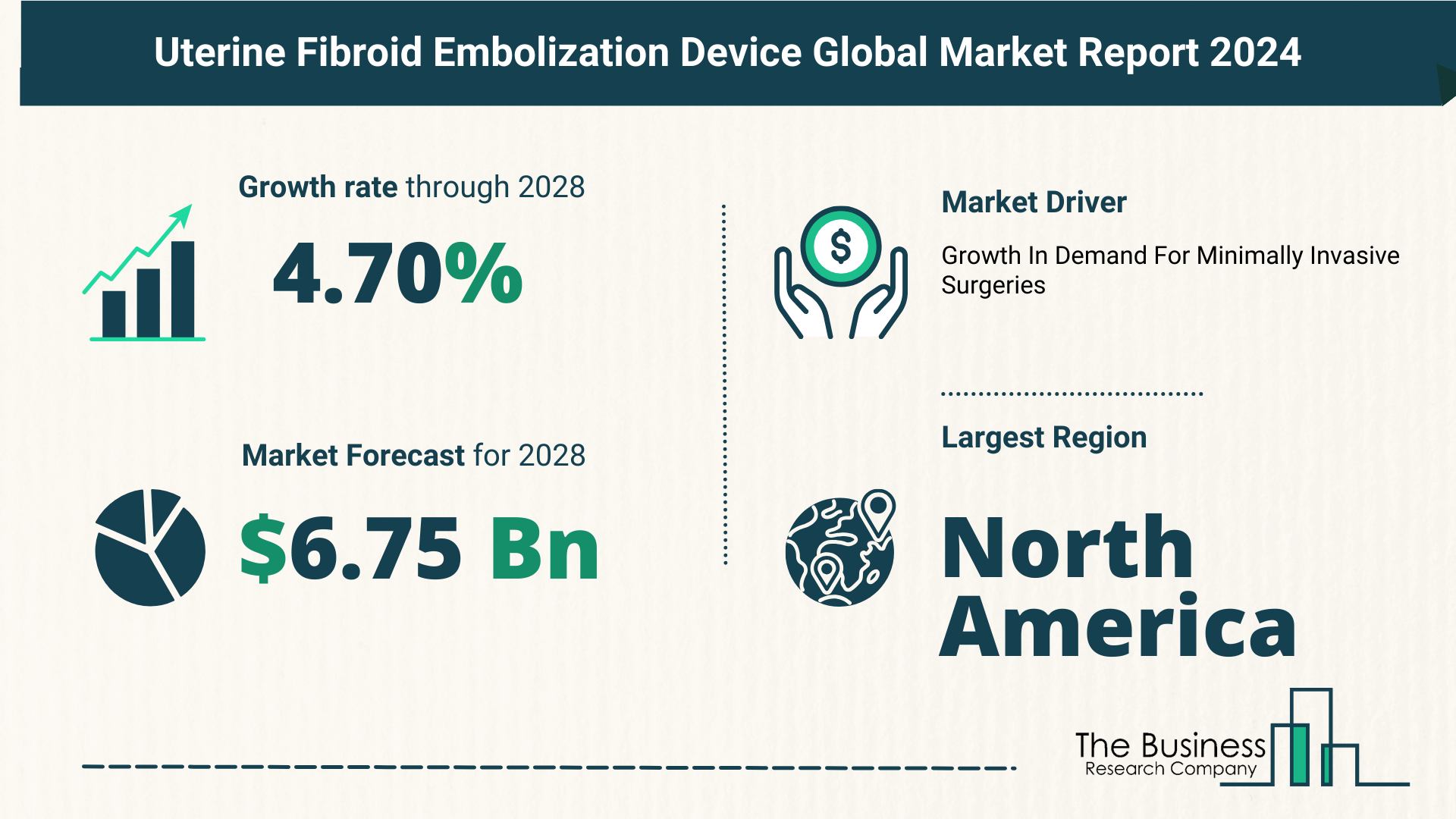
    • Market Size Projection: The market is expected to reach $6.75 billion by 2028.
    • CAGR: The growth rate will slightly decrease to a CAGR of 4.7%.

    Key Growth Drivers

    • Increasing Awareness of Non-Invasive Treatments: As more women learn about non-invasive options, the demand for UFE devices will rise.
    • Global Expansion of Healthcare Services: Improved access to healthcare globally will drive market growth.
    • Rise in Female Healthcare Initiatives: Initiatives focused on female health are expected to boost market demand.
    • Integration with Multidisciplinary Care: UFE treatments are becoming part of broader, multidisciplinary healthcare approaches.
    • Expansion of Outpatient Services: More treatments are being offered in outpatient settings, which is more convenient for patients.

    Trends Shaping the Market

    Minimally Invasive Surgery Driving Growth

    • Demand for Minimally Invasive Surgeries: Minimally invasive procedures are becoming more popular due to their reduced recovery times and lower risk.
    • Technological Advancements: Advances in surgical technology, such as the da Vinci Surgical System, are enhancing the effectiveness of minimally invasive surgeries.

    Innovative Products Enhancing Treatment

    • Development of New Products: Companies like Medtronic are launching new devices, such as the TruClear system, which offer safer and more effective treatment options.
    • TruClear System: This system is a mechanical hysteroscopic tissue removal tool designed for treating intrauterine abnormalities with precision and safety.

    Strategic Acquisitions Expanding Capabilities

    • Hologic’s Acquisition of Bolder Surgical: Hologic Inc. acquired Bolder Surgical for $160 million to strengthen its position in the women’s health market and expand its product offerings.
    • Innovative Technology Integration: The acquisition provides access to innovative surgical instruments, enhancing Hologic’s capabilities.

    Market Segmentation

    By Technology

    • Surgical Techniques
    • Laparoscopic Techniques
    • Ablation Techniques
    • Embolization Techniques

    By Mode of Treatment

    • Invasive Treatment
    • Minimally Invasive Treatment
    • Non-Invasive Treatment

    By End User

    • Hospitals
    • Clinics
    • Ambulatory Surgical Centers

    Regional Insights

    • North America: In 2023, North America was the largest region in the UFE device market, driven by advanced healthcare infrastructure and high awareness levels.

    Conclusion

    The uterine fibroid embolization device market is set to continue its growth trajectory, driven by advancements in minimally invasive surgery, innovative product developments, and strategic industry acquisitions. As awareness and access to non-invasive treatments increase, the market is poised for sustained expansion, providing better healthcare outcomes for women worldwide.

    Request A Sample Of The Global Uterine Fibroid Embolization Device Market Report 2024:
    https://www.thebusinessresearchcompany.com/sample_request?id=13551&type=smp

  • Overview Of The Ultrasound Transducer Market 2024-2033: Growth And Major Players Analysis

    Overview Of The Ultrasound Transducer Market 2024-2033: Growth And Major Players Analysis

    The Business Research Company’s global market reports are now updated with the latest market sizing information for the year 2024 and forecasted to 2033

    The ultrasound transducer market has witnessed significant growth in recent years and is poised for continued expansion. This blog explores the factors driving this growth, future projections, and key trends shaping the market.

    Market Size and Growth Projections

    • Current Market Value: The market size increased from $3.96 billion in 2023 to $4.18 billion in 2024, reflecting a compound annual growth rate (CAGR) of 5.6%.
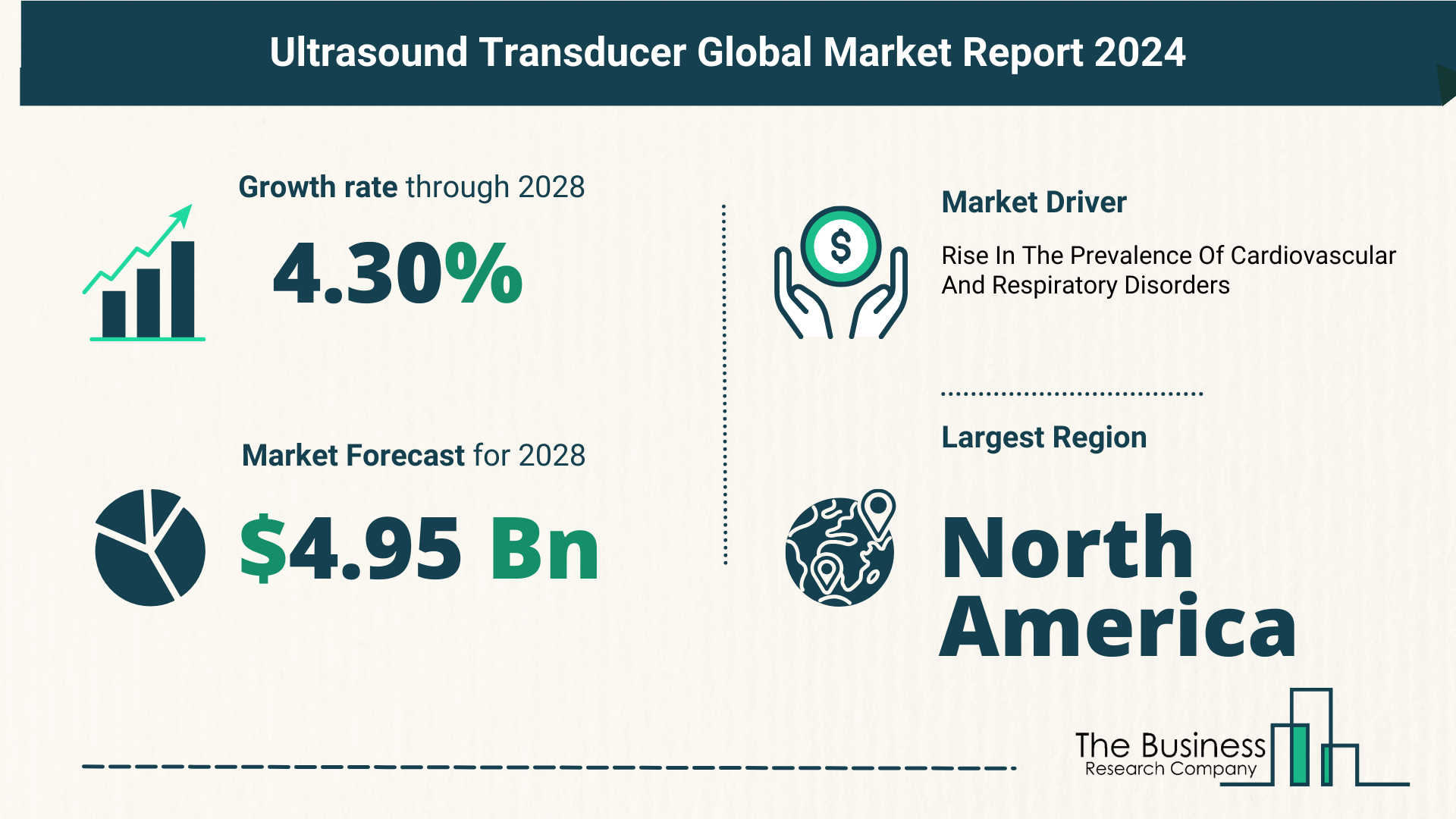
    • Future Market Value: By 2028, the market is expected to grow to $4.95 billion, at a CAGR of 4.3%.

    Factors Driving Historic Growth

    • Diagnostic Imaging Demand: Increased demand for diagnostic imaging has been a major driver.
    • Chronic Diseases: The rise in chronic diseases necessitates advanced diagnostic tools.
    • Obstetrics and Gynecology: Expanding applications in these fields contribute significantly.
    • Geriatric Population: Growing elderly population requires more frequent medical imaging.
    • Healthcare Infrastructure: Global development of healthcare infrastructure supports market growth.

    Projected Growth Factors

    • Telemedicine Services: The proliferation of telemedicine services boosts market demand.
    • Point-of-Care Diagnostics: Increased focus on point-of-care diagnostics aids market expansion.
    • Accessibility in Developing Regions: Improved healthcare accessibility in developing regions is crucial.
    • Interventional Procedures: Expanding applications in interventional procedures enhance growth.
    • Customization: Customization for specific medical specialties is a key factor.

    View More On The Ultrasound Transducer Market Report 2024 – https://www.thebusinessresearchcompany.com/report/ultrasound-transducer-global-market-report

    Key Trends in the Forecast Period

    • Miniaturization: Ongoing miniaturization of transducer technology is notable.
    • Point-of-Care Ultrasound (POCUS): Expansion of POCUS is a significant trend.
    • High-Frequency Transducers: Development of high-frequency transducers for better imaging.
    • Artificial Intelligence Integration: AI integration in ultrasound technology is becoming more prevalent.
    • Advanced Materials: Advancements in transducer materials improve performance.
    • Wireless Connectivity: Shift towards wireless and cable-free transducer connectivity enhances usability.

    Impact of Rising Cardiovascular and Respiratory Disorders

    • Increased Prevalence: The growing prevalence of cardiovascular and respiratory disorders drives market growth.
    • Diagnostic Importance: Ultrasound transducers are essential in diagnosing and managing these conditions.
    • Statistics:
      • UK heart attack deaths: 19,440 to 20,061 (2020-2021).
      • Australian respiratory disease deaths: 43,031 to 46,551 (2020-2021).

    Major Companies and Innovations

    • Key Players: Hitachi Medical Corporation, Siemens Healthineers, Fujifilm Holdings Corporation, and more.
    • Innovative Products: Companies are developing advanced products like Mindray Global’s TEX20 Series.
      • TEX20 Series Features: Includes ZST, AI-powered tools, ergonomic design, wireless transducers, and high-frequency imaging.

    Notable Acquisition

    • GE Healthcare’s Acquisition: In December 2021, GE Healthcare acquired BK Medical Holding Inc. for $1.45 billion.
      • Purpose: To expand ultrasound business into surgical and therapeutic treatments and enhance precision health.

    Market Segmentation

    • By Product: Linear, Convex, Phased array, Endocavitary, Continuous wave Doppler, and others.
    • By Application: Cardiovascular, General Imaging, Musculoskeletal, Obstetrics and Gynecology, Vascular, and others.
    • By End User: Hospitals, Diagnostic Centers, Ambulatory Surgical Centers, and Clinics.

    Regional Insights

    • Largest Market: North America held the largest market share in 2023.
    • Fastest-Growing Region: Asia-Pacific is expected to be the fastest-growing region during the forecast period.

    The ultrasound transducer market is set for steady growth, driven by technological advancements, increasing prevalence of chronic diseases, and expanding applications in various medical fields. With significant innovations and strategic acquisitions, the market dynamics are poised to transform the landscape of diagnostic imaging.

    Request A Sample Of The Global Ultrasound Transducer Market Report 2024:
    https://www.thebusinessresearchcompany.com/sample_request?id=13549&type=smp

  • Understand How The Artificial Intelligence In Medical Coding Market Is Poised To Grow Through 2024-2033

    Understand How The Artificial Intelligence In Medical Coding Market Is Poised To Grow Through 2024-2033

    The Business Research Company’s global market reports are now updated with the latest market sizing information for the year 2024 and forecasted to 2033

    As per The Business Research Company’s Artificial Intelligence In Medical Coding Global Market Report 2024, the artificial intelligence in medical coding market is expected to show significant growth in the forecast period.

    The artificial intelligence (AI) in medical coding market is experiencing rapid growth, driven by a surge in healthcare data and the need for more efficient coding practices. This blog explores the current market landscape, key drivers, major trends, and future predictions.

    Rapid Market Growth

    • Current Market Size: The AI in medical coding market grew from $2.4 billion in 2023 to $2.74 billion in 2024.
    • Growth Rate: This growth represents a compound annual growth rate (CAGR) of 14.3%.
    • Future Projections: The market is expected to reach $4.64 billion by 2028, maintaining a CAGR of 14.0%.

    Key Drivers of Growth

    1. Increasing Healthcare Data Volume:
      • The massive influx of healthcare data necessitates more efficient and accurate coding.
      • AI helps manage this data by automating and optimizing the coding process.
    2. Coding Accuracy and Efficiency:
      • AI enhances the precision and speed of medical coding, reducing errors and improving patient care.
      • AI systems can adapt to new coding standards and integrate seamlessly with electronic health records (EHRs).
    3. Regulatory Requirements:
      • Stringent regulatory standards demand accurate coding for compliance.
      • AI ensures adherence to these regulations, mitigating risks of non-compliance.
    4. Revenue Cycle Management Optimization:
      • AI optimizes revenue cycle management by ensuring accurate billing and timely reimbursements.
      • This optimization is crucial for the financial health of healthcare organizations.
    5. Integration with EHRs:
      • AI systems integrate with EHRs to streamline coding and improve data interoperability.
      • This integration facilitates better patient outcomes and more efficient healthcare delivery.

    View More On The Artificial Intelligence In Medical Coding Market Report 2024 – https://www.thebusinessresearchcompany.com/report/artificial-intelligence-in-medical-coding-global-market-report

    Future Growth Factors

    1. Natural Language Processing (NLP) Advancements:
      • NLP technology allows AI to understand and interpret human language, enhancing coding accuracy.
      • Companies like Linguamatics are leveraging NLP to turn unstructured EHR data into actionable insights.
    2. Healthcare Coding Standards Evolution:
      • Continuous changes in coding standards require adaptable solutions.
      • AI-driven systems quickly adapt to these changes, ensuring compliance and accuracy.
    3. Telehealth Expansion:
      • The rise of telehealth increases the demand for accurate and efficient coding.
      • AI supports telehealth by streamlining coding processes for remote consultations.
    4. AI-Driven Clinical Documentation Improvement (CDI):
      • AI improves clinical documentation by ensuring completeness and accuracy.
      • This improvement leads to better patient care and optimized reimbursement.
    5. Increasing Demand for Healthcare Analytics:
      • AI enhances healthcare analytics by providing deep insights from coded data.
      • These insights drive better decision-making and improved healthcare outcomes.

    Major Trends Shaping the Future

    1. Healthcare Industry Digitization:
      • The ongoing digitization of healthcare drives the adoption of AI in medical coding.
      • Digital transformation initiatives improve coding efficiency and accuracy.
    2. Automated Coding Assistance:
      • AI provides automated coding assistance, reducing the workload of medical coders.
      • This automation ensures faster and more reliable coding processes.
    3. Coding Quality Improvement:
      • AI continuously monitors and improves coding quality.
      • High-quality coding reduces claim denials and enhances revenue cycle management.
    4. Interoperability with EHRs:
      • AI systems facilitate interoperability between different EHR platforms.
      • This interoperability improves data sharing and patient care coordination.
    5. Risk Adjustment Coding Solutions:
      • AI offers advanced solutions for risk adjustment coding.
      • These solutions ensure accurate coding for risk-based payment models.

    Increasing Demand for Coding Services

    • Employment Growth: The demand for medical coders increased by 8% in 2022, according to the American Bureau of Labor Statistics.
    • Benefits of AI: AI enhances the efficiency and adaptability of coding services, benefiting healthcare organizations and patients.

    Major Players in the Market

    • Key Companies: Pfizer Inc., Johnson & Johnson Services Inc., IBM, Medtronic PLC, Siemens Healthineers, Cerner Corporation, Fathom Inc., Nuance Communications Inc., and others.
    • Technological Innovations: Companies are investing in technologies like NLP to improve coding accuracy and efficiency.

    Conclusion

    The AI in medical coding market is set for significant growth, driven by technological advancements and increasing demand for accurate coding. As the healthcare industry continues to digitize, AI will play a crucial role in transforming medical coding practices, ensuring better patient outcomes, and optimizing revenue cycles.

    Request A Sample Of The Global Artificial Intelligence In Medical Coding Market Report 2024:
    https://www.thebusinessresearchcompany.com/sample_request?id=13588&type=smp

  • Artificial Intelligence In Life Sciences Market Growth Analysis Till 2033 By The Business Research Company

    Artificial Intelligence In Life Sciences Market Growth Analysis Till 2033 By The Business Research Company

    The Business Research Company’s market reports offer an in-depth analysis on the market’s growth potential, major drivers, key trends and more.

    Artificial intelligence (AI) has emerged as a transformative force in the life sciences sector, driving significant advancements in research, patient care, and drug development. This blog explores the remarkable growth of AI in life sciences, highlighting key trends, future projections, and major factors contributing to this expansion.

    Current Market Size and Growth

    Exponential Growth in Recent Years

    • Market Size in 2023: $2.35 billion
    • Market Size in 2024: $2.92 billion
    • Compound Annual Growth Rate (CAGR): 24.2%

    The recent surge in market size can be attributed to:

    • Clinical Trials: Increasing number of trials leveraging AI for efficiency and accuracy.
    • Research and Development: Widespread adoption of AI in R&D activities.
    • Precision Medicine: High emphasis on developing personalized drugs and treatments.

    Future Market Projections

    Sustained Exponential Growth

    • Market Size in 2028: $6.82 billion
    • CAGR: 23.6%

    Key drivers for future growth include:

    • Remote Patient Monitoring (RPM): Growing interest in real-time RPM systems.
    • Drug Discovery: Increasing demand for AI-driven drug discovery processes.
    • Medical Imaging Analysis: Rising adoption of AI in analyzing medical images.

    Read More On The Artificial Intelligence In Life Sciences Market Report 2024 – https://www.thebusinessresearchcompany.com/report/artificial-intelligence-in-life-sciences-global-market-report

    Trends and Innovations

    Strategic Partnerships and Product Innovations

    • Collaborations: Increasing number of strategic partnerships in AI and life sciences.
    • Technological Advancements: Continuous innovation in AI technologies and applications.
    • Investments: Significant investments in AI research and development.

    Surge in Remote Patient Monitoring

    The rising interest in RPM systems is significantly boosting AI adoption in life sciences:

    • RPM Systems: Technology-driven solutions for monitoring patients outside traditional settings.
    • AI Integration: Providing continuous, personalized, and data-driven healthcare insights.
    • Survey Insights: According to Livelink, clinicians’ use of RPM grew by 305% from 2021 to 2022.

    Technological Advancements

    Major companies are focusing on innovative AI products to maintain market leadership:

    • Drug Discovery Software: Advanced AI tools assisting in drug discovery.
    • Example: Merck’s AIDDISON software, launched in December 2023, integrates generative AI, machine learning, and computer-aided drug design to identify non-toxic and soluble drug candidates.

    Strategic Acquisitions

    Varix Acquires Start-Up.ai

    • Acquisition Date: June 2023
    • Objective: Strengthening AI and machine learning capabilities for pharma commercial operations.
    • Impact: Enhancing Varix’s AI-driven commercial optimization platform.

    Major Players in the Market

    Leading companies driving innovation in AI for life sciences include:

    • Google LLC
    • Microsoft Corporation
    • Intel Corporation
    • IBM Corporation
    • Medtronic PLC
    • Nvidia Corporation
    • Novo Nordisk A/S
    • Siemens Healthineers AG
    • Philips Healthcare

    Market Segmentation

    By Offering

    • Software
    • Hardware
    • Services

    By Deployment

    • On-Premises
    • Cloud-Based

    By Application

    • Drug Discovery
    • Medical Diagnosis
    • Biotechnology
    • Clinical Trials
    • Precision and Personalized Medicine
    • Patient Monitoring

    Regional Insights

    • North America: Largest market in 2023.
    • Asia-Pacific: Expected to be the fastest-growing region in the forecast period.

    Conclusion

    The artificial intelligence in life sciences market is poised for continued exponential growth, driven by advancements in technology, increasing demand for AI applications in healthcare, and strategic industry partnerships. As AI continues to revolutionize the life sciences sector, it will play a crucial role in enhancing patient care, accelerating drug discovery, and advancing personalized medicine.

    Request for A Sample Of The Global Artificial Intelligence In Life Sciences Market Report:
    https://www.thebusinessresearchcompany.com/sample_request?id=13587&type=smp

  • Growth Trajectory Of The AI-Based Clinical Trial Solution Providers Market 2024-2033

    Growth Trajectory Of The AI-Based Clinical Trial Solution Providers Market 2024-2033

    The Business Research Company’s global market reports are now updated with the latest market sizing information for the year 2024 and forecasted to 2033

    The AI-based clinical trial solution providers market has witnessed substantial growth over recent years, with projections indicating a continued upward trajectory. The application of AI technology in clinical trials is transforming the landscape of medical research and development, driving efficiencies and improving outcomes.

    Current Market Landscape

    Rapid Market Expansion

    • 2023 to 2024 Growth: The market is expected to expand from $2 billion in 2023 to $2.47 billion in 2024, with a compound annual growth rate (CAGR) of 23.7%.
    • Key Drivers: The surge in market size is attributed to increased complexity in clinical trials, the growing volume of clinical trial data, regulatory compliance challenges, demands in drug discovery and development, and trends in personalized medicine.

    Future Projections

    • 2024 to 2028 Growth: Looking forward, the market is projected to reach $5.65 billion by 2028, maintaining a CAGR of 23.0%.
    • Driving Factors: Growth will be driven by integration with real-world evidence (RWE), advancements in natural language processing (NLP), the adoption of decentralized clinical trials, expansion of therapeutic areas, and enhanced predictive analytics.

    View More On The AI-Based Clinical Trial Solution Providers Market Report 2024 – https://www.thebusinessresearchcompany.com/report/ai-based-clinical-trial-solution-providers-global-market-report

    Trends Shaping the Future

    Collaboration with Biotech and Pharma Companies

    • Strategic Partnerships: Increased collaboration between AI solution providers and biotech/pharma companies to drive innovation and market penetration.
    • Enhanced Solutions: These partnerships facilitate the development of more sophisticated and effective AI-driven solutions for clinical trials.

    Patient-Centric Approaches

    • Focus on Patients: Emphasis on patient-centric approaches in trial design and execution to improve patient engagement and outcomes.
    • Informed Decisions: AI tools help in tailoring clinical trials to better suit patient needs, ensuring higher compliance and retention rates.

    Predictive Analytics for Trial Design

    • Optimized Trials: Use of predictive analytics to design more efficient and targeted clinical trials.
    • Data-Driven Decisions: Leveraging AI to predict trial outcomes, identify potential issues, and streamline the trial process.

    Real-World Evidence Integration

    • Comprehensive Insights: Integration of real-world evidence to enhance the relevance and accuracy of clinical trial outcomes.
    • Enhanced Validity: RWE provides additional context and validation, making trial results more applicable to real-world scenarios.

    Blockchain for Data Security

    • Secure Data Management: Implementing blockchain technology to ensure the security and integrity of clinical trial data.
    • Trust and Transparency: Enhances trust and transparency in the management of sensitive trial information.

    Growth Drivers

    Adoption of AI Technology

    • Widespread Adoption: Increasing adoption of AI technology is a significant growth driver for the market.
    • Efficiency and Accuracy: AI brings efficiency, accuracy, and innovation to various stages of the clinical trial lifecycle.
    • Industry Statistics: In 2022, AI adoption increased significantly, with 35% of organizations globally reporting the use of AI, and 42% considering its adoption.

    Key Industry Players

    • Leading Companies: Major players in the market include IBM, AstraZeneca, Takeda Pharmaceutical, IQVIA, BenevolentAI, Charles River Laboratories, Flatiron Health, Saama Technologies, and others.
    • Technological Innovations: These companies are at the forefront of developing advanced AI-driven solutions to streamline clinical trials and improve outcomes.

    Innovative AI-Driven Data Platforms

    Saama AI-Driven Data Platform

    • Technological Advancements: Companies like Saama Technologies are developing AI-driven data platforms to accelerate clinical development.
    • Streamlined Processes: Platforms like Saama centralize and standardize data, providing real-time insights into trial operations and patient data.
    • Enhanced Productivity: AI and advanced analytics automate tasks, enhancing productivity and providing deep insights into patient behaviors.

    Strategic Acquisitions

    Florence Healthcare and VersaTrial Inc.

    • Acquisition Impact: In September 2023, Florence Healthcare acquired VersaTrial Inc., uniting strengths to offer more powerful solutions for research sites, CROs, and sponsors.
    • Enhanced Solutions: The acquisition aims to create a comprehensive eClinical portfolio, enhancing the efficiency and effectiveness of clinical trials.

    Market Segmentation

    By Clinical Trial Phase

    • Phases: Phase-I, Phase-II, Phase-III.

    By Therapeutic Application

    • Applications: Oncology, Cardiovascular Diseases, Neurological Conditions, Metabolic Diseases, Infectious Diseases, Other Therapeutic Applications.

    By End-User

    • End-Users: Pharmaceutical Companies, Academia, Other End-Users.

    Regional Insights

    • North America: The largest region in the market in 2023.
    • Asia-Pacific: Expected to be the fastest-growing region during the forecast period.

    Conclusion

    The AI-based clinical trial solution providers market is on a rapid growth trajectory, driven by the increasing adoption of AI technology, strategic collaborations, and innovative solutions. As the industry continues to evolve, the integration of advanced analytics, patient-centric approaches, and secure data management will play a crucial role in shaping the future of clinical trials.

    Request A Sample Of The Global AI-Based Clinical Trial Solution Providers Market Report 2024:
    https://www.thebusinessresearchcompany.com/sample_request?id=13575&type=smp

  • Global AI In Oncology For Analytical Solutions Market Key Insights 2024-2033

    Global AI In Oncology For Analytical Solutions Market Key Insights 2024-2033

    The Business Research Company’s global market reports are now updated with the latest market sizing information for the year 2024 and forecasted to 2033

    According to The Business Research Company’s AI In Oncology For Analytical Solutions Global Market Report 2024, the AI in oncology for analytical solutions market is expected to show promising growth in the forecast period.

    The AI in oncology for analytical solutions market has been experiencing exponential growth and is poised for continued expansion. This blog explores the factors driving this growth, future projections, and key trends shaping the market.

    Market Size and Growth Projections

    • Current Market Value: The market size surged from $0.8 billion in 2023 to $1.07 billion in 2024, reflecting a compound annual growth rate (CAGR) of 34.5%.
    • Future Market Value: By 2028, the market is expected to reach $3.47 billion, growing at a CAGR of 34.1%.

    Factors Driving Historic Growth

    • Healthcare Data Availability: Increasing availability of healthcare data has fueled market growth.
    • Rising Awareness and Acceptance: Enhanced awareness and acceptance of AI in oncology have been pivotal.
    • Advancements in Machine Learning: Continuous advancements in machine learning algorithms are key drivers.
    • Government Initiatives and Funding: Supportive government initiatives and funding have bolstered market expansion.
    • Clinical Acceptance: Growing clinical acceptance of AI-driven analytical solutions is significant.

    View More On The AI In Oncology For Analytical Solutions Market Report 2024 – https://www.thebusinessresearchcompany.com/report/ai-in-oncology-for-analytical-solutions-global-market-report

    Projected Growth Factors

    • Personalized Medicine Demand: Rising demand for personalized medicine is a major growth driver.
    • Healthcare Awareness: Increasing healthcare awareness contributes to market expansion.
    • Integration of Multi-Omics Data: Integration of multi-omics data enhances the efficacy of AI solutions.
    • Regulatory Refinement: Refinement of regulatory frameworks supports market growth.
    • Telemedicine and Remote Diagnostics: Expansion of telemedicine and remote diagnostics propels the market.

    Key Trends in the Forecast Period

    • Collaborations and Partnerships: Increasing collaborations and partnerships in the industry.
    • Technological Advancements: Continuous advancements in AI technology.
    • Industry Collaborations: Strong industry collaborations to drive innovation.
    • Research and Development: Enhanced research and development initiatives.
    • Advancements in Technology: Ongoing technological advancements in AI for oncology.

    Rising Cancer Prevalence Fuels Market Growth

    • Increasing Cancer Cases: The rising prevalence of cancer significantly drives market growth.
    • Cancer Characteristics: Cancer involves uncontrolled growth and spread of abnormal cells.
    • AI in Oncology: AI solutions provide personalized treatment, early detection, and improved patient outcomes.
    • Statistics:
      • UK Cancer Prevalence: Estimated to rise from 3 million in 2020 to 5.3 million by 2040 (Macmillan Cancer Support).

    Major Companies and Innovations

    • Key Players: IBM Watson Health, NVIDIA Corporation, Siemens Healthineers, GE Healthcare, Tempus, and others.
    • Innovative Developments: Companies are focusing on real-world data platforms to advance cancer research.
      • Example: In October 2023, Central Ohio Transit Authority launched Vista, a real-world data platform to accelerate cancer research.

    Notable Acquisition

    • ConcertAI’s Acquisition: In December 2023, ConcertAI acquired CancerLinQ.
      • Purpose: To build a leading healthcare learning and research network in oncology and provide advanced AI-powered solutions for clinical trials.

    Market Segmentation

    • By Component: Data Licensing Services, Software Solutions, Analytics, and Other Services.
    • By Treatment Type: Chemotherapy, Radiotherapy, Immunotherapy, and Other Treatments.
    • By Cancer Type: Breast Cancer, Lung Cancer, Prostate Cancer, Colorectal Cancer, Brain Tumor, Kidney Cancer, Non-Hodgkin Lymphoma, Bladder Cancer.

    Regional Insights

    • Largest Market: North America was the largest market in 2023.
    • Fastest-Growing Region: Asia-Pacific is expected to be the fastest-growing region during the forecast period.

    The AI in oncology for analytical solutions market is set for exponential growth, driven by technological advancements, increasing prevalence of cancer, and expanding applications in personalized medicine. With significant innovations and strategic acquisitions, the market dynamics are poised to transform the landscape of cancer care and research.

    Request A Sample Of The Global AI In Oncology For Analytical Solutions Market Report 2024:
    https://www.thebusinessresearchcompany.com/sample_request?id=13569&type=smp

  • Comprehensive Analysis On Size, Share, And Drivers Of The AI In Cancer Diagnostics Market

    Comprehensive Analysis On Size, Share, And Drivers Of The AI In Cancer Diagnostics Market

    The Business Research Company’s global market reports provide comprehensive analysis on the various markets in 27 industries across 60 geographies.

     The AI in cancer diagnostics market has witnessed exponential growth in recent years and is set to continue this trend. This blog delves into the factors driving this surge and the promising future of AI in this critical healthcare sector.

    Recent Market Growth

    Strong Growth from 2023 to 2024

    • Market Size Increase: The market is projected to grow from $0.55 billion in 2023 to $0.66 billion in 2024.
    • CAGR: This represents a compound annual growth rate (CAGR) of 20.5%.

    Key Drivers of Recent Growth

    • Rising Cancer Incidence Rates: Increasing cancer cases have driven the demand for advanced diagnostic tools.
    • Data Explosion in Healthcare: The vast amounts of healthcare data are ideal for AI applications.
    • Supportive Regulatory Environment: Favorable regulations are encouraging the adoption of AI in diagnostics.
    • Focus on Precision Medicine: Precision medicine’s rise emphasizes the need for accurate, AI-driven diagnostics.
    • Expansion of AI Applications: AI’s role is expanding beyond imaging to other diagnostic areas.

    View More On The AI In Cancer Diagnostics Market Report 2024 – https://www.thebusinessresearchcompany.com/report/ai-in-cancer-diagnostics-global-market-report

    Future Market Outlook

    Exponential Growth Forecast

    • Market Size Projection: The market is expected to reach $1.38 billion by 2028.
    • CAGR: The growth rate is projected to be 20.3%.

    Key Drivers of Future Growth

    • Emergence of Explainable AI: More transparent AI models are increasing trust and adoption.
    • Global Increase in Healthcare IT Spending: More investment in healthcare IT is boosting AI integration.
    • Integration with EHRs: Seamless integration with electronic health records is enhancing diagnostic capabilities.
    • Personalized Medicine Adoption: Personalized treatment plans rely heavily on accurate diagnostics.
    • Advances in AI Algorithms: Ongoing improvements in AI algorithms are enhancing diagnostic accuracy.

    Trends Shaping the Market

    Advancements in Imaging Technologies

    • Enhanced Imaging: New imaging technologies are improving the accuracy of cancer detection.
    • Technological Convergence: The convergence of different technologies is leading to more sophisticated diagnostic tools.

    Collaborations and Digital Pathology

    • Healthcare and Tech Collaborations: Partnerships between healthcare providers and tech companies are driving innovation.
    • Rise of Digital Pathology: Digital pathology is transforming the way cancer is diagnosed.

    Automation in Histopathology

    • Streamlined Processes: Automation in histopathology is improving efficiency and accuracy in diagnostics.

    Rising Cancer Cases Propel Advances

    Increasing Prevalence of Cancer

    • Global Cancer Burden: The global cancer burden is expected to reach 28.4 million cases by 2040, a 47% rise from 2020.
    • AI’s Role: AI is crucial in enhancing efficiency, accuracy, and personalized treatment in cancer care.

    Major Companies in the Market

    Leading Players

    • Microsoft Corporation
    • IBM Corporation
    • Babylon Healthcare Services Ltd.
    • Verily Life Sciences LLC
    • Paige AI Inc.
    • Ada Health GmbH
    • Viz.ai Inc.
    • Butterfly Network Inc.
    • Insilico Medicine
    • BenevolentAI SA SA
    • Enlitic Inc.
    • Ibex Medical Analytics
    • Kheiron Medical Technologies Limited
    • CureMetrix Inc.
    • CancerIQ Inc.

    AI-Driven Pathology Solutions Transforming Cancer Diagnosis

    Digital Pathology Solutions

    • AI Algorithms: AI algorithms are being used to detect cancer in various tissue types.
    • Improved Diagnostic Accuracy: These solutions provide accurate, timely diagnoses and enhance laboratory efficiency.

    Case Study: Dedalus & Ibex Medical Analytics

    • New Solution: In November 2023, Dedalus and Ibex Medical Analytics launched an AI-powered digital pathology solution in Europe.
    • Impact: This solution aims to improve diagnostic accuracy, streamline reporting, and enhance laboratory efficiency.

    Strategic Acquisitions in the Market

    Lunit Acquires Volpara

    • Acquisition Details: In December 2023, Lunit acquired Volpara for $193 million.
    • Strategic Benefits: This acquisition strengthens Lunit’s position in AI-driven cancer diagnostics, especially in the U.S. market.

    Market Segmentation

    By Component

    • Software Solutions
    • Hardware
    • Services

    By Cancer Type

    • Breast Cancer
    • Lung Cancer
    • Brain Tumor
    • Skin Cancer and Cervical Cancer
    • Prostate and Colorectal Cancer
    • Other Cancer Types

    By Application

    • Screening and Diagnosis
    • Tumor Identification
    • Monitoring

    By End User

    • Hospitals
    • Diagnostic Centers
    • Medical Research Institutes
    • Contract Research Organizations

    Regional Insights

    • North America: In 2023, North America was the largest region in the AI in cancer diagnostics market.

    Conclusion

    The AI in cancer diagnostics market is on a rapid growth trajectory, driven by technological advancements, rising cancer cases, and increasing healthcare investments. With continued innovation and strategic collaborations, AI is set to revolutionize cancer diagnostics, offering hope for improved patient outcomes and more personalized treatment approaches.

    Request A Sample Of The Global AI In Cancer Diagnostics Market Report 2024:
    https://www.thebusinessresearchcompany.com/sample_request?id=13567&type=smp