Month: June 2024

  • 5 Key Insights On The Tooth Filling Materials Market 2024

    5 Key Insights On The Tooth Filling Materials Market 2024

    The Business Research Company’s global market reports are now updated with the latest market sizing information for the year 2024 and forecasted to 2033

    As per The Business Research Company’s Tooth Filling Materials Global Market Report 2024, the tooth filling materials market is expected to show significant growth in the forecast period.

    Market Growth and Projections

    • Recent Growth: The tooth filling materials market has seen substantial growth in recent years, expanding from $1.71 billion in 2023 to an anticipated $1.82 billion in 2024, with a compound annual growth rate (CAGR) of 6.6%.
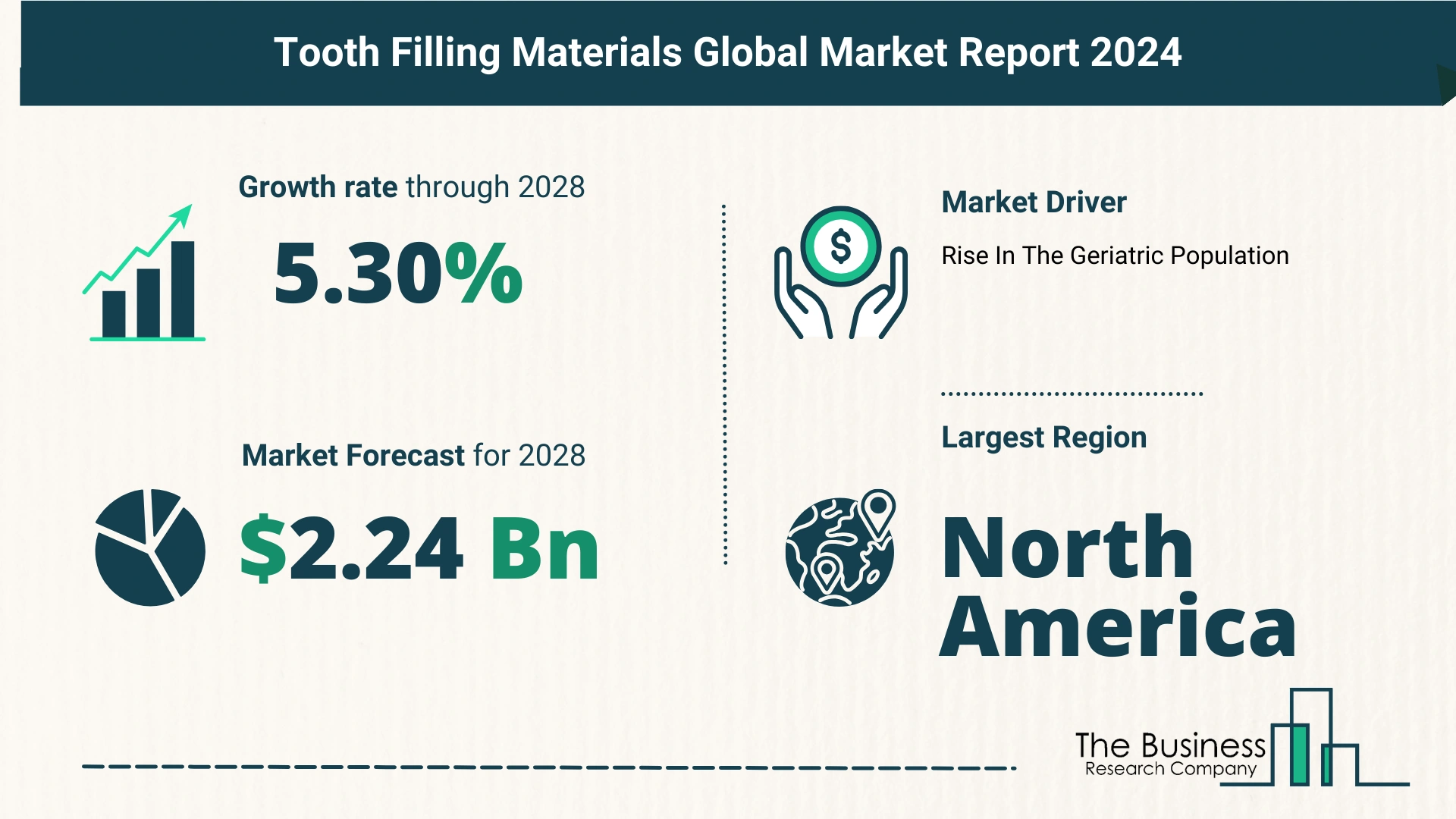
    • Future Projections: The market is set to continue its strong growth trajectory, expected to reach $2.24 billion by 2028, at a CAGR of 5.3%.

    Drivers of Market Growth
    Increasing Dental Health Awareness

    • Awareness Campaigns: Greater public awareness of dental health has driven demand for dental services and products.
    • Educational Programs: Initiatives promoting regular dental check-ups and oral hygiene have contributed to market expansion.

    Demographic Trends

    • Aging Population: The growing elderly population, who are more prone to dental issues, has increased the need for dental treatments.
    • Youth and Aesthetic Dentistry: Younger generations’ preferences for aesthetic dental treatments, such as tooth-colored fillings, are also boosting market growth.

    Dental Insurance Coverage

    • Insurance Accessibility: Increased coverage and better dental insurance policies have made dental treatments more affordable and accessible.
    • Policy Support: Government and private sector initiatives supporting dental health are fueling market demand.

    Consumer Preferences and Prevalence of Dental Issues

    • Aesthetic Preferences: There is a rising demand for aesthetically pleasing dental materials, like composite resins and glass ionomers.
    • Dental Issues: High prevalence of dental disorders, such as tooth decay and gum disease, necessitates the use of tooth filling materials.

    View More On The Tooth Filling Materials Market Report 2024 – https://www.thebusinessresearchcompany.com/report/tooth-filling-materials-global-market-report

    Market Trends and Innovations
    Focus on Minimally Invasive Dentistry

    • Non-Invasive Treatments: Growing preference for minimally invasive dental procedures is expected to drive the demand for advanced filling materials.
    • Patient Comfort: Emphasis on patient comfort and quicker recovery times are key factors.

    Technological Advancements

    • Digital Dentistry Integration: The adoption of digital technologies in dental practices, including 3D printing, is revolutionizing the market.
    • Nanotechnology: Innovations in nanotechnology are enhancing the quality and performance of dental filling materials.

    Regulatory Landscape

    • Evolving Regulations: Changes in dental material regulations ensure higher quality and safer products.
    • Compliance: Companies are focusing on compliance to gain market credibility and consumer trust.

    Major Players in the Market

    • Leading Companies: Notable companies include 3M Corporation, Dentsply Sirona, Kerr Corporation, Ultradent Products Inc., and Ivoclar Vivadent AG.
    • Product Innovations: These companies are continuously developing new materials to maintain a competitive edge.

    Innovations and Acquisitions
    Flexcera Smile Ultra Plus Resin

    • Product Introduction: In February 2022, Desktop Health introduced Flexcera Smile Ultra Plus Resin, a hybrid nanoceramic resin for enhanced dental restorations.
    • Key Benefits: This next-generation material offers ceramic-like strength and improved aesthetics, suitable for use with EnvisionTEC 3D printers.

    Pac-Dent Inc.’s Strategic Acquisition

    • Acquisition of JS Dental: In September 2021, Pac-Dent Inc. acquired JS Dental Manufacturing to expand its endodontic product range.
    • Market Impact: This acquisition allows Pac-Dent to diversify its product offerings and strengthen its market position.

    Market Segmentation

    • By Product: Composite Resin, Silver Amalgam, Glass Ionomer, Gold Fillings, and other products.
    • By Filling: Direct and Indirect.
    • By End Use: Hospitals, Dental Clinics, and Other End Uses.

    Regional Insights

    • North America: This region was the largest market for tooth filling materials in 2023, driven by advanced healthcare infrastructure and high dental awareness.
    • Asia-Pacific: Expected to be the fastest-growing region in the forecast period, fueled by rising disposable incomes and growing healthcare investments.

    Conclusion
    The tooth filling materials market is poised for significant growth driven by increased dental health awareness, demographic trends, technological advancements, and strategic acquisitions. As the market evolves, innovations in digital dentistry and nanotechnology will play a pivotal role in shaping its future, offering enhanced solutions for dental restorations and improved patient outcomes.

    Request A Sample Of The Global Tooth Filling Materials Market Report 2024:
    https://www.thebusinessresearchcompany.com/sample_request?id=13546&type=smp
  • Key Trends And Drivers In The Artificial Intelligence In The Diagnostic Market 2024

    Key Trends And Drivers In The Artificial Intelligence In The Diagnostic Market 2024

    The Business Research Company’s market reports offer an in-depth analysis on the market’s growth potential, major drivers, key trends and more.

    The artificial intelligence (AI) in the diagnostics market is witnessing exponential growth, driven by technological advancements and increasing healthcare demands. This blog explores the market’s current state, key drivers, major trends, and future projections.

    Rapid Market Growth

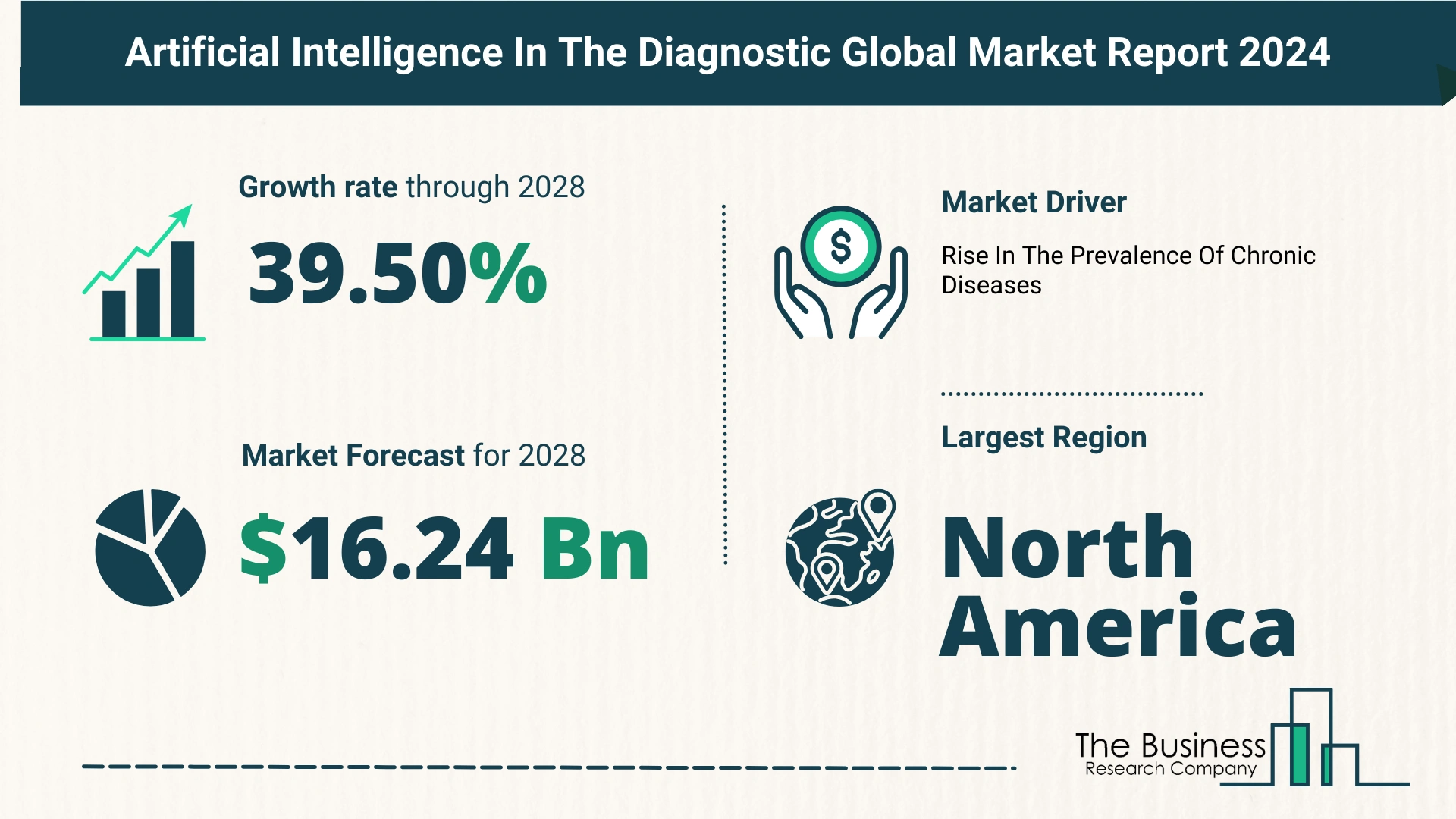
    • Current Market Size: The AI in diagnostics market grew from $3.06 billion in 2023 to $4.29 billion in 2024.
    • Growth Rate: This growth represents a compound annual growth rate (CAGR) of 40.3%.
    • Future Projections: The market is expected to reach $16.24 billion by 2028, maintaining a CAGR of 39.5%.

    Key Drivers of Growth

    1. Rising Disease Burden:
      • Increasing prevalence of chronic diseases necessitates efficient diagnostic solutions.
      • AI enables early detection, prediction, and personalized treatment plans.
    2. Data Availability:
      • The abundance of healthcare data supports AI’s capabilities in diagnostics.
      • AI analyzes vast datasets to identify patterns and make accurate diagnoses.
    3. Cost Reduction:
      • AI-driven diagnostics reduce healthcare costs by streamlining processes and improving accuracy.
      • Cost-efficient diagnostics benefit both healthcare providers and patients.
    4. Regulatory Support:
      • Regulatory bodies are increasingly approving AI-based diagnostic tools.
      • This support accelerates the adoption of AI technologies in clinical settings.
    5. Increasing Awareness:
      • Growing awareness of AI’s potential in healthcare drives its adoption.
      • Patients and providers recognize the benefits of AI in improving diagnostic accuracy and efficiency.

    Read More On The Artificial Intelligence In The Diagnostic Market Report 2024 – https://www.thebusinessresearchcompany.com/report/artificial-intelligence-in-the-diagnostic-global-market-report

    Future Growth Factors

    1. Personalized Medicine Trends:
      • AI facilitates personalized medicine by analyzing individual genetic makeup and disease progression.
      • Tailored treatments improve patient outcomes and reduce adverse effects.
    2. Rapid Increase in Healthcare Data:
      • The continuous generation of healthcare data fuels AI’s analytical capabilities.
      • AI leverages this data to enhance diagnostic precision and speed.
    3. Global Health Challenges:
      • AI addresses global health challenges by providing scalable diagnostic solutions.
      • AI-driven tools are crucial in managing pandemics and other widespread health issues.
    4. Increased Investments:
      • Significant investments in AI technologies propel market growth.
      • Funding supports research, development, and deployment of advanced diagnostic tools.
    5. Enhanced Integration with Healthcare Systems:
      • AI integrates seamlessly with existing healthcare systems, improving interoperability.
      • Enhanced integration facilitates better data sharing and patient care coordination.

    Major Trends Shaping the Future

    1. Collaboration and Investment:
      • Partnerships between healthcare and tech companies drive innovation.
      • Collaboration accelerates the development and adoption of AI diagnostic solutions.
    2. Advancements in Technology:
      • Continuous advancements in AI technology enhance diagnostic capabilities.
      • Innovations include improved algorithms and more powerful computing platforms.
    3. Data Privacy and Security Concerns:
      • Ensuring data privacy and security is critical for AI adoption.
      • Regulations and technologies are evolving to address these concerns.
    4. Rise of Explainable AI (XAI):
      • XAI provides transparency in AI decision-making processes.
      • This transparency builds trust among healthcare providers and patients.
    5. Expanding Role of Computer Vision:
      • Computer vision plays a significant role in analyzing medical images.
      • AI-powered image analysis improves diagnostic accuracy and efficiency.

    AI’s Role in Diagnosing Chronic Diseases

    • Early Detection and Prediction: AI enables early detection and prediction of chronic diseases.
    • Enhanced Decision Support: AI supports clinical decision-making with precise data analysis.
    • Remote Monitoring: AI facilitates remote monitoring, improving chronic disease management.
    • Cost Reduction: AI reduces healthcare costs by streamlining diagnostic processes.
    • Personalized Treatment: AI tailors treatments to individual patients, enhancing care quality.

    Key Players in the Market

    • Major Companies: Google LLC, Microsoft Corporation, Intel Corporation, IBM Corporation, Siemens Healthineers, Koninklijke Philips N.V., GE Healthcare Technologies Inc., Paige.AI Inc., HeartFlow Inc., and others.
    • Innovative Solutions: Companies are launching new AI modules to enhance diagnostic accuracy and efficiency.

    Focus on New AI Solutions

    • Product Launches: Companies are introducing AI-powered diagnostic tools to gain a competitive edge.
    • Case Example: In March 2023, Qritive launched QAi Prostate, an AI tool for prostate cancer diagnosis, improving accuracy and efficiency.

    Nanox Imaging Acquires Zebra Medical Vision

    • Acquisition Details: In November 2021, Nanox Imaging Ltd. acquired Zebra Medical Vision Ltd. for $110 million.
    • Strategic Impact: The acquisition enhances Nanox’s AI capabilities in medical imaging, supporting advanced diagnostic solutions.

    Conclusion
    The AI in diagnostics market is set for significant growth, driven by technological advancements and increasing healthcare demands. As AI continues to evolve, it will play a crucial role in transforming diagnostics, improving accuracy, and enhancing patient outcomes. The future of healthcare diagnostics is undoubtedly AI-driven, promising more efficient and personalized care.

    Request for A Sample Of The Global Artificial Intelligence In The Diagnostic Market Report:
    https://www.thebusinessresearchcompany.com/sample_request?id=13593&type=smp

  • Global Artificial Intelligence In Radiology Market Analysis: Estimated Market Size And Growth Rate

    Global Artificial Intelligence In Radiology Market Analysis: Estimated Market Size And Growth Rate

    The Business Research Company’s global market reports are now updated with the latest market sizing information for the year 2024 and forecasted to 2033

    The artificial intelligence (AI) in radiology market is experiencing exponential growth, driven by advancements in AI technologies and the increasing volume of medical imaging data. This blog explores the current market landscape, key drivers, major trends, and future projections.

    Rapid Market Growth

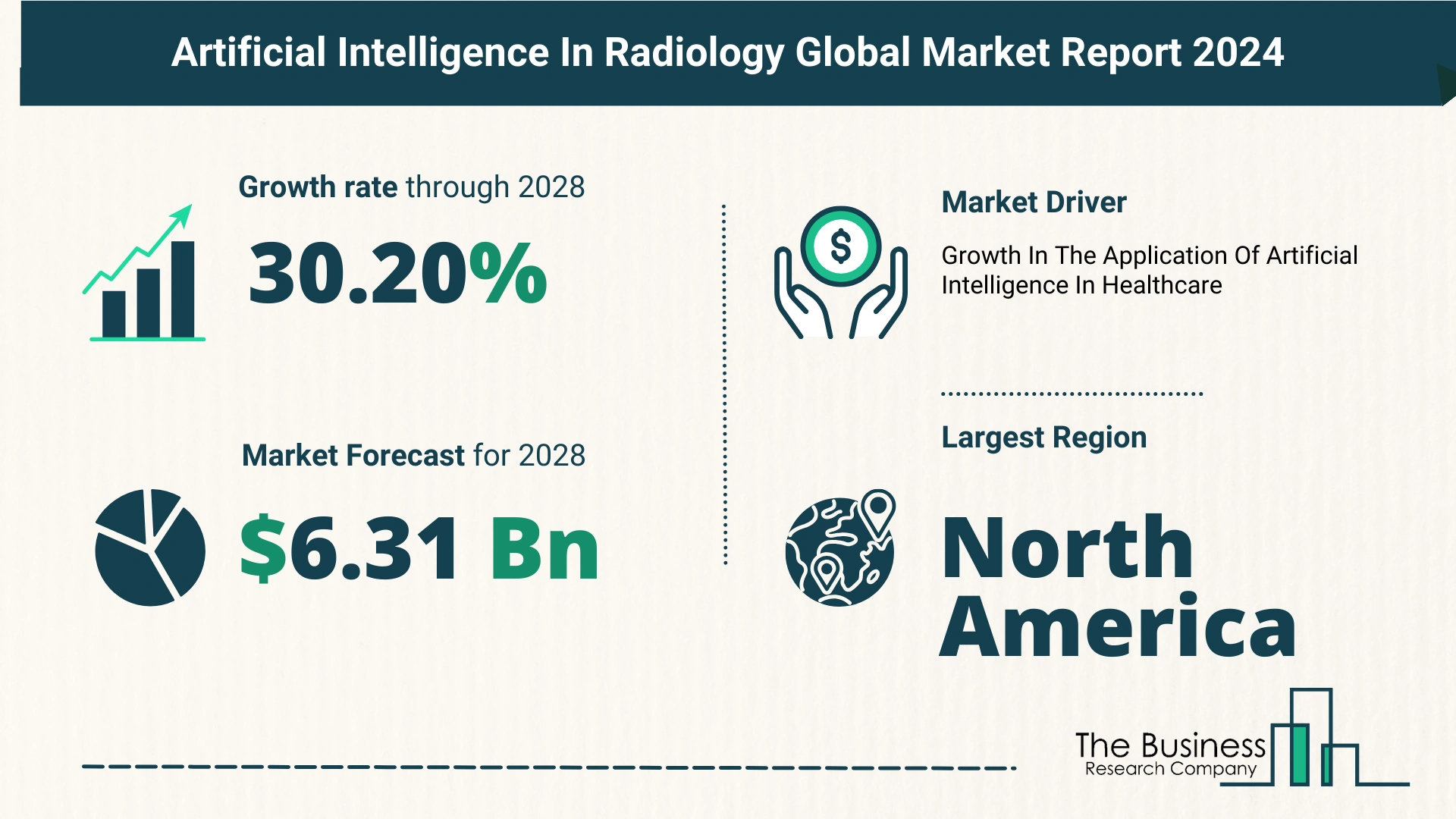
    • Current Market Size: The AI in radiology market grew from $1.68 billion in 2023 to $2.2 billion in 2024.
    • Growth Rate: This growth represents a compound annual growth rate (CAGR) of 30.8%.
    • Future Projections: The market is expected to reach $6.31 billion by 2028, maintaining a CAGR of 30.2%.

    Key Drivers of Growth

    1. Increasing Volume of Medical Imaging Data:
      • The sheer volume of imaging data requires efficient analysis and management.
      • AI assists radiologists by quickly processing large datasets and identifying anomalies.
    2. Rise of Deep Learning Algorithms:
      • Advanced algorithms enhance the ability to interpret complex medical images.
      • These algorithms improve diagnostic accuracy and reduce human error.
    3. Demand for Improved Diagnostic Accuracy:
      • AI-powered tools offer precision in detecting subtle abnormalities.
      • Enhanced accuracy leads to better patient outcomes and treatment plans.
    4. Regulatory Approvals and Standards:
      • Regulatory bodies are approving AI solutions for clinical use.
      • Standards ensure these technologies are safe and effective.
    5. Cost-Efficiency and Workflow Improvement:
      • AI streamlines workflows, reducing the time and cost associated with manual image analysis.
      • This efficiency allows radiologists to focus on more complex cases.

    View More On The Artificial Intelligence In Radiology Market Report 2024 – https://www.thebusinessresearchcompany.com/report/artificial-intelligence-in-radiology-global-market-report

    Future Growth Factors

    1. Advancements in AI Algorithms:
      • Continuous improvements in AI algorithms enhance diagnostic capabilities.
      • These advancements allow for more nuanced analysis of medical images.
    2. Integration with Electronic Health Records (EHRs):
      • AI systems integrate seamlessly with EHRs, improving data accessibility and patient care coordination.
      • Enhanced interoperability leads to more comprehensive patient records.
    3. Expansion Beyond Diagnosis:
      • AI applications are expanding to include treatment planning and monitoring.
      • This broadens the scope of AI in radiology, offering more holistic care solutions.
    4. AI-Powered Image Enhancement:
      • AI enhances image quality, making it easier to detect and diagnose conditions.
      • Improved image clarity supports better clinical decisions.
    5. Enhanced Interoperability and Data Sharing:
      • AI facilitates better data sharing between different healthcare systems.
      • This interoperability improves collaboration and patient outcomes.

    Major Trends Shaping the Future

    1. Telemedicine and Remote Healthcare:
      • AI supports telemedicine by providing remote diagnostic capabilities.
      • This trend expands access to radiology services, especially in underserved areas.
    2. Collaboration Between Healthcare and Tech Companies:
      • Partnerships are driving innovation in AI solutions for radiology.
      • Collaboration accelerates the development and adoption of new technologies.
    3. Advancements in Imaging Technologies:
      • Emerging imaging technologies are integrated with AI for better diagnostic accuracy.
      • These advancements provide more detailed and accurate medical images.
    4. Quantitative Imaging Analytics:
      • AI offers quantitative analysis of medical images, providing measurable data.
      • This data supports evidence-based clinical decisions.
    5. Automated Report Generation:
      • AI automates the generation of radiology reports, saving time and reducing errors.
      • Automated reports enhance workflow efficiency and accuracy.

    Growing Application of AI in Healthcare

    • Enhanced Diagnostic Capabilities: AI algorithms improve the ability to analyze and interpret medical images.
    • Streamlined Workflows: AI technologies increase efficiency and speed in radiological processes.
    • Improved Patient Outcomes: Faster and more accurate diagnoses lead to better patient care.

    Key Players in the Market

    • Major Companies: Microsoft Corporation, IBM Corporation, NVIDIA Corporation, Siemens Healthineers AG, Koninklijke Philips N.V, GE Healthcare Technologies Inc., Canon Medical Systems Corporation, and others.
    • Innovative Solutions: Companies are launching new AI-powered radiology suites to enhance diagnostic accuracy and efficiency.

    Focus on New AI Solutions

    • Product Launches: Companies are introducing new AI solutions to stay competitive.
    • Case Example: In November 2022, Viz.ai Inc. launched an AI-powered radiology suite to analyze medical imaging data swiftly and accurately.

    Bayer AG Acquires Blackford Analysis Ltd.

    • Acquisition Details: In January 2023, Bayer AG acquired Blackford Analysis Ltd. to integrate AI into radiology workflows.
    • Strategic Impact: The acquisition aims to improve patient care and strengthen Bayer’s position in digital medical imaging.

    Conclusion
    The AI in radiology market is poised for significant growth, driven by technological advancements and increasing demand for efficient diagnostic solutions. As AI continues to evolve, it will play a crucial role in transforming radiology, enhancing diagnostic accuracy, and improving patient outcomes.

    Request A Sample Of The Global Artificial Intelligence In Radiology Market Report 2024:
    https://www.thebusinessresearchcompany.com/sample_request?id=13591&type=smp

  • Global Artificial Intelligence In Medicine Market Key Insights 2024-2033

    Global Artificial Intelligence In Medicine Market Key Insights 2024-2033

    The Business Research Company’s global market reports are now updated with the latest market sizing information for the year 2024 and forecasted to 2033

    According to The Business Research Company’s Artificial Intelligence In Medicine Global Market Report 2024, the artificial intelligence in medicine market is expected to show promising growth in the forecast period.

    The artificial intelligence (AI) in medicine market has been experiencing rapid growth in recent years. With advancements in technology and a rising demand for efficient healthcare solutions, the market is poised for even greater expansion in the coming years.

    Current Market Landscape

    • Market Size in 2023: $8.01 billion
    • Projected Market Size in 2024: $11.19 billion
    • Compound Annual Growth Rate (CAGR): 39.8%

    Key Growth Drivers

    • Patient Well-being Focus: Increased emphasis on patient health and safety.
    • Physician Shortage: A relative shortage of doctors driving the need for AI solutions.
    • Skilled Healthcare Professionals: Growth in the number of professionals adept at utilizing AI.
    • Processing Power: Enhanced processing capabilities of AI systems.

    Future Market Projections

    • Expected Market Size in 2028: $42.11 billion
    • CAGR: 39.3%

    Anticipated Growth Factors

    • Chronic Disease Prevalence: Rising rates of chronic diseases necessitating advanced healthcare solutions.
    • Digital Transformation: Greater emphasis on adopting digital practices in healthcare.

    View More On The Artificial Intelligence In Medicine Market Report 2024 – https://www.thebusinessresearchcompany.com/report/artificial-intelligence-in-medicine-global-market-report

    Emerging Trends

    • Medical Robots: Development and integration of robotic systems in medical practice.
    • Patient Management Applications: Significant growth expected in AI-driven patient management tools.
    • Drug Discovery: AI’s role in expediting and enhancing drug discovery processes.
    • Precision Medicine: Advances in AI leading to more accurate and personalized treatment options.

    Remote Patient Monitoring: A Catalyst for AI Adoption
    Surge in Remote Patient Monitoring

    • Real-time Monitoring: Increasing use of remote patient monitoring (RPM) systems.
    • Survey Findings: According to Vivalink’s 2023 survey, RPM usage by clinicians rose from 20% in 2021 to 81%, a 305% increase.
    • AI’s Role: Leveraging AI to analyze patient data, provide predictive insights, and enable personalized care.

    Impact on AI in Medicine

    • Growth Driver: The rising interest in RPM systems significantly boosts AI adoption in healthcare.

    Innovations by Leading Companies
    Advanced Robotic Tools

    • Smith & Nephew: Transforming orthopedic practices with cutting-edge robotic tools.
    • AI-Powered Platforms: Companies like OM1 Inc. are launching platforms like PhenOM, which uses real-world data and advanced analytics to identify unique digital phenotypes, predict risks, and inform treatment decisions.

    Strategic Acquisitions

    • Sanofi’s Acquisition of Amunix Pharmaceuticals:
      • Date: December 2021
      • Objective: Enhance Sanofi’s oncology portfolio and expedite the development of cancer treatments.
      • Impact: Acquisition brings about 20 new molecules into development.
      • Amunix’s Contribution: Utilizing AI technology to develop innovative medicines.

    Market Segmentation
    By Type

    • Hardware
    • Software
    • Services

    By Technology

    • Machine Learning
    • Natural Language Processing
    • Context-Aware Processing
    • Computer Vision

    By Application

    • Medical Administration and Support
    • Patient Management
    • Research and Development
    • Other Applications

    By End User

    • Hospitals
    • Clinics
    • Research Institutions

    Regional Insights

    • North America: The largest region in the AI in medicine market in 2023.
    • Asia-Pacific: Expected to be the fastest-growing region in the forecast period.

    Conclusion
    The artificial intelligence in medicine market is on a remarkable growth trajectory, driven by advancements in technology, a growing emphasis on digital transformation, and the increasing prevalence of chronic diseases. As major companies continue to innovate and adopt AI-driven solutions, the future of healthcare looks poised for significant transformation, promising improved patient outcomes and more efficient medical practices.

    Request A Sample Of The Global Artificial Intelligence In Medicine Market Report 2024:
    https://www.thebusinessresearchcompany.com/sample_request?id=13590&type=smp

  • Global Artificial Intelligence In Medical Imaging Market Overview 2024: Size, Drivers, And Trends

    Global Artificial Intelligence In Medical Imaging Market Overview 2024: Size, Drivers, And Trends

    The Business Research Company’s global market reports provide comprehensive analysis on the various markets in 27 industries across 60 geographies.

    Rapid Market Expansion

    • Current Growth: The artificial intelligence (AI) in medical imaging market has experienced remarkable growth, increasing from $2.6 billion in 2023 to an anticipated $3.42 billion in 2024, marking a compound annual growth rate (CAGR) of 31.7%.
    • Future Projections: This upward trajectory is expected to continue, with the market forecasted to reach $10.02 billion by 2028, maintaining a CAGR of 30.8%.

    Factors Driving Growth
    Historic Period Influences

    • AI-Powered CT Demand: Rising demand for AI-enhanced computed tomography (CT) scans.
    • Cancer Prevalence: Increased rates of cancer driving the need for advanced imaging.
    • Cloud Computing Adoption: Growing reliance on cloud technology in healthcare.
    • Aging Population: Larger geriatric demographic requiring more medical imaging.
    • Government Initiatives: Supportive policies and initiatives from governments worldwide.

    Forecast Period Influences

    • Radiologist Workload Reduction: AI’s role in reducing the burden on radiologists.
    • Investment Growth: Increased investment in AI technologies.
    • Complex Data Handling: Growing necessity to manage and analyze large datasets.
    • Continued Demand for AI CT: Sustained interest in AI-powered CT applications.

    View More On The Artificial Intelligence In Medical Imaging Market Report 2024 – https://www.thebusinessresearchcompany.com/report/artificial-intelligence-in-medical-imaging-global-market-report

    Key Trends Shaping the Future
    Technological Advancements

    • Computer Vision: Enhanced AI algorithms for precise medical image analysis.
    • Deep Learning Progress: Significant advancements in deep learning capabilities.
    • Product Innovations: New developments in nuclear medicine, ultrasound systems, and MRI technologies.

    The Surge of AI in Medical Imaging
    Role of Imaging Modalities

    • Improved Techniques: AI algorithms assist in image reconstruction, noise reduction, and artifact correction.
    • Growing Utilization: A notable increase in the number of imaging tests, such as the 43.3 million tests reported by the UK’s National Health Service from April 2021 to March 2022.

    Major Market Players

    • Leading Companies: Key players include Google LLC, Microsoft Corporation, IBM Watson Health, and NVIDIA Corporation, among others.

    AI-Enabled MRI Systems
    Innovation in MRI Technology

    • GE Healthcare’s SIGNA Champion: Launched in December 2023, this AI-enabled MRI system offers features like AIR Recon DL and Sonic DL for enhanced efficiency and image quality.
    • Patient-Centric Design: The SIGNA Champion combines generous patient clearance with reduced scan times, improving the patient experience.

    Point-of-Care Ultrasound Revolution
    Exo’s Strategic Acquisition

    • Acquisition of Medo AI: In October 2022, Exo acquired Medo AI, integrating Medo’s AI capabilities with Exo’s hardware to overcome barriers in point-of-care ultrasound adoption.
    • Enhanced Technology: This combination aims to streamline ultrasound technology, making it more accessible and effective.

    Market Segmentation
    By Modality

    • CT Scan
    • MRI
    • X-rays
    • Ultrasound
    • Nuclear Imaging

    By Technology

    • Deep Learning
    • Natural Language Processing (NLP)
    • Other Technologies

    By Application

    • Neurology
    • Respiratory and Pulmonary
    • Cardiology
    • Breast Screening
    • Orthopedics

    By End-Use

    • Hospitals
    • Diagnostic Imaging Centers
    • Other End-Users

    Regional Insights

    • North America: The largest market for AI in medical imaging in 2023.
    • Asia-Pacific: Expected to be the fastest-growing region in the coming years.

    The AI in medical imaging market is poised for unprecedented growth, driven by technological advancements, increasing healthcare demands, and significant investments. As AI continues to revolutionize medical imaging, the landscape of diagnostics and treatment will be transformed, leading to more efficient, accurate, and patient-friendly healthcare solutions.

    Request A Sample Of The Global Artificial Intelligence In Medical Imaging Market Report 2024:
    https://www.thebusinessresearchcompany.com/sample_request?id=13589&type=smp

  • Key Trends And Drivers In The Surgical Drapes Market 2024

    Key Trends And Drivers In The Surgical Drapes Market 2024

    The Business Research Company’s market reports offer an in-depth analysis on the market’s growth potential, major drivers, key trends and more.

    The surgical drapes market is evolving rapidly, driven by technological advancements and increasing demand in healthcare facilities worldwide. This blog explores the key drivers, market analysis, and trends shaping the future of the surgical drapes industry.

    Market Drivers

    Innovation in Product Development

    • Advanced Technology: Companies are leveraging advanced technologies like BeneHold CHG adhesive to enhance the efficacy of surgical drapes.
    • Antibacterial Solutions: The incorporation of antibacterial chemicals, such as chlorhexidine gluconate (CHG), helps in maintaining a sterile surgical site.

    Strategic Partnerships

    • Cardinal Health and MedStar Health: In April 2023, Cardinal Health partnered with MedStar Health to launch Stray Away, a hair management drape designed to enhance patient comfort and streamline surgical procedures.

    Rising Healthcare Demand

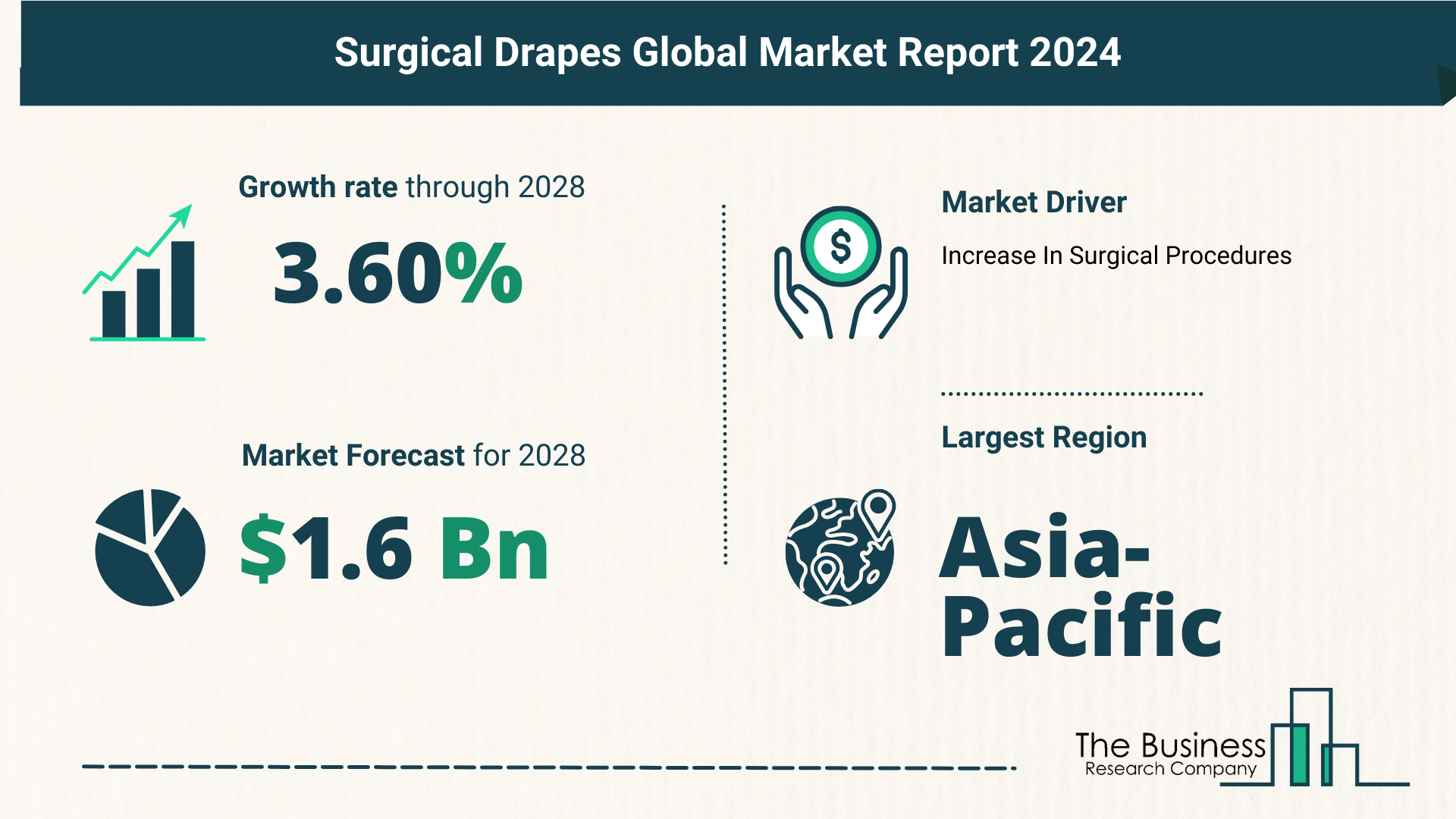
    • Increasing Surgeries: The growing number of surgical procedures globally is driving the demand for effective and reliable surgical drapes.
    • Healthcare Infrastructure: Expanding healthcare infrastructure in developing regions is contributing to market growth.

    Read More On The Surgical Drapes Market Report 2024 – https://www.thebusinessresearchcompany.com/report/surgical-drapes-global-market-report

    Market Analysis

    Segment Insights

    • By Type: The market is segmented into disposable and reusable drapes, with disposable drapes seeing higher demand due to hygiene and convenience factors.
    • By Risk Type: Categories include minimal (AAMI Level 1), low (AAMI Level 2), moderate (AAMI Level 3), and high risk (AAMI Level 4) drapes, catering to different levels of surgical needs.
    • By End User: The main end users are clinics, hospitals, ambulatory surgical centers, and other healthcare facilities.

    Regional Analysis

    • Asia-Pacific Dominance: Asia-Pacific was the largest region in the surgical drapes market in 2023, driven by expanding healthcare infrastructure and rising surgical procedures.

    Market Trends

    Technological Advancements

    • Enhanced Adhesive Technologies: The development of adhesive technologies like BeneHold CHG is a major trend, providing better infection control.
    • Eco-Friendly Options: Growing awareness about environmental sustainability is pushing companies to develop eco-friendly, reusable drapes.

    Collaborative Efforts

    • Partnerships and Collaborations: Companies are increasingly partnering with healthcare providers to develop customized solutions that enhance operational efficiency and patient safety.

    Market Data and Insights

    Market Share

    • Key Players: Major companies in the market include Cardinal Health Inc., Thermo Fisher Scientific Inc., 3M Company, Medline Industries LP, and Ecolab Inc.
    • Competitive Landscape: The market is highly competitive with players focusing on innovation, product development, and strategic partnerships.

    Market Report

    • Comprehensive Analysis: Detailed reports provide insights into market size, growth potential, and competitive strategies.
    • Forecasts: Market outlooks predict continued growth driven by technological innovations and increasing surgical procedures.

    Market Segments

    Disposable vs. Reusable

    • Disposable Drapes: Preferred for their convenience and hygiene, dominating the market share.
    • Reusable Drapes: Gaining traction due to cost-effectiveness and environmental benefits.

    Risk Type Categories

    • Minimal to High Risk: Offering various levels of protection to cater to specific surgical requirements.

    End User Diversity

    • Hospitals and Clinics: Major consumers of surgical drapes.
    • Ambulatory Surgical Centers: Emerging as significant end users due to the rise in outpatient surgeries.

    Industry Analysis

    Competitive Strategies

    • Innovation Focus: Companies are investing in R&D to introduce innovative products and maintain a competitive edge.
    • Market Expansion: Efforts to expand market presence in emerging regions are prominent among major players.

    Outlook and Future Trends

    • Positive Growth: The market is expected to grow robustly due to continuous advancements and increasing healthcare needs.
    • Sustainable Practices: Emphasis on sustainable and cost-effective solutions will shape future market trends.

    Conclusion

    The surgical drapes market is poised for significant growth, driven by innovation, strategic collaborations, and increasing healthcare demands. Major players are focusing on developing advanced products and expanding their market reach to capitalize on emerging opportunities. As the market evolves, staying informed about the latest trends and developments will be crucial for stakeholders.

    Request for A Sample Of The Global Surgical Drapes Market Report:
    https://www.thebusinessresearchcompany.com/sample_request?id=13540&type=smp

  • 5 Key Insights On The Thoracic Surgery Devices Market 2024

    5 Key Insights On The Thoracic Surgery Devices Market 2024

    The Business Research Company’s global market reports are now updated with the latest market sizing information for the year 2024 and forecasted to 2033

    As per The Business Research Company’s Thoracic Surgery Devices Global Market Report 2024, the thoracic surgery devices market is expected to show significant growth in the forecast period.

    The thoracic surgery devices market has witnessed significant growth recently. In 2023, the market size was valued at $8.07 billion, and it is projected to reach $8.89 billion in 2024, demonstrating a compound annual growth rate (CAGR) of 10.1%.

    Key Growth Drivers in the Historic Period:

    • Advancements in Surgical Techniques: Improved methods have increased precision and safety.
    • Aging Population and Prevalence of Thoracic Diseases: More elderly individuals and a higher incidence of conditions affecting the thoracic cavity.
    • Increasing Surgical Volume: A rise in the number of thoracic surgeries performed.
    • Healthcare Infrastructure Development: Better facilities and resources support more procedures.
    • Training and Education Initiatives: Enhanced professional training has improved surgical outcomes.

    Projected Market Expansion

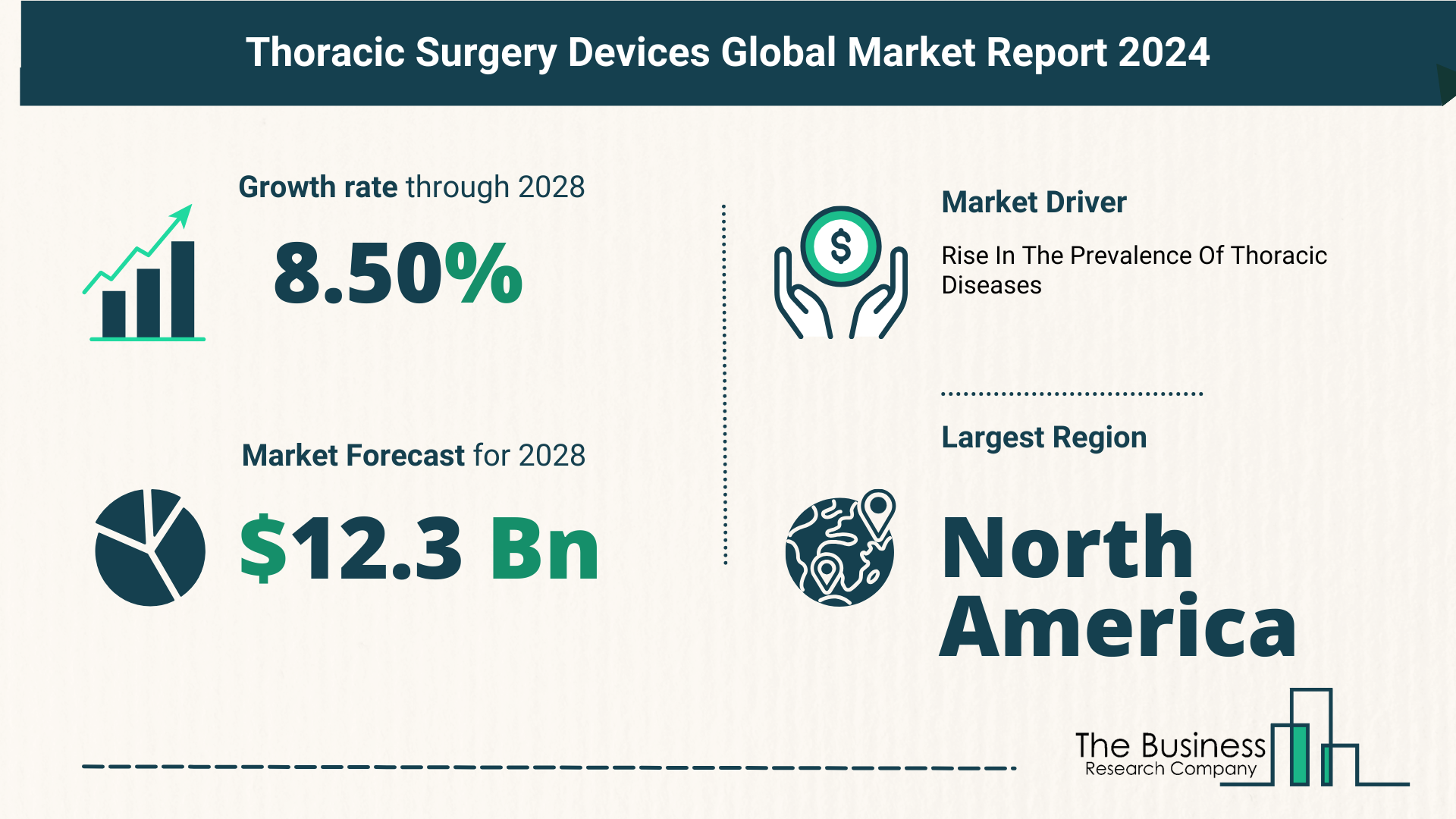
    Looking ahead, the thoracic surgery devices market is expected to continue its strong growth trajectory. By 2028, the market is forecasted to reach $12.3 billion, with a CAGR of 8.5%.

    Future Growth Drivers:

    • Robotics and AI Integration: Enhanced precision and automation in surgeries.
    • Patient-Centric Approaches: Focus on individual patient needs and outcomes.
    • Customized Implant Solutions: Tailored implants for better patient compatibility.
    • Telemedicine and Remote Surgery: Expanding access and convenience.
    • Value-Based Healthcare Models: Emphasis on cost-effective and efficient care.

    View More On The Thoracic Surgery Devices Market Report 2024 – https://www.thebusinessresearchcompany.com/report/thoracic-surgery-devices-global-market-report

    Major Trends Shaping the Market:

    • Global Collaboration in Healthcare: Cross-border partnerships and knowledge exchange.
    • Technological Innovations in Medical Devices: Continued advancements in device technology.
    • Advancements in Imaging Technology: Improved diagnostics and surgical planning.
    • Rise in Ambulatory Surgical Centers (ASCs): More surgeries performed in outpatient settings.

    Surge in Market Growth Due to Thoracic Diseases

    The increasing prevalence of thoracic diseases significantly drives the market. These conditions, affecting organs within the thoracic cavity, require precise and effective surgical interventions.

    Example: Chronic Obstructive Pulmonary Disease (COPD):

    • Impact: In 2023, COPD accounted for 3.6% of the total disease burden in Australia, representing 50% of the burden attributable to respiratory conditions.
    • Market Impact: The growing need for surgical solutions for such conditions propels market growth.

    Leading Companies and Innovations

    Several major companies dominate the thoracic surgery devices market, contributing to its growth through innovative products and strategic acquisitions.

    Key Players:

    • Cardinal Health
    • Medtronic PLC
    • Danaher Corporation
    • Becton, Dickinson and Company
    • Stryker Corporation
    • Braun Melsungen AG
    • Olympus Corporation
    • Intuitive Surgical

    Innovative Products:

    • 3D-Printed Airway Stents:Developed by ETH Zurich, these stents provide customized and durable airway support, gradually dissolving after implantation. They are produced using digital light processing (DLP) and bioresorbable materials, eliminating the need for invasive removal procedures.

    Strategic Acquisitions

    Medtronic PLC’s Acquisition of Intersect ENT:

    • Date:May 2022
    • Objective:Expand Medtronic’s portfolio with Intersect ENT’s bioabsorbable steroid-eluting sinus implants.
    • Outcome:Strengthens Medtronic’s position in providing innovative thoracic devices and therapies.

    Market Segmentation

    The thoracic surgery devices market is segmented based on product type, surgery type, and end-user.

    By Product:

    • Forceps, Graspers, Clamps and Staplers, Scissors, Spreaders, Needle Holders, Other Products

    By Surgery Type:

    • Lobectomy, Wedge Resection, Pneumonectomy, Other Surgery Types

    By End-User:

    • Hospitals, Ambulatory Surgical Centers, Other End-Users

    Regional Insights

    In 2023, North America emerged as the largest region in the thoracic surgery devices market, driven by advanced healthcare infrastructure and high prevalence of thoracic diseases.

    Conclusion

    The thoracic surgery devices market is experiencing rapid growth, fueled by advancements in technology, increasing disease prevalence, and strategic industry moves. As innovations continue and healthcare evolves, the market is set to expand further, offering enhanced surgical solutions and improved patient outcomes.

    Request A Sample Of The Global Thoracic Surgery Devices Market Report 2024:
    https://www.thebusinessresearchcompany.com/sample_request?id=13544&type=smp

  • Future Growth Forecast For The Teeth Whitening Global Market 2024-2033

    Future Growth Forecast For The Teeth Whitening Global Market 2024-2033

    The Business Research Company’s global market reports provide comprehensive analysis on the various markets in 27 industries across 60 geographies.

    Strong Market Growth in Recent Years

    The teeth whitening market has experienced robust growth, expanding from $6.91 billion in 2023 to $7.31 billion in 2024 at a CAGR of 5.8%. Several factors have fueled this growth:

    • Beauty and Aesthetic Consciousness: Increasing desire for aesthetic enhancement.
    • Social Media Influence: Celebrity endorsements and social media trends.
    • Dental Tourism: Expansion of dental tourism providing affordable options.
    • Over-the-Counter Products: Wide availability of easy-to-use products.
    • Consumer Awareness: Growing education on oral hygiene and aesthetic options.

    Future Growth Prospects

    Looking ahead, the market is expected to reach $8.8 billion by 2028, growing at a CAGR of 4.8%. Key drivers include:

    • Aesthetic Dentistry: Continued focus on enhancing dental aesthetics.
    • Customized Services: Personalized whitening solutions gaining popularity.
    • Aging Population: Increasing demand from an older demographic.
    • Beauty Standards: Ongoing social and cultural emphasis on beauty.
    • Wellness Trends: Integration of oral care into broader wellness movements.

    View More On The Teeth Whitening Market Report 2024 – https://www.thebusinessresearchcompany.com/report/teeth-whitening-global-market-report

    Major Trends Shaping the Market

    The teeth whitening market is evolving with several notable trends:

    • Advanced Whitening Technologies: Innovative technologies improving effectiveness.
    • At-Home Whitening Kits: Convenience and popularity of home-use products.
    • Natural Products: Rising demand for organic and natural whitening solutions.
    • Innovative Formulations: Development of new and improved whitening formulations.

    Dental Treatments Driving Market Growth

    The surge in dental treatments is significantly boosting the teeth whitening market. For instance:

    • Increased Dental Procedures: 32.5 million dental treatments reported by the UK’s National Health Service in 2023, up by 23.2% from 2021.
    • Aesthetic Enhancements: Dental professionals offering advanced whitening treatments to improve aesthetics.

    Key Players in the Market

    Several major companies are shaping the teeth whitening market:

    • Prominent Companies: Johnson & Johnson, Procter & Gamble, Unilever PLC, GlaxoSmithKline PLC, 3M Company, among others.
    • Technological Advancements: Companies like Colgate-Palmolive are developing products with advanced wavelength technology.

    Innovative Wavelength Technologies

    Companies are leveraging advanced technologies to enhance teeth whitening treatments:

    • Colgate Optic White ComfortFit LED Teeth Whitening Kit: Utilizes specific light wavelengths to boost treatment effectiveness.
    • Enhanced User Experience: Focus on comfort, uniformity, ease of use, and quick results.

    Strategic Acquisitions

    Strategic acquisitions are expanding market presence and product offerings:

    • Wellnex Life Limited Acquires Mr. Bright Ltd.: This acquisition enhances Wellnex Life’s product portfolio in oral care and teeth whitening, broadening their market reach and product range.

    Market Segmentation

    The teeth whitening market can be segmented by:

    • Product Type: Whitening toothpaste, gels, strips, light devices, and others.
    • Distribution Channel: Institutional sales and retail sales.
    • Application Type: In-office treatments and at-home solutions.

    Regional Insights

    The market exhibits significant regional variations:

    • North America: The largest market in 2023.
    • Asia-Pacific: Expected to be the fastest-growing region in the coming years.

    Conclusion

    The teeth whitening market is on a trajectory of steady growth, driven by increasing aesthetic consciousness, technological advancements, and strategic business moves. With a focus on innovation and expanding consumer options, the market is poised for continued expansion and development in the foreseeable future.

    Request A Sample Of The Global Teeth Whitening Market Report 2024:
    https://www.thebusinessresearchcompany.com/sample_request?id=13543&type=smp

  • Global Remote Surgery Market Key Insights 2024-2033

    Global Remote Surgery Market Key Insights 2024-2033

    The Business Research Company’s global market reports are now updated with the latest market sizing information for the year 2024 and forecasted to 2033

    According to The Business Research Company’s Remote Surgery Global Market Report 2024, the remote surgery market is expected to show promising growth in the forecast period.

    Explosive Growth in Recent Years

    • 2023 Market Size: $5.25 billion
    • 2024 Projection: $6.2 billion
    • CAGR: 18.2%
    • Drivers:
      • Improved telecommunication infrastructure
      • Globalization of healthcare services
      • Increased demand for specialty surgical expertise
      • Collaboration between surgeons and tech developers
      • Rising healthcare costs and efficiency needs
      • Government initiatives for healthcare accessibility

    Future Projections

    • 2028 Market Size: $11.26 billion
    • CAGR: 16.1%
    • Factors Contributing to Growth:
      • Global health crisis preparedness
      • Focus on rural and underserved healthcare
      • Integration with AI
      • Training and skill development initiatives
      • International collaboration in healthcare services

    View More On The Remote Surgery Market Report 2024 – https://www.thebusinessresearchcompany.com/report/remote-surgery-global-market-report

    Key Trends Shaping the Market

    Advancements and Integration

    • Robotics and Telecommunication: Enhanced surgical precision and connectivity
    • Minimally Invasive Procedures: Rising demand for less invasive surgery options
    • Artificial Intelligence (AI): Increasing integration for better outcomes
    • Telesurgery Training Programs: Surge in training initiatives for remote surgical procedures

    Driving Factors Behind Market Expansion

    Rising Number of Surgeries Worldwide

    • Global Surgery Statistics:
      • 262,893 bariatric surgeries in the US (2021)
      • Over 300 million major surgical procedures annually worldwide
    • Benefits of Remote Surgeries:
      • Greater precision and enhanced visualization
      • Shorter hospital stays
      • Wide adoption due to these advantages

    Major Players in the Market

    • Leading Companies:
      • Johnson and Johnson Private Limited
      • Medtronic plc.
      • Stryker Corporation
      • Zimmer Biomet Holdings
      • Intuitive Surgical Inc.
      • Others: Auris Health, Globus Medical, Renishaw, etc.

    Technological Innovations

    Robotic Platforms for Coronary Angioplasty

    • Innovative Solutions:
      • Robocath’s R-One+ robotic platform for heart surgery
      • Features: Radiation injury reduction, safety features like collision detection and force feedback
      • Benefits: Enhanced safety and quicker procedures

    Strategic Acquisitions

    Expansion Through Acquisition

    • Surgical Science Sweden AB:
      • Acquired Mimic Technologies Inc. for $18 million in 2021
      • Goals: Expand customer base and enhance robotic surgery simulation capabilities
      • Benefits: Advanced analytics and data collection integration

    Market Segmentation

    Components and Applications

    • Components:
      • Accessories
      • Systems
    • Applications:
      • Gynecology Surgery
      • Urology Surgery
      • Thoracic Surgery
      • Cardiac Surgery
      • Neurosurgery
      • Orthopedic Surgery
      • General Surgery
      • Other Applications
    • End-Users:
      • Clinics
      • Hospitals

    Regional Insights

    • 2023 Leader: North America
    • Fastest-Growing Region: Asia-Pacific (forecast period)

    The remote surgery market is poised for significant growth driven by technological advancements, strategic collaborations, and increasing global demand for specialized surgical expertise. With robust growth projections and major players investing in innovative solutions, the future of remote surgery promises enhanced precision, safety, and accessibility in healthcare.

    Request A Sample Of The Global Remote Surgery Market Report 2024:
    https://www.thebusinessresearchcompany.com/sample_request?id=13527&type=smp

  • Global Root Canal Market Analysis: Estimated Market Size And Growth Rate

    Global Root Canal Market Analysis: Estimated Market Size And Growth Rate

    The Business Research Company’s global market reports are now updated with the latest market sizing information for the year 2024 and forecasted to 2033

    The root canal market has experienced robust growth in recent years, driven by various factors including demographic shifts, advancements in dental technology, and rising awareness of oral health. This blog delves into the significant trends and future projections for the root canal market.

    Historic Growth: A Strong Foundation

    Impressive Market Expansion

    • Market Size: The root canal market grew from $1.1 billion in 2023 to $1.17 billion in 2024.
    • CAGR: The compound annual growth rate (CAGR) was 5.9%.

    Contributing Factors

    • Aging Population: Increasing numbers of elderly individuals who require dental care.
    • Oral Health Awareness: Greater public understanding of the importance of dental hygiene.
    • Dental Care Improvements: Enhanced dental care infrastructure and services.
    • Dental Caries and Infections: High prevalence of tooth decay and related infections.
    • Lifestyle and Diet Changes: Modern diets contributing to dental issues.
    • Patient Preferences: Increased preference for preserving natural teeth through procedures like root canals.

    Future Outlook: Steady Growth Ahead

    Market Projections

    • Expected Growth: The market is projected to grow to $1.4 billion by 2028.
    • Future CAGR: Expected to be 4.7% from 2024 to 2028.

    View More On The Root Canal Market Report 2024 – https://www.thebusinessresearchcompany.com/report/root-canal-global-market-report

    Driving Forces

    • Global Dental Health Initiatives: Efforts to improve dental health worldwide.
    • Minimally Invasive Techniques: Adoption of less invasive dental procedures.
    • Dental Tourism: Growth in patients traveling for affordable dental care.
    • Dental Health Education: Increased focus on educating the public about dental health.
    • Research Collaborations: More partnerships in dental research.

    Key Trends

    • Instrumentation Technologies: Advances in dental instruments.
    • Cone Beam Computed Tomography (CBCT): Integration of advanced imaging technologies.
    • Minimally Invasive Endodontics: Rise of less invasive root canal procedures.
    • Laser Technology: Use of lasers in endodontics.
    • 3D Printing: Application of 3D printing for dental procedures.

    Rising Prevalence of Dental Disorders

    Increased Dental Treatments

    • Dental Disorders: Conditions affecting teeth, gums, and jaw.
    • Root Canal Treatments: Procedures to replace damaged or infected tooth pulp.
    • NHS Report: In 2022-23, the NHS administered 32.5 million dental disorder treatments, a 23.2% increase from the previous year.

    Market Impact

    • Growth Driver: The rising number of dental disorder cases is a significant factor propelling market growth.

    Technological Innovations: Competitive Edge

    Advanced Treatment Technologies

    • Broad-Spectrum Acoustic Energy: Enhances cleaning efficacy in root canal treatments.
    • Advanced Fluid Dynamics: Improves debris removal and patient comfort.

    Case Example

    • Sonendo Inc.: Launched the GentleWave G4 system in October 2022, which uses sound waves and fluid dynamics for effective root canal cleaning.

    Strategic Acquisitions

    Strengthening Innovation

    • Sonendo Inc. Acquisition: Acquired FluidFile Ltd. in January 2022 to bolster its patent portfolio and innovation capabilities.
    • FluidFile Ltd.: Specializes in non-instrumentation root canal cleaning devices.

    Market Segmentation

    Types of Root Canal Procedures

    • Nonsurgical Root Canal
    • Secondary Root Canal
    • Apicoectomy
    • Pulpotomy
    • Pulpectomy

    Drugs Used

    • Anesthetics
    • Painkillers
    • Antibiotics

    Instruments Utilized

    • Scalers
    • Apex Locators
    • Motors
    • Handpiece
    • Lasers
    • Machine Assisted Obturation Systems

    End Users

    • Hospitals
    • Dental Clinics
    • Other End Users

    Regional Insights

    Key Markets

    • North America: Largest market region in 2023.
    • Asia-Pacific: Expected to be the fastest-growing region during the forecast period.

    The root canal market is poised for continued growth, driven by technological advancements, increasing prevalence of dental disorders, and strategic industry moves. These trends highlight the evolving landscape of dental care and the critical role of innovation in shaping future market dynamics.

    Request A Sample Of The Global Root Canal Market Report 2024:
    https://www.thebusinessresearchcompany.com/sample_request?id=13529&type=smp