Month: June 2025

  • Top Trends Driving Innovation and Change in the Medical Device Design And Development Services Market: Human-Centric Design In Medical Device Development

    Top Trends Driving Innovation and Change in the Medical Device Design And Development Services Market: Human-Centric Design In Medical Device Development

    Stay ahead with our updated market reports featuring the latest on tariffs, trade flows, and supply chain transformations.

    What Is the Estimated Market Size of the Medical Device Design And Development Services Market In 2029?

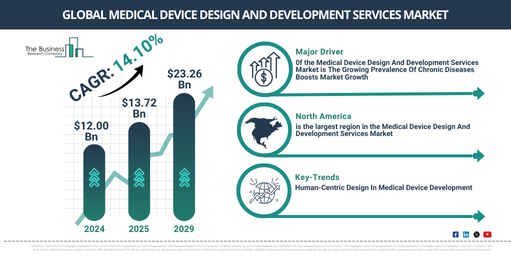
    The market size for medical device design and development services has seen a quick expansion in the last few years. This market which stood at $12.00 billion in 2024 is projected to increase to $13.72 billion in 2025, with a Compound Annual Growth Rate (CAGR) of 14.36%. The significant growth during the historic period can be traced back to factors such as an increasing elderly population, the development of personalized medicine, a rise in healthcare expenditure, heightened investment in research and development, and the expansion of healthcare infrastructure.

    The expansion of the medical device design and development services market is anticipated to accelerate in the approaching years. It is projected to reach $23.26 billion by 2029, with a compound annual growth rate (CAGR) of 14.10%. Factors contributing to this development during the prediction period include heightened demand for diagnostic procedures, a trend towards home healthcare, an increased requirement for disease detection tools, a rising utilization of imaging devices for diagnosis, and a growing focus on preventive care. Key trends for the forecast period encompass advancements in AI and machine learning integration, applications of 3D printing, device miniaturization, telemedicine developments, and surgical robotics innovations.

    Download a free sample to assess the report’s scope and structure:

    https://www.thebusinessresearchcompany.com/sample.aspx?id=20870&type=smp

    What External and Internal Drivers Are Contributing to the Growth of the Medical Device Design And Development Services Market?

    Anticipated expansion of the medical device design and development services market is being driven by the increasing incidence of chronic diseases. Chronic illnesses, described as long-lasting health conditions that require continuous healthcare support and can interfere with everyday activities or overall quality of life, are increasing. The rise in chronic illness occurrences is linked to factors like growing aging populations, poor lifestyle choices, unhealthy diet, lack of physical activity, and elevated stress levels. Medical device design and development services have a significant role in the fight against chronic illnesses by designing innovative solutions centred on the user which improve disease management, enhance patient results, and simplify ongoing care. For example, in June 2024, the Australian Institute of Health and Welfare, a government agency based in Australia, reported that the age-standardized mortality rate associated with chronic health conditions was 448 per 100,000 population. This figure marginally increased to 459 per 100,000 in 2021 and further rose to 490 per 100,000 in 2022. As a result, the escalating incidence of chronic diseases is fueling the growth of the medical device design and development services market.

    What Segment Types Define the Medical Device Design And Development Services Market Structure?

    The medical device design and development services market covered in this report is segmented –

    1) By Services: Designing And Engineering, Machining, Molding, Packaging

    2) By Medical Devices: Cardiovascular Devices, Point Of Care (POC) Diagnostic Equipment, Hb1ac Testing, Drug Delivery Devices, Orthopedic Devices, Dental Devices, Imaging Devices, Surgical Devices, Sleep And Respiratory Devices, Other Medical Devices

    3) By Application: Treatment, Diagnostics

    4) By End Use: Medical Device Companies, Biotechnology Companies

    Subsegments:

    1) By Designing And Engineering: Product Concept Design, Prototyping And Testing, CAD Modeling And Simulation, Material Selection And Engineering

    2) By Machining: Precision Machining, CNC Machining, Laser Cutting And Etching, Surface Finishing

    3) By Molding: Injection Molding, Blow Molding, Compression Molding, Overmolding

    4) By Packaging: Sterile Packaging, Custom Packaging Solutions, Regulatory-Compliant Packaging, Packaging For Distribution And Storage

    Request customized data on this market:

    https://www.thebusinessresearchcompany.com/customise?id=20870&type=smp

    Which Geographic Areas Hold the Strongest Growth Potential in the Medical Device Design And Development Services Market?

    North America was the largest region in the medical device design and development services market in 2024. Asia-Pacific is expected to be the fastest-growing region in the forecast period. The regions covered in the medical device design and development services market report are Asia-Pacific, Western Europe, Eastern Europe, North America, South America, Middle East, Africa.

    Which Technological Trends Are Reshaping the Medical Device Design And Development Services Industry Dynamics?

    Leading firms in the medical device design and development services market are laying emphasis on the incorporation of unique solutions like human-centric design principles with the aim of improving user interaction, augmenting product functionality, and guaranteeing patient safety. The principles of human-centric design are about creating products, systems, or settings that mainly consider the desires, necessities, and constraints of the final consumers, while valuing aspects like usability, comfort, and accessibility. For example, in January 2023, the US-based medical equipment producing firm, ClariMed Inc., introduced its pioneering MedTech services associate, with a concentration on delivering all-encompassing, human-oriented solutions for medical product creation. The goal of this venture is to offer wide-ranging, complete services that combine product plan, design, growth, and regulatory obedience into an uninterrupted procedure. By putting patient necessities and usability first, the platform guarantees that medical devices are not just technologically superior but also user-friendly and effective.

    View the full report here:

    https://www.thebusinessresearchcompany.com/report/medical-device-design-and-development-services-global-market-report

    What Is the Definition of the Medical Device Design And Development Services Market?

    Medical device design and development services involve the creation and enhancement of medical devices, ensuring they meet regulatory standards and user needs. These services focus on developing innovative, safe, and effective healthcare products, from initial concept through to commercialization.

    Purchase the full report and get a swift delivery:

    https://www.thebusinessresearchcompany.com/purchaseoptions.aspx?id=20870

    About The Business Research Company:

    With over 15000+ reports from 27 industries covering 60+ geographies, The Business Research Company has built a reputation for offering comprehensive, data-rich research and insights. Armed with 1,500,000 datasets, the optimistic contribution of in-depth secondary research, and unique insights from industry leaders, you can get the information you need to stay ahead in the game.

    Get in touch with us:

    The Business Research Company: https://www.thebusinessresearchcompany.com/

    Americas +1 3156230293

    Asia +44 2071930708

    Europe +44 2071930708

    Email us at info@tbrc.info

    Follow us on:

    LinkedIn: https://in.linkedin.com/company/the-business-research-company

    YouTube: https://www.youtube.com/channel/UC24_fI0rV8cR5DxlCpgmyFQ

    Global Market Model: https://www.thebusinessresearchcompany.com/global-market-model
  • Emerging Trends Redefining the Meat And Bone Meal (MBM) Market Landscape: Advancements In Holographic Real-Time 3D (RT3D) Models

    Emerging Trends Redefining the Meat And Bone Meal (MBM) Market Landscape: Advancements In Holographic Real-Time 3D (RT3D) Models

    Stay ahead with our updated market reports featuring the latest on tariffs, trade flows, and supply chain transformations.

    How Fast Is The Medical Animation Market Expected to Grow Between 2025 And 2029?

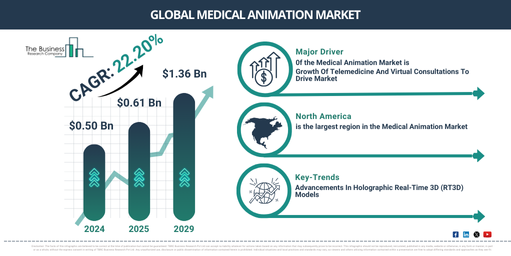
    The magnitude of the medical animation market has seen a substantial increase in the past few years. The market is projected to grow from $0.50 billion in 2024 to $0.61 billion in 2025, exhibiting a compound annual growth rate (CAGR) of 22.5%. This growth in the historical period is due to several factors including the increasing need for tools to educate patients, heightened marketing initiatives in the pharmaceutical sector, the growing use of e-learning in medical training, the rising prevalence of chronic diseases, and heightened awareness about the importance of scientific visualization within the healthcare sphere.

    Anticipations point towards a surge in the size of the medical animation market in the forthcoming years, with projections revealing a growth to $1.36 billion in 2029 at a compound annual growth rate (CAGR) of 22.2%. This projected growth for the forecast period is thought to be due to the increased use of telemedicine and virtual consultations, amplified investments in healthcare communication tools, the employment of AR and VR technologies in medical education, increased government backing for medical animations, and the requirement for tailored healthcare visualizations. Key trends to look out for during the forecast period encompass collaborations between animation studios and healthcare providers, the use of blockchain for a secure animation content, the creation of multilingual animation solutions, AI integration in animation production, and progress in 3d and 4d animation technologies.

    Download a free sample to assess the report’s scope and structure:

    https://www.thebusinessresearchcompany.com/sample.aspx?id=20869&type=smp

    What Are the Core Market Drivers Propelling Growth in the Medical Animation Industry?

    The expansion of telemedicine and virtual consultations is forecasted to propel the medical animation market in the future. Telemedicine is a form of healthcare delivery that utilizes electronic communication technologies for remotely providing services, enabling a connection between patients and providers without a need for physical presence. A surge in virtual consultations can be attributed to technological advancements, increased access to the internet, and the accelerating demand for easily accessible healthcare offerings. Medical animation bolsters telemedicine and virtual consultations as it visually represents complex medical principles, procedures, and conditions in an easy-to-understand and captivating manner. This assist patients in comprehending their diagnoses, treatment alternatives, and the healthcare journey more efficiently, thereby enhancing communication, patient involvement, and overall satisfaction during virtual healthcare engagements. For example, the Australian Digital Health Agency 2022, a government agency based in Australia, reported in August 2022 that in that year, 118.2 million telehealth services were extended to 18 million patients, with over 95,000 practitioners utilising telehealth services. Consequently, the proliferation of telemedicine and virtual consultations will fuel the medical animation market.

    How Is the Medical Animation Market Segmented?

    The medical animation market covered in this report is segmented –

    1) By Type: 3D Animation, 2D Animation, Real Time Imaging (4D Animation), Flash Animation

    2) By Therapeutic Area: Oncology, Cardiology, Cosmeceuticals/Plastic Surgery, Dental, Other Therapeutic Areas

    3) By Application: Drug Mechanism Of Action (MOA) And Approval, Patient Education, Surgical Training And Planning, Cellular And Molecular Studies, Other Applications

    4) By End Users: Life Science Companies, Medical Device Manufacturers, Hospitals, Surgical Centers And Clinics, Academic Institutes, Other End Users

    Subsegments:

    1) By 3D Animation: Surgical Animations, Anatomical Illustrations, Disease Mechanism Animations, Medical Device Animations

    2) By 2D Animation: Explainer Videos, Medical Educational Content, Health Communication Animations

    3) By Real-Time Imaging (4D Animation): Virtual Reality (VR) Animations, Interactive Medical Animations, Medical Imaging Visualization (MRI, CT scans)

    4) By Flash Animation: Medical Explainers for Websites, Flash-based Health Awareness Campaigns, Interactive Medical Educational Tools

    Request customized data on this market:

    https://www.thebusinessresearchcompany.com/customise?id=20869&type=smp

    Which Regions Are Driving the Next Phase of the Medical Animation Market Growth?

    North America was the largest region in the medical animation market in 2024. Asia-Pacific is expected to be the fastest-growing region in the forecast period. The regions covered in the medical animation market report are Asia-Pacific, Western Europe, Eastern Europe, North America, South America, Middle East, Africa.

    Which Cutting-Edge Market Trends Are Expected to Drive the Medical Animation Market’s Growth?

    Major participants in the medical animation market are prioritizing technological innovations including holographic, real-time 3D (RT3D) patterns, aiming to increase the authenticity and interactivity of visual imagery. This enables them to furnish more detailed and precise portrayals of anatomical structures, disease processes, and medical procedures, thereby augmenting patient education, surgical preparation, and medical education. RT3D models in holographic form are interactive, 3D digital imitations capable of replicating realistic visuals and movements. For instance, in November 2022, a collaboration between GigXR, an American firm specializing in extended reality (XR) healthcare training solutions, and ANIMA RES, a medical imaging company based in Germany, saw the release of the Insight Series. This new content library comprises RT3D holographic models of various organs like the heart, lungs, and kidneys, showing the structural and functional alterations provoked by diseases. These models provide an understanding of conditions like myocardial infarction and chronic obstructive pulmonary disease (COPD) for the heart and lungs respectively.

    View the full report here:

    https://www.thebusinessresearchcompany.com/report/medical-animation-global-market-report

    How Is the Medical Animation Market Defined and What Are Its Core Parameters?

    Medical animation is the use of visual media to represent complex medical, biological, or anatomical concepts through 2D, 3D, or interactive graphics. It is commonly used for educational, training, and marketing purposes in healthcare settings. These animations help enhance understanding, communication, and engagement among patients, medical professionals, and students.

    Purchase the full report and get a swift delivery:

    https://www.thebusinessresearchcompany.com/purchaseoptions.aspx?id=20869

    About The Business Research Company:

    With over 15000+ reports from 27 industries covering 60+ geographies, The Business Research Company has built a reputation for offering comprehensive, data-rich research and insights. Armed with 1,500,000 datasets, the optimistic contribution of in-depth secondary research, and unique insights from industry leaders, you can get the information you need to stay ahead in the game.

    Get in touch with us:

    The Business Research Company: https://www.thebusinessresearchcompany.com/

    Americas +1 3156230293

    Asia +44 2071930708

    Europe +44 2071930708

    Email us at info@tbrc.info

    Follow us on:

    LinkedIn: https://in.linkedin.com/company/the-business-research-company

    YouTube: https://www.youtube.com/channel/UC24_fI0rV8cR5DxlCpgmyFQ

    Global Market Model: https://www.thebusinessresearchcompany.com/global-market-model
  • From Insight to Impact: Strategic Growth Mapping in the Lumbar Disc Replacement Devices Market

    From Insight to Impact: Strategic Growth Mapping in the Lumbar Disc Replacement Devices Market

    Stay ahead with our updated market reports featuring the latest on tariffs, trade flows, and supply chain transformations.

    What is the Anticipated CAGR of the Lumbar Disc Replacement Devices Market, and What Factors Will Drive It?

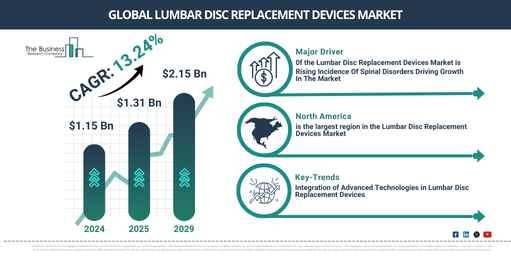
    The market for lumbar disc replacement devices has been expanding swiftly over the past few years. The market scale is expected to surge from $1.15 billion in 2024 to $1.31 billion in 2025, noting a compound annual growth rate (CAGR) of 13.50%. The previous growth stage can be associated with the surge in the establishment of spine clinics and surgical centers, increased healthcare expenditure, enhanced healthcare awareness, a rising incidence of obesity, and improved insurance coverage for spine surgeries.

    Projected to experience accelerated growth in the coming years, the market size of lumbar disc replacement devices is anticipated to grow to $2.15 billion by 2029, boasting an impressive compound annual growth rate (CAGR) of 13.24%. This anticipated increase within the forecast period can be linked to a heightened emphasis on rehabilitation post-surgery, the expansion of the orthopedic device industry, the proliferation of spine clinics and surgical centers, the call for individualized healthcare solutions, and an increase in spinal injuries attributed to lifestyle. The landscape of the forecast period will likely be shaped by key trends, including advances in medical technology, groundbreaking developments in 3D printing technology, innovative technologies in spinal implants, the adoption of surgeries assisted by robotics, and breakthroughs in materials used for artificial discs.

    Download a free sample to assess the report’s scope and structure:

    https://www.thebusinessresearchcompany.com/sample.aspx?id=20864&type=smp

    What are the Fundamental Drivers and Innovations Shaping the Lumbar Disc Replacement Devices Market?

    The rise in spinal disorders is anticipated to fuel the expansion of the market for lumbar disc replacement devices. Spinal disorders encompass a variety of conditions that affect the spine, including irregularities, injuries, diseases that harm the vertebrae, discs, nerves, and surrounding tissues, often causing pain and mobility problems, among other complications. Factors leading to the increase in spinal disorders include aging populations, sedentary lifestyles, obesity, and a higher prevalence of degenerative diseases such as osteoarthritis and herniated discs. Lumbar disc replacement devices are instrumental in treating spinal disorders as they restore mobility and lessen pain in patients with degenerative disc disease, thus offering an effective substitute for conventional spinal fusion surgery. For example, the World Health Organization, a Switzerland-based international organization reported in April 2024, that over 15 million individuals globally are living with spinal cord injuries (SCI). Furthermore, according to the New Zealand Spinal Trust, a disability services organization’s report in November 2023, the incidence rate in New Zealand escalated to 45 per million in 2022, up from 41 per million in 2021, as per the 2022 NZSCIR data. In 2022, 74% of those with traumatic spinal cord injuries (SCI) were males, while females constituted 33% of those with non-traumatic spinal cord injuries (NTSCI). Thus, the rising occurrence of spinal disorders underpins the growth of the lumbar disc replacement devices market.

    How Is the Lumbar Disc Replacement Devices Market Segmented?

    The lumbar disc replacement devices market covered in this report is segmented –

    1) By Product: Metal-On-Metal, Metal-On-Biopolymer

    2) By Pain Type: Chronic, Acute, Radicular, Other Pain Types

    3) By End-User: Hospitals, Ambulatory Surgical Center, Other End Users

    Subsegments:

    1) By Metal-On-Metal: Cobalt-Chromium Alloy, Titanium Alloy

    2) By Metal-On-Biopolymer: Metal-On-PEEK (Polyether Ether Ketone), Metal-On-Polymer Composite

    Request customized data on this market:

    https://www.thebusinessresearchcompany.com/customise?id=20864&type=smp

    Which Regions Are Driving the Next Phase of the Lumbar Disc Replacement Devices Market Growth?

    North America was the largest region in the lumbar disc replacement devices market in 2024. The regions covered in the lumbar disc replacement devices market report are Asia-Pacific, Western Europe, Eastern Europe, North America, South America, Middle East, Africa.

    What Are the Key Market Trends in the Lumbar Disc Replacement Devices Market Over the Coming Years?

    Key players in the lumbar disc replacement devices market are concentrating their efforts on the incorporation of cutting-edge technologies such as numerical code technology. This technology involves the use of specific algorithms and computational models to craft, improve, and install medical products like lumbar disc replacement devices more effectively and accurately. For example, in January 2023, the American Medical Association, an organization based in the US, launched a new Current Procedural Terminology (CPT) code for the second level of lumbar total disc replacement (TDR) procedures. Centinel Spine LLC, a medical equipment manufacturer in the US, applied this code to broaden the accessibility to two-level lumbar TDR procedures. This development is key in enhancing the variety of treatment options for patients, leading to improved clinical results and more streamlined healthcare provision.

    View the full report here:

    https://www.thebusinessresearchcompany.com/report/lumbar-disc-replacement-devices-global-market-report

    How Is the Lumbar Disc Replacement Devices Market Defined and What Are Its Core Parameters?

    Lumbar disc replacement devices refer to implants used to replace damaged intervertebral discs in the lumbar spine. They consist of metal endplates attached to the vertebrae with a flexible core that allows for natural spinal movement, such as bending and twisting. This procedure helps alleviate pain and restore mobility, offering a viable alternative to spinal fusion by preserving the spine’s range of motion.

    Purchase the full report and get a swift delivery:

    https://www.thebusinessresearchcompany.com/purchaseoptions.aspx?id=20864

    About The Business Research Company:

    With over 15000+ reports from 27 industries covering 60+ geographies, The Business Research Company has built a reputation for offering comprehensive, data-rich research and insights. Armed with 1,500,000 datasets, the optimistic contribution of in-depth secondary research, and unique insights from industry leaders, you can get the information you need to stay ahead in the game.

    Get in touch with us:

    The Business Research Company: https://www.thebusinessresearchcompany.com/

    Americas +1 3156230293

    Asia +44 2071930708

    Europe +44 2071930708

    Email us at info@tbrc.info

    Follow us on:

    LinkedIn: https://in.linkedin.com/company/the-business-research-company

    YouTube: https://www.youtube.com/channel/UC24_fI0rV8cR5DxlCpgmyFQ

    Global Market Model: https://www.thebusinessresearchcompany.com/global-market-model
  • Liver Disease Diagnostics Outlook 2034: Key Drivers, Trends, and Market Frontiers

    Liver Disease Diagnostics Outlook 2034: Key Drivers, Trends, and Market Frontiers

    Stay ahead with our updated market reports featuring the latest on tariffs, trade flows, and supply chain transformations.

    How Has The Liver Disease Diagnostics Market Size Shifted, And What Is the Outlook Through 2034?

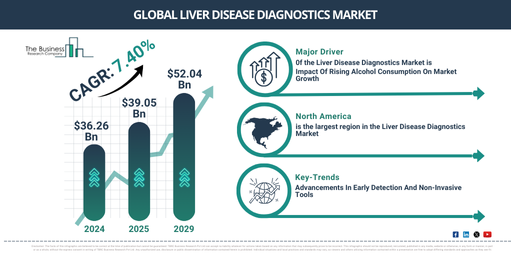
    Over the past few years, the size of the liver disease diagnostics market has shown robust growth. The market, which is expected to expand from $36.26 billion in 2024 to $39.05 billion in 2025, will witness a compound annual growth rate (CAGR) of 7.7%. The expansion in the historic timeframe is thanks to a rise in both acute and chronic liver conditions, a higher prevalence of liver diseases, increased alcohol consumption, enhanced consciousness about liver health, and improvements in healthcare infrastructure.

    A significant expansion is anticipated in the liver disease diagnostics market in the forthcoming years, with its worth projected to reach $52.04 billion in 2029, reflecting a compound annual growth rate (CAGR) of 7.4%. This growth during the forecast period can be explained by the escalating number of elderlies, increased spending in research & development, a higher count of biopsy procedures along with diseases, as well as broadening adoption of telemedicine. Notable trends anticipated over the forecast period include the emergence of personalized medicine, technological improvements in diagnostic kits, progress in rapid tests, technological evolution within the healthcare industry, and advancements in diagnostic techniques.

    Download a free sample to assess the report’s scope and structure:

    https://www.thebusinessresearchcompany.com/sample.aspx?id=20862&type=smp

    How Are Key Drivers in the Industry Acting as Catalysts for the Growth of the Liver Disease Diagnostics Market?

    The rise in alcohol intake is anticipated to stimulate the liver disease diagnostics market’s expansion. Variables such as shifting societal norms, better economic accessibility, more pervasive availability, and escalating stress or mental health issues are contributing to increased alcohol consumption. Diagnostics for liver disease play a vital role in gauging the effects of alcohol on liver health, assisting in the early identification of liver deterioration signs like fatty liver, hepatitis, or cirrhosis. For example, the National Health Service, a government department based in England, stated in December 2022 that the proportion of individuals who drank alcohol in the preceding year grew with age, starting at 62% for those between 16 to 24 and hitting 85% for those between 55 to 74. Consequently, the escalating alcohol intake is propelling the growth of the liver disease diagnostics market.

    Which Segments in the Liver Disease Diagnostics Offer the Most Growth?

    The liver disease diagnostics market covered in this report is segmented –

    1) By Diagnosis Technique: Laboratory Tests, Imaging, Endoscopy, Biopsy, Other Diagnosis Techniques

    2) By Disease: Non-Alcoholic Fatty Liver Disease, Non-Alcoholic Steatohepatitis, Fibrosis, Cirrhosis, Hepatocellular Carcinoma, Other Diseases

    3) By End Users: Hospitals, Laboratories, Other End Users

    Subsegments:

    1) By Laboratory Tests: Blood Tests (Liver Function Tests, Hepatitis Panel), Enzyme Tests (ALT, AST, ALP), Genetic Testing, Serological Tests

    2) By Imaging: Ultrasound Imaging, CT Scans, MRI, Elastography (FibroScan)

    3) By Endoscopy: Esophagogastroduodenoscopy (EGD), Capsule Endoscopy

    4) By Biopsy: Liver Biopsy (Needle Biopsy), Fine Needle Aspiration Biopsy, Laparoscopic Biopsy

    5) By Other Diagnosis Techniques: Molecular Imaging, Biomarker Testing, Fibrosis Scoring Systems

    Request customized data on this market:

    https://www.thebusinessresearchcompany.com/customise?id=20862&type=smp

    What Are the Fastest-Growing Geographies in the Liver Disease Diagnostics Market?

    North America was the largest region in the liver disease diagnostics market in 2024. Asia-Pacific is expected to be the fastest-growing region in the forecast period. The regions covered in the liver disease diagnostics market report are Asia-Pacific, Western Europe, Eastern Europe, North America, South America, Middle East, Africa.

    What Key Trends Are Shaping the Future of the Liver Disease Diagnostics Market?

    Major corporations in the liver disease diagnostics market are prioritizing the development of novel solutions such as non-invasive tools for liver assessment, in order to enhance the precision and efficiency of diagnostics methods. Diagnostics methods assessing liver conditions that circumvent invasive procedures like biopsies and use techniques like elastography or blood tests are what non-invasive liver assessment refers to. For example, City Imaging & Clinical, a diagnostic center based in India, introduced FibroScan in September 2024. It’s a non-invasive tool for liver assessment intended for the early diagnosis of liver diseases like non-alcoholic fatty liver disease (NAFLD) and alcoholic liver disease (ALD). This state-of-the-art technology enables fast and precise calculation of liver stiffness and fat content, eliminating the necessity for invasive procedures like biopsies. The test is typically quick, ranging from 5 to 15 minutes, and entails placing a probe over the liver on the skin. This probe produces sound waves that gauge the stiffness of the liver tissue, aiding in the assessment of fibrosis or scarring.

    View the full report here:

    https://www.thebusinessresearchcompany.com/report/liver-disease-diagnostics-global-market-report

    What Are the Key Elements That Define the Liver Disease Diagnostics Market?

    Liver disease diagnostics refer to the medical procedures and tests used to identify and assess various liver conditions, including liver cirrhosis, hepatitis, fatty liver disease, and liver cancer. These diagnostic methods often involve blood tests to check liver enzyme levels, imaging techniques like ultrasound or CT scans, and sometimes biopsy procedures to obtain tissue samples.

    Purchase the full report and get a swift delivery:

    https://www.thebusinessresearchcompany.com/purchaseoptions.aspx?id=20862

    About The Business Research Company:

    With over 15000+ reports from 27 industries covering 60+ geographies, The Business Research Company has built a reputation for offering comprehensive, data-rich research and insights. Armed with 1,500,000 datasets, the optimistic contribution of in-depth secondary research, and unique insights from industry leaders, you can get the information you need to stay ahead in the game.

    Get in touch with us:

    The Business Research Company: https://www.thebusinessresearchcompany.com/

    Americas +1 3156230293

    Asia +44 2071930708

    Europe +44 2071930708

    Email us at info@tbrc.info

    Follow us on:

    LinkedIn: https://in.linkedin.com/company/the-business-research-company

    YouTube: https://www.youtube.com/channel/UC24_fI0rV8cR5DxlCpgmyFQ

    Global Market Model: https://www.thebusinessresearchcompany.com/global-market-model
  • Knee Braces Market in Focus: Forecasting Growth Drivers, Scaling Potential, and Global Opportunities

    Knee Braces Market in Focus: Forecasting Growth Drivers, Scaling Potential, and Global Opportunities

    Stay ahead with our updated market reports featuring the latest on tariffs, trade flows, and supply chain transformations.

    What Is the Estimated Market Size of the Knee Braces Market In 2029?

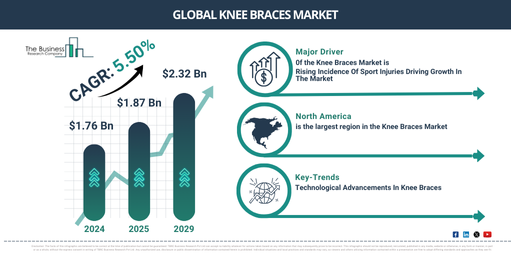
    In recent times, the market size for knee braces has seen significant growth. The market which is expected to rise from $1.76 billion in 2024 to $1.87 billion in 2025, will experience a compound annual growth rate (CAGR) of 5.8%. The growth observed in the historic period is linked to factors such as higher product penetration, an increase in cases of osteoarthritis (OA) and orthopedic knee surgeries, a surge in healthcare spending, heightened awareness, and more people participating in sports.

    Significant expansion is anticipated in the knee braces market in the upcoming years, with its value predicted to reach $2.32 billion in 2029, demonstrating a compound annual growth rate (CAGR) of 5.5%. The growth projected for this timeframe can be credited to factors such as an increase in the elderly demographic, heightened awareness, rising preference for non-invasive treatment methods, an upswing in sports engagement and fitness orientations, and the expanding occurrence of osteoarthritis. Key trends that will contribute to this growth during the forecast period are technological progression, the effect of an aging global population, product ingenuity, strategic partnerships, and advancements in knee brace technology.

    Download a free sample to assess the report’s scope and structure:

    https://www.thebusinessresearchcompany.com/sample.aspx?id=20859&type=smp

    What Are the Core Market Drivers Propelling Growth in the Knee Braces Industry?

    The growth of the knee braces market is set to be propelled by the escalating frequency of sports injuries. The term sports injuries encompass a variety of physical damages- from bone injuries, muscle tears to tendon strains- experienced as a consequence of involvement in sports or fitness activities. This increasing frequency of sports injuries is pegged on the growing craze of sporting and fitness activities across the globe, leading to more individuals engaging in strenuous trainings and higher levels of physical stress. Knee braces are indeed a common sight in sport injury management, offering support, balance, and protection to the knee joint while curtailing the risk of injuries like ligament tears or strains by restricting excessive movement and providing compression. For example, data published by the National Safety Council, a public health and safety organization based out of the US, revealed that the cases of sports and recreational injuries in the US escalated by 2% in 2023. A staggering 3.7 million individuals had to seek emergency medical treatment for injuries inflicted by sports and recreational equipment. Ergo, the escalating frequency of sports injuries is fuelling the growth of the knee braces market.

    How Is the Knee Braces Market Segmented?

    The knee braces market covered in this report is segmented –

    1) By Type: Prophylactic Knee Braces, Rehabilitative Knee Braces, Patellofemoral Knee Braces, Functional Knee Braces

    2) By Application: Medical Use, Sports Use

    3) By End Use: Orthopedic Clinics, Over-the-Counter (OTC), Hospital, Durable Medical Equipment (DME) Dealers, Other End Users

    Subsegments:

    1) By Prophylactic Knee Braces: Hinged Prophylactic Braces, Sleeve-Style Prophylactic Braces, Wraparound Prophylactic Braces, Others

    2) By Rehabilitative Knee Braces: Post-Operative Braces, Recovery Knee Braces, Adjustable Braces For Rehabilitation, Others

    3) By Patellofemoral Knee Braces: Patella Stabilizing Braces, Patella Tracking Braces, Open Patella Braces, Others

    4) By Functional Knee Braces: Ligament Knee Braces, ACL Support Braces, Hinged Knee Braces For Support, Custom-Made Functional Knee Braces, Others

    Request customized data on this market:

    https://www.thebusinessresearchcompany.com/customise?id=20859&type=smp

    Which Regions Are Driving the Next Phase of the Knee Braces Market Growth?

    North America was the largest region in the knee braces market in 2024. Asia-Pacific is expected to be the fastest-growing region in the forecast period. The regions covered in the knee braces market report are Asia-Pacific, Western Europe, Eastern Europe, North America, South America, Middle East, Africa.

    What Are the Strategic Trends Steering the Knee Braces Market Direction?

    Leading entities in the knee brace market are prioritizing the integration of technological advancements such as unloader braces. These advancements aim to increase comfort, enhance offloading mechanisms, incorporate wearable technology and provide more customized treatment for knee osteoarthritis. An unloader brace is a specialized knee brace purposed to alleviate pain and boost functionality by shifting pressure away from the affected knee compartment. It’s frequently used for unicompartmental knee osteoarthritis sufferers. For example, in January 2024, the US-based medical tech firm Enovis Corporation introduced the DonJoy ROAM OA Knee Brace. This product provides dynamic unloading for the knee, relieving pain and improving mobility for those with unicompartmental osteoarthritis. Its intuitive design, customizable fit, and lightweight build make it a reliable resource for conservative management and daily activities support.

    View the full report here:

    https://www.thebusinessresearchcompany.com/report/knee-braces-global-market-report

    How Is the Knee Braces Market Defined and What Are Its Core Parameters?

    Knee braces are devices designed to support and stabilize the knee joint. They are used to prevent or reduce knee injuries by offering compression and protection. Knee braces can limit movement to aid in recovery or to prevent excessive motion. They are commonly used in both athletic and medical settings for rehabilitation or injury prevention.

    Purchase the full report and get a swift delivery:

    https://www.thebusinessresearchcompany.com/purchaseoptions.aspx?id=20859

    About The Business Research Company:

    With over 15000+ reports from 27 industries covering 60+ geographies, The Business Research Company has built a reputation for offering comprehensive, data-rich research and insights. Armed with 1,500,000 datasets, the optimistic contribution of in-depth secondary research, and unique insights from industry leaders, you can get the information you need to stay ahead in the game.

    Get in touch with us:

    The Business Research Company: https://www.thebusinessresearchcompany.com/

    Americas +1 3156230293

    Asia +44 2071930708

    Europe +44 2071930708

    Email us at info@tbrc.info

    Follow us on:

    LinkedIn: https://in.linkedin.com/company/the-business-research-company

    YouTube: https://www.youtube.com/channel/UC24_fI0rV8cR5DxlCpgmyFQ

    Global Market Model: https://www.thebusinessresearchcompany.com/global-market-model
  • Strong CAGR to Propel in the Iodine Market and Beyond upto $4.09 Billion by 2029

    Strong CAGR to Propel in the Iodine Market and Beyond upto $4.09 Billion by 2029

    Stay ahead with our updated market reports featuring the latest on tariffs, trade flows, and supply chain transformations.

    How Fast Is The Iodine Market Expected to Grow Between 2025 And 2029?

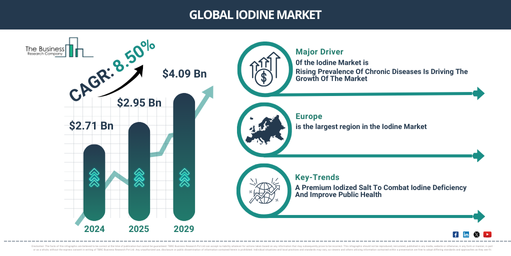
    The iodine market has significantly expanded in the past few years. Its size is projected to increase from $2.71 billion in 2024 to $2.95 billion in 2025, with a compound annual growth rate (CAGR) of 8.87%. The reasons for this growth during the historical period includes intensified demand from the medical industry, increased use in water sanitization, expanding veterinary applications, rising demand for biocides and disinfectants, and significant swings in the price of crude iodine.

    Expectations are high for robust expansion in the iodine market over the coming years, with projections indicating $4.09 billion in size by 2029, an 8.50% compound annual growth rate. This anticipated development in the forecast period is largely due to factors such as growing demand in the medical field, increased use in water treatment processes, the expansion of veterinary applications, rising requirements for biocides and disinfectants, and variations in the prices of crude iodine. Key trends expected to shape this market in the forecast period encompass sophisticated membrane separation technologies, intelligent disinfection and antimicrobial products, innovations in nanotechnology and iodine nanoparticles, development of next-generation iodine-based pharmaceuticals, and enhancements in LED and OLED technologies using iodine.

    Download a free sample to assess the report’s scope and structure:

    https://www.thebusinessresearchcompany.com/sample.aspx?id=20858&type=smp

    Which Primay Drivers Are Accelerating Growth in the Iodine Market?

    The increasing occurrence of persisting illnesses is anticipated to boost the iodine market’s advancement. Chronic diseases are enduring health issues that typically last over three months, with a gradual progression over time. The mounting occurrence of as thyroid disorders, cardiovascular diseases, and cancer, results in heightened iodine demand, given its essential function in medical imaging, pharmaceutical uses, and dietary supplements for the management and prevention of these conditions. Iodine is crucial in handling chronic diseases as it assists thyroid function, regulates metabolism, boosts immune response, and decreases inflammation, thereby enhancing overall health and resilience to disease. As per the National Library of Medicine, a medical library based in the US, it is projected that by 2050, about 142.66 million Americans aged 50 and above will be suffering from at least one persistent illness, as per data from January 2023. Hence, the increasing prevalence of chronic diseases is fuelling the iodine market’s growth.

    Which Primary Segments of the Iodine Market Are Driving Growth and Industry Transformations?

    The iodine market covered in this report is segmented –

    1) By Form: Inorganic Salts And Complexes, Elemental And Isotopes, Organic Compound

    2) By Source: Underground Brines, Seaweeds, Caliche Ore, Recycling

    3) By Application: Pharmaceuticals, Biocides, Iodophors, X-Ray Contrast Media, Catalyst In Polymer Processing, Optical Polarizing Films, Human Nutrition, Fluorochemicals, Animal Feed, Other Applications

    Subsegments:

    1) By Inorganic Salts And Complexes: Sodium Iodide, Potassium Iodide, Calcium Iodate

    2) By Elemental And Isotopes: Elemental Iodine, Iodine-131, Iodine-123

    3) By Organic Compound: Iodophors, Iodinated Contrast Media, Iodinated Organic Chemicals

    Request customized data on this market:

    https://www.thebusinessresearchcompany.com/customise?id=20858&type=smp

    Which Regions Are Key Players in the Growth of the Iodine Market?

    Europe was the largest region in the iodine market in 2024. Asia-Pacific is expected to be the fastest-growing region in the forecast period. The regions covered in the iodine market report are Asia-Pacific, Western Europe, Eastern Europe, North America, South America, Middle East, Africa.

    What Long-Term Trends Are Transforming the Competitive Landscape of the Iodine Market?

    Key players in the iodine market are concentrating their efforts on crafting novel products like iodized salt, to curb iodine shortages and elevate public health, especially in areas bearing the brunt of deficiency-related illnesses. Iodized salt is common table salt enhanced with iodine, an important trace mineral required to prevent iodine insufficiency, which can result in thyroid-related health conditions such as goiter and developmental issues. Taking this into account, Tata Consumer Products Limited, a leading fast-moving consumer goods corporation situated in India, introduced Shuddh by Tata Salt in February 2022. This superior iodized salt product is created to supply top-tier salt boasting increased purity and to advocate healthier lives by addressing the iodine deficiency prevalent in Indian households. This high-end product is meant to offer not only heightened purity but also a stable and dependable iodine source, addressing India’s increasing iodine deficiency worries. The salt is meticulously obtained and refined to meet rigorous quality and safety standards. It underscores the brand’s pledge to enrich public health by making iodine more accessible, thereby promoting overall well-being, especially catering to households and people aiming to boost their everyday nutrition.

    View the full report here:

    https://www.thebusinessresearchcompany.com/report/iodine-global-market-report

    What Parameters Are Used to Define the Iodine Market?

    Iodine refers to a chemical element with the symbol I and atomic number 53, belonging to the halogen group in the periodic table, alongside fluorine, chlorine, bromine, and astatine. It is utilized in various applications, including as a disinfectant, in the production of thyroid hormones, in medical imaging, and as an additive in iodized salt to prevent iodine deficiency.

    Purchase the full report and get a swift delivery:

    https://www.thebusinessresearchcompany.com/purchaseoptions.aspx?id=20858

    About The Business Research Company:

    With over 15000+ reports from 27 industries covering 60+ geographies, The Business Research Company has built a reputation for offering comprehensive, data-rich research and insights. Armed with 1,500,000 datasets, the optimistic contribution of in-depth secondary research, and unique insights from industry leaders, you can get the information you need to stay ahead in the game.

    Get in touch with us:

    The Business Research Company: https://www.thebusinessresearchcompany.com/

    Americas +1 3156230293

    Asia +44 2071930708

    Europe +44 2071930708

    Email us at info@tbrc.info

    Follow us on:

    LinkedIn: https://in.linkedin.com/company/the-business-research-company

    YouTube: https://www.youtube.com/channel/UC24_fI0rV8cR5DxlCpgmyFQ

    Global Market Model: https://www.thebusinessresearchcompany.com/global-market-model
  • Intraoral/IOL Scanners Market Forecast Reaching $1.04 Billion by 2029 at 8.8% CAGR

    Intraoral/IOL Scanners Market Forecast Reaching $1.04 Billion by 2029 at 8.8% CAGR

    Stay ahead with our updated market reports featuring the latest on tariffs, trade flows, and supply chain transformations.

    How Has The Intraoral/IOL Scanners Market Growth Evolved From 2024 To 2025, And What’s Ahead?

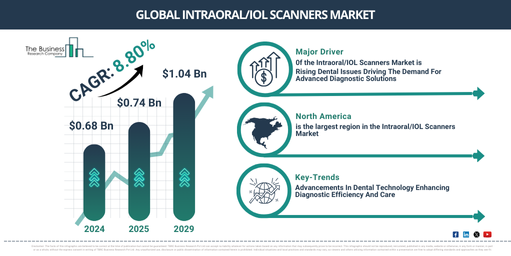
    The market for intraoral/IOL scanners has recently seen robust growth. The market is forecasted to expand from a value of $0.68 billion in 2024 to reach $0.74 billion in 2025, delivering a Compound Annual Growth Rate (CAGR) of 9.2%. The historical growth is a result of factors such as the wider acceptance of digital dentistry, heightened public knowledge about dental health, increased occurrences of periodontal diseases, need for chairside solutions, a boost in orthodontic procedures, and increased interest in clear aligners.

    Expectations indicate a robust expansion in the intraoral/IOL scanners market size in the coming years, ballooning to a value of $1.04 billion in 2029, representing a compound annual growth rate (CAGR) of 8.8%. This growth during said period can be credited to the accelerating demand for aesthetic dentistry, amplifying adoption of telehealth and remote consultations, accentuated stress on streamlining workflow efficiency, burgeoning digital orthodontics, and a surge in dental disorders. Key trends predicted during this forecast duration consist of advancements in wireless scanners, clear aligners, 3D scanning, augmented reality (AR), and virtual reality (VR) technology, as well as the modernization of digital scanning technologies and live diagnostics.

    Download a free sample to assess the report’s scope and structure:

    https://www.thebusinessresearchcompany.com/sample.aspx?id=20856&type=smp

    Which Major Market Drivers Are Expected to Boost the Growth Potential of the Intraoral/IOL Scanners Market?

    The surge in dental issues is speculated to fuel the expansion of the intraoral/IOL scanners market in the future. Dental issues can range from cavities and gum disease to tooth sensitivity and malocclusion, essentially, any ailment affecting the teeth, gums, or other oral structures. The increase in these dental complications can be attributed to poor oral hygiene, limited access to dental healthcare, and a growing intake of sugary and acidic food products. For such dental issues, intraoral scanners are essential as they offer accurate digital impressions that enhance diagnostics, treatment strategies, and patient comfort, while also minimising errors and time consumption compared to traditional procedures. Citing a study from March 2023 by the British Dental Association, a professional organisation and trade union based in the UK, the prevalence of dental decay was noted to be 35.1% in more poverty-stricken areas in 2022, as opposed to 13.5% in wealthier regions. Therefore, the escalating dental issues are energising the growth of the intraoral/IOL scanners market.

    Which Key Market Segments Comprise the Intraoral/IOL Scanners Market and Drive Its Revenue Growth?

    The intraoral/IOL scanners market covered in this report is segmented –

    1) By Modality: Wired Scanner, Wireless Scanner

    2) By Application: Orthodontics, Prosthodontics, Endodontics, Other Applications

    3) By End-User: Dental Hospitals And Clinics, Dental Academic And Research Institutes, Other End-Users

    Subsegments:

    1) By Wired Scanner: USB-Connected Scanners, Ethernet-Connected Scanners

    2) By Wireless Scanner: Bluetooth-Enabled Scanners, Wi-Fi-Enabled Scanners

    Request customized data on this market:

    https://www.thebusinessresearchcompany.com/customise?id=20856&type=smp

    Which Areas Are Leading Regions in the Intraoral/IOL Scanners Market Expansion Across the Globe?

    North America was the largest region in the intraoral/IOL scanners market in 2024. Asia-Pacific is expected to be the fastest-growing region in the forecast period. The regions covered in the intraoral/IOL scanners market report are Asia-Pacific, Western Europe, Eastern Europe, North America, South America, Middle East, Africa.

    Which Technological Trends Are Reshaping the Intraoral/IOL Scanners Industry Dynamics?

    Leading organizations in the intraoral/IOL scanners market are focusing their efforts on creating products with superior technology, such as sophisticated communication and diagnostic tools, in order to optimize dental care effectiveness, enhance precision in diagnosis, and simplify processes for dental professionals. These advanced tools encompass several technologies and methods crafted to expedite the identification, examination, and issue-solving in multiple systems. For example, Dentsply Sirona Inc., a US-based firm and supplier of dental goods and technology, unveiled the Primescan 2 in September 2024. This cutting-edge intraoral scanning solution, which is the first of its kind to be native to the cloud, is supported by the DS Core cloud platform. This allows dentists to carry out scans directly from any device that’s connected to the internet, eliminating the need for a specific computer. The interaction with DS Core offers these advanced tools for communication and diagnosis, facilitating dental experts in delivering excellent patient care and comfort.

    View the full report here:

    https://www.thebusinessresearchcompany.com/report/intraoraliol-scanners-global-market-report

    How Is the Intraoral/IOL Scanners Market Conceptually Defined?

    Intraoral (IOL) scanners are advanced dental devices used primarily in dentistry and orthodontics to capture detailed 3D images of a patient’s oral cavity. These scanners provide a digital alternative to traditional dental impressions, which typically require messy and uncomfortable physical molds. They are primarily used for creating digital impressions, which serve as the basis for designing dental restorations such as crowns, bridges, implants, aligners, and dentures.

    Purchase the full report and get a swift delivery:

    https://www.thebusinessresearchcompany.com/purchaseoptions.aspx?id=20856

    About The Business Research Company:

    With over 15000+ reports from 27 industries covering 60+ geographies, The Business Research Company has built a reputation for offering comprehensive, data-rich research and insights. Armed with 1,500,000 datasets, the optimistic contribution of in-depth secondary research, and unique insights from industry leaders, you can get the information you need to stay ahead in the game.

    Get in touch with us:

    The Business Research Company: https://www.thebusinessresearchcompany.com/

    Americas +1 3156230293

    Asia +44 2071930708

    Europe +44 2071930708

    Email us at info@tbrc.info

    Follow us on:

    LinkedIn: https://in.linkedin.com/company/the-business-research-company

    YouTube: https://www.youtube.com/channel/UC24_fI0rV8cR5DxlCpgmyFQ

    Global Market Model: https://www.thebusinessresearchcompany.com/global-market-model
  • $2.22 Billion Forecast for Intracranial Hemorrhage Devices Market by 2029, Backed by Demand and Innovation

    $2.22 Billion Forecast for Intracranial Hemorrhage Devices Market by 2029, Backed by Demand and Innovation

    Stay ahead with our updated market reports featuring the latest on tariffs, trade flows, and supply chain transformations.

    What is the Projected CAGR for the Intracranial Hemorrhage Devices Market Size from 2025 to 2034?

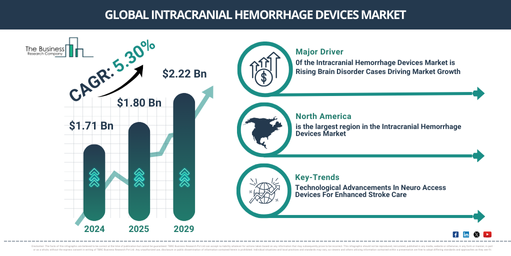
    The industry for intracranial hemorrhage devices has seen considerable growth in recent years. With a compound annual growth rate (CAGR) of 5.5%, it is projected to increase from $1.71 billion in 2024 to $1.80 billion in 2025. Factors such as a rise in hematologic disorders, significant initiatives by the government, favorable health care policies, growing occurrence of diseases related to lifestyle, and an uptick in clinics specializing in neurology account for the growth observed during the historical period.

    The market for intracranial hemorrhage devices is predicted to experience significant expansion in the coming years, with an estimated worth of $2.22 billion by 2029 and a compound annual growth rate (CAGR) of 5.3%. This development in the forecast period is associated with a higher occurrence of traumatic injuries, a focus on minimizing the length of hospital stays, the increased use of wearable health monitoring devices, a growing demand for customized medical treatments, and the expanded use of robotics. The future trends within this period include the production of transportable devices, improvements in imaging technology, progress in monitoring devices, the introduction of 3D printing technology, and the application of machine learning in medical imaging.

    Download a free sample to assess the report’s scope and structure:

    https://www.thebusinessresearchcompany.com/sample.aspx?id=20855&type=smp

    What Are the Core Growth Drivers Propelling the Intracranial Hemorrhage Devices Market Forward?

    The growth of the intracranial hemorrhage devices market is projected to be fueled by the increasing incidents of brain disorders. Brain disorders encompass a variety of conditions that impact the brain’s structure, function, or chemistry, leading to disruptions in its normal processes. The incidences of such disorders are escalating due to improved diagnostics, an aging population, lifestyle shifts, greater awareness, and heightened stress levels. Intracranial hemorrhage devices are employed to identify, track, and treat brain disorders that involve bleeding. This is done by detecting hemorrhages, regulating pressure, and eradicating blood clots to avert further damage to the brain. For example, the US-based government agency, the National Institutes of Health, reported in October 2022 that the estimated number of new primary brain and other CNS tumor cases in the US stood at 93,470 in 2022 and is expected to climb to 94,390 in 2023. As such, the increasing incidents of brain disorders are stimulating the growth of the intracranial hemorrhage devices market.

    What Segment Types Define the Intracranial Hemorrhage Devices Market Structure?

    The intracranial hemorrhage devices market covered in this report is segmented –

    1) By Product Type: Diagnosis, Treatment

    2) By Devices: Invasive, Non-Invasive

    3) By End Users: Hospitals, Ambulatory Surgical Centres, Other End Users

    Subsegments:

    1) By Diagnosis: MRI (Magnetic Resonance Imaging) Devices, CT (Computed Tomography) Scanners, Ultrasound Devices, EEG (Electroencephalogram) Devices, Intracranial Pressure Monitors, Blood Gas Analyzers

    2) By Treatment: Surgical Instruments (Craniotomy Instruments), Drainage Devices (Ventriculostomy Catheters), Embolization Devices, Hemostatic Agents, Coagulation Devices, Neurostimulation Devices

    Request customized data on this market:

    https://www.thebusinessresearchcompany.com/customise?id=20855&type=smp

    Which Geographic Areas Hold the Strongest Growth Potential in the Intracranial Hemorrhage Devices Market?

    North America was the largest region in the intracranial hemorrhage devices market in 2024. The regions covered in the intracranial hemorrhage devices market report are Asia-Pacific, Western Europe, Eastern Europe, North America, South America, Middle East, Africa.

    Which Cutting-Edge Market Trends Are Expected to Drive the Intracranial Hemorrhage Devices Market’s Growth?

    Key players in the intracranial hemorrhage devices market are investing in the creation of more innovative products, like advanced neuro access devices, to improve the accuracy and effectiveness of diagnosing and treating brain injuries. Advanced neuro access devices are specifically crafted medical instruments and technologies that provide accurate access to the brain or nervous system for diagnosis, surgery, or treatment. An example of this was in June 2024 when Penumbra Inc., a medical device company from the US, rolled out its advanced neuro access devices, BMX81 and BMX96, in Europe. These devices, which are used to manage ischemic and hemorrhagic strokes, feature revolutionary laser-cut stainless steel hypotube technology for better stability and trackability and allow for larger inner diameters. This product roll-out emphasizes Penumbra’s dedication to advancing stroke care in Europe.

    View the full report here:

    https://www.thebusinessresearchcompany.com/report/intracranial-hemorrhage-devices-global-market-report

    What Is the Definition of the Intracranial Hemorrhage Devices Market?

    Intracranial hemorrhage devices refer to medical tools and equipment designed to diagnose, manage, and treat intracranial hemorrhages (ICH), which are bleeding events within the skull. These devices play a crucial role in addressing conditions such as subdural hematoma, epidural hematoma, subarachnoid hemorrhage, and intracerebral hemorrhage.

    Purchase the full report and get a swift delivery:

    https://www.thebusinessresearchcompany.com/purchaseoptions.aspx?id=20855

    About The Business Research Company:

    With over 15000+ reports from 27 industries covering 60+ geographies, The Business Research Company has built a reputation for offering comprehensive, data-rich research and insights. Armed with 1,500,000 datasets, the optimistic contribution of in-depth secondary research, and unique insights from industry leaders, you can get the information you need to stay ahead in the game.

    Get in touch with us:

    The Business Research Company: https://www.thebusinessresearchcompany.com/

    Americas +1 3156230293

    Asia +44 2071930708

    Europe +44 2071930708

    Email us at info@tbrc.info

    Follow us on:

    LinkedIn: https://in.linkedin.com/company/the-business-research-company

    YouTube: https://www.youtube.com/channel/UC24_fI0rV8cR5DxlCpgmyFQ

    Global Market Model: https://www.thebusinessresearchcompany.com/global-market-model
  • Global Intracranial Aneurysm Market Projected to Reach $2.78 Billion by 2029 at a CAGR of 11.1%

    Global Intracranial Aneurysm Market Projected to Reach $2.78 Billion by 2029 at a CAGR of 11.1%

    Stay ahead with our updated market reports featuring the latest on tariffs, trade flows, and supply chain transformations.

    What Is the Current and Projected Market Size of the Intracranial Aneurysm Market Through 2034?

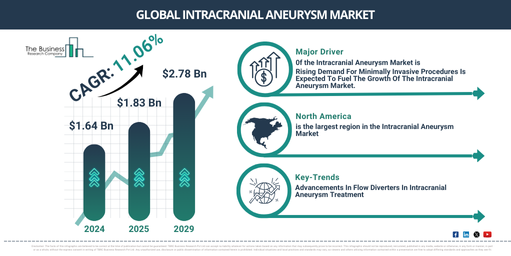
    The market for intracranial aneurysms has been witnessing swift expansion in the past few years. The anticipated progression is from a $1.64 billion valuation in 2024 to $1.83 billion in 2025, showing a compound annual growth rate (CAGR) of 11.43%. Factors such as upsurges in emerging economies, fewer available treatment methods, global funding for tropical ailments, emphasis on early detection, and governmental vaccination drives have contributed to the growth during the historical period.

    In the coming years, a swift expansion is predicted for the intracranial aneurysm market, as it is forecasted to rise to $2.78 billion in 2029 with a CAGR of 11.06%. Factors contributing to this expected growth during the forecast period include changes in climate and weather, global health campaigns by the WHO and UNICEF, the emergence of novel therapeutics, the approval of new treatments by regulatory bodies, and the broadening of health insurance coverage. The forecast period also anticipates key developments such as progress in vector control, the intersection of artificial intelligence, the introduction of new antiviral agents, incorporation of big data into treatment plans, and a shift towards integrated disease management strategies.

    Download a free sample to assess the report’s scope and structure:

    https://www.thebusinessresearchcompany.com/sample.aspx?id=20854&type=smp

    What are the Fundamental Drivers and Innovations Shaping the Intracranial Aneurysm Market?

    The growth of the intracranial aneurysm market is likely to be propelled by the escalating preference for minimally invasive procedures. These procedures take place through minuscule incisions or openings, thus decreasing trauma to the patient and shortening recovery time. The attractiveness of minimally invasive procedures stems from their shorter recovery periods, diminished chance of complications, minimal pain, and smaller scars, thus making them preferred choice for patients seeking more rapid and secure treatment options. Intracranial aneurysm handling has transformed these procedures by enabling precise interventions targeted at specific areas, reducing the patient’s recovery time and improving overall surgical outcomes. For instance, The Aesthetic Society, a US-based organization focused on plastic surgery and cosmetic medicine, reported that in August 2023, Americans spent over $11.8 billion on aesthetic procedures, reflecting a 2% rise from the prior year. Additionally, according to the American Society of Plastic Surgeons, in 2023, the total cosmetic minimally invasive procedures jumped from 23.7 million in 2022 to 25.4 million. Consequently, the burgeoning preference for minimally invasive processes is projected to drive the expansion of the intracranial aneurysm market.

    How Is the Intracranial Aneurysm Market Segmented?

    The intracranial aneurysm market covered in this report is segmented –

    1) By Type: Endovascular Coiling, Surgical Clipping, Flow Diverters, Other Types

    2) By Product Type: Aneurysm Therapeutic Devices, Embolization Devices, Aspiration Devices, Access Devices

    3) By End User: Hospitals, Specialty Clinics, Other End Users

    Subsegments:

    1) By Endovascular Coiling: Soft Coils, Detachable Coils, Balloon-Assisted Coiling

    2) By Surgical Clipping: Standard Surgical Clipping, Intraoperative Flow Diversion With Clipping

    3) By Flow Diverters: Stent-Assisted Flow Diverters, Flow Diverter Devices For Complex Aneurysms

    4) By Other Types: Intracranial Aneurysm Clipping With Bypass Surgery, Liquid Embolic Agents

    Request customized data on this market:

    https://www.thebusinessresearchcompany.com/customise?id=20854&type=smp

    Which Regions Are Driving the Next Phase of the Intracranial Aneurysm Market Growth?

    North America was the largest region in the intracranial aneurysm market in 2024. Asia-Pacific is expected to be the fastest-growing region in the forecast period. The regions covered in the intracranial aneurysm market report are Asia-Pacific, Western Europe, Eastern Europe, North America, South America, Middle East, Africa.

    What Are the Key Market Trends in the Intracranial Aneurysm Market Over the Coming Years?

    Leading corporations in the intracranial aneurysm sector are introducing innovative technology, such as new flow diverters, to elevate the effectiveness of intricate aneurysm treatment procedures. This technology aims to enhance patient results and lower complication risks. The term ‘flow diverter’ is associated with a medical device specifically used for treating challenging intracranial aneurysms, especially those which are wide-necked or hard to manage with conventional treatments like coiling. For instance, Medtronic plc, a medical device company based in Ireland, brought the Pipeline Vantage with Shield Technology to the market in June 2022. The product, designed for treating intracranial aneurysms, functions as a flow diverter that efficiently manages these aneurysms. It offers distinct characteristics such as elevated hemocompatibility due to its synthetic phosphorylcholine surface which drastically lowers thrombogenicity and a developed design with 48 or 64 cobalt chromium wires that foster deliverability and endothelial growth. Additionally, it comes with an advanced delivery system that simplifies the deployment and repositioning procedure, a higher pore density than its previous version, potentially increasing aneurysm occlusion rates, and a warranty program for patients using the device, indicating faith in its long-standing effectiveness and safety.

    View the full report here:

    https://www.thebusinessresearchcompany.com/report/intracranial-aneurysm-global-market-report

    How Is the Intracranial Aneurysm Market Defined and What Are Its Core Parameters?

    An intracranial aneurysm refers to a localized, abnormal dilation or ballooning of a blood vessel within the brain. It is utilized when a blood vessel in the brain becomes weakened, usually due to a combination of genetic factors, high blood pressure, and other risk factors such as smoking or age.

    Purchase the full report and get a swift delivery:

    https://www.thebusinessresearchcompany.com/purchaseoptions.aspx?id=20854

    About The Business Research Company:

    With over 15000+ reports from 27 industries covering 60+ geographies, The Business Research Company has built a reputation for offering comprehensive, data-rich research and insights. Armed with 1,500,000 datasets, the optimistic contribution of in-depth secondary research, and unique insights from industry leaders, you can get the information you need to stay ahead in the game.

    Get in touch with us:

    The Business Research Company: https://www.thebusinessresearchcompany.com/

    Americas +1 3156230293

    Asia +44 2071930708

    Europe +44 2071930708

    Email us at info@tbrc.info

    Follow us on:

    LinkedIn: https://in.linkedin.com/company/the-business-research-company

    YouTube: https://www.youtube.com/channel/UC24_fI0rV8cR5DxlCpgmyFQ

    Global Market Model: https://www.thebusinessresearchcompany.com/global-market-model
  • Insufflation Devices Market Forecast 2025–2034: Trends Reshaping Demand, Investment, and Innovation

    Insufflation Devices Market Forecast 2025–2034: Trends Reshaping Demand, Investment, and Innovation

    Stay ahead with our updated market reports featuring the latest on tariffs, trade flows, and supply chain transformations.

    What is the Anticipated CAGR of the Interventional Neuroradiology Market, and What Factors Will Drive It?

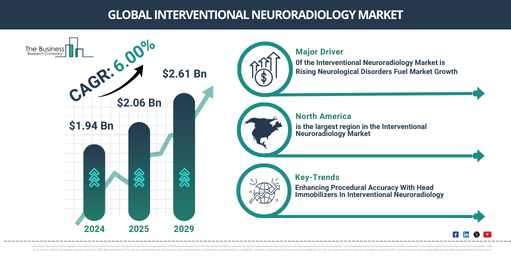
    The market size for interventional neuroradiology has significantly expanded in the last few years. It is projected to rise from $1.94 billion in 2024 to an estimated $2.06 billion in 2025, boasting a compound annual growth rate (CAGR) of 6.3%. Factors contributing to the growth during the historical period include the increased adoption of catheter-based interventions, the growth of healthcare infrastructure, a surge in hypertension cases, an increase in diabetes incidence, and the advancement of telemedicine.

    The market size for interventional neuroradiology is projected to witness significant expansion in the approaching years, rising to $2.61 billion by 2029 at a compound annual growth rate (CAGR) of 6.0%. The growth anticipated in this forecasted period can be credited to the introduction of liquid embolic agents, the increasing adoption of endovascular treatment procedures, the escalating use of mechanical throbectomy, the surging reliance on detachable embolic coils and the growing implementation of bioresobable scaffolds. Notable trends for this period encompass advances in navigation systems, breakthroughs in radiolucent support devices, the introduction of artificial intelligence in neuroimaging devices, improvements in thrombectomy devices, and the inclusion of artificial intelligence in intervention devices.

    Download a free sample to assess the report’s scope and structure:

    https://www.thebusinessresearchcompany.com/sample.aspx?id=20853&type=smp

    What Are the Primary Drivers Supporting the Market Growth of the Interventional Neuroradiology Market?

    The increasing incidence of neurological diseases is predicted to fuel the expansion of the interventional neuroradiology market in the future. Neurological diseases are health issues that affect the brain, spinal cord, or peripheral nerves, resulting in impaired movement, sensation, cognition, or communication. The aging global population contributes to a rise in the occurrence of neurological disorders, elevating the risk of age-associated diseases like Alzheimer’s, and advancements in diagnostic technologies enable the early and precise identification of such disorders. Interventional neuroradiology employs less invasive, image-guided procedures to diagnose and treat conditions like aneurysms, strokes, and arteriovenous malformations. For example, Alzheimer’s Research UK, a dementia research charity based in the UK, reported in May 2023 that dementia was the primary cause of death in the UK in 2022, contributing to over 74,000 fatalities (11.3% of all deaths), a rise of 5,000 from 2021. Thus, the escalating incidence of neurological diseases is stimulating the interventional neuroradiology market’s growth.

    Which Primary Segments of the Interventional Neuroradiology Market Are Driving Growth and Industry Transformations?

    The interventional neuroradiology market covered in this report is segmented –

    1) By Device Type: Microcatheters, Neurovascular Embolization And Coiling Assist Devices, Embolic Coils, Flow Diversion Devices, Liquid Embolic Agents, Accessories, Micro Guidewires

    2) By Disease: Cerebral Aneurysms, Intra-Cranial Tumors, Acute Strokes, Other Diseases

    3) By End Users: Hospitals, Ambulatory Surgical Centers, Diagnostic Centers

    Subsegments:

    1) By Microcatheters: Single-Lumen Microcatheters, Dual-Lumen Microcatheters, High-Flow Microcatheters

    2) By Neurovascular Embolization And Coiling Assist Devices: Coiling Assist Devices, Embolization Assist Devices

    3) By Embolic Coils: Soft Coils, Stiff Coils, Detachable Coils

    4) By Flow Diversion Devices: Stent-Based Flow Diversion Devices, Non-Stent-Based Flow Diversion Devices

    5) By Liquid Embolic Agents: Polymer-Based Liquid Embolic Agents, Gel-Based Liquid Embolic Agents, Onyx Liquid Embolic Agents

    6) By Accessories: Guide Catheters, Sheath Introducers, Vascular Access Devices

    7) By Micro Guidewires: Hydrophilic Micro Guidewires, Pushable Micro Guidewires, Coated Micro Guidewires

    Request customized data on this market:

    https://www.thebusinessresearchcompany.com/customise?id=20853&type=smp

    Which Regions Are Key Players in the Growth of the Interventional Neuroradiology Market?

    North America was the largest region in the interventional neuroradiology market in 2024. Asia-Pacific is expected to be the fastest-growing region in the forecast period. The regions covered in the interventional neuroradiology market report are Asia-Pacific, Western Europe, Eastern Europe, North America, South America, Middle East, Africa.

    Which Emerging Trends that Are Influencing the Interventional Neuroradiology Industry Evolution?

    Leading firms in the interventional neuroradiology market are prioritizing the creation of cutting-edge solutions such as head immobilizers aimed at improving image quality and patient safety during neuroradiology and interventional radiology procedures. A head immobilizer is a healthcare apparatus designed to momentarily immobilize the patient’s head and neck, particularly for safety and stability in cases of possible head or spinal damage. For example, Adept Medical, a medical device manufacturer based in New Zealand, introduced a novel head immobilizer in June 2023. This new model is specifically designed to improve patient comfort and image quality during interventional radiology and neuroradiology procedures. It includes features like vacuum suction technology for reliable head fixation, a radiolucent design that reduces interference with X-ray imaging, and compatibility with different imaging tables. The fast setup process enhances workflows, and its capacity to fit varying head shapes ensures patient comfort.

    View the full report here:

    https://www.thebusinessresearchcompany.com/report/interventional-neuroradiology-global-market-report

    What Parameters Are Used to Define the Interventional Neuroradiology Market?

    Interventional neuroradiology (INR) refers to a specialized field of medicine that focuses on minimally invasive procedures to diagnose and treat various neurological conditions affecting the brain, spine, and blood vessels. It involves using advanced imaging techniques to guide the performance of treatments like catheter-based procedures, angioplasties, stent placements, and embolization.

    Purchase the full report and get a swift delivery:

    https://www.thebusinessresearchcompany.com/purchaseoptions.aspx?id=20853

    About The Business Research Company:

    With over 15000+ reports from 27 industries covering 60+ geographies, The Business Research Company has built a reputation for offering comprehensive, data-rich research and insights. Armed with 1,500,000 datasets, the optimistic contribution of in-depth secondary research, and unique insights from industry leaders, you can get the information you need to stay ahead in the game.

    Get in touch with us:

    The Business Research Company: https://www.thebusinessresearchcompany.com/

    Americas +1 3156230293

    Asia +44 2071930708

    Europe +44 2071930708

    Email us at info@tbrc.info

    Follow us on:

    LinkedIn: https://in.linkedin.com/company/the-business-research-company

    YouTube: https://www.youtube.com/channel/UC24_fI0rV8cR5DxlCpgmyFQ

    Global Market Model: https://www.thebusinessresearchcompany.com/global-market-model