Month: September 2025

  • Emerging Trends and Growth Drivers in the Human Epidermal Growth Factor Market Through 2029

    Emerging Trends and Growth Drivers in the Human Epidermal Growth Factor Market Through 2029

    Claim your 30% discount on Global Market Reports with code ONLINE30. Limited time only.

    What Is the Estimated Industry Valuation for the Human Epidermal Growth Factor Sector?

    The industry for human epidermal growth factor has been showing robust growth in previous years. From $2.18 billion in 2024, it’s projected to amplify to $2.39 billion in 2025, riding on a compound annual growth rate (CAGR) of 9.3%. Several factors can be attributed for this development in the historic timeframe, including the rise in the elderly population susceptible to skin conditions, increased government backing and investments in biopharmaceutical advancements, growing instances of chronic wounds due to the rise in diabetes, enhanced partnerships between pharmaceutical corporations and research organizations, and the rising inclination of consumers towards non-evasive skincare solutions.

    The market for human epidermal growth factor is anticipated to witness substantial development in the upcoming years, escalating to a valuation of $3.37 billion in 2029 with a 9.0% compound annual growth rate (CAGR). The projected rise during this forecast period is driven by growing needs for regenerative medicine and wound healing applications, an increased occurrence of chronic skin conditions and injuries, enhanced awareness of anti-aging and skincare commodities that incorporate hegf, elevated investment in biotechnological exploration and development, and a surge in the acceptance of individualized medicine and targeted therapies. Prominent trends expected during the forecast span include the progression of recombinant DNA technology, progress in protein engineering that enhances hegf stability and effectiveness, technological incorporation of nanotechnology, novel bioprocessing approaches, and advancements in cell culture systems.

    Download The Free Sample Report Here:

    https://www.thebusinessresearchcompany.com/sample.aspx?id=24564&type=smp

    What Forces Are Driving The Growth Of The Human Epidermal Growth Factor Market?

    The surge in the adoption of personalized medicine is projected to spur the expansion of the human epidermal growth factor market. Defined as a medical treatment approach accommodated to an individual’s genetics, lifestyle, and environment for optimized care, personalized medicine is gaining popularity due to enhancements in genomic technologies. These technologies allow for more efficient, cost-effective, and accurate identification of personalized genetic profiles for custom-tailored treatments. HER2 plays a crucial role in personalized medicine by enabling physicians to categorize tumors based on HER2 protein overproduction, subsequently assisting in choosing targeted therapies to enhance treatment results and minimize unnecessary side-effects. For instance, the Personalized Medicine Coalition, a professional membership organization based in the US, reported a significant surge in the approval of new personalized medications in 2022, accounting for approximately 34% of all newly approved therapies. Thus, the expanding utilization of personalized medicine bolsters the growth of the human epidermal growth factor market. The amplification in clinical trials, due to demand for sophisticated wound healing therapies, is anticipated to boost the human epidermal growth factor market. Clinical trials, which are research studies centered around human subjects to assess the safety, efficacy, and adverse effects of medical interventions or treatments, are experiencing increasing popularity driven by the call for innovative and personalized therapies that necessitate thorough testing for safety and effectiveness. The human epidermal growth factor (hEGF) assists clinical trials by fostering cell development and tissue restoration, thereby evaluating potential therapies for wound healing, skin restoration, and related health conditions. For example, the Association of the British Pharmaceutical Industry, a trade organization based in London, revealed a 15% annual rise in recruitment for industry clinical trials in the UK, escalating from 36,722 participants in 2021-22 to 42,088 in 2022-23. Hence, the surge in clinical trials continues to contribute to the expansion of the human epidermal growth factor market.

    How Is The Human Epidermal Growth Factor Industry Segmented Across Key Parameters?

    The human epidermal growth factor market covered in this report is segmented –

    1) By Product Type: Recombinant Human Epidermal Growth Factor, Natural Human Epidermal Growth Factor

    2) By Formulation: Injectable Form, Topical Form, Oral Form

    3) By Distribution Channel: Direct Sales, Online Pharmacies, Retail Pharmaceis, Hospital Pharmacies, Specialty Clinics

    4) By Application: Dermatology, Oncology, Opthalmology, Wound Healing, Cosmetic Procedures

    5) By End-User: Hospitals, Clincs, Research Institutes, Other End Users

    Subsegments:

    1) By Recombinant Human Epidermal Growth Factor: Injectable solutions, Oncology therapeutics, Eye drops, Wound healing agents

    2) By Natural Human Epidermal Growth Factor: Plasma-derived products, Colostrum-based products, Amniotic fluid-derived products, Salivary-derived formulations

    What Notable Trends Are Shaping The Direction Of The Human Epidermal Growth Factor Market?

    Major corporations engaged in the human epidermal growth factor market are concentrating their efforts on developing technical innovations such as AI-driven immunohistochemistry (IHC) scoring solutions to enhance the precision, acceleration, and reliability of biomarker detection and cancer diagnosis. The AI-powered IHC scoring technology uses AI algorithms to comprehensively analyze and determine protein expression in tissue samples that have been stained via IHC, thus improving the accuracy, uniformity, and swiftness in diagnostic pathology. Take for example Ibex Medical Analytics, an Israeli-based firm that, in September 2023, introduced the Ibex Breast HER2. This improves the accuracy and dependability of HER2 biomarker scoring in breast cancer, particularly in complex HER2-low cases, leading to the fine-tuning of treatment routes and better patient results. The main advantages of this include highly precise, repeatable, and efficient HER2 IHC scoring, aiding pathologists in making resolute, impartial decisions for targeted therapy selection.

    Which Companies Currently Dominate The Competitive Landscape In The Human Epidermal Growth Factor Industry?

    Major companies operating in the human epidermal growth factor market are Pfizer Inc., Johnson & Johnson Services Inc, F. Hoffmann-La Roche AG, Merck & Co. Inc., Bayer AG, AstraZeneca plc, Novartis AG, GlaxoSmithKline Plc, Amgen Inc., Lonza Group AG, STEMCELL Technologies, Abcam plc., BioLegend Inc., Bharat Biotech International Limited, RayBiotech Inc., Enzo Life Sciences Inc., Neocutis S.A, Proteintech Group Inc., Creative BioMart Co. Ltd., Abbkine Scientific Co. Ltd.

    Get The Full Report Here:

    https://www.thebusinessresearchcompany.com/report/human-epidermal-growth-factor-global-market-report

    Which Geographic Regions Are Driving Demand In The Human Epidermal Growth Factor Market?

    North America was the largest region in the human epidermal growth factor market in 2024. Asia-Pacific is expected to be the fastest-growing region in the forecast period. The regions covered in the human epidermal growth factor market report are Asia-Pacific, Western Europe, Eastern Europe, North America, South America, Middle East, Africa.

    Request For A Customized Report:

    https://www.thebusinessresearchcompany.com/customise?id=24564&type=smp

    About The Business Research Company:

    With over 15000+ reports from 27 industries covering 60+ geographies, The Business Research Company has built a reputation for offering comprehensive, data-rich research and insights. Armed with 1,500,000 datasets, the optimistic contribution of in-depth secondary research, and unique insights from industry leaders, you can get the information you need to stay ahead in the game.

    Get in touch with us:

    The Business Research Company: https://www.thebusinessresearchcompany.com/

    Americas +1 310-496-7795

    Asia +44 7882 955267 & +91 8897263534

    Europe +44 7882 955267

    Email us at info@tbrc.info

    Follow us on:

    LinkedIn: https://in.linkedin.com/company/the-business-research-company

    YouTube: https://www.youtube.com/channel/UC24_fI0rV8cR5DxlCpgmyFQ

    Global Market Model: https://www.thebusinessresearchcompany.com/global-market-model
  • CAGR of 8.6% Projected for Hormone Replacement Therapy Market From 2025 to 2029

    CAGR of 8.6% Projected for Hormone Replacement Therapy Market From 2025 to 2029

    Claim your 30% discount on Global Market Reports with code ONLINE30. Limited time only.

    How Large Is the Hormone Replacement Therapy Market Expected to Be in 2029?

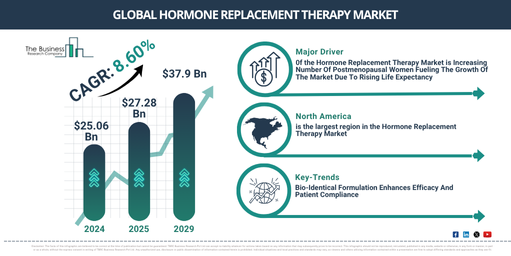
    In recent times, the market size for hormone replacement therapy has experienced robust growth, escalating from $25.06 billion in 2024 to a projected $27.28 billion in 2025, with a Compound Annual Growth Rate (CAGR) of 8.9%. This growth throughout the historic period is mainly due to factors such as the rising instances of menopausal symptoms in aging women, increased awareness about hormone deficiency treatments, greater life expectancy and aging demographic, a rise in overall global healthcare spending, and the expanded use of estrogen therapy for women after menopause.

    The market for hormone replacement therapy is set to witness robust growth in the coming years, with expectations to reach $37.9 billion by 2029, reflecting a compound annual growth rate (CAGR) of 8.6%. Factors such as an increased incidence of hormonal disorders, heightened awareness about the health impacts of menopause, a growing elderly population globally, improved healthcare access in developing markets, and a surge in demand for minimally invasive therapies contribute to this growth. Key trends for the forecast period encompass progress in bio-identical hormone formulations, sophisticated transdermal drug delivery systems, the creation of personalized hormone treatments through genetic profiling, innovation in long-lasting hormone injections, and advancements in the incorporation of telehealth for managing hormone therapy.

    Download The Free Sample Report Here:

    https://www.thebusinessresearchcompany.com/sample.aspx?id=24563&type=smp

    What Are The Contributors To Demand In The Hormone Replacement Therapy Market?

    The hormone replacement therapy market is expected to surge, driven by an increasing number of women reaching post-menopause. Postmenopausal women, who no longer menstruate due to a natural reduction in reproductive hormones (usually 12 months after their last menstrual cycle), are increasing due to longer life spans. This results in a larger aging female population experiencing menopause. Hormone replacement therapy can benefically impact this demographic by easing common symptoms such as night sweats and hot flashes, thus enhancing their quality of life. It helps to stabilize hormonal imbalances with individualized treatments, alleviating discomfort and fostering overall well-being. For example, Mayo Clinic Health System, a healthcare company based in the US, detailed in July 2022 that the global population of menopausal and postmenopausal women is expected to rise to 1.2 billion by 2030, with 47 million new cases recorded annually. Thus, the rising number of postmenopausal women is fueling growth in the hormone replacement therapy market.

    What Segmentation Categories Are Included In The Hormone Replacement Therapy Market Analysis?

    The hormone replacement therapy market covered in this report is segmented –

    1) By Therapy Type: Estrogen Replacement Therapy, Human Growth Hormone Replacement Therapy, Thyroid Hormone Replacement Therapy, Testosterone Replacement Therapy, Other Therapy Types

    2) By Indication: Menopause, Hypothyroidism, Male Hypogonadism, Growth Hormone Deficiency, Other Indications

    3) By Route Of Administration: Oral, Transdermal, Injectable, Other Of Administartions

    4) By Distribution Channel: Hospital Pharmacies, Retail Pharmacies, Online Pharmacies, Other Distribution Channels

    Subsegments:

    1) By Estrogen Replacement Therapy: Oral Estrogen, Transdermal Estrogen, Topical Estrogen, Vaginal Estrogen, Injectable Estrogen

    2) By Human Growth Hormone (hGH) Replacement Therap: Somatropin, Somatrem, Recombinant Human Growth Hormone (rhGH), Pegylated hGH, Other Human Growth Hormone (hGH) Replacement Therapies

    3) By Thyroid Hormone Replacement Therapy: Levothyroxine (T4), Liothyronine (T3), Natural Desiccated Thyroid (NDT), Combination T3 Or T4 Therapy

    4) By Testosterone Replacement Therapy: Gels And Creams, Injections, Patches, Oral Testosterone, Pellets

    5) By Other Therapy Types: Progesterone Replacement Therapy, Combined Estrogen-Progesterone Therapy, Dehydroepiandrosterone Therapy, Melatonin Replacement Therapy

    What Upcoming Trends Are Expected To Impact The Hormone Replacement Therapy Market Globally?

    Leading organizations in the hormone replacement therapy market are concentrating on creating new formulations such as bio-identical hormone formulations to increase treatment efficiency and patient adherence. Bio-identical hormone formulations are treatments that utilize hormones that are chemically identical to those naturally present in the human body, with the intent to provide a more organic and effective relief from symptoms with minimal side effects. For example, in May 2024, Jagsonpal Pharmaceuticals Ltd., a pharmaceutical company from India, introduced MemUp, a bio-identical hormone replacement therapy (HRT). This pioneering therapy integrates estradiol and progesterone in a single, once-daily oral capsule. MemUp is engineered to efficiently reduce common menopausal symptoms like hot flashes and night sweats, while streamlining the treatment process to improve patient convenience and compliance.

    Who Are The Top-Ranked Companies In The Hormone Replacement Therapy Market Today?

    Major companies operating in the hormone replacement therapy market are Pfizer Inc., F. Hoffmann-La Roche Ltd., AbbVie Inc., Bayer AG, Sanofi S.A., Abbott Laboratories, Novartis AG, GSK plc, Eli Lilly and Company, Amgen Inc., Novo Nordisk A/S, Teva Pharmaceutical Industries Ltd., Mylan N.V., Bausch Health Companies Inc., Cipla Inc., Gedeon Richter Plc., Lupin Limited, Orion Corporation, Halozyme Therapeutics Inc., Theramex HQ UK Limited

    Get The Full Report Here:

    https://www.thebusinessresearchcompany.com/report/hormone-replacement-therapy-global-market-report

    How Is Hormone Replacement Therapy Market Adoption Varying Across Different Regions And Sectors?

    North America was the largest region in the hormone replacement therapy market in 2024. Asia-Pacific is expected to be the fastest-growing region in the forecast period. The regions covered in the hormone replacement therapy market report are Asia-Pacific, Western Europe, Eastern Europe, North America, South America, Middle East, Africa.

    Request For A Customized Report:

    https://www.thebusinessresearchcompany.com/customise?id=24563&type=smp

    About The Business Research Company:

    With over 15000+ reports from 27 industries covering 60+ geographies, The Business Research Company has built a reputation for offering comprehensive, data-rich research and insights. Armed with 1,500,000 datasets, the optimistic contribution of in-depth secondary research, and unique insights from industry leaders, you can get the information you need to stay ahead in the game.

    Get in touch with us:

    The Business Research Company: https://www.thebusinessresearchcompany.com/

    Americas +1 310-496-7795

    Asia +44 7882 955267 & +91 8897263534

    Europe +44 7882 955267

    Email us at info@tbrc.info

    Follow us on:

    LinkedIn: https://in.linkedin.com/company/the-business-research-company

    YouTube: https://www.youtube.com/channel/UC24_fI0rV8cR5DxlCpgmyFQ

    Global Market Model: https://www.thebusinessresearchcompany.com/global-market-model
  • Industry Forecast: Home Medical Alert Systems Market to Generate $6.85 Billion Revenue by 2029

    Industry Forecast: Home Medical Alert Systems Market to Generate $6.85 Billion Revenue by 2029

    Claim your 30% discount on Global Market Reports with code ONLINE30. Limited time only.

    What Is the Outlook for the Home Medical Alert Systems Market Heading Into 2029?

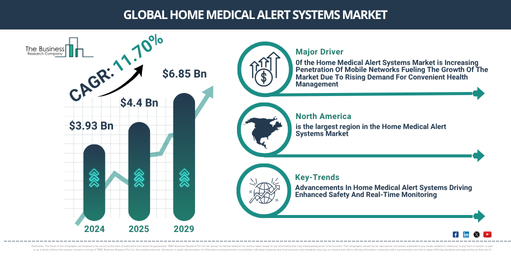
    The market for home medical alert systems has rapidly expanded in the past few years. Its size is forecasted to escalate from $3.93 billion in 2024 to $4.4 billion in 2025, with a compound annual growth rate (CAGR) of 12.0%. Factors contributing to growth during the historical period include increasing numbers of elderly individuals, the prevalence of chronic diseases, heightened awareness about the safety of seniors, the growing acceptance of telehealth technologies, and a surging demand for monitoring patients remotely.

    Over the coming years, the home medical alert systems market is poised for accelerated expansion, with an anticipated value of $6.85 billion by 2029, reflecting an 11.7% compound annual growth rate (CAGR). A surge in the elderly population, the fusion of AI and IoT, enhanced demand for wearable healthcare gadgets, the proliferation of telehealth offerings, and increased government backing for aged care, are all contributing to this growth. Profound trends for the future include improvements in AI-infused alert systems, inventive wearable and non-wearable devices, seamless integration with smart home tech, more prevalent usage of mobile applications for tracking, and the emergence of subscription-based service architectures.

    Download The Free Sample Report Here:

    https://www.thebusinessresearchcompany.com/sample.aspx?id=24562&type=smp

    Which Factors Are Pushing The Home Medical Alert Systems Market Forward?

    As mobile network penetration continues to escalate, it is anticipated to fuel the expansion of the home medical alert systems market. Mobile networks, wireless communication mechanisms that connect mobile devices to both the internet and telephone services using radio waves, are witnessing a surge in penetration due to the escalating demand for Internet access across urban and rural locales. Home medical alert systems often hinge on mobile connectivity for their operation, which has led to increased network installations in residential zones. For example, the GSM Association, a global consortium of mobile operators and businesses based in the U.K, reported in February 2025 that the number of unique mobile subscribers around the world stood at 5.8 billion, translating to a penetration rate of 71%. This number is projected to surge to 6.5 billion by 2030. Consequently, the rising penetration of mobile networks is fuelling the home medical alert systems market’s growth.

    Which Segment Held The Largest Share In The Home Medical Alert Systems Market In 2025?

    The home medical alert systems market covered in this report is segmented –

    1) By Type: Personal Emergency Response Systems (PERS), Wearable Alert Systems, Smartphone Based Alert Systems, In Home Alert Systems

    2) By Service Model: Subscription Based Services, One Time Purchase Models, Bundled Services, Pay-As-You-Go Services

    3) By Applications: Home Based Use, Nursing Home, Assisted Living Facilities, Hospices, Other Applications

    4) By Distribution Channel: Online Retailers, Medical Equipment Stores, Direct Sales, Healthcare Facilities

    5) By End User: Seniors, Disabled Individuals, Patients With Chronic Conditions, Other End Users

    Subsegments:

    1) By Personal Emergency Response Systems (PERS): Landline-Based PERS, Cellular-Based PERS, GPS-Enabled PERS, Two-Way Voice Communication PERS, Fall Detection-Integrated PERS

    2) By Wearable Alert Systems: Medical Alert Smartwatches, Emergency Pendant Alarms, Wristband Alert Devices, Necklace Alert Devices, Clip-On Wearable Sensors

    3) By Smartphone-Based Alert Systems: Dedicated Medical Alert Apps, Hybrid Smartphone + Wearable Systems, AI-Powered Emergency Response Apps, Family-Connected Alert Apps, GPS Location Tracking Apps

    4) By In-Home Alert Systems: Wall-Mounted Emergency Buttons, Bedside Alert Systems, Voice-Activated Home Assistants, Motion-Sensor Based Alarms, Smart Home-Integrated Medical Alerts

    How Are Key Trends Driving Expansion In The Home Medical Alert Systems Industry?

    Leading firms in the home medical alert systems market, are utilizing progressive technologies like artificial intelligence (AI)-driven fall detection to ensure prompt emergency reaction, increased user protection, and enhanced individual health monitoring. AI-driven fall detection alludes to the application of artificial intelligence protocols in gadgets that instantly detect and alert caregivers to falls, bolstering emergency responses and curbing false alarms. For instance, LogicMark, an American firm that excels in medical alert systems, introduced the Freedom Alert Max, a sophisticated home medical alert tool in November 2024. This state-of-the-art system amalgamates AI-driven fall detection, GPS tracking, and emergency video calling within a single apparatus. It provides smooth integration with mobile apps and round-the-clock professional monitoring based in the United States. The Freedom Alert Max bolsters safety and self-sufficiency for the elderly and those at risk.

    Which Organizations Are Driving Progress In The Home Medical Alert Systems Industry?

    Major companies operating in the home medical alert systems market are ADT Inc., Connect America LLC, Lifeline Systems Pvt. Ltd., LifeStation Inc., Medical Guardian LLC, LifeFone Inc., AlertOne Services LLC, Life Alert Emergency Response Inc., Rescue Alert of California, MyNotifi by MedHab Inc., Bay Alarm Medical, SafeGuardian LLC, LifeCall Medical Alert Systems, Senior Safety Medical Alert, AlertCare Medical Alert Systems, LifeSignals Group Inc., LogicMark Inc., ResponseNow Medical Alert Systems, Rescue Touch LLC, Vital Alert Communication Inc.

    Get The Full Report Here:

    https://www.thebusinessresearchcompany.com/report/home-medical-alert-systems-global-market-report

    Which Region Is Expected To Experience The Highest Growth In The Home Medical Alert Systems Industry?

    North America was the largest region in the home medical alert systems market in 2024. Asia-Pacific is expected to be the fastest-growing region in the forecast period. The regions covered in the home medical alert systems market report are Asia-Pacific, Western Europe, Eastern Europe, North America, South America, Middle East, Africa.

    Request For A Customized Report:

    https://www.thebusinessresearchcompany.com/customise?id=24562&type=smp

    About The Business Research Company:

    With over 15000+ reports from 27 industries covering 60+ geographies, The Business Research Company has built a reputation for offering comprehensive, data-rich research and insights. Armed with 1,500,000 datasets, the optimistic contribution of in-depth secondary research, and unique insights from industry leaders, you can get the information you need to stay ahead in the game.

    Get in touch with us:

    The Business Research Company: https://www.thebusinessresearchcompany.com/

    Americas +1 310-496-7795

    Asia +44 7882 955267 & +91 8897263534

    Europe +44 7882 955267

    Email us at info@tbrc.info

    Follow us on:

    LinkedIn: https://in.linkedin.com/company/the-business-research-company

    YouTube: https://www.youtube.com/channel/UC24_fI0rV8cR5DxlCpgmyFQ

    Global Market Model: https://www.thebusinessresearchcompany.com/global-market-model
  • Home Health Monitoring Devices Market Revenue Outlook: Strategic Insights and Forecast to 2029

    Home Health Monitoring Devices Market Revenue Outlook: Strategic Insights and Forecast to 2029

    Claim your 30% discount on Global Market Reports with code ONLINE30. Limited time only.

    What Does the Forecast Indicate for the Home Health Monitoring Devices Market From 2025 to 2029?

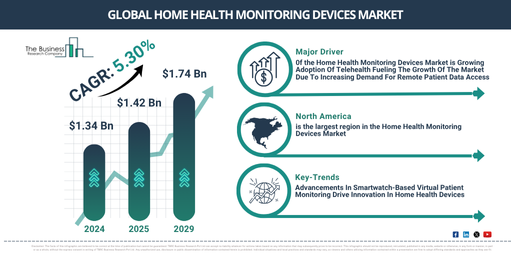
    The market size for home health monitoring devices has seen robust growth in the past few years. The market is set to expand from $1.34 billion in 2024 to $1.42 billion in 2025, with a compound annual growth rate (CAGR) of 5.5%. Factors contributing to this growth historically include an increase in chronic diseases, a rising geriatric population globally, heightened awareness of preventative healthcare, escalating healthcare expenses advocating for home care solutions, and the progressive adoption of IoT in the healthcare sector.

    The market for home health monitoring devices is poised for robust growth in the coming years, with estimations revealing it will reach $1.74 billion by 2029, propelled by a compound annual growth rate (CAGR) of 5.3%. The predicted growth during the forecast period can be credited to the rising demand for remote patient supervision, government-led initiatives supporting telehealth and remote surveillance, better Internet connectivity and mobile network coverage, increased smartphone usage, and a growing interest in instant health monitoring and alerts. Key trends for the forecast time frame comprise advancements in wearable technology, the emergence of AI-powered health surveillance devices, introduction of chronic illness management schemes, hi-tech growth in biosensors and medical-grade sensors, and the improved precision and dependability of home health devices.

    Download The Free Sample Report Here:

    https://www.thebusinessresearchcompany.com/sample.aspx?id=24561&type=smp

    What Elements Are Contributing To Growth In The Home Health Monitoring Devices Market?

    The increasing use of telehealth is projected to drive expansion in the home health monitoring devices market. Telehealth utilizes digital platforms for medical consultation and care, eliminating the need for physical patient-doctor interaction. Its rising popularity can be attributed to its accessible healthcare service, enabling patients to communicate promptly with physicians from the comfort of their own home. This not only saves time but also curtails the necessity of commuting. The escalating adoption of telehealth bolsters the demand for home health monitoring tools, allowing healthcare providers to monitor patient data in real-time remotely. This is crucial for precise diagnosis, swift treatment, and efficient continual care without necessitating physical meetings. For instance, a Rock Health survey conducted in February 2023 recorded 80% of its 8,014 respondents had used telemedicine at least once in 2022. This was a significant 8% rise from 72% in 2021, demonstrating the increased adoption of telehealth. Hence, this surge will enhance the progression of the home health monitoring devices market.

    Which Segments Are Detailed In The Global Home Health Monitoring Devices Market Report?

    The home health monitoring devices market covered in this report is segmented –

    1) By Type: Heart Monitors, Breath Monitors, Hematology Monitors, Multi-Parameter Monitors, Other Types

    2) By Application: Care Centre, Household, Other Applications

    3) By End User: Elderly Population, Chronic Disease Patients, General Health-Conscious Consumers, Post-Operative And Rehabilitation Patients, Healthcare Providers And Caregivers

    Subsegments:

    1) By Heart Monitors: ECG Monitors, Heart Rate Monitors, Blood Pressure Monitors, Holter Monitors, Implantable Loop Recorders

    2) By Breath Monitors: Pulse Oximeters, Spirometers, Capnographs, Breath Analyzers

    3) By Hematology Monitors: Blood Glucose Monitors, INR Monitors, Hemoglobin Monitors, Blood Clotting Time Monitors

    4) By Multi-Parameter Monitors: Vital Signs Monitors, Portable ICU Monitors, Wearable Multi-Parameter Devices

    5) By Other Types: Body Temperature Monitors, Sleep Apnea Monitors, Urine Analyzers, Electrolyte Monitors, Activity And Fitness Trackers

    Which Emerging Trends And Strategic Shifts Are Shaping The Home Health Monitoring Devices Market?

    Leading firms in the home health monitoring devices market are concentrating on creating innovative solutions like smartwatches for remote patient monitoring. These smartwatches are designed to integrate smoothly with health apps and telehealth platforms, facilitating effortless data exchange with healthcare providers. They are digital wearable devices that consistently record and transmit health-related data, which allows healthcare providers to monitor a patient’s physiological condition and take proactive action remotely. For example, in July 2024, a United States-based Internet of Things (IoT) company named KORE introduced the mCareWatch 241, a smartwatch engineered for virtual patient monitoring. This watch comes with an emergency SOS function for users to get immediate assistance when required. Additional features include calling capabilities, GPS location tracking, and quick-dial options, ensuring dependable communication and safety. The device is equipped with essential health monitoring tools such as a heart-rate sensor, step counter, fall detection, and inactivity alerts. Users also have the option to set up geo-fencing notifications and reminders, which can be accessed via a dedicated mobile application and web interface.

    Who Are The Key Contributors To Growth In The Home Health Monitoring Devices Market?

    Major companies operating in the home health monitoring devices market are Abbott Laboratories Inc., Omron Healthcare Co. Ltd., Garmin Ltd., ResMed Inc., Masimo Corporation, ChoiceMMed America Corp., Beurer GmbH, iRhythm Technologies Inc., A&D Company Limited, Microlife Corporation, Telli Health LLC, AliveCor Inc., CareSimple Inc., BioBeat Technologies Ltd., BioIntelliSense Inc., Tenovi Inc., 100Plus Inc., BodiMetrics LLC, Oxitone Medical Ltd., Guangdong Transtek Medical Electronics Co. Ltd.

    Get The Full Report Here:

    https://www.thebusinessresearchcompany.com/report/home-health-monitoring-devices-global-market-report

    Which Region Is Projected To Lead The Home Health Monitoring Devices Market By 2025?

    North America was the largest region in the home health monitoring devices market in 2024. Asia-Pacific is expected to be the fastest-growing region in the forecast period. The regions covered in the home health monitoring devices market report are Asia-Pacific, Western Europe, Eastern Europe, North America, South America, Middle East, Africa.

    Request For A Customized Report:

    https://www.thebusinessresearchcompany.com/customise?id=24561&type=smp

    About The Business Research Company:

    With over 15000+ reports from 27 industries covering 60+ geographies, The Business Research Company has built a reputation for offering comprehensive, data-rich research and insights. Armed with 1,500,000 datasets, the optimistic contribution of in-depth secondary research, and unique insights from industry leaders, you can get the information you need to stay ahead in the game.

    Get in touch with us:

    The Business Research Company: https://www.thebusinessresearchcompany.com/

    Americas +1 310-496-7795

    Asia +44 7882 955267 & +91 8897263534

    Europe +44 7882 955267

    Email us at info@tbrc.info

    Follow us on:

    LinkedIn: https://in.linkedin.com/company/the-business-research-company

    YouTube: https://www.youtube.com/channel/UC24_fI0rV8cR5DxlCpgmyFQ

    Global Market Model: https://www.thebusinessresearchcompany.com/global-market-model

  • Future Projections: Herbal Sleep Aid Supplement Market to Reach $4.21 Billion by 2029 at 7.3% CAGR

    Future Projections: Herbal Sleep Aid Supplement Market to Reach $4.21 Billion by 2029 at 7.3% CAGR

    Claim your 30% discount on Global Market Reports with code ONLINE30. Limited time only.

    How Much Is the Global Herbal Sleep Aid Supplement Market Valued at Present and by 2029?

    The market size for herbal sleep aid supplements has seen a potent expansion in the recent past. Its growth is projected to surge from $2.95 billion in 2024 to $3.18 billion in 2025, registering a compound annual growth rate (CAGR) of 7.6%. The notable growth during the historic period is driven by factors such as the increasing incidence of sleep disorders, heightened awareness of natural and alternative cures, growing fondness for herbal and plant-derived supplements, a rise in consumer focus on wellness and self-care, along with a surge in the aging population.

    Expectations are high for a substantial surge in the herbal sleep aid supplement market over the coming years, with projections suggesting a growth to $4.21 billion by 2029. This represents a compound annual growth rate (CAGR) of 7.3%. The acceleration in this period could be driven by factors such as the increase in stress and anxiety due to contemporary living styles, urban growth, higher disposable incomes, and the impact of social media and health influencers. Also contributing to this growth are the rising number of clinical studies endorsing herbal sleep aids. Key trends to watch for in this period include a broad variety of herbal sleep aid products, a preference for non-addictive and safe sleep aids, educational initiatives from herbal supplement manufacturers, a trend towards holistic health, and the uptake of personalized nutrition and supplements.

    Download The Free Sample Report Here:

    https://www.thebusinessresearchcompany.com/sample.aspx?id=24560&type=smp

    #What Drivers Are Influencing Growth In The Herbal Sleep Aid Supplement Market?

    The herbal sleep aid supplements market is projected to thrive in the forthcoming years owing to the rising levels of stress and anxiety. Characterized by external pressures, stress can trigger countless reactions within the body, while anxiety fuels apprehension about potential future uncertainties or dangers. The rampant exposure to digital media that overloads individuals with excessive information and unrealistic comparisons has resulted in a surge in mental fatigue and emotional suffering, thereby escalating levels of stress and anxiety. Consequently, an increasing number of individuals are turning to herbal sleep aid supplements, a natural solution to help soothe their minds and enhance their sleep quality without the adverse effects found in traditional pharmaceutical remedies. As per a report issued by the American Psychiatric Association (APA), a professional organization based in the US, in May 2024, there was a noticeable increase in anxiety levels among adults, with 43% reporting an elevation in 2024 as compared to the previous year, a significant jump from 37% in 2023 and 32% in 2022. Stress (53%) and sleep disturbances (40%) were cited as primary factors afflicting mental health. Hence, the elevated levels of stress and anxiety are set to stimulate the expansion of the herbal sleep aid supplements market.

    What Are The Main Segments Identified In The Herbal Sleep Aid Supplement Market Research?

    The herbal sleep aid supplement market covered in this report is segmented –

    1) By Product: Melatonin, Chamomile, Valerian, Lavender, Tryptophan, Other Products

    2) By Form: Capsules, Tablets, Powder, Soft Gels, Liquid

    3) By Distribution Channel: Online Retail, Offline Retail, Health Food Stores, Pharmacies, Supermarkets

    4) By End-User: Adults, Children, Elderly

    Subsegments:

    1) By Melatonin: Synthetic Melatonin, Natural Or Plant-Based Melatonin, Fast-Release Melatonin, Time-Release Or Extended-Release Melatonin

    2) By Chamomile: Chamomile Extract Capsules, Chamomile Tea Bags, Chamomile Liquid Extract Or Tinctures, Chamomile Powder

    3) By Valerian: Valerian Root Capsules, Valerian Root Extract Liquid, Valerian Root Tea, Valerian Root Powder

    4) By Lavender: Lavender Essential Oil Capsules, Lavender Tea, Lavender Extract Liquid, Lavender Powder

    5) By Tryptophan: L-Tryptophan Capsules, Tryptophan Complex Formulations, Sublingual Tryptophan, Tryptophan-Infused Powders

    6) By Other Products: Passionflower Extract, Hops Extract, Magnesium-Based Herbal Blends, Lemon Balm Extract, Ashwagandha Extract, Other Botanical Extracts Or Blends

    What Are The Leading Trends And Opportunities In The Herbal Sleep Aid Supplement Sector?

    Firms with a significant footprint in the herbal sleep aid supplement marketplace are emphasizing the creation of innovative products like sleep support supplements. Their goal is to cater to diverse consumer tastes and provide safer, more natural alternatives to improve sleep quality. Sleep support supplements are natural or specially formulated items intended to foster relaxation and boost the quality and length of sleep. For example, Natrol LLC, a nutraceutical company based in the US, introduced its inaugural sleep aid supplement without melatonin – Soothing Night gummies and capsules in September 2023. Soothing Night features scientifically proven natural ingredients namely Lactium, L-Theanine, and botanical extracts. These ingredients work synergistically to relax the mind and help curb occasional stress. It offers consumers a melatonin-free choice for achieving more prolonged, improved sleep and increased mental clarity.

    Which Companies Play A Key Role In The Development Of The Herbal Sleep Aid Supplement Market?

    Major companies operating in the herbal sleep aid supplement market are GNC Holdings LLC, Thorne HealthTech Inc., Life Extension, OLLY Public Benefit Corporation, Gaia Herbs Inc., Mountain Rose Herbs, Natrol LLC, Herb Pharm LLC, Douglas Laboratories, Solgar Inc., Makers Nutrition LLC, Banyan Botanicals, Moon Juice LLC, SMPNutra Inc., WishGarden Herbs Inc., Sandland Sleep, Enzymatic Therapy Inc., Jarrow Formulas Inc., RidgeCrest Herbals Co., Source Naturals Inc., American Standard Supplements.

    Get The Full Report Here:

    https://www.thebusinessresearchcompany.com/report/herbal-sleep-aid-supplement-global-market-report

    What Are The Key Regional Developments Shaping The Herbal Sleep Aid Supplement Market?

    North America was the largest region in the herbal sleep aid supplement market in 2024. Asia-Pacific is expected to be the fastest-growing region in the forecast period. The regions covered in the herbal sleep aid supplement market report are Asia-Pacific, Western Europe, Eastern Europe, North America, South America, Middle East, Africa.

    Request For A Customized Report:

    https://www.thebusinessresearchcompany.com/customise?id=24560&type=smp

    About The Business Research Company:

    With over 15000+ reports from 27 industries covering 60+ geographies, The Business Research Company has built a reputation for offering comprehensive, data-rich research and insights. Armed with 1,500,000 datasets, the optimistic contribution of in-depth secondary research, and unique insights from industry leaders, you can get the information you need to stay ahead in the game.

    Get in touch with us:

    The Business Research Company: https://www.thebusinessresearchcompany.com/

    Americas +1 310-496-7795

    Asia +44 7882 955267 & +91 8897263534

    Europe +44 7882 955267

    Email us at info@tbrc.info

    Follow us on:

    LinkedIn: https://in.linkedin.com/company/the-business-research-company

    YouTube: https://www.youtube.com/channel/UC24_fI0rV8cR5DxlCpgmyFQ

    Global Market Model: https://www.thebusinessresearchcompany.com/global-market-model

  • 2025 Hepatitis C Testing Market Outlook: Opportunities, Growth Trends, and Strategic Analysis

    2025 Hepatitis C Testing Market Outlook: Opportunities, Growth Trends, and Strategic Analysis

    Claim your 30% discount on Global Market Reports with code ONLINE30. Limited time only.

    What Is the Current and Projected Market Size of the Hepatitis C Testing Industry?

    The market size for hepatitis c testing has seen significant expansion recently. Predictions indicate the marketplace will increase from a value of $1.24 billion in 2024 to $1.32 billion in the following year with a compound annual growth rate (CAGR) of 6.6%. The factors contributing to historical growth include an increase in hepatitis C occurrences, the broadening of public health initiatives, a surge in intravenous drug consumption, heightened awareness of the risks associated with hepatitis C, and government investment for controlling infectious diseases.

    The market size for hepatitis C testing is projected to experience robust growth over the next several years, swelling to $1.68 billion in 2029 with a compound annual growth rate (CAGR) of 6.2%. This growth within the projection period can be credited to the rising demand for early detection of the disease, enhanced access to healthcare, a growing focus on preventive healthcare, assistance from worldwide health organizations, and governmental strategies aimed at eradicating hepatitis C. Key trends anticipated during the forecast period embrace the integration of multiplex diagnostic platforms, incorporation of artificial intelligence (AI) into diagnostic tools, a move towards home-based testing kits, heightened collaboration for the development of tests, and the development of cost-effective testing solutions.

    Download The Free Sample Report Here:

    https://www.thebusinessresearchcompany.com/sample.aspx?id=24559&type=smp

    #Which Factors Are Currently Driving The Growth Of The Hepatitis C Testing Market?

    The expansion of the hepatitis C testing market is projected to be driven by the increasing occurrence of hepatitis cases. Hepatitis C is an infection caused by a virus that induces inflammation in the liver and can lead to severe liver damage if ignored. The cause of the rise in hepatitis cases can primarily be attributed to the lack of vaccination among people, thereby making it easier for the virus to disseminate. Testing for Hepatitis C facilitates early detection of the virus, enabling quick treatment to prevent liver damage and severe complications. It also aids in identifying infected persons, which assists in preventing the virus’s transmission and improving disease management. For example, the World Health Organization (WHO) reported in April 2024 that over 50 million people worldwide are living with chronic hepatitis C virus infection, with nearly 1.0 million new infections each year. As a result, the escalating incidence of hepatitis infections is fueling the growth of the hepatitis C testing market.

    How Is The Global Hepatitis C Testing Market Structured In Terms Of Segments?

    The hepatitis c testing market covered in this report is segmented –

    1) By Type: Antibody Tests, Nucleic Acid Tests, Genotyping Tests

    2) By Product: Test Kits, Instruments, Reagents, Consumables

    3) By Technology: Enzyme-Linked Immunosorbent Assay (ELISA), Rapid Diagnostic Tests, Polymerase Chain Reaction, Next-Generation Sequencing

    4) By Application: Blood Screening, Viral Load Monitoring, Disease Diagnosis

    5) By End-User: Hospital-Based Laboratories, Stand-Alone Laboratories, Other End-Users

    Subsegments:

    1) By Antibody Tests: Enzyme Immunoassay (EIA), Recombinant Immunoblot Assay (RIBA), Rapid Diagnostic Tests (RDTs)

    2) By Nucleic Acid Tests (NATs): Quantitative Ribonucleic Acid (RNA) Tests, Qualitative Ribonucleic Acid (RNA) Tests, Transcription-Mediated Amplification (TMA), Reverse Transcription Polymerase Chain Reaction (RT-PCR)

    3) By Genotyping Tests: Line Probe Assay (LiPA), Sequencing-Based Assay, Real-Time Polymerase Chain Reaction (PCR)-Based Genotyping

    What Trends Are Currently Influencing Growth In The Hepatitis C Testing Market?

    Leading businesses in the hepatitis C testing market are concentrating on the creation of cutting-edge solutions such as dual antigen-antibody diagnostic tests, intending to increase the efficiency of screening and monitoring for the infection. This type of test can identify viral proteins, known as antigens, and immune response proteins or antibodies, thus enabling detection of both current and previous infections. This combined method offers a comprehensive assessment of infection status. Roche Diagnostics India Pvt. Ltd., an Indian diagnostic tests and systems company, launched an innovation in this field in July 2023 called Elecsys HCV Duo. This automated immunoassay can independently detect both HCV antigens and antibodies from a single plasma or serum sample, paving the way for prompt diagnosis, facilitating patient care, and aligning with India’s national campaign to eradicate hepatitis C through exhaustive and timely screening.

    Who Are The Main Participants Shaping The Hepatitis C Testing Market Landscape?

    Major companies operating in the hepatitis c testing market are F. Hoffmann-La Roche Ltd., Bayer AG, Thermo Fisher Scientific Inc., Abbott Laboratories, Siemens Healthineers AG, Quest Diagnostics Incorporated, Hologic Inc., QuidelOrtho Corporation, Sysmex Corporation, Bio-Rad Laboratories Inc., SD Biosensor INC., QIAGEN N.V., DiaSorin S.p.A., Cepheid, Abcam Plc, OraSure Technologies Inc., Meridian Bioscience Inc., Trivitron Healthcare Private Limited, General Biologicals Corporation, Biogate Laboratories Ltd., Cosara Diagnostics Private Limited, BioGenex Life Sciences Private Limited, BIOGENIX INC. PVT. LTD.

    Get The Full Report Here:

    https://www.thebusinessresearchcompany.com/report/hepatitis-c-testing-global-market-report

    Which Region Currently Holds The Largest Share In The Hepatitis C Testing Market?

    North America was the largest region in the hepatitis C testing market in 2024. Asia-Pacific is expected to be the fastest-growing region in the forecast period. The regions covered in the hepatitis c testing market report are Asia-Pacific, Western Europe, Eastern Europe, North America, South America, Middle East, Africa.

    Request For A Customized Report:

    https://www.thebusinessresearchcompany.com/customise?id=24559&type=smp

    About The Business Research Company:

    With over 15000+ reports from 27 industries covering 60+ geographies, The Business Research Company has built a reputation for offering comprehensive, data-rich research and insights. Armed with 1,500,000 datasets, the optimistic contribution of in-depth secondary research, and unique insights from industry leaders, you can get the information you need to stay ahead in the game.

    Get in touch with us:

    The Business Research Company: https://www.thebusinessresearchcompany.com/

    Americas +1 310-496-7795

    Asia +44 7882 955267 & +91 8897263534

    Europe +44 7882 955267

    Email us at info@tbrc.info

    Follow us on:

    LinkedIn: https://in.linkedin.com/company/the-business-research-company

    YouTube: https://www.youtube.com/channel/UC24_fI0rV8cR5DxlCpgmyFQ

    Global Market Model: https://www.thebusinessresearchcompany.com/global-market-model

  • Global Insights: Hematology Analyzers Market Expected to Surpass $5.3 Billion by 2029

    Global Insights: Hematology Analyzers Market Expected to Surpass $5.3 Billion by 2029

    Claim your 30% discount on Global Market Reports with code ONLINE30. Limited time only.

    How Will the Hematology Analyzers Market Evolve in Terms of Growth and Size by 2029?

    The market size of hematology analyzers has seen considerable growth in past years. The market is projected to increase from $3.78 billion in 2024 to $4.05 billion in 2025, maintaining a compound annual growth rate (CAGR) of 7.2%. Several factors have contributed to this growth in the past, such as the rising occurrence of blood-related disorders, an aging populace, an elevation in health cognizance, betterment of healthcare infrastructure, and escalated government backing for health schemes.

    Expectations are high for robust expansion in the hematology analyzers market in the coming years. With a projected compound annual growth rate (CAGR) of 6.9%, the market could reach $5.3 billion by 2029. Increased prevalence of chronic illnesses, expansion of diagnostic laboratories, amplified demand for customized healthcare, higher levels of health consciousness, and an older global population are some potential drivers of this growth. The forecast period may also see significant trends such as artificial intelligence (AI) and machine learning incorporation, device miniaturization, cloud-based data management systems, enhanced automation and robotics, and wearable hematology monitoring devices.

    Download The Free Sample Report Here:

    https://www.thebusinessresearchcompany.com/sample.aspx?id=24558&type=smp

    What factors are expected to fuel Hematology Analyzers market growth in the coming years?

    The growth of the hematology analyzers market is expected to be driven by the escalating prevalence of blood disorders. These disorders, which can affect any component of the blood – such as red blood cells, white blood cells, platelets, or plasma – are largely a result of growing rates of chronic diseases that negatively affect blood health and necessitate continuous monitoring. Hematology analyzers facilitate the diagnosis of these blood disorders by delivering accurate and swift analyses of various blood constituents. This assists in early detection and intervention, thus improving the quality of patient care and the outcome of treatments. For example, the Perth Blood Institute, a non-profit organization based in Australia, reported in April 2024 that the number of people diagnosed with hemophilia, a genetic blood disorder characterized by long-term bleeding due to the absence of sufficient clotting factors in the blood, had increased to 257,146 in 2022, up from 233,577 in 2021. Consequently, the growing prevalence of blood disorders is fueling the expansion of the hematology analyzers market.

    What Are The Key Findings From The Segmentation Analysis Of The Hematology Analyzers Market?

    The hematology analyzers market covered in this report is segmented –

    1) By Type: Fully-Automated Hematology Analyzers, Semi-Automated Hematology Analyzers

    2) By Component: Instruments, Consumables

    3) By Modality: Standalone, Point Of Care

    4) By Technology: Flow Cytometry, Electrical Impedance, Optical Technology

    5) By End User: Hospitals, Clinical Laboratories, Research Institutes, Other End Users

    Subsegments:

    1) By Fully-Automated Hematology Analyzers: 3-Part Differential Analyzers, 5-Part Differential Analyzers, 6-Part And Above Differential Analyzers, Integrated Hematology Systems

    2) By Semi-Automated Hematology Analyzers: Hemoglobin Analyzers, Coagulation Analyzers, Erythrocyte Sedimentation Rate (ESR) Analyzers, Platelet Function Analyzers

    Which Trends Are Expected To Shape The Future Of The Hematology Analyzers Market?

    Leading businesses in the hematology analyzers market are concentrating their efforts on developing state-of-the-art products like automated hematology systems. These endeavours aim to enhance diagnostic precision, increase workflow productivity, and produce quicker test results with reduced manual work. Automated hematology systems denote sophisticated diagnostic apparatuses utilized in clinical labs to conduct several hematological tests with minimum manual involvement. For example, Horiba Medical, a medical diagnostics corporation based in Japan, introduced the HELO 2.0 high-throughput automated hematology platform in January 2024. This platform, pending FDA approval, already has CE-IVDR approval. HELO 2.0 is an adaptive, expandable, and productive modular solution tailored to suit the requirements of medium to large diagnostic labs. It incorporates advanced technology from the Yumizen H2500 and H1500 analyzers, ensuring premium performance with 360-degree specimen mixing, better turnaround times, effective space allocation, and reagent storage. Furthermore, it lends support towards ISO-15189 accreditation assistance, catering to all pre, post, and analytical requirements.

    What Are The Most Active Companies In The Hematology Analyzers Market Today?

    Major companies operating in the hematology analyzers market are F. Hoffmann-La Roche AG, Abbott Laboratories, Danaher Corporation, Siemens Healthineers AG, Shenzhen Mindray Bio-Medical Electronics Co. Ltd., Sysmex Corporation, Horiba Medical Ltd., Nihon Kohden Corporation, Trivitron Healthcare Pvt. Ltd., Transasia Bio-Medicals Ltd., Erba Mannheim GmbH, Boule Diagnostics AB, Diatron MI PLC, Awareness Technology Inc., Analyticon Biotechnologies AG, Rayto Life and Analytical Sciences Co. Ltd., Diagon Ltd., Perlong Medical, Drew Scientific Inc., PZ Cormay S.A.

    Get The Full Report Here:

    https://www.thebusinessresearchcompany.com/report/hematology-analyzers-global-market-report

    Which Regional Markets Are Attracting The Most Investment In Hematology Analyzers?

    North America was the largest region in the hematology analyzers market in 2024. Asia-Pacific is expected to be the fastest-growing region in the forecast period. The regions covered in the hematology analyzers market report are Asia-Pacific, Western Europe, Eastern Europe, North America, South America, Middle East, Africa.

    Request For A Customized Report:

    https://www.thebusinessresearchcompany.com/customise?id=24558&type=smp

    About The Business Research Company:

    With over 15000+ reports from 27 industries covering 60+ geographies, The Business Research Company has built a reputation for offering comprehensive, data-rich research and insights. Armed with 1,500,000 datasets, the optimistic contribution of in-depth secondary research, and unique insights from industry leaders, you can get the information you need to stay ahead in the game.

    Get in touch with us:

    The Business Research Company: https://www.thebusinessresearchcompany.com/

    Americas +1 310-496-7795

    Asia +44 7882 955267 & +91 8897263534

    Europe +44 7882 955267

    Email us at info@tbrc.info

    Follow us on:

    LinkedIn: https://in.linkedin.com/company/the-business-research-company

    YouTube: https://www.youtube.com/channel/UC24_fI0rV8cR5DxlCpgmyFQ

    Global Market Model: https://www.thebusinessresearchcompany.com/global-market-model

  • 2025 Analysis: Opportunities and Risks in the Evolving Heavy Metal Poisoning Drugs Market

    2025 Analysis: Opportunities and Risks in the Evolving Heavy Metal Poisoning Drugs Market

    Claim your 30% discount on Global Market Reports with code ONLINE30. Limited time only.

    What CAGR Is Anticipated for the Heavy Metal Poisoning Drugs Market Through 2029?

    In the past few years, the market size for heavy metal poisoning drugs has witnessed solid growth. The market is projected to expand from $1.34 billion in 2024 to $1.45 billion in 2025, reflecting a compound annual growth rate (CAGR) of 7.9%. The heightened growth during the historic period is due to several factors such as increased industrial pollution, a rise in occupational exposure within manufacturing and mining sectors, greater awareness and diagnosis of heavy metal toxicity, wider application of chelation therapy, and government regulations pertaining to environmental and workplace safety.

    Expectations suggest that the market size of heavy metal poisoning drugs will witness robust growth in the forthcoming years, scaling up to $1.94 billion in 2029 with a compound annual growth rate (CAGR) of 7.5%. The anticipated growth within this period can be linked to the increasing occurrence of environmental calamities, the escalating demand for pediatric treatments for heavy metal detoxification, the infiltration of emerging markets, and the inclusion of heavy metal checks in preventive health care initiatives. Forecasts for this period also indicate major trends such as drug delivery systems based on nanoparticles, development of chelators featuring enhanced selectivity and diminished toxicity, the adoption of gene editing and RNA treatments for detoxification, the implementation of artificial intelligence for customized treatment plans, and improvements in biosensor technology for immediate detection and tracking of metals.

    Download The Free Sample Report Here:

    https://www.thebusinessresearchcompany.com/sample.aspx?id=24557&type=smp

    What Market Forces Are Driving The Heavy Metal Poisoning Drugs Sector In 2025 And Beyond?

    The anticipated rise in industrialization is set to boost the heavy metal poisoning drugs market’s growth. The term industrialization refers to an economy’s shift from being predominantly agricultural to focusing on the manufacturing of goods and services. This rise in industrialization can be linked to swift urban development and infrastructure growth, fostering an environment that encourages business expansion and economic advancement. Heavy metal poisoning drugs play a key role in supporting industrialization through safeguarding employee health, minimizing toxic exposure risks, and ensuring safety regulation adherence, all of which bolster productivity and workplace safety. In a report from the Office for National Statistics, a governmental department located in the UK, it was revealed that in September 2024, UK manufacturers’ total product sales value hit $574.6 billion (£456.1 billion) in 2023, a surge of approximately $21.7 billion (£17.2 billion), or 3.9%, from the $553 billion (£438.9 billion) recorded in 2022. Consequently, the uptick in industrialization is fueling the continued growth of the heavy metal poisoning drugs market.

    How Is The Global Heavy Metal Poisoning Drugs Market Categorized By Segments?

    The heavy metal poisoning drugs market covered in this report is segmented –

    1) By Product Type: ALN-TMP, Deferasirox, Deferoxamine Mesylate, Emeramide, Other Product Types

    2) By Application: Arsenic Toxicity, Chromium Toxicity, Copper Toxicity, Lead Toxicity, Other Applications

    3) By End-User: Hospitals, Clinics, Home Healthcare, Poison Control Centers

    Subsegments:

    1) By ALN-TMP: Small Interfering RNA (siRNA)-Based Chelation Therapies, Targeted RNA Interference Mechanisms, Intravenous Formulations, Hepatic Iron Overload Applications

    2) By Deferasirox: Oral Tablet Formulations, Dispersible Tablets (DT), Generic Deferasirox Products, Iron Overload From Blood Transfusions, Beta-Thalassemia Related Use

    3) By Deferoxamine Mesylate: Intramuscular Injections, Subcutaneous Infusion Pumps, Iron Poisoning Emergency Kits, Aluminum Toxicity In Dialysis Patients, Pediatric And Adult Formulations

    4) By Emeramide: Mercury-Specific Chelation, Oral Capsule Form, Lipophilic Chelators, Environmental Toxic Exposure Applications, Investigational Therapies

    5) By Other Product Types: Dimercaprol (BAL), Dimercaptosuccinic Acid (DMSA), 2,3-Dimercapto-1-Propanesulfonic Acid (DMPS), Penicillamine, Calcium Disodium Ethylenediaminetetraacetate (EDTA)

    What Long-Term Trends Are Likely To Affect The Heavy Metal Poisoning Drugs Market?

    Prominent entities in the heavy metal poisoning drugs market are increasingly oriented towards the creation of cutting-edge solutions like antidotes for managing lead poisoning. These efforts aim to augment the effectiveness of treatments, minimize side effects, and respond to the growing instances of harmful metal exposure in environmental and professional settings. Antidotes used for managing lead poisoning are chelating agents, which latch onto lead traces in the blood and assist their expulsion from the body through urine. For example, Rising Pharmaceuticals, an American pharmaceutical organization, released an antidote known as an edetate calcium disodium injection in August 2023. This injectable chelating agent helps lower blood and tissue lead levels and plays a critical role in handling serious cases, including lead encephalopathy, in children and adults alike.

    Which Firms Are Considered Leaders In The Heavy Metal Poisoning Drugs Market Space?

    Major companies operating in the heavy metal poisoning drugs market are Sun Pharmaceutical Industries Ltd., Aurobindo Pharma Ltd., Dr. Reddy’s Laboratories Ltd., Hikma Pharmaceuticals, Lupin Pharmaceuticals Inc., Zydus Cadila, Aristo Pharmaceuticals Pvt. Ltd., Medopharm Pvt. Ltd., Cayman Chemical, Recordati Rare Diseases Inc., Midas Pharma GmbH, EmeraMed Limited, Ambrosia Remedies Pvt. Ltd., SGPharma Pvt. Ltd., Nouryon, Actavis Pharma, Captura Biopharma, Hope Pharmaceuticals, HOPO Therapeutics Inc., Triveni Interchem Pvt. Ltd.

    Get The Full Report Here:

    https://www.thebusinessresearchcompany.com/report/heavy-metal-poisoning-drugs-global-market-report

    What Role Do Regional Policies And Investments Play In Heavy Metal Poisoning Drugs Market Expansion?

    North America was the largest region in the heavy metal poisoning drugs market in 2024. The regions covered in the heavy metal poisoning drugs market report are Asia-Pacific, Western Europe, Eastern Europe, North America, South America, Middle East, Africa.

    Request For A Customized Report:

    https://www.thebusinessresearchcompany.com/customise?id=24557&type=smp

    About The Business Research Company:

    With over 15000+ reports from 27 industries covering 60+ geographies, The Business Research Company has built a reputation for offering comprehensive, data-rich research and insights. Armed with 1,500,000 datasets, the optimistic contribution of in-depth secondary research, and unique insights from industry leaders, you can get the information you need to stay ahead in the game.

    Get in touch with us:

    The Business Research Company: https://www.thebusinessresearchcompany.com/

    Americas +1 310-496-7795

    Asia +44 7882 955267 & +91 8897263534

    Europe +44 7882 955267

    Email us at info@tbrc.info

    Follow us on:

    LinkedIn: https://in.linkedin.com/company/the-business-research-company

    YouTube: https://www.youtube.com/channel/UC24_fI0rV8cR5DxlCpgmyFQ

    Global Market Model: https://www.thebusinessresearchcompany.com/global-market-model

  • In-Depth Heart Rate Monitoring Devices Market Report: Business Trends, Growth Factors, and Forecast to 2029

    In-Depth Heart Rate Monitoring Devices Market Report: Business Trends, Growth Factors, and Forecast to 2029

    Claim your 30% discount on Global Market Reports with code ONLINE30. Limited time only.

    What Are the Latest Market Insights for the Heart Rate Monitoring Devices Industry?

    The market for heart rate monitoring devices has seen a significant increase in size in the recent past. The market, currently worth $12.34 billion in 2024, is projected to reach $13.37 billion over the next year, yielding a compound annual growth rate (CAGR) of 8.3%. Factors leading to growth during the historic period include increased health consciousness, the emergence of fitness fads, a greater occurrence of chronic conditions, the integration of these devices with smartphones, and their amplified usage in clinical environments.

    The market size of heart rate monitoring devices is predicted to experience robust expansion in the upcoming years, reaching $18.24 billion by 2029, with a compound annual growth rate (CAGR) of 8.1%. The anticipated growth for this period could be due to various factors such as an increase in the elderly population, the proliferation of telemedicine offerings, the rising use of AI and data analysis, a surge in the popularity of wearable technology and an escalation in government-led healthcare initiatives. In the forecast period, key trends will likely incorporate the synergy with multi-parameter health platforms, the process of miniaturization and enhanced wearability, a transition towards preventative health care, the broadening scope of remote patient monitoring (RPM), and the customization enabled by AI and machine learning.

    Download The Free Sample Report Here:

    https://www.thebusinessresearchcompany.com/sample.aspx?id=24556&type=smp

    What Forces Are Driving The Growth Of The Heart Rate Monitoring Devices Industry?

    The increasing interest in gymnasiums and athletic pursuits is predicted to drive the expansion of the market for heart rate monitoring devices. These refer to ventures and services aimed at boosting physical agility, health, and sports abilities via exercise, training, and competitive sports. As individuals concentrate on fitness to ward off illnesses related to sedentary lifestyles, the escalating awareness about health is leading to an upsurge in gymnasium and sports activities. In these environments, devices monitoring heart rate offer instantaneous feedback about the intensity of the workout, enabling participants to stay within the prescribed heart rate parameters. This helps enhance performance, avert overexertion, and accelerates recovery. For instance, as per the U.S. Bureau of Labor Statistics in July 2023, nearly all individuals aged 15 and over regularly participated in leisure and sports activities in 2022. Men dedicated an average of 5.8 hours per day to these pursuits, while women devoted an average of 5.1 hours. This denoted a growth of roughly 3.6% for men and 4.1% for women in comparison to the preceding year. Consequently, the growing consumer preference for gyms and athletic activities is propelling the expansion of the heart rate monitoring devices market.

    What Is The Overview Of Market Segmentation In The Heart Rate Monitoring Devices Industry?

    The heart rate monitoring devices market covered in this report is segmented –

    1) By Type: Wrist Watch Heart Rate Monitor, Chest Strap Heart Rate Monitor, Strapless Heart Rate Monitors, Other Types

    2) By Application: Medical, Sports And Fitness, Exercise, Other Applications

    3) By End-User: Hospitals And Clinics, Homecare, Sport Care Centers

    Subsegments:

    1) By Wrist Watch Heart Rate Monitor: Fitness Smartwatches, Sports Watches, Medical-Grade Smartwatches, Hybrid Smartwatches

    2) By Chest Strap Heart Rate Monitor: Bluetooth-Enabled Chest Straps, Ant+ Compatible Chest Straps, Electrocardiogram (ECG)-Based Chest Straps, Waterproof Chest Straps For Swimming

    3) By Strapless Heart Rate Monitors: Finger-Based Pulse Monitors, Arm Or Forearm Band Monitors, Wearable Clothing With Embedded Sensors, Handheld Heart Rate Monitors

    4) By Other Types: Earbud Heart Rate Monitors, Smart Clothing, Implantable Heart Rate Monitors, Clip-On Devices

    What Future Market Trends Are Projected For The Heart Rate Monitoring Devices Industry?

    Leading enterprises within the heart rate monitoring devices market are honing their focus on generating cutting-edge products like medical-grade wearable monitors. The goal is to facilitate constant health monitoring and promote the early identification of cardiovascular irregularities. Medical-grade wearable monitors are certified tools that provide real-time tracking of essential health metrics. They are frequently deployed in clinical environments and for remote patient care to trigger early detection of medical conditions and support ongoing patient surveillance. To exemplify, Teltonika, an electronics manufacturing firm based in Lithuania, introduced TeltoHeart in June 2023. This all-in-one smart medical wristlet provides continuous heart rate surveillance and automatically identifies arrhythmias using state-of-the-art photoplethysmography (PPG) technology. It is unique in its ability to log a comprehensive 6-lead ECG and offer medically important data effortlessly transferrable to health professionals via its built-in telemedicine capabilities. TeltoHeart ensures the highest levels of accuracy, safety, and dependability, significantly promoting early detection and disease management, whilst improving access to cardiac care for patients in remote or otherwise underserved regions.

    Who Are The Primary Players Operating Across The Global Heart Rate Monitoring Devices Market?

    Major companies operating in the heart rate monitoring devices market are Apple Inc., Samsung Electronics Co. Ltd., Huawei Technologies Co. Ltd., Medtronic plc, Koninklijke Philips N.V., Garmin Ltd., Polar Electro, Whoop, Beurer GmbH, Suunto, VitalConnect, Wahoo Fitness, Empatica Inc., Bellabeat Inc., Fitbit LLC, Qardio Inc., Ouraring Inc., Zewa Medical Technology, Veepoo Technology, Aurora (Shenzhen) Manufacture Co.Ltd, Skrip Electronics.

    Get The Full Report Here:

    https://www.thebusinessresearchcompany.com/report/heart-rate-monitoring-devices-global-market-report

    Which Region Offers The Most Growth Potential For The Heart Rate Monitoring Devices Market Through 2029?

    North America was the largest region in the heart rate monitoring devices market in 2024. The regions covered in the heart rate monitoring devices market report are Asia-Pacific, Western Europe, Eastern Europe, North America, South America, Middle East, Africa.

    Request For A Customized Report:

    https://www.thebusinessresearchcompany.com/customise?id=24556&type=smp

    About The Business Research Company:

    With over 15000+ reports from 27 industries covering 60+ geographies, The Business Research Company has built a reputation for offering comprehensive, data-rich research and insights. Armed with 1,500,000 datasets, the optimistic contribution of in-depth secondary research, and unique insights from industry leaders, you can get the information you need to stay ahead in the game.

    Get in touch with us:

    The Business Research Company: https://www.thebusinessresearchcompany.com/

    Americas +1 310-496-7795

    Asia +44 7882 955267 & +91 8897263534

    Europe +44 7882 955267

    Email us at info@tbrc.info

    Follow us on:

    LinkedIn: https://in.linkedin.com/company/the-business-research-company

    YouTube: https://www.youtube.com/channel/UC24_fI0rV8cR5DxlCpgmyFQ

    Global Market Model: https://www.thebusinessresearchcompany.com/global-market-model
  • Health Supplement Industry Poised for Rapid Expansion, Projected to Hit $181.4 Billion by 2029

    Health Supplement Industry Poised for Rapid Expansion, Projected to Hit $181.4 Billion by 2029

    Claim your 30% discount on Global Market Reports with code ONLINE30. Limited time only.

    What Are the Forecasted Growth Rate and Market Size of the Health Supplement Market?

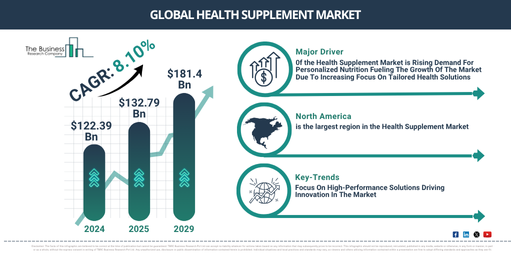
    In recent times, the health supplement market has exhibited significant growth. The anticipated expansion is from $122.39 billion in 2024 to $132.79 billion in 2025, with a compound annual growth rate (CAGR) of 8.5%. The market’s progression during the historical period can be tied back to growing consumer knowledge, a surge in disposable income, an increase in the aging demographic, a heightened occurrence of lifestyle diseases, and an increase in the popularity of fitness and gym memberships.

    In the coming years, the health supplement market is projected to witness robust expansion, soaring to a size of $181.4 billion in 2029 with a Compound Annual Growth Rate (CAGR) of 8.1%. This anticipated growth during the forecast period could be due to factors such as the growing preference for customized nutrition, strengthening of regulatory support and quality standards, the rising popularity of natural and plant-based supplemental products, a surge in digital reach and online sales, as well as increased investments in research and development activities. Key trends to look out for in this period include growing interest in personalized nutrition, the demand for clean labels and transparency, the use of digital health tools, the widespread use of adaptogens and herbal supplements, along with a cultural shift towards sustainable and environmentally-friendly packaging.

    Download The Free Sample Report Here:

    https://www.thebusinessresearchcompany.com/sample.aspx?id=24555&type=smp

    Which Factor Is Shaping The Future Of The Health Supplement Market?

    The anticipated expansion of the health supplement market is attributed to the increasing consumer demand for personalized nutrition. The concept of personalized nutrition encapsulates the adaptation of diet plans and recommendations based on an individual’s distinct genes, lifestyle, personal health state, and food preferences to achieve the best health results. This emerging consumer desire for personalized nutrition arises from the need for solutions that cater to individual health objectives, dietary requirements, and lifestyle alternatives. Health supplements play a crucial role in personalized nutrition by correcting nutrient deficiencies and providing specific nutrients based on one’s unique health data, eating patterns, and wellness objectives. For example, a survey in June 2024 conducted by the Food Institute, located in the USA, involving 4,000 consumers from the US and UK revealed that one-third of the participants (27%) plan to elevate their expenditure on health, fitness, and wellness in 2024 relative to the previous year, and nearly half (49%) voiced their fascination with the idea of using food therapeutically. Hence, the increasing consumer demand for personalized nutrition propels the advancement of the health supplement market.

    What Is The Segment-Wise Breakdown Of The Health Supplement Market?

    The health supplement market covered in this report is segmented –

    1) By Type: Vitamins And Minerals, Proteins And Amino Acids, Herbal Supplements, Weight Loss Supplements, Sports Nutrition Supplements, Dietary Supplements

    2) By Form: Pills And Tablets, Powders, Capsules, Liquids, Softgels

    3) By Health Concern: Immune Support, Weight Management, Bone And Joint Health, Digestive Health, Heart Health, Brain Health, Beauty And Skin Care, Energy And Vitality

    4) By Distribution Channel: Online Retail, Supermarkets Or Hypermarkets, Specialty Stores, Pharmacy Or Drug Stores, Direct Selling

    5) By End User: Adults, Senior Citizens, Children, Athletes And Fitness Enthusiasts, Pregnant And Breastfeeding Women

    Subsegments:

    1) By Vitamins and Minerals: Multivitamins, Single Vitamins, Multiminerals, Single Minerals

    2) By Proteins And Amino Acids: Whey Protein, Casein Protein, Soy Protein, Pea Protein, Branched-Chain Amino Acids (BCAAs), Essential Amino Acids (EAAs)

    3) By Herbal Supplements: Ginseng, Echinacea, Garlic, Turmeric Or Curcumin, Ashwagandha, Ginkgo Biloba

    4) By Weight Loss Supplements: Appetite Suppressants, Fat Burners, Carb Blockers, Thermogenics, Meal Replacement Powders, Green Tea Extract

    5) By Sports Nutrition Supplements: Pre-Workout Supplements, Post-Workout Supplements, Creatine, Beta-Alanine, Electrolyte Supplements, Recovery Drinks

    6) By Dietary Supplements: Fiber Supplements, Probiotics, Omega-3 Fatty Acids, Antioxidants, Digestive Enzymes, Joint Health Supplements

    Which Trends Are Redefining The Future Landscape Of The Health Supplement Industry?

    Leading businesses within the health supplement market are focusing their efforts on creating advanced solutions, including sports nutrition supplements, tailored to meet the superior performance needs of professional and university athletes. These sports nutrition supplements are designed specifically to boost athletic performance, promote muscle development, enhance endurance and aid in recovery by providing essential nutrients such as proteins, amino acids, vitamins, and minerals. For example, Cizzle Brands Corporation, a Canadian food products company, introduced Spoken Nutrition in January 2025 – a high-end range of performance-centric supplements, expressly crafted for high-performance athletes. These products, created by expert nutritionists and coaches and NSF Certified for Sport, promote cardiovascular, cognitive, muscular, and immune health. Spoken Nutrition, which has been adopted by multiple Major League Baseball teams, strives to offer sports nutrition of elite quality to athletes across all levels.

    Which Companies Hold The Largest Market Share In The Health Supplement Sector?

    Major companies operating in the health supplement market are Herbalife Nutrition, GNC (General Nutrition Centers), NOW Foods, Solgar Inc., Thorne Research Inc., Myprotein, Nordic Naturals, Gaia Herbs, MegaFood, Ritual, MuscleTech, Alani Nu, Ancient Nutrition, Ghost Lifestyle, Legion Athletics, BSN (Bio-Engineered Supplements and Nutrition), Rule One Proteins, JYM Supplement Science, Dymatize Nutrition, Cellucor (C4)

    Get The Full Report Here:

    https://www.thebusinessresearchcompany.com/report/health-supplement-global-market-report

    How Does Regional Performance Compare Across The Health Supplement Industry?

    North America was the largest region in the health supplement market in 2024. Asia-Pacific is expected to be the fastest-growing region in the forecast period. The regions covered in the health supplement market report are Asia-Pacific, Western Europe, Eastern Europe, North America, South America, Middle East, Africa.

    Request For A Customized Report:

    https://www.thebusinessresearchcompany.com/customise?id=24555&type=smp

    About The Business Research Company:

    With over 15000+ reports from 27 industries covering 60+ geographies, The Business Research Company has built a reputation for offering comprehensive, data-rich research and insights. Armed with 1,500,000 datasets, the optimistic contribution of in-depth secondary research, and unique insights from industry leaders, you can get the information you need to stay ahead in the game.

    Get in touch with us:

    The Business Research Company: https://www.thebusinessresearchcompany.com/

    Americas +1 310-496-7795

    Asia +44 7882 955267 & +91 8897263534

    Europe +44 7882 955267

    Email us at info@tbrc.info

    Follow us on:

    LinkedIn: https://in.linkedin.com/company/the-business-research-company

    YouTube: https://www.youtube.com/channel/UC24_fI0rV8cR5DxlCpgmyFQ

    Global Market Model: https://www.thebusinessresearchcompany.com/global-market-model