Month: September 2025

  • Global Health Status Record Software Market Forecast to Reach $11.8 Billion by 2029, Driven by 11.6% CAGR

    Global Health Status Record Software Market Forecast to Reach $11.8 Billion by 2029, Driven by 11.6% CAGR

    Claim your 30% discount on Global Market Reports with code ONLINE30. Limited time only.

    What Is the Estimated Industry Valuation for the Health Status Record Software Sector?

    The market size for health status record software has seen significant expansion in the last few years. Its growth is predicted to accelerate from $6.8 billion in 2024 to reach $7.6 billion in 2025, with a compound annual growth rate (CAGR) of 11.9%. The historical growth is mainly due to the increased necessity for digital patient data, growing regulatory directives demanding electronic health records, rising acceptance of hospital information systems, burgeoning federal incentives for health IT systems, and an increased emphasis on the standardization of healthcare data.

    The market for health status record software is predicted to experience a significant surge in the forthcoming years, expanding to an estimated $11.8 billion by 2029 with a compound annual growth rate (CAGR) of 11.6%. This projected escalation during the forecast period can be attributed to factors such as the rising demand for remote patient monitoring systems, an increasing emphasis on individualized healthcare services, a mounting inclination towards the utilization of cloud-based health record alternatives, an ever-growing telehealth structure, and the growing necessity for instantaneous data access. Key progressions expected over the forecast period encompass the enhancement of artificial intelligence integration, the evolution of data interoperability, swift advancements in the domain of mobile health technologies, investment in research and development within the healthcare software sector, and progress in employing blockchain to securely manage patient data.

    Download The Free Sample Report Here:

    https://www.thebusinessresearchcompany.com/sample.aspx?id=24554&type=smp

    What Forces Are Driving The Growth Of The Health Status Record Software Market?

    The ongoing surge in the need for digital health solutions is set to fuel the expansion of the health status record software market. The term ‘digital health solutions’ encompasses the integration of technologies like mobile applications, wearable devices, telemedicine, and health information systems, all in a bid to enhance the delivery, accessibility, and results of healthcare. These solutions are experiencing a surge because of the intensifying demand for virtual healthcare services, facilitated by the rising availability of smartphones and internet services. Health status record software complements digital health solutions by offering a unified, real-time interface for the housing and distribution of patient information, thus making virtual treatment more productive and knowledgeable. For example, Accretive Edge, a healthcare tech firm based in the US, revealed in May 2025 that telehealth generated revenue of $48.37 billion in the U.S. in 2023, and it is forecasted to multiply nearly tenfold to $467.8 billion by 2034. Hence, the escalating demand for digital health solutions is predicted to drive the growth of the health status record software market.

    How Is The Health Status Record Software Industry Segmented Across Key Parameters?

    The health status record software market covered in this report is segmented –

    1) By Type: Cloud-Based, Web-Based

    2) By Component: Software, Services

    3) By Application: Patient Management, Clinical Data Management, Population Health Management

    4) By End-User: Hospitals, Clinics, Ambulatory Surgical Centers

    Subsegments:

    1) By Cloud-Based: Public Cloud, Private Cloud, Hybrid Cloud

    2) By Web-Based: On-Premises Web-Based, Hosted Web-Based, Software As A Service Web-Based

    What Notable Trends Are Shaping The Direction Of The Health Status Record Software Market?

    Renowned corporations in the health status record software industry are prioritizing the advancement of novel technologies like the health clinical AI agent. This strategy enhances clinical judgement, automates administrative functions, and elevates patient care through immediate data insights and artificial intelligence-supported assistance. A health clinical AI agent, a tool powered by artificial intelligence, aims to aid medical professionals by simplifying routine clinical duties, delivering instantaneous insights, and organizing processes within electronic health record systems, thereby improving decision-making and patient care. For instance, in October 2024, Oracle Corporation, a computer software firm from the US, introduced its advanced Electronic Health Record (EHR) system. Oracle’s state-of-the-art EHR system aims to integrate patient data from different providers, providing a more detailed and interconnected perspective of health records. It enhances clinical productivity with AI-empowered insights and user-friendly workflows. The objective of the system is to better patient outcomes, minimize administrative workload, and facilitate more well-informed decisions.

    Which Companies Currently Dominate The Competitive Landscape In The Health Status Record Software Industry?

    Major companies operating in the health status record software market are McKesson Corporation, General Electric Healthcare, Epic Systems Corporation, eClinicalWorks LLC, Medical Information Technology Inc., Greenway Health LLC, WebPT Inc., CureMD Healthcare, Softclinic Software, DrChrono Inc., RXNT Inc., Amazing Charts LLC, Intrahealth Systems Limited, Allscripts Healthcare LLC, Electronic Medical Records Systems, Knapsack Living, Kareo Inc., OpenEMR Foundation, iPatientCare Inc., MedicalMine Inc.

    Get The Full Report Here:

    https://www.thebusinessresearchcompany.com/report/health-status-record-software-global-market-report

    Which Geographic Regions Are Driving Demand In The Health Status Record Software Market?

    North America was the largest region in the health status record software market in 2024. Asia-Pacific is expected to be the fastest-growing region in the forecast period. The regions covered in the health status record software market report are Asia-Pacific, Western Europe, Eastern Europe, North America, South America, Middle East, Africa.

    Request For A Customized Report:

    https://www.thebusinessresearchcompany.com/customise?id=24554&type=smp

    About The Business Research Company:

    With over 15000+ reports from 27 industries covering 60+ geographies, The Business Research Company has built a reputation for offering comprehensive, data-rich research and insights. Armed with 1,500,000 datasets, the optimistic contribution of in-depth secondary research, and unique insights from industry leaders, you can get the information you need to stay ahead in the game.

    Get in touch with us:

    The Business Research Company: https://www.thebusinessresearchcompany.com/

    Americas +1 310-496-7795

    Asia +44 7882 955267 & +91 8897263534

    Europe +44 7882 955267

    Email us at info@tbrc.info

    Follow us on:

    LinkedIn: https://in.linkedin.com/company/the-business-research-company

    YouTube: https://www.youtube.com/channel/UC24_fI0rV8cR5DxlCpgmyFQ

    Global Market Model: https://www.thebusinessresearchcompany.com/global-market-model

  • Outlook for Hashimotos Disease Market: Key Developments and Future Strategies to 2029

    Outlook for Hashimotos Disease Market: Key Developments and Future Strategies to 2029

    Claim your 30% discount on Global Market Reports with code ONLINE30. Limited time only.

    How Large Is the Hashimotos Disease Market Expected to Be in 2029?

    The market size for Hashimoto’s disease has been on a robust growth path in the previous years. The forecast asserts a rise from $1.64 billion in 2024 to $1.73 billion in 2025, maintaining a compound annual growth rate (CAGR) of 5.8%. The compelling growth during the historic period is the consequence of growing enlightenment regarding thyroid conditions, enhancement in diagnostic methods, surge in the prevalence of autoimmune diseases, increasing expenditure on healthcare, and the proliferation of endocrinology clinics.

    Over the next few years, the Hashimoto’s disease market size is predicted to exhibit strong growth, reaching $2.16 billion in 2029 with a compound annual growth rate (CAGR) of 5.6%. Factors contributing to the growth during this forecast period include the rise in telemedicine usage, advancements in personalized medicine, increased demand for early detection, supportive government health schemes, and heightened uptake of biosimilars. The forecast period will also see key trends such as the application of AI in diagnostics, an increased emphasis on comprehensive treatment methods, growth in home-based thyroid testing kits, expanded clinical trials for immunotherapies, and progress in autoimmune disease research.

    Download The Free Sample Report Here:

    https://www.thebusinessresearchcompany.com/sample.aspx?id=24553&type=smp

    What Are The Contributors To Demand In The Hashimotos Disease Market?

    The increase in autoimmune disorders is anticipated to drive the growth of the hashimoto’s disease market. Autoimmune disorder refers to an abnormal response of the immune system that wrongly attacks and causes damage to the body’s healthy tissues. The surging numbers of autoimmune disorders are mainly attributable to a mix of genetic vulnerability and environmental components that could bring about immune system dysfunction. Hashimoto’s disease is an autoimmune disease that exhibits the broader elements of autoimmune disorders, signifying how the immune system can mistakenly target and damage healthy tissues. For instance, Versorgungsatlas.de, a German-based firm, reported that in 2022, among 73,241,305 insured individuals, 6,304,340 were diagnosed with at least one autoimmune disease, translating to an 8.61% raw prevalence rate. Hence, the escalating incidences of autoimmune disorders are enhancing the growth of the hashimoto’s disease market. Furthermore, an escalation in healthcare spending is likely to boost the growth of the hashimoto’s disease market. Healthcare spending encompasses the total expenditure on healthcare services, from prevention, diagnosis, treatment to recuperation from ailments and health conditions. The increased healthcare expenditure is linked to the ever-increasing need for advanced treatments that promise better results, swift recovery, and a superior quality of life. Hashimoto’s disease adds to healthcare costs as it necessitates ongoing surveillance, hormone replacement treatment, and consistent medical care, thereby escalating the demand for healthcare resources and costs over time. As reported by the Office for National Statistics, a UK government agency, in 2024, UK’s healthcare expenditure between 2022 and 2023 saw a 5.6% increase as opposed to a growth of 0.9% in 2022. Hence, the mounting healthcare expenditure is promoting the expansion of the hashimotos disease market.

    What Segmentation Categories Are Included In The Hashimotos Disease Market Analysis?

    The hashimotos disease market covered in this report is segmented –

    1) By Type: Stress Related, Infection Related, Autoimmune Related, Environmental Related, Disease Related, Mixed, Other Types

    2) By Treatment Type: Hormone Replacement Therapy, Immunotherapy, Antithyroid Medication, Surgery, Dietary Supplements, Other Treatment Types

    3) By Route Of Administration: Oral Route, Injectable Route, Transdermal Route, Other Route Of Administrations

    4) By Distribution Channel: Hospital Pharmacy, Retail Pharmacy, Online Pharmacy, Other Distribution Channels

    5) By End USer: Hospitals, Speciality Clinics, Homecare, Other End Users

    Subsegments:

    1) By Stress Related: Chronic Psychological Stress, Work-Related Stress, Post-Traumatic Stress, Lifestyle-Induced Stress, Anxiety And Depression-Induced Stress

    2) By Infection Related: Viral Infections, Bacterial Infections, Fungal Infections, Parasitic Infections, Chronic Inflammatory Infections

    3) By Autoimmune Related: Coexisting Autoimmune Thyroiditis, Type 1 Diabetes, Rheumatoid Arthritis, Systemic Lupus Erythematosus (SLE), Celiac Disease

    4) By Environmental Related: Exposure To Radiation, Iodine Imbalance, Chemical Exposure, Heavy Metal Toxicity, Endocrine Disruptors

    5) By Disease Related: Polycystic Ovary Syndrome (PCOS), Cardiovascular Disorders, Chronic Fatigue Syndrome, Fibromyalgia, Metabolic Syndrome

    6) By Mixed: Stress And Autoimmune Combined, Infection And Environmental Combined, Autoimmune And Disease Combined, Stress And Environmental Combined, Multiple Etiology Overlap

    7) By Other Types: Drug-induced Thyroiditis, Postpartum Thyroiditis, Silent Thyroiditis, Genetic Predisposition, Idiopathic Cases

    Who Are The Top-Ranked Companies In The Hashimotos Disease Market Today?

    Major companies operating in the hashimotos disease market are Pfizer Inc., Merck & Co. Inc., AbbVie Inc., Abbott Laboratories, GlaxoSmithKline plc, Viatris Inc., Teva Pharmaceutical Industries Ltd., Lupin Limited, Lannett Company Inc., Aurore Life Sciences Inc., Acella Pharmaceuticals LLC, Sigmapharm Laboratories LLC, Jerome Stevens Pharmaceuticals Inc., RLC Labs Inc., AdvaCare Pharma, GNH India Ltd., Clayman Thyroid Center P.C., Rakshit Pharmaceuticals Ltd., Lexicare Pharma Private Limited, Forest Pharmaceuticals Inc.

    Get The Full Report Here:

    https://www.thebusinessresearchcompany.com/report/hashimotos-disease-global-market-report

    How Is Hashimotos Disease Market Adoption Varying Across Different Regions And Sectors?

    North America was the largest region in the hashimotos disease market in 2024. Asia-Pacific is expected to be the fastest-growing region in the forecast period. The regions covered in the hashimotos disease market report are Asia-Pacific, Western Europe, Eastern Europe, North America, South America, Middle East, Africa.

    Request For A Customized Report:

    https://www.thebusinessresearchcompany.com/customise?id=24553&type=smp

    About The Business Research Company:

    With over 15000+ reports from 27 industries covering 60+ geographies, The Business Research Company has built a reputation for offering comprehensive, data-rich research and insights. Armed with 1,500,000 datasets, the optimistic contribution of in-depth secondary research, and unique insights from industry leaders, you can get the information you need to stay ahead in the game.

    Get in touch with us:

    The Business Research Company: https://www.thebusinessresearchcompany.com/

    Americas +1 310-496-7795

    Asia +44 7882 955267 & +91 8897263534

    Europe +44 7882 955267

    Email us at info@tbrc.info

    Follow us on:

    LinkedIn: https://in.linkedin.com/company/the-business-research-company

    YouTube: https://www.youtube.com/channel/UC24_fI0rV8cR5DxlCpgmyFQ

    Global Market Model: https://www.thebusinessresearchcompany.com/global-market-model

  • Key Market Drivers, Trends, and Forecast for the Global Handheld Raman Spectroscopy Industry

    Key Market Drivers, Trends, and Forecast for the Global Handheld Raman Spectroscopy Industry

    Claim your 30% discount on Global Market Reports with code ONLINE30. Limited time only.

    What Is the Outlook for the Handheld Raman Spectroscopy Market Heading Into 2029?

    The market size of handheld raman spectroscopy has experienced swift expansion in the recent past. The market is projected to surge from $1.2 billion in 2024 to $1.34 billion in 2025, with a compound annual growth rate (CAGR) of 12.4%. The remarkable growth in the historic period is due to factors such as heightened needs for on-site material identification, escalating regulatory compliance requirements, a growing need in forensic and narcotics detection, the upsurge in the availability of miniaturized components, and significant investment in homeland security.

    The handheld raman spectroscopy market is projected to undergo significant expansion in the approaching years, reaching a market value of $2.13 billion by 2029 at a 12.1% compound annual growth rate (CAGR). This projected growth within the predicted timeframe can be credited to factors such as its increased use in food safety and agriculture, its advanced integration with AI and cloud-based analytics, the expansion of personalized medicine and point-of-care diagnostics, the escalating requirement for sustainable and eco-friendly chemistry practices, and mounting contract manufacture and quality assurance needs. Predicted trends in this time frame incorporate investment in research and development, blending of machine learning and artificial intelligence, progress in the development of cloud-connected raman systems, enhancements in user-friendly interfaces and ergonomic design, and advancements in miniaturization and performance augmentation.

    Download The Free Sample Report Here:

    https://www.thebusinessresearchcompany.com/sample.aspx?id=24552&type=smp

    Which Factors Are Pushing The Handheld Raman Spectroscopy Market Forward?

    The growth of the handheld Raman spectroscopy market is anticipated to be fueled by the surge in personalized medical treatments. These treatments are designed according to the individual’s genetic composition, lifestyle, and environmental influences, thereby enhancing the effectiveness and specificity of the therapy. The use of genetic and molecular profiling to devise treatment plans specific to an individual’s biological fingerprint is becoming increasingly prevalent. Handheld Raman spectroscopy contributes to this personalization, providing quick and non-invasive molecular assessments at the bedside. This enables customized therapy decisions based on accurate chemical and biochemical data. For example, in February 2024, the Personalized Medicine Coalition reported that in 2023, the Food and Drug Administration (FDA), a federal agency in the US, had granted approval for 16 new personalized treatments intended for rare disease patients. This figure was a significant increase from just six in the prior year, 2022. Thus, the advent of personalized medical treatments is leading to substantial growth in the handheld Raman spectroscopy market.

    Which Segment Held The Largest Share In The Handheld Raman Spectroscopy Market In 2025?

    The handheld raman spectroscopy market covered in this report is segmented –

    1) By Product Type: Benchtop Raman Spectroscopy, Portable Raman Spectroscopy, Handheld Raman Spectroscopy

    2) By Component: Raman Spectrometers, Accessories, Software Solutions

    3) By Technology: Surface-Enhanced Raman Scattering (SERS), Tip-Enhanced Raman Scattering (TERS), Raman Imaging, Standard Raman Spectroscopy

    4) By End-User: Academic And Research Institutes, Pharmaceutical And Biotechnology Companies, Other End Users

    Subsegments:

    1) By Benchtop Raman Spectroscopy: Dispersive Raman Spectroscopy, Fourier Transform (FT) Raman Spectroscopy, Confocal Raman Microscopy, Fiber-Optic Raman Spectroscopy

    2) By Portable Raman Spectroscopy: Handheld Portable Raman, Laptop-Based Portable Raman, Mobile Integrated Raman, Battery-Powered Portable Raman

    3) By Handheld Raman Spectroscopy: Standard Handheld Raman, Hybrid Handheld Raman, Industrial Grade Handheld Raman, Consumer Or Field Use Handheld Raman

    How Are Key Trends Driving Expansion In The Handheld Raman Spectroscopy Industry?

    Leading businesses active in the handheld raman spectroscopy market are striving to create cutting-edge technologies such as QuickDetect technology, aiming to elevate the pace, sensitivity, and precision of onsite chemical identification. This allows users to identify even tiny quantities of substances in packaging and complicated mixtures. QuickDetect Technology is a swift detection system or procedure constructed to promptly pinpoint specific substances, conditions, or irregularities. For example, in September 2023, Rigaku Analytical Devices Inc., an American company that produces and provides scientific and analytical instruments, introduced the CQL Narc-ID. This handheld 1064 nm Raman analyzer is specifically engineered for the swift identification of narcotics, cutting agents, and precursor chemicals, even in minor amounts. It embodies advanced features such as QuickDetect, integrated libraries, a robust design, and real-time reporting to aid law enforcement and public safety operations.

    Which Organizations Are Driving Progress In The Handheld Raman Spectroscopy Industry?

    Major companies operating in the handheld raman spectroscopy market are Thermo Fisher Scientific Inc., Agilent Technologies Inc., Bruker Corporation, Horiba Scientific, Anton Paar GmbH, Renishaw plc, Metrohm AG, TSI Incorporated, Zolix Instruments Co. Ltd., Smiths Detection Inc., SciAps Inc., SOL Instruments Ltd., Jasco Inc., Wasatch Photonics Inc., BaySpec Inc., Enhanced Spectrometry Inc., TechnoS Instruments, RamanLife Inc., Analyticon Instruments GmbH, TechnoSpex Pte Ltd.

    Get The Full Report Here:

    https://www.thebusinessresearchcompany.com/report/handheld-raman-spectroscopy-global-market-report

    Which Region Is Expected To Experience The Highest Growth In The Handheld Raman Spectroscopy Industry?

    North America was the largest region in the handheld raman spectroscopy market in 2024. Asia-Pacific is expected to be the fastest-growing region in the forecast period. The regions covered in the handheld raman spectroscopy market report are Asia-Pacific, Western Europe, Eastern Europe, North America, South America, Middle East, Africa.

    Request For A Customized Report:

    https://www.thebusinessresearchcompany.com/customise?id=24552&type=smp

    About The Business Research Company:

    With over 15000+ reports from 27 industries covering 60+ geographies, The Business Research Company has built a reputation for offering comprehensive, data-rich research and insights. Armed with 1,500,000 datasets, the optimistic contribution of in-depth secondary research, and unique insights from industry leaders, you can get the information you need to stay ahead in the game.

    Get in touch with us:

    The Business Research Company: https://www.thebusinessresearchcompany.com/

    Americas +1 310-496-7795

    Asia +44 7882 955267 & +91 8897263534

    Europe +44 7882 955267

    Email us at info@tbrc.info

    Follow us on:

    LinkedIn: https://in.linkedin.com/company/the-business-research-company

    YouTube: https://www.youtube.com/channel/UC24_fI0rV8cR5DxlCpgmyFQ

    Global Market Model: https://www.thebusinessresearchcompany.com/global-market-model

  • Strategic Report on Handheld Multi-Parameter Monitoring Device Market: Growth Opportunities and Emerging Challenges

    Strategic Report on Handheld Multi-Parameter Monitoring Device Market: Growth Opportunities and Emerging Challenges

    Claim your 30% discount on Global Market Reports with code ONLINE30. Limited time only.

    What Does the Forecast Indicate for the Handheld Multi-Parameter Monitoring Device Market From 2025 to 2029?

    In the past few years, the market size of the handheld multi-parameter monitoring device has shown robust growth. It is anticipated to expand from 2024’s $3.41 billion to $3.69 billion in 2025, marking an impressive 8.2% compound annual growth rate (CAGR). The historic surge can be credited to factors such as the growing occurrence of chronic diseases, heightened demand for remote patient monitoring, a higher acceptance of wireless technology in healthcare, an increasingly aging population that needs constant monitoring, and an enhanced awareness about the importance of early disease detection and prevention.

    The market scale for handheld multi-parameter monitoring devices is predicted to witness robust expansion in the forthcoming years, reaching $5 billion by 2029 and boasting a compound annual growth rate (CAGR) of 7.9%. The anticipated growth within the prognosis duration is linked to increased healthcare infrastructure investment, a growing penchant for user-friendly, portable medical appliances, enhanced incorporation of sophisticated analytics in monitoring apparatus, escalating demand for up-to-the-minute data in urgent and intensive care situations, along with an amplified emphasis on individualized and at-home healthcare provision. Foreseen trends over this period involve progress in wireless communication technology, blending of artificial intelligence and machine learning, advancements in the precision and miniaturization of sensor technology, strides in real-time data analysis and cloud interaction, as well as the incorporation of telemedicine platforms into monitoring devices.

    Download The Free Sample Report Here:

    https://www.thebusinessresearchcompany.com/sample.aspx?id=24551&type=smp

    What Elements Are Contributing To Growth In The Handheld Multi-Parameter Monitoring Device Market?

    The burgeoning need for remote patient tracking is anticipated to fuel the expansion of the handheld multi-parameter monitoring device market. Remote patient tracking entails the utilization of digital tools to gather health-related data from patients in one area and electronically sending it to medical practitioners in another area for evaluation and advice. The heightened necessity for remote patient monitoring mainly stems from the growing occurrence of chronic illnesses, which necessitate regular health surveillance to manage symptoms, prevent complications, and lessen hospital visits. A handheld multi-parameter monitoring device aids in remote patient monitoring by recording crucial vital signs such as heart rate, blood pressure, and oxygen levels. It facilitates early detection of health problems, persistent care for chronic ailments, and instantaneous sharing of data with medical practitioners, thereby enhancing convenience and diminishing hospital visits. For example, in August 2023, as reported by the Alliance for Connected Care, a nonprofit advocacy organization based in the US, the adoption of remote patient monitoring (RPM) increased by 305% since 2021, with 81% of clinicians adopting it and 84% intending to broaden its use in 2024. 45% of providers utilize RPM for acute care, incorporating hospital-at-home schemes. Thus, the escalating demand for remote patient monitoring is propelling the advancement of the handheld multi-parameter monitoring device market.

    Which Segments Are Detailed In The Global Handheld Multi-Parameter Monitoring Device Market Report?

    The handheld multi-parameter monitoring device market covered in this report is segmented –

    1) By Device Type: Basic Vital Sign Monitors, Advanced Multi-Parameter Monitors, Fetal Monitors, Remote Patient Monitoring Devices (RPM) Devices

    2) By Connectivity: Wired Devices, Wireless Devices

    3) By Application: Intensive Care, Clinical Care, Ambulatory Care, Pediatric Care, Other Applications

    4) By End User: Hospitals, Ambulatory Surgical Centers, Homecare Settings, Other End Users

    Subsegments:

    1) By Basic Vital Sign Monitors: Pulse Oximeters, Blood Pressure Monitors, Thermometers, Glucose Monitors, Heart Rate Monitors

    2) By Advanced Multi-Parameter Monitors: Electrocardiogram Monitors (ECG) Monitors, Capnography Monitors, Respiratory Rate Monitors, Blood Gas Analyzers, Hemoglobin Monitors

    3) By Fetal Monitors: Doppler Fetal Monitors, Cardiotocography (CTG) Monitors, Fetal Heart Rate Monitors, Uterine Contraction Monitors

    4) By Remote Patient Monitoring Devices (RPM) Devices: Wearable Health Trackers, Telehealth Monitoring Devices, Mobile Health (mHealth) Devices, Wireless Vital Sign Monitors

    Which Emerging Trends And Strategic Shifts Are Shaping The Handheld Multi-Parameter Monitoring Device Market?

    Leading companies in the handheld multi-parameter monitoring device market are concentrating on innovation in medical technology, including sensor technology. This aims to improve the precision, dependability, and real-time tracking of vital signs, facilitating the early identification of health problems. Sensor technology involves the application of tools that can sense and record changes in physical or environmental factors, such as movement, heat, or pressure. For instance, Singapore-based healthcare solutions provider BUZUD released its Multi-Parameter Monitor and PulseBit EX electrocardiogram tracker in July 2022. These cutting-edge medical devices, intended for both hospital and home usage, enable real-time tracking of vital signs including ECG, blood oxygen levels, heart rate, respiration rate, and body temperature. The devices, crafted with meticulous precision, offer mobility, simplicity of use, and high precision readings, fulfilling the growing need for accessible, uninterrupted health monitoring in various healthcare environments.

    Who Are The Key Contributors To Growth In The Handheld Multi-Parameter Monitoring Device Market?

    Major companies operating in the handheld multi-parameter monitoring device market are Abbott Laboratories, Medtronic Public Limited Company, Becton Dickinson and Company, Koninklijke Philips N.V., GE HealthCare Technologies Inc., Baxter International Inc., Omron Healthcare Co. Ltd., Shenzhen Mindray Bio-Medical Electronics Co. Ltd., Masimo Corporation, Nihon Kohden Corporation, Lepu Medical Technology (Beijing) Co. Ltd., Qingdao Meditech Equipment Co. Ltd., Wuhan Zoncare Bio-Medical Electronics Co. Ltd., BPL Medical Technologies Pvt. Ltd., Schiller Healthcare India Pvt. Ltd., Allengers Medical Systems Limited, Contec Medical Systems Co. Ltd., aXcent medical GmbH, Jiangsu Yuyue Medical Instruments Co. Ltd., Genuine Medica Pvt. Ltd., Drx Laboratories

    Get The Full Report Here:

    https://www.thebusinessresearchcompany.com/report/handheld-multi-parameter-monitoring-device-global-market-report

    Which Region Is Projected To Lead The Handheld Multi-Parameter Monitoring Device Market By 2025?

    North America was the largest region in the handheld multi-parameter monitoring device market in 2024. The regions covered in the handheld multi-parameter monitoring device market report are Asia-Pacific, Western Europe, Eastern Europe, North America, South America, Middle East, Africa.

    Request For A Customized Report:

    https://www.thebusinessresearchcompany.com/customise?id=24551&type=smp

    About The Business Research Company:

    With over 15000+ reports from 27 industries covering 60+ geographies, The Business Research Company has built a reputation for offering comprehensive, data-rich research and insights. Armed with 1,500,000 datasets, the optimistic contribution of in-depth secondary research, and unique insights from industry leaders, you can get the information you need to stay ahead in the game.

    Get in touch with us:

    The Business Research Company: https://www.thebusinessresearchcompany.com/

    Americas +1 310-496-7795

    Asia +44 7882 955267 & +91 8897263534

    Europe +44 7882 955267

    Email us at info@tbrc.info

    Follow us on:

    LinkedIn: https://in.linkedin.com/company/the-business-research-company

    YouTube: https://www.youtube.com/channel/UC24_fI0rV8cR5DxlCpgmyFQ

    Global Market Model: https://www.thebusinessresearchcompany.com/global-market-model
  • Industry Trends Show H2 Antagonists Market Set to Expand at 6.6% CAGR Until 2029

    Industry Trends Show H2 Antagonists Market Set to Expand at 6.6% CAGR Until 2029

    Claim your 30% discount on Global Market Reports with code ONLINE30. Limited time only.

    How Much Is the Global H2 Antagonists Market Valued at Present and by 2029?

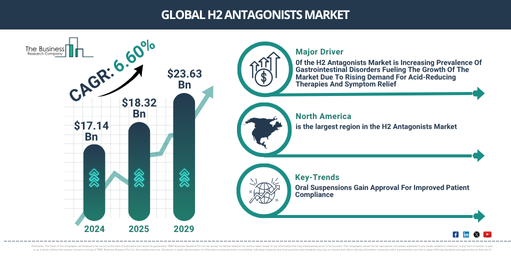
    The market size for h2 antagonists has seen robust growth over recent years. Its size is projected to escalate from $17.14 billion in 2024 to $18.32 billion in 2025, reflecting a compound annual growth rate (CAGR) of 6.9%. Factors contributing to this growth during the historical period include the escalating prevalence of acid-related maladies, the surge in the elderly population, increasing enlightenment about gut health, comparable affordability versus proton pump inhibitors, an uptick in stress-related ulcer cases, and heightened demand for non-surgical therapy alternatives.

    The market for h2 antagonists is predicted to witness significant growth in the coming years, expanding to $23.63 billion by 2029 with a CAGR of 6.6%. This projected growth in the forecast period is due to factors such as the increasing need for cost-effective acid reduction treatment, escalating occurrences of gastrointestinal problems due to contemporary lifestyles, the worldwide aging demographic, continuous exploration on combination treatments, its growing popularity in veterinary medicine, and heightened health awareness among consumers. Key trends during this forecast period encompass advancements in medication delivery systems, incorporation of AI in drug development processes, utilization of nanotechnology for specific treatment delivery, augmented bioavailability owing to innovative formulations, digital health systems for tracking patient progress, and personalized treatment methodologies.

    Download The Free Sample Report Here:

    https://www.thebusinessresearchcompany.com/sample.aspx?id=24550&type=smp

    #What Drivers Are Influencing Growth In The H2 Antagonists Market?

    The escalating occurrence of gastrointestinal disorders is anticipated to boost the expansion of the H2 antagonists market. Gastrointestinal disorders encompass a range of health issues affecting the digestive system, which include the esophagus, stomach, intestines, liver, pancreas, and gallbladder. The increasing prevalence of these disorders stems from poor dietary habits that lead to excess stomach acid production and cause inflammation in the digestive tract. H2 antagonists can manage these disorders by decreasing stomach acid production, thus making them effective in treating conditions like acid reflux and ulcers. These treatments can improve patient comfort by rapidly relieving symptoms and supporting long-term digestive health. For example, in March 2024, data from the World Health Organization (WHO), a specialized United Nations agency based in Switzerland, indicated that diarrheal diseases result in approximately 1.7 billion cases each year, causing the deaths of nearly 443,832 children under the age of five, along with an extra 50,851 deaths among children aged 5 to 9. Consequently, the increasing prevalence of gastrointestinal disorders is catalyzing the growth of the H2 antagonists market. Rising healthcare spending is also anticipated to stimulate the growth of the H2 antagonists market. This refers to the overall funds expended on treatments, medical services, research, facilities, and public health initiatives aimed at maintaining or enhancing health outcomes. The surge in healthcare spending is attributed to the escalating burden of chronic diseases, which necessitates continuous treatment and management, thereby causing an increase in medical costs over time. This increased expenditure benefits the H2 antagonist market growth by boosting funding for cutting-edge treatments and accessibility to medications. It underpins research and development, resulting in improved drug formulations and superior patient outcomes. For example, in December 2024, data from the Centers for Medicare and Medicaid Services (CMS), a US federal agency, revealed that national health expenditures (NHE) rose by 7.5% to $4.9 trillion in 2023, representing 17.6% of gross domestic product (GDP). Furthermore, between 2023 and 2032, the average national health expenditures (NHE) are anticipated to inflate at an average yearly rate of 5.6%, leading to an uplift in the health spending share of gross domestic product (GDP) from 17.3% in 2022 to 19.7% in 2032. Hence, the rise in healthcare spending is propelling the expansion of the H2 antagonists market.

    What Are The Main Segments Identified In The H2 Antagonists Market Research?

    The h2 antagonists market covered in this report is segmented –

    1) By Drug Type: Prescription H2 Antagonists, Over-The-Counter H2 Antagonists

    2) By Indication: Gastroesophageal Reflux Disease (GERD), Peptic Ulcer Disease, Zollinger-Ellison Syndrome, Other Indications

    3) By Dosage Form: Tablets, Capsules, Injectable Solutions, Liquid Formulations

    4) By Distribution Channel: Retail Pharmacies, Hospital Pharmacies, Online Pharmacies, Drug Stores

    Subsegments:

    1)By Prescription H2 Antagonists: Gastroesophageal Reflux Disease (GERD), Peptic Ulcers, Zollinger-Ellison Syndrome

    2) By Over-The-Counter (OTC) H2 Antagonist: Heartburn, Occasional Acid Reflux, Indigestion

    What Are The Leading Trends And Opportunities In The H2 Antagonists Sector?

    Key players in the H2 antagonists market are prioritizing the development of strategies such as generic products to improve therapeutic effectiveness, augment patient adherence, and lengthen product longevity. The term generic product is used to describe a pharmaceutical drug that mirrors a brand-name drug in factors like dosage, strength, and method of administration. For instance, in August 2022, Amneal Pharmaceuticals Inc., an American pharmaceutical company, gained Abbreviated New Drug Application (ANDA) endorsement from the U.S. Food and Drug Administration (FDA) for a famotidine oral suspension (40 mg/5 mL). This suspension is an H2 antagonist in liquid form utilized for the treatment of ulcers and gastroesophageal reflux disease (GERD). Advertised under the reference brand name Pepcid, it provides a cost-effective solution for patients who require acid reduction therapy. Therefore, it brings forth a valuable substitute for managing acid reflux and ulcer-related conditions.

    Which Companies Play A Key Role In The Development Of The H2 Antagonists Market?

    Major companies operating in the h2 antagonists market are Pfizer Inc., F. Hoffmann-La Roche AG, AbbVie Inc., Bayer AG, Novartis International AG, GlaxoSmithKline plc, Eli Lilly and Company, Teva Pharmaceutical Industries Limited, Boehringer Ingelheim International GmbH, Sun Pharmaceutical Industries Limited, Apotex Inc., Dr. Reddy’s Laboratories Limited, Apex Biotechnology Corporation, Ajanta Pharma Limited, Medochemie Ltd., Torrent Pharmaceuticals Limited, Phathom Pharmaceuticals Inc., Tocris Bioscience, Cadila Healthcare Limited, Modi Lifecare Industries Limited.

    Get The Full Report Here:

    https://www.thebusinessresearchcompany.com/report/h2-antagonists-global-market-report

    What Are The Key Regional Developments Shaping The H2 Antagonists Market?

    North America was the largest region in the H2 receptor antagonists market in 2024. Asia-Pacific is expected to be the fastest-growing region in the forecast period. The regions covered in the h2 antagonists market report are Asia-Pacific, Western Europe, Eastern Europe, North America, South America, Middle East, Africa.

    Request For A Customized Report:

    https://www.thebusinessresearchcompany.com/customise?id=24550&type=smp

    About The Business Research Company:

    With over 15000+ reports from 27 industries covering 60+ geographies, The Business Research Company has built a reputation for offering comprehensive, data-rich research and insights. Armed with 1,500,000 datasets, the optimistic contribution of in-depth secondary research, and unique insights from industry leaders, you can get the information you need to stay ahead in the game.

    Get in touch with us:

    The Business Research Company: https://www.thebusinessresearchcompany.com/

    Americas +1 310-496-7795

    Asia +44 7882 955267 & +91 8897263534

    Europe +44 7882 955267

    Email us at info@tbrc.info

    Follow us on:

    LinkedIn: https://in.linkedin.com/company/the-business-research-company

    YouTube: https://www.youtube.com/channel/UC24_fI0rV8cR5DxlCpgmyFQ

    Global Market Model: https://www.thebusinessresearchcompany.com/global-market-model

  • Competitive and Market Trend Analysis of Gynecomastia Procedures Industry Through 2029

    Competitive and Market Trend Analysis of Gynecomastia Procedures Industry Through 2029

    Claim your 30% discount on Global Market Reports with code ONLINE30. Limited time only.

    What Is the Current and Projected Market Size of the Gynecomastia Procedures Industry?

    The market size for gynecomastia procedures has seen significant growth in the past few years. The value of this market is projected to increase from $1.04 billion in 2024 to $1.12 billion in 2025, reflecting a compound annual growth rate (CAGR) of 8.0%. Historical growth of this market has been influenced by several factors including increased acceptance of cosmetic surgery amongst men, the definitive impact of social media on body perception, the rising number of professional plastic surgeons and clinics, increasing demand for minimally invasive procedures, and the escalating trend of medical tourism for cosmetic treatments.

    In the forthcoming years, the market for gynecomastia procedures is predicted to witness robust growth, expanding to $1.51 billion in 2029 with a compound annual growth rate (CAGR) of 7.7%. This progress during the projected period can be credited to the heightened attention men are giving to their physical looks, the escalating demand for outpatient aesthetic procedures, the rapidly increasing trend of combined treatments, improved accessibility to finance options for surgeries, and the surge in funding for research and development in cosmetic surgery. The main trends anticipated during this forecast period involve progress in minimally invasive surgical methods, breakthroughs in liposuction technologies, refined anesthesia and recovery protocols, the incorporation of AI into preoperative planning, and advancements in methods for reducing scars and tightening skin.

    Download The Free Sample Report Here:

    https://www.thebusinessresearchcompany.com/sample.aspx?id=24549&type=smp

    #Which Factors Are Currently Driving The Growth Of The Gynecomastia Procedures Market?

    As obesity becomes more prevalent, it’s projected to boost the growth of the market for gynecomastia procedures. Obesity, a medical condition marked by an excess accumulation of body fat often illustrated by a body mass index (BMI) of 30 or above, can cause several health complications. This rise in obesity is attributed to an increasingly sedentary lifestyle, where a lack of physical movement and prolonged periods of sitting contribute to weight gain and diminished metabolic health. Procedures for gynecomastia can rectify the issue of enlarged male breasts, which is often worsened by obesity. This is because additional fat tissue in the chest area can mimic or amplify the look of gynecomastia, positioning surgical intervention as a beneficial approach. For example, the World Heart Foundation, a Switzerland-based non-governmental organization, reported in March 2023 that globally about 2.3 billion adults and children are overweight or obese. Following the current trend of obesity, this number is expected to reach 2.7 billion by 2025. Hence, the escalating prevalence of obesity is fueling the growth of the gynecomastia procedures market.

    How Is The Global Gynecomastia Procedures Market Structured In Terms Of Segments?

    The gynecomastia procedures market covered in this report is segmented –

    1) By Procedure Type: Liposuction, Mastectomy, Thyroid Hormone Therapy, Medications, Ultrasound

    2) By Age Group: Adolescents, Adults, Elderly

    3) By End-User: Hospitals, Cosmetic Surgery Centers, Other End-Users

    Subsegment:

    1) By Liposuction: Tumescent Liposuction, Ultrasound-Assisted Liposuction, Power-Assisted Liposuction, Laser-Assisted Liposuction

    2) By Mastectomy: Subcutaneous Mastectomy, Bilateral Mastectomy, Nipple-Sparing Mastectomy

    3) By Thyroid Hormone Therapy: Synthetic Thyroid Hormones, Natural Desiccated Thyroid, Combination Therapy

    4) By Medications: Anti-Estrogen Medications, Aromatase Inhibitors, Selective Estrogen Receptor Modulators (SERMs)

    5) By Ultrasound: High-Intensity Focused Ultrasound (HIFU), Low-Intensity Focused Ultrasound, Acoustic Wave Therapy

    What Trends Are Currently Influencing Growth In The Gynecomastia Procedures Market?

    Leading corporations in the gynecomastia procedures market are concentrating on pioneering developments such as non-invasive treatments aimed at minimizing surgical risks, enhancing patient results, and meeting the underserved medical requirement for more reliable, effective cures. Non-invasive treatments denote treatments that sidestep surgery; they encompass oral medications or external therapies to manage conditions like gynecomastia, eliminating the necessity for cuts or anesthesia. For instance, BioZen Limited, a British biotechnology firm, unveiled an innovative daily pill regimen in June 2024 intended to treat gynecomastia. Their proprietary dual-therapy formulation infuses a low dosage of tamoxifen (TAM) with indole-3-carbinol (I3C), a naturally sourced compound from cruciferous vegetables, administered as a handy once-daily oral drug. Early stage data from BioZen imply that this duel approach could comprehensively rectify the hormonal imbalance triggering gynecomastia, possibly providing a safe, effective, and mass-producible surgical alternative.

    Who Are The Main Participants Shaping The Gynecomastia Procedures Market Landscape?

    Major companies operating in the gynecomastia procedures market are Sun Pharmaceutical Industries Limited, Cadila Pharmaceuticals Limited, Spire Healthcare Group plc, InMode Ltd., Lumenis Ltd., Cynosure LLC, Max Healthcare Institute Limited, Alma Lasers Ltd., Pristyn Care Private Limited, Sterling Addlife India Limited, Cutera Inc., Solta Medical Inc., Erchonia Corporation, MicroAire Surgical Instruments LLC, Allure Medspa, Florida Plastic Surgery Group P.A., BioZen Healthcare, Dermawear, The Aesthetica, Austin Gynecomastia Center

    Get The Full Report Here:

    https://www.thebusinessresearchcompany.com/report/gynecomastia-procedures-global-market-report

    Which Region Currently Holds The Largest Share In The Gynecomastia Procedures Market?

    North America was the largest region in the gynecomastia procedures market in 2024. Asia-Pacific is expected to be the fastest-growing region in the forecast period. The regions covered in the gynecomastia procedures market report are Asia-Pacific, Western Europe, Eastern Europe, North America, South America, Middle East, Africa.

    Request For A Customized Report:

    https://www.thebusinessresearchcompany.com/customise?id=24549&type=smp

    About The Business Research Company:

    With over 15000+ reports from 27 industries covering 60+ geographies, The Business Research Company has built a reputation for offering comprehensive, data-rich research and insights. Armed with 1,500,000 datasets, the optimistic contribution of in-depth secondary research, and unique insights from industry leaders, you can get the information you need to stay ahead in the game.

    Get in touch with us:

    The Business Research Company: https://www.thebusinessresearchcompany.com/

    Americas +1 310-496-7795

    Asia +44 7882 955267 & +91 8897263534

    Europe +44 7882 955267

    Email us at info@tbrc.info

    Follow us on:

    LinkedIn: https://in.linkedin.com/company/the-business-research-company

    YouTube: https://www.youtube.com/channel/UC24_fI0rV8cR5DxlCpgmyFQ

    Global Market Model: https://www.thebusinessresearchcompany.com/global-market-model
  • Global Genitourinary Drugs Market Landscape: Trends and Market Share to 2029

    Global Genitourinary Drugs Market Landscape: Trends and Market Share to 2029

    Claim your 30% discount on Global Market Reports with code ONLINE30. Limited time only.

    How Will the Genitourinary Drugs Market Evolve in Terms of Growth and Size by 2029?

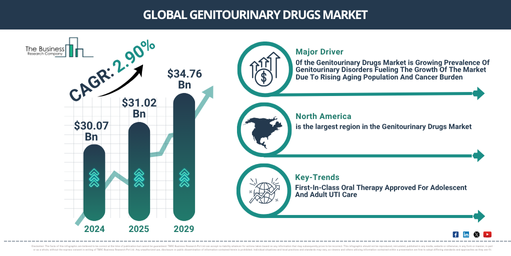
    The market size of genitourinary drugs has exhibited consistent growth in the past few years. Its projected growth is from $30.07 billion in 2024 to $31.02 billion in 2025, with a compound annual growth rate (CAGR) of 3.2%. Factors contributing to this historic period growth include an increased incidence of urinary tract infections, a surge in benign prostatic hyperplasia cases, heightened awareness about sexual health, a growing elderly population, and the escalating incidences of chronic kidney diseases.

    Stable growth is anticipated in the genitourinary drugs market in the ensuing years, with its size predicted to reach $34.76 billion in 2029, exhibiting a compound annual growth rate (CAGR) of 2.9%. The upturn in the forecast period is due to the rising incidence of urinary tract infections, heightened knowledge around sexual health, improving healthcare structure, escalating demand for hormone replacement treatments, and an increase in the consumption of oral contraceptives. The forecast period also signifies key trends such as enhancements in drug formulations and delivery systems, incorporation of digital health solutions, personalized medicine approaches fueled by technology, progression in biologic therapies, and breakthroughs in precision medicine.

    Download The Free Sample Report Here:

    https://www.thebusinessresearchcompany.com/sample.aspx?id=24548&type=smp

    What factors are expected to fuel Genitourinary Drugs market growth in the coming years?

    The genitourinary drugs market is projected to expand due to the increasing incidence of genitourinary disorders. Medical conditions impacting the urinary and reproductive organs, such as infections, cancers, and functional or structural problems, are classified as genitourinary disorders. A rise in these disorders is primarily as a result of an aging population, which is more susceptible to urinary and reproductive health concerns. Genitourinary drugs are designed to target conditions of the urinary and reproductive system, providing a respite from infections, inflammation, and dysfunctions. These drugs enhance the quality of life by supporting effective, convenient, and specific treatments, thus improving patient outcomes. For instance, the American Cancer Society released a report in April 2024 stating that roughly 20 million new cancer cases were diagnosed worldwide in 2022, causing approximately 9.7 million deaths. The report further indicates that cancer cases are expected to surge, reaching an estimate of 35 million by 2050. Therefore, the escalating incidence of genitourinary disorders is pushing the growth of the genitourinary drugs market.

    What Are The Key Findings From The Segmentation Analysis Of The Genitourinary Drugs Market?

    The genitourinary drugs market covered in this report is segmented –

    1) By Product: Urologicals, Hormonal Therapy, Gynecological, Anti-Infectives, Other Products

    2) By Route Of Administration: Oral, Parenteral, Topical

    3) By Application: Urinary Tract Infections (UTIs), Benign Prostatic Hyperplasia (BPH), Prostate Cancer, Overactive Bladder, Bladder Cancer, Other Applications

    4) By Distribution Channel: Hospital Pharmacies, Drug Store And Retail Pharmacies, Online Pharmacies

    Subsegments:

    1) By Urologicals: Benign Prostatic Hyperplasia (BPH) Drugs, Urinary Incontinence Drugs, Overactive Bladder (OAB) Drugs, Urolithiasis (Kidney Stone) Drugs, Erectile Dysfunction Drugs

    2) By Hormonal Therapy: Estrogen Therapy, Progestin Therapy, Gonadotropin-Releasing Hormone (GnRH) Agonists/Antagonists, Androgen Replacement Therapy, Selective Estrogen Receptor Modulators (SERMs)

    3) By Gynecological: Contraceptives, Menopausal Hormone Therapy, Fertility Drugs, Drugs for Endometriosis, Drugs for Polycystic Ovary Syndrome (PCOS)

    4) By Anti-Infectives: Urinary Tract Infection (UTI) Drugs, Sexually Transmitted Infection (STI) Drugs, Vaginal Antifungals, Antivirals

    5) By Other Products: Drugs for Chronic Pelvic Pain, Bladder Cancer Therapies, Interstitial Cystitis Drugs, Pelvic Organ Prolapse Treatment Drugs, Adjunctive Therapies

    Which Trends Are Expected To Shape The Future Of The Genitourinary Drugs Market?

    Leading entities in the genitourinary drugs market are centering their efforts on the creation of innovative products like oral antibiotics. These products aim to augment treatment convenience, amplify patient adherence, and efficiently handle infections. Oral antibiotics are antimicrobial drugs consumed orally to counteract bacterial infections. In one significant development, GSK plc, a pharmaceutical firm from the UK, acquired approval for Blujepa (gepotidacin) from the US Food and Drug Administration (FDA) in March 2025. This medication is designed to treat uncomplicated urinary tract infections instigated by susceptible bacteria in females and girls aged 12 and above. Blujepa marks an original, inaugural oral antibiotic that impedes bacterial DNA replication by aiming at two vital enzymes, DNA gyrase, and topoisomerase IV. Diverging from traditional antibiotics, it latches onto unique sites to surmount resistance, providing a specified mechanism with elevated safety and effectiveness.

    What Are The Most Active Companies In The Genitourinary Drugs Market Today?

    Major companies operating in the genitourinary drugs market are Pfizer Inc., Johnson & Johnson, F. Hoffmann-La Roche AG, Merck & Co. Inc., Bayer AG, Novartis AG, Sanofi S.A., Bristol Myers Squibb, AstraZeneca plc, Abbott Laboratories, GSK plc, Eli Lilly and Company, Amgen Inc., Teva Pharmaceutical Industries Ltd., Astellas Pharma Inc., Ipsen Société Anonyme, Aurobindo Pharma Limited, Dr. Reddy’s Laboratories Limited, Cipla Limited, Hikma Pharmaceuticals Public Limited Company, Zydus Lifesciences Limited, Endo International Public Limited Company, Takeda Pharmaceutical Company Limited, Zydus Lifesciences Limited, Melinta Therapeutics Inc., Asieris Pharmaceuticals, Sun Pharmaceutical Industries Ltd.

    Get The Full Report Here:

    https://www.thebusinessresearchcompany.com/report/genitourinary-drugs-global-market-report

    Which Regional Markets Are Attracting The Most Investment In Genitourinary Drugs?

    North America was the largest region in the genitourinary drugs market in 2024. Asia-Pacific is expected to be the fastest-growing region in the forecast period. The regions covered in the genitourinary drugs market report are Asia-Pacific, Western Europe, Eastern Europe, North America, South America, Middle East, Africa.

    Request For A Customized Report:

    https://www.thebusinessresearchcompany.com/customise?id=24548&type=smp

    About The Business Research Company:

    With over 15000+ reports from 27 industries covering 60+ geographies, The Business Research Company has built a reputation for offering comprehensive, data-rich research and insights. Armed with 1,500,000 datasets, the optimistic contribution of in-depth secondary research, and unique insights from industry leaders, you can get the information you need to stay ahead in the game.

    Get in touch with us:

    The Business Research Company: https://www.thebusinessresearchcompany.com/

    Americas +1 310-496-7795

    Asia +44 7882 955267 & +91 8897263534

    Europe +44 7882 955267

    Email us at info@tbrc.info

    Follow us on:

    LinkedIn: https://in.linkedin.com/company/the-business-research-company

    YouTube: https://www.youtube.com/channel/UC24_fI0rV8cR5DxlCpgmyFQ

    Global Market Model: https://www.thebusinessresearchcompany.com/global-market-model
  • Comprehensive Forecast: Gastrointestinal Over-The-Counter (OTC) Drugs Market Share, Growth, and Opportunities Through 2029

    Comprehensive Forecast: Gastrointestinal Over-The-Counter (OTC) Drugs Market Share, Growth, and Opportunities Through 2029

    Claim your 30% discount on Global Market Reports with code ONLINE30. Limited time only.

    What CAGR Is Anticipated for the Gastrointestinal Over-The-Counter (OTC) Drugs Market Through 2029?

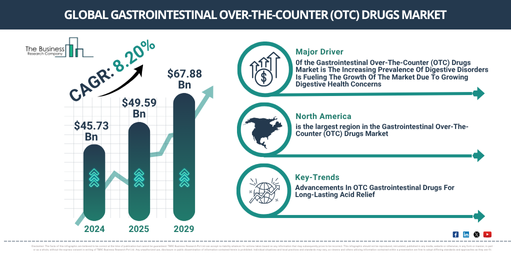
    The size of the over-the-counter gastrointestinal drugs market has seen significant growth in recent times. It is projected to expand from $45.73 billion in 2024 to $49.59 billion in 2025 with a compound annual growth rate (CAGR) of 8.4%. This growth during the past years can be credited to the escalating prevalence of gastrointestinal diseases, heightened consumer inclination towards self-medication, increased availability of OTC proton pump inhibitors, a rise in the understanding of digestive health, and the increase in the elderly population susceptible to gastrointestinal complications.

    The market size of over-the-counter (OTC) gastrointestinal drugs is projected to witness significant expansion in the coming years, rising to a massive $67.88 billion by the end of 2029 with an annual compound growth rate (CAGR) of 8.2%. This robust growth can be attributed to several factors including, an escalating demand for instant symptom relief, the surge in online pharmacy usage, wider accessibility of combined OTC treatments, an increased emphasis on maintaining gut microbiome health, and heightened marketing and awareness drives by leading industry players. Key market trends to watch out for in the projected period comprise advancements in the creation of fast-acting antacids, the launch of innovative probiotic-based OTC items, the incorporation of natural components in digestive therapies, progress in precision and transportability packaging, and incoming innovations in extended-release solutions for gastrointestinal issues.

    Download The Free Sample Report Here:

    https://www.thebusinessresearchcompany.com/sample.aspx?id=24547&type=smp

    What Market Forces Are Driving The Gastrointestinal Over-The-Counter (OTC) Drugs Sector In 2025 And Beyond?

    Growth in the gastrointestinal over-the-counter (OTC) drugs market is expected to be propelled by the rising incidence of digestive disorders. Digestive issues involve a variety of conditions affecting the digestive system, including the stomach, intestines, and other related organs. The escalation in these disorders can largely be attributed to the increased consumption of processed, low-fiber diets that negatively affect gut health and disrupts digestion. Gastrointestinal OTC medications alleviate symptoms of digestive issues by lessening stomach acid, normalizing bowel function, and improving gut health. These drugs offer quick and convenient solutions to common problems like acidity, constipation, and indigestion. For instance, the IBD Registry Ltd., a non-profit organization based in the UK, reported that the number of people suffering from inflammatory bowel disease (IBD) soared to over 5,300 in December 2023. This figure represented a significant growth of more than 3,000 compared to 2022. Hence, the ongoing upsurge in digestive disorders is fuelling the progression of the gastrointestinal OTC drugs market.

    How Is The Global Gastrointestinal Over-The-Counter (OTC) Drugs Market Categorized By Segments?

    The gastrointestinal over-the-counter (OTC) drugs market covered in this report is segmented –

    1) By Product: Antacid, Laxatives, Anti-Diarrheal, Anti-Emetics, Other Products

    2) By Formulation: Tablets, Capsules, Liquids, Other Formulations

    3) By Indications: Heartburn, Diarrhoea, Constipation, Gastroesophageal Reflux Disease (GERD), Nausea, Vomiting, Motion Sickness, Other Indications

    4) By Distribution Channel: Direct Tender, Hospital Pharmacy, Retail Pharmacy, Online Pharmacy, Other Distribution Channels

    5) By End-Users: Hospitals, Clinics, Home Healthcare, Other End-Users

    Subsegments:

    1) By Antacid: Proton Pump Inhibitors (PPIs), H2-Receptor Antagonists, Calcium Carbonate, Magnesium Hydroxide, Sodium Bicarbonate, Combination Antacids

    2) By Laxatives: Bulk-Forming Laxatives, Stimulant Laxatives, Osmotic Laxatives, Stool Softeners, Lubricant Laxatives

    3) By Anti-Diarrheal: Loperamide, Bismuth Subsalicylate, Probiotics, Electrolyte Solutions

    4) By Anti-Emetics: Antihistamines, Bismuth Subsalicylate, Phosphorated Carbohydrate Solution, Ginger Supplements

    5) By Other Products: Digestive Enzymes, Antispasmodics, Simethicone, Herbal Remedies, Activated Charcoal

    What Long-Term Trends Are Likely To Affect The Gastrointestinal Over-The-Counter (OTC) Drugs Market?

    Notable players in the gastrointestinal OTC drugs market are honing their focus on the creation of advanced products, such as OTC proton pump inhibitors, to deliver effectual and enduring relief for acid-related disorders. OTC proton pump inhibitors, designed to lower the production of stomach acid, are available for purchase without the necessity of a prescription. They are frequently employed in the treatment of conditions like recurrent heartburn, gastric ulcers, and GERD. For instance, Eisai Co., Ltd., a pharmaceutical organization based in Japan, acquired approval in Japan in March 2025 to transition its Pariet S (rabeprazole sodium 10 mg) from a prescription to an over-the-counter status. This transition made Pariet S the pioneer OTC PPI in Japan to contain the identical active ingredient and dosage as its prescription equivalent. Pariet S offers a treatment for stomach pain, bloating, and heartburn, providing 24-hour relief with a simple-to-swallow pill taken once daily. It seeks to cater to the increasing necessity for effective treatments for gastric acid-related issues, brought about by lifestyle and demographic shifts.

    Which Firms Are Considered Leaders In The Gastrointestinal Over-The-Counter (OTC) Drugs Market Space?

    Major companies operating in the gastrointestinal over-the-counter (OTC) drugs market are Pfizer Inc., Procter & Gamble Co., Johnson & Johnson, Merck & Co. Inc., Bayer AG, Novartis AG, Sanofi S.A., AstraZeneca plc, Abbott Laboratories, GlaxoSmithKline plc, Takeda Pharmaceutical Company Limited, Teva Pharmaceutical Industries Ltd., Reckitt Benckiser Group plc, Boehringer Ingelheim GmbH, Haleon plc, Sandoz AG, Bausch Health Companies Inc., Sun Pharmaceutical Industries Ltd., Perrigo Company plc, Dr. Reddy’s Laboratories Ltd.

    Get The Full Report Here:

    https://www.thebusinessresearchcompany.com/report/gastrointestinal-over-the-counter-otc-drugs-global-market-report

    What Role Do Regional Policies And Investments Play In Gastrointestinal Over-The-Counter (OTC) Drugs Market Expansion?

    North America was the largest region in the gastrointestinal over-the-counter (OTC) drugs market in 2024. Asia-Pacific is expected to be the fastest-growing region in the forecast period. The regions covered in the gastrointestinal over-the-counter (OTC) drugs market report are Asia-Pacific, Western Europe, Eastern Europe, North America, South America, Middle East, Africa.

    Request For A Customized Report:

    https://www.thebusinessresearchcompany.com/customise?id=24547&type=smp

    About The Business Research Company:

    With over 15000+ reports from 27 industries covering 60+ geographies, The Business Research Company has built a reputation for offering comprehensive, data-rich research and insights. Armed with 1,500,000 datasets, the optimistic contribution of in-depth secondary research, and unique insights from industry leaders, you can get the information you need to stay ahead in the game.

    Get in touch with us:

    The Business Research Company: https://www.thebusinessresearchcompany.com/

    Americas +1 310-496-7795

    Asia +44 7882 955267 & +91 8897263534

    Europe +44 7882 955267

    Email us at info@tbrc.info

    Follow us on:

    LinkedIn: https://in.linkedin.com/company/the-business-research-company

    YouTube: https://www.youtube.com/channel/UC24_fI0rV8cR5DxlCpgmyFQ

    Global Market Model: https://www.thebusinessresearchcompany.com/global-market-model

  • Future Demand and Leading Companies Shaping the Gastrointestinal Cancer Market to 2029

    Future Demand and Leading Companies Shaping the Gastrointestinal Cancer Market to 2029

    Claim your 30% discount on Global Market Reports with code ONLINE30. Limited time only.

    What Are the Latest Market Insights for the Gastrointestinal Cancer Industry?

    In recent times, the market size for gastrointestinal cancer has seen swift expansion. Projected to escalate from a size of $24.09 billion in 2024 to $27.05 billion in 2025, it will present a compound annual growth rate (CAGR) of 12.3%. Factors contributing to growth during the historic period comprise of the increasing presence of gastrointestinal cancers, a rise in the consumption of tobacco and alcohol, population aging, unhealthy eating habits, and technological advancements in oncology diagnostics and therapy.

    The market size for gastrointestinal cancer is forecasted to experience substantial growth in the upcoming years, reaching $42.45 billion in 2029 with a compound annual growth rate (CAGR) of 11.9%. The predicted growth within this period can be linked to the rising use of biomarker-driven therapies, increased recognition of early screening’s importance, the growth of the healthcare infrastructure, cancer care initiatives by the government, and a growing emphasis on minimally invasive methods. Significant trends during the forecast period involve advances in diagnostic tool technology, novel developments in targeted therapies, progress in immunotherapy, the escalated use of artificial intelligence in cancer treatments, and active research and development in precise oncology.

    Download The Free Sample Report Here:

    https://www.thebusinessresearchcompany.com/sample.aspx?id=24546&type=smp

    What Forces Are Driving The Growth Of The Gastrointestinal Cancer Industry?

    The burgeoning use of precision medicine, such as targeted therapies, is propelling the developmental trajectory of the gastrointestinal cancer market. These targeted therapies, which disrupt the growth of cancerous cells by acting on unique molecular targets while minimizing harm to healthy cells, offer more specificity than traditional treatments. By focusing on specific molecular pathways or genetic mutations, these therapies can effectively treat cancer in a more individualized way. Unlike former treatments like chemotherapy that indiscriminately damage both healthy and malignant cells, targeted therapies are specific to each patient’s condition. For gastrointestinal (GI) cancer, these treatments act on particular genes or proteins that regulate tumor growth, allowing for personalized and effective approaches. This method leads to improved patient outcomes and fewer side effects compared to traditional chemotherapy methods. For instance, the American Society of Gene & Cell Therapy (ASGCT), and Citeline, both US-based entities, reported in July 2023 that the number of gene therapies in Phase II increased by 5% from quarter one (Q1) 2023, 247 therapies, to quarter two (Q2), 260 therapies. As such, the growth of the gastrointestinal cancer market is being fueled by the increased adoption of targeted therapies.

    What Is The Overview Of Market Segmentation In The Gastrointestinal Cancer Industry?

    The gastrointestinal cancer market covered in this report is segmented –

    1) By Cancer Type: Colorectal Cancer, Stomach Cancer, Esophageal Cancer, Pancreatic Cancer, Liver Cancer, Other Cancer Types

    2) By Diagnostics: Endoscopy, Biopsy, Molecular Diagnostics, Imaging, Other Diagnostics

    3) By Treatment: Chemotherapy, Immunotherapy, Targeted Therapy, Radiation Therapy, Surgery, Other Treatments

    4) By End-User: Hospitals, Oncology Centers, Research Institutes, Diagnostic Laboratories, Other End-Users

    Subsegments:

    1) By Colorectal Cancer: Colon Cancer, Rectal Cancer, Recurrent Colorectal Cancer, Metastatic Colorectal Cancer

    2) By Stomach Cancer: Adenocarcinoma, Gastrointestinal Stromal Tumors (GIST), Lymphoma, Carcinoid Tumors

    3) By Esophageal Cancer: Adenocarcinoma, Squamous Cell Carcinoma, Small Cell Carcinoma, Other Rare Esophageal Tumors

    4) By Pancreatic Cancer: Exocrine Pancreatic Cancer, Endocrine (Neuroendocrine) Pancreatic Tumors, Metastatic Pancreatic Cancer, Resectable Or Unresectable Tumors

    5) By Liver Cancer: Hepatocellular Carcinoma (HCC), Intrahepatic Cholangiocarcinoma, Hepatoblastoma, Secondary (Metastatic) Liver Cancer

    6) By Other Cancer Types: Small Intestine Cancer, Anal Cancer, Gallbladder Cancer, Gastrointestinal Carcinoid Tumor

    What Future Market Trends Are Projected For The Gastrointestinal Cancer Industry?

    Key players in the gastrointestinal cancer market are concentrating their efforts on developing innovative solutions such as monoclonal antibody therapy to enhance patient survival rates while reducing the adverse effects associated with treatment. This form of treatment harnesses the power of lab-created antibodies that precisely recognize and attach to cancer cells, aiding the immune system in their targeted eradication. In a significant development, Astellas Pharma Inc., a pharmaceutical giant based in Japan, in September 2024, introduced VYLOY (zolbetuximab) in combination with fluoropyrimidine- and platinum-based chemotherapy. This treatment was approved by the European Commission. It represents a front-line defense for adults grappling with locally advanced unresectable or metastatic HER2-negative gastric or gastroesophageal junction (GEJ) adenocarcinomas that show claudin 18.2 (CLDN18.2) expression in their tumors. With this approval, VYLOY becomes the pioneering and sole therapy in the European Union to target CLDN18.2, a biomarker present in approximately 38% of these patients. This approval draws its strength from the encouraging clinical trial results of the SPOTLIGHT and GLOW studies.

    Who Are The Primary Players Operating Across The Global Gastrointestinal Cancer Market?

    Major companies operating in the gastrointestinal cancer market are Pfizer Inc., Johnson & Johnson, Roche Holding AG, Merck & Co. Inc., Bayer AG, Sanofi S.A., Bristol-Myers Squibb Company, AstraZeneca PLC, Novartis AG, GlaxoSmithKline plc, Takeda Pharmaceutical Company Limited, Eli Lilly and Company, Amgen Inc., Parexel International Corporation, Ipsen Biopharmaceuticals Inc., Exelixis Inc., BeiGene Ltd., Boehringer Ingelheim International GmbH, Zai Lab Limited, Taiho Pharmaceutical Co. Ltd.

    Get The Full Report Here:

    https://www.thebusinessresearchcompany.com/report/gastrointestinal-cancer-global-market-report

    Which Region Offers The Most Growth Potential For The Gastrointestinal Cancer Market Through 2029?

    North America was the largest region in the gastrointestinal cancer market in 2024. Asia-Pacific is expected to be the fastest-growing region in the forecast period. The regions covered in the gastrointestinal cancer market report are Asia-Pacific, Western Europe, Eastern Europe, North America, South America, Middle East, Africa.

    Request For A Customized Report:

    https://www.thebusinessresearchcompany.com/customise?id=24546&type=smp

    About The Business Research Company:

    With over 15000+ reports from 27 industries covering 60+ geographies, The Business Research Company has built a reputation for offering comprehensive, data-rich research and insights. Armed with 1,500,000 datasets, the optimistic contribution of in-depth secondary research, and unique insights from industry leaders, you can get the information you need to stay ahead in the game.

    Get in touch with us:

    The Business Research Company: https://www.thebusinessresearchcompany.com/

    Americas +1 310-496-7795

    Asia +44 7882 955267 & +91 8897263534

    Europe +44 7882 955267

    Email us at info@tbrc.info

    Follow us on:

    LinkedIn: https://in.linkedin.com/company/the-business-research-company

    YouTube: https://www.youtube.com/channel/UC24_fI0rV8cR5DxlCpgmyFQ

    Global Market Model: https://www.thebusinessresearchcompany.com/global-market-model
  • 2025–2029 Ganciclovir Market Outlook: Regional Trends and Growth Forecast

    2025–2029 Ganciclovir Market Outlook: Regional Trends and Growth Forecast

    Claim your 30% discount on Global Market Reports with code ONLINE30. Limited time only.

    What Are the Forecasted Growth Rate and Market Size of the Ganciclovir Market?

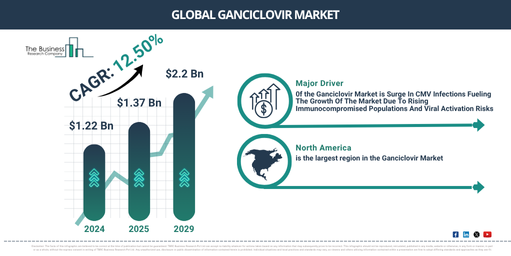
    In the past few years, the ganciclovir market has experienced swift expansion. Its value is expected to escalate from $1.22 billion in 2024 to $1.37 billion in 2025, showing a compound annual growth rate (CAGR) of 12.8%. The growth observed in the previous years is a result of the mounting need for antiviral treatments, an upturn in the use of targeted therapies, increasing necessity for potent treatments in transplant patients, heightened concentration on chronic viral infections, and improved healthcare accessibility in emerging regions.

    In the upcoming years, a speedy expansion is anticipated in the ganciclovir market size, where it will enlarge to a staggering $2.2 billion by 2029, boasting a Compound Annual Growth Rate (CAGR) of 12.5%. The main reasons driving this growth during this projection period includes escalating adoption of antiviral therapies, an increase in immunocompromised disorders, burgeoning awareness regarding CMV infections, breakthroughs in diagnostic technologies, and development of healthcare infrastructure in emerging markets. Future trends expected in this period encompass advancements in drug delivery systems, the creation of extended-release formulations, innovative combination therapies, cutting-edge diagnostic tools for early CMV identification, and the development of individualized treatment regimes for CMV infections.

    Download The Free Sample Report Here:

    https://www.thebusinessresearchcompany.com/sample.aspx?id=24545&type=smp

    Which Factor Is Shaping The Future Of The Ganciclovir Market?

    The ganciclovir market is anticipated to grow due to the increasing prevalence of cytomegalovirus (CMV) infections. CMV, a type of common herpesvirus, can stay dormant and re-activate in those with weakened immune systems. This can lead to severe complications such as pneumonia, retinitis, and gastrointestinal disorders, especially in those with HIV/AIDS and transplant recipients. The surge in CMV infections is spearheaded by a growing immunocompromised population who have a higher vulnerability to viral activation and spread. Ganciclovir’s crucial role in effective antiviral therapy serves to manage the escalating CMV infection rates in these individuals. In January 2025, the Centers for Disease Control and Prevention reported that 1 out of every 3 children in the US contract CMV by the age of 5, and over half of adults by 40. Furthermore, the National Library of Medicine reported in October 2022 that around 40,000 infants are born with congenital CMV every year, causing about 400 deaths and long-term effects in approximately 8,000 infants. Consequently, the increasing instances of CMV infections are fueling the ganciclovir market’s growth. Moreover, the escalating healthcare expenditure is also anticipated to spur the ganciclovir market growth by broadening the access to antiviral treatments. Healthcare expenditure, encompassing spending on medical services, treatments, and public health by parties like individuals, insurers, and governments, tends to rise due to advanced medical technologies. These innovations come with hefty development and implementation expenses, demand specialized training and tools, and contribute to the rising use of costly diagnostic and treatment procedures. Healthcare spending acts in favor of ganciclovir by expanding access to antiviral treatments needed to manage CMV infections in immunocompromised patients. For example, in May 2024, according to the UK’s Office for National Statistics, healthcare expenditure in the UK reached around $421.32 billion (£317 billion), showing a 6.5% increase from 2023. Thus, the rising healthcare expenditure also propels the ganciclovir market’s growth.

    What Is The Segment-Wise Breakdown Of The Ganciclovir Market?

    The ganciclovir market covered in this report is segmented –

    1) By Type: Injection, Oral

    2) By Dosage Form: Tablets, Intravenous (IV) Solution, Ophthalmic Gel

    3) By Distribution Channel: Hospital Pharmacies, Retail Pharmacies, Online Pharmacies

    4) By Application: Cytomegalovirus (CMV) Retinitis, Cytomegalovirus (CMV) Prevention In Organ Transplant Patients, Other Viral Applications

    Subsegments:

    1) By Injection: Lyophilized Powder for Injection, Premixed IV Bags, Intravitreal Injection

    2) By Oral: Capsules, Oral Solution

    Which Companies Hold The Largest Market Share In The Ganciclovir Sector?

    Major companies operating in the ganciclovir market are Roche Holding AG, Teva Pharmaceutical Industries Ltd., Fresenius Kabi AG, Dr. Reddy’s Laboratories Ltd., Cipla Ltd., Fareva Group, Zydus Lifesciences Ltd., Natco Pharma Ltd., Ajanta Pharma Ltd., Micro Labs Ltd., Taj Pharmaceuticals Ltd., Sunways Pvt. Ltd., Accord Healthcare Ltd., AdvaCare Pharma USA, Trifarma S.p.A., Actiza Pharmaceutical Pvt. Ltd., Bakul Group of Companies, Doctor Wonder Healthcare Pvt. Ltd., Sujalam Chemicals, Aetos Pharma Pvt. Ltd.

    Get The Full Report Here:

    https://www.thebusinessresearchcompany.com/report/ganciclovir-global-market-report

    How Does Regional Performance Compare Across The Ganciclovir Industry?

    North America was the largest region in the ganciclovir market in 2024. Asia-Pacific is expected to be the fastest-growing region in the forecast period. The regions covered in the ganciclovir market report are Asia-Pacific, Western Europe, Eastern Europe, North America, South America, Middle East, Africa.

    Request For A Customized Report:

    https://www.thebusinessresearchcompany.com/customise?id=24545&type=smp

    About The Business Research Company:

    With over 15000+ reports from 27 industries covering 60+ geographies, The Business Research Company has built a reputation for offering comprehensive, data-rich research and insights. Armed with 1,500,000 datasets, the optimistic contribution of in-depth secondary research, and unique insights from industry leaders, you can get the information you need to stay ahead in the game.

    Get in touch with us:

    The Business Research Company: https://www.thebusinessresearchcompany.com/

    Americas +1 310-496-7795

    Asia +44 7882 955267 & +91 8897263534

    Europe +44 7882 955267

    Email us at info@tbrc.info

    Follow us on:

    LinkedIn: https://in.linkedin.com/company/the-business-research-company

    YouTube: https://www.youtube.com/channel/UC24_fI0rV8cR5DxlCpgmyFQ

    Global Market Model: https://www.thebusinessresearchcompany.com/global-market-model