Month: March 2026

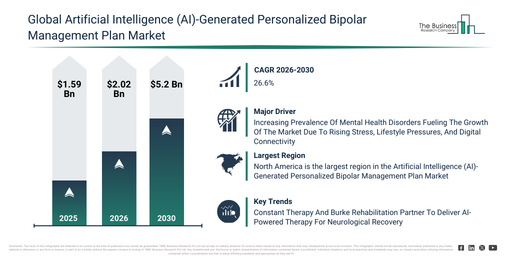
  • A key trend shaping the Artificial Intelligence (AI)-Generated Personalized Bipolar Management Plan Market involves the Constant Therapy And Burke Rehabilitation Partner To Deliver AI-Powered Therapy For Neurological Recovery

    A key trend shaping the Artificial Intelligence (AI)-Generated Personalized Bipolar Management Plan Market involves the Constant Therapy And Burke Rehabilitation Partner To Deliver AI-Powered Therapy For Neurological Recovery

    The Business Research Company’s 2026 market reports include new capabilities such as market attractiveness scoring and analysis, total addressable market analysis, company scoring matrix, interactive excel data dashboard, improved supply chain analysis, upcoming startups in the market, and overview of key products, aimed at improving the depth, usability, and strategic value of the insights delivered.

    What Market Valuation Is Forecasted For The Artificial Intelligence (AI)-Generated Personalized Bipolar Management Plan Market By 2030 Starting From Its 2026 Size?

    The market for artificial intelligence (AI)-generated personalized bipolar management plans has experienced substantial growth in recent years. This market is projected to expand from $1.59 billion in 2025 to $2.02 billion in 2026, demonstrating a compound annual growth rate (CAGR) of 26.9%. Historically, this expansion has been driven by factors such as a rise in bipolar disorder diagnosis rates, the increasing use of digital mental health tools, the broadening of telepsychiatry services, greater accessibility to patient health data, and advancements in machine learning analytics.

    The artificial intelligence (AI)-generated personalized bipolar management plan market is projected to experience rapid expansion over the coming years. This market is anticipated to reach $5.2 billion by 2030, exhibiting a compound annual growth rate (CAGR) of 26.6%. This anticipated growth is driven by factors such as a heightened demand for customized mental healthcare solutions, increased funding for AI-powered clinical decision support, the broadening scope of remote mental health monitoring, an intensified emphasis on preventive psychiatry, and progress in predictive healthcare analytics. Key developments during this period are expected to involve a greater uptake of AI for analyzing mood patterns, wider implementation of predictive models for relapse detection, increasing incorporation with electronic health records, the proliferation of tools for adjusting personalized therapy, and a stronger commitment to ensuring long-term mental health stability.

    Download the Free Sample Report to Explore Key Market Insights:

    https://www.thebusinessresearchcompany.com/sample.aspx?id=28133&type=smp

    What Primary Drivers Are Shaping The Development Of The Artificial Intelligence (AI)-Generated Personalized Bipolar Management Plan Market?

    The rising occurrence of mental health conditions is anticipated to fuel the expansion of the artificial intelligence (AI)-generated personalized bipolar management plan market in the future. These conditions are defined as ailments that considerably impact an individual’s feelings, thoughts, actions, and overall psychological health. The surge in mental health disorders stems from escalating stress associated with contemporary lifestyles, encompassing occupational pressures, social disconnection, and continuous digital engagement. Artificial intelligence (AI)-generated personalized bipolar management plans assist in managing mental health disorders by providing customized treatment approaches, making them perfectly suited for patient-specific care. They diminish diagnostic ambiguity through ongoing observation and foresightful data, thereby enhancing treatment efficacy and overall patient welfare. For example, in May 2024, the American Psychiatric Association, a US-based non-profit organization, reported that 43% of adults felt more anxious than the previous year, an increase from 37% in 2023 and 32% in 2022. Consequently, the growing incidence of mental health disorders is propelling the growth of the artificial intelligence (AI)-generated personalized bipolar management plan market.

    Which Segment Categories Define The Artificial Intelligence (AI)-Generated Personalized Bipolar Management Plan Market?

    The artificial intelligence (AI)-generated personalized bipolar management plan market covered in this report is segmented –

    1) By Component: Software, Services

    2) By Deployment Mode: Cloud-Based, On-Premises

    3) By Application: Clinical Management, Remote Monitoring, Patient Engagement, Decision Support, Other Applications

    4) By End-User: Hospitals And Clinics, Mental Health Centers, Homecare Settings, Other End Users

    Subsegments:

    1) By Software: Clinical Decision Support Systems (CDSS), Mobile And Web Applications, Artificial Intelligence (AI) Algorithms And Predictive Analytics Tools, Electronic Health Record (EHR) Integration Modules, Remote Monitoring Platforms

    2) By Services: Implementation And Integration Services, Training And Education Services, Consulting Services, Maintenance And Support Services, Data Management And Security Services

    How Are Trends Impacting The Artificial Intelligence (AI)-Generated Personalized Bipolar Management Plan Market?

    Leading companies in the artificial intelligence (AI)-generated personalized bipolar management plan market are concentrating on developing advanced solutions, such as AI-driven mental health platforms, to provide tailored treatment, track mood, predict relapses, and support optimal care. These AI-powered mental health platforms are digital tools that utilize AI to monitor mental health, customize treatment, anticipate relapses, and assist clinical decisions. For instance, in May 2024, JD Health International Inc., a healthcare company based in China, introduced the Small Universe for Chatting and Healing, an AI-driven mental health platform. This platform leverages JD Health’s healthcare-specific large language model (LLM) to deliver empathetic, logical, and individualized interactions, allowing for continuous monitoring and management of bipolar symptoms. Additionally, the platform offers multimodal diagnostic tools for professionals and licensed sleep monitoring software for precise assessments.

    Who Are The Top Companies Competing In The Artificial Intelligence (AI)-Generated Personalized Bipolar Management Plan Market?

    Major companies operating in the artificial intelligence (AI)-generated personalized bipolar management plan market are JD Health International Inc., Cerebral Inc., Merative US L.P., Headspace Inc., Talkspace Inc., Quartet Health Inc., NUE Life Health P.A., Woebot Health Inc., Koa Health B.V., Mindstrong Health Inc., Altimate Health Inc., SilverCloud Health Limited, Pear Therapeutics Inc., Wysa Ltd., Youper Inc., Happify Health Inc., Ellipsis Health Inc., Flow Neuroscience AB, Earkick AG, Juli Health Inc.

    Read the full artificial intelligence (ai)-generated personalized bipolar management plan market report here:

    https://www.thebusinessresearchcompany.com/report/artificial-intelligence-ai-generated-personalized-bipolar-management-plan-global-market-report

    How Does The Artificial Intelligence (AI)-Generated Personalized Bipolar Management Plan Market Perform Across Major Global Regions?

    North America was the largest region in the artificial intelligence (AI)-generated personalized bipolar management plan market in 2025. Asia-Pacific is expected to be the fastest-growing region in the forecast period. The regions covered in the artificial intelligence (AI)-generated personalized bipolar management plan market report are Asia-Pacific, South East Asia, Western Europe, Eastern Europe, North America, South America, Middle East, Africa.

    Request A Tailored Artificial Intelligence (AI)-Generated Personalized Bipolar Management Plan Market Research Report For Competitive Advantage:

    https://www.thebusinessresearchcompany.com/customise?id=28133&type=smp

    Browse Through More Reports Similar to the Global Artificial Intelligence (AI)-Generated Personalized Bipolar Management Plan Market 2026, By The Business Research Company

    Artificial Intelligence Ai Based Personalization Global Market Report

    https://www.thebusinessresearchcompany.com/report/artificial-intelligence-ai-based-personalization-global-market-report

    Ai Powered Personal Finance Management Global Market Report

    https://www.thebusinessresearchcompany.com/report/ai-powered-personal-finance-management-global-market-report

    Artificial Intelligence Ai For Insurance Global Market Report

    https://www.thebusinessresearchcompany.com/report/artificial-intelligence-ai-for-insurance-global-market-report

    Get in touch with us:

    The Business Research Company: https://www.thebusinessresearchcompany.com/

    Americas +1 310-496-7795

    Asia +44 7882 955267 & +91 8897263534

    Europe +44 7882 955267

    Email us at info@tbrc.info

    Follow us on:

    LinkedIn: https://in.linkedin.com/company/the-business-research-company

    YouTube: https://www.youtube.com/channel/UC24_fI0rV8cR5DxlCpgmyFQ

    Global Market Model: https://www.thebusinessresearchcompany.com/global-market-model
  • Antineutrophil Cytoplasmic Antibody (ANCA) Associated Vasculitis Market Outlook 2026–2035 Driven by Key Growth Factors and Industry Projections

    Antineutrophil Cytoplasmic Antibody (ANCA) Associated Vasculitis Market Outlook 2026–2035 Driven by Key Growth Factors and Industry Projections

    The Business Research Company’s 2026 market reports include new capabilities such as market attractiveness scoring and analysis, total addressable market analysis, company scoring matrix, interactive excel data dashboard, improved supply chain analysis, upcoming startups in the market, and overview of key products, aimed at improving the depth, usability, and strategic value of the insights delivered.

    What Market Value Is Anticipated For The Antineutrophil Cytoplasmic Antibody (ANCA) Associated Vasculitis Market Over The Period 2026–2030?

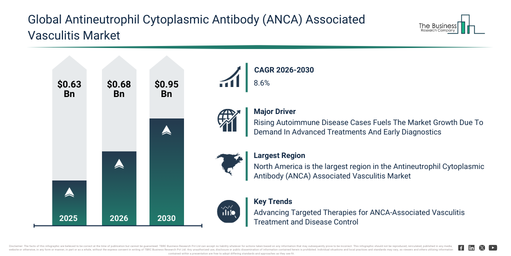
    The antineutrophil cytoplasmic antibody (anca) associated vasculitis market size has experienced robust growth in recent years. It is projected to increase from $0.63 billion in 2025 to $0.68 billion in 2026, achieving a compound annual growth rate (CAGR) of 8.7%. The expansion observed in the historic period can be ascribed to improvements in autoimmune disease diagnostics, increased use of corticosteroids and immunosuppressants, expansion of nephrology and rheumatology care services, growing clinical awareness of rare vasculitis disorders, and the availability of standardized treatment protocols.

    The antineutrophil cytoplasmic antibody (anca) associated vasculitis market size is anticipated to show considerable growth over the next few years, projected to reach $0.95 billion by 2030, with a compound annual growth rate (CAGR) of 8.6%. This expected growth during the forecast period can be attributed to the increasing development of targeted biologics, rising investments in rare disease research, the expansion of personalized treatment approaches, a growing focus on relapse prevention strategies, and increasing patient access to specialized care centers. Prominent trends within this period include the rising adoption of biologic therapies, an increased focus on early and accurate diagnosis, the growing use of targeted immunosuppressive treatments, the expansion of multidisciplinary disease management approaches, and an enhanced emphasis on long-term disease monitoring.

    Download the Free Sample Report to Explore Key Market Insights:

    https://www.thebusinessresearchcompany.com/sample.aspx?id=23309&type=smp

    Which Economic Or Industry Drivers Are Impacting The Antineutrophil Cytoplasmic Antibody (ANCA) Associated Vasculitis Market?

    The increasing occurrence of autoimmune diseases is anticipated to fuel the expansion of the ANCA-associated vasculitis market moving forward. These conditions arise when the immune system mistakenly attacks the body’s healthy cells and tissues, perceiving them as foreign threats like bacteria or viruses. The growing incidence of autoimmune diseases stems from environmental triggers and lifestyle factors, with greater exposure to infections and pollutants contributing significantly by disrupting immune tolerance and initiating abnormal immune responses. Antineutrophil cytoplasmic antibody (ANCA)-associated vasculitis plays a crucial role in advancing autoimmune disease research and treatment by fostering the development of targeted immunosuppressive therapies, enhancing early diagnostic capabilities, and improving overall disease management strategies, ultimately leading to better patient outcomes and a deeper understanding of immune system regulation. For instance, in September 2023, according to the Impact of IBD Report 2023 published by the Inflammatory Bowel Disease (IBD) Clinical and Research Centre, a Canada-based organization focused on improving the lives of patients with Crohn’s disease and ulcerative colitis, in 2023, the prevalence of inflammatory bowel disease (IBD), an autoimmune disease, in Canada was 825 per 100,000 people, affecting over 320,000 individuals. With an expected annual increase of 2.44% in prevalence, it is projected that by 2035, approximately 470,000 Canadians, representing 1.1% of the population, will be living with IBD. Consequently, the rising incidence of autoimmune diseases is set to drive the ANCA-associated vasculitis market.

    How Is The Antineutrophil Cytoplasmic Antibody (ANCA) Associated Vasculitis Market Divided Into Its Major Segments?

    The antineutrophil cytoplasmic antibody (anca) associated vasculitis market covered in this report is segmented –

    1) By Type: Granulomatosis With Polyangiitis (GPA Or Wegener’s), Microscopic Polyangiitis (MPA), Eosinophilic Granulomatosis With Polyangiitis (EGPA Or Churg-Strauss), Other Types

    2) By Treatment: Immunosuppressants, Corticosteroids, Biologics, Other Treatments

    3) By Diagnosis: Blood Tests, Biopsy, Imaging, Other Diagnosis

    Subsegments:

    1) By Granulomatosis With Polyangiitis (GPA or Wegener’s): Limited Granulomatosis With Polyangiitis, Severe Granulomatosis With Polyangiitis, Refractory Granulomatosis With Polyangiitis

    2) By Microscopic Polyangiitis (MPA): Renal Microscopic Polyangiitis, Pulmonary Microscopic Polyangiitis, Neurological Microscopic Polyangiitis

    3) By Eosinophilic Granulomatosis With Polyangiitis (EGPA or Churg-Strauss): Cardiac Eosinophilic Granulomatosis With Polyangiitis, Pulmonary Eosinophilic Granulomatosis With Polyangiitis, Neurological Eosinophilic Granulomatosis With Polyangiitis

    4) By Other Types: Drug-Induced ANCA-Associated Vasculitis, Infection-Related ANCA-Associated Vasculitis, Overlap Syndrome ANCA-Associated Vasculitis

    Which Trends Are Impacting The Growth Of The Antineutrophil Cytoplasmic Antibody (ANCA) Associated Vasculitis Market?

    Leading companies in the ANCA-associated vasculitis market are concentrating on developing innovative solutions, such as targeted therapies, to offer new treatment options for patients with this rare and severe condition. Targeted therapy for ANCA-associated vasculitis involves utilizing specialized biologic agents to selectively inhibit immune system components responsible for inflammation and vascular damage, thereby reducing disease progression and minimizing treatment-related toxicity. For instance, in February 2023, Vifor Fresenius Medical Care Renal Pharma (VFMCRP), a Switzerland-based pharmaceutical company, announced the approval of Tavneos (avacopan) by the Therapeutic Goods Administration (TGA), an Australia-based government regulatory agency, for the treatment of anti-neutrophil cytoplasmic autoantibody (ANCA)-associated vasculitis (AAV), in combination with rituximab or cyclophosphamide-based regimen. This approval signifies a major advancement as Tavneos is the first targeted therapy designed specifically for granulomatosis with polyangiitis (GPA) and microscopic polyangiitis (MPA), the two primary forms of ANCA-associated vasculitis. By selectively inhibiting the complement C5a receptor (C5aR1), the therapy helps manage inflammation and disease progression while reducing the reliance on high-dose glucocorticoids (steroids), which are known for severe long-term side effects.

    Who Are The Prominent Organizations Shaping The Antineutrophil Cytoplasmic Antibody (ANCA) Associated Vasculitis Market?

    Major companies operating in the antineutrophil cytoplasmic antibody (anca) associated vasculitis market are ChemoCentryx Inc, Amgen Inc, AstraZeneca Plc, GlaxoSmithKline plc, Novartis AG, Bristol-Myers Squibb Company, Travere Therapeutics Inc, F. Hoffmann-La Roche AG, Pfizer Inc, Sanofi SA, Eli Lilly and Company, Takeda Pharmaceutical Company Limited, AbbVie Inc, UCB S.A., Bayer AG, Janssen Pharmaceuticals NV, Sobi AB, Alentis Therapeutics AG, InflaRx NV, NS Pharma Inc, Staidson Biopharmaceuticals Co Ltd, Genentech Inc, Regeneron Pharmaceuticals Inc, Mylan NV, Teva Pharmaceutical Industries Ltd, Biogen Inc, CSL Limited, Moderna Inc, Vertex Pharmaceuticals Inc.

    Read the full antineutrophil cytoplasmic antibody (anca) associated vasculitis market report here:

    https://www.thebusinessresearchcompany.com/report/antineutrophil-cytoplasmic-antibody-anca-associated-vasculitis-global-market-report

    What Are The Top-Performing Regions Within The Antineutrophil Cytoplasmic Antibody (ANCA) Associated Vasculitis Market?

    North America was the largest region in the antineutrophil cytoplasmic antibody (ANCA) associated vasculitis market in 2025. Asia-Pacific is expected to be the fastest-growing region in the forecast period. The regions covered in the antineutrophil cytoplasmic antibody (anca) associated vasculitis market report are Asia-Pacific, South East Asia, Western Europe, Eastern Europe, North America, South America, Middle East, Africa.

    Request A Tailored Antineutrophil Cytoplasmic Antibody (ANCA) Associated Vasculitis Market Research Report For Competitive Advantage:

    https://www.thebusinessresearchcompany.com/customise?id=23309&type=smp

    Browse Through More Reports Similar to the Global Antineutrophil Cytoplasmic Antibody (ANCA) Associated Vasculitis Market 2026, By The Business Research Company

    Veterinary Antimicrobial Susceptibility Testing Global Market Report

    https://www.thebusinessresearchcompany.com/report/veterinary-antimicrobial-susceptibility-testing-global-market-report

    Gastrointestinal Pathogen Testing Global Market Report

    https://www.thebusinessresearchcompany.com/report/gastrointestinal-pathogen-testing-global-market-report

    Infectious Disease Diagnostics Testing Global Market Report

    https://www.thebusinessresearchcompany.com/report/infectious-disease-diagnostics-testing-global-market-report

    Get in touch with us:

    The Business Research Company: https://www.thebusinessresearchcompany.com/

    Americas +1 310-496-7795

    Asia +44 7882 955267 & +91 8897263534

    Europe +44 7882 955267

    Email us at info@tbrc.info

    Follow us on:

    LinkedIn: https://in.linkedin.com/company/the-business-research-company

    YouTube: https://www.youtube.com/channel/UC24_fI0rV8cR5DxlCpgmyFQ

    Global Market Model: https://www.thebusinessresearchcompany.com/global-market-model
  • Bioresorbable Medical Material Market Revenue Growth Expected to Reach $2.76 Billion by 2030 with 10.1% CAGR

    Bioresorbable Medical Material Market Revenue Growth Expected to Reach $2.76 Billion by 2030 with 10.1% CAGR

    The Business Research Company’s 2026 market reports include new capabilities such as market attractiveness scoring and analysis, total addressable market analysis, company scoring matrix, interactive excel data dashboard, improved supply chain analysis, upcoming startups in the market, and overview of key products, aimed at improving the depth, usability, and strategic value of the insights delivered.

    How Much Is The Bioresorbable Medical Material Market Expected To Grow In Terms Of Market Value Between 2026 And 2030?

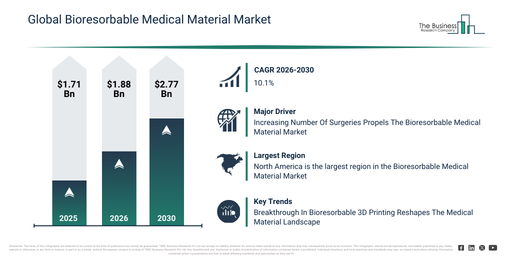
    The bioresorbable medical material market has seen substantial growth in recent years. This market is expected to increase from $1.71 billion in 2025 to $1.88 billion in 2026, registering a compound annual growth rate (CAGR) of 9.9%. Several factors contributed to its historical expansion, including the increasing application of biodegradable polymers in medical devices, a rise in surgical implant procedures, growing preference for minimally invasive treatments, progress in polymer chemistry, and the broadened scope of biomedical research activities.

    The bioresorbable medical material market is projected to experience substantial expansion in the next few years. It is forecast to reach $2.77 billion by 2030, demonstrating a compound annual growth rate (CAGR) of 10.1%. This growth during the forecast period can be attributed to the increasing uptake of regenerative medicine solutions, a heightened demand for next-generation implant materials, the broadening availability of personalized medical devices, growing investments in tissue engineering technologies, and an increasing focus on reducing secondary surgical procedures. Major trends anticipated in the upcoming period include the wider adoption of bioresorbable polymer implants, a rising utilization of temporary medical implants, a surging requirement for advanced tissue engineering scaffolds, the expansion of drug-eluting bioresorbable devices, and an enhanced emphasis on materials engineered for controlled degradation.

    Download the Free Sample Report to Explore Key Market Insights:

    https://www.thebusinessresearchcompany.com/sample.aspx?id=12219&type=smp

    What Drivers Are Influencing The Bioresorbable Medical Material Market?

    The increasing volume of surgical procedures is projected to stimulate the expansion of the bioresorbable medical material market moving forward. Surgical interventions are medical treatments that involve making an incision and employing instruments to halt or mend diseases within a living organism. Bioresorbable polymers are incorporated into molded medical apparatus, especially those utilized in neurology, orthopedics, and aesthetic surgery. Bioresorbable materials serve as components for sutures, anchors, and screws. For instance, in June 2024, the International Society of Aesthetic Plastic Surgery (ISAPS), a US-based organization, reported that aesthetic procedures reached nearly 35 million in 2023, with the overall number of surgical and non-surgical procedures growing by 3.4% to 34.9 million. Consequently, the rising occurrence of surgeries is fueling the development of the bioresorbable medical material market.

    What Major Segment Divisions Exist Within The Bioresorbable Medical Material Market?

    The bioresorbable medical material market covered in this report is segmented –

    1) By Type: Polylactic Acid (PLA), Polyglycolic Acid (PGA), Polysaccharides, Polycaprolactone (PCL), Poly Lactic-Co-Glycolic Acid (PLGA)

    2) By Application: Drug Delivery, Orthopedics, Other Applications

    3) By End-User: Hospitals And Clinics, Ambulatory Surgical Centers, Research Institutes, Other End-Users

    Subsegments:

    1) By Polylactic Acid (PLA): Low Molecular Weight PLA, High Molecular Weight PLA, PLA Blends

    2) By Polyglycolic Acid (PGA): Homopolymer PGA, Copolymer PGA

    3) By Polysaccharides: Chitosan, Alginate, Hyaluronic Acid Derivatives

    4) By Polycaprolactone (PCL): Standard PCL, PCL Copolymers

    5) By Poly Lactic-Co-Glycolic Acid (PLGA): 50:50 PLGA, 75:25 PLGA

    What Industry Trends Are Redefining The Bioresorbable Medical Material Market?

    Companies operating in the bioresorbable medical material market are primarily focused on developing novel biomaterials for 3D printing applications to sustain their industry position. These novel biomaterials are advanced, bioresorbable substances engineered to safely degrade inside the body while simultaneously supporting the creation of high-performance medical devices. For instance, in September 2023, Zeus Industrial Products, Inc., a US-based company specializing in advanced polymer solutions, launched Absorv XSE, next-generation tubing designed for bioresorbable vascular scaffolds. This product enhances the capabilities of vascular treatment devices by offering extensive customization across various polymer types and sizes, enabling tailored mechanical and absorption properties. Absorv XSE ensures improved wall-thickness uniformity, leading to consistent production, and provides approximately 25% more usable scaffolds after laser cutting compared to earlier versions.

    Which Companies Are Leading Innovation In The Bioresorbable Medical Material Market?

    Major companies operating in the bioresorbable medical material market are Johnson & Johnson, Abbott Laboratories, Medtronic PLC, Kureha Corporation, Evonik Industries AG, Stryker Corporation, Toray Industries Inc., Mitsui Chemicals Inc., Arkema S.A., Royal DSM N.V., Zimmer Biomet Holdings Inc., Ashland Global Holdings Inc., Corbion N.V., Zeus Industrial Products Inc., Unitika Ltd., Danimer Scientific, Synbra Technology, KLS Martin Group, Durect Corporation, Putnam Plastics Corporation, Zhejiang Haizheng Biomaterials Co. Ltd., NatureWorks LLC, Foster Corporation, Poly-Med Inc., Futerro S.A., TotalEnergies Corbion B.V.

    Read the full bioresorbable medical material market report here:

    https://www.thebusinessresearchcompany.com/report/bioresorbable-medical-material-global-market-report

    Which Regions Are Expected To Experience Rapid Expansion In The Bioresorbable Medical Material Market?

    North America was the largest region in the bioresorbable medical material market in 2025. Asia-Pacific is expected to be the fastest-growing region in the bioresorbable medical material market report during the forecast period. The regions covered in the bioresorbable medical material market report are Asia-Pacific, South East Asia, Western Europe, Eastern Europe, North America, South America, Middle East, Africa.

    Request A Tailored Bioresorbable Medical Material Market Research Report For Competitive Advantage:

    https://www.thebusinessresearchcompany.com/customise?id=12219&type=smp

    Browse Through More Reports Similar to the Global Bioresorbable Medical Material Market 2026, By The Business Research Company

    Medical Engineered Materials Global Market Report

    https://www.thebusinessresearchcompany.com/report/medical-engineered-materials-global-market-report

    Core Materials Global Market Report

    https://www.thebusinessresearchcompany.com/report/core-materials-global-market-report

    Biomaterials Global Market Report

    https://www.thebusinessresearchcompany.com/report/biomaterials-global-market-report

    Get in touch with us:

    The Business Research Company: https://www.thebusinessresearchcompany.com/

    Americas +1 310-496-7795

    Asia +44 7882 955267 & +91 8897263534

    Europe +44 7882 955267

    Email us at info@tbrc.info

    Follow us on:

    LinkedIn: https://in.linkedin.com/company/the-business-research-company

    YouTube: https://www.youtube.com/channel/UC24_fI0rV8cR5DxlCpgmyFQ

    Global Market Model: https://www.thebusinessresearchcompany.com/global-market-model
  • An Important Factor Driving the Artificial Intelligence (AI)-Generated Digital Health Coaching Avatar Market Is the Surge In Personalized Healthcare Fueling The Growth Of The Market Due To Increasing Demand For Tailored And Data-Driven Medical Care

    An Important Factor Driving the Artificial Intelligence (AI)-Generated Digital Health Coaching Avatar Market Is the Surge In Personalized Healthcare Fueling The Growth Of The Market Due To Increasing Demand For Tailored And Data-Driven Medical Care

    The Business Research Company’s 2026 market reports include new capabilities such as market attractiveness scoring and analysis, total addressable market analysis, company scoring matrix, interactive excel data dashboard, improved supply chain analysis, upcoming startups in the market, and overview of key products, aimed at improving the depth, usability, and strategic value of the insights delivered.

    How Is The Market Size Of The Artificial Intelligence (AI)-Generated Digital Health Coaching Avatar Market Expected To Change Between 2026 And 2030?

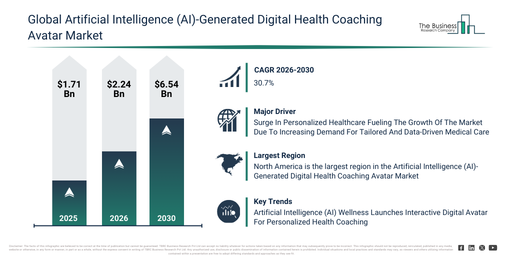
    The artificial intelligence (AI)-generated digital health coaching avatar market size has experienced significant expansion recently. This market is expected to increase from $1.71 billion in 2025 to $2.24 billion in 2026, achieving a compound annual growth rate (CAGR) of 31.0%. Historically, this growth has been fueled by factors including rising digital health adoption rates, the expansion of mobile health platforms, greater acceptance of virtual health assistants, an increase in chronic disease prevalence, and enhancements in natural language processing models.

    The artificial intelligence (AI)-generated digital health coaching avatar market is projected to experience substantial growth over the next few years, with its size expected to reach $6.54 billion in 2030 at a compound annual growth rate (CAGR) of 30.7%. This expansion during the forecast period is primarily fueled by the escalating demand for personalized preventive healthcare, increased investments in AI-driven digital therapeutics, the widening reach of remote patient engagement solutions, a sharpened focus on mental wellness support, and advancements in generative AI technologies. Key developments anticipated in this period encompass the growing adoption of conversational AI health interfaces, the increasing integration of emotional intelligence in avatars, the rising utilization of personalized behavioral coaching models, the expansion of multimodal health data integration, and an intensified emphasis on continuous patient engagement.

    Download the Free Sample Report to Explore Key Market Insights:

    https://www.thebusinessresearchcompany.com/sample.aspx?id=28132&type=smp

    Which Major Factors Are Driving The Expansion Of The Artificial Intelligence (AI)-Generated Digital Health Coaching Avatar Market?

    The escalating need for personalized healthcare is anticipated to fuel the growth of the artificial intelligence (AI)-generated digital health coaching avatar market in the foreseeable future. Personalized healthcare denotes medical services precisely adapted to an individual’s distinct needs, lifestyle, and health conditions. The surge in personalized healthcare is attributable to developments in data-driven insights, allowing physicians to grasp each patient’s unique health requirements and administer more potent and targeted treatments. Artificial intelligence (AI)-generated digital health coaching avatars contribute to personalized healthcare by delivering real-time, customized guidance and assistance derived from an individual’s health data, habits, and objectives, thus making care more efficient and patient-centered. For example, in February 2024, the Personalized Medicine Coalition, a US-based non-profit organization, reported that the Food and Drug Administration (FDA) sanctioned 16 new personalized therapies for individuals with rare diseases in 2023, a rise from six in 2022. Thus, the heightened demand for personalized healthcare is propelling the expansion of the artificial intelligence (AI)-generated digital health coaching avatar market.

    How Is The Artificial Intelligence (AI)-Generated Digital Health Coaching Avatar Market Structured Across Different Segments?

    The artificial intelligence (AI)-generated digital health coaching avatar market covered in this report is segmented –

    1) By Component: Software, Hardware, Services

    2) By Deployment Mode: Cloud-Based, On-Premises

    3) By Application: Chronic Disease Management, Mental Health Support, Fitness And Wellness, Nutrition Guidance, Other Applications

    4) By End-User: Hospitals And Clinics, Fitness Centers, Homecare, Corporate Wellness Programs, Other End-Users

    Subsegments:

    1) By Software: Cloud Based Platforms, Mobile Applications, Web Based Interfaces, Embedded Systems

    2) By Hardware: Sensors And Wearable Devices, Smart Displays, Virtual Reality Devices, Voice And Speech Recognition Devices

    3) By Services: Implementation Services, Training And Education Services, Support And Maintenance Services, Consulting Services

    What Industry Trends Are Redefining The Artificial Intelligence (AI)-Generated Digital Health Coaching Avatar Market?

    Leading firms within the artificial intelligence (AI)-generated digital health coaching avatar market are concentrating on creating sophisticated offerings, such as artificial intelligence (AI)-powered digital avatars, for providing tailored health advice. These AI-powered digital avatars are virtual entities employing artificial intelligence to emulate human actions and engage smartly in online settings. As an illustration, in January 2025, Assisted Intelligence Wellness Inc. (AI Wellness), a US-based health technology company, introduced the Ask My Avatar Challenge during CES 2025. This endeavor showcased interactive digital avatars enabling clients to participate in live wellness coaching sessions. The avatars offered round-the-clock support, endless educational material, and worldwide exposure via immersive platforms, with the goal of transforming health education and participation.

    Which Major Players Dominate The Artificial Intelligence (AI)-Generated Digital Health Coaching Avatar Market?

    Major companies operating in the artificial intelligence (AI)-generated digital health coaching avatar market are Google LLC, OpenAI LLC, Cera CARE LIMITED, Tempus AI Inc., CoachHub, Ada Health GmbH, Touchkin Eservices Private Limited, Infermedica Sp. z o.o, Hippocratic AI Inc., Buoy Health Inc., Woebot Labs Inc., Zing Coach Inc., Virti Inc., Hey Coach Education Private Limited, Rocky Robots Ltd., XpertDox LLC, Assisted Intelligence Wellness Inc., Luka Inc., RAVATAR, GOLD Health.

    Read the full artificial intelligence (ai)-generated digital health coaching avatar market report here:

    https://www.thebusinessresearchcompany.com/report/artificial-intelligence-ai-generated-digital-health-coaching-avatar-global-market-report

    Which Region Currently Holds The Largest Share Of The Artificial Intelligence (AI)-Generated Digital Health Coaching Avatar Market?

    North America was the largest region in the artificial intelligence (AI)-generated digital health coaching avatar market in 2025. Asia-Pacific is expected to be the fastest-growing region in the forecast period. The regions covered in the artificial intelligence (AI)-generated digital health coaching avatar market report are Asia-Pacific, South East Asia, Western Europe, Eastern Europe, North America, South America, Middle East, Africa.

    Request A Tailored Artificial Intelligence (AI)-Generated Digital Health Coaching Avatar Market Research Report For Competitive Advantage:

    https://www.thebusinessresearchcompany.com/customise?id=28132&type=smp

    Browse Through More Reports Similar to the Global Artificial Intelligence (AI)-Generated Digital Health Coaching Avatar Market 2026, By The Business Research Company

    Health Coaching Apps Global Market Report

    https://www.thebusinessresearchcompany.com/report/health-coaching-apps-global-market-report

    Ai In Mental Health Global Market Report

    https://www.thebusinessresearchcompany.com/report/ai-in-mental-health-global-market-report

    Generative Ai In Healthcare Global Market Report

    https://www.thebusinessresearchcompany.com/report/generative-ai-in-healthcare-global-market-report

    Get in touch with us:

    The Business Research Company: https://www.thebusinessresearchcompany.com/

    Americas +1 310-496-7795

    Asia +44 7882 955267 & +91 8897263534

    Europe +44 7882 955267

    Email us at info@tbrc.info

    Follow us on:

    LinkedIn: https://in.linkedin.com/company/the-business-research-company

    YouTube: https://www.youtube.com/channel/UC24_fI0rV8cR5DxlCpgmyFQ

    Global Market Model: https://www.thebusinessresearchcompany.com/global-market-model
  • Antimicrobial Susceptibility Testing Market Developments and Growth Opportunities Across 2026–2030

    Antimicrobial Susceptibility Testing Market Developments and Growth Opportunities Across 2026–2030

    The Business Research Company’s 2026 market reports include new capabilities such as market attractiveness scoring and analysis, total addressable market analysis, company scoring matrix, interactive excel data dashboard, improved supply chain analysis, upcoming startups in the market, and overview of key products, aimed at improving the depth, usability, and strategic value of the insights delivered.

    What Is The Expected Market Size Of The Antimicrobial Susceptibility Testing Market From 2026 To 2030?

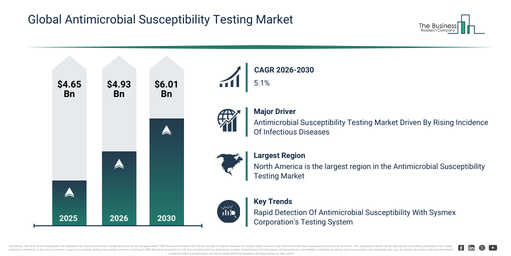
    The antimicrobial susceptibility testing market has experienced substantial growth in recent years. It is projected to increase from $4.65 billion in 2025 to $4.93 billion in 2026, achieving a compound annual growth rate (CAGR) of 6.0%. This historical expansion can be attributed to the escalating incidence of infectious diseases, rising awareness concerning antimicrobial resistance, the expansion of clinical microbiology laboratories, greater volumes of hospital diagnostic testing, and the availability of standardized AST protocols.

    The antimicrobial susceptibility testing market is anticipated to experience substantial expansion in the coming years. By 2030, this market is projected to reach $6.01 billion, demonstrating a compound annual growth rate (CAGR) of 5.1%. This projected growth during the forecast period stems from factors such as heightened investments in quick diagnostic technologies, the increasing use of AI-supported laboratory analysis, the broadening of antimicrobial resistance surveillance initiatives, an escalating need for point-of-care AST solutions, and a greater emphasis on precise antimicrobial treatment. Key trends expected over the forecast horizon encompass a greater uptake of automated AST systems, an increasing need for rapid diagnostic tests, enhanced integration of molecular and phenotypic techniques, the proliferation of laboratory automation solutions, and a sharpened focus on monitoring antimicrobial resistance.

    Download the Free Sample Report to Explore Key Market Insights:

    https://www.thebusinessresearchcompany.com/sample.aspx?id=4026&type=smp

    What Major Drivers Are Influencing Demand In The Antimicrobial Susceptibility Testing Market?

    The global increase in the prevalence of infectious diseases has significantly contributed to the expansion of the antimicrobial susceptibility testing market. These diseases are triggered by microorganisms such as bacteria, viruses, fungi, and parasites. Examples include bacterial pneumonia and tuberculosis, which are caused by bacteria, and viral infections like smallpox and AIDS. For instance, in March 2024, the Centers for Disease Control and Prevention, a US-based national public health agency, reported that in 2023, out of 9,573 tuberculosis cases where birth origin was identified, 7,259 (76%) involved non-U.S.–born individuals. This represented an 18% increase compared to the 6,177 cases of this type recorded in 2022. Thus, the growing frequency of infectious diseases is a key factor driving the growth of the antimicrobial susceptibility testing market.

    Which Segments Are Included In The Analysis Of The Antimicrobial Susceptibility Testing Market?

    The antimicrobial susceptibility testing market covered in this report is segmented –

    1) By Testing Type: Antibacterial Testing, Antifungal Testing, Antiparasitic Testing, Other Testing Types

    2) By Product: Manual Antimicrobial Susceptibility Testing Products, Automated Laboratory Instruments, Consumables

    3) By Application: Diagnostics, Drug Discovery and Development, Epidemiology, Other Applications

    4) By End User: Hospitals And Diagnostic Centers, Pharmaceutical And Biotechnology Companies, Research And Academic Institutes, Clinical Research Organizations (CROs)

    Subsegments:

    1) By Antibacterial Testing: Disk Diffusion Method, Broth Dilution Method, E-Test Method, Automated Systems

    2) By Antifungal Testing: Broth Dilution Method, Agar Disk Diffusion Method, E-Test Method, Colorimetric Methods

    3) By Antiparasitic Testing: In vitro Susceptibility Testing, Microscopic Examination, Molecular Methods

    4) By Other Testing Types: Mycobacterial Susceptibility Testing, Biofilm Susceptibility Testing, Combination Antimicrobial Testing

    What Major Market Trends Are Driving Changes In The Antimicrobial Susceptibility Testing Market?

    Leading firms within the antimicrobial susceptibility testing market are creating novel products, for example, the First POC Testing System. This system identifies the presence or absence of bacteria and evaluates antimicrobial efficacy by utilizing urine specimens from individuals with suspected urinary tract infections (UTIs). It represents a notable advancement in AST technologies, aiding in the quicker commencement of focused antimicrobial treatment for infected patients. As an illustration, in June 2023, Sysmex Corporation, a Japan-based enterprise known for producing reagents and equipment for clinical examinations, including hematologic (blood) and immune tests, introduced a testing system designed for swift antimicrobial susceptibility detection. Employing its unique and proprietary microfluidic technology, this system provides antimicrobial susceptibility testing (AST) outcomes in as brief as 30 minutes from measurement initiation, marking a substantial decrease from the several days typically needed for traditional AST.

    Which Key Industry Participants Are Active In The Antimicrobial Susceptibility Testing Market?

    Major companies operating in the antimicrobial susceptibility testing market are BioMérieux SA, Becton Dickinson and Company, Thermo Fisher Scientific Inc., Danaher Corporation, Bio-Rad Laboratories Inc., Accelerate Diagnostics Inc., Alifax Holding S.p.A., Synbiosis Ltd., Mast Group Ltd., ELITechGroup, Genefluidics Inc., QuantaMatrix Inc., Bruker Corporation, Eurofins Scientific SE, Liofilchem s.r.l., Hardy Diagnostics, Bioanalyse GmbH, Lab M Limited, Microbiologics Inc., Quidel Corporation, R-Biopharm AG, SSI Diagnostica A/S

    Read the full antimicrobial susceptibility testing market report here:

    https://www.thebusinessresearchcompany.com/report/antimicrobial-susceptibility-testing-global-market-report

    Which Region Shows The Strongest Potential For Future Growth In The Antimicrobial Susceptibility Testing Market?

    North America was the largest region in the antimicrobial susceptibility testing market in 2025. Asia-Pacific is expected to be the fastest growing region in the forecast period. The regions covered in the antimicrobial susceptibility testing market report are Asia-Pacific, South East Asia, Western Europe, Eastern Europe, North America, South America, Middle East, Africa.

    Request A Tailored Antimicrobial Susceptibility Testing Market Research Report For Competitive Advantage:

    https://www.thebusinessresearchcompany.com/customise?id=4026&type=smp

    Browse Through More Reports Similar to the Global Antimicrobial Susceptibility Testing Market 2026, By The Business Research Company

    Antimicrobial Medical Device Coatings Global Market Report

    https://www.thebusinessresearchcompany.com/report/antimicrobial-medical-device-coatings-global-market-report

    Multidrug Resistant Bacteria Global Market Report

    https://www.thebusinessresearchcompany.com/report/multidrug-resistant-bacteria-global-market-report

    Genotyping Assay Global Market Report

    https://www.thebusinessresearchcompany.com/report/genotyping-assay-global-market-report

    Get in touch with us:

    The Business Research Company: https://www.thebusinessresearchcompany.com/

    Americas +1 310-496-7795

    Asia +44 7882 955267 & +91 8897263534

    Europe +44 7882 955267

    Email us at info@tbrc.info

    Follow us on:

    LinkedIn: https://in.linkedin.com/company/the-business-research-company

    YouTube: https://www.youtube.com/channel/UC24_fI0rV8cR5DxlCpgmyFQ

    Global Market Model: https://www.thebusinessresearchcompany.com/global-market-model
  • Bioreactors Market Expected to Record Steady Growth and Approach $21.02 Billion by 2030

    Bioreactors Market Expected to Record Steady Growth and Approach $21.02 Billion by 2030

    The Business Research Company’s 2026 market reports include new capabilities such as market attractiveness scoring and analysis, total addressable market analysis, company scoring matrix, interactive excel data dashboard, improved supply chain analysis, upcoming startups in the market, and overview of key products, aimed at improving the depth, usability, and strategic value of the insights delivered.

    What Market Value Is Expected For The Bioreactors Market At The End Of The 2026–2030 Forecast Period?

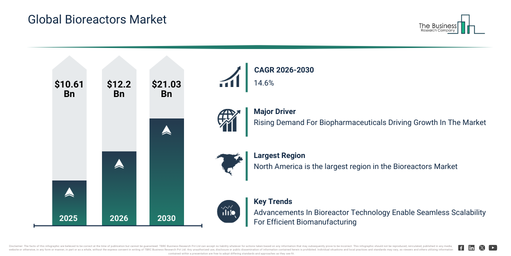
    The bioreactors market size has seen rapid expansion in recent years. It is forecast to rise from $10.61 billion in 2025 to $12.2 billion in 2026, demonstrating a compound annual growth rate (CAGR) of 15.0%. The upward trend in the past can be ascribed to the broadening of biologics production, an increase in fermentation-based manufacturing, the greater implementation of fed-batch processes, growing investment in biopharma R&D, and the availability of sophisticated bioprocess control systems.

    The bioreactors market size is anticipated to experience substantial growth over the coming years, projected to reach $21.03 billion by 2030 with a compound annual growth rate (CAGR) of 14.6%. This expansion during the forecast period is primarily driven by factors such as a rising need for high-yield bioprocessing, the expanding production of personalized medicine, a growing integration of AI-powered process optimization, an increasing emphasis on production efficiency, and a wider uptake of continuous manufacturing models. Key trends expected in this period include the rising implementation of automated bioreactor systems, a growing application of continuous bioprocessing technologies, an increasing requirement for scalable bioreactor platforms, the broadened availability of single-use bioreactor solutions, and a heightened focus on process monitoring and control.

    Download the Free Sample Report to Explore Key Market Insights:

    https://www.thebusinessresearchcompany.com/sample.aspx?id=20721&type=smp

    What Drivers Are Shaping The Future Growth Of The Bioreactors Market?

    The rising need for biopharmaceuticals is anticipated to drive the expansion of the bioreactors market moving ahead. Biopharmaceuticals are medical products sourced from biological origins, including proteins, cells, and living organisms, employed to avert, address, or manage diverse ailments. This growing demand for biopharmaceuticals stems from progress in medical research, tailored medicine, and the imperative for inventive therapies, resulting in better health results globally. Bioreactors prove beneficial for biopharmaceuticals by facilitating the efficient and large-scale manufacturing of therapeutic items, guaranteeing uniform quality, lowering production expenses, and aiding in the creation of groundbreaking and life-improving medications. As an illustration, in November 2025, the Organisation for Economic Co operation and Development, an intergovernmental economic body headquartered in France, indicated that average per capita spending on retail pharmaceuticals was USD 766 (adjusted for purchasing power variations) across OECD nations in 2023. Consequently, the rising requirement for biopharmaceuticals is fueling the expansion within the bioreactors market.

    What Segment Types Make Up The Bioreactors Market?

    The bioreactors market covered in this report is segmented –

    1) By Type Of Bioprocess: Batch And Fed-Batch, Continuous

    2) By Cell: Mammalian Cells, Bacterial Cells, Yeast Cells, Other Cells

    3) By Control: Manual, Automated

    4) By Usage: Lab Scale Production, Pilot Scale Production, Full Scale Production

    5) By End-Use: Research And Development (R&D) Organizations, Biopharmaceutical (Biopharma) Manufacturers, Contract Manufacturing Organizations (CMOS)

    Subsegments:

    1) By Batch And Fed-Batch: Traditional Batch Bioreactors, Fed-Batch Bioreactors

    2) By Continuous: Perfusion Bioreactors, Continuous Stirred Tank Bioreactors (CSTR)

    What Key Developments And Trends Are Impacting The Bioreactors Market?

    Leading companies within the bioreactors market are prioritizing the creation of advanced products, including fixed-bed bioreactors, to support the cultivation of more complex biological cultures. A fixed-bed bioreactor is characterized as a bioreactor where biological organisms are attached to a solid support, commonly composed of porous materials such as beads, fibers, or granules. This particular design enhances mass transfer, reduces shear stress, and offers improved oversight of the biological processes. For instance, in October 2024, Univercells Technologies, a Belgium-based biotechnology company, launched the Scale-X Nexo bioreactor. This innovative bioreactor, which boasts a 0.5 m² growth surface, is specifically engineered to refine cell culture process development, delivering notable benefits for biopharmaceutical companies and research institutions. The Scale-X Nexo allows for effortless scalability to larger systems, decreases consumption of media and reagents, and can lower operational costs by up to 60% compared to traditional entry-level bioreactors. Additionally, it integrates with the Skaia Vision application software, further enhancing productivity by providing precise cell count estimations without the necessity of direct sampling.

    Who Are The Key Players Driving Competition In The Bioreactors Market?

    Major companies operating in the bioreactors market are Thermo Fisher Scientific Inc., Danaher Corporation, Merck KGaA, GE HealthCare Technologies Inc., Cytiva Bioscience Holding Ltd., Sartorius AG, Cellexus Ltd., Getinge AB, Eppendorf AG, ZETA Holding, Pierre Guerin, PBS Biotech Inc., TAP Biosystems, BBI-Biotech GmbH, HiTec Zang GmbH, Bioengineering AG, Infors AG, Univercells Technologies SA, CerCell A/S, Bailun Biotechnology Co. Ltd., BioNet, Shanghai Ritai Medicine Equipment Project Co. Ltd.

    Read the full bioreactors market report here:

    https://www.thebusinessresearchcompany.com/report/bioreactors-global-market-report

    Which Geographic Regions Are Influencing Demand In The Bioreactors Market?

    North America was the largest region in the bioreactors market in 2025. Asia-Pacific is expected to be the fastest-growing region in the forecast period. The regions covered in the bioreactors market report are Asia-Pacific, South East Asia, Western Europe, Eastern Europe, North America, South America, Middle East, Africa.

    Request A Tailored Bioreactors Market Research Report For Competitive Advantage:

    https://www.thebusinessresearchcompany.com/customise?id=20721&type=smp

    Browse Through More Reports Similar to the Global Bioreactors Market 2026, By The Business Research Company

    Bioreactors And Fermenters Global Market Report

    https://www.thebusinessresearchcompany.com/report/bioreactors-and-fermenters-global-market-report

    Airlift Bioreactors Global Market Report

    https://www.thebusinessresearchcompany.com/report/airlift-bioreactors-global-market-report

    Membrane Bioreactor Global Market Report

    https://www.thebusinessresearchcompany.com/report/membrane-bioreactor-global-market-report

    Get in touch with us:

    The Business Research Company: https://www.thebusinessresearchcompany.com/

    Americas +1 310-496-7795

    Asia +44 7882 955267 & +91 8897263534

    Europe +44 7882 955267

    Email us at info@tbrc.info

    Follow us on:

    LinkedIn: https://in.linkedin.com/company/the-business-research-company

    YouTube: https://www.youtube.com/channel/UC24_fI0rV8cR5DxlCpgmyFQ

    Global Market Model: https://www.thebusinessresearchcompany.com/global-market-model
  • A Significant Growth Driver for the Artificial Intelligence (AI)-Enhanced Remote Patient Intravenous (IV) Monitoring Market Is the Expansion Of Telehealth Services Driving The Market Growth Due To Increasing Remote Patient Care Needs

    A Significant Growth Driver for the Artificial Intelligence (AI)-Enhanced Remote Patient Intravenous (IV) Monitoring Market Is the Expansion Of Telehealth Services Driving The Market Growth Due To Increasing Remote Patient Care Needs

    The Business Research Company’s 2026 market reports include new capabilities such as market attractiveness scoring and analysis, total addressable market analysis, company scoring matrix, interactive excel data dashboard, improved supply chain analysis, upcoming startups in the market, and overview of key products, aimed at improving the depth, usability, and strategic value of the insights delivered.

    What Is The Market Size Of The Artificial Intelligence (AI)-Enhanced Remote Patient Intravenous (IV) Monitoring Market In 2026 And What Value Is Projected For 2030?

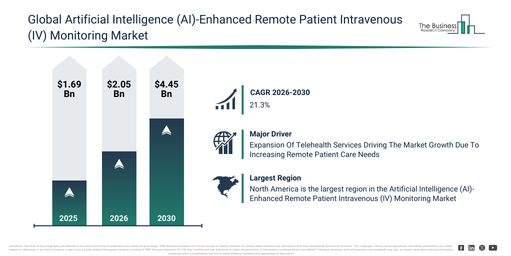
    The artificial intelligence (AI)-enhanced remote patient intravenous (iv) monitoring market has experienced significant expansion in recent years. Its valuation is set to climb from $1.69 billion in 2025 to $2.05 billion in 2026, reflecting a compound annual growth rate (CAGR) of 21.6%. The historical growth of this market can be attributed to several factors, including the increasing use of intravenous therapies in clinical care, a rising incidence of infusion-related complications, the expansion of hospital patient monitoring systems, the growing adoption of smart infusion devices, and an increased emphasis on medication safety protocols.

    The market for artificial intelligence (AI)-enhanced remote patient intravenous (iv) monitoring is projected to experience substantial expansion in the coming years. This sector is anticipated to reach a valuation of $4.45 billion by 2030, exhibiting a compound annual growth rate (CAGR) of 21.3%. Several factors are driving this projected growth, including the rising implementation of AI-enabled infusion monitoring systems, an increasing need for IV therapy solutions delivered at home, the broadening scope of predictive patient safety analytics, the expanding integration of networked infusion devices, and a heightened focus on remote clinical oversight. Key developments expected during this forecast period involve a greater uptake of real-time IV flow analytics, increased application of AI for detecting infusion errors, deeper incorporation of intelligent infusion sensors, wider availability of remote IV therapy management, and a stronger emphasis on ensuring patient safety and regulatory adherence.

    Download the Free Sample Report to Explore Key Market Insights:

    https://www.thebusinessresearchcompany.com/sample.aspx?id=28921&type=smp

    What Key Drivers Are Influencing The Growth Of The Artificial Intelligence (AI)-Enhanced Remote Patient Intravenous (IV) Monitoring Market?

    The growing adoption of telehealth services is anticipated to fuel the expansion of the artificial intelligence (AI)-enhanced remote patient intravenous (IV) monitoring market. These services involve delivering healthcare remotely through digital communication tools, encompassing virtual consultations, patient monitoring, and treatment. Its prevalence has increased, spurred by shifts in regulations and reimbursement frameworks established during the COVID-19 pandemic, which improved the accessibility and economic feasibility of virtual healthcare for both medical professionals and patients. The artificial intelligence (AI)-enhanced remote patient intravenous (IV) monitoring solution complements telehealth by allowing continuous, off-site tracking of patients’ IV treatments, proactively identifying issues, offering practical data to clinicians, and connecting smoothly with virtual care systems. This ensures prompt medical responses, enhances patient well-being, and optimizes the handling of care in home and outpatient environments. For instance, an April 2023 report from FAIR Health Inc., a US-based non-profit organization, indicated that national telehealth utilization in 2023 grew by 7.3%, moving from 5.5% of medical claim lines in December 2022 to 5.9% in January 2023. Consequently, the increasing adoption of telehealth services is a key factor propelling the expansion of the artificial intelligence (AI)-enhanced remote patient intravenous (IV) monitoring market.

    What Are The Key Segments Of The Artificial Intelligence (AI)-Enhanced Remote Patient Intravenous (IV) Monitoring Market?

    The artificial intelligence (AI)-enhanced remote patient intravenous (iv) monitoring market covered in this report is segmented –

    1) By Component: Hardware, Software, Services

    2) By Deployment Mode: On-Premises, Cloud-Based

    3) By Application: Hospitals, Clinics, Homecare Settings, Ambulatory Surgical Centers, Other Applications

    4) By End-User: Healthcare Providers, Patients

    Subsegments:

    1) By Hardware: Patient Monitoring Devices, Sensors And Infusion Pumps, Communication Devices, Data Storage Systems

    2) By Software: Predictive Analytics Software, Clinical Decision Support Software, Remote Monitoring Software, Data Management Software

    3) By Services: Implementation And Integration Services, Maintenance And Support Services, Training And Education Services, Remote Monitoring Services

    Who Are The Leading Companies Operating In The Artificial Intelligence (AI)-Enhanced Remote Patient Intravenous (IV) Monitoring Market?

    Major companies operating in the artificial intelligence (AI)-enhanced remote patient intravenous (iv) monitoring market are Medtronic plc, Siemens Healthineers AG, GE HealthCare Technologies Inc., Koninklijke Philips N.V., Baxter International Inc., B. Braun Melsungen AG, Terumo Corporation, Nipro Corporation, Epic Systems Corporation, ICU Medical Inc., InfuSystem Holdings Inc., AlayaCare Inc., Huma Therapeutics Ltd., Health Recovery Solutions Inc., Arcomed AG, VitalConnect Inc., Cloud DX Inc., Empatica S.r.l., AccuHealth Inc., Serum Tracker Inc.

    Read the full artificial intelligence (ai)-enhanced remote patient intravenous (iv) monitoring market report here:

    https://www.thebusinessresearchcompany.com/report/artificial-intelligence-ai-enhanced-remote-patient-intravenous-iv-monitoring-global-market-report

    Which Region Is Expected To Register The Fastest Growth In The Artificial Intelligence (AI)-Enhanced Remote Patient Intravenous (IV) Monitoring Market?

    North America was the largest region in the artificial intelligence (AI)-enhanced remote patient intravenous (IV) monitoring market in 2025. Asia-Pacific is expected to be the fastest-growing region in the forecast period. The regions covered in the artificial intelligence (AI)-enhanced remote patient intravenous (iv) monitoring market report are Asia-Pacific, South East Asia, Western Europe, Eastern Europe, North America, South America, Middle East, Africa.

    Request A Tailored Artificial Intelligence (AI)-Enhanced Remote Patient Intravenous (IV) Monitoring Market Research Report For Competitive Advantage:

    https://www.thebusinessresearchcompany.com/customise?id=28921&type=smp

    Browse Through More Reports Similar to the Global Artificial Intelligence (AI)-Enhanced Remote Patient Intravenous (IV) Monitoring Market 2026, By The Business Research Company

    Ai In Medical Devices Global Market Report

    https://www.thebusinessresearchcompany.com/report/ai-in-medical-devices-global-market-report

    Artificial Intelligence Or Machine Learning Ai Or Ml Medical Device Global Market Report

    https://www.thebusinessresearchcompany.com/report/artificial-intelligence-or-machine-learning-ai-or-ml-medical-device-global-market-report

    Artificial Intelligence In Healthcare Global Market Report

    https://www.thebusinessresearchcompany.com/report/artificial-intelligence-in-healthcare-global-market-report

    Get in touch with us:

    The Business Research Company: https://www.thebusinessresearchcompany.com/

    Americas +1 310-496-7795

    Asia +44 7882 955267 & +91 8897263534

    Europe +44 7882 955267

    Email us at info@tbrc.info

    Follow us on:

    LinkedIn: https://in.linkedin.com/company/the-business-research-company

    YouTube: https://www.youtube.com/channel/UC24_fI0rV8cR5DxlCpgmyFQ

    Global Market Model: https://www.thebusinessresearchcompany.com/global-market-model
  • Global Antimicrobial Resistance (AMR) Genotyping Panels Market Forecast 2026–2035 Presenting Long-Term Industry Expansion Insights

    Global Antimicrobial Resistance (AMR) Genotyping Panels Market Forecast 2026–2035 Presenting Long-Term Industry Expansion Insights

    The Business Research Company’s 2026 market reports include new capabilities such as market attractiveness scoring and analysis, total addressable market analysis, company scoring matrix, interactive excel data dashboard, improved supply chain analysis, upcoming startups in the market, and overview of key products, aimed at improving the depth, usability, and strategic value of the insights delivered.

    What Market Valuation Is Forecasted For The Antimicrobial Resistance (AMR) Genotyping Panels Market By 2030 Starting From Its 2026 Size?

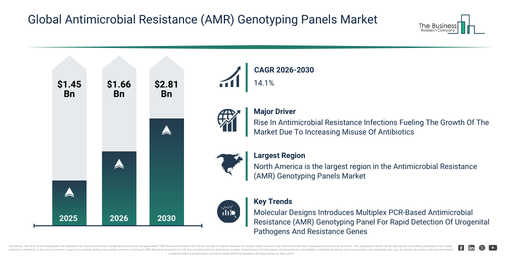
    The antimicrobial resistance (amr) genotyping panels market has experienced rapid expansion in recent years. It is anticipated to increase from $1.45 billion in 2025 to $1.66 billion in 2026, achieving a compound annual growth rate (CAGR) of 14.4%. This historical growth can be attributed to the rising occurrence of antimicrobial resistance, a greater incidence of hospital-acquired infections, the advancement of molecular diagnostic capabilities, increased understanding of resistance monitoring, and the accessibility of sophisticated genotyping technologies.

    The market for antimicrobial resistance (amr) genotyping panels is projected to experience swift expansion in the coming years. This market is anticipated to reach $2.81 billion by 2030, exhibiting a compound annual growth rate (CAGR) of 14.1%. Factors driving this growth during the forecast period include greater investments in infectious disease diagnostics, a surge in demand for swift point-of-care testing, the broadening of genomic epidemiology programs, the expanding integration of amr data analytics, and an intensified regulatory emphasis on resistance surveillance. Key trends expected over the forecast horizon encompass the increased uptake of multiplex resistance detection panels, a growing reliance on rapid molecular diagnostics, the expanding incorporation of genomic surveillance tools, an enlargement of hospital-based amr testing initiatives, and a heightened emphasis on identifying resistance at early stages.

    Download the Free Sample Report to Explore Key Market Insights:

    https://www.thebusinessresearchcompany.com/sample.aspx?id=30196&type=smp

    Which Market Drivers Are Supporting The Expansion Of The Antimicrobial Resistance (AMR) Genotyping Panels Market?

    The increasing occurrence of infections resistant to antimicrobials is projected to fuel the expansion of the antimicrobial resistance (AMR) genotyping panels market in the future. Such infections are defined as illnesses originating from microorganisms, including bacteria, viruses, fungi, or parasites, which have developed resistance to the efficacy of conventional antimicrobial medications, consequently complicating their treatment. Among the elements contributing to the rise in antimicrobial resistance are the excessive and improper administration of antibiotics. Such practices have hastened the appearance of resilient pathogens, thereby stimulating the need for antimicrobial resistance (AMR) genotyping panels capable of quickly detecting resistance genes and directing precise antimicrobial interventions. As an illustration, data from the Centers for Disease Control and Prevention (CDC) indicates that over 2.8 million antimicrobial-resistant infections manifest annually in the US. Consequently, the escalating incidence of antimicrobial-resistant infections is propelling the expansion of the antimicrobial resistance (AMR) genotyping panels market.

    Which Segment Categories Define The Antimicrobial Resistance (AMR) Genotyping Panels Market?

    The antimicrobial resistance (amr) genotyping panels market covered in this report is segmented –

    1) By Product Type: Custom Panels, Pre-Designed Panels

    2) By Technology: Polymerase Chain Reaction (PCR)-Based, Microarray-Based, Next-Generation Sequencing (NSG)-Based, Other Technologies

    3) By Application: Clinical Diagnostics, Research, Drug Development, Other Applications

    4) By End-User: Hospitals And Clinics, Research Institutes, Pharmaceutical And Biotechnology Companies, Other End-users

    Subsegments:

    1) By Custom Panels: Pathogen-Specific Panels, Resistance Gene-Focused Panels, Multiplex Detection Panels, Targeted Mutation Panels, Research Application Panels

    2) By Pre-Designed Panels: Standardized Diagnostic Panels, Broad-Spectrum Resistance Panels, Disease-Specific Panels, Commercially Validated Panels, Ready-To-Use Screening Panels

    Which Trends Are Shaping The Future Of The Antimicrobial Resistance (AMR) Genotyping Panels Market?

    Leading companies active in the antimicrobial resistance (AMR) genotyping panels market are prioritizing the creation of innovative products, such as multiplex PCR-based research assays, to allow for the concurrent detection of multiple pathogens and antibiotic resistance genes within a single analysis, thereby boosting research efficiency and aiding quicker identification of emerging resistance patterns. Multiplex PCR-based research assays are molecular tests designed to amplify and identify numerous genetic targets simultaneously to pinpoint pathogens and antibiotic resistance genes in a solitary reaction. For example, in September 2025, Molecular Designs, a US-based firm specializing in molecular diagnostics and research assays, launched the Urogenital Microbiota with ABX 53 Simplicity Panel, which is a multiplex PCR-based research assay tailored to detect urinary pathogens and antibiotic resistance genes in a single examination. This panel enables the simultaneous identification of 28 urogenital and urinary microbial targets (consisting of 20 bacterial, 7 fungal, and 1 protozoan) alongside 25 antibiotic-resistance gene markers, offering same-day results and being available in both 96-well and 384-well plate formats, with the 96-well version incorporating breakaway panels to reduce wastage.

    Who Are The Top Companies Competing In The Antimicrobial Resistance (AMR) Genotyping Panels Market?

    Major companies operating in the antimicrobial resistance (amr) genotyping panels market are Thermo Fisher Scientific Inc., F Hoffmann La Roche Ltd., Abbott Laboratories, Illumina Inc., bioMérieux SA., Bruker Corporation, QIAGEN NV., Cepheid Inc., Integrated DNA Technologies Inc., Seegene Inc., Oxford Nanopore Technologies plc., Streck Inc., MedGenome Inc., Vela Diagnostics Pte. Ltd., Agena Bioscience Inc., CD Genomics Inc., Curetis GmbH, T2 Biosystems Inc., 3B BlackBio Biotech India Ltd., Genefirst Ltd., OpGen Inc.

    Read the full antimicrobial resistance (amr) genotyping panels market report here:

    https://www.thebusinessresearchcompany.com/report/global-antimicrobial-resistance-amr-genotyping-panels-market-report

    How Is The Antimicrobial Resistance (AMR) Genotyping Panels Market Distributed Across Key Geographic Regions?

    North America was the largest region in the antimicrobial resistance (AMR) genotyping panels market in 2025. Asia-Pacific is expected to be the fastest-growing region in the forecast period. The regions covered in the antimicrobial resistance (amr) genotyping panels market report are Asia-Pacific, South East Asia, Western Europe, Eastern Europe, North America, South America, Middle East, Africa.

    Request A Tailored Antimicrobial Resistance (AMR) Genotyping Panels Market Research Report For Competitive Advantage:

    https://www.thebusinessresearchcompany.com/customise?id=30196&type=smp

    Browse Through More Reports Similar to the Global Antimicrobial Resistance (AMR) Genotyping Panels Market 2026, By The Business Research Company

    Biomaterial Wound Dressing Global Market Report

    https://www.thebusinessresearchcompany.com/report/biomaterial-wound-dressing-global-market-report

    Preoperative Infection Prevention And Wound Cleansing Devices Global Market Report

    https://www.thebusinessresearchcompany.com/report/preoperative-infection-prevention-and-wound-cleansing-devices-global-market-report

    Topical Wound Agents Global Market Report

    https://www.thebusinessresearchcompany.com/report/topical-wound-agents-global-market-report

    Get in touch with us:

    The Business Research Company: https://www.thebusinessresearchcompany.com/

    Americas +1 310-496-7795

    Asia +44 7882 955267 & +91 8897263534

    Europe +44 7882 955267

    Email us at info@tbrc.info

    Follow us on:

    LinkedIn: https://in.linkedin.com/company/the-business-research-company

    YouTube: https://www.youtube.com/channel/UC24_fI0rV8cR5DxlCpgmyFQ

    Global Market Model: https://www.thebusinessresearchcompany.com/global-market-model
  • Bioprocess Bags Industry Expansion Forecast Showing Market Size of $8.13 Billion by 2030 at 16.3% CAGR

    Bioprocess Bags Industry Expansion Forecast Showing Market Size of $8.13 Billion by 2030 at 16.3% CAGR

    The Business Research Company’s 2026 market reports include new capabilities such as market attractiveness scoring and analysis, total addressable market analysis, company scoring matrix, interactive excel data dashboard, improved supply chain analysis, upcoming startups in the market, and overview of key products, aimed at improving the depth, usability, and strategic value of the insights delivered.

    What Is The Estimated Market Size Of The Bioprocess Bags Market During 2026–2030?

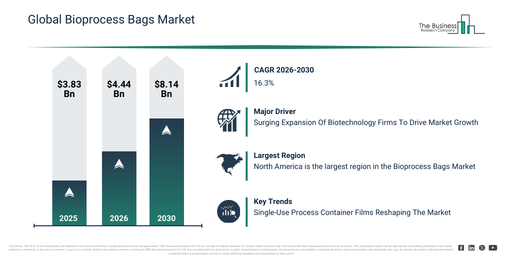
    The bioprocess bags market has experienced significant growth in recent years. It is forecast to grow from $3.83 billion in 2025 to $4.44 billion in 2026, at a compound annual growth rate (CAGR) of 16.1%. The expansion during the historic period can be attributed to an increase in biopharmaceutical manufacturing, the rising adoption of disposable technologies, the broadening of contract manufacturing services, a greater emphasis on process flexibility, and the presence of standardized single-use components.

    The bioprocess bags market is projected to expand quickly over the coming years, with its size anticipated to reach $8.14 billion by 2030, exhibiting a compound annual growth rate (CAGR) of 16.3%. This expansion during the forecast period is attributed to the increasing demand for biologics and vaccines, the growth in cell and gene therapy production, rising investments in modular bioprocessing facilities, a growing emphasis on cost-efficient manufacturing, and increased regulatory support for single-use systems. Major trends expected in this period include the wider adoption of single-use bioprocessing systems, a rising demand for sterile disposable containers, an expanding use of 3D bioprocess bags in cell culture, the development of more flexible manufacturing workflows, and an enhanced focus on reducing contamination risks.

    Download the Free Sample Report to Explore Key Market Insights:

    https://www.thebusinessresearchcompany.com/sample.aspx?id=12699&type=smp

    Which Economic Or Industry Drivers Are Impacting The Bioprocess Bags Market?

    The significant expansion of biotechnology companies is anticipated to drive the advancement of the bioprocess bag market in the future. These firms leverage biological understanding, instruments, and methodologies to create goods and services for diverse sectors. For the biotechnology sector, bioprocess bags offer multiple advantages, such as a smaller ecological footprint, adaptability, economic viability, swiftness, and management of contamination. As an illustration, in January 2024, LondonLovesTech, a UK-based digital media and tech news publisher, indicated that biotech companies and startups secured $136.3B in 2023, demonstrating that investment activity stayed higher than pre-pandemic levels. Consequently, the swift expansion of biotechnology enterprises is propelling the bioprocess bag market.

    How Are The Various Segments Of The Bioprocess Bags Market Categorized?

    The bioprocess bags market covered in this report is segmented –

    1) By Type: 2D Bioprocess Bags, 3D Bioprocess Bags, Other Types

    2) By Workflow: Upstream Process, Downstream Process, Process Development

    3) By Capacity: Small, Medium, Large, Extra Large

    4) By Application: Buffer And Media Storage, Cell Culture, Cell Separation And Harvest, Chromatography Feed And Collection, Ultrafiltration And Diafiltration, Intermediate And Final Product Hold, Other Applications

    5) By End-User: Pharmaceutical Companies, Biopharmaceutical Companies, Biotechnology Labs, Academic Labs

    Subsegments:

    1) By 2D Bioprocess Bags: Flat Bags, Customized 2D Bags

    2) By 3D Bioprocess Bags: Bioreactor Bags, Storage Bags, Mixing Bags

    3) By Other Types: Tubing And Connectors, Filters And Filter Assemblies, Bag Support Stands, Accessories For Sterilization And Storage

    What Trends Are Projected To Affect The Bioprocess Bags Market?

    Leading companies in the bioprocess bag market are developing new products, such as single-use process container films, to gain a competitive advantage. These films are flexible materials specifically designed for constructing single-use process containers within bioprocessing and pharmaceutical manufacturing contexts. For example, in April 2023, Merck KGaA, a Germany-based pharmaceutical company, introduced Ultimus Single-Use Process Container Film, an advanced solution intended to overcome challenges in bioprocessing liquid applications. Engineered with a proprietary woven nylon structure, the Ultimus film offers extreme durability and leak resistance, demonstrating 10 times greater abrasion resistance, 2.8 times greater tensile strength, and twice the puncture strength compared to other single-use bioprocessing films. This innovation seeks to minimize disruptions in manufacturing operations and boost operational efficiency. Moreover, the Ultimus Single-Use Process Container Film incorporates an animal origin-free contact resin. This attribute aims to achieve a low extractable profile, complying with stringent regulatory requirements and industry standards.

    Which Major Firms Influence Developments In The Bioprocess Bags Market?

    Major companies operating in the bioprocess bags market are Saint-Gobain Group, Charter Medical LLC, Thermo Fisher Scientific Inc., 3M Company, Danaher Corporation, Merck KGaA, GE Healthcare, Parker Hannifin Corporation, Corning Incorporated, Avantor Inc., Lonza Group, GEA Group Aktiengesellschaft, Sartorius AG, Entegris Inc., W. L. Gore & Associates Inc., Repligen Corporation, ESI Technologies Group, Colder Products Company, CellBios Healthcare and Lifesciences Pvt Ltd., PBS Biotech

    Read the full bioprocess bags market report here:

    https://www.thebusinessresearchcompany.com/report/bioprocess-bags-global-market-report

    What Are The Top-Performing Regions Within The Bioprocess Bags Market?

    North America was the largest region in the bioprocess bags market in 2025. Asia-Pacific is expected to be the fastest-growing region in the forecast period. The regions covered in the bioprocess bags market report are Asia-Pacific, South East Asia, Western Europe, Eastern Europe, North America, South America, Middle East, Africa.

    Request A Tailored Bioprocess Bags Market Research Report For Competitive Advantage:

    https://www.thebusinessresearchcompany.com/customise?id=12699&type=smp

    Browse Through More Reports Similar to the Global Bioprocess Bags Market 2026, By The Business Research Company

    Bioprocess Containers Global Market Report

    https://www.thebusinessresearchcompany.com/report/bioprocess-containers-global-market-report

    Bearings Global Market Report

    https://www.thebusinessresearchcompany.com/report/bearings-global-market-report

    Single Use Bioprocessing Global Market Report

    https://www.thebusinessresearchcompany.com/report/single-use-bioprocessing-global-market-report

    Get in touch with us:

    The Business Research Company: https://www.thebusinessresearchcompany.com/

    Americas +1 310-496-7795

    Asia +44 7882 955267 & +91 8897263534

    Europe +44 7882 955267

    Email us at info@tbrc.info

    Follow us on:

    LinkedIn: https://in.linkedin.com/company/the-business-research-company

    YouTube: https://www.youtube.com/channel/UC24_fI0rV8cR5DxlCpgmyFQ

    Global Market Model: https://www.thebusinessresearchcompany.com/global-market-model
  • Global Artificial Intelligence (AI)-Enhanced Remote Neonatal Monitoring Industry Trends and Market Growth Forecast for 2026–2030

    Global Artificial Intelligence (AI)-Enhanced Remote Neonatal Monitoring Industry Trends and Market Growth Forecast for 2026–2030

    The Business Research Company’s 2026 market reports include new capabilities such as market attractiveness scoring and analysis, total addressable market analysis, company scoring matrix, interactive excel data dashboard, improved supply chain analysis, upcoming startups in the market, and overview of key products, aimed at improving the depth, usability, and strategic value of the insights delivered.

    What Will Be The Estimated Market Valuation Of The Artificial Intelligence (AI)-Enhanced Remote Neonatal Monitoring Market By The End Of 2030?

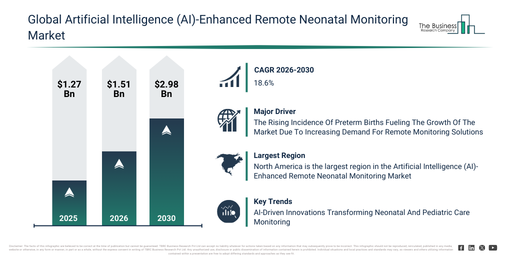
    The artificial intelligence (AI)-enhanced remote neonatal monitoring market has experienced substantial expansion in recent years. This market is projected to increase from $1.27 billion in 2025 to $1.51 billion in 2026, demonstrating a compound annual growth rate (CAGR) of 18.9%. The historical growth of the market can be linked to factors such as rising premature birth rates, the expansion of neonatal intensive care services, a greater uptake of remote patient monitoring technologies, an intensified emphasis on early intervention in neonatal care, and improvements in neonatal sensor technologies.

    The artificial intelligence (AI)-enhanced remote neonatal monitoring market is projected for substantial expansion in the coming years, reaching $2.98 billion by 2030, driven by a compound annual growth rate (CAGR) of 18.6%. This anticipated growth during the forecast period stems from factors such as the greater acceptance of AI-driven neonatal monitoring, the increasing need for home-based neonatal care solutions, the broadening of predictive health analytics, the expanding incorporation of cloud-based monitoring platforms, and a heightened emphasis on preventive neonatal healthcare. Key trends expected over the forecast period encompass the greater uptake of continuous neonatal vital monitoring, the increasing utilization of AI-based early warning systems, the expanding implementation of wearable neonatal sensors, the development of remote neonatal care models, and a stronger emphasis on predictive neonatal analytics.

    Download the Free Sample Report to Explore Key Market Insights:

    https://www.thebusinessresearchcompany.com/sample.aspx?id=28920&type=smp

    What Major Growth Drivers Are Shaping The Outlook Of The Artificial Intelligence (AI)-Enhanced Remote Neonatal Monitoring Market?

    The increasing occurrence of preterm births is anticipated to boost the growth of the artificial intelligence (AI)-enhanced remote neonatal monitoring market. Preterm birth refers to infants born before 37 completed weeks of gestation, often requiring specialized medical care due to underdeveloped organs, and significantly influences neonatal health outcomes. The incidence of preterm births is escalating as more women are having children at an older age, which heightens the risk of pregnancy complications and early delivery. Artificial intelligence (AI)-enhanced remote neonatal monitoring aids in managing preterm births by continuously analyzing vital signs to detect early signs of complications, thus enabling timely interventions and safer post-discharge care. For instance, in March 2025, a report published by the Centers for Disease Control and Prevention (CDC), a US-based nonprofit organization, revealed that the U.S. preterm birth rate rose to 10.41% in 2023, a marginal increase from 10.38% in 2022. Therefore, the expanding incidence of preterm births is propelling the growth of the artificial intelligence (AI)-enhanced remote neonatal monitoring market.

    Which Segment Classifications Shape The Artificial Intelligence (AI)-Enhanced Remote Neonatal Monitoring Market?

    The artificial intelligence (AI)-enhanced remote neonatal monitoring market covered in this report is segmented –

    1) By Component: Hardware, Software, Services

    2) By Monitoring Type: Vital Signs Monitoring, Respiratory Monitoring, Cardiac Monitoring, Other Monitoring Types

    3) By Deployment Mode: Cloud-Based, On-Premises

    4) By End User: Hospitals, Neonatal Intensive Care Units, Homecare Settings, Clinics, Other End Users

    Subsegments:

    1) By Hardware: Monitoring Devices, Wearable Sensors, Imaging Equipment, Communication Modules, Data Storage Units

    2) By Software: Analytics Platforms, Patient Management Systems, Predictive Algorithms, Visualization Tools, Alert And Notification Systems

    3) By Services: Remote Monitoring Support, Technical Maintenance, Training And Education, Consulting Services, Integration Services

    What Trends Are Projected To Affect The Artificial Intelligence (AI)-Enhanced Remote Neonatal Monitoring Market?

    Major companies engaged in the artificial intelligence (AI)-enhanced remote neonatal monitoring market are concentrating on developing advanced solutions, such as AI-driven neonatal and pediatric care monitoring platforms. These efforts aim to enhance the early detection of health complications, improve clinical decision-making processes, and support continuous, real-time tracking of newborns. AI-driven neonatal and pediatric care monitoring platforms are systems that employ artificial intelligence to continuously track and analyze the health data of newborns and children, identify anomalies, and provide actionable insights for timely medical intervention. For instance, in April 2025, AngelEye Health, a US-based provider of neonatal and pediatric family engagement technology, launched AIVision. This was a groundbreaking enhancement, integrating artificial intelligence (AI) and computer vision into neonatal intensive care units (NICUs) and pediatric units. This platform transforms existing bedside cameras into intelligent clinical tools that deliver proactive, data-driven insights to clinical teams. Key features include AI-powered motion analysis for the early detection of neuromotor risks, video EEG synchronization, respiratory status monitoring to detect early signs of distress, AI-assisted pain and sedation assessment, and crash/coding event recording to support clinical training.

    Which Companies Are Expanding Their Footprint In The Artificial Intelligence (AI)-Enhanced Remote Neonatal Monitoring Market?

    Major companies operating in the artificial intelligence (AI)-enhanced remote neonatal monitoring market are Philips Healthcare, GE HealthCare Technologies Inc., Mount Sinai Health System Inc., Mindray Medical International Limited, Drägerwerk AG & Co. KGaA, Hill-Rom Company Inc., Masimo Corporation, Sheba Medical Center, Natus Medical Incorporated, Spacelabs Healthcare Inc., Aver Information Inc., Owlet Inc., Nanit Inc., AngelEye Health Inc., Raybaby Inc., Zoundream Inc., Sempulse Inc., Kriba Inc., Luscii B.V., Bloomlife Inc.

    Read the full artificial intelligence (ai)-enhanced remote neonatal monitoring market report here:

    https://www.thebusinessresearchcompany.com/report/artificial-intelligence-ai-enhanced-remote-neonatal-monitoring-global-market-report

    Which Regions Are Projected To Dominate The Artificial Intelligence (AI)-Enhanced Remote Neonatal Monitoring Market In The Coming Years?

    North America was the largest region in the artificial intelligence (AI)-enhanced remote neonatal monitoring market in 2025. Asia-Pacific is expected to be the fastest-growing region in the forecast period. The regions covered in the artificial intelligence (AI)-enhanced remote neonatal monitoring market report are Asia-Pacific, South East Asia, Western Europe, Eastern Europe, North America, South America, Middle East, Africa.

    Request A Tailored Artificial Intelligence (AI)-Enhanced Remote Neonatal Monitoring Market Research Report For Competitive Advantage:

    https://www.thebusinessresearchcompany.com/customise?id=28920&type=smp

    Browse Through More Reports Similar to the Global Artificial Intelligence (AI)-Enhanced Remote Neonatal Monitoring Market 2026, By The Business Research Company

    Fetal And Neonatal Monitoring Devices Global Market Report

    https://www.thebusinessresearchcompany.com/report/fetal-and-neonatal-monitoring-devices-global-market-report

    Baby Monitoring Devices Global Market Report

    https://www.thebusinessresearchcompany.com/report/baby-monitoring-devices-global-market-report

    Fetal And Neonatal Monitoring Devices Global Market Report

    https://www.thebusinessresearchcompany.com/report/fetal-and-neonatal-monitoring-devices-global-market-report

    Get in touch with us:

    The Business Research Company: https://www.thebusinessresearchcompany.com/

    Americas +1 310-496-7795

    Asia +44 7882 955267 & +91 8897263534

    Europe +44 7882 955267

    Email us at info@tbrc.info

    Follow us on:

    LinkedIn: https://in.linkedin.com/company/the-business-research-company

    YouTube: https://www.youtube.com/channel/UC24_fI0rV8cR5DxlCpgmyFQ

    Global Market Model: https://www.thebusinessresearchcompany.com/global-market-model