Month: March 2026

  • Water Flosser Market Forecast 2026–2035: Data Trends and Industry Insights

    Water Flosser Market Forecast 2026–2035: Data Trends and Industry Insights

    Uncover key drivers, emerging technologies, and competitive movements shaping the water flosser market from 2026–2035 with trusted insights from The Business Research Company

    How much is the Water Flosser Market valued at in 2026, and what valuation is forecast for 2030?

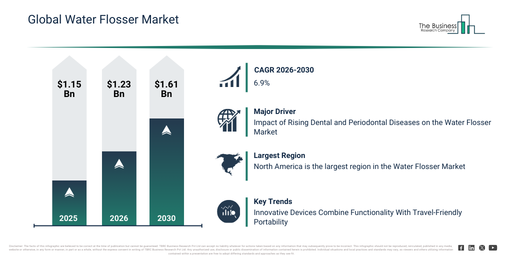
    The water flosser market has experienced robust expansion over recent years. Projections indicate its expansion from $1.15 billion in 2025 to $1.23 billion by 2026, demonstrating a compound annual growth rate (CAGR) of 6.9%. This historical growth is attributable to factors such as heightened awareness regarding oral hygiene, the broadening of retail channels for dental care products, the uptake of electric oral care tools, an increase in orthodontic treatments, and better consumer access to dental technologies.

    The water flosser market is anticipated to experience substantial expansion over the upcoming years. Its valuation is projected to reach $1.61 billion by 2030, demonstrating a compound annual growth rate (CAGR) of 6.9%. This anticipated growth during the forecast period is driven by factors such as an increasing demand for intelligent oral care devices, the growing incorporation of digital health monitoring capabilities, the expansion of dental product sales through e-commerce platforms, a heightened emphasis on preventive dental care, and innovations in compact device design. Key trends expected during this period involve the wider acceptance of cordless and portable water flossers, an escalating demand for sophisticated oral hygiene tools, a burgeoning preference for at-home dental care solutions, the proliferation of multi-functional dental cleaning items, and an intensified focus on enhancing gum health.

    Access Your Free Sample Report for In-Depth Market Insights:

    https://www.thebusinessresearchcompany.com/sample.aspx?id=18499&type=smp

    What Drivers Are Influencing The Growth Of The Water Flosser Market?

    The anticipated rise in the prevalence of dental and periodontal diseases is set to propel the growth of the water flosser market going forward. These conditions are defined as ailments affecting the teeth, gums, and supporting structures of the mouth. The increased occurrence of dental and periodontal diseases is attributable to factors like poor oral hygiene, high consumption of sugary and acidic foods and beverages, and limited access to regular dental check-ups and professional cleanings. Water flossers prove beneficial in managing these diseases by utilizing a pulsating stream of water to dislodge plaque, food particles, and bacteria from between teeth and along the gum line, which in turn reduces inflammation and helps prevent gum disease. For instance, in September 2023, according to the National Board of Health and Welfare, a Sweden-based government agency, approximately 3.94 million individuals aged 24 and older sought dental care in 2023, indicating a slight increase from 2022. Therefore, the expanding prevalence of dental and periodontal diseases is a key driver for the water flosser market.

    What Segments Are Included Within The Water Flosser Market?

    The water flosser market covered in this report is segmented –

    1) By Product Type: Cordless Or Battery-Operated Flosser, Countertop Flosser, Shower Flosser, Faucet Flosser, Other Products

    2) By Application: Drug Stores And Pharmacies, Specialty Stores, Hypermarkets Or Supermarkets, Convenience Stores, Online Retailers

    3) By End Use: Commercial, Residential, Other End-Uses

    Subsegments:

    1) By Cordless Or Battery-Operated Flosser: Rechargeable Battery, Replaceable Battery

    2) By Countertop Flosser: Large Capacity Reservoir, Adjustable Pressure Settings

    3) By Shower Flosser: Wall-Mounted, Handheld

    4) By Faucet Flosser: Faucet Adapter Included, Nozzle Control

    5) By Other Products: Travel Flosser, Combination Flosser And Toothbrush

    What Trends Are Reshaping The Dynamics Of The Water Flosser Market?

    Leading companies in the water flosser market are concentrating on creating innovative solutions, such as collapsible cordless water flossers, to improve portability, convenience, and ease of use, particularly for travelers and users with limited bathroom space. Collapsible cordless water flossers are battery-powered oral irrigators designed to compress to a smaller footprint when not in operation, ensuring effective water pressure while offering a travel-friendly design, in contrast to traditional countertop models that demand constant power. For instance, in May 2023, Waterpik, a US-based oral care company, introduced the Cordless Slide, a compact water flosser that slides to half its original size for simple storage or transport. This device incorporates three precision flossing tips, three pressure settings, a waterproof build suitable for shower use, and a rechargeable lithium-ion battery providing up to four weeks of use per charge. Intended to deliver effective oral hygiene in a portable and user-friendly format, the Cordless Slide illustrates how innovation in both design and functionality can cater to evolving consumer demands.

    Who Are The Core Companies Influencing Trends In The Water Flosser Market?

    Major companies operating in the water flosser market are Procter & Gamble, Panasonic Holdings Corporation, Xiaomi Corporation, Koninklijke Philips N.V, Church & Dwight Co. Inc., Conair LLC, Water Pik Inc., Fairywill, BURST.USA.Inc., Gurin Products LLC, h2ofloss limited, Homgeek Inc., Jetpik, Mornwell, Nicefeel, Oratec Corporation, Ovonni, Oracura Inc., Waterpulse, AquaSonic Ltd., Perfora

    Access The Complete Report For Deeper Market Insights:

    https://www.thebusinessresearchcompany.com/report/water-flosser-global-market-report

    Which Regions Are Projected To Dominate The Water Flosser Market In The Coming Years?

    North America was the largest region in the water flosser market in 2025. Asia-Pacific is expected to be the fastest-growing region in the forecast period. The regions covered in the water flosser market report are Asia-Pacific, South East Asia, Western Europe, Eastern Europe, North America, South America, Middle East, Africa.

    Request Your Customized Water Flosser Market Research Report for Competitive Advantage:

    https://www.thebusinessresearchcompany.com/customise?id=18499&type=smp

    Browse Through More Reports Similar to the Global Water Flosser Market 2026, By The Business Research Company

    Mouthwash Market Report 2026

    https://www.thebusinessresearchcompany.com/report/mouthwash-global-market-report

    Faucet Market Report 2026

    https://www.thebusinessresearchcompany.com/report/faucet-global-market-report

    Aquafeed Market Report 2026

    https://www.thebusinessresearchcompany.com/report/aquafeed-global-market-report

    Get in touch with us:

    The Business Research Company: https://www.thebusinessresearchcompany.com/

    Americas +1 310-496-7795

    Asia +44 7882 955267 & +91 8897263534

    Europe +44 7882 955267

    Email us at info@tbrc.info

    Follow us on:

    LinkedIn: https://in.linkedin.com/company/the-business-research-company

    YouTube: https://www.youtube.com/channel/UC24_fI0rV8cR5DxlCpgmyFQ

    Global Market Model: https://www.thebusinessresearchcompany.com/global-market-model
  • Giant Papillary Conjunctivitis Global Forecast: Market to Scale Up to $1.06 Billion by 2030 at 8% CAGR

    Giant Papillary Conjunctivitis Global Forecast: Market to Scale Up to $1.06 Billion by 2030 at 8% CAGR

    Uncover key drivers, emerging technologies, and competitive movements shaping the giant papillary conjunctivitis market from 2026–2035 with trusted insights from The Business Research Company

    By how much is the Giant Papillary Conjunctivitis Market expected to grow between 2026 and 2030?

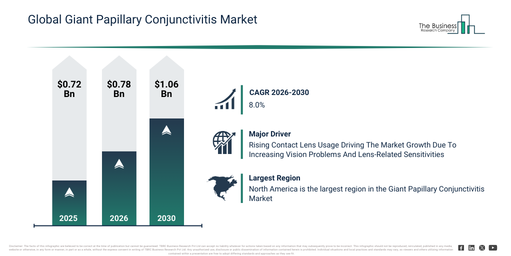
    The giant papillary conjunctivitis market has demonstrated robust expansion in recent years. It is forecast to increase from $0.72 billion in 2025 to $0.78 billion in 2026, registering a compound annual growth rate (CAGR) of 7.8%. The historical growth can be attributed to a growing prevalence of contact lens usage, an uptick in ocular allergies, improved diagnostic awareness among healthcare professionals, the availability of topical antihistamine remedies, and the expansion of outpatient ophthalmology services.

    The giant papillary conjunctivitis market size is predicted to show significant growth over the next few years. It is forecast to grow to $1.06 billion in 2030, achieving a compound annual growth rate (CAGR) of 8.0%. This anticipated growth during the forecast period is driven by factors such as the increasing development of targeted anti-inflammatory therapies, a rising demand for non-steroidal treatment options, the expansion of tele-ophthalmology services, a growing emphasis on early diagnosis, and increasing investment in ophthalmic drug development. Noteworthy trends for the forecast period include the increasing use of combination ocular therapies, the rising adoption of preservative-free eye drops, a growing focus on long-term disease management, the expansion of allergy-related ophthalmic treatments, and an enhanced emphasis on patient-centric care.

    Access Your Free Sample Report for In-Depth Market Insights:

    https://www.thebusinessresearchcompany.com/sample.aspx?id=33123&type=smp

    Which Drivers Are Influencing Market Acceleration In The Giant Papillary Conjunctivitis Market?

    The expanding adoption of contact lenses is projected to boost the allergic papillary conjunctivitis market’s expansion in the future. These are slender, curved optical instruments positioned directly on the eye’s surface (cornea) for vision correction, eye protection, or cosmetic improvement. Their usage is growing due to a surge in vision issues like myopia, largely influenced by extended screen time and digital device usage. Allergic papillary conjunctivitis (APC) assists contact lens users by pinpointing sensitivity concerns, enabling them to select suitable lenses or therapies to lessen irritation and enhance comfort. For example, data from January 2025, provided by the Contact Lens Spectrum (a US-based professional resource for eye care practitioners specializing in contact lenses), indicates that practitioners estimate 59% of patients obtain contact lenses directly from their practices (an increase from 56% in 2023), whereas 23% acquire them through online channels, consistent with 2023 figures. Consequently, the rising consumption of contact lenses is fueling the expansion of the allergic papillary conjunctivitis market.

    What Segments Are Identified Within The Structure Of The Giant Papillary Conjunctivitis Market?

    The giant papillary conjunctivitis market covered in this report is segmented –

    1) By Drug Class: Antihistamines; Mast Cell Stabilizers; Corticosteroids

    2) By Treatment: Medications; Surgical Interventions

    3) By Route of Administration: Topical Eye Drops; Ophthalmic Inserts; Systemic Therapy

    4) By Distribution Channel: Hospital Pharmacies; Retail Pharmacies; Online Pharmacies

    Subsegments:

    1) By Antihistamines: Topical Antihistamine Drops; Dual Action Antihistamine Agents; Oral Antihistamine Medications

    2) By Mast Cell Stabilizers: Sodium Cromoglycate Preparations; Lodoxamide Based Formulations; Nedocromil Based Treatments

    3) By Corticosteroids: Topical Steroid Eye Drops; Low Potency Corticosteroids; Short Term Corticosteroid Therapy

    Which Key Players Are Driving Competition In The Giant Papillary Conjunctivitis Market?

    Major companies operating in the giant papillary conjunctivitis market are Johnson & Johnson Vision Care Inc., AbbVie Inc., Novartis AG, Teva Pharmaceutical Industries Ltd., Bausch Health Companies Inc., Alcon Inc., Cleveland Clinic, Sun Pharmaceutical Industries Ltd., CooperVision Inc., Cipla Limited, Lupin Limited, Santen Pharmaceutical Co. Ltd., Mankind Pharma Pvt. Ltd., Eton Pharmaceuticals Inc., Micro Labs Limited, Specsavers Optical Group Ltd., Harrow Health Inc., Ocular Therapeutix Inc., Eyevance Pharmaceuticals LLC, Iskon Remedies Pvt. Ltd., The Eye Practice Ltd.

    Access The Complete Report For Deeper Market Insights:

    https://www.thebusinessresearchcompany.com/report/giant-papillary-conjunctivitis-market-report

    Which Region Is Projected To Lead The Giant Papillary Conjunctivitis Market During The Forecast Period?

    North America was the largest region in the giant papillary conjunctivitis market in 2025. Asia-Pacific is expected to be the fastest-growing region in the forecast period. The regions covered in the giant papillary conjunctivitis market report are Asia-Pacific, South East Asia, Western Europe, Eastern Europe, North America, South America, Middle East, Africa.

    Request Your Customized Giant Papillary Conjunctivitis Market Research Report for Competitive Advantage:

    https://www.thebusinessresearchcompany.com/customise?id=33123&type=smp

    Browse Through More Reports Similar to the Global Giant Papillary Conjunctivitis Market 2026, By The Business Research Company

    Conjunctivitis Treatment Market Report 2026

    https://www.thebusinessresearchcompany.com/report/conjunctivitis-treatment-global-market-report

    Bacterial Conjunctivitis Market Report 2026

    https://www.thebusinessresearchcompany.com/report/bacterial-conjunctivitis-global-market-report

    Allergy Conjunctivitis Market Report 2026

    https://www.thebusinessresearchcompany.com/report/allergy-conjunctivitis-global-market-report

    Get in touch with us:

    The Business Research Company: https://www.thebusinessresearchcompany.com/

    Americas +1 310-496-7795

    Asia +44 7882 955267 & +91 8897263534

    Europe +44 7882 955267

    Email us at info@tbrc.info

    Follow us on:

    LinkedIn: https://in.linkedin.com/company/the-business-research-company

    YouTube: https://www.youtube.com/channel/UC24_fI0rV8cR5DxlCpgmyFQ

    Global Market Model: https://www.thebusinessresearchcompany.com/global-market-model
  • Vulvovaginal Candidiasis Treatment Market Outlook 2026–2030: Key Business Drivers and Trends

    Vulvovaginal Candidiasis Treatment Market Outlook 2026–2030: Key Business Drivers and Trends

    Uncover key drivers, emerging technologies, and competitive movements shaping the vulvovaginal candidiasis treatment market from 2026–2035 with trusted insights from The Business Research Company

    By how much is the Vulvovaginal Candidiasis Treatment Market expected to grow between 2026 and 2030?

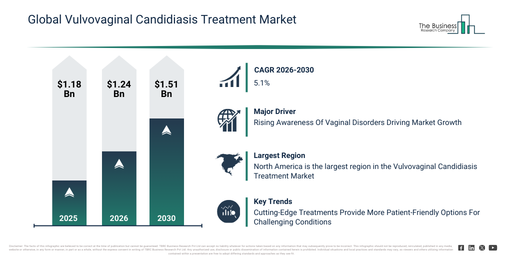
    The vulvovaginal candidiasis treatment market has experienced significant growth in recent years. It is forecast to increase from $1.18 billion in 2025 to $1.24 billion in 2026, achieving a compound annual growth rate (CAGR) of 5.1%. The historical expansion of this market can be attributed to factors such as the availability of azole antifungal medications, the broader reach of retail pharmacy access, an increase in the diagnosis of fungal infections, improved formulations for topical treatments, and the widespread implementation of clinical treatment guidelines.

    The vulvovaginal candidiasis treatment market size is projected to experience robust expansion over the coming years. This market is anticipated to reach a valuation of $1.51 billion by 2030, exhibiting a compound annual growth rate (CAGR) of 5.1%. The anticipated growth during this period stems from factors such as increasing demand for innovative antifungal agents, a heightened emphasis on managing resistance, the broadening of personalized treatment methodologies, greater utilization of telehealth consultations, and innovations in drug delivery technologies. Key trends expected throughout the forecast horizon encompass the increasing embrace of targeted antifungal treatments, a surge in the application of combination therapy regimens, an intensifying focus on strategies to prevent recurrence, the proliferation of over-the-counter treatment alternatives, and improved patient awareness and educational initiatives.

    Access Your Free Sample Report for In-Depth Market Insights:

    https://www.thebusinessresearchcompany.com/sample.aspx?id=21319&type=smp

    Which Drivers Are Influencing Market Acceleration In The Vulvovaginal Candidiasis Treatment Market?

    Increased understanding of vaginal disorders is projected to boost the expansion of the vulvovaginal candidiasis treatment market in the future. These disorders encompass various conditions impacting the vagina, such as infections, inflammation, irritation, or unusual discharge. The heightened awareness of vaginal disorders stems from greater education, better healthcare accessibility, and an increased emphasis on women’s health and wellness. Treatment for vulvovaginal candidiasis assists patients with vaginal disorders by easing symptoms like itching, irritation, and abnormal discharge, re-establishing the natural vaginal microbiome, hindering recurring infections, and enhancing overall vaginal health and comfort. As an illustration, data from September 2025, provided by the Centers for Disease Control and Prevention, a US-based government agency, indicated approximately 209,253 syphilis cases were recorded in 2023, showing a 1% rise from 207,269 cases in 2022. Consequently, the increasing knowledge regarding vaginal disorders is fueling the expansion of the vulvovaginal candidiasis treatment market.

    What Leading Segments Are Studied In The Vulvovaginal Candidiasis Treatment Market?

    The vulvovaginal candidiasis treatment market covered in this report is segmented –

    1) By Drug Class: Clotrimazole, Nystatin, Fluconazole, Ketoconazole, Terbinafine, Terconazole, Other Drug Classes

    2) By Route Of Administration: Oral, Intravenous, Topical

    3) By Distribution Channel: Hospital Pharmacy , Retail Pharmacy, Online Pharmacy

    Subsegments:

    1) By Clotrimazole: Over-the-Counter (OTC) Medications, Prescription Medications

    2) By Nystatin: Monotherapy, Combination Therapy

    3) By Fluconazole: Single-Dose Therapy, Multi-Dose Therapy

    4) By Ketoconazole: Short-Term Treatment, Long-Term Treatment

    5) By Terbinafine: Systemic Treatment, Topical Treatment

    6) By Terconazole: Low-Dose Therapy, High-Dose Therapy

    7) By Other Drug Classes: Azole Antifungals, Polyene Antifungals, Novel Therapeutics

    How Are New Market Trends Shaping The Landscape Of The Vulvovaginal Candidiasis Treatment Market?

    Leading companies within the vulvovaginal candidiasis (VVC) treatment market are prioritizing the development of innovative solutions, such as selective oral azole antifungals, to enhance therapeutic efficacy, minimize recurrence, and improve patient tolerability. Selective oral azoles are antifungal medications designed to specifically inhibit fungal enzymes like CYP51, which helps to reduce off-target effects and adverse reactions when compared to traditional broad-spectrum azoles. For instance, in February 2024, Mycovia Pharmaceuticals, Inc., a US-based biopharmaceutical company, in partnership with Jiangsu Hengrui Pharmaceuticals Co., Ltd., launched VIVJOA (oteseconazole) capsules in China for the treatment of severe vulvovaginal candidiasis. VIVJOA is delivered as a two-day oral regimen, achieving superior cure rates compared with fluconazole while offering a shorter, more targeted course of therapy. This product represents a significant advancement in VVC management by providing an effective, patient-friendly treatment option for cases that are difficult to treat.

    Which Major Industry Participants Are Leading The Vulvovaginal Candidiasis Treatment Market Growth?

    Major companies operating in the vulvovaginal candidiasis treatment market are Pfizer Inc., Bayer Inc., Teva Pharmaceutical Industries Ltd., Dr. Reddy’s Laboratories Limited, Cipla Limited, Zydus Lifesciences, Novartis Pharmaceuticals Inc., Glenmark Pharmaceuticals Ltd., Taro Pharmaceuticals Industries Ltd., Accord Healthcare Ltd., Incepta Pharmaceuticals Ltd., Cadila Pharmaceuticals, Astellas Pharma Inc., Mycovia Pharmaceuticals Inc., Basilea Pharmaceutica Ltd., Scynexis Inc., Grupo Ferrer Internacional SA, Sanofi SA, Bristol-Myers Squibb Company, Perrigo Company plc, Lupin Limited, Sun Pharmaceutical Industries Ltd.

    Access The Complete Report For Deeper Market Insights:

    https://www.thebusinessresearchcompany.com/report/vulvovaginal-candidiasis-treatment-global-market-report

    Which Region Is Expected To Experience The Fastest Growth In The Vulvovaginal Candidiasis Treatment Market?

    North America was the largest region in the vulvovaginal candidiasis treatment market in 2025. The regions covered in the vulvovaginal candidiasis treatment market report are Asia-Pacific, South East Asia, Western Europe, Eastern Europe, North America, South America, Middle East, Africa.

    Request Your Customized Vulvovaginal Candidiasis Treatment Market Research Report for Competitive Advantage:

    https://www.thebusinessresearchcompany.com/customise?id=21319&type=smp

    Browse Through More Reports Similar to the Global Vulvovaginal Candidiasis Treatment Market 2026, By The Business Research Company

    Vaginitis Therapeutics Market Report 2026

    https://www.thebusinessresearchcompany.com/report/vaginitis-therapeutics-global-market-report

    Candidiasis Therapeutics Market Report 2026

    https://www.thebusinessresearchcompany.com/report/candidiasis-therapeutics-global-market-report

    Vulvodynia Treatment Market Report 2026

    https://www.thebusinessresearchcompany.com/report/vulvodynia-treatment-global-market-report

    Get in touch with us:

    The Business Research Company: https://www.thebusinessresearchcompany.com/

    Americas +1 310-496-7795

    Asia +44 7882 955267 & +91 8897263534

    Europe +44 7882 955267

    Email us at info@tbrc.info

    Follow us on:

    LinkedIn: https://in.linkedin.com/company/the-business-research-company

    YouTube: https://www.youtube.com/channel/UC24_fI0rV8cR5DxlCpgmyFQ

    Global Market Model: https://www.thebusinessresearchcompany.com/global-market-model
  • Gene Therapy Bioassays Market Future Outlook: Strong Growth Expected Toward $2.62 Billion by 2030

    Gene Therapy Bioassays Market Future Outlook: Strong Growth Expected Toward $2.62 Billion by 2030

    Uncover key drivers, emerging technologies, and competitive movements shaping the gene therapy bioassays market from 2026–2035 with trusted insights from The Business Research Company

    What is the estimated market size of the Gene Therapy Bioassays Market by the end of 2030?

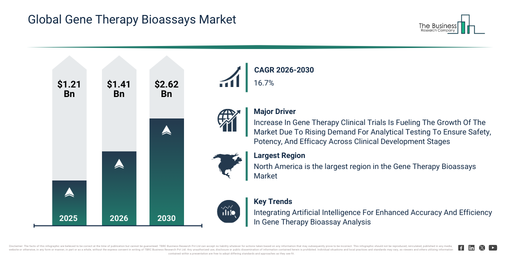
    The gene therapy bioassays market has seen substantial growth recently. This market is expected to expand from $1.21 billion in 2025 to $1.41 billion in 2026, demonstrating a compound annual growth rate (CAGR) of 16.5%. The historical growth of this market is linked to an increase in gene therapy research programs, the expansion of viral vector manufacturing, heightened clinical trial activity, the widespread adoption of standardized bioassay protocols, and intensifying regulatory oversight on gene therapy products.

    The gene therapy bioassays market is anticipated to experience substantial expansion in the coming years, with its size projected to reach $2.62 billion by 2030, achieving a compound annual growth rate (CAGR) of 16.7%. This growth during the forecast period is primarily driven by the increasing commercialization of gene therapies, a rising demand for high-throughput bioassay solutions, the expansion of personalized genetic medicine, growing investments in advanced cell and gene therapy pipelines, and an increasing focus on assay automation and reproducibility. Key trends anticipated in this period include the increased adoption of cell-based potency assays, a rising demand for viral vector characterization tests, the growing use of automated bioassay platforms, the expansion of regulatory-compliant assay validation, and an enhanced focus on functional gene expression analysis.

    Access Your Free Sample Report for In-Depth Market Insights:

    https://www.thebusinessresearchcompany.com/sample.aspx?id=33119&type=smp

    What Drivers Are Shaping Future Opportunities In The Gene Therapy Bioassays Market?

    The growing number of gene therapy clinical trials is anticipated to stimulate growth in the gene therapy bioassays market. These trials are conducted to assess the safety, effectiveness, and biological activity of gene-based treatments in human subjects. The proliferation of such trials is propelled by intensified research and development endeavors and increasing investment from biopharmaceutical firms dedicated to addressing unmet medical needs through innovative genetic therapies. Gene therapy bioassays are vital for clinical development, offering critical analytical evaluations to determine biological activity, potency, safety, and the mechanism of action at each phase, with regulatory mandates becoming more rigorous as programs advance through clinical stages. For instance, in January 2026, according to the Bioindustry Association (BIA), a UK-based national trade association, the UK recorded 193 ongoing advanced therapy clinical trials, over 80% of which were concentrated on gene therapies. Consequently, the surge in gene therapy clinical trials is a primary factor driving the expansion of the gene therapy bioassays market.

    Which Segments Are Gaining Traction In The Gene Therapy Bioassays Market?

    The gene therapy bioassays market covered in this report is segmented –

    1) By Product Type: Cell-Based Assays; Viral Vector-Based Assays; Non-Viral Vector-Based Assays; Other Product Types

    2) By Service Type: Assay Development Services; Assay Validation Services; Quality Control Testing Services; Regulatory Support Services; Data Analysis And Reporting Services; Custom Bioassay Design Services

    3) By Application: Research And Development; Clinical Testing; Quality Control; Other Applications

    4) By End User: Biotechnology Companies; Pharmaceutical Companies; Contract Research Organizations; Academic And Research Institutes; Regulatory Laboratories

    Subsegments:

    1) By Cell-Based Assays: Reporter Gene Expression Assays; Cell Viability And Cytotoxicity Assays; Transduction Efficiency Assays; Functional Potency Cell Assays; Cellular Uptake And Localization Assays

    2) By Viral Vector-Based Assays: Adeno Associated Virus Vector Assays; Lentiviral Vector Characterization Assays; Retroviral Vector Titer Assays; Vector Genome Integrity Assays; Infectivity And Transduction Assays

    3) By Non-Viral Vector-Based Assays: Plasmid Deoxyribonucleic Acid Delivery Assays; Lipid Nanoparticle Transfection Assays; Polymeric Carrier Efficiency Assays; Physical Gene Delivery Evaluation Assays; Non Viral Vector Stability Assays

    4) By Other Product Types: Immunogenicity Assessment Assays; Biodistribution And Persistence Assays; Safety And Toxicity Bioassays; Analytical Method Development Assays; Custom Gene Therapy Bioassays

    Which Trends Are Expected To Influence The Gene Therapy Bioassays Market In The Upcoming Years?

    Major companies within the gene therapy bioassays market are increasingly focusing on incorporating artificial intelligence and machine learning into bioassay analysis, particularly through AI-enabled digital PCR data interpretation. This integration aims to bolster accuracy, minimize experimental variability, accelerate result turnaround, and optimize the evaluation of therapeutic efficacy and safety during gene therapy development. AI-enabled dPCR data interpretation employs sophisticated algorithms to automate result analysis, differentiate genuine signals from background noise, and accurately quantify viral genomes or vector copy number with minimal human involvement. For example, in April 2025, QIAGEN N.V., a Germany-based molecular diagnostics company, launched an expansion of its QIAcuity lentivirus solutions, which included the QIAcuity RCL Quant Kit and CGT dPCR assays. These solutions feature absolute quantification powered by algorithms, support both multiplex and singleplex assay compatibility for vector genome and vector copy number analysis, and offer software-assisted data analysis workflows designed to aid regulatory-compliant decision-making in gene therapy bioassay applications.

    Who Are The Top-Performing Companies In The Gene Therapy Bioassays Market In Recent Years?

    Major companies operating in the gene therapy bioassays market are Boehringer Ingelheim BioXcellence, AGC Biologics, ICON plc, Lonza Group AG, SGS SA, Eurofins Scientific SE, WuXi AppTec, Charles River Laboratories International Inc., Catalent Inc, Recipharm AB, KBI Biopharma, Syngene International Limited, QPS Holdings LLC, BioAgilytix Labs (operationally independent CRO), Oxford Biomedica plc, Viralgen Vector S.L., ProtaGene Inc., Center for Breakthrough Medicines, RoslinCT, Immunologix Labs, Genezen Laboratories

    Access The Complete Report For Deeper Market Insights:

    https://www.thebusinessresearchcompany.com/report/gene-therapy-bioassays-market-report

    Which Region Currently Holds The Largest Share Of The Gene Therapy Bioassays Market?

    North America was the largest region in the gene therapy bioassays market in 2025. Asia-Pacific is expected to be the fastest-growing region in the forecast period. The regions covered in the gene therapy bioassays market report are Asia-Pacific, South East Asia, Western Europe, Eastern Europe, North America, South America, Middle East, Africa.

    Request Your Customized Gene Therapy Bioassays Market Research Report for Competitive Advantage:

    https://www.thebusinessresearchcompany.com/customise?id=33119&type=smp

    Browse Through More Reports Similar to the Global Gene Therapy Bioassays Market 2026, By The Business Research Company

    Genes Therapy Market Report 2026

    https://www.thebusinessresearchcompany.com/report/genes-therapy-global-market-report

    Cell And Gene Therapy Clinical Trial Services Market Report 2026

    https://www.thebusinessresearchcompany.com/report/cell-and-gene-therapy-clinical-trial-services-global-market-report

    Cell And Gene Therapy Supply Chain Or Logistics Market Report 2026

    https://www.thebusinessresearchcompany.com/report/cell-and-gene-therapy-supply-chain-or-logistics-global-market-report

    Get in touch with us:

    The Business Research Company: https://www.thebusinessresearchcompany.com/

    Americas +1 310-496-7795

    Asia +44 7882 955267 & +91 8897263534

    Europe +44 7882 955267

    Email us at info@tbrc.info

    Follow us on:

    LinkedIn: https://in.linkedin.com/company/the-business-research-company

    YouTube: https://www.youtube.com/channel/UC24_fI0rV8cR5DxlCpgmyFQ

    Global Market Model: https://www.thebusinessresearchcompany.com/global-market-model
  • Revenue of the G Protein-Coupled Receptor Family C Group 5 Member D (GPRC5D) Targeted Therapies Market Predicted to Achieve $2.42 Billion by 2030, Driven by 32.9% CAGR

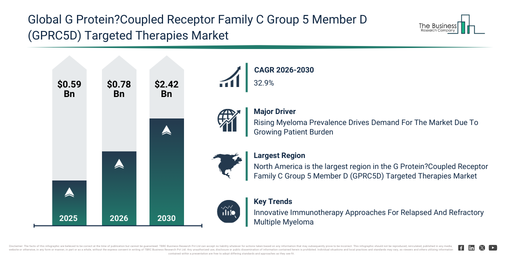
    Revenue of the G Protein-Coupled Receptor Family C Group 5 Member D (GPRC5D) Targeted Therapies Market Predicted to Achieve $2.42 Billion by 2030, Driven by 32.9% CAGR

    Uncover key drivers, emerging technologies, and competitive movements shaping the g protein-coupled receptor family c group 5 member d (gprc5d) targeted therapies market from 2026–2035 with trusted insights from The Business Research Company

    What was the valuation of the G Protein-Coupled Receptor Family C Group 5 Member D (GPRC5D) Targeted Therapies Market in 2026, and what figure is it projected to hit by 2030?

    Recent years have witnessed remarkable growth in the g protein-coupled receptor family c group 5 member d (gprc5d) targeted therapies market size. This market is projected to expand from $0.59 billion in 2025 to $0.78 billion in 2026, demonstrating a compound annual growth rate (CAGR) of 32.7%. The expansion observed in past periods resulted from advancements in targeted cancer therapy research, a greater incidence of multiple myeloma cases, the expansion of monoclonal antibody development programs, enhancements in clinical trial infrastructure, and growing investments in oncology drug discovery.

    The market for g protein-coupled receptor family c group 5 member d (gprc5d) targeted therapies is anticipated to experience substantial expansion over the coming years. Projections indicate this market will ascend to $2.42 billion by 2030, demonstrating a robust compound annual growth rate (CAGR) of 32.9%. The projected growth is primarily driven by several factors, including a rise in regulatory clearances for targeted biologics, increasing patient demand for individualized cancer treatments, the broadening of next-generation immunotherapy platforms, escalating investments in precision medicine ecosystems, and the wider uptake of biomarker-guided therapy choices. Key developments anticipated during this period encompass the accelerated creation of bispecific antibody therapies, a heightened emphasis on gprc5d biomarker-informed patient stratification, the expanding implementation of CAR-T cell platforms, the growth of clinical pipelines in precision oncology, and improved integration of companion diagnostics.

    Access Your Free Sample Report for In-Depth Market Insights:

    https://www.thebusinessresearchcompany.com/sample.aspx?id=33116&type=smp

    Which Drivers Are Affecting Market Participation In The G Protein-Coupled Receptor Family C Group 5 Member D (GPRC5D) Targeted Therapies Market?

    The increasing occurrence of myeloma is projected to fuel the expansion of the GPRC5D-targeted therapies market in the future. Myeloma, a malignancy originating in plasma cells within the bone marrow, interferes with the regular production of blood cells and has the potential to lead to bone injury, anemia, and renal issues. The growing frequency of myeloma is partly attributable to an aging populace, given that the likelihood of developing plasma cell disorders increases with advancing age as genetic alterations build up over years. GPRC5D-targeted therapies provide a treatment for myeloma by attaching to the GPRC5D protein found on cancerous plasma cells, subsequently guiding the immune system, particularly T cells, to specifically eliminate these malignant cells while largely preserving healthy cells. For example, in January 2026, the American Cancer Society, a professional organization located in the US, anticipates that in 2026, the United States will report about 36,000 new cases of multiple myeloma, consisting of 20,150 cases in men and 15,850 cases in women, alongside an expected 10,850 deaths, with 5,780 men and 5,070 women affected. Consequently, the expanding prevalence of myeloma is a key factor propelling the growth of the GPRC5D-targeted therapies market.

    What Segment Categories Are Covered In The G Protein-Coupled Receptor Family C Group 5 Member D (GPRC5D) Targeted Therapies Market?

    The g protein-coupled receptor family c group 5 member d (gprc5d) targeted therapies market covered in this report is segmented –

    1) By Therapy Type: Monoclonal Antibodies; Bispecific Antibodies; Chimeric Antigen Receptor (CAR-T) Cell Therapies; Other Therapy Types

    2) By Indication: Multiple Myeloma; Solid Tumors; Other Indications

    3) By Technology: Precision Medicine Approaches; Molecular Targeted Therapy; Cancer Immunotherapy Platforms; Biopharmaceutical Drug Delivery Systems

    4) By Route Of Administration: Intravenous; Subcutaneous; Other Routes Of Administration

    5) By End-User: Hospitals; Specialty Clinics; Research Institutes; Other End-Users

    Subsegments:

    1) By Monoclonal Antibodies: Fully Human Monoclonal Antibodies; Humanized Monoclonal Antibodies; Chimeric Monoclonal Antibodies; Murine Monoclonal Antibodies

    2) By Bispecific Antibodies: Dual Targeting Bispecific Antibodies; Cross Linking Bispecific Antibodies; Immune Cell Engaging Bispecific Antibodies; Cytotoxic Bispecific Antibodies

    3) By Chimeric Antigen Receptor (CAR-T) Cell Therapies: Autologous Car T Cell Therapies; Allogeneic Car T Cell Therapies; Next Generation Car T Cell Therapies; Gene Edited Car T Cell Therapies

    4) By Other Therapy Types: Targeted Small Molecule Drugs; Receptor Specific Inhibitors; Injectable Biologics; Oral Targeted Therapeutics

    What Trends Are Driving The Growth Trajectory Of The G Protein-Coupled Receptor Family C Group 5 Member D (GPRC5D) Targeted Therapies Market?

    Leading firms in the GPRC5D targeted therapies sector are concentrating on creating novel solutions, like bispecific T cell engagers, to boost the immune system’s ability to target cancer cells and increase the effectiveness of treatments. A bispecific T-cell engager (BiTE) is a specific kind of immunotherapy molecule engineered to link T-cells straight to cancer cells through simultaneous binding, thereby prompting the T-cells to eradicate the specific cancer cells. As an illustration, in August 2023, the US-based healthcare corporation Johnson & Johnson secured approval from the European Commission for TALVEY (talquetamab), which is Janssen’s bispecific antibody therapy designed to target GPRC5D, intended for patients with relapsed and refractory multiple myeloma (RRMM) who have undergone a minimum of three previous therapies. This particular therapy stands as a pioneering bispecific T-cell engager, targeting GPRC5D on multiple myeloma cells and CD3 on T cells, aimed at addressing relapsed/refractory multiple myeloma in patients who have received extensive prior treatments. Its primary objective is to deliver lasting responses (ORR >70% in trials) following a minimum of four prior therapies, offering benefits such as subcutaneous administration, prolonged improvements in quality of life, and continued effectiveness even after bispecifics or CAR-T treatments, thereby addressing a significant unmet requirement in advanced-stage disease.

    Which Leading Companies Dominate The G Protein-Coupled Receptor Family C Group 5 Member D (GPRC5D) Targeted Therapies Market Share?

    Major companies operating in the g protein-coupled receptor family c group 5 member d (gprc5d) targeted therapies market are Johnson And Johnson, F. Hoffmann-La Roche AG., AbbVie Inc., Sanofi S.A., AstraZeneca plc, Bristol Myers Squibb Company, Genmab A/S, Genentech Inc., Simcere Zaiming Biotechnology Co. Ltd., Innovent Biologics Inc., Essen Biotech Co. Ltd., Nanjing IASO Biotechnology Co. Ltd., CARsgen Therapeutics Holdings Limited, Oricell Therapeutics Co. Ltd., Integral Molecular Inc., Overland Therapeutics Inc., Qilu Pharmaceutical Co. Ltd., Leads Biolabs Ltd., ShanghAI Yake Biotechnology Co. Ltd., Guangzhou Bio-gene Technology Co. Ltd.

    Access The Complete Report For Deeper Market Insights:

    https://www.thebusinessresearchcompany.com/report/g-protein-coupled-receptor-family-c-group-5-member-d-gprc5d-targeted-therapies-market-report

    How Does The G Protein-Coupled Receptor Family C Group 5 Member D (GPRC5D) Targeted Therapies Market Perform Across Major Global Regions?

    North America was the largest region in the GPRC5D targeted therapies market in 2025. Asia-Pacific is expected to be the fastest-growing region in the forecast period. The regions covered in the g protein-coupled receptor family c group 5 member d (gprc5d) targeted therapies market report are Asia-Pacific, South East Asia, Western Europe, Eastern Europe, North America, South America, Middle East, Africa.

    Request Your Customized G Protein-Coupled Receptor Family C Group 5 Member D (GPRC5D) Targeted Therapies Market Research Report for Competitive Advantage:

    https://www.thebusinessresearchcompany.com/customise?id=33116&type=smp

    Browse Through More Reports Similar to the Global G Protein-Coupled Receptor Family C Group 5 Member D (GPRC5D) Targeted Therapies Market 2026, By The Business Research Company

    G Protein Coupled Receptors Market Report 2026

    https://www.thebusinessresearchcompany.com/report/g-protein-coupled-receptors-global-market-report

    Cc Chemokine Receptor Type 5 Market Report 2026

    https://www.thebusinessresearchcompany.com/report/cc-chemokine-receptor-type-5-global-market-report

    Gmp Cell Therapy Consumables Market Report 2026

    https://www.thebusinessresearchcompany.com/report/gmp-cell-therapy-consumables-global-market-report

    Get in touch with us:

    The Business Research Company: https://www.thebusinessresearchcompany.com/

    Americas +1 310-496-7795

    Asia +44 7882 955267 & +91 8897263534

    Europe +44 7882 955267

    Email us at info@tbrc.info

    Follow us on:

    LinkedIn: https://in.linkedin.com/company/the-business-research-company

    YouTube: https://www.youtube.com/channel/UC24_fI0rV8cR5DxlCpgmyFQ

    Global Market Model: https://www.thebusinessresearchcompany.com/global-market-model
  • Global Vulvodynia Treatment Market Report 2026: Emerging Trends and Growth Scenarios

    Global Vulvodynia Treatment Market Report 2026: Emerging Trends and Growth Scenarios

    Uncover key drivers, emerging technologies, and competitive movements shaping the vulvodynia treatment market from 2026–2035 with trusted insights from The Business Research Company

    What is the estimated market size of the Vulvodynia Treatment Market by the end of 2030?

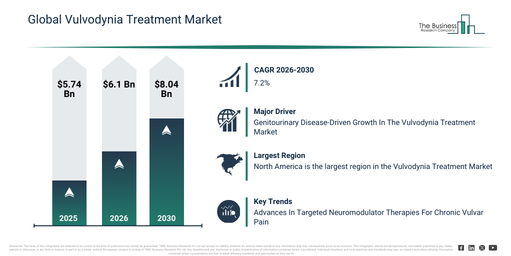
    The vulvodynia treatment market has demonstrated strong growth over recent years. It is forecast to increase from $5.74 billion in 2025 to $6.1 billion in 2026, advancing at a compound annual growth rate (CAGR) of 6.1%. This historical expansion can be attributed to several factors, including enhanced clinical recognition of vulvodynia, the availability of neuropathic pain medications, the broadening of gynecological care services, heightened patient advocacy efforts, and the development of specialized pain management protocols.

    The vulvodynia treatment market is projected to experience substantial expansion in the coming years, with its size expected to reach $8.04 billion by 2030, reflecting a compound annual growth rate (CAGR) of 7.2%. This anticipated growth during the forecast period is primarily driven by factors such as increasing investments in women’s health research, a rising demand for personalized pain therapies, the expansion of multidisciplinary treatment clinics, greater adoption of non-opioid pain solutions, and advancements in targeted drug formulations. Furthermore, major trends anticipated over the same period include a wider embrace of multimodal pain management approaches, an uptick in the utilization of topical and localized therapies, a heightened focus on patient-centered treatment plans, an increase in non-surgical intervention options, and enhanced awareness of chronic vulvar pain conditions.

    Access Your Free Sample Report for In-Depth Market Insights:

    https://www.thebusinessresearchcompany.com/sample.aspx?id=13218&type=smp

    What Drivers Are Shaping Future Opportunities In The Vulvodynia Treatment Market?

    The increasing prevalence of genitourinary conditions is projected to boost the expansion of the vulvodynia treatment market. These conditions, also known as urogenital diseases, involve medical issues impacting both the reproductive and urinary systems, potentially triggered by factors like diabetes or elevated blood pressure. Due to their close anatomical and functional links, these systems are commonly considered together. The main application of vulvodynia treatment is in addressing diverse genitourinary ailments in women, which aids in alleviating discomfort and manifestations, thereby enhancing a patient’s overall well-being. As an illustration, in July 2025, data from the UK Health Security Agency, a UK-based governmental body, indicated that from 6 April 2023 to 5 April 2024, there were 189,756 hospital admissions attributed to UTIs, leading to an aggregate of 1.2 million bed days. On average, each infection was responsible for 6 bed days, though it was observed that one-third of patients had hospital stays shorter than a single day. Consequently, the escalation of genitourinary diseases is fueling the expansion of the vulvodynia treatment market.

    Which Segment Groups Are Influencing The Vulvodynia Treatment Market?

    The vulvodynia treatment market covered in this report is segmented –

    1) By Drug Type: Anticonvulsants, Tricyclic Antidepressants, Local Anesthetics, Antimicrobials, Hormone Creams, Nerve Blocks, Other Drug Types

    2) By Route Of Administration: Oral, Topical, Other Routes Of Administration

    3) By Distribution Channel: Hospital Pharmacy, Online Pharmacy, Retail Pharmacy

    Subsegments:

    1) By Anticonvulsants: Gabapentin, Pregabalin

    2) By Tricyclic Antidepressants: Amitriptyline, Nortriptyline

    3) By Local Anesthetics: Lidocaine Cream, Benzocaine

    4) By Antimicrobials: Antibiotic Creams, Antifungal Medications

    5) By Hormone Creams: Estrogen Creams, Testosterone Creams

    6) By Nerve Blocks: Pelvic Nerve Blocks, Pudendal Nerve Blocks

    7) By Other Drug Types: Topical Capsaicin, Corticosteroids

    Which Trends Are Expected To Influence The Vulvodynia Treatment Market In The Upcoming Years?

    Leading companies within the vulvodynia treatment market are concentrating on developing advanced products, such as new neuromodulators, to offer precise pain relief and elevate patients’ quality of life. These novel neuromodulators are medications engineered to modify nerve signaling by regulating neurotransmitters in the nervous system, which helps diminish chronic vulvar pain, enhance sexual function, and provides a more specific, mechanism-based approach compared to conventional therapies like topical anesthetics or common painkillers. For example, in November 2025, Initiator Pharma A/S, a clinical-stage biotech company from Denmark, obtained regulatory clearance from UK authorities to initiate a Phase 2a clinical proof-of-concept study for pudafensine. This investigational oral monoamine reuptake inhibitor is intended for vulvodynia treatment under its IPVU2025 clinical program. Pudafensine is formulated to preferentially hinder the synaptic reuptake of dopamine (and to a lesser extent serotonin), consequently boosting neurotransmitter levels in the synaptic cleft; this modulation has the potential to aid in reducing pain perception and improving sexual function, supported by a favorable safety profile observed in earlier pain/challenge studies.

    Who Are The Prominent Global Companies Shaping The Vulvodynia Treatment Market Landscape?

    Major companies operating in the vulvodynia treatment market are Pfizer Inc., Johnson and Johnson Pvt. Ltd., Merck and Co. Inc., AbbVie Inc., Bayer AG, Novartis AG, Sanofi S.A., GlaxoSmithKline plc, Takeda Pharmaceutical Company Limited, Eli Lilly and Company, Amgen Inc., Teva Pharmaceutical Industries Ltd., Janssen Pharmaceuticals Inc., Mylan N.V., Astellas Pharma Inc., Viatris Inc., Cipla Inc., Hikma Pharmaceuticals plc, Endo International Inc., Amneal Pharmaceuticals Inc., Stada Arzneimittel AG, Glenmark Pharmaceuticals Inc., Alkem Laboratories Limited, Cadila Pharmaceuticals Ltd., Taro Pharmaceutical Industries Ltd., Upsher-Smith Laboratories LLC, Noven Pharmaceuticals Inc., Zydus Lifesciences Ltd., Depomed Inc.

    Access The Complete Report For Deeper Market Insights:

    https://www.thebusinessresearchcompany.com/report/vulvodynia-treatment-global-market-report

    Which Geographic Areas Are Emerging As Strong Markets For The Vulvodynia Treatment Market?

    North America was the largest region in the vulvodynia treatment market in 2025. Asia-Pacific is expected to be the fastest-growing region in the forecast period. The regions covered in the vulvodynia treatment market report are Asia-Pacific, South East Asia, Western Europe, Eastern Europe, North America, South America, Middle East, Africa.

    Request Your Customized Vulvodynia Treatment Market Research Report for Competitive Advantage:

    https://www.thebusinessresearchcompany.com/customise?id=13218&type=smp

    Browse Through More Reports Similar to the Global Vulvodynia Treatment Market 2026, By The Business Research Company

    Vasomotor Menopausal Symptoms Vms Treatment Market Report 2026

    https://www.thebusinessresearchcompany.com/report/vasomotor-menopausal-symptoms-vms-treatment-global-market-report

    Gastric Volvulus Treatment Market Report 2026

    https://www.thebusinessresearchcompany.com/report/gastric-volvulus-treatment-global-market-report

    Vaginitis Therapeutics Market Report 2026

    https://www.thebusinessresearchcompany.com/report/vaginitis-therapeutics-global-market-report

    Get in touch with us:

    The Business Research Company: https://www.thebusinessresearchcompany.com/

    Americas +1 310-496-7795

    Asia +44 7882 955267 & +91 8897263534

    Europe +44 7882 955267

    Email us at info@tbrc.info

    Follow us on:

    LinkedIn: https://in.linkedin.com/company/the-business-research-company

    YouTube: https://www.youtube.com/channel/UC24_fI0rV8cR5DxlCpgmyFQ

    Global Market Model: https://www.thebusinessresearchcompany.com/global-market-model
  • Frontotemporal Dementia Sector Forecast Shows Robust Momentum, Climbing to $4.99 Billion With 9% CAGR

    Frontotemporal Dementia Sector Forecast Shows Robust Momentum, Climbing to $4.99 Billion With 9% CAGR

    Uncover key drivers, emerging technologies, and competitive movements shaping the frontotemporal dementia market from 2026–2035 with trusted insights from The Business Research Company

    What are the forecasted starting (2026) and ending (2030) market sizes for the Frontotemporal Dementia Market?

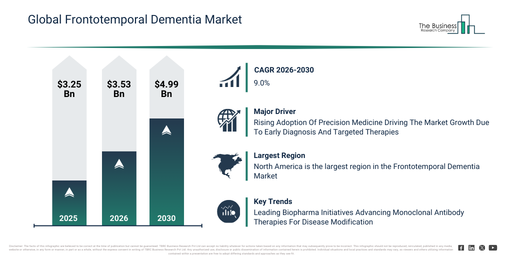
    The frontotemporal dementia market size has experienced significant growth in recent years. It is anticipated to expand from $3.25 billion in 2025 to $3.53 billion by 2026, driven by a compound annual growth rate (CAGR) of 8.8%. This past growth can be attributed to factors such as improved clinical recognition of frontotemporal dementia, an increase in specialized neurology clinics, greater availability of neuroimaging technologies, heightened awareness among healthcare professionals, and the establishment of standardized diagnostic criteria.

    The market for frontotemporal dementia is projected to experience substantial expansion over the upcoming years. This market is anticipated to reach $4.99 billion by 2030, exhibiting a compound annual growth rate (CAGR) of 9.0%. Factors contributing to this expansion during the projection period include heightened investments in neurodegenerative disease research, the increasing uptake of precision medicine strategies, the broader availability of digital health tools for cognitive assessment, a stronger emphasis on therapies that modify the disease, and the growth of caregiver support and management initiatives. Key trends identified for the forecast timeframe encompass the increasing utilization of advanced neuroimaging diagnostics, a surge in the adoption of genetic and biomarker testing, a sharpened focus on differentiating diseases early and accurately, the broadening of multidisciplinary care models, and improved integration of digital tools for cognitive assessment.

    Access Your Free Sample Report for In-Depth Market Insights:

    https://www.thebusinessresearchcompany.com/sample.aspx?id=33114&type=smp

    What Drivers Are Supporting Technological Adoption In The Frontotemporal Dementia Market?

    The expanding field of precision medicine is anticipated to boost the growth of the frontotemporal dementia market in the coming years. Precision medicine represents an approach to tailoring medical treatment to the distinct biological and lifestyle traits of individual patients. Its application is on the rise, driven by advancements in genomics and biotechnology that permit more precise identification of disease origins and the formulation of targeted treatments, thereby enhancing patient outcomes. For frontotemporal dementia (FTD), precision medicine is beneficial as it allows for prompt and accurate diagnosis through genetic and biomarker analysis, and it directs the development of specific therapies targeting particular molecular pathways implicated in the disease, leading to improved treatment efficacy and slower progression. As an illustration, the US Food and Drug Administration (FDA) sanctioned 16 new personalized treatments for rare disease patients, an increase from six in 2022, according to the Personalized Medicine Coalition, a US-based non-profit organization. Among the personalized treatments newly approved for 2023 were also seven cancer drugs and three for other diseases and conditions. Consequently, the increasing adoption of precision medicine is propelling the growth of the frontotemporal dementia market.

    Which Segments Are Contributing To The Growth Of The Frontotemporal Dementia Market?

    The frontotemporal dementia market covered in this report is segmented –

    1) By Disease Type: Behavioral Variant Frontotemporal Dementia (bvFTD); Primary Progressive Aphasia (PPA); Frontotemporal Dementia With Motor Neuron Disease (FTD-MND)

    2) By Drug Class: Cholinesterase Inhibitors; N-Methyl-D-Aspartate (NMDA) Receptor Antagonists; Antidepressants; Antipsychotics

    3) By Diagnostic Methods: Clinical Evaluation; Neuroimaging; Genetic Testing

    4) By Treatment Approach: Symptom Management; Medications; Speech And Occupational Therapy

    5) By End User: Hospitals; Specialty Clinics; Long-Term Care Facilities

    Subsegments:

    1) By Behavioral Variant Frontotemporal Dementia (bvFTD): Disinhibited Type; Apathetic Type; Stereotypic Type; Hyperorality Type

    2) By Primary Progressive Aphasia (PPA): Nonfluent Variant; Semantic Variant; Logopenic Variant

    3) By Frontotemporal Dementia With Motor Neuron Disease (FTD-MND): Amyotrophic Lateral Sclerosis Associated; Progressive Muscular Atrophy Associated; Primary Lateral Sclerosis Associated

    What Upcoming Trends Are Likely To Define The Future Path Of The Frontotemporal Dementia Market?

    Companies operating within the frontotemporal dementia market are prioritizing the development of innovative solutions, such as monoclonal antibody therapy, to impede disease progression and target underlying pathological mechanisms. Monoclonal antibody therapy involves treatments utilizing laboratory-created antibodies engineered to specifically engage certain proteins or cells in the body, aiding in disease management by blocking, neutralizing, or marking harmful cells for elimination. For example, in February 2024, Alector Inc., a US-based clinical-stage biotechnology company, partnered with GSK Plc., a UK-based biopharma company, and received FDA Breakthrough Therapy Designation for latozinemab (AL001). This treatment is specifically formulated for frontotemporal dementia resulting from a progranulin gene mutation (FTD-GRN), functioning by inhibiting the sortilin receptor and elevating progranulin (PGRN) levels in the brain to address lysosomal dysfunction and neurodegeneration. Phase 2 trials revealed safe, sustained PGRN increases (over 2-fold in plasma/CSF) along with observable trends towards a slower clinical progression.

    Who Are The Major Companies Operating In The Frontotemporal Dementia Market?

    Major companies operating in the frontotemporal dementia market are Novartis AG, Eli Lilly and Company, Siemens Healthineers AG, Alector Inc., Denali Therapeutics Inc., Sangamo Therapeutics Inc., QurAlis Inc., TauRx Pharmaceuticals Ltd., AC Immune SA, AviadoBio Ltd., Passage Bio Inc., Muna Therapeutics Inc., Neurimmune Therapeutics Inc., Coya Therapeutics Inc., Aquinnah Pharmaceuticals Inc., Asceneuron SA, CAMP4 Therapeutics Inc., Libra Therapeutics Inc., SOLA Biosciences Inc., Transposon Therapeutics Inc.

    Access The Complete Report For Deeper Market Insights:

    https://www.thebusinessresearchcompany.com/report/frontotemporal-dementia-market-report

    Which Region Is Anticipated To See The Fastest Growth In The Frontotemporal Dementia Market?

    North America was the largest region in the frontotemporal dementia market in 2025. Asia-Pacific is expected to be the fastest-growing region in the forecast period. The regions covered in the frontotemporal dementia market report are Asia-Pacific, South East Asia, Western Europe, Eastern Europe, North America, South America, Middle East, Africa.

    Request Your Customized Frontotemporal Dementia Market Research Report for Competitive Advantage:

    https://www.thebusinessresearchcompany.com/customise?id=33114&type=smp

    Browse Through More Reports Similar to the Global Frontotemporal Dementia Market 2026, By The Business Research Company

    Lewy Body Dementia Treatment Market Report 2026

    https://www.thebusinessresearchcompany.com/report/lewy-body-dementia-treatment-global-market-report

    Alzheimers Drugs Market Report 2026

    https://www.thebusinessresearchcompany.com/report/alzheimers-drugs-global-market-report

    Alzheimers Drugs Market Report 2026

    https://www.thebusinessresearchcompany.com/report/alzheimers-drugs-global-market-report

    Get in touch with us:

    The Business Research Company: https://www.thebusinessresearchcompany.com/

    Americas +1 310-496-7795

    Asia +44 7882 955267 & +91 8897263534

    Europe +44 7882 955267

    Email us at info@tbrc.info

    Follow us on:

    LinkedIn: https://in.linkedin.com/company/the-business-research-company

    YouTube: https://www.youtube.com/channel/UC24_fI0rV8cR5DxlCpgmyFQ

    Global Market Model: https://www.thebusinessresearchcompany.com/global-market-model
  • Fertility Tracking Sensor Market Anticipated to Record Steady Gains, Advancing to $3.32 Billion by 2030

    Fertility Tracking Sensor Market Anticipated to Record Steady Gains, Advancing to $3.32 Billion by 2030

    Uncover key drivers, emerging technologies, and competitive movements shaping the fertility tracking sensor market from 2026–2035 with trusted insights from The Business Research Company

    What upper market value could the Fertility Tracking Sensor Market reach by 2030 starting from 2026 levels?

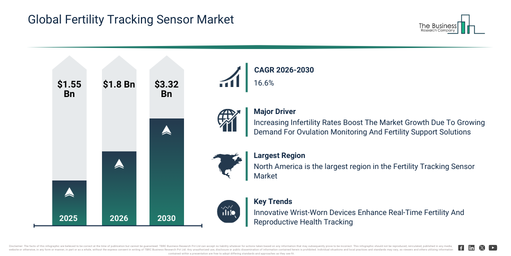
    The fertility tracking sensor market has seen rapid expansion in recent years. Its value is expected to rise from $1.55 billion in 2025 to $1.8 billion in 2026, exhibiting a compound annual growth rate (CAGR) of 16.4%. This historical growth can be attributed to factors such as increased awareness of reproductive health management, the wider adoption of digital health wearables, a rising demand for natural family planning tools, the growth of women-focused health technology, and the availability of affordable sensor technologies.

    The fertility tracking sensor market is anticipated to experience substantial growth in the upcoming years, with its valuation projected to reach $3.32 billion by 2030, demonstrating a compound annual growth rate (CAGR) of 16.6%. This expansion during the forecast period can be attributed to the increasing use of AI-powered fertility analytics, rising demand for personalized reproductive health insights, the expansion of telehealth-supported fertility management, the growing adoption of remote patient monitoring, and the increasing integration of fertility data platforms with healthcare systems. Key trends for the forecast period involve the increasing adoption of continuous ovulation monitoring devices, rising use of wearable fertility sensors, growing integration of AI-based cycle prediction algorithms, the expansion of smartphone-connected fertility tracking solutions, and an enhanced focus on non-invasive monitoring technologies.

    Access Your Free Sample Report for In-Depth Market Insights:

    https://www.thebusinessresearchcompany.com/sample.aspx?id=33111&type=smp

    Which Drivers Are Influencing Long-Term Growth In The Fertility Tracking Sensor Market?

    The rising occurrence of infertility is anticipated to fuel the expansion of the fertility tracking sensor market in the future. Infertility describes a reproductive state where a couple struggles to achieve natural pregnancy despite sustained efforts for an extended duration. This increase in infertility is primarily attributed to delayed family planning, with a greater number of people opting to start families later, leading to a decrease in natural fertility and an elevated risk of reproductive health complications. Fertility tracking sensors assist in addressing infertility by constantly observing crucial reproductive indicators, including basal body temperature and hormonal shifts, allowing couples to precisely pinpoint their fertile window and enhance their likelihood of conceiving. To illustrate, in April 2023, data from the World Health Organization (WHO), a Switzerland-based intergovernmental organization, indicated that around 17.5% of adults, equivalent to about 1 in 6 individuals worldwide, experience infertility, underscoring the urgent necessity to provide better access to affordable, quality fertility care for impacted individuals. Consequently, the growing incidence of infertility is propelling the expansion of the fertility tracking sensor market.

    How Is The Fertility Tracking Sensor Market Divided Into Segments?

    The fertility tracking sensor market covered in this report is segmented –

    1) By Product Type: Wearable Sensors; Implantable Sensors; Patch Sensors; Other Product Types

    2) By Technology: Temperature Sensors; Hormone Sensors; Electrochemical Sensors; Optical Sensors; Other Technologies

    3) By Application: Ovulation Prediction; Menstrual Cycle Tracking; Pregnancy Detection; Other Applications

    4) By Distribution Channel: Online; Pharmacies; Retail Stores; Other Distribution Channels

    5) By End-User: Homecare Settings; Hospitals And Clinics; Fertility Centers; Other End-Users

    Subsegments:

    1) By Wearable Sensors: Smart Wristbands; Smart Rings; Smart Patches; Smart Garments

    2) By Implantable Sensors: Subcutaneous Implants; Intrauterine Devices; Microchip Implants

    3) By Patch Sensors: Adhesive Skin Patches; Transdermal Patches; Disposable Patches

    4) By Other Product Types: Portable Monitors; Smartphone Compatible Devices; Non Invasive Devices

    Which Trends Are Shaping Activity Within The Fertility Tracking Sensor Market?

    Leading companies within the fertility tracking sensor market are concentrating on developing advanced solutions, such as wrist-worn wearables, to offer real-time fertility tracking, enhance cycle accuracy, and assist women’s reproductive health management through data-driven insights. A wrist-worn wearable is a compact electronic device worn on the wrist that gathers and examines physiological data like temperature, heart rate, or hormone-related signals to monitor health metrics and deliver practical insights, including fertility and reproductive health information. For example, in January 2026, Natural Cycles, a Sweden-based digital health company, introduced an NC° Band, which streamlines fertility tracking by automatically taking temperature measurements overnight. This device aims for effortless fertility tracking, substituting manual thermometers by automatically measuring overnight skin temperature, heart rate, and movement. Its objective is to fuel the app’s NC° Fertility algorithm to identify fertile windows, facilitating hormone-free birth control (93% typical effectiveness), as well as aiding pregnancy planning, postpartum, and perimenopause support.

    Which Major Firms Are Strengthening Their Position In The Fertility Tracking Sensor Market?

    Major companies operating in the fertility tracking sensor market are Swiss Precision Diagnostics GmbH, Natural Cycles Nordic AB, Alfa Scientific Designs Inc., kegg Inc., Quidel Corporation, Tempdrop Ltd., Valley Electronics AG., Babystart Ltd., Bongmi Technology, Fairhaven Health LLC, Femometer Inc., Inito Health Tech Private Limited, Oura Health Oy, Prima-Temp LLC, Quanovate Tech Inc., Raiing Medical Company, Samplytics Technologies Pvt. Ltd., YONO Labs Inc., bioZhena Corporation, Welltwigs.

    Access The Complete Report For Deeper Market Insights:

    https://www.thebusinessresearchcompany.com/report/fertility-tracking-sensor-market-report

    Which Region Shows The Strongest Potential For Future Expansion In The Fertility Tracking Sensor Market?

    North America was the largest region in the fertility tracking sensor market in 2025. Asia-Pacific is expected to be the fastest-growing region in the forecast period. The regions covered in the fertility tracking sensor market report are Asia-Pacific, South East Asia, Western Europe, Eastern Europe, North America, South America, Middle East, Africa.

    Request Your Customized Fertility Tracking Sensor Market Research Report for Competitive Advantage:

    https://www.thebusinessresearchcompany.com/customise?id=33111&type=smp

    Browse Through More Reports Similar to the Global Fertility Tracking Sensor Market 2026, By The Business Research Company

    Fertility Services Market Report 2026

    https://www.thebusinessresearchcompany.com/report/fertility-services-global-market-report

    Baby Monitoring Devices Market Report 2026

    https://www.thebusinessresearchcompany.com/report/baby-monitoring-devices-global-market-report

    Assisted Reproductive Technology Market Report 2026

    https://www.thebusinessresearchcompany.com/report/assisted-reproductive-technology-global-market-report

    Get in touch with us:

    The Business Research Company: https://www.thebusinessresearchcompany.com/

    Americas +1 310-496-7795

    Asia +44 7882 955267 & +91 8897263534

    Europe +44 7882 955267

    Email us at info@tbrc.info

    Follow us on:

    LinkedIn: https://in.linkedin.com/company/the-business-research-company

    YouTube: https://www.youtube.com/channel/UC24_fI0rV8cR5DxlCpgmyFQ

    Global Market Model: https://www.thebusinessresearchcompany.com/global-market-model
  • Vulvar Cancer Market Forecast 2026: Where the Industry Is Headed

    Vulvar Cancer Market Forecast 2026: Where the Industry Is Headed

    Uncover key drivers, emerging technologies, and competitive movements shaping the vulvar cancer market from 2026–2035 with trusted insights from The Business Research Company

    What was the valuation of the Vulvar Cancer Market in 2026, and what figure is it projected to hit by 2030?

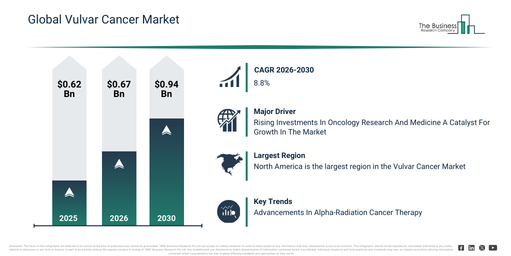
    The vulvar cancer market has experienced robust expansion in recent years. Its value is expected to rise from $0.62 billion in 2025 to $0.67 billion in 2026, exhibiting a compound annual growth rate (CAGR) of 8.9%. This historical progression is largely due to heightened awareness of gynecologic cancers, the accessibility of surgical oncology expertise, the expansion of hospital oncology departments, the adoption of various radiation therapy techniques, and advancements in pathology diagnostics.

    The vulvar cancer market is projected to experience strong growth in the coming years. It is anticipated to expand to $0.94 billion by 2030, achieving a compound annual growth rate (CAGR) of 8.8%. The increase during the forecast period is attributable to growing investments in precision oncology, the rising adoption of biologic and immunotherapies, the expansion of HPV vaccination impact monitoring, an increasing focus on personalized treatment planning, and advancements in diagnostic imaging technologies. Major trends expected within this period include the increasing adoption of targeted cancer therapies, a rising use of minimally invasive surgical procedures, a growing focus on early diagnosis and screening, the expansion of multimodal treatment approaches, and enhanced integration of personalized oncology care.

    Access Your Free Sample Report for In-Depth Market Insights:

    https://www.thebusinessresearchcompany.com/sample.aspx?id=21318&type=smp

    Which Drivers Are Affecting Market Participation In The Vulvar Cancer Market?

    Future expansion of the vulvar cancer market is anticipated to be driven by rising financial commitments to oncology research and medicine. These investments are financial contributions from various entities like governments, drug firms, research bodies, and private funders, aimed at improving the comprehension, prevention, diagnosis, and care of cancer. The surge in these investments stems from factors such as the increasing global prevalence of cancer, progress in precision medicine, a greater need for new treatments, more extensive clinical trials, government and private funding efforts, and the creation of targeted and immunotherapeutic approaches. For vulvar cancer, these investments facilitate improvements in early detection, enhance therapeutic choices like targeted and immunotherapy treatments, finance clinical trials for better medications, bolster pediatric cancer care facilities, and stimulate novel research to deepen understanding of the disease’s biology and progression. As an illustration, IQVIA, an advanced analytics provider based in India, reported in May 2024 that worldwide expenditure on cancer medications reached $223 billion in 2023, which was a $25 billion rise from 2022, and is projected to hit $409 billion by 2028. Consequently, expanding investments in oncology research and medicine are a key driver for the vulvar cancer market.

    Vulvar Cancer Market Driver: The Impact Of Personalized Medicine On Market Growth

    What Segment Classifications Make Up The Vulvar Cancer Market?

    The vulvar cancer market covered in this report is segmented –

    1) By Cancer Type: Vulvar Squamous Cell Carcinoma, Vulvar Melanoma, Adenocarcinoma, Basal Cell Carcinoma

    2) By Treatment Type: Chemotherapy, Surgery, Laser Surgery, Excision, Skinning Vulvectomy, Radical Vulvectomy, Radiation Therapy, Biologic Therapy

    3) By Distribution Channel: Online Channel, Offline Channel

    4) By End Users: Hospitals And Clinics, Research And Academic Institutes, Other End Users

    Subsegments:

    1) By Vulvar Squamous Cell Carcinoma: Keratinizing Squamous Cell Carcinoma, Non-Keratinizing Squamous Cell Carcinoma, Verrucous Carcinoma

    2) By Vulvar Melanoma: Mucosal Melanoma, Acral Lentiginous Melanoma, Nodular Melanoma

    3) By Adenocarcinoma: Bartholin Gland Adenocarcinoma, Extramammary Paget’s Disease-Associated Adenocarcinoma, Sweat Gland Adenocarcinoma

    4) By Basal Cell Carcinoma: Superficial Basal Cell Carcinoma, Nodular Basal Cell Carcinoma, Morpheaform (Sclerosing) Basal Cell Carcinoma

    What Trends Are Driving The Growth Trajectory Of The Vulvar Cancer Market?

    Companies operating in the vulvar cancer market are increasingly focusing on breakthroughs in cancer treatment, such as alpha-radiation cancer therapy, to enhance the effectiveness of care and improve patient outcomes. Alpha-radiation cancer therapy is a method that delivers specific alpha particles to tumor cells, causing confined harm to cancerous tissue while minimizing damage to surrounding healthy areas. For instance, in May 2023, Alpha Tau Medical Ltd., an Israel-based company, announced the initial deployment of its Alpha DaRT alpha-radiation cancer therapy for addressing squamous cell carcinoma of the vulva. The study, conducted at Addenbrooke’s Hospital within the Cambridge University Hospitals NHS Foundation Trust, aims to recruit 10 participants to evaluate the safety and efficacy of this treatment. Alpha DaRT presents a targeted, minimally invasive approach, demonstrating its potential as a non-surgical treatment option for vulvar cancer.

    Which Key Players Are Driving Competition In The Vulvar Cancer Market?

    Major companies operating in the vulvar cancer market are F. Hoffmann-La Roche Ltd, Merck And Co., Bristol-Myers Squibb Company, Novartis AG, GlaxoSmithKline plc, Amgen Inc., Regeneron Pharmaceuticals Inc., Intuitive Surgical Operations Inc., Elekta AB, Accuray Incorporated, Xencor, ISA Pharmaceuticals BV, Alpha Tau Medical Ltd, AstraZeneca PLC, Johnson & Johnson, Pfizer Inc, Eli Lilly and Company, AbbVie Inc, Astellas Pharma Inc, Takeda Pharmaceutical Company Ltd, Bayer AG, Ipsen, Gilead Sciences Inc

    Access The Complete Report For Deeper Market Insights:

    https://www.thebusinessresearchcompany.com/report/vulvar-cancer-global-market-report

    Which Region Is Projected To Lead The Vulvar Cancer Market During The Forecast Period?

    North America was the largest region in the vulvar cancer market in 2025. Asia-Pacific is expected to be the fastest-growing region in the forecast period. The regions covered in the vulvar cancer market report are Asia-Pacific, South East Asia, Western Europe, Eastern Europe, North America, South America, Middle East, Africa.

    Request Your Customized Vulvar Cancer Market Research Report for Competitive Advantage:

    https://www.thebusinessresearchcompany.com/customise?id=21318&type=smp

    Browse Through More Reports Similar to the Global Vulvar Cancer Market 2026, By The Business Research Company

    Genital Warts Market Report 2026

    https://www.thebusinessresearchcompany.com/report/genital-warts-global-market-report

    Gynecological Cancer Drugs Market Report 2026

    https://www.thebusinessresearchcompany.com/report/gynecological-cancer-drugs-global-market-report

    Vaginal Sling Market Report 2026

    https://www.thebusinessresearchcompany.com/report/vaginal-sling-global-market-report

    Get in touch with us:

    The Business Research Company: https://www.thebusinessresearchcompany.com/

    Americas +1 310-496-7795

    Asia +44 7882 955267 & +91 8897263534

    Europe +44 7882 955267

    Email us at info@tbrc.info

    Follow us on:

    LinkedIn: https://in.linkedin.com/company/the-business-research-company

    YouTube: https://www.youtube.com/channel/UC24_fI0rV8cR5DxlCpgmyFQ

    Global Market Model: https://www.thebusinessresearchcompany.com/global-market-model
  • Excessive Daytime Sleepiness Industry Poised for Rapid Growth, Forecast to Touch $8.52 Billion by 2030 at 9.6% CAGR

    Excessive Daytime Sleepiness Industry Poised for Rapid Growth, Forecast to Touch $8.52 Billion by 2030 at 9.6% CAGR

    Uncover key drivers, emerging technologies, and competitive movements shaping the excessive daytime sleepiness market from 2026–2035 with trusted insights from The Business Research Company

    What level of CAGR-driven expansion is anticipated in the Excessive Daytime Sleepiness Market between 2026 and 2030?

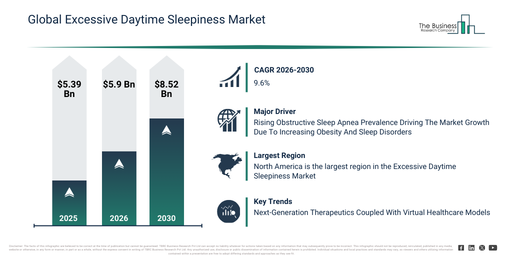
    The market for excessive daytime sleepiness has demonstrated strong growth in recent years. It is projected to increase from $5.39 billion in 2025 to $5.9 billion in 2026, exhibiting a compound annual growth rate (CAGR) of 9.4%. The growth observed in the historical period is attributable to the rising prevalence of sleep disorders, an increased understanding of sleep health impacts, the expansion of sleep clinic infrastructure, the availability of pharmacological wake-promoting agents, and the broader provision of diagnostic sleep testing services.

    The excessive daytime sleepiness market is projected to experience robust expansion over the next few years. It is set to reach $8.52 billion by 2030, advancing at a compound annual growth rate (CAGR) of 9.6%. This expected growth during the forecast period stems from factors such as increasing demand for personalized sleep treatment plans, rising integration of digital therapeutics in sleep care, wider adoption of remote patient monitoring, a growing emphasis on preventive sleep healthcare, and increasing investment in sleep medicine research. Significant trends anticipated during this period include the rising acceptance of wearable sleep monitoring devices, a growing utilization of combination therapy approaches, the expansion of home-based sleep disorder management, an increasing focus on early diagnosis and screening programs, and enhanced integration of digital sleep health platforms.

    Access Your Free Sample Report for In-Depth Market Insights:

    https://www.thebusinessresearchcompany.com/sample.aspx?id=33109&type=smp

    What Drivers Are Affecting Demand-Supply Dynamics In The Excessive Daytime Sleepiness Market?

    An anticipated increase in the occurrence of obstructive sleep apnea (OSA) is projected to boost the expansion of the excessive daytime sleepiness (EDS) market in the coming years. OSA is a sleep condition marked by recurrent breathing interruptions during rest, stemming from upper airway obstruction, which results in disrupted and lower-quality sleep. The incidence of OSA is on the rise, primarily attributed to increasing obesity levels. This leads to additional fat deposits around the neck and throat, constricting the airway and causing breathing to stop periodically during sleep. EDS presents as a widespread and debilitating manifestation of OSA, frequently lingering in a substantial number of individuals, thereby necessitating specific treatments and management approaches. To illustrate, information from August 2026, released by the National Library of Medicine, a US-based medical library, indicates that by 2050, around 76.6 million adults in the United States, aged 30–69, are predicted to suffer from obstructive sleep apnea. Consequently, this increasing prevalence of obstructive sleep apnea is fueling the expansion of the excessive daytime sleepiness market.

    What Segments Are Included Within The Excessive Daytime Sleepiness Market?

    The excessive daytime sleepiness market covered in this report is segmented –

    1) By Treatment Type: Pharmacological Treatment; Behavioral Therapy; Continuous Positive Airway Pressure Therapy; Lifestyle Modification Programs; Combination Therapies

    2) By Diagnosis Method: Polysomnography; Multiple Sleep Latency Test; Actigraphy; Clinical Evaluation; Questionnaire Based Assessments

    3) By Type Of Disorder: Narcolepsy; Obstructive Sleep Apnea; Insomnia; Circadian Rhythm Disorders; Idiopathic Hypersomnia; Restless Legs Syndrome; Other Type Of Disorders

    4) By Distribution Channel: Hospital Pharmacies; Retail Pharmacies; Online Pharmacies

    5) By End User: Hospitals; Sleep Clinics; Ambulatory Surgical Centers; Home Care Settings

    Subsegments:

    1) By Pharmacological Treatment: Wake Promoting Medications; Central Nervous System Stimulant Medications; Dopamine Reuptake Inhibitor Medications; Histamine Receptor Modulating Medications

    2) By Behavioral Therapy: Cognitive Behavioral Therapy For Sleep; Sleep Hygiene Education Programs; Stimulus Control Therapy; Sleep Restriction Therapy

    3) By Continuous Positive Airway Pressure Therapy: Fixed Pressure Airway Therapy; Auto Adjusting Airway Therapy; Bilevel Airway Therapy; Adaptive Pressure Support Therapy

    4) By Lifestyle Modification Programs: Sleep Schedule Regulation Programs; Diet And Nutrition Management Programs; Physical Activity And Exercise Programs; Stress Management And Relaxation Programs

    5) By Combination Therapies: Medication And Behavioral Therapy Combinations; Airway Therapy And Lifestyle Modification Combinations; Medication And Airway Therapy Combinations; Integrated Multimodal Treatment Approaches

    Which Trends Are Influencing The Development Of The Excessive Daytime Sleepiness Market?

    Leading enterprises within the excessive daytime sleepiness market are prioritizing the creation of novel treatments, including central nervous system depressants, aimed at boosting patient wakefulness and elevating their quality of life. Such a substance functions by decreasing nervous system activity, leading to effects like sedation, a sense of calm, or the induction of sleep. An illustrative example is Amneal Pharmaceuticals Inc., a US-based pharmaceutical firm, which secured FDA approval in September 2025 for its sodium oxybate oral solution, designed to directly address excessive daytime sleepiness (EDS) in individuals with narcolepsy. This solution significantly improves the continuity of care by enabling virtual specialist appointments, remote dispensing of prescriptions, and broader patient access in remote or neglected areas. Its overarching objectives are to broaden accessibility, make treatment more affordable, and integrate established pharmaceutical therapies with modern digital and telehealth-based care approaches for managing excessive daytime sleepiness.

    Who Are The Primary Competitors In The Global Excessive Daytime Sleepiness Market?

    Major companies operating in the excessive daytime sleepiness market are Eli Lilly and Company, Takeda Pharmaceutical Company Limited, Teva Pharmaceutical Industries Ltd., Cleveland Clinic, EisAI Co. Ltd, Jazz Pharmaceuticals plc., Emory Healthcare Inc., Alkermes plc., Fisher & Paykel Healthcare Corporation Limited, Harmony Biosciences Holdings Inc., Medanta, Axsome Therapeutics Inc., Compumedics Limited, BIOPROJET, Apnimed Inc., Nox Health Inc., Somnogen Canada Inc., Suven Life Sciences Limited, Theranexus, XWPharma, NLS Pharmaceutics AG.

    Access The Complete Report For Deeper Market Insights:

    https://www.thebusinessresearchcompany.com/report/excessive-daytime-sleepiness-market-report

    Which Global Regions Are Shaping The Competitive Landscape Of The Excessive Daytime Sleepiness Market?

    North America was the largest region in the excessive daytime sleepiness market in 2025. Asia-Pacific is expected to be the fastest-growing region in the forecast period. The regions covered in the excessive daytime sleepiness market report are Asia-Pacific, South East Asia, Western Europe, Eastern Europe, North America, South America, Middle East, Africa.

    Request Your Customized Excessive Daytime Sleepiness Market Research Report for Competitive Advantage:

    https://www.thebusinessresearchcompany.com/customise?id=33109&type=smp

    Browse Through More Reports Similar to the Global Excessive Daytime Sleepiness Market 2026, By The Business Research Company

    Insomnia Market Report 2026

    https://www.thebusinessresearchcompany.com/report/insomnia-global-market-report

    Sleep Testing Services Market Report 2026

    https://www.thebusinessresearchcompany.com/report/sleep-testing-services-global-market-report

    Sleep Monitoring Apps Market Report 2026

    https://www.thebusinessresearchcompany.com/report/sleep-monitoring-apps-global-market-report

    Get in touch with us:

    The Business Research Company: https://www.thebusinessresearchcompany.com/

    Americas +1 310-496-7795

    Asia +44 7882 955267 & +91 8897263534

    Europe +44 7882 955267

    Email us at info@tbrc.info

    Follow us on:

    LinkedIn: https://in.linkedin.com/company/the-business-research-company

    YouTube: https://www.youtube.com/channel/UC24_fI0rV8cR5DxlCpgmyFQ

    Global Market Model: https://www.thebusinessresearchcompany.com/global-market-model